EP1983990B1 - A3 adenosine receptor allosteric modulators - Google Patents
A3 adenosine receptor allosteric modulators Download PDFInfo
- Publication number
- EP1983990B1 EP1983990B1 EP07763034A EP07763034A EP1983990B1 EP 1983990 B1 EP1983990 B1 EP 1983990B1 EP 07763034 A EP07763034 A EP 07763034A EP 07763034 A EP07763034 A EP 07763034A EP 1983990 B1 EP1983990 B1 EP 1983990B1
- Authority
- EP
- European Patent Office
- Prior art keywords
- imidazo
- quinolin
- amine
- phenyl
- cyclopentyl
- Prior art date
- Legal status (The legal status is an assumption and is not a legal conclusion. Google has not performed a legal analysis and makes no representation as to the accuracy of the status listed.)
- Active
Links
- 0 *(c1ccccc1)c1nc(cccc2)c2c2c1nc(C1CCCC1)[n]2 Chemical compound *(c1ccccc1)c1nc(cccc2)c2c2c1nc(C1CCCC1)[n]2 0.000 description 1
Images


Classifications
-
- A—HUMAN NECESSITIES
- A61—MEDICAL OR VETERINARY SCIENCE; HYGIENE
- A61K—PREPARATIONS FOR MEDICAL, DENTAL OR TOILETRY PURPOSES
- A61K31/00—Medicinal preparations containing organic active ingredients
- A61K31/33—Heterocyclic compounds
- A61K31/395—Heterocyclic compounds having nitrogen as a ring hetero atom, e.g. guanethidine or rifamycins
- A61K31/435—Heterocyclic compounds having nitrogen as a ring hetero atom, e.g. guanethidine or rifamycins having six-membered rings with one nitrogen as the only ring hetero atom
- A61K31/47—Quinolines; Isoquinolines
- A61K31/4738—Quinolines; Isoquinolines ortho- or peri-condensed with heterocyclic ring systems
- A61K31/4745—Quinolines; Isoquinolines ortho- or peri-condensed with heterocyclic ring systems condensed with ring systems having nitrogen as a ring hetero atom, e.g. phenantrolines
-
- A—HUMAN NECESSITIES
- A61—MEDICAL OR VETERINARY SCIENCE; HYGIENE
- A61K—PREPARATIONS FOR MEDICAL, DENTAL OR TOILETRY PURPOSES
- A61K31/00—Medicinal preparations containing organic active ingredients
-
- A—HUMAN NECESSITIES
- A61—MEDICAL OR VETERINARY SCIENCE; HYGIENE
- A61P—SPECIFIC THERAPEUTIC ACTIVITY OF CHEMICAL COMPOUNDS OR MEDICINAL PREPARATIONS
- A61P1/00—Drugs for disorders of the alimentary tract or the digestive system
- A61P1/04—Drugs for disorders of the alimentary tract or the digestive system for ulcers, gastritis or reflux esophagitis, e.g. antacids, inhibitors of acid secretion, mucosal protectants
-
- A—HUMAN NECESSITIES
- A61—MEDICAL OR VETERINARY SCIENCE; HYGIENE
- A61P—SPECIFIC THERAPEUTIC ACTIVITY OF CHEMICAL COMPOUNDS OR MEDICINAL PREPARATIONS
- A61P13/00—Drugs for disorders of the urinary system
- A61P13/08—Drugs for disorders of the urinary system of the prostate
-
- A—HUMAN NECESSITIES
- A61—MEDICAL OR VETERINARY SCIENCE; HYGIENE
- A61P—SPECIFIC THERAPEUTIC ACTIVITY OF CHEMICAL COMPOUNDS OR MEDICINAL PREPARATIONS
- A61P17/00—Drugs for dermatological disorders
-
- A—HUMAN NECESSITIES
- A61—MEDICAL OR VETERINARY SCIENCE; HYGIENE
- A61P—SPECIFIC THERAPEUTIC ACTIVITY OF CHEMICAL COMPOUNDS OR MEDICINAL PREPARATIONS
- A61P17/00—Drugs for dermatological disorders
- A61P17/06—Antipsoriatics
-
- A—HUMAN NECESSITIES
- A61—MEDICAL OR VETERINARY SCIENCE; HYGIENE
- A61P—SPECIFIC THERAPEUTIC ACTIVITY OF CHEMICAL COMPOUNDS OR MEDICINAL PREPARATIONS
- A61P19/00—Drugs for skeletal disorders
- A61P19/02—Drugs for skeletal disorders for joint disorders, e.g. arthritis, arthrosis
-
- A—HUMAN NECESSITIES
- A61—MEDICAL OR VETERINARY SCIENCE; HYGIENE
- A61P—SPECIFIC THERAPEUTIC ACTIVITY OF CHEMICAL COMPOUNDS OR MEDICINAL PREPARATIONS
- A61P25/00—Drugs for disorders of the nervous system
-
- A—HUMAN NECESSITIES
- A61—MEDICAL OR VETERINARY SCIENCE; HYGIENE
- A61P—SPECIFIC THERAPEUTIC ACTIVITY OF CHEMICAL COMPOUNDS OR MEDICINAL PREPARATIONS
- A61P27/00—Drugs for disorders of the senses
- A61P27/02—Ophthalmic agents
-
- A—HUMAN NECESSITIES
- A61—MEDICAL OR VETERINARY SCIENCE; HYGIENE
- A61P—SPECIFIC THERAPEUTIC ACTIVITY OF CHEMICAL COMPOUNDS OR MEDICINAL PREPARATIONS
- A61P27/00—Drugs for disorders of the senses
- A61P27/02—Ophthalmic agents
- A61P27/06—Antiglaucoma agents or miotics
-
- A—HUMAN NECESSITIES
- A61—MEDICAL OR VETERINARY SCIENCE; HYGIENE
- A61P—SPECIFIC THERAPEUTIC ACTIVITY OF CHEMICAL COMPOUNDS OR MEDICINAL PREPARATIONS
- A61P29/00—Non-central analgesic, antipyretic or antiinflammatory agents, e.g. antirheumatic agents; Non-steroidal antiinflammatory drugs [NSAID]
-
- A—HUMAN NECESSITIES
- A61—MEDICAL OR VETERINARY SCIENCE; HYGIENE
- A61P—SPECIFIC THERAPEUTIC ACTIVITY OF CHEMICAL COMPOUNDS OR MEDICINAL PREPARATIONS
- A61P35/00—Antineoplastic agents
-
- A—HUMAN NECESSITIES
- A61—MEDICAL OR VETERINARY SCIENCE; HYGIENE
- A61P—SPECIFIC THERAPEUTIC ACTIVITY OF CHEMICAL COMPOUNDS OR MEDICINAL PREPARATIONS
- A61P37/00—Drugs for immunological or allergic disorders
-
- A—HUMAN NECESSITIES
- A61—MEDICAL OR VETERINARY SCIENCE; HYGIENE
- A61P—SPECIFIC THERAPEUTIC ACTIVITY OF CHEMICAL COMPOUNDS OR MEDICINAL PREPARATIONS
- A61P37/00—Drugs for immunological or allergic disorders
- A61P37/02—Immunomodulators
-
- A—HUMAN NECESSITIES
- A61—MEDICAL OR VETERINARY SCIENCE; HYGIENE
- A61P—SPECIFIC THERAPEUTIC ACTIVITY OF CHEMICAL COMPOUNDS OR MEDICINAL PREPARATIONS
- A61P43/00—Drugs for specific purposes, not provided for in groups A61P1/00-A61P41/00
-
- A—HUMAN NECESSITIES
- A61—MEDICAL OR VETERINARY SCIENCE; HYGIENE
- A61P—SPECIFIC THERAPEUTIC ACTIVITY OF CHEMICAL COMPOUNDS OR MEDICINAL PREPARATIONS
- A61P9/00—Drugs for disorders of the cardiovascular system
- A61P9/04—Inotropic agents, i.e. stimulants of cardiac contraction; Drugs for heart failure
-
- A—HUMAN NECESSITIES
- A61—MEDICAL OR VETERINARY SCIENCE; HYGIENE
- A61P—SPECIFIC THERAPEUTIC ACTIVITY OF CHEMICAL COMPOUNDS OR MEDICINAL PREPARATIONS
- A61P9/00—Drugs for disorders of the cardiovascular system
- A61P9/10—Drugs for disorders of the cardiovascular system for treating ischaemic or atherosclerotic diseases, e.g. antianginal drugs, coronary vasodilators, drugs for myocardial infarction, retinopathy, cerebrovascula insufficiency, renal arteriosclerosis
-
- C—CHEMISTRY; METALLURGY
- C07—ORGANIC CHEMISTRY
- C07D—HETEROCYCLIC COMPOUNDS
- C07D471/00—Heterocyclic compounds containing nitrogen atoms as the only ring hetero atoms in the condensed system, at least one ring being a six-membered ring with one nitrogen atom, not provided for by groups C07D451/00 - C07D463/00
- C07D471/02—Heterocyclic compounds containing nitrogen atoms as the only ring hetero atoms in the condensed system, at least one ring being a six-membered ring with one nitrogen atom, not provided for by groups C07D451/00 - C07D463/00 in which the condensed system contains two hetero rings
- C07D471/04—Ortho-condensed systems
Definitions
- This invention relates to A 3 adenosine receptor (A 3 AR) allosteric modulators and uses thereof.
- G protein-coupled receptors class is the largest family of cell-surface receptors which plays a crucial role in intracellular signal transduction.
- Adenosine receptors are part of the GPCR class, which belongs to the Class A or rhodopsin-like subfamily of GPCRs.
- Adenosine a purine nucleoside, produces numerous physiological actions via cell surface adenosine receptors. These receptors are widely distributed throughout the body and are divided into four subclasses, A 1 , A 2A , A 2B and A 3 receptors, the latter being the most recently identified receptor.
- a 3 adenosine receptor (A 3 AR) is involved in a variety of physiological processes.
- the receptor is highly expressed in various tumor cell types while expression in adjacent normal tissues is relatively low.
- Activation of the receptor by a specific synthetic agonist induces modulation of downstream signal transduction pathways which include the Wnt and the NF-kB, resulting in tumor growth inhibition (1-5).
- a 3 AR agonists inhibit the development of colon, prostate and pancreatic carcinomas as well as melanoma and hepatoma.
- a 3 AR agonists were also been shown to act as anti-inflammatory agents by ameliorating the inflammatory process in different experimental autoimmune models such as rheumatoid arthritis, Crohn's disease and multiple sclerosis (6-10). It was proposed also that the A 2A and A 3 receptors mediate the anti-inflammatory effects of methotrexate (11).
- a 3 adenosine receptor (A 3 AR) expression levels are elevated in cancer cells as compared to normal cells (12). Thus, the A 3 AR expression level has been described as a means for the diagnosis of cancer (13). In addition, A 3 AR expression levels have also been described to be elevated in peripheral blood cells of patients with colorectal cancer (14).
- Allosteric modulation of GPCRs has been characterized most extensively for muscarinic receptors (16), and it has been suggested that allosteric modulators may provide therapeutic advantages over orthosteric agonist. Such advantages may include greater subtype selectivity and fewer side effects (15).
- the adenosine receptors are natural allosteric proteins because agonist-mediated signaling by GPCRs requires a conformational change in the receptor protein transmitted between two topographically distinct binding sites, one for the agonist and another for the G protein. Allosteric sites on GPCRs represent novel drug targets because allosteric modulators possess a number of advantages over classic orthosteric ligands, such as a ceiling level to the allosteric effect and a potential for greater GPCR subtype-selectivity.
- Allosteric modulation of A 1 adenosine receptors was reported (17).
- Some 1H-imidazo-[4,5-c]quinoline derivatives were described as selective allosteric enhancers of human A3 adenosine receptors (20). Specifically, the derivatives were shown to potentiate the potency and maximal efficacy of agonist-induced responses while decreasing the dissociation of the agonist N 6 -(4-amino-3-[ 125 I]iodobenzyl)-5'-N-methylcarboxamidoadenosine from human A3 adenosine receptors.
- the present invention provides the use of an A 3 adenosine receptor allosteric modulator (A 3 RM) for the preparation of a pharmaceutical composition for the preparation of a pharmaceutical composition for the treatment of a condition which requires for said treatment modulation of A 3 adenosine receptor (A 3 AR), wherein said A 3 RM has the following general formula (I): wherein:
- the invention also provides a compound for use in the treatment of a condition which requires for said treatment modulation of A 3 adenosine receptor (A 3 AR), the compound being an A 3 adenosine receptor allosteric modulator (A 3 RM), having the general formula (I) as defined above and the condition being selected from one of the conditions mentioned above.
- a 3 AR A 3 adenosine receptor
- a 3 RM A 3 adenosine receptor allosteric modulator
- a preferred composition in accordance with the invention is in the form suitable for oral administration.
- the A 3 RM is utilized for enhancing the A 3 AR.
- the invention also provides imidazoquinoline derivatives selected from:
- imidazoquinoline derivatives are also some preferred A 3 RM in accordance with the invention.
- a specifically preferred imidazoquinoline derivative in accordance with the invention is N-(3,4-Dichloro-phenyl)-2-cyclohexyl-1H-imidazo[4,5-c]quinolin-4-amine (45)
- the present invention concerns allosteric modulation of the A 3 adenosine receptor (A 3 AR) by the use of imidazoquinoline derivatives. It has been found that imidazoquinoline derivatives may effectively increase the efficacy of the receptor, upon binding to thereto.
- allosteric modulation which may be used interchangeably with the term “allosteric regulation” denotes the regulation or modulation of an enzyme, receptor or other protein by binding of an effector molecule at the protein's allosteric site which is different from the binding site of the endogenous ligand.
- alloys that enhance the protein's activity are referred to as “allosteric activators” or “allosteric enhancers”.
- an-imidazoquinoline-derivative denotes one or more compounds being the same or different chemical modifications of imidazoquinoline.
- the term “comprising” is intended to mean that the uses and compositions of the invention include the recited imidazoquinoline derivative but not excluding other substances.
- the term “consisting essentially of” is used to define uses and compositions that include the recited components but exclude other components that may have an essential significance on the biochemical response resulting from the binding of imidazoquinoline derivative to the receptor.
- a composition consisting essentially of an imidazoquinoline derivative as the active ingredient and a pharmaceutically acceptable carrier will not include or include only insignificant amounts (amounts that will have an insignificant effect on the activity of the receptor) of other compounds capable of binding to the allosteric site or binding site of the receptor.
- Consisting of shall thus mean excluding more than trace elements of other components.
- the present invention provides the use of an A 3 adenosine receptor allosteric modulator (A 3 RM) for the preparation of a pharmaceutical composition for the preparation of a pharmaceutical composition for the treatment of a condition which requires for said treatment modulation of A 3 adenosine receptor (A 3 AR), wherein said A 3 RM has the following general formula (I): wherein:
- alkyl is used herein to refer to a linear or branched hydrocarbon chain having from 1 to 10 carbon atoms and more preferably 1 to 6 carbon atoms including, methyl, ethyl, n-propyl, isopropyl, n-butyl, t-butyl, n-heptyl, octyl.
- alkenyl and alkynyl denote a linear or branched hydrocarbon chain having, respectively, from 2 to 10, or from 3 to 10 carbon atoms and more preferably 2 to 6 or 3 to 6 carbon atoms, the alkenyl or alkynyl having at least one unsaturated bond.
- alkyl, alkenyl or alkynyl substituents may be substituted with a heteroatom containing group.
- any of the alkyl modifications defined hereinabove and below, such as alkylthio, alkoxy, akanol, alkylamine etc also include the corresponding alkenyl or alkynyl modifications, such as, akenylthio, akenyloxy, alkenol, alkenylamine, or respectively, akynylthio, alkynyloxy, alkynol, alkynylamine.
- aryl denotes an unsaturated aromatic carbocyclic group of from 5 to 14 carbon atoms having a single ring (e. g., phenyl) or multiple condensed rings (e. g., naphthyl or anthryl).
- Preferred aryls include phenyl, indanyl, benzimidazole.
- alkaryl refers to -alkylene-aryl groups preferably having from 1 to 10 carbon atoms in the alkylene moiety and from 6 to 14 carbon atoms in the aryl moiety. Such alkaryl groups are exemplified by benzyl, phenethyl.
- Substituted aryl refers to an aromatic moiety which is substituted with from 1 to 3 substituents as defined above.
- substituents include, halogen, (substituted) amino, nitro, cyano, alkyl, alkoxy, acyloxy or alkanol, sulphonyl, sulphynyl.
- Halo or "halogen” refers to fluoro, chloro, bromo and iodo, preferably to chloro.
- acyl refers to the groups H-C(O)- as well as alkyl-C(O)-.
- alkanol refers to the group -COH as well as alk-OH, "alk” denoting an alkylene, alkenylene or alkynylene chain.
- alkoxy is used herein to mean -O-alkyl, including, methoxy, ethoxy, propoxy, isopropoxy, n-butoxy.
- alkylthio is used herein to mean -S-alkyl, including, methylthio, ethylthio, n-propylthio, isopropylthio, n-butylthio.
- alkoxyalkyl is used herein to mean -alkyl-O-alkyl, including, methoxymethyl, ethoxymethyl, n-propoxymethyl, isopropoxymethyl, n-butoxymethyl, isobutoxymethyl, t-butoxymethyl.
- cycloalkyl is used herein to mean cyclic hydrocarbon radicals including, cyclopropyl, cyclobutyl, cyclopentyl, cyclohexyl, cycloheptyl.
- alkoxycarbonyl is used herein to mean -C(O)O-alkyl, including, methoxycarbonyl, ethoxycarbonyl, propoxycarbonyl.
- fused cycloalkyl is used herein to mean any compound or substituent comprising at least two aliphatic rings which are connected at a single atom (to form a spirocyclic moiety), at two mutually bonded atoms or across a sequence of atoms (bridgehead).
- the fused rings may include any bicyclic, tricyclic as well as polycyclic moieties. Bicyclic substituents are preferred in accordance with this embodiment of the invention.
- the R 1 substituent in A 3 RM has the following general formula (II): wherein n is 0 or an integer selected from 1-5; preferably, n is 0, 1 or 2; and
- R 1 in said A 3 RM is a substituent having the above formula (II), wherein X 1 or X 2 , which may be the same or different, are selected from hydrogen, chloro, methoxy, methanol or a substituent having the formulae (IIIa) or (IIIb): wherein Y is selected from N or CH.
- R 2 in said A 3 RM is selected from H, C 1-10 alkyl, C 4-10 cycloalkyl, the alkyl chain may be a straight or branched or form a four to seven membered cycloalkyl ring.
- R 2 in said A 3 RM is selected from a five to seven membered heterocyclic aromatic ring.
- R 2 substituents are selected from H, n-pentyl, or a five membered heterocyclic aromatic ring having the following formula (IV): wherein Z is selected from O, S or NH, preferably O.
- R 2 comprises fused rings, particularly so as to form bicyclic substituents.
- bicyclic compounds which may be used to form the substituents in the context of the invention comprise bicyclo[2.2.1]heptane, bicyclo[4.1.0]heptane, bicyclo[4.1.0]heptan-3-carboxylic acid, bicyclo[3.1.0]hexan-3-carboxylic acid, bicyclo[4.1.0]heptan-2-carboxylic acid, bicyclo[3.1.0]hexan-2-carboxylic acid, and bicyclo[2.2.1]heptan-2-carboxylic acid.
- R 2 may be selected from 2-cyclohexene and 3-cyclohexene.
- the compounds 31 - 47 were synthesized as shown in the scheme depicted in Fig 1 .
- Condensation of anthranilic acid hydrochloride (1) with methazonic acid (2) resulted in 2- ⁇ -nitroethylideneaminobenzoic acid (3), which was dehydrated in acetic anhydride in the presence of potassium acetate to give 3-nitro-4-hydroxyquinoline (5)
- Bachman, G. B. et al. Quinoline Derivatives from 3-Nitro-4-hydroxyquinoline, J. Am. Chem. Soc., 1947, 69, 365-371 Bachman, G. B. et al. Quinoline Derivatives from 3-Nitro-4-hydroxyquinoline, J. Am. Chem. Soc., 1947, 69, 365-371 ].
- 3-Nitro-4-hydroxyquinoline (5) was treated with phosphorous oxychloride to afford 3-nitro-4-chloroquinoline (6). This was converted to 3-nitro-4-aminoquinoline (7) with ammonia, which was subsequently reduced by catalytic hydrogenation to 3,4-diaminoquinoline (8) with 10 % palladium on charcoal as catalyst.
- the next step involved ring-closure, which was carried out in three different ways. For example, Compound 10 was prepared by ring closure of the appropriate carboxylic acid and 3,4-diaminoquinoline (8) in polyphosphoric acid [ Young, R. C. et al.
- the imidazoquinoline derivatives of the invention where shown to have, on the one hand, reduced affinity, if any, to the orthosteric binding sites of the A 1 and A 2A , A 2B adenosine receptors and reduced affinity to the orthosteric binding site of the A 3 adenosine receptor, and on the other hand, high affinity to the allosteric site of the A 3 adenosine receptor.
- This finding was unexpected in light of the non-specific affinity of known imidazoquinoline derivatives, such as N-phenyl-2-cyclopentyl-1 H -imidazo[4,5-c]quinolin-4-amine (compound 30) to the orthosteric as well as allosteric binding sites of these receptors.
- the selective affinity of the derivatives disclosed herein is particularly evident with respect to compounds 33, 42, 44 and 45 in Tables 1 and 2.
- modulation comprises enhancement of A 3 AR activity.
- the A 3 AM are considered as A 3 AR activators.
- enhancement denotes the effect of the imidazoquinoline derivative on the receptor exhibited by an increase of at least 15% in the efficacy of the A 3 adenosine receptor by binding of the imidazoquinoline to the allosteric site of the receptor and/or by a decrease in dissociation rate of adenosine or an A 3 AR agonist to the orthosteric binding site.
- the invention also provides a compound of formula I for use in the treatment of a condition which requires for said treatment modulation of A 3 adenosine receptor (A 3 AR), comprising administering to said subject an amount of the A 3 RM as defined above, the amount being effective to modulate A 3 AR activity, wherein the condition is selected from the conditions listed below (see also claim 1 and 2).
- a 3 AR adenosine receptor
- treatment refers to the administering of a therapeutic amount of the imidazoquinoline derivative as defined herein, alone or in combination with a ligand to the A 3 AR orthosteric binding site which is effective to achieve a therapeutic effect, the therapeutic effect being selected from one or more of the following: amelioration of undesired symptoms associated with a disease, prevention of the manifestation of such symptoms before they occur, slowing down a progression of the disease, slowing down any deterioration of symptoms, enhancement of onset of a remission period, slowing down of any irreversible damage caused in a progressive chronic stage of the disease, delaying of the onset of said progressive stage, lessening of the severity or cure of a disease, improving survival rate or more rapid recovery from a disease, preventing the disease form occurring or a combination of two or more of the above.
- the condition to be treated is selected from the group consisting of hyperproliferative disorders, and in particular all types of solid tumors; skin proliferative diseases (e.g. psoriasis); a variety of benign hyperplasia disorders; inflammatory diseases; ischemic conditions, such as myocardial or renal ischemia.
- solid tumors refers to carcinomas, sarcomas, adenomas, and cancers of neuronal origin and if fact to any type of cancer which does not originate from the hematopoeitic cells and in particular concerns: carcinoma, sarcoma, adenoma, hepatocellular carcinoma, hepatocellularcarcinoma, hepatoblastoma, rhabdomyosarcoma, esophageal carcinoma, thyroid carcinoma, ganglioblastoma, fibrosarcoma, myxosarcoma, liposarcoma, cohndrosarcoma, osteogenic sarcoma, chordoma, angiosarcoma, endotheliosarcoma, lymphagiosarcoma, synovioama, Ewing's tumor, leimyosarcoma, rhabdotheliosarcoma, colon carcinoma, pancreatic cancer, breast cancer, ovarian cancer, prostate cancer,
- Benign hyperplasia disorders include benign prostate hyperplasia (BPH), non-tumorigenic polyps in the digestive tract and in the uterus.
- BPH benign prostate hyperplasia
- non-tumorigenic polyps in the digestive tract and in the uterus.
- Inflammatory diseases include, rheumatoid arthritis, Crohn's disease, multiple sclerosis.
- the claimed A 3 RM of formula (I) in combination with a ligand to the orthosteric binding site.
- the A 3 RM may be administered in combination with adenosine or an A 3 AR agonist.
- the term "combination” includes a schedule of treatment that involves administration of at least the A 3 RM and the ligand to the orthosteric site.
- the schedule of treatment may comprise simultaneous or co-administration of the two active principles, or with an interval between administrations.
- the A 3 RM is administered to the subject orally, although other administration routes are applicable, including parenteral (intravenous, intramuscular, intra-arterial, subcutaneous, intranasal, via the lungs (inhalation)).
- the A 3 RM is preferably used and administered in combination with a physiologically acceptable carrier to form a pharmaceutical composition, the latter also forming part of the invention.
- physiologically acceptable excipient denotes any excipient that is useful in preparing a pharmaceutical composition or formulation that is generally safe, non-toxic and neither biologically nor otherwise undesirable, and includes a excipient that is acceptable for veterinary use as well as human pharmaceutical use.
- the imidazoquinoline derivative is usually mixed with the excipient, diluted by an excipient or enclosed within a carrier which can be in the form of a capsule, sachet, paper or other container.
- a carrier which can be in the form of a capsule, sachet, paper or other container.
- the excipient serves as a diluent, it can be a solid, semi-solid, or liquid material, which acts as a vehicle, carrier or medium for the imidazoquinoline derivative.
- compositions can be in the form of tablets, pills, powders, lozenges, sachets, cachets, elixirs, suspensions, emulsions, solutions, syrups, aerosols (as a solid or in a liquid medium), soft and hard gelatin capsules, suppositories, sterile injectable solutions, and sterile packaged powders.
- the effective amount of imidazoquinoline derivative in the pharmaceutical composition and unit dosage form thereof may be varied or adjusted widely depending upon the particular application, the manner or introduction, the potency of the particular compound, and the desired concentration.
- the effective amount is typically determined in appropriately designed clinical trials (dose range studies) and the person versed in the art will know how to properly conduct such trials in order to determine the effective amount.
- an effective amount depends on a variety of factors including the affinity of the imidazoquinoline derivative to the allosteric binding site, its distribution profile within the body, a variety of pharmacological parameters such as half life in the body, on undesired side effects, if any, on factors such as age and gender, etc.
- unit dosage forms refers to physically discrete units suitable as unitary dosages for human subjects and other mammals, each unit containing a predetermined quantity of active material calculated to produce the desired therapeutic effect, in association with a suitable pharmaceutical excipient.
- the amount of therapeutically active compound in such a unit dosage form may vary from about 0.5 mg to 500 mg.
- composition of the invention will typically be administered over an extended period of time in a single daily dose, in several doses a day, as a single dose and in several days, etc.
- the treatment period will generally have a length proportional to the length of the disease process and the specific imidazoquinoline derivative effectiveness and the patient species being treated.
- Microwave-assisted chemistry was performed on an EmrysTM Optimizer with Emrys TM Optimizer software. For the reactions round-bottom vials with a volume of 2-5 mL were used.
- Staring material ( 9-15 ) was almost completely dissolved (with heating) in chloroform (2.5 ml/mmol), dichloromethane (2.5 ml/mmol) and methanol (0.25 ml/mmol). 3-Chloroperoxybenzoic acid (2.5 eq.) was added and the solution was reflux. After 30 minutes Na 2 CO 3 (0.04 g/mmol) was added and the mixture was refluxed for one more hour. The reaction mixture was cooled on an ice-bath and the solvent was evaporated. Column chromatography was needed for purification and removal of 3-chloroperoxybenzoic acid.
- Compound 30 was prepared as described elsewhere [Van Galen P.J.M. et al. (1991) ibid. ] .
- Table 1 summarizes the chemical structures and physico-chemical characteristics of the imidazoquinoline derivatives prepared as described above.
- Table 1 Chemical structures and physico-chemical characteristics Nr Compound Molecular Formula MW Mp (°C) MS Recrystall-ization. solvent 30 C 21 H 20 N 4 328.42 155-157 328.9 MeOH 31 C 22 H 22 N 4 342.45 125-126 342.7 343.8 MeOH 32 C 22 H 22 N 4 O 358.45 106-107 358.8 MeOH 33 C 21 H 18 Cl 2 N 4 397.31 114-115 396.5 MeOH 34 C 21 H 19 ClN 4 362.87 189-190 362.7 MeOH 35 C 22 H 22 N 4 O 358.45 228-230 359.0 MeOH 36 C 24 H 24 N 4 368.49 142-145 369.0 MeOH 37 C 22 H 20 N 6 368.44 235-236 368.8 50/50 EA/PE 38 C 23 H 24 N 4 O 372.47 245-247 372.9 MeOH 39 C
- CHO (Chinese hamster ovary) cells expressing the recombinant human ARs (HEK-293 cells were used for the human A 2A AR) were cultured in DMEM and F12 (1:1) supplemented with 10% fetal bovine serum, 100 units/ml penicillin, 100 ⁇ g/ml streptomycin and 2 ⁇ mol/ml glutamine. Cells were harvested by trypsinization. After homogenization and suspension, cells were centrifuged at 500 g for 10 min, and the pellet was re-suspended in 50 mM Tris ⁇ HCl buffer (pH 7.4) containing 10 mM MgCl 2 .
- the suspension was homogenized with an electric homogenizer for 10 sec, and was then re-centrifuged at 20,000 g for 20 min at 4°C.
- the resultant pellets were resuspended in buffer in the presence of 3 Units/mL adenosine deaminase, and the suspension was stored at -80°C until the binding experiments.
- the protein concentration was measured using the Bradford assay.
- [ 3 H]R-PIA (2 nM) was incubated with membranes (40 ⁇ g/tube) from CHO cells stably expressing the human A 1 AR at 25°C for 60 min in 50 mM Tris.HCl buffer (pH 7.4; MgCl 2 , 10 mM) in a total assay volume of 200 ⁇ L.
- Nonspecific binding was determined using 10 ⁇ M of N 6 -cyclopentyladenosine.
- membranes (20 ⁇ g/tube) from HEK-293 cells stably expressing the human A 2A AR were incubated with 15 nM [ 3 H]CGS21680 at 25 °C for 60 min in 200 ⁇ L of 50 mM Tris.HCl, pH 7.4, containing 10 mM MgCl 2 .
- N- 5'-ethyluronamidoadenosine (10 ⁇ M) was used to define nonspecific binding. Reaction was terminated by filtration with GF/B filters.
- Each tube in the competitive binding assay contained 100 ⁇ l membrane suspension (20 ⁇ g protein), 50 ⁇ l [ 125 I]I-AB-MECA (0.5 nM), and 50 ⁇ l of increasing concentrations of the test ligands in Tris ⁇ HCl buffer (50 mM, pH 8.0) containing 10 mM MgCl 2 , 1 mM EDTA.
- Nonspecific binding was determined using 10 ⁇ M of 5'- N- ethylcarboxamidoadenosine in the buffer. The mixtures were incubated at 25°C for 60 min. Binding reactions were terminated by filtration through Whatman GF/B filters under reduced pressure using a MT-24 cell harvester (Brandell, Gaithersburgh, MD, USA). Filters were washed three times with 9 mL ice-cold buffer. Radioactivity was determined in a Beckman 5500B ⁇ -counter.
- the dissociation of [ 125 I]I-AB-MECA was measured as follows. Membranes (20 ⁇ g) were preincubated at 25°C with 0.5 nM [ 125 I]I-AB-MECA, in a total volume of 100 ⁇ l of Tris-HCl buffer (50 mM, pH 8.0) containing 10 mM MgCl 2 , and 1 mM EDTA for 60 min. The dissociation was then initiated by the addition of 3 ⁇ M Cl-IB-MECA with or without allosteric modulators. The time course of dissociation of total binding was measured by rapid filtration at appropriate time intervals. Nonspecific binding was measured after 60-min incubation in the presence of 3 ⁇ M Cl-IB-MECA. Further assay was as described above.
- Intracellular cyclic AMP levels were measured with a competitive protein binding method (Nordstedt and Fredholm, 1990).
- CHO cells that expressed recombinant human A 3 ARs were harvested by trypsinization. After centrifugation and resuspension in medium, cells were plated in 24-well plates in 0.5 ml medium. After 24 hr, the medium was removed and cells were washed three times with 1 ml DMEM, containing 50 mM HEPES, pH 7.4. Cells were then treated with agonists and/or test compounds in the presence of rolipram (10 ⁇ M) and adenosine deaminase (3 units/ml).
- PKA protein kinase A
- K 2 HPO 4 /EDTA buffer K 2 HPO 4 , 150 mM; EDTA, 10 mM
- 20 ⁇ L of the cell lysate 20 ⁇ L of the cell lysate
- 30 ⁇ L 0.1 M HCl or 50 ⁇ L of cyclic AMP solution (0-16 pmol/200 ⁇ L for standard curve).
- Bound radioactivity was separated by rapid filtration through Whatman GF/C filters and washed once with cold buffer. Bound radioactivity was measured by liquid scintillation spectrometry.
- Binding and functional parameters were calculated using Prism 5.0 software (GraphPAD, San Diego, CA, USA). IC 50 values obtained from competition curves were converted to K; values using the Cheng-Prusoff equation. Data were expressed as mean ⁇ standard error.
- Table 2 Potency of 1H-imidazo-[4,5-c]quinolin-4-amine derivatives in binding or activation assays at human A 1 , A 2A , A 2B and A 3 ARs and allosteric effects at the human A 3 AR No. R 1 R 2 K i (hA 1 4R), nM a or % displ . at 10 ⁇ M K i (hA 2A AR), nM a or % displ.
- a 2B receptor effect of compounds at 10 ⁇ M on NECA (150 nM)-induced cyclic AMP accumulation from one experiment performed in triplicate; the inhibition of CGS15943 (10 ⁇ M) was expressed as 100%.
- dissociation % decrease of dissociation at 30 min; the residual binding of [ 125 I]AB-MECA after 30 min of dissociation was expressed as 100%.
- a stock solution of imidazoquinoline derivative 45 was prepared by dissolving the same in DMSO. Further dilutions for treatment were performed in PBS. As a control, an equivalent amount of DMSO in PBS was used.
- the compound was orally administered at a dose of 100 ⁇ g/kg, thrice daily to ICR mice, for two consecutive days. Blood samples were withdrawn 24 and 48 hours after the last drug administration. A differential blood count was performed.
- Adjuvant induced arthritis model (model for rheumatoid arthritis (RA)) was established in rats by immunizing the animals with an emulsion contacting Mycobacterium tuberculosis in Freund's adjuvant (Animal Models for Autoimmune and Inflammatory disease:Adjuvant Arthritis in the Rat. Current Protocols in Immunology, Supplement 19, page 15.4.2.).
- Treatment with imidazoquinoline derivative 45 was initiated upon onset of disease. The imidazoquinoline derivative 45 was administered orally twice daily at a dose of 100 ⁇ g/kg.
- imidazoquinoline derivative and in the particular example imidazoquinoline derivative 45 may have a dual effect, on the one hand of enhancing the myeloid system and on the other hand, as a remedy for conditions such as RA.
Landscapes
- Health & Medical Sciences (AREA)
- Chemical & Material Sciences (AREA)
- Organic Chemistry (AREA)
- Medicinal Chemistry (AREA)
- Veterinary Medicine (AREA)
- Public Health (AREA)
- General Health & Medical Sciences (AREA)
- Animal Behavior & Ethology (AREA)
- Life Sciences & Earth Sciences (AREA)
- Pharmacology & Pharmacy (AREA)
- Chemical Kinetics & Catalysis (AREA)
- General Chemical & Material Sciences (AREA)
- Nuclear Medicine, Radiotherapy & Molecular Imaging (AREA)
- Bioinformatics & Cheminformatics (AREA)
- Engineering & Computer Science (AREA)
- Epidemiology (AREA)
- Immunology (AREA)
- Cardiology (AREA)
- Ophthalmology & Optometry (AREA)
- Rheumatology (AREA)
- Urology & Nephrology (AREA)
- Dermatology (AREA)
- Heart & Thoracic Surgery (AREA)
- Vascular Medicine (AREA)
- Neurosurgery (AREA)
- Pain & Pain Management (AREA)
- Hospice & Palliative Care (AREA)
- Neurology (AREA)
- Orthopedic Medicine & Surgery (AREA)
- Physical Education & Sports Medicine (AREA)
- Biomedical Technology (AREA)
- Pharmaceuticals Containing Other Organic And Inorganic Compounds (AREA)
- Nitrogen Condensed Heterocyclic Rings (AREA)
- Saccharide Compounds (AREA)
Abstract
Description
- This invention relates to A3 adenosine receptor (A3AR) allosteric modulators and uses thereof.
- The following is a list of prior art which is considered to be pertinent for describing the state of the art in the field of the invention. Acknowledgment of these references herein will at times be made by indicating their number within brackets from the list below.
- 1. Fishman P, et al. Evidence for involvement of Wnt signaling pathway in IB-MECA mediated suppression of melanoma cells. Oncogene., 21:4060-4064 (2002).
- 2. Fishman P, et al. Targeting the A3 adenosine receptor for cancer therapy: inhibition of Prostate carcinoma cell growth by A3AR agonist. Anticancer Res., 23:2077-2083 (2003).
- 3. Madi L, et al. A3 adenosine receptor activation in melanoma cells: association between receptor fate and tumor growth inhibition. J. Bio. Chem., 278:42121-42130 (2003).
- 4. Ohana G, et al. Inhibition of primary colon carcinoma growth and liver metastasis by the A3 adenosine receptor agonist IB-MECA. British J. Cancer., 89:1552-1558(2003).
- 5. Fishman P, et al. An agonist to the A3 adenosine receptor inhibits colon carcinoma growth in mice via modulation of GSK-3β and NF-κB. Oncogene, 23:2465-2471 (2004).
- 6.
US Patent Application No. 2004016709 A1 . - 7. Szabo, C., et al. Suppression of macrophage inflammatory protein (MIP)-1α production and collagen-induced arthritis by adenosine receptor agonists. British J. Pharmacology, 125:379-387 (1998).
- 8. Mabley, J., et al. The adenosine A3 receptor agonist, N6-(3-iodobenzyl)-adenosine -5'-N-methyluronamide, is protective in two murine models of colitis. Europ. J. Pharmacology, 466:323-329 (2003).
- 9. Baharav, E., et al. The effect of adenosine and the A3 adenosine receptor agonist IB-MECA on joint inflammation and autoimmune diseases models. Inter. J. Mol. Med. 10(supplement 1) page S104, abstract 499 (2002).
- 10. PCT Application, publication No.
WO2005/0063246 - 11. Montesinos, M. Carmen, et al. Adenosine A2A or A3 receptors are required for inhibition of inflammation by methotrexate and its analog MX-68. Arthritis & Rheumatism, 48:240-247 (2003).
- 12. Madi L, et al. The A3 Adenosine Receptor is Highly Expressed in Tumor vs. Normal Cells: Potential Target for Tumor Growth Inhibition. Clinical Cancer Research, 10: 4472-4479 (2004).
- 13.
US Patent Application, publication No. 20040137477 A1 , entitled "A3AR as a marker for a diseased state". - 14. Gessi, S. et al. Elevated expression of A3 adenosine receptors in human colorectal cancer is reflected in peripheral blood cells Clinical Cancer Research 10:5895-5901 (2004).
- 15. Birdsall NJ et al., Allosteric regulation of G-protein-linked receptors biochem Soc Trans 23:108-111 (1995).
- 16. Holzgrabe U and Mohr K, Allosteric modulators of ligand binding to muscarinic acetylcholine receptors, Drug Disc Today 3:214-222 (1998).
- 17. Bruns RF and Fergus JH, Allosteric enhancement of adenosine A1 receptor binding and function by 2-amino-3-benzoylthiophenes, Mol Pharmaco/ 38:939-949 (1990).
- 18. Gao ZG and IJzerman AP, Allosteric modulation of A2A adenosine receptors by amiloride analogues and sodium ions, Biochem Pharmacol 60:669-676 (2000).
- 19. Gao ZG, Jiang Q, Jacobson KA, and IJzerman AP, Site-directed mutagenesis studies of human A2A adenosine receptors. Involvement of Glu13 and His278 in ligand binding and sodium modulation, Biochem Pharmacol 60:661-668 (2000).
- 20. Gao ZG, Kin SG, Soltysiak KA, Melman N, IJzerman AP, Jacobson KA, Selective allosteric enhancement of agonist binding and function at human A3 Adenosine receptors by a series of imidazoquinoline derivatives, Mol Pharmacol 62:81-89 (2002).
- G protein-coupled receptors (GPCRs) class is the largest family of cell-surface receptors which plays a crucial role in intracellular signal transduction. Adenosine receptors are part of the GPCR class, which belongs to the Class A or rhodopsin-like subfamily of GPCRs. Adenosine, a purine nucleoside, produces numerous physiological actions via cell surface adenosine receptors. These receptors are widely distributed throughout the body and are divided into four subclasses, A1, A2A, A2B and A3 receptors, the latter being the most recently identified receptor.
- The A3 adenosine receptor (A3AR) is involved in a variety of physiological processes. The receptor is highly expressed in various tumor cell types while expression in adjacent normal tissues is relatively low. Activation of the receptor by a specific synthetic agonist induces modulation of downstream signal transduction pathways which include the Wnt and the NF-kB, resulting in tumor growth inhibition (1-5).
- In vivo studies have shown that A3AR agonists inhibit the development of colon, prostate and pancreatic carcinomas as well as melanoma and hepatoma. A3AR agonists were also been shown to act as anti-inflammatory agents by ameliorating the inflammatory process in different experimental autoimmune models such as rheumatoid arthritis, Crohn's disease and multiple sclerosis (6-10). It was proposed also that the A2A and A3 receptors mediate the anti-inflammatory effects of methotrexate (11).
- A3 adenosine receptor (A3AR) expression levels are elevated in cancer cells as compared to normal cells (12). Thus, the A3AR expression level has been described as a means for the diagnosis of cancer (13). In addition, A3AR expression levels have also been described to be elevated in peripheral blood cells of patients with colorectal cancer (14).
- Several members of the GPCR class of receptors have been reported to be modulated allosterically (15), i.e. these receptors have additional binding site(s) on a receptor that are distinct from the agonist binding site (orthosteric site, orthosterically modulated receptors), but that can modulate receptor activity.
- Allosteric modulation of GPCRs has been characterized most extensively for muscarinic receptors (16), and it has been suggested that allosteric modulators may provide therapeutic advantages over orthosteric agonist. Such advantages may include greater subtype selectivity and fewer side effects (15).
- The adenosine receptors are natural allosteric proteins because agonist-mediated signaling by GPCRs requires a conformational change in the receptor protein transmitted between two topographically distinct binding sites, one for the agonist and another for the G protein. Allosteric sites on GPCRs represent novel drug targets because allosteric modulators possess a number of advantages over classic orthosteric ligands, such as a ceiling level to the allosteric effect and a potential for greater GPCR subtype-selectivity.
- Allosteric modulation of A1 adenosine receptors was reported (17). A number of aminobenzoylthiophenes, including PD81723, were allosteric modulators of the A1 adenosine receptor (19). These compounds were shown to be highly subtype-selective enhancers for A1 adenosine receptors (19) and were less likely to cause desensitization and down-regulation of receptors than selective A1 adenosine receptor agonists.
- Some 1H-imidazo-[4,5-c]quinoline derivatives were described as selective allosteric enhancers of human A3 adenosine receptors (20). Specifically, the derivatives were shown to potentiate the potency and maximal efficacy of agonist-induced responses while decreasing the dissociation of the agonist N6-(4-amino-3-[125I]iodobenzyl)-5'-N-methylcarboxamidoadenosine from human A3 adenosine receptors.
- In accordance with the first aspect, the present invention provides the use of an A3 adenosine receptor allosteric modulator (A3RM) for the preparation of a pharmaceutical composition for the preparation of a pharmaceutical composition for the treatment of a condition which requires for said treatment modulation of A3 adenosine receptor (A3AR), wherein said A3RM has the following general formula (I):

- R1 represents an aryl or alkaryl being optionally substituted once or more at the aromatic ring with a substituent selected C1-C10 alkyl,_halo, C1-C10 alkanol, hydroxyl; C1-C10acyl, C1-C10 alkoxyl; C1-C10-alkoxycarbony, C1-C10 alkoxylalkyl; C1-C10 thioalkoxy; C1-C10 alkylether, amino, hydrazido, C1-C10 alkylamino, pyridylthio, C2-C10 alkenyl; C2-C10 alkynyl, thio, and C1-C10 alkylthio, acetoamido, sulfonic acid; or said substituents can form together a cycloalkyl or cycloalkenyl fused to said aryl, the cycloalkyl or cycloalkenyl optionally comprising one or more heteroatoms; provided that said aryl is not an unsubstituted phenyl group;
- R2 represents hydrogen or a substituent selected from C1-C10 alkyl, C2-C10 alkenyl; C2-C10 alkynyl, C4-C10 cycloalkyl, C4-C10 cycloalkenyl, or a five to seven membered heterocyclic aromatic ring, C5-C15 bridged or fused cycloalkyl, bicyclic aromatic or heteroaromatic rings; or C1-C10 alkylether, amino, hydrazido, C1-C10 alkylamino, C1-C10 alkoxy, C1-C10-alkoxycarbony, C1-C10 alkanol, C1-C10 acyl, C1-C10 thioalkoxy, pyridylthio, thio, and C1-C10 alkylthio, acetoamido, sulfonic acid.
- The invention also provides a compound for use in the treatment of a condition which requires for said treatment modulation of A3 adenosine receptor (A3AR), the compound being an A3 adenosine receptor allosteric modulator (A3RM), having the general formula (I) as defined above and the condition being selected from one of the conditions mentioned above.
- A preferred composition in accordance with the invention is in the form suitable for oral administration.
- Also disclosed is that the A3RM is utilized for enhancing the A3AR.
- The invention also provides imidazoquinoline derivatives selected from:
- N-(4-Methyl-phenyl)-2-cyclopentyl-1H-imidazo[4,5-c]quinolin-4-amine (31)
- N-(4-Methoxy-phenyl)-2-cyclopentyl-1H-imidazo[4,5-c]quinolin-4-amine (32)
- N-(3,4-Dichloro-phenyl)-2-cyclopentyl-1H-imidazo[4,5-c]quinolin-4-amine (33)
- N-(4-Chloro-phenyl)-2-cyclopentyl-1H-imidazo[4,5-c]quinolin-4-amine (34)
- N-(3-Methanol-phenyl)-2-cyclopentyl-1H-imidazo[4,5-c]quinolin-4-amine (35)
- N-([3,4-c]Indan)-2-cyclopentyl-1H-imidazo[4,5-c]quinolin-4-amine (36)
- N-(1H-indazol-6-yl)-2-cyclopentyl-1H-imidazo[4,5-c]quinolin-4-amine (37)
- N-(4-Methoxy-benzyl)-2-cyclopentyl-1H-imidazo[4,5-c]quinolin-4-amine (38)
- N-(1H-Indol-6-yl)-2-cyclopentyl-1H-imidazo[4,5-c]quinolin-4-amine (39)
- N-(Benzyl)-2-cyclopentyl-1H-imidazo[4,5-c]quinolin-4-amine (40)
- N-(Phenylethyl)-2-cyaopentyl-1H-imidazo[4,5-c]quinolin-4-amine (41)
- N-(3,4-Dichloro-phenyl)-2-cycloheptyl-1H-imidazo[4,5-c]quinolin-4-amine (42)
- N-(3,4-Dichloro-phenyl)-2-furyl-1H-imidazo[4,5-c]quinolin-4-amine (43)
- N-(3,4-Dichloro-phenyl)-2-cyclobutyl-1H-imidazo[4,5-c]quinolin-4-amine (44)
- N-(3,4-Dichloro-phenyl)-2-cyclohexyl-1H-imidazo[4,5-c]quinolin-4-amine (45)
- N-(3,4-Dichloro-phenyl)-2-1H-imidazo[4,5-c]quinolin-4-amine (46)
- N-(3,4-Dichtoro-phenyl)-2-pentyl-1H-imidazo[4,5-c]quinolin-4-amine (47).
- These imidazoquinoline derivatives are also some preferred A3RM in accordance with the invention. A specifically preferred imidazoquinoline derivative in accordance with the invention is N-(3,4-Dichloro-phenyl)-2-cyclohexyl-1H-imidazo[4,5-c]quinolin-4-amine (45)
- In order to understand the invention and to see how it may be carried out in practice, a preferred embodiment will now be described, by way of example only, with reference to the accompanying drawings, in which:
-
Figure 1 is a scheme of the synthetic procedure of imidazoquinoline derivatives. -
Figures 2A-2B are bar graphs showing the effect of imidazoquinoline derivative No. 45 on the number of white blood cells (WBC,Figure 2A ) and neutrophils (Figure 2B ) in naïve mice as compared to control; -
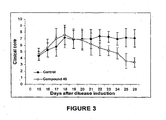
Figure 3 is a graph showing the reduction in clinical score following treatment with imidazoquinoline derivative 45 a compared to the control. - The present invention concerns allosteric modulation of the A3 adenosine receptor (A3AR) by the use of imidazoquinoline derivatives. It has been found that imidazoquinoline derivatives may effectively increase the efficacy of the receptor, upon binding to thereto.
- As used herein, the term "allosteric modulation" which may be used interchangeably with the term "allosteric regulation" denotes the regulation or modulation of an enzyme, receptor or other protein by binding of an effector molecule at the protein's allosteric site which is different from the binding site of the endogenous ligand.
- Effectors that enhance the protein's activity are referred to as "allosteric activators" or "allosteric enhancers".
- Further, as used in the specification and claims, the forms "a", "an" and "the" include singular as well as plural references unless the context clearly dictates otherwise. For example, the term "an-imidazoquinoline-derivative" denotes one or more compounds being the same or different chemical modifications of imidazoquinoline.
- Further, as used herein, the term "comprising" is intended to mean that the uses and compositions of the invention include the recited imidazoquinoline derivative but not excluding other substances. The term "consisting essentially of" is used to define uses and compositions that include the recited components but exclude other components that may have an essential significance on the biochemical response resulting from the binding of imidazoquinoline derivative to the receptor. For example, a composition consisting essentially of an imidazoquinoline derivative as the active ingredient and a pharmaceutically acceptable carrier will not include or include only insignificant amounts (amounts that will have an insignificant effect on the activity of the receptor) of other compounds capable of binding to the allosteric site or binding site of the receptor. "Consisting of" shall thus mean excluding more than trace elements of other components.
- Thus, in accordance with the first aspect, the present invention provides the use of an A3 adenosine receptor allosteric modulator (A3RM) for the preparation of a pharmaceutical composition for the preparation of a pharmaceutical composition for the treatment of a condition which requires for said treatment modulation of A3 adenosine receptor (A3AR), wherein said A3RM has the following general formula (I):

- R1 represents an aryl or alkaryl being optionally substituted at the aromatic ring once or more with a substituent selected C1-C10 alkyl, halo, C1-C10 alkanol, hydroxyl, C1-C10 acyl, C1-C10 alkoxyl; C1-C10-alkoxycarbony. C1-C10 alkoxylalkyl; C1-C10 thioalkoxy; C1-C10 alkylether, amino, hydrazido, C1-C10 alkylamino, pyridylthio, C2-C10 alkenyl; C2-C10 alkynyl, thio, and C1-C10 alkylthio, acetoamido, sulfonic acid; or said substituents can form together a cycloalkyl or cycloalkenyl fused to said aryl, the cycloalkyl or cycloalkenyl optionally comprising one or more heteroatoms; provided that said aryl is not an unsubstituted phenyl group;
- R2 represents hydrogen or a substituent selected from C1-C10 alkyl, C2-C10 alkenyl; C2-C10 alkynyl, C4-C10 cycloalkyl, C4-C10 cycloalkenyl or a five to seven membered heterocyclic aromatic ring, C5-C15 fused cycloalkyl, bicyclic aromatic or heteroaromatic rings; or C1-C10 alkylether, amino, hydrazido, C1-C10 alkylamino, C1-C10 alkoxy, C1-C10-alkoxycarbony, C1-C10 alkanol, C1-C10 acyl, C1-C10 thioalkoxy, pyridylthio, thio, and C1-C10 alkylthio, acetoamido, sulfonic acid.
- The term "alkyl" is used herein to refer to a linear or branched hydrocarbon chain having from 1 to 10 carbon atoms and more preferably 1 to 6 carbon atoms including, methyl, ethyl, n-propyl, isopropyl, n-butyl, t-butyl, n-heptyl, octyl.
- Similarly, the terms "alkenyl" and "alkynyl" denote a linear or branched hydrocarbon chain having, respectively, from 2 to 10, or from 3 to 10 carbon atoms and more preferably 2 to 6 or 3 to 6 carbon atoms, the alkenyl or alkynyl having at least one unsaturated bond.
- The alkyl, alkenyl or alkynyl substituents may be substituted with a heteroatom containing group. Thus, it should be understood that while not explicitly stated, any of the alkyl modifications defined hereinabove and below, such as alkylthio, alkoxy, akanol, alkylamine etc, also include the corresponding alkenyl or alkynyl modifications, such as, akenylthio, akenyloxy, alkenol, alkenylamine, or respectively, akynylthio, alkynyloxy, alkynol, alkynylamine.
- The term "aryl" denotes an unsaturated aromatic carbocyclic group of from 5 to 14 carbon atoms having a single ring (e. g., phenyl) or multiple condensed rings (e. g., naphthyl or anthryl). Preferred aryls include phenyl, indanyl, benzimidazole.
- The term "alkaryl" refers to -alkylene-aryl groups preferably having from 1 to 10 carbon atoms in the alkylene moiety and from 6 to 14 carbon atoms in the aryl moiety. Such alkaryl groups are exemplified by benzyl, phenethyl.
- The term "Substituted aryl" refers to an aromatic moiety which is substituted with from 1 to 3 substituents as defined above.
- Nonetheless, some preferred substituents include, halogen, (substituted) amino, nitro, cyano, alkyl, alkoxy, acyloxy or alkanol, sulphonyl, sulphynyl.
- The term "Halo" or "halogen" refers to fluoro, chloro, bromo and iodo, preferably to chloro.
- The term "acyl" refers to the groups H-C(O)- as well as alkyl-C(O)-.
- The term "alkanol" refers to the group -COH as well as alk-OH, "alk" denoting an alkylene, alkenylene or alkynylene chain.
- The term "alkoxy" is used herein to mean -O-alkyl, including, methoxy, ethoxy, propoxy, isopropoxy, n-butoxy.
- The term "alkylthio" is used herein to mean -S-alkyl, including, methylthio, ethylthio, n-propylthio, isopropylthio, n-butylthio.
- The term "alkoxyalkyl" is used herein to mean -alkyl-O-alkyl, including, methoxymethyl, ethoxymethyl, n-propoxymethyl, isopropoxymethyl, n-butoxymethyl, isobutoxymethyl, t-butoxymethyl.
- The term "cycloalkyl" is used herein to mean cyclic hydrocarbon radicals including, cyclopropyl, cyclobutyl, cyclopentyl, cyclohexyl, cycloheptyl.
- The term "alkoxycarbonyl" is used herein to mean -C(O)O-alkyl, including, methoxycarbonyl, ethoxycarbonyl, propoxycarbonyl.
- The term "fused cycloalkyl" is used herein to mean any compound or substituent comprising at least two aliphatic rings which are connected at a single atom (to form a spirocyclic moiety), at two mutually bonded atoms or across a sequence of atoms (bridgehead). The fused rings may include any bicyclic, tricyclic as well as polycyclic moieties. Bicyclic substituents are preferred in accordance with this embodiment of the invention.
- According to a more specific and preferred embodiment of the invention, the R1 substituent in A3RM has the following general formula (II):

- X1 and X2 which may be the same or different, are selected from hydrogen halogen, alkyl, alkanol or alkoxy, indanyl, pyrroline provided that when said n is 0, X, and X2 are not hydrogen.
- In yet a further preferred embodiment, R1 in said A3RM is a substituent having the above formula (II), wherein X1 or X2, which may be the same or different, are selected from hydrogen, chloro, methoxy, methanol or a substituent having the formulae (IIIa) or (IIIb):

- In further embodiment R2 in said A3RM is selected from H, C1-10 alkyl, C4-10 cycloalkyl, the alkyl chain may be a straight or branched or form a four to seven membered cycloalkyl ring.
- In yet a further embodiment, R2 in said A3RM is selected from a five to seven membered heterocyclic aromatic ring.
- More preferred R2 substituents are selected from H, n-pentyl, or a five membered heterocyclic aromatic ring having the following formula (IV):

- In accordance with another embodiment of the invention R2 comprises fused rings, particularly so as to form bicyclic substituents. Examples of bicyclic compounds which may be used to form the substituents in the context of the invention comprise bicyclo[2.2.1]heptane, bicyclo[4.1.0]heptane, bicyclo[4.1.0]heptan-3-carboxylic acid, bicyclo[3.1.0]hexan-3-carboxylic acid, bicyclo[4.1.0]heptan-2-carboxylic acid, bicyclo[3.1.0]hexan-2-carboxylic acid, and bicyclo[2.2.1]heptan-2-carboxylic acid.
- In accordance with yet another embodiment, R2 may be selected from 2-cyclohexene and 3-cyclohexene.
- Specific imidazoquinoline derivatives in accordance with the invention are listed below:
- N-(4-Methyl-phenyl)-2-cyclopentyl-1H-imidazo(4,5-c]quinolin-4-amine (31)
- N-(4-Methoxy-phenyl)-2-cyclopentyl-1H-imidazo[4,5-c]quinolin-4-amine (32)
- N-(3,4-Dichloro-phenyl)-2-cyclopentyl-1H-imidazo[4,5-c]quinolin-4-amine (33)
- N-(4-Chloro-phenyl)-2-cyclopentyl-1H-imidazo[4,5-c]quinolin-4-amine (34)
- N-(3-Methanol-phenyl)-2-cyaopentyl-1H-imidazo[4,5-c]quinolin-4-amine (35)
- N-([3,4-c]Indan)-2-cyclopentyl-1H-imidazo[4,5-c]quinolin-4-amine (36)
- N-(1H-indazol-6-yl)-2-cyclopentyl-1H-imidazo[4,5-c]quinolin-4-amine (37)
- N-(4-Methoxy-benzyl)-2-cyclopentyl-1H-imidazo[4,5-c]quinolin-4-amine (38)
- N-(1H-Indol-6-yl)-2-cyclopentyl-1H-imidazo[4,5-c]quinolin-4-amine (39)
- N-(Benzyl)-2-cyclopentyl-1H-imidazo[4,5-c]quinolin-4-amine (40)
- N-(Phenylethyl)-2-cyclopentyl-1H-imidazo[4,5-c]quinolin-4-amine (41)
- N-(3,4-Dichloro-phenyl)-2-cycloheptyl-1H-imidazo[4,5-c]quinolin-4-amine (42)
- N-(3,4-Dichloro-phenyl)-2-furyl-1H-imidazo[4,5-c]quinolin-4-amine (43)
- N-(3,4-Dichloro-phenyl)-2-cyclobutyl-1H-imidazo[4,5-c]quinolin-4-amine (44)
- N-(3,4-Dichloro-phenyl)-2-cyclohexyl-1H-imidazo[4,5-c]quinolin-4-amine (45)
- N-(3,4-Dichloro-phenyl)-2-1H-imidazo[4,5-c]quinolin-4-amine (46)
- N-(3,4-Dichloro-phenyl)-2-pentyl-1H-imidazo[4,5-c]quinolin-4-amine (47).
- In general, the compounds 31 - 47 were synthesized as shown in the scheme depicted in
Fig 1 . Condensation of anthranilic acid hydrochloride (1) with methazonic acid (2) resulted in 2-β-nitroethylideneaminobenzoic acid (3), which was dehydrated in acetic anhydride in the presence of potassium acetate to give 3-nitro-4-hydroxyquinoline (5) [Bachman, G. B. et al. Quinoline Derivatives from 3-Nitro-4-hydroxyquinoline, J. Am. Chem. Soc., 1947, 69, 365-371]. 3-Nitro-4-hydroxyquinoline (5) was treated with phosphorous oxychloride to afford 3-nitro-4-chloroquinoline (6). This was converted to 3-nitro-4-aminoquinoline (7) with ammonia, which was subsequently reduced by catalytic hydrogenation to 3,4-diaminoquinoline (8) with 10 % palladium on charcoal as catalyst. The next step involved ring-closure, which was carried out in three different ways. For example,Compound 10 was prepared by ring closure of the appropriate carboxylic acid and 3,4-diaminoquinoline (8) in polyphosphoric acid [Young, R. C. et al. Purine Derivatives as Competitive Inhibitors of Human Erythrocyte Membrane Phosphatidylinositol 4-Kinase. J. Med. Chem. 1990, 33, 2073-2080].Compound 14 was prepared by ring-closure of 2-furoyl chloride with 3,4-diaminoquinoline (8) [Scammells P.J. et al. Substituted 1,3-dipropylxanthines as irreversible antagonists of A1 adenosine receptors. J. Med. Chem. 1994, 37, 2704-2712].Compound 9 was prepared by ring-closure of 3,4-diaminoquinoline (8) with formic acid in trimethylorthoformate. Oxidation with 3-chloroperoxybenzoic acid afforded 5-oxides 16-22, which subsequently could be converted with phosphorous oxychloride into the 4-chlorides 23-29. Finally, reaction with the appropriate amines afforded the desired compounds 30-47, respectively [Van Galen, P. J. M. et. al. 1-H-imidazo[4,5-c]quinolin-4-amines: Novel Non-Xanthine Adenosine Antagonists. J. Med. Chem. 1991, 34, 1202-1206]. - It was surprisingly found that modifying the Van Galen procedure by using microwave irradiation (a short period of about 40 min. max) in the last reaction step resulted in a significant reduction in the required reaction time as well as an easier and more straightforward purification of the end products. This was unexpected since microwave irradiation has not been thought to be relevant for this particular reaction.
- It is noted that the above specific imidazoquinoline derivatives have been shown to modulate the response obtained by their allosteric binding to A3AR.
- The imidazoquinoline derivatives of the invention where shown to have, on the one hand, reduced affinity, if any, to the orthosteric binding sites of the A1 and A2A, A2B adenosine receptors and reduced affinity to the orthosteric binding site of the A3 adenosine receptor, and on the other hand, high affinity to the allosteric site of the A3 adenosine receptor. This finding was unexpected in light of the non-specific affinity of known imidazoquinoline derivatives, such as N-phenyl-2-cyclopentyl-1H-imidazo[4,5-c]quinolin-4-amine (compound 30) to the orthosteric as well as allosteric binding sites of these receptors. The selective affinity of the derivatives disclosed herein is particularly evident with respect to
compounds 33, 42, 44 and 45 in Tables 1 and 2. - As further shown in Table 2 hereinafter, the specific imidazoquinoline derivatives of the invention were shown to increase the activity of the A3AR. Thus, in accordance with a further preferred embodiment of the invention modulation comprises enhancement of A3AR activity. In this context, the A3AM are considered as A3AR activators.
- The term " enhancement " denotes the effect of the imidazoquinoline derivative on the receptor exhibited by an increase of at least 15% in the efficacy of the A3 adenosine receptor by binding of the imidazoquinoline to the allosteric site of the receptor and/or by a decrease in dissociation rate of adenosine or an A3AR agonist to the orthosteric binding site.
- The invention also provides a compound of formula I for use in the treatment of a condition which requires for said treatment modulation of A3 adenosine receptor (A3AR), comprising administering to said subject an amount of the A3RM as defined above, the amount being effective to modulate A3AR activity, wherein the condition is selected from the conditions listed below (see also claim 1 and 2).
- The term "treatment" as used herein refers to the administering of a therapeutic amount of the imidazoquinoline derivative as defined herein, alone or in combination with a ligand to the A3AR orthosteric binding site which is effective to achieve a therapeutic effect, the therapeutic effect being selected from one or more of the following: amelioration of undesired symptoms associated with a disease, prevention of the manifestation of such symptoms before they occur, slowing down a progression of the disease, slowing down any deterioration of symptoms, enhancement of onset of a remission period, slowing down of any irreversible damage caused in a progressive chronic stage of the disease, delaying of the onset of said progressive stage, lessening of the severity or cure of a disease, improving survival rate or more rapid recovery from a disease, preventing the disease form occurring or a combination of two or more of the above.
- The condition to be treated is selected from the group consisting of hyperproliferative disorders, and in particular all types of solid tumors; skin proliferative diseases (e.g. psoriasis); a variety of benign hyperplasia disorders; inflammatory diseases; ischemic conditions, such as myocardial or renal ischemia.
- The term "solid tumors" refers to carcinomas, sarcomas, adenomas, and cancers of neuronal origin and if fact to any type of cancer which does not originate from the hematopoeitic cells and in particular concerns: carcinoma, sarcoma, adenoma, hepatocellular carcinoma, hepatocellularcarcinoma, hepatoblastoma, rhabdomyosarcoma, esophageal carcinoma, thyroid carcinoma, ganglioblastoma, fibrosarcoma, myxosarcoma, liposarcoma, cohndrosarcoma, osteogenic sarcoma, chordoma, angiosarcoma, endotheliosarcoma, lymphagiosarcoma, synovioama, Ewing's tumor, leimyosarcoma, rhabdotheliosarcoma, colon carcinoma, pancreatic cancer, breast cancer, ovarian cancer, prostate cancer, squamous cell carcinoma, basal cell carcinoma, adenocarcinoma, renal cell carcinoma, hematoma, bile duct carcinoma, melanoma, choriocarcinoma, seminoma, embryonal carcinoma, Wilms' tumor, cervical cancer, testicular tumor, lung carcinoma, small lung carcinoma, bladder carcinoma, epithelial carcinoma, glioma, astrocyoma, medulloblastoma, craniopharyngioma, ependynoma, pinealoma, retinoblastoma, multiple myeloma, rectal carcinoma, thyroid cancer, head and neck cancer, brain cancer, cancer of the peripherial nervous system, cancer of the central nervous system, neuroblastoma, cancer of the endometrium, as well as metastasis of all the above. It has been shown in accordance with the invention that increased expression of A3AR can be found not only in the primary tumor site but also in metastases thereof.
- Benign hyperplasia disorders include benign prostate hyperplasia (BPH), non-tumorigenic polyps in the digestive tract and in the uterus.
- Inflammatory diseases include, rheumatoid arthritis, Crohn's disease, multiple sclerosis.
- Also disclosed is the combined administration of the claimed A3RM of formula (I) in combination with a ligand to the orthosteric binding site. When modulation involves enhancement of the receptor, the A3RM may be administered in combination with adenosine or an A3AR agonist.
- The term "combination" includes a schedule of treatment that involves administration of at least the A3RM and the ligand to the orthosteric site. The schedule of treatment may comprise simultaneous or co-administration of the two active principles, or with an interval between administrations.
- According to a preferred embodiment, the A3RM is administered to the subject orally, although other administration routes are applicable, including parenteral (intravenous, intramuscular, intra-arterial, subcutaneous, intranasal, via the lungs (inhalation)).
- The A3RM is preferably used and administered in combination with a physiologically acceptable carrier to form a pharmaceutical composition, the latter also forming part of the invention.
- The term "physiologically acceptable excipient" denotes any excipient that is useful in preparing a pharmaceutical composition or formulation that is generally safe, non-toxic and neither biologically nor otherwise undesirable, and includes a excipient that is acceptable for veterinary use as well as human pharmaceutical use.
- In making the compositions of this invention, the imidazoquinoline derivative is usually mixed with the excipient, diluted by an excipient or enclosed within a carrier which can be in the form of a capsule, sachet, paper or other container. When the excipient serves as a diluent, it can be a solid, semi-solid, or liquid material, which acts as a vehicle, carrier or medium for the imidazoquinoline derivative. Thus, the compositions can be in the form of tablets, pills, powders, lozenges, sachets, cachets, elixirs, suspensions, emulsions, solutions, syrups, aerosols (as a solid or in a liquid medium), soft and hard gelatin capsules, suppositories, sterile injectable solutions, and sterile packaged powders.
- The effective amount of imidazoquinoline derivative in the pharmaceutical composition and unit dosage form thereof may be varied or adjusted widely depending upon the particular application, the manner or introduction, the potency of the particular compound, and the desired concentration. The effective amount is typically determined in appropriately designed clinical trials (dose range studies) and the person versed in the art will know how to properly conduct such trials in order to determine the effective amount. As generally known, an effective amount depends on a variety of factors including the affinity of the imidazoquinoline derivative to the allosteric binding site, its distribution profile within the body, a variety of pharmacological parameters such as half life in the body, on undesired side effects, if any, on factors such as age and gender, etc.
- The term "unit dosage forms" refers to physically discrete units suitable as unitary dosages for human subjects and other mammals, each unit containing a predetermined quantity of active material calculated to produce the desired therapeutic effect, in association with a suitable pharmaceutical excipient. The amount of therapeutically active compound in such a unit dosage form may vary from about 0.5 mg to 500 mg.
- In this case, the composition of the invention will typically be administered over an extended period of time in a single daily dose, in several doses a day, as a single dose and in several days, etc. The treatment period will generally have a length proportional to the length of the disease process and the specific imidazoquinoline derivative effectiveness and the patient species being treated.
- Microwave-assisted chemistry was performed on an Emrys™ Optimizer with EmrysTM Optimizer software. For the reactions round-bottom vials with a volume of 2-5 mL were used.
- 1H-NMR spectra were measured at 200 MHz with a Bruker AC 200 or Bruker DMX 600 spectrometer. 13C-NMR spectra were measured at 50 or 150 MHz. Chemical shifts for 1H and 13C are given in ppm (δ) relative to tetramethylsilane (TMS) as internal standard, coupling constants are given in Hz. Melting points were determined with a Büchi capillary melting point apparatus and are uncorrected. Combustion analyses of new target compounds were performed by the analytical department of the Gorlaeus Laboratories, Leiden University (The Netherlands) and are within 0.4 % of theoretical values unless otherwise specified.
-
Compound 3 was prepared as described elsewhere [Bachman, G. B. et al. Quinoline Derivatives from 3-Nitro-4-hydroxyquinoline, J. Am. Chem. Soc., 1947, 69, 365-371]. In brief, a solution of NaOH (13.4 g) in water (26.8 ml) was cooled and stirred. Nitromethane (6.7 g, 5.9 ml, 110 mmol) was added dropwise, keeping the temperature at 25-30 °C. The mixture was then warmed to 40 °C and again cooled and stirred while another portion of nitromethane (6.7 g, 5.9 ml, 110 mmol) was added slowly at 40-45 °C. This temperature was maintained until all solid was dissolved and a clear red solution was obtained. The solution was then heated to 50-55 °C for two to five minutes and finally cooled to 30 °C, poured on chipped ice (30 g) and acidified with concentrated HCl (30 ml). The resultant solution ofmethazonic acid 2 was immediately added to a solution of anthranilic acid 1 (13.7 g, 100 mmol) and concentrated HCl (9.2 ml) in water (200 ml). Yellow precipitate formed, which was left to stand at room temperature for 12-18 h. The precipitate was filtered off and washed with water. The cake was sliced into thin flakes and dried. Yield: 18.40 g (89%). Mp.: 196°-197°C. 1H NMR (DMSO-d6 ): δ 6.76 (d, 2H, J = 6.6 Hz, CH2); 7.24 (t, 1H, J= 6.6 Hz, N=CH); 7.54-7.82 (m, 2H, Ar); 8.02-8.12 (m, 2H, Ar); 12.09 (s, 1H, COOH). -
Compound 5 was prepared as described elsewhere [Bachman, G. B. et al. Quinoline Derivatives from 3-Nitro-4-hydroxyquinoline, J. Am. Chem. Soc., 1947, 69, 365-371]. In brief, a mixture of 2-ß-nitroethylideaminobenzoic acid 3 (10.4 g, 50 mmol) and technical acetic anhydride (50 ml) was placed in a 3-necked flask of at least 100 mL capacity fitted with thermometer, magnetic stirrer and reflux condenser. It was stirred and heated to 100-105 °C until a clear solution was obtained. Heating was then discontinued and anhydrous potassium acetate (5.0 g, 51 mmol) was added rapidly with stirring. The temperature rose spontaneously to 134-138 °C. When it began to fall (five to ten minutes) external heating was applied and the mixture was refluxed for fifteen minutes with vigorous stirring, then allowed to cool slowly to room temperature. The product filtered off and washed with glacial acetic acid until the washings were colorless. Then suspended in water (50 ml) and dried in vacuum at 80 °C. Yield: 6.93 g (49%). Mp.: >300 °C. 1H NMR (DMSO-d6 ): δ 7.54 (t, 1H, J = 7.3 Hz, Ar); 7.76-7.86 (m, 2H, Ar); 8.27 (d, 1H, J = 8.0 Hz, Ar); 9.21 (s, 1H, Ar). -
Compound 6 was prepared as described elsewhere [Van Galen, P. J. M. et. al. 1-H-imidazo[4,5-c]quinolin-4-amines: Novel Non-Xanthine Adenosine Antagonists. J. Med. Chem. 1991, 34, 1202-1206]. In brief, 3-Nitro-4-hydroxyquinoline 5 (5.7 g, 30 mmol) was added to phosphorus oxychloride (70.0 g, 41.2 ml, 450 mmol) with stirring. The mixture was refluxed for 30 minutes. After cooling the solvent was poured over crushed ice while stirring. After 1 hour the solid that was formed was filtered off, washed with cold water and dissolved in ethyl acetate. The solution was extracted with ice-cold NaOH (1 M) till pH= 8-9 and dried over MgSO4. The solvent was evaporated and the residue was dried. Yield: 5.05 g (81%). Mp.: 118°-119 °C. 1H NMR (DMSO-d6): δ 7.94-8.11 (m, 2H, Ar); 8.25 (d, 1H, J = 8.0 Hz, Ar); 8.47 (d, 1H, J = 9.5 Hz, Ar); 9.42 (s, 1H, Ar). -
Compound 7 was prepared as described elsewhere [Van Galen, P. J. M. et. al. (1991) ibid.]. In brief, ammonia gas was passed, while stirring, through a solution of 3-nitro-4-chloroquinoline 6 (7.0 g, 30 mmol) in toluene (95 ml) and propanol (15 ml) till the product was formed. During the course of the reaction, the temperature was gradually raised till 70 °C. After cooling, the solid was separated by filtration and washed successfully with toluene/2-propanol (70:30), ether and cold water until Cl- could no longer be detected. The solid was filtered off and dried at 80 °C. Yield: 6.1 g (95%). Mp.: 255-257 °C. 1H NMR (DMSO-d6): δ 7.50-7.66 (m, 1H, Ar); 7.81-7.92 (m, 2H, Ar); 8.59 (d, 1H, J= 8.0 Hz, Ar); 9.03 (broad s, 2H, NH2); 9.18 (s, 1H, Ar) -
Compound 8 was prepared as described elsewhere [Van Galen, P. J. M. et. al. (1991) ibid.]. In brief, to a mixture of 3-nitro-4-aminoquinoline 7 (3.2 g, 20 mmol) in absolute ethanol (60 ml) was added 10% palladium on charcoal (0.17 g). The mixture was hydrogenated under 2.5-3.5 atm pressure till the product was formed and subsequently filtered over Hyflo. The filtrate was evaporated and the residue was gradually solidified and dried in vacuum. Yield: 2.66 g (98%). Mp.: 183-185 °C. MS (ESI) m/z 161.0 (M + 1)+. 1H NMR (DMSO-d6): δ 4.73 (broad s, 2H, NH2); 5.88 (s, 2H, NH2); 7.16-7.37 (m, 2H, Ar); 7.64-7.70 (m, 1H, Ar); 7.98-8.03 (m, 1H, Ar); 8.22 (s, 1H, Ar). - 1H-Imidazo[4,5-c]quinolines were prepared as described elsewhere [Young, R. C. et al. Purine Derivatives as Competitive Inhibitors of Human Erythrocyte Membrane Phosphatidylinositol 4-Kinase. J. Med. Chem. 1990, 33, 2073-2080]. In brief, polyphosporic acid (1.3 ml/mmol) was added to 3,4-
diaminoquinoline 8 and the appropiate carboxylic acid (1.2 eq.). The mixture was stirred at 100 °C for 5 hours. Then cooled to 0 °C and NH4OH was added slowly till pH = 8-9. The mixture was extracted with ethyl acetate (3times 15 ml), then washed with water, brine and again water and dried over MgSO4. The solvent was evaporated and the residue was dried. -
Compound 9 was prepared as described elsewhere [Van Galen, P. J. M. et. al. (1991) ibid. ]. In brief, compound 8 (1.4g, 8.71 mmol) was heated under stirring with trimethyl orthoformate (23.8 ml). To a clear solution was cautiously added formic acid (0.45 ml) whereupon solid precipitated. The mixture was refluxed for 1 hour. After cooling to 40 °C, ether (3.1 ml) and absolute ethanol (0.36 ml) were added and the mixture was cooled on ice for 1 hour. The solid that was formed was filtered off, washed with ether and subsequently with ethyl acetate and dried. Yield: 0.44 g (81%). Mp.: 263-265 °C. 1H NMR (DMSO-d6 ): δ 7.67-7.72 (m, 2H, Ar); 8.18 (s, 1H, Ar); 8.29-8.34 (m, 1H, Ar); 8.61-8.65 (m, 1H, Ar); 8.93 (s, 1H, Ar). - Scale: 6.2 mmol. Eluent for column chromatography was ethyl acetate:petroleum ether = 1:1. Yield: 0.88 g (63%). Mp.: 191-192 °C. MS (ESI) m/z 223.6 (M + 1)+. 1H NMR (CD3OD): δ 1.95-2.32 (m, 2H, CH2); 2.44-2.66 (m, 4H, 2 CH2); 3.82-4.01 (m, 1H, CH); 7.58-7.71 (m, 2H, Ar); 8.01-8.11 (m, 1H, Ar); 8.32-8.38 (m, 1H, Ar); 9.01 (s, 1H, Ar).
- Scale: 4.0 mmol. Eluent for column chromatography was 5% methanol in dichloromethane. Yield: 0.77 g (81%). Mp.: 192 °C. 1H NMR (CDCl3): δ 1.70-1.88 (m, 6H, 3 CH2); 2.03-2.22 (m, 2H, CH2); 3.39-3.56 (m, 1H, CH); 7.27 (s, 1H, Ar); 7.53-7.66 (m, 2H, Ar); 8.21 (d, 2H, J= 8.0 Hz, Ar); 9.18 (s, 1H, NH).
- Scale: 6.3 mmol. Eluent for column chromatography was 1-5% methanol in dichloromethane. Yield: 0.60 g (38%). Mp.: 205-206°C. MS (ESI) m/z 251.7 (M + 1)+. 1H NMR (CDCl3): δ 1.12-1.39 (m, 4H, 2 CH2); 1.66-1.77 (m, 4H, 2 CH2); 2.16-2.21 (m, 2H, CH2); 3.01-3.13 (m, 1H, CH); 7.41-7.60 (m, 2H, Ar); 8.19 (d, 1H, J= 8.8 Hz, Ar); 8.31 (d, 1H, J = 8.0 Hz, Ar); 9.16 (s, 1H, Ar).
- Scale: 6.3 mmol. Eluent for column chromatography was 1-5% methanol in dichloromethane. Yield: 0.45 g (27%). Mp.: 225-226 °C. MS (ESI) m/z 266.3 (M + 1)+. 1H NMR (CDCl3): δ 1.25-1.24 (m, 12H, 6 CH2); 3.20-3.32 (m, 1H, CH); 7.42-7.62 (m, 2H, Ar); 8.20 (d, 1H, J= 8.0 Hz, Ar); 8.33 (d, 1H, J= 8.0 Hz, Ar); 9.19 (s, 1H, Ar).
- 2-Furoyl chloride (1.1 g, 0.8 ml, 8.1 mmol) in dry dichloromethane (15 ml) was added dropwise to a solution of to 3,4-diaminoquinoline 8 (1.0 g, 6.0 mmol) in dry pyridine (6.2 ml) under nitrogen. The solution was stirred for 2 hours at room temperature. Water (15 ml) was added to quench the reaction and the solvent was evaporated under reduced pressure to afford an orange solid. This crude solid in 2N NaOH (15 ml)was refluxed for 2 hours. After cooling on ice the pH was adjusted to 7 using concentrated HCl. The solid that precipitated was filtered off and washed with water and ether. Then extracted with ethyl acetate (3
times 15 ml) and washed with water (3time 15 ml) and dried over MgSO4. The solvent was evaporated and the residue was dried. Eluent for column chromatography was 1-5% methanol in dichloromethane. Yield: 0.62 g (44%). Mp.: 236-238 °C. 1H NMR (DMSO-d6 ): δ 6.74 (s, 1H, Ar); 7.35 (d, 1H, J= 3.7 Hz, Ar); 7.69-7.73 (m, 2H, Ar); 7.83 (s, 1H, Ar); 8.09 (s, 1H, Ar); 8.46 (s, 1H, Ar); 9.09 (s, 1H, Ar). 13C NMR (DMSO-d6 ): δ 111.4, 112.6, 120.7, 121.8, 126.5, 127.2, 129.5, 138.2, 143.6, 144.3, 145.1, 147.2, 155.4. - Prepared as described for the furyl compound (14) using hexanoyl chloride (1.75 g, 13 mmol). Eluent for column chromatography was ethyl acetate:petroleum ether 1:4 to 4:1. Yield: 0.85 g (41%): mp 142-143 °C. 1H NMR (DMSO-d6): δ 0.91 (t, 3H, J= 6, CH3), 1.37-1.39 (m, 4H, 2 x CH2), 1.83-1.91 (m, 2H, CH2), 1.93-2.30 (t, 2H, J = 8, CH2), 7.64-7.69 (m, 2H, Ar); 8.08-8.13 (m, 1H, Ar); 8.28-8.42 (m, 1 , Ar); 9.12. (s, 1H, Ar).
- Staring material (9-15) was almost completely dissolved (with heating) in chloroform (2.5 ml/mmol), dichloromethane (2.5 ml/mmol) and methanol (0.25 ml/mmol). 3-Chloroperoxybenzoic acid (2.5 eq.) was added and the solution was reflux. After 30 minutes Na2CO3 (0.04 g/mmol) was added and the mixture was refluxed for one more hour. The reaction mixture was cooled on an ice-bath and the solvent was evaporated. Column chromatography was needed for purification and removal of 3-chloroperoxybenzoic acid.
- Scale: 8.3 mmol. Eluent for column chromatography was 2% methanol in dichloromethane. Yield: 0.55 g (36%). Mp.: 290-295 °C. 1H NMR (CD3OD): δ 7.41-7.61 (m, 1H, Ar); 7.87-7.96 (m, 2H, Ar); 8.45-8.53 (m, 1H, Ar); 8.75-8.80 (m, 1H, Ar); 9.16 (s, 1H, Ar).
- Scale: 1.8 mmol. Eluent for column chromatography was 2% (increased to 6%) methanol in dichloromethane. Yield: 0.18 g (42%). Mp.: 123-130 °C. 1H NMR (DMSO-d 6): δ 1.95-2.22 (m, 2H, CH2); 2.38-2.59 (m, 4H, 2 CH2); 3.41-3.93 (m, 1H, CH); 7.72-7.93 (m, 2H, Ar); 8.39-8.41 (m, 1H, Ar); 8.65-8.99 (m, 1H, Ar); 11.52 (s, 1H, Ar).
- Scale: 0.8 mmol. Eluent for column chromatography was 5% methanol in dichloromethane. Yield: 0.19 g (95%). Mp.: 155-157 °C. 1H NMR (CD3OD): δ 1.74-2.13 (m, 6H, 3 CH2); 2.18-2.39 (m, 2H, CH2); 3.38-3.54 (m, 1H, CH); 7.29-7.42 (m, 2H, Ar); 7.83-7.92 (m, 2H, Ar); 9.03 (s, 1H, Ar).
- Scale: 2.4 mmol. Eluent for column chromatography was 5-10% methanol in dichloromethane. Yield: 0.59 g (92%). Mp.: 160-165 °C. 1H NMR (CD3OD): δ 1.17-2.19 (m, 10H, 5 CH2); 2.97-3.12 (m, 1H, CH); 7.79-7.93 (m, 2H, Ar); 8.42-8.46 (m, 1H, Ar); 8.69-8.77 (m, 1H, Ar); 9.03 (s, 1H, Ar). 13C NMR (CD3OD): δ 26.6, 26.8, 32.5, 39.7, 120.8, 123.1, 128.6, 129.9, 130.1, 130.3, 132.5, 138.0, 142.6, 164.1, 166.0, 170.9, 173.8.
- Scale: 2.0 mmol. Eluent for column chromatography was 3-8% methanol in dichloromethane. Yield: 0.22 g (39%). Mp.: 115-120 °C. 1H NMR (CD3OD): δ 1.67-2.11 (m, 12H, 6 CH2); 3.05-3.31 (m, 1H, CH); 7.78-7.90 (m, 2H, Ar); 8.28-8.48 (m, 1H, Ar); 8.62-8.73 (m, 1H, Ar); 9.00 (s, 1H, Ar). 13C NMR (CD3OD): δ 25.0, 26.4, 32.1, 39.2, 117.4, 118.2, 120.6, 126.2, 127.4, 127.8, 128.2, 130.0, 130.6, 132.3, 132.6, 135.2, 162.7, 166.5.
- Scale: 2.2 mmol. Eluent for column chromatography was 1-10% methanol in dichloromethane. Yield: 0.36 g (66%). Mp.: >280 °C. 1H NMR (CD3OD): δ 6.74-6.77 (m, 1H, Ar); 7.37-7.47 (m, 2H, Ar); 7.87-7.96 (m, 2H, Ar); 8.55-8.60 (m, 1H, Ar); 8.74-8.79 (m, 1H, Ar); 9.07 (s,1H, Ar).
- Scale: 3.34 mmol. Eluent for column chromatography was 1-5% methanol in dichloromethane. Yield: 0.12 g (14%): 1H NMR (CD3OD): δ 0.88-0.94 (t, 3H, CH3, J = 6 Hz); 1.26-1.39 (m, 4H, 2 x CH2); 1.81-1.88 (m, 2H, CH2,) 2.88-2.95 (t, 2H, CH2, J= 8 Hz); 7.44-7.58 (m, 2H, Ar); 7.90-8.09 (m, 2H, Ar); 9.03 (s, 1H, Ar).
- A mixture of toluene (0.45 ml/mmol) and dimethylformamide (0.90 ml/mmol) was cooled in an ice-bath and phosphorus oxychloride (2.6 eq.) was added. After 10 minutes the appropriate 1H-imidazo[4,5-c]quinolin-5-oxide was added and the solution was stirred at room temperature for 10 minutes. Subsequently the solution was heated to 100 °C on a steam bath for 30 minutes. Upon cooling, the solvent was evaporated and the resulting syrup was poured over crushed ice while stirring. The mixture was then warmed to room temperature and carefully adjusted to pH 6-7 with solid NaHCO3. After 2 hours, the solid that was formed was filtered off, washed with water and diisopropylether and subsequently dried.
- Scale: 3.5 mmol. Eluent for column chromatography was 2% methanol in dichloromethane. Yield: 0.31 g (44%). Mp.: 257-258 °C. MS (ESI) m/z 203.8 (M + 1)+, 206.0 (M + 3)+. 1H NMR (CDCl3): δ 8.46-8.56 (m, 2H, Ar); 8.82-8.87 (m, 1H, Ar); 9.14-9.19 (m, 1H, Ar); 9.35 (s, 1H, Ar); 10.16 (broad s, 1H, NH).
- Scale: 0.6 mmol. Yield: 0.16 g (99%). Mp.: 142-145 °C. 1H NMR (CDCl3): δ 2.06-2.24 (m, 2H, CH2); 2.52-2.66 (m, 4H, 2 CH2); 3.87-4.00 (m, 1H, CH); 7.56-7.68 (m, 2H, Ar); 8.02-8.06 (m, 1H, Ar); 8.30-8.32 (m, 1H, Ar).
- Scale: 12.7 mmol. Yield: 2.65 g (75%). Mp.: > 265 °C. 1H NMR (CD3OD): δ 1.81-2.22 (m, 6H, 3 CH2); 2.25-2.31 (m, 2H, CH2); 3.40-3.51 (m, 1H, CH); 7.63-7.74 (m, 2H, Ar); 8.00-8.03 (m, 1H, Ar); 8.33-8.38 (m, 1H, Ar).
- Scale: 2.2 mmol. Yield: 0.65 g (97%). Mp.: 245-250 °C. MS (ESI) m/z 285.9 (M + 1)+, 288.0 (M + 3)+. 1H NMR (CD3OD): δ 1.37-2.17 (m, 10H, 5 CH2); 3.03-3.18 (m, 1H, CH); 7.68-7.71 (m, 2H, Ar); 8.00-8.08 (m, 1H, Ar); 8.32-8.40 (m, 1H, Ar).
- Scale: 0.8 mmol. Yield: 0.38 g (86%). Mp.: 195-200 °C. MS (ESI) m/z 299.9 (M + 1)+, 301.7 (M + 3)+. 1H NMR (CD3OD): δ 1.73-2.13 (m, 12H, 6 CH2); 3.21-3.40 (m, 1H, CH); 7.63-7.79 (m, 2H, Ar); 7.97-8.05 (m, 1H, Ar); 8.29-8.38 (m, 1H, Ar).
- Scale: 1.4 mmol. Eluent for column chromatography was petroleum ether:ethyl acetate: = 75:25. Yield: 0.1 g (26%). Mp.: 235-238 °C. MS (ESI) m/z 269.8 (M + 1)+, 272.1 (M + 3)+. 1H NMR (CD3OD): 6.72-6.75 (m, 1H, Ar); 7.40-7.43 (m, 1H, Ar); 7.63-7.75 (m, 2H, Ar); 7.83-7.88 (m, 1H, Ar); 7.98-8.01 (m, 1H, Ar); 8.36-8.40 (m, 1H, Ar).
- Scale: 0.45 mmol. Yield: 0.052 g (41%): mp 236-237 °C; MS (ESI) m/z 273.9 (M + 1)+, 1H NMR (CDCl3): δ 0.65-0.72 (t, 3H, CH3, J = 6 Hz); 1.14-1.21 (m, 4H, 2 ×CH2); 1.61-1.72 (m, 2H, CH2); 2.76-2.84 (t, 2H, CH2, J = 8 Hz); 7.33-7.47 (m, 2H, Ar); 7.76-7.80 (m, 1H, Ar); 7.95-8.15 (m, 1H, Ar).
- These compounds were prepared by means of microwave-assisted chemistry. Absolute ethanol (2.5-3.0 ml) was added to the appropriate 4-chloro-1H-imidazo[4,5-c]quinoline and appropriate aniline (2-3 eq.). Conditions: pre stirring 60 seconds,
temperature 120 °C, time 2400 seconds, normal sample absorption, fixed hold time. After the reaction was completed the solvent was evaporated and the remaining product was purified by column chromatography and recrystallized. - Compound 30 was prepared as described elsewhere [Van Galen P.J.M. et al. (1991) ibid.].
- Scale: 0.8 mmol. Eluent for column chromatography was 2.5-10% methanol in dichloromethane. Yield: 40 mg (15%). The product was recrystallized from methanol. Mp.: 155-157 °C. MS (ESI) m/z 328.9 (M + 1)+. 1H NMR (CDCl3): δ 1.80-2.27 (m, 8H, 4 CH2); 3.31-3.55 (m, 1H, CH); 7.00-7.09 (m, 1H, Ar); 7.15-7.29 (m, 4H, Ar); 7.49-7.56 (m, 1H, Ar); 7.78 (d, 1H, J = 6.6 Hz, Ar); 7.96-8.09 (m, 2H, Ar). 13C NMR 750 MHz (CDCl3): δ 24.9, 31.7, 38.9, 114.7, 117.9, 118.1, 118.3, 119.2, 119.8, 120.9, 121.9, 123.6, 124.1, 126.2, 126.4, 126.5, 126.7, 128.1, 128.2, 128.9, 133.5, 140.5, 143.3, 146.6, 156.3, 159.1. Anal. (C21H20N4·0.7 H2O) C, H, N.
- Scale: 0.7 mmol. Eluent for column chromatography was 1% methanol in dichloromethane. Yield: 80 mg (35%). The product was recrystallized from methanol. Mp.: 125-126 °C. MS (ESI) m/z 342.7 (M + 1)+, 343.8 (M + 2)+. 1H NMR (CDCl3): δ 1.55-2.15 (m, 8H, 4 CH2); 2.24 (s, 3H, CH3); 3.21-3.33 (m, 1H, CH); 7.07 (d, 2H, J = 8.0 Hz, Ar); 7.21-7.28 (m, 1H, Ar); 7.46 (t, 1H, J= 7.3 Hz, Ar); 7.74-7.87 (m, 4H, Ar). 13C NMR 400 MHz (CDCl3): δ 20.7, 24.4, 29.7, 32.4, 39.6, 62.5, 115.8, 120.7, 122.6, 126.7, 127.3, 129.4, 132.4, 137.1. 143.8, 147.5, 157.1. Anal. (C22H22N4·1.7 H2O) C, H, N.
- Scale: 0.7 mmol. Eluent for column chromatography was 1% methanol in dichloromethane. Yield: 90 mg (38%). The product was recrystallized from methanol. Mp.: 106-107 °C; MS (ESI) m/z 358.8 (M + 1)+. 1H NMR (CDCl3): δ 1.71-2.29 (m, 8H, 4 CH2); 3.22-3.38 (m, 1H, CH); 3.65 (s, 3H, OCH3); 6.80-6.84 (m, 2H, Ar); 7.26 (t, 1H, J = 8.0 Hz, Ar); 7.46 (t, 1H, J = 7.3 Hz, Ar); 7.76-7.93 (m, 4H, Ar). 13C NMR 400 MHz (CDCl3): δ 25.5, 32.5, 39.6, 53.4, 55.4, 114.2, 114.8, 116.5, 120.4, 122.1, 122.4, 127.0, 127.2, 133.1, 144.0, 147.8, 155.4, 156.7. Anal. (C22H22N4O·CH3OH)C, H, N.
- Scale: 0.7 mmol. Eluent for column chromatography was dichloromethane. Polarity was slowly increased with methanol till 2%. Yield: 150 mg (54%). The product was recrystallized from methanol. Mp.: 114-115 °C. MS (ESI) m/z 396.5 (M + 1)+, 398.5 (M + 2)+, 400.5 (M + 3)+. 1H NMR (CDCl3): δ 1.68-2.29 (m, 8H, 4 CH2); 3.29-3.43 (m, 1H, CH); 7.33 (t, 2H, J= 8.8 Hz, Ar); 7.54 (t, 1H, J = 8.0 Hz, Ar); 7.78 (t, 2H, J = 8.0 Hz, Ar); 7.99 (d, 1H, J = 8.0 Hz, Ar); 8.44 (s, 1H, Ar); 9.62 (broad s, 1H, NH). Anal. (C21H18Cl2N4·2.2 H2O) C, H, N.
- Scale: 1.0 mmol. Eluent for column chromatography was 0.5-2% methanol in dichloromethane. Yield: 120 mg (33%). The product was recrystallized from methanol. Mp.: 189-190 °C. MS (ESI) m/z 362.7 (M + 1)+, 365.0 (M + 3)+. 1H NMR (CDCl3): δ 1.67-2.25 (m, 8H, 4 CH2); 3.28-3.43 (m, 1H, CH); 7.27-7.39 (m, 3H, Ar); 7.49-7.59 (m, 1H, Ar); 7.71-7.79 (m, 1H, Ar); 7.97 (t, 3H, J = 8.0 Hz, Ar); 8.46 (broad s, 1H, NH). Anal. (C21H19ClN4·1.5H2O) C, H, N.
- Scale: 0.4 mmol. Eluent for column chromatography was ethyl acetate:petroleum ether = 50:50, later increased to 70:30 respectively. Yield: 33 mg (25%). The product was recrystallized from methanol giving off-white crystals. Mp.: 228-230 °C. MS (ESI) m/z 359.0 (M + 1)+. 1H NMR (CDCl3/ CD3OD): δ 1.63-2.16 (m, 8H, 4 CH2); 3.23-3.24 (m, 1H, CH); 3.95-4.05 (q, 2H, J = 7.3 Hz, CH2); 6.93 (d, 1H, J = 8.0 Hz, Ar); 7.18-7.28 (m, 3H, Ar); 7.39 (t, 1H, J= 7.3 Hz, Ar); 7.72-7.92 (m, 3H, Ar, OH), Anal. (C22H22N4O·0.5 CH3OH) C, H, N.
- Scale: 0.4 mmol. Eluent for column chromatography was 1% methanol in dichloromethane. Yield: 120 mg (81%). The product was recrystallized from methanol giving light brown crystals. Mp.: 142-145 °C. MS (ESI) m/z 369.0 (M + 1)+. 1H NMR (CDCl3): δ 1.15-1.34 (m, 2H, CH2); 1.65-2.19 (m, 8H, 4 CH2); 2.76 (t, 4H, J= 7.3 Hz, 2 CH2); 3.24-3.27 (m, 1H, CH); 7.06 (d, 1H, J= 8.0 Hz, Ar); 7.22-7.29 (m, 1H, Ar); 7.40-7.49 (m, 2H, Ar); 7.73 (s, 1H, Ar); 7.85-7.96 (m, 2H, Ar). Anal. (C24H24N4·1.2 H2O) C, H, N.
- Scale: 0.4 mmol. Eluent for column chromatography was ethylacetate:petroleumether = 80:20. Yield: 110 mg (74%). The product was recrystallized from ethyl acetate:petroleum ether = 50:50 giving off-white crystals. Mp.: 235-236 °C. MS (ESI) m/z 368.8 (M + 1)+. 1H NMR (CD3OD): δ 1.70-2.38 (m, 8H, 4 CH2); 3.23-3.50 (m, 1H, CH); 7.31-7.38 (m, 1H, Ar); 7.47-7.60 (m, 2H, Ar); 7.71-7.75 (m, 1H, Ar); 7.82-7.86 (m, 1H, Ar); 8.01-8.08 (m, 2H, Ar); 8.68 (s, 1H, Ar). Anal. (C22H20N6·1.5 H2O) C, H, N.
- Scale: 0.4 mmol. Eluent for column chromatography was diisopropylether. Yield: 33 mg (22%). The product was recrystallized from methanol giving white crystals. Mp.: 245-247 °C. MS (ESI) m/z 372.9 (M + 1)+. 1H NMR (CD3OD): δ 1.72-2.30 (m, 8H, 4 CH2); 3.26-3.41 (m, 1H, CH); 3.77 (s, 3H, OCH3); 4.76 (s, 2H, CH2); 6.87-6.92 (m, 2H, Ar); 7.23-7.49 (m, 4H, Ar); 7.78 (d, 1H, J = 8.8 Hz, Ar); 8.00 (d, 1H, J= 7.3 Hz, Ar). Anal. (C23H24N4O) C, H, N.
- Scale: 0.4 mmol. Eluent for column chromatography was ethyl acetate:petroleum ether = 20:80, increased to 30:70. Yield: 30 mg (20%). The product was recrystallized from methanol giving light grey crystals. Mp.: 260-261 °C. MS (ESI) m/z 368.0 (M + 1)+. 1H NMR (CD3OD): δ 1.79-2.29 (m, 8H, 4 CH2); 3.30-3.46 (m, 1H, CH); 6.45 (d, 1H, J = 2.9 Hz, Ar); 7.23-7.50 (m, 5H, Ar); 7.77 (d, 1H, J = 7.8 Hz, Ar); 8.01 (d, 1H, J= 8.0 Hz, Ar); 8.20 (s, 1H, Ar). Anal. (C23H21N5) C, H, N.
- Scale: 0.8 mmol. Eluent for column chromatography was 2% methanol in dichloromethane. Yield: 0.07 mg (25%). The product was oily. 1H NMR (CDCl3): δ 1.50-2.11 (m, 8H, 4 CH2); 3.14-3.31 (m, 1H, CH); 4.85 (s, 2H, CH2); 6.25 (broad s, 2H, 2 NH); 7.08-7.20 (m, 6H, Ar); 7.38 (t, 1H, J = 8.8 Hz, Ar); 7.87 (d, 1H, J = 8.8 Hz, Ar); 8.09 (d, 1H, J = 8.0 Hz, Ar). 13C NMR (CDCl3): δ 25.3, 32.3, 39.7, 45.4, 116.1, 121.3, 122.2, 125.3, 127.0, 127.4, 128.1, 138.1, 143.3, 144.0, 149.7, 157.4, 160.6. Anal. (C22H22N4) C, H, N.
- Scale: 0.8 mmol. Eluent for column chromatography was 1% methanol (increased to 4%) in dichloromethane. Yield: 160 mg (56%). The product was product was recrystallized from absolute methanol giving off-white crystals: mp 95-97 °C; MS (ESI) m/z 356.9 (M + 1)+, 357.7 (M + 2)+, 359.0 (M + 3)+. 1H NMR (CD3OD): δ 1.75-2.21 (m, 8H, 4 CH2); 3.02 (t, 2H, J = 8.0 Hz, CH2); 3.30-3.38 (m, 1H, CH); 3.89 (t, 2H, J = 8.0 Hz, CH2); 7.15-7.45 (m, 7H, Ar); 7.76 (d, 1H, J = 8.8 Hz, Ar); 7.97 (d, 1H, J = 6.3 Hz, Ar). 13C NMR (CD3OD): δ 27.6, 29.0, 34.9, 41.6, 116.8, 119.1, 121.1, 121.6, 124.2, 125.1, 128.2, 128.3, 131.2, 133.3, 141.7, 144.4, 147.3, 160.1. Anal. (C23H24N4) C, H, N.
- Scale: 0.8 mmol. Eluent for column chromatography was ethyl acetate:petroleum ether = 70:90, increased to 100% ethyl acetate. Yield: 164 mg (50%). The product was recrystallized from methanol giving off-white crystals. Mp.: 236-238 °C. MS (ESI) m/z 424.9 (M + 1)+, 426.8 (M + 2)+, 428.1 (M + 3)+. 1H NMR (CDCl3/CD3OD 9/1, v/v): δ 1.62-2.00 (m, 10H, 5 CH2); 2.17-2.24 (m, 2H, CH2); 3.09-3.23 (m, 1H, CH); 7.32-7.39 (m, 2H, Ar); 7.50-7.58 (m, 1H, Ar); 7.71-7.85 (m, 2H, Ar); 7.98 (d, 1H, J = 8.0 Hz, Ar); 8.41 (s, 1H, Ar). 13C NMR (DMSO-d6): δ 26.2, 27.7, 33.4, 40.2, 115.2, 119.3, 120.2, 121.0, 122.0, 122.9, 127.0, 128.3, 130.1, 130.6, 134.2, 141.6, 142.7, 146.8, 158.6. Anal. (C23H22Cl2N4·1.3 H2O) C, H, N.
- Scale: 0.4 mmol. Eluent for column chromatography was ethyl acetate:petroleum ether = 20:80. Yield: 96 mg (64%). The product was recrystallized from methanol giving orange crystals. Mp.: 135-138 °C. MS (ESI) m/z 394.7 (M + 1)+, 396.7 (M + 3)+. 1H NMR (CD3OD): δ 6.64-6.67 (m, 1H, Ar); 7.10 (d, 1H, J = 3.7 Hz, Ar); 7.21-7.44 (m, 4H, Ar); 7.65-7.72 (m, 2H, Ar); 7.95 (d, 1H, J = 8.0 Hz, Ar); 8.43-8.44 (m, 1H, Ar). 13C NMR (DMSO-d6 ): δ 110.6, 112.6, 115.3, 119.5, 120.4, 121.5, 122.2, 123.2, 127.1, 127.6, 128.2, 130.1, 130.3, 130.6, 134.6, 141.5, 142.3, 143.2, 144.7, 145.1, 146.9. Anal. (C20H12Cl2N4O·0.5 H2O) C, H, N.
- Scale: 0.7 mmol. Eluent for column chromatography was ethyl acetate:petroleum ether = 20:80. Yield: 121 mg (48%). The product was recrystallized from methanol:ethyl acetate = 20:80 giving off-white crystals. Mp.: 131-134 °C. MS (ESI) m/z 382.8 (M + 1)+. 1H NMR (CD3OD): δ 2.00-2.22 (m, 2H, CH2); 2.42-2.56 (m, 4H, 2 CH2); 3.72-3.89 (m, 1H, CH); 7.26-7.33 (m, 2H, Ar); 7.47-7.54 (m, 1H, Ar); 7.64-7.69 (m, 1H, Ar); 7.88-7.96 (m, 2H, Ar); 8.30 (s, 1H, Ar). Anal. (C20H16Cl2N4·1.0 MeOH) C, H, N.
- Scale: 0.9 mmol. Eluent for column chromatography was ethyl acetate:petroleum ether = 15:85, increased to 30:70. Yield: 160 mg (44%). The product was recrystallized from methanol:ethyl acetate = 1:99 giving off-white crystals. Mp.: 237-240 °C. MS (ESI) m/z 410.8 (M + 1)+, 412.7 (M + 2)+, 414.7 (M + 3)+. 1H NMR (CD3OD): δ 1.40-2.00 (m, 8H, 4 CH2); 2.15-2.28 (m, 2H, CH2); 2.95-3.07 (m, 1H, CH); 7.34-7.56 (m, 4H, Ar); 7.77-7.88 (m, 2H, Ar); 8.52 (s, 1H, Ar). 13C NMR (DMSO-d6): δ 25.6, 31.6, 38.2, 115.5, 119.2. 120.1, 121.1, 122.0, 123.0, 127.0, 130.1, 130.6, 134.1, 141.6, 142.7, 146.7, 153.2, 157.5. Anal. (C22H20Cl2N4·2.1 H2O) C, H, N.
- Scale: 1.0 mmol. Eluent for column chromatography was ethyl acetate:petroleum ether = 20:80. Yield: 160 mg (50%). The product was recrystallized from ethyl acetate:petroleum ether = 30:70 giving white crystals. Mp.: 167-172 °C. MS (ESI) m/z 328.9 (M + 1)+, 331.0 (M + 2)+, 332.0 (M + 3)+. 1H NMR (CDCl3): δ 7.23-7.36 (m, 2H, Ar); 7.39-7.43, (m, 1H, Ar); 7.62-7.72 (m, 1H, Ar); 7.65-7.95 (m, 3H, Ar); 8.32 (s, 1H, Ar). Anal. (C16H10Cl2N4·1.1 H2O) C, H, N.
- Scale: 0.2 mmol. Eluent for column chromatography was dichloromethane. Yield: 44 mg (73%). The product was recrystallized from ethyl acetate:petroleum ether = 50:50 giving white crystals. Mp.: 195-200 °C. MS (ESI) m/z 398.9 (M + 1)+, 400.8 (M + 3)+. 1H NMR (CDCl3): δ 0.82-0.97 (m, 3H, CH3); 1.39-1.51 (m, 2H, CH2); 1.81-(m, 4H, 2 CH2); 2.98 (t, 2H, J = 8.0 Hz, CH2); 7.33-7.41 (m, 2H, Ar); 7.52-7.60 (m, 1H, Ar); 7.74-7.81 (m, 2H, Ar); 7.99 (d, 1H, J = 8.0 Hz, Ar); 8.48 (s, 1H, Ar). Anal. (C21H20Cl2N4) C, H, N.
- Table 1 summarizes the chemical structures and physico-chemical characteristics of the imidazoquinoline derivatives prepared as described above.
Table 1: Chemical structures and physico-chemical characteristics Nr Compound Molecular Formula MW Mp (°C) MS Recrystall-ization. solvent 30 
C21H20N4 328.42 155-157 328.9 MeOH 31 
C22H22N4 342.45 125-126 342.7
343.8MeOH 32 
C22H22N4O 358.45 106-107 358.8 MeOH 33 
C21H18Cl2N4 397.31 114-115 396.5 MeOH 34 
C21H19ClN4 362.87 189-190 362.7 MeOH 35 
C22H22N4O 358.45 228-230 359.0 MeOH 36 
C24H24N4 368.49 142-145 369.0 MeOH 37 
C22H20N6 368.44 235-236 368.8 50/50 EA/PE 38 
C23H24N4O 372.47 245-247 372.9 MeOH 39 
C23H21N5 367.46 260-261 368.0 MeOH 40 
C22H22N4 342.45 - - oil 41 
C23H24N4 356.47 95-97 356.9
357.7
359.0MeOH 42 
C23H22Cl2N4 425.36 236-238 424.9
426.8MeOH 43 
C20H12Cl2N4O 395.25 135-138 394.7
396.7MeOH 44 
C20H16Cl2N4 383.28 131-134 382.8
386.920/80 MeOH/EA 45 
C22H20Cl2N4 411.34 237-340 410.8
412.7
414.7EA+ 1% MeOH46 
C16H10Cl2N4 329.19 167-172 328.9
331.0
332.030/70 PE/EA 47 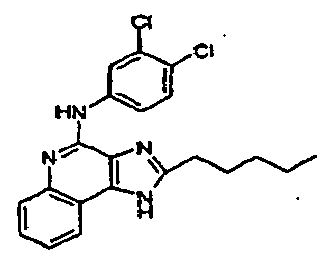
C21H20Cl2N4 399.33 195-200 398.9
400.850/50 EA/PE MW: molecular weight (D); Mp: melting point (°C); MS: mass spectrometry data.(M+1, M+2, M+3) - [125I]N6 -(4-amino-3-iodobenzyl)adenosine-5'-N-methyluronamide (I-AB-MECA; 2000 Ci/mmol), [3H]R-PIA (R-N 6-[phenylisopropyl]adenosine, 34 Ci/mmol), [3H]CGS21680 (2-[p-(2-carboxyethyl)phenylethylamino]-5'-N-ethylcarboxamidoadenosine, 47 Ci/mmol) and [3H]cyclic AMP (40 Ci/mmol) were from Amersham Pharmacia Biotech (Buckinghamshire, UK).
- CHO (Chinese hamster ovary) cells expressing the recombinant human ARs (HEK-293 cells were used for the human A2AAR) were cultured in DMEM and F12 (1:1) supplemented with 10% fetal bovine serum, 100 units/ml penicillin, 100 µg/ml streptomycin and 2 µmol/ml glutamine. Cells were harvested by trypsinization. After homogenization and suspension, cells were centrifuged at 500 g for 10 min, and the pellet was re-suspended in 50 mM Tris·HCl buffer (pH 7.4) containing 10 mM MgCl2. The suspension was homogenized with an electric homogenizer for 10 sec, and was then re-centrifuged at 20,000 g for 20 min at 4°C. The resultant pellets were resuspended in buffer in the presence of 3 Units/mL adenosine deaminase, and the suspension was stored at -80°C until the binding experiments. The protein concentration was measured using the Bradford assay.
- For binding to the human A1 AR, [3H]R-PIA (2 nM) was incubated with membranes (40 µg/tube) from CHO cells stably expressing the human A1 AR at 25°C for 60 min in 50 mM Tris.HCl buffer (pH 7.4; MgCl2, 10 mM) in a total assay volume of 200 µL. Nonspecific binding was determined using 10 µM of N 6-cyclopentyladenosine. For human A2A AR binding, membranes (20 µg/tube) from HEK-293 cells stably expressing the human A2A AR were incubated with 15 nM [3H]CGS21680 at 25 °C for 60 min in 200 µL of 50 mM Tris.HCl, pH 7.4, containing 10 mM MgCl2. N-5'-ethyluronamidoadenosine (10 µM) was used to define nonspecific binding. Reaction was terminated by filtration with GF/B filters.
- Each tube in the competitive binding assay contained 100 µl membrane suspension (20 µg protein), 50 µl [125I]I-AB-MECA (0.5 nM), and 50 µl of increasing concentrations of the test ligands in Tris·HCl buffer (50 mM, pH 8.0) containing 10 mM MgCl2, 1 mM EDTA. Nonspecific binding was determined using 10 µM of 5'-N-ethylcarboxamidoadenosine in the buffer. The mixtures were incubated at 25°C for 60 min. Binding reactions were terminated by filtration through Whatman GF/B filters under reduced pressure using a MT-24 cell harvester (Brandell, Gaithersburgh, MD, USA). Filters were washed three times with 9 mL ice-cold buffer. Radioactivity was determined in a Beckman 5500B γ-counter.
- The dissociation of [125I]I-AB-MECA was measured as follows. Membranes (20 µg) were preincubated at 25°C with 0.5 nM [125I]I-AB-MECA, in a total volume of 100 µl of Tris-HCl buffer (50 mM, pH 8.0) containing 10 mM MgCl2, and 1 mM EDTA for 60 min. The dissociation was then initiated by the addition of 3 µM Cl-IB-MECA with or without allosteric modulators. The time course of dissociation of total binding was measured by rapid filtration at appropriate time intervals. Nonspecific binding was measured after 60-min incubation in the presence of 3 µM Cl-IB-MECA. Further assay was as described above.
- Intracellular cyclic AMP levels were measured with a competitive protein binding method (Nordstedt and Fredholm, 1990). CHO cells that expressed recombinant human A3ARs were harvested by trypsinization. After centrifugation and resuspension in medium, cells were plated in 24-well plates in 0.5 ml medium. After 24 hr, the medium was removed and cells were washed three times with 1 ml DMEM, containing 50 mM HEPES, pH 7.4. Cells were then treated with agonists and/or test compounds in the presence of rolipram (10 µM) and adenosine deaminase (3 units/ml). After 45 min forskolin (10 µM) was added to the medium, and incubation was continued an additional 15 min. The reaction was terminated by removing the supernatant, and cells were lysed upon the addition of 200 µL of 0.1 M ice-cold HCl. The cell lysate was resuspended and stored at -20°C. For determination of cyclic AMP production, protein kinase A (PKA) was incubated with [3H]cyclic AMP (2 nM) in K2HPO4/EDTA buffer (K2HPO4, 150 mM; EDTA, 10 mM), 20 µL of the cell lysate, and 30 µL 0.1 M HCl or 50 µL of cyclic AMP solution (0-16 pmol/200 µL for standard curve). Bound radioactivity was separated by rapid filtration through Whatman GF/C filters and washed once with cold buffer. Bound radioactivity was measured by liquid scintillation spectrometry.
- Binding and functional parameters were calculated using Prism 5.0 software (GraphPAD, San Diego, CA, USA). IC50 values obtained from competition curves were converted to K; values using the Cheng-Prusoff equation. Data were expressed as mean ± standard error.
Table 2: Potency of 1H-imidazo-[4,5-c]quinolin-4-amine derivatives in binding or activation assays at human A1, A2A, A2B and A3ARs and allosteric effects at the human A3AR No. R1 R2 Ki (hA14R), nMa or % displ. at 10 µM Ki(hA2AAR), nMa or % displ. % at 10 µM hA2BARb inhib. at 10 µM Ki(hA3AR), nMa or % displ. at 10 µM hA3AR ag. Dissociation at 10 µM % Increase of efficacy at hA3AR d at 10 µM 30 Ph CP 3420 ± 230 3150 ± 210 -6.8% 786±67
(90%)174±5 138±8 31 4-CH3-Ph CP 3850±500 5220±320 -4.1% 1190±107
(87%)153±4 128±4 32 4-CH3O-Ph CP 4170±730 >10,000 (16%) 7.3% 410±64 (92%) 166±11 132±4 33 3,4-Cl2-Ph CP >10,000 (15%) >10,000 (0%) -6.7% 4690±970
(67%)144±9 141±5 34 4-Cl-Ph CP >10,000 (22%) >10,000 (17%) -10.2% 1610±550
(82%)159±5 136±3 35 3-HOCH2-Ph CP 51% 49% -4.1% 56% 129±15 118±4 36 
CP 21% 8% -10.7% 69% 108±4 111±5 37 
CP 56% 68% 5.0% 67% 109±3 96±2 38 4-CH3O- PhCH2 CP 59% 60% 0.3% 80% 101±13 109±3 39 
CP 70% 74% 10.1% 89% 126±9 125±2 40 PhCH2 CP 28% 77% -3.4% 86% 145±10 147±8 41 Ph(CH2)2 CP 52% 91% -11.6% 84% 154±7 137±4 42 3,4-Cl2-Ph cycloheptyl -4% -2% -7.3% 68% 130±2 115±7 43 3,4-Cl2-Ph 
-4% 70% 9.0% 78% 98±3 95±4 44 3,4-Cl2-Ph cyclobutyl -5% 0.4% -5.5% 52% 116±3 126±3 45 3,4-Cl2-Ph cyclohexyl -2% -1% -5.6% 45% 173±5 145±7 46 3,4-Cl2-Ph H 1.8% -0.8% 10.2% 39% 91±7 92±4 47 3,4-Ch-Ph n-pentyl 43.9% -1% -9.3% 84% 116±5 102±5 a) All experiments were performed using adherent CHO (A1 and A3) and HEK293 (A2A) cells stably transfected with cDNA encoding the human ARs. Binding at human A1, A2A and A3 ARs in this study was carried out as described in Methods using [3H]R-PIA (2.0 nM), [3H]CGS 21680 (15 nM) or [125I]I-AB-MECA (0.5 mM) as a radioligand. Values from the present study are expressed as mean ± s.e.m., n = 3-5, Percentage inhibition at A1, A2A, or A3 receptors is expressed as the mean value from 2-4 separate experiments with similar results performed in duplicate.
b) A2B receptor: effect of compounds at 10 µM on NECA (150 nM)-induced cyclic AMP accumulation from one experiment performed in triplicate; the inhibition of CGS15943 (10 µM) was expressed as 100%.
c) dissociation: % decrease of dissociation at 30 min; the residual binding of [125I]AB-MECA after 30 min of dissociation was expressed as 100%.
d) increase of efficacy: compared to maximal effect by 2-Cl-IB-MECA alone (control = 100%) - In Table 2 the effects of the imidazoquinoline derivatives at the orthosteric sites of all four adenosine receptor subtypes were listed, together with their effects on the allosteric site on the human adenosine A3 receptor. Many compounds display little if any affinity for the orthosteric binding sites, particularly on the adenosine A1, A2A and A2B receptor, especially when R1 = 3,4-Cl2-phenyl. Also the orthosteric binding site on the adenosine A3 receptor accommodates the imidazoquinoline derivatives rather poorly. The best separation between orthosteric and allosteric recognition was found with
compound 45. Thus, this-compound was selected for further in vivo assays. - A stock solution of imidazoquinoline derivative 45 was prepared by dissolving the same in DMSO. Further dilutions for treatment were performed in PBS. As a control, an equivalent amount of DMSO in PBS was used.
- To test the effect of imidazoquinoline derivative 45 on the myeloid system, the compound was orally administered at a dose of 100 µg/kg, thrice daily to ICR mice, for two consecutive days. Blood samples were withdrawn 24 and 48 hours after the last drug administration. A differential blood count was performed.
- The results presented in
Figures 2A-2B show that imidazoquinoline derivative 45 enhanced the myeloid system of naïve mice, which was demonstrated by the increased number of white blood cells (WBC) and neutrophils following treatment therewith. - Adjuvant induced arthritis model (model for rheumatoid arthritis (RA)) was established in rats by immunizing the animals with an emulsion contacting Mycobacterium tuberculosis in Freund's adjuvant (Animal Models for Autoimmune and Inflammatory disease:Adjuvant Arthritis in the Rat. Current Protocols in Immunology,
Supplement 19, page 15.4.2.). Treatment with imidazoquinoline derivative 45 was initiated upon onset of disease. Theimidazoquinoline derivative 45 was administered orally twice daily at a dose of 100 µg/kg. - Evaluation of disease development was carried out daily, starting upon onset of disease until the end of the study. Intensity of arthritis was scored by grading each paw from 0-4 on erythema, swelling and deformity of the joint, every day: 0 = no erythema or swelling; 1 = slight erythema or swelling of one of the toes or fingers; 2 = erythema and swelling of more than one toe or finger; 3 = erythema and swelling of the ankle or wrist; 4 = complete erythema and swelling of toes or fingers and ankles or wrist, and inability to bend the ankle or wrist. All scores of the four legs from each rat are added to give up to a maximum arthritic score of 16. The results are presented in
Figure 3 which show the reduction in clinical score following treatment withimidazoquinoline derivative 45. - The results presented above suggest that the imidazoquinoline derivative and in the particular
example imidazoquinoline derivative 45 may have a dual effect, on the one hand of enhancing the myeloid system and on the other hand, as a remedy for conditions such as RA.
Claims (13)
- A compound having the following general formula (I):
 - R1 represents an aryl or alkaryl being optionally substituted at the aromatic ring once or more with a substituent selected from C1-C10 alkyl, halo, C1-C10 alkanol, hydroxyl, C1-C10 acyl, C1-C10 alkoxyl; C1-C10-alkoxycarbony, C1-C10 alkoxylalkyl; C1-C10 thioalkoxy; C1-C10 alkylether, amino, hydrazido, C1-C10 alkylamino, pyridylthio, C2-C10 alkenyl; C2-C10 alkynyl, thio, and C1-C10 alkylthio, acetoamido, sulfonic acid; or said substituents can form together a cycloalkyl or cycloalkenyl fused to said aryl, the cycloalkyl or cycloalkenyl optionally comprising one or more heteroatoms; provided that said aryl is not an unsubstituted phenyl group;- R2 represents hydrogen or a substituent selected from C1-C10 alkyl, C2-C10 alkenyl; C2-C10 alkynyl, C4-C10 cycloalkyl, C4-C10 cycloalkenyl or a five to seven membered heterocyclic aromatic ring, C5-C15 fused cycloalkyl, bicyclic aromatic or heteroaromatic rings; or C1-C10 alkylether, amino, hydrazido, C1-C10 alkylamino, C1-C10 alkoxy, C1-C10-alkoxycarbony, C1-C10 alkanol, C1-C10 acyl, C1-C10 thioalkoxy, pyridylthio, thio, and C1-C10 alkylthio, acetoamido, sulfonic acid;and pharmaceutically acceptable salts thereof; for use in the treatment of a condition selected from the group consisting of hyperproliferative disorders, skin proliferative diseases, benign hyperplasia disorders, inflammatory diseases, and ischemic conditions.
 - The compound as claimed in Claim 1 for use in the treatment of a condition selected from rheumatoid arthritis, a solid tumor, psoriasis, and myocardial and renal ischemia.
- The compound as claimed in Claim 1 or 2 for use in the treatment of said conditions, wherein said R2 is selected from H, n-pentyl, or a five membered heterocyclic aromatic ring having the following formula (IV):

- The compound as claimed in any one of Claims 1 to 3 for use in the treatment of said conditions, wherein said compound is selected from the group consisting of:N-(4-Methyl-phenyl)-2-cyclopentyl-1H-imidazo[4,5-c]quinolin-4-amine;N-(4-Methoxy-phenyl)-2-cyclopentyl-1H-imidazo[4,5-c]quinolin-4-amine;N-(3,4-Dichloro-phenyl)-2-cyclopentyl-1H-imidazo[4,5-c]quinolin-4-amine;N-(4-Chloro-phenyl)-2-cyclopentyl-1H-imidazo[4,5-c]quinolin-4-amine;N-(3-Methanol-phenyl)-2-cyclopentyl-1H-imidazo[4,5-c]quinolin-4-arnine;N-([3,4-c]Indan)-2-cyclopentyl-1H-imidazo[4,5-c]quinolin-4-amine;N-(1H-indazol-6-yl)-2-cyclopentyl-1H-imidazo[4,5-c]quinolin-4-amine;N-(4-Methoxy-benzyl)-2-cyclopentyl-1H-imidazo[4,5-c]quinolin-4-amine;N-(1H-Indol-6-yl)-2-cyclopentyl-1H-imidazo[4,5-c]quinolin-4-amine;N-(Benzyl)-2-cyclopentyl-1H-imidazo[4,5-c]quinolin-4-amine;N-(Phenylethyl)-2-cyclopentyl-1H-imidazo[4,5-c]quinolin-4-amine;N-(3,4-Dichloro-phenyl)-2-cycloheptyl-1H-imidazo[4,5-c]quinolin-4-amine;N-(3,4-Dichloro-phenyl)-2-furyl-1H-imidazo[4,5-c]quinolin-4-amine;N-(3,4-Dichloro-phenyl)-2-cyclobutyl-1H-imidazo[4,5-c]quinolin-4-amine;N-(3,4-Dichloro-phenyl)-2-cyclohexyl-1H-imidazo[4,5-c]quinolin-4-amine;N-(3,4-Dichloro-phenyl)-1H-imidazo[4,5-c)quinolin-4-amine; andN-(3,4-Dichloro-phenyl)-2-pentyl-1H-imidazo[4,5-c]quinolin-4-amine.
- The compound as claimed in Claim 4 for use in the treatment of said conditions, wherein said compound is selected from the group consisting of:N-(3,4-Dichloro-phenyl)-2-cydopentyl-1H-imidazo[4,5-c]quinolin-4-amine;N-(3,4-Dichloro-phenyl)-2-cycloheptyl-1H-imidazo[4,5-c]quinolin-4-amine;N-(3,4-Dichloro-phenyl)-2-cyclobutyl-1H-imidazo[4,5-c]quinolin-4-amine; andN-(3,4-Dichloro-phenyl)-2-cyclohexyl-1H-imidazo[4,5-c]quinolin-4-amine.
- The compound as claimed in Claim 5 for use in the treatment of said conditions, wherein said compound is N-(3,4-Dichloro-phenyl)-2-cyclohexyl-1H-imidazo[4,5-c]quinolin-4-amine.
- Use of a compound as defined in any one of Claims 1 or 3 to 6, for the preparation of a pharmaceutical composition for the treatment of a condition selected from the group consisting of hyperproliferative disorders, skin proliferative diseases, benign hyperplasia disorders, inflammatory diseases, and ischemic conditions.
- Use as claimed in Claim 7, wherein said condition is selected from rheumatoid arthritis, a solid tumor, psoriasis, and myocardial and renal ischemia.
- Use as claimed in Claims 7 or 8, wherein said composition is in a form suitable for oral administration.
- Use as claimed in any one of Claims 7 to 9 or compound for use as in claims 1-6, wherein said compound is combined with a ligand to the orthosteric binding site of A3 adenosine receptor (A3R), said ligand being an A3R agonist and said compound being an A3 adenosine receptor allosteric activator.
- An imidazoquinoline derivative selected from the group consisting of:N-(4-Methyl-phenyl)-2-cyclopentyl-1H-imidazo[4,5-c]quinolin-4-amine;N-(4-Methoxy-phenyl)-2-cyclopentyl-1H-imidazo[4,5-c]quinolin-4-amine;N-(3,4-Dichloro-phenyl)-2-cyclopentyl-1H-imidazo[4,5-c]quinolin-4-amine;N-(4-Chloro-phenyl)-2-cyclopentyl-1H-imidazo[4,5-c]quinolin-4-amine;N-(3-Methanol-phenyl)-2-cyclopentyl-1H-imidazo[4,5-c]quinolin-4-amine;N-([3,4-c]Indan)-2-cyclopentyl-1H-imidazo[4,5-c]quinolin-4-amine;N-(1H-indazol-6-yl)-2-cyclopentyl-1H-imidazo[4,5-c]quinolin-4-amine;N-(4-Methoxy-benzyl)-2-cyclopentyl-1H-imidazo[4,5-c]quinolin-4-amine;N-(1H-Indol-6-yl)-2-cyclopentyl-1H-imidazo[4,5-c]quinolin-4-amine;N-(Benzyl)-2-cyclopentyl-1H-imidazo[4,5-c]quinolin-4-amine;N-(Phenylethyl)-2-cyclopentyl-1H-imidazo[4,5-c]quinolin-4-amine;N-(3,4-Dichloro-phenyl)-2-cycloheptyl-1H-imidazo[4,5-c]quinolin-4-amine;N-(3,4-Dichloro-phenyl)-2-furyl-1H-imidazo[4,5-c]quinolin-4-amine;N-(3,4-Dichloro-phenyl)-2-cyclobutyl- H-imidazo [4,5-c] quinol in-4-amine;N-(3,4-Dichloro-phenyl)-2-cyclohexyl-1H-imidazo[4,5-c]quinolin-4-amine;N-(3,4-Dichloro-phenyl)-1H-imidazo[4,5-c]quinolin-4-amine; andN-(3,4-Dichloro-phenyl)-2-pentyl-1H-imidazo[4,5-c]quinolin-4-amine.
- An imidazoquinoline derivative selected from:N-(3,4-Dichloro-phenyl)-2-cyclopentyl-1H-imidazo[4,5-c]quinolin-4-amine;N-(3,4-Dichloro-phenyl)-2-cycloheptyl-1H-imidazo[4,5-c]quinolin-4-amine;N-(3,4-Dichloro-phenyl)-2-cyclobutyl-1H-imidazo[4,5-c]quinolin-4-amine; andN-(3,4-Dichloro-phenyl)-2-cyclohexyl-1H-imidazo[4,5-c]quinolin-4-amine.
- A pharmaceutical composition comprising as active ingredient the imidazoquinoline derivative as claimed in Claim 11 or 12.
Applications Claiming Priority (2)
| Application Number | Priority Date | Filing Date | Title |
|---|---|---|---|
| US76214106P | 2006-01-26 | 2006-01-26 | |
| PCT/US2007/001930 WO2007089507A1 (en) | 2006-01-26 | 2007-01-25 | A3 adenosine receptor allosteric modulators |
Publications (2)
| Publication Number | Publication Date |
|---|---|
| EP1983990A1 EP1983990A1 (en) | 2008-10-29 |
| EP1983990B1 true EP1983990B1 (en) | 2011-03-23 |
Family
ID=38116104
Family Applications (1)
| Application Number | Title | Priority Date | Filing Date |
|---|---|---|---|
| EP07763034A Active EP1983990B1 (en) | 2006-01-26 | 2007-01-25 | A3 adenosine receptor allosteric modulators |
Country Status (10)
| Country | Link |
|---|---|
| US (2) | US8420664B2 (en) |
| EP (1) | EP1983990B1 (en) |
| JP (2) | JP5414277B2 (en) |
| KR (1) | KR101383228B1 (en) |
| CN (1) | CN101410114B (en) |
| AT (1) | ATE502640T1 (en) |
| DE (1) | DE602007013359D1 (en) |
| DK (1) | DK1983990T3 (en) |
| ES (1) | ES2360632T3 (en) |
| WO (1) | WO2007089507A1 (en) |
Families Citing this family (25)
| Publication number | Priority date | Publication date | Assignee | Title |
|---|---|---|---|---|
| GT200500281A (en) * | 2004-10-22 | 2006-04-24 | Novartis Ag | ORGANIC COMPOUNDS. |
| GB0500785D0 (en) * | 2005-01-14 | 2005-02-23 | Novartis Ag | Organic compounds |
| EP1983990B1 (en) | 2006-01-26 | 2011-03-23 | Government of the United States of America, Represented by the Secretary, Department of Health and Human Services | A3 adenosine receptor allosteric modulators |
| GB0607944D0 (en) * | 2006-04-21 | 2006-05-31 | Novartis Ag | Organic compounds |
| GB0607950D0 (en) * | 2006-04-21 | 2006-05-31 | Novartis Ag | Organic compounds |
| ATE549337T1 (en) | 2006-04-21 | 2012-03-15 | Novartis Ag | PURINE DERIVATIVES FOR USE AS ADENOSINE A2A RECEPTOR AGONISTS |
| GB0607953D0 (en) * | 2006-04-21 | 2006-05-31 | Novartis Ag | Organic compounds |
| ES2361886T3 (en) * | 2006-06-27 | 2011-06-24 | Cbt Development Limited | 2 ', 3'-METHYLIDY ADENOSINE PROMOTES NEW FOR USE AS PROPHARMES FOR ADENOSINE RECEIVER AGONISTS. |
| EP1889846A1 (en) | 2006-07-13 | 2008-02-20 | Novartis AG | Purine derivatives as A2a agonists |
| EP1903044A1 (en) * | 2006-09-14 | 2008-03-26 | Novartis AG | Adenosine Derivatives as A2A Receptor Agonists |
| JP2010508835A (en) * | 2006-11-10 | 2010-03-25 | ノバルティス アーゲー | Cyclopentenediol monoacetate derivative |
| WO2010020981A1 (en) * | 2008-08-19 | 2010-02-25 | Universiteit Leiden | A3 adenosine receptor allosteric modulators |
| MX2011012229A (en) * | 2009-05-17 | 2011-12-08 | Can Fite Biopharma Ltd | A3 adenosine receptor agonists for the reduction of intraocular pressure. |
| RU2015105407A (en) | 2012-08-09 | 2016-10-10 | Кэн-Файт Биофарма Лтд. | Adenosine A3 receptor ligands for use in the treatment of sexual dysfunction |
| CN103992310B (en) * | 2013-05-14 | 2016-07-06 | 中国医学科学院医药生物技术研究所 | One group replaces benzo heterocyclic amine derivant and preparation method thereof and the related application as IMPDH inhibitor |
| ES2578363B1 (en) | 2015-01-22 | 2017-01-31 | Palobiofarma, S.L. | A3 adenosine receptor modulators |
| IL242723B (en) | 2015-11-23 | 2019-12-31 | Can Fite Biopharma Ltd | An a3 adenosine receptor ligand for use in treating ectopic fat accumulation |
| BR112018071347A2 (en) * | 2016-04-19 | 2019-02-05 | Innate Tumor Immunity Inc | nlrp3 modulators |
| ES2676535B1 (en) | 2017-01-20 | 2019-04-29 | Palobiofarma Sl | MODULATORS OF A3 ADENOSINE RECEIVERS |
| IL254535A0 (en) | 2017-09-17 | 2017-11-30 | Can Fite Biopharma Ltd | A3 adenosine receptor ligand for managing cytokine release syndrome |
| IL264112A (en) | 2019-01-06 | 2020-07-30 | Fishman Pnina | Adenosine a3 receptor ligand for use in lowering adipocyte levels |
| EP4499641A1 (en) * | 2022-03-29 | 2025-02-05 | The United States of America, as represented by the Secretary, Department of Health and Human Services | A3 adenosine receptor positive allosteric modulators |
| KR20240008807A (en) * | 2022-07-12 | 2024-01-19 | 주식회사 넥스트젠바이오사이언스 | Novel purine derivative compounds as HIF-1 protein inhibitor |
| IL300132A (en) * | 2023-01-23 | 2024-08-01 | Can Fite Biopharma Ltd | Treatment of pancreatic cancer |
| IT202300014340A1 (en) | 2023-07-10 | 2025-01-10 | Consiglio Nazionale Ricerche | TREATMENT OF DISEASES ASSOCIATED WITH OCRL GENE DYSFUNCTION. |
Family Cites Families (8)
| Publication number | Priority date | Publication date | Assignee | Title |
|---|---|---|---|---|
| KR960007566A (en) | 1994-08-19 | 1996-03-22 | 김정규 | Novel quinolylamine derivatives, methods for their preparation and use as antiarrhythmics |
| AU736812B2 (en) * | 1997-10-03 | 2001-08-02 | Btg International Limited | Biodegradable low molecular weight triblock poly(lactide-co-glycolide) polyethylene glycol copolymers having reverse thermal gelation properties |
| CN1491227A (en) * | 2001-02-05 | 2004-04-21 | 株式会社大V制药工厂 | Triazoloquinazoline and pyrazolotriazolopyrimidine derivatives, pharmaceutical composition, adenosine A3 receptor affinity agent, ocular hypotensive agent, preparation for preventing and treating glaucoma, and method for reducing intraocular pressure |
| US20020179549A1 (en) * | 2001-06-04 | 2002-12-05 | Chris Felcman | System and method for mounting a keyboard and display assembly in a 1U rack space |
| US20040137477A1 (en) * | 2002-10-22 | 2004-07-15 | Can-Fite Biopharma, Ltd. | A3AR as a marker for a diseased state |
| EP1699459B1 (en) | 2003-12-29 | 2007-06-06 | Can-Fite Biopharma Ltd. | Method for treatment of multiple sclerosis |
| AU2005306325A1 (en) * | 2004-11-22 | 2006-05-26 | King Pharmaceuticals Research & Development Inc. | Enhancing treatment of HIF-1 mediated disorders with adenosine A3 receptor agonists |
| EP1983990B1 (en) | 2006-01-26 | 2011-03-23 | Government of the United States of America, Represented by the Secretary, Department of Health and Human Services | A3 adenosine receptor allosteric modulators |
-
2007
- 2007-01-25 EP EP07763034A patent/EP1983990B1/en active Active
- 2007-01-25 ES ES07763034T patent/ES2360632T3/en active Active
- 2007-01-25 DK DK07763034.1T patent/DK1983990T3/en active
- 2007-01-25 JP JP2008552392A patent/JP5414277B2/en active Active
- 2007-01-25 WO PCT/US2007/001930 patent/WO2007089507A1/en not_active Ceased
- 2007-01-25 CN CN2007800106767A patent/CN101410114B/en active Active
- 2007-01-25 AT AT07763034T patent/ATE502640T1/en active
- 2007-01-25 KR KR1020087020924A patent/KR101383228B1/en active Active
- 2007-01-25 DE DE602007013359T patent/DE602007013359D1/en active Active
-
2008
- 2008-07-28 US US12/219,772 patent/US8420664B2/en active Active
-
2013
- 2013-03-13 US US13/800,560 patent/US9326978B2/en active Active
- 2013-09-18 JP JP2013192745A patent/JP2013253108A/en active Pending
Also Published As
| Publication number | Publication date |
|---|---|
| US20130197025A1 (en) | 2013-08-01 |
| JP2009524668A (en) | 2009-07-02 |
| DK1983990T3 (en) | 2011-07-11 |
| US8420664B2 (en) | 2013-04-16 |
| US9326978B2 (en) | 2016-05-03 |
| KR20080099855A (en) | 2008-11-13 |
| CN101410114B (en) | 2012-07-04 |
| ATE502640T1 (en) | 2011-04-15 |
| JP5414277B2 (en) | 2014-02-12 |
| CN101410114A (en) | 2009-04-15 |
| DE602007013359D1 (en) | 2011-05-05 |
| EP1983990A1 (en) | 2008-10-29 |
| KR101383228B1 (en) | 2014-04-09 |
| WO2007089507A1 (en) | 2007-08-09 |
| US20090054476A1 (en) | 2009-02-26 |
| JP2013253108A (en) | 2013-12-19 |
| ES2360632T3 (en) | 2011-06-07 |
Similar Documents
| Publication | Publication Date | Title |
|---|---|---|
| US9326978B2 (en) | A3 adenosine receptor allosteric modulators | |
| KR101763674B1 (en) | Nuclear receptor binding agents | |
| US11466010B2 (en) | Toll-like receptor 8 (TLR8) specific antagonists and methods of making and uses thereof | |
| JP5567157B2 (en) | N-substituted indenoisoquinoline and its synthesis | |
| JPH09500908A (en) | Dihydropyrazolopyrroles | |
| EP2833886B1 (en) | Substituted quinolines as bruton's tyrosine kinase inhibitors | |
| TW200424206A (en) | Salts of tricyclic inhibitors of poly(ADP-ribose) polymerases | |
| HUP0004232A2 (en) | Method for the treatment and prevention of diseases mediated by ccr5, by the use of substituted benzanilides | |
| JP2001509152A (en) | Substituted bis-acridines and related compounds as CCR5 receptor ligands, anti-inflammatory and anti-viral agents | |
| EP3006442A1 (en) | Conjugate of benzofuranone and indole or azaindole, and preparation and uses thereof | |
| JP7092742B2 (en) | Pyrimidinone derivatives and their use to neutralize the biological activity of chemokines | |
| CN112250665A (en) | Quinoline analogs as phosphatidylinositol 3-kinase inhibitors | |
| EP2323661B1 (en) | A3 adenosine receptor allosteric modulators | |
| EP2279750A1 (en) | Aniline derivative having anti-rna viral activity | |
| JPWO2004002484A1 (en) | Phosphodiesterase inhibitor | |
| EP2814494B1 (en) | Use of small molecule inhibitors targeting the interaction between rac gtpase and p67 (phox) | |
| EP1675854B1 (en) | Imidazopyridine-derivatives as inductible no-synthase inhibitors | |
| JP2008526817A (en) | New pyrrolodihydroisoquinoline | |
| US20230132035A1 (en) | Toll-Like Receptor 8 (TLR8)-Specific Antagonists and Methods of Making and Uses Thereof | |
| Zhu et al. | Synthesis and biological evaluation of 2-(2-methyl-6-(quinolin-3-yl) nicotinoyl)-N-alkylhydrazine-1-carboxamide derivtives as anti-tumor agents targeting Nur77 | |
| CZ474999A3 (en) | Pharmaceutical preparation for treating pathological states mediated by CCR5 |
Legal Events
| Date | Code | Title | Description |
|---|---|---|---|
| PUAI | Public reference made under article 153(3) epc to a published international application that has entered the european phase |
Free format text: ORIGINAL CODE: 0009012 |
|
| 17P | Request for examination filed |
Effective date: 20080822 |
|
| AK | Designated contracting states |
Kind code of ref document: A1 Designated state(s): AT BE BG CH CY CZ DE DK EE ES FI FR GB GR HU IE IS IT LI LT LU LV MC NL PL PT RO SE SI SK TR |
|
| DAX | Request for extension of the european patent (deleted) | ||
| 17Q | First examination report despatched |
Effective date: 20090303 |
|
| GRAP | Despatch of communication of intention to grant a patent |
Free format text: ORIGINAL CODE: EPIDOSNIGR1 |
|
| RIC1 | Information provided on ipc code assigned before grant |
Ipc: A61P 17/06 20060101ALI20100701BHEP Ipc: A61P 9/10 20060101ALI20100701BHEP Ipc: A61P 29/00 20060101ALI20100701BHEP Ipc: A61P 37/00 20060101ALI20100701BHEP Ipc: C07D 471/04 20060101ALI20100701BHEP Ipc: A61P 35/00 20060101ALI20100701BHEP Ipc: A61P 13/08 20060101ALI20100701BHEP Ipc: A61K 31/4745 20060101AFI20100701BHEP |
|
| RIN1 | Information on inventor provided before grant (corrected) |
Inventor name: BRUSSEE, JOHANNES Inventor name: GAO, ZHAN-GUO Inventor name: IJZERMAN, ADRIAAN, P. Inventor name: JACOBSON, KENNETH Inventor name: GOBLYOS, ANIKO |
|
| GRAS | Grant fee paid |
Free format text: ORIGINAL CODE: EPIDOSNIGR3 |
|
| RAP1 | Party data changed (applicant data changed or rights of an application transferred) |
Owner name: UNIVERSITEIT LEIDEN Owner name: GOVERNMENT OF THE UNITED STATES OF AMERICA, R |
|
| GRAA | (expected) grant |
Free format text: ORIGINAL CODE: 0009210 |
|
| AK | Designated contracting states |
Kind code of ref document: B1 Designated state(s): AT BE BG CH CY CZ DE DK EE ES FI FR GB GR HU IE IS IT LI LT LU LV MC NL PL PT RO SE SI SK TR |
|
| REG | Reference to a national code |
Ref country code: GB Ref legal event code: FG4D |
|
| REG | Reference to a national code |
Ref country code: CH Ref legal event code: EP |
|
| REG | Reference to a national code |
Ref country code: IE Ref legal event code: FG4D |
|
| REF | Corresponds to: |
Ref document number: 602007013359 Country of ref document: DE Date of ref document: 20110505 Kind code of ref document: P |
|
| REG | Reference to a national code |
Ref country code: DE Ref legal event code: R096 Ref document number: 602007013359 Country of ref document: DE Effective date: 20110505 |
|
| REG | Reference to a national code |
Ref country code: ES Ref legal event code: FG2A Ref document number: 2360632 Country of ref document: ES Kind code of ref document: T3 Effective date: 20110607 |
|
| REG | Reference to a national code |
Ref country code: CH Ref legal event code: NV Representative=s name: SERVOPATENT GMBH |
|
| REG | Reference to a national code |
Ref country code: NL Ref legal event code: T3 |
|
| REG | Reference to a national code |
Ref country code: DK Ref legal event code: T3 |
|
| REG | Reference to a national code |
Ref country code: SE Ref legal event code: TRGR |
|
| PG25 | Lapsed in a contracting state [announced via postgrant information from national office to epo] |
Ref country code: GR Free format text: LAPSE BECAUSE OF FAILURE TO SUBMIT A TRANSLATION OF THE DESCRIPTION OR TO PAY THE FEE WITHIN THE PRESCRIBED TIME-LIMIT Effective date: 20110624 Ref country code: LT Free format text: LAPSE BECAUSE OF FAILURE TO SUBMIT A TRANSLATION OF THE DESCRIPTION OR TO PAY THE FEE WITHIN THE PRESCRIBED TIME-LIMIT Effective date: 20110323 Ref country code: LV Free format text: LAPSE BECAUSE OF FAILURE TO SUBMIT A TRANSLATION OF THE DESCRIPTION OR TO PAY THE FEE WITHIN THE PRESCRIBED TIME-LIMIT Effective date: 20110323 |
|
| LTIE | Lt: invalidation of european patent or patent extension |
Effective date: 20110323 |
|
| PG25 | Lapsed in a contracting state [announced via postgrant information from national office to epo] |
Ref country code: SI Free format text: LAPSE BECAUSE OF FAILURE TO SUBMIT A TRANSLATION OF THE DESCRIPTION OR TO PAY THE FEE WITHIN THE PRESCRIBED TIME-LIMIT Effective date: 20110323 Ref country code: FI Free format text: LAPSE BECAUSE OF FAILURE TO SUBMIT A TRANSLATION OF THE DESCRIPTION OR TO PAY THE FEE WITHIN THE PRESCRIBED TIME-LIMIT Effective date: 20110323 Ref country code: CY Free format text: LAPSE BECAUSE OF FAILURE TO SUBMIT A TRANSLATION OF THE DESCRIPTION OR TO PAY THE FEE WITHIN THE PRESCRIBED TIME-LIMIT Effective date: 20110323 Ref country code: BG Free format text: LAPSE BECAUSE OF FAILURE TO SUBMIT A TRANSLATION OF THE DESCRIPTION OR TO PAY THE FEE WITHIN THE PRESCRIBED TIME-LIMIT Effective date: 20110623 |
|
| PG25 | Lapsed in a contracting state [announced via postgrant information from national office to epo] |
Ref country code: PT Free format text: LAPSE BECAUSE OF FAILURE TO SUBMIT A TRANSLATION OF THE DESCRIPTION OR TO PAY THE FEE WITHIN THE PRESCRIBED TIME-LIMIT Effective date: 20110725 Ref country code: EE Free format text: LAPSE BECAUSE OF FAILURE TO SUBMIT A TRANSLATION OF THE DESCRIPTION OR TO PAY THE FEE WITHIN THE PRESCRIBED TIME-LIMIT Effective date: 20110323 |
|
| PG25 | Lapsed in a contracting state [announced via postgrant information from national office to epo] |
Ref country code: SK Free format text: LAPSE BECAUSE OF FAILURE TO SUBMIT A TRANSLATION OF THE DESCRIPTION OR TO PAY THE FEE WITHIN THE PRESCRIBED TIME-LIMIT Effective date: 20110323 Ref country code: CZ Free format text: LAPSE BECAUSE OF FAILURE TO SUBMIT A TRANSLATION OF THE DESCRIPTION OR TO PAY THE FEE WITHIN THE PRESCRIBED TIME-LIMIT Effective date: 20110323 Ref country code: IS Free format text: LAPSE BECAUSE OF FAILURE TO SUBMIT A TRANSLATION OF THE DESCRIPTION OR TO PAY THE FEE WITHIN THE PRESCRIBED TIME-LIMIT Effective date: 20110723 Ref country code: RO Free format text: LAPSE BECAUSE OF FAILURE TO SUBMIT A TRANSLATION OF THE DESCRIPTION OR TO PAY THE FEE WITHIN THE PRESCRIBED TIME-LIMIT Effective date: 20110323 |
|
| PLBE | No opposition filed within time limit |
Free format text: ORIGINAL CODE: 0009261 |
|
| STAA | Information on the status of an ep patent application or granted ep patent |
Free format text: STATUS: NO OPPOSITION FILED WITHIN TIME LIMIT |
|
| 26N | No opposition filed |
Effective date: 20111227 |
|
| PG25 | Lapsed in a contracting state [announced via postgrant information from national office to epo] |
Ref country code: PL Free format text: LAPSE BECAUSE OF FAILURE TO SUBMIT A TRANSLATION OF THE DESCRIPTION OR TO PAY THE FEE WITHIN THE PRESCRIBED TIME-LIMIT Effective date: 20110323 |
|
| REG | Reference to a national code |
Ref country code: DE Ref legal event code: R097 Ref document number: 602007013359 Country of ref document: DE Effective date: 20111227 |
|
| PG25 | Lapsed in a contracting state [announced via postgrant information from national office to epo] |
Ref country code: MC Free format text: LAPSE BECAUSE OF NON-PAYMENT OF DUE FEES Effective date: 20120131 |
|
| REG | Reference to a national code |
Ref country code: IE Ref legal event code: MM4A |
|
| PG25 | Lapsed in a contracting state [announced via postgrant information from national office to epo] |
Ref country code: IE Free format text: LAPSE BECAUSE OF NON-PAYMENT OF DUE FEES Effective date: 20120125 |
|
| PG25 | Lapsed in a contracting state [announced via postgrant information from national office to epo] |
Ref country code: TR Free format text: LAPSE BECAUSE OF FAILURE TO SUBMIT A TRANSLATION OF THE DESCRIPTION OR TO PAY THE FEE WITHIN THE PRESCRIBED TIME-LIMIT Effective date: 20110323 |
|
| PG25 | Lapsed in a contracting state [announced via postgrant information from national office to epo] |
Ref country code: LU Free format text: LAPSE BECAUSE OF NON-PAYMENT OF DUE FEES Effective date: 20120125 |
|
| PG25 | Lapsed in a contracting state [announced via postgrant information from national office to epo] |
Ref country code: HU Free format text: LAPSE BECAUSE OF FAILURE TO SUBMIT A TRANSLATION OF THE DESCRIPTION OR TO PAY THE FEE WITHIN THE PRESCRIBED TIME-LIMIT Effective date: 20070125 |
|
| REG | Reference to a national code |
Ref country code: FR Ref legal event code: PLFP Year of fee payment: 10 |
|
| REG | Reference to a national code |
Ref country code: FR Ref legal event code: PLFP Year of fee payment: 11 |
|
| REG | Reference to a national code |
Ref country code: FR Ref legal event code: PLFP Year of fee payment: 12 |
|
| REG | Reference to a national code |
Ref country code: CH Ref legal event code: PCAR Free format text: NEW ADDRESS: WANNERSTRASSE 9/1, 8045 ZUERICH (CH) |
|
| PGFP | Annual fee paid to national office [announced via postgrant information from national office to epo] |
Ref country code: BE Payment date: 20241226 Year of fee payment: 19 Ref country code: NL Payment date: 20241230 Year of fee payment: 19 |
|
| PGFP | Annual fee paid to national office [announced via postgrant information from national office to epo] |
Ref country code: GB Payment date: 20241219 Year of fee payment: 19 |
|
| PGFP | Annual fee paid to national office [announced via postgrant information from national office to epo] |
Ref country code: FR Payment date: 20241223 Year of fee payment: 19 |
|
| PGFP | Annual fee paid to national office [announced via postgrant information from national office to epo] |
Ref country code: DE Payment date: 20241217 Year of fee payment: 19 |
|
| PGFP | Annual fee paid to national office [announced via postgrant information from national office to epo] |
Ref country code: DK Payment date: 20250113 Year of fee payment: 19 |
|
| PGFP | Annual fee paid to national office [announced via postgrant information from national office to epo] |
Ref country code: ES Payment date: 20250207 Year of fee payment: 19 |
|
| PGFP | Annual fee paid to national office [announced via postgrant information from national office to epo] |
Ref country code: SE Payment date: 20241230 Year of fee payment: 19 |
|
| PGFP | Annual fee paid to national office [announced via postgrant information from national office to epo] |
Ref country code: CH Payment date: 20250201 Year of fee payment: 19 Ref country code: AT Payment date: 20241227 Year of fee payment: 19 |
|
| PGFP | Annual fee paid to national office [announced via postgrant information from national office to epo] |
Ref country code: IT Payment date: 20241230 Year of fee payment: 19 |