EP1983665A1 - Channel transmission method and base station - Google Patents
Channel transmission method and base station Download PDFInfo
- Publication number
- EP1983665A1 EP1983665A1 EP07708179A EP07708179A EP1983665A1 EP 1983665 A1 EP1983665 A1 EP 1983665A1 EP 07708179 A EP07708179 A EP 07708179A EP 07708179 A EP07708179 A EP 07708179A EP 1983665 A1 EP1983665 A1 EP 1983665A1
- Authority
- EP
- European Patent Office
- Prior art keywords
- channel
- sectors
- soft
- pilot signal
- combined
- Prior art date
- Legal status (The legal status is an assumption and is not a legal conclusion. Google has not performed a legal analysis and makes no representation as to the accuracy of the status listed.)
- Withdrawn
Links
Images





Classifications
-
- H—ELECTRICITY
- H04—ELECTRIC COMMUNICATION TECHNIQUE
- H04L—TRANSMISSION OF DIGITAL INFORMATION, e.g. TELEGRAPHIC COMMUNICATION
- H04L5/00—Arrangements affording multiple use of the transmission path
- H04L5/003—Arrangements for allocating sub-channels of the transmission path
- H04L5/0048—Allocation of pilot signals, i.e. of signals known to the receiver
-
- H—ELECTRICITY
- H04—ELECTRIC COMMUNICATION TECHNIQUE
- H04B—TRANSMISSION
- H04B7/00—Radio transmission systems, i.e. using radiation field
- H04B7/02—Diversity systems; Multi-antenna system, i.e. transmission or reception using multiple antennas
- H04B7/04—Diversity systems; Multi-antenna system, i.e. transmission or reception using multiple antennas using two or more spaced independent antennas
- H04B7/0491—Diversity systems; Multi-antenna system, i.e. transmission or reception using multiple antennas using two or more spaced independent antennas using two or more sectors, i.e. sector diversity
-
- H—ELECTRICITY
- H04—ELECTRIC COMMUNICATION TECHNIQUE
- H04B—TRANSMISSION
- H04B7/00—Radio transmission systems, i.e. using radiation field
- H04B7/02—Diversity systems; Multi-antenna system, i.e. transmission or reception using multiple antennas
- H04B7/022—Site diversity; Macro-diversity
-
- H—ELECTRICITY
- H04—ELECTRIC COMMUNICATION TECHNIQUE
- H04L—TRANSMISSION OF DIGITAL INFORMATION, e.g. TELEGRAPHIC COMMUNICATION
- H04L25/00—Baseband systems
- H04L25/02—Details ; arrangements for supplying electrical power along data transmission lines
- H04L25/0202—Channel estimation
- H04L25/0224—Channel estimation using sounding signals
-
- H—ELECTRICITY
- H04—ELECTRIC COMMUNICATION TECHNIQUE
- H04L—TRANSMISSION OF DIGITAL INFORMATION, e.g. TELEGRAPHIC COMMUNICATION
- H04L27/00—Modulated-carrier systems
- H04L27/26—Systems using multi-frequency codes
- H04L27/2601—Multicarrier modulation systems
- H04L27/2602—Signal structure
- H04L27/261—Details of reference signals
-
- H—ELECTRICITY
- H04—ELECTRIC COMMUNICATION TECHNIQUE
- H04W—WIRELESS COMMUNICATION NETWORKS
- H04W88/00—Devices specially adapted for wireless communication networks, e.g. terminals, base stations or access point devices
- H04W88/08—Access point devices
Definitions
- the present invention generally relates to the field of mobile communication. More particularly, the present invention relates to a channel transmission method and a base station that enable "soft-combining reception" at mobile stations.
- a transmitting end modulates an information signal using multiple subcarriers that are orthogonal to each other and transmits the modulated signals in parallel.
- a guard interval is inserted between symbols of transmission signals to reduce waveform distortion caused by multipath delayed waves.
- a sectoring method of dividing a coverage area of a base station into multiple sectors and allocating different frequencies or codes to the respective sectors is used to increase the number of access users (capacity). Allocating different frequencies or codes to the sectors makes it possible to reduce interference between the sectors. Still, however, the reception quality of a user located at a cell boundary or a sector boundary may be reduced because of the interference between cells or sectors.
- MBMS multimedia broadcast/multicast service
- Evolved UTRA universal terrestrial radio access
- One objective of the present invention is to provide a technology that improves reception quality in a mobile communication system divided into sectors by utilizing characteristics of OFDM transmission.
- the reception quality can be improved by combining multiple instances of the same signal received via multiple paths, i.e., by delay diversity, if the delay is within a guard interval.
- This approach may be applied to channels, such as a multimedia broadcast/multicast service (MBMS) channel and a paging channel, that transmit the same data to users in an area.
- MBMS multimedia broadcast/multicast service
- paging channel a paging channel
- the reception quality of such channels may be improved by combining multiple instances of the same signal arriving from different sectors via multiple paths within a guard interval.
- Receiving and combining multiple instances of a signal within a guard interval in OFDM transmission is hereafter called "soft-combining reception”.
- Soft-combining reception may be applied not only to MBMS and paging channels but also to channels that may be used to transmit the same signal via different sectors.
- Embodiments of the present invention provide a base station and a method of transmitting a channel to be soft-combined and a pilot signal for demodulating the channel which are used in a communication system employing orthogonal frequency division multiplexing (OFDM).
- OFDM orthogonal frequency division multiplexing
- a channel transmission method includes the steps of:
- the channel to be soft-combined is a data channel during handover, a paging channel common to the selected sectors, a broadcast channel including broadcast information common to the selected sectors, or a multimedia broadcast/multicast service (MBMS) channel.
- MBMS multimedia broadcast/multicast service
- the channel transmission method further includes the steps of generating instances of the same pilot signal for the respective selected sectors; and generating instances of the same channel to be soft-combined for the respective selected sectors.
- the channel transmission method further includes the steps of generating different versions of the pilot signal for the respective selected sectors by multiplying the pilot signal by sequences orthogonal to each other; and generating instances of the same channel to be soft-combined for the respective selected sectors.
- the channel transmission method further includes the steps of generating different versions of the pilot signal for the respective selected sectors by multiplying the pilot signal by sequences orthogonal to each other; and generating different versions of the channel to be soft-combined for the respective selected sectors by multiplying the channel by the same orthogonal sequences as those used for the pilot signal.
- the channel transmission method further includes the steps of allocating different time slots or frequency bands to instances of the pilot signal that are to be transmitted to the respective selected sectors; and generating instances of the same channel to be soft-combined for the respective sectors.
- the channel transmission method further includes the steps of generating different versions of the pilot signal for the respective selected sectors by multiplying the pilot signal by sequences different from each other; and generating different versions of the channel to be soft-combined for the respective selected sectors by multiplying the channel by sequences that are highly correlated with those used for the pilot signal.
- a second aspect of the present invention provides a base station used in a communication system employing orthogonal frequency division multiplexing (OFDM).
- the base station includes:
- control unit is configured to select the signal generating units corresponding to the sectors where handover takes place based on the location information of the mobile station; and each of the selected signal generating units is configured to generate a data channel during handover as the channel to be soft-combined.
- control unit is configured to select all of the signal generating units corresponding to the sectors covered by the base station if the channel to be transmitted is a paging channel, a broadcast channel including broadcast information common to the sectors, or a multimedia broadcast/multicast service (MBMS) channel; and each of the selected signal generating units is configured to generate the paging channel, the broadcast channel, or the MBMS channel as the channel to be soft-combined.
- MBMS multimedia broadcast/multicast service
- a channel transmission method and a base station enable a mobile station to receive and combine multiple instances of the same signal arriving from multiple sectors in synchronization with each other within a guard interval.
- embodiments of the present invention make it possible to improve even the reception quality of a user located at a cell boundary or a sector boundary.
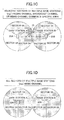
- FIGs. 1A through 1D are drawings illustrating exemplary channels to which soft-combining can be applied and exemplary geographical areas where soft-combining is performed.
- FIG. 1A shows a data channel that is transmitted to multiple sectors during handover.
- a mobile station (UE) 10 is moving from sector 1 to sector 2 or from sector 2 to sector 1 covered by a base station (eNB) 20.
- eNB base station
- soft-combining is performed in an area including sectors 1 and 2 where handover takes place.
- the base station 20 transmits the same data channel to sectors 1 and 2.
- the mobile station 10 receives and soft-combines instances of the data channel arriving from sectors 1 and 2 within a guard interval.
- the reception quality of a downlink channel using OFDM can be improved even when a user is at a sector boundary by synchronizing the transmission timings of the channel via sectors 1 and 2 and by receiving and combining instances of the channel within a guard interval (synchronizing-and-combining reception or soft-combining reception).
- FIG. 1B shows a paging channel or a broadcast channel that is common to and transmitted to multiple sectors.
- soft-combining is performed in an area including all sectors 1 through 3 covered by the base station 20.
- broadcast channels are used to transmit different sets of broadcast information to the respective sectors.
- some broadcast information is common to multiple sectors.
- Such common broadcast information includes, for example, system information and channel configuration information sent from the core network to mobile stations.
- the base station 20 transmits the same broadcast channel to sectors 1 through 3.
- the mobile station 10 receives multiple instances of the same broadcast channel from sectors 1, 2, and 3, and soft-combines the instances of the same broadcast channel within a guard interval.
- FIG. 1C shows a paging channel, a broadcast channel, or an MBMS channel that is common in a specific area and transmitted to multiple sectors in the area.
- soft-combining is performed in an area including sectors 1A and 2A covered by a base station 20A and sectors 1B and 3B covered by an adjacent base station 20B.
- the mobile station 10 located near a cell boundary between the base station 20A and the base station 20B receives and soft-combines multiple instances of the same channel transmitted from the base stations 20A and 20B via sectors 1A, 2A, 1B, and 3B.
- FIG. 1D shows an MBMS channel transmitted within a service area including multiple sectors.
- soft-combining is performed in an area including all sectors 1A through 3A and 1B through 3B covered by the base stations 20A and 20B.
- FIG. 2 is a drawing illustrating a transmission method (1) for implementing soft-combining.
- the base station 20 transmits the same transmission signal including a pilot signal 31 for demodulation and a channel 32 to be soft-combined to the respective sectors 1 through 3 where soft-combining is performed.
- channels to be soft-combined include a data channel as shown in FIG. 1A , a paging channel and a broadcast channel as shown in FIG. 1B , and an MBMS channel as shown in FIG. 1D .
- the receiving end receives and combines transmission signals 1, 2, and 3 arriving from the respective sectors. Then, a propagation path response of the combined transmission signals 1, 2, and 3 is obtained based on the pilot signals, and the obtained propagation path response is used to demodulate the soft-combined channel.
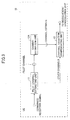
- FIG. 3 is a block diagram illustrating a configuration example 1 of the mobile station (UE) 10.
- a mobile station 10A shown in FIG. 3 includes a pilot channel extracting unit 11 for extracting the pilot channels 31 from a soft-combined reception signal, a channel estimation unit 12A for obtaining a channel estimate based on the extracted pilot channels, and a channel variation compensating unit 13 for compensating for the variation of the channel 32 separated from the pilot channels 31 based on the channel estimate. After the variation is compensated for, the channel 32 is sent to a modulation/demodulation unit (not shown).
- FIG. 4 is a schematic block diagram illustrating an exemplary configuration of the base station (eNB) 20.
- the base station 20 includes signal generating units 22-1 through 22-3 corresponding to sectors 1 through 3 and a control unit 21 for selecting the signal generating units 22 corresponding to sectors where soft-combining is to be performed.
- the control unit 21 selects the signal generating units 22 based on a channel type and/or location information of mobile stations and causes the selected signal generating units 22 to generate instances of the same channel to be soft-combined for the corresponding sectors.
- Each of the signal generating units 22 includes a pilot signal generating unit 23 for generating the pilot signal 31 to be transmitted to the corresponding sector and a data generating unit 24 for generating the channel 32 to be soft-combined.
- soft-combining is performed in sectors 1 and 2 for the mobile station 10 being handed over.
- the control unit 21 of the base station 20 detects that the mobile station 10 is being handed over from sector 1 to sector 2 or vice versa based on the location information of the mobile station 10. Then, the control unit 21 selects the signal generating units 22-1 and 22-2 corresponding to sectors 1 and 2 and causes the pilot signal generating units 23-1 and 23-2 of the selected signal generating units 22 to generate instances of the same pilot signal 31. Also, the control unit 21 causes the data generating units 24 of the selected signal generating units 22 to generate instances of the same channel 32 to be soft-combined.
- the control unit 21 selects all of the signal generating units 22-1 through 22-3 corresponding to sectors 1 through 3 based on a channel type such as a paging channel or a broadcast channel for broadcasting common information.
- the signal generating units 22-1 through 22-3 generate instances of the same pilot signal 31 and instances of the same paging channel or broadcast channel as the channel 32 to be soft-combined.
- each of the signal generating units 22-1 through 22-3 generates a transmission signal by combining the pilot signal 31 and the channel 32 and transmits the generated signal from a transmitter (not shown) to the corresponding sector.
- the base station 20 selects the signal generating units 22 corresponding to sectors where soft-combining is to be performed based, for example, on the status of the mobile station 10 and the type of a channel to be transmitted, and thereby generates instances of the same pilot signal 31 and the same channel 32 for the sectors.
- This configuration makes it possible to enable a receiving end to receive and soft-combine signals arriving from multiple sectors and thereby to improve the reception quality.
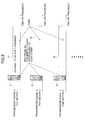
- FIG. 5 is a drawing illustrating a transmission method (2) for implementing soft-combining.
- the pilot signal 31 used for demodulation is multiplied by sequences (codes) orthogonal to each other, and the multiplied versions of the pilot signal 31 and multiple instances of the same channel to be soft-combined are transmitted.
- the receiving end obtains propagation path responses of the respective transmission signals based on the orthogonal pilot signals, combines the propagation path responses, and demodulates the soft-combined channel based on the combined channel estimate (propagation path response).
- the transmission signals 1 through 3 containing instances of the same channel are transmitted to the corresponding sectors 1 through 3.
- the base station 20 generates the transmission signals 1 and 2 by multiplying the pilot signals by orthogonal codes.
- each of the base stations 20A and 20B transmits the transmission signals 1 through 3 as shown in FIG. 5 .
- FIG. 6 is a schematic block diagram illustrating a configuration example 2 of the mobile station (UE) 10.
- a mobile station 10B shown in FIG. 6 is suitable for the transmission method (2).
- a pilot channel extracting unit 11 separates pilot signals and other channels in a soft-combined signal and thereby extracts the pilot signals.
- a channel estimation unit 12B includes channel estimation units 12-1, 12-2, and 12-3 corresponding to the respective pilot signals and an adder 14. The channel estimation units 12-1, 12-2, and 12-3 calculate channel estimates, and the adder 14 combines the channel estimates and outputs a combined channel estimate.
- a channel variation compensating unit 13 compensates for the variation of the channels remaining after the pilot signals are removed based on the combined channel estimate (propagation path response), and sends the channels to a modulation/demodulation unit (not shown).
- the base station 20 does not have to make uniform the patterns of pilot signals to be transmitted to the respective sectors each time soft-combining is performed.
- the control unit 21 can generate pilot signals to be sent to sectors where soft-combining is to be performed by just multiplying a normal pilot signal, which is normally transmitted in different patterns to the respective sectors, by sequences (codes) orthogonal to each other.
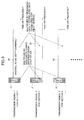
- FIG. 7 is a drawing illustrating a transmission method (3) for implementing soft-combining.
- the pilot signal 31 used for demodulation is multiplied by sequences (codes) orthogonal to each other, a channel to be soft-combined is also multiplied by the same orthogonal sequences as those used for the pilot signal 31, and the multiplied versions of the pilot signal 31 and the channel are transmitted. Therefore, in this case, patterns of the pilot signal and the channel to be soft-combined in each of the transmission signals 1, 2, and 3 are identical.
- the receiving end combines the transmission signals, obtains a propagation path response of the combined transmission signals based on the orthogonal pilot signals, and demodulates the soft-combined channel based on the obtained propagation path response.
- the mobile station 10A configured as shown in FIG. 3 may be used.
- the transmission method (3) Similar to the transmission method (2), the transmission method (3) also makes it possible to use a normal pilot signal transmitted in different patterns to the respective sectors to generate pilot signals used for soft-combining.
- FIG. 8 is a drawing illustrating a transmission method (4) for implementing soft-combining.
- instances of the pilot signal 31 used for demodulation are allocated different time slots or frequency bands in the respective transmission signals 1 through 3 to be transmitted to the corresponding sectors.
- Instances of the same channel to be soft-combined are transmitted in substantially the same manner as in the above methods.
- the pilot signal 31 of the transmission signal 1 is transmitted using symbol 1 or subcarrier 1;
- the pilot signal 31 of the transmission signal 2 is transmitted using symbol 2 or subcarrier 2;
- the pilot signal 31 of the transmission signal 3 is transmitted using symbol 3 or subcarrier 3.
- the receiving end obtains propagation path responses of the respective transmission signals based on the pilot signals received in different time slots or frequency bands, combines the propagation path responses, and performs compensation and demodulation of the soft-combined channel based on the combined channel estimate (propagation path response).
- the mobile station 10B configured as shown in FIG. 6 may be used.
- FIG. 9 is a drawing illustrating a transmission method (5) for implementing soft-combining.
- the pilot signal 31 used for demodulation is multiplied by sequences (codes) different from each other, a channel to be soft-combined is also multiplied by sequences that are highly correlated with those used for the pilot signal 31, and the multiplied versions of the pilot signal 31 and the channel are transmitted.
- the receiving end combines the transmission signals, obtains a propagation path response of the combined transmission signals based on the pilot signals multiplied by different sequences, and performs compensation and demodulation of the soft-combined channel based on the obtained propagation path response.
- the mobile station 10A configured as shown in FIG. 3 may be used.
- the transmission methods (3) and (5) are similar to each other. However, with the transmission method (3) where the pilot channel is multiplied by orthogonal sequences, the area or the number of sectors to which orthogonal pilot channels can be assigned is limited because the number of the orthogonal sequences is limited.
- the transmission method (5) is preferable in a case where a channel to be soft-combined is transmitted to a large number of sectors.
- the transmission method (5) is preferable when soft-combining is applied to an MBMS channel that is transmitted across a comparatively large area.
- the control unit 21 of the base station 10 selects sectors where soft-combining is to be performed based on location information of mobile stations and/or a channel type, and causes the signal generating units corresponding to the selected sectors to generate instances of the same pilot signal or to generate pilot signals by multiplying a normal pilot signal by orthogonal codes or sequences different from each other.
- the control unit 21 also causes the signal generating units to generate instances of the same channel to be soft-combined for the respective sectors, or to generate different versions of the channel to be soft-combined by multiplying the channel by the same orthogonal codes as those used for the pilot signal or by sequences highly correlated with those used for the pilot signal.
- the base station 10 enables soft-combining reception by the mobile station 10.
Landscapes
- Engineering & Computer Science (AREA)
- Signal Processing (AREA)
- Computer Networks & Wireless Communication (AREA)
- Power Engineering (AREA)
- Mobile Radio Communication Systems (AREA)
Abstract


Description
- The present invention generally relates to the field of mobile communication. More particularly, the present invention relates to a channel transmission method and a base station that enable "soft-combining reception" at mobile stations.
- In multicarrier transmission schemes such as orthogonal frequency division multiplexing (OFDM), a transmitting end modulates an information signal using multiple subcarriers that are orthogonal to each other and transmits the modulated signals in parallel. In such a multicarrier transmission scheme, a guard interval is inserted between symbols of transmission signals to reduce waveform distortion caused by multipath delayed waves.
- Meanwhile, a sectoring method of dividing a coverage area of a base station into multiple sectors and allocating different frequencies or codes to the respective sectors is used to increase the number of access users (capacity). Allocating different frequencies or codes to the sectors makes it possible to reduce interference between the sectors. Still, however, the reception quality of a user located at a cell boundary or a sector boundary may be reduced because of the interference between cells or sectors.
- Generally, in different sectors, signals with different patterns or different information are transmitted via downlinks even in the same coverage area of a base station. On the other hand, a paging signal informing mobile stations in an area of an incoming call is transmitted to all sectors in the area. Also, in the multimedia broadcast/multicast service (MBMS) where multimedia data are transmitted to multiple unspecified or specified users within an area and which is to be employed in Evolved UTRA (universal terrestrial radio access) intended to evolve third generation standards, the same signal is transmitted to multiple cells or sectors within the area.
- One objective of the present invention is to provide a technology that improves reception quality in a mobile communication system divided into sectors by utilizing characteristics of OFDM transmission.
- In a downlink radio access scheme using OFDM, the reception quality can be improved by combining multiple instances of the same signal received via multiple paths, i.e., by delay diversity, if the delay is within a guard interval.
- This approach may be applied to channels, such as a multimedia broadcast/multicast service (MBMS) channel and a paging channel, that transmit the same data to users in an area. In other words, the reception quality of such channels may be improved by combining multiple instances of the same signal arriving from different sectors via multiple paths within a guard interval. Receiving and combining multiple instances of a signal within a guard interval in OFDM transmission is hereafter called "soft-combining reception".
- Soft-combining reception may be applied not only to MBMS and paging channels but also to channels that may be used to transmit the same signal via different sectors.
- Embodiments of the present invention provide a base station and a method of transmitting a channel to be soft-combined and a pilot signal for demodulating the channel which are used in a communication system employing orthogonal frequency division multiplexing (OFDM).
- According to a first aspect of the present invention, a channel transmission method includes the steps of:
- a) selecting sectors where soft-combining is to be performed based on location information of a mobile station and/or the type of a channel to be transmitted;
- b) generating transmission signals each including a pilot signal for demodulation and data of the channel to be soft-combined and transmitting the generated transmission signals to the respective selected sectors; and
- c) causing the mobile station to receive and combine the transmission signals arriving from the selected sectors within a guard interval.
- According to an embodiment of the present invention, the channel to be soft-combined is a data channel during handover, a paging channel common to the selected sectors, a broadcast channel including broadcast information common to the selected sectors, or a multimedia broadcast/multicast service (MBMS) channel.
- As a first example, the channel transmission method further includes the steps of generating instances of the same pilot signal for the respective selected sectors; and generating instances of the same channel to be soft-combined for the respective selected sectors.
- As a second example, the channel transmission method further includes the steps of generating different versions of the pilot signal for the respective selected sectors by multiplying the pilot signal by sequences orthogonal to each other; and generating instances of the same channel to be soft-combined for the respective selected sectors.
- As a third example, the channel transmission method further includes the steps of generating different versions of the pilot signal for the respective selected sectors by multiplying the pilot signal by sequences orthogonal to each other; and generating different versions of the channel to be soft-combined for the respective selected sectors by multiplying the channel by the same orthogonal sequences as those used for the pilot signal.
- As a fourth example, the channel transmission method further includes the steps of allocating different time slots or frequency bands to instances of the pilot signal that are to be transmitted to the respective selected sectors; and generating instances of the same channel to be soft-combined for the respective sectors.
- As a fifth example, the channel transmission method further includes the steps of generating different versions of the pilot signal for the respective selected sectors by multiplying the pilot signal by sequences different from each other; and generating different versions of the channel to be soft-combined for the respective selected sectors by multiplying the channel by sequences that are highly correlated with those used for the pilot signal.
- A second aspect of the present invention provides a base station used in a communication system employing orthogonal frequency division multiplexing (OFDM). The base station includes:
- a) signal generating units provided for respective sectors covered by the base station;
- b) a control unit configured to select two or more of the sectors where soft-combining is to be performed based on location information of a mobile station and/or the type of a channel to be transmitted and to cause the signal generating units corresponding to the selected sectors to generate transmission signals each including a pilot signal for demodulation and data of the channel to be soft-combined; and
- c) a transmitting unit configured to transmit the transmission signals to the respective selected sectors to allow the mobile station to receive and combine the transmission signals arriving from the selected sectors within a guard interval.
- According to an embodiment, the control unit is configured to select the signal generating units corresponding to the sectors where handover takes place based on the location information of the mobile station; and each of the selected signal generating units is configured to generate a data channel during handover as the channel to be soft-combined.
- According to another embodiment, the control unit is configured to select all of the signal generating units corresponding to the sectors covered by the base station if the channel to be transmitted is a paging channel, a broadcast channel including broadcast information common to the sectors, or a multimedia broadcast/multicast service (MBMS) channel; and each of the selected signal generating units is configured to generate the paging channel, the broadcast channel, or the MBMS channel as the channel to be soft-combined.
- In a system where the same channel can be transmitted to multiple sectors, a channel transmission method and a base station according to embodiments of the present invention enable a mobile station to receive and combine multiple instances of the same signal arriving from multiple sectors in synchronization with each other within a guard interval.
- Accordingly, embodiments of the present invention make it possible to improve even the reception quality of a user located at a cell boundary or a sector boundary.
-
-
FIGs. 1A through 1D are drawings illustrating examples of channels and areas to which soft-combining can be applied; -
FIG. 2 is a drawing illustrating a transmission method (1) for implementing soft-combining; -
FIG. 3 is a schematic block diagram illustrating a configuration example 1 of a mobile station; -
FIG. 4 is a schematic block diagram illustrating an exemplary configuration of a base station; -
FIG. 5 is a drawing illustrating a transmission method (2) for implementing soft-combining; -
FIG. 6 is a schematic block diagram illustrating a configuration example 2 of a mobile station; -
FIG. 7 is a drawing illustrating a transmission method (3) for implementing soft-combining; -
FIG. 8 is a drawing illustrating a transmission method (4) for implementing soft-combining; and -
FIG. 9 is a drawing illustrating a transmission method (5) for implementing soft-combining. -
- 10, 10A, 10B Mobile station (UE)
- 11 Pilot channel extracting unit
- 12A, 12B Channel estimation unit
- 13 Channel variation compensating unit
- 14 Adder
- 20, 20A, 20B Base station (eNB)
- 21 Control unit
- 22-1, 22-2, 22-3 Signal generating unit
- 23-1, 23-2, 23-3 Data generating unit for generating channel to be soft-combined
- 31 Pilot channel
- 32 Channel to be soft-combined
- The best mode for carrying out the invention is described based on the following embodiments with reference to the accompanying drawings.
FIGs. 1A through 1D are drawings illustrating exemplary channels to which soft-combining can be applied and exemplary geographical areas where soft-combining is performed. -
FIG. 1A shows a data channel that is transmitted to multiple sectors during handover. Here, it is assumed that a mobile station (UE) 10 is moving fromsector 1 tosector 2 or fromsector 2 tosector 1 covered by a base station (eNB) 20. In this example, soft-combining is performed in anarea including sectors base station 20 transmits the same data channel tosectors mobile station 10 receives and soft-combines instances of the data channel arriving fromsectors - Thus, the reception quality of a downlink channel using OFDM can be improved even when a user is at a sector boundary by synchronizing the transmission timings of the channel via
sectors -
FIG. 1B shows a paging channel or a broadcast channel that is common to and transmitted to multiple sectors. In this example, soft-combining is performed in an area including allsectors 1 through 3 covered by thebase station 20. - Normally, broadcast channels are used to transmit different sets of broadcast information to the respective sectors. However, some broadcast information is common to multiple sectors. Such common broadcast information includes, for example, system information and channel configuration information sent from the core network to mobile stations. When broadcast information is common to all sectors, the
base station 20 transmits the same broadcast channel tosectors 1 through 3. Themobile station 10 receives multiple instances of the same broadcast channel fromsectors -
FIG. 1C shows a paging channel, a broadcast channel, or an MBMS channel that is common in a specific area and transmitted to multiple sectors in the area. In this example, soft-combining is performed in anarea including sectors base station 20A andsectors adjacent base station 20B. Themobile station 10 located near a cell boundary between thebase station 20A and thebase station 20B receives and soft-combines multiple instances of the same channel transmitted from thebase stations sectors -
FIG. 1D shows an MBMS channel transmitted within a service area including multiple sectors. In this example, soft-combining is performed in an area including allsectors 1A through 3A and 1B through 3B covered by thebase stations - Next, transmission methods for implementing soft-combining are described with reference to
FIGs. 2 through 9 . -
FIG. 2 is a drawing illustrating a transmission method (1) for implementing soft-combining. In the transmission method (1), thebase station 20 transmits the same transmission signal including apilot signal 31 for demodulation and achannel 32 to be soft-combined to therespective sectors 1 through 3 where soft-combining is performed. - Examples of channels to be soft-combined include a data channel as shown in
FIG. 1A , a paging channel and a broadcast channel as shown inFIG. 1B , and an MBMS channel as shown inFIG. 1D . The receiving end receives and combines transmission signals 1, 2, and 3 arriving from the respective sectors. Then, a propagation path response of the combinedtransmission signals -
FIG. 3 is a block diagram illustrating a configuration example 1 of the mobile station (UE) 10. A mobile station 10A shown inFIG. 3 includes a pilotchannel extracting unit 11 for extracting thepilot channels 31 from a soft-combined reception signal, achannel estimation unit 12A for obtaining a channel estimate based on the extracted pilot channels, and a channelvariation compensating unit 13 for compensating for the variation of thechannel 32 separated from thepilot channels 31 based on the channel estimate. After the variation is compensated for, thechannel 32 is sent to a modulation/demodulation unit (not shown). -
FIG. 4 is a schematic block diagram illustrating an exemplary configuration of the base station (eNB) 20. To implement soft-combining reception by themobile station 10, thebase station 20 includes signal generating units 22-1 through 22-3 corresponding tosectors 1 through 3 and acontrol unit 21 for selecting the signal generating units 22 corresponding to sectors where soft-combining is to be performed. Thecontrol unit 21 selects the signal generating units 22 based on a channel type and/or location information of mobile stations and causes the selected signal generating units 22 to generate instances of the same channel to be soft-combined for the corresponding sectors. Each of the signal generating units 22 includes a pilot signal generating unit 23 for generating thepilot signal 31 to be transmitted to the corresponding sector and a data generating unit 24 for generating thechannel 32 to be soft-combined. - In the example shown in
FIG. 1A , soft-combining is performed insectors mobile station 10 being handed over. Thecontrol unit 21 of thebase station 20 detects that themobile station 10 is being handed over fromsector 1 tosector 2 or vice versa based on the location information of themobile station 10. Then, thecontrol unit 21 selects the signal generating units 22-1 and 22-2 corresponding tosectors same pilot signal 31. Also, thecontrol unit 21 causes the data generating units 24 of the selected signal generating units 22 to generate instances of thesame channel 32 to be soft-combined. - In the example shown in
FIG. 1B , thecontrol unit 21 selects all of the signal generating units 22-1 through 22-3 corresponding tosectors 1 through 3 based on a channel type such as a paging channel or a broadcast channel for broadcasting common information. The signal generating units 22-1 through 22-3 generate instances of thesame pilot signal 31 and instances of the same paging channel or broadcast channel as thechannel 32 to be soft-combined. Then, each of the signal generating units 22-1 through 22-3 generates a transmission signal by combining thepilot signal 31 and thechannel 32 and transmits the generated signal from a transmitter (not shown) to the corresponding sector. - Thus, the
base station 20 selects the signal generating units 22 corresponding to sectors where soft-combining is to be performed based, for example, on the status of themobile station 10 and the type of a channel to be transmitted, and thereby generates instances of thesame pilot signal 31 and thesame channel 32 for the sectors. This configuration makes it possible to enable a receiving end to receive and soft-combine signals arriving from multiple sectors and thereby to improve the reception quality. -
FIG. 5 is a drawing illustrating a transmission method (2) for implementing soft-combining. In the transmission method (2), thepilot signal 31 used for demodulation is multiplied by sequences (codes) orthogonal to each other, and the multiplied versions of thepilot signal 31 and multiple instances of the same channel to be soft-combined are transmitted. - The receiving end obtains propagation path responses of the respective transmission signals based on the orthogonal pilot signals, combines the propagation path responses, and demodulates the soft-combined channel based on the combined channel estimate (propagation path response).
- In the above example, the transmission signals 1 through 3 containing instances of the same channel are transmitted to the
corresponding sectors 1 through 3. In the case ofFIG. 1A where soft-combining is performed in two sectors, thebase station 20 generates the transmission signals 1 and 2 by multiplying the pilot signals by orthogonal codes. Also, in the case ofFIG. 1D where the same channel is transmitted to all sectors covered by theadjacent base stations base stations FIG. 5 . -
FIG. 6 is a schematic block diagram illustrating a configuration example 2 of the mobile station (UE) 10. Amobile station 10B shown inFIG. 6 is suitable for the transmission method (2). A pilotchannel extracting unit 11 separates pilot signals and other channels in a soft-combined signal and thereby extracts the pilot signals. Achannel estimation unit 12B includes channel estimation units 12-1, 12-2, and 12-3 corresponding to the respective pilot signals and anadder 14. The channel estimation units 12-1, 12-2, and 12-3 calculate channel estimates, and theadder 14 combines the channel estimates and outputs a combined channel estimate. A channelvariation compensating unit 13 compensates for the variation of the channels remaining after the pilot signals are removed based on the combined channel estimate (propagation path response), and sends the channels to a modulation/demodulation unit (not shown). - With the transmission method (2) and the above configuration of the
mobile station 10B, thebase station 20 does not have to make uniform the patterns of pilot signals to be transmitted to the respective sectors each time soft-combining is performed. In other words, thecontrol unit 21 can generate pilot signals to be sent to sectors where soft-combining is to be performed by just multiplying a normal pilot signal, which is normally transmitted in different patterns to the respective sectors, by sequences (codes) orthogonal to each other. -
FIG. 7 is a drawing illustrating a transmission method (3) for implementing soft-combining. In the transmission method (3), thepilot signal 31 used for demodulation is multiplied by sequences (codes) orthogonal to each other, a channel to be soft-combined is also multiplied by the same orthogonal sequences as those used for thepilot signal 31, and the multiplied versions of thepilot signal 31 and the channel are transmitted. Therefore, in this case, patterns of the pilot signal and the channel to be soft-combined in each of the transmission signals 1, 2, and 3 are identical. - The receiving end combines the transmission signals, obtains a propagation path response of the combined transmission signals based on the orthogonal pilot signals, and demodulates the soft-combined channel based on the obtained propagation path response. In this case, the mobile station 10A configured as shown in
FIG. 3 may be used. - Similar to the transmission method (2), the transmission method (3) also makes it possible to use a normal pilot signal transmitted in different patterns to the respective sectors to generate pilot signals used for soft-combining.
-
FIG. 8 is a drawing illustrating a transmission method (4) for implementing soft-combining. In the transmission method (4), instances of thepilot signal 31 used for demodulation are allocated different time slots or frequency bands in therespective transmission signals 1 through 3 to be transmitted to the corresponding sectors. Instances of the same channel to be soft-combined are transmitted in substantially the same manner as in the above methods. For example, thepilot signal 31 of thetransmission signal 1 is transmitted usingsymbol 1 orsubcarrier 1; thepilot signal 31 of thetransmission signal 2 is transmitted usingsymbol 2 orsubcarrier 2; and thepilot signal 31 of thetransmission signal 3 is transmitted usingsymbol 3 orsubcarrier 3. - The receiving end obtains propagation path responses of the respective transmission signals based on the pilot signals received in different time slots or frequency bands, combines the propagation path responses, and performs compensation and demodulation of the soft-combined channel based on the combined channel estimate (propagation path response). In this case, the
mobile station 10B configured as shown inFIG. 6 may be used. -
FIG. 9 is a drawing illustrating a transmission method (5) for implementing soft-combining. In the transmission method (5), thepilot signal 31 used for demodulation is multiplied by sequences (codes) different from each other, a channel to be soft-combined is also multiplied by sequences that are highly correlated with those used for thepilot signal 31, and the multiplied versions of thepilot signal 31 and the channel are transmitted. - The receiving end combines the transmission signals, obtains a propagation path response of the combined transmission signals based on the pilot signals multiplied by different sequences, and performs compensation and demodulation of the soft-combined channel based on the obtained propagation path response. In this case, the mobile station 10A configured as shown in
FIG. 3 may be used. - The transmission methods (3) and (5) are similar to each other. However, with the transmission method (3) where the pilot channel is multiplied by orthogonal sequences, the area or the number of sectors to which orthogonal pilot channels can be assigned is limited because the number of the orthogonal sequences is limited.
- On the other hand, with the transmission method (5) where the pilot channel is multiplied by sequences (codes) different from each other, the number of different sequences (codes) is large compared with the number of orthogonal sequences. Therefore, the transmission method (5) is preferable in a case where a channel to be soft-combined is transmitted to a large number of sectors. For example, the transmission method (5) is preferable when soft-combining is applied to an MBMS channel that is transmitted across a comparatively large area.
- In any one of the above methods, the
control unit 21 of thebase station 10 selects sectors where soft-combining is to be performed based on location information of mobile stations and/or a channel type, and causes the signal generating units corresponding to the selected sectors to generate instances of the same pilot signal or to generate pilot signals by multiplying a normal pilot signal by orthogonal codes or sequences different from each other. Thecontrol unit 21 also causes the signal generating units to generate instances of the same channel to be soft-combined for the respective sectors, or to generate different versions of the channel to be soft-combined by multiplying the channel by the same orthogonal codes as those used for the pilot signal or by sequences highly correlated with those used for the pilot signal. Thus, thebase station 10 enables soft-combining reception by themobile station 10. - The present international application claims priority from Japanese Patent Application No.
2006-031744 filed on February 8, 2006
Claims (15)
- A channel transmission method used in a communication system employing orthogonal frequency division multiplexing (OFDM), the method comprising the steps of:selecting sectors where soft-combining is to be performed based on location information of a mobile station and/or the type of a channel to be transmitted;generating transmission signals each including a pilot signal for demodulation and data of the channel to be soft-combined and transmitting the generated transmission signals to the respective selected sectors; andcausing the mobile station to receive and combine the transmission signals arriving from the selected sectors within a guard interval.
- The channel transmission method as claimed in claim 1, wherein the channel to be soft-combined is a data channel during handover, a paging channel common to the selected sectors, a broadcast channel including broadcast information common to the selected sectors, or a multimedia broadcast/multicast service (MBMS) channel.
- The channel transmission method as claimed in claim 1, further comprising the steps of:generating instances of the same pilot signal for the respective selected sectors; andgenerating instances of the same channel to be soft-combined for the respective selected sectors.
- The channel transmission method as claimed in claim 1, further comprising the steps of:generating different versions of the pilot signal for the respective selected sectors by multiplying the pilot signal by sequences orthogonal to each other; andgenerating instances of the same channel to be soft-combined for the respective selected sectors.
- The channel transmission method as claimed in claim 1, further comprising the steps of:generating different versions of the pilot signal for the respective selected sectors by multiplying the pilot signal by sequences orthogonal to each other; andgenerating different versions of the channel to be soft-combined for the respective selected sectors by multiplying the channel by the same orthogonal sequences as those used for the pilot signal.
- The channel transmission method as claimed in claim 1, further comprising the steps of:allocating different time slots or frequency bands to instances of the pilot signal that are to be transmitted to the respective selected sectors; andgenerating instances of the same channel to be soft-combined for the respective sectors.
- The channel transmission method as claimed in claim 1, further comprising the steps of:generating different versions of the pilot signal for the respective selected sectors by multiplying the pilot signal by sequences different from each other; andgenerating different versions of the channel to be soft-combined for the respective selected sectors by multiplying the channel by sequences that are highly correlated with those used for the pilot signal.
- A base station used in a communication system employing orthogonal frequency division multiplexing (OFDM), the base station comprising:signal generating units provided for respective sectors covered by the base station;a control unit configured to select two or more of the sectors where soft-combining is to be performed based on location information of a mobile station and/or the type of a channel to be transmitted and to cause the signal generating units corresponding to the selected sectors to generate transmission signals each including a pilot signal for demodulation and data of the channel to be soft-combined; anda transmitting unit configured to transmit the transmission signals to the respective selected sectors to allow the mobile station to receive and combine the transmission signals arriving from the selected sectors within a guard interval.
- The base station as claimed in claim 8, wherein
the control unit is configured to select the signal generating units corresponding to the sectors where handover takes place based on the location information of the mobile station; and
each of the selected signal generating units is configured to generate a data channel during handover as the channel to be soft-combined. - The base station as claimed in claim 8, wherein
the control unit is configured to select all of the signal generating units corresponding to the sectors covered by the base station if the channel to be transmitted is a paging channel, a broadcast channel including broadcast information common to the sectors, or a multimedia broadcast/multicast service (MBMS) channel; and
each of the selected signal generating units is configured to generate the paging channel, the broadcast channel, or the MBMS channel as the channel to be soft-combined. - The base station as claimed in claim 8, wherein the respective signal generating units corresponding to the selected sectors are configured to generate instances of the same pilot signal and instances of the same channel to be soft-combined.
- The base station as claimed in claim 8, wherein the respective signal generating units corresponding to the selected sectors are configured to generate different versions of the pilot signal by multiplying the pilot signal by sequences orthogonal to each other and to generate instances of the same channel to be soft-combined.
- The base station as claimed in claim 8, wherein the respective signal generating units corresponding to the selected sectors are configured to generate different versions of the pilot signal by multiplying the pilot signal by sequences orthogonal to each other and to generate different versions of the channel to be soft-combined by multiplying the channel by the same orthogonal sequences as those used for the pilot signal.
- The base station as claimed in claim 8, wherein the respective signal generating units corresponding to the selected sectors are configured to allocate different time slots or frequency bands to instances of the pilot signal and to generate instances of the same channel to be soft-combined.
- The base station as claimed in claim 8, wherein the respective signal generating units corresponding to the selected sectors are configured to generate different versions of the pilot signal by multiplying the pilot signal by sequences different from each other and to generate different versions of the channel to be soft-combined by multiplying the channel by sequences that are highly correlated with those used for the pilot signal.
Applications Claiming Priority (2)
| Application Number | Priority Date | Filing Date | Title |
|---|---|---|---|
| JP2006031744A JP4578418B2 (en) | 2006-02-08 | 2006-02-08 | Channel transmission method and base station |
| PCT/JP2007/052140 WO2007091606A1 (en) | 2006-02-08 | 2007-02-07 | Channel transmission method and base station |
Publications (2)
| Publication Number | Publication Date |
|---|---|
| EP1983665A1 true EP1983665A1 (en) | 2008-10-22 |
| EP1983665A4 EP1983665A4 (en) | 2014-06-25 |
Family
ID=38345202
Family Applications (1)
| Application Number | Title | Priority Date | Filing Date |
|---|---|---|---|
| EP07708179.2A Withdrawn EP1983665A4 (en) | 2006-02-08 | 2007-02-07 | METHOD FOR TRANSMITTING CHANNELS AND ASSOCIATED BASE STATION |
Country Status (10)
| Country | Link |
|---|---|
| US (1) | US20090116449A1 (en) |
| EP (1) | EP1983665A4 (en) |
| JP (1) | JP4578418B2 (en) |
| KR (1) | KR20080103546A (en) |
| CN (1) | CN101416421B (en) |
| BR (1) | BRPI0707566A2 (en) |
| MX (1) | MX2008010047A (en) |
| RU (1) | RU2008135039A (en) |
| TW (1) | TW200738013A (en) |
| WO (1) | WO2007091606A1 (en) |
Cited By (3)
| Publication number | Priority date | Publication date | Assignee | Title |
|---|---|---|---|---|
| FR2930695A1 (en) * | 2008-04-28 | 2009-10-30 | Alcatel Lucent Sas | CELL RADIOCOMMUNICATION METHOD USING PUSC SEGMENTATION TECHNIQUE |
| WO2012138759A1 (en) * | 2011-04-04 | 2012-10-11 | Qualcomm Incorporated | System and method for enabling softer handover by user equipment in a non-dedicated channel state |
| EP2658318A1 (en) * | 2008-05-19 | 2013-10-30 | NTT DoCoMo, Inc. | Base station apparatus, radio network controller, and terminal apparatus and method |
Families Citing this family (11)
| Publication number | Priority date | Publication date | Assignee | Title |
|---|---|---|---|---|
| KR100946921B1 (en) | 2008-03-24 | 2010-03-09 | 에스케이 텔레콤주식회사 | Method and system for handover control of mobile terminal |
| KR101577763B1 (en) * | 2008-06-26 | 2015-12-29 | 한국전자통신연구원 | Signal transmission method and signal reception method |
| USD600287S1 (en) * | 2008-07-24 | 2009-09-15 | Sony Computer Entertainment Inc. | Base station box |
| JP5251439B2 (en) * | 2008-11-10 | 2013-07-31 | 富士通モバイルコミュニケーションズ株式会社 | Communication processing system, OFDM signal transmission method, OFDM transmitter, OFDM receiver, and control station |
| US8767843B2 (en) * | 2008-11-10 | 2014-07-01 | Motorola Mobility Llc | Employing cell-specific and user entity-specific reference symbols in an orthogonal frequency-division multiple access |
| RU2552643C2 (en) * | 2009-04-30 | 2015-06-10 | Конинклейке Филипс Электроникс Н.В. | Method for network communication |
| WO2013002726A1 (en) * | 2011-06-30 | 2013-01-03 | Telefonaktiebolaget Lm Ericsson (Publ) | Method and device for handling base sequences in a communications network |
| JP5417522B2 (en) * | 2012-12-07 | 2014-02-19 | 株式会社Nttドコモ | Wireless control device |
| KR102083278B1 (en) | 2013-12-05 | 2020-04-14 | 한국전자통신연구원 | Method and apparatus of transmitting pilot signal for frequency shared broadcasting |
| US11190303B2 (en) | 2017-08-15 | 2021-11-30 | Telefonaktiebolaget Lm Ericsson (Publ) | Electronic transceiver device, method and computer program for decoding control information |
| US11438769B2 (en) * | 2020-04-28 | 2022-09-06 | Charter Communications Operating, Llc | Apparatus and methods for spatial and operational differentiation and optimization in a wireless system |
Family Cites Families (18)
| Publication number | Priority date | Publication date | Assignee | Title |
|---|---|---|---|---|
| US5978365A (en) * | 1998-07-07 | 1999-11-02 | Orbital Sciences Corporation | Communications system handoff operation combining turbo coding and soft handoff techniques |
| EP1400062A2 (en) * | 2001-06-28 | 2004-03-24 | King's College London | Electronic data communication system |
| WO2003017689A1 (en) * | 2001-08-14 | 2003-02-27 | Flarion Technologies, Inc. | Method and apparatus for wireless network connectivity |
| US6731936B2 (en) * | 2001-08-20 | 2004-05-04 | Qualcomm Incorporated | Method and system for a handoff in a broadcast communication system |
| JP2003069493A (en) * | 2001-08-28 | 2003-03-07 | Mitsubishi Electric Corp | Radio communication system, terminal station and base station of radio communication system, and transmission power control method thereof |
| GB2384660B (en) * | 2002-01-25 | 2004-11-17 | Toshiba Res Europ Ltd | Reciever processing systems |
| US7400889B2 (en) * | 2003-04-01 | 2008-07-15 | Telefonaktiebolaget Lm Ericsson (Publ) | Scalable quality broadcast service in a mobile wireless communication network |
| KR20050013451A (en) * | 2003-07-28 | 2005-02-04 | 삼성전자주식회사 | Apparatus and method for determining soft handover in a cdma mobile communication system providing mbms service |
| JP3964855B2 (en) * | 2003-11-07 | 2007-08-22 | 株式会社東芝 | Wireless communication system, wireless control method, control device, and terminal device |
| US7047009B2 (en) * | 2003-12-05 | 2006-05-16 | Flarion Technologies, Inc. | Base station based methods and apparatus for supporting break before make handoffs in a multi-carrier system |
| US7751367B2 (en) * | 2003-12-11 | 2010-07-06 | Qualcomm, Inc. | Conveying sector load information to mobile stations |
| KR100957408B1 (en) * | 2004-06-17 | 2010-05-11 | 삼성전자주식회사 | Method and apparatus for supporting handover in broadband wireless division multiple access communication system |
| JP4525207B2 (en) * | 2004-06-25 | 2010-08-18 | 株式会社日立製作所 | Wireless communication system |
| JP2006031744A (en) | 2004-07-12 | 2006-02-02 | Matsushita Electric Ind Co Ltd | AV data recording apparatus and reproducing apparatus |
| US20060146745A1 (en) * | 2005-01-05 | 2006-07-06 | Zhijun Cai | Method and apparatus for scheduling and synchronizing a multimedia broadcast/multicast service |
| KR101111515B1 (en) * | 2005-02-02 | 2014-05-07 | 엘지전자 주식회사 | Method for Transmitting and Receiving Data |
| US20070135153A1 (en) * | 2005-12-12 | 2007-06-14 | Zhijun Cai | Methods and apparatus for providing a transmit signal strength message |
| US8059625B2 (en) * | 2006-02-03 | 2011-11-15 | Motorola Mobility, Inc. | Distributed architecture and methods for broadcast/multicast service |
-
2006
- 2006-02-08 JP JP2006031744A patent/JP4578418B2/en not_active Expired - Fee Related
-
2007
- 2007-02-07 WO PCT/JP2007/052140 patent/WO2007091606A1/en not_active Ceased
- 2007-02-07 BR BRPI0707566-9A patent/BRPI0707566A2/en not_active IP Right Cessation
- 2007-02-07 RU RU2008135039/09A patent/RU2008135039A/en not_active Application Discontinuation
- 2007-02-07 CN CN200780012614XA patent/CN101416421B/en not_active Expired - Fee Related
- 2007-02-07 KR KR20087021319A patent/KR20080103546A/en not_active Abandoned
- 2007-02-07 EP EP07708179.2A patent/EP1983665A4/en not_active Withdrawn
- 2007-02-07 US US12/278,712 patent/US20090116449A1/en not_active Abandoned
- 2007-02-07 MX MX2008010047A patent/MX2008010047A/en not_active Application Discontinuation
- 2007-02-08 TW TW096104598A patent/TW200738013A/en unknown
Cited By (6)
| Publication number | Priority date | Publication date | Assignee | Title |
|---|---|---|---|---|
| FR2930695A1 (en) * | 2008-04-28 | 2009-10-30 | Alcatel Lucent Sas | CELL RADIOCOMMUNICATION METHOD USING PUSC SEGMENTATION TECHNIQUE |
| EP2114096A1 (en) * | 2008-04-28 | 2009-11-04 | Alcatel Lucent | Method of Radio Communication using a PUSC (Partial Usage of the Sub-Channels) Segmentation Technique |
| EP2658318A1 (en) * | 2008-05-19 | 2013-10-30 | NTT DoCoMo, Inc. | Base station apparatus, radio network controller, and terminal apparatus and method |
| US8626239B2 (en) | 2008-05-19 | 2014-01-07 | Ntt Docomo, Inc. | Randomly varying a distribution order or transmission power of control information from a base station |
| WO2012138759A1 (en) * | 2011-04-04 | 2012-10-11 | Qualcomm Incorporated | System and method for enabling softer handover by user equipment in a non-dedicated channel state |
| US8897267B2 (en) | 2011-04-04 | 2014-11-25 | Qualcomm Incorporated | System and method for enabling softer handover by user equipment in a non-dedicated channel state |
Also Published As
| Publication number | Publication date |
|---|---|
| EP1983665A4 (en) | 2014-06-25 |
| JP4578418B2 (en) | 2010-11-10 |
| JP2007214820A (en) | 2007-08-23 |
| WO2007091606A1 (en) | 2007-08-16 |
| CN101416421B (en) | 2013-02-13 |
| TW200738013A (en) | 2007-10-01 |
| BRPI0707566A2 (en) | 2011-05-10 |
| CN101416421A (en) | 2009-04-22 |
| US20090116449A1 (en) | 2009-05-07 |
| MX2008010047A (en) | 2008-10-23 |
| KR20080103546A (en) | 2008-11-27 |
| RU2008135039A (en) | 2010-03-20 |
Similar Documents
| Publication | Publication Date | Title |
|---|---|---|
| EP1983665A1 (en) | Channel transmission method and base station | |
| US8040831B2 (en) | Method and system for control channel beamforming | |
| EP1850508B1 (en) | Wireless transmitting station and wireless receiving station | |
| US8547894B2 (en) | Pilot signal transmitting method, base station, mobile station and cellular system to which the method is applied | |
| JP4012167B2 (en) | Wireless communication system | |
| US8072960B2 (en) | Networking method of single frequency network in TD-SCDMA system | |
| CA2562513C (en) | Handling communication interferences in wireless systems | |
| US9161336B2 (en) | Method and apparatus for multi-carrier allocation | |
| EP2288064A1 (en) | Base station, user device, and method | |
| KR20050025146A (en) | Communicating method, transmitting device using the same, and receiving device using the same | |
| US8942153B2 (en) | Method for transmitting and receiving data using a plurality of carriers | |
| US20100061322A1 (en) | Method for allocating code to cells and planning cells in ofdm cellular system | |
| WO2007107090A1 (en) | Method and apparatus for enabling soft handoff in an ofdma-based communication system | |
| KR20070108316A (en) | Transmit Diversity Method for Synchronization Channel and BCH in ODDMA Cellular System | |
| JP3964855B2 (en) | Wireless communication system, wireless control method, control device, and terminal device | |
| US8649365B2 (en) | Dedicated synchronization signal for OFDMA system | |
| US20120207076A1 (en) | Method for transmission of cell-specific information of base station in coordinated multi-point transmission/reception system | |
| KR20070121583A (en) | How to send a signal and how to receive a signal | |
| JP4960059B2 (en) | OFDM transmitter, OFDM receiver, base station, mobile station, OFDM communication system, and cell search method | |
| KR20080044793A (en) | How to generate and transmit downlink frame | |
| KR20080069112A (en) | Radio Frame Scheduling Method in Mobile Communication Network | |
| KR100888500B1 (en) | Apparearus and method for synchronization channel and broadcast channel transmission in wireless communication system | |
| KR20070066871A (en) | Method for demodulating a broadcasting channel using a synchronization channel in an ODF system to which transmit diversity is applied and a transmitting / receiving device therefor |
Legal Events
| Date | Code | Title | Description |
|---|---|---|---|
| PUAI | Public reference made under article 153(3) epc to a published international application that has entered the european phase |
Free format text: ORIGINAL CODE: 0009012 |
|
| 17P | Request for examination filed |
Effective date: 20080806 |
|
| AK | Designated contracting states |
Kind code of ref document: A1 Designated state(s): AT BE BG CH CY CZ DE DK EE ES FI FR GB GR HU IE IS IT LI LT LU LV MC NL PL PT RO SE SI SK TR |
|
| DAX | Request for extension of the european patent (deleted) | ||
| A4 | Supplementary search report drawn up and despatched |
Effective date: 20140522 |
|
| RIC1 | Information provided on ipc code assigned before grant |
Ipc: H04B 7/02 20060101ALI20140516BHEP Ipc: H04B 7/04 20060101ALI20140516BHEP Ipc: H04B 7/26 20060101AFI20140516BHEP Ipc: H04J 11/00 20060101ALI20140516BHEP |
|
| RIC1 | Information provided on ipc code assigned before grant |
Ipc: H04B 7/02 20060101ALI20140606BHEP Ipc: H04B 7/26 20060101AFI20140606BHEP Ipc: H04B 7/04 20060101ALI20140606BHEP Ipc: H04J 11/00 20060101ALI20140606BHEP |
|
| STAA | Information on the status of an ep patent application or granted ep patent |
Free format text: STATUS: THE APPLICATION IS DEEMED TO BE WITHDRAWN |
|
| 18D | Application deemed to be withdrawn |
Effective date: 20150127 |