EP1981915B1 - Compositions of active ingredients - Google Patents
Compositions of active ingredients Download PDFInfo
- Publication number
- EP1981915B1 EP1981915B1 EP07703313.2A EP07703313A EP1981915B1 EP 1981915 B1 EP1981915 B1 EP 1981915B1 EP 07703313 A EP07703313 A EP 07703313A EP 1981915 B1 EP1981915 B1 EP 1981915B1
- Authority
- EP
- European Patent Office
- Prior art keywords
- range
- composition
- weight
- starch
- soluble
- Prior art date
- Legal status (The legal status is an assumption and is not a legal conclusion. Google has not performed a legal analysis and makes no representation as to the accuracy of the status listed.)
- Active
Links
Images


Classifications
-
- C—CHEMISTRY; METALLURGY
- C08—ORGANIC MACROMOLECULAR COMPOUNDS; THEIR PREPARATION OR CHEMICAL WORKING-UP; COMPOSITIONS BASED THEREON
- C08B—POLYSACCHARIDES; DERIVATIVES THEREOF
- C08B31/00—Preparation of derivatives of starch
-
- A—HUMAN NECESSITIES
- A23—FOODS OR FOODSTUFFS; TREATMENT THEREOF, NOT COVERED BY OTHER CLASSES
- A23L—FOODS, FOODSTUFFS OR NON-ALCOHOLIC BEVERAGES, NOT OTHERWISE PROVIDED FOR; PREPARATION OR TREATMENT THEREOF
- A23L2/00—Non-alcoholic beverages; Dry compositions or concentrates therefor; Preparation or treatment thereof
- A23L2/52—Adding ingredients
- A23L2/58—Colouring agents
-
- A—HUMAN NECESSITIES
- A23—FOODS OR FOODSTUFFS; TREATMENT THEREOF, NOT COVERED BY OTHER CLASSES
- A23L—FOODS, FOODSTUFFS OR NON-ALCOHOLIC BEVERAGES, NOT OTHERWISE PROVIDED FOR; PREPARATION OR TREATMENT THEREOF
- A23L29/00—Foods or foodstuffs containing additives; Preparation or treatment thereof
- A23L29/20—Foods or foodstuffs containing additives; Preparation or treatment thereof containing gelling or thickening agents
-
- A—HUMAN NECESSITIES
- A23—FOODS OR FOODSTUFFS; TREATMENT THEREOF, NOT COVERED BY OTHER CLASSES
- A23L—FOODS, FOODSTUFFS OR NON-ALCOHOLIC BEVERAGES, NOT OTHERWISE PROVIDED FOR; PREPARATION OR TREATMENT THEREOF
- A23L29/00—Foods or foodstuffs containing additives; Preparation or treatment thereof
- A23L29/20—Foods or foodstuffs containing additives; Preparation or treatment thereof containing gelling or thickening agents
- A23L29/206—Foods or foodstuffs containing additives; Preparation or treatment thereof containing gelling or thickening agents of vegetable origin
- A23L29/212—Starch; Modified starch; Starch derivatives, e.g. esters or ethers
-
- A—HUMAN NECESSITIES
- A23—FOODS OR FOODSTUFFS; TREATMENT THEREOF, NOT COVERED BY OTHER CLASSES
- A23L—FOODS, FOODSTUFFS OR NON-ALCOHOLIC BEVERAGES, NOT OTHERWISE PROVIDED FOR; PREPARATION OR TREATMENT THEREOF
- A23L33/00—Modifying nutritive qualities of foods; Dietetic products; Preparation or treatment thereof
- A23L33/10—Modifying nutritive qualities of foods; Dietetic products; Preparation or treatment thereof using additives
- A23L33/15—Vitamins
- A23L33/155—Vitamins A or D
-
- A—HUMAN NECESSITIES
- A23—FOODS OR FOODSTUFFS; TREATMENT THEREOF, NOT COVERED BY OTHER CLASSES
- A23L—FOODS, FOODSTUFFS OR NON-ALCOHOLIC BEVERAGES, NOT OTHERWISE PROVIDED FOR; PREPARATION OR TREATMENT THEREOF
- A23L5/00—Preparation or treatment of foods or foodstuffs, in general; Food or foodstuffs obtained thereby; Materials therefor
- A23L5/40—Colouring or decolouring of foods
- A23L5/42—Addition of dyes or pigments, e.g. in combination with optical brighteners
-
- A—HUMAN NECESSITIES
- A23—FOODS OR FOODSTUFFS; TREATMENT THEREOF, NOT COVERED BY OTHER CLASSES
- A23L—FOODS, FOODSTUFFS OR NON-ALCOHOLIC BEVERAGES, NOT OTHERWISE PROVIDED FOR; PREPARATION OR TREATMENT THEREOF
- A23L5/00—Preparation or treatment of foods or foodstuffs, in general; Food or foodstuffs obtained thereby; Materials therefor
- A23L5/40—Colouring or decolouring of foods
- A23L5/42—Addition of dyes or pigments, e.g. in combination with optical brighteners
- A23L5/43—Addition of dyes or pigments, e.g. in combination with optical brighteners using naturally occurring organic dyes or pigments, their artificial duplicates or their derivatives
- A23L5/44—Addition of dyes or pigments, e.g. in combination with optical brighteners using naturally occurring organic dyes or pigments, their artificial duplicates or their derivatives using carotenoids or xanthophylls
-
- A—HUMAN NECESSITIES
- A61—MEDICAL OR VETERINARY SCIENCE; HYGIENE
- A61K—PREPARATIONS FOR MEDICAL, DENTAL OR TOILETRY PURPOSES
- A61K47/00—Medicinal preparations characterised by the non-active ingredients used, e.g. carriers or inert additives; Targeting or modifying agents chemically bound to the active ingredient
- A61K47/30—Macromolecular organic or inorganic compounds, e.g. inorganic polyphosphates
- A61K47/36—Polysaccharides; Derivatives thereof, e.g. gums, starch, alginate, dextrin, hyaluronic acid, chitosan, inulin, agar or pectin
-
- A—HUMAN NECESSITIES
- A61—MEDICAL OR VETERINARY SCIENCE; HYGIENE
- A61K—PREPARATIONS FOR MEDICAL, DENTAL OR TOILETRY PURPOSES
- A61K8/00—Cosmetics or similar toiletry preparations
- A61K8/18—Cosmetics or similar toiletry preparations characterised by the composition
- A61K8/30—Cosmetics or similar toiletry preparations characterised by the composition containing organic compounds
- A61K8/31—Hydrocarbons
-
- A—HUMAN NECESSITIES
- A61—MEDICAL OR VETERINARY SCIENCE; HYGIENE
- A61K—PREPARATIONS FOR MEDICAL, DENTAL OR TOILETRY PURPOSES
- A61K8/00—Cosmetics or similar toiletry preparations
- A61K8/18—Cosmetics or similar toiletry preparations characterised by the composition
- A61K8/72—Cosmetics or similar toiletry preparations characterised by the composition containing organic macromolecular compounds
- A61K8/73—Polysaccharides
- A61K8/732—Starch; Amylose; Amylopectin; Derivatives thereof
-
- A—HUMAN NECESSITIES
- A61—MEDICAL OR VETERINARY SCIENCE; HYGIENE
- A61P—SPECIFIC THERAPEUTIC ACTIVITY OF CHEMICAL COMPOUNDS OR MEDICINAL PREPARATIONS
- A61P3/00—Drugs for disorders of the metabolism
- A61P3/02—Nutrients, e.g. vitamins, minerals
-
- A—HUMAN NECESSITIES
- A61—MEDICAL OR VETERINARY SCIENCE; HYGIENE
- A61Q—SPECIFIC USE OF COSMETICS OR SIMILAR TOILETRY PREPARATIONS
- A61Q19/00—Preparations for care of the skin
-
- C—CHEMISTRY; METALLURGY
- C08—ORGANIC MACROMOLECULAR COMPOUNDS; THEIR PREPARATION OR CHEMICAL WORKING-UP; COMPOSITIONS BASED THEREON
- C08K—Use of inorganic or non-macromolecular organic substances as compounding ingredients
- C08K5/00—Use of organic ingredients
- C08K5/0008—Organic ingredients according to more than one of the "one dot" groups of C08K5/01 - C08K5/59
-
- C—CHEMISTRY; METALLURGY
- C08—ORGANIC MACROMOLECULAR COMPOUNDS; THEIR PREPARATION OR CHEMICAL WORKING-UP; COMPOSITIONS BASED THEREON
- C08L—COMPOSITIONS OF MACROMOLECULAR COMPOUNDS
- C08L3/00—Compositions of starch, amylose or amylopectin or of their derivatives or degradation products
- C08L3/02—Starch; Degradation products thereof, e.g. dextrin
-
- C—CHEMISTRY; METALLURGY
- C08—ORGANIC MACROMOLECULAR COMPOUNDS; THEIR PREPARATION OR CHEMICAL WORKING-UP; COMPOSITIONS BASED THEREON
- C08L—COMPOSITIONS OF MACROMOLECULAR COMPOUNDS
- C08L3/00—Compositions of starch, amylose or amylopectin or of their derivatives or degradation products
- C08L3/04—Starch derivatives, e.g. crosslinked derivatives
-
- C—CHEMISTRY; METALLURGY
- C08—ORGANIC MACROMOLECULAR COMPOUNDS; THEIR PREPARATION OR CHEMICAL WORKING-UP; COMPOSITIONS BASED THEREON
- C08L—COMPOSITIONS OF MACROMOLECULAR COMPOUNDS
- C08L3/00—Compositions of starch, amylose or amylopectin or of their derivatives or degradation products
- C08L3/04—Starch derivatives, e.g. crosslinked derivatives
- C08L3/06—Esters
-
- A—HUMAN NECESSITIES
- A23—FOODS OR FOODSTUFFS; TREATMENT THEREOF, NOT COVERED BY OTHER CLASSES
- A23V—INDEXING SCHEME RELATING TO FOODS, FOODSTUFFS OR NON-ALCOHOLIC BEVERAGES AND LACTIC OR PROPIONIC ACID BACTERIA USED IN FOODSTUFFS OR FOOD PREPARATION
- A23V2002/00—Food compositions, function of food ingredients or processes for food or foodstuffs
-
- A—HUMAN NECESSITIES
- A61—MEDICAL OR VETERINARY SCIENCE; HYGIENE
- A61K—PREPARATIONS FOR MEDICAL, DENTAL OR TOILETRY PURPOSES
- A61K9/00—Medicinal preparations characterised by special physical form
- A61K9/20—Pills, tablets, discs, rods
-
- A—HUMAN NECESSITIES
- A61—MEDICAL OR VETERINARY SCIENCE; HYGIENE
- A61K—PREPARATIONS FOR MEDICAL, DENTAL OR TOILETRY PURPOSES
- A61K9/00—Medicinal preparations characterised by special physical form
- A61K9/48—Preparations in capsules, e.g. of gelatin, of chocolate
Definitions
- the present invention relates to improved OSA-starches, a process for the manufacture thereof, as well as to compositions containing active ingredients, preferably fat-soluble active ingredients, and/or colorants in a matrix based on these improved OSA-starches and to a process for preparing these compositions.
- the present invention further relates to the use of the compositions of this invention for the enrichment, fortification and/or for the coloration of food, beverages, animal feed, cosmetics or pharmaceutical compositions.
- the present invention relates to compositions comprising an improved OSA-starch and a fat soluble active ingredient and/or a colorant, especially a carotenoid, to a process for preparing these compositions and the use of these compositions as additives for the enrichment, fortification and/or for the coloration of food, beverages (preferred), animal feed, cosmetics or pharmaceutical compositions; and to food, beverages (preferred), animal feed, cosmetics or pharmaceutical compositions containing such compositions.
- modified polysaccharides as known in the prior art are used as matrix for compositions containing (fat-soluble) active ingredients and/or colorants, the physical parameters of such obtained compositions often differ due to quality differences in the modified polysaccharides. Therefore, a need exists for compositions, wherein the quality of the modified polysaccharide is standardized or even improved.
- compositions comprising
- compositions are used for the enrichment, fortification and/or coloration of food, beverage, animal feed, cosmetics or pharmaceutical compositions; said use being a further aspect of the invention.
- the invention is related to food, beverage, animal feed, cosmetics or pharmaceutical compositions containing such compositions.
- At least one OSA-starch is preferably used to make a composition of this invention, but it is possible to use a mixture of two or more different OSA-starches in one composition.
- Starches are hydrophilic and therefore do not have emulsifying capacities.
- modified starches are made from starches substituted by known chemical methods with hydrophobic moieties.
- starch may be treated with cyclic dicarboxylic acid anhydrides such as succinic anhydrides, substituted with a hydrocarbon chain (see O. B. Wurzburg (editor), "Modified Starches: Properties and Uses, CRC Press, Inc. Boca Raton, Florida, 1986 (and subsequent editions ).
- a particularly preferred modified starch of this invention has the following formula (I) wherein St is a starch, R is an alkylene radical and R' is a hydrophobic group.
- R is a lower alkylene radical such as dimethylene or trimethylene.
- R' may be an alkyl or alkenyl group, preferably having 5 to 18 carbon atoms.
- a preferred compound of formula (I) is an "OSA-starch” (starch sodium octenyl succinate).
- the degree of substitution i.e. the number of esterified hydroxyl groups to the number of free non-esterified hydroxyl groups usually varies in a range of from 0.1% to 10%, preferably in a range of from 0.5% to 4%, more preferably in a range of from 3% to 4%.
- OSA-starch denotes any starch (from any natural source such as corn, waxy maize, waxy corn, wheat, tapioca and potatoe or synthesized) that was treated with octenyl succinic anhydride (OSA).
- the degree of substitution i.e. the number of hydroxyl groups esterified with OSA to the number of free non-esterified hydroxyl groups usually varies in a range of from 0.1% to 10%, preferably in a range of from 0.5% to 4%, more preferably in a range of from 3% to 4%.
- OSA-starches are also known under the expression "modified food starch".
- OSA-starches may contain further hydrocolloids, such as starch, maltodextrin, carbohydrates, gum, corn syrup etc. and optionally any typical emulsifier (as co-emulgator), such as mono- and diglycerides of fatty acids, polyglycerol esters of fatty acids, lecithins, sorbitan monostearate, and plant fibre or sugar.
- emulsifier as co-emulgator
- OSA-starches encompasses also such starches that are commercially available e.g. from National Starch under the tradenames HiCap 100, Capsul, Capsul HS, Purity Gum 2000, UNI-PURE, HYLON VII; from Roquette Fromme ; from CereStar under the tradename C*EmCap or from Tate & Lyle. These commercially available starches are also suitable starting materials for the improved OSA-starches of the present invention.
- OSA-starches encompass further also OSA-starches that were partly hydrolysed enzymatically, e.g. by glycosylases (EC 3.2; see http://www.chem.qmul.ac.uk/iubmb/enzyme/EC3.2/ ) or hydrolases, as well as to OSA-starches that were partly hydrolysed chemically by know methods.
- OSA-starches encompass also OSA-starches that were first partly hydrolysed enzymatically and afterwards additionally hydrolysed chemically.
- hydrolyse starch either enzymatically or chemically or both
- cyclic dicarboxylic acid anhydrides such as succinic anhydrides, substituted with a hydrocarbon chain, preferably to treat it with octenyl succinic anhydride.
- the enzymatical hydrolysis is conventionally carried out at a temperature of from about 5 to about ⁇ 100°C, preferably at a temperature of from about 5 to about 70°C, more preferably at a temperature of from about 20 to about 55°C.
- the glycosylases/hydrolases can be from fruit, animal origin, bacteria or fungi.
- the glycolase/hydrolase may have endo-activity and/or exo-activity. Therefore, enzyme preparations of endo- and exo-glycosylases/-hydrolases or any of their mixtures may be used.
- the glycosylases/hydrolases show also unknown side activities, but which are not critical for the manufacture of the desired product.
- glycosylases are the commercially available enzyme preparations from the suppliers Novozymes, Genencor, AB-Enzymes, DSM Food Specialities, Amano, etc.
- the hydrolases are ⁇ -amylases, glucoamylases, ⁇ -amylases or debranching enzymes such as isoamylases and pullulanases.
- the glycosylase/hydrolase is added to provide a concentration of from about 0.01 to about 10 weight-%, preferably of from about 0.1 to about 1 weight-%, based on the dry weight of the OSA-starch. In a preferred embodiment of the process of the invention, the enzyme is added at once.
- the enzymatic hydrolysis may also be carried out stepwise. For instance, the glycosylase/hydrolase or a mixture of glycosylases/hydrolases is added to the incubation batch in an amount of e.g. 1 % whereupon, e.g.
- glycosylase/hydrolase or a mixture of glycosylases/hydrolases which may by the same or different from the first added glycosylase/hydrolase or mixture of glycosylases/hydrolases is added, e.g. in an amount of 2% whereupon the incubation batch is hydrolysed at 35°C for 10 minutes.
- starting OSA-starches having a degree of hydrolysis of approximately zero can be used.
- the duration of hydrolysis may vary between about a few seconds and about 300 minutes.
- the exact duration of the enzymatic treatment may be determined in an empirical way with respect to the desired properties of the OSA-starch, such as emulsifying stability, emulsifying capacity, droplet size of the emulsion, depending strongly on parameters like enzyme activities, or composition of the substrate. Alternatively it may be determined by measuring the osmolality ( W. Dzwokak and S. Ziajka, Journal of food science, 1999, 64 (3) 393-395 ).
- the inactivation of the glycosylase/hydrolase is suitably achieved by heat denaturation, e.g. by heating of the incubation batch to about 80 to 85°C for 5 to 30 minutes, especially for 5 to 10 minutes.
- improved OSA starches refers to OSA starches, where parts have been separated.
- TMP trans membrane pressure
- the term "improved OSA-starches” refers to OSA-starches, where the turbidity of 10% aqueous solutions of said OSA-starches is in the range of from 1-200 NTU, preferably in the range of from 1-150 NTU, more preferably in the range of from 1-110 NTU, even more preferably in the range of from 1-100 NTU, most preferably ⁇ 100 NTU.
- Such OSA-starches with the given turbidity are also "improved" OSA-starches in the context of the present invention and may be obtained by separating parts non soluble at atmospheric pressure in water of a temperature in the range of from 1 to ⁇ 100°C (e.g. from 1 to 98°C) by centrifugation.
- the turbidity of said aqueous solutions is measured spectrophotometrically at a wavelength of 455 nm using a HACH 2100 AN Turbidimeter according to USEPA Method 180.1 at room temperature and at atmospheric pressure. The turbidity is then expressed in nephelometric turbidity units (NTU).
- active ingredients encompasses "fat-soluble active ingredients” as well as “water-soluble active ingredients”. Preferred are "fat-soluble active ingredients”.
- fat-soluble active ingredient encompasses fat soluble vitamins and functionally related compounds which can be used for enrichment or fortification of food, beverages, animal feed, cosmetics or pharmaceutical compositions.
- fat soluble vitamins are the vitamins of the groups A, D, E or K or derivatives thereof such as their acetates, e.g. vitamin A acetate or tocopherol acetate, or their longer chain fatty acid esters, e.g. vitamin A palmitate or tocopherol palmitate.
- Examples of functionally related compounds are e.g. polyunsaturated fatty acids (PUFAs) or derivatives thereof, triglycerides rich in polyunsaturated fatty acids such as eicosapentaenoic acid (EPA), docosahexaenoic acid (DHA) or ⁇ -linolenic acid (GLA), or coenzyme Q 10 (CoQ 10). Also included are fat soluble sun filters, such as UV-A and UV-B filters used in sun care and cosmetic preparations.
- PUFAs polyunsaturated fatty acids
- EPA eicosapentaenoic acid
- DHA docosahexaenoic acid
- GLA ⁇ -linolenic acid
- CoQ 10 coenzyme Q 10
- fat soluble sun filters such as UV-A and UV-B filters used in sun care and cosmetic preparations.
- colorant as used herein comprises a carotene or structurally related polyene compound which can be used as a colorant for food, beverages, animal feed, cosmetics or pharmaceutical compositions.
- carotenes or structurally related polyene compounds examples include carotenoids such as ⁇ -carotene, ⁇ -carotene, 8'-apo- ⁇ -carotenal, 8'-apo- ⁇ -carotenoic acid esters such as the ethyl ester, canthaxanthin, astaxanthin, astaxanthin ester, lycopene, lutein, lutein (di)ester, zeaxanthin or crocetin, ⁇ - or ⁇ -zeacarotene or mixtures thereof.
- the preferred carotenoid is ⁇ -carotene.
- compositions containing at least an improved OSA-starch and ⁇ -carotene as colorant are typically characterised by ultraviolet/visible-spectroscopy using deionised water as reference.
- the dispersions show an extinction of at least 0.2 (preferably above 1.0) absorbance units at the wavelength of maximum optical density in the range of 400 to 600 nm. This is equivalent to a formal extinction coefficient of ⁇ -carotene in aqueous dispersion E(1%, 1cm) of 200 to 1000 (preferably >1000).
- the amount of the improved OSA starch i) is in the range of from 10 to 99.9 weight-% (preferably in the range of from 20 to 80 weight-%, more preferably in the range of from 40 to 60 weight-%), the amount of the (fat-soluble) active ingredient and/or colorant ii) is in the range of from 0.1 to 90 weight-% (preferably in the range of from 5 to 20 weight-%), and the amount of the adjuvant and/or excipient iii) is in the range of from 0 to 50 weight-%, based on the total amount of the composition.
- compositions of the present invention contain one or more excipients and/or adjuvants selected from the group consisting of monosaccharides, disaccharides, oligosaccharides and polysaccharides, glycerol, triglycerides (different from the triglycerides rich in polyunsaturated fatty acids mentioned above), water-soluble antioxidants and fat-soluble antioxidants.
- excipients and/or adjuvants selected from the group consisting of monosaccharides, disaccharides, oligosaccharides and polysaccharides, glycerol, triglycerides (different from the triglycerides rich in polyunsaturated fatty acids mentioned above), water-soluble antioxidants and fat-soluble antioxidants.
- compositions of the present invention examples include sucrose, invert sugar, xylose glucose, fructose, lactose, maltose, saccharose and sugar alcohols.
- oligo- and polysaccharides examples include starch, starch hydrolysates, e.g. dextrins and maltodextrins, especially those having the range of 5 to 65 dextrose equivalents (DE), and glucose syrup, especially such having the range of 20 to 95 DE.
- DE dextrins and maltodextrins
- glucose syrup especially such having the range of 20 to 95 DE.
- DE dextrose equivalent
- DE denotes the degree of hydrolysis and is a measure of the amount of reducing sugar calculated as D-glucose based on dry weight; the scale is based on native starch having a DE close to 0 and glucose having a DE of 100.
- the triglyceride is suitably a vegetable oil or fat, preferably corn oil, sunflower oil, soybean oil, safflower oil, rapeseed oil, peanut oil, palm oil, palm kernel oil, cotton seed oil, olive oil or coconut oil.
- Solid compositions may in addition contain an anti-caking agent, such as silicic acid or tricalcium phosphate and the like, and up to 10 weight-%, as a rule 2 to 5 weight-%, of water, based on the total weight of the solid composition.
- an anti-caking agent such as silicic acid or tricalcium phosphate and the like, and up to 10 weight-%, as a rule 2 to 5 weight-%, of water, based on the total weight of the solid composition.
- the water-soluble antioxidant may be for example ascorbic acid or a salt thereof, preferably sodium ascorbate, watersoluble polyphenols such as hydroxytyrosol and oleuropein aglycon, epigallocatechingallate (EGCG) or extracts of rosemary or olives.
- ascorbic acid or a salt thereof preferably sodium ascorbate
- watersoluble polyphenols such as hydroxytyrosol and oleuropein aglycon
- EGCG epigallocatechingallate
- the fat-soluble antioxidant may be for example a tocopherol, e.g. dl- ⁇ -tocopherol (i.e. synthetic tocopherol), d- ⁇ -tocopherol (i.e. natural tocopherol), ⁇ - or ⁇ -tocopherol, or a mixture of two or more of these; butylated hydroxytoluene (BHT); butylated hydroxyanisole (BHA); ethoxyquin, propyl gallate; tert. butyl hydroxyquinoline; or 6-ethoxy-1,2-dihydroxy-2,2,4-trimethylquinoline (EMQ), or an ascorbic acid ester of a fatty acid, preferably ascorbyl palmitate or stearate.
- a tocopherol e.g. dl- ⁇ -tocopherol (i.e. synthetic tocopherol), d- ⁇ -tocopherol (i.e. natural tocopherol), ⁇ - or ⁇ -tocophe
- the ascorbic acid ester of a fatty acid particularly ascorbyl palmitate or stearate, may alternatively be added to the water phase.
- compositions of the present invention may be solid compositions, i.e. stable, water-soluble or -dispersible powders, or they may be liquid compositions, i.e. aqueous colloidal solutions or oil-in-water dispersions of the aforementioned powders.
- the stabilised oil-in-water dispersions which may be oil-in-water emulsions or may feature a mixture of suspended, i.e. solid, particles and emulsified, i.e. liquid, droplets, may be prepared by the methods described below or by an analogous manner.
- the present invention is concerned with stable compositions in powder form comprising one or more (fat-soluble) active ingredients and/or one or more colorants in a matrix of an improved OSA starch composition.
- a powder composition according to the present invention comprises Ingredient Amount an improved OSA starch 10 to 99.9 weight-%, preferably 20 to 80 weight-%, more preferably 40 to 60 weight-% if the fat-soluble active ingredient is a carotenoid such as ⁇ -carotene the right-handed amounts apply 10 to 99.9 weight-%, preferably 20 to 80 weight-%, more preferably 50 to 70 weight-% a fat soluble active ingredient and/or a colorant 0.1 to 90 weight-%, preferably 0.5 to 60 weight-% if the fat-soluble active ingredient is a carotenoid such as ⁇ -carotene the right-handed amounts apply 0.01 to 50 weight-%, preferably 0.1 to 50 weight-%, more preferably 0.5 to 30 weight-% a mono- or disaccharide 0 to 70 weight-%, preferably 0 to 40 weight-% a starch hydrolysate 0 to 70 weight-%, preferably 0 to 40 weight-% glycerol 0 to 20
- compositions according to the invention may additionally contain proteins (of plant or animal origin) or hydrolysed proteins that act as protective colloids, e.g. proteins from soy, rice (endosperm) or lupin, or hydrolysed proteins from soy, rice (endosperm) or lupin, as well as plant gums (such as Gum Acacia or Gum arabic) or modified plant gums.
- proteins of plant or animal origin
- hydrolysed proteins that act as protective colloids e.g. proteins from soy, rice (endosperm) or lupin, or hydrolysed proteins from soy, rice (endosperm) or lupin
- plant gums such as Gum Acacia or Gum arabic
- the improved OSA-starch can be manufactured by a process comprising the following steps:
- the parts to be separated are especially those parts that are not soluble at atmospheric pressure in water of a temperature in the range of from 1 to ⁇ 100°C.
- step a) preferably an aqueous solution or suspension of an OSA starch (with the definition and the preferences as described above under the chapter component i)) having a dry mass content in the range of from 0.1 to 80 weight-%, preferably in the range of from 0.5 to 80 weight-%, is prepared when step b) is performed by sedimentation/centrifugation and microfiltration.
- an OSA starch (with the definition and the preferences as described above under the chapter component i)) having a dry mass content in the range of from 0.1 to 80 weight-%, preferably in the range of from 0.5 to 80 weight-%
- the weight-ratios of a mixture of two different OSA-starches may vary in a range of from 1 : 99 to 99 : 1.
- a mixture of HiCap 100 and Capsul HS is used. More preferably a mixture of 50 to 80 weight-% of HiCap 100 and 20 to 50 weight-% of Capsul HS is used. Most preferably a mixture of 50 weight-% of HiCap 100 and 50 weight-% of Capsul HS is used.
- the water has a temperature in the range of from 30 to 75°C.
- Step b) is preferably carried out at a temperature in the range of from 1 to ⁇ 100°C (e.g. from 1 to 98°C), more preferably at a temperature in the range of from 30 to 75°C.
- Step b) is carried out by sedimentation (preferably by centrifugation) and microfiltration, especially by crossflow microfiltration.
- the sedimentation is a method which separates according to the density.
- the (micro-)filtration is a method that separates according to the particle size.
- sedimentation/centrifugation and filtration are carried out, usually the sedimentation/centrifugation is first carried out followed by the filtration, i.e. in a preferred embodiment of the present invention a centrifugation is first carried out followed by a microfiltration.
- the centrifugation may be carried out at 1000 to 20000 g depending on the dry mass content of the OSA-starch in the aqueous solution or suspension. If the dry mass content of the OSA-starch in the aqueous solution or suspension is high, the applied centrifugation force is also high. For example for an aqueous solution or suspension with a dry mass content of the OSA-starch of 30 weight-% a centrifugation force of 12000 g may be suitable to achieve the desired separation.
- the centrifugation may be carried out at dry matter contents in the range of from 0.1-60 weight %, preferably in the range of from 10-50 weight-%, most preferably in the range of from 15-40 weight-% at temperatures in the range of from 2-99°C, preferably in the range of from 10-75°C, most preferably in the range of from 40- 60°C.
- Microfiltration in the context of the present invention means that particles that have a size greater than 0.05 ⁇ m to 10 ⁇ m, especially that particles that have a size greater than 1 ⁇ m to 5 ⁇ m are separated. These separated parts form the so-called retentate of the microfiltration.
- the microfiltration may be performed with hydrophilic membranes such as ceramic membranes (e.g. commercially available from Tami under the name “Ceram inside”) or with membranes of regenerated cellulose (e.g. commercially available from Sartorius under the name “Hydrosart”) or a porous steel pipe-filter, commercially available from LIGACON W.Röll & CO. AG (Switzerland).
- hydrophilic membranes such as ceramic membranes (e.g. commercially available from Tami under the name "Ceram inside”) or with membranes of regenerated cellulose (e.g. commercially available from Sartorius under the name "Hydrosart”) or a porous steel pipe-filter, commercially available from LIGACON W.Röll & CO. AG (Switzerland).
- These membranes have preferably a pore size in the range of from 0.5 to 5 ⁇ m.
- the parts separated by microfiltration are called the "retentate” whereas the remaining solution without the separated parts is called the “permeate”.
- non-soluble parts may further be divided in a “solid fraction” and "warm-water soluble parts”.
- warm-water soluble parts means parts that are not soluble in water of a temperature in the range of from 1 to 30°C, but in water of a temperature of from > 30°C to ⁇ 100°C (e.g. from 31 to 98°C).
- solid fraction means parts that are not soluble in water of a temperature in the range of from 1 to ⁇ 100°C. Such solid fraction is, thus, even not soluble in water of a temperature in the range of from 30 to ⁇ 100°C (e.g. in the range of from 30 to 98°C).
- the steps a) and b) may be carried out several times subsequently, and at different temperatures. That means also that if a mixture of two different OSA-starches (e.g. a mixture of HiCap 100 and Capsul) is used, that they may be purified separately or jointly. Surprisingly it has been found out that a mixture of two different OSA-starches, where only one OSA-starch has been improved according to the process of the present invention, even leads to better ⁇ -carotene compositions and beverages containing them than the use of a mixture of non-improved OSA-starches.
- a mixture of two different OSA-starches e.g. a mixture of HiCap 100 and Capsul
- the mixture of two different improved OSA-starches leads even to better ⁇ -carotene compositions and beverages containing them than the use of a mixture of two different OSA-starches, where only one OSA-starch has been improved according to the process of the present invention.
- the aqueous solution or suspension may be prepared with cold water (water of a temperature of from 1 to 30°C) (step a) and may also be sedimentated (centrifuged) and/or filtered at this temperature (step b).
- the aqueous solution or suspension may be prepared with warm water (water of a temperature of from > 30 to ⁇ 100°C) (step a) and may also be sedimentated (centrifuged) and/or filtered at this temperature (step b).
- the aqueous solution or suspension may be prepared with warm water (water of a temperature of from > 30 to ⁇ 100°C) (step a), it may then be cooled down to a temperature of below 30°C, and sedimentated (centrifuged) and/or filtered at this lower temperature (step b).
- the pH of the aqueous solution or suspension of the OSA-starch is additionally adjusted to a value of from 2 to 5.
- the conversion into a solid form can be achieved by spray drying or freeze-drying.
- Spray drying is preferably performed at an inlet temperature of 140°C to 210°C and at an outlet temperature of 50°C to 75°C.
- the freeze-drying is preferably performed at a temperature of from -20°C to -50°C for 10 to 48 hours.
- the solid form may further be granulated.
- a further aspect of the invention is, thus, an improved OSA-starch as obtainable by the process according to the invention described above.
- Figure 1 illustrates one embodiment of the present invention whereby the separation is performed by a crossflow microfiltration.
- the membrane is cleaned by a back flow of the permeate in a pulsed mode.
- DP difference pressure
- T temperature
- F flow
- I indicate
- C control.
- the present invention is further related to a process for the manufacture of such compositions as described above comprising the following steps:
- compositions of the present invention can be carried out in an according manner as disclosed for the preparation of matrix-based compositions of (fat-soluble) active ingredient and/or colorant compositions for enrichment, fortification and/or coloration of food, beverages, animal feed, cosmetics or pharmaceutical compositions, e.g.
- EP-A 0 285 682 in EP-A 0 285 682 , EP-A 0 347 751 , EP-A 0 966 889 , EP-A 1 066 761 , EP-A 1 106 174 , WO 98/15195 , EP-A 0 937 412 , EP-A 0 065 193 or the corresponding US 4,522,743 , WO 02/102298 , EP-A 1 300 394 and in EP-A 0 347 751 , the contents of which are incorporated herein by reference.
- Steps I to III encompass the preparation of the matrix, whereby steps V to VI are directed to the preparation of the emulsion.
- steps a) and b) may also be carried out subsequently several times.
- the warm-water soluble parts may as well be separated as the solid fraction as well as both.
- Mixtures of OSA-starches as already disclosed above for step b) may also be used.
- step I other water-soluble ingredients of the final composition such as water-soluble antioxidants may also be added.
- water-soluble excipients and/or adjuvants are monosaccharides, disaccharides, oligosaccharides and polysaccharides, glycerol and water-soluble antioxidants. Examples of them are given above.
- water-soluble ingredients of the final composition such as water-soluble antioxidants may also be added during step III.
- the (fat-soluble) active ingredient and/or colorant and optional fat-soluble excipients and adjuvents are either used as such or dissolved or suspended in a triglyceride and/or an (organic) solvent.
- Suitable organic solvents are halogenated aliphatic hydrocarbons, aliphatic ethers, aliphatic and cyclic carbonates, aliphatic esters and cyclic esters (lactones), aliphatic and cyclic ketones, aliphatic alcohols and mixtures thereof.
- halogenated aliphatic hydrocarbons are mono- or polyhalogenated linear, branched or cyclic C 1 - to C 15 -alkanes. Especially preferred examples are mono- or polychlorinated or -brominated linear, branched or cyclic C 1 - to C 15 -alkanes. More preferred are mono- or polychlorinated linear, branched or cyclic C 1 - to C 15 -alkanes. Most preferred are methylene chloride and chloroform.
- aliphatic esters and cyclic esters are ethyl acetate, isopropyl acetate and n-butyl acetate; and ⁇ -butyrolactone.
- aliphatic and cyclic ketones examples include acetone, diethyl ketone and isobutyl methyl ketone; and cyclopentanone and isophorone.
- cyclic carbonates are especially ethylene carbonate and propylene carbonate and mixtures thereof.
- aliphatic ethers examples include dialkyl ethers, where the alkyl moiety has 1 to 4 carbon atoms.
- One preferred example is dimethyl ether.
- aliphatic alcohols examples include ethanol, iso-propanol, propanol and butanol.
- oil triglycerides
- orange oil limonen or the like
- water can be used as a solvent.
- the (fat-soluble) active ingredient and/or colorant or the solution or dispersion thereof, respectively, is then added to the aqueous (colloidal) solution with stirring.
- homogenisation conventional technologies, such as high-pressure homogenisation, high shear emulsification (rotor-stator systems), micronisation, wet milling, microchanel emulsification, membrane emulsification or ultrasonification can be applied.
- compositions containing (fat-soluble) active ingredients and/or colorant for enrichment fortification and/or coloration of food, beverages, animal feed, cosmetics or pharmaceutical compositions are disclosed in EP-A 0 937 412 (especially paragraphs [0008], [0014], [0015], [0022] to [0028]), EP-A 1 008 380 (especially paragraphs [0005], [0007], [0008], [0012], [0022], [0023] to [0039]) and in US 6,093,348 (especially column 2, line 24 to column 3, line 32; column 3, line 48 to 65; column 4, line 53 to column 6, line 60), the contents of which are incorporated herein by reference.
- the so-obtained dispersion which is an oil-in-water dispersion
- a solid composition e.g. a dry powder
- any conventional technology such as spray drying, spray drying in combination with fluidised bed granulation (the latter technique commonly known as fluidised spray drying or FSD), or by a powder-catch technique whereby sprayed emulsion droplets are caught in a bed of an absorbent, such as starch, and subsequently dried.
- Drying may be performed at an inlet-temperature of from 100 to 250°C, preferably of from 150°C to 200°C, more preferably of from 160 to 190°C, and/or at an outlet-temperature of from 45 to 160°C, preferably of from 55 to 110°C, more preferably of from 65 to 95°C.
- the separated non-soluble parts may be added after having finalized step VI into the homogenized mixture (the emulsion) or they may be added separately as additional component into the spray-dryer or they may be added to the bed of absorbent or they may be added at several different time points of the process.
- an OSA-starch (improved according to the present invention or not) or a mixture of two or more different OSA-starches is added to the emulsion before drying.
- liquid and solid product forms such as oil-in-water suspensions, oil-in-water emulsions or powders
- OSA-starch as described above
- the present invention is also directed to the use of compositions as described above for the enrichment, fortification and/or coloration of food, beverages, animal feed, cosmetics or pharmaceutical compositions, preferably for the enrichment, fortification and/or coloration of beverages.
- compositions are food, beverages, animal feed, cosmetics and pharmaceutical compositions, especially beverages, containing a composition as described above.
- Beverages wherein the product forms of the present invention can be used as a colorant or a functional ingredient can be carbonated beverages e.g., flavoured seltzer waters, soft drinks or mineral drinks, as well as non-carbonated beverages e.g. flavoured waters, fruit juices, fruit punches and concentrated forms of these beverages. They may be based on natural fruit or vegetable juices or on artificial flavours. Also included are alcoholic beverages and instant beverage powders. Besides, sugar containing beverages diet beverages with non-caloric and artificial sweeteners are also included.
- carbonated beverages e.g., flavoured seltzer waters, soft drinks or mineral drinks
- non-carbonated beverages e.g. flavoured waters, fruit juices, fruit punches and concentrated forms of these beverages. They may be based on natural fruit or vegetable juices or on artificial flavours.
- alcoholic beverages and instant beverage powders Besides, sugar containing beverages diet beverages with non-caloric and artificial sweeteners are also included.
- dairy products obtained from natural sources or synthetic, are within the scope of the food products wherein the product forms of the present invention can be used as a colorant or as a functional ingredient.
- Typical examples of such products are milk drinks, ice cream, cheese, yoghurt and the like. Milk replacing products such as soymilk drinks and tofu products are also comprised within this range of application.
- sweets which contain the product forms of the present invention as a colorant or as a functional ingredient, such as confectionery products, candies, gums, desserts, e.g. ice cream, jellies, puddings, instant pudding powders and the like.
- cereals, snacks, cookies, pasta, soups and sauces, mayonnaise, salad dressings and the like which contain the product forms of the present invention as a colorant or a functional ingredient.
- fruit preparations used for dairy and cereals are also included.
- the final concentration of the (fat-soluble) active ingredient and/or the colorant which is added via the product forms of the present invention to the food products may be from 0.1 to 500 ppm, particularly from 1 to 50 ppm based on the total weight of the food composition and depending on the particular food product to be coloured or fortified and the intended grade of coloration or fortification.
- the final concentration of the (fat-soluble) active ingredient and/or the colorant, especially of ⁇ -carotene, which is added via the product forms of the present invention to beverages may be from 0.1 to 50 ppm, particularly from 1 to 30 ppm, more preferably from 3 to 20 ppm, based on the total weight of the beverage and depending on the particular beverage to be coloured or fortified and the intended grade of coloration or fortification.
- the food compositions of this invention are preferably obtained by adding to a food product the (fat-soluble) active ingredient and/or the colorant in the form of a composition of this invention.
- a composition of this invention can be used according to methods per se known for the application of water dispersible solid product forms.
- composition may be added either as an aqueous stock solution, a dry powder mix or a pre-blend with other suitable food ingredients according to the specific application.
- Mixing can be done e.g. using a dry powder blender, a low shear mixer, a high-pressure homogeniser or a high shear mixer depending on the formulation of the final application. As will be readily apparent such technicalities are within the skill of the expert.
- compositions such as tablets or capsules wherein the compositions are used as a colorant are also within the scope of the present invention.
- the coloration of tablets can be accomplished by adding the product forms in form of a liquid or solid colorant composition separately to the tablet coating mixture or by adding a colorant composition to one of the components of the tablet coating mixture.
- Coloured hard or soft-shell capsules can be prepared by incorporating a colorant composition in the aqueous solution of the capsule mass.
- compositions such as tablets such as chewable tablets, effervescent tablets or filmcoated tablets or capsules such as hard shell capsules wherein the compositions are used as an active ingredient are also within the scope of the present invention.
- the product forms are typically added as powders to the tableting mixture or filled into the capsules in a manner per se known for the production of capsules.
- Animal feed products such as premixes of nutritional ingredients, compound feeds, milk replacers, liquid diets or feed preparations wherein the compositions are either used as a colorant for pigmentation e.g. for egg yolks, table poultry, broilers or aquatic animals or as an active ingredient are also within the scope of the present invention.
- Cosmetics, toiletries and derma products i.e. skin and hair care products such as creams, lotions, baths, lipsticks, shampoos, conditioners, sprays or gels wherein the compositions are used as a colorant or as an active ingredient are also within the scope of the present invention.
- Example 1 Microfiltration of an OSA-starch with a ceramic membrane with a pore size of 1.4 ⁇ m.
- Example 2 Microfiltration of an OSA-starch with a ceramic membrane with a pore size of 0.2 ⁇ m.
- Table 1 shows the weight-% of the solid fraction of the starting solution, the retentate, the permeate and as used in the emulsification trial.
- Figure 2 shows the viscosity of the filtrated starch solution (starch concentration 43 weight-%).
- compositions according to the present invention were manufactured according to the following procedure:
- the solvent-free emulsion was atomised in a mixture of cornstarch and dry ice by a rotary nozzle.
- the resulting product was then sieved and finally dried with compressed air in a fluidized bed.
- the resulting products had either a reduced filter residue or a higher colour intensity as can be seen in Table 3.
- the properties of the emulsion and the final powder were also more similar to each other when filtrated HiCap 100 was used instead of unfiltrated HiCap 100.
- the filtration residue is a value determining the quality of an emulsion resulting from solving the product (the composition) as manufactured in example 3 in water (as is done e.g. when the composition is used for colouring beverages) at room temperature.
- the filtration residue is the amount of composition (mainly free active ingredient such as ⁇ -carotene) that remains on the filter when the emulsion is filtered through a paper filter.
- a filtration residue below 2 weight-% is a sign for a good emulsifying capacity of the product/composition.
- a high filtration residue is a sign that the active ingredient was not sufficiently incorporated into the matrix of the hydrocolloid (i.e. the (improved) OSA-starch).
- a higher colour intensity means that less composition/powder is needed to achieve the same colour of food, feed, beverage etc.
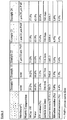
- Table 3 Properties of the emulsion and powder with non-filtrated and filtrated starch solutions. Analysis particle size [nm] colour intensity E 1/1 filtration residue [weight-%] Emulsion of non-improved Hi-Cap 100 (comparison example) 418.0 788.6 2.9 Composition (according to Table 2) containing non-improved Hi-Cap 100 (comparison example) 430.0 716.3 2.9 Emulsion of improved Hi-Cap 100 (example 1) 371.8 606.7 0.6 Composition (according to Table 2) 372.2 602.9 0.9 containing improved Hi-Cap 100 (example 1) Emulsion of improved Hi-Cap 100 (example 2) 256.2 946.7 0.4 Composition (according to Table 2) containing improved Hi-Cap 100 (example 2) 255.6 908.5 0.7
- Examples 4-8 Microfiltration of an OSA-starch with ceramic and porous metal filter membranes of different pore size.
- the used porous steel pipe-filters are commercially available from LIGACON W.Röll & CO. AG (Switzerland).
- the comparison example is an emulsification trial (according to example 3) with non-improved Hi-Cap 100.
- Examples 9-24 Microfiltration of an OSA-starch with porous metal filter membranes of different pore size.
- Example 9 and example 10 are comparison examples, i.e. non-improved Hi-Cap 100 was used. With this non-improved OSA-starches products were manufactured as described in example 3. The results are disclosed in Tables 5 to 8.
- Example 15 Microfiltration of HiCap 100 with a 1 ⁇ m porous metal filter membrane
- Example 16 Microfiltration of HiCap 100 with a 5 ⁇ m porous metal filter membrane
- HiCap 100 commercially available from National Starch
- aqueous 39.9 weight-% solution of HiCap 100 was filtered through a porous metal filter with a pore size of 5 ⁇ m.
- the permeate was further used for the preparation of a composition as described in example 3.
- Example 17 Microfiltration of HiCap 100 with a 1 ⁇ m/20 ⁇ m porous metal filter membrane
- Example 18 Microfiltration of HiCap 100 with a 1 ⁇ m porous metal filter membrane
- Example 19 Microfiltration of HiCap 100 with a 1 ⁇ m porous metal filter membrane
- Example 20 Microfiltration of HiCap 100 with a 5 ⁇ m porous metal filter membrane
- Example 21 Microfiltration of HiCap 100 with a 1 ⁇ m porous metal filter membrane
- Example 15*R Microfiltration of HiCap 100 with a 1 ⁇ m porous metal filter membrane and use of the retentate
- HiCap 100 commercially available from National Starch
- HiCap 100 was filtered through a porous metal filter with a pore size of 1 ⁇ m.
- the retentate was further used for the preparation of a composition as described in example 3.
- Example 25 Microfiltration by use of a Hydrosart 0.45 membrane
- aqueous 20 weight-% solution/suspension of Hi-Cap 100 (commercially available from National Starch) was kept for 2 hours at 60°C under stirring and additionally kept without heating for 12 hours (end temperature: 40°C).
- Example 27 Emulsification trials
- composition according to the present invention was manufactured according to the following procedure:
- the resulting solution B was added to the aqueous solution A under stirring at 5600 rotations per minute and kept for 30 minutes at ca. 50°C at 5000 rotations per minute using a dissolver disk.
- the organic solvent was removed during 60 minutes at a rotator evaporator at 55°C, 20 rotations per minute and at a final pressure of ca. 170 mbar (absolute).
- the foamy emulsion was centrifuged at 50°C for 10 minutes at 3000 rotations per minute ( ⁇ 1700 g). Afterwards it was sprayed into a cooled, fluidized bed of corn starch. Further corn starch was added and the obtained beadlets were kept in the bed for 30 minutes until a temperature of 15°C was achieved.
- the superfluous corn starch was removed and the beadlets were dried in stream of air for 2 hours.
- Example 28 an aqueous solution of HiCap 100 was used.
- the average amounts of the ingredients are given in Table 9.
- Table 9 ingredient amount of ingredient amount of ingredient [%] ⁇ -carotene 20.4 g 11.5 corn oil 9.7 g 5.5 dl- ⁇ -tocopherol 2.7 g 1.5 organic solvent (removed later) 255 ml - improved Hi-Cap 100 according to example 26 100 g 56.5 Corn starch (calculated) 35 g 20 Water (partly removed later) 30.2 5 Total 100
- Table 10 Properties of beadlets with unchanged, clarified (via disk separation) and filtrated (via disk separation and diafiltration) starch solutions.
- the filtration residue is a value determining the quality of an emulsion resulting from solving the product (the composition) as manufactured in example 27 in water (as is done e.g. when the composition is used for colouring beverages) at room temperature.
- the filtration residue is the amount of composition (mainly free active ingredient such as ⁇ -carotene) that remains on the filter when the emulsion is filtered through a paper filter.
- a low filtration residue is a sign for a good emulsifying capacity of the product/composition.
- a high filtration residue is a sign that the active ingredient was not sufficiently incorporated into the matrix of the hydrocolloid (i.e. the (improved) modified polysaccharide).
- a higher colour intensity means that less composition/powder is needed to achieve the same colour of food, feed, beverage etc.
- any other starch e.g. Capsul HS (commercially available from National Starch) could be used and subjected to clarification via disk separation and optional diafiltration (diafiltration is an ultrafiltration where the permeate is substituted with H 2 O).
- Capsul HS commercially available from National Starch
- mixtures (ratios of from 1:99 up to 99:1, preferred 50:50) of these improved modified food starches are suitable for use in compositions according to example 27.
- a composition (example 29) has been prepared using a mixture (ratio 50:50) of improved Hi Cap 100 and improved Capsul HS (both produced analogously to example 26).
- Table 11 Properties of beadlets with unchanged and clarified (via disk separation) starch solutions.
- Composition accordinging to Table 9) con-taining a mixture of improved Hi-Cap 100 and improved Capsul HS ratio 50:50 (example 29) 340 nm 846 at 477 nm 2.8
- aqueous 38 weight-% solution/suspension of Hi-Cap 100 (commercially available from National Starch) was kept for 2 hours at 50°C under stirring and subsequently cooled to room temperature.
- composition according to the present invention was manufactured according to the following procedure:
- the resulting solution B was added to the aqueous solution A under stirring at 5600 rotations per minute and kept for 30 minutes at ca. 50°C at 5000 rotations per minute using a dissolver disk.
- the organic solvent was removed during 30 minutes at a rotator evaporator at 55°C, 20 rotations per minute and at a final pressure of ca. 170 mbar (absolute).
- the foamy emulsion was centrifuged at 50°C for 10 minutes at 3000 rotations per minute ( ⁇ 1700 g). Afterwards it was sprayed into a cooled, fluidized bed of corn starch. Further corn starch was added and the obtained beadlets were kept in the bed for 30 minutes until a temperature of 15°C was achieved.
- the superfluous corn starch was removed and the beadlets were dried in stream of air for 2 hours.
- Example 34 an aqueous solution of HiCap 100 was used.
- the exact amounts of the ingredients are given in Table 12.
- Table 12 ingredient amount of ingredient amount of ingredient [%] ⁇ -carotene 20.4 g 11.5 corn oil 9.7 g 5.5 dl- ⁇ -tocopherol 2.7 g 1.5 organic solvent 215 ml - improved Hi-Cap 100 according to example 32 100 g 56.5 Corn starch 35 20 Water 30.2 5 Total - 100
- Table 13 Properties of the emulsion and beadlets with unchanged and ultrafiltrated starch solutions.
- the filtration residue is a value determining the quality of an emulsion resulting from solving the product (the composition) as manufactured in example 33 in water (as is done e.g. when the composition is used for colouring beverages) at room temperature.
- the filtration residue is the amount of composition (mainly free active ingredient such as ⁇ -carotene) that remains on the filter when the emulsion is filtered through a paper filter.
- a low filtration residue is a sign for a good emulsifying capacity of the product/composition.
- a high filtration residue is a sign that the active ingredient was not sufficiently incorporated into the matrix of the hydrocolloid (i.e. the (improved) modified polysaccharide).
- a higher colour intensity means that less composition/powder is needed to achieve the same colour of food, feed, beverage etc.
- turbidity of defined solutions are suitable.
- the turbidity of said aqueous solutions is measured spectrophotometrically at a wavelength of 455 nm using a HACH 2100 AN Turbidimeter according to USEPA Method 180.1 at room temperature and at atmospheric pressure.
- the turbidity is then expressed in nephelometric turbidity units (NTU).
- NTU nephelometric turbidity units
Landscapes
- Health & Medical Sciences (AREA)
- Chemical & Material Sciences (AREA)
- Life Sciences & Earth Sciences (AREA)
- Polymers & Plastics (AREA)
- Engineering & Computer Science (AREA)
- Nutrition Science (AREA)
- Medicinal Chemistry (AREA)
- Food Science & Technology (AREA)
- Organic Chemistry (AREA)
- Chemical Kinetics & Catalysis (AREA)
- Animal Behavior & Ethology (AREA)
- General Health & Medical Sciences (AREA)
- Public Health (AREA)
- Veterinary Medicine (AREA)
- Epidemiology (AREA)
- Birds (AREA)
- Dispersion Chemistry (AREA)
- Mycology (AREA)
- Pharmacology & Pharmacy (AREA)
- Dermatology (AREA)
- General Chemical & Material Sciences (AREA)
- Biochemistry (AREA)
- Inorganic Chemistry (AREA)
- Obesity (AREA)
- Hematology (AREA)
- Diabetes (AREA)
- Bioinformatics & Cheminformatics (AREA)
- Nuclear Medicine, Radiotherapy & Molecular Imaging (AREA)
- Materials Engineering (AREA)
- Medicinal Preparation (AREA)
- Cosmetics (AREA)
- Fodder In General (AREA)
- Coloring Foods And Improving Nutritive Qualities (AREA)
- Polysaccharides And Polysaccharide Derivatives (AREA)
- Acyclic And Carbocyclic Compounds In Medicinal Compositions (AREA)
- Compositions Of Macromolecular Compounds (AREA)
Priority Applications (2)
| Application Number | Priority Date | Filing Date | Title |
|---|---|---|---|
| PL07703313T PL1981915T3 (pl) | 2006-02-06 | 2007-02-06 | Kompozycje składników aktywnych |
| EP07703313.2A EP1981915B1 (en) | 2006-02-06 | 2007-02-06 | Compositions of active ingredients |
Applications Claiming Priority (6)
| Application Number | Priority Date | Filing Date | Title |
|---|---|---|---|
| EP06002420 | 2006-02-06 | ||
| EP06002419 | 2006-02-06 | ||
| EP06002421 | 2006-02-06 | ||
| EP06002418 | 2006-02-06 | ||
| PCT/EP2007/001015 WO2007090614A1 (en) | 2006-02-06 | 2007-02-06 | Compositions of active ingredients |
| EP07703313.2A EP1981915B1 (en) | 2006-02-06 | 2007-02-06 | Compositions of active ingredients |
Publications (2)
| Publication Number | Publication Date |
|---|---|
| EP1981915A1 EP1981915A1 (en) | 2008-10-22 |
| EP1981915B1 true EP1981915B1 (en) | 2018-04-25 |
Family
ID=37998181
Family Applications (2)
| Application Number | Title | Priority Date | Filing Date |
|---|---|---|---|
| EP07703313.2A Active EP1981915B1 (en) | 2006-02-06 | 2007-02-06 | Compositions of active ingredients |
| EP07703309A Active EP1981357B1 (en) | 2006-02-06 | 2007-02-06 | COMPOSITIONS CONTAINING ß-CAROTENE |
Family Applications After (1)
| Application Number | Title | Priority Date | Filing Date |
|---|---|---|---|
| EP07703309A Active EP1981357B1 (en) | 2006-02-06 | 2007-02-06 | COMPOSITIONS CONTAINING ß-CAROTENE |
Country Status (9)
| Country | Link |
|---|---|
| US (3) | US20090105331A1 (https=) |
| EP (2) | EP1981915B1 (https=) |
| JP (2) | JP5641694B2 (https=) |
| KR (2) | KR101517624B1 (https=) |
| DK (1) | DK1981915T3 (https=) |
| ES (2) | ES2676284T3 (https=) |
| PL (2) | PL1981357T3 (https=) |
| TR (1) | TR201809592T4 (https=) |
| WO (2) | WO2007090614A1 (https=) |
Families Citing this family (47)
| Publication number | Priority date | Publication date | Assignee | Title |
|---|---|---|---|---|
| DE202006010606U1 (de) † | 2006-07-07 | 2007-11-22 | Sensient Food Colors Germany Gmbh & Co. Kg | Zubereitung für Lebensmittel |
| EP1967081A1 (en) * | 2007-03-05 | 2008-09-10 | DSMIP Assets B.V. | Process for the manufacture of a powder containing carotenoids |
| EP2011835A1 (en) * | 2007-07-06 | 2009-01-07 | Chr. Hansen A/S | A colouring composition comprising starch derivatives as a hydrocolloid |
| KR20100047869A (ko) * | 2007-07-19 | 2010-05-10 | 디에스엠 아이피 어셋츠 비.브이. | 친유성 헬스 성분의 정제화가능한 배합물 |
| CN105077203A (zh) * | 2007-11-29 | 2015-11-25 | 巴斯夫欧洲公司 | 用于饮料着色的粉状类胡萝卜素制剂 |
| US20100272861A1 (en) * | 2007-12-05 | 2010-10-28 | Thomas Lindemann | Pulverous formulation of a fat-soluble active ingredient |
| KR20100097666A (ko) * | 2007-12-05 | 2010-09-03 | 디에스엠 아이피 어셋츠 비.브이. | 지용성 활성 성분의 분말 제형 |
| US8680161B2 (en) * | 2008-06-03 | 2014-03-25 | Dsm Ip Assets B.V. | Compositions of fat-soluble active ingredients containing gum ghatti |
| KR20100020128A (ko) * | 2008-08-12 | 2010-02-22 | 씨제이제일제당 (주) | 식이섬유전분의 제조 및 드레싱/액상 식품으로의 유용성 |
| CA2739361C (en) | 2008-10-07 | 2018-03-20 | Basf Se | Ready-to-use, stable emulsion |
| RU2011129817A (ru) | 2008-12-19 | 2013-01-27 | Кр.Хансен А/С | Композиция палочковидных бактерий, устойчивых к желчи |
| PL2385766T3 (pl) | 2009-01-07 | 2018-07-31 | Chr. Hansen Natural Colors A/S | Kompozycja zawierająca węglan wapnia jako biały pigment |
| US20120039970A1 (en) | 2009-03-30 | 2012-02-16 | Basf Se | Ready-to-use, stable suspension of partially amorphous carotenoid particles |
| EP2267169A1 (en) | 2009-06-25 | 2010-12-29 | Alfa Laval Corporate AB | Method and plant for purifying a carbohydrate-rich liquid |
| US8747562B2 (en) | 2009-10-09 | 2014-06-10 | Philip Morris Usa Inc. | Tobacco-free pouched product containing flavor beads providing immediate and long lasting flavor release |
| WO2011057340A1 (en) * | 2009-11-11 | 2011-05-19 | Commonwealth Scientific And Industrial Research Organisation | Process for plant bioactive enrichment |
| WO2011162802A1 (en) | 2010-06-21 | 2011-12-29 | Virun, Inc. | Compositions containing non-polar compounds |
| WO2012017012A1 (de) | 2010-08-05 | 2012-02-09 | Basf Se | Stabilisator |
| WO2012139895A1 (en) * | 2011-04-13 | 2012-10-18 | Dsm Ip Assets B.V. | Process for the manufacture of a powder containing lutein |
| US10660346B2 (en) | 2011-06-06 | 2020-05-26 | Chr. Hansen Natural Colors A/S | Carotenoid coloring composition |
| EP2644041A1 (en) * | 2012-03-30 | 2013-10-02 | DSM IP Assets B.V. | Clear liquid carotenoid formulations and clear beverages containing them |
| DK2687103T4 (da) * | 2012-07-20 | 2024-10-14 | Basf Se | Fremgangsmåde til fremstilling af en vandig transparent olie-i-vand-emulsion, der omfatter et carotenoid, og en fremstillet emulsion |
| WO2014180827A1 (en) * | 2013-05-06 | 2014-11-13 | Dsm Ip Assets B. V. | Powderous vitamin e formulation |
| WO2014191556A1 (en) * | 2013-05-30 | 2014-12-04 | Chr. Hansen A/S | Method for coloring powders for preparing foods |
| US9693574B2 (en) | 2013-08-08 | 2017-07-04 | Virun, Inc. | Compositions containing water-soluble derivatives of vitamin E mixtures and modified food starch |
| CN105578891A (zh) * | 2013-09-24 | 2016-05-11 | 帝斯曼知识产权资产管理有限公司 | 澄清液体制剂及含澄清液体制剂的澄清饮料 |
| WO2015044213A1 (en) * | 2013-09-24 | 2015-04-02 | Dsm Ip Assets B.V. | Red colorant for beverages, food and pharmaceutical compositions |
| JP2016533766A (ja) * | 2013-09-24 | 2016-11-04 | ディーエスエム アイピー アセッツ ビー.ブイ. | 飲料および食品の着色用の安定した赤色製剤 |
| EP3065567B1 (en) | 2013-11-07 | 2019-12-25 | DSM IP Assets B.V. | Process for the purification of astaxanthin |
| CN109965279A (zh) | 2013-11-07 | 2019-07-05 | 帝斯曼知识产权资产管理有限公司 | 包含合成的食品级虾青素的粉状制剂、油质悬浮物和膳食补充剂 |
| WO2015067709A1 (en) | 2013-11-07 | 2015-05-14 | Dsm Ip Assets B.V. | Process for the purification of astaxanthin |
| CN105705042B (zh) | 2013-11-07 | 2018-11-09 | 帝斯曼知识产权资产管理有限公司 | 纯化虾青素的方法 |
| FR3026741A1 (fr) * | 2014-10-01 | 2016-04-08 | Roquette Freres | Utilisation d'un amidon hydrolyse comme agent de retention de la couleur des colorants sensibles a la lumiere |
| EP3005881A1 (en) | 2014-10-10 | 2016-04-13 | DSM IP Assets B.V. | Color-stable beverages containing 8'-apo-ß-carotene-8'-al |
| WO2017097974A1 (en) * | 2015-12-10 | 2017-06-15 | Dsm Ip Assets B.V. | Vitamin formulation |
| CN105661268B (zh) * | 2016-01-15 | 2018-05-18 | 安徽农业大学 | 一种香肠抗氧化护色缓释剂及制备方法 |
| JP6132947B1 (ja) * | 2016-03-24 | 2017-05-24 | アサヒ飲料株式会社 | 飲料及びルテインの飲料中安定性を調節する方法 |
| USD806351S1 (en) | 2016-09-06 | 2018-01-02 | Mars, Incorporated | Food product |
| USD805728S1 (en) | 2016-09-06 | 2017-12-26 | Mars, Incorporated | Food product |
| GB201701417D0 (en) | 2017-01-27 | 2017-03-15 | Mars Inc | Pet food |
| WO2019206981A1 (en) * | 2018-04-27 | 2019-10-31 | Dsm Ip Assets B.V. | Powderous formulation |
| AU2019258327B2 (en) * | 2018-04-27 | 2024-03-07 | Dsm Ip Assets B.V. | Powderous composition comprising carotenoid and/or derivative thereof, D-glycose oligomers and modified polysaccharide as well as food, feed or personal care formulation comprising the composition |
| CN114845565B (zh) | 2019-12-23 | 2025-02-18 | 嘉吉公司 | 可溶性米粉组合物 |
| US20230217943A1 (en) * | 2020-05-14 | 2023-07-13 | International Flavors & Fragrances Inc. | Robust flavor emulsions |
| US20250041819A1 (en) * | 2021-12-02 | 2025-02-06 | Microcaps Ag | Capsule Gelation Quenching Unit |
| WO2024028398A1 (en) * | 2022-08-05 | 2024-02-08 | Dsm Ip Assets B.V. | Solid formulations comprising beta-carotene |
| KR102877057B1 (ko) * | 2024-10-18 | 2025-10-27 | 오해석 | 피부 필러 조성물 |
Family Cites Families (35)
| Publication number | Priority date | Publication date | Assignee | Title |
|---|---|---|---|---|
| US4045589A (en) * | 1976-06-21 | 1977-08-30 | Carnation Company | Fat emulsion product and process for producing the same |
| DE3610191A1 (de) * | 1986-03-26 | 1987-10-01 | Basf Ag | Verfahren zur herstellung von feinteiligen, wasserdispergierbaren carotinoid-praeparationen |
| US4761186A (en) * | 1986-08-18 | 1988-08-02 | General Foods Corporation | Method of purifying starches and products produced therefrom |
| JPH0676572B2 (ja) * | 1987-02-27 | 1994-09-28 | 富士写真フイルム株式会社 | 平版印刷版用現像インキ |
| JPS62248470A (ja) * | 1987-04-16 | 1987-10-29 | Nichiden Kagaku Kk | 肉類練製品の製造法 |
| US5185176A (en) * | 1988-03-11 | 1993-02-09 | National Starch And Chemical Investment Holding Corporation | Food products containing modified starch emulsifier |
| JP2540204B2 (ja) * | 1988-08-18 | 1996-10-02 | ナシヨナル・スターチ・アンド・ケミカル・コーポレイション | 保存安定性を有する化工でんぷん乳化剤 |
| US5378491A (en) * | 1990-02-20 | 1995-01-03 | A. E. Staley Manufacturing Co. | Method of preparing a starch hydrolysate, an aqueous starch hydrolysate dispersion, method of preparing a food containing a starch hydrolysate, and a food formulation containing a starch hydrolysate |
| US5110612A (en) * | 1990-09-04 | 1992-05-05 | Penford Products Company | Hydroxypropyl starch hydrolyzate product |
| US5294453A (en) * | 1990-09-04 | 1994-03-15 | Penwest, Ltd. | Method of removing off-flavor components from hydroxypropyl starch hydrolyzate products |
| US5756721A (en) * | 1991-01-16 | 1998-05-26 | National Starch And Chemical Investment Holding Corporation | Purification of polysaccharides |
| AU649909B2 (en) * | 1992-02-07 | 1994-06-02 | National Starch And Chemical Investment Holding Corporation | Purification of polysaccharides |
| JPH06172170A (ja) * | 1992-02-13 | 1994-06-21 | T Hasegawa Co Ltd | カロチノイド含有粉末製剤 |
| US6007856A (en) * | 1997-08-08 | 1999-12-28 | The Procter & Gamble Company | Oil-in-water dispersions of β-carotene and other carotenoids stable against oxidation prepared from water-dispersible beadlets having high concentrations of carotenoid |
| JP2968797B2 (ja) * | 1997-10-31 | 1999-11-02 | ナショナル スターチ アンド ケミカル インベストメント ホールディング コーポレイション | グルコアミラ―ゼ転化澱粉誘導体並びに乳化剤及び封入剤としてのそれらの使用 |
| AU736348B2 (en) * | 1997-10-31 | 2001-07-26 | Corn Products Development, Inc. | Use of an enzymatically-converted starch derivative as an encapsulating agent |
| DE19802204A1 (de) * | 1998-01-22 | 1999-07-29 | Beiersdorf Ag | Kosmetische oder pharmazeutische Zubereitungen mit vermindertem Klebrigkeitsgefühl, enthaltend Glycerinester von -Hydroxycarbonsäuren und gesättigten Fettsäuren |
| DE69935946T2 (de) * | 1998-06-24 | 2007-09-06 | Dsm Ip Assets B.V. | Vitaminpulver zur verwendung für getränke |
| JP2000119104A (ja) * | 1998-10-07 | 2000-04-25 | Nippon Starch Chemical Co Ltd | 水浮遊性造粒物及びその製造方法 |
| ID29429A (id) * | 1999-01-15 | 2001-08-30 | Cooperetieve Verkoop En Produc | Turunan-turuna pati hidrofobik |
| DE60217310T2 (de) * | 2001-03-26 | 2007-10-04 | Société des Produits Nestlé S.A. | Getränkepulver |
| NL1018884C2 (nl) * | 2001-09-04 | 2003-03-05 | Friesland Brands Bv | Vloeibaar voedingsmiddel. |
| CA2458313C (en) * | 2001-09-13 | 2011-06-28 | Dsm Ip Assets B.V. | Zeacarotene colorant for food and pharmaceuticals |
| JP4117828B2 (ja) * | 2002-08-29 | 2008-07-16 | 松谷化学工業株式会社 | 炭酸ベースの発泡性飲料用泡調整剤 |
| JP4476553B2 (ja) * | 2003-02-13 | 2010-06-09 | 伊那食品工業株式会社 | 抗う蝕剤 |
| EP1635782A1 (de) * | 2003-05-24 | 2006-03-22 | JUVENA (International) AG | Gewebekulturmedien als bestandteil von kosmetika |
| US8252322B2 (en) * | 2003-06-03 | 2012-08-28 | Corn Products Development, Inc. | Delivery system with increased bioavailability |
| JP4415408B2 (ja) * | 2003-06-12 | 2010-02-17 | 松谷化学工業株式会社 | 揚げ物用バッター |
| JP2005170864A (ja) * | 2003-12-12 | 2005-06-30 | Nippon Starch Chemical Co Ltd | クリーム状化粧料 |
| US20070275081A1 (en) | 2004-02-06 | 2007-11-29 | Hansen Carsten L | Aqueous Dispersion and Its Use |
| US20050233002A1 (en) * | 2004-04-15 | 2005-10-20 | Trubiano Paolo C | Encapsulation of oxygen sensitive agents |
| DE102004046026A1 (de) * | 2004-09-21 | 2006-03-23 | Basf Ag | Verfahren zur Herstellung von Trockenpulvern eines oder mehrerer Carotinoide |
| KR101252308B1 (ko) * | 2004-11-19 | 2013-04-08 | 디에스엠 아이피 어셋츠 비.브이. | 활성 성분 제제를 위한 개질된 식물 고무 |
| EP1903887A1 (en) * | 2005-07-20 | 2008-04-02 | DSMIP Assets B.V. | Novel stabilized carotenoid compositions |
| EP1940249B1 (en) * | 2005-10-21 | 2015-06-03 | DSM IP Assets B.V. | Novel formulations of fat-soluble active ingredients with high bioavailability |
-
2007
- 2007-02-06 PL PL07703309T patent/PL1981357T3/pl unknown
- 2007-02-06 ES ES07703313.2T patent/ES2676284T3/es active Active
- 2007-02-06 JP JP2008553669A patent/JP5641694B2/ja not_active Expired - Fee Related
- 2007-02-06 WO PCT/EP2007/001015 patent/WO2007090614A1/en not_active Ceased
- 2007-02-06 WO PCT/EP2007/001004 patent/WO2007090610A2/en not_active Ceased
- 2007-02-06 KR KR1020087019270A patent/KR101517624B1/ko not_active Expired - Fee Related
- 2007-02-06 PL PL07703313T patent/PL1981915T3/pl unknown
- 2007-02-06 EP EP07703313.2A patent/EP1981915B1/en active Active
- 2007-02-06 US US12/162,699 patent/US20090105331A1/en not_active Abandoned
- 2007-02-06 JP JP2008553668A patent/JP5122485B2/ja active Active
- 2007-02-06 EP EP07703309A patent/EP1981357B1/en active Active
- 2007-02-06 KR KR1020087019209A patent/KR101313976B1/ko active Active
- 2007-02-06 DK DK07703313.2T patent/DK1981915T3/en active
- 2007-02-06 TR TR2018/09592T patent/TR201809592T4/tr unknown
- 2007-02-06 ES ES07703309T patent/ES2394108T3/es active Active
-
2009
- 2009-09-30 US US12/571,321 patent/US20100120713A1/en not_active Abandoned
-
2012
- 2012-04-23 US US13/453,098 patent/US20120230928A1/en not_active Abandoned
Non-Patent Citations (1)
| Title |
|---|
| None * |
Also Published As
| Publication number | Publication date |
|---|---|
| US20120230928A1 (en) | 2012-09-13 |
| JP5641694B2 (ja) | 2014-12-17 |
| KR20080094786A (ko) | 2008-10-24 |
| EP1981357A2 (en) | 2008-10-22 |
| US20090105331A1 (en) | 2009-04-23 |
| EP1981915A1 (en) | 2008-10-22 |
| WO2007090610A2 (en) | 2007-08-16 |
| US20100120713A1 (en) | 2010-05-13 |
| JP5122485B2 (ja) | 2013-01-16 |
| PL1981915T3 (pl) | 2018-09-28 |
| JP2009526102A (ja) | 2009-07-16 |
| EP1981357B1 (en) | 2012-10-24 |
| WO2007090614A1 (en) | 2007-08-16 |
| DK1981915T3 (en) | 2018-08-06 |
| WO2007090610A3 (en) | 2007-10-04 |
| ES2394108T3 (es) | 2013-01-21 |
| PL1981357T3 (pl) | 2013-03-29 |
| TR201809592T4 (tr) | 2018-07-23 |
| KR101517624B1 (ko) | 2015-05-04 |
| JP2009526101A (ja) | 2009-07-16 |
| KR101313976B1 (ko) | 2013-10-01 |
| ES2676284T3 (es) | 2018-07-18 |
| KR20080091365A (ko) | 2008-10-10 |
Similar Documents
| Publication | Publication Date | Title |
|---|---|---|
| EP1981915B1 (en) | Compositions of active ingredients | |
| US9332777B2 (en) | Carotenoid compositions containing modified gum acacia | |
| JP5489408B2 (ja) | 有効成分の調製のための改変された植物ガム | |
| EP1545244B1 (en) | Modified lupin proteins for the preparation of water dispersible product forms of fat soluble compounds | |
| CN101395185B (zh) | 活性成分的组合物 | |
| US10463061B2 (en) | Modified plant gums for preparations of active ingredients |
Legal Events
| Date | Code | Title | Description |
|---|---|---|---|
| PUAI | Public reference made under article 153(3) epc to a published international application that has entered the european phase |
Free format text: ORIGINAL CODE: 0009012 |
|
| 17P | Request for examination filed |
Effective date: 20080626 |
|
| AK | Designated contracting states |
Kind code of ref document: A1 Designated state(s): AT BE BG CH CY CZ DE DK EE ES FI FR GB GR HU IE IS IT LI LT LU LV MC NL PL PT RO SE SI SK TR |
|
| 17Q | First examination report despatched |
Effective date: 20100415 |
|
| DAX | Request for extension of the european patent (deleted) | ||
| REG | Reference to a national code |
Ref country code: DE Ref legal event code: R079 Ref document number: 602007054661 Country of ref document: DE Free format text: PREVIOUS MAIN CLASS: C08B0031000000 Ipc: A23L0002580000 |
|
| GRAP | Despatch of communication of intention to grant a patent |
Free format text: ORIGINAL CODE: EPIDOSNIGR1 |
|
| STAA | Information on the status of an ep patent application or granted ep patent |
Free format text: STATUS: GRANT OF PATENT IS INTENDED |
|
| RIC1 | Information provided on ipc code assigned before grant |
Ipc: C08L 3/06 20060101ALI20170425BHEP Ipc: A23L 2/58 20060101AFI20170425BHEP Ipc: A61K 8/31 20060101ALI20170425BHEP |
|
| INTG | Intention to grant announced |
Effective date: 20170517 |
|
| GRAS | Grant fee paid |
Free format text: ORIGINAL CODE: EPIDOSNIGR3 |
|
| GRAJ | Information related to disapproval of communication of intention to grant by the applicant or resumption of examination proceedings by the epo deleted |
Free format text: ORIGINAL CODE: EPIDOSDIGR1 |
|
| GRAL | Information related to payment of fee for publishing/printing deleted |
Free format text: ORIGINAL CODE: EPIDOSDIGR3 |
|
| STAA | Information on the status of an ep patent application or granted ep patent |
Free format text: STATUS: EXAMINATION IS IN PROGRESS |
|
| INTC | Intention to grant announced (deleted) | ||
| GRAP | Despatch of communication of intention to grant a patent |
Free format text: ORIGINAL CODE: EPIDOSNIGR1 |
|
| STAA | Information on the status of an ep patent application or granted ep patent |
Free format text: STATUS: GRANT OF PATENT IS INTENDED |
|
| INTG | Intention to grant announced |
Effective date: 20180130 |
|
| GRAA | (expected) grant |
Free format text: ORIGINAL CODE: 0009210 |
|
| STAA | Information on the status of an ep patent application or granted ep patent |
Free format text: STATUS: THE PATENT HAS BEEN GRANTED |
|
| AK | Designated contracting states |
Kind code of ref document: B1 Designated state(s): AT BE BG CH CY CZ DE DK EE ES FI FR GB GR HU IE IS IT LI LT LU LV MC NL PL PT RO SE SI SK TR |
|
| REG | Reference to a national code |
Ref country code: GB Ref legal event code: FG4D |
|
| REG | Reference to a national code |
Ref country code: CH Ref legal event code: EP |
|
| REG | Reference to a national code |
Ref country code: AT Ref legal event code: REF Ref document number: 991852 Country of ref document: AT Kind code of ref document: T Effective date: 20180515 |
|
| REG | Reference to a national code |
Ref country code: IE Ref legal event code: FG4D |
|
| REG | Reference to a national code |
Ref country code: DE Ref legal event code: R096 Ref document number: 602007054661 Country of ref document: DE |
|
| REG | Reference to a national code |
Ref country code: ES Ref legal event code: FG2A Ref document number: 2676284 Country of ref document: ES Kind code of ref document: T3 Effective date: 20180718 |
|
| REG | Reference to a national code |
Ref country code: DK Ref legal event code: T3 Effective date: 20180731 |
|
| REG | Reference to a national code |
Ref country code: NL Ref legal event code: MP Effective date: 20180425 |
|
| REG | Reference to a national code |
Ref country code: LT Ref legal event code: MG4D |
|
| PG25 | Lapsed in a contracting state [announced via postgrant information from national office to epo] |
Ref country code: NL Free format text: LAPSE BECAUSE OF FAILURE TO SUBMIT A TRANSLATION OF THE DESCRIPTION OR TO PAY THE FEE WITHIN THE PRESCRIBED TIME-LIMIT Effective date: 20180425 |
|
| PG25 | Lapsed in a contracting state [announced via postgrant information from national office to epo] |
Ref country code: SE Free format text: LAPSE BECAUSE OF FAILURE TO SUBMIT A TRANSLATION OF THE DESCRIPTION OR TO PAY THE FEE WITHIN THE PRESCRIBED TIME-LIMIT Effective date: 20180425 Ref country code: LT Free format text: LAPSE BECAUSE OF FAILURE TO SUBMIT A TRANSLATION OF THE DESCRIPTION OR TO PAY THE FEE WITHIN THE PRESCRIBED TIME-LIMIT Effective date: 20180425 Ref country code: FI Free format text: LAPSE BECAUSE OF FAILURE TO SUBMIT A TRANSLATION OF THE DESCRIPTION OR TO PAY THE FEE WITHIN THE PRESCRIBED TIME-LIMIT Effective date: 20180425 Ref country code: BG Free format text: LAPSE BECAUSE OF FAILURE TO SUBMIT A TRANSLATION OF THE DESCRIPTION OR TO PAY THE FEE WITHIN THE PRESCRIBED TIME-LIMIT Effective date: 20180725 |
|
| PG25 | Lapsed in a contracting state [announced via postgrant information from national office to epo] |
Ref country code: GR Free format text: LAPSE BECAUSE OF FAILURE TO SUBMIT A TRANSLATION OF THE DESCRIPTION OR TO PAY THE FEE WITHIN THE PRESCRIBED TIME-LIMIT Effective date: 20180726 Ref country code: LV Free format text: LAPSE BECAUSE OF FAILURE TO SUBMIT A TRANSLATION OF THE DESCRIPTION OR TO PAY THE FEE WITHIN THE PRESCRIBED TIME-LIMIT Effective date: 20180425 |
|
| REG | Reference to a national code |
Ref country code: AT Ref legal event code: MK05 Ref document number: 991852 Country of ref document: AT Kind code of ref document: T Effective date: 20180425 |
|
| PG25 | Lapsed in a contracting state [announced via postgrant information from national office to epo] |
Ref country code: PT Free format text: LAPSE BECAUSE OF FAILURE TO SUBMIT A TRANSLATION OF THE DESCRIPTION OR TO PAY THE FEE WITHIN THE PRESCRIBED TIME-LIMIT Effective date: 20180827 |
|
| REG | Reference to a national code |
Ref country code: DE Ref legal event code: R097 Ref document number: 602007054661 Country of ref document: DE |
|
| PG25 | Lapsed in a contracting state [announced via postgrant information from national office to epo] |
Ref country code: AT Free format text: LAPSE BECAUSE OF FAILURE TO SUBMIT A TRANSLATION OF THE DESCRIPTION OR TO PAY THE FEE WITHIN THE PRESCRIBED TIME-LIMIT Effective date: 20180425 Ref country code: EE Free format text: LAPSE BECAUSE OF FAILURE TO SUBMIT A TRANSLATION OF THE DESCRIPTION OR TO PAY THE FEE WITHIN THE PRESCRIBED TIME-LIMIT Effective date: 20180425 Ref country code: SK Free format text: LAPSE BECAUSE OF FAILURE TO SUBMIT A TRANSLATION OF THE DESCRIPTION OR TO PAY THE FEE WITHIN THE PRESCRIBED TIME-LIMIT Effective date: 20180425 Ref country code: RO Free format text: LAPSE BECAUSE OF FAILURE TO SUBMIT A TRANSLATION OF THE DESCRIPTION OR TO PAY THE FEE WITHIN THE PRESCRIBED TIME-LIMIT Effective date: 20180425 Ref country code: CZ Free format text: LAPSE BECAUSE OF FAILURE TO SUBMIT A TRANSLATION OF THE DESCRIPTION OR TO PAY THE FEE WITHIN THE PRESCRIBED TIME-LIMIT Effective date: 20180425 |
|
| PLBE | No opposition filed within time limit |
Free format text: ORIGINAL CODE: 0009261 |
|
| STAA | Information on the status of an ep patent application or granted ep patent |
Free format text: STATUS: NO OPPOSITION FILED WITHIN TIME LIMIT |
|
| 26N | No opposition filed |
Effective date: 20190128 |
|
| PG25 | Lapsed in a contracting state [announced via postgrant information from national office to epo] |
Ref country code: SI Free format text: LAPSE BECAUSE OF FAILURE TO SUBMIT A TRANSLATION OF THE DESCRIPTION OR TO PAY THE FEE WITHIN THE PRESCRIBED TIME-LIMIT Effective date: 20180425 |
|
| REG | Reference to a national code |
Ref country code: CH Ref legal event code: PL |
|
| PG25 | Lapsed in a contracting state [announced via postgrant information from national office to epo] |
Ref country code: MC Free format text: LAPSE BECAUSE OF FAILURE TO SUBMIT A TRANSLATION OF THE DESCRIPTION OR TO PAY THE FEE WITHIN THE PRESCRIBED TIME-LIMIT Effective date: 20180425 Ref country code: LU Free format text: LAPSE BECAUSE OF NON-PAYMENT OF DUE FEES Effective date: 20190206 |
|
| REG | Reference to a national code |
Ref country code: BE Ref legal event code: MM Effective date: 20190228 |
|
| REG | Reference to a national code |
Ref country code: IE Ref legal event code: MM4A |
|
| PG25 | Lapsed in a contracting state [announced via postgrant information from national office to epo] |
Ref country code: LI Free format text: LAPSE BECAUSE OF NON-PAYMENT OF DUE FEES Effective date: 20190228 Ref country code: CH Free format text: LAPSE BECAUSE OF NON-PAYMENT OF DUE FEES Effective date: 20190228 |
|
| PG25 | Lapsed in a contracting state [announced via postgrant information from national office to epo] |
Ref country code: IE Free format text: LAPSE BECAUSE OF NON-PAYMENT OF DUE FEES Effective date: 20190206 |
|
| PG25 | Lapsed in a contracting state [announced via postgrant information from national office to epo] |
Ref country code: BE Free format text: LAPSE BECAUSE OF NON-PAYMENT OF DUE FEES Effective date: 20190228 |
|
| PG25 | Lapsed in a contracting state [announced via postgrant information from national office to epo] |
Ref country code: CY Free format text: LAPSE BECAUSE OF FAILURE TO SUBMIT A TRANSLATION OF THE DESCRIPTION OR TO PAY THE FEE WITHIN THE PRESCRIBED TIME-LIMIT Effective date: 20180425 |
|
| PG25 | Lapsed in a contracting state [announced via postgrant information from national office to epo] |
Ref country code: IS Free format text: LAPSE BECAUSE OF FAILURE TO SUBMIT A TRANSLATION OF THE DESCRIPTION OR TO PAY THE FEE WITHIN THE PRESCRIBED TIME-LIMIT Effective date: 20180825 |
|
| PG25 | Lapsed in a contracting state [announced via postgrant information from national office to epo] |
Ref country code: HU Free format text: LAPSE BECAUSE OF FAILURE TO SUBMIT A TRANSLATION OF THE DESCRIPTION OR TO PAY THE FEE WITHIN THE PRESCRIBED TIME-LIMIT; INVALID AB INITIO Effective date: 20070206 |
|
| PGFP | Annual fee paid to national office [announced via postgrant information from national office to epo] |
Ref country code: ES Payment date: 20230314 Year of fee payment: 17 |
|
| P01 | Opt-out of the competence of the unified patent court (upc) registered |
Effective date: 20230520 |
|
| PGFP | Annual fee paid to national office [announced via postgrant information from national office to epo] |
Ref country code: GB Payment date: 20231214 Year of fee payment: 18 |
|
| PGFP | Annual fee paid to national office [announced via postgrant information from national office to epo] |
Ref country code: FR Payment date: 20231212 Year of fee payment: 18 |
|
| PGFP | Annual fee paid to national office [announced via postgrant information from national office to epo] |
Ref country code: PL Payment date: 20231213 Year of fee payment: 18 |
|
| PGFP | Annual fee paid to national office [announced via postgrant information from national office to epo] |
Ref country code: DE Payment date: 20231212 Year of fee payment: 18 |
|
| PGFP | Annual fee paid to national office [announced via postgrant information from national office to epo] |
Ref country code: TR Payment date: 20240205 Year of fee payment: 18 Ref country code: IT Payment date: 20240111 Year of fee payment: 18 Ref country code: DK Payment date: 20240214 Year of fee payment: 18 |
|
| REG | Reference to a national code |
Ref country code: ES Ref legal event code: FD2A Effective date: 20250327 |
|
| PG25 | Lapsed in a contracting state [announced via postgrant information from national office to epo] |
Ref country code: ES Free format text: LAPSE BECAUSE OF NON-PAYMENT OF DUE FEES Effective date: 20240207 |
|
| REG | Reference to a national code |
Ref country code: DE Ref legal event code: R119 Ref document number: 602007054661 Country of ref document: DE |
|
| REG | Reference to a national code |
Ref country code: DK Ref legal event code: EBP Effective date: 20250228 |
|
| GBPC | Gb: european patent ceased through non-payment of renewal fee |
Effective date: 20250206 |
|
| PG25 | Lapsed in a contracting state [announced via postgrant information from national office to epo] |
Ref country code: DE Free format text: LAPSE BECAUSE OF NON-PAYMENT OF DUE FEES Effective date: 20250902 |
|
| PG25 | Lapsed in a contracting state [announced via postgrant information from national office to epo] |
Ref country code: GB Free format text: LAPSE BECAUSE OF NON-PAYMENT OF DUE FEES Effective date: 20250206 |
|
| PG25 | Lapsed in a contracting state [announced via postgrant information from national office to epo] |
Ref country code: DK Free format text: LAPSE BECAUSE OF NON-PAYMENT OF DUE FEES Effective date: 20250228 |
|
| PG25 | Lapsed in a contracting state [announced via postgrant information from national office to epo] |
Ref country code: FR Free format text: LAPSE BECAUSE OF NON-PAYMENT OF DUE FEES Effective date: 20250228 Ref country code: IT Free format text: LAPSE BECAUSE OF NON-PAYMENT OF DUE FEES Effective date: 20250206 |