EP1976842B1 - Modulators of alpha7 nicotinic acetylcholine receptors and therapeutic uses thereof - Google Patents
Modulators of alpha7 nicotinic acetylcholine receptors and therapeutic uses thereof Download PDFInfo
- Publication number
- EP1976842B1 EP1976842B1 EP07702835A EP07702835A EP1976842B1 EP 1976842 B1 EP1976842 B1 EP 1976842B1 EP 07702835 A EP07702835 A EP 07702835A EP 07702835 A EP07702835 A EP 07702835A EP 1976842 B1 EP1976842 B1 EP 1976842B1
- Authority
- EP
- European Patent Office
- Prior art keywords
- cyclic
- branched
- linear
- alkyl
- alkoxy
- Prior art date
- Legal status (The legal status is an assumption and is not a legal conclusion. Google has not performed a legal analysis and makes no representation as to the accuracy of the status listed.)
- Active
Links
- 102000047725 alpha7 Nicotinic Acetylcholine Receptor Human genes 0.000 title description 12
- 108700006085 alpha7 Nicotinic Acetylcholine Receptor Proteins 0.000 title description 12
- 230000001225 therapeutic effect Effects 0.000 title 1
- 150000001875 compounds Chemical class 0.000 claims abstract description 43
- 238000011282 treatment Methods 0.000 claims abstract description 12
- 208000012902 Nervous system disease Diseases 0.000 claims abstract description 7
- 208000025966 Neurological disease Diseases 0.000 claims abstract description 7
- 230000000926 neurological effect Effects 0.000 claims abstract description 7
- 239000008194 pharmaceutical composition Substances 0.000 claims abstract description 7
- 208000020016 psychiatric disease Diseases 0.000 claims abstract description 7
- 238000002360 preparation method Methods 0.000 claims abstract description 6
- 125000003118 aryl group Chemical group 0.000 claims description 15
- 125000004122 cyclic group Chemical group 0.000 claims description 12
- 229910052736 halogen Inorganic materials 0.000 claims description 9
- 150000002367 halogens Chemical class 0.000 claims description 9
- 125000003545 alkoxy group Chemical group 0.000 claims description 8
- 208000024827 Alzheimer disease Diseases 0.000 claims description 6
- 125000004457 alkyl amino carbonyl group Chemical group 0.000 claims description 6
- 125000003917 carbamoyl group Chemical group [H]N([H])C(*)=O 0.000 claims description 6
- 125000001072 heteroaryl group Chemical group 0.000 claims description 6
- 125000004385 trihaloalkyl group Chemical group 0.000 claims description 6
- 208000037265 diseases, disorders, signs and symptoms Diseases 0.000 claims description 5
- 125000002887 hydroxy group Chemical group [H]O* 0.000 claims description 5
- 125000004169 (C1-C6) alkyl group Chemical group 0.000 claims description 4
- 125000003806 alkyl carbonyl amino group Chemical group 0.000 claims description 4
- 125000004448 alkyl carbonyl group Chemical group 0.000 claims description 4
- 201000010099 disease Diseases 0.000 claims description 4
- 125000002768 hydroxyalkyl group Chemical group 0.000 claims description 4
- 125000002924 primary amino group Chemical group [H]N([H])* 0.000 claims description 3
- 201000000980 schizophrenia Diseases 0.000 claims description 3
- 208000006096 Attention Deficit Disorder with Hyperactivity Diseases 0.000 claims description 2
- 206010039966 Senile dementia Diseases 0.000 claims description 2
- 125000004453 alkoxycarbonyl group Chemical group 0.000 claims description 2
- 208000010877 cognitive disease Diseases 0.000 claims description 2
- 125000004093 cyano group Chemical group *C#N 0.000 claims description 2
- 239000003937 drug carrier Substances 0.000 claims description 2
- 208000027866 inflammatory disease Diseases 0.000 claims description 2
- 125000000449 nitro group Chemical group [O-][N+](*)=O 0.000 claims description 2
- 239000000546 pharmaceutical excipient Substances 0.000 claims description 2
- 125000001997 phenyl group Chemical group [H]C1=C([H])C([H])=C(*)C([H])=C1[H] 0.000 claims description 2
- 125000003003 spiro group Chemical group 0.000 claims description 2
- 125000001424 substituent group Chemical group 0.000 claims description 2
- PXQLVRUNWNTZOS-UHFFFAOYSA-N sulfanyl Chemical class [SH] PXQLVRUNWNTZOS-UHFFFAOYSA-N 0.000 claims description 2
- 125000004951 trihalomethoxy group Chemical group 0.000 claims description 2
- 125000004953 trihalomethyl group Chemical group 0.000 claims description 2
- 230000001149 cognitive effect Effects 0.000 claims 1
- 239000003814 drug Substances 0.000 claims 1
- 230000001900 immune effect Effects 0.000 claims 1
- 208000026278 immune system disease Diseases 0.000 claims 1
- 238000000034 method Methods 0.000 abstract description 47
- 102000015296 acetylcholine-gated cation-selective channel activity proteins Human genes 0.000 abstract description 9
- 108040006409 acetylcholine-gated cation-selective channel activity proteins Proteins 0.000 abstract description 9
- 102000019315 Nicotinic acetylcholine receptors Human genes 0.000 abstract description 6
- 108050006807 Nicotinic acetylcholine receptors Proteins 0.000 abstract description 6
- 230000001270 agonistic effect Effects 0.000 abstract description 2
- 230000008569 process Effects 0.000 abstract description 2
- YMWUJEATGCHHMB-UHFFFAOYSA-N Dichloromethane Chemical compound ClCCl YMWUJEATGCHHMB-UHFFFAOYSA-N 0.000 description 78
- 239000000243 solution Substances 0.000 description 47
- OKKJLVBELUTLKV-UHFFFAOYSA-N Methanol Chemical compound OC OKKJLVBELUTLKV-UHFFFAOYSA-N 0.000 description 39
- WEVYAHXRMPXWCK-UHFFFAOYSA-N Acetonitrile Chemical compound CC#N WEVYAHXRMPXWCK-UHFFFAOYSA-N 0.000 description 28
- 239000000203 mixture Substances 0.000 description 27
- 230000002829 reductive effect Effects 0.000 description 27
- HEMHJVSKTPXQMS-UHFFFAOYSA-M Sodium hydroxide Chemical compound [OH-].[Na+] HEMHJVSKTPXQMS-UHFFFAOYSA-M 0.000 description 24
- 238000006243 chemical reaction Methods 0.000 description 23
- 238000006880 cross-coupling reaction Methods 0.000 description 21
- CDBYLPFSWZWCQE-UHFFFAOYSA-L Sodium Carbonate Chemical compound [Na+].[Na+].[O-]C([O-])=O CDBYLPFSWZWCQE-UHFFFAOYSA-L 0.000 description 20
- 210000004027 cell Anatomy 0.000 description 18
- 239000012074 organic phase Substances 0.000 description 16
- -1 1-(1,2-disubstituted piperidinyl)-4-substituted piperazines Chemical class 0.000 description 15
- VYPSYNLAJGMNEJ-UHFFFAOYSA-N Silicium dioxide Chemical compound O=[Si]=O VYPSYNLAJGMNEJ-UHFFFAOYSA-N 0.000 description 15
- 150000001412 amines Chemical class 0.000 description 14
- WYURNTSHIVDZCO-UHFFFAOYSA-N Tetrahydrofuran Chemical compound C1CCOC1 WYURNTSHIVDZCO-UHFFFAOYSA-N 0.000 description 13
- IAZDPXIOMUYVGZ-UHFFFAOYSA-N Dimethylsulphoxide Chemical compound CS(C)=O IAZDPXIOMUYVGZ-UHFFFAOYSA-N 0.000 description 12
- 238000003556 assay Methods 0.000 description 12
- BDAGIHXWWSANSR-UHFFFAOYSA-N methanoic acid Natural products OC=O BDAGIHXWWSANSR-UHFFFAOYSA-N 0.000 description 12
- 238000003786 synthesis reaction Methods 0.000 description 11
- VEXZGXHMUGYJMC-UHFFFAOYSA-N Hydrochloric acid Chemical compound Cl VEXZGXHMUGYJMC-UHFFFAOYSA-N 0.000 description 10
- HEDRZPFGACZZDS-MICDWDOJSA-N Trichloro(2H)methane Chemical compound [2H]C(Cl)(Cl)Cl HEDRZPFGACZZDS-MICDWDOJSA-N 0.000 description 10
- 230000015572 biosynthetic process Effects 0.000 description 10
- 229910000029 sodium carbonate Inorganic materials 0.000 description 10
- 239000002904 solvent Substances 0.000 description 10
- 238000004809 thin layer chromatography Methods 0.000 description 10
- RIOQSEWOXXDEQQ-UHFFFAOYSA-N triphenylphosphine Chemical compound C1=CC=CC=C1P(C=1C=CC=CC=1)C1=CC=CC=C1 RIOQSEWOXXDEQQ-UHFFFAOYSA-N 0.000 description 9
- XEKOWRVHYACXOJ-UHFFFAOYSA-N Ethyl acetate Chemical compound CCOC(C)=O XEKOWRVHYACXOJ-UHFFFAOYSA-N 0.000 description 8
- 235000019253 formic acid Nutrition 0.000 description 8
- 239000007787 solid Substances 0.000 description 8
- 239000003643 water by type Substances 0.000 description 8
- SNICXCGAKADSCV-JTQLQIEISA-N (-)-Nicotine Chemical compound CN1CCC[C@H]1C1=CC=CN=C1 SNICXCGAKADSCV-JTQLQIEISA-N 0.000 description 7
- 238000005160 1H NMR spectroscopy Methods 0.000 description 7
- RTZKZFJDLAIYFH-UHFFFAOYSA-N Diethyl ether Chemical compound CCOCC RTZKZFJDLAIYFH-UHFFFAOYSA-N 0.000 description 7
- ZMANZCXQSJIPKH-UHFFFAOYSA-N Triethylamine Chemical compound CCN(CC)CC ZMANZCXQSJIPKH-UHFFFAOYSA-N 0.000 description 7
- 239000002253 acid Substances 0.000 description 7
- 229960002715 nicotine Drugs 0.000 description 7
- SNICXCGAKADSCV-UHFFFAOYSA-N nicotine Natural products CN1CCCC1C1=CC=CN=C1 SNICXCGAKADSCV-UHFFFAOYSA-N 0.000 description 7
- 239000000377 silicon dioxide Substances 0.000 description 7
- 238000012360 testing method Methods 0.000 description 7
- 0 CC(C)(C)OC(N1CCC(C**)CC1)=O Chemical compound CC(C)(C)OC(N1CCC(C**)CC1)=O 0.000 description 6
- ZMXDDKWLCZADIW-UHFFFAOYSA-N N,N-Dimethylformamide Chemical compound CN(C)C=O ZMXDDKWLCZADIW-UHFFFAOYSA-N 0.000 description 6
- NQRYJNQNLNOLGT-UHFFFAOYSA-N Piperidine Chemical compound C1CCNCC1 NQRYJNQNLNOLGT-UHFFFAOYSA-N 0.000 description 6
- DTQVDTLACAAQTR-UHFFFAOYSA-N Trifluoroacetic acid Chemical compound OC(=O)C(F)(F)F DTQVDTLACAAQTR-UHFFFAOYSA-N 0.000 description 6
- XSQUKJJJFZCRTK-UHFFFAOYSA-N Urea Chemical compound NC(N)=O XSQUKJJJFZCRTK-UHFFFAOYSA-N 0.000 description 6
- 238000004458 analytical method Methods 0.000 description 6
- ZADPBFCGQRWHPN-UHFFFAOYSA-N boronic acid Chemical compound OBO ZADPBFCGQRWHPN-UHFFFAOYSA-N 0.000 description 6
- 235000013877 carbamide Nutrition 0.000 description 6
- 229910052681 coesite Inorganic materials 0.000 description 6
- 229910052906 cristobalite Inorganic materials 0.000 description 6
- 150000003839 salts Chemical class 0.000 description 6
- 229910052682 stishovite Inorganic materials 0.000 description 6
- 229910052905 tridymite Inorganic materials 0.000 description 6
- 238000005481 NMR spectroscopy Methods 0.000 description 5
- 239000007832 Na2SO4 Substances 0.000 description 5
- PMZURENOXWZQFD-UHFFFAOYSA-L Sodium Sulfate Chemical compound [Na+].[Na+].[O-]S([O-])(=O)=O PMZURENOXWZQFD-UHFFFAOYSA-L 0.000 description 5
- 239000000556 agonist Substances 0.000 description 5
- 150000001408 amides Chemical class 0.000 description 5
- 238000011161 development Methods 0.000 description 5
- 239000012280 lithium aluminium hydride Substances 0.000 description 5
- 125000006239 protecting group Chemical group 0.000 description 5
- 229910052938 sodium sulfate Inorganic materials 0.000 description 5
- 239000000725 suspension Substances 0.000 description 5
- IJGRMHOSHXDMSA-UHFFFAOYSA-N Atomic nitrogen Chemical compound N#N IJGRMHOSHXDMSA-UHFFFAOYSA-N 0.000 description 4
- 229910010084 LiAlH4 Inorganic materials 0.000 description 4
- 230000004913 activation Effects 0.000 description 4
- 238000002474 experimental method Methods 0.000 description 4
- 239000011521 glass Substances 0.000 description 4
- 239000012948 isocyanate Substances 0.000 description 4
- XLTANAWLDBYGFU-UHFFFAOYSA-N methyllycaconitine hydrochloride Natural products C1CC(OC)C2(C3C4OC)C5CC(C(C6)OC)C(OC)C5C6(O)C4(O)C2N(CC)CC31COC(=O)C1=CC=CC=C1N1C(=O)CC(C)C1=O XLTANAWLDBYGFU-UHFFFAOYSA-N 0.000 description 4
- 230000000324 neuroprotective effect Effects 0.000 description 4
- 102000005962 receptors Human genes 0.000 description 4
- 108020003175 receptors Proteins 0.000 description 4
- 238000005932 reductive alkylation reaction Methods 0.000 description 4
- 238000012216 screening Methods 0.000 description 4
- 125000005931 tert-butyloxycarbonyl group Chemical group [H]C([H])([H])C(OC(*)=O)(C([H])([H])[H])C([H])([H])[H] 0.000 description 4
- YLQBMQCUIZJEEH-UHFFFAOYSA-N tetrahydrofuran Natural products C=1C=COC=1 YLQBMQCUIZJEEH-UHFFFAOYSA-N 0.000 description 4
- CZQIJQFTRGDODI-UHFFFAOYSA-N 1-bromo-4-isocyanatobenzene Chemical compound BrC1=CC=C(N=C=O)C=C1 CZQIJQFTRGDODI-UHFFFAOYSA-N 0.000 description 3
- OSWFIVFLDKOXQC-UHFFFAOYSA-N 4-(3-methoxyphenyl)aniline Chemical compound COC1=CC=CC(C=2C=CC(N)=CC=2)=C1 OSWFIVFLDKOXQC-UHFFFAOYSA-N 0.000 description 3
- 102000035037 5-HT3 receptors Human genes 0.000 description 3
- 108091005477 5-HT3 receptors Proteins 0.000 description 3
- QTBSBXVTEAMEQO-UHFFFAOYSA-N Acetic acid Chemical compound CC(O)=O QTBSBXVTEAMEQO-UHFFFAOYSA-N 0.000 description 3
- ULMHMJAEGZPQRY-UHFFFAOYSA-N N-(tert-butoxycarbonyl)piperidin-2-one Chemical compound CC(C)(C)OC(=O)N1CCCCC1=O ULMHMJAEGZPQRY-UHFFFAOYSA-N 0.000 description 3
- 241000700159 Rattus Species 0.000 description 3
- 238000006069 Suzuki reaction reaction Methods 0.000 description 3
- 230000008901 benefit Effects 0.000 description 3
- 239000011575 calcium Substances 0.000 description 3
- 239000004202 carbamide Substances 0.000 description 3
- 239000003480 eluent Substances 0.000 description 3
- 230000001404 mediated effect Effects 0.000 description 3
- YJVFFLUZDVXJQI-UHFFFAOYSA-L palladium(ii) acetate Chemical compound [Pd+2].CC([O-])=O.CC([O-])=O YJVFFLUZDVXJQI-UHFFFAOYSA-L 0.000 description 3
- 230000000144 pharmacologic effect Effects 0.000 description 3
- 239000007858 starting material Substances 0.000 description 3
- 238000003756 stirring Methods 0.000 description 3
- HHUVXSXDFBEVET-UHFFFAOYSA-N tert-butyl 4-[2-(4-methylphenyl)sulfonyloxyethyl]piperidine-1-carboxylate Chemical compound C1=CC(C)=CC=C1S(=O)(=O)OCCC1CCN(C(=O)OC(C)(C)C)CC1 HHUVXSXDFBEVET-UHFFFAOYSA-N 0.000 description 3
- COIOYMYWGDAQPM-UHFFFAOYSA-N tris(2-methylphenyl)phosphane Chemical compound CC1=CC=CC=C1P(C=1C(=CC=CC=1)C)C1=CC=CC=C1C COIOYMYWGDAQPM-UHFFFAOYSA-N 0.000 description 3
- ANJTVLIZGCUXLD-BDAKNGLRSA-N (-)-Cytisine Natural products C1NC[C@@H]2CN3C(=O)C=CC=C3[C@H]1C2 ANJTVLIZGCUXLD-BDAKNGLRSA-N 0.000 description 2
- RRCMGJCFMJBHQC-UHFFFAOYSA-N (2-chlorophenyl)boronic acid Chemical compound OB(O)C1=CC=CC=C1Cl RRCMGJCFMJBHQC-UHFFFAOYSA-N 0.000 description 2
- QCSLIRFWJPOENV-UHFFFAOYSA-N (2-fluorophenyl)boronic acid Chemical compound OB(O)C1=CC=CC=C1F QCSLIRFWJPOENV-UHFFFAOYSA-N 0.000 description 2
- XFZJGFIKQCCLGK-UHFFFAOYSA-M 1,1-dimethyl-4-phenylpiperazinium iodide Chemical compound [I-].C1C[N+](C)(C)CCN1C1=CC=CC=C1 XFZJGFIKQCCLGK-UHFFFAOYSA-M 0.000 description 2
- WSLDOOZREJYCGB-UHFFFAOYSA-N 1,2-Dichloroethane Chemical compound ClCCCl WSLDOOZREJYCGB-UHFFFAOYSA-N 0.000 description 2
- FKYVHDSPGMMDFF-UHFFFAOYSA-N 1-(2-piperidin-4-ylethyl)piperidine Chemical compound C1CNCCC1CCN1CCCCC1 FKYVHDSPGMMDFF-UHFFFAOYSA-N 0.000 description 2
- KQUQJHZJTWYGAQ-UHFFFAOYSA-N 1-(piperidin-4-ylmethyl)piperidine Chemical compound C1CCCCN1CC1CCNCC1 KQUQJHZJTWYGAQ-UHFFFAOYSA-N 0.000 description 2
- JWOHBPPVVDQMKB-UHFFFAOYSA-N 1-[(2-methylpropan-2-yl)oxycarbonyl]piperidine-4-carboxylic acid Chemical compound CC(C)(C)OC(=O)N1CCC(C(O)=O)CC1 JWOHBPPVVDQMKB-UHFFFAOYSA-N 0.000 description 2
- YEXWRRMPRFUMJW-UHFFFAOYSA-N 1-piperidin-4-ylazepane Chemical compound C1CNCCC1N1CCCCCC1 YEXWRRMPRFUMJW-UHFFFAOYSA-N 0.000 description 2
- XNBOFRHUXHPXQD-UHFFFAOYSA-N 4-(azepan-1-yl)-n-(4-bromophenyl)piperidine-1-carboxamide Chemical compound C1=CC(Br)=CC=C1NC(=O)N1CCC(N2CCCCCC2)CC1 XNBOFRHUXHPXQD-UHFFFAOYSA-N 0.000 description 2
- GOYRKPCNUPYGKV-UHFFFAOYSA-N 4-(azepan-1-yl)-n-[4-(2-chlorophenyl)phenyl]piperidine-1-carboxamide Chemical compound ClC1=CC=CC=C1C(C=C1)=CC=C1NC(=O)N1CCC(N2CCCCCC2)CC1 GOYRKPCNUPYGKV-UHFFFAOYSA-N 0.000 description 2
- 101710195183 Alpha-bungarotoxin Proteins 0.000 description 2
- 101150041968 CDC13 gene Proteins 0.000 description 2
- OYPRJOBELJOOCE-UHFFFAOYSA-N Calcium Chemical compound [Ca] OYPRJOBELJOOCE-UHFFFAOYSA-N 0.000 description 2
- OKKJLVBELUTLKV-MZCSYVLQSA-N Deuterated methanol Chemical compound [2H]OC([2H])([2H])[2H] OKKJLVBELUTLKV-MZCSYVLQSA-N 0.000 description 2
- NLPRAJRHRHZCQQ-UHFFFAOYSA-N Epibatidine Natural products C1=NC(Cl)=CC=C1C1C(N2)CCC2C1 NLPRAJRHRHZCQQ-UHFFFAOYSA-N 0.000 description 2
- 102000014415 Muscarinic acetylcholine receptor Human genes 0.000 description 2
- 108050003473 Muscarinic acetylcholine receptor Proteins 0.000 description 2
- 239000012317 TBTU Substances 0.000 description 2
- CLZISMQKJZCZDN-UHFFFAOYSA-N [benzotriazol-1-yloxy(dimethylamino)methylidene]-dimethylazanium Chemical compound C1=CC=C2N(OC(N(C)C)=[N+](C)C)N=NC2=C1 CLZISMQKJZCZDN-UHFFFAOYSA-N 0.000 description 2
- OIPILFWXSMYKGL-UHFFFAOYSA-N acetylcholine Chemical compound CC(=O)OCC[N+](C)(C)C OIPILFWXSMYKGL-UHFFFAOYSA-N 0.000 description 2
- 229960004373 acetylcholine Drugs 0.000 description 2
- 150000007513 acids Chemical class 0.000 description 2
- 239000005557 antagonist Substances 0.000 description 2
- 239000008346 aqueous phase Substances 0.000 description 2
- 239000007864 aqueous solution Substances 0.000 description 2
- UORVGPXVDQYIDP-UHFFFAOYSA-N borane Chemical compound B UORVGPXVDQYIDP-UHFFFAOYSA-N 0.000 description 2
- 229910052791 calcium Inorganic materials 0.000 description 2
- OEYIOHPDSNJKLS-UHFFFAOYSA-N choline Chemical compound C[N+](C)(C)CCO OEYIOHPDSNJKLS-UHFFFAOYSA-N 0.000 description 2
- 229960001231 choline Drugs 0.000 description 2
- ANJTVLIZGCUXLD-DTWKUNHWSA-N cytisine Chemical compound C1NC[C@H]2CN3C(=O)C=CC=C3[C@@H]1C2 ANJTVLIZGCUXLD-DTWKUNHWSA-N 0.000 description 2
- 229940027564 cytisine Drugs 0.000 description 2
- 229930017327 cytisine Natural products 0.000 description 2
- 231100000673 dose–response relationship Toxicity 0.000 description 2
- 230000000694 effects Effects 0.000 description 2
- ANJTVLIZGCUXLD-UHFFFAOYSA-N ent-cytisine Natural products C1NCC2CN3C(=O)C=CC=C3C1C2 ANJTVLIZGCUXLD-UHFFFAOYSA-N 0.000 description 2
- NLPRAJRHRHZCQQ-IVZWLZJFSA-N epibatidine Chemical compound C1=NC(Cl)=CC=C1[C@@H]1[C@H](N2)CC[C@H]2C1 NLPRAJRHRHZCQQ-IVZWLZJFSA-N 0.000 description 2
- 239000012458 free base Substances 0.000 description 2
- 238000004128 high performance liquid chromatography Methods 0.000 description 2
- 150000003840 hydrochlorides Chemical class 0.000 description 2
- 150000002513 isocyanates Chemical class 0.000 description 2
- 238000004895 liquid chromatography mass spectrometry Methods 0.000 description 2
- XLTANAWLDBYGFU-VTLKBQQISA-N methyllycaconitine Chemical compound C([C@]12CN([C@@H]3[C@@]4(O)[C@]5(O)[C@H]6[C@@H](OC)[C@@H]([C@H](C5)OC)C[C@H]6[C@@]3([C@@H]1[C@@H]4OC)[C@@H](OC)CC2)CC)OC(=O)C1=CC=CC=C1N1C(=O)C[C@H](C)C1=O XLTANAWLDBYGFU-VTLKBQQISA-N 0.000 description 2
- FRZAEBZEHFXWKR-UHFFFAOYSA-N methyllycaconitine Natural products CCN1CC2(COC(=O)c3ccccc3N4C(=O)CC(C)C4=O)CCC(O)C56C7CC8C(O)C7C(O)(CC8OC)C(O)(C(OC)C25)C16 FRZAEBZEHFXWKR-UHFFFAOYSA-N 0.000 description 2
- 238000012544 monitoring process Methods 0.000 description 2
- SJURXQJIPVSJBI-UHFFFAOYSA-N n-(4-bromophenyl)-4-(2-piperidin-1-ylethyl)piperidine-1-carboxamide Chemical compound C1=CC(Br)=CC=C1NC(=O)N1CCC(CCN2CCCCC2)CC1 SJURXQJIPVSJBI-UHFFFAOYSA-N 0.000 description 2
- NFAWXLCYDQXSES-UHFFFAOYSA-N n-(4-bromophenyl)-4-(piperidin-1-ylmethyl)piperidine-1-carboxamide Chemical compound C1=CC(Br)=CC=C1NC(=O)N1CCC(CN2CCCCC2)CC1 NFAWXLCYDQXSES-UHFFFAOYSA-N 0.000 description 2
- GEEJMSFLJGPUOB-UHFFFAOYSA-N n-[4-(2-fluorophenyl)phenyl]-4-(2-piperidin-1-ylethyl)piperidine-1-carboxamide Chemical compound FC1=CC=CC=C1C(C=C1)=CC=C1NC(=O)N1CCC(CCN2CCCCC2)CC1 GEEJMSFLJGPUOB-UHFFFAOYSA-N 0.000 description 2
- 230000004770 neurodegeneration Effects 0.000 description 2
- 229910052757 nitrogen Inorganic materials 0.000 description 2
- 239000008188 pellet Substances 0.000 description 2
- 239000012071 phase Substances 0.000 description 2
- DGTNSSLYPYDJGL-UHFFFAOYSA-N phenyl isocyanate Chemical compound O=C=NC1=CC=CC=C1 DGTNSSLYPYDJGL-UHFFFAOYSA-N 0.000 description 2
- JFHHGGAQABVJIF-UHFFFAOYSA-N piperidin-1-yl(piperidin-4-yl)methanone Chemical compound C1CCCCN1C(=O)C1CCNCC1 JFHHGGAQABVJIF-UHFFFAOYSA-N 0.000 description 2
- 238000002953 preparative HPLC Methods 0.000 description 2
- 238000000746 purification Methods 0.000 description 2
- 239000011541 reaction mixture Substances 0.000 description 2
- 238000010992 reflux Methods 0.000 description 2
- 238000007423 screening assay Methods 0.000 description 2
- 150000003335 secondary amines Chemical class 0.000 description 2
- HPALAKNZSZLMCH-UHFFFAOYSA-M sodium;chloride;hydrate Chemical class O.[Na+].[Cl-] HPALAKNZSZLMCH-UHFFFAOYSA-M 0.000 description 2
- YBNJZIDYXCGAPX-UHFFFAOYSA-N tert-butyl 4-(2-hydroxyethyl)piperidine-1-carboxylate Chemical compound CC(C)(C)OC(=O)N1CCC(CCO)CC1 YBNJZIDYXCGAPX-UHFFFAOYSA-N 0.000 description 2
- MZOFLORHYFLGTJ-UHFFFAOYSA-N tert-butyl 4-(2-piperidin-1-ylethyl)piperidine-1-carboxylate Chemical compound C1CN(C(=O)OC(C)(C)C)CCC1CCN1CCCCC1 MZOFLORHYFLGTJ-UHFFFAOYSA-N 0.000 description 2
- RLPVCTWREUUHPO-UHFFFAOYSA-N tert-butyl 4-(azepan-1-yl)piperidine-1-carboxylate Chemical compound C1CN(C(=O)OC(C)(C)C)CCC1N1CCCCCC1 RLPVCTWREUUHPO-UHFFFAOYSA-N 0.000 description 2
- LHKORSMETBZBAX-UHFFFAOYSA-N tert-butyl 4-(piperidine-1-carbonyl)piperidine-1-carboxylate Chemical compound C1CN(C(=O)OC(C)(C)C)CCC1C(=O)N1CCCCC1 LHKORSMETBZBAX-UHFFFAOYSA-N 0.000 description 2
- FIQMHBFVRAXMOP-UHFFFAOYSA-N triphenylphosphane oxide Chemical compound C=1C=CC=CC=1P(C=1C=CC=CC=1)(=O)C1=CC=CC=C1 FIQMHBFVRAXMOP-UHFFFAOYSA-N 0.000 description 2
- 150000003672 ureas Chemical class 0.000 description 2
- 238000005406 washing Methods 0.000 description 2
- XLYOFNOQVPJJNP-UHFFFAOYSA-N water Substances O XLYOFNOQVPJJNP-UHFFFAOYSA-N 0.000 description 2
- LYTCVQQGCSNFJU-LKGYBJPKSA-N α-bungarotoxin Chemical compound C(/[C@H]1O[C@H]2C[C@H]3O[C@@H](CC(=C)C=O)C[C@H](O)[C@]3(C)O[C@@H]2C[C@@H]1O[C@@H]1C2)=C/C[C@]1(C)O[C@H]1[C@@]2(C)O[C@]2(C)CC[C@@H]3O[C@@H]4C[C@]5(C)O[C@@H]6C(C)=CC(=O)O[C@H]6C[C@H]5O[C@H]4C[C@@H](C)[C@H]3O[C@H]2C1 LYTCVQQGCSNFJU-LKGYBJPKSA-N 0.000 description 2
- 125000003088 (fluoren-9-ylmethoxy)carbonyl group Chemical group 0.000 description 1
- TYYZPUUMIWNDKS-UHFFFAOYSA-N 1,4-di(piperidin-4-yl)piperazine Chemical class C1CNCCC1N1CCN(C2CCNCC2)CC1 TYYZPUUMIWNDKS-UHFFFAOYSA-N 0.000 description 1
- CECIMEPAGXZGOA-UHFFFAOYSA-N 1-[(4-bromophenyl)methyl]-4-piperidin-1-ylpiperidine-4-carboxamide Chemical compound C1CC(C(=O)N)(N2CCCCC2)CCN1CC1=CC=C(Br)C=C1 CECIMEPAGXZGOA-UHFFFAOYSA-N 0.000 description 1
- QUVPEYUQPVHCPV-UHFFFAOYSA-N 1-piperidin-4-yl-4-pyrrolidin-3-ylpiperazine Chemical class C1NCCC1N1CCN(C2CCNCC2)CC1 QUVPEYUQPVHCPV-UHFFFAOYSA-N 0.000 description 1
- NGNBDVOYPDDBFK-UHFFFAOYSA-N 2-[2,4-di(pentan-2-yl)phenoxy]acetyl chloride Chemical compound CCCC(C)C1=CC=C(OCC(Cl)=O)C(C(C)CCC)=C1 NGNBDVOYPDDBFK-UHFFFAOYSA-N 0.000 description 1
- YOETUEMZNOLGDB-UHFFFAOYSA-N 2-methylpropyl carbonochloridate Chemical compound CC(C)COC(Cl)=O YOETUEMZNOLGDB-UHFFFAOYSA-N 0.000 description 1
- LDSQQXKSEFZAPE-UHFFFAOYSA-N 2-piperidin-4-ylethanol Chemical compound OCCC1CCNCC1 LDSQQXKSEFZAPE-UHFFFAOYSA-N 0.000 description 1
- VZKXXPZNDNHJAJ-UHFFFAOYSA-N 3-(dodecylamino)pyrrolidine-2,5-dione Chemical compound CCCCCCCCCCCCNC1CC(=O)NC1=O VZKXXPZNDNHJAJ-UHFFFAOYSA-N 0.000 description 1
- ZILQRIKYRNQQDE-UHFFFAOYSA-N 4-(2-piperidin-4-ylethyl)piperidine Chemical compound C1CNCCC1CCC1CCNCC1 ZILQRIKYRNQQDE-UHFFFAOYSA-N 0.000 description 1
- LGJPUZVLNNHMEH-UHFFFAOYSA-N 4-(4-fluorophenyl)-n-[2-(3-prop-1-en-2-ylphenyl)propan-2-yl]piperazine-1-carboxamide Chemical compound CC(=C)C1=CC=CC(C(C)(C)NC(=O)N2CCN(CC2)C=2C=CC(F)=CC=2)=C1 LGJPUZVLNNHMEH-UHFFFAOYSA-N 0.000 description 1
- TULXIZDSAAHPPF-UHFFFAOYSA-N 4-(4-piperidin-4-ylpiperazin-1-yl)azepane Chemical class C1CNCCC1N1CCN(C2CCNCCC2)CC1 TULXIZDSAAHPPF-UHFFFAOYSA-N 0.000 description 1
- DPBWFNDFMCCGGJ-UHFFFAOYSA-N 4-Piperidine carboxamide Chemical compound NC(=O)C1CCNCC1 DPBWFNDFMCCGGJ-UHFFFAOYSA-N 0.000 description 1
- YYROPELSRYBVMQ-UHFFFAOYSA-N 4-toluenesulfonyl chloride Chemical compound CC1=CC=C(S(Cl)(=O)=O)C=C1 YYROPELSRYBVMQ-UHFFFAOYSA-N 0.000 description 1
- QGZKDVFQNNGYKY-UHFFFAOYSA-N Ammonia Chemical compound N QGZKDVFQNNGYKY-UHFFFAOYSA-N 0.000 description 1
- CPELXLSAUQHCOX-UHFFFAOYSA-M Bromide Chemical compound [Br-] CPELXLSAUQHCOX-UHFFFAOYSA-M 0.000 description 1
- 108091006146 Channels Proteins 0.000 description 1
- 108020004635 Complementary DNA Proteins 0.000 description 1
- KDXKERNSBIXSRK-RXMQYKEDSA-N D-lysine Chemical compound NCCCC[C@@H](N)C(O)=O KDXKERNSBIXSRK-RXMQYKEDSA-N 0.000 description 1
- IAZDPXIOMUYVGZ-WFGJKAKNSA-N Dimethyl sulfoxide Chemical compound [2H]C([2H])([2H])S(=O)C([2H])([2H])[2H] IAZDPXIOMUYVGZ-WFGJKAKNSA-N 0.000 description 1
- OUVXYXNWSVIOSJ-UHFFFAOYSA-N Fluo-4 Chemical compound CC1=CC=C(N(CC(O)=O)CC(O)=O)C(OCCOC=2C(=CC=C(C=2)C2=C3C=C(F)C(=O)C=C3OC3=CC(O)=C(F)C=C32)N(CC(O)=O)CC(O)=O)=C1 OUVXYXNWSVIOSJ-UHFFFAOYSA-N 0.000 description 1
- 241000282412 Homo Species 0.000 description 1
- 101000761343 Homo sapiens 5-hydroxytryptamine receptor 3A Proteins 0.000 description 1
- 208000023105 Huntington disease Diseases 0.000 description 1
- 241001465754 Metazoa Species 0.000 description 1
- UEEJHVSXFDXPFK-UHFFFAOYSA-N N-dimethylaminoethanol Chemical compound CN(C)CCO UEEJHVSXFDXPFK-UHFFFAOYSA-N 0.000 description 1
- HTLZVHNRZJPSMI-UHFFFAOYSA-N N-ethylpiperidine Chemical compound CCN1CCCCC1 HTLZVHNRZJPSMI-UHFFFAOYSA-N 0.000 description 1
- QHBVBDAYVLTDSZ-UHFFFAOYSA-N NC(c1cccc(-c(cc2)ccc2NC(N(CC2)CCC2N2CCCCC2)=O)c1)=O Chemical compound NC(c1cccc(-c(cc2)ccc2NC(N(CC2)CCC2N2CCCCC2)=O)c1)=O QHBVBDAYVLTDSZ-UHFFFAOYSA-N 0.000 description 1
- UOSBGKUTFFTZQJ-UHFFFAOYSA-N NC(c1cccc(-c(cc2)ccc2NC(N2CCC(CN3CCCCC3)CC2)=O)c1)=O Chemical compound NC(c1cccc(-c(cc2)ccc2NC(N2CCC(CN3CCCCC3)CC2)=O)c1)=O UOSBGKUTFFTZQJ-UHFFFAOYSA-N 0.000 description 1
- 208000018737 Parkinson disease Diseases 0.000 description 1
- 206010040047 Sepsis Diseases 0.000 description 1
- 239000004480 active ingredient Substances 0.000 description 1
- 150000007929 acylimidazolides Chemical class 0.000 description 1
- 230000001464 adherent effect Effects 0.000 description 1
- 239000000443 aerosol Substances 0.000 description 1
- 150000003973 alkyl amines Chemical class 0.000 description 1
- 125000006242 amine protecting group Chemical group 0.000 description 1
- 206010002026 amyotrophic lateral sclerosis Diseases 0.000 description 1
- 150000008064 anhydrides Chemical class 0.000 description 1
- 206010003246 arthritis Diseases 0.000 description 1
- XYOVOXDWRFGKEX-UHFFFAOYSA-N azepine Chemical compound N1C=CC=CC=C1 XYOVOXDWRFGKEX-UHFFFAOYSA-N 0.000 description 1
- 239000002585 base Substances 0.000 description 1
- 125000001584 benzyloxycarbonyl group Chemical group C(=O)(OCC1=CC=CC=C1)* 0.000 description 1
- 230000004071 biological effect Effects 0.000 description 1
- 229910000085 borane Inorganic materials 0.000 description 1
- 210000004556 brain Anatomy 0.000 description 1
- 239000002775 capsule Substances 0.000 description 1
- PFKFTWBEEFSNDU-UHFFFAOYSA-N carbonyldiimidazole Chemical compound C1=CN=CN1C(=O)N1C=CN=C1 PFKFTWBEEFSNDU-UHFFFAOYSA-N 0.000 description 1
- 230000003197 catalytic effect Effects 0.000 description 1
- 150000001768 cations Chemical class 0.000 description 1
- 238000004113 cell culture Methods 0.000 description 1
- 238000012512 characterization method Methods 0.000 description 1
- 239000003638 chemical reducing agent Substances 0.000 description 1
- 238000004587 chromatography analysis Methods 0.000 description 1
- 238000010367 cloning Methods 0.000 description 1
- 238000004440 column chromatography Methods 0.000 description 1
- 239000002299 complementary DNA Substances 0.000 description 1
- 238000004624 confocal microscopy Methods 0.000 description 1
- 239000013058 crude material Substances 0.000 description 1
- 238000002425 crystallisation Methods 0.000 description 1
- 210000004748 cultured cell Anatomy 0.000 description 1
- MAEBCGDGGATMSC-OSHGGGOQSA-N cyclamine Chemical group O([C@H]1CO[C@H]([C@@H]([C@H]1O[C@@H]1[C@@H]([C@@H](O)[C@H](O)[C@@H](CO)O1)O)O[C@H]1[C@@H]([C@@H](O)[C@H](O)[C@@H](CO)O1)O[C@@H]1[C@@H]([C@@H](O)[C@H](O)[C@@H](CO)O1)O)O[C@H]1CC[C@]2(C)[C@H]3CCC45OCC6([C@@H](C[C@@]4(C)[C@]3(C)CCC2C1(C)C)O)CC[C@@](C[C@@H]65)(C)C=O)[C@@H]1OC[C@@H](O)[C@H](O)[C@H]1O MAEBCGDGGATMSC-OSHGGGOQSA-N 0.000 description 1
- 150000003997 cyclic ketones Chemical class 0.000 description 1
- 238000007405 data analysis Methods 0.000 description 1
- DEZRYPDIMOWBDS-UHFFFAOYSA-N dcm dichloromethane Chemical compound ClCCl.ClCCl DEZRYPDIMOWBDS-UHFFFAOYSA-N 0.000 description 1
- 230000006735 deficit Effects 0.000 description 1
- 239000012972 dimethylethanolamine Substances 0.000 description 1
- UXGNZZKBCMGWAZ-UHFFFAOYSA-N dimethylformamide dmf Chemical compound CN(C)C=O.CN(C)C=O UXGNZZKBCMGWAZ-UHFFFAOYSA-N 0.000 description 1
- 230000008034 disappearance Effects 0.000 description 1
- 208000035475 disorder Diseases 0.000 description 1
- 238000004090 dissolution Methods 0.000 description 1
- CETRZFQIITUQQL-UHFFFAOYSA-N dmso dimethylsulfoxide Chemical compound CS(C)=O.CS(C)=O CETRZFQIITUQQL-UHFFFAOYSA-N 0.000 description 1
- 239000002552 dosage form Substances 0.000 description 1
- 239000000975 dye Substances 0.000 description 1
- 230000004064 dysfunction Effects 0.000 description 1
- 206010015037 epilepsy Diseases 0.000 description 1
- 150000002148 esters Chemical class 0.000 description 1
- 238000001704 evaporation Methods 0.000 description 1
- 230000008020 evaporation Effects 0.000 description 1
- 231100000318 excitotoxic Toxicity 0.000 description 1
- 230000003492 excitotoxic effect Effects 0.000 description 1
- 230000001747 exhibiting effect Effects 0.000 description 1
- 238000001914 filtration Methods 0.000 description 1
- 238000003818 flash chromatography Methods 0.000 description 1
- 239000007850 fluorescent dye Substances 0.000 description 1
- 238000001640 fractional crystallisation Methods 0.000 description 1
- 230000000574 ganglionic effect Effects 0.000 description 1
- 239000008187 granular material Substances 0.000 description 1
- 238000010438 heat treatment Methods 0.000 description 1
- 150000002391 heterocyclic compounds Chemical class 0.000 description 1
- 238000000589 high-performance liquid chromatography-mass spectrometry Methods 0.000 description 1
- 150000002460 imidazoles Chemical class 0.000 description 1
- 239000012535 impurity Substances 0.000 description 1
- 238000000099 in vitro assay Methods 0.000 description 1
- 230000004054 inflammatory process Effects 0.000 description 1
- 208000014674 injury Diseases 0.000 description 1
- 230000003834 intracellular effect Effects 0.000 description 1
- 238000007918 intramuscular administration Methods 0.000 description 1
- 238000001990 intravenous administration Methods 0.000 description 1
- 208000028867 ischemia Diseases 0.000 description 1
- 239000007788 liquid Substances 0.000 description 1
- 239000011159 matrix material Substances 0.000 description 1
- 238000005259 measurement Methods 0.000 description 1
- 239000012528 membrane Substances 0.000 description 1
- QSHDDOUJBYECFT-UHFFFAOYSA-N mercury Chemical compound [Hg] QSHDDOUJBYECFT-UHFFFAOYSA-N 0.000 description 1
- 229910052753 mercury Inorganic materials 0.000 description 1
- 238000001823 molecular biology technique Methods 0.000 description 1
- 201000006417 multiple sclerosis Diseases 0.000 description 1
- 230000003387 muscular Effects 0.000 description 1
- DAZXVJBJRMWXJP-UHFFFAOYSA-N n,n-dimethylethylamine Chemical compound CCN(C)C DAZXVJBJRMWXJP-UHFFFAOYSA-N 0.000 description 1
- CZFNISFYDPIDNM-UHFFFAOYSA-N n,n-dimethylformamide;oxolane Chemical compound CN(C)C=O.C1CCOC1 CZFNISFYDPIDNM-UHFFFAOYSA-N 0.000 description 1
- PSHKMPUSSFXUIA-UHFFFAOYSA-N n,n-dimethylpyridin-2-amine Chemical compound CN(C)C1=CC=CC=N1 PSHKMPUSSFXUIA-UHFFFAOYSA-N 0.000 description 1
- KGBFSJDIZMALSP-UHFFFAOYSA-N n-(4-bromophenyl)-4-piperidin-1-ylpiperidine-1-carboxamide Chemical compound C1=CC(Br)=CC=C1NC(=O)N1CCC(N2CCCCC2)CC1 KGBFSJDIZMALSP-UHFFFAOYSA-N 0.000 description 1
- YTZVVLVWDUCBHF-UHFFFAOYSA-N n-(4-bromophenyl)-4-pyrrolidin-1-ylpiperidine-1-carboxamide Chemical compound C1=CC(Br)=CC=C1NC(=O)N1CCC(N2CCCC2)CC1 YTZVVLVWDUCBHF-UHFFFAOYSA-N 0.000 description 1
- CUQZNKQGSDRINI-UHFFFAOYSA-N n-[4-(2-chlorophenyl)phenyl]-4-piperidin-1-ylpiperidine-1-carboxamide Chemical compound ClC1=CC=CC=C1C(C=C1)=CC=C1NC(=O)N1CCC(N2CCCCC2)CC1 CUQZNKQGSDRINI-UHFFFAOYSA-N 0.000 description 1
- HBSHPCNWDCVIFI-UHFFFAOYSA-N n-[4-(2-fluorophenyl)phenyl]-4-(piperidin-1-ylmethyl)piperidine-1-carboxamide Chemical compound FC1=CC=CC=C1C(C=C1)=CC=C1NC(=O)N1CCC(CN2CCCCC2)CC1 HBSHPCNWDCVIFI-UHFFFAOYSA-N 0.000 description 1
- DICHZRZEAFZLNB-UHFFFAOYSA-N n-[4-(3-carbamoylphenyl)phenyl]-4-pyrrolidin-1-ylpiperidine-1-carboxamide Chemical compound NC(=O)C1=CC=CC(C=2C=CC(NC(=O)N3CCC(CC3)N3CCCC3)=CC=2)=C1 DICHZRZEAFZLNB-UHFFFAOYSA-N 0.000 description 1
- FHTGZDVYPCEHFQ-UHFFFAOYSA-N n-methylpiperidin-4-amine Chemical compound CNC1CCNCC1 FHTGZDVYPCEHFQ-UHFFFAOYSA-N 0.000 description 1
- 230000016273 neuron death Effects 0.000 description 1
- 239000004090 neuroprotective agent Substances 0.000 description 1
- FEMOMIGRRWSMCU-UHFFFAOYSA-N ninhydrin Chemical compound C1=CC=C2C(=O)C(O)(O)C(=O)C2=C1 FEMOMIGRRWSMCU-UHFFFAOYSA-N 0.000 description 1
- 238000000655 nuclear magnetic resonance spectrum Methods 0.000 description 1
- 230000003287 optical effect Effects 0.000 description 1
- 239000003960 organic solvent Substances 0.000 description 1
- 208000019906 panic disease Diseases 0.000 description 1
- 239000004031 partial agonist Substances 0.000 description 1
- UYWQUFXKFGHYNT-UHFFFAOYSA-N phenylmethyl ester of formic acid Natural products O=COCC1=CC=CC=C1 UYWQUFXKFGHYNT-UHFFFAOYSA-N 0.000 description 1
- DBMHTLOVZSDLFD-UHFFFAOYSA-N piperidin-1-ylmethanamine Chemical compound NCN1CCCCC1 DBMHTLOVZSDLFD-UHFFFAOYSA-N 0.000 description 1
- JSPCTNUQYWIIOT-UHFFFAOYSA-N piperidine-1-carboxamide Chemical compound NC(=O)N1CCCCC1 JSPCTNUQYWIIOT-UHFFFAOYSA-N 0.000 description 1
- 239000000843 powder Substances 0.000 description 1
- 238000001556 precipitation Methods 0.000 description 1
- 230000004845 protein aggregation Effects 0.000 description 1
- 239000000018 receptor agonist Substances 0.000 description 1
- 229940044601 receptor agonist Drugs 0.000 description 1
- 230000004044 response Effects 0.000 description 1
- 201000009410 rhabdomyosarcoma Diseases 0.000 description 1
- 239000000523 sample Substances 0.000 description 1
- 229920006395 saturated elastomer Polymers 0.000 description 1
- 238000000926 separation method Methods 0.000 description 1
- 239000000741 silica gel Substances 0.000 description 1
- 229910002027 silica gel Inorganic materials 0.000 description 1
- 235000012239 silicon dioxide Nutrition 0.000 description 1
- 239000012279 sodium borohydride Substances 0.000 description 1
- 229910000033 sodium borohydride Inorganic materials 0.000 description 1
- BEOOHQFXGBMRKU-UHFFFAOYSA-N sodium cyanoborohydride Chemical compound [Na+].[B-]C#N BEOOHQFXGBMRKU-UHFFFAOYSA-N 0.000 description 1
- 239000012321 sodium triacetoxyborohydride Substances 0.000 description 1
- 238000007920 subcutaneous administration Methods 0.000 description 1
- 239000003890 substance P antagonist Substances 0.000 description 1
- 239000000829 suppository Substances 0.000 description 1
- 238000010189 synthetic method Methods 0.000 description 1
- 239000006188 syrup Substances 0.000 description 1
- 235000020357 syrup Nutrition 0.000 description 1
- 239000003826 tablet Substances 0.000 description 1
- XBXCNNQPRYLIDE-UHFFFAOYSA-N tert-butylcarbamic acid Chemical class CC(C)(C)NC(O)=O XBXCNNQPRYLIDE-UHFFFAOYSA-N 0.000 description 1
- 150000003512 tertiary amines Chemical class 0.000 description 1
- WHRNULOCNSKMGB-UHFFFAOYSA-N tetrahydrofuran thf Chemical compound C1CCOC1.C1CCOC1 WHRNULOCNSKMGB-UHFFFAOYSA-N 0.000 description 1
- WROMPOXWARCANT-UHFFFAOYSA-N tfa trifluoroacetic acid Chemical compound OC(=O)C(F)(F)F.OC(=O)C(F)(F)F WROMPOXWARCANT-UHFFFAOYSA-N 0.000 description 1
- 238000002560 therapeutic procedure Methods 0.000 description 1
- 230000009466 transformation Effects 0.000 description 1
- 230000008733 trauma Effects 0.000 description 1
- 230000001228 trophic effect Effects 0.000 description 1
- 238000010200 validation analysis Methods 0.000 description 1
- 238000012800 visualization Methods 0.000 description 1
Classifications
-
- C—CHEMISTRY; METALLURGY
- C07—ORGANIC CHEMISTRY
- C07D—HETEROCYCLIC COMPOUNDS
- C07D211/00—Heterocyclic compounds containing hydrogenated pyridine rings, not condensed with other rings
- C07D211/04—Heterocyclic compounds containing hydrogenated pyridine rings, not condensed with other rings with only hydrogen or carbon atoms directly attached to the ring nitrogen atom
- C07D211/06—Heterocyclic compounds containing hydrogenated pyridine rings, not condensed with other rings with only hydrogen or carbon atoms directly attached to the ring nitrogen atom having no double bonds between ring members or between ring members and non-ring members
- C07D211/08—Heterocyclic compounds containing hydrogenated pyridine rings, not condensed with other rings with only hydrogen or carbon atoms directly attached to the ring nitrogen atom having no double bonds between ring members or between ring members and non-ring members with hydrocarbon or substituted hydrocarbon radicals directly attached to ring carbon atoms
- C07D211/18—Heterocyclic compounds containing hydrogenated pyridine rings, not condensed with other rings with only hydrogen or carbon atoms directly attached to the ring nitrogen atom having no double bonds between ring members or between ring members and non-ring members with hydrocarbon or substituted hydrocarbon radicals directly attached to ring carbon atoms with substituted hydrocarbon radicals attached to ring carbon atoms
- C07D211/26—Heterocyclic compounds containing hydrogenated pyridine rings, not condensed with other rings with only hydrogen or carbon atoms directly attached to the ring nitrogen atom having no double bonds between ring members or between ring members and non-ring members with hydrocarbon or substituted hydrocarbon radicals directly attached to ring carbon atoms with substituted hydrocarbon radicals attached to ring carbon atoms with hydrocarbon radicals, substituted by nitrogen atoms
-
- A—HUMAN NECESSITIES
- A61—MEDICAL OR VETERINARY SCIENCE; HYGIENE
- A61P—SPECIFIC THERAPEUTIC ACTIVITY OF CHEMICAL COMPOUNDS OR MEDICINAL PREPARATIONS
- A61P25/00—Drugs for disorders of the nervous system
- A61P25/18—Antipsychotics, i.e. neuroleptics; Drugs for mania or schizophrenia
-
- A—HUMAN NECESSITIES
- A61—MEDICAL OR VETERINARY SCIENCE; HYGIENE
- A61P—SPECIFIC THERAPEUTIC ACTIVITY OF CHEMICAL COMPOUNDS OR MEDICINAL PREPARATIONS
- A61P25/00—Drugs for disorders of the nervous system
- A61P25/28—Drugs for disorders of the nervous system for treating neurodegenerative disorders of the central nervous system, e.g. nootropic agents, cognition enhancers, drugs for treating Alzheimer's disease or other forms of dementia
-
- A—HUMAN NECESSITIES
- A61—MEDICAL OR VETERINARY SCIENCE; HYGIENE
- A61P—SPECIFIC THERAPEUTIC ACTIVITY OF CHEMICAL COMPOUNDS OR MEDICINAL PREPARATIONS
- A61P29/00—Non-central analgesic, antipyretic or antiinflammatory agents, e.g. antirheumatic agents; Non-steroidal antiinflammatory drugs [NSAID]
-
- A—HUMAN NECESSITIES
- A61—MEDICAL OR VETERINARY SCIENCE; HYGIENE
- A61P—SPECIFIC THERAPEUTIC ACTIVITY OF CHEMICAL COMPOUNDS OR MEDICINAL PREPARATIONS
- A61P37/00—Drugs for immunological or allergic disorders
-
- A—HUMAN NECESSITIES
- A61—MEDICAL OR VETERINARY SCIENCE; HYGIENE
- A61P—SPECIFIC THERAPEUTIC ACTIVITY OF CHEMICAL COMPOUNDS OR MEDICINAL PREPARATIONS
- A61P43/00—Drugs for specific purposes, not provided for in groups A61P1/00-A61P41/00
-
- C—CHEMISTRY; METALLURGY
- C07—ORGANIC CHEMISTRY
- C07D—HETEROCYCLIC COMPOUNDS
- C07D211/00—Heterocyclic compounds containing hydrogenated pyridine rings, not condensed with other rings
- C07D211/04—Heterocyclic compounds containing hydrogenated pyridine rings, not condensed with other rings with only hydrogen or carbon atoms directly attached to the ring nitrogen atom
- C07D211/06—Heterocyclic compounds containing hydrogenated pyridine rings, not condensed with other rings with only hydrogen or carbon atoms directly attached to the ring nitrogen atom having no double bonds between ring members or between ring members and non-ring members
- C07D211/36—Heterocyclic compounds containing hydrogenated pyridine rings, not condensed with other rings with only hydrogen or carbon atoms directly attached to the ring nitrogen atom having no double bonds between ring members or between ring members and non-ring members with hetero atoms or with carbon atoms having three bonds to hetero atoms with at the most one bond to halogen, e.g. ester or nitrile radicals, directly attached to ring carbon atoms
- C07D211/56—Nitrogen atoms
- C07D211/58—Nitrogen atoms attached in position 4
-
- C—CHEMISTRY; METALLURGY
- C07—ORGANIC CHEMISTRY
- C07D—HETEROCYCLIC COMPOUNDS
- C07D295/00—Heterocyclic compounds containing polymethylene-imine rings with at least five ring members, 3-azabicyclo [3.2.2] nonane, piperazine, morpholine or thiomorpholine rings, having only hydrogen atoms directly attached to the ring carbon atoms
- C07D295/16—Heterocyclic compounds containing polymethylene-imine rings with at least five ring members, 3-azabicyclo [3.2.2] nonane, piperazine, morpholine or thiomorpholine rings, having only hydrogen atoms directly attached to the ring carbon atoms acylated on ring nitrogen atoms
- C07D295/20—Heterocyclic compounds containing polymethylene-imine rings with at least five ring members, 3-azabicyclo [3.2.2] nonane, piperazine, morpholine or thiomorpholine rings, having only hydrogen atoms directly attached to the ring carbon atoms acylated on ring nitrogen atoms by radicals derived from carbonic acid, or sulfur or nitrogen analogues thereof
- C07D295/215—Radicals derived from nitrogen analogues of carbonic acid
Definitions
- the present invention relates to compounds with ⁇ 7 nicotinic acetylcholine receptor ( ⁇ 7 nAChR) agonistic activity, processes for their preparation, pharmaceutical compositions containing the same and the use thereof for the treatment of neurological and psychiatric diseases.
- ⁇ 7 nAChR nicotinic acetylcholine receptor
- ⁇ 7 nicotinic acetylcholine receptor represents a valid molecular target for the development of agonists/positive modulators active as neuroprotective molecules.
- ⁇ 7 nicotinic receptor agonists have already been identified and evaluated as possible leads for the development of neuroprotective drugs (16-20).
- Involvement of ⁇ 7 nicotinic acetylcholine receptor in inflammatory processes has also recently been described (21).
- novel modulators of this receptor should lead to novel treatments of neurological, psychiatric and inflammatory diseases.
- the invention provides compounds acting as full or partial agonists at the ⁇ 7 nicotinic acetylcholine receptor ( ⁇ 7 nAChR), pharmaceutical compositions containing the same compounds and the use thereof for the treatment of diseases that may benefit from the activation of the alpha 7 nicotinic acetylcholine receptor such as neurological and psychiatric disorders, in particular Alzheimer's disease and schizophrenia.
- ⁇ 7 nAChR ⁇ 7 nicotinic acetylcholine receptor
- the invention provides a compound of formula I wherein:
- the compounds of Formula I can be prepared through a number of synthetic routes amongst which the ones illustrated in Schemes 1, 2, and 3 below.
- an amine 1 is reacted under reductive alkylation conditions, such as for example treatment with sodium triacetoxyborohydride, sodium cyanoborohydride or sodium borohydride, in the presence of a catalytic amount of acid, such as for example acetic acid or formic acid, in an organic solvent such as for example dichloromethane or tetrahydrofuran, with a cyclic ketone 2 containing a protected amine functionality, hereby exemplified by tert-butoxycarbonyl.
- reductive alkylation conditions such as for example treatment with sodium triacetoxyborohydride, sodium cyanoborohydride or sodium borohydride, in the presence of a catalytic amount of acid, such as for example acetic acid or formic acid, in an organic solvent such as for example dichloromethane or tetrahydrofuran, with a cyclic ketone 2 containing a protected amine functionality, hereby exemplified by tert-butoxycarbony
- Suitable protecting groups may be represented by benzyloxycarbonyl, fluorenylmethoxycarbonyl, and any other amine protecting group as described in Greene, T. and Wuts, P. G. M. Protective Groups in Organic Synthesis, John Wiley and Sons, 1999 .
- the thus obtained amine 3 is further modified by removal of the protecting group, for example in the case of the tert -butoxycarbonyl group by treatment with trifluoroacetic acid in dichloromethane or with hydrochloric acid in methanol or with any other suitable method as described in Ref. 1, to obtain amine 4.
- Amine 4 is then reacted with an isocyanate, hereby exemplified by a phenylisocyanate, in a suitable solvent such as for example dichloromethane, tetrahydrofuran, dimethylformamide or mixtures thereof, to yield the ureas I ⁇ .
- R being a halogen or a boronic acid ester
- I ⁇ can be further processed - for example via a cross-coupling reaction, for example under the conditions described as Suzuki coupling conditions ( Suzuki, A. Pure and Appl. Chem. 1994 66 213-222 ), with a boronic acid or an aryl or heteroaryl halide - to yield compounds I ⁇ .
- Suitable activation for acids may be represented by acid chloride, an acyl imidazolide as obtained by treatment of an acid with a stoichiometric amount of carbonyldiimidazole, an activated ester such as for example a benzotriazolyl ester or a pentafluorophenyl ester, a mixed anhydride such as for example the one obtained by reaction of an acid with a iso-butyl chloroformate in the presence of a tertiary amine.
- an activated ester such as for example a benzotriazolyl ester or a pentafluorophenyl ester
- a mixed anhydride such as for example the one obtained by reaction of an acid with a iso-butyl chloroformate in the presence of a tertiary amine.
- amide 6 is further modified by removal of the protecting group, for example in the case of the tert -butoxycarbonyl group by treatment with trifluoroacetic acid in dichloromethane or with hydrochloric acid in methanol or any other suitable method as mentioned above, to obtain amine 7.
- Amine 7 is then reacted with a reducing agent, such as lithium aluminium hydride or borane in a suitable solvent such as for example tetrahydrofuran to afford amine 8, which is further reacted with an isocyanate, hereby exemplified by a phenylisocyanate, in a suitable solvent such as for example dichloromethane, tetrahydrofuran dimethylformamide or mixtures thereof, to yield the ureas I ⁇ .
- a reducing agent such as lithium aluminium hydride or borane
- a suitable solvent such as for example tetrahydrofuran
- I ⁇ can be further processed - for example via a cross-coupling reaction, for example under the Suzuki coupling conditions, with a boronic acid or an aryl or heteroaryl halide - to (yield compounds I ⁇ .
- the hydroxy group of a suitably protected hydroxyalkylcyclamine hereby exemplified, but not limited to, by 4-(2-hydroxyethyl)piperidine N -protected as its tert -butylcarbamate derivative, is activated by the transformation into a leaving group, hereby exemplified by, but not limited to, a para -toluenesulphonyl group and subsequently displaced in the reaction with a primary or secondary amine.
- a suitable solvent such as for example dichloromethane, or tetrahydrofurane to furnish product I ⁇ .
- I ⁇ can be further processed - for example via a cross-coupling reaction, for example under the Suzuki coupling conditions, with a boronic acid or an aryl or heteroaryl halide - to yield compounds I ⁇ .
- the compounds of formula I, their optical isomers or diastereomers can be purified or separated according to well-known procedures, including but not limited to chromatography with a chiral matrix and fractional crystallisation.
- the invention is therefore directed to a method of treating neurological and psychiatric disorders, which comprises administering to a subject, preferably a human subject in need thereof, an effective amount of a compound of formula I.
- Neurological and psychiatric disorders that may benefit from the treatment with the invention compounds include but are not limited to senile dementia, attention deficit disorders, Alzheimer's disease and schizophrenia.
- the compounds of formula I can be used for treating any disease condition, disorder or dysfunction that may benefit from the activation of the alpha 7 nicotinic acetylcholine receptor, including but not limited to Parkinson's disease, Huntington's chorea, amyotrophic lateral sclerosis, multiple sclerosis, epilepsy, memory or learning deficit, panic disorders, cognitive disorders, depression, sepsis and arthritis.
- the dosage of the compounds for use in therapy may vary depending upon, for example, the administration route, the nature and severity of the disease. In general, an acceptable pharmacological effect in humans may be obtained with daily dosages ranging from 0.01 to 200 mg/kg.
- the invention refers to a pharmaceutical composition containing one or more compounds of formula I, in association with pharmaceutically acceptable carriers and excipients.
- the pharmaceutical compositions can be in the form of solid, semi-solid or liquid preparations, preferably in form of solutions, suspensions, powders, granules, tablets, capsules, syrups, suppositories, aerosols or controlled delivery systems.
- the compositions can be administered by a variety of routes, including oral, transdermal, subcutaneous, intravenous, intramuscular, rectal and intranasal, and are preferably formulated in unit dosage form, each dosage containing from about 1 to about 1000 mg, preferably from 1 to 600 mg of the active ingredient.
- the compounds of the invention can be in the form of free bases or as acid addition salts, preferably salts with pharmaceutically acceptable acids.
- the invention also includes separated isomers and diastereomers of compounds I, or mixtures thereof (e.g. racemic mixtures). The principles and methods for the preparation of pharmaceutical compositions are described for example in Remington's Pharmaceutical Science, Mack Publishing Company, Easton (PA ).
- HPLC-MS analyses were performed with a Waters 2795 separation module equipped with a Waters Micromass ZQ (ES ionisation) and Waters PDA 2996, using a Waters XTerra MS C18 3.5 ⁇ m 2.1x50 mm column.
- Preparative HLPC was run using a Waters 2767 system with a binary Gradient Module Waters 2525 pump and coupled to a Waters Micromass ZQ (ES) or Waters 2487 DAD, using a Supelco Discovery HS C18 5.0 ⁇ m 10x21.2 mm column.
- the secondary amine (1.0 eq) was dissolved in DCM and N-boc-piperidone (1.0 eq) was added. The reaction was stirred for 1 hour and then NaBH(OAc) 3 was added and reaction stirred for other 18 hours.
- the mixture was then extracted into a HCl solution at pH2 and non-basic impurities removed by washing with DCM.
- the aqueous phase was then brought to pH 12 with sodium hydroxide and extracted with DCM.
- the organic phase was concentrated under reduced pressure affording the reductive alkylation product pure enough for the following step.
- reaction mixture was concentrated under reduced pressure and then dissolved in DCM and washed twice with sat. aqueous Na 2 CO 3 solution.
- the amide thus obtained was dissolved in 6N HCl solution at 0°C. After 10 minutes TLC analysis generally showed disappearance of starting material, and the mixture was basified to pH 12 with NaOH (pellets) and extracted with AcOEt.
- the piperidine-amide was added (at 0°C) to a suspension of LiAlH 4 in anhydrous THF. After stirring for 30 minutes the reaction was heated at reflux for 1 hour and when TLC analysis generally showed complete conversion of the starting amide. The reaction was cooled to 0°C and LiAlH 4 was quenched with H 2 O and NaOH (10% aqueous solution). The inorganic salts were filtered and the solution was concentrated under reduced pressure, yielding the piperidin-4-yl methylamine product usually pure enough for the next step.
- the acetonitrile phase was separated and the desired products purified over a SCX or silica column. Fractions containing the desired product were combined and dried under reduced pressure.
- the solution was irradiated with microwave using following parameters: power 200 watt; ramp time 1 min; hold time 20 min; temperature 90°C; pressure 200 psi.
- the acetonitrile phase was separated, the solvent was removed under reduced pressure and the crude material purified using SCX column (eluting with a gradient of DCM/MeOH, MeOH, NH 3 /MeOH). The fractions containing the desired product were combined and dried under reduced pressure.
- Azepine (0.99 g, 10 mmol) was dissolved in 20 ml of DCM and N-boc-piperidone (2.58 g, 13 mmol) was added. The reaction was stirred for 1 hour and then NaBH(OAc) 3 (3.16 g, 15 mmol) was added and the mixture stirred for further 18 hours.
- 4-Azepan-1-yl-piperidine-1-carboxylic acid (4-bromo-phenyl)-amide was weighed (0.1 g, 0.26 mmol), placed in a glass test tube and dissolved in 4 mL of a degassed solution of acetonitrile/0.4N aqueous Na 2 CO 3 (1/1). To this solution, 2-chlorophenyl boronic acid (0.066 g, 0.42 mmol) and Pd[P(Ph) 3 ] 4 (10% mol) were added. The mixture was heated at 80°C and shaken in a Buchi SynCore ® for 18 hours.
- the solution was diluted with AcOEt and the organic phase was separated, and dried under reduced pressure; the crude was purified over a SiO 2 column (eluent: gradient from DCM to DCM/MeOH 9/1). The fractions containing the product were collected and dried under reduced pressure (14% yield).
- [1,4']Bipiperidinyl-1'-carboxylic acid (4-bromo-phenyl)-amide was weighed (0.1 g, 0.28 mmol), placed in a glass test tube and dissolved with 4 mL of a previously degassed solution of acetonitrile/0.4N aqueous Na 2 CO 3 (1/1). To this solution, 2-chlorophenyl boronic acid (0.066 g, 0.42 mmol) and Pd[P(Ph) 3 ] 4 (10% mol equivalents) were added. The mixture was heated at 80°C and shaken in a Buchi SynCore ® for 18 hours.
- 4-Pyrrolidin-1-yl-piperidine-1-carboxylic acid (4-bromo-phenyl)-amide was weighed (0.1 g, 0.30 mmol), placed in a glass test tube and dissolved in 4 mL of a degassed solution of acetonitrile/0.4N aqueous Na 2 CO 3 (1/1). To this solution, 3-benzamide-phenyl boronic acid (0.069 g, 0.42 mmol) and Pd[P(Ph) 3 ] 4 (10% mol) were added. The mixture was heated at 80°C and shaken in a Buchi SynCore ® for 18 hours.
- the solution was diluted with AcOEt and the organic phase was separated, and dried under reduced pressure; the crude was purified over a SiO 2 column (eluent: gradient from DCM to DCM/MeOH 9/1). The fractions containing the product were collected and dried under reduced pressure (28% yield).
- reaction mixture was concentrated under reduced pressure and then dissolved in DCM and washed twice with saturated aqueous Na 2 CO 3 solution.
- the organic phase was diluted with 1 mL of AcOEt and separated.
- Table 1 shows a selection of the compounds synthesised, which were prepared according to the method indicated in the last column of the table and discussed in detail in the Experimental Procedures with the synthesis of Examples 1-5.
- the compound is indicated as the HCl salt
- the salt was formed by dissolution of the free base in methanol and addition of 1 eq 1M HCl in ether followed by evaporation of the solvents.
- HCOOH formic acid
- alpha7 nicotinic acetylcholine receptor Cloning of alpha7 nicotinic acetylcholine receptor and generation of stable recombinant alpha7 nAChR expressing cell lines
- Full length cDNAs encoding the alpha7 nicotinic acetylcholine receptor were cloned from a rat brain cDNA library using standard molecular biology techniques. Rat GH4C1 cells were then transfected with the rat receptor, cloned and analyzed for functional alpha7 nicotinic receptor expression employing a FLIPR assay to measure changes in intracellular calcium concentrations.
- the FLIPR system allows the measurements of real time Ca 2+ -concentration changes in living cells using a Ca 2+ sensitive fluorescence dye (such as Fluo4). This instrument enables the screening for agonists and antagonists for alpha 7 nAChR channels stably expressed in GH4Cl cells.
- GH4Cl cells stably transfected with rat- alpha7-nAChR (see above) were used. These cells are poorly adherent and therefore pretreatment of flasks and plates with poly-D-lysine was carried out. Cells are grown in 150 cm 2 T-flasks, filled with 30 ml of medium at 37°C and 5% CO 2 .
- the functional FLIPR assay was validated with the alpha7 nAChR agonists nicotine, cytisine, DMPP, epibatidine, choline and acetylcholine. Concentration-response curves were obtained in the concentration range from 0.001 to 30 microM. The resulting EC 50 values are listed in Table 2 and the obtained rank order of agonists is in agreement with published data (Quik et al., 1997)(22).
- the assay was further validated with the specific alpha7 nAChR antagonist MLA (methyllycaconitine), which was used in the concentration range between 1 microM to 0.01 nM, together with a competing nicotine concentration of 10 microM.
- the IC 50 value was calculated as 1.31 ⁇ 0.43 nM in nine independent experiments.
- the compounds were tested using the functional FLIPR primary screening assay employing the stable recombinant GH4C1 cell line expressing the alpha7 nAChR. Hits identified were validated further by generation of concentration-response curves.
- the potency of compounds from Examples 1-20 as measured in the functional FLIPR screening assay was found to range between 10 nM and 30 microM, with the majority showing a potency ranging between 10 nM and 10 microM.
Landscapes
- Health & Medical Sciences (AREA)
- Chemical & Material Sciences (AREA)
- Organic Chemistry (AREA)
- Engineering & Computer Science (AREA)
- Bioinformatics & Cheminformatics (AREA)
- Public Health (AREA)
- Animal Behavior & Ethology (AREA)
- Veterinary Medicine (AREA)
- General Health & Medical Sciences (AREA)
- Chemical Kinetics & Catalysis (AREA)
- General Chemical & Material Sciences (AREA)
- Medicinal Chemistry (AREA)
- Nuclear Medicine, Radiotherapy & Molecular Imaging (AREA)
- Pharmacology & Pharmacy (AREA)
- Life Sciences & Earth Sciences (AREA)
- Neurology (AREA)
- Neurosurgery (AREA)
- Biomedical Technology (AREA)
- Psychiatry (AREA)
- Immunology (AREA)
- Pain & Pain Management (AREA)
- Rheumatology (AREA)
- Hospice & Palliative Care (AREA)
- Pharmaceuticals Containing Other Organic And Inorganic Compounds (AREA)
- Medicines That Contain Protein Lipid Enzymes And Other Medicines (AREA)
- Hydrogenated Pyridines (AREA)
- Nitrogen Condensed Heterocyclic Rings (AREA)
- Plural Heterocyclic Compounds (AREA)
- Steroid Compounds (AREA)
Abstract
Description
- The present invention relates to compounds with α7 nicotinic acetylcholine receptor (α7 nAChR) agonistic activity, processes for their preparation, pharmaceutical compositions containing the same and the use thereof for the treatment of neurological and psychiatric diseases.
- A number of recent observations point to a potential neuroprotective effect of nicotine in a variety of neurodegeneration models in animals and in cultured cells, involving excitotoxic insults (1-5), trophic deprivation (6), ischemia (7), trauma (8), Aß-mediated neuronal death (9-11) and protein-aggregation mediated neuronal degeneration (9;12). In many instances where nicotine displays a neuroprotective effect, a direct involvement of receptors comprising the α7 subtype has been invoked (7;11-15) suggesting that activation of α7 subtype-containing nicotinic acetylcholine receptors may be instrumental in mediating the neuroprotective effects of nicotine. The available data suggest that the α7 nicotinic acetylcholine receptor represents a valid molecular target for the development of agonists/positive modulators active as neuroprotective molecules. Indeed, α7 nicotinic receptor agonists have already been identified and evaluated as possible leads for the development of neuroprotective drugs (16-20). Involvement of α7 nicotinic acetylcholine receptor in inflammatory processes has also recently been described (21). Thus, the development of novel modulators of this receptor should lead to novel treatments of neurological, psychiatric and inflammatory diseases.
- The invention provides compounds acting as full or partial agonists at the α7 nicotinic acetylcholine receptor (α7 nAChR), pharmaceutical compositions containing the same compounds and the use thereof for the treatment of diseases that may benefit from the activation of the alpha 7 nicotinic acetylcholine receptor such as neurological and psychiatric disorders, in particular Alzheimer's disease and schizophrenia.
- Different heterocyclic compounds carrying a basic nitrogen and exhibiting muscarinic acetylcholine receptor affinity or claimed for use in Alzheimer disease were found to be described, e.g. compounds with activity on muscarinic receptors (
US652852 ;WO2001005763 ;WO9950247 WO2004056799 ); preparation of substituted 4-(4-piperidin-4-yl-piperazin-1-yl)-azepane derivatives (WO2004056805 ); novel non-imidazole compounds (WO02072570 WO0130348 - 1-(1,2-disubstituted piperidinyl)-4-substituted piperazines and substituted 1,4-di-piperidin-4-yl-piperazine derivatives are reported in
WO200411045 WO2004110415 , respectively. - In a first aspect, the invention provides a compound of formula I

- A is N;
- a is an integer from 1 to 3;
- b is 0, 1, or 2;
- X is a group of formula:

- Z is CH2, N, O;
- p is 0 or 1;
- T' represent, independently from one another when p is greater than 1, linear, branched or cyclic (C1-C6) alkyl, trihaloalkyl, hydroxyalkyl, alkoxy, alkylcarbonyl, alkoxycarbonyl, alkylcarbonylamino; linear, branched or cyclic (C1-C6) alkoxy-(C1-C6) alkyl; linear, branched or cyclic (C1-C6) alkylaminocarbonyl; carbamoyl; or, when p is 2 or 3, two T' substituents form a 5- to 8-membered ring with spiro or fused junction;
- q and q' are, independently from one another, integers from 1 to 4;
- Q is a 5 to 10-membered aromatic or heteroaromatic ring;
- R represents a 5 to 10-membered aromatic or heteroaromatic ring optionally substituted with one or more groups selected from: halogen; hydroxy; mercapto; cyano; nitro; amino; linear, branched or cyclic (C1-C6) alkyl, trihaloalkyl, alkoxy or alkylcarbonyl,; linear, branched, or cyclic (C1-C6) alkylcarbonylamino; mono- or di, linear, branched, or cyclic (C1-C6) alkylamino or alkylaminocarbonyl; carbamoyl; linear, branched or cyclic (C1-C6) alkoxy-(C1-C6) alkyl;
- j is 0, 1 or 2;
- R' represent, independently from one another when j = 2, halogen; hydroxy; trihalomethyl; trihalomethoxy; linear, branched or cyclic (C1-C6) alkyl, trihaloalkyl, alkoxy, hydroxyalkyl.
- Particularly preferred are those compounds of formula I wherein:
- A is N;
- a is an integer from 1 to 2;
- b is 0, 1 or 2;
- X is a group of formula:

- Z is CH2;
- p is 0;
- q and q' are, independently from one another, integers from 1 to 3;
- Q is a 5 to 10-membered aromatic ring;
- R represents a 5 to 10-membered aromatic or heteroaromatic ring optionally substituted with one or more groups selected from: halogen; linear, branched or cyclic (C1-C3) alkyl, alkoxy; linear, branched, or cyclic (C1-C3) alkylcarbonylamino; mono- or di, linear, branched, or cyclic (C1-C3) alkylaminocarbonyl; carbamoyl;
- j is 0.
- Yet more preferred are those compounds wherein both Q and R are phenyl.
- The compounds of Formula I can be prepared through a number of synthetic routes amongst which the ones illustrated in Schemes 1, 2, and 3 below.

- According to Scheme 1, hereby exemplified by a = 2 and A = N, an amine 1 is reacted under reductive alkylation conditions, such as for example treatment with sodium triacetoxyborohydride, sodium cyanoborohydride or sodium borohydride, in the presence of a catalytic amount of acid, such as for example acetic acid or formic acid, in an organic solvent such as for example dichloromethane or tetrahydrofuran, with a cyclic ketone 2 containing a protected amine functionality, hereby exemplified by tert-butoxycarbonyl. Other suitable protecting groups may be represented by benzyloxycarbonyl, fluorenylmethoxycarbonyl, and any other amine protecting group as described in Greene, T. and Wuts, P. G. M. Protective Groups in Organic Synthesis, John Wiley and Sons, 1999. The thus obtained amine 3 is further modified by removal of the protecting group, for example in the case of the tert-butoxycarbonyl group by treatment with trifluoroacetic acid in dichloromethane or with hydrochloric acid in methanol or with any other suitable method as described in Ref. 1, to obtain amine 4. Amine 4 is then reacted with an isocyanate, hereby exemplified by a phenylisocyanate, in a suitable solvent such as for example dichloromethane, tetrahydrofuran, dimethylformamide or mixtures thereof, to yield the ureas Iα. In the case of R being a halogen or a boronic acid ester, Iα can be further processed - for example via a cross-coupling reaction, for example under the conditions described as Suzuki coupling conditions (Suzuki, A. Pure and Appl. Chem. 1994 66 213-222), with a boronic acid or an aryl or heteroaryl halide - to yield compounds Iβ.


- According to Scheme 34, the hydroxy group of a suitably protected hydroxyalkylcyclamine, hereby exemplified, but not limited to, by 4-(2-hydroxyethyl)piperidine N-protected as its tert-butylcarbamate derivative, is activated by the transformation into a leaving group, hereby exemplified by, but not limited to, a para-toluenesulphonyl group and subsequently displaced in the reaction with a primary or secondary amine. Following removal of the cyclamine protecting group, this is then reacted with an aryl or heteroaryl isocyanate in a suitable solvent, such as for example dichloromethane, or tetrahydrofurane to furnish product Iα. In the case of X being a halogen or a boronic acid ester, Iα can be further processed - for example via a cross-coupling reaction, for example under the Suzuki coupling conditions, with a boronic acid or an aryl or heteroaryl halide - to yield compounds Iβ.
- The compounds of formula I, their optical isomers or diastereomers can be purified or separated according to well-known procedures, including but not limited to chromatography with a chiral matrix and fractional crystallisation.
- The pharmacological activity of a representative group of compounds of formula I was demonstrated in an in vitro assay utilising cells stably transfected with the alpha 7 nicotinic acetylcholine receptor and cells expressing the alpha 1 and alpha 3 nicotinic acetylcholine receptors and 5HT3 receptor as controls for selectivity. According to a further aspect, the invention is therefore directed to a method of treating neurological and psychiatric disorders, which comprises administering to a subject, preferably a human subject in need thereof, an effective amount of a compound of formula I. Neurological and psychiatric disorders that may benefit from the treatment with the invention compounds include but are not limited to senile dementia, attention deficit disorders, Alzheimer's disease and schizophrenia. In general, the compounds of formula I can be used for treating any disease condition, disorder or dysfunction that may benefit from the activation of the alpha 7 nicotinic acetylcholine receptor, including but not limited to Parkinson's disease, Huntington's chorea, amyotrophic lateral sclerosis, multiple sclerosis, epilepsy, memory or learning deficit, panic disorders, cognitive disorders, depression, sepsis and arthritis.
- The dosage of the compounds for use in therapy may vary depending upon, for example, the administration route, the nature and severity of the disease. In general, an acceptable pharmacological effect in humans may be obtained with daily dosages ranging from 0.01 to 200 mg/kg.
- In yet a further aspect, the invention refers to a pharmaceutical composition containing one or more compounds of formula I, in association with pharmaceutically acceptable carriers and excipients. The pharmaceutical compositions can be in the form of solid, semi-solid or liquid preparations, preferably in form of solutions, suspensions, powders, granules, tablets, capsules, syrups, suppositories, aerosols or controlled delivery systems. The compositions can be administered by a variety of routes, including oral, transdermal, subcutaneous, intravenous, intramuscular, rectal and intranasal, and are preferably formulated in unit dosage form, each dosage containing from about 1 to about 1000 mg, preferably from 1 to 600 mg of the active ingredient. The compounds of the invention can be in the form of free bases or as acid addition salts, preferably salts with pharmaceutically acceptable acids. The invention also includes separated isomers and diastereomers of compounds I, or mixtures thereof (e.g. racemic mixtures). The principles and methods for the preparation of pharmaceutical compositions are described for example in Remington's Pharmaceutical Science, Mack Publishing Company, Easton (PA).
- Unless otherwise specified all nuclear magnetic resonance spectra were recorded using a Varian Mercury Plus 400 Mhz spectrometer equipped with a PFG ATB Broadband probe.
- HPLC-MS analyses were performed with a Waters 2795 separation module equipped with a Waters Micromass ZQ (ES ionisation) and Waters PDA 2996, using a Waters XTerra MS C18 3.5 µm 2.1x50 mm column.
- Preparative HLPC was run using a Waters 2767 system with a binary Gradient Module Waters 2525 pump and coupled to a Waters Micromass ZQ (ES) or Waters 2487 DAD, using a Supelco Discovery HS C18 5.0 µm 10x21.2 mm column.
- Gradients were run using 0.1% formic acid/water and 0.1% formic acid/acetonitrile with gradient 5/95 to 95/5 in the run time indicated.
- All column chromatography was performed following the method of Still, C.; J. Org Chem 43, 2923 (1978). All TLC analyses were performed on silica gel (Merck 60 F254) and spots revealed by UV visualisation at 254 nm and KmnO4 or ninhydrin stain.
- When specified for array synthesis, heating was performed on a Buchi Syncore® system.
- All microwave reactions were performed in a CEM Discover oven.
- Abbreviations used throughout the Experimental Procedures
- DCM
- dichloromethane
- DCE
- 1,2-dichloroethane
- DMEA
- N,N-dimethylethylamine
- DMF
- N,N-dimethylformamide
- DMSO, dmso
- dimethylsulphoxide
- SCX
- strong cation exchanger
- TEA
- triethylamine
- TFA
- trifluoroacetic acid
- THF
- tetrahydrofuran
- TLC
- thin layer chromatography
- LC-MS
- Liquid chromatography - mass spectrometry
- HPLC
- High performance liquid chromatography
- The secondary amine (1.0 eq) was dissolved in DCM and N-boc-piperidone (1.0 eq) was added. The reaction was stirred for 1 hour and then NaBH(OAc)3 was added and reaction stirred for other 18 hours.
- The mixture was then extracted into a HCl solution at pH2 and non-basic impurities removed by washing with DCM. The aqueous phase was then brought to pH 12 with sodium hydroxide and extracted with DCM. The organic phase was concentrated under reduced pressure affording the reductive alkylation product pure enough for the following step.
- The product obtained from the above reductive alkylation step (1 eq) was dissolved in DCM and an excess of TFA (80 eq) was slowly added.
- The reaction was stirred for 1h and then concentrated under reduced pressure. The mixture was neutralised with NaOH 10% and extracted with DCM, affording a piperidine product pure enough for the following step.
- To a suspension of N-Boc-isonipecotic acid (1 eq) and TBTU (1 eq) in CH3CN, the appropriate amine (2 eq) was added. The resulting solution was stirred at 85°C for 6 hours.
- The reaction mixture was concentrated under reduced pressure and then dissolved in DCM and washed twice with sat. aqueous Na2CO3 solution.
- Solvent removal gave the 4-(alkyl)carbamoyl-piperidine-1-carboxylic acid tert-butyl ester product usually pure enough for the next step.
- The amide thus obtained was dissolved in 6N HCl solution at 0°C. After 10 minutes TLC analysis generally showed disappearance of starting material, and the mixture was basified to pH 12 with NaOH (pellets) and extracted with AcOEt.
- The organic phase concentrated under reduced pressure gave the piperidine-4-carboxylic acid amide product that was used without further purification for the next step.
- The piperidine-amide was added (at 0°C) to a suspension of LiAlH4 in anhydrous THF. After stirring for 30 minutes the reaction was heated at reflux for 1 hour and when TLC analysis generally showed complete conversion of the starting amide. The reaction was cooled to 0°C and LiAlH4 was quenched with H2O and NaOH (10% aqueous solution). The inorganic salts were filtered and the solution was concentrated under reduced pressure, yielding the piperidin-4-yl methylamine product usually pure enough for the next step.
- To a solution of 4-(2-Hydroxy-ethyl)-piperidine-1-carboxylic acid tert-butyl ester in DCM (0.65 mmol/mL) p-toluensulphonyl chloride (1.5 eq) and dimethylaminopyridine (1 eq) were added. The reaction was left at rt for 18h and then TLC showed complete conversion of the starting material.
- The mixture was washed with NaOH 2N and then with HCl 2N, the organic phase was dried over Na2SO4 and then concentrated under reduced pressure. The oil obtained was purified with SiO2 column, eluting with DCM, giving the pure product in quantitative yield.
- 1H-NMR (400MHz, CDCl3): 1.01-1.15 (m,2H), 1.44 (s, 9H), 1.47-1.57 (m, 2H), 1.62-1.72 (m, 3H), 2.44 (s, 3H), 2.54-2.65 (m, 2H), 3.95-4.1 (m, 4H), 7.36 (d, 2H, J=7.3), 7.78 (d, 2H, J=7.3).
- To the chosen alkylamine (2 eq) was added a solution of 4-[2-(toluene-4-sulfonyloxy)-ethyl]-piperidine-1-carboxylic acid tert-butyl ester in CH3CN (0.65 mmol/mL, 1eq) and the reaction was heated at 80°C for about 6 hours. Upon complete conversion (as monitored by thin layer chromatography) the mixture was cooled down to room temperature and washed with saturated NaCl water solution. The organic phase was dried over Na2SO4 and then concentrated under reduced pressure. The oil obtained was purified by SiO2 column eluting with gradient starting from 100% DCM to DCM-NH3(2N MeOH solution) 9:1.
- To a solution of HCl 6N (30 eq) was added the 4-(2-(N-alkylamino)-ethyl)-piperidine-1-carboxylic acid tert-butyl ester and the reaction was stirred at room temperature for 10 minutes. The mixture was basified to pH 12 and the product was extracted with DCM. The organic phase was dried over Na2SO4 and then concentrated under reduced pressure affording the pure product.
- To a cooled solution of amine (1 eq) in dichloromethane an equimolar amount of an aryl or heteroaryl isocyanate was added. In the case of the amine being in the form of a hydrochloride or bis-hydrochloride salt, equimolar amounts of TEA were added to free-base the amine.
- The mixture was left stirring at 0°C for 1-4 hours. The p-bromophenyl ureas generally precipitated out of solution as white solids, were recovered by filtration and if necessary purified further by washing with Et2O or by flash chromatography. The m-bromophenylureas were isolated by solvent removal under reduced pressure and purified by crystallisation from an mixture of AcOEt: Et2O.
- To a degassed solution of aryl or heteroaryl bromide prepared following the general procedure for urea synthesis described above (1 eq), the appropriate boronic acid (1.3 eq) was added dissolved in 40 volumes (Wt/vol) of acetonitrile/0.4N aqueous Na2CO3 (1/1), Pd[(PPh3)]4 (10% mol). The solution was refluxed overnight under nitrogen either in a round-bottom flask or in a glass test tube in a Buchi SynCore® apparatus.
- The acetonitrile phase was separated and the desired products purified over a SCX or silica column. Fractions containing the desired product were combined and dried under reduced pressure.
- To a degassed solution of bromide prepared following the general procedure for urea synthesis (1 eq), the appropriate boronic acid (1 eq) and Na2CO3 (3 eq) in 20 volumes (Wt/vol) of acetonitrile/water (1/1), Pd[(PPh3)]4 (10% mol) were added.
- The solution was irradiated with microwave using following parameters: power 200 watt; ramp time 1 min; hold time 20 min; temperature 90°C; pressure 200 psi.
- The acetonitrile phase was separated, the solvent was removed under reduced pressure and the crude material purified using SCX column (eluting with a gradient of DCM/MeOH, MeOH, NH3/MeOH). The fractions containing the desired product were combined and dried under reduced pressure.
- To a degassed solution of aryl/heteroaryl bromide prepared following the general procedure(1 eq), in DME/H2O (1.8/0.3), the appropriate boronic acid.
1.5 eq) Na2CO3 (2 eq), Pd(OAc)2 (10% mol) and tri-o-tolylphosphine(40% mol), were added. The solution was irradiated under microwave conditions for 20 minutes at power = 200W. - The organic phase was separated and the desired products purified using SCX column and/or prep-HPLC. Fractions containing the desired product were combined and dried under reduced pressure.
- Azepine (0.99 g, 10 mmol) was dissolved in 20 ml of DCM and N-boc-piperidone (2.58 g, 13 mmol) was added. The reaction was stirred for 1 hour and then NaBH(OAc)3 (3.16 g, 15 mmol) was added and the mixture stirred for further 18 hours.
- The mixture was extracted with HCl solution at pH2 and then the aqueous phase was basified to pH 12 and extracted with DCM. The organic phase was concentrated under reduced pressure affording the title product (1.7 g, 60% yield).
- C16H30N2O2 Mass (calculated) [282.43]; (found) [M+H+]=283.
- 1H-NMR (400 MHz, CDCl3) 1.29-1.52 (11H, m); 1.53-1.67 (8H, m); 1.67-1.81 (2H, m); 2.48-2.80 (7H, m); 3.98-4.28 (2H, m).
- 4-Azepan-1-yl-piperidine-1-carboxylic acid tert-butyl ester (1.7 g, 6.1 mmol) was dissolved in 10 ml of DCM and 10 ml of TFA was slowly added.
- The reaction was stirred for 1 hour and then concentrated under reduced pressure. The mixture was neutralised with NaOH 10% and extracted with DCM, affording the title compound (800 mg, 72% yield).
- C11H22N2 Mass (calculated) [182.31]; (found) [M+H+]=183.
- LcRt (5 min method)= 0.37.
- 1H-NMR (400 MHz, CDCl3) 1.30-1.46 (2H, m), 1.49-1.67 (9H, m), 1.70-1.82 (2H, m), 2.44-2.61 (3H, m), 2.63-2.67(4H, m), 3.04-3.17 (2H, m).
- To a cooled solution of 1-piperidin-4-yl-azepane (0.80 g, 4.4 mmol) in dichloromethane (20 mL), 4-bromophenylisocyanate (0.88 g, 4.4 mmol) was added. The mixture was stirred at 0°C until precipitation of a white solid was observed after 2 hours.
- The white solid was filtered and washed with Et2O to afford 1.49 g of the title product (90% yield).
- C18H26BrN3OMass (calculated) [380.33]; (found) [M+H+]=380/382 (Br).
- Lc Rt (5 min method)= 1.63, 92%.
- NMR (400 MHz, DMSO): 1.19-1.39 (2H, m); 1.43-1.58 (8H, m); 1.61-1.63 (2H, m); 2.52-2.65 (4H, m); 2.65-2.82 (2H, m); 4.03-4.19 (2H, m); 7.36 (2H, d, J=8 Hz); 7.42 (2H, d, J=8 Hz), 8.57 (1H, s).
- 4-Azepan-1-yl-piperidine-1-carboxylic acid (4-bromo-phenyl)-amide was weighed (0.1 g, 0.26 mmol), placed in a glass test tube and dissolved in 4 mL of a degassed solution of acetonitrile/0.4N aqueous Na2CO3 (1/1). To this solution, 2-chlorophenyl boronic acid (0.066 g, 0.42 mmol) and Pd[P(Ph)3]4 (10% mol) were added. The mixture was heated at 80°C and shaken in a Buchi SynCore® for 18 hours.
- The solution was diluted with AcOEt and the organic phase was separated, and dried under reduced pressure; the crude was purified over a SiO2 column (eluent: gradient from DCM to DCM/MeOH 9/1). The fractions containing the product were collected and dried under reduced pressure (14% yield).
- C24H30ClN3O Mass (calculated) [411.98]; (found) [M+H+]= 412.
- Lc Rt: 2.89, 100%.
- [1,4']Bipiperidinyl-1'-carboxylic acid (4-bromo-phenyl)-amide was weighed (0.1 g, 0.28 mmol), placed in a glass test tube and dissolved with 4 mL of a previously degassed solution of acetonitrile/0.4N aqueous Na2CO3 (1/1). To this solution, 2-chlorophenyl boronic acid (0.066 g, 0.42 mmol) and Pd[P(Ph)3]4 (10% mol equivalents) were added. The mixture was heated at 80°C and shaken in a Buchi SynCore® for 18 hours.
- The solution was diluted with AcOEt and the organic phase was separated, and dried under reduced pressure; the crude was purified over a SiO2 column (eluent: gradient from DCM to DCM/MeOH 9/1). The fractions containing the product were collected and dried under reduced pressure to give the title compound (13% yield).
- C23H28ClN3OMass (calculated) [397.95]; (found) [M+H+]= 398.
- Lc Rt (10 min method): 2.83, 97%.
- 4-Pyrrolidin-1-yl-piperidine-1-carboxylic acid (4-bromo-phenyl)-amide was weighed (0.1 g, 0.30 mmol), placed in a glass test tube and dissolved in 4 mL of a degassed solution of acetonitrile/0.4N aqueous Na2CO3 (1/1). To this solution, 3-benzamide-phenyl boronic acid (0.069 g, 0.42 mmol) and Pd[P(Ph)3]4 (10% mol) were added. The mixture was heated at 80°C and shaken in a Buchi SynCore® for 18 hours.
- The solution was diluted with AcOEt and the organic phase was separated, and dried under reduced pressure; the crude was purified over a SiO2 column (eluent: gradient from DCM to DCM/MeOH 9/1). The fractions containing the product were collected and dried under reduced pressure (28% yield).
- C23H28N4O2Mass (calculated) [392.51]; (found) [M+H+]= 393.
- Lc Rt (10 min method): 0.33-1.78 (double peak), >90%.
- 1H-NMR (CD3OD):1.30-1.48 (2H, m), 1.65-1.79 (4H, m), 1.85-2.01 (1H, m), 2.49-2.66 (4H, m), 2.76-2.92 (2H, m), 4.06-4.21(2H, m), 7.36-7.47 (3H, m), 7.49-7.56 (2H, m), 7.68-7.75 (1H, m), 8.03 (1H, s).
- To a suspension of N-Boc-isonipecotic acid (3.0 g, 13.1 mmol) and TBTU (4.2 g, 13.1 mmol) in 60 mL of CH3CN, piperidine (1.67 g, 19.6 mmol) was added. The resulting solution was stirred at 85°C for 6 hours.
- The reaction mixture was concentrated under reduced pressure and then dissolved in DCM and washed twice with saturated aqueous Na2CO3 solution.
- Solvent removal gave 3.2 g of title compound that was used without further purification in the next step.
- 3.2 g (10.8 mmol) of 4-(piperidine-1-carbonyl)-piperidine-1-carboxylic acid tert-butyl ester were dissolved in 25 mL of 6N HCl solution at 0°C.
- After 10 minutes TLC showed complete conversion of the starting material, the mixture was cooled at 0°C, basified to pH 10 with NaOH (pellets) and extracted with AcOEt. The organic phase concentrated under reduced pressure gave 1.9 g of title compound (91% yield).
- NMR (400 MHz, DMSO): 1.43-1.59 (4H, m), 1.60-1.75 (8H, m), 2.53-2.71 (3H, m), 3.06-3.20 (2H, m), 3.36-3.47(2H, m), 3.50-3.61 (2H, m).
- 1.9 g (9.8 mmol) of piperidin-4-yl-piperidin-1-yl-methanone were added (at 0°C) to a suspension of 0.74 g (17.7 mmol) of LiAlH4 in anhydrous THF. After stirring for 30 minutes the reaction was heated at reflux for 1 hour when TLC analysis showed complete conversion of the starting amide.
- The reaction was cooled to 0°C and LiAlH4 was quenched with 0.7 ml of H2O and 2.8 ml of NaOH (10% aqueous solution). The inorganic salts were filtered and the solution was concentrated under reduced pressure, affording 1.2 g of the title compound, with NMR purity about 80%, that was used for the following step.
- NMR (400 MHz, CDCl3): 0.99-1.23 (2H, m), 1.30-1.45 (2H, m), 1.46-1.67 (4H, m), 1.67-1.77 (2H, m), 2.15-2.37 (4H, m), 2.52-2.63 (1H, m), 3.02-3.11 (1H, m).
- To a cooled solution of 4-piperidin-1-ylmethyl-piperidine (1.2 g, 80% purity, 6.3 mmol) in dichloromethane (20 mL) p-bromophenylisocyanate (1.24 g, 6.3 mmol) was added and the mixture stirred at 0°C until a white solid precipitated out of solution after 2 hours. The white solid was filtered off and washed with Et2O to give 1.2 g of pure title compound (50% yield).
- Molecular formula: C18H26BrN3O.
- Mass (calculated) [380.33]; (found) [M+H+]=380-382.
- Lc Rt (10 min method)= 2.11, 99%.
- NMR (400 MHz, DMSO): 0.81-1.07 (2H, m), 1.29-1.39 (2H, m), 1.40-1.50 (4H, m), 1.57-1.73 (3H, m), 1.95-2.08 (2H,m), 2.15-2.35 (4H, m), 2.66-2.77 (2H, m), 4.00-4.10 (2H, m), 7.35 (2H, d, J=8.8 Hz), 7.41 (2H, d, J=8.8Hz), 8.54 (1H, s).
- To a degassed solution of 4-Piperidin-1-ylmethyl-piperidine-1-carboxylic acid (4-bromo-phenyl)-amide (100 mg, 0.26 mmol) in DME/H2O (1.8 ml/0.3 ml) 2-fluorophenyl boronic acid (55 mg, 0.39 mmol), Na2CO3 (55 mg, 0.52 mmol), Pd(OAc)2 (6 mg, 10% mol) and tri-o-tolylphosphine (34 mg, 20% mol), were added. The solution was irradiated under microwave conditions for 20 minutes with power 200W. The organic phase was then diluted with 1 mL of AcOEt, separated and loaded on a SCX column and eluted with 10 mL of MeOH to remove triphenylphosphinoxide and then with NH3 (2N MeOH solution) to recover the pure product (55 mg, 56% yield).
- Molecular formula: C24H30FN3O.
- Mass (calculated) [395]; (found) [M+H+]=396.
- Lc Rt (10 min method)= 2.73, 99%.
- 1H-NMR (400MHz, d6-DMSO): 0.92-1.09 (m,2H), 1.28-1.40 (m, 2H), 1.41-1.56 (m, 4H), 1.61-1.79 (m, 3H), 2.01-2.11 (m, 2H), 2.12-2.37 (m, 4H), 2.69-2.84 (m,2H), 4.00-4.19 (m, 2H), 7.22-7.29 (m,2H), 7.31-7.36 (m,1H), 7.38-7.44 (m, 2H), 7.43-7.56 (m, 1H), 7.51-7.59 (m, 2H), 8.57 (s,1H).
- To 2.5 mL of neat piperidine (26 mmol) a solution of 4.9 g of 4-[2-(toluene-4-sulfonyloxy)-ethyl]-piperidine-1-carboxylic acid tert-butyl ester in 20 mL of CH3CN was added and the reaction was heated at 80°C for about 6 hours. When TLC showed complete conversion the mixture was cooled down to room temperature and washed with 20 mL of saturated NaCl water solution. The organic phase was dried over Na2SO4 and then concentrated under reduced pressure. The oil obtained was purified by SiO2 column eluting with gradient starting from 100% DCM to DCM-NH3(2N MeOH solution) 9-1, affording 1.8 g of pure product (yield 46%).
- Molecular formula: C17H32N2O2.
- 1H-NMR (400MHz, CDC13): 1.08-1.14 (m,2H), 1.38-1.46 (m, 15H), 1.52-1.67 (m, 7H), 2.26-2.42 (m, 6H), 2.61-2.74 (m, 2H), 3.91-4.15 (m,2H).
- To 44 mL of a solution of 6N HCl 4-(2-Piperidin-1-yl-ethyl)-piperidine-1-carboxylic acid tert-butyl ester was added and the reaction was stirred at room temperature for 10 minutes. The mixture was basified to pH 12 and the product was extracted with 20 mL of DCM. The organic phase was dried over Na2SO4 and then concentrated under reduced pressure affording 440 mg of the pure product (yield 37%).
- Molecular formula: C12H24N2.
- Mass (calculated) [196.34]; (found) [M+H+]=197.
- Lc Rt (10 min method)= 0.42, 100%.
- To a cooled solution of 4-(2-Piperidin-1-yl-ethyl)-piperidine (440 mg, 2.2 mmol) in dichloromethane (10 mL) p-bromophenylisocyanate (442 mg, 2.2 mmol) was added and the mixture stirred at 0°C for 2 hours. The mixture was concentrated under reduced pressure and the residue was washed with Et2O. The solid obtained was filtered giving 750 mg of pure product (yield 85%).
- Molecular formula: C19H28BrN3O.
- Mass (calculated) [394.36]; (found) [M+H+]=394-396.
- Lc Rt (10 min method)= 2.67, 92%.
- To a degassed solution of 4-(2-Piperidin-1-yl-ethyl)-piperidine-1-carboxylic acid (4-bromo-phenyl)-amide (100 mg, 0.25 mmol) in DME/H2O (1.8 ml/0.3 ml) 2-fluorophenyl boronic acid (55 mg, 0.39 mmol), Na2CO3 (55 mg, 0.52 mmol), Pd(OAc)2 (6 mg, 10% mol) and tri-o-tolylphosphine (34 mg, 20% mol), were added. The solution was irradiated under microwave conditions for 20 minutes with power 200W.
- The organic phase was diluted with 1 mL of AcOEt and separated.
- The organic phase was loaded on SCX column and eluted with 10 mL of MeOH to remove triphenylphosphine oxide and then with NH3 (2N MeOH solution) to recover the pure product (25 mg, 25% yield).
- Molecular formula: C25H32FN3O.
- Mass (calculated) [409.55]; (found) [M+H+]=410.
- Lc Rt (10 min method)= 3.01, 100%.
- 1H-NMR (400MHz, CDC13): 0.97-1.10 (m,2H), 1.27-1.32 (m, 3H), 1.43-1.49 (m, 4H), 1.58-1.70 (m, 2H), 2.18-2.37 (m, 4H), 2.67-2.78 (m, 2H), 4.03-4.11 (m,2H), 7.19-7.28 (m,2H), 7.29-7.36 (m,1H),7.36-7.41 (m, 2H), 7.43-7.49 9m, 1H), 7.51-7.56 (m, 2H), 8.55 (s,1H).
- Table 1 shows a selection of the compounds synthesised, which were prepared according to the method indicated in the last column of the table and discussed in detail in the Experimental Procedures with the synthesis of Examples 1-5. When the compound is indicated as the HCl salt, the salt was formed by dissolution of the free base in methanol and addition of 1 eq 1M HCl in ether followed by evaporation of the solvents. When the compound is indicated as HCOOH (formic acid) salt, the compound was purified by preparative HPLC.
Example Structure Salt Parent Formula Parent MW Mass found LC purity % LC Rt LC method (min) Synthetic Method 6 
C22H26N3OCl 383.91 385 100 2.42 10 General procedure for cross-coupling reaction - thermal conditions 7 
C25H32N4O2 420.55 421 100 2.11 10 General procedure for cross-coupling reaction - microwave conditions - Tri-o-tolylphosphi ne 8 
C24H30N4O2 406.52 407 100 2.01 10 General procedure for cross-coupling reaction - microwave conditions - Tri-o-tolylphosphi ne 9 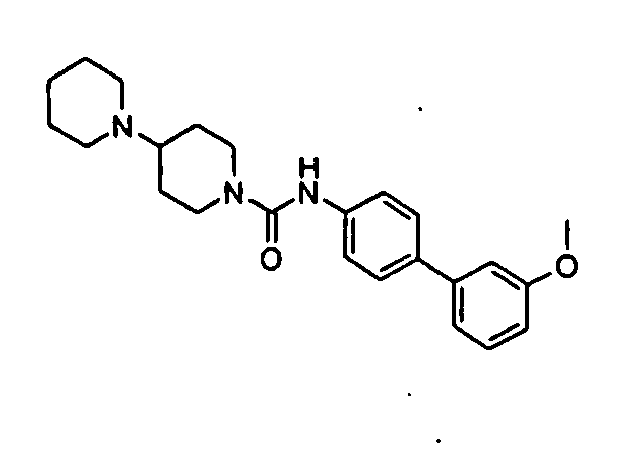
C24H31N3O2 393.52 394 98 2.53 10 General procedure for cross-coupling reaction - microwave conditions -Tri-o-tolylphosphine 10 
C24H30N3O2Cl 427.97 428 100 2.83 10 General procedure for cross- coupling reaction - microwave conditions - Tri-o-tolylphosphi ne 11 
C22H26N3OF 367.46 368 93 2.53 10 General procedure for cross-coupling reaction - microwave conditions -Tri-o-tolylphosphine 12 
C25H33N3O2 407.55 408 97 2.56 10 General procedure for cross-coupling reaction - microwave conditions -Tri-o-tolylphosphine 13 
HCOOH C24H28N3OF3 431.49 432 100 2.91 10 General procedure for cross-coupling reaction - microwave conditions -Tri-o-tolylphosphine 14 
C22H26FN3O 367 368 93 2.53 10 General procedure for cross-coupling reaction - microwave conditions -Tri-o-tolylphosphine 15 
HCOOH C23H28FN3O 381 382 99 2.51 10 General procedure for cross-coupling reaction - microwave conditions -Tri-o-tolylphosphine 16 
C26H34N4O2 434 435 100 2.29 10 General procedure for cross-coupling reaction - microwave conditions -Tri-o-tolylphosphine 17 
C25H32N4O2 420 421 100 2.13 10 General procedure for cross-coupling reaction - microwave conditions -Tri-o-tolylphosphine 18 
HCOOH C25H33N3O2 407 408 100 2.73 10 General procedure for cross-coupling reaction - microwave conditions -Tri-o-tolylphosphi ne 19 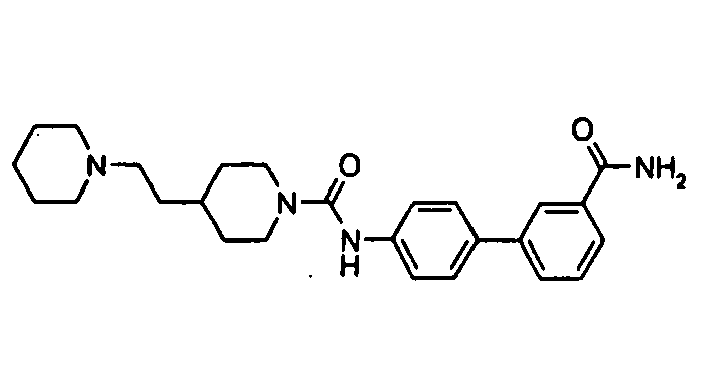
C26H34N4O2 434 435 100 2.24 10 General procedure for cross-coupling reaction - microwave conditions -Tri-o-tolylphosphi ne 20 
HCOOH C27H36N402 448 316 96 2.38 10 General procedure for cross-coupling reaction - microwave conditions -Tri-o-tolylphosphi ne - Full length cDNAs encoding the alpha7 nicotinic acetylcholine receptor were cloned from a rat brain cDNA library using standard molecular biology techniques. Rat GH4C1 cells were then transfected with the rat receptor, cloned and analyzed for functional alpha7 nicotinic receptor expression employing a FLIPR assay to measure changes in intracellular calcium concentrations. Cell clones showing the highest calcium-mediated fluorescence signals upon agonist (nicotine) application were further subcloned and subsequently stained with Texas red-labelled α-bungarotoxin (BgTX) to analyse the level and homogeneity of alpha7 nicotinic acetylcholine receptor expression using confocal microscopy. Three cell lines were then expanded and one characterised pharmacologically (see Table 2 below) prior to its subsequent use for compound screening.
Table 2 - Pharmacological characterisation of alpha7 nAChR stably expressed in GH4Cl cells using the functional FLIPR assay Compound EC50 [microM] Acetylcholine 3.05 ± 0.08 (n=4) Choline 24.22 ± 8.30 (n=2) Cytisine 1.21 ± 0.13 (n=5) DMPP 0.98 ± 0.47 (n=6) Epibatidine 0.0 12± 0.002 (n=7) Nicotine 1.03 ± 0.26 (n=22) - A robust functional FLIPR assay (Z' = 0.68) employing the stable recombinant GH4Cl cell line was developed to screen the alpha7 nicotinic acetylcholine receptor. The FLIPR system allows the measurements of real time Ca2+-concentration changes in living cells using a Ca2+ sensitive fluorescence dye (such as Fluo4). This instrument enables the screening for agonists and antagonists for alpha 7 nAChR channels stably expressed in GH4Cl cells.
- GH4Cl cells stably transfected with rat- alpha7-nAChR (see above) were used. These cells are poorly adherent and therefore pretreatment of flasks and plates with poly-D-lysine was carried out. Cells are grown in 150 cm2 T-flasks, filled with 30 ml of medium at 37°C and 5% CO2.
- EC50 and IC50 values were calculated using the IDBS XLfit4.1 software package employing a sigmoidal concentration-response (variable slope) equation:

- The functional FLIPR assay was validated with the alpha7 nAChR agonists nicotine, cytisine, DMPP, epibatidine, choline and acetylcholine. Concentration-response curves were obtained in the concentration range from 0.001 to 30 microM. The resulting EC50 values are listed in Table 2 and the obtained rank order of agonists is in agreement with published data (Quik et al., 1997)(22).
- The assay was further validated with the specific alpha7 nAChR antagonist MLA (methyllycaconitine), which was used in the concentration range between 1 microM to 0.01 nM, together with a competing nicotine concentration of 10 microM. The IC50 value was calculated as 1.31±0.43 nM in nine independent experiments.
- Functional FLIPR assays were developed in order to test the selectivity of compounds against the alpha1 (muscular) and alpha3 (ganglionic) nACh receptors and the structurally related 5-HT3 receptor. For determination of activity at alpha 1 receptors naively expressed in the rhabdomyosarcoma derived TE 671 cell line an assay employing membrane potential sensitive dyes was used, whereas alpha3 selectivity was determined by a calcium-monitoring assays using the native SH-SY5Y cell line. In order to test selectivity against the 5-HT3 receptor, a recombinant cell line was constructed expressing the human 5-HT3A receptor in HEK 293 cells and a calcium-monitoring FLIPR assay employed.
- The compounds were tested using the functional FLIPR primary screening assay employing the stable recombinant GH4C1 cell line expressing the alpha7 nAChR. Hits identified were validated further by generation of concentration-response curves. The potency of compounds from Examples 1-20 as measured in the functional FLIPR screening assay was found to range between 10 nM and 30 microM, with the majority showing a potency ranging between 10 nM and 10 microM.
-
- 1. Prendergast, M. A., Harris, B. R., Mayer, S., Holley, R. C., Pauly, J. R., Littleton, J. M. (2001) Nicotine exposure reduces N-methyl-D-aspartate toxicity in the hippocampus: relation to distribution of the alpha7 nicotinic acetylcholine receptor subunit. Med.Sci.Monit. 7, 1153-1160.
- 2. Garrido, R., Mattson, M. P., Hennig, B., Toborek, M. (2001) Nicotine protects against arachidonic-acid-induced caspase activation, cytochrome c release and apoptosis of cultured spinal cord neurons. J.Neurochem. 76, 1395-1403.
- 3. Semba, J., Miyoshi, R., Kito, S. (1996) Nicotine protects against the dexamethasone potentiation of kainic acid- induced neurotoxicity in cultured hippocampal neurons. Brain Res. 735, 335-338.
- 4. Shimohama, S., Akaike, A., Kimura, J. (1996) Nicotine-induced protection against glutamate cytotoxicity. Nicotinic cholinergic receptor-mediated inhibition of nitric oxide formation. Ann.N.Y.Acad.Sci. 777, 356-361.
- 5. Akaike, A., Tamura, Y., Yokota, T., Shimohama, S., Kimura, J. (1994) Nicotine-induced protection of cultured cortical neurons against N- methyl-D-aspartate receptor-mediated glutamate cytotoxicity. Brain Res. 644, 181-187.
- 6. Yamashita, H., Nakamura, S. (1996) Nicotine rescues PC12 cells from death induced by nerve growth factor deprivation. Neurosci.Lett. 213, 145-147.
- 7. Shimohama, S., Greenwald, D. L., Shafron, D. H., Akaika, A., Maeda, T., Kaneko, S., Kimura, J., Simpkins, C. E., Day, A. L., Meyer, E. M. (1998) Nicotinic alpha 7 receptors protect against glutamate neurotoxicity and neuronal ischemic damage. Brain Res. 779, 359-363.
- 8. Socci, D. J., Arendash, G. W. (1996) Chronic nicotine treatment prevents neuronal loss in neocortex resulting from nucleus basalis lesions in young adult and aged rats. Mol. Chem.Neuropathol. 27, 285-305.
- 9. Rusted, J. M., Newhouse, P. A., Levin, E. D. (2000) Nicotinic treatment for degenerative neuropsychiatric disorders such as Alzheimer's disease and Parkinson's disease. Behav.Brain Res. 113, 121-129.
- 10. Kihara, T., Shimohama, S., Sawada, H., Kimura, J., Kume, T., Kochiyama, H., Maeda, T., Akaike, A. (1997) Nicotinic receptor stimulation protects neurons against beta-amyloid toxicity. Ann.Neurol. 42, 159-163
- 11. Kihara, T., Shimohama, S., Sawada, H., Honda, K., Nakamizo, T., Shibasaki, H., Kume, T., Akaike, A. (2001) alpha 7 nicotinic receptor transduces signals to phosphatidylinositol 3- kinase to block A beta-amyloid-induced neurotoxicity. J.Biol.Chem. 276, 13541-13546.
- 12. Kelton, M. C., Kahn, H. J., Conrath, C. L., Newhouse, P. A. (2000) The effects of nicotine on Parkinson's disease. Brain Cogn 43, 274-282.
- 13. Kem, W. R. (2000) The brain alpha7 nicotinic receptor may be an important therapeutic target for the treatment of Alzheimer's disease: studies with DMXBA (GTS-21). Behav.Brain Res. 113, 169-181.
- 14. Dajas-Bailador, F. A., Lima, P. A., Wonnacott, S. (2000) The alpha7 nicotinic acetylcholine receptor subtype mediates nicotine protection against NMDA excitotoxicity in primary hippocampal cultures through a Ca(2+) dependent mechanism. Neuropharmacology 39, 2799-2807.
- 15. Strahlendorf, J. C., Acosta, S., Miles, R., Strahlendorf, H. K. (2001) Choline blocks AMPA-induced dark cell degeneration of Purkinje neurons: potential role of the alpha7 nicotinic receptor. Brain Res. 901, 71-78.
- 16. Jonnala, R. R., Terry, A. V., Jr., Buccafusco, J. J. (2002) Nicotine increases the expression of high affinity nerve growth factor receptors in both in vitro and in vivo. Life Sci. 70, 1543-1554.
- 17. Bencherif, M., Bane, A. J., Miller, C. H., Dull, G. M., Gatto, G. J. (2000) TC-2559: a novel orally active ligand selective at neuronal acetylcholine receptors. Eur.J.Pharmacol. 409, 45-55. Ref Type: Journal
- 18. Donnelly-Roberts, D. L., Xue, I. C., Arneric, S. P., Sullivan, J. P. (1996) In vitro neuroprotective properties of the novel cholinergic channel activator (ChCA), ABT-418. Brain Res. 719, 36-44.
- 19. Meyer, E. M., Tay, E. T., Zoltewicz, J. A., Meyers, C., King, M. A., Papke, R. L., De Fiebre, C. M. (1998) Neuroprotective and memory-related actions of novel alpha-7 nicotinic agents with different mixed agonist/antagonist properties. J.Pharmacol.Exp.Ther. 284, 1026-1032.
- 20. Stevens, T. R., Krueger, S. K., Fizsimonds, R. M. and Picciotto, M. R. (2003) Neuroprotection by nicotine in mouse primary cortical cultures involves activation of calcineurin and L-type calcium channel inactivation. J. Neuroscience 23, 10093-10099.
- 21. Wang H, Yu M, Ochani M, Amella CA, Tanovic M, Susarla S, Li JH, Wang H, Yang H, Ulloa L, Al-Abed Y, Czura CJ, Tracey KJ (2003) Nicotinic acetylcholine receptor alpha7 subunit is an essential regulator of inflammation. Nature 421:384-388.
- 22. Quik M, Philie J. and Choremis J. (1997). Modulation of alpha7 nicotinic receptor-mediated calcium influx by nicotinic agonists. Mol. Pharmacol., 51, 499-506.
Claims (7)
- A compound of formula I
 A is N;a is an integer from 1 to 3;bis 0, 1, or 2;X is a group of formula:wherein:
 Z is CH2, N, O;p is 0 or 1;T' represent, independently from one another when p is greater than 1, linear, branched or cyclic (C1-C6) alkyl, trihaloalkyl, hydroxyalkyl, alkoxy, alkylcarbonyl, alkoxycarbonyl, alkylcarbonylamino; linear, branched or cyclic (C1-C6) alkoxy-(C1-C6) alkyl; linear, branched or cyclic (C1-C6) alkylaminocarbonyl; carbamoyl; or, when p is 2 or 3, two T' substituents, with the atoms of the X ring they are attached to, form a 5- to 8-membered ring with spiro or fused junction;q and q' are, independently from one another, integers from 1 to 4;Q is a 5 to 10-membered aromatic or heteroaromatic ring;R represents a 5 to 10-membered aromatic or heteroaromatic ring optionally substituted with one or more groups selected from: halogen; hydroxy; mercapto; cyano; nitro; amino; linear, branched or cyclic (C1-C6) alkyl, trihaloalkyl, alkoxy or alkylcarbonyl; linear, branched, or cyclic (C1-C6) alkylcarbonylamino; mono- or di, linear, branched, or cyclic (C1-C6) alkylamino or alkylaminocarbonyl; carbamoyl; linear, branched or cyclic (C1-C6) alkoxy-(C1-C6) alkyl;j is 0, 1 or 2;R' represent, independently of one another when j = 2, halogen; hydroxy; trihalomethyl; trihalomethoxy; linear, branched or cyclic (C1-C6) alkyl, trihaloalkyl, alkoxy, hydroxyalkyl.
 - A compound according to claim 1, wherein:AisN;a is an integer from 1 to 2;b is 0, 1 or 2;X is a group of formula:wherein:
 Z is CH2;p is 0;q and q' are, independently from one another, integers from 1 to 3;Q is a 5 to 10-membered aromatic ring;R represents a 5 to 10-membered aromatic or heteroaromatic ring optionally substituted with one or more groups selected from: halogen; linear, branched or cyclic (C1-C3) alkyl, alkoxy; linear, branched, or cyclic (C1-C3) alkylcarbonylamino; mono- or di, linear, branched, or cyclic (C1-C3) alkylaminocarbonyl; carbamoyl;j is 0.
 - A compound according to claim 2, wherein both Q and R are phenyl.
- A pharmaceutical composition containing a compound according to claims 1-3 and a pharmaceutically acceptable carrier or excipient.
- The use of a compound according to claims 1-3, for the preparation of a medicament for the treatment of neurological, psychiatric, cognitive, immunological and inflammatory disorders.
- The use according to claim 5, for the treatment of neurdegenerative diseases.
- The use according to claims 5 and 6, for the treatment of senile dementia, attention deficit disorders, Alzheimer's disease and schizophrenia.
Priority Applications (1)
| Application Number | Priority Date | Filing Date | Title |
|---|---|---|---|
| PL07702835T PL1976842T3 (en) | 2006-01-18 | 2007-01-17 | Modulators of alpha7 nicotinic acetylcholine receptors and therapeutic uses thereof |
Applications Claiming Priority (2)
| Application Number | Priority Date | Filing Date | Title |
|---|---|---|---|
| US74314206P | 2006-01-18 | 2006-01-18 | |
| PCT/EP2007/000381 WO2007082731A1 (en) | 2006-01-18 | 2007-01-17 | Modulators of alpha7 nicotinic acetylcholine receptors and therapeutic uses thereof |
Publications (2)
| Publication Number | Publication Date |
|---|---|
| EP1976842A1 EP1976842A1 (en) | 2008-10-08 |
| EP1976842B1 true EP1976842B1 (en) | 2010-03-10 |
Family
ID=38042829
Family Applications (1)
| Application Number | Title | Priority Date | Filing Date |
|---|---|---|---|
| EP07702835A Active EP1976842B1 (en) | 2006-01-18 | 2007-01-17 | Modulators of alpha7 nicotinic acetylcholine receptors and therapeutic uses thereof |
Country Status (11)
| Country | Link |
|---|---|
| EP (1) | EP1976842B1 (en) |
| JP (1) | JP2009523747A (en) |
| CN (1) | CN101374826A (en) |
| AT (1) | ATE460404T1 (en) |
| AU (1) | AU2007207149A1 (en) |
| CA (1) | CA2637411A1 (en) |
| DE (1) | DE602007005225D1 (en) |
| ES (1) | ES2339816T3 (en) |
| IL (1) | IL192864A0 (en) |
| PL (1) | PL1976842T3 (en) |
| WO (1) | WO2007082731A1 (en) |
Families Citing this family (4)
| Publication number | Priority date | Publication date | Assignee | Title |
|---|---|---|---|---|
| EP2604599A1 (en) | 2007-04-27 | 2013-06-19 | Purdue Pharma LP | TRPV1 antagonists and uses thereof |
| US9273043B2 (en) | 2011-06-22 | 2016-03-01 | Purdue Pharma L.P. | TRPV1 antagonists including dihydroxy substituent and uses thereof |
| CN103524515B (en) | 2012-07-03 | 2016-07-06 | 浙江海正药业股份有限公司 | Benzodioxole derivatives with inhibiting activity of acetylcholinesterase and its production and use |
| JPWO2014054635A1 (en) * | 2012-10-02 | 2016-08-25 | 大日本住友製薬株式会社 | Imidazole derivatives |
Family Cites Families (2)
| Publication number | Priority date | Publication date | Assignee | Title |
|---|---|---|---|---|
| US5889006A (en) * | 1995-02-23 | 1999-03-30 | Schering Corporation | Muscarinic antagonists |
| US20020045613A1 (en) * | 2000-04-27 | 2002-04-18 | Heinz Pauls | 1-aroyl-piperidinyl benzamidines |
-
2007
- 2007-01-17 AT AT07702835T patent/ATE460404T1/en not_active IP Right Cessation
- 2007-01-17 DE DE602007005225T patent/DE602007005225D1/en active Active
- 2007-01-17 EP EP07702835A patent/EP1976842B1/en active Active
- 2007-01-17 CN CNA2007800032388A patent/CN101374826A/en active Pending
- 2007-01-17 WO PCT/EP2007/000381 patent/WO2007082731A1/en not_active Ceased
- 2007-01-17 CA CA002637411A patent/CA2637411A1/en not_active Abandoned
- 2007-01-17 JP JP2008550681A patent/JP2009523747A/en not_active Withdrawn
- 2007-01-17 PL PL07702835T patent/PL1976842T3/en unknown
- 2007-01-17 AU AU2007207149A patent/AU2007207149A1/en not_active Abandoned
- 2007-01-17 ES ES07702835T patent/ES2339816T3/en active Active
-
2008
- 2008-07-17 IL IL192864A patent/IL192864A0/en unknown
Also Published As
| Publication number | Publication date |
|---|---|
| DE602007005225D1 (en) | 2010-04-22 |
| EP1976842A1 (en) | 2008-10-08 |
| ATE460404T1 (en) | 2010-03-15 |
| CA2637411A1 (en) | 2007-07-26 |
| JP2009523747A (en) | 2009-06-25 |
| IL192864A0 (en) | 2009-02-11 |
| PL1976842T3 (en) | 2010-07-30 |
| AU2007207149A1 (en) | 2007-07-26 |
| CN101374826A (en) | 2009-02-25 |
| WO2007082731A1 (en) | 2007-07-26 |
| ES2339816T3 (en) | 2010-05-25 |
Similar Documents
| Publication | Publication Date | Title |
|---|---|---|
| EP1263729B1 (en) | Azacyclic compounds for use in the treatment of serotonin related diseases | |
| EP3253752B1 (en) | [9,10-dimethoxy-3-(2-methylpropyl)-1h,2h,3h,4h,6h,7h,11bh-pyrido-[2,1-a]isoquinolin-2-yl]methanol and compounds, compositions and methods relating thereto | |
| WO2007098826A2 (en) | Modulators of alpha7 nicotinic acetylcholine receptors and therapeutic uses thereof | |
| CN101018774A (en) | Modulators of alpha7 nicotinic acetylcholine receptors and therapeutic uses thereof | |
| SK20199A3 (en) | Ether muscarinic antagonists | |
| AU2021347238A1 (en) | Substituted n-(2-(2,6-dioxopiperidin-3-yl)-1,3-dioxoisoindolin-5-yl)arylsulfonamide analogs as modulators of cereblon protein | |
| EA016174B1 (en) | PYRIMIDINYL-PIPERAZINES USEFUL AS D<sub>3</sub>/D<sub>2</sub> RECEPTOR LIGANDS | |
| EP1976842A1 (en) | Modulators of alpha7 nicotinic acetylcholine receptors and therapeutic uses thereof | |
| CN101374810A (en) | Modulators of alpha 7 nicotinic acetylcholine receptors and their therapeutic uses | |
| EP3867244B1 (en) | 4-pyrazin-2-ylmethyl-morpholine derivatives and the use thereof as medicament | |
| US20100016288A1 (en) | Modulators of alpha7 nicotinic acetylcholine receptors and therapeutic uses thereof | |
| JP2011510022A (en) | N- and O-substituted 4- [2- (diphenylmethoxy) -ethyl] -1-[(phenyl) methyl] piperidine analogs and methods of treating CNS disorders using the same | |
| WO2023096822A1 (en) | Substituted 2-(2-(2,6-dioxopiperidin-3-yl)-1-oxoisoindolin-5-yl)acetamide analogs as modulators of gspt1 and/or ikzf1 protein | |
| HK1129659A (en) | Modulators of alpha7 nicotinic acetylcholine receptors and therapeutic uses thereof | |
| Blass et al. | Discovery of novel, selective, functionalized 5-(2-(5-arylhexahydropyrrolo [3, 4-c] pyrrol-2 (1H)-yl) ethyl)-γ-butyrolactone sigma-2 ligands | |
| EP3980401B1 (en) | Purine derivatives, as nr2b negative modulators and the use thereof as medicament, in particular for treating depressive disorders | |
| EP3866854B1 (en) | 4-pyridinylmethyl-morpholine derivatives and the use thereof as medicament | |
| EP3980420B1 (en) | Imidazopyrazine derivatives and the use thereof as medicament | |
| EP3867245B1 (en) | 4-pyrimidin-5-ylmethyl-morpholine derivatives and the use thereof as medicament | |
| EP1787984B1 (en) | Azacyclic compounds for use in the treatment of serotonin related diseases | |
| HK1106522A (en) | Modulators of alpha7 nicotinic acetylcholine receptors and therapeutic uses thereof | |
| HK40059626B (en) | 4-pyrazin-2-ylmethyl-morpholine derivatives and the use thereof as medicament | |
| HK40059626A (en) | 4-pyrazin-2-ylmethyl-morpholine derivatives and the use thereof as medicament | |
| HK40033047A (en) | Imidazopyridine derivatives and the use thereof as medicament | |
| HK40033047B (en) | Imidazopyridine derivatives and the use thereof as medicament |
Legal Events
| Date | Code | Title | Description |
|---|---|---|---|
| PUAI | Public reference made under article 153(3) epc to a published international application that has entered the european phase |
Free format text: ORIGINAL CODE: 0009012 |
|
| 17P | Request for examination filed |
Effective date: 20080618 |
|
| AK | Designated contracting states |
Kind code of ref document: A1 Designated state(s): AT BE BG CH CY CZ DE DK EE ES FI FR GB GR HU IE IS IT LI LT LU LV MC NL PL PT RO SE SI SK TR |
|
| AX | Request for extension of the european patent |
Extension state: AL BA HR MK RS |
|
| 17Q | First examination report despatched |
Effective date: 20081210 |
|
| GRAP | Despatch of communication of intention to grant a patent |
Free format text: ORIGINAL CODE: EPIDOSNIGR1 |
|
| GRAS | Grant fee paid |
Free format text: ORIGINAL CODE: EPIDOSNIGR3 |
|
| GRAA | (expected) grant |
Free format text: ORIGINAL CODE: 0009210 |
|
| AK | Designated contracting states |
Kind code of ref document: B1 Designated state(s): AT BE BG CH CY CZ DE DK EE ES FI FR GB GR HU IE IS IT LI LT LU LV MC NL PL PT RO SE SI SK TR |
|
| AX | Request for extension of the european patent |
Extension state: AL BA HR MK RS |
|
| REG | Reference to a national code |
Ref country code: GB Ref legal event code: FG4D |
|
| REG | Reference to a national code |
Ref country code: CH Ref legal event code: EP |
|
| RAP2 | Party data changed (patent owner data changed or rights of a patent transferred) |
Owner name: SIENA BIOTECH S.P.A. |
|
| REG | Reference to a national code |
Ref country code: IE Ref legal event code: FG4D |
|
| REF | Corresponds to: |
Ref document number: 602007005225 Country of ref document: DE Date of ref document: 20100422 Kind code of ref document: P |
|
| REG | Reference to a national code |
Ref country code: ES Ref legal event code: FG2A Ref document number: 2339816 Country of ref document: ES Kind code of ref document: T3 |
|
| REG | Reference to a national code |
Ref country code: RO Ref legal event code: EPE |
|
| REG | Reference to a national code |
Ref country code: NL Ref legal event code: VDEP Effective date: 20100310 |
|
| PG25 | Lapsed in a contracting state [announced via postgrant information from national office to epo] |
Ref country code: LT Free format text: LAPSE BECAUSE OF FAILURE TO SUBMIT A TRANSLATION OF THE DESCRIPTION OR TO PAY THE FEE WITHIN THE PRESCRIBED TIME-LIMIT Effective date: 20100310 |
|
| REG | Reference to a national code |
Ref country code: PL Ref legal event code: T3 |
|
| LTIE | Lt: invalidation of european patent or patent extension |
Effective date: 20100310 |
|
| PG25 | Lapsed in a contracting state [announced via postgrant information from national office to epo] |
Ref country code: AT Free format text: LAPSE BECAUSE OF FAILURE TO SUBMIT A TRANSLATION OF THE DESCRIPTION OR TO PAY THE FEE WITHIN THE PRESCRIBED TIME-LIMIT Effective date: 20100310 Ref country code: SI Free format text: LAPSE BECAUSE OF FAILURE TO SUBMIT A TRANSLATION OF THE DESCRIPTION OR TO PAY THE FEE WITHIN THE PRESCRIBED TIME-LIMIT Effective date: 20100310 Ref country code: FI Free format text: LAPSE BECAUSE OF FAILURE TO SUBMIT A TRANSLATION OF THE DESCRIPTION OR TO PAY THE FEE WITHIN THE PRESCRIBED TIME-LIMIT Effective date: 20100310 Ref country code: LV Free format text: LAPSE BECAUSE OF FAILURE TO SUBMIT A TRANSLATION OF THE DESCRIPTION OR TO PAY THE FEE WITHIN THE PRESCRIBED TIME-LIMIT Effective date: 20100310 |
|
| PG25 | Lapsed in a contracting state [announced via postgrant information from national office to epo] |
Ref country code: EE Free format text: LAPSE BECAUSE OF FAILURE TO SUBMIT A TRANSLATION OF THE DESCRIPTION OR TO PAY THE FEE WITHIN THE PRESCRIBED TIME-LIMIT Effective date: 20100310 Ref country code: CY Free format text: LAPSE BECAUSE OF FAILURE TO SUBMIT A TRANSLATION OF THE DESCRIPTION OR TO PAY THE FEE WITHIN THE PRESCRIBED TIME-LIMIT Effective date: 20100310 Ref country code: BE Free format text: LAPSE BECAUSE OF FAILURE TO SUBMIT A TRANSLATION OF THE DESCRIPTION OR TO PAY THE FEE WITHIN THE PRESCRIBED TIME-LIMIT Effective date: 20100310 Ref country code: SE Free format text: LAPSE BECAUSE OF FAILURE TO SUBMIT A TRANSLATION OF THE DESCRIPTION OR TO PAY THE FEE WITHIN THE PRESCRIBED TIME-LIMIT Effective date: 20100310 Ref country code: NL Free format text: LAPSE BECAUSE OF FAILURE TO SUBMIT A TRANSLATION OF THE DESCRIPTION OR TO PAY THE FEE WITHIN THE PRESCRIBED TIME-LIMIT Effective date: 20100310 Ref country code: GR Free format text: LAPSE BECAUSE OF FAILURE TO SUBMIT A TRANSLATION OF THE DESCRIPTION OR TO PAY THE FEE WITHIN THE PRESCRIBED TIME-LIMIT Effective date: 20100611 |
|
| PG25 | Lapsed in a contracting state [announced via postgrant information from national office to epo] |
Ref country code: SK Free format text: LAPSE BECAUSE OF FAILURE TO SUBMIT A TRANSLATION OF THE DESCRIPTION OR TO PAY THE FEE WITHIN THE PRESCRIBED TIME-LIMIT Effective date: 20100310 Ref country code: IS Free format text: LAPSE BECAUSE OF FAILURE TO SUBMIT A TRANSLATION OF THE DESCRIPTION OR TO PAY THE FEE WITHIN THE PRESCRIBED TIME-LIMIT Effective date: 20100710 Ref country code: CZ Free format text: LAPSE BECAUSE OF FAILURE TO SUBMIT A TRANSLATION OF THE DESCRIPTION OR TO PAY THE FEE WITHIN THE PRESCRIBED TIME-LIMIT Effective date: 20100310 Ref country code: BG Free format text: LAPSE BECAUSE OF FAILURE TO SUBMIT A TRANSLATION OF THE DESCRIPTION OR TO PAY THE FEE WITHIN THE PRESCRIBED TIME-LIMIT Effective date: 20100610 |
|
| PLBE | No opposition filed within time limit |
Free format text: ORIGINAL CODE: 0009261 |
|
| STAA | Information on the status of an ep patent application or granted ep patent |
Free format text: STATUS: NO OPPOSITION FILED WITHIN TIME LIMIT |
|
| PG25 | Lapsed in a contracting state [announced via postgrant information from national office to epo] |
Ref country code: PT Free format text: LAPSE BECAUSE OF FAILURE TO SUBMIT A TRANSLATION OF THE DESCRIPTION OR TO PAY THE FEE WITHIN THE PRESCRIBED TIME-LIMIT Effective date: 20100712 Ref country code: DK Free format text: LAPSE BECAUSE OF FAILURE TO SUBMIT A TRANSLATION OF THE DESCRIPTION OR TO PAY THE FEE WITHIN THE PRESCRIBED TIME-LIMIT Effective date: 20100310 |
|
| 26N | No opposition filed |
Effective date: 20101213 |
|
| PGFP | Annual fee paid to national office [announced via postgrant information from national office to epo] |
Ref country code: GB Payment date: 20101231 Year of fee payment: 5 |
|
| PGFP | Annual fee paid to national office [announced via postgrant information from national office to epo] |
Ref country code: TR Payment date: 20110104 Year of fee payment: 5 Ref country code: PL Payment date: 20101231 Year of fee payment: 5 Ref country code: RO Payment date: 20110103 Year of fee payment: 5 Ref country code: IT Payment date: 20110131 Year of fee payment: 5 Ref country code: FR Payment date: 20110121 Year of fee payment: 5 Ref country code: DE Payment date: 20110126 Year of fee payment: 5 |
|
| PGFP | Annual fee paid to national office [announced via postgrant information from national office to epo] |
Ref country code: ES Payment date: 20101230 Year of fee payment: 5 |
|
| PG25 | Lapsed in a contracting state [announced via postgrant information from national office to epo] |
Ref country code: MC Free format text: LAPSE BECAUSE OF NON-PAYMENT OF DUE FEES Effective date: 20110131 |
|
| REG | Reference to a national code |
Ref country code: CH Ref legal event code: PL |
|
| REG | Reference to a national code |
Ref country code: IE Ref legal event code: MM4A |
|
| PG25 | Lapsed in a contracting state [announced via postgrant information from national office to epo] |
Ref country code: LI Free format text: LAPSE BECAUSE OF NON-PAYMENT OF DUE FEES Effective date: 20110131 Ref country code: CH Free format text: LAPSE BECAUSE OF NON-PAYMENT OF DUE FEES Effective date: 20110131 |
|
| PG25 | Lapsed in a contracting state [announced via postgrant information from national office to epo] |
Ref country code: IE Free format text: LAPSE BECAUSE OF NON-PAYMENT OF DUE FEES Effective date: 20110117 |
|
| GBPC | Gb: european patent ceased through non-payment of renewal fee |
Effective date: 20120117 |
|
| REG | Reference to a national code |
Ref country code: FR Ref legal event code: ST Effective date: 20120928 |
|
| PG25 | Lapsed in a contracting state [announced via postgrant information from national office to epo] |
Ref country code: GB Free format text: LAPSE BECAUSE OF NON-PAYMENT OF DUE FEES Effective date: 20120117 Ref country code: DE Free format text: LAPSE BECAUSE OF NON-PAYMENT OF DUE FEES Effective date: 20120801 Ref country code: RO Free format text: LAPSE BECAUSE OF NON-PAYMENT OF DUE FEES Effective date: 20120117 |
|
| REG | Reference to a national code |
Ref country code: DE Ref legal event code: R119 Ref document number: 602007005225 Country of ref document: DE Effective date: 20120801 |
|
| PG25 | Lapsed in a contracting state [announced via postgrant information from national office to epo] |
Ref country code: IT Free format text: LAPSE BECAUSE OF NON-PAYMENT OF DUE FEES Effective date: 20120117 |
|
| PG25 | Lapsed in a contracting state [announced via postgrant information from national office to epo] |
Ref country code: FR Free format text: LAPSE BECAUSE OF NON-PAYMENT OF DUE FEES Effective date: 20120131 |
|
| REG | Reference to a national code |
Ref country code: PL Ref legal event code: LAPE |
|
| PG25 | Lapsed in a contracting state [announced via postgrant information from national office to epo] |
Ref country code: PL Free format text: LAPSE BECAUSE OF NON-PAYMENT OF DUE FEES Effective date: 20120117 Ref country code: LU Free format text: LAPSE BECAUSE OF NON-PAYMENT OF DUE FEES Effective date: 20110117 |
|
| REG | Reference to a national code |
Ref country code: ES Ref legal event code: FD2A Effective date: 20131021 |
|
| PG25 | Lapsed in a contracting state [announced via postgrant information from national office to epo] |
Ref country code: HU Free format text: LAPSE BECAUSE OF FAILURE TO SUBMIT A TRANSLATION OF THE DESCRIPTION OR TO PAY THE FEE WITHIN THE PRESCRIBED TIME-LIMIT Effective date: 20100310 Ref country code: ES Free format text: LAPSE BECAUSE OF NON-PAYMENT OF DUE FEES Effective date: 20120118 |
|
| PG25 | Lapsed in a contracting state [announced via postgrant information from national office to epo] |
Ref country code: TR Free format text: LAPSE BECAUSE OF NON-PAYMENT OF DUE FEES Effective date: 20120117 |