EP1975125A1 - Method for obtaining alpha-alumina crystals or fibres using the vapour-liquid-solid (vls) mechanism, by controlling the slightly-oxidising atmospheres in systems that contain metal al and sio2 - Google Patents
Method for obtaining alpha-alumina crystals or fibres using the vapour-liquid-solid (vls) mechanism, by controlling the slightly-oxidising atmospheres in systems that contain metal al and sio2 Download PDFInfo
- Publication number
- EP1975125A1 EP1975125A1 EP06841755A EP06841755A EP1975125A1 EP 1975125 A1 EP1975125 A1 EP 1975125A1 EP 06841755 A EP06841755 A EP 06841755A EP 06841755 A EP06841755 A EP 06841755A EP 1975125 A1 EP1975125 A1 EP 1975125A1
- Authority
- EP
- European Patent Office
- Prior art keywords
- fibers
- vls
- alumina
- sio
- formation
- Prior art date
- Legal status (The legal status is an assumption and is not a legal conclusion. Google has not performed a legal analysis and makes no representation as to the accuracy of the status listed.)
- Withdrawn
Links
Images

Classifications
-
- C—CHEMISTRY; METALLURGY
- C01—INORGANIC CHEMISTRY
- C01F—COMPOUNDS OF THE METALS BERYLLIUM, MAGNESIUM, ALUMINIUM, CALCIUM, STRONTIUM, BARIUM, RADIUM, THORIUM, OR OF THE RARE-EARTH METALS
- C01F7/00—Compounds of aluminium
- C01F7/02—Aluminium oxide; Aluminium hydroxide; Aluminates
- C01F7/42—Preparation of aluminium oxide or hydroxide from metallic aluminium, e.g. by oxidation
- C01F7/422—Preparation of aluminium oxide or hydroxide from metallic aluminium, e.g. by oxidation by oxidation with a gaseous oxidator at a high temperature
-
- C—CHEMISTRY; METALLURGY
- C01—INORGANIC CHEMISTRY
- C01F—COMPOUNDS OF THE METALS BERYLLIUM, MAGNESIUM, ALUMINIUM, CALCIUM, STRONTIUM, BARIUM, RADIUM, THORIUM, OR OF THE RARE-EARTH METALS
- C01F7/00—Compounds of aluminium
- C01F7/02—Aluminium oxide; Aluminium hydroxide; Aluminates
-
- C—CHEMISTRY; METALLURGY
- C01—INORGANIC CHEMISTRY
- C01F—COMPOUNDS OF THE METALS BERYLLIUM, MAGNESIUM, ALUMINIUM, CALCIUM, STRONTIUM, BARIUM, RADIUM, THORIUM, OR OF THE RARE-EARTH METALS
- C01F7/00—Compounds of aluminium
- C01F7/02—Aluminium oxide; Aluminium hydroxide; Aluminates
- C01F7/42—Preparation of aluminium oxide or hydroxide from metallic aluminium, e.g. by oxidation
-
- C—CHEMISTRY; METALLURGY
- C30—CRYSTAL GROWTH
- C30B—SINGLE-CRYSTAL GROWTH; UNIDIRECTIONAL SOLIDIFICATION OF EUTECTIC MATERIAL OR UNIDIRECTIONAL DEMIXING OF EUTECTOID MATERIAL; REFINING BY ZONE-MELTING OF MATERIAL; PRODUCTION OF A HOMOGENEOUS POLYCRYSTALLINE MATERIAL WITH DEFINED STRUCTURE; SINGLE CRYSTALS OR HOMOGENEOUS POLYCRYSTALLINE MATERIAL WITH DEFINED STRUCTURE; AFTER-TREATMENT OF SINGLE CRYSTALS OR A HOMOGENEOUS POLYCRYSTALLINE MATERIAL WITH DEFINED STRUCTURE; APPARATUS THEREFOR
- C30B11/00—Single-crystal growth by normal freezing or freezing under temperature gradient, e.g. Bridgman-Stockbarger method
- C30B11/04—Single-crystal growth by normal freezing or freezing under temperature gradient, e.g. Bridgman-Stockbarger method adding crystallising materials or reactants forming it in situ to the melt
- C30B11/08—Single-crystal growth by normal freezing or freezing under temperature gradient, e.g. Bridgman-Stockbarger method adding crystallising materials or reactants forming it in situ to the melt every component of the crystal composition being added during the crystallisation
- C30B11/12—Vaporous components, e.g. vapour-liquid-solid-growth
-
- C—CHEMISTRY; METALLURGY
- C30—CRYSTAL GROWTH
- C30B—SINGLE-CRYSTAL GROWTH; UNIDIRECTIONAL SOLIDIFICATION OF EUTECTIC MATERIAL OR UNIDIRECTIONAL DEMIXING OF EUTECTOID MATERIAL; REFINING BY ZONE-MELTING OF MATERIAL; PRODUCTION OF A HOMOGENEOUS POLYCRYSTALLINE MATERIAL WITH DEFINED STRUCTURE; SINGLE CRYSTALS OR HOMOGENEOUS POLYCRYSTALLINE MATERIAL WITH DEFINED STRUCTURE; AFTER-TREATMENT OF SINGLE CRYSTALS OR A HOMOGENEOUS POLYCRYSTALLINE MATERIAL WITH DEFINED STRUCTURE; APPARATUS THEREFOR
- C30B29/00—Single crystals or homogeneous polycrystalline material with defined structure characterised by the material or by their shape
- C30B29/10—Inorganic compounds or compositions
- C30B29/16—Oxides
- C30B29/20—Aluminium oxides
-
- C—CHEMISTRY; METALLURGY
- C30—CRYSTAL GROWTH
- C30B—SINGLE-CRYSTAL GROWTH; UNIDIRECTIONAL SOLIDIFICATION OF EUTECTIC MATERIAL OR UNIDIRECTIONAL DEMIXING OF EUTECTOID MATERIAL; REFINING BY ZONE-MELTING OF MATERIAL; PRODUCTION OF A HOMOGENEOUS POLYCRYSTALLINE MATERIAL WITH DEFINED STRUCTURE; SINGLE CRYSTALS OR HOMOGENEOUS POLYCRYSTALLINE MATERIAL WITH DEFINED STRUCTURE; AFTER-TREATMENT OF SINGLE CRYSTALS OR A HOMOGENEOUS POLYCRYSTALLINE MATERIAL WITH DEFINED STRUCTURE; APPARATUS THEREFOR
- C30B29/00—Single crystals or homogeneous polycrystalline material with defined structure characterised by the material or by their shape
- C30B29/60—Single crystals or homogeneous polycrystalline material with defined structure characterised by the material or by their shape characterised by shape
- C30B29/62—Whiskers or needles
-
- C—CHEMISTRY; METALLURGY
- C01—INORGANIC CHEMISTRY
- C01P—INDEXING SCHEME RELATING TO STRUCTURAL AND PHYSICAL ASPECTS OF SOLID INORGANIC COMPOUNDS
- C01P2002/00—Crystal-structural characteristics
- C01P2002/70—Crystal-structural characteristics defined by measured X-ray, neutron or electron diffraction data
- C01P2002/72—Crystal-structural characteristics defined by measured X-ray, neutron or electron diffraction data by d-values or two theta-values, e.g. as X-ray diagram
-
- C—CHEMISTRY; METALLURGY
- C01—INORGANIC CHEMISTRY
- C01P—INDEXING SCHEME RELATING TO STRUCTURAL AND PHYSICAL ASPECTS OF SOLID INORGANIC COMPOUNDS
- C01P2002/00—Crystal-structural characteristics
- C01P2002/80—Crystal-structural characteristics defined by measured data other than those specified in group C01P2002/70
- C01P2002/85—Crystal-structural characteristics defined by measured data other than those specified in group C01P2002/70 by XPS, EDX or EDAX data
-
- C—CHEMISTRY; METALLURGY
- C01—INORGANIC CHEMISTRY
- C01P—INDEXING SCHEME RELATING TO STRUCTURAL AND PHYSICAL ASPECTS OF SOLID INORGANIC COMPOUNDS
- C01P2004/00—Particle morphology
- C01P2004/01—Particle morphology depicted by an image
-
- C—CHEMISTRY; METALLURGY
- C01—INORGANIC CHEMISTRY
- C01P—INDEXING SCHEME RELATING TO STRUCTURAL AND PHYSICAL ASPECTS OF SOLID INORGANIC COMPOUNDS
- C01P2004/00—Particle morphology
- C01P2004/01—Particle morphology depicted by an image
- C01P2004/02—Particle morphology depicted by an image obtained by optical microscopy
-
- C—CHEMISTRY; METALLURGY
- C01—INORGANIC CHEMISTRY
- C01P—INDEXING SCHEME RELATING TO STRUCTURAL AND PHYSICAL ASPECTS OF SOLID INORGANIC COMPOUNDS
- C01P2004/00—Particle morphology
- C01P2004/10—Particle morphology extending in one dimension, e.g. needle-like
-
- C—CHEMISTRY; METALLURGY
- C01—INORGANIC CHEMISTRY
- C01P—INDEXING SCHEME RELATING TO STRUCTURAL AND PHYSICAL ASPECTS OF SOLID INORGANIC COMPOUNDS
- C01P2004/00—Particle morphology
- C01P2004/60—Particles characterised by their size
- C01P2004/61—Micrometer sized, i.e. from 1-100 micrometer
-
- C—CHEMISTRY; METALLURGY
- C01—INORGANIC CHEMISTRY
- C01P—INDEXING SCHEME RELATING TO STRUCTURAL AND PHYSICAL ASPECTS OF SOLID INORGANIC COMPOUNDS
- C01P2004/00—Particle morphology
- C01P2004/60—Particles characterised by their size
- C01P2004/62—Submicrometer sized, i.e. from 0.1-1 micrometer
Definitions
- Corundum or ⁇ -alumina is a relatively scarce mineral appearing in generally metamorphic type aluminous rocks, such as marble, micaceous schist and gneiss, although it can occasionally be related to igneous rocks.
- corundum Due to its physical properties, and especially its chemical, electrical and thermal properties, corundum is used in many applications. For example, as a catalytic support, heat insulation, in refractories, advanced ceramics, etc.
- Spanish patent ES2146506 describes a method for obtaining crystalline alumina fibers using vapor-liquid-solid (VLS) deposition from silica and metal aluminium in inert atmospheres. See also " Obtentive deduction de fibras de ⁇ -Al2O3 por VLS para su kannations en composites". V. Valcárcel. Thesis publication in CD-ROM. ISBN: 84-8121-750-6 ; " Novel Ribbon Shaped ⁇ -Al2O3 Fibers", V. Valcárcel, A. Pérez, M. Cyrklaff and F. Guitián. Advanced Materials 10, No. 16, (1370-1373), 1998.
- VLS vapor-liquid-solid
- Patent ES2182684 describes a method for obtaining alumina single-crystal fibers using the VLS method described in the aforementioned patent ES2146506 , but in this case the innovation consists of the use of atmospheres containing metal gases. " Method for Production of Alpha-Alumina Whiskers via Vapor-Liquid-Solid Deposition". V. Valcárcel, C. Cerecedo, F. Guitián, J. Am. Ceram. Soc. 86 [10] 1683-90 (2003 ). According to this method, the aluminium which evaporates reacts with silica and the VLS mechanism starts, producing Si(I), Si(g), SiO(g) and Al 2 O(g).
- metals such as Ni allows working at high temperatures, this liquid metal being maintained in the range of interest. Once liquid drops of the metal in question have been generated, the gaseous species are dissolved in them and react, giving alumina in the form of fiber precipitated due to oversaturation, a considerably increase in the production of alumina single-crystal fibers being achieved.
- volatility diagrams A very useful tool which is commonly used for studying different chemical systems are volatility diagrams.
- Si-SiO 2 and Al-Al 2 O 3 systems have been much studied.
- Volatility Diagrams for Silica, Silicon Nitride, and Silicon Carbide and their Application to High-Temperature Decomposition and Oxidation ; Arthur H. Heder, Victor L. K. Lou. J. Am. Ceram. Soc., 73 [10] 2785-3128 (1990 ).
- Graphical Displays of the Thermodynamics of High-Temperature Gas-Solid Reactions and Their Application to Oxidation of Metals and Evaporation of Oxides V. L. K. Lou, T.E. Mitchell and A.H.Heuer. J. Am. Ceram. Soc., 68 [2] 49-58 (1985 ).
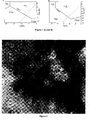
- the proposed method is based on controlling the partial pressures of the oxidizing agent using the volatility diagrams of Figure 1 : Si-SiO 2 ( Figure 1a ) and Al-Al 2 O 3 ( Figure 1b ) volatility diagrams at 1550°C, showing the maximum partial pressure lines at equilibrium of the different phases in the system for this temperature.
- Any system can be used to control this partial pressure, for example, passing argon through a vessel containing ice, through mixtures of gases containing oxidants in controlled proportions, by means of placing sponges or other porous materials containing the adsorbed oxidizing agent in the oven or by means of generating in situ compounds with an oxidizing character.
- VLS mechanism without the intervention of any oxidizing agent is considered as the starting point, aluminium reacts with silica and the VLS mechanism starts, producing silicon and the main gaseous species for the formation of Al 2 O and SiO fibers. According to this mechanism, drops are generated and the gaseous species dissolve in them and react, giving alumina precipitated due to oversaturation.
- alumina fibers or crystals can be grown in special conditions, which allows a complete control of the VLS process.
- Water is a strong oxidizing agent reacting with the main gaseous species Al 2 O(g) and SiO(g), alumina and silica precipitating. According to the volatility diagrams of Figure 1 , at 1550°C and in oxidizing atmospheres with oxygen partial pressures greater than 10' 3 atm, the passivation of aluminium occurs and therefore the VLS mechanism does not take place.
- a method is set forth in the present invention patent in which the oxidizing atmosphere can be controlled: for example, argon with water vapor, maintaining the partial pressure below 10 -3 atm at all times.
- the oxidizing atmosphere can be controlled: for example, argon with water vapor, maintaining the partial pressure below 10 -3 atm at all times.
- the water vapor partial pressures are maintained within the ranges from 10 -11 up to 10 -3 atm, aluminium undergoes an active oxidation with formation of corundum fume.
- the active oxidation with formation of silica fume takes place in the range comprised between 10 - 7 and 10 -3 atm. Therefore, in this method, unlike any other previous method, the oxidizing atmosphere is controlled and maintained in these ranges.
- This mechanism together with the VLS mechanism, gives rise to the formation of alumina fibers in large amounts.
- These fibers are linked to one another by a glass formed by mullite and silica which can be easily eliminated by the action of acids, such as mixtures of HNO 3 and HF for example, the alumina fibers remaining intact.
- Figure 2 shows an image of the corundum crystals obtained, formed by a lattice of white alumina fibers and a black area containing a continuous layer formed by mullite, silicon and silica.
- the crystals therefore have a particular morphology that has not been described previously.
- Figure 3 shows, A) Micrograph of a group of fibers. B) Detail of the fibers obtained. C) EDS analysis of the fibers. It has been verified through EDS (Energy Dispersive Spectroscopy) that the fibers are mainly formed by Al and O, although some Si appearing in the area of the tips of the fibers is also observed. Alumina fibers interlinked and covered by a continuous layer the composition of which is Si, SiO 2 and mullite, the amount of each varying between different measurements made, can be microscopically observed.
- the novelty is the control of the oxidizing atmosphere in the VLS process, allowing it to take place without passivating aluminium, and maintaining the partial pressures in the range of active oxidation of aluminium with formation of corundum fume, and active oxidation of silicon with formation of silica fume; i.e., partial pressure of the oxidizing agent ⁇ 10 -3 atm.
- the oven used for obtaining the fibers is a controlled-atmosphere oven of the type called "cold-wall" oven, the chamber of which has (30*35*40) cm dimensions and is completely coated with an alumina ceramic fiber insulator.
- This oven allows working in conditions of vacuum, inert atmospheres, oxidizing atmospheres, etc.
- the controlled atmospheres is an argon gas atmosphere that is slightly oxidizing due to the incorporation of small amounts of water, although other noble gases, such as helium for example, and other oxidants such as oxygen can also be used.
- a completely homogeneous mixture of powdered silica having a size ⁇ 63 ⁇ m with 10% of also powdered Ni having a particle size ⁇ 63 ⁇ m is placed in a (25*25*1.5) cm aluminium tray.
- Several pieces of aluminium with a diameter of 4 mm and a length of 1 cm are placed half-buried on the mixture.
- the sample is introduced inside the oven.
- This oven is connected to an argon gas source the flow of which is 80 l/h.
- a vessel with ice the equilibrium vapor pressure of which at 0°C is approximately 10 -3 atm is placed between the oven and the gas source.
- the working conditions are the following: a heating ramp at 10°C/min, 3 hours remaining at 1550°C and a cooling ramp of 10°C/min.
- the argon flow is maintained constant during the plateau and heating ramp.
- the result obtained is a tray coated with corundum crystals or fibers, with a production between 10 and 100 grams.
- the fibers are obtained, they are introduced in a resistant vessel with mixtures of acids, such as concentrated HNO 3 and HF for example, to eliminate the layer of mullite and silica linking them, the corundum fibers remaining intact.
- mixtures of acids such as concentrated HNO 3 and HF for example
- Figure 4 shows the diffractogram, in which the peaks corresponding to alumina and in a smaller proportion, mullite and cristobalite can be mainly seen. These results coincide with the EDS analysis of Figure 3 , in which mostly Al and O appear.
Landscapes
- Chemical & Material Sciences (AREA)
- Organic Chemistry (AREA)
- Inorganic Chemistry (AREA)
- Life Sciences & Earth Sciences (AREA)
- Geology (AREA)
- Engineering & Computer Science (AREA)
- Crystallography & Structural Chemistry (AREA)
- Materials Engineering (AREA)
- Metallurgy (AREA)
- Inorganic Fibers (AREA)
- Crystals, And After-Treatments Of Crystals (AREA)
- Compositions Of Oxide Ceramics (AREA)
Abstract
Description
- Corundum or α-alumina is a relatively scarce mineral appearing in generally metamorphic type aluminous rocks, such as marble, micaceous schist and gneiss, although it can occasionally be related to igneous rocks.
- Due to its physical properties, and especially its chemical, electrical and thermal properties, corundum is used in many applications. For example, as a catalytic support, heat insulation, in refractories, advanced ceramics, etc.
- The particular characteristics of alumina have made this material one of the main dispersed phases, used in the form of fibers, in many different industrial type applications. Fibers with a high percentage of alumina and the absence of glassy phases are very chemically stable and are manufactured for their use in composites and in refractories where high temperatures are required (T. F. Cooke, "Inorganic Fibers, A Literature Review", J. Am. Ceram. Soc., 74 [12] 2959-78, (1991)). It is therefore very interesting to provide novel methods for generating corundum and producing novel morphologies of this oxide.
- Spanish patent
ES2146506 - Patent
ES2182684 ES2146506 - Other methods of interest in which Al is also used for obtaining corundum fibers take place in a H2O vapor and H2 atmosphere. "Method of Growing Alpha-Alumina Single Crystal Ribbons", 1104715 published: Feb. 28, (1968). The gas stream is passed through a crucible containing molten Al, incorporating H2O. The reactions with H2 and H2O vapor allow producing alumina single-crystal ribbons. Patent
US 3,514,256 , consists of passing a H2 stream through two crucibles, one containing molten Al and the other one an inorganic compound containing Si-O bonds. Corundum crystals with different shapes: fibers, ribbons, filaments, etc. are thus formed. The H2 used can be added directly or generated in situ through the reaction of H2O(g) contained by the argon gas stream with the Al which is evaporating. - A very useful tool which is commonly used for studying different chemical systems are volatility diagrams. For example, the Si-SiO2 and Al-Al2O3 systems have been much studied. "Volatility Diagrams for Silica, Silicon Nitride, and Silicon Carbide and their Application to High-Temperature Decomposition and Oxidation"; Arthur H. Heder, Victor L. K. Lou. J. Am. Ceram. Soc., 73 [10] 2785-3128 (1990). "Graphical Displays of the Thermodynamics of High-Temperature Gas-Solid Reactions and Their Application to Oxidation of Metals and Evaporation of Oxides"; V. L. K. Lou, T.E. Mitchell and A.H.Heuer. J. Am. Ceram. Soc., 68 [2] 49-58 (1985).
- In the present invention patent proposal, a novel method has been developed which achieves the production of α-Al2O3 fibers using the VLS (Vapor-Liquid-Solid) mechanism in atmospheres in which a precise control of the oxidizing agents has been carried out, depending on the Si-SiO2 and Al-Al2O3 volatility diagrams, respectively. The novelty consists of growing alumina fibers controlling the partial pressure of the different oxidizing agents, using the growth of α-Al2O3 via VLS from aluminium and silica.
- Through theoretical calculations, taking into account the respective volatility diagrams, the necessary modifications are made in order to be located in the area known as "active oxidation of silica with formation of silica fume" and in the area of "active oxidation of aluminium with formation of corundum fume" of the respective diagrams. This mechanism, together with VLS, gives rise to the massive production of corundum crystals or fibers. These fibers have a particular morphology, as they are formed by a lattice of α-alumina fibers mixed by a continuous layer of mullite, silicon and cristobalite. A strong increase of the production of α-Al2O3 crystals is achieved with the method, which makes this development highly interesting. The formation of silicone, mullite and cristobalite is a drawback which can be easily eliminated by means of the selective action of mixtures of acids.
- The proposed method is based on controlling the partial pressures of the oxidizing agent using the volatility diagrams of
Figure 1 : Si-SiO2 (Figure 1a ) and Al-Al2O3 (Figure 1b ) volatility diagrams at 1550°C, showing the maximum partial pressure lines at equilibrium of the different phases in the system for this temperature. - Any system can be used to control this partial pressure, for example, passing argon through a vessel containing ice, through mixtures of gases containing oxidants in controlled proportions, by means of placing sponges or other porous materials containing the adsorbed oxidizing agent in the oven or by means of generating in situ compounds with an oxidizing character.
- Considering the respective volatility diagrams, for example at 1550°C (
Figure 1 ), if the partial pressure of the oxidizing agent is managed to be maintained in the range of pressures <10-3atm up to 10-11atm, Al stops being in equilibrium with Al2O3 and the reaction mechanism is called active oxidation with formation of corundum fume. In the same way, below those pressures up to 10-7atm, SiO(g) reaches equilibrium with SiO2; the active oxidation of Si with formation of silica fume taking place. - If the VLS mechanism without the intervention of any oxidizing agent is considered as the starting point, aluminium reacts with silica and the VLS mechanism starts, producing silicon and the main gaseous species for the formation of Al2O and SiO fibers. According to this mechanism, drops are generated and the gaseous species dissolve in them and react, giving alumina precipitated due to oversaturation.
- In the event that the atmosphere has an oxidizing character, for example argon with water vapor, if its control is maintained, alumina fibers or crystals can be grown in special conditions, which allows a complete control of the VLS process. Water is a strong oxidizing agent reacting with the main gaseous species Al2O(g) and SiO(g), alumina and silica precipitating. According to the volatility diagrams of
Figure 1 , at 1550°C and in oxidizing atmospheres with oxygen partial pressures greater than 10' 3atm, the passivation of aluminium occurs and therefore the VLS mechanism does not take place. A method is set forth in the present invention patent in which the oxidizing atmosphere can be controlled: for example, argon with water vapor, maintaining the partial pressure below 10-3atm at all times. According to the Al-Al2O3 volatility diagram, if the water vapor partial pressures are maintained within the ranges from 10-11 up to 10-3 atm, aluminium undergoes an active oxidation with formation of corundum fume. In the case of silicon, the active oxidation with formation of silica fume takes place in the range comprised between 10- 7 and 10-3atm. Therefore, in this method, unlike any other previous method, the oxidizing atmosphere is controlled and maintained in these ranges. This mechanism, together with the VLS mechanism, gives rise to the formation of alumina fibers in large amounts. These fibers are linked to one another by a glass formed by mullite and silica which can be easily eliminated by the action of acids, such as mixtures of HNO3 and HF for example, the alumina fibers remaining intact. -
Figure 2 shows an image of the corundum crystals obtained, formed by a lattice of white alumina fibers and a black area containing a continuous layer formed by mullite, silicon and silica. The crystals therefore have a particular morphology that has not been described previously. -
Figure 3 shows, A) Micrograph of a group of fibers. B) Detail of the fibers obtained. C) EDS analysis of the fibers. It has been verified through EDS (Energy Dispersive Spectroscopy) that the fibers are mainly formed by Al and O, although some Si appearing in the area of the tips of the fibers is also observed. Alumina fibers interlinked and covered by a continuous layer the composition of which is Si, SiO2 and mullite, the amount of each varying between different measurements made, can be microscopically observed. - These results coincide with the XRD (X-ray diffraction) analysis of
Figure 4 , showing the XRD of the fibers and the layer joining them. The predominant crystalline phase corresponds to α-Al2O3, although cristobalite and mullite are also formed. - It must be emphasized that the invention patent proposal differs from all the methods existing in the literature for several reasons:
- In this case, the growth mechanism is VLS and not vapor-solid (VS) deposition,
- Slightly oxidizing atmospheres are used, controlling the partial pressure of the oxidizing agent by means of the volatility diagrams, unlike other methods which use H2O vapor partial pressures above 10-3atm.
- At the same time as the α-Al2O3 fibers grow, other by-products such as silicon, mullite and cristobalite are obtained with this method.
- Therefore, the novelty is the control of the oxidizing atmosphere in the VLS process, allowing it to take place without passivating aluminium, and maintaining the partial pressures in the range of active oxidation of aluminium with formation of corundum fume, and active oxidation of silicon with formation of silica fume; i.e., partial pressure of the oxidizing agent <10-3atm.
- The oven used for obtaining the fibers is a controlled-atmosphere oven of the type called "cold-wall" oven, the chamber of which has (30*35*40) cm dimensions and is completely coated with an alumina ceramic fiber insulator. This oven allows working in conditions of vacuum, inert atmospheres, oxidizing atmospheres, etc. In this case, the controlled atmospheres is an argon gas atmosphere that is slightly oxidizing due to the incorporation of small amounts of water, although other noble gases, such as helium for example, and other oxidants such as oxygen can also be used.
- A completely homogeneous mixture of powdered silica having a size <63µm with 10% of also powdered Ni having a particle size <63µm is placed in a (25*25*1.5) cm aluminium tray. Several pieces of aluminium with a diameter of 4 mm and a length of 1 cm are placed half-buried on the mixture.
- The sample is introduced inside the oven. This oven is connected to an argon gas source the flow of which is 80 l/h. A vessel with ice the equilibrium vapor pressure of which at 0°C is approximately 10-3atm is placed between the oven and the gas source.
- The working conditions are the following: a heating ramp at 10°C/min, 3 hours remaining at 1550°C and a cooling ramp of 10°C/min. The argon flow is maintained constant during the plateau and heating ramp.
- The result obtained is a tray coated with corundum crystals or fibers, with a production between 10 and 100 grams.
- Once the fibers are obtained, they are introduced in a resistant vessel with mixtures of acids, such as concentrated HNO3 and HF for example, to eliminate the layer of mullite and silica linking them, the corundum fibers remaining intact.
- The fibers are analyzed by means of DRX and SEM.
Figure 4 shows the diffractogram, in which the peaks corresponding to alumina and in a smaller proportion, mullite and cristobalite can be mainly seen. These results coincide with the EDS analysis ofFigure 3 , in which mostly Al and O appear.
Claims (5)
- A method for obtaining α-alumina crystals or fibers using the VLS mechanism, by controlling the slightly oxidizing atmospheres in systems that contain Al metal and SiO2, wherein the slightly oxidizing atmospheres are designed depending on the Al-Al2O3 and Si-SiO2 volatility diagrams, in the area of active oxidation of aluminium with formation of corundum fume and active oxidation of silicon with formation of silica fume.
- The method according to claim 1, characterized in that the oxidizing atmospheres are obtained by passing pure argon gas on ice at 0°C to achieve partial pressures below 10-3atm, and circulating this gaseous mixture on the reactants.
- The method according to the previous claims, whereby a massive deposition of interlinked crystalline α-alumina fibers with diameters of 0.1-10 µm and lengths of more than 1 mm is obtained, with the simultaneous formation of several by-products such as silicon, mullite and cristobalite.
- The method according to claim 3, whereby these by-products can be eliminated by 3:2 mixtures of 63% HNO3 and 40% HF.
- The method according to claims 1, 2 and 3, characterized in that the fibers produced can be used in composites.
Applications Claiming Priority (2)
| Application Number | Priority Date | Filing Date | Title |
|---|---|---|---|
| ES200600044A ES2278528B2 (en) | 2005-12-26 | 2005-12-26 | PROCEDURE OF OBTAINING FIBERS OR CRYSTALS OF ALPHA ALUMINA BY VLS THROUGH THE CONTROL OF Slightly OXIDIZING ATMOSPHERES IN SYSTEMS CONTAINING METAL AND SIO2. |
| PCT/ES2006/000703 WO2007074192A1 (en) | 2005-12-26 | 2006-12-22 | Method for obtaining alpha-alumina crystals or fibres using the vapour-liquid-solid (vls) mechanism, by controlling the slightly-oxidising atmospheres in systems that contain metal al and sio2 |
Publications (2)
| Publication Number | Publication Date |
|---|---|
| EP1975125A1 true EP1975125A1 (en) | 2008-10-01 |
| EP1975125A4 EP1975125A4 (en) | 2016-10-05 |
Family
ID=38217713
Family Applications (1)
| Application Number | Title | Priority Date | Filing Date |
|---|---|---|---|
| EP06841755.9A Withdrawn EP1975125A4 (en) | 2005-12-26 | 2006-12-22 | PROCESS FOR OBTAINING FIBERS OR ALPHA-ALUMINUM CRYSTALS BY VLS DEPOSITION USING THE REGULATION OF SLIGHTLY OXIDIZING ATMOSPHERES IN SYSTEMS CONTAINING ALUMINUM AND SIO2 |
Country Status (4)
| Country | Link |
|---|---|
| US (1) | US20090297433A1 (en) |
| EP (1) | EP1975125A4 (en) |
| ES (1) | ES2278528B2 (en) |
| WO (1) | WO2007074192A1 (en) |
Cited By (2)
| Publication number | Priority date | Publication date | Assignee | Title |
|---|---|---|---|---|
| EP2662401A1 (en) | 2012-05-07 | 2013-11-13 | Neoker, S.L | Polymer composites reinforced with alpha-alumina whiskers |
| EP2662420A1 (en) | 2012-05-07 | 2013-11-13 | Neoker, S.L | Silica-surface modified alpha-alumina whiskers and uses thereof |
Families Citing this family (1)
| Publication number | Priority date | Publication date | Assignee | Title |
|---|---|---|---|---|
| EP2599749A1 (en) | 2011-11-30 | 2013-06-05 | Neoker, S.L | Method for the purification of alpha-alumina fibers |
Family Cites Families (3)
| Publication number | Priority date | Publication date | Assignee | Title |
|---|---|---|---|---|
| US3514256A (en) * | 1957-11-15 | 1970-05-26 | Du Pont | Fibrous corundum and its preparation |
| US3077380A (en) * | 1959-07-24 | 1963-02-12 | Horizons Inc | Preparation of sapphire fibers |
| ES2182684B2 (en) * | 2001-03-26 | 2004-08-01 | Universidade De Santiago De Compostela | PROCEDURE FOR OBTAINING A-ALUMIN CRYSTAL FIBERS (CORINDON) FROM ALUMINUM AND SILICE (QUARTZ), IN CONTROLLED ATMOSPHERES CONTAINING TRANSITIONAL METAL GASES. |
-
2005
- 2005-12-26 ES ES200600044A patent/ES2278528B2/en not_active Expired - Fee Related
-
2006
- 2006-12-22 US US12/161,662 patent/US20090297433A1/en not_active Abandoned
- 2006-12-22 EP EP06841755.9A patent/EP1975125A4/en not_active Withdrawn
- 2006-12-22 WO PCT/ES2006/000703 patent/WO2007074192A1/en not_active Ceased
Non-Patent Citations (1)
| Title |
|---|
| See references of WO2007074192A1 * |
Cited By (5)
| Publication number | Priority date | Publication date | Assignee | Title |
|---|---|---|---|---|
| EP2662401A1 (en) | 2012-05-07 | 2013-11-13 | Neoker, S.L | Polymer composites reinforced with alpha-alumina whiskers |
| EP2662420A1 (en) | 2012-05-07 | 2013-11-13 | Neoker, S.L | Silica-surface modified alpha-alumina whiskers and uses thereof |
| WO2013167507A2 (en) | 2012-05-07 | 2013-11-14 | Neoker, S.L. | Polymer composites reinforced with alpha-alumina whiskers |
| WO2013167509A1 (en) | 2012-05-07 | 2013-11-14 | Neoker, S.L. | Silica-surface modified alpha-alumina whiskers and uses thereof |
| CN105358630A (en) * | 2012-05-07 | 2016-02-24 | 纽卡尔有限公司 | Silica-surface modified alpha-alumina whiskers and uses thereof |
Also Published As
| Publication number | Publication date |
|---|---|
| EP1975125A4 (en) | 2016-10-05 |
| WO2007074192A1 (en) | 2007-07-05 |
| ES2278528A1 (en) | 2007-08-01 |
| ES2278528B2 (en) | 2008-11-01 |
| US20090297433A1 (en) | 2009-12-03 |
Similar Documents
| Publication | Publication Date | Title |
|---|---|---|
| Racault et al. | Solid-state synthesis and characterization of the ternary phase Ti3SiC2 | |
| Borovinskaya | Chemical classes of the SHS processes and materials | |
| Goto et al. | High-temperature active/passive oxidation and bubble formation of CVD SiC in O2 and CO2 atmospheres | |
| Li et al. | Effects of in situ amorphous graphite coating on ablation resistance of SiC fiber reinforced SiBCN ceramics in an oxyacetylene flame | |
| Kováčová et al. | The effect of YB4 addition in ZrB2-SiC composites on the mechanical properties and oxidation performance tested up to 2000° C | |
| US3077380A (en) | Preparation of sapphire fibers | |
| US4717693A (en) | Process for producing beta silicon nitride fibers | |
| Tan et al. | Low temperature synthesis of 2H-SiC powders via molten-salt-mediated magnesiothermic reduction | |
| RU1782229C (en) | Method for making self-baring ceramic body | |
| Zhang et al. | Combustion synthesis of α-Si3N4 with green additives | |
| US20090297433A1 (en) | METHOD FOR OBTAINING A-ALUMINA CRYSTALS OR FIBERS USING THE VAPOR-LIQUID-SOLID (VLS) MECHANISM, BY CONTROLLING THE SLIGHTLY OXIDIZING ATMOSPHERES IN SYSTEMS THAT CONTAIN METAL Al AND SIO2 | |
| US3023115A (en) | Refractory material | |
| JPS61236604A (en) | Synthesizing method for beta-si3n4 | |
| Raghunandan et al. | Role of water in the sol-gel synthesis of yttrium monosilicate | |
| CN111268656A (en) | Preparation method of boron nitride nanotube | |
| Drummond III | Glass formation and crystallization in high-temperature glass-ceramics and Si3N4 | |
| Kirakosyan et al. | A novel pathway of solution combustion synthesis of silicon carbide and SiC based composite whiskers | |
| Urretavizcaya et al. | Growth of SiC whiskers by VLS process | |
| Zheng et al. | Kinetics of Silicon Nitridation and the Formation Mechanism of α/β-Si3N4 at Atmospheric Pressure and 1410° C | |
| Leipold et al. | Materials of construction for silicon crystal growth | |
| CN109811415B (en) | A kind of method for preparing mullite whisker from kaolin at low temperature | |
| De Jong et al. | Growth of Twinned β‐Silicon Carbide Whiskers by the Vapor‐Liquid‐Solid Process | |
| Sun et al. | Transformation of polysilicon cutting waste into SiC/α-Si3N4 composite powders via electromagnetic induction heating | |
| JPS6059166B2 (en) | Manufacturing method of boron nitride | |
| Chen et al. | Mechanisms of oxide whisker growth |
Legal Events
| Date | Code | Title | Description |
|---|---|---|---|
| PUAI | Public reference made under article 153(3) epc to a published international application that has entered the european phase |
Free format text: ORIGINAL CODE: 0009012 |
|
| 17P | Request for examination filed |
Effective date: 20080721 |
|
| AK | Designated contracting states |
Kind code of ref document: A1 Designated state(s): AT BE BG CH CY CZ DE DK EE ES FI FR GB GR HU IE IS IT LI LT LU LV MC NL PL PT RO SE SI SK TR |
|
| DAX | Request for extension of the european patent (deleted) | ||
| RA4 | Supplementary search report drawn up and despatched (corrected) |
Effective date: 20160907 |
|
| RIC1 | Information provided on ipc code assigned before grant |
Ipc: C30B 29/20 20060101ALI20160901BHEP Ipc: C01F 7/02 20060101ALI20160901BHEP Ipc: C01F 7/42 20060101AFI20160901BHEP Ipc: C30B 25/00 20060101ALI20160901BHEP |
|
| 17Q | First examination report despatched |
Effective date: 20180724 |
|
| 17Q | First examination report despatched |
Effective date: 20180731 |
|
| STAA | Information on the status of an ep patent application or granted ep patent |
Free format text: STATUS: THE APPLICATION IS DEEMED TO BE WITHDRAWN |
|
| 18D | Application deemed to be withdrawn |
Effective date: 20190212 |