EP1973327A1 - Communication device - Google Patents
Communication device Download PDFInfo
- Publication number
- EP1973327A1 EP1973327A1 EP20080005194 EP08005194A EP1973327A1 EP 1973327 A1 EP1973327 A1 EP 1973327A1 EP 20080005194 EP20080005194 EP 20080005194 EP 08005194 A EP08005194 A EP 08005194A EP 1973327 A1 EP1973327 A1 EP 1973327A1
- Authority
- EP
- European Patent Office
- Prior art keywords
- data
- identification information
- stored
- communication device
- communication
- Prior art date
- Legal status (The legal status is an assumption and is not a legal conclusion. Google has not performed a legal analysis and makes no representation as to the accuracy of the status listed.)
- Ceased
Links
- 238000004891 communication Methods 0.000 title claims abstract description 90
- 230000005540 biological transmission Effects 0.000 claims abstract description 80
- 230000004044 response Effects 0.000 claims abstract description 16
- 238000006243 chemical reaction Methods 0.000 claims abstract description 5
- 238000000034 method Methods 0.000 claims description 45
- 238000012217 deletion Methods 0.000 claims description 2
- 230000037430 deletion Effects 0.000 claims description 2
- 230000002401 inhibitory effect Effects 0.000 claims description 2
- 230000006870 function Effects 0.000 description 18
- 238000010586 diagram Methods 0.000 description 2
- 230000002159 abnormal effect Effects 0.000 description 1
- 230000002093 peripheral effect Effects 0.000 description 1
- 230000005236 sound signal Effects 0.000 description 1
Images




Classifications
-
- H—ELECTRICITY
- H04—ELECTRIC COMMUNICATION TECHNIQUE
- H04N—PICTORIAL COMMUNICATION, e.g. TELEVISION
- H04N1/00—Scanning, transmission or reproduction of documents or the like, e.g. facsimile transmission; Details thereof
- H04N1/32—Circuits or arrangements for control or supervision between transmitter and receiver or between image input and image output device, e.g. between a still-image camera and its memory or between a still-image camera and a printer device
- H04N1/32609—Fault detection or counter-measures, e.g. original mis-positioned, shortage of paper
- H04N1/32614—Fault detection or counter-measures, e.g. original mis-positioned, shortage of paper related to a single-mode communication, e.g. at the transmitter or at the receiver
- H04N1/32619—Fault detection or counter-measures, e.g. original mis-positioned, shortage of paper related to a single-mode communication, e.g. at the transmitter or at the receiver with retransmission
-
- H—ELECTRICITY
- H04—ELECTRIC COMMUNICATION TECHNIQUE
- H04N—PICTORIAL COMMUNICATION, e.g. TELEVISION
- H04N1/00—Scanning, transmission or reproduction of documents or the like, e.g. facsimile transmission; Details thereof
- H04N1/00127—Connection or combination of a still picture apparatus with another apparatus, e.g. for storage, processing or transmission of still picture signals or of information associated with a still picture
- H04N1/00347—Connection or combination of a still picture apparatus with another apparatus, e.g. for storage, processing or transmission of still picture signals or of information associated with a still picture with another still picture apparatus, e.g. hybrid still picture apparatus
-
- H—ELECTRICITY
- H04—ELECTRIC COMMUNICATION TECHNIQUE
- H04N—PICTORIAL COMMUNICATION, e.g. TELEVISION
- H04N1/00—Scanning, transmission or reproduction of documents or the like, e.g. facsimile transmission; Details thereof
- H04N1/32—Circuits or arrangements for control or supervision between transmitter and receiver or between image input and image output device, e.g. between a still-image camera and its memory or between a still-image camera and a printer device
- H04N1/32358—Circuits or arrangements for control or supervision between transmitter and receiver or between image input and image output device, e.g. between a still-image camera and its memory or between a still-image camera and a printer device using picture signal storage, e.g. at transmitter
- H04N1/324—Circuits or arrangements for control or supervision between transmitter and receiver or between image input and image output device, e.g. between a still-image camera and its memory or between a still-image camera and a printer device using picture signal storage, e.g. at transmitter intermediate the transmitter and receiver terminals, e.g. at an exchange
-
- H—ELECTRICITY
- H04—ELECTRIC COMMUNICATION TECHNIQUE
- H04N—PICTORIAL COMMUNICATION, e.g. TELEVISION
- H04N1/00—Scanning, transmission or reproduction of documents or the like, e.g. facsimile transmission; Details thereof
- H04N1/32—Circuits or arrangements for control or supervision between transmitter and receiver or between image input and image output device, e.g. between a still-image camera and its memory or between a still-image camera and a printer device
- H04N1/32609—Fault detection or counter-measures, e.g. original mis-positioned, shortage of paper
- H04N1/32625—Fault detection
-
- H—ELECTRICITY
- H04—ELECTRIC COMMUNICATION TECHNIQUE
- H04N—PICTORIAL COMMUNICATION, e.g. TELEVISION
- H04N1/00—Scanning, transmission or reproduction of documents or the like, e.g. facsimile transmission; Details thereof
- H04N1/32—Circuits or arrangements for control or supervision between transmitter and receiver or between image input and image output device, e.g. between a still-image camera and its memory or between a still-image camera and a printer device
- H04N1/32609—Fault detection or counter-measures, e.g. original mis-positioned, shortage of paper
- H04N1/32646—Counter-measures
- H04N1/32667—Restarting a communication or performing a recovery operation
-
- H—ELECTRICITY
- H04—ELECTRIC COMMUNICATION TECHNIQUE
- H04N—PICTORIAL COMMUNICATION, e.g. TELEVISION
- H04N1/00—Scanning, transmission or reproduction of documents or the like, e.g. facsimile transmission; Details thereof
- H04N1/32—Circuits or arrangements for control or supervision between transmitter and receiver or between image input and image output device, e.g. between a still-image camera and its memory or between a still-image camera and a printer device
- H04N1/32609—Fault detection or counter-measures, e.g. original mis-positioned, shortage of paper
- H04N1/32646—Counter-measures
- H04N1/32678—Performing substitution, e.g. substitute reception or substituting a corrupted line of data
-
- H—ELECTRICITY
- H04—ELECTRIC COMMUNICATION TECHNIQUE
- H04N—PICTORIAL COMMUNICATION, e.g. TELEVISION
- H04N2201/00—Indexing scheme relating to scanning, transmission or reproduction of documents or the like, and to details thereof
- H04N2201/0008—Connection or combination of a still picture apparatus with another apparatus
- H04N2201/001—Sharing resources, e.g. processing power or memory, with a connected apparatus or enhancing the capability of the still picture apparatus
-
- H—ELECTRICITY
- H04—ELECTRIC COMMUNICATION TECHNIQUE
- H04N—PICTORIAL COMMUNICATION, e.g. TELEVISION
- H04N2201/00—Indexing scheme relating to scanning, transmission or reproduction of documents or the like, and to details thereof
- H04N2201/0008—Connection or combination of a still picture apparatus with another apparatus
- H04N2201/0034—Details of the connection, e.g. connector, interface
- H04N2201/0036—Detecting or checking connection
-
- H—ELECTRICITY
- H04—ELECTRIC COMMUNICATION TECHNIQUE
- H04N—PICTORIAL COMMUNICATION, e.g. TELEVISION
- H04N2201/00—Indexing scheme relating to scanning, transmission or reproduction of documents or the like, and to details thereof
- H04N2201/0008—Connection or combination of a still picture apparatus with another apparatus
- H04N2201/0034—Details of the connection, e.g. connector, interface
- H04N2201/0037—Topological details of the connection
- H04N2201/0041—Point to point
-
- H—ELECTRICITY
- H04—ELECTRIC COMMUNICATION TECHNIQUE
- H04N—PICTORIAL COMMUNICATION, e.g. TELEVISION
- H04N2201/00—Indexing scheme relating to scanning, transmission or reproduction of documents or the like, and to details thereof
- H04N2201/0008—Connection or combination of a still picture apparatus with another apparatus
- H04N2201/0034—Details of the connection, e.g. connector, interface
- H04N2201/0048—Type of connection
- H04N2201/0051—Card-type connector, e.g. PCMCIA card interface
-
- H—ELECTRICITY
- H04—ELECTRIC COMMUNICATION TECHNIQUE
- H04N—PICTORIAL COMMUNICATION, e.g. TELEVISION
- H04N2201/00—Indexing scheme relating to scanning, transmission or reproduction of documents or the like, and to details thereof
- H04N2201/0008—Connection or combination of a still picture apparatus with another apparatus
- H04N2201/0065—Converting image data to a format usable by the connected apparatus or vice versa
- H04N2201/0067—Converting to still picture data
-
- H—ELECTRICITY
- H04—ELECTRIC COMMUNICATION TECHNIQUE
- H04N—PICTORIAL COMMUNICATION, e.g. TELEVISION
- H04N2201/00—Indexing scheme relating to scanning, transmission or reproduction of documents or the like, and to details thereof
- H04N2201/0077—Types of the still picture apparatus
- H04N2201/0087—Image storage device
-
- H—ELECTRICITY
- H04—ELECTRIC COMMUNICATION TECHNIQUE
- H04N—PICTORIAL COMMUNICATION, e.g. TELEVISION
- H04N2201/00—Indexing scheme relating to scanning, transmission or reproduction of documents or the like, and to details thereof
- H04N2201/0077—Types of the still picture apparatus
- H04N2201/0093—Facsimile machine
Definitions
- aspects of the present invention relate to a communication device having a function of managing image data to be transmitted to a destination device:
- facsimile devices having a function of transmitting received facsimile data to a facsimile server have been used.
- An example of such a facsimile device is disclosed in Japanese Patent Provisional Publication No. HEI 11-275293 .
- Such a facsimile device is configured such that if the facsimile device is in a state of not being able to properly communicate with a facsimile server, the facsimile device operates in a server non-connection mode where the facsimile device prints the received facsimile data or stores the received facsimile data in the facsimile device (i.e., the facsimile device executes a facsimile receiving process in the server non-connection mode).
- the above mentioned conventional facsimile device has a drawback that the facsimile device is not able to distinguish facsimile data which is originally stored in the facsimile device and which the facsimile device is not required to transmit to the facsimile server from facsimile data which the facsimile device was not able to transmit to the facsimile server due to communication trouble.
- the facsimile device may be configured to distinguish facsimile data which is to be transmitted to the facsimile server from facsimile data which the facsimile server is not required to transmit to the facsimile server.
- the facsimile device is not able to properly distinguish the facsimile data which is to be transmitted to the facsimile server from the facsimile data which the facsimile device is not required to transmit to the facsimile server. Such a situation may occur if the facsimile data which is to be transmitted to the facsimile server is not successfully transmitted to the facsimile server due to communication trouble and therefore remains in the facsimile device.
- aspects of the present invention are advantageous in that a communication device capable of properly distinguish image data which is stored in the communication device due to communication trouble from other types of image data stored in the communication device is provided.
- a communication device comprising: a conversion unit configured to convert first data to second data having a predetermined format; a communication interface configured to interface the communication device with a network; a transmission unit configured to transmit the second data to an external device through the communication interface; a judgment unit configured to judge whether trouble would arise with respect to transmission of the second data to be executed by the transmission unit; and a storage control unit configured to store the second data while associating identification information of the external device with the second data in response to a fact that the judgment unit judges that the trouble would arise with respect to the transmission of the second data.
- Such a configuration makes it possible to distinguish the second data, which is stored in the communication device due to the trouble in transmission of the second data, from other data files stored in the communication device and to properly identify a destination of the second data in accordance with the associated identification information. Therefore, it is possible to properly handle the second data after the trouble arises. For example, when the trouble is recovered or by transmitting the second data to the external device via another communication route, the second data can be properly transmitted.
- the conversion unit is configured to convert the first data to the second data such that attribute information can be added to the second data.
- the storage control unit is configured to associate the identification information with the second data by adding the identification information of the external device to the second data in a form of the attribute information.
- the identification information is added to the second data in a form of attribute information, the identification information can be prevented from being printed or from being displayed, for example, when the second information is printed or when an icon or a filename of the second data is selected for display.
- the second data includes a header part and a body part.
- the first data is contained in the body part of the second data
- the attribute information is contained in the header part of the second data.
- the storage control unit is configured to associate the identification information with the second data by adding the identification information of the external device to a filename of the second data.
- Such a configuration enables a user to easily recognize visibly the identification information.
- the communication device further comprises: a data memory in which the second data is stored; an attachment unit to which a portable storage medium is detachably attachable; a portable medium control unit configured to store the second data in the portable storage medium attached to the attachment unit; and a deletion unit configured to delete the second data, which the portable medium control unit has stored in the portable storage medium, from the data memory.
- Such a configuration prevents the data memory from being eaten up in the situation where such trouble in transmission of the second data continues for a relatively long time. It is also possible to keep security because the second data is stored in only one of the data memory or the portable storage medium.
- the communication device further comprises: an identification storage unit configured to store the identification information of the external device; a queue data judgment unit configured to judge whether the second data with which the identification information is associated is stored in the data memory; and a comparing unit configured to compare the identification information associated with the second data with the identification information stored in the identification storage unit in response to a fact that the second data with which the identification information is associated is stored in the data memory.
- the transmission unit is configured to transmit the second data to the external device in response to a fact that the comparing unit judges that the identification information associated with the second data is equal to the identification information stored in the identification storage unit.
- Such a configuration makes it possible to prevent the second data, which was not transmitted due to communication trouble, from being transmitted to an external device which is not targeted for transmission of the second data.
- the communication device further comprises: an identification storage unit configured to store the identification information of the external device; a queue data judgment unit configured to judge whether the second data with which the identification information is associated is stored in the portable storage medium; and a comparing unit configured to compare the identification information associated with the second data with the identification information stored in the identification storage unit in response to a fact that the second data with which the identification information is associated is stored in the portable storage medium.
- the transmission unit is configured to transmit the second data to the external device in response to a fact that the comparing unit judges that the identification information associated with the second data is equal to the identification information stored in the identification storage unit.
- Such a configuration makes it possible to prevent the second data which was not transmitted due to communication trouble, from being transmitted to an external device which is not targeted for transmission of the second data.
- the communication device further comprises a communication judgment unit configured to judge whether communication with the external device is possible.
- the queue data judgment unit is configured to judge whether the second data with which the identification information is associated is stored in response to a fact that the communication judgment unit judges that the communication with the external device is possible.
- the communication device further comprises an access information control unit configured to assign information for inhibiting user access to the second data stored in one of the data memory and the portable storage medium in a form of access limit information.
- the access information control unit changes the access limit information assigned to the second data to information for permitting user access when the transmission unit transmits the second data to the external device.
- Such a configuration makes it possible to maintain security of the second data until the second data is transmitted to the external device.
- the communication device further comprising a facsimile communication unit configured to transmit and receive facsimile data.
- the first data is data which the communication device receives from an external facsimile device through the facsimile communication unit.
- the first data is received data which the communication device receives externally from a device.
- the second data is image data.
- a method to be implemented on a communication device comprises the steps of: converting first data to second data having a predetermined format; judging whether trouble would arise with respect to transmission of the second data; storing the second data while associating identification information of the external device with the second data if it is judged that the trouble would arise with respect to the transmission of the second data; and transmitting the second data to an external device if it is judged that the trouble would not arise with respect to the transmission of the second data.
- Such a configuration makes it possible to distinguish the second data, which is stored in the communication device due to the trouble in transmission of the second data, from other data files stored in the communication device and to properly identify a destination of the second data in accordance with the associated identification information. Therefore, it is possible to properly handle the second data after the trouble arises. For example, when the trouble is recovered or by transmitting the second data to the external device via another communication route, the second data can be properly transmitted.
- the method may further comprise the steps of: judging whether the second data with which the identification information is associated is stored in a data memory of the communication device; and comparing the identification information associated with the second data with the identification information stored in an identification storage unit of the communication device if it is judged that the second data with which the identification information is associated is stored in the data memory.
- the step of transmitting the second data is transmitted to the external device if it is judged that the identification information associated with the second data is equal to the identification information stored in the identification storage unit.
- Such a configuration makes it possible to prevent the second data, which was not transmitted due to communication trouble, from being transmitted to an external device which is not targeted for transmission of the second data.
- the method further comprises the steps of: judging whether the second data with which the identification information is associated is stored in a portable storage medium attached to the communication device; and comparing the identification information associated with the second data with the identification information stored in an identification storage unit of the communication device if it is judged that the second data with which the identification information is associated is stored in the portable storage medium.
- the step of transmitting the second data is transmitted to the external device if it is judged that the identification information associated with the second data is equal to the identification information stored in the identification storage unit.
- Such a configuration makes it possible to prevent the second data which was not transmitted due to communication trouble, from being transmitted to an external device which is not targeted for transmission of the second data.
- the method further comprises the step of: judging whether communication with the external device is possible.
- the step of judging whether the second data with which the identification information is associated is stored is executed if it is judged that the communication with the external device is possible.
- a computer readable medium having computer readable instructions stored thereon, which, when executed by a computer functioning as a communication device, are configured to execute the steps of the above mentioned methods.
- Fig. 1 is a perspective view illustrating an outer appearance of an MFP (Multifunction Peripheral) 1 which is an example of a communication device according to an embodiment.
- the MFP 1 has a facsimile function, a print function, a scanner function and a copying function.
- the MFP 1 is connected to a server 30 via a LAN 200 (see Fig. 2 ).
- an opening 2 is formed to divide the internal space of the MFP 1 into an upper side part and a lower side part.
- a scanner 16 (see Fig. 2 ) serving to read an original for the scanner function, the copying function and the facsimile transmission operation is provided.
- the MFP 1 has an original cover 5 which is openable and closable with respect to a main body of the MFP 1.
- keys 3 and an LCD 4 are provided on the front side of the original cover 5.
- the keys 3 are used to input numerical data, text data and commands to the MFP 1.
- On the LCD 4, various types of information including a menu, operation procedures and a status can be displayed.
- the MFP 1 is configured to be able to output received facsimile data in two ways.
- the first output operation is to print the received facsimile data on a recording sheet
- the second output operation is to convert the received facsimile data into a PDF file and to transmit the converted PDF file to the server 30.
- the second output operation enables the server 30 to treat facsimile data as a PDF file. Therefore, it becomes possible to easily brows, store and manage the facsimile data on the server 30.
- Fig. 2 illustrates a system including the MFP 1 and the server 30.
- Fig. 2 also illustrates block diagrams of the server 30 and the MFP 1 which are communicatably connected to each other via the LAN 200 in the system.
- the MFP 1 is connected to the LAN 200 via a LAN cable 201.
- the MFP 1 has a CPU 11, a ROM 12, a RAM 13, a flash memory 14, a network interface (I/F) 15, the scanner 16, a NCU (Network Control Unit) 19, a modem 20, a buffer 21, the slot 22, an encoder 23, a decoder 24, a print unit 25, and an amplifier 27.
- I/F network interface
- NCU Network Control Unit
- modem 20 a buffer 21, the slot 22, an encoder 23, a decoder 24, a print unit 25, and an amplifier 27.
- a speaker 28 is connected to the amplifier 27.
- the CPU 11 performs the facsimile function by controlling the internal components in accordance with various types of signals transmitted or received via the NCU 19.
- various programs including a control program for controlling the facsimile function are stored. Programs for execution of processes shown in Figs. 3 to 6 which will be described later are also stored in the ROM 12.
- the RAM 13 is a work memory for the CPU 11 used to temporality store various types of data for execution of processes. More specifically, the RAM 13 includes a received data memory 131 and a PDF file memory 132.
- the received data memory 131 stores facsimile data which the MFP 1 receives from an external device. As described above, in the MFP 1, the received facsimile data stored in the received data memory 131 is printed on a recording sheet by the print unit 25 or is converted to a PDF file and thereafter is outputted.
- the PDF file memory 132 stores the PDF file formed by converting the received facsimile data.
- the flash memory 14 is a nonvolatile memory.
- the flash memory 14 includes a PDF output flag 141, a destination server IP address memory 142, a transmission data queue memory 143, and an internal memory save mode flag 144.
- the PDF output flag 141 indicates which of the first output operation and the second output operation the MFP 1 uses to treat received facsimile data.
- the PDF output flag 141 may be set to ON or OFF in accordance with a user operation. In the case where the PDF output flag 141 is ON, the MFP 1 operates to convert the received facsimile data into a PDF file and to transmit the PDF file to the server 30. On the other hand, in the case where the PDF output flag is OFF, the MFP 1 operates to print the received facsimile data on a recording sheet through the print unit 25.
- the destination server IP address memory 142 stores an IP (Internet Protocol) address of a destination server (i.e., the server 30 in this embodiment) to which the PDF file is to be-transmitted.
- IP Internet Protocol
- a destination server i.e., the server 30 in this embodiment
- IP addresses of the servers connected to the MFP 1 may be stored in the destination server IP address memory 142.
- the MFP 1 has a function of judging whether trouble arises in regard to transmission of a PDF file to the server 30.
- Factors of trouble in transmission of a PDF file include the fact that the server 30 is in a power off state, a break in the LAN cable 201 and the fact that the LAN cable 201 is disconnected from a connector of the MFP 1 or network equipment. If such trouble in transmission of a PDF file arises, the MFP 1 is not able to properly transmit facsimile data to the server 30.
- the MFP 1 judges that trouble arises in transmission of a PDF file to the server 30, the MFP 1 suspends transmission of the facsimile data to the server 30 and stores the facsimile data in the transmission data queue memory 143 or in the portable storage medium 221.
- the internal memory save mode flag 144 indicates which of the transmission data queue memory 143 and the portable storage medium 221 is used preferentially to store the facsimile data as queue data.
- the internal memory save mode flag 144 may be set to ON or OFF in accordance with a user operation. In the case where the internal memory save mode flag 144 is ON, the MFP 1 uses preferentially the portable storage medium 221 to store the facsimile data. Such a configuration prevents the flash memory 14 from being eaten up by continuation of the state of the trouble in transmission for a relatively long time. On the other hand, in the case whether the internal memory save mode flag 144 is OFF, the MFP 1 uses preferentially the transmission data queue memory 143.
- the network interface 15 interfaces the MFP 1 with the LAN 200 and the server 30 so that data communication between the MFP 1 and the server 30 can be achieved.
- the scanner 16 obtains image data from an original placed on an original base (not shown) of the MFP 1.
- the modem 20 has a function of transmitting and receiving data by modulating and demodulating the data, and transmitting and receiving various communication protocol signals.
- the buffer 21 temporarily stores various data including facsimile data to be transmitted to or received from a destination facsimile device.
- the MFP 1 has a function of writing data in and reading data from the portable storage medium 221 attached to the slot 22.
- the encoder 23 has a function of encoding data into facsimile data.
- the decoder 24 reads received data stored in the buffer 21 and decodes the received data.
- the facsimile data decoded by the decoder 24 is stored in the received data memory 131.
- the print unit 25 is, for example, an inkjet printer, which forms an image corresponding to facsimile data. More specifically, the print unit 25 includes a sheet carrying motor, a carriage motor and a print head (not shown).
- the carriage motor is a stepping motor which drives a carriage, on which the print head is mounted, to produce a reciprocation motion of the carriage in a direction perpendicular to a sheet carrying direction under control of the CPU 11.
- the print head is an inkjet head which includes a plurality of nozzles and an actuator. In the print head, the actuator drives the nozzles to eject ink form the nozzles under control of the CPU 11. It is understood that various types of printing devices, such as, a laser printer or a thermal printer may be employed as the printer 25.
- the amplifier 27 amplifies a sound signal to output sound from the speaker 28.
- the MFP 1 is connected to a telephone network via the NCU 19.
- the telephone network is connected to an exchange 29 operating for the MFP 1, and the exchange 29 is connected, via the telephone network, to an exchange operating for a destination device of the party on the other end of line.
- the server 30 includes a CPU 31, a ROM 32, a RAM 33, an HDD (Hard Disk Drive) 34, a slot 36 and a network interface 37. These internal components are connected to each other via a bus 38.
- the CPU 31 controls these internal components in accordance with fixed values and programs stored in the ROM 32 or various commands transmitted and received via the network interface 37 to achieve functions that the server 30 has.
- the ROM 32 various programs to be executed on the server 30 are stored.
- the RAM 33 stores temporarily various types of data for the CPU 31.
- the HDD 34 various types of data including application software are stored.
- the server 30 is able to write data to or read data from the portable storage medium 221 attached to the slot 36.
- the network interface 36 interfaces the server 30 with the LAN 200 so that the server 30 is communicatably connected to the MFP 1.
- Fig. 3 is a flowchart illustrating a facsimile reception process executed under control of the CPU 11 of the MFP 1.
- the facsimile reception process is executed on the MFP 1 when the MFP 1 receives facsimile data and the PDF output flag 141 is ON.
- the CPU 11 stores the received facsimile data in the received data memory 131 (step S2).
- the CPU 11 checks whether a connection with the server 30 can be established by transmitting a command to the server 30 which is identified by an IP address stored in the destination server IP address memory 142 (step S4).
- step S6 the CPU 11 judges whether trouble would arise for transmission of a PDF file. If the CPU 11 judges that trouble would not arise for transmission of a PDF file (S6: NO), control proceeds to step S8 where the CPU 11 converts the received facsimile data into a PDF file. Then, the CPU 11 transmits the converted PDF file to the server 30 which is specified by an IP address stored in the destination server IP address memory 142 (step S10). Then, the facsimile reception process terminates.
- the CPU 11 If the CPU 11 judges that trouble would arise for transmission of a PDF file (S6: YES), the CPU 11 converts the received facsimile data into a PDF file and stores the PDF file in the PDF file memory 132 (step S12). Then, the CPU 11 obtains an IP address of the server 30 to which the PDF file is to be transmitted, from the destination server IP address memory 142 (step S 14). Then, the CPU 11 creates queue data by associating the obtained IP address to the PDF file in a form of attribute information, and stores the queue data in the transmission data queue memory 143 (step S 16). In the following, a PDF file to which an IP address is added in a form of attribute information is referred to as queue data.
- the attribute information includes a title, a theme, creator, a category, a keyword, comments, a source, and a version of image data, which are added to the image data in accordance with a standard of the image data. That is, the attribute information is distinguished from body data of the image data.
- the image data to which attribute information can be added is, for example, a PDF file, a JPEG file, a PS file and a tiff file.
- substantial image data is contained in a body part of an image data file, and the attribute information is contained in a header part of the image data file.
- step S 18 the CPU 11 checks whether the portable storage medium 221 is attached to the MFP 1 (step S18) and makes a judgment (step S20). If the portable storage medium 221 is not attached to the MFP 1 (S20: NO), the CPU 11 displays a message requesting a user to attach the portable storage medium 221 to the MFP 1 on the LCD 4 (step S28). Then, the facsimile reception process terminates. In this case, the PDF file which the MFP 1 was not able to transmit to the server 30 is stored in the transmission data queue memory 143 as the queue data to which the IP address of the server 30 is added.
- step S22 the CPU 11 judges whether the internal memory save mode flag 144 is ON. If the internal memory save mode flag 144 is ON (i.e., if the user sets a mode where the transmission data queue memory 143 is used preferentially with respect to the portable storage medium 221) (522: NO), the facsimile reception process terminates. In this case, the PDF file which the MFP 1 was not able to transmit to the server 30 is stored in the transmission data queue memory 143 as the queue data to which the IP address of the server 30 is added.
- the CPU 11 judges that the portable storage medium 221 is attached to the MFP 1 (S20: YES) and the internal memory save flag 144 is ON (i.e., if the user has set in advance a mode where the portable storage medium 221 is used preferentially for storing the queue data) (S22: YES)
- the CPU 11 stores, in the portable storage medium 221, the queue data which is now stored in the transmission data queue memory 143 (step S24).
- the CPU 11 deletes the queue data from the transmission data queue memory 143 (step S26).
- the facsimile reception process terminates.
- the PDF file which the MFP 1 was not able to transmit to the server 30 is stored in the portable storage medium 221 as the queue data to which the IP address of the server 30 is added.
- the queue data which the MFP 1 was not able to transmit due to communication trouble and which is stored by the MFP 1 is associated with the IP address of the server 30. Therefore, it is possible to distinguish the queue data from other data files stored in the MFP 1 and to properly identify a destination of the queue data in accordance with the added IP address.
- IP address of the server 30 is added to the PDF file as the attribute information of the PDF file, a body part of the PDF file containing a substantial image of the PDF file is not modified.
- Such a configuration makes it possible to prevent an IP address from being printed on a recording sheet when the PDF file is printed and to prevent an IP address from being displayed on a monitor when an icon of the PDF file is selected for display.
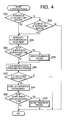
- the server restoration process is executed under control of the CPU 11 of the MFP 1.
- the server restoration process is a process for transmitting the queue data to the server 30 in response to the fact that the CPU 11 judges transmission of a PDF file to the server 30 to be possible.
- the server restoration process may be executed periodically on the MFP 1 at predetermined intervals.
- the CPU 11 may judge that transmission of a PDF file to the server 30 is possible based on the fact that connection of the LAN cable 201 to the MFP 1 is detected or the fact that the MFP 1 receives a notification notifying a restored state from the server 30.
- step S30 the CPU 11 judges whether connection of the LAN cable 201 to the network interface 15 is detected (step S30). If connection of the LAN cable 201 to the network interface 15 is not detected (S30: NO), control proceeds to step S32 where the CPU 11 receives a notification notifying a restored state from the server 30 which is identified by the IP address stored in the destination server IP address memory 142. The notification of the restored state is issued by the server 30 when the server 30 is turned to ON and thereby the server 30 moves to an accessible state via the LAN 200.
- connection of the LAN cable 201 to the MFP 1 is not detected (S30: NO) and the notification of the restored state is not received (S32: NO), the CPU 11 judges that trouble of communication with the server 30 is not resolved. In this case, the server restoration process terminates.
- step S34 the CPU 11 judges whether a PDF file with which an IP address is associated as attribute information is found in the transmission data queue memory 143 (step S36). If a PDF file with which an IP address is associated as attribute information is found (S36: YES), the CPU 11 executes a server transmission process which is described in detail later with reference to Fig. 5 (step S38). If no PDF file with which an IP address is associated as attribute information is found (S36: NO), control proceeds to step S40 - without processing step S38. In the server transmission process, the queue data is transmitted to the server 30.
- the CPU 11 checks whether the portable storage medium 221 is attached to the slot 22 (step S40), and makes a judgment (step S42). If the portable storage medium 221 is not attached to the slot 22 (S42: NO), the server restoration process terminates. If the portable storage medium 221 is attached to the slot 22 (S42: YES), the CPU 11 searches data in the portable storage medium 221 for a PDF file with which an IP address is associated in a form of attribute information (step S44), and makes a judgment (step S46). If a PDF file with which an IP address is associated in a form of attribute information is found (S46: YES), the CPU 11 executes the server transmission process in which queue data is transmitted to the server 30 (step S48). The server transmission process is described later with reference to Fig. 5 .
- the MFP 1 is able to transmit a PDF file stored in the transmission data queue memory 143 or in the portable storage medium 221 immediately after the trouble of transmission of a PDF file is resolved.
- server transmission process (S38, S48) executed on the MFP 1 is described with reference to Fig. 5 .
- queue data is transmitted to the server 30 in response to a fact that the MFP 1 judges that transmission of a PDF file to the server 30 is possible.
- the CPU 11 of the MFP 1 compares an IP address associated with the PDF file with an IP address stored in the destination server IP address memory 142 (step S382), and makes a judgment (step S384). If the IP address associated with the PDF file is equal to the IP address stored in the destination server IP address memory 142 (S384: YES), the CPU 11 judges that the PDF file is the queue data and transmits the PDF file to the server 30 (stepS386).
- the CPU 11 deletes the transmitted queue data from the transmission data queue memory 143 or the portable storage medium 221 (step S388). Then, the server transmission process terminates.
- the server transmission process terminates without processing steps S386 and S388.
- the PDF file is transmitted to the server 30 in response to the fact that the IP address associated with the PDF file is equal to the IP address stored in the destination server IP address memory 142. Therefore, it is possible to discriminate between the queue data to be transmitted to the server and other data. That is, in the MFP 1, the queue data is transmitted to the server 30, while data other than the queue data is preserved in the MFP 1. For example, even if a PDF file to which an IP address which is different from the IP address stored in the destination server IP address memory 142 is stored in the transmission data queue memory 143 or the portable storage medium 221, or even if setting of a server is modified, the MFP 1 is able to prevent such a PDF file from being transmitted to the server 30.
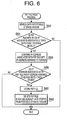
- the PDF file read process is executed when the portable storage medium 221 is attached to the slot 36.
- the CPU 31 of the server 30 searches data in the portable storage medium 221 (step S52). Then, the CPU 31 judges whether a PDF file with which an IP address is associated in a form of attribute information is stored in the portable storage medium 221 (step S54). If the CPU 31 judges that a PDF file with which an IP address is associated in a form of attribute information is not stored in the portable storage medium 221 (S54: NO), the PDF file read process terminates.
- the CPU 31 judges that a PDF file with which an IP address is associated in a form of attribute information is stored in the portable storage medium 221 (S54: YES)
- the CPU 31 compares the IP address associated with the PDF file with the IP address assigned to the server 30 (step S56). Then, the CPU 31 judges whether the IP address associated with the PDF file and the IP address assigned to the server 30 match each other (step S58).
- the CPU 31 judges that the PDF file stored in the portable storage medium 221 is not the queue data addressed to the server 30 and terminates the PDF file read process without reading data from the portable storage medium 221.
- the CPU 31 judges that the PDF file stored in the portable storage medium 221 is the queue data addressed to the server 30. In this case, the CPU 31 reads the PDF file (i.e., the queue data) from the portable storage medium 221, and stores the PDF file in the HDD 34 (step S60).
- the CPU 31 deletes the PDF file, which the CPU 31 has already read, from the portable storage medium 221 (step S62). Then, the PDF file read process terminates.
- the server 30 it is possible to cause the server 30 to extract the queue data addressed to the server 30 by simply detaching the portable storage medium 221 from the MFP 1 and then attaching the portable storage medium 221 to the slot 36 of the server 30. It is understood that such a configuration is very convenient in the situation where the communication between the MFP 1 and the server 30 is in trouble and particularly in the situation where such an abnormal state of the communication between the MFP 1 and the server 30 continues for a relatively long time.
- the above mentioned functions that the MFP 1 has may be implemented in various types of devices having a facsimile function.
- the queue data is searched for when connection of the LAN cable 201 to the network interface 15 is detected (S30: YES) or when the notification notifying the restored state of the server is received (S32: YES).
- the MFP 1 may periodically search for the queue data. In this case, the MFP 1 may transmit the queue data to the server when the queue data is found, and may delete the queue data from the transmission data queue memory 143 or the portable storage medium 221 when transmission of the queue data to the server is successfully finished.
- the destination of the received facsimile data is the server 30.
- the MFP 1 may be configured to transmit the received facsimile data to a device, such as a printer, different from the server 30.
- Fig. 7 illustrates a system configuration formed as a variation of the above mentioned embodiment.
- the MFP 1 is connected to printers 51, 52 and 53 via the LAN 200.
- the MFP 1 analyzes the received facsimile data to determine which of the printers 51-53 the MFP 1 should transmit the received data to based on the result of the analysis.
- Such a configuration enables the MFP 1 to print the received facsimile data on one of the printers nearest to a recipient of the received facsimile data.
- the MFP 1 is configured to store IP addresses of the printers 51-53.
- the MFP 1 analyzes the facsimile data received through the exchange 29, and transmits the received facsimile data to the printer selected in accordance with the result of the analysis.
- the MFP 1 converts the received facsimile data into print data which a printer is able to handle, and then transmits the converted print data to the selected printer.
- the MFP 1 judges that trouble would arise in transmission of the print data to the selected printer, the MFP 1 associates an IP address of a destination printer with the print data, and then stores the print data in the MFP 1 or in the portable storage medium 221 attached to the MFP 1.
- Such a configuration enables the MFP 1 to transmit the print data to a target printer for printing when the communication with the target printer is restored.
- the facsimile data is converted into a PDF file.
- a file format to which the facsimile data is converted is not limited to a PDF file format.
- an IP address is associated with a PDF file in a form of attribute information.
- an IP address may be associated with image data by adding the IP address to a filename of the image data.
- Such a configuration makes it possible to visibly recognize the IP address associated with the image data.
- print setting is configured not to print a filename of image data, the filename is prevented from being printed together with the image data.
- an IP address is associated with a PDF file.
- information for identifying a destination device is not limited to an IP address.
- a MAC address of a destination device may be used in place of an IP address.
- the MFP 1 and the server 30 are connected to each other via the LAN 200.
- the MFP 1 and the server 30 may be connected to each other via various types of networks (e.g., the Internet).
- the process of step S16 in the facsimile reception process may be configured to add information indicating prohibition of user access to the crated queue data as access limit information so that the queue data is treated as a read only file or a non-readable file.
- the process of step S386 of the server transmission process may be configured such that the access limit information added to the queue data is changed to information indicating permission of user access or the server may be configured to release the access limit of the received queue data. Consequently, it becomes possible to maintain the security of the queue data until the queue data is transmitted successfully to the server 30. For example, even if a portable storage medium in which the queue data is stored is removed from the MFP 1 and is attached to another device, the security of the queue data can be maintained.
Landscapes
- Engineering & Computer Science (AREA)
- Multimedia (AREA)
- Signal Processing (AREA)
- Facsimiles In General (AREA)
- Facsimile Transmission Control (AREA)
Abstract
Description
- Aspects of the present invention relate to a communication device having a function of managing image data to be transmitted to a destination device:
- Conventionally, facsimile devices having a function of transmitting received facsimile data to a facsimile server have been used. An example of such a facsimile device is disclosed in Japanese Patent Provisional Publication No.
HEI 11-275293 - Such a facsimile device is configured such that if the facsimile device is in a state of not being able to properly communicate with a facsimile server, the facsimile device operates in a server non-connection mode where the facsimile device prints the received facsimile data or stores the received facsimile data in the facsimile device (i.e., the facsimile device executes a facsimile receiving process in the server non-connection mode).
- However, the above mentioned conventional facsimile device has a drawback that the facsimile device is not able to distinguish facsimile data which is originally stored in the facsimile device and which the facsimile device is not required to transmit to the facsimile server from facsimile data which the facsimile device was not able to transmit to the facsimile server due to communication trouble. The facsimile device may be configured to distinguish facsimile data which is to be transmitted to the facsimile server from facsimile data which the facsimile server is not required to transmit to the facsimile server. Because of the above mentioned drawback, the facsimile device is not able to properly distinguish the facsimile data which is to be transmitted to the facsimile server from the facsimile data which the facsimile device is not required to transmit to the facsimile server. Such a situation may occur if the facsimile data which is to be transmitted to the facsimile server is not successfully transmitted to the facsimile server due to communication trouble and therefore remains in the facsimile device.
- Aspects of the present invention are advantageous in that a communication device capable of properly distinguish image data which is stored in the communication device due to communication trouble from other types of image data stored in the communication device is provided.
- According to an aspect of the invention, there is provided a communication device comprising: a conversion unit configured to convert first data to second data having a predetermined format; a communication interface configured to interface the communication device with a network; a transmission unit configured to transmit the second data to an external device through the communication interface; a judgment unit configured to judge whether trouble would arise with respect to transmission of the second data to be executed by the transmission unit; and a storage control unit configured to store the second data while associating identification information of the external device with the second data in response to a fact that the judgment unit judges that the trouble would arise with respect to the transmission of the second data.
- Such a configuration makes it possible to distinguish the second data, which is stored in the communication device due to the trouble in transmission of the second data, from other data files stored in the communication device and to properly identify a destination of the second data in accordance with the associated identification information. Therefore, it is possible to properly handle the second data after the trouble arises. For example, when the trouble is recovered or by transmitting the second data to the external device via another communication route, the second data can be properly transmitted.
- In at least one aspect, the conversion unit is configured to convert the first data to the second data such that attribute information can be added to the second data. The storage control unit is configured to associate the identification information with the second data by adding the identification information of the external device to the second data in a form of the attribute information.
- Since the identification information is added to the second data in a form of attribute information, the identification information can be prevented from being printed or from being displayed, for example, when the second information is printed or when an icon or a filename of the second data is selected for display.
- In at least one aspect, the second data includes a header part and a body part. In this case, the first data is contained in the body part of the second data, and the attribute information is contained in the header part of the second data.
- In at least one aspect, the storage control unit is configured to associate the identification information with the second data by adding the identification information of the external device to a filename of the second data.
- Such a configuration enables a user to easily recognize visibly the identification information.
- In at least one aspect, the communication device further comprises: a data memory in which the second data is stored; an attachment unit to which a portable storage medium is detachably attachable; a portable medium control unit configured to store the second data in the portable storage medium attached to the attachment unit; and a deletion unit configured to delete the second data, which the portable medium control unit has stored in the portable storage medium, from the data memory.
- Such a configuration prevents the data memory from being eaten up in the situation where such trouble in transmission of the second data continues for a relatively long time. It is also possible to keep security because the second data is stored in only one of the data memory or the portable storage medium.
- In at least one aspect, the communication device further comprises: an identification storage unit configured to store the identification information of the external device; a queue data judgment unit configured to judge whether the second data with which the identification information is associated is stored in the data memory; and a comparing unit configured to compare the identification information associated with the second data with the identification information stored in the identification storage unit in response to a fact that the second data with which the identification information is associated is stored in the data memory. In this case, the transmission unit is configured to transmit the second data to the external device in response to a fact that the comparing unit judges that the identification information associated with the second data is equal to the identification information stored in the identification storage unit.
- Such a configuration makes it possible to prevent the second data, which was not transmitted due to communication trouble, from being transmitted to an external device which is not targeted for transmission of the second data.
- In at least one aspect, the communication device further comprises: an identification storage unit configured to store the identification information of the external device; a queue data judgment unit configured to judge whether the second data with which the identification information is associated is stored in the portable storage medium; and a comparing unit configured to compare the identification information associated with the second data with the identification information stored in the identification storage unit in response to a fact that the second data with which the identification information is associated is stored in the portable storage medium. In this case, the transmission unit is configured to transmit the second data to the external device in response to a fact that the comparing unit judges that the identification information associated with the second data is equal to the identification information stored in the identification storage unit.
- Such a configuration makes it possible to prevent the second data which was not transmitted due to communication trouble, from being transmitted to an external device which is not targeted for transmission of the second data.
- In at least one aspect, the communication device further comprises a communication judgment unit configured to judge whether communication with the external device is possible. In this case, the queue data judgment unit is configured to judge whether the second data with which the identification information is associated is stored in response to a fact that the communication judgment unit judges that the communication with the external device is possible.
- Even if trouble arises in communication with the external device, it is possible to reliably transmit the second data, which has been stored until the trouble is resolved, to the external device.
- In at least one aspect, the communication device further comprises an access information control unit configured to assign information for inhibiting user access to the second data stored in one of the data memory and the portable storage medium in a form of access limit information. In this case, the access information control unit changes the access limit information assigned to the second data to information for permitting user access when the transmission unit transmits the second data to the external device.
- Such a configuration makes it possible to maintain security of the second data until the second data is transmitted to the external device.
- In at least one aspect, the communication device further comprising a facsimile communication unit configured to transmit and receive facsimile data. In this case, the first data is data which the communication device receives from an external facsimile device through the facsimile communication unit.
- In at least one aspect, the first data is received data which the communication device receives externally from a device.
- In at least one aspect, the second data is image data.
- According to another aspect of the invention, there is provided a method to be implemented on a communication device. The method comprises the steps of: converting first data to second data having a predetermined format; judging whether trouble would arise with respect to transmission of the second data; storing the second data while associating identification information of the external device with the second data if it is judged that the trouble would arise with respect to the transmission of the second data; and transmitting the second data to an external device if it is judged that the trouble would not arise with respect to the transmission of the second data.
- Such a configuration makes it possible to distinguish the second data, which is stored in the communication device due to the trouble in transmission of the second data, from other data files stored in the communication device and to properly identify a destination of the second data in accordance with the associated identification information. Therefore, it is possible to properly handle the second data after the trouble arises. For example, when the trouble is recovered or by transmitting the second data to the external device via another communication route, the second data can be properly transmitted.
- In at least one aspect, the method may further comprise the steps of: judging whether the second data with which the identification information is associated is stored in a data memory of the communication device; and comparing the identification information associated with the second data with the identification information stored in an identification storage unit of the communication device if it is judged that the second data with which the identification information is associated is stored in the data memory. In the step of transmitting, the second data is transmitted to the external device if it is judged that the identification information associated with the second data is equal to the identification information stored in the identification storage unit.
- Such a configuration makes it possible to prevent the second data, which was not transmitted due to communication trouble, from being transmitted to an external device which is not targeted for transmission of the second data.
- In at least one aspect, the method further comprises the steps of: judging whether the second data with which the identification information is associated is stored in a portable storage medium attached to the communication device; and comparing the identification information associated with the second data with the identification information stored in an identification storage unit of the communication device if it is judged that the second data with which the identification information is associated is stored in the portable storage medium. In the step of transmitting, the second data is transmitted to the external device if it is judged that the identification information associated with the second data is equal to the identification information stored in the identification storage unit.
- Such a configuration makes it possible to prevent the second data which was not transmitted due to communication trouble, from being transmitted to an external device which is not targeted for transmission of the second data.
- In at least one aspect, the method further comprises the step of: judging whether communication with the external device is possible. The step of judging whether the second data with which the identification information is associated is stored is executed if it is judged that the communication with the external device is possible.
- Even if trouble arises in communication with the external device, it is possible to reliably transmit the second data, which has been stored until the trouble is resolved, to the external device.
- According to an other aspect of the invention, there is provided a computer readable medium having computer readable instructions stored thereon, which, when executed by a computer functioning as a communication device, are configured to execute the steps of the above mentioned methods.
- It is noted that various connections are set forth between elements in the following description. It is noted that these connections in general and unless specified otherwise, may be direct or indirect and that this specification is not intended to be limiting in this respect. Aspects of the invention may be implemented in computer software as programs storable on computer-readable media including but not limited to RAMs, ROMs, flash memory, EEPROMs, CD-media, DVD-media, temporary storage, hard disk drives, floppy drives, permanent storage, and the like.
-
-
Fig. 1 is a perspective view illustrating an outer appearance of an MFP which is an example of a communication device according to an embodiment. -
Fig. 2 illustrates a system including the MFP and a server, and block diagrams of the server and the MFP which are communicatably connected to each other via a LAN. -
Fig. 3 is a flowchart illustrating a facsimile reception process executed by the MFP. -
Fig. 4 is a flowchart illustrating a server restoration process executed by the MFP. -
Fig. 5 is a flowchart illustrating a server transmission process executed by the MFP. -
Fig. 6 is a flowchart illustrating a PDF file read process executed by the server. -
Fig. 7 illustrates a system configuration formed as a variation of the system shown inFig. 2 . - Hereafter, an embodiment according to the invention will be described with reference to the accompanying drawings.
-
Fig. 1 is a perspective view illustrating an outer appearance of an MFP (Multifunction Peripheral) 1 which is an example of a communication device according to an embodiment. TheMFP 1 has a facsimile function, a print function, a scanner function and a copying function. TheMFP 1 is connected to aserver 30 via a LAN 200 (seeFig. 2 ). - On the front of the
MFP 1, anopening 2 is formed to divide the internal space of theMFP 1 into an upper side part and a lower side part. On the upper side in theopening 2, a scanner 16 (seeFig. 2 ) serving to read an original for the scanner function, the copying function and the facsimile transmission operation is provided. - The
MFP 1 has anoriginal cover 5 which is openable and closable with respect to a main body of theMFP 1. On the front side of theoriginal cover 5,keys 3 and anLCD 4 are provided. Thekeys 3 are used to input numerical data, text data and commands to theMFP 1. On theLCD 4, various types of information including a menu, operation procedures and a status can be displayed. On the front surface of theMFP 1, aslot 22 is formed at a position under thekeys 3. To theslot 22, aportable storage medium 221 is detachable attachable. - The
MFP 1 is configured to be able to output received facsimile data in two ways. The first output operation is to print the received facsimile data on a recording sheet, and the second output operation is to convert the received facsimile data into a PDF file and to transmit the converted PDF file to theserver 30. The second output operation enables theserver 30 to treat facsimile data as a PDF file. Therefore, it becomes possible to easily brows, store and manage the facsimile data on theserver 30. , -
Fig. 2 illustrates a system including theMFP 1 and theserver 30.Fig. 2 also illustrates block diagrams of theserver 30 and theMFP 1 which are communicatably connected to each other via theLAN 200 in the system. TheMFP 1 is connected to theLAN 200 via aLAN cable 201. As shown inFig. 2 , theMFP 1 has aCPU 11, aROM 12, aRAM 13, aflash memory 14, a network interface (I/F) 15, thescanner 16, a NCU (Network Control Unit) 19, amodem 20, abuffer 21, theslot 22, anencoder 23, adecoder 24, aprint unit 25, and anamplifier 27. These internal components are connected to each other via abus 26. Aspeaker 28 is connected to theamplifier 27. - The
CPU 11 performs the facsimile function by controlling the internal components in accordance with various types of signals transmitted or received via theNCU 19. In theROM 12, various programs including a control program for controlling the facsimile function are stored. Programs for execution of processes shown inFigs. 3 to 6 which will be described later are also stored in theROM 12. - The
RAM 13 is a work memory for theCPU 11 used to temporality store various types of data for execution of processes. More specifically, theRAM 13 includes a receiveddata memory 131 and aPDF file memory 132. The receiveddata memory 131 stores facsimile data which theMFP 1 receives from an external device. As described above, in theMFP 1, the received facsimile data stored in the receiveddata memory 131 is printed on a recording sheet by theprint unit 25 or is converted to a PDF file and thereafter is outputted. ThePDF file memory 132 stores the PDF file formed by converting the received facsimile data. - The
flash memory 14 is a nonvolatile memory. Theflash memory 14 includes aPDF output flag 141, a destination serverIP address memory 142, a transmissiondata queue memory 143, and an internal memory savemode flag 144. - The
PDF output flag 141 indicates which of the first output operation and the second output operation theMFP 1 uses to treat received facsimile data. ThePDF output flag 141 may be set to ON or OFF in accordance with a user operation. In the case where thePDF output flag 141 is ON, theMFP 1 operates to convert the received facsimile data into a PDF file and to transmit the PDF file to theserver 30. On the other hand, in the case where the PDF output flag is OFF, theMFP 1 operates to print the received facsimile data on a recording sheet through theprint unit 25. - The destination server
IP address memory 142 stores an IP (Internet Protocol) address of a destination server (i.e., theserver 30 in this embodiment) to which the PDF file is to be-transmitted. Although inFig. 2 only oneserver 30 is connected to theMFP 1 and therefore only the IP address of theserver 30 is stored in the destination serverIP address memory 142, more than one server (having the same function as that of the server 30) may be connected to theMFP 1. In this case, IP addresses of the servers connected to theMFP 1 may be stored in the destination serverIP address memory 142. - The
MFP 1 has a function of judging whether trouble arises in regard to transmission of a PDF file to theserver 30. Factors of trouble in transmission of a PDF file include the fact that theserver 30 is in a power off state, a break in theLAN cable 201 and the fact that theLAN cable 201 is disconnected from a connector of theMFP 1 or network equipment. If such trouble in transmission of a PDF file arises, theMFP 1 is not able to properly transmit facsimile data to theserver 30. As described in detail below, if theMFP 1 judges that trouble arises in transmission of a PDF file to theserver 30, theMFP 1 suspends transmission of the facsimile data to theserver 30 and stores the facsimile data in the transmissiondata queue memory 143 or in theportable storage medium 221. - The internal memory save
mode flag 144 indicates which of the transmissiondata queue memory 143 and theportable storage medium 221 is used preferentially to store the facsimile data as queue data. The internal memory savemode flag 144 may be set to ON or OFF in accordance with a user operation. In the case where the internal memory savemode flag 144 is ON, theMFP 1 uses preferentially theportable storage medium 221 to store the facsimile data. Such a configuration prevents theflash memory 14 from being eaten up by continuation of the state of the trouble in transmission for a relatively long time. On the other hand, in the case whether the internal memory savemode flag 144 is OFF, theMFP 1 uses preferentially the transmissiondata queue memory 143. - The
network interface 15 interfaces theMFP 1 with theLAN 200 and theserver 30 so that data communication between theMFP 1 and theserver 30 can be achieved. Thescanner 16 obtains image data from an original placed on an original base (not shown) of theMFP 1. - The
modem 20 has a function of transmitting and receiving data by modulating and demodulating the data, and transmitting and receiving various communication protocol signals. Thebuffer 21 temporarily stores various data including facsimile data to be transmitted to or received from a destination facsimile device. - To the
slot 22, various portable storage mediums, such as, a memory card and theportable storage medium 221, are detachably connectable. TheMFP 1 has a function of writing data in and reading data from theportable storage medium 221 attached to theslot 22. Theencoder 23 has a function of encoding data into facsimile data. Thedecoder 24 reads received data stored in thebuffer 21 and decodes the received data. The facsimile data decoded by thedecoder 24 is stored in the receiveddata memory 131. - The
print unit 25 is, for example, an inkjet printer, which forms an image corresponding to facsimile data. More specifically, theprint unit 25 includes a sheet carrying motor, a carriage motor and a print head (not shown). The carriage motor is a stepping motor which drives a carriage, on which the print head is mounted, to produce a reciprocation motion of the carriage in a direction perpendicular to a sheet carrying direction under control of theCPU 11. The print head is an inkjet head which includes a plurality of nozzles and an actuator. In the print head, the actuator drives the nozzles to eject ink form the nozzles under control of theCPU 11. It is understood that various types of printing devices, such as, a laser printer or a thermal printer may be employed as theprinter 25. Theamplifier 27 amplifies a sound signal to output sound from thespeaker 28. - The
MFP 1 is connected to a telephone network via theNCU 19. The telephone network is connected to anexchange 29 operating for theMFP 1, and theexchange 29 is connected, via the telephone network, to an exchange operating for a destination device of the party on the other end of line. - The
server 30 includes aCPU 31, aROM 32, aRAM 33, an HDD (Hard Disk Drive) 34, aslot 36 and anetwork interface 37. These internal components are connected to each other via abus 38. TheCPU 31 controls these internal components in accordance with fixed values and programs stored in theROM 32 or various commands transmitted and received via thenetwork interface 37 to achieve functions that theserver 30 has. - In the
ROM 32, various programs to be executed on theserver 30 are stored. TheRAM 33 stores temporarily various types of data for theCPU 31. In theHDD 34, various types of data including application software are stored. - To the
slot 36, various types of portable storage mediums, such as, theportable storage medium 221, are detachably connectable. Theserver 30 is able to write data to or read data from theportable storage medium 221 attached to theslot 36. Thenetwork interface 36 interfaces theserver 30 with theLAN 200 so that theserver 30 is communicatably connected to theMFP 1. - Hereafter, operations executed on the
MFP 1 are described.Fig. 3 is a flowchart illustrating a facsimile reception process executed under control of theCPU 11 of theMFP 1. The facsimile reception process is executed on theMFP 1 when theMFP 1 receives facsimile data and thePDF output flag 141 is ON. When the facsimile reception process is started, theCPU 11 stores the received facsimile data in the received data memory 131 (step S2). Next, theCPU 11 checks whether a connection with theserver 30 can be established by transmitting a command to theserver 30 which is identified by an IP address stored in the destination server IP address memory 142 (step S4). - Based on a check result in step S4, the
CPU 11 judges whether trouble would arise for transmission of a PDF file (step S6). If theCPU 11 judges that trouble would not arise for transmission of a PDF file (S6: NO), control proceeds to step S8 where theCPU 11 converts the received facsimile data into a PDF file. Then, theCPU 11 transmits the converted PDF file to theserver 30 which is specified by an IP address stored in the destination server IP address memory 142 (step S10). Then, the facsimile reception process terminates. - If the
CPU 11 judges that trouble would arise for transmission of a PDF file (S6: YES), theCPU 11 converts the received facsimile data into a PDF file and stores the PDF file in the PDF file memory 132 (step S12). Then, theCPU 11 obtains an IP address of theserver 30 to which the PDF file is to be transmitted, from the destination server IP address memory 142 (step S 14). Then, theCPU 11 creates queue data by associating the obtained IP address to the PDF file in a form of attribute information, and stores the queue data in the transmission data queue memory 143 (step S 16). In the following, a PDF file to which an IP address is added in a form of attribute information is referred to as queue data. The attribute information includes a title, a theme, creator, a category, a keyword, comments, a source, and a version of image data, which are added to the image data in accordance with a standard of the image data. That is, the attribute information is distinguished from body data of the image data. The image data to which attribute information can be added is, for example, a PDF file, a JPEG file, a PS file and a tiff file. In an example, substantial image data is contained in a body part of an image data file, and the attribute information is contained in a header part of the image data file. - Next, in
step S 18, theCPU 11 checks whether theportable storage medium 221 is attached to the MFP 1 (step S18) and makes a judgment (step S20). If theportable storage medium 221 is not attached to the MFP 1 (S20: NO), theCPU 11 displays a message requesting a user to attach theportable storage medium 221 to theMFP 1 on the LCD 4 (step S28). Then, the facsimile reception process terminates. In this case, the PDF file which theMFP 1 was not able to transmit to theserver 30 is stored in the transmissiondata queue memory 143 as the queue data to which the IP address of theserver 30 is added. - If the
CPU 11 judges that theportable storage medium 221 is attached to the MFP 1 (S20: YES), control proceeds to step S22 where theCPU 11 judges whether the internal memory savemode flag 144 is ON. If the internal memory savemode flag 144 is ON (i.e., if the user sets a mode where the transmissiondata queue memory 143 is used preferentially with respect to the portable storage medium 221) (522: NO), the facsimile reception process terminates. In this case, the PDF file which theMFP 1 was not able to transmit to theserver 30 is stored in the transmissiondata queue memory 143 as the queue data to which the IP address of theserver 30 is added. - If the
CPU 11 judges that theportable storage medium 221 is attached to the MFP 1 (S20: YES) and the internal memory saveflag 144 is ON (i.e., if the user has set in advance a mode where theportable storage medium 221 is used preferentially for storing the queue data) (S22: YES), theCPU 11 stores, in theportable storage medium 221, the queue data which is now stored in the transmission data queue memory 143 (step S24). Then, theCPU 11 deletes the queue data from the transmission data queue memory 143 (step S26). Then, the facsimile reception process terminates. In this case, the PDF file which theMFP 1 was not able to transmit to theserver 30 is stored in theportable storage medium 221 as the queue data to which the IP address of theserver 30 is added. - The queue data which the
MFP 1 was not able to transmit due to communication trouble and which is stored by theMFP 1 is associated with the IP address of theserver 30. Therefore, it is possible to distinguish the queue data from other data files stored in theMFP 1 and to properly identify a destination of the queue data in accordance with the added IP address. - Since the IP address of the
server 30 is added to the PDF file as the attribute information of the PDF file, a body part of the PDF file containing a substantial image of the PDF file is not modified. Such a configuration makes it possible to prevent an IP address from being printed on a recording sheet when the PDF file is printed and to prevent an IP address from being displayed on a monitor when an icon of the PDF file is selected for display. - Since the queue data which was copied to the
portable storage medium 221 is deleted from the transmissiondata queue memory 143, it is possible to prevent theflash memory 14 from becoming full of queue data. Since particular queue data is stored only one of theportable storage medium 221 and the transmissiondata queue memory 143, security concerning management of queue data can also be secured. - Hereafter, a server restoration process is described with reference to
Fig. 4 . The server restoration process is executed under control of theCPU 11 of theMFP 1. The server restoration process is a process for transmitting the queue data to theserver 30 in response to the fact that theCPU 11 judges transmission of a PDF file to theserver 30 to be possible. The server restoration process may be executed periodically on theMFP 1 at predetermined intervals. TheCPU 11 may judge that transmission of a PDF file to theserver 30 is possible based on the fact that connection of theLAN cable 201 to theMFP 1 is detected or the fact that theMFP 1 receives a notification notifying a restored state from theserver 30. - When the server restoration process is started, the
CPU 11 judges whether connection of theLAN cable 201 to thenetwork interface 15 is detected (step S30). If connection of theLAN cable 201 to thenetwork interface 15 is not detected (S30: NO), control proceeds to step S32 where theCPU 11 receives a notification notifying a restored state from theserver 30 which is identified by the IP address stored in the destination serverIP address memory 142. The notification of the restored state is issued by theserver 30 when theserver 30 is turned to ON and thereby theserver 30 moves to an accessible state via theLAN 200. - If connection of the
LAN cable 201 to theMFP 1 is not detected (S30: NO) and the notification of the restored state is not received (S32: NO), theCPU 11 judges that trouble of communication with theserver 30 is not resolved. In this case, the server restoration process terminates. - If the connection of the
LAN cable 201 to theMFP 1 detected (S30: YES) or the notification of the restored state is received from the server 30 (S32: YES), theCPU 11 judges that transmission of a PDF file to theserver 30 is possible and searches data in the transmission data queue memory 143 (step S34). Next, theCPU 11 judges whether a PDF file with which an IP address is associated as attribute information is found in the transmission data queue memory 143 (step S36). If a PDF file with which an IP address is associated as attribute information is found (S36: YES), theCPU 11 executes a server transmission process which is described in detail later with reference toFig. 5 (step S38). If no PDF file with which an IP address is associated as attribute information is found (S36: NO), control proceeds to step S40 - without processing step S38. In the server transmission process, the queue data is transmitted to theserver 30. - Next, the
CPU 11 checks whether theportable storage medium 221 is attached to the slot 22 (step S40), and makes a judgment (step S42). If theportable storage medium 221 is not attached to the slot 22 (S42: NO), the server restoration process terminates. If theportable storage medium 221 is attached to the slot 22 (S42: YES), theCPU 11 searches data in theportable storage medium 221 for a PDF file with which an IP address is associated in a form of attribute information (step S44), and makes a judgment (step S46). If a PDF file with which an IP address is associated in a form of attribute information is found (S46: YES), theCPU 11 executes the server transmission process in which queue data is transmitted to the server 30 (step S48). The server transmission process is described later with reference toFig. 5 . - If a PDF file with which an IP address is associated in a form of attribute information is not found (S46: NO), the server restoration process terminates.
- According to the above mentioned server restoration process, even if trouble arises with respect to transmission of a PDF file from the
MFP 1 to theserver 30 due to trouble of theLAN cable 201 or the fact that theserver 30 is in the power off state, theMFP 1 is able to transmit a PDF file stored in the transmissiondata queue memory 143 or in theportable storage medium 221 immediately after the trouble of transmission of a PDF file is resolved. - Hereafter, the server transmission process (S38, S48) executed on the
MFP 1 is described with reference toFig. 5 . In the server transmission process, queue data is transmitted to theserver 30 in response to a fact that theMFP 1 judges that transmission of a PDF file to theserver 30 is possible. - First, the
CPU 11 of theMFP 1 compares an IP address associated with the PDF file with an IP address stored in the destination server IP address memory 142 (step S382), and makes a judgment (step S384). If the IP address associated with the PDF file is equal to the IP address stored in the destination server IP address memory 142 (S384: YES), theCPU 11 judges that the PDF file is the queue data and transmits the PDF file to the server 30 (stepS386). - Then, the
CPU 11 deletes the transmitted queue data from the transmissiondata queue memory 143 or the portable storage medium 221 (step S388). Then, the server transmission process terminates. By thus deleting the queue data immediately after transmitting the queue data to theserver 30, it becomes possible to secure space in the transmissiondata queue memory 143 or theportable storage medium 221 and thereby to effectively use the transmissiondata queue memory 143 and theportable storage medium 221. - If the IP address associated with the PDF file is not equal to the IP address stored in the destination server IP address memory 142 (S384: NO), the server transmission process terminates without processing steps S386 and S388.
- According to the server transmission process, the PDF file is transmitted to the
server 30 in response to the fact that the IP address associated with the PDF file is equal to the IP address stored in the destination serverIP address memory 142. Therefore, it is possible to discriminate between the queue data to be transmitted to the server and other data. That is, in theMFP 1, the queue data is transmitted to theserver 30, while data other than the queue data is preserved in theMFP 1. For example, even if a PDF file to which an IP address which is different from the IP address stored in the destination serverIP address memory 142 is stored in the transmissiondata queue memory 143 or theportable storage medium 221, or even if setting of a server is modified, theMFP 1 is able to prevent such a PDF file from being transmitted to theserver 30. - Hereafter, a PDF file read process executed on the
server 30 is described with reference toFig. 6 . The PDF file read process is executed when theportable storage medium 221 is attached to theslot 36. - First, the
CPU 31 of theserver 30 searches data in the portable storage medium 221 (step S52). Then, theCPU 31 judges whether a PDF file with which an IP address is associated in a form of attribute information is stored in the portable storage medium 221 (step S54). If theCPU 31 judges that a PDF file with which an IP address is associated in a form of attribute information is not stored in the portable storage medium 221 (S54: NO), the PDF file read process terminates. - On the other hand, if the
CPU 31 judges that a PDF file with which an IP address is associated in a form of attribute information is stored in the portable storage medium 221 (S54: YES), theCPU 31 compares the IP address associated with the PDF file with the IP address assigned to the server 30 (step S56). Then, theCPU 31 judges whether the IP address associated with the PDF file and the IP address assigned to theserver 30 match each other (step S58). - If the IP address associated with the PDF file and the IP address assigned to the
server 30 do not match (S58: NO), theCPU 31 judges that the PDF file stored in theportable storage medium 221 is not the queue data addressed to theserver 30 and terminates the PDF file read process without reading data from theportable storage medium 221. - If the IP address associated with the PDF file and the IP address assigned to the
server 30 match each other (S58: YES), theCPU 31 judges that the PDF file stored in theportable storage medium 221 is the queue data addressed to theserver 30. In this case, theCPU 31 reads the PDF file (i.e., the queue data) from theportable storage medium 221, and stores the PDF file in the HDD 34 (step S60). - Then, the
CPU 31 deletes the PDF file, which theCPU 31 has already read, from the portable storage medium 221 (step S62). Then, the PDF file read process terminates. - According to the PDF file read process, it is possible to cause the
server 30 to extract the queue data addressed to theserver 30 by simply detaching theportable storage medium 221 from theMFP 1 and then attaching theportable storage medium 221 to theslot 36 of theserver 30. It is understood that such a configuration is very convenient in the situation where the communication between theMFP 1 and theserver 30 is in trouble and particularly in the situation where such an abnormal state of the communication between theMFP 1 and theserver 30 continues for a relatively long time. - Although the present invention has been described in considerable detail with reference to certain preferred embodiments thereof, other embodiments are possible.
- For example, the above mentioned functions that the
MFP 1 has may be implemented in various types of devices having a facsimile function. - In the above mentioned server restoration process (
Fig. 4 ), the queue data is searched for when connection of theLAN cable 201 to thenetwork interface 15 is detected (S30: YES) or when the notification notifying the restored state of the server is received (S32: YES). However, theMFP 1 may periodically search for the queue data. In this case, theMFP 1 may transmit the queue data to the server when the queue data is found, and may delete the queue data from the transmissiondata queue memory 143 or theportable storage medium 221 when transmission of the queue data to the server is successfully finished. - In the above mentioned embodiment, the destination of the received facsimile data is the
server 30. However, theMFP 1 may be configured to transmit the received facsimile data to a device, such as a printer, different from theserver 30. -
Fig. 7 illustrates a system configuration formed as a variation of the above mentioned embodiment. In the system ofFig. 7 , theMFP 1 is connected toprinters LAN 200. In this system, theMFP 1 analyzes the received facsimile data to determine which of the printers 51-53 theMFP 1 should transmit the received data to based on the result of the analysis. Such a configuration enables theMFP 1 to print the received facsimile data on one of the printers nearest to a recipient of the received facsimile data. - More specifically, in the system shown in
Fig. 7 , theMFP 1 is configured to store IP addresses of the printers 51-53. TheMFP 1 analyzes the facsimile data received through theexchange 29, and transmits the received facsimile data to the printer selected in accordance with the result of the analysis. In this case, theMFP 1 converts the received facsimile data into print data which a printer is able to handle, and then transmits the converted print data to the selected printer. Further, if theMFP 1 judges that trouble would arise in transmission of the print data to the selected printer, theMFP 1 associates an IP address of a destination printer with the print data, and then stores the print data in theMFP 1 or in theportable storage medium 221 attached to theMFP 1. Such a configuration enables theMFP 1 to transmit the print data to a target printer for printing when the communication with the target printer is restored. - In the above mentioned, the facsimile data is converted into a PDF file. However, a file format to which the facsimile data is converted is not limited to a PDF file format.
- In the above mentioned embodiment, an IP address is associated with a PDF file in a form of attribute information. However, an IP address may be associated with image data by adding the IP address to a filename of the image data. Such a configuration makes it possible to visibly recognize the IP address associated with the image data. In this case, if print setting is configured not to print a filename of image data, the filename is prevented from being printed together with the image data.
- In the above mentioned embodiment, an IP address is associated with a PDF file. However, information for identifying a destination device is not limited to an IP address. For example, a MAC address of a destination device may be used in place of an IP address.
- In the above mentioned embodiment, the
MFP 1 and theserver 30 are connected to each other via theLAN 200. However, theMFP 1 and theserver 30 may be connected to each other via various types of networks (e.g., the Internet). - The process of step S16 in the facsimile reception process (
Fig. 3 ) may be configured to add information indicating prohibition of user access to the crated queue data as access limit information so that the queue data is treated as a read only file or a non-readable file. In this case, the process of step S386 of the server transmission process (Fig. 5 ) may be configured such that the access limit information added to the queue data is changed to information indicating permission of user access or the server may be configured to release the access limit of the received queue data. Consequently, it becomes possible to maintain the security of the queue data until the queue data is transmitted successfully to theserver 30. For example, even if a portable storage medium in which the queue data is stored is removed from theMFP 1 and is attached to another device, the security of the queue data can be maintained.
Claims (17)
- A communication device, comprising:a conversion unit configured to convert first data to second data having a predetermined format;a communication interface configured to interface the communication device with a network;a transmission unit configured to transmit the second data to an external device through the communication interface;a judgment unit configured to judge whether trouble would arise with respect to transmission of the second data to be executed by the transmission unit; anda storage control unit configured to store the second data while associating identification information of the external device with the second data in response to a fact that the judgment unit judges that the trouble would arise with respect to the transmission of the second data.
- The communication device according to claim 1,
wherein:the conversion unit is configured to convert the first data to the second data such that attribute information can be added to the second data; andthe storage control unit is configured to associate the identification information with the second data by adding the identification information of the external device to the second data in a form of the attribute information. - The communication device according to claim 2,
wherein:the second data includes a header part and a body part;the first data is contained in the body part of the second data; andthe attribute information is contained in the header part of the second data. - The communication device according to claim 1,
wherein the storage control unit is configured to associate the identification information with the second data by adding the identification information of the external device to a filename of the second data. - The communication device according to any preceding claim,
further comprising:a data memory in which the second data is stored;an attachment unit to which a portable storage medium is detachably attachable;a portable medium control unit configured to store the second data in the portable storage medium attached to the attachment unit; anda deletion unit configured to delete the second data, which the portable medium control unit has stored in the portable storage medium, from the data memory. - The communication device according to claim 5,
further comprising:an identification storage unit configured to store the identification information of the external device;a queue data judgment unit configured to judge whether the second data with which the identification information is associated is stored in the data memory; anda comparing unit configured to compare the identification information associated with the second data with the identification information stored in the identification storage unit in response to a fact that the second data with which the identification information is associated is stored in the data memory,wherein the transmission unit is configured to transmit the second data to the external device in response to a fact that the comparing unit judges that the identification information associated with the second data is equal to the identification information stored in the identification storage unit. - The communication device according to claim 5,
further comprising:an identification storage unit configured to store the identification information of the external device;a queue data judgment unit configured to judge whether the second data with which the identification information is associated is stored in the portable storage medium; anda comparing unit configured to compare the identification information associated with the second data with the identification information stored in the identification storage unit in response to a fact that the second data with which the identification information is associated is stored in the portable storage medium,wherein the transmission unit is configured to transmit the second data to the external device in response to a fact that the comparing unit judges that the identification information associated with the second data is equal to the identification information stored in the identification storage unit. - The communication device according to claim 6 or 7,
further comprising:a communication judgment unit configured to judge whether communication with the external device is possible,wherein the queue data judgment unit is configured to judge whether the second data with which the identification information is associated is stored in response to a fact that the communication judgment unit judges that the communication with the external device is possible. - The communication device according to claim 5,
further comprising:an access information control unit configured to assign information for inhibiting user access to the second data stored in one of the data memory and the portable storage medium in a form of access limit information,wherein the access information control unit changes the access limit information assigned to the second data to information for permitting user access when the transmission unit transmits the second data to the external device. - The communication device according to any preceding claim, further comprising a facsimile communication unit configured to transmit and receive facsimile data,
wherein the first data is data which the communication device receives from an external facsimile device through the facsimile communication unit. - The communication device according to any preceding claim, wherein the first data is received data which the communication device receives externally from a device.
- The communication device according to any preceding claim, wherein the second data is image data.
- A method to be implemented on a communication device, comprising the steps of:converting first data to second data having a predetermined format;judging whether trouble would arise with respect to transmission of the second data;storing the second data while associating identification information of the external device with the second data if it is judged that the trouble would arise with respect to the transmission of the second data; andtransmitting the second data to an external device if it is judged that the trouble would not arise with respect to the transmission of the second data.
- The method according to claim 13,
further comprising the steps of:judging whether the second data with which the identification information is associated is stored in a data memory of the communication device; andcomparing the identification information associated with the second data with the identification information stored in an identification storage unit of the communication device if it is judged that the second data with which the identification information is associated is stored in the data memory,wherein, in the step of transmitting, the second data is transmitted to the external device if it is judged that the identification information associated with the second data is equal to the identification information stored in the identification storage unit. - The method according to claim 13,
further comprising the steps of:judging whether the second data with which the identification information is associated is stored in a portable storage medium attached to the communication device; andcomparing the identification information associated with the second data with the identification information stored in an identification storage unit of the communication device if it is judged that the second data with which the identification information is associated is stored in the portable storage medium,wherein, in the step of transmitting, the second data is transmitted to the external device if it is judged that the identification information associated with the second data is equal to the identification information stored in the identification storage unit. - The method according to claim 14 or 15,
further comprising the step of:judging whether communication with the external device is possible,wherein the step of judging whether the second data with which the identification information is associated is stored-is executed if it is judged that the communication with the external device is possible. - A computer readable medium having computer readable instructions stored thereon, which, when executed by a computer functioning as a communication device, are configured to execute the steps of the method according to any of claims 13 to 16.
Applications Claiming Priority (1)
| Application Number | Priority Date | Filing Date | Title |
|---|---|---|---|
| JP2007074743A JP4876998B2 (en) | 2007-03-22 | 2007-03-22 | Communications system |
Publications (1)
| Publication Number | Publication Date |
|---|---|
| EP1973327A1 true EP1973327A1 (en) | 2008-09-24 |
Family
ID=39468793
Family Applications (1)
| Application Number | Title | Priority Date | Filing Date |
|---|---|---|---|
| EP20080005194 Ceased EP1973327A1 (en) | 2007-03-22 | 2008-03-19 | Communication device |
Country Status (3)
| Country | Link |
|---|---|
| US (1) | US8144352B2 (en) |
| EP (1) | EP1973327A1 (en) |
| JP (1) | JP4876998B2 (en) |
Families Citing this family (5)
| Publication number | Priority date | Publication date | Assignee | Title |
|---|---|---|---|---|
| JP5359912B2 (en) * | 2010-02-09 | 2013-12-04 | セイコーエプソン株式会社 | Setting information management system, printer and electronic device control method |
| US20120102484A1 (en) * | 2010-10-20 | 2012-04-26 | Microsoft Corporation | Installing software remotely using a high privilege process |
| US9288361B2 (en) | 2013-06-06 | 2016-03-15 | Open Text S.A. | Systems, methods and computer program products for fax delivery and maintenance |
| JP5974050B2 (en) * | 2014-07-30 | 2016-08-23 | 京セラドキュメントソリューションズ株式会社 | Device management apparatus, device management program, and device management method |
| JP5807713B1 (en) * | 2014-10-24 | 2015-11-10 | 富士ゼロックス株式会社 | Image processing apparatus and image processing program |
Citations (7)
| Publication number | Priority date | Publication date | Assignee | Title |
|---|---|---|---|---|
| JPS5647163A (en) * | 1979-09-26 | 1981-04-28 | Nippon Telegr & Teleph Corp <Ntt> | Facsimile communication system |
| JPH04369965A (en) * | 1991-06-18 | 1992-12-22 | Murata Mach Ltd | Facsimile equipment having memory expantion function |
| JP2002094758A (en) * | 2000-09-18 | 2002-03-29 | Canon Inc | Image communication apparatus, control method for image communication apparatus, and storage medium |
| US6389121B1 (en) * | 1998-02-13 | 2002-05-14 | Ricoh Company, Ltd. | Method and apparatus of performing a memory saving operation in an electronic communications system |
| JP2003179735A (en) * | 2001-12-13 | 2003-06-27 | Ricoh Co Ltd | Communication device |
| US20040184075A1 (en) | 2003-03-20 | 2004-09-23 | Fuji Xerox Co., Ltd. | Image communication apparatus |
| US20060262356A1 (en) * | 2005-05-19 | 2006-11-23 | Konica Minolta Business Technologies, Inc. | Facsimile machine, method of transmitting a facsimile and method of receiving the same |
Family Cites Families (12)
| Publication number | Priority date | Publication date | Assignee | Title |
|---|---|---|---|---|
| JPH10271300A (en) | 1997-03-24 | 1998-10-09 | Ricoh Co Ltd | Image copier |
| JP3253275B2 (en) * | 1998-03-23 | 2002-02-04 | キヤノン株式会社 | Data communication device, data processing method, and storage medium storing program |
| JP4086393B2 (en) * | 1998-12-25 | 2008-05-14 | キヤノン株式会社 | COMMUNICATION SYSTEM, COMMUNICATION DEVICE, AND CONTROL METHOD THEREOF |
| JP3682861B2 (en) * | 2001-06-04 | 2005-08-17 | 村田機械株式会社 | Facsimile server and its program |
| US7069503B2 (en) | 2001-06-04 | 2006-06-27 | Murata Kikai Kabushiki Kaisha | Device and program for structured document generation data structure of structural document |
| JP2003288336A (en) * | 2002-03-28 | 2003-10-10 | Brother Ind Ltd | Specific function substitute system, electronic device, storage medium |
| JP2004356849A (en) * | 2003-05-28 | 2004-12-16 | Kyocera Mita Corp | Facsimile |
| JP2006067045A (en) | 2004-08-25 | 2006-03-09 | Canon Inc | COMMUNICATION DEVICE, COMMUNICATION DEVICE CONTROL METHOD, AND COMMUNICATION DEVICE CONTROL PROGRAM |
| JP2006252001A (en) * | 2005-03-09 | 2006-09-21 | Fuji Xerox Co Ltd | Document processor |
| JP2006287291A (en) * | 2005-03-31 | 2006-10-19 | Kyocera Mita Corp | Image forming apparatus |
| JP4507954B2 (en) * | 2005-04-04 | 2010-07-21 | コニカミノルタビジネステクノロジーズ株式会社 | Facsimile apparatus and facsimile transmission processing method |
| US20060268364A1 (en) * | 2005-05-10 | 2006-11-30 | Oliszewski Michael A | Systems and methods for determining user preferences and/or facsimile device capabilities before call initiation |
-
2007
- 2007-03-22 JP JP2007074743A patent/JP4876998B2/en not_active Expired - Fee Related
-
2008
- 2008-03-19 EP EP20080005194 patent/EP1973327A1/en not_active Ceased
- 2008-03-19 US US12/076,477 patent/US8144352B2/en not_active Expired - Fee Related
Patent Citations (7)
| Publication number | Priority date | Publication date | Assignee | Title |
|---|---|---|---|---|
| JPS5647163A (en) * | 1979-09-26 | 1981-04-28 | Nippon Telegr & Teleph Corp <Ntt> | Facsimile communication system |
| JPH04369965A (en) * | 1991-06-18 | 1992-12-22 | Murata Mach Ltd | Facsimile equipment having memory expantion function |
| US6389121B1 (en) * | 1998-02-13 | 2002-05-14 | Ricoh Company, Ltd. | Method and apparatus of performing a memory saving operation in an electronic communications system |
| JP2002094758A (en) * | 2000-09-18 | 2002-03-29 | Canon Inc | Image communication apparatus, control method for image communication apparatus, and storage medium |
| JP2003179735A (en) * | 2001-12-13 | 2003-06-27 | Ricoh Co Ltd | Communication device |
| US20040184075A1 (en) | 2003-03-20 | 2004-09-23 | Fuji Xerox Co., Ltd. | Image communication apparatus |
| US20060262356A1 (en) * | 2005-05-19 | 2006-11-23 | Konica Minolta Business Technologies, Inc. | Facsimile machine, method of transmitting a facsimile and method of receiving the same |
Non-Patent Citations (2)
| Title |
|---|
| "FAXNOTES - PERSONAL COMMUNICATIONS VIA FACSIMILE", IBM TECHNICAL DISCLOSURE BULLETIN, INTERNATIONAL BUSINESS MACHINES CORP. (THORNWOOD), US, vol. 33, no. 9, 1 February 1991 (1991-02-01), pages 98, XP000109441, ISSN: 0018-8689 * |
| FEY C F: "FACSIMILE (FAX) ANNOUNCER", XEROX DISCLOSURE JOURNAL, XEROX CORPORATION. STAMFORD, CONN, US, vol. 21, no. 6, 1 November 1996 (1996-11-01), pages 383 - 385, XP000687172 * |
Also Published As
| Publication number | Publication date |
|---|---|
| JP2008236518A (en) | 2008-10-02 |
| US20080231895A1 (en) | 2008-09-25 |
| JP4876998B2 (en) | 2012-02-15 |
| US8144352B2 (en) | 2012-03-27 |
Similar Documents
| Publication | Publication Date | Title |
|---|---|---|
| US8144352B2 (en) | Communication device | |
| JP4333053B2 (en) | Image forming apparatus, printing method, program, and recording medium | |
| US8368908B2 (en) | Restriction of print job execution | |
| JP4448022B2 (en) | Information processing apparatus, control method therefor, and program | |
| CN112055127B (en) | Image formation control method, terminal device, and readable storage medium | |
| JP2006172094A (en) | Electronic device control system and server | |
| US9317231B2 (en) | Image forming apparatus, information processing apparatus, control method thereof, and storage medium | |
| US8248646B2 (en) | Data transmission device including image acquiring unit, and method and computer readable medium therefor | |
| US8407300B2 (en) | Recording medium with electronic mail management program recorded, communication terminal, and electronic mail management method | |
| US20060227376A1 (en) | Secure image data system and method | |
| US20040190060A1 (en) | Image processing apparatus | |
| JP2006024199A (en) | Installation method, apparatus, control program, and medium storing the program | |
| US8264718B2 (en) | Image-processing apparatus, image-processing system, and method for transmitting and receiving data suited for transmitting and receiving data among a plurality of image-processing apparatuses | |
| KR100788662B1 (en) | Printing data storage and output system and method using network | |
| US20060294182A1 (en) | Service providing system, and client, server, and program for the same | |
| JP6535994B2 (en) | FAX machine, communication program, and communication system | |
| JP4788293B2 (en) | Network image processing system and program | |
| CN112075069B (en) | Image forming apparatus for printing traceable printout | |
| WO2010070860A1 (en) | Image forming apparatus, control method for image forming apparatus, and storage medium | |
| JP2008046739A (en) | Image forming device, information processor and program | |
| JP3880431B2 (en) | Composite device and control method thereof | |
| US20050128526A1 (en) | Systems and methods for managing remote transmission receive destinations for a multi-connected fax or scanning device | |
| JP4715312B2 (en) | Image forming apparatus, image forming system, file management program, and recording medium recording the program | |
| US20020186419A1 (en) | Internet facsimile apparatus and method of updating setting information of the same | |
| JP2003304367A (en) | Recording control apparatus and control method in the apparatus |
Legal Events
| Date | Code | Title | Description |
|---|---|---|---|
| PUAI | Public reference made under article 153(3) epc to a published international application that has entered the european phase |
Free format text: ORIGINAL CODE: 0009012 |
|
| AK | Designated contracting states |
Kind code of ref document: A1 Designated state(s): AT BE BG CH CY CZ DE DK EE ES FI FR GB GR HR HU IE IS IT LI LT LU LV MC MT NL NO PL PT RO SE SI SK TR |
|
| AX | Request for extension of the european patent |
Extension state: AL BA MK RS |
|
| 17P | Request for examination filed |
Effective date: 20090317 |
|
| AKX | Designation fees paid |
Designated state(s): DE FR GB |
|
| 17Q | First examination report despatched |
Effective date: 20090505 |
|
| STAA | Information on the status of an ep patent application or granted ep patent |
Free format text: STATUS: THE APPLICATION HAS BEEN REFUSED |
|
| 18R | Application refused |
Effective date: 20151014 |