EP1973038A1 - A method for amti-virus based on a safety chip - Google Patents
A method for amti-virus based on a safety chip Download PDFInfo
- Publication number
- EP1973038A1 EP1973038A1 EP06722129A EP06722129A EP1973038A1 EP 1973038 A1 EP1973038 A1 EP 1973038A1 EP 06722129 A EP06722129 A EP 06722129A EP 06722129 A EP06722129 A EP 06722129A EP 1973038 A1 EP1973038 A1 EP 1973038A1
- Authority
- EP
- European Patent Office
- Prior art keywords
- file
- control program
- security chip
- computer key
- system control
- Prior art date
- Legal status (The legal status is an assumption and is not a legal conclusion. Google has not performed a legal analysis and makes no representation as to the accuracy of the status listed.)
- Granted
Links
Images

Classifications
-
- G—PHYSICS
- G06—COMPUTING OR CALCULATING; COUNTING
- G06F—ELECTRIC DIGITAL DATA PROCESSING
- G06F21/00—Security arrangements for protecting computers, components thereof, programs or data against unauthorised activity
- G06F21/50—Monitoring users, programs or devices to maintain the integrity of platforms, e.g. of processors, firmware or operating systems
- G06F21/57—Certifying or maintaining trusted computer platforms, e.g. secure boots or power-downs, version controls, system software checks, secure updates or assessing vulnerabilities
- G06F21/575—Secure boot
-
- G—PHYSICS
- G06—COMPUTING OR CALCULATING; COUNTING
- G06F—ELECTRIC DIGITAL DATA PROCESSING
- G06F21/00—Security arrangements for protecting computers, components thereof, programs or data against unauthorised activity
- G06F21/50—Monitoring users, programs or devices to maintain the integrity of platforms, e.g. of processors, firmware or operating systems
- G06F21/55—Detecting local intrusion or implementing counter-measures
- G06F21/56—Computer malware detection or handling, e.g. anti-virus arrangements
- G06F21/567—Computer malware detection or handling, e.g. anti-virus arrangements using dedicated hardware
Definitions
- the present invention relates to an anti-virus method based on a security chip.
- a computer key file such as a BIOS code file, a MBR code file, a trusted file, etc is made a safe backup and intelligently restored, and a function for monitoring a file is executed when an operating system is run, so as to implement a safe start of the operating system. Therefore, the running of a malicious program is avoided, in order to achieve a purpose for defending known and unknown viruses.
- a virus scanning engine is used to scan and monitor memory and hard disk files; a comparison is made according to a signatures database; and an alarm and a clean-up operations are performed when a virus is found.
- the disadvantage of this method is that only known viruses may be found, and processes before and during which the operating system is started could not be monitored, since this method works after the operating system is started.
- an operating system restoration method In this method, a kernel file of the operating system is made a backup by using HPA of a hard disk. When the kernel file and the backup file are verified not in accordance with each other, a user is prompted to make a restoration or backup.
- the disadvantage of this method is that it doesn't take TPM security chip technique and is lack of security, while there are so many possibilities of HPA being attacked or changed and it is also hard to find backup files has being tampered.
- an anti-virus method based on a security chip is desirable, which could prevent a malicious program from running before and during the operating system is started, so as to implement the purpose for defending known and unknown viruses.
- An object of the present invention is to provide an anti-virus method based on a security chip.
- a security chip By taking the security chip as a trusted root, a computer key file such as a BIOS code file, a MBR code file, a trusted file, etc is made a safe backup and intelligently restored, and a function for monitoring a file is executed when an operating system is run, so as to implement a safe start of the operating system. Therefore, the running of a malicious program is avoided, in order to achieve a purpose for defending known and unknown viruses.
- an anti-virus method based on a security chip comprises steps of: storing, in a memory of the security chip, a hash value obtained by a hashing operation for a computer key file and a system control program; and storing, in a backup storage area, a backup file of the computer key file; verifying the integrity of the system control program by using the hash value of the system control program stored in the memory of the security chip, when power up; if the system control program is integral, executing a control, and verifying the integrity of the computer key file, by the system control program, with the hash value of the computer key file stored in the memory of the security chip; and if all the computer key files are integral, starting an operating system; on the contrary, if any of the computer key files is not integral, restoring the computer key file by using the backup file of the computer key file stored in the backup storage area.
- the computer key file comprises a BIOS code file, a MBR code file, and trusted files.
- the step of verifying the integrity of the computer key file by the system control program using the hash value of the computer key file stored in the memory of the security chip comprises a step of: verifying integrity of the BIOS code file, the MBR code file and the trusted file sequentially, by the system control program, with hash values of the BIOS code file, the MBR code file and the trusted file stored in the memory of the security chip.
- the backup storage area is a hard disk protected area.
- the method further comprises steps of: when operating system is started, verifying the integrity of the trusted file in real-time, by the system control program, using the hash value of the trusted file stored in the memory of the security chip; if the trusted file is integral and a file which is to be run exists in a trusted list, allowing the running of the file which is to be run; otherwise, forbidding the running of the file which is to be run.
- the step of verifying the integrity of the system control program by using the hash value of the system control program stored in the memory of the security chip comprises steps of: obtaining a hash value of current system control program by performing a hashing operation which is the same as said hashing operation for the current system control program; comparing this hash value with the hash value of the system control program stored in the memory of the security chip; and if the two hash values are in accordance with each other, the current system control program is integral.
- the step of verifying the integrity of the computer key file with the hash value of the computer key file stored in the memory of the security chip comprises a step of: obtaining a hash value of a current computer key file by performing a hashing operation which is the same as said hashing operation for the current computer key file; comparing the hash value with the hash value of the computer key file stored in the memory of the security chip; and if the two hash values are in accordance with each other, the current computer key file is integral.
- the hash value stored in the memory of the security chip is obtained by performing the hashing operation twice.
- two hashing functions are identical in the hashing operation which is performed twice.
- two hashing functions are different in the hashing operation which is performed twice.
- the trusted file is a clean operating system core file.
- the memory of the security chip is protected by authentication of the security chip.
- the technical principle of the present invention is in that: by taking a security chip as a trusted root, an integrity check is performed to respective sectors during the start of a system, and a trusted relationship is transferred to establish a trusted computing environment for a whole computer system, thereby to achieve an anti-virus purpose.
- Fig. 1 is an illustrative diagram showing relationships between contents stored in a memory of a security chip and a HPA storage area and a BIOS code file, a MBR code file and a trusted file (a computer key file) in order to implement an anti-virus method based on the security chip.
- a correct BIOS code file and its hash value are pre-stored in a hard disk protect area (HPA area, which is also called a hard disk hidden area), and the HPA could not be accessed by a common user. Additionally, it is well known in the art that the HPA area is used as a data protected area. Then, a hash value obtained by further performing a hashing operation for the original hash value is stored in a memory of a security chip. That is to say, a hash value obtained by performing the hashing operation twice for the BIOS code file is stored in the memory of the security chip as illustrated in Fig. 1 . The memory of the security chip is protected by the security chip, and may be accessed only if an authorization and an authentication from an owner of the security chip are obtained.
- the security chip technique is also well known in the prior art, the description of which is omitted.
- a correct MBR code file and its hash value are pre-stored in the HPA area, and a hash value obtained by further performing a hashing operation for the original hash value is stored in a memory of a security chip.
- Trusted files they are mainly clean operating system core files
- hash value are pre-stored in the HPA area, and hash values obtained by further performing a hashing operation for the original hash values of the trusted file are stored in a memory of a security chip.
- a system control program file and its hash value are also stored in the HPA area, and a hash value obtained by further performing a hashing operation for the original hash value is stored in a memory of a security chip.
- hash values obtained by performing the hashing operation once for the BIOS code file, the MBR code file, the trusted file and the system control program file are stored in the HPA area. Furthermore, the BIOS code file, the MBR code file, the trusted file and the system control program file are also stored in the HPA area, which are used for restoration when they are tampered. Hash values obtained by performing the hashing operation twice for the BIOS code file, the MBR code file, the trusted file and the system control program file are stored in the memory of a security chip, which are used for verifying before and after the computer is started, as described in detail below.
- a MBR code file storage area, a trustable file storage area and a HPA area are generally located in the hard disk, while the BIOS code file is located in a ROM of the computer.
- the hash value obtained by the hashing operation which is performed twice is illustrated only as an example, and the present invention is not limited to this. Any times of the hashing operation are possible.
- the BIOS code file, the MBR code file and the trusted file may be stored in HPA area, which may be stored in any form (such as a hard disk, a ROM, etc) of file backup area.
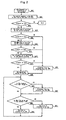
- Fig. 2 is a flowchart illustrating the anti-virus method based on the security chip according to the present invention.
- a control program in the HPA is verified by the security chip, i.e. the security chip performs hashing operation twice (as described above) for the control program (step 203). Then, the hash value obtained by the hashing operation which is performed twice is compared with a hash value stored in the memory of the security chip (step 205). If they are different ("No" in step 205), the start of the computer is terminated and it exits. If they are identical ("Yes" in step 205), a control right is given to the control program, and the BIOS code file, the MBR (Master Boot Record) code file and the trusted file are verified by the control program, i.e.
- the hashing operation is performed for the BIOS code file, the MBR code file and the trusted file twice (step 207, step 211 and step 215). Then, the hash value obtained by the hashing operation which is performed twice is compared with the hash value stored in the security chip (step 209, step 213 and step 217), i.e. the integrity of the BIOS code file, the MBR code file and the trusted file is checked. If they are different ("No" in step 209, step 213 and step 217), the damaged BIOS code file, MBR code file and trusted file are restored (step 227), i.e. the damaged BIOS code file, MBR code file and trusted file are restored by corresponding backup files in the HPA.
- BIOS/MBR/operating system may be restored into a normal state before the operating system is started, so that the influence of viruses may be eliminated directly, the known and unknown viruses may be defended effectively, in order to ensure the operating system to be started safely.
- the system control program monitors state of the trusted file in real-time (step 221). That is to say, the hash value of the trusted file obtained by the hashing operation which is performed twice is compared with the corresponding hash value stored in the memory of the security chip, in order to check the integrity of the trusted file. If the hash value is not in accordance with the hash value stored in the security chip ("No" in step 221), it may be restored or updated automatically according to the selection of the user (step 229).
- the restoration process is similar to the restoration process as described above. On the contrary, if they are in accordance with each other ("Yes" in step 221), it is checked whether the file to be run is in the trusted list (step 223).
- step 223 If the file is not in the trusted list ("No" in step 223), it may not be run according to the selection of the user (step 231). This approach may achieve the purpose for defending the known or unknown viruses without depending on the virus feature library, so that various viruses can not be run in the system. On the contrary, if the program exists in the trusted list ("Yes” in step 223), the program is allowed to be run.
- the security chip is used to store system key information, which is of high security and may guarantee the security of the HPA, and an integrity measurement approach at the hard drive level may be provided. Furthermore, in the present invention, independent of the protected operating system, the integrity measurement is performed to the key sectors on system start-up (such as the hard disk information and the operating system core file) sequentially since BIOS, which may provide a protection in a lower-level and more thoroughly than common anti-virus software.
Landscapes
- Engineering & Computer Science (AREA)
- Computer Security & Cryptography (AREA)
- Computer Hardware Design (AREA)
- General Engineering & Computer Science (AREA)
- Software Systems (AREA)
- Theoretical Computer Science (AREA)
- Physics & Mathematics (AREA)
- General Physics & Mathematics (AREA)
- Health & Medical Sciences (AREA)
- General Health & Medical Sciences (AREA)
- Virology (AREA)
- Storage Device Security (AREA)
Abstract
Description
- The present invention relates to an anti-virus method based on a security chip. By taking the security chip as a trusted root, a computer key file such as a BIOS code file, a MBR code file, a trusted file, etc is made a safe backup and intelligently restored, and a function for monitoring a file is executed when an operating system is run, so as to implement a safe start of the operating system. Therefore, the running of a malicious program is avoided, in order to achieve a purpose for defending known and unknown viruses.
- Currently, there are various solutions for achieving similar purpose. For example, in a common anti-virus method known in the prior art, a virus scanning engine is used to scan and monitor memory and hard disk files; a comparison is made according to a signatures database; and an alarm and a clean-up operations are performed when a virus is found. However, the disadvantage of this method is that only known viruses may be found, and processes before and during which the operating system is started could not be monitored, since this method works after the operating system is started.
- There is also an operating system restoration method. In this method, a kernel file of the operating system is made a backup by using HPA of a hard disk. When the kernel file and the backup file are verified not in accordance with each other, a user is prompted to make a restoration or backup. The disadvantage of this method is that it doesn't take TPM security chip technique and is lack of security, while there are so many possibilities of HPA being attacked or changed and it is also hard to find backup files has being tampered.
- Therefore, an anti-virus method based on a security chip is desirable, which could prevent a malicious program from running before and during the operating system is started, so as to implement the purpose for defending known and unknown viruses.
- The present invention is proposed in order to overcome defects in the prior art. An object of the present invention is to provide an anti-virus method based on a security chip. By taking the security chip as a trusted root, a computer key file such as a BIOS code file, a MBR code file, a trusted file, etc is made a safe backup and intelligently restored, and a function for monitoring a file is executed when an operating system is run, so as to implement a safe start of the operating system. Therefore, the running of a malicious program is avoided, in order to achieve a purpose for defending known and unknown viruses.
- For achieving the object of the present invention as discussed above, an anti-virus method based on a security chip is provided according to the present invention. The method comprises steps of: storing, in a memory of the security chip, a hash value obtained by a hashing operation for a computer key file and a system control program; and storing, in a backup storage area, a backup file of the computer key file; verifying the integrity of the system control program by using the hash value of the system control program stored in the memory of the security chip, when power up; if the system control program is integral, executing a control, and verifying the integrity of the computer key file, by the system control program, with the hash value of the computer key file stored in the memory of the security chip; and if all the computer key files are integral, starting an operating system; on the contrary, if any of the computer key files is not integral, restoring the computer key file by using the backup file of the computer key file stored in the backup storage area.
- Preferably, the computer key file comprises a BIOS code file, a MBR code file, and trusted files.
- Preferably, the step of verifying the integrity of the computer key file by the system control program using the hash value of the computer key file stored in the memory of the security chip comprises a step of: verifying integrity of the BIOS code file, the MBR code file and the trusted file sequentially, by the system control program, with hash values of the BIOS code file, the MBR code file and the trusted file stored in the memory of the security chip.
- Preferably, the backup storage area is a hard disk protected area.
- Preferably, the method further comprises steps of: when operating system is started, verifying the integrity of the trusted file in real-time, by the system control program, using the hash value of the trusted file stored in the memory of the security chip; if the trusted file is integral and a file which is to be run exists in a trusted list, allowing the running of the file which is to be run; otherwise, forbidding the running of the file which is to be run.
- Preferably, the step of verifying the integrity of the system control program by using the hash value of the system control program stored in the memory of the security chip comprises steps of: obtaining a hash value of current system control program by performing a hashing operation which is the same as said hashing operation for the current system control program; comparing this hash value with the hash value of the system control program stored in the memory of the security chip; and if the two hash values are in accordance with each other, the current system control program is integral.
- Preferably, the step of verifying the integrity of the computer key file with the hash value of the computer key file stored in the memory of the security chip comprises a step of: obtaining a hash value of a current computer key file by performing a hashing operation which is the same as said hashing operation for the current computer key file; comparing the hash value with the hash value of the computer key file stored in the memory of the security chip; and if the two hash values are in accordance with each other, the current computer key file is integral.
- Preferably, the hash value stored in the memory of the security chip is obtained by performing the hashing operation twice.
- Preferably, two hashing functions are identical in the hashing operation which is performed twice.
- Preferably, two hashing functions are different in the hashing operation which is performed twice.
- Preferably, the trusted file is a clean operating system core file.
- Preferably, the memory of the security chip is protected by authentication of the security chip.
- Hereinafter, the present invention will be further described in detail by referring to the drawings and the preferred embodiments in order to make the objects, technical scheme and advantages of the present invention more apparent. In the figures:
-
Fig. 1 is an illustrative diagram showing relationships between contents stored in a memory of a security chip and a HPA storage area and a BIOS (Basic Input Output System) code file, a MBR (Main Boot Record) code file and a trusted file in order to implement an anti-virus method based on the security chip; and -
Fig. 2 is a flowchart illustrating the anti-virus method based on the security chip according to the present invention. - The technical principle of the present invention is in that: by taking a security chip as a trusted root, an integrity check is performed to respective sectors during the start of a system, and a trusted relationship is transferred to establish a trusted computing environment for a whole computer system, thereby to achieve an anti-virus purpose.
- A preferred embodiment according to the present invention will be described by referring to the drawings.
-
Fig. 1 is an illustrative diagram showing relationships between contents stored in a memory of a security chip and a HPA storage area and a BIOS code file, a MBR code file and a trusted file (a computer key file) in order to implement an anti-virus method based on the security chip. - As shown in
Fig. 1 , a correct BIOS code file and its hash value are pre-stored in a hard disk protect area (HPA area, which is also called a hard disk hidden area), and the HPA could not be accessed by a common user. Additionally, it is well known in the art that the HPA area is used as a data protected area. Then, a hash value obtained by further performing a hashing operation for the original hash value is stored in a memory of a security chip. That is to say, a hash value obtained by performing the hashing operation twice for the BIOS code file is stored in the memory of the security chip as illustrated inFig. 1 . The memory of the security chip is protected by the security chip, and may be accessed only if an authorization and an authentication from an owner of the security chip are obtained. Herein, the security chip technique is also well known in the prior art, the description of which is omitted. - Similarly, a correct MBR code file and its hash value are pre-stored in the HPA area, and a hash value obtained by further performing a hashing operation for the original hash value is stored in a memory of a security chip.
- Similarly, a trusted file list is pre-created. Trusted files (they are mainly clean operating system core files) in the list and their hash value are pre-stored in the HPA area, and hash values obtained by further performing a hashing operation for the original hash values of the trusted file are stored in a memory of a security chip.
- Finally, a system control program file and its hash value are also stored in the HPA area, and a hash value obtained by further performing a hashing operation for the original hash value is stored in a memory of a security chip.
- In summary, hash values obtained by performing the hashing operation once for the BIOS code file, the MBR code file, the trusted file and the system control program file are stored in the HPA area. Furthermore, the BIOS code file, the MBR code file, the trusted file and the system control program file are also stored in the HPA area, which are used for restoration when they are tampered. Hash values obtained by performing the hashing operation twice for the BIOS code file, the MBR code file, the trusted file and the system control program file are stored in the memory of a security chip, which are used for verifying before and after the computer is started, as described in detail below.
- It should be noted that by way of an example, as shown in
Fig. 1 , a MBR code file storage area, a trustable file storage area and a HPA area are generally located in the hard disk, while the BIOS code file is located in a ROM of the computer. Additionally, the hash value obtained by the hashing operation which is performed twice is illustrated only as an example, and the present invention is not limited to this. Any times of the hashing operation are possible. Furthermore, it is not necessary for the BIOS code file, the MBR code file and the trusted file to be stored in HPA area, which may be stored in any form (such as a hard disk, a ROM, etc) of file backup area. -
Fig. 2 is a flowchart illustrating the anti-virus method based on the security chip according to the present invention. - As illustrated in
Fig. 2 , when the computer is powered up to be started (step 201), a control program in the HPA is verified by the security chip, i.e. the security chip performs hashing operation twice (as described above) for the control program (step 203). Then, the hash value obtained by the hashing operation which is performed twice is compared with a hash value stored in the memory of the security chip (step 205). If they are different ("No" in step 205), the start of the computer is terminated and it exits. If they are identical ("Yes" in step 205), a control right is given to the control program, and the BIOS code file, the MBR (Master Boot Record) code file and the trusted file are verified by the control program, i.e. the hashing operation is performed for the BIOS code file, the MBR code file and the trusted file twice (step 207,step 211 and step 215). Then, the hash value obtained by the hashing operation which is performed twice is compared with the hash value stored in the security chip (step 209,step 213 and step 217), i.e. the integrity of the BIOS code file, the MBR code file and the trusted file is checked. If they are different ("No" instep 209,step 213 and step 217), the damaged BIOS code file, MBR code file and trusted file are restored (step 227), i.e. the damaged BIOS code file, MBR code file and trusted file are restored by corresponding backup files in the HPA. Thus, it may be guaranteed that a BIOS/MBR/operating system is restored into a normal state before the operating system is started, so that the influence of viruses may be eliminated directly, the known and unknown viruses may be defended effectively, in order to ensure the operating system to be started safely. - After the operating system is started (step 219), the system control program monitors state of the trusted file in real-time (step 221). That is to say, the hash value of the trusted file obtained by the hashing operation which is performed twice is compared with the corresponding hash value stored in the memory of the security chip, in order to check the integrity of the trusted file. If the hash value is not in accordance with the hash value stored in the security chip ("No" in step 221), it may be restored or updated automatically according to the selection of the user (step 229). The restoration process is similar to the restoration process as described above. On the contrary, if they are in accordance with each other ("Yes" in step 221), it is checked whether the file to be run is in the trusted list (step 223). If the file is not in the trusted list ("No" in step 223), it may not be run according to the selection of the user (step 231). This approach may achieve the purpose for defending the known or unknown viruses without depending on the virus feature library, so that various viruses can not be run in the system. On the contrary, if the program exists in the trusted list ("Yes" in step 223), the program is allowed to be run.
- It should be noted that two hashing functions used by the hashing operation which is performed twice as mentioned above may be either identical or different.
- According to the present invention, the security chip is used to store system key information, which is of high security and may guarantee the security of the HPA, and an integrity measurement approach at the hard drive level may be provided. Furthermore, in the present invention, independent of the protected operating system, the integrity measurement is performed to the key sectors on system start-up (such as the hard disk information and the operating system core file) sequentially since BIOS, which may provide a protection in a lower-level and more thoroughly than common anti-virus software.
- The above is only the preferred embodiments of the present invention and the present invention is not limited to the above embodiments. Therefore, any modifications, substitutions and improvements to the present invention are possible without departing from the spirit and scope of the present invention.
Claims (12)
- An anti-virus method based on a security chip, comprising steps of:storing, in a memory of the security chip, a hash value obtained by a hashing operation for a computer key file and a system control program; and storing, in a backup storage area, a backup file of the computer key file;verifying integrity of system control program by using the hash value of the system control program stored in the memory of the security chip, when a computer is powered up;if the system control program is integral, executing a control by the system control program, and verifying integrity of the computer key file, by the system control program, with the hash value of the computer key file stored in the memory of the security chip;if all the computer key files are integral, starting an operating system; and on the contrary, if any of the computer key files is not integral, restoring the computer key file by using the backup file of the computer key file stored in the backup storage area.
- The method according to Claim 1, wherein the computer key file comprises a BIOS code file, a MBR part code file, and a trusted file.
- The method according to Claim 2, wherein the step of verifying the integrity of the computer key file by the system control program with the hash value of the computer key file stored in the memory of the security chip comprises a step of: verifying integrity of the BIOS code file, the MBR code file and the trusted file sequentially, by the system control program, with respective hash values of the BIOS code file, the MBR part code file and the trusted file stored in the memory of the security chip.
- The method according to Claim 1, wherein the backup storage area is a hard disk protected area.
- The method according to Claim 2, wherein the method further comprises steps of: verifying the integrity of the trusted file in real-time, by the system control program, with the hash value of the trusted file stored in the memory of the security chip, when the operating system is started; if the trusted file is integral and a file which is to be run exists in a trusted list, allowing running of the file which is to be run; otherwise, forbidding the running of the file which is to be run.
- The method according to Claim 1, wherein the step of verifying the integrity of the system control program by using the hash value of the system control program stored in the memory of the security chip comprises steps of: obtaining a hash value of a current system control program by performing a hashing operation on the current system control program which is the same as said hashing operation; comparing the hash value with the hash value of the system control program stored in the memory of the security chip; and if the two hash values are in accordance with each other, it indicates that the current system control program is integral.
- The method according to Claim 1, wherein the step of verifying the integrity of the backup file of the computer key file with the hash value of the computer key file stored in the memory of the security chip comprises a step of: obtaining a hash value of a current computer key file by performing a hashing operation on the current computer key file which is the same as said hashing operation; comparing this hash value with the hash value of the computer key file stored in the memory of the security chip; and if the two hash values are in accordance with each other, it indicates that the current computer key file is integral.
- The method according to Claim 1, wherein the hash value stored in the memory of the security chip is obtained by performing hashing operation twice.
- The method according to Claim 1, wherein two hashing functions are identical in the hashing operation which is performed twice.
- The method according to Claim 1, wherein two hashing functions are different in the hashing operation which is performed twice.
- The method according to Claim 1, wherein the trusted file is a clean operating system core file.
- The method according to Claim 1, wherein the memory of the security chip is protected by authentication of the security chip.
Applications Claiming Priority (2)
| Application Number | Priority Date | Filing Date | Title |
|---|---|---|---|
| CNB2005101366001A CN100437502C (en) | 2005-12-30 | 2005-12-30 | Safety chip based virus prevention method |
| PCT/CN2006/000477 WO2007085137A1 (en) | 2005-12-30 | 2006-03-23 | A method for amti-virus based on a safety chip |
Publications (3)
| Publication Number | Publication Date |
|---|---|
| EP1973038A1 true EP1973038A1 (en) | 2008-09-24 |
| EP1973038A4 EP1973038A4 (en) | 2011-10-05 |
| EP1973038B1 EP1973038B1 (en) | 2017-09-13 |
Family
ID=38214050
Family Applications (1)
| Application Number | Title | Priority Date | Filing Date |
|---|---|---|---|
| EP06722129.1A Expired - Lifetime EP1973038B1 (en) | 2005-12-30 | 2006-03-23 | A method for anti-virus based on a safety chip |
Country Status (5)
| Country | Link |
|---|---|
| US (1) | US8132257B2 (en) |
| EP (1) | EP1973038B1 (en) |
| JP (1) | JP4758479B2 (en) |
| CN (1) | CN100437502C (en) |
| WO (1) | WO2007085137A1 (en) |
Cited By (1)
| Publication number | Priority date | Publication date | Assignee | Title |
|---|---|---|---|---|
| CN102799798A (en) * | 2011-05-23 | 2012-11-28 | 金宏中天(北京)科技有限公司 | Method for not restoring write-ins in overall restoring condition of computer system |
Families Citing this family (57)
| Publication number | Priority date | Publication date | Assignee | Title |
|---|---|---|---|---|
| US8316439B2 (en) * | 2006-05-19 | 2012-11-20 | Iyuko Services L.L.C. | Anti-virus and firewall system |
| WO2008040377A1 (en) * | 2006-10-06 | 2008-04-10 | Agere Systems Inc. | Protecting secret information in a programmed electronic device |
| JP2008171306A (en) * | 2007-01-15 | 2008-07-24 | Ricoh Co Ltd | Electronic device and program |
| CN101334797B (en) * | 2008-08-04 | 2010-06-02 | 中兴通讯股份有限公司 | A distributed file system and its data block consistency management method |
| EP2462507B1 (en) * | 2009-08-04 | 2019-07-24 | Carnegie Mellon University | Methods and apparatuses for user-verifiable trusted path in the presence of malware |
| US8843732B2 (en) * | 2009-12-21 | 2014-09-23 | Intel Corporation | Mechanism for detecting a no-processor swap condition and modification of high speed bus calibration during boot |
| US8881294B2 (en) * | 2011-02-18 | 2014-11-04 | Honeywell International Inc. | Methods and systems for securely uploading files onto aircraft |
| CN102156727A (en) * | 2011-04-01 | 2011-08-17 | 华中科技大学 | Method for deleting repeated data by using double-fingerprint hash check |
| US8627104B2 (en) | 2011-04-28 | 2014-01-07 | Absio Corporation | Secure data storage |
| WO2013009619A2 (en) | 2011-07-08 | 2013-01-17 | Openkeak Inc. | System and method for validating components during a booting process |
| WO2013048458A1 (en) * | 2011-09-30 | 2013-04-04 | Hewlett-Packard Development Company, L.P. | Option read-only memory use |
| US8938621B2 (en) * | 2011-11-18 | 2015-01-20 | Qualcomm Incorporated | Computing device integrity protection |
| CN102402470A (en) * | 2011-12-19 | 2012-04-04 | 青岛海信网络科技股份有限公司 | flash program automatic error correction repairing method and device |
| KR20150011376A (en) | 2012-05-08 | 2015-01-30 | 세렌틱 엘티디. | Method and system for authentication of communication and operation |
| US9349011B2 (en) * | 2012-05-16 | 2016-05-24 | Fisher-Rosemount Systems, Inc. | Methods and apparatus to identify a degradation of integrity of a process control system |
| CN103544026B (en) * | 2012-07-11 | 2016-12-21 | 国基电子(上海)有限公司 | Can the electronic installation of safety upgrade and upgrade method |
| CN102880828B (en) * | 2012-09-07 | 2015-02-04 | 普华基础软件股份有限公司 | Intrusion detection and recovery system aiming at virtualization support environment |
| CN102968595A (en) * | 2012-12-20 | 2013-03-13 | 曙光云计算技术有限公司 | Method and device for protecting virtual machine system |
| CN103064706A (en) * | 2012-12-20 | 2013-04-24 | 曙光云计算技术有限公司 | Starting method and device for virtual machine system |
| CN103914658B (en) * | 2013-01-05 | 2017-02-22 | 展讯通信(上海)有限公司 | Safe starting method of terminal equipment, and terminal equipment |
| CN104219211B (en) * | 2013-06-03 | 2017-11-21 | 中国移动通信集团公司 | The detection method and device of network security in a kind of system for cloud computing |
| CN103488937B (en) * | 2013-09-16 | 2017-02-22 | 华为技术有限公司 | Measuring method, electronic equipment and measuring system |
| CN103559436A (en) * | 2013-10-28 | 2014-02-05 | 曙光云计算技术有限公司 | Authentication method and device for virtualization startup |
| CN104899107B (en) * | 2014-03-05 | 2018-08-31 | 联想(北京)有限公司 | A kind of information processing method and electronic equipment |
| CN103996002B (en) * | 2014-05-29 | 2016-04-06 | 广西电网有限责任公司 | A kind of anti-virus terminal device starting method |
| CN104268461B (en) | 2014-09-16 | 2018-03-06 | 华为技术有限公司 | A kind of credible measurement method and device |
| CN104331666A (en) * | 2014-11-10 | 2015-02-04 | 成都卫士通信息产业股份有限公司 | Trusted measurement method for computer systems |
| CN104866768B (en) * | 2015-05-15 | 2019-01-11 | 深圳怡化电脑股份有限公司 | ATM os starting control method and device |
| CN104899524B (en) * | 2015-05-25 | 2018-11-27 | 上海兆芯集成电路有限公司 | The method of central processing unit and verifying motherboard data |
| CN104881345B (en) * | 2015-05-25 | 2018-10-23 | 上海兆芯集成电路有限公司 | The method of central processing unit and computer booting self-test |
| CN105068891B (en) * | 2015-08-14 | 2020-09-29 | Tcl移动通信科技(宁波)有限公司 | Method and terminal for repairing eMMC file |
| US10185633B2 (en) | 2015-12-15 | 2019-01-22 | Intel Corporation | Processor state integrity protection using hash verification |
| US11496317B2 (en) | 2016-01-21 | 2022-11-08 | Hewlett Packard Enterprise Development Lp | Software validation for untrusted computing systems |
| CN107301348B (en) * | 2017-05-19 | 2020-11-13 | 深圳市同泰怡信息技术有限公司 | Algorithm for detecting rationality of MBR (Membrane biological reactor) content |
| US10296421B2 (en) * | 2017-06-26 | 2019-05-21 | Micron Technology, Inc. | Memory devices and systems with security capabilities |
| US10911403B1 (en) * | 2017-09-25 | 2021-02-02 | Rockwell Collins, Inc. | Systems and methods for secured maintenance gateway |
| CN107894905A (en) * | 2017-11-29 | 2018-04-10 | 郑州云海信息技术有限公司 | A kind of operating system file guard method based on BIOS |
| CN108108623A (en) * | 2017-12-15 | 2018-06-01 | 浪潮(北京)电子信息产业有限公司 | Hard disk master boot record is loaded into method, apparatus, equipment and the storage medium of memory |
| CN109542518B (en) * | 2018-10-09 | 2020-12-22 | 华为技术有限公司 | Chip and method of starting the chip |
| US11271721B2 (en) * | 2019-03-25 | 2022-03-08 | Micron Technology, Inc. | Distributed secure array using intra-dice communications to perform data attestation |
| JP2021002081A (en) | 2019-06-19 | 2021-01-07 | キヤノン株式会社 | Information processing apparatus, control method thereof and program |
| CN110457083B (en) * | 2019-07-04 | 2023-07-18 | 深圳市中易通安全芯科技有限公司 | Method and device for starting chip file system |
| CN111177799B (en) * | 2019-12-31 | 2022-07-05 | 奇安信科技集团股份有限公司 | Security protection method, system, computer device and computer-readable storage medium |
| US11029890B1 (en) | 2020-03-02 | 2021-06-08 | Micron Technology, Inc. | Compound feature generation in classification of error rate of data retrieved from memory cells |
| US12009034B2 (en) | 2020-03-02 | 2024-06-11 | Micron Technology, Inc. | Classification of error rate of data retrieved from memory cells |
| US11221800B2 (en) | 2020-03-02 | 2022-01-11 | Micron Technology, Inc. | Adaptive and/or iterative operations in executing a read command to retrieve data from memory cells |
| US11086572B1 (en) | 2020-03-02 | 2021-08-10 | Micron Technology, Inc. | Self adapting iterative read calibration to retrieve data from memory cells |
| US11740970B2 (en) | 2020-03-02 | 2023-08-29 | Micron Technology, Inc. | Dynamic adjustment of data integrity operations of a memory system based on error rate classification |
| US11257546B2 (en) | 2020-05-07 | 2022-02-22 | Micron Technology, Inc. | Reading of soft bits and hard bits from memory cells |
| US11081200B1 (en) | 2020-05-07 | 2021-08-03 | Micron Technology, Inc. | Intelligent proactive responses to operations to read data from memory cells |
| US11562793B2 (en) | 2020-05-07 | 2023-01-24 | Micron Technology, Inc. | Read soft bits through boosted modulation following reading hard bits |
| CN112445537B (en) * | 2020-12-11 | 2022-04-15 | 中国科学院信息工程研究所 | Trusted starting method and device of operating system, mobile terminal and storage medium |
| CN112800433A (en) * | 2021-02-09 | 2021-05-14 | 联想(北京)有限公司 | Information processing method and information processing apparatus |
| CN113961941A (en) * | 2021-12-22 | 2022-01-21 | 北京辰光融信技术有限公司 | Method, device and equipment for enhancing security of printer system |
| CN114117455B (en) * | 2022-01-18 | 2023-03-14 | 荣耀终端有限公司 | Safe starting method of electronic equipment and electronic equipment |
| CN115357948A (en) * | 2022-08-30 | 2022-11-18 | 深圳启芯信息科技有限公司 | Hardware anti-copying encryption method and device based on TEE and encryption chip |
| CN119397547A (en) * | 2024-10-16 | 2025-02-07 | 西安热工研究院有限公司 | DCS host computer startup trustworthy guarantee method and related device |
Family Cites Families (18)
| Publication number | Priority date | Publication date | Assignee | Title |
|---|---|---|---|---|
| NO900235D0 (en) * | 1990-01-16 | 1990-01-16 | Platon As | PROTECTION PLATE FOR FOUNDATION OR SIMILAR. |
| US5421006A (en) * | 1992-05-07 | 1995-05-30 | Compaq Computer Corp. | Method and apparatus for assessing integrity of computer system software |
| US5537540A (en) * | 1994-09-30 | 1996-07-16 | Compaq Computer Corporation | Transparent, secure computer virus detection method and apparatus |
| US5944821A (en) * | 1996-07-11 | 1999-08-31 | Compaq Computer Corporation | Secure software registration and integrity assessment in a computer system |
| US6026293A (en) | 1996-09-05 | 2000-02-15 | Ericsson Inc. | System for preventing electronic memory tampering |
| JP3293760B2 (en) | 1997-05-27 | 2002-06-17 | 株式会社エヌイーシー情報システムズ | Computer system with tamper detection function |
| JP3437065B2 (en) | 1997-09-05 | 2003-08-18 | 富士通株式会社 | Virus removal method, information processing device, and computer-readable recording medium on which virus removal program is recorded |
| US6185678B1 (en) | 1997-10-02 | 2001-02-06 | Trustees Of The University Of Pennsylvania | Secure and reliable bootstrap architecture |
| US6021510A (en) * | 1997-11-24 | 2000-02-01 | Symantec Corporation | Antivirus accelerator |
| EP1056010A1 (en) * | 1999-05-28 | 2000-11-29 | Hewlett-Packard Company | Data integrity monitoring in trusted computing entity |
| US6711675B1 (en) * | 2000-02-11 | 2004-03-23 | Intel Corporation | Protected boot flow |
| US20020147918A1 (en) * | 2001-04-05 | 2002-10-10 | Osthoff Harro R. | System and method for securing information in memory |
| US7395435B2 (en) * | 2002-09-20 | 2008-07-01 | Atmel Corporation | Secure memory device for smart cards |
| JP2004265286A (en) | 2003-03-04 | 2004-09-24 | Fujitsu Ltd | Mobile device management according to security policies selected for the environment |
| US8990415B2 (en) * | 2003-06-24 | 2015-03-24 | International Business Machines Corporation | Method and system for authenticating servers in a distributed application environment |
| CN1317650C (en) * | 2003-10-27 | 2007-05-23 | 联想(北京)有限公司 | Method for automatically recovering BIOS based on hard disk protective space |
| US20060036857A1 (en) * | 2004-08-06 | 2006-02-16 | Jing-Jang Hwang | User authentication by linking randomly-generated authentication secret with personalized secret |
| US7725703B2 (en) * | 2005-01-07 | 2010-05-25 | Microsoft Corporation | Systems and methods for securely booting a computer with a trusted processing module |
-
2005
- 2005-12-30 CN CNB2005101366001A patent/CN100437502C/en not_active Expired - Fee Related
-
2006
- 2006-03-23 US US12/159,334 patent/US8132257B2/en active Active
- 2006-03-23 EP EP06722129.1A patent/EP1973038B1/en not_active Expired - Lifetime
- 2006-03-23 WO PCT/CN2006/000477 patent/WO2007085137A1/en not_active Ceased
- 2006-03-23 JP JP2008547824A patent/JP4758479B2/en not_active Expired - Lifetime
Cited By (1)
| Publication number | Priority date | Publication date | Assignee | Title |
|---|---|---|---|---|
| CN102799798A (en) * | 2011-05-23 | 2012-11-28 | 金宏中天(北京)科技有限公司 | Method for not restoring write-ins in overall restoring condition of computer system |
Also Published As
| Publication number | Publication date |
|---|---|
| EP1973038A4 (en) | 2011-10-05 |
| WO2007085137A1 (en) | 2007-08-02 |
| US20090144582A1 (en) | 2009-06-04 |
| CN100437502C (en) | 2008-11-26 |
| JP4758479B2 (en) | 2011-08-31 |
| EP1973038B1 (en) | 2017-09-13 |
| CN1991779A (en) | 2007-07-04 |
| US8132257B2 (en) | 2012-03-06 |
| JP2009521760A (en) | 2009-06-04 |
Similar Documents
| Publication | Publication Date | Title |
|---|---|---|
| US8132257B2 (en) | Anti-virus method based on security chip | |
| JP2009521760A5 (en) | ||
| US7346781B2 (en) | Initiating execution of a computer program from an encrypted version of a computer program | |
| JP7537661B2 (en) | Advanced Ransomware Detection | |
| CN102799500B (en) | System repair method and device | |
| US6925557B2 (en) | Method and system for a clean system booting process | |
| US8417962B2 (en) | Device booting with an initial protection component | |
| CN105989306B (en) | Operating system file signature method, file verification method and device | |
| CN105205401B (en) | Trusted computer system and its trusted bootstrap method based on security password chip | |
| US20020166059A1 (en) | Methods and apparatus for protecting against viruses on partitionable media | |
| CN100585609C (en) | A system and method for securing an operating environment | |
| CN104751063B (en) | A kind of operating system trusted bootstrap method based on real pattern technology | |
| GB2436046A (en) | Method for establishing a trusted running environment in the computer | |
| TWI672634B (en) | Bios security | |
| TW201500960A (en) | Detection of secure variable alteration in a computing device equipped with unified extensible firmware interface (UEFI)-compliant firmware | |
| TW201506675A (en) | Recovering from compromised system boot code | |
| US20150106633A1 (en) | System and Method for General Purpose Encryption of Data | |
| CN102509046A (en) | Globally valid measured operating system launch with hibernation support | |
| CN103530559A (en) | Integrity protection system of Android system | |
| US20250131095A1 (en) | Flash device switching method and apparatus, computer device, and storage medium | |
| JP2019020872A (en) | Electronic control apparatus and program falsification detection method | |
| CN109583206A (en) | Monitor method, apparatus, equipment and the storage medium of the access process of application program | |
| CN100489730C (en) | Method and system for real time detecting process integrity | |
| TWI467408B (en) | Embedded devices and control methods thereof | |
| US20240250825A1 (en) | Information processing device and control method for information processing device |
Legal Events
| Date | Code | Title | Description |
|---|---|---|---|
| PUAI | Public reference made under article 153(3) epc to a published international application that has entered the european phase |
Free format text: ORIGINAL CODE: 0009012 |
|
| 17P | Request for examination filed |
Effective date: 20080714 |
|
| AK | Designated contracting states |
Kind code of ref document: A1 Designated state(s): DE FR GB |
|
| DAX | Request for extension of the european patent (deleted) | ||
| RBV | Designated contracting states (corrected) |
Designated state(s): DE FR GB |
|
| A4 | Supplementary search report drawn up and despatched |
Effective date: 20110906 |
|
| RIC1 | Information provided on ipc code assigned before grant |
Ipc: G06F 11/00 20060101AFI20110831BHEP Ipc: G06F 21/00 20060101ALI20110831BHEP |
|
| 17Q | First examination report despatched |
Effective date: 20131205 |
|
| REG | Reference to a national code |
Ref country code: DE Ref legal event code: R079 Ref document number: 602006053614 Country of ref document: DE Free format text: PREVIOUS MAIN CLASS: G06F0011000000 Ipc: G06F0021560000 |
|
| GRAP | Despatch of communication of intention to grant a patent |
Free format text: ORIGINAL CODE: EPIDOSNIGR1 |
|
| STAA | Information on the status of an ep patent application or granted ep patent |
Free format text: STATUS: GRANT OF PATENT IS INTENDED |
|
| RIC1 | Information provided on ipc code assigned before grant |
Ipc: G06F 21/57 20130101ALI20170324BHEP Ipc: G06F 21/56 20130101AFI20170324BHEP |
|
| INTG | Intention to grant announced |
Effective date: 20170410 |
|
| GRAS | Grant fee paid |
Free format text: ORIGINAL CODE: EPIDOSNIGR3 |
|
| GRAA | (expected) grant |
Free format text: ORIGINAL CODE: 0009210 |
|
| STAA | Information on the status of an ep patent application or granted ep patent |
Free format text: STATUS: THE PATENT HAS BEEN GRANTED |
|
| AK | Designated contracting states |
Kind code of ref document: B1 Designated state(s): DE FR GB |
|
| REG | Reference to a national code |
Ref country code: GB Ref legal event code: FG4D |
|
| REG | Reference to a national code |
Ref country code: DE Ref legal event code: R096 Ref document number: 602006053614 Country of ref document: DE |
|
| REG | Reference to a national code |
Ref country code: DE Ref legal event code: R097 Ref document number: 602006053614 Country of ref document: DE |
|
| PLBE | No opposition filed within time limit |
Free format text: ORIGINAL CODE: 0009261 |
|
| STAA | Information on the status of an ep patent application or granted ep patent |
Free format text: STATUS: NO OPPOSITION FILED WITHIN TIME LIMIT |
|
| 26N | No opposition filed |
Effective date: 20180614 |
|
| PG25 | Lapsed in a contracting state [announced via postgrant information from national office to epo] |
Ref country code: FR Free format text: LAPSE BECAUSE OF NON-PAYMENT OF DUE FEES Effective date: 20180331 |
|
| P01 | Opt-out of the competence of the unified patent court (upc) registered |
Effective date: 20230627 |
|
| PGFP | Annual fee paid to national office [announced via postgrant information from national office to epo] |
Ref country code: DE Payment date: 20250328 Year of fee payment: 20 |
|
| PGFP | Annual fee paid to national office [announced via postgrant information from national office to epo] |
Ref country code: GB Payment date: 20250325 Year of fee payment: 20 |
|
| REG | Reference to a national code |
Ref country code: DE Ref legal event code: R071 Ref document number: 602006053614 Country of ref document: DE |
|
| REG | Reference to a national code |
Ref country code: GB Ref legal event code: PE20 Expiry date: 20260322 |