EP1971110A1 - Method of invoking an application via a communication network - Google Patents
Method of invoking an application via a communication network Download PDFInfo
- Publication number
- EP1971110A1 EP1971110A1 EP07290323A EP07290323A EP1971110A1 EP 1971110 A1 EP1971110 A1 EP 1971110A1 EP 07290323 A EP07290323 A EP 07290323A EP 07290323 A EP07290323 A EP 07290323A EP 1971110 A1 EP1971110 A1 EP 1971110A1
- Authority
- EP
- European Patent Office
- Prior art keywords
- sip
- application
- user
- terminal
- application client
- Prior art date
- Legal status (The legal status is an assumption and is not a legal conclusion. Google has not performed a legal analysis and makes no representation as to the accuracy of the status listed.)
- Granted
Links
- 238000004891 communication Methods 0.000 title claims abstract description 49
- 238000000034 method Methods 0.000 title claims abstract description 32
- 239000000284 extract Substances 0.000 claims abstract description 16
- 238000004590 computer program Methods 0.000 claims abstract description 6
- 230000004044 response Effects 0.000 claims description 8
- 238000013475 authorization Methods 0.000 description 7
- 239000003795 chemical substances by application Substances 0.000 description 7
- 230000008569 process Effects 0.000 description 5
- 230000000977 initiatory effect Effects 0.000 description 4
- 230000002452 interceptive effect Effects 0.000 description 3
- 239000000344 soap Substances 0.000 description 3
- 230000006870 function Effects 0.000 description 2
- 238000013507 mapping Methods 0.000 description 2
- 230000007246 mechanism Effects 0.000 description 2
- 238000012545 processing Methods 0.000 description 2
- 238000012546 transfer Methods 0.000 description 2
- 241000537222 Betabaculovirus Species 0.000 description 1
- 241000282326 Felis catus Species 0.000 description 1
- 241000700605 Viruses Species 0.000 description 1
- 230000005540 biological transmission Effects 0.000 description 1
- 230000008878 coupling Effects 0.000 description 1
- 238000010168 coupling process Methods 0.000 description 1
- 238000005859 coupling reaction Methods 0.000 description 1
- 230000001419 dependent effect Effects 0.000 description 1
- 238000010586 diagram Methods 0.000 description 1
- ZXQYGBMAQZUVMI-GCMPRSNUSA-N gamma-cyhalothrin Chemical compound CC1(C)[C@@H](\C=C(/Cl)C(F)(F)F)[C@H]1C(=O)O[C@H](C#N)C1=CC=CC(OC=2C=CC=CC=2)=C1 ZXQYGBMAQZUVMI-GCMPRSNUSA-N 0.000 description 1
- 230000010354 integration Effects 0.000 description 1
- 230000003993 interaction Effects 0.000 description 1
- 238000012423 maintenance Methods 0.000 description 1
- 230000011664 signaling Effects 0.000 description 1
- 238000013519 translation Methods 0.000 description 1
Images

Classifications
-
- H—ELECTRICITY
- H04—ELECTRIC COMMUNICATION TECHNIQUE
- H04L—TRANSMISSION OF DIGITAL INFORMATION, e.g. TELEGRAPHIC COMMUNICATION
- H04L65/00—Network arrangements, protocols or services for supporting real-time applications in data packet communication
- H04L65/1066—Session management
- H04L65/1101—Session protocols
- H04L65/1104—Session initiation protocol [SIP]
-
- A63F13/12—
-
- A—HUMAN NECESSITIES
- A63—SPORTS; GAMES; AMUSEMENTS
- A63F—CARD, BOARD, OR ROULETTE GAMES; INDOOR GAMES USING SMALL MOVING PLAYING BODIES; VIDEO GAMES; GAMES NOT OTHERWISE PROVIDED FOR
- A63F13/00—Video games, i.e. games using an electronically generated display having two or more dimensions
- A63F13/30—Interconnection arrangements between game servers and game devices; Interconnection arrangements between game devices; Interconnection arrangements between game servers
-
- A—HUMAN NECESSITIES
- A63—SPORTS; GAMES; AMUSEMENTS
- A63F—CARD, BOARD, OR ROULETTE GAMES; INDOOR GAMES USING SMALL MOVING PLAYING BODIES; VIDEO GAMES; GAMES NOT OTHERWISE PROVIDED FOR
- A63F13/00—Video games, i.e. games using an electronically generated display having two or more dimensions
- A63F13/30—Interconnection arrangements between game servers and game devices; Interconnection arrangements between game devices; Interconnection arrangements between game servers
- A63F13/33—Interconnection arrangements between game servers and game devices; Interconnection arrangements between game devices; Interconnection arrangements between game servers using wide area network [WAN] connections
- A63F13/335—Interconnection arrangements between game servers and game devices; Interconnection arrangements between game devices; Interconnection arrangements between game servers using wide area network [WAN] connections using Internet
-
- H—ELECTRICITY
- H04—ELECTRIC COMMUNICATION TECHNIQUE
- H04L—TRANSMISSION OF DIGITAL INFORMATION, e.g. TELEGRAPHIC COMMUNICATION
- H04L67/00—Network arrangements or protocols for supporting network services or applications
- H04L67/34—Network arrangements or protocols for supporting network services or applications involving the movement of software or configuration parameters
-
- A—HUMAN NECESSITIES
- A63—SPORTS; GAMES; AMUSEMENTS
- A63F—CARD, BOARD, OR ROULETTE GAMES; INDOOR GAMES USING SMALL MOVING PLAYING BODIES; VIDEO GAMES; GAMES NOT OTHERWISE PROVIDED FOR
- A63F2300/00—Features of games using an electronically generated display having two or more dimensions, e.g. on a television screen, showing representations related to the game
- A63F2300/40—Features of games using an electronically generated display having two or more dimensions, e.g. on a television screen, showing representations related to the game characterised by details of platform network
- A63F2300/402—Communication between platforms, i.e. physical link to protocol
-
- A—HUMAN NECESSITIES
- A63—SPORTS; GAMES; AMUSEMENTS
- A63F—CARD, BOARD, OR ROULETTE GAMES; INDOOR GAMES USING SMALL MOVING PLAYING BODIES; VIDEO GAMES; GAMES NOT OTHERWISE PROVIDED FOR
- A63F2300/00—Features of games using an electronically generated display having two or more dimensions, e.g. on a television screen, showing representations related to the game
- A63F2300/40—Features of games using an electronically generated display having two or more dimensions, e.g. on a television screen, showing representations related to the game characterised by details of platform network
- A63F2300/407—Data transfer via internet
-
- A—HUMAN NECESSITIES
- A63—SPORTS; GAMES; AMUSEMENTS
- A63F—CARD, BOARD, OR ROULETTE GAMES; INDOOR GAMES USING SMALL MOVING PLAYING BODIES; VIDEO GAMES; GAMES NOT OTHERWISE PROVIDED FOR
- A63F2300/00—Features of games using an electronically generated display having two or more dimensions, e.g. on a television screen, showing representations related to the game
- A63F2300/40—Features of games using an electronically generated display having two or more dimensions, e.g. on a television screen, showing representations related to the game characterised by details of platform network
- A63F2300/408—Peer to peer connection
-
- A—HUMAN NECESSITIES
- A63—SPORTS; GAMES; AMUSEMENTS
- A63F—CARD, BOARD, OR ROULETTE GAMES; INDOOR GAMES USING SMALL MOVING PLAYING BODIES; VIDEO GAMES; GAMES NOT OTHERWISE PROVIDED FOR
- A63F2300/00—Features of games using an electronically generated display having two or more dimensions, e.g. on a television screen, showing representations related to the game
- A63F2300/60—Methods for processing data by generating or executing the game program
- A63F2300/63—Methods for processing data by generating or executing the game program for controlling the execution of the game in time
- A63F2300/636—Methods for processing data by generating or executing the game program for controlling the execution of the game in time involving process of starting or resuming a game
-
- H—ELECTRICITY
- H04—ELECTRIC COMMUNICATION TECHNIQUE
- H04L—TRANSMISSION OF DIGITAL INFORMATION, e.g. TELEGRAPHIC COMMUNICATION
- H04L67/00—Network arrangements or protocols for supporting network services or applications
- H04L67/01—Protocols
- H04L67/133—Protocols for remote procedure calls [RPC]
Definitions
- the present invention relates to method of invoking an application on a terminal associated with a first user via a communication network, to a terminal and to a computer program product for executing said method.
- IP Internet Protocol
- conferencing application sharing
- gaming gaming
- entertainment applications Existing signaling protocols are designed to invite users to voice over IP, multimedia, and conferencing sessions.
- SIP user agents are used for invoking communication sessions, e.g. voice over IP, multimedia communication over IP, and conferencing sessions, i.e. for invoking streaming communication.
- the US-patent application 2005/0181872 A1 describes a system and a method for the close coupling of SIP based voice over IP with multiplayer network games.
- SIP enhanced game server and conference servers provide the infrastructure during multiplayer network gaming for real-time communication sessions between the players.
- the participation in voice conferences is determined by the state of the on-going game. For example, the distance and the direction of the players determine the mixing of the voices of the players in the voice conference.
- the SIP user agent provides an interface which is used by the gaming application to control the voice conferences.
- CORBA Common Object Request Broker Architecture
- DCOM Distributed Component Object Model
- SOAP Simple Object Access Protocol
- DNS Domain Name System
- UDDI Universal Description, Discovery and Integration
- the object of the present invention is achieved by a method of invoking an application on a terminal associated with a first user via a communication network, whereby for invoking the application, a SIP-invite message comprising information about the application and directed to the first user through the communication network is sent to a first terminal associated with the first user, a SIP dispatcher intercepts the SIP-invite message at the first terminal, the SIP dispatcher extracts the information about the application from the SIP-invite message and selects an application client associated with the application by means of the extracted information, the SIP dispatcher generates data for instrumenting the selected application client, the SIP dispatcher instruments the selected application client at the first terminal according to the data generated for instrumenting the selected application client, and the SIP dispatcher invokes the selected application client on the first terminal.
- Instrumenting the application client may consist in proxying the received SIP-invite message to the application client.
- the object of the present invention is a also achieved by a terminal associated with a first user of a communication network, wherein the terminal comprises communication means for communicating via the communication network and receiving SIP messages exchanged via the communication network, whereby the first terminal comprises a SIP dispatcher adapted to intercept a SIP-invite message received at the first terminal, the SIP-invite messages comprising information about the application and directed to the first user, extract the information about the application from the SIP-invite message and select an application client associated with the application by means of the extracted information, generate data for instrumenting the selected application client, instrument the selected application client at the first terminal according to the data generated for instrumenting the selected application client, and invoke the selected application client on the first terminal.
- the object of the present invention is further achieved by a computer program product for a first terminal associated with a first user of a communication network, whereby the computer program product, when executed by the first terminal performs the steps of intercepting a SIP-invite message at the first terminal, the SIP-invite message comprising information about the application and directed to the first user, extracting the information about the application from the SIP-invite message and selecting an application client associated with the application by means of the extracted information, generating data for instrumenting the selected application client, instrumenting the selected application client at the first terminal according to the data generated for instrumenting the selected application client, and invoking the selected application client on the first terminal.
- the reuse of the pre-existent SIP/IMS infrastructure guarantees that the IP-address of the invitee to an application is always known.
- SIP provides extensive mechanisms including, user identification, registration, authentication, routing and redirect servers, home subscriber servers, roaming, and application servers.
- the SIP dispatcher is the only necessary SIP user agent to run on the terminal for handling a plurality of different applications, which therefore improves the reliability.
- the SIP dispatcher accesses a database for selecting an application client.
- the database holds information about one or more different application clients available at the first terminal.
- the database is part of the first terminal, the SIP dispatcher or a remote database server.
- the database is realized as a look-up table.
- the SIP dispatcher determines by means of the extracted information which of said available one or more application clients corresponds with the application.
- the SIP dispatcher selects a conversational SIP client instead if the application client is not available or rejects the invitation if it can determine that it is not an invitation for a conversational SIP session.
- the SIP dispatcher accesses a database for generating data for instrumenting the selected application client.
- the database holds information about application client related data associated to the application, user specific data of the first user, and/or of a second user who is indicated in the SIP-invite message as sender of the SIP-invite message.
- the database is part of the first terminal, the SIP dispatcher or a remote database server.
- the database is constituted of a plurality of databases, e.g. a database which holds information about application client related data associated to the application, a database which holds information about user specific data of the first user and a database which holds information about user specific data of the second user.
- the application client related data associated to the application comprises the name and/or the identifier of the application, the version of the application, and/or default data for instrumenting the application client, like IP-ports.
- the user specific data of the first user comprises user default data for instrumenting the application client, and/or a look-up table which comprises information about which second user is authorized to contact the first user and/or information about which applications are allowed to be started remotely.
- the SIP dispatcher extracts application client related data from the database.
- the SIP dispatcher generates the data for instrumenting the selected application client according to said data extracted from the database.
- the SIP dispatcher extracts from the SIP-invite message additional data related to the parameterization of the application.
- the SIP dispatcher extracts the additional data related to the parameterization of the application from a body of the SIP-invite message.
- the session description protocol provides one or more optional session attributes for storing the additional data.
- the SIP dispatcher generates the data for instrumenting the selected application client according to said additional data extracted from the SIP-invite message.
- the SIP dispatcher checks if a second user, who is indicated in the SIP-invite message as sender of the SIP-invite message, is securely identified and authorized to contact the first terminal and/or to invoke the application.
- the SIP dispatcher accesses a database which comprises user specific data of the first user.
- the database holds information and/or authorizations associated with a plurality of second users.
- the SIP dispatcher filters out data of the second user, who is indicated in the SIP-invite message as sender of the SIP-invite message.
- the SIP dispatcher determines by means of the filtered data if the second user is authorized to contact the first terminal and/or to invoke the application.
- the database is part of the first terminal, the SIP dispatcher or at a remote database server.
- the SIP dispatcher sends a SIP error response message to the second user to reject the SIP-invite message if the second user is not authorized to contact the first terminal and/or to invoke the application.
- the SIP dispatcher checks if the first user accepts the SIP-invite message by means of accessing a database and/or by requesting an input of a corresponding command via a user interface from the first user.
- the database holds information about user specific data of the first user.
- the information comprises preferences indicating whether the first user accepts SIP-invite messages for the application indicated in the received SIP-invite message.
- the database is part of the first terminal, the SIP dispatcher or a remote database server.
- the SIP dispatcher requests an input of a corresponding command via a user interface from the first user to accept the SIP-invite message by means of an interactive pop-up window on the first terminal.
- the user interface of the first terminal is a keyboard and/or a mouse and a display associated to the first terminal.
- the SIP dispatcher sends a SIP error response message to the second user to reject the SIP-invite message if the first user does not accept the SIP-invite message.
- the SIP dispatcher checks if an up-to-date version of the selected application client is installed on the terminal by means of accessing a database.
- the database comprises application client related data.
- the accessed database is organized as a look-up table.
- the application client related data comprises information about whether the application client is installed on the terminal, the location of the application client, and/or the version of the application client installed on the terminal.
- the application client related data comprises information about a download location of the application client and its respective version. The download location is e.g. a software server connected with terminal via the communication network.
- the SIP dispatcher checks if the up-to-date version of the application client can be downloaded from a software server.
- the SIP dispatcher sends a download request to the software server to download the application client.
- the SIP dispatcher downloads the application client and installs the application client at the first terminal.
- the SIP dispatcher checks if the application client does contain any malware like a virus, a trojan, and/or spyware.
- the SIP dispatcher removes the application client form terminal.
- the SIP dispatcher comprises means to remove from the terminal one or more of the application clients.
- the SIP dispatcher invokes an uninstalling process to remove from the terminal one or more of the application clients registered in database used for selection of the appropriate application client.
- the SIP-invite message comprises information about a specific version of client that is preferably being used to serve the application. The SIP dispatcher extracts this information too, and respects this additional information in the selection process.
- the SIP dispatcher receives a dedicated type of SIP message to terminate an application.
- This dedicated type of SIP message comprises specific information, e.g. a specific command word, in its body which indicates that an application should be terminated. Further, the body of this SIP-invite message comprises information about the application that should be terminated.
- SIP message is sent to the first user.
- the SIP dispatcher intercepts said SIP message at the first terminal of the communication network.
- the SIP dispatcher extracts the information about the application from said SIP message.
- the SIP dispatcher terminates the application client if the SIP dispatcher detects that the received SIP message is of the dedicated SIP message type and comprises information about the application associated with the respective application client.
- the SIP dispatcher terminates the SIP related communication of the session initiation protocol associated to an application client after the application client has been invoked.
- the SIP message comprises information about one or more applications to be invoked by the SIP dispatcher at the first terminal.
- API application programming interface
- the first terminal provides an API interface to provide access to an operating system of the first terminal and devices associated to the first terminal, like communication means.
- PDA personal digital assistant
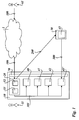
- Figure 1 shows a communication network 1 comprising a SIP infrastructure, a first terminal 10 associated with a first user 11, a second user 61 and a software server 30.
- the communication network 1 is an IP-packed based network.
- the communication network 1 comprises a plurality of network nodes, e.g. routers, servers, home subscriber servers, roaming servers, application servers etc..
- the network nodes provide an IP-routing infrastructure as well as a SIP infrastructure, e.g. SIP call servers, SIP registrars, SIP session boarder controllers, etc..
- the SIP infrastructure of the communication network 1 includes hardware means and/or software means for user identification, registration, authentication, routing and redirecting of SIP messages.
- the software server 30 comprises a database for holding a plurality of application clients and application client related data. Further, the software server 30 comprises communication means for receiving download requests 200 and transmitting downloads 300 via the communication network 1.
- the first terminal 10 is a computer, a personal computer, a PDA, a mobile phone and/or a smart phone.
- the first terminal 10 comprises communication means 70, a SIP dispatcher 20, input/output means for interaction with the first user 11, e.g. a display and a keyboard, storage means for storing a conversational SIP client 40 and application clients 41, 42, 43.
- a common application programming interface is used for transmitting the data for instrumenting 101 the application client.
- the first terminal 10 provides hardware and software functionalities to execute the application clients 40, 41, 42, 43.
- the communication means 70 of the first terminal 10 comprises the necessary hardware and software means for communicating via the communication network 1.
- the application clients 40, 41, 42, 43 are constituted of code and data used for executing an associated application on the first terminal 10.
- One or more applications clients 40, 41, 42, 43 can be associated to a single application.
- Typical applications are for instance real-time applications, e.g. IP-based video conferencing, voice over IP conferencing, IPTV, and none real-time applications, like interactive remote shells, turn based multiplayer computer games, etc., or even none-interactive applications, like the remote start of terminal maintenance programs.
- the SIP dispatcher 20 of the first terminal 10 comprises code and data for performing the functions of the SIP dispatcher 20 and processing the SIP protocol stack, a first database 51 for holding information about a plurality of application clients, e.g. the application clients 40, 41, 42, 43, and a second database 52 for holding information about a plurality of the first users and a plurality of the second users, e.g. the second user 61.
- the databases 51 and 52 are organized as look-up tables. But it is also possible that the databases 51 and 52 have a more complex data structure.
- the first database 51 holds information to map a plurality of applications to one or more associated application clients.
- the first database 51 stores for each application a plurality of application client related data like the name of the applications, the associated application clients, the version of associated installed application clients, the versions of associated application clients which are available to be installed from one or more remote sources, and a communication address/name of a software server which has to be contacted to download the respective application client. It is possible that the database holds a dataset for each application and a dataset for each application client which is registered in the database 51. Each dataset associated with an application has a link to one or more datasets associated with an application client and holding the aforementioned application client related data. Further, the application client related data holds data for instrumenting the respective application client, for example default values for instrumenting the application client.
- the second database 52 comprises user specific data of the first user 11 and/or a plurality of second users.
- the user specific data of the first user 11 comprises user preferences, e.g. user specific default values for instrumenting the application clients 40, 41, 42, 43, information which supports the mapping of the correspondence between the application and the application clients 40, 41, 42, 43 registered in the database 51, information whether it is allowed to invoke a respective application remotely, authorizations associated with the second users, etc.. These authorizations specify whether it is allowed or disallowed for the respective second user 61 to invoke the respective application.
- the authorization could be linked with additional data, e.g. a set of rules for defining the authorization process.
- the user specific data of the second users comprises user preferences, e.g. user specific default values, for instrumenting the application clients 40, 41, 42, 43.
- the SIP dispatcher 20 performs the following functions, when executed on the hardware and software platform of the terminal 10:
- the SIP dispatcher 20 is an SIP enhanced application client residing and running on the first terminal 10 of the communication network 1.
- the second user 61 sends a SIP-invite message 100 through the communication network 1 to invoke an application at a terminal 10 of the first user 11.
- the SIP infrastructure of the communication network 1 detects that the terminal 10 is associated with the user 11 indicated in the SIP-invite message 100 and routs the SIP-invite message 100 to the terminal 10.
- the SIP dispatcher 20 receives the SIP-invite message 100 at the terminal 10.
- the SIP dispatcher 20 extracts the information about the application from the SIP-invite message 100.
- the SIP dispatcher 20 accesses the databases 51 and 52 and selects by means of data extracted from the databases 51 and 52 and from the SIP-invite message 100 one of the plurality of the application clients available at the terminal 10. It determines by means of the extracted data which of these available application clients is the most appropriate application client for performing the application specified in the SIP-invite message.
- the SIP dispatcher 20 performs all necessary steps to generate data for instrumenting the selected application client. It accesses the database 51 and 52 and extracts the application client specific data as well as user specific data the users 11 and 61 available for instrumenting the selected application client. Furthermore, it is possible that the sender of the SIP-invite message 100 inserts additional data into the SIP-invite message 100 to control or influence the instrumenting of the selected application.
- the SIP dispatcher 20 extracts that information from the SIP-invite message 100 and uses that data within the data generation process. In the following the SIP dispatcher instruments the selected application client according to that generated data and invokes the selected application client on
- the figure 2 shows a flow-chart of the method with the steps r1 to r16 performed by the SIP dispatcher 20.
- the method is illustrated using the example of one user 61 inviting the user 11 to an AmigoTV application session.
- the user 61 desires to invite the user 11 to an AmigoTV session, whereby an AmigoTV application has not yet been invoked.
- IPTV providers or operators can provide their IPTV subscribers with a real-time community TV application.
- AmigoTV provides real-time voice communications, and real-time multimedia messaging on TV.
- the user 61 sends to the user 11 a SIP-invite message 100 via the communication network 1 to invite the user 11 to the AmigoTV session.
- the body of the SIP-invite message 100 comprises session description data according to the session description protocol (SDP).
- This optional attribute specifies the application that has to be invoked. Further optional attributes are used within the body of the SIP-invite message to transport further data, e.g. for influencing the instrumenting.
- the header of the SIP-invite message 100 comprises SIP related data, e.g. the SIP addresses of the users11 and 61, content-type of the body of the SIP-invite message 100, the SIP call-id, the length of the SIP body, etc.
- the SIP-invite message 100 is received via the communication means 70 of the terminal 10.
- the communication means 70 transfer the SIP-invite message 100 to the SIP dispatcher 20 for further processing.
- the SIP dispatcher 20 determines whether the user 61 is authorized to contact the user 11, whereby the SIP dispatcher 20 performs the following steps:
- the SIP dispatcher 20 determines whether the user 11 accepts the invitation to the application indicated in the body of the SIP-invite message 100, whereby the SIP dispatcher 20 performs the following steps:
- the SIP dispatcher 20 determines whether the user 11 accepts the invitation to the application indicated in the body of the SIP-invite message 100 if the result of the check step r6 was undefined.
- the SIP dispatcher 20 performs the following steps:
- the SIP dispatcher 20 performs a selection process and finds an application client associated with the application indicated in the SIP-invite message 100.
- the SIP dispatcher 20 determines an application client associated with the application indicated in the body of the SIP-invite message 100, whereby the SIP dispatcher 20 performs the following steps:
- the SIP dispatcher 20 performs various checks with regard to the version of the application client, whereby the SIP dispatcher 20 performs the following steps:
- the SIP dispatcher 20 obtains the version specified in the variable, whereby the variable is set to the version indicated in the SIP-invite message 100 or the variable is set to "up-to-date" if the variable is undefined.
- the SIP dispatcher 20 performs the following steps:
- the SIP dispatcher 20 performs a security check to assure the safe execution of the requested application client 43.
- the SIP dispatcher 20 verifies a cryptographic signature or scans the requested application client 43 for malware, e.g. viruses, trojans or spyware. In the case that the signature is correct or the scan does not detect any kind of the malware then the SIP dispatcher 20 continues with the step r14. In the case that the signature is incorrect or the scan does detect one or more kinds of the malware then the SIP dispatcher 20 continues with the step r11.
- the SIP dispatcher 20 selects a conversational SIP user agent 40 as application client associated with the application.
- the SIP dispatcher continues with the step r13.
- the SIP dispatcher 20 installs the downloaded application client 43 and registers this client in the database 51.
- the SIP dispatcher continues with the step r13.
- the SIP dispatcher 20 instruments the selected application client, whereby the SIP dispatcher 20 performs the following steps:
- the SIP dispatcher 20 invokes the selected application client on the terminal 10 and preferably continues with the step r16.
- the SIP dispatcher 20 may continue relaying SIP messages between terminal 10 and user 61 or may drop out of the message exchange via the SIP protocol between the application client and user 61.
Landscapes
- Engineering & Computer Science (AREA)
- Multimedia (AREA)
- Computer Networks & Wireless Communication (AREA)
- Signal Processing (AREA)
- Business, Economics & Management (AREA)
- General Business, Economics & Management (AREA)
- Telephonic Communication Services (AREA)
- Information Transfer Between Computers (AREA)
- Transition And Organic Metals Composition Catalysts For Addition Polymerization (AREA)
- Information Retrieval, Db Structures And Fs Structures Therefor (AREA)
- Computer And Data Communications (AREA)
Abstract
Description
- The present invention relates to method of invoking an application on a terminal associated with a first user via a communication network, to a terminal and to a computer program product for executing said method.
- Nowadays, there are more and more applications that interact with two or more users. Examples are voice over IP (IP = Internet Protocol), conferencing, application sharing, gaming, and entertainment applications. Existing signaling protocols are designed to invite users to voice over IP, multimedia, and conferencing sessions.
- Furthermore, session initiation protocol (SIP = session initiation protocol) clients, or so-called SIP user agents, are available which listen for SIP requests on different port numbers. The SIP user agents are used for invoking communication sessions, e.g. voice over IP, multimedia communication over IP, and conferencing sessions, i.e. for invoking streaming communication.
- For instance, the
US-patent application 2005/0181872 A1 describes a system and a method for the close coupling of SIP based voice over IP with multiplayer network games. SIP enhanced game server and conference servers provide the infrastructure during multiplayer network gaming for real-time communication sessions between the players. The participation in voice conferences is determined by the state of the on-going game. For example, the distance and the direction of the players determine the mixing of the voices of the players in the voice conference. The SIP user agent provides an interface which is used by the gaming application to control the voice conferences. - Other protocols and architecture, such as CORBA, DCOM or SOAP, are used for invoking application services provided on remote terminals (CORBA = Common Object Request Broker Architecture, DCOM = Distributed Component Object Model, SOAP = Simple Object Access Protocol). A frequently used protocol is web services based on SOAP and HTTP (HTTP = Hypertext Transfer Protocol). Web services are client-server based. If web services are used, there must be a web server installed on the terminal. Moreover, there must be a mechanism for finding the terminal and the web server of the user to be invited to the session. This is in particular a problem for terminals that do not have fixed IP addresses. There might be various ways of accomplishing this by using Dynamic DNS (DNS = Domain Name System), UDDI (UDDI = Universal Description, Discovery and Integration), or asynchronous web services.
- It is the object of the invention to provide a method for invoking an application via a communication network.
- The object of the present invention is achieved by a method of invoking an application on a terminal associated with a first user via a communication network, whereby for invoking the application, a SIP-invite message comprising information about the application and directed to the first user through the communication network is sent to a first terminal associated with the first user, a SIP dispatcher intercepts the SIP-invite message at the first terminal, the SIP dispatcher extracts the information about the application from the SIP-invite message and selects an application client associated with the application by means of the extracted information, the SIP dispatcher generates data for instrumenting the selected application client, the SIP dispatcher instruments the selected application client at the first terminal according to the data generated for instrumenting the selected application client, and the SIP dispatcher invokes the selected application client on the first terminal. Instrumenting the application client may consist in proxying the received SIP-invite message to the application client. The object of the present invention is a also achieved by a terminal associated with a first user of a communication network, wherein the terminal comprises communication means for communicating via the communication network and receiving SIP messages exchanged via the communication network, whereby the first terminal comprises a SIP dispatcher adapted to intercept a SIP-invite message received at the first terminal, the SIP-invite messages comprising information about the application and directed to the first user, extract the information about the application from the SIP-invite message and select an application client associated with the application by means of the extracted information, generate data for instrumenting the selected application client, instrument the selected application client at the first terminal according to the data generated for instrumenting the selected application client, and invoke the selected application client on the first terminal. The object of the present invention is further achieved by a computer program product for a first terminal associated with a first user of a communication network, whereby the computer program product, when executed by the first terminal performs the steps of intercepting a SIP-invite message at the first terminal, the SIP-invite message comprising information about the application and directed to the first user, extracting the information about the application from the SIP-invite message and selecting an application client associated with the application by means of the extracted information, generating data for instrumenting the selected application client, instrumenting the selected application client at the first terminal according to the data generated for instrumenting the selected application client, and invoking the selected application client on the first terminal.
- The present invention provides, by reusing a pre-existent SIP/IP infrastructure (possibly but not necessarily compliant with IMS(IMS = IP multimedia subsystem)), a highly adaptable and "user friendly" method of invoking remotely applications with a single SIP dispatcher, which is a single SIP user agent dedicated for handling several applications. The reuse of the pre-existent SIP/IMS infrastructure guarantees that the IP-address of the invitee to an application is always known. In particular, SIP provides extensive mechanisms including, user identification, registration, authentication, routing and redirect servers, home subscriber servers, roaming, and application servers. The SIP dispatcher is the only necessary SIP user agent to run on the terminal for handling a plurality of different applications, which therefore improves the reliability. In particular, applications are only started if they have been requested. Moreover, by using a single SIP user agent, i.e. the SIP dispatcher, for all applications, the session initiation can be handled via a single network port, i.e. a single IP-port. This is especially desired by users having their terminal located behind a network address translation firewall. Further-on, the present invention is not limited to be used in combination with different kinds of real-time applications like IP television (IPTV = IP television) or voice over IP conferencing. With the present invention, it is possible to start any application remotely. Particularly, application clients may not even be installed on the client-side at the time the invitation arrives, the respective application client is installed on-demand.
Further advantages are achieved by the embodiments of the invention indicated by the dependent claims. - According to a preferred embodiment of the invention the SIP dispatcher accesses a database for selecting an application client. The database holds information about one or more different application clients available at the first terminal. Preferably, the database is part of the first terminal, the SIP dispatcher or a remote database server. For example, the database is realized as a look-up table. The SIP dispatcher determines by means of the extracted information which of said available one or more application clients corresponds with the application. Preferably, the SIP dispatcher selects a conversational SIP client instead if the application client is not available or rejects the invitation if it can determine that it is not an invitation for a conversational SIP session.
- According to a preferred embodiment of the invention, the SIP dispatcher accesses a database for generating data for instrumenting the selected application client. The database holds information about application client related data associated to the application, user specific data of the first user, and/or of a second user who is indicated in the SIP-invite message as sender of the SIP-invite message. For example, the database is part of the first terminal, the SIP dispatcher or a remote database server. Preferably, the database is constituted of a plurality of databases, e.g. a database which holds information about application client related data associated to the application, a database which holds information about user specific data of the first user and a database which holds information about user specific data of the second user. For example, the application client related data associated to the application comprises the name and/or the identifier of the application, the version of the application, and/or default data for instrumenting the application client, like IP-ports. Preferably, the user specific data of the first user comprises user default data for instrumenting the application client, and/or a look-up table which comprises information about which second user is authorized to contact the first user and/or information about which applications are allowed to be started remotely. The SIP dispatcher extracts application client related data from the database. The SIP dispatcher generates the data for instrumenting the selected application client according to said data extracted from the database.
- According to a preferred embodiment of the invention the SIP dispatcher extracts from the SIP-invite message additional data related to the parameterization of the application. Preferably, the SIP dispatcher extracts the additional data related to the parameterization of the application from a body of the SIP-invite message. For example, the body of the SIP-invite message is described using the session description protocol (SDP = session description protocol). The session description protocol provides one or more optional session attributes for storing the additional data. Preferably, the format of the stored additional data within the SIP-invite message is defined by the mime standard and/or the XML-scheme (mime = multipurpose internet mail extension, XML = extensible markup language). The SIP dispatcher generates the data for instrumenting the selected application client according to said additional data extracted from the SIP-invite message.
- According to a preferred embodiment of the invention the SIP dispatcher checks if a second user, who is indicated in the SIP-invite message as sender of the SIP-invite message, is securely identified and authorized to contact the first terminal and/or to invoke the application. The SIP dispatcher accesses a database which comprises user specific data of the first user. The database holds information and/or authorizations associated with a plurality of second users. The SIP dispatcher filters out data of the second user, who is indicated in the SIP-invite message as sender of the SIP-invite message. The SIP dispatcher determines by means of the filtered data if the second user is authorized to contact the first terminal and/or to invoke the application. Preferably, the database is part of the first terminal, the SIP dispatcher or at a remote database server. The SIP dispatcher sends a SIP error response message to the second user to reject the SIP-invite message if the second user is not authorized to contact the first terminal and/or to invoke the application.
- According to a preferred embodiment of the invention the SIP dispatcher checks if the first user accepts the SIP-invite message by means of accessing a database and/or by requesting an input of a corresponding command via a user interface from the first user. The database holds information about user specific data of the first user. Preferably, the information comprises preferences indicating whether the first user accepts SIP-invite messages for the application indicated in the received SIP-invite message. For example, the database is part of the first terminal, the SIP dispatcher or a remote database server. Preferably, the SIP dispatcher requests an input of a corresponding command via a user interface from the first user to accept the SIP-invite message by means of an interactive pop-up window on the first terminal. For example, the user interface of the first terminal is a keyboard and/or a mouse and a display associated to the first terminal. The SIP dispatcher sends a SIP error response message to the second user to reject the SIP-invite message if the first user does not accept the SIP-invite message.
- According to a preferred embodiment of the invention the SIP dispatcher checks if an up-to-date version of the selected application client is installed on the terminal by means of accessing a database. The database comprises application client related data. For example, the accessed database is organized as a look-up table. Preferably, the application client related data comprises information about whether the application client is installed on the terminal, the location of the application client, and/or the version of the application client installed on the terminal. Further, the application client related data comprises information about a download location of the application client and its respective version. The download location is e.g. a software server connected with terminal via the communication network. The SIP dispatcher checks if the up-to-date version of the application client can be downloaded from a software server. The SIP dispatcher sends a download request to the software server to download the application client. The SIP dispatcher downloads the application client and installs the application client at the first terminal.
- According to a preferred embodiment of the invention, the SIP dispatcher checks if the application client does contain any malware like a virus, a trojan, and/or spyware. Preferably, the SIP dispatcher removes the application client form terminal. The SIP dispatcher comprises means to remove from the terminal one or more of the application clients. For example, the SIP dispatcher invokes an uninstalling process to remove from the terminal one or more of the application clients registered in database used for selection of the appropriate application client. Furthermore, it is possible, that the SIP-invite message comprises information about a specific version of client that is preferably being used to serve the application. The SIP dispatcher extracts this information too, and respects this additional information in the selection process.
- According to a preferred embodiment of the invention the SIP dispatcher receives a dedicated type of SIP message to terminate an application. This dedicated type of SIP message comprises specific information, e.g. a specific command word, in its body which indicates that an application should be terminated. Further, the body of this SIP-invite message comprises information about the application that should be terminated. To terminate the application, such SIP message is sent to the first user. The SIP dispatcher intercepts said SIP message at the first terminal of the communication network. The SIP dispatcher extracts the information about the application from said SIP message. The SIP dispatcher terminates the application client if the SIP dispatcher detects that the received SIP message is of the dedicated SIP message type and comprises information about the application associated with the respective application client.
- Preferably, the SIP dispatcher terminates the SIP related communication of the session initiation protocol associated to an application client after the application client has been invoked.
- It is possible that the SIP message comprises information about one or more applications to be invoked by the SIP dispatcher at the first terminal.
- Preferably, the SIP dispatcher uses a predetermined application programming interface (API = application programming interface) to access application clients and/or instrument these application clients. Further more, the first terminal provides an API interface to provide access to an operating system of the first terminal and devices associated to the first terminal, like communication means.
- Preferably, the first terminal is a computer, a personal computer, a personal digital assistant (PDA = personal digital assistant), a mobile phone and/or a smart phone.
- These as well as further features and advantages of the invention will be better appreciated by reading the following detailed description of presently preferred exemplary embodiments taken in conjunction with accompanying drawings of which:
- Figure 1
- is a diagram of a communication network comprising components of an embodiment of the invention.
- Figure 2
- is a flow-chart associated with an embodiment of the invention.
-
Figure 1 shows a communication network 1 comprising a SIP infrastructure, afirst terminal 10 associated with a first user 11, a second user 61 and asoftware server 30. - The communication network 1 is an IP-packed based network. The communication network 1 comprises a plurality of network nodes, e.g. routers, servers, home subscriber servers, roaming servers, application servers etc.. The network nodes provide an IP-routing infrastructure as well as a SIP infrastructure, e.g. SIP call servers, SIP registrars, SIP session boarder controllers, etc.. The SIP infrastructure of the communication network 1 includes hardware means and/or software means for user identification, registration, authentication, routing and redirecting of SIP messages.
- The
software server 30 comprises a database for holding a plurality of application clients and application client related data. Further, thesoftware server 30 comprises communication means for receivingdownload requests 200 and transmittingdownloads 300 via the communication network 1. - The
first terminal 10 is a computer, a personal computer, a PDA, a mobile phone and/or a smart phone. Thefirst terminal 10 comprises communication means 70, aSIP dispatcher 20, input/output means for interaction with the first user 11, e.g. a display and a keyboard, storage means for storing aconversational SIP client 40 andapplication clients first terminal 10 provides hardware and software functionalities to execute theapplication clients - The communication means 70 of the
first terminal 10 comprises the necessary hardware and software means for communicating via the communication network 1. The communication means 70 comprise, for instance an Ethernet card, a modem, a wireless local area network card, and TCP/IP stack (TCP = transmission control protocol). - The
application clients first terminal 10. One ormore applications clients - The
SIP dispatcher 20 of thefirst terminal 10 comprises code and data for performing the functions of theSIP dispatcher 20 and processing the SIP protocol stack, afirst database 51 for holding information about a plurality of application clients, e.g. theapplication clients second database 52 for holding information about a plurality of the first users and a plurality of the second users, e.g. the second user 61. Preferably, thedatabases databases - The
first database 51 holds information to map a plurality of applications to one or more associated application clients. Thefirst database 51 stores for each application a plurality of application client related data like the name of the applications, the associated application clients, the version of associated installed application clients, the versions of associated application clients which are available to be installed from one or more remote sources, and a communication address/name of a software server which has to be contacted to download the respective application client. It is possible that the database holds a dataset for each application and a dataset for each application client which is registered in thedatabase 51. Each dataset associated with an application has a link to one or more datasets associated with an application client and holding the aforementioned application client related data. Further, the application client related data holds data for instrumenting the respective application client, for example default values for instrumenting the application client. - The
second database 52 comprises user specific data of the first user 11 and/or a plurality of second users. The user specific data of the first user 11 comprises user preferences, e.g. user specific default values for instrumenting theapplication clients application clients database 51, information whether it is allowed to invoke a respective application remotely, authorizations associated with the second users, etc.. These authorizations specify whether it is allowed or disallowed for the respective second user 61 to invoke the respective application. The authorization could be linked with additional data, e.g. a set of rules for defining the authorization process. The user specific data of the second users comprises user preferences, e.g. user specific default values, for instrumenting theapplication clients - The
SIP dispatcher 20 performs the following functions, when executed on the hardware and software platform of the terminal 10: - The
SIP dispatcher 20 is an SIP enhanced application client residing and running on thefirst terminal 10 of the communication network 1. The second user 61 sends a SIP-invite message 100 through the communication network 1 to invoke an application at a terminal 10 of the first user 11. The SIP infrastructure of the communication network 1 detects that the terminal 10 is associated with the user 11 indicated in the SIP-invite message 100 and routs the SIP-invite message 100 to the terminal 10. TheSIP dispatcher 20 receives the SIP-invite message 100 at the terminal 10. TheSIP dispatcher 20 extracts the information about the application from the SIP-invite message 100. It accesses thedatabases databases invite message 100 one of the plurality of the application clients available at the terminal 10. It determines by means of the extracted data which of these available application clients is the most appropriate application client for performing the application specified in the SIP-invite message. TheSIP dispatcher 20 performs all necessary steps to generate data for instrumenting the selected application client. It accesses thedatabase invite message 100 inserts additional data into the SIP-invite message 100 to control or influence the instrumenting of the selected application. TheSIP dispatcher 20 extracts that information from the SIP-invite message 100 and uses that data within the data generation process. In the following the SIP dispatcher instruments the selected application client according to that generated data and invokes the selected application client on thefirst terminal 10. - In the following, details of the method performed by the
SIP dispatcher 20 are described by hand offigure 2 . - The
figure 2 shows a flow-chart of the method with the steps r1 to r16 performed by theSIP dispatcher 20. - The method is illustrated using the example of one user 61 inviting the user 11 to an AmigoTV application session. The user 61 desires to invite the user 11 to an AmigoTV session, whereby an AmigoTV application has not yet been invoked. By means of AmigoTV, IPTV providers or operators can provide their IPTV subscribers with a real-time community TV application. AmigoTV provides real-time voice communications, and real-time multimedia messaging on TV.
- To invoke the AmigoTV session, the user 61 sends to the user 11 a SIP-
invite message 100 via the communication network 1 to invite the user 11 to the AmigoTV session. The body of the SIP-invite message 100 comprises session description data according to the session description protocol (SDP). The body of the SIP-invite message 100 comprises an optional dot-separated hierarchical category attribute, e.g. "a=cat:AmigoTV.IPTV" for enabling theSIP dispatcher 20, i.e. the receiver, to identify the type of application client to invoke and to filter unwanted sessions by category. Alternatively a new attribute can be defined for the same purpose, e.g. "a=sessionType:AmigoTV.IPTV". This optional attribute specifies the application that has to be invoked. Further optional attributes are used within the body of the SIP-invite message to transport further data, e.g. for influencing the instrumenting. The header of the SIP-invite message 100 comprises SIP related data, e.g. the SIP addresses of the users11 and 61, content-type of the body of the SIP-invite message 100, the SIP call-id, the length of the SIP body, etc.. - At the first step r1, the SIP-
invite message 100 is received via the communication means 70 of the terminal 10. The communication means 70 transfer the SIP-invite message 100 to theSIP dispatcher 20 for further processing. - At the step r2, the
SIP dispatcher 20 determines whether the user 61 is authorized to contact the user 11, whereby theSIP dispatcher 20 performs the following steps: - The
SIP dispatcher 20 accesses the header of the SIP-invite message 100 and extracts the sender, i.e. the user 61. Optionally, theSIP dispatcher 20 authenticates the sender. TheSIP dispatcher 20 accesses thesecond database 52 to determine whether the user 61 is authorized to contact the user 11 and/or is authorized to invoke the application specified in the SIP-invite message 100. If this is not the case theSIP dispatcher 20 sends a SIP error response message to reject the session invitation by the user 61 and thereby terminates the SIP session request (step r3). In the other case theSIP dispatcher 20 continues with the step r6. - At the step r6, the
SIP dispatcher 20 determines whether the user 11 accepts the invitation to the application indicated in the body of the SIP-invite message 100, whereby theSIP dispatcher 20 performs the following steps: - The
SIP dispatcher 20 accesses thedatabase 52 and extracts user specific data of the user 11. By means of this data it tries to determine if the user 11 allows participating at sessions controlled by the application indicated in the body of the SIP-invite message 100. In the case that theSIP dispatcher 20 finds a general authorization of the user 11 to invoke the application indicated in the SIP-invite message100, theSIP dispatcher 20 continues with the step r8. If the SIP dispatcher is unable to find and/or extract any respective information or does not find a general authorization, theSIP dispatcher 20 continues with an interactive check (step r5). If the SIP dispatcher finds a general rule to reject the invocation of the application by the user 61, theSIP dispatcher 20 sends a SIP error response message to reject the session invitation by the user 61 (step r7). - At the step r5, the
SIP dispatcher 20 determines whether the user 11 accepts the invitation to the application indicated in the body of the SIP-invite message 100 if the result of the check step r6 was undefined. TheSIP dispatcher 20 performs the following steps: - The
SIP dispatcher 20 may open a pop-up window at a display of the terminal 10 in order to ask the user 11 whether the user 11 wants to participate at the session controlled by the application indicated in the body of the SIP-invite message 100. If the user 11 does not acknowledge positively, theSIP dispatcher 20 sends a SIP error response message to reject the session invitation by the user 61 (step r4). If the user 11 acknowledges the query, theSIP dispatcher 20 continues with the step r8. - At the steps r8 to r12 the
SIP dispatcher 20 performs a selection process and finds an application client associated with the application indicated in the SIP-invite message 100. - At the step r8, the
SIP dispatcher 20 determines an application client associated with the application indicated in the body of the SIP-invite message 100, whereby theSIP dispatcher 20 performs the following steps: - The
SIP dispatcher 20 extracts the information about the application from the SIP-invite message 100 and accesses thedatabase 51. It determines by means of this data which of the already installed application clients, e.g. theapplication clients database 51 does not link any application client with the application, theSIP dispatcher 20 continues with the step r11, i.e. it selects a "fall-back" solution. In the case that an application client application client is linked with the application but is not installed atterminal 10, theSIP dispatcher 20 continues with the step r9. In the other cases, i.e. an application client which is linked to the application is also installed at the terminal 10, theSIP dispatcher 20 continues with the step r10. - At the step r10, the
SIP dispatcher 20 performs various checks with regard to the version of the application client, whereby theSIP dispatcher 20 performs the following steps: - The
SIP dispatcher 20 accesses thedatabase 51 to determine the version of the selected application client installed at the terminal 10. A variable specifying the "up-to-date" version is set to the version indicated in the SIP-invite message 100. In the case that no specific version has been indicated, theSIP dispatcher 20 determines which version of the application client is the "up-to-date" version and set the variable to that value. Then theSIP dispatcher 20 compares the version determined from the database with the variable. In the case, the version defined by the variable is installed at the terminal 10, theSIP dispatcher 20 continues with the step r13. In the other cases theSIP dispatcher 20 continues with the step r9. - At the step r9, the
SIP dispatcher 20 obtains the version specified in the variable, whereby the variable is set to the version indicated in the SIP-invite message 100 or the variable is set to "up-to-date" if the variable is undefined. TheSIP dispatcher 20 performs the following steps: - The
SIP dispatcher 20 sends adownload request 200 to asoftware server 30 by using the communication means 70 of the terminal 10. If theapplication client 43 is available for download at thesoftware server 30, theSIP dispatcher 20 receives the code of theapplication client 43 via adownload response 300 of thesoftware server 30 through the communication means 70. TheSIP dispatcher 20 stores theapplication client 43 in a designated storage area 43' of the terminal 10 and continues with a security check (step r12). In the case that theSIP dispatcher 20 does not receive the requestedapplication client 43, theSIP dispatcher 20 continues with the step r11. - At the step r12, the
SIP dispatcher 20 performs a security check to assure the safe execution of the requestedapplication client 43. TheSIP dispatcher 20 verifies a cryptographic signature or scans the requestedapplication client 43 for malware, e.g. viruses, trojans or spyware. In the case that the signature is correct or the scan does not detect any kind of the malware then theSIP dispatcher 20 continues with the step r14. In the case that the signature is incorrect or the scan does detect one or more kinds of the malware then theSIP dispatcher 20 continues with the step r11. - At the step r11, the
SIP dispatcher 20 selects a conversationalSIP user agent 40 as application client associated with the application. The SIP dispatcher continues with the step r13. - At the step r14, the
SIP dispatcher 20 installs the downloadedapplication client 43 and registers this client in thedatabase 51. The SIP dispatcher continues with the step r13. - At the step r13, the
SIP dispatcher 20 instruments the selected application client, whereby theSIP dispatcher 20 performs the following steps: - The
SIP dispatcher 20 accesses thedatabase 51 to extract the default values for instrumenting the selected application client. TheSIP dispatcher 20 accesses thedatabase 52 to extract the user specific default values of the users 11 and 61 for instrumenting the selected application client. TheSIP dispatcher 20 accesses the body of the SIP-invite message 100 to extract further user specific default values of the user 61 for instrumenting the selected application client. TheSIP dispatcher 20 instruments the selected application client according that extracted data and continues with the step r15. - At the step r15, the
SIP dispatcher 20 invokes the selected application client on the terminal 10 and preferably continues with the step r16. - At the step r16, the
SIP dispatcher 20 may continue relaying SIP messages betweenterminal 10 and user 61 or may drop out of the message exchange via the SIP protocol between the application client and user 61.
Claims (10)
- A method of invoking an application on a terminal (10) associated with a first user (11) via a communication network (1),
characterized in
that the method comprises the steps of:to invoke the application, sending a SIP-invite message (100) comprising information about the application and directed to the first user (11) through the communication network (1) to a first terminal (10) associated with the first user (11);intercepting, by a SIP dispatcher (20), the SIP-invite message (100) at the first terminal (10);extracting, by the SIP dispatcher (20), the information about the application from the SIP-invite message (100) and selecting an application client (40, 41, 42, 43) associated with the application by means of the extracted information;generating, by the SIP dispatcher (20), data for instrumenting the selected application client (40, 41, 42, 43);instrumenting, by the SIP dispatcher (20), the selected application client (40, 41, 42, 43) at the first terminal (10) according to the data generated for instrumenting the selected application client (40, 41, 42, 43); andinvoking, by the SIP dispatcher (20), the selected application client (40, 41, 42, 43) on the first terminal (10). - The method according to claim 1,
characterized in
that the step of selecting an application client (40, 41, 42, 43) comprises the steps of:accessing, by the SIP dispatcher (20), a database (51, 52) holding information about two or more different application clients (40, 41, 42, 43) available at the first terminal (10); anddetermining by means of the extracted information which of said available two or more application clients (40, 41, 42, 43) corresponds with the application. - The method according to claim 1,
characterized in
that the method comprises the further steps of:accessing a database (51, 52) and extracting application client related data associated to the application and/or user specific data of the first user (11) and/or of a second user (61) who is indicated in the SIP-invite message (100) as sender of the SIP-invite message (100); andgenerating, by the SIP dispatcher (20), the data for instrumenting the selected application client (40, 41, 42, 43) according to said data extracted from the database (51, 52). - The method according to claim 1,
characterized in
that the method comprises the further steps of:extracting, by the SIP dispatcher (20), from the SIP-invite message (100) additional data related to the parameterization of the application; andgenerating, by the SIP dispatcher (20), the data for instrumenting the selected application client (40, 41, 42, 43) according to said additional data extracted from the SIP-invite message (100). - The method according to claim 1,
characterized in
that the method comprises the further steps of:checking, by the SIP dispatcher (20), if a second user (61) who is indicated in the SIP-invite message (100) as sender of the SIP-invite message (100), is authorized to contact the first terminal (10) and/or to invoke the application by means of accessing a database (51, 52) comprising user specific data of the first user (11); andsending, by the SIP dispatcher (20), a SIP error response message to the second user (61) to reject the SIP-invite message (100) if the second user (61) is not authorized to contact the first terminal (10) and/or to invoke the application. - The method according to claim 1,
characterized in
that the method comprises the further steps of:checking by the SIP dispatcher if the first user (11) accepts the said SIP-invite message (100) by means of accessing a database (51, 52) comprising user specific data of the first user (11) and/or by requesting an input of a corresponding command via an user interface from the first user (11); andsending, by the SIP dispatcher (20), a SIP error response message to the second user (61) to reject the SIP-invite message (100), if the first user (11) does not accept the said SIP-invite message (100). - The method according to claim 1,
characterized in
that the method comprises the further steps of:checking, by the SIP dispatcher (20), if an up-to-date version of the selected application client (40, 41, 42, 43) is installed on the terminal (10) by means of accessing a database (51, 52) comprising application client related data; checking, by the SIP dispatcher (20), if the up-to-date version of the application client (40, 41, 42, 43) can be downloaded from a software server (30) if the up-to-date version of the application client (40, 41, 42, 43) is not installed; andsending, by the SIP dispatcher (20), a download request (200) to the software server (30) to download (300) the application client (40, 41, 42, 43) from the software server (30), downloading (300) and installing the application client (40, 41, 42, 43), if the up-to-date version of the application client (40, 41, 42, 43) is not installed and if the up-to-date version of the application client (40, 41, 42, 43) can be downloaded from the software server (30). - The method according to claim 1,
characterized in
that the method comprises the further steps of:to terminate the application, sending a dedicated type of SIP message (100) comprising information about the application and directed to the first user (11) through the communication network (1) to the first terminal (10) associated with the first user (11) ;intercepting, by the SIP dispatcher (20), said SIP message (100) at the first terminal (10);extracting, by the SIP dispatcher (20), the information about the application from said SIP message (100); andterminating the application client (40, 41, 42, 43), if the SIP dispatcher (20) detects that the received SIP message (100) is of the dedicated SIP message (100) type and comprises information about the application associated with the respective application client (40, 41, 42, 43). - A terminal (10) associated with a first user (11) of a communication network (1), wherein the terminal (10) comprises communication means (70) for communicating via the communication network and receiving SIP messages exchanged via the communication network (1),
characterized in
that the first terminal (10) comprises a SIP dispatcher (20) adapted to:intercept a SIP-invite message (100) received at the first terminal (10), the SIP-invite message (100) comprising information about the application and directed to the first user (11) ;extract the information about the application from the SIP-invite message (100) and select an application client (40, 41, 42, 43) associated with the application by means of the extracted information;generate data for instrumenting the selected application client (40, 41, 42, 43);instrument the selected application client (40, 41, 42, 43) at the first terminal (10) according to the data generated for instrumenting the selected application client (40, 41, 42, 43); andinvoke the selected application client (40, 41, 42, 43) on the first terminal (10). - A computer program product for a first terminal (10) associated with a first user (11) of a communication network (1),
characterized in
that the computer program product, when executed by the first terminal (10) performs the steps of:intercepting a SIP-invite message (100) at the first terminal (10),the SIP-invite message (100) comprising information about the application and directed to the first user (11);extracting the information about the application from the SIP-invite message (100) and selecting an application client (40, 41, 42, 43) associated with the application by means of the extracted information;generating data for instrumenting the selected application client (40, 41, 42, 43);instrumenting the selected application client (40, 41, 42, 43) at the first terminal (10) according to the data generated for instrumenting the selected application client (40, 41, 42, 43); andinvoking the selected application client (40, 41, 42, 43) on the first terminal (10).
Priority Applications (3)
| Application Number | Priority Date | Filing Date | Title |
|---|---|---|---|
| AT07290323T ATE431988T1 (en) | 2007-03-16 | 2007-03-16 | METHOD FOR ACCESSING AN APPLICATION OVER A COMMUNICATIONS NETWORK |
| DE602007001148T DE602007001148D1 (en) | 2007-03-16 | 2007-03-16 | A method for retrieving an application over a communications network |
| EP07290323A EP1971110B1 (en) | 2007-03-16 | 2007-03-16 | Method of invoking an application via a communication network |
Applications Claiming Priority (1)
| Application Number | Priority Date | Filing Date | Title |
|---|---|---|---|
| EP07290323A EP1971110B1 (en) | 2007-03-16 | 2007-03-16 | Method of invoking an application via a communication network |
Publications (2)
| Publication Number | Publication Date |
|---|---|
| EP1971110A1 true EP1971110A1 (en) | 2008-09-17 |
| EP1971110B1 EP1971110B1 (en) | 2009-05-20 |
Family
ID=38283222
Family Applications (1)
| Application Number | Title | Priority Date | Filing Date |
|---|---|---|---|
| EP07290323A Not-in-force EP1971110B1 (en) | 2007-03-16 | 2007-03-16 | Method of invoking an application via a communication network |
Country Status (3)
| Country | Link |
|---|---|
| EP (1) | EP1971110B1 (en) |
| AT (1) | ATE431988T1 (en) |
| DE (1) | DE602007001148D1 (en) |
Cited By (3)
| Publication number | Priority date | Publication date | Assignee | Title |
|---|---|---|---|---|
| JP2013172433A (en) * | 2012-02-23 | 2013-09-02 | Nec Corp | Sip client, sip update method, and program |
| WO2014123693A1 (en) * | 2013-02-05 | 2014-08-14 | Qualcomm Incorporated | Optimizing recipient application selection in a multiple application environment using equivalence classes for applications |
| CN111756936A (en) * | 2020-05-06 | 2020-10-09 | 国网山东省电力公司信息通信公司 | Disaster recovery device and method for dispatching command seat based on IMS |
Citations (3)
| Publication number | Priority date | Publication date | Assignee | Title |
|---|---|---|---|---|
| US20020120729A1 (en) | 2001-02-23 | 2002-08-29 | Stefano Faccin | Internet protocol based service architecture |
| WO2004063922A1 (en) * | 2003-01-03 | 2004-07-29 | Snowshore Networks, Inc. | High performance transparent call distribution |
| US20050181872A1 (en) * | 2004-02-17 | 2005-08-18 | Arup Acharya | SIP based VoIP multiplayer network games |
-
2007
- 2007-03-16 AT AT07290323T patent/ATE431988T1/en not_active IP Right Cessation
- 2007-03-16 EP EP07290323A patent/EP1971110B1/en not_active Not-in-force
- 2007-03-16 DE DE602007001148T patent/DE602007001148D1/en active Active
Patent Citations (3)
| Publication number | Priority date | Publication date | Assignee | Title |
|---|---|---|---|---|
| US20020120729A1 (en) | 2001-02-23 | 2002-08-29 | Stefano Faccin | Internet protocol based service architecture |
| WO2004063922A1 (en) * | 2003-01-03 | 2004-07-29 | Snowshore Networks, Inc. | High performance transparent call distribution |
| US20050181872A1 (en) * | 2004-02-17 | 2005-08-18 | Arup Acharya | SIP based VoIP multiplayer network games |
Non-Patent Citations (1)
| Title |
|---|
| SHEN ALCATEL-LUCENT Y: "Private Extensions to the Session Initiation Protocol (SIP) for Service Interaction Indicator", IETF STANDARD-WORKING-DRAFT, INTERNET ENGINEERING TASK FORCE, IETF, CH, no. 2, February 2007 (2007-02-01), XP015050408, ISSN: 0000-0004 * |
Cited By (4)
| Publication number | Priority date | Publication date | Assignee | Title |
|---|---|---|---|---|
| JP2013172433A (en) * | 2012-02-23 | 2013-09-02 | Nec Corp | Sip client, sip update method, and program |
| WO2014123693A1 (en) * | 2013-02-05 | 2014-08-14 | Qualcomm Incorporated | Optimizing recipient application selection in a multiple application environment using equivalence classes for applications |
| US9130942B2 (en) | 2013-02-05 | 2015-09-08 | Qualcomm Incorporated | Optimizing recipient application selection in a multiple application environment using equivalence classes for applications |
| CN111756936A (en) * | 2020-05-06 | 2020-10-09 | 国网山东省电力公司信息通信公司 | Disaster recovery device and method for dispatching command seat based on IMS |
Also Published As
| Publication number | Publication date |
|---|---|
| ATE431988T1 (en) | 2009-06-15 |
| DE602007001148D1 (en) | 2009-07-02 |
| EP1971110B1 (en) | 2009-05-20 |
Similar Documents
| Publication | Publication Date | Title |
|---|---|---|
| EP2680500B1 (en) | Application discovery | |
| US8194642B2 (en) | System and method for providing multimedia services | |
| US9967224B2 (en) | System and method for enabling real-time eventing | |
| CN103580986B (en) | A kind of real-time communication method, terminal unit, real-time communication server and system | |
| EP2122922A1 (en) | Remote control using instant messaging | |
| CN101379757A (en) | Method and system for providing telephony services and enforcing policies in a communications network | |
| EP2083547A1 (en) | Improvements in or relating to communications | |
| US8769551B2 (en) | System and method for interprocess communication in electronic devices | |
| CA2655806A1 (en) | Technique for providing access to a media resource attached to a network-registered device | |
| US20080209522A1 (en) | Method, Apparatus, and Computer Program Product for Authenticating Subscriber Communications at a Network Server | |
| EP1971110B1 (en) | Method of invoking an application via a communication network | |
| WO2007126272A1 (en) | System and method for performing a delegation operation | |
| EP2809042A1 (en) | Method for authenticate a user associated to a user agent implemented over SIP protocol | |
| JP4951676B2 (en) | Method and apparatus for processing service requests in a multimedia network | |
| CN101951381A (en) | Digital television receiving terminal and method thereof for realizing multimedia instant messaging | |
| JP2003518352A (en) | Session initiation protocol servlet application programming interface | |
| US9628490B2 (en) | Trusted contact name validation | |
| CN115802296A (en) | Communication method, communication apparatus, and storage medium | |
| RU2314658C2 (en) | Communication system | |
| Farley et al. | The Ret Reference Point definition and a prototype implementation | |
| Bhardwaj et al. | Real time information and communication center based on webrtc | |
| KR20070034879A (en) | Integrated presence service device and method for integrating multiple application service states | |
| Sbata et al. | Converging Web and IMS services: stakes and solution proposals | |
| JP2011228910A (en) | Service providing device, service providing method and service providing program | |
| KR20050065980A (en) | Method for controlling multimedia conferences on internet and system thereof |
Legal Events
| Date | Code | Title | Description |
|---|---|---|---|
| PUAI | Public reference made under article 153(3) epc to a published international application that has entered the european phase |
Free format text: ORIGINAL CODE: 0009012 |
|
| 17P | Request for examination filed |
Effective date: 20071112 |
|
| AK | Designated contracting states |
Kind code of ref document: A1 Designated state(s): AT BE BG CH CY CZ DE DK EE ES FI FR GB GR HU IE IS IT LI LT LU LV MC MT NL PL PT RO SE SI SK TR |
|
| AX | Request for extension of the european patent |
Extension state: AL BA HR MK RS |
|
| GRAP | Despatch of communication of intention to grant a patent |
Free format text: ORIGINAL CODE: EPIDOSNIGR1 |
|
| GRAS | Grant fee paid |
Free format text: ORIGINAL CODE: EPIDOSNIGR3 |
|
| GRAA | (expected) grant |
Free format text: ORIGINAL CODE: 0009210 |
|
| AK | Designated contracting states |
Kind code of ref document: B1 Designated state(s): AT BE BG CH CY CZ DE DK EE ES FI FR GB GR HU IE IS IT LI LT LU LV MC MT NL PL PT RO SE SI SK TR |
|
| REG | Reference to a national code |
Ref country code: GB Ref legal event code: FG4D |
|
| REG | Reference to a national code |
Ref country code: CH Ref legal event code: EP |
|
| REG | Reference to a national code |
Ref country code: IE Ref legal event code: FG4D |
|
| REF | Corresponds to: |
Ref document number: 602007001148 Country of ref document: DE Date of ref document: 20090702 Kind code of ref document: P |
|
| PG25 | Lapsed in a contracting state [announced via postgrant information from national office to epo] |
Ref country code: ES Free format text: LAPSE BECAUSE OF FAILURE TO SUBMIT A TRANSLATION OF THE DESCRIPTION OR TO PAY THE FEE WITHIN THE PRESCRIBED TIME-LIMIT Effective date: 20090831 Ref country code: LT Free format text: LAPSE BECAUSE OF FAILURE TO SUBMIT A TRANSLATION OF THE DESCRIPTION OR TO PAY THE FEE WITHIN THE PRESCRIBED TIME-LIMIT Effective date: 20090520 Ref country code: PT Free format text: LAPSE BECAUSE OF FAILURE TO SUBMIT A TRANSLATION OF THE DESCRIPTION OR TO PAY THE FEE WITHIN THE PRESCRIBED TIME-LIMIT Effective date: 20090920 Ref country code: AT Free format text: LAPSE BECAUSE OF FAILURE TO SUBMIT A TRANSLATION OF THE DESCRIPTION OR TO PAY THE FEE WITHIN THE PRESCRIBED TIME-LIMIT Effective date: 20090520 Ref country code: FI Free format text: LAPSE BECAUSE OF FAILURE TO SUBMIT A TRANSLATION OF THE DESCRIPTION OR TO PAY THE FEE WITHIN THE PRESCRIBED TIME-LIMIT Effective date: 20090520 |
|
| NLV1 | Nl: lapsed or annulled due to failure to fulfill the requirements of art. 29p and 29m of the patents act | ||
| PG25 | Lapsed in a contracting state [announced via postgrant information from national office to epo] |
Ref country code: LV Free format text: LAPSE BECAUSE OF FAILURE TO SUBMIT A TRANSLATION OF THE DESCRIPTION OR TO PAY THE FEE WITHIN THE PRESCRIBED TIME-LIMIT Effective date: 20090520 Ref country code: PL Free format text: LAPSE BECAUSE OF FAILURE TO SUBMIT A TRANSLATION OF THE DESCRIPTION OR TO PAY THE FEE WITHIN THE PRESCRIBED TIME-LIMIT Effective date: 20090520 Ref country code: IS Free format text: LAPSE BECAUSE OF FAILURE TO SUBMIT A TRANSLATION OF THE DESCRIPTION OR TO PAY THE FEE WITHIN THE PRESCRIBED TIME-LIMIT Effective date: 20090920 Ref country code: NL Free format text: LAPSE BECAUSE OF FAILURE TO SUBMIT A TRANSLATION OF THE DESCRIPTION OR TO PAY THE FEE WITHIN THE PRESCRIBED TIME-LIMIT Effective date: 20090520 Ref country code: SI Free format text: LAPSE BECAUSE OF FAILURE TO SUBMIT A TRANSLATION OF THE DESCRIPTION OR TO PAY THE FEE WITHIN THE PRESCRIBED TIME-LIMIT Effective date: 20090520 Ref country code: SE Free format text: LAPSE BECAUSE OF FAILURE TO SUBMIT A TRANSLATION OF THE DESCRIPTION OR TO PAY THE FEE WITHIN THE PRESCRIBED TIME-LIMIT Effective date: 20090820 |
|
| PG25 | Lapsed in a contracting state [announced via postgrant information from national office to epo] |
Ref country code: DK Free format text: LAPSE BECAUSE OF FAILURE TO SUBMIT A TRANSLATION OF THE DESCRIPTION OR TO PAY THE FEE WITHIN THE PRESCRIBED TIME-LIMIT Effective date: 20090520 Ref country code: EE Free format text: LAPSE BECAUSE OF FAILURE TO SUBMIT A TRANSLATION OF THE DESCRIPTION OR TO PAY THE FEE WITHIN THE PRESCRIBED TIME-LIMIT Effective date: 20090520 Ref country code: CZ Free format text: LAPSE BECAUSE OF FAILURE TO SUBMIT A TRANSLATION OF THE DESCRIPTION OR TO PAY THE FEE WITHIN THE PRESCRIBED TIME-LIMIT Effective date: 20090520 Ref country code: RO Free format text: LAPSE BECAUSE OF FAILURE TO SUBMIT A TRANSLATION OF THE DESCRIPTION OR TO PAY THE FEE WITHIN THE PRESCRIBED TIME-LIMIT Effective date: 20090520 |
|
| PG25 | Lapsed in a contracting state [announced via postgrant information from national office to epo] |
Ref country code: SK Free format text: LAPSE BECAUSE OF FAILURE TO SUBMIT A TRANSLATION OF THE DESCRIPTION OR TO PAY THE FEE WITHIN THE PRESCRIBED TIME-LIMIT Effective date: 20090520 Ref country code: BE Free format text: LAPSE BECAUSE OF FAILURE TO SUBMIT A TRANSLATION OF THE DESCRIPTION OR TO PAY THE FEE WITHIN THE PRESCRIBED TIME-LIMIT Effective date: 20090520 |
|
| PLBE | No opposition filed within time limit |
Free format text: ORIGINAL CODE: 0009261 |
|
| STAA | Information on the status of an ep patent application or granted ep patent |
Free format text: STATUS: NO OPPOSITION FILED WITHIN TIME LIMIT |
|
| PG25 | Lapsed in a contracting state [announced via postgrant information from national office to epo] |
Ref country code: BG Free format text: LAPSE BECAUSE OF FAILURE TO SUBMIT A TRANSLATION OF THE DESCRIPTION OR TO PAY THE FEE WITHIN THE PRESCRIBED TIME-LIMIT Effective date: 20090820 |
|
| 26N | No opposition filed |
Effective date: 20100223 |
|
| PG25 | Lapsed in a contracting state [announced via postgrant information from national office to epo] |
Ref country code: MC Free format text: LAPSE BECAUSE OF NON-PAYMENT OF DUE FEES Effective date: 20100331 Ref country code: GR Free format text: LAPSE BECAUSE OF FAILURE TO SUBMIT A TRANSLATION OF THE DESCRIPTION OR TO PAY THE FEE WITHIN THE PRESCRIBED TIME-LIMIT Effective date: 20090821 |
|
| PG25 | Lapsed in a contracting state [announced via postgrant information from national office to epo] |
Ref country code: IE Free format text: LAPSE BECAUSE OF NON-PAYMENT OF DUE FEES Effective date: 20100316 |
|
| PG25 | Lapsed in a contracting state [announced via postgrant information from national office to epo] |
Ref country code: IT Free format text: LAPSE BECAUSE OF FAILURE TO SUBMIT A TRANSLATION OF THE DESCRIPTION OR TO PAY THE FEE WITHIN THE PRESCRIBED TIME-LIMIT Effective date: 20090520 |
|
| PG25 | Lapsed in a contracting state [announced via postgrant information from national office to epo] |
Ref country code: MT Free format text: LAPSE BECAUSE OF FAILURE TO SUBMIT A TRANSLATION OF THE DESCRIPTION OR TO PAY THE FEE WITHIN THE PRESCRIBED TIME-LIMIT Effective date: 20090520 |
|
| REG | Reference to a national code |
Ref country code: CH Ref legal event code: PL |
|
| PG25 | Lapsed in a contracting state [announced via postgrant information from national office to epo] |
Ref country code: LI Free format text: LAPSE BECAUSE OF NON-PAYMENT OF DUE FEES Effective date: 20110331 Ref country code: CH Free format text: LAPSE BECAUSE OF NON-PAYMENT OF DUE FEES Effective date: 20110331 |
|
| PG25 | Lapsed in a contracting state [announced via postgrant information from national office to epo] |
Ref country code: CY Free format text: LAPSE BECAUSE OF FAILURE TO SUBMIT A TRANSLATION OF THE DESCRIPTION OR TO PAY THE FEE WITHIN THE PRESCRIBED TIME-LIMIT Effective date: 20090520 |
|
| PG25 | Lapsed in a contracting state [announced via postgrant information from national office to epo] |
Ref country code: HU Free format text: LAPSE BECAUSE OF FAILURE TO SUBMIT A TRANSLATION OF THE DESCRIPTION OR TO PAY THE FEE WITHIN THE PRESCRIBED TIME-LIMIT Effective date: 20091121 Ref country code: LU Free format text: LAPSE BECAUSE OF NON-PAYMENT OF DUE FEES Effective date: 20100316 |
|
| PG25 | Lapsed in a contracting state [announced via postgrant information from national office to epo] |
Ref country code: TR Free format text: LAPSE BECAUSE OF FAILURE TO SUBMIT A TRANSLATION OF THE DESCRIPTION OR TO PAY THE FEE WITHIN THE PRESCRIBED TIME-LIMIT Effective date: 20090520 |
|
| REG | Reference to a national code |
Ref country code: FR Ref legal event code: GC Effective date: 20131018 |
|
| REG | Reference to a national code |
Ref country code: FR Ref legal event code: RG Effective date: 20141016 |
|
| REG | Reference to a national code |
Ref country code: FR Ref legal event code: PLFP Year of fee payment: 9 |
|
| REG | Reference to a national code |
Ref country code: FR Ref legal event code: CA Effective date: 20150521 |
|
| REG | Reference to a national code |
Ref country code: FR Ref legal event code: CA Effective date: 20150521 |
|
| REG | Reference to a national code |
Ref country code: FR Ref legal event code: PLFP Year of fee payment: 10 |
|
| REG | Reference to a national code |
Ref country code: FR Ref legal event code: PLFP Year of fee payment: 11 |
|
| REG | Reference to a national code |
Ref country code: FR Ref legal event code: PLFP Year of fee payment: 12 |
|
| PGFP | Annual fee paid to national office [announced via postgrant information from national office to epo] |
Ref country code: DE Payment date: 20190305 Year of fee payment: 13 Ref country code: GB Payment date: 20190313 Year of fee payment: 13 |
|
| PGFP | Annual fee paid to national office [announced via postgrant information from national office to epo] |
Ref country code: DE Payment date: 20190305 Year of fee payment: 13 Ref country code: FR Payment date: 20190213 Year of fee payment: 13 |
|
| REG | Reference to a national code |
Ref country code: DE Ref legal event code: R119 Ref document number: 602007001148 Country of ref document: DE |
|
| PG25 | Lapsed in a contracting state [announced via postgrant information from national office to epo] |
Ref country code: DE Free format text: LAPSE BECAUSE OF NON-PAYMENT OF DUE FEES Effective date: 20201001 Ref country code: FR Free format text: LAPSE BECAUSE OF NON-PAYMENT OF DUE FEES Effective date: 20200331 |
|
| GBPC | Gb: european patent ceased through non-payment of renewal fee |
Effective date: 20200316 |
|
| PG25 | Lapsed in a contracting state [announced via postgrant information from national office to epo] |
Ref country code: GB Free format text: LAPSE BECAUSE OF NON-PAYMENT OF DUE FEES Effective date: 20200316 |