EP1970861A2 - Motion estimation apparatus and method - Google Patents
Motion estimation apparatus and method Download PDFInfo
- Publication number
- EP1970861A2 EP1970861A2 EP20080004560 EP08004560A EP1970861A2 EP 1970861 A2 EP1970861 A2 EP 1970861A2 EP 20080004560 EP20080004560 EP 20080004560 EP 08004560 A EP08004560 A EP 08004560A EP 1970861 A2 EP1970861 A2 EP 1970861A2
- Authority
- EP
- European Patent Office
- Prior art keywords
- weight
- destination
- region
- source
- source region
- Prior art date
- Legal status (The legal status is an assumption and is not a legal conclusion. Google has not performed a legal analysis and makes no representation as to the accuracy of the status listed.)
- Withdrawn
Links
Images




Classifications
-
- G—PHYSICS
- G06—COMPUTING OR CALCULATING; COUNTING
- G06T—IMAGE DATA PROCESSING OR GENERATION, IN GENERAL
- G06T7/00—Image analysis
- G06T7/20—Analysis of motion
- G06T7/223—Analysis of motion using block-matching
- G06T7/238—Analysis of motion using block-matching using non-full search, e.g. three-step search
Definitions
- the present invention relates to a motion estimation apparatus and a method for estimating a motion between two adjacent pictures in temporal direction.
- Various methods for estimating motion between two adjacent pictures in temporal direction are developed. For example, these methods include a block matching method, an optical flow method, a Pel-recursive method, and Bayesian method.
- One solving method returns the optical flow method to an anisotropic diffusion equation (an expression described by partial differential equation).
- Xiao et al. proposed a method for suitably processing a boundary of motion using Bilateral Filtering. This method is disclosed in " Bilateral Filtering-Based Optical Flow Estimation with Occlusion Detection, J.Xiao, H.Cheng, H.Sawhney, C.Rao and M.Isnardi, ECCV2006 ".
- a motion vector representing a motion of each pixel is called a flow.
- Fig.2 is a schematic diagram showing a flow in one-dimension.
- a flow of each pixel between two adjacent pictures is previously estimated as shown in the left part.
- flow filtering that swung flows are clearly arranged by filtering is shown in the right part.
- Xiao et al. improved the prior method by a concept of Bilateral Filtering.
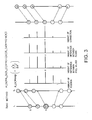
- This Xiao method is explained by referring to Fig.3 .
- a weight of filtering is calculated as a weight of connection by adding three weights, i.e., a weight of position, a weight of difference between pixel values, and a weight of difference between flows.
- Xiao proposed a flow filtering preserving a boundary of motion.
- the present invention is directed to a motion estimation apparatus and a method for correctly estimating a motion vector between a source picture and a destination picture along a temporal direction.
- an apparatus for estimating motion comprising: a division unit configured to divide a source picture into a plurality of source regions; an estimation unit configured to calculate an estimated motion vector between a first source region of the plurality of source regions and a first destination region on a destination picture, the first destination region having the highest correlation with the first source region; a weight calculation unit configured to search a plurality of second destination regions on the destination picture, each second destination region being pointed by the estimated motion vector of a second source region adjacent to the first source region, to extract pixel values of each second destination region, to calculate a difference of pixel values between the first source region and each second destination region, and to calculate a first weight based on the difference, the first weight being smaller if the difference is larger; and a filtering unit configured to calculate a motion vector of the first source region by averaging the estimated motion vectors with the first weight.
- a method for estimating motion comprising: dividing a source picture into a plurality of source regions; calculating an estimated motion vector between a first source region of the plurality of source regions and a first destination region on a destination picture, the first destination region having the highest correlation with the first source region; searching a plurality of second destination regions on the destination picture, each second destination region being pointed by the estimated motion vector of a second source region adjacent to the first source region; extracting pixel values of each second destination region; calculating a difference of pixel values between the first source region and each second destination region; calculating a weight based on the difference, the weight being smaller if the difference is larger; and calculating a motion vector of the first source region by averaging the estimated motion vectors with the weight.
- the motion estimation apparatus 10 detects a flow (motion vector) of pixels from a source picture to a destination picture, when the source picture and the destination picture are input.
- a motion vector is called a flow. Furthermore, the following descriptions are used.
- lattice space ⁇ 2 frame : X ⁇ ⁇ 2 point in frame : x ⁇ X pixel value in source picture : I 1 x pixel value in destination picture : I 2 x flow : u x ⁇ R 2 position in local region N x local neighborhood of x : s
- the motion estimation apparatus 10 includes a flow estimation unit 12 and a flow filtering unit 16.
- the flow estimation unit 12 inputs a source picture and a destination picture.
- the flow filtering unit 16 outputs a calculated flow.
- units 12, 14, and 16 are explained by referring to flow charts of Figs.1 and 6 .
- flow estimation methods include a block matching method, an optical flow method, a Pel-recursive method, and a Bayesian method.
- the block matching method is used.
- the present embodiment is not limited to this method.
- the optical flow method, the Pel-recursive method, or the Bayesian method may be used.
- the source picture is divided into a block B (i) of a rectangle region previously set.
- B i i + x ⁇ y T
- each pixel in the same block has the same flow u(x). u ⁇ i + x ⁇ u i , ⁇ x ⁇ B i
- the flow filtering unit 16 calculates a flow u'(x) by filtering (weighted average or convolution) a flow u(x) calculated by the flow estimation unit 12.
- the flow u'(x) (after filtering) is represented as follows.
- U ⁇ x ⁇ s ⁇ N x w x ⁇ s u x + s ⁇ s ⁇ N x w x ⁇ s , ⁇ x ⁇ X
- This filtering may be calculated at one time. Alternatively, this filtering may be repeatedly calculated (iteration) as follows.
- u i + 1 x ⁇ s ⁇ N x w x ⁇ s u i x + s ⁇ s ⁇ N x w x ⁇ s , ⁇ x ⁇ X
- a boundary of a flow is preserved by extending Bilateral Filtering to the flow.
- the first item is a weight of position
- the second item is a weight of difference between pixel values
- the third item is a weight of difference between flows.
- the first item the shorter a distance between an object pixel and a target pixel on the source picture is, the larger the weight is.
- the second item the smaller a difference between an object pixel value and a target pixel value on the source picture is, the larger the weight is.
- the third item the smaller a difference between an object pixel flow and a target pixel flow on the source picture is, the larger the weight is.
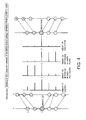
- a problem may occur.
- the source flow of a pixel x is originally an upper direction, but erroneously a lower direction.
- the weight of position and the weight of difference between pixel values are the same as in Fig. 3 , but the weight of difference between flows is different from Fig.3 .
- the weight of difference between flows ideally, a flow of black pixels adjacent to the source pixel x is desired to be convoluted with a flow of the source pixel x.
- a difference between the flow of each adjacent black pixel and the flow of the source pixel x is large. Accordingly, the weight of adjacent black pixels for the source pixel x is small.
- a difference of pixel values between adjacent white pixels and the source pixel (black) x is large.
- the weight of connection of Fig. 4 only the source pixel x has the large weight of connection. Briefly, convolution is not correctly operated, and correct weight of connection is not assigned to the source pixel x.
- a displaced pixel difference As the displaced pixel difference, a flow u(x+s) of a pixel (x+s) adjacent to the source pixel x is applied to the source pixel x. A pixel (on the destination picture I 2 ) pointed to by the flow u(x+s) from the source pixel x is determined. A difference of pixel values between the pointed pixel and the source pixel x is calculated.
- a flow u(x+s) of a pixel (x+s) adjacent to the source pixel x is applied to the source pixel x.
- a pixel (on the destination picture I 2 ) pointed to by the flow u(x+s) from the source pixel x is determined.
- a difference of pixel values between the pointed pixel and the source pixel x is calculated.
- a flow u (x+s) of a surrounding pixel (x+s) is applied to the source pixel x on the source picture I 1 .
- the flow u(x+s) points to a destination point (x+ u(x+s)) on the destination picture I 2 .
- "s" represents a pixel in a local region N(x) of the source picture I 1 , and each pixel (x+s) in the local region N(x) has respectively a flow u (x+s).
- destination points (x+u(x+s)) on the destination picture I 2 are pointed to in correspondence with each pixel (x+s).
- a pixel value I 2 (x+ u(x+u)) of each destination point (x+ u(x+s)) on the destination picture I 2 is extracted.
- a difference between the pixel value I 2 (x+u(x+s)) and a pixel value I 1 (x) of the source pixel x is calculated as the displaced pixel difference.
- the displaced pixel difference is represented as follows. I 2 ⁇ x + u ⁇ x + s - I 1 x
- a weight w(x,s) different from Xiao's method (equation (7)) is represented as follows.
- w x ⁇ s k ⁇ s s ⁇ k ⁇ l ⁇ I 1 ( x + s ) - I 1 x ) k ⁇ r ( I 2 ( x + u ⁇ x + s ) - I 1 x
- the first term (weight of position) and the second term (weight of difference between pixel values) of the right side in equation (8) are the same as in equation (7).
- the third term (weight of displaced pixel difference) of the right side in equation (8) operates differently by applying the flow u (x+s) to the source pixel x.
- the weight becomes small.
- the weight becomes large. This operation is based on a value of "I 2 (x+u(x+s))-I 1 " multiplied with a Gaussian function (minus "exp"). Because, if the displaced pixel difference is large, applying the flow u (x+s) to the source pixel x is not reliable. In this case, assume that the same object has the same pixel value I on both the source picture and the destination picture.
- the weight of displaced pixel value is calculated to be smaller for flows (including a flow of the source pixel x) directed to the lower side. In other words, only flows directed to the upper side are convoluted with the source pixel x. As a result, a flow of the source pixel x converges as a correct flow directed to the upper side.
- the flow filtering unit 16 calculates a weighted average of equation (5).
- the weight w(x,s) is calculated by equation (8).
- steps 7 ⁇ 10 as to each pixel s, a flow u (x) is calculated using the weight w(x,s).
- steps 2-10 is repeated until processing of all pixels of the source picture I 1 is completed.
- steps 2-11 are iterated until increment of the point I is completed.
- a flow of each pixel in the block is refined by flow filtering. Accordingly, the flow of each pixel can be estimated with high accuracy.
- the weight w(x,s) is calculated by the equation (8).
- a flow u(x+s) of a surrounding pixel (x+s) is not applied to the source pixel x.
- a pixel value of a destination pixel (on the destination picture I 2 ) pointed to by the flow u (x+s) from the surrounding pixel (x+s) is determined.
- a difference of pixel values between the destination pixel (x+s+u(x+s)) and the source pixel x is calculated.
- the weight of displaced pixel difference is calculated based on the difference.
- each weight is not limited to equation (8).
- the combination may be freely varied as following equation (10).
- W ( x , s ) k ⁇ s s ⁇ k ⁇ r I 2 ⁇ x + u ⁇ x + s - I 1 x
- W ( x , s ) k ⁇ l s ( I 1 ⁇ x + s ) - I 1 x ⁇ k ⁇ r ( I 2 ⁇ x + u ⁇ x + s
- W ( x , s ) k ⁇ s ⁇ k ⁇ l I 1 ( x + s ) - I 1 x ) k ⁇ v ⁇ u ( x + s - u x k ⁇ r ⁇ I 2 ⁇ x + u ⁇ x + s - I 1 x
- a weight w(x,s) of the first equation is a product of the first term and the third term (specific feature of the first embodiment) of the right side of equation (8).
- a weight w(x,s) of the second equation is a product of the second term and the third term (specific feature of the first embodiment) of the right side of equation (8).
- a weight w(x,s) of the third equation is a product of the first term and the second term of equation (8), the first term of the right side of equation (7), and the third term (specific feature of the first embodiment) of the right side of equation (8).
- the weight w(x,s) may be calculated using at least the third term of the right side of equation (8).
- the motion estimation apparatus 10 of the second embodiment is explained by referring to Figs. 7 and 8 .
- a flow is accurately calculated by iterating a flow estimation and a flow filtering.
- the motion estimation apparatus 10 includes the flow estimation unit 12, the weight calculation unit 14, and the flow filtering unit 16.
- the flow estimation unit 12 inputs a source picture and a destination picture, and the flow filtering unit 16 outputs a calculated flow.
- units 12, 14, and 16 are explained by referring to Figs.7 and 8 .
- a flow is estimated for each pixel on a picture.
- an energy of the picture is defined for each flow. If a flow conforms to the picture, the energy lowers. By minimizing the energy, the flow suitable for the picture is obtained.
- This equation represents an updated equation to progress flow estimation from u (i) (x) to u' (i) (x).
- the weight calculation unit 14 is the same as in the first embodiment. While mutually executing the flow estimation unit 12 and the flow filtering unit 16, a flow is accurately estimated by iterating as a whole.
- the flow filtering unit 16 filters a flow using a weight w (x, s) (calculated by the weight calculation unit 14) as follows.
- u i + 1 x ⁇ s ⁇ N x w x ⁇ s u ⁇ i x + s ⁇ s ⁇ N x w x ⁇ s , ⁇ x ⁇ X
- the motion estimation apparatus 10 of the third embodiment is explained by referring to Fig.1 .
- a flow is filtered for each pixel in a picture.
- a flow is filtered for each block (region) in the picture.
- lattice space ⁇ 2 frame : X ⁇ ⁇ 2 point in frame : x ⁇ X pixel value in source picture : I 1 x pixel value in destination picture : I 2 x block number for filtering : i ⁇ ⁇ 2 i - th block for filtering : B i ⁇ x flow : u x ⁇ R 2
- the flow estimation unit 12 is the same as in the first embodiment.
- the flow filtering unit 16 filters (filtering) a flow (calculated by the flow estimation unit 12). Different from the first embodiment, filtering proceeds in block-by-block (not each pixel).
- the filtering may be operated one time.
- the weight calculation unit 14 calculates a weight of filtering used by the flow filtering unit 16. Different from the first embodiment, filtering proceeds in block-by-block (not each pixel).
- a displaced pixel difference of a block is explained. First, a flow of a surrounding pixel (adjacent to a source pixel) is applied to the source pixel in the block, and a displaced pixel difference of the source pixel is calculated. This processing is repeated whenever each pixel in the block is set as a source pixel. Next, an average of the displaced pixel difference of each source pixel in the block is calculated as the displaced pixel difference of the block. The processing is then repeated for each block in the picture.
- the displaced pixel difference is added as one item of an weight.
- a filtering unit is not limited to a pixel.
- the filtering unit can be extended to a block of a predetermined size having a plurality of pixels.
Landscapes
- Engineering & Computer Science (AREA)
- Multimedia (AREA)
- Computer Vision & Pattern Recognition (AREA)
- Physics & Mathematics (AREA)
- General Physics & Mathematics (AREA)
- Theoretical Computer Science (AREA)
- Image Analysis (AREA)
- Image Processing (AREA)
Abstract
An estimation unit calculates an estimated motion vector between a first source region of a plurality of source regions and a first destination region on a destination picture. The first destination region has the highest correlation with the first source region. A weight calculation unit searches a plurality of second destination regions. Each second destination region is pointed by the estimated motion vector of another source region adjacent to the first source region. The weight calculation unit extracts pixel values of each second destination region, calculates a difference of pixel values between the first source region and each second destination region, and calculates a weight based on the difference. The weight is smaller if the difference is larger. A filtering unit calculates a motion vector of the first source region by averaging the estimated motion vectors with the weight.
Description
- The present invention relates to a motion estimation apparatus and a method for estimating a motion between two adjacent pictures in temporal direction.
- Various methods for estimating motion between two adjacent pictures in temporal direction are developed. For example, these methods include a block matching method, an optical flow method, a Pel-recursive method, and Bayesian method.
- One solving method returns the optical flow method to an anisotropic diffusion equation (an expression described by partial differential equation).
- For example, Xiao et al. proposed a method for suitably processing a boundary of motion using Bilateral Filtering. This method is disclosed in "Bilateral Filtering-Based Optical Flow Estimation with Occlusion Detection, J.Xiao, H.Cheng, H.Sawhney, C.Rao and M.Isnardi, ECCV2006".
- First, a method prior to Xiao is explained by referring to
Fig.2 . In the following explanation, a motion vector representing a motion of each pixel is called a flow. -
Fig.2 is a schematic diagram showing a flow in one-dimension. InFig.2 , a flow of each pixel between two adjacent pictures is previously estimated as shown in the left part. Furthermore, flow filtering that swung flows are clearly arranged by filtering is shown in the right part. - Next, Xiao et al. improved the prior method by a concept of Bilateral Filtering. This Xiao method is explained by referring to
Fig.3 . As shown inFig.3 , a weight of filtering is calculated as a weight of connection by adding three weights, i.e., a weight of position, a weight of difference between pixel values, and a weight of difference between flows. Briefly, Xiao proposed a flow filtering preserving a boundary of motion. - However, as shown in
Fig.4 , if a flow of a source pixel is largely erroneous, the weight of difference between flows badly affects on the weight of connection. As a result, an error flow does not converge to a correct flow. - The present invention is directed to a motion estimation apparatus and a method for correctly estimating a motion vector between a source picture and a destination picture along a temporal direction.
- According to an aspect of the present invention, there is provided an apparatus for estimating motion, comprising: a division unit configured to divide a source picture into a plurality of source regions; an estimation unit configured to calculate an estimated motion vector between a first source region of the plurality of source regions and a first destination region on a destination picture, the first destination region having the highest correlation with the first source region; a weight calculation unit configured to search a plurality of second destination regions on the destination picture, each second destination region being pointed by the estimated motion vector of a second source region adjacent to the first source region, to extract pixel values of each second destination region, to calculate a difference of pixel values between the first source region and each second destination region, and to calculate a first weight based on the difference, the first weight being smaller if the difference is larger; and a filtering unit configured to calculate a motion vector of the first source region by averaging the estimated motion vectors with the first weight.
- According to another aspect of the present invention, there is also provided a method for estimating motion, comprising: dividing a source picture into a plurality of source regions; calculating an estimated motion vector between a first source region of the plurality of source regions and a first destination region on a destination picture, the first destination region having the highest correlation with the first source region; searching a plurality of second destination regions on the destination picture, each second destination region being pointed by the estimated motion vector of a second source region adjacent to the first source region; extracting pixel values of each second destination region; calculating a difference of pixel values between the first source region and each second destination region; calculating a weight based on the difference, the weight being smaller if the difference is larger; and calculating a motion vector of the first source region by averaging the estimated motion vectors with the weight.
-
-
Fig.1 is a block diagram of the motion estimation apparatus according to the first embodiment. -
Fig.2 is a schematic diagram of a flow filtering method according to the prior art. -
Fig.3 is a schematic diagram of a flow filtering according to the Xiao method. -
Fig.4 is a schematic diagram of a problem the flow filtering according to the Xiao method. -
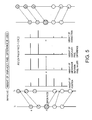
Fig.5 is a schematic diagram of a flow filtering using displacement according to the first embodiment. -
Fig.6 is a flow chart of processing of the motion estimation apparatus according to the first embodiment. -
Fig.7 is a block diagram of the motion estimation apparatus according to the second embodiment. -
Fig. 8 is a schematic diagram of a flow chart of processing of the motion estimation apparatus according to the second embodiment. - Hereinafter, various embodiments of the present invention will be explained by referring to the drawings. The present invention is not limited to the following embodiments.
- Hereafter, the
motion estimation apparatus 10 of the first embodiment is explained by referring toFigs.1 ,5 , and6 . Themotion estimation apparatus 10 detects a flow (motion vector) of pixels from a source picture to a destination picture, when the source picture and the destination picture are input. - In the following embodiments, a motion vector is called a flow. Furthermore, the following descriptions are used.

- Components of the
motion estimation apparatus 10 are explained by referring toFig.1 . Themotion estimation apparatus 10 includes aflow estimation unit 12 and aflow filtering unit 16. The flow estimation unit 12 inputs a source picture and a destination picture. Theflow filtering unit 16 outputs a calculated flow. Hereafter,units Figs.1 and6 . - An estimation method of a flow u(x) by the
flow estimation unit 12 is explained. In general, flow estimation methods include a block matching method, an optical flow method, a Pel-recursive method, and a Bayesian method. In the present embodiment, the block matching method is used. However, the present embodiment is not limited to this method. The optical flow method, the Pel-recursive method, or the Bayesian method may be used. - The source picture is divided into a block B (i) of a rectangle region previously set.

- i∈X: left upper point in block
- M1, M2: x size and y size of block
- W⊂X: region for motion search
- Then, a block matching algorithm based on SSD (Sum of Squared Difference) is represented as follows.

- u(i)∈X: flow of block i
- As to the block matching, it is assumed that each pixel in the same block has the same flow u(x).

- Function of the
flow filtering unit 16 is explained. Theflow filtering unit 16 calculates a flow u'(x) by filtering (weighted average or convolution) a flow u(x) calculated by theflow estimation unit 12. The flow u'(x) (after filtering) is represented as follows.
- N(x)⊂X: local neighborhood for filtering
- W(x,s): weight of filtering (determined by weight calculation)
- This filtering may be calculated at one time. Alternatively, this filtering may be repeatedly calculated (iteration) as follows.

- (i), (i+1): iteration
- u(0) (x) = u(x), ∀x∈X
- In this way, filtering with higher accuracy can be operated by iteration.
- Function of the
weight calculation unit 14 is explained. Theweight calculation unit 14 calculates a weight w(x,s) for weighted average used by theflow filtering unit 16. As shown inFig.3 , Xiao et al. uses a weight w(x,s) as follows.
-

- σ : standard deviation
- As shown in
Fig.3 , Xiao filtering, a boundary of a flow is preserved by extending Bilateral Filtering to the flow. - In equation (7), the first item is a weight of position, the second item is a weight of difference between pixel values, and the third item is a weight of difference between flows. As to the first item, the shorter a distance between an object pixel and a target pixel on the source picture is, the larger the weight is. As to the second item, the smaller a difference between an object pixel value and a target pixel value on the source picture is, the larger the weight is. As to the third item, the smaller a difference between an object pixel flow and a target pixel flow on the source picture is, the larger the weight is. As a result, in
Fig. 3 , a boundary of a flow of the pixel x on the source picture I1 is preserved on the destination picture I2. - However, as shown in
Fig.4 , if the boundary of the flow is large, a problem may occur. The case that a source flow of filtering is erroneous is explained. InFig.4 , the source flow of a pixel x is originally an upper direction, but erroneously a lower direction. In this case, the weight of position and the weight of difference between pixel values are the same as inFig. 3 , but the weight of difference between flows is different fromFig.3 . - As to the weight of difference between flows, ideally, a flow of black pixels adjacent to the source pixel x is desired to be convoluted with a flow of the source pixel x. However, a difference between the flow of each adjacent black pixel and the flow of the source pixel x is large. Accordingly, the weight of adjacent black pixels for the source pixel x is small. Furthermore, as to the weight of difference between pixel values, a difference of pixel values between adjacent white pixels and the source pixel (black) x is large. As a result, as shown in the weight of connection of
Fig. 4 , only the source pixel x has the large weight of connection. Briefly, convolution is not correctly operated, and correct weight of connection is not assigned to the source pixel x. - In the present embodiment, the above problem is avoided by a displaced pixel difference. As the displaced pixel difference, a flow u(x+s) of a pixel (x+s) adjacent to the source pixel x is applied to the source pixel x. A pixel (on the destination picture I2) pointed to by the flow u(x+s) from the source pixel x is determined. A difference of pixel values between the pointed pixel and the source pixel x is calculated. One example is explained as follows.
- First, a flow u (x+s) of a surrounding pixel (x+s) (adjacent to the source pixel x) is applied to the source pixel x on the source picture I1. Briefly, by setting the source pixel x as a start point, the flow u(x+s) points to a destination point (x+ u(x+s)) on the destination picture I2. In
Fig.4 , "s" represents a pixel in a local region N(x) of the source picture I1, and each pixel (x+s) in the local region N(x) has respectively a flow u (x+s). Accordingly, by respectively applying the flow u(x+s) to the source pixel x, destination points (x+u(x+s)) on the destination picture I2 are pointed to in correspondence with each pixel (x+s). - Next, a pixel value I2 (x+ u(x+u)) of each destination point (x+ u(x+s)) on the destination picture I2 is extracted. Last, a difference between the pixel value I2 (x+u(x+s)) and a pixel value I1(x) of the source pixel x is calculated as the displaced pixel difference.
- The displaced pixel difference is represented as follows.

- By replacing the third term of the right side in the equation (7) with the displaced pixel difference as one weight, a weight w(x,s) different from Xiao's method (equation (7)) is represented as follows.

- Improvement effect by the displaced pixel difference is explained using
Fig.5 . The first term (weight of position) and the second term (weight of difference between pixel values) of the right side in equation (8) are the same as in equation (7). The third term (weight of displaced pixel difference) of the right side in equation (8) operates differently by applying the flow u (x+s) to the source pixel x. When the displaced pixel difference becomes large, the weight becomes small. On the other hand, when the displaced pixel difference becomes small, the weight becomes large. This operation is based on a value of "I2(x+u(x+s))-I1" multiplied with a Gaussian function (minus "exp"). Because, if the displaced pixel difference is large, applying the flow u (x+s) to the source pixel x is not reliable. In this case, assume that the same object has the same pixel value I on both the source picture and the destination picture. - In case of
Fig.5 , the weight of displaced pixel value is calculated to be smaller for flows (including a flow of the source pixel x) directed to the lower side. In other words, only flows directed to the upper side are convoluted with the source pixel x. As a result, a flow of the source pixel x converges as a correct flow directed to the upper side. By using the weight w(x,s), theflow filtering unit 16 calculates a weighted average of equation (5). - Processing contents of the
motion estimation apparatus 10 are explained by referring toFig.6 . - First, at
step 1, a point "i=0" is set as an initial value. Next, at steps 2~6, as to each pixel s in the local region N(x), the weight w(x,s) is calculated by equation (8). Next, at steps 7~10, as to each pixel s, a flow u (x) is calculated using the weight w(x,s). Next, atstep 11, processing of steps 2-10 is repeated until processing of all pixels of the source picture I1 is completed. Last, atstep 13, steps 2-11 are iterated until increment of the point I is completed. - In the first embodiment, after calculating a flow of a block by the block matching method, a flow of each pixel in the block is refined by flow filtering. Accordingly, the flow of each pixel can be estimated with high accuracy.
- In the first embodiment, the weight w(x,s) is calculated by the equation (8). However, in order to simplify the calculation, the weight w(x,s) may be calculated by following equation.

- In equation (9), a destination pixel value "I2 (x+s+u(x+s))" is collectively determined.
- For example, a flow u(x+s) of a surrounding pixel (x+s) (adjacent to the source pixel x) is not applied to the source pixel x. A pixel value of a destination pixel (on the destination picture I2) pointed to by the flow u (x+s) from the surrounding pixel (x+s) is determined. A difference of pixel values between the destination pixel (x+s+u(x+s)) and the source pixel x is calculated. The weight of displaced pixel difference is calculated based on the difference. As a result, flow filtering can be quickly calculated.
- The combination of each weight is not limited to equation (8). The combination may be freely varied as following equation (10).

- In equation (10), a weight w(x,s) of the first equation is a product of the first term and the third term (specific feature of the first embodiment) of the right side of equation (8). A weight w(x,s) of the second equation is a product of the second term and the third term (specific feature of the first embodiment) of the right side of equation (8). A weight w(x,s) of the third equation is a product of the first term and the second term of equation (8), the first term of the right side of equation (7), and the third term (specific feature of the first embodiment) of the right side of equation (8). In this way, the weight w(x,s) may be calculated using at least the third term of the right side of equation (8).
- The
motion estimation apparatus 10 of the second embodiment is explained by referring toFigs. 7 and8 . In the second embodiment, as shown by Xiao, a flow is accurately calculated by iterating a flow estimation and a flow filtering. - Components of the
motion estimation apparatus 10 are explained by referring toFig. 7 . Themotion estimation apparatus 10 includes theflow estimation unit 12, theweight calculation unit 14, and theflow filtering unit 16. Theflow estimation unit 12 inputs a source picture and a destination picture, and theflow filtering unit 16 outputs a calculated flow. Hereafter,units Figs.7 and8 . - In the second embodiment, a flow is estimated for each pixel on a picture. Concretely, an energy of the picture is defined for each flow. If a flow conforms to the picture, the energy lowers. By minimizing the energy, the flow suitable for the picture is obtained.
- First, the energy of the picture is defined as follows.

- In this case, "I2(x+u(x))" is approximated with first order by Tailor expansion as follows.

- ∇I: average gradient of I1 and I2
- It: temporal differentiation
- The equation (12) corresponds to an optical flow constraint equation. All energy U of the picture is represented as follows.

- A flow to minimize the all energy is a solution of "min U(u)". By applying a steepest descent method, the flow is represented as follows.

- This equation represents an updated equation to progress flow estimation from u(i) (x) to u'(i) (x).
- The
weight calculation unit 14 is the same as in the first embodiment. While mutually executing theflow estimation unit 12 and theflow filtering unit 16, a flow is accurately estimated by iterating as a whole. - The
flow filtering unit 16 filters a flow using a weight w (x, s) (calculated by the weight calculation unit 14) as follows.
- The
motion estimation apparatus 10 of the third embodiment is explained by referring toFig.1 . In the first embodiment, a flow is filtered for each pixel in a picture. However, in the third embodiment, a flow is filtered for each block (region) in the picture. - Following descriptions are used.
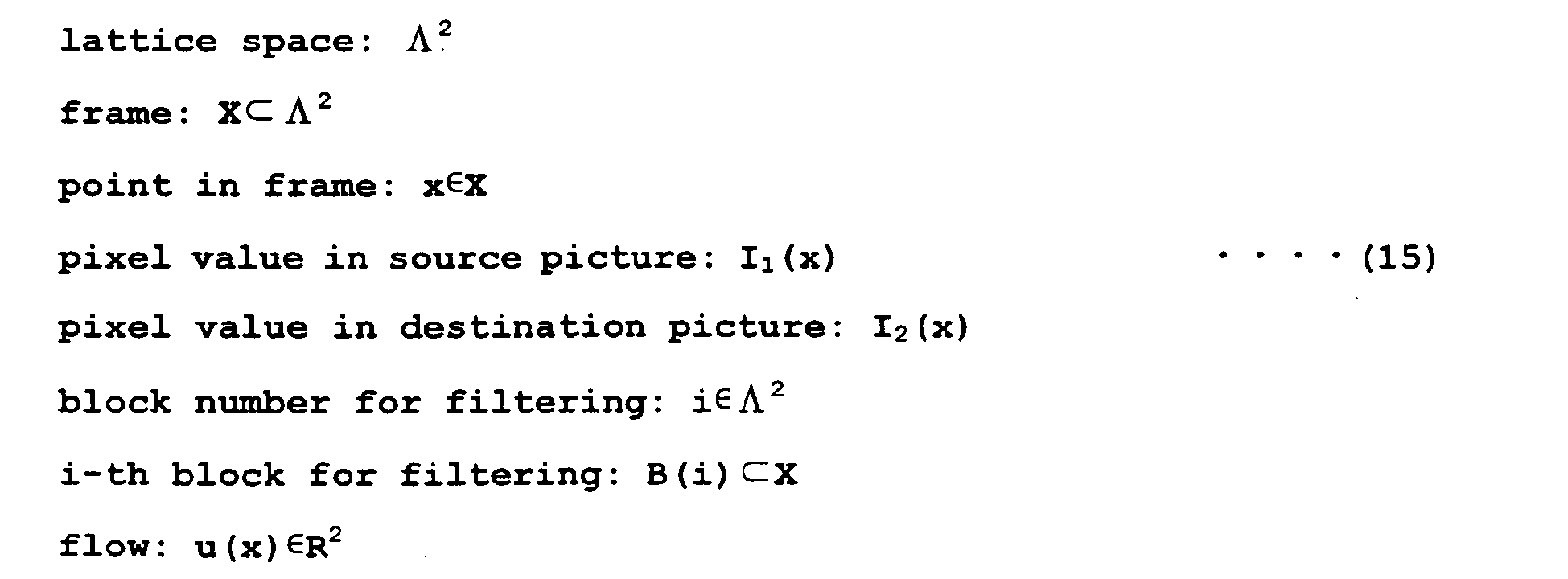
- The
flow estimation unit 12 is the same as in the first embodiment. - The
flow filtering unit 16 filters (filtering) a flow (calculated by the flow estimation unit 12). Different from the first embodiment, filtering proceeds in block-by-block (not each pixel). A flow u' (x) is represented after filtering as follows.
- N(i)⊂x: local neighborhood for filtering
- w(i,s): weight of filtering (by weight calculation step)
- As to equation (16), the filtering may be operated one time. Alternatively, the filtering may be operated by iteration as follows.

- (n), (n+1) : iteration
- u(0) (i) = u(i), ∀i∈Λ
- In this way, filtering can be accurately operated by iteration.
- The
weight calculation unit 14 calculates a weight of filtering used by theflow filtering unit 16. Different from the first embodiment, filtering proceeds in block-by-block (not each pixel). - A displaced pixel difference of a block is explained. First, a flow of a surrounding pixel (adjacent to a source pixel) is applied to the source pixel in the block, and a displaced pixel difference of the source pixel is calculated. This processing is repeated whenever each pixel in the block is set as a source pixel. Next, an average of the displaced pixel difference of each source pixel in the block is calculated as the displaced pixel difference of the block. The processing is then repeated for each block in the picture.
- An equation to calculate the displaced pixel difference of the block is represented as follows.

- Num(B(i)): number of pixels in block B(i)
- The displaced pixel difference is added as one item of an weight. An equation to calculate the weight is represented as follows.
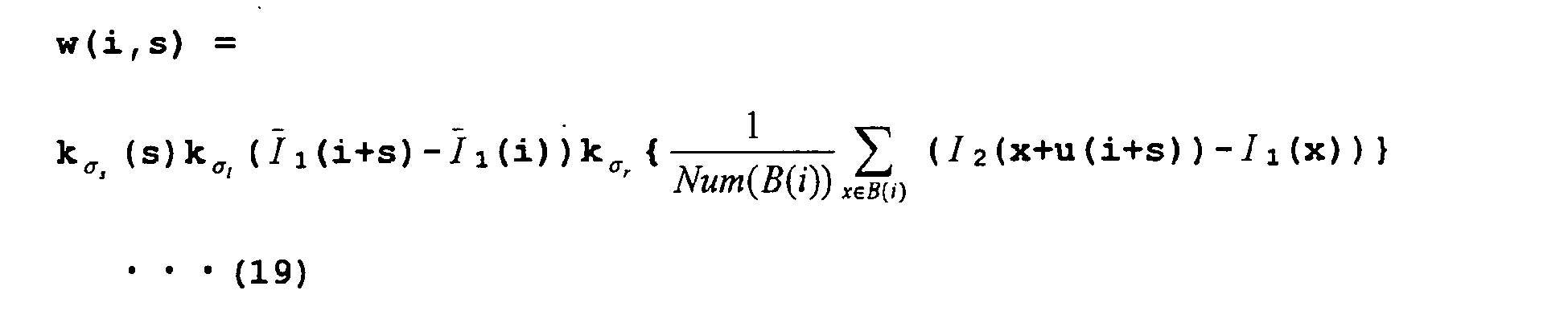
-
I 1 (i) :average pixel value in block,
- As to the equation (19), weight calculation of a pixel in the first embodiment is extended to a block. Actually, in case of "1 × 1" block, i.e., if a pixel is regarded as a block, "i=x, B(i)={x}" is concluded, and the weight of the equation (19) in equivalent to the weight of the first embodiment. Briefly, a filtering unit is not limited to a pixel. The filtering unit can be extended to a block of a predetermined size having a plurality of pixels.
Claims (11)
- An apparatus for estimating motion, comprising:a division unit configured to divide a source picture into a plurality of source regions;an estimation unit configured to calculate an estimated motion vector between a first source region of the plurality of source regions and a first destination region on a destination picture, the first destination region having the highest correlation with the first source region;a weight calculation unit configured to search a plurality of second destination regions on the destination picture, each second destination region being pointed by the estimated motion vector of a second source region adjacent to the first source region, to extract pixel values of each second destination region, to calculate a difference of pixel values between the first source region and each second destination region, and to calculate a first weight based on the difference, the first weight being smaller if the difference is larger; anda filtering unit configured to calculate a motion vector of the first source region by averaging the estimated motion vectors with the first weight.
- The apparatus according to claim 1,
wherein the weight calculation unit applies the estimated motion vector of the second source region to the first source region as a start point on the source picture, and searches the second destination region pointed by the estimated motion vector on the destination picture. - The apparatus according to claim 1,
wherein the weight calculation unit calculates a second weight being smaller if the first source region is more depart from the second source region on the source picture, and calculates a product of the first weight and the second weight for weighted average of the estimated motion vectors. - The apparatus according to claim 1,
wherein the weight calculation unit calculates a third weight being smaller if a difference of the pixel values between the first source region and the first destination region is larger, and calculates a product of the first weight and the third weight for weighted average of the estimated motion vectors. - The apparatus according to claim 1,
wherein the weight calculation unit calculates a fourth weight being smaller if a difference of the estimated motion vector between the first source region and the second source region, and calculates a product of the first weight and the fourth weight for weighted average of the estimated motion vectors. - The apparatus according to claim 1,
wherein the filtering unit calculates the motion vector by repeatedly averaging with weight. - The apparatus according to claim 1,
wherein calculation of the estimated motion vector by the estimation unit and calculation of the motion vector by the filtering unit are mutually repeated. - The apparatus according to claim 1,
wherein the estimation unit calculates the estimated motion vector by the block matching method. - The apparatus according to claim 1,
wherein the estimation unit minimizes the estimated motion vector by updating an energy along a descend direction, and
the energy is determined by a difference of pixel values between the first source region and the first destination region. - The apparatus according to claim 1,
wherein the first source region and the first destination region comprises blocks equally having one pixel or a plurality of pixels. - A method for estimating motion, comprising:dividing a source picture into a plurality of source regions;calculating an estimated motion vector between a first source region of the plurality of source regions and a first destination region on a destination picture, the first destination region having the highest correlation with the first source region;searching a plurality of second destination regions on the destination picture, each second destination region being pointed by the estimated motion vector of a second source region adjacent to the first source region;extracting pixel values of each second destination region;calculating a difference of pixel values between the first source region and each second destination region;calculating a weight based on the difference, the weight being smaller if the difference is larger; andcalculating a motion vector of the first source region by averaging the estimated motion vectors with the weight.
Applications Claiming Priority (1)
| Application Number | Priority Date | Filing Date | Title |
|---|---|---|---|
| JP2007067470A JP4709794B2 (en) | 2007-03-15 | 2007-03-15 | Motion estimation apparatus and method |
Publications (1)
| Publication Number | Publication Date |
|---|---|
| EP1970861A2 true EP1970861A2 (en) | 2008-09-17 |
Family
ID=39591130
Family Applications (1)
| Application Number | Title | Priority Date | Filing Date |
|---|---|---|---|
| EP20080004560 Withdrawn EP1970861A2 (en) | 2007-03-15 | 2008-03-12 | Motion estimation apparatus and method |
Country Status (4)
| Country | Link |
|---|---|
| US (1) | US8019123B2 (en) |
| EP (1) | EP1970861A2 (en) |
| JP (1) | JP4709794B2 (en) |
| CN (1) | CN101266688A (en) |
Families Citing this family (7)
| Publication number | Priority date | Publication date | Assignee | Title |
|---|---|---|---|---|
| JP2009081574A (en) * | 2007-09-25 | 2009-04-16 | Toshiba Corp | Image processing apparatus, method, and program |
| US8711938B2 (en) * | 2009-09-04 | 2014-04-29 | Sharp Laboratories Of America, Inc. | Methods and systems for motion estimation with nonlinear motion-field smoothing |
| KR101630688B1 (en) | 2010-02-17 | 2016-06-16 | 삼성전자주식회사 | Apparatus for motion estimation and method thereof and image processing apparatus |
| JP2014093602A (en) | 2012-11-01 | 2014-05-19 | Toshiba Corp | Image processing device, image processing method, image processing program, and stereoscopic image display device |
| US9836831B1 (en) * | 2014-07-30 | 2017-12-05 | Google Inc. | Simulating long-exposure images |
| CN105894460A (en) * | 2015-12-14 | 2016-08-24 | 乐视云计算有限公司 | Image filtering method and device |
| JP6453837B2 (en) * | 2016-12-08 | 2019-01-16 | 株式会社東芝 | Image processing apparatus, image processing method, image processing program, and stereoscopic image display apparatus |
Family Cites Families (11)
| Publication number | Priority date | Publication date | Assignee | Title |
|---|---|---|---|---|
| JPH06209466A (en) * | 1992-10-07 | 1994-07-26 | Canon Inc | Motion vector detector |
| JPH104555A (en) * | 1996-06-17 | 1998-01-06 | Oki Electric Ind Co Ltd | Motion vector detector |
| US6438254B1 (en) * | 1999-03-17 | 2002-08-20 | Matsushita Electric Industrial Co., Ltd. | Motion vector detection method, motion vector detection apparatus, and data storage media |
| JP3979894B2 (en) * | 2002-07-22 | 2007-09-19 | 本田技研工業株式会社 | Object detection apparatus and method |
| US7356172B2 (en) * | 2002-09-26 | 2008-04-08 | Siemens Medical Solutions Usa, Inc. | Methods and systems for motion tracking |
| JP4622265B2 (en) * | 2004-03-01 | 2011-02-02 | ソニー株式会社 | Motion vector detection device, motion vector detection method, and program |
| JP4271115B2 (en) * | 2004-09-29 | 2009-06-03 | 株式会社東芝 | Image matching apparatus, image matching method, and image matching program |
| EP1843294B1 (en) * | 2005-01-14 | 2010-09-15 | Morpho Inc. | Motion vector calculation method, hand-movement correction device using the method, imaging device, and motion picture generation device |
| JP2006260527A (en) * | 2005-02-16 | 2006-09-28 | Toshiba Corp | Image matching method and image interpolation method using the same |
| JP4398919B2 (en) * | 2005-08-22 | 2010-01-13 | 株式会社東芝 | Image matching apparatus, image matching method, and image matching program |
| US20070140529A1 (en) * | 2005-12-21 | 2007-06-21 | Fujifilm Corporation | Method and device for calculating motion vector between two images and program of calculating motion vector between two images |
-
2007
- 2007-03-15 JP JP2007067470A patent/JP4709794B2/en active Active
-
2008
- 2008-03-12 EP EP20080004560 patent/EP1970861A2/en not_active Withdrawn
- 2008-03-14 US US12/048,887 patent/US8019123B2/en active Active
- 2008-03-14 CN CNA2008100836573A patent/CN101266688A/en active Pending
Non-Patent Citations (1)
| Title |
|---|
| J.XIAO ET AL.: "Bilateral Filtering-Based Optical Flow Estimation with Occlusion Detection", ECCV2006 |
Also Published As
| Publication number | Publication date |
|---|---|
| JP4709794B2 (en) | 2011-06-22 |
| US8019123B2 (en) | 2011-09-13 |
| US20080226193A1 (en) | 2008-09-18 |
| CN101266688A (en) | 2008-09-17 |
| JP2008226187A (en) | 2008-09-25 |
Similar Documents
| Publication | Publication Date | Title |
|---|---|---|
| EP4184431A1 (en) | Information processing device, information processing method, and program | |
| US9111356B2 (en) | Image segmentation method using higher-order clustering, system for processing the same and recording medium for storing the same | |
| US8908967B2 (en) | Image processing method using foreground probability | |
| US8019123B2 (en) | Motion estimation apparatus and method | |
| US20070041664A1 (en) | Image processing method, image processing apparatus, program and recording medium | |
| US9047673B2 (en) | Apparatus and method for extracting target, and recording medium storing program for performing the method | |
| US20160165178A1 (en) | Super-resolution of dynamic scenes using sampling rate diversity | |
| US9324135B2 (en) | Image processing system, image processing method, and image processing program | |
| US8503732B2 (en) | Image generating device, static text detecting device and method thereof | |
| EP2916537B1 (en) | Image processing device | |
| US20200342598A1 (en) | Image diagnosis support system and image diagnosis support method | |
| EP3493157B1 (en) | Method and system for visual change detection using multi-scale analysis | |
| EP2851867A2 (en) | Method and apparatus for filtering an image | |
| US10038913B2 (en) | Image processing apparatus, image processing method, and image processing program | |
| EP3945465B1 (en) | Method, electronic apparatus and storage medium for detecting a static logo of a video | |
| CN110751671B (en) | Target tracking method based on kernel correlation filtering and motion estimation | |
| CN107924568B (en) | Image processing apparatus, image processing method, and storage medium | |
| CN106909935B (en) | Target tracking method and device | |
| US9002132B2 (en) | Depth image noise removal apparatus and method based on camera pose | |
| US20200293813A1 (en) | Image recognition model generating device, image recognition model generating method, and image recognition model generating program storing medium | |
| US20130064451A1 (en) | Image conversion parameter calculation device, image conversion parameter calculation method, and program | |
| US9196025B2 (en) | Image processing apparatus, image processing method and image processing program | |
| EP3121788A1 (en) | Image feature estimation method and device | |
| US9280807B2 (en) | Degradation restoration system, degradation restoration method and program | |
| CN111931754A (en) | Method and system for identifying target object in sample and readable storage medium |
Legal Events
| Date | Code | Title | Description |
|---|---|---|---|
| PUAI | Public reference made under article 153(3) epc to a published international application that has entered the european phase |
Free format text: ORIGINAL CODE: 0009012 |
|
| 17P | Request for examination filed |
Effective date: 20080312 |
|
| AK | Designated contracting states |
Kind code of ref document: A2 Designated state(s): AT BE BG CH CY CZ DE DK EE ES FI FR GB GR HR HU IE IS IT LI LT LU LV MC MT NL NO PL PT RO SE SI SK TR |
|
| AX | Request for extension of the european patent |
Extension state: AL BA MK RS |
|
| STAA | Information on the status of an ep patent application or granted ep patent |
Free format text: STATUS: THE APPLICATION HAS BEEN WITHDRAWN |
|
| 18W | Application withdrawn |
Effective date: 20100114 |