EP1970400A1 - Stimuli-responsive degradable gel - Google Patents
Stimuli-responsive degradable gel Download PDFInfo
- Publication number
- EP1970400A1 EP1970400A1 EP06833262A EP06833262A EP1970400A1 EP 1970400 A1 EP1970400 A1 EP 1970400A1 EP 06833262 A EP06833262 A EP 06833262A EP 06833262 A EP06833262 A EP 06833262A EP 1970400 A1 EP1970400 A1 EP 1970400A1
- Authority
- EP
- European Patent Office
- Prior art keywords
- poly
- hydrogel
- water
- decomposition
- cystamine
- Prior art date
- Legal status (The legal status is an assumption and is not a legal conclusion. Google has not performed a legal analysis and makes no representation as to the accuracy of the status listed.)
- Granted
Links
Images



Classifications
-
- C—CHEMISTRY; METALLURGY
- C12—BIOCHEMISTRY; BEER; SPIRITS; WINE; VINEGAR; MICROBIOLOGY; ENZYMOLOGY; MUTATION OR GENETIC ENGINEERING
- C12N—MICROORGANISMS OR ENZYMES; COMPOSITIONS THEREOF; PROPAGATING, PRESERVING, OR MAINTAINING MICROORGANISMS; MUTATION OR GENETIC ENGINEERING; CULTURE MEDIA
- C12N5/00—Undifferentiated human, animal or plant cells, e.g. cell lines; Tissues; Cultivation or maintenance thereof; Culture media therefor
- C12N5/0068—General culture methods using substrates
-
- A—HUMAN NECESSITIES
- A61—MEDICAL OR VETERINARY SCIENCE; HYGIENE
- A61L—METHODS OR APPARATUS FOR STERILISING MATERIALS OR OBJECTS IN GENERAL; DISINFECTION, STERILISATION OR DEODORISATION OF AIR; CHEMICAL ASPECTS OF BANDAGES, DRESSINGS, ABSORBENT PADS OR SURGICAL ARTICLES; MATERIALS FOR BANDAGES, DRESSINGS, ABSORBENT PADS OR SURGICAL ARTICLES
- A61L27/00—Materials for grafts or prostheses or for coating grafts or prostheses
- A61L27/36—Materials for grafts or prostheses or for coating grafts or prostheses containing ingredients of undetermined constitution or reaction products thereof, e.g. transplant tissue, natural bone, extracellular matrix
- A61L27/38—Materials for grafts or prostheses or for coating grafts or prostheses containing ingredients of undetermined constitution or reaction products thereof, e.g. transplant tissue, natural bone, extracellular matrix containing added animal cells
-
- A—HUMAN NECESSITIES
- A61—MEDICAL OR VETERINARY SCIENCE; HYGIENE
- A61L—METHODS OR APPARATUS FOR STERILISING MATERIALS OR OBJECTS IN GENERAL; DISINFECTION, STERILISATION OR DEODORISATION OF AIR; CHEMICAL ASPECTS OF BANDAGES, DRESSINGS, ABSORBENT PADS OR SURGICAL ARTICLES; MATERIALS FOR BANDAGES, DRESSINGS, ABSORBENT PADS OR SURGICAL ARTICLES
- A61L27/00—Materials for grafts or prostheses or for coating grafts or prostheses
- A61L27/50—Materials characterised by their function or physical properties, e.g. injectable or lubricating compositions, shape-memory materials, surface modified materials
-
- A—HUMAN NECESSITIES
- A61—MEDICAL OR VETERINARY SCIENCE; HYGIENE
- A61L—METHODS OR APPARATUS FOR STERILISING MATERIALS OR OBJECTS IN GENERAL; DISINFECTION, STERILISATION OR DEODORISATION OF AIR; CHEMICAL ASPECTS OF BANDAGES, DRESSINGS, ABSORBENT PADS OR SURGICAL ARTICLES; MATERIALS FOR BANDAGES, DRESSINGS, ABSORBENT PADS OR SURGICAL ARTICLES
- A61L27/00—Materials for grafts or prostheses or for coating grafts or prostheses
- A61L27/50—Materials characterised by their function or physical properties, e.g. injectable or lubricating compositions, shape-memory materials, surface modified materials
- A61L27/52—Hydrogels or hydrocolloids
-
- A—HUMAN NECESSITIES
- A61—MEDICAL OR VETERINARY SCIENCE; HYGIENE
- A61L—METHODS OR APPARATUS FOR STERILISING MATERIALS OR OBJECTS IN GENERAL; DISINFECTION, STERILISATION OR DEODORISATION OF AIR; CHEMICAL ASPECTS OF BANDAGES, DRESSINGS, ABSORBENT PADS OR SURGICAL ARTICLES; MATERIALS FOR BANDAGES, DRESSINGS, ABSORBENT PADS OR SURGICAL ARTICLES
- A61L27/00—Materials for grafts or prostheses or for coating grafts or prostheses
- A61L27/50—Materials characterised by their function or physical properties, e.g. injectable or lubricating compositions, shape-memory materials, surface modified materials
- A61L27/58—Materials at least partially resorbable by the body
-
- C—CHEMISTRY; METALLURGY
- C08—ORGANIC MACROMOLECULAR COMPOUNDS; THEIR PREPARATION OR CHEMICAL WORKING-UP; COMPOSITIONS BASED THEREON
- C08B—POLYSACCHARIDES; DERIVATIVES THEREOF
- C08B37/00—Preparation of polysaccharides not provided for in groups C08B1/00 - C08B35/00; Derivatives thereof
- C08B37/0006—Homoglycans, i.e. polysaccharides having a main chain consisting of one single sugar, e.g. colominic acid
- C08B37/0024—Homoglycans, i.e. polysaccharides having a main chain consisting of one single sugar, e.g. colominic acid beta-D-Glucans; (beta-1,3)-D-Glucans, e.g. paramylon, coriolan, sclerotan, pachyman, callose, scleroglucan, schizophyllan, laminaran, lentinan or curdlan; (beta-1,6)-D-Glucans, e.g. pustulan; (beta-1,4)-D-Glucans; (beta-1,3)(beta-1,4)-D-Glucans, e.g. lichenan; Derivatives thereof
- C08B37/0027—2-Acetamido-2-deoxy-beta-glucans; Derivatives thereof
- C08B37/003—Chitin, i.e. 2-acetamido-2-deoxy-(beta-1,4)-D-glucan or N-acetyl-beta-1,4-D-glucosamine; Chitosan, i.e. deacetylated product of chitin or (beta-1,4)-D-glucosamine; Derivatives thereof
-
- C—CHEMISTRY; METALLURGY
- C08—ORGANIC MACROMOLECULAR COMPOUNDS; THEIR PREPARATION OR CHEMICAL WORKING-UP; COMPOSITIONS BASED THEREON
- C08B—POLYSACCHARIDES; DERIVATIVES THEREOF
- C08B37/00—Preparation of polysaccharides not provided for in groups C08B1/00 - C08B35/00; Derivatives thereof
- C08B37/006—Heteroglycans, i.e. polysaccharides having more than one sugar residue in the main chain in either alternating or less regular sequence; Gellans; Succinoglycans; Arabinogalactans; Tragacanth or gum tragacanth or traganth from Astragalus; Gum Karaya from Sterculia urens; Gum Ghatti from Anogeissus latifolia; Derivatives thereof
- C08B37/0084—Guluromannuronans, e.g. alginic acid, i.e. D-mannuronic acid and D-guluronic acid units linked with alternating alpha- and beta-1,4-glycosidic bonds; Derivatives thereof, e.g. alginates
-
- C—CHEMISTRY; METALLURGY
- C08—ORGANIC MACROMOLECULAR COMPOUNDS; THEIR PREPARATION OR CHEMICAL WORKING-UP; COMPOSITIONS BASED THEREON
- C08J—WORKING-UP; GENERAL PROCESSES OF COMPOUNDING; AFTER-TREATMENT NOT COVERED BY SUBCLASSES C08B, C08C, C08F, C08G or C08H
- C08J3/00—Processes of treating or compounding macromolecular substances
- C08J3/02—Making solutions, dispersions, lattices or gels by other methods than by solution, emulsion or suspension polymerisation techniques
- C08J3/03—Making solutions, dispersions, lattices or gels by other methods than by solution, emulsion or suspension polymerisation techniques in aqueous media
- C08J3/075—Macromolecular gels
-
- C—CHEMISTRY; METALLURGY
- C12—BIOCHEMISTRY; BEER; SPIRITS; WINE; VINEGAR; MICROBIOLOGY; ENZYMOLOGY; MUTATION OR GENETIC ENGINEERING
- C12N—MICROORGANISMS OR ENZYMES; COMPOSITIONS THEREOF; PROPAGATING, PRESERVING, OR MAINTAINING MICROORGANISMS; MUTATION OR GENETIC ENGINEERING; CULTURE MEDIA
- C12N5/00—Undifferentiated human, animal or plant cells, e.g. cell lines; Tissues; Cultivation or maintenance thereof; Culture media therefor
- C12N5/0062—General methods for three-dimensional culture
-
- C—CHEMISTRY; METALLURGY
- C08—ORGANIC MACROMOLECULAR COMPOUNDS; THEIR PREPARATION OR CHEMICAL WORKING-UP; COMPOSITIONS BASED THEREON
- C08J—WORKING-UP; GENERAL PROCESSES OF COMPOUNDING; AFTER-TREATMENT NOT COVERED BY SUBCLASSES C08B, C08C, C08F, C08G or C08H
- C08J2305/00—Characterised by the use of polysaccharides or of their derivatives not provided for in groups C08J2301/00 or C08J2303/00
- C08J2305/04—Alginic acid; Derivatives thereof
-
- C—CHEMISTRY; METALLURGY
- C08—ORGANIC MACROMOLECULAR COMPOUNDS; THEIR PREPARATION OR CHEMICAL WORKING-UP; COMPOSITIONS BASED THEREON
- C08J—WORKING-UP; GENERAL PROCESSES OF COMPOUNDING; AFTER-TREATMENT NOT COVERED BY SUBCLASSES C08B, C08C, C08F, C08G or C08H
- C08J2305/00—Characterised by the use of polysaccharides or of their derivatives not provided for in groups C08J2301/00 or C08J2303/00
- C08J2305/08—Chitin; Chondroitin sulfate; Hyaluronic acid; Derivatives thereof
-
- C—CHEMISTRY; METALLURGY
- C08—ORGANIC MACROMOLECULAR COMPOUNDS; THEIR PREPARATION OR CHEMICAL WORKING-UP; COMPOSITIONS BASED THEREON
- C08J—WORKING-UP; GENERAL PROCESSES OF COMPOUNDING; AFTER-TREATMENT NOT COVERED BY SUBCLASSES C08B, C08C, C08F, C08G or C08H
- C08J2377/00—Characterised by the use of polyamides obtained by reactions forming a carboxylic amide link in the main chain; Derivatives of such polymers
- C08J2377/04—Polyamides derived from alpha-amino carboxylic acids
-
- C—CHEMISTRY; METALLURGY
- C12—BIOCHEMISTRY; BEER; SPIRITS; WINE; VINEGAR; MICROBIOLOGY; ENZYMOLOGY; MUTATION OR GENETIC ENGINEERING
- C12N—MICROORGANISMS OR ENZYMES; COMPOSITIONS THEREOF; PROPAGATING, PRESERVING, OR MAINTAINING MICROORGANISMS; MUTATION OR GENETIC ENGINEERING; CULTURE MEDIA
- C12N2533/00—Supports or coatings for cell culture, characterised by material
- C12N2533/30—Synthetic polymers
Definitions
- the present invention relates to a hydrogel, more specifically, to a reductive-stimuli-responsive degradable gel.
- transplantation therapy and reconstructive surgical therapy are mainly practiced in surgical medicine, but there is a persistent problem of unavailability of sufficient donors, and these therapies have a larger load on patients and often demanded repeated surgery. For these reasons, a third therapy, i.e., regeneration therapy, is attracting attention and highly expected.
- Non-patent Documents 1, 2 and 3 In abroad, Desai et al. in Boston University reported a three-dimensional cell organization of a laminate of three kinds of cells formed on the patterning surface of PDMS stamp (Non-patent Document 4).
- hydrogel base material
- studies on three-dimensional culture-organization by using a hydrogel (base material) of polylactic acid or collagen were actively in progress in the past ten years in Japan and abroad.
- These hydrogels have favorable cell adhesiveness, but the cells are grown too densely in the later phase of cell culture, resulting in inhibition of internal supply of nutrients by the dense network structure of hydrogel at the millimeter and micrometer level and thus, causing a problem of death of internal cells.
- polylactic acid hydrogels remain in the body as implanted for one year or more without decomposition, possibly causing inflammation and tumor generation. It is necessary to control the degradability of the base material to solve these problems.
- An object of the present invention is to provide a new reductive-stimuli-responsive degradable gel that allows any control of decomposition of the three-dimensional base material for cell culture and production of a completely biological three-dimensional cellular structure consisting only of cells and cells-produced extracellular matrix and that allows safe recovery of the cellular structure produced.
- the present invention provides a stimuli-responsive hydrogel produced by crosslinking a water-soluble polymer with a compound having a disulfide bond in the molecular chain.
- the present invention provides a new stimuli-responsive hydrogel.
- water-soluble polymers for use in the present invention include polyamino acids, saccharides, polyesters, polyamides, polyethers, vinyl polymers, and the copolymers thereof.
- the "water solubility" is needed for solubilization of the polymer in the medium after decomposition.
- the molecular weight of the polymer is not particularly limited, if the polymer is water-soluble, but an excessively smaller molecular weight is unfavorable because it is not possible to produce a hydrogel superior in cell adhesiveness and convenience of operation.
- water-soluble polyamino acids examples include those having reactive functional groups such as - NH 2 , -OH, or -COOH on the side chains and terminals, such as poly( ⁇ -glutamic acid), poly( ⁇ -glutamic acid), poly(aspartic acid), poly(lysine), poly(arginine), poly(glutamine), poly(serine), poly(threonine), poly(tyrosine), the copolymers thereof, and the like.
- saccharides include those having reactive functional groups such as -CH 2 OH, -COOH, or -NH 2 , on the side chains and terminals such as glucose, cellulose, alginic acid, chitosan, hyaluronic acid, chondroitin sulfate, dermatan sulfate, heparin, the copolymers thereof, and the like.
- water-soluble polyesters examples include those having reactive functional groups such as NH 2 , -OH, or -COOH on the side chains and terminals, such as polymalic acid, low-molecular-weight polylactic acid, low-molecular-weight polyglycol acid, low-molecular-weight poly- ⁇ -caprolactone, and poly- ⁇ -hydroxybutyric acid.
- reactive functional groups such as NH 2 , -OH, or -COOH on the side chains and terminals, such as polymalic acid, low-molecular-weight polylactic acid, low-molecular-weight polyglycol acid, low-molecular-weight poly- ⁇ -caprolactone, and poly- ⁇ -hydroxybutyric acid.
- water-soluble polyamides examples include those having reactive functional groups such as NH 2 , -OH, or -COOH on the side chains and terminals such as polymannaramide and polygalactoramide.
- water-soluble polyethers examples include those having reactive functional groups such as -NH 2 , -OH, or -COOH on the terminals, such as polyethylene glycol and polypropylene glycol.
- water-soluble vinyl polymers examples include those having reactive functional groups such as - NH 2 , -OH, or -COOH on the side chains, such as polyacrylic acid, polyvinylamine, polymethacrylic acid, and polyallylamine.
- the water-soluble polymer is preferably a natural water-soluble polymer such as polyamino acids, saccharides, or polymalic acids, from the viewpoints of safety to cells such as toxicity after decomposition. It is particularly preferably a polyamino acid or a saccharide for easily production of the hydrogel without use of an organic solvent, and among polyamino acids, poly( ⁇ -lysine) is selected from the viewpoint that it can be collected easily in a great amount from bacteria; and poly( ⁇ -glutamic acid) is selected from the viewpoint that it is collected easily in a great amount from bacteria and is higher in molecular weight, which is advantageous for molding.
- polyamino acid or a saccharide for easily production of the hydrogel without use of an organic solvent
- chitosan is selected from the viewpoint that it is prepared in a great amount by chemical treatment of chitin, a substance which is contained in the shell of shrimps and crabs, and alginic acid is selected from the viewpoint that it is contained in a great amount in sea weeds and collected in a great amount.
- crosslinking agent examples include cystamine, cystine, 2-hydroxyethyldisulfide, 3,3'-dithiodipropionic acid (DTDP), glutathione disulfide, 3,3'-dithiopropiohydrazide, the derivatives thereof, and the like.
- DTDP 3,3'-dithiodipropionic acid
- glutathione disulfide 3,3'-dithiopropiohydrazide, the derivatives thereof, and the like.
- Such a crosslinking agent is selected from the viewpoints of terminal reactive functional group and natural availability, and for example, cystamine is used favorably, because it has a terminal -NH 2 group and its decomposition products are also natural compounds.
- Crosslinking of a water-soluble polymer with a crosslinking agent is carried out in reaction of the reactive functional group in the water-soluble polymer and the reactive functional group of the crosslinking agent.
- the crosslinking of poly( ⁇ -glutamic acid) with cystamine proceeds in aqueous solution in the following reaction: condensation of poly( ⁇ -glutamic acid) side-chain -COOH groups with cystamine terminal -NH 2 groups, forming amide bonds.
- Crosslinking gives a hydrogel.
- a condensation agent such as 1-ethyl-3-[3-(dimethylamino)propyl]carbodiimide (water-soluble carbodiimide: WSC) or N,N'-dicyclohexyl carbodiimide (DCC), may be used in an amount of about 1 to 10 moles with respect to 1 mole of cystamine during the reaction above.
- the reaction temperature is 4 to 25°C, preferably 4°C, from the viewpoint for prevention of generation of byproducts of the water-soluble carbodiimide and the reaction pressure may be atmospheric pressure.
- the concentration of the water-soluble polymer and the molar ratio of functional groups is important in the reaction conditions. It is because it is necessary to produce a hydrogel superior in cell adhesiveness and convenience of operation.
- the concentration of poly( ⁇ -glutamic acid) is 4 to 9 wt %, preferably 5 to 7 wt %. Too high concentration results in generation of a rigid hydrogel that is lower in the convenience of operation, while too low concentration causes a problem of difficulty in producing a self-supporting hydrogel.
- the equivalence of the functional group in the crosslinking agent is preferably set to half or more of the equivalence of the functional group in the water-soluble polymer.
- An excessively smaller molar ratio causes a problem of difficulty in producing a self-supporting hydrogel.
- the reaction can be terminated, if the solvent water does not flow out any more when the reaction container is placed tilted.
- the reaction product may be washed with water and then stored in water, or may be dried for example by means of freeze drying. Preferably, it is stored in water.
- the hydrogel according to the present invention characteristically should be degradable, in response to acidic pH or reducing agent.
- the hydrogel obtained as described above is responsive to reductive stimuli.
- reductive-stimuli-responsive means that the polymer is degradable under reductive atmosphere or in response to a reducing agent and the decomposition is controllable.
- the decomposition rate of the hydrogel according to the present invention is controllable, according to the presence or absence or the concentration of a reducing agent over a period of several minutes to several days.
- the -S-S- bond present in the crosslinking agent is cleaved by the reducing agent, forming thiol groups.
- Examples of the reducing agents for use include dithiothreitol (DTT), glutathione (GSH), dihydrolipoic acid (DHLA), ⁇ -mercaptoethanol, ⁇ -mercaptoethylamine, dithioerythritol, cysteine (Cys), and the like. It is possible to decompose only the hydrogel without damage on the cells proliferating therein, by using a reductive substance present in living organisms such as glutathione (GSH), dihydrolipoic acid (DHLA) or cysteine (Cys). Use of GSH, DHLA or Cys is preferable, from the viewpoint of the safety to cells.
- the decomposition rate can be controlled properly by adjustment of the kinds of hydrogel and reducing agent, concentrations thereof, decomposition temperature and pressure, and others.
- the decomposition rate of a poly( ⁇ -glutamic acid)-cystamine hydrogel can be controlled in a range of several minutes to several days.
- the stimuli-responsive poly( ⁇ -glutamic acid)-cystamine hydrogel according to the present invention is suitable as a cell culture medium, and it is possible to proliferate various cells including human cells sufficiently and then decompose it, and thus to obtain a completely biological three-dimensional cellular structure consisting of the cells and the cell-produced extracellular matrix components such as collagen. It is also possible to obtain a cellular structure in the desired size and shape by modifying the shape of hydrogel. Because the decomposition products formed by the reductive reaction are polypeptides, the hydrogel is free from cell toxicity, bioabsorbable, and thus extremely safe. Needless to say, components need for cell proliferation such as fetal calf serum and others are normally contained in the cell culture medium.
- Other applications thereof include pharmaceutical- and gene-releasing carriers, bone-regenerating materials, dental materials, separation film materials, base materials for inducing regeneration of tissues and organs in living bodies, and the like.
- Poly( ⁇ -glutamic acid) ( ⁇ -PGA) (645 mg (5 unit mmol)) was dissolved in 10 mL of 0.5 M aqueous sodium bicarbonate solution at the concentration (wt %) shown in the following Table 1; 776 mg (5 mmol) of a water-soluble carbodiimide (WSC: condensation agent) was added thereto; and the mixture was stirred at 4°C for 15 minutes. Cystamine (563 mg (2.5 mmol)) was added thereto as a crosslinking agent; the solution obtained after stirring for several minutes was poured into the space having a thickness of 1 mm between two glass plates that were bound to each other via a silicone rubber, and allowed to react at room temperature for 3 hours. After reaction, the hydrogel obtained was washed with ultrapure water for 4 hours and cut into disks having a diameter of 1 cm for evaluation. The evaluation will be described below.
- WSC water-soluble carbodiimide
- the FT-IR (Fourier transform infrared absorption) spectrum of the hydrogel obtained in Preparative Example 3 is shown in Figure 1 .
- a disk-shaped hydrogel was prepared in a manner similar to Preparative Example 1, except that the cystamine concentration was changed to 1126 mg (5.0 mmol) and ⁇ -PGA was dissolved at the concentration shown in Table 1, and evaluated similarly.
- the decomposition mechanism of the poly( ⁇ -glutamic acid)-cystamine hydrogel is shown below.
- Each of the gels obtained in Preparative Examples 2, 3, 4, 12, and 13 and the gels after freeze drying was immersed in 50 mL of ultrapure water (milliQ water, manufactured by Millipore), phosphate buffered physiological saline (PBS), and a cell culture medium (containing 10% fetal calf serum) (Eagle's MEM (EMEM): manufactured by Nissui Pharmaceutical Co., Ltd.), and the period needed for decomposition was determined. The period needed for decomposition is a period until there was no residual gel confirmed by visual observation.
- ultrapure water milliQ water, manufactured by Millipore
- PBS phosphate buffered physiological saline
- EMEM cell culture medium
- the period needed for decomposition is a period until there was no residual gel confirmed by visual observation.
- the gels were immersed in a cell culture medium of ultrapure water, PBS, containing 25 mM dithiothreitol (DTT) or 1.0 mM glutathione (GSH) as reducing agents, and the period needed for decomposition was determined.
- the change in gel weight by decomposition was determined by separating the gel from the solution after a specified time, wiping off excessive water thereon with Kimwipe (made by Nippon Paper Crecia Co., Ltd.), and measuring the weight of the gel. Results are summarized in the following Table 3.
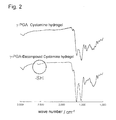
- Figure 2 shows a FT-IR spectrum (upper) of the poly( ⁇ -glutamic acid)-cystamine hydrogel obtained in Preparative Example 3 and a FT-IR spectrum (lower) of the decomposition product obtained by decomposition of the gel with DTT by the method above.
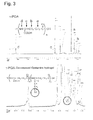
- Figure 3 shows a 1 H-NMR spectrum (upper) of the poly( ⁇ -glutamic acid)-cystamine hydrogel obtained in Preparative Example 3 and a 1 H-NMR spectrum (lower) of the decomposition product obtained by decomposition of the gel with DTT by the method above.
- the decomposition rate of the hydrogel according to the present invention can be controlled in the range of several minutes to several days, for example by presence or absence of a reducing agent such as DTT or GSH and adjustment of the concentration thereof. Presence of a reducing agent such as DTT or GSH leads to acceleration of the decomposition rate. The decomposition proceeds quite slowly in the EMEM medium, which contains an extremely trace amount of GSH. No decomposition occurs at all in ultrapure water (milliQ water).
- Alginic acid (Alg) (452 mg (1 unit mmol)) was dissolved in 8.59 mL of 0.5 M aqueous sodium bicarbonate solution at a concentration of 5 wt %; 310 mg (2 mmol) of a water-soluble carbodiimide (WSC: condensation agent) was added thereto; and the mixture was stirred at room temperature for 15 minutes.
- Cystamine (225 mg (1 mmol)) was added as a crosslinking agent, and the solution obtained after stirring for several minutes was poured into the space having a thickness of 2 mm between two glass plates that were bound to each other via a silicone rubber, and allowed to react at room temperature for 24 hours. After reaction, the hydrogel obtained was washed with ultrapure water for 48 hours and cut into disks having a diameter of 1 cm for evaluation.
- the gel obtained by the preparative method above and the gel after freeze drying were immersed in 50 mL of ultrapure water containing 25 mM dithiothreitol (DTT) as a reducing agent, and the decomposition process was observed.
- the period needed for decomposition was 60 minutes.
- the period needed for decomposition is a period until there was no residual gel confirmed by visual observation.
- Chitosan (95 mg (0.5 unit mmol)) was dissolved in 9.4 mL of ultrapure water containing 61 mg (0.4 mmol) of 1-hydroxy-1H-benzotriazole (HOBt) (needed for solubilization of chitosan) at a concentration of 0.5 wt %.
- HOBt 1-hydroxy-1H-benzotriazole
- Aqueous sodium bicarbonate solution (0.5 M) (6.3 mL) containing 210 mg (1 mmol) of dithiobispropionic acid (DTDP) and 310 mg (2 mmol) of WSC and the aqueous chitosan solution were mixed; the solution obtained after stirring for several minutes was poured into the space having a thickness of 2 mm between two glass plates that were bound to each other via a silicone rubber, and allowed to react at room temperature for 24 hours. The hydrogel obtained was washed with ultrapure water for 48 hours and cut into disks having a diameter of 1 cm.
- DTDP dithiobispropionic acid
- Epsilon( ⁇ )-polylysine ( ⁇ -PL) (164 mg (1 unit mmol)) was dissolved in 0.57 mL of 0.5 M aqueous sodium bicarbonate solution.
- Aqueous sodium bicarbonate solution (0.5 M) (2mL) containing 105 mg (0.5 mmol) of DTDP and 155 mg (1 mmol) of WSC and the aqueous ⁇ -PL solution were mixed; the solution obtained after stirring for several minutes was poured into the space having a thickness of 2 mm between two glass plates that were bound to each other via a silicone rubber, and allowed to react at room temperature for 3 hours.
- the hydrogel obtained was washed with ultrapure water for 48 hours and cut into disks having a diameter of 1 cm.
- the cystamine-crosslinked hydrogel prepared at a ⁇ -PGA concentration of 6 wt % was immersed in a cell culture medium (containing 10% fetal calf serum) for 30 minutes, allowing substitution of water in the hydrogel with the medium. Then, the gel was placed on a 24-well multiplate; 1.0 ⁇ 10 6 mouse L929 fibroblasts were inoculated on the hydrogel; 2 mL of the medium was added; and the mixture was cultured in an incubator at 37°C and 5% CO 2 for one week. The medium was replaced with new medium every two days during culture.
- a cell culture medium containing 10% fetal calf serum
- the medium was removed, and the gel was immersed in a medium containing 1 mM GSH for six hours, allowing decomposition only of the hydrogel.
- the cells on the hydrogel and the cell sheet recovered after gel decomposition was analyzed under a phase-contrast microscope.
- the cell sheet obtained was cultured in a tissue culture polystyrene dish (TCPS) for three days, showing migration of the cells from the cell sheet to TCPS, which indicates that the cell sheet obtained is alive.
- TCPS tissue culture polystyrene dish
- Poly( ⁇ -glutamic acid) ( ⁇ -PGA) (645 mg (5 unit mmol)) was dissolved in 10 mL of 0.5 M aqueous sodium bicarbonate solution at a concentration of 6 wt %; 776 mg (5 mmol) of a water-soluble carbodiimide (WSC: condensation agent) was added thereto; and the mixture was stirred at 4°C for 15 minutes.
- Cystamine (563 mg (2.5 mmol) ) was added as a crosslinking agent, and the solution obtained after stirring for several minutes was poured into the space having a thickness of 2 mm between two glass plates that were bound to each other via a silicone rubber, and allowed to react at room temperature for 24 hours.
- the hydrogel after freeze drying was immersed in a cell culture medium (containing 10% fetal calf serum) for 30 minutes. Then, the gel was placed on a 6-well multiplate; 1.0 ⁇ 10 6 mouse L929 fibroblasts were inoculated on the hydrogel; 5 mL of the medium was added; and the mixture was cultured in an incubator at 37°C and 5% CO 2 for ten days. The medium was replaced with new medium every two days during culture.
- a cell culture medium containing 10% fetal calf serum
- a SEM micrograph of the gel after culture for ten days is shown in Figure 7 .
- the results by SEM observation showed invasion of cells into the pores inside the gel.
- the medium was removed after ten days, and the gel was immersed in 50 mL of a medium containing 5 mM cysteine for 12 hours, allowing decomposition only of the hydrogel. Decomposition only of the gel gave a cellular structure that was transcribed from the gel form, having a diameter of 1 cm and a thickness of 2 mm. SEM micrographs of the cellular structure containing the cells obtained by the decomposition and the extracellular matrix produced by the cells are shown in Figure 8 .
- the micrograph of Figure 8 shows that each cell has a size of approximately 10 ⁇ m.
- the cells should be present densely in the length and width directions, for the cells of 10 ⁇ m in diameter to form a cellular structure having of a diameter of 1 cm and a thickness of 2 mm.
- Two hundred (200) cells should be aligned in the vertical direction, simply for them to form a layer having a thickness of 2 mm. It is actually impossible for the cells to form the cellular structure having a diameter of 1 cm and a thickness of 2 mm that is separated from the gel, indicating that the cells are present densely packed three-dimensionally together with the collagen component produced by the cells.
- the electron micrograph in Figure 8 shows that the cells are aligned both in the length and width directions, distinctively indicating production of a cellular structure wherein cells are aligned three-dimensionally.
- ⁇ -PGA Poly( ⁇ -glutamic acid) (20 mg (156 unit ⁇ mol)) was dissolved in 10 mL of 0.5 M aqueous sodium bicarbonate solution; 1.0 mg (644 ⁇ mol) of a water-soluble carbodiimide (WSC: condensation agent) was added thereto; and the mixture was stirred at 4°C for 15 minutes.
- a fluorescent reagent, Alexa Fluor 488 cadaverine sodium salt of 1 mg (1.56 ⁇ mol) was added thereto in the dark, and the mixture was allowed to react at 4°C for 1 hour and additionally at room temperature for 24 hours. After reaction, the product was purified by dialysis against ultrapure water for 3 days in the dark and freeze dried for 3 days in the dark, to give a fluorescence-labeled ⁇ -PGA.
- Fluorescence-labeled ⁇ -PGA (7 mg) (0.05 unit ⁇ mol) and 638 mg (4.95 unit ⁇ mol) of poly( ⁇ -glutamic acid) ( ⁇ -PGA) were dissolved in 10 mL of 0.5 M aqueous sodium bicarbonate solution at a concentration of 6 wt %; 776 mg (5 mmol) of a water-soluble carbodiimide (WSC: condensation agent) was added thereto; and the mixture was stirred in the dark at 4°C for 15 minutes.
- WSC water-soluble carbodiimide
- Cystamine (563 mg (2.5 mmol)) was added thereto as a crosslinking agent; the solution obtained after stirring for several minutes was poured into the space having a thickness of 2 mm between two glass plates that were bound to each other via a silicone rubber, and allowed to react at room temperature for 24 hours in the dark. After reaction, the hydrogel obtained was washed with ultrapure water for 48 hours and cut into disks having a diameter of 1 cm, and the disk was freeze-dried for 3 days. The fluorescence micrograph of the gel before cell culture is shown in Figure 9 .
- the fluorescence-labeled gel was immersed in the cell culture medium (containing 10% fetal calf serum) for 30 minutes. Then, the gel was placed on a 6-well multiplate; 1.0 ⁇ 10 6 mouse L929 fibroblasts were inoculated thereon; 5 mL of the medium was added; and the mixture was cultured in an incubator at 37°C and 5% CO 2 for 2 weeks. The medium was replaced with new medium every two days during the culture.
- the fluorescence micrograph of the gel after culture for two weeks is shown in Figure 10 .
- Figure 11 the fluorescence micrograph of the gel incubated under the same condition for 2 weeks in the medium without inoculation of the cells is shown in Figure 11 .
- the stimuli-responsive hydrogel according to the present invention which gives a completely biological three-dimensional cellular structure consisting of cells and cell-derived extracellular matrix and being able to be collected safely, is applicable in the field of regeneration medicine.
- the stimuli-responsive hydrogel according to the present invention is also environmentally safe, and thus, can also be used in the environmental field, for example, as a moisturizer.
Landscapes
- Health & Medical Sciences (AREA)
- Chemical & Material Sciences (AREA)
- Life Sciences & Earth Sciences (AREA)
- Engineering & Computer Science (AREA)
- General Health & Medical Sciences (AREA)
- Organic Chemistry (AREA)
- Medicinal Chemistry (AREA)
- Biomedical Technology (AREA)
- Zoology (AREA)
- Bioinformatics & Cheminformatics (AREA)
- Wood Science & Technology (AREA)
- Genetics & Genomics (AREA)
- Biochemistry (AREA)
- Biotechnology (AREA)
- Chemical Kinetics & Catalysis (AREA)
- Veterinary Medicine (AREA)
- Dermatology (AREA)
- Polymers & Plastics (AREA)
- Oral & Maxillofacial Surgery (AREA)
- Transplantation (AREA)
- Epidemiology (AREA)
- Animal Behavior & Ethology (AREA)
- Public Health (AREA)
- Dispersion Chemistry (AREA)
- Cell Biology (AREA)
- Microbiology (AREA)
- General Engineering & Computer Science (AREA)
- Molecular Biology (AREA)
- Materials Engineering (AREA)
- Botany (AREA)
- Polyamides (AREA)
- Materials For Medical Uses (AREA)
- Micro-Organisms Or Cultivation Processes Thereof (AREA)
- Processes Of Treating Macromolecular Substances (AREA)
Abstract
Description
- The present invention relates to a hydrogel, more specifically, to a reductive-stimuli-responsive degradable gel.
- Currently, transplantation therapy and reconstructive surgical therapy are mainly practiced in surgical medicine, but there is a persistent problem of unavailability of sufficient donors, and these therapies have a larger load on patients and often demanded repeated surgery. For these reasons, a third therapy, i.e., regeneration therapy, is attracting attention and highly expected.
- In organs relatively simpler in structure such as skin, bone, and cartilage, a culture method in combination of the stem cell in the patient's organ and a biodegradable base material is effective, and some of such methods are already in the phase of clinical test. However, the regeneration therapy for complicated body organs that are structured by various kinds of cells and an extracellular matrix and that demand supply of nutrition through the blood vessel, such as of liver, kidney and pancreas, are still in the basic research phase. One reason for the delay in research on complicated body organs is a problem in conversion of the cells into a three-dimensional structure.
- Cell organization is a scientific region actively studied in the regeneration therapy field. Studies on cell organization are grossly grouped into studies on two-dimensional cell sheet by using a heat-sensitive-polymer-grafted culture dish and those on lamination of multiple kinds of cells. In Japan, Okano et al. of Tokyo Women's Medical Univ. are studying co-culture of vascular endothelial cell and hepatocyte cell by using a micropatterned graft surface of a heat-sensitive polymer and reported that it was possible to form a two-dimensional co-culture cell sheet (Non-patent
Documents - However, it was not possible to achieve the three-dimensional organization by the cell sheet method, and, in the case of lamination only of cells, such as that reported by Desai et al., cell migration results in random mixing, non-control of organization. Recently, three-dimensional culture of cells in a revolving incubator is often carried out, but the cell proliferation leads to increase in cell density and also difficulty in supplying nutrients, causing a problem of death in internal cells. As described above, studies on three-dimensional organization of cells are still in the early basic research level, and there is currently no basic finding desirable for three-dimensional organization, and thus, there is an urgent need for a method to solve the problems.
- On the other hand, studies on three-dimensional culture-organization by using a hydrogel (base material) of polylactic acid or collagen were actively in progress in the past ten years in Japan and abroad. These hydrogels have favorable cell adhesiveness, but the cells are grown too densely in the later phase of cell culture, resulting in inhibition of internal supply of nutrients by the dense network structure of hydrogel at the millimeter and micrometer level and thus, causing a problem of death of internal cells. Further, it is reported that polylactic acid hydrogels remain in the body as implanted for one year or more without decomposition, possibly causing inflammation and tumor generation. It is necessary to control the degradability of the base material to solve these problems.
- However, up to now, there is no report on the method of controlling freely decomposition of the base material for a three-dimensional cell culture and constructing and safety collecting cellular structures.
- Non-patent Document 1: Y. Tsuda et al., J. Biomed. Mater. Res. 69A, 70-78 (2004)
- Non-patent Document 2 : Y. Tsuda et al., Biomaterials 26, 1885-93 (2005)
- Non-patent Document 3: A. Maya et al., Biomaterials 23, 1121-1130 (2002)
- Non-patent Document 4: W. Tan. et al., Biomaterials 25, 1355 (2004)
- An object of the present invention is to provide a new reductive-stimuli-responsive degradable gel that allows any control of decomposition of the three-dimensional base material for cell culture and production of a completely biological three-dimensional cellular structure consisting only of cells and cells-produced extracellular matrix and that allows safe recovery of the cellular structure produced.
- The present invention provides a stimuli-responsive hydrogel produced by crosslinking a water-soluble polymer with a compound having a disulfide bond in the molecular chain.
- The present invention provides a new stimuli-responsive hydrogel.
-
-
Figure 1 is a FT-IR spectrum of a poly(γ-glutamic acid)-cystamine hydrogel. -
Figure 2 is a FT-IR spectrum of a poly(γ-glutamic acid)-cystamine hydrogel and the decomposition products thereof. -
Figure 3 is a 1H-NMR spectrum of a poly(γ-glutamic acid)-cystamine hydrogel and the decomposition products thereof. -
Figure 4 is a scanning electron micrograph of a freeze-dried alginic acid-cystamine hydrogel. -
Figure 5 is a scanning electron micrograph of a freeze-dried ε-polylysine dithiobispropionic acid gel. -
Figure 6 is a scanning electron micrograph of a freeze-dried poly(γ-glutamic acid)-cystamine hydrogel (before cell culture). -
Figure 7 is a scanning electron micrograph of the poly(γ-glutamic acid)-cystamine hydrogel (after cell culture). -
Figure 8 is a scanning electron micrograph of a three dimensional cellular structure obtained by cell culture. -
Figure 9 is a fluorescence micrograph of a fluorescence-labeled poly(γ-glutamic acid)-cystamine hydrogel (before cell culture). -
Figure 10 is a fluorescence micrograph of the fluorescence-labeled poly(γ-glutamic acid)-cystamine hydrogel (after cell culture). -
Figure 11 is a fluorescence micrograph of a fluorescence-labeled poly(γ-glutamic acid)-cystamine hydrogel (after culture without cell inoculation). -
Figure 12 is a fluorescence micrograph showing the cellular structure of the fluorescence-labeled poly(γ-glutamic acid)-cystamine hydrogel after decomposition and washing once. -
Figure 13 is a fluorescence micrograph showing the cellular structure of the fluorescence-labeled poly(γ-glutamic acid)-cystamine hydrogel after decomposition and repeated washing for five times. -
Figure 14 is a phase-contrast micrograph showing the cellular structure of the fluorescence-labeled poly(γ-glutamic acid)-cystamine hydrogel after decomposition and repeated washing for five times. - Examples of the water-soluble polymers for use in the present invention include polyamino acids, saccharides, polyesters, polyamides, polyethers, vinyl polymers, and the copolymers thereof. The "water solubility" is needed for solubilization of the polymer in the medium after decomposition. The molecular weight of the polymer is not particularly limited, if the polymer is water-soluble, but an excessively smaller molecular weight is unfavorable because it is not possible to produce a hydrogel superior in cell adhesiveness and convenience of operation.
- Examples of the water-soluble polyamino acids include those having reactive functional groups such as - NH2, -OH, or -COOH on the side chains and terminals, such as poly(γ-glutamic acid), poly(α-glutamic acid), poly(aspartic acid), poly(lysine), poly(arginine), poly(glutamine), poly(serine), poly(threonine), poly(tyrosine), the copolymers thereof, and the like.
- Examples of the saccharides include those having reactive functional groups such as -CH2OH, -COOH, or -NH2, on the side chains and terminals such as glucose, cellulose, alginic acid, chitosan, hyaluronic acid, chondroitin sulfate, dermatan sulfate, heparin, the copolymers thereof, and the like.
- Examples of the water-soluble polyesters include those having reactive functional groups such as NH2, -OH, or -COOH on the side chains and terminals, such as polymalic acid, low-molecular-weight polylactic acid, low-molecular-weight polyglycol acid, low-molecular-weight poly-ε-caprolactone, and poly-β-hydroxybutyric acid.
- Examples of the water-soluble polyamides include those having reactive functional groups such as NH2, -OH, or -COOH on the side chains and terminals such as polymannaramide and polygalactoramide.
- Examples of the water-soluble polyethers include those having reactive functional groups such as -NH2, -OH, or -COOH on the terminals, such as polyethylene glycol and polypropylene glycol.
- Examples of the water-soluble vinyl polymers include those having reactive functional groups such as - NH2, -OH, or -COOH on the side chains, such as polyacrylic acid, polyvinylamine, polymethacrylic acid, and polyallylamine.
- The water-soluble polymer is preferably a natural water-soluble polymer such as polyamino acids, saccharides, or polymalic acids, from the viewpoints of safety to cells such as toxicity after decomposition. It is particularly preferably a polyamino acid or a saccharide for easily production of the hydrogel without use of an organic solvent, and among polyamino acids, poly(ε-lysine) is selected from the viewpoint that it can be collected easily in a great amount from bacteria; and poly(γ-glutamic acid) is selected from the viewpoint that it is collected easily in a great amount from bacteria and is higher in molecular weight, which is advantageous for molding. Among saccharides, chitosan is selected from the viewpoint that it is prepared in a great amount by chemical treatment of chitin, a substance which is contained in the shell of shrimps and crabs, and alginic acid is selected from the viewpoint that it is contained in a great amount in sea weeds and collected in a great amount.
- Examples of the "compound having a disulfide bond in the molecular chain" for use in the present invention (hereinafter, referred to simply as "crosslinking agent") include cystamine, cystine, 2-hydroxyethyldisulfide, 3,3'-dithiodipropionic acid (DTDP), glutathione disulfide, 3,3'-dithiopropiohydrazide, the derivatives thereof, and the like. Such a crosslinking agent is selected from the viewpoints of terminal reactive functional group and natural availability, and for example, cystamine is used favorably, because it has a terminal -NH2 group and its decomposition products are also natural compounds.
- Crosslinking of a water-soluble polymer with a crosslinking agent is carried out in reaction of the reactive functional group in the water-soluble polymer and the reactive functional group of the crosslinking agent. For example, the crosslinking of poly(γ-glutamic acid) with cystamine proceeds in aqueous solution in the following reaction: condensation of poly(γ-glutamic acid) side-chain -COOH groups with cystamine terminal -NH2 groups, forming amide bonds. Crosslinking gives a hydrogel.

- A condensation agent, such as 1-ethyl-3-[3-(dimethylamino)propyl]carbodiimide (water-soluble carbodiimide: WSC) or N,N'-dicyclohexyl carbodiimide (DCC), may be used in an amount of about 1 to 10 moles with respect to 1 mole of cystamine during the reaction above.
- The reaction temperature is 4 to 25°C, preferably 4°C, from the viewpoint for prevention of generation of byproducts of the water-soluble carbodiimide and the reaction pressure may be atmospheric pressure.
- Important in the reaction conditions are the concentration of the water-soluble polymer and the molar ratio of functional groups. It is because it is necessary to produce a hydrogel superior in cell adhesiveness and convenience of operation. For example during the crosslinking reaction shown in
Formula 1, the concentration of poly(γ-glutamic acid) is 4 to 9 wt %, preferably 5 to 7 wt %. Too high concentration results in generation of a rigid hydrogel that is lower in the convenience of operation, while too low concentration causes a problem of difficulty in producing a self-supporting hydrogel. - As for the molar ratio of functional groups, the equivalence of the functional group in the crosslinking agent is preferably set to half or more of the equivalence of the functional group in the water-soluble polymer. An excessively smaller molar ratio causes a problem of difficulty in producing a self-supporting hydrogel.
- The reaction can be terminated, if the solvent water does not flow out any more when the reaction container is placed tilted.
- The reaction product may be washed with water and then stored in water, or may be dried for example by means of freeze drying. Preferably, it is stored in water.
- The hydrogel according to the present invention characteristically should be degradable, in response to acidic pH or reducing agent.
- The hydrogel obtained as described above is responsive to reductive stimuli. The term "reductive-stimuli-responsive" means that the polymer is degradable under reductive atmosphere or in response to a reducing agent and the decomposition is controllable. The decomposition rate of the hydrogel according to the present invention is controllable, according to the presence or absence or the concentration of a reducing agent over a period of several minutes to several days. The -S-S- bond present in the crosslinking agent is cleaved by the reducing agent, forming thiol groups.
- Examples of the reducing agents for use include dithiothreitol (DTT), glutathione (GSH), dihydrolipoic acid (DHLA), β-mercaptoethanol, β-mercaptoethylamine, dithioerythritol, cysteine (Cys), and the like. It is possible to decompose only the hydrogel without damage on the cells proliferating therein, by using a reductive substance present in living organisms such as glutathione (GSH), dihydrolipoic acid (DHLA) or cysteine (Cys). Use of GSH, DHLA or Cys is preferable, from the viewpoint of the safety to cells.
- The decomposition rate can be controlled properly by adjustment of the kinds of hydrogel and reducing agent, concentrations thereof, decomposition temperature and pressure, and others. For example, as shown in the Examples below, the decomposition rate of a poly(γ-glutamic acid)-cystamine hydrogel can be controlled in a range of several minutes to several days.
- The stimuli-responsive poly(γ-glutamic acid)-cystamine hydrogel according to the present invention is suitable as a cell culture medium, and it is possible to proliferate various cells including human cells sufficiently and then decompose it, and thus to obtain a completely biological three-dimensional cellular structure consisting of the cells and the cell-produced extracellular matrix components such as collagen. It is also possible to obtain a cellular structure in the desired size and shape by modifying the shape of hydrogel. Because the decomposition products formed by the reductive reaction are polypeptides, the hydrogel is free from cell toxicity, bioabsorbable, and thus extremely safe. Needless to say, components need for cell proliferation such as fetal calf serum and others are normally contained in the cell culture medium.
- Although the present invention was described mainly by taking a poly(γ-glutamic acid)-cystamine hydrogel as an example in the description above, other hydrogels would also be formed similarly and the degradability thereof can be controlled by those who are skilled in the art without any difficulty with reference to the description above and the Examples below.
- Other applications thereof include pharmaceutical- and gene-releasing carriers, bone-regenerating materials, dental materials, separation film materials, base materials for inducing regeneration of tissues and organs in living bodies, and the like.
-

- Poly(γ-glutamic acid) (γ-PGA) (645 mg (5 unit mmol)) was dissolved in 10 mL of 0.5 M aqueous sodium bicarbonate solution at the concentration (wt %) shown in the following Table 1; 776 mg (5 mmol) of a water-soluble carbodiimide (WSC: condensation agent) was added thereto; and the mixture was stirred at 4°C for 15 minutes. Cystamine (563 mg (2.5 mmol)) was added thereto as a crosslinking agent; the solution obtained after stirring for several minutes was poured into the space having a thickness of 1 mm between two glass plates that were bound to each other via a silicone rubber, and allowed to react at room temperature for 3 hours. After reaction, the hydrogel obtained was washed with ultrapure water for 4 hours and cut into disks having a diameter of 1 cm for evaluation. The evaluation will be described below.
-
[Table 1] Preparation Concentration (wt%) γ-PGA WSC Systamine [NH2]/[COOH] Swelling ratio1) (unit mmol) (mg) (mmol) (mg) (mmol) (mg) 1 3.0 5.0 645 5.0 776 2.5 563 1.0 -3) 2 5.0 5.0 645 5.0 776 2.5 563 1.0 110 3 6.0 5.0 645 5.0 776 2.5 563 1.0 25 4 7.0 5.0 645 5.0 776 2.5 563 1.0 7.0 5 10 5.0 645 5.0 776 2.5 563 1.0 -2) 6 3.0 5.0 645 5.0 776 5.0 1126 2.0 - 7 5.0 5.0 645 5.0 776 5.0 1126 2.0 5.0 8 6.0 5.0 645 5.0 776 5.0 1126 2.0 39 9 7.0 5.0 645 5.0 776 5.0 1126 2.0 31 1) Swelling rate =(Ws-Wd)/Wd, Ws: weight of swollen hydrogen, and Wd: weight of dry hydrogel
2) No gelation possible under the same condition, because of excessively high gelation speed.
3) "-" indicates that no self-supportive hydrogel was obtained. - The FT-IR (Fourier transform infrared absorption) spectrum of the hydrogel obtained in Preparative Example 3 is shown in
Figure 1 .
The peak (vC=O) derived from the carbonyl of the carboxyl group in the poly(γ-glutamic acid) became smaller and the shape of the amide II peak changed after crosslinking with cystamine, indicating that the carboxyl groups of poly(y-glutamic acid) were converted to amide groups, i.e., that the poly(γ-glutamic acid) was crosslinked with cystamine. - A disk-shaped hydrogel was prepared in a manner similar to Preparative Example 1, except that the cystamine concentration was changed to 1126 mg (5.0 mmol) and γ-PGA was dissolved at the concentration shown in Table 1, and evaluated similarly.
-

- Gamma (γ)-PGA (645 mg (5 unit mmol)) was dissolved in 10 mL of 0.5 M aqueous sodium bicarbonate solution at the concentration (wt %) shown in the following Table 2; 776 mg (5 mmol) of a water-soluble carbodiimide (WSC: condensation agent) was added thereto; and the mixture was stirred at 4°C for 15 minutes. Cystamine (923 mg (2.5 mmol)) was added thereto as a crosslinking agent; the solution obtained after stirring for several minutes was poured into the space having a thickness of 1 mm between two glass plates that were bound to each other via a silicone rubber, and allowed to react at room temperature for 3 hours. After reaction, the hydrogel obtained was washed with ultrapure water for 4 hours and cut into disks having a diameter of 1 cm for evaluation.
-
[Table 2] Preparation Concentration (wt%) γ-PGA WSC Cystine [NH2]/ [COOH] Swelling ratio1) (unit mmol) (mg) (mmol) (mg) (mmol) (mg) 10 3.0 5.0 645 5.0 776 2.5 563 1.0 -2) 11 5.0 5.0 645 5.0 776 2.5 563 1.0 200 12 6.0 5.0 645 5.0 776 2.5 563 1.0 13 13 7.0 5.0 645 5.0 776 2.5 563 1.0 5.0 14 7.0 5.0 645 5.0 776 1.3 282 0.5 74 1) Swelling rate =(Ws-Wd)/Wd, Ws: weight of swollen hydrogen, and Wd: weight of dry hydrogel
2) "-" indicates that no self-supportive hydrogel was obtained. - The decomposition mechanism of the poly(γ-glutamic acid)-cystamine hydrogel is shown below.

- Each of the gels obtained in Preparative Examples 2, 3, 4, 12, and 13 and the gels after freeze drying was immersed in 50 mL of ultrapure water (milliQ water, manufactured by Millipore), phosphate buffered physiological saline (PBS), and a cell culture medium (containing 10% fetal calf serum) (Eagle's MEM (EMEM): manufactured by Nissui Pharmaceutical Co., Ltd.), and the period needed for decomposition was determined. The period needed for decomposition is a period until there was no residual gel confirmed by visual observation.
- Because the decomposition test is an experiment significantly influenced by crosslinking density, samples similar in swelling degree (Preparative Examples 7, 8, 9, 11,and 14) and samples not forming a suitable gel (Preparative Examples 1, 5, 6, and 10) were not used in this experiment.
- The gels were immersed in a cell culture medium of ultrapure water, PBS, containing 25 mM dithiothreitol (DTT) or 1.0 mM glutathione (GSH) as reducing agents, and the period needed for decomposition was determined. The change in gel weight by decomposition was determined by separating the gel from the solution after a specified time, wiping off excessive water thereon with Kimwipe (made by Nippon Paper Crecia Co., Ltd.), and measuring the weight of the gel. Results are summarized in the following Table 3.
-
Figure 2 shows a FT-IR spectrum (upper) of the poly(γ-glutamic acid)-cystamine hydrogel obtained in Preparative Example 3 and a FT-IR spectrum (lower) of the decomposition product obtained by decomposition of the gel with DTT by the method above.Figure 3 shows a 1H-NMR spectrum (upper) of the poly(γ-glutamic acid)-cystamine hydrogel obtained in Preparative Example 3 and a 1H-NMR spectrum (lower) of the decomposition product obtained by decomposition of the gel with DTT by the method above. - In the FT-IR spectrum of
Figure 2 , a peak of thiol group, which was not detected in the poly(γ-glutamic acid)-cystamine hydrogel, was observed at around 2500 cm-1 in the decomposition product. It is known that no disulfide bond is detected in IR spectra. The results indicate that the disulfide bonds in the poly(γ-glutamic acid)-cystamine hydrogel were decomposed to thiol groups with DTT. - In the 1H-NMR spectrum of the decomposition product of poly(γ-glutamic acid)-cystamine hydrogel shown in
Figure 3 , a thiol group-derived peak was detected at 2.8 ppm. The result indicates that the disulfide bonds in the poly(γ-glutamic acid)-cystamine hydrogel were decomposed to thiol groups with DTT. -
[Table 3] Cross-linking Agent Condition Temperature1) milliQ PBS EMEM Reducing agent DTT(25mM) GHS(1mM) milliQ PBS EMEM milliQ PBS EMEM Cystamine wet gel 5wt% -2) 50h 23h 0.75h 0.50h 0.50h - 8.0h 4.5h 6wt% - - 80h 4.0h 1.5h 1.5h - 45h 20h 7wt% - - - 14h 14h 3.5h - - - dry gel 5wt% - - 5.5days 15h 0.75h 3.0h 15h 36h 20h 6wt% - - - 15h 2.5h 3.0h 15h 48h 28h 7wt% - - 7.0days 14h 3.5h 3.0h - 73h 20h Csytine wet gel 6wt% - - - 18h 3.0h 4.5h - - - 7wt% - - - - 18h 17h - - - dry gel 6wt% - - - 4.5h 4.0h 12h - - - 1) γ-PGA concentration when the hydrogel was prepared
2) "-" indicates that no decomposition occurred even after one week. - As shown in Table 3, the decomposition rate of the hydrogel according to the present invention can be controlled in the range of several minutes to several days, for example by presence or absence of a reducing agent such as DTT or GSH and adjustment of the concentration thereof. Presence of a reducing agent such as DTT or GSH leads to acceleration of the decomposition rate. The decomposition proceeds quite slowly in the EMEM medium, which contains an extremely trace amount of GSH. No decomposition occurs at all in ultrapure water (milliQ water).
-

- A scanning electron micrograph of the alginic acid-cystamine hydrogel obtained after freeze drying is shown in
Figure 4 . - The gel obtained by the preparative method above and the gel after freeze drying were immersed in 50 mL of ultrapure water containing 25 mM dithiothreitol (DTT) as a reducing agent, and the decomposition process was observed. The period needed for decomposition was 60 minutes. The period needed for decomposition is a period until there was no residual gel confirmed by visual observation.
-

- Chitosan (95 mg (0.5 unit mmol)) was dissolved in 9.4 mL of ultrapure water containing 61 mg (0.4 mmol) of 1-hydroxy-1H-benzotriazole (HOBt) (needed for solubilization of chitosan) at a concentration of 0.5 wt %. Aqueous sodium bicarbonate solution (0.5 M) (6.3 mL) containing 210 mg (1 mmol) of dithiobispropionic acid (DTDP) and 310 mg (2 mmol) of WSC and the aqueous chitosan solution were mixed; the solution obtained after stirring for several minutes was poured into the space having a thickness of 2 mm between two glass plates that were bound to each other via a silicone rubber, and allowed to react at room temperature for 24 hours. The hydrogel obtained was washed with ultrapure water for 48 hours and cut into disks having a diameter of 1 cm.
-

- Epsilon(ε)-polylysine (ε-PL) (164 mg (1 unit mmol)) was dissolved in 0.57 mL of 0.5 M aqueous sodium bicarbonate solution. Aqueous sodium bicarbonate solution (0.5 M) (2mL) containing 105 mg (0.5 mmol) of DTDP and 155 mg (1 mmol) of WSC and the aqueous ε-PL solution were mixed; the solution obtained after stirring for several minutes was poured into the space having a thickness of 2 mm between two glass plates that were bound to each other via a silicone rubber, and allowed to react at room temperature for 3 hours. The hydrogel obtained was washed with ultrapure water for 48 hours and cut into disks having a diameter of 1 cm.
- A scanning electron micrograph of the ε-polylysine dithiobispropionic acid gel obtained after freeze drying is shown in
Figure 5 . - The cystamine-crosslinked hydrogel prepared at a γ-PGA concentration of 6 wt % (Preparative Example 3) was immersed in a cell culture medium (containing 10% fetal calf serum) for 30 minutes, allowing substitution of water in the hydrogel with the medium. Then, the gel was placed on a 24-well multiplate; 1.0×10⁶ mouse L929 fibroblasts were inoculated on the hydrogel; 2 mL of the medium was added; and the mixture was cultured in an incubator at 37°C and 5% CO2 for one week. The medium was replaced with new medium every two days during culture.
- After a week, the medium was removed, and the gel was immersed in a medium containing 1 mM GSH for six hours, allowing decomposition only of the hydrogel. The cells on the hydrogel and the cell sheet recovered after gel decomposition was analyzed under a phase-contrast microscope.
- In addition, the cell sheet obtained was cultured in a tissue culture polystyrene dish (TCPS) for three days, showing migration of the cells from the cell sheet to TCPS, which indicates that the cell sheet obtained is alive.
- Poly(γ-glutamic acid) (γ-PGA) (645 mg (5 unit mmol)) was dissolved in 10 mL of 0.5 M aqueous sodium bicarbonate solution at a concentration of 6 wt %; 776 mg (5 mmol) of a water-soluble carbodiimide (WSC: condensation agent) was added thereto; and the mixture was stirred at 4°C for 15 minutes. Cystamine (563 mg (2.5 mmol) ) was added as a crosslinking agent, and the solution obtained after stirring for several minutes was poured into the space having a thickness of 2 mm between two glass plates that were bound to each other via a silicone rubber, and allowed to react at room temperature for 24 hours. After reaction, the hydrogel obtained was washed with ultrapure water for 48 hours and cut into disks having a diameter of 1 cm, and the disks were freeze dried for 3 days. Results of scanning electron microscope (SEM) observation of the gel obtained are shown in
Figure 6 (before culture). - The hydrogel after freeze drying was immersed in a cell culture medium (containing 10% fetal calf serum) for 30 minutes. Then, the gel was placed on a 6-well multiplate; 1.0×10⁶ mouse L929 fibroblasts were inoculated on the hydrogel; 5 mL of the medium was added; and the mixture was cultured in an incubator at 37°C and 5% CO2 for ten days. The medium was replaced with new medium every two days during culture.
- A SEM micrograph of the gel after culture for ten days is shown in
Figure 7 . The results by SEM observation showed invasion of cells into the pores inside the gel. - The medium was removed after ten days, and the gel was immersed in 50 mL of a medium containing 5 mM cysteine for 12 hours, allowing decomposition only of the hydrogel.
Decomposition only of the gel gave a cellular structure that was transcribed from the gel form, having a diameter of 1 cm and a thickness of 2 mm. SEM micrographs of the cellular structure containing the cells obtained by the decomposition and the extracellular matrix produced by the cells are shown inFigure 8 . - The micrograph of
Figure 8 shows that each cell has a size of approximately 10 µm. The cells should be present densely in the length and width directions, for the cells of 10 µm in diameter to form a cellular structure having of a diameter of 1 cm and a thickness of 2 mm. Two hundred (200) cells should be aligned in the vertical direction, simply for them to form a layer having a thickness of 2 mm. It is actually impossible for the cells to form the cellular structure having a diameter of 1 cm and a thickness of 2 mm that is separated from the gel, indicating that the cells are present densely packed three-dimensionally together with the collagen component produced by the cells. The electron micrograph inFigure 8 shows that the cells are aligned both in the length and width directions, distinctively indicating production of a cellular structure wherein cells are aligned three-dimensionally. - Poly(γ-glutamic acid) (γ-PGA) (20 mg (156 unit µmol)) was dissolved in 10 mL of 0.5 M aqueous sodium bicarbonate solution; 1.0 mg (644 µmol) of a water-soluble carbodiimide (WSC: condensation agent) was added thereto; and the mixture was stirred at 4°C for 15 minutes. A fluorescent reagent, Alexa Fluor 488 cadaverine sodium salt of 1 mg (1.56 µmol), was added thereto in the dark, and the mixture was allowed to react at 4°C for 1 hour and additionally at room temperature for 24 hours. After reaction, the product was purified by dialysis against ultrapure water for 3 days in the dark and freeze dried for 3 days in the dark, to give a fluorescence-labeled γ-PGA.
- Fluorescence-labeled γ-PGA (7 mg) (0.05 unit µmol) and 638 mg (4.95 unit µmol) of poly(γ-glutamic acid) (γ-PGA) were dissolved in 10 mL of 0.5 M aqueous sodium bicarbonate solution at a concentration of 6 wt %; 776 mg (5 mmol) of a water-soluble carbodiimide (WSC: condensation agent) was added thereto; and the mixture was stirred in the dark at 4°C for 15 minutes. Cystamine (563 mg (2.5 mmol)) was added thereto as a crosslinking agent; the solution obtained after stirring for several minutes was poured into the space having a thickness of 2 mm between two glass plates that were bound to each other via a silicone rubber, and allowed to react at room temperature for 24 hours in the dark. After reaction, the hydrogel obtained was washed with ultrapure water for 48 hours and cut into disks having a diameter of 1 cm, and the disk was freeze-dried for 3 days. The fluorescence micrograph of the gel before cell culture is shown in
Figure 9 . - The fluorescence-labeled gel was immersed in the cell culture medium (containing 10% fetal calf serum) for 30 minutes. Then, the gel was placed on a 6-well multiplate; 1.0×10⁶ mouse L929 fibroblasts were inoculated thereon; 5 mL of the medium was added; and the mixture was cultured in an incubator at 37°C and 5% CO2 for 2 weeks. The medium was replaced with new medium every two days during the culture. The fluorescence micrograph of the gel after culture for two weeks is shown in
Figure 10 . For comparison, the fluorescence micrograph of the gel incubated under the same condition for 2 weeks in the medium without inoculation of the cells is shown inFigure 11 . - Two weeks later, the medium was removed; the gel was immersed in 50 mL of a medium containing 5 mM cysteine for 12 hours, allowing decomposition only of the hydrogel. The fluorescence micrograph of the structure obtained by the decomposition after washing with phosphate buffered physiological saline (PBS) after 12 hours is shown in
Figure 12 . Observation of some fluorescence indicates residual of the decomposition products. Then, the fluorescence micrograph of the gel after washing five times with PBS and the phase-contrast micrograph at the same position are shown inFigures 13 and 14 . Observation of no fluorescence at the position where the structure is observed under phase-contrast microscope indicates that the decomposition product had been completely removed. - The stimuli-responsive hydrogel according to the present invention, which gives a completely biological three-dimensional cellular structure consisting of cells and cell-derived extracellular matrix and being able to be collected safely, is applicable in the field of regeneration medicine.
In addition, the stimuli-responsive hydrogel according to the present invention is also environmentally safe, and thus, can also be used in the environmental field, for example, as a moisturizer.
Claims (10)
- A stimuli-responsive hydrogel, characterized by being produced by crosslinking a water-soluble polymer with a compound having a disulfide bond in the molecular chain.
- The hydrogel according to Claim 1, wherein the water-soluble polymer is selected from the group consisting of poly(γ-glutamic acid), poly(α-glutamic acid), poly(aspartic acid), poly(lysine), poly(arginine), poly(glutamine), poly(serine), poly(threonine), poly(tyrosine) and the copolymers thereof.
- The hydrogel according to Claim 1, wherein the water-soluble polymer is poly(γ-glutamic acid) or poly(lysine).
- The hydrogel according to Claim 1, wherein the water-soluble polymer is poly(γ-glutamic acid).
- The hydrogel according to Claim 1, wherein the water-soluble polymer is alginic acid or chitosan.
- The hydrogel according to any one of Claims 1 to 5, wherein the compound having a disulfide bond in the molecular chain is cystamine, cystine or 3,3'-dithiodipropionic acid.
- The hydrogel according to any one of Claims 1 to 5, wherein the compound having a disulfide bond in the molecular chain is cystamine or cystine.
- A base material for cell culture, comprising the stimuli-responsive hydrogel according to any one of Claims 1 to 7.
- A cell culture method, comprising:culturing cells with the base material for cell culture containing the stimuli-responsive hydrogel according to any one of Claims 1 to 7, anddecomposing the stimuli-responsive hydrogel with a biological reductive substance and separating the cultured cells from the hydrogel.
- The cell culture method according to Claim 9, wherein the biological reductive substance is glutathione (GSH), dihydrolipoic acid (DHLA) or cysteine (Cys).
Applications Claiming Priority (2)
| Application Number | Priority Date | Filing Date | Title |
|---|---|---|---|
| JP2005338846 | 2005-11-24 | ||
| PCT/JP2006/323458 WO2007061058A1 (en) | 2005-11-24 | 2006-11-24 | Stimuli-responsive degradable gel |
Publications (3)
| Publication Number | Publication Date |
|---|---|
| EP1970400A1 true EP1970400A1 (en) | 2008-09-17 |
| EP1970400A4 EP1970400A4 (en) | 2013-05-01 |
| EP1970400B1 EP1970400B1 (en) | 2014-03-12 |
Family
ID=38067282
Family Applications (1)
| Application Number | Title | Priority Date | Filing Date |
|---|---|---|---|
| EP06833262.6A Active EP1970400B1 (en) | 2005-11-24 | 2006-11-24 | Stimuli-responsive degradable gel |
Country Status (4)
| Country | Link |
|---|---|
| US (1) | US8263405B2 (en) |
| EP (1) | EP1970400B1 (en) |
| JP (1) | JP5219030B2 (en) |
| WO (1) | WO2007061058A1 (en) |
Cited By (5)
| Publication number | Priority date | Publication date | Assignee | Title |
|---|---|---|---|---|
| CN103613686A (en) * | 2013-11-12 | 2014-03-05 | 广州市一杰医药科技有限公司 | Preparation method and application of sulfhydryl hyaluronic acid |
| CN105255173A (en) * | 2015-11-10 | 2016-01-20 | 山东省药学科学院 | Preparation method of crosslinked polyglutamic acid hydrogel |
| CN105820334A (en) * | 2016-05-19 | 2016-08-03 | 江南大学 | Preparing method for poly-zwitter-ion nanoparticles based on amino acid |
| CN106279678A (en) * | 2016-08-08 | 2017-01-04 | 江南大学 | A kind of can the preparation of reduction-sensitive nano-micelle of covalency medicine carrying |
| WO2025078687A1 (en) | 2023-10-13 | 2025-04-17 | Albert-Ludwigs-Universität Freiburg | Compounds with cleavable crosslinking inducing groups and poylmer networks derived thereof |
Families Citing this family (14)
| Publication number | Priority date | Publication date | Assignee | Title |
|---|---|---|---|---|
| CN101848738A (en) * | 2007-10-11 | 2010-09-29 | 国家健康与医学研究院 | Method for preparing porous scaffold for tissue engineering, cell culture and cell delivery |
| JP5540304B2 (en) * | 2008-07-17 | 2014-07-02 | 独立行政法人理化学研究所 | Fabrication of three-dimensional cellular tissue using electrostatic inkjet phenomenon |
| US20130171111A1 (en) * | 2009-05-15 | 2013-07-04 | Nanyang Technological University | Method of manufacturing a scaffold for tissue engineering or repair |
| PL2455104T3 (en) | 2010-11-19 | 2013-12-31 | Univ Freiburg | Bio-functionalized stimulus-responsive dissolvable PEG-hydrogels |
| GB201106742D0 (en) | 2011-04-20 | 2011-06-01 | Spheritech Ltd | Cross-linked poly-e-lysine |
| US9546349B2 (en) * | 2011-05-31 | 2017-01-17 | Taipei Medical University | Supports for cell culture and cell sheet detachment and methods for cell sheet detachment |
| TWI452138B (en) * | 2011-06-01 | 2014-09-11 | Univ Taipei Medical | Supports for cell culture and cell sheet detachment and methods for cell sheet detachment |
| WO2013010045A1 (en) | 2011-07-12 | 2013-01-17 | Biotime Inc. | Novel methods and formulations for orthopedic cell therapy |
| CN102875695A (en) * | 2012-09-07 | 2013-01-16 | 浙江大学 | Glutathione sensitive alkylated chitosan and preparation and application thereof |
| US10137199B2 (en) * | 2013-05-14 | 2018-11-27 | Biotime, Inc. | Thiolated hyaluronan-based hydrogels cross-linked using oxidized glutathione |
| JP6619353B2 (en) * | 2014-10-31 | 2019-12-11 | 国立大学法人東京農工大学 | Cell isolation method and cell capture filter |
| CN110527662B (en) * | 2019-09-06 | 2022-11-04 | 赣南师范大学 | An injectable cystine-based small molecule gel material and its application |
| CN111410757B (en) * | 2020-03-31 | 2021-09-07 | 江南大学 | A kind of preparation method of degradable and environment-responsive composite microgel |
| CN112759773B (en) * | 2020-12-09 | 2022-06-21 | 合肥工业大学 | A kind of glutathione-responsive thermosensitive hydrogel, preparation method and application thereof |
Family Cites Families (14)
| Publication number | Priority date | Publication date | Assignee | Title |
|---|---|---|---|---|
| JPS5755722B2 (en) * | 1972-02-03 | 1982-11-26 | ||
| FR2692582B1 (en) * | 1992-06-18 | 1998-09-18 | Flamel Tech Sa | NEW CROSSLINKABLE DERIVATIVES OF COLLAGEN, THEIR PROCESS FOR OBTAINING IT AND THEIR APPLICATION TO THE PREPARATION OF BIOMATERIALS. |
| FR2707992B1 (en) * | 1993-07-21 | 1995-10-13 | Flamel Tech Sa | New organic products containing reactive thiol functions, one of their preparation processes and the biomaterials containing them. |
| US5461085A (en) | 1993-12-17 | 1995-10-24 | Mitsui Toatsu Chemicals, Incorporated | Superabsorbent polymer and process for producing same |
| JP3450914B2 (en) * | 1993-12-17 | 2003-09-29 | 三井化学株式会社 | Water absorbent resin and method for producing the same |
| JPH09107730A (en) * | 1995-10-17 | 1997-04-28 | Mitsui Toatsu Chem Inc | Seeding method |
| US6579596B1 (en) * | 1997-04-15 | 2003-06-17 | Fuji Xerox Co., Ltd. | Composite material and process for production thereof |
| EP1062322A2 (en) | 1998-02-24 | 2000-12-27 | Advanced Tissue Sciences, Inc. | A living chimeric skin replacement |
| FR2790475B1 (en) * | 1999-03-02 | 2003-01-24 | Flamel Tech Sa | COLLAGENIC PEPTIDES MODIFIED BY GRAFTING OF MERCAPTO FUNCTIONS, ONE OF THEIR PROCESSES AND THEIR APPLICATIONS AS BIOMATERIALS |
| DE60220893T2 (en) | 2001-04-03 | 2008-03-06 | Biocept, Inc., San Diego | METHOD AND GEL COMPOSITIONS FOR CAPTIVATING LIVING CELLS AND ORGANIC MOLECULES |
| US7030208B2 (en) * | 2002-04-11 | 2006-04-18 | Carbomer, Inc. | Biocompatible materials and probes |
| DE10234742A1 (en) * | 2002-07-30 | 2004-02-19 | Bionethos Holding | Method and device for growing cells |
| US7332527B2 (en) * | 2003-05-16 | 2008-02-19 | Board Of Regents Of The University Of Nebraska | Cross-linked ionic core micelles |
| US7364879B2 (en) * | 2003-12-19 | 2008-04-29 | Tung Hai Biotechnology Corporation | Stable biodegradable, high water absorbable polyglutamic acid hydrogel by 3-dimensional cross-linking and its preparation method |
-
2006
- 2006-11-24 JP JP2007546507A patent/JP5219030B2/en active Active
- 2006-11-24 WO PCT/JP2006/323458 patent/WO2007061058A1/en not_active Ceased
- 2006-11-24 US US12/094,973 patent/US8263405B2/en active Active
- 2006-11-24 EP EP06833262.6A patent/EP1970400B1/en active Active
Non-Patent Citations (2)
| Title |
|---|
| Alimjan Idiris ET AL: "Spring mechanics of alpha-helical polypeptide", Protein Engineering, vol. 13, n° 11, pp 763-770, 2000, 1 January 2000 (2000-01-01), pages 763-770, XP055057042, Retrieved from the Internet: URL:http://peds.oxfordjournals.org/content/13/11/763.full.pdf [retrieved on 2013-03-19] * |
| See also references of WO2007061058A1 * |
Cited By (8)
| Publication number | Priority date | Publication date | Assignee | Title |
|---|---|---|---|---|
| CN103613686A (en) * | 2013-11-12 | 2014-03-05 | 广州市一杰医药科技有限公司 | Preparation method and application of sulfhydryl hyaluronic acid |
| CN103613686B (en) * | 2013-11-12 | 2015-08-19 | 广州恩轲肽医药科技有限公司 | The preparation method of thiolated hyaluronic acid and application thereof |
| CN105255173A (en) * | 2015-11-10 | 2016-01-20 | 山东省药学科学院 | Preparation method of crosslinked polyglutamic acid hydrogel |
| CN105255173B (en) * | 2015-11-10 | 2017-09-12 | 山东省药学科学院 | A kind of preparation method for being crosslinked polyglutamic acid hydrogel |
| CN105820334A (en) * | 2016-05-19 | 2016-08-03 | 江南大学 | Preparing method for poly-zwitter-ion nanoparticles based on amino acid |
| CN106279678A (en) * | 2016-08-08 | 2017-01-04 | 江南大学 | A kind of can the preparation of reduction-sensitive nano-micelle of covalency medicine carrying |
| CN106279678B (en) * | 2016-08-08 | 2018-07-13 | 江南大学 | A kind of preparation for the reduction-sensitive nano-micelle that can covalently carry medicine |
| WO2025078687A1 (en) | 2023-10-13 | 2025-04-17 | Albert-Ludwigs-Universität Freiburg | Compounds with cleavable crosslinking inducing groups and poylmer networks derived thereof |
Also Published As
| Publication number | Publication date |
|---|---|
| WO2007061058A1 (en) | 2007-05-31 |
| US8263405B2 (en) | 2012-09-11 |
| JPWO2007061058A1 (en) | 2009-05-07 |
| JP5219030B2 (en) | 2013-06-26 |
| EP1970400B1 (en) | 2014-03-12 |
| EP1970400A4 (en) | 2013-05-01 |
| US20090117656A1 (en) | 2009-05-07 |
Similar Documents
| Publication | Publication Date | Title |
|---|---|---|
| EP1970400B1 (en) | Stimuli-responsive degradable gel | |
| Masud et al. | Preparation of novel chitosan/poly (ethylene glycol)/ZnO bionanocomposite for wound healing application: effect of gentamicin loading | |
| Govindharaj et al. | Valorization of discarded Marine Eel fish skin for collagen extraction as a 3D printable blue biomaterial for tissue engineering | |
| Janarthanan et al. | 3D printable and injectable lactoferrin-loaded carboxymethyl cellulose-glycol chitosan hydrogels for tissue engineering applications | |
| Möller et al. | Dextran and hyaluronan methacrylate based hydrogels as matrices for soft tissue reconstruction | |
| Ahtzaz et al. | A study on the effect of zinc oxide and zinc peroxide nanoparticles to enhance angiogenesis-pro-angiogenic grafts for tissue regeneration applications | |
| Kanimozhi et al. | Processing and characterization of chitosan/PVA and methylcellulose porous scaffolds for tissue engineering | |
| Baysal et al. | Chitosan/alginate crosslinked hydrogels: Preparation, characterization and application for cell growth purposes | |
| Shabafrooz et al. | The effect of hyaluronic acid on biofunctionality of gelatin–collagen intestine tissue engineering scaffolds | |
| Dong et al. | A chitosan based scaffold with enhanced mechanical and biocompatible performance for biomedical applications | |
| US8592574B2 (en) | Beta-glucan-based scaffold for biological tissue engineering using radiation fusion technology, and production method therefor | |
| AU762250B2 (en) | Macroporous chitosan beads and preparation method thereof | |
| CN107744602A (en) | A kind of preparation method of bio-ink material available for 3D printing | |
| Anton-Sales et al. | Bacterial nanocellulose and titania hybrids: cytocompatible and cryopreservable cell carriers | |
| CN104548200B (en) | Method of preparing highly branched polysaccharide-fibroin hydrogel bracket | |
| Yuvarani et al. | Chitosan modified alginate-polyurethane scaffold for skeletal muscle tissue engineering | |
| Kil’deeva et al. | Biodegradablescaffolds based on chitosan: Preparation, properties, and use for the cultivation of animal cells | |
| CN105169491B (en) | A kind of method for preparing fungi highly -branched polysaccharide xanthan gum hydrogel scaffold | |
| Chen et al. | Preparation, characterization, and potential biomedical application of composite sponges based on collagen from silver carp skin | |
| Čadež et al. | Calcium phosphate and calcium carbonate mineralization of bioinspired hydrogels based on β-chitin isolated from biomineral of the common cuttlefish (Sepia officinalis, L.) | |
| US20230212496A1 (en) | Edible and sterilizable porous 3d scaffold and uses therof | |
| Ehrenfreund-Kleinman et al. | Polysaccharide scaffolds prepared by crosslinking of polysaccharides with chitosan or proteins for cell growth | |
| JP5935181B2 (en) | Biomaterial for wound healing and its preparation | |
| AU2014252769B2 (en) | Biodegradable network polymers for regenerative medicine and tissue engineering | |
| CN101790581A (en) | The cell carrier that contains collagen protein |
Legal Events
| Date | Code | Title | Description |
|---|---|---|---|
| PUAI | Public reference made under article 153(3) epc to a published international application that has entered the european phase |
Free format text: ORIGINAL CODE: 0009012 |
|
| 17P | Request for examination filed |
Effective date: 20080619 |
|
| AK | Designated contracting states |
Kind code of ref document: A1 Designated state(s): DE GB IT |
|
| DAX | Request for extension of the european patent (deleted) | ||
| RBV | Designated contracting states (corrected) |
Designated state(s): DE GB IT |
|
| RAP1 | Party data changed (applicant data changed or rights of an application transferred) |
Owner name: NOF CORPORATION Owner name: AKASHI, MITSURU |
|
| A4 | Supplementary search report drawn up and despatched |
Effective date: 20130402 |
|
| RIC1 | Information provided on ipc code assigned before grant |
Ipc: C08B 37/08 20060101ALI20130325BHEP Ipc: C08G 69/48 20060101ALI20130325BHEP Ipc: C08J 3/24 20060101AFI20130325BHEP Ipc: C12N 5/00 20060101ALI20130325BHEP Ipc: C12M 3/00 20060101ALI20130325BHEP Ipc: C08B 37/04 20060101ALI20130325BHEP Ipc: C08G 69/10 20060101ALI20130325BHEP Ipc: A61L 27/00 20060101ALI20130325BHEP |
|
| RIC1 | Information provided on ipc code assigned before grant |
Ipc: C08B 37/04 20060101ALI20130812BHEP Ipc: A61L 27/00 20060101ALI20130812BHEP Ipc: C08J 3/075 20060101ALI20130812BHEP Ipc: C08G 69/48 20060101ALI20130812BHEP Ipc: C08J 3/24 20060101AFI20130812BHEP Ipc: C08G 69/10 20060101ALI20130812BHEP Ipc: C08B 37/08 20060101ALI20130812BHEP Ipc: C12M 3/00 20060101ALI20130812BHEP Ipc: C12N 5/00 20060101ALI20130812BHEP |
|
| GRAP | Despatch of communication of intention to grant a patent |
Free format text: ORIGINAL CODE: EPIDOSNIGR1 |
|
| INTG | Intention to grant announced |
Effective date: 20131011 |
|
| GRAS | Grant fee paid |
Free format text: ORIGINAL CODE: EPIDOSNIGR3 |
|
| GRAA | (expected) grant |
Free format text: ORIGINAL CODE: 0009210 |
|
| AK | Designated contracting states |
Kind code of ref document: B1 Designated state(s): DE GB IT |
|
| REG | Reference to a national code |
Ref country code: GB Ref legal event code: FG4D |
|
| REG | Reference to a national code |
Ref country code: DE Ref legal event code: R096 Ref document number: 602006040681 Country of ref document: DE Effective date: 20140424 |
|
| REG | Reference to a national code |
Ref country code: DE Ref legal event code: R097 Ref document number: 602006040681 Country of ref document: DE |
|
| PLBE | No opposition filed within time limit |
Free format text: ORIGINAL CODE: 0009261 |
|
| STAA | Information on the status of an ep patent application or granted ep patent |
Free format text: STATUS: NO OPPOSITION FILED WITHIN TIME LIMIT |
|
| 26N | No opposition filed |
Effective date: 20141215 |
|
| REG | Reference to a national code |
Ref country code: DE Ref legal event code: R097 Ref document number: 602006040681 Country of ref document: DE Effective date: 20141215 |
|
| PGFP | Annual fee paid to national office [announced via postgrant information from national office to epo] |
Ref country code: DE Payment date: 20251119 Year of fee payment: 20 |
|
| PGFP | Annual fee paid to national office [announced via postgrant information from national office to epo] |
Ref country code: GB Payment date: 20251121 Year of fee payment: 20 |
|
| PGFP | Annual fee paid to national office [announced via postgrant information from national office to epo] |
Ref country code: IT Payment date: 20251125 Year of fee payment: 20 |