EP1970364A2 - Method for Producing Cycloalkanol and/or Cycloalkanone - Google Patents
Method for Producing Cycloalkanol and/or Cycloalkanone Download PDFInfo
- Publication number
- EP1970364A2 EP1970364A2 EP08152757A EP08152757A EP1970364A2 EP 1970364 A2 EP1970364 A2 EP 1970364A2 EP 08152757 A EP08152757 A EP 08152757A EP 08152757 A EP08152757 A EP 08152757A EP 1970364 A2 EP1970364 A2 EP 1970364A2
- Authority
- EP
- European Patent Office
- Prior art keywords
- mesoporous silica
- group
- cobalt
- selectivity
- metal
- Prior art date
- Legal status (The legal status is an assumption and is not a legal conclusion. Google has not performed a legal analysis and makes no representation as to the accuracy of the status listed.)
- Withdrawn
Links
Images


Classifications
-
- C—CHEMISTRY; METALLURGY
- C07—ORGANIC CHEMISTRY
- C07C—ACYCLIC OR CARBOCYCLIC COMPOUNDS
- C07C29/00—Preparation of compounds having hydroxy or O-metal groups bound to a carbon atom not belonging to a six-membered aromatic ring
- C07C29/48—Preparation of compounds having hydroxy or O-metal groups bound to a carbon atom not belonging to a six-membered aromatic ring by oxidation reactions with formation of hydroxy groups
- C07C29/50—Preparation of compounds having hydroxy or O-metal groups bound to a carbon atom not belonging to a six-membered aromatic ring by oxidation reactions with formation of hydroxy groups with molecular oxygen only
-
- B—PERFORMING OPERATIONS; TRANSPORTING
- B01—PHYSICAL OR CHEMICAL PROCESSES OR APPARATUS IN GENERAL
- B01J—CHEMICAL OR PHYSICAL PROCESSES, e.g. CATALYSIS OR COLLOID CHEMISTRY; THEIR RELEVANT APPARATUS
- B01J23/00—Catalysts comprising metals or metal oxides or hydroxides, not provided for in group B01J21/00
- B01J23/16—Catalysts comprising metals or metal oxides or hydroxides, not provided for in group B01J21/00 of arsenic, antimony, bismuth, vanadium, niobium, tantalum, polonium, chromium, molybdenum, tungsten, manganese, technetium or rhenium
- B01J23/20—Vanadium, niobium or tantalum
- B01J23/22—Vanadium
-
- B—PERFORMING OPERATIONS; TRANSPORTING
- B01—PHYSICAL OR CHEMICAL PROCESSES OR APPARATUS IN GENERAL
- B01J—CHEMICAL OR PHYSICAL PROCESSES, e.g. CATALYSIS OR COLLOID CHEMISTRY; THEIR RELEVANT APPARATUS
- B01J23/00—Catalysts comprising metals or metal oxides or hydroxides, not provided for in group B01J21/00
- B01J23/16—Catalysts comprising metals or metal oxides or hydroxides, not provided for in group B01J21/00 of arsenic, antimony, bismuth, vanadium, niobium, tantalum, polonium, chromium, molybdenum, tungsten, manganese, technetium or rhenium
- B01J23/24—Chromium, molybdenum or tungsten
- B01J23/26—Chromium
-
- B—PERFORMING OPERATIONS; TRANSPORTING
- B01—PHYSICAL OR CHEMICAL PROCESSES OR APPARATUS IN GENERAL
- B01J—CHEMICAL OR PHYSICAL PROCESSES, e.g. CATALYSIS OR COLLOID CHEMISTRY; THEIR RELEVANT APPARATUS
- B01J23/00—Catalysts comprising metals or metal oxides or hydroxides, not provided for in group B01J21/00
- B01J23/16—Catalysts comprising metals or metal oxides or hydroxides, not provided for in group B01J21/00 of arsenic, antimony, bismuth, vanadium, niobium, tantalum, polonium, chromium, molybdenum, tungsten, manganese, technetium or rhenium
- B01J23/32—Manganese, technetium or rhenium
- B01J23/34—Manganese
-
- B—PERFORMING OPERATIONS; TRANSPORTING
- B01—PHYSICAL OR CHEMICAL PROCESSES OR APPARATUS IN GENERAL
- B01J—CHEMICAL OR PHYSICAL PROCESSES, e.g. CATALYSIS OR COLLOID CHEMISTRY; THEIR RELEVANT APPARATUS
- B01J23/00—Catalysts comprising metals or metal oxides or hydroxides, not provided for in group B01J21/00
- B01J23/38—Catalysts comprising metals or metal oxides or hydroxides, not provided for in group B01J21/00 of noble metals
- B01J23/40—Catalysts comprising metals or metal oxides or hydroxides, not provided for in group B01J21/00 of noble metals of the platinum group metals
- B01J23/44—Palladium
-
- B—PERFORMING OPERATIONS; TRANSPORTING
- B01—PHYSICAL OR CHEMICAL PROCESSES OR APPARATUS IN GENERAL
- B01J—CHEMICAL OR PHYSICAL PROCESSES, e.g. CATALYSIS OR COLLOID CHEMISTRY; THEIR RELEVANT APPARATUS
- B01J23/00—Catalysts comprising metals or metal oxides or hydroxides, not provided for in group B01J21/00
- B01J23/38—Catalysts comprising metals or metal oxides or hydroxides, not provided for in group B01J21/00 of noble metals
- B01J23/40—Catalysts comprising metals or metal oxides or hydroxides, not provided for in group B01J21/00 of noble metals of the platinum group metals
- B01J23/46—Ruthenium, rhodium, osmium or iridium
- B01J23/462—Ruthenium
-
- B—PERFORMING OPERATIONS; TRANSPORTING
- B01—PHYSICAL OR CHEMICAL PROCESSES OR APPARATUS IN GENERAL
- B01J—CHEMICAL OR PHYSICAL PROCESSES, e.g. CATALYSIS OR COLLOID CHEMISTRY; THEIR RELEVANT APPARATUS
- B01J23/00—Catalysts comprising metals or metal oxides or hydroxides, not provided for in group B01J21/00
- B01J23/70—Catalysts comprising metals or metal oxides or hydroxides, not provided for in group B01J21/00 of the iron group metals or copper
- B01J23/74—Iron group metals
- B01J23/745—Iron
-
- B—PERFORMING OPERATIONS; TRANSPORTING
- B01—PHYSICAL OR CHEMICAL PROCESSES OR APPARATUS IN GENERAL
- B01J—CHEMICAL OR PHYSICAL PROCESSES, e.g. CATALYSIS OR COLLOID CHEMISTRY; THEIR RELEVANT APPARATUS
- B01J23/00—Catalysts comprising metals or metal oxides or hydroxides, not provided for in group B01J21/00
- B01J23/70—Catalysts comprising metals or metal oxides or hydroxides, not provided for in group B01J21/00 of the iron group metals or copper
- B01J23/74—Iron group metals
- B01J23/75—Cobalt
-
- B—PERFORMING OPERATIONS; TRANSPORTING
- B01—PHYSICAL OR CHEMICAL PROCESSES OR APPARATUS IN GENERAL
- B01J—CHEMICAL OR PHYSICAL PROCESSES, e.g. CATALYSIS OR COLLOID CHEMISTRY; THEIR RELEVANT APPARATUS
- B01J29/00—Catalysts comprising molecular sieves
- B01J29/03—Catalysts comprising molecular sieves not having base-exchange properties
- B01J29/0308—Mesoporous materials not having base exchange properties, e.g. Si-MCM-41
-
- B—PERFORMING OPERATIONS; TRANSPORTING
- B01—PHYSICAL OR CHEMICAL PROCESSES OR APPARATUS IN GENERAL
- B01J—CHEMICAL OR PHYSICAL PROCESSES, e.g. CATALYSIS OR COLLOID CHEMISTRY; THEIR RELEVANT APPARATUS
- B01J29/00—Catalysts comprising molecular sieves
- B01J29/04—Catalysts comprising molecular sieves having base-exchange properties, e.g. crystalline zeolites
- B01J29/041—Mesoporous materials having base exchange properties, e.g. Si/Al-MCM-41
-
- B—PERFORMING OPERATIONS; TRANSPORTING
- B01—PHYSICAL OR CHEMICAL PROCESSES OR APPARATUS IN GENERAL
- B01J—CHEMICAL OR PHYSICAL PROCESSES, e.g. CATALYSIS OR COLLOID CHEMISTRY; THEIR RELEVANT APPARATUS
- B01J37/00—Processes, in general, for preparing catalysts; Processes, in general, for activation of catalysts
- B01J37/02—Impregnation, coating or precipitation
- B01J37/0201—Impregnation
- B01J37/0209—Impregnation involving a reaction between the support and a fluid
-
- C—CHEMISTRY; METALLURGY
- C07—ORGANIC CHEMISTRY
- C07C—ACYCLIC OR CARBOCYCLIC COMPOUNDS
- C07C45/00—Preparation of compounds having >C = O groups bound only to carbon or hydrogen atoms; Preparation of chelates of such compounds
- C07C45/27—Preparation of compounds having >C = O groups bound only to carbon or hydrogen atoms; Preparation of chelates of such compounds by oxidation
- C07C45/32—Preparation of compounds having >C = O groups bound only to carbon or hydrogen atoms; Preparation of chelates of such compounds by oxidation with molecular oxygen
- C07C45/33—Preparation of compounds having >C = O groups bound only to carbon or hydrogen atoms; Preparation of chelates of such compounds by oxidation with molecular oxygen of CHx-moieties
-
- B—PERFORMING OPERATIONS; TRANSPORTING
- B01—PHYSICAL OR CHEMICAL PROCESSES OR APPARATUS IN GENERAL
- B01J—CHEMICAL OR PHYSICAL PROCESSES, e.g. CATALYSIS OR COLLOID CHEMISTRY; THEIR RELEVANT APPARATUS
- B01J2229/00—Aspects of molecular sieve catalysts not covered by B01J29/00
- B01J2229/30—After treatment, characterised by the means used
- B01J2229/32—Reaction with silicon compounds, e.g. TEOS, siliconfluoride
-
- C—CHEMISTRY; METALLURGY
- C07—ORGANIC CHEMISTRY
- C07C—ACYCLIC OR CARBOCYCLIC COMPOUNDS
- C07C2601/00—Systems containing only non-condensed rings
- C07C2601/12—Systems containing only non-condensed rings with a six-membered ring
- C07C2601/14—The ring being saturated
Definitions
- the present invention relates to a method for producing cycloalkanol and/or cycloalkanone by oxidizing cycloalkane with oxygen.
- a method of performing the oxidation reaction using mesoporous silica containing a certain kind of metal element as a catalyst has been studied.
- mesoporous silica containing gold Applied Catalysis A: General, Netherlands, 2005, Vol. 280, pp. 175-180
- mesoporous silica containing cobalt Korean Journal of Chemical Engineering, Republic of Korea, 1998, Vol. 15, pp. 510-515
- a method using mesoporous silica containing chromium or vanadium International Publication No. WO00/03963 ).
- an object of the present invention is to provide a method capable of producing cycloalkanol and/or cycloalkanone with a favorable selectivity by oxidizing cycloalkane with a favorable conversion.
- the present inventors have intensively studied and found that the above object can be achieved by performing the above oxidation reaction in the presence of mesoporous silica which contains a predetermined metal and which is also subjected to a contact treatment with an organosilicon compound. Thus, the present invention has been completed.
- the present invention provides a method for producing cycloalkanol and/or cycloalkanone, which comprises oxidizing cycloalkane with oxygen in the presence of mesoporous silica which contains at least one metal selected from metals of Groups 5 to 10 of the Periodic Table and which is also subjected to a contact treatment with an organosilicon compound.
- cycloalkanol and/or cycloalkanone can be produced with a favorable selectivity by oxidizing cycloalkane with a favorable conversion.
- the present invention will now be described in detail.
- the corresponding cycloalkanol and/or cycloalkanone is/are produced by oxidizing cycloalkane used as a starting material with oxygen (molecular oxygen) in the presence of a predetermined mesoporous silica.
- Examples of the cycloalkane as the raw material include monocyclic cycloalkanes having no substituent on the ring, such as cyclopropane, cyclobutane, cyclopentane, cyclohexane, cycloheptane, cyclooctane, cyclodecane, or cyclooctadecane; polycyclic cycloalkanes such as decalin or adamantane, and cycloalkanes having a substituent on the ring, such as methylcyclopentane or methylcyclohexane, and also two or more kinds of them can be used, if necessary.
- monocyclic cycloalkanes having no substituent on the ring such as cyclopropane, cyclobutane, cyclopentane, cyclohexane, cycloheptane, cyclooctane, cyclodecane, or cycl
- oxygen-containing gas is usually used as the oxygen source.
- This oxygen-containing gas may be, for example, air, pure oxygen, or an air or pure oxygen diluted with an inert gas such as nitrogen, argon or helium.
- Oxygen enriched air obtained by adding pure oxygen to air can also be used.
- the above oxidation reaction is performed in the presence of mesoporous silica which contains at least one metal selected from metals of Groups 5 to 10 of the Periodic Table and which is also subjected to a contact treatment with an organosilicon compound.
- mesoporous silica which contains at least one metal selected from metals of Groups 5 to 10 of the Periodic Table and which is also subjected to a contact treatment with an organosilicon compound.
- mesoporous silica is used, cycloalkanol and/or cycloalkanone can be produced with a favorable selectivity by oxidizing cycloalkane with a favorable conversion.
- Examples of the metal to be contained in the mesoporous silica include metals of Groups 5 to 10 of the Periodic Table, and are preferably vanadium, chromium, manganese, iron, cobalt, ruthenium and palladium. Among these metals, cobalt is preferable. If necessary, two or more kinds of these metals may be used.
- the content of the metal is usually from 0.01 to 20%, preferably from 0.05 to 10%, and still more preferably from 0.1 to 5%, in terms of a weight ratio of the metal to the mesoporous silica.
- the mesoporous silica in the present invention has a so-called mesoporous structure containing pores which usually have a nearly uniform size of 2 to 50 nm, and the surface area thereof is usually from about 600 to 1,500 m 2 /g.
- the metal may be incorporated into a silica framework constituting the mesoporous structure, or may be incorporated into the pores, or may be supported on the surface of the silica framework.
- Examples of the mesoporous silica include a MCM-41 type mesoporous silica, a MCM-48 type mesoporous silica, a FSM-16 type mesoporous silica, a SBA-15 type mesoporous silica and a HMS type mesoporous silica, among which a MCM-41 type mesoporous silica is preferable.
- the mesoporous silica in the present invention is subjected to a contact treatment with an organosilicon compound.
- the organosilicon compound can be preferably reacted with the mesoporous silica to bond on the surface, and can be typically represented by the following formula (1) : Si (R 1 ) x (R 2 ) 4-x (1) wherein R 1 represents an alkoxy group, a hydroxy group or a halogen atom, R 2 represents an alkoxy group, an alkyl group, an allyl group, an aryl group or an aralkyl group, and x represents a number of 1 to 3.
- Examples of the alkoxy group represented by R 1 and R 2 include a methoxy group, an ethoxy group, a propoxy group and a butoxy group, and examples of the alkyl group represented by R 2 include a methyl group, an ethyl group, a propyl group and a butyl group.
- Examples of the aryl group represented by R 2 include a phenyl group, a naphthyl group and a tolyl group, and examples of the aralkyl group represented by R 2 include a benzyl group and a phenethyl group.
- trialkoxyalkylsilane and tetraalkoxysilane are more preferably used.
- the method for preparing the mesoporous silica will now be described.
- the silica having a mesoporous structure can be prepared by known methods described in Korean Journal of Chemical Engineering), Republic of Korea, 1998, Vol. 15, pp. 510-515 , and Nature, U.S.A., 1992, Vol. 359, pp. 710-712 .
- the silica can be prepared by mixing tetraalkoxysilane such as tetraethoxysilane (ethyl orthosilicate), a quaternary ammonium salt such as hexadecyltrimethylammonium bromide, an alkali metal hydroxide such as sodium hydroxide, and water, and heat-treating the mixture at about 80 to 100°C, followed by filtration, drying and further calcining at about 500 to 600°C.
- tetraalkoxysilane such as tetraethoxysilane (ethyl orthosilicate)
- a quaternary ammonium salt such as hexadecyltrimethylammonium bromide
- an alkali metal hydroxide such as sodium hydroxide
- Examples of the method of incorporating the metal into the silica having a mesoporous structure include a method of adding a metal compound such as a halogenate, a nitrate, a carboxylate or an oxo-acid salt of the metal to the mixture in the process for preparation of the silica having a mesoporous structure; a method of impregnating the silica having a mesoporous structure with a solution of the above metal compound; a method of immersing the silica having a mesoporous structure in a solution of the metal compound thereby adsorbing the metal compound to the silica; and a method of ion-exchanging a metal cation of the metal compound with a cation of the silica.
- the amount of the metal compound used is appropriately adjusted so as to control to the content of the metal.
- the method of subjecting to a contact treatment with an organosilicon compound includes, for example, a method of immersing the silica having a mesoporous structure, which does or does not contain the metal, in a liquid containing an organosilicon compound; and a method of bringing a gas containing an organosilicon compound into contact with the silica having a mesoporous structure, which does or does not contain the metal.
- the silica having a mesoporous structure without such metal is subjected to the contact treatment, it is possible to incorporate the metal similar to above by impregnating the silica subjected to the contact treatment with a solution of the metal compound, or immersing the silica subjected to the contact treatment in a solution of the metal compound.
- the amount of the organosilicon compound used is usually from 1 to 10,000 parts by weight, preferably from 5 to 2,000 parts by weight, and more preferably from 10 to 1,500 parts by weight, based on 100 parts by weight of the silica before being subjected to the contact treatment.
- the temperature of the contact treatment is usually from 0 to 300°C, and preferably from 30 to 250°C.
- the time for the contact treatment is usually from 0.1 to 50 hours, and preferably from 1 to 20 hours.
- the mesoporous silica which contains the above metal and is also subjected to a contact treatment with an organosilicon compound, can be obtained. Then, cycloalkane is oxidized with oxygen in the presence of the mesoporous silica.
- the amount of the mesoporous silica used is usually from 0.01 to 50 parts by weight, and preferably from 0.1 to 10 parts by weight, based on 100 parts by weight of the cycloalkane.
- the reaction temperature is usually from 0 to 200°C, and preferably from 50 to 170°C
- the reaction pressure is usually from 0.01 to 10 MPa, and preferably from 0.1 to 2 MPa.
- a reaction solvent can be optionally used and, for example, nitrile solvents such as acetonitrile or benzonitrile, and carboxylic acid solvents such as acetic acid or propionic acid can be used.
- a post-treatment after the oxidation reaction is not specifically limited and examples thereof include a method of filtering the reaction mixture thereby separating the catalyst, followed by washing with water and further distillation.
- cycloalkyl hydroperoxide corresponding to the cycloalkane as the starting material is contained in the reaction mixture, it can be converted into the objective cycloalkanol and cycloalkanone by alkali treatment or reduction treatment.
- Cyclohexane, cyclohexanone, cyclohexanol and cyclohexyl hydroperoxide in the reaction solution were analyzed by gas chromatography, and the conversion of cyclohexane as well as each selectivity of cyclohexanone, cyclohexanol and cyclohexyl hydroperoxide was calculated from the analysis results.
- the cobalt-containing mesoporous silica obtained in Reference Example 1 was charged in a catalytic cell (Diffuse Reflectance Heat Chamber, Model HC900, manufactured by SPECTRA-TECH Co.) and set in an apparatus for measuring an infrared absorption spectrum (Magna 760-ESP, manufactured by NICOLET Co.) and, after deaeration under 0.1 Torr (13 Pa) at 200°C for one hour, an infrared absorption spectrum was measured.
- the measuring conditions are as follows: the measuring temperature is 200°C, the measuring pressure is 0.1 Torr (13 Pa), the measuring range is from 400 to 4,000 cm -1 , and the resolution is 4 cm -1 .
- the resulting data were subjected to Kubelka-Munk conversion.
- a peak attributed to a so-called terminal silanol group is observed at about 3,740 cm -1 in the cobalt-containing mesoporous silica obtained in Reference Example 1, while, as shown in Fig. 3 , the same peak is not observed in the cobalt-containing mesoporous silica subjected to a contact treatment with triethoxyethylsilane obtained in Reference Example 2 and it is considered that the terminal silanol group is silylated with triethoxyethylsilane.
- a peak attributed to a so-called terminal silanol group is observed at about 3,740 cm -1 in the cobalt-containing mesoporous silica obtained in Reference Example 1, while, as shown in Fig. 4 the same peak is not observed in the cobalt-containing mesoporous silica subjected to a contact treatment with trimethoxypropylsilane obtained in Reference Example 3 and it is considered that the terminal silanol group is silylated with trimethoxypropylsilane.
- a peak attributed to a so-called terminal silanol group is observed at about 3,740 cm -1 in the cobalt-containing mesoporous silica obtained in Reference Example 1, while, as shown in Fig. 5 , the same peak is not observed in the cobalt-containing mesoporous silica subjected to a contact treatment with tetraethoxysilane obtained in Reference Example 4 and it is considered that the terminal silanol group is silylated with tetraethoxysilane.
- Example 2 The same operation as in Example 1 was conducted, except that the cobalt-containing mesoporous silica subjected to a contact treatment with trimethoxypropylsilane obtained in Reference Example 3 was used in place of the cobalt-containing mesoporous silica subjected to a contact treatment with triethoxyethylsilane obtained in Reference Example 2.
- Example 2 The same operation as in Example 1 was conducted, except that the cobalt-containing mesoporous silica subjected to a contact treatment with tetraethoxysilane obtained in Reference Example 4 was used in place of the cobalt-containing mesoporous silica subjected to a contact treatment with triethoxyethylsilane obtained in Reference Example 2.
- Example 2 The same operation as in Example 1 was conducted, except that the cobalt-containing mesoporous silica obtained in Reference Example 1 was used in place of the cobalt-containing silica subjected to a contact treatment with triethoxyethylsilane obtained in Reference Example 2.
Landscapes
- Chemical & Material Sciences (AREA)
- Organic Chemistry (AREA)
- Chemical Kinetics & Catalysis (AREA)
- Engineering & Computer Science (AREA)
- Materials Engineering (AREA)
- Dispersion Chemistry (AREA)
- Crystallography & Structural Chemistry (AREA)
- Catalysts (AREA)
- Organic Low-Molecular-Weight Compounds And Preparation Thereof (AREA)
Abstract
Description
- The present invention relates to a method for producing cycloalkanol and/or cycloalkanone by oxidizing cycloalkane with oxygen.
- In a method for producing cycloalkanol and/or cycloalkanone by oxidizing cycloalkane with oxygen, a method of performing the oxidation reaction using mesoporous silica containing a certain kind of metal element as a catalyst has been studied. For example, there are known a method using mesoporous silica containing gold (Applied Catalysis A: General, Netherlands, 2005, Vol. 280, pp. 175-180), a method using mesoporous silica containing cobalt (Korean Journal of Chemical Engineering, Republic of Korea, 1998, Vol. 15, pp. 510-515), and a method using mesoporous silica containing chromium or vanadium (International Publication No.
WO00/03963 - The above-mentioned conventional methods sometimes include unsatisfactory points in view of activity and selectivity of a catalyst, namely, the conversion of cycloalkane and the selectivity of cycloalkanol and/or cycloalkanone. Thus, an object of the present invention is to provide a method capable of producing cycloalkanol and/or cycloalkanone with a favorable selectivity by oxidizing cycloalkane with a favorable conversion.
- The present inventors have intensively studied and found that the above object can be achieved by performing the above oxidation reaction in the presence of mesoporous silica which contains a predetermined metal and which is also subjected to a contact treatment with an organosilicon compound. Thus, the present invention has been completed.
- The present invention provides a method for producing cycloalkanol and/or cycloalkanone, which comprises oxidizing cycloalkane with oxygen in the presence of mesoporous silica which contains at least one metal selected from metals of Groups 5 to 10 of the Periodic Table and which is also subjected to a contact treatment with an organosilicon compound.
- According to the present invention, cycloalkanol and/or cycloalkanone can be produced with a favorable selectivity by oxidizing cycloalkane with a favorable conversion.
-
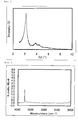
Fig. 1 is a graph showing an XRD pattern of the cobalt-containing mesoporous silica obtained in Reference Example 1. -
Fig. 2 is a graph showing an infrared absorption spectrum of the cobalt-containing mesoporous silica obtained in Reference Example 1. -
Fig. 3 is a graph showing an infrared absorption spectrum of the cobalt-containing mesoporous silica subjected to a contact treatment with triethoxyethylsilane obtained in Reference Example 2. -
Fig. 4 is a graph showing an infrared absorption spectrum of the cobalt-containing mesoporous silica subjected to a contact treatment with trimethoxypropylsilane obtained in Reference Example 3. -
Fig. 5 is a graph showing an infrared absorption spectrum of the cobalt-containing mesoporous silica subjected to a contact treatment with tetraethoxysilane obtained in Reference Example 4. - The present invention will now be described in detail. In the present invention, the corresponding cycloalkanol and/or cycloalkanone is/are produced by oxidizing cycloalkane used as a starting material with oxygen (molecular oxygen) in the presence of a predetermined mesoporous silica.
- Examples of the cycloalkane as the raw material include monocyclic cycloalkanes having no substituent on the ring, such as cyclopropane, cyclobutane, cyclopentane, cyclohexane, cycloheptane, cyclooctane, cyclodecane, or cyclooctadecane; polycyclic cycloalkanes such as decalin or adamantane, and cycloalkanes having a substituent on the ring, such as methylcyclopentane or methylcyclohexane, and also two or more kinds of them can be used, if necessary.
- An oxygen-containing gas is usually used as the oxygen source. This oxygen-containing gas may be, for example, air, pure oxygen, or an air or pure oxygen diluted with an inert gas such as nitrogen, argon or helium. Oxygen enriched air obtained by adding pure oxygen to air can also be used.
- In the present invention, the above oxidation reaction is performed in the presence of mesoporous silica which contains at least one metal selected from metals of Groups 5 to 10 of the Periodic Table and which is also subjected to a contact treatment with an organosilicon compound. When such mesoporous silica is used, cycloalkanol and/or cycloalkanone can be produced with a favorable selectivity by oxidizing cycloalkane with a favorable conversion.
- Examples of the metal to be contained in the mesoporous silica include metals of Groups 5 to 10 of the Periodic Table, and are preferably vanadium, chromium, manganese, iron, cobalt, ruthenium and palladium. Among these metals, cobalt is preferable. If necessary, two or more kinds of these metals may be used. The content of the metal is usually from 0.01 to 20%, preferably from 0.05 to 10%, and still more preferably from 0.1 to 5%, in terms of a weight ratio of the metal to the mesoporous silica.
- The mesoporous silica in the present invention has a so-called mesoporous structure containing pores which usually have a nearly uniform size of 2 to 50 nm, and the surface area thereof is usually from about 600 to 1,500 m2/g. The metal may be incorporated into a silica framework constituting the mesoporous structure, or may be incorporated into the pores, or may be supported on the surface of the silica framework. Examples of the mesoporous silica include a MCM-41 type mesoporous silica, a MCM-48 type mesoporous silica, a FSM-16 type mesoporous silica, a SBA-15 type mesoporous silica and a HMS type mesoporous silica, among which a MCM-41 type mesoporous silica is preferable. The presence or absence of the mesoporous structure can be confirmed by the presence or absence of a peak 2θ = 0.2 to 4.0° in the measurement of XRD (X-ray diffraction) using a copper Kα ray.
- The mesoporous silica in the present invention is subjected to a contact treatment with an organosilicon compound. The organosilicon compound can be preferably reacted with the mesoporous silica to bond on the surface, and can be typically represented by the following formula (1) :
Si (R1)x(R2)4-x (1)
wherein R1 represents an alkoxy group, a hydroxy group or a halogen atom, R2 represents an alkoxy group, an alkyl group, an allyl group, an aryl group or an aralkyl group, and x represents a number of 1 to 3. - Examples of the alkoxy group represented by R1 and R2 include a methoxy group, an ethoxy group, a propoxy group and a butoxy group, and examples of the alkyl group represented by R2 include a methyl group, an ethyl group, a propyl group and a butyl group. Examples of the aryl group represented by R2 include a phenyl group, a naphthyl group and a tolyl group, and examples of the aralkyl group represented by R2 include a benzyl group and a phenethyl group.
- As the organosilicon compound represented by the formula (1), trialkoxyalkylsilane and tetraalkoxysilane are more preferably used.
- The method for preparing the mesoporous silica will now be described. The silica having a mesoporous structure can be prepared by known methods described in Korean Journal of Chemical Engineering), Republic of Korea, 1998, Vol. 15, pp. 510-515, and Nature, U.S.A., 1992, Vol. 359, pp. 710-712. For example, the silica can be prepared by mixing tetraalkoxysilane such as tetraethoxysilane (ethyl orthosilicate), a quaternary ammonium salt such as hexadecyltrimethylammonium bromide, an alkali metal hydroxide such as sodium hydroxide, and water, and heat-treating the mixture at about 80 to 100°C, followed by filtration, drying and further calcining at about 500 to 600°C.
- Examples of the method of incorporating the metal into the silica having a mesoporous structure include a method of adding a metal compound such as a halogenate, a nitrate, a carboxylate or an oxo-acid salt of the metal to the mixture in the process for preparation of the silica having a mesoporous structure; a method of impregnating the silica having a mesoporous structure with a solution of the above metal compound; a method of immersing the silica having a mesoporous structure in a solution of the metal compound thereby adsorbing the metal compound to the silica; and a method of ion-exchanging a metal cation of the metal compound with a cation of the silica. The amount of the metal compound used is appropriately adjusted so as to control to the content of the metal.
- The method of subjecting to a contact treatment with an organosilicon compound includes, for example, a method of immersing the silica having a mesoporous structure, which does or does not contain the metal, in a liquid containing an organosilicon compound; and a method of bringing a gas containing an organosilicon compound into contact with the silica having a mesoporous structure, which does or does not contain the metal.
- When the silica having a mesoporous structure without such metal is subjected to the contact treatment, it is possible to incorporate the metal similar to above by impregnating the silica subjected to the contact treatment with a solution of the metal compound, or immersing the silica subjected to the contact treatment in a solution of the metal compound.
- The amount of the organosilicon compound used is usually from 1 to 10,000 parts by weight, preferably from 5 to 2,000 parts by weight, and more preferably from 10 to 1,500 parts by weight, based on 100 parts by weight of the silica before being subjected to the contact treatment.
- The temperature of the contact treatment is usually from 0 to 300°C, and preferably from 30 to 250°C. The time for the contact treatment is usually from 0.1 to 50 hours, and preferably from 1 to 20 hours.
- Thus, the mesoporous silica, which contains the above metal and is also subjected to a contact treatment with an organosilicon compound, can be obtained. Then, cycloalkane is oxidized with oxygen in the presence of the mesoporous silica. The amount of the mesoporous silica used is usually from 0.01 to 50 parts by weight, and preferably from 0.1 to 10 parts by weight, based on 100 parts by weight of the cycloalkane.
- The reaction temperature is usually from 0 to 200°C, and preferably from 50 to 170°C, and the reaction pressure is usually from 0.01 to 10 MPa, and preferably from 0.1 to 2 MPa. A reaction solvent can be optionally used and, for example, nitrile solvents such as acetonitrile or benzonitrile, and carboxylic acid solvents such as acetic acid or propionic acid can be used.
- A post-treatment after the oxidation reaction is not specifically limited and examples thereof include a method of filtering the reaction mixture thereby separating the catalyst, followed by washing with water and further distillation. When cycloalkyl hydroperoxide corresponding to the cycloalkane as the starting material is contained in the reaction mixture, it can be converted into the objective cycloalkanol and cycloalkanone by alkali treatment or reduction treatment.
- Hereinafter, the present invention is described by reference to the Examples, but the present invention is not limited thereto. Cyclohexane, cyclohexanone, cyclohexanol and cyclohexyl hydroperoxide in the reaction solution were analyzed by gas chromatography, and the conversion of cyclohexane as well as each selectivity of cyclohexanone, cyclohexanol and cyclohexyl hydroperoxide was calculated from the analysis results.
- 8.08 g of hexadecyltrimethylammonium bromide (manufactured by Wako Pure Chemical Industries, Ltd.), 107.44 g of water, 1.63 g of sodium hydroxide (manufactured by Wako Pure Chemical Industries, Ltd.), 30.48 g of tetramethoxysilane (ethyl orthosilicate, manufactured by Wako Pure Chemical Industries, Ltd.) and 1.84 g of cobalt(II) acetate tetrahydrate (manufactured by Wako Pure Chemical Industries, Ltd.) were charged in a 200 ml beaker, stirred at room temperature for one hour and then hydrothermally synthesized at 90°C for 7 days. The resulting mixture was filtered, and the residue was washed with water and then dried at 100°C for 12 hours. The resulting dried product was calcined under an air flow at 550°C for 7 hours. With respect to the powder obtained by calcination, XRD measurement was conducted using a copper Kα ray. As a result, it was confirmed that a peak peculiar to a mesoporous structure is observed at about 2θ= 2.3° and a cobalt-containing mesoporous silica is produced. The XRD pattern is shown in
Fig. 1 . An infrared absorption spectrum of the resulting cobalt-containing mesoporous silica was measured by the following procedure. The results are shown inFig. 2 . Measurement of Infrared Absorption Spectrum - The cobalt-containing mesoporous silica obtained in Reference Example 1 was charged in a catalytic cell (Diffuse Reflectance Heat Chamber, Model HC900, manufactured by SPECTRA-TECH Co.) and set in an apparatus for measuring an infrared absorption spectrum (Magna 760-ESP, manufactured by NICOLET Co.) and, after deaeration under 0.1 Torr (13 Pa) at 200°C for one hour, an infrared absorption spectrum was measured. The measuring conditions are as follows: the measuring temperature is 200°C, the measuring pressure is 0.1 Torr (13 Pa), the measuring range is from 400 to 4,000 cm-1, and the resolution is 4 cm-1. Using data obtained by measuring an infrared absorption spectrum of potassium bromide in the same manner as a background, the resulting data were subjected to Kubelka-Munk conversion.
- 0.3 g of the cobalt-containing mesoporous silica obtained in Reference Example 1 and 3.0 g of triethoxyethylsilane (manufactured by Tokyo Kasei Kogyo Co., Ltd.) were charged in a flask and then stirred under a nitrogen atmosphere at 90°C for 7.5 hours. The resulting mixture was cooled to room temperature and ethanol was added, followed by stirring and further filtration. The residue was washed with ethanol, dried under 0.1 Torr (13 Pa) at 40°C for one hour and then dried at 100°C. An infrared absorption spectrum of the resulting cobalt-containing mesoporous silica subjected to a contact treatment with triethoxyethylsilane was measured in the same manner as in Reference Example 1. The results are shown in
Fig. 3 . - As shown in
Fig. 2 , a peak attributed to a so-called terminal silanol group is observed at about 3,740 cm-1 in the cobalt-containing mesoporous silica obtained in Reference Example 1, while, as shown inFig. 3 , the same peak is not observed in the cobalt-containing mesoporous silica subjected to a contact treatment with triethoxyethylsilane obtained in Reference Example 2 and it is considered that the terminal silanol group is silylated with triethoxyethylsilane. Reference Example 3 - 0.3 g of the cobalt-containing mesoporous silica obtained in Reference Example 1 and 3.0 g of trimethoxypropylsilane (manufactured by Tokyo Kasei Kogyo Co., Ltd.) were charged in a flask and then stirred under a nitrogen atmosphere at 90°C for 7.5 hours. The resulting mixture was cooled to room temperature and ethanol was added, followed by stirring and further filtration. The residue was washed with ethanol, dried under 0.1 Torr (13 Pa) at 40°C for one hour and then dried at 100°C. An infrared absorption spectrum of the resulting cobalt-containing mesoporous silica subjected to a contact treatment with trimethoxypropylsilane was measured in the same manner as in Reference Example 1. The results are shown in
Fig. 4 . - As shown in
Fig. 2 , a peak attributed to a so-called terminal silanol group is observed at about 3,740 cm-1 in the cobalt-containing mesoporous silica obtained in Reference Example 1, while, as shown inFig. 4 the same peak is not observed in the cobalt-containing mesoporous silica subjected to a contact treatment with trimethoxypropylsilane obtained in Reference Example 3 and it is considered that the terminal silanol group is silylated with trimethoxypropylsilane. Reference Example 4 - 0.3 g of the cobalt-containing mesoporous silica obtained in Reference Example 1 and 3.0 g of tetraethoxysilane (manufactured by Tokyo Kasei Kogyo Co., Ltd.) were charged in a flask and then stirred under a nitrogen atmosphere at 90°C for 7.5 hours. The resulting mixture was cooled to room temperature and ethanol was added, followed by stirring and further filtration. The residue was washed with ethanol, dried under 0.1 Torr (13 Pa) at 40°C for one hour and then dried at 100°C. An infrared absorption spectrum of the resulting cobalt-containing mesoporous silica subjected to a contact treatment with tetraethoxysilane was measured in the same manner as in Reference Example 1. The results are shown in
Fig. 5 . - As shown in
Fig. 2 , a peak attributed to a so-called terminal silanol group is observed at about 3,740 cm-1 in the cobalt-containing mesoporous silica obtained in Reference Example 1, while, as shown inFig. 5 , the same peak is not observed in the cobalt-containing mesoporous silica subjected to a contact treatment with tetraethoxysilane obtained in Reference Example 4 and it is considered that the terminal silanol group is silylated with tetraethoxysilane. - In a 300 ml autoclave, 100 g (1.2 mol) of cyclohexane and 0.1 g of the cobalt-containing mesoporous silica subjected to a contact treatment with triethoxyethylsilane obtained in Reference Example 2 were charged. After increasing the pressure in the system to 0.93 MPa at room temperature using nitrogen and heating to 130°C, the reaction was carried out under the flow of a gas having an oxygen concentration of 5 vol% for 8 hours.
- 5 hours after the beginning of the reaction, the conversion of cyclohexane was 7.5%, the selectivity of cyclohexanone was 36.8%, the selectivity of cyclohexanol was 47.9%, and the selectivity of cyclohexyl hydroperoxide was 2.2% (total selectivity: 86.9%). 8 hours after the beginning of the reaction (upon completion), the conversion of cyclohexane was 10.6%, the selectivity of cyclohexanone was 41.8%, the selectivity of cyclohexanol was 41.1%, and the selectivity of cyclohexyl hydroperoxide was 1.3% (total selectivity: 84.2%).
- The same operation as in Example 1 was conducted, except that the cobalt-containing mesoporous silica subjected to a contact treatment with trimethoxypropylsilane obtained in Reference Example 3 was used in place of the cobalt-containing mesoporous silica subjected to a contact treatment with triethoxyethylsilane obtained in Reference Example 2.
- 5 hours after the beginning of the reaction, the conversion of cyclohexane was 7.6%, the selectivity of cyclohexanone was 36.2%, the selectivity of cyclohexanol was 48.1%, and the selectivity of cyclohexyl hydroperoxide was 1.9% (total selectivity: 86.2%). 8 hours after the beginning of the reaction (upon completion), the conversion of cyclohexane was 10.8%, the selectivity of cyclohexanone was 41.2%, the selectivity of cyclohexanol was 41.7%, and the selectivity of cyclohexyl hydroperoxide was 1.2% (total selectivity: 84.1%).
- The same operation as in Example 1 was conducted, except that the cobalt-containing mesoporous silica subjected to a contact treatment with tetraethoxysilane obtained in Reference Example 4 was used in place of the cobalt-containing mesoporous silica subjected to a contact treatment with triethoxyethylsilane obtained in Reference Example 2.
- 5 hours after the beginning of the reaction, the conversion of cyclohexane was 7.5%, the selectivity of cyclohexanone was 36.5%, the selectivity of cyclohexanol was 47.6%, and the selectivity of cyclohexyl hydroperoxide was 1.4% (total selectivity: 85.5%). 8 hours after the beginning of the reaction (upon completion), the conversion of cyclohexane was 10.7%, the selectivity of cyclohexanone was 41.8%, the selectivity of cyclohexanol was 40.2%, and the selectivity of cyclohexyl hydroperoxide was 0.9% (total selectivity: 82.9%).
- The same operation as in Example 1 was conducted, except that the cobalt-containing mesoporous silica obtained in Reference Example 1 was used in place of the cobalt-containing silica subjected to a contact treatment with triethoxyethylsilane obtained in Reference Example 2.
- 5 hours after the beginning of the reaction, the conversion of cyclohexane was 7.4%, the selectivity of cyclohexanone was 35.8%, the selectivity of cyclohexanol was 47.2%, and the selectivity of cyclohexyl hydroperoxide was 1.3% (total selectivity: 84.3%). 8 hours after the beginning of the reaction (upon completion), the conversion of cyclohexane was 10.6%, the selectivity of cyclohexanone was 41.2%, the selectivity of cyclohexanol was 39.6%, and the selectivity of cyclohexyl hydroperoxide was 0.9% (total selectivity: 81. 7%).
- The major embodiments and the preferred embodiments of the present invention are listed below.
- [1] A method for producing cycloalkanol and/or cycloalkanone, which comprises oxidizing cycloalkane with oxygen in the presence of mesoporous silica which contains at least one metal selected from metals of Groups 5 to 10 of the Periodic Table and which is also subjected to a contact treatment with an organosilicon compound.
- [2] The method according to item [1], wherein said at least one metal is selected from the group consisting of vanadium, chromium, manganese, iron, cobalt, ruthenium and palladium.
- [3] The method according to item [1], wherein said at least one metal is cobalt.
- [4] The method according to any one of items [1] to [3], wherein the mesoporous silica is MCM-41 type mesoporous silica.
- [5] The method according to any one of items [1] to [4], wherein the organosilicon compound is represented by the following formula (1):
Si(R1)x(R2)4-x (1)
wherein R1 represents an alkoxy group, a hydroxy group or a halogen atom, R2 represents an alkoxy group, an alkyl group, an allyl group, an aryl group or an aralkyl group, and x represents a number of 1 to 3. - [6] The method according to any one of items [1] to [4], wherein the organosilicon compound is trialkoxyalkylsilane or tetraalkoxysilane.
- [7] A method according to any one of items [1] to [6], wherein the cycloalkane is cyclohexane.
- The present application has been filed claiming the priority based on Japanese Patent Applications No.
2007-068045 No. 2007-213417
Claims (7)
- A method for producing cycloalkanol and/or cycloalkanone, which comprises oxidizing cycloalkane with oxygen in the presence of mesoporous silica which contains at least one metal selected from metals of Groups 5 to 10 of the Periodic Table and which is also subjected to a contact treatment with an organosilicon compound.
- The method according to claim 1, wherein said at least one metal is selected from the group consisting of vanadium, chromium, manganese, iron, cobalt, ruthenium and palladium.
- The method according to claim 1, wherein said at least one metal is cobalt.
- The method according to any one of claims 1 to 3, wherein the mesoporous silica is MCM-41 type mesoporous silica.
- The method according to any one of claims 1 to 3, wherein the organosilicon compound is represented by the following formula (1):
Si(R1)x(R2)4-x (1)
wherein R1 represents an alkoxy group, a hydroxy group or a halogen atom, R2 represents an alkoxy group, an alkyl group, an allyl group, an aryl group or an aralkyl group, and x represents a number of 1 to 3. - The method according to any one of claims 1 to 3, wherein the organosilicon compound is trialkoxyalkylsilane or tetraalkoxysilane.
- A method according to any one of claims 1 to 3, wherein the cycloalkane is cyclohexane.
Applications Claiming Priority (2)
| Application Number | Priority Date | Filing Date | Title |
|---|---|---|---|
| JP2007068045 | 2007-03-16 | ||
| JP2007213417A JP5176426B2 (en) | 2007-03-16 | 2007-08-20 | Process for producing cycloalkanol and / or cycloalkanone |
Publications (2)
| Publication Number | Publication Date |
|---|---|
| EP1970364A2 true EP1970364A2 (en) | 2008-09-17 |
| EP1970364A3 EP1970364A3 (en) | 2009-08-19 |
Family
ID=39473277
Family Applications (1)
| Application Number | Title | Priority Date | Filing Date |
|---|---|---|---|
| EP08152757A Withdrawn EP1970364A3 (en) | 2007-03-16 | 2008-03-14 | Method for Producing Cycloalkanol and/or Cycloalkanone |
Country Status (2)
| Country | Link |
|---|---|
| US (1) | US7709685B2 (en) |
| EP (1) | EP1970364A3 (en) |
Cited By (2)
| Publication number | Priority date | Publication date | Assignee | Title |
|---|---|---|---|---|
| EP2165995A1 (en) * | 2008-09-17 | 2010-03-24 | Sumitomo Chemical Company, Limited | Method for producing cycloalkanol and/or cycloalkanone |
| CN114950536A (en) * | 2022-05-19 | 2022-08-30 | 许昌学院 | Preparation method of high-dispersion Co-MCM-41 mesoporous molecular sieve |
Families Citing this family (5)
| Publication number | Priority date | Publication date | Assignee | Title |
|---|---|---|---|---|
| JP2009227653A (en) * | 2008-02-29 | 2009-10-08 | Sumitomo Chemical Co Ltd | Method for producing cycloalkanol and/or cycloalkanone |
| CN109791465B (en) | 2016-09-23 | 2022-04-26 | 苹果公司 | Device, method and graphical user interface for annotating text |
| CN122470098A (en) | 2017-06-02 | 2026-07-28 | 苹果公司 | Apparatus, method and graphical user interface for annotating content |
| US12340034B2 (en) | 2018-06-01 | 2025-06-24 | Apple Inc. | Devices, methods, and graphical user interfaces for an electronic device interacting with a stylus |
| CN120653173A (en) | 2022-05-10 | 2025-09-16 | 苹果公司 | Interaction between an input device and an electronic device |
Citations (3)
| Publication number | Priority date | Publication date | Assignee | Title |
|---|---|---|---|---|
| WO2000003963A1 (en) | 1998-07-16 | 2000-01-27 | Studiengesellschaft Kohle Mbh | Method for oxidising cyclohexane in gas phase by means of solid micro- and mesoporous catalysts |
| JP2007068045A (en) | 2005-09-01 | 2007-03-15 | Sony Corp | Additional information communication system, imaging device, and subject additional information automatic recording method |
| JP2007213417A (en) | 2006-02-10 | 2007-08-23 | Canon Inc | Program code generating apparatus, method, and computer program |
Family Cites Families (2)
| Publication number | Priority date | Publication date | Assignee | Title |
|---|---|---|---|---|
| EP1309534B1 (en) * | 2000-08-18 | 2005-10-19 | INVISTA Technologies S.à.r.l. | Improved hydroperoxide decomposition catalyst |
| JP2007223992A (en) * | 2006-02-27 | 2007-09-06 | Sumitomo Chemical Co Ltd | Method for producing cycloalkanol and/or cycloalkanone |
-
2008
- 2008-03-14 US US12/048,258 patent/US7709685B2/en not_active Expired - Fee Related
- 2008-03-14 EP EP08152757A patent/EP1970364A3/en not_active Withdrawn
Patent Citations (3)
| Publication number | Priority date | Publication date | Assignee | Title |
|---|---|---|---|---|
| WO2000003963A1 (en) | 1998-07-16 | 2000-01-27 | Studiengesellschaft Kohle Mbh | Method for oxidising cyclohexane in gas phase by means of solid micro- and mesoporous catalysts |
| JP2007068045A (en) | 2005-09-01 | 2007-03-15 | Sony Corp | Additional information communication system, imaging device, and subject additional information automatic recording method |
| JP2007213417A (en) | 2006-02-10 | 2007-08-23 | Canon Inc | Program code generating apparatus, method, and computer program |
Non-Patent Citations (3)
| Title |
|---|
| APPLIED CATALYSIS A: GENERAL, vol. 280, 2005, pages 175 - 180 |
| KOREAN JOURNAL OF CHEMICAL ENGINEERING, vol. 15, 1998, pages 510 - 515 |
| NATURE, U.S.A., vol. 359, 1992, pages 710 - 712 |
Cited By (4)
| Publication number | Priority date | Publication date | Assignee | Title |
|---|---|---|---|---|
| EP2165995A1 (en) * | 2008-09-17 | 2010-03-24 | Sumitomo Chemical Company, Limited | Method for producing cycloalkanol and/or cycloalkanone |
| US7910777B2 (en) | 2008-09-17 | 2011-03-22 | Sumitomo Chemical Company, Limited | Method for producing cycloalkanol and/or cycloalkanone |
| CN114950536A (en) * | 2022-05-19 | 2022-08-30 | 许昌学院 | Preparation method of high-dispersion Co-MCM-41 mesoporous molecular sieve |
| CN114950536B (en) * | 2022-05-19 | 2024-04-30 | 许昌学院 | A method for preparing highly dispersed Co-MCM-41 mesoporous molecular sieve |
Also Published As
| Publication number | Publication date |
|---|---|
| US7709685B2 (en) | 2010-05-04 |
| EP1970364A3 (en) | 2009-08-19 |
| US20080228007A1 (en) | 2008-09-18 |
Similar Documents
| Publication | Publication Date | Title |
|---|---|---|
| US7709685B2 (en) | Method for producing cycloalkanol and/or cycloalkanone | |
| JP5176426B2 (en) | Process for producing cycloalkanol and / or cycloalkanone | |
| US7615667B2 (en) | Process for producing cycloalkanol and/or cycloalkanone | |
| US7692044B2 (en) | Process for producing cycloalkanol and/or cycloalkanone | |
| US7541500B2 (en) | Method for producing cycloalkanol and/or cycloalkanone | |
| US7910777B2 (en) | Method for producing cycloalkanol and/or cycloalkanone | |
| JP4765371B2 (en) | Process for producing cyclohexanol and / or cyclohexanone | |
| KR20060105554A (en) | Process for preparing cycloalkanol and / or cycloalkanone | |
| JP2013166088A (en) | Oxidation catalyst for hydrocarbon and method for producing hydrocarbon oxide | |
| JP2008100983A (en) | Process for producing cycloalkanol and / or cycloalkanone | |
| EP2096100A1 (en) | Method for Producing Cycloalkanol and/or Cycloalkanone | |
| JP4940703B2 (en) | Process for producing cycloalkanol and / or cycloalkanone | |
| EP1903022A1 (en) | Process for producing cycloalkanol and/or cycloalkanone | |
| JP2006160726A (en) | Method for oxidizing hydrocarbons |
Legal Events
| Date | Code | Title | Description |
|---|---|---|---|
| PUAI | Public reference made under article 153(3) epc to a published international application that has entered the european phase |
Free format text: ORIGINAL CODE: 0009012 |
|
| AK | Designated contracting states |
Kind code of ref document: A2 Designated state(s): AT BE BG CH CY CZ DE DK EE ES FI FR GB GR HR HU IE IS IT LI LT LU LV MC MT NL NO PL PT RO SE SI SK TR |
|
| AX | Request for extension of the european patent |
Extension state: AL BA MK RS |
|
| PUAL | Search report despatched |
Free format text: ORIGINAL CODE: 0009013 |
|
| AK | Designated contracting states |
Kind code of ref document: A3 Designated state(s): AT BE BG CH CY CZ DE DK EE ES FI FR GB GR HR HU IE IS IT LI LT LU LV MC MT NL NO PL PT RO SE SI SK TR |
|
| AX | Request for extension of the european patent |
Extension state: AL BA MK RS |
|
| RIC1 | Information provided on ipc code assigned before grant |
Ipc: C07C 49/403 20060101ALI20090710BHEP Ipc: C07C 45/33 20060101ALI20090710BHEP Ipc: C07C 35/08 20060101ALI20090710BHEP Ipc: C07C 29/50 20060101ALI20090710BHEP Ipc: B01J 29/03 20060101AFI20090710BHEP |
|
| 17P | Request for examination filed |
Effective date: 20100121 |
|
| 17Q | First examination report despatched |
Effective date: 20100323 |
|
| AKX | Designation fees paid |
Designated state(s): BE DE ES NL |
|
| STAA | Information on the status of an ep patent application or granted ep patent |
Free format text: STATUS: THE APPLICATION IS DEEMED TO BE WITHDRAWN |
|
| 18D | Application deemed to be withdrawn |
Effective date: 20121002 |