EP1970108A1 - Methods of optimizing chromatographic separation of peptides - Google Patents
Methods of optimizing chromatographic separation of peptides Download PDFInfo
- Publication number
- EP1970108A1 EP1970108A1 EP07104316A EP07104316A EP1970108A1 EP 1970108 A1 EP1970108 A1 EP 1970108A1 EP 07104316 A EP07104316 A EP 07104316A EP 07104316 A EP07104316 A EP 07104316A EP 1970108 A1 EP1970108 A1 EP 1970108A1
- Authority
- EP
- European Patent Office
- Prior art keywords
- peptide
- impurities
- isotherm
- target peptide
- specific parameters
- Prior art date
- Legal status (The legal status is an assumption and is not a legal conclusion. Google has not performed a legal analysis and makes no representation as to the accuracy of the status listed.)
- Ceased
Links
- 108090000765 processed proteins & peptides Proteins 0.000 title claims abstract description 198
- 238000000034 method Methods 0.000 title claims abstract description 132
- 238000013375 chromatographic separation Methods 0.000 title claims abstract description 25
- 102000004196 processed proteins & peptides Human genes 0.000 title claims description 24
- 239000012535 impurity Substances 0.000 claims abstract description 107
- 239000000203 mixture Substances 0.000 claims abstract description 81
- 238000004088 simulation Methods 0.000 claims abstract description 58
- 238000013178 mathematical model Methods 0.000 claims abstract description 29
- 238000004590 computer program Methods 0.000 claims abstract description 6
- 230000014759 maintenance of location Effects 0.000 claims description 43
- 238000002474 experimental method Methods 0.000 claims description 41
- 230000008569 process Effects 0.000 claims description 34
- 238000001179 sorption measurement Methods 0.000 claims description 32
- 150000003839 salts Chemical class 0.000 claims description 31
- 230000006399 behavior Effects 0.000 claims description 19
- 239000012071 phase Substances 0.000 claims description 18
- 238000004255 ion exchange chromatography Methods 0.000 claims description 16
- 238000004587 chromatography analysis Methods 0.000 claims description 15
- 239000007790 solid phase Substances 0.000 claims description 13
- 238000004458 analytical method Methods 0.000 claims description 12
- 238000004191 hydrophobic interaction chromatography Methods 0.000 claims description 12
- 239000002245 particle Substances 0.000 claims description 12
- 230000007717 exclusion Effects 0.000 claims description 10
- 238000004366 reverse phase liquid chromatography Methods 0.000 claims description 10
- 230000009471 action Effects 0.000 claims description 9
- 238000013537 high throughput screening Methods 0.000 claims description 9
- 150000002500 ions Chemical class 0.000 claims description 9
- 238000005457 optimization Methods 0.000 claims description 8
- 238000001042 affinity chromatography Methods 0.000 claims description 6
- 238000004519 manufacturing process Methods 0.000 claims description 6
- 238000004007 reversed phase HPLC Methods 0.000 claims description 6
- 238000001542 size-exclusion chromatography Methods 0.000 claims description 6
- 238000013341 scale-up Methods 0.000 claims description 5
- 239000013522 chelant Substances 0.000 claims description 4
- 238000005516 engineering process Methods 0.000 claims description 4
- 239000002184 metal Substances 0.000 claims description 4
- VREFGVBLTWBCJP-UHFFFAOYSA-N alprazolam Chemical compound C12=CC(Cl)=CC=C2N2C(C)=NN=C2CN=C1C1=CC=CC=C1 VREFGVBLTWBCJP-UHFFFAOYSA-N 0.000 claims description 3
- 238000001962 electrophoresis Methods 0.000 claims description 3
- 238000002523 gelfiltration Methods 0.000 claims description 3
- 229910052588 hydroxylapatite Inorganic materials 0.000 claims description 3
- XYJRXVWERLGGKC-UHFFFAOYSA-D pentacalcium;hydroxide;triphosphate Chemical compound [OH-].[Ca+2].[Ca+2].[Ca+2].[Ca+2].[Ca+2].[O-]P([O-])([O-])=O.[O-]P([O-])([O-])=O.[O-]P([O-])([O-])=O XYJRXVWERLGGKC-UHFFFAOYSA-D 0.000 claims description 3
- 238000001556 precipitation Methods 0.000 claims description 3
- 230000000717 retained effect Effects 0.000 claims description 3
- 108090000623 proteins and genes Proteins 0.000 description 53
- 102000004169 proteins and genes Human genes 0.000 description 50
- 235000018102 proteins Nutrition 0.000 description 45
- 238000010828 elution Methods 0.000 description 38
- 238000000926 separation method Methods 0.000 description 27
- 210000004027 cell Anatomy 0.000 description 23
- FAPWRFPIFSIZLT-UHFFFAOYSA-M Sodium chloride Chemical compound [Na+].[Cl-] FAPWRFPIFSIZLT-UHFFFAOYSA-M 0.000 description 22
- VEXZGXHMUGYJMC-UHFFFAOYSA-M Chloride anion Chemical compound [Cl-] VEXZGXHMUGYJMC-UHFFFAOYSA-M 0.000 description 21
- 239000000872 buffer Substances 0.000 description 21
- NOESYZHRGYRDHS-UHFFFAOYSA-N insulin Chemical class N1C(=O)C(NC(=O)C(CCC(N)=O)NC(=O)C(CCC(O)=O)NC(=O)C(C(C)C)NC(=O)C(NC(=O)CN)C(C)CC)CSSCC(C(NC(CO)C(=O)NC(CC(C)C)C(=O)NC(CC=2C=CC(O)=CC=2)C(=O)NC(CCC(N)=O)C(=O)NC(CC(C)C)C(=O)NC(CCC(O)=O)C(=O)NC(CC(N)=O)C(=O)NC(CC=2C=CC(O)=CC=2)C(=O)NC(CSSCC(NC(=O)C(C(C)C)NC(=O)C(CC(C)C)NC(=O)C(CC=2C=CC(O)=CC=2)NC(=O)C(CC(C)C)NC(=O)C(C)NC(=O)C(CCC(O)=O)NC(=O)C(C(C)C)NC(=O)C(CC(C)C)NC(=O)C(CC=2NC=NC=2)NC(=O)C(CO)NC(=O)CNC2=O)C(=O)NCC(=O)NC(CCC(O)=O)C(=O)NC(CCCNC(N)=N)C(=O)NCC(=O)NC(CC=3C=CC=CC=3)C(=O)NC(CC=3C=CC=CC=3)C(=O)NC(CC=3C=CC(O)=CC=3)C(=O)NC(C(C)O)C(=O)N3C(CCC3)C(=O)NC(CCCCN)C(=O)NC(C)C(O)=O)C(=O)NC(CC(N)=O)C(O)=O)=O)NC(=O)C(C(C)CC)NC(=O)C(CO)NC(=O)C(C(C)O)NC(=O)C1CSSCC2NC(=O)C(CC(C)C)NC(=O)C(NC(=O)C(CCC(N)=O)NC(=O)C(CC(N)=O)NC(=O)C(NC(=O)C(N)CC=1C=CC=CC=1)C(C)C)CC1=CN=CN1 NOESYZHRGYRDHS-UHFFFAOYSA-N 0.000 description 21
- 238000011068 loading method Methods 0.000 description 20
- HEMHJVSKTPXQMS-UHFFFAOYSA-M Sodium hydroxide Chemical compound [OH-].[Na+] HEMHJVSKTPXQMS-UHFFFAOYSA-M 0.000 description 15
- 108091028043 Nucleic acid sequence Proteins 0.000 description 14
- 239000000243 solution Substances 0.000 description 14
- 239000007853 buffer solution Substances 0.000 description 13
- 238000012546 transfer Methods 0.000 description 13
- 239000013598 vector Substances 0.000 description 13
- LFQSCWFLJHTTHZ-UHFFFAOYSA-N Ethanol Chemical compound CCO LFQSCWFLJHTTHZ-UHFFFAOYSA-N 0.000 description 12
- 108010019598 Liraglutide Proteins 0.000 description 12
- YSDQQAXHVYUZIW-QCIJIYAXSA-N Liraglutide Chemical compound C([C@@H](C(=O)N[C@@H](CC(C)C)C(=O)N[C@@H](CCC(O)=O)C(=O)NCC(=O)N[C@@H](CCC(N)=O)C(=O)N[C@@H](C)C(=O)N[C@@H](C)C(=O)N[C@@H](CCCCNC(=O)CC[C@H](NC(=O)CCCCCCCCCCCCCCC)C(O)=O)C(=O)N[C@@H](CCC(O)=O)C(=O)N[C@@H](CC=1C=CC=CC=1)C(=O)N[C@@H]([C@@H](C)CC)C(=O)N[C@@H](C)C(=O)N[C@@H](CC=1C2=CC=CC=C2NC=1)C(=O)N[C@@H](CC(C)C)C(=O)N[C@@H](C(C)C)C(=O)N[C@@H](CCCNC(N)=N)C(=O)NCC(=O)N[C@@H](CCCNC(N)=N)C(=O)NCC(O)=O)NC(=O)[C@H](CO)NC(=O)[C@H](CO)NC(=O)[C@@H](NC(=O)[C@H](CC(O)=O)NC(=O)[C@H](CO)NC(=O)[C@@H](NC(=O)[C@H](CC=1C=CC=CC=1)NC(=O)[C@@H](NC(=O)CNC(=O)[C@H](CCC(O)=O)NC(=O)[C@H](C)NC(=O)[C@@H](N)CC=1NC=NC=1)[C@@H](C)O)[C@@H](C)O)C(C)C)C1=CC=C(O)C=C1 YSDQQAXHVYUZIW-QCIJIYAXSA-N 0.000 description 12
- 150000001413 amino acids Chemical class 0.000 description 12
- 229960002701 liraglutide Drugs 0.000 description 12
- -1 hGH Chemical compound 0.000 description 11
- 239000011780 sodium chloride Substances 0.000 description 11
- 102000004877 Insulin Human genes 0.000 description 10
- 108090001061 Insulin Proteins 0.000 description 10
- 239000007983 Tris buffer Substances 0.000 description 10
- 229940125396 insulin Drugs 0.000 description 10
- 238000005342 ion exchange Methods 0.000 description 10
- 238000000746 purification Methods 0.000 description 10
- 239000000523 sample Substances 0.000 description 10
- 239000012488 sample solution Substances 0.000 description 9
- QTBSBXVTEAMEQO-UHFFFAOYSA-N Acetic acid Chemical compound CC(O)=O QTBSBXVTEAMEQO-UHFFFAOYSA-N 0.000 description 8
- 102100040918 Pro-glucagon Human genes 0.000 description 7
- 230000000694 effects Effects 0.000 description 7
- 238000010829 isocratic elution Methods 0.000 description 7
- 238000004811 liquid chromatography Methods 0.000 description 7
- 239000000126 substance Substances 0.000 description 7
- LENZDBCJOHFCAS-UHFFFAOYSA-N tris Chemical compound OCC(N)(CO)CO LENZDBCJOHFCAS-UHFFFAOYSA-N 0.000 description 7
- 230000005526 G1 to G0 transition Effects 0.000 description 6
- DTHNMHAUYICORS-KTKZVXAJSA-N Glucagon-like peptide 1 Chemical class C([C@@H](C(=O)N[C@@H]([C@@H](C)CC)C(=O)N[C@@H](C)C(=O)N[C@@H](CC=1C2=CC=CC=C2NC=1)C(=O)N[C@@H](CC(C)C)C(=O)N[C@@H](C(C)C)C(=O)N[C@@H](CCCCN)C(=O)NCC(=O)N[C@@H](CCCNC(N)=N)C(N)=O)NC(=O)[C@H](CCC(O)=O)NC(=O)[C@H](CCCCN)NC(=O)[C@H](C)NC(=O)[C@H](C)NC(=O)[C@H](CCC(N)=O)NC(=O)CNC(=O)[C@H](CCC(O)=O)NC(=O)[C@H](CC(C)C)NC(=O)[C@H](CC=1C=CC(O)=CC=1)NC(=O)[C@H](CO)NC(=O)[C@H](CO)NC(=O)[C@@H](NC(=O)[C@H](CC(O)=O)NC(=O)[C@H](CO)NC(=O)[C@@H](NC(=O)[C@H](CC=1C=CC=CC=1)NC(=O)[C@@H](NC(=O)CNC(=O)[C@H](CCC(O)=O)NC(=O)[C@H](C)NC(=O)[C@@H](N)CC=1N=CNC=1)[C@@H](C)O)[C@@H](C)O)C(C)C)C1=CC=CC=C1 DTHNMHAUYICORS-KTKZVXAJSA-N 0.000 description 6
- 238000005571 anion exchange chromatography Methods 0.000 description 6
- 238000005094 computer simulation Methods 0.000 description 6
- 239000000463 material Substances 0.000 description 6
- 238000013386 optimize process Methods 0.000 description 6
- 239000011347 resin Substances 0.000 description 6
- 229920005989 resin Polymers 0.000 description 6
- 230000004044 response Effects 0.000 description 6
- 230000003248 secreting effect Effects 0.000 description 6
- VWDWKYIASSYTQR-UHFFFAOYSA-N sodium nitrate Chemical compound [Na+].[O-][N+]([O-])=O VWDWKYIASSYTQR-UHFFFAOYSA-N 0.000 description 6
- 239000002904 solvent Substances 0.000 description 6
- 230000003068 static effect Effects 0.000 description 6
- 108010076504 Protein Sorting Signals Proteins 0.000 description 5
- 230000014509 gene expression Effects 0.000 description 5
- 238000011194 good manufacturing practice Methods 0.000 description 5
- 239000007791 liquid phase Substances 0.000 description 5
- 239000011148 porous material Substances 0.000 description 5
- 239000000047 product Substances 0.000 description 5
- 238000013024 troubleshooting Methods 0.000 description 5
- 102000051325 Glucagon Human genes 0.000 description 4
- 108060003199 Glucagon Proteins 0.000 description 4
- 238000010521 absorption reaction Methods 0.000 description 4
- 150000001408 amides Chemical class 0.000 description 4
- 229960004405 aprotinin Drugs 0.000 description 4
- 238000005277 cation exchange chromatography Methods 0.000 description 4
- 229940012414 factor viia Drugs 0.000 description 4
- 230000006870 function Effects 0.000 description 4
- 230000002068 genetic effect Effects 0.000 description 4
- MASNOZXLGMXCHN-ZLPAWPGGSA-N glucagon Chemical compound C([C@@H](C(=O)N[C@H](C(=O)N[C@@H](CCC(N)=O)C(=O)N[C@@H](CC=1C2=CC=CC=C2NC=1)C(=O)N[C@@H](CC(C)C)C(=O)N[C@@H](CCSC)C(=O)N[C@@H](CC(N)=O)C(=O)N[C@@H]([C@@H](C)O)C(O)=O)C(C)C)NC(=O)[C@H](CC(O)=O)NC(=O)[C@H](CCC(N)=O)NC(=O)[C@H](C)NC(=O)[C@H](CCCNC(N)=N)NC(=O)[C@H](CCCNC(N)=N)NC(=O)[C@H](CO)NC(=O)[C@H](CC(O)=O)NC(=O)[C@H](CC(C)C)NC(=O)[C@H](CC=1C=CC(O)=CC=1)NC(=O)[C@H](CCCCN)NC(=O)[C@H](CO)NC(=O)[C@H](CC=1C=CC(O)=CC=1)NC(=O)[C@H](CC(O)=O)NC(=O)[C@H](CO)NC(=O)[C@@H](NC(=O)[C@H](CC=1C=CC=CC=1)NC(=O)[C@@H](NC(=O)CNC(=O)[C@H](CCC(N)=O)NC(=O)[C@H](CO)NC(=O)[C@@H](N)CC=1NC=NC=1)[C@@H](C)O)[C@@H](C)O)C1=CC=CC=C1 MASNOZXLGMXCHN-ZLPAWPGGSA-N 0.000 description 4
- 229960004666 glucagon Drugs 0.000 description 4
- 238000002347 injection Methods 0.000 description 4
- 239000007924 injection Substances 0.000 description 4
- 238000005259 measurement Methods 0.000 description 4
- 239000002609 medium Substances 0.000 description 4
- 229920001184 polypeptide Polymers 0.000 description 4
- 239000012460 protein solution Substances 0.000 description 4
- FUOOLUPWFVMBKG-UHFFFAOYSA-N 2-Aminoisobutyric acid Chemical compound CC(C)(N)C(O)=O FUOOLUPWFVMBKG-UHFFFAOYSA-N 0.000 description 3
- 108010039627 Aprotinin Proteins 0.000 description 3
- 239000007989 BIS-Tris Propane buffer Substances 0.000 description 3
- 101710198884 GATA-type zinc finger protein 1 Proteins 0.000 description 3
- 101000976075 Homo sapiens Insulin Proteins 0.000 description 3
- 239000008186 active pharmaceutical agent Substances 0.000 description 3
- 230000010933 acylation Effects 0.000 description 3
- 238000005917 acylation reaction Methods 0.000 description 3
- 229960000074 biopharmaceutical Drugs 0.000 description 3
- HHKZCCWKTZRCCL-UHFFFAOYSA-N bis-tris propane Chemical compound OCC(CO)(CO)NCCCNC(CO)(CO)CO HHKZCCWKTZRCCL-UHFFFAOYSA-N 0.000 description 3
- 238000005119 centrifugation Methods 0.000 description 3
- 239000000470 constituent Substances 0.000 description 3
- 238000007796 conventional method Methods 0.000 description 3
- 238000012258 culturing Methods 0.000 description 3
- 238000009792 diffusion process Methods 0.000 description 3
- 239000006185 dispersion Substances 0.000 description 3
- 238000006073 displacement reaction Methods 0.000 description 3
- ZPNFWUPYTFPOJU-LPYSRVMUSA-N iniprol Chemical compound C([C@H]1C(=O)NCC(=O)NCC(=O)N[C@H]2CSSC[C@H]3C(=O)N[C@@H](CCCCN)C(=O)N[C@@H](C)C(=O)N[C@@H](CCCNC(N)=N)C(=O)N[C@H](C(N[C@H](C(=O)N[C@@H](CCCNC(N)=N)C(=O)N[C@@H](CC=4C=CC(O)=CC=4)C(=O)N[C@@H](CC=4C=CC=CC=4)C(=O)N[C@@H](CC=4C=CC(O)=CC=4)C(=O)N[C@@H](CC(N)=O)C(=O)N[C@@H](C)C(=O)N[C@@H](CCCCN)C(=O)N[C@@H](C)C(=O)NCC(=O)N[C@@H](CC(C)C)C(=O)N[C@@H](CSSC[C@H](NC(=O)[C@H](CC(O)=O)NC(=O)[C@H](CCC(O)=O)NC(=O)[C@H](C)NC(=O)[C@H](CO)NC(=O)[C@H](CCCCN)NC(=O)[C@H](CC=4C=CC=CC=4)NC(=O)[C@H](CC(N)=O)NC(=O)[C@H](CC(N)=O)NC(=O)[C@H](CCCNC(N)=N)NC(=O)[C@H](CCCCN)NC(=O)[C@H](C)NC(=O)[C@H](CCCNC(N)=N)NC2=O)C(=O)N[C@@H](CCSC)C(=O)N[C@@H](CCCNC(N)=N)C(=O)N[C@@H]([C@@H](C)O)C(=O)N[C@@H](CSSC[C@H](NC(=O)[C@H](CC=2C=CC=CC=2)NC(=O)[C@H](CC(O)=O)NC(=O)[C@H]2N(CCC2)C(=O)[C@@H](N)CCCNC(N)=N)C(=O)N[C@@H](CC(C)C)C(=O)N[C@@H](CCC(O)=O)C(=O)N2[C@@H](CCC2)C(=O)N2[C@@H](CCC2)C(=O)N[C@@H](CC=2C=CC(O)=CC=2)C(=O)N[C@@H]([C@@H](C)O)C(=O)NCC(=O)N2[C@@H](CCC2)C(=O)N3)C(=O)NCC(=O)NCC(=O)N[C@@H](C)C(O)=O)C(=O)N[C@@H](CCC(N)=O)C(=O)N[C@H](C(=O)N[C@@H](CC=2C=CC=CC=2)C(=O)N[C@H](C(=O)N1)C(C)C)[C@@H](C)O)[C@@H](C)CC)=O)[C@@H](C)CC)C1=CC=C(O)C=C1 ZPNFWUPYTFPOJU-LPYSRVMUSA-N 0.000 description 3
- 239000003446 ligand Substances 0.000 description 3
- 230000000670 limiting effect Effects 0.000 description 3
- 239000003607 modifier Substances 0.000 description 3
- 235000020030 perry Nutrition 0.000 description 3
- 230000010076 replication Effects 0.000 description 3
- 235000010344 sodium nitrate Nutrition 0.000 description 3
- 239000012086 standard solution Substances 0.000 description 3
- 239000006228 supernatant Substances 0.000 description 3
- 239000000055 Corticotropin-Releasing Hormone Substances 0.000 description 2
- QNAYBMKLOCPYGJ-UWTATZPHSA-N D-alanine Chemical compound C[C@@H](N)C(O)=O QNAYBMKLOCPYGJ-UWTATZPHSA-N 0.000 description 2
- QNAYBMKLOCPYGJ-UHFFFAOYSA-N D-alpha-Ala Natural products CC([NH3+])C([O-])=O QNAYBMKLOCPYGJ-UHFFFAOYSA-N 0.000 description 2
- 229920002271 DEAE-Sepharose Polymers 0.000 description 2
- 108020004414 DNA Proteins 0.000 description 2
- 108700028146 Genetic Enhancer Elements Proteins 0.000 description 2
- 101800000224 Glucagon-like peptide 1 Proteins 0.000 description 2
- 101800004266 Glucagon-like peptide 1(7-37) Proteins 0.000 description 2
- 101800000221 Glucagon-like peptide 2 Proteins 0.000 description 2
- 108010022901 Heparin Lyase Proteins 0.000 description 2
- VEXZGXHMUGYJMC-UHFFFAOYSA-N Hydrochloric acid Chemical compound Cl VEXZGXHMUGYJMC-UHFFFAOYSA-N 0.000 description 2
- 102000015636 Oligopeptides Human genes 0.000 description 2
- 108010038807 Oligopeptides Proteins 0.000 description 2
- 102100027378 Prothrombin Human genes 0.000 description 2
- 108010094028 Prothrombin Proteins 0.000 description 2
- 240000004808 Saccharomyces cerevisiae Species 0.000 description 2
- 235000014680 Saccharomyces cerevisiae Nutrition 0.000 description 2
- 108060008682 Tumor Necrosis Factor Proteins 0.000 description 2
- 241000700605 Viruses Species 0.000 description 2
- 230000029936 alkylation Effects 0.000 description 2
- 238000005804 alkylation reaction Methods 0.000 description 2
- QWCKQJZIFLGMSD-UHFFFAOYSA-N alpha-aminobutyric acid Chemical compound CCC(N)C(O)=O QWCKQJZIFLGMSD-UHFFFAOYSA-N 0.000 description 2
- 238000010640 amide synthesis reaction Methods 0.000 description 2
- RWZYAGGXGHYGMB-UHFFFAOYSA-N anthranilic acid Chemical compound NC1=CC=CC=C1C(O)=O RWZYAGGXGHYGMB-UHFFFAOYSA-N 0.000 description 2
- UCMIRNVEIXFBKS-UHFFFAOYSA-N beta-alanine Chemical compound NCCC(O)=O UCMIRNVEIXFBKS-UHFFFAOYSA-N 0.000 description 2
- 230000015572 biosynthetic process Effects 0.000 description 2
- 238000011097 chromatography purification Methods 0.000 description 2
- 239000002299 complementary DNA Substances 0.000 description 2
- 238000013461 design Methods 0.000 description 2
- 150000002148 esters Chemical class 0.000 description 2
- 229940012413 factor vii Drugs 0.000 description 2
- TWSALRJGPBVBQU-PKQQPRCHSA-N glucagon-like peptide 2 Chemical compound C([C@@H](C(=O)N[C@H](C(=O)N[C@@H](CC(N)=O)C(=O)N[C@@H](CC=1C2=CC=CC=C2NC=1)C(=O)N[C@@H](CC(C)C)C(=O)N[C@@H]([C@@H](C)CC)C(=O)N[C@@H](CCC(N)=O)C(=O)N[C@@H]([C@@H](C)O)C(=O)N[C@@H](CCCCN)C(=O)N[C@@H]([C@@H](C)CC)C(=O)N[C@@H]([C@@H](C)O)C(=O)N[C@@H](CC(O)=O)C(O)=O)[C@@H](C)CC)NC(=O)[C@H](CC(O)=O)NC(=O)[C@H](CCCNC(N)=N)NC(=O)[C@H](C)NC(=O)[C@H](C)NC(=O)[C@H](CC(C)C)NC(=O)[C@H](CC(N)=O)NC(=O)[C@H](CC(O)=O)NC(=O)[C@H](CC(C)C)NC(=O)[C@@H](NC(=O)[C@@H](NC(=O)[C@H](CC(N)=O)NC(=O)[C@H](CCSC)NC(=O)[C@H](CCC(O)=O)NC(=O)[C@H](CC(O)=O)NC(=O)[C@H](CO)NC(=O)[C@H](CC=1C=CC=CC=1)NC(=O)[C@H](CO)NC(=O)CNC(=O)[C@H](CC(O)=O)NC(=O)[C@H](C)NC(=O)[C@@H](N)CC=1NC=NC=1)[C@@H](C)O)[C@@H](C)CC)C1=CC=CC=C1 TWSALRJGPBVBQU-PKQQPRCHSA-N 0.000 description 2
- 239000001963 growth medium Substances 0.000 description 2
- 230000002209 hydrophobic effect Effects 0.000 description 2
- PBGKTOXHQIOBKM-FHFVDXKLSA-N insulin (human) Chemical compound C([C@@H](C(=O)N[C@@H](CC(C)C)C(=O)N[C@H]1CSSC[C@H]2C(=O)N[C@H](C(=O)N[C@@H](CO)C(=O)N[C@H](C(=O)N[C@H](C(N[C@@H](CO)C(=O)N[C@@H](CC(C)C)C(=O)N[C@@H](CC=3C=CC(O)=CC=3)C(=O)N[C@@H](CCC(N)=O)C(=O)N[C@@H](CC(C)C)C(=O)N[C@@H](CCC(O)=O)C(=O)N[C@@H](CC(N)=O)C(=O)N[C@@H](CC=3C=CC(O)=CC=3)C(=O)N[C@@H](CSSC[C@H](NC(=O)[C@H](C(C)C)NC(=O)[C@H](CC(C)C)NC(=O)[C@H](CC=3C=CC(O)=CC=3)NC(=O)[C@H](CC(C)C)NC(=O)[C@H](C)NC(=O)[C@H](CCC(O)=O)NC(=O)[C@H](C(C)C)NC(=O)[C@H](CC(C)C)NC(=O)[C@H](CC=3NC=NC=3)NC(=O)[C@H](CO)NC(=O)CNC1=O)C(=O)NCC(=O)N[C@@H](CCC(O)=O)C(=O)N[C@@H](CCCNC(N)=N)C(=O)NCC(=O)N[C@@H](CC=1C=CC=CC=1)C(=O)N[C@@H](CC=1C=CC=CC=1)C(=O)N[C@@H](CC=1C=CC(O)=CC=1)C(=O)N[C@@H]([C@@H](C)O)C(=O)N1[C@@H](CCC1)C(=O)N[C@@H](CCCCN)C(=O)N[C@@H]([C@@H](C)O)C(O)=O)C(=O)N[C@@H](CC(N)=O)C(O)=O)=O)CSSC[C@@H](C(N2)=O)NC(=O)[C@H](CCC(N)=O)NC(=O)[C@H](CCC(O)=O)NC(=O)[C@H](C(C)C)NC(=O)[C@@H](NC(=O)CN)[C@@H](C)CC)[C@@H](C)CC)[C@@H](C)O)NC(=O)[C@H](CCC(N)=O)NC(=O)[C@H](CC(N)=O)NC(=O)[C@@H](NC(=O)[C@@H](N)CC=1C=CC=CC=1)C(C)C)C1=CN=CN1 PBGKTOXHQIOBKM-FHFVDXKLSA-N 0.000 description 2
- 239000006194 liquid suspension Substances 0.000 description 2
- 238000002156 mixing Methods 0.000 description 2
- 238000011020 pilot scale process Methods 0.000 description 2
- 229940039716 prothrombin Drugs 0.000 description 2
- 108020003175 receptors Proteins 0.000 description 2
- 102000005962 receptors Human genes 0.000 description 2
- 238000010561 standard procedure Methods 0.000 description 2
- 239000007858 starting material Substances 0.000 description 2
- 239000011550 stock solution Substances 0.000 description 2
- 238000012360 testing method Methods 0.000 description 2
- 238000013518 transcription Methods 0.000 description 2
- 230000035897 transcription Effects 0.000 description 2
- 230000002103 transcriptional effect Effects 0.000 description 2
- 102000003390 tumor necrosis factor Human genes 0.000 description 2
- 238000010200 validation analysis Methods 0.000 description 2
- 238000012795 verification Methods 0.000 description 2
- TXHAHOVNFDVCCC-UHFFFAOYSA-N 2-(tert-butylazaniumyl)acetate Chemical compound CC(C)(C)NCC(O)=O TXHAHOVNFDVCCC-UHFFFAOYSA-N 0.000 description 1
- GSWYUZQBLVUEPH-UHFFFAOYSA-N 3-(azaniumylmethyl)benzoate Chemical compound NCC1=CC=CC(C(O)=O)=C1 GSWYUZQBLVUEPH-UHFFFAOYSA-N 0.000 description 1
- 102000015427 Angiotensins Human genes 0.000 description 1
- 108010064733 Angiotensins Proteins 0.000 description 1
- 101710154607 Azurocidin Proteins 0.000 description 1
- 102100030009 Azurocidin Human genes 0.000 description 1
- 241000894006 Bacteria Species 0.000 description 1
- 102400000113 Calcitonin Human genes 0.000 description 1
- 108060001064 Calcitonin Proteins 0.000 description 1
- 108010038061 Chymotrypsinogen Proteins 0.000 description 1
- 102100026735 Coagulation factor VIII Human genes 0.000 description 1
- 102400000739 Corticotropin Human genes 0.000 description 1
- 101800000414 Corticotropin Proteins 0.000 description 1
- 108010022152 Corticotropin-Releasing Hormone Proteins 0.000 description 1
- 102000012289 Corticotropin-Releasing Hormone Human genes 0.000 description 1
- 241000699802 Cricetulus griseus Species 0.000 description 1
- 102100030497 Cytochrome c Human genes 0.000 description 1
- 108010075031 Cytochromes c Proteins 0.000 description 1
- 102000004127 Cytokines Human genes 0.000 description 1
- 108090000695 Cytokines Proteins 0.000 description 1
- QWCKQJZIFLGMSD-GSVOUGTGSA-N D-alpha-aminobutyric acid Chemical compound CC[C@@H](N)C(O)=O QWCKQJZIFLGMSD-GSVOUGTGSA-N 0.000 description 1
- ZDXPYRJPNDTMRX-GSVOUGTGSA-N D-glutamine Chemical compound OC(=O)[C@H](N)CCC(N)=O ZDXPYRJPNDTMRX-GSVOUGTGSA-N 0.000 description 1
- 229930195715 D-glutamine Natural products 0.000 description 1
- ROHFNLRQFUQHCH-RXMQYKEDSA-N D-leucine Chemical compound CC(C)C[C@@H](N)C(O)=O ROHFNLRQFUQHCH-RXMQYKEDSA-N 0.000 description 1
- 229930182819 D-leucine Natural products 0.000 description 1
- 108010067722 Dipeptidyl Peptidase 4 Proteins 0.000 description 1
- 102100025012 Dipeptidyl peptidase 4 Human genes 0.000 description 1
- 108010049140 Endorphins Proteins 0.000 description 1
- 102000009025 Endorphins Human genes 0.000 description 1
- 108010092674 Enkephalins Proteins 0.000 description 1
- 108090000790 Enzymes Proteins 0.000 description 1
- 102000004190 Enzymes Human genes 0.000 description 1
- YQYJSBFKSSDGFO-UHFFFAOYSA-N Epihygromycin Natural products OC1C(O)C(C(=O)C)OC1OC(C(=C1)O)=CC=C1C=C(C)C(=O)NC1C(O)C(O)C2OCOC2C1O YQYJSBFKSSDGFO-UHFFFAOYSA-N 0.000 description 1
- 102000003951 Erythropoietin Human genes 0.000 description 1
- 108090000394 Erythropoietin Proteins 0.000 description 1
- 241000588724 Escherichia coli Species 0.000 description 1
- 102000018233 Fibroblast Growth Factor Human genes 0.000 description 1
- 108050007372 Fibroblast Growth Factor Proteins 0.000 description 1
- 241000233866 Fungi Species 0.000 description 1
- 102400000324 Glucagon-like peptide 1(7-37) Human genes 0.000 description 1
- 102000009465 Growth Factor Receptors Human genes 0.000 description 1
- 108010009202 Growth Factor Receptors Proteins 0.000 description 1
- 108010051696 Growth Hormone Proteins 0.000 description 1
- 239000000095 Growth Hormone-Releasing Hormone Substances 0.000 description 1
- 241000238631 Hexapoda Species 0.000 description 1
- 101000911390 Homo sapiens Coagulation factor VIII Proteins 0.000 description 1
- 101000642577 Homo sapiens Growth hormone variant Proteins 0.000 description 1
- 101000599951 Homo sapiens Insulin-like growth factor I Proteins 0.000 description 1
- 101001076292 Homo sapiens Insulin-like growth factor II Proteins 0.000 description 1
- UFHFLCQGNIYNRP-UHFFFAOYSA-N Hydrogen Chemical compound [H][H] UFHFLCQGNIYNRP-UHFFFAOYSA-N 0.000 description 1
- PMMYEEVYMWASQN-DMTCNVIQSA-N Hydroxyproline Chemical compound O[C@H]1CN[C@H](C(O)=O)C1 PMMYEEVYMWASQN-DMTCNVIQSA-N 0.000 description 1
- 108060003951 Immunoglobulin Proteins 0.000 description 1
- 108090000723 Insulin-Like Growth Factor I Proteins 0.000 description 1
- 102100037852 Insulin-like growth factor I Human genes 0.000 description 1
- 102100025947 Insulin-like growth factor II Human genes 0.000 description 1
- 102000015696 Interleukins Human genes 0.000 description 1
- 108010063738 Interleukins Proteins 0.000 description 1
- AHLPHDHHMVZTML-BYPYZUCNSA-N L-Ornithine Chemical compound NCCC[C@H](N)C(O)=O AHLPHDHHMVZTML-BYPYZUCNSA-N 0.000 description 1
- FBOZXECLQNJBKD-ZDUSSCGKSA-N L-methotrexate Chemical compound C=1N=C2N=C(N)N=C(N)C2=NC=1CN(C)C1=CC=C(C(=O)N[C@@H](CCC(O)=O)C(O)=O)C=C1 FBOZXECLQNJBKD-ZDUSSCGKSA-N 0.000 description 1
- URLZCHNOLZSCCA-VABKMULXSA-N Leu-enkephalin Chemical class C([C@@H](C(=O)N[C@@H](CC(C)C)C(O)=O)NC(=O)CNC(=O)CNC(=O)[C@@H](N)CC=1C=CC(O)=CC=1)C1=CC=CC=C1 URLZCHNOLZSCCA-VABKMULXSA-N 0.000 description 1
- 229930193140 Neomycin Natural products 0.000 description 1
- BZQFBWGGLXLEPQ-UHFFFAOYSA-N O-phosphoryl-L-serine Natural products OC(=O)C(N)COP(O)(O)=O BZQFBWGGLXLEPQ-UHFFFAOYSA-N 0.000 description 1
- 108020005187 Oligonucleotide Probes Proteins 0.000 description 1
- AHLPHDHHMVZTML-UHFFFAOYSA-N Orn-delta-NH2 Natural products NCCCC(N)C(O)=O AHLPHDHHMVZTML-UHFFFAOYSA-N 0.000 description 1
- UTJLXEIPEHZYQJ-UHFFFAOYSA-N Ornithine Natural products OC(=O)C(C)CCCN UTJLXEIPEHZYQJ-UHFFFAOYSA-N 0.000 description 1
- 102400000050 Oxytocin Human genes 0.000 description 1
- 101800000989 Oxytocin Proteins 0.000 description 1
- XNOPRXBHLZRZKH-UHFFFAOYSA-N Oxytocin Natural products N1C(=O)C(N)CSSCC(C(=O)N2C(CCC2)C(=O)NC(CC(C)C)C(=O)NCC(N)=O)NC(=O)C(CC(N)=O)NC(=O)C(CCC(N)=O)NC(=O)C(C(C)CC)NC(=O)C1CC1=CC=C(O)C=C1 XNOPRXBHLZRZKH-UHFFFAOYSA-N 0.000 description 1
- 102000003982 Parathyroid hormone Human genes 0.000 description 1
- 108090000445 Parathyroid hormone Proteins 0.000 description 1
- 102100024819 Prolactin Human genes 0.000 description 1
- 108010057464 Prolactin Proteins 0.000 description 1
- 108020004511 Recombinant DNA Proteins 0.000 description 1
- 108010086019 Secretin Proteins 0.000 description 1
- 102100037505 Secretin Human genes 0.000 description 1
- 102000008847 Serpin Human genes 0.000 description 1
- 108050000761 Serpin Proteins 0.000 description 1
- 101710142969 Somatoliberin Proteins 0.000 description 1
- 102100022831 Somatoliberin Human genes 0.000 description 1
- 102000013275 Somatomedins Human genes 0.000 description 1
- 108010056088 Somatostatin Proteins 0.000 description 1
- 102000005157 Somatostatin Human genes 0.000 description 1
- 102100038803 Somatotropin Human genes 0.000 description 1
- 102000036693 Thrombopoietin Human genes 0.000 description 1
- 108010041111 Thrombopoietin Proteins 0.000 description 1
- GXBMIBRIOWHPDT-UHFFFAOYSA-N Vasopressin Natural products N1C(=O)C(CC=2C=C(O)C=CC=2)NC(=O)C(N)CSSCC(C(=O)N2C(CCC2)C(=O)NC(CCCN=C(N)N)C(=O)NCC(N)=O)NC(=O)C(CC(N)=O)NC(=O)C(CCC(N)=O)NC(=O)C1CC1=CC=CC=C1 GXBMIBRIOWHPDT-UHFFFAOYSA-N 0.000 description 1
- 108010004977 Vasopressins Proteins 0.000 description 1
- 102000002852 Vasopressins Human genes 0.000 description 1
- 108010046377 Whey Proteins Proteins 0.000 description 1
- 230000003213 activating effect Effects 0.000 description 1
- 239000000654 additive Substances 0.000 description 1
- 102000030621 adenylate cyclase Human genes 0.000 description 1
- 108060000200 adenylate cyclase Proteins 0.000 description 1
- BFNBIHQBYMNNAN-UHFFFAOYSA-N ammonium sulfate Chemical compound N.N.OS(O)(=O)=O BFNBIHQBYMNNAN-UHFFFAOYSA-N 0.000 description 1
- 229910052921 ammonium sulfate Inorganic materials 0.000 description 1
- 239000001166 ammonium sulphate Substances 0.000 description 1
- 235000011130 ammonium sulphate Nutrition 0.000 description 1
- 229960000723 ampicillin Drugs 0.000 description 1
- AVKUERGKIZMTKX-NJBDSQKTSA-N ampicillin Chemical compound C1([C@@H](N)C(=O)N[C@H]2[C@H]3SC([C@@H](N3C2=O)C(O)=O)(C)C)=CC=CC=C1 AVKUERGKIZMTKX-NJBDSQKTSA-N 0.000 description 1
- 229940127095 analogue insulin Drugs 0.000 description 1
- 238000012435 analytical chromatography Methods 0.000 description 1
- KBZOIRJILGZLEJ-LGYYRGKSSA-N argipressin Chemical compound C([C@H]1C(=O)N[C@@H](CCC(N)=O)C(=O)N[C@@H](CC(N)=O)C(=O)N[C@@H](CSSC[C@@H](C(N[C@@H](CC=2C=CC(O)=CC=2)C(=O)N1)=O)N)C(=O)N1[C@@H](CCC1)C(=O)N[C@@H](CCCN=C(N)N)C(=O)NCC(N)=O)C1=CC=CC=C1 KBZOIRJILGZLEJ-LGYYRGKSSA-N 0.000 description 1
- 229940000635 beta-alanine Drugs 0.000 description 1
- 230000000975 bioactive effect Effects 0.000 description 1
- 230000008033 biological extinction Effects 0.000 description 1
- 239000006227 byproduct Substances 0.000 description 1
- 229960004015 calcitonin Drugs 0.000 description 1
- BBBFJLBPOGFECG-VJVYQDLKSA-N calcitonin Chemical compound N([C@H](C(=O)N[C@@H](CC(C)C)C(=O)NCC(=O)N[C@@H](CCCCN)C(=O)N[C@@H](CC(C)C)C(=O)N[C@@H](CO)C(=O)N[C@@H](CCC(N)=O)C(=O)N[C@@H](CCC(O)=O)C(=O)N[C@@H](CC(C)C)C(=O)N[C@@H](CC=1NC=NC=1)C(=O)N[C@@H](CCCCN)C(=O)N[C@@H](CC(C)C)C(=O)N[C@@H](CCC(N)=O)C(=O)N[C@@H]([C@@H](C)O)C(=O)N[C@@H](CC=1C=CC(O)=CC=1)C(=O)N1[C@@H](CCC1)C(=O)N[C@@H](CCCNC(N)=N)C(=O)N[C@@H]([C@@H](C)O)C(=O)N[C@@H](CC(N)=O)C(=O)N[C@@H]([C@@H](C)O)C(=O)NCC(=O)N[C@@H](CO)C(=O)NCC(=O)N[C@@H]([C@@H](C)O)C(=O)N1[C@@H](CCC1)C(N)=O)C(C)C)C(=O)[C@@H]1CSSC[C@H](N)C(=O)N[C@@H](CO)C(=O)N[C@@H](CC(N)=O)C(=O)N[C@@H](CC(C)C)C(=O)N[C@@H](CO)C(=O)N[C@@H]([C@@H](C)O)C(=O)N1 BBBFJLBPOGFECG-VJVYQDLKSA-N 0.000 description 1
- UHBYWPGGCSDKFX-UHFFFAOYSA-N carboxyglutamic acid Chemical compound OC(=O)C(N)CC(C(O)=O)C(O)=O UHBYWPGGCSDKFX-UHFFFAOYSA-N 0.000 description 1
- 230000015556 catabolic process Effects 0.000 description 1
- 239000006143 cell culture medium Substances 0.000 description 1
- 238000006243 chemical reaction Methods 0.000 description 1
- 229960005091 chloramphenicol Drugs 0.000 description 1
- WIIZWVCIJKGZOK-RKDXNWHRSA-N chloramphenicol Chemical compound ClC(Cl)C(=O)N[C@H](CO)[C@H](O)C1=CC=C([N+]([O-])=O)C=C1 WIIZWVCIJKGZOK-RKDXNWHRSA-N 0.000 description 1
- 239000012539 chromatography resin Substances 0.000 description 1
- 230000002759 chromosomal effect Effects 0.000 description 1
- 210000000349 chromosome Anatomy 0.000 description 1
- 239000004074 complement inhibitor Substances 0.000 description 1
- 150000001875 compounds Chemical class 0.000 description 1
- 238000010924 continuous production Methods 0.000 description 1
- IDLFZVILOHSSID-OVLDLUHVSA-N corticotropin Chemical compound C([C@@H](C(=O)N[C@@H](CO)C(=O)N[C@@H](CCSC)C(=O)N[C@@H](CCC(O)=O)C(=O)N[C@@H](CC=1NC=NC=1)C(=O)N[C@@H](CC=1C=CC=CC=1)C(=O)N[C@@H](CCCNC(N)=N)C(=O)N[C@@H](CC=1C2=CC=CC=C2NC=1)C(=O)NCC(=O)N[C@@H](CCCCN)C(=O)N1[C@@H](CCC1)C(=O)N[C@@H](C(C)C)C(=O)NCC(=O)N[C@@H](CCCCN)C(=O)N[C@@H](CCCCN)C(=O)N[C@@H](CCCNC(N)=N)C(=O)N[C@@H](CCCNC(N)=N)C(=O)N1[C@@H](CCC1)C(=O)N[C@@H](C(C)C)C(=O)N[C@@H](CCCCN)C(=O)N[C@@H](C(C)C)C(=O)N[C@@H](CC=1C=CC(O)=CC=1)C(=O)N1[C@@H](CCC1)C(=O)N[C@@H](CC(N)=O)C(=O)NCC(=O)N[C@@H](C)C(=O)N[C@@H](CCC(O)=O)C(=O)N[C@@H](CC(O)=O)C(=O)N[C@@H](CCC(O)=O)C(=O)N[C@@H](CO)C(=O)N[C@@H](C)C(=O)N[C@@H](CCC(O)=O)C(=O)N[C@@H](C)C(=O)N[C@@H](CC=1C=CC=CC=1)C(=O)N1[C@@H](CCC1)C(=O)N[C@@H](CC(C)C)C(=O)N[C@@H](CCC(O)=O)C(=O)N[C@@H](CC=1C=CC=CC=1)C(O)=O)NC(=O)[C@@H](N)CO)C1=CC=C(O)C=C1 IDLFZVILOHSSID-OVLDLUHVSA-N 0.000 description 1
- 229960000258 corticotropin Drugs 0.000 description 1
- 238000005520 cutting process Methods 0.000 description 1
- 102000003675 cytokine receptors Human genes 0.000 description 1
- 108010057085 cytokine receptors Proteins 0.000 description 1
- 230000009089 cytolysis Effects 0.000 description 1
- 230000007547 defect Effects 0.000 description 1
- 238000006731 degradation reaction Methods 0.000 description 1
- 239000003599 detergent Substances 0.000 description 1
- 238000011161 development Methods 0.000 description 1
- 229950006137 dexfosfoserine Drugs 0.000 description 1
- 229940042399 direct acting antivirals protease inhibitors Drugs 0.000 description 1
- 238000002086 displacement chromatography Methods 0.000 description 1
- 238000009826 distribution Methods 0.000 description 1
- PMMYEEVYMWASQN-UHFFFAOYSA-N dl-hydroxyproline Natural products OC1C[NH2+]C(C([O-])=O)C1 PMMYEEVYMWASQN-UHFFFAOYSA-N 0.000 description 1
- 229940079593 drug Drugs 0.000 description 1
- 239000003814 drug Substances 0.000 description 1
- 238000006911 enzymatic reaction Methods 0.000 description 1
- 229940088598 enzyme Drugs 0.000 description 1
- 229940105423 erythropoietin Drugs 0.000 description 1
- 210000003527 eukaryotic cell Anatomy 0.000 description 1
- 239000013604 expression vector Substances 0.000 description 1
- 239000012527 feed solution Substances 0.000 description 1
- 238000000855 fermentation Methods 0.000 description 1
- 230000004151 fermentation Effects 0.000 description 1
- 239000000706 filtrate Substances 0.000 description 1
- 238000001914 filtration Methods 0.000 description 1
- 239000007789 gas Substances 0.000 description 1
- 230000002496 gastric effect Effects 0.000 description 1
- 230000013595 glycosylation Effects 0.000 description 1
- 238000006206 glycosylation reaction Methods 0.000 description 1
- 230000036541 health Effects 0.000 description 1
- 238000004128 high performance liquid chromatography Methods 0.000 description 1
- 229940088597 hormone Drugs 0.000 description 1
- 239000005556 hormone Substances 0.000 description 1
- 238000009396 hybridization Methods 0.000 description 1
- 239000001257 hydrogen Substances 0.000 description 1
- 229910052739 hydrogen Inorganic materials 0.000 description 1
- 229960002591 hydroxyproline Drugs 0.000 description 1
- 239000002303 hypothalamus releasing factor Substances 0.000 description 1
- 102000018358 immunoglobulin Human genes 0.000 description 1
- 229940072221 immunoglobulins Drugs 0.000 description 1
- 238000010348 incorporation Methods 0.000 description 1
- 230000002401 inhibitory effect Effects 0.000 description 1
- 238000013383 initial experiment Methods 0.000 description 1
- 239000004026 insulin derivative Substances 0.000 description 1
- 229940068935 insulin-like growth factor 2 Drugs 0.000 description 1
- 230000010354 integration Effects 0.000 description 1
- 230000003993 interaction Effects 0.000 description 1
- 229940047122 interleukins Drugs 0.000 description 1
- 238000002955 isolation Methods 0.000 description 1
- 229960000318 kanamycin Drugs 0.000 description 1
- 229930027917 kanamycin Natural products 0.000 description 1
- SBUJHOSQTJFQJX-NOAMYHISSA-N kanamycin Chemical compound O[C@@H]1[C@@H](O)[C@H](O)[C@@H](CN)O[C@@H]1O[C@H]1[C@H](O)[C@@H](O[C@@H]2[C@@H]([C@@H](N)[C@H](O)[C@@H](CO)O2)O)[C@H](N)C[C@@H]1N SBUJHOSQTJFQJX-NOAMYHISSA-N 0.000 description 1
- 229930182823 kanamycin A Natural products 0.000 description 1
- 238000009533 lab test Methods 0.000 description 1
- 239000007788 liquid Substances 0.000 description 1
- 239000003550 marker Substances 0.000 description 1
- 229960000485 methotrexate Drugs 0.000 description 1
- 230000004048 modification Effects 0.000 description 1
- 238000012986 modification Methods 0.000 description 1
- 238000010369 molecular cloning Methods 0.000 description 1
- 229960004927 neomycin Drugs 0.000 description 1
- 235000015097 nutrients Nutrition 0.000 description 1
- 239000002751 oligonucleotide probe Substances 0.000 description 1
- 239000003960 organic solvent Substances 0.000 description 1
- 229960003104 ornithine Drugs 0.000 description 1
- XNOPRXBHLZRZKH-DSZYJQQASA-N oxytocin Chemical compound C([C@H]1C(=O)N[C@H](C(N[C@@H](CCC(N)=O)C(=O)N[C@@H](CC(N)=O)C(=O)N[C@@H](CSSC[C@H](N)C(=O)N1)C(=O)N1[C@@H](CCC1)C(=O)N[C@@H](CC(C)C)C(=O)NCC(N)=O)=O)[C@@H](C)CC)C1=CC=C(O)C=C1 XNOPRXBHLZRZKH-DSZYJQQASA-N 0.000 description 1
- 229960001723 oxytocin Drugs 0.000 description 1
- 239000000199 parathyroid hormone Substances 0.000 description 1
- 229960001319 parathyroid hormone Drugs 0.000 description 1
- 230000036961 partial effect Effects 0.000 description 1
- 230000037361 pathway Effects 0.000 description 1
- 239000000137 peptide hydrolase inhibitor Substances 0.000 description 1
- 239000000546 pharmaceutical excipient Substances 0.000 description 1
- BZQFBWGGLXLEPQ-REOHCLBHSA-N phosphoserine Chemical compound OC(=O)[C@@H](N)COP(O)(O)=O BZQFBWGGLXLEPQ-REOHCLBHSA-N 0.000 description 1
- 230000001817 pituitary effect Effects 0.000 description 1
- 239000013612 plasmid Substances 0.000 description 1
- 230000008488 polyadenylation Effects 0.000 description 1
- 238000003752 polymerase chain reaction Methods 0.000 description 1
- OXCMYAYHXIHQOA-UHFFFAOYSA-N potassium;[2-butyl-5-chloro-3-[[4-[2-(1,2,4-triaza-3-azanidacyclopenta-1,4-dien-5-yl)phenyl]phenyl]methyl]imidazol-4-yl]methanol Chemical compound [K+].CCCCC1=NC(Cl)=C(CO)N1CC1=CC=C(C=2C(=CC=CC=2)C2=N[N-]N=N2)C=C1 OXCMYAYHXIHQOA-UHFFFAOYSA-N 0.000 description 1
- 230000001376 precipitating effect Effects 0.000 description 1
- GCYXWQUSHADNBF-AAEALURTSA-N preproglucagon 78-108 Chemical compound C([C@@H](C(=O)N[C@@H]([C@@H](C)CC)C(=O)N[C@@H](C)C(=O)N[C@@H](CC=1C2=CC=CC=C2NC=1)C(=O)N[C@@H](CC(C)C)C(=O)N[C@@H](C(C)C)C(=O)N[C@@H](CCCCN)C(=O)NCC(=O)N[C@@H](CCCNC(N)=N)C(=O)NCC(O)=O)NC(=O)[C@H](CCC(O)=O)NC(=O)[C@H](CCCCN)NC(=O)[C@H](C)NC(=O)[C@H](C)NC(=O)[C@H](CCC(N)=O)NC(=O)CNC(=O)[C@H](CCC(O)=O)NC(=O)[C@H](CC(C)C)NC(=O)[C@H](CC=1C=CC(O)=CC=1)NC(=O)[C@H](CO)NC(=O)[C@H](CO)NC(=O)[C@@H](NC(=O)[C@H](CC(O)=O)NC(=O)[C@H](CO)NC(=O)[C@@H](NC(=O)[C@H](CC=1C=CC=CC=1)NC(=O)[C@@H](NC(=O)CNC(=O)[C@H](CCC(O)=O)NC(=O)[C@H](C)NC(=O)[C@@H](N)CC=1N=CNC=1)[C@@H](C)O)[C@@H](C)O)C(C)C)C1=CC=CC=C1 GCYXWQUSHADNBF-AAEALURTSA-N 0.000 description 1
- 238000004886 process control Methods 0.000 description 1
- 229940097325 prolactin Drugs 0.000 description 1
- 230000006340 racemization Effects 0.000 description 1
- 239000011541 reaction mixture Substances 0.000 description 1
- 238000010188 recombinant method Methods 0.000 description 1
- 238000011084 recovery Methods 0.000 description 1
- 230000001105 regulatory effect Effects 0.000 description 1
- 230000001846 repelling effect Effects 0.000 description 1
- 230000003362 replicative effect Effects 0.000 description 1
- 238000011160 research Methods 0.000 description 1
- 229920006395 saturated elastomer Polymers 0.000 description 1
- 238000012216 screening Methods 0.000 description 1
- 229960002101 secretin Drugs 0.000 description 1
- OWMZNFCDEHGFEP-NFBCVYDUSA-N secretin human Chemical compound C([C@@H](C(=O)N[C@H](C(=O)N[C@@H](CO)C(=O)N[C@@H](CCC(O)=O)C(=O)N[C@@H](CC(C)C)C(=O)N[C@@H](CO)C(=O)N[C@@H](CCCNC(N)=N)C(=O)N[C@@H](CC(C)C)C(=O)N[C@@H](CCCNC(N)=N)C(=O)N[C@@H](CCC(O)=O)C(=O)NCC(=O)N[C@@H](C)C(=O)N[C@@H](CCCNC(N)=N)C(=O)N[C@@H](CC(C)C)C(=O)N[C@@H](CCC(N)=O)C(=O)N[C@@H](CCCNC(N)=N)C(=O)N[C@@H](CC(C)C)C(=O)N[C@@H](CC(C)C)C(=O)N[C@@H](CCC(N)=O)C(=O)NCC(=O)N[C@@H](CC(C)C)C(=O)N[C@@H](C(C)C)C(N)=O)[C@@H](C)O)NC(=O)[C@@H](NC(=O)CNC(=O)[C@H](CC(O)=O)NC(=O)[C@H](CO)NC(=O)[C@@H](N)CC=1NC=NC=1)[C@@H](C)O)C1=CC=CC=C1 OWMZNFCDEHGFEP-NFBCVYDUSA-N 0.000 description 1
- 230000009450 sialylation Effects 0.000 description 1
- NHXLMOGPVYXJNR-ATOGVRKGSA-N somatostatin Chemical compound C([C@H]1C(=O)N[C@H](C(N[C@@H](CO)C(=O)N[C@@H](CSSC[C@@H](C(=O)N[C@@H](CCCCN)C(=O)N[C@@H](CC(N)=O)C(=O)N[C@@H](CC=2C=CC=CC=2)C(=O)N[C@@H](CC=2C=CC=CC=2)C(=O)N[C@@H](CC=2C3=CC=CC=C3NC=2)C(=O)N[C@@H](CCCCN)C(=O)N[C@H](C(=O)N1)[C@@H](C)O)NC(=O)CNC(=O)[C@H](C)N)C(O)=O)=O)[C@H](O)C)C1=CC=CC=C1 NHXLMOGPVYXJNR-ATOGVRKGSA-N 0.000 description 1
- 229960000553 somatostatin Drugs 0.000 description 1
- 230000004936 stimulating effect Effects 0.000 description 1
- 239000013589 supplement Substances 0.000 description 1
- 238000003786 synthesis reaction Methods 0.000 description 1
- 229930101283 tetracycline Natural products 0.000 description 1
- OFVLGDICTFRJMM-WESIUVDSSA-N tetracycline Chemical compound C1=CC=C2[C@](O)(C)[C@H]3C[C@H]4[C@H](N(C)C)C(O)=C(C(N)=O)C(=O)[C@@]4(O)C(O)=C3C(=O)C2=C1O OFVLGDICTFRJMM-WESIUVDSSA-N 0.000 description 1
- 210000001685 thyroid gland Anatomy 0.000 description 1
- FGMPLJWBKKVCDB-UHFFFAOYSA-N trans-L-hydroxy-proline Natural products ON1CCCC1C(O)=O FGMPLJWBKKVCDB-UHFFFAOYSA-N 0.000 description 1
- 241000701447 unidentified baculovirus Species 0.000 description 1
- 229960003726 vasopressin Drugs 0.000 description 1
- 239000011800 void material Substances 0.000 description 1
- XLYOFNOQVPJJNP-UHFFFAOYSA-N water Substances O XLYOFNOQVPJJNP-UHFFFAOYSA-N 0.000 description 1
- 235000021119 whey protein Nutrition 0.000 description 1
Images





Classifications
-
- G—PHYSICS
- G01—MEASURING; TESTING
- G01N—INVESTIGATING OR ANALYSING MATERIALS BY DETERMINING THEIR CHEMICAL OR PHYSICAL PROPERTIES
- G01N30/00—Investigating or analysing materials by separation into components using adsorption, absorption or similar phenomena or using ion-exchange, e.g. chromatography or field flow fractionation
- G01N30/02—Column chromatography
- G01N30/86—Signal analysis
- G01N30/8693—Models, e.g. prediction of retention times, method development and validation
-
- G—PHYSICS
- G01—MEASURING; TESTING
- G01N—INVESTIGATING OR ANALYSING MATERIALS BY DETERMINING THEIR CHEMICAL OR PHYSICAL PROPERTIES
- G01N30/00—Investigating or analysing materials by separation into components using adsorption, absorption or similar phenomena or using ion-exchange, e.g. chromatography or field flow fractionation
- G01N30/02—Column chromatography
- G01N30/86—Signal analysis
- G01N30/8658—Optimising operation parameters
Definitions
- the present invention relates to simulation of chromatographic separation using mathematical models.
- Chromatography is a dynamic technique for separation of molecules, both analytically and in preparative scale, using gas or liquid as the mobile phase.
- liquid chromatography can be used in various modes such as, e.g., ion-exchange, reversed phase, hydrophobic interaction, affinity, and metal chelate chromatography, depending on the nature and ligands of the stationary phase.
- Ion-exchange chromatography primarily separates proteins based on their overall and/or local difference in charge
- reversed phase and hydrophobic interaction chromatography separate proteins based on hydrophobicity of the proteins and peptides
- affinity chromatography and many other modes of chromatography
- the present invention relates in one aspect to a method for determination of peptide specific parameter(s) of a mixture comprising a target peptide and a related impurity or impurities to be used in a simulation model of chromatographic separation using mathematical model(s).
- the invention also relates to a computer system and a computer program for performing above method(s).
- adsorption isotherm means the relation between the quantity adsorbed in the solid phase (in/on the particle) and the composition in the liquid phase under equilibrium conditions at constant temperature.
- Langmuir type isotherm Freundlich type isotherm
- mass action type isotherm mass action type isotherm
- SMA steric mass action
- equation of state type isotherm BET- type isotherm
- Toth type isotherm Radke-Praunitz type isotherm
- Sips type isotherm
- UNILAN type isotherm or other empirically or physical based adsorption isotherms as described in Perry and Green, Perry's Chemical Engineers' Handbook, Chap. 16, 7th Ed., McGraw-Hill, New York, 1997 ).
- chromatographic behavior means the quantitative description of the chromatographic separation e.g. the elution order, retention, concentration of different components and elution profile also known as chromatogram.
- retention behavior means e.g. the elution order and retention of different components.
- peptide specific parameter describes parameters as used in mathematical models such as, e.g. the steric factor ⁇ , the characteristic charge v, the equilibrium constant K in the SMA isotherm description and mass transfer coefficients.
- the term "pulse experiment" is used herein to describe a method known to the skilled person within the field when a small amount of peptide or peptide mixture is applied onto a column followed by elution at different mobile phase compositions.
- the elution is a gradient elution.
- the elution is an isocratic elution.
- frontal analysis also called a breakthrough curve
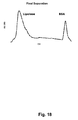
- frontal analysis is used herein to describe a method known to the skilled person within the field performed by continuously load-ing/supplying a feed to a column until the column is saturated with peptide and equilibrium conditions has occurred.
- mass balance also called a material balance
- mass balance is used herein to describe an accounting of material entering and leaving a system. Fundamental to the balance is the conservation of mass principle, i.e. that matter can not disappear or be created.
- batch equilibrium experiment(s) are used herein to describe the adsorption of a peptide or peptide mixture to a constant amount of resin (chromatographic particles) in a constant volume well-mixed batch system, e.g. HTS-system.
- fitting is used herein to describe fitting of data (also called curve fitting) which is a procedure wherein parameters in an equation is matched to provide the best representation of experimental results/outcome/data.
- Data fitting can be performed using commercial available computer software e.g. TableCurve2D, SigmaPlot or MATLAB.
- mass transfer also known as mass transport is used herein to describe mass transfer from the mobile to the stationary phase ( Perry and Green, Perry's Chemical Engineers' Handbook, Chap. 16, 7th Ed., McGraw-Hill, New York, 1997 ) e.g. diffusion in and out of the particles.
- impurity as used herein means any product related impurity, host cell related impurity or process related impurity.
- host cell related impurity means an impurity which is a peptide or a derivative of a peptide expressed by the cell cultivated to express the target peptide.
- process related impurity means an impurity which is a component introduced in the manufacturing process of the target peptide e.g. leakage, cell culture media, additives such as e.g. detergents, salts, buffer components, enzymes, or modifiers.
- the process related impurity is a peptide.
- product related impurity means an impurity which has structural resemblance to the target peptide.
- a related impurity has different chemical or physical structure than the target peptide, for instance a truncated form, an extended form (extra amino acids, various derivatives etc.), a deamidated form, an incorrectly folded form, a form with undesired glycosylation including sialylation, oxidated forms, forms resulting from racemization, forms lacking amino acids in the intra-peptide chain, forms having extra amino acids in the intra-peptide chain, forms wherein an acylation has taken place on another residue than desired, pegylated, acylated or glycosylated impurities, oxidated and deaminated forms, and many others.
- polypeptide and “peptide” and “protein” is used interchangeably herein and means a compound composed of at least five constituent amino acids connected by peptide bonds.
- the constituent amino acids may be from the group of the amino acids encoded by the genetic code and they may be natural amino acids which are not encoded by the genetic code, as well as synthetic amino acids.
- Natural amino acids which are not encoded by the genetic code are e.g. hydroxyproline, ⁇ -carboxyglutamate, ornithine, phos-phoserine, D-alanine and D-glutamine.
- Synthetic amino acids comprise amino acids manufactured by chemical synthesis, i.e.
- D-isomers of the amino acids encoded by the genetic code such as D-alanine and D-leucine, Aib ( ⁇ -aminoisobutyric acid), Abu ( ⁇ -aminobutyric acid), Tie (tert-butylglycine), ⁇ -alanine, 3-aminomethyl benzoic acid, anthranilic acid.
- peptide-specific parameters such as e.g. the steric factor ⁇ , the characteristic charge v, the equilibrium constant K, and mass transfer coefficients, for each peptide present in the mixture in pure form. These determinations are typically made using low column loads so that the isotherm can be assumed to be linear during the entire elution.
- peptide-specific parameters for modelling purposes can be determined directly in the mixture of peptides, e.g., a target peptide and a related impurity or related impurities. Even though, at least in theory, the application of a peptide mixture could have increased the risk for non-linear conditions since a higher column loading may be necessary to detect each peptide component individually, actual comparisons of simulations based on parameters determined in peptide mixtures and experimental runs showed good agreement.
- the invention relates to a method of determining peptide specific parameters to be used in a mathematical model for simulation of a chromatographic separation of a mixture comprising a target peptide and a related impurity or impurities, which method comprises the following steps:
- the method according to the invention comprises the following steps:
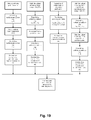
- Fig. 19 illustrates different embodiments according to the invention.
- the recording of the retention behaviour in step (a) is performed by a pulse experiment at different mobile phase compositions.
- the recording of the adsorption isotherm data is obtained by frontal analysis, or batch equilibrium experiment(s).
- the recording of the adsorption isotherm data is obtained by frontal analysis.
- the adsorption isotherm data is obtained by batch equilibrium experiment(s).
- the batch equilibrium experiment is performed by High Throughput Screening techniques, such as Robot technology.
- the recording of the retention behaviour is performed by High Throughput Screening techniques, such as Robot technology.
- the peptide specific parameter is determined by fitting the adsorption isotherm data to a Langmuir type isotherm, Freundlich type isotherm, mass action type isotherm, steric mass action (SMA) isotherm, equation of state type isotherm, BET- type isotherm, Toth type isotherm, Radke-Praunitz type isotherm, Sips type isotherm, UNILAN type isotherm or other empirically or physical based adsorption isotherms.
- the isotherm is a steric mass action (SMA) isotherm.
- Z salt is the charge of the counter ion
- C salt is the counter ion concentration
- ⁇ is the ionic capacity
- ⁇ is the porosity between particles
- ⁇ p porosity
- K d is the exclusion factor
- V NR,i the retention volume for the peptides under non-retained conditions
- V R,i is the retention volume
- i is the index for the peptide component, to determine the peptide specific parameters characteristic charge v i and the equilibrium constant K i for each component.
- ⁇ is the ionic capacity
- K d,i is the exclusion factor
- ⁇ i is the steric factor
- ⁇ i is the characteristic charge
- q i is the solid phase concentration of peptide
- c i mobile phase concentration of peptide
- c S is the counter ion concentration
- K i is the equilibrium constant and i is the index for the peptide component, to determine the peptide specific parameter the steric factor represented by ⁇ i .
- the adsorption isotherm data is recorded on the target peptide in pure form.
- ⁇ is the ionic capacity
- K d,TC is the exclusion factor
- ⁇ TC is the steric factor
- ⁇ TC is the characteristic charge
- q TC is the solid phase concentration of peptide
- c TC is mobile phase concentration of peptide
- c S is the counter ion concentration
- K TC is the equilibrium constant
- TC is the index for the target peptide, to determine one or more of the peptide specific parameters for the target peptide selected from the group consisting of the steric factor ⁇ TC , characteristic charge ⁇ TC and the equilibrium constant K TC .
- the chromatographic separation method is selected from the group consisting of reverse phase high-performance liquid chromatography (RP-HPLC), reversed-phase liquid chromatography (RP-LC), straight phase chromatography, hydrophobic interaction chromatography (HIC), hydroxyapatite chromatography, ion exchange chromatography, affinity pseudo-affinity chromatography, metal chelate chromatography, precipitation, adsorption, gel filtration, size-exclusion chromatography (SEC) electrophoresis and the like, executed singly, sequentially or as mixed-modes.
- the chromatographic separation method is selected form the group consisting of ion exchange chromatography, RP-LC and HIC.
- the chromatographic separation method is ion exchange chromatography.
- said mixture comprises a target peptide and one related impurity.
- said mixture comprises a target peptide and at least two related impurities.
- said mixture comprises a target peptide and at least three related impurities.
- said mixture comprises a target peptide and at least four related impurities.
- said mixture comprises a target peptide and at least five related impurities.
- said mixture comprises a target peptide and at least six related impurities.
- said mixture comprises a target peptide and at least ten related impurities.
- the content of related impurity or impurities in said mixture is at least 1 ppm, at least 10ppm, at least 100ppm, at least 0.1%, at least 1%, at least 5%, at least 10%, at least 20%, at least 50%, at least 90%, at least 95%, or at least 99,9% measured based on the total weight of the target peptide and related impurity or impurities.
- the related impurity is a product related impurity, host cell related impurity and/or process related impurity.
- the related impurity is a product related impurity.
- the related impurity or impurities are identified by recording the retention behaviour and selected from the group consisting of the 5, 4, 3, 2 and 1 impurities eluting closest to the target peptide.
- the related impurity or impurities are identified by recording the retention behaviour and selected from the group consisting of the 5, 4, 3, 2 and 1 impurities eluting in the highest amounts compared to the target peptide.
- a method for simulation of chromatographic separation of a mixture comprising a target peptide and a related impurity or impurities using the peptide specific parameters as determined by the method according to the invention is provided.
- the steric factor for the target peptide and/or the related impurity or impurities have an assumed value.
- the mathematical model used for simulation chromatographic separation is mass balance equation.
- the simulation is performed of a chromatographic separation of a mixture in industrial scale for optimization of an existing GMP process.
- the simulation is performed of a chromatographic separation of a mixture in industrial scale during scale-up of production.
- a computer system comprising a memory and a processor, the processor being programmed to carry out the method according to the invention.
- a computer program product comprising means for performing the method according to the invention.
- the target peptide to be purified is selected from a polypeptide, an oligopeptide, a protein, an antibody, a receptor, a receptor ligand, a vira, as well as homologues, analogues and derivatives thereof.
- glucagon examples include glucagon, hGH, insulin, aprotinin, FactorVII, TPA, FactorVIIa, FFR-FactorVIIa, heparinase, ACTH, Heparin Binding Protein, corticotropin-releasing factor, angiotensin, calcitonin, insulin, glucagon-like peptide-1, glucagon-like peptide-2, insulin-like growth factor-1, insulin-like growth factor-2, fibroblast growth factors, gastric inhibitory peptide, growth hormone-releasing factor, pituitary adenylate cyclase activating peptide, secretin, enterogastrin, somatostatin, somatotropin, somatomedin, parathyroid hormone, thrombopoietin, erythropoietin, hypothalamic releasing factors, prolactin, thyroid stimulating hormones, endorphins, enkephalins, vasopress
- examples include glucagon, hGH, insulin, aprotinin, FactorVII, FactorVIIa, FFR-FactorVIIa, FVII variants having a modified Gla-domain, FVIII, FIX, FX, FXI, FXIII, MC4 peptides, heparinase, glucagon-like peptide-1, glucagon-like peptide-2 and analogues as well as derivatives thereof, such as Val 8 GLP-1 (7-37), Thr 8 GLP-1 (7-37), Met 8 GLP-1(7-37), Gly 8 GLP-1(7-37), Val 8 GLP-1 (7-36) amide, Thr 8 GLP-1 (7-36) amide, Met 8 GLP-1(7-36) amide, Gly 8 GLP-1 (7-36) amide, Arg 34 GLP-1 (7-37) , human insulin, and B28IsoAsp insulin.
- the target peptide is the main constituent of an intermediate process for production of an active pharmaceutical ingredient (API) or a final API.
- API active pharmaceutical ingredient
- Specific peptide examples of the above-mentioned method are separation of Arg 34 GLP-1 (7-37) and Arg 34 GLP-1 (9-37) by cation exchange chromatography, human insulin and B30 human insulin ethyl ester by anion exchange chromatography, B28IsoAsp insulin and DesB23-30 insulin by anion exchange chromatography, prothrombin and des- ⁇ -carboxy-Glu prothrombin by anion exchange chromatography, Arg 34 GLP-1 (7-37) and Arg 34 GLP-1 (10-37) by anion exchange chromatography, Lys B29 -(N- ⁇ ( ⁇ -tetradecanoyl))-desB30 insulin and DesB30 insulin by cation exchange chromatography, Lys B29 -(N- ⁇ ( ⁇ -tetradecanoyl))-desB30 insulin and Lys B29 -(N- ⁇ ( ⁇ -tetradecanoyl))-A1-(N- ⁇ ( ⁇ -tetradecano
- the target peptide can be produced by standard recombinant techniques.
- the DNA sequence encoding the parent peptide may suitably be of genomic or cDNA origin, for instance obtained by preparing a genomic or cDNA library and screening for DNA sequences coding for all or part of the peptide by hybridisation using synthetic oligonucleotide probes in accordance with standard techniques (see, for example, Sambrook, J, Fritsch, EF and Maniatis, T, Molecular Cloning: A Laboratory Manual, Cold Spring Harbor Laboratory Press, New York, 1989 ).
- the DNA sequence encoding the peptide may also be prepared synthetically by established standard methods, e.g.
- the DNA sequence may also be prepared by polymerase chain reaction using specific primers, for instance as described in US 4,683,202 or Saiki et al., Science 239 (1988), 487 - 491 .
- the DNA sequence may be inserted into any vector which may conveniently be subjected to recombinant DNA procedures, and the choice of vector will often depend on the host cell into which it is to be introduced.
- the vector may be an autonomously replicating vector, i.e. a vector which exists as an extrachromosomal entity, the replication of which is independent of chromosomal replication, e.g. a plasmid.
- the vector may be one which, when introduced into a host cell, is integrated into the host cell genome and replicated together with the chromosome(s) into which it has been integrated.
- the vector is preferably an expression vector in which the DNA sequence encoding the peptide is operably linked to additional segments required for transcription of the DNA, such as a promoter.
- the promoter may be any DNA sequence which shows transcriptional activity in the host cell of choice and may be derived from genes encoding proteins either homologous or heterologous to the host cell. Examples of suitable promoters for directing the transcription of the DNA encoding the peptide of the invention in a variety of host cells are well known in the art, cf. for instance Sambrook et al., supra.
- the DNA sequence encoding the peptide may also, if necessary, be operably connected to a suitable terminator, polyadenylation signals, transcriptional enhancer sequences, and translational enhancer sequences.
- the recombinant vector of the invention may further comprise a DNA sequence enabling the vector to replicate in the host cell in question.
- the vector may also comprise a selectable marker, e.g. a gene the product of which complements a defect in the host cell or one which confers resistance to a drug, e.g. ampicillin, kanamycin, tetracyclin, chloramphenicol, neomycin, hygromycin or methotrexate.
- a selectable marker e.g. a gene the product of which complements a defect in the host cell or one which confers resistance to a drug, e.g. ampicillin, kanamycin, tetracyclin, chloramphenicol, neomycin, hygromycin or methotrexate.
- a secretory signal sequence (also known as a leader sequence, prepro sequence or pre sequence) may be provided in the recombinant vector.
- the secretory signal sequence is joined to the DNA sequence encoding the peptide in the correct reading frame.
- Secretory signal sequences are commonly positioned 5' to the DNA sequence encoding the peptide.
- the secretory signal sequence may be that normally associated with the peptide or may be from a gene encoding another secreted protein.
- the host cell into which the DNA sequence or the recombinant vector is introduced may be any cell which is capable of producing the present peptide and includes bacteria, vira, e.g. baculo virus, yeast, fungi, insect cells and higher eukaryotic cells.
- suitable host cells well known and used in the art are, without limitation, E. coli, Saccharomyces cerevisiae, or mammalian BHK or CHO cell lines.
- peptides in particular the oligopeptides, can be produced according to conventional organic peptide synthetic chemistry.
- the resulting synthetic mixture may then be chemically modified, e.g. by alkylation, acylation, ester formation or amide formation or the like, and purified, or purified as it is and then modified chemically as mentioned above.
- the processes of the present invention can be particularly feasible for "industrial-scale” (or “large-scale”) bulks of a target peptide.
- industrial-scale is typically meant methods wherein the volume of the target peptide compositions is at least 100 L, such as at least 500 L, e.g. at least 1000 L, or at least 5000 L, or where the weight of the compositions is at least 100 kg, such as at least 500 kg, e.g. at least 1000 kg, or at least 5000 kg.
- the peptides can be produced by a method which comprises culturing or fermenting a host cell containing a DNA sequence encoding the polypeptide and capable of expressing the polypeptide in a suitable nutrient medium under conditions permitting the expression of the peptide, after which the resulting peptide is recovered from the culture or fermentation broth.
- culturing will be used to cover both culturing and fermenting and the like.
- the medium used to culture the cells may be any conventional medium suitable for growing the host cells, such as minimal or complex media containing appropriate supplements. Suitable media are available from commercial suppliers or may be prepared according to published recipes (e.g. in catalogues of the American Type Culture Collection).
- the peptide produced by the cells may then be recovered from the culture medium by conventional procedures including, optionally lysis of cells, separating the host cells from the medium by centrifugation or filtration, precipitating the proteinaceous components of the supernatant or filtrate by means of a salt, e.g. ammonium sulphate, purification by conventional purification techniques, such as chromatographic techniques, if necessary, purification by ion exchange chromatography, and subsequently, subjecting to analytical tests, e.g. PAGE, IEF, if necessary, subjecting to further purification, if necessary, and isolation of the pure peptide.
- a salt e.g. ammonium sulphate
- the mixture comprising the peptide and related impurities may optionally be chemically modified by conventional techniques, e.g. by alkylation, acylation, ester formation or amide formation or the like.
- chromatographic separation or purification technique for peptides available to those skilled in the art may be modeled according to the invention.
- these techniques include, but are not limited to reverse phase high-performance liquid chromatography (RP-HPLC), reversed-phase liquid chromatography (RP- LC), straight phase chromatography, hydrophobic interaction chromatography (HIC), hydroxyapatite chromatography, ion exchange chromatography, affinity chromatography, metal chelate chromatography, precipitation, adsorption, gel filtration, size-exclusion chromatography (SEC) electrophoresis and the like, executed singly, sequentially or as mixed-modes.
- RP-HPLC reverse phase high-performance liquid chromatography
- RP- LC reversed-phase liquid chromatography
- HIC hydrophobic interaction chromatography
- hydroxyapatite chromatography ion exchange chromatography
- affinity chromatography affinity chromatography
- metal chelate chromatography metal chelate chromatography
- precipitation a
- Figure 19 outlines exemplary strategies to arrive at process simulation of a chosen chromatographic separation. Though a person of skill in the art can carry out and/or modify these strategies according to known methods in the art, some basic aspects are described in further detail below.
- the invention provides for a method for simulation of chromatographic separation of a biopharmaceutical target protein or peptide from its related impurity or impurities using a mathematical model consisting of:
- process simulations can be based on any of the non-stationary 1D-models presented in Examples 1-3, with i components and salt, comprising a mass balance and an SMA isotherm as described, applied to ion exchange chromatography.
- the same principles can be applied to other chromatographic principles.
- the SMA isotherm is primarily developed for ion exchange chromatography, but may be used as an empirical model describing, e.g., reverse-phase chromatography, affinity chromatography, and hydrophobic interaction chromatography.
- peptide-specific parameters such as e.g. the steric factor ⁇ , the characteristic charge v, the equilibrium constant K in the SMA isotherm description and mass transfer coefficients, for each peptide present in the mixture in pure form.
- the above-described experiments to determine peptide-specific parameters can advantageously be performed on peptide mixtures, to simultaneously determine peptide-specific parameters (such as, e.g., isotherm parameters) for different peptide components.
- the peptide mixture comprises a target peptide and at least one, at least two, at least three, at least four, at least five, at least six, or at least ten related impurities.
- the content of related impurity or impurities in said mixture is at least 1 ppm, at least 10ppm, at least 100ppm, at least 0.1%, at least 1 %, at least 5%, at least 10%, at least 20%, at least 50%, at least 90%, at least 95%, or at least 99,9% measured based on the total weight of the target peptide and related impurity or impurities.
- the peptide mixture may also comprise one or more impurities that are not related to the target peptide.
- Retention behaviour related to peptide-specific parameters such as, e.g., the isotherm parameters characteristic charge (v) and equilibrium constant (K), is determined from retention volume (V R ) as a function of salt concentration (c s or c salt ) in, e.g., a pulse experiment.
- V R retention volume
- EMG exponential modified Gauss
- Such experiments can be carried out, e.g., by applying a small amount of sample onto the column, and chosen mobile phases used to elute the peptide or peptide mixture via either isocratic or gradient elution.
- the true retention volume of a solute equals the measured retention volume minus the dead volume.
- the dead volume from the injection valve to the detector can be determined by, e.g., injecting a small pulse of a suitable sample (e.g., NaNO3 solution) through an empty column with the distributers pressed together.
- the dead volume is then determined by fitting to the EMG-function to the eluting peak (see section about determination of the retention volume).
- the column can be equilibrated, loaded with 100 ⁇ L of sample containing about 1 g protein/L of a peptide or peptide mixture solution, and the elution started.
- the salt e.g., chloride
- concentrations can be varied between different runs, where the lower concentration limit typically depends on the binding strength of the protein.
- the retention volume of the peptides is also determined at non-binding conditions, using, e.g., a high salt-concentration.
- the gradient elution can be performed at different gradient volumes (e.g., in the range 20-60 CVs) using two buffer solutions at different salt (e.g., chloride) solutions.
- the column can be equilibrated and loaded with 100 ⁇ L of a sample containing about 1 g protein/L of a peptide or peptide mixture solution and the elution started.
- Determination of steric factor ( ⁇ ) can be made, e.g., by frontal analysis (i.e., breakthrough curve).
- the column can be equilibrated with buffer and a suitable amount of sample solution, enough to ensure a plateau in the UV signal, is pumped through the system while bypassing the column.
- the UV detector can then be zeroed, and the sample solution passed through the column.
- the solution can be passed through the column well after the breakthrough until a close to constant signal is reached.
- the column can then be bypassed with a suitable amount of sample solution.
- the resulting experimental curve is a UV window which starts at zero, passes through a negative plateau and ends with the breakthrough followed by a near constant plateau and finally a step-up to zero from the second bypass.
- the procedure of bypassing has two purposes: it ensures a step injection originating close to the column and it provides a signal at the feed concentration to be compared with the plateau reached after the breakthrough and finally with the signal from the second bypass whereby one can estimate a possible shift in the detector response.
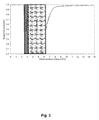
- the column is then regenerated and prepared for the next experimental salt concentration. It should be noted that, when determining the total amount of protein bound to the column, represented by the total area over the resulting curve, it should be corrected for void volume in the column (see Figure 3 ).
- protein solutions can be prepared with changing concentrations of salt and protein in a master plate by adding different volumes from a protein stock and buffer solutions. Samples from the master plate can be analyzed using, e.g., UV absorption to determine initial protein concentration. Particle plaques can be supplied in a working plate and protein solution then transferred from the master plate followed by mixing of the resin-liquid suspension until equilibrium between the solid and liquid phases is achieved. The equilibrium process can either be stopped by centrifugation or vacuum to remove the liquid phase. Samples of the supernatant can be analyzed using, e.g., UV absorption for determination of final protein concentration.
- Data fitting can be made using, e.g., commercially available computer programs for, e.g., least-squares method, where you minimize the difference between experimental data and model (residual).
- the model can be solved using a computer program such as, e.g., Comsol Multiphysics.
- the mathematical model can be solved using the General Form PDE ( Comsol Multiphysics 3.2, September 2005, e.g. modeling guide, p. 241-243 ).
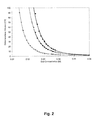
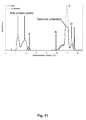
- Pulse experiments were carried out with a mixture containing liraglutide (Arg 34 Lys 26 (N ⁇ -( ⁇ -Glu-(N ⁇ -tetradecanoyl)))GLP-1(7-37)) (component 1 in Fig. 1 ), two diacylated variants (components 2 and 3 in Fig. 1 ), and one tri-acylated variant of GLP-1 on a 2.75 mL Source 30Q resin (GE Health Care), at pH 7.5, with a buffer system containing 10 mM Tris buffer, NaCl and 63 %w/w ethanol. Pulse experiments were carried out by injecting a pulse of the mixture, followed by isocratic elution at different chloride concentrations which resulted in the recording of different retention volumes for the different proteins in the mixture (see Fig. 1 ).
- V R , i V NR , i + 1 - ⁇ ⁇ ⁇ p ⁇ K d ⁇ K i ⁇ ⁇ z s ⁇ c s ⁇ i
- Z s is the charge of the counter ion (in this case chloride)
- ⁇ is the ionic capacity (equivalents of ligands in the column per liter of pore-volume)
- ⁇ is the porosity between particles
- ⁇ p is the porosity in particles (which, in this case, could be found in literature (Pedersen L., Ph.D.
- K d is the exclusion factor which describes the percentage of the pores which the protein have access to
- V NR is the retention volume for protein under non-retained conditions (high salt concentration).
- K i the equlibrium constant
- v i the equlibrium constant
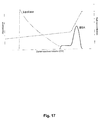
- Fig. 3 shows the breakthrough curve of liraglutide. Since the breakthrough curve was symmetric, the gray area represents bound peptide. Frontal analysis results obtained at different protein concentrations during loading were integrated to determine how much protein was bound on the column as described ( Phillip C. Wankat, Rte-controlled separations, First edition 1990, 1194 ), and the steric factor was fitted for liraglutide to the equation below.
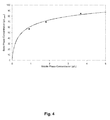
- c i q i K i [ c s ⁇ - ⁇ i K d , i ⁇ q i ⁇ ⁇ i + ⁇ i ⁇ ] ⁇ i , where q is the solid phase concentration of liraglutide, c is mobile phase concentration of liraglutide, c S is the chloride concentration from the frontal analysis experiments and ⁇ is the steric factor which was fitted to be 4 for liraglutide. The index i is for each component.
- Fig. 4 shows the fit of the SMA isotherm to the experimental data.
- the steric factor ⁇ for the impurities was assumed to be equal to that of liraglutide.
- the Peclet number is fitted such that the simulated peak width for each component matches the individual component peaks determined by the pulse experiment.
- the Peclet number was determined by this method to be 75 for all components in the mixture in this experiment.
- the solvents used were pH 7.5, 10 mM Tris buffer, NaCl and 63 %w/w ethanol.
- the column used was a 2.75mL Source 30Q.
- the sample for loading was 35 column volumes of a mixture containing 0.03 g protein per liter, split up into approximately 47% component 1,24% component 2, 24% component 3, 5% component 4 and 18 mM of chloride.
- Elution was carried out by isocratic elution for 5 column volumes at 13.7mM chloride followed by gradient elution from 13.7mM chloride to 30.8mM chloride over 5 column volumes followed by isocratic elution for 17 column volumes 30.8mM chloride followed by gradient elution from of 30.8mM chloride to 70.7mM chloride over 10 column volumes.
- the mixer volume was set to 0.01 column volume in the simulation.
- Fig. 5 shows a comparison of a simulated and an actual chromatogram, showing good agreement.
- Example 2 Simulation of an industrial ion exchange step (Part 2): The use of simulation for scale-up and trouble-shooting.
- Example 2 The simulations were based on the model presented in Example 1. A CSTR model was added to the column inlet to simulate a static mixer.
- BC2 A Neumann boundary condition is used at column outlet: 4 ⁇ c i ⁇ x ⁇
- Fig. 6 and 7 show the effect of a static mixer on the gradient response and elution profile (extra column effect).
- Fig. 7 illustrates the significance of the effects of the extra column. As the mixer size increases from 0 to 1 CV, the elution profile changes and both retention and pool volume increases. If collection criteria by peak cutting is maintained, the yield will decrease as will the productivity.
- Table 3 shows the changes in retention volume, pool volume and yield caused by extra column effects.
- Table 3 Mixer size (CV) 0 0.4 1.0 V R (CV) 10.3 11.5 12.4 V pool (CV) 0.95 1.1 1.5 Yield [%] 85 84 76 Scaled productivity 1.00 0.94 0.82
- Fig. 6 The process shown in Fig. 6 was successfully scaled 2000-fold ( Fig.8 ), keeping residence time constant (constant flow-rate in CV/h, Kidal and Elvang, BioPharm International, March 1, 2006 (www.biopharminternational.com )) and using a mixer of 0.4 CV.
- Fig. 8 shows the agreement between a simulation and an actual pilot scale run with a 0.4 CV static mixer.
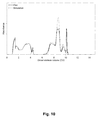
- Fig. 10 shows a simulated chromatogram of high salt concentration in buffer 1 as compared with an actual run.
- Example 3 Simulation of an industrial ion exchange step: The use of simulation for optimization
- Simulations were based on a non-stationary 1D-model with i components and salt, comprising a mass balance with boundary conditions, and an SMA.
- the integrated mass balance governs the distribution of salt and protein in both mobile and stationary phase throughout the column.
- BC1:Boundary condition at column inlet: 2 ⁇ c i c F , i + c 0 , i - c F , i ⁇ e - V V mix
- BC2 A Neumann boundary condition is used at column outlet: 3 ⁇ c i ⁇ x ⁇
- the SMA isotherm describes the concentrations of protein in the mobile and stationary phase at equilibrium as a function of salt concentration.
- a purification step was developed and optimized by conventional methods i.e. trial and error optimization by laboratory experiments.
- the model presented in the theory section was applied to the process step and proved to be an important tool for troubleshooting [ Hansen TB., Kidal S., Simulation of an industrial ion exchange step (part 1): Determination of the most relevant parameters.
- PREP 2006 , poster and [ Kidal S., Hansen TB., Simulation of an industrial ion exchange step (part 2): The use of simulation for scale-up and troubleshooting.
- PREP 2006 , poster as shown above in Examples 1 and 2.
- Fig. 11 shows a simulation and pilot run of a standard process.
- C was the target component.
- Fig. 12 shows a simulated concentration profile in solid phase in the column after loading.
- the next step was to optimize the productivity (g/h/Lresin) without compromising quality.
- the process was optimized by trial and error, using approximately 40 computer simulations.
- Fig. 13 shows a simulated chromatogram including both loading and elution for the optimized process.
- C was the target component.
- Fig. 14 shows a simulated concentration profile in solid phase in the column after loading for the optimized process.
- the profile shows intensive displacement of closely related impurities (A, B) by target component (C).
- Component D displaces component C.
- Fig. 15 shows the optimized process, comparing simulation to actual laboratory run.
- an automated optimization routine using computer simulations can be implemented.
- a 1:1 sample of BSA and Lipolase based on weight was prepared by dissolving 0.5 g BSA and 0.5 g Lipolase in 1 liter of aqueous 50 mM Tris + 50 mM Bis-Tris Propane, pH 8.0.
- 10.1 mL of the sample containing BSA and Lipolase was applied on a 5.03 mL DEAE Sepharose FF column (GE HealthCare, Uppsala, Sweden) at a constant flow rate of 50.5 mL/hour.
- the solvents used were A: 50 mM Tris + 50 mM Bis-Tris Propane, pH 8.0 and B: 50 mM Tris + 50 mM Bis-Tris Propane + 1 M NaCl, pH 8.0.
- the column was equilibrated with solvent A and separation was carried out by gradient elution from 75 mM chloride to 1075 mM chloride over 10 column volumes. As shown in Fig. 16 , no separation of the two components was obtained.
- the 5.03 mL DEAE Sepharose FF column was equilibrated with solvent A.
- the sample for loading was 20 column volumes of a mixture containing 1.0 g Lipolase and 1.0 g BSA in 1 liter of solvent A. Elution was carried out by gradient elution from 75 mM chloride to 115 mM chloride over 91 column volumes followed by gradient elution from 115 mM chloride to 250 mM chloride over 15 column volumes followed by isocratic elution for 5 column volumes at 250 mM chloride. The flow rate during loading and elution was 252.5 mL/hour. As shown in Fig. 18 an excellent separation of BSA and Lipolase was obtained at a higher loading, flow rate, and sample concentration compared to the initial experiment. Further, the separation profiles between the simulated and the experimental chromatogram ( Figures 17 and 18 ) were very similar.
- This Example describes an exemplary procedure for determining v, ⁇ , and K using pulse experiments with a mixture containing liraglutide (Arg 34 Lys 26 (N ⁇ -( ⁇ -Glu-(N ⁇ -tetradecanoyl)))GLP-1 (7-37)), two diacylated variants, and one tri-acylated variant of GLP-1. See Example 1.
- Tris buffer (108382.1000) is from Merck (Darmstadt, Germany).
- NaCl (1.06404.1000) was from Merck (Darmstadt, Germany).
- 1 and 4 M HCl (1.00317.1000) were Merck (Darmstadt, Germany).
- 1 and 4 M NaOH (1.0698.1000) were from Merck (Darmstadt, Germany).
- Standard solutions for the pH meter calibration were from Radiometer (Copenhagen, Denmark). Ethanol was from Novo Nordisk (Denmark). Ion-free water (WFI) was used in all experiments.
- Two buffer solutions were prepared by dissolving Tris and NaCl, in one of the two buffers, in WFI, then adding ethanol and titrating with HCl to pH 7.5 and finally adding WFI.
- the final concentration of tris was 20 mM and ethanol is 63 %w/w in both buffers and 62.5 mM NaCl in one of them.
- the pH meter was calibrated with standard solutions at pH 7.000 and 10.012.
- the final concentrations of chloride in the two buffers were 13 mM to 70 mM.
- the concentration in the feed solutions was determined on the HP 8452A spectrophotometer at 280 nm.
- the breakthrough curves were detected at 280 and 254 nm.
- the extinction coefficient was approx. 2.0 L/(g•cm).
- Pulse experiments with isocratic elution The column was equilibrated with 10 CVs of buffer and the UV detector was zeroed. The column was loaded with 100 ⁇ L of a sample solution containing approx. 1 g protein/L and the elution was started. The chloride concentrations used varied from 13 mM to 70 mM. The lower limit depends on the binding strength of the protein. At the end of the elution the column was regenerated with 10 CVs of 1 M NaOH solution followed by 10 CVs 2 M NaCl pH 3.0 (CH3COOH) and finally 10 CVs buffer solution preparing the column to the next experimental salt concentration. The retention volume of the proteins was also determined using a 2 M NaCl buffer (nonbinding conditions). The flowrates were 30, 60, 90 and 120 CV/h.
- Pulse experiments with lineargradient elution The gradient elution was preformed at gradient volumes of 20, 30, 40, 50 and 60 CVs using two buffer solutions at 13 mM Cl- and 70 mM Cl-. The flow-rate was 60 CV/h.
- the column was equilibrated with 15 CVs of the starting buffer and the UV detector was zeroed.
- the column was loaded with 100 ⁇ L of a sample solution containing approx. 1 g protein/L and the elution started. At the end of the gradient the column was regenerated with 10 CVs of 1 M NaOH solution followed by 10 CVs 2 M NaCl pH 3.0 (CH3COOH) and finally 10 CVs buffer solution preparing the column to the next experimental salt concentration.
- the dead volume from the injection valve to the detector was determined by injecting a small pulse of NaNO3 solution through an empty column with the distributers pressed together.
- the dead volume was determined by fitting to the EMG-function to the eluting peak (see section about determination of the retention volume).
- the dead volume including the mixer, through an empty column with the distributers pressed together and to the detector was determined by a shift from H2O (inlet A2) to 0.1 M NaNO3 (inlet B1).
- the dead volume can be determined from the resulting breakthrough curve by measuring the volume at 50% breakthrough.
- the procedure of bypassing had two purposes: it ensured a step injection originating close to the column and it provided a signal at the feed concentration to be compared with the plateau reached after the breakthrough and finally with the signal from the second bypass whereby one can estimate a possible shift in the detector response.
- the column was regenerated with 10 CVs of 1 M NaOH solution followed by 10 CVs 2 M NaCl pH 3.0 (CH3COOH) and finally 10 CV buffer solution preparing the column to the next experimental salt concentration. All experiments were carried out at room temperature (20-25°C)
- the retention volume was determined from the centre of mass of the eluting peak by fitting the exponential modified Gauss (EMG) function to the response curve. In some cases the retention volumes were determined from the peak maxima. The true retention volume of a solute equals the measured retention volume minus the dead volume.
- EMG exponential modified Gauss
- High throughput screening could also be used in the above analysis.
- protein solutions are prepared with changing concentrations of salt and protein in a master plate by adding different volumes from a protein stock and buffer solutions. Samples from the master plate are analyzed using UV absorption to determine initial protein concentration. Particle plaques are supplied in a working plate and protein solution are transferred from the master plate followed by mixing of the resin-liquid suspension until equilibrium between the solid and liquid phases is achieved. The equilibrium process can either be stopped by centrifugation or vacuum to remove the liquid phase. Samples of the supernatant are analyzed using UV absorption for determination of final protein concentration.
- the column (Source 30Q; 2.75 mL column) was equilibrated with 15 CVs of the starting buffer and the UV detector was zeroed.
- the column was loaded with 3 g/L resin of a sample solution containing approx. 3 g protein/L.
- the gradient elution was preformed at a gradient from 12% to 14% (high Cl- buffer) over 10 CVs then stepping to a new gradient from 80 to 100% (high Cl- buffer) over 4 CV using two buffer solutions at 13 mM Cl- and 70 mM Cl-.
- the flow-rate was 12 CV/h.
- the column was regenerated with 5 CVs of 1 M NaOH solution followed by 5 CVs 2 M NaCl pH 3.0 (CH3COOH) and finally 5 CVs buffer solution (low Cl- buffer).
Landscapes
- Physics & Mathematics (AREA)
- Health & Medical Sciences (AREA)
- Life Sciences & Earth Sciences (AREA)
- Chemical & Material Sciences (AREA)
- Analytical Chemistry (AREA)
- Biochemistry (AREA)
- General Health & Medical Sciences (AREA)
- General Physics & Mathematics (AREA)
- Immunology (AREA)
- Pathology (AREA)
- Peptides Or Proteins (AREA)
Abstract
Described are methods for determination of peptide specific parameter(s) of a mixture comprising a target peptide and a related impurity (or impurities) to be used in a simulation model of chromatographic separation using mathematical model(s). Also described are chromatographic simulation methods using above determined parameters, as well as computer systems and computer programs for performing one or more of the above method(s).
Description
- The present invention relates to simulation of chromatographic separation using mathematical models.
- Chromatography is a dynamic technique for separation of molecules, both analytically and in preparative scale, using gas or liquid as the mobile phase. For separation of proteins and peptides, liquid chromatography (LC) can be used in various modes such as, e.g., ion-exchange, reversed phase, hydrophobic interaction, affinity, and metal chelate chromatography, depending on the nature and ligands of the stationary phase. Ion-exchange chromatography primarily separates proteins based on their overall and/or local difference in charge, reversed phase and hydrophobic interaction chromatography separate proteins based on hydrophobicity of the proteins and peptides, while affinity chromatography (and many other modes of chromatography) separate proteins and peptides based on various attracting and repelling forces, including hydrogen binding, van der Waals, ionic and hydrophobic forces.
- In analytical LC, loading of the chromatographic column is usually low to obtain the best possible separation of the distinct molecules present in the sample, and various elution gradients and modifiers are applied to achieve maximum resolution. In preparative LC, column loading is usually high to optimize productivity and process economy, and the separation procedure is designed to obtain optimal purity and yield of the target protein or peptide. Gradients and modifiers are usually applied in the most simplistic way possible to obtain the purity and yield desired. The nature of gradients in LC is linked to the mode of operation, e.g. salt and/or pH in ion-exchange chromatography, organic solvent in reversed phase chromatography, etc.
- For many years, there has been a desire to adequately describe the very complex LC separation process using mathematical models for simulation of chromatographic separation. Key elements in such mathematical models include the adsorption isotherm describing solute equilibrium between the stationary and mobile phase, the overall mass balance of the chromatographic system, and an expression describing mass transfer from the mobile to the stationary phase (Perry and Green, Perry's Chemical Engineers' Handbook, Chap. 16, 7th Ed., McGraw-Hill, New York, 1997). The most recognized and applied adsorption isotherms today are those developed by Langmuir, J. Am. Chem. Soc. 40 (1918) 1361 (Langmuir isotherms) and Brooks and Cramer, AlChE J. 38 (1992) 1969-1978 (steric mass action (SMA) isotherms), and various derived expressions hereof for reversed phase and hydrophobic interaction chromatography and for ion-exchange chromatography, respectively.
- , Modelling has been applied to ion-exchange chromatography model systems (Karlsson et al., J. Chromaotgr. A 1055 (2004) 29-39), hydrophobic interaction chromatography model systems (Jakobsson et al., J. Chromatogr. A 1099 (2005) 157-166), pseudo-affinity chromatography model system (Zhang and Sun, J. Chromatogr. A 957 (2002) 89-97, and reversed phase chromatography model system (Liu et al., Biotechnol. Prog. 18 (2002) 796-806). The latter publication described modelling of an artificial mixture of recombinant human, porcine, and human analogue insulin, and Wiesel et al. (J. Chromatogr. A 1006 (2003) 101-120) have published a modelling work with ion-exchange chromatography using an unspecified bioactive substance. Usually, however, research and verification of mathematical models are typically performed on model and non-biopharmaceutical protein mixtures, e.g. chymotrypsinogen and cytochrome c (Brooks and Cramer, AlChE J. 38 (1992) 1969-1978) and BSA (Chen et al., J. Chromatogr. A 1012 (2003) 1-10 and Lim et al., Bio-chem. Eng. J. 25 (2005) 125-140), and thus may not be applicable to more complex protein mixtures.
- Also, while commercial programs of various quality and validity for simulation of separation processes exist, e.g. Aspentech in
US 5,666,297 , all peptide and system specific parameters, such as the steric factor σ, the characteristic charge v, and the equilibrium constant K in the e.g. the SMA isotherm description and mass transfer coefficients, basically must be determined separately for each component in the mixture. Determination of peptide specific parameters, however, usually requires pure gram-amounts of each component in the mixture. High through-put screening (HTS) techniques in ion-exchange batch adsorption mode have recently been applied in an effort to minimize consumption of pure protein for modelling (see, e.g., Rege et al., Sep. Sci Technol. 38 (2003) 1499-1517, for displacement chromatography predictions). - Accordingly, a need still exists for a simple and adequate method for simulation and modelling of chromatographic separation of peptide mixtures, especially where the target protein and one or more impurities are related.
- The present invention relates in one aspect to a method for determination of peptide specific parameter(s) of a mixture comprising a target peptide and a related impurity or impurities to be used in a simulation model of chromatographic separation using mathematical model(s).
- In a further aspect of the invention, a method of simulation using above determined parameters, is provided.
- The invention also relates to a computer system and a computer program for performing above method(s).
-
-
Figure 1 shows the results of the pulse experiments as described in example 1. -
Figure 2 shows the fit of characteristic charge and equilibrium constant as described in example 1. First curve from the left representscomponent 1, the second curve from the left representscomponent 2, and the third curve from the left representscomponent 3. -
Figure 3 shows the breakthrough curve of liraglutide as described in example 1. -
Figure 4 shows the fit of the SMA isotherm to the experimental data as described in example 1. -
Figure 5 shows a comparison of a simulated and an actual chromatogram as described in example 1. -
Figures 6 and7 show the effect of a static mixer on the gradient response and elution profile (extra column effect) as described in example 2. -
Figure 8 shows the agreement between a simulation and an actual pilot scale run as described in example 2. -
Figure 9 shows a standard run and a run with early elution of target component in a pilot plant as described in example 2. -
Figure 10 shows a simulated chromatogram of high salt concentration inbuffer 1 compared with an actual run as described in example 2. -
Figure 11 shows a simulation and pilot run of a standard process. C is the target component as described in example 3. -
Figure 12 shows a simulated concentration profile in solid phase in the column after loading as described in example 3. -
Figure 13 shows a simulated chromatogram including both loading and elution for the optimized process as described in example 3. C is the target component. -
Figure 14 shows a simulated concentration profile in solid phase in the column after loading for the optimized process as described in example 3. The profile shows intensive displacement of closely related impurities (A, B) by target component (C). Component D displaces component C. -
Figure 15 shows an optimized process, with simulation compared to an actual laboratory run as described in example 3. -
Figure 16 shows an initial attempt to separate BSA and Lipolase as described in example 4. -
Figure 17 shows a simulated separation of BSA and Lipolase as described in example 4. -
Figure 18 shows an experimental verification of separation of BSA and Lipolase as described in example 4. -
Figure 19 illustrates several embodiments of the method according to the invention. - The term "adsorption isotherm" as used herein means the relation between the quantity adsorbed in the solid phase (in/on the particle) and the composition in the liquid phase under equilibrium conditions at constant temperature. As examples the following may be mentioned: Langmuir type isotherm, Freundlich type isotherm, mass action type isotherm, steric mass action (SMA) isotherm, equation of state type isotherm, BET- type isotherm, Toth type isotherm, Radke-Praunitz type isotherm, Sips type isotherm, UNILAN type isotherm or other empirically or physical based adsorption isotherms (as described in Perry and Green, Perry's Chemical Engineers' Handbook, Chap. 16, 7th Ed., McGraw-Hill, New York, 1997).
- The term "chromatographic behavior" as used herein means the quantitative description of the chromatographic separation e.g. the elution order, retention, concentration of different components and elution profile also known as chromatogram.
- The term "retention behavior" as used herein means e.g. the elution order and retention of different components.
- The term "peptide specific parameter" describes parameters as used in mathematical models such as, e.g. the steric factor σ, the characteristic charge v, the equilibrium constant K in the SMA isotherm description and mass transfer coefficients.
- The term "pulse experiment" is used herein to describe a method known to the skilled person within the field when a small amount of peptide or peptide mixture is applied onto a column followed by elution at different mobile phase compositions. In one aspect of the invention, the elution is a gradient elution. In another aspect of the invention, the elution is an isocratic elution.
- The term "frontal analysis" (also called a breakthrough curve) is used herein to describe a method known to the skilled person within the field performed by continuously load-ing/supplying a feed to a column until the column is saturated with peptide and equilibrium conditions has occurred.
- The term "mass balance" (also called a material balance) is used herein to describe an accounting of material entering and leaving a system. Fundamental to the balance is the conservation of mass principle, i.e. that matter can not disappear or be created.
- The term "batch equilibrium experiment(s)" are used herein to describe the adsorption of a peptide or peptide mixture to a constant amount of resin (chromatographic particles) in a constant volume well-mixed batch system, e.g. HTS-system.
- The term "fitting" is used herein to describe fitting of data (also called curve fitting) which is a procedure wherein parameters in an equation is matched to provide the best representation of experimental results/outcome/data. Data fitting can be performed using commercial available computer software e.g. TableCurve2D, SigmaPlot or MATLAB.
- The term "mass transfer" also known as mass transport is used herein to describe mass transfer from the mobile to the stationary phase (Perry and Green, Perry's Chemical Engineers' Handbook, Chap. 16, 7th Ed., McGraw-Hill, New York, 1997) e.g. diffusion in and out of the particles. The term "impurity" as used herein means any product related impurity, host cell related impurity or process related impurity.
- The term "host cell related impurity" as used herein means an impurity which is a peptide or a derivative of a peptide expressed by the cell cultivated to express the target peptide.
- The term "process related impurity" as used herein means an impurity which is a component introduced in the manufacturing process of the target peptide e.g. leakage, cell culture media, additives such as e.g. detergents, salts, buffer components, enzymes, or modifiers. In one aspect of the invention, the process related impurity is a peptide.
- The term "product related impurity" as used herein means an impurity which has structural resemblance to the target peptide. A related impurity has different chemical or physical structure than the target peptide, for instance a truncated form, an extended form (extra amino acids, various derivatives etc.), a deamidated form, an incorrectly folded form, a form with undesired glycosylation including sialylation, oxidated forms, forms resulting from racemization, forms lacking amino acids in the intra-peptide chain, forms having extra amino acids in the intra-peptide chain, forms wherein an acylation has taken place on another residue than desired, pegylated, acylated or glycosylated impurities, oxidated and deaminated forms, and many others.
- The term "polypeptide" and "peptide" and "protein" is used interchangeably herein and means a compound composed of at least five constituent amino acids connected by peptide bonds. The constituent amino acids may be from the group of the amino acids encoded by the genetic code and they may be natural amino acids which are not encoded by the genetic code, as well as synthetic amino acids. Natural amino acids which are not encoded by the genetic code are e.g. hydroxyproline, γ-carboxyglutamate, ornithine, phos-phoserine, D-alanine and D-glutamine. Synthetic amino acids comprise amino acids manufactured by chemical synthesis, i.e. D-isomers of the amino acids encoded by the genetic code such as D-alanine and D-leucine, Aib (α-aminoisobutyric acid), Abu (α-aminobutyric acid), Tie (tert-butylglycine), β-alanine, 3-aminomethyl benzoic acid, anthranilic acid.
- The following parameter abbreviations are used herein:
- c:
- Mobile phase concentration [mol/L]
- cS:
- Salt concentration [mol/L]
- cF:
- Feed concentration
- CV:
- Number of column volumes, dimensionless
- i:
- Component index
- TC:
- Target component
- K:
- Equilibrium constant
- Kd:
- Exclusion factor
- v:
- Characteristic charge of the protein
- Pe:
- Peclet number, dimensionless
- q:
- Solid phase concentration [mol/L pore]
- V:
- Dimensionless volume (CV)
- VR:
- Retention volume (CV)
- vmix:
- Mixer volume (CV)
- x:
- Dimensionless length
- ε:
- Porosity between particles
- εp:
- Porosity in particles
- Λ:
- Capacity [mol/L pore]
- σ:
- Steric factor
- PDE:
- Partial Differential Equation
- ODE:
- Ordinary Differential Equation
- In order to perform simulation of chromatographic behaviour it is, for many of the current simulation models, necessary to determine one or more peptide-specific parameters such as e.g. the steric factor σ, the characteristic charge v, the equilibrium constant K, and mass transfer coefficients, for each peptide present in the mixture in pure form. These determinations are typically made using low column loads so that the isotherm can be assumed to be linear during the entire elution. While such determinations can be simple enough when each peptide in the mixture is a model protein commercially available in pure form, the situation is more complex for mixtures of closely related peptides or peptide analogs, such as, e.g., a reaction mixture containing a target peptide and one or more closely related impurities or by-products. Since many of the peptides are present only in small amounts, obtaining sufficient amounts of each peptide component in pure form can be time-consuming and, practically, close to impossible.
- It has now been found that peptide-specific parameters for modelling purposes can be determined directly in the mixture of peptides, e.g., a target peptide and a related impurity or related impurities. Even though, at least in theory, the application of a peptide mixture could have increased the risk for non-linear conditions since a higher column loading may be necessary to detect each peptide component individually, actual comparisons of simulations based on parameters determined in peptide mixtures and experimental runs showed good agreement. For example, as shown in
Figure 1 (Example 1), pulse experiments were carried out on a mixture of a GLP-1 analog along with two diacylated variants and one triacetylated variant to determine characteristic charge and equilibrium constant, for use in simulation of ion-exchange chomatography. Subsequent comparison with an actual run revealed good agreement between the simulation and experimental results, thus verifying the adequacy of parameter estimation on peptide mixtures. This was also verified for impurity-containing peptide mixtures where the target peptide was MC-4, a human growth hormone variant, and an insulin analog. - Simultaneous determination of peptide-specific parameters can lead to a more straightforward application of modelling as a tool to simulate and model protein separation. True simulation and modelling of complicated chromatography systems have a variety of benefits, especially within the biopharmaceutical industry, and can be the technical solution to a number of problems such as, e.g.:
- Optimization of existing processes according to Good Manufacturing Practice (GMP) processes - to save laboratory and full scale experiments and to obtain the best productivity and process economy including process integration.
- Process control and process analytical tools (PAT) of new and existing GMP processes - for better understanding of the process, trouble-shooting, discovery of errors, handling of GMP deviations, to keep process in control according to new directions of regulatory authorities, to better control samples with varying composition, and to minimize subsequent experimentation and validation.
- Process challenge, design of manufacturing facilities, and scale-up of new processes - to minimize laboratory and full scale experimentation and validation and to identify critical parameters, e.g. separation occurring during loading, design of mixer volumes etc.
- Development of analytical chromatography methods and chromatographic purification including continuous processes - to obtain optimal purity of target protein or peptide and reduce lab and large scale experimentation to a minimum.
- Problems caused by chemical or enzymatic reactions during purification e.g. degradation.
- Thus, in one aspect, the invention relates to a method of determining peptide specific parameters to be used in a mathematical model for simulation of a chromatographic separation of a mixture comprising a target peptide and a related impurity or impurities, which method comprises the following steps:
- (a) determining at least two peptide specific parameters by recording retention behaviour data of the target peptide and related impurity or impurities in said mixture and by fitting the obtained data to a mathematical model to calculate the peptide specific parameters, and, optionally
- (b) determining one or more peptide specific parameters by recording adsorption isotherm data of the target peptide optionally in a mixture with one or more of the related impurities and by fitting the obtained data to a mathematical model to calculate the peptide specific parameters, and, optionally
- (c) determining one or more peptide specific parameters by recording adsorption isotherm data of one or more of the related impurities and by fitting the obtained data to a mathematical model to calculate the peptide specific parameters,
- In a further aspect, the method according to the invention comprises the following steps:
- (a) determining at least two peptide specific parameters by recording retention behaviour data of the target peptide and related impurity or impurities in said mixture and by fitting the obtained data to a mathematical model to calculate said peptide specific parameters, and
- (b) determining one or more peptide specific parameters by recording adsorption isotherm data of the target peptide and by fitting the obtained data to a mathematical model to calculate said peptide specific parameters,
-
Fig. 19 illustrates different embodiments according to the invention. - In a further aspect of the invention, the recording of the retention behaviour in step (a) is performed by a pulse experiment at different mobile phase compositions.
- In yet a further aspect of the invention, the recording of the adsorption isotherm data is obtained by frontal analysis, or batch equilibrium experiment(s).
- In yet a further aspect of the invention, the recording of the adsorption isotherm data is obtained by frontal analysis.
- In yet a further aspect of the invention, the adsorption isotherm data is obtained by batch equilibrium experiment(s).
- In yet a further aspect of the invention, the batch equilibrium experiment is performed by High Throughput Screening techniques, such as Robot technology.
- In yet a further aspect of the invention, the recording of the retention behaviour is performed by High Throughput Screening techniques, such as Robot technology.
- In yet a further aspect of the invention, the peptide specific parameter is determined by fitting the adsorption isotherm data to a Langmuir type isotherm, Freundlich type isotherm, mass action type isotherm, steric mass action (SMA) isotherm, equation of state type isotherm, BET- type isotherm, Toth type isotherm, Radke-Praunitz type isotherm, Sips type isotherm, UNILAN type isotherm or other empirically or physical based adsorption isotherms.
- In yet a further aspect of the invention, the isotherm is a steric mass action (SMA) isotherm.
- In yet a further aspect of the invention, the recorded retention behaviour data is fitted to the following mathematical model represented by the equation:

wherein Zsalt is the charge of the counter ion, Csalt is the counter ion concentration, Λ is the ionic capacity, ε is the porosity between particles, εp is porosity, Kd is the exclusion factor, VNR,i is the retention volume for the peptides under non-retained conditions, VR,i is the retention volume, and i is the index for the peptide component, to determine the peptide specific parameters characteristic charge vi and the equilibrium constant Ki for each component. - In yet a further aspect of the invention, the recorded adsorption isotherm data is fitted to the following mathematical model represented by the equation:

wherein Λ is the ionic capacity, Kd,i is the exclusion factor, σi is the steric factor, νi is the characteristic charge, qi is the solid phase concentration of peptide, ci is mobile phase concentration of peptide, cS is the counter ion concentration and Ki is the equilibrium constant and i is the index for the peptide component,
to determine the peptide specific parameter the steric factor represented by σi. - In yet a further aspect of the invention, the adsorption isotherm data is recorded on the target peptide in pure form.
- In yet a further aspect, the recorded adsorption isotherm data is fitted to the following mathematical model represented by the equation:

wherein Λ is the ionic capacity, Kd,TC is the exclusion factor, σTC is the steric factor, νTC is the characteristic charge, qTC is the solid phase concentration of peptide, cTC is mobile phase concentration of peptide, cS is the counter ion concentration and KTC is the equilibrium constant and TC is the index for the target peptide,
to determine one or more of the peptide specific parameters for the target peptide selected from the group consisting of the steric factor σTC, characteristic charge νTC and the equilibrium constant KTC. - In yet a further aspect of the invention, the chromatographic separation method is selected from the group consisting of reverse phase high-performance liquid chromatography (RP-HPLC), reversed-phase liquid chromatography (RP-LC), straight phase chromatography, hydrophobic interaction chromatography (HIC), hydroxyapatite chromatography, ion exchange chromatography, affinity pseudo-affinity chromatography, metal chelate chromatography, precipitation, adsorption, gel filtration, size-exclusion chromatography (SEC) electrophoresis and the like, executed singly, sequentially or as mixed-modes.
- In yet a further aspect of the invention, the chromatographic separation method is selected form the group consisting of ion exchange chromatography, RP-LC and HIC.
- In yet a further aspect of the invention, the chromatographic separation method is ion exchange chromatography.
- In yet a further aspect of the invention, said mixture comprises a target peptide and one related impurity.
- In yet a further aspect of the invention, said mixture comprises a target peptide and at least two related impurities.
- In yet a further aspect of the invention, said mixture comprises a target peptide and at least three related impurities.
- In yet a further aspect of the invention, said mixture comprises a target peptide and at least four related impurities.
- In yet a further aspect of the invention, said mixture comprises a target peptide and at least five related impurities.
- In yet a further aspect of the invention, said mixture comprises a target peptide and at least six related impurities.
- In yet a further aspect of the invention, said mixture comprises a target peptide and at least ten related impurities.
- In yet a further aspect of the invention, the content of related impurity or impurities in said mixture is at least 1 ppm, at least 10ppm, at least 100ppm, at least 0.1%, at least 1%, at least 5%, at least 10%, at least 20%, at least 50%, at least 90%, at least 95%, or at least 99,9% measured based on the total weight of the target peptide and related impurity or impurities.
- In yet a further aspect of the invention, the related impurity is a product related impurity, host cell related impurity and/or process related impurity.
- In yet a further aspect of the invention, the related impurity is a product related impurity.
- In yet a further aspect of the invention, the related impurity or impurities are identified by recording the retention behaviour and selected from the group consisting of the 5, 4, 3, 2 and 1 impurities eluting closest to the target peptide.
- In yet a further aspect of the invention, the related impurity or impurities are identified by recording the retention behaviour and selected from the group consisting of the 5, 4, 3, 2 and 1 impurities eluting in the highest amounts compared to the target peptide.
- In a further aspect of the invention, a method for simulation of chromatographic separation of a mixture comprising a target peptide and a related impurity or impurities using the peptide specific parameters as determined by the method according to the invention, is provided.
- In yet a further aspect of the invention, the steric factor for the target peptide and/or the related impurity or impurities have an assumed value.
- In yet a further aspect of the invention, the mathematical model used for simulation chromatographic separation is mass balance equation.
- In yet a further aspect of the invention, the simulation is performed of a chromatographic separation of a mixture in industrial scale for optimization of an existing GMP process.
- In yet a further aspect of the invention, the simulation is performed of a chromatographic separation of a mixture in industrial scale during scale-up of production.
- In a further aspect of the invention, a computer system comprising a memory and a processor, the processor being programmed to carry out the method according to the invention, is provided.
- In yet a further aspect of the invention, a computer program product comprising means for performing the method according to the invention, is provided.
- In an embodiment of the present invention the target peptide to be purified is selected from a polypeptide, an oligopeptide, a protein, an antibody, a receptor, a receptor ligand, a vira, as well as homologues, analogues and derivatives thereof. Preferred, though non-limiting examples, include glucagon, hGH, insulin, aprotinin, FactorVII, TPA, FactorVIIa, FFR-FactorVIIa, heparinase, ACTH, Heparin Binding Protein, corticotropin-releasing factor, angiotensin, calcitonin, insulin, glucagon-like peptide-1, glucagon-like peptide-2, insulin-like growth factor-1, insulin-like growth factor-2, fibroblast growth factors, gastric inhibitory peptide, growth hormone-releasing factor, pituitary adenylate cyclase activating peptide, secretin, enterogastrin, somatostatin, somatotropin, somatomedin, parathyroid hormone, thrombopoietin, erythropoietin, hypothalamic releasing factors, prolactin, thyroid stimulating hormones, endorphins, enkephalins, vasopressin, oxytocin, opiods, DPP IV, interleukins, immunoglobulins, complement inhibitors, serpin protease inhibitors, cytokines, cytokine receptors, PDGF, tumor necrosis factors, tumor necrosis factors receptors, growth factors and analogues as well as derivatives thereof. More preferred, though non-limiting, examples include glucagon, hGH, insulin, aprotinin, FactorVII, FactorVIIa, FFR-FactorVIIa, FVII variants having a modified Gla-domain, FVIII, FIX, FX, FXI, FXIII, MC4 peptides, heparinase, glucagon-like peptide-1, glucagon-like peptide-2 and analogues as well as derivatives thereof, such as Val8GLP-1 (7-37), Thr8GLP-1 (7-37), Met8GLP-1(7-37), Gly8GLP-1(7-37), Val8GLP-1 (7-36) amide, Thr8GLP-1 (7-36) amide, Met8GLP-1(7-36) amide, Gly8GLP-1 (7-36) amide, Arg34GLP-1(7-37), human insulin, and B28IsoAsp insulin. Each of these peptides constitutes an alternative embodiment of the present invention.
- In one aspect of the invention, the target peptide is the main constituent of an intermediate process for production of an active pharmaceutical ingredient (API) or a final API.
- Specific peptide examples of the above-mentioned method are separation of Arg34GLP-1(7-37) and Arg34GLP-1(9-37) by cation exchange chromatography, human insulin and B30 human insulin ethyl ester by anion exchange chromatography, B28IsoAsp insulin and DesB23-30 insulin by anion exchange chromatography, prothrombin and des-γ-carboxy-Glu prothrombin by anion exchange chromatography, Arg34GLP-1(7-37) and Arg34GLP-1(10-37) by anion exchange chromatography, LysB29-(N-ε(α-tetradecanoyl))-desB30 insulin and DesB30 insulin by cation exchange chromatography, LysB29-(N-ε(α-tetradecanoyl))-desB30 insulin and LysB29-(N-ε(α-tetradecanoyl))-A1-(N-ε(α-tetradecanoyl))-desB30 insulin by cation exchange chromatography, aprotinin and Des-Arg-Pro-aprotinin by cation exchange chromatography, and Glucagon(1-29) and Glucagon(6-29) by anion exchange chromatography.
- Typically, the target peptide can be produced by standard recombinant techniques. The DNA sequence encoding the parent peptide may suitably be of genomic or cDNA origin, for instance obtained by preparing a genomic or cDNA library and screening for DNA sequences coding for all or part of the peptide by hybridisation using synthetic oligonucleotide probes in accordance with standard techniques (see, for example, Sambrook, J, Fritsch, EF and Maniatis, T, Molecular Cloning: A Laboratory Manual, Cold Spring Harbor Laboratory Press, New York, 1989). The DNA sequence encoding the peptide may also be prepared synthetically by established standard methods, e.g. the phosphoamidite method described by Beaucage and Caruthers, Tetrahedron Letters 22 (1981), 1859 - 1869, or the method described by Matthes et al., EMBO Journal 3 (1984), 801 - 805. The DNA sequence may also be prepared by polymerase chain reaction using specific primers, for instance as described in
US 4,683,202 or Saiki et al., Science 239 (1988), 487 - 491. - The DNA sequence may be inserted into any vector which may conveniently be subjected to recombinant DNA procedures, and the choice of vector will often depend on the host cell into which it is to be introduced. Thus, the vector may be an autonomously replicating vector, i.e. a vector which exists as an extrachromosomal entity, the replication of which is independent of chromosomal replication, e.g. a plasmid. Alternatively, the vector may be one which, when introduced into a host cell, is integrated into the host cell genome and replicated together with the chromosome(s) into which it has been integrated.
- The vector is preferably an expression vector in which the DNA sequence encoding the peptide is operably linked to additional segments required for transcription of the DNA, such as a promoter. The promoter may be any DNA sequence which shows transcriptional activity in the host cell of choice and may be derived from genes encoding proteins either homologous or heterologous to the host cell. Examples of suitable promoters for directing the transcription of the DNA encoding the peptide of the invention in a variety of host cells are well known in the art, cf. for instance Sambrook et al., supra.
- The DNA sequence encoding the peptide may also, if necessary, be operably connected to a suitable terminator, polyadenylation signals, transcriptional enhancer sequences, and translational enhancer sequences. The recombinant vector of the invention may further comprise a DNA sequence enabling the vector to replicate in the host cell in question.
- The vector may also comprise a selectable marker, e.g. a gene the product of which complements a defect in the host cell or one which confers resistance to a drug, e.g. ampicillin, kanamycin, tetracyclin, chloramphenicol, neomycin, hygromycin or methotrexate.
- To direct a peptide into the secretory pathway of the host cells, a secretory signal sequence (also known as a leader sequence, prepro sequence or pre sequence) may be provided in the recombinant vector. The secretory signal sequence is joined to the DNA sequence encoding the peptide in the correct reading frame. Secretory signal sequences are commonly positioned 5' to the DNA sequence encoding the peptide. The secretory signal sequence may be that normally associated with the peptide or may be from a gene encoding another secreted protein.
- The procedures used to ligate the DNA sequences coding for the peptide, the promoter and optionally the terminator and/or secretory signal sequence, respectively, and to insert them into suitable vectors containing the information necessary for replication, are well known to persons skilled in the art (cf., for instance, Sambrook et al., supra).
- The host cell into which the DNA sequence or the recombinant vector is introduced may be any cell which is capable of producing the present peptide and includes bacteria, vira, e.g. baculo virus, yeast, fungi, insect cells and higher eukaryotic cells. Examples of suitable host cells well known and used in the art are, without limitation, E. coli, Saccharomyces cerevisiae, or mammalian BHK or CHO cell lines.
- Some of the peptides, in particular the oligopeptides, can be produced according to conventional organic peptide synthetic chemistry. The resulting synthetic mixture may then be chemically modified, e.g. by alkylation, acylation, ester formation or amide formation or the like, and purified, or purified as it is and then modified chemically as mentioned above.
- The processes of the present invention can be particularly feasible for "industrial-scale" (or "large-scale") bulks of a target peptide. By the term "industrial-scale" is typically meant methods wherein the volume of the target peptide compositions is at least 100 L, such as at least 500 L, e.g. at least 1000 L, or at least 5000 L, or where the weight of the compositions is at least 100 kg, such as at least 500 kg, e.g. at least 1000 kg, or at least 5000 kg.
- The peptides can be produced by a method which comprises culturing or fermenting a host cell containing a DNA sequence encoding the polypeptide and capable of expressing the polypeptide in a suitable nutrient medium under conditions permitting the expression of the peptide, after which the resulting peptide is recovered from the culture or fermentation broth. Hereinafter, culturing will be used to cover both culturing and fermenting and the like.
- The medium used to culture the cells may be any conventional medium suitable for growing the host cells, such as minimal or complex media containing appropriate supplements. Suitable media are available from commercial suppliers or may be prepared according to published recipes (e.g. in catalogues of the American Type Culture Collection). The peptide produced by the cells may then be recovered from the culture medium by conventional procedures including, optionally lysis of cells, separating the host cells from the medium by centrifugation or filtration, precipitating the proteinaceous components of the supernatant or filtrate by means of a salt, e.g. ammonium sulphate, purification by conventional purification techniques, such as chromatographic techniques, if necessary, purification by ion exchange chromatography, and subsequently, subjecting to analytical tests, e.g. PAGE, IEF, if necessary, subjecting to further purification, if necessary, and isolation of the pure peptide.
- During the recovery of the resulting peptide from the culture medium, but before purification by ion exchange chromatography, the mixture comprising the peptide and related impurities may optionally be chemically modified by conventional techniques, e.g. by alkylation, acylation, ester formation or amide formation or the like.
- Parameter-determination and ModellingAny chromatographic separation or purification technique for peptides available to those skilled in the art may be modeled according to the invention. Examples of these techniques include, but are not limited to reverse phase high-performance liquid chromatography (RP-HPLC), reversed-phase liquid chromatography (RP- LC), straight phase chromatography, hydrophobic interaction chromatography (HIC), hydroxyapatite chromatography, ion exchange chromatography, affinity chromatography, metal chelate chromatography, precipitation, adsorption, gel filtration, size-exclusion chromatography (SEC) electrophoresis and the like, executed singly, sequentially or as mixed-modes. These chromatographic separation or purification methods are used extensively in production of peptides.
-
Figure 19 outlines exemplary strategies to arrive at process simulation of a chosen chromatographic separation. Though a person of skill in the art can carry out and/or modify these strategies according to known methods in the art, some basic aspects are described in further detail below. - As described in
Figure 19 , various strategies can be used to arrive at a simulated or modelled separation process with fitted or assumed model parameters. In one aspect, the invention provides for a method for simulation of chromatographic separation of a biopharmaceutical target protein or peptide from its related impurity or impurities using a mathematical model consisting of: - a) an adsorption isotherm describing solute (i.e., the peptide) equilibrium between the stationary and mobile phase,
- b) the overall mass balance of the chromatographic system, and optionally
- c) an expression describing mass transfer from the mobile to the stationary phase.
- In one embodiment, process simulations can be based on any of the non-stationary 1D-models presented in Examples 1-3, with i components and salt, comprising a mass balance and an SMA isotherm as described, applied to ion exchange chromatography. The same principles can be applied to other chromatographic principles. The SMA isotherm is primarily developed for ion exchange chromatography, but may be used as an empirical model describing, e.g., reverse-phase chromatography, affinity chromatography, and hydrophobic interaction chromatography.
- For simulation of chromatographic behaviour for one or more peptide it is, for many of the current simulation models, necessary to determine one or more peptide-specific parameters such as e.g. the steric factor σ, the characteristic charge v, the equilibrium constant K in the SMA isotherm description and mass transfer coefficients, for each peptide present in the mixture in pure form. As described herein, however, according to a preferred aspect of the invention, the above-described experiments to determine peptide-specific parameters can advantageously be performed on peptide mixtures, to simultaneously determine peptide-specific parameters (such as, e.g., isotherm parameters) for different peptide components. In one embodiment, the peptide mixture comprises a target peptide and at least one, at least two, at least three, at least four, at least five, at least six, or at least ten related impurities. In another embodiment, the content of related impurity or impurities in said mixture is at least 1 ppm, at least 10ppm, at least 100ppm, at least 0.1%, at least 1 %, at least 5%, at least 10%, at least 20%, at least 50%, at least 90%, at least 95%, or at least 99,9% measured based on the total weight of the target peptide and related impurity or impurities. The peptide mixture may also comprise one or more impurities that are not related to the target peptide.
- Retention behaviour related to peptide-specific parameters such as, e.g., the isotherm parameters characteristic charge (v) and equilibrium constant (K), is determined from retention volume (VR) as a function of salt concentration (cs or csalt) in, e.g., a pulse experiment. These experiment yield, e.g., the retention volume (VR), determined from the centre of mass of the eluting peak by fitting the exponential modified Gauss (EMG) function to the response curve. In some cases the retention volumes are determined from the peak maxima. Such experiments can be carried out, e.g., by applying a small amount of sample onto the column, and chosen mobile phases used to elute the peptide or peptide mixture via either isocratic or gradient elution. The true retention volume of a solute equals the measured retention volume minus the dead volume. The dead volume from the injection valve to the detector can be determined by, e.g., injecting a small pulse of a suitable sample (e.g., NaNO3 solution) through an empty column with the distributers pressed together. The dead volume is then determined by fitting to the EMG-function to the eluting peak (see section about determination of the retention volume).
- For example, to conduct a pulse-experiment on an ion-exchange column with isocratic elution, the column can be equilibrated, loaded with 100 µL of sample containing about 1 g protein/L of a peptide or peptide mixture solution, and the elution started. The salt (e.g., chloride) concentrations can be varied between different runs, where the lower concentration limit typically depends on the binding strength of the protein. The retention volume of the peptides is also determined at non-binding conditions, using, e.g., a high salt-concentration. For linear gradient elution, the gradient elution can be performed at different gradient volumes (e.g., in the range 20-60 CVs) using two buffer solutions at different salt (e.g., chloride) solutions. The column can be equilibrated and loaded with 100 µL of a sample containing about 1 g protein/L of a peptide or peptide mixture solution and the elution started.
- Determination of steric factor (σ) can be made, e.g., by frontal analysis (i.e., breakthrough curve). For example, the column can be equilibrated with buffer and a suitable amount of sample solution, enough to ensure a plateau in the UV signal, is pumped through the system while bypassing the column. The UV detector can then be zeroed, and the sample solution passed through the column. The solution can be passed through the column well after the breakthrough until a close to constant signal is reached. The column can then be bypassed with a suitable amount of sample solution. The resulting experimental curve is a UV window which starts at zero, passes through a negative plateau and ends with the breakthrough followed by a near constant plateau and finally a step-up to zero from the second bypass. The procedure of bypassing has two purposes: it ensures a step injection originating close to the column and it provides a signal at the feed concentration to be compared with the plateau reached after the breakthrough and finally with the signal from the second bypass whereby one can estimate a possible shift in the detector response. The column is then regenerated and prepared for the next experimental salt concentration. It should be noted that, when determining the total amount of protein bound to the column, represented by the total area over the resulting curve, it should be corrected for void volume in the column (see
Figure 3 ). - One or more of the above experiments (e.g., pulse experiments, breakthrough curves) can also or alternatively be made in a high throughput screening mode. For example, protein solutions can be prepared with changing concentrations of salt and protein in a master plate by adding different volumes from a protein stock and buffer solutions. Samples from the master plate can be analyzed using, e.g., UV absorption to determine initial protein concentration. Particle plaques can be supplied in a working plate and protein solution then transferred from the master plate followed by mixing of the resin-liquid suspension until equilibrium between the solid and liquid phases is achieved. The equilibrium process can either be stopped by centrifugation or vacuum to remove the liquid phase. Samples of the supernatant can be analyzed using, e.g., UV absorption for determination of final protein concentration.
- Data fitting can be made using, e.g., commercially available computer programs for, e.g., least-squares method, where you minimize the difference between experimental data and model (residual).
- Certain assumptions facilitating the simulation can typically also be made. Some simple assumptions include:
- (a) mass transfer coefficients such as the Stanton number (see, e.g., Moellerup and Hansen, supra) can typically be assumed identical for peptides of similar size or can be determined by, e.g., correlations (see, e.g., Rate-controlled Separations, Phillip C. Wankat, 1. edition, 1996, Mass transfer correlations, p. 376-383);
- (b) the steric factor (σ) can be assumed to be identical for peptides of similar size;
- (c) the exclusion factor (Kd) is equal to one for "small" peptides;
- (d) mass transfer can be neglected;
- (e) axial dispersion can be neglected;
- (f) both mass transfer and axial dispersion can be lumped into the Pechlet number or Stanton number.
- (g) peak broadening can be accounted for by adjusting the Pechlet number or Stanton number.
- (h) different peptides can have different Pechlet numbers.
- The model can be solved using a computer program such as, e.g., Comsol Multiphysics. The mathematical model can be solved using the General Form PDE (Comsol Multiphysics 3.2, September 2005, e.g. modeling guide, p. 241-243).
- The following examples are illustrative only and are not intended to limit the scope of the invention in any way.
- Pulse experiments were carried out with a mixture containing liraglutide (Arg34Lys26(Nε-(γ-Glu-(Nα-tetradecanoyl)))GLP-1(7-37)) (
component 1 inFig. 1 ), two diacylated variants (components Fig. 1 ), and one tri-acylated variant of GLP-1 on a 2.75 mL Source 30Q resin (GE Health Care), at pH 7.5, with a buffer system containing 10 mM Tris buffer, NaCl and 63 %w/w ethanol. Pulse experiments were carried out by injecting a pulse of the mixture, followed by isocratic elution at different chloride concentrations which resulted in the recording of different retention volumes for the different proteins in the mixture (seeFig. 1 ). - The retention volumes were fitted by conventional methods to the following expression:

where Zs is the charge of the counter ion (in this case chloride); Λ is the ionic capacity (equivalents of ligands in the column per liter of pore-volume); ε is the porosity between particles; and εp is the porosity in particles (which, in this case, could be found in literature (Pedersen L., Ph.D. Thesis, Modeling Retention Volumes, Isotherms and Plate Heights for Whey Proteins in Anion Exchange Chromatography, IVC-SEP, DTU, 2003)). In this case, ε was 0.45, εp was 0.57 and Λ was 0.30. Kd is the exclusion factor which describes the percentage of the pores which the protein have access to, and VNR is the retention volume for protein under non-retained conditions (high salt concentration). In this example, Kd was assumed to be 1 for all components, which means that the protein had access to all pores. This assumption meant that VNR,I was equal to the total porosity of the column (εtotal=ε+(1-ε)·εp=0.76). Hereby Ki (the equlibrium constant) and vi for each component could be determined from the fit of the equation to the data points (seeFig. 2 , wherein the first curve from the left representscomponent 1, the second curve from the left representscomponent 2, and third curve from the left represents component 3). - The peptide specific parameters were found to be as described in Table 1.
Table 1 Component N K 1 3.66 0.00459 2 4.43 0.00251 3 4.78 0.00185 4 5.53 0.00120 - Thus, the peptide specific parameters v and K for the different proteins were found from the pulse experiments.
- Next, frontal analysis was carried out with pure liraglutide to determine the capacity of the resin at different loading concentrations of liraglutide.
-
Fig. 3 shows the breakthrough curve of liraglutide. Since the breakthrough curve was symmetric, the gray area represents bound peptide. Frontal analysis results obtained at different protein concentrations during loading were integrated to determine how much protein was bound on the column as described (Phillip C. Wankat, Rte-controlled separations, First edition 1990, 1194), and the steric factor was fitted for liraglutide to the equation below.
where q is the solid phase concentration of liraglutide, c is mobile phase concentration of liraglutide, cS is the chloride concentration from the frontal analysis experiments and σ is the steric factor which was fitted to be 4 for liraglutide. The index i is for each component. -
Fig. 4 . shows the fit of the SMA isotherm to the experimental data. The steric factor σ for the impurities was assumed to be equal to that of liraglutide. - The general form of the mass balance of the column is as described in Mollerup J., Hansen E., Kromatografisk teori, metoder og teknikker, 1st edition, DTU, Lyngby, Danmark, 2000.


x is the dimensionless length of the column and V is the dimensionless volume equal to the dimensionless time.
BC1: The boundary condition used for the mass balance in the inlet of the column is ci = cF,i for all V
and
the boundary condition in the column outlet is (BC2)
- Based on the elution profile obtained in
Fig. 8 the Peclet number is fitted such that the simulated peak width for each component matches the individual component peaks determined by the pulse experiment. In this experiment the Peclet number was determined by this method to be 75 for all components in the mixture in this experiment. - Hereby all protein specific parameters needed in the model have been determined or assumed as shown in Table 2 below.
Table 2 Component N K Σ Kd Pe 1 3.66 0.00459 4 1 75 2 4.43 0.00251 4 1 75 3 4.78 0.00185 4 1 75 4 5.53 0.00120 4 1 75 - The model and the parameters were applied to COMSOL multiphysics™ 3.2 in accordance with the User's Guide "Comsol multiphysics User's Guide", Version September 2005, Comsol 3.2 and the Modeling Guide "Comsol multiphysics Modeling Guide", Version September 2005, Comsol 3.2.
- Based on the above it was possible to simulate chromatographic runs. The solvents used were pH 7.5, 10 mM Tris buffer, NaCl and 63 %w/w ethanol. The column used was a 2.75mL Source 30Q. The sample for loading was 35 column volumes of a mixture containing 0.03 g protein per liter, split up into approximately 47
% component 1,24% component 2, 24% component % component 4 and 18 mM of chloride. Elution was carried out by isocratic elution for 5 column volumes at 13.7mM chloride followed by gradient elution from 13.7mM chloride to 30.8mM chloride over 5 column volumes followed by isocratic elution for 17 column volumes 30.8mM chloride followed by gradient elution from of 30.8mM chloride to 70.7mM chloride over 10 column volumes. The mixer volume was set to 0.01 column volume in the simulation.Fig. 5 shows a comparison of a simulated and an actual chromatogram, showing good agreement. - Thus, in this Example we have determined the characteristic charge and equilibrium constant for four components and the steric factor for the target component. We have assumed identical steric factor and the exclusion factor for the other components. The Peclet number has been fitted to the actual chromatograms. The results show that by determining the most relevant parameters and making adequate assumptions it is possible to develop a method capable of separating four closely related proteins using computer simulations. This result was achieved with a number of simple experiments, computer simulations and just two test runs.
- All chromatographic runs were performed in a pilot plant using Source 30Q resin and a NaCI/TRIS pH 7.5 buffer system.
- All PDE's and ODE's were solved using Comsol MultiphysicsTM.
- The simulations were based on the model presented in Example 1. A CSTR model was added to the column inlet to simulate a static mixer.
-

- Separating variables:

- BC1: Integrating
equation 2 yields boundary condition at column inlet:
- BC2: A Neumann boundary condition is used at column outlet:

-
Fig. 6 and7 show the effect of a static mixer on the gradient response and elution profile (extra column effect). - As seen in
Fig. 6 , the programmed gradient becomes increasingly distorted as the mixer size increases. -
Fig. 7 illustrates the significance of the effects of the extra column. As the mixer size increases from 0 to 1 CV, the elution profile changes and both retention and pool volume increases. If collection criteria by peak cutting is maintained, the yield will decrease as will the productivity. - Table 3 below shows the changes in retention volume, pool volume and yield caused by extra column effects.
Table 3 Mixer size (CV) 0 0.4 1.0 VR (CV) 10.3 11.5 12.4 Vpool (CV) 0.95 1.1 1.5 Yield [%] 85 84 76 Scaled productivity 1.00 0.94 0.82 - The process shown in
Fig. 6 was successfully scaled 2000-fold (Fig.8 ), keeping residence time constant (constant flow-rate in CV/h, Kidal and Elvang, BioPharm International, March 1, 2006 (www.biopharminternational.com)) and using a mixer of 0.4 CV. -
Fig. 8 shows the agreement between a simulation and an actual pilot scale run with a 0.4 CV static mixer. - A comparison of the impurity profile from RP-HPLC-analysis and simulation is presented in Table 4 below.
Table 4 Analytical results from pilot plant and simulated data. Peaks from fig. 8 .A [%] B [%] D [%] Yield Vpool (CV) Starting material 7.6 2.0 9.0 NA NA Pilot plant 0.0 0.1 1.0 84 1.1 Simulation 0.0 0.0 1.1 84 1.1 - Early elution of target component was observed as seen in
fig. 9 . - The following reasons for the early elution were suggested:
- High salt in loading solution (observed)
- High salt in buffer 1 (observed)
- High salt in buffer 2 (checked and OK)
- Wrong pH (checked and OK)
- The different hypotheses were subsequently tested by simulation.
- Using a condition of high salt in
buffer 1 demonstrated the observed effect shown inFig. 10 , which shows a simulated chromatogram of high salt concentration inbuffer 1 as compared with an actual run. - As a consequence of the results obtained by simulation,
buffer 1 was discarded. The subsequent run, performed with a different buffer, turned out as the standard run. Hereby, the problem was considered solved. - We have shown the advances of being able to simulate a chromatographic process and the impact of the static mixer on the chromatogram when a plant is designed or a process has been adapted to a given facility.
- The simulated results show agreement with the actual chromatograms, impurity profiles, yields and pool volumes which indicates that the chosen model describes the actual process well.
- It has been shown that computer simulations can be used to pinpoint the root cause of nonconformities and thus have an impact on process economics.
- All experiments were performed on an
AKTA explorer 100 using Source 30Q resin and a NaCI/TRIS pH 7.5 (20°C) buffer system with 63%w/w ethanol. A 2.75 mL (length 3.5 cm) column was used for parameter experiments. - All PDE's were solved using Comsol Multiphysics™.
- Simulations were based on a non-stationary 1D-model with i components and salt, comprising a mass balance with boundary conditions, and an SMA.
- Mass balance [Mollerup J., Hansen E., Kromatografisk teori, metoderog teknikker, 1. edition, DTU, Lyngby, Denmark, 2000]

- The integrated mass balance governs the distribution of salt and protein in both mobile and stationary phase throughout the column.
- BC1:Boundary condition at column inlet:

- BC2: A Neumann boundary condition is used at column outlet:

- SMA isotherm [Brooks C. A., Cramer S. M., Steric Mass-Action Ion Exchange: Displacement Profiles and Induced Salt Gradients, AlChE Journal, Vol. 39, No. 12, 1992]:

- The SMA isotherm describes the concentrations of protein in the mobile and stationary phase at equilibrium as a function of salt concentration.
- A purification step was developed and optimized by conventional methods i.e. trial and error optimization by laboratory experiments. The model presented in the theory section was applied to the process step and proved to be an important tool for troubleshooting [Hansen TB., Kidal S., Simulation of an industrial ion exchange step (part 1): Determination of the most relevant parameters. PREP 2006, poster] and [Kidal S., Hansen TB., Simulation of an industrial ion exchange step (part 2): The use of simulation for scale-up and troubleshooting. PREP 2006, poster] as shown above in Examples 1 and 2.
-
Fig. 11 shows a simulation and pilot run of a standard process. C was the target component. -
Fig. 12 shows a simulated concentration profile in solid phase in the column after loading. - The next step was to optimize the productivity (g/h/Lresin) without compromising quality.
- The following constraints during optimization were identified:
- Loading solution (e.g., protein and /or salt concentration)
- Scouting (i.e., testing different chromatographic conditions), such as loading (e.g., volume) and elution conditions (e.g., salt gradients and volume).
- The process was optimized by trial and error, using approximately 40 computer simulations.
-
Fig. 13 shows a simulated chromatogram including both loading and elution for the optimized process. C was the target component. -
Fig. 14 shows a simulated concentration profile in solid phase in the column after loading for the optimized process. The profile shows intensive displacement of closely related impurities (A, B) by target component (C). Component D displaces component C. -
Fig. 15 shows the optimized process, comparing simulation to actual laboratory run. - The chromatograms in
Fig. 15 showed good agreement between simulation and experiment. A comparison of experimentally collected pools and simulations shown in Table 5 below further supports correlation.Table 5 Comparison of simulated and experimental results. Starting material Pool from simulation Pool from experiment A [%] 15.0 0.0 0.0 B [%] 2.5 0.3 0.7 D [%] 12.5 0.0 0.0 Pool volume (CV) - 5 6 Yield [%] - 92 90 Scaled productivity - 500% 500% - The results shown in
Fig. 15 and Table 5 show that it is possible to use computer simulations to optimize an existing process and thereby improving the productivity - in this case five fold. - As a further step, an automated optimization routine using computer simulations can be implemented.
- A 1:1 sample of BSA and Lipolase based on weight was prepared by dissolving 0.5 g BSA and 0.5 g Lipolase in 1 liter of aqueous 50 mM Tris + 50 mM Bis-Tris Propane, pH 8.0. In an initial separation experiment and attempt, 10.1 mL of the sample containing BSA and Lipolase was applied on a 5.03 mL DEAE Sepharose FF column (GE HealthCare, Uppsala, Sweden) at a constant flow rate of 50.5 mL/hour. The solvents used were A: 50 mM Tris + 50 mM Bis-Tris Propane, pH 8.0 and B: 50 mM Tris + 50 mM Bis-Tris Propane + 1 M NaCl, pH 8.0. The column was equilibrated with solvent A and separation was carried out by gradient elution from 75 mM chloride to 1075 mM chloride over 10 column volumes. As shown in
Fig. 16 , no separation of the two components was obtained. - Isotherm data derived from static capacity measurements were determined for BSA and Lipolase on a TECAN Freedom EVO robot system (TECAN, Männedorf, Switzerland) by methods in 96-well formats as described by Jack F. Kramarczyk (High-Throughput Screening of Chromatography Resins and Excipients for Optimizing Selectivity, Master of Science Thesis, Tufts University, August 2003). Pulse experiments for BSA and Lipolase were performed as described for GLP-1 components in Example 1. Characteristic parameters obtained for BSA and Lipolase by fitting and the model described in Example 1 were applied to the COMSOL multiphysics™ 3.2 programme, and simulation resulted in the optimized separation depicted in
Fig. 17 . - To verify the separation, the optimized experimental conditions with respect to both separation and load obtained from the simulation were applied to the separation system. Using the same basic solvents, the conditions of the final separation were:
- The 5.03 mL DEAE Sepharose FF column was equilibrated with solvent A. The sample for loading was 20 column volumes of a mixture containing 1.0 g Lipolase and 1.0 g BSA in 1 liter of solvent A. Elution was carried out by gradient elution from 75 mM chloride to 115 mM chloride over 91 column volumes followed by gradient elution from 115 mM chloride to 250 mM chloride over 15 column volumes followed by isocratic elution for 5 column volumes at 250 mM chloride. The flow rate during loading and elution was 252.5 mL/hour. As shown in
Fig. 18 an excellent separation of BSA and Lipolase was obtained at a higher loading, flow rate, and sample concentration compared to the initial experiment. Further, the separation profiles between the simulated and the experimental chromatogram (Figures 17 and18 ) were very similar. - This Example describes an exemplary procedure for determining v, σ, and K using pulse experiments with a mixture containing liraglutide (Arg34Lys26(Nε-(γ-Glu-(Nα-tetradecanoyl)))GLP-1 (7-37)), two diacylated variants, and one tri-acylated variant of GLP-1. See Example 1.
- Chemicals. Tris buffer (108382.1000) is from Merck (Darmstadt, Germany). NaCl (1.06404.1000) was from Merck (Darmstadt, Germany). 1 and 4 M HCl (1.00317.1000) were Merck (Darmstadt, Germany). 1 and 4 M NaOH (1.0698.1000) were from Merck (Darmstadt, Germany). Standard solutions for the pH meter calibration were from Radiometer (Copenhagen, Denmark). Ethanol was from Novo Nordisk (Denmark). Ion-free water (WFI) was used in all experiments.
- Equipment. The chromatography experiments were carried out on an
Akta explorer 100 system from GE Healthcare (Uppsala, Sweden). HP 8452A Diode Array spectrophotometer and WTW pH340 pH meter and buffer standard solutions were from Radiometer. The following column was used: Source 30Q (17-1275-01) from GE Healthcare (Uppsala, Sweden) packed in a HR10/10 column from GE Healthcare (Uppsala, Sweden) packed at Novo Nordisk. The dimensions of the column were 1.0 cm in diameter and 3.5 cm in length which corresponded to a column volume of 2.75 mL. 150 mL Superloop was from GE Healthcare (Uppsala, Sweden). - Procedures. Two buffer solutions were prepared by dissolving Tris and NaCl, in one of the two buffers, in WFI, then adding ethanol and titrating with HCl to pH 7.5 and finally adding WFI. The final concentration of tris was 20 mM and ethanol is 63 %w/w in both buffers and 62.5 mM NaCl in one of them. The pH meter was calibrated with standard solutions at pH 7.000 and 10.012. The final concentrations of chloride in the two buffers were 13 mM to 70 mM.
- The concentration in the feed solutions was determined on the HP 8452A spectrophotometer at 280 nm. The breakthrough curves were detected at 280 and 254 nm. The extinction coefficient was approx. 2.0 L/(g•cm).
- Pulse experiments with isocratic elution: The column was equilibrated with 10 CVs of buffer and the UV detector was zeroed. The column was loaded with 100 µL of a sample solution containing approx. 1 g protein/L and the elution was started. The chloride concentrations used varied from 13 mM to 70 mM. The lower limit depends on the binding strength of the protein. At the end of the elution the column was regenerated with 10 CVs of 1 M NaOH solution followed by 10 CVs 2 M NaCl pH 3.0 (CH3COOH) and finally 10 CVs buffer solution preparing the column to the next experimental salt concentration. The retention volume of the proteins was also determined using a 2 M NaCl buffer (nonbinding conditions). The flowrates were 30, 60, 90 and 120 CV/h.
- Pulse experiments with lineargradient elution: The gradient elution was preformed at gradient volumes of 20, 30, 40, 50 and 60 CVs using two buffer solutions at 13 mM Cl- and 70 mM Cl-. The flow-rate was 60 CV/h. The column was equilibrated with 15 CVs of the starting buffer and the UV detector was zeroed. The column was loaded with 100 µL of a sample solution containing approx. 1 g protein/L and the elution started. At the end of the gradient the column was regenerated with 10 CVs of 1 M NaOH solution followed by 10 CVs 2 M NaCl pH 3.0 (CH3COOH) and finally 10 CVs buffer solution preparing the column to the next experimental salt concentration.
- Estimation of the dead volumes: The dead volume from the injection valve to the detector was determined by injecting a small pulse of NaNO3 solution through an empty column with the distributers pressed together. The dead volume was determined by fitting to the EMG-function to the eluting peak (see section about determination of the retention volume).
- The dead volume including the mixer, through an empty column with the distributers pressed together and to the detector was determined by a shift from H2O (inlet A2) to 0.1 M NaNO3 (inlet B1). The dead volume can be determined from the resulting breakthrough curve by measuring the volume at 50% breakthrough.
- Frontal analysis: The column was equilibrated with 20 CVs (column volumes) buffer and 40 mL of sample solution was pumped through the system while bypassing the column. The 40 mL was enough to ensure a plateau in the UV signal and the UV detector was zeroed. The sample solution was then passed through the column. The solution was passed through the column well after the breakthrough until a close to constant signal was reached. The column was then bypassed with 10 mL sample solution. The resulting experimental curve was a UV window which started at zero, passed through a negative plateau and ended with the breakthrough followed by a near constant plateau and finally a step-up to zero from the second bypass. The procedure of bypassing had two purposes: it ensured a step injection originating close to the column and it provided a signal at the feed concentration to be compared with the plateau reached after the breakthrough and finally with the signal from the second bypass whereby one can estimate a possible shift in the detector response. The column was regenerated with 10 CVs of 1 M NaOH solution followed by 10 CVs 2 M NaCl pH 3.0 (CH3COOH) and finally 10 CV buffer solution preparing the column to the next experimental salt concentration. All experiments were carried out at room temperature (20-25°C)
- Determination of the retention volume: The retention volume was determined from the centre of mass of the eluting peak by fitting the exponential modified Gauss (EMG) function to the response curve. In some cases the retention volumes were determined from the peak maxima. The true retention volume of a solute equals the measured retention volume minus the dead volume.
- High throughput screening could also be used in the above analysis. In such a setting, protein solutions are prepared with changing concentrations of salt and protein in a master plate by adding different volumes from a protein stock and buffer solutions. Samples from the master plate are analyzed using UV absorption to determine initial protein concentration. Particle plaques are supplied in a working plate and protein solution are transferred from the master plate followed by mixing of the resin-liquid suspension until equilibrium between the solid and liquid phases is achieved. The equilibrium process can either be stopped by centrifugation or vacuum to remove the liquid phase. Samples of the supernatant are analyzed using UV absorption for determination of final protein concentration.
- The column (Source 30Q; 2.75 mL column) was equilibrated with 15 CVs of the starting buffer and the UV detector was zeroed. The column was loaded with 3 g/L resin of a sample solution containing approx. 3 g protein/L. The gradient elution was preformed at a gradient from 12% to 14% (high Cl- buffer) over 10 CVs then stepping to a new gradient from 80 to 100% (high Cl- buffer) over 4 CV using two buffer solutions at 13 mM Cl- and 70 mM Cl-. The flow-rate was 12 CV/h. At the end of the gradient the column was regenerated with 5 CVs of 1 M NaOH solution followed by 5 CVs 2 M NaCl pH 3.0 (CH3COOH) and finally 5 CVs buffer solution (low Cl- buffer).
- All references, including publications, patent applications and patents, cited herein are hereby incorporated by reference to the same extent as if each reference was individually and specifically indicated to be incorporated by reference and was set forth in its entirety herein.
- All headings and sub-headings are used herein for convenience only and should not be construed as limiting the invention in any way,
- Any combination of the above-described elements in all possible variations thereof is encompassed by the invention unless otherwise indicated herein or otherwise clearly contradicted by context.
- The terms "a" and "an" and "the" and similar referents as used in the context of describing the invention are to be construed to cover both the singular and the plural, unless otherwise indicated herein or clearly contradicted by context.
- Recitation of ranges of values herein are merely intended to serve as a shorthand method of referring individually to each separate value falling within the range, unless otherwise indicated herein, and each separate value is incorporated into the specification as if it were individually recited herein. Unless otherwise stated, all exact values provided herein are representative of corresponding approximate values (e.g., all exact exemplary values provided with respect to a particular factor or measurement can be considered to also pro-vide a corresponding approximate measurement, modified by "about," where appropriate).
- All methods described herein can be performed in any suitable order unless otherwise indicated herein or otherwise clearly contradicted by context.
- The use of any and all examples, or exemplary language (e.g., "such as") provided herein, is intended merely to better illuminate the invention and does not pose a limitation on the scope of the invention unless otherwise indicated. No language in the specification should be construed as indicating any element is essential to the practice of the invention unless as much is explicitly stated.
- The citation and incorporation of patent documents herein is done for convenience only and does not reflect any view of the validity, patentability and/or enforceability of such patent documents,
- The description herein of any aspect or embodiment of the invention using terms such as "comprising", "having", "including" or "containing" with reference to an element or elements is intended to provide support for a similar aspect or embodiment of the invention that "consists of", "consists essentially of", or "substantially comprises" that particular element or elements, unless otherwise stated or clearly contradicted by context (e.g., a composition described herein as comprising a particular element should be understood as also describing a composition consisting of that element, unless otherwise stated or clearly contradicted by context).
- This invention includes all modifications and equivalents of the subject matter recited in the aspects or claims presented herein to the maximum extent permitted by applicable law.
Claims (36)
- A method of determining peptide specific parameters to be used in a mathematical model for simulation of a chromatographic separation of a mixture comprising a target peptide and a related impurity or impurities, which method comprises the following steps:a) determining at least two peptide-specific parameters by recording retention behaviour data of the target peptide and related impurity or impurities in said mixture and by fitting the obtained data to a mathematical model to calculate the peptide-specific parameters, and optionallyb) determining one or more peptide-specific parameters by recording adsorption isotherm data of the target peptide optionally in a mixture with one or more of the related impurities and by fitting the obtained data to a mathematical model to calculate the peptide-specific parameters, and optionallyc) determining one or more peptide-specific parameters by recording adsorption isotherm data of one or more of the related impurities and by fitting the obtained data to a mathematical model to calculate the peptide-specific parameters,in which steps a), b) and c) may be performed consecutively in any order or simultaneously.
- The method according to claim 1, comprising the following stepsa) determining at least two peptide-specific parameters by recording retention behaviour data of the target peptide and related impurity or impurities in said mixture and by fitting the obtained data to a mathematical model to calculate said peptide-specific parameters, andb) determining one or more peptide-specific parameters by recording adsorption isotherm data of the target peptide and by fitting the obtained data to a mathematical model to calculate said peptide-specific parameters,in which steps a), and b) may be performed consecutively in any order or simultaneously.
- The method according to any one of the claims 1-2, wherein the recording of the retention behaviour in step (a) is performed by a pulse experiment at different mobile phase compositions.
- The method according to any one of the claims 1-3, wherein the recording of the adsorption isotherm data is obtained by frontal analysis, or batch equilibrium experiment(s).
- The method according to any one of the claims 1-4, wherein the recording of the adsorption isotherm data is obtained by frontal analysis.
- The method according to any one of the claims 1-5, wherein the adsorption isotherm data is obtained by batch equilibrium experiment(s).
- The method according to any one of the claims 1-6, wherein the batch equilibrium experiment is performed by High Throughput Screening techniques, such as Robot technology.
- The method according to any one of the claims 1-7, wherein the recording of the retention behaviour is performed by High Throughput Screening techniques, such as Robot technology.
- The method according to any one of the claims 1-8, wherein the peptide specific parameter is determined by fitting the adsorption isotherm data to a Langmuir type isotherm, Freundlich type isotherm, mass action type isotherm, steric mass action (SMA) isotherm, equation of state type isotherm, BET- type isotherm, Toth type isotherm, Radke-Praunitz type isotherm, Sips type isotherm, UNILAN type isotherm or other empirically or physical based adsorption isotherms.
- The method according to any one of claims 1-9, wherein the isotherm is a steric mass action (SMA) isotherm.
- The method according to any one of the claims 1-10, wherein the recorded retention behaviour data is fitted to the following mathematical model represented by the equation:

wherein Zsalt is the charge of the counter ion, CSalt is the counter ion concentration, Λ is the ionic capacity, ε is the porosity between particles, εp is porosity, Kd is the exclusion factor, VNR,i is the retention volume for the peptides under non-retained conditions, VR,i is the retention volume, and i is the index for the peptide component, to determine the peptide specific parameters characteristic charge vi and the equilibrium constant Ki for each component. - The method according to any one of the claims 1-11, wherein the recorded adsorption isotherm data is fitted to the following mathematical model represented by the equation:

wherein Λ is the ionic capacity, Kd,i is the exclusion factor, σi is the steric factor, vi is the characteristic charge, qi is the solid phase concentration of peptide, ci is mobile phase concentration of peptide, Cs is the counter ion concentration and Ki is the equilibrium constant and i is the index for the peptide component,
to determine the peptide-specific parameter the steric factor represented by σi. - The method according to any one of the claims 1-12, wherein the adsorption isotherm data is recorded on the target peptide in pure form.
- The method according to claim 13, wherein the recorded adsorption isotherm data is fitted to the following mathematical model represented by the equation:

wherein Λ is the ionic capacity, Kd,TC is the exclusion factor, σTC is the steric factor, νTC is the characteristic charge, qTC is the solid phase concentration of peptide, cTC is mobile phase concentration of peptide, cS is the counter ion concentration and KTC is the equilibrium constant and TC is the index for the target peptide,
to determine one or more of the peptide specific parameters for the target peptide selected from the group consisting of the steric factor σTC, characteristic charge νTC and the equilibrium constant KTC. - The method according to any one of the claims 1-14, wherein the chromatographic separation method is selected from the group consisting of reverse phase high-performance liquid chromatography (RP-HPLC), reversed-phase liquid chromatography (RP- LC), straight phase chromatography, hydrophobic interaction chromatography (HIC), hydroxyapatite chromatography, ion exchange chromatography, affinity pseudo-affinity chromatography, metal chelate chromatography, precipitation, adsorption, gel filtration, size-exclusion chromatography (SEC) electrophoresis and the like, executed singly, sequentially or as mixed-modes.
- The method according to any one of the claims 1-15, wherein the chromatographic separation method is selected form the group consisting of ion exchange chromatography, RP-LC and HIC.
- The method according to any one of the claims 1-16, wherein the chromatographic separation method is ion exchange chromatography.
- The method according to any one of the claims 1-17, wherein said mixture comprises a target peptide and one related impurity.
- The method according to claim 18, wherein said mixture comprises a target peptide and at least two related impurities.
- The method according to claim 18, wherein said mixture comprises a target peptide and at least three related impurities.
- The method according to claim 18, wherein said mixture comprises a target peptide and at least four related impurities.
- The method according to claim 18, wherein said mixture comprises a target peptide and at least five related impurities.
- The method according to claim 18, wherein said mixture comprises a target peptide and at least six related impurities.
- The method according to claim 18, wherein said mixture comprises a target peptide and at least ten related impurities.
- The method according to any one of the claims 1-24, wherein the content of related impurity or impurities in said mixture is at least 1 ppm, at least 10ppm, at least 100ppm, at least 0.1 %, at least 1%, at least 5%, at least 10%, at least 20%, at least 50%, at least 90%, at least 95%, or at least 99,9% measured based on the total weight of the target peptide and related impurity or impurities.
- The method according to any one of the claims 1-25, wherein the related impurity is a product related impurity, host cell related impurity and/or process related impurity.
- The method according to claim 26, wherein the related impurity is a product related impurity.
- The method according to any one of the claims 1-27, wherein the related impurity or impurities are identified by recording the retention behaviour and selected from the group consisting of the 5, 4, 3, 2 and 1 impurities eluting closest to the target peptide.
- The method according to any one of the claims 1-28, wherein the related impurity or impurities are identified by recording the retention behaviour and selected from the group consisting of the 5, 4, 3, 2 and 1 impurities eluting in the highest amounts compared to the target peptide.
- A method for simulation of chromatographic separation of a mixture comprising a target peptide and a related impurity or impurities using the peptide-specific parameters as determined by the method as defined in any one of the claims 1-29.
- The method according to claim 30, wherein the steric factor for the target peptide and/or the related impurity or impurities have an assumed value.
- The method according to the claims 30-31, wherein the mathematical model used for simulation chromatographic separation is mass balance equation.
- The method according to any one of the claims 30-32, wherein the simulation is performed of a mixture in industrial scale for optimization of an existing GMP process.
- The method according to any one of the claims 30-32, wherein the simulation is performed of a mixture in industrial scale during scale-up of production.
- A computer system comprising a memory and a processor, the processor being programmed to carry out the method of claims 30-34.
- A computer program product comprising means for performing the method of any of the claims 30-34.
Priority Applications (3)
| Application Number | Priority Date | Filing Date | Title |
|---|---|---|---|
| EP07104316A EP1970108A1 (en) | 2007-03-16 | 2007-03-16 | Methods of optimizing chromatographic separation of peptides |
| PCT/EP2007/059432 WO2008028974A1 (en) | 2006-09-08 | 2007-09-08 | Methods of optimizing chromatographic separation of polypeptides |
| US12/440,242 US9766217B2 (en) | 2006-09-08 | 2007-09-08 | Methods of optimizing chromatographic separation of polypeptides |
Applications Claiming Priority (1)
| Application Number | Priority Date | Filing Date | Title |
|---|---|---|---|
| EP07104316A EP1970108A1 (en) | 2007-03-16 | 2007-03-16 | Methods of optimizing chromatographic separation of peptides |
Publications (1)
| Publication Number | Publication Date |
|---|---|
| EP1970108A1 true EP1970108A1 (en) | 2008-09-17 |
Family
ID=38293251
Family Applications (1)
| Application Number | Title | Priority Date | Filing Date |
|---|---|---|---|
| EP07104316A Ceased EP1970108A1 (en) | 2006-09-08 | 2007-03-16 | Methods of optimizing chromatographic separation of peptides |
Country Status (1)
| Country | Link |
|---|---|
| EP (1) | EP1970108A1 (en) |
Cited By (5)
| Publication number | Priority date | Publication date | Assignee | Title |
|---|---|---|---|---|
| WO2019084404A1 (en) * | 2017-10-28 | 2019-05-02 | Purdue Research Foundation | Methods for designing an efficient preparative chromatographic separation process |
| CN116008454A (en) * | 2021-10-21 | 2023-04-25 | 株式会社岛津制作所 | Peak area display device and method, peak area calculation device and method |
| CN116120426A (en) * | 2022-12-29 | 2023-05-16 | 江苏诺泰澳赛诺生物制药股份有限公司 | Method for purifying liraglutide oxidized impurities |
| CN116879443A (en) * | 2023-07-13 | 2023-10-13 | 广州质量监督检测研究院 | Method for detecting 21 oligopeptides in cosmetics |
| WO2024227669A1 (en) * | 2023-05-04 | 2024-11-07 | Global Life Sciences Solutions Germany Gmbh | Method for cross-scale process development of a separation process |
-
2007
- 2007-03-16 EP EP07104316A patent/EP1970108A1/en not_active Ceased
Non-Patent Citations (8)
| Title |
|---|
| GADAM S.D. ET AL.: "Characterization of non-linear adsorption properties of dextran-based polyelectrolyte displacers in ion-exchange systems", JOURNAL OF CHROMATOGRAPHY A, ELSEVIER, AMSTERDAM, NL, vol. 630, no. 1-2, 5 February 1993 (1993-02-05), pages 37 - 52, XP002445304 * |
| GALLANT S R ET AL: "Optimization of preparative ion-exchange chromatography of proteins: linear gradient separations", JOURNAL OF CHROMATOGRAPHY A, ELSEVIER, AMSTERDAM, NL, vol. 725, no. 2, 23 February 1996 (1996-02-23), pages 295 - 314, XP004039617, ISSN: 0021-9673 * |
| HODGES R.S. ET AL.: "Computer simulation of high-performance liquid chromatographic separations of peptide and protein digests for development of size-exclusion, ion-exchange and reversed-phase chromatographic methods", JOURNAL OF CHROMATOGRAPHY A, ELSEVIER, AMSTERDAM, NL, vol. 458, 23 December 1988 (1988-12-23), pages 147 - 167, XP002445305 * |
| JAKOBSSON ET AL: "Using computer simulation to assist in the robustness analysis of an ion-exchange chromatography step", JOURNAL OF CHROMATOGRAPHY A, ELSEVIER, AMSTERDAM, NL, vol. 1063, no. 1-2, 21 January 2005 (2005-01-21), pages 99 - 109, XP005003841, ISSN: 0021-9673 * |
| KARLSSON D ET AL: "Methodologies for model calibration to assist the design of a preparative ion-exchange step for antibody purification", JOURNAL OF CHROMATOGRAPHY, ELSEVIER SCIENCE PUBLISHERS B.V. AMSTERDAM, NL, vol. 1033, no. 1, 9 April 2004 (2004-04-09), pages 71 - 82, XP004494892, ISSN: 0021-9673 * |
| KEMPE H ET AL: "Simulation of chromatographic processes applied to separation of proteins", JOURNAL OF CHROMATOGRAPHY A, ELSEVIER, AMSTERDAM, NL, vol. 846, no. 1-2, 18 June 1999 (1999-06-18), pages 1 - 12, XP004170379, ISSN: 0021-9673 * |
| QUINONES-GARCA I ET AL: "Performance comparison of suspended bed and batch contactor chromatography", JOURNAL OF CHROMATOGRAPHY A, ELSEVIER, AMSTERDAM, NL, vol. 908, no. 1-2, 26 January 2001 (2001-01-26), pages 169 - 178, XP004314130, ISSN: 0021-9673 * |
| ZHANG S ET AL: "Steric mass-action model for dye-ligand affinity adsorption of protein", JOURNAL OF CHROMATOGRAPHY A, ELSEVIER, AMSTERDAM, NL, vol. 957, no. 2, 31 May 2002 (2002-05-31), pages 89 - 97, XP004355396, ISSN: 0021-9673 * |
Cited By (6)
| Publication number | Priority date | Publication date | Assignee | Title |
|---|---|---|---|---|
| WO2019084404A1 (en) * | 2017-10-28 | 2019-05-02 | Purdue Research Foundation | Methods for designing an efficient preparative chromatographic separation process |
| CN116008454A (en) * | 2021-10-21 | 2023-04-25 | 株式会社岛津制作所 | Peak area display device and method, peak area calculation device and method |
| CN116008454B (en) * | 2021-10-21 | 2025-02-25 | 株式会社岛津制作所 | Peak area display device and method, peak area calculation device and method |
| CN116120426A (en) * | 2022-12-29 | 2023-05-16 | 江苏诺泰澳赛诺生物制药股份有限公司 | Method for purifying liraglutide oxidized impurities |
| WO2024227669A1 (en) * | 2023-05-04 | 2024-11-07 | Global Life Sciences Solutions Germany Gmbh | Method for cross-scale process development of a separation process |
| CN116879443A (en) * | 2023-07-13 | 2023-10-13 | 广州质量监督检测研究院 | Method for detecting 21 oligopeptides in cosmetics |
Similar Documents
| Publication | Publication Date | Title |
|---|---|---|
| US9766217B2 (en) | Methods of optimizing chromatographic separation of polypeptides | |
| De Luca et al. | From batch to continuous chromatographic purification of a therapeutic peptide through multicolumn countercurrent solvent gradient purification | |
| EP2970374B1 (en) | Solid phase peptide synthesis | |
| EP2925419B1 (en) | Chromatographic purification method | |
| US7803763B2 (en) | Method of purifying preproinsulin | |
| EP2772289B1 (en) | Chromatographic process for enrichment and isolation | |
| JP2716828B2 (en) | General method for the preparation and selection of peptides with specific properties | |
| WO2012068134A1 (en) | Enrichment and concentration of select product isoforms by overloaded bind and elute chromatography | |
| Hunkapiller et al. | Contemporary methodology for protein structure determination | |
| Kang et al. | Monoclonal antibody heterogeneity analysis and deamidation monitoring with high-performance cation-exchange chromatofocusing using simple, two component buffer systems | |
| US5650496A (en) | IGF-I purification process | |
| Simpson et al. | A high‐performance liquid chromatography procedure for recovering subnanomole amounts of protein from SDS‐gel electroeluates for gas‐phase sequence analysis | |
| Vogg et al. | Design space and robustness analysis of batch and counter-current frontal chromatography processes for the removal of antibody aggregates | |
| Weldon et al. | Purification of a GalNAc-cluster-conjugated oligonucleotide by reversed-phase twin-column continuous chromatography | |
| Müller-Späth et al. | Model simulation and experimental verification of a cation-exchange IgG capture step in batch and continuous chromatography | |
| Grego et al. | A microbore high‐performance liquid chromatography strategy for the purification of polypeptides for gas‐phase sequence analysis: Structural studies on the murine transferrin receptor | |
| Gupta et al. | Bioprocess challenges in purification of therapeutic protein charge variants | |
| EP2656063B1 (en) | Chromatography equipment characterization | |
| de Oliveira et al. | Determination of Chinese hamster ovary cell-derived recombinant thyrotropin by reversed-phase liquid chromatography | |
| Mills et al. | One-step purification of a recombinant protein from a whole cell extract by reversed-phase high-performance liquid chromatography | |
| Hearn | General strategies in the separation of proteins by high-performance liquid chromatographic methods | |
| Schneider et al. | Liquid‐liquid extraction in peptide synthesis | |
| EP4083053A1 (en) | Method for icatibant preparation | |
| Bozza | Greening the downstream of biopharmaceuticals through process intensification in the research on innovative eco-compatible solvent | |
| Teeters et al. | Development and application of an automated, low‐volume chromatography system for resin and condition screening |
Legal Events
| Date | Code | Title | Description |
|---|---|---|---|
| PUAI | Public reference made under article 153(3) epc to a published international application that has entered the european phase |
Free format text: ORIGINAL CODE: 0009012 |
|
| AK | Designated contracting states |
Kind code of ref document: A1 Designated state(s): AT BE BG CH CY CZ DE DK EE ES FI FR GB GR HU IE IS IT LI LT LU LV MC MT NL PL PT RO SE SI SK TR |
|
| AX | Request for extension of the european patent |
Extension state: AL BA HR MK RS |
|
| STAA | Information on the status of an ep patent application or granted ep patent |
Free format text: STATUS: THE APPLICATION HAS BEEN REFUSED |
|
| 18R | Application refused |
Effective date: 20081004 |