EP1967505A1 - Process for the preparation of substituted phenols - Google Patents
Process for the preparation of substituted phenols Download PDFInfo
- Publication number
- EP1967505A1 EP1967505A1 EP08002869A EP08002869A EP1967505A1 EP 1967505 A1 EP1967505 A1 EP 1967505A1 EP 08002869 A EP08002869 A EP 08002869A EP 08002869 A EP08002869 A EP 08002869A EP 1967505 A1 EP1967505 A1 EP 1967505A1
- Authority
- EP
- European Patent Office
- Prior art keywords
- group
- ring
- groups
- substituted
- compound
- Prior art date
- Legal status (The legal status is an assumption and is not a legal conclusion. Google has not performed a legal analysis and makes no representation as to the accuracy of the status listed.)
- Withdrawn
Links
- 150000002989 phenols Chemical class 0.000 title claims abstract description 18
- 238000000034 method Methods 0.000 title claims description 22
- 238000002360 preparation method Methods 0.000 title claims description 11
- -1 nitrogen-containing cyclic compound Chemical class 0.000 claims abstract description 133
- 150000001875 compounds Chemical class 0.000 claims abstract description 52
- 125000004435 hydrogen atom Chemical group [H]* 0.000 claims abstract description 23
- 239000002253 acid Substances 0.000 claims abstract description 12
- 239000001301 oxygen Substances 0.000 claims abstract description 10
- 229910052760 oxygen Inorganic materials 0.000 claims abstract description 10
- 239000000470 constituent Substances 0.000 claims abstract description 8
- 125000004430 oxygen atom Chemical group O* 0.000 claims abstract description 8
- 125000006575 electron-withdrawing group Chemical group 0.000 claims abstract description 5
- 125000002950 monocyclic group Chemical group 0.000 claims abstract description 5
- 230000001590 oxidative effect Effects 0.000 claims abstract description 5
- QVGXLLKOCUKJST-UHFFFAOYSA-N atomic oxygen Chemical compound [O] QVGXLLKOCUKJST-UHFFFAOYSA-N 0.000 claims abstract 2
- 125000003118 aryl group Chemical group 0.000 claims description 41
- 125000002252 acyl group Chemical group 0.000 claims description 33
- 125000000217 alkyl group Chemical group 0.000 claims description 31
- 125000003545 alkoxy group Chemical group 0.000 claims description 26
- 125000002887 hydroxy group Chemical group [H]O* 0.000 claims description 24
- 150000001721 carbon Chemical group 0.000 claims description 20
- 229910052799 carbon Inorganic materials 0.000 claims description 20
- 125000004423 acyloxy group Chemical group 0.000 claims description 19
- 125000000753 cycloalkyl group Chemical group 0.000 claims description 18
- 125000001424 substituent group Chemical group 0.000 claims description 18
- 125000005843 halogen group Chemical group 0.000 claims description 15
- 125000005740 oxycarbonyl group Chemical group [*:1]OC([*:2])=O 0.000 claims description 14
- 125000006574 non-aromatic ring group Chemical group 0.000 claims description 13
- 125000003178 carboxy group Chemical group [H]OC(*)=O 0.000 claims description 12
- 125000004122 cyclic group Chemical class 0.000 claims description 10
- 125000003277 amino group Chemical group 0.000 claims description 8
- 239000011203 carbon fibre reinforced carbon Chemical group 0.000 claims description 6
- 125000001820 oxy group Chemical group [*:1]O[*:2] 0.000 claims description 4
- 125000004149 thio group Chemical group *S* 0.000 claims description 4
- 125000003396 thiol group Chemical group [H]S* 0.000 claims description 3
- 125000004432 carbon atom Chemical group C* 0.000 description 53
- 238000006243 chemical reaction Methods 0.000 description 34
- ISWSIDIOOBJBQZ-UHFFFAOYSA-N Phenol Chemical compound OC1=CC=CC=C1 ISWSIDIOOBJBQZ-UHFFFAOYSA-N 0.000 description 14
- 239000011541 reaction mixture Substances 0.000 description 14
- MYMOFIZGZYHOMD-UHFFFAOYSA-N Dioxygen Chemical compound O=O MYMOFIZGZYHOMD-UHFFFAOYSA-N 0.000 description 13
- WEVYAHXRMPXWCK-UHFFFAOYSA-N Acetonitrile Chemical compound CC#N WEVYAHXRMPXWCK-UHFFFAOYSA-N 0.000 description 12
- KWOLFJPFCHCOCG-UHFFFAOYSA-N Acetophenone Natural products CC(=O)C1=CC=CC=C1 KWOLFJPFCHCOCG-UHFFFAOYSA-N 0.000 description 11
- 125000001931 aliphatic group Chemical group 0.000 description 11
- FLWSNJAEMMOZJG-UHFFFAOYSA-N 1,2-dimethyl-4-(1-phenylethyl)benzene Chemical compound C=1C=C(C)C(C)=CC=1C(C)C1=CC=CC=C1 FLWSNJAEMMOZJG-UHFFFAOYSA-N 0.000 description 10
- 125000002777 acetyl group Chemical group [H]C([H])([H])C(*)=O 0.000 description 10
- 150000002148 esters Chemical class 0.000 description 10
- QAOWNCQODCNURD-UHFFFAOYSA-N Sulfuric acid Chemical compound OS(O)(=O)=O QAOWNCQODCNURD-UHFFFAOYSA-N 0.000 description 9
- 125000004453 alkoxycarbonyl group Chemical group 0.000 description 9
- 229910052757 nitrogen Inorganic materials 0.000 description 9
- CFMZSMGAMPBRBE-UHFFFAOYSA-N 2-hydroxyisoindole-1,3-dione Chemical compound C1=CC=C2C(=O)N(O)C(=O)C2=C1 CFMZSMGAMPBRBE-UHFFFAOYSA-N 0.000 description 8
- PPBRXRYQALVLMV-UHFFFAOYSA-N Styrene Chemical compound C=CC1=CC=CC=C1 PPBRXRYQALVLMV-UHFFFAOYSA-N 0.000 description 8
- 239000003054 catalyst Substances 0.000 description 8
- 150000004945 aromatic hydrocarbons Chemical class 0.000 description 7
- 238000004821 distillation Methods 0.000 description 7
- 125000001188 haloalkyl group Chemical group 0.000 description 7
- 238000007254 oxidation reaction Methods 0.000 description 7
- 125000001997 phenyl group Chemical group [H]C1=C([H])C([H])=C(*)C([H])=C1[H] 0.000 description 7
- 238000003756 stirring Methods 0.000 description 7
- OZAIFHULBGXAKX-UHFFFAOYSA-N 2-(2-cyanopropan-2-yldiazenyl)-2-methylpropanenitrile Chemical compound N#CC(C)(C)N=NC(C)(C)C#N OZAIFHULBGXAKX-UHFFFAOYSA-N 0.000 description 6
- YCOXTKKNXUZSKD-UHFFFAOYSA-N 3,4-xylenol Chemical compound CC1=CC=C(O)C=C1C YCOXTKKNXUZSKD-UHFFFAOYSA-N 0.000 description 6
- WFDIJRYMOXRFFG-UHFFFAOYSA-N Acetic anhydride Chemical compound CC(=O)OC(C)=O WFDIJRYMOXRFFG-UHFFFAOYSA-N 0.000 description 6
- XEKOWRVHYACXOJ-UHFFFAOYSA-N Ethyl acetate Chemical compound CCOC(C)=O XEKOWRVHYACXOJ-UHFFFAOYSA-N 0.000 description 6
- NBIIXXVUZAFLBC-UHFFFAOYSA-N Phosphoric acid Chemical compound OP(O)(O)=O NBIIXXVUZAFLBC-UHFFFAOYSA-N 0.000 description 6
- 125000005098 aryl alkoxy carbonyl group Chemical group 0.000 description 6
- JFDZBHWFFUWGJE-UHFFFAOYSA-N benzonitrile Chemical compound N#CC1=CC=CC=C1 JFDZBHWFFUWGJE-UHFFFAOYSA-N 0.000 description 6
- 238000004817 gas chromatography Methods 0.000 description 6
- 125000002496 methyl group Chemical group [H]C([H])([H])* 0.000 description 6
- 125000006239 protecting group Chemical group 0.000 description 6
- 229920006395 saturated elastomer Polymers 0.000 description 6
- KZNICNPSHKQLFF-UHFFFAOYSA-N succinimide Chemical compound O=C1CCC(=O)N1 KZNICNPSHKQLFF-UHFFFAOYSA-N 0.000 description 6
- XLYOFNOQVPJJNP-UHFFFAOYSA-N water Substances O XLYOFNOQVPJJNP-UHFFFAOYSA-N 0.000 description 6
- NBIJDQIBCRZHFK-UHFFFAOYSA-N 1,3,5-trihydroxy-1,3,5-triazinane-2,4,6-trione Chemical compound ON1C(=O)N(O)C(=O)N(O)C1=O NBIJDQIBCRZHFK-UHFFFAOYSA-N 0.000 description 5
- DHKHKXVYLBGOIT-UHFFFAOYSA-N acetaldehyde Diethyl Acetal Natural products CCOC(C)OCC DHKHKXVYLBGOIT-UHFFFAOYSA-N 0.000 description 5
- 125000002723 alicyclic group Chemical group 0.000 description 5
- 125000005161 aryl oxy carbonyl group Chemical group 0.000 description 5
- 125000003236 benzoyl group Chemical group [H]C1=C([H])C([H])=C(C([H])=C1[H])C(*)=O 0.000 description 5
- 229910052801 chlorine Inorganic materials 0.000 description 5
- 125000000113 cyclohexyl group Chemical group [H]C1([H])C([H])([H])C([H])([H])C([H])(*)C([H])([H])C1([H])[H] 0.000 description 5
- NQXWGWZJXJUMQB-UHFFFAOYSA-K iron trichloride hexahydrate Chemical compound O.O.O.O.O.O.[Cl-].Cl[Fe+]Cl NQXWGWZJXJUMQB-UHFFFAOYSA-K 0.000 description 5
- 125000001624 naphthyl group Chemical group 0.000 description 5
- 125000001501 propionyl group Chemical group O=C([*])C([H])([H])C([H])([H])[H] 0.000 description 5
- PQFZVNKWTFDNFJ-UHFFFAOYSA-N 1,2-dimethoxy-4-(1-phenylethyl)benzene Chemical compound C1=C(OC)C(OC)=CC=C1C(C)C1=CC=CC=C1 PQFZVNKWTFDNFJ-UHFFFAOYSA-N 0.000 description 4
- BMPVTIUOTBXDRZ-UHFFFAOYSA-N 1,4-dimethoxy-2-(1-phenylethyl)benzene Chemical compound COC1=CC=C(OC)C(C(C)C=2C=CC=CC=2)=C1 BMPVTIUOTBXDRZ-UHFFFAOYSA-N 0.000 description 4
- JMOKUPRAECXBIE-UHFFFAOYSA-N 1-methoxy-4-(1-phenylethyl)benzene Chemical compound C1=CC(OC)=CC=C1C(C)C1=CC=CC=C1 JMOKUPRAECXBIE-UHFFFAOYSA-N 0.000 description 4
- KTWCUGUUDHJVIH-UHFFFAOYSA-N 2-hydroxybenzo[de]isoquinoline-1,3-dione Chemical compound C1=CC(C(N(O)C2=O)=O)=C3C2=CC=CC3=C1 KTWCUGUUDHJVIH-UHFFFAOYSA-N 0.000 description 4
- IXKGQEVZDWFOBM-UHFFFAOYSA-N 4-[1-(4-chlorophenyl)ethyl]-1,2-dimethylbenzene Chemical compound C=1C=C(C)C(C)=CC=1C(C)C1=CC=C(Cl)C=C1 IXKGQEVZDWFOBM-UHFFFAOYSA-N 0.000 description 4
- 0 CCNC(C)(*(CC1)*C1(C(*)(*)[N+](*1*)[O-])C=C)[N+]1[O-] Chemical compound CCNC(C)(*(CC1)*C1(C(*)(*)[N+](*1*)[O-])C=C)[N+]1[O-] 0.000 description 4
- ZAMOUSCENKQFHK-UHFFFAOYSA-N Chlorine atom Chemical compound [Cl] ZAMOUSCENKQFHK-UHFFFAOYSA-N 0.000 description 4
- MHAJPDPJQMAIIY-UHFFFAOYSA-N Hydrogen peroxide Chemical compound OO MHAJPDPJQMAIIY-UHFFFAOYSA-N 0.000 description 4
- CTQNGGLPUBDAKN-UHFFFAOYSA-N O-Xylene Chemical group CC1=CC=CC=C1C CTQNGGLPUBDAKN-UHFFFAOYSA-N 0.000 description 4
- 239000000460 chlorine Substances 0.000 description 4
- RWGFKTVRMDUZSP-UHFFFAOYSA-N cumene Chemical compound CC(C)C1=CC=CC=C1 RWGFKTVRMDUZSP-UHFFFAOYSA-N 0.000 description 4
- 229910001882 dioxygen Inorganic materials 0.000 description 4
- 125000001495 ethyl group Chemical group [H]C([H])([H])C([H])([H])* 0.000 description 4
- 150000007522 mineralic acids Chemical class 0.000 description 4
- 125000000449 nitro group Chemical group [O-][N+](*)=O 0.000 description 4
- 239000002904 solvent Substances 0.000 description 4
- 125000000472 sulfonyl group Chemical group *S(*)(=O)=O 0.000 description 4
- 229920002554 vinyl polymer Polymers 0.000 description 4
- ROEDYTPFOWLBBH-UHFFFAOYSA-N (3,5-diacetyloxy-2,4,6-trioxo-1,3,5-triazinan-1-yl) acetate Chemical compound CC(=O)ON1C(=O)N(OC(C)=O)C(=O)N(OC(C)=O)C1=O ROEDYTPFOWLBBH-UHFFFAOYSA-N 0.000 description 3
- WPRAXAOJIODQJR-UHFFFAOYSA-N 1-(3,4-dimethylphenyl)ethanone Chemical compound CC(=O)C1=CC=C(C)C(C)=C1 WPRAXAOJIODQJR-UHFFFAOYSA-N 0.000 description 3
- YQTCQNIPQMJNTI-UHFFFAOYSA-N 2,2-dimethylpropan-1-one Chemical group CC(C)(C)[C]=O YQTCQNIPQMJNTI-UHFFFAOYSA-N 0.000 description 3
- QTBSBXVTEAMEQO-UHFFFAOYSA-N Acetic acid Chemical compound CC(O)=O QTBSBXVTEAMEQO-UHFFFAOYSA-N 0.000 description 3
- WKBOTKDWSSQWDR-UHFFFAOYSA-N Bromine atom Chemical group [Br] WKBOTKDWSSQWDR-UHFFFAOYSA-N 0.000 description 3
- CURLTUGMZLYLDI-UHFFFAOYSA-N Carbon dioxide Chemical compound O=C=O CURLTUGMZLYLDI-UHFFFAOYSA-N 0.000 description 3
- ZMXDDKWLCZADIW-UHFFFAOYSA-N N,N-Dimethylformamide Chemical compound CN(C)C=O ZMXDDKWLCZADIW-UHFFFAOYSA-N 0.000 description 3
- 125000002339 acetoacetyl group Chemical group O=C([*])C([H])([H])C(=O)C([H])([H])[H] 0.000 description 3
- 150000008065 acid anhydrides Chemical class 0.000 description 3
- 239000003377 acid catalyst Substances 0.000 description 3
- 229910000147 aluminium phosphate Inorganic materials 0.000 description 3
- 125000004104 aryloxy group Chemical group 0.000 description 3
- 125000001231 benzoyloxy group Chemical group C(C1=CC=CC=C1)(=O)O* 0.000 description 3
- 125000001584 benzyloxycarbonyl group Chemical group C(=O)(OCC1=CC=CC=C1)* 0.000 description 3
- 125000004063 butyryl group Chemical group O=C([*])C([H])([H])C([H])([H])C([H])([H])[H] 0.000 description 3
- 125000003917 carbamoyl group Chemical group [H]N([H])C(*)=O 0.000 description 3
- 125000004093 cyano group Chemical group *C#N 0.000 description 3
- 125000001511 cyclopentyl group Chemical group [H]C1([H])C([H])([H])C([H])([H])C([H])(*)C1([H])[H] 0.000 description 3
- 125000003754 ethoxycarbonyl group Chemical group C(=O)(OCC)* 0.000 description 3
- 229910052731 fluorine Inorganic materials 0.000 description 3
- 125000002485 formyl group Chemical group [H]C(*)=O 0.000 description 3
- 125000003104 hexanoyl group Chemical group O=C([*])C([H])([H])C([H])([H])C([H])([H])C([H])([H])C([H])([H])[H] 0.000 description 3
- 150000002430 hydrocarbons Chemical group 0.000 description 3
- 150000003949 imides Chemical class 0.000 description 3
- 125000001160 methoxycarbonyl group Chemical group [H]C([H])([H])OC(*)=O 0.000 description 3
- 239000000047 product Substances 0.000 description 3
- 229960002317 succinimide Drugs 0.000 description 3
- 150000003623 transition metal compounds Chemical class 0.000 description 3
- 125000003774 valeryl group Chemical group O=C([*])C([H])([H])C([H])([H])C([H])([H])C([H])([H])[H] 0.000 description 3
- OHBQPCCCRFSCAX-UHFFFAOYSA-N 1,4-Dimethoxybenzene Chemical compound COC1=CC=C(OC)C=C1 OHBQPCCCRFSCAX-UHFFFAOYSA-N 0.000 description 2
- GTFDJMHTJNPQFS-UHFFFAOYSA-N 1-hydroxypiperidine-2,6-dione Chemical compound ON1C(=O)CCCC1=O GTFDJMHTJNPQFS-UHFFFAOYSA-N 0.000 description 2
- ICYQYRRIEALNAG-UHFFFAOYSA-N 1-methylsulfanyl-4-(1-phenylethyl)benzene Chemical compound C1=CC(SC)=CC=C1C(C)C1=CC=CC=C1 ICYQYRRIEALNAG-UHFFFAOYSA-N 0.000 description 2
- KYFBKHRLIHDKPB-UHFFFAOYSA-N 2,5-Dimethoxyphenol Chemical compound COC1=CC=C(OC)C(O)=C1 KYFBKHRLIHDKPB-UHFFFAOYSA-N 0.000 description 2
- VBBUVIWLZBAEEF-UHFFFAOYSA-N 2,6-dihydroxypyrrolo[3,4-f]isoindole-1,3,5,7-tetrone Chemical compound C1=C2C(=O)N(O)C(=O)C2=CC2=C1C(=O)N(O)C2=O VBBUVIWLZBAEEF-UHFFFAOYSA-N 0.000 description 2
- SMFFZOQLHYIRDA-UHFFFAOYSA-N 3,4-dimethoxyphenol Chemical compound COC1=CC=C(O)C=C1OC SMFFZOQLHYIRDA-UHFFFAOYSA-N 0.000 description 2
- XKRFYHLGVUSROY-UHFFFAOYSA-N Argon Chemical compound [Ar] XKRFYHLGVUSROY-UHFFFAOYSA-N 0.000 description 2
- IJGRMHOSHXDMSA-UHFFFAOYSA-N Atomic nitrogen Chemical compound N#N IJGRMHOSHXDMSA-UHFFFAOYSA-N 0.000 description 2
- FERIUCNNQQJTOY-UHFFFAOYSA-N Butyric acid Chemical compound CCCC(O)=O FERIUCNNQQJTOY-UHFFFAOYSA-N 0.000 description 2
- OKTJSMMVPCPJKN-UHFFFAOYSA-N Carbon Chemical compound [C] OKTJSMMVPCPJKN-UHFFFAOYSA-N 0.000 description 2
- PXGOKWXKJXAPGV-UHFFFAOYSA-N Fluorine Chemical compound FF PXGOKWXKJXAPGV-UHFFFAOYSA-N 0.000 description 2
- VEXZGXHMUGYJMC-UHFFFAOYSA-N Hydrochloric acid Chemical compound Cl VEXZGXHMUGYJMC-UHFFFAOYSA-N 0.000 description 2
- AFVFQIVMOAPDHO-UHFFFAOYSA-N Methanesulfonic acid Chemical compound CS(O)(=O)=O AFVFQIVMOAPDHO-UHFFFAOYSA-N 0.000 description 2
- NQTADLQHYWFPDB-UHFFFAOYSA-N N-Hydroxysuccinimide Chemical compound ON1C(=O)CCC1=O NQTADLQHYWFPDB-UHFFFAOYSA-N 0.000 description 2
- GRYLNZFGIOXLOG-UHFFFAOYSA-N Nitric acid Chemical compound O[N+]([O-])=O GRYLNZFGIOXLOG-UHFFFAOYSA-N 0.000 description 2
- KFSLWBXXFJQRDL-UHFFFAOYSA-N Peracetic acid Chemical compound CC(=O)OO KFSLWBXXFJQRDL-UHFFFAOYSA-N 0.000 description 2
- VYPSYNLAJGMNEJ-UHFFFAOYSA-N Silicium dioxide Chemical compound O=[Si]=O VYPSYNLAJGMNEJ-UHFFFAOYSA-N 0.000 description 2
- RAHZWNYVWXNFOC-UHFFFAOYSA-N Sulphur dioxide Chemical compound O=S=O RAHZWNYVWXNFOC-UHFFFAOYSA-N 0.000 description 2
- 238000010306 acid treatment Methods 0.000 description 2
- 150000007513 acids Chemical class 0.000 description 2
- 239000003905 agrochemical Substances 0.000 description 2
- VSCWAEJMTAWNJL-UHFFFAOYSA-K aluminium trichloride Chemical compound Cl[Al](Cl)Cl VSCWAEJMTAWNJL-UHFFFAOYSA-K 0.000 description 2
- 150000001450 anions Chemical class 0.000 description 2
- RDOXTESZEPMUJZ-UHFFFAOYSA-N anisole Chemical compound COC1=CC=CC=C1 RDOXTESZEPMUJZ-UHFFFAOYSA-N 0.000 description 2
- 125000002102 aryl alkyloxo group Chemical group 0.000 description 2
- 125000004429 atom Chemical group 0.000 description 2
- 239000002585 base Substances 0.000 description 2
- KGBXLFKZBHKPEV-UHFFFAOYSA-N boric acid Chemical compound OB(O)O KGBXLFKZBHKPEV-UHFFFAOYSA-N 0.000 description 2
- 239000004327 boric acid Substances 0.000 description 2
- GDTBXPJZTBHREO-UHFFFAOYSA-N bromine Substances BrBr GDTBXPJZTBHREO-UHFFFAOYSA-N 0.000 description 2
- 229910052794 bromium Inorganic materials 0.000 description 2
- 125000001246 bromo group Chemical group Br* 0.000 description 2
- 125000000484 butyl group Chemical group [H]C([*])([H])C([H])([H])C([H])([H])C([H])([H])[H] 0.000 description 2
- 125000004744 butyloxycarbonyl group Chemical group 0.000 description 2
- 150000001735 carboxylic acids Chemical class 0.000 description 2
- 239000003729 cation exchange resin Substances 0.000 description 2
- 150000001768 cations Chemical class 0.000 description 2
- MVPPADPHJFYWMZ-UHFFFAOYSA-N chlorobenzene Chemical compound ClC1=CC=CC=C1 MVPPADPHJFYWMZ-UHFFFAOYSA-N 0.000 description 2
- 150000001869 cobalt compounds Chemical class 0.000 description 2
- 125000005170 cycloalkyloxycarbonyl group Chemical group 0.000 description 2
- 125000001559 cyclopropyl group Chemical group [H]C1([H])C([H])([H])C1([H])* 0.000 description 2
- 125000003074 decanoyl group Chemical group [H]C([H])([H])C([H])([H])C([H])([H])C([H])([H])C([H])([H])C([H])([H])C([H])([H])C([H])([H])C([H])([H])C(*)=O 0.000 description 2
- 125000002704 decyl group Chemical group [H]C([H])([H])C([H])([H])C([H])([H])C([H])([H])C([H])([H])C([H])([H])C([H])([H])C([H])([H])C([H])([H])C([H])([H])* 0.000 description 2
- XBDQKXXYIPTUBI-UHFFFAOYSA-N dimethylselenoniopropionate Natural products CCC(O)=O XBDQKXXYIPTUBI-UHFFFAOYSA-N 0.000 description 2
- 125000003438 dodecyl group Chemical group [H]C([H])([H])C([H])([H])C([H])([H])C([H])([H])C([H])([H])C([H])([H])C([H])([H])C([H])([H])C([H])([H])C([H])([H])C([H])([H])C([H])([H])* 0.000 description 2
- 239000003814 drug Substances 0.000 description 2
- 239000011737 fluorine Substances 0.000 description 2
- 125000001153 fluoro group Chemical group F* 0.000 description 2
- 125000001976 hemiacetal group Chemical group 0.000 description 2
- 125000000623 heterocyclic group Chemical group 0.000 description 2
- 125000004051 hexyl group Chemical group [H]C([H])([H])C([H])([H])C([H])([H])C([H])([H])C([H])([H])C([H])([H])* 0.000 description 2
- 125000005935 hexyloxycarbonyl group Chemical group 0.000 description 2
- 229910000765 intermetallic Inorganic materials 0.000 description 2
- KQNPFQTWMSNSAP-UHFFFAOYSA-N isobutyric acid Chemical compound CC(C)C(O)=O KQNPFQTWMSNSAP-UHFFFAOYSA-N 0.000 description 2
- 125000001449 isopropyl group Chemical group [H]C([H])([H])C([H])(*)C([H])([H])[H] 0.000 description 2
- 125000005928 isopropyloxycarbonyl group Chemical group [H]C([H])([H])C([H])(OC(*)=O)C([H])([H])[H] 0.000 description 2
- 125000000400 lauroyl group Chemical group O=C([*])C([H])([H])C([H])([H])C([H])([H])C([H])([H])C([H])([H])C([H])([H])C([H])([H])C([H])([H])C([H])([H])C([H])([H])C([H])([H])[H] 0.000 description 2
- 239000000463 material Substances 0.000 description 2
- BDAGIHXWWSANSR-UHFFFAOYSA-N methanoic acid Natural products OC=O BDAGIHXWWSANSR-UHFFFAOYSA-N 0.000 description 2
- UHOVQNZJYSORNB-UHFFFAOYSA-N monobenzene Natural products C1=CC=CC=C1 UHOVQNZJYSORNB-UHFFFAOYSA-N 0.000 description 2
- 125000001038 naphthoyl group Chemical group C1(=CC=CC2=CC=CC=C12)C(=O)* 0.000 description 2
- 229910017604 nitric acid Inorganic materials 0.000 description 2
- 150000002825 nitriles Chemical class 0.000 description 2
- LQNUZADURLCDLV-UHFFFAOYSA-N nitrobenzene Chemical compound [O-][N+](=O)C1=CC=CC=C1 LQNUZADURLCDLV-UHFFFAOYSA-N 0.000 description 2
- 125000004433 nitrogen atom Chemical group N* 0.000 description 2
- 229940078552 o-xylene Drugs 0.000 description 2
- 239000003960 organic solvent Substances 0.000 description 2
- 230000003647 oxidation Effects 0.000 description 2
- 125000004043 oxo group Chemical group O=* 0.000 description 2
- NWVVVBRKAWDGAB-UHFFFAOYSA-N p-methoxyphenol Chemical compound COC1=CC=C(O)C=C1 NWVVVBRKAWDGAB-UHFFFAOYSA-N 0.000 description 2
- 230000000737 periodic effect Effects 0.000 description 2
- 229920001568 phenolic resin Polymers 0.000 description 2
- 239000005011 phenolic resin Substances 0.000 description 2
- 239000004014 plasticizer Substances 0.000 description 2
- 125000001436 propyl group Chemical group [H]C([*])([H])C([H])([H])C([H])([H])[H] 0.000 description 2
- 150000003839 salts Chemical class 0.000 description 2
- 239000007858 starting material Substances 0.000 description 2
- 150000003460 sulfonic acids Chemical class 0.000 description 2
- AKEJUJNQAAGONA-UHFFFAOYSA-N sulfur trioxide Chemical compound O=S(=O)=O AKEJUJNQAAGONA-UHFFFAOYSA-N 0.000 description 2
- 238000003786 synthesis reaction Methods 0.000 description 2
- 125000000999 tert-butyl group Chemical group [H]C([H])([H])C(*)(C([H])([H])[H])C([H])([H])[H] 0.000 description 2
- CIHOLLKRGTVIJN-UHFFFAOYSA-N tert‐butyl hydroperoxide Chemical compound CC(C)(C)OO CIHOLLKRGTVIJN-UHFFFAOYSA-N 0.000 description 2
- JOXIMZWYDAKGHI-UHFFFAOYSA-N toluene-4-sulfonic acid Chemical compound CC1=CC=C(S(O)(=O)=O)C=C1 JOXIMZWYDAKGHI-UHFFFAOYSA-N 0.000 description 2
- 125000003944 tolyl group Chemical group 0.000 description 2
- 125000002023 trifluoromethyl group Chemical group FC(F)(F)* 0.000 description 2
- ABDKAPXRBAPSQN-UHFFFAOYSA-N veratrole Chemical compound COC1=CC=CC=C1OC ABDKAPXRBAPSQN-UHFFFAOYSA-N 0.000 description 2
- 125000005023 xylyl group Chemical group 0.000 description 2
- JIAARYAFYJHUJI-UHFFFAOYSA-L zinc dichloride Chemical compound [Cl-].[Cl-].[Zn+2] JIAARYAFYJHUJI-UHFFFAOYSA-L 0.000 description 2
- MMZCYVBYIOUFEO-UHFFFAOYSA-N (1,3-dioxoisoindol-2-yl) 4-methylbenzenesulfonate Chemical compound C1=CC(C)=CC=C1S(=O)(=O)ON1C(=O)C2=CC=CC=C2C1=O MMZCYVBYIOUFEO-UHFFFAOYSA-N 0.000 description 1
- IJRNYIWWGDQEIY-UHFFFAOYSA-N (1,3-dioxoisoindol-2-yl) acetate Chemical compound C1=CC=C2C(=O)N(OC(=O)C)C(=O)C2=C1 IJRNYIWWGDQEIY-UHFFFAOYSA-N 0.000 description 1
- MZVIAOIHWLOXPX-UHFFFAOYSA-N (1,3-dioxoisoindol-2-yl) methanesulfonate Chemical compound C1=CC=C2C(=O)N(OS(=O)(=O)C)C(=O)C2=C1 MZVIAOIHWLOXPX-UHFFFAOYSA-N 0.000 description 1
- BMZAQUNUVNWSMO-UHFFFAOYSA-N (2,6-dioxo-1,3,5-triazinan-1-yl) acetate Chemical compound CC(=O)ON1C(=O)NCNC1=O BMZAQUNUVNWSMO-UHFFFAOYSA-N 0.000 description 1
- FYLBZRFWFWJGCM-UHFFFAOYSA-N (3,5-dimethyl-2,6-dioxo-1,3,5-triazinan-1-yl) acetate Chemical compound CN1CN(C)C(=O)N(OC(C)=O)C1=O FYLBZRFWFWJGCM-UHFFFAOYSA-N 0.000 description 1
- GETTZEONDQJALK-UHFFFAOYSA-N (trifluoromethyl)benzene Chemical compound FC(F)(F)C1=CC=CC=C1 GETTZEONDQJALK-UHFFFAOYSA-N 0.000 description 1
- NWUYHJFMYQTDRP-UHFFFAOYSA-N 1,2-bis(ethenyl)benzene;1-ethenyl-2-ethylbenzene;styrene Chemical compound C=CC1=CC=CC=C1.CCC1=CC=CC=C1C=C.C=CC1=CC=CC=C1C=C NWUYHJFMYQTDRP-UHFFFAOYSA-N 0.000 description 1
- HYKGCQPLFGDSFU-UHFFFAOYSA-N 1,3,5-tris(methoxymethoxy)-1,3,5-triazinane-2,4,6-trione Chemical compound COCON1C(=O)N(OCOC)C(=O)N(OCOC)C1=O HYKGCQPLFGDSFU-UHFFFAOYSA-N 0.000 description 1
- WNXJIVFYUVYPPR-UHFFFAOYSA-N 1,3-dioxolane Chemical group C1COCO1 WNXJIVFYUVYPPR-UHFFFAOYSA-N 0.000 description 1
- BUZYGTVTZYSBCU-UHFFFAOYSA-N 1-(4-chlorophenyl)ethanone Chemical compound CC(=O)C1=CC=C(Cl)C=C1 BUZYGTVTZYSBCU-UHFFFAOYSA-N 0.000 description 1
- KTZVZZJJVJQZHV-UHFFFAOYSA-N 1-chloro-4-ethenylbenzene Chemical compound ClC1=CC=C(C=C)C=C1 KTZVZZJJVJQZHV-UHFFFAOYSA-N 0.000 description 1
- AVBFKYDVVYIULA-UHFFFAOYSA-N 1-cyclohexyl-4-(1-phenylethyl)benzene Chemical compound C=1C=C(C2CCCCC2)C=CC=1C(C)C1=CC=CC=C1 AVBFKYDVVYIULA-UHFFFAOYSA-N 0.000 description 1
- CWJAAGIABCRGGL-UHFFFAOYSA-N 1-hydroxy-3-methylpyrrolidine-2,5-dione Chemical compound CC1CC(=O)N(O)C1=O CWJAAGIABCRGGL-UHFFFAOYSA-N 0.000 description 1
- 125000004066 1-hydroxyethyl group Chemical group [H]OC([H])([*])C([H])([H])[H] 0.000 description 1
- BUXKULRFRATXSI-UHFFFAOYSA-N 1-hydroxypyrrole-2,5-dione Chemical compound ON1C(=O)C=CC1=O BUXKULRFRATXSI-UHFFFAOYSA-N 0.000 description 1
- BOKDBSJFKVOFBS-UHFFFAOYSA-N 1-methyl-4-(1-phenylethyl)benzene Chemical compound C=1C=C(C)C=CC=1C(C)C1=CC=CC=C1 BOKDBSJFKVOFBS-UHFFFAOYSA-N 0.000 description 1
- 125000004214 1-pyrrolidinyl group Chemical group [H]C1([H])N(*)C([H])([H])C([H])([H])C1([H])[H] 0.000 description 1
- PKKGSHKOBKNIMS-UHFFFAOYSA-N 1-tert-butyl-4-(1-phenylethyl)benzene Chemical compound C=1C=C(C(C)(C)C)C=CC=1C(C)C1=CC=CC=C1 PKKGSHKOBKNIMS-UHFFFAOYSA-N 0.000 description 1
- 125000000453 2,2,2-trichloroethyl group Chemical group [H]C([H])(*)C(Cl)(Cl)Cl 0.000 description 1
- AJOJKYQPLUKSKD-UHFFFAOYSA-N 2,2-bis(hydroxycarbamoyl)cyclohexane-1,1-dicarboxylic acid Chemical compound ON=C(O)C1(C(O)=NO)CCCCC1(C(O)=O)C(O)=O AJOJKYQPLUKSKD-UHFFFAOYSA-N 0.000 description 1
- JOUBGGHXBLOLFY-UHFFFAOYSA-N 2,4-dimethyl-1-(1-phenylethyl)benzene Chemical compound C=1C=C(C)C=C(C)C=1C(C)C1=CC=CC=C1 JOUBGGHXBLOLFY-UHFFFAOYSA-N 0.000 description 1
- 125000001917 2,4-dinitrophenyl group Chemical group [H]C1=C([H])C(=C([H])C(=C1*)[N+]([O-])=O)[N+]([O-])=O 0.000 description 1
- NEIZSPQALDZQNZ-UHFFFAOYSA-N 2-(2-methoxyethoxymethoxy)isoindole-1,3-dione Chemical compound C1=CC=C2C(=O)N(OCOCCOC)C(=O)C2=C1 NEIZSPQALDZQNZ-UHFFFAOYSA-N 0.000 description 1
- ZOKLLTMXPSYFMB-UHFFFAOYSA-N 2-(methoxymethoxy)isoindole-1,3-dione Chemical compound C1=CC=C2C(=O)N(OCOC)C(=O)C2=C1 ZOKLLTMXPSYFMB-UHFFFAOYSA-N 0.000 description 1
- HCTSKKKGJQTHDG-UHFFFAOYSA-N 2-(oxan-2-yloxy)isoindole-1,3-dione Chemical compound O=C1C2=CC=CC=C2C(=O)N1OC1CCCCO1 HCTSKKKGJQTHDG-UHFFFAOYSA-N 0.000 description 1
- 125000003821 2-(trimethylsilyl)ethoxymethyl group Chemical group [H]C([H])([H])[Si](C([H])([H])[H])(C([H])([H])[H])C([H])([H])C(OC([H])([H])[*])([H])[H] 0.000 description 1
- DBWVTDFTWIVIQA-UHFFFAOYSA-N 2-hydroxy-3a,4,5,6,7,7a-hexahydroisoindole-1,3-dione Chemical compound C1CCCC2C(=O)N(O)C(=O)C21 DBWVTDFTWIVIQA-UHFFFAOYSA-N 0.000 description 1
- FUOVDFMSYVIMQU-UHFFFAOYSA-N 2-methoxy-6-(1-phenylethyl)naphthalene Chemical compound C1=CC2=CC(OC)=CC=C2C=C1C(C)C1=CC=CC=C1 FUOVDFMSYVIMQU-UHFFFAOYSA-N 0.000 description 1
- 125000004200 2-methoxyethyl group Chemical group [H]C([H])([H])OC([H])([H])C([H])([H])* 0.000 description 1
- FRAHEYKTGZSHRM-UHFFFAOYSA-N 2-methyl-6-(1-phenylethyl)naphthalene Chemical compound C=1C=C2C=C(C)C=CC2=CC=1C(C)C1=CC=CC=C1 FRAHEYKTGZSHRM-UHFFFAOYSA-N 0.000 description 1
- 125000003903 2-propenyl group Chemical group [H]C([*])([H])C([H])=C([H])[H] 0.000 description 1
- UYYMRSNGRRSYNB-UHFFFAOYSA-N 3,4-bis(hydroxycarbamoyl)naphthalene-1,2-dicarboxylic acid Chemical compound C1=CC=CC2=C(C(O)=NO)C(C(O)=NO)=C(C(O)=O)C(C(O)=O)=C21 UYYMRSNGRRSYNB-UHFFFAOYSA-N 0.000 description 1
- 125000006279 3-bromobenzyl group Chemical group [H]C1=C([H])C(=C([H])C(Br)=C1[H])C([H])([H])* 0.000 description 1
- 125000004080 3-carboxypropanoyl group Chemical group O=C([*])C([H])([H])C([H])([H])C(O[H])=O 0.000 description 1
- NHQDETIJWKXCTC-UHFFFAOYSA-N 3-chloroperbenzoic acid Chemical compound OOC(=O)C1=CC=CC(Cl)=C1 NHQDETIJWKXCTC-UHFFFAOYSA-N 0.000 description 1
- WKWSGQBMUYKOJI-UHFFFAOYSA-N 3-hydroxy-1,3,5-triazinane-2,4-dione Chemical compound ON1C(=O)NCNC1=O WKWSGQBMUYKOJI-UHFFFAOYSA-N 0.000 description 1
- OAYCCFSPMSKVEA-UHFFFAOYSA-N 3-hydroxy-1,5-dimethyl-1,3,5-triazinane-2,4-dione Chemical compound CN1CN(C)C(=O)N(O)C1=O OAYCCFSPMSKVEA-UHFFFAOYSA-N 0.000 description 1
- DPKHPTVBFHJMBL-UHFFFAOYSA-N 4,5,6,7-tetrabromo-2-hydroxyisoindole-1,3-dione Chemical compound BrC1=C(Br)C(Br)=C(Br)C2=C1C(=O)N(O)C2=O DPKHPTVBFHJMBL-UHFFFAOYSA-N 0.000 description 1
- UTRBHXSKVVPTLY-UHFFFAOYSA-N 4,5,6,7-tetrachloro-2-hydroxyisoindole-1,3-dione Chemical compound ClC1=C(Cl)C(Cl)=C(Cl)C2=C1C(=O)N(O)C2=O UTRBHXSKVVPTLY-UHFFFAOYSA-N 0.000 description 1
- VZJQSNPTVCQCLZ-UHFFFAOYSA-N 4-(1-phenylethyl)aniline Chemical compound C=1C=C(N)C=CC=1C(C)C1=CC=CC=C1 VZJQSNPTVCQCLZ-UHFFFAOYSA-N 0.000 description 1
- KFZWVIVWKFCIGZ-UHFFFAOYSA-N 4-(1-phenylethyl)benzenethiol Chemical compound C=1C=C(S)C=CC=1C(C)C1=CC=CC=C1 KFZWVIVWKFCIGZ-UHFFFAOYSA-N 0.000 description 1
- XHASMJXNUHCHBL-UHFFFAOYSA-N 4-(1-phenylethyl)phenol Chemical compound C=1C=C(O)C=CC=1C(C)C1=CC=CC=C1 XHASMJXNUHCHBL-UHFFFAOYSA-N 0.000 description 1
- OSWFIVFLDKOXQC-UHFFFAOYSA-N 4-(3-methoxyphenyl)aniline Chemical compound COC1=CC=CC(C=2C=CC(N)=CC=2)=C1 OSWFIVFLDKOXQC-UHFFFAOYSA-N 0.000 description 1
- WXNZTHHGJRFXKQ-UHFFFAOYSA-N 4-chlorophenol Chemical compound OC1=CC=C(Cl)C=C1 WXNZTHHGJRFXKQ-UHFFFAOYSA-N 0.000 description 1
- OUZLROHALHKYIY-UHFFFAOYSA-N 5-chloro-2-hydroxyisoindole-1,3-dione Chemical compound C1=C(Cl)C=C2C(=O)N(O)C(=O)C2=C1 OUZLROHALHKYIY-UHFFFAOYSA-N 0.000 description 1
- OYVZGCIQRSSMEK-UHFFFAOYSA-N 5-dodecoxy-1,3-dioxoisoindole-2-carboxylic acid Chemical compound CCCCCCCCCCCCOC1=CC=C2C(=O)N(C(O)=O)C(=O)C2=C1 OYVZGCIQRSSMEK-UHFFFAOYSA-N 0.000 description 1
- ZCYVEMRRCGMTRW-UHFFFAOYSA-N 7553-56-2 Chemical group [I] ZCYVEMRRCGMTRW-UHFFFAOYSA-N 0.000 description 1
- NLXLAEXVIDQMFP-UHFFFAOYSA-N Ammonium chloride Substances [NH4+].[Cl-] NLXLAEXVIDQMFP-UHFFFAOYSA-N 0.000 description 1
- VHUUQVKOLVNVRT-UHFFFAOYSA-N Ammonium hydroxide Chemical compound [NH4+].[OH-] VHUUQVKOLVNVRT-UHFFFAOYSA-N 0.000 description 1
- DKPFZGUDAPQIHT-UHFFFAOYSA-N Butyl acetate Natural products CCCCOC(C)=O DKPFZGUDAPQIHT-UHFFFAOYSA-N 0.000 description 1
- SNRUBQQJIBEYMU-UHFFFAOYSA-N Dodecane Chemical group CCCCCCCCCCCC SNRUBQQJIBEYMU-UHFFFAOYSA-N 0.000 description 1
- AVXURJPOCDRRFD-UHFFFAOYSA-N Hydroxylamine Chemical compound ON AVXURJPOCDRRFD-UHFFFAOYSA-N 0.000 description 1
- 229910021578 Iron(III) chloride Inorganic materials 0.000 description 1
- 239000002841 Lewis acid Substances 0.000 description 1
- WYURNTSHIVDZCO-UHFFFAOYSA-N Tetrahydrofuran Chemical group C1CCOC1 WYURNTSHIVDZCO-UHFFFAOYSA-N 0.000 description 1
- DHXVGJBLRPWPCS-UHFFFAOYSA-N Tetrahydropyran Chemical group C1CCOCC1 DHXVGJBLRPWPCS-UHFFFAOYSA-N 0.000 description 1
- 229910021536 Zeolite Inorganic materials 0.000 description 1
- 235000011054 acetic acid Nutrition 0.000 description 1
- 125000004018 acid anhydride group Chemical group 0.000 description 1
- 230000002378 acidificating effect Effects 0.000 description 1
- 125000004442 acylamino group Chemical group 0.000 description 1
- 238000005377 adsorption chromatography Methods 0.000 description 1
- 230000002411 adverse Effects 0.000 description 1
- 125000003342 alkenyl group Chemical group 0.000 description 1
- 125000005194 alkoxycarbonyloxy group Chemical group 0.000 description 1
- 125000004414 alkyl thio group Chemical group 0.000 description 1
- 230000004075 alteration Effects 0.000 description 1
- PNEYBMLMFCGWSK-UHFFFAOYSA-N aluminium oxide Inorganic materials [O-2].[O-2].[O-2].[Al+3].[Al+3] PNEYBMLMFCGWSK-UHFFFAOYSA-N 0.000 description 1
- 150000001408 amides Chemical class 0.000 description 1
- QGZKDVFQNNGYKY-UHFFFAOYSA-N ammonia Natural products N QGZKDVFQNNGYKY-UHFFFAOYSA-N 0.000 description 1
- 235000011114 ammonium hydroxide Nutrition 0.000 description 1
- 125000005577 anthracene group Chemical group 0.000 description 1
- 239000007864 aqueous solution Substances 0.000 description 1
- 229910052786 argon Inorganic materials 0.000 description 1
- 125000003710 aryl alkyl group Chemical group 0.000 description 1
- 125000005200 aryloxy carbonyloxy group Chemical group 0.000 description 1
- 239000000440 bentonite Substances 0.000 description 1
- 229910000278 bentonite Inorganic materials 0.000 description 1
- SVPXDRXYRYOSEX-UHFFFAOYSA-N bentoquatam Chemical compound O.O=[Si]=O.O=[Al]O[Al]=O SVPXDRXYRYOSEX-UHFFFAOYSA-N 0.000 description 1
- 125000000043 benzamido group Chemical group [H]N([*])C(=O)C1=C([H])C([H])=C([H])C([H])=C1[H] 0.000 description 1
- 125000001797 benzyl group Chemical group [H]C1=C([H])C([H])=C(C([H])=C1[H])C([H])([H])* 0.000 description 1
- 125000000649 benzylidene group Chemical group [H]C(=[*])C1=C([H])C([H])=C([H])C([H])=C1[H] 0.000 description 1
- 125000000051 benzyloxy group Chemical group [H]C1=C([H])C([H])=C(C([H])=C1[H])C([H])([H])O* 0.000 description 1
- 230000015572 biosynthetic process Effects 0.000 description 1
- 125000005997 bromomethyl group Chemical group 0.000 description 1
- 125000004106 butoxy group Chemical group [*]OC([H])([H])C([H])([H])C(C([H])([H])[H])([H])[H] 0.000 description 1
- 239000001569 carbon dioxide Substances 0.000 description 1
- 229910002092 carbon dioxide Inorganic materials 0.000 description 1
- KXDHJXZQYSOELW-UHFFFAOYSA-N carbonic acid monoamide Natural products NC(O)=O KXDHJXZQYSOELW-UHFFFAOYSA-N 0.000 description 1
- 125000002915 carbonyl group Chemical group [*:2]C([*:1])=O 0.000 description 1
- 125000001721 carboxyacetyl group Chemical group 0.000 description 1
- 238000006555 catalytic reaction Methods 0.000 description 1
- 229940023913 cation exchange resins Drugs 0.000 description 1
- 229920001429 chelating resin Polymers 0.000 description 1
- 239000007795 chemical reaction product Substances 0.000 description 1
- 125000001309 chloro group Chemical group Cl* 0.000 description 1
- 125000004218 chloromethyl group Chemical group [H]C([H])(Cl)* 0.000 description 1
- 239000003426 co-catalyst Substances 0.000 description 1
- 229910017052 cobalt Inorganic materials 0.000 description 1
- 239000010941 cobalt Substances 0.000 description 1
- 229940011182 cobalt acetate Drugs 0.000 description 1
- GUTLYIVDDKVIGB-UHFFFAOYSA-N cobalt atom Chemical compound [Co] GUTLYIVDDKVIGB-UHFFFAOYSA-N 0.000 description 1
- GVPFVAHMJGGAJG-UHFFFAOYSA-L cobalt dichloride Chemical compound [Cl-].[Cl-].[Co+2] GVPFVAHMJGGAJG-UHFFFAOYSA-L 0.000 description 1
- UFMZWBIQTDUYBN-UHFFFAOYSA-N cobalt dinitrate Chemical compound [Co+2].[O-][N+]([O-])=O.[O-][N+]([O-])=O UFMZWBIQTDUYBN-UHFFFAOYSA-N 0.000 description 1
- 229910001981 cobalt nitrate Inorganic materials 0.000 description 1
- 229940044175 cobalt sulfate Drugs 0.000 description 1
- 229910000361 cobalt sulfate Inorganic materials 0.000 description 1
- KTVIXTQDYHMGHF-UHFFFAOYSA-L cobalt(2+) sulfate Chemical compound [Co+2].[O-]S([O-])(=O)=O KTVIXTQDYHMGHF-UHFFFAOYSA-L 0.000 description 1
- QAHREYKOYSIQPH-UHFFFAOYSA-L cobalt(II) acetate Chemical compound [Co+2].CC([O-])=O.CC([O-])=O QAHREYKOYSIQPH-UHFFFAOYSA-L 0.000 description 1
- BZRRQSJJPUGBAA-UHFFFAOYSA-L cobalt(ii) bromide Chemical compound Br[Co]Br BZRRQSJJPUGBAA-UHFFFAOYSA-L 0.000 description 1
- FJDJVBXSSLDNJB-LNTINUHCSA-N cobalt;(z)-4-hydroxypent-3-en-2-one Chemical compound [Co].C\C(O)=C\C(C)=O.C\C(O)=C\C(C)=O.C\C(O)=C\C(C)=O FJDJVBXSSLDNJB-LNTINUHCSA-N 0.000 description 1
- 238000004440 column chromatography Methods 0.000 description 1
- 229910052802 copper Inorganic materials 0.000 description 1
- 238000002425 crystallisation Methods 0.000 description 1
- 230000008025 crystallization Effects 0.000 description 1
- 150000007973 cyanuric acids Chemical class 0.000 description 1
- 150000001925 cycloalkenes Chemical group 0.000 description 1
- 125000000000 cycloalkoxy group Chemical group 0.000 description 1
- 125000001995 cyclobutyl group Chemical group [H]C1([H])C([H])([H])C([H])(*)C1([H])[H] 0.000 description 1
- 125000000596 cyclohexenyl group Chemical group C1(=CCCCC1)* 0.000 description 1
- 125000000640 cyclooctyl group Chemical group [H]C1([H])C([H])([H])C([H])([H])C([H])([H])C([H])(*)C([H])([H])C([H])([H])C1([H])[H] 0.000 description 1
- RAABOESOVLLHRU-UHFFFAOYSA-N diazene Chemical compound N=N RAABOESOVLLHRU-UHFFFAOYSA-N 0.000 description 1
- 229910000071 diazene Inorganic materials 0.000 description 1
- 125000004772 dichloromethyl group Chemical group [H]C(Cl)(Cl)* 0.000 description 1
- WLXFICSWZMULAR-UHFFFAOYSA-N didodecyl 2-hydroxy-1,3-dioxoisoindole-5,6-dicarboxylate Chemical compound C1=C(C(=O)OCCCCCCCCCCCC)C(C(=O)OCCCCCCCCCCCC)=CC2=C1C(=O)N(O)C2=O WLXFICSWZMULAR-UHFFFAOYSA-N 0.000 description 1
- ODTOWIWAPITKGY-UHFFFAOYSA-N diethyl 2-hydroxy-1,3-dioxoisoindole-5,6-dicarboxylate Chemical compound C1=C(C(=O)OCC)C(C(=O)OCC)=CC2=C1C(=O)N(O)C2=O ODTOWIWAPITKGY-UHFFFAOYSA-N 0.000 description 1
- 125000001664 diethylamino group Chemical group [H]C([H])([H])C([H])([H])N(*)C([H])([H])C([H])([H])[H] 0.000 description 1
- 125000001028 difluoromethyl group Chemical group [H]C(F)(F)* 0.000 description 1
- GISZJBXPQVVZHV-UHFFFAOYSA-N dimethyl 2-hydroxy-1,3-dioxoisoindole-5,6-dicarboxylate Chemical compound C1=C(C(=O)OC)C(C(=O)OC)=CC2=C1C(=O)N(O)C2=O GISZJBXPQVVZHV-UHFFFAOYSA-N 0.000 description 1
- 125000002147 dimethylamino group Chemical group [H]C([H])([H])N(*)C([H])([H])[H] 0.000 description 1
- 125000000532 dioxanyl group Chemical group 0.000 description 1
- HNPSIPDUKPIQMN-UHFFFAOYSA-N dioxosilane;oxo(oxoalumanyloxy)alumane Chemical compound O=[Si]=O.O=[Al]O[Al]=O HNPSIPDUKPIQMN-UHFFFAOYSA-N 0.000 description 1
- XJYPYEHTUYHQIZ-UHFFFAOYSA-N dipentyl 2-hydroxy-1,3-dioxoisoindole-5,6-dicarboxylate Chemical compound C1=C(C(=O)OCCCCC)C(C(=O)OCCCCC)=CC2=C1C(=O)N(O)C2=O XJYPYEHTUYHQIZ-UHFFFAOYSA-N 0.000 description 1
- BKGOJZPSGOEDSH-UHFFFAOYSA-N diphenyl 2-hydroxy-1,3-dioxoisoindole-5,6-dicarboxylate Chemical compound C=1C=CC=CC=1OC(=O)C=1C=C2C(=O)N(O)C(=O)C2=CC=1C(=O)OC1=CC=CC=C1 BKGOJZPSGOEDSH-UHFFFAOYSA-N 0.000 description 1
- 125000001301 ethoxy group Chemical group [H]C([H])([H])C([H])([H])O* 0.000 description 1
- HKJYLNJNDPZAKG-UHFFFAOYSA-N ethyl 2-hydroxy-1,3-dioxoisoindole-5-carboxylate Chemical compound CCOC(=O)C1=CC=C2C(=O)N(O)C(=O)C2=C1 HKJYLNJNDPZAKG-UHFFFAOYSA-N 0.000 description 1
- 238000000605 extraction Methods 0.000 description 1
- 238000001914 filtration Methods 0.000 description 1
- 125000004216 fluoromethyl group Chemical group [H]C([H])(F)* 0.000 description 1
- 235000019253 formic acid Nutrition 0.000 description 1
- 150000004820 halides Chemical class 0.000 description 1
- 150000008282 halocarbons Chemical class 0.000 description 1
- 229910052736 halogen Inorganic materials 0.000 description 1
- 150000002367 halogens Chemical class 0.000 description 1
- 239000001307 helium Substances 0.000 description 1
- 229910052734 helium Inorganic materials 0.000 description 1
- SWQJXJOGLNCZEY-UHFFFAOYSA-N helium atom Chemical compound [He] SWQJXJOGLNCZEY-UHFFFAOYSA-N 0.000 description 1
- 125000000268 heptanoyl group Chemical group O=C([*])C([H])([H])C([H])([H])C([H])([H])C([H])([H])C([H])([H])C([H])([H])[H] 0.000 description 1
- FUZZWVXGSFPDMH-UHFFFAOYSA-N hexanoic acid Chemical compound CCCCCC(O)=O FUZZWVXGSFPDMH-UHFFFAOYSA-N 0.000 description 1
- 230000007062 hydrolysis Effects 0.000 description 1
- 238000006460 hydrolysis reaction Methods 0.000 description 1
- 150000002432 hydroperoxides Chemical class 0.000 description 1
- 239000011261 inert gas Substances 0.000 description 1
- 238000011835 investigation Methods 0.000 description 1
- 229910052740 iodine Inorganic materials 0.000 description 1
- PNDPGZBMCMUPRI-UHFFFAOYSA-N iodine Chemical compound II PNDPGZBMCMUPRI-UHFFFAOYSA-N 0.000 description 1
- 150000002500 ions Chemical class 0.000 description 1
- 229910052742 iron Inorganic materials 0.000 description 1
- RBTARNINKXHZNM-UHFFFAOYSA-K iron trichloride Chemical compound Cl[Fe](Cl)Cl RBTARNINKXHZNM-UHFFFAOYSA-K 0.000 description 1
- 125000000959 isobutyl group Chemical group [H]C([H])([H])C([H])(C([H])([H])[H])C([H])([H])* 0.000 description 1
- 150000007517 lewis acids Chemical class 0.000 description 1
- 229910052748 manganese Inorganic materials 0.000 description 1
- 239000011572 manganese Substances 0.000 description 1
- 150000002697 manganese compounds Chemical class 0.000 description 1
- 229940098779 methanesulfonic acid Drugs 0.000 description 1
- 125000000956 methoxy group Chemical group [H]C([H])([H])O* 0.000 description 1
- UZKWTJUDCOPSNM-UHFFFAOYSA-N methoxybenzene Substances CCCCOC=C UZKWTJUDCOPSNM-UHFFFAOYSA-N 0.000 description 1
- 125000004184 methoxymethyl group Chemical group [H]C([H])([H])OC([H])([H])* 0.000 description 1
- ASPKJEHYNZOPMH-UHFFFAOYSA-N methyl 2-hydroxy-1,3-dioxoisoindole-5-carboxylate Chemical compound COC(=O)C1=CC=C2C(=O)N(O)C(=O)C2=C1 ASPKJEHYNZOPMH-UHFFFAOYSA-N 0.000 description 1
- 125000000250 methylamino group Chemical group [H]N(*)C([H])([H])[H] 0.000 description 1
- 125000001570 methylene group Chemical group [H]C([H])([*:1])[*:2] 0.000 description 1
- 125000004170 methylsulfonyl group Chemical group [H]C([H])([H])S(*)(=O)=O 0.000 description 1
- 125000004092 methylthiomethyl group Chemical group [H]C([H])([H])SC([H])([H])* 0.000 description 1
- 239000000203 mixture Substances 0.000 description 1
- 238000012986 modification Methods 0.000 description 1
- 230000004048 modification Effects 0.000 description 1
- 229910052750 molybdenum Inorganic materials 0.000 description 1
- 125000004573 morpholin-4-yl group Chemical group N1(CCOCC1)* 0.000 description 1
- 125000001419 myristoyl group Chemical group O=C([*])C([H])([H])C([H])([H])C([H])([H])C([H])([H])C([H])([H])C([H])([H])C([H])([H])C([H])([H])C([H])([H])C([H])([H])C([H])([H])C([H])([H])C([H])([H])[H] 0.000 description 1
- 125000001421 myristyl group Chemical group [H]C([*])([H])C([H])([H])C([H])([H])C([H])([H])C([H])([H])C([H])([H])C([H])([H])C([H])([H])C([H])([H])C([H])([H])C([H])([H])C([H])([H])C([H])([H])C([H])([H])[H] 0.000 description 1
- PCZZEOGNRZGGBK-UHFFFAOYSA-N n,n-dimethyl-4-(1-phenylethyl)aniline Chemical compound C=1C=C(N(C)C)C=CC=1C(C)C1=CC=CC=C1 PCZZEOGNRZGGBK-UHFFFAOYSA-N 0.000 description 1
- GEMHFKXPOCTAIP-UHFFFAOYSA-N n,n-dimethyl-n'-phenylcarbamimidoyl chloride Chemical compound CN(C)C(Cl)=NC1=CC=CC=C1 GEMHFKXPOCTAIP-UHFFFAOYSA-N 0.000 description 1
- ZUCIXHLZGUPQOZ-UHFFFAOYSA-N n-methyl-4-(1-phenylethyl)aniline Chemical compound C1=CC(NC)=CC=C1C(C)C1=CC=CC=C1 ZUCIXHLZGUPQOZ-UHFFFAOYSA-N 0.000 description 1
- UFWIBTONFRDIAS-UHFFFAOYSA-N naphthalene-acid Natural products C1=CC=CC2=CC=CC=C21 UFWIBTONFRDIAS-UHFFFAOYSA-N 0.000 description 1
- 150000002790 naphthalenes Chemical class 0.000 description 1
- 150000002828 nitro derivatives Chemical class 0.000 description 1
- LYGJENNIWJXYER-UHFFFAOYSA-N nitromethane Chemical compound C[N+]([O-])=O LYGJENNIWJXYER-UHFFFAOYSA-N 0.000 description 1
- 125000001402 nonanoyl group Chemical group O=C([*])C([H])([H])C([H])([H])C([H])([H])C([H])([H])C([H])([H])C([H])([H])C([H])([H])C([H])([H])[H] 0.000 description 1
- JFNLZVQOOSMTJK-UHFFFAOYSA-N norbornene Chemical group C1C2CCC1C=C2 JFNLZVQOOSMTJK-UHFFFAOYSA-N 0.000 description 1
- WWZKQHOCKIZLMA-UHFFFAOYSA-N octanoic acid Chemical compound CCCCCCCC(O)=O WWZKQHOCKIZLMA-UHFFFAOYSA-N 0.000 description 1
- 125000002801 octanoyl group Chemical group C(CCCCCCC)(=O)* 0.000 description 1
- 150000007524 organic acids Chemical class 0.000 description 1
- 235000005985 organic acids Nutrition 0.000 description 1
- 125000000962 organic group Chemical group 0.000 description 1
- 125000003431 oxalo group Chemical group 0.000 description 1
- 125000003566 oxetanyl group Chemical group 0.000 description 1
- 125000001312 palmitoyl group Chemical group O=C([*])C([H])([H])C([H])([H])C([H])([H])C([H])([H])C([H])([H])C([H])([H])C([H])([H])C([H])([H])C([H])([H])C([H])([H])C([H])([H])C([H])([H])C([H])([H])C([H])([H])C([H])([H])[H] 0.000 description 1
- 125000000913 palmityl group Chemical group [H]C([*])([H])C([H])([H])C([H])([H])C([H])([H])C([H])([H])C([H])([H])C([H])([H])C([H])([H])C([H])([H])C([H])([H])C([H])([H])C([H])([H])C([H])([H])C([H])([H])C([H])([H])C([H])([H])[H] 0.000 description 1
- LEYOMYVBQJEYLO-UHFFFAOYSA-N pentyl 2-hydroxy-1,3-dioxoisoindole-5-carboxylate Chemical compound CCCCCOC(=O)C1=CC=C2C(=O)N(O)C(=O)C2=C1 LEYOMYVBQJEYLO-UHFFFAOYSA-N 0.000 description 1
- 150000002978 peroxides Chemical class 0.000 description 1
- 150000004965 peroxy acids Chemical class 0.000 description 1
- YNPNZTXNASCQKK-UHFFFAOYSA-N phenanthrene Chemical group C1=CC=C2C3=CC=CC=C3C=CC2=C1 YNPNZTXNASCQKK-UHFFFAOYSA-N 0.000 description 1
- 125000000951 phenoxy group Chemical group [H]C1=C([H])C([H])=C(O*)C([H])=C1[H] 0.000 description 1
- PEKZKLZBKPMDHZ-UHFFFAOYSA-N phenyl 2-hydroxy-1,3-dioxoisoindole-5-carboxylate Chemical compound C1=C2C(=O)N(O)C(=O)C2=CC=C1C(=O)OC1=CC=CC=C1 PEKZKLZBKPMDHZ-UHFFFAOYSA-N 0.000 description 1
- 125000003170 phenylsulfonyl group Chemical group C1(=CC=CC=C1)S(=O)(=O)* 0.000 description 1
- 125000000612 phthaloyl group Chemical group C(C=1C(C(=O)*)=CC=CC1)(=O)* 0.000 description 1
- 125000000587 piperidin-1-yl group Chemical group [H]C1([H])N(*)C([H])([H])C([H])([H])C([H])([H])C1([H])[H] 0.000 description 1
- 125000003367 polycyclic group Chemical group 0.000 description 1
- 235000019260 propionic acid Nutrition 0.000 description 1
- FVSKHRXBFJPNKK-UHFFFAOYSA-N propionitrile Chemical compound CCC#N FVSKHRXBFJPNKK-UHFFFAOYSA-N 0.000 description 1
- IUVKMZGDUIUOCP-BTNSXGMBSA-N quinbolone Chemical compound O([C@H]1CC[C@H]2[C@H]3[C@@H]([C@]4(C=CC(=O)C=C4CC3)C)CC[C@@]21C)C1=CCCC1 IUVKMZGDUIUOCP-BTNSXGMBSA-N 0.000 description 1
- 238000007348 radical reaction Methods 0.000 description 1
- 230000035484 reaction time Effects 0.000 description 1
- 238000001953 recrystallisation Methods 0.000 description 1
- 238000007142 ring opening reaction Methods 0.000 description 1
- 229910052707 ruthenium Inorganic materials 0.000 description 1
- 125000002914 sec-butyl group Chemical group [H]C([H])([H])C([H])([H])C([H])(*)C([H])([H])[H] 0.000 description 1
- 238000000926 separation method Methods 0.000 description 1
- 239000000377 silicon dioxide Substances 0.000 description 1
- 125000003808 silyl group Chemical group [H][Si]([H])([H])[*] 0.000 description 1
- 239000000243 solution Substances 0.000 description 1
- 125000003696 stearoyl group Chemical group O=C([*])C([H])([H])C([H])([H])C([H])([H])C([H])([H])C([H])([H])C([H])([H])C([H])([H])C([H])([H])C([H])([H])C([H])([H])C([H])([H])C([H])([H])C([H])([H])C([H])([H])C([H])([H])C([H])([H])C([H])([H])[H] 0.000 description 1
- 239000000758 substrate Substances 0.000 description 1
- 125000000020 sulfo group Chemical group O=S(=O)([*])O[H] 0.000 description 1
- 125000006296 sulfonyl amino group Chemical group [H]N(*)S(*)(=O)=O 0.000 description 1
- ILMRJRBKQSSXGY-UHFFFAOYSA-N tert-butyl(dimethyl)silicon Chemical group C[Si](C)C(C)(C)C ILMRJRBKQSSXGY-UHFFFAOYSA-N 0.000 description 1
- 125000001935 tetracenyl group Chemical group C1(=CC=CC2=CC3=CC4=CC=CC=C4C=C3C=C12)* 0.000 description 1
- 125000003718 tetrahydrofuranyl group Chemical group 0.000 description 1
- 125000001412 tetrahydropyranyl group Chemical group 0.000 description 1
- HPGGPRDJHPYFRM-UHFFFAOYSA-J tin(iv) chloride Chemical compound Cl[Sn](Cl)(Cl)Cl HPGGPRDJHPYFRM-UHFFFAOYSA-J 0.000 description 1
- KJAMZCVTJDTESW-UHFFFAOYSA-N tiracizine Chemical compound C1CC2=CC=CC=C2N(C(=O)CN(C)C)C2=CC(NC(=O)OCC)=CC=C21 KJAMZCVTJDTESW-UHFFFAOYSA-N 0.000 description 1
- XJDNKRIXUMDJCW-UHFFFAOYSA-J titanium tetrachloride Chemical compound Cl[Ti](Cl)(Cl)Cl XJDNKRIXUMDJCW-UHFFFAOYSA-J 0.000 description 1
- 229910052723 transition metal Inorganic materials 0.000 description 1
- 150000003624 transition metals Chemical class 0.000 description 1
- 125000005389 trialkylsiloxy group Chemical group 0.000 description 1
- FEONEKOZSGPOFN-UHFFFAOYSA-K tribromoiron Chemical compound Br[Fe](Br)Br FEONEKOZSGPOFN-UHFFFAOYSA-K 0.000 description 1
- 125000003866 trichloromethyl group Chemical group ClC(Cl)(Cl)* 0.000 description 1
- ITMCEJHCFYSIIV-UHFFFAOYSA-N triflic acid Chemical compound OS(=O)(=O)C(F)(F)F ITMCEJHCFYSIIV-UHFFFAOYSA-N 0.000 description 1
- 125000001889 triflyl group Chemical group FC(F)(F)S(*)(=O)=O 0.000 description 1
- 125000000026 trimethylsilyl group Chemical group [H]C([H])([H])[Si]([*])(C([H])([H])[H])C([H])([H])[H] 0.000 description 1
- 125000002221 trityl group Chemical group [H]C1=C([H])C([H])=C([H])C([H])=C1C([*])(C1=C(C(=C(C(=C1[H])[H])[H])[H])[H])C1=C([H])C([H])=C([H])C([H])=C1[H] 0.000 description 1
- 229910052720 vanadium Inorganic materials 0.000 description 1
- 238000005406 washing Methods 0.000 description 1
- 239000010457 zeolite Substances 0.000 description 1
- 235000005074 zinc chloride Nutrition 0.000 description 1
- 239000011592 zinc chloride Substances 0.000 description 1
- DUNKXUFBGCUVQW-UHFFFAOYSA-J zirconium tetrachloride Chemical compound Cl[Zr](Cl)(Cl)Cl DUNKXUFBGCUVQW-UHFFFAOYSA-J 0.000 description 1
Classifications
-
- C—CHEMISTRY; METALLURGY
- C07—ORGANIC CHEMISTRY
- C07C—ACYCLIC OR CARBOCYCLIC COMPOUNDS
- C07C37/00—Preparation of compounds having hydroxy or O-metal groups bound to a carbon atom of a six-membered aromatic ring
- C07C37/50—Preparation of compounds having hydroxy or O-metal groups bound to a carbon atom of a six-membered aromatic ring by reactions decreasing the number of carbon atoms
-
- C—CHEMISTRY; METALLURGY
- C07—ORGANIC CHEMISTRY
- C07C—ACYCLIC OR CARBOCYCLIC COMPOUNDS
- C07C41/00—Preparation of ethers; Preparation of compounds having groups, groups or groups
- C07C41/01—Preparation of ethers
- C07C41/18—Preparation of ethers by reactions not forming ether-oxygen bonds
- C07C41/26—Preparation of ethers by reactions not forming ether-oxygen bonds by introduction of hydroxy or O-metal groups
-
- Y—GENERAL TAGGING OF NEW TECHNOLOGICAL DEVELOPMENTS; GENERAL TAGGING OF CROSS-SECTIONAL TECHNOLOGIES SPANNING OVER SEVERAL SECTIONS OF THE IPC; TECHNICAL SUBJECTS COVERED BY FORMER USPC CROSS-REFERENCE ART COLLECTIONS [XRACs] AND DIGESTS
- Y02—TECHNOLOGIES OR APPLICATIONS FOR MITIGATION OR ADAPTATION AGAINST CLIMATE CHANGE
- Y02P—CLIMATE CHANGE MITIGATION TECHNOLOGIES IN THE PRODUCTION OR PROCESSING OF GOODS
- Y02P20/00—Technologies relating to chemical industry
- Y02P20/50—Improvements relating to the production of bulk chemicals
- Y02P20/52—Improvements relating to the production of bulk chemicals using catalysts, e.g. selective catalysts
-
- Y—GENERAL TAGGING OF NEW TECHNOLOGICAL DEVELOPMENTS; GENERAL TAGGING OF CROSS-SECTIONAL TECHNOLOGIES SPANNING OVER SEVERAL SECTIONS OF THE IPC; TECHNICAL SUBJECTS COVERED BY FORMER USPC CROSS-REFERENCE ART COLLECTIONS [XRACs] AND DIGESTS
- Y02—TECHNOLOGIES OR APPLICATIONS FOR MITIGATION OR ADAPTATION AGAINST CLIMATE CHANGE
- Y02P—CLIMATE CHANGE MITIGATION TECHNOLOGIES IN THE PRODUCTION OR PROCESSING OF GOODS
- Y02P20/00—Technologies relating to chemical industry
- Y02P20/50—Improvements relating to the production of bulk chemicals
- Y02P20/55—Design of synthesis routes, e.g. reducing the use of auxiliary or protecting groups
Definitions
- the present invention relates to processes for the preparation of substituted phenolic compounds that are useful typically as materials for phenolic resins, synthetic dyestuffs, plasticizers, medicaments, and agricultural chemicals.
- Phenol has been industrially produced by oxidizing cumene.
- Adv. Synth. Catal., 2001, 343, 809 reports a process for the preparation of phenol through oxidation of cumene catalyzed by N-hydroxyphthalimide.
- a substituted phenolic compound is selectively produced by oxidizing a substituted diarylethane compound by the catalysis of an imide catalyst, in which the substituted diarylethane compound is easily available through a reaction between a substituted aromatic hydrocarbon and an aromatic vinyl compound, and the resulting substituted phenolic compound corresponds to the substituted aromatic hydrocarbon.
- the present invention has been made based on these findings.
- a process for the preparation of a substituted phenolic compound includes the steps of oxidizing a substituted diarylethane compound with oxygen in the presence of a nitrogen-containing cyclic compound to give an oxidized product, and treating the oxidized product with an acid.
- the nitrogen-containing cyclic compound contains, as a constituent of its ring, a skeleton represented by following Formula (I): wherein X represents oxygen atom or an -OR group, where R represents hydrogen atom or a hydroxyl-protecting group.
- Such nitrogen-containing cyclic compounds include for use herein, for example, a compound represented by following Formula (3): wherein "n" is 0 or 1; X represents oxygen atom or an -OR group, where R represents hydrogen atom or a hydroxyl-protecting group; and R 1 , R 2 , R 3 , R 4 , R 5 , and R 6 each independently represent one selected from the group consisting of hydrogen atom, a halogen atom, an alkyl group, an aryl group, a cycloalkyl group, hydroxyl group, an alkoxy group, carboxyl group, a substituted oxycarbonyl group, an acyl group, and an acyloxy group, in which at least two of R 1 , R 2 , R 3 , R 4 , R 5 , and R 6 may be combined to form a double bond, or an aromatic or non-aromatic ring together with carbon atom or carbon-carbon bond constituting the cyclic imide skeleton, and one or more N
- the electron-donating group as Y 1 may be a substituent selected from an alkyl group, a cycloalkyl group, hydroxyl group, mercapto group, a substituted oxy group, a substituted thio group, amino group, and a mono- or di-substituted amino group.
- a variety of substituted phenolic compounds can be efficiently obtained from substituted diarylethane compounds in good yields, in which the substituted diarylethane compounds are easily available through reactions between substituted aromatic hydrocarbons and aromatic vinyl compounds.
- a substituted diarylethane compound used as a starting material herein is represented by Formula (1).
- Ring Ar 1 and Ring Ar 2 are each a monocyclic or polycyclic aromatic carbocyclic ring; Y 1 is an electron-donating group bound to Ring Ar 1 ; Y 2 is an electron-withdrawing group bound to Ring Ar 2 ; "p" is an integer of 1 or more; and “q” is an integer of 0 or more.
- p is an integer of 2 or more and there are two or more Y 1 s
- the two or more Y 1 s may be the same as or different from one another, and they may be combined to form a ring with carbon atom on Ring Ar 1 (carbon atom constituting Ring Ar 1 ).
- Y 2 s When “q" is an integer of 2 or more and there are two or more Y 2 s, the two or more Y 2 s may be the same as or different from one another, and they may be combined to form a ring with carbon atom on Ring Ar 2 (carbon atom constituting Ring Ar 2 ).
- Examples of the monocyclic or polycyclic aromatic carbocyclic rings as Ring Ar 1 and Ring Ar 2 include aromatic carbocyclic rings each having one to ten rings, such as benzene ring, naphthalene ring, phenanthrene ring, anthracene ring, and naphthacene ring. Among them, aromatic carbocyclic rings having one to five rings are preferred, of which benzene ring and naphthalene ring are more preferred.
- Examples of the electron-donating groups as Y 1 include alkyl groups, cycloalkyl groups, hydroxyl group, mercapto group, substituted oxy groups, substituted thio groups, amino group, and mono- or di-substituted amino groups.
- alkyl groups include straight- or branched-chain alkyl groups having about one to about twenty carbon atoms, such as methyl, ethyl, propyl, isopropyl, butyl, isobutyl, s-butyl, t-butyl, hexyl, decyl, dodecyl, tetradecyl, and hexadecyl groups, of which those having about one to about twelve carbon atoms are preferred, and those having about one to about six carbon atoms are more preferred.
- cycloalkyl groups examples include cycloalkyl groups having about three to about twenty members, such as cyclopropyl, cyclobutyl, cyclopentyl, cyclohexyl, cyclooctyl, cyclodecyl, and cyclododecyl groups, of which those having three to fifteen members are preferred, and those having five or six members are more preferred.
- substituted oxy groups include alkoxy groups having about one to about twenty carbon atoms, such as methoxy, ethoxy, isopropoxy, butoxy, t-butoxy, hexyloxy, octyloxy, decyloxy, dodecyloxy, tetradecyloxy, and octadecyloxy groups, of which those having about one to about twelve carbon atoms are preferred, and those having about one to about six carbon atoms are more preferred; acyloxy groups having about one to about twenty carbon atoms, such as formyloxy, acetyloxy, propionyloxy, and benzoyloxy groups, of which those having about one to about twelve carbon atoms are preferred, and those having about one to about six carbon atoms are more preferred; sulfonyloxy groups such as benzenesulfonyloxy and p-toluenesulfonyloxy groups; and substituted oxycarbonyl
- substituted thio groups examples include alkylthio groups having about one to about twenty carbon atoms, such as methylthio, ethylthio, butylthio, and decylthio groups, of which those having about one to about twelve carbon atoms are preferred, and those having about one to about six carbon atoms are more preferred.
- Examples of the mono- or di-substituted amino groups include mono- or di-alkylamino groups such as methylamino, dimethylamino, ethylamino, and diethylamino groups; cyclic amino groups such as 1-pyrrolidinyl, piperidino, and morpholino groups; acylamino groups such as acetylamino, propionylamino, and benzoylamino groups; and sulfonylamino groups such as benzenesulfonylamino and p-toluenesulfonylamino groups.
- mono- or di-alkylamino groups such as methylamino, dimethylamino, ethylamino, and diethylamino groups
- cyclic amino groups such as 1-pyrrolidinyl, piperidino, and morpholino groups
- acylamino groups such as acetylamino, propionyla
- the two or more Y 1 may be combined to form a ring with carbon atom on Ring Ar 1 .
- the ring herein include cycloalkane rings having three to eight members, such as cyclopropane ring, cyclopentane ring, and cyclohexane ring; as well as oxetane ring, oxolane ring, oxane ring, dioxolane ring, and dioxane ring. Each of these rings may have one or more substituents.
- substituents examples include alkyl groups such as methyl and ethyl groups, of which alkyl groups having about one to about six carbon atoms are preferred; alkoxy groups such as methoxy and ethoxy group; and halogen atoms such as fluorine, chlorine, and bromine atoms.
- the position(s) of the substituent(s) Y 1 is not particularly limited, but is preferably the ortho position or para position, or a corresponding position when Ring Ar 1 is a polycyclic ring, to the 1-arylethyl group whose aryl moiety, i.e., Ring Ar 2 may have one or more substituents Y 2 s.
- Y 1 s When there are two or more Y 1 s, at least one of them is preferably at the ortho position or para position to the 1-arylethyl group whose aryl moiety, i.e., Ring Ar 2 may have one or more substituents Y 2 s.
- the number "p" of Y 1 is an integer of 1 or more, and is preferably an integer of 1 to 3, and more preferably 1 or 2.
- Examples of electron-withdrawing groups as Y 2 (s) include halogen atoms, haloalkyl groups, aryl groups, carboxyl group, substituted oxycarbonyl groups, acyl groups, cyano group, nitro group, sulfo group, and substituted oxysulfonyl groups.
- the halogen atoms include fluorine atom, chlorine atom, bromine atom, and iodine atom.
- haloalkyl groups include haloalkyl groups having about one to about twenty carbon atoms, such as fluoromethyl, difluoromethyl, trifluoromethyl, chloromethyl, dichloromethyl, trichloromethyl, and bromomethyl group, of which those having about one to about twelve carbon atoms are preferred, and those having about one to about six carbon atoms are more preferred.
- the aryl groups include phenyl, tolyl, xylyl, and naphthyl groups.
- the substituted oxycarbonyl groups include alkoxy-carbonyl groups whose alkoxy moiety has about one to about twenty carbon atoms, such as methoxycarbonyl, ethoxycarbonyl, isopropoxycarbonyl, butoxycarbonyl, t-butoxycarbonyl, and hexyloxycarbonyl groups, of which alkoxy-carbonyl groups whose alkoxy moiety has about one to about twelve carbon atom are preferred, and alkoxy-carbonyl groups whose alkoxy moiety has about one to about six carbon atoms are more preferred; aryloxycarbonyl groups such as phenyloxycarbonyl and naphthyloxycarbonyl groups, of which aryloxy-carbonyl groups whose aryloxy moiety has about six to about twenty carbon atoms are preferred; and aralkyloxycarbonyl groups such as
- the acyl groups include aliphatic acyl groups having about one to about twenty carbon atoms, such as formyl, acetyl, propionyl, butyryl, isobutyryl, valeryl, pivaloyl, and hexanoyl groups, of which those having about one to about twelve carbon atoms are preferred, and those having about one to about six carbon atoms are more preferred; and aromatic acyl groups such as benzoyl and naphthoyl groups.
- the substituted oxysulfonyl groups include substituted oxysulfonyl groups having about one to about twenty carbon atoms, such as methoxysulfonyl group and ethoxysulfonyl group, of which those having about one to about twelve carbon atoms are preferred, and those having about one to about six carbon atoms are more preferred.
- the two or more Y 2 s may be combined to form a ring with carbon atom on Ring Ar 2 .
- the ring herein include cyclic acid anhydride skeletons.
- the position(s) of Y 2 (s) are not particularly limited.
- the number "q" of Y 2 is an integer of 0 or more. It is preferably an integer of 0 to 3, and more preferably an integer of 0 to 2.
- substituted diarylethane compound of Formula (1) include 1-methyl-4-(1-phenylethyl)benzene, 1,2-dimethyl-4-(1-phenylethyl)benzene, 1,3-dimethyl-4-(1-phenylethyl)benzene, 1-t-butyl-4-(1-phenylethyl)benzene, 4-[1-(4-chlorophenyl)ethyl]-1,2-dimethylbenzene, 4-(1-phenylethyl)anisole, 1,2-dimethoxy-4-(1-phenylethyl)benzene, 1,4-dimethoxy-3-(1-phenylethyl)benzene, 1-methylthio-4-(1-phenylethyl)benzene, 1-cyclohexyl-4-(1-phenylethyl)benzene, 4-(1-phenylethyl)phenol, 4-(1-phenylethyl)thio
- a substituted diarylethane compound of Formula (1) can be prepared, for example, through a reaction between a substituted aromatic hydrocarbon (e.g., a substituted benzene or a substituted naphthalene) and an aromatic vinyl compound (e.g., a styrenic compound or a vinylnaphthalene compound), in which the substituted aromatic hydrocarbon is represented by following Formula (4): wherein Ring Ar 1 , Y 1 , and "p" are as defined above, and the aromatic vinyl compound is represented by following Formula (5) : wherein Ring Ar 2 , Y 2 , and "q" are as defined above.
- a substituted aromatic hydrocarbon e.g., a substituted benzene or a substituted naphthalene
- an aromatic vinyl compound e.g., a styrenic compound or a vinylnaphthalene compound
- This reaction is conducted in the presence of, or in the absence of, a solvent.
- the solvent is not particularly limited, as long as it does not adversely affect the reaction.
- the reaction is generally conducted in the presence of an acid catalyst.
- the acid catalyst include Lewis acids such as ferric chloride, ferric bromide, aluminum chloride, titanium chloride, zirconium chloride, zinc chloride, and tin chloride; and Broensted acids such as sulfuric acid.
- the ratio in amount of the substituted aromatic hydrocarbon of Formula (4) to the aromatic vinyl compound of Formula (5) is not particularly limited and can be appropriately set according typically to cost.
- the substituted aromatic hydrocarbon of Formula (4) is generally used in excess.
- the reaction is conducted at a temperature of, for example, about 30°C to about 150°C, preferably about 40°C to about 120°C, and more preferably about 50°C to about 100°C.
- the formed substituted diarylethane compound can be obtained, for example, by removing the acid catalyst typically through washing with water and carrying out distillation.
- a preparation process uses, as a catalyst, a nitrogen-containing cyclic compound containing a skeleton of Formula (I) as a constituent of its ring.
- the bond between nitrogen atom and X is single bond or double bond.
- X is oxygen atom or an -OR group, where R is hydrogen atom or a hydroxyl-protecting group.
- the nitrogen-containing cyclic compound may have two or more skeletons of Formula (I) per molecule.
- the nitrogen-containing cyclic compound when X is an -OR group and R is a hydroxyl-protecting group, may have two or more moieties bound through R, in which the two or more moieties each correspond to the skeleton of Formula (I) where X is an -OR group other than R.
- the hydroxyl-protecting group represented by R in Formula (I) can be a hydroxyl-protecting group commonly used in organic synthesis.
- Such protecting groups include alkyl groups (e.g., alkyl groups having about one to about four carbon atoms, such as methyl and t-butyl groups), alkenyl groups (e.g., allyl group), cycloalkyl groups (e.g., cyclohexyl group), aryl groups (e.g., 2,4-dinitrophenyl group), and aralkyl groups (e.g., benzyl, 2,6-dichlorobenzyl, 3-bromobenzyl, 2-nitrobenzyl, and triphenylmethyl group); groups capable of forming acetal or hemiacetal group with hydroxyl group, including substituted methyl groups (e.g., methoxymethyl, methylthiomethyl, benzyloxymethyl, t-butoxymethyl, 2-methoxyethoxymethyl
- R include hydrogen atom; groups capable of forming acetal or hemiacetal group with hydroxyl group; hydrolyzable protecting groups that can leave as a result of hydrolysis, such as groups corresponding to moieties of acids (e.g., carboxylic acids, sulfonic acids, carbonic acid, carbamic acid, sulfuric acid, phosphoric acid, and boric acid) other than hydroxyl group, such as acyl groups, sulfonyl groups, alkoxycarbonyl groups, and carbamoyl groups.
- acids e.g., carboxylic acids, sulfonic acids, carbonic acid, carbamic acid, sulfuric acid, phosphoric acid, and boric acid
- R is particularly preferably hydrogen atom.
- Such nitrogen-containing cyclic compounds each having a skeleton of Formula (I) as a constituent of its ring include cyclic imide compounds each having a cyclic imide skeleton of Formula (3).
- "n" denotes 0 or 1.
- X is oxygen atom or an -OR group, where R is hydrogen atom or a hydroxyl-protecting group.
- Each of R 1 , R 2 , R 3 , R 4 , R 5 and R 6 independently represents hydrogen atom, a halogen atom, an alkyl group, an aryl group, a cycloalkyl group, hydroxyl group, an alkoxy group, carboxyl group, a substituted oxycarbonyl group, an acyl group, or an acyloxy group. At least two of R 1 , R 2 , R 3 , R 4 , R 5 and R 6 may be combined to form a double bond, an aromatic or non-aromatic ring together with carbon atom or carbon-carbon bond constituting the cyclic imide skeleton.
- the halogen atoms as the substituents R 1 , R 2 , R 3 , R 4 , R 5 and R 6 include iodine, bromine, chlorine, and fluorine atoms.
- the alkyl groups include straight- or branched-chain alkyl groups having about one to about thirty carbon atoms, such as methyl, ethyl, propyl, isopropyl, butyl, hexyl, decyl, and dodecyl groups, of which those having about one to about twenty carbon atoms are preferred.
- the aryl groups include phenyl, tolyl, xylyl, and naphthyl groups.
- the cycloalkyl groups include cyclopentyl and cyclohexyl groups.
- the alkoxy groups include alkoxy groups having about one to about thirty carbon atoms, such as methoxy, ethoxy, isopropoxy, butoxy, t-butoxy, hexyloxy, decyloxy, and dodecyloxy groups, of which those having about one to about twenty carbon atoms are preferred.
- the substituted oxycarbonyl groups include alkoxy-carbonyl groups whose alkoxy moiety has about one to about thirty carbon atoms, such as methoxycarbonyl, ethoxycarbonyl, isopropoxycarbonyl, butoxycarbonyl, t-butoxycarbonyl, hexyloxycarbonyl, and decyloxycarbonyl groups, of which alkoxy-carbonyl groups whose alkoxy moiety has about one to about twenty carbon atoms are preferred; cycloalkyloxycarbonyl groups such as cyclopentyloxycarbonyl and cyclohexyloxycarbonyl groups, of which those having about three to about twenty members are preferred; aryloxycarbonyl groups such as phenyloxycarbonyl group, of which aryloxy-carbonyl groups whose aryloxy moiety has about six to about twenty carbon atoms are preferred; and aralkyloxycarbonyl groups such as benzyloxycarbonyl group, of which
- the acyl groups include aliphatic saturated or unsaturated acyl groups including aliphatic acyl groups having about one to about thirty carbon atoms, such as formyl, acetyl, propionyl, butyryl, isobutyryl, valeryl, pivaloyl, hexanoyl, decanoyl, and lauroyl groups, of which those having about one to about twenty carbon atoms are preferred; acetoacetyl group; alicyclic acyl groups including cycloalkanecarbonyl groups such as cyclopentanecarbonyl and cyclohexanecarbonyl groups; and aromatic acyl groups such as benzoyl group.
- acyloxy groups include saturated or unsaturated aliphatic acyloxy groups including aliphatic acyloxy groups having about one to about thirty carbon atoms, such as formyloxy, acetyloxy, propionyloxy, butyryloxy, isobutyryloxy, valeryloxy, pivaloyloxy, decanoyloxy, and lauroyloxy groups, of which those having about one to about twenty carbon atoms are preferred; acetoacetyloxy group; alicyclic acyloxy groups including cycloalkanecarbonyloxy groups such as cyclopentanecarbonyloxy and cyclohexanecarbonyloxy groups; and aromatic acyloxy groups such as benzoyloxy group.
- the substituents R 1 , R 2 , R 3 , R 4 , R 5 , and R 6 may be the same as or different from one another. At least two of R 1 , R 2 , R 3 , R 4 , R 5 , and R 6 in Formula (3) may be combined to form a double bond, or an aromatic or non-aromatic ring together with carbon atom or carbon-carbon bond constituting the cyclic imide skeleton.
- the aromatic or non-aromatic ring is preferably a ring having about five to about twelve members and is more preferably a ring having about six to about ten members.
- the ring may be a heterocyclic ring or fused heterocyclic ring but is often a hydrocarbon ring.
- rings include non-aromatic alicyclic rings including substituted or unsubstituted cycloalkane rings such as cyclohexane ring, and substituted or unsubstituted cycloalkene rings such as cyclohexene ring; non-aromatic bridged rings including substituted or unsubstituted bridged hydrocarbon rings such as 5-norbornene ring; substituted or unsubstituted aromatic rings (including fused rings) such as benzene ring and naphthalene ring.
- the ring is often composed of an aromatic ring.
- the ring may be substituted by one or more substituents.
- substituents are alkyl groups, haloalkyl groups, hydroxyl group, alkoxy groups, carboxyl group, substituted oxycarbonyl groups, acyl groups, acyloxy groups, nitro group, cyano group, amino group, and halogen atoms.
- One or more N-substituted cyclic imido groups of Formula (a) may be further formed on at least one of R 1 , R 2 , R 3 , R 4 , R 5 , and R 6 and/or on the double bond, or aromatic or non-aromatic ring formed by at least two of R 1 , R 2 , R 3 , R 4 , R 5 , and R 6 .
- R 1 , R 2 , R 3 , R 4 , R 5 , and R 6 is an alkyl group containing two or more carbon atoms
- the N-substituted cyclic imido group may be formed as containing adjacent two carbon atoms constituting the alkyl group.
- the N-substituted cyclic imido group may be formed as containing the double bond.
- the N-substituted cyclic imido group may be formed as containing adjacent two carbon atoms constituting the ring.
- Preferred cyclic imide compounds include compounds of following formulae: wherein R 11 , R 12 , R 13 , R 14 , R 15 , and R 16 are each independently one of hydrogen atom, a halogen atom, an alkyl group, an aryl group, a cycloalkyl group, hydroxyl group, an alkoxy group, carboxyl group, a substituted oxycarbonyl group, an acyl group, and an acyloxy group; R 17 , R 18 , R 19 , R 20 , R 21 , R 22 , R 23 , R 24 , R 25 , and R 26 are each independently one of hydrogen atom, an alkyl group, a haloalkyl group, hydroxyl group, an alkoxy group, carboxyl group, a substituted oxycarbonyl group, an acyl group, an acyloxy group, nitro group, cyano group, amino group, and a halogen atom, in which adjacent two of R 17 to R
- halogen atoms alkyl groups, aryl groups, cycloalkyl groups, hydroxyl group, alkoxy groups, carboxyl group, substituted oxycarbonyl groups, acyl groups, and acyloxy groups as the substituents R 11 to R 16 are as with the corresponding groups in connection with the substituents R 1 to R 6 .
- examples of the alkyl groups are as above, of which alkyl groups having about one to about six carbon atoms are preferred.
- the haloalkyl groups include haloalkyl groups having about one to about four carbon atoms, such as trifluoromethyl group.
- Examples of the alkoxy groups are as above, of which lower alkoxy groups having about one to about four carbon atoms are preferred.
- Examples of the substituted oxycarbonyl groups are as above, such as alkoxycarbonyl groups, cycloalkyloxycarbonyl groups, aryloxycarbonyl groups, and aralkyloxycarbonyl groups.
- acyl groups are as above, such as saturated or unsaturated aliphatic acyl groups, acetoacetyl group, alicyclic acyl groups, and aromatic acyl groups.
- acyloxy groups are as above, such as saturated or unsaturated aliphatic acyloxy groups, acetoacetyloxy group, alicyclic acyloxy groups, and aromatic acyloxy groups.
- the halogen atoms include fluorine, chlorine, and bromine atoms.
- the substituents R 17 to R 26 are each often one of hydrogen atom, a lower alkyl group having about one to about four carbon atoms, carboxyl group, a substituted oxycarbonyl group, nitro group, and a halogen atom.
- representative examples of compounds having a five-membered N-substituted cyclic imide skeleton include compounds of Formula (3) where X is an -OR group and R is hydrogen atom, such as N-hydroxysuccinimide, N-hydroxy- ⁇ -methylsuccinimide, N-hydroxy- ⁇ , ⁇ -dimethylsuccinimide, N-hydroxy- ⁇ , ⁇ -dimethylsuccinimide, N-hydroxy- ⁇ , ⁇ , ⁇ , ⁇ -tetramethylsuccinimide, N-hydroxymaleimide, N-hydroxyhexahydrophthalimide, N,N'-dihydroxycyclohexanetetracarboxylic diimide, N-hydroxyphthalimide, N-hydroxytetrabromophthalimide, N-hydroxytetrachlorophthalimide, N-hydroxychlorendimide, N-hydroxyhimimide, N-hydroxytrimellitimide, N,N'-dihydroxypyromellitic diimide, N,N
- cyclic acylurea compounds include hydro-1-hydroxy (or 1-substituted oxy)-1,3,5-triazine-2,6-dione compounds of following Formula (6): wherein R a and R d are each independently one of hydrogen atom, an alkyl group, an aryl group, a cycloalkyl group, a protected or unprotected hydroxyl group, a protected or unprotected carboxyl group, and an acyl group; R b and R c are each independently one of hydrogen atom, a halogen atom, an alkyl group, an aryl group, a cycloalkyl group, hydroxyl group, an alkoxy group, carboxyl group, a substituted oxycarbonyl group, an acyl group, and an acyloxy group, in which at least two of R a , R b , R c and R d may be combined to form a double bond, or an aromatic or non-aromatic
- examples of the alkyl groups, aryl groups, cycloalkyl groups, and acyl groups as R a and R d are as with the corresponding groups exemplified in connection with R 1 to R 6 , and examples of the hydroxyl-protecting groups are as with above.
- the carboxyl-protecting groups may be protecting groups commonly used in organic synthesis, and examples thereof include alkoxy groups including alkoxy groups having about one to about six carbon atoms, such as methoxy, ethoxy, and butoxy; cycloalkyloxy groups; aryloxy groups such as phenoxy group; aralkyloxy groups such as benzyloxy group; trialkylsilyloxy groups such as trimethylsilyloxy group; substituted or unsubstituted amino groups including amino group, and mono- or di-alkyl-amino groups whose alkyl moieties each have about one to about six carbon atoms, such as methylamino group and dimethylamino group.
- halogen atoms alkyl groups, aryl groups, cycloalkyl groups, hydroxyl group, alkoxy groups, carboxyl group, substituted oxycarbonyl groups, acyl groups, and acyloxy groups as R b and R c are as with the corresponding groups exemplified in connection with R 1 to R 6 .
- R a , R b , R c , and R d may be combined to form a double bond, or an aromatic or non-aromatic ring with at least one atom (carbon atom and/or nitrogen atom) constituting the ring, and R b and R c may together form oxo group.
- R b and R c may together form oxo group.
- Preferred examples of the aromatic or non-aromatic ring are as above.
- cyclic acylurea compounds include hexahydro-1,3,5-trihydroxy-1,3,5-triazine-2,4,6-trione (i.e., 1,3,5-trihydroxyisocyanuric acid), 1,3,5-triacetoxy-hexahydro-1,3,5-triazine-2,4,6-trione, hexahydro-1,3,5-tris(methoxymethyloxy)-1,3,5-triazine-2,4,6-trione, hexahydro-1-hydroxy-1,3,5-triazine-2,6-dione, hexahydro-1-hydroxy-3,5-dimethyl-1,3,5-triazine-2,6-dione, 1-acetoxy-hexahydro-1,3,5-triazine-2,6-dione, and 1-acetoxy-hexahydro-3,5-dimethyl-1,3,5-triazine-2,6-dione.
- nitrogen-containing cyclic compounds compounds where X is an -OR group and R is hydrogen atom (N-hydroxy cyclic compounds) can be prepared according to a known procedure or according to a combination of known procedures.
- compounds where X is an -OR group and R is a hydroxyl-protecting group can each be prepared by introducing a desired protecting group into a corresponding compound where R is hydrogen atom (N-hydroxy cyclic compound) using a common reaction for the introduction of protecting groups.
- compounds where X is an -OR group and R is hydrogen atom can be prepared through a common imidization process (a process for the formation of an imide), such as a process that includes the steps of reacting a corresponding acid anhydride with hydroxylamine for ring-opening of an acid anhydride group, and closing the ring to form an imide.
- N-acetoxyphthalimide can be prepared, for example, by reacting N-hydroxyphthalimide with acetic anhydride or by reacting N-hydroxyphthalimide with an acetyl halide in the presence of base.
- the compounds can also be prepared by other processes.
- cyclic imide compounds as catalysts include N-hydroxy imide compounds (e.g., N-hydroxysuccinimide, N-hydroxyphthalimide, N,N'-dihydroxypyromellitic diimide, N-hydroxyglutarimide, N-hydroxy-1,8-naphthalenedicarboximide, and N,N'-dihydroxy-1,8:4,5-naphthalenetetracarboxylic diimide) derived from aliphatic polycarboxylic acid anhydrides (cyclic anhydrides) or aromatic polycarboxylic acid anhydrides (cyclic anhydrides); and compounds corresponding to these N-hydroxy imide compounds, except for introducing protecting group into hydroxyl group thereof.
- N-hydroxy imide compounds e.g., N-hydroxysuccinimide, N-hydroxyphthalimide, N,N'-dihydroxypyromellitic diimide, N-hydroxyglutarimide, N-hydroxy-1,8-naphthalenedicarboximide, and N,N'
- 1,3,5-triacetoxy-hexahydro-1,3,5-triazine-2,4,6-trione i.e., 1,3,5-triacetoxyisocyanuric acid
- 1,3,5-triacetoxyisocyanuric acid can be prepared by reacting hexahydro-1,3,5-trihydroxy-1,3,5-triazine-2,4,6-trione (i.e., 1,3,5-trihydroxyisocyanuric acid) with acetic anhydride or by reacting hexahydro-1,3,5-trihydroxy-1,3,5-triazine-2,4,6-trione with an acetyl halide in the presence of base.
- Each of the nitrogen-containing cyclic compounds having a skeleton of Formula (I) as a constituent of its ring can be used alone or in combination.
- the nitrogen-containing cyclic compound(s) may be formed within the reaction system.
- the nitrogen-containing cyclic compound(s) may be used as supported by a support.
- the support for use herein is often a porous support (carrier) such as activated carbon, zeolite, silica, silica-alumina, or bentonite.
- the amount of the nitrogen-containing cyclic compound(s) relative to the support is, for example, about 0.1 to about 50 parts by weight, preferably about 0.5 to about 30 parts by weight, and more preferably about 1 to about 20 parts by weight, to 100 parts by weight of the support.
- the amount of the nitrogen-containing cyclic compound(s) can be set within broad ranges and is, for example, about 0.0000001 to about 1 mole, preferably about 0.0001 to about 0.5 mole, more preferably about 0.001 to about 0.4 mole, and particularly preferably about 0.01 to about 0.35 mole, to 1 mole of the substituted diarylethane compound of Formula (1).
- cobalt compounds as an example, more specific examples are cobalt chloride, cobalt bromide, cobalt acetate, cobalt octylate, cobalt naphthenate, cobalt sulfate, cobalt nitrate, and cobalt acetylacetonate.
- Cobalt compounds and manganese compounds are preferred as the transition metal compounds.
- the amount of the metallic compound(s) is, for example, about 0.001 to about 0.1 mole, and preferably about 0.005 to about 0.08 mole, to 1 mole of the nitrogen-containing cyclic compound(s).
- a promoter there may be used, as a promoter, one or more organic salts each composed of a polyatomic cation or a polyatomic anion and its counter ion, which polyatomic cation or anion contains an element belonging to Group 15 or Group 16 of the Periodic Table of Elements having at least one organic group bonded thereto.
- organic salt(s) as a promoter can improve the rate and/or selectivity of the reaction.
- the reaction system herein may further include a free-radical generator or a free-radical reaction accelerator.
- a free-radical generator or a free-radical reaction accelerator examples include halogens such as chlorine and bromine; peracids such as peracetic acid and m-chloroperbenzoic acid; peroxides including hydroperoxides such as hydrogen peroxide and t-butyl hydroperoxide (TBHP); and azo compounds such as azobisisobutyronitrile.
- halogens such as chlorine and bromine
- peracids such as peracetic acid and m-chloroperbenzoic acid
- peroxides including hydroperoxides such as hydrogen peroxide and t-butyl hydroperoxide (TBHP)
- azo compounds such as azobisisobutyronitrile
- the amount of the above-mentioned component is, for example, about 0.001 to about 2 moles, preferably about 0.01 to about 1 mole, and more preferably about 0.05 to about 0.8 mole, to 1 mole of the nitrogen-containing cyclic compound.
- a substituted diarylethane compound of Formula (1) is oxidized with oxygen in the presence of a nitrogen-containing cyclic compound containing a skeleton of Formula (I) as a constituent of its ring, and the oxidized product is treated with acid.
- the oxidation reaction of the substituted diarylethane compound of Formula (1) is generally conducted in an organic solvent.
- organic solvents include nitriles such as acetonitrile, propionitrile, and benzonitrile; amides such as N,N-dimethylformamide; halogenated hydrocarbons such as chlorobenzene and trifluoromethylbenzene; nitro compounds such as nitrobenzene and nitromethane; esters such as ethyl acetate and butyl acetate; organic acids such as formic acid, acetic acid, propionic acid, butyric acid, and isobutyric acid, of which aliphatic saturated carboxylic acids are preferred; and mixtures of these solvents.
- the solvent often used are nitriles such as acetonitrile and benzonitrile; and esters such as ethyl acetate.
- the molecular oxygen can be used as the oxygen.
- the molecular oxygen is not particularly limited and can be, for example, any of pure oxygen; diluted oxygen with an inert gas such as nitrogen, helium, argon, or carbon dioxide; air; or diluted air.
- the oxygen may be formed within the reaction system.
- the amount of oxygen can be appropriately set depending typically on the type of the substrate, substituted diarylethane compound, and is generally about 0.5 mole or more, for example, about 1 mole or more, preferably about 1 to about 100 moles, and more preferably about 2 to about 50 moles, to 1 mole of the substituted diarylethane compound. Oxygen is often used in excess moles to the substituted diarylethane compound.
- the reaction temperature of the oxidation reaction can be set appropriately according typically to the type of the substituted diarylethane compound and is, for example, about 30°C to about 150°C, preferably about 40°C to about 120°C, and more preferably about 50°C to about 100°C.
- the reaction can be conducted under normal pressure or under a pressure (under a load).
- the reaction pressure is generally about 0.1 to about 10 MPa, and preferably about 0.1 to about 5 MPa.
- the reaction time (duration) may be set according to the reaction temperature and reaction pressure within ranges of, for example, about 10 minutes to about 48 hours, and preferably about 1 to about 24 hours.
- the reaction can be conducted in the presence of or under flow of oxygen according to a common system such as batch system, semi-batch system, or continuous system.
- a tertiary carbon atom in the substituted diarylethane compound of Formula (1) is probably oxidized to yield a corresponding hydroperoxide.
- the tertiary carbon atom is a carbon atom to which two aryl groups (groups relating to Ring Ar 1 and Ring Ar 2 , respectively) and a methyl group are bound.
- a treatment with acid is carried out, for example, by adding an acid to the reaction mixture.
- the acid include inorganic acids such as sulfuric acid, hydrochloric acid, nitric acid, and phosphoric acid; sulfonic acids such as methanesulfonic acid, trifluoromethanesulfonic acid, and p-toluenesulfonic acid; strongly acidic cation-exchange resins; and sulfur dioxide and sulfur trioxide.
- the acid may be formed into a diluted solution, such as an aqueous solution, before use.
- the acid treatment may be carried out at a temperature of, for example, about -40°C to about 40°C, preferably about -20°C to about 25°C, and more preferably about -10°C to about 10°C.
- the acid treatment selectively yields a target compound, phenolic compound of Formula (2).
- This treatment simultaneously yields an arylmethyl ketone, such as an acetophenone compound, of following Formula (7): wherein Ring Ar 2 , Y 2 , q are as defined above.
- arylmethyl ketone such as an acetophenone compound, of following Formula (7): wherein Ring Ar 2 , Y 2 , q are as defined above.
- reaction product after the completion of reaction can be separated and purified, for example, by a separation procedure such as filtration, concentration, distillation, extraction, crystallization, recrystallization, adsorption, or column chromatography, or any combination of these.
- a separation procedure such as filtration, concentration, distillation, extraction, crystallization, recrystallization, adsorption, or column chromatography, or any combination of these.
- the substituted phenolic compounds can be used typically as materials for phenolic resins, synthetic dyestuffs, plasticizers, medicaments, and agricultural chemicals.
- reaction mixture was then neutralized with an aqueous ammonia solution and analyzed by gas chromatography to find that there were produced 3,4-dimethylphenol in a yield of 46%, acetophenone in a yield of 50%, 3,4-dimethylacetophenone in a yield of 2.7%, and phenol in a trace amount, with a conversion from 1,2-dimethyl-4-(1-phenylethyl)benzene of 64%.
- the reaction mixture was analyzed by gas chromatography to find that there were produced 3,4-dimethylphenol in a yield of 50%, acetophenone in a yield of 50%, 3,4-dimethylacetophenone in a yield of 1%, and phenol in a trace amount, with a conversion from 1,2-dimethyl-4-(1-phenylethyl)benzene of 62%.
- Example 1 The procedure of Example 1 was repeated, except for using 4-[1-(4-chlorophenyl)ethyl]-1,2-dimethylbenzene instead of 1,2-dimethyl-4-(1-phenylethyl)benzene.
- the reaction mixture was analyzed by gas chromatography to find that there were produced 3,4-dimethylphenol in a yield of 43%, 4-chloroacetophenone in a yield of 48%, and 3,4-dimethylacetophenone in a yield of 2.4%, with a conversion from 4-[1-(4-chlorophenyl)ethyl]-1,2-dimethylbenzene of 63%, and that 4-chlorophenol was not detected.
- Example 1 The procedure of Example 1 was repeated, except for using 4-(1-phenylethyl)anisole instead of 1,2-dimethyl-4-(1-phenylethyl)benzene.
- the reaction mixture was analyzed by gas chromatography to find that there were produced 4-methoxyphenol in a yield of 54% and acetophenone in a yield of 54% with a conversion from 4-(1-phenylethyl)anisole of 54%, and that phenol was not detected.
- Example 1 The procedure of Example 1 was repeated, except for using 1,2-dimethoxy-4-(1-phenylethyl)benzene instead of 1,2-dimethyl-4-(1-phenylethyl)benzene.
- the reaction mixture was analyzed by gas chromatography to find that there were produced 3,4-dimethoxyphenol in a yield of 48% and acetophenone in a yield of 55%, with a conversion from 1,2-dimethoxy-4-(1-phenylethyl)benzene of 64%, and that phenol was not detected.
- Example 1 The procedure of Example 1 was repeated, except for using 1,4-dimethoxy-3-(1-phenylethyl)benzene instead of 1,2-dimethyl-4-(1-phenylethyl)benzene.
- the reaction mixture was analyzed by gas chromatography to find that there were produced 2,5-dimethoxyphenol in a yield of 22%, acetophenone in a yield of 25%, and phenol in a trace amount, with a conversion from 1,4-dimethoxy-3-(1-phenylethyl)benzene of 36%.
Landscapes
- Chemical & Material Sciences (AREA)
- Organic Chemistry (AREA)
- Chemical Kinetics & Catalysis (AREA)
- Organic Low-Molecular-Weight Compounds And Preparation Thereof (AREA)
- Low-Molecular Organic Synthesis Reactions Using Catalysts (AREA)
- Catalysts (AREA)
Abstract

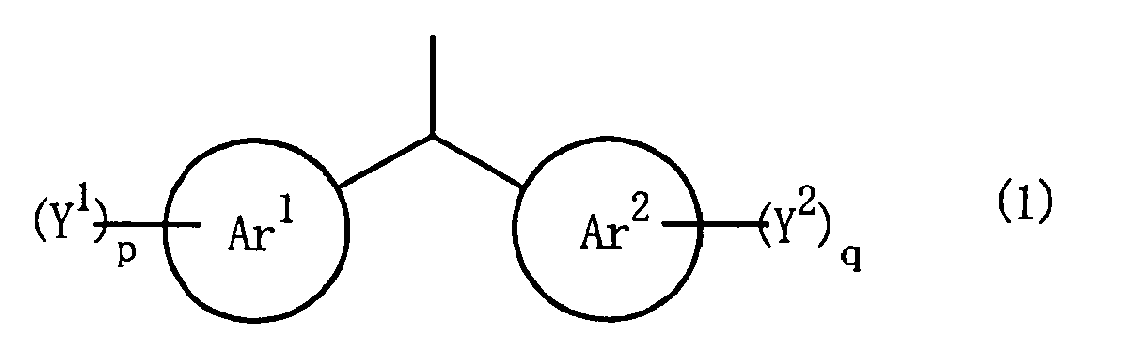
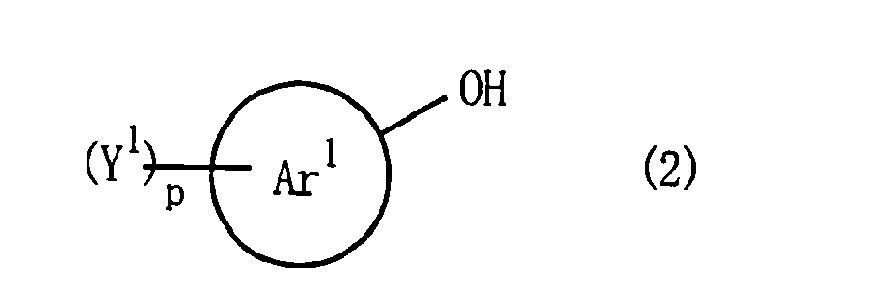
Description
- The present invention relates to processes for the preparation of substituted phenolic compounds that are useful typically as materials for phenolic resins, synthetic dyestuffs, plasticizers, medicaments, and agricultural chemicals.
- Phenol has been industrially produced by oxidizing cumene. In addition, Adv. Synth. Catal., 2001, 343, 809 reports a process for the preparation of phenol through oxidation of cumene catalyzed by N-hydroxyphthalimide. There are, however, few processes for efficiently producing substituted phenolic compounds each having one or more substituents such as alkyl groups and alkoxy groups on their benzene ring.
- Accordingly, it is desirable to provide a process for efficiently preparing a substituted phenolic compound having one or more substituents such as an alkyl group and an alkoxy group on its aromatic carbocyclic ring.
- After intensive investigations, the present inventors have found that a substituted phenolic compound is selectively produced by oxidizing a substituted diarylethane compound by the catalysis of an imide catalyst, in which the substituted diarylethane compound is easily available through a reaction between a substituted aromatic hydrocarbon and an aromatic vinyl compound, and the resulting substituted phenolic compound corresponds to the substituted aromatic hydrocarbon. The present invention has been made based on these findings.
- Specifically, according to an embodiment of the present invention, there is provided a process for the preparation of a substituted phenolic compound. This process includes the steps of oxidizing a substituted diarylethane compound with oxygen in the presence of a nitrogen-containing cyclic compound to give an oxidized product, and treating the oxidized product with an acid. The nitrogen-containing cyclic compound contains, as a constituent of its ring, a skeleton represented by following Formula (I):


- Such nitrogen-containing cyclic compounds include for use herein, for example, a compound represented by following Formula (3):


- The electron-donating group as Y1 may be a substituent selected from an alkyl group, a cycloalkyl group, hydroxyl group, mercapto group, a substituted oxy group, a substituted thio group, amino group, and a mono- or di-substituted amino group.
- According to an embodiment of the present invention, a variety of substituted phenolic compounds can be efficiently obtained from substituted diarylethane compounds in good yields, in which the substituted diarylethane compounds are easily available through reactions between substituted aromatic hydrocarbons and aromatic vinyl compounds.
- A substituted diarylethane compound used as a starting material herein is represented by Formula (1). In Formula (1), Ring Ar1 and Ring Ar2 are each a monocyclic or polycyclic aromatic carbocyclic ring; Y1 is an electron-donating group bound to Ring Ar1; Y2 is an electron-withdrawing group bound to Ring Ar2; "p" is an integer of 1 or more; and "q" is an integer of 0 or more. When "p" is an integer of 2 or more and there are two or more Y1s, the two or more Y1s may be the same as or different from one another, and they may be combined to form a ring with carbon atom on Ring Ar1 (carbon atom constituting Ring Ar1). When "q" is an integer of 2 or more and there are two or more Y2s, the two or more Y2s may be the same as or different from one another, and they may be combined to form a ring with carbon atom on Ring Ar2 (carbon atom constituting Ring Ar2).
- Examples of the monocyclic or polycyclic aromatic carbocyclic rings as Ring Ar1 and Ring Ar2 include aromatic carbocyclic rings each having one to ten rings, such as benzene ring, naphthalene ring, phenanthrene ring, anthracene ring, and naphthacene ring. Among them, aromatic carbocyclic rings having one to five rings are preferred, of which benzene ring and naphthalene ring are more preferred.
- Examples of the electron-donating groups as Y1 include alkyl groups, cycloalkyl groups, hydroxyl group, mercapto group, substituted oxy groups, substituted thio groups, amino group, and mono- or di-substituted amino groups. Examples of the alkyl groups include straight- or branched-chain alkyl groups having about one to about twenty carbon atoms, such as methyl, ethyl, propyl, isopropyl, butyl, isobutyl, s-butyl, t-butyl, hexyl, decyl, dodecyl, tetradecyl, and hexadecyl groups, of which those having about one to about twelve carbon atoms are preferred, and those having about one to about six carbon atoms are more preferred. Examples of the cycloalkyl groups include cycloalkyl groups having about three to about twenty members, such as cyclopropyl, cyclobutyl, cyclopentyl, cyclohexyl, cyclooctyl, cyclodecyl, and cyclododecyl groups, of which those having three to fifteen members are preferred, and those having five or six members are more preferred.
- Examples of the substituted oxy groups include alkoxy groups having about one to about twenty carbon atoms, such as methoxy, ethoxy, isopropoxy, butoxy, t-butoxy, hexyloxy, octyloxy, decyloxy, dodecyloxy, tetradecyloxy, and octadecyloxy groups, of which those having about one to about twelve carbon atoms are preferred, and those having about one to about six carbon atoms are more preferred; acyloxy groups having about one to about twenty carbon atoms, such as formyloxy, acetyloxy, propionyloxy, and benzoyloxy groups, of which those having about one to about twelve carbon atoms are preferred, and those having about one to about six carbon atoms are more preferred; sulfonyloxy groups such as benzenesulfonyloxy and p-toluenesulfonyloxy groups; and substituted oxycarbonyloxy groups, including alkoxycarbonyloxy groups and aryloxycarbonyloxy groups, having about two to about twenty-one carbon atoms, such as methoxycarbonyloxy, ethoxycarbonyloxy, and phenoxycarbonyloxy groups, of which those having about two to about thirteen carbon atoms are preferred, and those having about two to about seven carbon atoms are more preferred. Examples of the substituted thio groups include alkylthio groups having about one to about twenty carbon atoms, such as methylthio, ethylthio, butylthio, and decylthio groups, of which those having about one to about twelve carbon atoms are preferred, and those having about one to about six carbon atoms are more preferred. Examples of the mono- or di-substituted amino groups include mono- or di-alkylamino groups such as methylamino, dimethylamino, ethylamino, and diethylamino groups; cyclic amino groups such as 1-pyrrolidinyl, piperidino, and morpholino groups; acylamino groups such as acetylamino, propionylamino, and benzoylamino groups; and sulfonylamino groups such as benzenesulfonylamino and p-toluenesulfonylamino groups.
- When there are two or more Y1s, the two or more Y1 may be combined to form a ring with carbon atom on Ring Ar1. Examples of the ring herein include cycloalkane rings having three to eight members, such as cyclopropane ring, cyclopentane ring, and cyclohexane ring; as well as oxetane ring, oxolane ring, oxane ring, dioxolane ring, and dioxane ring. Each of these rings may have one or more substituents. Examples of the substituents include alkyl groups such as methyl and ethyl groups, of which alkyl groups having about one to about six carbon atoms are preferred; alkoxy groups such as methoxy and ethoxy group; and halogen atoms such as fluorine, chlorine, and bromine atoms.
- The position(s) of the substituent(s) Y1 is not particularly limited, but is preferably the ortho position or para position, or a corresponding position when Ring Ar1 is a polycyclic ring, to the 1-arylethyl group whose aryl moiety, i.e., Ring Ar2 may have one or more substituents Y2s. This is because a substituted diarylethane compound of this type as a starting material can be easily prepared and shows satisfactory selectivity in reaction. When there are two or more Y1s, at least one of them is preferably at the ortho position or para position to the 1-arylethyl group whose aryl moiety, i.e., Ring Ar2 may have one or more substituents Y2s. The number "p" of Y1 is an integer of 1 or more, and is preferably an integer of 1 to 3, and more preferably 1 or 2.
- Examples of electron-withdrawing groups as Y2(s) include halogen atoms, haloalkyl groups, aryl groups, carboxyl group, substituted oxycarbonyl groups, acyl groups, cyano group, nitro group, sulfo group, and substituted oxysulfonyl groups. The halogen atoms include fluorine atom, chlorine atom, bromine atom, and iodine atom. The haloalkyl groups include haloalkyl groups having about one to about twenty carbon atoms, such as fluoromethyl, difluoromethyl, trifluoromethyl, chloromethyl, dichloromethyl, trichloromethyl, and bromomethyl group, of which those having about one to about twelve carbon atoms are preferred, and those having about one to about six carbon atoms are more preferred.
- The aryl groups include phenyl, tolyl, xylyl, and naphthyl groups. The substituted oxycarbonyl groups include alkoxy-carbonyl groups whose alkoxy moiety has about one to about twenty carbon atoms, such as methoxycarbonyl, ethoxycarbonyl, isopropoxycarbonyl, butoxycarbonyl, t-butoxycarbonyl, and hexyloxycarbonyl groups, of which alkoxy-carbonyl groups whose alkoxy moiety has about one to about twelve carbon atom are preferred, and alkoxy-carbonyl groups whose alkoxy moiety has about one to about six carbon atoms are more preferred; aryloxycarbonyl groups such as phenyloxycarbonyl and naphthyloxycarbonyl groups, of which aryloxy-carbonyl groups whose aryloxy moiety has about six to about twenty carbon atoms are preferred; and aralkyloxycarbonyl groups such as benzyloxycarbonyl group, of which aralkyloxy-carbonyl groups whose araylkyloxy moiety has about seven to about twenty-one carbon atoms are preferred. The acyl groups include aliphatic acyl groups having about one to about twenty carbon atoms, such as formyl, acetyl, propionyl, butyryl, isobutyryl, valeryl, pivaloyl, and hexanoyl groups, of which those having about one to about twelve carbon atoms are preferred, and those having about one to about six carbon atoms are more preferred; and aromatic acyl groups such as benzoyl and naphthoyl groups. The substituted oxysulfonyl groups include substituted oxysulfonyl groups having about one to about twenty carbon atoms, such as methoxysulfonyl group and ethoxysulfonyl group, of which those having about one to about twelve carbon atoms are preferred, and those having about one to about six carbon atoms are more preferred.
- When there are two or more Y2s, the two or more Y2s may be combined to form a ring with carbon atom on Ring Ar2. Examples of the ring herein include cyclic acid anhydride skeletons.
- The position(s) of Y2(s) are not particularly limited. The number "q" of Y2 is an integer of 0 or more. It is preferably an integer of 0 to 3, and more preferably an integer of 0 to 2.
- Representative examples of the substituted diarylethane compound of Formula (1) include 1-methyl-4-(1-phenylethyl)benzene, 1,2-dimethyl-4-(1-phenylethyl)benzene, 1,3-dimethyl-4-(1-phenylethyl)benzene, 1-t-butyl-4-(1-phenylethyl)benzene, 4-[1-(4-chlorophenyl)ethyl]-1,2-dimethylbenzene, 4-(1-phenylethyl)anisole, 1,2-dimethoxy-4-(1-phenylethyl)benzene, 1,4-dimethoxy-3-(1-phenylethyl)benzene, 1-methylthio-4-(1-phenylethyl)benzene, 1-cyclohexyl-4-(1-phenylethyl)benzene, 4-(1-phenylethyl)phenol, 4-(1-phenylethyl)thiophenol, 1-methylthio-4-(1-phenylethyl)benzene, 4-(1-phenylethyl)aniline, N-methyl-4-(1-phenylethyl)aniline, N,N-dimethyl-4-(1-phenylethyl)aniline, 2-methyl-6-(1-phenylethyl)naphthalene, and 2-methoxy-6-(1-phenylethyl)naphthalene.
- A substituted diarylethane compound of Formula (1) can be prepared, for example, through a reaction between a substituted aromatic hydrocarbon (e.g., a substituted benzene or a substituted naphthalene) and an aromatic vinyl compound (e.g., a styrenic compound or a vinylnaphthalene compound), in which the substituted aromatic hydrocarbon is represented by following Formula (4):


- This reaction is conducted in the presence of, or in the absence of, a solvent. The solvent is not particularly limited, as long as it does not adversely affect the reaction. The reaction is generally conducted in the presence of an acid catalyst. Examples of the acid catalyst include Lewis acids such as ferric chloride, ferric bromide, aluminum chloride, titanium chloride, zirconium chloride, zinc chloride, and tin chloride; and Broensted acids such as sulfuric acid.
- The ratio in amount of the substituted aromatic hydrocarbon of Formula (4) to the aromatic vinyl compound of Formula (5) is not particularly limited and can be appropriately set according typically to cost. The substituted aromatic hydrocarbon of Formula (4) is generally used in excess. The reaction is conducted at a temperature of, for example, about 30°C to about 150°C, preferably about 40°C to about 120°C, and more preferably about 50°C to about 100°C.
- After the completion of reaction, the formed substituted diarylethane compound can be obtained, for example, by removing the acid catalyst typically through washing with water and carrying out distillation.
- A preparation process according to an embodiment of the present invention uses, as a catalyst, a nitrogen-containing cyclic compound containing a skeleton of Formula (I) as a constituent of its ring. In Formula (I), the bond between nitrogen atom and X is single bond or double bond. X is oxygen atom or an -OR group, where R is hydrogen atom or a hydroxyl-protecting group. The nitrogen-containing cyclic compound may have two or more skeletons of Formula (I) per molecule. The nitrogen-containing cyclic compound, when X is an -OR group and R is a hydroxyl-protecting group, may have two or more moieties bound through R, in which the two or more moieties each correspond to the skeleton of Formula (I) where X is an -OR group other than R.
- The hydroxyl-protecting group represented by R in Formula (I) can be a hydroxyl-protecting group commonly used in organic synthesis. Such protecting groups include alkyl groups (e.g., alkyl groups having about one to about four carbon atoms, such as methyl and t-butyl groups), alkenyl groups (e.g., allyl group), cycloalkyl groups (e.g., cyclohexyl group), aryl groups (e.g., 2,4-dinitrophenyl group), and aralkyl groups (e.g., benzyl, 2,6-dichlorobenzyl, 3-bromobenzyl, 2-nitrobenzyl, and triphenylmethyl group); groups capable of forming acetal or hemiacetal group with hydroxyl group, including substituted methyl groups (e.g., methoxymethyl, methylthiomethyl, benzyloxymethyl, t-butoxymethyl, 2-methoxyethoxymethyl, 2,2,2-trichloroethoxymethyl, bis(2-chloroethoxy)methyl, and 2-(trimethylsilyl)ethoxymethyl groups), substituted ethyl groups (e.g., 1-ethoxyethyl, 1-methyl-l-methoxyethyl, 1-isopropoxyethyl, 2,2,2-trichloroethyl, and 2-methoxyethyl groups), tetrahydropyranyl group, tetrahydrofuranyl group, and 1-hydroxyalkyl groups (e.g., 1-hydroxyethyl, 1-hydroxyhexyl, 1-hydroxydecyl, 1-hydroxyhexadecyl, and 1-hydroxy-1-phenylmethyl groups); acyl groups (e.g., aliphatic saturated or unsaturated acyl groups including aliphatic acyl groups having about one to about twenty carbon atoms, such as formyl, acetyl, propionyl, butyryl, isobutyryl, valeryl, pivaloyl, hexanoyl, heptanoyl, octanoyl, nonanoyl, decanoyl, lauroyl, myristoyl, palmitoyl, and stearoyl groups; acetoacetyl group; alicyclic acyl groups including cycloalkanecarbonyl groups, such as cyclopentanecarbonyl and cyclohexanecarbonyl groups; and aromatic acyl groups such as benzoyl and naphthoyl groups; sulfonyl groups (e.g., methanesulfonyl, ethanesulfonyl, trifluoromethanesulfonyl, benzenesulfonyl, p-toluenesulfonyl, and naphthalenesulfonyl groups), alkoxycarbonyl groups (e.g., alkoxy-carbonyl groups whose alkoxy moiety has about one to about four carbon atoms, such as methoxycarbonyl, ethoxycarbonyl, and t-butoxycarbonyl groups), aralkyloxycarbonyl groups (e.g., benzyloxycarbonyl group and p-methoxybenzyloxycarbonyl group), substituted or unsubstituted carbamoyl groups (e.g., carbamoyl, methylcarbamoyl, and phenylcarbamoyl groups), groups corresponding to moieties of inorganic acids (e.g., sulfuric acid, nitric acid, phosphoric acid, and boric acid) other than hydroxyl group (OH group), dialkylphosphinothioyl groups (e.g., dimethylphosphinothioyl group), diarylphosphinothioyl groups (e.g., diphenylphosphinothioyl group), and substituted silyl groups (e.g., trimethylsilyl, t-butyldimethylsilyl, tribenzylsilyl, and triphenylsilyl groups).
- When X is an -OR group and two or more moieties corresponding to the skeleton of Formula (I) other than R are bound through R, examples of the group R include polycarboxylic acid acyl groups, such as oxalyl, malonyl, succinyl, glutaryl, phthaloyl, isophthaloyl, and terephthaloyl groups; carbonyl group; and polyvalent hydrocarbon groups such as methylene, ethylidene, isopropylidene, cyclopentylidene, cyclohexylidene, and benzylidene groups, of which groups capable of forming acetal with two hydroxyl groups are preferred.
- Preferred examples of R include hydrogen atom; groups capable of forming acetal or hemiacetal group with hydroxyl group; hydrolyzable protecting groups that can leave as a result of hydrolysis, such as groups corresponding to moieties of acids (e.g., carboxylic acids, sulfonic acids, carbonic acid, carbamic acid, sulfuric acid, phosphoric acid, and boric acid) other than hydroxyl group, such as acyl groups, sulfonyl groups, alkoxycarbonyl groups, and carbamoyl groups. R is particularly preferably hydrogen atom.
- Such nitrogen-containing cyclic compounds each having a skeleton of Formula (I) as a constituent of its ring include cyclic imide compounds each having a cyclic imide skeleton of Formula (3). In Formula (3), "n" denotes 0 or 1. X is oxygen atom or an -OR group, where R is hydrogen atom or a hydroxyl-protecting group. Each of R1, R2, R3, R4, R5 and R6 independently represents hydrogen atom, a halogen atom, an alkyl group, an aryl group, a cycloalkyl group, hydroxyl group, an alkoxy group, carboxyl group, a substituted oxycarbonyl group, an acyl group, or an acyloxy group. At least two of R1, R2, R3, R4, R5 and R6 may be combined to form a double bond, an aromatic or non-aromatic ring together with carbon atom or carbon-carbon bond constituting the cyclic imide skeleton. On the substituents R1, R2, R3, R4, R5, R6, and/or on the double bond, or aromatic or non-aromatic ring formed by at least two of R1, R2, R3, R4, R5 and R6, there may be further formed one or more cyclic imido groups of Formula (a) where "n" and X are as defined above.
- In cyclic imide compounds of Formula (3), the halogen atoms as the substituents R1, R2, R3, R4, R5 and R6 include iodine, bromine, chlorine, and fluorine atoms. The alkyl groups include straight- or branched-chain alkyl groups having about one to about thirty carbon atoms, such as methyl, ethyl, propyl, isopropyl, butyl, hexyl, decyl, and dodecyl groups, of which those having about one to about twenty carbon atoms are preferred.
- The aryl groups include phenyl, tolyl, xylyl, and naphthyl groups. The cycloalkyl groups include cyclopentyl and cyclohexyl groups. The alkoxy groups include alkoxy groups having about one to about thirty carbon atoms, such as methoxy, ethoxy, isopropoxy, butoxy, t-butoxy, hexyloxy, decyloxy, and dodecyloxy groups, of which those having about one to about twenty carbon atoms are preferred.
- The substituted oxycarbonyl groups include alkoxy-carbonyl groups whose alkoxy moiety has about one to about thirty carbon atoms, such as methoxycarbonyl, ethoxycarbonyl, isopropoxycarbonyl, butoxycarbonyl, t-butoxycarbonyl, hexyloxycarbonyl, and decyloxycarbonyl groups, of which alkoxy-carbonyl groups whose alkoxy moiety has about one to about twenty carbon atoms are preferred; cycloalkyloxycarbonyl groups such as cyclopentyloxycarbonyl and cyclohexyloxycarbonyl groups, of which those having about three to about twenty members are preferred; aryloxycarbonyl groups such as phenyloxycarbonyl group, of which aryloxy-carbonyl groups whose aryloxy moiety has about six to about twenty carbon atoms are preferred; and aralkyloxycarbonyl groups such as benzyloxycarbonyl group, of which aralkyloxy-carbonyl groups whose aralkyloxy moiety has about seven to about twenty-one carbon atoms are preferred.
- The acyl groups include aliphatic saturated or unsaturated acyl groups including aliphatic acyl groups having about one to about thirty carbon atoms, such as formyl, acetyl, propionyl, butyryl, isobutyryl, valeryl, pivaloyl, hexanoyl, decanoyl, and lauroyl groups, of which those having about one to about twenty carbon atoms are preferred; acetoacetyl group; alicyclic acyl groups including cycloalkanecarbonyl groups such as cyclopentanecarbonyl and cyclohexanecarbonyl groups; and aromatic acyl groups such as benzoyl group.
- Examples of the acyloxy groups include saturated or unsaturated aliphatic acyloxy groups including aliphatic acyloxy groups having about one to about thirty carbon atoms, such as formyloxy, acetyloxy, propionyloxy, butyryloxy, isobutyryloxy, valeryloxy, pivaloyloxy, decanoyloxy, and lauroyloxy groups, of which those having about one to about twenty carbon atoms are preferred; acetoacetyloxy group; alicyclic acyloxy groups including cycloalkanecarbonyloxy groups such as cyclopentanecarbonyloxy and cyclohexanecarbonyloxy groups; and aromatic acyloxy groups such as benzoyloxy group.
- The substituents R1, R2, R3, R4, R5, and R6 may be the same as or different from one another. At least two of R1, R2, R3, R4, R5, and R6 in Formula (3) may be combined to form a double bond, or an aromatic or non-aromatic ring together with carbon atom or carbon-carbon bond constituting the cyclic imide skeleton. The aromatic or non-aromatic ring is preferably a ring having about five to about twelve members and is more preferably a ring having about six to about ten members. The ring may be a heterocyclic ring or fused heterocyclic ring but is often a hydrocarbon ring. Examples of such rings include non-aromatic alicyclic rings including substituted or unsubstituted cycloalkane rings such as cyclohexane ring, and substituted or unsubstituted cycloalkene rings such as cyclohexene ring; non-aromatic bridged rings including substituted or unsubstituted bridged hydrocarbon rings such as 5-norbornene ring; substituted or unsubstituted aromatic rings (including fused rings) such as benzene ring and naphthalene ring. The ring is often composed of an aromatic ring. The ring may be substituted by one or more substituents. Examples of the substituents are alkyl groups, haloalkyl groups, hydroxyl group, alkoxy groups, carboxyl group, substituted oxycarbonyl groups, acyl groups, acyloxy groups, nitro group, cyano group, amino group, and halogen atoms.
- One or more N-substituted cyclic imido groups of Formula (a) may be further formed on at least one of R1, R2, R3, R4, R5, and R6 and/or on the double bond, or aromatic or non-aromatic ring formed by at least two of R1, R2, R3, R4, R5, and R6. For example, when at least one of R1, R2, R3, R4, R5, and R6 is an alkyl group containing two or more carbon atoms, the N-substituted cyclic imido group may be formed as containing adjacent two carbon atoms constituting the alkyl group. Likewise, when at least two of R1, R2, R3, R4, R5, and R6 are combined to form a double bond with carbon-carbon bond constituting the cyclic imide skeleton, the N-substituted cyclic imido group may be formed as containing the double bond. When at least two of R1, R2, R3, R4, R5, and R6 are combined to form an aromatic or non-aromatic ring with carbon atom or carbon-carbon bond constituting the cyclic imide skeleton, the N-substituted cyclic imido group may be formed as containing adjacent two carbon atoms constituting the ring.
- Preferred cyclic imide compounds include compounds of following formulae:


- Examples of the halogen atoms, alkyl groups, aryl groups, cycloalkyl groups, hydroxyl group, alkoxy groups, carboxyl group, substituted oxycarbonyl groups, acyl groups, and acyloxy groups as the substituents R11 to R16 are as with the corresponding groups in connection with the substituents R1 to R6.
- As the substituents R17 to R26, examples of the alkyl groups are as above, of which alkyl groups having about one to about six carbon atoms are preferred. The haloalkyl groups include haloalkyl groups having about one to about four carbon atoms, such as trifluoromethyl group. Examples of the alkoxy groups are as above, of which lower alkoxy groups having about one to about four carbon atoms are preferred. Examples of the substituted oxycarbonyl groups are as above, such as alkoxycarbonyl groups, cycloalkyloxycarbonyl groups, aryloxycarbonyl groups, and aralkyloxycarbonyl groups. Examples of the acyl groups are as above, such as saturated or unsaturated aliphatic acyl groups, acetoacetyl group, alicyclic acyl groups, and aromatic acyl groups. Examples of the acyloxy groups are as above, such as saturated or unsaturated aliphatic acyloxy groups, acetoacetyloxy group, alicyclic acyloxy groups, and aromatic acyloxy groups. The halogen atoms include fluorine, chlorine, and bromine atoms. The substituents R17 to R26 are each often one of hydrogen atom, a lower alkyl group having about one to about four carbon atoms, carboxyl group, a substituted oxycarbonyl group, nitro group, and a halogen atom.
- Of preferred imide compounds, representative examples of compounds having a five-membered N-substituted cyclic imide skeleton include compounds of Formula (3) where X is an -OR group and R is hydrogen atom, such as N-hydroxysuccinimide, N-hydroxy-α-methylsuccinimide, N-hydroxy-α,α-dimethylsuccinimide, N-hydroxy-α,β-dimethylsuccinimide, N-hydroxy-α,α,β,β-tetramethylsuccinimide, N-hydroxymaleimide, N-hydroxyhexahydrophthalimide, N,N'-dihydroxycyclohexanetetracarboxylic diimide, N-hydroxyphthalimide, N-hydroxytetrabromophthalimide, N-hydroxytetrachlorophthalimide, N-hydroxychlorendimide, N-hydroxyhimimide, N-hydroxytrimellitimide, N,N'-dihydroxypyromellitic diimide, N,N'-dihydroxynaphthalenetetracarboxylic diimide, α,β-diacetoxy-N-hydroxysuccinimide, N-hydroxy-α,β-bis(propionyloxy)succinimide, N-hydroxy-α,β-bis(valeryloxy)succinimide, N-hydroxy-α,β-bis(lauroyloxy)succinimide, α,β-bis(benzoyloxy)-N-hydroxysuccinimide, N-hydroxy-4-methoxycarbonylphthalimide, 4-chloro-N-hydroxyphthalimide, 4-ethoxycarbonyl-N-hydroxyphthalimide, N-hydroxy-4-pentyloxycarbonylphthalimide, 4-dodecyloxy-N-hydroxycarbonylphthalimide, N-hydroxy-4-phenoxycarbonylphthalimide, N-hydroxy-4,5-bis(methoxycarbonyl)phthalimide, 4,5-bis(ethoxycarbonyl)-N-hydroxyphthalimide, N-hydroxy-4,5-bis(pentyloxycarbonyl)phthalimide, 4,5-bis(dodecyloxycarbonyl)-N-hydroxyphthalimide, and N-hydroxy-4,5-bis(phenoxycarbonyl)phthalimide; compounds corresponding to these compounds, except with R being an acyl group such as acetyl group, propionyl group, or benzoyl group; compounds of Formula (3) where X is an -OR group and R is a group capable of forming acetal or hemiacetal bond with hydroxyl group, such as N-methoxymethyloxyphthalimide, N-(2-methoxyethoxymethyloxy)phthalimide, and N-tetrahydropyranyloxyphthalimide; compounds of Formula (3) where X is an -OR group and R is sulfonyl group, such as N-methanesulfonyloxyphthalimide and N-(p-toluenesulfonyloxy)phthalimide; and compounds of Formula (3) where X is an -OR group and R is a group corresponding to a moiety of an inorganic acid other than hydroxyl group, such as sulfuric ester, nitric ester, phosphoric ester, and boric ester of N-hydroxyphthalimide.
- Of preferred imide compounds, representative examples of compounds each having a six-membered N-substituted cyclic imide skeleton include compounds of Formula (3) where X is an -OR group and R is hydrogen atom, such as N-hydroxyglutarimide, N-hydroxy-α,α-dimethylglutarimide, N-hydroxy-β,β-dimethylglutarimide, N-hydroxy-1,8-decalindicarboximide, N,N'-dihydroxy-1,8;4,5-decalintetracarboxylic diimide, N-hydroxy-1,8-naphthalenedicarboximide (N-hydroxynaphthalimide), and N,N'-dihydroxy-1,8;4,5-naphthalenetetracarboxylic diimide; compounds corresponding to these compounds, except with R being an acyl group such as acetyl group, propionyl group, or benzoyl group; compounds of Formula (3) where X is an -OR group and R is a group capable of forming acetal or hemiacetal bond with hydroxyl group, such as N-methoxymethyloxy-1,8-naphthalenedicarboximide, N,N'-bis(methoxymethyloxy)-1,8;4,5-naphthalenetetracarboxylic diimide; compounds of Formula (3) where X is an -OR group and R is sulfonyl group, such as N-methanesulfonyloxy-1,8-naphthalenedicarboximide and N,N'-bis(methanesulfonyloxy)-1,8;4,5-naphthalenetetracarboxylic diimide; and compounds of Formula (3) where X is an -OR group and R is a group corresponding to a moiety of an inorganic acid other than hydroxyl group, such as sulfuric esters, nitric esters, phosphoric esters, and boric esters of N-hydroxy-1,8-naphthalenedicarboximide and N,N'-dihydroxy-1,8;4,5-naphthalenetetracarboxylic diimide.
- In addition to the cyclic imide compounds, the nitrogen-containing cyclic compounds each having a skeleton of Formula (I) as a constituent of its ring further include cyclic acylurea compounds having a cyclic acylurea skeleton [-C(=O)-N-C(=O)-N-]. Representative examples of such cyclic acylurea compounds include hydro-1-hydroxy (or 1-substituted oxy)-1,3,5-triazine-2,6-dione compounds of following Formula (6):

- In Formula (6), examples of the alkyl groups, aryl groups, cycloalkyl groups, and acyl groups as Ra and Rd are as with the corresponding groups exemplified in connection with R1 to R6, and examples of the hydroxyl-protecting groups are as with above.
- The carboxyl-protecting groups may be protecting groups commonly used in organic synthesis, and examples thereof include alkoxy groups including alkoxy groups having about one to about six carbon atoms, such as methoxy, ethoxy, and butoxy; cycloalkyloxy groups; aryloxy groups such as phenoxy group; aralkyloxy groups such as benzyloxy group; trialkylsilyloxy groups such as trimethylsilyloxy group; substituted or unsubstituted amino groups including amino group, and mono- or di-alkyl-amino groups whose alkyl moieties each have about one to about six carbon atoms, such as methylamino group and dimethylamino group.
- Examples of the halogen atoms, alkyl groups, aryl groups, cycloalkyl groups, hydroxyl group, alkoxy groups, carboxyl group, substituted oxycarbonyl groups, acyl groups, and acyloxy groups as Rb and Rc are as with the corresponding groups exemplified in connection with R1 to R6.
- In Formula (6), at least two of Ra, Rb, Rc, and Rd may be combined to form a double bond, or an aromatic or non-aromatic ring with at least one atom (carbon atom and/or nitrogen atom) constituting the ring, and Rb and Rc may together form oxo group. Preferred examples of the aromatic or non-aromatic ring are as above.
- Among compounds of Formula (6), preferred are isocyanuric acid derivatives of following Formula (6a):

- Representative examples of the cyclic acylurea compounds include hexahydro-1,3,5-trihydroxy-1,3,5-triazine-2,4,6-trione (i.e., 1,3,5-trihydroxyisocyanuric acid), 1,3,5-triacetoxy-hexahydro-1,3,5-triazine-2,4,6-trione, hexahydro-1,3,5-tris(methoxymethyloxy)-1,3,5-triazine-2,4,6-trione, hexahydro-1-hydroxy-1,3,5-triazine-2,6-dione, hexahydro-1-hydroxy-3,5-dimethyl-1,3,5-triazine-2,6-dione, 1-acetoxy-hexahydro-1,3,5-triazine-2,6-dione, and 1-acetoxy-hexahydro-3,5-dimethyl-1,3,5-triazine-2,6-dione.
- Among the nitrogen-containing cyclic compounds, compounds where X is an -OR group and R is hydrogen atom (N-hydroxy cyclic compounds) can be prepared according to a known procedure or according to a combination of known procedures. Among the nitrogen-containing cyclic compounds, compounds where X is an -OR group and R is a hydroxyl-protecting group can each be prepared by introducing a desired protecting group into a corresponding compound where R is hydrogen atom (N-hydroxy cyclic compound) using a common reaction for the introduction of protecting groups.
- More specifically, among the cyclic imide compounds, compounds where X is an -OR group and R is hydrogen atom can be prepared through a common imidization process (a process for the formation of an imide), such as a process that includes the steps of reacting a corresponding acid anhydride with hydroxylamine for ring-opening of an acid anhydride group, and closing the ring to form an imide. N-acetoxyphthalimide can be prepared, for example, by reacting N-hydroxyphthalimide with acetic anhydride or by reacting N-hydroxyphthalimide with an acetyl halide in the presence of base. The compounds can also be prepared by other processes.
- Typically preferred cyclic imide compounds as catalysts include N-hydroxy imide compounds (e.g., N-hydroxysuccinimide, N-hydroxyphthalimide, N,N'-dihydroxypyromellitic diimide, N-hydroxyglutarimide, N-hydroxy-1,8-naphthalenedicarboximide, and N,N'-dihydroxy-1,8:4,5-naphthalenetetracarboxylic diimide) derived from aliphatic polycarboxylic acid anhydrides (cyclic anhydrides) or aromatic polycarboxylic acid anhydrides (cyclic anhydrides); and compounds corresponding to these N-hydroxy imide compounds, except for introducing protecting group into hydroxyl group thereof.
- Among the cyclic acylurea compounds, 1,3,5-triacetoxy-hexahydro-1,3,5-triazine-2,4,6-trione (i.e., 1,3,5-triacetoxyisocyanuric acid), for example, can be prepared by reacting hexahydro-1,3,5-trihydroxy-1,3,5-triazine-2,4,6-trione (i.e., 1,3,5-trihydroxyisocyanuric acid) with acetic anhydride or by reacting hexahydro-1,3,5-trihydroxy-1,3,5-triazine-2,4,6-trione with an acetyl halide in the presence of base.
- Each of the nitrogen-containing cyclic compounds having a skeleton of Formula (I) as a constituent of its ring can be used alone or in combination. The nitrogen-containing cyclic compound(s) may be formed within the reaction system. The nitrogen-containing cyclic compound(s) may be used as supported by a support. The support for use herein is often a porous support (carrier) such as activated carbon, zeolite, silica, silica-alumina, or bentonite. The amount of the nitrogen-containing cyclic compound(s) relative to the support is, for example, about 0.1 to about 50 parts by weight, preferably about 0.5 to about 30 parts by weight, and more preferably about 1 to about 20 parts by weight, to 100 parts by weight of the support.
- The amount of the nitrogen-containing cyclic compound(s) can be set within broad ranges and is, for example, about 0.0000001 to about 1 mole, preferably about 0.0001 to about 0.5 mole, more preferably about 0.001 to about 0.4 mole, and particularly preferably about 0.01 to about 0.35 mole, to 1 mole of the substituted diarylethane compound of Formula (1).
- One or more promoters (co-catalysts) can be used in combination with the nitrogen-containing cyclic compound(s). Examples of the promoters include metallic compounds. By using a metallic compound as a promoter, the rate and/or selectivity of the reaction can be improved. Among metallic compounds, transition metal compounds are preferred. Examples of transition metal compounds are halides, organic acid salts, oxo acid salts, and complexes of transition metals [elements belonging to Groups 3 to 12 of the Periodic Table of Elements, such as V, Mo, Mn, Fe, Ru, Co, and Cu]. Taking cobalt compounds as an example, more specific examples are cobalt chloride, cobalt bromide, cobalt acetate, cobalt octylate, cobalt naphthenate, cobalt sulfate, cobalt nitrate, and cobalt acetylacetonate. Cobalt compounds and manganese compounds are preferred as the transition metal compounds. The amount of the metallic compound(s) is, for example, about 0.001 to about 0.1 mole, and preferably about 0.005 to about 0.08 mole, to 1 mole of the nitrogen-containing cyclic compound(s).
- In an embodiment of the present invention, there may be used, as a promoter, one or more organic salts each composed of a polyatomic cation or a polyatomic anion and its counter ion, which polyatomic cation or anion contains an element belonging to Group 15 or Group 16 of the Periodic Table of Elements having at least one organic group bonded thereto. Use of the organic salt(s) as a promoter can improve the rate and/or selectivity of the reaction.
- The reaction system herein may further include a free-radical generator or a free-radical reaction accelerator. Examples of such components include halogens such as chlorine and bromine; peracids such as peracetic acid and m-chloroperbenzoic acid; peroxides including hydroperoxides such as hydrogen peroxide and t-butyl hydroperoxide (TBHP); and azo compounds such as azobisisobutyronitrile. The existence of these components in the system may enhance the oxidation reaction. The amount of the above-mentioned component is, for example, about 0.001 to about 2 moles, preferably about 0.01 to about 1 mole, and more preferably about 0.05 to about 0.8 mole, to 1 mole of the nitrogen-containing cyclic compound.
- In an embodiment of the present invention, a substituted diarylethane compound of Formula (1) is oxidized with oxygen in the presence of a nitrogen-containing cyclic compound containing a skeleton of Formula (I) as a constituent of its ring, and the oxidized product is treated with acid.
- The oxidation reaction of the substituted diarylethane compound of Formula (1) is generally conducted in an organic solvent. Examples of such organic solvents include nitriles such as acetonitrile, propionitrile, and benzonitrile; amides such as N,N-dimethylformamide; halogenated hydrocarbons such as chlorobenzene and trifluoromethylbenzene; nitro compounds such as nitrobenzene and nitromethane; esters such as ethyl acetate and butyl acetate; organic acids such as formic acid, acetic acid, propionic acid, butyric acid, and isobutyric acid, of which aliphatic saturated carboxylic acids are preferred; and mixtures of these solvents. As the solvent, often used are nitriles such as acetonitrile and benzonitrile; and esters such as ethyl acetate.
- Molecular oxygen can be used as the oxygen. The molecular oxygen is not particularly limited and can be, for example, any of pure oxygen; diluted oxygen with an inert gas such as nitrogen, helium, argon, or carbon dioxide; air; or diluted air. The oxygen may be formed within the reaction system. The amount of oxygen can be appropriately set depending typically on the type of the substrate, substituted diarylethane compound, and is generally about 0.5 mole or more, for example, about 1 mole or more, preferably about 1 to about 100 moles, and more preferably about 2 to about 50 moles, to 1 mole of the substituted diarylethane compound. Oxygen is often used in excess moles to the substituted diarylethane compound.
- The reaction temperature of the oxidation reaction can be set appropriately according typically to the type of the substituted diarylethane compound and is, for example, about 30°C to about 150°C, preferably about 40°C to about 120°C, and more preferably about 50°C to about 100°C. The reaction can be conducted under normal pressure or under a pressure (under a load). The reaction pressure is generally about 0.1 to about 10 MPa, and preferably about 0.1 to about 5 MPa. The reaction time (duration) may be set according to the reaction temperature and reaction pressure within ranges of, for example, about 10 minutes to about 48 hours, and preferably about 1 to about 24 hours. The reaction can be conducted in the presence of or under flow of oxygen according to a common system such as batch system, semi-batch system, or continuous system.
- As a result of the oxidation reaction, a tertiary carbon atom in the substituted diarylethane compound of Formula (1) is probably oxidized to yield a corresponding hydroperoxide. The tertiary carbon atom is a carbon atom to which two aryl groups (groups relating to Ring Ar1 and Ring Ar2, respectively) and a methyl group are bound.
- After the completion of oxidation reaction, a treatment with acid is carried out, for example, by adding an acid to the reaction mixture. Examples of the acid include inorganic acids such as sulfuric acid, hydrochloric acid, nitric acid, and phosphoric acid; sulfonic acids such as methanesulfonic acid, trifluoromethanesulfonic acid, and p-toluenesulfonic acid; strongly acidic cation-exchange resins; and sulfur dioxide and sulfur trioxide. The acid may be formed into a diluted solution, such as an aqueous solution, before use. The acid treatment may be carried out at a temperature of, for example, about -40°C to about 40°C, preferably about -20°C to about 25°C, and more preferably about -10°C to about 10°C.
- The acid treatment selectively yields a target compound, phenolic compound of Formula (2). This treatment simultaneously yields an arylmethyl ketone, such as an acetophenone compound, of following Formula (7):

- The reaction product after the completion of reaction can be separated and purified, for example, by a separation procedure such as filtration, concentration, distillation, extraction, crystallization, recrystallization, adsorption, or column chromatography, or any combination of these.
- The substituted phenolic compounds can be used typically as materials for phenolic resins, synthetic dyestuffs, plasticizers, medicaments, and agricultural chemicals.
- The present invention will be illustrated in further detail with reference to several examples below, which, however, are by no means construed to limit the scope of the present invention.
- To o-xylene (200 mL) were added styrene (20 mmol) and FeCl3.6H2O (2 mmol), followed by stirring at 80°C for 4 hours. After the reaction, the reaction mixture was washed with water to remove the catalyst, purified by distillation, and thereby yielded 1,2-dimethyl-4-(1-phenylethyl)benzene in a yield of 80%.
- To o-xylene (200 mL) were added 4-chlorostyrene (20 mmol) and FeCl3.6H2O (2 mmol), followed by stirring at 80°C for 4 hours. After the reaction, the reaction mixture was washed with water to remove the catalyst, purified by distillation, and thereby yielded 4-[1-(4-chlorophenyl)ethyl]-1,2-dimethylbenzene in a yield of 89%.
- To anisole (200 mL) were added styrene (20 mmol) and FeCl3.6H2O (2 mmol), followed by stirring at 80°C for 4 hours. After the reaction, the reaction mixture was washed with water to remove the catalyst, purified by distillation, and thereby yielded 4-(1-phenylethyl)anisole in a yield of 80%.
- To 1,2-dimethoxybenzene (200 mL) were added styrene (20 mmol) and FeCl3.6H2O (2 mmol), followed by stirring at 80°C for 4 hours. After the reaction, the reaction mixture was washed with water to remove the catalyst, purified by distillation, and thereby yielded 1,2-dimethoxy-4-(1-phenylethyl)benzene in a yield of 59%.
- To 1,4-dimethoxybenzene (200 mL) were added styrene (20 mmol) and FeCl3.6H2O (2 mmol), followed by stirring at 80°C for 4 hours. After the reaction, the reaction mixture was washed with water to remove the catalyst, purified by distillation, and thereby yielded 1,4-dimethoxy-3-(1-phenylethyl)benzene in a yield of 51%.
- In a reactor were placed 1,2-dimethyl-4-(1-phenylethyl)benzene (10 mmol), N-hydroxyphthalimide (1 mmol), azobisisobutyronitrile (0.3 mmol), and acetonitrile (3 mL), followed by stirring at 75°C in an atmosphere of oxygen gas under normal pressure for 6 hours. The reaction mixture was cooled to 0°C, combined with 0.1-M H2SO4 (10 mL) added dropwise, and stirred for 30 minutes. The reaction mixture was then neutralized with an aqueous ammonia solution and analyzed by gas chromatography to find that there were produced 3,4-dimethylphenol in a yield of 46%, acetophenone in a yield of 50%, 3,4-dimethylacetophenone in a yield of 2.7%, and phenol in a trace amount, with a conversion from 1,2-dimethyl-4-(1-phenylethyl)benzene of 64%.
- In a reactor were placed 1,2-dimethyl-4-(1-phenylethyl)benzene (10 mmol), N-hydroxyphthalimide (1 mmol), azobisisobutyronitrile (0.3 mmol), and acetonitrile (3 mL), followed by stirring at 75°C in an atmosphere of oxygen gas under normal pressure for 6 hours. The reaction mixture was then cooled to 0°C, combined with 0.5 g of a cation-exchange resin (trade name: "AMBERLYST 15J"), and stirred for 1 hour. The reaction mixture was analyzed by gas chromatography to find that there were produced 3,4-dimethylphenol in a yield of 50%, acetophenone in a yield of 50%, 3,4-dimethylacetophenone in a yield of 1%, and phenol in a trace amount, with a conversion from 1,2-dimethyl-4-(1-phenylethyl)benzene of 62%.
- The procedure of Example 1 was repeated, except for using 4-[1-(4-chlorophenyl)ethyl]-1,2-dimethylbenzene instead of 1,2-dimethyl-4-(1-phenylethyl)benzene. The reaction mixture was analyzed by gas chromatography to find that there were produced 3,4-dimethylphenol in a yield of 43%, 4-chloroacetophenone in a yield of 48%, and 3,4-dimethylacetophenone in a yield of 2.4%, with a conversion from 4-[1-(4-chlorophenyl)ethyl]-1,2-dimethylbenzene of 63%, and that 4-chlorophenol was not detected.
- The procedure of Example 1 was repeated, except for using 4-(1-phenylethyl)anisole instead of 1,2-dimethyl-4-(1-phenylethyl)benzene. The reaction mixture was analyzed by gas chromatography to find that there were produced 4-methoxyphenol in a yield of 54% and acetophenone in a yield of 54% with a conversion from 4-(1-phenylethyl)anisole of 54%, and that phenol was not detected.
- The procedure of Example 1 was repeated, except for using 1,2-dimethoxy-4-(1-phenylethyl)benzene instead of 1,2-dimethyl-4-(1-phenylethyl)benzene. The reaction mixture was analyzed by gas chromatography to find that there were produced 3,4-dimethoxyphenol in a yield of 48% and acetophenone in a yield of 55%, with a conversion from 1,2-dimethoxy-4-(1-phenylethyl)benzene of 64%, and that phenol was not detected.
- The procedure of Example 1 was repeated, except for using 1,4-dimethoxy-3-(1-phenylethyl)benzene instead of 1,2-dimethyl-4-(1-phenylethyl)benzene. The reaction mixture was analyzed by gas chromatography to find that there were produced 2,5-dimethoxyphenol in a yield of 22%, acetophenone in a yield of 25%, and phenol in a trace amount, with a conversion from 1,4-dimethoxy-3-(1-phenylethyl)benzene of 36%.
- It should be understood by those skilled in the art that various modifications, combinations, subcombinations, and alterations may occur depending on design requirements and other factors insofar as they are within the scope of the appended claims or the equivalents thereof.
Claims (3)
- A process for the preparation of a substituted phenolic compound, the process comprising the steps of:oxidizing a substituted diarylethane compound with oxygen in the presence of a nitrogen-containing cyclic compound to give an oxidized product; andtreating the oxidized product with an acid to give the substituted phenolic compound,wherein the nitrogen-containing cyclic compound includes, as a constituent of its ring, a skeleton represented by following Formula (I):

the substituted diarylethane compound is represented by following Formula (1): Y1 represents an electron-donating group bound to Ring Ar1;Y2 represents an electron-withdrawing group bound to Ring Ar2;"p" denotes an integer of 1 or more; and"q" denotes an integer of 0 or more,wherein, when "p" is an integer of 2 or more and there are two or more Y1s, the two or more Y1s may be the same as or different from one another and they may be combined to form a ring with carbon atom on Ring Ar1, and
wherein, when "q" is an integer of 2 or more and there are two or more Y2s, the two or more Y2s may be the same as or different from one another and they may be combined to form a ring with carbon atom on Ring Ar2, and
the substituted phenolic compound is represented by following Formula (2):
- The process according to claim 1, wherein the nitrogen-containing cyclic compound is a compound represented by following Formula (3):
 X represents oxygen atom or an -OR group, where R represents hydrogen atom or a hydroxyl-protecting group; andR1, R2, R3, R4, R5, and R6 each independently represent one selected from the group consisting of hydrogen atom, a halogen atom, an alkyl group, an aryl group, a cycloalkyl group, hydroxyl group, an alkoxy group, carboxyl group, a substituted oxycarbonyl group, an acyl group, and an acyloxy group,wherein at least two of R1, R2, R3, R4, R5, and R6 may be combined to form a double bond, or an aromatic or non-aromatic ring together with carbon atom or carbon-carbon bond constituting the cyclic imide skeleton, and
wherein one or more N-substituted cyclic imido groups may be further formed on at least one of R1, R2, R3, R4, R5, and R6, and/or on at least one of the double bond and the aromatic or non-aromatic ring formed by at least two of R1, R2, R3, R4, R5, and R6, wherein the N-substituted cyclic imido groups are each represented by following Formula (a):
- The process according to claim 1, wherein the electron-donating group as Y1 is a substituent selected from the group consisting of an alkyl group, a cycloalkyl group, hydroxyl group, mercapto group, a substituted oxy group, a substituted thio group, amino group, and a mono- or di-substituted amino group.
Applications Claiming Priority (1)
| Application Number | Priority Date | Filing Date | Title |
|---|---|---|---|
| JP2007059228A JP2008222571A (en) | 2007-03-08 | 2007-03-08 | Process for producing substituted phenols |
Publications (1)
| Publication Number | Publication Date |
|---|---|
| EP1967505A1 true EP1967505A1 (en) | 2008-09-10 |
Family
ID=39580210
Family Applications (1)
| Application Number | Title | Priority Date | Filing Date |
|---|---|---|---|
| EP08002869A Withdrawn EP1967505A1 (en) | 2007-03-08 | 2008-02-15 | Process for the preparation of substituted phenols |
Country Status (3)
| Country | Link |
|---|---|
| US (1) | US20080221369A1 (en) |
| EP (1) | EP1967505A1 (en) |
| JP (1) | JP2008222571A (en) |
Family Cites Families (1)
| Publication number | Priority date | Publication date | Assignee | Title |
|---|---|---|---|---|
| FR2238694B1 (en) * | 1973-07-27 | 1976-06-18 | Rhone Poulenc Ind |
-
2007
- 2007-03-08 JP JP2007059228A patent/JP2008222571A/en active Pending
-
2008
- 2008-02-14 US US12/071,060 patent/US20080221369A1/en not_active Abandoned
- 2008-02-15 EP EP08002869A patent/EP1967505A1/en not_active Withdrawn
Non-Patent Citations (2)
| Title |
|---|
| A. I. GRUSHIN ET AL: "REACTION OF MONOSUBSTITUTED AROMATIC HYDROCARBONS WITH STYRENE", JOURNAL OF ORGANIC CHEMISTRY USSR (ENGLISH TRANSLATION), vol. 21, 1985, pages 1991 - 1993, XP009102967 * |
| ADV. SYNTH. CATAL., vol. 343, 2001, pages 809 |
Also Published As
| Publication number | Publication date |
|---|---|
| JP2008222571A (en) | 2008-09-25 |
| US20080221369A1 (en) | 2008-09-11 |
Similar Documents
| Publication | Publication Date | Title |
|---|---|---|
| CN100537031C (en) | Processes for production of organic compounds | |
| JP4942645B2 (en) | Method for oxidizing organic compounds | |
| US10562875B2 (en) | Aromatic compounds from furanics | |
| US20100029956A1 (en) | Method for producing ester or lactone | |
| JP5197380B2 (en) | Method for producing cycloalkane oxidation product | |
| Hajipour et al. | Zr (HSO4) 4 catalyzed one-pot strecker synthesis of α-amino nitriles from aldehydes and ketones under solvent-free conditions | |
| CA2436939C (en) | Process for producing dicarboxylic acids | |
| CA2469926C (en) | Process for producing dicarboxylic acids | |
| US20080221369A1 (en) | Process for the preparation of substituted phenols | |
| JP7291141B2 (en) | Method for producing 1,3-bisacyloxy-2-methylenepropane | |
| US7994330B2 (en) | Method for producing organic compound and method for decomposing compound having dicarboximide skeleton | |
| JP5076313B2 (en) | Process for producing purified 2,2-dimethyl-3-formylcyclopropanecarboxylic acid ester and intermediate thereof | |
| JP3992959B2 (en) | Method for producing oxidation products of cycloalkanes | |
| JP4885468B2 (en) | Method for producing organic compound | |
| JP2010059075A (en) | Method for producing ester or lactone | |
| RU2348608C1 (en) | Method of obtaining alkylaromatic monocarboxylic acids | |
| JP2006273793A (en) | Method for producing organic compound using cyclic acylurea catalyst | |
| JP2006273803A (en) | Method for producing conjugated unsaturated carbonyl compound | |
| JP2003081940A (en) | Method for producing fused cyclic hydroperoxide and fused cyclic alcohol |
Legal Events
| Date | Code | Title | Description |
|---|---|---|---|
| PUAI | Public reference made under article 153(3) epc to a published international application that has entered the european phase |
Free format text: ORIGINAL CODE: 0009012 |
|
| AK | Designated contracting states |
Kind code of ref document: A1 Designated state(s): AT BE BG CH CY CZ DE DK EE ES FI FR GB GR HR HU IE IS IT LI LT LU LV MC MT NL NO PL PT RO SE SI SK TR |
|
| AX | Request for extension of the european patent |
Extension state: AL BA MK RS |
|
| 17P | Request for examination filed |
Effective date: 20081210 |
|
| AKX | Designation fees paid |
Designated state(s): DE FR GB |
|
| GRAP | Despatch of communication of intention to grant a patent |
Free format text: ORIGINAL CODE: EPIDOSNIGR1 |
|
| STAA | Information on the status of an ep patent application or granted ep patent |
Free format text: STATUS: THE APPLICATION IS DEEMED TO BE WITHDRAWN |
|
| 18D | Application deemed to be withdrawn |
Effective date: 20100313 |