EP1966162B1 - Pyrimidine derivatives - Google Patents
Pyrimidine derivatives Download PDFInfo
- Publication number
- EP1966162B1 EP1966162B1 EP06831747.8A EP06831747A EP1966162B1 EP 1966162 B1 EP1966162 B1 EP 1966162B1 EP 06831747 A EP06831747 A EP 06831747A EP 1966162 B1 EP1966162 B1 EP 1966162B1
- Authority
- EP
- European Patent Office
- Prior art keywords
- diamine
- pyrimidine
- methylamino
- azetidin
- pyrrolidin
- Prior art date
- Legal status (The legal status is an assumption and is not a legal conclusion. Google has not performed a legal analysis and makes no representation as to the accuracy of the status listed.)
- Active
Links
- 0 C[C@@](CCN(C)[C@@](CCN*)N=CN)N(C)C Chemical compound C[C@@](CCN(C)[C@@](CCN*)N=CN)N(C)C 0.000 description 7
- JOMNTHCQHJPVAZ-YFKPBYRVSA-N C[C@@H]1NCCNC1 Chemical compound C[C@@H]1NCCNC1 JOMNTHCQHJPVAZ-YFKPBYRVSA-N 0.000 description 2
- VNFRGLZMKFXNJN-UHFFFAOYSA-N CC(C)(C)CNc1nc(N)nc(N(C2)CC2N2CCCC2)c1 Chemical compound CC(C)(C)CNc1nc(N)nc(N(C2)CC2N2CCCC2)c1 VNFRGLZMKFXNJN-UHFFFAOYSA-N 0.000 description 1
- WDPWEXWMQDRXAL-UHFFFAOYSA-N CC(C)(C)OC(N1CCNCCC1)=O Chemical compound CC(C)(C)OC(N1CCNCCC1)=O WDPWEXWMQDRXAL-UHFFFAOYSA-N 0.000 description 1
- GJRBTWZAHCEVJF-UHFFFAOYSA-N CC1(CC1)Nc1nc(N)nc(Cl)c1 Chemical compound CC1(CC1)Nc1nc(N)nc(Cl)c1 GJRBTWZAHCEVJF-UHFFFAOYSA-N 0.000 description 1
- XZHSJHVDDJISEJ-UHFFFAOYSA-O CCC([NH2+]C(C)(C)C)=NCNCN Chemical compound CCC([NH2+]C(C)(C)C)=NCNCN XZHSJHVDDJISEJ-UHFFFAOYSA-O 0.000 description 1
- IHHXYTIKYUHTQU-UHFFFAOYSA-N CCc1ccc(C(F)(F)F)cc1 Chemical compound CCc1ccc(C(F)(F)F)cc1 IHHXYTIKYUHTQU-UHFFFAOYSA-N 0.000 description 1
- YQURLNGUWNDBIR-ULUSZKPHSA-N CN1CC(CNC2)[C@H]2C1 Chemical compound CN1CC(CNC2)[C@H]2C1 YQURLNGUWNDBIR-ULUSZKPHSA-N 0.000 description 1
- HKNPLPCOFONGSF-WLDKUNSKSA-N C[C@@H](CCN(C1)[C@H](C)C1NCOCOC(C)(C)C)NCN Chemical compound C[C@@H](CCN(C1)[C@H](C)C1NCOCOC(C)(C)C)NCN HKNPLPCOFONGSF-WLDKUNSKSA-N 0.000 description 1
- XTMCZCILVNXGSW-ZGKBOVNRSA-N C[C@@H](N[C@H](C1)NCC2CCCC2)N[C@@H]1N(CC1)C[C@@H]1N Chemical compound C[C@@H](N[C@H](C1)NCC2CCCC2)N[C@@H]1N(CC1)C[C@@H]1N XTMCZCILVNXGSW-ZGKBOVNRSA-N 0.000 description 1
- WTWKNPGBBMCFIB-AGEKVTPJSA-N C[C@H](C/C(/CCN(CCC1)CC1NC)=N/C(N)=N)[C@H]1[C@@H](C)C1 Chemical compound C[C@H](C/C(/CCN(CCC1)CC1NC)=N/C(N)=N)[C@H]1[C@@H](C)C1 WTWKNPGBBMCFIB-AGEKVTPJSA-N 0.000 description 1
Classifications
-
- C—CHEMISTRY; METALLURGY
- C07—ORGANIC CHEMISTRY
- C07D—HETEROCYCLIC COMPOUNDS
- C07D239/00—Heterocyclic compounds containing 1,3-diazine or hydrogenated 1,3-diazine rings
- C07D239/02—Heterocyclic compounds containing 1,3-diazine or hydrogenated 1,3-diazine rings not condensed with other rings
- C07D239/24—Heterocyclic compounds containing 1,3-diazine or hydrogenated 1,3-diazine rings not condensed with other rings having three or more double bonds between ring members or between ring members and non-ring members
- C07D239/28—Heterocyclic compounds containing 1,3-diazine or hydrogenated 1,3-diazine rings not condensed with other rings having three or more double bonds between ring members or between ring members and non-ring members with hetero atoms or with carbon atoms having three bonds to hetero atoms with at the most one bond to halogen, directly attached to ring carbon atoms
- C07D239/46—Two or more oxygen, sulphur or nitrogen atoms
- C07D239/48—Two nitrogen atoms
-
- A—HUMAN NECESSITIES
- A61—MEDICAL OR VETERINARY SCIENCE; HYGIENE
- A61K—PREPARATIONS FOR MEDICAL, DENTAL OR TOILETRY PURPOSES
- A61K31/00—Medicinal preparations containing organic active ingredients
- A61K31/33—Heterocyclic compounds
- A61K31/395—Heterocyclic compounds having nitrogen as a ring hetero atom, e.g. guanethidine or rifamycins
- A61K31/495—Heterocyclic compounds having nitrogen as a ring hetero atom, e.g. guanethidine or rifamycins having six-membered rings with two or more nitrogen atoms as the only ring heteroatoms, e.g. piperazine or tetrazines
- A61K31/505—Pyrimidines; Hydrogenated pyrimidines, e.g. trimethoprim
-
- A—HUMAN NECESSITIES
- A61—MEDICAL OR VETERINARY SCIENCE; HYGIENE
- A61P—SPECIFIC THERAPEUTIC ACTIVITY OF CHEMICAL COMPOUNDS OR MEDICINAL PREPARATIONS
- A61P1/00—Drugs for disorders of the alimentary tract or the digestive system
- A61P1/04—Drugs for disorders of the alimentary tract or the digestive system for ulcers, gastritis or reflux esophagitis, e.g. antacids, inhibitors of acid secretion, mucosal protectants
-
- A—HUMAN NECESSITIES
- A61—MEDICAL OR VETERINARY SCIENCE; HYGIENE
- A61P—SPECIFIC THERAPEUTIC ACTIVITY OF CHEMICAL COMPOUNDS OR MEDICINAL PREPARATIONS
- A61P11/00—Drugs for disorders of the respiratory system
-
- A—HUMAN NECESSITIES
- A61—MEDICAL OR VETERINARY SCIENCE; HYGIENE
- A61P—SPECIFIC THERAPEUTIC ACTIVITY OF CHEMICAL COMPOUNDS OR MEDICINAL PREPARATIONS
- A61P11/00—Drugs for disorders of the respiratory system
- A61P11/02—Nasal agents, e.g. decongestants
-
- A—HUMAN NECESSITIES
- A61—MEDICAL OR VETERINARY SCIENCE; HYGIENE
- A61P—SPECIFIC THERAPEUTIC ACTIVITY OF CHEMICAL COMPOUNDS OR MEDICINAL PREPARATIONS
- A61P11/00—Drugs for disorders of the respiratory system
- A61P11/06—Antiasthmatics
-
- A—HUMAN NECESSITIES
- A61—MEDICAL OR VETERINARY SCIENCE; HYGIENE
- A61P—SPECIFIC THERAPEUTIC ACTIVITY OF CHEMICAL COMPOUNDS OR MEDICINAL PREPARATIONS
- A61P11/00—Drugs for disorders of the respiratory system
- A61P11/16—Central respiratory analeptics
-
- A—HUMAN NECESSITIES
- A61—MEDICAL OR VETERINARY SCIENCE; HYGIENE
- A61P—SPECIFIC THERAPEUTIC ACTIVITY OF CHEMICAL COMPOUNDS OR MEDICINAL PREPARATIONS
- A61P13/00—Drugs for disorders of the urinary system
- A61P13/10—Drugs for disorders of the urinary system of the bladder
-
- A—HUMAN NECESSITIES
- A61—MEDICAL OR VETERINARY SCIENCE; HYGIENE
- A61P—SPECIFIC THERAPEUTIC ACTIVITY OF CHEMICAL COMPOUNDS OR MEDICINAL PREPARATIONS
- A61P15/00—Drugs for genital or sexual disorders; Contraceptives
- A61P15/10—Drugs for genital or sexual disorders; Contraceptives for impotence
-
- A—HUMAN NECESSITIES
- A61—MEDICAL OR VETERINARY SCIENCE; HYGIENE
- A61P—SPECIFIC THERAPEUTIC ACTIVITY OF CHEMICAL COMPOUNDS OR MEDICINAL PREPARATIONS
- A61P17/00—Drugs for dermatological disorders
- A61P17/02—Drugs for dermatological disorders for treating wounds, ulcers, burns, scars, keloids, or the like
-
- A—HUMAN NECESSITIES
- A61—MEDICAL OR VETERINARY SCIENCE; HYGIENE
- A61P—SPECIFIC THERAPEUTIC ACTIVITY OF CHEMICAL COMPOUNDS OR MEDICINAL PREPARATIONS
- A61P17/00—Drugs for dermatological disorders
- A61P17/06—Antipsoriatics
-
- A—HUMAN NECESSITIES
- A61—MEDICAL OR VETERINARY SCIENCE; HYGIENE
- A61P—SPECIFIC THERAPEUTIC ACTIVITY OF CHEMICAL COMPOUNDS OR MEDICINAL PREPARATIONS
- A61P19/00—Drugs for skeletal disorders
- A61P19/02—Drugs for skeletal disorders for joint disorders, e.g. arthritis, arthrosis
-
- A—HUMAN NECESSITIES
- A61—MEDICAL OR VETERINARY SCIENCE; HYGIENE
- A61P—SPECIFIC THERAPEUTIC ACTIVITY OF CHEMICAL COMPOUNDS OR MEDICINAL PREPARATIONS
- A61P25/00—Drugs for disorders of the nervous system
- A61P25/04—Centrally acting analgesics, e.g. opioids
-
- A—HUMAN NECESSITIES
- A61—MEDICAL OR VETERINARY SCIENCE; HYGIENE
- A61P—SPECIFIC THERAPEUTIC ACTIVITY OF CHEMICAL COMPOUNDS OR MEDICINAL PREPARATIONS
- A61P29/00—Non-central analgesic, antipyretic or antiinflammatory agents, e.g. antirheumatic agents; Non-steroidal antiinflammatory drugs [NSAID]
-
- A—HUMAN NECESSITIES
- A61—MEDICAL OR VETERINARY SCIENCE; HYGIENE
- A61P—SPECIFIC THERAPEUTIC ACTIVITY OF CHEMICAL COMPOUNDS OR MEDICINAL PREPARATIONS
- A61P31/00—Antiinfectives, i.e. antibiotics, antiseptics, chemotherapeutics
- A61P31/12—Antivirals
-
- A—HUMAN NECESSITIES
- A61—MEDICAL OR VETERINARY SCIENCE; HYGIENE
- A61P—SPECIFIC THERAPEUTIC ACTIVITY OF CHEMICAL COMPOUNDS OR MEDICINAL PREPARATIONS
- A61P35/00—Antineoplastic agents
-
- A—HUMAN NECESSITIES
- A61—MEDICAL OR VETERINARY SCIENCE; HYGIENE
- A61P—SPECIFIC THERAPEUTIC ACTIVITY OF CHEMICAL COMPOUNDS OR MEDICINAL PREPARATIONS
- A61P37/00—Drugs for immunological or allergic disorders
-
- A—HUMAN NECESSITIES
- A61—MEDICAL OR VETERINARY SCIENCE; HYGIENE
- A61P—SPECIFIC THERAPEUTIC ACTIVITY OF CHEMICAL COMPOUNDS OR MEDICINAL PREPARATIONS
- A61P37/00—Drugs for immunological or allergic disorders
- A61P37/08—Antiallergic agents
-
- A—HUMAN NECESSITIES
- A61—MEDICAL OR VETERINARY SCIENCE; HYGIENE
- A61P—SPECIFIC THERAPEUTIC ACTIVITY OF CHEMICAL COMPOUNDS OR MEDICINAL PREPARATIONS
- A61P43/00—Drugs for specific purposes, not provided for in groups A61P1/00-A61P41/00
-
- A—HUMAN NECESSITIES
- A61—MEDICAL OR VETERINARY SCIENCE; HYGIENE
- A61P—SPECIFIC THERAPEUTIC ACTIVITY OF CHEMICAL COMPOUNDS OR MEDICINAL PREPARATIONS
- A61P9/00—Drugs for disorders of the cardiovascular system
- A61P9/02—Non-specific cardiovascular stimulants, e.g. drugs for syncope, antihypotensives
-
- A—HUMAN NECESSITIES
- A61—MEDICAL OR VETERINARY SCIENCE; HYGIENE
- A61P—SPECIFIC THERAPEUTIC ACTIVITY OF CHEMICAL COMPOUNDS OR MEDICINAL PREPARATIONS
- A61P9/00—Drugs for disorders of the cardiovascular system
- A61P9/06—Antiarrhythmics
-
- A—HUMAN NECESSITIES
- A61—MEDICAL OR VETERINARY SCIENCE; HYGIENE
- A61P—SPECIFIC THERAPEUTIC ACTIVITY OF CHEMICAL COMPOUNDS OR MEDICINAL PREPARATIONS
- A61P9/00—Drugs for disorders of the cardiovascular system
- A61P9/10—Drugs for disorders of the cardiovascular system for treating ischaemic or atherosclerotic diseases, e.g. antianginal drugs, coronary vasodilators, drugs for myocardial infarction, retinopathy, cerebrovascula insufficiency, renal arteriosclerosis
-
- C—CHEMISTRY; METALLURGY
- C07—ORGANIC CHEMISTRY
- C07D—HETEROCYCLIC COMPOUNDS
- C07D239/00—Heterocyclic compounds containing 1,3-diazine or hydrogenated 1,3-diazine rings
- C07D239/02—Heterocyclic compounds containing 1,3-diazine or hydrogenated 1,3-diazine rings not condensed with other rings
- C07D239/24—Heterocyclic compounds containing 1,3-diazine or hydrogenated 1,3-diazine rings not condensed with other rings having three or more double bonds between ring members or between ring members and non-ring members
- C07D239/28—Heterocyclic compounds containing 1,3-diazine or hydrogenated 1,3-diazine rings not condensed with other rings having three or more double bonds between ring members or between ring members and non-ring members with hetero atoms or with carbon atoms having three bonds to hetero atoms with at the most one bond to halogen, directly attached to ring carbon atoms
- C07D239/46—Two or more oxygen, sulphur or nitrogen atoms
- C07D239/50—Three nitrogen atoms
-
- C—CHEMISTRY; METALLURGY
- C07—ORGANIC CHEMISTRY
- C07D—HETEROCYCLIC COMPOUNDS
- C07D403/00—Heterocyclic compounds containing two or more hetero rings, having nitrogen atoms as the only ring hetero atoms, not provided for by group C07D401/00
- C07D403/02—Heterocyclic compounds containing two or more hetero rings, having nitrogen atoms as the only ring hetero atoms, not provided for by group C07D401/00 containing two hetero rings
- C07D403/04—Heterocyclic compounds containing two or more hetero rings, having nitrogen atoms as the only ring hetero atoms, not provided for by group C07D401/00 containing two hetero rings directly linked by a ring-member-to-ring-member bond
-
- C—CHEMISTRY; METALLURGY
- C07—ORGANIC CHEMISTRY
- C07D—HETEROCYCLIC COMPOUNDS
- C07D403/00—Heterocyclic compounds containing two or more hetero rings, having nitrogen atoms as the only ring hetero atoms, not provided for by group C07D401/00
- C07D403/02—Heterocyclic compounds containing two or more hetero rings, having nitrogen atoms as the only ring hetero atoms, not provided for by group C07D401/00 containing two hetero rings
- C07D403/12—Heterocyclic compounds containing two or more hetero rings, having nitrogen atoms as the only ring hetero atoms, not provided for by group C07D401/00 containing two hetero rings linked by a chain containing hetero atoms as chain links
-
- C—CHEMISTRY; METALLURGY
- C07—ORGANIC CHEMISTRY
- C07D—HETEROCYCLIC COMPOUNDS
- C07D405/00—Heterocyclic compounds containing both one or more hetero rings having oxygen atoms as the only ring hetero atoms, and one or more rings having nitrogen as the only ring hetero atom
- C07D405/02—Heterocyclic compounds containing both one or more hetero rings having oxygen atoms as the only ring hetero atoms, and one or more rings having nitrogen as the only ring hetero atom containing two hetero rings
- C07D405/12—Heterocyclic compounds containing both one or more hetero rings having oxygen atoms as the only ring hetero atoms, and one or more rings having nitrogen as the only ring hetero atom containing two hetero rings linked by a chain containing hetero atoms as chain links
-
- C—CHEMISTRY; METALLURGY
- C07—ORGANIC CHEMISTRY
- C07D—HETEROCYCLIC COMPOUNDS
- C07D471/00—Heterocyclic compounds containing nitrogen atoms as the only ring hetero atoms in the condensed system, at least one ring being a six-membered ring with one nitrogen atom, not provided for by groups C07D451/00 - C07D463/00
- C07D471/02—Heterocyclic compounds containing nitrogen atoms as the only ring hetero atoms in the condensed system, at least one ring being a six-membered ring with one nitrogen atom, not provided for by groups C07D451/00 - C07D463/00 in which the condensed system contains two hetero rings
- C07D471/04—Ortho-condensed systems
-
- C—CHEMISTRY; METALLURGY
- C07—ORGANIC CHEMISTRY
- C07D—HETEROCYCLIC COMPOUNDS
- C07D487/00—Heterocyclic compounds containing nitrogen atoms as the only ring hetero atoms in the condensed system, not provided for by groups C07D451/00 - C07D477/00
- C07D487/02—Heterocyclic compounds containing nitrogen atoms as the only ring hetero atoms in the condensed system, not provided for by groups C07D451/00 - C07D477/00 in which the condensed system contains two hetero rings
- C07D487/04—Ortho-condensed systems
-
- C—CHEMISTRY; METALLURGY
- C07—ORGANIC CHEMISTRY
- C07D—HETEROCYCLIC COMPOUNDS
- C07D497/00—Heterocyclic compounds containing in the condensed system at least one hetero ring having oxygen and sulfur atoms as the only ring hetero atoms
- C07D497/02—Heterocyclic compounds containing in the condensed system at least one hetero ring having oxygen and sulfur atoms as the only ring hetero atoms in which the condensed system contains two hetero rings
- C07D497/08—Bridged systems
Definitions
- This invention relates to pyrimidine derivatives and to processes for the preparation of, compositions containing and the uses of, such derivatives.
- the pyrimidine derivatives of the present invention are histamine H 4 receptor ligands and have therefore a number of therapeutic applications, particularly in the treatment of asthma, allergic rhinitis, chronic obstructive pulmonary disorder (COPD) and histamine-mediated inflammatory diseases.
- COPD chronic obstructive pulmonary disorder
- the histamine H 4 receptor is a 390 amino-acid, seven-transmembrane G protein coupled receptor with approximately 40 % homology to the histamine H 3 receptor. In contrast to the H 3 receptor, which is primarily located in the brain, the H 4 receptor is expressed at greater levels in eosinophils and mast cells, among other inflammatory cells. H 4 receptor ligands should thus be suitable for the treatment of various inflammatory disorders.
- diseases where treatment with H 4 ligands are inflammatory bowel disease, Crohn's disease, colitis ulcerosa, dermatitis, psoriasis, conjunctivitis, rheumatoid arthritis, respiratory diseases such as adult respiratory distress syndrome, acute respiratory distress syndrome, bronchitis, chronic bronchitis, chronic obstructive pulmonary disease, cystic fibrosis, asthma, emphysema, rhinitis, chronic sinusitis, allergy, allergy-induced airway responses, allergic rhinitis, viral rhinitis, non-allergic rhinitis, perennial and seasonal rhinitis, nasal congestion and allergic congestion.
- respiratory diseases such as adult respiratory distress syndrome, acute respiratory distress syndrome, bronchitis, chronic bronchitis, chronic obstructive pulmonary disease, cystic fibrosis, asthma, emphysema, rhinitis, chronic sinusitis, allergy, allergy-induced airway responses, allergic r
- Histamine H 4 receptor ligands have been developed. An overview of the current advance in H 4 ligand research and patenting is given in Expert Opin. Ther. Patents (2003) 13(6 ). Examples of Histamine H 4 receptor ligands can be found in WO 02/072548 , WO 04/022537 and in Terzioglu et al., J. Bioorg. Med. Chem. Lett. 14 (2004), 5251-5256 .
- H 4 ligands are known there is still a need to further provide new H 4 ligands that are good drug candidates.
- preferred compounds should bind potently to the histamine H 4 receptor whilst showing little affinity for other receptors. They should be well absorbed from the gastrointestinal tract, be metabolically stable and possess favourable pharmacokinetic properties. They should be non-toxic and demonstrate few side-effects.
- the present invention thus relates to pyrimidine derivatives of formula (I): or a pharmaceutically and/or veterinarily acceptable derivative thereof, wherein:
- R 2 , R 3 , R 5 and R 8 are as defined above, R 4 is hydrogen and R 1 is C 3-7 cycloalkyl-C 0-6 alkyl- optionally substituted with methyl.
- R 2 , R 3 , R 5 and R 8 are as defined above, R 4 is hydrogen and R 1 is C 3-5 cycloalkyl-C 0-1 alkyl- optionally substituted with methyl.
- R 2 , R 3 , R 5 and R 8 are as defined above, R 4 is hydrogen and R 1 is cyclopropyl, cyclopropyl-methyl or methyl-cyclopropyl.
- R 2 , R 3 , R 5 and R 8 are as defined above, R 4 is hydrogen and R 1 is C 1 -C 8 alkyl. In a further embodiment, R 2 , R 3 , R 5 and R 8 are as defined above, R 4 is hydrogen and R 1 is C 1 -C 6 alkyl.
- R 2 , R 3 , R 5 and R 8 are as defined above, R 4 is hydrogen and R 1 is ethyl, propyl, butyl, 1-methyl-propyl, 2-methyl-propyl, 2,2-dimethyl-propyl, 2-methyl-butyl, ter-butyl, 1-methyl-butyl, 3-methyl-butyl, 3,3-dimethyl-butyl, 1,2-dimethyl-propyl or isopropyl.
- R 1 , R 4 , R 5 and R 8 are as defined above, and R 3 and R 2 together with the nitrogen atom to which they are bound form a 4 to 8 membered non-aromatic heterocyclic group which optionally contains one or more further heteroatoms or groups independently selected from N, O, S, S(O) and S(O) 2 , wherein the heterocyclic group is optionally a bridged bicyclic group, a spiro bicyclic group or is optionally fused to a 3-, 4-, 5- or 6- membered carbocyclic group or a 4-, 5- or 6-membered heterocyclic group which contains at least one ring member independently selected from N, O, S, S(O) and S(O) 2 , and wherein the ring system as a whole is optionally substituted by one or more substituents independently selected from C 1-6 alkyl, NR 6 R 7 , (CH 2 ) a C 3-7 cycloalkyl, alkoxyalkyl containing
- R 1 , R 4 , R 5 and R 8 are as defined above, and R 2 and R 3 , together with the nitrogen atom to which they are bound, form a 4 to 8 membered non-aromatic heterocyclic group which optionally contains one or more further heteroatoms or groups independently selected from N, O, S, S(O) and S(O) 2 , wherein the heterocyclic group is optionally a bridged bicyclic group or is optionally fused to a 3-, 4-, 5- or 6- membered carbocyclic group or a 4-, 5- or 6-membered heterocyclic group which contains at least one ring member independently selected from N, O, S, S(O) and S(O) 2 , and wherein the ring system as a whole is optionally substituted by one or more substituents independently selected from C 1-6 alkyl, NR 6 R 7 , (CH 2 ) a C 3-7 cycloalkyl, alkoxyalkyl containing 2 to 8 carbon atoms
- R 1 , R 4 , R 5 and R 8 are as defined above, and R 2 and R 3 , together with the nitrogen atom to which they are bound, form a 4 to 8 membered non-aromatic heterocyclic group which optionally contains one or more further nitrogen atoms, wherein the heterocyclic group is optionally a bridged bicyclic group or is optionally fused to a 3-, 4-, 5- or 6- membered carbocyclic group or a 4-, 5- or 6-membered heterocyclic group which contains at least one nitrogen atom, and wherein the ring system as a whole is optionally substituted by one or more substituents independently selected from C 1-6 alkyl, NR 6 R 7 , (CH 2 ) a C 3-7 cycloalkyl, alkoxyalkyl containing 2 to 8 carbon atoms, (CH 2 ) b het 1 , (CH 2 ) c CF 3 , (CH 2 ) y OCF 3 , (CH 2 )
- R 1 , R 4 , R 5 and R 8 are as defined above, and R 2 and R 3 , together with the nitrogen atom to which they are bound, form a 4 to 8 membered non-aromatic heterocyclic group selected from the following ring systems: wherein the ring system as a whole may be substituted by one or more C 1-6 alkyl or (CH 2 ) a C 3-6 cycloalkyl groups.
- R 1 , R 4 , R 5 and R 8 are as defined above, and R 2 and R 3 , together with the nitrogen atom to which they are bound, form a 4 to 8 membered non-aromatic heterocyclic group selected from the following ring systems: wherein R 6 and R 7 are independently selected from H or CH 3 .
- R 1 , R 2 , R 3 , R 4 and R 8 are as defined above, and R 5 is H or NH 2 .
- halo denotes a halogen atom selected from the group consisting of fluoro, chloro, bromo and iodo, in particular fluoro or chloro.
- alkyl includes both straight-chain and branched chain groups. This also applies if they carry substituents such as a hydroxy substitutent or occur as substituents of other radicals, for example alkoxy groups.
- C 1-4 alkyl includes methyl, ethyl, n -propyl, iso -propyl, n -butyl, iso -butyl, sec-butyl and tert -butyl moieties.
- Examples of the corresponding alkoxy moieties are methoxy, ethoxy, n-propyloxy, iso -propyloxy, n -butyloxy, iso -butyloxy, sec -butyloxy and tert -butyloxy.
- Examples of suitable C 1-4 alkyl moieties substituted by an hydroxyl group are hydroxymethyl, 1-hydroxyethyl, 2-hydroxyethyl, 1-hydroxypropyl, 2-hydroxypropyl, 3-hydroxypropyl, etc.
- C 3 -C 7 cycloalkyl includes bridged bicyclic cycloalkyl such as bicyclo[1.1.1]pentyl.
- Preferred cycloalkyl groups are cyclopropyl, cyclobutyl, cyclopentyl, cyclohexyl and bicyclo[1.1.1]pentyl.
- Preferred "4 to 8 membered heterocyclic group which optionally contains one or more further heteroatoms or groups independently selected from N, O, S, S(O) and S(O) 2 , wherein the heterocyclic group is a spiro bicyclic group" are 2,8-diaza-spiro[4.5]dec-2-yl and 2,7-diaza-spiro[4.4]non-2-yl.
- Example compounds that fall within the above definition of the invention include:
- pharmaceutically and/or veterinarily acceptable derivative it is meant any pharmaceutically or veterinarily acceptable salt, solvate, ester or amide, or salt or solvate of such ester or amide, of the compounds of formula (I) or any other compound which upon administration to the recipient is capable of providing (directly or indirectly) a compound of formula (I) or an active metabolite or residue thereof.
- pharmaceutically and/or veterinarily acceptable derivative means any pharmaceutically or veterinarily acceptable salt or solvate of the compounds of formula (I)
- Pharmaceutically acceptable salts of the compounds of formula (I) include the acid addition and base salts thereof.
- Suitable acid addition salts are formed from acids which form non-toxic salts. Examples include the acetate, aspartate, benzoate, besylate, bicarbonate/carbonate, bisulphate/sulphate, borate, camsylate, citrate, edisylate, esylate, formate, fumarate, gluceptate, gluconate, glucuronate, hexafluorophosphate, hibenzate, hydrochloride/chloride, hydrobromide/bromide, hydroiodide/iodide, isethionate, lactate, malate, maleate, malonate, mesylate, methylsulphate, naphthylate, 2-napsylate, nicotinate, nitrate, orotate, oxalate, palmitate, pamoate, phosphate/hydrogen phosphate/dihydrogen phosphate, saccharate, stearate, succinate, tartrate, tosylate and trifluor
- Suitable base salts are formed from bases which form non-toxic salts. Examples include the aluminium, arginine, benzathine, calcium, choline, diethylamine, diolamine, glycine, lysine, magnesium, meglumine, olamine, potassium, sodium, tromethamine and zinc salts.
- Hemisalts of acids and bases may also be formed, for example, hemisulphate and hemicalcium salts.
- compositions of formula (I) may be prepared by one or more of three methods:
- the resulting salt may precipitate out and be collected by filtration or may be recovered by evaporation of the solvent.
- the degree of ionisation in the resulting salt may vary from completely ionised to almost non-ionised.
- the compounds of the invention may exist in both unsolvated and solvated forms.
- 'solvate' is used herein to describe a molecular complex comprising the compound of the invention and a stoichiometric amount of one or more pharmaceutically acceptable solvent molecules, for example, ethanol.
- solvent molecules for example, ethanol.
- 'hydrate' is employed when said solvent is water.
- complexes such as clathrates, drug-host inclusion complexes wherein, in contrast to the aforementioned solvates, the drug and host are present in stoichiometric or non-stoichiometric amounts.
- complexes of the drug containing two or more organic and/or inorganic components which may be in stoichiometric or non-stoichiometric amounts.
- the resulting complexes may be ionised, partially ionised, or non-ionised.
- the compounds of the invention include compounds of formula (I) as hereinbefore defined, including all polymorphs and crystal habits thereof, and optical, geometric and tautomeric isomers as hereinafter defined and isotopically-labeled compounds of formula (I).
- Compounds of formula (I) containing one or more asymmetric carbon atoms can exist as two or more stereoisomers. Where structural isomers are interconvertible via a low energy barrier, tautomeric isomerism ('tautomerism') can occur. This can take the form of proton tautomerism in compounds of formula (I) containing, for example, an imino, keto, or oxime group, or so-called valence tautomerism in compounds which contain an aromatic moiety. It follows that a single compound may exhibit more than one type of isomerism.
- the racemate (or a racemic precursor) may be reacted with a suitable optically active compound, for example, an alcohol, or, in the case where the compound of formula (I) contains an acidic or basic moiety, a base or acid such as 1-phenylethylamine or tartaric acid.
- a suitable optically active compound for example, an alcohol, or, in the case where the compound of formula (I) contains an acidic or basic moiety, a base or acid such as 1-phenylethylamine or tartaric acid.
- the resulting diastereomeric mixture may be separated by chromatography and/or fractional crystallization and one or both of the diastereoisomers converted to the corresponding pure enantiomer(s) by means well known to a skilled person.
- Chiral compounds of the invention may be obtained in enantiomerically-enriched form using chromatography, typically HPLC, on an asymmetric resin.
- Stereoisomeric conglomerates may be separated by conventional techniques known to those skilled in the art - see, for example, Stereochemistry of Organic Compounds by E. L. Eliel and S. H. Wilen (Wiley, New York, 1994 ).
- the present invention includes all pharmaceutically acceptable isotopically-labelled compounds of formula (I) wherein one or more atoms are replaced by atoms having the same atomic number, but an atomic mass or mass number different from the atomic mass or mass number which predominates in nature.
- isotopes suitable for inclusion in the compounds of the invention include isotopes of hydrogen, such as 2 H and 3 H, carbon, such as 11 C, 13 C and 14 C, chlorine, such as 36 Cl, fluorine, such as 18 F, iodine, such as 123 I and 125 I, nitrogen, such as 13 N and 15 N, oxygen, such as 15 O, 17 O and 18 O, phosphorus, such as 32 P, and sulphur, such as 35 S.
- isotopically labelled compounds of formula (I), for example, those incorporating a radioactive isotope, are useful in drug and/or substrate tissue distribution studies.
- the radioactive isotopes tritium, i.e . 3 H, and carbon-14, i.e . 14 C, are particularly useful for this purpose in view of their ease of incorporation and ready means of detection.
- Substitution with heavier isotopes such as deuterium, i.e . 2 H, may afford certain therapeutic advantages resulting from greater metabolic stability, for example, increased in vivo half-life or reduced dosage requirements, and hence may be preferred in some circumstances.
- Isotopically labelled compounds of formula (I) can generally be prepared by conventional techniques known to those skilled in the art or by processes analogous to those described in the accompanying Examples and Preparations using an appropriate isotopically labelled reagent in place of the non-labelled reagent previously employed.
- solvates in accordance with the invention include those wherein the solvent of crystallization may be isotopically substituted, e.g. D 2 O, d 6 -acetone, d 6 -DMSO.
- compounds of formula (I) may be prepared by the reaction of a compound of formula (II) with a suitable amine.
- reaction is effected by using an excess of the amine or stoichiometric quantity of the amine in the presence of a base such as a tertiary amine base (e.g. triethylamine or N-ethyl-N-isopropylpropan-2-amine); optionally in the presence of a suitable solvent (e.g. dimethyl sulphoxide or 1-methylpyrrolidin-2-one); optionally in the presence of a catalyst (such as caesium fluoride); and at elevated temperature, such as 120°C to 150°C.
- a base such as a tertiary amine base (e.g. triethylamine or N-ethyl-N-isopropylpropan-2-amine); optionally in the presence of a suitable solvent (e.g. dimethyl sulphoxide or 1-methylpyrrolidin
- Compounds of formula (II) may be prepared by reaction of a compound of formula (III) with a suitable amine. Conveniently reaction is effected by using an excess of the amine or stoichiometric quantity of the amine in the presence of a base such as a tertiary amine base (e.g. triethylamine or N-ethyl-N-isopropylpropan-2-amine); in the presence of a suitable solvent (e.g. ethanol, 2-propanol or 1-methylpyrrolidin-2-one); and at ambient or elevated temperature, such as ambient temperature to 85°C.
- a base such as a tertiary amine base (e.g. triethylamine or N-ethyl-N-isopropylpropan-2-amine)
- a suitable solvent e.g. ethanol, 2-propanol or 1-methylpyrrolidin-2-one
- ambient or elevated temperature such as ambient temperature to 85°C.
- the groups X and Y represent a halogen atom (e.g. chlorine) or an alternative leaving group such as a sulphonate ester (e.g. 4-methylphenyl sulphonate) or a sulphonyl group (e.g. methane sulphonyl or phenyl sulphonyl) or a sulphinyl group (e.g. methane sulphinyl).
- a halogen atom e.g. chlorine
- an alternative leaving group such as a sulphonate ester (e.g. 4-methylphenyl sulphonate) or a sulphonyl group (e.g. methane sulphonyl or phenyl sulphonyl) or a sulphinyl group (e.g. methane sulphinyl).
- transformations described may be carried out in a manner that does not require the isolation or purification of the intermediate compound of formula (II) but that requires sequential addition of suitable amines, with or without additional base (e.g. triethylamine or N-ethyl-N-isopropylpropan-2-amine) or solvent, to a compound or formula (III) in the presence of a suitable solvent (e.g. 1-methylpyrrolidin-2-one or dimethyl sulphoxide) with or without heating the reaction mixture between the addition of the two amines, and with or without the addition of a catalyst (such as caesium fluoride).
- suitable solvent e.g. 1-methylpyrrolidin-2-one or dimethyl sulphoxide
- the compounds of the invention intended for pharmaceutical use may be administered as crystalline or amorphous products. They may be obtained, for example, as solid plugs, powders, or films by methods such as precipitation, crystallization, freeze drying, spray drying, or evaporative drying. Microwave or radio frequency drying may be used for this purpose.
- excipients may be administered alone or in combination with one or more other compounds of the invention or in combination with one or more other drugs (or as any combination thereof). Generally, they will be administered as a formulation in association with one or more pharmaceutically acceptable excipients.
- excipient' is used herein to describe any ingredient other than the compound(s) of the invention. The choice of excipient will to a large extent depend on factors such as the particular mode of administration, the effect of the excipient on solubility and stability, and the nature of the dosage form.
- compositions suitable for the delivery of compounds of the present invention and methods for their preparation will be readily apparent to those skilled in the art. Such compositions and methods for their preparation may be found, for example, in Remington's Pharmaceutical Sciences, 19th Edition (Mack Publishing Company, 1995 ).
- the compounds of the invention may be administered orally.
- Oral administration may involve swallowing, so that the compound enters the gastrointestinal tract, or buccal or sublingual administration may be employed by which the compound enters the blood stream directly from the mouth.
- Formulations suitable for oral administration include solid formulations such as tablets, capsules containing particulates, liquids, or powders, lozenges (including liquid-filled), chews, multi- and nano-particulates, gels, solid solution, liposome, films, ovules, sprays and liquid formulations.
- Liquid formulations include suspensions, solutions, syrups and elixirs. Such formulations may be employed as fillers in soft or hard capsules and typically comprise a carrier, for example, water, ethanol, polyethylene glycol, propylene glycol, methylcellulose, or a suitable oil, and one or more emulsifying agents and/or suspending agents. Liquid formulations may also be prepared by the reconstitution of a solid, for example, from a sachet.
- the compounds of the invention may also be used in fast-dissolving, fast-disintegrating dosage forms such as those described in Expert Opinion in Therapeutic Patents, 11 (6), 981-986, by Liang and Chen (2001 ).
- the drug may make up from 1 weight % to 80 weight % of the dosage form, more typically from 5 weight % to 60 weight % of the dosage form.
- tablets generally contain a disintegrant.
- disintegrants include sodium starch glycolate, sodium carboxymethyl cellulose, calcium carboxymethyl cellulose, croscarmellose sodium, crospovidone, polyvinylpyrrolidone, methyl cellulose, microcrystalline cellulose, lower alkyl-substituted hydroxypropyl cellulose, starch, pregelatinised starch and sodium alginate.
- the disintegrant will comprise from 1 weight % to 25 weight %, preferably from 5 weight % to 20 weight % of the dosage form.
- Binders are generally used to impart cohesive qualities to a tablet formulation. Suitable binders include microcrystalline cellulose, gelatin, sugars, polyethylene glycol, natural and synthetic gums, polyvinylpyrrolidone, pregelatinised starch, hydroxypropyl cellulose and hydroxypropyl methylcellulose. Tablets may also contain diluents, such as lactose (monohydrate, spray-dried monohydrate, anhydrous and the like), mannitol, xylitol, dextrose, sucrose, sorbitol, microcrystalline cellulose, starch and dibasic calcium phosphate dihydrate.
- lactose monohydrate, spray-dried monohydrate, anhydrous and the like
- mannitol xylitol
- dextrose sucrose
- sorbitol microcrystalline cellulose
- starch dibasic calcium phosphate dihydrate
- Tablets may also optionally comprise surface active agents, such as sodium lauryl sulfate and polysorbate 80, and glidants such as silicon dioxide and talc.
- surface active agents such as sodium lauryl sulfate and polysorbate 80
- glidants such as silicon dioxide and talc.
- surface active agents may comprise from 0.2 weight % to 5 weight % of the tablet, and glidants may comprise from 0.2 weight % to 1 weight % of the tablet.
- Tablets also generally contain lubricants such as magnesium stearate, calcium stearate, zinc stearate, sodium stearyl fumarate, and mixtures of magnesium stearate with sodium lauryl sulphate.
- Lubricants generally comprise from 0.25 weight % to 10 weight %, preferably from 0.5 weight % to 3 weight % of the tablet.
- ingredients include anti-oxidants, colorants, flavouring agents, preservatives and taste-masking agents.
- Exemplary tablets contain up to about 80% drug, from about 10 weight % to about 90 weight % binder, from about 0 weight % to about 85 weight % diluent, from about 2 weight % to about 10 weight % disintegrant, and from about 0.25 weight % to about 10 weight % lubricant.
- Tablet blends may be compressed directly or by roller to form tablets. Tablet blends or portions of blends may alternatively be wet-, dry-, or melt-granulated, melt congealed, or extruded before tabletting.
- the final formulation may comprise one or more layers and may be coated or uncoated; it may even be encapsulated.
- Consumable oral films for human or veterinary use are typically pliable water-soluble or water-swellable thin film dosage forms which may be rapidly dissolving or mucoadhesive and typically comprise a compound of formula (I), a film-forming polymer, a binder, a solvent, a humectant, a plasticiser, a stabiliser or emulsifier, a viscosity-modifying agent and a solvent.
- Some components of the formulation may perform more than one function.
- the compound of formula (I) may be water-soluble or insoluble.
- a water-soluble compound typically comprises from 1 weight % to 80 weight %, more typically from 20 weight % to 50 weight %, of the solutes. Less soluble compounds may comprise a greater proportion of the composition, typically up to 88 weight % of the solutes.
- the compound of formula (I) may be in the form of multiparticulate beads.
- the film-forming polymer may be selected from natural polysaccharides, proteins, or synthetic hydrocolloids and is typically present in the range 0.01 to 99 weight %, more typically in the range 30 to 80 weight %.
- ingredients include anti-oxidants, colorants, flavourings and flavour enhancers, preservatives, salivary stimulating agents, cooling agents, co-solvents (including oils), emollients, bulking agents, anti-foaming agents, surfactants and taste-masking agents.
- Films in accordance with the invention are typically prepared by evaporative drying of thin aqueous films coated onto a peelable backing support or paper. This may be done in a drying oven or tunnel, typically a combined coater dryer, or by freeze-drying or vacuuming.
- Solid formulations for oral administration may be formulated to be immediate and/or modified release.
- Modified release formulations include delayed-, sustained-, pulsed-, controlled-, targeted and programmed release.
- Suitable modified release formulations for the purposes of the invention are described in US Patent No. 6,106,864 . Details of other suitable release technologies such as high energy dispersions and osmotic and coated particles are to be found in Pharmaceutical Technology On-line, 25(2), 1-14, by Verma et al (2001 ). The use of chewing gum to achieve controlled release is described in WO 00/35298 .
- the compounds of the invention may also be administered directly into the blood stream, into muscle, or into an internal organ.
- Suitable means for parenteral administration include intravenous, intraarterial, intraperitoneal, intrathecal, intraventricular, intraurethral, intrasternal, intracranial, intramuscular and subcutaneous.
- Suitable devices for parenteral administration include needle (including microneedle) injectors, needle-free injectors and infusion techniques.
- Parenteral formulations are typically aqueous solutions which may contain excipients such as salts, carbohydrates and buffering agents (preferably to a pH of from 3 to 9), but, for some applications, they may be more suitably formulated as a sterile non-aqueous solution or as a dried form to be used in conjunction with a suitable vehicle such as sterile, pyrogen-free water.
- excipients such as salts, carbohydrates and buffering agents (preferably to a pH of from 3 to 9)
- a suitable vehicle such as sterile, pyrogen-free water.
- parenteral formulations under sterile conditions may readily be accomplished using standard pharmaceutical techniques well known to those skilled in the art.
- solubility of compounds of formula (I) used in the preparation of parenteral solutions may be increased by the use of appropriate formulation techniques, such as the incorporation of solubility-enhancing agents.
- Formulations for parenteral administration may be formulated to be immediate and/or modified release.
- Modified release formulations include delayed-, sustained-, pulsed-, controlled-, targeted and programmed release.
- compounds of the invention may be formulated as a solid, semi-solid, or thixotropic liquid for administration as an implanted depot providing modified release of the active compound.
- examples of such formulations include drug-coated stents and poly( dl -lactic-coglycolic)acid (PGLA) microspheres.
- the compounds of the invention may also be administered topically to the skin or mucosa, that is, dermally or transdermally.
- Typical formulations for this purpose include gels, hydrogels, lotions, solutions, creams, ointments, dusting powders, dressings, foams, films, skin patches, wafers, implants, sponges, fibres, bandages and microemulsions. Liposomes may also be used.
- Typical carriers include alcohol, water, mineral oil, liquid petrolatum, white petrolatum, glycerin, polyethylene glycol and propylene glycol.
- Penetration enhancers may be incorporated - see, for example, J Pharm Sci, 88 (10), 955-958, by Finnin and Morgan (October 1999 ).
- topical administration include delivery by electroporation, iontophoresis, phonophoresis, sonophoresis and microneedle or needle-free (e.g . PowderjectTM, BiojectTM, etc.) injection.
- Formulations for topical administration may be formulated to be immediate and/or modified release.
- Modified release formulations include delayed-, sustained-, pulsed-, controlled-, targeted and programmed release.
- the compounds of the invention can also be administered intranasally or by inhalation, typically in the form of a dry powder (either alone, as a mixture, for example, in a dry blend with lactose, or as a mixed component particle, for example, mixed with phospholipids, such as phosphatidylcholine) from a dry powder inhaler or as an aerosol spray from a pressurised container, pump, spray, atomiser (preferably an atomiser using electrohydrodynamics to produce a fine mist), or nebuliser, with or without the use of a suitable propellant, such as 1,1,1,2-tetrafluoroethane or 1,1,1,2,3,3,3-heptafluoropropane.
- the powder may comprise a bioadhesive agent, for example, chitosan or cyclodextrin.
- the pressurised container, pump, spray, atomizer, or nebuliser contains a solution or suspension of the compound(s) of the invention comprising, for example, ethanol, aqueous ethanol, or a suitable alternative agent for dispersing, solubilising, or extending release of the active, a propellant(s) as solvent and an optional surfactant, such as sorbitan trioleate, oleic acid, or an oligolactic acid.
- a solution or suspension of the compound(s) of the invention comprising, for example, ethanol, aqueous ethanol, or a suitable alternative agent for dispersing, solubilising, or extending release of the active, a propellant(s) as solvent and an optional surfactant, such as sorbitan trioleate, oleic acid, or an oligolactic acid.
- the drug product Prior to use in a dry powder or suspension formulation, the drug product is micronised to a size suitable for delivery by inhalation (typically less than 5 microns). This may be achieved by any appropriate comminuting method, such as spiral jet milling, fluid bed jet milling, supercritical fluid processing to form nanoparticles, high pressure homogenisation, or spray drying.
- comminuting method such as spiral jet milling, fluid bed jet milling, supercritical fluid processing to form nanoparticles, high pressure homogenisation, or spray drying.
- Capsules made, for example, from gelatin or hydroxypropyl-methylcellulose
- blisters and cartridges for use in an inhaler or insufflator may be formulated to contain a powder mix of the compound of the invention, a suitable powder base such as lactose or starch and a performance modifier such as I -leucine, mannitol, or magnesium stearate.
- the lactose may be anhydrous or in the form of the monohydrate, preferably the latter.
- Other suitable excipients include dextran, glucose, maltose, sorbitol, xylitol, fructose, sucrose and trehalose.
- a suitable solution formulation for use in an atomiser using electrohydrodynamics to produce a fine mist may contain from 1 ⁇ g to 20mg of the compound of the invention per actuation and the actuation volume may vary from 1 ⁇ l to 100 ⁇ l.
- a typical formulation may comprise a compound of formula (I), propylene glycol, sterile water, ethanol and sodium chloride.
- Alternative solvents which may be used instead of propylene glycol include glycerol and polyethylene glycol.
- Suitable flavours such as menthol and levomenthol, or sweeteners, such as saccharin or saccharin sodium, may be added to those formulations of the invention intended for inhaled/intranasal administration.
- Formulations for inhaled/intranasal administration may be formulated to be immediate and/or modified release using, for example, PGLA.
- Modified release formulations include delayed-, sustained-, pulsed-, controlled-, targeted and programmed release.
- the dosage unit is determined by means of a valve which delivers a metered amount or the drug product is packaged as discrete single dose units for use in the inhaler device.
- Units in accordance with the invention are typically arranged to administer a metered dose or "puff" containing from 1 ⁇ g to 4000 ⁇ g of the compound of formula (I).
- the overall daily dose will typically be in the range 1 ⁇ g to 20 mg which may be administered in a single dose or, more usually, as divided doses throughout the day.
- the compounds of the invention may be administered rectally or vaginally, for example, in the form of a suppository, pessary, or enema.
- Cocoa butter is a traditional suppository base, but various alternatives may be used as appropriate.
- Formulations for rectal/vaginal administration may be formulated to be immediate and/or modified release.
- Modified release formulations include delayed-, sustained-, pulsed-, controlled-, targeted and programmed release.
- the compounds of the invention may also be administered directly to the eye or ear, typically in the form of drops of a micronised suspension or solution in isotonic, pH-adjusted, sterile saline.
- Other formulations suitable for ocular and aural administration include ointments, biodegradable (e.g. absorbable gel sponges, collagen) and non-biodegradable (e.g. silicone) implants, wafers, lenses and particulate or vesicular systems, such as niosomes or liposomes.
- a polymer such as crossed-linked polyacrylic acid, polyvinylalcohol, hyaluronic acid, a cellulosic polymer, for example, hydroxypropylmethylcellulose, hydroxyethylcellulose, or methyl cellulose, or a heteropolysaccharide polymer, for example, gelan gum, may be incorporated together with a preservative, such as benzalkonium chloride.
- a preservative such as benzalkonium chloride.
- Such formulations may also be delivered by iontophoresis.
- Formulations for ocular/aural administration may be formulated to be immediate and/or modified release.
- Modified release formulations include delayed-, sustained-, pulsed-, controlled-, targeted, or programmed release.
- the compounds of the invention may be combined with soluble macromolecular entities, such as cyclodextrin and suitable derivatives thereof or polyethylene glycol-containing polymers, in order to improve their solubility, dissolution rate, taste-masking, bioavailability and/or stability for use in any of the aforementioned modes of administration.
- soluble macromolecular entities such as cyclodextrin and suitable derivatives thereof or polyethylene glycol-containing polymers
- Drug-cyclodextrin complexes are found to be generally useful for most dosage forms and administration routes. Both inclusion and non-inclusion complexes may be used.
- the cyclodextrin may be used as an auxiliary additive, i.e . as a carrier, diluent, or solubiliser. Most commonly used for these purposes are alpha-, beta- and gamma-cyclodextrins, examples of which may be found in International Patent Applications Nos. WO 91/11172 , WO 94/02518 and WO 98/55148 .
- compositions may conveniently be combined in the form of a kit suitable for coadministration of the compositions.
- the kit of the invention comprises two or more separate pharmaceutical compositions, at least one of which contains a compound of formula (I) in accordance with the invention, and means for separately retaining said compositions, such as a container, divided bottle, or divided foil packet.
- a container, divided bottle, or divided foil packet An example of such a kit is the familiar blister pack used for the packaging of tablets, capsules and the like.
- the kit of the invention is particularly suitable for administering different dosage forms, for example, oral and parenteral, for administering the separate compositions at different dosage intervals, or for titrating the separate compositions against one another.
- the kit typically comprises directions for administration and may be provided with a so-called memory aid.
- the total daily dose of the compounds of the invention is typically in the range 0.001 mg to 2000 mg depending, of course, on the mode of administration.
- oral administration may require a total daily dose of from 0.1 mg to 2000 mg, while an intravenous dose may only require from 0.01 mg to 100 mg.
- the total daily dose may be administered in single or divided doses and may, at the physician's discretion, fall outside of the typical range given herein.
- These dosages are based on an average human subject having a weight of about 60 kg to 70 kg. The physician will readily be able to determine doses for subjects whose weight falls outside this range, such as infants and the elderly.
- references herein to "treatment” include references to curative, palliative and prophylactic treatment.
- the compounds of the invention can also be used as a combination with one or more additional therapeutic agents to be co-administered to a patient to obtain some particularly desired therapeutic end result.
- the second and more additional therapeutic agents may also be a compound of the formula (I) or a pharmaceutically and/or veterinarily acceptable derivative thereof, or one or more histamine H 4 receptor ligands known in the art. More typically, the second and more therapeutic agents will be selected from a different class of therapeutic agents.
- co-administration As used herein, the terms “co-administration”, “co-administered” and “in combination with”, referring to the compounds of the invention and one or more other therapeutic agents, is intended to mean, and does refer to and include the following:
- Suitable examples of other therapeutic agents which may be used in combination with the compound(s) of the invention or compositions thereof, include, but are by no means limited to :
- H 4 ligands are meant to include H 4 receptor antagonists, agonists and inverse agonists.
- H 4 antagonists are believed to be most suitable.
- a further aspect of the present invention relates to the compounds of formula (I) or pharmaceutically acceptable salts, derived forms or compositions thereof, for use as medicaments, more particularly in the treatment of diseases, disorders, and conditions in which the H 4 receptor is involved. More specifically, the present invention also concerns the compounds of the invention for use in the treatment of diseases, disorders, and conditions selected from the group consisting of:
- the compounds of formula (I) according to the present invention are particularly suitable for the treatment of asthma, allergy, allergy-induced airway responses, allergic rhinitis, viral rhinitis, non-allergic rhinitis, perennial and seasonal rhinitis, nasal congestion and allergic congestion.
- a still further aspect of the present invention also relates to the use of the compounds of the invention for the manufacture of a drug being a H 4 ligand.
- the present inventions concerns the use of the compounds of formula (I), or pharmaceutically and/or veterinarily acceptable derivatives thereof, for the manufacture of a drug for the treatment of H 4 mediated diseases and/or conditions, in particular the diseases and/or conditions listed above.
- the present invention provides a particularly interesting method to treat a mammal, including a human being, with an effective amount of a compound of formula (I), or a pharmaceutically and/or veterinarily acceptable derivative thereof. More precisely, the present invention provides a particularly interesting method for the treatment of a H 4 mediated diseases and/or conditions in a mammal, including a human being, in particular the diseases and/or conditions listed above, comprising administering to said mammal an effective amount of a compound of the invention.
- the compounds of the invention may have the advantage that they are more potent, have a longer duration of action, have a broader range of activity, are more stable, are easier and/or safer to prepare, have fewer side effects or are more selective, or have other more useful properties than the compounds of the prior art.
- Azetidin-3-yl-methyl-carbamic acid tert -butyl ester (1.97 g, 11 mmol) in IPA (5 mL) was added dropwise to a stirred solution of 4,6-dichloropyrimidine (1.49 g, 10 mmol) in IPA (20 mL) followed by dropwise addition of TEA (2.11 mL, 15.1 mmol) at ambient temperature under N 2 .
- TEA 2.11 mL, 15.1 mmol
- the resulting milky yellow solution was heated to 80 °C and maintained at 80 °C for 2 hours. The solution was allowed to cool and evaporated to dryness to give a yellow oil.
- the crude material was partitioned between DCM (70 mL) and water (30 mL).
- the aqueous extract was re-extracted with DCM (70 mL).
- the combined organic extract was washed with saturated aqueous sodium bicarbonate (30 mL), dried (MgSO 4 ), filtered and evaporated to give a golden coloured oil.
- the crude oil was purified by flash column chromatography on silica gel eluting with DCM : MeOH (99 : 1 changing to 96 : 4 by volume) to yield the title compound as a solid (1.93 g, 64%).
- 2-Amino-4,6-dichloropyrimidine (1.64 g, 10 mmol) was added portionwise to a stirred solution (3a R ,6a S )-2-methyloctahydropyrrolo[3,4-c]pyrrole (1.6 g, 12.5 mmol) in absolute EtOH (10 mL) followed by TEA (1.8 mL, 12.5 mmol) dropwise at ambient temperature.
- the resulting suspension was warmed to reflux (initially a clear solution was observed on warming) and resulted in the gradual formation of a tan coloured precipitate.
- the mixture was refluxed for a total of 3 hours.
- 2-amino-4,6-dichloropyrimidine (508mg, 3.1mmol) was added to a suspension of 1-methylcyclopropylamine hydrochloride (1.0g, 9.3mmol) and sodium methoxide (502mg, 9.30mmol) in NMP (3ml). The resulting mixture was heated at 90°C for 16 hours and then cooled to room temperature. The reaction mixture was diluted with water (20ml) and the resulting precipitate filtered off, washed with further water (20ml) and dried in vacuo to give the title compound as a colourless solid (280mg, 15%).
- a suspension of the compound of preparation 15 (1.8g, 5.5mmol) in cyclopropylmethanamine (5.4ml, 62.3mmol) and TEA (1.53ml, 11mmol) was heated in a sealed pressure vessel at 120°C for 24 hours. The excess amine was removed in vacuo and the residue partitioned between water (100ml) and DCM (100ml). The aqueous phase was separated and extracted with further DCM (100ml). The combined organic extracts were washed with saturated aqueous sodium chloride (100ml) and the solvent removed in vacuo.
- Example 9a N 4 -(Cyclopropylmethyl)-6-[(3 R )-3-(methylamino)pyrrolidin-1-yl]pyrimidine-2,4-diamine L-tartrate
- the title compound of preparation 24 (45 mg, 0.11 mmol) was dissolved in trifluoroacetic acid (2 mL) and stirred at ambient temperature for 1 hour after which time the reaction mixture was concentrated in vacuo. The residue was purified directly by SCX resin, eluting non-basic compounds with MeOH and the basic compounds with 1 N ammonia in MeOH taking 4 mL fractions to yield the title compound as a solid (25 mg, 71 %).
- the title compound of preparation 26 (22 mg, 0.07 mmol) was dissolved in trifluoroacetic acid (1 mL) and stirred at ambient temperature for 2 hours after which time the reaction mixture was concentrated in vacuo.
- the residual gum was purified by flash column chromatography on silica gel eluting with DCM : MeOH : 0.880 ammonia (98 : 2 : 0.2 changing to 90 : 10 : 1, by volume) to yield the title compound as a gum (12mg, 73%).
- Example 62 6-(3-Methylamino-azetidin-1-yl)-N 4 -(3,3,3-trifluoro-propyl)-pyrimidine-2,4-diamine
- Example 65 N 4 -(3-Fluoro-benzyl)-6-(3-methylamino-azetidin-1-yl)-pyrimidine-2,4-diamine
- the title compound of preparation 18 (20 mg, 0.08 mmol) was treated with DMSO (150 ⁇ L) and N-methylpiperazine (88 ⁇ L, 0.79 mmol) and heated to 120 °C in a sealed vessel for 16 hours.
- the reaction mixture was cooled to ambient temperature, partitioned between water (2 mL) and ethyl acetate (2 mL) and filtered through diatomaceous earth, washing with further ethyl acetate (15 mL).
- Cell pellets from CHO cells expressing the histamine H 4 receptor were homogenised in ice-cold 50mM Tris-HCl/0.5mM CaCl 2 buffer containing a protease inhibitor cocktail (Roche®, United Kingdom) using a ground glass homogeniser. Homogenates were centrifuged at 48000g for 30min at 4°C. The membrane pellet was resuspended in fresh buffer and the centrifugation step was repeated as described above. The membrane pellet was resuspended in 50mM Tris-HCl in the same volume as the original cell pellet. Aliquots of membrane preparations were stored at -80°C and were used for [ 3 H]-Histamine binding experiments.
- the compounds of the Examples have been tested in the H 4 binding assay described above using either method 1 or method 2.
- Preferred examples have a K i value of less than 1 ⁇ M in the H 4 binding assay.
- Most preferred examples have a K i value of less than 500 nM in the H 4 binding assay (method 2).
- the specific K i values for the Example compounds that have been tested in method 1 and method 2 are given in the table below:
Landscapes
- Chemical & Material Sciences (AREA)
- Organic Chemistry (AREA)
- Health & Medical Sciences (AREA)
- Life Sciences & Earth Sciences (AREA)
- Veterinary Medicine (AREA)
- Public Health (AREA)
- General Health & Medical Sciences (AREA)
- Animal Behavior & Ethology (AREA)
- Medicinal Chemistry (AREA)
- Pharmacology & Pharmacy (AREA)
- Chemical Kinetics & Catalysis (AREA)
- General Chemical & Material Sciences (AREA)
- Nuclear Medicine, Radiotherapy & Molecular Imaging (AREA)
- Bioinformatics & Cheminformatics (AREA)
- Engineering & Computer Science (AREA)
- Pulmonology (AREA)
- Heart & Thoracic Surgery (AREA)
- Cardiology (AREA)
- Immunology (AREA)
- Epidemiology (AREA)
- Dermatology (AREA)
- Pain & Pain Management (AREA)
- Urology & Nephrology (AREA)
- Rheumatology (AREA)
- Oncology (AREA)
- Biomedical Technology (AREA)
- Neurology (AREA)
- Neurosurgery (AREA)
- Vascular Medicine (AREA)
- Communicable Diseases (AREA)
- Gynecology & Obstetrics (AREA)
- Endocrinology (AREA)
- Reproductive Health (AREA)
- Orthopedic Medicine & Surgery (AREA)
- Physical Education & Sports Medicine (AREA)
- Otolaryngology (AREA)
- Virology (AREA)
- Pharmaceuticals Containing Other Organic And Inorganic Compounds (AREA)
- Nitrogen Condensed Heterocyclic Rings (AREA)
- Plural Heterocyclic Compounds (AREA)
Description
- This invention relates to pyrimidine derivatives and to processes for the preparation of, compositions containing and the uses of, such derivatives.
- The pyrimidine derivatives of the present invention are histamine H4 receptor ligands and have therefore a number of therapeutic applications, particularly in the treatment of asthma, allergic rhinitis, chronic obstructive pulmonary disorder (COPD) and histamine-mediated inflammatory diseases.
- The histamine H4 receptor is a 390 amino-acid, seven-transmembrane G protein coupled receptor with approximately 40 % homology to the histamine H3 receptor. In contrast to the H3 receptor, which is primarily located in the brain, the H4 receptor is expressed at greater levels in eosinophils and mast cells, among other inflammatory cells. H4 receptor ligands should thus be suitable for the treatment of various inflammatory disorders. Examples of diseases where treatment with H4 ligands is particularly appropriate are inflammatory bowel disease, Crohn's disease, colitis ulcerosa, dermatitis, psoriasis, conjunctivitis, rheumatoid arthritis, respiratory diseases such as adult respiratory distress syndrome, acute respiratory distress syndrome, bronchitis, chronic bronchitis, chronic obstructive pulmonary disease, cystic fibrosis, asthma, emphysema, rhinitis, chronic sinusitis, allergy, allergy-induced airway responses, allergic rhinitis, viral rhinitis, non-allergic rhinitis, perennial and seasonal rhinitis, nasal congestion and allergic congestion.
- Recently some histamine H4 receptor ligands have been developed. An overview of the current advance in H4 ligand research and patenting is given in Expert Opin. Ther. Patents (2003) 13(6). Examples of Histamine H4 receptor ligands can be found in
WO 02/072548 WO 04/022537 - Although H4 ligands are known there is still a need to further provide new H4 ligands that are good drug candidates. In particular, preferred compounds should bind potently to the histamine H4 receptor whilst showing little affinity for other receptors. They should be well absorbed from the gastrointestinal tract, be metabolically stable and possess favourable pharmacokinetic properties. They should be non-toxic and demonstrate few side-effects.
- The present invention thus relates to pyrimidine derivatives of formula (I):

- R1 is C1-8alkyl, C3-7cycloalkyl-C0-6alkyl- optionally substituted with methyl, alkoxyalkyl containing 3 to 8 carbon atoms, het-C0-6alkyl-, CF3-C1-6alkyl-, CF3OC2-3alkyl-, aryl-C0-6alkyl- or C1-6hydroxyalkyl;
- R3 and R2 together with the nitrogen atom to which they are bound form a 4 to 8 membered non-aromatic heterocyclic group which optionally contains one or more further heteroatoms or groups independently selected from N, O, S, S(O) and S(O)2, wherein the heterocyclic group is optionally a bridged bicyclic group, a spiro bicyclic group or is optionally fused to a 3-, 4-, 5- or 6- membered carbocyclic group or a 4-, 5- or 6-membered heterocyclic group which contains at least one ring member independently selected from N, O, S, S(O) and S(O)2, and wherein the ring system as a whole is optionally substituted by one or more substituents independently selected from C1-6alkyl, NR6R7, (CH2)aC3-7cycloalkyl, alkoxyalkyl containing 2 to 8 carbon atoms, (CH2)bhet1, (CH2)cCF3, (CH2)yOCF3, (CH2)daryl and C1-6hydroxyalkyl, provided that the ring system as a whole contains at least two nitrogen atoms or contains one nitrogen atom and is substituted by a group which contains at least one nitrogen atom;
- R4 is H;
- R5 is H or NH2;
- R6 and R7 are each independently selected from H, C1-6alkyl and (CH2)jC3-7cycloalkyl; or R6 and R7, together with the nitrogen atom to which they are bound, form a 4, 5 or 6 membered heterocyclic group; R8 is H;
- aryl is phenyl, naphthyl, anthracyl or phenanthryl, each optionally substituted by one or more groups independently selected from C1-8alkyl, C1-8alkoxy, OH, halo, CF3, CHF2, OCF3, OCHF2, SCF3, hydroxy-C1-6alkyl, C1-4alkoxy-C1-6alkyl, C1-4alkyl-S-C1-4alkyl, aryl1, het1, Oaryl1, Ohet1, Saryl1, Shet1, CF2CF3, CH2CF3, CF2CH3, C(O)NR13R14, C3-8cycloalkyl, C3-7cycloalkyl-C1-4alkyl, C3-7cycloalkyl-C1-4alkoxy;
- a, b, c, d, j and m are each independently selected from 0, 1, 2 and 3;
- n is 1, 2 or 3;
- y is independently selected from 1, 2 and 3;
- het is 4 to 8 membered non-aromatic heterocyclic group which contains at least one heteroatom or group independently selected from N, O, S, S(O) and S(O)2, wherein the heterocyclic group is optionally a bridged bicyclic group or is optionally fused to a 3-, 4-, 5- or 6- membered carbocyclic group or a 4-, 5- or 6-membered heterocyclic group which contains at least one ring member independently selected from N, O, S, S(O) and S(O)2, and wherein the ring system as a whole is optionally substituted by one or more substituents independently selected from C1-6alkyl, NR6R7, (CH2)aC3-7cycloalkyl, alkoxyalkyl containing 2 to 8 carbon atoms, (CH2)bhet1, (CH2)cCF3, (CH2)yOCF3, (CH2)daryl and C1-6hydroxyalkyl; and
- het1 is an aromatic or non-aromatic 4-, 5- or 6- membered heterocycle which contains at least one N, O or S heteroatom, optionally fused to a 4-, 5- or 6- membered carbocyclic group or a second 4-, 5- or 6-membered heterocycle which contains at least one N, O or S heteroatom.
- It has been found that the compounds defined above are ligands of the Histamine H4 receptor.
- In a further embodiment, R2, R3, R5 and R8 are as defined above, R4 is hydrogen and R1 is C3-7cycloalkyl-C0-6alkyl- optionally substituted with methyl.
In a further embodiment, R2, R3, R5 and R8 are as defined above, R4 is hydrogen and R1 is C3-5cycloalkyl-C0-1alkyl- optionally substituted with methyl.
In a further embodiment, R2, R3, R5 and R8 are as defined above, R4 is hydrogen and R1 is cyclopropyl, cyclopropyl-methyl or methyl-cyclopropyl.
In a further embodiment, R2, R3, R5 and R8 are as defined above, R4 is hydrogen and R1 is C1-C8 alkyl.
In a further embodiment, R2, R3, R5 and R8 are as defined above, R4 is hydrogen and R1 is C1-C6 alkyl.
In a further embodiment, R2, R3, R5 and R8 are as defined above, R4 is hydrogen and R1 is ethyl, propyl, butyl, 1-methyl-propyl, 2-methyl-propyl, 2,2-dimethyl-propyl, 2-methyl-butyl, ter-butyl, 1-methyl-butyl, 3-methyl-butyl, 3,3-dimethyl-butyl, 1,2-dimethyl-propyl or isopropyl. - In a further embodiment, R1, R4, R5 and R8 are as defined above, and R3 and R2 together with the nitrogen atom to which they are bound form a 4 to 8 membered non-aromatic heterocyclic group which optionally contains one or more further heteroatoms or groups independently selected from N, O, S, S(O) and S(O)2, wherein the heterocyclic group is optionally a bridged bicyclic group, a spiro bicyclic group or is optionally fused to a 3-, 4-, 5- or 6- membered carbocyclic group or a 4-, 5- or 6-membered heterocyclic group which contains at least one ring member independently selected from N, O, S, S(O) and S(O)2, and wherein the ring system as a whole is optionally substituted by one or more substituents independently selected from C1-6alkyl, NR6R7, (CH2)aC3-7cycloalkyl, alkoxyalkyl containing 2 to 8 carbon atoms, (CH2)bhet1, (CH2)cCF3, (CH2)yOCF3, (CH2)daryl and C1-6hydroxyalkyl, provided that the ring system as a whole contains at least two nitrogen atoms or contains one nitrogen atom and is substituted by a group which contains at least one nitrogen atom;
- In a still further embodiment, R1, R4, R5 and R8 are as defined above, and R2 and R3, together with the nitrogen atom to which they are bound, form a 4 to 8 membered non-aromatic heterocyclic group which optionally contains one or more further heteroatoms or groups independently selected from N, O, S, S(O) and S(O)2, wherein the heterocyclic group is optionally a bridged bicyclic group or is optionally fused to a 3-, 4-, 5- or 6- membered carbocyclic group or a 4-, 5- or 6-membered heterocyclic group which contains at least one ring member independently selected from N, O, S, S(O) and S(O)2, and wherein the ring system as a whole is optionally substituted by one or more substituents independently selected from C1-6alkyl, NR6R7, (CH2)aC3-7cycloalkyl, alkoxyalkyl containing 2 to 8 carbon atoms, (CH2)bhet1, (CH2)cCF3, (CH2)yOCF3, (CH2)daryl and C1-6hydroxyalkyl, provided that the ring system as a whole contains at least two nitrogen atoms or contains one nitrogen atom and is substituted by a group which contains at least one nitrogen atom.
- In a further embodiment, R1, R4, R5 and R8 are as defined above, and R2 and R3, together with the nitrogen atom to which they are bound, form a 4 to 8 membered non-aromatic heterocyclic group which optionally contains one or more further nitrogen atoms, wherein the heterocyclic group is optionally a bridged bicyclic group or is optionally fused to a 3-, 4-, 5- or 6- membered carbocyclic group or a 4-, 5- or 6-membered heterocyclic group which contains at least one nitrogen atom, and wherein the ring system as a whole is optionally substituted by one or more substituents independently selected from C1-6alkyl, NR6R7, (CH2)aC3-7cycloalkyl, alkoxyalkyl containing 2 to 8 carbon atoms, (CH2)bhet1, (CH2)cCF3, (CH2)yOCF3, (CH2)daryl and C1-6hydroxyalkyl, provided that the ring system as a whole contains at least two nitrogen atoms or contains one nitrogen atom and is substituted by a group which contains at least one nitrogen atom.
- In a yet still further embodiment, R1, R4, R5 and R8 are as defined above, and R2 and R3, together with the nitrogen atom to which they are bound, form a 4 to 8 membered non-aromatic heterocyclic group selected from the following ring systems:


- In a yet still further embodiment, R1, R4, R5 and R8 are as defined above, and R2 and R3, together with the nitrogen atom to which they are bound, form a 4 to 8 membered non-aromatic heterocyclic group selected from the following ring systems:


- In a further embodiment, R1, R2, R3, R4 and R8 are as defined above, and R5 is H or NH2.
- In the here above formula "halo" denotes a halogen atom selected from the group consisting of fluoro, chloro, bromo and iodo, in particular fluoro or chloro.
- The term "alkyl" includes both straight-chain and branched chain groups. This also applies if they carry substituents such as a hydroxy substitutent or occur as substituents of other radicals, for example alkoxy groups. For example, the term C1-4alkyl includes methyl, ethyl, n-propyl, iso-propyl, n-butyl, iso-butyl, sec-butyl and tert-butyl moieties. Examples of the corresponding alkoxy moieties are methoxy, ethoxy, n-propyloxy, iso-propyloxy, n-butyloxy, iso-butyloxy, sec-butyloxy and tert-butyloxy. Furthermore, examples of suitable C1-4alkyl moieties substituted by an hydroxyl group are hydroxymethyl, 1-hydroxyethyl, 2-hydroxyethyl, 1-hydroxypropyl, 2-hydroxypropyl, 3-hydroxypropyl, etc.
- The term C3-C7 cycloalkyl includes bridged bicyclic cycloalkyl such as bicyclo[1.1.1]pentyl. Preferred cycloalkyl groups are cyclopropyl, cyclobutyl, cyclopentyl, cyclohexyl and bicyclo[1.1.1]pentyl.
- Preferred "4 to 8 membered heterocyclic group which optionally contains one or more further heteroatoms or groups independently selected from N, O, S, S(O) and S(O)2, wherein the heterocyclic group is a spiro bicyclic group" are 2,8-diaza-spiro[4.5]dec-2-yl and 2,7-diaza-spiro[4.4]non-2-yl.
- The skilled person will of course appreciate that it is not possible to substitute some of the defined heterocyclic ring groups of Formula I in all positions with some of the optional substituents defined above. It is to be understood that such substitutions do not form part of the invention.
- Example compounds that fall within the above definition of the invention include:
- N-(3,3-Dimethylbutyl)-6-(4-methylpiperazin-1-yl)pyrimidin-4-amine,
- 6-[3-(Dimethylamino)pyrrolidin-1-yl]-N-(3,3-dimethylbutyl)pyrimidin-4-amine,
- N-(3,3-Dimethylbutyl)-6-[(5-methylhexahydropyrrolo[3,4-c]pyrrol-2(1H)-yl]pyrimidin-4-amine,
- 6-[3-(Dimethylamino)azetidin-1-yl]-N-(3,3-dimethylbutyl)pyrimidin-4-amine,
- N-(3,3-Dimethylbutyl)-6-[5-methyl-2,5-diazabicyclo[2.2.1]hept-2-yl]pyrimidin-4-amine,
- N-(3,3-Dimethylbutyl)-N'-[pyrrolidin-3-yl]pyrimidine-4,6-diamine,
- N-(3,3-Dimethylbutyl)-N'-[1-methylpyrrolidin-3-yl]pyrimidine-4,6-diamine,
- N 4-(Cyclopropylmethyl)-6-[3-(methylamino)pyrrolidin-1-yl]pyrimidine-2,4-diamine,
- N 4-Isobutyl-6-[3-(methylamino)pyrrolidin-1-yl]pyrimidine-2,4-diamine,
- N 4-(2,2-Dimethylpropyl)-6-[3-(methylamino)pyrrolidin-1-yl]pyrimidine-2,4-diamine,
- N 4-Ethyl-6-[3-(methylamino)pyrrolidin-1-yl]pyrimidine-2,4-diamine,
- N-Ethyl-6-[3-(methylamino)pyrrolidin-1-yl]pyrimidin-4-amine,
- N-Isobutyl-6-[3-(methylamino)pyrrolidin-1-yl]pyrimidin-4-amine,
- N-(Cyclopropylmethyl)-6-[3-(methylamino)pyrrolidin-1-yl]pyrimidin-4-amine,
- N-(3,3-Dimethylbutyl)-6-[3-(methylamino)pyrrolidin-1-yl]pyrimidin-4-amine,
- 6-[3-(Dimethylamino)pyrrolidin-1-yl]-N-(3,3-dimethylbutyl)pyrimidin-4-amine,
- N-(Cyclopropylmethyl)-6-[3-(dimethylamino)pyrrolidin-1-yl]pyrimidin-4-amine,
- 6-[3-(Dimethylamino)pyrrolidin-1-yl]-N-isobutylpyrimidin-4-amine,
- 6-[3-(Dimethylamino)pyrrolidin-1-yl]-N-ethylpyrimidin-4-amine,
- 6-[3-(Dimethylamino)pyrrolidin-1-yl]-N-(2,2-dimethylpropyl)pyrimidin-4-amine,
- N 4-(3,3-Dimethylbutyl)-6-[octahydro-6H-pyrrolo[3,4-b]pyridin-6-yl]pyrimidine-2,4-diamine,
- N 4-Isopropyl-6-[octahydro-6H-pyrrolo[3,4-b]pyridin-6-yl]pyrimidine-2,4-diamine,
- N 4-Methyl-6-[octahydro-6H-pyrrolo[3,4-b]pyridin-6-yl]pyrimidine-2,4-diamine,
- N 4-Ethyl-6-[octahydro-6H-pyrrolo[3,4-b]pyridin-6-yl]pyrimidine-2,4-diamine,
- N 4-Isobutyl-6-[octahydro-6H-pyrrolo[3,4-b]pyridin-6-yl]pyrimidine-2,4-diamine,
- N 4-(Cyclopropylmethyl)-6-[octahydro-6H-pyrrolo[3,4-b]pyridin-6-yl]pyrimidine-2,4-diamine,
- N 4-(3-Methylbutyl)-6-[octahydro-6H-pyrrolo[3,4-b]pyridin-6-yl]pyrimidine-2,4-diamine,
- N 4-(2,2-Dimethylpropyl)-6-[octahydro-6H-pyrrolo[3,4-b]pyridin-6-yl]pyrimidine-2,4-diamine,
- N 4-Cyclopropyl-6-[octahydro-6H-pyrrolo[3,4-b]pyridin-6-yl]pyrimidine-2,4-diamine,
- N 4-Cyclobutyl-6-[octahydro-6H-pyrrolo[3,4-b]pyridin-6-yl]pyrimidine-2,4-diamine,
- N 4-(Cyclopentylmethyl)-6-[octahydro-6H-pyrrolo[3,4-b]pyridin-6-yl]pyrimidine-2,4-diamine,
- 6-[5-Methylhexahydropyrrolo[3,4-c]pyrrol-2(1H)-yl]-N 4-propylpyrimidine-2,4-diamine,
- N 4-Methyl-6-[5-methylhexahydropyrrolo[3,4-c]pyrrol-2(1H)-yl]pyrimidine-2,4-diamine,
- N 4-Ethyl-6-[5-methylhexahydropyrrolo[3,4-c]pyrrol-2(1H)-yl]pyrimidine-2,4-diamine,
- N 4-Isobutyl-6-[5-methylhexahydropyrrolo[3,4-c]pyrrol-2(1H)-yl]pyrimidine-2,4-diamine,
- N 4-(Cyclopropylmethyl)-6-[5-methylhexahydropyrrolo[3,4-c]pyrrol-2(1H)-yl]pyrimidine-2,4-diamine,
- N 4-(2,2-Dimethylpropyl)-6-[5-methylhexahydropyrrolo[3,4-c]pyrrol-2(1H)-yl]pyrimidine-2,4-diamine,
- N 4-(3,3-Dimethylbutyl)-6-[5-methylhexahydropyrrolo[3,4-c]pyrrol-2(1H)-yl]pyrimidine-2,4-diamine,
- N 4-(3-Methylbutyl)-6-[5-methylhexahydropyrrolo[3,4-c]pyrrol-2(1H)-yl]pyrimidine-2,4-diamine,
- N 4-Cyclopropyl-6-[5-methylhexahydropyrrolo[3,4-c]pyrrol-2(1H)-yl]pyrimidine-2,4-diamine,
- N 4-Cyclobutyl-6-[5-methylhexahydropyrrolo[3,4-c]pyrrol-2(1H)-yl]pyrimidine-2,4-diamine,
- Cyclopropylmethyl-[6-(3-methylamino-azetidin-1-yl)-pyrimidin-4-yl]-amine,
- (3-Fluoro-benzyl)-[6-(3-methylamino-azetidin-1-yl)-pyrimidin-4-yl]-amine,
- N-Isopropyl-6-[3-(methylamino)azetidin-1-yl]pyrimidin-4-amine,
- N-(4-Fluorobenzyl)-6-[3-(methylamino)azetidin-1-yl]pyrimidin-4-amine,
- N-Ethyl-6-[3-(methylamino)azetidin-1-yl]pyrimidin-4-amine,
- N-Isobutyl-6-[3-(methylamino)azetidin-1-yl]pyrimidin-4-amine,
- 2-({6-[3-(Methylamino)azetidin-1-yl]pyrimidin-4-yl}amino)ethanol,
- N-Benzyl-6-[3-(methylamino)azetidin-1-yl]pyrimidin-4-amine,
- N-(2-Chlorobenzyl)-6-[3-(methylamino)azetidin-1-yl]pyrimidin-4-amine,
- N-Methyl-1-[6-(4-methylpiperidin-1-yl)pyrimidin-4-yl]azetidin-3-amine,
- N-(2-Methoxyethyl)-6-[3-(methylamino)azetidin-1-yl]pyrimidin-4-amine,
- 6-[3-(Methylamino)azetidin-1-yl]-N-(3-methylbutyl)pyrimidin-4-amine,
- N-Methyl-1-(6-piperidin-1-ylpyrimidin-4-yl)azetidin-3-amine,
- N-(2,2-Dimethylpropyl)-6-[3-(methylamino)azetidin-1-yl]pyrimidin-4-amine,
- N-Methyl-6-[3-(methylamino)azetidin-1-yl]pyrimidin-4-amine,
- N-(3,3-Dimethylbutyl)-6-[3-(methylamino)azetidin-1-yl]pyrimidin-4-amine,
- N 4-Isopropyl-6-(3-methylamino-azetidin-1-yl)-pyrimidine-2,4-diamine,
- N 4-(2,2-Dimethylpropyl)-6-[3-(methylamino)azetidin-1-yl]pyrimidine-2,4-diamine,
- 6-(3-Methylamino-azetidin-1-yl)-N 4-(3,3,3-trifluoro-propyl)-pyrimidine-2,4-diamine,
- N 4-Cyclopropylmethyl-6-(3-methylamino-azetidin-1-yl)-pyrimidine-2,4-diamine,
- N 4-(3,3-Dimethyl-butyl)-6-(3-methylamino-azetidin-1-yl)-pyrimidine-2,4-diamine,
- N 4-(3-Methoxy-benzyl)-6-(3-methylamino-azetidin-1-yl)-pyrimidine-2,4-diamine,
- N 4-Cyclobutylmethyl-6-(3-methylamino-azetidin-1-yl)-pyrimidine-2,4-diamine,
- N 4-Cyclopentylmethyl-6-(3-methylamino-azetidin-1-yl)-pyrimidine-2,4-diamine,
- N 4-Methyl-6-[3-(methylamino)azetidin-1-yl]pyrimidine-2,4-diamine,
- N 4-Ethyl-6-[3-(methylamino)azetidin-1-yl]pyrimidine-2,4-diamine,
- N 4-Isobutyl-6-[3-(methylamino)azetidin-1-yl]pyrimidine-2,4-diamine,
- N 4-Cyclopropyl-6-[3-(methylamino)azetidin-1-yl]pyrimidine-2,4-diamine,
- 6-[3-(Methylamino)azetidin-1-yl]-N 4-propylpyrimidine-2,4-diamine,
- 6-[3-(Methylamino)azetidin-1-yl]-N 4-(3-methylbutyl)pyrimidine-2,4-diamine,
- N 4-Cyclobutyl-6-[3-(methylamino)azetidin-1-yl]pyrimidine-2,4-diamine,
- 6-[3-(Methylamino)azetidin-1-yl]-N 4-[4-(trifluoromethoxy)benzyl]pyrimidine-2,4-diamine,
- 4-[({2-Amino-6-[3-(methylamino)azetidin-1-yl]pyrimidin-4-yl}amino)methyl]benzonitrile,
- N 4-(2-Fluorobenzyl)-6-[3-(methylamino)azetidin-1-yl]pyrimidine-2,4-diamine,
- N 4-Benzyl-6-[3-(methylamino)azetidin-1-yl]pyrimidine-2,4-diamine,
- 6-[3-(Methylamino)azetidin-1-yl]-N 4-[3-(trifluoromethyl)benzyl]pyrimidine-2,4-diamine,
- N 4-(4-Chlorobenzyl)-6-[3-(methylamino)azetidin-1-yl]pyrimidine-2,4-diamine,
- 6-[3-(Methylamino)azetidin-1-yl]-N 4-(2-methylbenzyl)pyrimidine-2,4-diamine,
- 6-[3-(Methylamino)azetidin-1-yl]-N 4-(3-methylbenzyl)pyrimidine-2,4-diamine,
- 6-[3-(Methylamino)azetidin-1-yl]-N 4-[2-(trifluoromethyl)benzyl]pyrimidine-2,4-diamine,
- 6-[3-(Methylamino)azetidin-1-yl]-N 4-[4-(trifluoromethyl)benzyl]pyrimidine-2,4-diamine,
- N 4-(3-Chlorobenzyl)-6-[3-(methylamino)azetidin-1-yl]pyrimidine-2,4-diamine,
- 6-[3-(Methylamino)azetidin-1-yl]-N 4-(4-methylbenzyl)pyrimidine-2,4-diamine,
- N 4-(2-Chlorobenzyl)-6-[3-(methylamino)azetidin-1-yl]pyrimidine-2,4-diamine,
- N 4-(4-Fluorobenzyl)-6-[3-(methylamino)azetidin-1-yl]pyrimidine-2,4-diamine,
- N 4-(3-Fluorobenzyl)-6-(4-methylpiperazin-1-yl)pyrimidine-2,4-diamine,
- N 4-(3-Fluorobenzyl)-6-[5-methylhexahydropyrrolo[3,4-c]pyrrol-2(1H)-yl]pyrimidine-2,4-diamine,
- N 4-(3,3-Dimethylbutyl)-6-[3-methylpiperazin-1-yl]pyrimidine-2,4-diamine,
- N 4-(2,2-Dimethylpropyl)-6-[3-methylpiperazin-1-yl]pyrimidine-2,4-diamine,
- N 4-Ethyl-6-[3-methylpiperazin-1-yl]pyrimidine-2,4-diamine,
- N-(2,2-Dimethylpropyl)-6-(4-methylpiperazin-1-yl)pyrimidin-4-amine,
- N-(3-Methylbutyl)-6-(4-methylpiperazin-1-yl)pyrimidin-4-amine,
- N 4-(3,3-Dimethylbutyl)-N6-[pyrrolidin-3-yl]pyrimidine-2,4,6-triamine,
- N 4-(3,3-Dimethylbutyl)-6-(4-methylpiperazin-1-yl)pyrimidine-2,4-diamine,
- N-Ethyl-6-(4-methylpiperazin-1-yl)pyrimidin-4-amine,
- N-Isopropyl-6-(4-methylpiperazin-1-yl)pyrimidin-4-amine,
- N-Isobutyl-6-(4-methylpiperazin-1-yl)pyrimidin-4-amine,
- N-(Cyclopropylmethyl)-6-(4-methylpiperazin-1-yl)pyrimidin-4-amine,
- N-(3-Methylbutyl)-N'-[pyrrolidin-3-yl]pyrimidine-4,6-diamine,
- N 4-(3-Methylbutyl)-6-(4-methylpiperazin-1-yl)pyrimidine-2,4-diamine,
- N-(2-Methoxyethyl)-6-(4-methylpiperazin-1-yl)pyrimidin-4-amine,
- N-(3,3-Dimethylbutyl)-6-piperazin-1-ylpyrimidin-4-amine,
- 6-(4-Methylpiperazin-1-yl)-N-[tetrahydrofuran-2-ylmethyl]pyrimidin-4-amine,
- 4-(4-Methylpiperazin-1-yl)-6-pyrrolidin-1-ylpyrimidine,
- 6-(4-Methylpiperazin-1-yl)-N-(3,3,3-trifluoropropyl)pyrimidin-4-amine,
- N-Isobutyl-5-methyl-6-(4-methylpiperazin-1-yl)pyrimidin-4-amine,
- N-Ethyl-6-[5-methylhexahydropyrrolo[3,4-c]pyrrol-2(1H)-yl]pyrimidin-4-amine,
- 6-(3-Aminoazetidin-1-yl)-N-(3,3-dimethylbutyl)pyrimidin-4-amine,
- N 4-Isopropyl-6-(4-methylpiperazin-1-yl)pyrimidine-2,4-diamine,
- N 4-Ethyl-6-(4-methylpiperazin-1-yl)pyrimidine-2,4-diamine,
- N 4-Isobutyl-6-(4-methylpiperazin-1-yl)pyrimidine-2,4-diamine,
- N 4-(Cyclopropylmethyl)-6-(4-methylpiperazin-1-yl)pyrimidine-2,4-diamine,
- N-(Cyclopropylmethyl)-6-[octahydro-6H-pyrrolo[3,4-b]pyridin-6-yl]pyrimidin-4-amine,
- N 4-(3,3-Dimethylbutyl)-6-[3,4-dimethylpiperazin-1-yl]pyrimidine-2,4-diamine,
- N-Isobutyl-6-[octahydro-6H-pyrrolo[3,4-b]pyridin-6-yl]pyrimidin-4-amine,
- 6-[6-Amino-3-azabicyclo[3.1.0]hex-3-yl]-N 4-(2,2-dimethylpropyl)pyrimidine-2,4-diamine,
- N-(2,2-Dimethylpropyl)-6-[octahydro-6H-pyrrolo[3,4-b]pyridin-6-yl]pyrimidin-4-amine,
- 6-[3-(Methylamino)azetidin-1-yl]-N4-(2-methylbutyl)pyrimidine-2,4-diamine,
- N4-[(1S)-1,2-Dimethylpropyl]-6-[3-(methylamino)azetidin-1-yl]pyrimidine-2,4-diamine,
- N4-Butyl-6-[3-(methylamino)azetidin-1-yl]pyrimidine-2,4-diamine,
- 6-(1,4-Diazepan-1-yl)-N4-isobutylpyrimidine-2,4-diamine,
- 6-[(3R)-3-(Methylamino)pyrrolidin-1-yl]-N4-(2-methylcyclopropyl)pyrimidine-2,4-diamine,
- N4-Isobutyl-6-(4-methyl-1,4-diazepan-1-yl)pyrimidine-2,4-diamine,
- N4-(Cyclopropylmethyl)-6-(3-pyrrolidin-1-ylazetidin-1-yl)pyrimidine-2,4-diamine,
- N4-Isopropyl-6-[(3aR*,7aS*)-octahydro-5H-pyrrolo[3,2-c]pyridin-5-yl]pyrimidine-2,4-diamine,
- N4-Bicyclo[1.1.1]pent-1-yl-6-[(3R)-3-(methylamino)pyrrolidin-1-yl]pyrimidine-2,4-diamine,
- 6-(4-Aminopiperidin-1-yl)-N4-ethylpyrimidine-2,4-diamine,
- 6-[3-Methyl-3-(methylamino)azetidin-1-yl]-N4-propylpyrimidine-2,4-diamine,
- N4-(2,2-Dimethylpropyl)-6-(hexahydropyrrolo[1,2-a]pyrazin-2(1H)-yl)pyrimidine-2,4-diamine,
- N4-(2,2-Dimethylpropyl)-6-(3-pyrrolidin-1-ylazetidin-1-yl)pyrimidine-2,4-diamine,
- N4-(2,2-Dimethylpropyl)-N6-[2-(methylamino)ethyl]pyrimidine-2,4,6-triamine,
- N4-[2-(Dimethylamino)ethyl]-N6-(2,2-dimethylpropyl)pyrimidine-2,4,6-triamine,
- N4-(2,2-Dimethylpropyl)-6-[3-(isopropylamino)azetidin-1-yl]pyrimidine-2,4-diamine,
- 6-[(3R)-3-(Methylamino)pyrrolidin-1-yl]-N-[(1R)-1-methylpropyl]pyrimidin-4-amine,
- N-Butyl-6-[(3R)-3-(methylamino)pyrrolidin-1-yl]pyrimidin-4-amine,
- N4-(tert-Butyl)-6-[(3R)-3-(methylamino)pyrrolidin-1-yl]pyrimidine-2,4-diamine,
- 6-[(3R)-3-(Methylamino)pyrrolidin-1-yl]-N4-(1-methylcyclopropyl)pyrimidine-2,4-diamine,
- N4-(tert-Butyl)-6-[(4aS*,7aS*)-octahydro-6H-pyrrolo[3,4-b]pyridin-6-yl]pyrimidine-2,4-diamine,
- 6-[(3R)-3-(Methylamino)pyrrolidin-1-yl]-N4-[(1S)-1-methylpropyl]pyrimidine-2,4-diamine,
- 6-[(3R)-3-(Methylamino)pyrrolidin-1-yl]-N4-[(1R)-1-methylpropyl]pyrimidine-2,4-diamine, and,
- N-(sec-Butyl)-6-[3-(methylamino)azetidin-1-yl]pyrimidin-4-amine,
- An embodiment of the invention provides the following compounds:
- N 4-(Cyclopropylmethyl)-6-[(3R)-3-(methylamino)pyrrolidin-1-yl]pyrimidine-2,4-diamine,
- N 4-(Cyclopropylmethyl)-6-[(3R)-3-(methylamino)pyrrolidin-1-yl]pyrimidine-2,4-diamine tartrate,
- N4-Isobutyl-6-[(3R)-3-(methylamino)pyrrolidin-1-yl]pyrimidine-2,4-diamine,
- N4-(2,2-Dimethylpropyl)-6-[(3R)-3-(methylamino)pyrrolidin-1-yl]pyrimidine-2,4-diaminN-Isobutyl-6-[(3R)-3-(methylamino)pyrrolidin-1-yl]pyrimidin-4-amine,
- N-(Cyclopropylmethyl)-6-[(3R)-3-(methylamino)pyrrolidin-1-yl]pyrimidin-4-amine,
- N4-(2,2-Dimethylpropyl)-6-[(4aR*,7aR*)-octahydro-6H-pyrrolo[3,4-b]pyridin-6-yl]pyrimidine-2,4-diamine,
- N4-Cyclopropyl-6-[(4aR*,7aR*)-octahydro-6H-pyrrolo[3,4-b]pyridin-6-yl]pyrimidine-2,4-diamine,
- N4-Cyclobutyl-6-[(4aR*,7aR*)-octahydro-6H-pyrrolo[3,4-b]pyridin-6-yl]pyrimidine-2,4-diamine,
- N4-(2,2-Dimethylpropyl)-6-[3-(methylamino)azetidin-1-yl]pyrimidine-2,4-diamine,
- 6-(3-Methylamino-azetidin-1-yl)-N4-(3,3,3-trifluoro-propyl)-pyrimidine-2,4-diamine,
- N4-Cyclopropylmethyl-6-(3-methylamino-azetidin-1-yl)-pyrimidine-2,4-diamine,
- N4-(3,3-Dimethyl-butyl)-6-(3-methylamino-azetidin-1-yl)-pyrimidine-2,4-diamine,
- N4-Cyclopentylmethyl-6-(3-methylamino-azetidin-1-yl)-pyrimidine-2,4-diamine,
- N4-Isobutyl-6-[3-(methylamino)azetidin-1-yl]pyrimidine-2,4-diamine,
- 6-[3-(Methylamino)azetidin-1-yl]-N4-propylpyrimidine-2,4-diamine,
- N4-(2,2-Dimethylpropyl)-6-[(3R)-3-methylpiperazin-1-yl]pyrimidine-2,4-diamine,
- N4-Ethyl-6-(4-methylpiperazin-1-yl)pyrimidine-2,4-diamine,
- N4-(Cyclopropylmethyl)-6-(4-methylpiperazin-1-yl)pyrimidine-2,4-diamine,
- 6-[3-(Methylamino)azetidin-1-yl]-N4-(2-methylbutyl)pyrimidine-2,4-diamine,
- N4-Butyl-6-[3-(methylamino)azetidin-1-yl]pyrimidine-2,4-diamine,
- 6-[(3R)-3-(Methylamino)pyrrolidin-1-yl]-N4-(2-methylcyclopropyl)pyrimidine-2,4-diamine,
- N4-Isobutyl-6-(4-methyl-1,4-diazepan-1-yl)pyrimidine-2,4-diamine,
- N4-(Cyclopropylmethyl)-6-(3-pyrrolidin-1-ylazetidin-1-yl)pyrimidine-2,4-diamine,
- N4-Bicyclo[1.1.1]pent-1-yl-6-[(3R)-3-(methylamino)pyrrolidin-1-yl]pyrimidine-2,4-diamine,
- 6-[3-Methyl-3-(methylamino)azetidin-1-yl]-N4-propylpyrimidine-2,4-diamine,
- N4-(2,2-Dimethylpropyl)-6-(hexahydropyrrolo[1,2-a]pyrazin-2(1H)-yl)pyrimidine-2,4-diamine,
- N4-(2,2-Dimethylpropyl)-6-(3-pyrrolidin-1-ylazetidin-1-yl)pyrimidine-2,4-diamine,
- N4-(2,2-Dimethylpropyl)-6-[3-(isopropylamino)azetidin-1-yl]pyrimidine-2,4-diamine,
- N4-(tert-Butyl)-6-[(3R)-3-(methylamino)pyrrolidin-1-yl]pyrimidine-2,4-diamine,
- 6-[(3R)-3-(Methylamino)pyrrolidin-1-yl]-N4-(1-methylcyclopropyl)pyrimidine-2,4-diamine,
- N4-(tert-Butyl)-6-[(4aS*,7aS*)-octahydro-6H-pyrrolo[3,4-b]pyridin-6-yl]pyrimidine-2,4-diamine,
- N4-(2,2-Dimethylpropyl)-6-piperazin-1-ylpyrimidine-2,4-diamine,
- N4-(2,2-Dimethylpropyl)-6-[3-(methylamino)azetidin-1-yl]pyrimidine-2,4-diamine hydrochloride,
- N4-(2,2-Dimethylpropyl)-6-[(3aR*,7aS*)-octahydro-5H-pyrrolo[3,2-c]pyridin-5-yl]pyrimidine-2,4-diamine,
- 6-Piperazin-1-yl-N4-propylpyrimidine-2,4-diamine,
- N4-(Cyclopropylmethyl)-6-[(4aR,7aR)-octahydro-6H-pyrrolo[3,4-b]pyridin-6-yl]pyrimidine-2,4-diamine,
- N4-(2,2-Dimethylpropyl)-6-[(4aS,7aS)-octahydro-6H-pyrrolo[3,4-b]pyridin-6-yl]pyrimidine-2,4-diamine,
- N4-(Cyclopropylmethyl)-6-[(3R)-3-(methylamino)pyrrolidin-1-yl]pyrimidine-2,4-diamine,
- N4-Isopropyl-6-[(4aS,7aS)-octahydro-6H-pyrrolo[3,4-b]pyridin-6-yl]pyrimidine-2,4-diamine,
- 4-[3-(Methylamino)azetidin-1-yl]-6-(4-methylpiperidin-1-yl)pyrimidin-2-amine,
- N4-(Cyclopentylmethyl)-6-[(3R)-3-(methylamino)pyrrolidin-1-yl]pyrimidine-2,4-diamine,
- N4-Cyclobutyl-6-[(4aS,7aS)-octahydro-6H-pyrrolo[3,4-b]pyridin-6-yl]pyrimidine-2,4-diamine,
- 6-[(3R)-3-(Methylamino)pyrrolidin-1-yl]-N4-propylpyrimidine-2,4-diamine, and,
- N4-Ethyl-6-(4-methyl-1,4-diazepan-1-yl)pyrimidine-2,4-diamine,
- A further embodiment of the invention provides the following compounds:
- N 4-(Cyclopropylmethyl)-6-[(3R)-3-(methylamino)pyrrolidin-1-yl]pyrimidine-2,4-diamine,
- N 4-(Cyclopropylmethyl)-6-[(3R)-3-(methylamino)pyrrolidin-1-yl]pyrimidine-2,4-diamine tartrate,
- N4-(2,2-Dimethylpropyl)-6-[3-(methylamino)azetidin-1-yl]pyrimidine-2,4-diamine, and,
- N4-(2,2-Dimethylpropyl)-6-[3-(methylamino)azetidin-1-yl]pyrimidine-2,4-diamine hydrochloride,
- By pharmaceutically and/or veterinarily acceptable derivative it is meant any pharmaceutically or veterinarily acceptable salt, solvate, ester or amide, or salt or solvate of such ester or amide, of the compounds of formula (I) or any other compound which upon administration to the recipient is capable of providing (directly or indirectly) a compound of formula (I) or an active metabolite or residue thereof. Preferably, pharmaceutically and/or veterinarily acceptable derivative means any pharmaceutically or veterinarily acceptable salt or solvate of the compounds of formula (I)
- Pharmaceutically acceptable salts of the compounds of formula (I) include the acid addition and base salts thereof.
- Suitable acid addition salts are formed from acids which form non-toxic salts. Examples include the acetate, aspartate, benzoate, besylate, bicarbonate/carbonate, bisulphate/sulphate, borate, camsylate, citrate, edisylate, esylate, formate, fumarate, gluceptate, gluconate, glucuronate, hexafluorophosphate, hibenzate, hydrochloride/chloride, hydrobromide/bromide, hydroiodide/iodide, isethionate, lactate, malate, maleate, malonate, mesylate, methylsulphate, naphthylate, 2-napsylate, nicotinate, nitrate, orotate, oxalate, palmitate, pamoate, phosphate/hydrogen phosphate/dihydrogen phosphate, saccharate, stearate, succinate, tartrate, tosylate and trifluoroacetate salts.
- Suitable base salts are formed from bases which form non-toxic salts. Examples include the aluminium, arginine, benzathine, calcium, choline, diethylamine, diolamine, glycine, lysine, magnesium, meglumine, olamine, potassium, sodium, tromethamine and zinc salts.
- Hemisalts of acids and bases may also be formed, for example, hemisulphate and hemicalcium salts.
- For a review on suitable salts, see Handbook of Pharmaceutical Salts: Properties, Selection, and Use by Stahl and Wermuth (Wiley-VCH, Weinheim, Germany, 2002).
- Pharmaceutically acceptable salts of the compounds of formula (I) may be prepared by one or more of three methods:
- (i) by reacting the compound of formula (I) with the desired acid or base;
- (ii) by removing an acid- or base-labile protecting group from a suitable precursor of the compound of formula (I) or by ring-opening a suitable cyclic precursor, for example, a lactone or lactam, using the desired acid or base; or
- (iii) by converting one salt of the compound of formula (I) to another by reaction with an appropriate acid or base or by means of a suitable ion exchange column.
- All three reactions are typically carried out in solution. The resulting salt may precipitate out and be collected by filtration or may be recovered by evaporation of the solvent. The degree of ionisation in the resulting salt may vary from completely ionised to almost non-ionised.
- The compounds of the invention may exist in both unsolvated and solvated forms. The term 'solvate' is used herein to describe a molecular complex comprising the compound of the invention and a stoichiometric amount of one or more pharmaceutically acceptable solvent molecules, for example, ethanol. The term 'hydrate' is employed when said solvent is water.
- Included within the scope of the invention are complexes such as clathrates, drug-host inclusion complexes wherein, in contrast to the aforementioned solvates, the drug and host are present in stoichiometric or non-stoichiometric amounts. Also included are complexes of the drug containing two or more organic and/or inorganic components which may be in stoichiometric or non-stoichiometric amounts. The resulting complexes may be ionised, partially ionised, or non-ionised. For a review of such complexes, see J Pharm Sci, 64 (8), 1269-1288, by Haleblian (August 1975).
- The compounds of the invention include compounds of formula (I) as hereinbefore defined, including all polymorphs and crystal habits thereof, and optical, geometric and tautomeric isomers as hereinafter defined and isotopically-labeled compounds of formula (I).
- Compounds of formula (I) containing one or more asymmetric carbon atoms can exist as two or more stereoisomers. Where structural isomers are interconvertible via a low energy barrier, tautomeric isomerism ('tautomerism') can occur. This can take the form of proton tautomerism in compounds of formula (I) containing, for example, an imino, keto, or oxime group, or so-called valence tautomerism in compounds which contain an aromatic moiety. It follows that a single compound may exhibit more than one type of isomerism.
- Included within the scope of the present invention are all stereoisomers, geometric isomers and tautomeric forms of the compounds of formula (I), including compounds exhibiting more than one type of isomerism, and mixtures of one or more thereof. Also included are acid addition or base salts wherein the counterion is optically active, for example, d-lactate, /-tartrate or l-lysine, or racemic, for example, dl-tartrate or dl-arginine.
- Conventional techniques for the preparation/isolation of individual enantiomers include chiral synthesis from a suitable optically pure precursor or resolution of the racemate (or the racemate of a salt or derivative) using, for example, chiral high pressure liquid chromatography (HPLC).
- Alternatively, the racemate (or a racemic precursor) may be reacted with a suitable optically active compound, for example, an alcohol, or, in the case where the compound of formula (I) contains an acidic or basic moiety, a base or acid such as 1-phenylethylamine or tartaric acid. The resulting diastereomeric mixture may be separated by chromatography and/or fractional crystallization and one or both of the diastereoisomers converted to the corresponding pure enantiomer(s) by means well known to a skilled person.
- Chiral compounds of the invention (and chiral precursors thereof) may be obtained in enantiomerically-enriched form using chromatography, typically HPLC, on an asymmetric resin.
- Stereoisomeric conglomerates may be separated by conventional techniques known to those skilled in the art - see, for example, Stereochemistry of Organic Compounds by E. L. Eliel and S. H. Wilen (Wiley, New York, 1994).
- The present invention includes all pharmaceutically acceptable isotopically-labelled compounds of formula (I) wherein one or more atoms are replaced by atoms having the same atomic number, but an atomic mass or mass number different from the atomic mass or mass number which predominates in nature.
- Examples of isotopes suitable for inclusion in the compounds of the invention include isotopes of hydrogen, such as 2H and 3H, carbon, such as 11C, 13C and 14C, chlorine, such as 36Cl, fluorine, such as 18F, iodine, such as 123I and 125I, nitrogen, such as 13N and 15N, oxygen, such as 15O, 17O and 18O, phosphorus, such as 32P, and sulphur, such as 35S.
- Certain isotopically labelled compounds of formula (I), for example, those incorporating a radioactive isotope, are useful in drug and/or substrate tissue distribution studies. The radioactive isotopes tritium, i.e. 3H, and carbon-14, i.e. 14C, are particularly useful for this purpose in view of their ease of incorporation and ready means of detection.
- Substitution with heavier isotopes such as deuterium, i.e. 2H, may afford certain therapeutic advantages resulting from greater metabolic stability, for example, increased in vivo half-life or reduced dosage requirements, and hence may be preferred in some circumstances.
- Substitution with positron emitting isotopes, such as 11C, 18F, 15O and 13N, can be useful in Positron Emission Topography (PET) studies for examining substrate receptor occupancy.
- Isotopically labelled compounds of formula (I) can generally be prepared by conventional techniques known to those skilled in the art or by processes analogous to those described in the accompanying Examples and Preparations using an appropriate isotopically labelled reagent in place of the non-labelled reagent previously employed.
- Pharmaceutically acceptable solvates in accordance with the invention include those wherein the solvent of crystallization may be isotopically substituted, e.g. D2O, d6-acetone, d6-DMSO.
- Compounds of formula (I) may be prepared according to scheme 1 that follows.

- According to scheme 1, compounds of formula (I) may be prepared by the reaction of a compound of formula (II) with a suitable amine. Conveniently reaction is effected by using an excess of the amine or stoichiometric quantity of the amine in the presence of a base such as a tertiary amine base (e.g. triethylamine or N-ethyl-N-isopropylpropan-2-amine); optionally in the presence of a suitable solvent (e.g. dimethyl sulphoxide or 1-methylpyrrolidin-2-one); optionally in the presence of a catalyst (such as caesium fluoride); and at elevated temperature, such as 120°C to 150°C.
- Compounds of formula (II) may be prepared by reaction of a compound of formula (III) with a suitable amine. Conveniently reaction is effected by using an excess of the amine or stoichiometric quantity of the amine in the presence of a base such as a tertiary amine base (e.g. triethylamine or N-ethyl-N-isopropylpropan-2-amine); in the presence of a suitable solvent (e.g. ethanol, 2-propanol or 1-methylpyrrolidin-2-one); and at ambient or elevated temperature, such as ambient temperature to 85°C.
- According to scheme 1, the groups X and Y represent a halogen atom (e.g. chlorine) or an alternative leaving group such as a sulphonate ester (e.g. 4-methylphenyl sulphonate) or a sulphonyl group (e.g. methane sulphonyl or phenyl sulphonyl) or a sulphinyl group (e.g. methane sulphinyl).
- It will be appreciated by those skilled in the art that the transformations described may be carried out in a manner that does not require the isolation or purification of the intermediate compound of formula (II) but that requires sequential addition of suitable amines, with or without additional base (e.g. triethylamine or N-ethyl-N-isopropylpropan-2-amine) or solvent, to a compound or formula (III) in the presence of a suitable solvent (e.g. 1-methylpyrrolidin-2-one or dimethyl sulphoxide) with or without heating the reaction mixture between the addition of the two amines, and with or without the addition of a catalyst (such as caesium fluoride).
- It will be further appreciated by those skilled in the art that it may be necessary or desirable to carry out the transformations described in the schemes in a different order from that described, or to modify one or more of the transformations, to provide the desired compound of formula (I).
- It will be appreciated by those skilled in the art that, as illustrated in the schemes above, it may be necessary or desirable at any stage in the synthesis of compounds of formula (I) to protect one or more sensitive groups in the molecule so as to prevent undesirable side reactions. In particular, it may be necessary or desirable to protect amino groups. The protecting groups used in the preparation of compounds of formula (I) may be used in conventional manner. See, for example, those described in 'Protective Groups in Organic Synthesis' by Theodora W Green and Peter G M Wuts, third edition, (John Wiley and Sons, 1999), in particular chapter 7, pages 494-653 ("Protection for the Amino Group"), incorporated herein by reference, which also describes methods for the removal of such groups.
- Compounds of formula (III) are known in the literature or easily prepared by methods well known to those skilled in the art.
- The compounds of the invention intended for pharmaceutical use may be administered as crystalline or amorphous products. They may be obtained, for example, as solid plugs, powders, or films by methods such as precipitation, crystallization, freeze drying, spray drying, or evaporative drying. Microwave or radio frequency drying may be used for this purpose.
- They may be administered alone or in combination with one or more other compounds of the invention or in combination with one or more other drugs (or as any combination thereof). Generally, they will be administered as a formulation in association with one or more pharmaceutically acceptable excipients. The term 'excipient' is used herein to describe any ingredient other than the compound(s) of the invention. The choice of excipient will to a large extent depend on factors such as the particular mode of administration, the effect of the excipient on solubility and stability, and the nature of the dosage form.
- Pharmaceutical compositions suitable for the delivery of compounds of the present invention and methods for their preparation will be readily apparent to those skilled in the art. Such compositions and methods for their preparation may be found, for example, in Remington's Pharmaceutical Sciences, 19th Edition (Mack Publishing Company, 1995).
- The compounds of the invention may be administered orally. Oral administration may involve swallowing, so that the compound enters the gastrointestinal tract, or buccal or sublingual administration may be employed by which the compound enters the blood stream directly from the mouth.
- Formulations suitable for oral administration include solid formulations such as tablets, capsules containing particulates, liquids, or powders, lozenges (including liquid-filled), chews, multi- and nano-particulates, gels, solid solution, liposome, films, ovules, sprays and liquid formulations.
- Liquid formulations include suspensions, solutions, syrups and elixirs. Such formulations may be employed as fillers in soft or hard capsules and typically comprise a carrier, for example, water, ethanol, polyethylene glycol, propylene glycol, methylcellulose, or a suitable oil, and one or more emulsifying agents and/or suspending agents. Liquid formulations may also be prepared by the reconstitution of a solid, for example, from a sachet.
- The compounds of the invention may also be used in fast-dissolving, fast-disintegrating dosage forms such as those described in Expert Opinion in Therapeutic Patents, 11 (6), 981-986, by Liang and Chen (2001).
- For tablet dosage forms, depending on dose, the drug may make up from 1 weight % to 80 weight % of the dosage form, more typically from 5 weight % to 60 weight % of the dosage form. In addition to the drug, tablets generally contain a disintegrant. Examples of disintegrants include sodium starch glycolate, sodium carboxymethyl cellulose, calcium carboxymethyl cellulose, croscarmellose sodium, crospovidone, polyvinylpyrrolidone, methyl cellulose, microcrystalline cellulose, lower alkyl-substituted hydroxypropyl cellulose, starch, pregelatinised starch and sodium alginate. Generally, the disintegrant will comprise from 1 weight % to 25 weight %, preferably from 5 weight % to 20 weight % of the dosage form.
- Binders are generally used to impart cohesive qualities to a tablet formulation. Suitable binders include microcrystalline cellulose, gelatin, sugars, polyethylene glycol, natural and synthetic gums, polyvinylpyrrolidone, pregelatinised starch, hydroxypropyl cellulose and hydroxypropyl methylcellulose. Tablets may also contain diluents, such as lactose (monohydrate, spray-dried monohydrate, anhydrous and the like), mannitol, xylitol, dextrose, sucrose, sorbitol, microcrystalline cellulose, starch and dibasic calcium phosphate dihydrate.
- Tablets may also optionally comprise surface active agents, such as sodium lauryl sulfate and polysorbate 80, and glidants such as silicon dioxide and talc. When present, surface active agents may comprise from 0.2 weight % to 5 weight % of the tablet, and glidants may comprise from 0.2 weight % to 1 weight % of the tablet.
- Tablets also generally contain lubricants such as magnesium stearate, calcium stearate, zinc stearate, sodium stearyl fumarate, and mixtures of magnesium stearate with sodium lauryl sulphate. Lubricants generally comprise from 0.25 weight % to 10 weight %, preferably from 0.5 weight % to 3 weight % of the tablet.
- Other possible ingredients include anti-oxidants, colorants, flavouring agents, preservatives and taste-masking agents.
- Exemplary tablets contain up to about 80% drug, from about 10 weight % to about 90 weight % binder, from about 0 weight % to about 85 weight % diluent, from about 2 weight % to about 10 weight % disintegrant, and from about 0.25 weight % to about 10 weight % lubricant.
- Tablet blends may be compressed directly or by roller to form tablets. Tablet blends or portions of blends may alternatively be wet-, dry-, or melt-granulated, melt congealed, or extruded before tabletting. The final formulation may comprise one or more layers and may be coated or uncoated; it may even be encapsulated.
- The formulation of tablets is discussed in Pharmaceutical Dosage Forms: Tablets, Vol. 1, by H. Lieberman and L. Lachman (Marcel Dekker, New York, 1980).
- Consumable oral films for human or veterinary use are typically pliable water-soluble or water-swellable thin film dosage forms which may be rapidly dissolving or mucoadhesive and typically comprise a compound of formula (I), a film-forming polymer, a binder, a solvent, a humectant, a plasticiser, a stabiliser or emulsifier, a viscosity-modifying agent and a solvent. Some components of the formulation may perform more than one function.
- The compound of formula (I) may be water-soluble or insoluble. A water-soluble compound typically comprises from 1 weight % to 80 weight %, more typically from 20 weight % to 50 weight %, of the solutes. Less soluble compounds may comprise a greater proportion of the composition, typically up to 88 weight % of the solutes. Alternatively, the compound of formula (I) may be in the form of multiparticulate beads.
- The film-forming polymer may be selected from natural polysaccharides, proteins, or synthetic hydrocolloids and is typically present in the range 0.01 to 99 weight %, more typically in the range 30 to 80 weight %.
- Other possible ingredients include anti-oxidants, colorants, flavourings and flavour enhancers, preservatives, salivary stimulating agents, cooling agents, co-solvents (including oils), emollients, bulking agents, anti-foaming agents, surfactants and taste-masking agents.
- Films in accordance with the invention are typically prepared by evaporative drying of thin aqueous films coated onto a peelable backing support or paper. This may be done in a drying oven or tunnel, typically a combined coater dryer, or by freeze-drying or vacuuming.
- Solid formulations for oral administration may be formulated to be immediate and/or modified release. Modified release formulations include delayed-, sustained-, pulsed-, controlled-, targeted and programmed release.
- Suitable modified release formulations for the purposes of the invention are described in
US Patent No. 6,106,864 . Details of other suitable release technologies such as high energy dispersions and osmotic and coated particles are to be found in Pharmaceutical Technology On-line, 25(2), 1-14, by Verma et al (2001). The use of chewing gum to achieve controlled release is described inWO 00/35298 - The compounds of the invention may also be administered directly into the blood stream, into muscle, or into an internal organ. Suitable means for parenteral administration include intravenous, intraarterial, intraperitoneal, intrathecal, intraventricular, intraurethral, intrasternal, intracranial, intramuscular and subcutaneous. Suitable devices for parenteral administration include needle (including microneedle) injectors, needle-free injectors and infusion techniques.
- Parenteral formulations are typically aqueous solutions which may contain excipients such as salts, carbohydrates and buffering agents (preferably to a pH of from 3 to 9), but, for some applications, they may be more suitably formulated as a sterile non-aqueous solution or as a dried form to be used in conjunction with a suitable vehicle such as sterile, pyrogen-free water.
- The preparation of parenteral formulations under sterile conditions, for example, by lyophilisation, may readily be accomplished using standard pharmaceutical techniques well known to those skilled in the art.
- The solubility of compounds of formula (I) used in the preparation of parenteral solutions may be increased by the use of appropriate formulation techniques, such as the incorporation of solubility-enhancing agents.
- Formulations for parenteral administration may be formulated to be immediate and/or modified release. Modified release formulations include delayed-, sustained-, pulsed-, controlled-, targeted and programmed release. Thus compounds of the invention may be formulated as a solid, semi-solid, or thixotropic liquid for administration as an implanted depot providing modified release of the active compound. Examples of such formulations include drug-coated stents and poly(dl-lactic-coglycolic)acid (PGLA) microspheres.
- The compounds of the invention may also be administered topically to the skin or mucosa, that is, dermally or transdermally. Typical formulations for this purpose include gels, hydrogels, lotions, solutions, creams, ointments, dusting powders, dressings, foams, films, skin patches, wafers, implants, sponges, fibres, bandages and microemulsions. Liposomes may also be used. Typical carriers include alcohol, water, mineral oil, liquid petrolatum, white petrolatum, glycerin, polyethylene glycol and propylene glycol. Penetration enhancers may be incorporated - see, for example, J Pharm Sci, 88 (10), 955-958, by Finnin and Morgan (October 1999).
- Other means of topical administration include delivery by electroporation, iontophoresis, phonophoresis, sonophoresis and microneedle or needle-free (e.g. Powderject™, Bioject™, etc.) injection.
- Formulations for topical administration may be formulated to be immediate and/or modified release. Modified release formulations include delayed-, sustained-, pulsed-, controlled-, targeted and programmed release.
- The compounds of the invention can also be administered intranasally or by inhalation, typically in the form of a dry powder (either alone, as a mixture, for example, in a dry blend with lactose, or as a mixed component particle, for example, mixed with phospholipids, such as phosphatidylcholine) from a dry powder inhaler or as an aerosol spray from a pressurised container, pump, spray, atomiser (preferably an atomiser using electrohydrodynamics to produce a fine mist), or nebuliser, with or without the use of a suitable propellant, such as 1,1,1,2-tetrafluoroethane or 1,1,1,2,3,3,3-heptafluoropropane. For intranasal use, the powder may comprise a bioadhesive agent, for example, chitosan or cyclodextrin.
- The pressurised container, pump, spray, atomizer, or nebuliser contains a solution or suspension of the compound(s) of the invention comprising, for example, ethanol, aqueous ethanol, or a suitable alternative agent for dispersing, solubilising, or extending release of the active, a propellant(s) as solvent and an optional surfactant, such as sorbitan trioleate, oleic acid, or an oligolactic acid.
- Prior to use in a dry powder or suspension formulation, the drug product is micronised to a size suitable for delivery by inhalation (typically less than 5 microns). This may be achieved by any appropriate comminuting method, such as spiral jet milling, fluid bed jet milling, supercritical fluid processing to form nanoparticles, high pressure homogenisation, or spray drying.
- Capsules (made, for example, from gelatin or hydroxypropyl-methylcellulose), blisters and cartridges for use in an inhaler or insufflator may be formulated to contain a powder mix of the compound of the invention, a suitable powder base such as lactose or starch and a performance modifier such as I-leucine, mannitol, or magnesium stearate. The lactose may be anhydrous or in the form of the monohydrate, preferably the latter. Other suitable excipients include dextran, glucose, maltose, sorbitol, xylitol, fructose, sucrose and trehalose.
- A suitable solution formulation for use in an atomiser using electrohydrodynamics to produce a fine mist may contain from 1µg to 20mg of the compound of the invention per actuation and the actuation volume may vary from 1µl to 100µl. A typical formulation may comprise a compound of formula (I), propylene glycol, sterile water, ethanol and sodium chloride. Alternative solvents which may be used instead of propylene glycol include glycerol and polyethylene glycol.
- Suitable flavours, such as menthol and levomenthol, or sweeteners, such as saccharin or saccharin sodium, may be added to those formulations of the invention intended for inhaled/intranasal administration.
- Formulations for inhaled/intranasal administration may be formulated to be immediate and/or modified release using, for example, PGLA. Modified release formulations include delayed-, sustained-, pulsed-, controlled-, targeted and programmed release.
- In the case of dry powder inhalers and aerosols, the dosage unit is determined by means of a valve which delivers a metered amount or the drug product is packaged as discrete single dose units for use in the inhaler device. Units in accordance with the invention are typically arranged to administer a metered dose or "puff" containing from 1 µg to 4000 µg of the compound of formula (I). The overall daily dose will typically be in the range 1 µg to 20 mg which may be administered in a single dose or, more usually, as divided doses throughout the day.
- The compounds of the invention may be administered rectally or vaginally, for example, in the form of a suppository, pessary, or enema. Cocoa butter is a traditional suppository base, but various alternatives may be used as appropriate.
- Formulations for rectal/vaginal administration may be formulated to be immediate and/or modified release. Modified release formulations include delayed-, sustained-, pulsed-, controlled-, targeted and programmed release.
- The compounds of the invention may also be administered directly to the eye or ear, typically in the form of drops of a micronised suspension or solution in isotonic, pH-adjusted, sterile saline. Other formulations suitable for ocular and aural administration include ointments, biodegradable (e.g. absorbable gel sponges, collagen) and non-biodegradable (e.g. silicone) implants, wafers, lenses and particulate or vesicular systems, such as niosomes or liposomes. A polymer such as crossed-linked polyacrylic acid, polyvinylalcohol, hyaluronic acid, a cellulosic polymer, for example, hydroxypropylmethylcellulose, hydroxyethylcellulose, or methyl cellulose, or a heteropolysaccharide polymer, for example, gelan gum, may be incorporated together with a preservative, such as benzalkonium chloride. Such formulations may also be delivered by iontophoresis.
- Formulations for ocular/aural administration may be formulated to be immediate and/or modified release. Modified release formulations include delayed-, sustained-, pulsed-, controlled-, targeted, or programmed release.
- The compounds of the invention may be combined with soluble macromolecular entities, such as cyclodextrin and suitable derivatives thereof or polyethylene glycol-containing polymers, in order to improve their solubility, dissolution rate, taste-masking, bioavailability and/or stability for use in any of the aforementioned modes of administration.
- Drug-cyclodextrin complexes, for example, are found to be generally useful for most dosage forms and administration routes. Both inclusion and non-inclusion complexes may be used. As an alternative to direct complexation with the drug, the cyclodextrin may be used as an auxiliary additive, i.e. as a carrier, diluent, or solubiliser. Most commonly used for these purposes are alpha-, beta- and gamma-cyclodextrins, examples of which may be found in International Patent Applications Nos.
WO 91/11172 WO 94/02518 WO 98/55148 - Inasmuch as it may desirable to administer a combination of active compounds, for example, for the purpose of treating a particular disease or condition, it is within the scope of the present invention that two or more pharmaceutical compositions, at least one of which contains a compound in accordance with the invention, may conveniently be combined in the form of a kit suitable for coadministration of the compositions.
- Thus the kit of the invention comprises two or more separate pharmaceutical compositions, at least one of which contains a compound of formula (I) in accordance with the invention, and means for separately retaining said compositions, such as a container, divided bottle, or divided foil packet. An example of such a kit is the familiar blister pack used for the packaging of tablets, capsules and the like.
- The kit of the invention is particularly suitable for administering different dosage forms, for example, oral and parenteral, for administering the separate compositions at different dosage intervals, or for titrating the separate compositions against one another. To assist compliance, the kit typically comprises directions for administration and may be provided with a so-called memory aid.
- For administration to human patients, the total daily dose of the compounds of the invention is typically in the range 0.001 mg to 2000 mg depending, of course, on the mode of administration. For example, oral administration may require a total daily dose of from 0.1 mg to 2000 mg, while an intravenous dose may only require from 0.01 mg to 100 mg. The total daily dose may be administered in single or divided doses and may, at the physician's discretion, fall outside of the typical range given herein.
- These dosages are based on an average human subject having a weight of about 60 kg to 70 kg. The physician will readily be able to determine doses for subjects whose weight falls outside this range, such as infants and the elderly.
- For the avoidance of doubt, references herein to "treatment" include references to curative, palliative and prophylactic treatment.
- According to another embodiment of the present invention, the compounds of the invention can also be used as a combination with one or more additional therapeutic agents to be co-administered to a patient to obtain some particularly desired therapeutic end result. The second and more additional therapeutic agents may also be a compound of the formula (I) or a pharmaceutically and/or veterinarily acceptable derivative thereof, or one or more histamine H4 receptor ligands known in the art. More typically, the second and more therapeutic agents will be selected from a different class of therapeutic agents.
- As used herein, the terms "co-administration", "co-administered" and "in combination with", referring to the compounds of the invention and one or more other therapeutic agents, is intended to mean, and does refer to and include the following:
- simultaneous administration of such combination of compound(s) of formula (I) and therapeutic agent(s) to a patient in need of treatment, when such components are formulated together into a single dosage form which releases said components at substantially the same time to said patient,
- substantially simultaneous administration of such combination of compound(s) of formula (I) and therapeutic agent(s) to a patient in need of treatment, when such components are formulated apart from each other into separate dosage forms which are taken at substantially the same time by said patient, whereupon said components are released at substantially the same time to said patient,
- sequential administration of such combination compound(s) of formula (I) and therapeutic agent(s) to a patient in need of treatment, when such components are formulated apart from each other into separate dosage forms which are taken at consecutive times by said patient with a significant time interval between each administration, whereupon said components are released at substantially different times to said patient; and
- sequential administration of such combination of compound(s) of formula (I) and therapeutic agent(s) to a patient in need of treatment, when such components are formulated together into a single dosage form which releases said components in a controlled manner whereupon they are concurrently, consecutively, and/or overlapingly administered at the same and/or different times by said patient,
- Suitable examples of other therapeutic agents which may be used in combination with the compound(s) of the invention or compositions thereof, include, but are by no means limited to :
- Histamine H1 receptor antagonists, in particular loratidine, desloratidine, fexofenadine and cetirizine
- Histamine H3 receptor antagonists
- Histamine H2 receptor antagonists
- Leukotriene antagonists, including antagonists of LTB4, LTC4, LTD4, and LTE4; for example Montelukast
- Phosphodiesterase inhibitors, including PDE3 inhibitors, PDE4 inhibitors, PDE5 inhibitors, PDE7 inhibitors and inhibitors of two or more phosphodiesterases, such as dual PDE3/PDE4 inhibitors
- neurotransmitter re-uptake inhibitors, in particular fluoxetine, setraline, paroxetine, ziprasidone
- 5-Lipoxygenase (5-LO) inhibitors or 5-lipoxygenase activating protein (FLAP) antagonists
- α1- and α2-adrenoceptor agonist vasoconstrictor sympathomimetic agents for decongestant use
- Muscarinic M3 receptor antagonists or anticholinergic agents
- β2-adrenoceptor agonists
- Dual acting β2/M3 agents
- Xanthines, such as theophylline and aminophylline
- Non-steroidal anti-inflammatories, such as sodium cromoglycate and nedocromil sodium
- Ketotifen
- COX-1 inhibitors (NSAIDs) and COX-2 selective inhibitors
- Oral or inhaled Glucocorticosteroids
- Monoclonal antibodies active against endogenous inflammatory entities
- Anti-tumor necrosis factor (anti-TNF-α) agents
- Adhesion molecule inhibitors including VLA-4 antagonists
- Kinin-B1 - and B2 -receptor antagonists
- Immunosuppressive agents
- Inhibitors of matrix metalloproteases (MMPs)
- Tachykinin NK1, NK2 and NK3 receptor antagonists
- Elastase inhibitors
- Adenosine A2a receptor agonists
- Inhibitors of urokinase
- Compounds that act on dopamine receptors, e.g. D2 agonists
- Modulators of the NFκb pathway, e.g. IKK inhibitors
- Agents that can be classed as mucolytics or anti-tussive
- Antibiotics
- Modulators of cytokine signaling pathways, such as p38 MAP kinase inhibitors, syk tyrosine kinase inhibitors or JAK kinase inhibitors
- Modulators of the prostaglandin pathways, including inhibitors of H-PDGS and antagonists of DP-1 and CRTH2
- Antagonists of chemokine receptors CXCR1 and CXCR2
- Antagonists of chemokine receptors CCR3, CCR4 and CCR5
- Inhibitors of cytosolic and soluble phospholipase A2 (cPLA2 and sPLA2)
- Prostaglandin D2 receptor antagonists (DP1 and CRTH2)
- Inhibitors of Prostaglandin D synthase (PGDS)
- Inhibitors of phosphoinositide-3-kinase,
- HDAC inhibitors,
- p38 inhibitors and/or
- CXCR2 antagonists.
- According to the present invention, combination of the compounds of formula (I) with:
- Histamine H1 receptor antagonists, in particular loratidine, desloratidine, fexofenadine and cetirizine,
- Histamine H3 receptor antagonists,
- Histamine H2 receptor antagonists,
- Leukotriene antagonists, including antagonists of LTB4, LTC4, LTD4, and LTE4, for example Montelukast, and/or,
- Phosphodiesterase PDE4 inhibitors
- The compounds of formula (I) have the ability to interact with the H4 receptor and thereby have a wide range of therapeutic applications, as described further below, because of the essential role, which the H4 receptor plays in the physiology of all mammals. According to this invention H4 ligands are meant to include H4 receptor antagonists, agonists and inverse agonists. For the preferred indications to be treated according to the invention, H4 antagonists are believed to be most suitable.
- Therefore, a further aspect of the present invention relates to the compounds of formula (I) or pharmaceutically acceptable salts, derived forms or compositions thereof, for use as medicaments, more particularly in the treatment of diseases, disorders, and conditions in which the H4 receptor is involved. More specifically, the present invention also concerns the compounds of the invention for use in the treatment of diseases, disorders, and conditions selected from the group consisting of:
- inflammatory diseases;
- respiratory diseases (e.g. adult respiratory distress syndrome, acute respiratory distress syndrome, bronchitis, chronic bronchitis, chronic obstructive pulmonary disease, cystic fibrosis, asthma, emphysema, rhinitis, chronic sinusitis), allergy, allergy-induced airway responses, allergic rhinitis, viral rhinitis, non-allergic rhinitis, perennial and seasonal rhinitis, nasal congestion, allergic congestion;
- female and male sexual dysfunction;
- skin diseases such as dermatitis and psoriasis;
- cardiac dysfunctions such as myocardial ischaemia and arrythmia;
- diseases of the gastrointestinal tract such as inflammatory bowel disease, Crohn's disease and colitis ulcerosa;
- cancer;
- rheumatoid arthritis;
- hypotension;
- inflammatory pain and
- overactive bladder conditions.
- The compounds of formula (I) according to the present invention are particularly suitable for the treatment of asthma, allergy, allergy-induced airway responses, allergic rhinitis, viral rhinitis, non-allergic rhinitis, perennial and seasonal rhinitis, nasal congestion and allergic congestion.
- A still further aspect of the present invention also relates to the use of the compounds of the invention for the manufacture of a drug being a H4 ligand. In particular, the present inventions concerns the use of the compounds of formula (I), or pharmaceutically and/or veterinarily acceptable derivatives thereof, for the manufacture of a drug for the treatment of H4 mediated diseases and/or conditions, in particular the diseases and/or conditions listed above.
- As a consequence, the present invention provides a particularly interesting method to treat a mammal, including a human being, with an effective amount of a compound of formula (I), or a pharmaceutically and/or veterinarily acceptable derivative thereof. More precisely, the present invention provides a particularly interesting method for the treatment of a H4 mediated diseases and/or conditions in a mammal, including a human being, in particular the diseases and/or conditions listed above, comprising administering to said mammal an effective amount of a compound of the invention.
- The compounds of the invention may have the advantage that they are more potent, have a longer duration of action, have a broader range of activity, are more stable, are easier and/or safer to prepare, have fewer side effects or are more selective, or have other more useful properties than the compounds of the prior art.
- The following examples illustrate the preparation of compounds of formula (I) according to the present invention
- 1H Nuclear magnetic resonance (NMR) spectra were in all cases consistent with the proposed structures. Characteristic chemical shifts (δ) are given in parts-per-million (ppm) downfield from tetramethylsilane using conventional abbreviations for designation of major peaks: e.g. s (singlet), d (doublet), t (triplet), q (quartet) m (multiplet) and br (broad). The mass spectra (m/z) were recorded using either electrospray ionisation (ESI) or atmospheric pressure chemical ionisation (APCI). Purfication by SCX indicates use of strong cation exchange resin.
- In the examples section, the following abbreviations are used:
DCM dichloromethane DIPEA N-ethyl-N-isopropylpropan-2-amine DMSO dimethyl sulphoxide IPA 2-propanol NMP 1-methylpyrrolidin-2-one SCX strong cation exchange TEA triethylamine THF tetrahydrofuran TLC thin-layer chromatography -

- Azetidin-3-yl-methyl-carbamic acid tert-butyl ester (1.97 g, 11 mmol) in IPA (5 mL) was added dropwise to a stirred solution of 4,6-dichloropyrimidine (1.49 g, 10 mmol) in IPA (20 mL) followed by dropwise addition of TEA (2.11 mL, 15.1 mmol) at ambient temperature under N2. The resulting milky yellow solution was heated to 80 °C and maintained at 80 °C for 2 hours. The solution was allowed to cool and evaporated to dryness to give a yellow oil. The crude material was partitioned between DCM (70 mL) and water (30 mL). The aqueous extract was re-extracted with DCM (70 mL). The combined organic extract was washed with saturated aqueous sodium bicarbonate (30 mL), dried (MgSO4), filtered and evaporated to give a golden coloured oil. The crude oil was purified by flash column chromatography on silica gel eluting with DCM : MeOH (99 : 1 changing to 96 : 4 by volume) to yield the title compound as a solid (1.93 g, 64%).
1H NMR (400MHz, CD3OD): δ 8.25 (1H, d), 6.47 (1H, s), 4.9 (1H, br s), 4.31 (2H, t), 4.21 (2H, m), 2.94 (3H, s), 1.45 (9H, s) ppm.
MS (ESI) m/z 299 [M+H]+ - The following compounds of the general formula shown below were prepared by a method similar to that described for preparation 1 using the appropriate starting material and 4,6-dichloropyrimidine. The reactions were monitored by TLC analysis and were heated to reflux for 3 to 18 hours.

No. NRR' Name Yield LRMS m/z 2 
(3R)-1-(6-Chloropyrimidin-4-yl)-N,N-dimethylpyrrolidin-3-amine 66% 227 3 
(3S)-1-(6-Chloropyrimidin-4-yl)-N,N-dimethylpyrrolidin-3-amine 81% 227 4 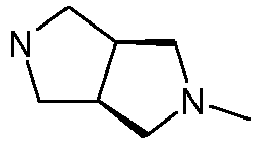
(3aR*,6aS*)-2-(6-Chloropyrimidin-4-yl)-5-methyloctahydropyrrolo [3,4-c]pyrrole 77% 239 5 
1-(6-Chloropyrimidin-4-yl)-N,N-dimethylazetidin-3-amine 55% 213 6 
4-Chloro-6-(4-methylpiperazin-1-yl)pyrimidine 77% 213 7 
(1S,4S)-2-(6-Chloropyrimidin-4-yl)-5-methyl-2,5-diazabicyclo[2.2.1]heptane 97% 225 8 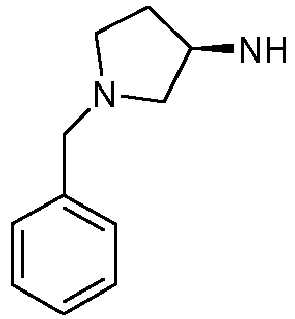
N-[(3R)-1-Benzylpyrrolidin-3-yl]-6-chloropyrimidin-4-amine 64% 289 9 
N-[(3S)-1-Benzylpyrrolidin-3-yl]-6-chloropyrimidin-4-amine 49% 289 10 
tert-Butyl [(3R)-1-(6-chloropyrimidin-4-yl)pyrrolidin-3-yl]methylcarbamate 86% 313 11 
tert-Butyl [(3S)-1-(6-chloropyrimidin-4-yl)pyrrolidin-3-yl]methylcarbamate 95% 313 -

- 2-Amino-4,6-dichloropyrimidine (26.2 g, 160 mmol) was added portionwise to a stirred solution of azetidin-3-yl-methyl-carbamic acid tert-butyl ester HCl salt (37.4 g, 168 mmol) in absolute EtOH (400 mL) followed by TEA (55.6 mL, 400 mmol) dropwise at ambient temperature. The resulting suspension was warmed to reflux (initially a clear solution was observed on warming) which resulted in the gradual formation of a precipitate. The mixture was refluxed for a total of 2 hours. The mixture was allowed to cool and diluted with water (200 mL) dropwise over 30 min and stirring continued for 45 min. The resulting solid was filtered, washed with water (150 mL) and dried under suction to yield the title compound as a white solid (42.74 g, 85%).
1H NMR (400MHz, CDCl3): δ 5.66 (1 H, s), 5.02 (1 H, br s), 4.86 (2H, br s), 4.20 (2H, t), 4.04 (2H, m), 2.91 (3H, s), 1.47 (9H, s) ppm.
MS (APCI) m/z 314 [M+H]+ -

- 2-Amino-4,6-dichloropyrimidine (1.64 g, 10 mmol) was added portionwise to a stirred solution (3aR,6aS)-2-methyloctahydropyrrolo[3,4-c]pyrrole (1.6 g, 12.5 mmol) in absolute EtOH (10 mL) followed by TEA (1.8 mL, 12.5 mmol) dropwise at ambient temperature. The resulting suspension was warmed to reflux (initially a clear solution was observed on warming) and resulted in the gradual formation of a tan coloured precipitate. The mixture was refluxed for a total of 3 hours. The mixture was allowed to cool, EtOH (30 mL) was added to the mixture and heated to give a solution and was left to cool to ambient temperature. The resulting solid was collected by filtration, washed with cold EtOH (50 mL) and dried under suction to yield the title compound as a solid (2.07 g, 82%).
1H NMR (400MHz, CD3OD): δ 5.88 (1H, s), 3.62 (2H, m), 3.41(2H, m), 3.0 (2H, m), 2.78 (2H, m), 2.47 (2H, dd), 2.33 (3H, s) ppm.
MS (APCI) m/z 254, 256 [M+H]+ -

- To a solution of racemic tert-butyl (4aR*,7aR*)-octahydro-1H-pyrrolo[3,4-b]pyridine-1-carboxylate (460 mg, 2.03 mmol) in EtOH (1 mL) containing DIPEA (590 µL, 3.39 mmol) was added a solution of 2-amino-4,6-dichloropyrimidine (277 mg, 169 mmol) in EtOH (9 mL) with stirring and the solution was heated to reflux for 24 hours. The solution was cooled and diluted with water (10 mL) and the resulting solid was collected by filtration, washed with water (20 mL) and dried in vacuo at 60 °C to yield the title compound as a white solid (558 mg, 93%).
1H NMR (400MHz, CD3OD): δ 5.85 (1H, s), 4.7 (1H, m), 3.98 (1H, m), 3.8 - 3.55 (1H, m), 3.47 (1H, m), 3.45 - 3.15 (1 H, m), 2.85 (1 H, m), 2.25 (1 H, m), 1.85 - 1.65 (2H, m), 1.5 - 1.15 (12H, m)
MS (APCl) m/z 354, 356 [M+H]+ - The following compounds of the general formula shown below were prepared by a method similar to that described for preparation 1 using the appropriate amine and 2-amino-4,6-dichloropyrimidine. The reactions were monitored by TLC analysis and were heated to reflux for 3 to 18 hours.

No. NRR' Name Yield LRMS m/z 15 
tert-Butyl [(3R)-1-(2-amino-6-chloropyrimidin-4-yl)pyrrolidin-3-yl]methylcarbamate 100% 328 16 
6-Chloro-N4-(3,3-dimethylbutyl)pyrimidine-2,4-diamine 99% 229 17 
6-Chloro-N4-ethylpyrimidine-2,4-diamine 73% 173 18 
6-Chloro-N4-(3-fluorobenzyl)pyrimidine-2,4-diamine 75% 253 19 
6-Chloro-N4-(2,2-dimethylpropyl)pyrimidine-2,4-diamine 66% 213 -

- A suspension of 2-amino-4,6-dichloropyrimidine (3.62g, 22.1mmol) and the amine of preparation 47 (5.40g, 27.0mmol) in ethanol (45ml) was treated with TEA (4.62ml, 33.1mmol) and the resulting mixture heated at 80°C for 1 hour. The reaction was cooled to room temperature and partitioned between ethyl acetate and water. The organic phase was separated and the aqueous extracted with further ethyl acteate. The combined organic extracts were dried (magnesium sulphate) and the solvent removed in vacuo to give an orange oil. Trituration with di-isopropyl ether gave a pale yellow solid which was filtered and dried in vacuo to give the title compound (7.0g, 87%).
1H NMR (400MHz, DMSOd6): δ 5.77 (1H, s), 4.60 (1H, br m), 3.27 (4H, br m), 2.70 (3H, s), 2.02 (2H, br m), 1.39 (9H, s) ppm.
MS (ESI) m/z 327 [M+H]+ -

- A solution of the title compound of preparation 9 (2.7 g, 9.4 mmol), 3,3-dimethylbutan-1-amine (6.3 mL, 46 mmol) and DIPEA (1.63 mL, 9.4 mmol) in NMP (100 mL) was heated to 150 °C in a sealed vessel for 24 hours. The reaction mixture was diluted with water (500 mL) and extracted with ethyl acetate (3 x 250 mL). The combined organic layers were washed with water (2 x 400 mL) followed by saturated aqueous sodium chloride (500 mL), dried (MgSO4) and concentrated in vacuo. The residue was triturated with diethyl ether and the resulting solid collected by filtration to yield the title compound as a white powder (2.15 g, 65%).
MS (APCI) m/z 354 [M+H]+ -

- The title compound was prepared by a method similar to that described for preparation 20, using the title compound of preparation 8, in 48% yield.
MS (APCI) m/z 354 [M+H]+ -

- To a 5 mL reacti-vial™ containing the title compound of preparation 1 (100 mg, 0.33 mmol) and cyclopropylmethylamine (50 mg, 0.68 mmol) in DMSO (3 mL) was added TEA (94 µL, 0.68 mmol) and the solution was heated at 140 °C for 18 hours. The reaction was allowed to cool to ambient temperature, loaded onto a 5g SCX column, eluted with MeOH (100 mL) followed by 2M ammonia in MeOH (100 mL). Fractions containing product (as judged by TLC) were combined and evaporate to give a crude orange oil. The crude product was purified by flash column chromatography on silica gel eluting with DCM : MeOH (99 : 1 changing to 96 : 4 by volume) to yield the title compound as a colourless oil (75 mg, 67%).
1H NMR (400MHz, CDCl3): δ 8.13 (1H, s), 5.08 (1H, s), 4.79 (1H, br s), 4.20 (2H, t), 4.01 (2H, m), 3.04 (2H, t), 2.93 (3H, s), 1.46 (9H, s), 1.05 (1 H, m), 0.55 (2H, m), 0.24 (2H, m) ppm.
MS (APCI) m/z 334 [M+H]+ -

- To a 5ml reacti-vial™ containing the title compound of preparation 1 (100 mg, 0.33 mmol) and 3-fluorobenzylamine (76 µL, 0.68 mmol) in DMSO (3 mL) was added TEA (9 µL, 0.68 mmol) and the solution was heated at 140 °C for 18 hours. The reaction was allowed to cool to ambient temperature and concentrated in vacuo to obtain crude product as a viscous orange oil. The crude product was purified by flash column chromatography on silica gel eluting with DCM : MeOH (99 : 1 changing to 97 : 3 by volume) to yield the title compound as a light beige coloured solid (49 mg, 38%).
1H NMR (400MHz, CDCl3): δ 8.18 (1H, s), 7.30 (1H, m), 7.09 (1H, m), 7.02 (1H, d), 6.97 (1H, m), 5.09 (1H, s), 5.0 (1H, br d), 4.46 (2H, d), 4.17 (2H, t), 3.98 (2H, m), 2.92 (3H, s), 1.47 (9H, s) ppm.
MS (APCI) m/z 388 [M+H]+ -

- To a solution of the title compound of preparation 14 (60 mg, 0.17 mmol) in DMSO (150 µL) was added 3,3-dimethylbutan-1-amine (229 µL, 1.7 mmol) and the reaction mixture was heated to 120 °C in a sealed vessel for 48 hours. The reaction mixture was diluted with water (4 mL) and extracted with ethyl acetate (4 mL). The organic extract was dried (MgSO4) and concentrated in vacuo. The residue was dissolved in MeOH (0.5 ml) and purified using a phenomomnex HPLC C-18 column eluting with acetonitrile:water (5 : 95 changing to 95 : 5 by volume containing 0.1% TFA by volume) to yield the title compound as a gum (45 mg, 63%).
1H NMR (400MHz, CDCl3): δ 8.41 - 8.33 (1H, m), 7.6 - 7.3 (1H, m), 6.15 (1H, br s), 4.92 - 4.69 (1H, m), 4.65 (1H, s), 4.05 (1H, d), 3.89 - 3.19 (5H, m), 3.17 - 3.09 (2H, m), 2.77 (1H, t), 2.39 - 2.19 (1H, m), 1.88 - 1.65 (2H, m), 1.62 - 1.51 (2H, m), 1.49 (9H, s), 1.44 - 1.17 (1H, m) 0.97 (9H, s) ppm.
MS (ESI) m/z 419 [M+H]+ -
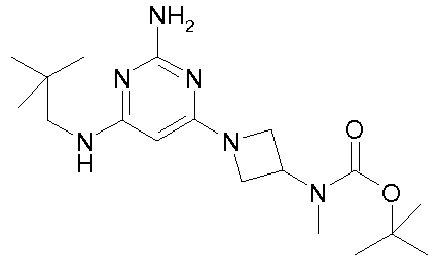
- To a solution of the title compound of preparation 12 (40 mg, 0.13 mmol) in DMSO (150 µL) was added isopropylamine (150 µL, 1.7 mmol) and the resulting mixture was heated to 120 °C in a sealed vessel for 48 hours. The reaction mixture was concentrated in vacuo to give a brown gum. The residual gum was purified by flash column chromatography on silica gel eluting with DCM : MeOH : 0.880 ammonia (990 : 10 : 1 changing to 190 : 10 : 1 by volume) to yield the title compound as a gum (20 mg, 42%).
1H NMR (400MHz, CD3OD): δ 4.83 (1H, s), 4.13 (2H, t), 3.97 (2H, dd), 3.01 (2H, s), 2.93 (3H, s), 1.46 (9H, s), 0.94 (9H, s) ppm.
MS (ESI) m/z 365 [M+H]+ -

- To a solution of the title compound of preparation 12 (40 mg, 0.13 mmol) in DMSO (150 µL) was added isopropylamine (150 µL, 1.7 mmol) and the resulting mixture was heated to 120 °C in a sealed vessel for 48 hours. The reaction mixture was concentrated in vacuo to give a brown gum. The residual gum was purified by flash column chromatography on silica gel eluting with DCM : MeOH : 0.880 ammonia (990 : 10 : 1 changing to 190 : 10 : 1 by volume) to yield the title compound as a gum (22 mg, 50%).
1H NMR (400MHz, CDCl3): δ 4.95 (1 H, br s), 4.67 (1 H, s), 4.48 (2H, br s), 4.33 (1 H, br d), 4.16 (2H, br t), 3.95 (2H, dd), 3.72 (1H, m), 2.92 (3H, s), 1.46 (9H, s) 1.19 (6H, d) ppm.
MS (APCI) m/z 337 [M+H]+ -

- To a solution of the title compound of preparation 12 (30 mg, 0.1 mmol) in EtOH (200 µL) was added 3,3,3 trifluoropropylamine hydrochloride (48 mg, 0.3 mmol) followed by TEA (100 µL, 0.7 mmol) and the resulting mixture was heated under microwave irradiation to 130 °C in a sealed vessel for 90 min. The reaction mixture was concentrated in vacuo to give a brown gum. The residual gum was purified by flash column chromatography eluting with DCM : MeOH : 880 ammonia (99 : 1 : 0.1 changing to 95 : 5 : 0.5, by volume) to yield the title compound as a gum (15 mg, 38%).
1H NMR (400MHz, CD3COCD3): δ 5.71 (1 H, br t), 5.13 (2H, br s), 4.87 (1 H, br s), 4.84 (1 H, s), 4.04 (2H, t), 3.88 (2H, dd), 3.54 (2H, q), 2.91 (3H, s), 2.52 (2H, m), 1.44 (9H, s) ppm.
MS (APCI) m/z 391 [M+H]+ -

- The title compound was prepared by a method similar to that described for preparation 26, using the title compound of preparation 12 and cyclopropylmethylamine, in 48% yield.
1H NMR (400MHz, CD3COCD3): δ 5.51 (1H, m), 5.08 (2H, br s), 4.87 (1H, br s), 4.79 (1H, s), 4.03 (2H, t), 3.87 (2H, dd), 3.08 (2H, t), 2.90 (3H, s), 1.43 (9H, s), 1.02 (1H, m), 0.42 (2H, m), 0.19 (2H, m) ppm.
MS (APCI) m/z 349 [M+H]+ -

- The title compound was prepared by a method similar to that described for preparation 26, using the title compound of preparation 12 and 3,3-dimethylbutan-1-amine, in 58% yield.
1H NMR (400MHz, CDCl3): δ 5.0 (1H, br s), 4.67 (1H, s), 4.52 (2H, br s), 4.36 (1H br t), 4.16 (2H, t), 3.96 (2H, m), 3.13 (2H, m), 2.92 (3H, s), 1.50 - 1.45 (11 H, m), 0.95 (9H, s) ppm.
MS (APCI) m/z 379 [M+H]+ -

- The title compound was prepared by a method similar to that described for preparation 26, using the title compound of preparation 12 and 3-fluorobenzylamine using 1,2-diethoxy-ethane as reaction solvent, in 53% yield.
1H NMR (400MHz, CDCl3): δ 7.28 (1H, m), 7.08 (1H, d), 7.01(1H, br d), 6.95 (1H, br t), 5.15 (1H, br t), 5.00 (1H, br s), 4.80 (2H, br s), 4.64 (1 H, s), 4.41 (2H, br d), 4.13 (2H, t), 3.96 (2H, dd), 2.90 (3H, s), 1.45 (9H, s) ppm.
MS (ESI) m/z 403 [M+H]+ -

- The title compound was prepared by a method similar to that described for preparation 26, using the title compound of preparation 12 and 3-methoxy-benzylamine, in 17% yield.
1H NMR (400MHz, CD3COCD3): δ 7.20 (1 H, t), 6.93 - 6.89 (2H, m), 6.78 (1 H, dd), 5.96 (1 H, br t), 5.12 (2H, br s), 5.00 - 4.70 (2H, m), 4.46 (2H, d), 4.01 (2H, t), 3.86 (2H, m), 3.76 (3H, s), 2.90 (3H, s), 1.44 (9H, s) ppm. -

- To a solution of the title compound of preparation 1 (30 mg, 0.10 mmol) in DMSO (150 µL) was added cyclobutylmethylamine hydrogen chloride (127 mg, 1 mmol) followed by DIPEA (300 µL, 1.76 mmol) and the resulting mixture was heated to 120 °C in a sealed vessel for 48 hours. The reaction mixture was concentrated in vacuo to give a gum. The residual gum was purified by flash column chromatography on silica gel eluting with DCM : MeOH : 0.880 ammonia (990 : 10 : 1 changing to 190 : 10 : 1 by volume) to yield the title compound as a gum (12 mg, 33%).
1H NMR (400MHz, CD3COCD3): δ 5.52 (1H, m), 5.13 (2H, br s), 4.87 (1H, br s), 4.79 (1H, s), 4.05 (2H, t), 3.86 (2H, dd), 3.25 (2H, t), 2.91 (3H, s), 2.56 (1H, m), 2.05 - 1.97 (H, m), 1.89 - 1.80 (2H, m), 1.77 - 1.69 (2H, m), 1.44 (9H, s) ppm.
MS (ESI) m/z 363 [M+H]+ -

- The title compound was prepared by a method similar to that described for preparation 26, using the title compound of preparation 12 and cyclopentylmethylamine hydrogen chloride, in 16% yield.
1H NMR (400MHz, CD3OD): δ 4.79 (1H, s), 4.15 (2H, t), 4.00 (2H, dd), 3.10 (2H, d), 2.93 (3H, s), 2.14 (1 H, m), 1.83 - 1.75 (2H, m), 1.69 - 1.53 (4H, m), 1.46 (9H, s), 1.30 - 1.22 (2H, m) ppm.
MS (APCI) m/z 377 [M+H]+ - The following compounds of the general formula shown below were prepared by a method similar to that described for preparation 1 using the appropriate amine and 2-amino-4,6-dichloropyrimidine. Reactions were monitored by TLC analysis.

No. NRR' Name LRMS m/z 34 
tert-Butyl 4-(2-amino-6-chloropyrimidin-4-yl)-1,4-diazepane-1-carboxylate 328 35 
6-Chloro-N4-(2-methylcyclopropyl)pyrimidine-2,4-diamine 199 36 
4-Chloro-6-(4-methyl-1,4-diazepan-1-yl)pyrimidin-2-amine 242 37 
6-Chloro-N4-(cyclopropylmethyl)pyrimidine-2,4-diamine 254 38 
tert-Butyl (3aR*,7aS*)-5-(2-amino-6-chloropyrimidin-4-yl)octahydro-1H-pyrrolo[3,2-c]pyridine-1-carboxylate 354 39 
N4-Bicyclo[1.1.1]pent-1-yl-6-chloropyrimidine-2,4-diamine 211 40 
tert-Butyl [1-(2-amino-6-chloropyrimidin-4-yl)piperidin-4-yl]carbamate 328 41 
tert-Butyl [1-(2-amino-6-chloropyrimidin-4-yl)-3-methylazetidin-3-yl]methylcarbamate 328 42 
4-Chloro-6-(hexahydropyrrolo[12-a]pyrazin-2(1H)-yl)pyrimidin-2-amine 254 -

- A solution of 2-amino-4,6-dichloropyrimidine (400mg, 2.44mmol) and t-butylamine (2.6ml, 25.0mmol) in NMP (1ml) was heated in a microwave at 150°C for 60 minutes. The reaction mixture was partitioned between water (10ml) and ethyl acetate (10ml), the organic phase separated, dried and reduced in vacuo. Purification by flash column chromatography on silica gel eluting with ethyl acetate:pentane (30:70 changing to 80:20 by volume) to yield the title compound as a colourless solid (494mg, 100%).
1H NMR (400MHz, CDCl3): δ 5.80 (1H, s), 4.78 (2H, bs), 1.42 (9H, s) ppm.
MS (ESI) m/z 201 [M+H]+ -

- 2-amino-4,6-dichloropyrimidine (508mg, 3.1mmol) was added to a suspension of 1-methylcyclopropylamine hydrochloride (1.0g, 9.3mmol) and sodium methoxide (502mg, 9.30mmol) in NMP (3ml). The resulting mixture was heated at 90°C for 16 hours and then cooled to room temperature. The reaction mixture was diluted with water (20ml) and the resulting precipitate filtered off, washed with further water (20ml) and dried in vacuo to give the title compound as a colourless solid (280mg, 15%).
1H NMR (400MHz, CDCl3): δ 6.71 (1 H, s), 1.37 (3H, s), 0.83-0.79 (2H, m), 0.72-0.65 (2H, m) ppm.
MS (ESI) m/z 199 [M+H]+ -

- A solution of tert-Butyl (3S)-pyrrolidin-3-ylcarbamate (10.0g, 53.7mmol) in DCM (40ml) was treated with TEA (14.9ml, 107mmol) and cooled to 0°C. Benzyl chloroformate (7.6ml, 53.7mmol) was added dropwise and the resulting suspension was allowed to warm gradually to room temperature over a period of 18 hours. The reaction mixture was diluted with water (100ml) and the organic phase separated. The aqueous phase was extracted with further DCM (2 x 50ml) and the combined organic extracts dried (sodium sulphate) and concentrated in vacuo to give a pale yellow solid (14.6g, 85%)
1H NMR (400MHz, CDCl3): δ 7.39-7.29 (5H, m), 5.13 (2H, s), 4.58 (1H, m), 4.19 (1H, m), 3.66 (1H, m), 3.49 (1H, m), 3.25 (1H, m), 2.14 (1H, m), 1.82 (1H, m), 1.44 (9H, s) ppm.
MS (ESI) m/z 321 [M+H]+ -

- A solution of the carbamate of preparation 45 (14.6g, 45.6mmol) in THF (85ml) was cooled to 0°C and treated with potassium tert-butoxide (4.38g, 59.27mmol). The reaction was left to stir for 30 minutes prior to the addition of methyl iodide (4.26ml, 59.3mmol) and then allowed to warm gradually to room temperature. The reaction mixture was partitioned between ethyl acetate (200ml) and water (100ml). The aqueous phase was separated and extracted with further ethyl acetate (100ml). The combined organic extracts were washed with saturated aqueous sodium chloride (100ml), dried (magnesium sulphate) and reduced in vacuo to give an orange oil. The oil was re-dissolved in THF (85ml), cooled to 0°C and treated with potassium tert-butoxide (3.00g, 40.6mmol). The reaction was left to stir for 30 minutes prior to the addition of methyl iodide (3.0ml, 41.7mmol) and then allowed to warm gradually to room temperature. The reaction mixture was partitioned between ethyl acetate (200ml) and water (100ml). The aqueous phase was separated and extracted with further ethyl acetate (100ml). The combined organic extracts were washed with saturated aqueous sodium chloride (100ml), dried (magnesium sulphate) and reduced in vacuo to give the title compound as an orange oil (15.3g, 100%).
1H NMR (400MHz, CDCl3): δ 7.35-7.26 (5H, m), 5.11 (2H, s), 4.70 (1H, m), 3.58 (2H, m), 3.34 (1H, m), 3.29 (1H, m), 2.74 (3H, s), 1.98 (2H, m), 1.43 (9H, s) ppm.
MS (ESI) m/z 335 [M+H]+ -

- A solution of the carbamate of preparation 46 (15.58g, 46.6mmol) in ethanol (150ml) was hydrogenated in the presence of 5%Pd/C (1g) at 50psi at room temperature for a period of 18 hours. Further Pd/C (500mg) was added and the resulting mixture hydrogenated under the same conditions for a further 26 hours. The catalyst was filtered off and the filtrate concentrated in vacuo. Purification by chromatography (DCM:MeOH:0.880 ammonia (100:0:0 changing to 90:10:1 by volume) gave the title compounds as a pale yellow oil (5.85g, 62%).
1H NMR (400MHz, CDCl3): δ 4.56 (1H, m), 3.06 (2H, m), 2.87 (1H, m), 2.79 (1H, m), 2.78 (3H, s), 2.54 (1H, s), 1.95 (1H, m), 1.73 (1H, m), 1.43 (9H, s) ppm.
MS (ESI) m/z 201 [M+H]+ -

- A solution of the title compound (110 mg, 0.52 mmol) of preparation 6 in NMP (2 mL) was treated with DIPEA (135 µL, 0.78 mmol) and 3,3-dimethylbutan-1-amine (347 µL, 2.6 mmol) and heated to 150 °C for 18 hours in a sealed vessel. The reaction mixture was cooled to ambient temperature and partitioned between ethyl acetate (20 mL) and water (20 mL). The organic fraction was washed with saturated aqueous sodium chloride (20 mL) dried (MgSO4) and concentrated in vacuo. The residue was purified by flash column chromatography on silica gel eluting with DCM : MeOH : 0.880 ammonia (90 : 10 : 1 by volume) to yield the title compound as a gum (57mg, 40%).
1H NMR (400MHz, CD3OD): δ 7.95 (1H, s), 5.56 (1H, s), 3.51 (4H, m), 3.23 (2H, m), 2.47 (4H, m), 2.30 (3H, s), 1.49 (2H, m), 0.95 (9H, s) ppm.
MS (APCI) m/z 278 [M+H]+ - The following compounds were prepared by a method similar to that described for example 1 using the appropriate starting material.
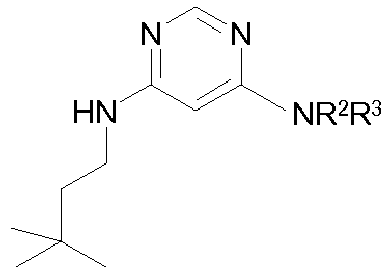
No. Preparation No. of Starting material. NR2R3 Name Yield LRMS m/z 2 3 
6-[(3S)-3-(Dimethylamino)pyrrolidin-1-yl]-N-(3,3-dimethylbutyl)pyrimidin-4-amine 20% 292 3 4 
N-(3,3-Dimethylbutyl)-6-[(3aR*,6aS*)-5-methylhexahydropyrrolo[3,4-c]pyrrol-2(1H)-yl]pyrimidin-4-amine 24% 304 4 5 
6-[3-(Dimethylamino)azetidin-1-yl]-N-(3,3-dimethylbutyl)pyrimidin-4-amine 41% 278 5 7 
N-(3,3-Dimethylbutyl)-6-[(1S,4S)-5-methyl-2,5-diazabicyclo[2.2.1]hept-2-yl]pyrimidin-4-amine 3% 290 -

- A solution of the compound of preparation 20 (2.15 g, 6.1 mmol) in EtOH (40 mL) and MeOH (20 mL) was cooled to 0 °C and treated with palladium hydroxide (20% on carbon 100 mg) followed by ammonium formate (5.8 g, 91 mmol) and heated to reflux for 2 hours. The reaction mixture was cooled to ambient temperature filtered and the filtrate concentrated in vacuo. The residue was purified directly by SCX resin, eluting non-basic compounds with MeOH and the basic compounds with 1N ammonia in MeOH. The basic washings were concentrated in vacuo and purified by flash column chromatography on silica gel eluting with DCM : MeOH : 0.880 ammonia (1 : 0 : 0 changing to 80 : 20 : 1, by volume) to yield the title compound as a white powdery solid (1.2 g, 75%).
1H NMR (400MHz, CD3OD): δ 7.9 (1H, s), 5.4 (1H, s), 4.1 (1H, m), 3.2 (2H m), 3.1 (1H, m), 3.0 (1H, m), 2.9 (1 H, m), 2.7 (1 H, m), 2.1 (1 H, m), 1.7 (1 H, m), 1.5 (2H, m), 1.0 (9H, s) ppm.
Accurate mass: found 264.2181, C14H26N5 requires 264.2183. -

- The title compound was prepared by a similar method to that described for example 6, using the title compound of preparation 21, in 70% yield.
1H NMR (400MHz, CD3OD): δ 7.9 (1H, s), 5.4 (1H, s), 4.1 (1H, m), 3.2 (2H m), 3.1 (1H, m), 3.0 (1H, m), 2.9 (1 H, m), 2.7 (1 H, m), 2.1 (1 H, m), 1.7 (1 H, m), 1.5 (2H, m), 1.0 (9H, s) ppm.
MS (APCI) m/z 264 [M+H]+ -

- A suspension of the compound of example 7 (38 mg, 0.144 mmol) in THF (1.5 mL) containing aqueous formaldehyde (11 µL, 0.144 mmol, 37% in water) and acetic acid (8.3 µL, 0.144 mmol) was treated with sodium triacetoxyborohydride (37 mg, 0.173 mmol) and stirred at ambient temperature for 10 min. The reaction mixture was applied directly to SCX resin, eluting non-basic compounds with MeOH and the basic compounds with 1N ammonia in MeOH. The basic washings were concentrated in vacuo and purified by flash column chromatography on silica gel eluting with DCM : MeOH : 0.880 ammonia (1 : 0 : 0 changing to 40 : 10 : 1, by volume) further purification on reverse phase silica eluting with water : acetonitrile (1 : 0 changing to 19 : 1 by volume) gave the title compound as a white solid (14 mg, 35%).
1H NMR (400MHz, CD3OD) δ 7.9 (1H, s), 5.4 1H, s), 4.2 (1H, m), 3.2 (2H, m), 2.9 (1H, m), 2.8 (1H, m), 2.5 (2H, m), 2.4 (4H, m), 1.7 (1H, m), 1.5 (2H, m) 1.1 (9H, s) ppm.
MS (APCI) m/z 278 [M+H]+, 276 [M-H]- -

- A solution of the compound of preparation 15 (120 mg, 0.38 mmol) in NMP (2 mL) was treated with DIPEA (191 uL, 1.1 mmol) and 1-cyclopropylmethylamine (99 uL, 1.15 mmol) and heated to 150 °C in a sealed vessel for 18 hours. The reaction mixture was diluted with ethyl acetate (50 mL) and washed with water (4 x 50 mL) and saturated aqueous sodium chloride (50 mL), dried (MgSO4) and concentrated in vacuo to give the crude intermediate tert-butyloxycarbonyl-protected compound. This crude material was dissolved in DCM (2 mL), treated with trifluoroacetic acid (2 mL) and stirred at ambient temperature for 3 h after which time the reaction mixture was concentrated in vacuo. The residue was purified directly by SCX resin, eluting non-basic compounds with MeOH and the basic compounds with 2 N ammonia in MeOH. The basic washings were concentrated in vacuo and purified by flash column chromatography on silica gel eluting with DCM : MeOH : 0.880 ammonia (1 : 0 : 0 changing to 170 : 30 : 3, by volume) to yield the title compound as a white foam (16 mg, 17%).
1H NMR (400MHz, CD3OD): δ 4.89 (1H, s), 3.63 (1H, m), 3.55 (1H, m), 3.47 (1H, m), 3.39 (1H, m), 3.23 (1H, m), 3.05 (2H, d), 2.42 (3H, s), 2.21 (1H, m), 1.88 (1H, m), 1.06 (1H, m), 0.52 (2H, q), 0.23 (2H, q) ppm.
MS (APCI) m/z 248 [M+H]+ -

- A suspension of the compound of preparation 15 (1.8g, 5.5mmol) in cyclopropylmethanamine (5.4ml, 62.3mmol) and TEA (1.53ml, 11mmol) was heated in a sealed pressure vessel at 120°C for 24 hours. The excess amine was removed in vacuo and the residue partitioned between water (100ml) and DCM (100ml). The aqueous phase was separated and extracted with further DCM (100ml). The combined organic extracts were washed with saturated aqueous sodium chloride (100ml) and the solvent removed in vacuo. Purification by flash column chromatography on silica gel eluting with DCM : MeOH : 0.880 ammonia (98 : 2 : 0 changing to 95 : 5 : 0.2, by volume) gave the to give the intermediate tert-butyloxycarbonyl-protected compound (1.55g, 77%).
1H NMR (400MHz, CD3OD): δ 4.89 (1H, s), 4.71 (1H, m), 3.64 (2H, m), 3.32 (2H, m), 3.07 (2H, d), 2.80 (3H, s), 2.13 (2H, m), 1.46 (9H, s), 1.05 (1H, m), 0.52 (2H, m), 0.23 (2H, m) ppm.
MS (APCI) m/z 363 [M+H]+ - A solution of the intermediate tert-butyloxycarbonyl-protected compound (6.18g, 16.6mmol) in methanol (15ml) was treated with 4M HCl in 1,4-dioxan (42ml, 168mmol) and the resulting solution was left to stir at room temperature (exotherm observed on addition of the HCl) for 18 hours. The solvent was removed in vacuo and the residue partitioned between 0.880 ammonia (50ml) and DCM (400ml). The aqueous phase was separated and extracted with further DCM (200ml). The combined organic extracts were dried (sodium sulphate) and the solvent removed in vacuo to give a pale yellow oil (4.00g, 92%).
-

- A solution of the compound of example 9 (10.14g, 38.65mmol) in methanol (340ml) was treated with a solution of L(+) tartaric acid in (5.8g, 38.65mmol) in methanol (50ml). The resulting suspension was stirred at room temperature for 30 minutes and the resulting solid filtered off and dried in vacuo. The solid was dissolved in the minimum volume of boiling water (22ml) and then methanol was added until a permanent ppt was observed (102ml). The resulting suspension was allowed to cool gradually to room temperature and the solid filtered and dried in vacuo for 50°C for 3 days and then allowed to equilibrate at room temperature in air for a further 2 days to give the title compounds as a colourless solid (14.15g, 89%)
1H NMR (400MHz, CD3OD): δ 6.41 (1H, br s), 5.72 (2H, br s), 4.81 (1H, s), 3.92 (2H, s), 3.58 (2H, m), 3.40 (1H, m), 3.32 (2H, m), 3.03 (2H, m), 2.48 (3H, s), 2.18 (1H, m), 1.95 (1H, m), 0.96 (1H, m), 0.39 (2H, m), 0.12 (2H, m) ppm.
MS (APCI) m/z 263 [M+H]+ - The following compounds were prepared by a method similar to that described for example 9 using the title compound of preparation 15 and the appropriate amine starting material.

No. R1 Name Yield LRMS m/z 10 
N4-Isobutyl-6-[(3R)-3-(methylamino)pyrrolidin-1-yl]pyrimidine-2,4-diamine 24% 265 11 
N4-(2,2-Dimethylpropyl)-6-[(3R)-3-(methylamino)pyrrolidin-1-yl]pyrimidine-2,4-diamine 34% 279 12 Et N4-Ethyl-6-[(3R)-3-(methylamino)pyrrolidin-1-yl]pyrimidine-2,4-diamine 27% 237 - The following compounds were prepared by a method similar to that described for example 9, using the compound of preparation 10 and the appropriate amine starting material.

No. R1 Name Yield LRMS m/z 13 Et N-Ethyl-6-[(3R)-3-(methylamino)pyrrolidin-1-yl]pyrimidin-4-amine 64% 222 14 
N-Isobutyl-6-[(3R)-3-(methylamino)pyrrolidin-1-yl]pyrimidin-4-amine 32% 250 15 
N-(Cyclopropylmethyl)-6-[(3R)-3-(methylamino)pyrrolidin-1-yl]pyrimidin-4-amine 17% 248 - The following compounds were prepared by a method similar to that described for example 9 using the compound of preparation 11 and the appropriate amine starting material.

No. R1 Name Yield LRMS m/z 16 Et N-Ethyl-6-[(3S)-3-(methylamino)pyrrolidin-1-yl]pyrimidin-4-amine 28% 222 17 
N-(3,3-Dimethylbutyl)-6-[(3S)-3-(methylamino)pyrrolidin-1-yl]pyrimidin-4-amine 26% 278 -

- A solution of the title compound of preparation 2 (120 mg, 0.53 mmol) in NMP (2 mL) was treated with DIPEA (276 µL 1.59 mmol) 3,3-dimethylbutan-1-amine (213 µL, 1.59 mmol) and heated to 150 °C in a sealed vessel for 72 hours. The reaction mixture was cooled and purified directly by SCX resin, eluting non-basic compounds with MeOH and the basic compounds with 2 N ammonia in MeOH. The basic washings were concentrated in vacuo and purified by flash column chromatography on silica gel eluting with DCM : MeOH : 0.880 ammonia (1 : 0 : 0 changing to 40 : 10 : 1, by volume) to yield the title compound as a gum (72 mg, 47%).
1H NMR (400MHz, CD3OD): δ 7.92 (1H, s), 5.30 (1H, s), 3.72 (1H, m), 3.61 (1H, m), 3.37 (1H, m), 3.24 (2H, m), 3.17 (1H, m), 2.89 (1H, m), 2.32 (6H, s), 2.25 (1H, m), 1.87 (1H, m), 1.52 (2H, m), 0.98 (9H, s) ppm.
MS (APCI) m/z 292 [M+H]+ - The following compounds were prepared by a method similar to that described for example 18 using the title compound of preparation 2.

No. R1 Name Yield LRMS m/z 19 
N-(Cyclopropylmethyl)-6-[(3R)-3-(dimethylamino)pyrrolidin-1-yl]pyrimidin-4-amine 64% 262 20 
6-[(3R)-3-(Dimethylamino)pyrrolidin-1-yl]-N-isobutylpyrimidin-4-amine 60% 264 21 Et 6-[(3R)-3-(Dimethylamino)pyrrolidin-1-yl]-N-ethylpyrimidin-4-amine 55% 236 22 
6-[(3R)-3-(Dimethylamino)pyrrolidin-1-yl]-N-(2,2-dimethylpropyl)pyrimidin-4-amine 41% 278 -

- The title compound of preparation 24 (45 mg, 0.11 mmol) was dissolved in trifluoroacetic acid (2 mL) and stirred at ambient temperature for 1 hour after which time the reaction mixture was concentrated in vacuo. The residue was purified directly by SCX resin, eluting non-basic compounds with MeOH and the basic compounds with 1 N ammonia in MeOH taking 4 mL fractions to yield the title compound as a solid (25 mg, 71 %).
1H NMR (400MHz, CD3OD): δ 3.52 - 3.33 (5H, m), 3.22 - 3.14 (2H, m), 2.97 - 2.86 (1H, m), 2.66 - 2.57 (1H, m), 2.40 - 2.29 (1H, m), 1.80 - 1.72 (2H, m), 1.70 - 1.55 (1H, m), 1.53 - 1.43 (3H, m), 0.97 (9H, s) ppm.
MS (ESI) m/z 319 [M+H]+ -

- The title compound was prepared by a method similar to that described for example 23 and preparation 24, by reaction of the compound of preparation 14 with isopropyl amine and subsequent deprotection, in 28% yield.
1H NMR (400MHz, CD3OD): δ 4.77 (1H, s), 3.86 - 3.74 (1H, m), 3.51 - 3.34 (5H, m) 2.96 - 2.86 (1H, m), 2.66 - 2.56 (1H, m), 2.40 - 2.26 (1H, m), 1.81 - 1.72 (2H, m), 1.70 - 1.57 (1H, m), 1.54 - 1.41 (1H, m), 1.18 (6H, d) ppm
MS (ESI) m/z 277 [M+H]+ - The following compounds were prepared by a method similar to that described for example 23 and preparation 24 by reaction of the compound of preparation 14 with an appropriate amine and subsequent deprotection.

No. R1 Name Yield LRMS m/z 25 Me N4-Methyl-6-[(4aR*,7aR*)-octahydro-6H-pyrrolo[3,4-b]pyridin-6-yl]pyrimidine-2,4-diamine 36% 249 26 Et N4-Ethyl-6-[(4aR*,7aR*)-octahydro-6H-pyrrolo[3,4-b]pyridin-6-yl]pyrimidine-2,4-diamine 11% 263 27 
N4-Isobutyl-6-[(4aR*,7aR*)-octahydro-6H-pyrrolo[3,4-b]pyridin-6-yl]pyrimidine-2,4-diamine 32% 291 28 
N4-(Cyclopropylmethyl)-6-[(4aR*,7aR*)-octahydro-6H-pyrrolo[3,4-b]pyridin-6-yl]pyrimidine-2,4-diamine 39% 289 29 
N4-(3-Methylbutyl)-6-[(4aR*,7aR*)-octahydro-6H-pyrrolo[3,4-b]pyridin-6-yl]pyrimidine-2,4-diamine 62% 305 30 
N4-(2,2-Dimethylpropyl)-6-[(4aR*,7aR*)-octahydro-6H-pyrrolo[3,4-b]pyridin-6-yl]pyrimidine-2,4-diamine 29% 305 31 
N4-Cyclopropyl-6-[(4aR*,7aR*)-octahydro-6H-pyrrolo[3,4-b]pyridin-6-yl]pyrimidine-2,4-diamine 19% 275 32 
N4-Cyclobutyl-6-[(4aR*,7aR*)-octahydro-6H-pyrrolo[3,4-b]pyridin-6-yl]pyrimidine-2,4-diamine 43% 289 33 
N4-(Cyclopentylmethyl)-6-[(4aR*,7aR*)-octahydro-6H-pyrrolo[3,4-b]pyridin-6-yl]pyrimidine-2,4-diamine 11% 317 -

- To a solution of the title compound of preparation 13 (20 mg, 0.08 mmol) in DMSO (75 µL) was added propylamine (75 µL, 1 mmol) and the mixture was heated to 120 °C in a sealed vessel for 48 hours. The reaction mixture was concentrated in vacuo to give a brown gum. The residual gum was purified by flash column chromatography on silica gel eluting with DCM : MeOH : 0.880 ammonia (990 : 10 : 1 changing to 90 :10 : 1, by volume) to yield the title compound as a gum (10 mg, 45%).
1H NMR (400MHz, CD3COCD3): δ 5.28 (1H, br t), 4.97 (3H, m), 3.51 (2H, m), 3.20 (4H, m), 2.83 (H, m), 2.51 (2H, m), 2.41 (2H, m), 2.22 (3H, s) 1.56 (2H, m), 0.92 (3H, t) ppm
MS (ESI) m/z 277 [M+H]+ - The following compounds were prepared by a method similar to that described for example 34 using the compound of preparation 13 and the appropriate amine starting material.

No. R1 Name Yield LRMS m/z 35 Me N4-Methyl-6-[(3aR*,6aS*)-5-methylhexahydropyrrolo[3,4-c]pyrrol-2(1H)-yl]pyrimidine-2,4-diamine 30% 249 36 Et N4-Ethyl-6-[(3aR*,6aS*)-5-methylhexahydropyrrolo[3,4-c]pyrrol-2(1H)-yl]pyrimidine-2,4-diamine 62% 263 37 
N4-Isobutyl-6-[(3aR*,6aS*)-5-methylhexahydropyrrolo[3,4-c]pyrrol-2(1H)-yl]pyrimidine-2,4-diamine 52% 291 38 
N4-(Cyclopropylmethyl)-6-[(3aR*,6aS*)-5-methylhexahydropyrrolo[3,4-c]pyrrol-2(1H)-yl]pyrimidine-2,4-diamine 78% 289 39 
N4-(2,2-Dimethylpropyl)-6-[(3aR*,6aS*)-5-methylhexahydropyrrolo[3,4-c]pyrrol-2(1H)-yl]pyrimidine-2,4-diamine 46% 305 40 
N4-(3,3-Dimethylbutyl)-6-[(3aR*,6aS*)-5-methylhexahydropyrrolo[3,4-c]pyrrol-2(1H)-yl]pyrimidine-2,4-diamine 48% 319 41 
N4-(3-Methylbutyl)-6-[(3aR*,6aS*)-5-methylhexahydropyrrolo[3,4-c]pyrrol-2(1H)-yl]pyrimidine-2,4-diamine 54% 305 42 
N4-Cyclopropyl-6-[(3aR*,6aS*)-5-methylhexahydropyrrolo[3,4-c]pyrrol-2(1H)-yl]pyrimidine-2,4-diamine 27% 275 43 
N4-Cyclobutyl-6-[(3aR*,6aS*)-5-methylhexahydropyrrolo[3,4-c]pyrrol-2(1H)-yl]pyrimidine-2,4-diamine 48% 289 -

- A solution of the title compound of preparation 22 (70 mg, 0.21 mmol) in DCM (5 mL) was treated with trifluoroacetic acid (0.5 mL) and stirred at ambient temperature for 2 hours after which time the reaction mixture was concentrated in vacuo. The residue was purified directly by SCX resin, eluting non-basic compounds with MeOH and the basic compounds with 2 N ammonia in MeOH taking 20 mL fractions to yield the title compound (45 mg, 92%).
1H NMR (400MHz, CDCl3): δ 8.12 (1H, s), 5.06 (1H, s), 4.89 (1H, br s), 4.20 (2H, m) 3.71 (3H, m), 3.03 (2H, m), 2.42 (3H, s), 1.05 (1H, m), 0.54 (2H, m), 0.24 (2H, m) ppm.
Accurate mass: found 234.1709, C12H20N5 requires 234.1719. -

- A solution of the title compound of preparation 23 (42 mg, 0.11 mmol) in DCM (5 mL) was treated with trifluoroacetic acid (0.5 mL) and stirred at ambient temperature for 2 hours after which time the reaction mixture was concentrated in vacuo. The residual oil was purified by flash column chromatography on silica gel eluting with DCM : MeOH : 0.880 ammonia (1 : 0 : 0 changing to 182 : 15 : 3, by volume) to yield the title compound as a solid (29 mg, 94%).
1H NMR (400MHz, CDCl3): δ 8.17 (1H, s), 7.29 (1H, m), 7.09 (1H, d), 7.02 (1H, d), 6.97 (1H, m), 5.07 (1H, d), 5.02 (1H, br s), 4.45 (2H, d), 4.16 (2H, m), 3.69 (3H, m), 2.42 (3H, s) ppm.
MS (APCI) m/z 288 [M+H]+ - The following compounds were prepared by a method similar to that described for example 44 and preparation 22, by reaction of the compound of preparation 1 with an appropriate amine and subsequent deprotection.
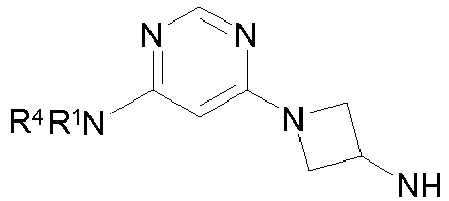
No. R4R1N Name Yield LRMS m/z 46 iPrNH N-Isopropyl-6-[3-(methylamino)azetidin-1-yl]pyrimidin-4-amine 74% 222 47 
N-(4-Fluorobenzyl)-6-[3-(methylamino)azetidin-1-yl]pyrimidin-4-amine 38% 288 48 EtNH N-Ethyl-6-[3-(methylamino)azetidin-1-yl]pyrimidin-4-amine 92% 208 49 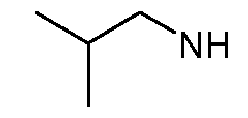
N-Isobutyl-6-[3-(methylamino)azetidin-1-yl]pyrimidin-4-amine 12% 236 50 
2-({6-[3-(Methylamino)azetidin-1-yl]pyrimidin-4-yl}amino)ethanol 41% 224 51 
N-Benzyl-6-[3-(methylamino)azetidin-1-yl]pyrimidin-4-amine 27% 270 52 
N-(2-Chlorobenzyl)-6-[3-(methylamino)azetidin-1-yl]pyrimidin-4-amine 42% 304 53 
N-Methyl-1-[6-(4-methylpiperidin-1-yl)pyrimidin-4-yl]azetidin-3-amine 46% 262 54 
N-(2-Methoxyethyl)-6-[3-(methylamino)azetidin-1-yl]pyrimidin-4-amine 77% 238 55 
6-[3-(Methylamino)azetidin-1-yl]-N-(3-methylbutyl)pyrimidin-4-amine 85% 250 56 
N-Methyl-1-(6-piperidin-1-ylpyrimidin-4-yl)azetidin-3-amine 45% 248 57 
N-(2,2-Dimethylpropyl)-6-[3-(methylamino)azetidin-1-yl]pyrimidin-4-amine 84% 250 58 MeNH N-Methyl-6-[3-(methylamino)azetidin-1-yl]pyrimidin-4-amine 88% 195 59 
N-(3,3-Dimethylbutyl)-6-[3-(methylamino)azetidin-1-yl]pyrimidin-4-amine 81% 264 -

- The title compound of preparation 26 (22 mg, 0.07 mmol) was dissolved in trifluoroacetic acid (1 mL) and stirred at ambient temperature for 2 hours after which time the reaction mixture was concentrated in vacuo. The residual gum was purified by flash column chromatography on silica gel eluting with DCM : MeOH : 0.880 ammonia (98 : 2 : 0.2 changing to 90 : 10 : 1, by volume) to yield the title compound as a gum (12mg, 73%).
1H NMR (400MHz, CD3OD): δ 4.74 (1H, s), 4.1 (2H, dd), 3.82 (1H, m), 3.67 (2H, m), 3.61 (1H, m), 2.33 (3H, s), 1.16 (6H, d) ppm.
MS (APCI) m/z 237 [M+H]+ -

- The title compound was prepared by a method similar to that described for example 60, using the compound of preparation 25, in 91 % yield.
1H NMR (400MHz, CD3COCD3): δ 5.29 (1H, br t), 4.97 (2H, br s), 4.79 (1H, s), 3.97 (2H, t), 3.56 - 3.49 (3H, m), 3.08 (2H, br d), 2.32 (3H, s), 0.93 (9H, s) ppm
MS (ESI) m/z 265 [M+H]+ -

- The title compound was prepared by a method similar to that described for example 60, using the compound of preparation 27, in 92% yield.
1H NMR (400MHz, CD3OD): δ 4.78 (1H, s), 4.11 (2H, m), 3.68 (2H, dd), 3.62 (1H, m), 3.48 (2H, t), 2.42 (2H, m), 2.34 (3H, s) ppm
MS (ESI) m/z 291 [M+H]+ -

- The title compound was prepared by a method similar to that described for example 60, using the compound of preparation 28, in 85% yield.
1H NMR (400MHz, CD3OD): δ 4.17 (2H, m), 3.76 (2H, m), 3.70 (1H, m), 3.06 (2H, d), 2.39 (3H, s), 1.01 (1H, m), 0.52 (2H, m), 0.22 (2H, m) ppm.
MS (APCI) m/z 249 [M+H]+ -

- The title compound was prepared by a method similar to that described for example 60, using the compound of preparation 29, in 87% yield.
1H NMR (400MHz, CD3OD): δ 4.73 (1H, s) 4.11 (2H, m), 3.68 (2H, m), 3.62 (1H, m), 3.18 (2H, m), 2.33 (3H, s), 1.48 (2H, m), 0.96 (9H, s) ppm.
MS (APCI) m/z 279 [M+H]+ -
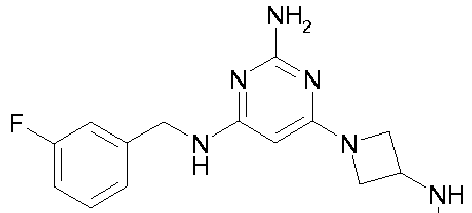
- The title compound was prepared by a method similar to that described for example 60, using the compound of preparation 30, in 84% yield.
1H NMR (400MHz, CD3COCD3): δ 7.32 (1H, m), 7.16 (1H, d), 7.10 (1H, br d), 6.96 (1H, m), 6.01 (1H, m), 5.06 (2H, br s), 4.79 (1 H, s), 4.51 (2H, d), 3.96 (2H, t), 3.57 - 3.48 (3H, m), 2.31 (3H, s) ppm.
MS (APCI) m/z 303 [M+H]+ -

- The title compound was prepared by a method similar to that described for example 60, using the compound of preparation 31, in 72% yield.
1H NMR (400MHz, CD3OD): δ 7.20 (1H, t), 6.89 - 6.85 (2H, m), 6.78 (1H, dd), 4.73 (1H, s), 4.37 (2H, s), 4.07 (2H, t), 3.76 (3H, s), 3.65 - 3.55 (3H, m), 2.31 (3H, s) ppm.
MS (APCI) m/z 315 [M+H]+ -

- The title compound was prepared by a method similar to that described for example 60, using the compound of preparation 32, in 86% yield.
1H NMR (400MHz, CD3COCD3): δ 5.31 (1H, m), 4.99 (2H, br s), 4.73 (1H, s), 3.96 (2H, t), 3.58 - 3.50 (3H, m), 3.23 (2H, t), 2.55 (1H, m), 2.32 (3H, s), 2.05 - 1.97(H, m), 1.90 - 1.82 (2H, m), 1.77 - 1.68 (2H, m) ppm.
MS (APCI) m/z 263 [M+H]+ -

- The title compound was prepared by a method similar to that described for example 60, using the compound of preparation 33, in 81% yield.
1H NMR (400MHz, CD3OD): δ 4.75 (1H, s), 4.11 (2H, dd), 3.68 (2H, dd), 3.61 (1H, m), 3.09 (2H, d), 2.33 (3H, s), 2.13 (1H, m), 1.83 - 1.75 (2H, m), 1.70 -1.53 (4H, m), 1.29 - 1.21 (2H, m) ppm.
MS (APCI) m/z 277 [M+H]+ - The following compounds were prepared by a method similar to that described for example 60 and preparation 26 by reaction of the compound of preparation 12 with an appropriate amine and subsequent deprotection.

No . R1 Name Yield LRMS m/z 69 Me N4-Methyl-6-[3-(methylamino)azetidin-1-yl]pyrimidine-2,4-diamine 78% 209 70 Et N4-Ethyl-6-[3-(methylamino)azetidin-1-yl]pyrimidine-2,4-diamine 83% 223 71 
N4-Isobutyl-6-[3-(methylamino)azetidin-1-yl]pyrimidine-2,4-diamine 87% 251 72 
N4-Cyclopropyl-6-[3-(methylamino)azetidin-1-yl]pyrimidine-2,4-diamine 74% 235 73 
6-[3-(Methylamino)azetidin-1-yl]-N4-propylpyrimidine-2,4-diamine 85% 237 74 
6-[3-(Methylamino)azetidin-1-yl]-N4-(3-methylbutyl)pyrimidine-2,4-diamine 81% 265 75 
N4-Cyclobutyl-6-[3-(methylamino)azetidin-1-yl]pyrimidine-2,4-diamine 72% 249 76 
6-[3-(Methylamino)azetidin-1-yl]-N4-[4-(trifluoromethoxy)benzyl]pyrimidine-2,4-diamine 76% 369 77 
4-[({2-Amino-6-[3-(methylamino)azetidin-1-yl]pyrimidin-4-yl}amino)methyl]benzonitrile 79% 310 78 
N4-(2-Fluorobenzyl)-6-[3-(methylamino)azetidin-1-yl]pyrimidine-2,4-diamine 77% 303 79 
N4-Benzyl-6-[3-(methylamino)azetidin-1-yl]pyrimidine-2,4-diamine 65% 285 80 
6-[3-(Methylamino)azetidin-1-yl]-N4-[3-(trifluoromethyl)benzyl]pyrimidine-2,4-diamine 81% 353 81 
N4-(4-Chlorobenzyl)-6-[3-(methylamino)azetidin-1-yl]pyrimidine-2,4-diamine 73% 319 82 
6-[3-(Methylamino)azetidin-1-yl]-N4-(2-methylbenzyl)pyrimidine-2,4-diamine 68% 299 83 
6-[3-(Methylamino)azetidin-1-yl]-N4-(3-methylbenzyl)pyrimidine-2,4-diamine 79% 299 84 
6-[3-(Methylamino)azetidin-1-yl]-N4-[2-(trifluoromethyl)benzyl]pyrimidine-2,4-diamine 74% 353 85 
6-[3-(Methylamino)azetidin-1-yl]-N4-[4-(trifluoromethyl)benzyl]pyrimidine-2,4-diamine 77% 353 86 
N4-(3-Chlorobenzyl)-6-[3-(methylamino)azetidin-1-yl]pyrimidine-2,4-diamine 71% 319 87 
N4-(2-Methoxybenzyl)-6-[3-(methylamino)azetidin-1-yl]pyrimidine-2,4-diamine 68% 315 88 
6-[3-(Methylamino)azetidin-1-yl]-N4-(4-methylbenzyl)pyrimidine-2,4-diamine 70% 299 89 
N4-(2-Chlorobenzyl)-6-[3-(methylamino)azetidin-1-yl]pyrimidine-2,4-diamine 72% 319 90 
N4-(4-Fluorobenzyl)-6-[3-(methylamino)azetidin-1-yl]pyrimidine-2,4-diamine 83% 303 -

- The title compound of preparation 18 (20 mg, 0.08 mmol) was treated with DMSO (150 µL) and N-methylpiperazine (88 µL, 0.79 mmol) and heated to 120 °C in a sealed vessel for 16 hours. The reaction mixture was cooled to ambient temperature, partitioned between water (2 mL) and ethyl acetate (2 mL) and filtered through diatomaceous earth, washing with further ethyl acetate (15 mL). The organic fraction of the filtrate was concentrated in vacuo and purified by flash column chromatography on silica gel eluting with DCM : MeOH : 0.880 ammonia (90 : 10 : 1 changing to 90 : 10 : 1, by volume) to yield the title compound as a gum (20 mg, 79%).
1H NMR (400MHz, CD3OD): δ 7.34 - 7.27 (1H, m), 7.14 - 7.10 (1H, m), 7.08 - 7.01 (1H, m), 6.98 - 6.89 (1H, m), 5.11 (1H, s), 4.45 (2H, s), 3.51 - 3.42 (4H, m), 2.48 - 2.41 (4H, m), (2.30 (3H, s) ppm.
MS (APCI) m/z 208 [M-C7H6F1+2H]+ - The following compounds were prepared by a method similar to that described for example 91 using the appropriate pyrimidine starting material and the appropriate amine starting material.

No. R1NH NR2R3 Name Yield Preparation No. of Starting material LR MS m/z 92 

N4-(3-Fluorobenzyl)-6-[(3aR*,6aS*)-5-methylhexahydropyrrol o[3,4-c]pyrrol-2(1H)-yl]pyrimidine-2,4-diamine 73% 18 343 93 

N4-(3,3-Dimethylbutyl)-6-[(3R)-3-methylpiperazin-1-yl]pyrimidine-2,4-diamine 92% 16 293 94 

N4-(3,3-Dimethylbutyl)-6-[(3S)-3-methylpiperazin-1-yl]pyrimidine-2,4-diamine 89% 16 293 95 

N4-(2,2-Dimethylpropyl)-6-[(3R)-3-methylpiperazin-1-yl]pyrimidine-2,4-diamine 85% 19 279 96 

N4-(2,2-Dimethylpropyl)-6-[(3S)-3-methylpiperazin-1-yl]pyrimidine-2,4-diamine 77% 19 279 97 EtNH 
N4-Ethyl-6-[(3R)-3-methylpiperazin-1-yl]pyrimidine-2,4-diamine 85% 17 237 98 EtNH 
N4-Ethyl-6-[(3S)-3-methylpiperazin-1-yl]pyrimidine-2,4-diamine 73% 17 237 - The following compounds were prepared by similar method to those used to prepare the compounds above.
No. Structure Name LRMS m/z 99 
N-(2,2-Dimethylpropyl)-6-(4-methylpiperazin-1-yl)pyrimidin-4-amine 264 100 
N-(3-Methylbutyl)-6-(4-methylpiperazin-1-yl)pyrimidin-4-amine 264 101 
N4-(3,3-Dimethylbutyl)-N6-[(3S)-pyrrolidin-3-yl]pyrimidine-2,4,6-triamine 279 102 
N4-(3,3-Dimethylbutyl)-6-(4-methylpiperazin-1-yl)pyrimidine-2,4-diamine 293 103 
N-Ethyl-6-(4-methylpiperazin-1-yl)pyrimidin-4-amine 222 104 
N-Isopropyl-6-(4-methylpiperazin-1-yl)pyrimidin-4-amine 236 105 
N-Isobutyl-6-(4-methylpiperazin-1-yl)pyrimidin-4-amine 250 106 
N-(Cyclopropylmethyl)-6-(4-methylpiperazin-1-yl)pyrimidin-4-amine 248 107 
N-(3-Methylbutyl)-N'-[(3S)-pyrrolidin-3-yl]pyrimidine-4,6-diamine 250 108 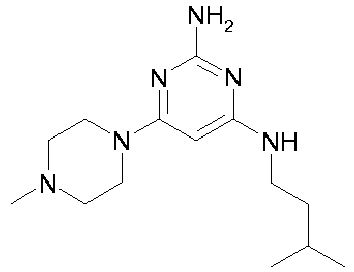
N4-(3-Methylbutyl)-6-(4-methylpiperazin-1-yl)pyrimidine-2,4-diamine 279 109 
N-(3,3-Dimethylbutyl)-6-[(3R)-3-(methylamino)pyrrolidin-1-yl]pyrimidin-4-amine 278 110 
N-(2-Methoxyethyl)-6-(4-methylpiperazin-1-yl)pyrimidin-4-amine 252 111 
N-(3,3-Dimethylbutyl)-6-piperazin-1-ylpyrimidin-4-amine 264 112 
6-(4-Methylpiperazin-1-yl)-N-[(2S)-tetrahydrofuran-2-ylmethyl]pyrimidin-4-amine 278 113 
6-(4-Methylpiperazin-1-yl)-N-[(2R)-tetrahydrofuran-2-ylmethyl]pyrimidin-4-amine 278 114 
4-(4-Methylpiperazin-1-yl)-6-pyrrolidin-1-ylpyrimidine 248 115 
6-(4-Methylpiperazin-1-yl)-N-(3,3,3-trifluoropropyl)pyrimidin-4-amine 290 116 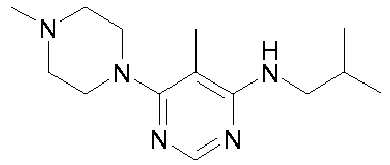
N-Isobutyl-5-methyl-6-(4-methylpiperazin-1-yl)pyrimidin-4-amine 263 117 
N-Ethyl-6-[(3aR*,6aS*)-5-methylhexahydropyrrolo[3,4-c]pyrrol-2(1H)-yl]pyrimidin-4-amine 248 118 
6-(3-Aminoazetidin-1-yl)-N-(3,3-dimethylbutyl)pyrimidin-4-amine 250 119 
N4-Isopropyl-6-(4-methylpiperazin-1-yl)pyrimidine-2,4-diamine 251 120 
N4-Ethyl-6-(4-methylpiperazin-1-yl)pyrimidine-2,4-diamine 237 121 
N4-Isobutyl-6-(4-methylpiperazin-1-yl)pyrimidine-2,4-diamine 265 122 
N4-(Cyclopropylmethyl)-6-(4-methylpiperazin-1-yl)pyrimidine-2,4-diamine 263 123 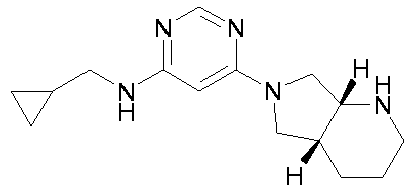
N-(Cyclopropylmethyl)-6-[(4aR*,7aR*)-octahydro-6H-pyrrolo[3,4-b]pyridin-6-yl]pyrimidin-4-amine 274 124 
N4-(3,3-Dimethylbutyl)-6-[(3R)-3,4-dimethylpiperazin-1-yl]pyrimidine-2,4-diamine 307 125 
N-Isobutyl-6-[(4aR*,7aR*)-octahydro-6H-pyrrolo[3,4-b]pyridin-6-yl]pyrimidin-4-amine 276 126 
6-[(1R*,5S*,6s*)-6-Amino-3-azabicyclo[3.1.0]hex-3-yl]-N4-(2,2-dimethylpropyl)pyrimidine-2,4-diamine 277 127 
N-(2,2-Dimethylpropyl)-6-[(4aR*,7aR*)-octahydro-6H-pyrrolo[3,4-b]pyridin-6-yl]pyrimidin-4-amine 290 - The following compounds were prepared by a method similar to that described for example 60 and preparation 26 by reaction of the compound of preparation 12 with an appropriate amine and subsequent deprotection.

No. R1 Name LRMS m/z 128 
6-[3-(Methylamino)azetidin-1-yl]-N4-(2-methylbutyl)pyrimidine-2,4-diamine 265 129 
N4-[(1S)-1,2-Dimethylpropyl]-6-[3-(methylamino)azetidin-1-yl]pyrimidine-2,4-diamine 265 130 
N4-(2,5-Difluorobenzyl)-6-[3-(methylamino)azetidin-1-yl]pyrimidine-2,4-diamine 321 131 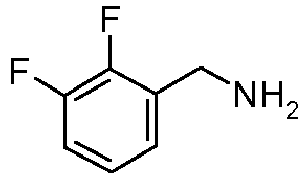
N4-(2,3-Difluorobenzyl)-6-[3-(methylamino)azetidin-1-yl]pyrimidine-2,4-diamine 321 132 
N4-Butyl-6-[3-(methylamino)azetidin-1-yl]pyrimidine-2,4-diamine 251 - The following compounds were prepared by a method similar to that described for preparation 26 (solvent and temperature indicated in the table for a period between 10 and 72 hours) using the appropriate pyrimidine starting material and the appropriate amine. Deprotection (if necessary) was carried out using conditions described for example 60.
No. Structure Name Cond. Prep. Depr. LRMS m/z 133 
6-(1,4-Diazepan-1-yl)-N4-isobutylpyrimidine-2,4-diamine Neat / 120°C 34 Y 265 134 
6-[(3R)-3-(Methylamino)pyrrolidin-1-yl]-N4-(2-methylcyclopropyl)pyrimidine-2,4-diamine DMSO / 130°C 35 Y 263 135 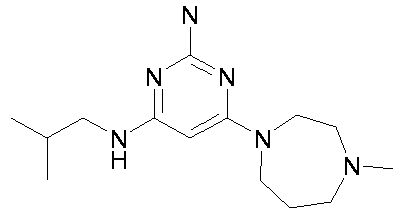
N4-Isobutyl-6-(4-methyl-1,4-diazepan-1-yl)pyrimidine-2,4-diamine Neat / 120°C 36 N 279 136 
N4-(Cyclopropylmethyl)-6-(3-pyrrolidin-1-ylazetidin-1-yl)pyrimidine-2,4-diamine NMP / 150°C 37 N 289 137 
N4-Isopropyl-6-[(3aR*,7aS*)-octahydro-5H-pyrrolo[3,2-c]pyridin-5-yl]pyrimidine-2,4-diamine DMSO / 120°C 38 Y 277 138 
N4-Bicyclo[1.1.1]pent-1-yl-6-[(3R)-3-(methylamino)pyrrolidin-1-yl]pyrimidine-2,4-diamine DMSO / 120°C 39 Y 275 139 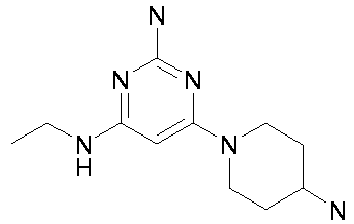
6-(4-Aminopiperidin-1-yl)-N4-ethylpyrimidine-2,4-diamine Neat / 120°C 40 Y 237 140 
6-[3-Methyl-3-(methylamino)azetidin-1-yl]-N4-propylpyrimidine-2,4-diamine DMSO / 120°C 41 Y 251 141 
N4-(2,2-Dimethylpropyl)-6-(hexahydropyrrolo[1,2-a]pyrazin-2(1 H)-yl)pyrimidine-2,4-diamine NMP / 145°C 42 N 305 142 
N4-(2,2-Dimethylpropyl)-6-(3-pyrrolidin-1-ylazetidin-1-yl)pyrimidine-2,4-diamine NMP / 150°C 19 N 305 143 
N4-(2,2-Dimethylpropyl)-N6-[2-(methylamino)ethyl]pyrimidine-2,4,6-triamine Neat / 120°C 19 Y 253 144 
N4-[2-(Dimethylamino)ethyl]-N6-(2,2-dimethylpropyl)pyrimidine-2,4,6-triamine Neat / 120°C 19 N 267 145 
N4-(2,2-Dimethylpropyl)-6-[3-(isopropylamino)azetidin-1-yl]pyrimidine-2,4-diamine NMP / 150°C 19 Y 293 146 
6-[(3R)-3-(Methylamino)pyrrolidin-1-yl]-N-[(1R)-1-methylpropyl]pyrimidin-4-amine Neat / 120°C 10 Y 250 147 
N-Butyl-6-[(3R)-3-(methylamino)pyrrolidin-1-yl]pyrimidin-4-amine Neat / 120°C 10 Y 250 148 
N4-(tert-Butyl)-6-[(3R)-3-(methylamino)pyrrolidin-1-yl]pyrimidine-2,4-diamine NMP / 160°C 43 Y 265 149 
6-[(3R)-3-(Methylamino)pyrrolidin-1-yl]-N4-(1-methylcyclopropyl)pyrimidine-2,4-diamine DMSO / 130°C 44 Y 263 150 
N4-(tert-Butyl)-6-[(4aS*,7aS*)-octahydro-6H-pyrrolo[3,4-b]pyridin-6-yl]pyrimidine-2,4-diamine NMP / 170°C 43 Y 291 151 
6-[(3R)-3-(Methylamino)pyrrolidin-1-yl]-N4-[(1S)-1-methylpropyl]pyrimidine-2,4-diamine DMSO / 120°C 15 Y 265 152 
6-[(3R)-3-(Methylamino)pyrrolidin-1-yl]-N4-[(1R)-1-methylpropyl]pyrimidine-2,4-diamine DMSO / 120°C 15 Y 265 153 
N-(sec-Butyl)-6-[3-(methylamino)azetidin-1-yl]pyrimidin-4-amine Neat / 120°C 1 Y 235 - The following compounds were prepared by similar method to those used to prepare the compounds above, using the appropriate pyrimidine starting material and the appropriate amine:
Example Name 154 N4-(Cyclopropylmethyl)-6-piperazin-1-ylpyrimidine-2,4-diamine 155 N4-(4-Fluorobenzyl)-6-[(3R)-3-(methylamino)pyrrolidin-1-yl]pyrimidine-2,4-diamine 156 N4-(2,2-Dimethylpropyl)-6-piperazin-1-ylpyrimidine-2,4-diamine 157 N4-(2,4-Difluorobenzyl)6-[3-(methylamino)azetidin-1-yl]pyrimidine-2,4-diamine 158 6-[3-(Methylamino)azetidin-1-yl]-N4-(1-methylbutyl)pyrimidine-2,4-diamine 159 N4-(2,2-Dimethylpropyl)-6-[3-(methylamino)azetidin-1-yl]pyrimidine-2,4-diamine hydrochloride 160 N4-[(1R)-1,2-Dimethylpropyl]-6-[3-(methylamino)azetidin-1-yl]pyrimidine-2,4-diamine 161 6-[3-(Methylamino)azetidin-1-yl]-N4-[(1S)-1-methylpropyl]pyrimidine-2,4-diamine 162 N4-(2,2-Dimethylpropyl)-6-[(3aR*,7aS*)-octahydro-5H-pyrrolo[3,2-c]pyridin-5-yl]pyrimidine-2,4-diamine 163 6-Piperazin-1-yl-N4-propylpyrimidine-2,4-diamine 164 N4-Ethyl-6-[3-(methylamino)azetidin-1-yl]pyrimidine-2,4-diamine 165 N4-(Cyclopropylmethyl)-6-[(4aR,7aR)-octahydro-6H-pyrrolo[3,4-b]pyridin-6-yl]pyrimidine-2,4-diamine 166 N4-(2,2-Dimethylpropyl)-6-[(4aS,7aS)-octahydro-6H-pyrrolo[3,4-b]pyridin-6-yl]pyrimidine-2,4-diamine 167 N4-(Cyclopropylmethyl)-6-[(3R)-3-(methylamino)pyrrolidin-1-yl]pyrimidine-2,4-diamine 168 N4-(tert-Butyl)-6-[3-(methylamino)azetidin-1-yl]pyrimidine-2,4-diamine 169 N4-Isopropyl-6-[(4aS,7aS)-octahydro-6H-pyrrolo[3,4-b]pyridin-6-yl]pyrimidine-2,4-diamine 170 6-(3-Aminoazetidin-1-yl)-N4-ethylpyrimidine-2,4-diamine 171 6-(3-Aminoazetidin-1-yl)-N4-(cyclopropylmethyl)pyrimidine-2,4-diamine 172 N4-Cyclopropyl-6-[(3aR*,7aS*)-octahydro-5H-pyrrolo[3,2-c]pyridin-5-yl]pyrimidine-2,4-diamine 173 4-[3-(Methylamino)azetidin-1-yl]-6-(4-methylpiperidin-1-yl)pyrimidin-2-amine 174 N4-(Cyclopentylmethyl)-6-[(3R)-3-(methylamino)pyrrolidin-1-yl]pyrimidine-2,4-diamine 175 6-(1,4-Diazepan-1-yl)-N4-ethylpyrimidine-2,4-diamine 176 N4-(Cyclopropylmethyl)-N6-[2-(dimethylamino)ethyl]pyrimidine-2,4,6-triamine 177 N4-(2,2-Dimethylpropyl)-6-[(3S)-3-(methylamino)pyrrolidin-1-yl]pyrimidine-2,4-diamine 178 N4-Cyclobutyl-6-[(4aS,7aS)-octahydro-6H-pyrrolo[3,4-b]pyridin-6-yl]pyrimidine-2,4-diamine 179 N-Cyclobutyl-6-[3-(methylamino)azetidin-1-yl]pyrimidin-4-amine 180 6-[(3R)-3-(Methylamino)pyrrolidin-1-yl]-N4-propylpyrimidine-2,4-diamine 181 N-Cyclobutyl-6-[(3R)-3-(methylamino)pyrrolidin-1-yl]pyrimidin-4-amine 182 N4-(2-Methoxyethyl)-6-[3-(methylamino)azetidin-1-yl]pyrimidine-2,4-diamine 183 N-(2,2-Dimethylpropyl)-6-[(3R)-3-(methylamino)pyrrolidin-1-yl]pyrimidin-4-amine 184 N4-(Cyclopropylmethyl)-6-[(3S)-3-methylpiperazin-1-yl]pyrimidine-2,4-diamine 185 N4-Ethyl-6-(4-methyl-1,4-diazepan-1-yl)pyrimidine-2,4-diamine 186 N4-(2,2-Dimethylpropyl)-6-[3-methyl-3-(methylamino)azetidin-1-yl]pyrimidine-2,4-diamine 187 N4-Isopropyl-6-piperazin-1-ylpyrimidine-2,4-diamine 188 N4-(Cyclopropylmethyl)-6-[(3aR*,7aS*)-octahydro-5H-pyrrolo[3,2-c]pyridin-5-yl]pyrimidine-2,4-diamine 189 N-Cyclopropyl-6-[3-(methylamino)azetidin-1-yl]pyrimidin-4-amine 190 6-(3-Aminoazetidin-1-yl)-N4-(2,2-dimethylpropyl)pyrimidine-2,4-diamine 191 N4-(2,2-Dimethylpropyl)-6-[(1S,4S)-5-methyl-2,5-diazabicyclo[2.2.1]hept-2-yl]pyrimidine-2,4-diamine 192 N-(2,2-Dimethylpropyl)-6-(3-pyrrolidin-1-ylazetidin-1-yl)pyrimidin-4-amine 193 N4-Ethyl-6-[(3aR*,7aS*)-octahydro-5H-pyrrolo[3,2-c]pyridin-5-yl]pyrimidine-2,4-diamine 194 N-(Cyclopropylmethyl)-N'-[2-(dimethylamino)ethyl]pyrimidine-4,6-diamine 195 6-[(3R)-3-Aminopyrrolidin-1-yl]-N4-(2-methylbutyl)pyrimidine-2,4-diamine 196 N4-(Cyclopropylmethyl)-6-[3-methyl-3-(methylamino)azetidin-1-yl]pyrimidine-2,4-diamine 197 N4-Ethyl-6-(3-pyrrolidin-1-ylazetidin-1-yl)pyrimidine-2,4-diamine 198 N4-isoPropyl-6-(4-methyl-1,4-diazepan-1-yl)pyrimidine-2,4-diamine 199 N4-Cyclobutyl-6-[(3R)-3-(methylamino)pyrrolidin-1-yl]pyrimidine-2,4-diamine 200 N4-Methyl-6-[(3aR*,7aS*)-octahydro-5H-pyrrolo[3,2-c]pyridin-5-yl]pyrimidine-2,4-diamine 201 6-(4-Aminopiperidin-1-yl)-N4-(2,2-dimethylpropyl)pyrimidine-2,4-diamine 202 N-Isopropyl-6-[(3R)-3-(methylamino)pyrrolidin-1-yl]pyrimidin-4-amine 203 N-Cyclopropyl-6-[(3R)-3-(methylamino)pyrrolidin-1-yl]pyrimidin-4-amine 204 N4-(Cyclopropylmethyl)-6-[(3S)-3-(methylamino)pyrrolidin-1-yl]pyrimidine-2,4-diamine 205 N4-Ethyl-6-[(3S)-3-(methylamino)pyrrolidin-1-yl]pyrimidine-2,4-diamine 206 6-[3-(Methylamino)azetidin-1-yl]-N-propylpyrimidin-4-amine 207 N4-(tert-Butyl)-6-[(3S)-3-(methylamino)pyrrolidin-1-yl]pyrimidine-2,4-diamine 208 N4-Methyl-6-piperazin-1-ylpyrimidine-2,4-diamine 209 N4-(2,2-Dimethylpropyl)-6-{3-[(methylamino)methyl]azetidin-1-yl}pyrimidine-2,4-diamine 210 N4-(Cyclopropylmethyl)-6-[(4aS,7aS)-octahydro-6H-pyrrolo[3,4-b]pyridin-6-yl]pyrimidine-2,4-diamine 211 N4-(3,3-Dimethylbutyl)-6-[(3S)-3-(methylamino)pyrrolidin-1-yl]pyrimidine-2,4-diamine 212 N4-(2-Aminoethyl)-N6-(cyclopropylmethyl)pyrimidine-2,4,6-triamine 213 N4-(2-Fluorobenzyl)-6-[(3S)-3-methylpiperazin-1-yl]pyrimidine-2,4-diamine 214 N4-Ethyl-6-piperazin-1-ylpyrimidine-2,4-diamine 215 6-[(3R)-3-Aminopyrrolidin-1-yl]-N4-(cyclopropylmethyl)pyrimidine-2,4-diamine 216 6-[(3R)-3-Aminopyrrolidin-1-yl]-N4-isobutylpyrimidine-2,4-diamine 217 6-[(3aR*,6aS*)-Hexahydropyrrolo[3,4-c]pyrrol-2(1H)-yl]-N4-isobutylpyrimidine-2,4-diamine 218 6-[(3R)-3-Aminopyrrolidin-1-yl]-N4-(cyclopentylmethyl)pyrimidine-2,4-diamine 219 6-[(3R)-3-Aminopyrrolidin-1-yl]-N4-propylpyrimidine-2,4-diamine 220 N-(2-Aminoethyl)-N'-(cyclopropylmethyl)pyrimidine-4,6-diamine 221 N4-Methyl-6-[(3R)-3-(methylamino)pyrrolidin-1-yl]pyrimidine-2,4-diamine 222 N4-[(1R*,5S*,6s*)-3-Azabicyclo[3.1.0]hex-6-yl]-N6-(2,2-dimethylpropyl)pyrimidine-2,4,6-triamine 223 N4-(tert-Butyl)-6-(4-methylpiperazin-1-yl)pyrimidine-2,4-diamine 224 N-Cyclopropyl-6-(4-methyl-1,4-diazepan-1-yl)pyrimidin-4-amine 225 6-[(3R)-3-Aminopyrrolidin-1-yl]-N4-(3,3-dimethylbutyl)pyrimidine-2,4-diamine 226 N-(2,2-Dimethylpropyl)-6-[3-(isopropylamino)azetidin-1-yl]pyrimidin-4-amine 227 N4-(Cyclopropylmethyl)-6-{3-[(methylamino)methyl]azetidin-1-yl}pyrimidine-2,4-diamine 228 N4-(3-Fluorobenzyl)-6-[(3S)-3-methylpiperazin-1-yl]pyrimidine-2,4-diamine 229 6-(4-Aminopiperidin-1-yl)-N4-isobutylpyrimidine-2,4-diamine 230 N4-Cyclobutyl-6-[(4aR,7aR)-octahydro-6H-pyrrolo[3,4-b]pyridin-6-yl]pyrimidine-2,4-diamine 231 N4-Isopropyl-6-(octahydro-5H-pyrrolo[3,2-c]pyridin-5-yl)pyrimidine-2,4-diamine 232 6-(3-Aminoazetidin-1-yl)-N4-propylpyrimidine-2,4-diamine 233 N4-(3,4-Difluorobenzyl)-6-[3-(methylamino)azetidin-1-yl]pyrimidine-2,4-diamine 234 6-(4-Aminopiperidin-1-yl)-N4-isopropylpyrimidine-2,4-diamine 235 6-[(3R)-3-(Methylamino)pyrrolidin-1-yl]-N4-(3,3,3-trifluoropropyl)pyrimidine-2,4-diamine 236 4-(3,3-Difluoroazetidin-1-yl)-6-[3-(methylamino)azetidin-1-yl]pyrimidin-2-amine 237 N4-(2-Fluorobenzyl)-6-[(3R)-3-methylpiperazin-1-yl]pyrimidine-2,4-diamine 238 6-[(3aR*,6aS*)-Hexahydropyrrolo[3,4-c]pyrrol-2(1H)-yl]-N4-isopropylpyrimidine-2,4-diamine 239 N-(2,2-Dimethylpropyl)-6-(4-methyl-1,4-diazepan-1-yl)pyrimidin-4-amine 240 N4-(4-Fluorobenzyl)-6-[(3S)-3-methylpiperazin-1-yl]pyrimidine-2,4-diamine 241 N4-Isopropyl-6-[(3aR*,6aS*)-5-methylhexahydropyrrolo[3,4-c]pyrrol-2(1H)-yl]pyrimidine-2,4-diamine 242 4-[3-(Methylamino)azetidin-1-yl]-6-[(3S)-3-methylmorpholin-4-yl]pyrimidin-2-amine 243 N4-(Cyclobutylmethyl)-6-[(3R)-3-(methylamino)pyrrolidin-1-yl]pyrimidine-2,4-diamine 244 N-(3,3-Dimethylbutyl)-6-(3-pyrrolidin-1-ylazetidin-1-yl)pyrimidin-4-amine 245 N4-(2,5-Difluorobenzyl)-6-[(3R)-3-(methylamino)pyrrolidin-1-yl]pyrimidine-2,4-diamine 246 6-(3-Amino-3-methylpyrrolidin-1-yl)-N4-(cyclopropylmethyl)pyrimidine-2,4-diamine 247 N4-(4-Fluorobenzyl)-6-[(3R)-3-methylpiperazin-1-yl]pyrimidine-2,4-diamine 248 N4-Methyl-6-[3-methyl-3-(methylamino)azetidin-1-yl]pyrimidine-2,4-diamine 249 N4-(3-Fluorobenzyl)-6-[(3R)-3-(methylamino)pyrrolidin-1-yl]pyrimidine-2,4-diamine 250 N4-(2,2-Dimethylpropyl)-6-[3-(methylamino)piperidin-1-yl]pyrimidine-2,4-diamine 251 N4-Benzyl-6-[(3S)-3-methylpiperazin-1-yl]pyrimidine-2,4-diamine 252 N-Cyclopropyl-6-[(3S)-3-methylpiperazin-1-yl]pyrimidin-4-amine 253 N4-(2-Fluorobenzyl)-6-[(3R)-3-(methylamino)pyrrolidin-1-yl]pyrimidine-2,4-diamine 254 N4-Benzyl-6-[(3R)-3-(methylamino)pyrrolidin-1-yl]pyrimidine-2,4-diamine 255 6-[(3R)-3-Aminopyrrolidin-1-yl]-N4-(2,3-difluorobenzyl)pyrimidine-2,4-diamine 256 N4-Cyclopropyl-6-[(3R)-3-(methylamino)pyrrolidin-1-yl]pyrimidine-2,4-diamine 257 N4-Ethyl-6-[3-methyl-3-(methylamino)azetidin-1-yl]pyrimidine-2,4-diamine 258 6-[(3S)-3-Methylpiperazin-1-yl]-N-propylpyrimidin-4-amine 259 N4-Benzyl-6-[(3R)-3-methylpiperazin-1-yl]pyrimidine-2,4-diamine 260 6-(4-Cyclohexylpiperazin-1-yl)-N-(2,2-dimethylpropyl)pyrimidin-4-amine 261 N-Isopropyl-6-[3-methyl-3-(methylamino)azetidin-1-yl]pyrimidin-4-amine 262 N-Methyl-6-[(3R)-3-(methylamino)pyrrolidin-1-yl]pyrimidin-4-amine 263 4-[3-(Methylamino)azetidin-1-yl]-6-[(3R)-3-methylmorpholin-4-yl]pyrimidin-2-amine 264 6-(3-Amino-3-methylpyrrolidin-1-yl)-N4-propylpyrimidine-2,4-diamine 265 6-(3-Amino-3-methylpyrrolidin-1-yl)-N4-ethylpyrimidine-2,4-diamine 266 6-(4-Aminopiperidin-1-yl)-N4-propylpyrimidine-2,4-diamine 267 N4-(3-Fluorobenzyl)-6-[(3R)-3-methylpiperazin-1-yl]pyrimidine-2,4-diamine 268 4-[3-(Methylamino)azetidin-1-yl]-6-morpholin-4-ylpyrimidin-2-amine 269 6-(4-Aminopiperidin-1-yl)-N4-cyclopropylpyrimidine-2,4-diamine 270 N-(3,3-Dimethylbutyl)-6-(4-ethylpiperazin-1-yl)pyrimidin-4-amine 271 N4-(2,6-Difluorobenzyl)-6-[(3R)-3-(methylamino)pyrrolidin-1-yl]pyrimidine-2,4-diamine 272 N4-(2,3-Difluorobenzyl)-6-[(3R)-3-(methylamino)pyrrolidin-1-yl]pyrimidine-2,4-diamine 273 N4-(3,5-Difluorobenzyl)-6-[(3R)-3-(methylamino)pyrrolidin-1-yl]pyrimidine-2,4-diamine 274 (5-{[(3S)-3-({6-[(3,3-Dimethylbutyl)amino]pyrimidin-4-yl}amino)pyrrolidin-1-yl]methyl}-2-furyl)methanol 275 4-(3,3-Difluoroazetidin-1-yl)-6-[(3R)-3-(methylamino)pyrrolidin-1-yl]pyrimidin-2-amine 276 N,N'-Bis(cyclopropylmethyl)-6-[3-(methylamino)azetidin-1-yl]pyrimidine-2,4-diamine 277 N4-(3,4-Difluorobenzyl)-6-[(3R)-3-(methylamino)pyrrolidin-1-yl]pyrimidine-2,4-diamine 278 N4-Isobutyl-6-[3-(methylamino)piperidin-1-yl]pyrimidine-2,4-diamine 279 N'-(3,3-Dimethylbutyl)-N-methyl-N-(1-methylpiperidin-4-yl)pyrimidine-4,6-diamine 280 6-(1,4-Diazepan-1-yl)-N-(3,3-dimethylbutyl)pyrimidin-4-amine 281 N-Benzyl-N'-[(3S)-pyrrolidin-3-yl]pyrimidine-4,6-diamine 282 4-[(3R)-3-(Methylamino)pyrrolidin-1-yl]-6-morpholin-4-ylpyrimidin-2-amine 283 6-(4-Aminopiperidin-1-yl)-N4-(cyclopropylmethyl)pyrimidine-2,4-diamine 284 6-(4-Aminopiperidin-1-yl)-N4-methylpyrimidine-2,4-diamine 285 N-(Cyclopropylmethyl)-6-piperazin-1-ylpyrimidin-4-amine 286 N4-Isopropyl-6-[(3R)-3-(methylamino)pyrrolidin-1-yl]pyrimidine-2,4-diamine 287 N4-(2,2-Dimethylpropyl)-6-(3-morpholin-4-ylazetidin-1-yl)pyrimidine-2,4-diamine 288 N-(3,3-Dimethylbutyl)-N'-(1-methylpiperidin-3-yl)pyrimidine-4,6-diamine 289 N-[(3S)-1-Benzylpyrrolidin-3-yl]-N'-(3,3-dimethylbutyl)pyrimidine-4,6-diamine 290 N-[(3S)-Pyrrolidin-3-yl]-N'-[(2S)-tetrahydrofuran-2-ylmethyl]pyrimidine-4,6-diamine 291 N-(Cyclopropylmethyl)-5-methyl-6-[(3R)-3-(methylamino)pyrrolidin-1-yl]pyrimidin-4-amine 292 6-(3-Aminopyrrolidin-1-yl)-N-(3,3-dimethylbutyl)pyrimidin-4-amine 293 4-[6-(4-Methylpiperazin-1-yl)pyrimidin-4-yl]morpholine 294 N4-(Cyclopropylmethyl)-6-[3-(methylamino)piperidin-1-yl]pyrimidine-2,4-diamine 295 4-[3-(Methylamino)azetidin-1-yl]-6-piperidin-1-ylpyrimidin-2-amine 296 N-(3,3-Dimethylbutyl)-N'-[(3S)-1-methylpyrrolidin-3-yl]pyrimidine-4,6-diamine 297 (1S,5R)-3-{6-[(2,2-Dimethylpropyl)amino]pyrimidin-4-yl}-3-azabicyclo[3.1.0]hexan-1-amine 298 N4-(3,3-Dimethylbutyl)-6-[3-methyl-3-(methylamino)azetidin-1-yl]pyrimidine-2,4-diamine 299 N-(3,3-Dimethylbutyl)-6-{4-[(1-methyl-1H-imidazol-2-yl)methyl]piperazin-1-yl}pyrimidin-4-amine 300 (1R*,5S*,6s*)-3-{6-[(3,3-Dimethylbutyl)amino]pyrimidin-4-yl}-N,N-dimethyl-3-azabicyclo[3.1.0]hexan-6-amine 301 N-(3,3-Dimethylbutyl)-6-(4-pyrrolidin-1-ylpiperidin-1-yl)pyrimidin-4-amine 302 6-[3-(Diethylamino)pyrrolidin-1-yl]-N-(2,2-dimethylpropyl)pyrimidin-4-amine 303 6-(4-Azetidin-3-ylpiperazin-1-yl)-N-(2,2-dimethylpropyl)pyrimidin-4-amine 304 (1S*,5R*)-3-{6-[(Cyclopropylmethyl)amino]pyrimidin-4-yl}-3-azabicyclo[3.1.0]hexan-1-amine 305 6-(4-Cyclohexylpiperazin-1-yl)-N-(cyclopropylmethyl)pyrimidin-4-amine 306 N'-(Cyclopropylmethyl)-N-[2-(diethylamino)ethyl]-N-methylpyrimidine-4,6-diamine 307 2-(4-{6-[(3,3-Dimethylbutyl)amino]pyrimidin-4-yl}piperazin-1-yl)ethanol 308 6-(4-Azetidin-3-ylpiperazin-1-yl)-N-(cyclopropylmethyl)pyrimidin-4-amine 309 N4-(3,3-Dimethylbutyl)-6-[(1R,5S,6s)-6-(methylamino)-3-azabicyclo[3.1.0]hex-3-yl]pyrimidine-2,4-diamine 310 N4-(Cyclopropylmethyl)-6-[(3R)-3-methylpiperazin-1-yl]pyrimidine-2,4-diamine 311 6-[(3R)-3-Aminopyrrolidin-1-yl]-N4-(2,5-difluorobenzyl)pyrimidine-2,4-diamine 312 N-(3,3-Dimethylbutyl)-6-(3-morpholin-4-ylazetidin-1-yl)pyrimidin-4-amine 313 6-[(3R)-3-Methylpiperazin-1-yl]-N-propylpyrimidin-4-amine 314 N-Cyclopropyl-6-(1,4-diazepan-1-yl)pyrimidin-4-amine 315 N-(2-Phenylethyl)-N'-[(3S)-pyrrolidin-3-yl]pyrimidine-4,6-diamine 316 N4-(3,5-Difluorobenzyl)-6-[3-(methylamino)azetidin-1-yl]pyrimidine-2,4-diamine 317 N4-(2,6-Difluorobenzyl)-6-[3-(methylamino)azetidin-1-yl]pyrimidine-2,4-diamine 318 N4-(2,2-Dimethylpropyl)-6-[(4aR,7aR)-octahydro-6H-pyrrolo[3,4-b]pyridin-6-yl]pyrimidine-2,4-diamine 319 N-[(3S)-Pyrrolidin-3-yl]-N'-[(2R)-tetrahydrofuran-2-ylmethyl]pyrimidine-4,6-diamine 320 6-(3-Amino-3-methylpyrrolidin-1-yl)-N4-methylpyrimidine-2,4-diamine 321 N4-Methyl-6-[3-(methylamino)piperidin-1-yl]pyrimidine-2,4-diamine 322 N4-(Cyclopropylmethyl)-6-(3-morpholin-4-ylazetidin-1-yl)pyrimidine-2,4-diamine 323 6-[3-(Methylamino)piperidin-1-yl]-N4-propylpyrimidine-2,4-diamine 324 N4-Ethyl-6-[3-(methylamino)piperidin-1-yl]pyrimidine-2,4-diamine 325 N4-(2,4-Difluorobenzyl)-6-[(3R)-3-(methylamino)pyrrolidin-1-yl]pyrimidine-2,4-diamine 326 N-(2,2-Dimethylpropyl)-5-methyl-6-[(3R)-3-(methylamino)pyrrolidin-1-yl]pyrimidin-4-amine 327 6-[(3'S)-1,3'-Bipyrrolidin-1'-yl]-N4-(2,2-dimethylpropyl)pyrimidine-2,4-diamine 328 N-(3,3-Dimethylbutyl)-6-[(4aR*,7aR*)-octahydro-6H-pyrrolo[3,4-b]pyridin-6-yl]pyrimidin-4-amine 329 N-(3-Methylbutyl)-N'-[(3R)-pyrrolidin-3-yl]pyrimidine-4,6-diamine 330 N4-(3,3-Dimethylbutyl)-N2,N2-dimethyl-6-(4-methylpiperazin-1-yl)pyrimidine-2,4-diamine 331 N-isoPropyl-5-methyl-6-(4-methylpiperazin-1-yl)pyrimidin-4-amine 332 6-[(3'S)-1,3'-Bipyrrolidin-1'-yl]-N4-(3,3-dimethylbutyl)pyrimidine-2,4-diamine 333 6-[(1R*,5S*,6s*)-6-Amino-3-azabicyclo[3.1.0]hex-3-yl]-N4-(3,3-dimethylbutyl)pyrimidine-2,4-diamine 334 N-(Cyclopropylmethyl)-N-methyl-6-(4-methylpiperazin-1-yl)pyrimidin-4-amine 335 N-(2-Methoxyethyl)-N'-[(3R)-pyrrolidin-3-yl]pyrimidine-4,6-diamine 336 N-Methyl-1-(6-pyrrolidin-1-ylpyrimidin-4-yl)azetidin-3-amine 337 N-Benzyl-N'-[(3R)-pyrrolidin-3-yl]pyrimidine-4,6-diamine 338 N4-[(3S)-1-Benzylpyrrolidin-3-yl]-N6-(3,3-dimethylbutyl)pyrimidine-2,4,6-triamine 339 N4-(3,3-Dimethylbutyl)-N2-methyl-6-(4-methylpiperazin-1-yl)pyrimidine-2,4-diamine 340 6-(4-Aminopiperidin-1-yl)-N-(3,3-dimethylbutyl)pyrimidin-4-amine 341 N-[(3R)-Pyrrolidin-3-yl]-N'-[(2S)-tetrahydrofuran-2-ylmethyl]pyrimidine-4,6-diamine 342 6-[(3'S)-1,3'-Bipyrrolidin-1'-yl]-N-(3,3-dimethylbutyl)pyrimidin-4-amine 343 N-(3,3-Dimethylbutyl)-N'-(1-methylpiperidin-4-yl)pyrimidine-4,6-diamine 344 N-(2-Methoxyethyl)-N'-[(3S)-pyrrolidin-3-yl]pyrimidine-4,6-diamine 345 N-[(3R)-Pyrrolidin-3-yl]-N'-[(2R)-tetrahydrofuran-2-ylmethyl]pyrimidine-4,6-diamine 346 N-(2-Phenylethyl)-N'-[(3R)-pyrrolidin-3-yl]pyrimidine-4,6-diamine 347 N-(Cyclopropylmethyl)-N'-[2-(methylamino)ethyl]pyrimidine-4,6-diamine 348 N-[(3R)-1-Benzylpyrrolidin-3-yl]-N'-(3,3-dimethylbutyl)pyrimidine-4,6-diamine 349 (5-{[(3R)-3-({6-[(3,3-Dimethylbutyl)amino]pyrimidin-4-yl}amino)pyrrolidin-1-yl]methyl}-2-furyl)methanol 350 N-(2,3-Dihydro-1H-inden-2-yl)-N'-[(3R)-pyrrolidin-3-yl]pyrimidine-4,6-diamine 351 6-(3,4-Dihydroisoquinolin-2(1H)-yl)-N-[(3R)-pyrrolidin-3-yl]pyrimidin-4-amine 352 N4-(3-Fluorobenzyl)-6-[3-(methylamino)azetidin-1-yl]pyrimidine-2,4-diamine 353 N-(2,2-Dimethylpropyl)-6-[(1R,5S)-1,2,4,5-tetrahydro-3H-1,5-epimino-3-benzazepin-3-yl]pyrimidin-4-amine 354 N4-Cyclobutyl-6-[(4aS,7aS)-octahydro-6H-pyrrolo[3,4-b]pyridin-6-yl]pyrimidine-2,4-diamine 355 N4-(Cyclopropylmethyl)-6-[(4aS,7aS)-octahydro-6H-pyrrolo[3,4-b]pyridin-6-yl]pyrimidine-2,4-diamine 356 N4-(tert-Butyl)-6-(4-methylpiperazin-1-yl)pyrimidine-2,4-diamine 357 N4-(tert-Butyl)-6-[(4aS,7aS)-octahydro-6H-pyrrolo[3,4-b]pyridin-6-yl]pyrimidine-2,4-diamine 358 N4-(2,2-Dimethylpropyl)-6-[(1R*,5S*,6s*)-6-(methylamino)-3-azabicyclo[3.1.0]hex-3-yl]pyrimidine-2,4-diamine 359 N4-Cyclopropyl-6-[(4aR,7aR)-octahydro-6H-pyrrolo[3,4-b]pyridin-6-yl]pyrimidine-2,4-diamine 360 2-({2-Amino-6-[3-(methylamino)azetidin-1-yl]pyrimidin-4-yl}amino)ethanol 361 6-(1,4-Diazepan-1-yl)-N4-isopropylpyrimidine-2,4-diamine 362 6-[(1R,4R)-2,5-Diazabicyclo[2.2.1]hept-2-yl]-N4-(2,2-dimethylpropyl)pyrimidine-2,4-diamine 363 6-[(3R)-3-Aminopyrrolidin-1-yl]-N4-(2,2-dimethylpropyl)pyrimidine-2,4-diamine 364 4-[(3R)-3-(Methylamino)pyrrolidin-1-yl]-6-(2-methyl-1H-imidazol-1-yl)pyrimidin-2-amine 365 6-[3-(Methylamino)azetidin-1-yl]-N4-[(1R)-1-methylpropyl]pyrimidine-2,4-diamine 366 6-[(3R)-3-Aminopyrrolidin-1-yl]-N4-ethylpyrimidine-2,4-diamine 367 6-[(3R)-3-Aminopyrrolidin-1-yl]-N4-(3,3,3-trifluoropropyl)pyrimidine-2,4-diamine 368 6-[(3R)-3-(Methylamino)pyrrolidin-1-yl]-N-[(1S)-1-methylpropyl]pyrimidin-4-amine 369 6-[3-(Methylamino)azetidin-1-yl]-N-[(1R)-1-methylpropyl]pyrimidin-4-amine 370 6-[(3R)-3-(Methylamino)pyrrolidin-1-yl]-N-propylpyrimidin-4-amine 371 6-(3-Aminoazetidin-1-yl)-N-(2,2-dimethylpropyl)pyrimidin-4-amine 372 N4-(Cyclopropylmethyl)-5-methyl-6-[(3R)-3-(methylamino)pyrrolidin-1-yl]pyrimidine-2,4-diamine 373 N4-(Cyclopropylmethyl)-6-(2,8-diazaspiro[4.5]dec-2-yl)pyrimidine-2,4-diamine 374 6-(2,8-Diazaspiro[4.5]dec-2-yl)-N4-isobutylpyrimidine-2,4-diamine 375 N4-(Cyclopropylmethyl)-6-(2,7-diazaspiro[4.4]non-2-yl)pyrimidine-2,4-diamine 376 6-(2,7-Diazaspiro[4.4]non-2-yl)-N4-isobutylpyrimidine-2,4-diamine - Cell pellets from CHO cells expressing the histamine H4 receptor were homogenised in ice-cold 50mM Tris-HCl/0.5mM CaCl2 buffer containing a protease inhibitor cocktail (Roche®, United Kingdom) using a ground glass homogeniser. Homogenates were centrifuged at 48000g for 30min at 4°C. The membrane pellet was resuspended in fresh buffer and the centrifugation step was repeated as described above. The membrane pellet was resuspended in 50mM Tris-HCl in the same volume as the original cell pellet. Aliquots of membrane preparations were stored at -80°C and were used for [3H]-Histamine binding experiments.
- Cell membranes (20-35µg/well) were incubated for 90 minutes shaking at room temperature with 3nM [2,5-3H]Histamine dihydrochloride (30-60Ci/mmol) in 50mM Tris-HCl (pH 7.4), with or without competing H4 ligands. The reaction was terminated by rapid filtration through 0.5% polyethylenimine-soaked Unifilter GF/B plates (Packard) followed by three washes with 1ml ice-cold 50mM Tris-HCl. Filters were dried for 45min at 45°C and bound radiolabel was determined using scintillation counting techniques. Non-specific binding was defined with 10µM JNJ7777120. For competition binding studies, Ki values were calculated from the IC50 value based on an experimentally determined ligand Kd of 5.2nM and a ligand concentration of 5nM according to the Cheng-Prussoff equation where; Ki = (IC50)/(1+([L]/Kd)).
- Cell membranes (15µg/well) were pre-incubated for 120min shaking at 4°C with Ysi WGA beads (250µg/well) in 50mM Tris-HCl (pH 7.4) followed by centrifugation at 1500rpm for 5minutes and resuspension in 50mM Tris-HCl (pH 7.4). The membrane/bead mixture (15µg membrane / 250µg beads well) was incubated for 90minutes shaking at room temperature with 6.5nM [2,5-3H] Histamine dihydrochloride (30-60Ci/mmol) in 50mM Tris-HCl (pH 7.4), with or without competing H4 ligands. Non-specific binding was defined with 10µM JNJ7777120. Bound radiolabel was determined using scintillation counting techniques after 90 minutes. For competition binding studies, Ki values were calculated from the IC50 value based on an experimentally determined ligand Kd of 5.2nM and a ligand concentration of 5nM according to the Cheng-Prussoff equation where; Ki = (IC50)/(1+([L]/Kd)).
- The compounds of the Examples have been tested in the H4 binding assay described above using either method 1 or method 2. Preferred examples have a Ki value of less than 1 µM in the H4 binding assay. Most preferred examples have a Ki value of less than 500 nM in the H4 binding assay (method 2). The specific Ki values for the Example compounds that have been tested in method 1 and method 2 are given in the table below:



For embodiments in which the groups "aryl", "aryl1", "het" and "het1" may be a substituent on more than one part of the compound, it is to be understood that each separate substituent may be the same or different to the other substituent(s) defined by the same term. For example, if R1 and R2 both comprise a "het" group, then the two het groups may be the same or different.
Claims (13)
- A compound of Formula (I):
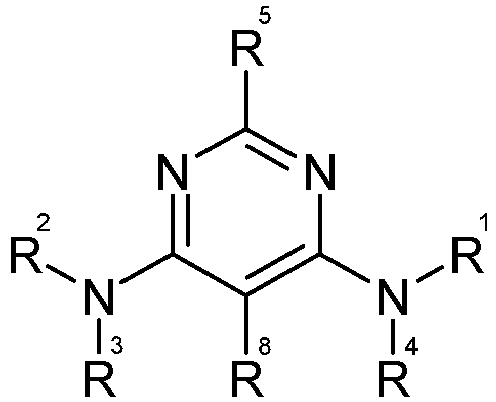 R1 is C1-8alkyl, C3-7cycloalkyl-C0-6alkyl- optionally substituted with methyl, alkoxyalkyl containing 3 to 8 carbon atoms, het-C0-6alkyl-, CF3-C1-6alkyl-, CF3OC2-3alkyl- or C1-6hydroxyalkyl;R3 and R2 together with the nitrogen atom to which they are bound form a 4 to 8 membered non-aromatic heterocyclic group which optionally contains one or more further heteroatoms or groups independently selected from N, O, S, S(O) and S(O)2, wherein the heterocyclic group is optionally a bridged bicyclic group, a spiro bicyclic group or is optionally fused to a 3-, 4-, 5- or 6- membered carbocyclic group or a 4-, 5- or 6-membered heterocyclic group which contains at least one ring member independently selected from N, O, S, S(O) and S(O)2, and wherein the ring system as a whole is optionally substituted by one or more substituents independently selected from C1-6alkyl, NR6R7, (CH2)aC3-7cycloalkyl, alkoxyalkyl containing 2 to 8 carbon atoms, (CH2)bhet1, (CH2)cCF3, (CH2)yOCF3, (CH2)daryl and C1-6hydroxyalkyl, provided that the ring system as a whole contains at least two nitrogen atoms or contains one nitrogen atom and is substituted by a group which contains at least one nitrogen atom;R4 is H;R5 is H or NH2;R6 and R7 are each independently selected from H, C1-6alkyl and (CH2)jC3-7cycloalkyl; or R6 and R7, together with the nitrogen atom to which they are bound, form a 4, 5 or 6 membered heterocyclic group;R8 is H;aryl is phenyl optionally substituted by one or more groups independently selected from C1-8alkyl, C1-8alkoxy, OH, halo, CF3, CHF2, OCF3, OCHF2, SCF3, hydroxy-C1-6alkyl, C1-4alkoxy-C1-6alkyl, C1-4alkyl-S-C1-4alkyl, CF2CF3, CH2CF3, CF2CH3, C(O)NR13R14, C3-8cycloalkyl, C3-7cycloalkyl-C1-4alkyl, C3-7cycloalkyl-C1-4alkoxy,R13 and R14 are each independently selected from H, C1-6alkyl and (CH2)mC3-7cycloalkyl; or R13 and R14, together with the nitrogen atom to which they are bound, form a 4, 5 or 6 membered heterocyclic group;a, b, c, d, j and m are each independently selected from 0, 1, 2 and 3; y is independently selected from 1, 2 and 3;het is 4 to 8 membered non-aromatic heterocyclic group which contains at least one heteroatom or group independently selected from N, O, S, S(O) and S(O)2, wherein the heterocyclic group is optionally a bridged bicyclic group or is optionally fused to a 3-, 4-, 5- or 6- membered carbocyclic group or a 4-, 5- or 6-membered heterocyclic group which contains at least one ring member independently selected from N, O, S, S(O) and S(O)2, and wherein the ring system as a whole is optionally substituted by one or more substituents independently selected from C1-6alkyl, NR6R7, (CH2)aC3-7cycloalkyl, alkoxyalkyl containing 2 to 8 carbon atoms, (CH2)bhet1, (CH2)cCF3, (CH2)yOCF3, (CH2)daryl and C1-6hydroxyalkyl; andhet1 is an aromatic or non-aromatic 4-, 5- or 6- membered heterocycle which contains at least one N, O or S heteroatom, optionally fused to a 4-, 5- or 6-membered carbocyclic group or a second 4-, 5- or 6-membered heterocycle which contains at least one N, O or S heteroatom.
 - The compound according to claim 1, or a pharmaceutically and/or veterinarily acceptable salt or solvate thereof, wherein R1 is C3-7cycloalkyl-C0-6alkyl- optionally substituted with methyl.
- The compound according to claim 1 or claim 2, or a pharmaceutically and/or veterinarily acceptable salt or solvate thereof, wherein R2 and R3, together with the nitrogen atom to which they are bound, form a group selected from the following ring systems:


- The compound according to claim 3, or a pharmaceutically and/or veterinarily acceptable salt or solvate thereof, wherein R6 and R7 are independently selected from H or CH3.
- The compound according to claim 1, or a pharmaceutically and/or veterinarily acceptable salt or solvate thereof, said compound being selected fromN 4-(Cyclopropylmethyl)-6-[(3R)-3-(methylamino)pyrrolidin-1-yl]pyrimidine-2,4-diamine,N 4-(Cyclopropylmethyl)-6-[(3R)-3-(methylamino)pyrrolidin-1-yl]pyrimidine-2,4-diamine tartrate,N4-Isobutyl-6-[(3R)-3-(methylamino)pyrrolidin-1-yl]pyrimidine-2,4-diamine,N4-(2,2-Dimethylpropyl)-6-[(3R)-3-(methylamino)pyrrolidin-1-yl]pyrimidine-2,4-diamine,N-Isobutyl-6-[(3R)-3-(methylamino)pyrrolidin-1-yl]pyrimidin-4-amine,N-(Cyclopropylmethyl)-6-[(3R)-3-(methylamino)pyrrolidin-1-yl]pyrimidin-4-amine,N4-(2,2-Dimethylpropyl)-6-[(4aR*,7aR*)-octahydro-6H-pyrrolo[3,4-b]pyridin-6-yl]pyrimidine-2,4-diamine,N4-Cyclopropyl-6-[(4aR*,7aR*)-octahydro-6H-pyrrolo[3,4-b]pyridin-6-yl]pyrimidine-2,4-diamine,N4-Cyclobutyl-6-[(4aR*,7aR*)-octahydro-6H-pyrrolo[3,4-b]pyridin-6-yl]pyrimidine-2,4-diamine,N4-(2,2-Dimethylpropyl)-6-[3-(methylamino)azetidin-1-yl]pyrimidine-2,4-diamine,6-(3-Methylamino-azetidin-1-yl)-N4-(3,3,3-trifluoro-propyl)-pyrimidine-2,4-diamine,N4-Cyclopropylmethyl-6-(3-methylamino-azetidin-1-yl)-pyrimidine-2,4-diamine,N4-(3,3-Dimethyl-butyl)-6-(3-methylamino-azetidin-1-yl)-pyrimidine-2,4-diamine,N4-Cyclopentylmethyl-6-(3-methylamino-azetidin-1-yl)-pyrimidine-2,4-diamine,N4-Isobutyl-6-[3-(methylamino)azetidin-1-yl]pyrimidine-2,4-diamine,6-[3-(Methylamino)azetidin-1-yl]-N4-propylpyrimidine-2,4-diamine,N4-(2,2-Dimethylpropyl)-6-[(3R)-3-methylpiperazin-1-yl]pyrimidine-2,4-diamine,N4-Ethyl-6-(4-methylpiperazin-1-yl)pyrimidine-2,4-diamine,N4-(Cyclopropylmethyl)-6-(4-methylpiperazin-1-yl)pyrimidine-2,4-diamine,6-[3-(Methylamino)azetidin-1-yl]-N4-(2-methylbutyl)pyrimidine-2,4-diamine,N4-Butyl-6-[3-(methylamino)azetidin-1-yl]pyrimidine-2,4-diamine,6-[(3R)-3-(Methylamino)pyrrolidin-1-yl]-N4-(2-methylcyclopropyl)pyrimidine-2,4-diamine,N4-Isobutyl-6-(4-methyl-1,4-diazepan-1-yl)pyrimidine-2,4-diamine,N4-(Cyclopropylmethyl)-6-(3-pyrrolidin-1-ylazetidin-1-yl)pyrimidine-2,4-diamine,N4-Bicyclo[1.1.1]pent-1-yl-6-[(3R)-3-(methylamino)pyrrolidin-1-yl]pyrimidine-2,4-diamine,6-[3-Methyl-3-(methylamino)azetidin-1-yl]-N4-propylpyrimidine-2,4-diamine,N4-(2,2-Dimethylpropyl)-6-(hexahydropyrrolo[1,2-a]pyrazin-2(1H)-yl)pyrimidine-2,4-diamine,N4-(2,2-Dimethylpropyl)-6-(3-pyrrolidin-1-ylazetidin-1-yl)pyrimidine-2,4-diamine,N4-(2,2-Dimethylpropyl)-6-[3-(isopropylamino)azetidin-1-yl]pyrimidine-2,4-diamine,N4-(tert-Butyl)-6-[(3R)-3-(methylamino)pyrrolidin-1-yl]pyrimidine-2,4-diamine,6-[(3R)-3-(Methylamino)pyrrolidin-1-yl]-N4-(1-methylcyclopropyl)pyrimidine-2,4-diamine,N4-(tert-Butyl)-6-[(4aS*,7aS*)-octahydro-6H-pyrrolo[3,4-b]pyridin-6-yl]pyrimidine-2,4-diamine,N4-(2,2-Dimethylpropyl)-6-piperazin-1-ylpyrimidine-2,4-diamine,N4-(2,2-Dimethylpropyl)-6-[3-(methylamino)azetidin-1-yl]pyrimidine-2,4-diamine hydrochloride,N4-(2,2-Dimethylpropyl)-6-[(3aR*,7aS*)-octahydro-5H-pyrrolo[3,2-c]pyridin-5-yl]pyrimidine-2,4-diamine,6-Piperazin-1-yl-N4-propylpyrimidine-2,4-diamine,N4-(Cyclopropylmethyl)-6-[(4aR,7aR)-octahydro-6H-pyrrolo[3,4-b]pyridin-6-yl]pyrimidine-2,4-diamine,N4-(2,2-Dimethylpropyl)-6-[(4aS,7aS)-octahydro-6H-pyrrolo[3,4-b]pyridin-6-yl]pyrimidine-2,4-diamine,N4-Isopropyl-6-[(4aS,7aS)-octahydro-6H-pyrrolo[3,4-b]pyridin-6-yl]pyrimidine-2,4-diamine,4-[3-(Methylam ino)azetidin-1-yl]-6-(4-methylpiperidin-1-yl)pyrim idin-2-am ine,N4-(Cyclopentylmethyl)-6-[(3R)-3-(methylamino)pyrrolidin-1-yl]pyrimidine-2,4-diamine,N4-Cyclobutyl-6-[(4aS,7aS)-octahydro-6H-pyrrolo[3,4-b]pyridin-6-yl]pyrimidine-2,4-diamine,6-[(3R)-3-(Methylamino)pyrrolidin-1-yl]-N4-propylpyrimidine-2,4-diamine, andN4-Ethyl-6-(4-methyl-1,4-diazepan-1-yl)pyrimidine-2,4-diamine.
- A compound according to claim 1, or a pharmaceutically and/or veterinarily acceptable salt or solvate thereof, said compound being N 4-(Cyclopropylmethyl)-6-[(3R)-3-(methylamino)pyrrolidin-1-yl]pyrimidine-2,4-diamine.
- A salt according to claim 6, said salt being N 4-(Cyclopropylmethyl)-6-[(3R)-3-(methylamino)pyrrolidin-1-yl]pyrimidine-2,4-diamine L-tartrate.
- A pharmaceutical composition including a compound according to any of claims 1 to 6, or a pharmaceutically and/or veterinarily acceptable salt or solvate thereof, or the salt according to claim 7, together with a pharmaceutically acceptable excipient.
- A compound according to any of claims 1 to 6 or a pharmaceutically and/or veterinarily acceptable salt or solvate thereof, or the salt according to claim 7, for use as a medicament.
- The use of a compound according to any of claims 1 to 6 or a pharmaceutically and/or veterinarily acceptable salt or solvate thereof, or the salt according to claim 7, for the manufacture of a medicament to treat a disease selected from inflammatory diseases, respiratory diseases (e.g. adult respiratory distress syndrome, acute respiratory distress syndrome, bronchitis, chronic bronchitis, chronic obstructive pulmonary disease, cystic fibrosis, asthma, emphysema, rhinitis, chronic sinusitis), allergy; allergy-induced airway responses, allergic rhinitis, viral rhinitis, non-allergic rhinitis, perennial and seasonal rhinitis, nasal congestion, allergic congestion, female and male sexual dysfunction, skin diseases such as dermatitis and psoriasis, cardiac dysfunctions such as myocardial ischaemia and arrythmia, diseases of the gastrointestinal tract such as inflammatory bowel disease, Crohn's disease and colitis ulcerosa, cancer, rheumatoid arthritis, hypotension, pain and overactive bladder conditions.
- A compound according to any of claims 1 to 6 or a pharmaceutically and/or veterinarily acceptable salt or solvate thereof, or the salt according to claim 7, for use in treating a disease selected from inflammatory diseases, respiratory diseases (e.g. adult respiratory distress syndrome, acute respiratory distress syndrome, bronchitis, chronic bronchitis, chronic obstructive pulmonary disease, cystic fibrosis, asthma, emphysema, rhinitis, chronic sinusitis), allergy; allergy-induced airway responses, allergic rhinitis, viral rhinitis, non-allergic rhinitis, perennial and seasonal rhinitis, nasal congestion, allergic congestion, female and male sexual dysfunction, skin diseases such as dermatitis and psoriasis, cardiac dysfunctions such as myocardial ischaemia and arrythmia, diseases of the gastrointestinal tract such as inflammatory bowel disease, Crohn's disease and colitis ulcerosa, cancer, rheumatoid arthritis, hypotension, pain and overactive bladder conditions.
- A process for preparing a compound according to any of claims 1 to 6, comprising the steps of:(a) reacting a compound of Formula (III)

 (b) reacting a compound of formula (III)

where X and Y are leaving groups and R1, R2, R3, R4, R5 and R8 are as defined in claim 1. - Combination of a compound according to any one of claims 1 to 6, or a pharmaceutically acceptable salt or solvate thereof, or the salt according to claim 7, with other therapeutic agent(s) selected from:• Histamine H1 receptor antagonists, in particular loratidine, desloratidine, fexofenadine and cetirizine• Histamine H3 receptor antagonists• Histamine H2 receptor antagonists• Leukotriene antagonists, including antagonists of LTB4, LTC4, LTD4, and LTE4; for example Montelukast• Phosphodiesterase inhibitors, including PDE3 inhibitors, PDE4 inhibitors, PDE5 inhibitors, PDE7 inhibitors and inhibitors of two or more phosphodiesterases, such as dual PDE3/PDE4 inhibitors• neurotransmitter re-uptake inhibitors, in particular fluoxetine, setraline, paroxetine, ziprasidone• 5-Lipoxygenase (5-LO) inhibitors or 5-lipoxygenase activating protein (FLAP) antagonists• α1- and α2-adrenoceptor agonist vasoconstrictor sympathomimetic agents for decongestant use• Muscarinic M3 receptor antagonists or anticholinergic agents• β2-adrenoceptor agonists• Dual acting β2/M3 agents• Xanthines, such as theophylline and aminophylline• Non-steroidal anti-inflammatories, such as sodium cromoglycate and nedocromil sodium• Ketotifen• COX-1 inhibitors (NSAIDs) and COX-2 selective inhibitors• Oral or inhaled Glucocorticosteroids• Monoclonal antibodies active against endogenous inflammatory entities• Anti-tumor necrosis factor (anti-TNF-α) agents• Adhesion molecule inhibitors including VLA-4 antagonists• Kinin-B1- and B2 -receptor antagonists• Immunosuppressive agents• Inhibitors of matrix metalloproteases (MMPs)• Tachykinin NK1, NK2 and NK3 receptor antagonists• Elastase inhibitors• Adenosine A2a receptor agonists• Inhibitors of urokinase• Compounds that act on dopamine receptors, e.g. D2 agonists• Modulators of the NFκb pathway, e.g. IKK inhibitors• Agents that can be classed as mucolytics or anti-tussive• Antibiotics• Modulators of cytokine signaling pathways, such as p38 MAP kinase inhibitors, syk tyrosine kinase inhibitors or JAK kinase inhibitors• Modulators of the prostaglandin pathways, including inhibitors of H-PDGS and antagonists of DP-1 and CRTH2• Antagonists of chemokine receptors CXCR1 and CXCR2• Antagonists of chemokine receptors CCR3, CCR4 and CCR5• Inhibitors of cytosolic and soluble phospholipase A2 (cPLA2 and sPLA2)• Prostaglandin D2 receptor antagonists (DP1 and CRTH2)• Inhibitors of Prostaglandin D synthase (PGDS)• Inhibitors of phosphoinositide-3-kinase,• HDAC inhibitors,• p38 inhibitors and/or• CXCR2 antagonists.
Priority Applications (3)
| Application Number | Priority Date | Filing Date | Title |
|---|---|---|---|
| HRP20170896TT HRP20170896T1 (en) | 2005-12-20 | 2006-12-07 | Pyrimidine derivatives |
| SI200632178A SI1966162T1 (en) | 2005-12-20 | 2006-12-07 | Pyrimidine derivatives |
| RS20170607A RS56102B1 (en) | 2005-12-20 | 2006-12-07 | PYRIMIDINE DERIVATIVES |
Applications Claiming Priority (2)
| Application Number | Priority Date | Filing Date | Title |
|---|---|---|---|
| US75261205P | 2005-12-20 | 2005-12-20 | |
| PCT/IB2006/003668 WO2007072163A2 (en) | 2005-12-20 | 2006-12-07 | Pyrimidine derivatives |
Publications (2)
| Publication Number | Publication Date |
|---|---|
| EP1966162A2 EP1966162A2 (en) | 2008-09-10 |
| EP1966162B1 true EP1966162B1 (en) | 2017-03-15 |
Family
ID=38124887
Family Applications (1)
| Application Number | Title | Priority Date | Filing Date |
|---|---|---|---|
| EP06831747.8A Active EP1966162B1 (en) | 2005-12-20 | 2006-12-07 | Pyrimidine derivatives |
Country Status (36)
| Country | Link |
|---|---|
| US (1) | US7943628B2 (en) |
| EP (1) | EP1966162B1 (en) |
| JP (1) | JP5166280B2 (en) |
| KR (2) | KR101152719B1 (en) |
| CN (1) | CN101341134B (en) |
| AP (1) | AP2008004486A0 (en) |
| AR (1) | AR058557A1 (en) |
| AU (1) | AU2006327876B2 (en) |
| BR (1) | BRPI0620201A2 (en) |
| CA (1) | CA2634018C (en) |
| CR (1) | CR10061A (en) |
| CY (1) | CY1118987T1 (en) |
| DK (1) | DK1966162T3 (en) |
| DO (1) | DOP2006000288A (en) |
| EA (1) | EA200801381A1 (en) |
| EC (1) | ECSP088559A (en) |
| ES (1) | ES2628482T3 (en) |
| GT (1) | GT200600518A (en) |
| HR (1) | HRP20170896T1 (en) |
| HU (1) | HUE034650T2 (en) |
| IL (1) | IL191432A (en) |
| LT (1) | LT1966162T (en) |
| MA (1) | MA30082B1 (en) |
| ME (1) | ME00004B (en) |
| NL (1) | NL2000323C2 (en) |
| NO (1) | NO341075B1 (en) |
| PE (1) | PE20070848A1 (en) |
| PL (1) | PL1966162T3 (en) |
| PT (1) | PT1966162T (en) |
| RS (2) | RS56102B1 (en) |
| SI (1) | SI1966162T1 (en) |
| TN (1) | TNSN08269A1 (en) |
| TW (1) | TW200732306A (en) |
| UY (1) | UY30045A1 (en) |
| WO (1) | WO2007072163A2 (en) |
| ZA (1) | ZA200805294B (en) |
Families Citing this family (56)
| Publication number | Priority date | Publication date | Assignee | Title |
|---|---|---|---|---|
| BRPI0615880A2 (en) * | 2005-09-13 | 2011-05-31 | Palau Pharma Sa | 2-aminopyrimidine-derived compounds as modulators of histamine h4 receptor activity, their use and pharmaceutical composition |
| NL2000323C2 (en) * | 2005-12-20 | 2007-11-20 | Pfizer Ltd | Pyrimidine derivatives. |
| WO2007120690A2 (en) * | 2006-04-10 | 2007-10-25 | Janssen Pharmaceutica N.V. | Combination histamine h1r and h4r antagonist therapy for treating pruritus |
| JP5534811B2 (en) | 2006-08-24 | 2014-07-02 | アストラゼネカ アクチボラグ | Morpholinopyrimidine derivatives useful for the treatment of proliferative diseases |
| US7985745B2 (en) * | 2006-10-02 | 2011-07-26 | Abbott Laboratories | Method for pain treatment |
| TW200904437A (en) * | 2007-02-14 | 2009-02-01 | Janssen Pharmaceutica Nv | 2-aminopyrimidine modulators of the histamine H4 receptor |
| US20080217501A1 (en) * | 2007-02-14 | 2008-09-11 | Chad Jensen | Power a-frame |
| US8637528B2 (en) | 2007-03-27 | 2014-01-28 | Omeros Corporation | Use of PDE7 inhibitors for the treatment of movement disorders |
| US8138183B2 (en) | 2007-07-09 | 2012-03-20 | Astrazeneca Ab | Morpholino pyrimidine derivatives used in diseases linked to mTOR kinase and/or PI3K |
| PE20091035A1 (en) * | 2007-11-30 | 2009-07-16 | Palau Pharma Sa | DERIVATIVES OF 2-AMINOPYRIMIDINE |
| WO2009077608A1 (en) * | 2007-12-19 | 2009-06-25 | Palau Pharma, S. A. | 2 -aminopyrimidine derivatives as histamine h4 antagonists |
| US8278313B2 (en) * | 2008-03-11 | 2012-10-02 | Abbott Laboratories | Macrocyclic spiro pyrimidine derivatives |
| MX2010011463A (en) | 2008-04-16 | 2011-06-03 | Portola Pharm Inc | 2, 6-diamino- pyrimidin- 5-yl-carboxamides as syk or jak kinases inhibitors. |
| US8138339B2 (en) | 2008-04-16 | 2012-03-20 | Portola Pharmaceuticals, Inc. | Inhibitors of protein kinases |
| PE20110061A1 (en) | 2008-06-12 | 2011-01-31 | Janssen Pharmaceutica Nv | DIAMINE-PYRIDINE, PYRIMIDINE AND PYRIDAZINE DERIVATIVES AS MODULATORS OF THE HISTAMINE H4 RECEPTOR |
| EP2379523A1 (en) | 2008-12-22 | 2011-10-26 | Incyte Corporation | 4, 6-disubstituted 2-amino-pyrimidines as histamine h4 receptor modulators |
| EP2201982A1 (en) | 2008-12-24 | 2010-06-30 | INSERM (Institut National de la Santé et de la Recherche Médicale) | Histamine H4 receptor antagonists for the treatment of vestibular disorders |
| US8349852B2 (en) | 2009-01-13 | 2013-01-08 | Novartis Ag | Quinazolinone derivatives useful as vanilloid antagonists |
| IT1393337B1 (en) | 2009-03-06 | 2012-04-20 | Italiana Sint Spa | SUMMARY OF (4AS, 7AS) -OTTAIDRO-1H-PIRROLO [3,4-B] PYRIDINE |
| US8481732B2 (en) | 2009-03-20 | 2013-07-09 | Incyte Corporation | Substituted heterocyclic compounds |
| FR2945533B1 (en) * | 2009-05-12 | 2011-05-27 | Sanofi Aventis | CYCLOPENTA® C! PYRROLYL-ALKYLCARBAMATE DERIVATIVES OF 5-CHAIN HETEROCYCLES, THEIR PREPARATION AND THEIR THERAPEUTIC USE |
| SI2493895T1 (en) | 2009-10-29 | 2017-10-30 | Vectura Limited | N-containing heteroaryl derivatives as jak3 kinase inhibitors |
| MX345142B (en) | 2009-12-23 | 2017-01-18 | Palau Pharma Sa | Aminoalkylpyrimidine derivatives as histamine h4 receptor antagonists. |
| AR080055A1 (en) | 2010-02-01 | 2012-03-07 | Novartis Ag | DERIVATIVES OF PIRAZOLO- [5,1-B] -OXAZOL AS ANTAGONISTS OF THE RECEIVERS OF CRF -1 |
| WO2011092293A2 (en) | 2010-02-01 | 2011-08-04 | Novartis Ag | Cyclohexyl amide derivatives as crf receptor antagonists |
| ES2527849T3 (en) | 2010-02-02 | 2015-01-30 | Novartis Ag | Cyclohexylamide derivatives as CRF receptor antagonists |
| BR112012029647A2 (en) | 2010-05-21 | 2016-08-02 | Chemilia Ab | new pyrimidine derivatives |
| SA111320519B1 (en) | 2010-06-11 | 2014-07-02 | Astrazeneca Ab | Pyrimidinyl compounds for use as ATR inhibitors |
| JP5886411B2 (en) | 2011-03-24 | 2016-03-16 | ノビガ・リサーチ・エービーNoviga Research AB | New pyrimidine derivatives |
| SG11201402570QA (en) | 2011-11-23 | 2014-06-27 | Portola Pharm Inc | Pyrazine kinase inhibitors |
| US10213421B2 (en) | 2012-04-04 | 2019-02-26 | Alkahest, Inc. | Pharmaceutical formulations comprising CCR3 antagonists |
| WO2013152717A1 (en) | 2012-04-10 | 2013-10-17 | 上海昀怡健康管理咨询有限公司 | Fused pyrimidine compound, and preparation method, intermediate, composition, and uses thereof |
| WO2013172872A1 (en) * | 2012-05-15 | 2013-11-21 | Calasia Pharmaceuticals, Inc. | Pyrimidine diamine derivatives as inhibitors of cytosolic hsp90 |
| FR2990859B1 (en) * | 2012-05-24 | 2014-05-23 | Gaetan Terrasse | USE OF AN AGONIST H4 MOLECULE FOR THE TREATMENT OF MUCOVISCIDOSIS |
| PL2858647T3 (en) | 2012-06-08 | 2018-10-31 | Sensorion | H4 receptor inhibitors for treating tinnitus |
| US9974759B2 (en) | 2013-05-31 | 2018-05-22 | Indiana University Research And Technology Corporation | Beta 2 adrenoceptor antagonists for treating orthostatic hypotension |
| JP6441910B2 (en) | 2013-09-30 | 2018-12-19 | シャンハイ インリ ファーマシューティカル カンパニー リミティド | Fused pyrimidine compounds, intermediates, methods for their preparation, compositions and uses |
| CN104903312B (en) * | 2013-10-07 | 2019-01-29 | 卡德门企业有限公司 | RHO kinase inhibitor |
| WO2015055071A1 (en) | 2013-10-16 | 2015-04-23 | 上海璎黎药业有限公司 | Fused heterocyclic compound, preparation method therefor, pharmaceutical composition, and uses thereof |
| JP6535007B2 (en) * | 2013-12-20 | 2019-06-26 | インスティテュート オブ ファーマコロジー アンド トキシコロジー アカデミー オブ ミリタリー メディカル サイエンシズ ピー.エル.エー.チャイナ | Novel piperidine carboxamide compounds, process for their preparation and use |
| CR20170076A (en) | 2014-08-04 | 2017-06-26 | Nuevolution As | PIRIMIDIMA DERIVATIVES REPLACED WITH OPTIONALLY CONDENSED HETEROCICLYL USEFUL FOR THE TREATMENT OF INFLAMMATORY, METABOLIC, ONCOLOGICAL AND SELF-IMMUNITY DISEASES |
| NO2721710T3 (en) | 2014-08-21 | 2018-03-31 | ||
| CA2976415A1 (en) * | 2015-02-13 | 2016-08-18 | Merck Patent Gmbh | Pyrimidine derivatives for use in the treatment of cancer |
| TW201729810A (en) * | 2015-10-26 | 2017-09-01 | 札爾科製藥公司 | Pyrimidine compositions, ultra-pure compositions and salts thereof, methods of making the same, and methods of using the same for treating histamine H4 receptor (H4) mediated diseases and conditions |
| PL3490565T3 (en) * | 2016-07-29 | 2022-09-26 | Rapt Therapeutics, Inc. | Azetidine derivatives as chemokine receptor modulators and uses thereof |
| KR102571296B1 (en) * | 2016-09-07 | 2023-08-28 | 더 리전트 오브 더 유니버시티 오브 캘리포니아 | Allosteric Corticotropin-Releasing Factor Receptor 1 (CRFR1) Antagonist Reduces P-TAU and Improves Cognition |
| WO2019071144A1 (en) | 2017-10-05 | 2019-04-11 | Fulcrum Therapeutics, Inc. | Use of p38 inhibitors to reduce expression of dux4 |
| US10342786B2 (en) | 2017-10-05 | 2019-07-09 | Fulcrum Therapeutics, Inc. | P38 kinase inhibitors reduce DUX4 and downstream gene expression for the treatment of FSHD |
| GB201817047D0 (en) | 2018-10-19 | 2018-12-05 | Heptares Therapeutics Ltd | H4 antagonist compounds |
| AU2020408107B2 (en) | 2019-12-20 | 2026-04-23 | Nuevolution A/S | Compounds active towards nuclear receptors |
| AU2020405446A1 (en) | 2019-12-20 | 2022-05-26 | Nuevolution A/S | Compounds active towards nuclear receptors |
| US11613532B2 (en) | 2020-03-31 | 2023-03-28 | Nuevolution A/S | Compounds active towards nuclear receptors |
| EP4126874A1 (en) | 2020-03-31 | 2023-02-08 | Nuevolution A/S | Compounds active towards nuclear receptors |
| GB202005858D0 (en) * | 2020-04-22 | 2020-06-03 | Heptares Therapeutics Ltd | H4 Antagonist compounds |
| US11548874B2 (en) * | 2020-05-19 | 2023-01-10 | Florida State University Research Foundation, Inc. | Antifibrotic compounds and related methods |
| CN116157404B (en) | 2020-08-14 | 2025-10-14 | 诺华股份有限公司 | Heteroaryl-substituted spiropiperidinyl derivatives and their pharmaceutical uses |
Family Cites Families (25)
| Publication number | Priority date | Publication date | Assignee | Title |
|---|---|---|---|---|
| JPS60140435A (en) * | 1983-12-28 | 1985-07-25 | Hitachi Ltd | Instruction processing unit |
| US5099019A (en) * | 1985-09-12 | 1992-03-24 | Upjohn Company | Amines useful in producing pharmaceutically active CNS compounds |
| CA1338012C (en) * | 1987-04-27 | 1996-01-30 | John Michael Mccall | Pharmaceutically active amines |
| KR927003545A (en) * | 1989-10-25 | 1992-12-18 | 로버트 에이. 아미테이지 | Pharmaceutically Active Amino-Substituted Heteroaryl Amine |
| KR0166088B1 (en) | 1990-01-23 | 1999-01-15 | . | Cyclodextrin derivatives with increased water solubility and uses thereof |
| US5376645A (en) | 1990-01-23 | 1994-12-27 | University Of Kansas | Derivatives of cyclodextrins exhibiting enhanced aqueous solubility and the use thereof |
| HU212308B (en) * | 1992-06-09 | 1996-05-28 | Richter Gedeon Vegyeszet | Process for producing novel pregnane steroids and pharmaceutical compositions containing the same |
| HUT64323A (en) * | 1992-06-09 | 1993-12-28 | Richter Gedeon Vegyeszet | Process for production new piperazinyl-bis(alkyl-amino)-pyrimidine derivatives |
| GB9518953D0 (en) | 1995-09-15 | 1995-11-15 | Pfizer Ltd | Pharmaceutical formulations |
| WO2000035298A1 (en) | 1996-11-27 | 2000-06-22 | Wm. Wrigley Jr. Company | Chewing gum containing medicament active agents |
| GB9711643D0 (en) | 1997-06-05 | 1997-07-30 | Janssen Pharmaceutica Nv | Glass thermoplastic systems |
| ATE449764T1 (en) | 1999-12-28 | 2009-12-15 | Pharmacopeia Inc | CYTOKINE, ESPECIALLY TNF-ALPHA, INHIBITORS |
| AU2002336273A1 (en) | 2001-03-09 | 2002-09-24 | Ortho-Mcneil Pharmaceutical, Inc. | Heterocyclic compounds and their use as histamine h4 ligands. |
| US6924290B2 (en) | 2002-01-23 | 2005-08-02 | Bayer Pharmaceuticals Corporation | Rho-kinase inhibitors |
| DE10226943A1 (en) * | 2002-06-17 | 2004-01-08 | Bayer Ag | Phenylaminopyrimidines and their use |
| JP4596915B2 (en) * | 2002-09-06 | 2010-12-15 | ジヤンセン・フアーマシユーチカ・ナームローゼ・フエンノートシヤツプ | Thienopyrrolyl and furanopyrrolyl compounds and their use as histamine H4 receptor ligands |
| US7737153B2 (en) * | 2002-10-28 | 2010-06-15 | Bayer Schering Pharma Aktiengesellschaft | Heteroaryloxy-substituted phenylaminopyrimidines as rho-kinase inhibitors |
| WO2004052862A1 (en) * | 2002-12-10 | 2004-06-24 | Ono Pharmaceutical Co., Ltd. | Nitrogen-containing heterocyclic compounds and medicinal use thereof |
| US20050014753A1 (en) * | 2003-04-04 | 2005-01-20 | Irm Llc | Novel compounds and compositions as protein kinase inhibitors |
| EP1505064A1 (en) * | 2003-08-05 | 2005-02-09 | Bayer HealthCare AG | 2-Aminopyrimidine derivatives |
| WO2005028467A1 (en) * | 2003-09-15 | 2005-03-31 | Anadys Pharmaceuticals, Inc. | Antibacterial 3,5-diaminopiperidine-substitute aromatic and heteroaromatic compounds |
| WO2005054239A1 (en) * | 2003-12-05 | 2005-06-16 | Bayer Healthcare Ag | 2-aminopyrimidine derivatives |
| BRPI0615880A2 (en) * | 2005-09-13 | 2011-05-31 | Palau Pharma Sa | 2-aminopyrimidine-derived compounds as modulators of histamine h4 receptor activity, their use and pharmaceutical composition |
| EP1767537A1 (en) | 2005-09-21 | 2007-03-28 | Cellzome (UK) Ltd. | Pyrimidine compounds for the treatment of inflammatory disorders |
| NL2000323C2 (en) * | 2005-12-20 | 2007-11-20 | Pfizer Ltd | Pyrimidine derivatives. |
-
2006
- 2006-11-20 NL NL2000323A patent/NL2000323C2/en not_active IP Right Cessation
- 2006-12-07 SI SI200632178A patent/SI1966162T1/en unknown
- 2006-12-07 WO PCT/IB2006/003668 patent/WO2007072163A2/en not_active Ceased
- 2006-12-07 CA CA2634018A patent/CA2634018C/en not_active Expired - Fee Related
- 2006-12-07 RS RS20170607A patent/RS56102B1/en unknown
- 2006-12-07 ES ES06831747.8T patent/ES2628482T3/en active Active
- 2006-12-07 BR BRPI0620201-2A patent/BRPI0620201A2/en not_active IP Right Cessation
- 2006-12-07 KR KR1020087014871A patent/KR101152719B1/en not_active Expired - Fee Related
- 2006-12-07 EA EA200801381A patent/EA200801381A1/en unknown
- 2006-12-07 HU HUE06831747A patent/HUE034650T2/en unknown
- 2006-12-07 AP AP2008004486A patent/AP2008004486A0/en unknown
- 2006-12-07 RS RSP-2008/0278A patent/RS20080278A/en unknown
- 2006-12-07 AU AU2006327876A patent/AU2006327876B2/en not_active Ceased
- 2006-12-07 ME MEP-2008-5A patent/ME00004B/en unknown
- 2006-12-07 JP JP2008546672A patent/JP5166280B2/en not_active Expired - Fee Related
- 2006-12-07 CN CN2006800484357A patent/CN101341134B/en not_active Expired - Fee Related
- 2006-12-07 LT LTEP06831747.8T patent/LT1966162T/en unknown
- 2006-12-07 DK DK06831747.8T patent/DK1966162T3/en active
- 2006-12-07 PL PL06831747T patent/PL1966162T3/en unknown
- 2006-12-07 KR KR1020127003013A patent/KR20120025010A/en not_active Withdrawn
- 2006-12-07 HR HRP20170896TT patent/HRP20170896T1/en unknown
- 2006-12-07 PT PT68317478T patent/PT1966162T/en unknown
- 2006-12-07 EP EP06831747.8A patent/EP1966162B1/en active Active
- 2006-12-15 US US11/640,071 patent/US7943628B2/en active Active
- 2006-12-18 PE PE2006001621A patent/PE20070848A1/en not_active Application Discontinuation
- 2006-12-19 AR ARP060105613A patent/AR058557A1/en unknown
- 2006-12-19 TW TW095147657A patent/TW200732306A/en unknown
- 2006-12-19 DO DO2006000288A patent/DOP2006000288A/en unknown
- 2006-12-19 GT GT200600518A patent/GT200600518A/en unknown
- 2006-12-20 UY UY30045A patent/UY30045A1/en not_active Application Discontinuation
-
2008
- 2008-05-14 IL IL191432A patent/IL191432A/en not_active IP Right Cessation
- 2008-06-10 CR CR10061A patent/CR10061A/en not_active Application Discontinuation
- 2008-06-18 TN TNP2008000269A patent/TNSN08269A1/en unknown
- 2008-06-18 EC EC2008008559A patent/ECSP088559A/en unknown
- 2008-06-18 ZA ZA200805294A patent/ZA200805294B/en unknown
- 2008-06-20 MA MA31068A patent/MA30082B1/en unknown
- 2008-07-01 NO NO20082980A patent/NO341075B1/en not_active IP Right Cessation
-
2017
- 2017-06-12 CY CY20171100619T patent/CY1118987T1/en unknown
Non-Patent Citations (1)
| Title |
|---|
| None * |
Also Published As
Similar Documents
| Publication | Publication Date | Title |
|---|---|---|
| US7943628B2 (en) | Pyrimidine derivatives | |
| US7053089B2 (en) | N-substituted nonaryl-heterocyclic NMDA/NR2B antagonists | |
| EP1756104B1 (en) | Tetrahydronaphthyridine derivatives useful as histamine h3 receptor ligands | |
| TWI591067B (en) | Pyrazolopyridine and pyrazolopyrimidine | |
| US20110160185A9 (en) | Pyrrolopyrimidine derivatives as jak3 inhibitors | |
| US20080146569A1 (en) | Nicotinamide Derivatives | |
| CN103717599A (en) | Indazoles | |
| US20060111416A1 (en) | Octahydropyrrolo[3,4-C]pyrrole derivatives | |
| US20230339937A1 (en) | Condensed ring compounds that inhibit h-pgds | |
| HK1120269B (en) | Pyrimidine derivatives | |
| MX2008008283A (en) | Pyrimidine derivatives | |
| HK40087512B (en) | Condensed ring compounds that inhibit h-pgds | |
| EP1671972A1 (en) | Octahydropyrrolo[3,4-c]pyrrole derivatives | |
| HK1234392A1 (en) | Pyrazolopyridines and pyrazolopyrimidines |
Legal Events
| Date | Code | Title | Description |
|---|---|---|---|
| PUAI | Public reference made under article 153(3) epc to a published international application that has entered the european phase |
Free format text: ORIGINAL CODE: 0009012 |
|
| 17P | Request for examination filed |
Effective date: 20080721 |
|
| AK | Designated contracting states |
Kind code of ref document: A2 Designated state(s): AT BE BG CH CY CZ DE DK EE ES FI FR GB GR HU IE IS IT LI LT LU LV MC NL PL PT RO SE SI SK TR |
|
| AX | Request for extension of the european patent |
Extension state: AL BA HR MK RS |
|
| 17Q | First examination report despatched |
Effective date: 20090917 |
|
| RAP1 | Party data changed (applicant data changed or rights of an application transferred) |
Owner name: ZIARCO PHARMA LTD |
|
| GRAP | Despatch of communication of intention to grant a patent |
Free format text: ORIGINAL CODE: EPIDOSNIGR1 |
|
| INTG | Intention to grant announced |
Effective date: 20161007 |
|
| STAA | Information on the status of an ep patent application or granted ep patent |
Free format text: STATUS: GRANT OF PATENT IS INTENDED |
|
| GRAS | Grant fee paid |
Free format text: ORIGINAL CODE: EPIDOSNIGR3 |
|
| GRAA | (expected) grant |
Free format text: ORIGINAL CODE: 0009210 |
|
| STAA | Information on the status of an ep patent application or granted ep patent |
Free format text: STATUS: THE PATENT HAS BEEN GRANTED |
|
| AK | Designated contracting states |
Kind code of ref document: B1 Designated state(s): AT BE BG CH CY CZ DE DK EE ES FI FR GB GR HU IE IS IT LI LT LU LV MC NL PL PT RO SE SI SK TR |
|
| AX | Request for extension of the european patent |
Extension state: AL BA HR MK RS |
|
| REG | Reference to a national code |
Ref country code: GB Ref legal event code: FG4D Ref country code: CH Ref legal event code: EP |
|
| REG | Reference to a national code |
Ref country code: IE Ref legal event code: FG4D |
|
| REG | Reference to a national code |
Ref country code: AT Ref legal event code: REF Ref document number: 875391 Country of ref document: AT Kind code of ref document: T Effective date: 20170415 |
|
| REG | Reference to a national code |
Ref country code: DE Ref legal event code: R096 Ref document number: 602006051996 Country of ref document: DE |
|
| REG | Reference to a national code |
Ref country code: RO Ref legal event code: EPE |
|
| REG | Reference to a national code |
Ref country code: PT Ref legal event code: SC4A Ref document number: 1966162 Country of ref document: PT Date of ref document: 20170602 Kind code of ref document: T Free format text: AVAILABILITY OF NATIONAL TRANSLATION Effective date: 20170518 |
|
| REG | Reference to a national code |
Ref country code: HR Ref legal event code: TUEP Ref document number: P20170896 Country of ref document: HR |
|
| REG | Reference to a national code |
Ref country code: NL Ref legal event code: FP |
|
| REG | Reference to a national code |
Ref country code: DK Ref legal event code: T3 Effective date: 20170613 |
|
| REG | Reference to a national code |
Ref country code: SE Ref legal event code: TRGR |
|
| REG | Reference to a national code |
Ref country code: ES Ref legal event code: FG2A Ref document number: 2628482 Country of ref document: ES Kind code of ref document: T3 Effective date: 20170803 |
|
| REG | Reference to a national code |
Ref country code: EE Ref legal event code: FG4A Ref document number: E013913 Country of ref document: EE Effective date: 20170612 |
|
| REG | Reference to a national code |
Ref country code: HR Ref legal event code: T1PR Ref document number: P20170896 Country of ref document: HR |
|
| REG | Reference to a national code |
Ref country code: GR Ref legal event code: EP Ref document number: 20170401545 Country of ref document: GR Effective date: 20171023 |
|
| REG | Reference to a national code |
Ref country code: SK Ref legal event code: T3 Ref document number: E 24479 Country of ref document: SK |
|
| REG | Reference to a national code |
Ref country code: FR Ref legal event code: PLFP Year of fee payment: 12 |
|
| REG | Reference to a national code |
Ref country code: DE Ref legal event code: R097 Ref document number: 602006051996 Country of ref document: DE |
|
| PLBE | No opposition filed within time limit |
Free format text: ORIGINAL CODE: 0009261 |
|
| STAA | Information on the status of an ep patent application or granted ep patent |
Free format text: STATUS: NO OPPOSITION FILED WITHIN TIME LIMIT |
|
| 26N | No opposition filed |
Effective date: 20171218 |
|
| REG | Reference to a national code |
Ref country code: HU Ref legal event code: AG4A Ref document number: E034650 Country of ref document: HU |
|
| REG | Reference to a national code |
Ref country code: HR Ref legal event code: ODRP Ref document number: P20170896 Country of ref document: HR Payment date: 20181127 Year of fee payment: 13 |
|
| REG | Reference to a national code |
Ref country code: HR Ref legal event code: ODRP Ref document number: P20170896 Country of ref document: HR Payment date: 20191129 Year of fee payment: 14 |
|
| PGFP | Annual fee paid to national office [announced via postgrant information from national office to epo] |
Ref country code: LU Payment date: 20191125 Year of fee payment: 14 |
|
| PGFP | Annual fee paid to national office [announced via postgrant information from national office to epo] |
Ref country code: PT Payment date: 20191203 Year of fee payment: 14 Ref country code: FI Payment date: 20191209 Year of fee payment: 14 Ref country code: SE Payment date: 20191210 Year of fee payment: 14 Ref country code: DE Payment date: 20191126 Year of fee payment: 14 Ref country code: MC Payment date: 20191129 Year of fee payment: 14 Ref country code: IE Payment date: 20191209 Year of fee payment: 14 Ref country code: BG Payment date: 20191129 Year of fee payment: 14 Ref country code: CZ Payment date: 20191127 Year of fee payment: 14 Ref country code: HU Payment date: 20191206 Year of fee payment: 14 Ref country code: CY Payment date: 20191128 Year of fee payment: 14 Ref country code: LT Payment date: 20191204 Year of fee payment: 14 Ref country code: RO Payment date: 20191129 Year of fee payment: 14 Ref country code: SK Payment date: 20191128 Year of fee payment: 14 Ref country code: NL Payment date: 20191212 Year of fee payment: 14 |
|
| REG | Reference to a national code |
Ref country code: AT Ref legal event code: UEP Ref document number: 875391 Country of ref document: AT Kind code of ref document: T Effective date: 20170315 |
|
| PGFP | Annual fee paid to national office [announced via postgrant information from national office to epo] |
Ref country code: EE Payment date: 20191129 Year of fee payment: 14 Ref country code: GR Payment date: 20191127 Year of fee payment: 14 Ref country code: SI Payment date: 20191202 Year of fee payment: 14 Ref country code: PL Payment date: 20191129 Year of fee payment: 14 Ref country code: DK Payment date: 20191210 Year of fee payment: 14 Ref country code: BE Payment date: 20191125 Year of fee payment: 14 Ref country code: FR Payment date: 20191128 Year of fee payment: 14 Ref country code: IS Payment date: 20191126 Year of fee payment: 14 Ref country code: IT Payment date: 20191209 Year of fee payment: 14 Ref country code: LV Payment date: 20191210 Year of fee payment: 14 |
|
| PGFP | Annual fee paid to national office [announced via postgrant information from national office to epo] |
Ref country code: AT Payment date: 20191125 Year of fee payment: 14 Ref country code: TR Payment date: 20191205 Year of fee payment: 14 Ref country code: CH Payment date: 20191213 Year of fee payment: 14 |
|
| PGFP | Annual fee paid to national office [announced via postgrant information from national office to epo] |
Ref country code: ES Payment date: 20200102 Year of fee payment: 14 Ref country code: GB Payment date: 20191206 Year of fee payment: 14 |
|
| REG | Reference to a national code |
Ref country code: HR Ref legal event code: PBON Ref document number: P20170896 Country of ref document: HR Effective date: 20201207 |
|
| REG | Reference to a national code |
Ref country code: DE Ref legal event code: R119 Ref document number: 602006051996 Country of ref document: DE |
|
| REG | Reference to a national code |
Ref country code: FI Ref legal event code: MAE |
|
| REG | Reference to a national code |
Ref country code: EE Ref legal event code: MM4A Ref document number: E013913 Country of ref document: EE Effective date: 20201231 |
|
| REG | Reference to a national code |
Ref country code: DK Ref legal event code: EBP Effective date: 20201231 |
|
| PG25 | Lapsed in a contracting state [announced via postgrant information from national office to epo] |
Ref country code: FI Free format text: LAPSE BECAUSE OF NON-PAYMENT OF DUE FEES Effective date: 20201207 Ref country code: CZ Free format text: LAPSE BECAUSE OF NON-PAYMENT OF DUE FEES Effective date: 20201207 Ref country code: CY Free format text: LAPSE BECAUSE OF NON-PAYMENT OF DUE FEES Effective date: 20201207 Ref country code: RO Free format text: LAPSE BECAUSE OF NON-PAYMENT OF DUE FEES Effective date: 20201207 Ref country code: PT Free format text: LAPSE BECAUSE OF NON-PAYMENT OF DUE FEES Effective date: 20210607 |
|
| REG | Reference to a national code |
Ref country code: CH Ref legal event code: PL |
|
| REG | Reference to a national code |
Ref country code: SE Ref legal event code: EUG |
|
| REG | Reference to a national code |
Ref country code: NL Ref legal event code: MM Effective date: 20210101 |
|
| REG | Reference to a national code |
Ref country code: AT Ref legal event code: MM01 Ref document number: 875391 Country of ref document: AT Kind code of ref document: T Effective date: 20201207 |
|
| GBPC | Gb: european patent ceased through non-payment of renewal fee |
Effective date: 20201207 |
|
| REG | Reference to a national code |
Ref country code: SK Ref legal event code: MM4A Ref document number: E 24479 Country of ref document: SK Effective date: 20201207 |
|
| PG25 | Lapsed in a contracting state [announced via postgrant information from national office to epo] |
Ref country code: SI Free format text: LAPSE BECAUSE OF NON-PAYMENT OF DUE FEES Effective date: 20201208 Ref country code: LV Free format text: LAPSE BECAUSE OF NON-PAYMENT OF DUE FEES Effective date: 20201207 Ref country code: MC Free format text: LAPSE BECAUSE OF NON-PAYMENT OF DUE FEES Effective date: 20210104 |
|
| REG | Reference to a national code |
Ref country code: BE Ref legal event code: MM Effective date: 20201231 |
|
| PG25 | Lapsed in a contracting state [announced via postgrant information from national office to epo] |
Ref country code: NL Free format text: LAPSE BECAUSE OF NON-PAYMENT OF DUE FEES Effective date: 20210101 |
|
| REG | Reference to a national code |
Ref country code: SI Ref legal event code: KO00 Effective date: 20210812 |
|
| REG | Reference to a national code |
Ref country code: LT Ref legal event code: MM4D Effective date: 20201207 |
|
| PG25 | Lapsed in a contracting state [announced via postgrant information from national office to epo] |
Ref country code: BG Free format text: LAPSE BECAUSE OF NON-PAYMENT OF DUE FEES Effective date: 20210630 Ref country code: AT Free format text: LAPSE BECAUSE OF NON-PAYMENT OF DUE FEES Effective date: 20201207 Ref country code: IT Free format text: LAPSE BECAUSE OF NON-PAYMENT OF DUE FEES Effective date: 20201207 Ref country code: HU Free format text: LAPSE BECAUSE OF NON-PAYMENT OF DUE FEES Effective date: 20201208 Ref country code: IE Free format text: LAPSE BECAUSE OF NON-PAYMENT OF DUE FEES Effective date: 20201207 Ref country code: LU Free format text: LAPSE BECAUSE OF NON-PAYMENT OF DUE FEES Effective date: 20201207 Ref country code: LT Free format text: LAPSE BECAUSE OF NON-PAYMENT OF DUE FEES Effective date: 20201207 Ref country code: EE Free format text: LAPSE BECAUSE OF NON-PAYMENT OF DUE FEES Effective date: 20201231 Ref country code: FR Free format text: LAPSE BECAUSE OF NON-PAYMENT OF DUE FEES Effective date: 20201231 |
|
| PG25 | Lapsed in a contracting state [announced via postgrant information from national office to epo] |
Ref country code: GR Free format text: LAPSE BECAUSE OF NON-PAYMENT OF DUE FEES Effective date: 20210707 Ref country code: LI Free format text: LAPSE BECAUSE OF NON-PAYMENT OF DUE FEES Effective date: 20201231 Ref country code: SE Free format text: LAPSE BECAUSE OF NON-PAYMENT OF DUE FEES Effective date: 20201208 Ref country code: SK Free format text: LAPSE BECAUSE OF NON-PAYMENT OF DUE FEES Effective date: 20201207 Ref country code: GB Free format text: LAPSE BECAUSE OF NON-PAYMENT OF DUE FEES Effective date: 20201207 Ref country code: CH Free format text: LAPSE BECAUSE OF NON-PAYMENT OF DUE FEES Effective date: 20201231 Ref country code: DE Free format text: LAPSE BECAUSE OF NON-PAYMENT OF DUE FEES Effective date: 20210701 |
|
| PG25 | Lapsed in a contracting state [announced via postgrant information from national office to epo] |
Ref country code: DK Free format text: LAPSE BECAUSE OF NON-PAYMENT OF DUE FEES Effective date: 20201231 |
|
| REG | Reference to a national code |
Ref country code: ES Ref legal event code: FD2A Effective date: 20220207 |
|
| PG25 | Lapsed in a contracting state [announced via postgrant information from national office to epo] |
Ref country code: ES Free format text: LAPSE BECAUSE OF NON-PAYMENT OF DUE FEES Effective date: 20201208 |
|
| PG25 | Lapsed in a contracting state [announced via postgrant information from national office to epo] |
Ref country code: TR Free format text: LAPSE BECAUSE OF NON-PAYMENT OF DUE FEES Effective date: 20201207 |
|
| PG25 | Lapsed in a contracting state [announced via postgrant information from national office to epo] |
Ref country code: BE Free format text: LAPSE BECAUSE OF NON-PAYMENT OF DUE FEES Effective date: 20201231 |
|
| PG25 | Lapsed in a contracting state [announced via postgrant information from national office to epo] |
Ref country code: PL Free format text: LAPSE BECAUSE OF NON-PAYMENT OF DUE FEES Effective date: 20201207 |
|
| PG25 | Lapsed in a contracting state [announced via postgrant information from national office to epo] |
Ref country code: IS Free format text: LAPSE BECAUSE OF NON-PAYMENT OF DUE FEES Effective date: 20210628 |