EP1962095A1 - Method for increasing light emission from a chemiluminescent reaction - Google Patents
Method for increasing light emission from a chemiluminescent reaction Download PDFInfo
- Publication number
- EP1962095A1 EP1962095A1 EP08151414A EP08151414A EP1962095A1 EP 1962095 A1 EP1962095 A1 EP 1962095A1 EP 08151414 A EP08151414 A EP 08151414A EP 08151414 A EP08151414 A EP 08151414A EP 1962095 A1 EP1962095 A1 EP 1962095A1
- Authority
- EP
- European Patent Office
- Prior art keywords
- analyte
- reagent
- labelled
- luminol
- peroxidase
- Prior art date
- Legal status (The legal status is an assumption and is not a legal conclusion. Google has not performed a legal analysis and makes no representation as to the accuracy of the status listed.)
- Granted
Links
- 0 **C(C(*)=Nc1ccncc1)=C Chemical compound **C(C(*)=Nc1ccncc1)=C 0.000 description 1
Images
Classifications
-
- C—CHEMISTRY; METALLURGY
- C12—BIOCHEMISTRY; BEER; SPIRITS; WINE; VINEGAR; MICROBIOLOGY; ENZYMOLOGY; MUTATION OR GENETIC ENGINEERING
- C12Q—MEASURING OR TESTING PROCESSES INVOLVING ENZYMES, NUCLEIC ACIDS OR MICROORGANISMS; COMPOSITIONS OR TEST PAPERS THEREFOR; PROCESSES OF PREPARING SUCH COMPOSITIONS; CONDITION-RESPONSIVE CONTROL IN MICROBIOLOGICAL OR ENZYMOLOGICAL PROCESSES
- C12Q1/00—Measuring or testing processes involving enzymes, nucleic acids or microorganisms; Compositions therefor; Processes of preparing such compositions
- C12Q1/26—Measuring or testing processes involving enzymes, nucleic acids or microorganisms; Compositions therefor; Processes of preparing such compositions involving oxidoreductase
- C12Q1/28—Measuring or testing processes involving enzymes, nucleic acids or microorganisms; Compositions therefor; Processes of preparing such compositions involving oxidoreductase involving peroxidase
-
- G—PHYSICS
- G01—MEASURING; TESTING
- G01N—INVESTIGATING OR ANALYSING MATERIALS BY DETERMINING THEIR CHEMICAL OR PHYSICAL PROPERTIES
- G01N33/00—Investigating or analysing materials by specific methods not covered by groups G01N1/00 - G01N31/00
- G01N33/48—Biological material, e.g. blood, urine; Haemocytometers
- G01N33/50—Chemical analysis of biological material, e.g. blood, urine; Testing involving biospecific ligand binding methods; Immunological testing
- G01N33/58—Chemical analysis of biological material, e.g. blood, urine; Testing involving biospecific ligand binding methods; Immunological testing involving labelled substances
- G01N33/582—Chemical analysis of biological material, e.g. blood, urine; Testing involving biospecific ligand binding methods; Immunological testing involving labelled substances with fluorescent label
-
- Y—GENERAL TAGGING OF NEW TECHNOLOGICAL DEVELOPMENTS; GENERAL TAGGING OF CROSS-SECTIONAL TECHNOLOGIES SPANNING OVER SEVERAL SECTIONS OF THE IPC; TECHNICAL SUBJECTS COVERED BY FORMER USPC CROSS-REFERENCE ART COLLECTIONS [XRACs] AND DIGESTS
- Y10—TECHNICAL SUBJECTS COVERED BY FORMER USPC
- Y10S—TECHNICAL SUBJECTS COVERED BY FORMER USPC CROSS-REFERENCE ART COLLECTIONS [XRACs] AND DIGESTS
- Y10S435/00—Chemistry: molecular biology and microbiology
- Y10S435/975—Kit
Definitions
- the present invention concerns a new method for increasing light emission generated by the chemiluminescent reaction of luminol, a peroxydase enzyme, an oxidant and an electron mediator.
- the chemiluminescent reaction is that between luminol, a peroxide source and a peroxydase enzyme, especially horseradish peroxidase (HRP), that catalyzes the oxidation of luminol by peroxide.
- HRP horseradish peroxidase
- chemiluminescent oxidation of luminol catalyzed by peroxidase finds wide employment in analytical tests of antigens, antibodies and nucleic acids, and in particular in blotting tests, e.g., Dot Blots, Western Blots (proteins), Southern and the Northern Blots (nucleic acids).
- firefly luciferin, 6-hydroxybenzotriazole, p -iodophenol, p -coumaric acid are described by G.H.G. Thorpe and L.J. Kricka, Methods Enzymol. 1986; 133:331 ; aromatic amines in U.S. Pat. No. 4279950 ; acetanilides in Eur. Pat. Appl. No. 603953 (1994 ); the indophenols and phenothiazines N-substituted and indophenols in U.S. Pat. No. 5171668 ; boronic acids replaced in U.S. Pat. No. 5629168 .
- peroxidase HRP is oxidized by peroxide to HRP-I.
- the luminol anion and the enhancer are oxidized by HRP-I to their respective radicals with conversion of the enzyme to its HRP-II form.
- HRP-II oxidizes another molecule of luminol anion or of electron mediator to their respective radicals, simultaneously regenerating the native form of the HRP enzyme, which can participate in another oxidation cycle. It is thus believed that the increase in the chemiluminescent signal is due to the faster generation of the key intermediate LH ⁇ - in the presence of an electron mediator (see e.g., S.B. Vlasenko, A.A. Arefyev, A.D.
- the subsequent phases of the chemiluminescent reaction are less clear.
- the radical anion of luminol LH ⁇ - is unstable and can dismutate to luminol anion LH and diazaquinone, L.
- luminol peroxide collapses to 3-aminophthalate, AP 2- , with expulsion of molecular nitrogen.
- Object of the present invention is to provide a new method for increasing light emission generated by the chemiluminescent reaction of luminol, a peroxydase enzyme, an oxidant and an electron mediator.
- this invention provides for the use, in chemiluminescent compositions, of a hypernucleophilic acylation catalyst (HNAC) belonging to the class of 4-aminopiridines and particularly compounds defined by the following formula (I): where:
- HNAC hypernucleophilic acylation catalyst
- this invention provides for the use, in chemiluminescent compositions, of a hypernucleophilic acylation catalyst (HNAC) belonging to the class of 4-aminopiridines and particularly compounds defined by the following formula (II): where:
- HNAC hypernucleophilic acylation catalyst
- the present invention concerns the use, in general and for whatever purpose, of hypernucleophilic acylation catalyst to increase light emission produced by the chemiluminescent reaction, it is, however, primarily applicable in the context of an assay.
- the term "assay” means the detection, semiquantification and quantification of an analyte. Typically the implementation of an assay requires to relate the light output to the amount of peroxidase used, so that peroxidase is the substance determined directly.
- the present invention is useful for determining the presence or amount of any of the reaction partners (luminol; peroxidase; oxidant; mediator of electrons; hypernucleophilic acylation catalyst), the reaction partner is not necessarily the substance itself to be determined.
- the oxidant can be produced by a previous reaction, or a series of previous reactions.
- Peroxidase or luminol may be present in the form of a conjugated antibody used in an immunoenzymatic assay to determine an antigen.
- peroxidase or luminol may be conjugated to a nucleotide, an oligonucleotide or a nucleic acid in hybridisation assays. Therefore, the present invention is applicable to any method of diagnostic assay of a substance whose presence or amount is related to the presence or amount of a partner reaction selected from the group consisting of luminol, a peroxidase enzyme, an oxidant, an enhancer and a hypernucleophilic acylation catalyst that coreact in a chemiluminescent reaction, whose emission of light is detected or measured so that the presence or amount of material to be analysed is related to the production of light.
- the present invention also includes a kit for performing an assay comprising luminol, an oxidant, a electron mediator and a hypernucleophilic acylation catalyst.
- These compounds known as hypernucleophilic acylation catalysts or HNAC, see e.g. E.F.V. Scriven, "4-Dialkylaminopyridines: Super Acylation and Alkylation Catalysts", Chem. Soc. Rev.
- the compounds of this invention belong to the category of 4-aminopiridines.
- hypernucleophilic acylation catalysts (HNACs) of this invention include in particular 4-diethylaminopiridine, 4-dimethylaminopyridine (DMAP), 4-pirrolidinopyridine (PPY), 4-piperidinopyridine, 4-(4-methylpiperidin-1-yl)pyridine (MPP), 4-morpholinopyridine (MORP), 4-(2,5-dimethyl-2,5-dihydro-1H-pirrol-1-yl)pyridine, N,N-dimethyl-N'-pyridin-4-ylimidoformamide and N,N,N',N'-tetramethyl-N''-pyridin-4-yl-guanidine.
- DMAP 4-dimethylaminopyridine
- PY 4-pirrolidinopyridine
- MPP 4-(4-methylpiperidin-1-yl)pyridine
- MORP 4-morpholinopyridine
- MORP chemiluminescent assays that require a high level of light output
- blotting assays including Western, Southern and Northern blots, as well as dot blot and nucleic acid hybridisation assays .
- concentration of hypernucleophilic acylation catalyst is generally in the interval between 0.001 and 20 mmol/litre, preferably between 0.1 mmol and 10 mmol/litre.
- the luminol used must be of a purity suitable and appropriate for luminescence assays.
- Luminol can be used as the sodium salt. If the analyte to be determined is peroxidase, the concentration of luminol is generally between 0.1 mmol/litre and 50 mmol/litre, preferably between 0.5 and 10 mmol/litre.
- the oxidant can be any substance capable of oxidizing luminol with emission of light.
- a source peroxide is preferred, such as hydrogen peroxide or sodium perborate.
- the concentration of oxidant used in chemiluminescent assays of peroxidase is between 0.1 and 100 mmol/litre, preferably between 0.5 and 10 mmol/litre.
- the peroxidase enzyme is normally horseradish peroxidase (HRP) of a quality suitable for use in luminescence assays.
- HRP enzyme is a basic isoenzyme, for example Sigma type VIA or IX. It can be free or conjugated to a ligand.
- the electron mediator can be any electroactive substance able to act as a electron mediator between the oxidant and luminol.
- enhancers belonging to the following classes of compounds can be used: benzothiazoles, phenols, aromatic amines, N-alkyl phenothiazines, indophenols, arylboronic acids.
- the preferred electron mediators are: p-iodophenol, acid p -iodophenylboronic acid, salts of 3-(phenothiazin-10-yl)propane-1-sulfonic acid or 4-(phenothiazin-10-yl)butane-1-sulfonic acid.
- the electron mediator must be of a purity adequate and appropriate for use in luminescence assays. In particular, it must not contain impurities that can inhibit the chemiluminescent reaction.
- the concentration of electron mediator used in chemiluminescent assays of peroxidase is between 0.001 and 20 mmol/litre, preferably between 0.1 and 10 mmol/litre.
- Chemiluminescent reactions of this invention are applicable to the detection and quantification of analytes using for example the formation of a bond between a protein or nucleic acid and a membrane and peroxidase as tracer.
- the luminescent reaction is initiated by adding to the membrane a substrate comprising luminol, a source of peroxide, an electron mediator and a nucleophilic acylation catalyst.
- the emission of light is prolonged and can be measured by film, CDD camera or other instrumentation.
- the chemiluminescent assays based on the substrate solutions of this invention include Dot Blot and Western Blot assays for proteins and Southern and Northern Blots assays for nucleic acids.
- Another important application of the chemiluminescent substrate of the present invention is in ELISA immunoenzymatic assays, especially for analytes present in extremely small quantities, such as tumour markers, thyroid hormones, proteins viruses (HIV, HCV).
- a chemiluminescent substrate is prepared as follows, comprising:
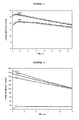
- a control substrate is prepared, with the same composition as the previous one, but without 4-dimethylaminopyridine (DMAP). Later, to a polymethylmethacrylate cuvette containing 2 mL of substrate solution, are added 10 ⁇ L of a 0.5 ⁇ g/mL horseradish peroxidase (HRP-Type VIA) solution. The solution is mixed for a few seconds with a vortex and measurement of the luminescent signal is carried out for a period of 10 min. The results obtained are shown in Figure 1 . As it can be seen, the substrate containing the hypernucleophilic acylation catalyst DMAP produces a significantly higher signal than the control substrate, which is devoid of it.
- HRP-Type VIA horseradish peroxidase
- chemiluminescent substrates are prepared as follows, comprising:
- a series of polymethylmethacrylate cuvettes is prepared, each containing 2 mL of a substrate solution.
- a substrate solution To each cuvette are added 10 ⁇ L of a 0.5 ⁇ g/mL horseradish peroxidase (HRP-Type VIA) solution.
- HRP-Type VIA horseradish peroxidase
- the solution is mixed for a few seconds with a vortex and measurement of the luminescent signal is carried out for a period of 10 min.
- the results obtained are shown in Figure 2 .
- the chemiluminescent signal generated by substrates containing HNAC Substrates B, C, and D
- the chemiluminescent signal generated by substrates containing HNAC is from 6 to 12 times more intense compared to Substrate A, which is free of it.
- a series of polymethylmethacrylate cuvettes is prepared, each containing 2 mL of a substrate solution.
- To each cuvette are added small amounts of 5 M HCl or 5 M NaOH, in order to adjust the pH in 8.0-10.0 range without producing in any case significant changes in the total volume.
- To each cuvette are added 10 ⁇ L of a 0.5 ⁇ g/mL horseradish peroxidase (HRP-Type VIA) solution. The solution is mixed for a few seconds with a vortex and measurement of the luminescent signal is carried out. For each reaction, the integrated light signal intensity is recorded for the first 600 sec.
- HRP-Type VIA horseradish peroxidase
- a Working Solution (Chemiluminescence Substrate) for the measurement of peroxidase can be obtained by mixing equal parts of the following solutions:
- the pH of the 0.3 M Tris Buffer of Solution A can be adjusted so that the pH of the Working Solution is between 8.6 and 9.4.
- the chemiluminescent substrate prepared as described in Example 4 and containing HNAC allows the determination of Horseradish Peroxidase, with a sensitivity at least 6-12 times higher than the corresponding substrates containing an electron mediator, but without HNAC.
- AFP ⁇ -foetoprotein
- This immunometric assay is based on the immunochemical reaction between a capture antibody, an antigen ( ⁇ -foetoprotein, AFP), and a HRP-labeled antibody.
- Wells with capture antibody were prepared by incubating the microwell plates coated with streptavidin with a solution of biotinylated capture antibody. The wells were then incubated with ⁇ -foetoprotein (AFP) calibrators from a commercial kit. 25 ⁇ L of a AFP calibrator were added to each well. After an incubation period of one hour, the plate was washed with PBS-0.05% Tween-20. 200 ⁇ L of a solution of anti-AFP antibody labeled with HRP were then added to each well.
- AFP ⁇ -foetoprotein
Landscapes
- Life Sciences & Earth Sciences (AREA)
- Chemical & Material Sciences (AREA)
- Health & Medical Sciences (AREA)
- Engineering & Computer Science (AREA)
- Organic Chemistry (AREA)
- Molecular Biology (AREA)
- Immunology (AREA)
- Zoology (AREA)
- General Health & Medical Sciences (AREA)
- Proteomics, Peptides & Aminoacids (AREA)
- Microbiology (AREA)
- Urology & Nephrology (AREA)
- Analytical Chemistry (AREA)
- Wood Science & Technology (AREA)
- Physics & Mathematics (AREA)
- Biochemistry (AREA)
- Hematology (AREA)
- Biomedical Technology (AREA)
- Biotechnology (AREA)
- Genetics & Genomics (AREA)
- General Engineering & Computer Science (AREA)
- Cell Biology (AREA)
- Bioinformatics & Cheminformatics (AREA)
- Biophysics (AREA)
- Food Science & Technology (AREA)
- Medicinal Chemistry (AREA)
- General Physics & Mathematics (AREA)
- Pathology (AREA)
- Investigating Or Analysing Materials By The Use Of Chemical Reactions (AREA)
- Measuring Or Testing Involving Enzymes Or Micro-Organisms (AREA)
- Luminescent Compositions (AREA)
Abstract
Description
- The present invention concerns a new method for increasing light emission generated by the chemiluminescent reaction of luminol, a peroxydase enzyme, an oxidant and an electron mediator.
- The chemiluminescent reaction is that between luminol, a peroxide source and a peroxydase enzyme, especially horseradish peroxidase (HRP), that catalyzes the oxidation of luminol by peroxide. Such oxidation is accompanied by light emission.
- The chemiluminescent oxidation of luminol catalyzed by peroxidase finds wide employment in analytical tests of antigens, antibodies and nucleic acids, and in particular in blotting tests, e.g., Dot Blots, Western Blots (proteins), Southern and the Northern Blots (nucleic acids).
- It is known that the chemiluminescent oxidation of luminol catalyzed by peroxidase can be made faster and more efficient by adding an electron mediator, or enhancer, as shown, for example, by L.J. Kricka in Clinical Chemistry 1991; 37:1472-1481; or by L.J. Kricka, J.C. Voyta and I. Bronstein in "Chemiluminescent Methods for Detecting and Quantitating Enzyme Activity", Methods Enzymol. 2000; 305:370-390. Several compounds have been used as electron mediators. In particular, firefly luciferin, 6-hydroxybenzotriazole, p-iodophenol, p-coumaric acid are described by G.H.G. Thorpe and L.J. Kricka, Methods Enzymol. 1986; 133:331; aromatic amines in
U.S. Pat. No. 4279950 ; acetanilides in Eur. Pat. Appl. No.603953 (1994 U.S. Pat. No. 5171668 ; boronic acids replaced inU.S. Pat. No. 5629168 . It is believed that in the presence of an electron mediator, the oxidation of luminol catalyzed by peroxidase proceeds as follows:
HRP + H2O2 → HRP-I (1)
HRP-I + LH- → HRP-II + L·- (2)
HRP-II + LH- → HRP + L·- (3)
HRP-I + E → HRP-II + E- (4)
HRP-II + E → HRP-II + E- (5)
E- + LH- → E + L·- (6)
L·- → L + LH- (7)
L + H2O2 → LO2 2- (8)
LO2 2- → (AP2-)* + N2 (9)
(AP2-)* → AP2- + hν (10)
where HRP, HRP-I and HRP-II indicate the enzyme peroxidase in the native form and in its two oxidized forms, respectively; LH-, LH·- , L, LO2 2- represent luminol anion, luminol radical anion, diazaquinone and luminol peroxide; E ed E represent the electron mediator and its corresponding radical; finally, AP2- indicates the dianion of 3-aminophthalic acid, and (AP2-)* its excited state. According to this scheme, peroxidase HRP is oxidized by peroxide to HRP-I. The luminol anion and the enhancer are oxidized by HRP-I to their respective radicals with conversion of the enzyme to its HRP-II form. In turn, HRP-II oxidizes another molecule of luminol anion or of electron mediator to their respective radicals, simultaneously regenerating the native form of the HRP enzyme, which can participate in another oxidation cycle. It is thus believed that the increase in the chemiluminescent signal is due to the faster generation of the key intermediate LH·- in the presence of an electron mediator (see e.g., S.B. Vlasenko, A.A. Arefyev, A.D. Klimov, B.B. Kim, E.L. Gorovits, A.P. Osipov, E.M. Gavrilova, A.M. Yegorov, J. Biolumin. Chemilumin. 1989; 4:164-176, or B. Cercek, K. Roby, L. Cercek, J. Biolumin. Chemilumin. 1994; 9:273-277). - The subsequent phases of the chemiluminescent reaction are less clear. The radical anion of luminol LH·- is unstable and can dismutate to luminol anion LH and diazaquinone, L. The diazaquinone in turn is likely to be susceptible to nucleophilic attack by peroxide ion HO2 - on the carbonylic carbon (C=O), with formation of luminol peroxide LO2 2-, in the open or cyclical form (endoperoxide). Finally, luminol peroxide collapses to 3-aminophthalate, AP2-, with expulsion of molecular nitrogen. Some of the energy thus produced is captured by aminophthalate with formation of its excited state (AP2- )* and subsequent emission of blue light (425 nm). The efficiency of this process corresponds to the fluorescence quantum yield of 3-aminophthalate (approximately 30%). Although the exact details of reactions (7)-(9) are not known, it is conceivable that the conversion of luminol radical anion, LH·-, to luminol peroxide, LO2 2-, involves nucleophilic attack of peroxide ion on a carbonylic carbon (C=O) of luminol (see e.g., G. Merenyi, J. Lind and T.E. Eriksen "Nucleophilic Addition to Diazaquinones. Formation and Breakdown of Tetrahedral Intermediates in relation to Luminol Chemiluminescence," J. Am. Chem. Soc. 1986; 108:7716-7726.) On the other hand, the efficiency of this reaction is decisive for the formation of (Ap2-)*.
- Object of the present invention is to provide a new method for increasing light emission generated by the chemiluminescent reaction of luminol, a peroxydase enzyme, an oxidant and an electron mediator.
- According to the invention, the above object is achieved thanks to the solution recalled specifically in the ensuing claims, which are understood as forming an integral part of the present description.
- In an embodiment, this invention provides for the use, in chemiluminescent compositions, of a hypernucleophilic acylation catalyst (HNAC) belonging to the class of 4-aminopiridines and particularly compounds defined by the following formula (I):
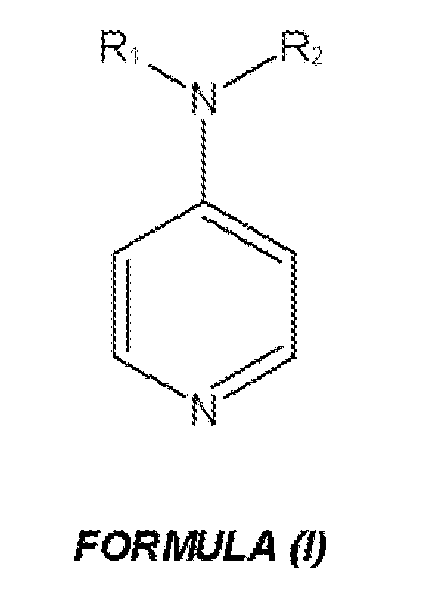
- R1 and R2 represent both or each separately, hydrogen, methyl, ethyl, propyl, butyl and isopropyl,
or - R1 and R2 together represent -(CH2)4- thus forming a pyrrolidone ring with the nitrogen atom,
or - R1 and R2 together represent -(CH2)5- thus forming a piperidine ring with the nitrogen atom,
or - R1 and R2 together represent -(CH2)2-CHCH3-(CH2)2- thus forming a 4-methylpiperidine ring with the nitrogen atom,
or - R1 and R2 together represent -(CH2)2-O-(CH2)2- thus forming a morpholine ring with the nitrogen atom,
or - R1 and R2 together represent -(CHCH3)-CH=CH(CHCH3)- thus forming a 2,5-dimethyl-2,5-dihydro-1H-pyrrole ring with the nitrogen atom.
- In an embodiment, this invention provides for the use, in chemiluminescent compositions, of a hypernucleophilic acylation catalyst (HNAC) belonging to the class of 4-aminopiridines and particularly compounds defined by the following formula (II):

- X represents hydrogen, methyl, ethyl, propyl, butyl or isopropyl, while R1 and R2 represent both or each separately, hydrogen, methyl, ethyl, propyl, butyl and isopropyl,
or - X represents NH2, or N(methyl)2, or N ethyl)2, or N(propyl)2, or N(isopropyl)2, or N(butyl)2, while R1 and R2 represent both or each separately, hydrogen, methyl, ethyl, propyl, isopropyl, or butyl.
- Although the present invention concerns the use, in general and for whatever purpose, of hypernucleophilic acylation catalyst to increase light emission produced by the chemiluminescent reaction, it is, however, primarily applicable in the context of an assay.
- The term "assay" means the detection, semiquantification and quantification of an analyte. Typically the implementation of an assay requires to relate the light output to the amount of peroxidase used, so that peroxidase is the substance determined directly. Although the present invention is useful for determining the presence or amount of any of the reaction partners (luminol; peroxidase; oxidant; mediator of electrons; hypernucleophilic acylation catalyst), the reaction partner is not necessarily the substance itself to be determined. For example, the oxidant can be produced by a previous reaction, or a series of previous reactions.
Peroxidase or luminol may be present in the form of a conjugated antibody used in an immunoenzymatic assay to determine an antigen. Or peroxidase or luminol may be conjugated to a nucleotide, an oligonucleotide or a nucleic acid in hybridisation assays. Therefore, the present invention is applicable to any method of diagnostic assay of a substance whose presence or amount is related to the presence or amount of a partner reaction selected from the group consisting of luminol, a peroxidase enzyme, an oxidant, an enhancer and a hypernucleophilic acylation catalyst that coreact in a chemiluminescent reaction, whose emission of light is detected or measured so that the presence or amount of material to be analysed is related to the production of light. The present invention also includes a kit for performing an assay comprising luminol, an oxidant, a electron mediator and a hypernucleophilic acylation catalyst. - The invention will now be described, by way of example only, with reference to the enclosed figures of drawing, wherein:
-
Figure 1 shows a graph of the chemiluminecsnet signal as a function of time in presence of N-dimethylaminopyridine (DMAP); -
Figure 2 shown a graph of the chemiluminecsnet signal as a function of time in presence of different hypernucleophilic acylation catalysts according to the instant invention; -
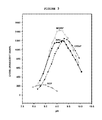
Figure 3 shows a graph of the chemiluminecsnet signal as a function of pH in presence of different hypernucleophilic acylation catalysts according to the instant invention; -
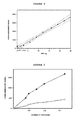
Figure 4 shows a graph of the chemiluminecsnet signal as a function of the amount of horseradish peroxidase in presence of 4-morpholinopyridine (MORP); -
Figura 5 shows a graph of the chemiluminecsnet signal for the detection of Yersinia Enterocolitis in presence (■) and in absence (□) of HNAC; -
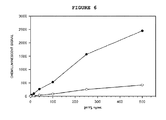
Figura 6 shows a graph of the chemiluminecsnet signal for the detection of alfa-foetoprotein in presence (•) and in absence (o) of HNAC. - The search for nucleophilic acylation catalysts, capable of facilitating the attack of peroxide ion on the carbonylic carbon (C=O) of luminol, and thus increasing the production of light by the chemiluminescent reaction has led to the identification of a group of compounds with the necessary requirements. These compounds, known as hypernucleophilic acylation catalysts or HNAC, see e.g. E.F.V. Scriven, "4-Dialkylaminopyridines: Super Acylation and Alkylation Catalysts", Chem. Soc. Rev. 1983, 12:129-161, do, in fact, possess the characteristic of increasing very significantly the light output produced by the chemiluminescent oxidation of luminol catalyzed by peroxidase and in the presence of electron mediators (electroactive enhancers). Moreover, the compounds found do not act like electroactive enhancers. When using the compounds object of this invention instead of electroactive enhancers, there is in fact no intensification of light output from the oxidation of luminol catalyzed by peroxidase.
- From a structural point of view, the compounds of this invention belong to the category of 4-aminopiridines. (A. Hassner, L.R. Krepski, V. Alexanian, Aminopyridines as Acylation Catalysts for Tertiary Alcohols, Tetrahedron 1978, 34:2069-2076; G. Hoefle, W. And Steglich, H. Vorbrueggen, "4-Dialkylaminopyridines as Highly Active Acylation Catalysts ", Angew. Chem. Int. Ed. Engl. 1978; 17:569-583.
- The hypernucleophilic acylation catalysts (HNACs) of this invention, represented by the general formulas (I) and (II), include in particular 4-diethylaminopiridine, 4-dimethylaminopyridine (DMAP), 4-pirrolidinopyridine (PPY), 4-piperidinopyridine, 4-(4-methylpiperidin-1-yl)pyridine (MPP), 4-morpholinopyridine (MORP), 4-(2,5-dimethyl-2,5-dihydro-1H-pirrol-1-yl)pyridine, N,N-dimethyl-N'-pyridin-4-ylimidoformamide and N,N,N',N'-tetramethyl-N''-pyridin-4-yl-guanidine.
- Especially preferred are MORP, PPY, DMAP and MPP. These compounds are particularly useful in chemiluminescent assays that require a high level of light output, such as blotting assays, including Western, Southern and Northern blots, as well as dot blot and nucleic acid hybridisation assays . The concentration of hypernucleophilic acylation catalyst is generally in the interval between 0.001 and 20 mmol/litre, preferably between 0.1 mmol and 10 mmol/litre.
- The best results are obtained at high pH values, especially in the pH range between 8.9 and 9.4. This interval is significantly higher than the optimum pH range observed in the presence of enhancer, but in the absence of hypernucleophilic acylation catalyst, which is usually between 8.4 and 8.6.
- The luminol used must be of a purity suitable and appropriate for luminescence assays. Luminol can be used as the sodium salt. If the analyte to be determined is peroxidase, the concentration of luminol is generally between 0.1 mmol/litre and 50 mmol/litre, preferably between 0.5 and 10 mmol/litre. The oxidant can be any substance capable of oxidizing luminol with emission of light. A source peroxide is preferred, such as hydrogen peroxide or sodium perborate. The concentration of oxidant used in chemiluminescent assays of peroxidase is between 0.1 and 100 mmol/litre, preferably between 0.5 and 10 mmol/litre.
- The peroxidase enzyme is normally horseradish peroxidase (HRP) of a quality suitable for use in luminescence assays. Preferably the HRP enzyme is a basic isoenzyme, for example Sigma type VIA or IX. It can be free or conjugated to a ligand.
- The electron mediator (electroactive enhancer) can be any electroactive substance able to act as a electron mediator between the oxidant and luminol. In particular, enhancers belonging to the following classes of compounds can be used: benzothiazoles, phenols, aromatic amines, N-alkyl phenothiazines, indophenols, arylboronic acids. The preferred electron mediators are: p-iodophenol, acid p-iodophenylboronic acid, salts of 3-(phenothiazin-10-yl)propane-1-sulfonic acid or 4-(phenothiazin-10-yl)butane-1-sulfonic acid. The electron mediator must be of a purity adequate and appropriate for use in luminescence assays. In particular, it must not contain impurities that can inhibit the chemiluminescent reaction. The concentration of electron mediator used in chemiluminescent assays of peroxidase is between 0.001 and 20 mmol/litre, preferably between 0.1 and 10 mmol/litre.
- Chemiluminescent reactions of this invention are applicable to the detection and quantification of analytes using for example the formation of a bond between a protein or nucleic acid and a membrane and peroxidase as tracer. The luminescent reaction is initiated by adding to the membrane a substrate comprising luminol, a source of peroxide, an electron mediator and a nucleophilic acylation catalyst. The emission of light is prolonged and can be measured by film, CDD camera or other instrumentation.
- The chemiluminescent assays based on the substrate solutions of this invention include Dot Blot and Western Blot assays for proteins and Southern and Northern Blots assays for nucleic acids. Another important application of the chemiluminescent substrate of the present invention is in ELISA immunoenzymatic assays, especially for analytes present in extremely small quantities, such as tumour markers, thyroid hormones, proteins viruses (HIV, HCV).
- The following examples serve to illustrate specific aspects of the invention. However, they are not intended to limit the invention.
- All the reagents used within the present application have been purchased by Sigma-Aldrich.
- All measurements reported were made with a Varian Eclipse spectrofluorimeter, Bio/Chemiluminescence mode (wavelength emission: 425 nm; emission slit: 20 nm). A chemiluminescent substrate is prepared as follows, comprising:
- 3 mM luminol, sodium salt
- 2 mM p-iodophenol (electron mediator)
- 4 mM sodium perborate
- 5 mM 4-dimethylaminopyridine (HNAC)
- 0.15 M, pH 9.0 Tris Buffer
- In addition, a control substrate is prepared, with the same composition as the previous one, but without 4-dimethylaminopyridine (DMAP). Later, to a polymethylmethacrylate cuvette containing 2 mL of substrate solution, are added 10 µL of a 0.5 µg/mL horseradish peroxidase (HRP-Type VIA) solution. The solution is mixed for a few seconds with a vortex and measurement of the luminescent signal is carried out for a period of 10 min. The results obtained are shown in
Figure 1 . As it can be seen, the substrate containing the hypernucleophilic acylation catalyst DMAP produces a significantly higher signal than the control substrate, which is devoid of it. - All measurements reported were made with a Varian Eclipse spectrofluorimeter, Bio/Chemiluminescence mode (wavelength emission: 425 nm; emission slit: 5 nm). The following chemiluminescent substrates are prepared as follows, comprising:
- 5 mM luminol, sodium salt
- 3 mM sodium 3-(phenothiazin-10-yl)propane-1-sulfonate
- 4 mM sodium perborate (oxidiser)
- Hypernucleophilic Acylation Catalyst (HNAC):
- Substrate A, none;
- Substrate B, 3 mM 4-pyrrolidinopyridine (PPY)
- Substrate C, 3 mM 4-dimethylaminopyridine (DMAP)
- Substrate D, 3 mM 4-morpholinopyridine (MORP)
- 0.15 M, pH 9.0 Tris Buffer.
- Then, a series of polymethylmethacrylate cuvettes is prepared, each containing 2 mL of a substrate solution. To each cuvette are added 10 µL of a 0.5 µg/mL horseradish peroxidase (HRP-Type VIA) solution. The solution is mixed for a few seconds with a vortex and measurement of the luminescent signal is carried out for a period of 10 min. The results obtained are shown in
Figure 2 . As it can be seen, during this time period the chemiluminescent signal generated by substrates containing HNAC (Substrates B, C, and D) is from 6 to 12 times more intense compared to Substrate A, which is free of it. - The measurements were carried out with a Varian Eclipse spectrofluorimeter, Bio/Chemiluminescence mode (wavelength emission: 425 nm; emission slit: 5 nm; emission filter: open; photomultiplier voltage: medium). Four solutions are prepared with the following composition:
- 5.0 mM sodium luminol
- 4.0 mM sodium perborate
- 3.0 mM sodium 3-(phenothiazin-10-yl)propane-1-sulfonate
- 3.0 mM HNAC (DMAP, MORP o PPY)
- 0.15 M, pH 9.2 Tris Buffer
- Then, a series of polymethylmethacrylate cuvettes is prepared, each containing 2 mL of a substrate solution. To each cuvette are added small amounts of 5 M HCl or 5 M NaOH, in order to adjust the pH in 8.0-10.0 range without producing in any case significant changes in the total volume. To each cuvette are added 10 µL of a 0.5 µg/mL horseradish peroxidase (HRP-Type VIA) solution. The solution is mixed for a few seconds with a vortex and measurement of the luminescent signal is carried out. For each reaction, the integrated light signal intensity is recorded for the first 600 sec. From the results obtained, which are shown in
Figure 3 , it can be seen that in all cases the chemiluminescent signal reaches the maximum value between pH 8.9 and pH 9.4. In the absence of HNAC the optimum signal is obtained in pH range between 8.4 and 8.6. This difference in behaviour can be attributed to the higher concentration of non-protonated HNAC (hypernucleophilic species) in the substrate at higher pH values (The pKa of MORP, DMAP and PPY is 8.8, 9.7 e 9.9, respectively). - A Working Solution (Chemiluminescence Substrate) for the measurement of peroxidase can be obtained by mixing equal parts of the following solutions:
- Solution A:
- 10 mM luminol, sodium salt
- 6 mM sodio 3-(phenothiazin-10-yl)propane-1-sulfonate
- 3 mM HNAC (hypernucleophilic acylation catalyst)
- 0.3 M Tris Buffer, pH 9.2-9.8 (see note)
- Solution B:
- 8 mM sodium perborate
- 50 mM, pH 5.0 acetate buffer
- Therefore the Working Solution (Chemiluminescence Substrate) contains:
- 5.0 mM luminol, sodium salt
- 3.0 mM sodium 3-(phenothiazin-10-yl)propane-1-sulfonate
- 3.0 mM HNAC (hypernucleophilic acylation catalyst)
- 4.0 mM sodium perborate.
- The pH of the 0.3 M Tris Buffer of Solution A can be adjusted so that the pH of the Working Solution is between 8.6 and 9.4.
- On a sheet of nitrocellulose membrane commonly used for Western Blot Assays, cut to approximately 2.5 x 5.0 cm, a series of spots was created with 2 µL solutions containing different concentrations of Horseradish Peroxidase (HRP Type VI-A ) in 0.1 M, pH 7.4 Tris buffer additioned with BSA (bovine serum albumin). Each spot was repeated three times, thus creating a 3 x 7 spot matrix on the membrane. The membrane was air dried and then washed twice with 0.1 M, pH 7.4 Tris buffer. Once dry, the membrane was placed on a microscope slide and inserted into a NightOwl (Berthold Technologies) imaging instrument. A Working Solution was then prepared by mixing:
- 500 µL of solution A prepared as in Example 4 e using 4-morpholinopyridine (MORP) as HNAC (hypernucleophilic acylation catalyst).
- 500 µL di solution B prepared as in Example 4
- The corresponding data are plotted in a graph,
Figure 4 , from which a limit of detection (LOD) for Horseradish Peroxidase (HRP, molecular mass = 44,000 daltons) of 1.8 pg (41 amol) is obtained . On the other hand, using a chemiluminescent substrate prepared as in Example 4, but without HNAC results in a LOD of 10 pg (230 amol). Similarly, the dose-response curve of Horseradish Peroxidase (L.J. Kricka, M. Cooper and Xiaoying Ji, "Synthesis and Characterization of 4-iodophenylboronic Acid: A New Enhancer for the Horseradish Peroxidase Chemiluminescent-Catalyzed Oxidation of Luminol," Anal. Biochem . 1996; 240:119-125) on a luminol-peroxide chemiluminescent substrate enhanced with p-iodophenylboronic but no HNAC results in a LOD of 509 amol. Therefore, the chemiluminescent substrate prepared as described in Example 4 and containing HNAC, allows the determination of Horseradish Peroxidase, with a sensitivity at least 6-12 times higher than the corresponding substrates containing an electron mediator, but without HNAC. - The blotting method used is described by H. Towbin et al. Proc. Natl. Acad. Sci. 76, 4350-4353 (1979). Various concentrations of Yersinia Enterocolitis lysate were separated by gel electrophoresis on 12% sodium dodecylsulfate (SDS) polyacrylamide gel. The gel was transferred to a nitrocellulose membrane for Western Blot. Non-specific binding sites were blocked with a 5% milk powder solution for 1 hour and then washed several times with a wash buffer (20 mM Tris, 137 mM NaCl). The blots were then incubated with the primary antibody (rabbit anti-YeEnt, dilution 1:10 000) for one hour, then washed as above to remove the antibody not linked to the antigen. The membrane with the blot was incubated for 1 hour with the secondary antibody labeled with HRP (goat anti-mouse HRP, Sigma A-6154, dilution 1:3000), with subsequent washing. The membrane was cut into two parts. Two Working Solutions were prepared according to Example 4, with HNAC (4-morpholinopyridine) or without HNAC. The Working Solutions were added to the membranes and incubated for five minutes. The chemiluminescent signal o was acquired with an imaging instrument (NightOwl, Berthold Technologies) for 1 minute.
Figure 5 illustrates the intensity of the signal obtained using the two solutions. It is evident that the substrate solution containing HNAC according to this invention shows a brightness and sensitivity considerably higher than the solution lacking HNAC - This immunometric assay is based on the immunochemical reaction between a capture antibody, an antigen (α-foetoprotein, AFP), and a HRP-labeled antibody. Wells with capture antibody were prepared by incubating the microwell plates coated with streptavidin with a solution of biotinylated capture antibody. The wells were then incubated with α-foetoprotein (AFP) calibrators from a commercial kit. 25 µL of a AFP calibrator were added to each well. After an incubation period of one hour, the plate was washed with PBS-0.05% Tween-20. 200 µL of a solution of anti-AFP antibody labeled with HRP were then added to each well. The wells were incubated at room temperature for 1 hour and then washed to remove excess conjugate. Two Working Solutions were prepared according to Example 4, with HNAC (4-dimethylaminopyridine) or without HNAC. The Working Solutions were added to the wells and incubated for ten minutes. The chemiluminescent signal was acquired with a plate reader (Luminoskan Ascent, LabSystems) for 1 minute.
Figure 6 shows the dose-response curve for AFP. Again, it is clear that the solution containing HNAC of this invention shows a higher signal and consequently a significantly higher sensitivity compared to the solution that lacks HNAC - Naturally, while the principle of the invention remains the same, the details of construction and the embodiments may widely vary with respect to what has been described and illustrated purely by way of example, without departing from the scope of the present invention.
| Row No. | Horseradish Peroxidase | Signal Intensity (3 spot average) |
| 1 | 19 | 3236 |
| 2 | 16 | 2804 |
| 3 | 12 | 2377 |
| 4 | 9 | 1309 |
| 5 | 6 | 718 |
| 6 | 3 | 350 |
| 7 | 0 | 198 |
Claims (21)
- A method for increasing the light emission produced by the chemiluminescent reaction of luminol, a peroxidase enzyme, an oxidant and an electron mediator, characterized in that said chemiluminescent reaction occurs in presence of a hypernucleophilic acylation catalyst (HNAC).
- A method according to claim 1, characterized in that said that hypernucleophilic acylation catalyst (HNAC) is selected from the group of compounds represented by Formula(I):
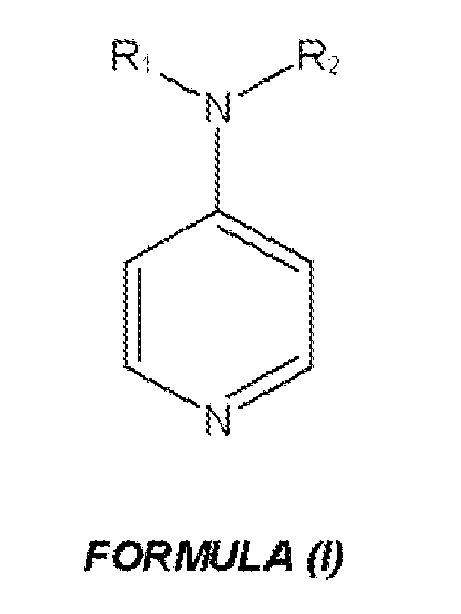 R1 and R2 represent both or each separately, hydrogen,methyl, ethyl, propyl, butyl and isopropyl,
orR1 and R2 together represent -(CH2)4- thus forming a pyrrolidone ring with the nitrogen atom,
orR1 and R2 together represent -(CH2)5- thus forming a piperidine ring with the nitrogen atom,
orR1 and R2 together represent - (CH2)2-CHCH3-(CH2)2-thus forming a 4-methylpiperidine ring with the nitrogen atom,
orR1 and R2 together represent -(CH2)2-O-(CH2)2- thus forming a morpholine ring with the nitrogen atom,
orR1 and R2 together represent -(CHCH3)-CH=CH(CHCH3)-thus forming a 2,5-dimethyl-2,5-dihydro-1H-pyrrole ring with the nitrogen atom. - A method according to claim 1, characterized in that said that hypernucleophilic acylation catalyst (HNAC) is selected from the group of compounds represented by Formula(II):
 X represents hydrogen, methyl, ethyl, propyl, butyl or isopropyl, while R1 and R2 represent both or each separately, hydrogen, methyl, ethyl, propyl, butyl and isopropyl,
orX represents NH2, or N(methyl)2, or N ethyl)2, or N(propyl)2, or N(isopropyl)2, or N(butyl)2, while R1 and R2 represent both or each separately, hydrogen, methyl, ethyl, propyl, isopropyl, or butyl. - A method according to any one of claims 1 to 3, characterized in that said hypernucleophilic acylation catalyst (HNAC) is selected among 4-diethylaminopyridine, 4-dimethylaminopyridine (DMAP), 4-pyrrolidinopyridine (PPY), 4-piperidinopyridine, 4-(4-methylpiperidin-1-yl)pyridine (MPP), 4-morpholinopyridine (MORP), la 4-(2,5-dimethyl-2,5-dihydro-1H-pyrrol-1-yl)pyridine, N,N-dimethyl-N'-pyridin-4-ylimidoformamide and N,N,N',N'-tetramethyl-N''-pyridin-4-yl-guanidine.
- A method according to any one of claims 1 to 4, characterized in that said peroxidase enzyme is free or conjugated to a ligand.
- A method according to any one of claims 1 to 5, characterized in that said peroxidase enzyme is horseradish peroxidase.
- A method according to any one of claims 1 to 6, characterized in that said oxidant is sodium perborate.
- A method according to any one of claims 1 to 7, characterized in that said electron mediator is p-iodophenol.
- A method according to any one of claims 1 to 8, characterized in that said electron mediator is sodium 3-(phenothiazin-10-yl)propane-1-sulfonate.
- A method according to any one of claims 1 to 9, characterized in that said chemiluminescent reaction is carried out at a pH between 8.0 and 10.
- A method for performing a diagnostic assay for the detection of an analyte in a sample, characterized in that said method comprises:a. the reaction of said analyte with a reagent specific for said analyte, wherein said reagent specific is labelled with luminol or peroxidase, with formation of a complex analyte-labelled reagent;b. the reaction of said complex analyte-labelled reagent with a solution comprising an oxidant, an electron mediator, a hypernucleophilic acylation catalyst (HNAC) and i) luminol, if the reagent specific for said analyte is labelled with peroxidase, or ii) peroxidase, if the reagent specific for said analyte is labelled with luminol, that coreact in a chemiluminescent reaction with light emission, andc. the detection of said analyte by means of measurement of said light emission.
- A method for performing a diagnostic assay according to claim 11, characterized in that said method comprises:a. the reaction of said analyte with a capture reagent specific for said analyte with formation of a complex analyte-capture reagent;b. the reaction of said complex analyte-capture reagent with said reagent specific for said analyte labelled with luminol or peroxidase with formation of a complex labelled reagent-analyte-capture reagent;c. the reaction of said complex labelled reagent-analyte-capture reagent with a solution comprising an oxidant, an electron mediator, a hypernucleophilic acylation catalyst (HNAC) and i) luminol, if said reagent specific for said analyte is labelled with peroxidase, or ii) peroxidase, if said reagent specific for said analyte is labelled with luminol, that coreact in a chemiluminescent reaction with light emission, andd. the detection of said analyte by means of measurement of said light emission.
- A method for performing a diagnostic assay according to claim 11, characterized in that said method comprises:a. the reaction of said analyte with said reagent specific for said analyte labelled with luminol or peroxidase with formation of a complex analyte-labelled reagent;b. the reaction of said complex analyte-labelled reagent with a capture reagent specific for said analyte with formation of a complex labelled reagent-analyte-capture reagent;c. the reaction of said complex labelled reagent-analyte-capture reagent with a solution comprising an oxidant, an electron mediator, a hypernucleophilic acylation catalyst (HNAC) and i) luminol, if said reagent specific for said analyte is labelled with peroxidase, or ii) peroxidase, if said reagent specific for said analyte is labelled with luminol, that coreact in a chemiluminescent reaction with light emission, andd. the detection of said analyte by means of measurement of said light emission.
- A method for performing a diagnostic assay according to claim 12 or 13, characterized in that said capture reagent is fixed to a solid phase.
- A method for performing a diagnostic assay according to any one of claims 11 to 14, characterized in that said capture reagent is selected among an antigen, an antibody, a nucleotide, an oligonucleotide, a single strand nucleic acid, a double strand nucleic acid.
- A method for performing a diagnostic assay according to any one of claims 11 to 15, characterized in that said labelled reagent is selected among an antigen, an antibody, a nucleotide, an oligonucleotide, a single strand nucleic acid, a double strand nucleic acid.
- A method for performing a diagnostic assay according to any one of claims 11 to 16, characterized in that said hypernucleophilic acylation catalyst (HNAC) is a compound selected form the group of compounds represented by Formula(I):
 R1 and R2 represent both or each separately, hydrogen, methyl, ethyl, propyl, butyl and isopropyl,
orR1 and R2 together represent -(CH2)4- thus forming a pyrrolidone ring with the nitrogen atom,
orR1 and R2 together represent -(CH2)5- thus forming a piperidine ring with the nitrogen atom,
orR1 and R2 together represent - (CH2)2-CHCH3-(CH2)2-thus forming a 4-methylpiperidine ring with the nitrogen atom,
orR1 and R2 together represent -(CH2)2-O-(CH2)2- thus forming a morpholine ring with the nitrogen atom,
orR1 and R2 together represent -(CHCH3)-CH=CH(CHCH3)-thus forming a 2,5-dimethyl-2,5-dihydro-1H-pyrrole ring with the nitrogen atom. - A method for performing a diagnostic assay according to any one of claims 11 to 16, characterized in that said hypernucleophilic acylation catalyst (HNAC) is a compound selected form the group of compounds represented by Formula (II) :
 X represents hydrogen, methyl, ethyl, propyl, butyl or isopropyl, while R1 and R2 represent both or each separately, hydrogen, methyl, ethyl, propyl, butyl and isopropyl,
orX represents NH2, or N(methyl)2, or N ethyl)2, or N(propyl)2, or N(isopropyl)2, or N(butyl)2, while R1 and R2 represent both or each separately, hydrogen, methyl, ethyl, propyl, isopropyl, or butyl. - A method for performing a diagnostic assay according to any one of claims 11 to 18, characterized in that the oxidant is sodium perborate.
- A method for performing a diagnostic assay according to any one of claims 11 to 19, characterized in that the electron mediator is sodium 3-(phenothiazin-10-yl)propane-1-sulfonate or p-iodophenol.
- A method for performing a diagnostic assay according to any one of claims 11 to 20, characterized in that the hypernucleophilic acylation catalyst (HNAC) is selected among 4-diethylaminopyridine, 4-dimethylaminopyridine (DMAP), 4-pyrrolidinopyridine (PPY), 4-piperidinopyridine, 4-(4-methylpiperidin-1-yl)pyridine (MPP), 4-morpholinopyridine (MORP), la 4-(2,5-dimethyl-2,5-dihydro-1H-pyrrol-1-yl)pyridine, N,N-dimethyl-N'-pyridin-4-ylimidoformamide and N,N,N',N'-tetramethyl-N''-pyridin-4-yl-guanidine.
Applications Claiming Priority (1)
| Application Number | Priority Date | Filing Date | Title |
|---|---|---|---|
| IT000112A ITBO20070112A1 (en) | 2007-02-23 | 2007-02-23 | METHOD TO INCREASE THE EMISSION OF LIGHT FROM A CHEMILUMINESCENT REACTION |
Publications (2)
| Publication Number | Publication Date |
|---|---|
| EP1962095A1 true EP1962095A1 (en) | 2008-08-27 |
| EP1962095B1 EP1962095B1 (en) | 2011-06-15 |
Family
ID=39312964
Family Applications (1)
| Application Number | Title | Priority Date | Filing Date |
|---|---|---|---|
| EP08151414A Active EP1962095B1 (en) | 2007-02-23 | 2008-02-14 | Method for increasing light emission from a chemiluminescent reaction |
Country Status (6)
| Country | Link |
|---|---|
| US (2) | US7803573B2 (en) |
| EP (1) | EP1962095B1 (en) |
| AT (1) | ATE513217T1 (en) |
| DK (1) | DK1962095T3 (en) |
| ES (1) | ES2368102T3 (en) |
| IT (1) | ITBO20070112A1 (en) |
Cited By (4)
| Publication number | Priority date | Publication date | Assignee | Title |
|---|---|---|---|---|
| ITTO20100580A1 (en) * | 2010-07-06 | 2012-01-07 | Cyanagen S R L | METHOD TO INCREASE AND REGULATE THE EMISSION OF LIGHT FROM A CHEMILUMINESCENT REACTION |
| US10711185B2 (en) | 2018-07-13 | 2020-07-14 | Bio-Helix Co., Ltd. | Reagent and kit for performing chemiluminescent reaction |
| IT201900000959A1 (en) * | 2019-01-22 | 2020-07-22 | Cyanagen S R L | Ultra-sensitive chemiluminescent substrates for peroxidase |
| US11112366B2 (en) | 2019-03-28 | 2021-09-07 | National Taiwan Ocean University | Reagent and kit for enhancing chemiluminescent reaction |
Families Citing this family (7)
| Publication number | Priority date | Publication date | Assignee | Title |
|---|---|---|---|---|
| ITBO20070112A1 (en) * | 2007-02-23 | 2008-08-24 | Cyanagen Srl | METHOD TO INCREASE THE EMISSION OF LIGHT FROM A CHEMILUMINESCENT REACTION |
| CN107561261A (en) * | 2017-08-18 | 2018-01-09 | 江苏凯基生物技术股份有限公司 | A kind of enhanced chemical luminescence reagent box and preparation method thereof |
| CN110031615A (en) * | 2019-04-17 | 2019-07-19 | 江苏食品药品职业技术学院 | A kind of ultra-sensitive chemical shines HRP substrate solution and preparation method thereof |
| CN110554183A (en) * | 2019-09-17 | 2019-12-10 | 沈阳万类生物科技有限公司 | Hypersensitive ECL chemiluminescent reagent |
| IT202000001327A1 (en) | 2020-01-23 | 2021-07-23 | Cyanagen S R L | CHEMILUMINESCENT SUBSTRATES FOR PEROXIDASE WITH A LONG SHELF LIFE |
| WO2023225776A1 (en) * | 2022-05-23 | 2023-11-30 | 孙嘉怡 | Method for preparing highly sensitive and stable chemiluminescent substrate liquid and use thereof in immunoassay |
| JP2025530159A (en) | 2022-09-09 | 2025-09-11 | バイエル・アクチエンゲゼルシヤフト | Medical Use and Administration Schedule of CCR8 Antibodies |
Citations (5)
| Publication number | Priority date | Publication date | Assignee | Title |
|---|---|---|---|---|
| US603953A (en) | 1898-05-10 | Woek feeding mechanism foe embeoideking machines | ||
| US4279950A (en) | 1978-12-26 | 1981-07-21 | Sumitomo Chemical Company, Limited | Jointing of concrete structure |
| US5171668A (en) | 1988-09-30 | 1992-12-15 | Fujirebio Inc. | Method of the chemiluminescence assay of the activity of peroxidase |
| US5629168A (en) | 1992-02-10 | 1997-05-13 | British Technology Group Limited | Chemiluminescent enhancers |
| US20050106652A1 (en) * | 1986-04-30 | 2005-05-19 | Massey Richard J. | Electrochemiluminescent assays |
Family Cites Families (9)
| Publication number | Priority date | Publication date | Assignee | Title |
|---|---|---|---|---|
| US4950588A (en) * | 1985-07-10 | 1990-08-21 | Molecular Diagnostics, Inc. | Prolonged enhanced chemiluminescence |
| CA2032154C (en) * | 1989-04-28 | 1996-01-09 | Yoshihiro Oyama | Method of high sensitivity luminescence analysis |
| JP3184894B2 (en) * | 1989-10-05 | 2001-07-09 | エックスオックスエミス, インコーポレイテッド | Haloperoxidase acid optimal chemiluminescence analysis system |
| US5372931A (en) | 1992-12-22 | 1994-12-13 | Eastman Kodak Company | Use of 4'-hydroxy- and 4'-alkoxy-substituted electron transfer agents in compositions, elements, test kits and analytical methods |
| US5686258A (en) * | 1993-05-17 | 1997-11-11 | Lumigen, Inc. | Chemiluminescent detection of hydrolytic enzymes using an acridan |
| JP3102228B2 (en) * | 1993-10-01 | 2000-10-23 | 富士レビオ株式会社 | Peroxidase activity measuring reagent and measuring method using the same |
| US6852503B1 (en) * | 2001-05-30 | 2005-02-08 | Pierce Biotechnology, Inc. | Compositions and methods for utilizing mixed substrate solutions of luminols and dioxetanes |
| DE602004027737D1 (en) * | 2003-07-30 | 2010-07-29 | Roche Diagnostics Gmbh | NEW CHEMILUMINESCENSE COMPOUNDS AND ITS USE |
| ITBO20070112A1 (en) * | 2007-02-23 | 2008-08-24 | Cyanagen Srl | METHOD TO INCREASE THE EMISSION OF LIGHT FROM A CHEMILUMINESCENT REACTION |
-
2007
- 2007-02-23 IT IT000112A patent/ITBO20070112A1/en unknown
-
2008
- 2008-02-14 ES ES08151414T patent/ES2368102T3/en active Active
- 2008-02-14 EP EP08151414A patent/EP1962095B1/en active Active
- 2008-02-14 DK DK08151414.3T patent/DK1962095T3/en active
- 2008-02-14 AT AT08151414T patent/ATE513217T1/en not_active IP Right Cessation
- 2008-02-20 US US12/071,333 patent/US7803573B2/en active Active
-
2010
- 2010-08-20 US US12/805,827 patent/US8129136B2/en active Active
Patent Citations (5)
| Publication number | Priority date | Publication date | Assignee | Title |
|---|---|---|---|---|
| US603953A (en) | 1898-05-10 | Woek feeding mechanism foe embeoideking machines | ||
| US4279950A (en) | 1978-12-26 | 1981-07-21 | Sumitomo Chemical Company, Limited | Jointing of concrete structure |
| US20050106652A1 (en) * | 1986-04-30 | 2005-05-19 | Massey Richard J. | Electrochemiluminescent assays |
| US5171668A (en) | 1988-09-30 | 1992-12-15 | Fujirebio Inc. | Method of the chemiluminescence assay of the activity of peroxidase |
| US5629168A (en) | 1992-02-10 | 1997-05-13 | British Technology Group Limited | Chemiluminescent enhancers |
Non-Patent Citations (14)
| Title |
|---|
| A. HASSNER; L.R. KREPSKI; V. ALEXANIAN: "Aminopyridines as Acylation Catalysts for Tertiary Alcohols", TETRAHEDRON, vol. 34, 1978, pages 2069 - 2076 |
| B. CERCEK; K. ROBY; L. CERCEK, J. BIOLUMIN. CHEMILUMIN., vol. 9, 1994, pages 273 - 277 |
| E.F.V. SCRIVEN: "4-Dialkylaminopyridines: Super Acylation and Alkylation Catalysts", CHEM. SOC. REV., vol. 12, 1983, pages 129 - 161, XP009091738, DOI: doi:10.1039/cs9831200129 |
| G. HOEFLE, W.; STEGLICH, H. VORBRUEGGEN: "4-Dialkylaminopyridines as Highly Active Acylation Catalysts", ANGEW. CHEM. INT. ED. ENGL., vol. 17, 1978, pages 569 - 583 |
| G. MERENYI; J. LIND; T.E. ERIKSEN: "Nucleophilic Addition to Diazaquinones. Formation and Breakdown of Tetrahedral Intermediates in relation to Luminol Chemiluminescence", J. AM. CHEM. SOC., vol. 108, 1986, pages 7716 - 7726 |
| G.H.G. THORPE; L.J. KRICKA, METHODS ENZYMOL., vol. 133, 1986, pages 331 |
| H. TOWBIN ET AL., PROC. NATL. ACAD. SCI., vol. 76, 1979, pages 4350 - 4353 |
| HOFMANN O ET AL: "Thin-film organic photodiodes as integrated detectors for microscale chemiluminescence assays", SENSORS AND ACTUATORS B, ELSEVIER SEQUOIA S.A., LAUSANNE, CH, vol. 106, no. 2, 13 May 2005 (2005-05-13), pages 878 - 884, XP004867952, ISSN: 0925-4005 * |
| JONSSON, T. ET IRGUM, K.: "New nucleophilic catalysts for bright and fast peroxyoxalate chemilunescence", ANALYTICAL CHEMISTRY, vol. 72, no. 7, 1 April 2000 (2000-04-01), pages 1373 - 1380, XP002478245 * |
| JONSSON, T. ET IRGUM, K.: "Very fast peroxyoxalate chemiluminescence", ANALYTICA CHIMICA ACTA, vol. 400, 1999, pages 257 - 264, XP002478244 * |
| L.J. KRICKA, CLINICAL CHEMISTRY, vol. 37, 1991, pages 1472 - 1481 |
| L.J. KRICKA; J.C. VOYTA; I. BRONSTEIN: "Chemiluminescent Methods for Detecting and Quantitating Enzyme Activity", METHODS ENZYMOL., vol. 305, 2000, pages 370 - 390, XP009034936, DOI: doi:10.1016/S0076-6879(00)05500-2 |
| L.J. KRICKA; M. COOPER; XIAOYING JI: "Synthesis and Characterization of 4-iodophenylboronic Acid: A New Enhancer for the Horseradish Peroxidase Chemiluminescent-Catalyzed Oxidation of Luminol", ANAL. BIOCHEM, vol. 240, 1996, pages 119 - 125, XP001183202, DOI: doi:10.1006/abio.1996.0338 |
| S.B. VLASENKO ET AL., J. BIOLUMIN. CHEMILUMIN., vol. 4, 1989, pages 164 - 176 |
Cited By (10)
| Publication number | Priority date | Publication date | Assignee | Title |
|---|---|---|---|---|
| ITTO20100580A1 (en) * | 2010-07-06 | 2012-01-07 | Cyanagen S R L | METHOD TO INCREASE AND REGULATE THE EMISSION OF LIGHT FROM A CHEMILUMINESCENT REACTION |
| EP2405016A1 (en) * | 2010-07-06 | 2012-01-11 | Cyanagen Srl | Method for increasing and regulating light emission from a chemiluminescent reaction |
| US9040252B2 (en) | 2010-07-06 | 2015-05-26 | Cyanagen S.R.L. | Method for increasing and regulating light emission from a chemiluminescent reaction |
| US10711185B2 (en) | 2018-07-13 | 2020-07-14 | Bio-Helix Co., Ltd. | Reagent and kit for performing chemiluminescent reaction |
| IT201900000959A1 (en) * | 2019-01-22 | 2020-07-22 | Cyanagen S R L | Ultra-sensitive chemiluminescent substrates for peroxidase |
| CN111454718A (en) * | 2019-01-22 | 2020-07-28 | 喜雅纳肯有限公司 | Ultrasensitive chemiluminescent substrates for peroxidases |
| EP3686285A1 (en) * | 2019-01-22 | 2020-07-29 | Cyanagen S.r.l. | Ultra-sensitive chemiluminescent substrates for peroxidase |
| US11761964B2 (en) | 2019-01-22 | 2023-09-19 | Cyanagen S.R.L. | Ultra-sensitive chemiluminescent substrates for peroxidase |
| CN111454718B (en) * | 2019-01-22 | 2025-01-03 | 喜雅纳肯有限公司 | Ultrasensitive chemiluminescent substrates for peroxidase |
| US11112366B2 (en) | 2019-03-28 | 2021-09-07 | National Taiwan Ocean University | Reagent and kit for enhancing chemiluminescent reaction |
Also Published As
| Publication number | Publication date |
|---|---|
| US20110053200A1 (en) | 2011-03-03 |
| DK1962095T3 (en) | 2011-09-12 |
| ATE513217T1 (en) | 2011-07-15 |
| US20080241868A1 (en) | 2008-10-02 |
| US8129136B2 (en) | 2012-03-06 |
| EP1962095B1 (en) | 2011-06-15 |
| ITBO20070112A1 (en) | 2008-08-24 |
| ES2368102T3 (en) | 2011-11-14 |
| US7803573B2 (en) | 2010-09-28 |
Similar Documents
| Publication | Publication Date | Title |
|---|---|---|
| EP1962095B1 (en) | Method for increasing light emission from a chemiluminescent reaction | |
| AU2011202658B2 (en) | Method for increasing and regulating light emission from a chemiluminescent reaction | |
| US4235869A (en) | Assay employing a labeled Fab-fragment ligand complex | |
| EP0755457B1 (en) | Novel Aryl-N-Alkylacridanthiocarboxylate derivatives useful for chemiluminescent detection | |
| EP0750748B1 (en) | Novel aryl n-alkylacridancarboxylate derivatives useful for chemiluminescent detection | |
| EP0625510A2 (en) | Novel N-alkylacridan carboxyl derivatives useful for chemiluminescent detection | |
| US5552298A (en) | Enzyme-catalyzed chemiluminescence from hydroxyaryl cyclic diacylhydrazide compounds | |
| CN113150775B (en) | Peroxidase chemiluminescent substrate with extended shelf life | |
| JPH10506006A (en) | Chemiluminescence assays based on indoxyl, thioindoxyl and other substrates | |
| Bronstein et al. | Clinical applications of luminescent assays for enzymes and enzyme labels | |
| JP3828150B2 (en) | Chemiluminescence detection of hydrolase using acridan | |
| EP1509601B1 (en) | Fluorescent detection of peroxidase enzymes | |
| JPS63246356A (en) | Novel urea derivative and method for measurement using said derivative as coloring component | |
| Kuroda et al. | New phenylboronic acid derivatives as enhancers of the luminol–H2O2–horseradish peroxidase chemiluminescence reaction | |
| DE69231114T2 (en) | Chemical luminescence method and composition therefor | |
| JPH04507194A (en) | Chemiluminescent compositions, chemiluminescent methods, and their use in analytical assays | |
| KR19990044308A (en) | The use of vanadium bromoperoxidase as a signal-generating enzyme in chemiluminescent systems; Test Kits and Analysis Methods | |
| US6124109A (en) | System for qualitatively and/or quantitatively analyzing preferably biological substances using enhanced chemiluminescence, and method and analysis kit using same | |
| JP3776229B2 (en) | Chemiluminescent reagent and method for producing the same | |
| NL2010244C2 (en) | Methods and means to enhance the sensitivity of a chemiluminescent reaction. | |
| JPH05505513A (en) | Luminescent or luminometric test | |
| AU706232B2 (en) | Novel aryl N-alkylacridancarboxylate derivatives useful for chemiluminescent detection | |
| JPS63277654A (en) | Dicyanoethylaryl derivative and test reagent containing same | |
| JPH03280898A (en) | Method for determining nucleic acid |
Legal Events
| Date | Code | Title | Description |
|---|---|---|---|
| PUAI | Public reference made under article 153(3) epc to a published international application that has entered the european phase |
Free format text: ORIGINAL CODE: 0009012 |
|
| AK | Designated contracting states |
Kind code of ref document: A1 Designated state(s): AT BE BG CH CY CZ DE DK EE ES FI FR GB GR HR HU IE IS IT LI LT LU LV MC MT NL NO PL PT RO SE SI SK TR |
|
| AX | Request for extension of the european patent |
Extension state: AL BA MK RS |
|
| 17P | Request for examination filed |
Effective date: 20081105 |
|
| 17Q | First examination report despatched |
Effective date: 20081211 |
|
| AKX | Designation fees paid |
Designated state(s): AT BE BG CH CY CZ DE DK EE ES FI FR GB GR HR HU IE IS IT LI LT LU LV MC MT NL NO PL PT RO SE SI SK TR |
|
| GRAP | Despatch of communication of intention to grant a patent |
Free format text: ORIGINAL CODE: EPIDOSNIGR1 |
|
| GRAS | Grant fee paid |
Free format text: ORIGINAL CODE: EPIDOSNIGR3 |
|
| GRAA | (expected) grant |
Free format text: ORIGINAL CODE: 0009210 |
|
| AK | Designated contracting states |
Kind code of ref document: B1 Designated state(s): AT BE BG CH CY CZ DE DK EE ES FI FR GB GR HR HU IE IS IT LI LT LU LV MC MT NL NO PL PT RO SE SI SK TR |
|
| REG | Reference to a national code |
Ref country code: GB Ref legal event code: FG4D Ref country code: CH Ref legal event code: EP |
|
| REG | Reference to a national code |
Ref country code: IE Ref legal event code: FG4D |
|
| REG | Reference to a national code |
Ref country code: DE Ref legal event code: R096 Ref document number: 602008007556 Country of ref document: DE Effective date: 20110804 |
|
| REG | Reference to a national code |
Ref country code: NL Ref legal event code: T3 |
|
| REG | Reference to a national code |
Ref country code: DK Ref legal event code: T3 |
|
| REG | Reference to a national code |
Ref country code: SE Ref legal event code: TRGR |
|
| PG25 | Lapsed in a contracting state [announced via postgrant information from national office to epo] |
Ref country code: NO Free format text: LAPSE BECAUSE OF FAILURE TO SUBMIT A TRANSLATION OF THE DESCRIPTION OR TO PAY THE FEE WITHIN THE PRESCRIBED TIME-LIMIT Effective date: 20110915 Ref country code: LT Free format text: LAPSE BECAUSE OF FAILURE TO SUBMIT A TRANSLATION OF THE DESCRIPTION OR TO PAY THE FEE WITHIN THE PRESCRIBED TIME-LIMIT Effective date: 20110615 Ref country code: HR Free format text: LAPSE BECAUSE OF FAILURE TO SUBMIT A TRANSLATION OF THE DESCRIPTION OR TO PAY THE FEE WITHIN THE PRESCRIBED TIME-LIMIT Effective date: 20110615 |
|
| REG | Reference to a national code |
Ref country code: ES Ref legal event code: FG2A Ref document number: 2368102 Country of ref document: ES Kind code of ref document: T3 Effective date: 20111114 |
|
| PG25 | Lapsed in a contracting state [announced via postgrant information from national office to epo] |
Ref country code: SI Free format text: LAPSE BECAUSE OF FAILURE TO SUBMIT A TRANSLATION OF THE DESCRIPTION OR TO PAY THE FEE WITHIN THE PRESCRIBED TIME-LIMIT Effective date: 20110615 Ref country code: GR Free format text: LAPSE BECAUSE OF FAILURE TO SUBMIT A TRANSLATION OF THE DESCRIPTION OR TO PAY THE FEE WITHIN THE PRESCRIBED TIME-LIMIT Effective date: 20110916 Ref country code: FI Free format text: LAPSE BECAUSE OF FAILURE TO SUBMIT A TRANSLATION OF THE DESCRIPTION OR TO PAY THE FEE WITHIN THE PRESCRIBED TIME-LIMIT Effective date: 20110615 Ref country code: AT Free format text: LAPSE BECAUSE OF FAILURE TO SUBMIT A TRANSLATION OF THE DESCRIPTION OR TO PAY THE FEE WITHIN THE PRESCRIBED TIME-LIMIT Effective date: 20110615 Ref country code: CY Free format text: LAPSE BECAUSE OF FAILURE TO SUBMIT A TRANSLATION OF THE DESCRIPTION OR TO PAY THE FEE WITHIN THE PRESCRIBED TIME-LIMIT Effective date: 20110615 Ref country code: LV Free format text: LAPSE BECAUSE OF FAILURE TO SUBMIT A TRANSLATION OF THE DESCRIPTION OR TO PAY THE FEE WITHIN THE PRESCRIBED TIME-LIMIT Effective date: 20110615 |
|
| PG25 | Lapsed in a contracting state [announced via postgrant information from national office to epo] |
Ref country code: BE Free format text: LAPSE BECAUSE OF FAILURE TO SUBMIT A TRANSLATION OF THE DESCRIPTION OR TO PAY THE FEE WITHIN THE PRESCRIBED TIME-LIMIT Effective date: 20110615 |
|
| PG25 | Lapsed in a contracting state [announced via postgrant information from national office to epo] |
Ref country code: PT Free format text: LAPSE BECAUSE OF FAILURE TO SUBMIT A TRANSLATION OF THE DESCRIPTION OR TO PAY THE FEE WITHIN THE PRESCRIBED TIME-LIMIT Effective date: 20111017 Ref country code: EE Free format text: LAPSE BECAUSE OF FAILURE TO SUBMIT A TRANSLATION OF THE DESCRIPTION OR TO PAY THE FEE WITHIN THE PRESCRIBED TIME-LIMIT Effective date: 20110615 Ref country code: CZ Free format text: LAPSE BECAUSE OF FAILURE TO SUBMIT A TRANSLATION OF THE DESCRIPTION OR TO PAY THE FEE WITHIN THE PRESCRIBED TIME-LIMIT Effective date: 20110615 Ref country code: IS Free format text: LAPSE BECAUSE OF FAILURE TO SUBMIT A TRANSLATION OF THE DESCRIPTION OR TO PAY THE FEE WITHIN THE PRESCRIBED TIME-LIMIT Effective date: 20111015 |
|
| PG25 | Lapsed in a contracting state [announced via postgrant information from national office to epo] |
Ref country code: PL Free format text: LAPSE BECAUSE OF FAILURE TO SUBMIT A TRANSLATION OF THE DESCRIPTION OR TO PAY THE FEE WITHIN THE PRESCRIBED TIME-LIMIT Effective date: 20110615 Ref country code: SK Free format text: LAPSE BECAUSE OF FAILURE TO SUBMIT A TRANSLATION OF THE DESCRIPTION OR TO PAY THE FEE WITHIN THE PRESCRIBED TIME-LIMIT Effective date: 20110615 Ref country code: RO Free format text: LAPSE BECAUSE OF FAILURE TO SUBMIT A TRANSLATION OF THE DESCRIPTION OR TO PAY THE FEE WITHIN THE PRESCRIBED TIME-LIMIT Effective date: 20110615 |
|
| PLBE | No opposition filed within time limit |
Free format text: ORIGINAL CODE: 0009261 |
|
| STAA | Information on the status of an ep patent application or granted ep patent |
Free format text: STATUS: NO OPPOSITION FILED WITHIN TIME LIMIT |
|
| 26N | No opposition filed |
Effective date: 20120316 |
|
| REG | Reference to a national code |
Ref country code: DE Ref legal event code: R097 Ref document number: 602008007556 Country of ref document: DE Effective date: 20120316 |
|
| PG25 | Lapsed in a contracting state [announced via postgrant information from national office to epo] |
Ref country code: MC Free format text: LAPSE BECAUSE OF NON-PAYMENT OF DUE FEES Effective date: 20120229 |
|
| REG | Reference to a national code |
Ref country code: CH Ref legal event code: PL |
|
| PG25 | Lapsed in a contracting state [announced via postgrant information from national office to epo] |
Ref country code: LI Free format text: LAPSE BECAUSE OF NON-PAYMENT OF DUE FEES Effective date: 20120229 Ref country code: CH Free format text: LAPSE BECAUSE OF NON-PAYMENT OF DUE FEES Effective date: 20120229 |
|
| REG | Reference to a national code |
Ref country code: IE Ref legal event code: MM4A |
|
| PG25 | Lapsed in a contracting state [announced via postgrant information from national office to epo] |
Ref country code: IE Free format text: LAPSE BECAUSE OF NON-PAYMENT OF DUE FEES Effective date: 20120214 |
|
| PG25 | Lapsed in a contracting state [announced via postgrant information from national office to epo] |
Ref country code: BG Free format text: LAPSE BECAUSE OF FAILURE TO SUBMIT A TRANSLATION OF THE DESCRIPTION OR TO PAY THE FEE WITHIN THE PRESCRIBED TIME-LIMIT Effective date: 20110915 |
|
| PG25 | Lapsed in a contracting state [announced via postgrant information from national office to epo] |
Ref country code: MT Free format text: LAPSE BECAUSE OF FAILURE TO SUBMIT A TRANSLATION OF THE DESCRIPTION OR TO PAY THE FEE WITHIN THE PRESCRIBED TIME-LIMIT Effective date: 20110615 |
|
| PG25 | Lapsed in a contracting state [announced via postgrant information from national office to epo] |
Ref country code: TR Free format text: LAPSE BECAUSE OF FAILURE TO SUBMIT A TRANSLATION OF THE DESCRIPTION OR TO PAY THE FEE WITHIN THE PRESCRIBED TIME-LIMIT Effective date: 20110615 |
|
| PG25 | Lapsed in a contracting state [announced via postgrant information from national office to epo] |
Ref country code: LU Free format text: LAPSE BECAUSE OF NON-PAYMENT OF DUE FEES Effective date: 20120214 |
|
| PG25 | Lapsed in a contracting state [announced via postgrant information from national office to epo] |
Ref country code: HU Free format text: LAPSE BECAUSE OF FAILURE TO SUBMIT A TRANSLATION OF THE DESCRIPTION OR TO PAY THE FEE WITHIN THE PRESCRIBED TIME-LIMIT Effective date: 20080214 |
|
| REG | Reference to a national code |
Ref country code: FR Ref legal event code: PLFP Year of fee payment: 9 |
|
| REG | Reference to a national code |
Ref country code: FR Ref legal event code: PLFP Year of fee payment: 10 |
|
| REG | Reference to a national code |
Ref country code: FR Ref legal event code: PLFP Year of fee payment: 11 |
|
| P01 | Opt-out of the competence of the unified patent court (upc) registered |
Effective date: 20230522 |
|
| PGFP | Annual fee paid to national office [announced via postgrant information from national office to epo] |
Ref country code: NL Payment date: 20260220 Year of fee payment: 19 |
|
| PGFP | Annual fee paid to national office [announced via postgrant information from national office to epo] |
Ref country code: SE Payment date: 20260223 Year of fee payment: 19 |
|
| PGFP | Annual fee paid to national office [announced via postgrant information from national office to epo] |
Ref country code: GB Payment date: 20260122 Year of fee payment: 19 |
|
| PGFP | Annual fee paid to national office [announced via postgrant information from national office to epo] |
Ref country code: ES Payment date: 20260317 Year of fee payment: 19 |
|
| PGFP | Annual fee paid to national office [announced via postgrant information from national office to epo] |
Ref country code: DE Payment date: 20260220 Year of fee payment: 19 Ref country code: DK Payment date: 20260223 Year of fee payment: 19 |
|
| PGFP | Annual fee paid to national office [announced via postgrant information from national office to epo] |
Ref country code: IT Payment date: 20260202 Year of fee payment: 19 |
|
| PGFP | Annual fee paid to national office [announced via postgrant information from national office to epo] |
Ref country code: FR Payment date: 20260227 Year of fee payment: 19 |