EP1959658A1 - Providing the presence status of a second telephone subscriber to a first telephone subscriber in the form of an audible indication - Google Patents
Providing the presence status of a second telephone subscriber to a first telephone subscriber in the form of an audible indication Download PDFInfo
- Publication number
- EP1959658A1 EP1959658A1 EP07123382A EP07123382A EP1959658A1 EP 1959658 A1 EP1959658 A1 EP 1959658A1 EP 07123382 A EP07123382 A EP 07123382A EP 07123382 A EP07123382 A EP 07123382A EP 1959658 A1 EP1959658 A1 EP 1959658A1
- Authority
- EP
- European Patent Office
- Prior art keywords
- user
- application server
- presence status
- adjunct application
- status
- Prior art date
- Legal status (The legal status is an assumption and is not a legal conclusion. Google has not performed a legal analysis and makes no representation as to the accuracy of the status listed.)
- Granted
Links
- 230000004044 response Effects 0.000 claims abstract description 15
- 238000000034 method Methods 0.000 claims description 29
- 238000013507 mapping Methods 0.000 claims description 22
- 238000004891 communication Methods 0.000 claims description 21
- 230000002452 interceptive effect Effects 0.000 claims description 4
- 230000001413 cellular effect Effects 0.000 description 4
- 230000006870 function Effects 0.000 description 4
- 238000012986 modification Methods 0.000 description 3
- 230000004048 modification Effects 0.000 description 3
- 238000012806 monitoring device Methods 0.000 description 3
- 230000000007 visual effect Effects 0.000 description 3
- 238000005516 engineering process Methods 0.000 description 2
- 238000012544 monitoring process Methods 0.000 description 2
- 230000009471 action Effects 0.000 description 1
- 238000004883 computer application Methods 0.000 description 1
- 230000000694 effects Effects 0.000 description 1
- 238000012360 testing method Methods 0.000 description 1
Images

Classifications
-
- H—ELECTRICITY
- H04—ELECTRIC COMMUNICATION TECHNIQUE
- H04M—TELEPHONIC COMMUNICATION
- H04M3/00—Automatic or semi-automatic exchanges
- H04M3/42—Systems providing special services or facilities to subscribers
- H04M3/42365—Presence services providing information on the willingness to communicate or the ability to communicate in terms of media capability or network connectivity
- H04M3/42374—Presence services providing information on the willingness to communicate or the ability to communicate in terms of media capability or network connectivity where the information is provided to a monitoring entity such as a potential calling party or a call processing server
-
- H—ELECTRICITY
- H04—ELECTRIC COMMUNICATION TECHNIQUE
- H04M—TELEPHONIC COMMUNICATION
- H04M3/00—Automatic or semi-automatic exchanges
- H04M3/42—Systems providing special services or facilities to subscribers
- H04M3/42025—Calling or Called party identification service
- H04M3/42085—Called party identification service
- H04M3/42093—Notifying the calling party of information on the called or connected party
-
- H—ELECTRICITY
- H04—ELECTRIC COMMUNICATION TECHNIQUE
- H04M—TELEPHONIC COMMUNICATION
- H04M3/00—Automatic or semi-automatic exchanges
- H04M3/42—Systems providing special services or facilities to subscribers
- H04M3/42365—Presence services providing information on the willingness to communicate or the ability to communicate in terms of media capability or network connectivity
-
- H—ELECTRICITY
- H04—ELECTRIC COMMUNICATION TECHNIQUE
- H04M—TELEPHONIC COMMUNICATION
- H04M3/00—Automatic or semi-automatic exchanges
- H04M3/42—Systems providing special services or facilities to subscribers
- H04M3/50—Centralised arrangements for answering calls; Centralised arrangements for recording messages for absent or busy subscribers ; Centralised arrangements for recording messages
- H04M3/53—Centralised arrangements for recording incoming messages, i.e. mailbox systems
- H04M3/533—Voice mail systems
- H04M3/53333—Message receiving aspects
- H04M3/53341—Message reply
Definitions
- the present invention relates to facilitation of effective communications using presence information in voice communication applications.
- Presence services are an emerging technology that provide information of users availability and capabilities. Such presence services are primarily used for providing availability information of one or more users to another user of a system. This availability information includes an indication of availability or willingness of the user to engage in immediate communication. For example, through visual monitoring of desktop computer applications or smart telephony device applications, a user is provided with availability information of another user, prior to making a telephone call.
- Such presence services suffer further inherent disadvantages in that presence information is not provided at a convenient time and in a convenient manner when a user is engaged in communication-related activities.
- a call-back option is commonly provided when a user is engaged in a voice mail session, allowing the user to conveniently place a call to a voice mail sender.
- a user that exits a voice mail session may wish to make a phone call immediately upon completion of the voice mail session.
- current presence information is not available to the user.
- such telephone calls are made without knowledge of availability of the voice mail sender, commonly resulting in the caller being connected to a voice mail system.
- a method for facilitating communication between a first user and a second user includes receiving contact information for the second user at a presence query task, via an adjunct application server, checking to determine presence status of the second user, providing the presence status from the adjunct application server, and providing the presence status from the adjunct application server through a telephony switch to the first user, the presence status provided to the first user in the form of an audible indication.
- a system for facilitating communication between a first user and a second user includes a telephone switch for connecting a first user telephony device with a second user telephony device, an adjunct application server connected to the telephone switch, and a presence query task operating with the adjunct application server by connection to or as part of the adjunct application service for checking to determine presence status of the second user and sending the presence status to the adjunct application server in response to a query received from the adjunct application server
- the adjunct application server receives the presence status from the presence query task and provides the presence status to the telephony switch in the form of an audible indication.
- External presence information such as availability status, for example, online, offline, busy, or on-the-phone, is conveniently announced to a party who is trying to place a call or who is accessing voice mail messages. Thus, a visual indication of availability is not necessary.
- the calling party receives presence information for the called party in real time while the call is being made, without the need for a visual device or application for the calling party to view.
- the presence information is provided audibly by, for example, an announcement or a tone, using existing telephony devices.
- the presence information of a voice mail sender can be provided while a user is accessing voice mail messages, thereby providing information for the user to determine a desired action to take in response to receipt of the voice mail message(s).
- the invention leverages external presence information such as status including, for example, online, offline, busy or on-the-phone status and provides an audible indication of such to a user who is placing a call or accessing voice mail.
- Figure 1 is a simplified representation of a communication system for implementing a method for facilitating communication using presence services, according to one embodiment of the present invention
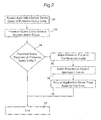
- Figure 2 is a flowchart of a method for facilitating communication using presence services according to an embodiment
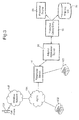
- Figure 3 is a simplified representation of a communication system for implementing a method for facilitating communication using presence services according to another embodiment of the present invention.
- Figure 1 a communication system for implementing a method for facilitating communication using presence services, according to an embodiment.
- a first telephone device 10 of a first user and a second telephone device 12 of a second user are both connected to a telephony switch 14 that is responsible for telephony connections between the first telephone device 10 and the second telephone device 12.
- the telephone switch 14 is connected to an adjunct application server 16 such as an auto-attendant server, a voice mail server, or an interactive voice response (IVR) server.
- an adjunct application server 16 such as an auto-attendant server, a voice mail server, or an interactive voice response (IVR) server.
- IVR interactive voice response
- the adjunct application server 16 is connected to a presence query task 18 that receives presence queries from the adjunct application server 16 and provides responses in the form of audible presence status information to the adjunct application server 16,
- the presence query status task 18 is connected to a presence engine 20 that provides presence status information to the presence query task 18, for users, including presence status information for the first user and for the second user.
- the presence engine 20 provides presence information by monitoring devices and applications to determine a user's presence.
- a mapping database 22 is also connected to the presence query task 18 for mapping the presence status information provided by the presence engine 20, to audible presence status information in the form of an audible indication or announcement. It will be appreciated that the functions provided by the adjunct application server 16, the presence query task 18, and the mapping database 22 can be embodied in the same device.
- the telephony switch 14 can be any switch that handles connections between telephone devices and that the telephony switch 14 and the adjunct application server 16 can be embodied in a single unit such as, for example, a PBX.
- figure 1 is a functional representation and it will be appreciated that the presence query task 18 and the mapping database 22 can be embodied in the same device.
- the first telephone device 10 is a desk telephone connected to the telephony switch 14.
- the second telephone device 12 is a desk telephone connected to the telephony switch 14.
- the first user employs the use of the adjunct application server 16 during telephony operations.
- the adjunct application server 16 sends a query to the presence query task 18.
- the query includes an identifier such as a telephone number of a uniform resource identifier (URI) of the second telephone device 12 of the second user.
- the presence query task 18 uses the identifier of the second telephone device 12 to query the second user's presence status from the presence engine 20.
- the presence engine 20 provides presence information by monitoring devices and applications to determine a user's presence.
- the presence query task 18 searches the mapping database 22 to map the presence status received at step 34 to an appropriate audible presence status notification such as a tone tone pattern or a pre-recorded audible announcement at step 36.
- the audible presence status notification is then forwarded to the adjunct application server 16 at step 38 and is played by the adjunct application server 16 to the first telephone device 10 at step 40.
- custom presence status indications can be defined and set by individual users.
- a text-to-speech prompt is dynamically generated according to the text defined by the user.
- the presence service ends at step 42. As shown in Figure 2 , if there is no presence status available for the second user or the method times out while waiting for the presence status, and therefore no presence status is received at step 34, the presence service ends at step 42.
- the adjunct application server 16 is an auto-attendant application.
- the first user wishes to talk to the second user.
- the first user calls and is connected to the telephony switch's auto-attendant application (adjunct application server 16),
- the first user is then presented with an option to input a number to call another user (the second user),
- the first user then enters the telephone number of the second telephone device 12 to call the second user, using a keypad on the first telephone device 10 and the number entered is validated by the adjunct application server 16.
- the adjunct application server 16 sends a query to the presence query task 18 and, as described above, the query includes the identifier of the second telephone device 12 (step 30).
- the identifier can be a telephone number or a URI, for example.
- the presence query task 18 uses the identifier of the second telephone device 12 to query the second user's presence status from the presence engine 20. If a presence status is received at the presence query task 18 from the presence engine 20, then the presence query task 18 searches the mapping database 22 to map the presence status received at step 34 to an appropriate pre-recorded audible presence status announcement at step 36.
- the content of the pre-recorded audible presence status announcement is then forwarded to the adjunct application server 16 at step 38 and is played by the adjunct application server 16 to the first telephone device 10 at step 40.
- a pointer to the location of the content of the pre-recorded audible presence status announcement is forwarded to the adjunct application server 16 at step 38 and the adjunct application server 16 uses the pointer to locate and play the pre-recarded audible presence status announcement to the first telephone device 10 at step 40.
- the pre-recorded audible presence status announcement is played to the first user to announce the presence status of the second user.
- the announcement can indicate that the second user is offline, online, busy or on-the-phone, prior to transferring (causing the second telephone device 12 to ring).
- options for call handling can be provided to the first user. For example, in the event that the second user is busy, options are provided to the first user to connect to an alternate number, such as a secretary, at another telephone device (not shown in Figure 1 ) or to go directly to voice mail to leave a message for the second user.
- the presence service ends at step 42. As shown in Figure 2 , if there is no presence status available for the second user, the presence query task 18 receives a NIL value from the presence engine 20 or times out and therefore no presence status is received at step 34. The presence service then ends at step 42. It will be appreciated that the functions of the adjunct application server 16 do not end at step 42. Instead, only the presence query task 18 operation ends.
- the adjunct application server 16 is a voice mail application.
- the second user previously called the first user and left a message using the voice mail application.
- the first user connects to the voice mail application (adjunct application server 16) to listen to the voice message left by the second user.
- the first user is presented with an option to play the voice message left by the second user.
- the adjunct application server 16 sends a query to the presence query task 18 and, as described above, the query includes the phone number of the second telephone device 12 (step 30), In the present example, the first user does not enter the phone number of the second telephone device 12. Instead, the phone number is retrieved from the message information.
- the presence query task 18 uses the telephone number of the second telephone device 12 to query the second user's presence status from the presence engine 20. If a presence status is received at the presence query task 18 from the presence engine 20, then the presence query task 18 searches the mapping database 22 to map the presence status received at step 34 to an appropriate pre-recorded audible presence status announcement at step 36. The pre-recorded audible presence status announcement is then forwarded to the adjunct application server 16 at step 38 and is played by the adjunct application server 16 to the first telephone device 10 at step 40. Thus, the pre-recorded audible presence status announcement is played to the first user to announce the presence status of the second user. For example, the announcement can indicate that the second user is online, offline, busy, on-the-phone or any other suitable announcement.
- the presence service ends at step 42.
- the presence query task 18 receives a NIL value from the presence engine 20 and therefore no presence status is received at step 34.
- the presence service then ends at step 42. Again, it will be appreciated that the functions of the adjunct application server 16 do not end at step 42. Instead, only the presence query task 18 operation ends.
- the first user is therefore provided with the pre-recorded announcement prior to hearing the telephone message.
- the message can be introduced as "Message 1, from B. Taylor on January 31, status online”.
- the first user can then determine whether or not to call the second user back based on the presence status provided.
- the first user is provided with the pre-recorded announcement after the voice message is played.
- an internal telephone device 100 of an internal user is connected to a telephony switch 14 that is responsible for telephony connections between the internal telephone device 100 and other telephony devices.
- the telephone switch 14 is connected to an adjunct application server 16 such as an auto-attendant server, a voice mail server, or an interactive voice response (IVR) server.
- the adjunct application server 16 is connected to a present query task 18 that receives presence queries from the adjunct application server 16 and provides responses in the form of audible presence status information to the adjunct application server 16.
- the presence query task 18 is connected to a presence engine 20 that provides presence status information to the presence query task 18, for users, including presence status information for the internal telephone device user.
- the presence engine 20 provides presence information by monitoring the internal telephone device and applications to determine the internal user's presence.
- a mapping database 22 is also connected to the presence query task 18 for mapping the presence status information in the form of an audible indicating or announcement. It will be appreciated that the functions provided by the adjunct application server 16, the presence query task 18, and the mapping database 22 can be embodied in the same device.
- the telephone switch 14 is also connected to a public switched telephone network (PSTN) which is connected to an external telephone device 102 of an external user.
- PSTN public switched telephone network
- the PSTN is further connected to a wireless network 108 which is connected to a cellular telephone device 104 of a cell phone user.
- the cellular telephone device 104 can be, for example, any device with cellular telephone functionality, including, for example, a cellular phone and a smart phone.
- a single telephone device is shown connected directly to the telephone switch 14.
- a single telephone device is shown connected to the PSTN 106 and a single telephone device is shown connected to the wireless network.
- many other telephone devices can be connected to the PSTN and many other telephone devise can be connected to the wireless network.
- the telephony switch 14 can be any switch that handles connections between telephone devices and that the telephony switch 14 and the adjunct application server 16 can be embodied in a single unit such as, for example, a PBX.
- Figure 3 is a functional representation and it will be appreciated that the presence query task 18, and the mapping database 22 can be embodied in the same device and can be part of a PBX, for example.
- the external user or the cell telephone user can employ the use of the adjunct application server 16 during telephony operations.
- the adjunct application server 16 sends a query to the presence query task 18.
- the query includes an identifier such as a telephone number or a uniform resource identifier (URI) of the internal telephone device 100 of the internal user.
- the presence query task 18 uses the identifier of the internal telephone device 100 to query the internal user's presence status from the presence engine 20.
- the presence engine 20 provides presence information by monitoring devices and applications to determine the internal user's presence.
- the presence query task 18 searches the mapping database 22 to map the presence status received at step 34 to an appropriate audible presence status notification such as a tone, tone pattern or a pre-recorded audible announcement at step 36.
- the audible presence status notification is then forwarded to the adjunct application server 16 at step 38 and is played by the adjunct application server 16 to the one of the external telephone device user and the cell telephone device user employing the use of the adjunct application server 16 that resulted in the sending of the query at step 30.
- the presence service ends at step 42. As shown in Figure 2 , if there is no presence status available for the internal user or the method times out while waiting for the presence status and therefore no presence status is received at step 34, the presence service ends at step 42.
- the presence query task 18 is connected to a mapping database for mapping a pre-recorded audible presence status notification in the form of an announcement to the presence status received from the presence engine 20.
- a mapping database can be used instead to map an audible tone or other audible indicator.
- a tone can be provided that the user recognizes as a presence status indication. For example, different tones or different patterns can be used to represent different presence status.
- the examples described above relate to one user being provided with presence status information for another user.
- presence status information can also be provided when a further user is added to a conference call, for example, a telephone device user that is involved in call in progress with on or more other users, can add a further user to the call in progress.
- the telephone device user already involved in the call is provided with presence status information for the further user prior to adding the further user to the call in progress.
- the adjunct application server 16 can include a text-to-speech component for dynamically generating an audible indication of presence status based on a presence status response from the presence query task. This is useful in the case in which a user, such as the first user or the second user in the first-described embodiment, sets their own presence status indications. Also, a test response from the presence query task can be converted into a speech response that is played for the first user. In this case, mapping using the mapping database 22 is unnecessary.
- Unified communication capabilities use text-to-speech technology for providing email over the phone.
- Presence information for the sender of an email can also be provided audibly, for example, at the end of an email.
- the present invention can also be employed, for example, along with an interactive voice response (IVR) system.
- IVR interactive voice response
- presence information is provided to a user when an option is presented to connect to another person or persons. The user can therefore determine whether or not to choose an option based on presence information.
- options for call handling can be provided based on the presence status provided in the audible indication. For example, in the event that a user is busy, options can be provided to connect to an alternative number, for example, to a secretary at another telephone device (not shown) or to go directly to voice mail to leave a message for the second user.
- the application can vary the presentation of the presence information that is provided such that the presence information that is provided differs for different users. For example, rules can be established to customize the presence information that is provided based on whether or not an incoming call is from an internal telephone device or an external telephone device, determined by the caller line identification. Similarly, specific presence information can be provided to only certain incoming calls, based on caller line identification. Therefore, an application can vary the presentation of the presence information that is provided such that certain information is provided only to pre-defined callers based on the caller line identification.
- the contact information based on the caller line identification is provided and, at step 36, the presence status is mapped to the appropriate pre-recorded audio or tone based on the caller line identification, Alternatively, audio is dynamically generated based on both the presence status and the caller line identification at step 36.
Landscapes
- Engineering & Computer Science (AREA)
- Signal Processing (AREA)
- Telephonic Communication Services (AREA)
- Computer And Data Communications (AREA)
Abstract
When a user is engaged in a voice mail session a call-back option is commonly provided, allowing the user to conveniently place a call to a voice mail sender. However, in such instances, current presence information is not available to the user. This problem is solved in that in response to selection of the option to play the voice message, a voice mail server in the form of an adjunct application server sends a query to a presence query task (30) including the phone number of the voice mail sender. The presence query task uses the telephone number of the voice mail sender to query the sender's presence status (32). Then the presence query task maps the presence status to an appropriate pre-recorded audible presence status announcement (36). The pre-recorded audible presence status announcement is then forwarded to the adjunct application server (38) and is played by the adjunct application server to the user (40).
Description
- The present invention relates to facilitation of effective communications using presence information in voice communication applications.
- Presence services are an emerging technology that provide information of users availability and capabilities. Such presence services are primarily used for providing availability information of one or more users to another user of a system. This availability information includes an indication of availability or willingness of the user to engage in immediate communication. For example, through visual monitoring of desktop computer applications or smart telephony device applications, a user is provided with availability information of another user, prior to making a telephone call.
- Existing presence services rely on desktop presence-enabled applications or smart telephony device presence-enabled applications for the provision of availability information of a user. In the absence of such desktop presence-enabled applications or smart telephony device presence-enabled applications, presence services are not possible. Non-knowledge workers or workers that do not have any presence enabler application for determining presence are not provided with any presence information.
- Such presence services suffer further inherent disadvantages in that presence information is not provided at a convenient time and in a convenient manner when a user is engaged in communication-related activities. For example, a call-back option is commonly provided when a user is engaged in a voice mail session, allowing the user to conveniently place a call to a voice mail sender. Alternatively, a user that exits a voice mail session, may wish to make a phone call immediately upon completion of the voice mail session. In such instances, current presence information is not available to the user. Thus, such telephone calls are made without knowledge of availability of the voice mail sender, commonly resulting in the caller being connected to a voice mail system.
- Improvements in presence services for providing presence-rented information in the absence of desktop presence-enabled applications or smart telephony device presence-enabled applications are therefore desirable.
- According to one aspect, there is provided a method for facilitating communication between a first user and a second user. The method includes receiving contact information for the second user at a presence query task, via an adjunct application server, checking to determine presence status of the second user, providing the presence status from the adjunct application server, and providing the presence status from the adjunct application server through a telephony switch to the first user, the presence status provided to the first user in the form of an audible indication.
- According to another aspect, there is provided a system for facilitating communication between a first user and a second user. The system includes a telephone switch for connecting a first user telephony device with a second user telephony device, an adjunct application server connected to the telephone switch, and a presence query task operating with the adjunct application server by connection to or as part of the adjunct application service for checking to determine presence status of the second user and sending the presence status to the adjunct application server in response to a query received from the adjunct application server The adjunct application server receives the presence status from the presence query task and provides the presence status to the telephony switch in the form of an audible indication.
- External presence information such as availability status, for example, online, offline, busy, or on-the-phone, is conveniently announced to a party who is trying to place a call or who is accessing voice mail messages. Thus, a visual indication of availability is not necessary.
- Advantageously, the calling party receives presence information for the called party in real time while the call is being made, without the need for a visual device or application for the calling party to view. Instead, the presence information is provided audibly by, for example, an announcement or a tone, using existing telephony devices. Further, the presence information of a voice mail sender can be provided while a user is accessing voice mail messages, thereby providing information for the user to determine a desired action to take in response to receipt of the voice mail message(s). The invention leverages external presence information such as status including, for example, online, offline, busy or on-the-phone status and provides an audible indication of such to a user who is placing a call or accessing voice mail.
- Embodiments of the present invention will now be described, by way of example only, with reference to the attached Figures, wherein:
-
Figure 1 is a simplified representation of a communication system for implementing a method for facilitating communication using presence services, according to one embodiment of the present invention; -
Figure 2 is a flowchart of a method for facilitating communication using presence services according to an embodiment; and -
Figure 3 is a simplified representation of a communication system for implementing a method for facilitating communication using presence services according to another embodiment of the present invention. - Reference is first made to
Figure 1 to describe a communication system for implementing a method for facilitating communication using presence services, according to an embodiment. As shown, afirst telephone device 10 of a first user and asecond telephone device 12 of a second user are both connected to atelephony switch 14 that is responsible for telephony connections between thefirst telephone device 10 and thesecond telephone device 12. Thetelephone switch 14 is connected to anadjunct application server 16 such as an auto-attendant server, a voice mail server, or an interactive voice response (IVR) server. In turn, theadjunct application server 16 is connected to apresence query task 18 that receives presence queries from theadjunct application server 16 and provides responses in the form of audible presence status information to theadjunct application server 16, The presencequery status task 18 is connected to apresence engine 20 that provides presence status information to thepresence query task 18, for users, including presence status information for the first user and for the second user. It will be appreciated by those skilled in the art that thepresence engine 20 provides presence information by monitoring devices and applications to determine a user's presence. Amapping database 22 is also connected to thepresence query task 18 for mapping the presence status information provided by thepresence engine 20, to audible presence status information in the form of an audible indication or announcement. It will be appreciated that the functions provided by theadjunct application server 16, thepresence query task 18, and themapping database 22 can be embodied in the same device. - For the purpose of simplicity, only two telephone devices, the
first telephone device 10 and thesecond telephone device 12, are shown. It will be appreciated that many other telephone devices can be connected to thetelephony switch 14. It will also be appreciated that thetelephony switch 14 can be any switch that handles connections between telephone devices and that thetelephony switch 14 and theadjunct application server 16 can be embodied in a single unit such as, for example, a PBX. As indicated above,figure 1 is a functional representation and it will be appreciated that thepresence query task 18 and themapping database 22 can be embodied in the same device. - For the purpose of the present example, the
first telephone device 10 is a desk telephone connected to thetelephony switch 14. Similarly, thesecond telephone device 12 is a desk telephone connected to thetelephony switch 14. - Referring now to
Figure 2 , there is shown a flow chart of a method for facilitating communication using presence services according to an embodiment. The first user employs the use of theadjunct application server 16 during telephony operations. Atstep 30, theadjunct application server 16 sends a query to thepresence query task 18. The query includes an identifier such as a telephone number of a uniform resource identifier (URI) of thesecond telephone device 12 of the second user. Atstep 32, thepresence query task 18 uses the identifier of thesecond telephone device 12 to query the second user's presence status from thepresence engine 20. As indicated above, thepresence engine 20 provides presence information by monitoring devices and applications to determine a user's presence. - If a presence status is received at the
presence query task 18 from thepresence engine 20, then thepresence query task 18 searches themapping database 22 to map the presence status received atstep 34 to an appropriate audible presence status notification such as a tone tone pattern or a pre-recorded audible announcement atstep 36. The audible presence status notification is then forwarded to theadjunct application server 16 atstep 38 and is played by theadjunct application server 16 to thefirst telephone device 10 atstep 40. In addition to pre-recorded audio announcements based on system-defined presence states such as on-line, off-line, etc., custom presence status indications can be defined and set by individual users. A text-to-speech prompt is dynamically generated according to the text defined by the user. The presence service ends atstep 42. As shown inFigure 2 , if there is no presence status available for the second user or the method times out while waiting for the presence status, and therefore no presence status is received atstep 34, the presence service ends atstep 42. - To assist in the explanation of the method for facilitating communication using presence services, the method is now described by way of example with reference to the foregoing discussion.
- For the purpose of the present example, the
adjunct application server 16 is an auto-attendant application. According to the present example, the first user wishes to talk to the second user. The first user calls and is connected to the telephony switch's auto-attendant application (adjunct application server 16), The first user is then presented with an option to input a number to call another user (the second user), The first user then enters the telephone number of thesecond telephone device 12 to call the second user, using a keypad on thefirst telephone device 10 and the number entered is validated by theadjunct application server 16. - Next, the
adjunct application server 16 sends a query to thepresence query task 18 and, as described above, the query includes the identifier of the second telephone device 12 (step 30). As indicated above, the identifier can be a telephone number or a URI, for example. Thepresence query task 18 uses the identifier of thesecond telephone device 12 to query the second user's presence status from thepresence engine 20. If a presence status is received at thepresence query task 18 from thepresence engine 20, then thepresence query task 18 searches themapping database 22 to map the presence status received atstep 34 to an appropriate pre-recorded audible presence status announcement atstep 36. The content of the pre-recorded audible presence status announcement is then forwarded to theadjunct application server 16 atstep 38 and is played by theadjunct application server 16 to thefirst telephone device 10 atstep 40. Alternatively, a pointer to the location of the content of the pre-recorded audible presence status announcement is forwarded to theadjunct application server 16 atstep 38 and theadjunct application server 16 uses the pointer to locate and play the pre-recarded audible presence status announcement to thefirst telephone device 10 atstep 40. Thus, after entering the phone number for thesecond telephone device 12, the pre-recorded audible presence status announcement is played to the first user to announce the presence status of the second user. For example, the announcement can indicate that the second user is offline, online, busy or on-the-phone, prior to transferring (causing thesecond telephone device 12 to ring). Based on the presence status of the second user, options for call handling can be provided to the first user. For example, in the event that the second user is busy, options are provided to the first user to connect to an alternate number, such as a secretary, at another telephone device (not shown inFigure 1 ) or to go directly to voice mail to leave a message for the second user. - The presence service ends at
step 42. As shown inFigure 2 , if there is no presence status available for the second user, thepresence query task 18 receives a NIL value from thepresence engine 20 or times out and therefore no presence status is received atstep 34. The presence service then ends atstep 42. It will be appreciated that the functions of theadjunct application server 16 do not end atstep 42. Instead, only thepresence query task 18 operation ends. - Another example will now be described to further assist in the explanation of the method for facilitating communication using presence services. For the purpose of the present example, the
adjunct application server 16 is a voice mail application. According to the present example, the second user previously called the first user and left a message using the voice mail application. In response to a message waiting indication at thefirst telephone device 10, the first user connects to the voice mail application (adjunct application server 16) to listen to the voice message left by the second user. The first user is presented with an option to play the voice message left by the second user. In response to selection of the option to play the voice message, theadjunct application server 16 sends a query to thepresence query task 18 and, as described above, the query includes the phone number of the second telephone device 12 (step 30), In the present example, the first user does not enter the phone number of thesecond telephone device 12. Instead, the phone number is retrieved from the message information. - The
presence query task 18 uses the telephone number of thesecond telephone device 12 to query the second user's presence status from thepresence engine 20. If a presence status is received at thepresence query task 18 from thepresence engine 20, then thepresence query task 18 searches themapping database 22 to map the presence status received atstep 34 to an appropriate pre-recorded audible presence status announcement atstep 36. The pre-recorded audible presence status announcement is then forwarded to theadjunct application server 16 atstep 38 and is played by theadjunct application server 16 to thefirst telephone device 10 atstep 40. Thus, the pre-recorded audible presence status announcement is played to the first user to announce the presence status of the second user. For example, the announcement can indicate that the second user is online, offline, busy, on-the-phone or any other suitable announcement. - The presence service ends at
step 42. As shown inFigure 2 , if there is no presence status available for the second user, thepresence query task 18 receives a NIL value from thepresence engine 20 and therefore no presence status is received atstep 34. The presence service then ends atstep 42. Again, it will be appreciated that the functions of theadjunct application server 16 do not end atstep 42. Instead, only thepresence query task 18 operation ends. - The first user is therefore provided with the pre-recorded announcement prior to hearing the telephone message. For example, the message can be introduced as "Message 1, from B. Taylor on January 31, status online". The first user can then determine whether or not to call the second user back based on the presence status provided. Alternatively, the first user is provided with the pre-recorded announcement after the voice message is played.
- Reference is now made to
Figure 3 to describe a communication system for implementing a method for facilitating communication using presence services according to another embodiment of the present invention. - According to the present exemplary embodiment, an
internal telephone device 100 of an internal user is connected to atelephony switch 14 that is responsible for telephony connections between theinternal telephone device 100 and other telephony devices. Thetelephone switch 14 is connected to anadjunct application server 16 such as an auto-attendant server, a voice mail server, or an interactive voice response (IVR) server. In turn, theadjunct application server 16 is connected to apresent query task 18 that receives presence queries from theadjunct application server 16 and provides responses in the form of audible presence status information to theadjunct application server 16. Thepresence query task 18 is connected to apresence engine 20 that provides presence status information to thepresence query task 18, for users, including presence status information for the internal telephone device user. It will be appreciated by those skilled in the art that thepresence engine 20 provides presence information by monitoring the internal telephone device and applications to determine the internal user's presence. Amapping database 22 is also connected to thepresence query task 18 for mapping the presence status information in the form of an audible indicating or announcement. It will be appreciated that the functions provided by theadjunct application server 16, thepresence query task 18, and themapping database 22 can be embodied in the same device. - As shown in
Figure 3 , thetelephone switch 14 is also connected to a public switched telephone network (PSTN) which is connected to anexternal telephone device 102 of an external user. The PSTN is further connected to awireless network 108 which is connected to acellular telephone device 104 of a cell phone user. It will be appreciated that thecellular telephone device 104 can be, for example, any device with cellular telephone functionality, including, for example, a cellular phone and a smart phone. - For the purpose of simplicity, only a single telephone device is shown connected directly to the
telephone switch 14. Similarly only a single telephone device is shown connected to thePSTN 106 and a single telephone device is shown connected to the wireless network. It will be appreciated, however, that many other telephone devices can be connected to the PSTN and many other telephone devise can be connected to the wireless network. It will also be appreciated that thetelephony switch 14 can be any switch that handles connections between telephone devices and that thetelephony switch 14 and theadjunct application server 16 can be embodied in a single unit such as, for example, a PBX. As in the first-described embodiment,Figure 3 is a functional representation and it will be appreciated that thepresence query task 18, and themapping database 22 can be embodied in the same device and can be part of a PBX, for example. - Referring again to
Figure 2 , the external user or the cell telephone user can employ the use of theadjunct application server 16 during telephony operations. Atstep 30, theadjunct application server 16 sends a query to thepresence query task 18. The query includes an identifier such as a telephone number or a uniform resource identifier (URI) of theinternal telephone device 100 of the internal user. Atstep 32, thepresence query task 18 uses the identifier of theinternal telephone device 100 to query the internal user's presence status from thepresence engine 20. As indicated above, thepresence engine 20 provides presence information by monitoring devices and applications to determine the internal user's presence. - If a presence status is received at the
presence query task 18 from thepresence engine 20, then thepresence query task 18 searches themapping database 22 to map the presence status received atstep 34 to an appropriate audible presence status notification such as a tone, tone pattern or a pre-recorded audible announcement atstep 36. The audible presence status notification is then forwarded to theadjunct application server 16 atstep 38 and is played by theadjunct application server 16 to the one of the external telephone device user and the cell telephone device user employing the use of theadjunct application server 16 that resulted in the sending of the query atstep 30. The presence service ends atstep 42. As shown inFigure 2 , if there is no presence status available for the internal user or the method times out while waiting for the presence status and therefore no presence status is received atstep 34, the presence service ends atstep 42. - Although embodiments of the invention have been described and illustrated in detail, it will be appreciated that various modifications and changes can be made. In the examples described above, the
presence query task 18 is connected to a mapping database for mapping a pre-recorded audible presence status notification in the form of an announcement to the presence status received from thepresence engine 20. A mapping database can be used instead to map an audible tone or other audible indicator. Thus, rather than playing a pre-recorded announcement, a tone can be provided that the user recognizes as a presence status indication. For example, different tones or different patterns can be used to represent different presence status. - Further, the examples described above relate to one user being provided with presence status information for another user. Such presence status information can also be provided when a further user is added to a conference call, for example, a telephone device user that is involved in call in progress with on or more other users, can add a further user to the call in progress. The telephone device user already involved in the call is provided with presence status information for the further user prior to adding the further user to the call in progress.
- It will also be appreciated that the
adjunct application server 16 can include a text-to-speech component for dynamically generating an audible indication of presence status based on a presence status response from the presence query task. This is useful in the case in which a user, such as the first user or the second user in the first-described embodiment, sets their own presence status indications. Also, a test response from the presence query task can be converted into a speech response that is played for the first user. In this case, mapping using themapping database 22 is unnecessary. - Unified communication capabilities use text-to-speech technology for providing email over the phone. Presence information for the sender of an email can also be provided audibly, for example, at the end of an email. Further, the present invention can also be employed, for example, along with an interactive voice response (IVR) system. Thus, presence information is provided to a user when an option is presented to connect to another person or persons. The user can therefore determine whether or not to choose an option based on presence information. As indicated above, options for call handling can be provided based on the presence status provided in the audible indication. For example, in the event that a user is busy, options can be provided to connect to an alternative number, for example, to a secretary at another telephone device (not shown) or to go directly to voice mail to leave a message for the second user.
- Further still, the application can vary the presentation of the presence information that is provided such that the presence information that is provided differs for different users. For example, rules can be established to customize the presence information that is provided based on whether or not an incoming call is from an internal telephone device or an external telephone device, determined by the caller line identification. Similarly, specific presence information can be provided to only certain incoming calls, based on caller line identification. Therefore, an application can vary the presentation of the presence information that is provided such that certain information is provided only to pre-defined callers based on the caller line identification. Thus, the contact information based on the caller line identification is provided and, at
step 36, the presence status is mapped to the appropriate pre-recorded audio or tone based on the caller line identification, Alternatively, audio is dynamically generated based on both the presence status and the caller line identification atstep 36. - Still further alternatives and modifications may occur to those skilled in the art. All such alternatives and modifications are believed to be within the scope of the invention as defined by the claims appended hereto.
Claims (22)
- A method for facilitating communication between a first user and a second user, the method comprising:receiving contact information for said second user at a presence query task, via an adjunct application server;checking to determine presence status of said second user;providing said presence status from said presence query task to said adjunct application server; andproviding said presence status from said adjunct application server through a telephony switch to said first user, said presence status provided to said first user in the form of an audible indication,
- The method according to claim 1, wherein said presence query task and said adjunct application server are embodied in a single device.
- The method according to claim 1, wherein said checking to determine presence status of said second user comprises querying said presence status of said second user, from a presence engine.
- The method according to claim 3, wherein said audible indication comprises a tone or tone pattern.
- The method according to claim 3, wherein said checking to determine presence status of said second user comprises said presence query task searching a mapping database to map said presence status from said presence engine to said audible indication.
- The method according to claim 5, wherein said audible indication comprises a pre-recorded message.
- The method according to claim 5, wherein said searching a mapping database to map said presence status from said presence engine to said audible indication is based on an identification of said first user.
- The method according to claim 1, wherein said providing said presence status from said presence query task to said adjunct application server comprises providing a text indication of said presence status to said adjunct application server.
- The method according to claim 1, wherein the adjunct application server dynamically converts said text indication of said presence status to an audio indication of said presence status for providing to said first user.
- The method according to claim 9, wherein said text indication is provided based on a caller line identification of said first user.
- The method according to claim 1, wherein said providing said presence status from said adjunct application server comprises dynamically generating said audible indication of said presence status and forwarding said audible indication to said first user.
- The method according to claim 1, wherein said adjunct application server comprises a voice mail server and said receiving contact information comprises receiving contact information associated with a message left by said second user on said voice mail server.
- The method according to claim 1, wherein said adjunct application server comprises an auto-attendant server and said receiving contact information comprises receiving contact information of said second user, through said telephone switch and said auto-attendant server.
- The method according to claim 1, wherein said first user is involved in a telephone call with at least one further user prior to said receiving contact information for said second user, and said providing presence status comprises providing presence status form said adjunct application server to at least said first user.
- The method according to claim 1, comprising providing options for call handling based on said presence status.
- A system for facilitating communication between a first user and a second user, the system comprising:a telephone switch for connecting a first user telephony device with a second user telephony device;an adjunct application server connected to said telephone switch; anda presence query task operating with the adjunct application server for checking to determine presence status of said second user and providing said presence status to said adjunct application server in response to a query received from said adjunct application server,wherein said adjunct application server receives said presence status from said presence query task and provides said presence status to said telephony switch in the form of an audible indication.
- The system according to claim 16, wherein said presence query task is part of said adjunct application server.
- The system according to claim 16, comprising a presence engine in operation with said presence query task for querying said presence status of said second user.
- The system according to claim 16, comprising a mapping database associated with said presence query task for mapping presence status to said audible indication.
- The system according to claim 19, wherein said mapping database and said presence query task are embodied in a single device.
- The system according to claim 16, wherein said adjunct application server comprises a text-to-speech converter for dynamically generating said presence status in the form of said audible indication.
- The system according to claim 16, wherein said adjunct application server comprises one of a voice mail adjunct application server, an auto-attendant server, and an interactive voice response server.
Applications Claiming Priority (1)
| Application Number | Priority Date | Filing Date | Title |
|---|---|---|---|
| US11/674,793 US20080192903A1 (en) | 2007-02-14 | 2007-02-14 | System and method for facilitating voice communication using presence services |
Publications (2)
| Publication Number | Publication Date |
|---|---|
| EP1959658A1 true EP1959658A1 (en) | 2008-08-20 |
| EP1959658B1 EP1959658B1 (en) | 2013-01-23 |
Family
ID=39522297
Family Applications (1)
| Application Number | Title | Priority Date | Filing Date |
|---|---|---|---|
| EP07123382A Expired - Fee Related EP1959658B1 (en) | 2007-02-14 | 2007-12-17 | Providing audible presence status information of a voice mail sender to the recipient when retrieving the message |
Country Status (4)
| Country | Link |
|---|---|
| US (1) | US20080192903A1 (en) |
| EP (1) | EP1959658B1 (en) |
| CN (1) | CN101262521A (en) |
| CA (1) | CA2609302C (en) |
Families Citing this family (2)
| Publication number | Priority date | Publication date | Assignee | Title |
|---|---|---|---|---|
| US8180029B2 (en) | 2007-06-28 | 2012-05-15 | Voxer Ip Llc | Telecommunication and multimedia management method and apparatus |
| US12513208B2 (en) | 2024-04-08 | 2025-12-30 | T-Mobile Usa, Inc. | Dynamic routing of voicemail requests using location information of subscriber device |
Citations (1)
| Publication number | Priority date | Publication date | Assignee | Title |
|---|---|---|---|---|
| US20020076010A1 (en) * | 2000-12-18 | 2002-06-20 | Shankar Sahai | System, method and computer program product for conveying presence information via voice mail |
Family Cites Families (4)
| Publication number | Priority date | Publication date | Assignee | Title |
|---|---|---|---|---|
| US7184535B1 (en) * | 1999-02-26 | 2007-02-27 | Bellsouth Intellectual Property Corporation | Methods and systems for releasing a voice mail system from a communication and further processing the communication |
| US7548614B2 (en) * | 2005-02-25 | 2009-06-16 | Alcatel-Lucent Usa Inc. | Audible announcement played to calling party before establishment of two party stable call |
| US20060210033A1 (en) * | 2005-03-17 | 2006-09-21 | Lucent Technologies, Inc. | Context sensitive ring back service |
| US7623633B2 (en) * | 2005-04-28 | 2009-11-24 | Cisco Technology, Inc. | System and method for providing presence information to voicemail users |
-
2007
- 2007-02-14 US US11/674,793 patent/US20080192903A1/en not_active Abandoned
- 2007-11-01 CA CA2609302A patent/CA2609302C/en not_active Expired - Fee Related
- 2007-12-17 EP EP07123382A patent/EP1959658B1/en not_active Expired - Fee Related
-
2008
- 2008-02-14 CN CNA2008100082434A patent/CN101262521A/en active Pending
Patent Citations (1)
| Publication number | Priority date | Publication date | Assignee | Title |
|---|---|---|---|---|
| US20020076010A1 (en) * | 2000-12-18 | 2002-06-20 | Shankar Sahai | System, method and computer program product for conveying presence information via voice mail |
Also Published As
| Publication number | Publication date |
|---|---|
| US20080192903A1 (en) | 2008-08-14 |
| CA2609302C (en) | 2011-06-14 |
| EP1959658B1 (en) | 2013-01-23 |
| CN101262521A (en) | 2008-09-10 |
| CA2609302A1 (en) | 2008-08-14 |
Similar Documents
| Publication | Publication Date | Title |
|---|---|---|
| US7177402B2 (en) | Voice-activated interactive multimedia information processing system | |
| US6757365B1 (en) | Instant messaging via telephone interfaces | |
| US6438216B1 (en) | Nonintrusive call notification method and system using content-specific information | |
| US6587558B2 (en) | System and method for virtual interactive response unit | |
| US7180991B2 (en) | Dynamic, interactive call notification | |
| JP2849613B2 (en) | Message receiving and searching device | |
| US5787148A (en) | Enhanced telecommunications relay service | |
| US6678359B1 (en) | Called party identification in packet switched networks | |
| US7224792B2 (en) | Personalized telephone announcement | |
| CN101330541B (en) | System and method for automatic call back using availabilityinformation | |
| JP5010924B2 (en) | Messaging advice on presence-aware networks | |
| US20040203660A1 (en) | Method of assisting a user placed on-hold | |
| CA2533514C (en) | Multi-user call waiting | |
| US20020077102A1 (en) | Personalized call-reception prompter | |
| US20070121607A1 (en) | DSL Integrated Call Waiting | |
| EP1889455A2 (en) | Announcing presence information during telephone call ringback | |
| JP2011511537A (en) | System and method for providing an audio version of pronunciation of an utterance name | |
| CN102196101B (en) | Method for calling back extension number and method, equipment and system for searching extension number | |
| EP1360824A4 (en) | Method and system for providing preselected information services upon detection of an off-hook condition | |
| CA2740764A1 (en) | Access mediation with presence aware call purpose announcements | |
| US8971513B2 (en) | Originating locator service | |
| US9641683B2 (en) | Method and apparatus for network-intelligence-determined identity or persona | |
| US20100293232A1 (en) | Unified Messaging Accessibility Architecture | |
| CA2609302C (en) | System and method for facilitating voice communication using presence services | |
| US8073120B2 (en) | Relating to telephone communications |
Legal Events
| Date | Code | Title | Description |
|---|---|---|---|
| PUAI | Public reference made under article 153(3) epc to a published international application that has entered the european phase |
Free format text: ORIGINAL CODE: 0009012 |
|
| AK | Designated contracting states |
Kind code of ref document: A1 Designated state(s): AT BE BG CH CY CZ DE DK EE ES FI FR GB GR HU IE IS IT LI LT LU LV MC MT NL PL PT RO SE SI SK TR |
|
| AX | Request for extension of the european patent |
Extension state: AL BA HR MK RS |
|
| 17P | Request for examination filed |
Effective date: 20080925 |
|
| 17Q | First examination report despatched |
Effective date: 20081028 |
|
| AKX | Designation fees paid |
Designated state(s): DE FR GB |
|
| REG | Reference to a national code |
Ref country code: DE Ref legal event code: R079 Ref document number: 602007028191 Country of ref document: DE Free format text: PREVIOUS MAIN CLASS: H04M0003420000 Ipc: H04M0003533000 |
|
| RIC1 | Information provided on ipc code assigned before grant |
Ipc: H04M 3/533 20060101AFI20120627BHEP |
|
| GRAP | Despatch of communication of intention to grant a patent |
Free format text: ORIGINAL CODE: EPIDOSNIGR1 |
|
| GRAS | Grant fee paid |
Free format text: ORIGINAL CODE: EPIDOSNIGR3 |
|
| GRAA | (expected) grant |
Free format text: ORIGINAL CODE: 0009210 |
|
| AK | Designated contracting states |
Kind code of ref document: B1 Designated state(s): DE FR GB |
|
| REG | Reference to a national code |
Ref country code: GB Ref legal event code: FG4D |
|
| REG | Reference to a national code |
Ref country code: DE Ref legal event code: R096 Ref document number: 602007028191 Country of ref document: DE Effective date: 20130321 |
|
| PLBE | No opposition filed within time limit |
Free format text: ORIGINAL CODE: 0009261 |
|
| STAA | Information on the status of an ep patent application or granted ep patent |
Free format text: STATUS: NO OPPOSITION FILED WITHIN TIME LIMIT |
|
| 26N | No opposition filed |
Effective date: 20131024 |
|
| REG | Reference to a national code |
Ref country code: DE Ref legal event code: R097 Ref document number: 602007028191 Country of ref document: DE Effective date: 20131024 |
|
| REG | Reference to a national code |
Ref country code: DE Ref legal event code: R119 Ref document number: 602007028191 Country of ref document: DE |
|
| GBPC | Gb: european patent ceased through non-payment of renewal fee |
Effective date: 20131217 |
|
| REG | Reference to a national code |
Ref country code: FR Ref legal event code: ST Effective date: 20140829 |
|
| REG | Reference to a national code |
Ref country code: DE Ref legal event code: R119 Ref document number: 602007028191 Country of ref document: DE Effective date: 20140701 |
|
| PG25 | Lapsed in a contracting state [announced via postgrant information from national office to epo] |
Ref country code: DE Free format text: LAPSE BECAUSE OF NON-PAYMENT OF DUE FEES Effective date: 20140701 |
|
| PG25 | Lapsed in a contracting state [announced via postgrant information from national office to epo] |
Ref country code: GB Free format text: LAPSE BECAUSE OF NON-PAYMENT OF DUE FEES Effective date: 20131217 Ref country code: FR Free format text: LAPSE BECAUSE OF NON-PAYMENT OF DUE FEES Effective date: 20131231 |