EP1959367A2 - Automatic extraction of signatures for Malware - Google Patents
Automatic extraction of signatures for Malware Download PDFInfo
- Publication number
- EP1959367A2 EP1959367A2 EP08003001A EP08003001A EP1959367A2 EP 1959367 A2 EP1959367 A2 EP 1959367A2 EP 08003001 A EP08003001 A EP 08003001A EP 08003001 A EP08003001 A EP 08003001A EP 1959367 A2 EP1959367 A2 EP 1959367A2
- Authority
- EP
- European Patent Office
- Prior art keywords
- functions
- malware
- file
- cluster
- signature
- Prior art date
- Legal status (The legal status is an assumption and is not a legal conclusion. Google has not performed a legal analysis and makes no representation as to the accuracy of the status listed.)
- Granted
Links
Images

Classifications
-
- G—PHYSICS
- G06—COMPUTING OR CALCULATING; COUNTING
- G06F—ELECTRIC DIGITAL DATA PROCESSING
- G06F21/00—Security arrangements for protecting computers, components thereof, programs or data against unauthorised activity
- G06F21/50—Monitoring users, programs or devices to maintain the integrity of platforms, e.g. of processors, firmware or operating systems
- G06F21/55—Detecting local intrusion or implementing counter-measures
- G06F21/56—Computer malware detection or handling, e.g. anti-virus arrangements
- G06F21/562—Static detection
- G06F21/564—Static detection by virus signature recognition
Definitions
- the present invention relates to the field of network security. Specifically, this invention relates to automatic extraction of signatures for malware, which can be later used in order to identify files which are infected with malware.
- malware protection methods rely on malware signatures generated from malware-containing files. Generally, such signatures are compared to the code of any file traveling on the internet, and if similar segments of code are found in any file, that file is forbidden continued progress across the internet.
- IDS Intrusion Detection Systems
- IDS Intrusion Detection Systems
- Such systems depend upon signatures only known after the worm has been launched successfully, essentially disclosing its contents and method of infection for later deployment.
- One of the main drawbacks of the prior art techniques is that they tend to overemphasize the protection against recent worm epidemics and do not provide a general-purpose technique which can handle other types of malware as well.
- signatures generated by the prior art techniques examine suspicious code by modeling malicious patterns in communication packets, payloads, unsuccessful connections, sessions and code structure (templates). Such signatures were tested and reported to be effective for small-sized malware. Nevertheless, they ignore the fact that many types of malware appear as full-fledged executable and therefore contain a significant portion of common-code emanating from the development tools and software packages used by the malware authors.
- Such common code is fixed across malware instances due to the fact that hackers usually repeatedly exploit a "toolbox" including a set of functions which enable them to generate various malware instances. Since signature-based systems do not examine malware at the executable level and do not account for these common code segments, which can be quite large, the quality of the signature generation mechanisms is dubious. Such quality is measured using the following criteria: sensitivity (low false negative for malware) and specificity (low false positive for innocuous traffic).
- Such a method would be able to detect malware appearing in small, as well as large, files.
- the types of malware which could be detected by such a method include Trojan horses, spyware, adware, viruses, and worms operating in a Windows environment.
- the present invention is directed to a method for the automatic generation of malware signatures from computer files.
- a common function library created, wherein the CFL contains any functions identified as a part of the standard computer language used to write computer files which are known as not containing malware.
- the functions of a computer file which does contain a malware are extracted and the CFL is updated with any new common functions if necessary, such that the remaining functions are all considered as candidates for generating the malware signature.
- the remaining functions are divided into clusters according to their location in the file and the optimal cluster for generating the malware signature is determined. One or more of the functions in the optimal cluster is selected, e.g., randomly, as the malware signature.
- the CFL may be created by importing a large number of files containing no malware code into a function extractor and processing each file in the function extractor so as to identify and extract as many functions as possible from each file's code. Then the functions extracted from the different files are compared, where the functions which appear in more than one file are considered to be common. The common functions are then transferred and stored in the CFL for later reference.
- the functions may be identified and extracted using an appropriate disassembly software application, such as IDA Pro and a dedicated plug-in that scans the output of the IDA Pro application, normalizes the functions, and stores them in a database.
- an appropriate disassembly software application such as IDA Pro and a dedicated plug-in that scans the output of the IDA Pro application, normalizes the functions, and stores them in a database.
- the normalization feature of IDA Pro is used for eliminating the references which may cause similar functions, found in different files, to seem different.
- the functions are identified and extracted implementing a state machine, by manually or automatically comparing the binary code of a large number of computer files to the corresponding assembly representation, thereby allowing the identification of repeating patterns which represent the beginning or end of functions; by applying the state machine, wherein the state machine is able to identify the repeating patterns in the binary code that represent the beginnings and ends of function, on any incoming file thereby identifying functions in the binary code of each the incoming file; and by comparing the identified functions using a similarity test that can employ a similarity threshold, thereby determining which of the identified functions are common functions.
- the functions of a computer file which does contain a malware may be extracted by using a disassembly software application or a state machine.
- the functions may be divided into clusters by considering all possible clusters of the functions.
- An offset may be added to one of the functions selected as the malware signature.
- the selection of the malware signature from the best cluster may be performed according to the entropy of the selected segment, wherein the segment selected has the maximal entropy.
- the present invention proposes a novel method for signature generation which can be used for tagging malware.
- the method of the present invention employs an executable-analysis technique which sanitizes instances of malicious executables from any segment of common code.
- the malicious executables are stripped of any such segments and a unique signature, which can be later used for detection of suspicious traffic, is generated.
- the method of the present invention requires that the generated signature comply with the following requirements: (1) the signature generated by the present invention is sufficiently long to be unique among billions of benign executables, therefore providing the signature with high specificity; (2) the signature generated according to the present invention is sufficiently short to decrease the problems of Internet packet splits and detection hardware storage limitations; (3) the signature generated according to the method of the present invention is simple in order to be detected in real-time from the Internet data stream; (4) the signature is well defined to enable totally automatic generation thereof.
- malware signature When generating a malware signature it is necessary to locate a segment, or segments, of the data which is unique to the malware only. Since many malwares are developed using higher level languages (such as: C++, C, visual basic, Delphi, etc.) a large part of the malware containing files is not unique. As mentioned above, one of the drawbacks of the methods of the prior art is that they do not relate to these non-unique segments, and are thus able to create malware signatures only from relatively small files.
- the method of the present invention initially strips the unique malware segments from the non-unique segments, related to the computer language used to write the file.
- the non-unique segments are referred to herein as "common functions”, and the first step of the method of the present invention is to create a Common Function Library (CFL).
- CFL Common Function Library
- the CFL is dynamic, and whenever new common functions are identified they are added to the CFL. Taking the common functions found in the CFL into account reduces the risk of selecting non-unique segments of code as part of the malware signature, thereby enhancing the abilities of the malware signature in detecting incoming malware files of the same type.
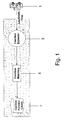
- the CFL is constructed as shown in Fig. 1 .
- a function extractor (3) In order to initiate the creation of the CFL, as large number of legitimate files (1), i.e., files clean of malware code, are imported into a function extractor (3).
- the function extractor processes each file, and as many as possible of the functions comprised therein are identified and extracted from the code.
- the extracted functions then proceed to the function matching stage (5), in which functions that appear in more than a single file are considered to be common.
- the common functions are transferred to the CFL database (7), and stored there for later reference.
- the present invention two approaches can be used in order to identify and extract functions from the file code.
- the first is disassembly using an appropriate software application, preferably IDA Pro (see http://www.datarescue.com) and extracting functions, and the second is extracting functions using state machine.
- IDA Pro see http://www.datarescue.com
- statically linked libraries For information regarding statically linked libraries, refer, for example, to http://en.wikipedia.org/wiki/Statically_linked_library).
- the dedicated plug-in of the present invention scans the output of the IDA Pro application (i.e. all detected functions), normalizes the functions, and stores them in a database.
- the common functions i.e., the functions that appear in several files, are then transferred to the CFL database.
- a function in different executable files may have a different binary representation, thus it is necessary to determine when functions are considered to be the same.
- a call for a function is usually represented by a command that contains a reference. Due to linking issues the reference, and thus the binary representation of the same function in different executables is usually different. Therefore, the normalization feature of IDA Pro is used, thereby eliminating the references, thus identical functions are identified as such.
- the CFL is a dynamic database. Accordingly, if at any later stage a common function, that does not already exist in the CFL, is identified, that function is added to the CFL database.
- the second approach to identifying and extracting functions according to the present invention is by implementing a state machine.
- the state machine used according to the present invention is able to identify most of the functions that reside in an executable file without disassembling it.
- the binary code of a large number of programs is compared, either manually or automatically, with the corresponding assembly representation.
- the sequence of instructions on the right hand side below is a common beginning of a function in assembly language.
- the corresponding binary code is found on the left hand side.
- Such a comparison allows the identification of repeating patterns that represent the beginning/end of functions. These patterns can be represented as a state-machine which can then be applied on any incoming file, and is able to identify functions in the binary code of that file. Regarding the example above, the state machine identifies that the binary sequence "55 8B EC" represents the beginning of a function. Furthermore, the state machine according to the present invention is able to identify such a sequence in the binary code of any arbitrary file.
- the most simple similarity test that can be used in the present invention employs a similarity threshold. If the number of different bytes exceeds the threshold then the two functions are considered different. For example, if the threshold is 3, the two functions below are considered to be different functions, but if the threshold is greater that 4, they are considered to be the same. According to the present invention, the threshold is determined by trial and error.
- the functions in an incoming file, which contains a malware are extracted using one of the methods described hereinabove.
- Each of the functions is compared to the functions of the CFL, identifying a portion of the functions as common functions.
- the common functions are then filtered out of the system, and the CFL is updated if necessary. The remaining functions become candidates for generating the malware signature.
- a malware signature must be unique.
- the following constraints are used when choosing the segment/segments of the remaining functions which are defined as the signature:
- an offset is added to all of the candidate functions.
- the final step of the method of the present invention relates to the selection of the function from which the signature is to be generated, while taking the above constraints into account, and optionally adding an offset.
- the function from which the signature is created is selected from the functions remaining after the common functions have been filtered out. It is assumed that common linkers create a tightly grouped function cluster from the programmer's unique code. This unique code cluster is most likely to represent the unique description of the malware. Therefore, according to the present invention the remaining functions are processed and identified according to the clusters in which they physically lay in the executable file. In one embodiment of the present invention, all possible clusters of the remaining functions are considered. The best cluster for generating the malware signature is then chosen. An example of clusters created in a file's code, once it has been separated into common functions, non-common functions, and unlabeled data, can be seen in Fig. 2 .
- the cluster with the highest cluster score is then chosen as the one from which the signature is to be generated.
- the signature generator of the present invention selects one of the functions of that cluster, optionally adding an offset to the selected function.
- the function selected from the best cluster as the signature is selected randomly.
- the function with the highest entropy is selected. Choosing a function with high entropy lowers the probability of selecting a data section as the signature.
- the selected function is the malware signature.
- the offset of a function may contain segments of uncommon functions, unidentified code, as well as common functions.
- the chances that the offset comprises part of a common function are reduced to a minimum. This increases the uniqueness of the selected malware signature.
- more than one function can be selected for generating the signature, so that the signature consists of two or more byte strings.
- the present invention relates also to a method for identifying whether arbitrary files are, or contain, malware codes. Once such files are identified, a malware signature is generated therefrom.
- Another aspect of the present invention relates to a method for generating generic malware signatures, so that each signature is able to identify as many malware codes as possible.
- a "malware common function library" is constructed, and later implemented, in order to store various malware codes, and to generate generic signatures based upon them.
- different malware codes that were generated by the same malware generator/malware toolbox are very likely to comprise common functions. Therefore, the method of the present invention is extremely useful for generating generic signatures for such malware codes.
- the method of the present invention is able to derive generic signatures for any malware codes, developed on any platforms, wherein the different malware codes comprise common functions.
Landscapes
- Engineering & Computer Science (AREA)
- Computer Security & Cryptography (AREA)
- Theoretical Computer Science (AREA)
- Virology (AREA)
- Computer Hardware Design (AREA)
- General Engineering & Computer Science (AREA)
- Health & Medical Sciences (AREA)
- Software Systems (AREA)
- General Health & Medical Sciences (AREA)
- General Physics & Mathematics (AREA)
- Physics & Mathematics (AREA)
- Storage Device Security (AREA)
- Stored Programmes (AREA)
Abstract
Description
- The present invention relates to the field of network security. Specifically, this invention relates to automatic extraction of signatures for malware, which can be later used in order to identify files which are infected with malware.
- During recent years, the number of malware attacks on computer networks has increased dramatically, as has the dependence of companies and government agencies on their computer networks. Consequently, many efforts are made in order to provide computer and data protection in multi-connectivity data networks.
- A single malware (malicious software) in a computerized system, intruding the system from the computer network, can result in the loss and/or unauthorized utilization and/or modification of large amounts of data. As a case in point, the total cost of the Code Red worm epidemic, as measured in lost productivity owing to interruptions in computer and network services, is estimated at $2.6 billion (Lemos, R, Counting the Cost of Slammer, CNET news.com. http;//news.com.com/2100-1001-982955.html, Jan. 2003).
- Many malware protection methods rely on malware signatures generated from malware-containing files. Generally, such signatures are compared to the code of any file traveling on the internet, and if similar segments of code are found in any file, that file is forbidden continued progress across the internet.
- Automated signature generation for new attacks of this type is extremely difficult due to several reasons (Yong Tang, Shigang Chen, Defending Against Internet Worms: A Signature-Based Approach, in Proc. of IEEE INFOCOM'05, Miami, Florida, USA, May 2005). First, in order to create an attack signature, the attack traffic must be isolated from the legitimate traffic, which is not an easy task in all situations. Second, the signature generation must be general enough to capture all attack traffic of certain type but still be specific enough to avoid overlapping with the contents of normal traffic. Nowadays, the above problems are handled in an ad-hoc manner, based on human judgment. As a case in point, current rule-based network Intrusion Detection Systems (IDS) can do little to stop zero-day worms (Ke Wang and Salvatore J. Stolfo, "anomalous payload-based network intrusion detection", in Recent Advance in Intrusion Detection (RAID), Sep 2004). Such systems depend upon signatures only known after the worm has been launched successfully, essentially disclosing its contents and method of infection for later deployment.
- Various techniques have been proposed to derive malware signatures automatically, including among others: Vulnerability-based Signatures (David Brumley, et al., "Towards Automatic Generation of Vulnerability-Based Signatures", in the Proceedings of the 2006 IEEE Symposium on Security and Privacy); Payload-based Signatures (Ke Wang and Salvatore J. Stolfo, "anomalous payload-based network intrusion detection", in Recent Advance in Intrusion Detection (RAID), Sep 2004 ; Kim, H.-A. and Karp, B., "Autograph: Toward Automated, Distributed Worm Signature Detection", in Proceedings of the 13th Usenix Security Symposium (Security 2004), San Diego, CA, August, 2004); Semantic-Aware Signatures (Vinod Yegneswaran et al., "An architecture for generating semantics-aware signatures In 14th USENIX Security Symposium", Baltimore, Maryland, August 2005); The Amd Algorithm (Mihai Christodorescu, et al., "Semantics-aware malware detection' ' ' in IEEE Symposium on Security and Privacy, Oakland, California, May 2005) and Honeypot-based Signatures (Yong Tang, Shigang Chen, Defending Against Internet Worms: A Signature-Based Approach, in Proc. of IEEE INFOCOM'05, Miami, Florida, USA, May 2005).
- One of the main drawbacks of the prior art techniques, including those listed above, is that they tend to overemphasize the protection against recent worm epidemics and do not provide a general-purpose technique which can handle other types of malware as well. Moreover, signatures generated by the prior art techniques examine suspicious code by modeling malicious patterns in communication packets, payloads, unsuccessful connections, sessions and code structure (templates). Such signatures were tested and reported to be effective for small-sized malware. Nevertheless, they ignore the fact that many types of malware appear as full-fledged executable and therefore contain a significant portion of common-code emanating from the development tools and software packages used by the malware authors. Such common code is fixed across malware instances due to the fact that hackers usually repeatedly exploit a "toolbox" including a set of functions which enable them to generate various malware instances. Since signature-based systems do not examine malware at the executable level and do not account for these common code segments, which can be quite large, the quality of the signature generation mechanisms is dubious. Such quality is measured using the following criteria: sensitivity (low false negative for malware) and specificity (low false positive for innocuous traffic).
- In the art there have been developed several methods aiming at expediting the process of signature generation for the effective containment of worms. "Autograph" (Kim, H.-A. and Karp, B., "Autograph: Toward Automated, Distributed Worm Signature Detection", in Proceedings of the 13th Usenix Security Symposium (Security 2004), San Diego, CA, August, 2004), for example, stores source and destination addresses of each inbound unsuccessful TCP connection it observes. Once an external host has made unsuccessful connection attempts to more than a predetermined number of internal IP addresses, the flow classifier considers it to be a scanner. All successful connections from an IP address flagged as scanners are classified as suspicious, and their inbound packets written to the suspicious flow pool. In the next stage "Autograph" selects the most frequently occurring byte sequences across the flows in the suspicious flow pool and stores them as signatures. At the beginning of a worm's propagation, the aggregate rate at which all infected hosts scan the IP address space is relatively low. However, since "Autograph" relies on "overhearing" unsuccessful scans to identify suspicious source IP addresses, early in an epidemic an "Autograph" monitor is slow to accumulate suspicious addresses, and in turn slow to accumulate worm payloads. To address this problem "Autograph" uses a tattler that, as its name suggests, shares suspicious source addresses among all monitors, toward the goal of accelerating the accumulation of worm payloads.
- Tang and Chen (Yong Tang, Shigang Chen, Defending Against Internet Worms: A Signature-Based Approach, in Proc. of IEEE INFOCOM'05, Miami, Florida, USA, May 2005) addressed the above problems by designing a double-honeypot system (N. Provos, "A virtual Honeypot Framework," Center for Information Technology Integration, University of Michigan, Ann Arbor, Michigan, USA, Tech. Rep. CITI Technical Report 03-1, Oct. 2003). Their system is deployed in a local network for automatic detection of worm attacks from the Internet. It should be noted that this system is not suitable for a large ISP environment.
- Two further algorithms, based on Expectation-Maximization (C. E. Lawrence and A. A. Reilly, "An Expectation Maximization (EM) Algorithm for the Identification and Characterization of Common Sites in Unaligned Biopolymer Sequences," PROTEINS:Structure, Function and Genetics, vol. 7, pp. 41-51, 1990) and Gibbs sampling (C. E. Lawrence, et al., "Detecting Subtle Sequence Signals: A Gibbs Sampling Strategy for Multiple Alignment," Science, vol. 262,pp. 208-214, Oct. 1993), were proposed for efficient computation of Position Aware Distribution Signature (PADS). Experiments based on variants of the MS-Blaster worm were performed. The results showed that the signature-based defense system can accurately separate new variants of the worm from the normal background traffic by using the PADS signature derived from the past samples.
- The main drawback common to all of the automatic signature generation techniques mentioned above is that they are appropriate for instances of short, stream-based, worms such as Nimda, Code Red/Code Red II, MS Blaster (1.8KB long), Sober, Netsky and B[e]agle. Larger malware files carrying full-fledged applications usually contain many code segments used by the development platform which was implemented to generate the malware instance. Those segments are not unique to the malware. As a result, selecting a signature that will be both sensitive and specific is a very challenging task for the above-mentioned techniques, when the file comprising the malware is relatively large.
- It would therefore be highly desirable to develop an automatic signature extraction method that would account for the common code segments. Such a method would be able to detect malware appearing in small, as well as large, files. The types of malware which could be detected by such a method include Trojan horses, spyware, adware, viruses, and worms operating in a Windows environment.
- It is the object of the present invention to provide a method by which malware signatures are essentially automatically extracted.
- It is a further object of the present invention to provide a method which is suitable to extract signatures from large files.
- It is yet a further object of the present invention to provide a method with low false negative for malware, as well as low false positive for innocuous traffic.
- Further purposes and advantages of this invention will become apparent as the description proceeds.
- The present invention is directed to a method for the automatic generation of malware signatures from computer files. A common function library (CFL) created, wherein the CFL contains any functions identified as a part of the standard computer language used to write computer files which are known as not containing malware. The functions of a computer file which does contain a malware are extracted and the CFL is updated with any new common functions if necessary, such that the remaining functions are all considered as candidates for generating the malware signature. The remaining functions are divided into clusters according to their location in the file and the optimal cluster for generating the malware signature is determined. One or more of the functions in the optimal cluster is selected, e.g., randomly, as the malware signature.
- The CFL may be created by importing a large number of files containing no malware code into a function extractor and processing each file in the function extractor so as to identify and extract as many functions as possible from each file's code. Then the functions extracted from the different files are compared, where the functions which appear in more than one file are considered to be common. The common functions are then transferred and stored in the CFL for later reference.
- The functions may be identified and extracted using an appropriate disassembly software application, such as IDA Pro and a dedicated plug-in that scans the output of the IDA Pro application, normalizes the functions, and stores them in a database.
- The normalization feature of IDA Pro is used for eliminating the references which may cause similar functions, found in different files, to seem different.
- In one aspect, the functions are identified and extracted implementing a state machine, by manually or automatically comparing the binary code of a large number of computer files to the corresponding assembly representation, thereby allowing the identification of repeating patterns which represent the beginning or end of functions; by applying the state machine, wherein the state machine is able to identify the repeating patterns in the binary code that represent the beginnings and ends of function, on any incoming file thereby identifying functions in the binary code of each the incoming file; and by comparing the identified functions using a similarity test that can employ a similarity threshold, thereby determining which of the identified functions are common functions.
- The functions of a computer file which does contain a malware may be extracted by using a disassembly software application or a state machine.
- The functions may be divided into clusters by considering all possible clusters of the functions. Preferably, the optimal cluster is the cluster with the highest cluster score according to:

wherein
where Cs denotes the cluster size in bytes;
Fs denotes the entire file's size;
Fc denotes the number of functions in the cluster;
T denotes the total number of functions in the file; and
F1 denotes the sum of the functions length in the cluster. - An offset may be added to one of the functions selected as the malware signature. The selection of the malware signature from the best cluster may performed according to the entropy of the selected segment, wherein the segment selected has the maximal entropy.
- All the above and other characteristics and advantages of the invention will be further understood through the following illustrative and non-limitative description of preferred embodiments thereof.
-
-
Fig. 1 shows an outline of the CFL creation; and -
Fig. 2 illustrates the clusters formed in a file's code. - In order to address the disadvantages of the prior art methods related to hereinabove, the present invention proposes a novel method for signature generation which can be used for tagging malware.
- The method of the present invention employs an executable-analysis technique which sanitizes instances of malicious executables from any segment of common code. The malicious executables are stripped of any such segments and a unique signature, which can be later used for detection of suspicious traffic, is generated.
- In order to create and employ signatures for effective and efficient detection of malware in executables, the method of the present invention requires that the generated signature comply with the following requirements: (1) the signature generated by the present invention is sufficiently long to be unique among billions of benign executables, therefore providing the signature with high specificity; (2) the signature generated according to the present invention is sufficiently short to decrease the problems of Internet packet splits and detection hardware storage limitations; (3) the signature generated according to the method of the present invention is simple in order to be detected in real-time from the Internet data stream; (4) the signature is well defined to enable totally automatic generation thereof.
- When generating a malware signature it is necessary to locate a segment, or segments, of the data which is unique to the malware only. Since many malwares are developed using higher level languages (such as: C++, C, visual basic, Delphi, etc.) a large part of the malware containing files is not unique. As mentioned above, one of the drawbacks of the methods of the prior art is that they do not relate to these non-unique segments, and are thus able to create malware signatures only from relatively small files.
- In contrast, the method of the present invention initially strips the unique malware segments from the non-unique segments, related to the computer language used to write the file. The non-unique segments are referred to herein as "common functions", and the first step of the method of the present invention is to create a Common Function Library (CFL). According to the present invention the CFL is dynamic, and whenever new common functions are identified they are added to the CFL. Taking the common functions found in the CFL into account reduces the risk of selecting non-unique segments of code as part of the malware signature, thereby enhancing the abilities of the malware signature in detecting incoming malware files of the same type.
- According to the present invention the CFL is constructed as shown in
Fig. 1 . In order to initiate the creation of the CFL, as large number of legitimate files (1), i.e., files clean of malware code, are imported into a function extractor (3). The function extractor processes each file, and as many as possible of the functions comprised therein are identified and extracted from the code. The extracted functions then proceed to the function matching stage (5), in which functions that appear in more than a single file are considered to be common. The common functions are transferred to the CFL database (7), and stored there for later reference. - According to the present invention two approaches can be used in order to identify and extract functions from the file code. The first is disassembly using an appropriate software application, preferably IDA Pro (see http://www.datarescue.com) and extracting functions, and the second is extracting functions using state machine.
- When identifying functions using IDA Pro (or any other appropriate application), each incoming file is first disassembled by the IDA Pro program and then functions from statically linked libraries are identified (for information regarding statically linked libraries, refer, for example, to http://en.wikipedia.org/wiki/Statically_linked_library). The dedicated plug-in of the present invention scans the output of the IDA Pro application (i.e. all detected functions), normalizes the functions, and stores them in a database.
- The common functions, i.e., the functions that appear in several files, are then transferred to the CFL database. However, a function in different executable files may have a different binary representation, thus it is necessary to determine when functions are considered to be the same. A call for a function is usually represented by a command that contains a reference. Due to linking issues the reference, and thus the binary representation of the same function in different executables is usually different. Therefore, the normalization feature of IDA Pro is used, thereby eliminating the references, thus identical functions are identified as such.
- As mentioned hereinabove, the CFL is a dynamic database. Accordingly, if at any later stage a common function, that does not already exist in the CFL, is identified, that function is added to the CFL database.
- The second approach to identifying and extracting functions according to the present invention is by implementing a state machine. The state machine used according to the present invention is able to identify most of the functions that reside in an executable file without disassembling it.
- According to the present invention the binary code of a large number of programs is compared, either manually or automatically, with the corresponding assembly representation. For example, the sequence of instructions on the right hand side below is a common beginning of a function in assembly language. The corresponding binary code is found on the left hand side.

- Such a comparison allows the identification of repeating patterns that represent the beginning/end of functions. These patterns can be represented as a state-machine which can then be applied on any incoming file, and is able to identify functions in the binary code of that file. Regarding the example above, the state machine identifies that the binary sequence "55 8B EC" represents the beginning of a function. Furthermore, the state machine according to the present invention is able to identify such a sequence in the binary code of any arbitrary file.
- By using the state-machine approach described above the beginning and the end of a function can be identified, but the reference attached to that function, which may be different in different executables, cannot be identified. Thus, when identifying functions using a state machine, in order to determine whether two given functions are close enough to be assumed as same function, regardless of the references changes and its offset in a file, a similarity test is used.
- The most simple similarity test that can be used in the present invention employs a similarity threshold. If the number of different bytes exceeds the threshold then the two functions are considered different. For example, if the threshold is 3, the two functions below are considered to be different functions, but if the threshold is greater that 4, they are considered to be the same. According to the present invention, the threshold is determined by trial and error.
Function X in File1: 8B D8 8B D6 8B C3 E8 F5 CD FF FF 89 73 1C 5E 5B Function X in File2: 8B D8 8B D6 8B C3 E8 DD E5 FF FF 89 43 38 5E 5B - Once the CFL is constructed as described hereinabove using only "clean" files, i.e., files containing no malware, a malware signature must be generated from a file which contains a malware, hidden among "clean" sections of code.
- In the signature generation stage of the method of the present invention, the functions in an incoming file, which contains a malware, are extracted using one of the methods described hereinabove. Each of the functions is compared to the functions of the CFL, identifying a portion of the functions as common functions. The common functions are then filtered out of the system, and the CFL is updated if necessary. The remaining functions become candidates for generating the malware signature.
- As known to those familiar with the art, a malware signature must be unique. In order to increase the uniqueness of the generated malware signature the following constraints are used when choosing the segment/segments of the remaining functions which are defined as the signature:
- 1) the segment is unique to the malware;
- 2) the segment has high entropy, i.e., the bytes of the segment are not repetitive; and
- 3) the segment is not a text.
- The above constraints are essential especially since even after identifying all of the common functions in an incoming file, there may still be large segments of code that are not accounted for. These constraints assist in choosing the optimal segment/segments for the malware signature.
- In another embodiment of the present invention, in order to increase the uniqueness of the signature, an offset is added to all of the candidate functions.
- The final step of the method of the present invention relates to the selection of the function from which the signature is to be generated, while taking the above constraints into account, and optionally adding an offset.
- As mentioned above, the function from which the signature is created is selected from the functions remaining after the common functions have been filtered out. It is assumed that common linkers create a tightly grouped function cluster from the programmer's unique code. This unique code cluster is most likely to represent the unique description of the malware. Therefore, according to the present invention the remaining functions are processed and identified according to the clusters in which they physically lay in the executable file. In one embodiment of the present invention, all possible clusters of the remaining functions are considered. The best cluster for generating the malware signature is then chosen. An example of clusters created in a file's code, once it has been separated into common functions, non-common functions, and unlabeled data, can be seen in
Fig. 2 . - In one embodiment of the present invention the clusters are graded based on the following function:

wherein, - Cs denotes the Cluster size in bytes
- Fs denotes the entire File's Size
- Fc denotes the number of functions in cluster
- T denotes the total number of function in file
- Fl denotes the sum of the function's length in cluster
- The cluster with the highest cluster score is then chosen as the one from which the signature is to be generated.
- Once the best cluster has been selected, the signature generator of the present invention selects one of the functions of that cluster, optionally adding an offset to the selected function.
- According to one embodiment of the present invention the function selected from the best cluster as the signature is selected randomly. According to a preferred embodiment of the present invention the function with the highest entropy is selected. Choosing a function with high entropy lowers the probability of selecting a data section as the signature.
- The selected function, possibly with its offset, is the malware signature. As would be understood by those familiar with the art, the offset of a function may contain segments of uncommon functions, unidentified code, as well as common functions. By using the clustering score mentioned above, the chances that the offset comprises part of a common function are reduced to a minimum. This increases the uniqueness of the selected malware signature.
- In another embodiment of the present invention more than one function can be selected for generating the signature, so that the signature consists of two or more byte strings.
- The present invention relates also to a method for identifying whether arbitrary files are, or contain, malware codes. Once such files are identified, a malware signature is generated therefrom.
- Another aspect of the present invention relates to a method for generating generic malware signatures, so that each signature is able to identify as many malware codes as possible. According to this method a "malware common function library" is constructed, and later implemented, in order to store various malware codes, and to generate generic signatures based upon them. As known to those familiar with the art, different malware codes that were generated by the same malware generator/malware toolbox are very likely to comprise common functions. Therefore, the method of the present invention is extremely useful for generating generic signatures for such malware codes. However, as would be understood by those familiar with the art, the method of the present invention is able to derive generic signatures for any malware codes, developed on any platforms, wherein the different malware codes comprise common functions.
- Although embodiments of the invention have been described by way of illustration, it will be understood that the invention may be carried out with many variations, modifications, and adaptations, without departing from its spirit or exceeding the scope of the claims.
Claims (16)
- A method for the automatic generation of malware signatures from computer files, said method comprising:a. creating a common function library (CFL), wherein said CFL contains any functions identified as being part of the standard computer language used to write computer files which are known as not containing malware;b. extracting the functions of a computer file which does contain a malware;c. updating the CFL with any new common functions if necessary, wherein the remaining functions are all considered as candidates for generating the malware signature;d. dividing said remaining functions into clusters according to their location in said file;e. determining the optimal cluster for generating the malware signature; andf. selecting at least one of the functions in said optimal cluster as the malware signature.
- The method according to claim 1 wherein the CFL is created by:a. importing a large number of files containing no malware code into a function extractor;b. processing each file in said function extractor so as to identify and extract as many functions as possible from each file's code;c. comparing the functions extracted from the different files, wherein the functions which appear in more than one file are considered to be common; andd. transferring and storing said common functions into the CFL for later reference.
- The method according to claim 2 wherein the functions are identified and extracted using an appropriate disassembly software application and a dedicated plug-in.
- The method according to claim 3 wherein the disassembly software application is IDA Pro.
- The method according to claim 3 wherein the dedicated plug-in scans the output of the IDA Pro application, normalizes said functions, and stores them in a database.
- The method according to claim 4 wherein the normalization feature of IDA Pro is used for eliminating the references which may cause similar functions, found in different files, to seem different.
- The method according to claim 2 wherein the functions are identified and extracted implementing a state machine, by the following steps:a. comparing the binary code of a large number of computer files to the corresponding assembly representation, thereby allowing the identification of repeating patterns which represent the beginning or end of functions;b. applying said state machine, wherein said state machine is able to identify the repeating patterns in the binary code that represent the beginnings and ends of function, on any incoming file thereby identifying functions in the binary code of each said incoming file; andc. comparing said identified functions using a similarity test, thereby determining which of said identified functions are common functions.
- The method according to claim 7 wherein step (a) is performed manually.
- The method according to claim 7 wherein step (a) is performed automatically.
- The method according to claim 7 wherein the similarity test employs a similarity threshold.
- The method according to claim 1 wherein step (b) is conducted implementing:a. a disassembly software application according to claims 3 and 4; orb. the state machine according to claim 7.
- The method according to claim 1 wherein the functions are divided into clusters by considering all possible clusters of said functions.
- The method according to claim 1 wherein the optimal cluster is the cluster with the highest cluster score according to:

wherein
Cs denotes the cluster size in bytes;
Fs denotes the entire file's size;
Fc denotes the number of functions in said cluster;
T denotes the total number of functions in said file; and
Fl denotes the sum of the functions length in said cluster. - The method according to claim 1 wherein an offset is added to at least one of the functions selected as the malware signature.
- The method according to claim 1 wherein the selection of the malware signature from the best cluster is performed randomly.
- The method according to claim 1 wherein the selection of the malware signature from the best cluster is performed according to the entropy of the selected segment, wherein the segment selected has the maximal entropy.
Applications Claiming Priority (1)
| Application Number | Priority Date | Filing Date | Title |
|---|---|---|---|
| IL181426A IL181426A (en) | 2007-02-19 | 2007-02-19 | Automatic extraction of signatures for malware |
Publications (3)
| Publication Number | Publication Date |
|---|---|
| EP1959367A2 true EP1959367A2 (en) | 2008-08-20 |
| EP1959367A3 EP1959367A3 (en) | 2008-12-31 |
| EP1959367B1 EP1959367B1 (en) | 2012-09-19 |
Family
ID=39432573
Family Applications (1)
| Application Number | Title | Priority Date | Filing Date |
|---|---|---|---|
| EP08003001A Not-in-force EP1959367B1 (en) | 2007-02-19 | 2008-02-19 | Automatic extraction of signatures for Malware |
Country Status (3)
| Country | Link |
|---|---|
| US (1) | US8353040B2 (en) |
| EP (1) | EP1959367B1 (en) |
| IL (1) | IL181426A (en) |
Cited By (3)
| Publication number | Priority date | Publication date | Assignee | Title |
|---|---|---|---|---|
| EP2472786A1 (en) | 2010-12-30 | 2012-07-04 | Telefonaktiebolaget LM Ericsson (publ) | Automatic signature generation for application recognition and user tracking over heterogeneous networks |
| CN103038777A (en) * | 2010-06-03 | 2013-04-10 | 诺基亚公司 | Method and apparatus for analyzing and detecting malicious software |
| CN106682490A (en) * | 2016-12-02 | 2017-05-17 | 北京博文广成信息安全技术有限公司 | CFL artificial immune computer model construction method |
Families Citing this family (43)
| Publication number | Priority date | Publication date | Assignee | Title |
|---|---|---|---|---|
| WO2007050244A2 (en) | 2005-10-27 | 2007-05-03 | Georgia Tech Research Corporation | Method and system for detecting and responding to attacking networks |
| US8510596B1 (en) | 2006-02-09 | 2013-08-13 | Virsec Systems, Inc. | System and methods for run time detection and correction of memory corruption |
| US10027688B2 (en) | 2008-08-11 | 2018-07-17 | Damballa, Inc. | Method and system for detecting malicious and/or botnet-related domain names |
| US20100058474A1 (en) * | 2008-08-29 | 2010-03-04 | Avg Technologies Cz, S.R.O. | System and method for the detection of malware |
| GB0822619D0 (en) * | 2008-12-11 | 2009-01-21 | Scansafe Ltd | Malware detection |
| US8881287B1 (en) * | 2009-03-20 | 2014-11-04 | Symantec Corporation | Systems and methods for library function identification in automatic malware signature generation |
| US7743419B1 (en) * | 2009-10-01 | 2010-06-22 | Kaspersky Lab, Zao | Method and system for detection and prediction of computer virus-related epidemics |
| US8713681B2 (en) * | 2009-10-27 | 2014-04-29 | Mandiant, Llc | System and method for detecting executable machine instructions in a data stream |
| US20110154495A1 (en) * | 2009-12-21 | 2011-06-23 | Stranne Odd Wandenor | Malware identification and scanning |
| US8578497B2 (en) | 2010-01-06 | 2013-11-05 | Damballa, Inc. | Method and system for detecting malware |
| US8566317B1 (en) * | 2010-01-06 | 2013-10-22 | Trend Micro Incorporated | Apparatus and methods for scalable object clustering |
| US8892896B2 (en) * | 2010-01-08 | 2014-11-18 | Microsoft Corporation | Capability and behavior signatures |
| US8826438B2 (en) * | 2010-01-19 | 2014-09-02 | Damballa, Inc. | Method and system for network-based detecting of malware from behavioral clustering |
| US8782790B1 (en) | 2010-02-19 | 2014-07-15 | Symantec Corporation | Signature creation for malicious network traffic |
| US8464345B2 (en) | 2010-04-28 | 2013-06-11 | Symantec Corporation | Behavioral signature generation using clustering |
| US8561193B1 (en) * | 2010-05-17 | 2013-10-15 | Symantec Corporation | Systems and methods for analyzing malware |
| KR101337874B1 (en) * | 2010-12-31 | 2014-01-28 | 주식회사 안랩 | System and method for detecting malwares in a file based on genetic map of the file |
| KR20120105759A (en) * | 2011-03-16 | 2012-09-26 | 한국전자통신연구원 | Malicious code visualization apparatus, apparatus and method for detecting malicious code |
| US10084806B2 (en) | 2012-08-31 | 2018-09-25 | Damballa, Inc. | Traffic simulation to identify malicious activity |
| US11126720B2 (en) | 2012-09-26 | 2021-09-21 | Bluvector, Inc. | System and method for automated machine-learning, zero-day malware detection |
| US9292688B2 (en) | 2012-09-26 | 2016-03-22 | Northrop Grumman Systems Corporation | System and method for automated machine-learning, zero-day malware detection |
| US8850581B2 (en) * | 2012-11-07 | 2014-09-30 | Microsoft Corporation | Identification of malware detection signature candidate code |
| US10713358B2 (en) * | 2013-03-15 | 2020-07-14 | Fireeye, Inc. | System and method to extract and utilize disassembly features to classify software intent |
| US9571511B2 (en) | 2013-06-14 | 2017-02-14 | Damballa, Inc. | Systems and methods for traffic classification |
| KR20150014781A (en) | 2013-07-30 | 2015-02-09 | 삼성전자주식회사 | Apparatus for filtering a fluid and method of isolating a particle using the same |
| EP3044719B1 (en) | 2013-09-12 | 2019-08-28 | Virsec Systems Inc. | Automated runtime detection of malware |
| IL232528A0 (en) * | 2014-05-08 | 2014-08-31 | Rami Puzis | Social network honeypot |
| US10114726B2 (en) | 2014-06-24 | 2018-10-30 | Virsec Systems, Inc. | Automated root cause analysis of single or N-tiered application |
| CN106687981B (en) | 2014-06-24 | 2020-09-01 | 弗塞克系统公司 | System and method for automated detection of input and output verification and resource management vulnerabilities |
| US9832216B2 (en) | 2014-11-21 | 2017-11-28 | Bluvector, Inc. | System and method for network data characterization |
| US10110622B2 (en) * | 2015-02-13 | 2018-10-23 | Microsoft Technology Licensing, Llc | Security scanner |
| US10200391B2 (en) | 2015-09-23 | 2019-02-05 | AVAST Software s.r.o. | Detection of malware in derived pattern space |
| CA3297972A1 (en) | 2016-06-16 | 2026-03-02 | Virsec Systems, Inc. | Systems and methods for remediating memory corruption in a computer application |
| US10699212B2 (en) | 2016-07-11 | 2020-06-30 | International Business Machines Corporation | Cross-platform program analysis using machine learning based on universal features |
| US10572245B1 (en) | 2016-08-30 | 2020-02-25 | Amazon Technologies, Inc. | Identifying versions of running programs using signatures derived from object files |
| US10187495B2 (en) * | 2016-09-23 | 2019-01-22 | Entit Software Llc | Identifying problematic messages |
| US9864956B1 (en) | 2017-05-01 | 2018-01-09 | SparkCognition, Inc. | Generation and use of trained file classifiers for malware detection |
| US10616252B2 (en) | 2017-06-30 | 2020-04-07 | SparkCognition, Inc. | Automated detection of malware using trained neural network-based file classifiers and machine learning |
| US10305923B2 (en) | 2017-06-30 | 2019-05-28 | SparkCognition, Inc. | Server-supported malware detection and protection |
| US10929527B2 (en) * | 2017-12-20 | 2021-02-23 | Intel Corporation | Methods and arrangements for implicit integrity |
| US20220129417A1 (en) * | 2020-10-22 | 2022-04-28 | Google Llc | Code Similarity Search |
| US12265619B2 (en) | 2022-03-28 | 2025-04-01 | Acronis International Gmbh | Optimal antimalware signatures database |
| US20260111546A1 (en) * | 2024-10-18 | 2026-04-23 | Palo Alto Networks, Inc. | Automated function-level code signature generation for windows-pe and elf malware detection |
Family Cites Families (20)
| Publication number | Priority date | Publication date | Assignee | Title |
|---|---|---|---|---|
| JP2501771B2 (en) | 1993-01-19 | 1996-05-29 | インターナショナル・ビジネス・マシーンズ・コーポレイション | Method and apparatus for obtaining multiple valid signatures of an unwanted software entity |
| US6487666B1 (en) * | 1999-01-15 | 2002-11-26 | Cisco Technology, Inc. | Intrusion detection signature analysis using regular expressions and logical operators |
| WO2002033525A2 (en) * | 2000-10-17 | 2002-04-25 | Chuang Shyne Song | A method and system for detecting rogue software |
| US7421587B2 (en) * | 2001-07-26 | 2008-09-02 | Mcafee, Inc. | Detecting computer programs within packed computer files |
| US7234167B2 (en) * | 2001-09-06 | 2007-06-19 | Mcafee, Inc. | Automatic builder of detection and cleaning routines for computer viruses |
| US7409717B1 (en) * | 2002-05-23 | 2008-08-05 | Symantec Corporation | Metamorphic computer virus detection |
| GB2391965B (en) | 2002-08-14 | 2005-11-30 | Messagelabs Ltd | Method of, and system for, heuristically detecting viruses in executable code |
| US7013483B2 (en) * | 2003-01-03 | 2006-03-14 | Aladdin Knowledge Systems Ltd. | Method for emulating an executable code in order to detect maliciousness |
| GB2400197B (en) * | 2003-04-03 | 2006-04-12 | Messagelabs Ltd | System for and method of detecting malware in macros and executable scripts |
| GB2400933B (en) * | 2003-04-25 | 2006-11-22 | Messagelabs Ltd | A method of, and system for, heuristically detecting viruses in executable code by detecting files which have been maliciously altered |
| US20050108562A1 (en) * | 2003-06-18 | 2005-05-19 | Khazan Roger I. | Technique for detecting executable malicious code using a combination of static and dynamic analyses |
| US7392543B2 (en) | 2003-06-30 | 2008-06-24 | Symantec Corporation | Signature extraction system and method |
| WO2005047862A2 (en) * | 2003-11-12 | 2005-05-26 | The Trustees Of Columbia University In The City Of New York | Apparatus method and medium for identifying files using n-gram distribution of data |
| WO2005103895A1 (en) | 2004-04-26 | 2005-11-03 | Incorporated National University Iwate University | Computer virus unique information extraction device, computer virus unique information extraction method, and computer virus unique information extraction program |
| US7574742B2 (en) * | 2004-11-15 | 2009-08-11 | Industrial Technology Research Institute | System and method of string matching for uniform data classification |
| US7634810B2 (en) * | 2004-12-02 | 2009-12-15 | Microsoft Corporation | Phishing detection, prevention, and notification |
| US8065722B2 (en) * | 2005-03-21 | 2011-11-22 | Wisconsin Alumni Research Foundation | Semantically-aware network intrusion signature generator |
| US7502971B2 (en) * | 2005-10-12 | 2009-03-10 | Hewlett-Packard Development Company, L.P. | Determining a recurrent problem of a computer resource using signatures |
| US8713686B2 (en) * | 2006-01-25 | 2014-04-29 | Ca, Inc. | System and method for reducing antivirus false positives |
| US8201244B2 (en) * | 2006-09-19 | 2012-06-12 | Microsoft Corporation | Automated malware signature generation |
-
2007
- 2007-02-19 IL IL181426A patent/IL181426A/en not_active IP Right Cessation
-
2008
- 2008-02-15 US US12/031,832 patent/US8353040B2/en not_active Expired - Fee Related
- 2008-02-19 EP EP08003001A patent/EP1959367B1/en not_active Not-in-force
Non-Patent Citations (9)
| Title |
|---|
| C. E. LAWRENCE ET AL.: "Detecting Subtle Sequence Signals: A Gibbs Sampling Strategy for Multiple Alignment", SCIENCE, vol. 262, October 1993 (1993-10-01), pages 208 - 214 |
| C. E. LAWRENCE; A. A. REILLY: "An Expectation Maximization (EM) Algorithm for the Identification and Characterization of Common Sites in Unaligned Biopolymer Sequences", PROTEINS: STRUCTURE, FUNCTION AND GENETICS, vol. 7, 1990, pages 41 - 51 |
| DAVID BRUMLEY ET AL.: "Towards Automatic Generation of Vulnerability-Based Signatures", PROCEEDINGS OF THE 2006 IEEE SYMPOSIUM ON SECURITY AND PRIVACY |
| KE WANG; SALVATORE J. STOLFO: "anomalous payload-based network intrusion detection", RECENT ADVANCE IN INTRUSION DETECTION, September 2004 (2004-09-01) |
| KIM, H.-A.; KARP, B.: "Autograph: Toward Automated, Distributed Worm Signature Detection", PROCEEDINGS OF THE 13TH USENIX SECURITY SYMPOSIUM (SECURITY 2004, August 2004 (2004-08-01) |
| MIHAI CHRISTODORESCU ET AL.: "Semantics-aware malware detection", IEEE SYMPOSIUM ON SECURITY AND PRIVACY, May 2005 (2005-05-01) |
| N. PROVOS: "A virtual Honeypot Framework," Center for Information Technology Integration, University of Michigan, Ann Arbor", TECH. REP. CITI TECHNICAL REPORT 03-1, October 2003 (2003-10-01) |
| VINOD YEGNESWARAN ET AL., AN ARCHITECTURE FOR GENERATING SEMANTICS-AWARE SIGNATURES IN 14TH USENIX SECURITY SYMPOSIUM, August 2005 (2005-08-01) |
| YONG TANG; SHIGANG CHEN: "Defending Against Internet Worms: A Signature-Based Approach", PROC. OF IEEE INFOCOM'05, May 2005 (2005-05-01) |
Cited By (6)
| Publication number | Priority date | Publication date | Assignee | Title |
|---|---|---|---|---|
| CN103038777A (en) * | 2010-06-03 | 2013-04-10 | 诺基亚公司 | Method and apparatus for analyzing and detecting malicious software |
| EP2577546A4 (en) * | 2010-06-03 | 2014-01-01 | Nokia Corp | METHOD AND APPARATUS FOR ANALYZING AND DETECTING MALWARE SOFTWARE |
| US9449175B2 (en) | 2010-06-03 | 2016-09-20 | Nokia Technologies Oy | Method and apparatus for analyzing and detecting malicious software |
| CN103038777B (en) * | 2010-06-03 | 2016-09-28 | 诺基亚技术有限公司 | For the method and apparatus analyzing and detecting Malware |
| EP2472786A1 (en) | 2010-12-30 | 2012-07-04 | Telefonaktiebolaget LM Ericsson (publ) | Automatic signature generation for application recognition and user tracking over heterogeneous networks |
| CN106682490A (en) * | 2016-12-02 | 2017-05-17 | 北京博文广成信息安全技术有限公司 | CFL artificial immune computer model construction method |
Also Published As
| Publication number | Publication date |
|---|---|
| EP1959367B1 (en) | 2012-09-19 |
| EP1959367A3 (en) | 2008-12-31 |
| IL181426A0 (en) | 2007-07-04 |
| US8353040B2 (en) | 2013-01-08 |
| US20080201779A1 (en) | 2008-08-21 |
| IL181426A (en) | 2011-06-30 |
Similar Documents
| Publication | Publication Date | Title |
|---|---|---|
| EP1959367B1 (en) | Automatic extraction of signatures for Malware | |
| US9935972B2 (en) | Emulator-based malware learning and detection | |
| US8819835B2 (en) | Silent-mode signature testing in anti-malware processing | |
| US9256831B2 (en) | Match engine for detection of multi-pattern rules | |
| Stolfo et al. | Towards stealthy malware detection | |
| JP5326062B1 (en) | Non-executable file inspection apparatus and method | |
| US8225405B1 (en) | Heuristic detection malicious code blacklist updating and protection system and method | |
| CN110837640B (en) | Malicious file searching and killing method, device, storage medium and device | |
| EP1751649B1 (en) | Systems and method for computer security | |
| US8365286B2 (en) | Method and system for classification of software using characteristics and combinations of such characteristics | |
| US11290484B2 (en) | Bot characteristic detection method and apparatus | |
| KR101851233B1 (en) | Apparatus and method for detection of malicious threats included in file, recording medium thereof | |
| EP2278516A1 (en) | Detection and minimization of false positives in anti-malware processing | |
| US20060236397A1 (en) | System and method for scanning obfuscated files for pestware | |
| US20080005796A1 (en) | Method and system for classification of software using characteristics and combinations of such characteristics | |
| US20160328560A1 (en) | System and Method for Detection of Omnientrant Code Segments to Identify Potential Malicious Code | |
| EP3800570B1 (en) | Methods and systems for genetic malware analysis and classification using code reuse patterns | |
| US11222115B2 (en) | Data scan system | |
| RU2747464C2 (en) | Method for detecting malicious files based on file fragments | |
| KR101404108B1 (en) | Method and apparatus for extracting a Windows executable file | |
| US20130179975A1 (en) | Method for Extracting Digital Fingerprints of a Malicious Document File | |
| CN112351002B (en) | Message detection method, device and equipment | |
| CN120951324B (en) | A method and system for detecting and eliminating viruses in distributed energy security data. | |
| CN119172113A (en) | Remote control Trojan defense method and device based on flow in connection establishment phase | |
| CN117763546A (en) | Virus detection methods and systems, electronic equipment |
Legal Events
| Date | Code | Title | Description |
|---|---|---|---|
| PUAI | Public reference made under article 153(3) epc to a published international application that has entered the european phase |
Free format text: ORIGINAL CODE: 0009012 |
|
| AK | Designated contracting states |
Kind code of ref document: A2 Designated state(s): AT BE BG CH CY CZ DE DK EE ES FI FR GB GR HR HU IE IS IT LI LT LU LV MC MT NL NO PL PT RO SE SI SK TR |
|
| AX | Request for extension of the european patent |
Extension state: AL BA MK RS |
|
| PUAL | Search report despatched |
Free format text: ORIGINAL CODE: 0009013 |
|
| AK | Designated contracting states |
Kind code of ref document: A3 Designated state(s): AT BE BG CH CY CZ DE DK EE ES FI FR GB GR HR HU IE IS IT LI LT LU LV MC MT NL NO PL PT RO SE SI SK TR |
|
| AX | Request for extension of the european patent |
Extension state: AL BA MK RS |
|
| 17P | Request for examination filed |
Effective date: 20090516 |
|
| 17Q | First examination report despatched |
Effective date: 20090619 |
|
| AKX | Designation fees paid |
Designated state(s): AT BE BG CH CY CZ DE DK EE ES FI FR GB GR HR HU IE IS IT LI LT LU LV MC MT NL NO PL PT RO SE SI SK TR |
|
| GRAP | Despatch of communication of intention to grant a patent |
Free format text: ORIGINAL CODE: EPIDOSNIGR1 |
|
| GRAJ | Information related to disapproval of communication of intention to grant by the applicant or resumption of examination proceedings by the epo deleted |
Free format text: ORIGINAL CODE: EPIDOSDIGR1 |
|
| GRAP | Despatch of communication of intention to grant a patent |
Free format text: ORIGINAL CODE: EPIDOSNIGR1 |
|
| GRAP | Despatch of communication of intention to grant a patent |
Free format text: ORIGINAL CODE: EPIDOSNIGR1 |
|
| GRAS | Grant fee paid |
Free format text: ORIGINAL CODE: EPIDOSNIGR3 |
|
| GRAA | (expected) grant |
Free format text: ORIGINAL CODE: 0009210 |
|
| AK | Designated contracting states |
Kind code of ref document: B1 Designated state(s): AT BE BG CH CY CZ DE DK EE ES FI FR GB GR HR HU IE IS IT LI LT LU LV MC MT NL NO PL PT RO SE SI SK TR |
|
| REG | Reference to a national code |
Ref country code: GB Ref legal event code: FG4D |
|
| REG | Reference to a national code |
Ref country code: CH Ref legal event code: EP |
|
| REG | Reference to a national code |
Ref country code: IE Ref legal event code: FG4D |
|
| REG | Reference to a national code |
Ref country code: AT Ref legal event code: REF Ref document number: 576331 Country of ref document: AT Kind code of ref document: T Effective date: 20121015 |
|
| REG | Reference to a national code |
Ref country code: DE Ref legal event code: R096 Ref document number: 602008018819 Country of ref document: DE Effective date: 20121115 |
|
| PG25 | Lapsed in a contracting state [announced via postgrant information from national office to epo] |
Ref country code: NO Free format text: LAPSE BECAUSE OF FAILURE TO SUBMIT A TRANSLATION OF THE DESCRIPTION OR TO PAY THE FEE WITHIN THE PRESCRIBED TIME-LIMIT Effective date: 20121219 Ref country code: CY Free format text: LAPSE BECAUSE OF FAILURE TO SUBMIT A TRANSLATION OF THE DESCRIPTION OR TO PAY THE FEE WITHIN THE PRESCRIBED TIME-LIMIT Effective date: 20120919 Ref country code: HR Free format text: LAPSE BECAUSE OF FAILURE TO SUBMIT A TRANSLATION OF THE DESCRIPTION OR TO PAY THE FEE WITHIN THE PRESCRIBED TIME-LIMIT Effective date: 20120919 Ref country code: FI Free format text: LAPSE BECAUSE OF FAILURE TO SUBMIT A TRANSLATION OF THE DESCRIPTION OR TO PAY THE FEE WITHIN THE PRESCRIBED TIME-LIMIT Effective date: 20120919 Ref country code: LT Free format text: LAPSE BECAUSE OF FAILURE TO SUBMIT A TRANSLATION OF THE DESCRIPTION OR TO PAY THE FEE WITHIN THE PRESCRIBED TIME-LIMIT Effective date: 20120919 |
|
| REG | Reference to a national code |
Ref country code: NL Ref legal event code: VDEP Effective date: 20120919 |
|
| REG | Reference to a national code |
Ref country code: AT Ref legal event code: MK05 Ref document number: 576331 Country of ref document: AT Kind code of ref document: T Effective date: 20120919 |
|
| REG | Reference to a national code |
Ref country code: LT Ref legal event code: MG4D Effective date: 20120919 |
|
| PG25 | Lapsed in a contracting state [announced via postgrant information from national office to epo] |
Ref country code: GR Free format text: LAPSE BECAUSE OF FAILURE TO SUBMIT A TRANSLATION OF THE DESCRIPTION OR TO PAY THE FEE WITHIN THE PRESCRIBED TIME-LIMIT Effective date: 20121220 Ref country code: SI Free format text: LAPSE BECAUSE OF FAILURE TO SUBMIT A TRANSLATION OF THE DESCRIPTION OR TO PAY THE FEE WITHIN THE PRESCRIBED TIME-LIMIT Effective date: 20120919 Ref country code: SE Free format text: LAPSE BECAUSE OF FAILURE TO SUBMIT A TRANSLATION OF THE DESCRIPTION OR TO PAY THE FEE WITHIN THE PRESCRIBED TIME-LIMIT Effective date: 20120919 Ref country code: LV Free format text: LAPSE BECAUSE OF FAILURE TO SUBMIT A TRANSLATION OF THE DESCRIPTION OR TO PAY THE FEE WITHIN THE PRESCRIBED TIME-LIMIT Effective date: 20120919 |
|
| PG25 | Lapsed in a contracting state [announced via postgrant information from national office to epo] |
Ref country code: IS Free format text: LAPSE BECAUSE OF FAILURE TO SUBMIT A TRANSLATION OF THE DESCRIPTION OR TO PAY THE FEE WITHIN THE PRESCRIBED TIME-LIMIT Effective date: 20130119 Ref country code: NL Free format text: LAPSE BECAUSE OF FAILURE TO SUBMIT A TRANSLATION OF THE DESCRIPTION OR TO PAY THE FEE WITHIN THE PRESCRIBED TIME-LIMIT Effective date: 20120919 Ref country code: BE Free format text: LAPSE BECAUSE OF FAILURE TO SUBMIT A TRANSLATION OF THE DESCRIPTION OR TO PAY THE FEE WITHIN THE PRESCRIBED TIME-LIMIT Effective date: 20120919 Ref country code: CZ Free format text: LAPSE BECAUSE OF FAILURE TO SUBMIT A TRANSLATION OF THE DESCRIPTION OR TO PAY THE FEE WITHIN THE PRESCRIBED TIME-LIMIT Effective date: 20120919 Ref country code: RO Free format text: LAPSE BECAUSE OF FAILURE TO SUBMIT A TRANSLATION OF THE DESCRIPTION OR TO PAY THE FEE WITHIN THE PRESCRIBED TIME-LIMIT Effective date: 20120919 Ref country code: ES Free format text: LAPSE BECAUSE OF FAILURE TO SUBMIT A TRANSLATION OF THE DESCRIPTION OR TO PAY THE FEE WITHIN THE PRESCRIBED TIME-LIMIT Effective date: 20121230 Ref country code: EE Free format text: LAPSE BECAUSE OF FAILURE TO SUBMIT A TRANSLATION OF THE DESCRIPTION OR TO PAY THE FEE WITHIN THE PRESCRIBED TIME-LIMIT Effective date: 20120919 |
|
| PG25 | Lapsed in a contracting state [announced via postgrant information from national office to epo] |
Ref country code: PT Free format text: LAPSE BECAUSE OF FAILURE TO SUBMIT A TRANSLATION OF THE DESCRIPTION OR TO PAY THE FEE WITHIN THE PRESCRIBED TIME-LIMIT Effective date: 20130121 Ref country code: PL Free format text: LAPSE BECAUSE OF FAILURE TO SUBMIT A TRANSLATION OF THE DESCRIPTION OR TO PAY THE FEE WITHIN THE PRESCRIBED TIME-LIMIT Effective date: 20120919 Ref country code: SK Free format text: LAPSE BECAUSE OF FAILURE TO SUBMIT A TRANSLATION OF THE DESCRIPTION OR TO PAY THE FEE WITHIN THE PRESCRIBED TIME-LIMIT Effective date: 20120919 |
|
| PG25 | Lapsed in a contracting state [announced via postgrant information from national office to epo] |
Ref country code: AT Free format text: LAPSE BECAUSE OF FAILURE TO SUBMIT A TRANSLATION OF THE DESCRIPTION OR TO PAY THE FEE WITHIN THE PRESCRIBED TIME-LIMIT Effective date: 20120919 |
|
| PLBE | No opposition filed within time limit |
Free format text: ORIGINAL CODE: 0009261 |
|
| STAA | Information on the status of an ep patent application or granted ep patent |
Free format text: STATUS: NO OPPOSITION FILED WITHIN TIME LIMIT |
|
| PG25 | Lapsed in a contracting state [announced via postgrant information from national office to epo] |
Ref country code: BG Free format text: LAPSE BECAUSE OF FAILURE TO SUBMIT A TRANSLATION OF THE DESCRIPTION OR TO PAY THE FEE WITHIN THE PRESCRIBED TIME-LIMIT Effective date: 20121219 Ref country code: DK Free format text: LAPSE BECAUSE OF FAILURE TO SUBMIT A TRANSLATION OF THE DESCRIPTION OR TO PAY THE FEE WITHIN THE PRESCRIBED TIME-LIMIT Effective date: 20120919 |
|
| 26N | No opposition filed |
Effective date: 20130620 |
|
| PG25 | Lapsed in a contracting state [announced via postgrant information from national office to epo] |
Ref country code: IT Free format text: LAPSE BECAUSE OF FAILURE TO SUBMIT A TRANSLATION OF THE DESCRIPTION OR TO PAY THE FEE WITHIN THE PRESCRIBED TIME-LIMIT Effective date: 20120919 |
|
| PG25 | Lapsed in a contracting state [announced via postgrant information from national office to epo] |
Ref country code: MC Free format text: LAPSE BECAUSE OF NON-PAYMENT OF DUE FEES Effective date: 20130228 |
|
| REG | Reference to a national code |
Ref country code: CH Ref legal event code: PL |
|
| REG | Reference to a national code |
Ref country code: DE Ref legal event code: R097 Ref document number: 602008018819 Country of ref document: DE Effective date: 20130620 |
|
| PG25 | Lapsed in a contracting state [announced via postgrant information from national office to epo] |
Ref country code: LI Free format text: LAPSE BECAUSE OF NON-PAYMENT OF DUE FEES Effective date: 20130228 Ref country code: CH Free format text: LAPSE BECAUSE OF NON-PAYMENT OF DUE FEES Effective date: 20130228 |
|
| REG | Reference to a national code |
Ref country code: IE Ref legal event code: MM4A |
|
| PG25 | Lapsed in a contracting state [announced via postgrant information from national office to epo] |
Ref country code: IE Free format text: LAPSE BECAUSE OF NON-PAYMENT OF DUE FEES Effective date: 20130219 |
|
| PG25 | Lapsed in a contracting state [announced via postgrant information from national office to epo] |
Ref country code: MT Free format text: LAPSE BECAUSE OF FAILURE TO SUBMIT A TRANSLATION OF THE DESCRIPTION OR TO PAY THE FEE WITHIN THE PRESCRIBED TIME-LIMIT Effective date: 20120919 |
|
| REG | Reference to a national code |
Ref country code: FR Ref legal event code: PLFP Year of fee payment: 8 |
|
| PGFP | Annual fee paid to national office [announced via postgrant information from national office to epo] |
Ref country code: DE Payment date: 20150219 Year of fee payment: 8 |
|
| PGFP | Annual fee paid to national office [announced via postgrant information from national office to epo] |
Ref country code: GB Payment date: 20150218 Year of fee payment: 8 Ref country code: FR Payment date: 20150219 Year of fee payment: 8 |
|
| PG25 | Lapsed in a contracting state [announced via postgrant information from national office to epo] |
Ref country code: TR Free format text: LAPSE BECAUSE OF FAILURE TO SUBMIT A TRANSLATION OF THE DESCRIPTION OR TO PAY THE FEE WITHIN THE PRESCRIBED TIME-LIMIT Effective date: 20120919 |
|
| PG25 | Lapsed in a contracting state [announced via postgrant information from national office to epo] |
Ref country code: HU Free format text: LAPSE BECAUSE OF FAILURE TO SUBMIT A TRANSLATION OF THE DESCRIPTION OR TO PAY THE FEE WITHIN THE PRESCRIBED TIME-LIMIT; INVALID AB INITIO Effective date: 20080219 Ref country code: LU Free format text: LAPSE BECAUSE OF NON-PAYMENT OF DUE FEES Effective date: 20130219 |
|
| REG | Reference to a national code |
Ref country code: DE Ref legal event code: R119 Ref document number: 602008018819 Country of ref document: DE |
|
| GBPC | Gb: european patent ceased through non-payment of renewal fee |
Effective date: 20160219 |
|
| REG | Reference to a national code |
Ref country code: FR Ref legal event code: ST Effective date: 20161028 |
|
| PG25 | Lapsed in a contracting state [announced via postgrant information from national office to epo] |
Ref country code: DE Free format text: LAPSE BECAUSE OF NON-PAYMENT OF DUE FEES Effective date: 20160901 Ref country code: FR Free format text: LAPSE BECAUSE OF NON-PAYMENT OF DUE FEES Effective date: 20160229 Ref country code: GB Free format text: LAPSE BECAUSE OF NON-PAYMENT OF DUE FEES Effective date: 20160219 |