EP1956530A1 - System and method for image inclusion in e-mail messages - Google Patents
System and method for image inclusion in e-mail messages Download PDFInfo
- Publication number
- EP1956530A1 EP1956530A1 EP07101828A EP07101828A EP1956530A1 EP 1956530 A1 EP1956530 A1 EP 1956530A1 EP 07101828 A EP07101828 A EP 07101828A EP 07101828 A EP07101828 A EP 07101828A EP 1956530 A1 EP1956530 A1 EP 1956530A1
- Authority
- EP
- European Patent Office
- Prior art keywords
- electronic message
- sending party
- party
- data specific
- data
- Prior art date
- Legal status (The legal status is an assumption and is not a legal conclusion. Google has not performed a legal analysis and makes no representation as to the accuracy of the status listed.)
- Ceased
Links
Images



Classifications
-
- G—PHYSICS
- G06—COMPUTING OR CALCULATING; COUNTING
- G06Q—INFORMATION AND COMMUNICATION TECHNOLOGY [ICT] SPECIALLY ADAPTED FOR ADMINISTRATIVE, COMMERCIAL, FINANCIAL, MANAGERIAL OR SUPERVISORY PURPOSES; SYSTEMS OR METHODS SPECIALLY ADAPTED FOR ADMINISTRATIVE, COMMERCIAL, FINANCIAL, MANAGERIAL OR SUPERVISORY PURPOSES, NOT OTHERWISE PROVIDED FOR
- G06Q10/00—Administration; Management
- G06Q10/10—Office automation; Time management
- G06Q10/107—Computer-aided management of electronic mailing [e-mailing]
Definitions
- the present invention relates generally to transmitting e-mail messages and, more specifically, to a system and method for image inclusion in e-mail messages before transmission.
- PIM personal information management
- the call display application may perform a lookup of the destination number and/or name provided in the CLID information and display the image (if any) associated, in the address book, with the destination number and/or name.
- Names for this lookup and display feature include "Picture Caller ID” and "Photo Caller ID”.
- an e-mail client Before sending a message to an e-mail server, which message includes an outgoing e-mail message, an e-mail client may include a data-inclusion indicator in the message.
- the e-mail server that receives the message recognizes the data-inclusion indicator and, responsively, may include sender-specific data before forwarding the e-mail message toward its destination.
- the e-mail server may elect not to include the sender-specific data.
- the e-mail server may, given previously acquired criteria for the destination device, amend the sender-specific data to meet the criteria before sending the e-mail message to the destination device.
- the image may be automatically imported into the address book associated with the user of the device, associated with the address book entry of the sender of the message.
- the user may be prompted to allow the association of the image with the address book entry of the sender of the message. This way, the user's address book will be populated with images of people with whom the user is typically in contact.
- a method of enhancing an electronic message may include receiving an electronic message composed by a sending party and determining whether the electronic message includes a data-inclusion indicator, the indicator specifying that data specific to the sending party is to be included in the electronic message. The method may further include, if the electronic message includes a data-inclusion indicator, including the data specific to the sending party in the electronic message and transmitting the electronic message, with the data specific to the sending party included in the electronic message.
- a mobile communication device may be provided for carrying out this method and a computer readable medium is provided for containing instructions to allow a processor to carry out this method.
- a method of handling an enhanced electronic message may include receiving an electronic message composed by a sending party, the electronic message specifying a destination address for a receiving party and including data specific to the sending party and determining whether the data specific to the sending party has previously been transmitted to the destination address for the receiving party.
- the method may further include, if the data specific to the sending party has previously been transmitted to the destination address for the receiving party, amending the electronic message to remove the data specific to the sending party, thereby creating an amended electronic message and transmitting the amended electronic message toward the destination address for the receiving party.
- a method of handling an enhanced electronic message may include receiving an electronic message composed by a sending party, the electronic message specifying a destination address for a receiving party and including data specific to the sending party, and determining whether the data specific to the sending party meets criteria specific to a device in use by the receiving party.
- the method may further include, if the data specific to the sending party fails to meet the criteria specific to the device in use by the receiving party, amending the data specific to the sending party to meet the criteria specific to the device in use by the receiving party, thereby creating an amended electronic message and transmitting the amended electronic message to the device in use by the receiving party.
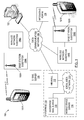
- FIG. 1 illustrates elements of an exemplary network environment for a wireless mobile communication device, the exemplary network environment including a mobile device server;
- FIG. 2 illustrates components of the wireless mobile data communication device of FIG. 1 , according to an embodiment of the present invention
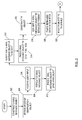
- FIG. 3 illustrates steps carried out on the wireless mobile communication device by methods associated with an e-mail message Compose verb class in accordance with an embodiment of the present invention
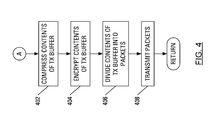
- FIG. 4 illustrates additional steps carried out on the wireless mobile communication device by methods associated with an e-mail message Compose verb class in accordance with an embodiment of the present invention
- FIG. 5 illustrates steps carried out on the mobile device server in an exemplary method of handling an outgoing e-mail message in accordance with an embodiment of the present invention
- FIG. 6 illustrates steps carried out on the mobile device server in an exemplary method of handling an incoming e-mail message in accordance with an embodiment of the present invention.
- FIG. 1 illustrates elements of an exemplary network environment 100 for a first wireless mobile communication device 101 A.
- the elements of the exemplary network environment 100 include multiple wireless carrier networks and a data communication network 108, which may be considered to represent at least one wide area network, such as the present day Internet and successors, as well as, potentially, multiple local area networks.
- a first base station antenna 102A, with which the first wireless mobile communication device 101 A may communicate wirelessly, is provided as part of a first base station subsystem 104A.
- the first base station subsystem 104A connects to a first wireless network subsystem 106A.
- the first wireless network subsystem 106A includes, among other components, a mobile services switching center, a home location register, a visitor location register, a relay and a Short Messaging Service Center (SMSC). As illustrated in FIG. 1 , the first wireless network subsystem 106A is connected to the data communication network 108.
- GSM Global System for Mobile communications
- SMSC Short Messaging Service Center
- a second wireless network subsystem 106B Also connected to the data communication network 108 is a second wireless network subsystem 106B. Similar to the first wireless network subsystem 106A, the second wireless network subsystem 106B may include a mobile services switching center, a home location register, a visitor location register, a relay and an SMSC. The second wireless network subsystem 106A connects to a second base station subsystem 104B with a second base station antenna 102B. The second base station antenna 102B may allow the second base station subsystem 104B to communicate wirelessly with a second mobile device 101 B.
- the first mobile device 101 A may be associated with an enterprise 110 connected to the data communication network 108.
- the enterprise 110 may, for instance, include a firewall or proxy server 112 connecting to the data communication network 108 and to a local area network (LAN) 114.
- the LAN 114 may allow communication between a mobile device server 116 and an enterprise mail server 118.
- Also connected to the data communication network 108 may be an e-mail server 120 and a desktop computer 122, which may be associated with a user having an account on the e-mail server 120. Also connected to the data communication network 108 may be a messaging portal 124.
- FIG. 2 illustrates the first wireless mobile communication device 101 A including a housing, an input device (a keyboard 224), and an output device (a display 226), which is preferably a full graphic or full color Liquid Crystal Display (LCD). Other types of output devices may alternatively be utilized.
- a processing device (a microprocessor 228) is shown schematically in FIG. 2 as coupled between the keyboard 224 and the display 226. The microprocessor 228 controls the operation of the display 226, as well as the overall operation of the first mobile device 101 A, in response to actuation of keys on the keyboard 224 by a user.
- the housing may be elongated vertically, or may take on other sizes and shapes (including clamshell housing structures).
- the keyboard may include a mode selection key, or other hardware or software, for switching between text entry and telephony entry.
- the first mobile device 101 A may have a battery 222 to power the active elements of the first mobile device 101 A.
- the first mobile device 101 A is preferably a two-way radio frequency (RF) communication device having voice and data communication capabilities.
- the first mobile device 101 A preferably has the capability to communicate with other computer systems via the Internet.
- RF radio frequency
- Operating system software executed by the microprocessor 228 is preferably stored in a computer readable medium, such as the flash memory 216, but may be stored in other types of memory devices, such as a read only memory (ROM) or similar storage element.
- system software, specific device applications, or parts thereof may be temporarily loaded into a volatile store, such as the RAM 218. Communication signals received by the mobile device may also be stored to the RAM 218.
- a predetermined set of software applications that control basic device operations such as a voice communications module 230A and a data communications module 230B, may be installed on the first mobile device 101 A during manufacture.
- An e-mail client application module 230C may also be installed on the first mobile device 101 A during manufacture, to implement aspects of the application.
- additional software modules illustrated as an other software module 230N, which may be, for instance, a personal information manager (PIM) application, may be installed during manufacture.
- the PIM application is preferably capable of organizing and managing data items, such as e-mail messages, calendar events, voice mail messages, appointments, and task items.
- the PIM application is also preferably capable of sending and receiving data items via a wireless carrier network represented in FIG. 2 by the first base station antenna 102A.
- the data items managed by the PIM application are seamlessly integrated, synchronized and updated via the wireless carrier network with the device user's corresponding data items stored or associated with a host computer system.
- the communication subsystem 202 includes a receiver 250, a transmitter 252 and one or more antennas, illustrated as a receive antenna 254 and a transmit antenna 256.
- the communication subsystem 202 also includes a processing module, such as a digital signal processor (DSP) 258, and local oscillators (LOs) 260.
- DSP digital signal processor
- LOs local oscillators
- the communication subsystem 202 of the first mobile device 101 A may be designed to operate with the Mobitex TM , DataTAC TM or General Packet Radio Service (GPRS) mobile data communication networks and may also be designed to operate with any of a variety of voice communication networks, such as Advanced Mobile Phone Service (AMPS), Time Division Multiple Access (TDMA), Code Division Multiple Access (CDMA), Personal Communications Service (PCS), Global System for Mobile Communications (GSM), etc.
- AMPS Advanced Mobile Phone Service
- TDMA Time Division Multiple Access
- CDMA Code Division Multiple Access
- PCS Personal Communications Service
- GSM Global System for Mobile Communications
- Other types of data and voice networks, both separate and integrated, may also be utilized with the first mobile device 101 A.
- the first mobile device 101 A may send and receive communication signals over the wireless carrier network.
- Signals received from the first base station antenna 102A by the receive antenna 254 are routed to the receiver 250, which provides for signal amplification, frequency down conversion, filtering, channel selection, etc., and may also provide analog to digital conversion. Analog-to-digital conversion of the received signal allows the DSP 258 to perform more complex communication functions, such as demodulation and decoding.
- signals to be transmitted to the base station antenna 102A are processed (e.g., modulated and encoded) by the DSP 258 and are then provided to the transmitter 252 for digital to analog conversion, frequency up conversion, filtering, amplification and transmission to the first base station antenna 102A via the transmit antenna 256.
- the DSP 258 provides for control of the receiver 250 and the transmitter 252. For example, gains applied to communication signals in the receiver 250 and the transmitter 252 may be adaptively controlled through automatic gain control algorithms implemented in the DSP 258.
- a received signal such as an SMS message or web page download
- the communication subsystem 202 is input to the microprocessor 228.
- the received signal is then further processed by the microprocessor 228 in preparation for output to the display 226, or alternatively to some other auxiliary I/O devices 206.
- a device user may also compose data items, such as e-mail messages or SMS messages, using the keyboard 224 and/or some other auxiliary I/O device 206, such as a touchpad, a rocker switch, a thumb-wheel, or some other type of input device.
- the composed data items may then be transmitted to the base station antenna 102A via the communication subsystem 202.
- a voice communication mode In a voice communication mode, overall operation of the device is substantially similar to the data communication mode, except that received signals may be output to the speaker 211, and signals for transmission may be generated by the microphone 212.
- Alternative voice or audio I/O subsystems such as a voice message recording subsystem, may also be implemented on the first mobile device 101 A.
- the display 226 may also be utilized in voice communication mode, for example, to display the identity of a calling party, the duration of a voice call, or other voice call related information.
- the short-range communications subsystem 204 enables communication between the first mobile device 101 A and other proximate systems or devices, which need not necessarily be similar devices.
- the short-range communications subsystem 204 may include an infrared device and associated circuits and components, or a Bluetooth TM communication module, to provide for communication with similarly-enabled systems and devices.
- a new e-mail message object may be created as an instance of an e-mail message model class, which defines an organization of e-mail message payload, routing data and other metadata.
- the e-mail message model class may also identify those actions that may be performed on the e-mail message object, such as Send, Save Draft, etc. Such actions may be performed on the e-mail message object responsive to user interaction with the user interface object.
- the actions that may be performed on an e-mail message object may be considered to relate to instances of "verb" classes that are specific to an e-mail message handling service that is external to the first mobile device 101 A.
- a verb is an object encapsulation of an action in the Java TM programming language.
- a verb is often, but not necessarily, presented to the user as an item in a pull down menu or hotkey; a verb contains the code to perform the action on a related data model and information on how to represent itself to the user in zero or more ways.
- An e-mail message Compose verb class may be associated with a default user interface screen object. Accordingly, while in view of the default user interface screen, a user may cause a menu to appear and may select a "Compose e-mail message" menu item. As a result of the selection of the "Compose e-mail message" menu item, the user interface object may instantiate the e-mail message Compose verb class.
- Methods associated with the e-mail message Compose verb class may then execute the steps illustrated in FIG. 3 .
- the e-mail message Compose verb object constructs (step 302) a new e-mail message object according, in part, to an e-mail message model class.
- a method of the e-mail message Compose verb object then spawns (step 304) an e-mail message composition screen object to the display 226 of the first mobile device 101 A.
- the e-mail message composition screen object may have a number of fields.
- the fields are likely to include: a "To:” field, in which the user may specify an e-mail address for one or more primary recipients; a "CC:” field, in which the user may specify an e-mail address for one or more secondary recipients; a "Subject:” field, in which the user may specify a descriptive subject for the e-mail message in composition; and a "Body” field, in which the user may provide the payload of the e-mail message object.
- the user may input, in the "To:” field, a destination e-mail address for the new e-mail message object. Additionally, the user may input, in the "Subject:” field, a subject for the new e-mail message object. Finally, the user may input, in the "Body” field, the text of the message that is intended to be relayed to the recipient associated with the destination e-mail address.
- the e-mail message composition screen object receives (step 306) this user input and uses the input to populate (step 308) the new e-mail message object.
- the new e-mail message object may be associated with a "Send” action.
- a "Send" menu item associated with an e-mail message Send verb class, may appear in a menu caused to appear while the user is in view of the e-mail message composition screen.
- the e-mail message composition screen object may instantiate the e-mail message Send verb class.
- the e-mail message composition screen object then passes (step 310) the new e-mail message object to the e-mail message Send verb object.
- the e-mail message Send verb object verifies (step 312) that the new e-mail message object should be sent.
- the e-mail message Send verb object may check a policy to determine whether the user is allowed to send, may check a policy to determine whether the user is to be prompted before sending, may check that the destination e-mail addresses specified for the new e-mail message object are resolved, may check that that a password has been provided in the case of certain types of messages, etc.
- the e-mail message Send verb object passes (step 314) the new e-mail message object to a utility method.
- This utility method then may call further methods on the e-mail message object.
- the transmission object contains various headers and parameters, as well as a transmission buffer.
- Another of the further methods converts (step 318) the e-mail message object into a serialized format and subsequently places (step 320) the serialized data in the transmission buffer of the transmission object.
- the e-mail utility method then passes (step 322) the transmission object to a transmission service. Responsive to being invoked by the e-mail utility method, the transmission service compresses (step 402, see FIG. 4 ) and encrypts (step 404) the contents of the transmission buffer.
- the content can be transmitted in an unencrypted and/or uncompressed format.
- the transmission service then divides (step 406) the compressed and encrypted contents of the transmission buffer into packets and transmits (step 408) the packets from the device first mobile device 101 A.
- the packets transmitted from the first mobile device 101 A are received over a wireless channel at the first base station antenna 102A at the first base station subsystem 104A.
- the first base station subsystem 104A passes the packets to the first wireless network subsystem 106A from which the packets are passed to a relay (not shown) in the data communication network 108.
- the relay recognizes that the packets must be sent to the mobile device server 116 and, accordingly, routes the packets to the enterprise 110.
- the packets pass through the firewall 112 and are routed through the LAN 114 to the mobile device server 116.
- the mobile device server 116 decrypts and decompresses the packets to reconstruct the e-mail message and then passes the reconstructed e-mail message through the LAN 114 to the enterprise mail server 118.
- the enterprise mail server 118 considers the reconstructed e-mail message, in particular, to determine a value for at least one destination address provided as part of the e-mail message.
- the enterprise mail server 118 then transmits the e-mail message through the LAN 114 and the firewall 112 to the data communications network 108 toward an e-mail server associated with the e-mail destination address. For example, if the e-mail destination address of the e-mail message is associated with the e-mail server 120, the enterprise mail server 118 transmits the e-mail message to the e-mail server 120. Additionally, the enterprise mail server 118 may save a copy of the e-mail message in a "Sent Items" folder associated with the sender.
- a user may subsequently execute a mail client application on the desktop computer 122.
- the mail client application may communicate with the e-mail server 120 to obtain e-mail messages addressed to the user.
- the e-mail message composition screen object includes an image of the sender as part of the e-mail message object.
- the e-mail client application may automatically add the included image to an address book entry associated with the identity of the sender.
- the user may be prompted to allow the association of the image with the address book entry of the sender of the message.
- the call display application may perform a lookup of the CLID information and display the image associated, in the address book, with the sender.
- the e-mail message composition screen object includes a data-inclusion indicator as part of the e-mail message object. The inclusion of an image in the e-mail message is performed away from the first mobile device 101 A at the mobile device server 116.
- the mobile device server 116 receives (step 502) a transmission object, that is, packets that contain data defining an e-mail message, from the first mobile device 101 A. From the received packets, the mobile device server 116 reconstructs (step 504) the e-mail message. Once the e-mail message has been reconstructed, the mobile device server 116 determines (step 506) whether a data-inclusion indicator is present in the e-mail message, i.e., whether the data-inclusion indicator has been included by the e-mail message composition screen object executed at the first mobile device 101 A.
- a transmission object that is, packets that contain data defining an e-mail message
- the mobile device server 116 amends the e-mail message object to include an image of the sender.
- the mobile device server 116 passes (step 510) the amended e-mail message object to the enterprise mail server 118 in a conventional fashion.
- the mobile device server 116 Upon determining that the data-inclusion indicator is not present, the mobile device server 116 simply passes (step 510) the e-mail message object to the enterprise mail server 118 in a conventional fashion.
- the image is not part of the e-mail message object as the transmission object is transmitted wirelessly from the first mobile device 101 A to the first base station subsystem 104A and, eventually, to the mobile device server 116. Accordingly, the wireless network resources that would normally be required to wirelessly transmit the image to the first base station subsystem 104A are conserved.
- the Multipurpose Internet Mail Extension (MIME) standard is an Internet Standard that extends the format of e-mail messages to support: text in character sets other than US-ASCII; non-text attachments; multi-part message bodies; and header information in non-ASCII character sets. Wherever the e-mail message is amended to include the image, i.e., either at the first mobile device 101 A or at the mobile device server 116, it is proposed herein to attach the image to the e-mail message as a MIME attachment.
- a MIME Content-Type specific to an image of the sender the document available at ietfreport.isoc.org/idref/draft-ietf-asid-mime-vcard defines the profile of the MIME Content-Type for directory information for a white-pages person object, based on a vCard electronic business card. Furthermore, it is known that a vCard electronic business card may include a digital image.
- an image of the sender may be included as an element of a vCard electronic business card.
- the e-mail message composition screen object may then include the vCard electronic business card as part of the e-mail message object, thereby accomplishing the task of including an image in an e-mail message.
- it is the mobile device server 116 that includes the vCard electronic business card as part of the e-mail message object, thereby accomplishing the task of including an image in an e-mail message.
- a user of a receiving device may instruct the receiving device to associate the details provided in the vCard (including an image, if present) with an address book entry associated with the sender of the e-mail message. That is, the receiving device may populate the address book entry associated with the sender of the e-mail message with sender-specific details obtained from the vCard.
- the combination of automatically including, either at the first mobile device 101 A or at the mobile device server 116, an image of the sender with an outgoing e-mail message and automatically populating the address book entry associated with the sender with the image received in the e-mail message provides an efficient manner by which to distribute digital images for associating with address book entries and for use with Picture Caller ID.
- the receiving device has been assumed to be connected to the data communication network 108 over a physical connection. See, for example, the combination of the desktop computer 122 and the e-mail server 120 in FIG. 1 .
- the receiving device is another wireless communication device, say, second mobile device 101 B (see FIG. 1 )
- the mobile device server 116 may be considered to be associated with the second mobile device 101 B and the second mobile device 101 B may be associated with an e-mail account, the destination address for which has been specified in an e-mail message received by the enterprise mail server 118.
- the received e-mail message may have sender-specific data included, such as an image as described above. Exemplary steps in a method of handling such an e-mail message are illustrated in FIG. 6 .
- the mobile device server 116 upon receiving (step 602) the e-mail message from the enterprise mail server 118, the mobile device server 116 analyzes (step 604) the received e-mail message to determine whether sender-specific data, e.g., an image, is present in the received e-mail message. Upon determining that sender-specific data is not present in the received e-mail message, that is, other than data typical to an e-mail message, such as the e-mail address of the sender and maybe some contact information in a signature portion of the text of the received e-mail message, the mobile device server 116 transmits (step 605) the received e-mail message to the second mobile device 101 B.
- sender-specific data e.g., an image
- the mobile device server 116 determines (step 606) whether the sender-specific data has previously been transmitted to the second mobile device 101 B. If, as determined (step 606) by the mobile device server 116, the sender-specific data has previously been transmitted to the second mobile device 101 B, the mobile device server 116 amends the e-mail message to remove the sender-specific data to create an amended e-mail message. Once the mobile device server 116 has created the amended e-mail message, the mobile device server 116 transmits (step 610) the amended e-mail message to the second mobile device 101 B. Beneficially, the amended e-mail message is smaller than the e-mail message originally received and, consequently, is less taxing of the wireless bandwidth requirements between the second base station subsystem 104B and the second mobile device 101 B.
- the mobile device server 116 determines (step 612) whether the sender-specific data meets criteria associated with the second mobile device 101 B.
- criteria may include, where, for example, the sender-specific data is a digital image, height and width dimensions expressed in pixels.
- Such dimensional criteria may relate to the resolution of the display of the second mobile device 101 B as it may be considered wasteful to send a digital image with a resolution greater than can be displayed by the second mobile device 101 B.
- Other criteria associated with the second mobile device 101 B may relate to the structure of contact data maintained at the second mobile device 101 B.
- the sender-specific data is a vCard and the vCard includes a web site address for the company with which the sender is associated. It may also be that individual contact records maintained by the contact management software at the second mobile device 101 B do not have a field for the web site address.
- the mobile device server 116 If, as determined (step 612) by the mobile device server 116, the sender-specific data meets criteria associated with the second mobile device 101 B, the mobile device server 116 transmits (step 605) the received e-mail message to the second mobile device 101 B.
- the mobile device server 116 amends (step 614) the sender-specific data to meet the criteria, thereby creating an amended e-mail message. Once the mobile device server 116 has created the amended e-mail message, the mobile device server 116 transmits (step 610) the amended e-mail message to the second mobile device 101B.
- Amending (step 614) the sender-specific data to meet the criteria associated with the second mobile device 101 B may involve, for example, cropping a digital image to an appropriate size for display on the second mobile device 101 B. It is recognized that indiscriminate cropping may lead to a digital image that is of no use in recognizing the sender at a later time. As such, amending (step 614) the sender-specific data to meet the criteria associated with the second mobile device 101 B may involve, for example, resizing a digital image to an appropriate size for display on the second mobile device 101 B.
- cropping may involve removing 80 lines of pixels from the top, bottom, left and rights sides, while resizing may involve discarding every other vertical line of pixels and every other horizontal line of pixels, to reach the desired image size.
- amending may involve remapping the particular data to another field, such as a generic "Notes" field.
Landscapes
- Engineering & Computer Science (AREA)
- Business, Economics & Management (AREA)
- Human Resources & Organizations (AREA)
- Entrepreneurship & Innovation (AREA)
- Strategic Management (AREA)
- Marketing (AREA)
- Data Mining & Analysis (AREA)
- Economics (AREA)
- Computer Hardware Design (AREA)
- Operations Research (AREA)
- Quality & Reliability (AREA)
- Tourism & Hospitality (AREA)
- Physics & Mathematics (AREA)
- General Business, Economics & Management (AREA)
- General Physics & Mathematics (AREA)
- Theoretical Computer Science (AREA)
- Information Transfer Between Computers (AREA)
Abstract
Description
- The present invention relates generally to transmitting e-mail messages and, more specifically, to a system and method for image inclusion in e-mail messages before transmission.
- Users of mobile communication devices with reasonably sophisticated personal information management (PIM) applications have an option of associating a digital image with the information in each entry in an address book portion of the PIM application. This option provides an advantage in that users can associate an image of a face, for instance, with an address book entry. This may be of particular use for a user with an extraordinarily large number of entries in the address book. Where a telephony application is available on such a mobile communication device, and a telephone network to which the mobile communication device connects provides calling line identification (CLID) information, the mobile communication device may enhance a call display application. Upon receiving an incoming call with corresponding CLID information, the call display application may perform a lookup of the destination number and/or name provided in the CLID information and display the image (if any) associated, in the address book, with the destination number and/or name. Names for this lookup and display feature include "Picture Caller ID" and "Photo Caller ID".
- However, while Picture Caller ID is a popular feature, there remains a need for an efficient manner by which to distribute digital images for associating with address book entries and for use with Picture Caller ID.
- Before sending a message to an e-mail server, which message includes an outgoing e-mail message, an e-mail client may include a data-inclusion indicator in the message. The e-mail server that receives the message recognizes the data-inclusion indicator and, responsively, may include sender-specific data before forwarding the e-mail message toward its destination. In the event that the e-mail server can determine that the sender-specific data has previously been transmitted to the destination, the e-mail server may elect not to include the sender-specific data. In the event that the e-mail server can determine that the attached image has not previously been transmitted to the destination, the e-mail server may, given previously acquired criteria for the destination device, amend the sender-specific data to meet the criteria before sending the e-mail message to the destination device. When a device at the destination receives the e-mail message with an image included, the image may be automatically imported into the address book associated with the user of the device, associated with the address book entry of the sender of the message. Alternatively, the user may be prompted to allow the association of the image with the address book entry of the sender of the message. This way, the user's address book will be populated with images of people with whom the user is typically in contact.
- In accordance with an aspect of the present invention, there may be provided a method of enhancing an electronic message. The method may include receiving an electronic message composed by a sending party and determining whether the electronic message includes a data-inclusion indicator, the indicator specifying that data specific to the sending party is to be included in the electronic message. The method may further include, if the electronic message includes a data-inclusion indicator, including the data specific to the sending party in the electronic message and transmitting the electronic message, with the data specific to the sending party included in the electronic message. Additionally, a mobile communication device may be provided for carrying out this method and a computer readable medium is provided for containing instructions to allow a processor to carry out this method.
- In accordance with another aspect of the present invention, there may be provided a method of handling an enhanced electronic message. The method may include receiving an electronic message composed by a sending party, the electronic message specifying a destination address for a receiving party and including data specific to the sending party and determining whether the data specific to the sending party has previously been transmitted to the destination address for the receiving party. The method may further include, if the data specific to the sending party has previously been transmitted to the destination address for the receiving party, amending the electronic message to remove the data specific to the sending party, thereby creating an amended electronic message and transmitting the amended electronic message toward the destination address for the receiving party.
- In accordance with a further aspect of the present invention, there may be provided a method of handling an enhanced electronic message. The method may include receiving an electronic message composed by a sending party, the electronic message specifying a destination address for a receiving party and including data specific to the sending party, and determining whether the data specific to the sending party meets criteria specific to a device in use by the receiving party. The method may further include, if the data specific to the sending party fails to meet the criteria specific to the device in use by the receiving party, amending the data specific to the sending party to meet the criteria specific to the device in use by the receiving party, thereby creating an amended electronic message and transmitting the amended electronic message to the device in use by the receiving party.
- Other aspects and features of the present invention will become apparent to those of ordinary skill in the art upon review of the following description of specific embodiments of the invention in conjunction with the accompanying figures.
- Reference will now be made to the drawings, which show by way of example, embodiments of the invention, and in which:
-
FIG. 1 illustrates elements of an exemplary network environment for a wireless mobile communication device, the exemplary network environment including a mobile device server; -
FIG. 2 illustrates components of the wireless mobile data communication device ofFIG. 1 , according to an embodiment of the present invention; -
FIG. 3 illustrates steps carried out on the wireless mobile communication device by methods associated with an e-mail message Compose verb class in accordance with an embodiment of the present invention; -
FIG. 4 illustrates additional steps carried out on the wireless mobile communication device by methods associated with an e-mail message Compose verb class in accordance with an embodiment of the present invention; -
FIG. 5 illustrates steps carried out on the mobile device server in an exemplary method of handling an outgoing e-mail message in accordance with an embodiment of the present invention; and -
FIG. 6 illustrates steps carried out on the mobile device server in an exemplary method of handling an incoming e-mail message in accordance with an embodiment of the present invention. -
FIG. 1 illustrates elements of anexemplary network environment 100 for a first wirelessmobile communication device 101 A. The elements of theexemplary network environment 100 include multiple wireless carrier networks and adata communication network 108, which may be considered to represent at least one wide area network, such as the present day Internet and successors, as well as, potentially, multiple local area networks. A firstbase station antenna 102A, with which the first wirelessmobile communication device 101 A may communicate wirelessly, is provided as part of a firstbase station subsystem 104A. - The first
base station subsystem 104A connects to a firstwireless network subsystem 106A. In an exemplary Global System for Mobile communications (GSM) implementation, the firstwireless network subsystem 106A includes, among other components, a mobile services switching center, a home location register, a visitor location register, a relay and a Short Messaging Service Center (SMSC). As illustrated inFIG. 1 , the firstwireless network subsystem 106A is connected to thedata communication network 108. - Also connected to the
data communication network 108 is a secondwireless network subsystem 106B. Similar to the firstwireless network subsystem 106A, the secondwireless network subsystem 106B may include a mobile services switching center, a home location register, a visitor location register, a relay and an SMSC. The secondwireless network subsystem 106A connects to a secondbase station subsystem 104B with a secondbase station antenna 102B. The secondbase station antenna 102B may allow the secondbase station subsystem 104B to communicate wirelessly with a secondmobile device 101 B. - The first
mobile device 101 A may be associated with anenterprise 110 connected to thedata communication network 108. Theenterprise 110 may, for instance, include a firewall orproxy server 112 connecting to thedata communication network 108 and to a local area network (LAN) 114. TheLAN 114 may allow communication between amobile device server 116 and anenterprise mail server 118. - Also connected to the
data communication network 108 may be ane-mail server 120 and adesktop computer 122, which may be associated with a user having an account on thee-mail server 120. Also connected to thedata communication network 108 may be amessaging portal 124. -
FIG. 2 illustrates the first wirelessmobile communication device 101 A including a housing, an input device (a keyboard 224), and an output device (a display 226), which is preferably a full graphic or full color Liquid Crystal Display (LCD). Other types of output devices may alternatively be utilized. A processing device (a microprocessor 228) is shown schematically inFIG. 2 as coupled between thekeyboard 224 and thedisplay 226. Themicroprocessor 228 controls the operation of thedisplay 226, as well as the overall operation of the firstmobile device 101 A, in response to actuation of keys on thekeyboard 224 by a user. - The housing may be elongated vertically, or may take on other sizes and shapes (including clamshell housing structures). The keyboard may include a mode selection key, or other hardware or software, for switching between text entry and telephony entry.
- In addition to the
microprocessor 228, other parts of the firstmobile device 101 A are shown schematically inFIG. 2 . These include: a communications subsystem 202; a short-range communications subsystem 204; thekeyboard 224 and thedisplay 226, along with other input/output devices including a set of auxiliary I/O devices 206, aserial port 208, a speaker 211 and amicrophone 212; as well as memory devices including aflash memory 216 and a Random Access Memory (RAM) 218; and variousother device subsystems 220. The firstmobile device 101 A may have abattery 222 to power the active elements of the firstmobile device 101 A. The firstmobile device 101 A is preferably a two-way radio frequency (RF) communication device having voice and data communication capabilities. In addition, the firstmobile device 101 A preferably has the capability to communicate with other computer systems via the Internet. - Operating system software executed by the
microprocessor 228 is preferably stored in a computer readable medium, such as theflash memory 216, but may be stored in other types of memory devices, such as a read only memory (ROM) or similar storage element. In addition, system software, specific device applications, or parts thereof, may be temporarily loaded into a volatile store, such as theRAM 218. Communication signals received by the mobile device may also be stored to theRAM 218. - The
microprocessor 228, in addition to its operating system functions, enables execution of software applications on the firstmobile device 101 A. A predetermined set of software applications that control basic device operations, such as avoice communications module 230A and adata communications module 230B, may be installed on the firstmobile device 101 A during manufacture. An e-mailclient application module 230C may also be installed on the firstmobile device 101 A during manufacture, to implement aspects of the application. As well, additional software modules, illustrated as another software module 230N, which may be, for instance, a personal information manager (PIM) application, may be installed during manufacture. The PIM application is preferably capable of organizing and managing data items, such as e-mail messages, calendar events, voice mail messages, appointments, and task items. The PIM application is also preferably capable of sending and receiving data items via a wireless carrier network represented inFIG. 2 by the firstbase station antenna 102A. Preferably, the data items managed by the PIM application are seamlessly integrated, synchronized and updated via the wireless carrier network with the device user's corresponding data items stored or associated with a host computer system. - Communication functions, including data and voice communications, may be performed through the communication subsystem 202 and, possibly, through the short-range communications subsystem 204. The communication subsystem 202 includes a
receiver 250, atransmitter 252 and one or more antennas, illustrated as a receiveantenna 254 and a transmitantenna 256. In addition, the communication subsystem 202 also includes a processing module, such as a digital signal processor (DSP) 258, and local oscillators (LOs) 260. The specific design and implementation of the communication subsystem 202 is dependent upon the communication network in which the firstmobile device 101 A is intended to operate. For example, the communication subsystem 202 of the firstmobile device 101 A may be designed to operate with the Mobitex™, DataTAC™ or General Packet Radio Service (GPRS) mobile data communication networks and may also be designed to operate with any of a variety of voice communication networks, such as Advanced Mobile Phone Service (AMPS), Time Division Multiple Access (TDMA), Code Division Multiple Access (CDMA), Personal Communications Service (PCS), Global System for Mobile Communications (GSM), etc. Other types of data and voice networks, both separate and integrated, may also be utilized with the firstmobile device 101 A. - When required network registration or activation procedures have been completed, the first
mobile device 101 A may send and receive communication signals over the wireless carrier network. Signals received from the firstbase station antenna 102A by the receiveantenna 254 are routed to thereceiver 250, which provides for signal amplification, frequency down conversion, filtering, channel selection, etc., and may also provide analog to digital conversion. Analog-to-digital conversion of the received signal allows theDSP 258 to perform more complex communication functions, such as demodulation and decoding. In a similar manner, signals to be transmitted to thebase station antenna 102A are processed (e.g., modulated and encoded) by theDSP 258 and are then provided to thetransmitter 252 for digital to analog conversion, frequency up conversion, filtering, amplification and transmission to the firstbase station antenna 102A via the transmitantenna 256. - In addition to processing communication signals, the
DSP 258 provides for control of thereceiver 250 and thetransmitter 252. For example, gains applied to communication signals in thereceiver 250 and thetransmitter 252 may be adaptively controlled through automatic gain control algorithms implemented in theDSP 258. - In a data communication mode, a received signal, such as an SMS message or web page download, is processed by the communication subsystem 202 and is input to the
microprocessor 228. The received signal is then further processed by themicroprocessor 228 in preparation for output to thedisplay 226, or alternatively to some other auxiliary I/O devices 206. A device user may also compose data items, such as e-mail messages or SMS messages, using thekeyboard 224 and/or some other auxiliary I/O device 206, such as a touchpad, a rocker switch, a thumb-wheel, or some other type of input device. The composed data items may then be transmitted to thebase station antenna 102A via the communication subsystem 202. - In a voice communication mode, overall operation of the device is substantially similar to the data communication mode, except that received signals may be output to the speaker 211, and signals for transmission may be generated by the
microphone 212. Alternative voice or audio I/O subsystems, such as a voice message recording subsystem, may also be implemented on the firstmobile device 101 A. In addition, thedisplay 226 may also be utilized in voice communication mode, for example, to display the identity of a calling party, the duration of a voice call, or other voice call related information. - The short-range communications subsystem 204 enables communication between the first
mobile device 101 A and other proximate systems or devices, which need not necessarily be similar devices. For example, the short-range communications subsystem 204 may include an infrared device and associated circuits and components, or a Bluetooth™ communication module, to provide for communication with similarly-enabled systems and devices. - To create an outgoing message, it is typical for a user to interact with a user interface object (assuming the use of object-oriented programming techniques for the operational software code executed on the microprocessor 228). A new e-mail message object may be created as an instance of an e-mail message model class, which defines an organization of e-mail message payload, routing data and other metadata. The e-mail message model class may also identify those actions that may be performed on the e-mail message object, such as Send, Save Draft, etc. Such actions may be performed on the e-mail message object responsive to user interaction with the user interface object.
- The actions that may be performed on an e-mail message object may be considered to relate to instances of "verb" classes that are specific to an e-mail message handling service that is external to the first mobile device 101 A. As will be clear to a person of ordinary skill in the art of object oriented programming, a verb is an object encapsulation of an action in the Java™ programming language. A verb is often, but not necessarily, presented to the user as an item in a pull down menu or hotkey; a verb contains the code to perform the action on a related data model and information on how to represent itself to the user in zero or more ways.
- An e-mail message Compose verb class may be associated with a default user interface screen object. Accordingly, while in view of the default user interface screen, a user may cause a menu to appear and may select a "Compose e-mail message" menu item. As a result of the selection of the "Compose e-mail message" menu item, the user interface object may instantiate the e-mail message Compose verb class.
- Methods associated with the e-mail message Compose verb class, may then execute the steps illustrated in
FIG. 3 . - Initially, the e-mail message Compose verb object constructs (step 302) a new e-mail message object according, in part, to an e-mail message model class. A method of the e-mail message Compose verb object then spawns (step 304) an e-mail message composition screen object to the
display 226 of the firstmobile device 101 A. The e-mail message composition screen object may have a number of fields. The fields are likely to include: a "To:" field, in which the user may specify an e-mail address for one or more primary recipients; a "CC:" field, in which the user may specify an e-mail address for one or more secondary recipients; a "Subject:" field, in which the user may specify a descriptive subject for the e-mail message in composition; and a "Body" field, in which the user may provide the payload of the e-mail message object. - In view of the e-mail message composition screen, the user may input, in the "To:" field, a destination e-mail address for the new e-mail message object. Additionally, the user may input, in the "Subject:" field, a subject for the new e-mail message object. Finally, the user may input, in the "Body" field, the text of the message that is intended to be relayed to the recipient associated with the destination e-mail address. The e-mail message composition screen object receives (step 306) this user input and uses the input to populate (step 308) the new e-mail message object.
- As discussed above, the new e-mail message object may be associated with a "Send" action. As such, a "Send" menu item, associated with an e-mail message Send verb class, may appear in a menu caused to appear while the user is in view of the e-mail message composition screen. As a result of the selection of the "Send" menu item, the e-mail message composition screen object may instantiate the e-mail message Send verb class.
- The e-mail message composition screen object then passes (step 310) the new e-mail message object to the e-mail message Send verb object. The e-mail message Send verb object verifies (step 312) that the new e-mail message object should be sent. In verifying that the new e-mail message object should be sent, the e-mail message Send verb object may check a policy to determine whether the user is allowed to send, may check a policy to determine whether the user is to be prompted before sending, may check that the destination e-mail addresses specified for the new e-mail message object are resolved, may check that that a password has been provided in the case of certain types of messages, etc. Upon determining that the new e-mail message should be sent, the e-mail message Send verb object passes (step 314) the new e-mail message object to a utility method.
- This utility method then may call further methods on the e-mail message object. Among the further methods is a method that constructs (step 316) a transmission object based on the new e-mail message object. The transmission object contains various headers and parameters, as well as a transmission buffer. Another of the further methods converts (step 318) the e-mail message object into a serialized format and subsequently places (step 320) the serialized data in the transmission buffer of the transmission object. The e-mail utility method then passes (step 322) the transmission object to a transmission service. Responsive to being invoked by the e-mail utility method, the transmission service compresses (
step 402, seeFIG. 4 ) and encrypts (step 404) the contents of the transmission buffer. In other embodiments of the present invention, the content can be transmitted in an unencrypted and/or uncompressed format. The transmission service then divides (step 406) the compressed and encrypted contents of the transmission buffer into packets and transmits (step 408) the packets from the device firstmobile device 101 A. - The packets transmitted from the first
mobile device 101 A are received over a wireless channel at the firstbase station antenna 102A at the firstbase station subsystem 104A. The firstbase station subsystem 104A passes the packets to the firstwireless network subsystem 106A from which the packets are passed to a relay (not shown) in thedata communication network 108. The relay recognizes that the packets must be sent to themobile device server 116 and, accordingly, routes the packets to theenterprise 110. Within theenterprise 110, the packets pass through thefirewall 112 and are routed through theLAN 114 to themobile device server 116. Themobile device server 116 decrypts and decompresses the packets to reconstruct the e-mail message and then passes the reconstructed e-mail message through theLAN 114 to theenterprise mail server 118. - The
enterprise mail server 118 considers the reconstructed e-mail message, in particular, to determine a value for at least one destination address provided as part of the e-mail message. Theenterprise mail server 118 then transmits the e-mail message through theLAN 114 and thefirewall 112 to thedata communications network 108 toward an e-mail server associated with the e-mail destination address. For example, if the e-mail destination address of the e-mail message is associated with thee-mail server 120, theenterprise mail server 118 transmits the e-mail message to thee-mail server 120. Additionally, theenterprise mail server 118 may save a copy of the e-mail message in a "Sent Items" folder associated with the sender. - A user may subsequently execute a mail client application on the
desktop computer 122. The mail client application may communicate with thee-mail server 120 to obtain e-mail messages addressed to the user. - In overview, while populating (step 308) the e-mail message object with, among other details, an e-mail address for a receiver, the e-mail message composition screen object includes an image of the sender as part of the e-mail message object. Advantageously, at a device in use to execute an e-mail client application on behalf of the receiver, the e-mail client application may automatically add the included image to an address book entry associated with the identity of the sender. Alternatively, the user may be prompted to allow the association of the image with the address book entry of the sender of the message. Later, upon receiving an incoming call from the sender with corresponding CLID information, the call display application may perform a lookup of the CLID information and display the image associated, in the address book, with the sender.
- In a second embodiment of the present invention, rather than include an image of the sender as part of the e-mail message object, while populating (step 308) the e-mail message object, the e-mail message composition screen object includes a data-inclusion indicator as part of the e-mail message object. The inclusion of an image in the e-mail message is performed away from the first
mobile device 101 A at themobile device server 116. - In particular, as illustrated in
FIG. 5 , themobile device server 116 receives (step 502) a transmission object, that is, packets that contain data defining an e-mail message, from the first mobile device 101 A. From the received packets, themobile device server 116 reconstructs (step 504) the e-mail message. Once the e-mail message has been reconstructed, themobile device server 116 determines (step 506) whether a data-inclusion indicator is present in the e-mail message, i.e., whether the data-inclusion indicator has been included by the e-mail message composition screen object executed at the first mobile device 101 A. Responsive to determining the presence of the data-inclusion indicator, themobile device server 116 amends the e-mail message object to include an image of the sender. Themobile device server 116 then passes (step 510) the amended e-mail message object to theenterprise mail server 118 in a conventional fashion. - Upon determining that the data-inclusion indicator is not present, the
mobile device server 116 simply passes (step 510) the e-mail message object to theenterprise mail server 118 in a conventional fashion. - Advantageously, in the second embodiment of the present invention, the image is not part of the e-mail message object as the transmission object is transmitted wirelessly from the first
mobile device 101 A to the firstbase station subsystem 104A and, eventually, to themobile device server 116. Accordingly, the wireless network resources that would normally be required to wirelessly transmit the image to the firstbase station subsystem 104A are conserved. - The Multipurpose Internet Mail Extension (MIME) standard is an Internet Standard that extends the format of e-mail messages to support: text in character sets other than US-ASCII; non-text attachments; multi-part message bodies; and header information in non-ASCII character sets. Wherever the e-mail message is amended to include the image, i.e., either at the first
mobile device 101 A or at themobile device server 116, it is proposed herein to attach the image to the e-mail message as a MIME attachment. While there has not yet been developed a MIME Content-Type specific to an image of the sender, the document available at ietfreport.isoc.org/idref/draft-ietf-asid-mime-vcard defines the profile of the MIME Content-Type for directory information for a white-pages person object, based on a vCard electronic business card. Furthermore, it is known that a vCard electronic business card may include a digital image. - As such, an image of the sender may be included as an element of a vCard electronic business card. The e-mail message composition screen object may then include the vCard electronic business card as part of the e-mail message object, thereby accomplishing the task of including an image in an e-mail message. In the second embodiment of the present invention, it is the
mobile device server 116 that includes the vCard electronic business card as part of the e-mail message object, thereby accomplishing the task of including an image in an e-mail message. - In conjunction with the development of the above-described manner of distributing images of senders along with outgoing e-mail messages, it is considered useful to consider the processing of a received e-mail message with an included image.
- It is known that, upon receiving an e-mail message with an included vCard, a user of a receiving device may instruct the receiving device to associate the details provided in the vCard (including an image, if present) with an address book entry associated with the sender of the e-mail message. That is, the receiving device may populate the address book entry associated with the sender of the e-mail message with sender-specific details obtained from the vCard.
- However, it is proposed herein to automatically associate contact details included in an incoming e-mail message with the address book entry associated with the sender of the e-mail message. Alternatively, the user may be prompted to allow the association of the image with the address book entry of the sender of the message.
- Accordingly, the combination of automatically including, either at the first
mobile device 101 A or at themobile device server 116, an image of the sender with an outgoing e-mail message and automatically populating the address book entry associated with the sender with the image received in the e-mail message provides an efficient manner by which to distribute digital images for associating with address book entries and for use with Picture Caller ID. - Thus far, the receiving device has been assumed to be connected to the
data communication network 108 over a physical connection. See, for example, the combination of thedesktop computer 122 and thee-mail server 120 inFIG. 1 . Where the receiving device is another wireless communication device, say, secondmobile device 101 B (seeFIG. 1 ), there may be incentive to reduce the volume of information transmitted over the wireless connection to the secondmobile device 101 B. - To that end, the
mobile device server 116 may be considered to be associated with the secondmobile device 101 B and the secondmobile device 101 B may be associated with an e-mail account, the destination address for which has been specified in an e-mail message received by theenterprise mail server 118. The received e-mail message may have sender-specific data included, such as an image as described above. Exemplary steps in a method of handling such an e-mail message are illustrated inFIG. 6 . - Initially, upon receiving (step 602) the e-mail message from the
enterprise mail server 118, themobile device server 116 analyzes (step 604) the received e-mail message to determine whether sender-specific data, e.g., an image, is present in the received e-mail message. Upon determining that sender-specific data is not present in the received e-mail message, that is, other than data typical to an e-mail message, such as the e-mail address of the sender and maybe some contact information in a signature portion of the text of the received e-mail message, themobile device server 116 transmits (step 605) the received e-mail message to the secondmobile device 101 B. - Upon determining that sender-specific data is present in the received e-mail message, the
mobile device server 116 determines (step 606) whether the sender-specific data has previously been transmitted to the second mobile device 101 B. If, as determined (step 606) by themobile device server 116, the sender-specific data has previously been transmitted to the secondmobile device 101 B, themobile device server 116 amends the e-mail message to remove the sender-specific data to create an amended e-mail message. Once themobile device server 116 has created the amended e-mail message, themobile device server 116 transmits (step 610) the amended e-mail message to the second mobile device 101 B. Beneficially, the amended e-mail message is smaller than the e-mail message originally received and, consequently, is less taxing of the wireless bandwidth requirements between the secondbase station subsystem 104B and the secondmobile device 101 B. - If, as determined (step 606) by the
mobile device server 116, the sender-specific data has not previously been transmitted to the secondmobile device 101 B, themobile device server 116 determines (step 612) whether the sender-specific data meets criteria associated with the second mobile device 101 B. Such criteria may include, where, for example, the sender-specific data is a digital image, height and width dimensions expressed in pixels. Such dimensional criteria may relate to the resolution of the display of the secondmobile device 101 B as it may be considered wasteful to send a digital image with a resolution greater than can be displayed by the second mobile device 101 B. Other criteria associated with the secondmobile device 101 B may relate to the structure of contact data maintained at the second mobile device 101 B. For instance, it may be that the sender-specific data is a vCard and the vCard includes a web site address for the company with which the sender is associated. It may also be that individual contact records maintained by the contact management software at the secondmobile device 101 B do not have a field for the web site address. - If, as determined (step 612) by the
mobile device server 116, the sender-specific data meets criteria associated with the secondmobile device 101 B, themobile device server 116 transmits (step 605) the received e-mail message to the secondmobile device 101 B. - If, however, the sender-specific data does not meet criteria associated with the second
mobile device 101 B, themobile device server 116 amends (step 614) the sender-specific data to meet the criteria, thereby creating an amended e-mail message. Once themobile device server 116 has created the amended e-mail message, themobile device server 116 transmits (step 610) the amended e-mail message to the secondmobile device 101B. - Amending (step 614) the sender-specific data to meet the criteria associated with the second
mobile device 101 B may involve, for example, cropping a digital image to an appropriate size for display on the second mobile device 101 B. It is recognized that indiscriminate cropping may lead to a digital image that is of no use in recognizing the sender at a later time. As such, amending (step 614) the sender-specific data to meet the criteria associated with the secondmobile device 101 B may involve, for example, resizing a digital image to an appropriate size for display on the second mobile device 101 B. When the source image is, for example, 320 pixels by 320 pixels and the resolution of the display on the secondmobile device 101 B is 160 pixels by 160 pixels, cropping may involve removing 80 lines of pixels from the top, bottom, left and rights sides, while resizing may involve discarding every other vertical line of pixels and every other horizontal line of pixels, to reach the desired image size. - In the case where the sender-specific data is a vCard and the vCard includes particular data for which no field exists in the individual contact records maintained by the contact management software at the second
mobile device 101 B, amending (step 614) the sender-specific data may involve remapping the particular data to another field, such as a generic "Notes" field. - The above-described embodiments of the present invention are intended to be examples only. Alterations, modifications and variations may be effected to the particular embodiments by those skilled in the art without departing from the scope of the invention, which is defined by the claims appended hereto.
Claims (14)
- A method of enhancing an electronic message, said method comprising:receiving an electronic message composed by a sending party;determining whether said electronic message includes a data-inclusion indicator, said indicator specifying that data specific to said sending party is to be included in said electronic message;if said electronic message includes a data-inclusion indicator, including said data specific to said sending party in said electronic message; andtransmitting said electronic message, with said data specific to said sending party included in said electronic message.
- The method of claim 1 wherein said data specific to said sending party comprises any of: a digital image, an electronic business card; or an electronic business card including a digital image.
- The method of claim 2 wherein said electronic business card is formatted according to a vCard standard.
- A mobile device server comprising:a processor adapted to:receive an electronic message composed by a sending party; determine whether said electronic message includes a data-inclusion indicator, said indicator specifying that data specific to said sending party is to be included in said electronic message;include said data specific to said sending party in said electronic message if said electronic message includes a data-inclusion indicator; andtransmit said electronic message, with said data specific to said sending party included in said electronic message.
- A method of handling an enhanced electronic message, said method comprising:receiving an electronic message composed by a sending party, said electronic message specifying a destination address for a receiving party and including data specific to said sending party;determining whether said data specific to said sending party meets a predetermined criterion;if said data specific to said sending party meets said predetermined criterion, amending said electronic message in response to said predetermined criterion, thereby creating an amended electronic message; andtransmitting said amended electronic message toward said destination address for said receiving party.
- The method of claim 5, wherein determining whether said data specific to said sending party meets a predetermined criterion comprises determining whether said data specific to said sending party has previously been transmitted to said destination address for said receiving party; the method further comprising:if said data specific to said sending party has previously been transmitted to said destination address for said receiving party, amending said electronic message to remove said data specific to said sending party, thereby creating said amended electronic message to be transmitted toward said destination address for said receiving party.
- The method of claim 5, wherein determining whether said data specific to said sending party meets a predetermined criterion comprises determining whether said data specific to said sending party meets a criterion or criteria specific to a device in use by said receiving party; the method further comprising
if said data specific to said sending party fails to meet said criterion or criteria specific to said device in use by said receiving party, amending said data specific to said sending party to meet said criterion or criteria specific to said device in use by said receiving party, thereby creating said amended electronic message to be transmitted to said device in use by said receiving party. - The method of claim 7 wherein said data specific to said device in use by said sending party is a digital image.
- The method of claim 8 wherein said criterion or criteria specific to said receiving party comprise a dimension or dimensions of said digital image.
- The method of claim 9 wherein said amending said data specific to said sending party comprises cropping or resizing said digital image.
- The method of claim 8 wherein said criterion or criteria specific to said device in use by said receiving party comprise a description or descriptions of a first set of fields of a contact record maintained by contact management software executed at said device in use by said receiving party.
- The method of claim 11 wherein said amending said data specific to said sending party comprises remapping data in a second set of fields of said data specific to said sending party to said first set of fields.
- A mobile device server comprising:a processor adapted to:receive an electronic message composed by a sending party, said electronic message specifying a destination address for a receiving party and including data specific to said sending party;determine whether said data specific to said sending party meets a predetermined criterion;if said data specific to said sending party meets said predetermined criterion, amend said electronic message in response to said predetermined criterion, thereby creating an amended electronic message; andtransmit said amended electronic message toward said destination address for said receiving party.
- A computer readable medium containing computer-executable instructions that, when performed by a processor of a computing device, cause said computing to perform the method of any one of claims 1 to 3 or the method of any one of claims 5 to 12.
Priority Applications (2)
| Application Number | Priority Date | Filing Date | Title |
|---|---|---|---|
| EP07101828A EP1956530A1 (en) | 2007-02-06 | 2007-02-06 | System and method for image inclusion in e-mail messages |
| CA2619120A CA2619120C (en) | 2007-02-06 | 2008-02-06 | System and method for image inclusion in e-mail messages |
Applications Claiming Priority (1)
| Application Number | Priority Date | Filing Date | Title |
|---|---|---|---|
| EP07101828A EP1956530A1 (en) | 2007-02-06 | 2007-02-06 | System and method for image inclusion in e-mail messages |
Publications (1)
| Publication Number | Publication Date |
|---|---|
| EP1956530A1 true EP1956530A1 (en) | 2008-08-13 |
Family
ID=37955222
Family Applications (1)
| Application Number | Title | Priority Date | Filing Date |
|---|---|---|---|
| EP07101828A Ceased EP1956530A1 (en) | 2007-02-06 | 2007-02-06 | System and method for image inclusion in e-mail messages |
Country Status (2)
| Country | Link |
|---|---|
| EP (1) | EP1956530A1 (en) |
| CA (1) | CA2619120C (en) |
Citations (5)
| Publication number | Priority date | Publication date | Assignee | Title |
|---|---|---|---|---|
| WO1998015091A1 (en) * | 1996-09-30 | 1998-04-09 | Casio Computer Co., Ltd. | Information transfer system |
| US20020049836A1 (en) * | 2000-10-20 | 2002-04-25 | Atsushi Shibuya | Communication system, terminal device used in commuication system, and commuication method of dislaying informations |
| WO2004017596A1 (en) * | 2002-08-14 | 2004-02-26 | Sleepydog Limited | Methods and device for transmitting emotion within a wireless environment |
| EP1523160A1 (en) * | 2003-10-10 | 2005-04-13 | Nec Corporation | Apparatus and method for sending messages which indicate an emotional state |
| EP1583302A2 (en) * | 2004-03-31 | 2005-10-05 | Nec Corporation | Message distribution system and method |
-
2007
- 2007-02-06 EP EP07101828A patent/EP1956530A1/en not_active Ceased
-
2008
- 2008-02-06 CA CA2619120A patent/CA2619120C/en active Active
Patent Citations (5)
| Publication number | Priority date | Publication date | Assignee | Title |
|---|---|---|---|---|
| WO1998015091A1 (en) * | 1996-09-30 | 1998-04-09 | Casio Computer Co., Ltd. | Information transfer system |
| US20020049836A1 (en) * | 2000-10-20 | 2002-04-25 | Atsushi Shibuya | Communication system, terminal device used in commuication system, and commuication method of dislaying informations |
| WO2004017596A1 (en) * | 2002-08-14 | 2004-02-26 | Sleepydog Limited | Methods and device for transmitting emotion within a wireless environment |
| EP1523160A1 (en) * | 2003-10-10 | 2005-04-13 | Nec Corporation | Apparatus and method for sending messages which indicate an emotional state |
| EP1583302A2 (en) * | 2004-03-31 | 2005-10-05 | Nec Corporation | Message distribution system and method |
Also Published As
| Publication number | Publication date |
|---|---|
| CA2619120A1 (en) | 2008-08-06 |
| CA2619120C (en) | 2014-04-15 |
Similar Documents
| Publication | Publication Date | Title |
|---|---|---|
| US7881243B2 (en) | Method and apparatus capable of unified multi-transport message handling | |
| US8819144B2 (en) | Method, device, software and graphical user interface for forwarding messages between message handling services | |
| US20130290455A1 (en) | System and method for image inclusion in e-mail messages | |
| US8204526B2 (en) | Unified addressing | |
| US8135788B2 (en) | Email SMS notification system providing enhanced charge accounting features and related methods | |
| JP4625487B2 (en) | System and method for formatting electronic messages from mobile communication devices | |
| JP2008017519A6 (en) | System and method for formatting electronic messages from mobile communication devices | |
| US20060200528A1 (en) | Method and system for processing data messages | |
| US8745140B2 (en) | System and method of handling messages for forwarding | |
| CA2623323C (en) | System and method of handling messages for forwarding | |
| CA2619120C (en) | System and method for image inclusion in e-mail messages | |
| CA2640181C (en) | Method and apparatus capable of unified multi-transport message handling | |
| CN103202044B (en) | Restrictions to data transmission | |
| CA2592211C (en) | Device transfer of a server stored data based on item id and determined nature of intended destination | |
| US8510471B2 (en) | Device transfer of a server stored data item based on item ID and determined nature of intended destination | |
| HK1083961A (en) | System and method for formatting electronic messages from a mobile communication device | |
| HK1081357B (en) | System and method for formatting electronic messages from a mobile communication device | |
| JP2011015414A (en) | System and method for formatting electronic message from mobile communication device | |
| HK1169231A (en) | Restrictions to data transmission |
Legal Events
| Date | Code | Title | Description |
|---|---|---|---|
| PUAI | Public reference made under article 153(3) epc to a published international application that has entered the european phase |
Free format text: ORIGINAL CODE: 0009012 |
|
| 17P | Request for examination filed |
Effective date: 20070206 |
|
| AK | Designated contracting states |
Kind code of ref document: A1 Designated state(s): AT BE BG CH CY CZ DE DK EE ES FI FR GB GR HU IE IS IT LI LT LU LV MC NL PL PT RO SE SI SK TR |
|
| AX | Request for extension of the european patent |
Extension state: AL BA HR MK RS |
|
| 17Q | First examination report despatched |
Effective date: 20080911 |
|
| AKX | Designation fees paid |
Designated state(s): AT BE BG CH CY CZ DE DK EE ES FI FR GB GR HU IE IS IT LI LT LU LV MC NL PL PT RO SE SI SK TR |
|
| AXX | Extension fees paid |
Extension state: RS Payment date: 20070206 Extension state: MK Payment date: 20070206 Extension state: HR Payment date: 20070206 Extension state: BA Payment date: 20070206 Extension state: AL Payment date: 20070206 |
|
| RAP1 | Party data changed (applicant data changed or rights of an application transferred) |
Owner name: BLACKBERRY LIMITED |
|
| RAP1 | Party data changed (applicant data changed or rights of an application transferred) |
Owner name: BLACKBERRY LIMITED |
|
| STAA | Information on the status of an ep patent application or granted ep patent |
Free format text: STATUS: THE APPLICATION HAS BEEN REFUSED |
|
| 18R | Application refused |
Effective date: 20131128 |