EP1955638A1 - Chemical wipes - Google Patents
Chemical wipes Download PDFInfo
- Publication number
- EP1955638A1 EP1955638A1 EP08006588A EP08006588A EP1955638A1 EP 1955638 A1 EP1955638 A1 EP 1955638A1 EP 08006588 A EP08006588 A EP 08006588A EP 08006588 A EP08006588 A EP 08006588A EP 1955638 A1 EP1955638 A1 EP 1955638A1
- Authority
- EP
- European Patent Office
- Prior art keywords
- acid
- wipe
- derivative
- treated
- organophosphorus
- Prior art date
- Legal status (The legal status is an assumption and is not a legal conclusion. Google has not performed a legal analysis and makes no representation as to the accuracy of the status listed.)
- Granted
Links
- 239000000126 substance Substances 0.000 title description 8
- 238000000034 method Methods 0.000 claims abstract description 102
- 239000002253 acid Substances 0.000 claims abstract description 89
- 239000000758 substrate Substances 0.000 claims abstract description 45
- 125000002524 organometallic group Chemical group 0.000 claims abstract description 37
- -1 transition metal alkoxide Chemical class 0.000 claims description 44
- 239000000203 mixture Substances 0.000 claims description 43
- 239000004215 Carbon black (E152) Substances 0.000 claims description 42
- 229930195733 hydrocarbon Natural products 0.000 claims description 42
- 150000002902 organometallic compounds Chemical class 0.000 claims description 42
- 150000002430 hydrocarbons Chemical class 0.000 claims description 41
- 229910052751 metal Inorganic materials 0.000 claims description 40
- 239000002184 metal Substances 0.000 claims description 40
- 150000001875 compounds Chemical class 0.000 claims description 32
- 239000003085 diluting agent Substances 0.000 claims description 30
- 125000000217 alkyl group Chemical group 0.000 claims description 29
- 238000000576 coating method Methods 0.000 claims description 27
- 239000011248 coating agent Substances 0.000 claims description 26
- 125000000962 organic group Chemical group 0.000 claims description 23
- 150000004703 alkoxides Chemical group 0.000 claims description 19
- 230000002209 hydrophobic effect Effects 0.000 claims description 16
- 229910052723 transition metal Inorganic materials 0.000 claims description 16
- 239000010936 titanium Substances 0.000 claims description 15
- 125000004432 carbon atom Chemical group C* 0.000 claims description 12
- 229920000642 polymer Polymers 0.000 claims description 12
- 229910052719 titanium Inorganic materials 0.000 claims description 12
- 150000003624 transition metals Chemical class 0.000 claims description 12
- RTAQQCXQSZGOHL-UHFFFAOYSA-N Titanium Chemical compound [Ti] RTAQQCXQSZGOHL-UHFFFAOYSA-N 0.000 claims description 11
- SNRUBQQJIBEYMU-UHFFFAOYSA-N Dodecane Natural products CCCCCCCCCCCC SNRUBQQJIBEYMU-UHFFFAOYSA-N 0.000 claims description 9
- 230000003287 optical effect Effects 0.000 claims description 9
- 125000003438 dodecyl group Chemical group [H]C([H])([H])C([H])([H])C([H])([H])C([H])([H])C([H])([H])C([H])([H])C([H])([H])C([H])([H])C([H])([H])C([H])([H])C([H])([H])C([H])([H])* 0.000 claims description 8
- 230000000737 periodic effect Effects 0.000 claims description 8
- 229910052726 zirconium Inorganic materials 0.000 claims description 8
- QCWXUUIWCKQGHC-UHFFFAOYSA-N Zirconium Chemical compound [Zr] QCWXUUIWCKQGHC-UHFFFAOYSA-N 0.000 claims description 7
- 239000006117 anti-reflective coating Substances 0.000 claims description 7
- 229910052752 metalloid Inorganic materials 0.000 claims description 7
- 150000002738 metalloids Chemical class 0.000 claims description 7
- NBIIXXVUZAFLBC-UHFFFAOYSA-N Phosphoric acid Chemical compound OP(O)(O)=O NBIIXXVUZAFLBC-UHFFFAOYSA-N 0.000 claims description 6
- 239000011521 glass Substances 0.000 claims description 6
- 125000005010 perfluoroalkyl group Chemical group 0.000 claims description 5
- ABLZXFCXXLZCGV-UHFFFAOYSA-N Phosphorous acid Chemical compound OP(O)=O ABLZXFCXXLZCGV-UHFFFAOYSA-N 0.000 claims description 4
- 239000000919 ceramic Substances 0.000 claims description 4
- 229910000147 aluminium phosphate Inorganic materials 0.000 claims description 3
- ACVYVLVWPXVTIT-UHFFFAOYSA-N phosphinic acid Chemical compound O[PH2]=O ACVYVLVWPXVTIT-UHFFFAOYSA-N 0.000 claims description 3
- 125000001183 hydrocarbyl group Chemical group 0.000 claims 3
- 150000007524 organic acids Chemical class 0.000 description 73
- 239000000463 material Substances 0.000 description 40
- 239000010410 layer Substances 0.000 description 21
- 239000010408 film Substances 0.000 description 18
- 239000000243 solution Substances 0.000 description 13
- 125000002887 hydroxy group Chemical group [H]O* 0.000 description 12
- XLYOFNOQVPJJNP-UHFFFAOYSA-N water Substances O XLYOFNOQVPJJNP-UHFFFAOYSA-N 0.000 description 12
- 239000002904 solvent Substances 0.000 description 9
- 230000003667 anti-reflective effect Effects 0.000 description 7
- 229920000515 polycarbonate Polymers 0.000 description 7
- 239000004417 polycarbonate Substances 0.000 description 7
- 229920000089 Cyclic olefin copolymer Polymers 0.000 description 6
- RTZKZFJDLAIYFH-UHFFFAOYSA-N Diethyl ether Chemical compound CCOCC RTZKZFJDLAIYFH-UHFFFAOYSA-N 0.000 description 6
- LFQSCWFLJHTTHZ-UHFFFAOYSA-N Ethanol Chemical compound CCO LFQSCWFLJHTTHZ-UHFFFAOYSA-N 0.000 description 6
- OKKJLVBELUTLKV-UHFFFAOYSA-N Methanol Chemical compound OC OKKJLVBELUTLKV-UHFFFAOYSA-N 0.000 description 6
- 150000007513 acids Chemical class 0.000 description 6
- 239000004744 fabric Substances 0.000 description 6
- VLKZOEOYAKHREP-UHFFFAOYSA-N n-Hexane Chemical compound CCCCCC VLKZOEOYAKHREP-UHFFFAOYSA-N 0.000 description 6
- 229920000098 polyolefin Polymers 0.000 description 6
- 150000003254 radicals Chemical class 0.000 description 6
- DGAQECJNVWCQMB-PUAWFVPOSA-M Ilexoside XXIX Chemical class C[C@@H]1CC[C@@]2(CC[C@@]3(C(=CC[C@H]4[C@]3(CC[C@@H]5[C@@]4(CC[C@@H](C5(C)C)OS(=O)(=O)[O-])C)C)[C@@H]2[C@]1(C)O)C)C(=O)O[C@H]6[C@@H]([C@H]([C@@H]([C@H](O6)CO)O)O)O.[Na+] DGAQECJNVWCQMB-PUAWFVPOSA-M 0.000 description 5
- VYPSYNLAJGMNEJ-UHFFFAOYSA-N Silicium dioxide Chemical compound O=[Si]=O VYPSYNLAJGMNEJ-UHFFFAOYSA-N 0.000 description 5
- WYURNTSHIVDZCO-UHFFFAOYSA-N Tetrahydrofuran Chemical compound C1CCOC1 WYURNTSHIVDZCO-UHFFFAOYSA-N 0.000 description 5
- 239000002671 adjuvant Substances 0.000 description 5
- 229910052782 aluminium Inorganic materials 0.000 description 5
- XAGFODPZIPBFFR-UHFFFAOYSA-N aluminium Chemical compound [Al] XAGFODPZIPBFFR-UHFFFAOYSA-N 0.000 description 5
- 229920000742 Cotton Polymers 0.000 description 4
- VGGSQFUCUMXWEO-UHFFFAOYSA-N Ethene Chemical compound C=C VGGSQFUCUMXWEO-UHFFFAOYSA-N 0.000 description 4
- 239000005977 Ethylene Substances 0.000 description 4
- OAICVXFJPJFONN-UHFFFAOYSA-N Phosphorus Chemical compound [P] OAICVXFJPJFONN-UHFFFAOYSA-N 0.000 description 4
- 229910000831 Steel Inorganic materials 0.000 description 4
- 150000001298 alcohols Chemical class 0.000 description 4
- 150000001338 aliphatic hydrocarbons Chemical class 0.000 description 4
- 150000001732 carboxylic acid derivatives Chemical class 0.000 description 4
- 229920001577 copolymer Polymers 0.000 description 4
- DIOQZVSQGTUSAI-UHFFFAOYSA-N decane Chemical compound CCCCCCCCCC DIOQZVSQGTUSAI-UHFFFAOYSA-N 0.000 description 4
- 229910044991 metal oxide Inorganic materials 0.000 description 4
- 150000004706 metal oxides Chemical class 0.000 description 4
- 239000011104 metalized film Substances 0.000 description 4
- 150000002739 metals Chemical class 0.000 description 4
- 229910052698 phosphorus Inorganic materials 0.000 description 4
- 239000011574 phosphorus Substances 0.000 description 4
- 229910052708 sodium Inorganic materials 0.000 description 4
- 239000011734 sodium Substances 0.000 description 4
- 239000007921 spray Substances 0.000 description 4
- 238000005507 spraying Methods 0.000 description 4
- 239000010959 steel Substances 0.000 description 4
- LSNNMFCWUKXFEE-UHFFFAOYSA-M Bisulfite Chemical compound OS([O-])=O LSNNMFCWUKXFEE-UHFFFAOYSA-M 0.000 description 3
- OKTJSMMVPCPJKN-UHFFFAOYSA-N Carbon Chemical group [C] OKTJSMMVPCPJKN-UHFFFAOYSA-N 0.000 description 3
- NHTMVDHEPJAVLT-UHFFFAOYSA-N Isooctane Chemical compound CC(C)CC(C)(C)C NHTMVDHEPJAVLT-UHFFFAOYSA-N 0.000 description 3
- 229920001410 Microfiber Polymers 0.000 description 3
- ZLMJMSJWJFRBEC-UHFFFAOYSA-N Potassium Chemical compound [K] ZLMJMSJWJFRBEC-UHFFFAOYSA-N 0.000 description 3
- KWYUFKZDYYNOTN-UHFFFAOYSA-M Potassium hydroxide Chemical compound [OH-].[K+] KWYUFKZDYYNOTN-UHFFFAOYSA-M 0.000 description 3
- 125000001931 aliphatic group Chemical group 0.000 description 3
- 229910052783 alkali metal Inorganic materials 0.000 description 3
- 150000001340 alkali metals Chemical class 0.000 description 3
- 150000001336 alkenes Chemical class 0.000 description 3
- 239000006118 anti-smudge coating Substances 0.000 description 3
- 125000003118 aryl group Chemical group 0.000 description 3
- 125000003178 carboxy group Chemical group [H]OC(*)=O 0.000 description 3
- 238000004140 cleaning Methods 0.000 description 3
- 238000005520 cutting process Methods 0.000 description 3
- JVSWJIKNEAIKJW-UHFFFAOYSA-N dimethyl-hexane Natural products CCCCCC(C)C JVSWJIKNEAIKJW-UHFFFAOYSA-N 0.000 description 3
- 150000002148 esters Chemical class 0.000 description 3
- 125000001495 ethyl group Chemical group [H]C([H])([H])C([H])([H])* 0.000 description 3
- 125000002496 methyl group Chemical group [H]C([H])([H])* 0.000 description 3
- JRZJOMJEPLMPRA-UHFFFAOYSA-N olefin Natural products CCCCCCCC=C JRZJOMJEPLMPRA-UHFFFAOYSA-N 0.000 description 3
- 235000011007 phosphoric acid Nutrition 0.000 description 3
- 229920000139 polyethylene terephthalate Polymers 0.000 description 3
- 239000005020 polyethylene terephthalate Substances 0.000 description 3
- 229920000307 polymer substrate Polymers 0.000 description 3
- 229920001155 polypropylene Polymers 0.000 description 3
- 229910052700 potassium Inorganic materials 0.000 description 3
- 239000011591 potassium Substances 0.000 description 3
- 210000002268 wool Anatomy 0.000 description 3
- GSZQTIFGANBTNF-UHFFFAOYSA-N (3-aminopropyl)phosphonic acid Chemical compound NCCCP(O)(O)=O GSZQTIFGANBTNF-UHFFFAOYSA-N 0.000 description 2
- HZAXFHJVJLSVMW-UHFFFAOYSA-N 2-Aminoethan-1-ol Chemical compound NCCO HZAXFHJVJLSVMW-UHFFFAOYSA-N 0.000 description 2
- CSCPPACGZOOCGX-UHFFFAOYSA-N Acetone Chemical compound CC(C)=O CSCPPACGZOOCGX-UHFFFAOYSA-N 0.000 description 2
- IJGRMHOSHXDMSA-UHFFFAOYSA-N Atomic nitrogen Chemical compound N#N IJGRMHOSHXDMSA-UHFFFAOYSA-N 0.000 description 2
- XEEYBQQBJWHFJM-UHFFFAOYSA-N Iron Chemical compound [Fe] XEEYBQQBJWHFJM-UHFFFAOYSA-N 0.000 description 2
- KFZMGEQAYNKOFK-UHFFFAOYSA-N Isopropanol Chemical compound CC(C)O KFZMGEQAYNKOFK-UHFFFAOYSA-N 0.000 description 2
- 229910018828 PO3H2 Inorganic materials 0.000 description 2
- 239000004743 Polypropylene Substances 0.000 description 2
- 239000000956 alloy Substances 0.000 description 2
- 229910045601 alloy Inorganic materials 0.000 description 2
- 230000000844 anti-bacterial effect Effects 0.000 description 2
- 239000002216 antistatic agent Substances 0.000 description 2
- 150000004945 aromatic hydrocarbons Chemical class 0.000 description 2
- YHWCPXVTRSHPNY-UHFFFAOYSA-N butan-1-olate;titanium(4+) Chemical compound [Ti+4].CCCC[O-].CCCC[O-].CCCC[O-].CCCC[O-] YHWCPXVTRSHPNY-UHFFFAOYSA-N 0.000 description 2
- 229910010293 ceramic material Inorganic materials 0.000 description 2
- 239000012459 cleaning agent Substances 0.000 description 2
- 239000002131 composite material Substances 0.000 description 2
- 238000009833 condensation Methods 0.000 description 2
- 150000001983 dialkylethers Chemical class 0.000 description 2
- 229960004132 diethyl ether Drugs 0.000 description 2
- 150000002170 ethers Chemical class 0.000 description 2
- 229940052303 ethers for general anesthesia Drugs 0.000 description 2
- 210000003811 finger Anatomy 0.000 description 2
- 238000007654 immersion Methods 0.000 description 2
- AMGQUBHHOARCQH-UHFFFAOYSA-N indium;oxotin Chemical compound [In].[Sn]=O AMGQUBHHOARCQH-UHFFFAOYSA-N 0.000 description 2
- JVTAAEKCZFNVCJ-UHFFFAOYSA-N lactic acid Chemical compound CC(O)C(O)=O JVTAAEKCZFNVCJ-UHFFFAOYSA-N 0.000 description 2
- 229920000620 organic polymer Polymers 0.000 description 2
- 230000000704 physical effect Effects 0.000 description 2
- 229920000573 polyethylene Polymers 0.000 description 2
- BDERNNFJNOPAEC-UHFFFAOYSA-N propan-1-ol Chemical compound CCCO BDERNNFJNOPAEC-UHFFFAOYSA-N 0.000 description 2
- 150000003839 salts Chemical class 0.000 description 2
- 229910052710 silicon Inorganic materials 0.000 description 2
- 239000010703 silicon Substances 0.000 description 2
- 239000000377 silicon dioxide Substances 0.000 description 2
- HEMHJVSKTPXQMS-UHFFFAOYSA-M sodium hydroxide Inorganic materials [OH-].[Na+] HEMHJVSKTPXQMS-UHFFFAOYSA-M 0.000 description 2
- 238000004544 sputter deposition Methods 0.000 description 2
- 239000003381 stabilizer Substances 0.000 description 2
- 125000001424 substituent group Chemical group 0.000 description 2
- 239000004094 surface-active agent Substances 0.000 description 2
- 229910052715 tantalum Inorganic materials 0.000 description 2
- GUVRBAGPIYLISA-UHFFFAOYSA-N tantalum atom Chemical compound [Ta] GUVRBAGPIYLISA-UHFFFAOYSA-N 0.000 description 2
- YLQBMQCUIZJEEH-UHFFFAOYSA-N tetrahydrofuran Natural products C=1C=COC=1 YLQBMQCUIZJEEH-UHFFFAOYSA-N 0.000 description 2
- BMYBKYQDGKGCSU-UHFFFAOYSA-N (2-aminophenyl)phosphonic acid Chemical compound NC1=CC=CC=C1P(O)(O)=O BMYBKYQDGKGCSU-UHFFFAOYSA-N 0.000 description 1
- HAIZAZONHOVLEK-UHFFFAOYSA-N (4-nitrophenyl) octadecanoate Chemical compound CCCCCCCCCCCCCCCCCC(=O)OC1=CC=C([N+]([O-])=O)C=C1 HAIZAZONHOVLEK-UHFFFAOYSA-N 0.000 description 1
- DCTMXCOHGKSXIZ-UHFFFAOYSA-N (R)-1,3-Octanediol Chemical compound CCCCCC(O)CCO DCTMXCOHGKSXIZ-UHFFFAOYSA-N 0.000 description 1
- POILWHVDKZOXJZ-ARJAWSKDSA-M (z)-4-oxopent-2-en-2-olate Chemical group C\C([O-])=C\C(C)=O POILWHVDKZOXJZ-ARJAWSKDSA-M 0.000 description 1
- AGCUFKNHQDVTAD-UHFFFAOYSA-N 1,1,2,2,3,3,4,4,5,5,6,6,6-tridecafluorohexylphosphonic acid Chemical compound OP(O)(=O)C(F)(F)C(F)(F)C(F)(F)C(F)(F)C(F)(F)C(F)(F)F AGCUFKNHQDVTAD-UHFFFAOYSA-N 0.000 description 1
- XBMUHYIMRYHJBA-UHFFFAOYSA-N 1-phenylethylphosphonic acid Chemical compound OP(=O)(O)C(C)C1=CC=CC=C1 XBMUHYIMRYHJBA-UHFFFAOYSA-N 0.000 description 1
- MXYOPVWZZKEAGX-UHFFFAOYSA-N 1-phosphonoethylphosphonic acid Chemical compound OP(=O)(O)C(C)P(O)(O)=O MXYOPVWZZKEAGX-UHFFFAOYSA-N 0.000 description 1
- SMZOUWXMTYCWNB-UHFFFAOYSA-N 2-(2-methoxy-5-methylphenyl)ethanamine Chemical compound COC1=CC=C(C)C=C1CCN SMZOUWXMTYCWNB-UHFFFAOYSA-N 0.000 description 1
- LVSFLVRJNFNGMG-UHFFFAOYSA-N 2-[aminooxy(hydroxy)phosphoryl]butanoic acid Chemical compound CCC(C(O)=O)P(O)(=O)ON LVSFLVRJNFNGMG-UHFFFAOYSA-N 0.000 description 1
- NLBSQHGCGGFVJW-UHFFFAOYSA-N 2-carboxyethylphosphonic acid Chemical compound OC(=O)CCP(O)(O)=O NLBSQHGCGGFVJW-UHFFFAOYSA-N 0.000 description 1
- SDTMFDGELKWGFT-UHFFFAOYSA-N 2-methylpropan-2-olate Chemical compound CC(C)(C)[O-] SDTMFDGELKWGFT-UHFFFAOYSA-N 0.000 description 1
- YHCCCMIWRBJYHG-UHFFFAOYSA-N 3-(2-ethylhexoxymethyl)heptane Chemical compound CCCCC(CC)COCC(CC)CCCC YHCCCMIWRBJYHG-UHFFFAOYSA-N 0.000 description 1
- OGBVRMYSNSKIEF-UHFFFAOYSA-N Benzylphosphonic acid Chemical compound OP(O)(=O)CC1=CC=CC=C1 OGBVRMYSNSKIEF-UHFFFAOYSA-N 0.000 description 1
- 229910001369 Brass Inorganic materials 0.000 description 1
- FIPWRIJSWJWJAI-UHFFFAOYSA-N Butyl carbitol 6-propylpiperonyl ether Chemical compound C1=C(CCC)C(COCCOCCOCCCC)=CC2=C1OCO2 FIPWRIJSWJWJAI-UHFFFAOYSA-N 0.000 description 1
- BVKZGUZCCUSVTD-UHFFFAOYSA-L Carbonate Chemical compound [O-]C([O-])=O BVKZGUZCCUSVTD-UHFFFAOYSA-L 0.000 description 1
- RYGMFSIKBFXOCR-UHFFFAOYSA-N Copper Chemical compound [Cu] RYGMFSIKBFXOCR-UHFFFAOYSA-N 0.000 description 1
- JIGUQPWFLRLWPJ-UHFFFAOYSA-N Ethyl acrylate Chemical compound CCOC(=O)C=C JIGUQPWFLRLWPJ-UHFFFAOYSA-N 0.000 description 1
- 108010010803 Gelatin Proteins 0.000 description 1
- VEXZGXHMUGYJMC-UHFFFAOYSA-N Hydrochloric acid Chemical group Cl VEXZGXHMUGYJMC-UHFFFAOYSA-N 0.000 description 1
- 229930194542 Keto Natural products 0.000 description 1
- CERQOIWHTDAKMF-UHFFFAOYSA-N Methacrylic acid Chemical compound CC(=C)C(O)=O CERQOIWHTDAKMF-UHFFFAOYSA-N 0.000 description 1
- 239000004677 Nylon Substances 0.000 description 1
- SRIJLARXVRHZKD-UHFFFAOYSA-N OP(O)=O.C=CC1=CC=CC=C1 Chemical compound OP(O)=O.C=CC1=CC=CC=C1 SRIJLARXVRHZKD-UHFFFAOYSA-N 0.000 description 1
- QLZHNIAADXEJJP-UHFFFAOYSA-N Phenylphosphonic acid Chemical compound OP(O)(=O)C1=CC=CC=C1 QLZHNIAADXEJJP-UHFFFAOYSA-N 0.000 description 1
- 239000004698 Polyethylene Substances 0.000 description 1
- 229920005830 Polyurethane Foam Polymers 0.000 description 1
- 239000004809 Teflon Substances 0.000 description 1
- 229920006362 Teflon® Polymers 0.000 description 1
- GSEJCLTVZPLZKY-UHFFFAOYSA-N Triethanolamine Chemical compound OCCN(CCO)CCO GSEJCLTVZPLZKY-UHFFFAOYSA-N 0.000 description 1
- XTXRWKRVRITETP-UHFFFAOYSA-N Vinyl acetate Chemical compound CC(=O)OC=C XTXRWKRVRITETP-UHFFFAOYSA-N 0.000 description 1
- 238000005299 abrasion Methods 0.000 description 1
- 239000002250 absorbent Substances 0.000 description 1
- 230000002745 absorbent Effects 0.000 description 1
- YRKCREAYFQTBPV-UHFFFAOYSA-N acetylacetone Chemical group CC(=O)CC(C)=O YRKCREAYFQTBPV-UHFFFAOYSA-N 0.000 description 1
- 238000010306 acid treatment Methods 0.000 description 1
- 239000003463 adsorbent Substances 0.000 description 1
- 239000012670 alkaline solution Substances 0.000 description 1
- 125000005907 alkyl ester group Chemical group 0.000 description 1
- PNEYBMLMFCGWSK-UHFFFAOYSA-N aluminium oxide Inorganic materials [O-2].[O-2].[O-2].[Al+3].[Al+3] PNEYBMLMFCGWSK-UHFFFAOYSA-N 0.000 description 1
- 125000003368 amide group Chemical group 0.000 description 1
- 125000003277 amino group Chemical group 0.000 description 1
- SOSYQFWMJAKHDR-UHFFFAOYSA-N aminooxy(benzyl)phosphinic acid Chemical compound NOP(O)(=O)CC1=CC=CC=C1 SOSYQFWMJAKHDR-UHFFFAOYSA-N 0.000 description 1
- JOPDUWRZRJKLIF-UHFFFAOYSA-N aminooxy(phenyl)phosphinic acid Chemical compound NOP(O)(=O)C1=CC=CC=C1 JOPDUWRZRJKLIF-UHFFFAOYSA-N 0.000 description 1
- 239000012298 atmosphere Substances 0.000 description 1
- QVGXLLKOCUKJST-UHFFFAOYSA-N atomic oxygen Chemical compound [O] QVGXLLKOCUKJST-UHFFFAOYSA-N 0.000 description 1
- 239000003899 bactericide agent Substances 0.000 description 1
- JDRCQIRZJMJGMW-UHFFFAOYSA-N benzhydrylphosphonic acid Chemical compound C=1C=CC=CC=1C(P(O)(=O)O)C1=CC=CC=C1 JDRCQIRZJMJGMW-UHFFFAOYSA-N 0.000 description 1
- XCSJNQPCYLNPIB-UHFFFAOYSA-N bis(1,1,2,2,3,3,4,4,5,5,6,6,7,7,7-pentadecafluoroheptyl)phosphinic acid Chemical compound FC(F)(F)C(F)(F)C(F)(F)C(F)(F)C(F)(F)C(F)(F)C(F)(F)P(=O)(O)C(F)(F)C(F)(F)C(F)(F)C(F)(F)C(F)(F)C(F)(F)C(F)(F)F XCSJNQPCYLNPIB-UHFFFAOYSA-N 0.000 description 1
- 238000009835 boiling Methods 0.000 description 1
- 239000010951 brass Substances 0.000 description 1
- UOKRBSXOBUKDGE-UHFFFAOYSA-N butylphosphonic acid Chemical compound CCCCP(O)(O)=O UOKRBSXOBUKDGE-UHFFFAOYSA-N 0.000 description 1
- 150000001721 carbon Chemical group 0.000 description 1
- 150000001735 carboxylic acids Chemical class 0.000 description 1
- 229920002678 cellulose Polymers 0.000 description 1
- 239000001913 cellulose Substances 0.000 description 1
- 229910052681 coesite Inorganic materials 0.000 description 1
- 230000005494 condensation Effects 0.000 description 1
- 239000012611 container material Substances 0.000 description 1
- 239000010949 copper Substances 0.000 description 1
- 229910052802 copper Inorganic materials 0.000 description 1
- 239000012792 core layer Substances 0.000 description 1
- 229910052906 cristobalite Inorganic materials 0.000 description 1
- 125000004093 cyano group Chemical group *C#N 0.000 description 1
- ZBCBWPMODOFKDW-UHFFFAOYSA-N diethanolamine Chemical compound OCCNCCO ZBCBWPMODOFKDW-UHFFFAOYSA-N 0.000 description 1
- BEQVQKJCLJBTKZ-UHFFFAOYSA-N diphenylphosphinic acid Chemical compound C=1C=CC=CC=1P(=O)(O)C1=CC=CC=C1 BEQVQKJCLJBTKZ-UHFFFAOYSA-N 0.000 description 1
- 238000007598 dipping method Methods 0.000 description 1
- SVMUEEINWGBIPD-UHFFFAOYSA-N dodecylphosphonic acid Chemical compound CCCCCCCCCCCCP(O)(O)=O SVMUEEINWGBIPD-UHFFFAOYSA-N 0.000 description 1
- 238000005538 encapsulation Methods 0.000 description 1
- HHFAWKCIHAUFRX-UHFFFAOYSA-N ethoxide Chemical compound CC[O-] HHFAWKCIHAUFRX-UHFFFAOYSA-N 0.000 description 1
- 239000000835 fiber Substances 0.000 description 1
- 125000001153 fluoro group Chemical group F* 0.000 description 1
- DWYMPOCYEZONEA-UHFFFAOYSA-N fluorophosphoric acid Chemical compound OP(O)(F)=O DWYMPOCYEZONEA-UHFFFAOYSA-N 0.000 description 1
- 239000006260 foam Substances 0.000 description 1
- 239000011888 foil Substances 0.000 description 1
- 239000003205 fragrance Substances 0.000 description 1
- 125000000524 functional group Chemical group 0.000 description 1
- 239000000499 gel Substances 0.000 description 1
- 229920000159 gelatin Polymers 0.000 description 1
- 239000008273 gelatin Substances 0.000 description 1
- 235000019322 gelatine Nutrition 0.000 description 1
- 235000011852 gelatine desserts Nutrition 0.000 description 1
- 229910052732 germanium Inorganic materials 0.000 description 1
- GNPVGFCGXDBREM-UHFFFAOYSA-N germanium atom Chemical compound [Ge] GNPVGFCGXDBREM-UHFFFAOYSA-N 0.000 description 1
- VCOCWGTYSUNGHT-UHFFFAOYSA-N heptadecylphosphonic acid Chemical compound CCCCCCCCCCCCCCCCCP(O)(O)=O VCOCWGTYSUNGHT-UHFFFAOYSA-N 0.000 description 1
- 229920001903 high density polyethylene Polymers 0.000 description 1
- 239000004700 high-density polyethylene Substances 0.000 description 1
- 239000004615 ingredient Substances 0.000 description 1
- 229920000592 inorganic polymer Polymers 0.000 description 1
- 238000003046 intermediate neglect of differential overlap Methods 0.000 description 1
- 229910052742 iron Inorganic materials 0.000 description 1
- ZXEKIIBDNHEJCQ-UHFFFAOYSA-N isobutanol Chemical compound CC(C)CO ZXEKIIBDNHEJCQ-UHFFFAOYSA-N 0.000 description 1
- 125000000468 ketone group Chemical group 0.000 description 1
- 239000004310 lactic acid Substances 0.000 description 1
- 235000014655 lactic acid Nutrition 0.000 description 1
- 239000004973 liquid crystal related substance Substances 0.000 description 1
- 238000004519 manufacturing process Methods 0.000 description 1
- 239000003550 marker Substances 0.000 description 1
- 239000000178 monomer Substances 0.000 description 1
- 229910052757 nitrogen Inorganic materials 0.000 description 1
- 239000004745 nonwoven fabric Substances 0.000 description 1
- 229920001778 nylon Polymers 0.000 description 1
- FTMKAMVLFVRZQX-UHFFFAOYSA-N octadecylphosphonic acid Chemical compound CCCCCCCCCCCCCCCCCCP(O)(O)=O FTMKAMVLFVRZQX-UHFFFAOYSA-N 0.000 description 1
- NJGCRMAPOWGWMW-UHFFFAOYSA-N octylphosphonic acid Chemical compound CCCCCCCCP(O)(O)=O NJGCRMAPOWGWMW-UHFFFAOYSA-N 0.000 description 1
- 235000005985 organic acids Nutrition 0.000 description 1
- 150000002903 organophosphorus compounds Chemical class 0.000 description 1
- 229910052760 oxygen Inorganic materials 0.000 description 1
- 239000001301 oxygen Substances 0.000 description 1
- 230000035515 penetration Effects 0.000 description 1
- CKVICYBZYGZLLP-UHFFFAOYSA-N pentylphosphonic acid Chemical compound CCCCCP(O)(O)=O CKVICYBZYGZLLP-UHFFFAOYSA-N 0.000 description 1
- PNJWIWWMYCMZRO-UHFFFAOYSA-N pent‐4‐en‐2‐one Natural products CC(=O)CC=C PNJWIWWMYCMZRO-UHFFFAOYSA-N 0.000 description 1
- 239000003209 petroleum derivative Substances 0.000 description 1
- MLCHBQKMVKNBOV-UHFFFAOYSA-N phenylphosphinic acid Chemical compound OP(=O)C1=CC=CC=C1 MLCHBQKMVKNBOV-UHFFFAOYSA-N 0.000 description 1
- ACVYVLVWPXVTIT-UHFFFAOYSA-M phosphinate Chemical compound [O-][PH2]=O ACVYVLVWPXVTIT-UHFFFAOYSA-M 0.000 description 1
- UEZVMMHDMIWARA-UHFFFAOYSA-M phosphonate Chemical compound [O-]P(=O)=O UEZVMMHDMIWARA-UHFFFAOYSA-M 0.000 description 1
- 150000003009 phosphonic acids Chemical class 0.000 description 1
- 150000003016 phosphoric acids Chemical class 0.000 description 1
- 229960005235 piperonyl butoxide Drugs 0.000 description 1
- 238000009832 plasma treatment Methods 0.000 description 1
- 229920003023 plastic Polymers 0.000 description 1
- 239000004033 plastic Substances 0.000 description 1
- 229920000058 polyacrylate Polymers 0.000 description 1
- 229920001083 polybutene Polymers 0.000 description 1
- 229920006289 polycarbonate film Polymers 0.000 description 1
- 239000002861 polymer material Substances 0.000 description 1
- 229920000306 polymethylpentene Polymers 0.000 description 1
- 229920005606 polypropylene copolymer Polymers 0.000 description 1
- 229920001296 polysiloxane Polymers 0.000 description 1
- 239000011496 polyurethane foam Substances 0.000 description 1
- 239000004800 polyvinyl chloride Substances 0.000 description 1
- 239000011148 porous material Substances 0.000 description 1
- 159000000001 potassium salts Chemical class 0.000 description 1
- 239000002243 precursor Substances 0.000 description 1
- 230000002028 premature Effects 0.000 description 1
- 125000002924 primary amino group Chemical group [H]N([H])* 0.000 description 1
- IKNCGYCHMGNBCP-UHFFFAOYSA-N propan-1-olate Chemical compound CCC[O-] IKNCGYCHMGNBCP-UHFFFAOYSA-N 0.000 description 1
- OGHBATFHNDZKSO-UHFFFAOYSA-N propan-2-olate Chemical compound CC(C)[O-] OGHBATFHNDZKSO-UHFFFAOYSA-N 0.000 description 1
- 230000009257 reactivity Effects 0.000 description 1
- 239000004627 regenerated cellulose Substances 0.000 description 1
- 238000006748 scratching Methods 0.000 description 1
- 230000002393 scratching effect Effects 0.000 description 1
- 229910052814 silicon oxide Inorganic materials 0.000 description 1
- 238000004513 sizing Methods 0.000 description 1
- 229910052682 stishovite Inorganic materials 0.000 description 1
- 238000003860 storage Methods 0.000 description 1
- 125000000446 sulfanediyl group Chemical group *S* 0.000 description 1
- BDHFUVZGWQCTTF-UHFFFAOYSA-M sulfonate Chemical compound [O-]S(=O)=O BDHFUVZGWQCTTF-UHFFFAOYSA-M 0.000 description 1
- 150000003460 sulfonic acids Chemical class 0.000 description 1
- 239000004753 textile Substances 0.000 description 1
- 210000003813 thumb Anatomy 0.000 description 1
- LLZRNZOLAXHGLL-UHFFFAOYSA-J titanic acid Chemical compound O[Ti](O)(O)O LLZRNZOLAXHGLL-UHFFFAOYSA-J 0.000 description 1
- 229910052905 tridymite Inorganic materials 0.000 description 1
- 238000001771 vacuum deposition Methods 0.000 description 1
- 239000000080 wetting agent Substances 0.000 description 1
Classifications
-
- A—HUMAN NECESSITIES
- A47—FURNITURE; DOMESTIC ARTICLES OR APPLIANCES; COFFEE MILLS; SPICE MILLS; SUCTION CLEANERS IN GENERAL
- A47L—DOMESTIC WASHING OR CLEANING; SUCTION CLEANERS IN GENERAL
- A47L13/00—Implements for cleaning floors, carpets, furniture, walls, or wall coverings
- A47L13/10—Scrubbing; Scouring; Cleaning; Polishing
- A47L13/16—Cloths; Pads; Sponges
- A47L13/17—Cloths; Pads; Sponges containing cleaning agents
-
- C—CHEMISTRY; METALLURGY
- C11—ANIMAL OR VEGETABLE OILS, FATS, FATTY SUBSTANCES OR WAXES; FATTY ACIDS THEREFROM; DETERGENTS; CANDLES
- C11D—DETERGENT COMPOSITIONS; USE OF SINGLE SUBSTANCES AS DETERGENTS; SOAP OR SOAP-MAKING; RESIN SOAPS; RECOVERY OF GLYCEROL
- C11D17/00—Detergent materials or soaps characterised by their shape or physical properties
- C11D17/04—Detergent materials or soaps characterised by their shape or physical properties combined with or containing other objects
- C11D17/049—Cleaning or scouring pads; Wipes
-
- C—CHEMISTRY; METALLURGY
- C11—ANIMAL OR VEGETABLE OILS, FATS, FATTY SUBSTANCES OR WAXES; FATTY ACIDS THEREFROM; DETERGENTS; CANDLES
- C11D—DETERGENT COMPOSITIONS; USE OF SINGLE SUBSTANCES AS DETERGENTS; SOAP OR SOAP-MAKING; RESIN SOAPS; RECOVERY OF GLYCEROL
- C11D3/00—Other compounding ingredients of detergent compositions covered in group C11D1/00
- C11D3/16—Organic compounds
- C11D3/20—Organic compounds containing oxygen
- C11D3/2075—Carboxylic acids-salts thereof
-
- C—CHEMISTRY; METALLURGY
- C11—ANIMAL OR VEGETABLE OILS, FATS, FATTY SUBSTANCES OR WAXES; FATTY ACIDS THEREFROM; DETERGENTS; CANDLES
- C11D—DETERGENT COMPOSITIONS; USE OF SINGLE SUBSTANCES AS DETERGENTS; SOAP OR SOAP-MAKING; RESIN SOAPS; RECOVERY OF GLYCEROL
- C11D3/00—Other compounding ingredients of detergent compositions covered in group C11D1/00
- C11D3/16—Organic compounds
- C11D3/36—Organic compounds containing phosphorus
-
- C—CHEMISTRY; METALLURGY
- C11—ANIMAL OR VEGETABLE OILS, FATS, FATTY SUBSTANCES OR WAXES; FATTY ACIDS THEREFROM; DETERGENTS; CANDLES
- C11D—DETERGENT COMPOSITIONS; USE OF SINGLE SUBSTANCES AS DETERGENTS; SOAP OR SOAP-MAKING; RESIN SOAPS; RECOVERY OF GLYCEROL
- C11D3/00—Other compounding ingredients of detergent compositions covered in group C11D1/00
- C11D3/16—Organic compounds
- C11D3/36—Organic compounds containing phosphorus
- C11D3/361—Phosphonates, phosphinates or phosphonites
-
- C—CHEMISTRY; METALLURGY
- C11—ANIMAL OR VEGETABLE OILS, FATS, FATTY SUBSTANCES OR WAXES; FATTY ACIDS THEREFROM; DETERGENTS; CANDLES
- C11D—DETERGENT COMPOSITIONS; USE OF SINGLE SUBSTANCES AS DETERGENTS; SOAP OR SOAP-MAKING; RESIN SOAPS; RECOVERY OF GLYCEROL
- C11D7/00—Compositions of detergents based essentially on non-surface-active compounds
- C11D7/22—Organic compounds
- C11D7/26—Organic compounds containing oxygen
- C11D7/265—Carboxylic acids or salts thereof
-
- C—CHEMISTRY; METALLURGY
- C11—ANIMAL OR VEGETABLE OILS, FATS, FATTY SUBSTANCES OR WAXES; FATTY ACIDS THEREFROM; DETERGENTS; CANDLES
- C11D—DETERGENT COMPOSITIONS; USE OF SINGLE SUBSTANCES AS DETERGENTS; SOAP OR SOAP-MAKING; RESIN SOAPS; RECOVERY OF GLYCEROL
- C11D7/00—Compositions of detergents based essentially on non-surface-active compounds
- C11D7/22—Organic compounds
- C11D7/36—Organic compounds containing phosphorus
-
- B—PERFORMING OPERATIONS; TRANSPORTING
- B05—SPRAYING OR ATOMISING IN GENERAL; APPLYING FLUENT MATERIALS TO SURFACES, IN GENERAL
- B05D—PROCESSES FOR APPLYING FLUENT MATERIALS TO SURFACES, IN GENERAL
- B05D1/00—Processes for applying liquids or other fluent materials
- B05D1/28—Processes for applying liquids or other fluent materials performed by transfer from the surfaces of elements carrying the liquid or other fluent material, e.g. brushes, pads, rollers
-
- B—PERFORMING OPERATIONS; TRANSPORTING
- B05—SPRAYING OR ATOMISING IN GENERAL; APPLYING FLUENT MATERIALS TO SURFACES, IN GENERAL
- B05D—PROCESSES FOR APPLYING FLUENT MATERIALS TO SURFACES, IN GENERAL
- B05D7/00—Processes, other than flocking, specially adapted for applying liquids or other fluent materials to particular surfaces or for applying particular liquids or other fluent materials
- B05D7/02—Processes, other than flocking, specially adapted for applying liquids or other fluent materials to particular surfaces or for applying particular liquids or other fluent materials to macromolecular substances, e.g. rubber
- B05D7/04—Processes, other than flocking, specially adapted for applying liquids or other fluent materials to particular surfaces or for applying particular liquids or other fluent materials to macromolecular substances, e.g. rubber to surfaces of films or sheets
-
- B—PERFORMING OPERATIONS; TRANSPORTING
- B05—SPRAYING OR ATOMISING IN GENERAL; APPLYING FLUENT MATERIALS TO SURFACES, IN GENERAL
- B05D—PROCESSES FOR APPLYING FLUENT MATERIALS TO SURFACES, IN GENERAL
- B05D7/00—Processes, other than flocking, specially adapted for applying liquids or other fluent materials to particular surfaces or for applying particular liquids or other fluent materials
- B05D7/24—Processes, other than flocking, specially adapted for applying liquids or other fluent materials to particular surfaces or for applying particular liquids or other fluent materials for applying particular liquids or other fluent materials
-
- Y—GENERAL TAGGING OF NEW TECHNOLOGICAL DEVELOPMENTS; GENERAL TAGGING OF CROSS-SECTIONAL TECHNOLOGIES SPANNING OVER SEVERAL SECTIONS OF THE IPC; TECHNICAL SUBJECTS COVERED BY FORMER USPC CROSS-REFERENCE ART COLLECTIONS [XRACs] AND DIGESTS
- Y10—TECHNICAL SUBJECTS COVERED BY FORMER USPC
- Y10T—TECHNICAL SUBJECTS COVERED BY FORMER US CLASSIFICATION
- Y10T428/00—Stock material or miscellaneous articles
- Y10T428/13—Hollow or container type article [e.g., tube, vase, etc.]
- Y10T428/1352—Polymer or resin containing [i.e., natural or synthetic]
Definitions
- the present invention relates to chemical wipes, to the use of the wipes to treat various surfaces; to packages containing the wipes and to kits containing packages of different chemical wipes designed to be used in combination with one another on various surfaces.
- Wipes that are treated with various chemicals such as cleaning agents and bactericides are well known in the art.
- the wipes can be used to treat various surfaces for cleaning and to impart certain properties such as anti-bacterial protection.
- the present invention addresses this problem and provides a chemical wipe that can be used to treat optical surfaces and alter the properties of the surfaces such that the smudging problem is significantly alleviated.
- the wipes of the present invention can also be used to treat other surfaces where it is desired to alter the property of the surface, for example, to make the surfaces more hydrophilic or hydrophobic.
- the present invention provides for the following:
- a method of treating a substrate surface comprising:
- the substrate can optionally contain a hydrophobic coating that has lost its effectiveness on its surface.
- a method of treating a substrate surface comprising:
- an organic acid such as an organophosphorus acid can be applied to the organometallic layer, typically by spraying.
- the substrate surface can optionally contain a hydrophobic coating that has lost its effectiveness.
- a package comprising a material treated with an organophosphorus acid or derivative thereof dissolved or dispersed in a diluent and in a container substantially impervious to the diluent.
- a package comprising a material treated with an organometallic compound in a substantially moisture-impervious container.
- a kit useful for treating a surface to alter its physical properties comprising:
- the wipes of the present invention typically comprise a flexible porous material usually in sheet form treated with the organometallic compound, and in one embodiment and with the organic acid, as the case may be.
- wipe is meant a material treated with a substance and used to apply the substance to a surface by hand rubbing. Most often, the wipe is held by the fingers and thumb of the hand.
- the material associated with the wipe is generally an absorbent or adsorbent material, for example, a woven, nonwoven or knit fabric, a foam or a sponge or other structure suitable for absorbing or adsorbing and holding the organophosphorus acid and the organometallic compound, as the case may be, and transferring by rubbing such substance to the surface being treated.
- an absorbent or adsorbent material for example, a woven, nonwoven or knit fabric, a foam or a sponge or other structure suitable for absorbing or adsorbing and holding the organophosphorus acid and the organometallic compound, as the case may be, and transferring by rubbing such substance to the surface being treated.
- the nonwovens may include nonwoven fibrous sheet materials that include meltblown, coform, air-laid, spun bond, wet laid, bonded-carded web materials, hydroentangled (also known as spunlaced) materials, and combinations thereof. These materials can comprise synthetic or natural fibers or combinations thereof.
- Woven materials such as cotton fibers, cotton/nylon blends, or other textiles may also be used herein.
- Regenerated cellulose, polyurethane foams, and the like, which are used in making sponges, may also be suitable for use herein.
- the organic acid that may be used to treat the wipes includes derivatives thereof.
- Derivatives are materials that perform similarly as the acid precursors and include acid salts such as metal salts, for example, sodium and potassium salts, acid esters such as lower alkyl esters containing from 1 to 4 carbon atoms, and acid complexes.
- the organo group of the acid may be a monomeric, oligomeric or polymeric group.
- the organic acid may be a carboxylic acid, a sulfonic acid and preferably a phosphorus acid.
- R - COOR' and R - SO 2 - OR' where R is a hydrocarbon or substituted hydrocarbon radical having a total of 1 to 30, preferably 6 to 20 carbon atoms and R' is H, a metal or lower alkyl. Preferably at least a portion of R' is H.
- the organic component of the phosphoric acid (R) can be aliphatic (e.g., alkyl having 2-20, preferably 6-18 carbon atoms) including an unsaturated carbon chain (e.g., an olefin), or can be aryl or aryl-substituted moiety.
- Example of monomeric phosphonic acids are compounds or mixture of compounds having the formula: wherein x is 0-1, y is 1, z is 1-2 and x+y+z is 3.
- R and R" preferably are each independently a radical having a total of 1-30, preferably 6-18 carbons.
- R' is H, a metal, such as an alkali metal, for example, sodium or potassium or lower alkyl having 1-4 carbons such as methyl or ethyl.
- Preferably at least a portion of R' is H.
- the organic component of the phosphonic acid can be aliphatic (e.g., alkyl having 2-20, preferably 6-18 carbon atoms) including an unsaturated carbon chain (e.g., an olefin), or can be an aryl or aryl-substituted moiety.
- Example of monomeric phosphinic acids are compounds or mixture of compounds having the formula: wherein x is 0-2, y is 0-2, z is 1 and x+y+z is 3.
- R and R" preferably are each independently radicals having a total of 1-30, preferably 6-18 carbons.
- R' is H, a metal, such as an alkali metal, for example, sodium or potassium or lower alkyl having 1-4 carbons, such as methyl or ethyl.
- Preferably a portion of R' is H.
- the organic component of the phosphinic acid can be aliphatic (e.g., alkyl having 2-20, preferably 6-18 carbon atoms) including an unsaturated carbon chain (e.g., an olefin), or can be an aryl or aryl-substituted moiety.
- organo groups which may comprise R and R" include long and short chain aliphatic hydrocarbons, aromatic hydrocarbons and substituted aliphatic hydrocarbons and substituted aromatic hydrocarbons.
- organophosphorus acids are as follows: amino trismethylene phosphonic acid, aminobenzylphosphonic acid, 3-amino propyl phosphonic acid, O-aminophenyl phosphonic acid, 4-methoxyphenyl phosphonic acid, aminophenylphosphonic acid, aminophosphonobutyric acid, aminopropylphosphonic acid, benzhydrylphosphonic acid, benzylphosphonic acid, butylphosphonic acid, carboxyethylphosphonic acid, diphenylphosphinic acid, dodecylphosphonic acid, ethylidenediphosphonic acid, heptadecylphosphonic acid, methylbenzylphosphonic acid, naphthylmethylphosphonic acid, octadecylphosphonic acid, octylphosphonic acid, pentylphosphonic acid, phenylphosphinic acid, phenylphosphonic acid, bis-(perfluoroheptyl) phosphinic acid,
- oligomeric or polymeric organophosphorus acids resulting from self-condensation of the respective monomeric acids may be used.
- the organic acid is typically dissolved or dispersed in a diluent.
- Suitable diluents include alcohols such as methanol, ethanol or propanol; aliphatic hydrocarbons such as hexane, isooctane and decane, ethers, for example, tetrahydrofuran and dialkylethers such as diethylether.
- Diluents for fluorinated materials can include perfluorinated compounds such as perfluorinated tetrahydrofuran.
- aqueous alkaline solutions such as sodium and potassium hydroxide can be used as the diluent.
- Adjuvant materials may be present with the organic acid and the diluent (organic acid compositions). Examples include surface active agents, stabilizers, wetting agents and anti-static agents. The adjuvants if present are present in amounts of up to 30 percent by weight based on the non-volatile content of the organic acid composition.
- the concentration of the organic acid in the composition is not particularly critical but is at least 0.01 millimolar, typically 0.01 to 100 millimolar, and more typically 0.1 to 50 millimolar.
- the organic acid composition can be prepared by mixing all of the components at the same time or by adding the components in several steps.
- a wipe treated with the organic acid composition can be prepared by contacting the wipe with the composition by spraying or by immersion such as dipping.
- the time of treatment is not particularly critical and is usually from as short as 1 second to 60 minutes.
- the time of treatment can be varied to a significant extent, for example, by varying the concentration of the organic acid and by the number of wipes added to the treating composition.
- the amount of the organic acid composition contained on the wipe can range between 0.001 to 80, more typically, 0.001 to 30 percent by weight based on total weight of the treated wipe.
- the wipe can also be impregnated with an encapsulated organic acid.
- the encapsulation material may be a soft polymer such as cellulose or gelatin that releases the organic acid when the wipe is moved across the surface being treated.
- the treated wipe is stored or packaged in a container such as a pouch that is substantially impervious to the diluent so that the wipe does not dry out during handling and storage.
- the container or pouch may be made of a metal such as aluminum or a polyolefin selected from the group consisting of polyethylene, polypropylene, polybutene, poly(4-methylpentene-1), copolymers of propylene and ethylene, copolymers of ethylene and vinyl acetate, copolymers of ethylene and ethyl acrylate, and copolymers of ethylene and acrylic or methacrylic acid.
- the pouch typically has a thickness of from 0.5 to 15 mils.
- the treated wipes can be packaged as numerous, individual sheets that are then impregnated or contacted with the organic acid composition for more economical dispensing.
- the wipes can be formed as a continuous web during the manufacturing process and loaded into a dispenser, such as a canister with a closure, or a tub with closure.
- the closure is to seal the treated wipes from the external environment and to prevent premature volatilization of the diluent.
- the dispenser may be formed of a metal such as aluminum, a polymer, such as high density polyethylene, polypropylene, polycarbonate, polyethylene terephthalate (PET), polyvinyl chloride (PVC), or other rigid polymers.
- the continuous web of wipes could preferably be threaded through a thin opening in the top of the dispenser, most preferably, through the closure.
- a means of sizing the desired length or size of the wipe from the web would then be needed.
- a knife blade, serrated edge, or other means of cutting the web to desired size can be provided on the top of the dispenser, for non-limiting example, with the thin opening actually doubling in duty as a cutting edge.
- the continuous web of wipes could be scored, folded, segmented, or partially cut into uniform or non-uniform sizes or lengths, which would then obviate the need for a sharp cutting edge.
- the wipes could be interleaved, so that the removal of one wipe advances the next, and so forth.
- the treated wipe can also be used in the form of a "marker" in which the container holding the organic acid composition contains a felt tip that is in contact with the organic acid. As the felt tip is moved across the surface to be treated, it distributes the organic acid composition to the surface.
- the organic acid could be stored in a spray bottle and sprayed onto the surface to be treated, for example, onto an organometallic film deposited as described below.
- a wipe could then be moved across the surface to distribute the organic acid.
- the diluent could simply be allowed to evaporate.
- the organic acid composition can be stored in a bottle or container made from a metal such as aluminum or the polymeric materials as described above.
- the organometallic compound is preferably derived from a metal or metalloid, preferably a transition metal, selected from Group III and Groups IIIB, IVB, VB and VIB of the Periodic Table. Transition metals are preferred, such as those selected from Groups IIIB, IVB, VB and VIB of the Periodic Table. Examples are tantalum, titanium and zirconium.
- the organo portion of the organometallic compound is selected from those groups that are reactive with the acids (or their derivatives) of the organic acid as it is believed that the organometallic compound promotes adhesion of the organic acid to the surface being treated. Also, as will be described later, the organo group of the organometallic compound is believed to be reactive with groups on the surfaces being treated such as oxide and hydroxyl groups.
- suitable organo groups of the organometallic compound are alkoxide groups containing from 1 to 18, preferably 2 to 4 carbon atoms, such as ethoxide, propoxide, isopropoxide, butoxide, isobutoxide, tert-butoxide and ethylhexyloxide.
- alkoxide groups containing from 1 to 18, preferably 2 to 4 carbon atoms such as ethoxide, propoxide, isopropoxide, butoxide, isobutoxide, tert-butoxide and ethylhexyloxide.
- Mixed groups such as alkoxide, acetyl acetonate and chloride groups can be used.
- organic titanates and zirconates ranging from very reactive simple esters and polymeric forms of esters to stabilized chelated forms, these include
- the organometallic compound is usually dissolved or dispersed in a diluent.
- suitable diluents are alcohols such as methanol, ethanol and propanol, aliphatic hydrocarbons, such as hexane, isooctane and decane, ethers, for example, tetrahydrofuran and dialkylethers and diethylether.
- adjuvant materials may be present with the organometallic compound and the diluent (organometallic compositions).
- organometallic compositions examples include stabilizers such as sterically hindered alcohols, surfactants and anti-static agents.
- stabilizers such as sterically hindered alcohols, surfactants and anti-static agents.
- the adjuvants if present are present in amounts of up to 30 percent by weight based on the non-volatile content of the composition.
- the concentration of the organometallic compound in the composition is not particularly critical but is usually at least 0.01 millimolar, typically from 0.01 to 100 millimolar, and more typically from 0.1 to 50 millimolar.
- the organometallic treating composition can be obtained by mixing all of the components at the same time or by combining the ingredients in several steps. Since the organometallic compound is reactive with moisture, care should be taken that moisture is not introduced with the diluent or adjuvant materials and that mixing is conducted in a substantially anhydrous atmosphere.
- the wipes are treated with the organometallic composition generally as described above for the organic acid treatment.
- the content of the organometallic compound contained in the wipe is typically the amount described above for the organic acid.
- the wipe treated with the organometallic compound is stored or packaged in a container such as substantially described above for the organic acid and that is substantially impervious to moisture and to the diluent associated with the organometallic compound.
- suitable container materials are those described above in connection with the organic acid.
- Polymeric materials are preferably used in combination with metallized foils.
- These containers are laminates comprising outer layers of the polymers mentioned above in connection with the containers for the organic acid compositions but with the core layer of a metallized film such as aluminum applied by vacuum deposition on a polyethylene terephthalate film. The thickness of the laminates is usually from about 3 to 15 mils.
- the organic acid package and the organometallic package are typically provided as a kit with one container containing the organic acid composition and the second container containing the organometallic composition. The end user would then remove the treated wipes from the containers and treat the desired surface. In the embodiment in which the organic acid is in a spray bottle, the organic acid would be sprayed onto the desired surface.
- suitable surfaces or substrates to be treated in accordance with the present invention are metals such as tantalum, aluminum, copper, titanium and iron, and alloys of metals such as steel and brass; metalloids such as silicon and germanium, ceramic materials such as glass and polymer materials such as polycarbonates.
- the substrate is one that contains surface hydroxyls or oxide groups such as the native oxide layers associated with most metals and their alloys. Native oxide layers of metalloids such as silicon are also appropriate. Ceramic materials and polymers that inherently have reactive groups such as carboxyl or hydroxyl groups may also be used.
- polymeric substrates may have reactive functional groups. Examples are polymers that contain hydroxyl groups such as acrylic polymers made from one or more monomers that contain hydroxyl groups.
- composite inorganic/organic polymers such as organic polymers containing entrained silica and alumina may be used.
- polymer surfaces may be oxidized by subjecting them to atmospheric plasma treatment in the presence of air.
- substrates do not have reactive groups, they may be modified.
- a metal oxide layer may be applied to a glass or polymer substrate by sputtering, or a silicon oxide overlayer may be provided by applying a sol-gel to the substrate.
- Indium tin oxide is a metal oxide preferred for electrical end use applications and may be applied by sputtering.
- metal oxides can be deposited on polymer substrates, for example, "stacked" metal oxides on polymer substrates to provide anti-reflective properties.
- a particularly preferred surface is an optical or electrooptical surface such as those associated with eyewear, camera lenses and display devices such as those associated with light-emitting diodes including organic light-emitting diodes, polymer light-emitting diodes, liquid crystals and plasma screens.
- An anti-reflective layer may optionally be on the surface of these substrates.
- the substrate or surface is typically treated by first contacting the surface of the substrate with the organometallic wipe and then with the organic acid. Treatment is typically at ambient or elevated temperature (20-200°C) depending on the reactivity of the organometallic composition and the organic acid.
- the wipe(s) are moved across the surface of the substrate to transfer a film of the organometallic composition and/or the organic acid composition, as the case may be, to the surface of the substrate.
- the film on initial application will have a "wet look" due to the presence of the diluent. When the diluent evaporates, a film of the compound remains. The resulting films are durable in that they are not readily removed by rubbing with a cloth.
- the organic acid film is resistant to dirt collection and smudging and dirt and smudges are easily removed by light rubbing with a soft cloth.
- the acid group associates or bonds with the oxide or hydroxyl groups on the surface of the substrate being treated, resulting in a durable film.
- the organophosphorus acid self-assembles with the organo group being oriented out and away from the surface of the substrate and alters the properties of the surface.
- a perfluorodecyl group makes the surface more hydrophobic and resistant to moisture penetration.
- the dodecyl group would make the surface more lubricious and resistant to dirt collection.
- a polar group such as a hydroxy lower alkyl group, would make the surface more hydrophilic and possibly easier to clean.
- the organophosphorus acid wipe can also be used in the form of a repair kit to treat a surface that has a hydrophobic coating, for example, an organosilicon or organofluoro anti-smudge coating different from the organophosphorus acid.
- a hydrophobic coating for example, an organosilicon or organofluoro anti-smudge coating different from the organophosphorus acid.
- Such coatings lose their effectiveness with time.
- treatment with the organophosphorus wipes of the present invention can revive the hydrophobicity of the surface being treated and provides a surprisingly durable coating.
- the organophosphorus wipes and the organometallic wipes can be used in th form of a two-component repair kit in which the organometallic wipe is first used to treat a surface having a failed hydrophobic coating followed by treating with the organophosphorus wipe.
- the alkoxide groups of the metal alkoxide strongly bond to the surface of the oxide and/or hydroxyl groups and to the acid groups of the organic acid at lower temperatures than when the organophosphorus acid is used alone.
- the intermediate organometallic layer is needed to secure the organic acid to the substrate.
- the bonding between the alkoxide groups and the oxide and/or hydroxyl groups and the acid groups are believed to be stronger than the bonds between the surface oxide and/or hydroxyl groups and the acid groups. This results in a more durable composite film.
- This surface coating was then 'activated' by wiping (for 10 seconds) the surface with a cotton wipe impregnated with a 2 mM solution of 1H,2H,2H'-perfluorododecyl-1-phosphonic acid in ethanol. Any residue or solvent left on the surface was removed by wiping the surface with a clean, dry cloth.
- the contact angle of the antireflective surface increased from ⁇ 15 degrees (untreated) to ⁇ 118 degrees (after treatment). The surface became resistant to smudging, and dirt/smudge removal was far easier on the treated (hydrophobized) surface.
- the hydrophobicity of the coating could be easily regenerated (if damaged by excessive scratching, etc.) by reapplying the perfluorophosphonic acid solution.
- a 0.2 percent by weight solution of poly(hexafluoropropylene) phosphonic acid (PHFPOPA) having a weight average molecular weight of about 1582 in the perfluorinated solvent HFE-7100 from the 3M Company was prepared and used to impregnate a tissue in the form of a hand wipe. The impregnated tissue was wiped across the surface of a polycarbonate plano lens blank. The solvent was permitted to evaporate resulting in a hydrophobic coating having a water contact angle reported in Table I below. Table I also reports on the durability of the coating as determined by the decrease in water contact angle after rubbing with a microfiber cloth. The coating was considered to fail if the contact angle dropped below 95°.
- PHFPOPA poly(hexafluoropropylene) phosphonic acid
- a tissue in the form of a hand wipe was impregnated with a solution of 0.25 percent by weight titanium tetra n-butoxide in petroleum distillates (100-140°C boiling range) and wiped (for about 3 seconds) across the surface of a polycarbonate plano lens blank that has a polysiloxane anti-scratch coating (hard coat). The solvent evaporates as the hand wipe is moved across the surface of the lens and the organometallic compound is transferred to the surface.
- a second tissue in the form of a hand wipe was impregnated with the PHFPOPA solution of Example 2 and wiped (for about 3 seconds) across the surface of the previously applied organometallic coating. Again the solvent evaporates as the hand wipe is moved across the surface and the organophosphorus compound is transferred to the organometallic surface.
- the water contact angle and the durability of the coating are reported in Table I below.
- Example 3 The procedure of Example 3 is repeated with the exception that the PHFPOPA solution was sprayed (finger pump sprayer) onto the organometallic coating. Excess solvent was allowed to evaporate and the residue was removed by gently rubbing with a microfiber cloth. The water contact angle and durability is reported in Table I below. TABLE I Water Contact Angle and Coating Durability Example No. Initial Contact Angle 1 Contact Angle After 10 cycles 2 20 cycles 2 30 cycles 2 50 cycles 2 2 112 108 106 107 106 3 115 114 111 102 93 4 115 114 112 108 100 1 Water contact angle determined with a Goniometer TANTEC Contact Angle Meter, Model CAM-MICRO. 2 Rubbing with a microfiber cloth with a force of 150 grams/cm 2 . One cycle is a rub back and forth.
- a Sola Teflon Easycare (anti-reflective/anti-smudge coating) on a polycarbonate ophthalmic lens was abraded with steel wool at a pressure of 150 grams/cm 2 and the decrease in water contact angle versus the number of rubs was noted. When the water contact angle dropped below 95°, the coating was no longer considered hydrophobic and the coating failed.
- the lens was then sprayed and then wiped with a tissue in the form of a hand wipe with a solution of 0.05 percent by weight PHFPOPA in a mixture of 89 percent by volume isooctane, 5 percent HFE-7100, 5 percent isopropanol and 1 percent of a fragrance (Repair Kit). The solvent evaporates as the solution is wiped across the surface and the PHFPOPA is transferred to the surface.
- Table II The hydrophobic properties of the coating and its durability as determined with continued abrasion with steel wool is reported in Table II below.
- Example 5 The procedure of Example 5 was repeated except the lens was a polycarbonate material coated with Essilor Crizal Alize anti-reflective/anti-smudge coating.
- the hydrophobic properties of the Repair Kit Coating and its durability are reported in Table II below.
- Example 5 The procedure of Example 5 was repeated except that the lens was an INDO natural ultrafin "self-cleaning" ophthalmic lens.
- the hydrophobic properties of the Repair Kit Coating and its durability are reported in Table II below.
- a polycarbonate ophthalmic lens coated with a Zeiss anti-reflective layer was wiped as generally described in Example 2 with a tissue impregnated with a 0.2 percent by weight solution of PHFPOPA in 75 percent by volume HFE-7100/25 percent by volume acetone.
- the coated lense was aabraded as described in Example 5.
- the abraded surface was then treated with a tissue impregnated with the PHFPPA solution as desribed immediately above.
- the solvent evaporates as the hand wipe is passed over the abraded surface and the PHFPOPA is transferred to the surface.
- Table II TABLE II Water Contact Angle and Coating Durability Example No.
Landscapes
- Chemical & Material Sciences (AREA)
- Life Sciences & Earth Sciences (AREA)
- Engineering & Computer Science (AREA)
- Chemical Kinetics & Catalysis (AREA)
- Oil, Petroleum & Natural Gas (AREA)
- Wood Science & Technology (AREA)
- Organic Chemistry (AREA)
- Emergency Medicine (AREA)
- Health & Medical Sciences (AREA)
- Cleaning Implements For Floors, Carpets, Furniture, Walls, And The Like (AREA)
- Treatments Of Macromolecular Shaped Articles (AREA)
- Coating Of Shaped Articles Made Of Macromolecular Substances (AREA)
- Cleaning And De-Greasing Of Metallic Materials By Chemical Methods (AREA)
- ing And Chemical Polishing (AREA)
- Laminated Bodies (AREA)
- Chemically Coating (AREA)
- Surface Treatment Of Optical Elements (AREA)
- Prevention Of Fouling (AREA)
Abstract
Description
- The present invention relates to chemical wipes, to the use of the wipes to treat various surfaces; to packages containing the wipes and to kits containing packages of different chemical wipes designed to be used in combination with one another on various surfaces.
- Wipes that are treated with various chemicals such as cleaning agents and bactericides are well known in the art. The wipes can be used to treat various surfaces for cleaning and to impart certain properties such as anti-bacterial protection.
- It is also known that various optical surfaces such as eyewear and display devices are susceptible to dirt collection and smudging, particularly when the surfaces have an anti-reflective coating thereon. The dirt smudges may be removed or cleaned by wiping with a cloth containing a cleaning agent, but such removal is usually temporary and the surfaces are prone to repeated dirt collection and smudging which requires repeated cleaning.
- Therefore, there is a need to treat such surfaces in a manner to create some permanency in the treatment such that the tendency for repeated dirt collection and smudging is reduced and/or repeated smudging can be easily removed, for example, by simply wiping with a soft cloth.
- The present invention addresses this problem and provides a chemical wipe that can be used to treat optical surfaces and alter the properties of the surfaces such that the smudging problem is significantly alleviated. The wipes of the present invention can also be used to treat other surfaces where it is desired to alter the property of the surface, for example, to make the surfaces more hydrophilic or hydrophobic.
- The present invention provides for the following:
- A method of treating a substrate surface comprising:
- (a) contacting the surface, directly or through an intermediate organometallic layer with a wipe treated with an organophosphorus acid, or derivative thereof;
- (b) moving the wipe across the surface to transfer a film of the organophosphorus acid or derivative thereof to the surface or to the intermediate layer.
- When the substrate surface is treated directly with the wipe, the substrate can optionally contain a hydrophobic coating that has lost its effectiveness on its surface.
- A method of treating a substrate surface comprising:
- (a) contacting the surface through an intermediate organometallic layer with a wipe treated with an organic acid or derivative thereof;
- (b) moving the wipe across the organometallic layer to transfer a film of the organic acid or derivative thereof to the organometallic layer.
- Optionally, an organic acid such as an organophosphorus acid can be applied to the organometallic layer, typically by spraying. The substrate surface can optionally contain a hydrophobic coating that has lost its effectiveness.
- A package comprising a material treated with an organophosphorus acid or derivative thereof dissolved or dispersed in a diluent and in a container substantially impervious to the diluent.
- A package comprising a material treated with an organometallic compound in a substantially moisture-impervious container.
- A kit useful for treating a surface to alter its physical properties comprising:
- (a) a package comprising a material treated with an organometallic compound in a substantially moisture-impervious container;
- (b) a package comprising an organic acid or derivative thereof dissolved or dispersed in a diluent in a container substantially impervious to the diluent.
- The wipes of the present invention typically comprise a flexible porous material usually in sheet form treated with the organometallic compound, and in one embodiment and with the organic acid, as the case may be. By the term "wipe" is meant a material treated with a substance and used to apply the substance to a surface by hand rubbing. Most often, the wipe is held by the fingers and thumb of the hand.
- The material associated with the wipe is generally an absorbent or adsorbent material, for example, a woven, nonwoven or knit fabric, a foam or a sponge or other structure suitable for absorbing or adsorbing and holding the organophosphorus acid and the organometallic compound, as the case may be, and transferring by rubbing such substance to the surface being treated.
- The nonwovens may include nonwoven fibrous sheet materials that include meltblown, coform, air-laid, spun bond, wet laid, bonded-carded web materials, hydroentangled (also known as spunlaced) materials, and combinations thereof. These materials can comprise synthetic or natural fibers or combinations thereof.
- Woven materials, such as cotton fibers, cotton/nylon blends, or other textiles may also be used herein. Regenerated cellulose, polyurethane foams, and the like, which are used in making sponges, may also be suitable for use herein.
- The organic acid that may be used to treat the wipes includes derivatives thereof. Derivatives are materials that perform similarly as the acid precursors and include acid salts such as metal salts, for example, sodium and potassium salts, acid esters such as lower alkyl esters containing from 1 to 4 carbon atoms, and acid complexes. The organo group of the acid may be a monomeric, oligomeric or polymeric group. The organic acid may be a carboxylic acid, a sulfonic acid and preferably a phosphorus acid.
- Examples of monomeric carboxylic and sulfonic acids are
R - COOR' and R - SO2 - OR'
where R is a hydrocarbon or substituted hydrocarbon radical having a total of 1 to 30, preferably 6 to 20 carbon atoms and R' is H, a metal or lower alkyl. Preferably at least a portion of R' is H. - Examples of monomeric phosphoric acids are compounds or a mixture of compounds having the following structure:
(RO)x-P(O)-(OR')y
wherein x is 1-2, y is 1-2 and x+y=3, R preferably is a radical having a total of 1-30, preferably 6-18 carbons, where R' is H, a metal such as an alkali metal, for example, sodium or potassium or lower alkyl having 1 to 4 carbons, such as methyl or ethyl. Preferably, a portion of R' is H. The organic component of the phosphoric acid (R) can be aliphatic (e.g., alkyl having 2-20, preferably 6-18 carbon atoms) including an unsaturated carbon chain (e.g., an olefin), or can be aryl or aryl-substituted moiety. - Example of monomeric phosphonic acids are compounds or mixture of compounds having the formula:

- Example of monomeric phosphinic acids are compounds or mixture of compounds having the formula:

- Examples of organo groups which may comprise R and R" include long and short chain aliphatic hydrocarbons, aromatic hydrocarbons and substituted aliphatic hydrocarbons and substituted aromatic hydrocarbons. Examples of substituents include carboxyl such as carboxylic acid, hydroxyl, amino, imino, amido, thio, cyano, fluoro such as CF3(CnF2n)CH2CH2PO3H2 where n = 3-15, CF3(CF2)xO(CF2CF2)y-CH2CH2-PO3H2 where x is 0 to 7, y is 1 to 20 and x+y ≤ 27, phosphonate, phosphinate, sulfonate, carbonate and mixed substituents.
- Representative of the organophosphorus acids are as follows: amino trismethylene phosphonic acid, aminobenzylphosphonic acid, 3-amino propyl phosphonic acid, O-aminophenyl phosphonic acid, 4-methoxyphenyl phosphonic acid, aminophenylphosphonic acid, aminophosphonobutyric acid, aminopropylphosphonic acid, benzhydrylphosphonic acid, benzylphosphonic acid, butylphosphonic acid, carboxyethylphosphonic acid, diphenylphosphinic acid, dodecylphosphonic acid, ethylidenediphosphonic acid, heptadecylphosphonic acid, methylbenzylphosphonic acid, naphthylmethylphosphonic acid, octadecylphosphonic acid, octylphosphonic acid, pentylphosphonic acid, phenylphosphinic acid, phenylphosphonic acid, bis-(perfluoroheptyl) phosphinic acid, perfluorohexyl phosphonic acid, styrene phosphonic acid, dodecyl bis-1,12-phosphonic acid.
- In addition to the monomeric organophosphorus acids, oligomeric or polymeric organophosphorus acids resulting from self-condensation of the respective monomeric acids may be used.
- The organic acid is typically dissolved or dispersed in a diluent. Suitable diluents include alcohols such as methanol, ethanol or propanol; aliphatic hydrocarbons such as hexane, isooctane and decane, ethers, for example, tetrahydrofuran and dialkylethers such as diethylether. Diluents for fluorinated materials can include perfluorinated compounds such as perfluorinated tetrahydrofuran. Also, aqueous alkaline solutions such as sodium and potassium hydroxide can be used as the diluent.
- Adjuvant materials may be present with the organic acid and the diluent (organic acid compositions). Examples include surface active agents, stabilizers, wetting agents and anti-static agents. The adjuvants if present are present in amounts of up to 30 percent by weight based on the non-volatile content of the organic acid composition.
- The concentration of the organic acid in the composition is not particularly critical but is at least 0.01 millimolar, typically 0.01 to 100 millimolar, and more typically 0.1 to 50 millimolar. The organic acid composition can be prepared by mixing all of the components at the same time or by adding the components in several steps.
- A wipe treated with the organic acid composition can be prepared by contacting the wipe with the composition by spraying or by immersion such as dipping. The time of treatment is not particularly critical and is usually from as short as 1 second to 60 minutes. The time of treatment can be varied to a significant extent, for example, by varying the concentration of the organic acid and by the number of wipes added to the treating composition. Typically, the amount of the organic acid composition contained on the wipe can range between 0.001 to 80, more typically, 0.001 to 30 percent by weight based on total weight of the treated wipe. The wipe can also be impregnated with an encapsulated organic acid. For example, the encapsulation material may be a soft polymer such as cellulose or gelatin that releases the organic acid when the wipe is moved across the surface being treated.
- The treated wipe is stored or packaged in a container such as a pouch that is substantially impervious to the diluent so that the wipe does not dry out during handling and storage. The container or pouch may be made of a metal such as aluminum or a polyolefin selected from the group consisting of polyethylene, polypropylene, polybutene, poly(4-methylpentene-1), copolymers of propylene and ethylene, copolymers of ethylene and vinyl acetate, copolymers of ethylene and ethyl acrylate, and copolymers of ethylene and acrylic or methacrylic acid. The pouch typically has a thickness of from 0.5 to 15 mils.
- The treated wipes can be packaged as numerous, individual sheets that are then impregnated or contacted with the organic acid composition for more economical dispensing. Also, the wipes can be formed as a continuous web during the manufacturing process and loaded into a dispenser, such as a canister with a closure, or a tub with closure. The closure is to seal the treated wipes from the external environment and to prevent premature volatilization of the diluent. The dispenser may be formed of a metal such as aluminum, a polymer, such as high density polyethylene, polypropylene, polycarbonate, polyethylene terephthalate (PET), polyvinyl chloride (PVC), or other rigid polymers. The continuous web of wipes could preferably be threaded through a thin opening in the top of the dispenser, most preferably, through the closure. A means of sizing the desired length or size of the wipe from the web would then be needed. A knife blade, serrated edge, or other means of cutting the web to desired size can be provided on the top of the dispenser, for non-limiting example, with the thin opening actually doubling in duty as a cutting edge. Alternatively, the continuous web of wipes could be scored, folded, segmented, or partially cut into uniform or non-uniform sizes or lengths, which would then obviate the need for a sharp cutting edge. Further, as in hand tissues, the wipes could be interleaved, so that the removal of one wipe advances the next, and so forth. The treated wipe can also be used in the form of a "marker" in which the container holding the organic acid composition contains a felt tip that is in contact with the organic acid. As the felt tip is moved across the surface to be treated, it distributes the organic acid composition to the surface.
- In another embodiment, the organic acid could be stored in a spray bottle and sprayed onto the surface to be treated, for example, onto an organometallic film deposited as described below. Optionally, a wipe could then be moved across the surface to distribute the organic acid. Alternatively, after the organic acid composition is sprayed onto the surface, the diluent could simply be allowed to evaporate. For spray applications, the organic acid composition can be stored in a bottle or container made from a metal such as aluminum or the polymeric materials as described above.
- The organometallic compound is preferably derived from a metal or metalloid, preferably a transition metal, selected from Group III and Groups IIIB, IVB, VB and VIB of the Periodic Table. Transition metals are preferred, such as those selected from Groups IIIB, IVB, VB and VIB of the Periodic Table. Examples are tantalum, titanium and zirconium. The organo portion of the organometallic compound is selected from those groups that are reactive with the acids (or their derivatives) of the organic acid as it is believed that the organometallic compound promotes adhesion of the organic acid to the surface being treated. Also, as will be described later, the organo group of the organometallic compound is believed to be reactive with groups on the surfaces being treated such as oxide and hydroxyl groups. Examples of suitable organo groups of the organometallic compound are alkoxide groups containing from 1 to 18, preferably 2 to 4 carbon atoms, such as ethoxide, propoxide, isopropoxide, butoxide, isobutoxide, tert-butoxide and ethylhexyloxide. Mixed groups such as alkoxide, acetyl acetonate and chloride groups can be used.
- With regard to the preferred metals titanium and zirconium, the organic titanates and zirconates ranging from very reactive simple esters and polymeric forms of esters to stabilized chelated forms, these include
- a. alkyl ortho esters of titanium and zirconium having the general formula M(OR)4, wherein M is selected from Ti and Zr and R is C1-18 alkyl,
- b. polymeric alkyl titanates and zirconates obtainable by condensation of the alkyl ortho esters of (a), i.e., partially hydrolyzed alkyl ortho esters of the general formula RO[-M(OR)2O-]x-1R, wherein M and R are as above and x is a positive integer,
- c. titanium chelates, derived from ortho titanic acid and polyfunctional alcohols containing one or more additional hydroxyl, keto, carboxyl or amino groups capable of donating electrons to titanium. These chelates have the general formula
Ti(O)a(OH)b(OR')c(XY)d
wherein a=4-b-c-d; b=4-a-c-d; c=4-a-b-d; d=4-a-b-c; R' is H, R as above or X-Y,
wherein X is an electron donating group such as oxygen or nitrogen and Y is an aliphatic radical having a two or three carbon atom chain such as- i. -CH2CH2-, e.g., of ethanolamine, diethanolamine and triethanolamine,

- ii. e.g., of lactic acid,

- iii. e.g., of acetylacetone enol form, and
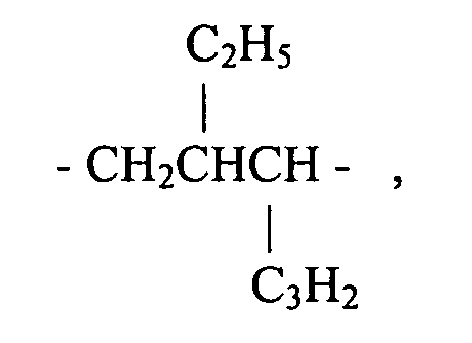
- iv. e.g., as in 1,3-octyleneglycol,
- i. -CH2CH2-, e.g., of ethanolamine, diethanolamine and triethanolamine,
- d. titanium acylates having the general formula Ti(OCOR)4-n(OR)n wherein R is C1-18 alkyl as above and n is an integer of from 1 to 3, and polymeric forms thereof,
- e. mixtures thereof.
- The organometallic compound is usually dissolved or dispersed in a diluent. Examples of suitable diluents are alcohols such as methanol, ethanol and propanol, aliphatic hydrocarbons, such as hexane, isooctane and decane, ethers, for example, tetrahydrofuran and dialkylethers and diethylether.
- Also, adjuvant materials may be present with the organometallic compound and the diluent (organometallic compositions). Examples include stabilizers such as sterically hindered alcohols, surfactants and anti-static agents. The adjuvants if present are present in amounts of up to 30 percent by weight based on the non-volatile content of the composition.
- The concentration of the organometallic compound in the composition is not particularly critical but is usually at least 0.01 millimolar, typically from 0.01 to 100 millimolar, and more typically from 0.1 to 50 millimolar.
- The organometallic treating composition can be obtained by mixing all of the components at the same time or by combining the ingredients in several steps. Since the organometallic compound is reactive with moisture, care should be taken that moisture is not introduced with the diluent or adjuvant materials and that mixing is conducted in a substantially anhydrous atmosphere.
- The wipes are treated with the organometallic composition generally as described above for the organic acid treatment. The content of the organometallic compound contained in the wipe is typically the amount described above for the organic acid.
- The wipe treated with the organometallic compound is stored or packaged in a container such as substantially described above for the organic acid and that is substantially impervious to moisture and to the diluent associated with the organometallic compound. Examples of suitable container materials are those described above in connection with the organic acid. Polymeric materials are preferably used in combination with metallized foils. These containers are laminates comprising outer layers of the polymers mentioned above in connection with the containers for the organic acid compositions but with the core layer of a metallized film such as aluminum applied by vacuum deposition on a polyethylene terephthalate film. The thickness of the laminates is usually from about 3 to 15 mils.
- The organic acid package and the organometallic package are typically provided as a kit with one container containing the organic acid composition and the second container containing the organometallic composition. The end user would then remove the treated wipes from the containers and treat the desired surface. In the embodiment in which the organic acid is in a spray bottle, the organic acid would be sprayed onto the desired surface.
- Examples of suitable surfaces or substrates to be treated in accordance with the present invention are metals such as tantalum, aluminum, copper, titanium and iron, and alloys of metals such as steel and brass; metalloids such as silicon and germanium, ceramic materials such as glass and polymer materials such as polycarbonates. Preferably, the substrate is one that contains surface hydroxyls or oxide groups such as the native oxide layers associated with most metals and their alloys. Native oxide layers of metalloids such as silicon are also appropriate. Ceramic materials and polymers that inherently have reactive groups such as carboxyl or hydroxyl groups may also be used. For example, polymeric substrates may have reactive functional groups. Examples are polymers that contain hydroxyl groups such as acrylic polymers made from one or more monomers that contain hydroxyl groups. Also, composite inorganic/organic polymers such as organic polymers containing entrained silica and alumina may be used. Also, polymer surfaces may be oxidized by subjecting them to atmospheric plasma treatment in the presence of air. In the case where substrates do not have reactive groups, they may be modified. For example, a metal oxide layer may be applied to a glass or polymer substrate by sputtering, or a silicon oxide overlayer may be provided by applying a sol-gel to the substrate. Indium tin oxide is a metal oxide preferred for electrical end use applications and may be applied by sputtering. Also, metal oxides can be deposited on polymer substrates, for example, "stacked" metal oxides on polymer substrates to provide anti-reflective properties.
- A particularly preferred surface is an optical or electrooptical surface such as those associated with eyewear, camera lenses and display devices such as those associated with light-emitting diodes including organic light-emitting diodes, polymer light-emitting diodes, liquid crystals and plasma screens. An anti-reflective layer may optionally be on the surface of these substrates.
- The substrate or surface is typically treated by first contacting the surface of the substrate with the organometallic wipe and then with the organic acid. Treatment is typically at ambient or elevated temperature (20-200°C) depending on the reactivity of the organometallic composition and the organic acid. The wipe(s) are moved across the surface of the substrate to transfer a film of the organometallic composition and/or the organic acid composition, as the case may be, to the surface of the substrate. The film on initial application will have a "wet look" due to the presence of the diluent. When the diluent evaporates, a film of the compound remains. The resulting films are durable in that they are not readily removed by rubbing with a cloth. The organic acid film is resistant to dirt collection and smudging and dirt and smudges are easily removed by light rubbing with a soft cloth.
- Although not intending to be bound by any theory, in the case of the organophosphorus wipe, it is believed the acid group associates or bonds with the oxide or hydroxyl groups on the surface of the substrate being treated, resulting in a durable film. The organophosphorus acid self-assembles with the organo group being oriented out and away from the surface of the substrate and alters the properties of the surface. For example, a perfluorodecyl group makes the surface more hydrophobic and resistant to moisture penetration. The dodecyl group would make the surface more lubricious and resistant to dirt collection. A polar group, such as a hydroxy lower alkyl group, would make the surface more hydrophilic and possibly easier to clean.
- It has been found that the organophosphorus acid wipe, particularly fluoro-substituted organophosphorus acid wipes, can also be used in the form of a repair kit to treat a surface that has a hydrophobic coating, for example, an organosilicon or organofluoro anti-smudge coating different from the organophosphorus acid. Such coatings lose their effectiveness with time. Surprisingly, treatment with the organophosphorus wipes of the present invention can revive the hydrophobicity of the surface being treated and provides a surprisingly durable coating. Also, the organophosphorus wipes and the organometallic wipes can be used in th form of a two-component repair kit in which the organometallic wipe is first used to treat a surface having a failed hydrophobic coating followed by treating with the organophosphorus wipe.
- Once again, not intending to be bound by any theory, it is believed in the case of the organometallic composition, the alkoxide groups of the metal alkoxide strongly bond to the surface of the oxide and/or hydroxyl groups and to the acid groups of the organic acid at lower temperatures than when the organophosphorus acid is used alone. Also, with other organic acids, such as carboxylic and sulfonic, the intermediate organometallic layer is needed to secure the organic acid to the substrate. The bonding between the alkoxide groups and the oxide and/or hydroxyl groups and the acid groups are believed to be stronger than the bonds between the surface oxide and/or hydroxyl groups and the acid groups. This results in a more durable composite film.
- The following examples are intended to illustrate the invention, and should not be construed as limiting the invention as many different embodiments can be made without departing from the spirit and scope of the invention. Therefore, the invention is not limited except as defined in the claims.
- A cotton wipe impregnated with 20 mM titanium tetra-n-butoxide in dodecane was wiped across the surface of a 4"x4" anti-reflective film (indium tin oxide/SiO2 stacked oxide on polycarbonate film) for 10 seconds. This resulted in a thin solvent film that evaporated leaving behind a partially hydrolyzed film of [Ti(O)x(OH)y(n-butoxy)z]n, where x=4-y-z, y=4-x-z, z=4-y-x, and n is from 2-1000. This surface coating was then 'activated' by wiping (for 10 seconds) the surface with a cotton wipe impregnated with a 2 mM solution of 1H,2H,2H'-perfluorododecyl-1-phosphonic acid in ethanol. Any residue or solvent left on the surface was removed by wiping the surface with a clean, dry cloth. The contact angle of the antireflective surface increased from ~15 degrees (untreated) to ~118 degrees (after treatment). The surface became resistant to smudging, and dirt/smudge removal was far easier on the treated (hydrophobized) surface. The hydrophobicity of the coating could be easily regenerated (if damaged by excessive scratching, etc.) by reapplying the perfluorophosphonic acid solution.
- A 0.2 percent by weight solution of poly(hexafluoropropylene) phosphonic acid (PHFPOPA) having a weight average molecular weight of about 1582 in the perfluorinated solvent HFE-7100 from the 3M Company was prepared and used to impregnate a tissue in the form of a hand wipe. The impregnated tissue was wiped across the surface of a polycarbonate plano lens blank. The solvent was permitted to evaporate resulting in a hydrophobic coating having a water contact angle reported in Table I below. Table I also reports on the durability of the coating as determined by the decrease in water contact angle after rubbing with a microfiber cloth. The coating was considered to fail if the contact angle dropped below 95°.
- A tissue in the form of a hand wipe was impregnated with a solution of 0.25 percent by weight titanium tetra n-butoxide in petroleum distillates (100-140°C boiling range) and wiped (for about 3 seconds) across the surface of a polycarbonate plano lens blank that has a polysiloxane anti-scratch coating (hard coat). The solvent evaporates as the hand wipe is moved across the surface of the lens and the organometallic compound is transferred to the surface. A second tissue in the form of a hand wipe was impregnated with the PHFPOPA solution of Example 2 and wiped (for about 3 seconds) across the surface of the previously applied organometallic coating. Again the solvent evaporates as the hand wipe is moved across the surface and the organophosphorus compound is transferred to the organometallic surface. The water contact angle and the durability of the coating are reported in Table I below.
- The procedure of Example 3 is repeated with the exception that the PHFPOPA solution was sprayed (finger pump sprayer) onto the organometallic coating. Excess solvent was allowed to evaporate and the residue was removed by gently rubbing with a microfiber cloth. The water contact angle and durability is reported in Table I below.
TABLE I Water Contact Angle and Coating Durability Example No. Initial Contact Angle1 Contact Angle After 10 cycles2 20 cycles2 30 cycles2 50 cycles2 2 112 108 106 107 106 3 115 114 111 102 93 4 115 114 112 108 100 1Water contact angle determined with a Goniometer TANTEC Contact Angle Meter, Model CAM-MICRO.
2Rubbing with a microfiber cloth with a force of 150 grams/cm2. One cycle is a rub back and forth. - A Sola Teflon Easycare (anti-reflective/anti-smudge coating) on a polycarbonate ophthalmic lens was abraded with steel wool at a pressure of 150 grams/cm2 and the decrease in water contact angle versus the number of rubs was noted. When the water contact angle dropped below 95°, the coating was no longer considered hydrophobic and the coating failed. The lens was then sprayed and then wiped with a tissue in the form of a hand wipe with a solution of 0.05 percent by weight PHFPOPA in a mixture of 89 percent by volume isooctane, 5 percent HFE-7100, 5 percent isopropanol and 1 percent of a fragrance (Repair Kit). The solvent evaporates as the solution is wiped across the surface and the PHFPOPA is transferred to the surface. The hydrophobic properties of the coating and its durability as determined with continued abrasion with steel wool is reported in Table II below.
- The procedure of Example 5 was repeated except the lens was a polycarbonate material coated with Essilor Crizal Alize anti-reflective/anti-smudge coating. The hydrophobic properties of the Repair Kit Coating and its durability are reported in Table II below.
- The procedure of Example 5 was repeated except that the lens was an INDO natural ultrafin "self-cleaning" ophthalmic lens. The hydrophobic properties of the Repair Kit Coating and its durability are reported in Table II below.
- A polycarbonate ophthalmic lens coated with a Zeiss anti-reflective layer was wiped as generally described in Example 2 with a tissue impregnated with a 0.2 percent by weight solution of PHFPOPA in 75 percent by volume HFE-7100/25 percent by volume acetone. The coated lense was aabraded as described in Example 5. When the water contact angle dropped below 95°, the abraded surface was then treated with a tissue impregnated with the PHFPPA solution as desribed immediately above. The solvent evaporates as the hand wipe is passed over the abraded surface and the PHFPOPA is transferred to the surface. The hydrophobic properties of repair kit coating and its durability is reported in Table II below.
TABLE II Water Contact Angle and Coating Durability Example No. Initial Water Contact Angle1 Contact Angle after Cycles Apply Repair Kit. Initial Contact Angle Contact Angle after Cycles 2502 5002 10002 2502 5002 5 115 108 105 95 115 110 103 6 113 110 103 80 116 108 106 7 106 80 - - 116 109 100 8 116 113 108 95 114 112 105 1Water contact angle determined as in Table I.
2Rubbing with steel wool with a force of 150 grams/cm2. One cycle is a rub back and forth. - 1. A method of treating a substrate surface comprising:
- (a) contacting the surface, directly or through an intermediate organometallic layer with a wipe treated with an organophosphorus acid, or derivative thereof;
- (b) moving the wipe across the surface to transfer a film of the organophosphorus acid or derivative thereof to the surface or to the intermediate layer.
- 2. The method of aspect 1 in which the substrate is polymer, metal, metalloid, ceramic and glass.
- 3. The method of aspect 1 in which the substrate is for optical or electrooptical applications.
- 4. The method of aspect 3 in which the substrate is selected from eyewear and display devices.
- 5. The method of aspect 1 in which the substrate has an anti-reflective coating on its surface.
- 6. The method of aspect 1 in which the organophosphorus acid or derivative thereof is selected from a phosphoric acid, a phosphonic acid and a phosphinic acid including derivatives thereof.
- 7. The method of aspect 6 in which the organophosphorus acid is an organophosphoric acid or derivative thereof comprising a compound or a mixture of compounds of the structure:
(RO)x-P(O)-(OR')y
wherein x is 1 to 2, y is 1 to 2 and x+y = 3, R is a radical having a total of 1 to 30 carbons; R' is H, a metal or lower alkyl having 1 to 4 carbons. - 8. The method of aspect 6 in which the organophosphorus acid is an organophosphonic acid or derivative thereof comprising a compound or a mixture of compounds of the structure:

- 9. The method of aspect 6 in which the organophosphorus acid is an organophosphinic acid or derivative thereof comprising a compound or a mixture of compounds of the structure:

- 10. The method of aspect 1 in which the surface is treated with an organometallic compound before the application of the organophosphorus acid or derivative thereof.
- 11. The method of aspect 1 in which the organometallic compound is a transition metal alkoxide.
- 12. The method of aspect 10 in which the organometallic compound is applied to the surface with a wipe and the wipe is moved across the surface.
- 13. The method of aspect 1 in which the treated wipe is prepared from an organophosphorus acid or derivative thereof dissolved or dispersed in a diluent and having a concentration of 0.01 to 100 millimolar.
- 14. The method of aspect 1 in which the organo group of the organophosphorus acid or derivative thereof contains a C6 to C18 hydrocarbon or substituted hydrocarbon group.
- 15. The method of aspect 1 in which the organo group of the organophosphorus is a halogen-substituted hydrocarbon group.
- 16. The method of aspect 15 in which the organo group is a perfluoroalkyl group.
- 17. The method of aspect 14 in which the hydrocarbon or substituted hydrocarbon group is selected from dodecyl and perfluorododecyl.
- 18. The method of aspect 10 in which the organometallic-treated wipe is prepared from an organometallic solution having a concentration of 0.1 to 50 millimolar.
- 19. The method of aspect 11 in which the transition metal is selected from Group IIIB, IVB, VB and VIB of the Periodic Table.
- 20. The method of aspect 19 in which the transition metal is selected from titanium and zirconium.
- 21. The method of aspect 11 in which the alkoxide group comprises a C1 to C18 alkoxide group.
- 22. The method of aspect 1 in which the organophosphorus acid or derivative thereof comprises 0.001 to 10 percent of the treated wipe based on total weight of the treated wipe.
- 23. The method of aspect 12 in which the organometallic compound comprises 0.001 to 30 percent by weight of the treated wipe based on total weight of the treated wipe.
- 24. The method of aspect 1 in which the substrate surface contains a hydrophobic coating on its surface, which has lost its effectiveness.
- 25. The method of aspect 24 in which the hydrophobic coating is different from the organophosphorus acid.
- 26. The method of aspect 24 in which the substrate is for optical or electrooptical applications.
- 27. The method of aspect 26 in which the substrate is selected from eyewear and display devices.
- 28. A method of treating a substrate surface comprising:
- (a) contacting the surface through an intermediate organometallic layer with a wipe treated with an organic acid or derivative thereof;
- (b) moving the wipe across the organometallic layer to transfer a film of the organic acid or derivative thereof to the organometallic layer.
- 29. The method of aspect 28 in which the substrate is polymer, metal, metalloid, ceramic and glass.
- 30. The method of aspect 28 in which the substrate is for optical or electrooptical applications.
- 31. The method of aspect 30 in which the substrate is selected from eyewear and display devices.
- 32. The method of aspect 28 in which the substrate has an anti-reflective coating on its surface.
- 33. The method of aspect 28 in which the organic acid or derivative thereof is selected from a carboxylic acid, a sulfonic acid and a phosphorus acid including derivatives thereof.
- 34. The method of aspect 33 in which the organic acid or derivative thereof is of the structure:
R - COOR'
wherein R is a hydrocarbon or substituted hydrocarbon radical having a total of 1 to 30 carbons and where R' is H, a metal or lower alkyl. - 35. The method of aspect 33 in which the organic acid is of the structure:
R - SO2 - OR'
wherein R is a hydrocarbon or substituted hydrocarbon radical having a total of 1 to 30 carbons and where R' is H, a metal or lower alkyl. - 36. The method of aspect 28 in which the surface is treated with an organometallic compound before the application of the organic acid or derivative thereof.
- 37. The method of aspect 36 in which the organometallic compound is a transition metal alkoxide.
- 38. The method of aspect 36 in which the organometallic compound is applied to the surface with a wipe and the wipe is moved across the surface.
- 39. The method of aspect 28 in which the treated wipe is prepared from an organophosphorus acid or derivative thereof dissolved or dispersed in a diluent and having a concentration of 0.01 to 100 millimolar.
- 40. The method of aspect 28 in which the organo group of the organic acid or derivative thereof contains a C6 to C18 hydrocarbon or substituted hydrocarbon group.
- 41. The method of aspect 28 in which the organo group of the organic acid is a halogen-substituted hydrocarbon group.
- 42. The method of aspect 41 in which the organo group is a perfluoroalkyl group.
- 43. The method of aspect 42 in which the hydrocarbon or substituted hydrocarbon group is selected from dodecyl and perfluorododecyl.
- 44. The method of aspect 38 in which the organometallic-treated wipe is prepared from an organometallic solution having a concentration of 0.1 to 50 millimolar.
- 45. The method of aspect 37 in which the transition metal is selected from Group IIIB, IVB, VB and VIB of the Periodic Table.
- 46. The method of aspect 45 in which the transition metal is selected from titanium and zirconium.
- 47. The method of aspect 37 in which the alkoxide group comprises a C1 to C18 alkoxide group.
- 48. The method of aspect 28 in which the organic acid or derivative thereof comprises 0.001 to 10 percent of the impregnated wipe based on total weight of the treated wipe.
- 49. The method of aspect 38 in which the organometallic compound comprises 0.001 to 30 percent by weight of the treated wipe based on total weight of the treated wipe.
- 50. A method of treating a substrate surface comprising:
- (a) contacting the surface with a wipe treated with an organometallic compound;
- (b) moving the wipe across the surface to transfer a film of the organometallic compound to the surface;
- (c) applying an organic acid to the film of the organometallic compound.
- 51. The method of aspect 50 in which the substrate is polymer, metal, metalloid, ceramic and glass.
- 52. The method of aspect 50 in which the substrate is for optical or electrooptical applications.
- 53. The method of aspect 52 in which the substrate is selected from eyewear and display devices.
- 54. The method of aspect 50 in which the substrate has an anti-reflective coating on its surface.
- 55. The method of aspect 50 in which the organic acid or derivative thereof is selected from a phosphorus acid, a carboxylic acid and a sulfonic acid including derivatives thereof.
- 56. The method of aspect 55 in which the organic acid or derivative thereof is of the structure:
R - COOR'
wherein R is a hydrocarbon or substituted hydrocarbon radical having a total of 1 to 30 carbons and where R' is H, a metal or lower alkyl. - 57. The method of aspect 55 in which the organic acid is of the structure:
R-SO2-OR'
wherein R is a hydrocarbon or substituted hydrocarbon radical having a total of 1 to 30 carbons and where R' is H, a metal or lower alkyl. - 58. The method of aspect 55 in which the phosphorus acid is selected from an organophosphoric acid, an organophosphonic acid and an organophosphinic acid.
- 59. The method of aspect 50 in which the organic acid is applied by spraying or immersion.
- 60. The method of aspect 50 in which the organic acid is applied by spraying.
- 61. The method of aspect 50 in which the organo group of the organic acid or derivative thereof contains a C6 to C18 hydrocarbon or substituted hydrocarbon group.
- 62. The method of aspect 50 in which the organo group of the organic acid is a halogen-substituted hydrocarbon group.
- 63. The method of aspect 62 in which the organo group is a perfluoroalkyl group.
- 64. The method of aspect 63 in which the hydrocarbon or substituted hydrocarbon group is selected from dodecyl and perfluorododecyl.
- 65. The method of aspect 50 in which the organometallic-treated wipe is prepared from an organometallic solution having a concentration of 0.1 to 50 millimolar.
- 66. The method of aspect 50 in which the organometallic compound is a transition metal alkoxide in which the transition metal is selected from Group IIIB, IVB, VB and VIB of the Periodic Table.
- 67. The method of aspect 66 in which the transition metal is selected from titanium and zirconium.
- 68. The method of aspect 66 in which the alkoxide group comprises a C1 to C18 alkoxide group.
- 69. The method of aspect 50 in which the organometallic compound comprises 0.001 to 30 percent by weight of the treated wipe based on total weight of the treated wipe.
- 70. A package comprising a material treated with an organophosphorus acid or derivative thereof, dissolved or dispersed in a diluent, in a container substantially impervious to the diluent.
- 71. The package of aspect 70 in which the material is a flexible porous sheet.
- 72. The package of aspect 71 in which the flexible porous sheet is in the form of a hand wipe.
- 73. The package of aspect 71 in which the flexible porous sheet is made of a woven or non-woven material.
- 74. The package of aspect 70 in which the organophosphorus acid or derivative thereof is selected from an organophosphoric acid, an organophosphonic acid or an organophosphinic acid including derivatives thereof.
- 75. The package of aspect 74 in which the organophosphorus acid is an organophosphoric acid or derivative thereof comprising a compound or a mixture of compounds of the structure:
(RO)x-P(O)-(OR')y
wherein x is 1 to 2, y is 1 to 2 and x+y = 3; R is a radical having a total of 1 to 30 carbons; R' is H, a metal or lower alkyl having 1 to 4 carbons. - 76. The package of aspect 74 in which the organophosphorus acid is an organophosphonic acid or derivative thereof comprising a compound or a mixture of compounds of the structure:

- 77. The package of aspect 74 in which the organophosphorus acid is an organophosphinic acid or derivative thereof comprising a compound or a mixture of compounds of the structure:

- 78. The package of aspect 70 in which the organophosphorus acid-treated material is prepared from an organophosphorus acid or derivative thereof having a concentration of 0.01 to 100.0 millimolar in the diluent.
- 79. The package of aspect 70 in which the organo group of the organophosphorus acid or derivative thereof contains a C6 to C20 hydrocarbon or substituted hydrocarbon group.
- 80. The package of aspect 70 in which the organo group of the organophosphorus acid or derivative thereof is a halogen-substituted hydrocarbon group.
- 81. The package of aspect 80 in which the hydrocarbon or substituted hydrocarbon group is selected from dodecyl and perfluorododecyl.
- 82. The package of aspect 70 in which the organophosphorus acid or derivative thereof comprises 0.001 to 30 percent by weight of the treated material based on total weight of the treated material.
- 83. The package of aspect 70 in which the container is a plastic pouch.
- 84. The package of aspect 70 in which the container comprises an olefin copolymer.
- 85. The package of aspect 84 in which the olefin polymer or copolymer is selected from an ethylene polymer, a propylene polymer or an ethylene-propylene copolymer.
- 86. The package of aspect 70 in which the container comprises alternating layers of an olefin polymer or copolymer and a metallized film.
- 87. The package of aspect 70 in which the container has a thickness of 0.5 to 15 mils.
- 88. A package comprising a material treated with an organometallic compound in a substantially moisture-impervious container.
- 89. The package of aspect 88 in which the material is a flexible porous sheet.
- 90. The package of aspect 89 in which the flexible porous sheet is in the form of a hand wipe.
- 91. The package of aspect 88 in which the flexible porous sheet is made of a woven or non-woven material.
- 92. The package of aspect 88 in which the organometallic compound is a metal alkoxide.
- 93. The package of aspect 88 in which the organometallic treated material is prepared from an organometallic compound dissolved or dispersed in a diluent and having a concentration of 0.1 to 50 millimolar.
- 94. The package of aspect 92 in which the metal is a transition metal selected from Group IIIB, IVB, VB or VIB of the Periodic Table.
- 95. The package of aspect 92 in which the alkoxide group comprises a C1 to C18 alkoxide group.
- 96. The package of aspect 88 in which the organometallic compound comprises 0.001 to 30 percent by weight of the treated material based on total weight of the treated material.
- 97. The package of aspect 88 in which the container is a pouch.
- 98. The package of aspect 88 in which the moisture-impervious container comprises alternating layers of an olefin polymer or copolymer and a metallized film.
- 99. The package of aspect 97 in which the moisture-impervious pouch has a thickness of 0.3 to 15 mils.
- 100. A kit useful for treating a surface to alter its physical properties comprising:
- (a) a package comprising a material treated with an organometallic compound in a substantially moisture-impervious container;
- (b) a package comprising an organic acid or derivative thereof dissolved or dispersed in a diluent in a container substantially impervious to the diluent.
- 101. The kit of aspect 100 in which the material in package (a) is a flexible porous sheet.
- 102. The kit of aspect 101 in which the flexible porous sheet is in the form of a hand wipe.
- 103. The kit of aspect 100 in which the organic acid is contained in a spray bottle.
- 104. The kit of aspect 100 in which the organic acid is contained in a material that has been treated with the organic acid.
- 105. The kit of aspect 104 in which the material containing the organic acid is in the form of a hand wipe.
- 106. The kit of aspect 100 in which the organic acid or derivative thereof is selected from an organocarboxylic acid, an organosulfonic acid and an organophosphorus acid including derivatives thereof.
- 107. The kit of aspect 106 in which the organic acid is an organophosphoric acid or a derivative thereof comprising a compound or a mixture of compounds of the structure:
(RO)xP(O)-(OR')y
wherein x is 1 to 2, y is 1 to 2 and x+y = 3, R is a radical having a total of 1 to 30 carbons; R' is H, a metal or lower alkyl having 1 to 4 carbons. - 108. The kit of aspect 106 in which the organophosphorus acid is an organophosphonic acid or derivative thereof comprising a compound or a mixture of compounds of the structure:
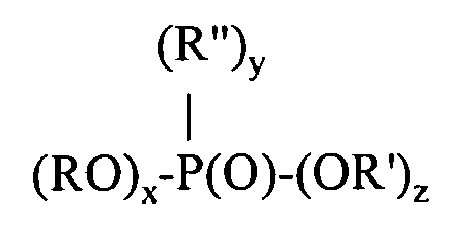
- 109. The kit of aspect 106 in which the organophosphorus acid is an organophosphinic acid or derivative thereof comprising a compound or a mixture of compounds of the structure:

- 110. The kit of aspect 106 in which the organocarboxylic acid or derivative thereof is of the structure:
R - COOR'
wherein R is a hydrocarbon or substituted hydrocarbon radical having a total of 1 to 30 carbon atoms, where R' is H, a metal or lower alkyl. - 111. The kit of aspect 106 in which the organosulfonic acid or derivative thereof is of the structure:
R - SO2 - OR'
wherein R is a hydrocarbon or substituted hydrocarbon radical having a total of 1 to 30 carbon atoms, where R' is H, a metal or lower alkyl. - 112. The kit of aspect 104 in which the organic acid-treated material is prepared from an organic acid or derivative thereof having a concentration of 0.01 to 100.0 millimolar in the diluent.
- 113. The kit of aspect 100 in which the organo group of the organic acid or derivative thereof is a C6 to C18 hydrocarbon or substituted hydrocarbon group.
- 114. The kit of aspect 100 in which the organo group of the organic acid or derivative thereof is a halogen-substituted hydrocarbon group.
- 115. The kit of aspect 114 in which the organo group is a perfluoroalkyl group.
- 116. The kit of aspect 113 in which the hydrocarbon or substituted hydrocarbon group is selected from dodecyl and perfluorododecyl.
- 117. The kit of aspect 104 in which the organic acid or derivative thereof comprises 0.001 to 30 percent by weight of the treated material based on total weight of the treated wipe.
- 118. The kit of aspect 100 in which the organometallic compound is a metal alkoxide.
- 119. The kit of aspect 100 in which the organometallic treated material is prepared from an organometallic compound dissolved or dispersed in a diluent and having a concentration of 0.1 to 50 millimolar.
- 120. The kit of aspect 118 in which the metal is a transition metal selected from Group IIIB, IVB, VB and VIB of the Periodic Table.
- 121. The kit of aspect 118 in which the alkoxide group comprises a C1 to C18 alkoxide group.
- 122. The kit of aspect 100 in which the organometallic compound comprises 0.001 to 30 percent by weight of the treated material based on total weight of the treated wipe.
- 123. The kit of aspect 100 in which the containers are pouches.
- 124. The kit of aspect 100 in which the substantially moisture-impervious container comprises alternating layers of an olefin polymer or copolymer and a metallized film.
- 125. The kit of aspect 100 in which the substantially diluent-impervious container comprises an olefin polymer or copolymer.
- 126. The kit of aspect 123 in which the pouches have a thickness of 0.5 to 15 mils.
Claims (27)
- A method of treating a substrate surface comprising:(a) contacting the surface, directly or through an intermediate organometallic layer, with a wipe treated with an organophosphorus acid, or derivative thereof;(b) moving the wipe across the surface to transfer a film of the organophosphorus acid or derivative thereof to the surface or to the intermediate layer.
- The method of claim 1 in which the substrate is polymer, metal, metalloid, ceramic and glass.
- The method of claim 1 in which the substrate is for optical or electrooptical applications.
- The method of claim 3 in which the substrate is selected from eyewear and display devices.
- The method of claim 1 in which the substrate has an anti-reflective coating on its surface.
- The method of claim 1 in which the organophosphorus acid or derivative thereof is selected from a phosphoric acid, a phosphonic acid and a phosphinic acid including derivatives thereof.
- The method of claim 6 in which the organophosphorus acid is an organophosphoric acid or derivative thereof comprising a compound or a mixture of compounds of the structure:
(RO)x-P(O)-(OR')y
wherein x is 1 to 2, y is 1 to 2 and x+y = 3, R is a radical having a total of 1 to 30 carbons; R' is H, a metal or lower alkyl having 1 to 4 carbons. - The method of claim 6 in which the organophosphorus acid is an organophosphonic acid or derivative thereof comprising a compound or a mixture of compounds of the structure:

- The method of claim 6 in which the organophosphorus acid is an organophosphinic acid or derivative thereof comprising a compound or a mixture of compounds of the structure:

- The method of claim 1 in which the surface is treated with an organometallic compound before the application of the organophosphorus acid or derivative thereof.
- The method of claim 1 in which the organometallic compound is a transition metal alkoxide.
- The method of claim 10 in which the organometallic compound is applied to the surface with a wipe and the wipe is moved across the surface.
- The method of claim 1 in which the treated wipe is prepared from an organophosphorus acid or derivative thereof dissolved or dispersed in a diluent and having a concentration of 0.01 1 to 100 millimolar.
- The method of claim 1 in which the organo group of the organophosphorus acid or derivative thereof contains a C6 to C18 hydrocarbon or substituted hydrocarbon group.
- The method of claim 1 in which the organo group of the organophosphorus is a halogen-substituted hydrocarbon group.
- The method of claim 15 in which the organo group is a perfluoroalkyl group.
- The method of claim 14 in which the hydrocarbon or substituted hydrocarbon group is selected from dodecyl and perfluorododecyl.
- The method of claim 10 in which the organometallic-treated wipe is prepared from an organometallic solution having a concentration of 0.1 to 50 millimolar.
- The method of claim 11 in which the transition metal is selected from Group IIIB, IVB, VB and VIB of the Periodic Table.
- The method of claim 19 in which the transition metal is selected from titanium and zirconium.
- The method of claim 11 in which the alkoxide group comprises a C1 to C18 alkoxide group.
- The method of claim 1 in which the organophosphorus acid or derivative thereof comprises 0.001 to 10 percent of the treated wipe based on total weight of the treated wipe.
- The method of claim 12 in which the organometallic compound comprises 0.001 to 30 percent by weight of the treated wipe based on total weight of the treated wipe.
- The method of claim 1 in which the substrate surface contains a hydrophobic coating on its surface, which has lost its effectiveness.
- The method of claim 24 in which the hydrophobic coating is different from the organophosphorus acid.
- The method of claim 24 in which the substrate is for optical or electrooptical applications.
- The method of claim 26 in which the substrate is selected from eyewear and display devices.
Applications Claiming Priority (2)
| Application Number | Priority Date | Filing Date | Title |
|---|---|---|---|
| US72963105P | 2005-10-24 | 2005-10-24 | |
| EP06817279A EP1940279A2 (en) | 2005-10-24 | 2006-10-24 | Chemical wipes |
Related Parent Applications (2)
| Application Number | Title | Priority Date | Filing Date |
|---|---|---|---|
| EP06817279A Division EP1940279A2 (en) | 2005-10-24 | 2006-10-24 | Chemical wipes |
| EP06817279.0 Division | 2006-10-24 |
Publications (2)
| Publication Number | Publication Date |
|---|---|
| EP1955638A1 true EP1955638A1 (en) | 2008-08-13 |
| EP1955638B1 EP1955638B1 (en) | 2012-04-11 |
Family
ID=37865789
Family Applications (2)
| Application Number | Title | Priority Date | Filing Date |
|---|---|---|---|
| EP08006588A Not-in-force EP1955638B1 (en) | 2005-10-24 | 2006-10-24 | Chemical wipes |
| EP06817279A Withdrawn EP1940279A2 (en) | 2005-10-24 | 2006-10-24 | Chemical wipes |
Family Applications After (1)
| Application Number | Title | Priority Date | Filing Date |
|---|---|---|---|
| EP06817279A Withdrawn EP1940279A2 (en) | 2005-10-24 | 2006-10-24 | Chemical wipes |
Country Status (6)
| Country | Link |
|---|---|
| US (2) | US20070092673A1 (en) |
| EP (2) | EP1955638B1 (en) |
| JP (1) | JP2009512905A (en) |
| AT (1) | ATE552763T1 (en) |
| CA (1) | CA2626988A1 (en) |
| WO (1) | WO2007050500A2 (en) |
Cited By (1)
| Publication number | Priority date | Publication date | Assignee | Title |
|---|---|---|---|---|
| WO2012085134A1 (en) | 2010-12-23 | 2012-06-28 | Surfactis Technologies | Hydrophobic and lipophobic composition comprising compounds having a bisphosphonic and thiol group |
Families Citing this family (21)
| Publication number | Priority date | Publication date | Assignee | Title |
|---|---|---|---|---|
| US20080299354A1 (en) * | 2007-06-01 | 2008-12-04 | Rich Zydonik | Thermoplastic sheet with metallic hot stamp film, apparatus, and method |
| JP6172306B2 (en) * | 2011-01-12 | 2017-08-02 | セントラル硝子株式会社 | Chemical solution for protective film formation |
| JP2013102109A (en) * | 2011-01-12 | 2013-05-23 | Central Glass Co Ltd | Chemical solution for protective film formation |
| WO2012147716A1 (en) | 2011-04-28 | 2012-11-01 | セントラル硝子株式会社 | Water-repellent protective film-forming chemical solution and wafer cleaning method using same |
| JP6051562B2 (en) * | 2011-04-28 | 2016-12-27 | セントラル硝子株式会社 | Chemical solution for forming water-repellent protective film |
| JP2014028032A (en) * | 2012-07-31 | 2014-02-13 | Oji Holdings Corp | Pollutant wiping sheet |
| US9476754B2 (en) | 2013-02-28 | 2016-10-25 | Electrolab, Inc. | Method and kit for treatment of components utilized in a crude oil service operation |
| PL3046989T3 (en) | 2013-09-20 | 2020-03-31 | Baker Hughes, A Ge Company, Llc | Method of using surface modifying metallic treatment agents to treat subterranean formations |
| CA2920687C (en) | 2013-09-20 | 2018-08-21 | Baker Hughes Incorporated | Method of using surface modifying treatment agents to treat subterranean formations |
| US9701892B2 (en) | 2014-04-17 | 2017-07-11 | Baker Hughes Incorporated | Method of pumping aqueous fluid containing surface modifying treatment agent into a well |
| US9562188B2 (en) | 2013-09-20 | 2017-02-07 | Baker Hughes Incorporated | Composites for use in stimulation and sand control operations |
| EP3046987B8 (en) | 2013-09-20 | 2019-06-26 | Baker Hughes, a GE company, LLC | Use of organophosphorus containing composites for use in well treatment operations |
| MX394085B (en) | 2013-09-20 | 2025-03-19 | Baker Hughes Inc | METHOD FOR INHIBITING SOILING ON A METAL SURFACE USING A SURFACE MODIFYING TREATMENT AGENT. |
| US20160330969A1 (en) * | 2013-10-23 | 2016-11-17 | John F. O'Connell, JR. | Antimicrobial compositions and articles |
| US9994732B1 (en) | 2014-09-12 | 2018-06-12 | Steven Martin Johnson | Polysilazane and fluoroacrylate coating composition |
| US10562065B1 (en) | 2015-11-03 | 2020-02-18 | Newtech Llc | Systems and methods for application of polysilazane and fluoroacrylate coating compositions |
| US10584264B1 (en) | 2016-02-25 | 2020-03-10 | Newtech Llc | Hydrophobic and oleophobic coating compositions |
| US11099212B2 (en) | 2018-03-12 | 2021-08-24 | Aculon Inc. | Method for cleaning and coating a tip of a test probe utilized in a test system for an integrated circuit package |
| US10627426B2 (en) | 2018-03-12 | 2020-04-21 | Aculon Inc. | Method and kit for cleaning and coating a tip of a test probe utilized in a test system for an integrated circuit package |
| WO2022132590A1 (en) | 2020-12-15 | 2022-06-23 | Conocophillips Company | Preventing fouling of crude oil equipment |
| US12322267B2 (en) * | 2021-08-10 | 2025-06-03 | Arm Limited | Circuitry and method |
Citations (4)
| Publication number | Priority date | Publication date | Assignee | Title |
|---|---|---|---|---|
| US5141803A (en) * | 1988-06-29 | 1992-08-25 | Sterling Drug, Inc. | Nonwoven wipe impregnating composition |
| WO2002004590A1 (en) * | 2000-07-10 | 2002-01-17 | Ekc Technology, Inc. | Clean room wipes for neutralizing caustic chemicals |
| WO2002036339A2 (en) * | 2000-11-01 | 2002-05-10 | The Procter & Gamble Company | Multi-layer substrate for a premoistened wipe capable of controlled fluid release |
| US6716805B1 (en) * | 1999-09-27 | 2004-04-06 | The Procter & Gamble Company | Hard surface cleaning compositions, premoistened wipes, methods of use, and articles comprising said compositions or wipes and instructions for use resulting in easier cleaning and maintenance, improved surface appearance and/or hygiene under stress conditions such as no-rinse |
Family Cites Families (38)
| Publication number | Priority date | Publication date | Assignee | Title |
|---|---|---|---|---|
| US4579720A (en) * | 1965-08-24 | 1986-04-01 | Plains Chemical Development Co. | Chelation |
| US3634146A (en) * | 1969-09-04 | 1972-01-11 | American Cyanamid Co | Chemical treatment of metal |
| US4179390A (en) * | 1976-10-06 | 1979-12-18 | The Procter & Gamble Company | Laundry additive product |
| GB8617255D0 (en) * | 1986-07-15 | 1986-08-20 | Procter & Gamble Ltd | Laundry compositions |
| DE4021336A1 (en) * | 1989-07-08 | 1991-01-17 | Hoechst Ag | Aq. compsns. contg. anionic wetting agent and foam inhibitor |
| JPH0710996B2 (en) * | 1991-11-22 | 1995-02-08 | 株式会社万立 | Cleaning composition |
| US5464096A (en) * | 1992-08-25 | 1995-11-07 | Hurwitz; Robert | Kit for cleaning radiological cassettes |
| NZ248582A (en) * | 1992-09-24 | 1995-02-24 | Colgate Palmolive Co | Acidic, thickened cleaner containing dicarboxylic acids and aminoalkylene phosphonic acid for cleaning lime scale from acid-resistant or zirconium white enamel hard surfaces |
| DE4243472A1 (en) * | 1992-12-22 | 1994-06-23 | Henkel Ecolab Gmbh & Co Ohg | Neutral self-gloss emulsion for the care of floors (III) |
| JPH09133802A (en) * | 1995-11-08 | 1997-05-20 | Sony Corp | Anti-reflection filter |
| US5856018A (en) * | 1996-06-17 | 1999-01-05 | Yazaki Corporation | Plastic articles having multi-layer antireflection coatings, and sol-gel process for depositing such coatings |
| JP3767946B2 (en) * | 1996-07-01 | 2006-04-19 | タイホー工業株式会社 | Anti-fogging agent |
| US7569285B2 (en) * | 1996-10-17 | 2009-08-04 | The Trustees Of Princeton University | Enhanced bonding layers on titanium materials |
| US7396594B2 (en) * | 2002-06-24 | 2008-07-08 | The Trustees Of Princeton University | Carrier applied coating layers |
| US6645644B1 (en) * | 1996-10-17 | 2003-11-11 | The Trustees Of Princeton University | Enhanced bonding of phosphoric and phosphoric acids to oxidized substrates |
| CN1256729A (en) * | 1997-03-27 | 2000-06-14 | 普罗格特-甘布尔公司 | Covered cleaning sheet |
| US6004484A (en) * | 1997-09-09 | 1999-12-21 | Plaskolite Inc. | Acrylate polymer abrasion and static resistant coating |
| US6121221A (en) * | 1999-07-26 | 2000-09-19 | Ronald O. Davis | Kit for cleaning vinyl plastics |
| US6340663B1 (en) | 1999-11-24 | 2002-01-22 | The Clorox Company | Cleaning wipes |
| DE10017190C2 (en) * | 2000-04-07 | 2002-09-19 | Cognis Deutschland Gmbh | Wet wipes (III) |
| EP1170356A1 (en) * | 2000-07-06 | 2002-01-09 | The Procter & Gamble Company | Laundry additive sachet |
| US6716499B1 (en) | 2000-06-08 | 2004-04-06 | Cryovac, Inc. | Moisture/oxygen barrier bag |
| WO2002020873A2 (en) * | 2000-09-05 | 2002-03-14 | Zeptosens Ag | Method for precipitating mono and multiple layers of organophosphoric and organophosphonic acids and the salts thereof in addition to use thereof |
| US8207070B2 (en) * | 2000-11-22 | 2012-06-26 | Techmer Pm, Llc | Wettable polyolefin fibers and fabrics |
| US20020174500A1 (en) * | 2001-01-12 | 2002-11-28 | Playtex Products, Inc. | Wipe for removing stains from fabrics and carpets |
| US20040058604A1 (en) * | 2001-01-15 | 2004-03-25 | Rene Jud | Antistatic flexible intermediate bulk container |
| US6604651B2 (en) * | 2001-01-24 | 2003-08-12 | Kimberly-Clark Worldwide, Inc. | Storage and dispensing package for wipes |
| GB0111174D0 (en) * | 2001-05-08 | 2001-06-27 | Unilever Plc | Hard surface cleaning wipe |
| JP3761075B2 (en) * | 2001-05-10 | 2006-03-29 | ユニ・チャーム株式会社 | Seat container |
| US6586385B1 (en) | 2001-11-13 | 2003-07-01 | Colgate-Palmolive Co. | Cleaning wipe |
| US6624135B2 (en) | 2001-11-26 | 2003-09-23 | S.C. Johnson & Son, Inc. | Cleaning sheet |
| JP2003176152A (en) * | 2001-12-12 | 2003-06-24 | Shozo Sawada | Cold curing lens and water repellent agent for lens filter |
| BR0307376B1 (en) * | 2002-01-31 | 2014-07-29 | Stepan Co | Bar soap composition and process for preparing it |
| US6475976B1 (en) | 2002-02-22 | 2002-11-05 | Colgate-Palmolive Company | Antibacterial cleaning wipe comprising polyhexamethylene-4-biguanide hydrochloride |
| AU2003287466A1 (en) | 2003-02-11 | 2004-09-06 | Princeton University | Surface-bonded, organic acid-based mono-layers |
| US20050079987A1 (en) * | 2003-10-10 | 2005-04-14 | Cartwright Brian K. | Two-sided antimicrobial wipe or pad |
| CA2600966A1 (en) | 2004-03-09 | 2005-09-15 | Sunnywipes Pty Ltd | Cleaning solution and wipes and method for cleaning |
| JP2008507632A (en) * | 2004-07-23 | 2008-03-13 | チバ スペシャルティ ケミカルズ ホールディング インコーポレーテッド | Wettable polyester fiber and fabric |
-
2006
- 2006-10-24 CA CA002626988A patent/CA2626988A1/en not_active Abandoned
- 2006-10-24 EP EP08006588A patent/EP1955638B1/en not_active Not-in-force
- 2006-10-24 EP EP06817279A patent/EP1940279A2/en not_active Withdrawn
- 2006-10-24 JP JP2008537835A patent/JP2009512905A/en active Pending
- 2006-10-24 US US11/585,458 patent/US20070092673A1/en not_active Abandoned
- 2006-10-24 WO PCT/US2006/041258 patent/WO2007050500A2/en not_active Ceased
- 2006-10-24 AT AT08006588T patent/ATE552763T1/en active
-
2010
- 2010-07-15 US US12/804,166 patent/US8445423B2/en active Active
Patent Citations (4)
| Publication number | Priority date | Publication date | Assignee | Title |
|---|---|---|---|---|
| US5141803A (en) * | 1988-06-29 | 1992-08-25 | Sterling Drug, Inc. | Nonwoven wipe impregnating composition |
| US6716805B1 (en) * | 1999-09-27 | 2004-04-06 | The Procter & Gamble Company | Hard surface cleaning compositions, premoistened wipes, methods of use, and articles comprising said compositions or wipes and instructions for use resulting in easier cleaning and maintenance, improved surface appearance and/or hygiene under stress conditions such as no-rinse |
| WO2002004590A1 (en) * | 2000-07-10 | 2002-01-17 | Ekc Technology, Inc. | Clean room wipes for neutralizing caustic chemicals |
| WO2002036339A2 (en) * | 2000-11-01 | 2002-05-10 | The Procter & Gamble Company | Multi-layer substrate for a premoistened wipe capable of controlled fluid release |
Cited By (1)
| Publication number | Priority date | Publication date | Assignee | Title |
|---|---|---|---|---|
| WO2012085134A1 (en) | 2010-12-23 | 2012-06-28 | Surfactis Technologies | Hydrophobic and lipophobic composition comprising compounds having a bisphosphonic and thiol group |
Also Published As
| Publication number | Publication date |
|---|---|
| EP1955638B1 (en) | 2012-04-11 |
| US20070092673A1 (en) | 2007-04-26 |
| US20100286013A1 (en) | 2010-11-11 |
| WO2007050500A3 (en) | 2007-12-06 |
| ATE552763T1 (en) | 2012-04-15 |
| WO2007050500A2 (en) | 2007-05-03 |
| US8445423B2 (en) | 2013-05-21 |
| JP2009512905A (en) | 2009-03-26 |
| CA2626988A1 (en) | 2007-05-03 |
| EP1940279A2 (en) | 2008-07-09 |
Similar Documents
| Publication | Publication Date | Title |
|---|---|---|
| US8445423B2 (en) | Chemical wipes | |
| EP1941075B1 (en) | Polymeric organometallic films | |
| US12163052B2 (en) | Anti-fingerprint coatings | |
| Pujari et al. | Covalent surface modification of oxide surfaces | |
| CA2669672C (en) | Coated substrates, organometallic films and methods for applying organometallic films to substrates | |
| US8067103B2 (en) | Optical articles with thin hydrophobic layers | |
| US6025025A (en) | Water-repellent surface treatment | |
| KR100715928B1 (en) | Method for producing organic thin film | |
| US20100080841A1 (en) | Fibrous articles with one or more polyelectrolyte layers thereon and methods for making the same | |
| WO2005006028A1 (en) | Removal and replacement of antisoiling coatings | |
| BR112016012598B1 (en) | OPTICAL ARTICLE HAVING A SUBSTRATE COATED WITH A PRECURSOR COATING OF AN ANTI-FOGGING COATING, PROCESS OF PREPARING AN OPTICAL ARTICLE AND ASSEMBLY | |
| JP3579655B2 (en) | Transparent substrate having antifouling hydrophobic coating and method for producing the same | |
| TWI900470B (en) | Silanol compositions and methods of use | |
| KR100796964B1 (en) | Organic thin film manufacturing method | |
| JP2006044955A (en) | Anti-fogging member and method for producing the same | |
| KR100748057B1 (en) | Organic thin film manufacturing method | |
| JP2004066542A (en) | Functional protective plate | |
| JPH09133802A (en) | Anti-reflection filter |
Legal Events
| Date | Code | Title | Description |
|---|---|---|---|
| PUAI | Public reference made under article 153(3) epc to a published international application that has entered the european phase |
Free format text: ORIGINAL CODE: 0009012 |
|
| AC | Divisional application: reference to earlier application |
Ref document number: 1940279 Country of ref document: EP Kind code of ref document: P |
|
| AK | Designated contracting states |
Kind code of ref document: A1 Designated state(s): AT BE BG CH CY CZ DE DK EE ES FI FR GB GR HU IE IS IT LI LT LU LV MC NL PL PT RO SE SI SK TR |
|
| AX | Request for extension of the european patent |
Extension state: AL BA HR MK RS |
|
| RIN1 | Information on inventor provided before grant (corrected) |
Inventor name: GRUBER, GERALD W. Inventor name: HANSON, ERIC L. Inventor name: BRUNER, ERIC L. |
|
| 17P | Request for examination filed |
Effective date: 20090115 |
|
| AKX | Designation fees paid |
Designated state(s): AT BE BG CH CY CZ DE DK EE ES FI FR GB GR HU IE IS IT LI LT LU LV MC NL PL PT RO SE SI SK TR |
|
| GRAP | Despatch of communication of intention to grant a patent |
Free format text: ORIGINAL CODE: EPIDOSNIGR1 |
|
| GRAC | Information related to communication of intention to grant a patent modified |
Free format text: ORIGINAL CODE: EPIDOSCIGR1 |
|
| GRAS | Grant fee paid |
Free format text: ORIGINAL CODE: EPIDOSNIGR3 |
|
| GRAA | (expected) grant |
Free format text: ORIGINAL CODE: 0009210 |
|
| AC | Divisional application: reference to earlier application |
Ref document number: 1940279 Country of ref document: EP Kind code of ref document: P |
|
| AK | Designated contracting states |
Kind code of ref document: B1 Designated state(s): AT BE BG CH CY CZ DE DK EE ES FI FR GB GR HU IE IS IT LI LT LU LV MC NL PL PT RO SE SI SK TR |
|
| REG | Reference to a national code |
Ref country code: GB Ref legal event code: FG4D |
|
| REG | Reference to a national code |
Ref country code: CH Ref legal event code: EP |
|
| REG | Reference to a national code |
Ref country code: AT Ref legal event code: REF Ref document number: 552763 Country of ref document: AT Kind code of ref document: T Effective date: 20120415 |
|
| REG | Reference to a national code |
Ref country code: IE Ref legal event code: FG4D |
|
| REG | Reference to a national code |
Ref country code: DE Ref legal event code: R096 Ref document number: 602006028875 Country of ref document: DE Effective date: 20120606 |
|
| REG | Reference to a national code |
Ref country code: NL Ref legal event code: VDEP Effective date: 20120411 |
|
| REG | Reference to a national code |
Ref country code: AT Ref legal event code: MK05 Ref document number: 552763 Country of ref document: AT Kind code of ref document: T Effective date: 20120411 |
|
| LTIE | Lt: invalidation of european patent or patent extension |
Effective date: 20120411 |
|
| PG25 | Lapsed in a contracting state [announced via postgrant information from national office to epo] |
Ref country code: PL Free format text: LAPSE BECAUSE OF FAILURE TO SUBMIT A TRANSLATION OF THE DESCRIPTION OR TO PAY THE FEE WITHIN THE PRESCRIBED TIME-LIMIT Effective date: 20120411 Ref country code: CY Free format text: LAPSE BECAUSE OF FAILURE TO SUBMIT A TRANSLATION OF THE DESCRIPTION OR TO PAY THE FEE WITHIN THE PRESCRIBED TIME-LIMIT Effective date: 20120411 Ref country code: FI Free format text: LAPSE BECAUSE OF FAILURE TO SUBMIT A TRANSLATION OF THE DESCRIPTION OR TO PAY THE FEE WITHIN THE PRESCRIBED TIME-LIMIT Effective date: 20120411 Ref country code: LT Free format text: LAPSE BECAUSE OF FAILURE TO SUBMIT A TRANSLATION OF THE DESCRIPTION OR TO PAY THE FEE WITHIN THE PRESCRIBED TIME-LIMIT Effective date: 20120411 Ref country code: SE Free format text: LAPSE BECAUSE OF FAILURE TO SUBMIT A TRANSLATION OF THE DESCRIPTION OR TO PAY THE FEE WITHIN THE PRESCRIBED TIME-LIMIT Effective date: 20120411 Ref country code: IS Free format text: LAPSE BECAUSE OF FAILURE TO SUBMIT A TRANSLATION OF THE DESCRIPTION OR TO PAY THE FEE WITHIN THE PRESCRIBED TIME-LIMIT Effective date: 20120811 |
|
| PG25 | Lapsed in a contracting state [announced via postgrant information from national office to epo] |
Ref country code: GR Free format text: LAPSE BECAUSE OF FAILURE TO SUBMIT A TRANSLATION OF THE DESCRIPTION OR TO PAY THE FEE WITHIN THE PRESCRIBED TIME-LIMIT Effective date: 20120712 Ref country code: SI Free format text: LAPSE BECAUSE OF FAILURE TO SUBMIT A TRANSLATION OF THE DESCRIPTION OR TO PAY THE FEE WITHIN THE PRESCRIBED TIME-LIMIT Effective date: 20120411 Ref country code: PT Free format text: LAPSE BECAUSE OF FAILURE TO SUBMIT A TRANSLATION OF THE DESCRIPTION OR TO PAY THE FEE WITHIN THE PRESCRIBED TIME-LIMIT Effective date: 20120813 Ref country code: LV Free format text: LAPSE BECAUSE OF FAILURE TO SUBMIT A TRANSLATION OF THE DESCRIPTION OR TO PAY THE FEE WITHIN THE PRESCRIBED TIME-LIMIT Effective date: 20120411 |
|
| PG25 | Lapsed in a contracting state [announced via postgrant information from national office to epo] |
Ref country code: BE Free format text: LAPSE BECAUSE OF FAILURE TO SUBMIT A TRANSLATION OF THE DESCRIPTION OR TO PAY THE FEE WITHIN THE PRESCRIBED TIME-LIMIT Effective date: 20120411 |
|
| PG25 | Lapsed in a contracting state [announced via postgrant information from national office to epo] |
Ref country code: CZ Free format text: LAPSE BECAUSE OF FAILURE TO SUBMIT A TRANSLATION OF THE DESCRIPTION OR TO PAY THE FEE WITHIN THE PRESCRIBED TIME-LIMIT Effective date: 20120411 Ref country code: DK Free format text: LAPSE BECAUSE OF FAILURE TO SUBMIT A TRANSLATION OF THE DESCRIPTION OR TO PAY THE FEE WITHIN THE PRESCRIBED TIME-LIMIT Effective date: 20120411 Ref country code: SK Free format text: LAPSE BECAUSE OF FAILURE TO SUBMIT A TRANSLATION OF THE DESCRIPTION OR TO PAY THE FEE WITHIN THE PRESCRIBED TIME-LIMIT Effective date: 20120411 Ref country code: NL Free format text: LAPSE BECAUSE OF FAILURE TO SUBMIT A TRANSLATION OF THE DESCRIPTION OR TO PAY THE FEE WITHIN THE PRESCRIBED TIME-LIMIT Effective date: 20120411 Ref country code: RO Free format text: LAPSE BECAUSE OF FAILURE TO SUBMIT A TRANSLATION OF THE DESCRIPTION OR TO PAY THE FEE WITHIN THE PRESCRIBED TIME-LIMIT Effective date: 20120411 Ref country code: EE Free format text: LAPSE BECAUSE OF FAILURE TO SUBMIT A TRANSLATION OF THE DESCRIPTION OR TO PAY THE FEE WITHIN THE PRESCRIBED TIME-LIMIT Effective date: 20120411 Ref country code: AT Free format text: LAPSE BECAUSE OF FAILURE TO SUBMIT A TRANSLATION OF THE DESCRIPTION OR TO PAY THE FEE WITHIN THE PRESCRIBED TIME-LIMIT Effective date: 20120411 |
|
| PLBE | No opposition filed within time limit |
Free format text: ORIGINAL CODE: 0009261 |
|
| STAA | Information on the status of an ep patent application or granted ep patent |
Free format text: STATUS: NO OPPOSITION FILED WITHIN TIME LIMIT |
|
| PG25 | Lapsed in a contracting state [announced via postgrant information from national office to epo] |
Ref country code: IT Free format text: LAPSE BECAUSE OF FAILURE TO SUBMIT A TRANSLATION OF THE DESCRIPTION OR TO PAY THE FEE WITHIN THE PRESCRIBED TIME-LIMIT Effective date: 20120411 |
|
| 26N | No opposition filed |
Effective date: 20130114 |
|
| PG25 | Lapsed in a contracting state [announced via postgrant information from national office to epo] |
Ref country code: ES Free format text: LAPSE BECAUSE OF FAILURE TO SUBMIT A TRANSLATION OF THE DESCRIPTION OR TO PAY THE FEE WITHIN THE PRESCRIBED TIME-LIMIT Effective date: 20120722 |
|
| REG | Reference to a national code |
Ref country code: DE Ref legal event code: R097 Ref document number: 602006028875 Country of ref document: DE Effective date: 20130114 |
|
| PG25 | Lapsed in a contracting state [announced via postgrant information from national office to epo] |
Ref country code: MC Free format text: LAPSE BECAUSE OF NON-PAYMENT OF DUE FEES Effective date: 20121031 |
|
| REG | Reference to a national code |
Ref country code: CH Ref legal event code: PL |
|
| REG | Reference to a national code |
Ref country code: IE Ref legal event code: MM4A |
|
| PG25 | Lapsed in a contracting state [announced via postgrant information from national office to epo] |
Ref country code: CH Free format text: LAPSE BECAUSE OF NON-PAYMENT OF DUE FEES Effective date: 20121031 Ref country code: LI Free format text: LAPSE BECAUSE OF NON-PAYMENT OF DUE FEES Effective date: 20121031 Ref country code: IE Free format text: LAPSE BECAUSE OF NON-PAYMENT OF DUE FEES Effective date: 20121024 Ref country code: BG Free format text: LAPSE BECAUSE OF FAILURE TO SUBMIT A TRANSLATION OF THE DESCRIPTION OR TO PAY THE FEE WITHIN THE PRESCRIBED TIME-LIMIT Effective date: 20120711 |
|
| PGFP | Annual fee paid to national office [announced via postgrant information from national office to epo] |
Ref country code: FR Payment date: 20131022 Year of fee payment: 8 |
|
| REG | Reference to a national code |
Ref country code: DE Ref legal event code: R082 Ref document number: 602006028875 Country of ref document: DE Representative=s name: FLEISCHER, ENGELS & PARTNER MBB, PATENTANWAELT, DE |
|
| PG25 | Lapsed in a contracting state [announced via postgrant information from national office to epo] |
Ref country code: TR Free format text: LAPSE BECAUSE OF FAILURE TO SUBMIT A TRANSLATION OF THE DESCRIPTION OR TO PAY THE FEE WITHIN THE PRESCRIBED TIME-LIMIT Effective date: 20120411 |
|
| PG25 | Lapsed in a contracting state [announced via postgrant information from national office to epo] |
Ref country code: LU Free format text: LAPSE BECAUSE OF NON-PAYMENT OF DUE FEES Effective date: 20121024 |
|
| PG25 | Lapsed in a contracting state [announced via postgrant information from national office to epo] |
Ref country code: HU Free format text: LAPSE BECAUSE OF FAILURE TO SUBMIT A TRANSLATION OF THE DESCRIPTION OR TO PAY THE FEE WITHIN THE PRESCRIBED TIME-LIMIT Effective date: 20061024 |
|
| REG | Reference to a national code |
Ref country code: FR Ref legal event code: ST Effective date: 20150630 |
|
| PG25 | Lapsed in a contracting state [announced via postgrant information from national office to epo] |
Ref country code: FR Free format text: LAPSE BECAUSE OF NON-PAYMENT OF DUE FEES Effective date: 20141031 |
|
| PGFP | Annual fee paid to national office [announced via postgrant information from national office to epo] |
Ref country code: GB Payment date: 20220912 Year of fee payment: 17 |
|
| PGFP | Annual fee paid to national office [announced via postgrant information from national office to epo] |
Ref country code: DE Payment date: 20221007 Year of fee payment: 17 |
|
| REG | Reference to a national code |
Ref country code: DE Ref legal event code: R119 Ref document number: 602006028875 Country of ref document: DE |
|
| GBPC | Gb: european patent ceased through non-payment of renewal fee |
Effective date: 20231024 |
|
| PG25 | Lapsed in a contracting state [announced via postgrant information from national office to epo] |
Ref country code: GB Free format text: LAPSE BECAUSE OF NON-PAYMENT OF DUE FEES Effective date: 20231024 |
|
| PG25 | Lapsed in a contracting state [announced via postgrant information from national office to epo] |
Ref country code: GB Free format text: LAPSE BECAUSE OF NON-PAYMENT OF DUE FEES Effective date: 20231024 Ref country code: DE Free format text: LAPSE BECAUSE OF NON-PAYMENT OF DUE FEES Effective date: 20240501 |