EP1950701A1 - Apparatus and method of segmenting an image in an image coding and/or decoding system - Google Patents
Apparatus and method of segmenting an image in an image coding and/or decoding system Download PDFInfo
- Publication number
- EP1950701A1 EP1950701A1 EP08150516A EP08150516A EP1950701A1 EP 1950701 A1 EP1950701 A1 EP 1950701A1 EP 08150516 A EP08150516 A EP 08150516A EP 08150516 A EP08150516 A EP 08150516A EP 1950701 A1 EP1950701 A1 EP 1950701A1
- Authority
- EP
- European Patent Office
- Prior art keywords
- image
- resolution
- segmented
- unit
- blocks
- Prior art date
- Legal status (The legal status is an assumption and is not a legal conclusion. Google has not performed a legal analysis and makes no representation as to the accuracy of the status listed.)
- Granted
Links
Images


Classifications
-
- H—ELECTRICITY
- H04—ELECTRIC COMMUNICATION TECHNIQUE
- H04N—PICTORIAL COMMUNICATION, e.g. TELEVISION
- H04N1/00—Scanning, transmission or reproduction of documents or the like, e.g. facsimile transmission; Details thereof
- H04N1/387—Composing, repositioning or otherwise geometrically modifying originals
-
- H—ELECTRICITY
- H04—ELECTRIC COMMUNICATION TECHNIQUE
- H04N—PICTORIAL COMMUNICATION, e.g. TELEVISION
- H04N1/00—Scanning, transmission or reproduction of documents or the like, e.g. facsimile transmission; Details thereof
- H04N1/41—Bandwidth or redundancy reduction
-
- G—PHYSICS
- G06—COMPUTING OR CALCULATING; COUNTING
- G06T—IMAGE DATA PROCESSING OR GENERATION, IN GENERAL
- G06T7/00—Image analysis
- G06T7/10—Segmentation; Edge detection
- G06T7/11—Region-based segmentation
-
- G—PHYSICS
- G06—COMPUTING OR CALCULATING; COUNTING
- G06V—IMAGE OR VIDEO RECOGNITION OR UNDERSTANDING
- G06V30/00—Character recognition; Recognising digital ink; Document-oriented image-based pattern recognition
- G06V30/10—Character recognition
- G06V30/16—Image preprocessing
- G06V30/162—Quantising the image signal
-
- H—ELECTRICITY
- H04—ELECTRIC COMMUNICATION TECHNIQUE
- H04N—PICTORIAL COMMUNICATION, e.g. TELEVISION
- H04N1/00—Scanning, transmission or reproduction of documents or the like, e.g. facsimile transmission; Details thereof
- H04N1/40—Picture signal circuits
-
- G—PHYSICS
- G06—COMPUTING OR CALCULATING; COUNTING
- G06T—IMAGE DATA PROCESSING OR GENERATION, IN GENERAL
- G06T2207/00—Indexing scheme for image analysis or image enhancement
- G06T2207/30—Subject of image; Context of image processing
- G06T2207/30176—Document
-
- G—PHYSICS
- G06—COMPUTING OR CALCULATING; COUNTING
- G06V—IMAGE OR VIDEO RECOGNITION OR UNDERSTANDING
- G06V30/00—Character recognition; Recognising digital ink; Document-oriented image-based pattern recognition
- G06V30/10—Character recognition
Definitions
- the present invention relates to an apparatus and method of segmenting an image and/or receiving the segmented image in an image coding and/or decoding system, and more particularly, to an apparatus and method of adjust a resolution of an image to a second resolution, to segment the image of the second resolution, and to generate a segmentation image according to the segmented image and the image of the first resolution in a mixed raster content based coding and/or decoding system.
- MRC Mixed Raster Content
- ITU-T T.44 ITU-T T.44
- MRC is a standard for efficient document compression which can dramatically improve the compression/quality tradeoff as compared to traditional lossy image compression algorithms.
- MRC represents an image as a set of layers.
- a compound document with text and pictures is separated into three layers: a binary mask layer, a foreground layer and a background layer.
- the binary mask layer indicates the assignment of foreground as "1", or background as "0" to each pixel.
- ITU-T T.44 it is recommended that text and line art be classified to the foreground layer, and pictures classified to the background.
- MRC encoding includes a process of segmentation to differentiate text and graphics regions within an image and creates the binary mask layer described above.
- the foreground layer contains the colors of text
- the background layer contains images and graphics
- the binary mask layer is used to represent the fine detail of text fonts.
- the quality of decoded image is heavily dependent on the segmentation algorithm because binary mask defines the shape of characters, and because incorrect segmentation can cause distortion in the decoded image.
- segmentation is a critical step in MRC encoding
- the standard ITU-T T. 44 does not define the segmentation method.
- the standard defines only the structure of MRC document decoder, so the segmentation algorithm may be independently optimized for best performance.
- the computation time of segmentation is highly dependent on the number of pixels in the input image. Especially when high resolution images are processed, it is most often necessary to consider computation time improvements.
- the present general inventive concept provides an apparatus and method of segmenting an image and adjusting a resolution of the segmented image in an image coding and decoding system.
- the present general inventive concept also provides an apparatus and method of segmenting an image and/or adjusting a resolution of the segmented image in a mixed raster content based coding and decoding system.
- the present general inventive concept also provides an apparatus and method of reducing a computation time taken to segment the image in an image coding and decoding system.
- an apparatus usable in an image encoding and decoding system including a segmentation unit to convert a first image of a first resolution into a second image of a second resolution, to segment the second image of the second resolution with one or more blocks of a binary mask layer having a foreground and a background, and to convert the segmented second image into a third image of a third resolution as a segmented image.
- the first resolution may be the same as the third resolution.
- the second resolution may be lower than at least one of the first resolution and the third resolution.
- the segmentation unit may convert the segmented second image into the third image of the third resolution using the first image of the first resolution.
- the segmentation unit may interpolate the segmented second image with the first image of the first resolution to output the third image of the third resolution as the segmented image.
- the segmentation unit may refine an edge of the second image of the second resolution with the first image of the first resolution to have the third resolution.
- the segmentation unit may refine a boundary block between the foreground land the background using the first image of the first resolution to generate the third image of the third resolution as the segmented image.
- the segmentation unit may divide the second image into the one or more blocks, define the one or more blocks of the second image into the foreground and the background, and adjust the second resolution of the one or more blocks of the second image to the third resolution using the first image of the first resolution.
- the one or more blocks of the second image may include a plurality of pixels representing the second resolution, and the one of more blocks of the third image comprises a plurality of second pixels representing the third resolution.
- the one or more blocks of the second image may include a first number of pixels representing the second resolution, and the one of more blocks of the third image comprises a second number of pixels representing the third resolution.
- the segmentation unit may convert the segmented second image into the third image of the third resolution using the first image of the first resolution to output the segmented image of the third resolution.
- the segmented second image may include one or more blocks of a binary mask layer having a foreground and a background, and the segmentation unit mar refine edges blocks among the one or more blocks of the segmented second image using the first image of the first resolution to output the segmented image.
- the segmentation unit may comprise a sub-sampling and decimating unit to sub-sample and/or decimate the first image of the first resolution into the second image of the second resolution, a segment unit to segment the second image by dividing the second image into one or more blocks of the second resolution as a binary mask layer of a foreground and a background, and an interpolating and refining unit to convert the segmented second image into the third image of the third resolution.
- the segmentation unit may comprise a sub-sampling unit to sub-sample the first image of the first resolution into the second image of the second resolution, a segment unit to segment the second image by dividing the second image into one or more blocks of the second resolution as a binary mask layer of a foreground and a background, and an interpolating to interpolate the segmented second image and the first image to generate the third image of the third resolution.
- the segmentation unit may comprise a decimating unit to decimate the first image of the first resolution into the second image of the second resolution, a segment unit to segment the second image by dividing the second image into one or more blocks of the second resolution as a binary mask layer of a foreground and a background, and an interpolating to interpolate the segmented second image and the first image to generate the third image of the third resolution.
- the segmentation unit may comprise a sub-sampling unit to sub-sample and/or decimate the first image of the first resolution into the second image of the second resolution, a segment unit to segment the second image by dividing the second image into one or more blocks of the second resolution as a binary mask layer of a foreground and a background, and a refining unit to refine an edge of the second image to generate the third image of the third resolution.
- the segmentation unit may comprise a sub-sampling and decimating unit to reduce the first resolution of the first image to generate the second image of the second resolution, a second unit to segment the second image by dividing the second image into one or more blocks of the second resolution as a binary mask layer of a foreground and a background, and an interpolating and refining unit to increase the second resolution of the blocks of the second image to generate the third image of the third resolution.
- the apparatus may further comprise a scanner to scan a document to generate the first image as an input image signal.
- the apparatus may further comprise an encoding unit to encode the segmented image as an output image signal.
- the apparatus may further comprise a decoding unit to decode the output image signal as a print image signal.
- the apparatus may further comprise a printing unit to print the print image signal on a printing medium.
- an apparatus usable in an image encoding and decoding system including a segmentation unit to reduce a first resolution of a first image into a second resolution as a second image, to segment the second image of the second resolution with one or more blocks of a binary mask layer having a foreground and a background, and to increase the second resolution of the segmented second image to a third resolution as a third image to output a segmented image.
- an apparatus usable in an image encoding and decoding system including a segmentation unit to convert a first image of a first resolution into a second image of a second resolution, to segment the second image of the second resolution with one or more blocks of a binary mask layer having a foreground and a background, and to convert the segmented second image into a third image of a third resolution as a segmented image.
- an apparatus usable in an image encoding and decoding system including an encoding unit to encode the segmented image as an output image signal, a decoding unit to decode the output image signal as a print image signal, and a printing unit to print the print image signal on a printing medium.
- an apparatus usable in an image encoding and decoding system including a segmentation unit to reduce a first resolution of an image into a second resolution, to segment the image of the second resolution, and to increase the second resolution of the segmented image to a third resolution to output a segmented image.
- an image encoding and/or decoding system including a segmentation unit to segment an image of a resolution, and to adjust the resolution of the segmented image to another resolution as a segmented image.
- the foregoing and/or other aspects of the present general inventive concept may also be achieved by providing a method of an image encoding and/or decoding system, the method including reducing a first resolution of an image into a second resolution, segmenting the image of the second resolution, and increasing the second resolution of the segmented image to a third resolution to output a segmented image.
- the foregoing and/or other aspects of the present general inventive concept may also be achieved by providing a method of an image encoding and decoding system, the method including converting a first image of a first resolution into a second image of a second resolution, segmenting the second image of the second resolution, and converting the segmented second image into a third image of a third resolution as a segmented image.
- the foregoing and/or other aspects of the present general inventive concept may also be achieved by providing a method of an image encoding and decoding system, the method including reducing a first resolution of a first image into a second resolution as a second image, segmenting the second image of the second resolution with one or more blocks of a binary mask layer having a foreground and a background, and increasing the second resolution of the segmented second image to a third resolution as a third image to output a segmented image.
- the foregoing and/or other aspects of the present general inventive concept may also be achieved by providing a method of an image encoding and decoding system, the method including converting a first image of a first resolution into a second image of a second resolution, segmenting the second image of the second resolution with one or more blocks of a binary mask layer having a foreground and a background, converting the segmented second image into a third image of a third resolution as a segmented image, encoding the segmented image as an output image signal, decoding the output image signal as a print image signal, and printing the print image signal on a printing medium.
- a computer readable recording medium containing computer readable codes as a program to execute a method of an image encoding and decoding system, the method including converting a first image of a first resolution into a second image of a second resolution, segmenting the second image of the second resolution, and converting the segmented second image into a third image of a third resolution as a segmented image.
- a computer readable recording medium containing computer readable codes as a program to execute a method of an image encoding and decoding system, the method including reducing a first resolution of a first image into a second resolution as a second image, segmenting the second image of the second resolution with one or more blocks of a binary mask layer having a foreground and a background, and increasing the second resolution of the segmented second image to a third resolution as a third image to output a segmented image.
- a computer readable recording medium containing computer readable codes as a program to execute a method of an image encoding and decoding system, the method including converting a first image of a first resolution into a second image of a second resolution, segmenting the second image of the second resolution with one or more blocks of a binary mask layer having a foreground and a background, converting the segmented second image into a third image of a third resolution as a segmented image, encoding the segmented image as an output image signal, decoding the output image signal as a print image signal, and printing the print image signal on a printing medium.
- a multirate scheme to segment an image using a different resolution reduces the computation time by performing the segmentation at a lower resolution. After the segmentation is performed, an output of the segmentation is interpolated and refined using an original image to obtain a high resolution output.
- FIG. 1 is a view illustrating an image coding and/or decoding system 100 according to an embodiment of the present general inventive concept.
- the image coding and/or decoding system includes an encoding apparatus 110 and a decoding apparatus (not illustrated).
- the encoding apparatus may include a scanning unit (not illustrated) to scan a document to generate an input signal (input image or image data) representing at least one of a text, a graphic, and an edge, a converting unit 120 to receive image data from the scanning unit or an external device and to convert a resolution of the image data to a second resolution, a segmenting unit 130 to segment the image data of the second resolution, and an interpolating and/or refining unit 140 to interpolate and/or refine the segmented image as a segmentation image to be encoded in an encoding unit (not illustrated) and to be output to the decoding apparatus through a transmitting unit and a line, such as a circuit, a wire network, and a wireless network (not illustrated).
- a scanning unit to scan a document to generate an input signal (input image or image data) representing at least one of a text, a graphic, and an edge
- a converting unit 120 to receive image data from the scanning unit or an external device and to convert a resolution of the
- the input signal may include a binary mask layer having one or more backgrounds and one or more foregrounds, a foreground layer representing the one or more foregrounds, and a background layer representing the one or more backgrounds.
- the binary mask layer may be transmitted to the encoding apparatus 110 as the input signal.
- the segmenting unit 130 may include a divider (not illustrated).
- the divider may divide the input signal of the scanner or an external device into one or more blocks.
- the converting unit 120 may include a converting unit 120 as a sub-sampling and/or decimating unit to sub-sample or decimate the input signal of the one or more blocks to reduce a resolution of the input signal. It is possible that the divider is connected between the converting unit 120 and the segmenting unit 130. In this case, the input signal is sub-sampled to reduce a resolution to a second resolution, and then the sub-sampled input image of the second resolution is divided into one or more blocks for segmentation. It is also possible that the divider divides the input signal into the one or more blocks, and the converting unit 120 reduces the resolution of the one or more blocks to the second resolution.
- the segment unit 130 segments the blocks of the input signal (input image) of the second resolution and adjusts values of pixels of the respective blocks according to a predetermined manner to generate a first segmentation image. For example, the pixel values of the blocks may be adjusted to form a binary mask layer having one or more foregrounds and/or one or more backgrounds.
- the segmenting unit 130 may include a segmentation algorithm to perform the segmentation. It is possible that the segmentation unit 130 may perform a conventional segmentation algorithm.
- the interpolating and/or refining unit 140 refines the first segmentation image as a second segmentation image using both the first segmentation image as a coarse resolution segmentation of the second resolution, and the second segmentation as an original high resolution input image of the resolution.
- the converting unit 120 may selectively operate depending on a characteristic of the input image. That is, the input image is sub-sampled to reduce the computation time and the sub-sampled image is segmented. If the sub-sampling is not necessary according to the characteristic or simplicity of the input image, the input image is not sub-sampled. Thus, the segmentation unit 130 may perform the segmentation on one of the sub-sampled image or the non sub-sampled image. Either sub-sampling or decimation can be used to reduce a resolution of the input image.
- a conventional method for MRC document segmentation processes a full resolution input image.
- two different resolutions (two different rates) of the input image are used to obtain the segmentation.
- This multirate segmentation methodology can be used in a multi function printers (MFP), and provides advantages of reduced hardware cost or increased processing speed.
- a computation time of the segmentation is highly dependent on the number of pixels in the input image.
- the total computation time for segmentation can be large.
- this multirate segmentation algorithm reduces computation by reducing the resolution of the document to be segmented while substantially retaining the original segmentation quality by refining the final segmentation.
- FIG. 2 is a flowchart illustrating a method of an image coding and/or decoding system according to an embodiment of the present general inventive concept.
- an input image is sub-sampled or decimated by a sub-sampling rate at operation 210.
- the sub-sampled image becomes 100 dpi image.
- the resulting 100 dpi segmentation is then interpolated back to 300 dpi and edge refinement is performed along boundaries of each connected component to obtain the final 300 dpi segmentation at operation 230.
- the edge refinement operation also uses the original 300 dpi image as another input to refine the edge of the first segmentation image at operation 230.
- the segmented image is output at operation 240. This multirate segmentation procedure results in substantially the same segmentation quality and much reduced computation time.
- FIG. 3 is a view illustrating edges refined with different resolutions in an encoding apparatus of the image coding and/or decoding system of FIG. 1 .
- the refined edges of FIG. 3 illustrate the edge refinement from 100 dpi to 300 dpi. Pixels at the boundaries between "0" and “1” at 100 dpi are refined. The refinements of both "0" and “1" pixels at the boundaries create better results.
- black regions represent foreground "1" and white region represent background "0.”
- the black pixel surrounded by a red (solid and thick) line at 100 dpi is a current pixel which is being refined.
- the corresponding 3x3 pixels at 300 dpi are classified as 0 or 1 based on neighboring segmentation states and original image values as described below.
- foreground reference color and background reference color are calculated to determine the threshold of 3x3 pixels to be classified as "0" or "1".
- the neighborhoods of the current pixel (4-neighboring pixels are used in this case) are divided into “0" group and "1" group at 100 dpi.
- the foreground reference color and background reference color are defined as the average of "1" pixels and the "0" pixels respectively.
- the foreground reference color is the color of pixel labeled as 4 while the background reference color is the average of pixels labeled as 1, 2 and 3.
- the 3x3 pixels are segmented by comparing two distances to the foreground reference color and background reference color. For each of 3x3 pixels at 300 dpi, if the original pixel value is closer to the foreground reference color, the pixel is segmented as "1". Otherwise, the pixel is segmented as "0". This procedure may be repeated along the boundaries of all of the connected components
- FIG. 4 is a view illustrating computation times of a conventional segmentation and the encoding apparatus of FIG. 1 .
- a resolution of documents usually ranges from 300 dpi to 600 dpi on average for a Letter size paper.
- the followings are the computation time results for 13 test images at 300 dpi.
- the input images were reduced to 100 dpi in the sub-sampling stage.
- FIG. 5 is a view illustrating segmentation images with different resolutions before and after interpolation and/or refinement, respectively.
- the interpolation and refinement are performed after the segmentation, to obtain the original resolution from the reduced resolution.
- FIG. 5 illustrates an example of the segmentation interpolation and refinement along the boundaries.
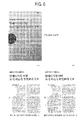
- FIG. 6 is a view illustrating comparisons among an original image, an initial segmentation result, and multirate segmentation result obtained from the encoding apparatus of the image coding and/or decoding system of FIG. 1 .
- FIG. 6 illustrates comparison between the initial segmentation result and the mutlrate segmentation result.
- the computation time of the multirate segmentation was 0.80 sec, and the computation time of the initial segmentation is 5.37 sec. In spite of the computation time reduction, the quality is still comparable to the original results.
- the present general inventive concept can also be embodied as computer-readable codes on a computer-readable recording medium.
- the computer-readable recording medium is any data storage device that can store data as a program which can be thereafter read by a computer system. Examples of the computer-readable recording media include read-only memory (ROM), random-access memory (RAM), CD-ROMs, magnetic tapes, floppy disks, optical data storage devices, and carrier waves (such as data transmission through the Internet).
- the computer-readable recording medium can also be distributed over network-coupled computer systems so that the computer-readable code is stored and executed in a distributed fashion. Also, functional programs, codes, and code segments to accomplish the present general inventive concept can be easily construed by programmers skilled in the art to which the present general inventive concept pertains.
- the image coding and/or decoding system decreases a computation time taken to segment the input image and maintains quality of the segmentation image.
- the image coding and/or decoding system provides refined edges of the segmentation image.
- the image coding and/or decoding system can selectively use the sub-sampling according to the characteristic of the input image.
Landscapes
- Engineering & Computer Science (AREA)
- Multimedia (AREA)
- Computer Vision & Pattern Recognition (AREA)
- Physics & Mathematics (AREA)
- General Physics & Mathematics (AREA)
- Theoretical Computer Science (AREA)
- Signal Processing (AREA)
- Editing Of Facsimile Originals (AREA)
- Compression Of Band Width Or Redundancy In Fax (AREA)
- Image Processing (AREA)
- Compression Or Coding Systems Of Tv Signals (AREA)
Abstract
Description
- The present invention relates to an apparatus and method of segmenting an image and/or receiving the segmented image in an image coding and/or decoding system, and more particularly, to an apparatus and method of adjust a resolution of an image to a second resolution, to segment the image of the second resolution, and to generate a segmentation image according to the segmented image and the image of the first resolution in a mixed raster content based coding and/or decoding system.
- Mixed Raster Content (MRC), defined in ITU-T T.44, is a standard for efficient document compression which can dramatically improve the compression/quality tradeoff as compared to traditional lossy image compression algorithms. MRC represents an image as a set of layers. In the most basic mode of MRC, a compound document with text and pictures is separated into three layers: a binary mask layer, a foreground layer and a background layer. The binary mask layer indicates the assignment of foreground as "1", or background as "0" to each pixel. According to ITU-T T.44, it is recommended that text and line art be classified to the foreground layer, and pictures classified to the background.
- MRC encoding includes a process of segmentation to differentiate text and graphics regions within an image and creates the binary mask layer described above. Typically, the foreground layer contains the colors of text, the background layer contains images and graphics, and the binary mask layer is used to represent the fine detail of text fonts. The quality of decoded image is heavily dependent on the segmentation algorithm because binary mask defines the shape of characters, and because incorrect segmentation can cause distortion in the decoded image.
- Although segmentation is a critical step in MRC encoding, the standard ITU-T T. 44 does not define the segmentation method. The standard defines only the structure of MRC document decoder, so the segmentation algorithm may be independently optimized for best performance.
- In general, the computation time of segmentation is highly dependent on the number of pixels in the input image. Especially when high resolution images are processed, it is most often necessary to consider computation time improvements.
- According to the present invention there is provided an apparatus and method as set forth in the appended claims. Other features of the invention will be apparent from the dependent claims, and the description which follows.
- The present general inventive concept provides an apparatus and method of segmenting an image and adjusting a resolution of the segmented image in an image coding and decoding system.
- The present general inventive concept also provides an apparatus and method of segmenting an image and/or adjusting a resolution of the segmented image in a mixed raster content based coding and decoding system.
- The present general inventive concept also provides an apparatus and method of reducing a computation time taken to segment the image in an image coding and decoding system.
- Additional aspects and/or advantages of the present general inventive concept will be set forth in part in the description which follows and, in part, will be obvious from the description, or may be learned by practice of the present general inventive concept.
- The foregoing and/or other aspects of the present general inventive concept may be achieved by providing an apparatus usable in an image encoding and decoding system, the apparatus including a segmentation unit to convert a first image of a first resolution into a second image of a second resolution, to segment the second image of the second resolution with one or more blocks of a binary mask layer having a foreground and a background, and to convert the segmented second image into a third image of a third resolution as a segmented image.
- The first resolution may be the same as the third resolution.
- Wherein the second resolution may be lower than at least one of the first resolution and the third resolution.
- The segmentation unit may convert the segmented second image into the third image of the third resolution using the first image of the first resolution.
- The segmentation unit may interpolate the segmented second image with the first image of the first resolution to output the third image of the third resolution as the segmented image.
- The segmentation unit may refine an edge of the second image of the second resolution with the first image of the first resolution to have the third resolution.
- The segmentation unit may refine a boundary block between the foreground land the background using the first image of the first resolution to generate the third image of the third resolution as the segmented image.
- The segmentation unit may divide the second image into the one or more blocks, define the one or more blocks of the second image into the foreground and the background, and adjust the second resolution of the one or more blocks of the second image to the third resolution using the first image of the first resolution.
- The one or more blocks of the second image may include a plurality of pixels representing the second resolution, and the one of more blocks of the third image comprises a plurality of second pixels representing the third resolution.
- The one or more blocks of the second image may include a first number of pixels representing the second resolution, and the one of more blocks of the third image comprises a second number of pixels representing the third resolution.
- The segmentation unit may convert the segmented second image into the third image of the third resolution using the first image of the first resolution to output the segmented image of the third resolution.
- The segmented second image may include one or more blocks of a binary mask layer having a foreground and a background, and the segmentation unit mar refine edges blocks among the one or more blocks of the segmented second image using the first image of the first resolution to output the segmented image.
- The segmentation unit may comprise a sub-sampling and decimating unit to sub-sample and/or decimate the first image of the first resolution into the second image of the second resolution, a segment unit to segment the second image by dividing the second image into one or more blocks of the second resolution as a binary mask layer of a foreground and a background, and an interpolating and refining unit to convert the segmented second image into the third image of the third resolution.
- The segmentation unit may comprise a sub-sampling unit to sub-sample the first image of the first resolution into the second image of the second resolution, a segment unit to segment the second image by dividing the second image into one or more blocks of the second resolution as a binary mask layer of a foreground and a background, and an interpolating to interpolate the segmented second image and the first image to generate the third image of the third resolution.
- The segmentation unit may comprise a decimating unit to decimate the first image of the first resolution into the second image of the second resolution, a segment unit to segment the second image by dividing the second image into one or more blocks of the second resolution as a binary mask layer of a foreground and a background, and an interpolating to interpolate the segmented second image and the first image to generate the third image of the third resolution.
- The segmentation unit may comprise a sub-sampling unit to sub-sample and/or decimate the first image of the first resolution into the second image of the second resolution, a segment unit to segment the second image by dividing the second image into one or more blocks of the second resolution as a binary mask layer of a foreground and a background, and a refining unit to refine an edge of the second image to generate the third image of the third resolution.
- The segmentation unit may comprise a sub-sampling and decimating unit to reduce the first resolution of the first image to generate the second image of the second resolution, a second unit to segment the second image by dividing the second image into one or more blocks of the second resolution as a binary mask layer of a foreground and a background, and an interpolating and refining unit to increase the second resolution of the blocks of the second image to generate the third image of the third resolution.
- The apparatus may further comprise a scanner to scan a document to generate the first image as an input image signal.
- The apparatus may further comprise an encoding unit to encode the segmented image as an output image signal.
- The apparatus may further comprise a decoding unit to decode the output image signal as a print image signal.
- The apparatus may further comprise a printing unit to print the print image signal on a printing medium.
- The foregoing and/or other aspects of the present general inventive concept may also be achieved by providing an apparatus usable in an image encoding and decoding system, the apparatus including a segmentation unit to reduce a first resolution of a first image into a second resolution as a second image, to segment the second image of the second resolution with one or more blocks of a binary mask layer having a foreground and a background, and to increase the second resolution of the segmented second image to a third resolution as a third image to output a segmented image.
- The foregoing and/or other aspects of the present general inventive concept may also be achieved by providing an apparatus usable in an image encoding and decoding system, the apparatus including a segmentation unit to convert a first image of a first resolution into a second image of a second resolution, to segment the second image of the second resolution with one or more blocks of a binary mask layer having a foreground and a background, and to convert the segmented second image into a third image of a third resolution as a segmented image.
- The foregoing and/or other aspects of the present general inventive concept may also be achieved by providing an apparatus usable in an image encoding and decoding system, the apparatus including an encoding unit to encode the segmented image as an output image signal, a decoding unit to decode the output image signal as a print image signal, and a printing unit to print the print image signal on a printing medium.
- The foregoing and/or other aspects of the present general inventive concept may also be achieved by providing an apparatus usable in an image encoding and decoding system, the apparatus including a segmentation unit to reduce a first resolution of an image into a second resolution, to segment the image of the second resolution, and to increase the second resolution of the segmented image to a third resolution to output a segmented image.
- The foregoing and/or other aspects of the present general inventive concept may also be achieved by providing an image encoding and/or decoding system, including a segmentation unit to segment an image of a resolution, and to adjust the resolution of the segmented image to another resolution as a segmented image.
- The foregoing and/or other aspects of the present general inventive concept may also be achieved by providing a method of an image encoding and/or decoding system, the method including reducing a first resolution of an image into a second resolution, segmenting the image of the second resolution, and increasing the second resolution of the segmented image to a third resolution to output a segmented image.
- The foregoing and/or other aspects of the present general inventive concept may also be achieved by providing a method of an image encoding and decoding system, the method including converting a first image of a first resolution into a second image of a second resolution, segmenting the second image of the second resolution, and converting the segmented second image into a third image of a third resolution as a segmented image.
- The foregoing and/or other aspects of the present general inventive concept may also be achieved by providing a method of an image encoding and decoding system, the method including reducing a first resolution of a first image into a second resolution as a second image, segmenting the second image of the second resolution with one or more blocks of a binary mask layer having a foreground and a background, and increasing the second resolution of the segmented second image to a third resolution as a third image to output a segmented image.
- The foregoing and/or other aspects of the present general inventive concept may also be achieved by providing a method of an image encoding and decoding system, the method including converting a first image of a first resolution into a second image of a second resolution, segmenting the second image of the second resolution with one or more blocks of a binary mask layer having a foreground and a background, converting the segmented second image into a third image of a third resolution as a segmented image, encoding the segmented image as an output image signal, decoding the output image signal as a print image signal, and printing the print image signal on a printing medium.
- The foregoing and/or other aspects of the present general inventive concept may also be achieved by providing a computer readable recording medium containing computer readable codes as a program to execute a method of an image encoding and decoding system, the method including converting a first image of a first resolution into a second image of a second resolution, segmenting the second image of the second resolution, and converting the segmented second image into a third image of a third resolution as a segmented image.
- The foregoing and/or other aspects of the present general inventive concept may also be achieved by providing a computer readable recording medium containing computer readable codes as a program to execute a method of an image encoding and decoding system, the method including reducing a first resolution of a first image into a second resolution as a second image, segmenting the second image of the second resolution with one or more blocks of a binary mask layer having a foreground and a background, and increasing the second resolution of the segmented second image to a third resolution as a third image to output a segmented image.
- The foregoing and/or other aspects of the present general inventive concept may also be achieved by providing a computer readable recording medium containing computer readable codes as a program to execute a method of an image encoding and decoding system, the method including converting a first image of a first resolution into a second image of a second resolution, segmenting the second image of the second resolution with one or more blocks of a binary mask layer having a foreground and a background, converting the segmented second image into a third image of a third resolution as a segmented image, encoding the segmented image as an output image signal, decoding the output image signal as a print image signal, and printing the print image signal on a printing medium.
- The above and/or other aspects and advantages of the present general inventive concept will become apparent and more readily appreciated from the following description of the embodiments, taken in conjunction with the accompanying drawings of which:
-
FIG. 1 is a view illustrating an encoding apparatus in an image coding and/or decoding system according to an embodiment of the present general inventive concept; -
FIG. 2 is a flowchart illustrating a method of an image coding and/or decoding system according to an embodiment of the present general inventive concept -
FIG. 3 is a view illustrating edges refined with different resolutions in an encoding apparatus of the image coding and/or decoding system ofFIG. 1 ; -
FIG. 4 is a view illustrating computation times of a conventional segmentation and the encoding apparatus ofFIG. 1 ; and -
FIG. 5 is a view illustrating segmentation images with different resolutions before and after interpolation and/or refinement, respectively; and -
FIG. 6 is a view illustrating comparisons among an original image, an initial segmentation result, and multirate segmentation result obtained from the encoding apparatus of the image coding and/or decoding system ofFIG. 1 . - Reference will now be made in detail to the embodiments of the present general inventive concept, examples of which are illustrated in the accompanying drawings, wherein like reference numerals refer to like elements throughout.
- The resolution of an input document directly influences a computation time of segmentation. According to the present general inventive concept, a multirate scheme to segment an image using a different resolution reduces the computation time by performing the segmentation at a lower resolution. After the segmentation is performed, an output of the segmentation is interpolated and refined using an original image to obtain a high resolution output.
-
FIG. 1 is a view illustrating an image coding and/ordecoding system 100 according to an embodiment of the present general inventive concept. Referring toFIG. 1 , the image coding and/or decoding system includes anencoding apparatus 110 and a decoding apparatus (not illustrated). The encoding apparatus may include a scanning unit (not illustrated) to scan a document to generate an input signal (input image or image data) representing at least one of a text, a graphic, and an edge, a convertingunit 120 to receive image data from the scanning unit or an external device and to convert a resolution of the image data to a second resolution, asegmenting unit 130 to segment the image data of the second resolution, and an interpolating and/orrefining unit 140 to interpolate and/or refine the segmented image as a segmentation image to be encoded in an encoding unit (not illustrated) and to be output to the decoding apparatus through a transmitting unit and a line, such as a circuit, a wire network, and a wireless network (not illustrated). - The input signal may include a binary mask layer having one or more backgrounds and one or more foregrounds, a foreground layer representing the one or more foregrounds, and a background layer representing the one or more backgrounds. The binary mask layer may be transmitted to the
encoding apparatus 110 as the input signal. - The segmenting
unit 130 may include a divider (not illustrated). The divider may divide the input signal of the scanner or an external device into one or more blocks. - The converting
unit 120 may include a convertingunit 120 as a sub-sampling and/or decimating unit to sub-sample or decimate the input signal of the one or more blocks to reduce a resolution of the input signal. It is possible that the divider is connected between the convertingunit 120 and thesegmenting unit 130. In this case, the input signal is sub-sampled to reduce a resolution to a second resolution, and then the sub-sampled input image of the second resolution is divided into one or more blocks for segmentation. It is also possible that the divider divides the input signal into the one or more blocks, and the convertingunit 120 reduces the resolution of the one or more blocks to the second resolution. - The
segment unit 130 segments the blocks of the input signal (input image) of the second resolution and adjusts values of pixels of the respective blocks according to a predetermined manner to generate a first segmentation image. For example, the pixel values of the blocks may be adjusted to form a binary mask layer having one or more foregrounds and/or one or more backgrounds. The segmentingunit 130 may include a segmentation algorithm to perform the segmentation. It is possible that thesegmentation unit 130 may perform a conventional segmentation algorithm. - The interpolating and/or
refining unit 140 refines the first segmentation image as a second segmentation image using both the first segmentation image as a coarse resolution segmentation of the second resolution, and the second segmentation as an original high resolution input image of the resolution. - The converting
unit 120 may selectively operate depending on a characteristic of the input image. That is, the input image is sub-sampled to reduce the computation time and the sub-sampled image is segmented. If the sub-sampling is not necessary according to the characteristic or simplicity of the input image, the input image is not sub-sampled. Thus, thesegmentation unit 130 may perform the segmentation on one of the sub-sampled image or the non sub-sampled image. Either sub-sampling or decimation can be used to reduce a resolution of the input image. - A conventional method for MRC document segmentation processes a full resolution input image. However, according to the present embodiment, two different resolutions (two different rates) of the input image are used to obtain the segmentation. This multirate segmentation methodology can be used in a multi function printers (MFP), and provides advantages of reduced hardware cost or increased processing speed.
- A computation time of the segmentation is highly dependent on the number of pixels in the input image. When the resolution of a scanned document is high, the total computation time for segmentation can be large. However, according to the present general inventive concept, this multirate segmentation algorithm reduces computation by reducing the resolution of the document to be segmented while substantially retaining the original segmentation quality by refining the final segmentation.
-
FIG. 2 is a flowchart illustrating a method of an image coding and/or decoding system according to an embodiment of the present general inventive concept. Referring toFIGS. 1 and2 , an input image is sub-sampled or decimated by a sub-sampling rate atoperation 210. For example, if the input image is 300 dpi image and the sub-sampling rate is 3, the sub-sampled image becomes 100 dpi image. The segmentation is performed on the sub-sampled image of 100 dpi atoperation 220. Since the segmentation is highly dependent on an image resolution, the computation time can be dramatically reduced. In this case, the computation time is reduced by approximately a factor of 9=3x3. The resulting 100 dpi segmentation is then interpolated back to 300 dpi and edge refinement is performed along boundaries of each connected component to obtain the final 300 dpi segmentation atoperation 230. The edge refinement operation also uses the original 300 dpi image as another input to refine the edge of the first segmentation image atoperation 230. The segmented image is output atoperation 240. This multirate segmentation procedure results in substantially the same segmentation quality and much reduced computation time. -
FIG. 3 is a view illustrating edges refined with different resolutions in an encoding apparatus of the image coding and/or decoding system ofFIG. 1 . The refined edges ofFIG. 3 illustrate the edge refinement from 100 dpi to 300 dpi. Pixels at the boundaries between "0" and "1" at 100 dpi are refined. The refinements of both "0" and "1" pixels at the boundaries create better results. In this example, black regions represent foreground "1" and white region represent background "0." The black pixel surrounded by a red (solid and thick) line at 100 dpi is a current pixel which is being refined. The corresponding 3x3 pixels at 300 dpi are classified as 0 or 1 based on neighboring segmentation states and original image values as described below. - First, foreground reference color and background reference color are calculated to determine the threshold of 3x3 pixels to be classified as "0" or "1". The neighborhoods of the current pixel (4-neighboring pixels are used in this case) are divided into "0" group and "1" group at 100 dpi. The foreground reference color and background reference color are defined as the average of "1" pixels and the "0" pixels respectively. In this example, the foreground reference color is the color of pixel labeled as 4 while the background reference color is the average of pixels labeled as 1, 2 and 3.
- Second, the 3x3 pixels are segmented by comparing two distances to the foreground reference color and background reference color. For each of 3x3 pixels at 300 dpi, if the original pixel value is closer to the foreground reference color, the pixel is segmented as "1". Otherwise, the pixel is segmented as "0". This procedure may be repeated along the boundaries of all of the connected components
-
FIG. 4 is a view illustrating computation times of a conventional segmentation and the encoding apparatus ofFIG. 1 . A resolution of documents usually ranges from 300 dpi to 600 dpi on average for a Letter size paper. The followings are the computation time results for 13 test images at 300 dpi. The input images were reduced to 100 dpi in the sub-sampling stage. -
FIG. 5 is a view illustrating segmentation images with different resolutions before and after interpolation and/or refinement, respectively. The interpolation and refinement are performed after the segmentation, to obtain the original resolution from the reduced resolution.FIG. 5 illustrates an example of the segmentation interpolation and refinement along the boundaries. -
FIG. 6 is a view illustrating comparisons among an original image, an initial segmentation result, and multirate segmentation result obtained from the encoding apparatus of the image coding and/or decoding system ofFIG. 1 .FIG. 6 illustrates comparison between the initial segmentation result and the mutlrate segmentation result. For this sample image, the computation time of the multirate segmentation was 0.80 sec, and the computation time of the initial segmentation is 5.37 sec. In spite of the computation time reduction, the quality is still comparable to the original results. - The present general inventive concept can also be embodied as computer-readable codes on a computer-readable recording medium. The computer-readable recording medium is any data storage device that can store data as a program which can be thereafter read by a computer system. Examples of the computer-readable recording media include read-only memory (ROM), random-access memory (RAM), CD-ROMs, magnetic tapes, floppy disks, optical data storage devices, and carrier waves (such as data transmission through the Internet). The computer-readable recording medium can also be distributed over network-coupled computer systems so that the computer-readable code is stored and executed in a distributed fashion. Also, functional programs, codes, and code segments to accomplish the present general inventive concept can be easily construed by programmers skilled in the art to which the present general inventive concept pertains.
- As described above, the image coding and/or decoding system decreases a computation time taken to segment the input image and maintains quality of the segmentation image.
- As described above, the image coding and/or decoding system provides refined edges of the segmentation image.
- As described above, the image coding and/or decoding system can selectively use the sub-sampling according to the characteristic of the input image.
- Although a few preferred embodiments have been shown and described, it will be appreciated by those skilled in the art that various changes and modifications might be made without departing from the scope of the invention, as defined in the appended claims.
- Attention is directed to all papers and documents which are filed concurrently with or previous to this specification in connection with this application and which are open to public inspection with this specification, and the contents of all such papers and documents are incorporated herein by reference.
- All of the features disclosed in this specification (including any accompanying claims, abstract and drawings), and/or all of the steps of any method or process so disclosed, may be combined in any combination, except combinations where at least some of such features and/or steps are mutually exclusive.
- Each feature disclosed in this specification (including any accompanying claims, abstract and drawings) may be replaced by alternative features serving the same, equivalent or similar purpose, unless expressly stated otherwise. Thus, unless expressly stated otherwise, each feature disclosed is one example only of a generic series of equivalent or similar features.
- The invention is not restricted to the details of the foregoing embodiment(s). The invention extends to any novel one, or any novel combination, of the features disclosed in this specification (including any accompanying claims, abstract and drawings), or to any novel one, or any novel combination, of the steps of any method or process so disclosed.
Claims (32)
- An apparatus usable in an image encoding and decoding system, comprising:a segmentation unit (130) to convert a first image of a first resolution into a second image of a second resolution, to segment the second image of the second resolution with one or more blocks of a binary mask layer having a foreground and a background, and to convert the segmented second image into a third image of a third resolution as a segmented image.
- The apparatus of claim 1, wherein the first resolution is the same as the third resolution.
- The apparatus of claim 1, wherein the second resolution is lower than at least one of the first resolution and the third resolution.
- The apparatus of claim 1, wherein the segmentation unit (130) convert the segmented second image into the third image of the third resolution using the first image of the first resolution.
- The apparatus of claim 1, wherein the segmentation unit (130) interpolates the segmented second image with the first image of the first resolution to output the third image of the third resolution as the segmented image.
- The apparatus of claim 1, wherein the segmentation unit (130) refines an edge of the second image of the second resolution with the first image of the first resolution to have the third resolution.
- The apparatus of claim 1, wherein the segmentation unit (130) refines a boundary block between the foreground and the background using the first image of the first resolution to generate the third image of the third resolution as the segmented image.
- The apparatus of claim 1, wherein the segmentation unit (130) divides the second image into the one or more blocks, define the one or more blocks of the second image into the foreground and the background, and adjusts the second resolution of the one or more blocks of the second image to the third resolution using the first image of the first resolution.
- The apparatus of claim 8, wherein the one or more blocks of the second image comprise a plurality of pixels representing the second resolution, and the one of more blocks of the third image comprises a plurality of second pixels representing the third resolution.
- The apparatus of claim 8, wherein the one or more blocks of the second image comprise a first number of pixels representing the second resolution, and the one of more blocks of the third image comprises a second number of pixels representing the third resolution.
- The apparatus of claim 1, wherein the segmentation unit (130) converts the segmented second image into the third image of the third resolution using the first image of the first resolution to output the segmented image of the third resolution.
- The apparatus of claim 1, wherein:the segmented second image comprises one or more blocks of the binary mask layer having the foreground layer and the background layer; andthe segmentation unit (130) refines edges blocks among the one or more blocks of the segmented second image using the first image of the first resolution to output the segmented image.
- The apparatus of claim 1, wherein the segmentation unit (130) comprises:a sub-sampling and decimating unit to sub-sample and/or decimate the first image of the first resolution into the second image of the second resolution;a segment unit to segment the second image by dividing the second image into one or more blocks of the second resolution as the binary mask layer of the foreground and the background; andan interpolating and refining unit to convert the segmented second image into the third image of the third resolution.
- The apparatus of claim 1, the segmentation unit (130) comprises:a sub-sampling unit to sub-sample the first image of the first resolution into the second image of the second resolution;a segment unit to segment the second image by dividing the second image into one or more blocks of the second resolution as the binary mask layer of the foreground and the background; andan interpolating to interpolate the segmented second image and the first image to generate the third image of the third resolution.
- The apparatus of claim 1, wherein the segmentation unit (130) comprises:a decimating unit to decimate the first image of the first resolution into the second image of the second resolution;a segment unit to segment the second image by dividing the second image into one or more blocks of the second resolution as the binary mask layer of the foreground and the background; andan interpolating to interpolate the segmented second image and the first image to generate the third image of the third resolution.
- The apparatus of claim 1, wherein the segmentation unit (130) comprises:a sub-sampling unit to sub-sample and/or decimate the first image of the first resolution into the second image of the second resolution;a segment unit to segment the second image by dividing the second image into one or more blocks of the second resolution as the binary mask layer of the foreground and the background; anda refining unit to refine an edge of the second image to generate the third image of the third resolution.
- The apparatus of claim 1, wherein the segmentation unit (130) comprises:a sub-sampling and decimating unit to reduce the first resolution of the first image to generate the second image of the second resolution;a second unit to segment the second image by dividing the second image into one or more blocks of the second resolution as the binary mask layer of the foreground and the background; andan interpolating and refining unit to increase the second resolution of the blocks of the second image to generate the third image of the third resolution.
- The apparatus of claim 1, further comprising:a scanner to scan a document to generate the first image as an input image signal.
- The apparatus of claim 1, further comprising:an encoding unit to encode the segmented image as an output image signal.
- The apparatus of claim 19, further comprising:a decoding unit to decode the output image signal as a print image signal.
- The apparatus of claim 19, further comprising:a printing unit to print the print image signal on a printing medium.
- An apparatus usable in an image encoding and decoding system, comprising:a segmentation unit (130) to reduce a first resolution of a first image into a second resolution as a second image, to segment the second image of the second resolution with one or more blocks of a binary mask layer having a foreground and a background, and to increase the second resolution of the segmented second image to a third resolution as a third image to output a segmented image.
- An apparatus usable in an image encoding and decoding system, comprising:a segmentation unit (130) to convert a first image of a first resolution into a second image of a second resolution, to segment the second image of the second resolution with one or more blocks of a binary mask layer having a foreground and a background, and to convert the segmented second image into a third image of a third resolution as a segmented image;an encoding unit to encode the segmented image as an output image signal;a decoding unit to decode the output image signal as a print image signal; anda printing unit to print the print image signal on a printing medium.
- An image encoding and/or decoding system, comprising
a segmentation unit (130) to reduce a first resolution of an image into a second resolution, to segment the image of the second resolution, and to increase the second resolution of the segmented image to a third resolution to output a segmented image. - An image encoding and/or decoding system, comprising
a segmentation unit (130) to segment an image of a resolution, and to adjust the resolution of the segmented image to another resolution as a segmented image. - A method of an image encoding and/or decoding system, the method comprising
reducing a first resolution of an image into a second resolution;
segmenting the image of the second resolution; and
increasing the second resolution of the segmented image to a third resolution to output a segmented image. - A method of an image encoding and decoding system, the method comprising:converting a first image of a first resolution into a second image of a second resolution;segmenting the second image of the second resolution; andconverting the segmented second image into a third image of a third resolution as a segmented image.
- A method of an image encoding and decoding system, the method comprising:reducing a first resolution of a first image into a second resolution as a second image;segmenting the second image of the second resolution with one or more blocks of a binary mask layer having a foreground and a background; andincreasing the second resolution of the segmented second image to a third resolution as a third image to output a segmented image.
- A method of an image encoding and decoding system, the method comprising:converting a first image of a first resolution into a second image of a second resolution;segmenting the second image of the second resolution with one or more blocks of a binary mask layer having a foreground and a background;converting the segmented second image into a third image of a third resolution as a segmented image;encoding the segmented image as an output image signal;decoding the output image signal as a print image signal; andprinting the print image signal on a printing medium.
- A computer readable recording medium containing computer readable codes as a program to execute a method of an image encoding and decoding system, the method comprising:converting a first image of a first resolution into a second image of a second resolution;segmenting the second image of the second resolution; andconverting the segmented second image into a third image of a third resolution as a segmented image.
- A computer readable recording medium containing computer readable codes as a program to execute a method of an image encoding and decoding system, the method comprising:reducing a first resolution of a first image into a second resolution as a second image;segmenting the second image of the second resolution with one or more blocks of a binary mask layer having a foreground and a background; andincreasing the second resolution of the segmented second image to a third resolution as a third image to output a segmented image.
- A computer readable recording medium containing computer readable codes as a program to execute a method of an image encoding and decoding system, the method comprising:converting a first image of a first resolution into a second image of a second resolution;segmenting the second image of the second resolution with one or more blocks of a binary mask layer having a foreground and a background;converting the segmented second image into a third image of a third resolution as a segmented image;encoding the segmented image as an output image signal;decoding the output image signal as a print image signal; andprinting the print image signal on a printing medium.
Applications Claiming Priority (1)
| Application Number | Priority Date | Filing Date | Title |
|---|---|---|---|
| US11/626,588 US8254680B2 (en) | 2007-01-24 | 2007-01-24 | Apparatus and method of segmenting an image in an image coding and/or decoding system |
Related Child Applications (1)
| Application Number | Title | Priority Date | Filing Date |
|---|---|---|---|
| EP10164890.5 Division-Into | 2010-06-03 |
Publications (2)
| Publication Number | Publication Date |
|---|---|
| EP1950701A1 true EP1950701A1 (en) | 2008-07-30 |
| EP1950701B1 EP1950701B1 (en) | 2011-07-06 |
Family
ID=39149140
Family Applications (1)
| Application Number | Title | Priority Date | Filing Date |
|---|---|---|---|
| EP08150516A Ceased EP1950701B1 (en) | 2007-01-24 | 2008-01-22 | Apparatus and method of segmenting an image in an image coding and/or decoding system |
Country Status (4)
| Country | Link |
|---|---|
| US (2) | US8254680B2 (en) |
| EP (1) | EP1950701B1 (en) |
| KR (1) | KR101276056B1 (en) |
| CN (1) | CN101231697B (en) |
Families Citing this family (11)
| Publication number | Priority date | Publication date | Assignee | Title |
|---|---|---|---|---|
| KR100958342B1 (en) * | 2008-10-14 | 2010-05-17 | 세종대학교산학협력단 | Video encoding / decoding method and apparatus |
| US9466121B2 (en) * | 2012-09-11 | 2016-10-11 | Qualcomm Incorporated | Devices and methods for augmented reality applications |
| CN105593904A (en) * | 2013-09-30 | 2016-05-18 | 惠普发展公司,有限责任合伙企业 | Record and replay operations on graphics objects |
| KR102380979B1 (en) * | 2015-01-05 | 2022-04-01 | 삼성전자 주식회사 | Image metadata managing method and apparatus |
| US10304220B2 (en) * | 2016-08-31 | 2019-05-28 | International Business Machines Corporation | Anatomy segmentation through low-resolution multi-atlas label fusion and corrective learning |
| US10395335B2 (en) * | 2017-03-27 | 2019-08-27 | International Business Machines Corporation | Optimal data sampling for image analysis |
| KR20190004010A (en) * | 2017-07-03 | 2019-01-11 | 삼성에스디에스 주식회사 | Method and Apparatus for extracting foreground |
| JP2021056004A (en) * | 2019-09-26 | 2021-04-08 | キヤノン株式会社 | Image determination device and image determination method |
| GB2595696B (en) * | 2020-06-04 | 2022-12-28 | Envisics Ltd | Forming a hologram of a target image for projection using data streaming |
| KR20230100205A (en) | 2021-12-28 | 2023-07-05 | 삼성전자주식회사 | Method and apparatus for processing image |
| CN116612146B (en) * | 2023-07-11 | 2023-11-17 | 淘宝(中国)软件有限公司 | Image processing methods, devices, electronic equipment and computer storage media |
Citations (3)
| Publication number | Priority date | Publication date | Assignee | Title |
|---|---|---|---|---|
| US20030095714A1 (en) * | 2001-11-21 | 2003-05-22 | Avinash Gopal B. | Computationally efficient noise reduction filter |
| EP1349371A2 (en) * | 2002-03-22 | 2003-10-01 | Ricoh Company, Ltd. | Image processing apparatus, image processing program and storage medium storing the program |
| US6731800B1 (en) * | 1999-12-04 | 2004-05-04 | Algo Vision Lura Tech Gmbh | Method for compressing scanned, colored and gray-scaled documents |
Family Cites Families (16)
| Publication number | Priority date | Publication date | Assignee | Title |
|---|---|---|---|---|
| US4437122A (en) | 1981-09-12 | 1984-03-13 | Xerox Corporation | Low resolution raster images |
| JPH0773333B2 (en) | 1992-01-31 | 1995-08-02 | キヤノン株式会社 | Image processing method |
| JPH08153199A (en) | 1994-11-29 | 1996-06-11 | Canon Inc | Image processing device |
| JP3363684B2 (en) | 1996-01-16 | 2003-01-08 | キヤノン株式会社 | Image processing method and apparatus, and image forming apparatus |
| US5778092A (en) * | 1996-12-20 | 1998-07-07 | Xerox Corporation | Method and apparatus for compressing color or gray scale documents |
| KR100258841B1 (en) * | 1997-12-26 | 2000-06-15 | 윤종용 | Equipment unit status management method of semiconductor manufacturing equipment management system |
| US6483521B1 (en) * | 1998-02-02 | 2002-11-19 | Matsushita Electric Industrial Co., Ltd. | Image composition method, image composition apparatus, and data recording media |
| US6327050B1 (en) | 1999-04-23 | 2001-12-04 | Electronics For Imaging, Inc. | Printing method and apparatus having multiple raster image processors |
| KR20000037704A (en) | 1998-12-01 | 2000-07-05 | 정선종 | Foreign material inspection device and inspection method on printed surface using mask operation |
| US6806980B2 (en) | 2000-12-28 | 2004-10-19 | Xerox Corporation | Adaptive illumination correction of scanned images |
| US7120297B2 (en) * | 2002-04-25 | 2006-10-10 | Microsoft Corporation | Segmented layered image system |
| US6941011B2 (en) * | 2002-06-27 | 2005-09-06 | Hewlett-Packard Development Company, Lp. | Method and system for image processing including mixed resolution, multi-channel color compression, transmission and decompression |
| US7031518B2 (en) * | 2002-07-01 | 2006-04-18 | Xerox Corporation | Segmentation method and system for Multiple Raster Content (MRC) representation of documents |
| US6987882B2 (en) | 2002-07-01 | 2006-01-17 | Xerox Corporation | Separation system for Multiple Raster Content (MRC) representation of documents |
| JP3849663B2 (en) | 2003-03-31 | 2006-11-22 | ブラザー工業株式会社 | Image processing apparatus and image processing method |
| US8086050B2 (en) * | 2004-08-25 | 2011-12-27 | Ricoh Co., Ltd. | Multi-resolution segmentation and fill |
-
2007
- 2007-01-24 US US11/626,588 patent/US8254680B2/en not_active Expired - Fee Related
- 2007-03-15 KR KR1020070025730A patent/KR101276056B1/en not_active Expired - Fee Related
-
2008
- 2008-01-22 EP EP08150516A patent/EP1950701B1/en not_active Ceased
- 2008-01-23 CN CN2008100039792A patent/CN101231697B/en not_active Expired - Fee Related
-
2012
- 2012-08-09 US US13/570,813 patent/US8798396B2/en active Active
Patent Citations (3)
| Publication number | Priority date | Publication date | Assignee | Title |
|---|---|---|---|---|
| US6731800B1 (en) * | 1999-12-04 | 2004-05-04 | Algo Vision Lura Tech Gmbh | Method for compressing scanned, colored and gray-scaled documents |
| US20030095714A1 (en) * | 2001-11-21 | 2003-05-22 | Avinash Gopal B. | Computationally efficient noise reduction filter |
| EP1349371A2 (en) * | 2002-03-22 | 2003-10-01 | Ricoh Company, Ltd. | Image processing apparatus, image processing program and storage medium storing the program |
Non-Patent Citations (1)
| Title |
|---|
| HASKELL B G ET AL: "IMAGE AND VIDEO CODING-EMERGING STANDARDS AND BEYOND", IEEE TRANSACTIONS ON CIRCUITS AND SYSTEMS FOR VIDEO TECHNOLOGY, IEEE SERVICE CENTER, PISCATAWAY, NJ, US, vol. 8, no. 7, November 1998 (1998-11-01), pages 814 - 837, XP011014517, ISSN: 1051-8215 * |
Also Published As
| Publication number | Publication date |
|---|---|
| US8798396B2 (en) | 2014-08-05 |
| EP1950701B1 (en) | 2011-07-06 |
| US20080175477A1 (en) | 2008-07-24 |
| KR101276056B1 (en) | 2013-06-14 |
| CN101231697A (en) | 2008-07-30 |
| CN101231697B (en) | 2013-01-02 |
| KR20080069888A (en) | 2008-07-29 |
| US8254680B2 (en) | 2012-08-28 |
| US20120300227A1 (en) | 2012-11-29 |
Similar Documents
| Publication | Publication Date | Title |
|---|---|---|
| US8798396B2 (en) | Apparatus and method of segmenting an image in an image coding and/or decoding system | |
| US8792735B2 (en) | Image compressing apparatus which extracts black text edge pixels from an image and compresses a layer with black text edge pixels extracted | |
| US8335379B2 (en) | System and method for cleanup of MRC images for improved compression and image quality | |
| US5696842A (en) | Image processing system for adaptive coding of color document images | |
| EP1587298B1 (en) | Systems and methods for adjusting image data to form highly compressible image planes | |
| US7542164B2 (en) | Common exchange format architecture for color printing in a multi-function system | |
| US6608928B1 (en) | Generic pre-processing of mixed raster content planes | |
| US20040001624A1 (en) | Separation system for Multiple Raster Content (MRC) representation of documents | |
| JP5139786B2 (en) | Image processing apparatus, image processing method, and image processing program | |
| JP2010246039A (en) | Image processing apparatus, image forming apparatus, image processing method, computer program, and recording medium | |
| US7190837B2 (en) | Compression of mixed raster content (MRC) image data | |
| JP4907060B2 (en) | Priority PDL segmentation to generate a 2-bit selector | |
| US6181834B1 (en) | Hybrid image reduction method and apparatus with moir{acute over (e)} suppression | |
| JP4226484B2 (en) | Method and system for improving weak selector signal of mixed raster signal | |
| US10931852B2 (en) | Image processing apparatus, image processing method, and storage medium, with determining whether or not character clipping rectangle determined to be non-character region is character region | |
| JP2020043461A (en) | Image processing apparatus, image processing method, and program | |
| US7456982B2 (en) | Segmentation method and system for multiple raster content (MRC) representation of documents | |
| de Queiroz et al. | Compressing compound documents | |
| JP4140362B2 (en) | Image processing device | |
| JP5118171B2 (en) | Segmentation method and system for multi-raster content (MRC) representation of documents | |
| JP2004253874A (en) | Color image processing apparatus and color image processing method | |
| JPH05260286A (en) | Variable power device for binary image |
Legal Events
| Date | Code | Title | Description |
|---|---|---|---|
| PUAI | Public reference made under article 153(3) epc to a published international application that has entered the european phase |
Free format text: ORIGINAL CODE: 0009012 |
|
| AK | Designated contracting states |
Kind code of ref document: A1 Designated state(s): AT BE BG CH CY CZ DE DK EE ES FI FR GB GR HR HU IE IS IT LI LT LU LV MC MT NL NO PL PT RO SE SI SK TR |
|
| AX | Request for extension of the european patent |
Extension state: AL BA MK RS |
|
| 17P | Request for examination filed |
Effective date: 20090226 |
|
| AKX | Designation fees paid |
Designated state(s): DE FR GB NL |
|
| 17Q | First examination report despatched |
Effective date: 20090325 |
|
| GRAP | Despatch of communication of intention to grant a patent |
Free format text: ORIGINAL CODE: EPIDOSNIGR1 |
|
| RAP1 | Party data changed (applicant data changed or rights of an application transferred) |
Owner name: SAMSUNG ELECTRONICS CO., LTD. Owner name: PURDUE RESEARCH FOUNDATION |
|
| GRAS | Grant fee paid |
Free format text: ORIGINAL CODE: EPIDOSNIGR3 |
|
| GRAA | (expected) grant |
Free format text: ORIGINAL CODE: 0009210 |
|
| AK | Designated contracting states |
Kind code of ref document: B1 Designated state(s): DE FR GB NL |
|
| REG | Reference to a national code |
Ref country code: GB Ref legal event code: FG4D |
|
| REG | Reference to a national code |
Ref country code: DE Ref legal event code: R096 Ref document number: 602008008052 Country of ref document: DE Effective date: 20110825 |
|
| REG | Reference to a national code |
Ref country code: NL Ref legal event code: T3 |
|
| PLBE | No opposition filed within time limit |
Free format text: ORIGINAL CODE: 0009261 |
|
| STAA | Information on the status of an ep patent application or granted ep patent |
Free format text: STATUS: NO OPPOSITION FILED WITHIN TIME LIMIT |
|
| 26N | No opposition filed |
Effective date: 20120411 |
|
| REG | Reference to a national code |
Ref country code: DE Ref legal event code: R097 Ref document number: 602008008052 Country of ref document: DE Effective date: 20120411 |
|
| REG | Reference to a national code |
Ref country code: FR Ref legal event code: PLFP Year of fee payment: 9 |
|
| REG | Reference to a national code |
Ref country code: FR Ref legal event code: PLFP Year of fee payment: 10 |
|
| REG | Reference to a national code |
Ref country code: DE Ref legal event code: R082 Ref document number: 602008008052 Country of ref document: DE Representative=s name: GRUENECKER PATENT- UND RECHTSANWAELTE PARTG MB, DE Ref country code: DE Ref legal event code: R081 Ref document number: 602008008052 Country of ref document: DE Owner name: HP PRINTING KOREA CO., LTD., SUWON-SI, KR Free format text: FORMER OWNERS: PURDUE RESEARCH FOUNDATION, WEST LAFAYETTE, IND., US; SAMSUNG ELECTRONICS CO., LTD., SUWON-SI, GYEONGGI-DO, KR Ref country code: DE Ref legal event code: R081 Ref document number: 602008008052 Country of ref document: DE Owner name: PURDUE RESEARCH FOUNDATION, WEST LAFAYETTE, US Free format text: FORMER OWNERS: PURDUE RESEARCH FOUNDATION, WEST LAFAYETTE, IND., US; SAMSUNG ELECTRONICS CO., LTD., SUWON-SI, GYEONGGI-DO, KR Ref country code: DE Ref legal event code: R081 Ref document number: 602008008052 Country of ref document: DE Owner name: S-PRINTING SOLUTION CO., LTD., SUWON-SI, KR Free format text: FORMER OWNERS: PURDUE RESEARCH FOUNDATION, WEST LAFAYETTE, IND., US; SAMSUNG ELECTRONICS CO., LTD., SUWON-SI, GYEONGGI-DO, KR Ref country code: DE Ref legal event code: R081 Ref document number: 602008008052 Country of ref document: DE Owner name: HEWLETT-PACKARD DEVELOPMENT COMPANY, L.P., SPR, US Free format text: FORMER OWNERS: PURDUE RESEARCH FOUNDATION, WEST LAFAYETTE, IND., US; SAMSUNG ELECTRONICS CO., LTD., SUWON-SI, GYEONGGI-DO, KR |
|
| REG | Reference to a national code |
Ref country code: NL Ref legal event code: PD Owner name: PURDUE RESEARCH FOUNDATION; US Free format text: DETAILS ASSIGNMENT: CHANGE OF OWNER(S), ASSIGNMENT; FORMER OWNER NAME: SAMSUNG ELECTRONICS CO., LTD. Effective date: 20170313 |
|
| REG | Reference to a national code |
Ref country code: GB Ref legal event code: 732E Free format text: REGISTERED BETWEEN 20170629 AND 20170705 |
|
| REG | Reference to a national code |
Ref country code: FR Ref legal event code: TQ Owner name: S-PRINTING SOLUTION CO., LTD., KR Effective date: 20171013 Ref country code: FR Ref legal event code: TQ Owner name: PURDUE RESEARCH FOUNDATION, US Effective date: 20171013 |
|
| REG | Reference to a national code |
Ref country code: FR Ref legal event code: PLFP Year of fee payment: 11 |
|
| REG | Reference to a national code |
Ref country code: NL Ref legal event code: HC Owner name: HP PRINTING KOREA CO., LTD.; KR Free format text: DETAILS ASSIGNMENT: CHANGE OF OWNER(S), CHANGE OF OWNER(S) NAME; FORMER OWNER NAME: S-PRINTING SOLUTION CO., LTD. Effective date: 20180816 |
|
| REG | Reference to a national code |
Ref country code: DE Ref legal event code: R082 Ref document number: 602008008052 Country of ref document: DE Representative=s name: SCHOPPE, ZIMMERMANN, STOECKELER, ZINKLER, SCHE, DE Ref country code: DE Ref legal event code: R082 Ref document number: 602008008052 Country of ref document: DE Ref country code: DE Ref legal event code: R081 Ref document number: 602008008052 Country of ref document: DE Owner name: HP PRINTING KOREA CO., LTD., SUWON-SI, KR Free format text: FORMER OWNERS: PURDUE RESEARCH FOUNDATION, WEST LAFAYETTE, IND., US; S-PRINTING SOLUTION CO., LTD., SUWON-SI, GYEONGGI-DO, KR Ref country code: DE Ref legal event code: R081 Ref document number: 602008008052 Country of ref document: DE Owner name: PURDUE RESEARCH FOUNDATION, WEST LAFAYETTE, US Free format text: FORMER OWNERS: PURDUE RESEARCH FOUNDATION, WEST LAFAYETTE, IND., US; S-PRINTING SOLUTION CO., LTD., SUWON-SI, GYEONGGI-DO, KR Ref country code: DE Ref legal event code: R081 Ref document number: 602008008052 Country of ref document: DE Owner name: HEWLETT-PACKARD DEVELOPMENT COMPANY, L.P., SPR, US Free format text: FORMER OWNERS: PURDUE RESEARCH FOUNDATION, WEST LAFAYETTE, IND., US; S-PRINTING SOLUTION CO., LTD., SUWON-SI, GYEONGGI-DO, KR |
|
| REG | Reference to a national code |
Ref country code: NL Ref legal event code: PD Owner name: HP PRINTING KOREA CO., LTD.; KO Free format text: DETAILS ASSIGNMENT: CHANGE OF OWNER(S), CHANGE OF LEGAL ENTITY; FORMER OWNER NAME: SAMSUNG ELECTRONICS CO., LTD. Effective date: 20191030 |
|
| REG | Reference to a national code |
Ref country code: DE Ref legal event code: R081 Ref document number: 602008008052 Country of ref document: DE Owner name: HEWLETT-PACKARD DEVELOPMENT COMPANY, L.P., SPR, US Free format text: FORMER OWNERS: HP PRINTING KOREA CO., LTD., SUWON-SI, GYEONGGI-DO, KR; PURDUE RESEARCH FOUNDATION, WEST LAFAYETTE, IND., US Ref country code: DE Ref legal event code: R081 Ref document number: 602008008052 Country of ref document: DE Owner name: PURDUE RESEARCH FOUNDATION, WEST LAFAYETTE, US Free format text: FORMER OWNERS: HP PRINTING KOREA CO., LTD., SUWON-SI, GYEONGGI-DO, KR; PURDUE RESEARCH FOUNDATION, WEST LAFAYETTE, IND., US |
|
| REG | Reference to a national code |
Ref country code: GB Ref legal event code: 732E Free format text: REGISTERED BETWEEN 20191212 AND 20191218 |
|
| PGFP | Annual fee paid to national office [announced via postgrant information from national office to epo] |
Ref country code: FR Payment date: 20210608 Year of fee payment: 15 |
|
| REG | Reference to a national code |
Ref country code: DE Ref legal event code: R082 Ref document number: 602008008052 Country of ref document: DE Representative=s name: SCHOPPE, ZIMMERMANN, STOECKELER, ZINKLER, SCHE, DE |
|
| PGFP | Annual fee paid to national office [announced via postgrant information from national office to epo] |
Ref country code: GB Payment date: 20211216 Year of fee payment: 15 |
|
| PGFP | Annual fee paid to national office [announced via postgrant information from national office to epo] |
Ref country code: NL Payment date: 20211216 Year of fee payment: 15 |
|
| PGFP | Annual fee paid to national office [announced via postgrant information from national office to epo] |
Ref country code: DE Payment date: 20210528 Year of fee payment: 15 |
|
| REG | Reference to a national code |
Ref country code: DE Ref legal event code: R119 Ref document number: 602008008052 Country of ref document: DE |
|
| REG | Reference to a national code |
Ref country code: NL Ref legal event code: MM Effective date: 20230201 |
|
| GBPC | Gb: european patent ceased through non-payment of renewal fee |
Effective date: 20230122 |
|
| PG25 | Lapsed in a contracting state [announced via postgrant information from national office to epo] |
Ref country code: NL Free format text: LAPSE BECAUSE OF NON-PAYMENT OF DUE FEES Effective date: 20230201 Ref country code: GB Free format text: LAPSE BECAUSE OF NON-PAYMENT OF DUE FEES Effective date: 20230122 Ref country code: DE Free format text: LAPSE BECAUSE OF NON-PAYMENT OF DUE FEES Effective date: 20230801 |
|
| PG25 | Lapsed in a contracting state [announced via postgrant information from national office to epo] |
Ref country code: FR Free format text: LAPSE BECAUSE OF NON-PAYMENT OF DUE FEES Effective date: 20230131 |