EP1949957A1 - System and Method for Producing Arylamine Compounds - Google Patents
System and Method for Producing Arylamine Compounds Download PDFInfo
- Publication number
- EP1949957A1 EP1949957A1 EP08100688A EP08100688A EP1949957A1 EP 1949957 A1 EP1949957 A1 EP 1949957A1 EP 08100688 A EP08100688 A EP 08100688A EP 08100688 A EP08100688 A EP 08100688A EP 1949957 A1 EP1949957 A1 EP 1949957A1
- Authority
- EP
- European Patent Office
- Prior art keywords
- solvent
- arylamine
- compound
- plug flow
- arylhalide
- Prior art date
- Legal status (The legal status is an assumption and is not a legal conclusion. Google has not performed a legal analysis and makes no representation as to the accuracy of the status listed.)
- Granted
Links
- -1 Arylamine Compounds Chemical class 0.000 title claims description 33
- 238000004519 manufacturing process Methods 0.000 title description 6
- KDLHZDBZIXYQEI-UHFFFAOYSA-N Palladium Chemical compound [Pd] KDLHZDBZIXYQEI-UHFFFAOYSA-N 0.000 claims abstract description 42
- 238000000034 method Methods 0.000 claims abstract description 36
- 150000004982 aromatic amines Chemical class 0.000 claims abstract description 29
- 239000003054 catalyst Substances 0.000 claims abstract description 29
- 229910052763 palladium Inorganic materials 0.000 claims abstract description 21
- 239000000047 product Substances 0.000 claims abstract description 15
- 239000002608 ionic liquid Substances 0.000 claims abstract description 12
- 150000001502 aryl halides Chemical class 0.000 claims abstract description 9
- XYFCBTPGUUZFHI-UHFFFAOYSA-O phosphonium Chemical compound [PH4+] XYFCBTPGUUZFHI-UHFFFAOYSA-O 0.000 claims abstract description 9
- 239000006227 byproduct Substances 0.000 claims abstract description 8
- 150000001412 amines Chemical class 0.000 claims abstract description 3
- YXFVVABEGXRONW-UHFFFAOYSA-N Toluene Natural products CC1=CC=CC=C1 YXFVVABEGXRONW-UHFFFAOYSA-N 0.000 claims description 49
- DMBHHRLKUKUOEG-UHFFFAOYSA-N diphenylamine Chemical group C=1C=CC=CC=1NC1=CC=CC=C1 DMBHHRLKUKUOEG-UHFFFAOYSA-N 0.000 claims description 30
- 239000002904 solvent Substances 0.000 claims description 22
- 239000003153 chemical reaction reagent Substances 0.000 claims description 18
- 125000000217 alkyl group Chemical group 0.000 claims description 16
- BWHDROKFUHTORW-UHFFFAOYSA-N tritert-butylphosphane Chemical compound CC(C)(C)P(C(C)(C)C)C(C)(C)C BWHDROKFUHTORW-UHFFFAOYSA-N 0.000 claims description 16
- 239000000203 mixture Substances 0.000 claims description 14
- 125000005842 heteroatom Chemical group 0.000 claims description 12
- PKJBWOWQJHHAHG-UHFFFAOYSA-N 1-bromo-4-phenylbenzene Chemical group C1=CC(Br)=CC=C1C1=CC=CC=C1 PKJBWOWQJHHAHG-UHFFFAOYSA-N 0.000 claims description 10
- 239000004215 Carbon black (E152) Substances 0.000 claims description 9
- 125000003118 aryl group Chemical group 0.000 claims description 9
- 229930195733 hydrocarbon Natural products 0.000 claims description 9
- 150000001499 aryl bromides Chemical class 0.000 claims description 8
- 238000010438 heat treatment Methods 0.000 claims description 7
- 238000007654 immersion Methods 0.000 claims description 6
- 229910052708 sodium Inorganic materials 0.000 claims description 6
- 239000011734 sodium Substances 0.000 claims description 6
- 239000003446 ligand Substances 0.000 claims description 5
- 238000004891 communication Methods 0.000 claims description 4
- 229910052736 halogen Inorganic materials 0.000 claims description 4
- 150000002367 halogens Chemical class 0.000 claims description 4
- 229910052739 hydrogen Inorganic materials 0.000 claims description 4
- 238000005057 refrigeration Methods 0.000 claims description 4
- XTHFKEDIFFGKHM-UHFFFAOYSA-N Dimethoxyethane Chemical compound COCCOC XTHFKEDIFFGKHM-UHFFFAOYSA-N 0.000 claims description 3
- 239000002202 Polyethylene glycol Substances 0.000 claims description 3
- 125000005266 diarylamine group Chemical group 0.000 claims description 3
- 229920001223 polyethylene glycol Polymers 0.000 claims description 3
- DSYQHWPNJZFRCU-UHFFFAOYSA-N 1,3,5,7-tetramethyl-2,4,6-trioxa-8-phosphatricyclo[3.3.1.13,7]decane Chemical compound C1C(P2)(C)OC3(C)CC2(C)OC1(C)O3 DSYQHWPNJZFRCU-UHFFFAOYSA-N 0.000 claims description 2
- 125000003944 tolyl group Chemical group 0.000 claims 2
- 125000005496 phosphonium group Chemical group 0.000 claims 1
- 238000006243 chemical reaction Methods 0.000 abstract description 65
- 108091008695 photoreceptors Proteins 0.000 abstract description 16
- 238000003384 imaging method Methods 0.000 abstract description 14
- 239000006184 cosolvent Substances 0.000 abstract description 11
- 230000008569 process Effects 0.000 abstract description 9
- OJBSYCMUWONLAE-UHFFFAOYSA-N n,n,4-triphenylaniline Chemical compound C1=CC=CC=C1N(C=1C=CC(=CC=1)C=1C=CC=CC=1)C1=CC=CC=C1 OJBSYCMUWONLAE-UHFFFAOYSA-N 0.000 abstract description 8
- 230000005525 hole transport Effects 0.000 abstract description 5
- RTZKZFJDLAIYFH-UHFFFAOYSA-N Diethyl ether Chemical compound CCOCC RTZKZFJDLAIYFH-UHFFFAOYSA-N 0.000 abstract description 4
- 238000010924 continuous production Methods 0.000 abstract description 4
- 238000012423 maintenance Methods 0.000 abstract 1
- IJGRMHOSHXDMSA-UHFFFAOYSA-N Atomic nitrogen Chemical compound N#N IJGRMHOSHXDMSA-UHFFFAOYSA-N 0.000 description 26
- 229940035422 diphenylamine Drugs 0.000 description 20
- 229910052757 nitrogen Inorganic materials 0.000 description 14
- 239000002585 base Substances 0.000 description 12
- 238000007125 Buchwald synthesis reaction Methods 0.000 description 9
- 239000000463 material Substances 0.000 description 9
- QVGXLLKOCUKJST-UHFFFAOYSA-N atomic oxygen Chemical compound [O] QVGXLLKOCUKJST-UHFFFAOYSA-N 0.000 description 8
- 125000004432 carbon atom Chemical group C* 0.000 description 8
- 239000001301 oxygen Substances 0.000 description 8
- 229910052760 oxygen Inorganic materials 0.000 description 8
- 230000015572 biosynthetic process Effects 0.000 description 7
- YJVFFLUZDVXJQI-UHFFFAOYSA-L palladium(ii) acetate Chemical group [Pd+2].CC([O-])=O.CC([O-])=O YJVFFLUZDVXJQI-UHFFFAOYSA-L 0.000 description 7
- XKRFYHLGVUSROY-UHFFFAOYSA-N Argon Chemical compound [Ar] XKRFYHLGVUSROY-UHFFFAOYSA-N 0.000 description 6
- OKKJLVBELUTLKV-UHFFFAOYSA-N Methanol Chemical compound OC OKKJLVBELUTLKV-UHFFFAOYSA-N 0.000 description 6
- NINIDFKCEFEMDL-UHFFFAOYSA-N Sulfur Chemical compound [S] NINIDFKCEFEMDL-UHFFFAOYSA-N 0.000 description 6
- 239000012467 final product Substances 0.000 description 6
- 239000011593 sulfur Substances 0.000 description 6
- 229910052717 sulfur Inorganic materials 0.000 description 6
- 239000002244 precipitate Substances 0.000 description 5
- 230000000903 blocking effect Effects 0.000 description 4
- 239000012530 fluid Substances 0.000 description 4
- 125000004435 hydrogen atom Chemical class [H]* 0.000 description 4
- JHJLBTNAGRQEKS-UHFFFAOYSA-M sodium bromide Chemical compound [Na+].[Br-] JHJLBTNAGRQEKS-UHFFFAOYSA-M 0.000 description 4
- 239000007858 starting material Substances 0.000 description 4
- MSXVEPNJUHWQHW-UHFFFAOYSA-N 2-methylbutan-2-ol Chemical compound CCC(C)(C)O MSXVEPNJUHWQHW-UHFFFAOYSA-N 0.000 description 3
- LYCAIKOWRPUZTN-UHFFFAOYSA-N Ethylene glycol Chemical compound OCCO LYCAIKOWRPUZTN-UHFFFAOYSA-N 0.000 description 3
- DGAQECJNVWCQMB-PUAWFVPOSA-M Ilexoside XXIX Chemical compound C[C@@H]1CC[C@@]2(CC[C@@]3(C(=CC[C@H]4[C@]3(CC[C@@H]5[C@@]4(CC[C@@H](C5(C)C)OS(=O)(=O)[O-])C)C)[C@@H]2[C@]1(C)O)C)C(=O)O[C@H]6[C@@H]([C@H]([C@@H]([C@H](O6)CO)O)O)O.[Na+] DGAQECJNVWCQMB-PUAWFVPOSA-M 0.000 description 3
- PNEYBMLMFCGWSK-UHFFFAOYSA-N aluminium oxide Inorganic materials [O-2].[O-2].[O-2].[Al+3].[Al+3] PNEYBMLMFCGWSK-UHFFFAOYSA-N 0.000 description 3
- 229910052786 argon Inorganic materials 0.000 description 3
- 239000011230 binding agent Substances 0.000 description 3
- 238000011437 continuous method Methods 0.000 description 3
- 238000004128 high performance liquid chromatography Methods 0.000 description 3
- VLKZOEOYAKHREP-UHFFFAOYSA-N n-Hexane Chemical compound CCCCCC VLKZOEOYAKHREP-UHFFFAOYSA-N 0.000 description 3
- 239000002245 particle Substances 0.000 description 3
- 238000010992 reflux Methods 0.000 description 3
- 239000007787 solid Substances 0.000 description 3
- 239000000758 substrate Substances 0.000 description 3
- PAYRUJLWNCNPSJ-UHFFFAOYSA-N Aniline Chemical compound NC1=CC=CC=C1 PAYRUJLWNCNPSJ-UHFFFAOYSA-N 0.000 description 2
- 101100493713 Caenorhabditis elegans bath-45 gene Proteins 0.000 description 2
- KFZMGEQAYNKOFK-UHFFFAOYSA-N Isopropanol Chemical compound CC(C)O KFZMGEQAYNKOFK-UHFFFAOYSA-N 0.000 description 2
- LRHPLDYGYMQRHN-UHFFFAOYSA-N N-Butanol Chemical compound CCCCO LRHPLDYGYMQRHN-UHFFFAOYSA-N 0.000 description 2
- OFBQJSOFQDEBGM-UHFFFAOYSA-N Pentane Chemical compound CCCCC OFBQJSOFQDEBGM-UHFFFAOYSA-N 0.000 description 2
- VYPSYNLAJGMNEJ-UHFFFAOYSA-N Silicium dioxide Chemical compound O=[Si]=O VYPSYNLAJGMNEJ-UHFFFAOYSA-N 0.000 description 2
- WYURNTSHIVDZCO-UHFFFAOYSA-N Tetrahydrofuran Chemical compound C1CCOC1 WYURNTSHIVDZCO-UHFFFAOYSA-N 0.000 description 2
- 239000002250 absorbent Substances 0.000 description 2
- 230000002745 absorbent Effects 0.000 description 2
- 230000008901 benefit Effects 0.000 description 2
- 125000000484 butyl group Chemical group [H]C([*])([H])C([H])([H])C([H])([H])C([H])([H])[H] 0.000 description 2
- 230000001427 coherent effect Effects 0.000 description 2
- 150000001875 compounds Chemical class 0.000 description 2
- 229910052593 corundum Inorganic materials 0.000 description 2
- DIOQZVSQGTUSAI-UHFFFAOYSA-N decane Chemical compound CCCCCCCCCC DIOQZVSQGTUSAI-UHFFFAOYSA-N 0.000 description 2
- 238000004090 dissolution Methods 0.000 description 2
- 150000002170 ethers Chemical class 0.000 description 2
- 125000001495 ethyl group Chemical group [H]C([H])([H])C([H])([H])* 0.000 description 2
- ZSIAUFGUXNUGDI-UHFFFAOYSA-N hexan-1-ol Chemical compound CCCCCCO ZSIAUFGUXNUGDI-UHFFFAOYSA-N 0.000 description 2
- 239000001257 hydrogen Substances 0.000 description 2
- 238000011031 large-scale manufacturing process Methods 0.000 description 2
- 239000007788 liquid Substances 0.000 description 2
- 125000002496 methyl group Chemical group [H]C([H])([H])* 0.000 description 2
- LXNAVEXFUKBNMK-UHFFFAOYSA-N palladium(II) acetate Substances [Pd].CC(O)=O.CC(O)=O LXNAVEXFUKBNMK-UHFFFAOYSA-N 0.000 description 2
- XYFCBTPGUUZFHI-UHFFFAOYSA-N phosphine group Chemical group P XYFCBTPGUUZFHI-UHFFFAOYSA-N 0.000 description 2
- 239000000049 pigment Substances 0.000 description 2
- 125000001436 propyl group Chemical group [H]C([*])([H])C([H])([H])C([H])([H])[H] 0.000 description 2
- 239000000376 reactant Substances 0.000 description 2
- 238000003756 stirring Methods 0.000 description 2
- 125000001424 substituent group Chemical group 0.000 description 2
- 238000003786 synthesis reaction Methods 0.000 description 2
- 125000005259 triarylamine group Chemical group 0.000 description 2
- 229910001845 yogo sapphire Inorganic materials 0.000 description 2
- RYHBNJHYFVUHQT-UHFFFAOYSA-N 1,4-Dioxane Chemical compound C1COCCO1 RYHBNJHYFVUHQT-UHFFFAOYSA-N 0.000 description 1
- 238000005160 1H NMR spectroscopy Methods 0.000 description 1
- SDTMFDGELKWGFT-UHFFFAOYSA-N 2-methylpropan-2-olate Chemical compound CC(C)(C)[O-] SDTMFDGELKWGFT-UHFFFAOYSA-N 0.000 description 1
- 0 CC1(C2)OC(C)(C3)OC2(C)OC3(C)*1 Chemical compound CC1(C2)OC(C)(C3)OC2(C)OC3(C)*1 0.000 description 1
- BVKZGUZCCUSVTD-UHFFFAOYSA-L Carbonate Chemical compound [O-]C([O-])=O BVKZGUZCCUSVTD-UHFFFAOYSA-L 0.000 description 1
- 238000006639 Goldberg reaction Methods 0.000 description 1
- CTQNGGLPUBDAKN-UHFFFAOYSA-N O-Xylene Chemical compound CC1=CC=CC=C1C CTQNGGLPUBDAKN-UHFFFAOYSA-N 0.000 description 1
- 238000006887 Ullmann reaction Methods 0.000 description 1
- 230000009471 action Effects 0.000 description 1
- 230000003213 activating effect Effects 0.000 description 1
- 238000007605 air drying Methods 0.000 description 1
- 150000001298 alcohols Chemical class 0.000 description 1
- 150000001339 alkali metal compounds Chemical class 0.000 description 1
- 229910001508 alkali metal halide Inorganic materials 0.000 description 1
- 150000008045 alkali metal halides Chemical class 0.000 description 1
- 150000004703 alkoxides Chemical class 0.000 description 1
- 238000004458 analytical method Methods 0.000 description 1
- 125000005264 aryl amine group Chemical group 0.000 description 1
- 150000001500 aryl chlorides Chemical class 0.000 description 1
- 150000001501 aryl fluorides Chemical class 0.000 description 1
- 150000001503 aryl iodides Chemical class 0.000 description 1
- 238000004380 ashing Methods 0.000 description 1
- 230000003197 catalytic effect Effects 0.000 description 1
- 239000007810 chemical reaction solvent Substances 0.000 description 1
- 230000000052 comparative effect Effects 0.000 description 1
- 230000002844 continuous effect Effects 0.000 description 1
- 208000012839 conversion disease Diseases 0.000 description 1
- 238000001816 cooling Methods 0.000 description 1
- 239000012043 crude product Substances 0.000 description 1
- 230000009849 deactivation Effects 0.000 description 1
- 238000000151 deposition Methods 0.000 description 1
- 238000010586 diagram Methods 0.000 description 1
- 150000005218 dimethyl ethers Chemical class 0.000 description 1
- 230000005670 electromagnetic radiation Effects 0.000 description 1
- 238000000921 elemental analysis Methods 0.000 description 1
- 238000005265 energy consumption Methods 0.000 description 1
- 238000001914 filtration Methods 0.000 description 1
- 239000007789 gas Substances 0.000 description 1
- 150000004820 halides Chemical class 0.000 description 1
- 125000003106 haloaryl group Chemical group 0.000 description 1
- 239000008241 heterogeneous mixture Substances 0.000 description 1
- 150000002430 hydrocarbons Chemical class 0.000 description 1
- XLYOFNOQVPJJNP-UHFFFAOYSA-M hydroxide Chemical compound [OH-] XLYOFNOQVPJJNP-UHFFFAOYSA-M 0.000 description 1
- 239000011261 inert gas Substances 0.000 description 1
- 230000000977 initiatory effect Effects 0.000 description 1
- 239000002198 insoluble material Substances 0.000 description 1
- 239000000543 intermediate Substances 0.000 description 1
- 235000020094 liqueur Nutrition 0.000 description 1
- 229910052751 metal Inorganic materials 0.000 description 1
- 239000002184 metal Substances 0.000 description 1
- 150000002739 metals Chemical class 0.000 description 1
- 125000001421 myristyl group Chemical group [H]C([*])([H])C([H])([H])C([H])([H])C([H])([H])C([H])([H])C([H])([H])C([H])([H])C([H])([H])C([H])([H])C([H])([H])C([H])([H])C([H])([H])C([H])([H])C([H])([H])[H] 0.000 description 1
- 238000005580 one pot reaction Methods 0.000 description 1
- 150000002894 organic compounds Chemical class 0.000 description 1
- 238000013021 overheating Methods 0.000 description 1
- 125000001997 phenyl group Chemical group [H]C1=C([H])C([H])=C(*)C([H])=C1[H] 0.000 description 1
- 150000004714 phosphonium salts Chemical class 0.000 description 1
- 229910000073 phosphorus hydride Inorganic materials 0.000 description 1
- 229920000642 polymer Polymers 0.000 description 1
- 238000001556 precipitation Methods 0.000 description 1
- 239000002243 precursor Substances 0.000 description 1
- 238000000746 purification Methods 0.000 description 1
- 230000036647 reaction Effects 0.000 description 1
- 239000011541 reaction mixture Substances 0.000 description 1
- 108020003175 receptors Proteins 0.000 description 1
- 238000001953 recrystallisation Methods 0.000 description 1
- 150000003839 salts Chemical class 0.000 description 1
- 229930195734 saturated hydrocarbon Natural products 0.000 description 1
- 238000000926 separation method Methods 0.000 description 1
- 239000000377 silicon dioxide Substances 0.000 description 1
- 230000003381 solubilizing effect Effects 0.000 description 1
- 239000000126 substance Substances 0.000 description 1
- ZUHZGEOKBKGPSW-UHFFFAOYSA-N tetraglyme Chemical compound COCCOCCOCCOCCOC ZUHZGEOKBKGPSW-UHFFFAOYSA-N 0.000 description 1
- YLQBMQCUIZJEEH-UHFFFAOYSA-N tetrahydrofuran Natural products C=1C=COC=1 YLQBMQCUIZJEEH-UHFFFAOYSA-N 0.000 description 1
- KAKQVSNHTBLJCH-UHFFFAOYSA-N trifluoromethanesulfonimidic acid Chemical class NS(=O)(=O)C(F)(F)F KAKQVSNHTBLJCH-UHFFFAOYSA-N 0.000 description 1
- 238000010977 unit operation Methods 0.000 description 1
- 238000001291 vacuum drying Methods 0.000 description 1
- 238000005406 washing Methods 0.000 description 1
- 239000008096 xylene Substances 0.000 description 1
Images
Classifications
-
- C—CHEMISTRY; METALLURGY
- C07—ORGANIC CHEMISTRY
- C07C—ACYCLIC OR CARBOCYCLIC COMPOUNDS
- C07C209/00—Preparation of compounds containing amino groups bound to a carbon skeleton
- C07C209/04—Preparation of compounds containing amino groups bound to a carbon skeleton by substitution of functional groups by amino groups
- C07C209/06—Preparation of compounds containing amino groups bound to a carbon skeleton by substitution of functional groups by amino groups by substitution of halogen atoms
- C07C209/10—Preparation of compounds containing amino groups bound to a carbon skeleton by substitution of functional groups by amino groups by substitution of halogen atoms with formation of amino groups bound to carbon atoms of six-membered aromatic rings or from amines having nitrogen atoms bound to carbon atoms of six-membered aromatic rings
-
- B—PERFORMING OPERATIONS; TRANSPORTING
- B01—PHYSICAL OR CHEMICAL PROCESSES OR APPARATUS IN GENERAL
- B01J—CHEMICAL OR PHYSICAL PROCESSES, e.g. CATALYSIS OR COLLOID CHEMISTRY; THEIR RELEVANT APPARATUS
- B01J19/00—Chemical, physical or physico-chemical processes in general; Their relevant apparatus
- B01J19/24—Stationary reactors without moving elements inside
- B01J19/2415—Tubular reactors
- B01J19/243—Tubular reactors spirally, concentrically or zigzag wound
-
- B—PERFORMING OPERATIONS; TRANSPORTING
- B01—PHYSICAL OR CHEMICAL PROCESSES OR APPARATUS IN GENERAL
- B01J—CHEMICAL OR PHYSICAL PROCESSES, e.g. CATALYSIS OR COLLOID CHEMISTRY; THEIR RELEVANT APPARATUS
- B01J8/00—Chemical or physical processes in general, conducted in the presence of fluids and solid particles; Apparatus for such processes
- B01J8/02—Chemical or physical processes in general, conducted in the presence of fluids and solid particles; Apparatus for such processes with stationary particles, e.g. in fixed beds
- B01J8/0285—Heating or cooling the reactor
-
- B—PERFORMING OPERATIONS; TRANSPORTING
- B01—PHYSICAL OR CHEMICAL PROCESSES OR APPARATUS IN GENERAL
- B01J—CHEMICAL OR PHYSICAL PROCESSES, e.g. CATALYSIS OR COLLOID CHEMISTRY; THEIR RELEVANT APPARATUS
- B01J2219/00—Chemical, physical or physico-chemical processes in general; Their relevant apparatus
- B01J2219/00002—Chemical plants
- B01J2219/00004—Scale aspects
- B01J2219/00006—Large-scale industrial plants
-
- B—PERFORMING OPERATIONS; TRANSPORTING
- B01—PHYSICAL OR CHEMICAL PROCESSES OR APPARATUS IN GENERAL
- B01J—CHEMICAL OR PHYSICAL PROCESSES, e.g. CATALYSIS OR COLLOID CHEMISTRY; THEIR RELEVANT APPARATUS
- B01J2219/00—Chemical, physical or physico-chemical processes in general; Their relevant apparatus
- B01J2219/00049—Controlling or regulating processes
- B01J2219/00051—Controlling the temperature
- B01J2219/00074—Controlling the temperature by indirect heating or cooling employing heat exchange fluids
- B01J2219/00087—Controlling the temperature by indirect heating or cooling employing heat exchange fluids with heat exchange elements outside the reactor
- B01J2219/00099—Controlling the temperature by indirect heating or cooling employing heat exchange fluids with heat exchange elements outside the reactor the reactor being immersed in the heat exchange medium
Definitions
- the present disclosure relates generally to improved methods and processes for making hole transport molecules (HTMs) that are incorporated into imaging members, such as layered photoreceptor devices, t o increase the photoreceptor's "hole mobility," or its ability to move charge, across its charge transport layer (CTL).
- the imaging members can be used in electrophotographic, electrostatographic, xerographic and like devices, including printers, copiers, scanners, facsimiles, and including digital, image -on-image, and like devices. More particularly, the embodiments pertain to a continuous method for making N,N - diphenyl-4-biphenylamine that uses a continuous plug flow reactor for performing the same.
- electrophotography also known as xerography, electrophotographic imaging or electrostatographic imaging
- the surface of an electrophotographic plate, drum, belt or the like (imaging member or photoreceptor) containing a photoconductive insulating layer on a conductive layer is first uniformly electrostatically charged.
- the imaging member is then exposed to a pattern of activating electromagnetic radiation, such as light.
- Charge generated by the photoactive pigment moves under the force of the applied field.
- the movement of the charge through the photoreceptor selectively dissipates the charge on the illuminated areas of the photoconductive insulating layer while leaving behind an electrostatic latent image.
- This electrostatic latent image may then be developed to form a visible image by depositing oppositely charged particles on the surface of the photoconductive insulating layer.
- the resulting visible image may then be transferred from the imaging member directly or indirectly (such as by a transfer or other member) to a print substrate, such as transparency or paper.
- the imaging process may be repeated many times with reusable imaging members.
- An electrophotographic imaging member may take one of many different forms.
- layered photores ponsive imaging members are known in the art.
- U.S. Pat. No. 4,265,990 which is incorporated herein by reference in its entirety, describes a layered photoreceptor having separate photogenerating and charge transport layers.
- the photogenerating layer is capable of photogenerating holes and injecting the photogenerated holes into the charge transport layer.
- the photogenerating material generates electrons and holes when subjected to light.
- a multilayered photoreceptor that can be employed in electrophotographic imaging systems can include one or more of a substrate, an undercoating layer, an optional hole or charge blocking layer, a charge generating layer (including photogenerating material in a binder, e.g., photoactive pigment) over the undercoating and/or blocking layer, and a charge transport layer (including charge transport material in a binder). Additional layers such as an overcoating layer or layers can also be included.
- the photogenerating layer utilized in multilayered photoreceptors can include, for example, inorganic photoconductive particles or organic photoconductive particles dispersed in a film forming pol ymeric binder.
- Inorganic or organic photoconductive material may be formed as a continuous, homogeneous photogenerating layer.
- the charge generated Upon exposure to light, the charge generated is moved through the photoreceptor.
- the charge movement is facilitated by the cha rge transport layer.
- the speed with which the charge is moved through the charge transport layer directly affects how fast the machine can operate.
- enhancement of charge transport across these layers provides better photoreceptor performance.
- Buchwald chemistry has been used in place of the conventional Ullmann chemistry to produce arylamines not previously accessible.
- Buchwald chemistry has distinct benefits over the previously used methods in that the process cycle time is less, energy consumption is less and the crude product purity is higher, as disclosed generally in US-A-2006/0111588 .
- Other more specific methods involving Buchwald Chemistry are disclosed in US-A-2007-0100164 and US-A-2007-0111120 .
- Buchwald chemistry has been found to be more advantageous to use over the traditional methods and processes.
- Buchwald chemistry One issue that has been faced with using Buchwald chemistry, however, is that highly exothermic processes are involved in the production of the arylamine compounds. While these exothermic reactions do not present a problem when performed on a smaller scale, the reactions can present a safety risk when used in large-scale productions in batch mode due to the increase in reactant volume to heat transfer area ratio which makes heat management more difficult. A continuous mode production using Buchwald chemistry would avoid such safety risks and allow optimal conversion to product on a large -scale by increasing the heat transfer area available to the reacting volume. Unfortunately, Buchwald chemistry also produces a precipitate during the reaction, resulting in a heterogeneous mixture, which precludes performing Buchwald reactions in a continuous mode due to plugging/fouling of the reactor by the precipitate.
- electrostatographic is generally used interchangeably with the term “electrophotographic.”
- charge blocking layer and “blocking layer” are generally us ed interchangeably with the terms “undercoat layer.”
- arylhalide is generally used interchangeably with the terms “haloaryl” and “haloaromatic.”
- the invention include s a method for forming an arylamine, comprising reacting an amine compound with an arylhalide compound in the presence of a base and a ligated palladium catalyst in a continuous plug flow reactor such that an arylamine compound is produced, wherein all products and by -products remain solubilized.
- a method for forming an arylamine comprising adding 4 -bromobiphenyl and diphenylamine in toluene into a continuous plug flow reactor, the continuous plug flow reactor further comprising continuously reacting the 4-bromobiphenyl and the diphenylamine in the toluene in a presence of a base and a palladium catalyst under Buchwald conditions in the continuous plug flow reactor, adding a phosphonium -based ionic liquid with tri -t-butylphospine to the 4-bromobiphenyl and the diphenylamine in the con tinuous plug flow reactor, continuously reacting the 4-bromobiphenyl and the diphenylamine in the toluene and the phosphonium-based ionic liquid with the tri -t-butylphospine in the presence of the base and the palladium catalyst under Buchwald conditions i n the continuous plug flow reactor until N,N -diphenyl-4-biphen
- Another embodiment may include a system for forming an arylamine, comprising one or more reagents for forming an arylamine, a palladium catalyst for initiating the formation of the arylamine, a continuous plug flow reactor for receiving the one or more reagents and the palladium catalyst, the continuous plug flow reactor further comprising one or more input pots for receiving one or more reagents, one or more compressed air or nitrogen inlets coupled to the one or more input pots for introducing compressed air or nitrogen into the one or more reagents, a tubular reactor suspended in an immersion bath and in flow communication with the one or more input pots for continuously reacting the one or more reagents, and a circulation heating and refrigeration bath unit in flow communication with the immersion bath for controlling a temperature of the one or more reagents inside the tub ular reactor, and a product receiver unit adapted to collect and weigh the arylamine produced.
- the present embodiments relate to novel methods useful for making hole transport molecules (HTMs) that are incor porated into imaging members, such as layered photoreceptor devices. These molecules, asymmetric or symmetric arylamine compounds, are used to increase the photoreceptor's hole mobility across its charge transport layer (CTL). Improved chemical methods f or making these arylamines comprise synthesis using a Buchwald reaction sequence that maintains homogeneity of product and can thus be performed continuously. The embodiments also relate to an apparatus for performing the Buchwald reaction in a continuous mode. The embodiments address the problems of the prior art process described in the background above.
- HTMs hole transport molecules
- CTL charge transport layer
- the apparatus is a continuous plug flow reactor (PFR).
- a continuous plug flow reactor is essentially a type of vessel designed to con tain chemical reactions.
- the plug flow reactor model is used to estimate the key unit operation variables when using a continuous tubular reactor to reach a specified output.
- T residence time
- the coherent fluid passing through the ideal reactor is known as a plug.
- the plug flow reactors are used to model the chemical transformation of compounds as they are transported in systems with a variety of conduits through which the liquids or gases flow, in the present embodiments, pipelines.
- Buchwald chemistry can be a highly exothermic process for certain combinations of reagents and substrates, using such chemistry on a large scale may involve safety risks.
- a continuous mode process minimizes this risk by increasing significantly the heat transfer area to the reaction volume ratio and heat transfer rate.
- using a continuous mode provides several advantages over the traditional methods and processes of making arylamines. For example, if a reaction begins to hit a runaway point, the heat can be reduced or turned off and due to the great heat transferability, reagents can be cooled faster.
- the improved temperature control also makes it easier to find and maintain an optimal temperature that will achieve high product conversion. In this manner, high conversion may be achieved at lower temperatures.
- the arylamine compound or molecule produced by the present embodiments are used to serve as a hole transport molecule.
- the embodiments include an improved method for making arylamines using a continuous Buchwald reaction to achieve the formation of carbon -nitrogen bonds.
- Buchwald chemistry recognizes the general versatility of palladium -based catalysts for the formation of these bonds.
- the present disclosure adapts the procedure for the continuous production of various arylamine compounds, including but not limited to monomeric, dimeric, and trimeric arylamine compounds.
- the present embodiments comprise a general Buchwald reaction of an arylhalide with an arylamine in the presence of a compatible solvent to produce an arylamide compound.
- the present embodiments comprise a Buchwald reaction of an arylhalide compound with an amine compound in the presence of a base and a ligated palladium catalyst to produce an arylamine where all products and by -products remain solubilized.
- the reaction is conducted in a continuous plug flow reactor.
- an arylhalide such as an arylbromi de and an arylamine are used as starting materials.
- Any suitable arylhalide can be used, such as arylbromides, arylchlorides, aryliodides, arylfluorides, and the like.
- any suitable arylamine can be used.
- the selection of specific starting aryl halide and arylamine depend, for example, upon the desired final product.
- the arylamine is an arylbromide such as 4 -bromobiphenyl and the arylamine is diphenylamine, which react to form the arylamine N,N -diphenyl-4-aminobiphenyl.
- reaction including the starting materials and final product, can generally be represented as follows:
- the arylbromide can be any suitable arylbromide, depending upon the desired final product.
- the substituents R 1 , R 2 , R 3 , R 4 and R 5 which can be the same or different, can be suitably selected to represent hydrogen, a halogen, an alkyl group having for example from 1 to about 20 carbon atoms (such as methyl, ethyl, propyl, butyl and the like), a hydrocarbon radical having for example from 1 to about 20 carbon atoms, an aryl group optionally substituted by one or more alkyl groups, an alkyl group containing a heteroatom such as oxygen, nitrogen, sulfur and the like having for example from 1 to about 20 carbon atoms, a hydrocarbon radical containing a heteroatom such as oxygen, nitrogen, sulfur and the like having for example from 1 to about 20 carbon atoms, an aryl group contain ing a heteroatom such as oxygen, nitrogen, sulfur and the like optionally
- one of R 1 , R 2 , R 3 , R 4 and R 5 , such as R 3 represents a phenyl group and the remaining represent H atoms.
- the arylbromide is 4-bromobiphenyl.
- the arylamine can be any suitable arylamine, depending upon the desired final product.
- the substituents R 6 , R 7 , R 8 , R 9 , R 10 , R 11 , R 12 , R 13 , R 14 , and R 15 which can be the same or different, can be suitably selected to represent hydrogen, a halogen, an alkyl group having for example from 1 to about 20 carbon atoms (such as methyl, ethyl, propyl, butyl and the like), a hydrocarbon radical having for example from 1 to about 20 carbon atoms, an aryl group optionally substituted by one or more alkyl groups, an alkyl group containing a heteroatom such as oxygen, nitrogen, sulfur and the like having for example from 1 to ab out 20 carbon atoms, a hydrocarbon radical containing a heteroatom such as oxygen, nitrogen, sulfur and the like having for example from 1 to about 20 carbon atoms, an
- each of R 6 , R 7 , R 8 , R 9 , R 10 , R 11 , R 12 , R 13 , R 14 , and R 15 represent H atoms.
- the arylamine is diphenylamine.
- suitable catalysts are those that are known or discovered to be useful for formation of nitrogen -carbon bonds.
- suitable catalysts include ligand-complexed palladium catalysts (also known as "ligated catalysts"), such as those disclosed by Buchwald et al. and Hartwig et al. (for example in Michele C. HARRIS et al; "One -Pot Synthesis of Unsymmetrical Triarylamines from Aniline Precursors"; J. Org. Chem. Vol. 65, pp. 5327-5333 (2000) , the disclosure of which is totally incorporated herein by reference).
- a particular suitable catalyst is a palladium acetate complexed with tri-t-butylphosphine or CYTOP -216.
- CYTOP - 216 organophosphine or 2,4,6 -trioxa-1,3,5,7-tetramethyl-8-phosphaadamantane available from Cytec Industries Inc., West Paterson, New Jersey
- tri -t-butylphosphine is shown respectively below: Tri-t-butylphosphine is particularly preferred.
- phosphine -type ligands to complex palladium may not the only method known or to become know to allow palladium to have catalytic activity under the described conditions. For example, nitrogen, oxygen or other heteroatom containing organic compounds as well as halogens are known to coordinate with palladium.
- the solvent may be selected from the group consisting of toluene, xylene, pentane, dioxane, ether, hexane, decane, other hydrocarbon solvents (either aromatic or saturated hydrocarbons), other ethers such as tetrahydrofuran, dimethoxyethane, and alcohols such as butanol, hexanol and the like and mixtures thereof.
- the arylhalide and the arylamine are reacted in the presence of a palladium catalyst.
- the catalyst comprises a palladium ligated catalyst.
- the base may be any of those used with Buchwald chemistry for use with the selected catalyst.
- the invention is of particular use with sodium alk oxide bases such as t-butoxide or t-pentoxide.
- co -solvent preferably at a subsequent time to the initial mixture of at least amine, halide and first solvent, and optionally base or catalyst, maintained the homogeneity of the overall mixture by preventing the formation of a precipitate.
- the co -solvent system allows the Buchwald reaction to proceed continuously.
- the classes of co -solvent used were polyethylene glycol dimethyl ethers and phosphonium -based ionic liquids.
- the co-solvent may be added with the catalyst or base, as the case may be.
- the co-solvent may be any liquid which could be useful for solubilizing the by-products of the reaction , in particular the inorganic salts that are produced during the reaction.
- the co -solvents may be selected from the group consisting of linear cown ethers, including any alkylene glycols or glymes such as polyethylene glycol dimethyl ether,and tetraethyle ne glycol dimethyl ether, cyclic crown ethers, and ionic liquids such as imidizolium based ionic liquids or phosphonium based ionic liquids and mixtures thereof.
- Phosphonium-based ionic liquids are particularly preferred, such as tetradecyl(trihexyl)phosp honium salts such as the triflamide salt.
- 4 -bromobiphenyl and diphenyl-amine are reacted together in the presence of a combination of toluene and a phosphonium based ionic liquid.
- the catalyst has tri -t-butylphosphine ligand.
- the invention is of particular value where the base is a sodium or other alkali metal compound such as an alkoxide, as the alkali metal halide by product tends to be insoluble in the reaction solvent used in the prior art.
- the base is sodium alkoxide.
- the ratio of first to second (co-)solvent is, e.g. in the range 100:1 to 1:100, preferably, 10:1 to 1:10, e.g. in the range 5:1 to 1:5, by volume.
- the choice of specific solvent, co-solvent or mixture thereof and the respective amounts can be decided based on the solubility of the starting materials, intermediates and final products, and will be readily apparent or within routine experimentation to those skilled in the art. Furthermore the choice of solvent, co-solvent or mixture thereof and the respective amounts can be decided based on the desired operating temperature range.
- the reaction should be conducted under an atmosphere of inert gas (such as nitrogen or argon) so as to preclude deactivation of catalyst or base by oxygen or atmospheric moisture.
- suitable separation, filtration, and/or purification processes can be conducted, as desired to a desired purity level.
- the desired arylamine product can be subj ected to conventional organic washing steps, can be separated, can be decolorized (if necessary), treated with known absorbents (such as silica, alumina and clays, if necessary) and the like.
- the final product can be isolated, for example, by a suitable recrystallization procedure.
- the final product can also be dried, for example, by air drying, vacuum drying, or the like. All of these procedures are conventional and will be apparent to those skilled in the art.
- the system uses a continuous plug flow reactor 40 adapted for use in performing the continuous method in which one or more fluid reagents, such as for example, the arylhalide and arylamine, are continuously pumped through a pipe or tube, also known as a "tubular reactor" 25.
- the reagents are selected based on the desired arylamine compound to produce.
- the chemical reaction continuously proceeds as the reagents travel through the plug flow reactor 40.
- Reagents may be introduced into the plug flow reactor 40 at locations in the reactor other than the feed or input pots 15, 20.
- the plug flow reactor 40 has higher efficiency, given the time -space considerations, the reaction will proceed to a higher percentage of completion than in other types of reactors.
- the reagents or starting materials are added into the continuous plug flow reactor 40 through the input pots 15, 20 from which the materials travel to the tubular reactor 25.
- Compressed air or nitrogen is let into the plug flow reactor 40 through compres sed air or nitrogen inlets 5, 10.
- the compressed air or nitrogen acts as the driving force for transporting the reagents through the reactor; in an alternate set -up a pump could be used for this purpose.
- the materials are mixed and reacted continuously i n the tubular reactor 25 in the presence of the palladium catalyst and the co -solvent may be added at a subsequent time and location to the reacting materials.
- the tubular reactor 25 is suspended in an immersion bath 45.
- a heat transfer medium (such as ethylene glycol) is circulated through the immersion bath 45 from a circulation heating and refrigeration bath unit 30.
- the circulation heating and refrigeration bath unit 30 is used to maintain a constant temperature around the reactor by providing the necessary heat to start the reaction, then absorbing and removing any heat generated by the reaction.
- the mixture is passed once through the plug flow reactor 40 as conversion to the product, an arylamine compound, takes place.
- the subsequent product resul ting from the continuous method is collected or recovered by a product receiver 35 which includes a weigh scale to determine the final amount of product recovered.
- the reaction is heated to 90°C over a 30 min period. A large exotherm is observed and the heating is shut off. After 1 hr 15 min the exotherm subsides and HPLC analysis confirms complete conversion of diphenylamine to N-biphenyl-diphenylamine.
- toluene 50 mL is added and the solution is filtered to remove insoluble materials.
- the solids ar e washed with toluene so as to have a final liqueur with a volume of 500 L.
- This solution is treated with Filtrol-24 (20 g) and Al 2 O 3 (20 g) at 90°C for 2 hours. The absorbents are filtered while the solution is hot. A second treatment with Al 2 O 3 (4 g) at 90°C is necessary to completely remove color (most likely residual palladium catalyst).
- the toluene solution is concentrated to 100 mL and isopropanol (150 mL) is added followed by methanol (250 mL) to complete precipitation of N -biphenyl-diphenylamine.
- the solid N-biphenyl-diphenylamine is filtered and washed with methanol (100 mL), air dried then finally vacuum dried (60°C/5 mmHg) overnight.
- the final yield of N-biphenyl-diphenylamine is 42.97 g (95.1%).
- HPLC, 1H NMR and elemental analysis confirm purity of N-biphenyl-diphenylamine at >99.5%. Ashing followed by ICP analysis does not detect any residual palladium present.
- Figure 2 shows a conversion plot of N,N - diphenyl-4-biphenylamine reaction isothermal at 90°C (left) and temperature profiles of same reactions (right). The additional temperatures measur ed during the reaction indicated that, while the heating profiles for each reaction were identical, in one of the three cases, the reaction resulted in a large exotherm and an overheating of the reaction mixture ( Figure 2 ). The cause of the inconsistency is unknown. Complete conversion was seen for all three reactions based on the 10% excess of diphenylamine that is present in the reaction.
- Plugging of the reactor was a constant problem that required pulsing of the pressure on the input pots. However, after approximately 30 samples, the reactor plugged entirely. The plug ging is presumably due to the production of insoluble sodium bromide precipitate (a known by -product of the reaction). In order to counter the plugging, several re-pipings of the plug flow reactor were tried but did not resolve the problem. Subsequently, the use of a co-solvent along with toluene was tried. The conversion of this continuous reaction was on average around 20% to produce the N,N -diphenyl-4-biphenylamine even with the plugging of the reactor.
Landscapes
- Chemical & Material Sciences (AREA)
- Organic Chemistry (AREA)
- Chemical Kinetics & Catalysis (AREA)
- Organic Low-Molecular-Weight Compounds And Preparation Thereof (AREA)
- Low-Molecular Organic Synthesis Reactions Using Catalysts (AREA)
Abstract
Description
- The present disclosure relates generally to improved methods and processes for making hole transport molecules (HTMs) that are incorporated into imaging members, such as layered photoreceptor devices, t o increase the photoreceptor's "hole mobility," or its ability to move charge, across its charge transport layer (CTL). The imaging members can be used in electrophotographic, electrostatographic, xerographic and like devices, including printers, copiers, scanners, facsimiles, and including digital, image -on-image, and like devices. More particularly, the embodiments pertain to a continuous method for making N,N - diphenyl-4-biphenylamine that uses a continuous plug flow reactor for performing the same.
- In electrophotography, also known as xerography, electrophotographic imaging or electrostatographic imaging, the surface of an electrophotographic plate, drum, belt or the like (imaging member or photoreceptor) containing a photoconductive insulating layer on a conductive layer is first uniformly electrostatically charged. The imaging member is then exposed to a pattern of activating electromagnetic radiation, such as light. Charge generated by the photoactive pigment moves under the force of the applied field. The movement of the charge through the photoreceptor selectively dissipates the charge on the illuminated areas of the photoconductive insulating layer while leaving behind an electrostatic latent image. This electrostatic latent image may then be developed to form a visible image by depositing oppositely charged particles on the surface of the photoconductive insulating layer. The resulting visible image may then be transferred from the imaging member directly or indirectly (such as by a transfer or other member) to a print substrate, such as transparency or paper. The imaging process may be repeated many times with reusable imaging members.
- An electrophotographic imaging member may take one of many different forms. For example, layered photores ponsive imaging members are known in the art.
U.S. Pat. No. 4,265,990 , which is incorporated herein by reference in its entirety, describes a layered photoreceptor having separate photogenerating and charge transport layers. The photogenerating layer is capable of photogenerating holes and injecting the photogenerated holes into the charge transport layer. Thus, in photoreceptors of this type, the photogenerating material generates electrons and holes when subjected to light. - More advanced photoconductive receptors contain highly specialized component layers. For example, a multilayered photoreceptor that can be employed in electrophotographic imaging systems can include one or more of a substrate, an undercoating layer, an optional hole or charge blocking layer, a charge generating layer (including photogenerating material in a binder, e.g., photoactive pigment) over the undercoating and/or blocking layer, and a charge transport layer (including charge transport material in a binder). Additional layers such as an overcoating layer or layers can also be included.
- The photogenerating layer utilized in multilayered photoreceptors can include, for example, inorganic photoconductive particles or organic photoconductive particles dispersed in a film forming pol ymeric binder. Inorganic or organic photoconductive material may be formed as a continuous, homogeneous photogenerating layer.
- Upon exposure to light, the charge generated is moved through the photoreceptor. The charge movement is facilitated by the cha rge transport layer. The speed with which the charge is moved through the charge transport layer directly affects how fast the machine can operate. To achieve the desired increase in machine speed (ppm), the ability of the photoreceptor to move charge mu st also be increased. Thus, enhancement of charge transport across these layers provides better photoreceptor performance.
- Conventional hole transport molecules, such as for example N,N '-diphenyl-N,N-bis(3-methylphenyl)-1,1'-biphenyl-4,4'-diamine, are generally incorporated into the charge transport layer to help mobility. However, as electrophotography advances, there is a g rowing need to further improve machine speed and devise ways to make different arylamine compounds that can be used to improve the hole mobility of existing photoreceptors. There has been historically very few synthesis reactions to produce variations in the arylamine structure. The Ullmann and Goldberg reactions have been generally used to produce triarylamines or diarylamines. These reactions, however, use large amounts (e.g., up to 10 mol equivalents) of solid, insoluble hydroxide or carbonate bases a nd thus are heterogeneous. The heterogeneity prevents these reactions from being conducted in a continuous mode to yield a higher and purer amount of product.
- Recently, Buchwald chemistry has been used in place of the conventional Ullmann chemistry to produce arylamines not previously accessible. Buchwald chemistry has distinct benefits over the previously used methods in that the process cycle time is less, energy consumption is less and the crude product purity is higher, as disclosed generally in
US-A-2006/0111588 . Other more specific methods involving Buchwald Chemistry are disclosed inUS-A-2007-0100164 andUS-A-2007-0111120 . Thus, Buchwald chemistry has been found to be more advantageous to use over the traditional methods and processes. - One issue that has been faced with using Buchwald chemistry, however, is that highly exothermic processes are involved in the production of the arylamine compounds. While these exothermic reactions do not present a problem when performed on a smaller scale, the reactions can present a safety risk when used in large-scale productions in batch mode due to the increase in reactant volume to heat transfer area ratio which makes heat management more difficult. A continuous mode production using Buchwald chemistry would avoid such safety risks and allow optimal conversion to product on a large -scale by increasing the heat transfer area available to the reacting volume. Unfortunately, Buchwald chemistry also produces a precipitate during the reaction, resulting in a heterogeneous mixture, which precludes performing Buchwald reactions in a continuous mode due to plugging/fouling of the reactor by the precipitate.
- Thus, it is desirable to devise a new method in which continuous manufacture of arylamines can be per formed using Buchwald reactions, even on a large-scale production.
- The term "electrostatographic" is generally used interchangeably with the term "electrophotographic." In addition, the terms "charge blocking layer" and "blocking layer" are generally us ed interchangeably with the terms "undercoat layer." In addition, the term "arylhalide" is generally used interchangeably with the terms "haloaryl" and "haloaromatic."
- The invention include s a method for forming an arylamine, comprising reacting an amine compound with an arylhalide compound in the presence of a base and a ligated palladium catalyst in a continuous plug flow reactor such that an arylamine compound is produced, wherein all products and by -products remain solubilized.
- In an embodiment, there is provided a method for forming an arylamine, comprising adding 4 -bromobiphenyl and diphenylamine in toluene into a continuous plug flow reactor, the continuous plug flow reactor further comprising continuously reacting the 4-bromobiphenyl and the diphenylamine in the toluene in a presence of a base and a palladium catalyst under Buchwald conditions in the continuous plug flow reactor, adding a phosphonium -based ionic liquid with tri -t-butylphospine to the 4-bromobiphenyl and the diphenylamine in the con tinuous plug flow reactor, continuously reacting the 4-bromobiphenyl and the diphenylamine in the toluene and the phosphonium-based ionic liquid with the tri -t-butylphospine in the presence of the base and the palladium catalyst under Buchwald conditions i n the continuous plug flow reactor until N,N -diphenyl-4-biphenylamine is produced, and collecting the N,N-diphenyl-4-biphenylamine.
- Another embodiment may include a system for forming an arylamine, comprising one or more reagents for forming an arylamine, a palladium catalyst for initiating the formation of the arylamine, a continuous plug flow reactor for receiving the one or more reagents and the palladium catalyst, the continuous plug flow reactor further comprising one or more input pots for receiving one or more reagents, one or more compressed air or nitrogen inlets coupled to the one or more input pots for introducing compressed air or nitrogen into the one or more reagents, a tubular reactor suspended in an immersion bath and in flow communication with the one or more input pots for continuously reacting the one or more reagents, and a circulation heating and refrigeration bath unit in flow communication with the immersion bath for controlling a temperature of the one or more reagents inside the tub ular reactor, and a product receiver unit adapted to collect and weigh the arylamine produced.
- For a better understanding of the present embodiments, reference may be had to the accompanying figures.
-
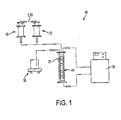
Figure 1 is a schematic diagram of an embodiment of a system according to an embodiment of the present disclosure; -
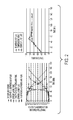
Figure 2 is graph illustrating a conversion plot of N,N -diphenyl-4-biphenylamine reaction and comparative temperature profiles according to an embodiment of the present disclosure; and -
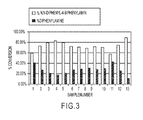
Figure 3 is a graph illustrating conversion as a plot of sample number for a continuous reactor run according to an embodiment of the present disclosure. - The present embodiments relate to novel methods useful for making hole transport molecules (HTMs) that are incor porated into imaging members, such as layered photoreceptor devices. These molecules, asymmetric or symmetric arylamine compounds, are used to increase the photoreceptor's hole mobility across its charge transport layer (CTL). Improved chemical methods f or making these arylamines comprise synthesis using a Buchwald reaction sequence that maintains homogeneity of product and can thus be performed continuously. The embodiments also relate to an apparatus for performing the Buchwald reaction in a continuous mode. The embodiments address the problems of the prior art process described in the background above.
- In embodiments, the apparatus is a continuous plug flow reactor (PFR). A continuous plug flow reactor is essentially a type of vessel designed to con tain chemical reactions. The plug flow reactor model is used to estimate the key unit operation variables when using a continuous tubular reactor to reach a specified output. In a plug flow reactor, the fluid passes through in a coherent manner, so that the residence time, T, is the same for all fluid elements. The coherent fluid passing through the ideal reactor is known as a plug. The plug flow reactors are used to model the chemical transformation of compounds as they are transported in systems with a variety of conduits through which the liquids or gases flow, in the present embodiments, pipelines.
- As discussed briefly above, performing Buchwald reactions in continuous mode is desirable over batch mode due to safety concerns. Because Buchwald chemistry can be a highly exothermic process for certain combinations of reagents and substrates, using such chemistry on a large scale may involve safety risks. A continuous mode process minimizes this risk by increasing significantly the heat transfer area to the reaction volume ratio and heat transfer rate. In addition, using a continuous mode provides several advantages over the traditional methods and processes of making arylamines. For example, if a reaction begins to hit a runaway point, the heat can be reduced or turned off and due to the great heat transferability, reagents can be cooled faster. The improved temperature control also makes it easier to find and maintain an optimal temperature that will achieve high product conversion. In this manner, high conversion may be achieved at lower temperatures. By leaving a continuous process on for a longer period of time translates into being able to produce larger amounts of material, while still ensuring that only a small portion of the material is at re action temperature at any one time. Thus, larger scale production of the arylamines can be achieved without safety risks.
- The arylamine compound or molecule produced by the present embodiments are used to serve as a hole transport molecule. The embodiments include an improved method for making arylamines using a continuous Buchwald reaction to achieve the formation of carbon -nitrogen bonds. Buchwald chemistry recognizes the general versatility of palladium -based catalysts for the formation of these bonds. The present disclosure adapts the procedure for the continuous production of various arylamine compounds, including but not limited to monomeric, dimeric, and trimeric arylamine compounds. The present embodiments comprise a general Buchwald reaction of an arylhalide with an arylamine in the presence of a compatible solvent to produce an arylamide compound. In further embodiments, the present embodiments comprise a Buchwald reaction of an arylhalide compound with an amine compound in the presence of a base and a ligated palladium catalyst to produce an arylamine where all products and by -products remain solubilized. In embodiments, the reaction is conducted in a continuous plug flow reactor.
- According to embodiments, an arylhalide such as an arylbromi de and an arylamine are used as starting materials. Any suitable arylhalide can be used, such as arylbromides, arylchlorides, aryliodides, arylfluorides, and the like. Likewise, any suitable arylamine can be used. The selection of specific starting aryl halide and arylamine depend, for example, upon the desired final product. For example, in embodiments, the arylamine is an arylbromide such as 4 -bromobiphenyl and the arylamine is diphenylamine, which react to form the arylamine N,N -diphenyl-4-aminobiphenyl.
- In embodiments, where an arylbromide is used, the reaction, including the starting materials and final product, can generally be represented as follows:

- In this reaction scheme, the arylbromide can be any suitable arylbromide, depending upon the desired final product. Thus, for example, in the above reaction scheme, the substituents R1, R2, R3, R4 and R5, which can be the same or different, can be suitably selected to represent hydrogen, a halogen, an alkyl group having for example from 1 to about 20 carbon atoms (such as methyl, ethyl, propyl, butyl and the like), a hydrocarbon radical having for example from 1 to about 20 carbon atoms, an aryl group optionally substituted by one or more alkyl groups, an alkyl group containing a heteroatom such as oxygen, nitrogen, sulfur and the like having for example from 1 to about 20 carbon atoms, a hydrocarbon radical containing a heteroatom such as oxygen, nitrogen, sulfur and the like having for example from 1 to about 20 carbon atoms, an aryl group contain ing a heteroatom such as oxygen, nitrogen, sulfur and the like optionally substituted by one or more alkyl groups, and the like. In embodiments, one of R1, R2, R3, R4 and R5, such as R3, represents a phenyl group and the remaining represent H atoms. Thus , in this embodiment, the arylbromide is 4-bromobiphenyl.
- Likewise, in this reaction scheme, the arylamine can be any suitable arylamine, depending upon the desired final product. Thus, for example, in the above reaction scheme, the substituents R 6, R7, R8, R9, R10, R11, R12, R13, R14, and R15, which can be the same or different, can be suitably selected to represent hydrogen, a halogen, an alkyl group having for example from 1 to about 20 carbon atoms (such as methyl, ethyl, propyl, butyl and the like), a hydrocarbon radical having for example from 1 to about 20 carbon atoms, an aryl group optionally substituted by one or more alkyl groups, an alkyl group containing a heteroatom such as oxygen, nitrogen, sulfur and the like having for example from 1 to ab out 20 carbon atoms, a hydrocarbon radical containing a heteroatom such as oxygen, nitrogen, sulfur and the like having for example from 1 to about 20 carbon atoms, an aryl group containing a heteroatom such as oxygen, nitrogen, sulfur and the like optionally substituted by one or more alkyl groups, and the like. In embodiments, each of R6, R7, R8, R9, R10, R11, R12, R13, R14, and R15 represent H atoms. Thus, in certain embodiments, the arylamine is diphenylamine.
- The reactants are reacted in the presence of a suitable catalyst. Although not particularly limited, suitable catalysts are those that are known or discovered to be useful for formation of nitrogen -carbon bonds. For example, suitable catalysts include ligand-complexed palladium catalysts (also known as "ligated catalysts"), such as those disclosed by Buchwald et al. and Hartwig et al. (for example in Michele C. HARRIS et al; "One -Pot Synthesis of Unsymmetrical Triarylamines from Aniline Precursors"; J. Org. Chem. Vol. 65, pp. 5327-5333 (2000), the disclosure of which is totally incorporated herein by reference).
- In embodiments, a particular suitable catalyst is a palladium acetate complexed with tri-t-butylphosphine or CYTOP -216. The structure of CYTOP - 216 organophosphine or 2,4,6 -trioxa-1,3,5,7-tetramethyl-8-phosphaadamantane (available from Cytec Industries Inc., West Paterson, New Jersey) and tri -t-butylphosphine is shown respectively below:

- The solvent may be selected from the group consisting of toluene, xylene, pentane, dioxane, ether, hexane, decane, other hydrocarbon solvents (either aromatic or saturated hydrocarbons), other ethers such as tetrahydrofuran, dimethoxyethane, and alcohols such as butanol, hexanol and the like and mixtures thereof. The arylhalide and the arylamine are reacted in the presence of a palladium catalyst. In an embodiment, the catalyst comprises a palladium ligated catalyst. The base may be any of those used with Buchwald chemistry for use with the selected catalyst. The invention is of particular use with sodium alk oxide bases such as t-butoxide or t-pentoxide.
- It was discovered that introducing a co -solvent preferably at a subsequent time to the initial mixture of at least amine, halide and first solvent, and optionally base or catalyst, maintained the homogeneity of the overall mixture by preventing the formation of a precipitate. The co -solvent system allows the Buchwald reaction to proceed continuously. In embodiments, the classes of co -solvent used were polyethylene glycol dimethyl ethers and phosphonium -based ionic liquids. The co-solvent may be added with the catalyst or base, as the case may be.
- In further embodiments, the co-solvent may be any liquid which could be useful for solubilizing the by-products of the reaction , in particular the inorganic salts that are produced during the reaction. The co -solvents may be selected from the group consisting of linear cown ethers, including any alkylene glycols or glymes such as polyethylene glycol dimethyl ether,and tetraethyle ne glycol dimethyl ether, cyclic crown ethers, and ionic liquids such as imidizolium based ionic liquids or phosphonium based ionic liquids and mixtures thereof. Phosphonium-based ionic liquids are particularly preferred, such as tetradecyl(trihexyl)phosp honium salts such as the triflamide salt.
- In a particularly preferred embodiment, 4 -bromobiphenyl and diphenyl-amine are reacted together in the presence of a combination of toluene and a phosphonium based ionic liquid. Preferably the catalyst has tri -t-butylphosphine ligand.
- The invention is of particular value where the base is a sodium or other alkali metal compound such as an alkoxide, as the alkali metal halide by product tends to be insoluble in the reaction solvent used in the prior art. In a pre ferred embodiment the base is sodium alkoxide.
- The ratio of first to second (co-)solvent is, e.g. in the range 100:1 to 1:100, preferably, 10:1 to 1:10, e.g. in the range 5:1 to 1:5, by volume.
- The choice of specific solvent, co-solvent or mixture thereof and the respective amounts can be decided based on the solubility of the starting materials, intermediates and final products, and will be readily apparent or within routine experimentation to those skilled in the art. Furthermore the choice of solvent, co-solvent or mixture thereof and the respective amounts can be decided based on the desired operating temperature range. The reaction should be conducted under an atmosphere of inert gas (such as nitrogen or argon) so as to preclude deactivation of catalyst or base by oxygen or atmospheric moisture.
- After the reaction is completed, suitable separation, filtration, and/or purification processes can be conducted, as desired to a desired purity level. For example, the desired arylamine product can be subj ected to conventional organic washing steps, can be separated, can be decolorized (if necessary), treated with known absorbents (such as silica, alumina and clays, if necessary) and the like. The final product can be isolated, for example, by a suitable recrystallization procedure. The final product can also be dried, for example, by air drying, vacuum drying, or the like. All of these procedures are conventional and will be apparent to those skilled in the art.
- According to embodiments herein, shown in
Figure 1 , there is further provided a system that performs the new methods described herein. In particular embodiments, the system uses a continuousplug flow reactor 40 adapted for use in performing the continuous method in which one or more fluid reagents, such as for example, the arylhalide and arylamine, are continuously pumped through a pipe or tube, also known as a "tubular reactor" 25. The reagents are selected based on the desired arylamine compound to produce. The chemical reaction continuously proceeds as the reagents travel through theplug flow reactor 40. Reagents may be introduced into theplug flow reactor 40 at locations in the reactor other than the feed orinput pots plug flow reactor 40 may be reduced. As theplug flow reactor 40 has higher efficiency, given the time -space considerations, the reaction will proceed to a higher percentage of completion than in other types of reactors. - In the system, the reagents or starting materials are added into the continuous
plug flow reactor 40 through theinput pots tubular reactor 25. Compressed air or nitrogen is let into theplug flow reactor 40 through compres sed air ornitrogen inlets tubular reactor 25 in the presence of the palladium catalyst and the co -solvent may be added at a subsequent time and location to the reacting materials. Thetubular reactor 25 is suspended in animmersion bath 45. A heat transfer medium (such as ethylene glycol) is circulated through theimmersion bath 45 from a circulation heating andrefrigeration bath unit 30. The circulation heating andrefrigeration bath unit 30 is used to maintain a constant temperature around the reactor by providing the necessary heat to start the reaction, then absorbing and removing any heat generated by the reaction. The mixture is passed once through theplug flow reactor 40 as conversion to the product, an arylamine compound, takes place. The subsequent product resul ting from the continuous method is collected or recovered by aproduct receiver 35 which includes a weigh scale to determine the final amount of product recovered. - The presently disclosed embodiments are, therefore, to be considered in all respects as illustrative and not restrictive, the scope of embodiments being indicated by the appended claims rather than the foregoing description. All changes that come within the meaning of and range of equivalency of the claims are intended to be embraced therein.
- The examples set forth herein below are illustrative of different compositions and conditions that can be used in practicing the present embodiments. All proportions are by weight unless otherwise indicated. It will be apparent, however, that the present embodiments can be practi sed with many types of compositions and can have many different uses in accordance with the disclosure above and as pointed out hereinafter.
- To a 500 mL flask fitted with mechanical stirrer, argon inlet and reflux condenser is charged palladium(II)acetate (0.314 g, 2 mol%), CYTOP -216 (0.303g, 2 mol%) and 45 mL of anhydrous toluene. The solution is stirred for 1 hour to allow for dissolution of palladium acetate. Then sequentially, 4 -bromobiphenyl (32.8 g, 1.0 equiv), diphenylamine (26 g, 1.05 equiv), toluene (82 mL) and sodium t - pentoxide (29.1 g) are added with stirring. The reaction is heated to 90°C over a 30 min period. A large exotherm is observed and the heating is shut off. After 1
hr 15 min the exotherm subsides and HPLC analysis confirms complete conversion of diphenylamine to N-biphenyl-diphenylamine. - Following completion of the reaction, toluene (50 mL) is added and the solution is filtered to remove insoluble materials. The solids ar e washed with toluene so as to have a final liqueur with a volume of 500 L. This solution is treated with Filtrol-24 (20 g) and Al2O3 (20 g) at 90°C for 2 hours. The absorbents are filtered while the solution is hot. A second treatment with Al2O3 (4 g) at 90°C is necessary to completely remove color (most likely residual palladium catalyst). The toluene solution is concentrated to 100 mL and isopropanol (150 mL) is added followed by methanol (250 mL) to complete precipitation of N -biphenyl-diphenylamine. The solid N-biphenyl-diphenylamine is filtered and washed with methanol (100 mL), air dried then finally vacuum dried (60°C/5 mmHg) overnight. The final yield of N-biphenyl-diphenylamine is 42.97 g (95.1%). HPLC, 1H NMR and elemental analysis confirm purity of N-biphenyl-diphenylamine at >99.5%. Ashing followed by ICP analysis does not detect any residual palladium present.
- When this reaction is run in the laboratory in batch mode it is heated to the point where it self-refluxes (from exothermic self-heating) and then upon cooling the reaction is complete. In determining isothermal conditions whereby N,N -diphenyl-4-biphenylamine was produced at a reasonable rate, it was found that the reaction proceeded well at 90°C but did not proceed at all at temp eratures lower than 90°C, thus indicating the reaction has an on -off point in addition to being exothermic. Three identical runs were performed at 90°C to measure accurately the reaction conversion kinetics.
- It was found that the conversion profiles fo r the three runs are not exactly reproducible, as seen in
Figure 2. Figure 2 shows a conversion plot of N,N - diphenyl-4-biphenylamine reaction isothermal at 90°C (left) and temperature profiles of same reactions (right). The additional temperatures measur ed during the reaction indicated that, while the heating profiles for each reaction were identical, in one of the three cases, the reaction resulted in a large exotherm and an overheating of the reaction mixture (Figure 2 ). The cause of the inconsistency is unknown. Complete conversion was seen for all three reactions based on the 10% excess of diphenylamine that is present in the reaction. - With satisfactory conversion results in batch mode, the identical react ion conditions (10 mol% excess diphenylamine, Pd(OAc)2/CYTOP-216 2 mol%, NaOtPen 1.2 mol equivalents, and toluene as solvent, isothermal at 90°C were used with a continuous plug flow reactor (as shown in
Figure 1 ). The residence time was approximately 20 minutes and samples of approximately 10 mL were taken continuously. - Plugging of the reactor was a constant problem that required pulsing of the pressure on the input pots. However, after approximately 30 samples, the reactor plugged entirely. The plug ging is presumably due to the production of insoluble sodium bromide precipitate (a known by -product of the reaction). In order to counter the plugging, several re-pipings of the plug flow reactor were tried but did not resolve the problem. Subsequently, the use of a co-solvent along with toluene was tried. The conversion of this continuous reaction was on average around 20% to produce the N,N -diphenyl-4-biphenylamine even with the plugging of the reactor.
- To a 500 mL flask fitted with mechanical stirrer, argon inlet and reflux condenser is charged palladium(II)acetate (0.314 g, 2 mol%), tri -t-butylphosphine (0.311 g, 2 mol%) and 45 mL of anhydrous toluene. The solution is stirred for 1 hour to allow for dissolution of palladium acetate. Then sequentially, 4 -bromobiphenyl (32.8 g, 1.0 equiv), diphenylamine (26 g, 1.05 equiv), CYPHOS IL -109 (63.5 mL) (a phosphonium ionic liquid - tetradecyl(trihexyl)phosphonium bistriflamide), anhydrous toluene (18.5 mL) and sodium t-pentoxide (29.1 g) are added with stirring. The reaction is heated to 110°C over a 30 minute period and the reaction was continued for 2 hours at 110°C after which time. HPLC analysis showed a 67.9% conversion of diphenylamine to N -biphenyl-diphenylamine.
- With satisfactory conversion results in batch mode, the identical reaction conditions (10 mol% excess diphenylamine, Pd(OAc)2/tri-t-butylphosphine 2 mol%, NaOtPen 1.2 mol equivalents, and a 50% (v/v) mixture of toluene and CYPHOS IL-109 as the solvent, isothermal at 90°C were used with a continuous plug flow reactor (as shown in
Figure 1 ). The desired outcome was high conversion of up to 89%, shown inFigure 3 , with no insoluble precipitates (sodium bromide so lubilized) and no formation of side products. - The results demonstrate that indeed Buchwald chemistry can be run to high conversion if used in continuous mode. It is believed that the variation in conversion was related to variation in the residence time due to uneven flow characteristics; use of a pump and better flow control should allow more consistent performance. The average residence time for this reaction was 38 minutes.
- Furthermore, if the residence time during the continuous process inside the reactor is considered, the processes in this example have better conversion at an equivalent time and at a lower temperature (Table 1).
Table 1. Batch Continuous Temperature (°C) 110 90 Conversion (%) 67.9 Up to 89
Claims (10)
- A method for forming an arylamine, comprising reacting an amine compound with an arylhalide compound in a presence of a base and a ligand-complexed palladium catalyst in a continuous plug flow reactor such that an arylamine compound is produced, wherein all products and by -products remain solubilized.
- The method of claim 1, wherein the amine compound is an arylamine compound.
- The method of claim 2, further comprising
continuously reacting the arylhalide compound and the arylamine compound in a first solvent in the presen ce of the ligated palladium catalyst under Buchwald conditions in the continuous plug flow reactor;
adding a second solvent with a base to the arylhalide compound and the arylamine compound in the continuous plug flow reactor;
continuously reacting the arylhalide compound and the arylamine compound in the first solvent and the second solvent with the base in the presence of the palladium catalyst under Buchwald conditions in the continuous plug flow reactor such that an arylamine is produced. - The method of claim 3, wherein the first solvent is toluene.
- The method of claim 3 or 4, wherein the second solvent is selected from the group consisting of a polyethylene glycol dimethyl ether, a phosphonium -based ionic liquid, and mixtures thereof.
- The method of any of claims 3 to 5, wherein the aryhalide, arylamine and first solvent and optionally also base or catalyst are mixed to form an initial mixture and the second solvent is added to the initial mixture, with catalyst or base, as the case may be.
- The method of claim 1, wherein the ligand is selected from the group consisting of tri-t-butylphosphine, 2,4,6-trioxa-1,3,5,7-tetramethyl-8-phosphaadamantane, and mixtures thereof.
- The method of any preceding claim, wherein the arylhalide compound is an arylbromide and the amine compound is a diarylamine, and wherein the arylbromide and the diarylamine are represented as follows:
 R1, R2, R3, R4 and R5, which can be the same or different, are selected from the group consisting of H, a ha logen, an alkyl group, a hydrocarbon radical, an aryl group optionally substituted by one or more alkyl groups, an alkyl group containing a heteroatom, a hydrocarbon radical, and an aryl group containing a heteroatom and optionally substituted by one or mo re alkyl groups, andR6, R7, R8, R9, R10, R11, R12, R13 R14 and R15, which can be the same or different, are selected from the group consisting of H, a halogen, an alkyl group, a hydrocarbon radical, an aryl group optionally substituted by one or more alkyl groups, an alkyl group containing a heteroatom, a hydrocarbon radical containing a heteroatom, and an aryl group containing a heteroatom and optionally substituted by one or more alkyl groups.
 - The method of any preceding claim, wherein the amine is diphenylamine, the arylhalide is 4-bromo-biphenyl, the first solvent is toluene and the second solvent is a phosphonium-based ionic liquid, preferably wherein the base is sodium alkoxide.
- The method of any preceding claim, wherein the continuous plug flow reactor comprises:one or more input pots for receiving one or more reagents;one or more compressed air inlets coupled to the one or more input pots for introducing compressed air into the one or more reagents;a tubular reactor suspended i n an immersion bath and in flow communication with the one or more input pots for continuously reacting the one or more reagents; anda circulation heating and refrigeration bath unit in flow communication with the immersion bath for controlling a tempera ture of the one or more reagents inside the tubular reactor.
Applications Claiming Priority (1)
| Application Number | Priority Date | Filing Date | Title |
|---|---|---|---|
| US11/698,314 US7767856B2 (en) | 2007-01-25 | 2007-01-25 | System and method for producing arylamine compounds |
Publications (2)
| Publication Number | Publication Date |
|---|---|
| EP1949957A1 true EP1949957A1 (en) | 2008-07-30 |
| EP1949957B1 EP1949957B1 (en) | 2009-12-16 |
Family
ID=39271620
Family Applications (1)
| Application Number | Title | Priority Date | Filing Date |
|---|---|---|---|
| EP08100688A Ceased EP1949957B1 (en) | 2007-01-25 | 2008-01-21 | System and Method for Producing Arylamine Compounds |
Country Status (5)
| Country | Link |
|---|---|
| US (1) | US7767856B2 (en) |
| EP (1) | EP1949957B1 (en) |
| JP (1) | JP5209975B2 (en) |
| CA (1) | CA2618431C (en) |
| DE (1) | DE602008000384D1 (en) |
Families Citing this family (3)
| Publication number | Priority date | Publication date | Assignee | Title |
|---|---|---|---|---|
| JP5357405B2 (en) * | 2007-06-12 | 2013-12-04 | 日宝化学株式会社 | Method for producing aromatic amine compound |
| US8779203B2 (en) | 2011-08-19 | 2014-07-15 | Xerox Corporation | Continuous production of arylamine |
| AU2015320349B2 (en) * | 2014-09-25 | 2020-03-12 | Bausch + Lomb Ireland Limited | Continuous flow carboxylation reaction |
Citations (4)
| Publication number | Priority date | Publication date | Assignee | Title |
|---|---|---|---|---|
| US20060111588A1 (en) | 2004-11-22 | 2006-05-25 | Xerox Corporation | Process for arylamine production |
| EP1676632A1 (en) * | 2004-12-28 | 2006-07-05 | Covion Organic Semiconductors GmbH | Process for preparation of polymers |
| US20070100164A1 (en) | 2005-11-01 | 2007-05-03 | Xerox Corporation | Arylamine processes |
| US20070111120A1 (en) | 2005-11-16 | 2007-05-17 | Xerox Corporation | Arylamine processes |
Family Cites Families (4)
| Publication number | Priority date | Publication date | Assignee | Title |
|---|---|---|---|---|
| US4265990A (en) * | 1977-05-04 | 1981-05-05 | Xerox Corporation | Imaging system with a diamine charge transport material in a polycarbonate resin |
| US5709974A (en) * | 1996-09-27 | 1998-01-20 | Xerox Corporation | High speed electrophotographic imaging member |
| US5891594A (en) * | 1997-01-13 | 1999-04-06 | Xerox Corporation | Process for preparing electrophotographic imaging member with perylene-containing charge-generating material and n-butylacetate |
| US6100398A (en) * | 1998-10-14 | 2000-08-08 | Yale University | Transition metal-catalyzed process for preparing N-aryl amine compounds |
-
2007
- 2007-01-25 US US11/698,314 patent/US7767856B2/en not_active Expired - Fee Related
-
2008
- 2008-01-17 CA CA2618431A patent/CA2618431C/en not_active Expired - Fee Related
- 2008-01-21 EP EP08100688A patent/EP1949957B1/en not_active Ceased
- 2008-01-21 DE DE602008000384T patent/DE602008000384D1/en active Active
- 2008-01-24 JP JP2008013513A patent/JP5209975B2/en not_active Expired - Fee Related
Patent Citations (4)
| Publication number | Priority date | Publication date | Assignee | Title |
|---|---|---|---|---|
| US20060111588A1 (en) | 2004-11-22 | 2006-05-25 | Xerox Corporation | Process for arylamine production |
| EP1676632A1 (en) * | 2004-12-28 | 2006-07-05 | Covion Organic Semiconductors GmbH | Process for preparation of polymers |
| US20070100164A1 (en) | 2005-11-01 | 2007-05-03 | Xerox Corporation | Arylamine processes |
| US20070111120A1 (en) | 2005-11-16 | 2007-05-17 | Xerox Corporation | Arylamine processes |
Non-Patent Citations (2)
| Title |
|---|
| MAUGER ET AL: "Successful application of microstructured continuous reactor in the palladium catalysed aromatic amination", JOURNAL OF ORGANOMETALLIC CHEMISTRY, ELSEVIER-SEQUOIA S.A. LAUSANNE, CH, vol. 690, no. 16, 15 August 2005 (2005-08-15), pages 3627 - 3629, XP005026394, ISSN: 0022-328X * |
| MICHELE C. HARRIS ET AL.: "One-Pot Synthesis of Unsymmetrical Triarylamines from Aniline Precursors", J. ORG. CHEM., vol. 65, 2000, pages 5327 - 5333 |
Also Published As
| Publication number | Publication date |
|---|---|
| US20080183017A1 (en) | 2008-07-31 |
| JP2008179640A (en) | 2008-08-07 |
| DE602008000384D1 (en) | 2010-01-28 |
| EP1949957B1 (en) | 2009-12-16 |
| JP5209975B2 (en) | 2013-06-12 |
| CA2618431C (en) | 2012-07-03 |
| CA2618431A1 (en) | 2008-07-25 |
| US7767856B2 (en) | 2010-08-03 |
Similar Documents
| Publication | Publication Date | Title |
|---|---|---|
| JP4138061B2 (en) | Arylamine preparation process | |
| JPH09323959A (en) | Production of arylamine and method for ullmann condensation reaction | |
| JPH09323958A (en) | Production of triarylamine and arylamine | |
| EP1949957B1 (en) | System and Method for Producing Arylamine Compounds | |
| EA009396B1 (en) | A method for producing 4-aminodiphenylamine | |
| CN116496231A (en) | Preparation method of N-phenyl-2, 3-dihydro-4H-1, 3-benzothiazine-4-ketone | |
| Liu et al. | Continuous-flow double diazotization for the synthesis of m-difluorobenzene via Balz-Schiemann reaction | |
| CN101333176A (en) | A kind of method that prepares substituted urea to co-produce corresponding amine hydrochloride | |
| US7563932B2 (en) | Microreactor technology to buchwald-hartwig amination | |
| CN113861027A (en) | Method for continuous flow synthesis of chloroformate compound | |
| US7544842B1 (en) | Process for the preparation of aryl-diamines | |
| WO2001064622A2 (en) | Process for the preparation of a dry suspension of an ammonium halide | |
| JP4795738B2 (en) | Process for producing bisformylated arylamines | |
| CN113831295B (en) | Method for synthesizing rosuvastatin ester by using continuous flow tubular reactor | |
| CN108794381A (en) | A method of preparing N- vinyl carbazoles | |
| RU2078069C1 (en) | Method for simultaneous production of chloroform and aromatic hydrocarbon being chlorinated into its side chain | |
| JP3956155B2 (en) | Method for producing tetrabromobisphenol A bisdibromopropyl ether | |
| JPH07278066A (en) | Method for producing 1,5-diaminonaphthalene | |
| US7332630B2 (en) | Arylamine processes | |
| JP5643757B2 (en) | Method for producing tetracyanoethylene | |
| AU2022263339A1 (en) | Methods for synthesis of an advantageous n-heterocyclic carbene catalyst | |
| HK40102272A (en) | Methods for synthesis of an advantageous n-heterocyclic carbene catalyst | |
| CN119954671A (en) | A method for defluorination alkylation of trifluoromethyl compounds | |
| CN113307827A (en) | Aqueous phase synthesis method of tetraphenylphosphine phenolate | |
| KR950005506B1 (en) | Continuous production method of aromatic urethane |
Legal Events
| Date | Code | Title | Description |
|---|---|---|---|
| PUAI | Public reference made under article 153(3) epc to a published international application that has entered the european phase |
Free format text: ORIGINAL CODE: 0009012 |
|
| AK | Designated contracting states |
Kind code of ref document: A1 Designated state(s): AT BE BG CH CY CZ DE DK EE ES FI FR GB GR HR HU IE IS IT LI LT LU LV MC MT NL NO PL PT RO SE SI SK TR |
|
| AX | Request for extension of the european patent |
Extension state: AL BA MK RS |
|
| 17P | Request for examination filed |
Effective date: 20090130 |
|
| AKX | Designation fees paid |
Designated state(s): DE FR GB |
|
| 17Q | First examination report despatched |
Effective date: 20090403 |
|
| GRAP | Despatch of communication of intention to grant a patent |
Free format text: ORIGINAL CODE: EPIDOSNIGR1 |
|
| GRAS | Grant fee paid |
Free format text: ORIGINAL CODE: EPIDOSNIGR3 |
|
| GRAA | (expected) grant |
Free format text: ORIGINAL CODE: 0009210 |
|
| AK | Designated contracting states |
Kind code of ref document: B1 Designated state(s): DE FR GB |
|
| REG | Reference to a national code |
Ref country code: GB Ref legal event code: FG4D |
|
| REF | Corresponds to: |
Ref document number: 602008000384 Country of ref document: DE Date of ref document: 20100128 Kind code of ref document: P |
|
| PLBE | No opposition filed within time limit |
Free format text: ORIGINAL CODE: 0009261 |
|
| STAA | Information on the status of an ep patent application or granted ep patent |
Free format text: STATUS: NO OPPOSITION FILED WITHIN TIME LIMIT |
|
| 26N | No opposition filed |
Effective date: 20100917 |
|
| REG | Reference to a national code |
Ref country code: FR Ref legal event code: PLFP Year of fee payment: 9 |
|
| REG | Reference to a national code |
Ref country code: FR Ref legal event code: PLFP Year of fee payment: 10 |
|
| REG | Reference to a national code |
Ref country code: FR Ref legal event code: PLFP Year of fee payment: 11 |
|
| PGFP | Annual fee paid to national office [announced via postgrant information from national office to epo] |
Ref country code: FR Payment date: 20171221 Year of fee payment: 11 |
|
| PGFP | Annual fee paid to national office [announced via postgrant information from national office to epo] |
Ref country code: GB Payment date: 20171222 Year of fee payment: 11 |
|
| PGFP | Annual fee paid to national office [announced via postgrant information from national office to epo] |
Ref country code: DE Payment date: 20171218 Year of fee payment: 11 |
|
| REG | Reference to a national code |
Ref country code: DE Ref legal event code: R119 Ref document number: 602008000384 Country of ref document: DE |
|
| GBPC | Gb: european patent ceased through non-payment of renewal fee |
Effective date: 20190121 |
|
| PG25 | Lapsed in a contracting state [announced via postgrant information from national office to epo] |
Ref country code: FR Free format text: LAPSE BECAUSE OF NON-PAYMENT OF DUE FEES Effective date: 20190131 Ref country code: DE Free format text: LAPSE BECAUSE OF NON-PAYMENT OF DUE FEES Effective date: 20190801 |
|
| PG25 | Lapsed in a contracting state [announced via postgrant information from national office to epo] |
Ref country code: GB Free format text: LAPSE BECAUSE OF NON-PAYMENT OF DUE FEES Effective date: 20190121 |