EP1947810A1 - A method and equipment for admitting and controlling the integration service model - Google Patents
A method and equipment for admitting and controlling the integration service model Download PDFInfo
- Publication number
- EP1947810A1 EP1947810A1 EP06805085A EP06805085A EP1947810A1 EP 1947810 A1 EP1947810 A1 EP 1947810A1 EP 06805085 A EP06805085 A EP 06805085A EP 06805085 A EP06805085 A EP 06805085A EP 1947810 A1 EP1947810 A1 EP 1947810A1
- Authority
- EP
- European Patent Office
- Prior art keywords
- time delay
- bandwidth
- class
- classes
- determined
- Prior art date
- Legal status (The legal status is an assumption and is not a legal conclusion. Google has not performed a legal analysis and makes no representation as to the accuracy of the status listed.)
- Granted
Links
Images

Classifications
-
- H—ELECTRICITY
- H04—ELECTRIC COMMUNICATION TECHNIQUE
- H04L—TRANSMISSION OF DIGITAL INFORMATION, e.g. TELEGRAPHIC COMMUNICATION
- H04L47/00—Traffic control in data switching networks
- H04L47/10—Flow control; Congestion control
- H04L47/24—Traffic characterised by specific attributes, e.g. priority or QoS
- H04L47/2416—Real-time traffic
-
- H—ELECTRICITY
- H04—ELECTRIC COMMUNICATION TECHNIQUE
- H04L—TRANSMISSION OF DIGITAL INFORMATION, e.g. TELEGRAPHIC COMMUNICATION
- H04L47/00—Traffic control in data switching networks
- H04L47/10—Flow control; Congestion control
- H04L47/15—Flow control; Congestion control in relation to multipoint traffic
-
- H—ELECTRICITY
- H04—ELECTRIC COMMUNICATION TECHNIQUE
- H04L—TRANSMISSION OF DIGITAL INFORMATION, e.g. TELEGRAPHIC COMMUNICATION
- H04L47/00—Traffic control in data switching networks
- H04L47/10—Flow control; Congestion control
- H04L47/24—Traffic characterised by specific attributes, e.g. priority or QoS
- H04L47/2425—Traffic characterised by specific attributes, e.g. priority or QoS for supporting services specification, e.g. SLA
- H04L47/2433—Allocation of priorities to traffic types
-
- H—ELECTRICITY
- H04—ELECTRIC COMMUNICATION TECHNIQUE
- H04L—TRANSMISSION OF DIGITAL INFORMATION, e.g. TELEGRAPHIC COMMUNICATION
- H04L47/00—Traffic control in data switching networks
- H04L47/70—Admission control; Resource allocation
-
- H—ELECTRICITY
- H04—ELECTRIC COMMUNICATION TECHNIQUE
- H04L—TRANSMISSION OF DIGITAL INFORMATION, e.g. TELEGRAPHIC COMMUNICATION
- H04L47/00—Traffic control in data switching networks
- H04L47/70—Admission control; Resource allocation
- H04L47/76—Admission control; Resource allocation using dynamic resource allocation, e.g. in-call renegotiation requested by the user or requested by the network in response to changing network conditions
- H04L47/762—Admission control; Resource allocation using dynamic resource allocation, e.g. in-call renegotiation requested by the user or requested by the network in response to changing network conditions triggered by the network
-
- H—ELECTRICITY
- H04—ELECTRIC COMMUNICATION TECHNIQUE
- H04L—TRANSMISSION OF DIGITAL INFORMATION, e.g. TELEGRAPHIC COMMUNICATION
- H04L47/00—Traffic control in data switching networks
- H04L47/70—Admission control; Resource allocation
- H04L47/80—Actions related to the user profile or the type of traffic
- H04L47/801—Real time traffic
Definitions
- the present disclosure relates to the field of network communication technologies, and in particular to a method and apparatus for performing an admission control over the Integrated Service Model.
- the Integrated Service Model is a data processing model for network exchange nodes, which is presented by the Internet Engineers Task Force (IETF). Its fundamental idea is to reserve network resources before transferring data, in accordance with Quality of Service (QoS) demands of services, so as to guarantee the end-to-end QoS for the data transfer.
- QoS Quality of Service
- the Integrated Service Model mainly includes a classifier, a scheduler, and an admission control.
- the classifier classifies input data packets into classes according to the connections to which the data packets belong.
- the scheduler executes a packet scheduling process, forwarding all the data packets of the same class in the same manner.
- the admission control is executed during the establishment of the connection to determine whether the node has sufficient resources to admit the new connection: if the node has sufficient resources, a connection is established and allocated sufficient resource; if the node does not have sufficient resources, a connection is rejected.
- the admission control is one of the key technologies in the Integrated Service Model.
- a method for performing an admission control for the Integrated Service Model is provided.
- it is a method based on measurement, that is, to measure the data flow load of the node in real time, and determine whether the node can admit a new connection in accordance with the results of the measurement.
- This method includes two primary parts: the measuring part, which is used to measure the data flow load of the network, and the determining part, which is used to determine whether the node is able to admit the new connection.
- the algorithms for these two parts may vary with different methods to execute the admission control.
- Sum value method measure the network load with time window method, and use the sum of the network load and the leaky bucket rate as the decision variable. If the decision variable is less than the result of the network bandwidth multiplying the target utilization ratio, the node is deemed as able to admit a new connection; otherwise, the new connection is rejected.
- Hoeffding bound method measure the equivalent bandwidth of the network using the Hoeffding bound, and use the sum of the equivalent bandwidth and the peak value of the transmission rate as the decision variable. If the decision variable is less than the result of the network bandwidth multiplying the target utilization ratio, the node is deemed as able to admit the new connection; otherwise, the new connection is rejected.
- Tangent peak value method measure the network load with the time point method, and use n p (1- e - sp ) + e - sp ⁇ as the decision variable, where n is the number of connections to be admitted; p is the peak value of the transmission rate; s is the spatial parameter of the Chernoff bound, and ⁇ is the network load measured. If the decision variable is less than the total bandwidth of the network, the node will be deemed as able to admit the new connection; otherwise, the new connection is rejected.
- Another method for performing admission control for Integrated Service Model is also provided.
- it is an admission control method based on parameters, that is, use the parameters of data flow that are appointed during the establishment or renegotiation period of the connection, rather than the load of data flow acquired in real time, as the basis, to determine whether the node is able to admit a new connection or not.
- This method usually allocate bandwidth for new connections according to its maximum data flow, thus is able to guarantee the QoS of the connection at any time (so long as it is not against the restriction of the parameters).
- the method includes a plurality of algorithms for calculating the suitable bandwidth, shown as below.
- the present disclosure provides a method and apparatus for performing the admission control for the Integrated Service Model, so as to effectively execute an admission control over the Integrated Service Model at the same time of guaranteeing the QoS of the connections and the utilization ratio of the network.
- the present disclosure provides a method for performing admission control on the Integrated Service Model, including:
- the time delay class is a group of connections, whose requirements of time delay fall into the same range; a time delay class represents a category of service; and all the connections in the same time delay class share the same buffered queue.
- the process for determining the time delay class to which a new connection belongs includes:
- the new connection belongs to time delay class C k , where d is the time delay requirement of the new connection, D k is the time delay requirement of time delay class C k , and D k+1 is the time delay requirement of time delay class C k+1 ;
- the process for allocating determined bandwidths to the time delay classes includes:
- the allocation of bandwidth for all the time delay classes through an iterative process includes:
- r max ⁇ + ⁇ ⁇ T k - d S k
- T k ⁇ d ⁇ T ⁇ k + 1 ; else, the bandwidth of the class is determined as: r ⁇ R i .
- the process for reallocating surplus bandwidth released by the time delay class to other time delay classes without determined bandwidth includes:
- the performing an admission control over the new connection includes:
- the bandwidth of the scheduler determines whether the difference between the total bandwidth of all the determined time delay classes and the bandwidth of the scheduler is less than the preset value. If it is less than the preset value, admit the new connection requesting to be established; if it is not less than the preset value, reduce the bandwidth of the scheduler to the total bandwidth of all the determined time delay classes, and re-perform the iteration process;
- the present disclosure also provides an apparatus for performing an admission control over the Integrated Service Model, including:
- a time delay class establishment unit adapted to establish time delay classes with different time delay requirements in the Integrated Service Model
- a time delay class determining and processing unit adapted to determine the time delay class to which a new connection belongs when the new connection requests to be established, and to trigger a bandwidth allocation unit described below accordingly;
- a time delay class bandwidth allocation unit adapted to allocate determined bandwidths to time delay classes
- an admission control unit adapted to perform admission control over the new connection according to the relationship between the bandwidths of time delay classes and the bandwidth of the scheduler.
- the time delay class determining and processing unit includes:
- a time delay class determining unit adapted to classify a new connection to time delay class C k when the condition D k ⁇ d ⁇ D k+ 1 is met, where d is the time delay requirement of the new connection, D k is the time delay requirement of time delay class C k , and D k+1 is the time delay requirement of time delay class C k+1 ;
- the time delay class bandwidth allocation unit includes:
- the admission control unit includes:
- a first determining and processing unit adapted to determine whether the total bandwidth of determined time delay classes is less than the bandwidth of the scheduler or not; and the total bandwidth of determined time delay classes is less than the bandwidth of the scheduler, a second determining and processing unit is triggered; otherwise, the new connection requesting to be established is rejected;
- a second determining and processing unit adapted to determine whether the difference between the total bandwidth of all determined time delay classes and the bandwidth of the scheduler is less than the preset value; if the difference between the total bandwidth of all determined time delay classes and the bandwidth of the scheduler is less than the preset value, the new connection requesting to be established is admitted; otherwise, the bandwidth of the scheduler is reduced to the total bandwidth of determined time delay classes, and the time delay class bandwidth allocation unit is re-triggered.
- the present disclosure chooses time delay classes, which come in a lesser amount, instead of service connections, which may reach a great quantity, as the object of calculation, thus effectively control the time-consuming complexity of calculation, so as to efficiently perform admission control over the Integrated Service Model while guaranteeing the QoS of connections and the utilization ratio of the network.
- the present disclosure can guarantee that the allocated bandwidth is able to satisfy the QoS requirement of each connection in the worst condition (that is, all services burst out with their maximum transmission rates).
- the present disclosure has also taken into consideration the bandwidth released by time delay classes whose backlogs have been cleared, it has a higher utilization ratio of bandwidth.
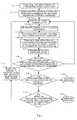
- Figure 1 is a flow chart for specifically implementing the method according to the present disclosure
- Figure 2 is a schematic diagram of the principle for the usage of scheduler in the Integrated Service Model.
- Figure 3 is a schematic structure diagram of implementing the apparatus according to the present disclosure.
- the present disclosure provides a practical scheme for performing an admission control the Integrated Service Model.
- the present disclosure chooses time delay classes, which come in a lesser amount, instead of service connections which may reach a great quantity, as the object of calculation, and performs admission control on new connections according to the relationship between the determined bandwidths of the time delay classes and the bandwidth of the scheduler.
- Step 1-1 set up some time delay classes with different time delay requirements.
- the first task is to set up some time delay classes with different time delay requirements.
- the time delay class is a group of connections, whose requirements of time delay fall into the same range. For example, if the range of time delay class A is defined as 1-2 seconds, both the connection with a time delay request of 1.1s and the connection with a time delay requirement of 1.9s belong to this class A.
- a time delay class represents a category of service.
- This step is performed before the system enters state of normal operation.
- the principle should be: a time delay class with a lesser time delay requirement should have a lesser serial number, that is, if i ⁇ j , D i ⁇ D j ⁇
- all the connections in the same time delay class share a same buffered queue. Due to the burst nature of data service, usually the data that has not been timely transferred is stored temporarily in the buffer queue of the time delay class, which is referred to as backlog. After a while, when the backlog data has been transferred, and there is no more data in the buffer queue of the time delay class, backlog of the time delay class has been cleared. The time elapsed from the emergence of backlog to its elimination is the period for backlog of the time delay class to be cleared.
- Step 1-2 Update data flow parameters of the time delay class according to the time delay requirement of the new connection.
- the time delay class to which it belongs is determined firstly. According to the assumption in step 1-1, the corresponding method for determination could be: if D k ⁇ d ⁇ D k+1 , the new connection belongs to time delay class C k , where d is the time delay requirement of the new connection.
- the present disclosure uses iteration to allocate bandwidth for all time delay classes.
- the iterative variables need to be initialized first.
- the iterative variables requiring to be initialized include:
- Step 1-4 Add 1 to the iterative variable i, start the iteration.
- Step 1-5 Allocate bandwidth to each time delay class without determined bandwidth.
- Bandwidth r is allocated to each undertermined time delay class according to the assumption of the worst condition (that is, all services burst out with their maximum transmission rate). The detailed calculation process is as below:
- T ( i- 1) ⁇ d , r max ⁇ R i ⁇ ⁇ S ⁇ i - 1 + R i ⁇ d - T ⁇ i - 1 .
- the bandwidth of the time delay class is not yet determined, and is possible to be reallocated in later iterations (further reduced).
- the T (i-1) in the calculation is the time elapsed for clearing backlog of the time delay class in the last iterative round.
- Step 1-6 Work out the time delay class L(i) whose backlog has been cleared firstly in this round of iteration, and the time elapsed for clearing backlog of the time delay class.
- the method for working out the time delay class L(i) whose backlog has been cleared firstly in this round of iteration is as follows.
- T i ⁇ + ⁇ ⁇ T ⁇ i - 1 - rS ⁇ i - 1 rR i - ⁇ + T ⁇ i - 1 , where ⁇ , ⁇ , d,r are parameters of L(i).
- Step 1-7 Release the surplus bandwidth of L(i).
- the principle for the use of scheduler in the Integrated Service Model is shown in Figure 2 .
- the scheduler takes out data from buffer queues of time delay classes according to certain rules, and transfers it to the output terminal of the scheduler.
- the scheduler bandwidth is the maximum output transmission rate of the scheduler.
- A, B, C, D are four time delay classes with backlog, whose allocated bandwidths are 10, 20, 30, and 40 respectively.
- backlog of class B has been cleared firstly, and now the bandwidth demand of class B is only 5, the actual bandwidths of time delay classes (A, C, D) whose backlog is not cleared change respectively to 10*(100-5)/(100-20), 30*(100-5)/(100-20), and 40*(100-5)/(100-20).
- Step 1-8 There are time delay classes without determined bandwidth, and the sum amount of determined bandwidth is greater than the scheduler's bandwidth.
- Step 1-9 The total bandwidth of all the time delay classes is less than the scheduler's bandwidth.
- Step 1-10 Reject the connection.
- Step 1-11 Reduce the scheduler bandwidth to the total bandwidth of all the time delay classes.
- Step 1-12 The difference between the total bandwidth of all time delay classes and the scheduler's bandwidth is less than ⁇ .
- Step 1-13 Admit the connection.
- the present disclosure also provides an apparatus for performing an admission control over the Integrated Service Model, whose actual structure is shown in Figure 3 , mainly including the following processing units:
- a time delay class establishment unit which establishes time delay classes with different time delay requirements in the Integrated Service Model.
- Each time delay class may include various connections whose time delay requirements fall into the same range, that is, the time delay class is a group of connections whose requirements of time delay fall into the same range; a time delay class represents a category of service; and all the connections in the same time delay class share the same buffered queue. All the established time delay classes form a sequence, which is arranged according to their respective time delay requirement (e.g. arranged in ascending order).
- a time delay class determining and processing unit which determines the time delay class to which a new connection belongs when the new connection requests to be established, and to trigger a time delay class bandwidth allocation unit;
- the time delay class determining and processing unit includes:
- a time delay class determination unit adapted to classify a new connection to time delay class C k when condition D k ⁇ d ⁇ D k + 1 is met, where d is the time delay requirement of the new connection, D k is the time delay requirement of time delay class C k , and D k+1 is the time delay requirement of time delay class C k+1 ;
- a time delay class bandwidth allocation unit which allocates determined bandwidth to the time delay classes.
- the process of the time delay class bandwidth allocation unit includes:
- An admission control unit which performs admission control over new connections according to the relationship between the bandwidths of time delay classes and the bandwidth of the scheduler.
- the admission control unit includes:
- a first determining and processing unit adapted to determine whether the total bandwidth of determined time delay classes is less than the bandwidth of the scheduler or not; if the total bandwidth of determined time delay classes is less than the bandwidth of the scheduler, it triggers a second determining and processing unit; otherwise, it denies the new connection requesting to be established;
- a second determining and processing unit adapted to determine whether the difference between the total bandwidth of determined time delay classes and the bandwidth of the scheduler is less than the preset value; if the difference between the total bandwidth of determined time delay classes and the bandwidth of the scheduler is less than the preset value, it admits the new connection requesting to be established; otherwise, it reduces the bandwidth of the scheduler to the total bandwidth of determined time delay classes, and re-triggers the time delay class bandwidth allocation unit.
Landscapes
- Engineering & Computer Science (AREA)
- Computer Networks & Wireless Communication (AREA)
- Signal Processing (AREA)
- Data Exchanges In Wide-Area Networks (AREA)
- Control Of Vending Devices And Auxiliary Devices For Vending Devices (AREA)
Abstract
Description
- The present disclosure relates to the field of network communication technologies, and in particular to a method and apparatus for performing an admission control over the Integrated Service Model.
- The Integrated Service Model is a data processing model for network exchange nodes, which is presented by the Internet Engineers Task Force (IETF). Its fundamental idea is to reserve network resources before transferring data, in accordance with Quality of Service (QoS) demands of services, so as to guarantee the end-to-end QoS for the data transfer.
- The Integrated Service Model mainly includes a classifier, a scheduler, and an admission control. The classifier classifies input data packets into classes according to the connections to which the data packets belong. The scheduler executes a packet scheduling process, forwarding all the data packets of the same class in the same manner. The admission control is executed during the establishment of the connection to determine whether the node has sufficient resources to admit the new connection: if the node has sufficient resources, a connection is established and allocated sufficient resource; if the node does not have sufficient resources, a connection is rejected. The admission control is one of the key technologies in the Integrated Service Model.
- In the prior art, a method for performing an admission control for the Integrated Service Model is provided. To be specific, it is a method based on measurement, that is, to measure the data flow load of the node in real time, and determine whether the node can admit a new connection in accordance with the results of the measurement. This method includes two primary parts: the measuring part, which is used to measure the data flow load of the network, and the determining part, which is used to determine whether the node is able to admit the new connection. The algorithms for these two parts may vary with different methods to execute the admission control.
- At present, the conventional methods for admission control based on measurement are as follows.
- Sum value method: measure the network load with time window method, and use the sum of the network load and the leaky bucket rate as the decision variable. If the decision variable is less than the result of the network bandwidth multiplying the target utilization ratio, the node is deemed as able to admit a new connection; otherwise, the new connection is rejected.
- Hoeffding bound method: measure the equivalent bandwidth of the network using the Hoeffding bound, and use the sum of the equivalent bandwidth and the peak value of the transmission rate as the decision variable. If the decision variable is less than the result of the network bandwidth multiplying the target utilization ratio, the node is deemed as able to admit the new connection; otherwise, the new connection is rejected.
- Tangent peak value method: measure the network load with the time point method, and use n p (1- e - sp) + e- sp ν̂ as the decision variable, where n is the number of connections to be admitted; p is the peak value of the transmission rate; s is the spatial parameter of the Chernoff bound, and ν̂ is the network load measured. If the decision variable is less than the total bandwidth of the network, the node will be deemed as able to admit the new connection; otherwise, the new connection is rejected.
- Because the above method for admission control is based on measurement, there are some defects in it, as below:
- Because data flow load at a node is a random value, a measurement data in the past does not necessarily correspond to the future conditions, and thus the measurement data on which these methods are based may not be accurate.
- These methods cannot guarantee the QoS in the worst condition (e.g. all the services burst out together with their maximum transmission rates).
- In the prior art, another method for performing admission control for Integrated Service Model is also provided. To be specific, it is an admission control method based on parameters, that is, use the parameters of data flow that are appointed during the establishment or renegotiation period of the connection, rather than the load of data flow acquired in real time, as the basis, to determine whether the node is able to admit a new connection or not. This method usually allocate bandwidth for new connections according to its maximum data flow, thus is able to guarantee the QoS of the connection at any time (so long as it is not against the restriction of the parameters). The method includes a plurality of algorithms for calculating the suitable bandwidth, shown as below.
- An easier way of calculation is to assume r = max {σ/d,ρ} as the bandwidth to be allocated for the new connection, where σ and ρ are leaky bucket parameters of the new connection, and d is the delay requirement of the new connection. If the available bandwidth of the node is less than r, the connection is rejected. The method calls for very little calculation amount, but the utilization ratio of the network bandwidth is rather low when dealing with services with low transmission rate and time delay (such as voice service).
- When taking into consideration the statistical multiplexing effect of the bandwidth, there is another algorithm with a higher utilization ratio of bandwidth, which includes the following primary steps.
- Step 1: Initialize the appointed parameters for the data flow.
- Step 2: Allocate bandwidth to each connection without a determined bandwidth, and determine which of them have bandwidths that can be further reduced during later iterative (that is, the bandwidth is determined), and which of them have bandwidths that can not be further reduced (that is, the bandwidth is not determined).
- Step 3: Find the first connection whose backlog is cleared, and the surplus bandwidth from this connection will be used by other connections in later iterations.
- Step 4: If there are still connections without a determined bandwidth, and determine that the sum of the determined bandwidths is less than the bandwidth of the scheduler, continue the iteration by going back to step 2.
- Step 5: If the sum of the bandwidths of all connections is greater than the bandwidth of the scheduler, the new connection is rejected.
- Step 6: If the difference between the total bandwidth of all connections and the scheduler's bandwidth is less than a preset value, the new connection is admitted; otherwise, the bandwidth of the scheduler is reduced, restart the iteration by going back to
step 1. - It can be seen that the above method for admission control based on parameters has a defect. Although this method has a relatively high bandwidth efficiency, its time for calculation is in direct ratio to the square value of the number of connections, thereby lacking extendibility. In other words, this method is based on connections, so it needs to allocate bandwidth to every connection, which makes it hard for this method to have a good performance simultaneously in both calculation time and bandwidth efficiency in practical implementation.
- The present disclosure provides a method and apparatus for performing the admission control for the Integrated Service Model, so as to effectively execute an admission control over the Integrated Service Model at the same time of guaranteeing the QoS of the connections and the utilization ratio of the network.
- The present disclosure provides a method for performing admission control on the Integrated Service Model, including:
- setting up time delay classes with different time delay requirements in the Integrated Service Model;
- determining a time delay class to which a new connection belongs when the new connection requests to be established, allocating determined bandwidths to the time delay classes, and performing an admission control over the new connection in accordance with the relation between the bandwidths of respective classes of time delay and the bandwidth of the scheduler.
- Optionally, the time delay class is a group of connections, whose requirements of time delay fall into the same range; a time delay class represents a category of service; and all the connections in the same time delay class share the same buffered queue.
- Optionally, the process for determining the time delay class to which a new connection belongs includes:
- when Dk ≤ d < D k+1, the new connection belongs to time delay class C k , where d is the time delay requirement of the new connection, Dk is the time delay requirement of time delay class C k , and Dk+1 is the time delay requirement of time delay class Ck+1;
- after determining that the new connection belongs to time delay class C k , the data flow parameters (σ k , ρ k) of C k are updated into σ k = σ k + σ , ρ k = P k + ρ , where (σ, ρ) are the data flow parameters of the new connection.
- Optionally, the process for allocating determined bandwidths to the time delay classes includes:
- allocating the bandwidths for all the time delay classes through an iterative process, in the case of a new connection requesting to be established, complying with the assumption that all services burst out with their maximum transmission rates, the allocated bandwidth including determined bandwidth and undetermined bandwidth; and calculating the time delay class whose backlog is firstly cleared at each round of iteration, and reallocating the surplus bandwidth released from the time delay class to classes without determined bandwidth.
- Optionally, the allocation of bandwidth for all the time delay classes through an iterative process includes:
- initializing the iterative variables, setting i, the number of iteration rounds, as 0; using array L(i), i = 0, 1, 2,... as the i-th time delay class whose backlog has been cleared, where L(0) = 0; using array T(i) , i = 0, 1, 2,... as the time elapsed for clearing backlog of the i-th time delay class, where T(0) = 0; and using arrays S(i), i = 0, 1,2,... and R(i), i =1, 2, 3... as the parameters for
service curve 0 to service curve i, where S(0) = 0, R(1) = 1; - adding 1 to the variable i of the number of iteration rounds, and allocating bandwidth r to each time delay class without determined bandwidth, complying with the assumption that all services burst out with their maximum transmission rates; If T (i - 1) ≤ d,

- else, if S (i - 1) r < σ + ρ (T(i -1) - d) , the bandwidth of the class is set as :
-


- Optionally, the process for reallocating surplus bandwidth released by the time delay class to other time delay classes without determined bandwidth includes:
- determining the time delay class that renders the expression


- releasing the surplus bandwidth of the L(i), and reallocating the released bandwidth to other time delay classes whose backlog have not been cleared, and after the reallocation of the bandwidth, the bandwidth of time delay classes whose backlog have not been cleared being:
-

- determining whether there is a time delay class without determined bandwidth, and the total bandwidth of determined time delay classes is less than the bandwidth of the scheduler. If there is a time delay class without determined bandwidth, and the total bandwidth of determined time delay classes is less than the bandwidth of the scheduler, re-perform the iteration process.
- Optionally, the performing an admission control over the new connection includes:
- determining whether the sum bandwidth of all determined time delay classes is less than the bandwidth of the scheduler, and
- if the total bandwidth of determined time delay classes is less than the bandwidth of the scheduler, determine whether the difference between the total bandwidth of all the determined time delay classes and the bandwidth of the scheduler is less than the preset value. If it is less than the preset value, admit the new connection requesting to be established; if it is not less than the preset value, reduce the bandwidth of the scheduler to the total bandwidth of all the determined time delay classes, and re-perform the iteration process;
- if the total bandwidth of all the determined time delay classes is not less than the bandwidth of the scheduler, reject the new connection requesting to be established.
- The present disclosure also provides an apparatus for performing an admission control over the Integrated Service Model, including:
- a time delay class establishment unit adapted to establish time delay classes with different time delay requirements in the Integrated Service Model;
- a time delay class determining and processing unit adapted to determine the time delay class to which a new connection belongs when the new connection requests to be established, and to trigger a bandwidth allocation unit described below accordingly;
- a time delay class bandwidth allocation unit adapted to allocate determined bandwidths to time delay classes;
- an admission control unit adapted to perform admission control over the new connection according to the relationship between the bandwidths of time delay classes and the bandwidth of the scheduler.
- Optionally, the time delay class determining and processing unit includes:
- a time delay class determining unit adapted to classify a new connection to time delay class C k when the condition D k ≤ d < D k+ 1 is met, where d is the time delay requirement of the new connection, Dk is the time delay requirement of time delay class C k , and Dk+1 is the time delay requirement of time delay class Ck+1;
- a data flow parameters adjustment unit adapted to update (σk, ρ k ), the data flow parameters of C k , into σk=σk+σ, ρ k = ρ k + ρ , after the determination that the new connection belongs to time delay class C k , where (σ, ρ) are data flow parameters of the new connection.
- Optionally, the time delay class bandwidth allocation unit includes:
- allocating the bandwidths of all time delay classes through an iterative process when a new connection requests to be established, complying with the assumption that all services burst out with their maximum transmission rates, the allocated bandwidths including determined bandwidth and undetermined bandwidth; and calculating the time delay class whose backlog has been firstly cleared at each round of iteration, and reallocating the surplus bandwidth released from the time delay class to classes without determined bandwidth.
- Optionally, the admission control unit includes:
- a first determining and processing unit adapted to determine whether the total bandwidth of determined time delay classes is less than the bandwidth of the scheduler or not; and the total bandwidth of determined time delay classes is less than the bandwidth of the scheduler, a second determining and processing unit is triggered; otherwise, the new connection requesting to be established is rejected;
- a second determining and processing unit adapted to determine whether the difference between the total bandwidth of all determined time delay classes and the bandwidth of the scheduler is less than the preset value; if the difference between the total bandwidth of all determined time delay classes and the bandwidth of the scheduler is less than the preset value, the new connection requesting to be established is admitted; otherwise, the bandwidth of the scheduler is reduced to the total bandwidth of determined time delay classes, and the time delay class bandwidth allocation unit is re-triggered.
- From the technical scheme of the present disclosure that is described above, it is obvious that the present disclosure chooses time delay classes, which come in a lesser amount, instead of service connections, which may reach a great quantity, as the object of calculation, thus effectively control the time-consuming complexity of calculation, so as to efficiently perform admission control over the Integrated Service Model while guaranteeing the QoS of connections and the utilization ratio of the network. The present disclosure can guarantee that the allocated bandwidth is able to satisfy the QoS requirement of each connection in the worst condition (that is, all services burst out with their maximum transmission rates). In addition, because the present disclosure has also taken into consideration the bandwidth released by time delay classes whose backlogs have been cleared, it has a higher utilization ratio of bandwidth.
-
Figure 1 is a flow chart for specifically implementing the method according to the present disclosure; -
Figure 2 is a schematic diagram of the principle for the usage of scheduler in the Integrated Service Model; and -
Figure 3 is a schematic structure diagram of implementing the apparatus according to the present disclosure. - The present disclosure provides a practical scheme for performing an admission control the Integrated Service Model. The present disclosure chooses time delay classes, which come in a lesser amount, instead of service connections which may reach a great quantity, as the object of calculation, and performs admission control on new connections according to the relationship between the determined bandwidths of the time delay classes and the bandwidth of the scheduler.
- The embodiments of the present disclosure are described as follows in detail with reference to the accompanying drawings.
- The flow chart for specifically implementing the method according to the present disclosure is shown in
Figure 1 , including the following steps. - Step 1-1: set up some time delay classes with different time delay requirements.
- In this step, the first task is to set up some time delay classes with different time delay requirements. The time delay class is a group of connections, whose requirements of time delay fall into the same range. For example, if the range of time delay class A is defined as 1-2 seconds, both the connection with a time delay request of 1.1s and the connection with a time delay requirement of 1.9s belong to this class A. A time delay class represents a category of service.
- This step is performed before the system enters state of normal operation. Upon the assumption that the time delay requirement of each time delay class Ci is Di (i = 1,L ,N), the principle should be: a time delay class with a lesser time delay requirement should have a lesser serial number, that is, if i < j , Di < Dj · The actual value of Di(i= 1,L N) can be set flexibly according to the conditions of practical services.
- In the present disclosure, all the connections in the same time delay class share a same buffered queue. Due to the burst nature of data service, usually the data that has not been timely transferred is stored temporarily in the buffer queue of the time delay class, which is referred to as backlog. After a while, when the backlog data has been transferred, and there is no more data in the buffer queue of the time delay class, backlog of the time delay class has been cleared. The time elapsed from the emergence of backlog to its elimination is the period for backlog of the time delay class to be cleared.
- Step 1-2: Update data flow parameters of the time delay class according to the time delay requirement of the new connection.
- After the system starts operation, and enter state of normal operational, if a new connection requests to be established, the time delay class to which it belongs is determined firstly. According to the assumption in step 1-1, the corresponding method for determination could be: if D k ≤ d < D k+1 , the new connection belongs to time delay class Ck , where d is the time delay requirement of the new connection.
- After determining that the new connection belongs to time delay class C k , update (σk, ρ k) , the data flow parameters of Ck , into σk=σk+σ , ρ k = ρ k + ρ, where (σ,ρ) are data flow parameters of the new connection.
- Step 1-3: Initialize the iterative variable, i = 0.
- Following the steps as mentioned above, the present disclosure uses iteration to allocate bandwidth for all time delay classes. Before the iteration, the iterative variables need to be initialized first. The iterative variables requiring to be initialized include:
- i: the number of iteration rounds. i = 0 upon initializing.
- B represents time delay classes whose bandwidth is not determined and whose backlog is not cleared. B = all time delay classes upon initializing.
- H represents time delay classes whose bandwidth is determined and whose backlog is not cleared. H = null upon initializing.
- P represents time delay classes whose bandwidth is determined and whose backlog is cleared. P = null upon initializing.
- L(i), i = 0, 1, 2...: the i-th time delay class whose backlog has been cleared. For example, if the fourth time delay class whose backlog has been cleared is time delay class 3, L(4) = 3. L(0) = 0 upon initializing.
- T(i), i = 0, 1, 2...: the time elapsed for the i-th time delay class to clear its backlog; For example, if the fourth time delay class that has cleared its backlog has used 3 seconds to do so, T(4) = 3. T(0) = 0 upon initializing.
- S(i), i = 0, 1, 2,... and R(i), i = 1, 2, 3...: parameters for the service curve. S(0) = 0, R(1) = 1.
- Step 1-4: Add 1 to the iterative variable i, start the iteration.
- Add 1 to iterative variable i, that is, i = i + 1, start the iteration.
- Because every round of iteration can work out the time elapsed for clearing backlog of one time delay class, the number of iteration rounds reflects the sequence of the time delay classes in clearing their backlog.
- Step 1-5: Allocate bandwidth to each time delay class without determined bandwidth.
- Bandwidth r is allocated to each undertermined time delay class according to the assumption of the worst condition (that is, all services burst out with their maximum transmission rate). The detailed calculation process is as below:
- If T (i- 1) ≤ d ,

- Otherwise,
-

- If S ( i - 1 ) r = σ + ρ ( T ( i - 1) - d ), the bandwidth of the time delay class is determined; Otherwise, the bandwidth of the time delay class is determined as
-

- Step 1-6: Work out the time delay class L(i) whose backlog has been cleared firstly in this round of iteration, and the time elapsed for clearing backlog of the time delay class.
- The method for working out the time delay class L(i) whose backlog has been cleared firstly in this round of iteration (round i) is as follows. Among all the time delay classes with backlog, choose the time delay class that renders the expression

- The time elapsed for clearing backlog of L(i) is:
-

- Step 1-7: Release the surplus bandwidth of L(i).
- The principle for the use of scheduler in the Integrated Service Model is shown in
Figure 2 . The scheduler takes out data from buffer queues of time delay classes according to certain rules, and transfers it to the output terminal of the scheduler. The scheduler bandwidth is the maximum output transmission rate of the scheduler. - After backlog of L(i) is cleared, the required bandwidth is reduced, and the surplus bandwidth is released. The released bandwidth can be reallocated to other time delay classes whose backlog is not cleared yet.
- After the surplus bandwidth of L(i) has been released, the actual bandwidth of time delay classes whose backlog is not cleared is:

- Assume that the scheduler bandwidth is 100, and A, B, C, D are four time delay classes with backlog, whose allocated bandwidths are 10, 20, 30, and 40 respectively. Assuming that after a moment, backlog of class B has been cleared firstly, and now the bandwidth demand of class B is only 5, the actual bandwidths of time delay classes (A, C, D) whose backlog is not cleared change respectively to 10*(100-5)/(100-20), 30*(100-5)/(100-20), and 40*(100-5)/(100-20). If, after another moment, backlog of class C has been cleared, and now the bandwidth demand of class C is only 10, the actual bandwidths of time delay classes (A, D) whose backlog is not cleared change respectively to 10*(100-5-10)/(100-20-30) and 40*(100-5-10)/(100-20-30).
- Step 1-8: There are time delay classes without determined bandwidth, and the sum amount of determined bandwidth is greater than the scheduler's bandwidth.
- Determine whether there is a time delay class without determined bandwidth, and the sum amount of determined bandwidths is less than the scheduler's bandwidth. If there is a time delay class without determined bandwidth, and the sum amount of determined bandwidths is less than the scheduler's bandwidth, go to step 1-4; otherwise, go to step 1-9.
- Step 1-9: The total bandwidth of all the time delay classes is less than the scheduler's bandwidth.
- Determine whether the total bandwidth of time delay classes is less than the scheduler bandwidth. If the total bandwidth of time delay classes is less than the scheduler bandwidth, go to step 1-12; otherwise, go to step 1-10.
- Step 1-10: Reject the connection.
- Reject the connection that is requesting to be established.
- Step 1-11: Reduce the scheduler bandwidth to the total bandwidth of all the time delay classes.
- Reduce the scheduler bandwidth to the total bandwidth of all the determined time delay classes, and go to step 1-3 to restart the iteration.
- Step 1-12: The difference between the total bandwidth of all time delay classes and the scheduler's bandwidth is less than ε.
- Determine whether the difference between the total bandwidth of all time delay classes and the scheduler's bandwidth is less than a preset value ε. If the difference between the total bandwidth of all time delay classes and the scheduler's bandwidth is less than a preset value ε, than go to step 1-13; otherwise, go to step 1-11.
- Step 1-13: Admit the connection.
- Admit the connection requesting to be established.
- The present disclosure also provides an apparatus for performing an admission control over the Integrated Service Model, whose actual structure is shown in
Figure 3 , mainly including the following processing units: - (1) A time delay class establishment unit, which establishes time delay classes with different time delay requirements in the Integrated Service Model. Each time delay class may include various connections whose time delay requirements fall into the same range, that is, the time delay class is a group of connections whose requirements of time delay fall into the same range; a time delay class represents a category of service; and all the connections in the same time delay class share the same buffered queue. All the established time delay classes form a sequence, which is arranged according to their respective time delay requirement (e.g. arranged in ascending order).
- (2) A time delay class determining and processing unit, which determines the time delay class to which a new connection belongs when the new connection requests to be established, and to trigger a time delay class bandwidth allocation unit;
- To be specific, the time delay class determining and processing unit includes:
- a time delay class determination unit adapted to classify a new connection to time delay class C k when condition D k ≤ d < D k + 1 is met, where d is the time delay requirement of the new connection, Dk is the time delay requirement of time delay class C k , and Dk+1 is the time delay requirement of time delay class Ck+1;
- a data flow parameters adjustment unit adapted to update (σk, ρ k ), the data flow parameters of C k , into σk = σk + σ , ρ k = ρ k + ρ, after determining the new connection belongs to time delay class C k , where (σ, ρ) are data flow parameters of the new connection.
- (3) A time delay class bandwidth allocation unit, which allocates determined bandwidth to the time delay classes. The process of the time delay class bandwidth allocation unit includes:
- allocating the bandwidths of all time delay classes through an iterative process when a new connection requests to be established, complying with the assumption that all services burst out with their maximum transmission rates, the allocated bandwidths including determined bandwidth and undetermined bandwidth; and calculating the time delay class whose backlog has been firstly cleared at each round of iteration, and reallocating the surplus bandwidth released from the time delay class to classes without determined bandwidth. The specific iterative processes are omitted herein, because they have been described above.
- (4) An admission control unit, which performs admission control over new connections according to the relationship between the bandwidths of time delay classes and the bandwidth of the scheduler. To be specific, the admission control unit includes:
- a first determining and processing unit adapted to determine whether the total bandwidth of determined time delay classes is less than the bandwidth of the scheduler or not; if the total bandwidth of determined time delay classes is less than the bandwidth of the scheduler, it triggers a second determining and processing unit; otherwise, it denies the new connection requesting to be established;
- a second determining and processing unit adapted to determine whether the difference between the total bandwidth of determined time delay classes and the bandwidth of the scheduler is less than the preset value; if the difference between the total bandwidth of determined time delay classes and the bandwidth of the scheduler is less than the preset value, it admits the new connection requesting to be established; otherwise, it reduces the bandwidth of the scheduler to the total bandwidth of determined time delay classes, and re-triggers the time delay class bandwidth allocation unit.
- The present invention is disclosed by, but not limited to, above exemplary embodiments. Any modifications and variations that those skilled in the art can easily work out in the scopes of the present disclosure shall also be included in the protected scope of the present disclosure. Therefore, the protected scope of the present disclosure shall comply with the appended claims.
Claims (12)
- A method for performing an admission control over an Integrated Service Model, comprising:setting up time delay classes with different time delay requirements in the Integrated Service Model; anddetermining a time delay class to which a new connection belongs upon a new connection requesting to be established, allocating determined bandwidths to the time delay classes, and performing an admission control over the new connection in accordance with the relationship between bandwidths of respective time delay classes and a bandwidth of a scheduler.
- The method for performing an admission control over an Integrated Service Model according to claim 1, wherein the time delay class is a group of connections whose requirements of time delay fall into the same range, and one time delay class represents a category of service, and all the connections in the same time delay class share a same buffered queue.
- The method for performing an admission control over an Integrated Service Model according to claim 2, wherein the time delay classes form a sequence which is arranged in accordance with time delay requirements.
- The method for performing an admission control over an Integrated Service Model according to claim 1, wherein the determining the time delay class to which a new connection belongs comprises:determining the new connection belonging to time delay class Ck, if Dk ≤ d < D k+1 is met, wherein d is the time delay requirement of the new connection, Dk is the time delay requirement of time delay class C k , and Dk+1 is the time delay requirement of time delay class Ck+1; andupdating the data flow parameters (σk , ρk ) of C k into σ k = σ k + σ, ρ k= ρ k + ρ after determining that the new connection belongs to time delay class C k , wherein (σ, ρ) are data flow parameters of the new connection.
- The method for performing an admission control over an Integrated Service Model according to any one of claims 1, 2, 3 and 4, wherein the process for allocating determined bandwidths to the time delay classes comprises:allocating bandwidth for all the time delay classes through an iterative process when a new connection requests to be established, complying with the assumption that all services burst out with their maximum transmission rates, the allocated bandwidths comprising determined bandwidth and undetermined bandwidth; andcalculating the time delay class that has firstly cleared its backlog upon each round of iteration, and reallocating the surplus bandwidth released from the time delay class to classes without determined bandwidth.
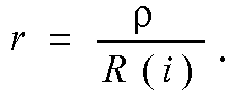
- The method for performing an admission control over an Integrated Service Model according to claim 5, wherein allocating bandwidth for all the time delay classes through an iterative process comprises:initializing the iterative variables, setting i, the number of iteration rounds, as 0; using array L(i), i = 0, 1, 2,... as the i-th time delay class whose backlog has been cleared, wherein L(0) = 0; using array T(i), i = 0, 1, 2,... as the time elapsed for clearing backlog of the i-th time delay class; wherein T(0) = 0; and using arrays S(i), i = 0, 1, 2,... and R(i), i = 1, 2, 3... as the parameters for service curve 0 to service curve i, wherein S(0) = 0, R(1) = 1;adding 1 to the round variable i, and allocating bandwidth r to each time delay class without determined bandwidth in accordance with the assumption that all services burst out with their maximum transmission rate; if T (i-1) ≤ d ,
 else, if S (i - 1) r < σ + p (T (i - 1) - d), set the bandwidth of the class as :
- The method for performing an admission control over an Integrated Service Model according to claim 6, wherein the reallocating the surplus bandwidth released from the time delay class to classes without determined bandwidth comprises:determining the time delay class that renders the expression

 releasing the surplus bandwidth of the L(i), and reallocating the released bandwidth to other time delay classes whose backlog have not been cleared, the bandwidth of time delay class whose backlog has not been cleared being:
 determining whether there is a time delay class without determined bandwidth, and the total bandwidth of determined time delay classes is less than the bandwidth of the scheduler; If there is a time delay class without determined bandwidth, and the total bandwidth of determined time delay classes is less than the bandwidth of the scheduler, re-performing the iteration process.
 - The method for performing an admission control over an Integrated Service Model according to claim 7, wherein the performing an admission control over the new connection comprises:determining whether the total bandwidth of all the determined time delay classes is less than the bandwidth of the scheduler, anddetermining whether the difference between the total bandwidth of all the determined time delay classes and the bandwidth of the scheduler is less than the preset value, if the total bandwidth of determined time delay classes is less than the bandwidth of the scheduler, admitting the new connection requesting to be established; if the total bandwidth of determined time delay classes is not less than the preset value, reducing the bandwidth of the scheduler to the total bandwidth of determined time delay classes, and re-performing the iteration process;if the total bandwidth of determined time delay classes is not less than the bandwidth of the scheduler, rejecting the new connection requesting to be established.
- An apparatus for performing an admission control over an Integrated Service Model, comprising:a time delay class establishment unit adapted to establish time delay classes with different time delay requirements in the Integrated Service Model;a time delay class determining and processing unit adapted to determine the time delay class to which a new connection belongs when a new connection requests to be established, and to trigger a time delay class bandwidth allocation unit;the time delay class bandwidth allocation unit adapted to distribute determined bandwidth to the time delay class; andan admission control unit adapted to perform admission control over the new connection according to the relationship between the bandwidths of respective time delay classes and a bandwidth of a scheduler.
- The apparatus for performing an admission control over an Integrated Service Model according to claim 9, wherein the time delay class determining and processing unit comprises:a time delay class determining unit adapted to classify the new connection to the time delay class Ck when condition Dk≤ d < D k + 1 is met, wherein d is the time delay request of the new connection, Dk is the time delay requirement of the time delay class, Ck and Dk+1 is the time delay request of the time delay class Ck+1; anda data flow parameters adjustment unit adapted to update (σ k, ρ k ), the data flow parameters of Ck , into σk = σk + σ, ρ k = ρ k + ρ after determining that the new connection belongs to the time delay class C k , wherein (σ, ρ) are data flow parameters of the new connection.
- The apparatus for performing an admission control over an Integrated Service Model according to claim 9 or 10, wherein the time delay class bandwidth allocation unit comprises:allocating bandwidth for all the time delay classes through an iterative process upon a new connection requesting to be established, complying with the assumption that all services burst out with their maximum transmission rates, the allocated bandwidths comprising determined bandwidth and undetermined bandwidth; and upon each round of iteration, the time delay class whose backlog has been firstly cleared is calculated, so as to reallocate the surplus bandwidth released from the time delay class to classes without determined bandwidth.
- The apparatus for performing an admission control over an Integrated Service Model according to claim 9 or 10, wherein the admission control unit comprises:a first determining and processing unit adapted to determine whether the total bandwidth of all the determined time delay classes is less than the bandwidth of the scheduler or not; if the total bandwidth of all the determined time delay classes is less than the bandwidth of the scheduler, a second determining and processing unit is triggered; otherwise, the new connection request is rejected; andthe second determining and processing unit adapted to determine whether the difference between the total bandwidth of all the determined time delay classes and the bandwidth of the scheduler is less than a preset value; if the difference between the total bandwidth of all the determined time delay classes and the bandwidth of the scheduler is less than a preset value, the new connection requesting to be established is admitted; otherwise, the bandwidth of the scheduler is reduced to the total bandwidth of all the determined time delay classes, and the time delay class bandwidth allocation unit is re-triggered.
Applications Claiming Priority (2)
| Application Number | Priority Date | Filing Date | Title |
|---|---|---|---|
| CNB2005101167845A CN100474845C (en) | 2005-10-28 | 2005-10-28 | Method for admitting controlling integral service model |
| PCT/CN2006/002880 WO2007048350A1 (en) | 2005-10-28 | 2006-10-27 | A method and equipment for admitting and controlling the integration service model |
Publications (3)
| Publication Number | Publication Date |
|---|---|
| EP1947810A1 true EP1947810A1 (en) | 2008-07-23 |
| EP1947810A4 EP1947810A4 (en) | 2009-05-06 |
| EP1947810B1 EP1947810B1 (en) | 2010-06-02 |
Family
ID=37967416
Family Applications (1)
| Application Number | Title | Priority Date | Filing Date |
|---|---|---|---|
| EP06805085A Not-in-force EP1947810B1 (en) | 2005-10-28 | 2006-10-27 | A method and equipment for admitting and controlling the integration service model |
Country Status (5)
| Country | Link |
|---|---|
| EP (1) | EP1947810B1 (en) |
| CN (1) | CN100474845C (en) |
| AT (1) | ATE470295T1 (en) |
| DE (1) | DE602006014715D1 (en) |
| WO (1) | WO2007048350A1 (en) |
Cited By (1)
| Publication number | Priority date | Publication date | Assignee | Title |
|---|---|---|---|---|
| CN110519105A (en) * | 2019-09-18 | 2019-11-29 | 深圳市梦网百科信息技术有限公司 | A kind of bandwidth reuse method and system based on degree of avoiding the peak hour |
Families Citing this family (4)
| Publication number | Priority date | Publication date | Assignee | Title |
|---|---|---|---|---|
| CN104219701B (en) * | 2014-09-24 | 2018-02-23 | 中国联合网络通信集团有限公司 | A kind of method, system and the terminal of service distribution management and control |
| CN108053026B (en) * | 2017-12-08 | 2021-06-15 | 武汉大学 | An Adaptive Scheduling Algorithm for Mobile Application Background Requests |
| CN110555486B (en) * | 2019-09-11 | 2022-04-19 | 北京百度网讯科技有限公司 | Model structure delay prediction method and device and electronic equipment |
| CN117527718A (en) * | 2022-07-28 | 2024-02-06 | 中兴通讯股份有限公司 | Delay resource allocation method, electronic device and storage medium |
Family Cites Families (10)
| Publication number | Priority date | Publication date | Assignee | Title |
|---|---|---|---|---|
| US6990113B1 (en) * | 2000-09-08 | 2006-01-24 | Mitsubishi Electric Research Labs., Inc. | Adaptive-weighted packet scheduler for supporting premium service in a communications network |
| US7457313B2 (en) * | 2000-09-25 | 2008-11-25 | General Instrument Corporation | Hierarchical prioritized round robin (HPRR) scheduling |
| US7146425B2 (en) * | 2000-12-22 | 2006-12-05 | Matsushita Electric Industrial Co., Ltd. | Measurement-based admission control utilizing effective envelopes and service curves |
| US7796608B2 (en) * | 2001-03-20 | 2010-09-14 | Verizon Business Global Llc | Edge-based per-flow QoS admission control in a data network |
| EP2222004B1 (en) * | 2001-09-10 | 2014-10-08 | Nippon Telegraph And Telephone Corporation | Dynamic bandwidth allocation circuit, dynamic bandwidth allocation method, dynamic bandwidth allocation program and recording medium |
| US7194003B2 (en) * | 2001-10-29 | 2007-03-20 | General Electric Company | Ethernet switch and system |
| US6947750B2 (en) * | 2002-02-01 | 2005-09-20 | Nokia Corporation | Method and system for service rate allocation, traffic learning process, and QoS provisioning measurement of traffic flows |
| US7164919B2 (en) * | 2002-07-01 | 2007-01-16 | Qualcomm Incorporated | Scheduling of data transmission for terminals with variable scheduling delays |
| CN1298139C (en) * | 2003-08-15 | 2007-01-31 | 中兴通讯股份有限公司 | Multi-stage dispatch method for supporting multi-port multi-business |
| KR20050099241A (en) * | 2004-04-09 | 2005-10-13 | 주식회사 케이티 | An apparatus for schedualing capable of providing guaranteed service for edge-node and a method thereof |
-
2005
- 2005-10-28 CN CNB2005101167845A patent/CN100474845C/en not_active Expired - Fee Related
-
2006
- 2006-10-27 WO PCT/CN2006/002880 patent/WO2007048350A1/en not_active Ceased
- 2006-10-27 DE DE602006014715T patent/DE602006014715D1/en active Active
- 2006-10-27 AT AT06805085T patent/ATE470295T1/en not_active IP Right Cessation
- 2006-10-27 EP EP06805085A patent/EP1947810B1/en not_active Not-in-force
Cited By (2)
| Publication number | Priority date | Publication date | Assignee | Title |
|---|---|---|---|---|
| CN110519105A (en) * | 2019-09-18 | 2019-11-29 | 深圳市梦网百科信息技术有限公司 | A kind of bandwidth reuse method and system based on degree of avoiding the peak hour |
| CN110519105B (en) * | 2019-09-18 | 2022-05-03 | 深圳市梦网视讯有限公司 | Bandwidth multiplexing method and system based on peak error degree |
Also Published As
| Publication number | Publication date |
|---|---|
| CN100474845C (en) | 2009-04-01 |
| EP1947810B1 (en) | 2010-06-02 |
| EP1947810A4 (en) | 2009-05-06 |
| CN1956412A (en) | 2007-05-02 |
| ATE470295T1 (en) | 2010-06-15 |
| WO2007048350A1 (en) | 2007-05-03 |
| DE602006014715D1 (en) | 2010-07-15 |
Similar Documents
| Publication | Publication Date | Title |
|---|---|---|
| US10129894B2 (en) | Systems and methods for performing traffic engineering through network slices | |
| CN101159699A (en) | Method and device for dynamic bandwidth allocation of distributed equipment switching network | |
| US8155003B2 (en) | Aggregate policing applying max-min fairness for each data source based on probabilistic filtering | |
| CN109617836B (en) | Intelligent bandwidth allocation method and allocation system for satellite data transmission | |
| US20050163103A1 (en) | Connection admission control in packet-oriented, multi-service networks | |
| EP1947810B1 (en) | A method and equipment for admitting and controlling the integration service model | |
| JP3545931B2 (en) | Call control scheduling method | |
| CN112448895A (en) | Method and device for distributing internet traffic flow and storage medium | |
| JP2946462B1 (en) | Packet scheduling control method | |
| JP3783628B2 (en) | Node device in communication system and operation control method thereof | |
| JP2009509397A (en) | Improved dimensioning method for HSDPA traffic | |
| RU2547631C2 (en) | Method for efficient use of communication resources of multiservice network in congestion conditions | |
| CN102638401A (en) | Bandwidth allocation method of differentiated service system structure network | |
| KR100701008B1 (en) | Resource Allocation Method and Device in DAMA Satellite Communication System | |
| Lozhkovskyi et al. | Estimating the service waiting probability in a single-channel system with self-similar traffic | |
| KR100745679B1 (en) | Packet Scheduling Method and Apparatus Using Adaptive Round Robin | |
| KR100814399B1 (en) | Call processing system and its method in the transport network of centralized control method | |
| Srinivasan et al. | Efficient scheduling of soft real-time applications on multiprocessors | |
| Balogh et al. | Weighted round robin and rate limiter based fair queuing for WRR | |
| Edmonds | On the competitiveness of aimd-tcp within a general network | |
| Maqousi et al. | The Development and Evaluation of a monitoring Technique for M-FAC | |
| Stepanov et al. | Analysis of Procedures to Ensure the Required QoS Indicators in Multiservice Access Nodes | |
| KR100757194B1 (en) | Process packet scheduling device with high resource utilization and low implementation complexity | |
| CA2389830A1 (en) | Communications network | |
| Hedayati et al. | Arishtat: auction-based dynamic bandwidth allocation method in Ethernet passive optical networks |
Legal Events
| Date | Code | Title | Description |
|---|---|---|---|
| PUAI | Public reference made under article 153(3) epc to a published international application that has entered the european phase |
Free format text: ORIGINAL CODE: 0009012 |
|
| 17P | Request for examination filed |
Effective date: 20080515 |
|
| AK | Designated contracting states |
Kind code of ref document: A1 Designated state(s): AT BE BG CH CY CZ DE DK EE ES FI FR GB GR HU IE IS IT LI LT LU LV MC NL PL PT RO SE SI SK TR |
|
| A4 | Supplementary search report drawn up and despatched |
Effective date: 20090406 |
|
| GRAP | Despatch of communication of intention to grant a patent |
Free format text: ORIGINAL CODE: EPIDOSNIGR1 |
|
| DAX | Request for extension of the european patent (deleted) | ||
| GRAS | Grant fee paid |
Free format text: ORIGINAL CODE: EPIDOSNIGR3 |
|
| GRAA | (expected) grant |
Free format text: ORIGINAL CODE: 0009210 |
|
| AK | Designated contracting states |
Kind code of ref document: B1 Designated state(s): AT BE BG CH CY CZ DE DK EE ES FI FR GB GR HU IE IS IT LI LT LU LV MC NL PL PT RO SE SI SK TR |
|
| REG | Reference to a national code |
Ref country code: GB Ref legal event code: FG4D |
|
| REG | Reference to a national code |
Ref country code: CH Ref legal event code: EP |
|
| REG | Reference to a national code |
Ref country code: IE Ref legal event code: FG4D |
|
| REF | Corresponds to: |
Ref document number: 602006014715 Country of ref document: DE Date of ref document: 20100715 Kind code of ref document: P |
|
| REG | Reference to a national code |
Ref country code: NL Ref legal event code: VDEP Effective date: 20100602 |
|
| PG25 | Lapsed in a contracting state [announced via postgrant information from national office to epo] |
Ref country code: SE Free format text: LAPSE BECAUSE OF FAILURE TO SUBMIT A TRANSLATION OF THE DESCRIPTION OR TO PAY THE FEE WITHIN THE PRESCRIBED TIME-LIMIT Effective date: 20100602 Ref country code: LT Free format text: LAPSE BECAUSE OF FAILURE TO SUBMIT A TRANSLATION OF THE DESCRIPTION OR TO PAY THE FEE WITHIN THE PRESCRIBED TIME-LIMIT Effective date: 20100602 |
|
| LTIE | Lt: invalidation of european patent or patent extension |
Effective date: 20100602 |
|
| PG25 | Lapsed in a contracting state [announced via postgrant information from national office to epo] |
Ref country code: LV Free format text: LAPSE BECAUSE OF FAILURE TO SUBMIT A TRANSLATION OF THE DESCRIPTION OR TO PAY THE FEE WITHIN THE PRESCRIBED TIME-LIMIT Effective date: 20100602 Ref country code: AT Free format text: LAPSE BECAUSE OF FAILURE TO SUBMIT A TRANSLATION OF THE DESCRIPTION OR TO PAY THE FEE WITHIN THE PRESCRIBED TIME-LIMIT Effective date: 20100602 Ref country code: FI Free format text: LAPSE BECAUSE OF FAILURE TO SUBMIT A TRANSLATION OF THE DESCRIPTION OR TO PAY THE FEE WITHIN THE PRESCRIBED TIME-LIMIT Effective date: 20100602 Ref country code: SI Free format text: LAPSE BECAUSE OF FAILURE TO SUBMIT A TRANSLATION OF THE DESCRIPTION OR TO PAY THE FEE WITHIN THE PRESCRIBED TIME-LIMIT Effective date: 20100602 |
|
| PG25 | Lapsed in a contracting state [announced via postgrant information from national office to epo] |
Ref country code: GR Free format text: LAPSE BECAUSE OF FAILURE TO SUBMIT A TRANSLATION OF THE DESCRIPTION OR TO PAY THE FEE WITHIN THE PRESCRIBED TIME-LIMIT Effective date: 20100903 Ref country code: PL Free format text: LAPSE BECAUSE OF FAILURE TO SUBMIT A TRANSLATION OF THE DESCRIPTION OR TO PAY THE FEE WITHIN THE PRESCRIBED TIME-LIMIT Effective date: 20100602 Ref country code: CY Free format text: LAPSE BECAUSE OF FAILURE TO SUBMIT A TRANSLATION OF THE DESCRIPTION OR TO PAY THE FEE WITHIN THE PRESCRIBED TIME-LIMIT Effective date: 20100602 |
|
| PG25 | Lapsed in a contracting state [announced via postgrant information from national office to epo] |
Ref country code: NL Free format text: LAPSE BECAUSE OF FAILURE TO SUBMIT A TRANSLATION OF THE DESCRIPTION OR TO PAY THE FEE WITHIN THE PRESCRIBED TIME-LIMIT Effective date: 20100602 Ref country code: EE Free format text: LAPSE BECAUSE OF FAILURE TO SUBMIT A TRANSLATION OF THE DESCRIPTION OR TO PAY THE FEE WITHIN THE PRESCRIBED TIME-LIMIT Effective date: 20100602 |
|
| PG25 | Lapsed in a contracting state [announced via postgrant information from national office to epo] |
Ref country code: CZ Free format text: LAPSE BECAUSE OF FAILURE TO SUBMIT A TRANSLATION OF THE DESCRIPTION OR TO PAY THE FEE WITHIN THE PRESCRIBED TIME-LIMIT Effective date: 20100602 Ref country code: IS Free format text: LAPSE BECAUSE OF FAILURE TO SUBMIT A TRANSLATION OF THE DESCRIPTION OR TO PAY THE FEE WITHIN THE PRESCRIBED TIME-LIMIT Effective date: 20101002 Ref country code: PT Free format text: LAPSE BECAUSE OF FAILURE TO SUBMIT A TRANSLATION OF THE DESCRIPTION OR TO PAY THE FEE WITHIN THE PRESCRIBED TIME-LIMIT Effective date: 20101004 Ref country code: SK Free format text: LAPSE BECAUSE OF FAILURE TO SUBMIT A TRANSLATION OF THE DESCRIPTION OR TO PAY THE FEE WITHIN THE PRESCRIBED TIME-LIMIT Effective date: 20100602 Ref country code: RO Free format text: LAPSE BECAUSE OF FAILURE TO SUBMIT A TRANSLATION OF THE DESCRIPTION OR TO PAY THE FEE WITHIN THE PRESCRIBED TIME-LIMIT Effective date: 20100602 Ref country code: BE Free format text: LAPSE BECAUSE OF FAILURE TO SUBMIT A TRANSLATION OF THE DESCRIPTION OR TO PAY THE FEE WITHIN THE PRESCRIBED TIME-LIMIT Effective date: 20100602 |
|
| PG25 | Lapsed in a contracting state [announced via postgrant information from national office to epo] |
Ref country code: IT Free format text: LAPSE BECAUSE OF FAILURE TO SUBMIT A TRANSLATION OF THE DESCRIPTION OR TO PAY THE FEE WITHIN THE PRESCRIBED TIME-LIMIT Effective date: 20100602 |
|
| PLBE | No opposition filed within time limit |
Free format text: ORIGINAL CODE: 0009261 |
|
| STAA | Information on the status of an ep patent application or granted ep patent |
Free format text: STATUS: NO OPPOSITION FILED WITHIN TIME LIMIT |
|
| PG25 | Lapsed in a contracting state [announced via postgrant information from national office to epo] |
Ref country code: DK Free format text: LAPSE BECAUSE OF FAILURE TO SUBMIT A TRANSLATION OF THE DESCRIPTION OR TO PAY THE FEE WITHIN THE PRESCRIBED TIME-LIMIT Effective date: 20100602 |
|
| 26N | No opposition filed |
Effective date: 20110303 |
|
| PG25 | Lapsed in a contracting state [announced via postgrant information from national office to epo] |
Ref country code: MC Free format text: LAPSE BECAUSE OF NON-PAYMENT OF DUE FEES Effective date: 20101031 |
|
| REG | Reference to a national code |
Ref country code: CH Ref legal event code: PL |
|
| REG | Reference to a national code |
Ref country code: DE Ref legal event code: R097 Ref document number: 602006014715 Country of ref document: DE Effective date: 20110302 |
|
| PG25 | Lapsed in a contracting state [announced via postgrant information from national office to epo] |
Ref country code: CH Free format text: LAPSE BECAUSE OF NON-PAYMENT OF DUE FEES Effective date: 20101031 Ref country code: LI Free format text: LAPSE BECAUSE OF NON-PAYMENT OF DUE FEES Effective date: 20101031 |
|
| PG25 | Lapsed in a contracting state [announced via postgrant information from national office to epo] |
Ref country code: IE Free format text: LAPSE BECAUSE OF NON-PAYMENT OF DUE FEES Effective date: 20101027 |
|
| PG25 | Lapsed in a contracting state [announced via postgrant information from national office to epo] |
Ref country code: HU Free format text: LAPSE BECAUSE OF FAILURE TO SUBMIT A TRANSLATION OF THE DESCRIPTION OR TO PAY THE FEE WITHIN THE PRESCRIBED TIME-LIMIT Effective date: 20101203 Ref country code: LU Free format text: LAPSE BECAUSE OF NON-PAYMENT OF DUE FEES Effective date: 20101027 Ref country code: BG Free format text: LAPSE BECAUSE OF FAILURE TO SUBMIT A TRANSLATION OF THE DESCRIPTION OR TO PAY THE FEE WITHIN THE PRESCRIBED TIME-LIMIT Effective date: 20100602 |
|
| PG25 | Lapsed in a contracting state [announced via postgrant information from national office to epo] |
Ref country code: TR Free format text: LAPSE BECAUSE OF FAILURE TO SUBMIT A TRANSLATION OF THE DESCRIPTION OR TO PAY THE FEE WITHIN THE PRESCRIBED TIME-LIMIT Effective date: 20100602 |
|
| PG25 | Lapsed in a contracting state [announced via postgrant information from national office to epo] |
Ref country code: BG Free format text: LAPSE BECAUSE OF FAILURE TO SUBMIT A TRANSLATION OF THE DESCRIPTION OR TO PAY THE FEE WITHIN THE PRESCRIBED TIME-LIMIT Effective date: 20100902 |
|
| PG25 | Lapsed in a contracting state [announced via postgrant information from national office to epo] |
Ref country code: ES Free format text: LAPSE BECAUSE OF FAILURE TO SUBMIT A TRANSLATION OF THE DESCRIPTION OR TO PAY THE FEE WITHIN THE PRESCRIBED TIME-LIMIT Effective date: 20100913 |
|
| REG | Reference to a national code |
Ref country code: FR Ref legal event code: PLFP Year of fee payment: 11 |
|
| PGFP | Annual fee paid to national office [announced via postgrant information from national office to epo] |
Ref country code: FR Payment date: 20160919 Year of fee payment: 11 |
|
| PGFP | Annual fee paid to national office [announced via postgrant information from national office to epo] |
Ref country code: GB Payment date: 20161026 Year of fee payment: 11 Ref country code: DE Payment date: 20161018 Year of fee payment: 11 |
|
| REG | Reference to a national code |
Ref country code: DE Ref legal event code: R119 Ref document number: 602006014715 Country of ref document: DE |
|
| GBPC | Gb: european patent ceased through non-payment of renewal fee |
Effective date: 20171027 |
|
| REG | Reference to a national code |
Ref country code: FR Ref legal event code: ST Effective date: 20180629 |
|
| PG25 | Lapsed in a contracting state [announced via postgrant information from national office to epo] |
Ref country code: DE Free format text: LAPSE BECAUSE OF NON-PAYMENT OF DUE FEES Effective date: 20180501 Ref country code: GB Free format text: LAPSE BECAUSE OF NON-PAYMENT OF DUE FEES Effective date: 20171027 |
|
| PG25 | Lapsed in a contracting state [announced via postgrant information from national office to epo] |
Ref country code: FR Free format text: LAPSE BECAUSE OF NON-PAYMENT OF DUE FEES Effective date: 20171031 |