EP1942625A2 - Methods and apparatuses for performing security error recovery in a wireless communications system - Google Patents
Methods and apparatuses for performing security error recovery in a wireless communications system Download PDFInfo
- Publication number
- EP1942625A2 EP1942625A2 EP07022574A EP07022574A EP1942625A2 EP 1942625 A2 EP1942625 A2 EP 1942625A2 EP 07022574 A EP07022574 A EP 07022574A EP 07022574 A EP07022574 A EP 07022574A EP 1942625 A2 EP1942625 A2 EP 1942625A2
- Authority
- EP
- European Patent Office
- Prior art keywords
- message
- concatenated
- resource control
- radio resource
- access stratum
- Prior art date
- Legal status (The legal status is an assumption and is not a legal conclusion. Google has not performed a legal analysis and makes no representation as to the accuracy of the status listed.)
- Granted
Links
Images


Classifications
-
- H—ELECTRICITY
- H04—ELECTRIC COMMUNICATION TECHNIQUE
- H04W—WIRELESS COMMUNICATION NETWORKS
- H04W12/00—Security arrangements; Authentication; Protecting privacy or anonymity
- H04W12/10—Integrity
-
- H—ELECTRICITY
- H04—ELECTRIC COMMUNICATION TECHNIQUE
- H04L—TRANSMISSION OF DIGITAL INFORMATION, e.g. TELEGRAPHIC COMMUNICATION
- H04L63/00—Network architectures or network communication protocols for network security
- H04L63/04—Network architectures or network communication protocols for network security for providing a confidential data exchange among entities communicating through data packet networks
- H04L63/0428—Network architectures or network communication protocols for network security for providing a confidential data exchange among entities communicating through data packet networks wherein the data content is protected, e.g. by encrypting or encapsulating the payload
- H04L63/0457—Network architectures or network communication protocols for network security for providing a confidential data exchange among entities communicating through data packet networks wherein the data content is protected, e.g. by encrypting or encapsulating the payload wherein the sending and receiving network entities apply dynamic encryption, e.g. stream encryption
-
- H—ELECTRICITY
- H04—ELECTRIC COMMUNICATION TECHNIQUE
- H04L—TRANSMISSION OF DIGITAL INFORMATION, e.g. TELEGRAPHIC COMMUNICATION
- H04L63/00—Network architectures or network communication protocols for network security
- H04L63/04—Network architectures or network communication protocols for network security for providing a confidential data exchange among entities communicating through data packet networks
- H04L63/0428—Network architectures or network communication protocols for network security for providing a confidential data exchange among entities communicating through data packet networks wherein the data content is protected, e.g. by encrypting or encapsulating the payload
- H04L63/0478—Network architectures or network communication protocols for network security for providing a confidential data exchange among entities communicating through data packet networks wherein the data content is protected, e.g. by encrypting or encapsulating the payload applying multiple layers of encryption, e.g. nested tunnels or encrypting the content with a first key and then with at least a second key
-
- H—ELECTRICITY
- H04—ELECTRIC COMMUNICATION TECHNIQUE
- H04L—TRANSMISSION OF DIGITAL INFORMATION, e.g. TELEGRAPHIC COMMUNICATION
- H04L63/00—Network architectures or network communication protocols for network security
- H04L63/18—Network architectures or network communication protocols for network security using different networks or channels, e.g. using out of band channels
-
- H—ELECTRICITY
- H04—ELECTRIC COMMUNICATION TECHNIQUE
- H04L—TRANSMISSION OF DIGITAL INFORMATION, e.g. TELEGRAPHIC COMMUNICATION
- H04L9/00—Cryptographic mechanisms or cryptographic arrangements for secret or secure communications; Network security protocols
- H04L9/06—Cryptographic mechanisms or cryptographic arrangements for secret or secure communications; Network security protocols the encryption apparatus using shift registers or memories for block-wise or stream coding, e.g. DES systems or RC4; Hash functions; Pseudorandom sequence generators
- H04L9/065—Encryption by serially and continuously modifying data stream elements, e.g. stream cipher systems, RC4, SEAL or A5/3
-
- H—ELECTRICITY
- H04—ELECTRIC COMMUNICATION TECHNIQUE
- H04W—WIRELESS COMMUNICATION NETWORKS
- H04W12/00—Security arrangements; Authentication; Protecting privacy or anonymity
- H04W12/03—Protecting confidentiality, e.g. by encryption
- H04W12/037—Protecting confidentiality, e.g. by encryption of the control plane, e.g. signalling traffic
-
- H—ELECTRICITY
- H04—ELECTRIC COMMUNICATION TECHNIQUE
- H04W—WIRELESS COMMUNICATION NETWORKS
- H04W92/00—Interfaces specially adapted for wireless communication networks
- H04W92/04—Interfaces between hierarchically different network devices
- H04W92/10—Interfaces between hierarchically different network devices between terminal device and access point, i.e. wireless air interface
Definitions
- the present invention relates to a method and apparatus for configuring signaling radio bearer in a wireless communications system according to the pre-characterizing clauses of claims 1, 4, 7, 10, 13 and 16.
- the third generation (3G) mobile telecommunications system provides high frequency spectrum utilization, universal coverage, and high quality, high-speed multimedia data transmission, and also meets all kinds of QoS requirements simultaneously, providing diverse, flexible, two-way transmission services and better communication quality to reduce transmission interruption rates.
- a protocol stack of the 3G mobile telecommunications system can be segmented into access stratum (AS) and non-access stratum (NAS).
- the AS comprises a Radio Resource Control (RRC), Radio Link Control (RLC), Media Access Control (MAC), Packet Data Convergence Protocol (PDCP), Broadcast/Multicast Control (BMC) and other sub-layers of different functions.
- RRC Radio Resource Control
- RLC Radio Link Control
- MAC Media Access Control
- PDCP Packet Data Convergence Protocol
- BMC Broadcast/Multicast Control
- LTE system Long Term Evolution wireless communications system
- MAC Medium Access Control
- RLC Radio Link Control
- the prior art does not well specify configuration of signaling radio bearer, and the operation of ciphering from RRC for non-concatenated NAS messages.
- the present invention aims at providing a method and apparatus for configuring signaling radio bearer in a wireless communications system, so as to enhance information security.
- the present invention relates to a method and apparatus for configuring signaling radio bearer in a wireless communications system according to the pre-characterizing clauses of claims 1, 4, 7, 10, 13 and 16.
- the dependent claims pertain to corresponding further developments and improvements.
- the claimed method for configuring signaling radio bearers in a wireless communications system comprises performing a first ciphering procedure for a first Non-Access Stratum message to get a second Non-Access Stratum message, performing the first ciphering procedure for a third Non-Access Stratum message to get a fourth Non-Access Stratum message, generating a Radio Resource Control message, which is not ciphered, in a Radio Resource Control layer, combining the second Non-Access Stratum message with the Radio Resource Control message to form a first concatenated message, performing a second ciphering procedure for the first concatenated message to get a second concatenated message, and not combining the fourth Non-Access Stratum message with any Radio Resource Control message to get a non-concatenated message.
- the method is characterized by not performing the second ciphering procedure for the non-concatenated message, transmitting the non-concatenated message on a first signaling radio bearer, and transmitting the second concatenated message on a second signaling radio bearer, which is different from the first signaling radio bearer.
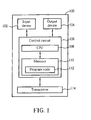
- FIG. 1 is a function block diagram of a wireless communications device.
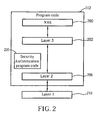
- Fig. 2 is a diagram of program code of Fig. 1.
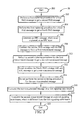
- Fig. 3 to Fig. 5 are flowcharts of processes according to embodiments of the present invention.
- Fig. 1 is a functional block diagram of a communications device 100 in a wireless communications system.
- the wireless communications system is preferably the LTE system.
- Fig. 1 only shows an input device 102, an output device 104, a control circuit 106, a central processing unit (CPU) 108, a memory 110, a program code 112, and a transceiver 114 of the communications device 100.
- the control circuit 106 executes the program code 112 in the memory 110 through the CPU 108, thereby controlling an operation of the communications device 100.
- the communications device 100 can receive signals input by a user through the input device 102, such as a keyboard, and can output images and sounds through the output device 104, such as a monitor or speakers.
- the transceiver 114 is used to receive and transmit wireless signals, delivering received signals to the control circuit 106, and outputting signals generated by the control circuit 106 wirelessly. From a perspective of a communications protocol framework, the transceiver 114 can be seen as a portion of Layer 1, and the control circuit 106 can be utilized to realize functions of Layer 2 and Layer 3.
- the communications device 100 is utilized in a third generation (3G) mobile communications system.
- 3G third generation
- Fig. 2 is a diagram of the program code 112 shown in Fig. 1.
- the program code 112 includes a Non Access Stratum (NAS) 200, a Layer 3 202, and a Layer 2 206, and is coupled to a Layer 1 218.
- the NAS 200 can generate NAS messages for realizing NAS applications.
- the Layer 3 202 is preferably composed of an RRC layer and a PDCP layer, for performing resource control.
- the Layer 2 206 performs link control, and the Layer 1 218 performs physical connections.
- the program code 112 can perform ciphering protection for messages, to protect user data and signaling information from being intercepted by unauthorized devices.
- the embodiment of the present invention provides a Security Authentication program code 220, for accurately performing ciphering.
- Fig. 3 illustrates a schematic diagram of a process 30.
- the process 30 is utilized for performing ciphering in a wireless communications system, and can be compiled into the Security Authentication program code 220.
- the process 30 comprises the following steps:
- non-concatenated messages are not performed the second ciphering procedure, and the non-concatenated messages and the concatenated messages are transmitted on different signaling radio bearers.
- the first ciphering procedure is performed by the upper layer of the RRC layer, while the second ciphering procedure is performed by the RRC layer or its lower layer.
- the RRC layer in the receiver can determine whether the received message is a non-concatenated message or a concatenated message, thus perform deciphering for the concatenated message, and deliver the non-concatenated message to the upper layer without any processing.
- the embodiment of the present invention can accurately perform ciphering protection procedures for the concatenated message containing the RRC message and the NAS message, and for the non-concatenated message containing only the NAS message, so as to enhance information security.
- Fig. 4 illustrates a schematic diagram of a process 40.
- the process 40 is utilized for performing ciphering in a wireless communications system, and can be compiled into the Security Authentication program code 220.
- the process 40 comprises the following steps:
- non-concatenated messages are performed the second ciphering procedure, and the non-concatenated messages and the concatenated messages are transmitted on the same signaling radio bearer.
- the first ciphering procedure is performed by the upper layer of the RRC layer, while the second ciphering procedure is performed by the RRC layer or its lower layer.
- the RRC layer of the receiver does not determine whether a message received on a signaling radio bearer is a non-concatenated message or a concatenated message, and performs deciphering for all the received messages, and then delivers the non-concatenated message to the upper layer.
- the embodiment of the present invention can accurately perform ciphering protection procedures for the concatenated message containing the RRC message and the NAS message, and for the non-concatenated message containing only the NAS message, so as to enhance information security.
- Fig. 5 illustrates a schematic diagram of a process 50.
- the process 50 is utilized for performing ciphering in a wireless communications system, and can be compiled into the Security Authentication program code 220.
- the process 50 comprises the following steps:
- non-concatenated messages are not performed the second ciphering procedure, and the non-concatenated messages and the concatenated messages are transmitted on the same signaling radio bearer.
- the first ciphering procedure is performed by the upper layer of the RRC layer, while the second ciphering procedure is performed by the RRC layer or its lower layer.
- the RRC layer of the receiver can determine whether the received message is a non-concatenated message or a concatenated message according to the field, which is not ciphered, thus perform deciphering for the concatenated message, and deliver the non-concatenated message to the upper layer without any processing.
- the embodiment of the present invention can accurately perform ciphering protection procedures for the concatenated message containing the RRC message and the NAS message, and for the non-concatenated message containing only the NAS message, so as to enhance information security.
- the embodiment of the present invention provides variable implementations for accurately performing ciphering protection for the concatenated messages and the non-concatenated messages, so as to enhance information security.
Landscapes
- Engineering & Computer Science (AREA)
- Computer Security & Cryptography (AREA)
- Computer Networks & Wireless Communication (AREA)
- Signal Processing (AREA)
- Computer Hardware Design (AREA)
- Computing Systems (AREA)
- General Engineering & Computer Science (AREA)
- Mobile Radio Communication Systems (AREA)
- Data Exchanges In Wide-Area Networks (AREA)
Abstract
Description
- This application claims the benefit of
U.S. Provisional Application No. 60/860,223, filed on Nov 21, 2006 - The present invention relates to a method and apparatus for configuring signaling radio bearer in a wireless communications system according to the pre-characterizing clauses of
claims 1, 4, 7, 10, 13 and 16. - The third generation (3G) mobile telecommunications system provides high frequency spectrum utilization, universal coverage, and high quality, high-speed multimedia data transmission, and also meets all kinds of QoS requirements simultaneously, providing diverse, flexible, two-way transmission services and better communication quality to reduce transmission interruption rates. According to the related protocol specifications, a protocol stack of the 3G mobile telecommunications system can be segmented into access stratum (AS) and non-access stratum (NAS). The AS comprises a Radio Resource Control (RRC), Radio Link Control (RLC), Media Access Control (MAC), Packet Data Convergence Protocol (PDCP), Broadcast/Multicast Control (BMC) and other sub-layers of different functions. Those skilled in the art are familiar with the operation of the above-mentioned sub-layers; therefore, they will not be further mentioned.
- Long Term Evolution wireless communications system (LTE system), an advanced high-speed wireless communications system established upon the 3G mobile telecommunications system, supports only packet-switched transmission, and tends to implement both Medium Access Control (MAC) layer and Radio Link Control (RLC) layer in one single communication site, such as in Node B alone rather than in Node B and RNC (Radio Network Controller) respectively, so that the system structure becomes simpler.
- A complete protocol specification is accomplished with lasting discussion, editing, and modification. Now, parts of the LTE structure are under Technical Report (TR) stage, meaning that the related protocol specifications are not finished. Therefore, many functions are still For Further Study (FFS).
- According to the current system structure of the LTE system, the following can be summarized:
- 1. For User Plane, the layer structure is, from low to high, PHY (Physical layer), MAC, RLC, and PDCP.
- 2. For Control Plane, the layer structure is, from low to high, PHY, MAC, RLC, RRC, PDCP, and NAS.
- 3. For User Plane, ciphering is performed in PDCP.
- 4. For Control Plane, ciphering and IP for RRC messages are done in RRC and ciphering and IP for NAS messages are done in PDCP.
- 5. NAS messages may or may not be concatenated with RRC messages.
- 6. No IP from RRC for non-concatenated messages.
- 7. IP from RRC for concatenated NAS messages is FFS.
- 8. Protocol error detection and recovery function is performed in RLC.
- Therefore, the prior art does not well specify configuration of signaling radio bearer, and the operation of ciphering from RRC for non-concatenated NAS messages.
- This in mind, the present invention aims at providing a method and apparatus for configuring signaling radio bearer in a wireless communications system, so as to enhance information security.
- The present invention relates to a method and apparatus for configuring signaling radio bearer in a wireless communications system according to the pre-characterizing clauses of
claims 1, 4, 7, 10, 13 and 16. The dependent claims pertain to corresponding further developments and improvements. - As will be seen more clearly from the detailed description following below, the claimed method for configuring signaling radio bearers in a wireless communications system comprises performing a first ciphering procedure for a first Non-Access Stratum message to get a second Non-Access Stratum message, performing the first ciphering procedure for a third Non-Access Stratum message to get a fourth Non-Access Stratum message, generating a Radio Resource Control message, which is not ciphered, in a Radio Resource Control layer, combining the second Non-Access Stratum message with the Radio Resource Control message to form a first concatenated message, performing a second ciphering procedure for the first concatenated message to get a second concatenated message, and not combining the fourth Non-Access Stratum message with any Radio Resource Control message to get a non-concatenated message. The method is characterized by not performing the second ciphering procedure for the non-concatenated message, transmitting the non-concatenated message on a first signaling radio bearer, and transmitting the second concatenated message on a second signaling radio bearer, which is different from the first signaling radio bearer.
- In the following, the invention is further illustrated by way of example, taking reference to the accompanying drawings. Thereof
Fig. 1 is a function block diagram of a wireless communications device.
Fig. 2 is a diagram of program code of Fig. 1.
Fig. 3 to Fig. 5 are flowcharts of processes according to embodiments of the present invention. - Please refer to Fig. 1, which is a functional block diagram of a
communications device 100 in a wireless communications system. The wireless communications system is preferably the LTE system. For the sake of brevity, Fig. 1 only shows aninput device 102, anoutput device 104, acontrol circuit 106, a central processing unit (CPU) 108, amemory 110, aprogram code 112, and atransceiver 114 of thecommunications device 100. In thecommunications device 100, thecontrol circuit 106 executes theprogram code 112 in thememory 110 through theCPU 108, thereby controlling an operation of thecommunications device 100. Thecommunications device 100 can receive signals input by a user through theinput device 102, such as a keyboard, and can output images and sounds through theoutput device 104, such as a monitor or speakers. Thetransceiver 114 is used to receive and transmit wireless signals, delivering received signals to thecontrol circuit 106, and outputting signals generated by thecontrol circuit 106 wirelessly. From a perspective of a communications protocol framework, thetransceiver 114 can be seen as a portion ofLayer 1, and thecontrol circuit 106 can be utilized to realize functions ofLayer 2 andLayer 3. Preferably, thecommunications device 100 is utilized in a third generation (3G) mobile communications system. - Please continue to refer to Fig. 2. Fig. 2 is a diagram of the
program code 112 shown in Fig. 1. Theprogram code 112 includes a Non Access Stratum (NAS) 200, aLayer 3 202, and aLayer 2 206, and is coupled to aLayer 1 218. The NAS 200 can generate NAS messages for realizing NAS applications. TheLayer 3 202 is preferably composed of an RRC layer and a PDCP layer, for performing resource control. TheLayer 2 206 performs link control, and theLayer 1 218 performs physical connections. - In order to enhance information security, the
program code 112 can perform ciphering protection for messages, to protect user data and signaling information from being intercepted by unauthorized devices. In such a situation, the embodiment of the present invention provides a SecurityAuthentication program code 220, for accurately performing ciphering. Please refer to Fig. 3, which illustrates a schematic diagram of aprocess 30. Theprocess 30 is utilized for performing ciphering in a wireless communications system, and can be compiled into the SecurityAuthentication program code 220. Theprocess 30 comprises the following steps: - Step 300:
- Start.
- Step 302:
- Perform a first ciphering procedure for a first NAS message to get a second NAS message.
- Step 304:
- Perform the first ciphering procedure for a third NAS message to get a fourth NAS message.
- Step 306:
- Generate an RRC message, which is not ciphered, in an RRC layer.
- Step 308:
- Combine the second NAS message with the RRC message to form a first concatenated message.
- Step 310:
- Perform a second ciphering procedure for the first concatenated message to get a second concatenated message.
- Step 312:
- Do not combine the fourth NAS message with any RRC message to get a non-concatenated message.
- Step 314:
- Do not perform the second ciphering procedure for the non-concatenated message.
- Step 316:
- Transmit the non-concatenated message on a first signaling radio bearer.
- Step 318:
- Transmit the second concatenated message on a second signaling radio bearer, which is different from the first signaling radio bearer.
- Step 320:
- End.
- According to the
process 30, non-concatenated messages are not performed the second ciphering procedure, and the non-concatenated messages and the concatenated messages are transmitted on different signaling radio bearers. Preferably, the first ciphering procedure is performed by the upper layer of the RRC layer, while the second ciphering procedure is performed by the RRC layer or its lower layer. - In such a situation, via different signaling radio bearers, the RRC layer in the receiver can determine whether the received message is a non-concatenated message or a concatenated message, thus perform deciphering for the concatenated message, and deliver the non-concatenated message to the upper layer without any processing.
- Therefore, via the
process 30, the embodiment of the present invention can accurately perform ciphering protection procedures for the concatenated message containing the RRC message and the NAS message, and for the non-concatenated message containing only the NAS message, so as to enhance information security. - Please refer to Fig. 4, which illustrates a schematic diagram of a
process 40. Theprocess 40 is utilized for performing ciphering in a wireless communications system, and can be compiled into the SecurityAuthentication program code 220.
Theprocess 40 comprises the following steps: - Step 400:
- Start.
- Step 402:
- Perform a first ciphering procedure for a first NAS message to get a second NAS message.
- Step 404:
- Perform the first ciphering procedure for a third NAS message to get a fourth NAS message.
- Step 406:
- Generate an RRC message, which is not ciphered, in an RRC layer.
- Step 408:
- Combine the second NAS message with the RRC message to form a first concatenated message.
- Step 410:
- Perform a second ciphering procedure for the first concatenated message to get a second concatenated message.
- Step 412:
- Do not combine the fourth NAS message with any RRC message to get a non-concatenated message.
- Step 414:
- Perform the second ciphering procedure for the non-concatenated message.
- Step 416:
- Transmit the non-concatenated message on a signaling radio bearer.
- Step 418:
- Transmit the second concatenated message on the signaling radio bearer.
- Step 420:
- End.
- According to the
process 40, non-concatenated messages are performed the second ciphering procedure, and the non-concatenated messages and the concatenated messages are transmitted on the same signaling radio bearer. Preferably, the first ciphering procedure is performed by the upper layer of the RRC layer, while the second ciphering procedure is performed by the RRC layer or its lower layer. - In such a situation, the RRC layer of the receiver does not determine whether a message received on a signaling radio bearer is a non-concatenated message or a concatenated message, and performs deciphering for all the received messages, and then delivers the non-concatenated message to the upper layer.
- Therefore, via the
process 40, the embodiment of the present invention can accurately perform ciphering protection procedures for the concatenated message containing the RRC message and the NAS message, and for the non-concatenated message containing only the NAS message, so as to enhance information security. - Please refer to Fig. 5, which illustrates a schematic diagram of a
process 50. Theprocess 50 is utilized for performing ciphering in a wireless communications system, and can be compiled into the SecurityAuthentication program code 220.
Theprocess 50 comprises the following steps: - Step 500:
- Start.
- Step 502:
- Perform a first ciphering procedure for a first NAS message to get a second NAS message.
- Step 504:
- Perform the first ciphering procedure for a third NAS message to get a fourth NAS message.
- Step 506:
- Generate an RRC message, which is not ciphered, in an RRC layer.
- Step 508:
- Combine the second NAS message with the RRC message to form a first concatenated message.
- Step 510:
- Perform a second ciphering procedure for the first concatenated message to get a second concatenated message.
- Step 512:
- Do not combine the fourth NAS message with any RRC message to get a non-concatenated message.
- Step 514:
- Do not perform the second ciphering procedure for the non-concatenated message.
- Step 516:
- Add a field to the non-concatenated message for indicating a type of the non-concatenated message in the RRC layer.
- Step 518:
- Add the field to the second concatenated message for indicating a type of the second concatenated message, and do not cipher the field.
- Step 520:
- Transmit the non-concatenated message on a signaling radio bearer.
- Step 522:
- Transmit the second concatenated message on the signaling radio bearer.
- Step 524:
- End.
- According to the
process 50, non-concatenated messages are not performed the second ciphering procedure, and the non-concatenated messages and the concatenated messages are transmitted on the same signaling radio bearer. Preferably, the first ciphering procedure is performed by the upper layer of the RRC layer, while the second ciphering procedure is performed by the RRC layer or its lower layer. - In such a situation, the RRC layer of the receiver can determine whether the received message is a non-concatenated message or a concatenated message according to the field, which is not ciphered, thus perform deciphering for the concatenated message, and deliver the non-concatenated message to the upper layer without any processing.
- Therefore, via the
process 50, the embodiment of the present invention can accurately perform ciphering protection procedures for the concatenated message containing the RRC message and the NAS message, and for the non-concatenated message containing only the NAS message, so as to enhance information security. - In summary, the embodiment of the present invention provides variable implementations for accurately performing ciphering protection for the concatenated messages and the non-concatenated messages, so as to enhance information security.
Claims (18)
- A method for configuring signaling radio bearers in a wireless communications system comprising:performing a first ciphering procedure for a first Non-Access Stratum message to get a second Non-Access Stratum message (302);performing the first ciphering procedure for a third Non-Access Stratum message to get a fourth Non-Access Stratum message (304);generating a Radio Resource Control message, which is not ciphered, in a Radio Resource Control layer (306);combining the second Non-Access Stratum message with the Radio Resource Control message to form a first concatenated message (308);performing a second ciphering procedure for the first concatenated message to get a second concatenated message (310); andnot combining the fourth Non-Access Stratum message with any Radio Resource Control message to get a non-concatenated message (312);characterized by not performing the second ciphering procedure for the non-concatenated message (314);transmitting the non-concatenated message on a first signaling radio bearer (316); andtransmitting the second concatenated message on a second signaling radio bearer, which is different from the first signaling radio bearer (318).
- The method of claim 1, characterized in that the first ciphering procedure is performed by an upper layer of the Radio Resource Control layer.
- The method of claim 1, characterized in that the second ciphering procedure is performed by the Radio Resource Control layer or a lower layer of the Radio Resource Control layer.
- A method for configuring signaling radio bearers in a wireless communications system comprising:performing a first ciphering procedure for a first Non-Access Stratum message to get a second Non-Access Stratum message (402);performing the first ciphering procedure for a third Non-Access Stratum message to get a fourth Non-Access Stratum message (404);generating a Radio Resource Control message, which is not ciphered, in a Radio Resource Control layer (406);combining the second Non-Access Stratum message with the Radio Resource Control message to form a first concatenated message (408);performing a second ciphering procedure for the first concatenated message to get a second concatenated message (410); andnot combining the fourth Non-Access Stratum message with any Radio Resource Control message to get a non-concatenated message (412);characterized by performing the second ciphering procedure for the non-concatenated message (414);transmitting the non-concatenated message on a signaling radio bearer (416); andtransmitting the second concatenated message on the signaling radio bearer (418).
- The method of claim 4, characterized in that the first ciphering procedure is performed by an upper layer of the Radio Resource Control layer.
- The method of claim 4, characterized in that the second ciphering procedure is performed by the Radio Resource Control layer or a lower layer of the Radio Resource Control layer.
- A method for configuring signaling radio bearers in a wireless communications system comprising:performing a first ciphering procedure for a first Non-Access Stratum message to get a second Non-Access Stratum message (502);performing the first ciphering procedure for a third Non-Access Stratum message to get a fourth Non-Access Stratum message (504);generating a Radio Resource Control message, which is not ciphered, in a Radio Resource Control layer (506);combining the second Non-Access Stratum message with the Radio Resource Control message to form a first concatenated message (508);performing a second ciphering procedure for the first concatenated message to get a second concatenated message (510); andnot combining the fourth Non-Access Stratum message with any Radio Resource Control message to get a non-concatenated message (512);characterized by not performing the second ciphering procedure for the non-concatenated message (514);adding a field to the non-concatenated message for indicating a type of the non-concatenated message in the Radio Resource Control layer (516);adding the field to the second concatenated message for indicating a type of the second concatenated message in the Radio Resource Control layer (518);not ciphering the field (518);transmitting the non-concatenated message on a signaling radio bearer (520); andtransmitting the second concatenated message on the signaling radio bearer (522).
- The method of claim 7, characterized in that the first ciphering procedure is performed by an upper layer of the Radio Resource Control layer.
- The method of claim 7, characterized in that the second ciphering procedure is performed by the Radio Resource Control layer or a lower layer of the Radio Resource Control layer.
- A communications device (100) for accurately configuring signaling radio bearers in a wireless communications system comprising:a control circuit (106) for realizing functions of the communications device (100);a processor (108) installed in the control circuit (106), for executing a program code (112) to command the control circuit (106); anda memory (110) installed in the control circuit (106) and coupled to the processor (108) for storing the program code (112);wherein the program code (112) comprises:performing a first ciphering procedure for a first Non-Access Stratummessage to get a second Non-Access Stratum message (302); performing the first ciphering procedure for a third Non-Access Stratummessage to get a fourth Non-Access Stratum message (304); generating a Radio Resource Control message, which is not ciphered, in a Radio Resource Control entity (306);combining the second Non-Access Stratum message with the Radio Resource Control message to form a first concatenated message (308);performing a second ciphering procedure for the first concatenated message to get a second concatenated message (310); andnot combining the fourth Non-Access Stratum message with any Radio Resource Control message to get a non-concatenated message (312);characterized by not performing the second ciphering procedure for the non-concatenated message (314);transmitting the non-concatenated message on a first signaling radio bearer (316); andtransmitting the second concatenated message on a second signaling radio bearer, which is different from the first signaling radio bearer (318).
- The communications device of claim 10, characterized in that the first ciphering procedure is performed by an upper layer entity of the Radio Resource Control entity.
- The communications device of claim 10, characterized in that the second ciphering procedure is performed by the Radio Resource Control entity or a lower layer entity of the Radio Resource Control entity.
- A communications device (100) for accurately configuring signaling radio bearers in a wireless communications system comprising:a control circuit (106) for realizing functions of the communications device (100); a processor (108) installed in the control circuit (106), for executing a program code (112) to command the control circuit (106); anda memory (110) installed in the control circuit (106) and coupled to the processor (108) for storing the program code (112);wherein the program code (112) comprises:performing a first ciphering procedure for a first Non-Access Stratummessage to get a second Non-Access Stratum message (402); performing the first ciphering procedure for a third Non-Access Stratummessage to get a fourth Non-Access Stratum message (404); generating a Radio Resource Control message, which is not ciphered, in a Radio Resource Control entity (406);combining the second Non-Access Stratum message with the Radio Resource Control message to form a first concatenated message (408);performing a second ciphering procedure for the first concatenated message to get a second concatenated message (410); andnot combining the fourth Non-Access Stratum message with any Radio Resource Control message to get a non-concatenated message (412);characterized by performing the second ciphering procedure for the non-concatenated message (414);transmitting the non-concatenated message on a signaling radio bearer (416); andtransmitting the second concatenated message on the signaling radio bearer (418).
- The communications device of claim 13, characterized in that the first ciphering procedure is performed by an upper layer entity of the Radio Resource Control entity.
- The communications device of claim 13, characterized in that the second ciphering procedure is performed by the Radio Resource Control entity or a lower layer entity of the Radio Resource Control entity.
- A communications device (100) for accurately configuring signaling radio bearers in a wireless communications system comprising:a control circuit (106) for realizing functions of the communications device (100); a processor (108) installed in the control circuit (106), for executing a program code (112) to command the control circuit (106); anda memory (110) installed in the control circuit (106) and coupled to the processor (108) for storing the program code (112);wherein the program code (112) comprises:performing a first ciphering procedure for a first Non-Access Stratummessage to get a second Non-Access Stratum message (502); performing the first ciphering procedure for a third Non-Access Stratummessage to get a fourth Non-Access Stratum message (504); generating a Radio Resource Control message, which is not ciphered, in a Radio Resource Control entity (506);combining the second Non-Access Stratum message with the Radio Resource Control message to form a first concatenated message (508);performing a second ciphering procedure for the first concatenated message to get a second concatenated message (510); andnot combining the fourth Non-Access Stratum message with any Radio Resource Control message to get a non-concatenated message (512);characterized by not performing the second ciphering procedure for the non-concatenated message (514);adding a field to the non-concatenated message for indicating a type of the non-concatenated message in the Radio Resource Control entity (516);adding the field to the second concatenated message for indicating a type of the second concatenated message in the Radio Resource Control entity (518);not ciphering the field (518);transmitting the non-concatenated message on a signaling radio bearer (520); andtransmitting the second concatenated message on the signaling radio bearer (522).
- The communications device of claim 16, characterized in that the first ciphering procedure is performed by an upper layer entity of the Radio Resource Control entity.
- The communications device of claim 16, characterized in that the second ciphering procedure is performed by the Radio Resource Control entity or a lower layer entity of the Radio Resource Control entity.
Applications Claiming Priority (1)
| Application Number | Priority Date | Filing Date | Title |
|---|---|---|---|
| US86022306P | 2006-11-21 | 2006-11-21 |
Publications (3)
| Publication Number | Publication Date |
|---|---|
| EP1942625A2 true EP1942625A2 (en) | 2008-07-09 |
| EP1942625A3 EP1942625A3 (en) | 2008-07-23 |
| EP1942625B1 EP1942625B1 (en) | 2016-03-09 |
Family
ID=39345168
Family Applications (4)
| Application Number | Title | Priority Date | Filing Date |
|---|---|---|---|
| EP07022576A Withdrawn EP1944938A1 (en) | 2006-11-21 | 2007-11-21 | Methods and apparatuses for performing integrity protection for a concatenated message |
| EP07022575A Withdrawn EP1942626A1 (en) | 2006-11-21 | 2007-11-21 | Methods and apparatuses for performing security error recovery in a wireless communications system |
| EP07022577.6A Active EP1944939B1 (en) | 2006-11-21 | 2007-11-21 | Methods and apparatuses for performing ciphering in a wireless communications system |
| EP07022574.3A Active EP1942625B1 (en) | 2006-11-21 | 2007-11-21 | Method and apparatus for performing ciphering in a wireless communications system |
Family Applications Before (3)
| Application Number | Title | Priority Date | Filing Date |
|---|---|---|---|
| EP07022576A Withdrawn EP1944938A1 (en) | 2006-11-21 | 2007-11-21 | Methods and apparatuses for performing integrity protection for a concatenated message |
| EP07022575A Withdrawn EP1942626A1 (en) | 2006-11-21 | 2007-11-21 | Methods and apparatuses for performing security error recovery in a wireless communications system |
| EP07022577.6A Active EP1944939B1 (en) | 2006-11-21 | 2007-11-21 | Methods and apparatuses for performing ciphering in a wireless communications system |
Country Status (5)
| Country | Link |
|---|---|
| EP (4) | EP1944938A1 (en) |
| JP (5) | JP2008131655A (en) |
| KR (4) | KR20080046129A (en) |
| CN (4) | CN101188867A (en) |
| TW (4) | TW200824340A (en) |
Families Citing this family (6)
| Publication number | Priority date | Publication date | Assignee | Title |
|---|---|---|---|---|
| US8532614B2 (en) * | 2007-10-25 | 2013-09-10 | Interdigital Patent Holdings, Inc. | Non-access stratum architecture and protocol enhancements for long term evolution mobile units |
| DE102009021715A1 (en) | 2008-05-19 | 2009-12-10 | Samsung Electronics Co., Ltd., Suwon | Flash memory device e.g. flash memory card, for use in computer system e.g. personal computer, has floating gate type memory transistor as selection transistor of memory block's NAND cell unit for storing random data in memory blocks |
| JP4384700B1 (en) * | 2008-06-23 | 2009-12-16 | 株式会社エヌ・ティ・ティ・ドコモ | Mobile communication method, mobile station and radio base station |
| GB201721608D0 (en) * | 2017-12-21 | 2018-02-07 | Nordic Semiconductor Asa | A hardware cipher engine |
| WO2020087325A1 (en) * | 2018-10-31 | 2020-05-07 | Qualcomm Incorporated | Data transmission with expiration time |
| US11751047B2 (en) * | 2019-02-25 | 2023-09-05 | Telefonaktiebolaget Lm Ericsson (Publ) | Hop by hop security in IAB networks |
Family Cites Families (13)
| Publication number | Priority date | Publication date | Assignee | Title |
|---|---|---|---|---|
| JPH0834587B2 (en) * | 1989-07-07 | 1996-03-29 | 株式会社日立製作所 | How to hide image data |
| JP3928819B2 (en) * | 1997-01-21 | 2007-06-13 | ソニー株式会社 | Data receiving apparatus and encryption processing program update method |
| FI109320B (en) * | 1999-11-02 | 2002-06-28 | Nokia Corp | Signaling procedure |
| EP1104213A3 (en) * | 1999-11-29 | 2003-05-21 | Philips Intellectual Property & Standards GmbH | Wireless network with key change procedure |
| CN1202643C (en) * | 2000-10-07 | 2005-05-18 | Lg电子株式会社 | Radio communication system with radio chain-circuit control layer and data processing method |
| FI111423B (en) * | 2000-11-28 | 2003-07-15 | Nokia Corp | Arrangements for securing unencrypted data communication after channel change |
| KR100789565B1 (en) * | 2001-04-07 | 2007-12-28 | 엘지전자 주식회사 | How to set up a radio bearer, how to perform encryption and change accordingly, and how to encrypt data |
| CN1138366C (en) * | 2001-07-12 | 2004-02-11 | 华为技术有限公司 | Network suitable for mobile communication system terminal encryption and its realization method |
| US7054306B2 (en) * | 2002-08-16 | 2006-05-30 | Asustek Computer Inc. | Method for handling ciphering status in a wireless network |
| ATE375051T1 (en) | 2003-08-15 | 2007-10-15 | Research In Motion Ltd | DETERMINATION OF THE ACTIVATION TIME FOR UPWARD DIRECTION ENCRYPTION IN A UMTS SUBSCRIBER DEVICE |
| CN100393031C (en) * | 2004-05-27 | 2008-06-04 | 中兴通讯股份有限公司 | Method for Determining Encryption Activation Point in Radio Resource Control Layer |
| US20060056324A1 (en) * | 2004-09-10 | 2006-03-16 | Nokia Corporation | Apparatus and method to provide mobile music appliance with subscription-based play-list service |
| KR101161025B1 (en) * | 2005-05-12 | 2012-06-28 | 삼성전자주식회사 | A method and apparatus for establishing traffic channel in advance in a mobile communication system |
-
2007
- 2007-11-21 JP JP2007302119A patent/JP2008131655A/en active Pending
- 2007-11-21 EP EP07022576A patent/EP1944938A1/en not_active Withdrawn
- 2007-11-21 CN CNA2007101886679A patent/CN101188867A/en active Pending
- 2007-11-21 JP JP2007302118A patent/JP2008131654A/en not_active Withdrawn
- 2007-11-21 EP EP07022575A patent/EP1942626A1/en not_active Withdrawn
- 2007-11-21 KR KR1020070119402A patent/KR20080046129A/en not_active Ceased
- 2007-11-21 JP JP2007302121A patent/JP4680250B2/en active Active
- 2007-11-21 TW TW096144112A patent/TW200824340A/en unknown
- 2007-11-21 JP JP2007302120A patent/JP2008131656A/en not_active Withdrawn
- 2007-11-21 CN CN2007101928648A patent/CN101188869B/en active Active
- 2007-11-21 TW TW096144115A patent/TWI452887B/en active
- 2007-11-21 KR KR1020070119432A patent/KR100968472B1/en active Active
- 2007-11-21 EP EP07022577.6A patent/EP1944939B1/en active Active
- 2007-11-21 CN CNA2007101928614A patent/CN101188808A/en active Pending
- 2007-11-21 CN CNA2007101928633A patent/CN101188494A/en active Pending
- 2007-11-21 TW TW096144119A patent/TW200824388A/en unknown
- 2007-11-21 EP EP07022574.3A patent/EP1942625B1/en active Active
- 2007-11-21 KR KR1020070119376A patent/KR100969649B1/en active Active
- 2007-11-21 TW TW096144120A patent/TWI360311B/en active
- 2007-11-21 KR KR1020070119378A patent/KR20080046128A/en not_active Ceased
-
2011
- 2011-07-22 JP JP2011161076A patent/JP2011259473A/en active Pending
Non-Patent Citations (4)
| Title |
|---|
| "Universal Mobile Telecommunications System (UMTS); 3G security; Security architecture (3GPP TS 33.102 version 7.0.0 Release 7); ETSI TS 133 102" ETSI STANDARDS, LIS, vol. 3-SA3, no. V7.0.0, 1 December 2005 (2005-12-01), pages 1-64, XP014032863 ISSN: 0000-0001 * |
| 3GPP RAN WG2: "3rd Generation Partnership Project; Technical Specification Group Radio Access Network; Evolved Universal Terrestrial Radio Access (E-UTRA) and Evolved Universal Terrestrial Radio Access Network (E-UTRAN); Overall description; Stage 2 (Release x), TS 36.300 V0.1.0" 3GPP TECHNICAL SPECIFICATIONS, [Online] 1 November 2006 (2006-11-01), pages 1-50, XP002483486 Retrieved from the Internet: URL:http://www.3gpp.org/ftp/tsg_ran/WG2_RL2/TSGR2_56/Documents/R2-063057.zip> [retrieved on 2008-06-09] * |
| NOKIA ET AL: "MAC, RLC and RRC Layer Security" S3-060456, 3GPP TSG SA WG3 SECURITY #44, TALLINN, ESTONIA,, vol. S3-060456, 11 July 2006 (2006-07-11), pages 1-4, XP003022038 * |
| SAMSUNG ET AL: "PDCP for E-UTRAN, R2-060906" INTERNET CITATION, [Online] 27 March 2006 (2006-03-27), - 31 March 2006 (2006-03-31) pages 1-3, XP002464337 Retrieved from the Internet: URL:http://www.3gpp.org/ftp/tsg_ran/WG2_RL2/TSGR2_52/Documents/R2-060906.zip> [retrieved on 2008-01-11] * |
Also Published As
| Publication number | Publication date |
|---|---|
| JP2008131654A (en) | 2008-06-05 |
| EP1942625A3 (en) | 2008-07-23 |
| EP1944939B1 (en) | 2016-02-03 |
| CN101188494A (en) | 2008-05-28 |
| TWI452887B (en) | 2014-09-11 |
| KR20080046129A (en) | 2008-05-26 |
| EP1942625B1 (en) | 2016-03-09 |
| TW200824396A (en) | 2008-06-01 |
| TW200824388A (en) | 2008-06-01 |
| KR100968472B1 (en) | 2010-07-07 |
| EP1942626A1 (en) | 2008-07-09 |
| JP2008131656A (en) | 2008-06-05 |
| JP2008131655A (en) | 2008-06-05 |
| JP2008131657A (en) | 2008-06-05 |
| EP1944939A1 (en) | 2008-07-16 |
| CN101188869A (en) | 2008-05-28 |
| JP4680250B2 (en) | 2011-05-11 |
| KR100969649B1 (en) | 2010-07-14 |
| TW200824325A (en) | 2008-06-01 |
| TW200824340A (en) | 2008-06-01 |
| KR20080046128A (en) | 2008-05-26 |
| CN101188808A (en) | 2008-05-28 |
| JP2011259473A (en) | 2011-12-22 |
| KR20080046130A (en) | 2008-05-26 |
| CN101188869B (en) | 2011-04-20 |
| EP1944938A1 (en) | 2008-07-16 |
| TWI360311B (en) | 2012-03-11 |
| CN101188867A (en) | 2008-05-28 |
| KR20080046127A (en) | 2008-05-26 |
Similar Documents
| Publication | Publication Date | Title |
|---|---|---|
| TWI332345B (en) | Security considerations for the lte of umts | |
| KR101583234B1 (en) | Methods and apparatuses for enabling non-access stratum(nas) security in lte mobile units | |
| US7197145B2 (en) | Method for setting up radio bearer in mobile communication system | |
| US20100202613A1 (en) | Packet bundling at the pdcp layer with ciphering on the pdcp sdu | |
| US20070265875A1 (en) | Method and apparatus for setting ciphering activation time in a wireless communications system | |
| EP1871138A2 (en) | Method and apparatus for security sequence numbering in a wireless communications system | |
| TW200847678A (en) | Method for processing radio protocol in mobile telecommunications system and transmitter of mobile telecommunications | |
| US20080120728A1 (en) | Method and apparatus for performing integrity protection in a wireless communications system | |
| CN101406024A (en) | Security considerations for LTE of UMTS | |
| JP2007184938A (en) | Method and apparatus of modifying integrity protection configuration of user end in wireless communications system | |
| EP1942625B1 (en) | Method and apparatus for performing ciphering in a wireless communications system | |
| EP1953996A2 (en) | Method and apparatus for handling packets in a wireless communications system | |
| US20080119164A1 (en) | Method and apparatus for performing security error recovery in a wireless communications system | |
| US9237441B2 (en) | Method and apparatus for configuring signaling radio bearer in a wireless communications system | |
| US20080118067A1 (en) | Method and apparatus for performing ciphering in a wireless communications system | |
| CN111800372A (en) | Data transmission method and device | |
| EP1947871A1 (en) | Method and apparatus for reordering of packets in PDCP layer of a wireless communications system | |
| EP1973291B1 (en) | Method for transmitting a message having a non-encoded and an encoded portion in a wireless system | |
| EP4664958A1 (en) | Data processing method and apparatus, network side device and terminal device |
Legal Events
| Date | Code | Title | Description |
|---|---|---|---|
| PUAI | Public reference made under article 153(3) epc to a published international application that has entered the european phase |
Free format text: ORIGINAL CODE: 0009012 |
|
| PUAL | Search report despatched |
Free format text: ORIGINAL CODE: 0009013 |
|
| 17P | Request for examination filed |
Effective date: 20071121 |
|
| AK | Designated contracting states |
Kind code of ref document: A2 Designated state(s): AT BE BG CH CY CZ DE DK EE ES FI FR GB GR HU IE IS IT LI LT LU LV MC MT NL PL PT RO SE SI SK TR |
|
| AX | Request for extension of the european patent |
Extension state: AL BA HR MK RS |
|
| RTI1 | Title (correction) |
Free format text: METHOD AND APPARATUS FOR PERFORMING CIPHERING IN A WIRELESS COMMUNICATIONS SYSTEM |
|
| AK | Designated contracting states |
Kind code of ref document: A3 Designated state(s): AT BE BG CH CY CZ DE DK EE ES FI FR GB GR HU IE IS IT LI LT LU LV MC MT NL PL PT RO SE SI SK TR |
|
| AX | Request for extension of the european patent |
Extension state: AL BA HR MK RS |
|
| AKX | Designation fees paid |
Designated state(s): AT BE BG CH CY CZ DE DK EE ES FI FR GB GR HU IE IS IT LI LT LU LV MC MT NL PL PT RO SE SI SK TR |
|
| RAP1 | Party data changed (applicant data changed or rights of an application transferred) |
Owner name: INNOVATIVE SONIC LIMITED |
|
| RIC1 | Information provided on ipc code assigned before grant |
Ipc: H04L 29/06 20060101AFI20150706BHEP Ipc: H04W 12/02 20090101ALI20150706BHEP |
|
| GRAP | Despatch of communication of intention to grant a patent |
Free format text: ORIGINAL CODE: EPIDOSNIGR1 |
|
| INTG | Intention to grant announced |
Effective date: 20150907 |
|
| GRAS | Grant fee paid |
Free format text: ORIGINAL CODE: EPIDOSNIGR3 |
|
| GRAA | (expected) grant |
Free format text: ORIGINAL CODE: 0009210 |
|
| AK | Designated contracting states |
Kind code of ref document: B1 Designated state(s): AT BE BG CH CY CZ DE DK EE ES FI FR GB GR HU IE IS IT LI LT LU LV MC MT NL PL PT RO SE SI SK TR |
|
| REG | Reference to a national code |
Ref country code: GB Ref legal event code: FG4D |
|
| REG | Reference to a national code |
Ref country code: AT Ref legal event code: REF Ref document number: 780218 Country of ref document: AT Kind code of ref document: T Effective date: 20160315 Ref country code: CH Ref legal event code: EP |
|
| REG | Reference to a national code |
Ref country code: IE Ref legal event code: FG4D |
|
| REG | Reference to a national code |
Ref country code: DE Ref legal event code: R096 Ref document number: 602007045091 Country of ref document: DE |
|
| REG | Reference to a national code |
Ref country code: LT Ref legal event code: MG4D |
|
| REG | Reference to a national code |
Ref country code: NL Ref legal event code: MP Effective date: 20160309 |
|
| PG25 | Lapsed in a contracting state [announced via postgrant information from national office to epo] |
Ref country code: GR Free format text: LAPSE BECAUSE OF FAILURE TO SUBMIT A TRANSLATION OF THE DESCRIPTION OR TO PAY THE FEE WITHIN THE PRESCRIBED TIME-LIMIT Effective date: 20160610 Ref country code: ES Free format text: LAPSE BECAUSE OF FAILURE TO SUBMIT A TRANSLATION OF THE DESCRIPTION OR TO PAY THE FEE WITHIN THE PRESCRIBED TIME-LIMIT Effective date: 20160309 Ref country code: FI Free format text: LAPSE BECAUSE OF FAILURE TO SUBMIT A TRANSLATION OF THE DESCRIPTION OR TO PAY THE FEE WITHIN THE PRESCRIBED TIME-LIMIT Effective date: 20160309 |
|
| REG | Reference to a national code |
Ref country code: AT Ref legal event code: MK05 Ref document number: 780218 Country of ref document: AT Kind code of ref document: T Effective date: 20160309 |
|
| PG25 | Lapsed in a contracting state [announced via postgrant information from national office to epo] |
Ref country code: LV Free format text: LAPSE BECAUSE OF FAILURE TO SUBMIT A TRANSLATION OF THE DESCRIPTION OR TO PAY THE FEE WITHIN THE PRESCRIBED TIME-LIMIT Effective date: 20160309 Ref country code: PL Free format text: LAPSE BECAUSE OF FAILURE TO SUBMIT A TRANSLATION OF THE DESCRIPTION OR TO PAY THE FEE WITHIN THE PRESCRIBED TIME-LIMIT Effective date: 20160309 Ref country code: LT Free format text: LAPSE BECAUSE OF FAILURE TO SUBMIT A TRANSLATION OF THE DESCRIPTION OR TO PAY THE FEE WITHIN THE PRESCRIBED TIME-LIMIT Effective date: 20160309 Ref country code: SE Free format text: LAPSE BECAUSE OF FAILURE TO SUBMIT A TRANSLATION OF THE DESCRIPTION OR TO PAY THE FEE WITHIN THE PRESCRIBED TIME-LIMIT Effective date: 20160309 Ref country code: NL Free format text: LAPSE BECAUSE OF FAILURE TO SUBMIT A TRANSLATION OF THE DESCRIPTION OR TO PAY THE FEE WITHIN THE PRESCRIBED TIME-LIMIT Effective date: 20160309 |
|
| PG25 | Lapsed in a contracting state [announced via postgrant information from national office to epo] |
Ref country code: EE Free format text: LAPSE BECAUSE OF FAILURE TO SUBMIT A TRANSLATION OF THE DESCRIPTION OR TO PAY THE FEE WITHIN THE PRESCRIBED TIME-LIMIT Effective date: 20160309 Ref country code: IS Free format text: LAPSE BECAUSE OF FAILURE TO SUBMIT A TRANSLATION OF THE DESCRIPTION OR TO PAY THE FEE WITHIN THE PRESCRIBED TIME-LIMIT Effective date: 20160709 |
|
| PG25 | Lapsed in a contracting state [announced via postgrant information from national office to epo] |
Ref country code: SK Free format text: LAPSE BECAUSE OF FAILURE TO SUBMIT A TRANSLATION OF THE DESCRIPTION OR TO PAY THE FEE WITHIN THE PRESCRIBED TIME-LIMIT Effective date: 20160309 Ref country code: AT Free format text: LAPSE BECAUSE OF FAILURE TO SUBMIT A TRANSLATION OF THE DESCRIPTION OR TO PAY THE FEE WITHIN THE PRESCRIBED TIME-LIMIT Effective date: 20160309 Ref country code: CZ Free format text: LAPSE BECAUSE OF FAILURE TO SUBMIT A TRANSLATION OF THE DESCRIPTION OR TO PAY THE FEE WITHIN THE PRESCRIBED TIME-LIMIT Effective date: 20160309 Ref country code: PT Free format text: LAPSE BECAUSE OF FAILURE TO SUBMIT A TRANSLATION OF THE DESCRIPTION OR TO PAY THE FEE WITHIN THE PRESCRIBED TIME-LIMIT Effective date: 20160711 Ref country code: RO Free format text: LAPSE BECAUSE OF FAILURE TO SUBMIT A TRANSLATION OF THE DESCRIPTION OR TO PAY THE FEE WITHIN THE PRESCRIBED TIME-LIMIT Effective date: 20160309 |
|
| REG | Reference to a national code |
Ref country code: FR Ref legal event code: PLFP Year of fee payment: 10 |
|
| REG | Reference to a national code |
Ref country code: DE Ref legal event code: R097 Ref document number: 602007045091 Country of ref document: DE |
|
| PG25 | Lapsed in a contracting state [announced via postgrant information from national office to epo] |
Ref country code: IT Free format text: LAPSE BECAUSE OF FAILURE TO SUBMIT A TRANSLATION OF THE DESCRIPTION OR TO PAY THE FEE WITHIN THE PRESCRIBED TIME-LIMIT Effective date: 20160309 Ref country code: BE Free format text: LAPSE BECAUSE OF FAILURE TO SUBMIT A TRANSLATION OF THE DESCRIPTION OR TO PAY THE FEE WITHIN THE PRESCRIBED TIME-LIMIT Effective date: 20160309 |
|
| PLBE | No opposition filed within time limit |
Free format text: ORIGINAL CODE: 0009261 |
|
| STAA | Information on the status of an ep patent application or granted ep patent |
Free format text: STATUS: NO OPPOSITION FILED WITHIN TIME LIMIT |
|
| PG25 | Lapsed in a contracting state [announced via postgrant information from national office to epo] |
Ref country code: DK Free format text: LAPSE BECAUSE OF FAILURE TO SUBMIT A TRANSLATION OF THE DESCRIPTION OR TO PAY THE FEE WITHIN THE PRESCRIBED TIME-LIMIT Effective date: 20160309 |
|
| 26N | No opposition filed |
Effective date: 20161212 |
|
| PG25 | Lapsed in a contracting state [announced via postgrant information from national office to epo] |
Ref country code: BG Free format text: LAPSE BECAUSE OF FAILURE TO SUBMIT A TRANSLATION OF THE DESCRIPTION OR TO PAY THE FEE WITHIN THE PRESCRIBED TIME-LIMIT Effective date: 20160609 |
|
| PG25 | Lapsed in a contracting state [announced via postgrant information from national office to epo] |
Ref country code: SI Free format text: LAPSE BECAUSE OF FAILURE TO SUBMIT A TRANSLATION OF THE DESCRIPTION OR TO PAY THE FEE WITHIN THE PRESCRIBED TIME-LIMIT Effective date: 20160309 |
|
| REG | Reference to a national code |
Ref country code: CH Ref legal event code: PL |
|
| PG25 | Lapsed in a contracting state [announced via postgrant information from national office to epo] |
Ref country code: CH Free format text: LAPSE BECAUSE OF NON-PAYMENT OF DUE FEES Effective date: 20161130 Ref country code: LI Free format text: LAPSE BECAUSE OF NON-PAYMENT OF DUE FEES Effective date: 20161130 |
|
| REG | Reference to a national code |
Ref country code: IE Ref legal event code: MM4A |
|
| PG25 | Lapsed in a contracting state [announced via postgrant information from national office to epo] |
Ref country code: LU Free format text: LAPSE BECAUSE OF NON-PAYMENT OF DUE FEES Effective date: 20161130 |
|
| PG25 | Lapsed in a contracting state [announced via postgrant information from national office to epo] |
Ref country code: IE Free format text: LAPSE BECAUSE OF NON-PAYMENT OF DUE FEES Effective date: 20161121 |
|
| REG | Reference to a national code |
Ref country code: FR Ref legal event code: PLFP Year of fee payment: 11 |
|
| PG25 | Lapsed in a contracting state [announced via postgrant information from national office to epo] |
Ref country code: CY Free format text: LAPSE BECAUSE OF FAILURE TO SUBMIT A TRANSLATION OF THE DESCRIPTION OR TO PAY THE FEE WITHIN THE PRESCRIBED TIME-LIMIT Effective date: 20160309 Ref country code: HU Free format text: LAPSE BECAUSE OF FAILURE TO SUBMIT A TRANSLATION OF THE DESCRIPTION OR TO PAY THE FEE WITHIN THE PRESCRIBED TIME-LIMIT; INVALID AB INITIO Effective date: 20071121 |
|
| PG25 | Lapsed in a contracting state [announced via postgrant information from national office to epo] |
Ref country code: MC Free format text: LAPSE BECAUSE OF FAILURE TO SUBMIT A TRANSLATION OF THE DESCRIPTION OR TO PAY THE FEE WITHIN THE PRESCRIBED TIME-LIMIT Effective date: 20160309 Ref country code: TR Free format text: LAPSE BECAUSE OF FAILURE TO SUBMIT A TRANSLATION OF THE DESCRIPTION OR TO PAY THE FEE WITHIN THE PRESCRIBED TIME-LIMIT Effective date: 20160309 |
|
| PG25 | Lapsed in a contracting state [announced via postgrant information from national office to epo] |
Ref country code: MT Free format text: LAPSE BECAUSE OF NON-PAYMENT OF DUE FEES Effective date: 20161121 |
|
| REG | Reference to a national code |
Ref country code: DE Ref legal event code: R079 Ref document number: 602007045091 Country of ref document: DE Free format text: PREVIOUS MAIN CLASS: H04L0029060000 Ipc: H04L0065000000 |
|
| P01 | Opt-out of the competence of the unified patent court (upc) registered |
Effective date: 20230508 |
|
| PGFP | Annual fee paid to national office [announced via postgrant information from national office to epo] |
Ref country code: GB Payment date: 20250901 Year of fee payment: 19 |
|
| PGFP | Annual fee paid to national office [announced via postgrant information from national office to epo] |
Ref country code: FR Payment date: 20250826 Year of fee payment: 19 |
|
| PGFP | Annual fee paid to national office [announced via postgrant information from national office to epo] |
Ref country code: DE Payment date: 20250814 Year of fee payment: 19 |