EP1942620A2 - E-mail communication apparatus - Google Patents
E-mail communication apparatus Download PDFInfo
- Publication number
- EP1942620A2 EP1942620A2 EP20070023378 EP07023378A EP1942620A2 EP 1942620 A2 EP1942620 A2 EP 1942620A2 EP 20070023378 EP20070023378 EP 20070023378 EP 07023378 A EP07023378 A EP 07023378A EP 1942620 A2 EP1942620 A2 EP 1942620A2
- Authority
- EP
- European Patent Office
- Prior art keywords
- destination
- electronic certificate
- unit
- certificate
- Prior art date
- Legal status (The legal status is an assumption and is not a legal conclusion. Google has not performed a legal analysis and makes no representation as to the accuracy of the status listed.)
- Withdrawn
Links
Images




Classifications
-
- H—ELECTRICITY
- H04—ELECTRIC COMMUNICATION TECHNIQUE
- H04L—TRANSMISSION OF DIGITAL INFORMATION, e.g. TELEGRAPHIC COMMUNICATION
- H04L63/00—Network architectures or network communication protocols for network security
- H04L63/12—Applying verification of the received information
- H04L63/123—Applying verification of the received information received data contents, e.g. message integrity
-
- H—ELECTRICITY
- H04—ELECTRIC COMMUNICATION TECHNIQUE
- H04L—TRANSMISSION OF DIGITAL INFORMATION, e.g. TELEGRAPHIC COMMUNICATION
- H04L51/00—User-to-user messaging in packet-switching networks, transmitted according to store-and-forward or real-time protocols, e.g. e-mail
-
- H—ELECTRICITY
- H04—ELECTRIC COMMUNICATION TECHNIQUE
- H04L—TRANSMISSION OF DIGITAL INFORMATION, e.g. TELEGRAPHIC COMMUNICATION
- H04L63/00—Network architectures or network communication protocols for network security
- H04L63/04—Network architectures or network communication protocols for network security for providing a confidential data exchange among entities communicating through data packet networks
- H04L63/0428—Network architectures or network communication protocols for network security for providing a confidential data exchange among entities communicating through data packet networks wherein the data content is protected, e.g. by encrypting or encapsulating the payload
-
- H—ELECTRICITY
- H04—ELECTRIC COMMUNICATION TECHNIQUE
- H04L—TRANSMISSION OF DIGITAL INFORMATION, e.g. TELEGRAPHIC COMMUNICATION
- H04L63/00—Network architectures or network communication protocols for network security
- H04L63/06—Network architectures or network communication protocols for network security for supporting key management in a packet data network
- H04L63/062—Network architectures or network communication protocols for network security for supporting key management in a packet data network for key distribution, e.g. centrally by trusted party
Definitions
- the present invention relates to an electronic mail (hereinafter, referred to as E-mail) communication apparatus and, more specifically, to an E-mail communication apparatus which is capable of transmitting mails as an encrypted data.
- E-mail electronic mail
- an E-mail communication apparatus including public key transmitting means for transmitting a new public key of an apparatus to E-mail addresses stored in address information storage means in advance when the public key of the apparatus is newly registered or renewed for the reason of expiration or the like. Accordingly, the new public key is efficiently transmitted to destinations of communication.
- a destination terminal has the above-described function, if the source address is not stored in the address information storage means of the destination terminal, a new public key is not transmitted from the destination terminal, and the source cannot receive the public key. Therefore, when transmitting the encrypted mail, there may be a case that an electronic certificate (including the public key) of the destination terminal cannot be acquired.
- an E-mail communication apparatus which relays an E-mail transmitted from a source to a destination including: a certificate storage unit that stores information indicating a destination and an electronic certificate of the destination in a correspondence; a receiving unit that receives the E-mail in which an address of the source and an address of the destination are specified; an encrypting unit that refers the certificate storage unit when a transmit command for the E-mail is issued for the E-mail that the receiving unit receives, determines whether or not the electronic certificate of the destination of the E-mail is stored and, when the electronic certificate is stored, encrypts the E-mail with the electronic certificate; a request mail generating unit that generates a request mail for requesting the destination to transmit the electronic certificate when the encrypting unit determines that the electronic certificate is not stored; a transmitting unit that transmits the E-mail or the request mail encrypted by the encrypting unit to the destination; and a notification unit that transmits a notification mail including information which indicates that the request mail is transmitted to the
- the E-mail communication apparatus in a case in which an electronic certificate required for encryption is not registered when transmitting an E-mail which needs to be encrypted, a process to transmit a request mail for requesting the destination to transmit an electronic certificate is transmitted. Accordingly, a labor of a user when transmitting the encrypted E-mail is reduced, whereby the convenience is improved.
- the user on the source side receives a notification mail, and hence the user is able to know the event that the E-mail is not transmitted to the destination or the like, so that the user is able to take an action.
- the notification unit may transmit the notification mail via Simple Mail Transfer Protocol (SMTP) to the source, or may allow the source to receive the notification mail from Post Office Protocol (POP) mail box of the source provided in the E-mail communication apparatus in advance.
- SMTP Simple Mail Transfer Protocol
- POP Post Office Protocol
- the E-mail communication apparatus may further include the receiving unit that receives an E-mail, and a certificate acquiring unit that determines whether or not an electronic certificate of the source is attached to the E-mail that the receiving unit receives and, when it is determined that the electronic certificate is attached, stores the electronic certificate in the certificate storage unit in a correspondence with the source of the E-mail.
- the E-mail communication apparatus may further include a storage unit that stores an E-mail transmitted from the transmitting unit, and the encrypting unit may store the E-mail to the destination in the storage unit as a waiting mail when it is determined that the electronic certificate is not stored, determine whether or not the waiting mail directed to the source is stored in the storage unit when it is determined that the electronic certificate is attached to the E-mail by the certificate acquiring unit and, when the waiting mail is stored, encrypt the waiting mail with the electronic certificate acquired by the certificate acquiring unit and make the transmitting unit to transmit the encrypted waiting mail.
- the request mail generating unit may add a predetermined recognition information to the request mail to the destination, and the encrypting unit may store the waiting mail to the destination including the recognition information in the storage unit.
- the action may be taken easily for the waiting mail.
- an E-mail communication apparatus which relays an E-mail transmitted from a source to a destination including: a certificate storage unit that stores information indicating a destination and an electronic certificate of the destination in a correspondence; a receiving unit that receives a request mail which requests a destination to transmit an electronic certificate for encrypting the E-mail to be transmitted to the destination in association with specification of the destination; a transmitting unit that refers the certificate storage unit to determine whether or not the electronic certificate of the destination specified by the request mail is stored when the receiving unit has received the request mail and, when the electronic certificate is stored, transmits a return mail attached with the electronic certificate to the source of the request mail and, when the electronic certificate is not stored in the certificate storage unit, transfers the request mail to the destination specified by the request mail.
- the convenience when transmitting the encrypted E-mails is improved.
- Fig. 1 is a block diagram illustrating a configuration of a network system including a transmitting end gateway and a receiving end gateway in an embodiment of the present invention.
- Fig. 2 is a block diagram illustrating a configuration of the transmitting end gateway according to the embodiment of the present invention.
- Fig. 3 is a block diagram illustrating a configuration of the receiving end gateway according to the embodiment of the present invention.
- Fig. 4 is a flowchart illustrating a procedure of the transmitting end gateway according to the embodiment of the present invention.
- Fig. 5 is a flowchart illustrating a procedure of the receiving end gateway according to the embodiment of the present invention.
- Fig. 6 is a flowchart illustrating a procedure of the transmitting end gateway according to the embodiment of the present invention.
- Fig. 7 is a flowchart illustrating a procedure of the transmitting end gateway according to the embodiment of the present invention.
- a transmitting end gateway will be exemplified as an E-mail communication apparatus in the present invention.
- Fig. 1 is a block diagram illustrating a configuration of a network system including a transmitting end gateway 100 and a receiving end gateway 500 according to the embodiment.
- E-mails transmitted from a terminal 200 or a terminal 202 on the transmitting end to a terminal 600 and a terminal 602 on the receiving end pass through the transmitting end gateway 100, a mail server 300, a mail server 400, and the receiving end gateway 500.
- the transmitting end gateway 100 is connected to the terminal 200, the terminal 202 and the like to encrypt the E-mails transmitted from these terminals or attach the electronic signatures on the E-mails.
- the receiving end gateway 500 is connected to the terminal 600 and the terminal 602 via a network to verify electronic signatures attached to E-mails addressed to these terminals or decode encrypted E-mails.
- the transmitting end gateway 100 is differentiated from the receiving end gateway 500.
- the transmitting end gateway 100 and the receiving end gateway 500 are equivalent gateways having function of the both.
- LAN Local Area Network
- the transmitting end gateway 100 is capable of encrypting E-mails to be transmitted to the external network as needed and transmitting them to the external network on the basis of user's instructions or the like.
- the receiving end gateway 500 and the terminal 600 are connected via the in-company network, E-mails to be transmitted and received therebetween do not have to be encrypted.
- the receiving end gateway 500 receives E-mails transmitted from the external network to the terminals connected to the in-company network and decodes these E-mails if encrypted, or verifies electronic signatures if attached.
- the transmitting end gateway 100 and the receiving end gateway 500 have a function to transmit and receive E-mails in a Secure Multipurpose Internet Mail Extensions (S/MIME) system on the basis of Public Key Infrastructure (PKI).
- S/MIME Secure Multipurpose Internet Mail Extensions
- PKI Public Key Infrastructure
- Fig. 2 is a block diagram illustrating a configuration of the transmitting end gateway 100 in the embodiment.
- the transmitting end gateway 100 includes a transmit/receive unit 102, an encrypting unit 104, a certificate acquiring unit 106 (including a function as a request mail generating unit), a notification unit 108, a transmitted mail storage unit 110, and a certificate storage unit 112.
- the certificate storage unit 112 stores destinations and electronic certificates of the destinations in a correspondence.
- the certificate storage unit 112 is able to store the destinations with E-mail addresses thereof.
- the electronic certificate includes certificate information such as a public key, a term of validity, an algorism of the public key, and a signature algorithm of a certificate authority.
- the electronic certificate may include the mail address of the destination.
- the transmit/receive unit 102 receives an E-mail transmitted from the terminal 200 to a terminal such as the terminal 600 via a private network 700 together with a specification of destination and a transmit command.
- the transmit/receive unit 102 also receives an encryption command for the E-mail together with transmit command of the E-mail.
- the encrypting unit 104 When the encrypting unit 104 receives an encryption command together with a transmit command of an E-mail, it refers the certificate storage unit 112 and determines whether or not an electronic certificate of the destination of the E-mail is stored. The encryption command may be included in each E-mail, or may be set on the side of the apparatus. The encrypting unit 104 determines whether or not an electronic certificate of the corresponding destination is stored in the certificate storage unit 112. When the electronic certificate is stored in the certificate storage unit 112, the encrypting unit 104 determines that the electronic certificate is stored. When the electronic certificate is stored, the encrypting unit 104 encrypts the corresponding E-mail with a public key included in the electronic certificate. The transmit/receive unit 102 transmits the E-mail encrypted by the encrypting unit 104 to the destination.
- the encrypting unit 104 stores the E-mail to the destination in the transmitted mail storage unit 110 as a waiting mail. In this case, the transmit/receive unit 102 does not transmit the E-mail.
- the certificate acquiring unit 106 When the encrypting unit 104 has determined that the electronic certificate is not stored, the certificate acquiring unit 106 generates a request mail for requesting an electronic certificate to the destination.
- the certificate acquiring unit 106 adds information to make a receiver recognize that it is a mail which requests an electronic certificate to the request mail.
- the certificate acquiring unit 106 is capable of adding a keyword that indicates that it is a mail to request an electronic certificate, for example, in a MIME extension header, a text, or a subject.
- the keyword may be an extension header such as "X-RequestCert: mail address", but is not limited thereto.
- the certificate acquiring unit 106 is also capable of adding a message to request a response with an electronic signature in the request mail in the form of character information.
- the certificate acquiring unit 106 is also capable of adding recognition information to the request mail. In this case, the same recognition information as the one added to the request mail may be attached to the waiting mail stored in the transmitted mail storage unit 110. Accordingly, when the electronic certificate is transmitted from the destination, an action may be taken easily for the waiting mail.
- the transmit/receive unit 102 transmits the request mail generated by the certificate acquiring unit 106 to the destination via an external network 710.
- the notification unit 108 When the transmit/receive unit 102 transmits the request mail generated by the certificate acquiring unit 106 to the destination, the notification unit 108 generates a notification mail to be transmitted to a source.
- the notification unit 108 adds the effect that the E-mail could not be transmitted because of the absence of the electronic certificate, the destination that failed to transmit the E-mail, the effect that the request of the electronic certificate is transmitted to the destination, and the effect that the E-mails will be retransmitted when the electronic certificate is acquired to the notification mail.
- retransmitting may be done again by the user as the source, and in this case, this effect is added to the notification mail.
- the transmit/receive unit 102 receives E-mails from external terminals via the external network 710.
- the certificate acquiring unit 106 determines whether or not the electronic certificate of the source is attached to the E-mail that the transmit/receive unit 102 receives via the external network 710. More specifically, the certificate acquiring unit 106 determines whether or not the E-mail that the transmit/receive unit 102 receives is a return mail for the request mail. Whether it is a return mail for the request mail or not is determined by adapting a keyword added to the MIME extension header, the text, or the subject of the request mail to be included in the return mail, and determining whether or not the keyword is included.
- the certificate acquiring unit 106 stores the acquired electronic certificate in the certificate storage unit 112 in a correspondence with the E-mail address of the source.
- the encrypting unit 104 determines whether or not a waiting mail to the source is stored in the transmitted mail storage unit 110.
- the same recognition information may be added to the request mail generated by the certificate acquiring unit 106 and to the waiting mail stored in the transmitted mail storage unit 110 by the encrypting unit 104, and the same recognition information may also be added to the return mail for the request mail as well as described above.
- the encrypting unit 104 is able to determine whether or not the waiting mail to the source of the return mail is stored in the transmitted mail storage unit 110 using the recognition information as a key.
- the encrypting unit 104 is also able to determine whether or not the waiting mail to the source is stored in the transmitted mail storage unit 110 using E-mail addresses of the destination of the waiting mail and the source of the return mail as a key.
- the encrypting unit 104 encrypts the waiting mail with the electronic certificate acquired by the certificate acquiring unit 106. Then, the transmit/receive unit 102 transmits the encrypted E-mail.
- the transmitting end gateway 100 retransmits the E-mail
- retransmitting may be adapted to be done by the user of the terminal on the source side.
- the encrypting unit 104 needs not to store the E-mail to the destination in the transmitted mail storage unit 110 as a waiting mail.
- the notification unit 108 is able to transmit a notification mail which notifies that effect to the source. Accordingly, the user of the terminal on the source side may issue a command to transmit the E-mail to the destination again.
- the encrypting unit 104 determines that the electronic certificate is stored. Therefore, the encryption is carried out, and the E-mail is transmitted to the destination.
- the transmit/receive unit 102 may store the attached electronic certificate in the certificate storage unit 112 without considering whether or not the E-mail is a return mail for the request mail, and deliver the E-mail to the terminal of the destination as is. In this case as well, the user of the terminal on the source side may issue a command to transmit the E-mails to the destination again.
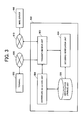
- Fig. 3 is a block diagram illustrating a configuration of the receiving end gateway 500.
- the receiving end gateway 500 includes a transmit/receive unit 502, a decoding/verification unit 504, a certificate detection unit 506, and a certification storage unit 508.
- the transmit/receive unit 502 transmits and receives E-mails.
- the certification storage unit 508 stores E-mail addresses of the terminal 600 or the like connected to the receiving end gateway 500 via a private network 800 and an electronic certificate thereof in a correspondence.
- the electronic certificate includes certificate information such as a public key, a term of validity, an algorithm of the public key, and a signature algorithm of a certificate authority.
- the certification storage unit 508 may store digital signatures of the respective terminals in correspondence with E-mail addresses thereof.
- the electronic certificate may have a configuration including an E-mail address of each terminal.
- the certificate detection unit 506 When the transmit/receive unit 502 receives a request mail which requests the electronic certificate, the certificate detection unit 506 carries out processing for detecting the requested electronic certificate.
- the certificate detection unit 506 firstly refers the certification storage unit 508, and determines whether or not the requested electronic certificate is stored. When the requested electronic certificate is stored in the certification storage unit 508, the certificate detection unit 506 attaches the electronic certificate to the return mail for the request mail as an attached file.
- the certificate detection unit 506 may carry out processing to embed an electronic certificate in a predetermined field by providing a digital signature of the corresponding terminal.
- the transmit/receive unit 502 transmits the return mail to the transmitting end gateway 100 which is the source of the request mail.
- the certificate detection unit 506 makes the transmit/receive unit 502 deliver the request mail transmitted from the transmitting end gateway 100 to the terminal which is specified as the destination. A message to request a return mail with a signature and a certificate attached is added to the certificate request mail.
- the transmit/receive unit 502 determines whether or not decoding or verification of the E-mail received via an external network 810 is necessary. For example, the transmit/receive unit 502 determines that the decoding is necessary when the received E-mail is encrypted. Whether or not the E-mail is encrypted or not is determined by the header of S/MIME.
- the decoding/verification unit 504 decodes the E-mail when it is encrypted. When the electronic signature is attached, the decoding/verification unit 504 verifies the presence or absence of alteration.
- the certification storage unit 508 may store the electronic certificate of the source to be used by the decoding/verification unit 504 when verifying the presence or absence of alteration on the basis of the electronic signature or a decoding key used when decoding.
- Fig. 4 is a flowchart illustrating a procedure taken in the transmitting end gateway 100.
- the transmit/receive unit 102 receives an E-mail transmit command (YES in S100), it determines whether or not an encryption command is issued (S102). When the encryption command is not issued (NO in S102), the transmit/receive unit 102 transmits the E-mail to the destination as is (S116). In contrast, when the encryption command is issued (YES in S102), the encrypting unit 104 confirms the destination of the E-mail (S104), and refers the certificate storage unit 112 to determine whether or not the electronic certificate corresponding to the destination is stored (S106).
- the encrypting unit 104 encrypts the E-mail using the corresponding electronic certificate (S112). Subsequently, the transmit/receive unit 102 transmits the E-mail encrypted by the encrypting unit 104 to the destination (S114).
- Step S106 when the electronic certificate is not stored in Step S106 (NO in S106), the certificate acquiring unit 106 generates a request mail which requests an electronic certificate in a normal text.
- the transmit/receive unit 102 transmits the request mail generated by the certificate acquiring unit 106 (S108).
- the destination of the request mail may be the destination of the original E-mail.
- the encrypting unit 104 stores the E-mail which is failed to be transmitted due to the absence of the electronic certificate in the transmitted mail storage unit 110 as a waiting mail (S109).
- the notification unit 108 then transmits a notification mail to the source address (S110).
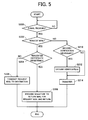
- Fig. 5 is a flowchart illustrating a procedure done by the receiving end gateway 500 in the embodiment.
- the transmit/receive unit 502 receives an E-mail via the external network 810 (YES in S200), it determines whether or not the E-mail is a request mail which requests the electronic certificate (S202) .
- the certificate detection unit 506 refers the certification storage unit 508 and determines whether or not the requested electronic certificate is stored in the certification storage unit 508 (S204).
- the certificate detection unit 506 provides a signature to the request mail which requests the electronic certificate and returns the request mail as is (S206).
- the certificate detection unit 506 delivers the request mail for requesting the destination terminal (client) to transmit the electronic certificate as is via the transmit/receive unit 502 (S208).
- the transmit/receive unit 502 determines whether or not decoding or verification of the E-mail is necessary (S210). When the decoding or the verification is necessary (YES in S210), the transmit/receive unit 502 makes the decoding/verification unit 504 to carry out the decoding or the verification (S212). Then, the transmit/receive unit 502 transfers the decoded E-mail to the destination terminal (S214). When neither the decoding nor the verification is necessary in Step S210 (NO in S210), the transmit/receive unit 502 transfers the received E-mail to the destination terminal as is.
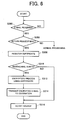
- Fig. 6 is a flowchart illustrating a procedure of the transmitting end gateway 100 in the embodiment.
- the transmit/receive unit 102 receives an E-mail via the external network 710 (YES in S300), it determines whether or not the E-mail is a return mail for the request mail (S302). If the determination result is yes, (YES in S302), the acquired electronic certificate is stored in the certificate storage unit 112 (S308).
- the encrypting unit 104 determines whether or not a waiting mail is stored in the transmitted mail storage unit 110 (S310), and if the determination result is yes (YES in S310), carries out encryption using the electronic certificate stored in the certificate storage unit 112 (5312). Then, the transmit/receive unit 102 transmits the E-mail encrypted by the encrypting unit 104 to the destination (S314).
- the notification unit 108 transmits a notification mail for notifying the reception of the return mail for the request mail to the source (S316).
- the effect that the E-mail is encrypted by the acquired electronic certificate and the E-mail is transmitted to the destination may be included in the notification. Accordingly, the original sender of the E-mail is able to know the fact that the E-mail is transmitted to the destination and the electronic certificate is acquired.
- Step S310 No in S310
- the procedure goes to Step S316 and the notification indicating the effect that the electronic certificate is acquired is given.
- Step S302 the received mail is not a return mail for the request mail (NO in S302), the normal E-mail receiving process is performed.
- Fig. 7 is a flowchart illustrating another example of the procedure of the transmitting end gateway 100 in the embodiment.
- the user of the terminal on the source side retransmits the E-mail when the electronic certificate of the destination is acquired for the request mail will be described.
- the transmit/receive unit 102 When the transmit/receive unit 102 receives an E-mail via the external network 710 (YES in S400), it determines whether or not the electronic certificate is attached to the E-mail (S402). When the electronic certificate is attached (YES in S402), the acquired electronic certificate is stored in the certificate storage unit 112 (S404).
- the transmit/receive unit 102 delivers the E-mail to the destination of the E-mail (that is the source of the E-mail in Step S200 in Fig. 5 ) (S406).
- the electronic certificate is not attached in Step S402 (NO in S402), the normal process, that is, delivery to the destination is carried out.
- the transmitting end gateway 100 when transmitting encrypted E-mails to a plurality of destination, the transmitting end gateway 100 encrypts the E-mail with the corresponding electronic certificates for the destinations whose electronic certificates are registered and transmits the E-mails. In contrast, the transmitting end gateway 100 transmits a request mail for requesting the destination whose electronic certificates are not registered to transmit an electronic certificate in a normal text. In this case, the transmitting end gateway 100 transmits a notification mail which includes the effect that the E-mail could not be transmitted because the electronic certificate is not registered, the effect that the electronic certificate is now being requested, and the effect that the E-mail will be retransmitted when the return mail for the request mail is arrived to the source. According to the transmitting end gateway 100 in the embodiment, the processes as such are done automatically.
- the transmitting end gateway 100 in the embodiment in a case in which an electronic certificate which is necessary for encryption is not registered when transmitting an E-mail which requires encryption, a process to transmit a request mail for requesting the destination to transmit the electronic certificate and, when the electronic certificate is acquired, the process of encrypting and transmitting the E-mail is carried out. Accordingly, a labor of the user when transmitting the encrypted E-mail may be reduced, whereby the convenience is improved.
- Respective components of the transmitting end gateway 100 and the receiving end gateway 500 shown in Fig. 2 and Fig. 3 illustrate blocks on the basis of the unit of function instead of the unit of hardware.
- the respective components of the transmitting end gateway 100 and the receiving end gateway 500 are implemented by combining arbitrarily hardware and software mainly including a CPU of an arbitrary computer, a memory, a program loaded in the memory to implement the components in the drawing, a storage unit such as hard disk for storing the program, and a network connection interface.
- the E-mail communication apparatus may be used as a mail server such as the mail server 300.
- the respective components described as functions of the transmitting end gateway 100 may be included in the mail server such as the mail server 300.
- the E-mail communication apparatus here may be, for example, a personal computer, a work station, an internet facsimile apparatus, Multi Functional Peripheral (MFP), and so on.
- the certificate acquiring unit 106 When the transmit/receive unit 102 has transmitted a request mail to any one of the destinations, the certificate acquiring unit 106 records it and monitors whether or not a return mail is returned or an electronic certificate is acquired. When no mail is returned or when the electronic certificate cannot be acquired after having elapsed a predetermined time period, the certificate acquiring unit 106 may make the notification unit 108 notify that effect to the user.
Landscapes
- Engineering & Computer Science (AREA)
- Computer Security & Cryptography (AREA)
- Computer Networks & Wireless Communication (AREA)
- Signal Processing (AREA)
- Computer Hardware Design (AREA)
- Computing Systems (AREA)
- General Engineering & Computer Science (AREA)
- Information Transfer Between Computers (AREA)
- Data Exchanges In Wide-Area Networks (AREA)
Abstract
Description
- This application claims priority to
Japanese Patent Application No.2006-351274, filed on December 27, 2006 - The present invention relates to an electronic mail (hereinafter, referred to as E-mail) communication apparatus and, more specifically, to an E-mail communication apparatus which is capable of transmitting mails as an encrypted data.
- In the related art, there is provided an E-mail communication apparatus including public key transmitting means for transmitting a new public key of an apparatus to E-mail addresses stored in address information storage means in advance when the public key of the apparatus is newly registered or renewed for the reason of expiration or the like. Accordingly, the new public key is efficiently transmitted to destinations of communication.
- However, even though a destination terminal has the above-described function, if the source address is not stored in the address information storage means of the destination terminal, a new public key is not transmitted from the destination terminal, and the source cannot receive the public key. Therefore, when transmitting the encrypted mail, there may be a case that an electronic certificate (including the public key) of the destination terminal cannot be acquired.
- In view of such circumstances, it is an object of the present invention to provide a technology which improves convenience of transmission of encrypted E-mails.
- According to the present invention, there is provided an E-mail communication apparatus which relays an E-mail transmitted from a source to a destination including: a certificate storage unit that stores information indicating a destination and an electronic certificate of the destination in a correspondence; a receiving unit that receives the E-mail in which an address of the source and an address of the destination are specified; an encrypting unit that refers the certificate storage unit when a transmit command for the E-mail is issued for the E-mail that the receiving unit receives, determines whether or not the electronic certificate of the destination of the E-mail is stored and, when the electronic certificate is stored, encrypts the E-mail with the electronic certificate; a request mail generating unit that generates a request mail for requesting the destination to transmit the electronic certificate when the encrypting unit determines that the electronic certificate is not stored; a transmitting unit that transmits the E-mail or the request mail encrypted by the encrypting unit to the destination; and a notification unit that transmits a notification mail including information which indicates that the request mail is transmitted to the destination and the electronic certificate is now being requested to the destination to the source of the E-mail when the transmitting unit has transmitted the request mail to the destination.
- According to the E-mail communication apparatus in the present invention, in a case in which an electronic certificate required for encryption is not registered when transmitting an E-mail which needs to be encrypted, a process to transmit a request mail for requesting the destination to transmit an electronic certificate is transmitted. Accordingly, a labor of a user when transmitting the encrypted E-mail is reduced, whereby the convenience is improved. The user on the source side receives a notification mail, and hence the user is able to know the event that the E-mail is not transmitted to the destination or the like, so that the user is able to take an action. Here, the notification unit may transmit the notification mail via Simple Mail Transfer Protocol (SMTP) to the source, or may allow the source to receive the notification mail from Post Office Protocol (POP) mail box of the source provided in the E-mail communication apparatus in advance.
- The E-mail communication apparatus may further include the receiving unit that receives an E-mail, and a certificate acquiring unit that determines whether or not an electronic certificate of the source is attached to the E-mail that the receiving unit receives and, when it is determined that the electronic certificate is attached, stores the electronic certificate in the certificate storage unit in a correspondence with the source of the E-mail.
- The E-mail communication apparatus may further include a storage unit that stores an E-mail transmitted from the transmitting unit, and the encrypting unit may store the E-mail to the destination in the storage unit as a waiting mail when it is determined that the electronic certificate is not stored, determine whether or not the waiting mail directed to the source is stored in the storage unit when it is determined that the electronic certificate is attached to the E-mail by the certificate acquiring unit and, when the waiting mail is stored, encrypt the waiting mail with the electronic certificate acquired by the certificate acquiring unit and make the transmitting unit to transmit the encrypted waiting mail.
- When it is determined that the electronic certificate is not stored by the encrypting unit, the request mail generating unit may add a predetermined recognition information to the request mail to the destination, and the encrypting unit may store the waiting mail to the destination including the recognition information in the storage unit.
- Accordingly, when the electronic certificate is transmitted from the destination, the action may be taken easily for the waiting mail.
- According to the present invention, there is provided an E-mail communication apparatus which relays an E-mail transmitted from a source to a destination including: a certificate storage unit that stores information indicating a destination and an electronic certificate of the destination in a correspondence; a receiving unit that receives a request mail which requests a destination to transmit an electronic certificate for encrypting the E-mail to be transmitted to the destination in association with specification of the destination; a transmitting unit that refers the certificate storage unit to determine whether or not the electronic certificate of the destination specified by the request mail is stored when the receiving unit has received the request mail and, when the electronic certificate is stored, transmits a return mail attached with the electronic certificate to the source of the request mail and, when the electronic certificate is not stored in the certificate storage unit, transfers the request mail to the destination specified by the request mail.
- Accordingly, the labor of the user when receiving the encrypted E-mails is reduced and the convenience is improved.
- Arbitrary combinations of the components shown above, and those obtained by converting the expressions in the present invention into "method", "apparatus", "system", "recording medium", and "computer program" are also effective as modes of the present invention.
- According to the present invention, the convenience when transmitting the encrypted E-mails is improved.
- Other features, elements, processes, steps, characteristics and advantages of the present invention will become more apparent from the following detailed description of preferred embodiments of the present invention with reference to the attached drawings.
-
Fig. 1 is a block diagram illustrating a configuration of a network system including a transmitting end gateway and a receiving end gateway in an embodiment of the present invention. -
Fig. 2 is a block diagram illustrating a configuration of the transmitting end gateway according to the embodiment of the present invention. -
Fig. 3 is a block diagram illustrating a configuration of the receiving end gateway according to the embodiment of the present invention. -
Fig. 4 is a flowchart illustrating a procedure of the transmitting end gateway according to the embodiment of the present invention. -
Fig. 5 is a flowchart illustrating a procedure of the receiving end gateway according to the embodiment of the present invention. -
Fig. 6 is a flowchart illustrating a procedure of the transmitting end gateway according to the embodiment of the present invention. -
Fig. 7 is a flowchart illustrating a procedure of the transmitting end gateway according to the embodiment of the present invention. - Referring now to the drawings, embodiments of the present invention will be described. Like reference numerals are given to like parts throughout the drawings and the description will be omitted as needed. In the embodiments shown below, a transmitting end gateway will be exemplified as an E-mail communication apparatus in the present invention.
-
Fig. 1 is a block diagram illustrating a configuration of a network system including a transmittingend gateway 100 and a receivingend gateway 500 according to the embodiment. - In the embodiment, E-mails transmitted from a
terminal 200 or aterminal 202 on the transmitting end to aterminal 600 and aterminal 602 on the receiving end pass through the transmittingend gateway 100, amail server 300, amail server 400, and the receivingend gateway 500. The transmittingend gateway 100 is connected to theterminal 200, theterminal 202 and the like to encrypt the E-mails transmitted from these terminals or attach the electronic signatures on the E-mails. The receivingend gateway 500 is connected to theterminal 600 and theterminal 602 via a network to verify electronic signatures attached to E-mails addressed to these terminals or decode encrypted E-mails. In the embodiment, the transmittingend gateway 100 is differentiated from the receivingend gateway 500. However, the transmittingend gateway 100 and the receivingend gateway 500 are equivalent gateways having function of the both. - Between the
terminals end gateway 100 and between theterminals end gateway 500 are connected via a private network, for example, Local Area Network (LAN), respectively. Between the transmittingend gateway 100 and themail server 300, between themail server 300 and themail server 400, and between themail server 400 and thereceiving end gateway 500 may be connected via an external network such as an internet. - For example, when the
terminal 200 and the transmittingend gateway 100 are connected to a private network such as an in-company network, E-mails transmitted and received therebetween do not have to be encrypted. In contrast, it is preferable to encrypt E-mails transmitted to the external network such as the internet. In the embodiment, the transmittingend gateway 100 is capable of encrypting E-mails to be transmitted to the external network as needed and transmitting them to the external network on the basis of user's instructions or the like. - In the same manner, for example, when the receiving
end gateway 500 and theterminal 600 are connected via the in-company network, E-mails to be transmitted and received therebetween do not have to be encrypted. In the embodiment, the receivingend gateway 500 receives E-mails transmitted from the external network to the terminals connected to the in-company network and decodes these E-mails if encrypted, or verifies electronic signatures if attached. - In the embodiment, the transmitting
end gateway 100 and the receivingend gateway 500 have a function to transmit and receive E-mails in a Secure Multipurpose Internet Mail Extensions (S/MIME) system on the basis of Public Key Infrastructure (PKI). -
Fig. 2 is a block diagram illustrating a configuration of the transmittingend gateway 100 in the embodiment. The transmittingend gateway 100 includes a transmit/receiveunit 102, anencrypting unit 104, a certificate acquiring unit 106 (including a function as a request mail generating unit), anotification unit 108, a transmittedmail storage unit 110, and acertificate storage unit 112. - The
certificate storage unit 112 stores destinations and electronic certificates of the destinations in a correspondence. Thecertificate storage unit 112 is able to store the destinations with E-mail addresses thereof. The electronic certificate includes certificate information such as a public key, a term of validity, an algorism of the public key, and a signature algorithm of a certificate authority. The electronic certificate may include the mail address of the destination. - The transmit/receive
unit 102 receives an E-mail transmitted from theterminal 200 to a terminal such as theterminal 600 via aprivate network 700 together with a specification of destination and a transmit command. The transmit/receiveunit 102 also receives an encryption command for the E-mail together with transmit command of the E-mail. - When the
encrypting unit 104 receives an encryption command together with a transmit command of an E-mail, it refers thecertificate storage unit 112 and determines whether or not an electronic certificate of the destination of the E-mail is stored. The encryption command may be included in each E-mail, or may be set on the side of the apparatus. Theencrypting unit 104 determines whether or not an electronic certificate of the corresponding destination is stored in thecertificate storage unit 112. When the electronic certificate is stored in thecertificate storage unit 112, theencrypting unit 104 determines that the electronic certificate is stored. When the electronic certificate is stored, the encryptingunit 104 encrypts the corresponding E-mail with a public key included in the electronic certificate. The transmit/receiveunit 102 transmits the E-mail encrypted by the encryptingunit 104 to the destination. - In contrast, when the electronic certificate is not stored, the encrypting
unit 104 stores the E-mail to the destination in the transmittedmail storage unit 110 as a waiting mail. In this case, the transmit/receiveunit 102 does not transmit the E-mail. - When the encrypting
unit 104 has determined that the electronic certificate is not stored, thecertificate acquiring unit 106 generates a request mail for requesting an electronic certificate to the destination. Thecertificate acquiring unit 106 adds information to make a receiver recognize that it is a mail which requests an electronic certificate to the request mail. Thecertificate acquiring unit 106 is capable of adding a keyword that indicates that it is a mail to request an electronic certificate, for example, in a MIME extension header, a text, or a subject. The keyword may be an extension header such as "X-RequestCert: mail address", but is not limited thereto. - When the electronic certificate is attached by providing an electronic signature, the
certificate acquiring unit 106 is also capable of adding a message to request a response with an electronic signature in the request mail in the form of character information. Thecertificate acquiring unit 106 is also capable of adding recognition information to the request mail. In this case, the same recognition information as the one added to the request mail may be attached to the waiting mail stored in the transmittedmail storage unit 110. Accordingly, when the electronic certificate is transmitted from the destination, an action may be taken easily for the waiting mail. - The transmit/receive
unit 102 transmits the request mail generated by thecertificate acquiring unit 106 to the destination via anexternal network 710. - When the transmit/receive
unit 102 transmits the request mail generated by thecertificate acquiring unit 106 to the destination, thenotification unit 108 generates a notification mail to be transmitted to a source. Here, thenotification unit 108 adds the effect that the E-mail could not be transmitted because of the absence of the electronic certificate, the destination that failed to transmit the E-mail, the effect that the request of the electronic certificate is transmitted to the destination, and the effect that the E-mails will be retransmitted when the electronic certificate is acquired to the notification mail. Here, retransmitting may be done again by the user as the source, and in this case, this effect is added to the notification mail. - The transmit/receive
unit 102 receives E-mails from external terminals via theexternal network 710. Thecertificate acquiring unit 106 determines whether or not the electronic certificate of the source is attached to the E-mail that the transmit/receiveunit 102 receives via theexternal network 710. More specifically, thecertificate acquiring unit 106 determines whether or not the E-mail that the transmit/receiveunit 102 receives is a return mail for the request mail. Whether it is a return mail for the request mail or not is determined by adapting a keyword added to the MIME extension header, the text, or the subject of the request mail to be included in the return mail, and determining whether or not the keyword is included. - Subsequently, the
certificate acquiring unit 106 stores the acquired electronic certificate in thecertificate storage unit 112 in a correspondence with the E-mail address of the source. - When it is determined that the electronic certificate is attached to the E-mail by the
certificate acquiring unit 106, the encryptingunit 104 determines whether or not a waiting mail to the source is stored in the transmittedmail storage unit 110. In the embodiment, the same recognition information may be added to the request mail generated by thecertificate acquiring unit 106 and to the waiting mail stored in the transmittedmail storage unit 110 by the encryptingunit 104, and the same recognition information may also be added to the return mail for the request mail as well as described above. In this case, the encryptingunit 104 is able to determine whether or not the waiting mail to the source of the return mail is stored in the transmittedmail storage unit 110 using the recognition information as a key. The encryptingunit 104 is also able to determine whether or not the waiting mail to the source is stored in the transmittedmail storage unit 110 using E-mail addresses of the destination of the waiting mail and the source of the return mail as a key. - When the waiting mail is stored in the transmitted
mail storage unit 110, the encryptingunit 104 encrypts the waiting mail with the electronic certificate acquired by thecertificate acquiring unit 106. Then, the transmit/receiveunit 102 transmits the encrypted E-mail. - In the description given above, the case in which the transmitting
end gateway 100 retransmits the E-mail is exemplified. However, retransmitting may be adapted to be done by the user of the terminal on the source side. In this case, the encryptingunit 104 needs not to store the E-mail to the destination in the transmittedmail storage unit 110 as a waiting mail. In this case, when thecertificate acquiring unit 106 acquires the electronic certificate from the destination, thenotification unit 108 is able to transmit a notification mail which notifies that effect to the source. Accordingly, the user of the terminal on the source side may issue a command to transmit the E-mail to the destination again. When such a command is included in the return mail for the request mail, the encryptingunit 104 determines that the electronic certificate is stored. Therefore, the encryption is carried out, and the E-mail is transmitted to the destination. As another example, when having received an E-mail including an electronic certificate attached thereto, the transmit/receiveunit 102 may store the attached electronic certificate in thecertificate storage unit 112 without considering whether or not the E-mail is a return mail for the request mail, and deliver the E-mail to the terminal of the destination as is. In this case as well, the user of the terminal on the source side may issue a command to transmit the E-mails to the destination again. -
Fig. 3 is a block diagram illustrating a configuration of the receivingend gateway 500. The receivingend gateway 500 includes a transmit/receiveunit 502, a decoding/verification unit 504, acertificate detection unit 506, and acertification storage unit 508. - The transmit/receive
unit 502 transmits and receives E-mails. Thecertification storage unit 508 stores E-mail addresses of the terminal 600 or the like connected to the receivingend gateway 500 via aprivate network 800 and an electronic certificate thereof in a correspondence. Here, the electronic certificate includes certificate information such as a public key, a term of validity, an algorithm of the public key, and a signature algorithm of a certificate authority. Thecertification storage unit 508 may store digital signatures of the respective terminals in correspondence with E-mail addresses thereof. The electronic certificate may have a configuration including an E-mail address of each terminal. - When the transmit/receive
unit 502 receives a request mail which requests the electronic certificate, thecertificate detection unit 506 carries out processing for detecting the requested electronic certificate. Thecertificate detection unit 506 firstly refers thecertification storage unit 508, and determines whether or not the requested electronic certificate is stored. When the requested electronic certificate is stored in thecertification storage unit 508, thecertificate detection unit 506 attaches the electronic certificate to the return mail for the request mail as an attached file. Thecertificate detection unit 506 may carry out processing to embed an electronic certificate in a predetermined field by providing a digital signature of the corresponding terminal. The transmit/receiveunit 502 transmits the return mail to the transmittingend gateway 100 which is the source of the request mail. - On the other hand, when the required electronic certificate is not stored in the
certification storage unit 508, thecertificate detection unit 506 makes the transmit/receiveunit 502 deliver the request mail transmitted from the transmittingend gateway 100 to the terminal which is specified as the destination. A message to request a return mail with a signature and a certificate attached is added to the certificate request mail. - The transmit/receive
unit 502 determines whether or not decoding or verification of the E-mail received via anexternal network 810 is necessary. For example, the transmit/receiveunit 502 determines that the decoding is necessary when the received E-mail is encrypted. Whether or not the E-mail is encrypted or not is determined by the header of S/MIME. The decoding/verification unit 504 decodes the E-mail when it is encrypted. When the electronic signature is attached, the decoding/verification unit 504 verifies the presence or absence of alteration. Thecertification storage unit 508 may store the electronic certificate of the source to be used by the decoding/verification unit 504 when verifying the presence or absence of alteration on the basis of the electronic signature or a decoding key used when decoding. -
Fig. 4 is a flowchart illustrating a procedure taken in the transmittingend gateway 100. When the transmit/receiveunit 102 receives an E-mail transmit command (YES in S100), it determines whether or not an encryption command is issued (S102). When the encryption command is not issued (NO in S102), the transmit/receiveunit 102 transmits the E-mail to the destination as is (S116). In contrast, when the encryption command is issued (YES in S102), the encryptingunit 104 confirms the destination of the E-mail (S104), and refers thecertificate storage unit 112 to determine whether or not the electronic certificate corresponding to the destination is stored (S106). - When the electronic certificate is stored (YES in S106), the encrypting
unit 104 encrypts the E-mail using the corresponding electronic certificate (S112). Subsequently, the transmit/receiveunit 102 transmits the E-mail encrypted by the encryptingunit 104 to the destination (S114). - In contrast, when the electronic certificate is not stored in Step S106 (NO in S106), the
certificate acquiring unit 106 generates a request mail which requests an electronic certificate in a normal text. The transmit/receiveunit 102 transmits the request mail generated by the certificate acquiring unit 106 (S108). At this time, the destination of the request mail may be the destination of the original E-mail. - The encrypting
unit 104 stores the E-mail which is failed to be transmitted due to the absence of the electronic certificate in the transmittedmail storage unit 110 as a waiting mail (S109). Thenotification unit 108 then transmits a notification mail to the source address (S110). -
Fig. 5 is a flowchart illustrating a procedure done by the receivingend gateway 500 in the embodiment. When the transmit/receiveunit 502 receives an E-mail via the external network 810 (YES in S200), it determines whether or not the E-mail is a request mail which requests the electronic certificate (S202) . When the E-mail is a request mail requesting the electronic certificate (YES in S202), thecertificate detection unit 506 refers thecertification storage unit 508 and determines whether or not the requested electronic certificate is stored in the certification storage unit 508 (S204). When the requested electronic certificate is stored in the certification storage unit 508 (YES in S204), thecertificate detection unit 506 provides a signature to the request mail which requests the electronic certificate and returns the request mail as is (S206). - In contrast, when the requested electronic certificate is not stored in the
certification storage unit 508 in Step S204 (NO in S204), thecertificate detection unit 506 delivers the request mail for requesting the destination terminal (client) to transmit the electronic certificate as is via the transmit/receive unit 502 (S208). - When the E-mail is not the request mail which requests the electronic certificate in Step S202 (NO in S202), the transmit/receive
unit 502 determines whether or not decoding or verification of the E-mail is necessary (S210). When the decoding or the verification is necessary (YES in S210), the transmit/receiveunit 502 makes the decoding/verification unit 504 to carry out the decoding or the verification (S212). Then, the transmit/receiveunit 502 transfers the decoded E-mail to the destination terminal (S214). When neither the decoding nor the verification is necessary in Step S210 (NO in S210), the transmit/receiveunit 502 transfers the received E-mail to the destination terminal as is. -
Fig. 6 is a flowchart illustrating a procedure of the transmittingend gateway 100 in the embodiment. When the transmit/receiveunit 102 receives an E-mail via the external network 710 (YES in S300), it determines whether or not the E-mail is a return mail for the request mail (S302). If the determination result is yes, (YES in S302), the acquired electronic certificate is stored in the certificate storage unit 112 (S308). - Subsequently, the encrypting
unit 104 determines whether or not a waiting mail is stored in the transmitted mail storage unit 110 (S310), and if the determination result is yes (YES in S310), carries out encryption using the electronic certificate stored in the certificate storage unit 112 (5312). Then, the transmit/receiveunit 102 transmits the E-mail encrypted by the encryptingunit 104 to the destination (S314). - Then, the
notification unit 108 transmits a notification mail for notifying the reception of the return mail for the request mail to the source (S316). At this time, the effect that the E-mail is encrypted by the acquired electronic certificate and the E-mail is transmitted to the destination may be included in the notification. Accordingly, the original sender of the E-mail is able to know the fact that the E-mail is transmitted to the destination and the electronic certificate is acquired. When there is no waiting mail in Step S310 (No in S310), the procedure goes to Step S316 and the notification indicating the effect that the electronic certificate is acquired is given. - In Step S302, the received mail is not a return mail for the request mail (NO in S302), the normal E-mail receiving process is performed.
-
Fig. 7 is a flowchart illustrating another example of the procedure of the transmittingend gateway 100 in the embodiment. Here, an example of a case in which the user of the terminal on the source side retransmits the E-mail when the electronic certificate of the destination is acquired for the request mail will be described. - When the transmit/receive
unit 102 receives an E-mail via the external network 710 (YES in S400), it determines whether or not the electronic certificate is attached to the E-mail (S402). When the electronic certificate is attached (YES in S402), the acquired electronic certificate is stored in the certificate storage unit 112 (S404). - Subsequently, the transmit/receive
unit 102 delivers the E-mail to the destination of the E-mail (that is the source of the E-mail in Step S200 inFig. 5 ) (S406). When the electronic certificate is not attached in Step S402 (NO in S402), the normal process, that is, delivery to the destination is carried out. - A detailed example of the transmitting
end gateway 100 in the embodiment will be described. For example, when transmitting encrypted E-mails to a plurality of destination, the transmittingend gateway 100 encrypts the E-mail with the corresponding electronic certificates for the destinations whose electronic certificates are registered and transmits the E-mails. In contrast, the transmittingend gateway 100 transmits a request mail for requesting the destination whose electronic certificates are not registered to transmit an electronic certificate in a normal text. In this case, the transmittingend gateway 100 transmits a notification mail which includes the effect that the E-mail could not be transmitted because the electronic certificate is not registered, the effect that the electronic certificate is now being requested, and the effect that the E-mail will be retransmitted when the return mail for the request mail is arrived to the source. According to the transmittingend gateway 100 in the embodiment, the processes as such are done automatically. - As described above, according to the transmitting
end gateway 100 in the embodiment, in a case in which an electronic certificate which is necessary for encryption is not registered when transmitting an E-mail which requires encryption, a process to transmit a request mail for requesting the destination to transmit the electronic certificate and, when the electronic certificate is acquired, the process of encrypting and transmitting the E-mail is carried out. Accordingly, a labor of the user when transmitting the encrypted E-mail may be reduced, whereby the convenience is improved. - Respective components of the transmitting
end gateway 100 and the receivingend gateway 500 shown inFig. 2 andFig. 3 illustrate blocks on the basis of the unit of function instead of the unit of hardware. The respective components of the transmittingend gateway 100 and the receivingend gateway 500 are implemented by combining arbitrarily hardware and software mainly including a CPU of an arbitrary computer, a memory, a program loaded in the memory to implement the components in the drawing, a storage unit such as hard disk for storing the program, and a network connection interface. Those skilled in the art will understand that the method and the device for the implementation include various modifications. In the respective drawings, those which do not relate to the essential qualities are omitted. - The embodiment of the present invention has been described thus far with reference to the drawings, it is an illustrative only, and various other configurations other than that shown above may also be employed.
- In the embodiment shown above, an example in which the E-mail communication apparatus is the transmitting
end gateway 100 has been described. However, the E-mail communication apparatus may be used as a mail server such as themail server 300. In other words, the respective components described as functions of the transmittingend gateway 100 may be included in the mail server such as themail server 300. The E-mail communication apparatus here may be, for example, a personal computer, a work station, an internet facsimile apparatus, Multi Functional Peripheral (MFP), and so on. - When the transmit/receive
unit 102 has transmitted a request mail to any one of the destinations, thecertificate acquiring unit 106 records it and monitors whether or not a return mail is returned or an electronic certificate is acquired. When no mail is returned or when the electronic certificate cannot be acquired after having elapsed a predetermined time period, thecertificate acquiring unit 106 may make thenotification unit 108 notify that effect to the user. - While the present invention has been described with respect to preferred embodiments thereof, it will be apparent to those skilled in the art that the disclosed invention may be modified in numerous ways and may assume many embodiments other than those specifically set out and described above. Accordingly, the appended claims are intended to cover all modifications of the present invention that fall within the true spirit and scope of the present invention.
Claims (10)
- An E-mail communication apparatus which relays an E-mail transmitted from a source to a destination comprising:a certificate storage unit (112) that stores information indicating a destination and an electronic certificate of the destination in a correspondence;a receiving unit (102) that receives the E-mail in which an address of the source and an address of the destination are specified;an encrypting unit (104) that refers the certificate storage unit (112) when a transmit command for the E-mail is issued for the E-mail received by the receiving unit (102), determines whether or not the electronic certificate of the destination of the E-mail is stored and, when the electronic certificate is stored, encrypts the E-mail with the electronic certificate;a request mail generating unit that generates a request mail for requesting the destination to transmit the electronic certificate when the encrypting unit determines that the electronic certificate is not stored;a transmitting unit (102) that transmits the E-mail or the request mail encrypted by the encrypting unit to the destination; anda notification unit (108) that transmits a notification mail including information which indicates that the request mail is transmitted to the destination and the electronic certificate is now being requested to the destination to the source of the E-mail when the transmitting unit has transmitted the request mail to the destination.
- The E-mail communication apparatus according to Claim 1, further comprising a certificate acquiring unit (106) that determines whether or not an electronic certificate of the source is attached to the E-mail that the receiving unit (102) receives and, when it is determined that the electronic certificate is attached, stores the electronic certificate in the certificate storage unit (112) in a correspondence with the source of the E-mail.
- The E-mail communication apparatus according to Claim 2, further comprising a storage unit (110) that stores an E-mail transmitted from the transmitting unit,
wherein the encrypting processing unit (104) stores the E-mail to the destination in the storage unit (110) as a waiting mail when it is determined that the electronic certificate is not stored, determines whether or not the waiting mail directed to the source is stored in the storage unit (110) when it is determined that the electronic certificate is attached to the E-mail by the certificate acquiring unit (106) and, when the waiting mail is stored, encrypts the waiting mail with the electronic certificate acquired by the certificate acquiring unit (106) and makes the transmitting unit (102) to transmit the encrypted waiting mail. - The E-mail communication apparatus according to Claim 3, wherein when it is determined that the electronic certificate is not stored by the encrypting unit, the request mail generating unit adds a predetermined recognition information to the request mail to the destination, and the encrypting unit (104) stores the waiting mail to the destination including the recognition information in the storage unit.
- An E-mail communication apparatus which relays an E-mail transmitted from a source to a destination comprising:a certificate storage unit (112) that stores information indicating a destination and an electronic certificate of the destination in a correspondence;a receiving unit (102) that receives a request mail which requests a destination to transmit an electronic certificate for encrypting the E-mail to be transmitted to the destination in association with specification of the destination;a transmitting unit that refers the certificate storage unit to determine whether or not the electronic certificate of the destination specified by the request mail is stored when the receiving unit has received the request mail and, when the electronic certificate is stored, transmits a return mail attached with the electronic certificate to the source of the request mail and, when the electronic certificate is not stored in the certificate storage unit, transfers the request mail to the destination specified by the request mail.
- A method of controlling an E-mail communication apparatus which relays an E-mail transmitted from a source to a destination comprising:a step of receiving the E-mail in which an address of the source and an address of the destination are specified (S100);a step of referring a certificate storage unit (112) in which information indicating a destination and an electronic certificate of the destination are stored in a correspondence when a transmit command for the E-mail is issued for the E-mail received by a receiving unit, and determining whether or not the electronic certificate of the destination of the E-mail is stored (S106);a step of encrypting the E-mail with the electronic certificate when the electronic certificate is stored (S112);a step of generating a request mail for requesting the destination to transmit the electronic certificate when an encrypting unit determines that the electronic certificate is not stored (S108);a step of transmitting the encrypted E-mail or request mail to the destination; anda step of transmitting a notification mail including information which indicates that the request mail is transmitted to the destination and the electronic certificate is now being requested to the destination to the source of the E-mail when the request mail is transmitted to the destination (S110).
- The method of controlling an E-mail communication apparatus according to Claim 6, further comprising:a step of determining whether or not an electronic certificate of the source is attached to the received E-mail; anda step of storing the electronic certificate in the certificate storage unit in a correspondence with the source of the E-mail when it is determined that the electronic certificate is attached (S308).
- The method of controlling an E-mail communication apparatus according to Claim 7,
wherein the encrypting unit includes a step of storing the E-mail to the destination in a storage unit (110) for storing an E-mail transmitted from the transmitting unit as a waiting mail when it is determined that the electronic certificate is not stored (S109), and
a step of determining whether or not the waiting mail directed to the source is stored in the storage unit (S310) when it is determined that the electronic certificate is attached to the E-mail by the certificate acquiring unit (106) and, when the waiting mail is stored, encrypting the waiting mail with the electronic certificate acquired by the certificate acquiring unit and makes the transmitting unit to transmit the encrypted waiting mail (S314) . - The method of controlling an E-mail communication apparatus according to Claim 8, further comprising a step of adding a predetermined recognition information to the request mail to the destination when it is determined that the electronic certificate is not stored, and storing the request mail to the destination including the recognition information in the storage unit.
- A method of controlling an E-mail communication apparatus which relays an E-mail transmitted from a source to a destination comprising:a step of receiving a request mail which requests a destination to transmit an electronic certificate for encrypting the E-mail to be transmitted to the destination in association with specification of the destination (S202);a step of referring a certificate storage unit (112) in which information indicating a destination and an electronic certificate of the destination are stored in a correspondence and determining whether or not the electronic certificate of the destination specified by the request mail is stored when having received the request mail (S204) and,a step of transmitting a return mail attached with the electronic certificate to the source of the request mail when the electronic certificate is stored (S206), and transferring the request mail to the destination specified by the request mail when the electronic certificate is not stored in the certificate storage unit (S208).
Applications Claiming Priority (1)
| Application Number | Priority Date | Filing Date | Title |
|---|---|---|---|
| JP2006351274A JP2008165307A (en) | 2006-12-27 | 2006-12-27 | E-mail communication device |
Publications (2)
| Publication Number | Publication Date |
|---|---|
| EP1942620A2 true EP1942620A2 (en) | 2008-07-09 |
| EP1942620A3 EP1942620A3 (en) | 2009-10-07 |
Family
ID=39430786
Family Applications (1)
| Application Number | Title | Priority Date | Filing Date |
|---|---|---|---|
| EP20070023378 Withdrawn EP1942620A3 (en) | 2006-12-27 | 2007-12-03 | E-mail communication apparatus |
Country Status (4)
| Country | Link |
|---|---|
| US (1) | US7930541B2 (en) |
| EP (1) | EP1942620A3 (en) |
| JP (1) | JP2008165307A (en) |
| CN (1) | CN101222332B (en) |
Families Citing this family (15)
| Publication number | Priority date | Publication date | Assignee | Title |
|---|---|---|---|---|
| US6990581B1 (en) | 2000-04-07 | 2006-01-24 | At&T Corp. | Broadband certified mail |
| JP4640433B2 (en) | 2008-04-04 | 2011-03-02 | 村田機械株式会社 | E-mail receiver |
| CN101640631B (en) * | 2008-07-28 | 2011-11-16 | 成都市华为赛门铁克科技有限公司 | Method and device for processing data package |
| JP5397019B2 (en) * | 2009-05-28 | 2014-01-22 | ブラザー工業株式会社 | Communication device |
| JP2011124698A (en) * | 2009-12-09 | 2011-06-23 | Konica Minolta Business Technologies Inc | Electronic mail transmission apparatus, electronic mail transmitting method, and program for electronic mail transmission |
| US9363088B2 (en) * | 2010-07-22 | 2016-06-07 | Zixcorp Systems, Inc. | Automated provisioning of a network appliance |
| JP6105914B2 (en) * | 2012-12-10 | 2017-03-29 | キヤノン株式会社 | COMMUNICATION DEVICE, ITS CONTROL METHOD, AND PROGRAM |
| JP6241053B2 (en) * | 2012-12-28 | 2017-12-06 | キヤノンマーケティングジャパン株式会社 | Information processing apparatus, information processing method, and program |
| CN104734944A (en) * | 2015-03-18 | 2015-06-24 | 重庆森格玛科技有限公司 | Transmission method and device for electronic mail |
| CN106921558A (en) * | 2015-12-28 | 2017-07-04 | 航天信息股份有限公司 | A kind of safety of electronic mail receive-transmit system and method |
| JP6728706B2 (en) * | 2016-01-21 | 2020-07-22 | 富士ゼロックス株式会社 | Information processing system, information processing apparatus, and information processing program |
| TWI666907B (en) * | 2018-03-23 | 2019-07-21 | 眾議科技股份有限公司 | Method and system for issuing proof- equipped certificates for certificate authority |
| CN110324235A (en) * | 2019-05-28 | 2019-10-11 | 北京十安赛恩科技有限公司 | The processing method and processing gateway of Email |
| JP7338692B2 (en) * | 2019-09-24 | 2023-09-05 | 日本電気株式会社 | Information conversion device, information conversion system, information conversion method and information conversion program |
| JP7502618B2 (en) * | 2020-07-20 | 2024-06-19 | 富士通株式会社 | COMMUNICATION PROGRAM, COMMUNICATION DEVICE, AND COMMUNICATION METHOD |
Citations (1)
| Publication number | Priority date | Publication date | Assignee | Title |
|---|---|---|---|---|
| JP2006351274A (en) | 2005-06-14 | 2006-12-28 | Fujitsu Component Ltd | Flexible printed cable and connector for flexible printed cable |
Family Cites Families (13)
| Publication number | Priority date | Publication date | Assignee | Title |
|---|---|---|---|---|
| US5745574A (en) * | 1995-12-15 | 1998-04-28 | Entegrity Solutions Corporation | Security infrastructure for electronic transactions |
| US6028938A (en) * | 1996-04-30 | 2000-02-22 | Shana Corporation | Secure electronic forms permitting layout revision |
| JP2000031957A (en) | 1998-07-16 | 2000-01-28 | Sumitomo Electric Ind Ltd | Communications system |
| JP3731371B2 (en) | 1999-02-08 | 2006-01-05 | 富士ゼロックス株式会社 | Network facsimile apparatus and communication control method therefor |
| US20020101998A1 (en) * | 1999-06-10 | 2002-08-01 | Chee-Hong Wong | Fast escrow delivery |
| JP2002208960A (en) | 2001-01-11 | 2002-07-26 | Fuji Xerox Co Ltd | Electronic mail device |
| JP2003036231A (en) | 2001-07-23 | 2003-02-07 | Baltimore Technologies Japan Co Ltd | Electronic certificate management device and program |
| JP3711931B2 (en) | 2001-12-27 | 2005-11-02 | 日本電気株式会社 | E-mail system, processing method thereof, and program thereof |
| DE60315434T2 (en) * | 2002-03-20 | 2008-04-24 | Research In Motion Ltd., Waterloo | CERTIFICATE INFORMATION STORAGE SYSTEM AND METHOD |
| JP2003338811A (en) | 2002-05-21 | 2003-11-28 | Canon Inc | Communication method, system, device, and program |
| US20040133774A1 (en) * | 2003-01-07 | 2004-07-08 | Callas Jonathan D. | System and method for dynamic data security operations |
| JP2005346424A (en) | 2004-06-03 | 2005-12-15 | Fujitsu Ltd | Content communication method, content communication availability determination program, and content communication system. |
| US20060112271A1 (en) * | 2004-11-22 | 2006-05-25 | Murata Kikai Kabushiki Kaisha | Cipher mail server device |
-
2006
- 2006-12-27 JP JP2006351274A patent/JP2008165307A/en active Pending
-
2007
- 2007-12-03 EP EP20070023378 patent/EP1942620A3/en not_active Withdrawn
- 2007-12-17 US US11/957,536 patent/US7930541B2/en not_active Expired - Fee Related
- 2007-12-25 CN CN2007103023448A patent/CN101222332B/en not_active Expired - Fee Related
Patent Citations (1)
| Publication number | Priority date | Publication date | Assignee | Title |
|---|---|---|---|---|
| JP2006351274A (en) | 2005-06-14 | 2006-12-28 | Fujitsu Component Ltd | Flexible printed cable and connector for flexible printed cable |
Also Published As
| Publication number | Publication date |
|---|---|
| EP1942620A3 (en) | 2009-10-07 |
| JP2008165307A (en) | 2008-07-17 |
| CN101222332A (en) | 2008-07-16 |
| US20080162933A1 (en) | 2008-07-03 |
| US7930541B2 (en) | 2011-04-19 |
| CN101222332B (en) | 2013-01-16 |
Similar Documents
| Publication | Publication Date | Title |
|---|---|---|
| US7930541B2 (en) | E-mail communication apparatus | |
| US20020004899A1 (en) | Secure mail proxy system, method of managing security, and recording medium | |
| JP2002033760A (en) | Method and system for assuring security of electronic mail on behalf of, and recording medium | |
| JP2004521404A5 (en) | ||
| JP4434680B2 (en) | E-mail processing device program | |
| JP2002259305A (en) | Encrypted mail delivery system | |
| CN1747379A (en) | Encryption device | |
| US7111068B2 (en) | Communication control apparatus and a communication control method | |
| US20020039419A1 (en) | Encrypting device and method of encrypting | |
| JP4367546B2 (en) | Mail relay device | |
| JP3840919B2 (en) | Mail server, mail client and e-mail system | |
| JP3664581B2 (en) | Control method of network facsimile apparatus | |
| JP2000267954A (en) | E-mail cancellation method and method | |
| GB2423679A (en) | E-mail server with encryption / decryption and signing / verification capability | |
| JP4760839B2 (en) | E-mail relay device and e-mail relay method | |
| JP4337304B2 (en) | Data processing apparatus and data processing program | |
| JP2006244318A (en) | Electronic mail relay device | |
| EP1592188B1 (en) | Method and apparatus for transmission of digitally signed electronic mail | |
| JP6780410B2 (en) | Email forwarding method, email forwarding device and email forwarding program | |
| JP4244987B2 (en) | E-mail processing device | |
| HK1117311A (en) | E-mail communication apparatus | |
| JP3621657B2 (en) | File transmission server, file transmission / reception system, method, and program | |
| JP2006157211A (en) | Mail server and program thereof | |
| JP4453688B2 (en) | Decryption / verification device, Internet facsimile machine, and network system | |
| JP4501848B2 (en) | Signature processing device |
Legal Events
| Date | Code | Title | Description |
|---|---|---|---|
| PUAI | Public reference made under article 153(3) epc to a published international application that has entered the european phase |
Free format text: ORIGINAL CODE: 0009012 |
|
| AK | Designated contracting states |
Kind code of ref document: A2 Designated state(s): AT BE BG CH CY CZ DE DK EE ES FI FR GB GR HU IE IS IT LI LT LU LV MC MT NL PL PT RO SE SI SK TR |
|
| AX | Request for extension of the european patent |
Extension state: AL BA HR MK RS |
|
| PUAL | Search report despatched |
Free format text: ORIGINAL CODE: 0009013 |
|
| AK | Designated contracting states |
Kind code of ref document: A3 Designated state(s): AT BE BG CH CY CZ DE DK EE ES FI FR GB GR HU IE IS IT LI LT LU LV MC MT NL PL PT RO SE SI SK TR |
|
| AX | Request for extension of the european patent |
Extension state: AL BA HR MK RS |
|
| 17P | Request for examination filed |
Effective date: 20100323 |
|
| AKX | Designation fees paid |
Designated state(s): DE GB |
|
| 17Q | First examination report despatched |
Effective date: 20140210 |
|
| STAA | Information on the status of an ep patent application or granted ep patent |
Free format text: STATUS: THE APPLICATION IS DEEMED TO BE WITHDRAWN |
|
| 18D | Application deemed to be withdrawn |
Effective date: 20140621 |