EP1942473A1 - Conducting financial transactions under multiple protocols in a single user session within a self-service terminal - Google Patents
Conducting financial transactions under multiple protocols in a single user session within a self-service terminal Download PDFInfo
- Publication number
- EP1942473A1 EP1942473A1 EP07254919A EP07254919A EP1942473A1 EP 1942473 A1 EP1942473 A1 EP 1942473A1 EP 07254919 A EP07254919 A EP 07254919A EP 07254919 A EP07254919 A EP 07254919A EP 1942473 A1 EP1942473 A1 EP 1942473A1
- Authority
- EP
- European Patent Office
- Prior art keywords
- sst
- states
- series
- transaction host
- self
- Prior art date
- Legal status (The legal status is an assumption and is not a legal conclusion. Google has not performed a legal analysis and makes no representation as to the accuracy of the status listed.)
- Withdrawn
Links
Images


Classifications
-
- G—PHYSICS
- G07—CHECKING-DEVICES
- G07F—COIN-FREED OR LIKE APPARATUS
- G07F19/00—Complete banking systems; Coded card-freed arrangements adapted for dispensing or receiving monies or the like and posting such transactions to existing accounts, e.g. automatic teller machines
- G07F19/20—Automatic teller machines [ATMs]
- G07F19/206—Software aspects at ATMs
-
- G—PHYSICS
- G06—COMPUTING OR CALCULATING; COUNTING
- G06Q—INFORMATION AND COMMUNICATION TECHNOLOGY [ICT] SPECIALLY ADAPTED FOR ADMINISTRATIVE, COMMERCIAL, FINANCIAL, MANAGERIAL OR SUPERVISORY PURPOSES; SYSTEMS OR METHODS SPECIALLY ADAPTED FOR ADMINISTRATIVE, COMMERCIAL, FINANCIAL, MANAGERIAL OR SUPERVISORY PURPOSES, NOT OTHERWISE PROVIDED FOR
- G06Q40/00—Finance; Insurance; Tax strategies; Processing of corporate or income taxes
-
- G—PHYSICS
- G07—CHECKING-DEVICES
- G07F—COIN-FREED OR LIKE APPARATUS
- G07F19/00—Complete banking systems; Coded card-freed arrangements adapted for dispensing or receiving monies or the like and posting such transactions to existing accounts, e.g. automatic teller machines
- G07F19/20—Automatic teller machines [ATMs]
Definitions
- Self-service financial transactions such as banking transactions conducted on automated teller machines (ATMs) typically take place on two types of machines, or self-service terminals (SSTs).
- ATMs automated teller machines
- SSTs self-service terminals
- the first of these machines follows a traditional "host-driven” approach to self-service transactions, in which the interaction between a user of the SST and the application software in the SST is driven by a transaction host in a financial-transaction network.
- the SST leads the user through a prescribed series of transaction states, each having a corresponding video display screen that is delivered to the SST by the transaction host.
- the host-driven approach is a simple and popular approach that is used in the majority of ATMs worldwide.
- NDC industry standard known as “NDC” (the “states-and-screens” standard) has developed for ATM application software that uses this host-driven protocol.
- the second approach to self-service transactions involves the use of standard browser-based application software in the SST to drive interaction with the user.
- the SST application software accesses the transaction host as necessary for authorization and fulfillment of financial transactions conducted by the user, but the SST application software itself, and not the transaction host, drives the SST's operation.
- SSTs following the client-driven approach provide more flexibility for SST owners, giving them greater control of both the content presented to the users of the SSTs and the overall flow of self-service transactions taking place on the SSTs.
- the client-driven approach also allows the SST to access web-based services, such Internet services or customer-relationship management (CRM) applications located on network servers, while a user is engaged with the SST.
- CRM customer-relationship management
- the SST includes a display module for use in presenting information to the user and a processing module that is configured to cause the SST to progress through a series of states. For each of the states, the SST receives from the transaction host an instruction to present on the display module a screen containing information corresponding to the state. At some point during the user session, the SST halts its progression through the series of states and presents on the display module a series of screens containing information received from a source other than the transaction host.
- an SST that includes a data-storage module storing first and second self-service application modules and a processing module configured to execute the first and second self-service application modules during the user session.
- the SST is configured to receive instructions from the transaction host prescribing a flow for the user session in the SST.
- the processing module is executing the second self-service application module, the SST is configured to receive no instructions from the transaction host prescribing a flow for the user session in the SST.
- FIG. 1 shows a hybrid self-service terminal (SST) 100 that is configured for operation under both the host-driven and client-driven approaches described above.
- the hybrid SST 100 includes a self-service application that is grounded in the host-driven approach, but included among the transaction states through which the SST 100 progresses is a special "Exit" state that, at some point during the transaction flow, allows a client-driven application module to take control of the SST 100.
- the hybrid SST 100 is typically built upon a traditional architecture that is common for financial-services SSTs.
- the hybrid SST 100 is built upon a layered architecture in which a Microsoft Windows NT or XP operating system (OS) 110 supports a transaction platform 120 that follows the Extensions for Financial Services (XFS) interface standard, in particular the XFS standard as put forth by the European Committee for Standardization (CEN), known as "CEN/XFS.”
- XFS Extensions for Financial Services
- CEN/XFS European Committee for Standardization
- a self service application 130 sits on top of the CEN/XFS platform 120 and controls interaction between the hybrid SST 100 and users of the SST, primarily through a video display/browser 140 that appears on a monitor within the SST.
- the self-service application 130 also controls interaction between the hybrid SST 100 and a transaction host 175 in a financial-transaction network, as well as interaction with web-based servers, such as traditional Internet servers 185 and a customer-relationship management (CRM) server 195 that allows, e.g., a financial institution to direct targeted marketing or advertising campaigns to the user.
- web-based servers such as traditional Internet servers 185 and a customer-relationship management (CRM) server 195 that allows, e.g., a financial institution to direct targeted marketing or advertising campaigns to the user.
- CCM customer-relationship management
- the self-service application 130 in the hybrid SST 100 is a hybrid application that includes two distinct modules: a "host-driven” module 160 that follows the traditional host-driven approach to financial transactions, and a "client-driven” module 170 that follows the client-driven approach.
- a host-driven module 160 that follows the traditional host-driven approach to financial transactions
- client-driven module 170 that follows the client-driven approach.
- the client-driven module 170 of the self-service application 130 includes some or all of the software components of a traditional client-driven self-service application. As described below, the functions performed by the client-driven module 170 in the hybrid SST 100 often are no different than the functions performed by traditional client-driven SSTs.
- the host-driven module 160 is somewhat different than traditional host-driven self-service applications. While the host-driven module 160 does step through a series of transaction states like a traditional host-driven application does, the host-driven module 160 of the hybrid SST 100 includes a transaction state that does not appear in traditional host-driven applications - an "Exit" state that allows the host-driven module 160 to hand control of the hybrid SST 100 to the client-driven module 170 at some point during a user's interaction with the SST. In most systems as this hand-off occurs, the graphical display that is presented to the user remains consistent in appearance so that the user is unaware of any underlying changes. The "Exit" state and the operation of both the host-driven and client-driven modules are described in more detail below.
- FIG. 2 shows the operation of a standard host-driven SST 200, where the transaction host 210 with which the SST 200 interacts drives the states 220 1...x through which the SST 200 progresses and drives the video-screen content associated with each state.
- the state in which the SST 200 resides at any given moment depends upon the user's actions in response to information presented in the screen corresponding to the previous state.
- the user interacts with the SST 200 through several user-interface modules (e.g., a numbered key pad and multiple soft or hard keys within or adjacent to the video display) that allow the user to make selections from choices presented in the screens displayed on the video monitor.
- user-interface modules e.g., a numbered key pad and multiple soft or hard keys within or adjacent to the video display
- the SST when a user engages the host-driven SST 200, the SST enters an initial state (State 1) 220 1 , for which the transaction host 210 delivers a subsequent video screen (Screen 1) 230 1 .
- the SST then progress to a subsequent state (State 2) 220 2 , for which the transaction host 210 delivers a corresponding video screen (Screen 2) 230 2 .
- the host-driven SST 220 and the transaction host 210 continue in this manner until the SST enters a final state (State X) 220 x associated with a corresponding final screen (Screen X) 220 x , at which the SST concludes the user session.
- FIG. 3 shows the operation of a hybrid SST 300 like that shown in FIG. 1 above.
- the hybrid SST 300 begins each user session by following the standard host-driven protocol, through which the hybrid SST 300 progresses through a series of transaction states 320 1...x as a transaction host 310 delivers a corresponding series of video screens 330 1...X .
- the SST when a user engages the hybrid SST 300, the SST enters an initial state (State 1) 320 1 , for which the transaction host 310 delivers a corresponding video screen (Screen 1) 330 1 .
- the hybrid SST 300 then progresses to a subsequent state (State 2) 320 2 for which the transaction host 310 delivers a subsequent video screen (Screen 2) 330 2 , and so on.
- the hybrid SST 300 enters a special "Exit" state 320 z for which there is no corresponding video screen in the transaction host 310.
- the host-driven module 340 (see item 160 in FIG. 1 above) of the SST's self-service application (130 in FIG. 1 above) hands control of the SST to the client-driven module 350 (see 170 in FIG. 1 above).
- the client-driven module 350 then begins driving the SST's interaction with the user and thus the content displayed on the SST's video monitor.
- the client-driven module 350 also begins controlling operation of the SST's network-interface module (170 in FIG. 1 above) and user-interface modules. As described above, this transition from the host-driven module 340 to the client-driven module 350 is meant to be transparent to the user of the SST.
- the host-driven module 340 delivers certain transaction-critical information to the client-driven module 350 - information such as card-track data gathered from a user's bank card and PIN data entered into the SST through an encrypted PIN pad. Passing this information between modules allows the client-driven module 350 to work with the transaction host 310 in carrying out some or all of the transactions requested by the user.
- the client-driven module 350 uses a standard messaging protocol, such as the HTTP/SOAP protocol, and a standard document format, such as HTML or XML format, to drive the SST's interaction with the user.
- a standard messaging protocol such as the HTTP/SOAP protocol
- a standard document format such as HTML or XML format
- the client-driven module 350 Upon taking control of the hybrid SST 300 from the host-driven module 340, the client-driven module 350 delivers an initial document 360 1 for display on the video monitor. What the client-driven module 350 does next typically depends on a wide variety of factors, including the user's actions in response to the information presented in the video display, the availability of hardware devices (such as a cash dispenser and a receipt printer) in the SST, and the availability and/or action of the transaction host.
- the client-driven module 350 next delivers any one of several subsequent documents 360 2...Y for display on the video monitor to present the user with a new set of information and/or choices. While under control of the client-driven module 350, the hybrid SST 300 receives documents 360 1...Y from any of a variety of sources, including the Internet or CRM IFX servers described above. In some cases, some or all of the documents originate within the hybrid SST 300 itself (e.g., the documents are stored within the hybrid SST 100).
- the client-driven module 350 Once the client-driven module 350 has completed its interaction with the user, it returns control of the hybrid SST 300 to the host-driven module 340. From this point, the hybrid SST 300 continues its progression through the series of state transitions prescribed by the transaction host 310, each leading to the display of a corresponding screen delivered by the host. As with the traditional SST 200 of FIG. 2 , the hybrid SST 200 and the transaction host 310 continue in this manner until the hybrid SST 300 reaches its final state (State X) 220 x and terminates the user session.
- State X final state
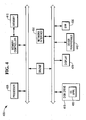
- FIG. 4 shows an example structure of a general-purpose computer system 400 that is suitable for implementing a hybrid self-service terminal like that described above.
- the computer system 400 includes some or all of the following components: one or more processors 405; one or more temporary data-storage components 410, such as volatile and nonvolatile memory modules; one or more persistent data-storage components 415, such as hard and floppy disk drives, CD-ROM drives, and magnetic tape drives; one or more devices such as a display monitor 420; one or more input devices such as an encrypted PIN pad (EPP) 430; and one or more other peripheral devices 440.
- processors 405 includes some or all of the following components: one or more processors 405; one or more temporary data-storage components 410, such as volatile and nonvolatile memory modules; one or more persistent data-storage components 415, such as hard and floppy disk drives, CD-ROM drives, and magnetic tape drives; one or more devices such as a display monitor 420; one or more input devices such as an encrypted
- the other peripheral devices 440 typically include any of a wide variety of electronic modules commonly found in self-service terminals in the financial-services industry, such a card reader, a cash dispenser, a cash acceptor, a coin dispenser, a coin acceptor, a check acceptor, and a receipt printer.
- the computer system 400 also includes a network interface card 450 that allows the terminal to connect, e.g., to the Internet and to a financial-transaction network, which typically includes a local area network (LAN) in a physical branch facility of the financial-services institution, as well as a larger wide area network (WAN) and an ATM switching network.
- LAN local area network
- WAN wide area network
- the SST also includes executable program code, in the form of one or more executable program modules, that is typically stored in one of the persistent storage components 415 and then copied into memory 410 at run-time.
- this program code includes a hybrid self-service application 435 like that described above.
- the processor 405 in the SST executes the program code by retrieving program instructions from memory in a prescribed order and acting on those instructions.
Landscapes
- Business, Economics & Management (AREA)
- Accounting & Taxation (AREA)
- Finance (AREA)
- Physics & Mathematics (AREA)
- General Physics & Mathematics (AREA)
- Engineering & Computer Science (AREA)
- Development Economics (AREA)
- Economics (AREA)
- Marketing (AREA)
- Strategic Management (AREA)
- Technology Law (AREA)
- General Business, Economics & Management (AREA)
- Theoretical Computer Science (AREA)
- Financial Or Insurance-Related Operations Such As Payment And Settlement (AREA)
Abstract
Description
- Self-service financial transactions, such as banking transactions conducted on automated teller machines (ATMs), typically take place on two types of machines, or self-service terminals (SSTs). The first of these machines follows a traditional "host-driven" approach to self-service transactions, in which the interaction between a user of the SST and the application software in the SST is driven by a transaction host in a financial-transaction network. In the host-driven approach, the SST leads the user through a prescribed series of transaction states, each having a corresponding video display screen that is delivered to the SST by the transaction host. The host-driven approach is a simple and popular approach that is used in the majority of ATMs worldwide. In the ATM industry, an industry standard known as "NDC" (the "states-and-screens" standard) has developed for ATM application software that uses this host-driven protocol.
- The second approach to self-service transactions - the "client-driven" approach" - involves the use of standard browser-based application software in the SST to drive interaction with the user. With this approach, the SST application software accesses the transaction host as necessary for authorization and fulfillment of financial transactions conducted by the user, but the SST application software itself, and not the transaction host, drives the SST's operation. The result is that SSTs following the client-driven approach provide more flexibility for SST owners, giving them greater control of both the content presented to the users of the SSTs and the overall flow of self-service transactions taking place on the SSTs. The client-driven approach also allows the SST to access web-based services, such Internet services or customer-relationship management (CRM) applications located on network servers, while a user is engaged with the SST.
- Despite all of the advantages of client-driven SSTs, however, owners of host-driven SSTs are reluctant to move wholesale to client-driven systems. Up to now, doing so would require the SST owners to replace all of their host-driven SSTs with client-driven SSTs, incurring tremendous cost along the way.
- Described below is a self-service terminal (SST) that allows a user to conduct one or more transactions through a remote transaction host during a user session. The SST includes a display module for use in presenting information to the user and a processing module that is configured to cause the SST to progress through a series of states. For each of the states, the SST receives from the transaction host an instruction to present on the display module a screen containing information corresponding to the state. At some point during the user session, the SST halts its progression through the series of states and presents on the display module a series of screens containing information received from a source other than the transaction host.
- Also described is an SST that includes a data-storage module storing first and second self-service application modules and a processing module configured to execute the first and second self-service application modules during the user session. When the processing module is executing the first self-service application module, the SST is configured to receive instructions from the transaction host prescribing a flow for the user session in the SST. When the processing module is executing the second self-service application module, the SST is configured to receive no instructions from the transaction host prescribing a flow for the user session in the SST.
- Embodiments of the present invention will now be described, by way of example, with reference to the accompanying drawings, in which:
-
FIG. 1 is a diagram showing a hybrid self-service terminal (SST) that is configured for operation under both the traditional host-driven approach and the client-driven approach. -
FIG. 2 is a diagram showing interaction between a traditional host-driven SST and a transaction host. -
FIG. 3 is a diagram showing interaction between a hybrid SST like that ofFIG. 1 and a transaction host. -
FIG. 4 is a diagram showing the structure of a general-purpose computer system suitable for use in implementing the hybrid SST ofFIG. 1 . -
FIG. 1 shows a hybrid self-service terminal (SST) 100 that is configured for operation under both the host-driven and client-driven approaches described above. Thehybrid SST 100 includes a self-service application that is grounded in the host-driven approach, but included among the transaction states through which theSST 100 progresses is a special "Exit" state that, at some point during the transaction flow, allows a client-driven application module to take control of theSST 100. - The hybrid SST 100 is typically built upon a traditional architecture that is common for financial-services SSTs. In the example of
FIG. 1 , the hybrid SST 100 is built upon a layered architecture in which a Microsoft Windows NT or XP operating system (OS) 110 supports atransaction platform 120 that follows the Extensions for Financial Services (XFS) interface standard, in particular the XFS standard as put forth by the European Committee for Standardization (CEN), known as "CEN/XFS." Aself service application 130 sits on top of the CEN/XFSplatform 120 and controls interaction between thehybrid SST 100 and users of the SST, primarily through a video display/browser 140 that appears on a monitor within the SST. The self-service application 130 also controls interaction between thehybrid SST 100 and atransaction host 175 in a financial-transaction network, as well as interaction with web-based servers, such astraditional Internet servers 185 and a customer-relationship management (CRM)server 195 that allows, e.g., a financial institution to direct targeted marketing or advertising campaigns to the user. Interactions between thehybrid SST 100 and thetransaction host 175 and between theSST 100 and the web-basedservers interface module 150 that operates under control of the self-service application 130. - Unlike in traditional SSTs, the self-
service application 130 in the hybrid SST 100 is a hybrid application that includes two distinct modules: a "host-driven"module 160 that follows the traditional host-driven approach to financial transactions, and a "client-driven"module 170 that follows the client-driven approach. When the SST operates under control of the host-drivenmodule 160, the SST's interaction with the user, and thus the display screens and input choices made available to the user, are driven by thetransaction host 175. When the SST operates under control of the client-drivenmodule 170, the SST's interaction with the user is driven by the self-service application 130 itself and not by thetransaction host 175. - In most cases, the client-driven
module 170 of the self-service application 130 includes some or all of the software components of a traditional client-driven self-service application. As described below, the functions performed by the client-drivenmodule 170 in thehybrid SST 100 often are no different than the functions performed by traditional client-driven SSTs. - The host-driven
module 160, on the other hand, is somewhat different than traditional host-driven self-service applications. While the host-drivenmodule 160 does step through a series of transaction states like a traditional host-driven application does, the host-drivenmodule 160 of thehybrid SST 100 includes a transaction state that does not appear in traditional host-driven applications - an "Exit" state that allows the host-drivenmodule 160 to hand control of thehybrid SST 100 to the client-drivenmodule 170 at some point during a user's interaction with the SST. In most systems as this hand-off occurs, the graphical display that is presented to the user remains consistent in appearance so that the user is unaware of any underlying changes. The "Exit" state and the operation of both the host-driven and client-driven modules are described in more detail below. -
FIG. 2 shows the operation of a standard host-drivenSST 200, where thetransaction host 210 with which the SST 200 interacts drives the states 2201...x through which theSST 200 progresses and drives the video-screen content associated with each state. The state in which the SST 200 resides at any given moment depends upon the user's actions in response to information presented in the screen corresponding to the previous state. In general, the user interacts with the SST 200 through several user-interface modules (e.g., a numbered key pad and multiple soft or hard keys within or adjacent to the video display) that allow the user to make selections from choices presented in the screens displayed on the video monitor. - In the example of
FIG. 2 , when a user engages the host-drivenSST 200, the SST enters an initial state (State 1) 2201, for which thetransaction host 210 delivers a subsequent video screen (Screen 1) 2301. The SST then progress to a subsequent state (State 2) 2202, for which thetransaction host 210 delivers a corresponding video screen (Screen 2) 2302. The host-driven SST 220 and thetransaction host 210 continue in this manner until the SST enters a final state (State X) 220x associated with a corresponding final screen (Screen X) 220x, at which the SST concludes the user session. -
FIG. 3 shows the operation of ahybrid SST 300 like that shown inFIG. 1 above. Like the standard host-driven SST 200 ofFIG. 2 , the hybrid SST 300 begins each user session by following the standard host-driven protocol, through which thehybrid SST 300 progresses through a series of transaction states 3201...x as atransaction host 310 delivers a corresponding series of video screens 3301...X. - In the example of
FIG. 3 , when a user engages thehybrid SST 300, the SST enters an initial state (State 1) 3201, for which thetransaction host 310 delivers a corresponding video screen (Screen 1) 3301. Thehybrid SST 300 then progresses to a subsequent state (State 2) 3202 for which thetransaction host 310 delivers a subsequent video screen (Screen 2) 3302, and so on. - At some point during this progression through states, however, the
hybrid SST 300 enters a special "Exit" state 320z for which there is no corresponding video screen in thetransaction host 310. Upon entering the "Exit" state, the host-driven module 340 (seeitem 160 inFIG. 1 above) of the SST's self-service application (130 inFIG. 1 above) hands control of the SST to the client-driven module 350 (see 170 inFIG. 1 above). The client-drivenmodule 350 then begins driving the SST's interaction with the user and thus the content displayed on the SST's video monitor. The client-drivenmodule 350 also begins controlling operation of the SST's network-interface module (170 inFIG. 1 above) and user-interface modules. As described above, this transition from the host-drivenmodule 340 to the client-drivenmodule 350 is meant to be transparent to the user of the SST. - In handing control of the SST over to the client-driven
module 350, the host-drivenmodule 340 delivers certain transaction-critical information to the client-driven module 350 - information such as card-track data gathered from a user's bank card and PIN data entered into the SST through an encrypted PIN pad. Passing this information between modules allows the client-drivenmodule 350 to work with thetransaction host 310 in carrying out some or all of the transactions requested by the user. - In most systems, the client-driven
module 350 uses a standard messaging protocol, such as the HTTP/SOAP protocol, and a standard document format, such as HTML or XML format, to drive the SST's interaction with the user. Upon taking control of thehybrid SST 300 from the host-drivenmodule 340, the client-drivenmodule 350 delivers an initial document 3601 for display on the video monitor. What the client-drivenmodule 350 does next typically depends on a wide variety of factors, including the user's actions in response to the information presented in the video display, the availability of hardware devices (such as a cash dispenser and a receipt printer) in the SST, and the availability and/or action of the transaction host. In general, the client-drivenmodule 350 next delivers any one of several subsequent documents 3602...Y for display on the video monitor to present the user with a new set of information and/or choices. While under control of the client-drivenmodule 350, the hybrid SST 300 receives documents 3601...Y from any of a variety of sources, including the Internet or CRM IFX servers described above. In some cases, some or all of the documents originate within the hybrid SST 300 itself (e.g., the documents are stored within the hybrid SST 100). - Once the client-driven
module 350 has completed its interaction with the user, it returns control of thehybrid SST 300 to the host-drivenmodule 340. From this point, thehybrid SST 300 continues its progression through the series of state transitions prescribed by thetransaction host 310, each leading to the display of a corresponding screen delivered by the host. As with thetraditional SST 200 ofFIG. 2 , thehybrid SST 200 and thetransaction host 310 continue in this manner until thehybrid SST 300 reaches its final state (State X) 220x and terminates the user session. -
FIG. 4 shows an example structure of a general-purpose computer system 400 that is suitable for implementing a hybrid self-service terminal like that described above. Thecomputer system 400 includes some or all of the following components: one ormore processors 405; one or more temporary data-storage components 410, such as volatile and nonvolatile memory modules; one or more persistent data-storage components 415, such as hard and floppy disk drives, CD-ROM drives, and magnetic tape drives; one or more devices such as adisplay monitor 420; one or more input devices such as an encrypted PIN pad (EPP) 430; and one or more otherperipheral devices 440. The otherperipheral devices 440 typically include any of a wide variety of electronic modules commonly found in self-service terminals in the financial-services industry, such a card reader, a cash dispenser, a cash acceptor, a coin dispenser, a coin acceptor, a check acceptor, and a receipt printer. Thecomputer system 400 also includes anetwork interface card 450 that allows the terminal to connect, e.g., to the Internet and to a financial-transaction network, which typically includes a local area network (LAN) in a physical branch facility of the financial-services institution, as well as a larger wide area network (WAN) and an ATM switching network. - The SST also includes executable program code, in the form of one or more executable program modules, that is typically stored in one of the
persistent storage components 415 and then copied intomemory 410 at run-time. In the SST described here, this program code includes a hybrid self-service application 435 like that described above. Theprocessor 405 in the SST executes the program code by retrieving program instructions from memory in a prescribed order and acting on those instructions. - The text above describes one or more specific embodiments of a broader invention. The invention also is carried out in a variety of alternative embodiments and thus is not limited to those described here. Many other embodiments are also within the scope of the following claims.
Claims (10)
Applications Claiming Priority (1)
| Application Number | Priority Date | Filing Date | Title |
|---|---|---|---|
| US11/642,094 US7575156B2 (en) | 2006-12-20 | 2006-12-20 | Conducting financial transactions under multiple protocols in a single user session within a self-service terminal |
Publications (1)
| Publication Number | Publication Date |
|---|---|
| EP1942473A1 true EP1942473A1 (en) | 2008-07-09 |
Family
ID=39167681
Family Applications (1)
| Application Number | Title | Priority Date | Filing Date |
|---|---|---|---|
| EP07254919A Withdrawn EP1942473A1 (en) | 2006-12-20 | 2007-12-18 | Conducting financial transactions under multiple protocols in a single user session within a self-service terminal |
Country Status (2)
| Country | Link |
|---|---|
| US (1) | US7575156B2 (en) |
| EP (1) | EP1942473A1 (en) |
Cited By (2)
| Publication number | Priority date | Publication date | Assignee | Title |
|---|---|---|---|---|
| EP2704116A3 (en) * | 2012-08-27 | 2015-06-10 | NCR Corporation | Transaction flow |
| EP2435996B1 (en) * | 2009-05-29 | 2016-06-22 | I-Design Multi Media Limited | A user terminal system and method |
Families Citing this family (2)
| Publication number | Priority date | Publication date | Assignee | Title |
|---|---|---|---|---|
| US8413889B1 (en) * | 1998-11-27 | 2013-04-09 | Diebold, Incorporated | Banking system operated responsive to data bearing records |
| WO2014071367A2 (en) | 2012-11-05 | 2014-05-08 | Rodney Aiglstorfer | Systems and methods for providing financial service extensions |
Citations (4)
| Publication number | Priority date | Publication date | Assignee | Title |
|---|---|---|---|---|
| GB2319102A (en) * | 1998-01-30 | 1998-05-13 | Ibm | A security module for a transaction processing system |
| EP0961247A2 (en) * | 1998-05-27 | 1999-12-01 | Diebold, Incorporated | Automated transaction machine which operates responsive to HTML documents accessed with a browser |
| US20040205491A1 (en) * | 2001-05-30 | 2004-10-14 | Aravinda Korala | Software and method for self-service applications |
| US20050086600A1 (en) * | 2003-10-20 | 2005-04-21 | Ncr Corporation | Self-service terminal and network of such terminals |
Family Cites Families (6)
| Publication number | Priority date | Publication date | Assignee | Title |
|---|---|---|---|---|
| US7725393B2 (en) * | 1996-11-27 | 2010-05-25 | Diebold Self-Service Systems A Division Of Diebold, Incorporated | Application service provider and automated transaction machine system and method |
| US6381626B1 (en) * | 1999-04-22 | 2002-04-30 | Electronic Data Systems Corporation | ATM video advertising |
| GB0009568D0 (en) * | 2000-04-19 | 2000-06-07 | Ncr Int Inc | Self-service terminal |
| GB2374450A (en) * | 2001-04-10 | 2002-10-16 | Ncr Int Inc | Self-service terminal with personalised display |
| US8429077B2 (en) * | 2001-10-05 | 2013-04-23 | Jpmorgan Chase Bank, N.A. | Web enabled bank teller machine |
| US6959865B2 (en) * | 2002-03-28 | 2005-11-01 | Hand Held Products, Inc. | Customizable optical reader |
-
2006
- 2006-12-20 US US11/642,094 patent/US7575156B2/en active Active
-
2007
- 2007-12-18 EP EP07254919A patent/EP1942473A1/en not_active Withdrawn
Patent Citations (4)
| Publication number | Priority date | Publication date | Assignee | Title |
|---|---|---|---|---|
| GB2319102A (en) * | 1998-01-30 | 1998-05-13 | Ibm | A security module for a transaction processing system |
| EP0961247A2 (en) * | 1998-05-27 | 1999-12-01 | Diebold, Incorporated | Automated transaction machine which operates responsive to HTML documents accessed with a browser |
| US20040205491A1 (en) * | 2001-05-30 | 2004-10-14 | Aravinda Korala | Software and method for self-service applications |
| US20050086600A1 (en) * | 2003-10-20 | 2005-04-21 | Ncr Corporation | Self-service terminal and network of such terminals |
Cited By (3)
| Publication number | Priority date | Publication date | Assignee | Title |
|---|---|---|---|---|
| EP2435996B1 (en) * | 2009-05-29 | 2016-06-22 | I-Design Multi Media Limited | A user terminal system and method |
| EP2704116A3 (en) * | 2012-08-27 | 2015-06-10 | NCR Corporation | Transaction flow |
| US11132657B2 (en) | 2012-08-27 | 2021-09-28 | Ncr Corporation | Transaction flow |
Also Published As
| Publication number | Publication date |
|---|---|
| US20080154620A1 (en) | 2008-06-26 |
| US7575156B2 (en) | 2009-08-18 |
Similar Documents
| Publication | Publication Date | Title |
|---|---|---|
| US7494054B2 (en) | Cash dispensing automated banking machine maintenance system and method | |
| CN1124010C (en) | Kiosk and server connected to computer network | |
| US6520410B2 (en) | Method of developing platform specific applications for an automated banking machine | |
| US8490864B2 (en) | Self-service machine contact me now | |
| US20030120597A1 (en) | Application service provider and automated transaction machine system and method | |
| CZ20031173A3 (en) | System and method for providing safety to financial service terminals with document-controlled interface | |
| US7025255B1 (en) | Application service provider and automated transaction machine system and method | |
| CN101329792A (en) | Apparatus and method for providing transaction services | |
| CZ20031172A3 (en) | System and method for monitoring a plurality of financial service terminals with document-controlled interface | |
| US8444051B2 (en) | Self-service machine problem code | |
| AU2011237472A1 (en) | Computer implemented system and method for storing a user's location in a virtual environment | |
| US20090083700A1 (en) | Automated code generation for an automated teller machine | |
| US7149723B2 (en) | System and method for determining computer access with electronic payment mechanism | |
| US20060178856A1 (en) | Systems and methods for monitoring transaction devices | |
| US7575156B2 (en) | Conducting financial transactions under multiple protocols in a single user session within a self-service terminal | |
| US20190325373A1 (en) | System and method for monitoring usage of an information kiosk | |
| US20040205491A1 (en) | Software and method for self-service applications | |
| US20030020747A1 (en) | User input peripheral device substitution for web commerce delivery | |
| AU2009295352B2 (en) | User interface | |
| US12360738B1 (en) | Voice interaction scripts | |
| EP3007120A1 (en) | Operating a banking application in a terminal computer, with a service module to access devices and to provide services | |
| US7577903B1 (en) | Defining a process by a plurality of pages defined in a mark-up language | |
| EP3007144A1 (en) | Dynamic replacement of self-service terminal (sst) states flow and screens handling | |
| US8196812B2 (en) | Conducting multiple financial transactions on a self-service terminal | |
| JP2026056521A (en) | Point of Sale (POS) Management Peripheral Diagnostic System |
Legal Events
| Date | Code | Title | Description |
|---|---|---|---|
| PUAI | Public reference made under article 153(3) epc to a published international application that has entered the european phase |
Free format text: ORIGINAL CODE: 0009012 |
|
| AK | Designated contracting states |
Kind code of ref document: A1 Designated state(s): AT BE BG CH CY CZ DE DK EE ES FI FR GB GR HU IE IS IT LI LT LU LV MC MT NL PL PT RO SE SI SK TR |
|
| AX | Request for extension of the european patent |
Extension state: AL BA HR MK RS |
|
| 17P | Request for examination filed |
Effective date: 20090109 |
|
| AKX | Designation fees paid |
Designated state(s): DE ES FR GB HU IT |
|
| 17Q | First examination report despatched |
Effective date: 20090416 |
|
| STAA | Information on the status of an ep patent application or granted ep patent |
Free format text: STATUS: THE APPLICATION HAS BEEN WITHDRAWN |
|
| 18W | Application withdrawn |
Effective date: 20090826 |