EP1939762A1 - Method for managing content for a mobile device and remote gateway for managing content - Google Patents
Method for managing content for a mobile device and remote gateway for managing content Download PDFInfo
- Publication number
- EP1939762A1 EP1939762A1 EP07005799A EP07005799A EP1939762A1 EP 1939762 A1 EP1939762 A1 EP 1939762A1 EP 07005799 A EP07005799 A EP 07005799A EP 07005799 A EP07005799 A EP 07005799A EP 1939762 A1 EP1939762 A1 EP 1939762A1
- Authority
- EP
- European Patent Office
- Prior art keywords
- content
- mobile device
- gateway
- manager
- remote
- Prior art date
- Legal status (The legal status is an assumption and is not a legal conclusion. Google has not performed a legal analysis and makes no representation as to the accuracy of the status listed.)
- Granted
Links
Images


Classifications
-
- G—PHYSICS
- G06—COMPUTING OR CALCULATING; COUNTING
- G06F—ELECTRIC DIGITAL DATA PROCESSING
- G06F16/00—Information retrieval; Database structures therefor; File system structures therefor
- G06F16/90—Details of database functions independent of the retrieved data types
- G06F16/95—Retrieval from the web
- G06F16/957—Browsing optimisation, e.g. caching or content distillation
- G06F16/9577—Optimising the visualization of content, e.g. distillation of HTML documents
-
- H—ELECTRICITY
- H04—ELECTRIC COMMUNICATION TECHNIQUE
- H04L—TRANSMISSION OF DIGITAL INFORMATION, e.g. TELEGRAPHIC COMMUNICATION
- H04L67/00—Network arrangements or protocols for supporting network services or applications
- H04L67/01—Protocols
- H04L67/02—Protocols based on web technology, e.g. hypertext transfer protocol [HTTP]
-
- H—ELECTRICITY
- H04—ELECTRIC COMMUNICATION TECHNIQUE
- H04L—TRANSMISSION OF DIGITAL INFORMATION, e.g. TELEGRAPHIC COMMUNICATION
- H04L67/00—Network arrangements or protocols for supporting network services or applications
- H04L67/50—Network services
- H04L67/56—Provisioning of proxy services
- H04L67/565—Conversion or adaptation of application format or content
-
- H—ELECTRICITY
- H04—ELECTRIC COMMUNICATION TECHNIQUE
- H04L—TRANSMISSION OF DIGITAL INFORMATION, e.g. TELEGRAPHIC COMMUNICATION
- H04L67/00—Network arrangements or protocols for supporting network services or applications
- H04L67/50—Network services
- H04L67/56—Provisioning of proxy services
- H04L67/565—Conversion or adaptation of application format or content
- H04L67/5651—Reducing the amount or size of exchanged application data
Definitions
- the present invention relates to a method for managing content for a mobile device and a remote gateway for managing the content for the mobile device.
- Typical wireless network architectures are composed of a server computer, a network, and a mobile device, such as a computer, a phone, or a Personal Data Assistant (PDA), etc.
- a thin client On the mobile device a thin client may be installed.
- a thin client is referred to as a program on a client device which displays a user interface for a server-based application.
- Thin-clients run minimal or no user application code, i.e. most (if not all) of the application code runs on the server. Examples of thin-clients are Web Browsers, Citrix, X-Windows and PCAnywhere.
- a network architecture of a wireless thin-client, server centric system is described in US 2003 / 0065715 A1 , which proposes a Mobile Classic Blend ("MCB") wireless system.
- the MCB wireless system has a server component, client component, and application component for building thin-client wireless applications.
- the MCB wireless system allows server-centric programming such that developers do not have to write any client code, yet the developers can create a thin-client wireless application that keeps the look-and-feel of a standalone, native PDA application.
- the problem to be solved by the present invention is thus to provide a solution for managing content for mobile devices such that it can easily be made available to the user of a thin client application.
- the present invention is based on the finding that an automatic back-up of content is suitable for solving this problem.
- the present invention relates to a method for managing content for a mobile device within a communication network comprising a network server, at least one remote gateway for a thin client application, at least one management unit comprised by the remote gateway and at least one mobile device.
- the method is characterized in that the remote gateway upon identification of a request from a mobile device transmitted within a thin client application and relating to transmission of content to and/or from the mobile device establishes a copy of the respective content.
- the communication network is preferably a network of computer networks and will hereinafter also be referred to as the Internet.
- the communication network can be accessed from a mobile device via a mobile communications network, such as GSM or UMTS based networks.
- the mobile device may hence be a mobile phone or any other communication terminal for such networks.
- the mobile device is set up for mobile communication within the mobile communication network and can thus establish a communication with a remote gateway.
- the remote gateway is a network entity, such as a server and generally represents the entry point or node of the Internet interfacing with the mobile communications network.
- At least one application is installed and/or executed.
- This application may for example be a browser application for browsing websites of the Internet.
- This server-based application may be accessed via the mobile device.
- Such access is realized via a thin client application.
- the thin client application which will hereinafter also be referred to as the thin client, is preferably a program installed on the mobile device for remote access to a server-based application installed and/or executed on the remote gateway for display of the user interface of the server-based application on the mobile device.
- requests may be transmitted from the mobile device to the remote gateway. Such a request may be a selection of options displayed on the mobile device via the remote gateway.
- the mobile device via the thin client application installed thereon, serves as a mere input and output device for a server-based application executed on the remote gateway.
- the remote gateway will initiate steps for managing the content.
- the identification of the request within the thin client application is preferably, the identification of a function or option selected within the server based application via the thin client application. This function or option may be the selection of a download or upload option displayed within a browser application, executed on the remote gateway. The request for downloading or uploading of content is thus initiated via the thin client application and executed on the remote gateway.
- management units can be provided. The management unit or management units serve for managing content, which is used within the server-based application to be accessed via the thin client application.
- the remote gateway By identifying or extracting a request within the thin client application at the remote gateway, which is related to transmission of content, the loading of content to or from the mobile device can be tracked. According to the present invention the remote gateway initiates the establishment of a copy of the content, once a request relating to the transmission of this content is identified. Such a request may be the selection of a download or upload option displayed at the mobile device via the thin client application from the remote gateway.
- Content may include applications, such as games and/or data files such as audio or video data files, for example ring tones or pictures.
- the inventive method provides for increased reliability of completeness of the back-up data.
- the method provides for improved user experience, as no separate command for backing-up of data has to be issued by the user.
- the copy of the content is established by at least one of the management units.
- the management unit or units provided in or connected to the remote gateway serve for managing the transmission of content to and from the mobile device.
- the download or upload of content is being triggered by a request within the thin client application.
- a transmission of content within the thin client application without respective extensions to the architecture is not possible.
- management units for managing the transmission of content are provided. By using these units for establishing a copy of the transmitted content, the provision of a separate unit for copying the content is not necessary.
- the establishment of a copy at the management unit during the transmission of the content does not affect the transmission time and thereby provides the user with a better experience.
- the management unit may be a download manager of the remote gateway for managing the download of content to the mobile device. This management unit may be triggered upon identification of a request for a download within the thin client application. This download extension of the thin client architecture for example allows for transmission of content to a mobile device to be performed, even though the browsing application is executed on the remote gateway.
- the download manager preferably communicates with a download client which is installed on the mobile device.
- the management unit may be an upload manager for managing the upload of content from the mobile device.
- the transmission of content from the mobile device to the gateway and preferably to a network server of the communication network, e.g. the Internet, will be initiated upon identification of a request within the thin client application for uploading content.
- the upload manager communicates with an upload client installed on the mobile device.
- the management unit may be a control unit, in particular a back-up manager for managing copies of content.
- This management unit is preferably not in direct communication with the mobile device.
- the control unit rather communicates with other units of or connected to the remote gateway for receiving, providing, establishing and/or handling copies of content.
- a copy may be received at the back-up manager from an upload manager or a download manager, when an upload request or a download request is identified within the thin client application.
- the back-up manager may provide copies to the download manager, for transmittal to the mobile device of the user. This transmission of copies will be described later in detail.
- the establishing or making of a copy of content at the back-up manager may be necessary, if the back-up manager is included in the transmission of content before a download manager for the download process or before the upload manager in an upload process.
- the handling of copies of content at the back-up manager may include sorting the copies, providing the copies to a database and/or retrieving copies of the content from the database.
- the back-up manager may also provide information on database entries to be displayed on a website.
- the back-up manager is directly or indirectly connected to a remote display gateway of the remote gateway, where commands of the thin client application are received and processed. Due to this link of the back-up manager to the remote display gateway, no separate command from the user for backing up data is necessary.
- the back-up will rather be triggered by a command issued via the thin client application and in particular by at least one of the management units, e.g. the upload manager or download manager, which is activated or triggered as a result of the requested transmission of content.
- the copy of the content is transmitted to a database connected to the remote gateway.
- a database connected to the remote gateway.
- Connected in this context is to be understood as being accessible from at least one management unit of the remote gateway.
- the database could thus be located on the remote gateway, i.e. be included in the remote gateway.
- the transmission to the database is preferably performed via the back-up manager.
- the copies of the content are stored in the database grouped, e.g. sorted by user or linked a user. This sorting of the copies of the content will allow individual users to access all of their personal content which has been transmitted to and/or from the mobile device at a later stage. Multiple users may have the same content, i.e. copies of content, stored in the database. The copies of the content are therefore preferably linked to a specific user. Thereby only one copy of content may serve for several users.
- the copy of the content can preferably be accessed by the user of the mobile device via the thin client application on the mobile device. Accessing the copies of content in this context is to be understood as viewing the copy of the content, downloading the copy of the content and/or editing the copy of the content, in particular deleting the copy of the content. For example, deleting of copies of content from the database may for example be suitable if the user of the mobile device deletes content from the mobile device.
- a trigger may be initialized on the mobile device.
- the trigger may be a flag or a label assigned to the content.
- the trigger may be transmitted to the remote gateway during an existing communication connection used for the thin client application. Alternatively, upon a subsequent re-connection to the remote gateway the trigger, e.g.
- the back-up manager will then execute a respective deletion of the copy in the database.
- the user may define the settings for the handling of such a trigger. For example, deletion of the copy of content may be postponed for a given time, e.g. one month, after the actual deletion of the content at the mobile device.
- the access of the user to copies of content stored in the database may for example be realized by providing a website with the back-up data.
- This website can be viewed and accessed by the user of the mobile device via the thin client application wherein the browser application will be executed on the remote gateway.
- the download of back-up data will be possible via a management unit of the remote gateway, in particular the download manager.
- the request for downloading from the back-up website will be identified by the remote gateway and an establishment of a copy of the content will be avoided for the download of copies of content.
- the delivery of content from the gateway to the mobile device and from the mobile device to the remote gateway is performed via the communication connection of the mobile device to the remote gateway which is used for the thin client application.
- This communication connection may be a communication connection via the internet protocol (IP).
- IP internet protocol
- This physical connection has originally been set up by the user when accessing the remote gateway.
- the download manager may use WAP push capabilities within the mobile communication network to deliver the copy of the content to the user.
- the WAP push may be performed by using the session initiation application (SIA).
- the present invention relates to a remote gateway for managing content for at least one mobile device of a communication network
- the remote gateway comprises a remote display gateway for providing display data for displaying at least a user interface on a mobile device within a thin client application.
- the remote gateway is characterized in that it comprises at least one management unit which is connected to a database for storing at least one copy of content delivered to and/or from the mobile device.
- One of the management units is preferably a control unit, in particular back-up manager, for establishing a copy of content received from or delivered to the mobile device and/or for handling entries of the database.
- the establishing of a copy of content may be performed by the back-up manager upon receipt of the content from a download manager.
- the remote gateway in particular the remote display gateway, when triggering the download manager to download the content may transmit the content to the back-up manager first. After the copy of the content has been established, the back-up manager may then transmit the content to the download manager for downloading.
- the download manager when first triggered by the remote gateway, will preferably initiate negotiations with the mobile device for memory and other capabilities of the mobile device, the back-up manager can establish the copy in the meantime.
- the back-up manager may receive a copy of content from a download manager.
- the upload manager may direct the content to the back-up manager for further transmission to the remote gateway and, ultimately, to a network server.
- a copy of the uploaded content is made at the upload manager or at the back-up manager.
- the handling or controlling of entries of the database by the back-up manager may comprise the addition, modification and/or deletion of database entries.
- control unit i.e. the back-up manager
- the control unit is connected to a download manager and/or to the remote display gateway via a bidirectional connection.
- the bidirectional communication connection between the download manager and the back-up manager is preferable to allow the user to obtain the copies of content at his mobile device.
- the download manager When downloading content from a website the download manager will provide the control unit with the content and/or a copy of the content. If the user at a later stage wants to download copies from the back-up database, the back-up manager will provide the download manager with the respective copies.
- the bidirectional connection between the back-up manager and the remote display gateway is beneficial, in that commands or settings may be transmitted from the remote display gateway to the back-up manager and back-up data entries may be made available to the remote display gateway, so that the user may view and access the database entries via the thin client application from his mobile device.
- the units of the remote display in particular the management units, i.e. the upload manager, the download manager and / or the back-up manager, may be implemented as software or hardware components at the remote gateway.
- the remote gateway is preferably designed for the inventive method.
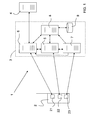
- the system shown in Figure 1 comprises a mobile device, depicted as a mobile phone 2.
- a remote display client 21 is provided on the mobile phone 2.
- This client 21 may be software installed on the mobile phone 2.
- the thin client application allows remote access and display of a server-based application, such as a browser, installed and / or executed on a remote gateway 3.
- the remote gateway 3 comprises a remote display gateway 6 as well as three management units 5, 7 and 8.
- the remote display gateway 6 is connected to or can access at least one network server 4.
- the network server might host a website or a portal. With a browser application installed and executed on the remote display gateway 6 the user of the mobile device 2 can view the respective websites via the remote display client 21.
- the management unit 5 is a download manager for downloading content from the remote display gateway 6 or a network server 4 via the remote display gateway 6 to the mobile phone 2 which interacts with the remote display gateway 6 via a thin client application.
- a download client 22 is installed on the mobile phone 2.
- the download client 22 may be software on the mobile device 2.
- Management unit 7 is an upload manager for uploading content from the mobile phone 2 to the remote gateway 3 which interacts with the mobile phone 2 via a thin client application.
- an upload client 23 is installed on the mobile phone 2.
- the upload client 23 may be software on the mobile device 2.
- Management unit 8 is a control unit, in particular a back-up manager. This management unit 8 does not directly communicate with the mobile phone 2 or clients 21, 22, 23 installed thereon.
- the back-up manager 8 is, however, connected to a database 9 for storing copies of content.
- the database 9 is shown as being part of the remote gateway 3, i.e. being included therein. It is, however, also possible that the database 9 is a separate unit and is connected to the remote gateway 3 for exchange of information or data.
- a user may initiate a thin client application and for example access a browser application executed on the remote gateway 3. Thereby the browser will be opened on a remote display gateway 6 from the mobile phone 2. If the user selects a link, for example to a specific website, the remote display gateway 6 will connect to the respective network server 4, from which data should be retrieved and displayed to the user.
- the network server 4 may be a portal allowing access to various databases and other resources. The data from the network server 4 will be displayed to the user via the remote display gateway 6, which forwards the necessary display data to the remote display client 21 on the mobile phone.
- a respective signal will be received at the remote display gateway 6.
- This specific request may be identified at the remote display gateway 6 by monitoring the actions related to the requests from the user. This means, the remote display gateway 6 will not only recognize the selection of a specific option within the server based application, e.g. browser application, by the user, but will also identify, that this selection is related to transmission of content to the mobile phone 2.
- the remote display gateway 6 accesses the network server 4 to initiate the download of content from the network server 4 to the remote gateway 3.
- the remote display gateway 6 will trigger the download manager 5 to initiate the download of content to the mobile device 2.
- This initiation of download to the mobile device 2, in particular to the download client 22, may comprise negotiations on device capabilities of the mobile phone 2.
- the device capabilities may be determined to assure that the content to be downloaded or transferred to the mobile device 2 is supported by the mobile device 2.
- the download manager 5 will receive the content to be downloaded from the remote display gateway 6.
- the download manager 5 will establish a copy of the content. This copy of the content will be provided to the back-up manager 8.
- the download manager 5 may trigger the back-up manager 8 to create a back-up copy.
- the copy of content will be transmitted to the database 9 for storage.
- the back-up manager 8 will store the copy of the content in the database 9 in association with user information relating to the user of the mobile phone 2, preferably linked to the user.
- the download manager 5 will provide the content to the mobile phone 2, in particular to the download client 22.
- the uploading of the content will be managed by the upload manager 7.
- the user after initiating a browser session via the thin client application to the remote display gateway 6 may select a homepage or webpage to which content should be uploaded.
- Such content may for example be personal data, such as pictures, contact information and/or audio files.
- the upload manager 7 will be triggered.
- the upload manager 7 provides the upload client 23 with the information that content is to be uploaded from the mobile phone 2.
- the upload client 23 may start an application on the mobile device 2, such as a local browser. The user can then select the content to be uploaded. Once the user selected the content, the upload client 23 will transmit the content to the upload manager 7.
- the upload manager 7 Upon receipt of the content the upload manager 7 will establish a copy of the content and will provide the copy to the back-up manager 8. Alternatively, the upload manager 7 may trigger the back-up manager 8 to create a back-up copy.
- the back-up manager 8 stores the copy of the content in the database 9 connected thereto. Also in this case the back-up manager 8 will serve as an automated back-up mechanism for content transmitted from the mobile phone 2.
- the behaviour of the back-up manager 8 and/or the upload manager 7 and download manager 5 can be configured by the user.
- the user can select whether an automatic synchronisation of content between the mobile phone 2 and the back-up manager 8, respectively the database 9, should be performed.
- the user may configure the back-up manager 8 to only perform a back-up upon request.
- the handling of data stored in the database 9 can be configured by the user via the back-up manager 8.
- settings may be used where content deleted from the mobile phone 2 will be kept in the database 9 for a given period of time.
- the behaviour or settings of the management units 5, 7, 8 can be entered by the user via the thin client application. In this case, for example a website for determining settings may be provided and can be accessed by the browser installed on the remote display gateway 6. Alternatively, an interface for access to the management units from a PC via the Internet may be provided.
- the copies of content stored in the database 9 will be available to the user of the mobile phone 2. Thereby the user can retrieve lost content files.
- the access to the content files in database 9 will be provided via the remote display gateway 6.
- the content of each user may be displayed to the respective user via a website. This website can be viewed by the user of the mobile phone 2 via the thin client application. If the user selects one or more content files to be downloaded from the back-up website to the mobile device 2, the back-up manager 8 will provide the respective content to the download manager 5.
- download manager 5 will receive the content from the back-up manager 8 instead of from the remote display gateway 6, no copy of the received content will be established at the download manager 5 in this case.
- the content retrieved from the database 9 can then be downloaded to the download client 22 on the mobile phone 2.
- a trigger may be sent from the mobile phone 2 to the remote gateway 3.
- the trigger will initiate the deletion of the back-up version of the content from the database 9.
- the content will only be deleted after a preset time period, e.g. one month after deletion from the mobile device 2. Thereby an additional security can be provided by the back-up system.
- Transmission of the trigger to the remote gateway will be performed according to the settings defined or chosen by the user. For example, the setting may be for the mobile phone 2 to connect to the remote gateway 3, when a trigger is set. Alternatively, the trigger may be transmitted once a connection with the remote gateway 3 is detected.
- a user wants to restore all of his personal data on his mobile phone 2, for example a new mobile phone 2, he may browse via the thin client application and browser application installed on the remote display gateway 6 to the back-up website which is offered by the back-up manager 8. The user can then select how he wants the restore to take place. For example all data may be selected. Alternatively, the user can specify the specific data he wants to restore on his mobile device. Such specific data may for example be only contacts.
- the back-up manager retrieves all or only the selected data from the back-up database and triggers the delivery of the data to the mobile phone 2. The delivery is performed via the download manager 5 which will ultimately transmit the data to the mobile phone 2.
- an automatic back-up facility for content is enabled by a back-up manager.
- the back-up manager is preferably a software unit, in particular an application stored and executed on the remote gateway.
- the back-up manager interfaces with a download manager and an upload manager.
- the invention provides an easy-to-use back-up facility which is automated. This facility allows users to retrieve content that has been accidentally deleted from their mobile device or to recover content whenever a mobile device gets stolen or broken.
Landscapes
- Engineering & Computer Science (AREA)
- Databases & Information Systems (AREA)
- Theoretical Computer Science (AREA)
- Data Mining & Analysis (AREA)
- Physics & Mathematics (AREA)
- General Engineering & Computer Science (AREA)
- General Physics & Mathematics (AREA)
- Information Transfer Between Computers (AREA)
Abstract
Description
- The present invention relates to a method for managing content for a mobile device and a remote gateway for managing the content for the mobile device.
- Typical wireless network architectures are composed of a server computer, a network, and a mobile device, such as a computer, a phone, or a Personal Data Assistant (PDA), etc. On the mobile device a thin client may be installed. A thin client is referred to as a program on a client device which displays a user interface for a server-based application. Thin-clients run minimal or no user application code, i.e. most (if not all) of the application code runs on the server. Examples of thin-clients are Web Browsers, Citrix, X-Windows and PCAnywhere.
- A network architecture of a wireless thin-client, server centric system is described in
US 2003 / 0065715 A1 , which proposes a Mobile Classic Blend ("MCB") wireless system. The MCB wireless system has a server component, client component, and application component for building thin-client wireless applications. The MCB wireless system allows server-centric programming such that developers do not have to write any client code, yet the developers can create a thin-client wireless application that keeps the look-and-feel of a standalone, native PDA application. - When users currently are using a thin client technology based browsing solution for browsing the Internet from a mobile device, all content which is downloaded will be stored at the remote server and will only be displayed on the mobile device. In the pending unpublished patent application
EP 06 027 109.5 - If the user, however, accidentally deletes content from his mobile phone, looses his mobile phone or if the mobile phone is damaged, content which was previously downloaded will be lost. Also content that was only available on the phone and was subsequently uploaded to a website will no longer be readily available to the user. In particular, if a considerable number of pieces of content have been uploaded or downloaded, it may be difficult to collect all the content again after loosing a phone.
- The problem to be solved by the present invention is thus to provide a solution for managing content for mobile devices such that it can easily be made available to the user of a thin client application.
- The present invention is based on the finding that an automatic back-up of content is suitable for solving this problem.
- According to a first aspect, the present invention relates to a method for managing content for a mobile device within a communication network comprising a network server, at least one remote gateway for a thin client application, at least one management unit comprised by the remote gateway and at least one mobile device. The method is characterized in that the remote gateway upon identification of a request from a mobile device transmitted within a thin client application and relating to transmission of content to and/or from the mobile device establishes a copy of the respective content.
- The communication network according to the present invention is preferably a network of computer networks and will hereinafter also be referred to as the Internet. The communication network can be accessed from a mobile device via a mobile communications network, such as GSM or UMTS based networks. The mobile device may hence be a mobile phone or any other communication terminal for such networks. The mobile device is set up for mobile communication within the mobile communication network and can thus establish a communication with a remote gateway. The remote gateway is a network entity, such as a server and generally represents the entry point or node of the Internet interfacing with the mobile communications network.
- On the remote gateway or on a server connected to the remote gateway according to the present invention at least one application is installed and/or executed. This application may for example be a browser application for browsing websites of the Internet. This server-based application may be accessed via the mobile device. Such access is realized via a thin client application. The thin client application which will hereinafter also be referred to as the thin client, is preferably a program installed on the mobile device for remote access to a server-based application installed and/or executed on the remote gateway for display of the user interface of the server-based application on the mobile device. Within the thin client application requests may be transmitted from the mobile device to the remote gateway. Such a request may be a selection of options displayed on the mobile device via the remote gateway. The mobile device, via the thin client application installed thereon, serves as a mere input and output device for a server-based application executed on the remote gateway.
- If a specific request relating to transmission of content is identified within the thin client application at the remote gateway, the remote gateway will initiate steps for managing the content. The identification of the request within the thin client application is preferably, the identification of a function or option selected within the server based application via the thin client application. This function or option may be the selection of a download or upload option displayed within a browser application, executed on the remote gateway. The request for downloading or uploading of content is thus initiated via the thin client application and executed on the remote gateway. In the remote gateway or connected to the remote gateway management units can be provided. The management unit or management units serve for managing content, which is used within the server-based application to be accessed via the thin client application. By identifying or extracting a request within the thin client application at the remote gateway, which is related to transmission of content, the loading of content to or from the mobile device can be tracked. According to the present invention the remote gateway initiates the establishment of a copy of the content, once a request relating to the transmission of this content is identified. Such a request may be the selection of a download or upload option displayed at the mobile device via the thin client application from the remote gateway. Content may include applications, such as games and/or data files such as audio or video data files, for example ring tones or pictures.
- By establishing a copy of such content at the remote gateway, a back-up of the content transmitted to or from the mobile device can be realized. As this back-up is automatically established, when a request for transmission of content to or from the mobile device is determined, the inventive method provides for increased reliability of completeness of the back-up data. In addition, the method provides for improved user experience, as no separate command for backing-up of data has to be issued by the user.
- According to one embodiment, the copy of the content is established by at least one of the management units. The management unit or units provided in or connected to the remote gateway serve for managing the transmission of content to and from the mobile device. The download or upload of content is being triggered by a request within the thin client application. A transmission of content within the thin client application without respective extensions to the architecture is not possible. Hence, management units for managing the transmission of content are provided. By using these units for establishing a copy of the transmitted content, the provision of a separate unit for copying the content is not necessary. In addition, the establishment of a copy at the management unit during the transmission of the content does not affect the transmission time and thereby provides the user with a better experience.
- The management unit may be a download manager of the remote gateway for managing the download of content to the mobile device. This management unit may be triggered upon identification of a request for a download within the thin client application. This download extension of the thin client architecture for example allows for transmission of content to a mobile device to be performed, even though the browsing application is executed on the remote gateway. The download manager preferably communicates with a download client which is installed on the mobile device.
- According to a further embodiment the management unit may be an upload manager for managing the upload of content from the mobile device. In this case, the transmission of content from the mobile device to the gateway and preferably to a network server of the communication network, e.g. the Internet, will be initiated upon identification of a request within the thin client application for uploading content. The upload manager communicates with an upload client installed on the mobile device.
- According to another embodiment the management unit may be a control unit, in particular a back-up manager for managing copies of content. This management unit is preferably not in direct communication with the mobile device. The control unit rather communicates with other units of or connected to the remote gateway for receiving, providing, establishing and/or handling copies of content.
- A copy may be received at the back-up manager from an upload manager or a download manager, when an upload request or a download request is identified within the thin client application. Alternatively or additionally, the back-up manager may provide copies to the download manager, for transmittal to the mobile device of the user. This transmission of copies will be described later in detail. The establishing or making of a copy of content at the back-up manager may be necessary, if the back-up manager is included in the transmission of content before a download manager for the download process or before the upload manager in an upload process. Finally, the handling of copies of content at the back-up manager may include sorting the copies, providing the copies to a database and/or retrieving copies of the content from the database. The back-up manager may also provide information on database entries to be displayed on a website.
- In all of the above functions of the back-up manager, the back-up manager is directly or indirectly connected to a remote display gateway of the remote gateway, where commands of the thin client application are received and processed. Due to this link of the back-up manager to the remote display gateway, no separate command from the user for backing up data is necessary. The back-up will rather be triggered by a command issued via the thin client application and in particular by at least one of the management units, e.g. the upload manager or download manager, which is activated or triggered as a result of the requested transmission of content.
- According to one embodiment of the inventive method, the copy of the content is transmitted to a database connected to the remote gateway. Connected in this context is to be understood as being accessible from at least one management unit of the remote gateway. The database could thus be located on the remote gateway, i.e. be included in the remote gateway. The transmission to the database is preferably performed via the back-up manager. The advantage of transmitting the content to a database connected to the remote gateway or even to a database within the gateway is that the content will be accessible to the user communicating with the remote gateway at a later stage via the thin client application on the mobile device.
- Preferably, the copies of the content are stored in the database grouped, e.g. sorted by user or linked a user. This sorting of the copies of the content will allow individual users to access all of their personal content which has been transmitted to and/or from the mobile device at a later stage. Multiple users may have the same content, i.e. copies of content, stored in the database. The copies of the content are therefore preferably linked to a specific user. Thereby only one copy of content may serve for several users.
- The copy of the content can preferably be accessed by the user of the mobile device via the thin client application on the mobile device. Accessing the copies of content in this context is to be understood as viewing the copy of the content, downloading the copy of the content and/or editing the copy of the content, in particular deleting the copy of the content. For example, deleting of copies of content from the database may for example be suitable if the user of the mobile device deletes content from the mobile device. In this case, a trigger may be initialized on the mobile device. The trigger may be a flag or a label assigned to the content. The trigger may be transmitted to the remote gateway during an existing communication connection used for the thin client application. Alternatively, upon a subsequent re-connection to the remote gateway the trigger, e.g. flag or label may be transmitted to the remote gateway. The back-up manager will then execute a respective deletion of the copy in the database. The user may define the settings for the handling of such a trigger. For example, deletion of the copy of content may be postponed for a given time, e.g. one month, after the actual deletion of the content at the mobile device.
- The access of the user to copies of content stored in the database may for example be realized by providing a website with the back-up data. This website can be viewed and accessed by the user of the mobile device via the thin client application wherein the browser application will be executed on the remote gateway. The download of back-up data will be possible via a management unit of the remote gateway, in particular the download manager. Preferably, the request for downloading from the back-up website will be identified by the remote gateway and an establishment of a copy of the content will be avoided for the download of copies of content.
- Preferably, the delivery of content from the gateway to the mobile device and from the mobile device to the remote gateway is performed via the communication connection of the mobile device to the remote gateway which is used for the thin client application. This communication connection may be a communication connection via the internet protocol (IP). This physical connection has originally been set up by the user when accessing the remote gateway. If the connection between the mobile device and the remote gateway has dropped or been interrupted, the download manager may use WAP push capabilities within the mobile communication network to deliver the copy of the content to the user. The WAP push may be performed by using the session initiation application (SIA).
- According to a further aspect, the present invention relates to a remote gateway for managing content for at least one mobile device of a communication network, wherein the remote gateway comprises a remote display gateway for providing display data for displaying at least a user interface on a mobile device within a thin client application. The remote gateway is characterized in that it comprises at least one management unit which is connected to a database for storing at least one copy of content delivered to and/or from the mobile device. One of the management units is preferably a control unit, in particular back-up manager, for establishing a copy of content received from or delivered to the mobile device and/or for handling entries of the database.
- In case of download of content, the establishing of a copy of content may be performed by the back-up manager upon receipt of the content from a download manager. Alternatively, the remote gateway, in particular the remote display gateway, when triggering the download manager to download the content may transmit the content to the back-up manager first. After the copy of the content has been established, the back-up manager may then transmit the content to the download manager for downloading. As the download manager, when first triggered by the remote gateway, will preferably initiate negotiations with the mobile device for memory and other capabilities of the mobile device, the back-up manager can establish the copy in the meantime. Alternatively, the back-up manager may receive a copy of content from a download manager.
- When content is uploaded from the mobile device to an upload manager, the upload manager may direct the content to the back-up manager for further transmission to the remote gateway and, ultimately, to a network server. A copy of the uploaded content is made at the upload manager or at the back-up manager.
- The handling or controlling of entries of the database by the back-up manager may comprise the addition, modification and/or deletion of database entries.
- According to one embodiment the control unit, i.e. the back-up manager, is connected to a download manager and/or to the remote display gateway via a bidirectional connection. The bidirectional communication connection between the download manager and the back-up manager is preferable to allow the user to obtain the copies of content at his mobile device. When downloading content from a website the download manager will provide the control unit with the content and/or a copy of the content. If the user at a later stage wants to download copies from the back-up database, the back-up manager will provide the download manager with the respective copies. The bidirectional connection between the back-up manager and the remote display gateway is beneficial, in that commands or settings may be transmitted from the remote display gateway to the back-up manager and back-up data entries may be made available to the remote display gateway, so that the user may view and access the database entries via the thin client application from his mobile device.
- The units of the remote display, in particular the management units, i.e. the upload manager, the download manager and / or the back-up manager, may be implemented as software or hardware components at the remote gateway.
- The remote gateway is preferably designed for the inventive method.
- Features and advantages which are described with respect the inventive method also apply the inventive gateway and vice versa.
- The present invention will now be described again in detail with reference to the enclosed figures.
-
Figure 1 shows a system in which the inventive method can be used; -
Figure 2 shows a flowchart of one embodiment of the inventive method; and -
Figure 3 shows a flowchart of another embodiment of the inventive method. - The system shown in
Figure 1 comprises a mobile device, depicted as amobile phone 2. On the mobile phone 2 aremote display client 21 is provided. Thisclient 21 may be software installed on themobile phone 2. The thin client application allows remote access and display of a server-based application, such as a browser, installed and / or executed on aremote gateway 3. - The
remote gateway 3 comprises aremote display gateway 6 as well as threemanagement units remote display gateway 6 is connected to or can access at least onenetwork server 4. The network server might host a website or a portal. With a browser application installed and executed on theremote display gateway 6 the user of themobile device 2 can view the respective websites via theremote display client 21. - The
management unit 5 is a download manager for downloading content from theremote display gateway 6 or anetwork server 4 via theremote display gateway 6 to themobile phone 2 which interacts with theremote display gateway 6 via a thin client application. For this purpose adownload client 22 is installed on themobile phone 2. Thedownload client 22 may be software on themobile device 2. -
Management unit 7 is an upload manager for uploading content from themobile phone 2 to theremote gateway 3 which interacts with themobile phone 2 via a thin client application. For this purpose an uploadclient 23 is installed on themobile phone 2. The uploadclient 23 may be software on themobile device 2. -
Management unit 8 is a control unit, in particular a back-up manager. Thismanagement unit 8 does not directly communicate with themobile phone 2 orclients manager 8 is, however, connected to a database 9 for storing copies of content. The database 9 is shown as being part of theremote gateway 3, i.e. being included therein. It is, however, also possible that the database 9 is a separate unit and is connected to theremote gateway 3 for exchange of information or data. - The function of the
individual management units Figures 2 and3 . - A user may initiate a thin client application and for example access a browser application executed on the
remote gateway 3. Thereby the browser will be opened on aremote display gateway 6 from themobile phone 2. If the user selects a link, for example to a specific website, theremote display gateway 6 will connect to therespective network server 4, from which data should be retrieved and displayed to the user. Thenetwork server 4 may be a portal allowing access to various databases and other resources. The data from thenetwork server 4 will be displayed to the user via theremote display gateway 6, which forwards the necessary display data to theremote display client 21 on the mobile phone. - If the user selects a piece of content to be delivered to his
mobile phone 2, e.g. clicks on a link to download a game or a ring tone, a respective signal will be received at theremote display gateway 6. This specific request may be identified at theremote display gateway 6 by monitoring the actions related to the requests from the user. This means, theremote display gateway 6 will not only recognize the selection of a specific option within the server based application, e.g. browser application, by the user, but will also identify, that this selection is related to transmission of content to themobile phone 2. Upon receipt of the download order to download content to themobile phone 2 from the user, theremote display gateway 6 accesses thenetwork server 4 to initiate the download of content from thenetwork server 4 to theremote gateway 3. - Simultaneously or subsequently, the
remote display gateway 6 will trigger thedownload manager 5 to initiate the download of content to themobile device 2. This initiation of download to themobile device 2, in particular to thedownload client 22, may comprise negotiations on device capabilities of themobile phone 2. The device capabilities may be determined to assure that the content to be downloaded or transferred to themobile device 2 is supported by themobile device 2. Once the negotiation with themobile phone 2 on device capabilities is finalized, thedownload manager 5 will receive the content to be downloaded from theremote display gateway 6. Before transmitting the content to thedownload client 22, thedownload manager 5 will establish a copy of the content. This copy of the content will be provided to the back-upmanager 8. Alternatively, thedownload manager 5 may trigger the back-upmanager 8 to create a back-up copy. The copy of content will be transmitted to the database 9 for storage. The back-upmanager 8 will store the copy of the content in the database 9 in association with user information relating to the user of themobile phone 2, preferably linked to the user. Subsequently or simultaneously, thedownload manager 5 will provide the content to themobile phone 2, in particular to thedownload client 22. - By making a copy of the content which is downloaded to the
mobile phone 2 and storing the copy in a database 9 at theremote gateway 3, an automated back-up mechanism is realized. - If a user wants to upload content for example to a website, the uploading of the content will be managed by the upload
manager 7. In this case, the user after initiating a browser session via the thin client application to theremote display gateway 6 may select a homepage or webpage to which content should be uploaded. Such content may for example be personal data, such as pictures, contact information and/or audio files. Once theremote display gateway 6 receives a request for upload of content, the uploadmanager 7 will be triggered. The uploadmanager 7 provides the uploadclient 23 with the information that content is to be uploaded from themobile phone 2. The uploadclient 23 may start an application on themobile device 2, such as a local browser. The user can then select the content to be uploaded. Once the user selected the content, the uploadclient 23 will transmit the content to the uploadmanager 7. Upon receipt of the content the uploadmanager 7 will establish a copy of the content and will provide the copy to the back-upmanager 8. Alternatively, the uploadmanager 7 may trigger the back-upmanager 8 to create a back-up copy. The back-upmanager 8 stores the copy of the content in the database 9 connected thereto. Also in this case the back-upmanager 8 will serve as an automated back-up mechanism for content transmitted from themobile phone 2. - The behaviour of the back-up
manager 8 and/or the uploadmanager 7 anddownload manager 5 can be configured by the user. In particular, the user can select whether an automatic synchronisation of content between themobile phone 2 and the back-upmanager 8, respectively the database 9, should be performed. Alternatively, the user may configure the back-upmanager 8 to only perform a back-up upon request. Also the handling of data stored in the database 9 can be configured by the user via the back-upmanager 8. For example, settings may be used where content deleted from themobile phone 2 will be kept in the database 9 for a given period of time. The behaviour or settings of themanagement units remote display gateway 6. Alternatively, an interface for access to the management units from a PC via the Internet may be provided. - The copies of content stored in the database 9 will be available to the user of the
mobile phone 2. Thereby the user can retrieve lost content files. The access to the content files in database 9 will be provided via theremote display gateway 6. The content of each user may be displayed to the respective user via a website. This website can be viewed by the user of themobile phone 2 via the thin client application. If the user selects one or more content files to be downloaded from the back-up website to themobile device 2, the back-upmanager 8 will provide the respective content to thedownload manager 5. Asdownload manager 5 will receive the content from the back-upmanager 8 instead of from theremote display gateway 6, no copy of the received content will be established at thedownload manager 5 in this case. The content retrieved from the database 9 can then be downloaded to thedownload client 22 on themobile phone 2. - If a user decides to delete content from his
mobile phone 2, a trigger may be sent from themobile phone 2 to theremote gateway 3. The trigger will initiate the deletion of the back-up version of the content from the database 9. Preferably, the content will only be deleted after a preset time period, e.g. one month after deletion from themobile device 2. Thereby an additional security can be provided by the back-up system. Transmission of the trigger to the remote gateway will be performed according to the settings defined or chosen by the user. For example, the setting may be for themobile phone 2 to connect to theremote gateway 3, when a trigger is set. Alternatively, the trigger may be transmitted once a connection with theremote gateway 3 is detected. - If a user wants to restore all of his personal data on his
mobile phone 2, for example a newmobile phone 2, he may browse via the thin client application and browser application installed on theremote display gateway 6 to the back-up website which is offered by the back-upmanager 8. The user can then select how he wants the restore to take place. For example all data may be selected. Alternatively, the user can specify the specific data he wants to restore on his mobile device. Such specific data may for example be only contacts. The back-up manager retrieves all or only the selected data from the back-up database and triggers the delivery of the data to themobile phone 2. The delivery is performed via thedownload manager 5 which will ultimately transmit the data to themobile phone 2. - With the present invention an automatic back-up facility for content is enabled by a back-up manager. The back-up manager is preferably a software unit, in particular an application stored and executed on the remote gateway. The back-up manager interfaces with a download manager and an upload manager. Thereby the invention provides an easy-to-use back-up facility which is automated. This facility allows users to retrieve content that has been accidentally deleted from their mobile device or to recover content whenever a mobile device gets stolen or broken.
Claims (11)
- Method for managing content for a mobile device within a communication network comprising a network server (4), at least one remote gateway (3) for a thin client application, at least one management unit (5, 7, 8) comprised by the remote gateway (3) and at least one mobile device (2), characterized in that the remote gateway (3) upon identification of a request from a mobile device (2) transmitted within a thin client application and relating to transmission of content to and/or from the mobile device (2) establishes a copy of the respective content.
- Method according to claim 1, characterized in that the copy of the content is established by at least one of the management units (5, 7, 8).
- Method according to claim 1 or 2, characterized in that the management unit (5, 7, 8) is a download manager (5) of the remote gateway (3) for managing the download of content to the mobile device (2), an upload manager (7) for managing the upload of content from the mobile device (8) or a control unit, in particular a back-up manager (8) for managing copies of content.
- Method according to any one of claims 1 to 3, characterized in that the copy of the content is transmitted to a database (9) connected to the remote gateway (3).
- Method according to claim 4, characterized in that the copies of content are being stored grouped by users, preferably linked to a user, of mobile devices (2).
- Method according to any one of claims 1 to 5, characterized in that the copy of the content can be accessed by the user of the mobile device (2) via the thin client application on the mobile device (2).
- Method according to any one of claims 1 to 6, characterized in that the copy of the content is delivered to the mobile device (2) of the user via at least one management unit (5, 7, 8), in particular a download manager (5), of the gateway (3).
- Method according to any one of claims 1 or 7, characterized in that the delivery of the content from the remote gateway (3) to the mobile device (2) is performed via the communication connection of the mobile device (2) to the remote gateway (3) which is used for the thin client application.
- Remote gateway for managing content for at least one mobile device (2) of a communication network, wherein the remote gateway (3) comprises a remote display gateway (6) for providing display data for displaying at least a user interface on a mobile device (2) within a thin client application, characterized in that the remote gateway (3) comprises at least one management unit (8), which is connected to a database (9) for storing at least one copy of content delivered to and/or from the mobile device (2).
- Remote gateway according to claim 9, characterized in that one management unit is a control unit, in particular a back-up manager (8), for establishing a copy of content received from and/or delivered to the mobile device (2), and / or for handling entries of the database.
- Remote gateway according to claim 9 or 10, characterized in that the control unit (8) is connected to a download manager (5) and / or to the remote display gateway (6) via a bidirectional connection.
Priority Applications (1)
| Application Number | Priority Date | Filing Date | Title |
|---|---|---|---|
| EP07005799.7A EP1939762B1 (en) | 2006-12-29 | 2007-03-21 | Method for managing content for a mobile device and remote gateway for managing content |
Applications Claiming Priority (2)
| Application Number | Priority Date | Filing Date | Title |
|---|---|---|---|
| EP06027109A EP1939759A1 (en) | 2006-12-29 | 2006-12-29 | Method for providing content to a mobile device, gateway for providing content and mobile device |
| EP07005799.7A EP1939762B1 (en) | 2006-12-29 | 2007-03-21 | Method for managing content for a mobile device and remote gateway for managing content |
Publications (2)
| Publication Number | Publication Date |
|---|---|
| EP1939762A1 true EP1939762A1 (en) | 2008-07-02 |
| EP1939762B1 EP1939762B1 (en) | 2014-05-28 |
Family
ID=39446269
Family Applications (1)
| Application Number | Title | Priority Date | Filing Date |
|---|---|---|---|
| EP07005799.7A Not-in-force EP1939762B1 (en) | 2006-12-29 | 2007-03-21 | Method for managing content for a mobile device and remote gateway for managing content |
Country Status (1)
| Country | Link |
|---|---|
| EP (1) | EP1939762B1 (en) |
Cited By (3)
| Publication number | Priority date | Publication date | Assignee | Title |
|---|---|---|---|---|
| CN101877651A (en) * | 2010-05-20 | 2010-11-03 | 中兴通讯股份有限公司 | Method and system for restoring system software in network terminal equipment |
| EP2251801A3 (en) * | 2009-05-13 | 2010-12-29 | Huawei Technologies Co., Ltd. | Method, terminal and server for transcoding data |
| US9497194B2 (en) | 2013-09-06 | 2016-11-15 | Oracle International Corporation | Protection of resources downloaded to portable devices from enterprise systems |
Citations (4)
| Publication number | Priority date | Publication date | Assignee | Title |
|---|---|---|---|---|
| EP1227637A2 (en) * | 2001-01-26 | 2002-07-31 | Microsoft Corporation | Caching transformed content in a mobile gateway |
| US20030065715A1 (en) | 2001-08-20 | 2003-04-03 | Burdick William R. | System and method of a wireless thin-client, server-centric framework |
| US20060031528A1 (en) * | 2004-06-01 | 2006-02-09 | Domenico Raguseo | Method and system for downloading software products with reduced transmission time |
| US20060242273A1 (en) * | 2005-04-21 | 2006-10-26 | Fiducci Thomas E | Data backup and transfer system, method and computer program product |
-
2007
- 2007-03-21 EP EP07005799.7A patent/EP1939762B1/en not_active Not-in-force
Patent Citations (4)
| Publication number | Priority date | Publication date | Assignee | Title |
|---|---|---|---|---|
| EP1227637A2 (en) * | 2001-01-26 | 2002-07-31 | Microsoft Corporation | Caching transformed content in a mobile gateway |
| US20030065715A1 (en) | 2001-08-20 | 2003-04-03 | Burdick William R. | System and method of a wireless thin-client, server-centric framework |
| US20060031528A1 (en) * | 2004-06-01 | 2006-02-09 | Domenico Raguseo | Method and system for downloading software products with reduced transmission time |
| US20060242273A1 (en) * | 2005-04-21 | 2006-10-26 | Fiducci Thomas E | Data backup and transfer system, method and computer program product |
Non-Patent Citations (1)
| Title |
|---|
| UEMUKAI T ET AL: "A remote display environment: an integration of mobile and ubiquitous computing environments", WIRELESS COMMUNICATIONS AND NETWORKING CONFERENCE, 2002. WCNC2002. 2002 IEEE, PISCATAWAY, NJ, USA,IEEE, vol. 2, 17 March 2002 (2002-03-17), pages 618 - 624, XP010585666, ISBN: 0-7803-7376-6 * |
Cited By (4)
| Publication number | Priority date | Publication date | Assignee | Title |
|---|---|---|---|---|
| EP2251801A3 (en) * | 2009-05-13 | 2010-12-29 | Huawei Technologies Co., Ltd. | Method, terminal and server for transcoding data |
| CN101877651A (en) * | 2010-05-20 | 2010-11-03 | 中兴通讯股份有限公司 | Method and system for restoring system software in network terminal equipment |
| CN101877651B (en) * | 2010-05-20 | 2014-03-12 | 中兴通讯股份有限公司 | Method and system for recovering system software in network terminating equipment |
| US9497194B2 (en) | 2013-09-06 | 2016-11-15 | Oracle International Corporation | Protection of resources downloaded to portable devices from enterprise systems |
Also Published As
| Publication number | Publication date |
|---|---|
| EP1939762B1 (en) | 2014-05-28 |
Similar Documents
| Publication | Publication Date | Title |
|---|---|---|
| EP1939759A1 (en) | Method for providing content to a mobile device, gateway for providing content and mobile device | |
| US20240340334A1 (en) | Mobile device, network system, and control method for the same | |
| CN101185007B (en) | Upload security scheme | |
| US20050038874A1 (en) | System and method for downloading data using a proxy | |
| US6477529B1 (en) | Apparatus and method for dynamically limiting information sent to a viewing device | |
| US20060294396A1 (en) | Multiplatform synchronized data access from mobile devices of dynamically aggregated content | |
| US20080195962A1 (en) | Method and System for Remotely Controlling The Display of Photos in a Digital Picture Frame | |
| WO2005048083A2 (en) | Backup and restore in mobile applications | |
| CN117938839A (en) | Cross-terminal file synchronization method and device | |
| US20040210433A1 (en) | System, method and apparatus for emulating a web server | |
| EP1939762B1 (en) | Method for managing content for a mobile device and remote gateway for managing content | |
| US20020087624A1 (en) | Method and device for temporarily storing data | |
| CN115509639A (en) | Page loading method, device, electronic device and computer-readable storage medium | |
| EP1465042A1 (en) | Information processing device and program | |
| KR100820794B1 (en) | Data service system and its operation method | |
| JP2001005714A (en) | Proxy server change device | |
| JP6737372B2 (en) | Mobile devices, systems and programs | |
| US7937441B2 (en) | Data-control device and method of controlling same | |
| KR100691119B1 (en) | Simplified Homepage Data Processing Method of Proxy Server and Simplified Homepage Data Receiving Method of Mobile Communication Terminal Using Proxy Server and Proxy Server therefor and Mobile Communication Terminal for the Same | |
| EP1939763A1 (en) | Method for providing content from a mobile device, gateway for providing content and mobile device | |
| JP2005182318A (en) | Application identification method and communication terminal | |
| CN117667394A (en) | A system and method where the memory is never full | |
| CN113505328A (en) | File transmission method and device, electronic equipment and computer readable storage medium | |
| JP2020187780A (en) | File exchange systems, methods, mobile devices and programs | |
| JPH09244978A (en) | Information providing system and its navigation server |
Legal Events
| Date | Code | Title | Description |
|---|---|---|---|
| PUAI | Public reference made under article 153(3) epc to a published international application that has entered the european phase |
Free format text: ORIGINAL CODE: 0009012 |
|
| AK | Designated contracting states |
Kind code of ref document: A1 Designated state(s): AT BE BG CH CY CZ DE DK EE ES FI FR GB GR HU IE IS IT LI LT LU LV MC MT NL PL PT RO SE SI SK TR |
|
| AX | Request for extension of the european patent |
Extension state: AL BA HR MK RS |
|
| 17P | Request for examination filed |
Effective date: 20080728 |
|
| 17Q | First examination report despatched |
Effective date: 20080828 |
|
| AKX | Designation fees paid |
Designated state(s): AT BE BG CH CY CZ DE DK EE ES FI FR GB GR HU IE IS IT LI LT LU LV MC MT NL PL PT RO SE SI SK TR |
|
| GRAP | Despatch of communication of intention to grant a patent |
Free format text: ORIGINAL CODE: EPIDOSNIGR1 |
|
| INTG | Intention to grant announced |
Effective date: 20131108 |
|
| GRAS | Grant fee paid |
Free format text: ORIGINAL CODE: EPIDOSNIGR3 |
|
| GRAA | (expected) grant |
Free format text: ORIGINAL CODE: 0009210 |
|
| AK | Designated contracting states |
Kind code of ref document: B1 Designated state(s): AT BE BG CH CY CZ DE DK EE ES FI FR GB GR HU IE IS IT LI LT LU LV MC MT NL PL PT RO SE SI SK TR |
|
| REG | Reference to a national code |
Ref country code: GB Ref legal event code: FG4D |
|
| REG | Reference to a national code |
Ref country code: CH Ref legal event code: EP |
|
| REG | Reference to a national code |
Ref country code: AT Ref legal event code: REF Ref document number: 670407 Country of ref document: AT Kind code of ref document: T Effective date: 20140615 |
|
| REG | Reference to a national code |
Ref country code: IE Ref legal event code: FG4D |
|
| REG | Reference to a national code |
Ref country code: DE Ref legal event code: R096 Ref document number: 602007036921 Country of ref document: DE Effective date: 20140710 |
|
| REG | Reference to a national code |
Ref country code: ES Ref legal event code: FG2A Ref document number: 2494923 Country of ref document: ES Kind code of ref document: T3 Effective date: 20140916 |
|
| RAP2 | Party data changed (patent owner data changed or rights of a patent transferred) |
Owner name: VODAFONE GMBH |
|
| REG | Reference to a national code |
Ref country code: AT Ref legal event code: MK05 Ref document number: 670407 Country of ref document: AT Kind code of ref document: T Effective date: 20140528 |
|
| REG | Reference to a national code |
Ref country code: DE Ref legal event code: R081 Ref document number: 602007036921 Country of ref document: DE Owner name: VODAFONE GMBH, DE Free format text: FORMER OWNER: VODAFONE HOLDING GMBH, 40549 DUESSELDORF, DE Effective date: 20140904 |
|
| REG | Reference to a national code |
Ref country code: NL Ref legal event code: VDEP Effective date: 20140528 |
|
| REG | Reference to a national code |
Ref country code: LT Ref legal event code: MG4D |
|
| PG25 | Lapsed in a contracting state [announced via postgrant information from national office to epo] |
Ref country code: FI Free format text: LAPSE BECAUSE OF FAILURE TO SUBMIT A TRANSLATION OF THE DESCRIPTION OR TO PAY THE FEE WITHIN THE PRESCRIBED TIME-LIMIT Effective date: 20140528 Ref country code: CY Free format text: LAPSE BECAUSE OF FAILURE TO SUBMIT A TRANSLATION OF THE DESCRIPTION OR TO PAY THE FEE WITHIN THE PRESCRIBED TIME-LIMIT Effective date: 20140528 Ref country code: GR Free format text: LAPSE BECAUSE OF FAILURE TO SUBMIT A TRANSLATION OF THE DESCRIPTION OR TO PAY THE FEE WITHIN THE PRESCRIBED TIME-LIMIT Effective date: 20140829 Ref country code: IS Free format text: LAPSE BECAUSE OF FAILURE TO SUBMIT A TRANSLATION OF THE DESCRIPTION OR TO PAY THE FEE WITHIN THE PRESCRIBED TIME-LIMIT Effective date: 20140928 Ref country code: LT Free format text: LAPSE BECAUSE OF FAILURE TO SUBMIT A TRANSLATION OF THE DESCRIPTION OR TO PAY THE FEE WITHIN THE PRESCRIBED TIME-LIMIT Effective date: 20140528 |
|
| PG25 | Lapsed in a contracting state [announced via postgrant information from national office to epo] |
Ref country code: AT Free format text: LAPSE BECAUSE OF FAILURE TO SUBMIT A TRANSLATION OF THE DESCRIPTION OR TO PAY THE FEE WITHIN THE PRESCRIBED TIME-LIMIT Effective date: 20140528 Ref country code: LV Free format text: LAPSE BECAUSE OF FAILURE TO SUBMIT A TRANSLATION OF THE DESCRIPTION OR TO PAY THE FEE WITHIN THE PRESCRIBED TIME-LIMIT Effective date: 20140528 Ref country code: SE Free format text: LAPSE BECAUSE OF FAILURE TO SUBMIT A TRANSLATION OF THE DESCRIPTION OR TO PAY THE FEE WITHIN THE PRESCRIBED TIME-LIMIT Effective date: 20140528 |
|
| PG25 | Lapsed in a contracting state [announced via postgrant information from national office to epo] |
Ref country code: PT Free format text: LAPSE BECAUSE OF FAILURE TO SUBMIT A TRANSLATION OF THE DESCRIPTION OR TO PAY THE FEE WITHIN THE PRESCRIBED TIME-LIMIT Effective date: 20140929 |
|
| PG25 | Lapsed in a contracting state [announced via postgrant information from national office to epo] |
Ref country code: BE Free format text: LAPSE BECAUSE OF FAILURE TO SUBMIT A TRANSLATION OF THE DESCRIPTION OR TO PAY THE FEE WITHIN THE PRESCRIBED TIME-LIMIT Effective date: 20140528 Ref country code: RO Free format text: LAPSE BECAUSE OF FAILURE TO SUBMIT A TRANSLATION OF THE DESCRIPTION OR TO PAY THE FEE WITHIN THE PRESCRIBED TIME-LIMIT Effective date: 20140528 Ref country code: SK Free format text: LAPSE BECAUSE OF FAILURE TO SUBMIT A TRANSLATION OF THE DESCRIPTION OR TO PAY THE FEE WITHIN THE PRESCRIBED TIME-LIMIT Effective date: 20140528 Ref country code: DK Free format text: LAPSE BECAUSE OF FAILURE TO SUBMIT A TRANSLATION OF THE DESCRIPTION OR TO PAY THE FEE WITHIN THE PRESCRIBED TIME-LIMIT Effective date: 20140528 Ref country code: CZ Free format text: LAPSE BECAUSE OF FAILURE TO SUBMIT A TRANSLATION OF THE DESCRIPTION OR TO PAY THE FEE WITHIN THE PRESCRIBED TIME-LIMIT Effective date: 20140528 Ref country code: EE Free format text: LAPSE BECAUSE OF FAILURE TO SUBMIT A TRANSLATION OF THE DESCRIPTION OR TO PAY THE FEE WITHIN THE PRESCRIBED TIME-LIMIT Effective date: 20140528 |
|
| PG25 | Lapsed in a contracting state [announced via postgrant information from national office to epo] |
Ref country code: PL Free format text: LAPSE BECAUSE OF FAILURE TO SUBMIT A TRANSLATION OF THE DESCRIPTION OR TO PAY THE FEE WITHIN THE PRESCRIBED TIME-LIMIT Effective date: 20140528 Ref country code: NL Free format text: LAPSE BECAUSE OF FAILURE TO SUBMIT A TRANSLATION OF THE DESCRIPTION OR TO PAY THE FEE WITHIN THE PRESCRIBED TIME-LIMIT Effective date: 20140528 |
|
| REG | Reference to a national code |
Ref country code: DE Ref legal event code: R097 Ref document number: 602007036921 Country of ref document: DE |
|
| PLBE | No opposition filed within time limit |
Free format text: ORIGINAL CODE: 0009261 |
|
| STAA | Information on the status of an ep patent application or granted ep patent |
Free format text: STATUS: NO OPPOSITION FILED WITHIN TIME LIMIT |
|
| 26N | No opposition filed |
Effective date: 20150303 |
|
| REG | Reference to a national code |
Ref country code: DE Ref legal event code: R097 Ref document number: 602007036921 Country of ref document: DE Effective date: 20150303 |
|
| PG25 | Lapsed in a contracting state [announced via postgrant information from national office to epo] |
Ref country code: SI Free format text: LAPSE BECAUSE OF FAILURE TO SUBMIT A TRANSLATION OF THE DESCRIPTION OR TO PAY THE FEE WITHIN THE PRESCRIBED TIME-LIMIT Effective date: 20140528 |
|
| PG25 | Lapsed in a contracting state [announced via postgrant information from national office to epo] |
Ref country code: MC Free format text: LAPSE BECAUSE OF FAILURE TO SUBMIT A TRANSLATION OF THE DESCRIPTION OR TO PAY THE FEE WITHIN THE PRESCRIBED TIME-LIMIT Effective date: 20140528 Ref country code: LU Free format text: LAPSE BECAUSE OF FAILURE TO SUBMIT A TRANSLATION OF THE DESCRIPTION OR TO PAY THE FEE WITHIN THE PRESCRIBED TIME-LIMIT Effective date: 20150321 |
|
| REG | Reference to a national code |
Ref country code: CH Ref legal event code: PL |
|
| REG | Reference to a national code |
Ref country code: IE Ref legal event code: MM4A |
|
| PG25 | Lapsed in a contracting state [announced via postgrant information from national office to epo] |
Ref country code: LI Free format text: LAPSE BECAUSE OF NON-PAYMENT OF DUE FEES Effective date: 20150331 Ref country code: IE Free format text: LAPSE BECAUSE OF NON-PAYMENT OF DUE FEES Effective date: 20150321 Ref country code: CH Free format text: LAPSE BECAUSE OF NON-PAYMENT OF DUE FEES Effective date: 20150331 |
|
| REG | Reference to a national code |
Ref country code: FR Ref legal event code: PLFP Year of fee payment: 10 |
|
| PG25 | Lapsed in a contracting state [announced via postgrant information from national office to epo] |
Ref country code: MT Free format text: LAPSE BECAUSE OF FAILURE TO SUBMIT A TRANSLATION OF THE DESCRIPTION OR TO PAY THE FEE WITHIN THE PRESCRIBED TIME-LIMIT Effective date: 20140528 |
|
| REG | Reference to a national code |
Ref country code: FR Ref legal event code: PLFP Year of fee payment: 11 |
|
| PGFP | Annual fee paid to national office [announced via postgrant information from national office to epo] |
Ref country code: DE Payment date: 20170322 Year of fee payment: 11 Ref country code: FR Payment date: 20170322 Year of fee payment: 11 |
|
| PG25 | Lapsed in a contracting state [announced via postgrant information from national office to epo] |
Ref country code: BG Free format text: LAPSE BECAUSE OF FAILURE TO SUBMIT A TRANSLATION OF THE DESCRIPTION OR TO PAY THE FEE WITHIN THE PRESCRIBED TIME-LIMIT Effective date: 20140528 Ref country code: HU Free format text: LAPSE BECAUSE OF FAILURE TO SUBMIT A TRANSLATION OF THE DESCRIPTION OR TO PAY THE FEE WITHIN THE PRESCRIBED TIME-LIMIT; INVALID AB INITIO Effective date: 20070321 |
|
| PGFP | Annual fee paid to national office [announced via postgrant information from national office to epo] |
Ref country code: GB Payment date: 20170322 Year of fee payment: 11 |
|
| PGFP | Annual fee paid to national office [announced via postgrant information from national office to epo] |
Ref country code: ES Payment date: 20170315 Year of fee payment: 11 |
|
| PG25 | Lapsed in a contracting state [announced via postgrant information from national office to epo] |
Ref country code: TR Free format text: LAPSE BECAUSE OF FAILURE TO SUBMIT A TRANSLATION OF THE DESCRIPTION OR TO PAY THE FEE WITHIN THE PRESCRIBED TIME-LIMIT Effective date: 20140528 |
|
| PGFP | Annual fee paid to national office [announced via postgrant information from national office to epo] |
Ref country code: IT Payment date: 20170323 Year of fee payment: 11 |
|
| REG | Reference to a national code |
Ref country code: DE Ref legal event code: R119 Ref document number: 602007036921 Country of ref document: DE |
|
| GBPC | Gb: european patent ceased through non-payment of renewal fee |
Effective date: 20180321 |
|
| PG25 | Lapsed in a contracting state [announced via postgrant information from national office to epo] |
Ref country code: DE Free format text: LAPSE BECAUSE OF NON-PAYMENT OF DUE FEES Effective date: 20181002 |
|
| PG25 | Lapsed in a contracting state [announced via postgrant information from national office to epo] |
Ref country code: GB Free format text: LAPSE BECAUSE OF NON-PAYMENT OF DUE FEES Effective date: 20180321 Ref country code: IT Free format text: LAPSE BECAUSE OF NON-PAYMENT OF DUE FEES Effective date: 20180321 |
|
| PG25 | Lapsed in a contracting state [announced via postgrant information from national office to epo] |
Ref country code: FR Free format text: LAPSE BECAUSE OF NON-PAYMENT OF DUE FEES Effective date: 20180331 |
|
| REG | Reference to a national code |
Ref country code: ES Ref legal event code: FD2A Effective date: 20190911 |
|
| PG25 | Lapsed in a contracting state [announced via postgrant information from national office to epo] |
Ref country code: ES Free format text: LAPSE BECAUSE OF NON-PAYMENT OF DUE FEES Effective date: 20180322 |