EP1936886A2 - Method and system for an ad hoc wireless network with master control of network parameters - Google Patents
Method and system for an ad hoc wireless network with master control of network parameters Download PDFInfo
- Publication number
- EP1936886A2 EP1936886A2 EP07020448A EP07020448A EP1936886A2 EP 1936886 A2 EP1936886 A2 EP 1936886A2 EP 07020448 A EP07020448 A EP 07020448A EP 07020448 A EP07020448 A EP 07020448A EP 1936886 A2 EP1936886 A2 EP 1936886A2
- Authority
- EP
- European Patent Office
- Prior art keywords
- sta
- supervisory
- beacon frame
- value
- communicating
- Prior art date
- Legal status (The legal status is an assumption and is not a legal conclusion. Google has not performed a legal analysis and makes no representation as to the accuracy of the status listed.)
- Granted
Links
Images


Classifications
-
- H—ELECTRICITY
- H04—ELECTRIC COMMUNICATION TECHNIQUE
- H04W—WIRELESS COMMUNICATION NETWORKS
- H04W8/00—Network data management
- H04W8/005—Discovery of network devices, e.g. terminals
-
- H—ELECTRICITY
- H04—ELECTRIC COMMUNICATION TECHNIQUE
- H04L—TRANSMISSION OF DIGITAL INFORMATION, e.g. TELEGRAPHIC COMMUNICATION
- H04L7/00—Arrangements for synchronising receiver with transmitter
- H04L7/04—Speed or phase control by synchronisation signals
- H04L7/10—Arrangements for initial synchronisation
-
- H—ELECTRICITY
- H04—ELECTRIC COMMUNICATION TECHNIQUE
- H04W—WIRELESS COMMUNICATION NETWORKS
- H04W56/00—Synchronisation arrangements
- H04W56/001—Synchronization between nodes
- H04W56/0015—Synchronization between nodes one node acting as a reference for the others
-
- H—ELECTRICITY
- H04—ELECTRIC COMMUNICATION TECHNIQUE
- H04W—WIRELESS COMMUNICATION NETWORKS
- H04W76/00—Connection management
- H04W76/10—Connection setup
-
- H—ELECTRICITY
- H04—ELECTRIC COMMUNICATION TECHNIQUE
- H04W—WIRELESS COMMUNICATION NETWORKS
- H04W84/00—Network topologies
- H04W84/18—Self-organising networks, e.g. ad-hoc networks or sensor networks
Definitions
- Certain embodiments of the invention relate to communication networks. More specifically, certain embodiments of the invention relate to a method and system for an ad hoc wireless network with master control of network parameters.
- IEEE 802.11 describes a communication architecture, which may enable computing devices to communicate via wireless local area networks (WLANs).
- WLANs wireless local area networks
- One of the building blocks for the WLAN is the basic service set (BSS).
- BSS may comprise a plurality of computing devices, or stations (STA), which may communicate wirelessly via one or more RF channels within a coverage area. The span of a coverage area may be determined based on the distance over which a source STA may transmit data via an RF channel, which may be received by a destination STA.
- An independent BSS refers to a BSS, which comprises a set of STAs, which may communicate with each over within the coverage area for the BSS.
- the IBSS is identified by a BSS identifier (BSSID) and a service set identifier (SSID).
- BSSID BSS identifier
- SSID service set identifier
- each STA may engage in direct communication with any of the other STAs within the IBSS.
- An IBSS may be referred to as an ad hoc network.
- each STA may negotiate a set of network parameters to utilize when communicating with other STAs in the IBSS. These network parameters may include frequency spectrum management for RF channel assignment, determination of supported data rates and quality of service (QoS) parameters, for example. Each STA also attempts to synchronize its operations to a clock source, which is common to the STAs within the IBSS.
- network parameters may include frequency spectrum management for RF channel assignment, determination of supported data rates and quality of service (QoS) parameters, for example.
- QoS quality of service
- the negation of network parameters and timing synchronization among the STAs typically involves the exchange of beacon frames.
- one or more STAs within the IBSS may transmit a beacon frame.
- a transmitted beacon frame may be received by each of the other STAs within the IBSS.
- the beacon frame may contain information elements, which specify a set of network parameters and enable timing synchronization among the STAs.
- Each transmitted beacon frame contains a timestamp value, which is determined based on a timing synchronization function (TSF) executing within the STA that transmitted the beacon frame.
- TSF timing synchronization function
- a STA may receive beacon frames from a plurality of beacon frames within a time interval, referred to as a nominal beacon window.
- the receiving STA determines which one, if any, of the received beacon frames is to be adopted.
- the receiving STA compares the timestamp value contained within the received beacon frame, with a time value generated by the TSF.
- the TSF time value is set to a value equal to the received timestamp value.
- the STA adopts the network parameters contained within the beacon frame.
- the receiving STA time synchronizes to the TSF clock of the STA, which transmitted the beacon frame.
- the receiving STA will utilize network parameters contained within the beacon frame when communicating with other STAs within the IBSS.
- the STA adopts neither the timestamp value or the network parameters contained within the received beacon frame.
- the receiving STA determines to neither time synchronize to the STA, which transmitted the beacon frame, or to utilize network parameters contained within the beacon frame when communicating with other STAs within the BSS.
- a method and system for an ad hoc wireless network with master control of network parameters substantially as shown in and/or described in connection with at least one of the figures, as set forth more completely in the claims.
- a method for communicating data comprising:
- said plurality of wireless communicating devices comprises said supervisory communicating device and at least one subordinate communicating device.
- said wireless network is an independent basic service set, wherein said independent basic service set is defined by IEEE 802.11 standards.
- the method further comprises computing a time increment value based on a determined beacon transmission time interval and a percentage error in a system clock time value generated by a time synchronization function executing on behalf of said supervisory communicating device.
- the method further comprises computing a timestamp value based on said time increment value and a current system clock time value generated by said time synchronization function.
- said time synchronization function generates subsequent system clock time values based on said computed timestamp value.
- said generated beacon frame comprises said computed timestamp value.
- said supervisory role indication comprises a priority value.
- the method further comprises transmitting said generated beacon frame at a time instant that occurs during a beacon transmission time window.
- the method further comprises determining a duration of said beacon transmission time window based on a minimum contention window time duration.
- said duration of said beacon transmission time window is determined based on a time duration that is less than said minimum contention window time duration.
- a method for communicating data comprises:
- the method further comprises determining whether a communicating device that receives said beacon frame is configured to operate in a supervisory role.
- the method further comprises determining whether a station priority value configured at said communicating device is greater than, less than or equal to, a beacon priority value determined from said received beacon frame.
- the method further comprises utilizing said timestamp value and said network parameter values when said beacon priority value is greater than said station priority value.
- the method further comprises determining whether a first portion of a source address determined from said received beacon frame is greater than, less than or equal to, a first portion of a station address for said communicating device when said beacon priority value is equal to said station priority value.
- the method further comprises utilizing said timestamp value and said network parameter values when said first portion of said source address is greater than said first portion of said station address.
- the method further comprises determining whether a second portion of said source address determined from said received beacon frame is greater than, less than or equal to, a second portion of said station address when said first portion of said source address is equal to said first portion of said station address.
- the method further comprises utilizing said timestamp value and said network parameter values when said second portion of said source address is greater than said second portion of said station address.
- said wireless network is an independent basic service set, wherein said independent basic service set is defined by IEEE 802.11 standards
- a system for communicating data comprises:
- plurality of communicating devices comprises said supervisory communicating device and at least one subordinate communicating device.
- said wireless network is an independent basic service set, wherein said independent basic service set is defined by IEEE 802.11 standards.
- said one or more circuits enable computation of a time increment value based on a determined beacon transmission time interval and a percentage error in a system clock time value generated by a time synchronization function executing on behalf of said supervisory communicating device.
- said one or more circuits enable computation of a timestamp value based on said time increment value and a current system clock time value generated by said time synchronization function.
- said time synchronization function generates subsequent system clock time values based on said computed timestamp value.
- said generated beacon frame comprises said computed timestamp value.
- said supervisory role indication comprises a priority value.
- said one or more circuits enable transmission of said generated beacon frame at a time instant that occurs during a beacon transmission time window.
- said one or more circuits enable determination of a duration of said beacon transmission time window based on a minimum contention window time duration.
- said duration of said beacon transmission time window is determined based on a time duration that is less than said minimum contention window time duration.
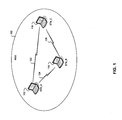
- FIG. 1 is a block diagram of an exemplary system for wireless data communication, which may be utilized in an embodiment of the invention.
- FIG. 2A is a block diagram for an exemplary beacon frame format, which may be utilized in an embodiment of the invention.
- FIG. 2B is a block diagram for an exemplary beacon frame body format, which may be utilized in connection with an embodiment of the invention.
- FIG. 2C is a block diagram for an exemplary supervisory intent indication information element, in accordance with an embodiment of the invention.
- FIG. 3 is a flowchart illustrating exemplary steps for transmitting a beacon frame from a supervisory WLAN station in an independent basic service set, in accordance with an embodiment of the invention.
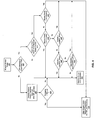
- FIG. 4 is a flowchart illustrating exemplary steps for receiving a beacon frame at a WLAN station in an independent basic service set, in accordance with an embodiment of the invention.
- Certain embodiments of the invention may be found in a method and system for an ad hoc wireless network with master control of network parameters.
- Various embodiments of the invention comprise a method and a system by which a selected wireless station (STA), among a plurality of STAs in an independent basic service set) IBSS, may determine the network parameters utilized by each of the STAs within the IBSS.
- each of the STAs may time synchronize to the time values generated by the time synchronization function (TSF) executing within the selected STA.
- TSF time synchronization function
- Various embodiments of the invention comprise a method by which the selected STA may be determined among the plurality of STAs within the IBSS.
- FIG. 1 is a block diagram of an exemplary system for wireless data communication, which may be utilized in an embodiment of the invention.
- the IBSS 102 comprises a WLAN station STA_A 112, a STA_B 114 and a STA_C 116.
- the STA_A 112 may communicate with the STA_B 114 via the RF channel 124, the STA_A 112 may communicate with the STA_C 116 via the RF channel 122 and the STA_B 114 may communicate with the STA_C 116 via the RF channel 126.
- each of the STAs may utilize a set of network parameters when communicating with other STAs within the IBSS 102.
- the timing for communication events may be determined based on a timing value generated by the TSF executing at the STA.
- the STA_A 112 may utilize a set of network parameters, NP_A(t 0 )
- the STA_B 114 may utilize a set of network parameters, NP_B(t 0 )
- the STA_C 116 may utilize a set of network parameters, NP_C(t 0 ).
- the time instant may mark the beginning of a time interval, referred to as a nominal beacon window, during which individual STAs may transmit beacon frames to other STAs within the IBSS.
- Each STA within the IBSS may randomly select a time duration from the range of values between ZERO and the BeaconWindowLength time interval and waits for a duration of medium IDLE time to pass which is equal to that randomly selected value before transmitting a beacon frame.
- the STA_A 112 may transmit a beacon frame at a time instant t 1 , which meets the following criteria: t 0 ⁇ t 1 ⁇ t 0 + BeaconWindowLenght
- the beacon frame transmitted by the STA_A 112, BF_A(NP_A(t 0 ),t 1 ) may comprise the set of network parameters NP_A(t 0 ) and a timestamp value equal to t 1 , where the timestamp value may be based on a value, TSF(A)_val, generated by the TSF executing at the STA_A 112.
- the STA_B 114 may receive the beacon frame BF_A(NP_A(t 0 ),t 1 ) via the RF channel 124.
- the STA 114 may compare the timestamp value of the received beacon frame, t 1 , with the TSF(B)_value, TSF(B)_val, generated by the TSF executing at the STA_B 114.
- TSF B _ val ⁇ t 1
- the STA_B may adopt the network parameters and timestamp value from the beacon frame BF_A(NP_A(t 0 ),t 1 ).
- the STA_C 116 may receive the beacon frame BF_A(NP_A(t 0 ),t 1 ) via the RF channel 122.
- the STA 116 may compare the timestamp value of the received beacon frame, t 1 , with the TSF(C) value, TSF(C)_val, generated by the TSF executing at the STA_C 116.
- TSF B _val > t 1 the STA_C may not adopt the network parameters and timestamp value from the beacon frame BF _A(NP_A(t 0 ),t 1 ).
- TSF_ val B t 2
- NP_C t 2 NP_C t 0
- t 2 may represent the current TSF(C) value.
- the TSF(B) at STA_B 114 may be time synchronized to the TSF(A) at STA_A 112, while the TSF(C) at STA_C 116 may not be time synchronized to either STA_A 112 or STA_B 114.
- the STA_A 112 and STA_B 114 may communicate within the IBSS 102 utilizing a common set of network parameters NP_A(t 0 ), the STA_C 116 may attempt to communicate with STA_A 112 and/or STA_B 114 while utilizing a different set of network parameters NP_C(t 0 ).
- the STAs within an IBSS 102 may adopt supervisory and subordinates roles.
- one of the STAs for example STA 112 may be configured to be the supervisory STA, while the other STAs, for example STA_B 114 and STA_C 116, may be configured to be subordinate STAs.
- the supervisory STA_A 112 may compute a time increment value, TSF_inc, which may be added to the current value TSF_val(A).
- the STA_A 112 modifies its own TSF_val based on the TSF_val_mod value.
- the STA_B 114 may receive the beacon frame BF_A(NP_A(t mod ),t mod ) at a receive time t R114 , as determined by the TSF(B) at STA_B 114, where the value of the receive time t R114 meets the following condition: t mod > t R ⁇ 114 Under the condition set forth in equation [8], the STA_B 114 may adopt the network parameters and timestamp value from the beacon frame BF_A(NP_A(t mod ),t mod ).
- the STA_C 116 may receive the beacon frame BF_A(NP_A(t mod ),t mod ) at a receive time t R116 , as determined by the TSF(C) at STA_C 116, where the value of the receive time t R116 meets the following condition: t mod > t R ⁇ 116 Under the condition set forth in equation [10], the STA_C 116 may adopt the network parameters and timestamp value from the beacon frame BF_A(NP_A(t mod ),t mod ).
- a STA_A 112 may be selected as a supervisory STA within an IBSS 102.
- the supervisory STA_A 112 may generate a modified time value, TSF_val_mod(A), based on a current TSF value, TSF_val(A), and a computed time increment value TSF_inc.
- the modified time value may be utilized as a timestamp value within beacon frames transmitted by the supervisory STA_A 112.
- the modified time value may enable other stations within the IBSS 102, STA_B 114 and STA_C 116, to time synchronize to the supervisory STA_A 112.
- each of the STAs within the IBSS 102 may communicate with other STAs by utilizing a consistent set of network parameters.
- the value of the computed time increment may be determined based on the estimated accuracy with which the TSF value is generated at any given STA relative to a determined nominal TSF value.
- the current actual TSF value at a STA, tact may vary from the current nominal TSF value, t nom , by an amount less than ⁇ t max .
- the minimum actual TSF value at a STA within the IBSS 102, min(t act ) may be represented as shown in the following equation: min t act > t nom - ⁇ ⁇ t max the value presented in equation [12a] may occur at a STA in which the TSF comprises a "slow" system clock.
- the maximum actual TSF value at a STA, max(t act ), may be represented as shown in the following equation: max t act ⁇ t nom - ⁇ ⁇ t max the value presented in equation [12b] may occur at a STA in which the TSF comprises a "fast" system clock.
- the maximum time difference between a STA with a fast clock and a STA with a slow clock may be equal to 2 ⁇ t max .
- the time increment value may be determined as shown in the following equation: TSF_inc ⁇ 2 ⁇ ⁇ ⁇ t max
- a selected supervisory STA_A 112 which comprises a slow system clock
- may generate a modified value TSF_val_mod which is greater than the value TSV_val generated at a STA, which comprises a fast system clock.
- the generation of the modified value TSF_vat_mod enables a STA with a fast system clock to time synchronize to a selected supervisory STA with a slow system clock.
- STAs within an IBSS 102 may predictably, and consistently time synchronize to the selected supervisory STA, and to adopt the network parameters utilized by the selected supervisory STA.
- STAs within an IBSS 102 may time synchronize to a common system clock, and may utilize a common set of network parameters when communicating within the IBSS 102.
- the time increment value may be represented as a function of the Beaconlnterval as shown in the following equation: TSF_inc ⁇ ⁇ 2 ⁇ ( % err TSF ) ⁇ BeaconInterval ⁇ where %err TSV represents the percentage error in the accuracy of the TSF within the STA over a BeaconInterval time interval.
- Beaconlnterval is the nominal time between beacon transmissions.
- a supervisory STA may transmit a beacon frame during any time interval during which a beacon frame, and/or announcement traffic information message (ATIM) frames, may be transmitted.
- the supervisory STA may transmit the beacon frame even when the supervisory STA has already received a beacon frame from another STA within the IBSS.
- a supervisory STA may reduce its BeaconWindowLength to a value which is less than the value 2 ⁇ aCWmin ⁇ aSlotTime. This may enable the supervisory STA to transmit a beacon frame at a time instant within the nominal beacon, which window may precede a time instant at which any of the subordinate STAs may transmit a beacon frame.
- an IBSS 102 may comprise more than one STA, which is configured to perform the supervisory STA role.
- each STA which is configured to perform the supervisory STA role, may be configured with a priority value.
- the priority value is transmitted within the beacon frame by a STA_A 112, which is contending for the supervisory STA role within the IBSS 102.
- a STA_C 116 which is also configured to perform the supervisory STA role, may inspect the priority value, priority_A, within the beacon frame received from the STA_A 112.
- the STA_C 116 may compare the configured priority value, priority_C, and the received priority value, priority_A.
- the STA_C 116 may concede the supervisory STA role to the STA_A 112. In this aspect of the invention, the STA_C 116 may adopt a subordinate STA role relative to the STA_A 112. The STA_C 116 may then adopt the timestamp value and network parameter values contained within the received beacon frame.
- priority_C>priority_A the STA_C 116 may not concede the supervisory STA role to the STA_A 112. In this aspect of the invention, the STA_C 116 may not adopt a subordinate STA role relative to the STA_A 112. The STA_C 116 may not adopt the timestamp value and network parameter values contained within the received beacon frame.
- the STA_C 116 may then inspect the source address (SA) field in the received beacon frame.
- the SA field may comprise an organizational unique identifier (OUI) portion, and a non-OUI portion.
- the SA field may correspond to an address associated with the STA_A 112, which may have transmitted the beacon frame.
- the STA_C 116 may compare the value of the OUI portion of the SA field, OUI(SA), and the OUI portion of the MAC address of STA_C, OUI(RCV_STA). When OUI(SA)>OUI(RCV_STA ), the STA_C 116 may concede the supervisory STA role to the STA_A 112. When OUI(SA) ⁇ OUI(RCV_STA ), the STA_C 116 may not concede the supervisory STA role to the STA_112.
- the STA_C 116 may compare the value of the non-OUI portion of the SA field, nOUI(SA), to the non-OUI portion of the MAC address of STA_C, nOUI(RCV_STA ). When nOUI(SA)>nOUI(RCV_STA ), the STA_C 116 may concede the supervisory STA role to the STA_A 112. When nOUI(SA) ⁇ nOUI(RCV_STA), the STA_C 116 may not concede the supervisory STA role to the STA_112.
- a STA which concedes the supervisory STA role, may not generate modified TSF values.
- the priority value at a STA may be configured to be a determined value. In various embodiments of the invention, the priority value may be randomly generated at each STA.
- FIG. 2A is a block diagram for an exemplary beacon frame format, which may be utilized in an embodiment of the invention.
- the beacon frame 202 may comprise a frame control field 204, a duration field 206, a destination address field 208, a source address field 210, a BSSID field 212, a sequence control field 214, a QoS control field 216, a beacon frame body 218, and a frame check sequence (FCS) 220.
- FCS frame check sequence
- the frame control field 204 may comprise information that identifies the frame as being a beacon frame.
- the duration field 206 may comprise a value, which is computed based on the data rate at which the beacon frame 202 is transmitted.
- the destination address field 208 may identify one or more STAs, which are intended to receive the beacon frame 202.
- the source address field 210 may identify the STA, which transmitted the beacon frame 202.
- the BSSID field 212 may identify a BSS to which the beacon frame is being directed.
- the sequence control field 214 may be utilized to indicate whether the frame 202 is a segment within a larger beacon frame.
- the QoS control field 216 associates the beacon frame 202 with a designated traffic class, or traffic stream.
- the QoS control field 216 enables transport of the beacon frame 202 within the IBSS based on a QoS specification associated with the traffic class or traffic stream.
- the beacon frame body 218 may comprise information that is specific to a beacon frame.
- the FCS field 220 may be utilized to detect and/or correct bit errors in a beacon frame 202 received at an STA.
- the beacon frame body 218 comprises a timestamp, a set of network parameters and/or a supervisory intent indication.
- the supervisory intent indication may enable a STA to communicate to other STAs, that the sender of the beacon frame is attempting to assert a supervisory STA role within the IBSS 102.
- FIG. 2B is a block diagram for an exemplary beacon frame body format, which may be utilized in connection with an embodiment of the invention.
- the beacon frame body format 222 may comprise a timestamp field 224, a beacon interval field 226, a capability information field 228, an SSID field 230, a supported rates field 232, a frequency hopping (FH) parameter set field 234, a direct sequence (DS) spread spectrum parameter set field 236, a contention free (CF) parameter set field 238, an independent BSS (IBSS) parameter set field 240, a traffic information message field 242 an enhanced distributed channel access (EDCA) parameter set field 244, and a supervisory intent indication field 246.
- FH frequency hopping
- DS direct sequence
- CF contention free
- IBSS independent BSS
- EDCA enhanced distributed channel access
- the timestamp field 224 may indicate a time instant at which the beacon frame was transmitted.
- the timestamp value inserted into the timestamp field 224 may be determined based on the TSF_val generated by the TSF executing at the STA, which is transmitting the beacon frame.
- the beacon interval field 226 may indicate the amount of time that may transpire between beacon frame transmissions.
- the value of the beacon interval field 226 may correspond to the Beaconlnterval value
- the capability information field 228 may be used to communicate capabilities available at the AP, which is transmitting the beacon frame.
- the SSID field 230 may identify the ESS to which the beacon frame is being directed.
- the supported rates field 232 may indicate data rates that may be supported by the AP, which is transmitting the beacon frame.
- the FH parameter set field 234 may comprise information, which enables STAs receiving the beacon frame to utilize frequency hopping when communicating with the AP that is transmitting the beacon frame.
- the DS parameter set field 238 may comprise information, which enables RF channel assignment to STAs when communicating with the AP.
- the CF parameter set field 240 may comprise information, which enables contention free polling of STAs.
- the IBSS parameter set 240 may comprise information, which may be utilized by a STA within an IBSS.
- the TIM information element 242 comprises information, which may enable an AP to indicate to STAs that data is buffered at the AP for delivery to one or more STAs.
- the EDCA parameter set 244 may enable STAs to make policy-based decisions related to the acceptance of data from other STAs based on QoS criteria.
- the supervisory intent indication 246 may enable a STA within an IBSS 102 to communicate other STAs an intent to perform a supervisory STA role.
- FIG. 2C is a block diagram for an exemplary supervisory intent indication information element, in accordance with an embodiment of the invention.
- a supervisory intent indication information element IE
- the supervisory intent indication IE 252 may comprise an element identifier (ID) field 254, a length field 256, an organizationally unique identifier (OUI) field 257, a type field 260 and a priority field 258.
- the element ID field 254 may identify the IE 252 as comprising vendor-specific information.
- the length field 256 may specify the combined length of the OUI field 257, the type field 260 and of the priority field 258.
- the supervisory intent indication IE 252 is a vendor-specific IE.
- the vendor may be identified based on the OUI field 257.
- the type field 260 may be utilized in conjunction with the OUI field 257 to identify the IE type as being a supervisory intent indication IE 252.
- the priority field 258 may specify a priority level. The priority field 258 may enable resolution of supervisory STA and subordinate STA roles among a plurality of STAs within an IBSS 102, which are attempting to assert a supervisory STA role.
- FIG. 3 is a flowchart illustrating exemplary steps for transmitting a beacon frame from a supervisory WLAN station in an independent basic service set, in accordance with an embodiment of the invention.
- the STA_A 112 may be configured as a supervisory STA 302. This may comprise generation of a priority value, priority_A.
- the STA_A 112 may compute a clock time increment value, TSF_inc.
- An exemplary TSF_inc value may be computed as shown in equation [14].
- the STA_A 112 may determine the STA clock time value, TSF_val, generated by the TSF executing at the STA_A 112.
- the STA 112 may generate a modified clock value TSF_val_mod.
- An exemplary TSF_val_mod value may be computed by adding the current TSF_val and the TSF_inc value.
- the STA clock time value, TSF_val is adjusted based on the modified clock time value TSF_val_mod.
- the STA_A 112 may set the supervisory intent indication to indicate that the STA_A 112 is operating in a supervisory role.
- the STA_A 112 may transmit a beacon frame containing the SII and the TSF_val.
- FIG. 4 is a flowchart illustrating exemplary steps for receiving a beacon frame at a WLAN station in an independent basic service set, in accordance with an embodiment of the invention.
- a STA_B 114 may receive a beacon frame.
- the STA_B 114 may determine whether it is configured to operate in a supervisory role.
- the STA_B 114 may compare the timestamp value, contained within the timestamp field 224 of the received beacon frame 202, to the TSF_val value generated by the TSF executing at the STA_B 114.
- Step 408 may determine whether the timestamp field 224 value is greater than the TSF_val value.
- the STA_B 114 may adopt the network parameters contained within the beacon frame.
- the STA_B 114 may time synchronize to the STA, which transmitted the beacon frame by setting the TSF_val to the timestamp field 224 value.
- the STA_B 114 may maintain current STA parameters.
- the parameters maintained may include the TSV_val time value and various network parameters utilized by the STA_B 114 to enable communication with other STAs within the IBSS 102.
- step 414 may determine whether the received beacon frame 202 contains a supervisory intent indication 246. When step 414 determines that the received beacon frame does not contain a supervisory intent indication, step 412 may follow and the STA_B 114 may maintain current STA parameters.
- step 416 may determine whether the value of the priority field 258 within the beacon frame 202 is greater than the priority value configured at the STA_B 114.
- the STA_B 114 may adopt the network parameters contained within the beacon frame.
- the STA_B 114 may time synchronize to the STA, which transmitted the beacon frame by setting the TSF_val to the timestamp field 224 value.
- step 418 may determine whether the value of the priority field 258 is less than the priority value configured at the STA_B 114. When step 418 determines that the value of the priority field 258 is less than the priority value configured at the STA_B 114, step 412 may follow.
- step 420 may determine whether the value of the OUI portion of the SA 210 is greater than the value of the OUI portion of the MAC address of the receiving STA. When step 420 determines that the OUI portion of the SA 210 is greater than the value of the OUI portion of the MAC address of the receiving STA, step 410 may follow.
- step 422 may determine whether the OUI portion of the SA 210 is less than the value of the OUI portion of the MAC address of the receiving STA. When step 422 determines that the OUI portion of the SA 210 is less than the value of the OUI portion of the MAC address of the receiving STA, step 412 may follow.
- step 424 may determine whether the non-OUI portion of the SA 210 is greater than the value of the non-OUI portion of the MAC address of the receiving STA. When step 424 determines that the non-OUI portion of the SA 210 is greater than the value of the non-OUI portion of the MAC address of the receiving STA, step 410 may follow. When step 424 determines that the non-OUI portion of the SA 210 is not greater than the value of the non-OUI portion of the MAC address of the receiving STA, step 412 may follow.
- aspects of an exemplary system for an ad hoc wireless network with master control of network parameters may comprise one or more circuits that enable generation of a beacon frame at a supervisory STA_A 112 wherein the generated beacon frame contains a supervisory role indication, which enables the supervisory STA_A 112 to establish timing synchronization and network parameters that are utilized by a plurality of WLAN stations utilized for communicating within an IBSS 102.
- the plurality of communicating devices may comprise the supervisory STA_A 112 and at least one subordinate STA_B 114.
- the WLAN may be an IBSS as defined by IEEE 802.11 standards.
- the beacon transmission time interval, Beaconlnterval may indicate the time duration between the start of transmission of a current beacon frame at the STA_A 112, and the start of transmission of a succeeding beacon frame.
- the STA_A 112 may compute a time increment value, TSF_inc, based on the Beaconlnterval value and a percentage error in a system clock time value, %err TSF ,.
- the STA_A 112 may compute a timestamp value, TSF_val_mod based on the TSF_inc value and the TSF_val value generated by a TSF executing on behalf of the STA_A 112.
- the STA_A 112 may modify the system clock time value TSF_val value based on the computed TSF_val_mod.
- the TSF may generate subsequent system clock time values based on the modified TSF_val.
- the generated beacon frame may comprise the computed timestamp value TSF_val_mod.
- the supervisory role indication may comprise a priority value.
- the beacon frame may be transmitted during a time instant that occurs during a beacon transmission time window.
- the duration of the beacon transmission time window may be determined based on the minimum contention window time duration, aCWmin.
- the duration of the beacon transmission time window may be determined based on a value that is less than aCWmin.
- aspects of the system may also comprise a STA_B 114 that enables communication via an IBSS 102 by utilizing a timestamp value and network parameter values retrieved from a received beacon frame based on the presence of a supervisory role indication within the received beacon frame.
- the STA_B 114 may determine whether it is configured to operate in a supervisory role.
- the STA_B 114 may determine whether a configured priority value is greater than, less than or equal to, a beacon priority value retrieved from the received beacon frame.
- the timestamp value and network parameter values may be utilized by the STA_B 114 when the beacon priority value is greater than the station priority value.
- the STA_B 114 may determine whether an OUI portion of the source address (SA) is greater than, less than or equal to, an OUI portion of the MAC address of STA_B.
- the timestamp value and network parameter values may be utilized by the STA_B 114 when the beacon priority value is equal to the station priority value and the OUI portion of the SA is greater than the MAC address of STA_B.
- the STA_B 114 may determine whether a non-OUI portion of the SA is greater than, less than or equal to, a non-OUI portion of the MAC address of STA_B.
- the timestamp value and network parameter values may be utilized by the STA_B 114 when the beacon priority value is equal to the station priority value, the OUI portion of the SA is equal to the OUI portion of the MAC address of STA_B and the non-OUI portion of the SA is greater than the non-OUI portion of the MAC address of STA_B.
- Another embodiment of the invention may provide a machine-readable storage, having stored thereon, a computer program having at least one code section executable by a machine, thereby causing the machine to perform the steps as described herein for an ad hoc wireless network with master control of network parameters.
- the present invention may be realized in hardware, software, or a combination of hardware and software.
- the present invention may be realized in a centralized fashion in at least one computer system, or in a distributed fashion where different elements are spread across several interconnected computer systems. Any kind of computer system or other apparatus adapted for carrying out the methods described herein is suited.
- a typical combination of hardware and software may be a general-purpose computer system with a computer program that, when being loaded and executed, controls the computer system such that it carries out the methods described herein.
- the present invention may also be embedded in a computer program product, which comprises all the features enabling the implementation of the methods described herein, and which when loaded in a computer system is able to carry out these methods.
- Computer program in the present context means any expression, in any language, code or notation, of a set of instructions intended to cause a system having an information processing capability to perform a particular function either directly or after either or both of the following: a) conversion to another language, code or notation; b) reproduction in a different material form.
Landscapes
- Engineering & Computer Science (AREA)
- Computer Networks & Wireless Communication (AREA)
- Signal Processing (AREA)
- Databases & Information Systems (AREA)
- Mobile Radio Communication Systems (AREA)
Abstract
Description
- This application makes reference to, claims priority to, and claims the benefit of
United States Provisional Application Serial No. 60/871,324 , filed on December 21, 2006, which is hereby incorporated herein by reference in its entirety. - Certain embodiments of the invention relate to communication networks. More specifically, certain embodiments of the invention relate to a method and system for an ad hoc wireless network with master control of network parameters.
- IEEE 802.11 describes a communication architecture, which may enable computing devices to communicate via wireless local area networks (WLANs). One of the building blocks for the WLAN is the basic service set (BSS). A BSS may comprise a plurality of computing devices, or stations (STA), which may communicate wirelessly via one or more RF channels within a coverage area. The span of a coverage area may be determined based on the distance over which a source STA may transmit data via an RF channel, which may be received by a destination STA.
- An independent BSS (IBSS) refers to a BSS, which comprises a set of STAs, which may communicate with each over within the coverage area for the BSS. The IBSS is identified by a BSS identifier (BSSID) and a service set identifier (SSID). In an IBSS each STA may engage in direct communication with any of the other STAs within the IBSS. An IBSS may be referred to as an ad hoc network.
- To facilitate communication within the IBSS, each STA may negotiate a set of network parameters to utilize when communicating with other STAs in the IBSS. These network parameters may include frequency spectrum management for RF channel assignment, determination of supported data rates and quality of service (QoS) parameters, for example. Each STA also attempts to synchronize its operations to a clock source, which is common to the STAs within the IBSS.
- The negation of network parameters and timing synchronization among the STAs typically involves the exchange of beacon frames. At various time instants, one or more STAs within the IBSS may transmit a beacon frame. A transmitted beacon frame may be received by each of the other STAs within the IBSS. The beacon frame may contain information elements, which specify a set of network parameters and enable timing synchronization among the STAs. Each transmitted beacon frame contains a timestamp value, which is determined based on a timing synchronization function (TSF) executing within the STA that transmitted the beacon frame.
- Since a STA may receive beacon frames from a plurality of beacon frames within a time interval, referred to as a nominal beacon window, the receiving STA determines which one, if any, of the received beacon frames is to be adopted. Upon receiving a beacon frame, the receiving STA compares the timestamp value contained within the received beacon frame, with a time value generated by the TSF. When the received timestamp value is greater than the time value generated by the TSF, the TSF time value is set to a value equal to the received timestamp value. In addition, the STA adopts the network parameters contained within the beacon frame. In this regard, the receiving STA time synchronizes to the TSF clock of the STA, which transmitted the beacon frame. In addition, the receiving STA will utilize network parameters contained within the beacon frame when communicating with other STAs within the IBSS.
- When the received timestamp value is less than or equal to the time value generated by the TSF, the STA adopts neither the timestamp value or the network parameters contained within the received beacon frame. In this regard, the receiving STA determines to neither time synchronize to the STA, which transmitted the beacon frame, or to utilize network parameters contained within the beacon frame when communicating with other STAs within the BSS.
- Further limitations and disadvantages of conventional and traditional approaches will become apparent to one of skill in the art, through comparison of such systems with some aspects of the present invention as set forth in the remainder of the present application with reference to the drawings.
- A method and system for an ad hoc wireless network with master control of network parameters, substantially as shown in and/or described in connection with at least one of the figures, as set forth more completely in the claims.
- According to an aspect of the invention, a method for communicating data is provided, the method comprising:
- generating via a supervisory communicating device in a wireless network, a beacon frame comprising a supervisory role indication, which enables said supervisory communicating device to establish timing synchronization and network parameters that are utilized by a plurality of wireless communicating devices for communicating within said wireless network.
- Advantageously, said plurality of wireless communicating devices comprises said supervisory communicating device and at least one subordinate communicating device.
- Advantageously, said wireless network is an independent basic service set, wherein said independent basic service set is defined by IEEE 802.11 standards.
- Advantageously, the method further comprises computing a time increment value based on a determined beacon transmission time interval and a percentage error in a system clock time value generated by a time synchronization function executing on behalf of said supervisory communicating device.
- Advantageously, the method further comprises computing a timestamp value based on said time increment value and a current system clock time value generated by said time synchronization function.
- Advantageously, said time synchronization function generates subsequent system clock time values based on said computed timestamp value.
- Advantageously, said generated beacon frame comprises said computed timestamp value.
- Advantageously, said supervisory role indication comprises a priority value.
- Advantageously, the method further comprises transmitting said generated beacon frame at a time instant that occurs during a beacon transmission time window.
- Advantageously, the method further comprises determining a duration of said beacon transmission time window based on a minimum contention window time duration.
- Advantageously, said duration of said beacon transmission time window is determined based on a time duration that is less than said minimum contention window time duration.
- According to an aspect of the invention, a method for communicating data comprises:
- communicating via a wireless network by utilizing a timestamp value and network parameter values determined from a received beacon frame based on the presence of a supervisory role indication within said received beacon frame.
- Advantageously, the method further comprises determining whether a communicating device that receives said beacon frame is configured to operate in a supervisory role.
- Advantageously, the method further comprises determining whether a station priority value configured at said communicating device is greater than, less than or equal to, a beacon priority value determined from said received beacon frame.
- Advantageously, the method further comprises utilizing said timestamp value and said network parameter values when said beacon priority value is greater than said station priority value.
- Advantageously, the method further comprises determining whether a first portion of a source address determined from said received beacon frame is greater than, less than or equal to, a first portion of a station address for said communicating device when said beacon priority value is equal to said station priority value.
- Advantageously, the method further comprises utilizing said timestamp value and said network parameter values when said first portion of said source address is greater than said first portion of said station address.
- Advantageously, the method further comprises determining whether a second portion of said source address determined from said received beacon frame is greater than, less than or equal to, a second portion of said station address when said first portion of said source address is equal to said first portion of said station address.
- Advantageously, the method further comprises utilizing said timestamp value and said network parameter values when said second portion of said source address is greater than said second portion of said station address.
- Advantageously, said wireless network is an independent basic service set, wherein said independent basic service set is defined by IEEE 802.11 standards
- According to an aspect of the invention, a system for communicating data comprises:
- one or more circuits that enable generation, via a supervisory communicating device in a wireless network, of a beacon frame comprising a supervisory role indication, which enables said supervisory communicating device to establish timing synchronization and network parameters that are utilized by a plurality of wireless communicating devices for communicating within said wireless network.
- Advantageously, plurality of communicating devices comprises said supervisory communicating device and at least one subordinate communicating device.
- Advantageously, said wireless network is an independent basic service set, wherein said independent basic service set is defined by IEEE 802.11 standards.
- Advantageously, said one or more circuits enable computation of a time increment value based on a determined beacon transmission time interval and a percentage error in a system clock time value generated by a time synchronization function executing on behalf of said supervisory communicating device.
- Advantageously, said one or more circuits enable computation of a timestamp value based on said time increment value and a current system clock time value generated by said time synchronization function.
- Advantageously, said time synchronization function generates subsequent system clock time values based on said computed timestamp value.
- Advantageously, said generated beacon frame comprises said computed timestamp value.
- Advantageously, said supervisory role indication comprises a priority value.
- Advantageously, said one or more circuits enable transmission of said generated beacon frame at a time instant that occurs during a beacon transmission time window.
- Advantageously, said one or more circuits enable determination of a duration of said beacon transmission time window based on a minimum contention window time duration.
- Advantageously, said duration of said beacon transmission time window is determined based on a time duration that is less than said minimum contention window time duration.
- These and other advantages, aspects and novel features of the present invention, as well as details of an illustrated embodiment thereof, will be more fully understood from the following description and drawings.
-
FIG. 1 is a block diagram of an exemplary system for wireless data communication, which may be utilized in an embodiment of the invention. -
FIG. 2A is a block diagram for an exemplary beacon frame format, which may be utilized in an embodiment of the invention. -
FIG. 2B is a block diagram for an exemplary beacon frame body format, which may be utilized in connection with an embodiment of the invention. -
FIG. 2C is a block diagram for an exemplary supervisory intent indication information element, in accordance with an embodiment of the invention. -
FIG. 3 is a flowchart illustrating exemplary steps for transmitting a beacon frame from a supervisory WLAN station in an independent basic service set, in accordance with an embodiment of the invention. -
FIG. 4 is a flowchart illustrating exemplary steps for receiving a beacon frame at a WLAN station in an independent basic service set, in accordance with an embodiment of the invention. - Certain embodiments of the invention may be found in a method and system for an ad hoc wireless network with master control of network parameters. Various embodiments of the invention comprise a method and a system by which a selected wireless station (STA), among a plurality of STAs in an independent basic service set) IBSS, may determine the network parameters utilized by each of the STAs within the IBSS. In addition, each of the STAs may time synchronize to the time values generated by the time synchronization function (TSF) executing within the selected STA. Various embodiments of the invention comprise a method by which the selected STA may be determined among the plurality of STAs within the IBSS.
-
FIG. 1 is a block diagram of an exemplary system for wireless data communication, which may be utilized in an embodiment of the invention. Referring toFIG. 1 , there is shown anIBSS 102. TheIBSS 102 comprises aWLAN station STA_A 112, aSTA_B 114 and aSTA_C 116. TheSTA_A 112 may communicate with theSTA_B 114 via theRF channel 124, theSTA_A 112 may communicate with theSTA_C 116 via theRF channel 122 and theSTA_B 114 may communicate with theSTA_C 116 via theRF channel 126. - At any given time, each of the STAs may utilize a set of network parameters when communicating with other STAs within the
IBSS 102. The timing for communication events may be determined based on a timing value generated by the TSF executing at the STA. For example, at a given time instant to, theSTA_A 112 may utilize a set of network parameters, NP_A(t0), theSTA_B 114 may utilize a set of network parameters, NP_B(t0) and theSTA_C 116 may utilize a set of network parameters, NP_C(t0). When the time instant to corresponds to a target beacon transmission time (TBTT), the time instant may mark the beginning of a time interval, referred to as a nominal beacon window, during which individual STAs may transmit beacon frames to other STAs within the IBSS. In various embodiments of the invention, the nominal beacon window length, BeaconWindowLength, may be represented as shown in the following equation:
where aCWmin refers to the lower bound on the upper end of the range from which a random number is selected for use in randomizing the start times of transmission attempts by STA in order to reduce the probability of a collision within a network where distributed medium access is employed and aSlotTime refers to a time duration, which may be sufficient to detect data transmitted via a wireless communication medium at a receiving STA. - Each STA within the IBSS may randomly select a time duration from the range of values between ZERO and the BeaconWindowLength time interval and waits for a duration of medium IDLE time to pass which is equal to that randomly selected value before transmitting a beacon frame. For example, assuming an idle medium, the
STA_A 112 may transmit a beacon frame at a time instant t1, which meets the following criteria:
The beacon frame transmitted by theSTA_A 112, BF_A(NP_A(t0),t1), may comprise the set of network parameters NP_A(t0) and a timestamp value equal to t1, where the timestamp value may be based on a value, TSF(A)_val, generated by the TSF executing at theSTA_A 112. - The
STA_B 114 may receive the beacon frame BF_A(NP_A(t0),t1) via theRF channel 124. TheSTA 114 may compare the timestamp value of the received beacon frame, t1, with the TSF(B)_value, TSF(B)_val, generated by the TSF executing at theSTA_B 114. For purposes of exemplary exposition, the following condition may be assumed:
Under the conditions set forth in equation [3], the STA_B may adopt the network parameters and timestamp value from the beacon frame BF_A(NP_A(t0),t1). In this regard, after adopting the parameters contained within the received beacon frame BF_A(NP_A(t0),t1) at STA_B 114:

- The
STA_C 116 may receive the beacon frame BF_A(NP_A(t0),t1) via theRF channel 122. TheSTA 116 may compare the timestamp value of the received beacon frame, t1, with the TSF(C) value, TSF(C)_val, generated by the TSF executing at theSTA_C 116. For purposes of exemplary exposition, the following condition may be assumed:
Under the conditions set forth in equation [5], the STA_C may not adopt the network parameters and timestamp value from the beacon frame BF _A(NP_A(t0),t1). In this regard, after receiving the beacon frame BF_A(NP_A(t0),t1) at STA_C 116:

where t2 may represent the current TSF(C) value. - As presented in the exemplary discussion above, the TSF(B) at
STA_B 114 may be time synchronized to the TSF(A) atSTA_A 112, while the TSF(C) atSTA_C 116 may not be time synchronized to eitherSTA_A 112 orSTA_B 114. Furthermore, theSTA_A 112 andSTA_B 114 may communicate within theIBSS 102 utilizing a common set of network parameters NP_A(t0), theSTA_C 116 may attempt to communicate withSTA_A 112 and/orSTA_B 114 while utilizing a different set of network parameters NP_C(t0). - In various embodiments of the invention, the STAs within an
IBSS 102 may adopt supervisory and subordinates roles. In this aspect of the invention, one of the STAs, forexample STA 112, may be configured to be the supervisory STA, while the other STAs, for example STA_B 114 andSTA_C 116, may be configured to be subordinate STAs. - In an exemplary embodiment of the invention, the
supervisory STA_A 112 may compute a time increment value, TSF_inc, which may be added to the current value TSF_val(A). In this regard, TSF_val(A) may be represented as shown in the following equation:
TheSTA_A 112 may then transmit a beacon frame, which comprises the modified time value TSF_val_mod(A)= tmod and the current set of network parameters NP_A(tmod). TheSTA_A 112 then modifies its own TSF_val based on the TSF_val_mod value. - In various embodiments of the invention, the
STA_B 114 may receive the beacon frame BF_A(NP_A(tmod),tmod) at a receive time tR114, as determined by the TSF(B) atSTA_B 114, where the value of the receive time tR114 meets the following condition:
Under the condition set forth in equation [8], theSTA_B 114 may adopt the network parameters and timestamp value from the beacon frame BF_A(NP_A(tmod),tmod). In this aspect of the invention, after adopting the parameters contained within the received beacon frame BF_A(NP_A(tmod),tmod) at STA_B 114:

- In addition, the
STA_C 116 may receive the beacon frame BF_A(NP_A(tmod),tmod) at a receive time tR116, as determined by the TSF(C) atSTA_C 116, where the value of the receive time tR116 meets the following condition:
Under the condition set forth in equation [10], theSTA_C 116 may adopt the network parameters and timestamp value from the beacon frame BF_A(NP_A(tmod),tmod). In this aspect of the invention, after adopting the parameters contained within the received beacon frame BF_A(NP_A(tmod),tmod) at STA_C 116:

- Various embodiments of the invention comprise a method and system by which a
STA_A 112 may be selected as a supervisory STA within anIBSS 102. Thesupervisory STA_A 112 may generate a modified time value, TSF_val_mod(A), based on a current TSF value, TSF_val(A), and a computed time increment value TSF_inc. The modified time value may be utilized as a timestamp value within beacon frames transmitted by thesupervisory STA_A 112. The modified time value may enable other stations within theIBSS 102,STA_B 114 andSTA_C 116, to time synchronize to thesupervisory STA_A 112. In addition, the other STAs within theIBSS 102,STA_B 114 andSTA_C 116, may adopt the set of network parameters generated by thesupervisory STA_A 112. In this aspect of the invention, each of the STAs within theIBSS 102 may communicate with other STAs by utilizing a consistent set of network parameters. - In various embodiments of the invention, the value of the computed time increment may be determined based on the estimated accuracy with which the TSF value is generated at any given STA relative to a determined nominal TSF value. In an exemplary embodiment of the invention, the current actual TSF value at a STA, tact, may vary from the current nominal TSF value, tnom, by an amount less than Δtmax. Thus, the minimum actual TSF value at a STA within the
IBSS 102, min(tact), may be represented as shown in the following equation:
the value presented in equation [12a] may occur at a STA in which the TSF comprises a "slow" system clock. The maximum actual TSF value at a STA, max(tact), may be represented as shown in the following equation:
the value presented in equation [12b] may occur at a STA in which the TSF comprises a "fast" system clock. Thus, the maximum time difference between a STA with a fast clock and a STA with a slow clock may be equal to 2·Δtmax. - In various embodiments of the invention, the time increment value may be determined as shown in the following equation:

By utilizing the value TSF_inc as shown in equation [13], a selectedsupervisory STA_A 112, which comprises a slow system clock, may generate a modified value TSF_val_mod, which is greater than the value TSV_val generated at a STA, which comprises a fast system clock. In this aspect of the invention, the generation of the modified value TSF_vat_mod enables a STA with a fast system clock to time synchronize to a selected supervisory STA with a slow system clock. This may enable STAs within anIBSS 102 to predictably, and consistently time synchronize to the selected supervisory STA, and to adopt the network parameters utilized by the selected supervisory STA. Thus, in various embodiments of the invention, STAs within anIBSS 102 may time synchronize to a common system clock, and may utilize a common set of network parameters when communicating within theIBSS 102. - In various embodiments of the invention, the time increment value may be represented as a function of the Beaconlnterval as shown in the following equation:

where %errTSV represents the percentage error in the accuracy of the TSF within the STA over a BeaconInterval time interval. Beaconlnterval is the nominal time between beacon transmissions. - In various embodiments of the invention, a supervisory STA may transmit a beacon frame during any time interval during which a beacon frame, and/or announcement traffic information message (ATIM) frames, may be transmitted. The supervisory STA may transmit the beacon frame even when the supervisory STA has already received a beacon frame from another STA within the IBSS. In various embodiments of the invention, a supervisory STA may reduce its BeaconWindowLength to a value which is less than the value 2·aCWmin·aSlotTime. This may enable the supervisory STA to transmit a beacon frame at a time instant within the nominal beacon, which window may precede a time instant at which any of the subordinate STAs may transmit a beacon frame.
- In various embodiments of the invention, an
IBSS 102 may comprise more than one STA, which is configured to perform the supervisory STA role. In this aspect of the invention, each STA, which is configured to perform the supervisory STA role, may be configured with a priority value. The priority value is transmitted within the beacon frame by aSTA_A 112, which is contending for the supervisory STA role within theIBSS 102. ASTA_C 116, which is also configured to perform the supervisory STA role, may inspect the priority value, priority_A, within the beacon frame received from theSTA_A 112. TheSTA_C 116 may compare the configured priority value, priority_C, and the received priority value, priority_A. When priority_A>priority_C, theSTA_C 116 may concede the supervisory STA role to theSTA_A 112. In this aspect of the invention, theSTA_C 116 may adopt a subordinate STA role relative to theSTA_A 112. TheSTA_C 116 may then adopt the timestamp value and network parameter values contained within the received beacon frame. When priority_C>priority_A, theSTA_C 116 may not concede the supervisory STA role to theSTA_A 112. In this aspect of the invention, theSTA_C 116 may not adopt a subordinate STA role relative to theSTA_A 112. TheSTA_C 116 may not adopt the timestamp value and network parameter values contained within the received beacon frame. - When priority_A=priority_C, the
STA_C 116 may then inspect the source address (SA) field in the received beacon frame. The SA field may comprise an organizational unique identifier (OUI) portion, and a non-OUI portion. The SA field may correspond to an address associated with theSTA_A 112, which may have transmitted the beacon frame. In various embodiments of the invention, theSTA_C 116 may compare the value of the OUI portion of the SA field, OUI(SA), and the OUI portion of the MAC address of STA_C, OUI(RCV_STA). When OUI(SA)>OUI(RCV_STA ), theSTA_C 116 may concede the supervisory STA role to theSTA_A 112. When OUI(SA)<OUI(RCV_STA ), theSTA_C 116 may not concede the supervisory STA role to the STA_112. - When OUI(SA)=OUI(RCV_STA), the
STA_C 116 may compare the value of the non-OUI portion of the SA field, nOUI(SA), to the non-OUI portion of the MAC address of STA_C, nOUI(RCV_STA ). When nOUI(SA)>nOUI(RCV_STA ), theSTA_C 116 may concede the supervisory STA role to theSTA_A 112. When nOUI(SA)<nOUI(RCV_STA), theSTA_C 116 may not concede the supervisory STA role to the STA_112. - In various embodiments of the invention, a STA, which concedes the supervisory STA role, may not generate modified TSF values. In various embodiments of the invention, the priority value at a STA may be configured to be a determined value. In various embodiments of the invention, the priority value may be randomly generated at each STA.
-
FIG. 2A is a block diagram for an exemplary beacon frame format, which may be utilized in an embodiment of the invention. With reference toFIG. 2A there is shown abeacon frame format 202. Thebeacon frame 202 may comprise aframe control field 204, aduration field 206, adestination address field 208, asource address field 210, a BSSID field 212, a sequence control field 214, aQoS control field 216, a beacon frame body 218, and a frame check sequence (FCS) 220. - The
frame control field 204 may comprise information that identifies the frame as being a beacon frame. Theduration field 206 may comprise a value, which is computed based on the data rate at which thebeacon frame 202 is transmitted. Thedestination address field 208 may identify one or more STAs, which are intended to receive thebeacon frame 202. Thesource address field 210 may identify the STA, which transmitted thebeacon frame 202. The BSSID field 212 may identify a BSS to which the beacon frame is being directed. The sequence control field 214 may be utilized to indicate whether theframe 202 is a segment within a larger beacon frame. TheQoS control field 216 associates thebeacon frame 202 with a designated traffic class, or traffic stream. TheQoS control field 216 enables transport of thebeacon frame 202 within the IBSS based on a QoS specification associated with the traffic class or traffic stream. The beacon frame body 218 may comprise information that is specific to a beacon frame. TheFCS field 220 may be utilized to detect and/or correct bit errors in abeacon frame 202 received at an STA. In various embodiments of the invention, the beacon frame body 218 comprises a timestamp, a set of network parameters and/or a supervisory intent indication. The supervisory intent indication may enable a STA to communicate to other STAs, that the sender of the beacon frame is attempting to assert a supervisory STA role within theIBSS 102. -
FIG. 2B is a block diagram for an exemplary beacon frame body format, which may be utilized in connection with an embodiment of the invention. With reference toFIG. 2B , there is shown a beaconframe body format 222. The beaconframe body format 222 may comprise atimestamp field 224, abeacon interval field 226, acapability information field 228, anSSID field 230, a supportedrates field 232, a frequency hopping (FH) parameter setfield 234, a direct sequence (DS) spread spectrum parameter setfield 236, a contention free (CF) parameter setfield 238, an independent BSS (IBSS) parameter setfield 240, a trafficinformation message field 242 an enhanced distributed channel access (EDCA) parameter set field 244, and a supervisoryintent indication field 246. - The
timestamp field 224 may indicate a time instant at which the beacon frame was transmitted. The timestamp value inserted into thetimestamp field 224 may be determined based on the TSF_val generated by the TSF executing at the STA, which is transmitting the beacon frame. Thebeacon interval field 226 may indicate the amount of time that may transpire between beacon frame transmissions. The value of thebeacon interval field 226 may correspond to the Beaconlnterval value Thecapability information field 228 may be used to communicate capabilities available at the AP, which is transmitting the beacon frame. TheSSID field 230 may identify the ESS to which the beacon frame is being directed. The supported rates field 232 may indicate data rates that may be supported by the AP, which is transmitting the beacon frame. The FH parameter setfield 234 may comprise information, which enables STAs receiving the beacon frame to utilize frequency hopping when communicating with the AP that is transmitting the beacon frame. The DS parameter setfield 238 may comprise information, which enables RF channel assignment to STAs when communicating with the AP. The CF parameter setfield 240 may comprise information, which enables contention free polling of STAs. The IBSS parameter set 240 may comprise information, which may be utilized by a STA within an IBSS. TheTIM information element 242 comprises information, which may enable an AP to indicate to STAs that data is buffered at the AP for delivery to one or more STAs. The EDCA parameter set 244 may enable STAs to make policy-based decisions related to the acceptance of data from other STAs based on QoS criteria. Thesupervisory intent indication 246 may enable a STA within anIBSS 102 to communicate other STAs an intent to perform a supervisory STA role. -
FIG. 2C is a block diagram for an exemplary supervisory intent indication information element, in accordance with an embodiment of the invention. With reference toFIG. 2C , there is shown a supervisory intent indication information element (IE) 252. The supervisoryintent indication IE 252 may comprise an element identifier (ID) field 254, alength field 256, an organizationally unique identifier (OUI)field 257, atype field 260 and apriority field 258. The element ID field 254 may identify theIE 252 as comprising vendor-specific information. Thelength field 256 may specify the combined length of theOUI field 257, thetype field 260 and of thepriority field 258. In various embodiments of the invention, the supervisoryintent indication IE 252 is a vendor-specific IE. The vendor may be identified based on theOUI field 257. Thetype field 260 may be utilized in conjunction with theOUI field 257 to identify the IE type as being a supervisoryintent indication IE 252. Thepriority field 258 may specify a priority level. Thepriority field 258 may enable resolution of supervisory STA and subordinate STA roles among a plurality of STAs within anIBSS 102, which are attempting to assert a supervisory STA role. -
FIG. 3 is a flowchart illustrating exemplary steps for transmitting a beacon frame from a supervisory WLAN station in an independent basic service set, in accordance with an embodiment of the invention. Referring toFIG. 3 , in step 302, theSTA_A 112 may be configured as a supervisory STA 302. This may comprise generation of a priority value, priority_A. Instep 304, theSTA_A 112 may compute a clock time increment value, TSF_inc. An exemplary TSF_inc value may be computed as shown in equation [14]. Instep 306, theSTA_A 112 may determine the STA clock time value, TSF_val, generated by the TSF executing at theSTA_A 112. Instep 308, theSTA 112 may generate a modified clock value TSF_val_mod. An exemplary TSF_val_mod value may be computed by adding the current TSF_val and the TSF_inc value. In step 309, the STA clock time value, TSF_val, is adjusted based on the modified clock time value TSF_val_mod. Instep 310, theSTA_A 112 may set the supervisory intent indication to indicate that theSTA_A 112 is operating in a supervisory role. In step 312, theSTA_A 112 may transmit a beacon frame containing the SII and the TSF_val. -
FIG. 4 is a flowchart illustrating exemplary steps for receiving a beacon frame at a WLAN station in an independent basic service set, in accordance with an embodiment of the invention. Referring toFIG. 4 , in step 402, aSTA_B 114 may receive a beacon frame. Instep 404, theSTA_B 114 may determine whether it is configured to operate in a supervisory role. When theSTA_B 114 is not configured to operate in a supervisory role, in step 406, theSTA_B 114 may compare the timestamp value, contained within thetimestamp field 224 of the receivedbeacon frame 202, to the TSF_val value generated by the TSF executing at theSTA_B 114. Step 408 may determine whether thetimestamp field 224 value is greater than the TSF_val value. When thetimestamp field 224 value is greater than the TSF_val value, instep 410, theSTA_B 114 may adopt the network parameters contained within the beacon frame. In addition, theSTA_B 114 may time synchronize to the STA, which transmitted the beacon frame by setting the TSF_val to thetimestamp field 224 value. - When
step 408 determines that thetimestamp field 224 value is not greater than the TSV_val value, instep 412, theSTA_B 114 may maintain current STA parameters. The parameters maintained may include the TSV_val time value and various network parameters utilized by theSTA_B 114 to enable communication with other STAs within theIBSS 102. - When
step 404 determines that theSTA_B 114 is configured to operate in a supervisory role, step 414 may determine whether the receivedbeacon frame 202 contains asupervisory intent indication 246. Whenstep 414 determines that the received beacon frame does not contain a supervisory intent indication, step 412 may follow and theSTA_B 114 may maintain current STA parameters. - When
step 414 determines that the received beacon frame does contain a supervisory intent indication, step 416 may determine whether the value of thepriority field 258 within thebeacon frame 202 is greater than the priority value configured at theSTA_B 114. When, instep 416, theSTA_B 114 determines that thebeacon frame 202 contains the higher priority value, instep 410, theSTA_B 114 may adopt the network parameters contained within the beacon frame. In addition, theSTA_B 114 may time synchronize to the STA, which transmitted the beacon frame by setting the TSF_val to thetimestamp field 224 value. - When
step 416 does not determine that the beacon frame priority value is greater than theSTA_B 114 priority value,step 418 may determine whether the value of thepriority field 258 is less than the priority value configured at theSTA_B 114. Whenstep 418 determines that the value of thepriority field 258 is less than the priority value configured at theSTA_B 114,step 412 may follow. - When
step 418 determines that the value of thepriority field 258 is equal to the priority value configured at theSTA_B 114,step 420 may determine whether the value of the OUI portion of theSA 210 is greater than the value of the OUI portion of the MAC address of the receiving STA. Whenstep 420 determines that the OUI portion of theSA 210 is greater than the value of the OUI portion of the MAC address of the receiving STA,step 410 may follow. - When
step 420 does not determine that the OUI portion of theSA 210 is greater than the value of the OUI portion of the MAC address of the receiving STA,step 422 may determine whether the OUI portion of theSA 210 is less than the value of the OUI portion of the MAC address of the receiving STA. Whenstep 422 determines that the OUI portion of theSA 210 is less than the value of the OUI portion of the MAC address of the receiving STA,step 412 may follow. - When
step 422 determines that the OUI portion of theSA 210 is equal to the value of the OUI portion of the MAC address of the receiving STA,step 424 may determine whether the non-OUI portion of theSA 210 is greater than the value of the non-OUI portion of the MAC address of the receiving STA. Whenstep 424 determines that the non-OUI portion of theSA 210 is greater than the value of the non-OUI portion of the MAC address of the receiving STA,step 410 may follow. Whenstep 424 determines that the non-OUI portion of theSA 210 is not greater than the value of the non-OUI portion of the MAC address of the receiving STA,step 412 may follow. - Aspects of an exemplary system for an ad hoc wireless network with master control of network parameters may comprise one or more circuits that enable generation of a beacon frame at a
supervisory STA_A 112 wherein the generated beacon frame contains a supervisory role indication, which enables thesupervisory STA_A 112 to establish timing synchronization and network parameters that are utilized by a plurality of WLAN stations utilized for communicating within anIBSS 102. The plurality of communicating devices may comprise thesupervisory STA_A 112 and at least onesubordinate STA_B 114. The WLAN may be an IBSS as defined by IEEE 802.11 standards. The beacon transmission time interval, Beaconlnterval, may indicate the time duration between the start of transmission of a current beacon frame at theSTA_A 112, and the start of transmission of a succeeding beacon frame. TheSTA_A 112 may compute a time increment value, TSF_inc, based on the Beaconlnterval value and a percentage error in a system clock time value, %errTSF,. TheSTA_A 112 may compute a timestamp value, TSF_val_mod based on the TSF_inc value and the TSF_val value generated by a TSF executing on behalf of theSTA_A 112. TheSTA_A 112 may modify the system clock time value TSF_val value based on the computed TSF_val_mod. The TSF may generate subsequent system clock time values based on the modified TSF_val. The generated beacon frame may comprise the computed timestamp value TSF_val_mod. - The supervisory role indication may comprise a priority value. The beacon frame may be transmitted during a time instant that occurs during a beacon transmission time window. The duration of the beacon transmission time window may be determined based on the minimum contention window time duration, aCWmin. At the
supervisory STA_A 112, the duration of the beacon transmission time window may be determined based on a value that is less than aCWmin. - Aspects of the system may also comprise a STA_B 114 that enables communication via an
IBSS 102 by utilizing a timestamp value and network parameter values retrieved from a received beacon frame based on the presence of a supervisory role indication within the received beacon frame. TheSTA_B 114 may determine whether it is configured to operate in a supervisory role. TheSTA_B 114 may determine whether a configured priority value is greater than, less than or equal to, a beacon priority value retrieved from the received beacon frame. The timestamp value and network parameter values may be utilized by theSTA_B 114 when the beacon priority value is greater than the station priority value. TheSTA_B 114 may determine whether an OUI portion of the source address (SA) is greater than, less than or equal to, an OUI portion of the MAC address of STA_B. The timestamp value and network parameter values may be utilized by theSTA_B 114 when the beacon priority value is equal to the station priority value and the OUI portion of the SA is greater than the MAC address of STA_B. TheSTA_B 114 may determine whether a non-OUI portion of the SA is greater than, less than or equal to, a non-OUI portion of the MAC address of STA_B. The timestamp value and network parameter values may be utilized by theSTA_B 114 when the beacon priority value is equal to the station priority value, the OUI portion of the SA is equal to the OUI portion of the MAC address of STA_B and the non-OUI portion of the SA is greater than the non-OUI portion of the MAC address of STA_B. - Another embodiment of the invention may provide a machine-readable storage, having stored thereon, a computer program having at least one code section executable by a machine, thereby causing the machine to perform the steps as described herein for an ad hoc wireless network with master control of network parameters.
- Accordingly, the present invention may be realized in hardware, software, or a combination of hardware and software. The present invention may be realized in a centralized fashion in at least one computer system, or in a distributed fashion where different elements are spread across several interconnected computer systems. Any kind of computer system or other apparatus adapted for carrying out the methods described herein is suited. A typical combination of hardware and software may be a general-purpose computer system with a computer program that, when being loaded and executed, controls the computer system such that it carries out the methods described herein.
- The present invention may also be embedded in a computer program product, which comprises all the features enabling the implementation of the methods described herein, and which when loaded in a computer system is able to carry out these methods. Computer program in the present context means any expression, in any language, code or notation, of a set of instructions intended to cause a system having an information processing capability to perform a particular function either directly or after either or both of the following: a) conversion to another language, code or notation; b) reproduction in a different material form.
- While the present invention has been described with reference to certain embodiments, it will be understood by those skilled in the art that various changes may be made and equivalents may be substituted without departing from the scope of the present invention. In addition, many modifications may be made to adapt a particular situation or material to the teachings of the present invention without departing from its scope. Therefore, it is intended that the present invention not be limited to the particular embodiment disclosed, but that the present invention will include all embodiments falling within the scope of the appended claims.
Claims (10)
- A method for communicating data, the method comprising:generating via a supervisory communicating device in a wireless network, a beacon frame comprising a supervisory role indication, which enables said supervisory communicating device to establish timing synchronization and network parameters that are utilized by a plurality of wireless communicating devices for communicating within said wireless network.
- The method according to claim 1, wherein said plurality of wireless communicating devices comprises said supervisory communicating device and at least one subordinate communicating device.
- The method according to claim 1, wherein said wireless network is an independent basic service set, wherein said independent basic service set is defined by IEEE 802.11 standards.
- The method according to claim 1, comprising computing a time increment value based on a determined beacon transmission time interval and a percentage error in a system clock time value generated by a time synchronization function executing on behalf of said supervisory communicating device.
- The method according to claim 4, comprising computing a timestamp value based on said time increment value and a current system clock time value generated by said time synchronization function.
- The method according to claim 5, wherein said time synchronization function generates subsequent system clock time values based on said computed timestamp value.
- A method for communicating data, the method comprising:communicating via a wireless network by utilizing a timestamp value and network parameter values determined from a received beacon frame based on the presence of a supervisory role indication within said received beacon frame.
- The method according to claim 7, comprising determining whether a communicating device that receives said beacon frame is configured to operate in a supervisory role.
- A system for communicating data, the system comprising:one or more circuits that enable generation, via a supervisory communicating device in a wireless network, of a beacon frame comprising a supervisory role indication, which enables said supervisory communicating device to establish timing synchronization and network parameters that are utilized by a plurality of wireless communicating devices for communicating within said wireless network.
- The system according to claim 9, wherein plurality of communicating devices comprises said supervisory communicating device and at least one subordinate communicating device.
Applications Claiming Priority (2)
| Application Number | Priority Date | Filing Date | Title |
|---|---|---|---|
| US87132406P | 2006-12-21 | 2006-12-21 | |
| US11/845,377 US8169998B2 (en) | 2006-12-21 | 2007-08-27 | Method and system for an AD HOC wireless network with master control of network parameters |
Publications (3)
| Publication Number | Publication Date |
|---|---|
| EP1936886A2 true EP1936886A2 (en) | 2008-06-25 |
| EP1936886A3 EP1936886A3 (en) | 2016-04-20 |
| EP1936886B1 EP1936886B1 (en) | 2018-08-01 |
Family
ID=39268015
Family Applications (1)
| Application Number | Title | Priority Date | Filing Date |
|---|---|---|---|
| EP07020448.2A Ceased EP1936886B1 (en) | 2006-12-21 | 2007-10-18 | Method and system for an ad hoc wireless network with master control of network parameters |
Country Status (5)
| Country | Link |
|---|---|
| US (1) | US8169998B2 (en) |
| EP (1) | EP1936886B1 (en) |
| KR (1) | KR100964941B1 (en) |
| CN (1) | CN101227267B (en) |
| TW (1) | TWI398129B (en) |
Cited By (4)
| Publication number | Priority date | Publication date | Assignee | Title |
|---|---|---|---|---|
| WO2010100554A1 (en) * | 2009-03-05 | 2010-09-10 | Chess | Synchronization of broadcast-only wireless networks |
| CN103152777A (en) * | 2013-03-11 | 2013-06-12 | 东莞宇龙通信科技有限公司 | Communicator and frequency band switching method |
| WO2013174428A1 (en) * | 2012-05-23 | 2013-11-28 | Nec Europe Ltd. | Method and system for supporting the discovery of synchronized clusters of mobile stations in a wireless communication network |
| EP3046279A4 (en) * | 2013-09-30 | 2016-09-07 | Huawei Tech Co Ltd | Synchronization method and apparatus |
Families Citing this family (31)
| Publication number | Priority date | Publication date | Assignee | Title |
|---|---|---|---|---|
| KR101281180B1 (en) * | 2008-08-18 | 2013-07-02 | 에스케이텔레콤 주식회사 | System and Method for supporting QoS(Quality of Service) in Ubiquitous Sensor Network |
| US8270414B2 (en) * | 2008-08-20 | 2012-09-18 | Intel Corporation | Apparatus and method to dynamically handover master functionality to another peer in a wireless network |
| CN101754271B (en) * | 2008-12-09 | 2014-04-30 | 华为终端有限公司 | Method and device for negotiation of master node |
| US20100226309A1 (en) | 2009-03-03 | 2010-09-09 | Nokia Corporation | Beaconing mode for wireless communication |
| US8498230B2 (en) * | 2009-03-03 | 2013-07-30 | Nokia Corporation | Power management in wireless communication systems |
| US8842605B2 (en) * | 2009-12-10 | 2014-09-23 | Nokia Corporation | Network discovery in wireless communication systems |
| US20110142028A1 (en) * | 2009-12-10 | 2011-06-16 | Nokia Corporation | Synchronization via additional beacon transmission |
| US8774021B2 (en) * | 2009-12-10 | 2014-07-08 | Nokia Corporation | Data-related task support in wireless communication systems |
| CN102137413B (en) * | 2011-01-30 | 2013-08-07 | 华为技术有限公司 | Method and device for detecting basic service set identify (BSSID) conflict |
| US9332517B2 (en) | 2011-05-01 | 2016-05-03 | Lg Electronics Inc. | Method and device for transmitting a synchronization signal in a wireless communication system |
| WO2013002770A1 (en) * | 2011-06-28 | 2013-01-03 | Hewlett-Packard Development Company, L.P. | Method of associating a client with an access point in a wireless local area network |
| US8804589B2 (en) | 2011-10-14 | 2014-08-12 | Nokia Corporation | Adaptive awake window |
| US9191970B2 (en) | 2012-01-09 | 2015-11-17 | Qualcomm Incorporated | System and method of communication using distributed channel access parameters |
| US9185726B2 (en) * | 2012-01-09 | 2015-11-10 | Qualcomm Incorporated | System and method of communication using distributed channel access parameters |
| US8774718B2 (en) * | 2012-03-30 | 2014-07-08 | Texas Instruments Incorporated | Method and device to synchronize bluetooth and LTE/WiMax transmissions for achieving coexistence |
| US9426832B2 (en) | 2012-04-24 | 2016-08-23 | Intel Corporation | Methods and arrangements to coordinate communications in a wireless network |
| CN103457685B (en) * | 2012-05-29 | 2015-09-09 | 中国科学院沈阳自动化研究所 | Based on the industry wireless network high-precision time synchronization method of predictive compensation |
| US9661558B2 (en) * | 2012-06-01 | 2017-05-23 | Apple Inc. | Service constraint advertisement and discovery |
| CN102946634B (en) * | 2012-10-26 | 2016-06-08 | 东莞宇龙通信科技有限公司 | Communicator and data communications method |
| US9042828B2 (en) | 2012-11-26 | 2015-05-26 | Nokia Corporation | Method, apparatus, and computer program product for optimized discovery between mobile devices |
| RU2617996C2 (en) * | 2012-12-09 | 2017-05-02 | ЭлДжи ЭЛЕКТРОНИКС ИНК. | Method for synchronizing device-to-device communication between user equipment with coverage area and user equipment beyond coverage area in wireless communication system and device for it |
| US9100799B1 (en) * | 2013-06-13 | 2015-08-04 | Amazon Technologies, Inc. | Systems and methods for message sharing |
| KR101484059B1 (en) | 2013-09-17 | 2015-01-20 | 성균관대학교산학협력단 | Method and apparatus for high speed wlan using multi-rate aware partitioning and cooperative transmission |
| EP3739838B1 (en) * | 2014-08-22 | 2022-01-26 | Huawei Technologies Co., Ltd. | Method for establishing network connection by using wps and mobile wi-fi device and computer storage medium |
| CN106856624B (en) * | 2015-12-08 | 2019-11-26 | 展讯通信(上海)有限公司 | WIFI equipment and its method for synchronizing time |
| US10531334B2 (en) | 2016-06-28 | 2020-01-07 | International Business Machines Corporation | Determining a transmission number for a device |
| US9854389B1 (en) | 2016-06-28 | 2017-12-26 | International Business Machines Corporation | Transmitting notifications using a transmission number |
| CN106230539A (en) * | 2016-07-29 | 2016-12-14 | 成都希德电子信息技术有限公司 | A kind of physical layer implementation method of wireless self-networking the whole network synchronising frequency hopping |
| CN111711981B (en) * | 2019-03-18 | 2021-09-17 | 大唐移动通信设备有限公司 | Time synchronization method and network node |
| KR102525318B1 (en) | 2022-07-29 | 2023-04-25 | 팜피 주식회사 | Method and convergence apparatus for simultaneous production of 2d and 3d contents |
| KR102499049B1 (en) | 2022-10-06 | 2023-02-13 | 팜피 주식회사 | Method and apparatus for a visual coding |
Family Cites Families (17)
| Publication number | Priority date | Publication date | Assignee | Title |
|---|---|---|---|---|
| US5297142A (en) * | 1991-07-18 | 1994-03-22 | Motorola, Inc. | Data transfer method and apparatus for communication between a peripheral and a master |
| US6574266B1 (en) | 1999-06-25 | 2003-06-03 | Telefonaktiebolaget Lm Ericsson (Publ) | Base-station-assisted terminal-to-terminal connection setup |
| US6839331B2 (en) * | 2000-11-02 | 2005-01-04 | Sharp Laboratories Of America, Inc. | Method to dynamically change all MIB parameters of a wireless data network |
| US7650158B2 (en) * | 2001-08-21 | 2010-01-19 | Broadcom Corporation | System and method for synchronizing wireless communication devices |
| JP3597511B2 (en) | 2002-02-22 | 2004-12-08 | エヌ・ティ・ティ・コムウェア株式会社 | Wireless device, communication path control method thereof, and computer program |
| EP1540027B1 (en) | 2002-09-10 | 2008-05-14 | Nippon Steel Corporation | Sn-based metal-coated steel strip excellent in appearance and process for producing same |
| US7239844B2 (en) * | 2002-11-11 | 2007-07-03 | Broadcom Corporation | Wireless local area network supporting multiple slot times |
| ES2528360T3 (en) | 2003-02-03 | 2015-02-09 | Sony Corporation | Radio communication system, radio communication device, radio communication method and computer program |
| KR20060066676A (en) * | 2003-06-26 | 2006-06-16 | 코닌클리즈케 필립스 일렉트로닉스 엔.브이. | Clock Synchronization Methods, Systems, and Devices |
| KR20050041227A (en) * | 2003-10-30 | 2005-05-04 | 한국전자통신연구원 | Method of power control using per in wpan system |
| US7002943B2 (en) * | 2003-12-08 | 2006-02-21 | Airtight Networks, Inc. | Method and system for monitoring a selected region of an airspace associated with local area networks of computing devices |
| JP4577019B2 (en) * | 2004-03-04 | 2010-11-10 | ソニー株式会社 | Wireless communication system, wireless communication apparatus, wireless communication method, and computer program |
| JP4421955B2 (en) * | 2004-06-24 | 2010-02-24 | Okiセミコンダクタ株式会社 | Wireless device |
| US7768981B1 (en) * | 2005-06-14 | 2010-08-03 | Marvell International Ltd. | Bluetooth coexistence timing synchronization |
| US7656831B2 (en) * | 2005-06-21 | 2010-02-02 | Ntt Docomo, Inc. | Method and apparatus for power saving in beacon generation of wireless networks in ad hoc mode |
| US7539889B2 (en) * | 2005-12-30 | 2009-05-26 | Avega Systems Pty Ltd | Media data synchronization in a wireless network |
| US8787323B2 (en) * | 2006-01-11 | 2014-07-22 | Qualcomm Incorporated | Wireless communication methods and apparatus supporting synchronization |
-
2007
- 2007-08-27 US US11/845,377 patent/US8169998B2/en active Active
- 2007-10-18 EP EP07020448.2A patent/EP1936886B1/en not_active Ceased
- 2007-12-19 CN CN2007101611695A patent/CN101227267B/en not_active Expired - Fee Related
- 2007-12-21 KR KR1020070135552A patent/KR100964941B1/en not_active Expired - Fee Related
- 2007-12-21 TW TW096149226A patent/TWI398129B/en not_active IP Right Cessation
Cited By (6)
| Publication number | Priority date | Publication date | Assignee | Title |
|---|---|---|---|---|
| WO2010100554A1 (en) * | 2009-03-05 | 2010-09-10 | Chess | Synchronization of broadcast-only wireless networks |
| US8824449B2 (en) | 2009-03-05 | 2014-09-02 | Chess Et International Bv | Synchronization of broadcast-only wireless networks |
| WO2013174428A1 (en) * | 2012-05-23 | 2013-11-28 | Nec Europe Ltd. | Method and system for supporting the discovery of synchronized clusters of mobile stations in a wireless communication network |
| CN103152777A (en) * | 2013-03-11 | 2013-06-12 | 东莞宇龙通信科技有限公司 | Communicator and frequency band switching method |
| CN103152777B (en) * | 2013-03-11 | 2016-03-09 | 东莞宇龙通信科技有限公司 | Communicator and frequency band switching method |
| EP3046279A4 (en) * | 2013-09-30 | 2016-09-07 | Huawei Tech Co Ltd | Synchronization method and apparatus |
Also Published As
| Publication number | Publication date |
|---|---|
| CN101227267B (en) | 2010-12-08 |
| US20080151848A1 (en) | 2008-06-26 |
| KR100964941B1 (en) | 2010-06-21 |
| TW200843415A (en) | 2008-11-01 |
| TWI398129B (en) | 2013-06-01 |
| EP1936886B1 (en) | 2018-08-01 |
| HK1122921A1 (en) | 2009-05-29 |
| US8169998B2 (en) | 2012-05-01 |
| CN101227267A (en) | 2008-07-23 |
| EP1936886A3 (en) | 2016-04-20 |
| KR20080058275A (en) | 2008-06-25 |
Similar Documents
| Publication | Publication Date | Title |
|---|---|---|
| US8169998B2 (en) | Method and system for an AD HOC wireless network with master control of network parameters | |
| US20230328589A1 (en) | Multi-user wireless communication method and wireless communication terminal using same | |
| US12170971B2 (en) | Time synchronization for coordinated restricted target wake time (r-TWT) operation | |
| EP1931086B1 (en) | A method and system for coexistence between 20 MHZ and 40 MHZ overlapping basic service sets (OBSS) in wireless local area networks | |
| US20250142637A1 (en) | Systems and methods of enhanced random access procedure | |
| US7657276B2 (en) | Radio communication system, radio communication apparatus, radio communication method, and computer program | |
| US7675878B2 (en) | Enhanced passive scanning | |
| US20120163349A1 (en) | Transmission method implemented by a node and corresponding reception method | |
| US20140064257A1 (en) | Method of establishing a first and a second association which are decoupled | |
| US20020093929A1 (en) | System and method for sharing bandwidth between co-located 802.11a/e and HIPERLAN/2 systems | |
| US20130142180A1 (en) | Wireless Communication Method And System With Collision Avoidance Protocol | |
| EP2103042B9 (en) | Wireless networking system and method | |
| EP4042814B1 (en) | Operation of wireless communication devices in unlicensed spectrum for frame-based equipment (fbe) networks | |
| CN113632580A (en) | COT sharing indicator for message 3 during random access procedure | |
| US10743295B2 (en) | Message sending method, related device, and system | |
| US20250212165A1 (en) | Method and device for performing sidelink positioning in wireless communication system | |
| EP2098015B1 (en) | Wireless non-cellular network | |
| JP4697216B2 (en) | Base station apparatus and ranging method | |
| HK1122921B (en) | Method and system for data transmission | |
| US20260122589A1 (en) | Differential time synchronization and scheduling | |
| WO2012121672A1 (en) | Dynamic bandwidth control of channels for network operations | |
| CN100592713C (en) | System and method for releasing unused time slots in a distributed MAC protocol |
Legal Events
| Date | Code | Title | Description |
|---|---|---|---|
| PUAI | Public reference made under article 153(3) epc to a published international application that has entered the european phase |
Free format text: ORIGINAL CODE: 0009012 |
|
| AK | Designated contracting states |
Kind code of ref document: A2 Designated state(s): AT BE BG CH CY CZ DE DK EE ES FI FR GB GR HU IE IS IT LI LT LU LV MC MT NL PL PT RO SE SI SK TR |
|
| AX | Request for extension of the european patent |
Extension state: AL BA HR MK RS |
|
| PUAL | Search report despatched |
Free format text: ORIGINAL CODE: 0009013 |
|
| AK | Designated contracting states |
Kind code of ref document: A3 Designated state(s): AT BE BG CH CY CZ DE DK EE ES FI FR GB GR HU IE IS IT LI LT LU LV MC MT NL PL PT RO SE SI SK TR |
|
| AX | Request for extension of the european patent |
Extension state: AL BA HR MK RS |
|
| 17P | Request for examination filed |
Effective date: 20161020 |
|
| RBV | Designated contracting states (corrected) |
Designated state(s): AT BE BG CH CY CZ DE DK EE ES FI FR GB GR HU IE IS IT LI LT LU LV MC MT NL PL PT RO SE SI SK TR |
|
| AKX | Designation fees paid |
Designated state(s): DE FR GB |
|
| AXX | Extension fees paid |
Extension state: HR Extension state: BA Extension state: AL Extension state: MK Extension state: RS |
|
| 17Q | First examination report despatched |
Effective date: 20170904 |
|
| RAP1 | Party data changed (applicant data changed or rights of an application transferred) |
Owner name: AVAGO TECHNOLOGIES GENERAL IP (SINGAPORE) PTE. LTD |
|
| REG | Reference to a national code |
Ref country code: DE Ref legal event code: R079 Ref document number: 602007055551 Country of ref document: DE Free format text: PREVIOUS MAIN CLASS: H04L0012560000 Ipc: H04W0008000000 |
|
| GRAP | Despatch of communication of intention to grant a patent |
Free format text: ORIGINAL CODE: EPIDOSNIGR1 |
|
| RIC1 | Information provided on ipc code assigned before grant |
Ipc: H04W 8/00 20090101AFI20180129BHEP Ipc: H04W 56/00 20090101ALI20180129BHEP Ipc: H04W 84/18 20090101ALN20180129BHEP |
|
| INTG | Intention to grant announced |
Effective date: 20180219 |
|
| GRAS | Grant fee paid |
Free format text: ORIGINAL CODE: EPIDOSNIGR3 |
|
| GRAA | (expected) grant |
Free format text: ORIGINAL CODE: 0009210 |
|
| AK | Designated contracting states |
Kind code of ref document: B1 Designated state(s): DE FR GB |
|
| REG | Reference to a national code |
Ref country code: GB Ref legal event code: FG4D |
|
| REG | Reference to a national code |
Ref country code: DE Ref legal event code: R096 Ref document number: 602007055551 Country of ref document: DE |
|
| REG | Reference to a national code |
Ref country code: DE Ref legal event code: R082 Ref document number: 602007055551 Country of ref document: DE Representative=s name: BOSCH JEHLE PATENTANWALTSGESELLSCHAFT MBH, DE Ref country code: DE Ref legal event code: R081 Ref document number: 602007055551 Country of ref document: DE Owner name: AVAGO TECHNOLOGIES INTERNATIONAL SALES PTE. LT, SG Free format text: FORMER OWNER: AVAGO TECHNOLOGIES GENERAL IP (SINGAPORE) PTE. LTD., SINGAPORE, SG |
|
| RAP2 | Party data changed (patent owner data changed or rights of a patent transferred) |
Owner name: AVAGO TECHNOLOGIES INTERNATIONAL SALES PTE. LIMITE |
|
| RIC2 | Information provided on ipc code assigned after grant |
Ipc: H04W 8/00 20090101AFI20180129BHEP Ipc: H04W 84/18 20090101ALN20180129BHEP Ipc: H04W 56/00 20090101ALI20180129BHEP |
|
| REG | Reference to a national code |
Ref country code: DE Ref legal event code: R097 Ref document number: 602007055551 Country of ref document: DE |
|
| PLBE | No opposition filed within time limit |
Free format text: ORIGINAL CODE: 0009261 |
|
| STAA | Information on the status of an ep patent application or granted ep patent |
Free format text: STATUS: NO OPPOSITION FILED WITHIN TIME LIMIT |
|
| 26N | No opposition filed |
Effective date: 20190503 |
|
| GBPC | Gb: european patent ceased through non-payment of renewal fee |
Effective date: 20181101 |
|
| PG25 | Lapsed in a contracting state [announced via postgrant information from national office to epo] |
Ref country code: FR Free format text: LAPSE BECAUSE OF NON-PAYMENT OF DUE FEES Effective date: 20181031 |
|
| PG25 | Lapsed in a contracting state [announced via postgrant information from national office to epo] |
Ref country code: GB Free format text: LAPSE BECAUSE OF NON-PAYMENT OF DUE FEES Effective date: 20181101 |
|
| PGFP | Annual fee paid to national office [announced via postgrant information from national office to epo] |
Ref country code: DE Payment date: 20241010 Year of fee payment: 18 |
|
| REG | Reference to a national code |
Ref country code: DE Ref legal event code: R119 Ref document number: 602007055551 Country of ref document: DE |
|
| PG25 | Lapsed in a contracting state [announced via postgrant information from national office to epo] |
Ref country code: DE Free format text: LAPSE BECAUSE OF NON-PAYMENT OF DUE FEES Effective date: 20260501 |