EP1936608A1 - On-line learning method and system for speech denoising - Google Patents
On-line learning method and system for speech denoising Download PDFInfo
- Publication number
- EP1936608A1 EP1936608A1 EP06301278A EP06301278A EP1936608A1 EP 1936608 A1 EP1936608 A1 EP 1936608A1 EP 06301278 A EP06301278 A EP 06301278A EP 06301278 A EP06301278 A EP 06301278A EP 1936608 A1 EP1936608 A1 EP 1936608A1
- Authority
- EP
- European Patent Office
- Prior art keywords
- sound
- value
- linear combination
- coefficients
- index
- Prior art date
- Legal status (The legal status is an assumption and is not a legal conclusion. Google has not performed a legal analysis and makes no representation as to the accuracy of the status listed.)
- Withdrawn
Links
- 238000000034 method Methods 0.000 title claims description 28
- 230000006870 function Effects 0.000 claims abstract description 40
- 239000013598 vector Substances 0.000 claims abstract description 28
- 238000004519 manufacturing process Methods 0.000 claims 1
- 230000003044 adaptive effect Effects 0.000 description 10
- 239000011159 matrix material Substances 0.000 description 10
- 230000014509 gene expression Effects 0.000 description 4
- 238000012360 testing method Methods 0.000 description 3
- PXFBZOLANLWPMH-UHFFFAOYSA-N 16-Epiaffinine Natural products C1C(C2=CC=CC=C2N2)=C2C(=O)CC2C(=CC)CN(C)C1C2CO PXFBZOLANLWPMH-UHFFFAOYSA-N 0.000 description 2
- 230000003247 decreasing effect Effects 0.000 description 2
- 238000001514 detection method Methods 0.000 description 2
- 230000000694 effects Effects 0.000 description 2
- 238000001914 filtration Methods 0.000 description 2
- 238000001228 spectrum Methods 0.000 description 2
- 230000001133 acceleration Effects 0.000 description 1
- 238000013528 artificial neural network Methods 0.000 description 1
- 230000002596 correlated effect Effects 0.000 description 1
- 230000000875 corresponding effect Effects 0.000 description 1
- 230000001939 inductive effect Effects 0.000 description 1
- 230000004044 response Effects 0.000 description 1
- 238000005070 sampling Methods 0.000 description 1
- 230000003595 spectral effect Effects 0.000 description 1
- 230000001629 suppression Effects 0.000 description 1
- 230000001960 triggered effect Effects 0.000 description 1
Images


Classifications
-
- G—PHYSICS
- G10—MUSICAL INSTRUMENTS; ACOUSTICS
- G10L—SPEECH ANALYSIS TECHNIQUES OR SPEECH SYNTHESIS; SPEECH RECOGNITION; SPEECH OR VOICE PROCESSING TECHNIQUES; SPEECH OR AUDIO CODING OR DECODING
- G10L21/00—Speech or voice signal processing techniques to produce another audible or non-audible signal, e.g. visual or tactile, in order to modify its quality or its intelligibility
- G10L21/02—Speech enhancement, e.g. noise reduction or echo cancellation
- G10L21/0208—Noise filtering
Definitions
- This invention relates to digital signal processing and in particular to a method of processing a signal such as a speech signal, for example for use in cancellation of non-stationary noise resulting from external events that can be measured or informed.
- UK patent application GB2406487 discloses a modified affine projection algorithm for non stationary-signal.
- the affine projection algorithm (APA) presents fast convergence features and seems to be well adapted for filtering an echo which is correlated with the speech signal.
- the problem of the APA is that it is not applicable for filtering noise which is uncorrelated with the speech and which is a function of other changing physical values than voice, particularly when said function is non linear.
- an object of the invention is a method or an apparatus for generating an estimator of noise which is an unknown function of physical quantities without necessity for said function to be linear and that with good quality of a fast convergence.
- the method according to the invention comprises steps of capturing a sound and associating to the sound by a common index a first vector value of physical quantities inducing the sound at the same time as the sound is captured. Step of capturing is repeated by incrementing a value of the index each time said step is repeated When said index value is or has been incremented a number of times at least equal to a first integer (L) greater than one, each time said index value is incremented, the method further comprises the steps of:
- Figure 1 is a schematic representation of a device according to the invention for restitution of a signal s which is emitted in a noisy environment.
- the signal s is for instance a sound of voice type or other that needs to be cleaned from noise for exploitation purpose.
- the device comprises a microphone 21 for capture of sound and a de-noising module 20 for providing an estimate ⁇ s of the signal s . Therefore a first contact of a switch 22 between the microphone 21 and the de-noising module is arranged to connect the microphone 21 with the de-noising module 20 when the signal s is present so as to supply the de-noising module 20 with a received signal which comprises in that case the signal s and a noise y .
- the detection of the presence of the signal s is not an object of the invention, it can be realized by a voice activity detection (VAD) system, a camera detecting a person or any other system like for example simply a button.
- VAD voice activity detection
- said first contact of the switch 22 is arranged to normally connect the microphone 21 to an estimator generator 23 so as to supply the estimator generator 23 with the noise y so long as the signal s is not present.
- the estimator generator is arranged according to the invention for providing an estimator ⁇ i , x i , K ⁇ that can be used by the de-noising module 20 for subtracting an estimation of noise ⁇ y from the signal r so as to provide the estimate ⁇ s of the signal s .
- a second contact of the switch 22 is arranged for connecting the estimator generator 23 to the de-noising module 20 the same time as the first contact of the switch 22 is connecting the microphone 21 to the de-noising module 20.
- the second contact of the switch 22 is arranged to loop the estimator generator 23 on itself so as to adapt said estimator in real time according to the received noise y .
- the estimator is provided for giving an estimation of noise that is a function of data which are collected in a vector x threw an input 24 of the device.
- the value of each component of the vector is given for instance by a sensor 25, 26, 27, 28 connected to the input 24.
- the vector x is simply a scalar x.
- the type of data is any that suits for an estimation of noise resulting from an event measurable by such data and liable to create or to contribute to the noise received by the microphone 21.
- the data can be an angle of a moving arm of a robot, a speed or acceleration, a spent power of a motor, a sound captured by another microphone.
- a third contact of the switch 22 is arranged for connecting the input 24 to the denoising module when the first contact is connecting the microphone 21 to the denoising module.
- the third contact of the switch 22 is arranged to connect the input 24 to a shift register 29.
- An output of each cell is arranged to be connected to the estimator generator 23 when said cell receives from a preceding cell or from the input 24 a value x i of vector wherein a index i is comprised between 1 and n, 1 for the oldest value and n for the last one which is received threw the input 24.
- the manner for shifting the values in the register is not essential for the method according to the invention, it can be by means of a clock of the device in a manner usually known in the art for sampling or every time a new value is detected.
- Useful feature of the invention is that a noise is sampled at the same time as a new value x n of vector shifts the preceding ones in the register.
- the estimator generator 23 is arranged for starting a process of constructing the estimator when receiving from the shift register 29 a predetermined number L of values x i with their index i less or equal than n and greater than n-L. The process is executed by running the now explained steps of a method implementing the invention.
- the number L is predetermined by setting its value in an initialization step 100.
- the determination of said value per se is not in the scope of the invention, it can result from theoretical considerations or more practically from testing the device by a user providing successively different values of L up to achieve a more acceptable result on the estimation of the signal s by the de-noising module 20.
- the noise estimation function f relates to the vector x by a linear combination of expressions of a kernel function K when applied each to the current vector x and to a past value x i of it.
- Said kernel function K to be used is any function that satisfies the Mercer condition.
- the coefficients ⁇ i are upgraded in real time by a loop of steps 101 to 108 wherein step 101 is triggered again for each new received value of data x considered as a supplementary last received data x n the same time as a received noise y considered as the last received noise y n .
- a supplementary coefficient ⁇ n is created with a value initialized to zero.
- the loop is executed for each value of n, said value being initialized in step 100 and incremented in step 103 or 108 to be ready for a following execution of the loop.
- Step 102 tests if number n is greater or equal to L so as to furnish coefficients ⁇ i for a total number n of received data at least equal to L. So long as number n is less than L, step 103 is branched on step 101.
- Dy j (n) is a distance separating a noise y j from an estimation of that noise which is done with the estimation function f using coefficients ⁇ m (n-1) with the values they currently had when executing step 101.
- the noise y j is the one which was or is measured along the time when n was or is equal to j in step 101.
- ⁇ h,k is a matrix regularization parameter. In other words it is a value that is equal to zero when the index h is different of the index k and is equal to a constant when the two indexes h and k are equal.
- ⁇ and ⁇ n are for improving the efficiency of the method and will be explained later.
- the method comprises a step 105 wherein the coefficients ⁇ i are divided by (1+p) with a regularization parameter or forgetting factor ⁇ having a value greater than zero.
- the coefficients ⁇ i are decreasing but in such a manner as to preserve the ratio between coefficients of any pair. Because divided many times, rather old coefficients, that is with the smaller indexes, become immaterial after a sufficient number of executions of the loop.
- the coefficients can be swapped out of the memory of the device executing the method, saving so much storage as time computing resources of it. For instance on figure 2 , the coefficients ⁇ i with i less than n-L+1 are specifically divided by (1+p) in step 105.
- the formula (1) used in step 107 comprises a step size ⁇ (n) which in this case is initialized in step 100 to a value ⁇ (0).
- the value of the step size ⁇ (n) can be a constant equal to ⁇ (0) for every execution of step 107 or can be varied according to n.
- the method comprises further a step 106 wherein the step size ⁇ (n) is set to a value ⁇ but limited by a minimum ⁇ min and a maximum ⁇ max .
- the values ⁇ min and ⁇ max are set in initialization step 100 respectively to a value greater or equal to zero and to a value preferably less or equal than one.
- not only a last value of noise is compared with an estimation of noise resulting from the current available function but that everyone of the L'-1 preceding received values of noise y n-j is compared with a value of noise which would have been estimated by the last available function f n .
- An adaptive size cost parameter ⁇ , an adaptive step size cost order L', an adaptive step size cost insensitivity ⁇ ' and an adaptive step size recursive parameter ⁇ are respectively a positive real number greater than one, an integer less, equal or greater than L, a positive real number near to zero and a positive real number less than two which can be set in step 100 in case of step 106 existing.
- the value of the size cost parameter ⁇ is equal to one, we see that the updating of the value ⁇ is independent of the prediction error.
- the Lagrange multipliers are calculated according the following sequence.
- Any quadratic programming library arranged for calculating such an argument of a maximum value is adapted like for example the GQP library available on http://www.gnu.org/software/gsl.
- the step size ⁇ (n) is not necessary. It can be a constant which when equal to 1 is the same has not being present.
- a variable step size improves the method.
- the method comprises further a step 205 wherein the step size ⁇ (n) is set to a value ⁇ but limited by a minimum ⁇ min and a maximum ⁇ max .
- the values ⁇ min and ⁇ max are set in initialization step 100 respectively to a value greater or equal to zero and to a value preferably less or equal than one.
- the prediction error e n 0 is the difference between the last received value of noise y n and a value which would have been predicted or estimated from the n-1 preceding measures with help of the function f n .
- the prediction error e n 0 is the difference between the last received value of noise y n and a value which would have been predicted or estimated from the n-1 preceding measures with help of the function f n .
- not only a last value of noise is compared with an estimation of noise resulting from the current available function but that everyone of the L'-1 preceding received values of noise y n-j is compared with a value of noise which would have been estimated by the last available function f n .
- An adaptive size cost parameter ⁇ , an adaptive step size cost order L', an adaptive step size cost insensitivity ⁇ ' and an adaptive step size recursive parameter ⁇ are respectively a positive real number greater than one, an integer less, equal or greater than L, a positive real number near to zero and a positive real number less than two which can be set in step 100 in case of step 106 existing.
- the value of the size cost parameter ⁇ is equal to one, we see that the updating of the value ⁇ is independent of the prediction error value except for its sign.
Landscapes
- Engineering & Computer Science (AREA)
- Computational Linguistics (AREA)
- Quality & Reliability (AREA)
- Signal Processing (AREA)
- Health & Medical Sciences (AREA)
- Audiology, Speech & Language Pathology (AREA)
- Human Computer Interaction (AREA)
- Physics & Mathematics (AREA)
- Acoustics & Sound (AREA)
- Multimedia (AREA)
- Complex Calculations (AREA)
- Measurement Of Mechanical Vibrations Or Ultrasonic Waves (AREA)
Abstract
The system produces an estimator of noise which is an unknown function of physical quantities without necessity for said function to be linear. A microphone (21) is arranged for capturing a sound and means (22, 24, 29) are arranged for associating a first vector value of the physical quantities to said sound by a common index at the same time as the sound is captured. A generator (23) and a shift register (29) are arranged for storing captured sounds and associated said first vector value by incrementing a value of the index each time a sound is captured. When said index value is or has been incremented a number of times at least equal to a first integer (L) greater than one, each time said index value is incremented, the generator (23) generates a current sequence of coefficients for a linear combination of functions which satisfy Mercer conditions wherein a first argument of one of the functions is the one of first vector values having the index value corresponding to a rank of the coefficient in the sequence and for setting values of the coefficients so as to a quantity of the last captured sounds equal to said first integer be substantially equal each to an occurrence of the linear combination wherein a second argument of the functions is another one of first vector values having the index value associated to the sound. The estimator is produced by the generator (23) performing the linear combination resulting from the current generated sequence when a next captured sound is not pure noise.
Description
- This invention relates to digital signal processing and in particular to a method of processing a signal such as a speech signal, for example for use in cancellation of non-stationary noise resulting from external events that can be measured or informed.
- Akinori Ito, Takashi Kanayama Motoyuki Suzuki and Shozo Makino show an example of usefulness of such methods and systems in their article entitled "Internal Noise Suppression for Speech Recognition by Small Robots" published in pages 2685-2688 of INTERSPEECH 2005. To suppress unstable noise, they must predict the spectrum of the noise frame by frame. To achieve this, they constructed a neural network that predicts the spectrum of the internal noise from the status of joints. At least 10 000 samples are required for a learning stage that points on a slow convergence which can be problematic particularly with databases becoming huge.
- There are many other situations wherein speech denoising is useful like for the examples described in the international patent application
W02006/032760 . Here are calculated one or more noise reduction filters from an estimated power spectral density (PSD) of the noise. The estimation of the PSD is not per se an object ofW02006/032760 . -
UK patent application GB2406487 - To avoid the problems of the prior art, an object of the invention is a method or an apparatus for generating an estimator of noise which is an unknown function of physical quantities without necessity for said function to be linear and that with good quality of a fast convergence.
- Particularly the method according to the invention comprises steps of capturing a sound and associating to the sound by a common index a first vector value of physical quantities inducing the sound at the same time as the sound is captured. Step of capturing is repeated by incrementing a value of the index each time said step is repeated When said index value is or has been incremented a number of times at least equal to a first integer (L) greater than one, each time said index value is incremented, the method further comprises the steps of:
- generating (107) a current sequence of coefficients for a linear combination of functions which satisfy Mercer conditions wherein a first argument of one of the functions is the first vector value of the one of the capturing steps having the index value corresponding to a rank of the coefficient in the sequence and
- setting values of the coefficients so as to a quantity of the last captured sounds equal to said first integer be substantially equal each to an occurrence of the linear combination wherein a second argument of the functions is the first vector value of the capturing step having the index value associated to the sound.
- Prefered modes of implementation of the invention are now described with reference to the drawings wherein:
-
figure 1 is schematic representation of a device according to the invention; -
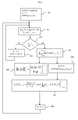
figure 2 presents steps of a first method implementation according to the invention; -
figure 3 presents steps of a second method implementation according to the invention. -
Figure 1 is a schematic representation of a device according to the invention for restitution of a signal s which is emitted in a noisy environment. The signal s is for instance a sound of voice type or other that needs to be cleaned from noise for exploitation purpose. - The device comprises a
microphone 21 for capture of sound and ade-noising module 20 for providing an estimate ^s of the signal s. Therefore a first contact of aswitch 22 between themicrophone 21 and the de-noising module is arranged to connect themicrophone 21 with thede-noising module 20 when the signal s is present so as to supply the de-noisingmodule 20 with a received signal which comprises in that case the signal s and a noise y. The detection of the presence of the signal s is not an object of the invention, it can be realized by a voice activity detection (VAD) system, a camera detecting a person or any other system like for example simply a button. - When the signal s is not present, said first contact of the
switch 22 is arranged to normally connect themicrophone 21 to anestimator generator 23 so as to supply theestimator generator 23 with the noise y so long as the signal s is not present. The estimator generator is arranged according to the invention for providing an estimator {αi,x i, K} that can be used by thede-noising module 20 for subtracting an estimation of noise ^y from the signal r so as to provide the estimate ^s of the signal s. For that purpose, a second contact of theswitch 22 is arranged for connecting theestimator generator 23 to thede-noising module 20 the same time as the first contact of theswitch 22 is connecting themicrophone 21 to the de-noisingmodule 20. In a normal state, the second contact of theswitch 22 is arranged to loop theestimator generator 23 on itself so as to adapt said estimator in real time according to the received noise y. - The estimator is provided for giving an estimation of noise that is a function of data which are collected in a vector
x threw aninput 24 of the device. The value of each component of the vector is given for instance by asensor input 24. Here four sensors are represented but it will be easily understood that the invention can be implemented with any number of sensors more or less than four including a sole one sensor, in which case the vectorx is simply a scalar x. The type of data is any that suits for an estimation of noise resulting from an event measurable by such data and liable to create or to contribute to the noise received by themicrophone 21. For a non limitative illustration purpose only, the data can be an angle of a moving arm of a robot, a speed or acceleration, a spent power of a motor, a sound captured by another microphone. - A third contact of the
switch 22 is arranged for connecting theinput 24 to the denoising module when the first contact is connecting themicrophone 21 to the denoising module. In that way, a real time estimation of noise ^y can be calculated with help of the estimator so as for the de-noising module to elaborate the estimate ^s in a similar way but not necessary the same as the one taught inW02006/032760 . - When not connecting the
input 24 to thede-noising module 20, the third contact of theswitch 22 is arranged to connect theinput 24 to ashift register 29. An output of each cell is arranged to be connected to theestimator generator 23 when said cell receives from a preceding cell or from the input 24 a valuex i of vector wherein a index i is comprised between 1 and n, 1 for the oldest value and n for the last one which is received threw theinput 24. The manner for shifting the values in the register is not essential for the method according to the invention, it can be by means of a clock of the device in a manner usually known in the art for sampling or every time a new value is detected. Useful feature of the invention is that a noise is sampled at the same time as a new valuex n of vector shifts the preceding ones in the register. - The
estimator generator 23 is arranged for starting a process of constructing the estimator when receiving from the shift register 29 a predetermined number L of valuesx i with their index i less or equal than n and greater than n-L. The process is executed by running the now explained steps of a method implementing the invention. - Referring now to
figure 2 , the number L is predetermined by setting its value in aninitialization step 100. The determination of said value per se is not in the scope of the invention, it can result from theoretical considerations or more practically from testing the device by a user providing successively different values of L up to achieve a more acceptable result on the estimation of the signal s by thede-noising module 20. - The estimator {αi,
x i, K} is provided by theestimator generator 23 for calculating an estimate ^y of noise in the form:
- The noise estimation function f relates to the vector
x by a linear combination of expressions of a kernel function K when applied each to the current vectorx and to a past valuex i of it. - Said kernel function K to be used is any function that satisfies the Mercer condition. Mathematical sciences define that the Mercer conditions are satisfied when for any number n of complex values ai or aj and of vectors
x i orx j with real values,

- a polynomial kernel in the form of K(
x i,x j ) = (1 +x i ·x j ) q - an exponential kernel in the form of

- a sigmoidal kernel in the form of K(
x i,x j )= tanh(ξ0x i ·x j + β0). - The coefficients αi are upgraded in real time by a loop of
steps 101 to 108 whereinstep 101 is triggered again for each new received value of datax considered as a supplementary last received datax n the same time as a received noise y considered as the last received noise yn . Eachtime step 101 is executed, a supplementary coefficient αn is created with a value initialized to zero. The loop is executed for each value of n, said value being initialized instep 100 and incremented instep Step 102 tests if number n is greater or equal to L so as to furnish coefficients αi for a total number n of received data at least equal to L. So long as number n is less than L,step 103 is branched onstep 101. - Considering a index i comprised between n-L+1 and n, the L last coefficients αi of the estimator are calculated in
step 107 by using the following formula:
- Wherein Dyj(n) is a distance separating a noise yj from an estimation of that noise which is done with the estimation function f using coefficients αm(n-1) with the values they currently had when executing
step 101. The noise yj is the one which was or is measured along the time when n was or is equal to j instep 101.
- The set of coefficients αi(n) on the left side of the setting symbol ":=" is for the coefficients generated by the current execution of the loop with rank n wherein the coefficients αi(n-1) on the right side are those initialized to zero and or generated by a preceding execution of the loop with rank n-1.
- In
step 107,

step 104. Any known method of the art can be used for obtaining the inverse matrix of the kernel matrix. Instep 104 executed beforestep 107 in case of a positive response to the test ofstep 102, the kernel matrix for the loop of rank n is generated by the formula:
- Wherein ζh,k is a matrix regularization parameter. In other words it is a value that is equal to zero when the index h is different of the index k and is equal to a constant when the two indexes h and k are equal. The regularization parameter assures that the matrix

- The parameters ρ and µn are for improving the efficiency of the method and will be explained later. Without said parameters or with ρ and µn constants respectively equal to 0 and to 1 which is the same, the formulae used in
step 107 are similar to the following ones:

- Mathematical considerations show that a setting of coefficients αi according to formula (4) induces that for every j in the range of n-L+1 to n:

- It is interesting to note from formula (5) that by an execution of a following loop for a new value of noise y n+1, the equation (6) has for effect that for every j in the range of n-L+1 to n, the distance Dy j(n+1) is equal to zero. The only distance which is different from zero is Dy n+1(n+1) which is given by:

- Because the kernel function K satisfies the Mercer condition, it can be shown that greater is L, faster the distance Dy n(n) is decreasing, in other words faster the method is converging.
- Advantageously, the method comprises a step 105 wherein the coefficients αi are divided by (1+p) with a regularization parameter or forgetting factor ρ having a value greater than zero. Therewith, each time step 105 is executed after
step 102, the coefficients αi are decreasing but in such a manner as to preserve the ratio between coefficients of any pair. Because divided many times, rather old coefficients, that is with the smaller indexes, become immaterial after a sufficient number of executions of the loop. The coefficients can be swapped out of the memory of the device executing the method, saving so much storage as time computing resources of it. For instance onfigure 2 , the coefficients αi with i less than n-L+ 1 are specifically divided by (1+p) in step 105. The coefficients αi with i greater than n-L are divided by (1+p) instep 107 according to formulae (1) and (2). In the following, every time the regularization parameter ρ is present in a formula, it will be understood that ρ is null, being the same as not being present for implementations without step 105. - Advantageously also, the formula (1) used in
step 107 comprises a step size µ(n) which in this case is initialized instep 100 to a value µ(0). The value of the step size µ(n) can be a constant equal to µ(0) for every execution ofstep 107 or can be varied according to n. In that case the method comprises further astep 106 wherein the step size µ(n) is set to a value µ̃ but limited by a minimum µmin and a maximum µmax. The values µmin and µmax are set ininitialization step 100 respectively to a value greater or equal to zero and to a value preferably less or equal than one. A possible formula for achieving that is:
- Before setting µ(n) in
step 106, the value µ̃ is updated by the formula:
- In the formula, a prediction error is given by:

- Wherein a function f n of the vector
x n-j is given by the formula:
- We see here that for example when j=0, the prediction
error 

- An adaptive size cost parameter γ, an adaptive step size cost order L', an adaptive step size cost insensitivity ε' and an adaptive step size recursive parameter η are respectively a positive real number greater than one, an integer less, equal or greater than L, a positive real number near to zero and a positive real number less than two which can be set in
step 100 in case ofstep 106 existing. When the value of the size cost parameter γ is equal to one, we see that the updating of the value µ̃ is independent of the prediction error. When furthermore the values of the adaptive step size recursive parameter η and of the regularization factor ρ are respectively equal to one and zero, a simple expression of the value µ̃ is given by:
- In the expression of µ̃, components βm of a weight gradient are updated according to the formula:

- For every index i comprised in the range of n-L+1 to n, the value of a gradient Δ i is given by the formula:

- A second mode of implementation of the method according to the invention is now described in reference to
figure 3 whereinsteps 100 to 103 are similar to the ones of the first mode of implementation previously described in reference tofigure 2 . - Considering an index i comprised between n-
L+ 1 and n, the L last coefficients αi of the estimator are calculated instep 207 by using the following formula:
- Wherein

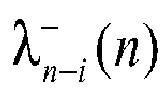

- More precisely, the Lagrange multipliers are calculated according the following sequence.
- A
step 204 precedingstep 206 is similar to previously describedstep 104 in that a kernel matrix
x n-h andx n-k. Furthermore a quadratic matrix Q(n) is constructed for having 2Lx2L coefficients given by:

- A linear vector p(n) having L components pk and L components pk+L, is given by the formula:

- Wherein δk,n-j=1 when k=n-j and 0 otherwise.
- The matrix Q(n) and the linear vector p(n) are then input in a quadratic programming library that is arranged to produce in output values of


- Any quadratic programming library arranged for calculating such an argument of a maximum value is adapted like for example the GQP library available on http://www.gnu.org/software/gsl.
- In formula (1'), the step size µ(n) is not necessary. It can be a constant which when equal to 1 is the same has not being present. A variable step size improves the method. In that case the method comprises further a
step 205 wherein the step size µ(n) is set to a value µ̃ but limited by a minimum µmin and a maximum µmax. The values µmin and µmax are set ininitialization step 100 respectively to a value greater or equal to zero and to a value preferably less or equal than one. A possible formula for achieving that is:
- Before setting µ(n) in
step 205, the value µ̃ is updated by the formula:
- In the formula, a prediction error


- Wherein a function f n of the vector
x n-j is given by the formula:
- We see here that for example when j=0, the prediction
error 
- An adaptive size cost parameter γ, an adaptive step size cost order L', an adaptive step size cost insensitivity ε' and an adaptive step size recursive parameter η are respectively a positive real number greater than one, an integer less, equal or greater than L, a positive real number near to zero and a positive real number less than two which can be set in
step 100 in case ofstep 106 existing. When the value of the size cost parameter γ is equal to one, we see that the updating of the value µ̃ is independent of the prediction error value except for its sign. When furthermore the values of the adaptive step size recursive parameter η is equal to one, a simple expression of the value µ̃ is given by:
Claims (11)
- Method for producing an estimator of noise which is an unknown function of physical quantities without necessity for said function to be linear comprising steps of:- capturing (101) a sound and associating to said sound by a common index a first vector value of said physical quantities at the same time as the sound is captured;- repeating (102) said step of capturing, incrementing a value of the index each time said step is repeated, and when said index value is or has been incremented a number of times at least equal to a first integer (L) greater than one, each time said index value is incremented:- generating (107) a current sequence of coefficients for a linear combination of functions which satisfy Mercer conditions wherein a first argument of one of the functions is the first vector value of the one of the capturing steps having the index value corresponding to a rank of the coefficient in the sequence and- setting values of the coefficients so as to a quantity of the last captured sounds equal to said first integer be substantially equal each to an occurrence of the linear combination wherein a second argument of the functions is the first vector value of the capturing step having the index value associated to the sound;- performing the linear combination resulting from the current generated sequence to produce the estimator when a next captured sound is not pure noise.
- Method according to Claim 1 wherein when a previous sequence was generated in relation with a preceding capturing step, the values of the coefficients are set for the current sequence being at a minimum distance of the previous sequence according to a predetermined metric associated with sequences.
- Method according to Claim 1 or 2 wherein one of the last captured sounds is considered substantially equal to said occurrence of the linear combination when a difference between the said one sound and the occurrence is in a sufficiently small interval comprising zero and wherein the values of the (L) more recently generated coefficients comprise a difference

- Method according to Claim 3 wherein said difference between two Lagrange multipliers is multiplied by a step size which is updated according to said Lagrange multipliers.
- Method according to Claim 1 or 2 wherein one of the last captured sounds is considered substantially equal to said occurrence of the linear combination when a difference between the said one sound and the occurrence is equal to zero and wherein the values of the (L) more recently generated coefficients comprise a difference between a last captured sound and the linear combination associated with a preceding value of said common index.
- Method according to Claim 5 wherein said difference between the last captured sound and the linear combination is multiplied by a step size which is updated according to another difference which is between the last captured sound and a previous occurrence of the linear combination.
- Method according to anyone of the preceding Claims wherein said coefficients are multiplied by a forgetting factor having a value less than one each time said common index is incremented.
- System for producing an estimator of noise which is an unknown function of physical quantities without necessity for said function to be linear comprising:- a microphone (21) arranged for capturing a sound and means (22, 24, 29) arranged for associating to said sound by a common index a first vector value of said physical quantities at the same time as the sound is captured;- a generator (23) and a shift register (29) arranged for storing captured sounds and associated said first vector value by incrementing a value of the index each time a sound is captured, and when said index value is or has been incremented a number of times at least equal to a first integer (L) greater than one, each time said index value is incremented:the generator (23) is arranged for generating a current sequence of coefficients for a linear combination of functions which satisfy Mercer conditions wherein a first argument of one of the functions is the one of first vector values having the index value corresponding to a rank of the coefficient in the sequence andfor setting values of the coefficients so as to a quantity of the last captured sounds equal to said first integer be substantially equal each to an occurrence of the linear combination wherein a second argument of the functions is another one of first vector values having the index value associated to the sound;- so as to produce the estimator when a next captured sound is not pure noise by performing the linear combination resulting from the current generated sequence.
- System according to Claim 8 wherein the generator (23) is arranged for setting the values of the coefficients of the current sequence being at a minimum distance of a previous sequence according to a predetermined metric associated with sequences.
- System according to Claim 8 or 9 wherein one of the last captured sounds is considered substantially equal to said occurrence of the linear combination when a difference between the said one sound and the occurrence is in a sufficiently small interval comprising zero and wherein the values of the (L) more recently generated coefficients comprise a difference

- Method according to Claim 8 or 9 wherein one of the last captured sounds is considered substantially equal to said occurrence of the linear combination when a difference between the said one sound and the occurrence is equal to zero and wherein the values of the (L) more recently generated coefficients comprise a difference between a last captured sound and the linear combination associated with a preceding value of said common index.
Priority Applications (2)
| Application Number | Priority Date | Filing Date | Title |
|---|---|---|---|
| EP06301278A EP1936608A1 (en) | 2006-12-21 | 2006-12-21 | On-line learning method and system for speech denoising |
| PCT/EP2007/064515 WO2008074893A1 (en) | 2006-12-21 | 2007-12-21 | On-line learning method and system for speech denoising |
Applications Claiming Priority (1)
| Application Number | Priority Date | Filing Date | Title |
|---|---|---|---|
| EP06301278A EP1936608A1 (en) | 2006-12-21 | 2006-12-21 | On-line learning method and system for speech denoising |
Publications (1)
| Publication Number | Publication Date |
|---|---|
| EP1936608A1 true EP1936608A1 (en) | 2008-06-25 |
Family
ID=37891750
Family Applications (1)
| Application Number | Title | Priority Date | Filing Date |
|---|---|---|---|
| EP06301278A Withdrawn EP1936608A1 (en) | 2006-12-21 | 2006-12-21 | On-line learning method and system for speech denoising |
Country Status (2)
| Country | Link |
|---|---|
| EP (1) | EP1936608A1 (en) |
| WO (1) | WO2008074893A1 (en) |
Citations (2)
| Publication number | Priority date | Publication date | Assignee | Title |
|---|---|---|---|---|
| WO2000014731A1 (en) * | 1998-09-09 | 2000-03-16 | Ericsson Inc. | Apparatus and method for transmitting an improved voice signal over a communications device located in a vehicle with adaptive vibration noise cancellation |
| US20050187763A1 (en) * | 2004-02-23 | 2005-08-25 | General Motors Corporation | Dynamic tuning of hands-free algorithm for noise and driving conditions |
-
2006
- 2006-12-21 EP EP06301278A patent/EP1936608A1/en not_active Withdrawn
-
2007
- 2007-12-21 WO PCT/EP2007/064515 patent/WO2008074893A1/en not_active Ceased
Patent Citations (2)
| Publication number | Priority date | Publication date | Assignee | Title |
|---|---|---|---|---|
| WO2000014731A1 (en) * | 1998-09-09 | 2000-03-16 | Ericsson Inc. | Apparatus and method for transmitting an improved voice signal over a communications device located in a vehicle with adaptive vibration noise cancellation |
| US20050187763A1 (en) * | 2004-02-23 | 2005-08-25 | General Motors Corporation | Dynamic tuning of hands-free algorithm for noise and driving conditions |
Non-Patent Citations (2)
| Title |
|---|
| A. ITO ET AL.: "Internal Noise Suppression for Speech Recognition by Small Robots", PROC. EUROSPEECH / INTERSPEECH, 4 September 2005 (2005-09-04), Lisbon, Portugal, pages 2685 - 2688, XP002430339 * |
| SCHÖLKOPF: "Statistical Learning and Kernel Methods", TECHNICAL REPORT MICROSOFT RESEARCH MSR TR, no. MSR-TR-2000-23, 29 February 2000 (2000-02-29), pages 1 - 8, XP002413484 * |
Also Published As
| Publication number | Publication date |
|---|---|
| WO2008074893A1 (en) | 2008-06-26 |
Similar Documents
| Publication | Publication Date | Title |
|---|---|---|
| EP3776534B1 (en) | Systems, methods, and computer-readable media for improved real-time audio processing | |
| EP3142106B1 (en) | Apparatus and method for generating acoustic model, and apparatus and method for speech recognition | |
| CN110767223B (en) | Voice keyword real-time detection method of single sound track robustness | |
| Wu et al. | Application of the unscented Kalman filter for real‐time nonlinear structural system identification | |
| Anava et al. | Online learning for time series prediction | |
| CN104952458B (en) | Noise suppression method, device and system | |
| EP2877993B1 (en) | Method and device for reconstructing a target signal from a noisy input signal | |
| KR101620866B1 (en) | Dictionary learning based target source separation using induction algorithm | |
| Guo et al. | Hybrid methods for MEMS gyro signal noise reduction with fast convergence rate and small steady-state error | |
| Bose et al. | Framework for automated earthquake event detection based on denoising by adaptive filter | |
| US8244787B2 (en) | Optimum nonlinear correntropy filter | |
| Mboup | Parameter estimation via differential algebra and operational culculus | |
| CN110797039A (en) | Voice processing method, device, terminal and medium | |
| EP1936608A1 (en) | On-line learning method and system for speech denoising | |
| Mikusheva | Second Order Expansion of the t-statistic in AR (1) Models | |
| Orosz et al. | Analysis of resonator-based harmonic estimation in the case of data loss | |
| Chu et al. | A new regularized TVAR-based algorithm for recursive detection of nonstationarity and its application to speech signals | |
| WO2021062705A1 (en) | Single-sound channel robustness speech keyword real-time detection method | |
| US20240248570A1 (en) | Machine learning frame filtering | |
| Priya et al. | Linear predictor and autocorrelation for noisy and delayed digital signal | |
| Likhonina | Hand Detection Algorithm: Pre-processing Stage. | |
| Basiri et al. | Fast and robust bootstrap method for testing hypotheses in the ICA model | |
| US20250086463A1 (en) | Artificially Intelligent Uncertainty Quantification for Estimates of Evolution Model Parameters | |
| US11620985B2 (en) | Pattern recognition robust to influence of a transfer path | |
| Xu et al. | Auxiliary Model-Based Multi-Innovation Fractional Stochastic Gradient Algorithm for Hammerstein Output-Error Systems. Machines 2021, 9, 247 |
Legal Events
| Date | Code | Title | Description |
|---|---|---|---|
| PUAI | Public reference made under article 153(3) epc to a published international application that has entered the european phase |
Free format text: ORIGINAL CODE: 0009012 |
|
| AK | Designated contracting states |
Kind code of ref document: A1 Designated state(s): AT BE BG CH CY CZ DE DK EE ES FI FR GB GR HU IE IS IT LI LT LU LV MC NL PL PT RO SE SI SK TR |
|
| AX | Request for extension of the european patent |
Extension state: AL BA HR MK RS |
|
| AKX | Designation fees paid | ||
| REG | Reference to a national code |
Ref country code: DE Ref legal event code: 8566 |
|
| STAA | Information on the status of an ep patent application or granted ep patent |
Free format text: STATUS: THE APPLICATION IS DEEMED TO BE WITHDRAWN |
|
| 18D | Application deemed to be withdrawn |
Effective date: 20081230 |