EP1936001A2 - Non-invasive thermal management processes for restoring metallic details bonded to substrates - Google Patents
Non-invasive thermal management processes for restoring metallic details bonded to substrates Download PDFInfo
- Publication number
- EP1936001A2 EP1936001A2 EP07254724A EP07254724A EP1936001A2 EP 1936001 A2 EP1936001 A2 EP 1936001A2 EP 07254724 A EP07254724 A EP 07254724A EP 07254724 A EP07254724 A EP 07254724A EP 1936001 A2 EP1936001 A2 EP 1936001A2
- Authority
- EP
- European Patent Office
- Prior art keywords
- bonding material
- masking
- metallic
- thermal management
- detail
- Prior art date
- Legal status (The legal status is an assumption and is not a legal conclusion. Google has not performed a legal analysis and makes no representation as to the accuracy of the status listed.)
- Withdrawn
Links
Images

Classifications
-
- C—CHEMISTRY; METALLURGY
- C23—COATING METALLIC MATERIAL; COATING MATERIAL WITH METALLIC MATERIAL; CHEMICAL SURFACE TREATMENT; DIFFUSION TREATMENT OF METALLIC MATERIAL; COATING BY VACUUM EVAPORATION, BY SPUTTERING, BY ION IMPLANTATION OR BY CHEMICAL VAPOUR DEPOSITION, IN GENERAL; INHIBITING CORROSION OF METALLIC MATERIAL OR INCRUSTATION IN GENERAL
- C23C—COATING METALLIC MATERIAL; COATING MATERIAL WITH METALLIC MATERIAL; SURFACE TREATMENT OF METALLIC MATERIAL BY DIFFUSION INTO THE SURFACE, BY CHEMICAL CONVERSION OR SUBSTITUTION; COATING BY VACUUM EVAPORATION, BY SPUTTERING, BY ION IMPLANTATION OR BY CHEMICAL VAPOUR DEPOSITION, IN GENERAL
- C23C4/00—Coating by spraying the coating material in the molten state, e.g. by flame, plasma or electric discharge
- C23C4/12—Coating by spraying the coating material in the molten state, e.g. by flame, plasma or electric discharge characterised by the method of spraying
-
- C—CHEMISTRY; METALLURGY
- C23—COATING METALLIC MATERIAL; COATING MATERIAL WITH METALLIC MATERIAL; CHEMICAL SURFACE TREATMENT; DIFFUSION TREATMENT OF METALLIC MATERIAL; COATING BY VACUUM EVAPORATION, BY SPUTTERING, BY ION IMPLANTATION OR BY CHEMICAL VAPOUR DEPOSITION, IN GENERAL; INHIBITING CORROSION OF METALLIC MATERIAL OR INCRUSTATION IN GENERAL
- C23C—COATING METALLIC MATERIAL; COATING MATERIAL WITH METALLIC MATERIAL; SURFACE TREATMENT OF METALLIC MATERIAL BY DIFFUSION INTO THE SURFACE, BY CHEMICAL CONVERSION OR SUBSTITUTION; COATING BY VACUUM EVAPORATION, BY SPUTTERING, BY ION IMPLANTATION OR BY CHEMICAL VAPOUR DEPOSITION, IN GENERAL
- C23C4/00—Coating by spraying the coating material in the molten state, e.g. by flame, plasma or electric discharge
- C23C4/01—Selective coating, e.g. pattern coating, without pre-treatment of the material to be coated
-
- C—CHEMISTRY; METALLURGY
- C23—COATING METALLIC MATERIAL; COATING MATERIAL WITH METALLIC MATERIAL; CHEMICAL SURFACE TREATMENT; DIFFUSION TREATMENT OF METALLIC MATERIAL; COATING BY VACUUM EVAPORATION, BY SPUTTERING, BY ION IMPLANTATION OR BY CHEMICAL VAPOUR DEPOSITION, IN GENERAL; INHIBITING CORROSION OF METALLIC MATERIAL OR INCRUSTATION IN GENERAL
- C23C—COATING METALLIC MATERIAL; COATING MATERIAL WITH METALLIC MATERIAL; SURFACE TREATMENT OF METALLIC MATERIAL BY DIFFUSION INTO THE SURFACE, BY CHEMICAL CONVERSION OR SUBSTITUTION; COATING BY VACUUM EVAPORATION, BY SPUTTERING, BY ION IMPLANTATION OR BY CHEMICAL VAPOUR DEPOSITION, IN GENERAL
- C23C4/00—Coating by spraying the coating material in the molten state, e.g. by flame, plasma or electric discharge
- C23C4/02—Pretreatment of the material to be coated, e.g. for coating on selected surface areas
Definitions
- the invention relates to restoration of metallic details bonded to a substrate, more particularly, to non-invasive thermal management processes that allow metallic details adhesively bonded to substrates to be dimensionally restored while still bonded to the substrate.
- Adhesive bonding has been long employed as a means of joining metallic details to substrates such as metallic, ceramic, wood or composite surfaces.
- dimensional restoration is typically achieved by breaking the adhesive bond to separate the detail from the substrate, restoring or replacing the metallic detail, and rebonding the detail to the substrate.
- this process is prone to incurring damage to the substrate 10 during metallic detail 12 removal. Damage may occur such as a change of geometry 20 of the fillet 14, and/or a disbond or separation 16 at the bondment 18 of the fillet 14 and metallic detail 12.
- the metallic detail 12 often requires tooling to be correctly re-installed in the proper location and orientation on the substrate 10.
- a thermal management process for enabling the restoration of a metallic detail in the presence of at least one bonding material broadly comprises preparing at least one damaged area on a metallic detail bonded to a substrate; disposing at least one thermal management component upon a bonding material or a surface area proximate to the bonding material to which the metallic detail is joined; masking at least the surface area and the bonding material with a masking agent; and dimensionally restoring the metallic detail disposed on the article at a processing temperature lower than a temperature which would degrade the bonding material, the substrate, or the bondment interface therebetween.
- an article 30 comprises a substrate 32 and a metallic detail 36 attached thereto via a bonding material 34.
- Bonding material 34 is required in order to attach certain metallic details 36 to underlying substrates 32 composed of composite materials and/or low melting point metal alloys such as aluminum, magnesium, and the like.
- these metallic details 36 have a maximum service use temperature of no more than about 300°F (149°C). This maximum use temperature makes the use of common adhesives, such as urethanes, epoxies and silicones, a feasible alternative to welding. As a result, many metallic details 36 are bonded to the substrate 32 rather than being joined thereto by welding.
- substrate 32 may be bonded to an exterior portion of the fillet 38 with a bonding material 34 at a bondment 40, the bonding interface, and a metallic detail 36 may also be bonded to an interior portion of the fillet 38 with the bonding material 34 at the bondment 40.
- metallic detail 36 sustains at least one damaged area 42 of a repair area 44, the damaged feature and/or detail of metallic detail 36 may be repaired and/or dimensionally restored using an exemplary thermal management process as described herein, which avoids the need to,physically separate the metallic detail 36 from the substrate 32.
- the exemplary thermal management processes may comprise a set of surface preparation steps 50 and a set of dimensional restoration steps 60.
- the damaged area 42 may be prepared prior to restoring a detail and/or feature of the metallic detail 36.
- the preparation work may involve first removing at least a portion of the damaged area 42 of the metallic detail 36 (See FIG. 3 ) at step 52 of FIG. 4 .
- the removal process may be accomplished using any suitable machining process known to one of ordinary skill in the art.
- a first masking agent known to one of ordinary skill in the art may be applied to the article 30 at step 54 of FIG. 4 .
- Masking may be applied to at least the exposed proximate surface area 39 of the bonding material 34 and the substrate 32.
- the first masking process may be accomplished using any suitable masking process known to one of ordinary skill in the art.
- the damaged area 42 may be cleaned using any suitable cleaning process known to one of ordinary skill in the art at step 55 of FIG. 4 .
- a grit blasting process may be used to clean the surface of the metallic detail 36 requiring dimensional restoration.
- the first masking agent may be removed at step 56 of FIG. 4 using any suitable mask removal process known to one of ordinary skill in the art.
- At least one thermal management component may be optionally disposed upon at least a portion of, substantially all of, or the entirety of a surface area 86 where the bonding material 34 and proximate surface area 39 of the article are exposed at step 58 of FIG. 4 .
- Thermal management components such as chill blocks 70 are generally known to one of ordinary skill in the art.
- at least one chill block 70 may be placed directly upon the surface area 39 and/or bonding material 34 as well.
- additional chill blocks 70 may be placed in other areas proximate to the substrate 32 and substrate surfaces substantially free of, or free of, bonding material 34, such as the substrate surface 74 opposite bonding material 34, as shown in FIG. 5 .
- additional chill blocks 70 may be placed proximate to and/or upon an edge 80 of a perforation 82 on the exterior surface 86 of the metallic detail 36 and opposite a dimensionally restored area 84 as shown in FIG. 6 .
- a second masking agent or series of second masking agents as known to one skilled in the art may be applied to a surface 76 of the thermal management components 70 and the area of surface proximate to the thermal management component 70.
- This second masking agent provides effective protection to surface 76 and bonding material 34 to prevent or mitigate thermal degradation of the assembly 30 or its components, or of the bonding material 34, during the restoration processes.
- an insulation material may be disposed upon the surface area to be masked, and then a second masking agent known to one of ordinary skill in the art may be disposed upon the insulation material.
- Typical bonding materials approved for use in the aerospace industry are capable of withstanding temperatures of about 200°F (93°C) to about 600°F (316°C).
- approved epoxies are thermally stable at temperatures up to about 300°F (149°C), silicones up to about 500°F (260°C), while approved polyimides can withstand operating temperatures over about 600°F (316°C).
- aerospace industry approved bonding materials that fall within the aforementioned maximum use temperature ranges include the following: epoxies, polyesters, cyanoacrylates, polyamides, polyimides, and combinations thereof.
- the insulation material may be any insulation material capable of withstanding temperatures higher than the adhesive or substrate, if necessary. Generally, the insulation material is present in an amount sufficient to sufficiently reduce heat flow into the adhesive bonding material 34 or substrate 32 such that the respective maximum use temperature is not exceeded.
- the temperature of the bonding material 34, and underlying substrate 32 may be monitored using a conventional device, e.g., a thermocouple 72, or infrared thermometer, as known to one of ordinary skill in the art.
- the thermocouple may be attached using at least one lead line (not shown) to at least the bonding material 34, and/or substrate 32, in order to monitor the temperature throughout the restoration process.
- the temperature indicating device may be attached to the surface of the fillet 38 which affords line of sight access for the indicating device during the dimensional restoration process.
- the dimensional restoration process may be slowed or terminated prior to completion if the measured temperature approaches the temperature at which the bonding material, the substrate, and/or the bondment begins to degrade, or at a predetermined temperature lower than all three of these temperatures if desired.
- the metallic detail 36 may be dimensionally restored or built up at step 64 of FIG. 4 .
- Suitable metal additive processes for dimensionally restoring the metallic detail(s) 36 may include, but are not limited to, thermal spray processes, plasma vapor deposition processes, dual wire arc processes, vapor deposition processes, plating processes, weld cladding processes, and other metal additive processes known to one skilled in the art.
- thermal spray processes plasma vapor deposition processes, dual wire arc processes, vapor deposition processes, plating processes, weld cladding processes, and other metal additive processes known to one skilled in the art.
- such methods are not utilized for use with bonded assemblies because these methods generate thermal gradients at a substrate's surface that can exceed the temperatures where the physical properties of the bonding material 34, the substrate 32, or the bondment 40 therebetween degrade, or where the mismatch of the component material coefficients of thermal expansions exceed the bonding adhesive shear strength.
- the aforementioned thermal management components combined with specific operating parameters may be used to reduce the temperature at the bonding material 34, substrate 32 and the bondment 40 interfaces.
- the second masking agent may be removed at step 66 of FIG. 4 using any suitable mask removal process known to one of ordinary skill in the art.
- the metallic detail 36 may be re-contoured to shape and size at step 68, if necessary, using any method known to one of ordinary skill in the art which does not impart sufficient thermal energy to degrade the assembly.
- the thermal management components 70 and temperature monitoring devices 72 may be removed at step 69 of FIG. 4 .
- the exemplary non-invasive thermal management processes for restoring bonded metallic details provides several advantages over the prior art.
- the processes described herein do not require separation of the metallic detail 36 from the substrate 32 or bonding material 34. Any time a firmly bonded part is removed from a substrate, the substrate risks being structurally or dimensionally damaged. In addition to potential substrate damage, the part must be realigned and re-bonded to the substrate, introducing the potential to misalign the part. Moreover, time, labor and associated costs all increase when a part must be removed from a substrate to be restored.
- the exemplary processes described herein eliminate the potential to both structurally damage the underlying structure and misalign the re-bonded part, and do not incur additional expenses as a result of such work.
Landscapes
- Chemical & Material Sciences (AREA)
- Engineering & Computer Science (AREA)
- Mechanical Engineering (AREA)
- Plasma & Fusion (AREA)
- Chemical Kinetics & Catalysis (AREA)
- Materials Engineering (AREA)
- Physics & Mathematics (AREA)
- Metallurgy (AREA)
- Organic Chemistry (AREA)
- Coating By Spraying Or Casting (AREA)
- Adhesives Or Adhesive Processes (AREA)
- Laminated Bodies (AREA)
- Pressure Welding/Diffusion-Bonding (AREA)
Abstract
Description
- The invention relates to restoration of metallic details bonded to a substrate, more particularly, to non-invasive thermal management processes that allow metallic details adhesively bonded to substrates to be dimensionally restored while still bonded to the substrate.
- Adhesive bonding has been long employed as a means of joining metallic details to substrates such as metallic, ceramic, wood or composite surfaces. When the metallic detail wears during use, dimensional restoration is typically achieved by breaking the adhesive bond to separate the detail from the substrate, restoring or replacing the metallic detail, and rebonding the detail to the substrate. As illustrated in
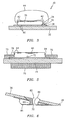
FIGS. 1A and 1B of the prior art, this process is prone to incurring damage to thesubstrate 10 duringmetallic detail 12 removal. Damage may occur such as a change ofgeometry 20 of thefillet 14, and/or a disbond orseparation 16 at thebondment 18 of thefillet 14 andmetallic detail 12. Furthermore, themetallic detail 12 often requires tooling to be correctly re-installed in the proper location and orientation on thesubstrate 10. - Therefore, there exists a need for a process that allows metallic details adhesively bonded to underlying substrates to be dimensionally repaired, without degrading the function of the adhesive bond, and without damaging the substrate with the heat generated during the metallic detail restoration process.
- In one aspect of the present invention, a thermal management process for enabling the restoration of a metallic detail in the presence of at least one bonding material broadly comprises preparing at least one damaged area on a metallic detail bonded to a substrate; disposing at least one thermal management component upon a bonding material or a surface area proximate to the bonding material to which the metallic detail is joined; masking at least the surface area and the bonding material with a masking agent; and dimensionally restoring the metallic detail disposed on the article at a processing temperature lower than a temperature which would degrade the bonding material, the substrate, or the bondment interface therebetween.
- Other features and advantages of the invention will be apparent from the description and drawings, and from the claims.
-
-
FIG. 1A is a representation of an article of the prior art before undergoing detail removal; -
FIG. 1B is a representation of an article of the prior art showing damage incurred to the substrate during detail removal; -
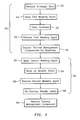
FIG. 2 is a representation of an article assembly for use in implementing the exemplary processes of the present invention; -
FIG. 3 is a representation of an article to be repaired using the exemplary processes of the present invention; -
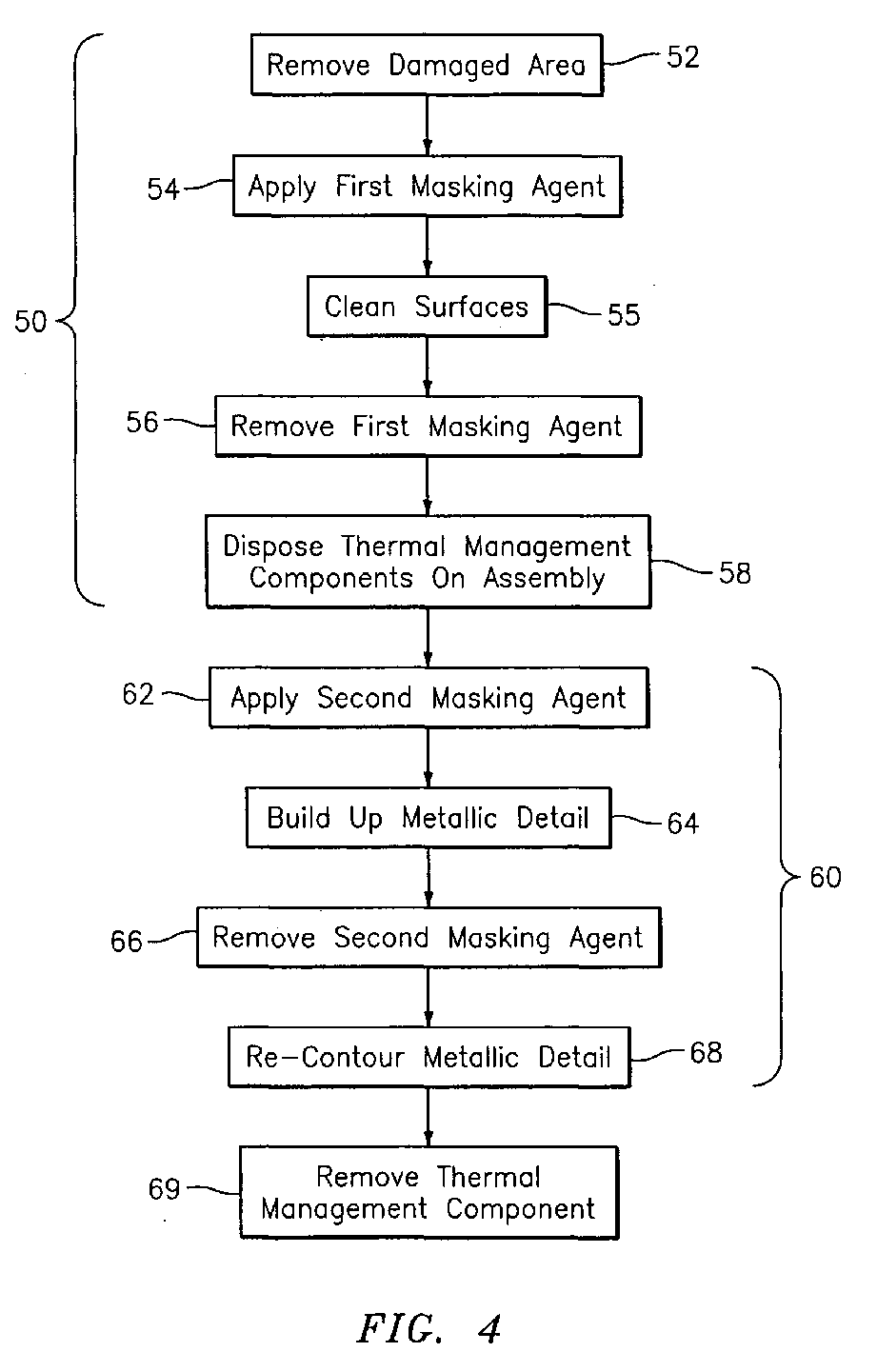
FIG. 4 is a flowchart representing an exemplary process of the present invention; -
FIG. 5 is a representation of the article ofFIG. 3 being repaired according to the exemplary process of the present invention; and -
FIG. 6 is a representation of an alternate embodiment of the article ofFIG. 3 illustrating an additional surface available on the article with an internal aperture such as a bolt or rivet hole. - Like reference numbers and designations in the various drawings indicate like elements.
- Referring to
FIGS. 2 and3 , anarticle 30 comprises asubstrate 32 and ametallic detail 36 attached thereto via abonding material 34.Bonding material 34 is required in order to attach certainmetallic details 36 to underlyingsubstrates 32 composed of composite materials and/or low melting point metal alloys such as aluminum, magnesium, and the like. Typically, thesemetallic details 36 have a maximum service use temperature of no more than about 300°F (149°C). This maximum use temperature makes the use of common adhesives, such as urethanes, epoxies and silicones, a feasible alternative to welding. As a result, manymetallic details 36 are bonded to thesubstrate 32 rather than being joined thereto by welding. For example,substrate 32 may be bonded to an exterior portion of thefillet 38 with abonding material 34 at abondment 40, the bonding interface, and ametallic detail 36 may also be bonded to an interior portion of thefillet 38 with thebonding material 34 at thebondment 40. Whenmetallic detail 36 sustains at least one damagedarea 42 of arepair area 44, the damaged feature and/or detail ofmetallic detail 36 may be repaired and/or dimensionally restored using an exemplary thermal management process as described herein, which avoids the need to,physically separate themetallic detail 36 from thesubstrate 32. - Referring now to
FIG. 4 , a flowchart representing a general exemplary thermal management process of the present invention for restoration of metallic details bonded to a substrate is illustrated. The exemplary thermal management processes may comprise a set ofsurface preparation steps 50 and a set ofdimensional restoration steps 60. As known to one of ordinary skill in the art, the damagedarea 42 may be prepared prior to restoring a detail and/or feature of themetallic detail 36. Typically, the preparation work may involve first removing at least a portion of the damagedarea 42 of the metallic detail 36 (SeeFIG. 3 ) atstep 52 ofFIG. 4 . The removal process may be accomplished using any suitable machining process known to one of ordinary skill in the art. Next, a first masking agent known to one of ordinary skill in the art may be applied to thearticle 30 atstep 54 ofFIG. 4 . Masking may be applied to at least the exposedproximate surface area 39 of thebonding material 34 and thesubstrate 32. The first masking process may be accomplished using any suitable masking process known to one of ordinary skill in the art. Once the exposedbonding material 34 andsurface area 39 proximate to thebonding material 34 are masked, the damagedarea 42 may be cleaned using any suitable cleaning process known to one of ordinary skill in the art atstep 55 ofFIG. 4 . For example, a grit blasting process may be used to clean the surface of themetallic detail 36 requiring dimensional restoration. Afterwards, the first masking agent may be removed atstep 56 ofFIG. 4 using any suitable mask removal process known to one of ordinary skill in the art. - Referring now to
FIGS. 4 and5 , at least one thermal management component may be optionally disposed upon at least a portion of, substantially all of, or the entirety of asurface area 86 where thebonding material 34 andproximate surface area 39 of the article are exposed atstep 58 ofFIG. 4 . Thermal management components such aschill blocks 70 are generally known to one of ordinary skill in the art. For example, at least onechill block 70 may be placed directly upon thesurface area 39 and/or bondingmaterial 34 as well. Optionallyadditional chill blocks 70 may be placed in other areas proximate to thesubstrate 32 and substrate surfaces substantially free of, or free of,bonding material 34, such as thesubstrate surface 74 oppositebonding material 34, as shown inFIG. 5 . Optionally too,additional chill blocks 70 may be placed proximate to and/or upon anedge 80 of aperforation 82 on theexterior surface 86 of themetallic detail 36 and opposite a dimensionally restoredarea 84 as shown inFIG. 6 . - Referring again to
FIG. 4 , once such thermal management components are in place, the dimensional restoration steps may be performed. A second masking agent or series of second masking agents as known to one skilled in the art may be applied to asurface 76 of thethermal management components 70 and the area of surface proximate to thethermal management component 70. This second masking agent provides effective protection tosurface 76 and bondingmaterial 34 to prevent or mitigate thermal degradation of theassembly 30 or its components, or of thebonding material 34, during the restoration processes. - When disposing the second masking agent at
step 62 ofFIG. 4 , an insulation material may be disposed upon the surface area to be masked, and then a second masking agent known to one of ordinary skill in the art may be disposed upon the insulation material. Typical bonding materials approved for use in the aerospace industry are capable of withstanding temperatures of about 200°F (93°C) to about 600°F (316°C). For example, approved epoxies are thermally stable at temperatures up to about 300°F (149°C), silicones up to about 500°F (260°C), while approved polyimides can withstand operating temperatures over about 600°F (316°C). Generally, aerospace industry approved bonding materials that fall within the aforementioned maximum use temperature ranges include the following: epoxies, polyesters, cyanoacrylates, polyamides, polyimides, and combinations thereof. The insulation material may be any insulation material capable of withstanding temperatures higher than the adhesive or substrate, if necessary. Generally, the insulation material is present in an amount sufficient to sufficiently reduce heat flow into theadhesive bonding material 34 orsubstrate 32 such that the respective maximum use temperature is not exceeded. - During the exemplary processes of the present invention, the temperature of the
bonding material 34, andunderlying substrate 32, may be monitored using a conventional device, e.g., a thermocouple 72, or infrared thermometer, as known to one of ordinary skill in the art. For example, the thermocouple may be attached using at least one lead line (not shown) to at least thebonding material 34, and/orsubstrate 32, in order to monitor the temperature throughout the restoration process. Optionally, as shown inFigure 5 , the temperature indicating device may be attached to the surface of thefillet 38 which affords line of sight access for the indicating device during the dimensional restoration process. The dimensional restoration process may be slowed or terminated prior to completion if the measured temperature approaches the temperature at which the bonding material, the substrate, and/or the bondment begins to degrade, or at a predetermined temperature lower than all three of these temperatures if desired. - After masking is completed at
step 62, themetallic detail 36 may be dimensionally restored or built up atstep 64 ofFIG. 4 . Suitable metal additive processes for dimensionally restoring the metallic detail(s) 36 may include, but are not limited to, thermal spray processes, plasma vapor deposition processes, dual wire arc processes, vapor deposition processes, plating processes, weld cladding processes, and other metal additive processes known to one skilled in the art. Typically, such methods are not utilized for use with bonded assemblies because these methods generate thermal gradients at a substrate's surface that can exceed the temperatures where the physical properties of thebonding material 34, thesubstrate 32, or thebondment 40 therebetween degrade, or where the mismatch of the component material coefficients of thermal expansions exceed the bonding adhesive shear strength. However, the aforementioned thermal management components combined with specific operating parameters may be used to reduce the temperature at thebonding material 34,substrate 32 and thebondment 40 interfaces. Following the dimensional restoration step, the second masking agent may be removed atstep 66 ofFIG. 4 using any suitable mask removal process known to one of ordinary skill in the art. Afterwards, themetallic detail 36 may be re-contoured to shape and size atstep 68, if necessary, using any method known to one of ordinary skill in the art which does not impart sufficient thermal energy to degrade the assembly. Lastly, thethermal management components 70 and temperature monitoring devices 72 may be removed atstep 69 ofFIG. 4 . - The exemplary non-invasive thermal management processes for restoring bonded metallic details provides several advantages over the prior art. The processes described herein do not require separation of the
metallic detail 36 from thesubstrate 32 orbonding material 34. Any time a firmly bonded part is removed from a substrate, the substrate risks being structurally or dimensionally damaged. In addition to potential substrate damage, the part must be realigned and re-bonded to the substrate, introducing the potential to misalign the part. Moreover, time, labor and associated costs all increase when a part must be removed from a substrate to be restored. The exemplary processes described herein eliminate the potential to both structurally damage the underlying structure and misalign the re-bonded part, and do not incur additional expenses as a result of such work. - One or more embodiments of the present invention have been described. Nevertheless, it will be understood that various modifications may be made without departing from the scope of the invention. Accordingly, other embodiments are within the scope of the following claims.
Claims (18)
- A thermal management process for enabling the restoration of a surface of a metallic detail (36) in the presence of at least one bonding material (34), comprising:preparing at least one damaged area (42;84) on a metallic detail (36) bonded to a substrate (32);disposing at least one thermal management component (70) upon a bonding material (34) or a surface area (39) proximate to said bonding material (34) to which said metallic detail (36) is bonded;masking at least said surface area (39) and said bonding material (34) with a masking agent; anddimensionally restoring a surface of said metallic detail (36) disposed on said article at a processing temperature lower than a temperature of degradation of said bonding material (34), said substrate (32), and a bondment interface (40) therebetween.
- The process of claim 1, wherein disposing comprises disposing at least one thermal management component (70) upon said bonding material (34) and said surface area (39) proximate to said bonding material (34) to which said metallic detail (36) is joined.
- The process of claim 1 or 2, further comprising monitoring a temperature of at least said bonding material (34) or substrate (32).
- The process of claim 3, wherein monitoring comprises using a temperature indicating device (72).
- The process of claim 4, wherein said temperature indicating device (72) is a thermocouple or an infrared thermometer.
- The process of any preceding claim, wherein dimensionally restoring comprises using a metal additive process to build up said surface of said metallic detail (36) and then contouring said built up surface of said metallic detail (36).
- The process of claim 6, wherein said metal additive process comprises any one of the following processes: a plasma spray process, a thermal spray process, a dual wire arc spray process, a vapor deposition process, a plating process, and a weld cladding process.
- The process of any preceding claim, wherein dimensionally restoring comprises dimensionally restoring at least one feature of said metallic detail (36).
- The process of any preceding claim, wherein preparing comprises the steps of:removing at least a portion of a damaged area (42;84) from said metallic detail (36);masking at least said bonding material (34) and said surface area (39) with a first masking agent;cleaning said portion; andremoving said first masking agent.
- The process of any preceding claim, wherein masking comprises masking at least said surface area (39) and said bonding material (34) with a second masking agent.
- The process of claim 10, further comprising removing said second masking agent after dimensionally restoring said surface of said metallic detail (36).
- The process of any preceding claim, further comprising removing said at least one thermal management component (70) after completing said dimensional restoration step.
- The process of any preceding claim, wherein said substrate (32) comprises a composite or a metal.
- The process of any preceding claim, wherein disposing further comprises disposing said at least one thermal management component (70) upon or proximate to a fillet (38) to which said metallic detail (36) is bonded.
- The process of any preceding claim, wherein disposing further comprises disposing said at least one thermal management component (70) upon a surface of said substrate (32) substantially free of said bonding material.
- The process of any preceding claim, wherein masking further comprises masking said at least one thermal management component (70) with said masking agent.
- The process of any preceding claim, wherein masking further comprises masking a fillet (38) to which said metallic detail (36) is bonded.
- The process of any preceding claim, wherein said bonding material (34) comprises any one of the following: epoxies, polyesters, cyanoacrylates, polyamides, polyimides, and combinations thereof.
Applications Claiming Priority (1)
| Application Number | Priority Date | Filing Date | Title |
|---|---|---|---|
| US11/637,296 US7645479B2 (en) | 2006-12-12 | 2006-12-12 | Non-invasive thermal management processes for restorating metallic details bonded to substrates |
Publications (2)
| Publication Number | Publication Date |
|---|---|
| EP1936001A2 true EP1936001A2 (en) | 2008-06-25 |
| EP1936001A3 EP1936001A3 (en) | 2011-07-20 |
Family
ID=39133771
Family Applications (1)
| Application Number | Title | Priority Date | Filing Date |
|---|---|---|---|
| EP07254724A Withdrawn EP1936001A3 (en) | 2006-12-12 | 2007-12-06 | Non-invasive thermal management processes for restoring metallic details bonded to substrates |
Country Status (4)
| Country | Link |
|---|---|
| US (1) | US7645479B2 (en) |
| EP (1) | EP1936001A3 (en) |
| JP (1) | JP2008161939A (en) |
| SG (1) | SG144026A1 (en) |
Families Citing this family (1)
| Publication number | Priority date | Publication date | Assignee | Title |
|---|---|---|---|---|
| US9541540B2 (en) | 2012-10-04 | 2017-01-10 | United Technologies Corporation | Non-destructive test inspection method for evaluating thermal degradation of bismaleimide resin |
Family Cites Families (2)
| Publication number | Priority date | Publication date | Assignee | Title |
|---|---|---|---|---|
| US5534371A (en) * | 1995-05-22 | 1996-07-09 | International Business Machines Corporation | Repaired apertured laser metal mask |
| US5915743A (en) * | 1997-06-30 | 1999-06-29 | The Boeing Company | Metal spray tool repair system |
-
2006
- 2006-12-12 US US11/637,296 patent/US7645479B2/en active Active
-
2007
- 2007-10-25 SG SG200717190-3A patent/SG144026A1/en unknown
- 2007-12-06 EP EP07254724A patent/EP1936001A3/en not_active Withdrawn
- 2007-12-12 JP JP2007320300A patent/JP2008161939A/en active Pending
Also Published As
| Publication number | Publication date |
|---|---|
| JP2008161939A (en) | 2008-07-17 |
| US20080138511A1 (en) | 2008-06-12 |
| SG144026A1 (en) | 2008-07-29 |
| EP1936001A3 (en) | 2011-07-20 |
| US7645479B2 (en) | 2010-01-12 |
Similar Documents
| Publication | Publication Date | Title |
|---|---|---|
| EP0800889B1 (en) | Nickel-base braze material | |
| US7966707B2 (en) | Method for repairing superalloy components using inserts | |
| US5822852A (en) | Method for replacing blade tips of directionally solidified and single crystal turbine blades | |
| US6968991B2 (en) | Diffusion bond mixture for healing single crystal alloys | |
| PL182552B1 (en) | Method of applying a metallic adhesive layer onto metal structural members as a substrate for a hot-sprayed ceramic thermaly insulating layers and metallic adhesive layer as such | |
| US20080063889A1 (en) | Reactive Multilayer Joining WIth Improved Metallization Techniques | |
| EP2236235A1 (en) | A high temperature additive manufacturing system for making near net shape airfoil leading edge protection with a cladded mandrel | |
| US4449714A (en) | Turbine engine seal and method for repair thereof | |
| EP2113330A1 (en) | Repaired internal holding structures for gas turbine engine cases and method of repairing the same | |
| JP2005214197A (en) | Method for restoring dimension of article and preform for performing same | |
| US20100064515A1 (en) | Method for repairing and/or replacing individual elements of a gas turbine component | |
| EP2898980B1 (en) | Method of bonding a metallic component to a non-metallic component using a compliant material | |
| CN105189931A (en) | Component repair using brazed surface textured superalloy foil | |
| CN102811835A (en) | Method for reprocessing a turbine blade having at least one platform | |
| EP1927420A2 (en) | Microwave brazing process | |
| EP1652612B1 (en) | Method of repairing a brazed joint between two components of an article; repaired Article | |
| JP2007040303A (en) | Method for recovering some of the turbine components | |
| US9987708B2 (en) | Automated weld repair of combustor liners | |
| EP1936001A2 (en) | Non-invasive thermal management processes for restoring metallic details bonded to substrates | |
| JP5286364B2 (en) | Method and apparatus for holding parts during a manufacturing process | |
| CN106862784A (en) | Articles handling method and treated article | |
| JPS60259706A (en) | Turbine blade repair method | |
| JP2007131948A (en) | Coating method and apparatus | |
| JP6120942B2 (en) | Method for separating metal part from ceramic part | |
| JP6648394B2 (en) | Backing material for rebar welding and rebar welding method |
Legal Events
| Date | Code | Title | Description |
|---|---|---|---|
| PUAI | Public reference made under article 153(3) epc to a published international application that has entered the european phase |
Free format text: ORIGINAL CODE: 0009012 |
|
| AK | Designated contracting states |
Kind code of ref document: A2 Designated state(s): AT BE BG CH CY CZ DE DK EE ES FI FR GB GR HU IE IS IT LI LT LU LV MC MT NL PL PT RO SE SI SK TR |
|
| AX | Request for extension of the european patent |
Extension state: AL BA HR MK RS |
|
| PUAL | Search report despatched |
Free format text: ORIGINAL CODE: 0009013 |
|
| AK | Designated contracting states |
Kind code of ref document: A3 Designated state(s): AT BE BG CH CY CZ DE DK EE ES FI FR GB GR HU IE IS IT LI LT LU LV MC MT NL PL PT RO SE SI SK TR |
|
| AX | Request for extension of the european patent |
Extension state: AL BA HR MK RS |
|
| 17P | Request for examination filed |
Effective date: 20120112 |
|
| AKX | Designation fees paid |
Designated state(s): DE GB |
|
| 17Q | First examination report despatched |
Effective date: 20130301 |
|
| STAA | Information on the status of an ep patent application or granted ep patent |
Free format text: STATUS: THE APPLICATION IS DEEMED TO BE WITHDRAWN |
|
| 18D | Application deemed to be withdrawn |
Effective date: 20130912 |