EP1935435B1 - Blood pool agents for nuclear magnetic resonance diagnostics - Google Patents
Blood pool agents for nuclear magnetic resonance diagnostics Download PDFInfo
- Publication number
- EP1935435B1 EP1935435B1 EP08004643.6A EP08004643A EP1935435B1 EP 1935435 B1 EP1935435 B1 EP 1935435B1 EP 08004643 A EP08004643 A EP 08004643A EP 1935435 B1 EP1935435 B1 EP 1935435B1
- Authority
- EP
- European Patent Office
- Prior art keywords
- amino
- bis
- mmol
- ethyl
- oic acid
- Prior art date
- Legal status (The legal status is an assumption and is not a legal conclusion. Google has not performed a legal analysis and makes no representation as to the accuracy of the status listed.)
- Expired - Lifetime
Links
- 0 C*CN(C*)CCN(CCNC*)C*C Chemical compound C*CN(C*)CCN(CCNC*)C*C 0.000 description 8
- SDOFMBGMRVAJNF-UHFFFAOYSA-O [NH3+]CC(C(C(C(CO)O)O)O)O Chemical compound [NH3+]CC(C(C(C(CO)O)O)O)O SDOFMBGMRVAJNF-UHFFFAOYSA-O 0.000 description 2
Images


Classifications
-
- A—HUMAN NECESSITIES
- A61—MEDICAL OR VETERINARY SCIENCE; HYGIENE
- A61K—PREPARATIONS FOR MEDICAL, DENTAL OR TOILETRY PURPOSES
- A61K49/00—Preparations for testing in vivo
- A61K49/06—Nuclear magnetic resonance [NMR] contrast preparations; Magnetic resonance imaging [MRI] contrast preparations
-
- A—HUMAN NECESSITIES
- A61—MEDICAL OR VETERINARY SCIENCE; HYGIENE
- A61K—PREPARATIONS FOR MEDICAL, DENTAL OR TOILETRY PURPOSES
- A61K49/00—Preparations for testing in vivo
- A61K49/06—Nuclear magnetic resonance [NMR] contrast preparations; Magnetic resonance imaging [MRI] contrast preparations
- A61K49/08—Nuclear magnetic resonance [NMR] contrast preparations; Magnetic resonance imaging [MRI] contrast preparations characterised by the carrier
- A61K49/10—Organic compounds
-
- A—HUMAN NECESSITIES
- A61—MEDICAL OR VETERINARY SCIENCE; HYGIENE
- A61K—PREPARATIONS FOR MEDICAL, DENTAL OR TOILETRY PURPOSES
- A61K49/00—Preparations for testing in vivo
- A61K49/06—Nuclear magnetic resonance [NMR] contrast preparations; Magnetic resonance imaging [MRI] contrast preparations
- A61K49/08—Nuclear magnetic resonance [NMR] contrast preparations; Magnetic resonance imaging [MRI] contrast preparations characterised by the carrier
- A61K49/085—Nuclear magnetic resonance [NMR] contrast preparations; Magnetic resonance imaging [MRI] contrast preparations characterised by the carrier conjugated systems
-
- Y—GENERAL TAGGING OF NEW TECHNOLOGICAL DEVELOPMENTS; GENERAL TAGGING OF CROSS-SECTIONAL TECHNOLOGIES SPANNING OVER SEVERAL SECTIONS OF THE IPC; TECHNICAL SUBJECTS COVERED BY FORMER USPC CROSS-REFERENCE ART COLLECTIONS [XRACs] AND DIGESTS
- Y10—TECHNICAL SUBJECTS COVERED BY FORMER USPC
- Y10S—TECHNICAL SUBJECTS COVERED BY FORMER USPC CROSS-REFERENCE ART COLLECTIONS [XRACs] AND DIGESTS
- Y10S977/00—Nanotechnology
- Y10S977/902—Specified use of nanostructure
- Y10S977/904—Specified use of nanostructure for medical, immunological, body treatment, or diagnosis
- Y10S977/927—Diagnostic contrast agent
- Y10S977/928—X-ray agent
-
- Y—GENERAL TAGGING OF NEW TECHNOLOGICAL DEVELOPMENTS; GENERAL TAGGING OF CROSS-SECTIONAL TECHNOLOGIES SPANNING OVER SEVERAL SECTIONS OF THE IPC; TECHNICAL SUBJECTS COVERED BY FORMER USPC CROSS-REFERENCE ART COLLECTIONS [XRACs] AND DIGESTS
- Y10—TECHNICAL SUBJECTS COVERED BY FORMER USPC
- Y10S—TECHNICAL SUBJECTS COVERED BY FORMER USPC CROSS-REFERENCE ART COLLECTIONS [XRACs] AND DIGESTS
- Y10S977/00—Nanotechnology
- Y10S977/902—Specified use of nanostructure
- Y10S977/904—Specified use of nanostructure for medical, immunological, body treatment, or diagnosis
- Y10S977/927—Diagnostic contrast agent
- Y10S977/929—Ultrasound contrast agent
-
- Y—GENERAL TAGGING OF NEW TECHNOLOGICAL DEVELOPMENTS; GENERAL TAGGING OF CROSS-SECTIONAL TECHNOLOGIES SPANNING OVER SEVERAL SECTIONS OF THE IPC; TECHNICAL SUBJECTS COVERED BY FORMER USPC CROSS-REFERENCE ART COLLECTIONS [XRACs] AND DIGESTS
- Y10—TECHNICAL SUBJECTS COVERED BY FORMER USPC
- Y10S—TECHNICAL SUBJECTS COVERED BY FORMER USPC CROSS-REFERENCE ART COLLECTIONS [XRACs] AND DIGESTS
- Y10S977/00—Nanotechnology
- Y10S977/902—Specified use of nanostructure
- Y10S977/904—Specified use of nanostructure for medical, immunological, body treatment, or diagnosis
- Y10S977/927—Diagnostic contrast agent
- Y10S977/93—MRI contrast agent
Definitions
- the present invention relates to the novel use of metal ion complexes of conjugates of bile acids with molecules having chelating activity as contrast agents in the diagnostic technique known as "magnetic resonance imaging” (M.R.I.), in particular as blood pool agents.
- M.R.I. magnetic resonance imaging
- M.R.I. magnetic resonance imaging
- a recognized powerful diagnostic technique in clinical practice Stark, D.D., Bradley, W.G., Jr., Eds. "Magnetic Resonance Imaging” The C. V. Mosby Company, St. Louis, Missouri (USA), 1988
- paramagnetic pharmaceutical compositions preferably containing chelated complexes of bi-trivalent paramagnetic metal ions with polyaminopolycarboxylic ligands and/or their derivatives or analogues.
- the images are the result of a complex interaction between different parameters, such as proton density and T1 and T2 relaxation times.
- a contrast enhancement can be obtained through the administration of exogenous chemical substances which significantly change the resonance properties of nearby water protons (see Lauffer, R.B. Chem. Rev. 1987, 87, 901 ).
- the paramagnetic contrast agents used for N.M.R imaging act modifying the relaxation times of the water protons present in the tissues in which said contrast agents are concentrated, and they can therefore increase the contrast between different tissues, or between healthy and diseased tissues.
- Gadolinium paramagnetic complexes due to their high capability of reducing relaxation times of the protons of nearby water molecules through dipolar interaction, have been the object of studies, publications and patents.
- contrast agents listed above and commercially available are intended for a general use.
- the said M.R.I. contrast agents diffuse in blood and in the extracellular areas of various parts of the body before being excreted. They are therefore similar, in this respect, to the iodinated compounds used for X-ray medical diagnosis.
- contrast agents that are aimed at specific organs or for imaging of the blood system, which cannot be well defined by means of the products already commercially available.
- the first approach to obtain the latter consisted in covalently linking the contrast agent to macromolecules, such as proteins, or in inglobating it inside stable molecular aggregates such as liposomes, or still in using the so-called superparamagnetic particles.
- Gd-DTPA gadolinium complex with diethylenetriaminopentaacetic acid
- HSA human albumin
- polylysine or dextran Oksendal A.N. et al., J. Magn. Reson. Imaging, 157, 1993 ; Rocklage S.M., "Contrast Agents, Magn. Res. Imaging, Mosby Year Book, 372-437, 1992 ) in order to minimize or even suppress the diffusion from blood into the extracellular fluid thus providing a higher retention of the agent in the blood system.
- HSA human albumin
- dextran Oksendal A.N. et al., J. Magn. Reson. Imaging, 157, 1993 ; Rocklage S.M., "Contrast Agents, Magn. Res. Imaging, Mosby Year Book, 372-437, 1992
- Such an approach although attaining the desired effect, suffers from disagreeable side effects as the agent itself is excreted with difficulty.
- the present invention relates to the novel use as blood pool agents of specifically selected compounds, already previously described by the Applicant in international patent application WO-A-95/32741 , resulting from the conjugation of a bile acid with a chelating agent, which is capable of chelating the ions of paramagnetic bi- trivalent metals, as well as to novel compounds, the process for the preparation thereof and the use thereof as blood pool agents.
- the complexes of the present invention when administered for example to the rabbit at a dosage compatible with a reasonable safety index, are capable of inducing changes in relaxation rates (measured in ⁇ 1/T1) in blood higher than 5 s-1 10 minutes after administration, thus being promising for use as contrast agents for the imaging of the vascular system.
- the chelating unit should be preferably linked to the steroidal skeleton through a bond at the 3,7 or 12 positions of the bile acid.
- An object of the present invention are the following novel compounds: [3 ⁇ (S),5 ⁇ ]-3-[[4-[bis[2-[bis(carboxymethyl)amino]ethyl]annino]-4-carboxy-1-oxobutyl]amino]cholan-24-oic acid (compound 2) [3 ⁇ (S),5 ⁇ ]-3-[[4-[bis[2-[bis(carboxymethyl)amino]ethyl]-amino]-4-carboxy-1-oxobutyl]-amino]cholan-24-oic acid (compound 4) [3 ⁇ (S),5 ⁇ ,12 ⁇ ]-3-[[4-[bis[2-[bis(carboxymethyl)amino]-ethyl]amino]-4-carboxy-1-oxobutyl]amino]-12-hydroxycholan-24-oic acid (compound 9) [3 ⁇ (R),5 ⁇ ,12 ⁇ ]-3-[[4-[bis[2-[bis
- the compounds of the invention can be prepared with the method of convergent synthesis which comprises:
- Some of the preferred processes for the preparation of the ligands of the present invention involve the formation of an amide bond between two syntons, one of them being the precursor of the chelating system of the paramagnetic ion (Synton A), the other being the precursor of the bile acid residue contained in the final complex (Synton B).
- the amide bond can be formed:
- the Syntons used are of course suitably protected at those groups which could give rise to parasitic reactions under the conditions used for the formation of the amide bond. After formation of the bond between the two syntons, one or more deprotection steps for restoring the original groups should be contemplated.
- the chelating subunit can be introduced by multi-step reactions starting from a bile acid derivative, as in the case of the synthesis of the compound described in Example 3 of the Experimental section, illustrated in the following Scheme 1.
- This process is applicable generally in order to obtain glutamic acid ⁇ -amides and it is very useful and advantageous for the preparation of the compounds of the invention, in particular glutamic acid ⁇ -amides with 3-amino derivatives of residues Y, as defined above. In fact, it allows to obtain the final compound avoiding the use of the expensive condensing agents for the formation of the ⁇ -amido bond between glutamic acid and the corresponding amine.
- Metal ions suitable to form complex salts with the chelating agents of the invention are the bivalent or trivalent ions of the elements selected from the group consisting of: Gd (3+) or Mn (2+) .
- novel chelated complexes of the invention can be used as contrast agents, particularly for use as blood pool agents in the imaging diagnostic technique by means of magnetic resonance.
- the preparation of the complexes is carried out conventionally, according to a process in which the oxide or the suitable salt of the paramagnetic metal, dissolved in water or suspended in a water-alcohol solution, is added to an aqueous or water-alcohol solution of the chelating agent, under stirring and, if necessary, heated mildly or to the boiling temperature, until completion of the reaction. If the complex is insoluble in the reaction solvent, it can be filtered. If it is soluble, it can be recovered by evaporating off the solvent to a residue, for example through spray drying.
- the resulting complex still contains free acidic groups, it is transformed into a neutral salt by reaction with an organic or inorganic base which forms physiologically compatible cations in solutions.
- a sufficient amount of the base can be added to the complexes containing free acidic groups in aqueous solution or suspension to neutrality.
- the resulting solution can thus be conveniently evaporated or a suitable solvent can be added to crystallize the complex salt.
- Preferred inorganic cations suitable for salifying the chelated complexes of the invention comprise in particular alkali or alkaline-earth metal ions such as potassium, sodium, calcium, magnesium, and the mixtures thereof. Particularly preferred is the sodium ion.
- Preferred cations deriving from organic bases suitable for the above mentioned purpose comprise, inter alia, those of primary, secondary and tertiary amines, such as ethanolamine, diethanolamine, morpholine, glucamine, N-methylglucamine, N,N-dimethylglucamine, N-methylglucamine being particularly preferred.
- Preferred cations deriving from amino acids comprise, for example, those of taurine, glycine, lysine, arginine or ornithine.
- An alternative to this process consists in preparing the injectable formulation without isolating the complex salt. In this case it is mandatory for the final solutions to contain no free metal ions, which are toxic for the body.
- the chelating agent, the salt or the metal oxide, and any salifying bases are reacted in the stoichiometric ratios in water for injections, then, after completion of the reaction, pyrogens are filtered off and the product is distributed in suitable containers and then thermally sterilised.
- the injectable pharmaceutical formulations are typically prepared by dissolving the active ingredient, prepared as described above, and the excipients in water of suitable purity from the pharmacological point of view, so as to provide a pharmaceutical formulation suitable for the enteral or parenteral administration, in concentrations ranging from 0.01 to 1.0 molar.
- the resulting contrast agent is suitably sterilised.
- the contrast agents are administered, depending on the diagnostic requirements, at a dose of 0.01 - 0.3 mmol/kg body weight.
- the doses for the parenteral administration range from 0.001 to about 1.0 mmol/kg body weight.
- the preferred doses for the parenteral administration range from 0.01 to about 0.5 mmol/kg body weight.
- the doses for the enteral administration range, in general, from 0.5 to about 10 mmol/kg, preferably from about 1.0 to about 10 mmol/kg body weight.
- novel formulations of the present invention show good tolerability; moreover their water solubility is a further, important feature which makes them particularly suitable for use in nuclear magnetic resonance.
- compositions of the present invention are used conventionally.
- the compositions can be administered to a patient, typically a hot-blooded animal, both systemically and topically in the organ or in the tissue to be visualized by magnetic resonance.
- the reaction mixture is adjusted to pH 13 with 3.30 mL of 30% NaOH and, after 4 h, filtered through a Millipore ® membrane (HAS 0.45 ⁇ m).
- the filtrate is acidified with 12.5 mL of 30% HCl and 19 mL of 1 M HCl to pH 1.60.
- the precipitate is filtered, washed with H 2 O and dried to give 15.8 g of the desired product (18.9 mmol).
- the mixture is filtered through a Millipore ® membrane (HAWP 0.45 ⁇ m), nanofiltered, adjusted to pH 7.0 with 0.100 mL of 0.918 M meglumine aqueous solution (0.092 mmol) and evaporated. The residue is dried to give 22.0 g of the desired product (14.0 mmol).
- Triethylamine (2.23 g; 22 mmol) is added to a solution of 8.93 g of (3 ⁇ ,5 ⁇ ,12 ⁇ )-3-amino-12-hydroxycholan-24-oic acid methyl ester (prepared analogously to the cholic acid derivative described in WO-A-95/32741 : example 5) (22 mmol), 16.41 g of N,N-bis[2-[bis[2-(1,1-dimethylethoxy)-2-oxoethyl]amino]-ethyl]-L-glutamic acid 1-(1,1-dimethylethyl) ester (prepared as described in WO-A-95/32741 : example 15) (22 mmol) and 3.91 g of diethyl cyanophosphonate (24 mmol) in 300 mL of DMF at 0°C.
- the compound prepared at step A) (19.72 g; 17.4 mmol) is dissolved in 105 mL CF 3 CO 2 H at room temperature. After 26 h the solution is evaporated and the residue is treated with H 2 O; the solid is filtered, washed with H 2 O and partially dried under vacuum. The resulting intermediate is suspended in H 2 O and dissolved with 1 M NaOH up to pH 13. After 5 h at room temperature 0.5 M HCl is dropped into the solution up to pH 1.4. After 15 h at room temperature the precipitate is filtered, washed with H 2 O and dried to give a crude which is purified by chromatography over resin Amberlite ® XAD 1600 resin to obtain the desired product (9.92 g; 11.8 mmol).
- the compound prepared at step B) (8.39 g; 10 mmol) is suspended in H 2 O (30 mL) and dissolved by addition of 1 M aqueous meglumine (36.5 mL; 36.5 mmol) up to pH 6.
- a 1.025 M GdCl 3 aqueous solution (9.85 mL; 10.1 mmol) is added in 1 h keeping pH 6 by addition of 1 M aqueous meglumine (19.3 mL; 19.3 mmol).
- the solution is nanofiltered and the pH is adjusted to 7.0 with 1 M aq. meglumine. After evaporation and drying the desired product is obtained (8.57 g; 5.4 mmol).
- the compound prepared at step B) (26.92 g; 32.08 mmol) is suspended in H 2 O (100 mL) and dissolved by addition of 2 M NaOH (56 mL; 112 mmol) to pH 6.
- a 0.512 M GdCl 3 aqueous solution (58.2 mL; 29.77 mmol) is added in 3 h keeping pH 6 by addition of 2 M NaOH (28.95 mL; 57.9 mmol).
- the pH of the solution is adjusted to 6.7 with 2 M NaOH (4 mL; 8 mmol) and the solution is nanofiltered. After freeze-drying, the desired product is obtained (29.86 g; 28.2 mmol).
- Diisopropylethylamine (19.5 g; 151 mmol) is added dropwise in 20 min into a solution of compound A) (33.0 g; 65.5 mmol), N,N-bis[2-[bis[2-(1,1-dimethylethoxy)-2-oxoethyl]amino]ethyl]-L-glutamic acid 1-(1,1-dimethylethyl) ester (prepared as described in WO-A-95/32741 : example 15) (53.8 g; 72.1 mmol) and (benzotriazol-1-yloxy)tris(dimethylanamino)phosphonium hexafluorophosphate (BOP) (40.6 g; 91.8 mmol) in DMF (400 mL), stirred at room temperature under nitrogen.
- a suspension of the compound prepared at step C) (12.9 g; 14.6 mmol) in H 2 O (100 mL) is added with 1 M meglumine aqueous solution (72.0 mL; 72.0 mmol) at room temperature to obtain a clear solution having pH 6.2.
- a 0.393 M GdCl 3 aqueous solution (37.2 mL; 14.6 mmol) is added dropwise, keeping pH 6.2 by addition of 1 M meglumine (30.0 mL; 30.0 mmol) by means of a pH-stat.
- reaction mixture is filtered through paper and then through Millipore ® membrane (HAWP 0.45 ⁇ m), nanofiltered, adjusted to pH 7.0 by addition of 1 M meglumine (0.20 mL; 0.20 mmol) and evaporated. The solid is dried to afford 24.0 g of the desired product (13.2 mmol).
- the compound was synthetized from (3 ⁇ ,5 ⁇ ,12 ⁇ )-3-amino-12-hydroxycholan-24-oic acid methyl ester (prepared analogously to the cholic acid derivative described in WO-A-95/32741 : example 5) and N,N-bis[2-[bis[2-(1,1-dimethylethoxy)-2-oxoethyl]amino]-ethyl]-DL-glutamic acid 1-(1,1-dimethylethyl) ester (prepared, from DL glutamic acid, as described in WO-A-95/32741 : example 15 for the L isomer) according to the procedure given in detail in example 4. The product was obtained with 61 % overall yield.
- the compound was synthetized from (3 ⁇ ,5 ⁇ ,7 ⁇ )-3-amino-7-hydroxycholan-24-oic acid methyl ester (prepared analogously to the cholic acid derivative described in WO-A-95/32741 : example 5) and N,N-bis[2-[bis[2-(1,1-dimethylethoxy)-2-oxoethyl]amino]-ethyl]-L-glutamic acid 1-(1,1-dimethylethyl) ester (prepared as described in WO-A-95/32741 : example 15) according to the procedure given in detail in example 4. The product was obtained with 89% overall yield. m.p.: > 300°C Elemental anal. C H N Gd Na % calc 6.49 5.71 5.29 14.85 6.51 % found: 43.88 6.50 4.91 13.62 6.04 H 2 O 7.11%
- the compound was synthetized from (3 ⁇ ,5 ⁇ ,7 ⁇ ,12 ⁇ )-3-amino-7,12-dihydroxycholan-24-oic acid methyl ester (prepared as described in WO-A-95/32741 : example 5) and N,N-bis[2-[bis[2-(1,1-dimethylethoxy)-2-oxoethyl]amino]-ethyl]-DL-glutamic acid 1-(1,1-dimethylethyl) ester (prepared, from DL glutamic acid, as described in WO-A-95/32741 : example 15 for the L isomer) according to the procedure given in detail in example 4 for the preparation of compound B).
- the product was obtained with 65% overall yield.
- Method 1 a solution of bis(trichloromethyl) carbonate (2.9 g; 9.7 mmol) in anhydrous CH 2 Cl 2 (40 mL) was added dropwise, under nitrogen, to a solution of (3 ⁇ ,5 ⁇ ,7 ⁇ ,12 ⁇ )-3,7,12-trihydroxycholan-24-oic acid methyl ester (commercial product) (10.0 g; 23.7 mmol) and pyridine (2.3 mL; 28.4 mmol) in anhydrous CH 2 Cl 2 (100 mL) cooled to 0°C.
- the compound prepared at step D) (5.3 g; 7.2 mmol) was suspended in H 2 O (250 mL) and dissolved by addition of 1 M NaOH (36 mL) until pH was 6.5.
- a solution of MnCl 2 ⁇ 4H 2 O (1.4 g; 7.2 mmol) in H 2 O (50 mL) was added maintaining pH 6.5 with 1 M NaOH (7.9 mL). After 1 h at room temperature, the solution was desalted by nanofiltration, then evaporated to give the desired product.
- N 2 [2-[Bis[2-(1,1-dimethylethoxy)-2-oxoethyl]-amino]ethyl]-N 2 -[2-(1,1-dimethylethoxy)-2-oxoethyl]-N 6 -[(phenylmethoxy)carbonyl]-L-lysine methyl ester
- N-(2-Bromoethyl)-N-[2-(1,1-dimethylethoxy)-2-oxoethyl]glycine 1,1-dimethylethyl ester (25.6 g; 72.55 mmol) (prepared according to the procedure described in WO-A-95/32741 : example 15) dissolved in CH 3 CN (25 mL) was added dropwise to a solution of N 6 -[(phenylmethoxy)carbonyl]-L-lysine methyl ester hydrochloride (20 g; 60.46 mmol) and N,N-diisopropylethylamine (12.64 mL; 72.55 mmol) in CH 3 CN (250 mL).
- the compound prepared at step D) (5 g; 6.3 mmol) was suspended in H 2 O (50 mL) and dissolved by addition of 1 M NaOH (18 mL; 18 mmol).
- a 0.559 M aq. solution of MnCl 2 (11.27 mL; 6.3 mmol) was added over 3 h maintaining pH 6.5 by means of 1 M NaOH (7.8 mL).
- the solution was adjusted to pH 6.8 with 1 M NaOH (0.9 mL; 0.9 mmol), filtered (HA 0.45 ⁇ m Millipore ® membrane) and desalted by nanofiltration.
- the solution was evaporated and dried to give the desired product (5.45 g; 6.05 mmol).
- N,N-Bis[2-[bis[2-(1,1-dimethylethoxy)-2-oxoethyl]-amino]ethyl]-L-glutamic acid 1-(1,1-dimethyl ethyl) ester Anelli, P. L. et al. Bioconjugate Chem. 1999, 10, 137 ) (37 g; 50 mmol), (3 ⁇ ,5 ⁇ ,7 ⁇ ,12 ⁇ )-3-amino-7,12-dihydroxycholan-24-oic acid phenylmethyl ester ( Anelli, P.L.; Lattuada, L.; Uggeri, F. Synth. Commun.
- Et 3 N (1.2 g; 12 mmol; 1.7 mL) was added dropwise to a solution of compound B) (12.5 g; 11 mmol), (2-aminoethanesulfonic acid (commercial product) (1.5 g; 12 mmol) and diethyl cyanophosphonate (commercial product) (2.1 g; 12 mmol; 2 mL) in DMF (400 mL) at 0°C and under nitrogen. After 20 min the reaction mixture was allowed to rise to room temperature and stirred for 3 h. The solution was evaporated under reduced pressure, the residue was dissolved in dioxane (250 mL) and 0.5 M aq. H 2 SO 4 (250 mL; 125 mmol) was added dropwise.
- Benzyl glycolate triflate ( Williams, M. A.; Rapoport, H.J. Org. Chem. 1994, 59, 3616 ) (16.8 g; 56.3 mmol) was added over a period of 15 min to a stirred solution of (3 ⁇ ,5 ⁇ )-3-hydroxycholan-24-oic acid methyl ester ( Dayal, B. et al. Steroids 1981, 37, 239 ) (20 g; 51.2 mmol) and N,N-diisopropylethylamine (10 mL; 57.4 mmol) in anhydrous CH 3 CN (400 mL) at -20°C.
- N 2 ,N 2 -bis[2-[bis[2-(1,1-dimethylethoxy)-2-oxoethyl]-amino]ethyl]-L-lysine (1,1-dimethylethyl) ester ( Anelli, P. L. et al Bioconjugate Chem. 1999, 10, 137 ) (18.56 g; 25 mmol), (18.6 g; 25 mmol), compound A) (11.2 g; 25 mmol) and diethyl cyanophosphonate (commercial product) (4.9 g; 28 mmol) were dissolved in DMF (300 mL). The resulting solution was cooled to 0°C and Et 3 N (4 mL) was added dropwise.
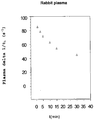
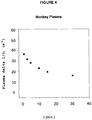
- the effectiveness of the compounds of the invention as blood pool agents was evaluated by plotting the progress of the longitudinal relaxation rate 1/T1 versus the time elapsed after the administration.
- the proton relaxation rate 1/T1 of blood samples, collected at predetermined times, was measured at 39°C by means of a Brucker Minispec PC120 instrumentation using "inversion recovery" three parameter sequences.
- HPLC shows a 0.294 M titre.
- Pre-filled plastic syringes containing the formulation of Example 19 20 mL Portions of the solution prepared in Example 19 are placed in a CZ plastic syringe with the tip closed by a cap. The piston is inserted under vacuum and the pre-filled syringe is sterilized in autoclave to a value of Fo 18.
Landscapes
- Health & Medical Sciences (AREA)
- Life Sciences & Earth Sciences (AREA)
- General Health & Medical Sciences (AREA)
- Nuclear Medicine, Radiotherapy & Molecular Imaging (AREA)
- Radiology & Medical Imaging (AREA)
- Epidemiology (AREA)
- Veterinary Medicine (AREA)
- Animal Behavior & Ethology (AREA)
- Public Health (AREA)
- Medicinal Chemistry (AREA)
- Chemical & Material Sciences (AREA)
- Steroid Compounds (AREA)
- Medicines Containing Antibodies Or Antigens For Use As Internal Diagnostic Agents (AREA)
- Magnetic Resonance Imaging Apparatus (AREA)
- Organic Low-Molecular-Weight Compounds And Preparation Thereof (AREA)
Abstract
Description
- The present invention relates to the novel use of metal ion complexes of conjugates of bile acids with molecules having chelating activity as contrast agents in the diagnostic technique known as "magnetic resonance imaging" (M.R.I.), in particular as blood pool agents.
- Complexes formed of chelating agents and suitable metals are already used as contrast agents in the following diagnostic techniques: X-ray imaging, nuclear magnetic resonance imaging (M.R.I.) and scintigraphy.
- In particular, medical diagnosis using magnetic resonance imaging (M.R.I.), a recognized powerful diagnostic technique in clinical practice (Stark, D.D., Bradley, W.G., Jr., Eds. "Magnetic Resonance Imaging" The C. V. Mosby Company, St. Louis, Missouri (USA), 1988), mainly employs paramagnetic pharmaceutical compositions, preferably containing chelated complexes of bi-trivalent paramagnetic metal ions with polyaminopolycarboxylic ligands and/or their derivatives or analogues.
- The images, basically deriving from the NMR signal of water protons, are the result of a complex interaction between different parameters, such as proton density and T1 and T2 relaxation times. A contrast enhancement can be obtained through the administration of exogenous chemical substances which significantly change the resonance properties of nearby water protons (see Lauffer, R.B. Chem. Rev. 1987, 87, 901).
- The paramagnetic contrast agents used for N.M.R imaging act modifying the relaxation times of the water protons present in the tissues in which said contrast agents are concentrated, and they can therefore increase the contrast between different tissues, or between healthy and diseased tissues.
- Gadolinium paramagnetic complexes, due to their high capability of reducing relaxation times of the protons of nearby water molecules through dipolar interaction, have been the object of studies, publications and patents.
- Some of them are at present in clinical use as M.R.I. contrast agents:
- Gd-DTPA, N-methylglucamine salt of the gadolinium complex with diethylenetriaminopentaacetic acid, MAGNEVIST®; Gd-DOTA, N-methylglucamine salt of the gadolinium complex with 1,4,7,10-tetraazacyclododecane-1,4,7,10-tetraacetic acid, DOTAREM®; Gd-HPDO3A, gadolinium complex with [10-(2-hydroxypropyl)-1,4,7,10-tetraazacyclododecane-1,4,7-triacetic acid, PROHANCE®; Gd-DTPA-BMA, gadolinium complex with diethylene-triaminopentaacetic acid bis(methylamide), OMNISCAN®.
- The contrast agents listed above and commercially available are intended for a general use. In fact, after administration, the said M.R.I. contrast agents diffuse in blood and in the extracellular areas of various parts of the body before being excreted. They are therefore similar, in this respect, to the iodinated compounds used for X-ray medical diagnosis.
- At present, the medical profession is in need of contrast agents that are aimed at specific organs or for imaging of the blood system, which cannot be well defined by means of the products already commercially available. The first approach to obtain the latter consisted in covalently linking the contrast agent to macromolecules, such as proteins, or in inglobating it inside stable molecular aggregates such as liposomes, or still in using the so-called superparamagnetic particles.
- For example, the gadolinium complex with diethylenetriaminopentaacetic acid (Gd-DTPA) was linked to human albumin (HSA), polylysine or dextran (Oksendal A.N. et al., J. Magn. Reson. Imaging, 157, 1993; Rocklage S.M., "Contrast Agents, Magn. Res. Imaging, Mosby Year Book, 372-437, 1992) in order to minimize or even suppress the diffusion from blood into the extracellular fluid thus providing a higher retention of the agent in the blood system. Such an approach, although attaining the desired effect, suffers from disagreeable side effects as the agent itself is excreted with difficulty.
- A different strategy is the use of superparamagnetic particles coated with polyethylene glycols or hydrocarbons in order to reduce the hepatic uptake by endothelial reticulum or by other systems (Tilcock C., Biochim. Biophys. Acta, 77, 1993; Bogdanoy A.A. et al., Radiology, 701,1993), thus prolonging the permanence of said agents in blood. In this case, also the above mentioned side effects occur, as well as problems due to the high production cost.
- The demand for an efficient blood pool agent, having low toxicity and reasonably economic costs, is therefore still unmet.
- The present invention relates to the novel use as blood pool agents of specifically selected compounds, already previously described by the Applicant in international patent application
WO-A-95/32741 - Said compounds have shown a good hepatobiliary excretion (see Anelli P.L. et al., Acta Radiologica, 38, 125, 1997) which makes them promising contrast agents for visualizing the hepatobiliary system.
- It has surprisingly been found that a specific class of said compounds remains in the vascular system for a sufficiently long time so as to be valuable for use as contrast agents for the imaging of the vascular system, particularly of coronaries.
- This effect can be clearly evidenced carrying out in vivo tests in animals (such as rabbit, monkey). The permanence in the vascular system can in fact be immediately visualized when plotting the proton relaxation values (1/T1) of blood samples of the animal, taken at appropriate time intervals after administration of the contrast agent.
- As Gd(III) complexes are paramagnetic species, high 1/T1 values are evidence of high concentrations of the contrast agent in blood.
- The difference between a conventional extracellular contrast agent and a blood pool agent, is well clarified in the paper by Lauffer et al., Radiology, 529,1998 in which T1 profiles in blood as a function of time elapsed after the administration of the contrast agent are reported.
- In particular, the complexes of the present invention, when administered for example to the rabbit at a dosage compatible with a reasonable safety index, are capable of inducing changes in relaxation rates (measured in Δ1/T1) in blood higher than 5 s-1 10 minutes after administration, thus being promising for use as contrast agents for the imaging of the vascular system.
- It has been found that this type of effect cannot be solely related to the presence of bile acids, but it depends on the chemical structure of said complexes. It seems, in fact, that the chelating unit should be preferably linked to the steroidal skeleton through a bond at the 3,7 or 12 positions of the bile acid.
- It has, in fact, been proved that any linkage between the chelating unit and the bile acid involving the carboxylic group at the 24 position would yield complexes having unsatisfactory permanence in the vascular system.

- An object of the present invention are the following novel compounds: [3β(S),5β]-3-[[4-[bis[2-[bis(carboxymethyl)amino]ethyl]annino]-4-carboxy-1-oxobutyl]amino]cholan-24-oic acid (compound 2)


- Other compounds whose complexes with gadolinium have been described in patent application
WO-A-95/32741 - [3β(S),5β,7α,12α]-3-[[4-[bis[2-[bis(carboxymethyl)amino]-ethyl]amino]-4-carboxy-1-oxobutyl]amino]-7,12-dihydroxycholan-24-oic acid (compound 16)

- [3β(S),5β,7α,12α]-3-[[4-[[5-[bis[2-[bis(carboxymethyl)-amino]ethyl]amino]-5-carboxypentyl]amino]-1,4-dioxobutyl]amino]-7,12-dihydroxycholan-24-oic acid (compound 17).
- The compounds of the invention can be prepared with the method of convergent synthesis which comprises:
- 1) synthesis of a functionalized ligand, i.e. of a ligand capable of coordinating one paramagnetic metal ion while binding stably to the bile acid by means of a suitable functional group;
- 2) synthesis of a functionalized bile acid;
- 3) coupling reaction between the two different syntons;
- 4) cleavage of any protective groups;
- 5) complexation of the paramagnetic metal ion;
- Some of the preferred processes for the preparation of the ligands of the present invention involve the formation of an amide bond between two syntons, one of them being the precursor of the chelating system of the paramagnetic ion (Synton A), the other being the precursor of the bile acid residue contained in the final complex (Synton B).
- The methods described hereinbelow should not be considered limiting the synthesis of the compounds of the present invention.
- The amide bond can be formed:
- a) by reacting Syntons A containing a carboxylic function with Syntons B containing a primary or secondary amino function;
- b) by reacting Syntons A containing a primary or secondary amino function with Syntons B containing a carboxylic function;
- c) by reacting DTPA dianhydride (commercially available product) with a Synton B containing a primary or secondary amino function.
- A list of some of the syntons A and B used for this invention is reported in the following Table.
Table Synton A Synton B 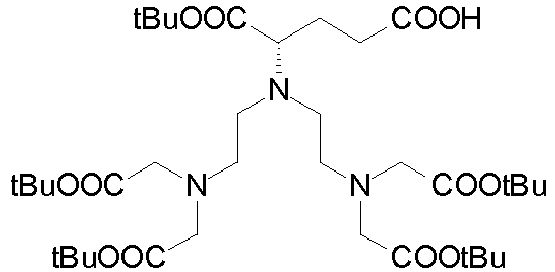


- The Syntons used are of course suitably protected at those groups which could give rise to parasitic reactions under the conditions used for the formation of the amide bond. After formation of the bond between the two syntons, one or more deprotection steps for restoring the original groups should be contemplated.
- Alternatively to this type of processes, the chelating subunit can be introduced by multi-step reactions starting from a bile acid derivative, as in the case of the synthesis of the compound described in Example 3 of the Experimental section, illustrated in the following Scheme 1.

- The compounds of the invention may also be preared according to the process illustrated in the following Scheme 2:

- R4 is an amino-protecting group;
- R5 is a straight or branched C1-C10 alkyl or aryl,
- R2 and R3 are independently a hydrogen atom, straight or branched C1-C20 alkyl, unsubstituted or substituted by aryl groups, or said groups form a C3-C10 cycle;
- which process makes use of a transamidation reaction and allows to maintain the stereochemistry at the chiral centre adjacent to the nitrogen atom of the starting pyrrolidinone and to afford a secondary amide. The combined selection of groups R4 and R5 is important in that the cleavage should take place under diversified conditions. Possible examples of R4 are the carbobenzyloxy (Cbz) group and of R5 are the methyl group or the t-butyl group.
- This process is applicable generally in order to obtain glutamic acid γ-amides and it is very useful and advantageous for the preparation of the compounds of the invention, in particular glutamic acid γ-amides with 3-amino derivatives of residues Y, as defined above. In fact, it allows to obtain the final compound avoiding the use of the expensive condensing agents for the formation of the γ-amido bond between glutamic acid and the corresponding amine.
- An example of the application of this synthetic procedure is the synthesis of [3β(S),5β,12α]-3-[[4-[bis[2-[bis(carboxymethyl)-amino]-ethyl]amino]-4-car-boxy-1-oxobutyl]amino]-12-hydroxycholan-24-oic acid, whose conventional synthesis is reported in Example 4 of the Experimental section, whereas the alternative one is reported in Example 5 and the complete synthetic scheme is shown in the following Scheme 3.

- Analogously was prepared the cholic acid derivative already described in patent application
WO-A-95/32741 - Metal ions suitable to form complex salts with the chelating agents of the invention are the bivalent or trivalent ions of the elements selected from the group consisting of: Gd(3+) or Mn(2+).
- As for the diagnostic use of the novel chelated complexes of the invention, they can be used as contrast agents, particularly for use as blood pool agents in the imaging diagnostic technique by means of magnetic resonance.
- The preparation of the complexes is carried out conventionally, according to a process in which the oxide or the suitable salt of the paramagnetic metal, dissolved in water or suspended in a water-alcohol solution, is added to an aqueous or water-alcohol solution of the chelating agent, under stirring and, if necessary, heated mildly or to the boiling temperature, until completion of the reaction. If the complex is insoluble in the reaction solvent, it can be filtered. If it is soluble, it can be recovered by evaporating off the solvent to a residue, for example through spray drying.
- In case the resulting complex still contains free acidic groups, it is transformed into a neutral salt by reaction with an organic or inorganic base which forms physiologically compatible cations in solutions.
- For the preparation of these neutral salts, a sufficient amount of the base can be added to the complexes containing free acidic groups in aqueous solution or suspension to neutrality. The resulting solution can thus be conveniently evaporated or a suitable solvent can be added to crystallize the complex salt.
- Preferred inorganic cations suitable for salifying the chelated complexes of the invention comprise in particular alkali or alkaline-earth metal ions such as potassium, sodium, calcium, magnesium, and the mixtures thereof. Particularly preferred is the sodium ion.
- Preferred cations deriving from organic bases suitable for the above mentioned purpose comprise, inter alia, those of primary, secondary and tertiary amines, such as ethanolamine, diethanolamine, morpholine, glucamine, N-methylglucamine, N,N-dimethylglucamine, N-methylglucamine being particularly preferred.
- Preferred cations deriving from amino acids comprise, for example, those of taurine, glycine, lysine, arginine or ornithine.
- An alternative to this process consists in preparing the injectable formulation without isolating the complex salt. In this case it is mandatory for the final solutions to contain no free metal ions, which are toxic for the body.
- This can be checked by titration, for example, with colored indicators such as Xylenol Orange. A final purification step of the complex salt could also be envisaged.
- In this type of process the chelating agent, the salt or the metal oxide, and any salifying bases, are reacted in the stoichiometric ratios in water for injections, then, after completion of the reaction, pyrogens are filtered off and the product is distributed in suitable containers and then thermally sterilised.
- The injectable pharmaceutical formulations are typically prepared by dissolving the active ingredient, prepared as described above, and the excipients in water of suitable purity from the pharmacological point of view, so as to provide a pharmaceutical formulation suitable for the enteral or parenteral administration, in concentrations ranging from 0.01 to 1.0 molar. The resulting contrast agent is suitably sterilised.
- The contrast agents are administered, depending on the diagnostic requirements, at a dose of 0.01 - 0.3 mmol/kg body weight.
- In principle, the doses for the parenteral administration range from 0.001 to about 1.0 mmol/kg body weight. The preferred doses for the parenteral administration range from 0.01 to about 0.5 mmol/kg body weight.
- The doses for the enteral administration range, in general, from 0.5 to about 10 mmol/kg, preferably from about 1.0 to about 10 mmol/kg body weight.
- The novel formulations of the present invention show good tolerability; moreover their water solubility is a further, important feature which makes them particularly suitable for use in nuclear magnetic resonance.
- The diagnostic compositions of the present invention are used conventionally. The compositions can be administered to a patient, typically a hot-blooded animal, both systemically and topically in the organ or in the tissue to be visualized by magnetic resonance.
- The analysis protocols and the apparatuses can be found in works such as Stark, D.D., Bradley, W.G., Magnetic Resonance Imaging, Mosby Year Book, St. Louis, Mo, 1992.
- The experimental conditions used will be illustrated in detail in the Experimental section.
-

- 3.6 g of (3β,5β)-3-aminocholan-24-oic acid methyl ester (prepared analogously to the procedure described in
WO-A-95/32741 WO-A-95/32741
Yield: 92%
K.F.: 3.47%Elemental analysis C H N % calc 66.63 9.74 5.01 % found: a 67.42 10.08 5.07 a after drying at 120°C under vacuum
TLC: Stationary phase: silica gel plate 60F 254 Merck
Eluent = 4 : 6 EtOAc/n-hexane
Detection: 0.5% KMnO4 in 1 M NaOH Rf= 0.46 - The 1H-NMR, 13C-NMR, IR and MS spectra are consistent with the indicated structure.
- A stirred solution of 9.3 g of the compound prepared at step A) (8.32 mmol) in 50 mL of CH2Cl2 is added with 5.1 mL of CF3COOH (66.6 mmol); after 10 min at a temperature of 0-5°C the solution is evaporated. The residue is taken up into 50 mL of CF3COOH and, after 24 h at room temperature, added with further 30 mL of CF3COOH to complete the reaction. After 5 h the reaction mixture is evaporated and the residue is treated with CH2Cl2, evaporating each time the solvent under reduced pressure until obtaining a powder. The solid is washed with H2O, filtered and dried to obtain the desired product (6.9 g; 8.24 mmol).
Yield: 99% m.p.:205°C
K.F.: 7.78%Elemental analysis C H N % calc.: 60.27 8.18 6.69 % found: a 59.28 8.11 6.68 a after drying at 120°C under vacuum
TLC: Stationary phase: silica gel plate 60F 254 Merck
Eluent = 6 : 4 : 1 CHCl3/MeOH/25% NH4OH.
Detection: 0.5% KMnO4 in 1 M NaOH Rf= 0.28 - The 1H-NMR, 13C-NMR, IR and MS spectra are consistent with the indicated structure.
- A suspension of 6.14 g of the compound prepared at step B) (7.33 mmol) in 50 mL of H2O is added with 50 mL of 1 M NaOH (50 mmol) keeping pH 13 by means of a pH-stat apparatus. After 2 h at room temperature the reaction mixture is acidified (pH 0.5) with 12 M HCl to give a suspension which is filtered, washed with H2O and dried to afford the desired product (5.64 g; 6.85 mmol).
Yield: 93% m.p.:205°C
K.F.: 9.02%Elemental anal. C H N Cl,Na % calc.: 59.84 8.08 6.81 % found: a 59.56 8.15 6.80 <0.1 a after drying at 120°C under vacuum
TLC: Stationary phase: silica gel plate 60F 254 Merck
Eluent: 6 : 4 : 1 CHCl3/MeOH/25% NH4OH
Detection: 0.5% KMnO4 in 1 M NaOH Rf= 0.25 - The 1H-NMR, 13C-NMR, IR and MS spectra are consistent with the indicated structure.
- 4.53 g of the compound prepared at step C) (5.5 mmol) are suspended in 50 mL of H2O and solubilised with 10 mL of 2 M meglumine aqueous solution (20 mmol) obtaining a solution at pH 6.8. After that, 11 mL of 0.5 M GdCl3 aqueous solution (5.5 mmol) are added in 1 h, keeping pH 6.8 by addition of 6.5 mL of 2 M meglumine aqueous solution (13 mmol). The progress of the reaction is monitored by capillary electrophoresis. After 2 h the solution is filtered through a Millipore® membrane, nanofiltered and evaporated. The residue is dried to give the desired compound (6.15 g; 4.17 mmol).
Yield: 76% m.p.:220°C
K.F.: 8.44%
CE assay: 100% (area %)Capillary: fused silica 0.56 m x 50 mm with a bulb cellVoltage: 25 kV Buffer: 0.05 M borate pH 9.3, 0.3 mM EDTA Temperature: 40°C Stop time: 20 min Detection (UV): 200-210 nm Injection: hydrostatic (50 mbar, 5 s) Concentration sample: 1 mg mL-1; Instrumentation: Hewlett PacKard 3D HPCE Preconditioning: t (min) action 2 washing with H2O 2 washing with 0.1 M NaOH 1 washing with H2O 5 washing with buffer 9 start analysis Elemental anal. C H Gd N Cl,Na % calc.: 47.65 7.35 10.06 6.27 % found:a 47.83 7.36 10.01 6.24 < 0.1 a after drying at 120°C under vacuum - The IR and MS spectra are consistent with the indicated structure.
- The following compounds and the related gadolinium complexes are prepared analogously:
- Gadolinium complex of [3β(S),5β,7β]-3-[[4-[bis[2-[bis(carboxymethyl)amino]ethyl]amino]-4-carboxy-1-oxobutyl]amino]-7-hydroxycholan-24-oic acid salified with 1-deoxy-1-(methylamino)-D-glucitol (1:3);
- Gadolinium complex of [3α(S),5β]-3-[2[-[5-[bis[2-[bis(carboxymethyl)amino]ethyl]amino]-5-carboxypentyl]-amino]-2-oxoethoxy]cholan-24-oic acid salified with 1-deoxy-1-(methylamino)-D-glucitol (1:3).
-

- 12.5 mL of Jones reagent [33.3 mmol Cr(VI)] are dropped into a solution of 17.8 g of (3β,5β,12α)-3-azido-12-hydroxycholan-24-oic acid methyl ester (41.1 mmol) (prepared analogously to the method described for (3β,5β,7α,12α)-3-azido-7,12-dihydroxycholan-24-oic acid methyl ester in
WO-A-95/32741
Yield: 84% m.p.:153°C
K.F.: < 0.1%
[α]20D = + 83.25 (c2.1, CHCl3)Elemental analysis C H N % calc.: 69.90 9.15 9.78 % found: 69.98 9.32 9.69
TLC: Stationary phase: silica gel plate 60F 254 Merck
Eluent: 8 : 2 n-hexane/EtOAc
Detection: 0.5% KMnO4 in 1 M NaOH Rf= 0.43 - The 1H-NMR, 13C-NMR, IR and MS spectra are consistent with the indicated structure.
- A solution of 16.4 g of compound A) (38.2 mmol) in THF (130 mL) is hydrogenated in the presence of 5% Pd/C (1.6 g) at room temperature and at 40 bar for 15 h in a Parr® autoclave. The reaction mixture is filtered (paper and FH 0.5 µm Millipore® membrane) and evaporated. The crude is purified by flash-chromatography to afford 11.8 g of the desired product (29.2 mmol).
Yield: 77% m.p.:129-130°C
K.F.: 1.04%
[α]20D = + 87.8 (c 2.02, CHCl3)Elemental analysis C H N % calc.: 74.40 10.24 3.47 % found: 72.72 10.00 3.35
TLC: Stationary phase: silica gel plate 60F 254 Merck
Eluent: 95 : 5 MeOH/Et3N
Detection: 0.5% KMnO4 in 1 M NaOH Rf= 0.31 - The 1H-NMR, 13C-NMR, IR and MS spectra are consistent with the indicated structure.
- A solution of DCC (6.24 g; 30.3 mmol) in CH2Cl2 (25 mL) is dropped in 30 min into a solution of N,N-bis[2-[bis[2-(1,1-dimethylethoxy)-2-oxoethyl]amino]ethyl]-L-glutamic acid 1-(1,1-dimethylethyl) ester (prepared as described in
WO-A-95/32741 - Yield: 79%
- [α]20D= + 12.17 (c2.07, CHCl3)
- TLC: Stationary phase: silica gel plate 60F 254 Merck
- Eluent: 1 : 1 EtOAc/n-hexane
- Detection: 0.5% KMnO4 in 1 M NaOH Rf= 0.45
- The 1H-NMR, 13C-NMR, IR and MS spectra are consistent with the indicated structure.
- 80 mL of TFA (1.0 mol) are dropped into a solution of 23.8 g of the compound prepared at step C) (21.0 mmol) in CH2Cl2 (50 mL) at 0°C, in 1 h. The reaction mixture is stirred at room temperature then, after 2 h, evaporated. The residue is taken up with TFA (100 mL; 1.3 mol) and the solution stirred for further 24 h. The reaction mixture is then evaporated, taken up with CH2Cl2 and evaporated again. The crude is dissolved in 150 mL of 1 M NaOH, cooling with an ice-bath, and the solution is stirred for 15 h (pH 10) at room temperature. The reaction mixture is adjusted to pH 13 with 3.30 mL of 30% NaOH and, after 4 h, filtered through a Millipore® membrane (HAS 0.45 µm). The filtrate is acidified with 12.5 mL of 30% HCl and 19 mL of 1 M HCl to pH 1.60. The precipitate is filtered, washed with H2O and dried to give 15.8 g of the desired product (18.9 mmol).
Yield: 90% m.p.:172-175°C
K.F.: 1.98%
[α]20D=+ 43.54 (c2.02, 1 M NaOH)
HPLC: 97% (area %)Stationary phase: Zorbax ECLIPSE XDB-C8 3.5 µm;150 x 4.6 mm.; Temperature: 40°C; Mobile phase: gradient elution; A = 0.017 M H3PO4, 0.3 mM EDTA in H2O; B = CH3CN Gradient: min % A % B 0 85 15 40 65 35 50 65 35 Flow rate: 1.5 mL min-1; Detection (UV): 210 nm; Elemental analysis C H N Cl Na % calc.: 58.84 7.71 6.69 % found: 56.57 7.68 6.37 0.25 0.18
TLC: Stationary phase: silica gel plate 60F 254 Merck
Eluent: 5 : 4 : 2 CHCl3/MeOH/25% NH4OH
Detection: 0.5% KMnO4 in 1 M NaOH Rf= 0.28 - The 1H-NMR, 13C-NMR, IR and MS spectra are consistent with the indicated structure.
- 49.0 mL of 0.918 M meglumine aqueous solution (45.0 mmol) are dropped into a suspension of 14.0 g of the compound prepared at step D) (16.7 mmol) in H2O (100 mL), at room temperature, to give a clear solution (pH 6.5). 31.6 mL of 0.503 M GdCl3 aqueous solution (15.9 mmol) are dropped therein keeping pH 6.5 by addition of 55.7 mL of 0.918 M meglumine aqueous solution (51.1 mmol) by means of a pH-stat. At the end of the additions the mixture is filtered through a Millipore® membrane (HAWP 0.45 µm), nanofiltered, adjusted to pH 7.0 with 0.100 mL of 0.918 M meglumine aqueous solution (0.092 mmol) and evaporated. The residue is dried to give 22.0 g of the desired product (14.0 mmol).
Yield: 84% m.p.:100-105°C
K.F.: 5.06%
HPLC assay: 97% (area %)Stationary phase: HYPURITYTM Elite C18 5 µm; 250 x 4.6 mmcolumn of Hypersil; Temperature: 40°C; Mobile phase: gradient elution; A = 0.01 M KH2PO4 in water; B = CH3CN Gradient: min % A % B 0 95 5 40 65 35 50 65 35 Flow rate: 1 mL min-1; Detection (UV): 210 nm; Elemental analysis C H N Gd Na,Cl % calc.: 47.23 7.16 6.22 9.97 % found: 45.70 7.32 6.00 9.41 < 0.1 - The IR and MS spectra are consistent with the indicated structure.
- Gadolinium complex of (3β,5β,7α,12α)-3-[[[bis[2-[bis(carboxymethyl)amino]ethyl]amino]acetyl]amino]-7,12-dihydroxycholan-24-oic acid salified with 1-deoxy-1-(methylamino)-D-glucitol (1:2)

- 24.8 g of (3β,5β,7α,12α)-3-[(aminoacetyl)amino]-7,12-dihydroxycholan-24-oic acid methyl ester (prepared according to the procedure described in
WO-A-95/32741 WO-A-95/32741 phosphate buffer pH 8 gives a biphasic solution which is vigorously stirred at room temperature for 144 h. The organic phase is separated and evaporated and the residual oil is dissolved in 250 mL of CH2Cl2. The solution is washed with H2O, dried (Na2SO4) and evaporated. The crude is purified by flash-chromatography (eluent = 95 : 5 CHCl3/CH3OH) to give the desired product (24.8 g; 24.3 mmol).
Yield: 47%
[α]20D= + 9.45 (c 1.5, CHCl3)Elemental analysis C H N % calc.: 64.68 9.47 5.49 % found: 64.55 9.44 5.46
TLC: Stationary phase: silica gel plate 60F 254 Merck
Eluent: 88 : 12 CHCl3/MeOH
Detection: 0.5% KMnO4 in 1 M NaOH Rf= 0.57 - The 1H-NMR, 13C-NMR, IR and MS spectra are consistent with the indicated structure.
- 318 mL of 2 M LiOH aqueous solution (636 mmol) are added dropwise, in 15 min, to a solution of the compound prepared at step A) (21.6 g; 21.1 mmol) in 310 mL of EtOH. After 23 h, EtOH is evaporated and the reaction mixture is stirred for further 2 h. The solution is dropped into 255 mL of 2.6 M HCl and the pH is adjusted to 1.4 with 30% NaOH. After 1.5 h, the precipitate is filtered, washed with 300 mL of 0.1 M HCl and dried to give the desired product (13.1 g; 16.7 mmol).
Yield: 78% m.p.: 129-132°C dec
HPLC assay: 97.8% (area %)Stationary phase: Lichrosorb RP- Select B 5 µm;250 x 4 mm column Merck KGaA;Temperature: 45°C; Mobile phase: gradient elution; A = 0.01 M KH2PO4 and 0.017 M H3PO4 in H2O B = CH3CN Min % A % B 0 95 5 5 20 80 45 20 80 Flow rate: 1 mL min-1; Detection (UV): 210 nm; Complexometric titer: 95.5% (0.1 M GdCl3) [α]20D= + 13.03 ( c 5, 1 M NaOH)Elemental analysis C H N Cl % calc.: 58.30 7.98 7.16 % found: 54.63 8.12 6.64 1.82 H2O 4.89 - 11.3 g of the compound prepared at step B) (13.8 mmol) are suspended in 40 mL of H2O and dissolved by addition of 44.7 mL of 1 M meglumine aqueous solution (44.7 mmol) up to pH 6. 13.7 mL of 1 M GdCl3 aqueous solution (13.7 mmol) are dropped into the mixture in 1 h keeping pH 6.5 by addition of 73.5 mL of 1 M meglumine aqueous solution (73.5 mmol). The reaction mixture is nanofiltered and pH is adjusted to 6.8 with 0.3 mL of 0.1 M meglumine. After evaporation and drying the desired product is obtained (17.2 g; 12.9 mmol).
Yield: 93% m.p.: 245-249°C dec.
Free ligand: < 0.1 % (0.001 M GdCl3)
HPLC assay: 100% (area %)Stationary phase: Lichrospher 100 RP-8 5 µm; 250 x 4 mm column Merck KGaA;Temperature: 40°C; Mobile phase: isocratic elution with premixed phase: 1 g of n-octylamine and 0.3 mmol of Na2EDTA are added to 260 mL of CH3CN and 740 mL H2O. The solution is buffered to pH 7 with H3PO4. Flow rate: 1 mL min-1; Detection (UV): 210 nm; Elemental analysis C H Gd N % calc.: 47.05 7.06 11.84 6.33 % found: 45.19 7.21 11.22 6.07 H2O 4.16 - The IR and MS spectra are consistent with the indicated structure.
-

- Triethylamine (2.23 g; 22 mmol) is added to a solution of 8.93 g of (3β,5β,12α)-3-amino-12-hydroxycholan-24-oic acid methyl ester (prepared analogously to the cholic acid derivative described in
WO-A-95/32741 WO-A-95/32741
Yield: 83%
[α]20D= - 6.75 (c 2.0, CHCl3)Elemental analysis C H N % calc.: 65.69 9.60 4.94 % found: 66.54 9.95 4.99
TLC: Stationary phase: silica gel plate 60F 254 Merck
Eluent: 1 : 1 n-hexane/EtOAc Rf= 0.09
Detection: Ce(SO4)2·4H2O (0.18%) and (NH4)6Mo7O24.4H2O (3.83%) in 10% H2SO4. - The 1H-NMR, 13C-NMR, IR and MS spectra are consistent with the indicated structure.
- The compound prepared at step A) (19.72 g; 17.4 mmol) is dissolved in 105 mL CF3CO2H at room temperature. After 26 h the solution is evaporated and the residue is treated with H2O; the solid is filtered, washed with H2O and partially dried under vacuum. The resulting intermediate is suspended in H2O and dissolved with 1 M NaOH up to pH 13. After 5 h at room temperature 0.5 M HCl is dropped into the solution up to pH 1.4. After 15 h at room temperature the precipitate is filtered, washed with H2O and dried to give a crude which is purified by chromatography over resin Amberlite® XAD 1600 resin to obtain the desired product (9.92 g; 11.8 mmol).
Yield: 68% m.p.: 184°C (dec.)
Complexometric titer (0.1 M GdCl3): 99.3%
Acidic titer (0.1 N NaOH): 99.8%
[α]20λ (c 2.0; 1 M NaOH)
λ(nm) 589 578 546 436 405 365
[α] + 23.61 + 24.59 + 27.90 + 46.67 + 55.61 + 71.40Elemental analysis C H N % calc.: 58.70 7.93 6.68 % found: 58.22 8.16 6.59 H2O 0.70%
TLC: Stationary phase: silica gel plate 60F 254 Merck
Eluent: 5 : 4 : 2 CHCl3/MeOH/25% NH4OH Rf= 0.13
Detection: Ce(SO4)2·4H2O (0.18%) and (NH4)6Mo7O24·4H2O (3.83%) in 10% H2SO4. - The 1H-NMR, 13C-NMR, IR and MS spectra are consistent with the indicated structure.
- The compound prepared at step B) (8.39 g; 10 mmol) is suspended in H2O (30 mL) and dissolved by addition of 1 M aqueous meglumine (36.5 mL; 36.5 mmol) up to pH 6. A 1.025 M GdCl3 aqueous solution (9.85 mL; 10.1 mmol) is added in 1 h keeping pH 6 by addition of 1 M aqueous meglumine (19.3 mL; 19.3 mmol). The solution is nanofiltered and the pH is adjusted to 7.0 with 1 M aq. meglumine. After evaporation and drying the desired product is obtained (8.57 g; 5.4 mmol).
Yield: 54% m.p.: 150-166°C (170°C dec.)Elemental analysis C H N Gd % calc.: 47.17 7.28 6.21 9.96 % found: 43.40 7.31 5.68 9.31 H2O 7.14% - The IR and MS spectra are consistent with the indicated structure.
- The compound prepared at step B) (26.92 g; 32.08 mmol) is suspended in H2O (100 mL) and dissolved by addition of 2 M NaOH (56 mL; 112 mmol) to pH 6. A 0.512 M GdCl3 aqueous solution (58.2 mL; 29.77 mmol) is added in 3 h keeping pH 6 by addition of 2 M NaOH (28.95 mL; 57.9 mmol). The pH of the solution is adjusted to 6.7 with 2 M NaOH (4 mL; 8 mmol) and the solution is nanofiltered. After freeze-drying, the desired product is obtained (29.86 g; 28.2 mmol).
Yield: 88% m.p.: > 300°CElemental anal. C H N Gd Na % calc.: 46.49 5.71 5.29 14.85 6.51 % found: 43.98 6.34 4.92 13.86 6.16 H2O 4.63% - The IR and MS spectra are consistent with the indicated structure.
- 7.1 g of CH3I (50 mmol) are added to a solution of 6.58 g of (S)-5-oxo-1,2-pyrrolidinedicarboxylic acid 1-(phenylmethyl) ester (25 mmol) and N,N-diisopropylethylamine (3.55 g; 27.5 mmol) in CH2Cl2 (33 mL) and the reaction mixture is refluxed for 6.5 h. After cooling to room temperature and dilution with CH2Cl2 (50 mL) the reaction mixture is washed with H2O, 2% aq. Na2CO3, 0.2 M HCl and H2O. After drying over Na2SO4 and evaporation, the desired product (6.8 g; 24.5 mmol) is obtained.
Yield: 98%
HPLC assay: 98.5% (area %)Stationary phase: Lichrosorb RP- Select B 5 µm; 250 x 4 mm columnTemperature: 45°C; Merck KGaA; Mobile phase: gradient elution; A = 0.017 M H3PO4 in water B = CH3CN Gradient: min % A % B 0 80 20 15 80 20 35 40 60 Flow rate: 1 mL min-1; Detection (UV): 210 nm. [α]20λ (c 2; CHCl3) λ (nm) 589 578 546 365 [α] - 42.97 - 44.79 - 50.09 - 100.43 Elemental analysis C H N % calc.: 60.64 5.45 5.05 % found: 60.94 5.54 5.00 - The 1H-NMR, 13C-NMR, IR and MS spectra are consistent with the indicated structure.
- 8.92 g of (3β,5β,12α)-3-amino-12-hydroxycholan-24-oic acid methyl ester (prepared analogously to the cholic acid derivative described in
WO-A-95/32741
Yield: 75% m.p.:140°C
HPLC assay: 99.2% (area %)Stationary phase: Lichrosorb RP- Select B 5 µm; 250 x 4 mm column Merck KGaA;Temperature: 45°C; Mobile phase: gradient elution; A = 0.017 M H3PO4 in water B = CH3CN Gradient: min % A % B 0 65 35 25 15 85 30 15 85 Flow rate: 1 mL min-1; Detection(UV): 210 nm. [α]20λ(c 2.01; CHCl3) λ(nm) 589 578 546 365 [α] + 24.14 + 25.13 + 28.51 + 73.81 Elemental analysis C H N % calc.: 68.70 8.43 4.11 % found: 69.36 8.72 4.13
TLC: Stationary phase: silica gel plate 60F 254 Merck
Eluent: EtOAc
Detection: Ce(SO4)2·4H2O (0.2%) and (NH4)6Mo7O24·4H2O (3.8%) in 10% H2SO4 Rf= 0.11 - The 1H-NMR, 13C-NMR, IR and MS spectra are consistent with the indicated structure.
- 1 g of 5% Pd/C is added to a solution of compound B) (10.4 g; 15.3 mmol) in MeOH (100 mL); the suspension is stirred for 3.5 h under hydrogen atmosphere (absorbed H2: 348 mL; 15.5 mmol) at room temperature. After filtration over a Millipore® FH filter (0.45 µm), the solution is evaporated under reduced pressure to give a residue which is dissolved in CH3CN (60 mL). 2
M Aqueous pH 8 phosphate buffer (60 mL) is added, then a solution of N-(2-bromoethyl)-N-[2-(1,1-dimethylethoxy)-2-oxoethyl]glycine 1,1-dimethylethyl ester (prepared according to the procedure described inWO-A-95/32741
Yield: 68% m.p.:55-58°C
HPLC assay: 100% (area %)
[α]20λ (c2.01; CHCl3)
λ (nm) 589 578 546 365
[α] - 6.97 - 7.41 - 8.61 - 32.89Elemental analysis C H N % calc.: 64.93 9.42 5.13 % found: 65.06 9.36 5.11
TLC: Stationary phase: silica gel plate 60F 254 Merck
Eluent: EtOAc
Detection: Ce(SO4)2·4H2O (0.2%) and (NH4)6Mo7O24˙4H2O (3.8%) in 10% H2SO4 Rf= 0.45 - The 1H-NMR, 13C-NMR, IR and MS spectra are consistent with the indicated structure.
- A solution of compound C) (8.5 g; 7.8 mmol) in dioxane (50 mL) is added with 2 M LiOH aqueous solution (117 mL; 234 mmol). The resulting mixture is stirred at room temperature for 72 h, then acidified to pH 6 by slow addition of 37% HCl. The solution is concentrated to 50 g by evaporation under reduced pressure and diluted with H2O (40 mL). The solution is acidified to pH 2.5 by addition of 37% HCl, heated to 50-55°C and, under strong stirring, acidified very slowly to pH 1.3 with 2 N HCl. After 5 min the heterogeneous mixture is left to slowly cool to room temperature, under stirring, for 15 h. The precipitate is filtered, washed with H2O and dried to give the desired product (5.92 g; 7 mmol).
Yield: 90% m.p.:180-198°C
HPLC assay: 99.9% (area %)Stationary phase: Zorbax ECLIPSE XDB-C8 3.5 µm; 150 x 4.6 mm column Rockland Technologies, Inc.; Temperature: 40°C; Mobile phase: gradient elution; A = 0.017 M H3PO4, 0.3 mM EDTA in water; B = CH3CN Gradient: min % A % B 0 85 15 40 65 35 50 65 35 Flow rate: 1.5 mL min-1; Detection (UV): 210 nm; Acidic titer (0.1 N NaOH): 99% [α]20λ (c 2.04; 1 N NaOH) λ (nm) 589 578 546 436 405 365 [α] +24.80 +25.83 +29.22 +49.02 +58.43 +75.59 Elemental anal. C H N Cl,Li % calc.: 58,70 7,93 6,68 % found 57,90 7,97 6,57 <0.1 H2O 0.95 - The 1H-NMR, 13C-NMR, IR and MS spectra are consistent with the indicated structure.
-

- 6.5 g of glycylglycine (49.3 mmol) are suspended in 100 mL of a 1 : 1 H2O/EtO mixture and dissolved at
pH 10 with 10 M NaOH (4.8 mL). N-(2-Bromoethyl)-N[2-(1,1-dimethylethoxy)-2-oxoethyl]glycine 1,1-dimethylethyl ester (42 g; 110.9 mmol) in 40 mL of EtOH is dropped therein in 2 h, keeping pH 10.5 with 10 M NaOH (5.8 mL). The solution rapidly turns into an emulsion, which is dissolved after 2.5 h by addition of 10 M NaOH. After 22 h the solvent is evaporated, the mixture is diluted with water and extracted with CH2Cl2. The organic phase is washed with H2O, dried and evaporated, to give a residue which is purified by flash-chromatography. The residue is dissolved in water, the pH is adjusted to 4.5 by addition of 1 M HCl and the solution is extracted with chloroform. The organic phase is washed with H2O, dried and evaporated, to give 13 g of the desired product (19.3 mmol).
Yield: 39%Elemental analysis C H N % calc 6.95 8.66 8.30 % found: 56.67 8.68 8.30
TLC: Stationary phase: silica gel plate 60F 254 Merck
Eluent: 6 : 3 : 1 CHCl3/MeOH/25% NH4OH
Rf= 0.65
Detection: 1% KMnO4 in 1 M NaOH - The 1H-NMR, 13C-NMR,IR and MS spectra are consistent with the indicated structure.
- 2.8 mL of TEA (20.2 mmol) are added dropwise in 5 min into a solution containing 13.6 g of the compound prepared at step A) (20.2 mmol), 8.52 g of (3β,5β,7α,12α)-3-amino-7,12-dihydroxycholan-24-oic acid methyl ester (20.2 mmol) and DEPC (3.4 mL; 22.2 mmol) in DMF (290 mL) stirred at 0°C. After 1 h the reaction is warmed to room temperature and the solution is stirred for 6.5 h. 0.3 mL of DEPC (2 mmol) are added and the solution is stirred for further 15.5 h. DMF is evaporated, the residue is dissolved in EtOAc, washed with aq. NaHCO3 then with water and finally dried. After purification by flash-chromatography, 13.7 g of the desired product are obtained (12.7 mmol).
Yield: 63%
[α]20D = +5.26 (c 1.5; CHCl3)Elemental analysis C H N % calc.: 63.48 9.25 6.49 % found: 63.22 9.40 6.40 - The 1H-NMR, 13C-NMR, IR and MS spectra are consistent with the indicated structure.
- 12.85 g of the compound prepared at step B) (12 mmol) are dissolved in TFA (210 mL) stirring at -5/0°C. After 16 h, TFA is evaporated to give a residue which is dissolved in 90 mL of 0.8 M NaOH at pH 13 and stirred at room temperature for 15 h. The solution is concentrated to 50 mL, dropped into 105 mL of 0.6 M HCl and stirred for 2 h. The solid is filtered, washed with 0.1 M HCl and dried to obtain a crude which is purified by chromatography. The fractions containing the desired compound in the salified form are evaporated to give a residue which is dissolved in water and dropped into 1 M HCl, maintaining pH 1.45. The precipitate is filtered, washed with 0.1 M HCl and dried to give 2.6 g of the desired product (3.1 mmol).
- Yield: 26% m.p.: 120-125°C
- HPLC assay: 98% (area %)
- The 1H-NMR, 13C-NMR, IR and MS spectra are consistent with the indicated structure.
- 2.59 g of the compound prepared at step C) (3.08 mmol) are suspended in water (20 mL) and dissolved by addition of 1 M meglumine aqueous solution (3.08 mL; 3.08 mmol) to
pH 5. Gd2O3 (0.501 g; 2.77 mmol) is added to the mixture heating to 50°C. After 1 h, 1 M meglumine (2.8 mL; 2.8 mmol) is added to dissolve the precipitate. After 24 h the reaction mixture is filtered and the pH is adjusted to 6.8 with 1 M aqueous meglumine (0.4 mL). After evaporation and drying, 4.2 g (3.00 mmol) of the desired product are obtained.
Yield: 99% m.p.: 209-213°C dec.
HPLC assay: 99.7% (area %)
Free ligand: < 0.1 % (0.001 GdCl3)Elemental anal. C H N Gd % calc.: 46.84 6.99 7.08 11.36 % found: 44.01 7.35 6.68 10.39 H2O 4.95 - The IR and MS spectra are consistent with the indicated structure.
-

- 40.0 g of (3β,5β)-3-Aminocholan-24-oic acid methyl ester (prepared as in Example 1 above) (103 mmol) are suspended in DMF (1.0 L) at room temperature under nitrogen. Triethylamine (13.0 g; 129 mmol) is added, then a solution of bromoacetic acid 1,1-dimethylethyl ester (24.0 g; 123 mmol) in DMF (30 mL) is dropped into the reaction mixture in 1 h until dissolution. After 3 days the mixture is concentrated and diluted with 4% NaHCO3 aqueous solution. The resulting suspension is filtered, the precipitate is washed with H2O and dried to give 33.7 g of the desired product (66.9 mmol).
Yield: 65% m.p.: 62-64°C
[α]20D = + 23.55 (c 1.96, MeOH)Elemental analysis C H N % calc.: 73.91 10.60 2.78 % found: 74.67 10.85 2.78 H2O < 0.1
TLC: Stationary phase: silica gel plate 60F 254 Merck
Eluent: 7 : 3 n-hexane/EtOAc Rf= 0.31 - The 1H-NMR, 13C-NMR, IR and MS spectra are consistent with the indicated structure.
- Diisopropylethylamine (19.5 g; 151 mmol) is added dropwise in 20 min into a solution of compound A) (33.0 g; 65.5 mmol), N,N-bis[2-[bis[2-(1,1-dimethylethoxy)-2-oxoethyl]amino]ethyl]-L-glutamic acid 1-(1,1-dimethylethyl) ester (prepared as described in
WO-A-95/32741 - Yield: 48 %.
- [α]20D= - 54.50 (c2.51, CHCl3)
- TLC: Stationary phase: silica gel plate 60F 254 Merck
- Eluent: 7 : 3 n-hexane/EtOAc Rf= 0.22
- The 1H-NMR, 13C-NMR, IR and MS spectra are consistent with the indicated structure.
- Into a solution of compound B) (38.7 g; 31.4 mmol) in EtOH (350 mL), stirred at room temperature, 500 mL of 2 M LiOH solution are added dropwise in 1 h. After 16 h the reaction mixture is concentrated to 500 mL and 2 M LiOH solution (350 mL) is added again, heating to 50°C. After 24 h the reaction mixture is cooled to room temperature and dropped into 320 mL of 6 M HCl vigorously stirred at 5°C. The pH of the resulting suspension is adjusted to 1.0 with 55 mL of 2 M NaOH. The solid is filtered, washed with 0.1 M HCl and dried. The crude is suspended in H2O and solubilised by addition of 1 M NaOH, then the basic solution is dropped into 0.5 M HCl solution. The precipitate is filtered, washed with 0.05 M HCl, H2O and dried to give 23.5 g of the desired product (26.7 mmol).
Yield: 85% m.p. : 178-182°C
[α]40520= + 24.10 (c 1.49, 1 M NaOH)
HPLC assay: 100% (area %)Stationary phase: Hypurity Elite C-18 5 µm; column 250 x 4.6 mm; Temperature: 40°C; Mobile phase: gradient elution; A = 0.01 M KH2PO4, 0.3 mM EDTA in water B = CH3CN Gradient: min % A % B 0 95 5 40 65 35 50 65 35 Flow rate: 1 mL min-1; Detection (UV): 210 nm. Elemental anal. C H N Na Cl % calc.: 58.62 7.78 6.36 % found: 57.71 8.07 6.20 0.13 0.55 H2O < 0.1 - The 1H-NMR, 13C-NMR, IR and MS spectra are consistent with the indicated structure.
- A suspension of the compound prepared at step C) (12.9 g; 14.6 mmol) in H2O (100 mL) is added with 1 M meglumine aqueous solution (72.0 mL; 72.0 mmol) at room temperature to obtain a clear solution having pH 6.2. A 0.393 M GdCl3 aqueous solution (37.2 mL; 14.6 mmol) is added dropwise, keeping pH 6.2 by addition of 1 M meglumine (30.0 mL; 30.0 mmol) by means of a pH-stat. At the end of the additions the reaction mixture is filtered through paper and then through Millipore® membrane (HAWP 0.45 µm), nanofiltered, adjusted to pH 7.0 by addition of 1 M meglumine (0.20 mL; 0.20 mmol) and evaporated. The solid is dried to afford 24.0 g of the desired product (13.2 mmol).
Yield: 91% m.p.: 90-92°C
HPLC assay: 100% (area %)Stationary phase: Lichrospher 100 RP-8 5 µm; column Merck KGAa 250 x 4 mm;Temperature: 40°C; Mobile phase: isocratic elution with premixed mobile phase: 1 g of n-octylamine is added to 400 mL of acetonitrile and 600 mL of water. The solution is buffered to pH 6 with H3PO4; Flow rate: 1 mL min-1; Detection (UV): 210 nm. Elemental anal. C H N Gd Na,Cl % calc.: 46.96 7.38 6.17 8.66 % found: 44.27 7.59 5.76 8.21 <0.1 H2O 6.61 - The IR and MS spectra are consistent with the indicated structure.
-

- Following reaction scheme 3 and the experimental procedure given in example 5, (R)-5-oxo-1,2-pyrrolidinedicarboxylic acid 1-(phenylmethyl) ester (product commercially available) was esterified with methyl iodide in the presence of N,N-diisopropylethylamine and the (R) methyl ester thus obtained was reacted with (3β,5β,12α)-3-amino-12-hydroxycholan-24-oic acid methyl ester (prepared analogously to the cholic acid derivative described in
WO-A-95/32741 WO-A-95/32741 phosphate buffer pH 8, an hexaester was obtained which was transformed (aq. LiOH/dioxane) into the related hexaacid. The latter was complexed, according to the procedure reported in example 4, point D), to obtain the desired product with 44% overall yield.
m.p.: > 300°CElemental anal. C H N Gd Na % calc.: 46.49 5.71 5.29 14.85 6.51 % found: 44.02 6.13 5.10 14.09 6.17 H2O 4.50% - The IR and MS spectra are consistent with the indicated structure.
-

- The compound was synthetized from (3β,5β,12α)-3-amino-12-hydroxycholan-24-oic acid methyl ester (prepared analogously to the cholic acid derivative described in
WO-A-95/32741 WO-A-95/32741
m.p.: > 300°C
HPLC assay: 99% (area %)Stationary phase: Zorbax ECLIPSE XDB-C8 3.5 µm; 150 x 4.6 mm column Rockland Technologies, Inc.; Temperature: 40°C; Mobile phase: gradient elution; A = 0.005 M KH2PO4, 0.005 M K2HPO4, 0.3 mM EDTA in water; B = CH3CN Gradient: min % A % B 0 90 10 5 90 10 20 50 50 Flow rate: 1.0 mL min-1; Detection (UV): 210 nm; - The chromatographic method shows two peaks, in almost equal percentage, that are related to diastereoisomers due to the RS stereocenter in the DTPA residue.
Elemental anal. C H N Gd Na % calc.: 46.49 5.71 5.29 14.85 6.51 % found: 43.98 6.34 4.98 13.86 6.16 H2O 4.63% - The IR and MS spectra are consistent with the indicated structure.
-
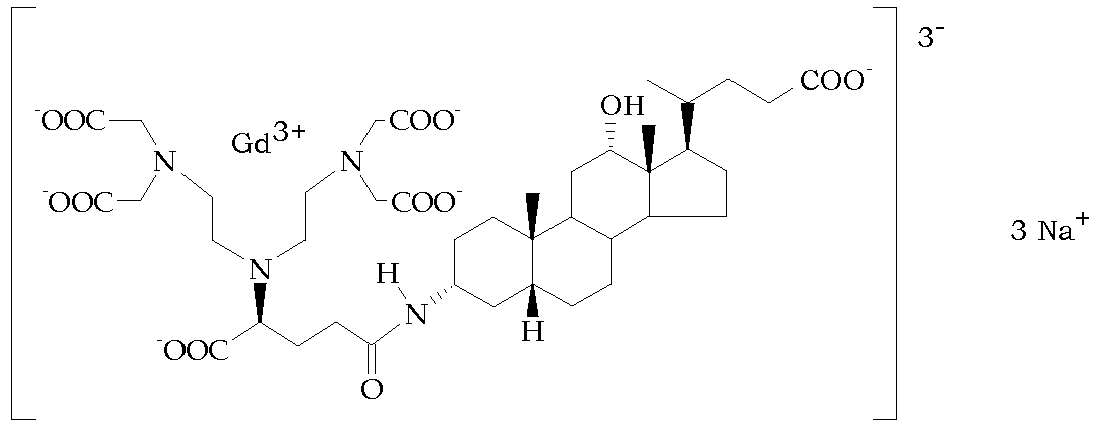
- (3α,5β,12α)-3,12-Dihydroxycholan-24-oic acid methyl ester was reacted under Mitsunobu conditions (Mitsunobu, O. Synthesis 1981, 1-28; Denike, J. K. et al. Chem. Phys. Lipids 1995, 77, 261-267) with triphenylphosphine, diethyl azodicarboxylate and formic acid in THF to afford (3β,5β,12α)-3-formyloxy-12-hydroxycholan-24-oic acid methyl ester. The latter was deprotected (MeOH/HCl) to (3β,5β,12α)-3,12-dihydroxycholan-24-oic acid methyl ester which was subjected to the series of reactions described in
WO-A-95/32741
m.p.: 90-92°C
[α]20D= + 53.46 (c 1.3, CH3OH)Elemental analysis C H N % calc.: 74.03 10.69 3.44 % found: 74.20 10.99 3.26
TLC: Stationary phase: silica gel plate 60F 254 Merck
Eluent: 9 : 1 : 0.15 CHCl3/CH3OH/25% NH4OH Rf= 0.21 - The 1H-NMR, 13C-NMR, IR and MS spectra are consistent with the indicated structure.
- Following reaction scheme 3 and the experimental procedure given in example 5, (S)-5-oxo-1,2-pyrrolidinedicarboxylic acid 2-methyl 1-(phenylmethyl) diester was reacted with compound A). The [3α(S),5β,12α]-3-[[4-[bis[2-[bis[2-(1,1-dimethylethoxy)-2-oxoethyl]-amino]ethyl]amino]-5-methoxy-1,5-dioxopentyl]amino]-12-hydroxycholan-24-oic acid methyl ester thus obtained was hydrogenated (H2/Pd) to remove the Cbz protecting group. The subsequent alkylation with N-(2-bromoethyl)-N-[2-(1,1-dimethylethoxy)-2-oxoethyl]glycine 1,1-dimethylethyl ester (prepared according to the procedure described in
WO-A-95/32741 phosphate buffer pH 8, afforded the related hexaester. The latter was transformed (aq. LiOH/dioxane) into the hexaacid which was complexed, according to the procedure reported in example 4, point D), to obtain the desired product with 33% overall yield.
m.p.: > 300°C
HPLC assay: 100.0% (area %)Elemental anal. C H N Gd Na % calc.: 46.49 5.71 5.29 14.85 6.51 % found: 42.04 6.37 4.76 13.28 5.91 H2O 9.79% - The IR and MS spectra are consistent with the indicated structure.
-

- The compound was synthetized from (3β,5β,7α)-3-amino-7-hydroxycholan-24-oic acid methyl ester (prepared analogously to the cholic acid derivative described in
WO-A-95/32741 WO-A-95/32741
m.p.: > 300°CElemental anal. C H N Gd Na % calc 6.49 5.71 5.29 14.85 6.51 % found: 43.88 6.50 4.91 13.62 6.04 H2O 7.11% - The IR and MS spectra are consistent with the indicated structure.
-
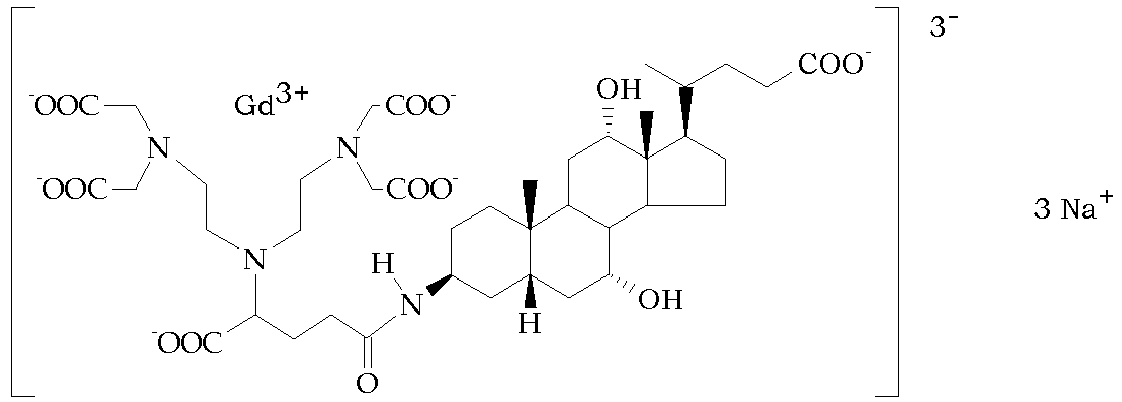
- The compound was synthetized from (3β,5β,7α,12α)-3-amino-7,12-dihydroxycholan-24-oic acid methyl ester (prepared as described in
WO-A-95/32741 WO-A-95/32741
m.p.: 224°C dec.
HPLC assay: 97% (area %)Stationary phase: Zorbax ECLIPSE XDB-C8 3.5 µm; 150 x 4.6 mm column Rockland Technologies, Inc.; Temperature: 40°C; Mobile phase: gradient elution; A = 0.017 M H3PO4, 0.3 mM EDTA in water; B = CH3CN Gradient: min % A % B 0 95 5 40 65 35 50 65 35 Flow rate: 1.0 mL min-1; Detection (UV): 210 nm; - The chromatographic method shows two peaks, in almost equal percentage, that are related to diastereoisomers due to the RS stereocenter in the DTPA residue.
Elemental anal. C H N Li,Cl % calc.: 57.60 7.78 6.55 % found: 54.34 7.81 6.19 < 0.1 H2O 5.12% - The IR, NMR and MS spectra are consistent with the indicated structure.
-

- Method 1: a solution of bis(trichloromethyl) carbonate (2.9 g; 9.7 mmol) in anhydrous CH2Cl2 (40 mL) was added dropwise, under nitrogen, to a solution of (3α,5β,7α,12α)-3,7,12-trihydroxycholan-24-oic acid methyl ester (commercial product) (10.0 g; 23.7 mmol) and pyridine (2.3 mL; 28.4 mmol) in anhydrous CH2Cl2 (100 mL) cooled to 0°C. The mixture was then allowed to warm and after 1 h at room temperature the solution was cooled again to 0°C, N,N-diisopropylethylamine (7.9 mL; 47.3 mmol) was added then a solution of N2,N2-bis[2-[bis[2-(1,1-dimethylethoxy)-2-oxoethyl]amino]ethyl]-L-lysine (1,1-dimethylethyl) ester (Anelli, P. L. et al Bioconjugate Chem. 1999, 10, 137) (17.6 g; 23.7 mmol) in anhydrous CH2Cl2 (50 mL) was added dropwise. The solution was stirred 3 h at room temperature then washed with H2O (2 x 100 mL), dried over Na2SO4 and evaporated. The crude was purified by flash chromatography to give the desidered product (14.8 g; 12.4 mmol).
Yield: 52%. - The 1H-NMR, 13C-NMR, IR and MS spectra are consistent with the indicated structure.
- Method 2: A solution of [3α,5β,7α,12α]-3-[(chlorocarbonyl)oxy]-7,12-dihydroxycholan-24-oic acid methyl ester (Janout, V., Lanier, M.; Regen, S.L. J. Am. Chem. Soc. 1997, 119, 640) (6.1 g; 12.6 mmol) in anhydrous CH2Cl2 (150 mL) was cooled to 0°C under nitrogen and then N,N-diisopropylethylamine (4.8 mL; 27.6 mmol) was added. Then a solution of N2,N2-bis[2-[bis[2-(1,1-dimethylethoxy)-2-oxoethyl]amino]ethyl]-L-lysine (1,1-dimethylethyl) ester (9.3 g; 12.6 mmol) in anhydrous CH2Cl2 (20 mL) was added dropwise. The solution was stirred 3 h at room temperature then washed with H2O (2 x 100 mL), dried over Na2SO4 and evaporated. The crude was purified by flash chromatography to give the desidered product (11.9 g; 9.9 mmol).
Yield: 79%. - The 1H-NMR, 13C-NMR, IR and MS spectra are consistent with the indicated structure.
- A 2 M aq. solution of LiOH (141 mL) was added dropwise to a solution of compound A) (11.2 g; 9.4 mmol) in 1,4-dioxane (141 mL) at room temperature. After 104 h the solution was concentrated (150 mL) and added dropwise to 2 M aq. HCl (175 mL): final pH was 1.9. The precipitate was filtered, washed with H2O (5 x 50 mL) and vacuum dried. The crude was purified by flash chromatography. The solid obtained was dissolved in 10% aq. CH3CN and pH adjusted to 1 by the addition of conc. HCl then the solution was loaded onto an Amberlite® XAD 16.00 resin column (250 mL) and eluted with a CH3CN/H2O gradient. The fractions containing the product were evaporated to give the desidered product (4.3 g; 4.8 mmol).
Yield: 51%. m.p.: 184-191 °C
K.F.: 4.36%
[α]20D= + 19.5 (c 1, 1 M NaOH)
HPLC assay: 97.3% (% area)Stationary phase: Hypurity Elite C 185 µm; 250 x 4.6 mm column packed by Hypersil; Temperature: 40°C; Mobile phase: gradient elution; A = 0.01 M KH2PO4, 0.3 mM EDTA in water; B = CH3CN Gradient: min % A % B 0 95 5 20 65 35 50 65 35 Flow rate: 1 mL min-1; Detection (UV): 200 nm; Elemental analysis C H N Cl % calc.: 57.45 7.85 6.23 % found: 55.22 7.91 6.08 <0.1 - The 1H-NMR, 13C-NMR, IR and MS spectra are consistent with the indicated structure.
- Compound prepared at step B) (4.7 g; 5.2 mmol) was suspended in H2O (100 mL) and dissolved by addition of 1 M NaOH (10 mL) until pH was 6.5. A solution of GdCl3 (1.9 g; 5.2 mmol) in H2O (17 mL) was added maintaining pH 6.5 with 1 M NaOH (15.6 mL). After 1 h at room temperature, the solution was loaded onto an Amberlite® XAD 16.00 resin column (250 mL) which was eluted with a CH3CN/H2O gradient. The fractions containing the product were evaporated to give the desired product (4.2 g; 3.8 mmol).
Yield 72%. m.p.: >300°C
K.F.: 9.49%
[α]20D= + 2.63 (c 2, H2O)
HPLC assay : 100% (% area)(same method of step B)Elemental analysis C H N Gd Na Cl % calc.: 46.15 5.76 5.00 14.05 6.17 % found: 41.80 6.28 4.54 12.64 5.73 <0.1 - The 1H-NMR, 13C-NMR, IR and MS spectra are consistent with the indicated structure.
- Manganese complex of [3β(S),5β,12α]-3-[[4-[[2-[bis-(carboxymethyl)amino]ethyl](carboxymethyl)amino]-4-carboxy-1-oxobutyl]amino]-12-hydroxycholan-24-oic acid salified with sodium (1:3)

- 3.4 g of 5% Pd/C is added to a solution of [3β(S),5β,12α]-3-[[5-methoxy-1,5-dioxo-4-[[(phenylmetho-xy)carbonyl]amino]pentyl]amino]-12-hydroxycholan-24-oic acid methyl ester (example 5, product B) (34.14 g; 50 mmol) in MeOH (340 mL). The suspension was stirred, at r.t., over 3.5 h under a hydrogen atmosphere. After filtration through a Millipore® filter FH (0.45 µm) the solution was evaporated to dryness to give the desired product (27.1 g; 49.3 mmol).
Yield 98.6%.
Weight loss (50°C; high vacuum): <0.1 %Elemental analysis C H N % calc.: 67.85 9.55 5.10 % found: 68.58 9.72 5.12
[α]20D= + 36.61 (c2.01, CHCl3)
Acidic titer (0.1 M HCl): 94.6% - The 1H-NMR, 13C-NMR, IR and MS spectra are consistent with the indicated structure.
- Compound prepared at step A) (16.0 g; 29.1 mmol) and N-(2-bromoethyl)-N-[2-(1,1-dimethylethoxy)-2-oxoethyl]-glicine 1,1-dimethylethyl ester (13.3 g; 37.8 mmol) (prepared according to the procedure described in
WO-A-95/32741
Yield: 52%.Elemental analysis C H N % calc.: 65.90 9.46 5.12 % found: 65.99 9.72 5.03
TLC: Stationary phase: silica gel plate 60F 254 Merck
Eluent: 1 : 1 = EtOAc/n-hexane Rf= 0.40
Detection: 1% KMnO4 in 1 M NaOH - The 1H-NMR, 13C-NMR, IR and MS spectra are consistent with the indicated structure.
- Tert-butyl bromoacetate (3.9 g; 20.1 mmol) was added dropwise to a solution of compound prepared at step B) (11.0 g; 13.4 mmol) and N,N-diisopropylethylamine (3.5 mL; 20.1 mmol) in CH3CN. The mixture was stirred 24 h at room temperature and then more N,N-diisopropylethylamine (0.9 mL; 4.0 mmol) and tert-butyl bromoacetate (0.8 g; 4.0 mmol) were added. The mixture was stirred for further 70 h, separated and the organic phase evaporated to give a residue which was dissolved in CH2Cl2 (150 mL), washed with water (2 x 100 mL), dried over Na2SO4 and evaporated. The crude was purified by flash chromatography to give the desired product (10.7 g; 11.5 mmol).
Yield: 85%.Elemental analysis C H N % calc.: 65.57 9.39 4.50 % found: 66.27 9.62 4.52
TLC: Stationary phase: silica gel plate 60F 254 Merck
Eluent: 1 : 1 = EtOAc/n-hexane Rf= 0.46
Detection: 1% KMnO4 in 1 M NaOH - The 1H-NMR, 13C-NMR, IR and MS spectra are consistent with the indicated structure.
- A 2 M aq. solution of LiOH (120 mL) was added dropwise to a solution of compound prepared at step C)(9.2 g; 9.8 mmol) in 1,4-dioxane (120 mL) at room temperature. After 24 h the solution was concentrated (100 mL) and added dropwise to 2 M aq. HCl (135 mL): final pH was 1.9. The precipitate was filtered, washed with H2O (5 x 50 mL) and vacuum dried to give the desired product (7.3 g; 9.6 mmol).
Yield 98% m.p.: 163-168°C
K. F. : 1.81%
[α]20D= + 29.03 (c 1, 1 M NaOH)
HPLC assay : 100% (area %)Stationary phase: Zorbax Eclipse XDB-C8 3.5 µm; 150 x 4.6 mm column packed by Rockland Technologies Inc.; Temperature: 40°C; Mobile phase: gradient elution; A = 0.01 M KH2PO4, 0.01 M K2HPO4, 0.3 mM EDTA in water; B = CH3CN Gradient: min % A % B 0 93 7 5 93 7 50 60 40 Flow rate: 1 mL min-1; Detection (UV): 200 nm; Elemental analysis C H N Li Cl % calc.: 60.23 8.06 5.69 % found: 58.60 8.25 5.49 <0.1 <0.1 - The 1H-NMR, 13C-NMR, IR and MS spectra are consistent with the indicated structure.
- The compound prepared at step D) (5.3 g; 7.2 mmol) was suspended in H2O (250 mL) and dissolved by addition of 1 M NaOH (36 mL) until pH was 6.5. A solution of MnCl2·4H2O (1.4 g; 7.2 mmol) in H2O (50 mL) was added maintaining pH 6.5 with 1 M NaOH (7.9 mL). After 1 h at room temperature, the solution was desalted by nanofiltration, then evaporated to give the desired product.
Yield: 98% m.p.: >300°C
K.F.: 13.54%
[α]20D= + 2.63 (c 2, H2O)
CE assay: 100% (area %)Capillary: fused silica 0.72 m x 50 µmVoltage: 30 kV Buffer: 0.07 M borate, pH 9,3, 0.3 mM EDTA Temperature: 25°C Stoptime: 20 min; Detection (UV): 200 nm; Injection: hydrodynamic (50 mbar, 4 s); Sample concentration: 1 mg mL-1; Instrumentation: Hewlett Packard 3D HPCE Preconditioning timetable: t (min) action 2 flush with H2O 2 flush with 0.1 M NaOH 1 flush with H2O 5 flush with buffer Elemental analysis C H N Mn Na Cl % calc.: 51.87 6.35 4.90 6.41 8.05 % found: 45.50 6.95 4.30 5.28 6.86 <0.1 - The IR and MS spectra are consistent with the indicated structure.
- In the same way starting from compound B) in example 2 the gadolinium complex of [3β(S),5β]-3-[[4-[[2-[[bis(carboxymethyl)amino]ethyl]-(carboxymethyl)-amino]-4-carboxy-1-oxobutyl]amino]-12-oxocholan-24-oic acid was prepared.
-

- N-(2-Bromoethyl)-N-[2-(1,1-dimethylethoxy)-2-oxoethyl]glycine 1,1-dimethylethyl ester (25.6 g; 72.55 mmol) (prepared according to the procedure described in
WO-A-95/32741
Yield: 32%.
K. F. : <0.1%
[α]20D= -22.47 (c 1.93, CHCl3)Elemental analysis C H N % calc.: 61.83 8.45 6.18 % found: 61.70 8.52 5.84
TLC: Stationary phase: silica gel plate 60F 254 Merck
Eluent: 3 : 7 = EtOAc/n-hexane Rf= 0.40
Detection: Ce(SO4)2.4H2O (0.18%) and (NH4)6Mo7O24.4H2O (3.83%) in 10% H2SO4 - The 1H-NMR, 13C-NMR, IR and MS spectra are consistent with the indicated structure.
- A 20% solution of phosgene in toluene (100 mL; 202.2 mmol) was added dropwise to a solution of (3α,5β,7α,12α)-3,12-dihydroxycholan-24-oic acid methyl ester (14.7 g; 36 mmol) in anhydrous CH2Cl2 (350 mL) cooled to 0°C under nitrogen. The solution was stirred 3 h at room temperature then evaporated (CAUTION) to give the desired product (15.2 g; 32.4 mmol).
Yield: 90%. - The 1H-NMR, 13C-NMR, IR and MS spectra are consistent with the indicated structure.
- 5% Pd/C (1.3 g) was added to a solution of compound prepared at step A) (12.3 g; 18.1 mmol) in MeOH (120 mL) and the suspension was stirred for 3 h under hydrogen atmosphere at room temperature. After filtration through a Millipore® filter (FT 0.45 µm) the solution was evaporated under reduced pressure. The crude was dissolved in anhydrous CH2Cl2 (20 mL) and added dropwise to a solution of compound prepared at step B) (8.7 g; 18.54 mmol) and N,N-diisopropylethylamine (DIEA) (6.5 mL; 37.07 mmol) in anhydrous CH2Cl2 (200 mL) at 0°C and under nitrogen. After 3 h the reaction mixture was washed with H2O (2 x 100 mL), the organic phase was separated, dried over Na2SO4 and evaporated under reduced pressure. The crude was purified by flash chromatography to give the desired product (8.6 g; 8.8 mmol).
Yield: 49%.
K.F.: <0.1 %Elemental analysis C H N % calc.: 65.07 9.38 4.30 % found: 65.67 9.52 4.24
TLC: Stationary phase: silica gel plate 60F 254 Merck
Eluent: 3 : 7 = EtOAc/n-hexane Rf= 0.30
Detection: Ce(SO4)2.4H2O (0.18%) and (NH4)6Mo7O24.4H2O (3.83%) in 10% H2SO4 - The 1H-NMR, 13C-NMR, IR and MS spectra are consistent with the indicated structure.
- 2 M LiOH (133 mL; 266 mmol) was added to a solution of compound prepared at step C) (8.5 g; 10.64 mmol) in 1,4-dioxane (130 mL). The resulting solution was stirred at room temperature for 24 h and then neutralized to pH 7 by addition of 2 N HCl (120 mL). The solution was concentrated by evaporation under reduced pressure to half volume and very slowly acidified to pH 1.5 under vigorous stirring to afford a white precipitate which was filtered, washed with H2O (2 x 100 mL) and dried to give the desired product (6.45 g; 8.13 mmol).
Yield: 76%. m.p.: 188.9°C
K.F. : 1.44%
[α]20D= + 35.47 (c2.01, 1 M NaOH)
HPLC assay: 96.8% (area %)Stationary phase: Zorbax Eclipse XDB-C8 3.5 µm; 150 x 4.6 mm column packed by Rockland Technologies Inc.; Temperature: 40°C; Mobile phase: gradient elution; A = 0.017 M H3PO4 in water; B = CH3CN Gradient: min % A % B 0 65 35 25 15 85 30 15 85 Flow rate: 1 mL min-1; Detection (UV): 210 nm; Elemental analysis C H N Li Cl % calc.: 59.91 8.12 5.37 % found: 58.44 8.04 5.03 <0.1 <0.1 - The 1H-NMR, 13C-NMR, IR and MS spectra are consistent with the indicated structure.
- The compound prepared at step D) (5 g; 6.3 mmol) was suspended in H2O (50 mL) and dissolved by addition of 1 M NaOH (18 mL; 18 mmol). A 0.559 M aq. solution of MnCl2 (11.27 mL; 6.3 mmol) was added over 3 h maintaining pH 6.5 by means of 1 M NaOH (7.8 mL). The solution was adjusted to pH 6.8 with 1 M NaOH (0.9 mL; 0.9 mmol), filtered (HA 0.45 µm Millipore® membrane) and desalted by nanofiltration. The solution was evaporated and dried to give the desired product (5.45 g; 6.05 mmol).
Yield: 96% m.p.: >300°C
K.F.: 3.78%
[α]20D= + 2.74 (c 2, H2O)
CE assay : 100% (area %)Capillary: fused silica 0.72 m x 50 µmVoltage: 30 kV Buffer: 0.07 M borate, pH 9,3, 0.3 mM EDTA Temperature: 25°C Stoptime: 20 min; Detection (UV): 200 nm; Injection: hydrodynamic (50 mbar, 4 s); Sample concentration: 1 mg mL-1; Instrumentation: Hewlett Packard 3D HPCE Preconditioning timetable: t (min) action 2 flush with H2O 2 flush with 0.1 M NaOH 1 flush with H2O 5 flush with buffer Elemental analysis C H N Mn Na Cl % calc.: 52.00 6.49 4.66 6.10 7.66 % found: 49.54 7.17 4.44 5.65 7.58 <0.1 - The IR and MS spectra are consistent with the indicated structure.
-

- N,N-Bis[2-[bis[2-(1,1-dimethylethoxy)-2-oxoethyl]-amino]ethyl]-L-glutamic acid 1-(1,1-dimethyl ethyl) ester (Anelli, P. L. et al. Bioconjugate Chem. 1999, 10, 137) (37 g; 50 mmol), (3β,5β,7α,12α)-3-amino-7,12-dihydroxycholan-24-oic acid phenylmethyl ester (Anelli, P.L.; Lattuada, L.; Uggeri, F. Synth. Commun. 1998, 28, 109) (31 g; 55 mmol) and diethyl cyanophosphonate (commercial product) (9.6 g; 55 mmol; 9.2 mL) were dissolved in DMF (750 mL). The resulting solution was cooled to 0°C and Et3N (7.3 mL) was added dropwise. After 1 h at room temperature the solution was evaporated under reduced pressure, the residue was dissolved in EtOAc (300 mL), washed with a 5% aq. NaHCO3 (2 x 200 mL) and then with brine (2 x 200 mL). The organic phase was separated, dried over Na2SO4 and then evaporated under reduced pressure. The crude was purified by flash chromatography to give the desired product (36 g; 29 mmol).
Yield 58%.
K.F.: 0.98%Elemental analysis C H N % calc.: 65.64 9.21 4.57 % found: 66.31 9.20 4.51
TLC: Stationary phase: silica gel plate 60F 254 Merck
Eluent: 2 : 8 = EtOAc/n-hexane Rf= 0.3
Detection: AcOH/conc. H2SO4/p-anisaldehyde = 100:2:1 - The 1H-NMR, 13C-NMR, IR and MS spectra are consistent with the indicated structure.
- 5% Pd/C (3.6 g) was added to a solution of compound prepared at step A) (36 g; 29.4 mmol) in EtOH (1.5 L) and the suspension was stirred for 3 h under hydrogen atmosphere at room temperature. After filtration (through a Millipore® filter FT 0.45 µm) the solution was evaporated under reduced pressure. The crude was purified by flash chromatography to give the desired product (22 g; 18 mmol).
Yield 60%. m.p.: 58°C
K.F.: 1.34%Elemental analysis C H N % calc.: 65.07 9.86 5.66 % found: 64.34 10.07 5.48
TLC: Stationary phase: silica gel plate 60F 254 Merck
Eluent: 1 : 5 : 95 = Et3N/MeOH/CH2Cl2 Rf= 0.33
Detection: AcOH/conc. H2SO4/p-anisaldehyde = 100:2:1 - The 1H-NMR, 13C-NMR, IR and MS spectra are consistent with the indicated structure.
- Et3N (1.2 g; 12 mmol; 1.7 mL) was added dropwise to a solution of compound B) (12.5 g; 11 mmol), (2-aminoethanesulfonic acid (commercial product) (1.5 g; 12 mmol) and diethyl cyanophosphonate (commercial product) (2.1 g; 12 mmol; 2 mL) in DMF (400 mL) at 0°C and under nitrogen. After 20 min the reaction mixture was allowed to rise to room temperature and stirred for 3 h. The solution was evaporated under reduced pressure, the residue was dissolved in dioxane (250 mL) and 0.5 M aq. H2SO4 (250 mL; 125 mmol) was added dropwise. The resulting mixture was heated at 90°C for 2 h. The pH of the solution was adjusted from 1.4 to 7 with 2 N NaOH and the solvent was evaporated under reduced pressure. The crude was purified by flash chromatography. The product was dissolved in H2O (250 mL) and 2 N HCl (12.5 mL) and desalted by elution through an Amberlite® XAD-16.00 resin column with a CH3CN/H2O gradient to give the desired product (1.5 g; 1.6 mmol).
Yield 14%. m.p.: >200°C
K.F.: 5.87%Elemental analysis C H N S % calc.: 53.68 7.44 7.28 3.33 % found: 50.34 7.71 6.64 2.99 - The 1H-NMR, 13C-NMR, IR and MS spectra are consistent with the indicated structure.
- Product C) (880 mg; 0.915 mmol) was dissolved in H2O (50 mL) and 1 N NaOH was added dropwise until pH 6.8 was reached. Gd2O3 (165 mg; 0.46 mmol) was added and the resulting suspension was heated at 50°C for 6 h. The reaction mixture was filtered through a Millipore® apparatus (HA 0.45 µm filter) and the filtrate was loaded onto a Dowex® CCR 3LB weak cation exchange resin column (Na+ form, 20 mL). The eluate was evaporated under reduced pressure and dried to give the desired product (1.00 g; 0.75 mmol).
Yield 82%. m.p.: >250°C
K.F.: 13.95%
HPLC assay: 100% (area %)
Stationary phase:Lichrospher 100 RP-8 5 µm; 250 x 4 mm column packed by Merck KGaA;
Temperature: 40°C;
Mobile phase: isocratic elution with premixed mobile phase: 1 g of n-octylamine is added to 300 mL of acetonitrile mixed with 700 mL of water. The solution is buffered to pH 6 with H3PO4;
Flow rate: 1 mL min-1;
Detection (UV): 200 nm;Elemental analysis C H N S Gd Na % calc.: 43.78 5.54 5.92 2.71 13.30 5.83 % found: 36.82 6.04 5.11 2.18 10.64 5.35 - The IR and MS spectra are consistent with the indicated structure.
- In the same way the gadolinium complex of N2-bis[2-[bis(carboxymethyl)amino]ethyl]-N-[(3β,5β)-24-oxo-24-[(2-sulfoethyl)amino]cholan-3-yl]-L-glutamine was prepared.
-

- Benzyl glycolate triflate (Williams, M. A.; Rapoport, H.J. Org. Chem. 1994, 59, 3616) (16.8 g; 56.3 mmol) was added over a period of 15 min to a stirred solution of (3α,5β)-3-hydroxycholan-24-oic acid methyl ester (Dayal, B. et al. Steroids 1981, 37, 239) (20 g; 51.2 mmol) and N,N-diisopropylethylamine (10 mL; 57.4 mmol) in anhydrous CH3CN (400 mL) at -20°C. After 4 h at -20°C the mixture was warmed to room temperature and stirred for additional 4 h. The solvent was evaporated and the residue partitioned between EtOAc (300 mL) and saturated NaHCO3 (300 mL). The organic phase was dried over Na2SO4 and evaporated. The residue was dissolved in EtOH (200 mL) then 5% Pd/C (3 g) was added and the mixture was stirred, at r.t., over 5 h under a hydrogen atmosphere. After filtration through a Millipore® filter FH (0.45 µm) the solution was evaporated and the residue purified by flash chromatography to give the desired product (14.2 g; 31.7 mmol).
Yield: 62%
K.F. : <0.1Elemental analysis C H % calc.: 72.28 9.89 % found: 71.97 9.81 - The 1H-NMR, 13C-NMR, IR and MS spectra are consistent with the indicated structure.
- N2,N2-bis[2-[bis[2-(1,1-dimethylethoxy)-2-oxoethyl]-amino]ethyl]-L-lysine (1,1-dimethylethyl) ester (Anelli, P. L. et al Bioconjugate Chem. 1999, 10, 137) (18.56 g; 25 mmol), (18.6 g; 25 mmol), compound A) (11.2 g; 25 mmol) and diethyl cyanophosphonate (commercial product) (4.9 g; 28 mmol) were dissolved in DMF (300 mL). The resulting solution was cooled to 0°C and Et3N (4 mL) was added dropwise. After 6 h at room temperature the solution was evaporated under reduced pressure, the residue was dissolved in EtOAc (250 mL), washed with a 5% aq. NaHCO3 (2 x 100 mL) and then with brine (2 x 100 mL). The organic phase was separated, dried over Na2SO4 and then evaporated under reduced pressure. The residue was dissolved in dioxane (300 mL) and 0.5 M aq. H2SO4 (300 mL; 150 mmol) was added dropwise. The resulting mixture was heated at 90°C for 2 h. The pH of the solution was adjusted to 7 with 2 N NaOH and the solvent was evaporated under reduced pressure. The crude was purified by flash chromatography. The product was dissolved in H2O (300 mL) and 2 N HCl (30 mL) and desalted by elution through an Amberlite® XAD-16.00 resin column with a CH3CN/H2O gradient to give the desired product (9.03 g; 10.25 mmol).
Yield 41%.
K.F.: 2.78%Elemental analysis C H N % calc.: 59.98 8.24 6.36 % found: 58.11 8.28 6.14 - The 1H-NMR, 13C-NMR, IR and MS spectra are consistent with the indicated structure.
- Product B) (5 g; 5.67 mmol) was dissolved in H2O (200 mL) by addition of 1 N NaOH until pH 6.8 was reached. Gd2O3 (1.03 g; 2.84 mmol) was added and the resulting suspension was heated at 50°C for 8 h. The reaction mixture was filtered through a Millipore® apparatus (HA 0.45 µm filter) and the filtrate was evaporated under reduced pressure and dried to give the desired product (5.74 g; 5.21 mmol).
Yield 92%. m.p.: >250°C
K.F.: 5.81%Elemental analysis C H N Gd Na % calc.: 47.99 6.04 5.09 14.28 6.26 % found: 45.09 6.15 4.77 13.39 5.81 - The IR and MS spectra are consistent with the indicated structure.
- In the same way, starting from compound A) of example 15, the gadolinium complex of [3α(S),5β]-3-[2-[[5-[[2-[bis(carboxymethyl)amino]ethyl](carboxymethyl)-amino]-5-carboxypentyl]amino]-2-oxoethoxy]cholan-24-oic acid was prepared.
- In the same way, starting from compound A) of example 15 and (3β,5β,7α,12α)-3-[(3-carboxy-1-oxopropyl)amino]-7,12-dihydroxycholan-24-oic acid methyl ester (prepared according to the procedure described in
WO-A-95/32741 - The effectiveness of the compounds of the invention as blood pool agents was evaluated by plotting the progress of the longitudinal relaxation rate 1/T1 versus the time elapsed after the administration. The proton relaxation rate 1/T1 of blood samples, collected at predetermined times, was measured at 39°C by means of a Brucker Minispec PC120 instrumentation using "inversion recovery" three parameter sequences.
- The compound prepared in Example 1, gadolinium complex of [3β(S),5β]-3-[[4-[bis[2-[bis(carboxymethyl)amino]ethyl]amino]-4-carboxy-1-oxobutyl]amino]cholan-24-oic acid salified with 1-deoxy-1-(methylamino)-D-glucitol (1:3), was administered to a rabbit at a dose of 0.1 mmol/kg. The diagram (
fig. 1 ) represents the profile of the relaxation rate. - The compound prepared in Example 9 of patent application
WO 95/32741 fig. 2 ) represents the profile of the relaxation rate. - The compound prepared in Example 15 of patent application
WO 95/32741 fig. 3 ) represents the profile of the relaxation rate. - The compound prepared in Example 4, gadolinium complex of [[3β(S),5β,12α]-3-[[4-[bis[2-[bis(carboxymethyl)amino]ethyl]amino]-4-carboxy-1-oxobutyl]amino]-12-hydroxycholan-24-oic acid salified with 1-deoxy-1-(methylamino)-D-glucitol (1:3), was administered to the monkey at a dose of 0.05 mmol/kg. The diagram (
fig. 4 ) is the profile of the relaxation rate. - 0.3 M Pharmaceutical formulation of the gadolinium complex with [3β(S),5β,12α]-3-[[4-[bis[2-[bis(carboxymethyl)amino]ethyl]annino]-4-carboxy-1-oxobutyl]amino]-12-hydroxycholan-24-oic acid salified with 1-deoxy-1-(methylamino)-D-glucitol (1:3)
- 31.775 kg of the gadolinium complex of [3β(S),5β,12α]-3-[[4-[bis[2-[bis(carboxymethyl)amino]-ethyl]amino]-4-carboxy-1-oxobutyl]ammino]-12-hydroxycholan-24-oic acid salified with 1-deoxy-1-(methylamino)-D-glucitol (1:3) (prepared as exemplified in Example 4) and 100 g of trometamol hydrochloride are dissolved in 100 L of sterile water at room temperature in a pharmaceutical stainless steel reactor. After dissolution, the pH of the solution is adjusted to 7.4 by addition of 1 M trometamol. The solution is sterile filtered through filters of 0.22 mm diameter and distributed in 20 mL vials, which are closed with halobutyl plugs, sealed with aluminium ring and vapour sterilized at Fo = 18. HPLC shows a 0.294 M titre.
- Pre-filled plastic syringes containing the formulation of Example 19 20 mL Portions of the solution prepared in Example 19 are placed in a CZ plastic syringe with the tip closed by a cap. The piston is inserted under vacuum and the pre-filled syringe is sterilized in autoclave to a value of Fo = 18.

Claims (4)
- Chelating compounds selected from the group consisting of:[3β(S),5β]-3-[[4-[bis[2-[bis(carboxymethyl)amino]ethyl]amino]-4-carboxy-1-oxobutyl]amino]cholan-24-oic acid; (compound 2)[3β(R),5β,12α]-3-[[4-[bis[2-[bis(carboxymethyl)amino]ethyl]amino]-4-carboxy-1-oxobutyl]amino]-12-hydroxycholan-24-oic acid; (compound 10)[3β(RS),5β,12α]-3-[[4-[bis[2-[bis(carboxymethyl)amino]ethyl]amino]-4-carboxy-1-oxobutyl]amino]-12-hydroxycholan-24-oic acid; (compound 11)[3α(S),5β]-3-[[4-[bis[2-[bis(carboxymethyl)amino]ethyl]amino]-4-carboxy-1-oxobutyl]-amino]cholan-24-oic acid; (compound 4)[3β(S),5β,12α]-3-[[4-[bis[2-[bis(carboxymethyl)amino]ethyl]amino]-4-carboxy-1-oxobutyl]amino]-12-hydroxycholan-24-oic acid; (compound 9)[3α(S),5β,12α]-3-[[4-[bis[2-[bis(carboxymethyl)amino]ethyl]amino]-4-carboxy-1-oxobutyl]amino]-12-hydroxycholan-24-oic acid (compound 12);the complexes thereof with gadolinium or manganese ions and the salts of the complexes with cations of bases selected from the group consisting of: ethanolamine, diethanolamine, morpholine, glucamine, N-methylglucamine, N,N-dimethylglucamine or from the group consisting of inorganic bases whose cations are sodium, potassium, magnesium and calcium.
- Compounds according to claim 1 selected from the group consisting of:[3β(S),5β]-3-[[4-[bis[2-[bis(carboxymethyl)amino]ethyl]-amino]-4-carboxy-1-oxobutyl]amino]cholan-24-oic acid;[3β(S),5β,12α]-3-[[4-[bis[2-[bis(carboxymethyl)amino]ethyl]amino]-4-carboxy-1-oxobutyl]amino]-12-hydroxycholan-24-oic acid.
- A compound according to claims 1 or 2 selected from:[3β(S),5β,12α]-3-[[4-[bis[2-[bis(carboxymethyl)amino]ethyl]amino]-4-carboxy-1-oxobutyl]amino]-12-hydroxycholan-24-oic acid, the complex thereof with gadolinium and the salts thereof with N-methylglucamine or sodium.
- A contrastographic diagnostic pharmaceutical composition comprising at least one of the chelated complexes, or a salt thereof, according to any one of the preceding claims from 1 to 3.
Applications Claiming Priority (2)
| Application Number | Priority Date | Filing Date | Title |
|---|---|---|---|
| IT1998MI002802A IT1304501B1 (en) | 1998-12-23 | 1998-12-23 | USE OF BILIARY ACID DERIVATIVES CONJUGATED WITH METALLIC COMPLEXES LIKE "BLOOD POOL AGENTS" FOR THE DIAGNOSTIC INVESTIGATION THROUGH RESONANCE |
| EP99963556A EP1140209B1 (en) | 1998-12-23 | 1999-12-16 | Blood pool agents for nuclear magnetic resonance diagnostics |
Related Parent Applications (1)
| Application Number | Title | Priority Date | Filing Date |
|---|---|---|---|
| EP99963556A Division EP1140209B1 (en) | 1998-12-23 | 1999-12-16 | Blood pool agents for nuclear magnetic resonance diagnostics |
Publications (3)
| Publication Number | Publication Date |
|---|---|
| EP1935435A2 EP1935435A2 (en) | 2008-06-25 |
| EP1935435A3 EP1935435A3 (en) | 2009-01-21 |
| EP1935435B1 true EP1935435B1 (en) | 2017-09-06 |
Family
ID=11381326
Family Applications (2)
| Application Number | Title | Priority Date | Filing Date |
|---|---|---|---|
| EP08004643.6A Expired - Lifetime EP1935435B1 (en) | 1998-12-23 | 1999-12-16 | Blood pool agents for nuclear magnetic resonance diagnostics |
| EP99963556A Expired - Lifetime EP1140209B1 (en) | 1998-12-23 | 1999-12-16 | Blood pool agents for nuclear magnetic resonance diagnostics |
Family Applications After (1)
| Application Number | Title | Priority Date | Filing Date |
|---|---|---|---|
| EP99963556A Expired - Lifetime EP1140209B1 (en) | 1998-12-23 | 1999-12-16 | Blood pool agents for nuclear magnetic resonance diagnostics |
Country Status (20)
| Country | Link |
|---|---|
| US (1) | US6461588B1 (en) |
| EP (2) | EP1935435B1 (en) |
| JP (1) | JP4733271B2 (en) |
| KR (1) | KR100736298B1 (en) |
| CN (2) | CN1263515C (en) |
| AT (1) | ATE405296T1 (en) |
| AU (1) | AU773876B2 (en) |
| CA (1) | CA2355888C (en) |
| CZ (1) | CZ302195B6 (en) |
| DE (1) | DE69939398D1 (en) |
| HK (1) | HK1042432B (en) |
| HU (1) | HU228048B1 (en) |
| IL (2) | IL143730A0 (en) |
| IT (1) | IT1304501B1 (en) |
| MX (1) | MXPA01006344A (en) |
| NO (1) | NO322551B1 (en) |
| PL (1) | PL196474B1 (en) |
| RU (2) | RU2395490C2 (en) |
| WO (1) | WO2000038738A1 (en) |
| ZA (1) | ZA200104820B (en) |
Families Citing this family (28)
| Publication number | Priority date | Publication date | Assignee | Title |
|---|---|---|---|---|
| TW319763B (en) * | 1995-02-01 | 1997-11-11 | Epix Medical Inc | |
| DE69819925T2 (en) | 1997-10-02 | 2004-09-02 | Epix Medical, Inc., Cambridge | Contrast-enhanced diagnostic image generation method for monitoring therapeutic interventions |
| IT1317862B1 (en) * | 2000-02-29 | 2003-07-15 | Bracco Spa | CONJUGATES OF BILIARY ACIDS WITH COMPLEX CHELATES OF METAL IONS AND THEIR USE. |
| IT1318485B1 (en) * | 2000-04-21 | 2003-08-25 | Bracco Spa | USE OF BILIARY ACID DERIVATIVES CONJUGATED WITH IONIMETALLIC COMPLEXES IN THE DIAGNOSTIC DISPLAY OF MICROVASCULAR SYSTEMS |
| EP1361847A2 (en) * | 2000-10-06 | 2003-11-19 | Xenoport, Inc. | Bile-acid conjugates for providing sustained systemic concentrations of drugs |
| EP1229041A1 (en) * | 2001-02-05 | 2002-08-07 | Bracco Imaging S.p.A. | A process for the preparation of 3-Glutamido bile ester derivatives using N-tBoc methyl pyroglutamate |
| US7053076B2 (en) | 2001-08-29 | 2006-05-30 | Xenoport, Inc. | Bile-acid derived compounds for enhancing oral absorption and systemic bioavailability of drugs |
| EP1302465A1 (en) * | 2001-10-11 | 2003-04-16 | BRACCO IMAGING S.p.A. | Enhanced substrate imaging by reversible binding to a paramagnetic complex |
| US7226577B2 (en) * | 2003-01-13 | 2007-06-05 | Bracco Imaging, S. P. A. | Gastrin releasing peptide compounds |
| US7922998B2 (en) | 2003-01-13 | 2011-04-12 | Bracco Imaging S.P.A. | Gastrin releasing peptide compounds |
| US8420050B2 (en) * | 2003-01-13 | 2013-04-16 | Bracco Imaging S.P.A. | Gastrin releasing peptide compounds |
| US7611692B2 (en) | 2003-01-13 | 2009-11-03 | Bracco Imaging S.P.A. | Gastrin releasing peptide compounds |
| US7850947B2 (en) * | 2003-01-13 | 2010-12-14 | Bracco Imaging S.P.A. | Gastrin releasing peptide compounds |
| CA2512310C (en) * | 2003-01-13 | 2012-09-25 | Bracco Imaging S.P.A. | Improved linkers for radiopharmaceutical compounds |
| WO2005067983A1 (en) * | 2003-12-24 | 2005-07-28 | Bracco Imaging S.P.A. | Improved gastrin releasing peptide compounds |
| RU2425831C2 (en) * | 2005-12-02 | 2011-08-10 | Джи-И Хелткер АС | Multimeric magnetic resonance contrast agents |
| ES2539767T3 (en) | 2007-07-11 | 2015-07-03 | Board Of Regents, The University Of Texas System | Seeds and markers for use in imaging |
| CN101845112B (en) * | 2010-06-02 | 2011-09-14 | 华东理工大学 | Preparation method of high-flexibility nuclear magnetic resonance imaging contrast agents based on high molecular nanometer particles |
| BR112013018534B1 (en) | 2011-01-20 | 2021-04-06 | Board Of Regents, The University Of Texas System | CONTRAST AGENT, ITS PREPARATION METHODS, AND COMBINATION PRODUCT |
| CA2862760A1 (en) | 2012-03-05 | 2013-09-12 | Bracco Imaging Spa | Dynamic contrast enhanced-mri method and agents for the assessment of the macromolecular transport within pathologic tissues |
| CN102766188B (en) * | 2012-07-24 | 2016-01-13 | 上海交通大学 | Cholesterol derivative, inner complex, rHDL and uses thereof |
| GB201421163D0 (en) * | 2014-11-28 | 2015-01-14 | Ge Healthcare As | Formulations of metal complexes |
| US10093741B1 (en) | 2017-05-05 | 2018-10-09 | Fusion Pharmaceuticals Inc. | IGF-1R monoclonal antibodies and uses thereof |
| JP7693317B2 (en) | 2017-05-05 | 2025-06-17 | センター・フォー・プローブ・デベロップメント・アンド・コマーシャライゼイション | Pharmacokinetic enhancement of bifunctional chelates and uses thereof |
| MA49398A (en) | 2017-05-05 | 2020-04-22 | Eric Steven Burak | ANTI-IGF-1R MONOCLONAL ANTIBODIES AND USES OF THEM |
| US11547666B2 (en) * | 2018-05-30 | 2023-01-10 | Translate Bio, Inc. | Cationic lipids comprising a steroidal moiety |
| US12290576B2 (en) * | 2021-07-27 | 2025-05-06 | Bracco Imaging S.P.A. | Manufacturing of dimeric contrast agents |
| WO2025163025A1 (en) | 2024-01-31 | 2025-08-07 | Bracco Imaging Spa | Pyridophane macrocyclic ligands and fe(iii) complexes thereof |
Family Cites Families (10)
| Publication number | Priority date | Publication date | Assignee | Title |
|---|---|---|---|---|
| IT1213029B (en) * | 1986-01-30 | 1989-12-07 | Bracco Ind Chimica Spa | PARAMAGNETIC METAL ION CHELATES. |
| US5057302A (en) * | 1987-02-13 | 1991-10-15 | Abbott Laboratories | Bifunctional chelating agents |
| US5227474A (en) * | 1987-02-13 | 1993-07-13 | Abbott Laboratories | Bifunctional chelating agents |
| DE440606T1 (en) * | 1987-12-24 | 1992-02-27 | Bracco Industria Chimica S.P.A., Mailand / Milano | Macrocyclic chelating agents and chelates made therefrom. |
| DE3930696A1 (en) * | 1989-09-14 | 1991-03-28 | Hoechst Ag | GALLENSAEUREDERIVATE, METHOD FOR THE PRODUCTION THEREOF, USE AS MEDICAMENT |
| NO940115D0 (en) * | 1994-01-13 | 1994-01-13 | Nycomed Imaging As | Contrast agents for X-ray and magnetic tomographic imaging |
| DE69534990T2 (en) * | 1994-04-20 | 2006-10-05 | Amersham Health Salutar Inc. | CONTRAST AGENTS |
| IT1269839B (en) * | 1994-05-26 | 1997-04-15 | Bracco Spa | CONJUGATES OF BILIARY ACIDS, THEIR DERIVATIVES WITH METALLIC COMPLEXES AND RELATED USES |
| US5833948A (en) * | 1995-06-15 | 1998-11-10 | Bracco Research S.A. | Blood-pool imaging composition comprising micelles containing a lipophilic chelating agent and a non-ionic surfactant |
| JPH11116542A (en) * | 1997-10-06 | 1999-04-27 | Sogo Pharmaceut Co Ltd | Production of gamma-glutamic acid amide |
-
1998
- 1998-12-23 IT IT1998MI002802A patent/IT1304501B1/en active
-
1999
- 1999-05-26 US US09/318,618 patent/US6461588B1/en not_active Expired - Lifetime
- 1999-12-16 RU RU2004127136/04A patent/RU2395490C2/en not_active IP Right Cessation
- 1999-12-16 MX MXPA01006344A patent/MXPA01006344A/en active IP Right Grant
- 1999-12-16 CN CNB998157929A patent/CN1263515C/en not_active Expired - Fee Related
- 1999-12-16 AU AU19807/00A patent/AU773876B2/en not_active Ceased
- 1999-12-16 CA CA002355888A patent/CA2355888C/en not_active Expired - Fee Related
- 1999-12-16 JP JP2000590689A patent/JP4733271B2/en not_active Expired - Fee Related
- 1999-12-16 AT AT99963556T patent/ATE405296T1/en not_active IP Right Cessation
- 1999-12-16 PL PL349488A patent/PL196474B1/en unknown
- 1999-12-16 KR KR1020017007945A patent/KR100736298B1/en not_active Expired - Fee Related
- 1999-12-16 RU RU2001120351/15A patent/RU2250765C2/en not_active IP Right Cessation
- 1999-12-16 HK HK02103398.0A patent/HK1042432B/en not_active IP Right Cessation
- 1999-12-16 EP EP08004643.6A patent/EP1935435B1/en not_active Expired - Lifetime
- 1999-12-16 WO PCT/EP1999/010002 patent/WO2000038738A1/en not_active Ceased
- 1999-12-16 EP EP99963556A patent/EP1140209B1/en not_active Expired - Lifetime
- 1999-12-16 CN CNB2006100676912A patent/CN100450996C/en not_active Expired - Fee Related
- 1999-12-16 HU HU0104715A patent/HU228048B1/en not_active IP Right Cessation
- 1999-12-16 IL IL14373099A patent/IL143730A0/en active IP Right Grant
- 1999-12-16 CZ CZ20012330A patent/CZ302195B6/en not_active IP Right Cessation
- 1999-12-16 DE DE69939398T patent/DE69939398D1/en not_active Expired - Lifetime
-
2001
- 2001-06-13 ZA ZA200104820A patent/ZA200104820B/en unknown
- 2001-06-13 IL IL143730A patent/IL143730A/en not_active IP Right Cessation
- 2001-06-22 NO NO20013154A patent/NO322551B1/en not_active IP Right Cessation
Non-Patent Citations (1)
| Title |
|---|
| None * |
Also Published As
Similar Documents
| Publication | Publication Date | Title |
|---|---|---|
| EP1140209B1 (en) | Blood pool agents for nuclear magnetic resonance diagnostics | |
| DE69514350T2 (en) | Gallic Acid Conjugates, Their Metal Complexes and Related Applications | |
| US6342598B1 (en) | Amphipatic polycarboxylic chelates and complexes with paramagnetic metals as MRI contrast agents | |
| EP1259532B1 (en) | Bile acids conjugates with metal ion chelates and the use thereof | |
| EP0731797B1 (en) | Paramagnetic chelates for nuclear magnetic resonance diagnosis | |
| JPH08510458A (en) | Iodinated paramagnetic chelates and their use as contrast agents | |
| AU691024B2 (en) | Macrocyclic chelants, their chelates and uses thereof in the diagnostic field | |
| EP1061956B1 (en) | Manganese chelates with high relaxivity in serum | |
| EP0822180B1 (en) | Chelating compounds, their chelates with paramagnetic metal ions, their preparation and use |
Legal Events
| Date | Code | Title | Description |
|---|---|---|---|
| PUAI | Public reference made under article 153(3) epc to a published international application that has entered the european phase |
Free format text: ORIGINAL CODE: 0009012 |
|
| AC | Divisional application: reference to earlier application |
Ref document number: 1140209 Country of ref document: EP Kind code of ref document: P |
|
| AK | Designated contracting states |
Kind code of ref document: A2 Designated state(s): AT BE CH CY DE DK ES FI FR GB GR IE IT LI LU MC NL PT SE |
|
| PUAL | Search report despatched |
Free format text: ORIGINAL CODE: 0009013 |
|
| AK | Designated contracting states |
Kind code of ref document: A3 Designated state(s): AT BE CH CY DE DK ES FI FR GB GR IE IT LI LU MC NL PT SE |
|
| RIC1 | Information provided on ipc code assigned before grant |
Ipc: C07J 41/00 20060101ALI20081216BHEP Ipc: A61K 49/08 20060101ALI20081216BHEP Ipc: A61K 49/00 20060101AFI20081216BHEP |
|
| 17P | Request for examination filed |
Effective date: 20090716 |
|
| AKX | Designation fees paid |
Designated state(s): AT BE CH CY DE DK ES FI FR GB GR IE IT LI LU MC NL PT SE |
|
| 17Q | First examination report despatched |
Effective date: 20090930 |
|
| APBK | Appeal reference recorded |
Free format text: ORIGINAL CODE: EPIDOSNREFNE |
|
| APBN | Date of receipt of notice of appeal recorded |
Free format text: ORIGINAL CODE: EPIDOSNNOA2E |
|
| APBR | Date of receipt of statement of grounds of appeal recorded |
Free format text: ORIGINAL CODE: EPIDOSNNOA3E |
|
| APAF | Appeal reference modified |
Free format text: ORIGINAL CODE: EPIDOSCREFNE |
|
| APBT | Appeal procedure closed |
Free format text: ORIGINAL CODE: EPIDOSNNOA9E |
|
| STAA | Information on the status of an ep patent application or granted ep patent |
Free format text: STATUS: EXAMINATION IS IN PROGRESS |
|
| REG | Reference to a national code |
Ref country code: DE Ref legal event code: R079 Ref document number: 69945793 Country of ref document: DE Free format text: PREVIOUS MAIN CLASS: A61K0049080000 Ipc: A61K0049000000 |
|
| RIC1 | Information provided on ipc code assigned before grant |
Ipc: A61K 49/00 20060101AFI20170124BHEP Ipc: A61K 49/08 20060101ALI20170124BHEP Ipc: C07J 41/00 20060101ALI20170124BHEP Ipc: A61K 49/10 20060101ALI20170124BHEP |
|
| GRAP | Despatch of communication of intention to grant a patent |
Free format text: ORIGINAL CODE: EPIDOSNIGR1 |
|
| STAA | Information on the status of an ep patent application or granted ep patent |
Free format text: STATUS: GRANT OF PATENT IS INTENDED |
|
| RIN1 | Information on inventor provided before grant (corrected) |
Inventor name: LATTUADA, LUCIANO Inventor name: PALANO, DANIELA Inventor name: SERLETI, MICHELE Inventor name: MOROSINI, PIERFRANCESCO Inventor name: DE HAEN, CHRISTOPH Inventor name: VISIGALLI, MASSIMO Inventor name: LUX, GIOVANNA Inventor name: GAZZOTTI, ORNELLA Inventor name: MANFREDI, GIUSEPPE Inventor name: ANELLI, PIER LUCIO Inventor name: UGGERI, FULVIO Inventor name: BROCCHETTA, MARINO |
|
| INTG | Intention to grant announced |
Effective date: 20170413 |
|
| GRAS | Grant fee paid |
Free format text: ORIGINAL CODE: EPIDOSNIGR3 |
|
| GRAA | (expected) grant |
Free format text: ORIGINAL CODE: 0009210 |
|
| STAA | Information on the status of an ep patent application or granted ep patent |
Free format text: STATUS: THE PATENT HAS BEEN GRANTED |
|
| AC | Divisional application: reference to earlier application |
Ref document number: 1140209 Country of ref document: EP Kind code of ref document: P |
|
| AK | Designated contracting states |
Kind code of ref document: B1 Designated state(s): AT BE CH CY DE DK ES FI FR GB GR IE IT LI LU MC NL PT SE |
|
| REG | Reference to a national code |
Ref country code: GB Ref legal event code: FG4D |
|
| REG | Reference to a national code |
Ref country code: CH Ref legal event code: EP Ref country code: AT Ref legal event code: REF Ref document number: 925167 Country of ref document: AT Kind code of ref document: T Effective date: 20170915 |
|
| REG | Reference to a national code |
Ref country code: IE Ref legal event code: FG4D |
|
| REG | Reference to a national code |
Ref country code: DE Ref legal event code: R096 Ref document number: 69945793 Country of ref document: DE |
|
| REG | Reference to a national code |
Ref country code: NL Ref legal event code: MP Effective date: 20170906 |
|
| PG25 | Lapsed in a contracting state [announced via postgrant information from national office to epo] |
Ref country code: FI Free format text: LAPSE BECAUSE OF FAILURE TO SUBMIT A TRANSLATION OF THE DESCRIPTION OR TO PAY THE FEE WITHIN THE PRESCRIBED TIME-LIMIT Effective date: 20170906 Ref country code: SE Free format text: LAPSE BECAUSE OF FAILURE TO SUBMIT A TRANSLATION OF THE DESCRIPTION OR TO PAY THE FEE WITHIN THE PRESCRIBED TIME-LIMIT Effective date: 20170906 |
|
| REG | Reference to a national code |
Ref country code: AT Ref legal event code: MK05 Ref document number: 925167 Country of ref document: AT Kind code of ref document: T Effective date: 20170906 |
|
| PG25 | Lapsed in a contracting state [announced via postgrant information from national office to epo] |
Ref country code: ES Free format text: LAPSE BECAUSE OF FAILURE TO SUBMIT A TRANSLATION OF THE DESCRIPTION OR TO PAY THE FEE WITHIN THE PRESCRIBED TIME-LIMIT Effective date: 20170906 Ref country code: GR Free format text: LAPSE BECAUSE OF FAILURE TO SUBMIT A TRANSLATION OF THE DESCRIPTION OR TO PAY THE FEE WITHIN THE PRESCRIBED TIME-LIMIT Effective date: 20171207 |
|
| PG25 | Lapsed in a contracting state [announced via postgrant information from national office to epo] |
Ref country code: NL Free format text: LAPSE BECAUSE OF FAILURE TO SUBMIT A TRANSLATION OF THE DESCRIPTION OR TO PAY THE FEE WITHIN THE PRESCRIBED TIME-LIMIT Effective date: 20170906 |
|
| PG25 | Lapsed in a contracting state [announced via postgrant information from national office to epo] |
Ref country code: IT Free format text: LAPSE BECAUSE OF FAILURE TO SUBMIT A TRANSLATION OF THE DESCRIPTION OR TO PAY THE FEE WITHIN THE PRESCRIBED TIME-LIMIT Effective date: 20170906 Ref country code: AT Free format text: LAPSE BECAUSE OF FAILURE TO SUBMIT A TRANSLATION OF THE DESCRIPTION OR TO PAY THE FEE WITHIN THE PRESCRIBED TIME-LIMIT Effective date: 20170906 |
|
| REG | Reference to a national code |
Ref country code: DE Ref legal event code: R097 Ref document number: 69945793 Country of ref document: DE |
|
| REG | Reference to a national code |
Ref country code: DE Ref legal event code: R119 Ref document number: 69945793 Country of ref document: DE |
|
| PLBE | No opposition filed within time limit |
Free format text: ORIGINAL CODE: 0009261 |
|
| STAA | Information on the status of an ep patent application or granted ep patent |
Free format text: STATUS: NO OPPOSITION FILED WITHIN TIME LIMIT |
|
| PG25 | Lapsed in a contracting state [announced via postgrant information from national office to epo] |
Ref country code: DK Free format text: LAPSE BECAUSE OF FAILURE TO SUBMIT A TRANSLATION OF THE DESCRIPTION OR TO PAY THE FEE WITHIN THE PRESCRIBED TIME-LIMIT Effective date: 20170906 |
|
| REG | Reference to a national code |
Ref country code: CH Ref legal event code: PL |
|
| 26N | No opposition filed |
Effective date: 20180607 |
|
| GBPC | Gb: european patent ceased through non-payment of renewal fee |
Effective date: 20171216 |
|
| REG | Reference to a national code |
Ref country code: IE Ref legal event code: MM4A |
|
| PG25 | Lapsed in a contracting state [announced via postgrant information from national office to epo] |
Ref country code: LU Free format text: LAPSE BECAUSE OF NON-PAYMENT OF DUE FEES Effective date: 20171216 |
|
| REG | Reference to a national code |
Ref country code: FR Ref legal event code: ST Effective date: 20180831 |
|
| REG | Reference to a national code |
Ref country code: BE Ref legal event code: MM Effective date: 20171231 |
|
| PG25 | Lapsed in a contracting state [announced via postgrant information from national office to epo] |
Ref country code: IE Free format text: LAPSE BECAUSE OF NON-PAYMENT OF DUE FEES Effective date: 20171216 Ref country code: DE Free format text: LAPSE BECAUSE OF NON-PAYMENT OF DUE FEES Effective date: 20180703 Ref country code: FR Free format text: LAPSE BECAUSE OF NON-PAYMENT OF DUE FEES Effective date: 20180102 |
|
| PG25 | Lapsed in a contracting state [announced via postgrant information from national office to epo] |
Ref country code: GB Free format text: LAPSE BECAUSE OF NON-PAYMENT OF DUE FEES Effective date: 20171216 Ref country code: BE Free format text: LAPSE BECAUSE OF NON-PAYMENT OF DUE FEES Effective date: 20171231 Ref country code: LI Free format text: LAPSE BECAUSE OF NON-PAYMENT OF DUE FEES Effective date: 20171231 Ref country code: CH Free format text: LAPSE BECAUSE OF NON-PAYMENT OF DUE FEES Effective date: 20171231 |
|
| PG25 | Lapsed in a contracting state [announced via postgrant information from national office to epo] |
Ref country code: MC Free format text: LAPSE BECAUSE OF FAILURE TO SUBMIT A TRANSLATION OF THE DESCRIPTION OR TO PAY THE FEE WITHIN THE PRESCRIBED TIME-LIMIT Effective date: 20170906 |
|
| PG25 | Lapsed in a contracting state [announced via postgrant information from national office to epo] |
Ref country code: CY Free format text: LAPSE BECAUSE OF NON-PAYMENT OF DUE FEES Effective date: 20170906 |
|
| PG25 | Lapsed in a contracting state [announced via postgrant information from national office to epo] |
Ref country code: PT Free format text: LAPSE BECAUSE OF FAILURE TO SUBMIT A TRANSLATION OF THE DESCRIPTION OR TO PAY THE FEE WITHIN THE PRESCRIBED TIME-LIMIT Effective date: 20170906 |