EP1933302A1 - Speech recognition method - Google Patents
Speech recognition method Download PDFInfo
- Publication number
- EP1933302A1 EP1933302A1 EP06025726A EP06025726A EP1933302A1 EP 1933302 A1 EP1933302 A1 EP 1933302A1 EP 06025726 A EP06025726 A EP 06025726A EP 06025726 A EP06025726 A EP 06025726A EP 1933302 A1 EP1933302 A1 EP 1933302A1
- Authority
- EP
- European Patent Office
- Prior art keywords
- items
- candidate list
- speech input
- list
- speech
- Prior art date
- Legal status (The legal status is an assumption and is not a legal conclusion. Google has not performed a legal analysis and makes no representation as to the accuracy of the status listed.)
- Ceased
Links
- 238000000034 method Methods 0.000 title claims abstract description 26
- 238000013518 transcription Methods 0.000 claims description 33
- 230000035897 transcription Effects 0.000 claims description 33
- 238000013459 approach Methods 0.000 description 3
- 238000012217 deletion Methods 0.000 description 1
- 230000037430 deletion Effects 0.000 description 1
- 230000001419 dependent effect Effects 0.000 description 1
- 238000003780 insertion Methods 0.000 description 1
- 230000037431 insertion Effects 0.000 description 1
- 238000006467 substitution reaction Methods 0.000 description 1
Images


Classifications
-
- G—PHYSICS
- G10—MUSICAL INSTRUMENTS; ACOUSTICS
- G10L—SPEECH ANALYSIS TECHNIQUES OR SPEECH SYNTHESIS; SPEECH RECOGNITION; SPEECH OR VOICE PROCESSING TECHNIQUES; SPEECH OR AUDIO CODING OR DECODING
- G10L15/00—Speech recognition
- G10L15/22—Procedures used during a speech recognition process, e.g. man-machine dialogue
Definitions
- This invention relates to a speech recognition method for selecting via a speech input an item from a list of items and to a system therefore.
- a two-step speech recognition approach is frequently applied.
- a phoneme sequence or string is recognized by a phoneme recognizer.
- the phoneme string is then compared with a possibly large list of phonetically transcribed items to determine a shorter candidate list of best matching items.
- the candidate list is then supplied to a speech recognizer as a new vocabulary for the second recognition path.
- this second step the most likely entry or entries in the list for the same speech input are determined by matching phonetic acoustic representations of the entries listed in the candidate list to the acoustic input and determining the best matching entries.
- This approach saves computational resources, since the phoneme recognition performed in the first step is less demanding and the computational expensive second step is performed only with a small subset of the large list of entries.
- a two-step speech recognition approach as discussed above is known from DE 10 207 895 A1 .
- the best matching items i.e. the names of the cities which correspond to the speech input from the speaker can then be listed to the speaker for further selection. It may happen that the first speech input was recorded at a very low quality as, by way of example a short-term noise is present in the surrounding of the speaker during the speech output. Accordingly, it may happen that in the list of the displayed names of items the name of the item initially intended by the speaker is not contained.
- the speaker then has the possibility to utter the intended name a second time hoping that this time the speech input will be correctly processed and the correct intended item is listed or directly selected.
- a second candidate list of best matching items is generated on the basis of the first candidate list.
- the second candidate list of best matching items is built on the basis of the comparison result obtained in connection with the first speech input.
- the computational effort for recognizing the best matching items is minimized, as the second speech input is not applied to the large list of items.
- the first candidate list or a subset thereof which comprises the best matching results of the comparison of the recognized first speech input to the list of items normally contains a much smaller number of entries, such as a number between 500 and 2000.
- the recognition step is carried out by recognizing a string of subword units for the first speech input and by comparing the recognized string of subword units with subword unit transcriptions of the list of items.
- a second candidate list may be generated by comparing the string of subword units for the second speech input to a list of transcriptions which is a sublist of the first candidate list.
- a first path of speech recognition for determining a string of subword units which best matches the speed input is performed.
- this step preferably any sequence of subword units without any restriction is recognized.
- the recognition is independent of the items of the large list and their phonetic transcriptions and requires only little computational effort. According to a high probability, the speaker utters the same word a second time.
- the recognition steps can be carried out much faster and more reliably, as the first candidate list obtained in connection with the first speech input probably comprises the intended item.
- this first candidate list is presented to the speaker for further selections, e.g. a number between 3 and 10, preferably around 5 out of 500-2000 items are presented to the speaker. If the first speech input was recorded in a noisy environment, it may happen that the intended item is not within these first 5 best matching items presented to the user, but there is a high probability that this intended item is comprised in the first candidate list.
- the subgroups of items can be presented to the speaker either by displaying them on a display or by reading the claims to the speaker, e.g. with the use of a text-to-speech engine.
- the second candidate list is now generated by comparing the string of subword units for the second speech input to a list of transcriptions which is based on the first candidate list.
- the system does not have to go back to the complete list so that additional computational time is avoided.
- the second candidate list is generated, the best matching items of the first candidate list presented to the speaker, and which were discarded by the speaker, are substracted from the first candidate list, before the string of subword units for the second speech input is applied to the second candidate list.
- the second candidate list corresponds to the first candidate list from which the items presented to the user and which did not meet the user's agreement, are omitted. This further helps to reduce the list of possible best matching items and helps to avoid to select items which sound very similar to the intended item.
- the string of subword units for the second speech input can then be compared to the second candidate list and the list of best matching items can be generated based on the comparison result, which will be called third candidate list in the following. Again the best results of this third candidate list can be displayed to the user, or may be output to the user orally by a text to speech engine so that the user can now select from this new short list of presented items.
- a subword unit corresponds to a phoneme or a syllable of a language or any other units such as larger groups of phonemes, or smaller groups such as demiphonemes.
- the subword unit recognition is a phoneme/ syllable recognition which determines a sequence of phonemes or syllables that best matches the speech input.
- the possible sequence of subword units for recognition of the first and second speech input is not restricted by the vocabulary of the application such as the phoneme transcriptions of the list of items comprising the phoneme transcriptions of cities, artists or the name of a piece of music.
- the phoneme recognizer applied in the first recognition step may generate a phoneme sequence which does not perfectly match any phoneme transcription of the list.
- the first candidate list of the best matching items may therefore be considered simply as a lead to items having a relatively high likelihood of appearance for a given acoustic speech input. These items are then offered to a second speech recognition step for further comparing with the speech input.
- the invention is not restricted to a speech recognition on a phoneme or subword unit basis.
- the present invention can be used in connection with any speech recognition method recognizing a speech input.
- the reason therefore can also be that the speaker uttered a wrong name in the first speech input. Furthermore, a very strong noise could have been present during the recording of this first speech input. In this case the second speech input and the recognized string of subword units for the second speech input will differ considerably from the first speech input and the corresponding recognized string of subword units. Thus, it may happen that the intended item is not comprised in the first, second or third candidate list respectively.
- the recognized second speech input can be compared to the second or third candidate list and a score is determined representing a measure how well the second speech input fits the candidate list.
- the second speech input does not correspond at all to the items listed in the second or third candidate list, there is a high likelihood that the intended item is not comprised in the candidate list.
- the second speech input is compared to the complete list of items. In this case, the system has to go back to the large list of items containing all entries. From this complete list of items, the items already discarded by the speaker from the first candidate list can be removed in order to avoid that these items are again kept in the candidate list of best matching items.
- the above-described method can be used for the selection of any item from a large list of items such as the selection for a proper name, of a destination location such as a city or village, for selecting an artist out of a group of artists or for selecting a media file out of a large group of media files.
- the string of subword units for the second speech input is compared to the second candidate list and this score determines how well the string of subword units for the second speech input fits the subword unit transcriptions of the candidate list.
- the highest score is lower than the predetermined threshold, the string of subword units for the second speech input is compared to the subword unit transcriptions of the complete list of items.
- the invention furthermore relates to a speech recognition system, the system comprising a database comprising the list of items.
- a speech recognition module is provided recognizing the first speech input.
- the speech recognition module performs the first path of speech recognition for determining a string which best matches the speech input. In this recognition module the recognition is carried out independently of the items on the list so that little computational effort is needed.
- the comparing module compares the recognized first speech input recognized by the speech recognition module with the list items.
- the comparing module may match the recognized subword unit strings with the list item subword unit transcriptions, determine the best matching items and generate the first candidate list of best matching items.
- An information unit is provided informing the speaker of at least one of the best matching items of the first candidate list for a further selection by the speaker.
- the information unit is used to present a subgroup of the first candidate list to the user, the subgroup containing normally not more than 10 items. Now when none of the presented items fits the user's preferences, the user will again utter a speech command.
- This second speech input is then recognized by the speech recognition module and a string of subword units for the second speech input may be generated.
- the comparing module generates a second candidate list of best matching items on the basis of the first candidate list.
- the comparing module can generate the second candidate list by removing the group of best matching items displayed to the user and discarded by the user from the first candidate list. This second candidate list is then compared to the second speech input and a third candidate list is generated.
- the data base also comprises the subword unit transcriptions of each item of the large list of items.
- the speech recognition module can be a subword unit speech recognition module recognizing a first string of subword units for the first speech input and recognizing a string of subword units for the second speech input, the comparing module being a subword unit comparing module comparing the recognized string of subword units with subword unit transcriptions of the list of items.
- a score determination unit can be provided determining a measure how well the string of subword units for the first and/or second speech input correspond to the subword unit transcriptions of the candidate lists.
- a comparison unit can also be provided comparing the determined scores to a threshold value and when the determined scores are lower than the threshold value, the subword speech comparison unit may compare the string of subword units for the second speech input to the subword unit transcriptions of the list of items from which the items discarded by the speaker were removed.
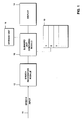
- a speech recognition system for selecting an item of a list of items 10 by a speech command, a speech input 11 is input into a speech recognition module 12.
- the system shown in Figure 1 may be incorporated into a vehicle and may be used in connection with a navigation system, the list of items 10 comprising a list of names of possible cities which could serve as a destination location.
- the user of the system i.e. the speaker, uses the shown speech recognition system in connection with an audio module, the user selecting a piece of music by a speech command inputting the name of a song or the artist or a combination thereof.
- the speech recognition module comprises a microphone (not shown) for picking up the speech command.
- the speech recognition module performs a first path of speech recognition for determining a string of subword units for the speech input, the subword unit corresponding to a phoneme or a syllable or any other unit of a language.
- the speech recognition module carries out a phoneme recognition determining a sequence of phonemes that best matches the speech input.
- the recognition is not restricted by the vocabulary of the application, be it a navigation system or be it an audio system selecting either a destination location or a piece of music.
- the recognition module applied in this first recognition step normally generates a phoneme sequence which does not perfectly match any phoneme transcription also comprised in the list 10.
- the generated string of phonemes or string of subword units is then fed to a subword unit comparison module which compares the string of subword units as recognized by the speech recognition module with the subword unit transcriptions of the items on the list 10, the subword unit transcriptions also being stored in the list together with the items.
- the comparing module as the second recognition step may match the recognized subword unit strings with the list item subword unit transcriptions and determines the best matching items in order to generate a first candidate list for the best matching items.
- This first candidate list is obtained by taking a number N of the best matching results. For the generation of the first candidate list a plurality of the best matching results are selected.
- the candidate list may comprise at least several hundreds of items, compared to the list of items 10 which may comprise tens of thousands of entries.
- a subgroup i.e. the best results can be displayed to the user so that the user can select one of the displayed items. Now it might happen that the intended item the user wanted to select is not contained in the items shown on the display 14. Instead of scrolling down the large list of the candidate list it is also possible to try to use a second speech input by repeating the intended item. In this case a second speech input is recorded and recognized in the speech recognition module.
- a storage unit is provided in which the first candidate list is stored for further use when the second speech input and the recognized list of subword units for the second speech input is used in the comparing module 13.
- the candidate lists generated during the recognition steps can also be stored in the storage unit 15.
- Figure 2 the different lists of items generated in the recognition step of the invention are explained in more detail.
- the general list of items 10 as also shown in Figure 1 is shown.
- This list of items comprises a number X of items, X being in the range between 1000 and 100,000.
- a first candidate list of best matching items is generated based on the comparison result the first candidate list being shown in Figure 2 by reference numeral 21.
- the matching is not handled very strictly, so that the first candidate list also comprises the items which do not perfectly match the recognized speech input.
- the larger the candidate list the higher the probability is that the intended item is in the candidate list.
- the first candidate list comprises a ranking from the best matching result to the worst matching result.
- Each of the listed items comprises a measure 22 (2) how well the recognized string of phonemes correspond to the transcriptions of the items comprised in the list 10.
- a high value a 22 indicates that there is a high similarity between the transcriptions of the items and the generated phonetic transcription of the speech input.
- the first candidate list is selected in such a way, that quite a large number of items is selected for the first candidate list.
- the candidate list may comprise between 1% and 10% of the large list 10.
- a method based on a hidden Markov model HMM which uses a subword unit and a recognition vocabulary or grammar that corresponds to the subword unit transcriptions of the list items.
- HMM hidden Markov model
- From the first candidate list 21 a subgroup containing the m best matching results can then be displayed to the speaker.
- five items are displayed to the user. So from the candidate list of the best thousand matches, the first five, by way of example, are displayed to the user.
- a second speech recognition step can be used in the recognition module.
- the speech recognizer may be an integrated word recognizer which uses concatenated subword models for acoustic representation of the list items.
- the subword unit transcriptions of the candidate lists items serve to define the concatenations of subword units for the speech recognition vocabulary.
- the speaker may decide to use another speech input.
- This second speech input is again input in the speech recognition module 12 for determining a string of subword units for the second speech input. It is now known that the m displayed items did not fit the user's intention. Accordingly, it is possible to discard these m items.
- the second speech input and the acoustic representation is again applied to the large list 10 comprising all items. According to the invention, however, now the results obtained in connection with the first speech input are used. In order to do so, a second candidate list 26 is generated corresponding to the first candidate list 21, however, with the m displayed items being removed.
- the second candidate list now comprises N-m items.
- the second speech input is now compared to this second candidate list and the list of best matching items is generated based on the comparison result.
- the third candidate list is shown by reference numeral 27.
- the items are indicating the ranked items of the second candidate list again ranked by comprising a measure ⁇ , the value ⁇ indicating how much the phonetic transcription of the item corresponded to the phonetic transcription of the second speech input.
- the best m results can then be displayed to the user hoping that after two speech inputs the correct item could be identified, ranging between 3 and 10, preferably between 4 and 6.
- the computational effort for the recognition of the second speech input and for the selection of the best matching items can be minimized when the second speech input is not compared to the large list 10 comprising X items, but when the second speech input is only compared to a list of items which is based on the first candidate list, the already discarded items being removed.
- the method starts in step 31 and in step 32 the first speech input is detected and eventually recorded.
- step 33 a string of subword units is recognized for said first speech input, this string of subword units comprising a phonetic transcription of the speech input.
- This phonetic transcription is then compared in step 34 with the transcription of the items in list 10 and a first candidate list is generated in steps 35 by selecting the best matching items.
- this first candidate list can still contain several hundreds of items, but it can contain approximately hundred times less items than the large list 10.
- this candidate list now it is determined which among the items of the candidate list best matches the speech input and the items having the highest similarity can be displayed as a first subgroup (step 36).
- step 37 it is then asked whether the intended item is displayed in the list.
- the speaker selects one of the displayed items as selected item he confirms the selection, the selection being shown in step 38.
- the method ends in step 39.
- a new list the second candidate list
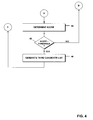
- the second candidate list can be generated on the basis of the first candidate list by removing the m discarded items (step 40).
- a second speech input is detected in step 41 and the string of subword units is recognized for the second speech input in step 42. Instead of comparing this string of subword units of the second speech input to the complete list, the former is compared to the second candidate list generated in step 40 (step 43).
- step 44 a measure is determined, the score representing the measure how well the second candidate list corresponds to the string of subword units from the second speech input (step 44). It may happen that the user, in connection with his first speech input has unintentionally uttered a wrong word. In this case, the second speech input may be completely different to the first speech input.
- step 45 If the score determined in step 44 is lower than a threshold value (step 45), the second speech input is compared with the complete list by returning to step 34 as shown in Figure 3 .
- step 45 When it is determined in step 45 that the score is larger than the predetermined threshold, the speaker has most likely uttered the same word twice.
- the second speech input is compared to the second candidate list in order to determine the best matching results so that the third candidate list 27 is generated in step 46.
- the system then returns to step 36 where a subgroup of the third candidate list can be displayed to the user.
- the steps 37 to 45 are reiterated. As shown in connection with Fig. 3 and 4 , the method can be reiterated as long as the intended item is finally comprised in the list of items presented to the user.
Landscapes
- Engineering & Computer Science (AREA)
- Computational Linguistics (AREA)
- Health & Medical Sciences (AREA)
- Audiology, Speech & Language Pathology (AREA)
- Human Computer Interaction (AREA)
- Physics & Mathematics (AREA)
- Acoustics & Sound (AREA)
- Multimedia (AREA)
- Information Retrieval, Db Structures And Fs Structures Therefor (AREA)
Abstract
- detecting a first speech input,
- recognizing the first speech input,
- comparing the recognized first speech input with the list of items and generating a first candidate list of best matching items based on the comparison result,
- informing the speaker of at least one of the best matching items of the first candidate list for a selection of an item by the speaker, and if the intended item is not one of said best matching items presented to the speaker,
- detecting a second speech input,
- recognizing the second speech input, and
- generating a second candidate list of best matching items taking into account the comparison result obtained with the first speech input.
Description
- This invention relates to a speech recognition method for selecting via a speech input an item from a list of items and to a system therefore.
- In many applications, such as navigation, name dialing or audio/video player control it is necessary to select an item or an entry from a large list of items or entries, such as proper names, addresses or music titles. In order to enable speech recognition with moderate memory and processor resources, a two-step speech recognition approach is frequently applied. In a first step, a phoneme sequence or string is recognized by a phoneme recognizer. However, the recognition accuracy of phoneme recognition is usually not acceptable and many substitutions, insertions and deletions of phonemes occur. The phoneme string is then compared with a possibly large list of phonetically transcribed items to determine a shorter candidate list of best matching items. The candidate list is then supplied to a speech recognizer as a new vocabulary for the second recognition path. In this second step the most likely entry or entries in the list for the same speech input are determined by matching phonetic acoustic representations of the entries listed in the candidate list to the acoustic input and determining the best matching entries. This approach saves computational resources, since the phoneme recognition performed in the first step is less demanding and the computational expensive second step is performed only with a small subset of the large list of entries. A two-step speech recognition approach as discussed above is known from
DE 10 207 895 A1 - In the case of a speech control navigation system, the best matching items, i.e. the names of the cities which correspond to the speech input from the speaker can then be listed to the speaker for further selection. It may happen that the first speech input was recorded at a very low quality as, by way of example a short-term noise is present in the surrounding of the speaker during the speech output. Accordingly, it may happen that in the list of the displayed names of items the name of the item initially intended by the speaker is not contained.
- The speaker then has the possibility to utter the intended name a second time hoping that this time the speech input will be correctly processed and the correct intended item is listed or directly selected.
- In this context a need exists to improve the speech recognition for selecting an item from a list of items, in which the computational effort is minimized.
- This need is met by the features of the independent claims. The dependent claims refer to preferred embodiments of the invention.
- A speech recognition method according to the invention for selecting, via a speech input, an item from a list of items comprises the step of detecting a first speech input. Then a recognition step for the detected speech input is carried out. The recognized speech input is then used for comparing the latter with the list of items, and a first candidate list of best matching items is generated based on the comparison result. After the first candidate list of best matching items is generated, at least one of said best matching items of said first candidate list is presented to the speaker so that the speaker can select an item from the list of presented items. Now it may happen that the item of the list the speaker wanted to select is not obtained in the items presented to the speaker. In this case, according to the invention, a second speech input is detected and is again recognized. Additionally, a second candidate list of best matching items is generated on the basis of the first candidate list. According to the invention the second candidate list of best matching items is built on the basis of the comparison result obtained in connection with the first speech input. When the second speech input is applied to the first candidate list or a subset thereof, the computational effort for recognizing the best matching items is minimized, as the second speech input is not applied to the large list of items. By way of example in case of a speech-controlled selection of a destination location in a navigation system, a country such as Germany may have about 70,000 city names. The first candidate list or a subset thereof which comprises the best matching results of the comparison of the recognized first speech input to the list of items, normally contains a much smaller number of entries, such as a number between 500 and 2000. When the second speech input is applied taking into account the result of the first speech input, the computational time to calculate a new list of best matching items is minimized.
- Preferably the recognition step is carried out by recognizing a string of subword units for the first speech input and by comparing the recognized string of subword units with subword unit transcriptions of the list of items. Additionally, a second candidate list may be generated by comparing the string of subword units for the second speech input to a list of transcriptions which is a sublist of the first candidate list.
- In the recognition step of recognizing the string of subword units for the speech input, a first path of speech recognition for determining a string of subword units which best matches the speed input is performed. In this step preferably any sequence of subword units without any restriction is recognized. Thus, in this step the recognition is independent of the items of the large list and their phonetic transcriptions and requires only little computational effort. According to a high probability, the speaker utters the same word a second time. When the second candidate list of best matching items for the second speech input is calculated on the basis of the first speech input, the recognition steps can be carried out much faster and more reliably, as the first candidate list obtained in connection with the first speech input probably comprises the intended item. Normally only a small number of this first candidate list is presented to the speaker for further selections, e.g. a number between 3 and 10, preferably around 5 out of 500-2000 items are presented to the speaker. If the first speech input was recorded in a noisy environment, it may happen that the intended item is not within these first 5 best matching items presented to the user, but there is a high probability that this intended item is comprised in the first candidate list. The subgroups of items can be presented to the speaker either by displaying them on a display or by reading the claims to the speaker, e.g. with the use of a text-to-speech engine.
- Preferably, the second candidate list is now generated by comparing the string of subword units for the second speech input to a list of transcriptions which is based on the first candidate list. The system does not have to go back to the complete list so that additional computational time is avoided. When the second candidate list is generated, the best matching items of the first candidate list presented to the speaker, and which were discarded by the speaker, are substracted from the first candidate list, before the string of subword units for the second speech input is applied to the second candidate list. Accordingly, the second candidate list corresponds to the first candidate list from which the items presented to the user and which did not meet the user's agreement, are omitted. This further helps to reduce the list of possible best matching items and helps to avoid to select items which sound very similar to the intended item.
- The string of subword units for the second speech input can then be compared to the second candidate list and the list of best matching items can be generated based on the comparison result, which will be called third candidate list in the following. Again the best results of this third candidate list can be displayed to the user, or may be output to the user orally by a text to speech engine so that the user can now select from this new short list of presented items.
- According to a preferred embodiment of the invention, a subword unit corresponds to a phoneme or a syllable of a language or any other units such as larger groups of phonemes, or smaller groups such as demiphonemes. In this case the subword unit recognition is a phoneme/ syllable recognition which determines a sequence of phonemes or syllables that best matches the speech input. However, the possible sequence of subword units for recognition of the first and second speech input is not restricted by the vocabulary of the application such as the phoneme transcriptions of the list of items comprising the phoneme transcriptions of cities, artists or the name of a piece of music. Thus, the phoneme recognizer applied in the first recognition step may generate a phoneme sequence which does not perfectly match any phoneme transcription of the list. The first candidate list of the best matching items may therefore be considered simply as a lead to items having a relatively high likelihood of appearance for a given acoustic speech input. These items are then offered to a second speech recognition step for further comparing with the speech input. However, the invention is not restricted to a speech recognition on a phoneme or subword unit basis. The present invention can be used in connection with any speech recognition method recognizing a speech input.
- When a subgroup of the list of best matching items is presented to the speaker and the intended item was not contained in the presented list, the reason therefore can also be that the speaker uttered a wrong name in the first speech input. Furthermore, a very strong noise could have been present during the recording of this first speech input. In this case the second speech input and the recognized string of subword units for the second speech input will differ considerably from the first speech input and the corresponding recognized string of subword units. Thus, it may happen that the intended item is not comprised in the first, second or third candidate list respectively. In order to consider this situation, the recognized second speech input can be compared to the second or third candidate list and a score is determined representing a measure how well the second speech input fits the candidate list. If the second speech input does not correspond at all to the items listed in the second or third candidate list, there is a high likelihood that the intended item is not comprised in the candidate list. In this case, when the highest obtained score is lower than a predetermined threshold, the second speech input is compared to the complete list of items. In this case, the system has to go back to the large list of items containing all entries. From this complete list of items, the items already discarded by the speaker from the first candidate list can be removed in order to avoid that these items are again kept in the candidate list of best matching items. As already mentioned in the introductory part of the description, the above-described method can be used for the selection of any item from a large list of items such as the selection for a proper name, of a destination location such as a city or village, for selecting an artist out of a group of artists or for selecting a media file out of a large group of media files.
- Preferably the string of subword units for the second speech input is compared to the second candidate list and this score determines how well the string of subword units for the second speech input fits the subword unit transcriptions of the candidate list. When the highest score is lower than the predetermined threshold, the string of subword units for the second speech input is compared to the subword unit transcriptions of the complete list of items.
- The invention furthermore relates to a speech recognition system, the system comprising a database comprising the list of items. Additionally, a speech recognition module is provided recognizing the first speech input. The speech recognition module performs the first path of speech recognition for determining a string which best matches the speech input. In this recognition module the recognition is carried out independently of the items on the list so that little computational effort is needed. The comparing module compares the recognized first speech input recognized by the speech recognition module with the list items. The comparing module may match the recognized subword unit strings with the list item subword unit transcriptions, determine the best matching items and generate the first candidate list of best matching items. An information unit is provided informing the speaker of at least one of the best matching items of the first candidate list for a further selection by the speaker. The information unit is used to present a subgroup of the first candidate list to the user, the subgroup containing normally not more than 10 items. Now when none of the presented items fits the user's preferences, the user will again utter a speech command. This second speech input is then recognized by the speech recognition module and a string of subword units for the second speech input may be generated. The comparing module generates a second candidate list of best matching items on the basis of the first candidate list. The comparing module can generate the second candidate list by removing the group of best matching items displayed to the user and discarded by the user from the first candidate list. This second candidate list is then compared to the second speech input and a third candidate list is generated.
- Preferably the data base also comprises the subword unit transcriptions of each item of the large list of items. Additionally, the speech recognition module can be a subword unit speech recognition module recognizing a first string of subword units for the first speech input and recognizing a string of subword units for the second speech input, the comparing module being a subword unit comparing module comparing the recognized string of subword units with subword unit transcriptions of the list of items.
- According to another embodiment a score determination unit can be provided determining a measure how well the string of subword units for the first and/or second speech input correspond to the subword unit transcriptions of the candidate lists. A comparison unit can also be provided comparing the determined scores to a threshold value and when the determined scores are lower than the threshold value, the subword speech comparison unit may compare the string of subword units for the second speech input to the subword unit transcriptions of the list of items from which the items discarded by the speaker were removed.
- These and other potential objects, features and advantages of this invention will appear more fully from the following description of examples of preferred embodiments of the invention.
- In the Drawings
-
Figure 1 shows schematically a speech recognition system according to an embodiment of the invention, -
Figure 2 shows schematically the list of items and the different candidate lists used during the speech recognition process, and -
Figures 3 and4 show a flow chart comprising the main steps for a resource optimized selection of an item when two speech inputs are used. - In
Figure 1 a speech recognition system according to an embodiment of the invention is shown. For selecting an item of a list ofitems 10 by a speech command, aspeech input 11 is input into aspeech recognition module 12. By way of example the system shown inFigure 1 may be incorporated into a vehicle and may be used in connection with a navigation system, the list ofitems 10 comprising a list of names of possible cities which could serve as a destination location. Additionally, it is also possible that the user of the system, i.e. the speaker, uses the shown speech recognition system in connection with an audio module, the user selecting a piece of music by a speech command inputting the name of a song or the artist or a combination thereof. The speech recognition module comprises a microphone (not shown) for picking up the speech command. The speech recognition module performs a first path of speech recognition for determining a string of subword units for the speech input, the subword unit corresponding to a phoneme or a syllable or any other unit of a language. The speech recognition module carries out a phoneme recognition determining a sequence of phonemes that best matches the speech input. In thismodule 12 the recognition is not restricted by the vocabulary of the application, be it a navigation system or be it an audio system selecting either a destination location or a piece of music. The recognition module applied in this first recognition step normally generates a phoneme sequence which does not perfectly match any phoneme transcription also comprised in thelist 10. The generated string of phonemes or string of subword units is then fed to a subword unit comparison module which compares the string of subword units as recognized by the speech recognition module with the subword unit transcriptions of the items on thelist 10, the subword unit transcriptions also being stored in the list together with the items. The comparing module as the second recognition step may match the recognized subword unit strings with the list item subword unit transcriptions and determines the best matching items in order to generate a first candidate list for the best matching items. This first candidate list is obtained by taking a number N of the best matching results. For the generation of the first candidate list a plurality of the best matching results are selected. By way of example the candidate list may comprise at least several hundreds of items, compared to the list ofitems 10 which may comprise tens of thousands of entries. From this first candidate list a subgroup, i.e. the best results can be displayed to the user so that the user can select one of the displayed items. Now it might happen that the intended item the user wanted to select is not contained in the items shown on thedisplay 14. Instead of scrolling down the large list of the candidate list it is also possible to try to use a second speech input by repeating the intended item. In this case a second speech input is recorded and recognized in the speech recognition module. As will be explained in connection withFigures 2-4 , a storage unit is provided in which the first candidate list is stored for further use when the second speech input and the recognized list of subword units for the second speech input is used in the comparingmodule 13. The candidate lists generated during the recognition steps can also be stored in thestorage unit 15. - In
Figure 2 the different lists of items generated in the recognition step of the invention are explained in more detail. InFigure 2 on the left side the general list ofitems 10 as also shown inFigure 1 is shown. This list of items comprises a number X of items, X being in the range between 1000 and 100,000. When the speech input is recognized in the speech recognition module 12 a first candidate list of best matching items is generated based on the comparison result the first candidate list being shown inFigure 2 byreference numeral 21. For generating the first candidate list the matching is not handled very strictly, so that the first candidate list also comprises the items which do not perfectly match the recognized speech input. The larger the candidate list, the higher the probability is that the intended item is in the candidate list. In this context, the first candidate list comprises a ranking from the best matching result to the worst matching result. Each of the listed items comprises a measure 22 (2) how well the recognized string of phonemes correspond to the transcriptions of the items comprised in thelist 10. A high value a 22 indicates that there is a high similarity between the transcriptions of the items and the generated phonetic transcription of the speech input. Normally, the first candidate list is selected in such a way, that quite a large number of items is selected for the first candidate list. The candidate list may comprise between 1% and 10% of thelarge list 10. For comparing the generated string of subword units of the first speech input to the subword unit transcriptions of the items methods can be used which are known in the art, such as a method based on a hidden Markov model (HMM) which uses a subword unit and a recognition vocabulary or grammar that corresponds to the subword unit transcriptions of the list items. In these comparison steps it is determined to what extend a similarity between an acoustic representation of a list item and the speech input exists. From the first candidate list 21 a subgroup containing the m best matching results can then be displayed to the speaker. In the example shown five items are displayed to the user. So from the candidate list of the best thousand matches, the first five, by way of example, are displayed to the user. - For the determination which of the items on the candidate list is actually the best matching item and for determining the order of appearance or the hierarchy of the items in the candidate list also a second speech recognition step can be used in the recognition module. By way of example the speech recognizer may be an integrated word recognizer which uses concatenated subword models for acoustic representation of the list items. The subword unit transcriptions of the candidate lists items serve to define the concatenations of subword units for the speech recognition vocabulary.
- Now it can happen that the intended item the speaker wanted to select is not in the list of the items shown in the
list 25. In this case the speaker may decide to use another speech input. This second speech input is again input in thespeech recognition module 12 for determining a string of subword units for the second speech input. It is now known that the m displayed items did not fit the user's intention. Accordingly, it is possible to discard these m items. In the prior art now the second speech input and the acoustic representation is again applied to thelarge list 10 comprising all items. According to the invention, however, now the results obtained in connection with the first speech input are used. In order to do so, asecond candidate list 26 is generated corresponding to thefirst candidate list 21, however, with the m displayed items being removed. Thus, if the first candidate list comprises N items, the second candidate list now comprises N-m items. Instead of comparing the phonetic transcription of the second speech input to the first list, the second speech input is now compared to this second candidate list and the list of best matching items is generated based on the comparison result. In the example shown in embodiment ofFigure 2 , the third candidate list is shown byreference numeral 27. In this third candidate list the items are indicating the ranked items of the second candidate list again ranked by comprising a measure β, the value β indicating how much the phonetic transcription of the item corresponded to the phonetic transcription of the second speech input. Again, the best m results can then be displayed to the user hoping that after two speech inputs the correct item could be identified, ranging between 3 and 10, preferably between 4 and 6. - As can also be seen from
figure 2 the computational effort for the recognition of the second speech input and for the selection of the best matching items can be minimized when the second speech input is not compared to thelarge list 10 comprising X items, but when the second speech input is only compared to a list of items which is based on the first candidate list, the already discarded items being removed. - In connections with
Figures 3 and4 the main steps for carrying out the speech recognition using a minimum computing resources are summarized. - The method starts in
step 31 and instep 32 the first speech input is detected and eventually recorded. In step 33 a string of subword units is recognized for said first speech input, this string of subword units comprising a phonetic transcription of the speech input. This phonetic transcription is then compared instep 34 with the transcription of the items inlist 10 and a first candidate list is generated insteps 35 by selecting the best matching items. As was discussed in connection withFigure 2 , this first candidate list can still contain several hundreds of items, but it can contain approximately hundred times less items than thelarge list 10. In this candidate list now it is determined which among the items of the candidate list best matches the speech input and the items having the highest similarity can be displayed as a first subgroup (step 36). Instep 37 it is then asked whether the intended item is displayed in the list. When the speaker selects one of the displayed items as selected item he confirms the selection, the selection being shown instep 38. In this example the method ends instep 39. However, now it may happen that the intended item was not comprised in the list presented to the speaker. In this case a new list, the second candidate list, can be generated on the basis of the first candidate list by removing the m discarded items (step 40). Furthermore, a second speech input is detected instep 41 and the string of subword units is recognized for the second speech input instep 42. Instead of comparing this string of subword units of the second speech input to the complete list, the former is compared to the second candidate list generated in step 40 (step 43). During the comparison step instep 43 also a measure is determined, the score representing the measure how well the second candidate list corresponds to the string of subword units from the second speech input (step 44). It may happen that the user, in connection with his first speech input has unintentionally uttered a wrong word. In this case, the second speech input may be completely different to the first speech input. - Accordingly, the risk exists that the intended item is not comprised in the first candidate list which forms the basis also for the second candidate list. If the score determined in
step 44 is lower than a threshold value (step 45), the second speech input is compared with the complete list by returning to step 34 as shown inFigure 3 . - When it is determined in
step 45 that the score is larger than the predetermined threshold, the speaker has most likely uttered the same word twice. In this case, the second speech input is compared to the second candidate list in order to determine the best matching results so that thethird candidate list 27 is generated instep 46. The system then returns to step 36 where a subgroup of the third candidate list can be displayed to the user. Then thesteps 37 to 45 are reiterated. As shown in connection withFig. 3 and4 , the method can be reiterated as long as the intended item is finally comprised in the list of items presented to the user. - The above description shows that, also when the first speech input was not recognized, a second speech input can be processed with low computational effort by taking into account the results of the first speech recognition.
Claims (19)
- Speech recognition method for selecting, via a speech input, an item from a list of items, the method comprising the following steps:- detecting a first speech input,- recognizing the first speech input,- comparing the recognized first speech input with the list of items and generating a first candidate list of best matching items based on the comparison result,- informing the speaker of at least one of the best matching items of the first candidate list for a selection of an item by the speaker, and if the intended item is not one of said best matching items presented to the speaker,- detecting a second speech input,- recognizing a second speech input, and- generating a second candidate list of best matching items on the basis of the first candidate list.
- Speech recognition method according to claim 1, wherein the second candidate list is generated by comparing the second speech input to a list of items which is a sublist of the first candidate list.
- Speech recognition method according to claim 1 or 2, wherein the second candidate list is generated by subtracting the at least one of the best matching items of the first candidate list presented to the speaker and discarded by the speaker, from the first candidate list.
- Speech recognition method according to claim 3, wherein the second speech input is compared to the second candidate list and a third candidate list of best matching items is generated based on the comparison result.
- Speech recognition method according to claim 4, wherein the M best results of the third candidate list are selected and presented to the speaker.
- Speech recognition method according to claim 4 or 5, further comprising the step of comparing the second speech input to the third candidate list and determining a score representing a measure how well the second speech input fits to the items of the third candidate list.
- Speech recognition method according to claim 6, wherein, when the highest score is lower than a predetermined threshold, the second speech input is compared to the list of items.
- Speech recognition method according to claim 6, wherein, when the highest score is lower than a predetermined threshold, the second speech input is compared to the list of items from which the items discarded by the speaker from the first candidate list were removed.
- Speech recognition method according to any of the preceding claims, wherein for recognizing the first and second speech input, a string of subword units for each speech input is generated, the string of subword units being compared with subword unit transcriptions of the list of items for generating the first and second candidate list, respectively.
- Speech recognition method according to claim 6 and 9, wherein the string of subword units for the second speech input is compared to the second candidate list, the score representing a measure how well the string of subword units fits the subword unit transcriptions of the candidate list.
- Speech recognition method according to any of the preceding claims, wherein from the first and third candidate list the best M results of the best matching items are displayed to the speaker for further selection, the speaker either selecting one of the displayed items or discarding all of the displayed items.
- Speech recognition method according to any of the preceding claims, wherein the speech input is used of selecting a destination location for a vehicle by a speech command or for selecting a media file out of a group of media files.
- Speech recognition system for selecting, via a speech input, an item from a list of items, comprising:- a data base comprising a list of items,- a speech recognition module for recognizing the first speech input,- a comparing module comparing the recognized first speech input to the list of items and generating a first candidate list of best matching items based on the comparison result,
an information unit informing the speaker of at least one of the best matching items of the first candidate list for a selection of an item by the speaker, and if the intended item is not one of said best matching items presented to the speaker,
the recognition module recognizes a second speech input, the comparing module generating a second candidate list of best matching items on the basis of the first candidate list. - Speech recognition system according to claim 13, wherein the information unit comprises a display on which a subgroup of the best matching items of the candidate list is displayed.
- Speech recognition system according to claim 13 or 14, wherein the comparing module generates the second candidate list by subtracting the group of best matching items displayed to and discarded by the speaker, from the first candidate list.
- Speech recognition system according to claim 15, wherein the comparing module generates a third candidate list by comparing the second speech input to the second candidate list.
- Speech recognition system according to any of claims 13 to 16, characterized by further comprising a score determination unit determining a measure how well the second speech input corresponds to the second candidate list.
- Speech recognition system according to claim 17, characterized by further comprising a comparison unit comparing the determined scores to a threshold value, and when the determined scores a lower than the threshold value, the comparison unit comparing the second speech input to the list of items.
- According to any of the preceding claims wherein the database comprises subword unit transcriptions for each item.
Priority Applications (2)
| Application Number | Priority Date | Filing Date | Title |
|---|---|---|---|
| EP06025726A EP1933302A1 (en) | 2006-12-12 | 2006-12-12 | Speech recognition method |
| US11/955,233 US8566091B2 (en) | 2006-12-12 | 2007-12-12 | Speech recognition system |
Applications Claiming Priority (1)
| Application Number | Priority Date | Filing Date | Title |
|---|---|---|---|
| EP06025726A EP1933302A1 (en) | 2006-12-12 | 2006-12-12 | Speech recognition method |
Publications (1)
| Publication Number | Publication Date |
|---|---|
| EP1933302A1 true EP1933302A1 (en) | 2008-06-18 |
Family
ID=37964837
Family Applications (1)
| Application Number | Title | Priority Date | Filing Date |
|---|---|---|---|
| EP06025726A Ceased EP1933302A1 (en) | 2006-12-12 | 2006-12-12 | Speech recognition method |
Country Status (2)
| Country | Link |
|---|---|
| US (1) | US8566091B2 (en) |
| EP (1) | EP1933302A1 (en) |
Families Citing this family (9)
| Publication number | Priority date | Publication date | Assignee | Title |
|---|---|---|---|---|
| EP1693829B1 (en) * | 2005-02-21 | 2018-12-05 | Harman Becker Automotive Systems GmbH | Voice-controlled data system |
| US20150279354A1 (en) * | 2010-05-19 | 2015-10-01 | Google Inc. | Personalization and Latency Reduction for Voice-Activated Commands |
| US8489398B1 (en) | 2011-01-14 | 2013-07-16 | Google Inc. | Disambiguation of spoken proper names |
| US9286894B1 (en) | 2012-01-31 | 2016-03-15 | Google Inc. | Parallel recognition |
| US20140129221A1 (en) * | 2012-03-23 | 2014-05-08 | Dwango Co., Ltd. | Sound recognition device, non-transitory computer readable storage medium stored threreof sound recognition program, and sound recognition method |
| US9953646B2 (en) | 2014-09-02 | 2018-04-24 | Belleau Technologies | Method and system for dynamic speech recognition and tracking of prewritten script |
| EP3089159B1 (en) * | 2015-04-28 | 2019-08-28 | Google LLC | Correcting voice recognition using selective re-speak |
| US9653075B1 (en) * | 2015-11-06 | 2017-05-16 | Google Inc. | Voice commands across devices |
| CN110717063B (en) * | 2019-10-18 | 2022-02-11 | 上海华讯网络系统有限公司 | Method and system for verifying and selectively archiving IP telephone recording file |
Citations (4)
| Publication number | Priority date | Publication date | Assignee | Title |
|---|---|---|---|---|
| EP0840289A2 (en) | 1996-10-31 | 1998-05-06 | Microsoft Corporation | Method and system for selecting alternative words during speech recognition |
| US6141661A (en) * | 1997-10-17 | 2000-10-31 | At&T Corp | Method and apparatus for performing a grammar-pruning operation |
| US20020052742A1 (en) * | 2000-07-20 | 2002-05-02 | Chris Thrasher | Method and apparatus for generating and displaying N-best alternatives in a speech recognition system |
| DE10207895A1 (en) * | 2002-02-23 | 2003-09-18 | Harman Becker Automotive Sys | Voice recognition involves dividing voice input into sub-units in first recognition process, forming sequence(s) of sub-units, carrying out second recognition process based on sequence(s) |
Family Cites Families (29)
| Publication number | Priority date | Publication date | Assignee | Title |
|---|---|---|---|---|
| JP3691511B2 (en) * | 1993-03-25 | 2005-09-07 | ブリテイッシュ・テレコミュニケーションズ・パブリック・リミテッド・カンパニー | Speech recognition with pause detection |
| US6442523B1 (en) * | 1994-07-22 | 2002-08-27 | Steven H. Siegel | Method for the auditory navigation of text |
| US5799267A (en) * | 1994-07-22 | 1998-08-25 | Siegel; Steven H. | Phonic engine |
| US6009397A (en) * | 1994-07-22 | 1999-12-28 | Siegel; Steven H. | Phonic engine |
| US5822728A (en) * | 1995-09-08 | 1998-10-13 | Matsushita Electric Industrial Co., Ltd. | Multistage word recognizer based on reliably detected phoneme similarity regions |
| US5930336A (en) * | 1996-09-30 | 1999-07-27 | Matsushita Electric Industrial Co., Ltd. | Voice dialing server for branch exchange telephone systems |
| DE19709518C5 (en) * | 1997-03-10 | 2006-05-04 | Harman Becker Automotive Systems Gmbh | Method and device for voice input of a destination address in a real-time route guidance system |
| US6094476A (en) * | 1997-03-24 | 2000-07-25 | Octel Communications Corporation | Speech-responsive voice messaging system and method |
| US6208965B1 (en) * | 1997-11-20 | 2001-03-27 | At&T Corp. | Method and apparatus for performing a name acquisition based on speech recognition |
| JP2991178B2 (en) * | 1997-12-26 | 1999-12-20 | 日本電気株式会社 | Voice word processor |
| US6269153B1 (en) * | 1998-07-29 | 2001-07-31 | Lucent Technologies Inc. | Methods and apparatus for automatic call routing including disambiguating routing decisions |
| US6434524B1 (en) * | 1998-09-09 | 2002-08-13 | One Voice Technologies, Inc. | Object interactive user interface using speech recognition and natural language processing |
| US6185535B1 (en) * | 1998-10-16 | 2001-02-06 | Telefonaktiebolaget Lm Ericsson (Publ) | Voice control of a user interface to service applications |
| US6922669B2 (en) * | 1998-12-29 | 2005-07-26 | Koninklijke Philips Electronics N.V. | Knowledge-based strategies applied to N-best lists in automatic speech recognition systems |
| US7058573B1 (en) * | 1999-04-20 | 2006-06-06 | Nuance Communications Inc. | Speech recognition system to selectively utilize different speech recognition techniques over multiple speech recognition passes |
| US20060143007A1 (en) * | 2000-07-24 | 2006-06-29 | Koh V E | User interaction with voice information services |
| US6996531B2 (en) * | 2001-03-30 | 2006-02-07 | Comverse Ltd. | Automated database assistance using a telephone for a speech based or text based multimedia communication mode |
| US6941268B2 (en) * | 2001-06-21 | 2005-09-06 | Tellme Networks, Inc. | Handling of speech recognition in a declarative markup language |
| US7386454B2 (en) * | 2002-07-31 | 2008-06-10 | International Business Machines Corporation | Natural error handling in speech recognition |
| US6714631B1 (en) * | 2002-10-31 | 2004-03-30 | Sbc Properties, L.P. | Method and system for an automated departure strategy |
| US6983244B2 (en) * | 2003-08-29 | 2006-01-03 | Matsushita Electric Industrial Co., Ltd. | Method and apparatus for improved speech recognition with supplementary information |
| US7778830B2 (en) * | 2004-05-19 | 2010-08-17 | International Business Machines Corporation | Training speaker-dependent, phrase-based speech grammars using an unsupervised automated technique |
| US7299181B2 (en) * | 2004-06-30 | 2007-11-20 | Microsoft Corporation | Homonym processing in the context of voice-activated command systems |
| US7729901B2 (en) * | 2005-12-13 | 2010-06-01 | Yahoo! Inc. | System for classifying words |
| CN101443759B (en) * | 2006-05-12 | 2010-08-11 | 北京乐图在线科技有限公司 | Method and system for multi-language information retrieval |
| US8190431B2 (en) * | 2006-09-25 | 2012-05-29 | Verizon Patent And Licensing Inc. | Method and system for providing speech recognition |
| US7788095B2 (en) * | 2007-11-18 | 2010-08-31 | Nice Systems, Ltd. | Method and apparatus for fast search in call-center monitoring |
| US8239203B2 (en) * | 2008-04-15 | 2012-08-07 | Nuance Communications, Inc. | Adaptive confidence thresholds for speech recognition |
| US8239129B2 (en) * | 2009-07-27 | 2012-08-07 | Robert Bosch Gmbh | Method and system for improving speech recognition accuracy by use of geographic information |
-
2006
- 2006-12-12 EP EP06025726A patent/EP1933302A1/en not_active Ceased
-
2007
- 2007-12-12 US US11/955,233 patent/US8566091B2/en not_active Expired - Fee Related
Patent Citations (4)
| Publication number | Priority date | Publication date | Assignee | Title |
|---|---|---|---|---|
| EP0840289A2 (en) | 1996-10-31 | 1998-05-06 | Microsoft Corporation | Method and system for selecting alternative words during speech recognition |
| US6141661A (en) * | 1997-10-17 | 2000-10-31 | At&T Corp | Method and apparatus for performing a grammar-pruning operation |
| US20020052742A1 (en) * | 2000-07-20 | 2002-05-02 | Chris Thrasher | Method and apparatus for generating and displaying N-best alternatives in a speech recognition system |
| DE10207895A1 (en) * | 2002-02-23 | 2003-09-18 | Harman Becker Automotive Sys | Voice recognition involves dividing voice input into sub-units in first recognition process, forming sequence(s) of sub-units, carrying out second recognition process based on sequence(s) |
Also Published As
| Publication number | Publication date |
|---|---|
| US20090012792A1 (en) | 2009-01-08 |
| US8566091B2 (en) | 2013-10-22 |
Similar Documents
| Publication | Publication Date | Title |
|---|---|---|
| US12230268B2 (en) | Contextual voice user interface | |
| US20230012984A1 (en) | Generation of automated message responses | |
| US11062694B2 (en) | Text-to-speech processing with emphasized output audio | |
| EP1936606B1 (en) | Multi-stage speech recognition | |
| US9640175B2 (en) | Pronunciation learning from user correction | |
| US7162423B2 (en) | Method and apparatus for generating and displaying N-Best alternatives in a speech recognition system | |
| US8380505B2 (en) | System for recognizing speech for searching a database | |
| EP2259252B1 (en) | Speech recognition method for selecting a combination of list elements via a speech input | |
| US10140973B1 (en) | Text-to-speech processing using previously speech processed data | |
| US6243680B1 (en) | Method and apparatus for obtaining a transcription of phrases through text and spoken utterances | |
| KR100679042B1 (en) | Speech recognition method and apparatus, navigation system using same | |
| EP1693828B1 (en) | Multilingual speech recognition | |
| US10176809B1 (en) | Customized compression and decompression of audio data | |
| US6910012B2 (en) | Method and system for speech recognition using phonetically similar word alternatives | |
| US7957969B2 (en) | Systems and methods for building a native language phoneme lexicon having native pronunciations of non-native words derived from non-native pronunciatons | |
| JP4791984B2 (en) | Apparatus, method and program for processing input voice | |
| US8566091B2 (en) | Speech recognition system | |
| EP1429313A2 (en) | Language model for use in speech recognition | |
| US20070073540A1 (en) | Apparatus, method, and computer program product for speech recognition allowing for recognition of character string in speech input | |
| EP2048655A1 (en) | Context sensitive multi-stage speech recognition | |
| US20090138266A1 (en) | Apparatus, method, and computer program product for recognizing speech | |
| JP4129989B2 (en) | A system to support text-to-speech synthesis | |
| JP3911178B2 (en) | Speech recognition dictionary creation device and speech recognition dictionary creation method, speech recognition device, portable terminal, speech recognition system, speech recognition dictionary creation program, and program recording medium | |
| JP4528540B2 (en) | Voice recognition method and apparatus, voice recognition program, and storage medium storing voice recognition program | |
| JP2011007862A (en) | Voice recognition device, voice recognition program and voice recognition method |
Legal Events
| Date | Code | Title | Description |
|---|---|---|---|
| PUAI | Public reference made under article 153(3) epc to a published international application that has entered the european phase |
Free format text: ORIGINAL CODE: 0009012 |
|
| AK | Designated contracting states |
Kind code of ref document: A1 Designated state(s): AT BE BG CH CY CZ DE DK EE ES FI FR GB GR HU IE IS IT LI LT LU LV MC NL PL PT RO SE SI SK TR |
|
| AX | Request for extension of the european patent |
Extension state: AL BA HR MK RS |
|
| 17P | Request for examination filed |
Effective date: 20081218 |
|
| AKX | Designation fees paid |
Designated state(s): AT BE BG CH CY CZ DE DK EE ES FI FR GB GR HU IE IS IT LI LT LU LV MC NL PL PT RO SE SI SK TR |
|
| 17Q | First examination report despatched |
Effective date: 20100407 |
|
| RAP1 | Party data changed (applicant data changed or rights of an application transferred) |
Owner name: NUANCE COMMUNICATIONS, INC. |
|
| STAA | Information on the status of an ep patent application or granted ep patent |
Free format text: STATUS: THE APPLICATION HAS BEEN REFUSED |
|
| 18R | Application refused |
Effective date: 20110114 |