EP1932581B1 - High-throughput asymmetric membrane and method of increasing the surface porosity of a tight side of an asymmetric membrane - Google Patents
High-throughput asymmetric membrane and method of increasing the surface porosity of a tight side of an asymmetric membrane Download PDFInfo
- Publication number
- EP1932581B1 EP1932581B1 EP07150010A EP07150010A EP1932581B1 EP 1932581 B1 EP1932581 B1 EP 1932581B1 EP 07150010 A EP07150010 A EP 07150010A EP 07150010 A EP07150010 A EP 07150010A EP 1932581 B1 EP1932581 B1 EP 1932581B1
- Authority
- EP
- European Patent Office
- Prior art keywords
- membrane
- asymmetrical
- tight
- membranes
- tight side
- Prior art date
- Legal status (The legal status is an assumption and is not a legal conclusion. Google has not performed a legal analysis and makes no representation as to the accuracy of the status listed.)
- Active
Links
Images




Classifications
-
- B—PERFORMING OPERATIONS; TRANSPORTING
- B01—PHYSICAL OR CHEMICAL PROCESSES OR APPARATUS IN GENERAL
- B01D—SEPARATION
- B01D69/00—Semi-permeable membranes for separation processes or apparatus characterised by their form, structure or properties; Manufacturing processes specially adapted therefor
- B01D69/02—Semi-permeable membranes for separation processes or apparatus characterised by their form, structure or properties; Manufacturing processes specially adapted therefor characterised by their properties
-
- B—PERFORMING OPERATIONS; TRANSPORTING
- B01—PHYSICAL OR CHEMICAL PROCESSES OR APPARATUS IN GENERAL
- B01D—SEPARATION
- B01D67/00—Processes specially adapted for manufacturing semi-permeable membranes for separation processes or apparatus
- B01D67/0002—Organic membrane manufacture
- B01D67/0009—Organic membrane manufacture by phase separation, sol-gel transition, evaporation or solvent quenching
- B01D67/0011—Casting solutions therefor
-
- B—PERFORMING OPERATIONS; TRANSPORTING
- B01—PHYSICAL OR CHEMICAL PROCESSES OR APPARATUS IN GENERAL
- B01D—SEPARATION
- B01D67/00—Processes specially adapted for manufacturing semi-permeable membranes for separation processes or apparatus
- B01D67/0002—Organic membrane manufacture
- B01D67/0023—Organic membrane manufacture by inducing porosity into non porous precursor membranes
-
- B—PERFORMING OPERATIONS; TRANSPORTING
- B01—PHYSICAL OR CHEMICAL PROCESSES OR APPARATUS IN GENERAL
- B01D—SEPARATION
- B01D2323/00—Details relating to membrane preparation
- B01D2323/12—Specific ratios of components used
-
- B—PERFORMING OPERATIONS; TRANSPORTING
- B01—PHYSICAL OR CHEMICAL PROCESSES OR APPARATUS IN GENERAL
- B01D—SEPARATION
- B01D2323/00—Details relating to membrane preparation
- B01D2323/15—Use of additives
- B01D2323/18—Pore-control agents or pore formers
-
- B—PERFORMING OPERATIONS; TRANSPORTING
- B01—PHYSICAL OR CHEMICAL PROCESSES OR APPARATUS IN GENERAL
- B01D—SEPARATION
- B01D2323/00—Details relating to membrane preparation
- B01D2323/34—Use of radiation
-
- B—PERFORMING OPERATIONS; TRANSPORTING
- B01—PHYSICAL OR CHEMICAL PROCESSES OR APPARATUS IN GENERAL
- B01D—SEPARATION
- B01D2325/00—Details relating to properties of membranes
- B01D2325/02—Details relating to pores or porosity of the membranes
- B01D2325/0283—Pore size
-
- B—PERFORMING OPERATIONS; TRANSPORTING
- B01—PHYSICAL OR CHEMICAL PROCESSES OR APPARATUS IN GENERAL
- B01D—SEPARATION
- B01D2325/00—Details relating to properties of membranes
- B01D2325/20—Specific permeability or cut-off range
Definitions
- Asymmetric membranes in use for many years -- are characterized by having the pore size of the membrane vary as a function of location within the thickness of the membrane.
- the most common asymmetric membrane has a gradient structure, in which pore size gradually and continually increases from one surface (often referred to as the "tight" side) to the other (often referred to as the "open” side).
- These membranes are valued as they have a higher flux than comparable symmetric membranes. When used in the configuration with their larger pore side upstream, these membranes have greater throughput in many cases as compared to the comparable symmetric membranes. See, U.S. Pat. No. 4,261,834, issued to D.M. de Winter on April 14, 1981 .
Landscapes
- Chemical & Material Sciences (AREA)
- Chemical Kinetics & Catalysis (AREA)
- Engineering & Computer Science (AREA)
- Manufacturing & Machinery (AREA)
- Dispersion Chemistry (AREA)
- Separation Using Semi-Permeable Membranes (AREA)
Abstract
Description
- In general, the present invention relates to methods of making asymmetric membranes and, more particularly, asymmetric membranes having a substantially reticulated surface microstructure by increasing the surface porosity of a tight side of an asymmetric membrane.
- Asymmetric membranes -- in use for many years -- are characterized by having the pore size of the membrane vary as a function of location within the thickness of the membrane. The most common asymmetric membrane has a gradient structure, in which pore size gradually and continually increases from one surface (often referred to as the "tight" side) to the other (often referred to as the "open" side). These membranes are valued as they have a higher flux than comparable symmetric membranes. When used in the configuration with their larger pore side upstream, these membranes have greater throughput in many cases as compared to the comparable symmetric membranes. See,
U.S. Pat. No. 4,261,834, issued to D.M. de Winter on April 14, 1981 . The asymmetrical membranes are used in a variety of applications such as food and beverage filtration, pharmaceutical and biopharmaceutical manufacture, laboratory filtration, water filtration and the like. Asymmetrical membranes based on aromatic sulphones such as polyethersulphones are known and are capable of use at elevated temperatures and highly acidic and basic conditions. - Asymmetric membranes all have a thick, dense surface region, or in many cases a skin formed on one surface and extending somewhat into its depth, e.g. a tight surface. See,
U.S. Pat. No. 4,629,563, issued to W. Wrasidlo on December 16, 1986 . The dense surface and/or skin can be seen through the use of photomicrographs. The dense surface is shown as a continuous dense film surface punctuated by a myriad of pores. The skin can be seen in cross-sectional photomicrographs as a dense layer extending into the thickness of the membrane. See,U.S. Pat. No. 4,629,563 . - More recently, a multiple layered asymmetric membrane has been produced. See
PCT International Publication No. WO 01/89673 - While most asymmetric membranes work satisfactorily on water or aqueous based solutions, they tend to prematurely clog and have poor throughput with viscous or heavily loaded streams, even when used in the preferred open side upstream configuration. Such streams are relatively common and can include various food streams such as syrups and sugary products, serum streams as used in the biopharmaceutical or laboratory settings or blood, plasma and other blood products.
- In light of the above, there is a need for a membrane having high throughput and flux, suitable for quickly filtering high volumes of fluid, e.g. viscous fluids.
- The present invention provides a method of producing an asymmetric microporous membrane as defined in
claim 1 including increasing the surface porosity of a tight side of the asymmetric membrane. Preferred embodiments of the method are defined in the dependent claims. - In certain embodiments the present invention is directed to producing a microporous asymmetrical membrane formed of one or more layers, wherein the "tight" side of the membrane has an "opened" or otherwise highly porous reticulated surface, said surface being configured to promote high throughput compared to previously described asymmetric membranes. The microporous asymmetrical membrane has high throughput and high flux, even when used for viscous fluids such as serum or plasma. In other embodiments the invention relates to a method of making an asymmetric membrane comprising a modified tight surface. The modified tight surface may be modified so as to provide a more open porous structure on the tight surface compared to a similar membrane without a modified tight surface. The tight surface may be modified by altering or adjusting conditions during the casting process or treated with an appropriate agent after the casting process.
- The invention provides a method of increasing the surface porosity of a tight side of an asymmetric membrane comprising one or more of the following steps: a) adjusting the dew point near the surface of a freshly cast asymmetric membrane; b) adjusting the concentration of lacquer solids prior to casting the membrane.
- While the present invention is not intended to be limited to any theory used in explanation thereof, it is believed that the highly porous reticulated surface may provide comparatively more openings for flow, and may provide greater interconnectivity among different pores in the structure, hence reducing the propensity of the pores to plug completely.
-
-
Figure 1A shows a photomicrograph of a "skinless" asymmetrical membrane in cross-section according to the prior art. -
Figure 1B shows the tight surface of the membrane ofFigure 1A according to the prior art. -
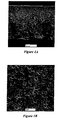
Figure 2A shows a photomicrograph of a cross-section of a two-layered asymmetrical membrane similar to one produced according to the present invention. -
Figure 2B shows the tight surface of the membrane ofFigure 2A , modified according to the invention. -
Figure 3 is a graph of the flow times of the membranes in Example 1. -
Figure 4 is a graph of the flux of the membranes in Example 1. -
Figure 5 is a graph of the flow times of the membranes in Example 2. -
Figure 6 is a graph of the flux of the membranes in Example 2. -
Figure 7 shows a photomicrograph of the tight surface of a low porosity surfaced membrane according to the prior art. -
Figure 8 shows a photomicrograph of the tight surface of a low porosity surfaced membrane according to the prior art after being surface modified by the techniques of the present invention. -
Figure 9 is a graph of the nearest neighbor pore data. -
Figure 10 shows a photomicrograph of the tight surface of a membrane according to the prior art. -
Figure 11 shows a photomicrograph of the tight surface of a membrane similar to one produced according to the present invention. -
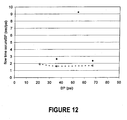
Figure 12 is a graph plotting data described in Example 7. -
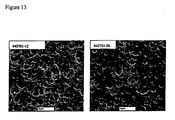
Figure 13 shows SEM of two tight surfaces of a membrane. The membrane pictured on the left (12) was made with a 11 % Top Lacquer and the membrane on the right (06) was made with a 13.5% Top Lacquer. -
Figure 14 are SEM comparing tight surfaces of membranes cast under varying dew point conditions. -
Figure 15 is a graph comparing bubble point versus flow time for membranes having surfaces modified under varying conditions of humidity and temperature. -
Figure 16 is a graph of IPA bubble point versus water flow time. -
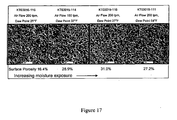
Figure 17 are photomicrographs showing the effect of humidity on tight side pore structure of asymmetric membranes. - Certain microporous asymmetrical membranes have a "skin" formed on their tight side. See e.g.
U.S. Pat. No.4,629,563 . Those that don't have the "skin" often have a "skin type surface" having a reduced porosity tight surface.Figures 1A and 1B -- illustrative of such prior art -- show a cross section and a tight surface photomicrograph, respectively, of a skin-surfaced asymmetrical membrane. InFigure 1B , the tight surface of the membrane has a relatively low percentage of porosity compared to membranes of the invention. - The present invention, in contrast, provides an asymmetrical microporous membrane well-suited for high throughput filtration, the membrane being distinguished by its modified open reticulated porous surface, formed or otherwise provided on the membrane rather than or instead of a skin or skin-type surface. In combination with other structural features, the modified open reticulated porous surface provides for, a bubble point normalized serum flow time of less than about 2.
- Tight surfaces of asymmetric porous membranes may be modified to obtain the inventive open porous structure on the tight surface using any of the methods disclosed herein. These include controlling the humidity level of the casting environment while casting, adjusting the level of solids in the lacquer and employing a variety of post-casting physical modifications described below.
- An example of a membrane similar to one produced according to the present invention is shown in
Figures 2A and 2B . Two views of a membrane which has a tight surface modified according to the instant invention are shown. In this invention, the starting membrane structure may be formed of two layers, each cast from a different solution of membrane precursor, according to a base methodology that is disclosed in relatedPCT International Publication No. WO 01/89673 Figure 2A , the structure shows the twolayers side 6 to the other 8. Thetop layer 2 is relatively thinner than the bottom layer. As shown inFigure 2B , the surface of the tight side of the membrane has an open, highly reticulated porous surface suitable for efficiently filtering viscous liquids such as animal or human serum. According to methods of the invention the tight side of a porous membrane may be modified during casting by adjusting the lacquer concentration e.g. to the top layer of a multi-layer membrane, adjusting the relative humidity of the casting conditions, or a combination of both. - Another example according to prior art is made from a preformed single- or multiple-layered asymmetrical membrane in which the porosity of the tight side is too low for acceptable throughput or flux for its predetermined intended use. In this example, the tight surface of the membrane is modified to create a surface with higher porosity (i.e., the surface is "opened"), yielding an open, reticulated surface.
- Post-formation modification is applicable to both single-layered asymmetric membranes and two-layered membranes made as per
WO 01/89673 - Post-formation surface modification can be accomplished in a variety of ways: e.g., mechanically, chemically, or by exposure to irradiation.
- Mechanically, certain membrane surfaces can be abraded with fine sandpaper or emery material (600 grit+); or sandblasted with sand, silica, ground corn husk, or nut shells under conditions sufficient to yield an open, reticulated surface.
- Chemically, certain membrane surfaces can be exposed to a solvent to partially remove surface polymer material. Chemical modification has several advantages, among which is that the depth to which the solvent influences removal can be controlled. For example, the pores of the membrane can be filled with a non-solvent immiscible with the surface-modifying solvent, thus limiting interaction of the solvent to exposed non-solvent or other diluents will affect the concentration, and hence, reactivity of the solvent. Desirable methods will employ combination of both filling the pores with non-miscible non-solvent and controlling solvent concentration.
- Certain membrane surfaces can also be exposed to electromagnetic radiation of intensity, a wavelength, and for duration sufficient and/or appropriate to remove, or render removable, exposed portions of the surface polymer material. Methods of irradiation include, but are not limited to, corona discharge, plasma ablation, and laser ablation. Details of such methods are available in the patent and technical literature.
- Generally when forming a multi-layered structure, the skilled artisan will appreciate that a suitable method for making multi-layered membranes is disclosed in related
PCT International Publication No. WO 01/89673 PCT International Publication No. WO 01/89673 - In forming multi-layered membranes, one can form the different solutions for the different layers by varying the concentration of polymer, solvent or non-solvent, as well as the viscosity, additives or treatments of the solutions or combinations of any of these to create the desired multi-layered structure.
- The invention also relates to single layer asymmetric membranes comprising a modified open porous tight surface. The modified membrane may be suitable for the efficient filtering of fluids of any type including highly viscous fluids such as serum. Methods of making a single-layered structure without a modified surface are known:
U.S. Pats. Nos. 4,629,563 ,5,444,097 ,5,869,174 , and5,886,059 . In these processes, one forms a solution, either stable or metastable, and then casts the solution onto a support, optionally exposes the material to the atmosphere for a set period of time, then places the membrane into a coagulation bath. Optionally, one removes the solvent and the support, if temporary, and then dries the resultant membrane. Any of these general methods for casting single layered asymmetric membranes may be adapted to include the methods disclosed herein relating to the modification of a membrane tight surface of a pre-formed membrane. - Suitable polymers for making either multi-layered or single layered membranes include, but are not limited to, PVDF, nylons such as Nylon 66, polyamides, polyimides, polyethersulphones, polysulphones, polyarylsulphones, PVC, PET, polycarbonates, cellulose, regenerated cellulose, cellulose esters such as cellulose acetate or cellulose nitrate, polystyrenes, polyetherimides, acrylic polymers, methacrylic polymers, copolymers of acrylic or methacrylic polymers, or blends of any of the above and the like.
- The polymer solutions of the present invention typically comprise at least one polymer and at least one solvent for the polymer or polymers. The solution may contain one or more components that are poor solvents or non-solvents for the polymer or polymers. Such components are sometimes called "porogens" in the art. The solutions may be homogeneous. The polymer solution can be either stable in time (good solvent quality) or meta-stable in time. The solution also can potentially have a lower critical solution temperature or an upper critical solution temperature. Example components of such solutions are well known in the art. Useful solvents include dimethyl formamide, N,N-dimethylacetamide, N-methyl pyrrolidone, tetramethylurea, acetone, dimethylsulfoxide. Useful porogens include formamide, various alcohols and polyhydric compounds, water, various polyethylene glycols, and various salts, such as calcium chloride and lithium chloride.
- Generally, one can form the layers of a multi-layered structure from the same polymer and solvent, varying the concentration of components, viscosity, additives and treatment (before, during or after formation) or one can use different polymers for the different layers. When using different polymers one must select polymers that are compatible. Additionally, the solvents and phase separation materials should be the same if possible or at least compatible so that they do not adversely affect the other layer(s).
- In certain embodiments, a tight surface of a multi-layered asymmetric membrane may be modified during casting to provide a membrane comprising an open porous surface on the otherwise tight side. In one embodiment the lacquer concentration, e.g. the concentration of solids, for example on the top layer, is adjusted during casting such that the tight surface is opened into a more porous structure. Thus in some embodiments the lacquer concentration may be decreased compared to a similar membrane having a tight porous surface without modification. The lacquer concentration may be decreased by about 1%, about 5%, about 10%, about 15%, about 20%, about 30%, about 40%, about 50% or more compared to the lacquer concentration of a similar membrane having an unmodified tight surface (the original polymer concentration for the lower layer was 16-18% or had solids ranging from 8-25%).
- In some embodiments the invention provides a method of modifying a membrane tight surface by altering the concentration of lacquer used during casting. The concentration of lacquer used in casting a membrane comprising a modified tight surface having a more open porous structure compared to a similar unmodified membrane, may range from about 8-15% lacquer. The skilled artisan will appreciate that the concentration of lacquer, (e.g. the concentration of solids in the lacquer) in the top layer may be affected by the concentration of lacquer in the bottom layer for multi-layered membranes. The skilled artisan will similarly appreciate that if the solids in the top lacquer are too low a non-continuous top layer may form resulting in powder formation which may be undesirable.
- In other embodiments the tight surface of an asymmetric membrane may be modified by changing the humidity in area surrounding or proximate to a freshly cast membrane. This may be achieved by adjusting the dew point temperature. In some embodiments a suitable dew point for modifying a tight surface of an asymmetric membrane ranges from about 35°F to about 85°F. In a specific embodiment the dew point may be about 37°F. In other embodiments a suitable dew point may exceed 80°F. In still other embodiments a suitable dew point may be less than 40 °F.
- The skilled artisan will appreciate that the inlet dew point temperature range may depend on the design of the enclosure. The enclosure is essentially a box around the casting drum which allows for a "controlled environment" of the film from the time it is initially cast onto the carrier belt until it enters the bath. The air is pulled through an inlet at the top of the casting device such as a drum and exhausted at a lower position close to the point at which the membrane enters the bath The enclosure allows one to control the inlet air velocity, air temperature, air dew point and/or the exhaust velocity. Such devices are well-known to one of ordinary skill in the art.
- If the enclosure is designed so that humid air can be drawn across the surface of the immersion bath and then across the surface of the membrane (by controlling both the inlet air velocity and the exhaust velocity through the use of fans, inlet and exhaust dampers and the like), the inlet dew point can be about 20 °F, but the localized dew point at the drum/ bath interface may be about 85 °F.
- If the enclosure is not designed to pull the humid air from the bath (for example only the inlet air velocity is controlled and the exhaust is simply passive), then dew points higher than 20 °F may be suitable.
- The microporous structures of the present invention may have an average pore size of from about 0.01 microns to about 10 microns, preferably from about 0.01 to about 2 microns. In various embodiments of the invention the average pore size diameter of a modified tight surface according to the invention may be larger compared to the average pore size on the tight surface of a similar membrane not modified according to the invention. The pores of a modified tight surface according to the invention may comprise more interconnections with neighboring pores compared to a similar membrane tight surface not modified according to the invention.
- Asymmetrical membranes may have a pore size gradient of from about 2:1 to about 1000:1, preferably from about 2:1 to about 100:1. This asymmetry is measured by comparing the average pore size on one major surface of the layer with the average pore size of the other major surface of that layer. In accord with the invention, one can create two or more asymmetrical layers, each having a different or similar asymmetry.
- Additionally, one can vary the thickness of the membrane and, if two or more layers are used, the thickness of each layer may vary within a wide range and still obtain a self-supporting, integral multi-layered structure. Typically, it is desirable for the thickness of the membrane structure to be between 50 and 200 microns as this provides good filtration characteristics and self support. With the present invention one can still achieve the same overall thickness but can control the relative thickness of one layer to the other to create unique and desirable membrane structures. Typically, one can make one layer as thin as 5 microns and it will result in an integral multilayered structure so long as the remaining structure is a suitable thickness. Thus, for example, in a 150 micron thick membrane, one can have a first layer that is from about 10 to about 140 microns thick while the other is correspondingly from about 140 microns to about 10 microns in thickness.
- A variety of parameters may be measured to show the tight surface of a porous membrane has been structurally altered. Examples of these parameters include flow time of a viscous fluid such as serum or the like, fractionated area percent, average distance between pores, and gloss measurement of the surface. Thus in certain embodiments the invention provides a membrane with a modified tight surface wherein the tight surface has gloss value measurement of about: 1) 9.5 or less, at a light angle of 60°; 2) 64 or less at a light angle of 85°; 3) 1.6 or less at a light angle of 20°. In other embodiments the invention provides an asymmetric membrane wherein the average distance between pores on the tight side is about 0.4 microns. The invention provides an asymmetric membrane comprising a tight surface with porosity, as measured by fractionated area percent, of about 16.
- A test solution comprising 1 liter of Fetal Bovine Serum (FBS) (JRH Bioscience, Inc. Lenexa, Kansas), 1 bottle of Dubelco Modified Eagle medium (133.7 g) (Invitrogen/Gibco Carlsbad, California), 37 grams of sodium bicarbonate, 100 ml Hepes buffer solution (Sigma-Aldrich US St-Louis. Missouri), and 10 liters deionized water was prepared. The solution was stirred before use.
- A 47 mm disk was placed in a vacuum filter holder. The flow time in seconds was measured for 500 ml of water and for various volumes of the test solution using 54182.21 Pa (16 inches Hg) on three different asymmetrical membranes: i.e., an asymmetrical polysulfone membrane from US Filter Corporation (now Pall Corporation of East Hills, New York); a 0.2 micron Millipore Express® membrane available from Millipore Corporation of Bedford, Massachusetts; and 4 membranes of the present invention having modified tight surfaces as set forth in the table below.
Membrane % Solids Bottom % Solids Top Bath Speed (fpm) IPA Bpt (psi) Total Thickness Phobic Flow Time (secs/500 ml) M3 17 11 53 17.5 22 174 68.07 M5 17 11 54 21 22 180 72.01 M8 17 11 54 16 21 174 63.94 M13 17 11 55 20.5 22 176 61.31 Membrane No. Cld Pt Bottom Cld Pt Top % Solids Bottom % Soli ds Top Bath Speed (fpm) Air Temp (F) Air Dew Point (F) Pump Bottom Pump Top On-line Auto Bpt Total Thickness 082701-03 48 43 17 11 53 17.5 70 20 288 175 22.42 173.8 082701-05 48 43 17 11 54 21 70 20 344 210 22.12 179.5 082701-08 48 43 17 11 54 16 70 21 262 160 21.42 173.8 082701-13 48 43 17 11 55 20.5 70 21 336 205 22.38 176.3 - Note in the above table 082701-03, 082701-03, 082701-03, and 082701-03 refer to M3, M5, M8 and M13 respectively.
- The water flow rates were as follows:
Membrane Bubble Point KPa (psi) Water Flow Rate (500ml)(sec) Porosity (%) USFilter 413.68 (60) 75 81 Millipore Express® 461.95 (67) 99 78 M3 438.51 (63.6) 68 79 M5 528.14 (76.6) 72 79 M8 435.06 (63.1) 64 79 M13 466.77 (67.7) 61 79 - Plotting the flow times needed to filter certain amounts of the test solution, the graph shown in
Figure 3 was generated. It can be seen therein that the membranes of the comparative examples have a clear advantage, a shorter flow time, over the membranes of the prior art particularly for filtering solutions containing viscous material such as serum. Good results are obtained in respect of the total volume that can be filtered by such membranes, as well as the speed at which such membranes filter a standard amount of solution (500 ml). - Surprisingly, the flux of the Sample membranes is higher, and remains higher, than the prior art membranes. (See
Figure 4 ). - Based upon this data, one can extrapolate and estimate the total amount of fluid that can be filtered by these filters with sufficiently high flux:
Membrane Total Volume Filtered Estimated (Liters) Initial Flux (at 100ml filtered) Flux at 500 ml Filtered (ml/sec) US Filter 0.6 1.2 0.4 Millipore Express® 3.7 3.6 2.7 M3 5.7 5.0 4.0 M5 5.2 4.3 4.3 M8 5.7 5.0 4.3 M13 5.7 5.0 4.7 - A test solution comprised of 250 ml New Born Calf Serum (Gibco BRL, Carlsbad, CA), 1 bottle of Dulbeco Modified Eagle medium(133.7 g.), 37 grams of sodium bicarbonate, 100 ml Hepes buffer solution, and 10 liters deionized water was prepared. The solution was stirred before use.
- A 47 mm disk was placed in a vacuum filter holder using a vacuum of 54182.21 KPa (16 inches Hg), the flow time in seconds was measured for various volumes of the test solution on a 0.2 micron Millipore Express@ membrane (Millipore Corporation of Bedford, Massachusetts), and 4 sample membranes (Samples 2A-D).
-
Figures 5 and 6 - prepared from data from this Example - show volume filtered versus time, and volume filtered versus flux, respectively, and demonstrate that the sample membranes outperformed the prior art membrane. - Plotting the flow times to filter certain volumes of the solution indicates that the sample membranes have an advantage over existing membranes in both flow and the total volume that can be filtered. Estimations on the volume that can be filtered through a 47 mm diameter disk based on the data of this experiment are given below:
Membrane Total Volume Filtered Estimated (Liters) Initial Flux (at 100ml filtered) Flux at 500 ml (ml/sec) Millipore Express® 2.7 3.5 2.6 M3 3.6 5.2 5.0 M5 3.5 4.6 4.6 M8 3.7 5.3 5.2 M13 3.5 5.3 4.8 - A co-cast membrane was made in accordance with the methodology described in related PCT International Publication No.
WO 01/89673 time FBS(sec) Orientation BP IPA KPa (psi) Flow time water (sec) Flow time FBS (sec) Millipore Express® Shiny Side Downstream 151.68 (22) 100 162 Example 3 Shiny Side Upstream 79.29 (11.5) 32 95 Example 3 Shiny Side Downstream 79.29 (11.5) 32 58 0.45 Supor Shiny Side Downstream 82.73 (12) 68 138 0.45 Supor Shiny Side Upstream 82.73 (12) 68 Unable to filter 500 ml - A fetal bovine serum test was performed on 4 different types of membranes: a single layer asymmetric membrane of the prior art (Millipore Express@ membrane) (Millipore Corp., Bedford, MA), a PES co-cast membrane, a
Sartopore 2 asymmetrical membrane (both layers in orientation of the cartridge from which they were removed), and the 0.2 rated membrane layer of theSartopore 2 product (Sartorius AG of Goettingen, Germany). - This resulted in the following times (in seconds) to filter 500 ml of FBS:
Membrane Flow Time FBS (sec) Millipore Express® 159 Millipore Express ® 169 Example 4 113 Sartopore 2 (0.45 + 0.2) 500 Sartopore 2 (0.2 layer) >900 for 450 ml - Two pieces of single layer microporous asymmetric membrane with different bubble points (Millipore Express® 0.2 micron membrane) (Millipore Corporation, Bedford, Massachusetts) were obtained. The low porosity surface on the tight side of each membrane was ablated in a plasma chamber using oxygen.
Figure 7 shows the tight surface of one of the membranes before plasma ablation.Figure 8 shows the tight surface of that membrane after plasma ablation. - The ablated membranes were tested for flow and throughput.
- As observed, the removal of the low porosity layer by plasma ablation resulted in an increased performance over non-treated samples. In particular, there was an approximately 25% decrease in water flow time as compared to non-treated membranes. For fetal bovine serum (FBS) flow time decreased by about 17% compared to non-treated membranes.
- The data suggests that the improved performance is not simply a function of the change in bubble point. In this regard, one can assume that a linear relationship exists between water bubble point and water flow time and FBS flow time. The relationship, determined from empirical data, was 6.96 sec/Pa (4.8 sec/psi) for water flow time and 4.06 sec/Pa (2.8 sec/psi) FBS. With this relationship, the performance improvement cannot be attributable to the bubble point change alone. A change in only the bubble point would create an expected performance increase of only about 10% for water flow time and 4% for FBS. Increased tight surface porosity has a measurable positive impact on the membrane performance.
- To quantify the differences between a typical tight-sided asymmetric membrane of the prior art and a highly reticulated open structure similar to one produced according to the present invention, the pore distributions on the tight of side of a prior art membrane (Millipore Express® 0.2 membrane) (Millipore Corporation, Bedford, MA) and a membrane similar to one produced according to the present invention (a two layered structure having a pore size rating of 0.2 micron) was analyzed. Using photomicrographs of the respective tight surfaces, two measurements were made: "fractionated area percent", which is a measure of the surface porosity; and "nearest neighbor distance", which is a measure of the average distance between pores. Fractionated area is measured through image analysis in which the overall fraction of open pore on the surface (in the SEM images this corresponds to the dark regions) is determined versus the whole area of the image. The nearest neighbor distance is defined by converting the pores in the image to elliptical idealized pores and measuring the distance between the edges of these pores. Based upon these measurements, the following data was gathered.
Fractionated Area Percent Nearest Neighbor Prior Art Invention similar Prior Art Invention Mean 6.778 16.010 0.571 0.398 Standard Deviation 0.755 0.978 0.186 0.099 -
Figure 9 shows a graphical representation of the Nearest Neighbor data for the two membranes. -
Figure 10 shows a photomicrograph of the tight surface according to the prior art. -
Figure 11 shows a photomicrograph of the tight surface of the prior art membrane used in the example. - The fractionated Area Percent for the membrane similar to one produced according to the present invention is more than 2 times that of the prior art membrane. Likewise, the spacing between adjacent pores on the tight surface of the membrane similar to one produced according to the present invention is nearly half that of the prior art membrane.
- A co-cast membrane was made in accordance with methodology described in
PCT International Publication No. WO 01/89673 - The FBS flow time test was conducted as described in comparative Example 1. In particular, the test solution was made of 1 liter of Fetal Bovine Serum, 1 bottle of Dulbeco's Modified Eagle medium, 37 grams of sodium bicarbonate, 100 ml Hepes solution and 10 liters deionized water. The solution was stirred before use. A 47 mm disk was placed in a vacuum filter holder and sealed with a vacuum holder funnel. Using a vacuum of 54.18 KPa (16 inches Hg), the flow time in seconds was measured for filtering 500 ml of serum solution and was determined to be 41 seconds. The water bubble point measured on the disk was 148.24 KPa (21.5 psi).
- Using the above data, FBS flow time (sec) was then divided by the water bubble point (psi). This ratio is set forth in
Figure 12 and the following table:water BP KPa (psi) FBS flow time (sec) ratio FBS FT/ BP sec/kPa (sec/psi) Supor 248.21 (36) 95 0.38 (2.6) TCMF 461.95 (67) 159 0.34 (2.4) Sartopore 372.32 (54) 900 2.42 (16.7) Sartopore 2372.32 (54) 500 1.34 (9.3) Example 4 461.95 (67) 113 0.24 (1.7) Example 3 248.21 (36) 58 0.23 (1.6) Example 7 148.24 (21.5) 41 0.28 (1.9) - The SEM images in
figure 13 shows a matched pair of membranes made under the same process conditions where only the top layer solids were varied. The conditions for casting the membranes are provided in the table below. The change in surface morphology with respect to top layer solids concentration is clearly demonstrated infigure 13 where the 11 % top layer resulted in a higher surface porosity than the sample made using the 13.5% top layer lacquer.Lot No. Roll No. Solids Concentration (%) IPA BP kPa (psi) Bottom Top Ave 042701 06 17 13.5 161.34 (23.4) 042701 12 17 11 169.61 (24.6) - The effect of humidity on membrane tight sides was examined. Co-cast membranes were cast in accordance with the methodology described in PCT International Publication No.
WO 01/89673 - The effect of moisture exposure is seen in the SEM images in
Figure 14 . The images show a progression in the surface porosity as the level of moisture is raised. The surface porosity progresses from skinned (Dry Environment) to a highly porous structure at moderate humidity and progressing further to the point where skinning begins to occur once again in a high humidity environment. The level of skinning seen in the SEM images is also reflected in the performance of the membrane (seefigure 15 ). It is clear from the data that the skinning on the membrane made using the dry conditions resulted in a significant performance penalty as compared to the high surface porosity sample made at the moderate condition. A performance advantage is also evident when looking at the membrane made with the high humidity which has a moderately skinned surface. However, it is expected that if the humidity is increased further, the skinning will also increase resulting in a performance penalty. - Another example of the impact of moisture on the surface porosity of the membrane was demonstrated using a small enclosure over the casting drum. Co-cast membranes were made in accordance with the methodology described in PCT International Publication No.
01/89673 Lot No. Roll # Line Speed (fpm) Air Flow (lpm) Air DewPoint (deg F) Air Temp (deg F) KT03015 110 20 100 54 100 KT03015 111 20 200 54 100 KT03015 112 20 150 54 100 KT03015 113 20 150 37 100 KT03015 114 20 100 37 100 KT03015 115 20 200 37 100 KT03015 116 20 200 25 100 KT03015 117 20 150 25 100 KT03015 118 20 200 25 100 -
Lot No. Roll # IPA BP kPa (psi) Flow Time (secs/500 ml) Thickness (um) Porosity Ave Ave Ave (%) KT03015 110 143.41 (20.80) 53.19 174.40 79.4 KT03015 111 130.79 (18.97) 52.28 172.60 79.3 KT03015 112 135.55 (19.66) 55.89 172.20 79.0 KT03015 113 161.75 (23.46) 68.71 177.40 80.2 KT03015 114 158.03 (22.92) 87.01 183.80 80.0 KT03015 115 167.20 (24.25) 73.81 179.80 79.7 KT03015 116 184.92 (26.82) 111.55 182.20 79.3 KT03015 117 192.85 (27.97) 108.18 180.60 79.3 KT03015 118 182.30 (26.44) 106.62 184.40 79.4 Figure 16 ). - Image analysis was conducted on four samples from Example 10 to determine surface porosity. (Fractionated Area Percent covered by pores). The images were analyzed using Image Pro Plus version 6.0 (Media Cybernetics, Bethesda, MD). The images were processed using an algorithm to remove uneven illumination and enhance the contrast between the pores and the polymer. The images were then segmented into binary form to create features from the pores, and the area percent covered by the pores was measured.
Figure 17 shows the surfaces of the four lots used in the image analysis. The following table contains the results:Lot No. Roll # Line Speed (fpm) Air Flow (lpm) Air DewPoint (deg F) Air Temp (deg F) IPA BP kPa (psi) Flow Time (secs/500 ml) Thickness (um) Surface Porosity Ave Ave Ave (%) KT03015 116 20 200 25 100 184.92 (26.82) 111.55 182.2 16.4 % KT03015 114 20 100 37 100 158.03 (22.92) 87.01 183.8 28.9 % KT03015 115 20 200 37 100 167.20 (24.25) 73.81 179.8 31.0 % KT03015 111 20 200 54 100 130.79 (18.97) 52.28 172.6 27.2% - A BYK Gardner Micro-Tri Gloss meter (Byk Gardner USA, Riverspark, IL) was used to compare the gloss of membrane surfaces modified according to the invention and the prior art. The measurement was done at three different light angles. The data, summarized in the table below, clearly shows a significant difference in gloss measurements between the prior art and the modified membranes of the invention.
Gloss Measurements (GU) (for "tight" side of membrane) Prior Art Invention 20° Average 19.9 1.6 stdev 7.0 0.1 60° Average 73.5 9.5 stdev 6.4 2.7 85° Average 90.5 64.4 stdev 9.9 6.6 - A lower value in gloss measurements can be associated with more open surfaces.
Claims (7)
- A method of producing an asymmetrical microporous membrane, comprising:casting the membrane from a solution of membrane precursor material such that a single layered asymmetrical membrane or a multi-layered asymmetrical membrane with a tight side and an open side and a porosity gradient therebetween is formed;increasing the surface porosity on the tight side of the membrane bya) setting the dew point in an area near the surface of the tight side of the freshly cast membrane to a temperature ranging from 1.67°C (35°F) to 29.44°C (85°F); and/orb) setting the concentration of lacquer solids to the layer of the multi-layered membrane arranged on the tight side to a concentration ranging from 8-15% prior to casting the membrane;so that the surface porosity of the tight side of the resulting asymmetrical membrane as measured by fractioned area percent is about 16.
- The method of claim 1, wherein the dew point is set to a temperature ranging from 1.67°C (35°F) to 15.55°C (60°F).
- The method of claim 2, wherein the dew point is set to a temperature of about 2.78°C (37°F) or about 12.22°C (54°F).
- The method of any one of claims 1 to 3, wherein the membrane precursor material is chosen from PVDF, nylons, polyamides, polyimides, polyethersulphones, polysulphones, polyarylsulphones, PVC, PET, polycarbonates, cellulose, regenerated cellulose, cellulose esters, polystyrenes, polyetherimides, acrylic polymers, methacrylic polymers, copolymers of acrylic or methacrylic polymers, or blends of any of the above..
- The method of any one of claims 1 to 4, wherein the membrane is formed so that the tight side of the resulting asymmetrical membrane has an average distance between pores of about 0.4 microns.
- The method of any one of claims 1 to 5, wherein the membrane is formed so that the tight side of the resulting asymmetrical membrane has a gloss measurement of about:a) 9.5 at a light angle of 60°;b) 64 at a light angle of 85°;c) 1.6 or less at a light angle of 20°.
- The method of any one of claims 1 to 6, wherein the membrane is formed so that the resulting asymmetrical membrane has a bubble point normalized serum flow time of less than about 2.9x10⁻⁴ sec/Pa (2 sec/psi) which can be determined according to the following test procedure applied to a 47mm sample disk of the membrane:- conducting a flow time test with a test serum solution made of 1 liter of Fetal Bovine Serum, 133.7 g (1 bottle) of Dubelco Modified Eagle medium, 37 g of sodium bicarbonate, 100 ml Hepes solution and 10 1 deionized water,- applying a vacuum of 54182.21 Pa (16 Inches Hg) to a sample asymmetrical microporous membrane and measuring the flow time in seconds required for filtering 500ml of the test serum solution through the sample asymmetrical microporous membrane,- measuring the water bubble point on the sample asymmetrical microporous membrane in 6894.75 Pa (1 psi), and- dividing the measured flow time by the measured bubble point.
Applications Claiming Priority (1)
| Application Number | Priority Date | Filing Date | Title |
|---|---|---|---|
| US11/639,026 US7942274B2 (en) | 2000-05-24 | 2006-12-14 | High-throughput asymmetric membrane |
Publications (2)
| Publication Number | Publication Date |
|---|---|
| EP1932581A1 EP1932581A1 (en) | 2008-06-18 |
| EP1932581B1 true EP1932581B1 (en) | 2012-02-22 |
Family
ID=39161046
Family Applications (1)
| Application Number | Title | Priority Date | Filing Date |
|---|---|---|---|
| EP07150010A Active EP1932581B1 (en) | 2006-12-14 | 2007-12-13 | High-throughput asymmetric membrane and method of increasing the surface porosity of a tight side of an asymmetric membrane |
Country Status (4)
| Country | Link |
|---|---|
| US (3) | US7942274B2 (en) |
| EP (1) | EP1932581B1 (en) |
| AT (1) | ATE546216T1 (en) |
| ES (1) | ES2380536T3 (en) |
Families Citing this family (18)
| Publication number | Priority date | Publication date | Assignee | Title |
|---|---|---|---|---|
| US7229665B2 (en) * | 2001-05-22 | 2007-06-12 | Millipore Corporation | Process of forming multilayered structures |
| US7942274B2 (en) * | 2000-05-24 | 2011-05-17 | Millipore Corporation | High-throughput asymmetric membrane |
| WO2009069110A1 (en) * | 2007-11-26 | 2009-06-04 | The Provost, Fellows And Scholars Of The College Of The Holy And Undivided Trinity Of Queen Elizabeth, Near Dublin | A method for producing an array of pores of cylindrical shape in a polymer film, and a polymer film produced according to the method |
| US8733556B2 (en) * | 2008-05-09 | 2014-05-27 | Emd Millipore Corporation | Method for reducing performance variability of multi-layer filters |
| WO2010045430A2 (en) * | 2008-10-15 | 2010-04-22 | National University Of Singapore | Dual-layer hollow fibers with enhanced flux as forward osmosis membranes for water reuses and protein enrichment |
| BRPI0921970A2 (en) * | 2008-11-21 | 2018-06-05 | 3M Innovative Properties Co | microporous membrane and method for its formation. |
| US9375684B2 (en) | 2011-09-09 | 2016-06-28 | The University Of Kentucky Research Foundation | Green synthesis nanocomposite membranes |
| JP6039673B2 (en) | 2011-09-23 | 2016-12-07 | ダブリュ.エル.ゴア アンド アソシエイツ,インコーポレイティドW.L. Gore & Associates, Incorporated | Surface-modified fluoropolymer membrane and method for producing the same |
| US9005496B2 (en) | 2012-02-01 | 2015-04-14 | Pall Corporation | Asymmetric membranes |
| US9291620B2 (en) | 2012-07-19 | 2016-03-22 | Panasonic Intellectual Property Management Co., Ltd. | In vitro diagnostic tool, membrane for in vitro diagnostic tool, and production methods of the tool and the membrane |
| US20140339165A1 (en) * | 2013-05-14 | 2014-11-20 | Pall Corporation | High throughput membrane with rough surface |
| JP6203393B2 (en) | 2013-12-16 | 2017-09-27 | サビック グローバル テクノロジーズ ビー.ブイ. | Treated mixed matrix polymer membrane |
| EP3057689A4 (en) | 2013-12-16 | 2016-08-31 | Sabic Global Technologies Bv | POLYMERIC MEMBRANES TREATED BY ULTRAVIOLET AND THERMALLY RADIATION |
| US20150165388A1 (en) * | 2013-12-17 | 2015-06-18 | Pall Corporation | Skinless polyethersulfone membrane |
| EP3421117A1 (en) | 2017-06-28 | 2019-01-02 | 3M Innovative Properties Company | Polyamide flat sheet membranes with microporous surface structure for nanoparticle retention |
| WO2020109943A1 (en) | 2018-11-28 | 2020-06-04 | 3M Innovative Properties Company | Ultra-violet treatment of membranes and resulting membrane |
| WO2021101995A1 (en) | 2019-11-21 | 2021-05-27 | Emd Millipore Corporation | Microfiltration membrane |
| CN115041024A (en) * | 2021-06-02 | 2022-09-13 | 赛普(杭州)过滤科技有限公司 | Preparation method of asymmetric regenerated cellulose virus-removing flat filter membrane and product |
Family Cites Families (95)
| Publication number | Priority date | Publication date | Assignee | Title |
|---|---|---|---|---|
| BE538663A (en) * | 1954-06-25 | |||
| US3347391A (en) * | 1964-10-29 | 1967-10-17 | Owens Corning Fiberglass Corp | Filter cartridge and method of making the same |
| US3662046A (en) * | 1970-06-03 | 1972-05-09 | Us Interior | Method of making reverse osmosis membranes for desalination of water |
| US3846521A (en) | 1971-02-03 | 1974-11-05 | Union Carbide Corp | Low energy electron beam treatment of polymeric films, and apparatus therefore |
| US3948823A (en) * | 1972-08-01 | 1976-04-06 | Allied Chemical Corporation | Method of making permselective interpolymer membranes |
| US3909418A (en) * | 1973-01-15 | 1975-09-30 | Universal Oil Prod Co | Method for forming a laminate member and apparatus utilizing the same |
| US3876738A (en) * | 1973-07-18 | 1975-04-08 | Amf Inc | Process for producing microporous films and products |
| GB1507921A (en) * | 1974-04-01 | 1978-04-19 | Gen Electric | Membranes |
| US4148734A (en) | 1974-12-21 | 1979-04-10 | Chemie-Anlagenbau Bischofsheim Gmbh | Filter material and process for producing same |
| IL52259A (en) * | 1976-06-22 | 1981-02-27 | Akzo Nv | Dialysis membrane and its manufacture |
| US4247498A (en) * | 1976-08-30 | 1981-01-27 | Akzona Incorporated | Methods for making microporous products |
| US6736912B1 (en) * | 1977-03-24 | 2004-05-18 | Jerry L. Fields | Combustible compositions for air-augmented rocket engines |
| US4203848A (en) * | 1977-05-25 | 1980-05-20 | Millipore Corporation | Processes of making a porous membrane material from polyvinylidene fluoride, and products |
| US4203847A (en) * | 1977-05-25 | 1980-05-20 | Millipore Corporation | Making porous membranes and the membrane products |
| US4340480A (en) * | 1978-05-15 | 1982-07-20 | Pall Corporation | Process for preparing liquophilic polyamide membrane filter media and product |
| ES480577A1 (en) * | 1978-05-15 | 1980-08-16 | Pall Corp | Process for preparing polyamide membrane filter media and products thereof. |
| US4261834A (en) | 1978-05-18 | 1981-04-14 | Millipore Corporation | Device and process for removing pyrogens from aqueous solutions |
| US4489671A (en) * | 1978-07-03 | 1984-12-25 | Polaroid Corporation | Coating apparatus |
| US4774039A (en) * | 1980-03-14 | 1988-09-27 | Brunswick Corporation | Dispersing casting of integral skinned highly asymmetric polymer membranes |
| US4629563B1 (en) | 1980-03-14 | 1997-06-03 | Memtec North America | Asymmetric membranes |
| DE3149976A1 (en) * | 1981-12-17 | 1983-06-30 | Hoechst Ag, 6230 Frankfurt | MACROPOROUS ASYMMETRIC HYDROPHILE MEMBRANE MADE OF SYNTHETIC POLYMER |
| US4707265A (en) * | 1981-12-18 | 1987-11-17 | Cuno Incorporated | Reinforced microporous membrane |
| EP0133882B1 (en) * | 1983-07-30 | 1990-04-04 | Akzo Patente GmbH | Moulded articles with pores |
| DE3584562D1 (en) * | 1984-06-13 | 1991-12-05 | Inst Nat Rech Chimique | METHOD FOR PRODUCING HOLLOW FIBERS AND THEIR USE IN MEMBRANE SEPARATION METHODS. |
| DE3509068A1 (en) | 1985-03-14 | 1986-09-18 | Bayer Ag, 5090 Leverkusen | Pore membranes |
| US4868222A (en) | 1985-06-10 | 1989-09-19 | The Dow Chemical Company | Preparation of asymmetric membranes by the solvent extraction of polymer components from polymer blends |
| JPS6227006A (en) * | 1985-07-27 | 1987-02-05 | Fuji Photo Film Co Ltd | Microporous membrane |
| US4776936A (en) | 1986-05-09 | 1988-10-11 | Gulf South Research Institute | Process for increasing the selectivity of anisotropic gas separation membranes |
| US4770777A (en) * | 1987-01-29 | 1988-09-13 | Parker Hannifin Corporation | Microporous asymmetric polyamide membranes |
| US4837386A (en) | 1987-06-24 | 1989-06-06 | Air Products And Chemicals, Inc. | Method of treating membranes with ultraviolet radiation |
| US4894157A (en) * | 1987-10-05 | 1990-01-16 | Micron Separations, Inc. | Process for producing supported celluosic membranes and products |
| US5147553A (en) * | 1988-05-04 | 1992-09-15 | Ionics, Incorporated | Selectively permeable barriers |
| US4990294A (en) * | 1988-05-04 | 1991-02-05 | Millipore Corporation | Process for producing fluorocarbon membranes and membrane product |
| DE3818860A1 (en) * | 1988-06-03 | 1989-12-07 | Seitz Filter Werke | FILTER ELEMENT |
| US4840773A (en) * | 1988-08-05 | 1989-06-20 | Leonard Wade | Deodorant dispenser |
| US4873037A (en) * | 1988-10-05 | 1989-10-10 | The Dow Chemical Company | Method for preparing an asymmetric semi-permeable membrane |
| AU4529289A (en) * | 1988-10-17 | 1990-05-14 | Sepracor, Inc. | Process for the covalent surface modification of hydrophobic polymers and articles made therefrom |
| US4902422A (en) * | 1988-12-06 | 1990-02-20 | Board Regents The University Of Texas System | Defect-free ultrahigh flux asymmetric membranes |
| JPH02180624A (en) | 1989-01-06 | 1990-07-13 | Sumitomo Electric Ind Ltd | Manufacturing method of porous polymer membrane |
| GB2238966B (en) | 1989-10-30 | 1993-08-25 | Aligena Ag | Solvent-stable semipermeable composite membranes |
| WO1990012638A1 (en) * | 1989-04-18 | 1990-11-01 | Daicel Chemical Industries, Ltd. | Method of producing modified porous membrane |
| US5013339A (en) * | 1989-12-05 | 1991-05-07 | The Dow Chemical Company | Compositions useful for making microporous polyvinylidene fluoride membranes, and process |
| US5489406A (en) * | 1990-05-09 | 1996-02-06 | Memtec Limited | Method of making polyvinylidene fluoride membrane |
| DE4037817A1 (en) * | 1990-11-28 | 1992-06-04 | Akzo Gmbh | GAS MEMBRANE CAPILLAR PRODUCTION |
| GB9103259D0 (en) | 1991-02-15 | 1991-04-03 | Ici Plc | Membranes |
| US5240615A (en) * | 1991-08-20 | 1993-08-31 | Fishman Jerry H | Composite membrane composed of microporous polyvinylidene difluoride membrane laminated to porous support and process for its preparation |
| JP3232117B2 (en) * | 1991-11-19 | 2001-11-26 | 鐘淵化学工業株式会社 | Polysulfone porous hollow fiber |
| JP2671072B2 (en) | 1991-11-26 | 1997-10-29 | 宇部興産株式会社 | Gas separation membrane manufacturing method |
| US5256357A (en) * | 1992-05-28 | 1993-10-26 | Eastman Kodak Company | Apparatus and method for cocasting film layers |
| US5444097A (en) | 1992-07-07 | 1995-08-22 | Millipore Corporation | Porous polymeric structures and a method of making such structures by means of heat-induced phase separation |
| US5228994A (en) * | 1992-10-13 | 1993-07-20 | Millipore Corporation | Composite microporous membranes |
| WO1994012269A1 (en) | 1992-12-01 | 1994-06-09 | The Dow Chemical Company | Membranes having improved selectivity and recovery, and process for making same |
| US5433859A (en) * | 1993-07-12 | 1995-07-18 | Pall Corporation | Supported microporous filtration membrane and method of using same |
| US5514461A (en) * | 1993-10-05 | 1996-05-07 | Kureha Chemical Industry Co., Ltd. | Vinylidene fluoride porous membrane and method of preparing the same |
| CA2128296A1 (en) * | 1993-12-22 | 1995-06-23 | Peter John Degen | Polyvinylidene fluoride membrane |
| US6277281B1 (en) * | 1994-03-04 | 2001-08-21 | Usf Filtration And Separations Group Inc. | Large pore synthetic polymer membranes |
| DE69531640T2 (en) * | 1994-03-04 | 2004-02-19 | Pall Corp. | Separation of a cell suspension into a cell material and a filtrate |
| US5741549A (en) * | 1994-04-29 | 1998-04-21 | Maier; Gary W. | Slide die coating method and apparatus with improved die lip |
| US5468430A (en) * | 1994-05-19 | 1995-11-21 | L'air Liquide S.A. | Process of making multicomponent or asymmetric gas separation membranes |
| EP0764461B1 (en) * | 1994-06-07 | 2002-08-28 | Mitsubishi Rayon Co., Ltd. | Porous polysulfone membrane and process for producing the same |
| DE4421871C2 (en) * | 1994-06-23 | 1997-06-19 | Seitz Filter Werke | Multi-layer microfiltration membrane with integrated pre-filter layer and process for its production |
| US5562983A (en) * | 1994-12-13 | 1996-10-08 | Minnesota Mining And Manufacturing Company | Adhesive closure system for oil-containing sheet material |
| US5962075A (en) * | 1995-06-07 | 1999-10-05 | Avery Dennison | Method of multilayer die coating using viscosity adjustment techniques |
| US5906742A (en) * | 1995-07-05 | 1999-05-25 | Usf Filtration And Separations Group Inc. | Microfiltration membranes having high pore density and mixed isotropic and anisotropic structure |
| US5550167A (en) * | 1995-08-30 | 1996-08-27 | The Procter & Gamble Company | Absorbent foams made from high internal phase emulsions useful for acquiring aqueous fluids |
| AU723265B2 (en) * | 1996-01-22 | 2000-08-24 | Usf Filtration And Separations Group Inc. | Highly porous polyvinylidene difluoride membranes |
| JPH09225273A (en) * | 1996-02-23 | 1997-09-02 | Nitto Denko Corp | Laminated asymmetric membrane and manufacturing method thereof |
| RU2111047C1 (en) * | 1996-11-22 | 1998-05-20 | Махмутов Фаниль Ахатович | Porous membrane with reduced vapor permeability |
| US6045899A (en) * | 1996-12-12 | 2000-04-04 | Usf Filtration & Separations Group, Inc. | Highly assymetric, hydrophilic, microfiltration membranes having large pore diameters |
| US6146747A (en) * | 1997-01-22 | 2000-11-14 | Usf Filtration And Separations Group Inc. | Highly porous polyvinylidene difluoride membranes |
| US6090441A (en) * | 1998-03-18 | 2000-07-18 | Cuno, Inc. | Process of making reinforced, three zone microporous membrane |
| US6264044B1 (en) * | 1997-04-11 | 2001-07-24 | Cuno, Inc. | Reinforced, three zone microporous membrane |
| US6056529A (en) * | 1998-02-11 | 2000-05-02 | Cuno, Inc. | Systems for producing a plurality of different microporous phase inversion membrane each having any one of a plurality of different pore sizes from a single master dope batch |
| US6536605B2 (en) * | 1997-06-06 | 2003-03-25 | Koch Membrane Systems, Inc. | High performance composite membrane |
| US5958989A (en) * | 1997-07-08 | 1999-09-28 | Usf Filtration And Separations Group, Inc. | Highly asymmetric ultrafiltration membranes |
| US5886059A (en) | 1997-07-08 | 1999-03-23 | Memtec America Corporation | Highly asymmetric polyethersulfone filtration membranes |
| WO2000009239A1 (en) * | 1998-08-17 | 2000-02-24 | Cuno Incorporated | Edge seal for filter cartridge |
| WO2000043114A1 (en) * | 1999-01-21 | 2000-07-27 | Membrana Gmbh | Integrally asymmetrical polyolefin membrane |
| US6372028B1 (en) * | 1999-10-25 | 2002-04-16 | Hyman D. Gesser | Water-insoluble hydrophilic surface coating and methods |
| US6623841B1 (en) * | 2000-04-11 | 2003-09-23 | Avery Dennison Corporation | Inherently ink-receptive film substrates |
| US6802820B1 (en) * | 2000-04-13 | 2004-10-12 | Transvivo, Inc. | Specialized hollow fiber membranes for in-vivo plasmapheresis and ultrafiltration |
| JP4038049B2 (en) | 2000-05-24 | 2008-01-23 | ミリポア・コーポレイション | Method for forming multilayer structure |
| US7229665B2 (en) * | 2001-05-22 | 2007-06-12 | Millipore Corporation | Process of forming multilayered structures |
| US7942274B2 (en) * | 2000-05-24 | 2011-05-17 | Millipore Corporation | High-throughput asymmetric membrane |
| US6994811B2 (en) * | 2001-05-22 | 2006-02-07 | Millipore Corporation | Method of manufacturing membranes and the resulting membranes |
| ES2242754T3 (en) * | 2000-06-03 | 2005-11-16 | Membrana Gmbh | POLYAMIDE MEMBRANE WITH REINFORCED STABILITY AGAINST HYDROLYSIS AND PROCEDURE FOR PREPARATION. |
| WO2002004083A2 (en) | 2000-07-07 | 2002-01-17 | Colorado State University Research Foundation | Surface modified membranes and methods for producing the same |
| US6736971B2 (en) * | 2000-08-07 | 2004-05-18 | Cuno Incorporated | Pre-metered, unsupported multilayer microporous membrane |
| US6994789B2 (en) * | 2000-08-07 | 2006-02-07 | Cuno Incorporated | Pre-metered, unsupported multilayer microporous membrane |
| US6706184B2 (en) * | 2000-08-07 | 2004-03-16 | Cuno Incorporated | Unsupported multizone microporous membrane |
| US6976940B2 (en) * | 2001-05-24 | 2005-12-20 | Kenneth George Schneider | Complete body fitness machine |
| WO2003026779A1 (en) * | 2001-08-01 | 2003-04-03 | Asahi Kasei Kabushiki Kaisha | Multilayer microporous film |
| AR035104A1 (en) * | 2001-08-13 | 2004-04-14 | Clopay Plastic Prod Co | MICROPOROUS FILMS OF VARIOUS LAYERS AND METHOD FOR MANUFACTURING |
| US7560024B2 (en) * | 2002-05-14 | 2009-07-14 | Millipore Corporation | Method and system for controlling pore size of microporous phase inversion membranes |
| US6933081B2 (en) * | 2002-05-15 | 2005-08-23 | Micron Technology, Inc. | Method for quartz bump defect repair with less substrate damage |
-
2006
- 2006-12-14 US US11/639,026 patent/US7942274B2/en not_active Expired - Fee Related
-
2007
- 2007-12-13 EP EP07150010A patent/EP1932581B1/en active Active
- 2007-12-13 AT AT07150010T patent/ATE546216T1/en active
- 2007-12-13 ES ES07150010T patent/ES2380536T3/en active Active
-
2010
- 2010-02-18 US US12/660,019 patent/US20100243556A1/en not_active Abandoned
- 2010-02-22 US US12/660,164 patent/US20100156002A1/en not_active Abandoned
Also Published As
| Publication number | Publication date |
|---|---|
| US20070187319A1 (en) | 2007-08-16 |
| ES2380536T3 (en) | 2012-05-16 |
| ATE546216T1 (en) | 2012-03-15 |
| EP1932581A1 (en) | 2008-06-18 |
| US7942274B2 (en) | 2011-05-17 |
| US20100243556A1 (en) | 2010-09-30 |
| US20100156002A1 (en) | 2010-06-24 |
Similar Documents
| Publication | Publication Date | Title |
|---|---|---|
| EP1932581A1 (en) | High-throughput asymmetric membrane and method of increasing the surface porosity of a tight side of an asymmetric membrane | |
| EP1509314B1 (en) | Method for producing a high-throughput asymmetric membrane | |
| CN101816898B (en) | Ultrafiltration membrane and manufacturing method | |
| KR101459523B1 (en) | Asymmetric membranes | |
| US9266066B2 (en) | Membrane with localized asymmetries | |
| KR101656328B1 (en) | High throughput membrane with rough surface | |
| JP5982667B2 (en) | Membrane with multiple charges | |
| JP5845513B2 (en) | Polymer membrane with large pores | |
| JP7795054B2 (en) | hydrophilic membrane | |
| CN102281938A (en) | Microporous membrane and method for forming | |
| JP5796235B2 (en) | Membrane containing fibers of multiple sizes | |
| JP7824215B2 (en) | precision filtration membrane | |
| JP2005349093A (en) | Polysulfone-based permselective hollow yarn membrane |
Legal Events
| Date | Code | Title | Description |
|---|---|---|---|
| PUAI | Public reference made under article 153(3) epc to a published international application that has entered the european phase |
Free format text: ORIGINAL CODE: 0009012 |
|
| AK | Designated contracting states |
Kind code of ref document: A1 Designated state(s): AT BE BG CH CY CZ DE DK EE ES FI FR GB GR HU IE IS IT LI LT LU LV MC MT NL PL PT RO SE SI SK TR |
|
| AX | Request for extension of the european patent |
Extension state: AL BA HR MK RS |
|
| 17P | Request for examination filed |
Effective date: 20080918 |
|
| 17Q | First examination report despatched |
Effective date: 20081024 |
|
| AKX | Designation fees paid |
Designated state(s): AT BE BG CH CY CZ DE DK EE ES FI FR GB GR HU IE IS IT LI LT LU LV MC MT NL PL PT RO SE SI SK TR |
|
| GRAP | Despatch of communication of intention to grant a patent |
Free format text: ORIGINAL CODE: EPIDOSNIGR1 |
|
| GRAS | Grant fee paid |
Free format text: ORIGINAL CODE: EPIDOSNIGR3 |
|
| GRAA | (expected) grant |
Free format text: ORIGINAL CODE: 0009210 |
|
| AK | Designated contracting states |
Kind code of ref document: B1 Designated state(s): AT BE BG CH CY CZ DE DK EE ES FI FR GB GR HU IE IS IT LI LT LU LV MC MT NL PL PT RO SE SI SK TR |
|
| REG | Reference to a national code |
Ref country code: GB Ref legal event code: FG4D |
|
| REG | Reference to a national code |
Ref country code: CH Ref legal event code: NV Representative=s name: E. BLUM & CO. AG PATENT- UND MARKENANWAELTE VSP Ref country code: CH Ref legal event code: EP |
|
| REG | Reference to a national code |
Ref country code: AT Ref legal event code: REF Ref document number: 546216 Country of ref document: AT Kind code of ref document: T Effective date: 20120315 |
|
| REG | Reference to a national code |
Ref country code: IE Ref legal event code: FG4D |
|
| RAP2 | Party data changed (patent owner data changed or rights of a patent transferred) |
Owner name: EMD MILLIPORE CORPORATION |
|
| REG | Reference to a national code |
Ref country code: DE Ref legal event code: R096 Ref document number: 602007020817 Country of ref document: DE Effective date: 20120419 |
|
| REG | Reference to a national code |
Ref country code: ES Ref legal event code: FG2A Ref document number: 2380536 Country of ref document: ES Kind code of ref document: T3 Effective date: 20120516 |
|
| REG | Reference to a national code |
Ref country code: NL Ref legal event code: T3 |
|
| REG | Reference to a national code |
Ref country code: CH Ref legal event code: PFA Owner name: EMD MILLIPORE CORPORATION Free format text: MILLIPORE CORPORATION#290 CONCORD ROAD#BILLERICA MASSACHUSETTS 01821 (US) -TRANSFER TO- EMD MILLIPORE CORPORATION#290 CONCORD ROAD#BILLERICA, MA 01821 (US) |
|
| REG | Reference to a national code |
Ref country code: DE Ref legal event code: R082 Ref document number: 602007020817 Country of ref document: DE Representative=s name: HENKEL, BREUER & PARTNER, DE |
|
| REG | Reference to a national code |
Ref country code: NL Ref legal event code: TD Effective date: 20120704 |
|
| LTIE | Lt: invalidation of european patent or patent extension |
Effective date: 20120222 |
|
| PG25 | Lapsed in a contracting state [announced via postgrant information from national office to epo] |
Ref country code: LT Free format text: LAPSE BECAUSE OF FAILURE TO SUBMIT A TRANSLATION OF THE DESCRIPTION OR TO PAY THE FEE WITHIN THE PRESCRIBED TIME-LIMIT Effective date: 20120222 Ref country code: IS Free format text: LAPSE BECAUSE OF FAILURE TO SUBMIT A TRANSLATION OF THE DESCRIPTION OR TO PAY THE FEE WITHIN THE PRESCRIBED TIME-LIMIT Effective date: 20120622 |
|
| REG | Reference to a national code |
Ref country code: DE Ref legal event code: R081 Ref document number: 602007020817 Country of ref document: DE Owner name: EMD MILLIPORE CORPORATION, US Free format text: FORMER OWNER: MILLIPORE CORP., BILLERICA, US Effective date: 20120706 Ref country code: DE Ref legal event code: R082 Ref document number: 602007020817 Country of ref document: DE Representative=s name: PATENTANWAELTE HENKEL, BREUER & PARTNER, DE Effective date: 20120706 Ref country code: DE Ref legal event code: R081 Ref document number: 602007020817 Country of ref document: DE Owner name: EMD MILLIPORE CORPORATION, BILLERICA, US Free format text: FORMER OWNER: MILLIPORE CORP., BILLERICA, MASS., US Effective date: 20120706 Ref country code: DE Ref legal event code: R082 Ref document number: 602007020817 Country of ref document: DE Representative=s name: PATENTANWAELTE HENKEL, BREUER & PARTNER MBB, DE Effective date: 20120706 |
|
| PG25 | Lapsed in a contracting state [announced via postgrant information from national office to epo] |
Ref country code: FI Free format text: LAPSE BECAUSE OF FAILURE TO SUBMIT A TRANSLATION OF THE DESCRIPTION OR TO PAY THE FEE WITHIN THE PRESCRIBED TIME-LIMIT Effective date: 20120222 Ref country code: LV Free format text: LAPSE BECAUSE OF FAILURE TO SUBMIT A TRANSLATION OF THE DESCRIPTION OR TO PAY THE FEE WITHIN THE PRESCRIBED TIME-LIMIT Effective date: 20120222 Ref country code: GR Free format text: LAPSE BECAUSE OF FAILURE TO SUBMIT A TRANSLATION OF THE DESCRIPTION OR TO PAY THE FEE WITHIN THE PRESCRIBED TIME-LIMIT Effective date: 20120523 Ref country code: PT Free format text: LAPSE BECAUSE OF FAILURE TO SUBMIT A TRANSLATION OF THE DESCRIPTION OR TO PAY THE FEE WITHIN THE PRESCRIBED TIME-LIMIT Effective date: 20120622 |
|
| REG | Reference to a national code |
Ref country code: AT Ref legal event code: MK05 Ref document number: 546216 Country of ref document: AT Kind code of ref document: T Effective date: 20120222 |
|
| PG25 | Lapsed in a contracting state [announced via postgrant information from national office to epo] |
Ref country code: CY Free format text: LAPSE BECAUSE OF FAILURE TO SUBMIT A TRANSLATION OF THE DESCRIPTION OR TO PAY THE FEE WITHIN THE PRESCRIBED TIME-LIMIT Effective date: 20120222 |
|
| PG25 | Lapsed in a contracting state [announced via postgrant information from national office to epo] |
Ref country code: SI Free format text: LAPSE BECAUSE OF FAILURE TO SUBMIT A TRANSLATION OF THE DESCRIPTION OR TO PAY THE FEE WITHIN THE PRESCRIBED TIME-LIMIT Effective date: 20120222 Ref country code: PL Free format text: LAPSE BECAUSE OF FAILURE TO SUBMIT A TRANSLATION OF THE DESCRIPTION OR TO PAY THE FEE WITHIN THE PRESCRIBED TIME-LIMIT Effective date: 20120222 Ref country code: DK Free format text: LAPSE BECAUSE OF FAILURE TO SUBMIT A TRANSLATION OF THE DESCRIPTION OR TO PAY THE FEE WITHIN THE PRESCRIBED TIME-LIMIT Effective date: 20120222 Ref country code: EE Free format text: LAPSE BECAUSE OF FAILURE TO SUBMIT A TRANSLATION OF THE DESCRIPTION OR TO PAY THE FEE WITHIN THE PRESCRIBED TIME-LIMIT Effective date: 20120222 Ref country code: CZ Free format text: LAPSE BECAUSE OF FAILURE TO SUBMIT A TRANSLATION OF THE DESCRIPTION OR TO PAY THE FEE WITHIN THE PRESCRIBED TIME-LIMIT Effective date: 20120222 Ref country code: SE Free format text: LAPSE BECAUSE OF FAILURE TO SUBMIT A TRANSLATION OF THE DESCRIPTION OR TO PAY THE FEE WITHIN THE PRESCRIBED TIME-LIMIT Effective date: 20120222 Ref country code: RO Free format text: LAPSE BECAUSE OF FAILURE TO SUBMIT A TRANSLATION OF THE DESCRIPTION OR TO PAY THE FEE WITHIN THE PRESCRIBED TIME-LIMIT Effective date: 20120222 |
|
| PG25 | Lapsed in a contracting state [announced via postgrant information from national office to epo] |
Ref country code: SK Free format text: LAPSE BECAUSE OF FAILURE TO SUBMIT A TRANSLATION OF THE DESCRIPTION OR TO PAY THE FEE WITHIN THE PRESCRIBED TIME-LIMIT Effective date: 20120222 |
|
| PLBE | No opposition filed within time limit |
Free format text: ORIGINAL CODE: 0009261 |
|
| STAA | Information on the status of an ep patent application or granted ep patent |
Free format text: STATUS: NO OPPOSITION FILED WITHIN TIME LIMIT |
|
| 26N | No opposition filed |
Effective date: 20121123 |
|
| PG25 | Lapsed in a contracting state [announced via postgrant information from national office to epo] |
Ref country code: AT Free format text: LAPSE BECAUSE OF FAILURE TO SUBMIT A TRANSLATION OF THE DESCRIPTION OR TO PAY THE FEE WITHIN THE PRESCRIBED TIME-LIMIT Effective date: 20120222 |
|
| REG | Reference to a national code |
Ref country code: DE Ref legal event code: R097 Ref document number: 602007020817 Country of ref document: DE Effective date: 20121123 |
|
| PG25 | Lapsed in a contracting state [announced via postgrant information from national office to epo] |
Ref country code: MC Free format text: LAPSE BECAUSE OF NON-PAYMENT OF DUE FEES Effective date: 20121231 Ref country code: BG Free format text: LAPSE BECAUSE OF FAILURE TO SUBMIT A TRANSLATION OF THE DESCRIPTION OR TO PAY THE FEE WITHIN THE PRESCRIBED TIME-LIMIT Effective date: 20120522 |
|
| REG | Reference to a national code |
Ref country code: IE Ref legal event code: MM4A |
|
| PG25 | Lapsed in a contracting state [announced via postgrant information from national office to epo] |
Ref country code: IE Free format text: LAPSE BECAUSE OF NON-PAYMENT OF DUE FEES Effective date: 20121213 |
|
| PG25 | Lapsed in a contracting state [announced via postgrant information from national office to epo] |
Ref country code: MT Free format text: LAPSE BECAUSE OF FAILURE TO SUBMIT A TRANSLATION OF THE DESCRIPTION OR TO PAY THE FEE WITHIN THE PRESCRIBED TIME-LIMIT Effective date: 20120222 |
|
| PG25 | Lapsed in a contracting state [announced via postgrant information from national office to epo] |
Ref country code: TR Free format text: LAPSE BECAUSE OF FAILURE TO SUBMIT A TRANSLATION OF THE DESCRIPTION OR TO PAY THE FEE WITHIN THE PRESCRIBED TIME-LIMIT Effective date: 20120222 |
|
| PG25 | Lapsed in a contracting state [announced via postgrant information from national office to epo] |
Ref country code: LU Free format text: LAPSE BECAUSE OF NON-PAYMENT OF DUE FEES Effective date: 20121213 |
|
| PG25 | Lapsed in a contracting state [announced via postgrant information from national office to epo] |
Ref country code: HU Free format text: LAPSE BECAUSE OF FAILURE TO SUBMIT A TRANSLATION OF THE DESCRIPTION OR TO PAY THE FEE WITHIN THE PRESCRIBED TIME-LIMIT Effective date: 20071213 |
|
| REG | Reference to a national code |
Ref country code: FR Ref legal event code: PLFP Year of fee payment: 9 |
|
| REG | Reference to a national code |
Ref country code: FR Ref legal event code: PLFP Year of fee payment: 10 |
|
| REG | Reference to a national code |
Ref country code: FR Ref legal event code: PLFP Year of fee payment: 11 |
|
| P01 | Opt-out of the competence of the unified patent court (upc) registered |
Effective date: 20230602 |
|
| PGFP | Annual fee paid to national office [announced via postgrant information from national office to epo] |
Ref country code: NL Payment date: 20251119 Year of fee payment: 19 |
|
| REG | Reference to a national code |
Ref country code: CH Ref legal event code: U11 Free format text: ST27 STATUS EVENT CODE: U-0-0-U10-U11 (AS PROVIDED BY THE NATIONAL OFFICE) Effective date: 20260101 |
|
| PGFP | Annual fee paid to national office [announced via postgrant information from national office to epo] |
Ref country code: DE Payment date: 20251126 Year of fee payment: 19 |
|
| PGFP | Annual fee paid to national office [announced via postgrant information from national office to epo] |
Ref country code: GB Payment date: 20251119 Year of fee payment: 19 |
|
| PGFP | Annual fee paid to national office [announced via postgrant information from national office to epo] |
Ref country code: IT Payment date: 20251119 Year of fee payment: 19 |
|
| PGFP | Annual fee paid to national office [announced via postgrant information from national office to epo] |
Ref country code: FR Payment date: 20251120 Year of fee payment: 19 |
|
| PGFP | Annual fee paid to national office [announced via postgrant information from national office to epo] |
Ref country code: BE Payment date: 20251119 Year of fee payment: 19 |
|
| PGFP | Annual fee paid to national office [announced via postgrant information from national office to epo] |
Ref country code: ES Payment date: 20260102 Year of fee payment: 19 |
|
| PGFP | Annual fee paid to national office [announced via postgrant information from national office to epo] |
Ref country code: CH Payment date: 20260101 Year of fee payment: 19 |