EP1931151A1 - Method and system for sharing reverse channel in cluster communication system - Google Patents
Method and system for sharing reverse channel in cluster communication system Download PDFInfo
- Publication number
- EP1931151A1 EP1931151A1 EP06761420A EP06761420A EP1931151A1 EP 1931151 A1 EP1931151 A1 EP 1931151A1 EP 06761420 A EP06761420 A EP 06761420A EP 06761420 A EP06761420 A EP 06761420A EP 1931151 A1 EP1931151 A1 EP 1931151A1
- Authority
- EP
- European Patent Office
- Prior art keywords
- sharing
- reverse
- sharing reverse
- mobile stations
- reverse channels
- Prior art date
- Legal status (The legal status is an assumption and is not a legal conclusion. Google has not performed a legal analysis and makes no representation as to the accuracy of the status listed.)
- Withdrawn
Links
Images


Classifications
-
- H—ELECTRICITY
- H04—ELECTRIC COMMUNICATION TECHNIQUE
- H04W—WIRELESS COMMUNICATION NETWORKS
- H04W74/00—Wireless channel access
- H04W74/002—Transmission of channel access control information
- H04W74/006—Transmission of channel access control information in the downlink, i.e. towards the terminal
-
- H—ELECTRICITY
- H04—ELECTRIC COMMUNICATION TECHNIQUE
- H04W—WIRELESS COMMUNICATION NETWORKS
- H04W74/00—Wireless channel access
- H04W74/08—Non-scheduled access, e.g. ALOHA
- H04W74/0866—Non-scheduled access, e.g. ALOHA using a dedicated channel for access
- H04W74/0875—Non-scheduled access, e.g. ALOHA using a dedicated channel for access with assigned priorities based access
-
- H—ELECTRICITY
- H04—ELECTRIC COMMUNICATION TECHNIQUE
- H04W—WIRELESS COMMUNICATION NETWORKS
- H04W84/00—Network topologies
- H04W84/02—Hierarchically pre-organised networks, e.g. paging networks, cellular networks, WLAN [Wireless Local Area Network] or WLL [Wireless Local Loop]
- H04W84/04—Large scale networks; Deep hierarchical networks
- H04W84/08—Trunked mobile radio systems
Definitions
- the invention relates to the field of mobile communication technique, particularly to a system and method for sharing reverse channel in DO (Data Only) trunk communication system, causing all mobile stations in idle state in a group under a sector to send signaling by the established sharing reverse channels.
- DO Data Only
- the trunk communication systems are the systems in which a group wireless channels shared by multiple mobile stations and the private mobile communication systems of these channels are used dynamically. They are mainly applied to corporations and enterprises, police, policeman and army and etc which have higher demand for functions of command, dispatching.
- the mobile stations in the group in a cell comprising mobile stations in active state and mobile stations in idle state, establish each reverse channels for sending signaling information respectively.
- the mobile stations in idle state in the group in a cell only establish a sharing reverse channel for sending signaling information, all mobile stations in idle state use the sharing reverse channel in the manner of anticipating occupy.
- the above first manner needs to establish each reverse channels for a mass of mobile stations within the group in a cell.
- This manner is hard to realize in both air resource and physical resource. That is to say, the limit of resources cause the number of the groups in a cell and the number of the mobile stations in the groups are limited considerably.
- the mobile stations in the groups share a reverse channel, when the mobile stations send reverse signaling on this shared channel, the signaling on different mobile stations are prone to collide, causing the mobile stations signaling sending failure and reducing the air capability.
- the invention is proposed in view of above problems, thus, the objective of the invention is to provide a method for sharing reverse channel in trunk communication system to save the air interface resource and physical resource of the system.
- a method for sharing reverse channel in trunk communication system comprising the steps of: step A, establishing a forward channel and one or more sharing reverse channels in a group; step B, mobile stations in idle state determine a sharing reverse channel which could be used by the mobile stations according to the sharing reverse channel information; and step C, the mobile station transmits information through the sharing reverse channels.
- information of the one or more sharing reverse channels could be broadcasted on the forward channel continuously or periodically/unperiodically alternatively. Further, the information of the sharing reverse channels could be preset by the trunk communication system.
- the forward channel and the one or more sharing reverse channels could be established based on at least one of the following information: the number of the mobile stations in the group, the number of base station resource and air interface wireless resource.
- One sharing reverse channel which could be used by the mobile stations is determined by ways of the randomization calculating relative to a terminal identification number.
- the information of the sharing reverse channels includes at least one of: the number of the sharing reverse channels and the information generated by the sharing reverse channels using long code mask.
- the randomization calculating could comprise at least one of: HASH function using the terminal identification number as input parameter and the terminal identification number for calculating the number of the sharing reverse channels.
- the terminal identification number could comprise at least one of: terminal electronic sequence number and unicast access terminal identifier.
- step E the mobile stations in idle state turning on reverse emission powers and send the reverse signaling
- step F after sending the reverse signaling, the mobile stations in idle state turning down the reverse emission powers.
- step G adding priority identifiers each corresponding to every sharing reverse channel in the information of the sharing reverse channels
- step H after receiving the information of the sharing reverse channels, the mobile stations in idle state comparing the priorities thereof with the priorities of the sharing reverse channels, if the priorities of the sharing reverse channels are higher than the priorities of the mobile stations, the mobile stations could't send the reverse signaling using the sharing reverse channels, or otherwise, the mobile stations determine that the priorities thereof are higher than or equal to the channels number M of the priorities of the sharing reverse channels, and determine a sharing reverse channel for the mobile stations by ways of the randomization calculating to send the reverse signaling.
- a system for sharing reverse channels in a trunk communication system comprising the means of: a channel establishing means for establishing a forward channel and one or more sharing reverse channels in a group; a reverse channel determining means for determining a sharing reverse channel which could be used by mobile stations according to the sharing reverse channel information; and a reverse channel information transmitting means for transmitting information through the sharing reverse channels.
- it could comprises a reverse channel information broadcasting means for broadcasting information of the one or more sharing reverse channels on the forward channel continuously or periodically/unperiodically alternatively.
- the information of the sharing reverse channel could be preset by the trunk communication system.
- a the forward channel and the one or more sharing reverse channels could be established based on at least one of the following information: the number of the mobile stations in the group, the number of base station resources, and air interface wireless resource.
- One sharing reverse channel which could be used by the mobile stations is determined by ways of the randomization calculating relative to a terminal identification number.
- the randomization calculating could comprise at least one of: HASH function using the terminal identification number as input parameter and the terminal identification number for calculating the number of the sharing reverse channels.
- the terminal identification number could comprise at least one of: terminal electronic sequence number and unicast access terminal identifier.
- the information of the sharing reverse channels could include at least one of: the number of the sharing reverse channels and the information generated by the sharing reverse channels using long code mask.
- a power emission turning on means for causing the mobile stations in idle state turning on reverse emission powers and send the reverse signaling
- a power emission turning down means for causing the mobile stations in idle state turning down the reverse emission powers after sending reverse signaling.
- the system further the following means of: a reverse channel priority identification means for adding priority identifiers each corresponding to every sharing reverse channel in the information of the sharing reverse channels; and a reverse channel priority comparing means for comparing the priorities thereof with the priorities of the sharing reverse channels after the mobile stations in idle state receiving the information of the sharing reverse channels, if the priorities of the sharing reverse channels are higher than the priorities of the mobile stations, the mobile stations could't send the reverse signaling using the sharing reverse channels, or otherwise, the mobile stations determine that the priorities thereof are higher than or equal to the channels number M of the priorities of the sharing reverse channels, and determine a sharing reverse channel for the mobile stations by ways of the randomization calculating to send the reverse signaling.
- a reverse channel priority identification means for adding priority identifiers each corresponding to every sharing reverse channel in the information of the sharing reverse channels
- a reverse channel priority comparing means for comparing the priorities thereof with the priorities of the sharing reverse channels after the mobile stations in idle state receiving the information of the sharing reverse channels, if the priorities of the sharing reverse channels are higher than
- the invention causes that all mobile stations in idle state in the same group under a cell could be distributed over multiple sharing reverse channels by above operation steps and pass the signaling such as the reverse floor request and etc of the mobile stations in idle state in the sharing reverse channel groups. Therefore, no matter how many calling mobile stations of a same group are centralized in the cell, only several reverse channels are occupied on the base station side, saving the air interface resource and physical resource of the systems considerably. As the mobile stations in idle state are distributed on several sharing reverse channels, the collision probabilities of each mobile stations in idle state are reduced.
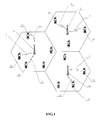
- Figure 1 is a schematic diagram of the sharing reverse channels within a cell in a DO trunk communication system of the present invention.
- the mobile stations in the group share the broadcast channel and the forward traffic channel.
- the broadcast channel is used for transmitting the forward voice
- the forward traffic channel is used for transmitting signaling.
- the private reverse channel 1 is established for the mobile station 11 in active state in the group for sending the reverse voice and signaling of the mobile station in active state.
- the mobile station 22 in idle state in each sector in the group establishes sharing reverse channels 2 (multiple) for sending the short signaling such as the floor request and etc of the mobile stations in idle state.
- Figure 2 is a flowchart showing the method for sharing reverse channels in DO trunk communication system according to one embodiment of the present invention.
- the method for establishing the sharing reverse channel is:
- FIG. 3 is a flowchart showing the method for sharing reverse channels in DO trunk communication system according to another embodiment of the present invention. The method comprises the steps of:
- the information of the sharing reverse channels could also be preset by the trunk communication system.
- FIG. 4 is a structure diagram of DO trunk communication system according to one embodiment of the present invention.
- the system for sharing reverse channels in a trunk communication system 400 comprises the means of: a channel establishing means 401 for establishing a forward channel and one or more sharing reverse channels in a group; a reverse channel priority identification means 402 for adding priority identifiers each corresponding to every sharing reverse channel in the information of the sharing reverse channels; a reverse channel information broadcasting means 403 for broadcasting information of the one or more sharing reverse channels on the forward channel continuously or periodically/unperiodically alternatively; a reverse channel priority comparing means 404, for comparing the priorities thereof with the priorities of the sharing reverse channels after receiving the information of the sharing reverse channels, if the priorities of the sharing reverse channels are higher than the priorities of the mobile stations, the mobile stations could't send the reverse signaling using the sharing reverse channels, or otherwise, the mobile stations determine that the priorities thereof are higher than or equal to the channels number M of the priorities of the sharing reverse channels, and determine a sharing reverse channel for the mobile stations by ways
- the system for sharing reverse channels further comprises: a reverse channel determining means 405 for determining a sharing reverse channel which could be used by the mobile stations according to the sharing reverse channel information; a reverse channel information transmitting means 406 for transmitting information through the sharing reverse channels; a power emission turning on means 407 for the mobile stations in idle state turning on reverse emission powers and send the reverse signaling; and a power emission turning down means 408 for the mobile stations in idle state turning down the reverse emission powers after sending reverse signaling.
- the channel establishing means 401 establishes a forward channel and one or more sharing reverse channels in a group; the reverse channel priority identification means 402 adds priority identifiers each corresponding to every sharing reverse channel in the information of the sharing reverse channels, wherein the priorities of the sharing reverse channels could be high, middle, low level and could be the level of the number identifier.
- the reverse channel information broadcasting means 403 broadcasts information of the one or more sharing reverse channels on the forward channel continuously or periodically/unperiodically alternatively so as to delay the access of the mobile stations.
- the reverse channel priority comparing means 404 compares the priorities thereof with the priorities of the sharing reverse channels, if the priorities of the sharing reverse channels are higher than the priorities of the mobile stations, the mobile stations didn't send the reverse signaling using the sharing reverse channels, or otherwise, the mobile stations determine that the priorities thereof are higher than or equal to the channels number M of the priorities of the sharing reverse channels, and determine a sharing reverse channel for the mobile stations by ways of the randomization calculating to send the reverse signaling.
- the reverse channel determining means 405 determines a sharing reverse channel which could be used by mobile stations according to the sharing reverse channel information.
- the power emission turning on means 407 causes the mobile stations in idle state turning on reverse emission powers and send the reverse signaling
- the power emission turning down means 408 causes the mobile stations in idle state turning down the reverse emission powers after sending reverse signaling.
- the air interface resource and physical resource could be saved and the collision probabilities of non-active state mobile stations are reduced.
Landscapes
- Engineering & Computer Science (AREA)
- Computer Networks & Wireless Communication (AREA)
- Signal Processing (AREA)
- Mobile Radio Communication Systems (AREA)
Abstract
Description
- The invention relates to the field of mobile communication technique, particularly to a system and method for sharing reverse channel in DO (Data Only) trunk communication system, causing all mobile stations in idle state in a group under a sector to send signaling by the established sharing reverse channels.
- The trunk communication systems are the systems in which a group wireless channels shared by multiple mobile stations and the private mobile communication systems of these channels are used dynamically. They are mainly applied to corporations and enterprises, police, policeman and army and etc which have higher demand for functions of command, dispatching.
- The use strategy of present trunk communication systems forward channels is: only one mobile station is active state in one group at one time, the mobile station data sent forward in the group are same, i.e., the mobile stations in the group share forward channels. But for the use of reverse channels, there are two present manners:
- First manner, the mobile stations in the group in a cell, comprising mobile stations in active state and mobile stations in idle state, establish each reverse channels for sending signaling information respectively.
- Second manner, the mobile stations in idle state in the group in a cell only establish a sharing reverse channel for sending signaling information, all mobile stations in idle state use the sharing reverse channel in the manner of anticipating occupy.
- For the large-scale dispatching systems concentrating a mass of mobile stations within a certain region range, the above first manner needs to establish each reverse channels for a mass of mobile stations within the group in a cell. This manner is hard to realize in both air resource and physical resource. That is to say, the limit of resources cause the number of the groups in a cell and the number of the mobile stations in the groups are limited considerably.
- In the second manner, the mobile stations in the groups share a reverse channel, when the mobile stations send reverse signaling on this shared channel, the signaling on different mobile stations are prone to collide, causing the mobile stations signaling sending failure and reducing the air capability.
- The invention is proposed in view of above problems, thus, the objective of the invention is to provide a method for sharing reverse channel in trunk communication system to save the air interface resource and physical resource of the system.
- According to one aspect of the present invention, a method for sharing reverse channel in trunk communication system is provided, comprising the steps of: step A, establishing a forward channel and one or more sharing reverse channels in a group; step B, mobile stations in idle state determine a sharing reverse channel which could be used by the mobile stations according to the sharing reverse channel information; and step C, the mobile station transmits information through the sharing reverse channels.
- Specially, information of the one or more sharing reverse channels could be broadcasted on the forward channel continuously or periodically/unperiodically alternatively. Further, the information of the sharing reverse channels could be preset by the trunk communication system.
- Further, the forward channel and the one or more sharing reverse channels could be established based on at least one of the following information: the number of the mobile stations in the group, the number of base station resource and air interface wireless resource. One sharing reverse channel which could be used by the mobile stations is determined by ways of the randomization calculating relative to a terminal identification number. The information of the sharing reverse channels includes at least one of: the number of the sharing reverse channels and the information generated by the sharing reverse channels using long code mask.
- Further, the randomization calculating could comprise at least one of: HASH function using the terminal identification number as input parameter and the terminal identification number for calculating the number of the sharing reverse channels. The terminal identification number could comprise at least one of: terminal electronic sequence number and unicast access terminal identifier.
- Further, when the mobile stations in idle state have to send reverse signaling on the sharing reverse channels, it further comprises the following two steps of: step E, the mobile stations in idle state turning on reverse emission powers and send the reverse signaling; and step F, after sending the reverse signaling, the mobile stations in idle state turning down the reverse emission powers.
- Further, it could comprises the following steps of: step G, adding priority identifiers each corresponding to every sharing reverse channel in the information of the sharing reverse channels; step H, after receiving the information of the sharing reverse channels, the mobile stations in idle state comparing the priorities thereof with the priorities of the sharing reverse channels, if the priorities of the sharing reverse channels are higher than the priorities of the mobile stations, the mobile stations couldn't send the reverse signaling using the sharing reverse channels, or otherwise, the mobile stations determine that the priorities thereof are higher than or equal to the channels number M of the priorities of the sharing reverse channels, and determine a sharing reverse channel for the mobile stations by ways of the randomization calculating to send the reverse signaling.
- According to another aspect of the present invention, a system for sharing reverse channels in a trunk communication system is provided, comprising the means of: a channel establishing means for establishing a forward channel and one or more sharing reverse channels in a group; a reverse channel determining means for determining a sharing reverse channel which could be used by mobile stations according to the sharing reverse channel information; and a reverse channel information transmitting means for transmitting information through the sharing reverse channels. Further, it could comprises a reverse channel information broadcasting means for broadcasting information of the one or more sharing reverse channels on the forward channel continuously or periodically/unperiodically alternatively. Further, the information of the sharing reverse channel could be preset by the trunk communication system. Preferably, a the forward channel and the one or more sharing reverse channels could be established based on at least one of the following information: the number of the mobile stations in the group, the number of base station resources, and air interface wireless resource.
- One sharing reverse channel which could be used by the mobile stations is determined by ways of the randomization calculating relative to a terminal identification number. The randomization calculating could comprise at least one of: HASH function using the terminal identification number as input parameter and the terminal identification number for calculating the number of the sharing reverse channels. The terminal identification number could comprise at least one of: terminal electronic sequence number and unicast access terminal identifier. The information of the sharing reverse channels could include at least one of: the number of the sharing reverse channels and the information generated by the sharing reverse channels using long code mask.
- Specially, it further comprises following two means of: a power emission turning on means for causing the mobile stations in idle state turning on reverse emission powers and send the reverse signaling; and a power emission turning down means for causing the mobile stations in idle state turning down the reverse emission powers after sending reverse signaling.
- Further, the system further the following means of: a reverse channel priority identification means for adding priority identifiers each corresponding to every sharing reverse channel in the information of the sharing reverse channels; and a reverse channel priority comparing means for comparing the priorities thereof with the priorities of the sharing reverse channels after the mobile stations in idle state receiving the information of the sharing reverse channels, if the priorities of the sharing reverse channels are higher than the priorities of the mobile stations, the mobile stations couldn't send the reverse signaling using the sharing reverse channels, or otherwise, the mobile stations determine that the priorities thereof are higher than or equal to the channels number M of the priorities of the sharing reverse channels, and determine a sharing reverse channel for the mobile stations by ways of the randomization calculating to send the reverse signaling.
- The invention causes that all mobile stations in idle state in the same group under a cell could be distributed over multiple sharing reverse channels by above operation steps and pass the signaling such as the reverse floor request and etc of the mobile stations in idle state in the sharing reverse channel groups. Therefore, no matter how many calling mobile stations of a same group are centralized in the cell, only several reverse channels are occupied on the base station side, saving the air interface resource and physical resource of the systems considerably. As the mobile stations in idle state are distributed on several sharing reverse channels, the collision probabilities of each mobile stations in idle state are reduced.
- The accompanying drawings briefly described below illustrate exemplary embodiments of the present invention and, together with the description, serve to explain the principles of the present invention.
-
Figure 1 is a schematic diagram of the sharing reverse channels within a cell in a DO trunk communication system of the present invention; -
Figure 2 is a flowchart showing the method for sharing reverse channels in DO trunk communication system according to one embodiment of the present invention; -
Figure 3 is a flowchart showing the method for sharing reverse channels in DO trunk communication system according to another embodiment of the present invention; -
Figure 4 is a structure diagram of DO trunk communication system according to one embodiment of the present invention. - The present invention will be further described in detail with reference to the accompanying drawings and the embodiment thereof.
-
Figure 1 is a schematic diagram of the sharing reverse channels within a cell in a DO trunk communication system of the present invention. In the forward link of the DO trunk systems, the mobile stations in the group share the broadcast channel and the forward traffic channel. The broadcast channel is used for transmitting the forward voice, the forward traffic channel is used for transmitting signaling. On the reverse link, the privatereverse channel 1 is established for themobile station 11 in active state in the group for sending the reverse voice and signaling of the mobile station in active state. Themobile station 22 in idle state in each sector in the group establishes sharing reverse channels 2 (multiple) for sending the short signaling such as the floor request and etc of the mobile stations in idle state. -
Figure 2 is a flowchart showing the method for sharing reverse channels in DO trunk communication system according to one embodiment of the present invention. The method for establishing the sharing reverse channel is: - step S202, the mobile stations in active state initiate a call, the trunk communication system acknowledges that this call is a group call;
- step S203, the dispatching subsystem establishes the forward channel for the mobile stations in active state through the base station according to a certain strategy, such as how many mobile stations in the group and how many physical resource of the base station, and establish multiple sharing reverse channels for the mobile stations in idle state in the group;
- step S204, the base station sends the broadcast channel assignment message on the control channel, the message content comprising the number N of sharing reverse channels established in the above steps and the generation manner of the long code mask;
- step S205, the mobile stations in idle state in the group receive the broadcast channel assignment message, acknowledge the number N of sharing reverse channels according to the message content, according to fixed rule (such as HASH function or calculate according to the terminal electronic sequence number ESN (ESN mod shared channels number)), then calculate a corresponding sharing reverse channel by HASH function according to its UATI (unicast access terminal identifier), then turn to the channel, at this time the idle state mobile stations transmitters are turned down;
- step S206, if the mobile stations in idle state need to send signaling on sharing reverse channels thereof, then turning on the transmitters and transmit signaling;
- step S207, the mobile stations in idle state turn down transmitters after sending signaling.
-
Figure 3 is a flowchart showing the method for sharing reverse channels in DO trunk communication system according to another embodiment of the present invention. The method comprises the steps of: - step S302, establishing a forward channel and one or more sharing reverse channels in a group;
- step S303, adding priority identifiers each corresponding to every sharing reverse channel in the information of the sharing reverse channels;
- step S304, broadcasting the information of the one or more sharing reverse channels on the forward channels continuously or periodically / unperiodically alternatively;
- step S305, after receiving the information of the sharing reverse channels, the mobile stations in idle state comparing the priorities thereof with the priorities of the sharing reverse channels, if the priorities of the sharing reverse channels are higher than the priorities of the mobile stations, the mobile stations couldn't send the reverse signaling using the sharing reverse channels, or otherwise, the mobile stations determine that the priorities thereof are higher than or equal to the channels number M of the priorities of the sharing reverse channels, and determine a sharing reverse channel for the mobile stations by ways of the randomization calculating to send the reverse signaling;
- step S306, the mobile stations in idle state determine a sharing reverse channel which could be used by the mobile stations according to the sharing reverse channel information;
- step S307, the mobile station transmitting information through the sharing reverse channels;
- step S308, the mobile stations in idle state turning on reverse emission powers and send the reverse signaling;
- step S309, after sending the reverse signaling, the mobile stations in idle state turning down the reverse emission powers.
- Therein, specially, the information of the sharing reverse channels could also be preset by the trunk communication system.
-
Figure 4 is a structure diagram of DO trunk communication system according to one embodiment of the present invention. The system for sharing reverse channels in atrunk communication system 400 according to the invention comprises the means of: a channel establishing means 401 for establishing a forward channel and one or more sharing reverse channels in a group; a reverse channel priority identification means 402 for adding priority identifiers each corresponding to every sharing reverse channel in the information of the sharing reverse channels; a reverse channel information broadcasting means 403 for broadcasting information of the one or more sharing reverse channels on the forward channel continuously or periodically/unperiodically alternatively; a reverse channel priority comparing means 404, for comparing the priorities thereof with the priorities of the sharing reverse channels after receiving the information of the sharing reverse channels, if the priorities of the sharing reverse channels are higher than the priorities of the mobile stations, the mobile stations couldn't send the reverse signaling using the sharing reverse channels, or otherwise, the mobile stations determine that the priorities thereof are higher than or equal to the channels number M of the priorities of the sharing reverse channels, and determine a sharing reverse channel for the mobile stations by ways of the randomization calculating to send the reverse signaling. - The system for sharing reverse channels further comprises: a reverse channel determining means 405 for determining a sharing reverse channel which could be used by the mobile stations according to the sharing reverse channel information; a reverse channel information transmitting means 406 for transmitting information through the sharing reverse channels; a power emission turning on means 407 for the mobile stations in idle state turning on reverse emission powers and send the reverse signaling; and a power emission turning down means 408 for the mobile stations in idle state turning down the reverse emission powers after sending reverse signaling.
- The system for sharing reverse channels in a
trunk communication system 400 according to the invention will be described in detail with reference toFigure 4 . - In DO trunk system, the channel establishing means 401 establishes a forward channel and one or more sharing reverse channels in a group; the reverse channel priority identification means 402 adds priority identifiers each corresponding to every sharing reverse channel in the information of the sharing reverse channels, wherein the priorities of the sharing reverse channels could be high, middle, low level and could be the level of the number identifier. The reverse channel information broadcasting means 403 broadcasts information of the one or more sharing reverse channels on the forward channel continuously or periodically/unperiodically alternatively so as to delay the access of the mobile stations. After the mobile stations in idle state receiving the information of the sharing reverse channels, the reverse channel priority comparing means 404 compares the priorities thereof with the priorities of the sharing reverse channels, if the priorities of the sharing reverse channels are higher than the priorities of the mobile stations, the mobile stations couldn't send the reverse signaling using the sharing reverse channels, or otherwise, the mobile stations determine that the priorities thereof are higher than or equal to the channels number M of the priorities of the sharing reverse channels, and determine a sharing reverse channel for the mobile stations by ways of the randomization calculating to send the reverse signaling. The reverse channel determining means 405 determines a sharing reverse channel which could be used by mobile stations according to the sharing reverse channel information. The power emission turning on means 407 causes the mobile stations in idle state turning on reverse emission powers and send the reverse signaling, the power emission turning down means 408 causes the mobile stations in idle state turning down the reverse emission powers after sending reverse signaling.
- In summary, by ways of the the method for sharing reverse channels proposed in the present invention, the air interface resource and physical resource could be saved and the collision probabilities of non-active state mobile stations are reduced.
- While this invention has been described in connection with what is presently considered to be practical exemplary embodiments, it is to be understood that the invention is not limited to the disclosed embodiments, but, on the contrary, is intended to cover various modifications and equivalent arrangements included within the spirit and scope of the appended claims.
Claims (20)
- A method for sharing reverse channels in a trunk communication system, characterized in that comprising the steps of:step A, establishing a forward channel and one or more sharing reverse channels in a group;step B, mobile stations in idle state determine a sharing reverse channel which could be used by the mobile stations according to the sharing reverse channel information; andstep C, the mobile station transmits information through the sharing reverse channels.
- Method for sharing reverse channels according to claim 1, characterized in that broadcasting information of the one or more sharing reverse channels on the forward channel continuously or periodically /unperiodically alternatively.
- Method for sharing reverse channels according to claim 1, characterized in that presetting the information of the sharing reverse channels by the trunk communication system.
- Method for sharing reverse channels according to claim 2 or 3, characterized in that establishing the forward channel and the one or more sharing reverse channels based on at least one of the following information: the number of the mobile stations in the group, the number of base station resources, and air interface wireless resource.
- Method for sharing reverse channels according to claim 4, characterized in that determining one sharing reverse channel which could be used by the mobile stations by ways of the randomization calculating relative to a terminal identification number.
- Method for sharing reverse channels according to claim 5, characterized in that the randomization calculating comprises at least one of: HASH function using the terminal identification number as input parameter and the terminal identification number for calculating the number of the sharing reverse channels.
- Method for sharing reverse channels according to claim 5, characterized in that the terminal identification number comprises at least one of: terminal electronic sequence number and unicast access terminal identifier.
- Method for sharing reverse channels according to claim 6 or 7, characterized in that the information of the sharing reverse channels include at least one of: the number of the sharing reverse channels and the information generated by the sharing reverse channels using long code mask.
- Method for sharing reverse channels according to claim 8, characterized in that further comprising the following two steps when the mobile stations in idle state have to send reverse signaling on the sharing reverse channels:step D, the mobile stations in idle state turning on reverse emission powers and send the reverse signaling; andstep E, after sending the reverse signaling, the mobile stations in idle state turning down the reverse emission powers.
- Method for sharing reverse channels according to claim 9, characterized in that further comprising the following steps:step F, adding priority identifiers each corresponding to every sharing reverse channel in the information of the sharing reverse channels; andstep G, after receiving the information of the sharing reverse channels, the mobile stations in idle state comparing the priorities thereof with the priorities of the sharing reverse channels, if the priorities of the sharing reverse channels are higher than the priorities of the mobile stations, the mobile stations couldn't send the reverse signaling using the sharing reverse channels, or otherwise, the mobile stations determine that the priorities thereof are higher than or equal to the channels number M of the priorities of the sharing reverse channels, and determine a sharing reverse channel for the mobile stations by ways of the randomization calculating to send the reverse signaling.
- A system for sharing reverse channels in a trunk communication system, characterized in that comprising the means of:a channel establishing means for establishing a forward channel and one or more sharing reverse channels in a group;a reverse channel determining means for determining a sharing reverse channel which could be used by mobile stations according to the sharing reverse channel information; anda reverse channel information transmitting means for transmitting information through the sharing reverse channels.
- System for sharing reverse channels according to claim 11, characterized in that further comprising:a reverse channel information broadcasting means for broadcasting information of the one or more sharing reverse channels on the forward channel continuously or periodically/unperiodically alternatively.
- System for sharing reverse channels according to claim 11, characterized in that the information of the sharing reverse channels are preset by the trunk communication system.
- System for sharing reverse channels according to claim 12 or 13, characterized in that establishing the forward channel and the one or more sharing reverse channels based on at least one of the following information: the number of the mobile stations in the group, the number of base station resources, and air interface wireless resource.
- System for sharing reverse channels according to claim 14, characterized in that determining one sharing reverse channel which could be used by the mobile stations by ways of the randomization calculating relative to a terminal identification number.
- System for sharing reverse channels according to claim 15, characterized in that the randomization calculating comprises at least one of: HASH function using the terminal identification number as input parameter and the terminal identification number for calculating the number of the sharing reverse channels.
- System for sharing reverse channels according to claim 15, characterized in that the terminal identification number comprises at least one of: terminal electronic sequence number and unicast access terminal identifier.
- System for sharing reverse channels according to claim 16 or 17, characterized in that the information of the sharing reverse channels include at least one of: the number of the sharing reverse channels and the information generated by the sharing reverse channels using long code mask.
- System for sharing reverse channels according to claim 18, characterized in that further comprising the following two means of:a power emission turning on means for causing the mobile stations in idle state turning on reverse emission powers and send the reverse signaling; anda power emission turning down means for causing the mobile stations in idle state turning down the reverse emission powers after sending reverse signaling.
- System for sharing reverse channels according to claim 19, characterized in that further comprising the following means of:a reverse channel priority identification means for adding priority identifiers each corresponding to every sharing reverse channel in the information of the sharing reverse channels; anda reverse channel priority comparing means for comparing the priorities thereof with the priorities of the sharing reverse channels after the mobile stations in idle state receiving the information of the sharing reverse channels, if the priorities of the sharing reverse channels are higher than the priorities of the mobile stations, the mobile stations couldn't send the reverse signaling using the sharing reverse channels, or otherwise, the mobile stations determine that the priorities thereof are higher than or equal to the channels number M of the priorities of the sharing reverse channels, and determine a sharing reverse channel for the mobile stations by ways of the randomization calculating to send the reverse signaling.
Applications Claiming Priority (2)
| Application Number | Priority Date | Filing Date | Title |
|---|---|---|---|
| CNB2005101001464A CN100440999C (en) | 2005-09-29 | 2005-09-29 | A Method of Reverse Channel Sharing Based on DO Cluster Communication System |
| PCT/CN2006/001668 WO2007036111A1 (en) | 2005-09-29 | 2006-07-14 | Method and system for sharing reverse channel in cluster communication system |
Publications (2)
| Publication Number | Publication Date |
|---|---|
| EP1931151A1 true EP1931151A1 (en) | 2008-06-11 |
| EP1931151A4 EP1931151A4 (en) | 2013-04-17 |
Family
ID=37899361
Family Applications (1)
| Application Number | Title | Priority Date | Filing Date |
|---|---|---|---|
| EP06761420.6A Withdrawn EP1931151A4 (en) | 2005-09-29 | 2006-07-14 | Method and system for sharing reverse channel in cluster communication system |
Country Status (4)
| Country | Link |
|---|---|
| US (1) | US8441990B2 (en) |
| EP (1) | EP1931151A4 (en) |
| CN (1) | CN100440999C (en) |
| WO (1) | WO2007036111A1 (en) |
Families Citing this family (12)
| Publication number | Priority date | Publication date | Assignee | Title |
|---|---|---|---|---|
| US8358968B2 (en) * | 2008-10-03 | 2013-01-22 | Motorola Solutions, Inc. | Method for selecting a channel to be monitored by subscriber units that are idle in a communication system |
| US8045499B2 (en) * | 2008-10-03 | 2011-10-25 | Motorola Solutions, Inc. | Method of communicating which channel is to be monitored by subscriber units that are idle in a communication system |
| US8184654B2 (en) * | 2008-10-03 | 2012-05-22 | Motorola Solutions, Inc. | Method for ending a call session in a communication system |
| US8279991B2 (en) * | 2008-10-03 | 2012-10-02 | Motorola Solutions, Inc. | Method of efficiently synchronizing to a desired timeslot in a time division multiple access communication system |
| US8139597B2 (en) * | 2008-10-03 | 2012-03-20 | Motorola Solutions, Inc. | Method for trunking radio frequency resources |
| JP5517187B2 (en) * | 2009-04-10 | 2014-06-11 | 日本電気株式会社 | Femtocell base station, authentication device, communication system, control method, and program |
| US8503409B2 (en) | 2010-04-15 | 2013-08-06 | Motorola Solutions, Inc. | Method for direct mode channel access |
| US8599826B2 (en) | 2010-04-15 | 2013-12-03 | Motorola Solutions, Inc. | Method for synchronizing direct mode time division multiple access (TDMA) transmissions |
| CN101883414B (en) * | 2010-06-17 | 2014-04-09 | 中兴通讯股份有限公司 | Method and base station for reducing forward transmission power in group system |
| US9313771B2 (en) * | 2010-10-20 | 2016-04-12 | Motorola Solutions, Inc. | Method and device for allocating a channel in a decentralized trunked radio communication system |
| US8462766B2 (en) | 2011-03-07 | 2013-06-11 | Motorola Solutions, Inc. | Methods and apparatus for diffusing channel timing among subscriber units in TDMA direct mode |
| CN103095365B (en) * | 2013-01-08 | 2016-01-20 | 哈尔滨海能达科技有限公司 | A kind of method of backward channel signal transmission, terminal, base station and system |
Family Cites Families (17)
| Publication number | Priority date | Publication date | Assignee | Title |
|---|---|---|---|---|
| KR100329186B1 (en) * | 1997-12-27 | 2002-09-04 | 주식회사 하이닉스반도체 | Reverse Call Channel Search Method of CDM Mobile Communication System |
| KR100414932B1 (en) * | 1998-01-24 | 2004-04-03 | 삼성전자주식회사 | Method for communication data in cdma system |
| DE69842034D1 (en) * | 1998-10-05 | 2011-01-20 | Sony Deutschland Gmbh | Priority scheme for a random access channel |
| CA2314232C (en) * | 1998-11-09 | 2004-05-11 | Samsung Electronics Co., Ltd. | Reservation multiple access in a cdma communications system |
| GB2366135B (en) * | 2000-08-09 | 2004-06-23 | Airspan Networks Inc | Transfer of data packets in a wireless telecommunications system |
| US6954448B2 (en) * | 2001-02-01 | 2005-10-11 | Ipr Licensing, Inc. | Alternate channel for carrying selected message types |
| US7742781B2 (en) * | 2001-03-28 | 2010-06-22 | Qualcomm Incorporated | Power control for point-to-multipoint services provided in communication systems |
| US20040228349A1 (en) * | 2003-01-10 | 2004-11-18 | Sophie Vrzic | Semi-distributed scheduling scheme for the reverse link of wireless systems |
| US20050054362A1 (en) * | 2003-09-08 | 2005-03-10 | Panpaliya Satyanarayan R. | Method and apparatus for transmit power control during a group call to a plurality of devices |
| CN100387069C (en) * | 2003-09-10 | 2008-05-07 | 华为技术有限公司 | Method for allocating wireless reverse channel in trunking service in cellular communication system |
| CN1310539C (en) * | 2003-09-11 | 2007-04-11 | 华为技术有限公司 | A method for cluster user to occupy reversed service channel |
| CN1310533C (en) * | 2003-09-19 | 2007-04-11 | 华为技术有限公司 | Method for priority holding up service channel by group user |
| CN1642054A (en) * | 2004-01-14 | 2005-07-20 | 华为技术有限公司 | Method for realizing integration husiness of channel using CDMA system |
| JP4555692B2 (en) * | 2005-01-14 | 2010-10-06 | 富士通株式会社 | Mobile radio communication system and radio communication apparatus |
| PL1873949T5 (en) * | 2005-04-25 | 2014-01-31 | Zte Corp | A channel sharing method in the cluster mobile communication system based on cdma |
| ES2368158T3 (en) * | 2005-08-26 | 2011-11-14 | Telefonaktiebolaget L M Ericsson (Publ) | METHOD AND PROVISION FOR FLOW CONTROL IN THE UMTS MAKING USE OF INFORMATION IN THE UBS FIELD. |
| CN101167383B (en) * | 2005-09-05 | 2010-10-13 | 中兴通讯股份有限公司 | Method for Terminal Switching Between Reverse Traffic Channels in Group Call Service of CDMA System |
-
2005
- 2005-09-29 CN CNB2005101001464A patent/CN100440999C/en not_active Expired - Fee Related
-
2006
- 2006-07-14 EP EP06761420.6A patent/EP1931151A4/en not_active Withdrawn
- 2006-07-14 US US12/064,551 patent/US8441990B2/en not_active Expired - Fee Related
- 2006-07-14 WO PCT/CN2006/001668 patent/WO2007036111A1/en not_active Ceased
Also Published As
| Publication number | Publication date |
|---|---|
| US20090016283A1 (en) | 2009-01-15 |
| WO2007036111A1 (en) | 2007-04-05 |
| CN100440999C (en) | 2008-12-03 |
| CN1941941A (en) | 2007-04-04 |
| US8441990B2 (en) | 2013-05-14 |
| EP1931151A4 (en) | 2013-04-17 |
Similar Documents
| Publication | Publication Date | Title |
|---|---|---|
| US6377560B1 (en) | Group call capability in a wireless network | |
| US7974636B2 (en) | Intelligent paging in multiple networks | |
| US8441990B2 (en) | Method and system for sharing reverse channel in trunk communication system | |
| EP1890498B1 (en) | A method for establishing a call rapidly in cdma cluster communication system | |
| KR100253138B1 (en) | Position registering method for mobile phone service system | |
| US6738632B2 (en) | Mobile telecommunications system with improved management of its radio resources | |
| CN101835268A (en) | Method and device for terminals to select resident CDMA (Code Division Multiple Access) channels | |
| CN101547524A (en) | Trunked mobile station and its group call release method | |
| EP1843606A1 (en) | A method of transmitting reverse signaling in cdma cluster communication system | |
| EP1569487B1 (en) | Intelligent paging in multiple networks | |
| US8194620B2 (en) | Method for terminals to switch the reverse traffic channels in CDMA group call service | |
| CN110072194B (en) | Service scheduling method and device and cluster system without central node | |
| CN100342740C (en) | Data transmission system and data transmission method | |
| EP1773077B1 (en) | A method of indicating a channel available for sending uplink access request and corresponding system, base station and mobile station | |
| CN113973267B (en) | A transmission processing method, device, network side equipment and terminal | |
| CN1322769C (en) | Method for backward transmitting message in digital honeycomb network group communication system | |
| CN121487011A (en) | A method for resource allocation and scheduling of 5G TD-LTE trunking | |
| CN101056433B (en) | Method and system for indicating available channel for sending uplink access request | |
| EP2055119A2 (en) | Method and system for wireless communication | |
| HK1081374B (en) | Intelligent paging in multiple networks | |
| JP2005294879A (en) | Mobile communication system, and multicast communication method using mobile communication system |
Legal Events
| Date | Code | Title | Description |
|---|---|---|---|
| PUAI | Public reference made under article 153(3) epc to a published international application that has entered the european phase |
Free format text: ORIGINAL CODE: 0009012 |
|
| 17P | Request for examination filed |
Effective date: 20080304 |
|
| AK | Designated contracting states |
Kind code of ref document: A1 Designated state(s): AT BE BG CH CY CZ DE DK EE ES FI FR GB GR HU IE IS IT LI LT LU LV MC NL PL PT RO SE SI SK TR |
|
| DAX | Request for extension of the european patent (deleted) | ||
| A4 | Supplementary search report drawn up and despatched |
Effective date: 20130314 |
|
| RIC1 | Information provided on ipc code assigned before grant |
Ipc: H04W 74/00 20090101AFI20130308BHEP |
|
| 17Q | First examination report despatched |
Effective date: 20141007 |
|
| STAA | Information on the status of an ep patent application or granted ep patent |
Free format text: STATUS: EXAMINATION IS IN PROGRESS |
|
| STAA | Information on the status of an ep patent application or granted ep patent |
Free format text: STATUS: THE APPLICATION IS DEEMED TO BE WITHDRAWN |
|
| 18D | Application deemed to be withdrawn |
Effective date: 20181005 |