EP1927671A2 - Improved plasma-spray powder manufacture technique - Google Patents
Improved plasma-spray powder manufacture technique Download PDFInfo
- Publication number
- EP1927671A2 EP1927671A2 EP07254576A EP07254576A EP1927671A2 EP 1927671 A2 EP1927671 A2 EP 1927671A2 EP 07254576 A EP07254576 A EP 07254576A EP 07254576 A EP07254576 A EP 07254576A EP 1927671 A2 EP1927671 A2 EP 1927671A2
- Authority
- EP
- European Patent Office
- Prior art keywords
- powder
- coating
- oxide
- alloy
- component
- Prior art date
- Legal status (The legal status is an assumption and is not a legal conclusion. Google has not performed a legal analysis and makes no representation as to the accuracy of the status listed.)
- Granted
Links
Images

Classifications
-
- C—CHEMISTRY; METALLURGY
- C04—CEMENTS; CONCRETE; ARTIFICIAL STONE; CERAMICS; REFRACTORIES
- C04B—LIME, MAGNESIA; SLAG; CEMENTS; COMPOSITIONS THEREOF, e.g. MORTARS, CONCRETE OR LIKE BUILDING MATERIALS; ARTIFICIAL STONE; CERAMICS; REFRACTORIES; TREATMENT OF NATURAL STONE
- C04B35/00—Shaped ceramic products characterised by their composition; Ceramics compositions; Processing powders of inorganic compounds preparatory to the manufacturing of ceramic products
- C04B35/01—Shaped ceramic products characterised by their composition; Ceramics compositions; Processing powders of inorganic compounds preparatory to the manufacturing of ceramic products based on oxide ceramics
- C04B35/48—Shaped ceramic products characterised by their composition; Ceramics compositions; Processing powders of inorganic compounds preparatory to the manufacturing of ceramic products based on oxide ceramics based on zirconium or hafnium oxides, zirconates, zircon or hafnates
- C04B35/486—Fine ceramics
- C04B35/488—Composites
-
- C—CHEMISTRY; METALLURGY
- C04—CEMENTS; CONCRETE; ARTIFICIAL STONE; CERAMICS; REFRACTORIES
- C04B—LIME, MAGNESIA; SLAG; CEMENTS; COMPOSITIONS THEREOF, e.g. MORTARS, CONCRETE OR LIKE BUILDING MATERIALS; ARTIFICIAL STONE; CERAMICS; REFRACTORIES; TREATMENT OF NATURAL STONE
- C04B35/00—Shaped ceramic products characterised by their composition; Ceramics compositions; Processing powders of inorganic compounds preparatory to the manufacturing of ceramic products
- C04B35/01—Shaped ceramic products characterised by their composition; Ceramics compositions; Processing powders of inorganic compounds preparatory to the manufacturing of ceramic products based on oxide ceramics
- C04B35/46—Shaped ceramic products characterised by their composition; Ceramics compositions; Processing powders of inorganic compounds preparatory to the manufacturing of ceramic products based on oxide ceramics based on titanium oxides or titanates
-
- C—CHEMISTRY; METALLURGY
- C04—CEMENTS; CONCRETE; ARTIFICIAL STONE; CERAMICS; REFRACTORIES
- C04B—LIME, MAGNESIA; SLAG; CEMENTS; COMPOSITIONS THEREOF, e.g. MORTARS, CONCRETE OR LIKE BUILDING MATERIALS; ARTIFICIAL STONE; CERAMICS; REFRACTORIES; TREATMENT OF NATURAL STONE
- C04B35/00—Shaped ceramic products characterised by their composition; Ceramics compositions; Processing powders of inorganic compounds preparatory to the manufacturing of ceramic products
- C04B35/01—Shaped ceramic products characterised by their composition; Ceramics compositions; Processing powders of inorganic compounds preparatory to the manufacturing of ceramic products based on oxide ceramics
- C04B35/48—Shaped ceramic products characterised by their composition; Ceramics compositions; Processing powders of inorganic compounds preparatory to the manufacturing of ceramic products based on oxide ceramics based on zirconium or hafnium oxides, zirconates, zircon or hafnates
- C04B35/49—Shaped ceramic products characterised by their composition; Ceramics compositions; Processing powders of inorganic compounds preparatory to the manufacturing of ceramic products based on oxide ceramics based on zirconium or hafnium oxides, zirconates, zircon or hafnates containing also titanium oxides or titanates
-
- C—CHEMISTRY; METALLURGY
- C04—CEMENTS; CONCRETE; ARTIFICIAL STONE; CERAMICS; REFRACTORIES
- C04B—LIME, MAGNESIA; SLAG; CEMENTS; COMPOSITIONS THEREOF, e.g. MORTARS, CONCRETE OR LIKE BUILDING MATERIALS; ARTIFICIAL STONE; CERAMICS; REFRACTORIES; TREATMENT OF NATURAL STONE
- C04B35/00—Shaped ceramic products characterised by their composition; Ceramics compositions; Processing powders of inorganic compounds preparatory to the manufacturing of ceramic products
- C04B35/622—Forming processes; Processing powders of inorganic compounds preparatory to the manufacturing of ceramic products
- C04B35/626—Preparing or treating the powders individually or as batches ; preparing or treating macroscopic reinforcing agents for ceramic products, e.g. fibres; mechanical aspects section B
- C04B35/62605—Treating the starting powders individually or as mixtures
- C04B35/62645—Thermal treatment of powders or mixtures thereof other than sintering
- C04B35/62665—Flame, plasma or melting treatment
-
- C—CHEMISTRY; METALLURGY
- C04—CEMENTS; CONCRETE; ARTIFICIAL STONE; CERAMICS; REFRACTORIES
- C04B—LIME, MAGNESIA; SLAG; CEMENTS; COMPOSITIONS THEREOF, e.g. MORTARS, CONCRETE OR LIKE BUILDING MATERIALS; ARTIFICIAL STONE; CERAMICS; REFRACTORIES; TREATMENT OF NATURAL STONE
- C04B35/00—Shaped ceramic products characterised by their composition; Ceramics compositions; Processing powders of inorganic compounds preparatory to the manufacturing of ceramic products
- C04B35/622—Forming processes; Processing powders of inorganic compounds preparatory to the manufacturing of ceramic products
- C04B35/653—Processes involving a melting step
-
- C—CHEMISTRY; METALLURGY
- C23—COATING METALLIC MATERIAL; COATING MATERIAL WITH METALLIC MATERIAL; CHEMICAL SURFACE TREATMENT; DIFFUSION TREATMENT OF METALLIC MATERIAL; COATING BY VACUUM EVAPORATION, BY SPUTTERING, BY ION IMPLANTATION OR BY CHEMICAL VAPOUR DEPOSITION, IN GENERAL; INHIBITING CORROSION OF METALLIC MATERIAL OR INCRUSTATION IN GENERAL
- C23C—COATING METALLIC MATERIAL; COATING MATERIAL WITH METALLIC MATERIAL; SURFACE TREATMENT OF METALLIC MATERIAL BY DIFFUSION INTO THE SURFACE, BY CHEMICAL CONVERSION OR SUBSTITUTION; COATING BY VACUUM EVAPORATION, BY SPUTTERING, BY ION IMPLANTATION OR BY CHEMICAL VAPOUR DEPOSITION, IN GENERAL
- C23C28/00—Coating for obtaining at least two superposed coatings either by methods not provided for in a single one of groups C23C2/00 - C23C26/00 or by combinations of methods provided for in subclasses C23C and C25C or C25D
- C23C28/30—Coatings combining at least one metallic layer and at least one inorganic non-metallic layer
- C23C28/32—Coatings combining at least one metallic layer and at least one inorganic non-metallic layer including at least one pure metallic layer
- C23C28/321—Coatings combining at least one metallic layer and at least one inorganic non-metallic layer including at least one pure metallic layer with at least one metal alloy layer
-
- C—CHEMISTRY; METALLURGY
- C23—COATING METALLIC MATERIAL; COATING MATERIAL WITH METALLIC MATERIAL; CHEMICAL SURFACE TREATMENT; DIFFUSION TREATMENT OF METALLIC MATERIAL; COATING BY VACUUM EVAPORATION, BY SPUTTERING, BY ION IMPLANTATION OR BY CHEMICAL VAPOUR DEPOSITION, IN GENERAL; INHIBITING CORROSION OF METALLIC MATERIAL OR INCRUSTATION IN GENERAL
- C23C—COATING METALLIC MATERIAL; COATING MATERIAL WITH METALLIC MATERIAL; SURFACE TREATMENT OF METALLIC MATERIAL BY DIFFUSION INTO THE SURFACE, BY CHEMICAL CONVERSION OR SUBSTITUTION; COATING BY VACUUM EVAPORATION, BY SPUTTERING, BY ION IMPLANTATION OR BY CHEMICAL VAPOUR DEPOSITION, IN GENERAL
- C23C28/00—Coating for obtaining at least two superposed coatings either by methods not provided for in a single one of groups C23C2/00 - C23C26/00 or by combinations of methods provided for in subclasses C23C and C25C or C25D
- C23C28/30—Coatings combining at least one metallic layer and at least one inorganic non-metallic layer
- C23C28/32—Coatings combining at least one metallic layer and at least one inorganic non-metallic layer including at least one pure metallic layer
- C23C28/321—Coatings combining at least one metallic layer and at least one inorganic non-metallic layer including at least one pure metallic layer with at least one metal alloy layer
- C23C28/3215—Coatings combining at least one metallic layer and at least one inorganic non-metallic layer including at least one pure metallic layer with at least one metal alloy layer at least one MCrAlX layer
-
- C—CHEMISTRY; METALLURGY
- C23—COATING METALLIC MATERIAL; COATING MATERIAL WITH METALLIC MATERIAL; CHEMICAL SURFACE TREATMENT; DIFFUSION TREATMENT OF METALLIC MATERIAL; COATING BY VACUUM EVAPORATION, BY SPUTTERING, BY ION IMPLANTATION OR BY CHEMICAL VAPOUR DEPOSITION, IN GENERAL; INHIBITING CORROSION OF METALLIC MATERIAL OR INCRUSTATION IN GENERAL
- C23C—COATING METALLIC MATERIAL; COATING MATERIAL WITH METALLIC MATERIAL; SURFACE TREATMENT OF METALLIC MATERIAL BY DIFFUSION INTO THE SURFACE, BY CHEMICAL CONVERSION OR SUBSTITUTION; COATING BY VACUUM EVAPORATION, BY SPUTTERING, BY ION IMPLANTATION OR BY CHEMICAL VAPOUR DEPOSITION, IN GENERAL
- C23C28/00—Coating for obtaining at least two superposed coatings either by methods not provided for in a single one of groups C23C2/00 - C23C26/00 or by combinations of methods provided for in subclasses C23C and C25C or C25D
- C23C28/30—Coatings combining at least one metallic layer and at least one inorganic non-metallic layer
- C23C28/34—Coatings combining at least one metallic layer and at least one inorganic non-metallic layer including at least one inorganic non-metallic material layer, e.g. metal carbide, nitride, boride, silicide layer and their mixtures, enamels, phosphates and sulphates
- C23C28/345—Coatings combining at least one metallic layer and at least one inorganic non-metallic layer including at least one inorganic non-metallic material layer, e.g. metal carbide, nitride, boride, silicide layer and their mixtures, enamels, phosphates and sulphates with at least one oxide layer
- C23C28/3455—Coatings combining at least one metallic layer and at least one inorganic non-metallic layer including at least one inorganic non-metallic material layer, e.g. metal carbide, nitride, boride, silicide layer and their mixtures, enamels, phosphates and sulphates with at least one oxide layer with a refractory ceramic layer, e.g. refractory metal oxide, ZrO2, rare earth oxides or a thermal barrier system comprising at least one refractory oxide layer
-
- C—CHEMISTRY; METALLURGY
- C23—COATING METALLIC MATERIAL; COATING MATERIAL WITH METALLIC MATERIAL; CHEMICAL SURFACE TREATMENT; DIFFUSION TREATMENT OF METALLIC MATERIAL; COATING BY VACUUM EVAPORATION, BY SPUTTERING, BY ION IMPLANTATION OR BY CHEMICAL VAPOUR DEPOSITION, IN GENERAL; INHIBITING CORROSION OF METALLIC MATERIAL OR INCRUSTATION IN GENERAL
- C23C—COATING METALLIC MATERIAL; COATING MATERIAL WITH METALLIC MATERIAL; SURFACE TREATMENT OF METALLIC MATERIAL BY DIFFUSION INTO THE SURFACE, BY CHEMICAL CONVERSION OR SUBSTITUTION; COATING BY VACUUM EVAPORATION, BY SPUTTERING, BY ION IMPLANTATION OR BY CHEMICAL VAPOUR DEPOSITION, IN GENERAL
- C23C4/00—Coating by spraying the coating material in the molten state, e.g. by flame, plasma or electric discharge
- C23C4/02—Pretreatment of the material to be coated, e.g. for coating on selected surface areas
-
- C—CHEMISTRY; METALLURGY
- C23—COATING METALLIC MATERIAL; COATING MATERIAL WITH METALLIC MATERIAL; CHEMICAL SURFACE TREATMENT; DIFFUSION TREATMENT OF METALLIC MATERIAL; COATING BY VACUUM EVAPORATION, BY SPUTTERING, BY ION IMPLANTATION OR BY CHEMICAL VAPOUR DEPOSITION, IN GENERAL; INHIBITING CORROSION OF METALLIC MATERIAL OR INCRUSTATION IN GENERAL
- C23C—COATING METALLIC MATERIAL; COATING MATERIAL WITH METALLIC MATERIAL; SURFACE TREATMENT OF METALLIC MATERIAL BY DIFFUSION INTO THE SURFACE, BY CHEMICAL CONVERSION OR SUBSTITUTION; COATING BY VACUUM EVAPORATION, BY SPUTTERING, BY ION IMPLANTATION OR BY CHEMICAL VAPOUR DEPOSITION, IN GENERAL
- C23C4/00—Coating by spraying the coating material in the molten state, e.g. by flame, plasma or electric discharge
- C23C4/04—Coating by spraying the coating material in the molten state, e.g. by flame, plasma or electric discharge characterised by the coating material
- C23C4/06—Metallic material
- C23C4/08—Metallic material containing only metal elements
-
- C—CHEMISTRY; METALLURGY
- C23—COATING METALLIC MATERIAL; COATING MATERIAL WITH METALLIC MATERIAL; CHEMICAL SURFACE TREATMENT; DIFFUSION TREATMENT OF METALLIC MATERIAL; COATING BY VACUUM EVAPORATION, BY SPUTTERING, BY ION IMPLANTATION OR BY CHEMICAL VAPOUR DEPOSITION, IN GENERAL; INHIBITING CORROSION OF METALLIC MATERIAL OR INCRUSTATION IN GENERAL
- C23C—COATING METALLIC MATERIAL; COATING MATERIAL WITH METALLIC MATERIAL; SURFACE TREATMENT OF METALLIC MATERIAL BY DIFFUSION INTO THE SURFACE, BY CHEMICAL CONVERSION OR SUBSTITUTION; COATING BY VACUUM EVAPORATION, BY SPUTTERING, BY ION IMPLANTATION OR BY CHEMICAL VAPOUR DEPOSITION, IN GENERAL
- C23C4/00—Coating by spraying the coating material in the molten state, e.g. by flame, plasma or electric discharge
- C23C4/04—Coating by spraying the coating material in the molten state, e.g. by flame, plasma or electric discharge characterised by the coating material
- C23C4/10—Oxides, borides, carbides, nitrides or silicides; Mixtures thereof
- C23C4/11—Oxides
-
- C—CHEMISTRY; METALLURGY
- C23—COATING METALLIC MATERIAL; COATING MATERIAL WITH METALLIC MATERIAL; CHEMICAL SURFACE TREATMENT; DIFFUSION TREATMENT OF METALLIC MATERIAL; COATING BY VACUUM EVAPORATION, BY SPUTTERING, BY ION IMPLANTATION OR BY CHEMICAL VAPOUR DEPOSITION, IN GENERAL; INHIBITING CORROSION OF METALLIC MATERIAL OR INCRUSTATION IN GENERAL
- C23C—COATING METALLIC MATERIAL; COATING MATERIAL WITH METALLIC MATERIAL; SURFACE TREATMENT OF METALLIC MATERIAL BY DIFFUSION INTO THE SURFACE, BY CHEMICAL CONVERSION OR SUBSTITUTION; COATING BY VACUUM EVAPORATION, BY SPUTTERING, BY ION IMPLANTATION OR BY CHEMICAL VAPOUR DEPOSITION, IN GENERAL
- C23C4/00—Coating by spraying the coating material in the molten state, e.g. by flame, plasma or electric discharge
- C23C4/12—Coating by spraying the coating material in the molten state, e.g. by flame, plasma or electric discharge characterised by the method of spraying
-
- C—CHEMISTRY; METALLURGY
- C23—COATING METALLIC MATERIAL; COATING MATERIAL WITH METALLIC MATERIAL; CHEMICAL SURFACE TREATMENT; DIFFUSION TREATMENT OF METALLIC MATERIAL; COATING BY VACUUM EVAPORATION, BY SPUTTERING, BY ION IMPLANTATION OR BY CHEMICAL VAPOUR DEPOSITION, IN GENERAL; INHIBITING CORROSION OF METALLIC MATERIAL OR INCRUSTATION IN GENERAL
- C23C—COATING METALLIC MATERIAL; COATING MATERIAL WITH METALLIC MATERIAL; SURFACE TREATMENT OF METALLIC MATERIAL BY DIFFUSION INTO THE SURFACE, BY CHEMICAL CONVERSION OR SUBSTITUTION; COATING BY VACUUM EVAPORATION, BY SPUTTERING, BY ION IMPLANTATION OR BY CHEMICAL VAPOUR DEPOSITION, IN GENERAL
- C23C4/00—Coating by spraying the coating material in the molten state, e.g. by flame, plasma or electric discharge
- C23C4/12—Coating by spraying the coating material in the molten state, e.g. by flame, plasma or electric discharge characterised by the method of spraying
- C23C4/134—Plasma spraying
-
- C—CHEMISTRY; METALLURGY
- C04—CEMENTS; CONCRETE; ARTIFICIAL STONE; CERAMICS; REFRACTORIES
- C04B—LIME, MAGNESIA; SLAG; CEMENTS; COMPOSITIONS THEREOF, e.g. MORTARS, CONCRETE OR LIKE BUILDING MATERIALS; ARTIFICIAL STONE; CERAMICS; REFRACTORIES; TREATMENT OF NATURAL STONE
- C04B2235/00—Aspects relating to ceramic starting mixtures or sintered ceramic products
- C04B2235/02—Composition of constituents of the starting material or of secondary phases of the final product
- C04B2235/30—Constituents and secondary phases not being of a fibrous nature
- C04B2235/32—Metal oxides, mixed metal oxides, or oxide-forming salts thereof, e.g. carbonates, nitrates, (oxy)hydroxides, chlorides
- C04B2235/3224—Rare earth oxide or oxide forming salts thereof, e.g. scandium oxide
-
- C—CHEMISTRY; METALLURGY
- C04—CEMENTS; CONCRETE; ARTIFICIAL STONE; CERAMICS; REFRACTORIES
- C04B—LIME, MAGNESIA; SLAG; CEMENTS; COMPOSITIONS THEREOF, e.g. MORTARS, CONCRETE OR LIKE BUILDING MATERIALS; ARTIFICIAL STONE; CERAMICS; REFRACTORIES; TREATMENT OF NATURAL STONE
- C04B2235/00—Aspects relating to ceramic starting mixtures or sintered ceramic products
- C04B2235/02—Composition of constituents of the starting material or of secondary phases of the final product
- C04B2235/30—Constituents and secondary phases not being of a fibrous nature
- C04B2235/32—Metal oxides, mixed metal oxides, or oxide-forming salts thereof, e.g. carbonates, nitrates, (oxy)hydroxides, chlorides
- C04B2235/3231—Refractory metal oxides, their mixed metal oxides, or oxide-forming salts thereof
- C04B2235/3232—Titanium oxides or titanates, e.g. rutile or anatase
-
- C—CHEMISTRY; METALLURGY
- C04—CEMENTS; CONCRETE; ARTIFICIAL STONE; CERAMICS; REFRACTORIES
- C04B—LIME, MAGNESIA; SLAG; CEMENTS; COMPOSITIONS THEREOF, e.g. MORTARS, CONCRETE OR LIKE BUILDING MATERIALS; ARTIFICIAL STONE; CERAMICS; REFRACTORIES; TREATMENT OF NATURAL STONE
- C04B2235/00—Aspects relating to ceramic starting mixtures or sintered ceramic products
- C04B2235/02—Composition of constituents of the starting material or of secondary phases of the final product
- C04B2235/30—Constituents and secondary phases not being of a fibrous nature
- C04B2235/32—Metal oxides, mixed metal oxides, or oxide-forming salts thereof, e.g. carbonates, nitrates, (oxy)hydroxides, chlorides
- C04B2235/3231—Refractory metal oxides, their mixed metal oxides, or oxide-forming salts thereof
- C04B2235/3232—Titanium oxides or titanates, e.g. rutile or anatase
- C04B2235/3234—Titanates, not containing zirconia
-
- C—CHEMISTRY; METALLURGY
- C04—CEMENTS; CONCRETE; ARTIFICIAL STONE; CERAMICS; REFRACTORIES
- C04B—LIME, MAGNESIA; SLAG; CEMENTS; COMPOSITIONS THEREOF, e.g. MORTARS, CONCRETE OR LIKE BUILDING MATERIALS; ARTIFICIAL STONE; CERAMICS; REFRACTORIES; TREATMENT OF NATURAL STONE
- C04B2235/00—Aspects relating to ceramic starting mixtures or sintered ceramic products
- C04B2235/02—Composition of constituents of the starting material or of secondary phases of the final product
- C04B2235/30—Constituents and secondary phases not being of a fibrous nature
- C04B2235/32—Metal oxides, mixed metal oxides, or oxide-forming salts thereof, e.g. carbonates, nitrates, (oxy)hydroxides, chlorides
- C04B2235/3231—Refractory metal oxides, their mixed metal oxides, or oxide-forming salts thereof
- C04B2235/3244—Zirconium oxides, zirconates, hafnium oxides, hafnates, or oxide-forming salts thereof
-
- C—CHEMISTRY; METALLURGY
- C04—CEMENTS; CONCRETE; ARTIFICIAL STONE; CERAMICS; REFRACTORIES
- C04B—LIME, MAGNESIA; SLAG; CEMENTS; COMPOSITIONS THEREOF, e.g. MORTARS, CONCRETE OR LIKE BUILDING MATERIALS; ARTIFICIAL STONE; CERAMICS; REFRACTORIES; TREATMENT OF NATURAL STONE
- C04B2235/00—Aspects relating to ceramic starting mixtures or sintered ceramic products
- C04B2235/02—Composition of constituents of the starting material or of secondary phases of the final product
- C04B2235/30—Constituents and secondary phases not being of a fibrous nature
- C04B2235/32—Metal oxides, mixed metal oxides, or oxide-forming salts thereof, e.g. carbonates, nitrates, (oxy)hydroxides, chlorides
- C04B2235/3231—Refractory metal oxides, their mixed metal oxides, or oxide-forming salts thereof
- C04B2235/3244—Zirconium oxides, zirconates, hafnium oxides, hafnates, or oxide-forming salts thereof
- C04B2235/3246—Stabilised zirconias, e.g. YSZ or cerium stabilised zirconia
-
- C—CHEMISTRY; METALLURGY
- C04—CEMENTS; CONCRETE; ARTIFICIAL STONE; CERAMICS; REFRACTORIES
- C04B—LIME, MAGNESIA; SLAG; CEMENTS; COMPOSITIONS THEREOF, e.g. MORTARS, CONCRETE OR LIKE BUILDING MATERIALS; ARTIFICIAL STONE; CERAMICS; REFRACTORIES; TREATMENT OF NATURAL STONE
- C04B2235/00—Aspects relating to ceramic starting mixtures or sintered ceramic products
- C04B2235/02—Composition of constituents of the starting material or of secondary phases of the final product
- C04B2235/30—Constituents and secondary phases not being of a fibrous nature
- C04B2235/32—Metal oxides, mixed metal oxides, or oxide-forming salts thereof, e.g. carbonates, nitrates, (oxy)hydroxides, chlorides
- C04B2235/3231—Refractory metal oxides, their mixed metal oxides, or oxide-forming salts thereof
- C04B2235/3244—Zirconium oxides, zirconates, hafnium oxides, hafnates, or oxide-forming salts thereof
- C04B2235/3248—Zirconates or hafnates, e.g. zircon
-
- C—CHEMISTRY; METALLURGY
- C04—CEMENTS; CONCRETE; ARTIFICIAL STONE; CERAMICS; REFRACTORIES
- C04B—LIME, MAGNESIA; SLAG; CEMENTS; COMPOSITIONS THEREOF, e.g. MORTARS, CONCRETE OR LIKE BUILDING MATERIALS; ARTIFICIAL STONE; CERAMICS; REFRACTORIES; TREATMENT OF NATURAL STONE
- C04B2235/00—Aspects relating to ceramic starting mixtures or sintered ceramic products
- C04B2235/02—Composition of constituents of the starting material or of secondary phases of the final product
- C04B2235/30—Constituents and secondary phases not being of a fibrous nature
- C04B2235/32—Metal oxides, mixed metal oxides, or oxide-forming salts thereof, e.g. carbonates, nitrates, (oxy)hydroxides, chlorides
- C04B2235/3231—Refractory metal oxides, their mixed metal oxides, or oxide-forming salts thereof
- C04B2235/3251—Niobium oxides, niobates, tantalum oxides, tantalates, or oxide-forming salts thereof
- C04B2235/3255—Niobates or tantalates, e.g. silver niobate
Definitions
- TBCs ceramic thermal barrier coatings
- combustors and high turbine stationary and rotating parts Due to the high operating temperature environment in gas turbine engines, ceramic thermal barrier coatings (TBCs) are commonly applied to combustors and high turbine stationary and rotating parts to extend the life of the parts.
- TBCs typically consist of a metallic bond coat and a ceramic top coat applied to a nickel or cobalt based alloy.
- the TBCs are typically applied at thicknesses of between approximately 0.005 inches (0.127 millimeters) and approximately 0.04 inches (1.01 millimeters) and can provide up to an approximately 300 degree Fahrenheit (150 degree Celsius (°C)) temperature reduction to the base metal.
- the TBC provides the part with increased durability, allows for higher operating temperatures, and results in improved turbine efficiency.
- TBCs can be applied onto components by several different methods.
- TBCs can be applied by electron beam physical vapor deposition (EB-PVD) or air plasma-spraying (APS).
- EB-PVD electron beam physical vapor deposition
- APS air plasma-spraying
- TBCs that are applied by APS tend to have low resistance to erosive particles due to coating porosity or changes in the crystalline structure due to chemistry modifications.
- a tougher material could be added to the TBCs to provide increased erosion resistance.
- Development of an erosion resistant TBC that could be applied by APS could result in significant cost savings, increased engine performance, and act as a product enabler.
- APS could be used to apply such TBCs to various gas turbine engine components, including, but not limited to: compressor components, cases, combustors, and turbine components.
- a ceramic thermal barrier coating having improved erosion resistance includes a metallic layer and a ceramic layer positioned on the metallic layer.
- the ceramic layer includes a first powder, a. second powder, and a third powder. The first powder and the second powder are alloyed together prior to being mixed with the third powder.
- FIG. 1 shows a cross-sectional view of part 10 having erosion resistant thermal barrier coating (TBC) 12 applied onto surface 14 of part 10.
- TBC 12 on part 10 contains a distinct phase that is alloyed to eliminate phase transformations within TBC 12 and increases the spallation life of TBC 12, and thus part 10.
- TBC 12 also has a lower thermal conductivity than current industry standard TBCs, such as yttria-stabilized zirconia. This facilitates the use of reduced cooling air for turbine components which can result in improved turbine efficiency and part durability. For example, because TBC 12 is a good insulator against heat, TBC 12 allows gas turbine engine part 10 to run at higher temperatures, improving turbine efficiency and reducing cost.
- TBC 12 may also be a product enabler, enabling the use of particular designs, cooling schemes, or materials that would otherwise not be able to be used.
- TBC 12 may allow the use of materials that are more economical but may not have all the required physical properties for a particular application. Therefore, an alloy with reduced physical properties, such as low oxidation resistance, low melting point, or low creep strength, may be used due to the increased thermal protection provided by TBC 12.
- Substrate surface 14 provides a base for TBC 12, which is formed by metallic layer 16 and ceramic layer 18 positioned on metallic layer 16.
- Metallic layer 16 is typically known as a bond coat and may be deposited onto substrate surface 14 to bond substrate 14 to ceramic layer 18.
- Metallic layer 16 may be a MCrAIY bond coat, where M is at least one of nickel, colbalt, and iron.
- metallic layer 16 may be an aluminide or platinum aluminide bond coat.
- metallic layer 16 has a thickness of between approximately 0.0005 inches (0.0127 millimeters) to approximately 0.02 inches (0.508 millimeters), and preferably from between approximately 0.0005 inches (0.0127 millimeters) to approximately 0.01 inches (0.254 millimeters).
- Metallic layer 16 may be deposited by a low pressure plasma spray, high velocity oxygen fuel (HVOF) spray, a cathodic arc process, a diffusion process, an air plasma spray process, or a plating process, or combinations thereof, or any other method that is capable of forming a dense, uniform metallic structure.
- HVOF high velocity oxygen fuel
- Ceramic layer 18 is formed from a first powder, a second powder, and a third powder. Prior to mixing with the third powder, the first powder and the second powder are alloyed together to form a homogeneous mixture.
- suitable compositions for the homogeneous mixture include, but are not limited to: titanium oxide and zirconium oxide, tantalum oxide and zirconium oxide, and titanium oxide and tantalum oxide.
- the homogeneous mixture comprises between approximately 40 mol% and approximately 95 mol% titanium oxide and the balance zirconium oxide; between approximately 15 mol% and approximately 80 mol% tantalum oxide and the balance zirconium oxide; or between approximately 50 mol% and approximately 95 mol% titanium oxide and the balance tantalum oxide.
- the third powder can be selected from the group consisting of: a zirconate, a hafnate, a titanate, and mixtures thereof, which have been doped with between approximately 5 weight percent and approximately 100 weight percent of at least one oxide.
- suitable oxides for the third powder of ceramic layer 18 include, but are not limited to oxides of: scandium, indium, yttrium, lanthanum, cerium, praseodymium, neodymium, promethium, samarium, europium, gadolinium, terbium, dysprosium, holmium, erbium, thulium, ytterbium, and lutetium.
- Ceramic layer 18 is comprised of between approximately 2 wt% and approximately 50 wt% homogeneous mixture and the balance the third powder.
- the first powder and the second powder are alloyed together to form a homogeneous mixture prior to being mixed with the third powder.
- the first and second powders are alloyed together in order to eliminate possible phase transformations that may be detrimental to the final TBC's cyclic durability.
- a concern with titanium oxide is that it goes through phase transformations when exposed to cyclic temperatures that result in a change in volume that imparts stress into TBC 12.
- zirconium oxide eliminates the phase transformations of the titanium oxide.
- the titanium oxide provides increased erosion resistance and fracture toughness.
- the first powder and the second powder are alloyed by multiple fusing steps at temperatures above the melting point of the first and second powders to form the homogeneous mixture.
- the first and second powders are first melted or fused together in an electric arc furnace at a temperature of approximately 4000 degrees Fahrenheit (°F) (2204 °C). After the first and second powders have been fused together to form the homogeneous mixture, the homogeneous mixture is allowed to cool. Prior to placing the homogeneous mixture back into the furnace for a second fusing operation, the homogeneous mixture may optionally be broken up by any means known in the art, including, but not limited to: crushing and milling.
- the first and second powders are then fused together again at a temperature of approximately 4000 °F (2204 °C) to once again form the homogeneous mixture.
- the first and second powders are processed in the electric arc furnace at least two times.
- the batch or furnace where the first and second powders are being fused is held at this temperature for an amount of time sufficient to achieve a homogeneous melt and will depend on the melt composition.
- the electric arc fusing process may be completed in air but may also be completed in a protective atmosphere.
- the homogeneous mixture is again broken up into powder form to create a homogeneous powder mixture.
- the third powder is then mechanically mixed with the homogeneous powder mixture to create a ceramic powder mixture which is then applied as ceramic layer 18 onto metallic layer 16.
- Ceramic layer 18 may be applied onto metallic layer 16 by any suitable means known in the art. In an exemplary embodiment, ceramic layer 18 is plasma-sprayed onto metallic layer 16.
- the homogeneous powder mixture and the third powder are introduced into the plasma plume as a ceramic powder mixture which is melted within the plume and deposited as ceramic layer 18 onto metallic layer 16.
- Ceramic layer 18 provides lower thermal conductivity to TBC 12 while improving its resistance to erosion.
- TBC 12 has a thermal conductivity from approximately 0.36 W/mK to approximately 0.94 W/mK.
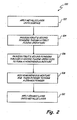
- FIG. 2 shows a block diagram of an exemplary, non-limiting method 100 of applying an erosion resistant TBC 12 onto part 10.
- metallic layer 16 is first applied onto surface 14.
- the first powder and the second powder are initially processed through a first fusing operation at a temperature above the melting point of the first and second powders to form a homogeneous mixture, Box 104.
- first fusing operation occurs at approximately 4000 °F (2204 °C).
- the first powder and the second powder are sent through a second fusing operation at a temperature above the melting point of the first and second powders, Box 106.
- the second fusing operation occurs at approximately 4000 °F (2204 °C).
- the homogeneous mixture Prior to sending the first and second powders through the second fusing operation, the homogeneous mixture may optionally be crushed or milled such that the homogeneous mixture is in powder form.
- a third powder is mixed with the homogeneous powder mixture to create a ceramic powder mixture of all three powders, Box 108.
- the ceramic powder mixture is then applied as ceramic layer 18 onto metallic layer 16, Box 110.
- ceramic layer 18 is plasma-sprayed onto metallic layer 16.
- the TBC includes a metallic layer and a ceramic layer applied onto a surface of a part.
- the ceramic layer is formed by a first powder, a second powder, and a third powder to form an erosion resistant coating.
- the first powder and the second powder are fused together before being mixed with the third powder to form a ceramic powder mixture, which is then applied, via plasma spraying, as the ceramic layer on the metallic layer.
- the first and second powders interact with each other and, once mixed with the third powder, form a TBC having increased erosion resistance, increased fracture toughness, and greater phase stability.
- the TBC also has low thermal conductivity and may be used on various gas turbine engine components to reduce cost and improve performance.
Landscapes
- Chemical & Material Sciences (AREA)
- Engineering & Computer Science (AREA)
- Materials Engineering (AREA)
- Organic Chemistry (AREA)
- Ceramic Engineering (AREA)
- Chemical Kinetics & Catalysis (AREA)
- Mechanical Engineering (AREA)
- Metallurgy (AREA)
- Physics & Mathematics (AREA)
- Manufacturing & Machinery (AREA)
- Inorganic Chemistry (AREA)
- Plasma & Fusion (AREA)
- Structural Engineering (AREA)
- Composite Materials (AREA)
- Thermal Sciences (AREA)
- Coating By Spraying Or Casting (AREA)
- Turbine Rotor Nozzle Sealing (AREA)
Abstract
Description
- Due to the high operating temperature environment in gas turbine engines, ceramic thermal barrier coatings (TBCs) are commonly applied to combustors and high turbine stationary and rotating parts to extend the life of the parts. TBCs typically consist of a metallic bond coat and a ceramic top coat applied to a nickel or cobalt based alloy. The TBCs are typically applied at thicknesses of between approximately 0.005 inches (0.127 millimeters) and approximately 0.04 inches (1.01 millimeters) and can provide up to an approximately 300 degree Fahrenheit (150 degree Celsius (°C)) temperature reduction to the base metal. Thus, the TBC provides the part with increased durability, allows for higher operating temperatures, and results in improved turbine efficiency.
- TBCs can be applied onto components by several different methods. For example, TBCs can be applied by electron beam physical vapor deposition (EB-PVD) or air plasma-spraying (APS). TBCs that are applied by APS tend to have low resistance to erosive particles due to coating porosity or changes in the crystalline structure due to chemistry modifications. Thus, it would be beneficial if a tougher material could be added to the TBCs to provide increased erosion resistance. Development of an erosion resistant TBC that could be applied by APS could result in significant cost savings, increased engine performance, and act as a product enabler. APS could be used to apply such TBCs to various gas turbine engine components, including, but not limited to: compressor components, cases, combustors, and turbine components.
- A ceramic thermal barrier coating having improved erosion resistance includes a metallic layer and a ceramic layer positioned on the metallic layer. The ceramic layer includes a first powder, a. second powder, and a third powder. The first powder and the second powder are alloyed together prior to being mixed with the third powder.
-
-
FIG. 1 is a cross-sectional view of a part having an erosion resistant coating. -
FIG. 2 is a block diagram of a method of applying the erosion resistant coating onto the part. -
FIG. 1 shows a cross-sectional view ofpart 10 having erosion resistant thermal barrier coating (TBC) 12 applied ontosurface 14 ofpart 10.TBC 12 onpart 10 contains a distinct phase that is alloyed to eliminate phase transformations withinTBC 12 and increases the spallation life ofTBC 12, and thuspart 10. In addition, TBC 12 also has a lower thermal conductivity than current industry standard TBCs, such as yttria-stabilized zirconia. This facilitates the use of reduced cooling air for turbine components which can result in improved turbine efficiency and part durability. For example, because TBC 12 is a good insulator against heat, TBC 12 allows gasturbine engine part 10 to run at higher temperatures, improving turbine efficiency and reducing cost. - TBC 12 may also be a product enabler, enabling the use of particular designs, cooling schemes, or materials that would otherwise not be able to be used. For example,
TBC 12 may allow the use of materials that are more economical but may not have all the required physical properties for a particular application. Therefore, an alloy with reduced physical properties, such as low oxidation resistance, low melting point, or low creep strength, may be used due to the increased thermal protection provided byTBC 12. -
Substrate surface 14 provides a base forTBC 12, which is formed bymetallic layer 16 andceramic layer 18 positioned onmetallic layer 16.Metallic layer 16 is typically known as a bond coat and may be deposited ontosubstrate surface 14 tobond substrate 14 toceramic layer 18.Metallic layer 16 may be a MCrAIY bond coat, where M is at least one of nickel, colbalt, and iron. Alternatively,metallic layer 16 may be an aluminide or platinum aluminide bond coat. In an exemplary embodiment,metallic layer 16 has a thickness of between approximately 0.0005 inches (0.0127 millimeters) to approximately 0.02 inches (0.508 millimeters), and preferably from between approximately 0.0005 inches (0.0127 millimeters) to approximately 0.01 inches (0.254 millimeters).Metallic layer 16 may be deposited by a low pressure plasma spray, high velocity oxygen fuel (HVOF) spray, a cathodic arc process, a diffusion process, an air plasma spray process, or a plating process, or combinations thereof, or any other method that is capable of forming a dense, uniform metallic structure. -
Ceramic layer 18 is formed from a first powder, a second powder, and a third powder. Prior to mixing with the third powder, the first powder and the second powder are alloyed together to form a homogeneous mixture. Examples of suitable compositions for the homogeneous mixture include, but are not limited to: titanium oxide and zirconium oxide, tantalum oxide and zirconium oxide, and titanium oxide and tantalum oxide. In an exemplary embodiment, the homogeneous mixture comprises between approximately 40 mol% and approximately 95 mol% titanium oxide and the balance zirconium oxide; between approximately 15 mol% and approximately 80 mol% tantalum oxide and the balance zirconium oxide; or between approximately 50 mol% and approximately 95 mol% titanium oxide and the balance tantalum oxide. - The third powder can be selected from the group consisting of: a zirconate, a hafnate, a titanate, and mixtures thereof, which have been doped with between approximately 5 weight percent and approximately 100 weight percent of at least one oxide. Examples of suitable oxides for the third powder of
ceramic layer 18 include, but are not limited to oxides of: scandium, indium, yttrium, lanthanum, cerium, praseodymium, neodymium, promethium, samarium, europium, gadolinium, terbium, dysprosium, holmium, erbium, thulium, ytterbium, and lutetium. An example of a particularly suitable composition for the third powder is a rare earth stabilized zirconium oxide, such as gadolinia-stabilized zirconium oxide. In an exemplary embodiment,ceramic layer 18 is comprised of between approximately 2 wt% and approximately 50 wt% homogeneous mixture and the balance the third powder. - The first powder and the second powder are alloyed together to form a homogeneous mixture prior to being mixed with the third powder. The first and second powders are alloyed together in order to eliminate possible phase transformations that may be detrimental to the final TBC's cyclic durability. For example, a concern with titanium oxide is that it goes through phase transformations when exposed to cyclic temperatures that result in a change in volume that imparts stress into
TBC 12. However, when titanium oxide is alloyed with the zirconium oxide, zirconium oxide eliminates the phase transformations of the titanium oxide. At the same time, the titanium oxide provides increased erosion resistance and fracture toughness. - The first powder and the second powder are alloyed by multiple fusing steps at temperatures above the melting point of the first and second powders to form the homogeneous mixture. In an exemplary embodiment, the first and second powders are first melted or fused together in an electric arc furnace at a temperature of approximately 4000 degrees Fahrenheit (°F) (2204 °C). After the first and second powders have been fused together to form the homogeneous mixture, the homogeneous mixture is allowed to cool. Prior to placing the homogeneous mixture back into the furnace for a second fusing operation, the homogeneous mixture may optionally be broken up by any means known in the art, including, but not limited to: crushing and milling. The first and second powders are then fused together again at a temperature of approximately 4000 °F (2204 °C) to once again form the homogeneous mixture. The first and second powders are processed in the electric arc furnace at least two times. The batch or furnace where the first and second powders are being fused is held at this temperature for an amount of time sufficient to achieve a homogeneous melt and will depend on the melt composition. The electric arc fusing process may be completed in air but may also be completed in a protective atmosphere.
- After the first and second powders have been properly processed to form the homogeneous mixture, the homogeneous mixture is again broken up into powder form to create a homogeneous powder mixture. The third powder is then mechanically mixed with the homogeneous powder mixture to create a ceramic powder mixture which is then applied as
ceramic layer 18 ontometallic layer 16.Ceramic layer 18 may be applied ontometallic layer 16 by any suitable means known in the art. In an exemplary embodiment,ceramic layer 18 is plasma-sprayed ontometallic layer 16. Thus, the homogeneous powder mixture and the third powder are introduced into the plasma plume as a ceramic powder mixture which is melted within the plume and deposited asceramic layer 18 ontometallic layer 16.Ceramic layer 18 provides lower thermal conductivity toTBC 12 while improving its resistance to erosion. In an exemplary embodiment,TBC 12 has a thermal conductivity from approximately 0.36 W/mK to approximately 0.94 W/mK. -
FIG. 2 shows a block diagram of an exemplary,non-limiting method 100 of applying an erosionresistant TBC 12 ontopart 10. As shown inBox 102,metallic layer 16 is first applied ontosurface 14. The first powder and the second powder are initially processed through a first fusing operation at a temperature above the melting point of the first and second powders to form a homogeneous mixture,Box 104. In one embodiment, first fusing operation occurs at approximately 4000 °F (2204 °C). After the homogeneous mixture is allowed to cool, the first powder and the second powder are sent through a second fusing operation at a temperature above the melting point of the first and second powders,Box 106. In one embodiment, the second fusing operation occurs at approximately 4000 °F (2204 °C). Prior to sending the first and second powders through the second fusing operation, the homogeneous mixture may optionally be crushed or milled such that the homogeneous mixture is in powder form. After the first powder and the second powder have been adequately fused and crushed to form a homogeneous powder mixture, a third powder is mixed with the homogeneous powder mixture to create a ceramic powder mixture of all three powders,Box 108. The ceramic powder mixture is then applied asceramic layer 18 ontometallic layer 16, Box 110. In an exemplary embodiment,ceramic layer 18 is plasma-sprayed ontometallic layer 16. - The TBC includes a metallic layer and a ceramic layer applied onto a surface of a part. The ceramic layer is formed by a first powder, a second powder, and a third powder to form an erosion resistant coating. Through several fusing operations, the first powder and the second powder are fused together before being mixed with the third powder to form a ceramic powder mixture, which is then applied, via plasma spraying, as the ceramic layer on the metallic layer. The first and second powders interact with each other and, once mixed with the third powder, form a TBC having increased erosion resistance, increased fracture toughness, and greater phase stability. The TBC also has low thermal conductivity and may be used on various gas turbine engine components to reduce cost and improve performance.
- Although the present invention has been described with reference to preferred embodiments, workers skilled in the art will recognize that changes may be made in form and detail without departing from the scope of the invention.
Claims (30)
- A ceramic thermal barrier coating (12) having improved erosion resistance, the coating comprising:a metallic layer (16); anda ceramic layer (18) positioned on the metallic layer (16), wherein the ceramic layer is formed by a first powder, a second powder, and a third powder, and wherein the first powder and the second powder are alloyed together to form a homogeneous powder mixture prior to being mixed with the third powder.
- The coating of claim 1, wherein the first powder comprises titanium oxide and the second powder comprises zirconium oxide.
- The coating of claim 1 or 2, wherein the homogeneous powder mixture comprises between about 40 mol% and about 95 mol% titanium oxide and the balance zirconium oxide.
- The coating of claim 1, wherein the first powder and the second powder comprise tantalum oxide and zirconium oxide, respectively.
- The coating of claim 1 or 4, wherein the homogeneous powder mixture comprises between about 15 mol% and about 80 mol% tantalum oxide and the balance zirconium oxide.
- The coating of claim 1, wherein the first powder comprises titanium oxide and the second powder comprises tantalum oxide.
- The coating of claim 1 or 6, wherein the homogeneous powder mixture comprises between about 50 mol% and about 90 mol% titanium oxide and the balance tantalum oxide.
- The coating of any preceding claim, wherein the third powder comprises an oxide of a rare earth stabilized powder.
- The coating of any preceding claim, wherein the third powder comprises gadolinia-stabilized zirconium oxide powder.
- The coating of any preceding claim, wherein the first powder and the second powder are processed through at least two fusing operations to form the homogeneous powder mixture prior to being mixed with the third powder.
- The coating of any preceding claim, wherein the ceramic layer (18) comprises between about 2 weight% and about 50 weight% homogeneous powder mixture and the balance the third powder.
- The coating of any preceding claim, wherein the coating (12) has a thermal conductivity of between about 0.36 W/mK and about 0.94 W/mK.
- A component (10) having improved erosion resistance comprising:a substrate (14);a metallic bond coat (16) applied on the substrate (14); andan erosion resistant top coat (18) applied on the metallic bond coat (16), wherein the erosion resistant top coat is formed of a' mixture of a powder that includes an alloy of a first constituent and a second constituent and a powder of a third constituent.
- The component of claim 13, wherein the erosion resistant top coat (18) is plasma-sprayed onto the metallic bond coat (16).
- The component of claim 13 or 14, wherein the alloy is formed by at least two fusing operations.
- The component of claim 13, 14 or 15, wherein the powder of the third constituent has been doped with between about 5 weight% and about 100 weight% of at least one oxide.
- The component of claim 16, wherein the oxide comprises an oxide of at least one of: scandium, indium, yttrium, lanthanum, cerium, praseodymium, neodymium, promethium, samarium, europium, gadolinium, terbium, dysprosium, holmium, erbium, thulium, ytterbium, and lutetium.
- The component of claim 17, wherein the oxide comprises gadolinastabilized zirconium oxide.
- The component of any of claims 13 to 18, wherein the alloy comprises titanium oxide and zirconium oxide.
- The component of any of claims 13 to 18, wherein the alloy comprises tantalum oxide and titanium oxide.
- The component of any of claims 13 to 18, wherein the alloy comprises zirconium oxide and tantalum oxide.
- The component of any of claims 13 to 21, wherein the alloy constitutes between about 2 percent by weight and approximately 50 percent by weight of the erosion resistant top coat (18).
- A method of applying an erosion resistant coating (18) onto a component (10), the method comprising:coating a bond coat (16) onto a surface (14) of the component (10);fusing a first powder and a second powder to form an alloy;creating a powdered alloy from the alloy;mixing the powdered alloy with a third powder to form a ceramic powder mixture; andspraying the ceramic powder mixture onto the bond coat (16).
- The method of claim 23, wherein spraying the ceramic powder mixture comprises plasma-spraying.
- The method of claim 23 or 24, wherein fusing the first powder and the second powder comprises fusing titanium oxide and tantalum oxide.
- The method of claim 23 or 24, wherein fusing the first powder and the second powder comprises fusing titanium oxide and zirconium oxide.
- The method of claim 23 or 24, wherein fusing the first powder and the second powder comprises fusing zirconium oxide and tantalum oxide.
- The method of any of claims 23 to 27, wherein fusing the first powder and the second powder comprises fusing at a temperature of about 4000 degrees Fahrenheit (2204 degrees Celsius).
- A coating composition for an erosion resistant coating, comprising a mixture of powdered alloy of a first powdered constituent and a second powdered constituent, and a powder of a third constituent.
- A method of producing a coating composition for an erosion resistant coating comprising alloying a first powder and a second powder together; forming a powder of said alloy; and mixing said alloy powder with a third powder.
Applications Claiming Priority (1)
| Application Number | Priority Date | Filing Date | Title |
|---|---|---|---|
| US11/605,647 US8784944B2 (en) | 2006-11-29 | 2006-11-29 | Plasma-spray powder manufacture technique |
Publications (3)
| Publication Number | Publication Date |
|---|---|
| EP1927671A2 true EP1927671A2 (en) | 2008-06-04 |
| EP1927671A3 EP1927671A3 (en) | 2011-02-23 |
| EP1927671B1 EP1927671B1 (en) | 2013-11-06 |
Family
ID=41608683
Family Applications (1)
| Application Number | Title | Priority Date | Filing Date |
|---|---|---|---|
| EP07254576.7A Active EP1927671B1 (en) | 2006-11-29 | 2007-11-26 | Improved plasma-spray powder manufacture technique |
Country Status (2)
| Country | Link |
|---|---|
| US (1) | US8784944B2 (en) |
| EP (1) | EP1927671B1 (en) |
Cited By (1)
| Publication number | Priority date | Publication date | Assignee | Title |
|---|---|---|---|---|
| GB2459389A (en) * | 2008-04-25 | 2009-10-28 | Zircotec Ltd | Thermal barrier comprising a titania coating |
Families Citing this family (5)
| Publication number | Priority date | Publication date | Assignee | Title |
|---|---|---|---|---|
| US20100028549A1 (en) * | 2008-07-31 | 2010-02-04 | United Technologies Corporation | Dispersion Strengthened Rare Earth Stabilized Zirconia |
| US8337989B2 (en) | 2010-05-17 | 2012-12-25 | United Technologies Corporation | Layered thermal barrier coating with blended transition |
| RU2563531C1 (en) * | 2014-10-13 | 2015-09-20 | Федеральное государственное бюджетное образовательное учреждение высшего профессионального образования "Томский государственный архитектурно-строительный университет" (ТГАСУ) | Method of obtaining of fire-resistant material for glass-melting furnaces |
| US10837640B2 (en) * | 2017-03-06 | 2020-11-17 | General Electric Company | Combustion section of a gas turbine engine |
| CN114478005B (en) * | 2022-03-02 | 2023-02-21 | 北京理工大学 | A tetragonal phase thermal barrier coating material and its preparation method |
Citations (1)
| Publication number | Priority date | Publication date | Assignee | Title |
|---|---|---|---|---|
| US5061665A (en) | 1989-01-13 | 1991-10-29 | The Japan Carlit Co., Ltd. | Process for producing an improved alumina-zirconia composite sintered material |
Family Cites Families (16)
| Publication number | Priority date | Publication date | Assignee | Title |
|---|---|---|---|---|
| US2653107A (en) * | 1950-03-30 | 1953-09-22 | Nat Lead Co | Fused reduced titania-zirconia product and method |
| JPS584986B2 (en) * | 1978-06-16 | 1983-01-28 | 日産自動車株式会社 | Oxygen concentration measuring device |
| US4588655A (en) * | 1982-06-14 | 1986-05-13 | Eutectic Corporation | Ceramic flame spray powder |
| US4565792A (en) * | 1983-06-20 | 1986-01-21 | Norton Company | Partially stabilized zirconia bodies |
| JPS6096567A (en) * | 1983-10-29 | 1985-05-30 | ハリマセラミック株式会社 | Manufacture of sliding nozzle plate |
| US4645716A (en) * | 1985-04-09 | 1987-02-24 | The Perkin-Elmer Corporation | Flame spray material |
| US4753902A (en) * | 1986-11-24 | 1988-06-28 | Corning Glass Works | Transformation toughened zirconia-titania-yttria ceramic alloys |
| US4923830A (en) * | 1989-09-18 | 1990-05-08 | Swiss Aluminum Ltd. | Ceramic bodies formed from partially stabilized zirconia |
| US5338577A (en) * | 1993-05-14 | 1994-08-16 | Kemira, Inc. | Metal with ceramic coating and method |
| JP2703207B2 (en) * | 1995-01-30 | 1998-01-26 | 松下電工株式会社 | Zirconia-based composite ceramic sintered body and method for producing the same |
| US6596397B2 (en) * | 2001-04-06 | 2003-07-22 | Shin-Etsu Chemical Co., Ltd. | Thermal spray particles and sprayed components |
| US6686060B2 (en) * | 2002-05-15 | 2004-02-03 | General Electric Company | Thermal barrier coating material |
| US7060365B2 (en) | 2002-05-30 | 2006-06-13 | General Electric Company | Thermal barrier coating material |
| US6933061B2 (en) * | 2002-12-12 | 2005-08-23 | General Electric Company | Thermal barrier coating protected by thermally glazed layer and method for preparing same |
| US6955308B2 (en) * | 2003-06-23 | 2005-10-18 | General Electric Company | Process of selectively removing layers of a thermal barrier coating system |
| US7306860B2 (en) * | 2004-07-30 | 2007-12-11 | Honeywell International, Inc. | Protective coating for oxide ceramic based composites |
-
2006
- 2006-11-29 US US11/605,647 patent/US8784944B2/en active Active
-
2007
- 2007-11-26 EP EP07254576.7A patent/EP1927671B1/en active Active
Patent Citations (1)
| Publication number | Priority date | Publication date | Assignee | Title |
|---|---|---|---|---|
| US5061665A (en) | 1989-01-13 | 1991-10-29 | The Japan Carlit Co., Ltd. | Process for producing an improved alumina-zirconia composite sintered material |
Cited By (2)
| Publication number | Priority date | Publication date | Assignee | Title |
|---|---|---|---|---|
| GB2459389A (en) * | 2008-04-25 | 2009-10-28 | Zircotec Ltd | Thermal barrier comprising a titania coating |
| GB2459389B (en) * | 2008-04-25 | 2013-02-06 | Zircotec Ltd | An article with a thermal barrier and a method of applying a thermal barrier to a surface of an article |
Also Published As
| Publication number | Publication date |
|---|---|
| EP1927671B1 (en) | 2013-11-06 |
| EP1927671A3 (en) | 2011-02-23 |
| US8784944B2 (en) | 2014-07-22 |
| US20100028698A1 (en) | 2010-02-04 |
Similar Documents
| Publication | Publication Date | Title |
|---|---|---|
| EP1550645B1 (en) | Ceramic compositions for thermal barrier coatings stabilized in the cubic crystalline phase | |
| EP1591550B2 (en) | Thermal barrier coating having an interfacial layer for spallation life enhancement and low conductivity | |
| US6887595B1 (en) | Thermal barrier coatings having lower layer for improved adherence to bond coat | |
| US20200024718A1 (en) | Cmas resistant thermal barrier coatings | |
| JP5483792B2 (en) | Ceramic compositions useful for thermal barrier coatings with low thermal conductivity | |
| US6858334B1 (en) | Ceramic compositions for low conductivity thermal barrier coatings | |
| EP1852521A1 (en) | Thermal barrier coatings and processes for applying same | |
| US7041383B2 (en) | Durable thermal barrier coating having low thermal conductivity | |
| JP2007231422A (en) | Coating process and coated article | |
| US20080166499A1 (en) | Low thermal conductivity thermal barrier coating system and method therefor | |
| JP2005206450A (en) | Ceramic composition for thermal barrier coating with low thermal conductivity | |
| EP2767525A1 (en) | Ceramic powders and methods therefor | |
| US7258934B2 (en) | Thermal barrier coating and a method of applying such a coating | |
| US20160010471A1 (en) | Coating systems and methods therefor | |
| EP1927671A2 (en) | Improved plasma-spray powder manufacture technique | |
| EP1588992A1 (en) | Mixed metal oxide ceramic compositions for reduced conductivity thermal barrier coatings | |
| US20100028549A1 (en) | Dispersion Strengthened Rare Earth Stabilized Zirconia | |
| CA2549091C (en) | Durable thermal barrier coating having low thermal conductivity | |
| EP3705597A1 (en) | Thermal barrier coating with improved adhesion |
Legal Events
| Date | Code | Title | Description |
|---|---|---|---|
| PUAI | Public reference made under article 153(3) epc to a published international application that has entered the european phase |
Free format text: ORIGINAL CODE: 0009012 |
|
| AK | Designated contracting states |
Kind code of ref document: A2 Designated state(s): AT BE BG CH CY CZ DE DK EE ES FI FR GB GR HU IE IS IT LI LT LU LV MC MT NL PL PT RO SE SI SK TR |
|
| AX | Request for extension of the european patent |
Extension state: AL BA HR MK RS |
|
| PUAL | Search report despatched |
Free format text: ORIGINAL CODE: 0009013 |
|
| AK | Designated contracting states |
Kind code of ref document: A3 Designated state(s): AT BE BG CH CY CZ DE DK EE ES FI FR GB GR HU IE IS IT LI LT LU LV MC MT NL PL PT RO SE SI SK TR |
|
| AX | Request for extension of the european patent |
Extension state: AL BA HR MK RS |
|
| RIC1 | Information provided on ipc code assigned before grant |
Ipc: C04B 35/653 20060101ALI20110118BHEP Ipc: C23C 28/00 20060101ALI20110118BHEP Ipc: C04B 35/495 20060101ALI20110118BHEP Ipc: C23C 4/12 20060101AFI20080306BHEP Ipc: C23C 4/08 20060101ALI20110118BHEP Ipc: C04B 35/46 20060101ALI20110118BHEP Ipc: C04B 35/484 20060101ALI20110118BHEP Ipc: C04B 35/49 20060101ALI20110118BHEP |
|
| 17P | Request for examination filed |
Effective date: 20110823 |
|
| AKX | Designation fees paid |
Designated state(s): DE GB |
|
| GRAP | Despatch of communication of intention to grant a patent |
Free format text: ORIGINAL CODE: EPIDOSNIGR1 |
|
| GRAP | Despatch of communication of intention to grant a patent |
Free format text: ORIGINAL CODE: EPIDOSNIGR1 |
|
| INTG | Intention to grant announced |
Effective date: 20130726 |
|
| GRAS | Grant fee paid |
Free format text: ORIGINAL CODE: EPIDOSNIGR3 |
|
| GRAA | (expected) grant |
Free format text: ORIGINAL CODE: 0009210 |
|
| AK | Designated contracting states |
Kind code of ref document: B1 Designated state(s): DE GB |
|
| REG | Reference to a national code |
Ref country code: GB Ref legal event code: FG4D |
|
| REG | Reference to a national code |
Ref country code: DE Ref legal event code: R096 Ref document number: 602007033632 Country of ref document: DE Effective date: 20140102 |
|
| REG | Reference to a national code |
Ref country code: DE Ref legal event code: R097 Ref document number: 602007033632 Country of ref document: DE |
|
| PLBE | No opposition filed within time limit |
Free format text: ORIGINAL CODE: 0009261 |
|
| STAA | Information on the status of an ep patent application or granted ep patent |
Free format text: STATUS: NO OPPOSITION FILED WITHIN TIME LIMIT |
|
| 26N | No opposition filed |
Effective date: 20140807 |
|
| REG | Reference to a national code |
Ref country code: DE Ref legal event code: R097 Ref document number: 602007033632 Country of ref document: DE Effective date: 20140807 |
|
| REG | Reference to a national code |
Ref country code: DE Ref legal event code: R082 Ref document number: 602007033632 Country of ref document: DE Representative=s name: SCHMITT-NILSON SCHRAUD WAIBEL WOHLFROM PATENTA, DE |
|
| REG | Reference to a national code |
Ref country code: DE Ref legal event code: R082 Ref document number: 602007033632 Country of ref document: DE Representative=s name: SCHMITT-NILSON SCHRAUD WAIBEL WOHLFROM PATENTA, DE Ref country code: DE Ref legal event code: R081 Ref document number: 602007033632 Country of ref document: DE Owner name: UNITED TECHNOLOGIES CORP. (N.D.GES.D. STAATES , US Free format text: FORMER OWNER: UNITED TECHNOLOGIES CORP., HARTFORD, CONN., US |
|
| REG | Reference to a national code |
Ref country code: DE Ref legal event code: R081 Ref document number: 602007033632 Country of ref document: DE Owner name: RAYTHEON TECHNOLOGIES CORPORATION (N.D.GES.D.S, US Free format text: FORMER OWNER: UNITED TECHNOLOGIES CORP. (N.D.GES.D. STAATES DELAWARE), FARMINGTON, CONN., US |
|
| PGFP | Annual fee paid to national office [announced via postgrant information from national office to epo] |
Ref country code: DE Payment date: 20220616 Year of fee payment: 16 |
|
| REG | Reference to a national code |
Ref country code: DE Ref legal event code: R119 Ref document number: 602007033632 Country of ref document: DE |
|
| PG25 | Lapsed in a contracting state [announced via postgrant information from national office to epo] |
Ref country code: DE Free format text: LAPSE BECAUSE OF NON-PAYMENT OF DUE FEES Effective date: 20240601 |
|
| PG25 | Lapsed in a contracting state [announced via postgrant information from national office to epo] |
Ref country code: DE Free format text: LAPSE BECAUSE OF NON-PAYMENT OF DUE FEES Effective date: 20240601 |
|
| PGFP | Annual fee paid to national office [announced via postgrant information from national office to epo] |
Ref country code: GB Payment date: 20251023 Year of fee payment: 19 |
|
| P01 | Opt-out of the competence of the unified patent court (upc) registered |
Free format text: CASE NUMBER: UPC_APP_0018192_1927671/2025 Effective date: 20251218 |