EP1923790A2 - Kompatibilitätsprüfung in einem portablen Datenträger - Google Patents
Kompatibilitätsprüfung in einem portablen Datenträger Download PDFInfo
- Publication number
- EP1923790A2 EP1923790A2 EP07021021A EP07021021A EP1923790A2 EP 1923790 A2 EP1923790 A2 EP 1923790A2 EP 07021021 A EP07021021 A EP 07021021A EP 07021021 A EP07021021 A EP 07021021A EP 1923790 A2 EP1923790 A2 EP 1923790A2
- Authority
- EP
- European Patent Office
- Prior art keywords
- function
- data carrier
- environment
- compatibility
- incompatibility
- Prior art date
- Legal status (The legal status is an assumption and is not a legal conclusion. Google has not performed a legal analysis and makes no representation as to the accuracy of the status listed.)
- Granted
Links
Images
Classifications
-
- G—PHYSICS
- G07—CHECKING-DEVICES
- G07F—COIN-FREED OR LIKE APPARATUS
- G07F7/00—Mechanisms actuated by objects other than coins to free or to actuate vending, hiring, coin or paper currency dispensing or refunding apparatus
- G07F7/08—Mechanisms actuated by objects other than coins to free or to actuate vending, hiring, coin or paper currency dispensing or refunding apparatus by coded identity card or credit card or other personal identification means
- G07F7/10—Mechanisms actuated by objects other than coins to free or to actuate vending, hiring, coin or paper currency dispensing or refunding apparatus by coded identity card or credit card or other personal identification means together with a coded signal, e.g. in the form of personal identification information, like personal identification number [PIN] or biometric data
-
- G—PHYSICS
- G06—COMPUTING OR CALCULATING; COUNTING
- G06F—ELECTRIC DIGITAL DATA PROCESSING
- G06F9/00—Arrangements for program control, e.g. control units
- G06F9/06—Arrangements for program control, e.g. control units using stored programs, i.e. using an internal store of processing equipment to receive or retain programs
- G06F9/44—Arrangements for executing specific programs
- G06F9/445—Program loading or initiating
- G06F9/44505—Configuring for program initiating, e.g. using registry, configuration files
-
- G—PHYSICS
- G06—COMPUTING OR CALCULATING; COUNTING
- G06Q—INFORMATION AND COMMUNICATION TECHNOLOGY [ICT] SPECIALLY ADAPTED FOR ADMINISTRATIVE, COMMERCIAL, FINANCIAL, MANAGERIAL OR SUPERVISORY PURPOSES; SYSTEMS OR METHODS SPECIALLY ADAPTED FOR ADMINISTRATIVE, COMMERCIAL, FINANCIAL, MANAGERIAL OR SUPERVISORY PURPOSES, NOT OTHERWISE PROVIDED FOR
- G06Q20/00—Payment architectures, schemes or protocols
- G06Q20/30—Payment architectures, schemes or protocols characterised by the use of specific devices or networks
- G06Q20/32—Payment architectures, schemes or protocols characterised by the use of specific devices or networks using wireless devices
- G06Q20/322—Aspects of commerce using mobile devices [M-devices]
- G06Q20/3229—Use of the SIM of a M-device as secure element
-
- G—PHYSICS
- G06—COMPUTING OR CALCULATING; COUNTING
- G06Q—INFORMATION AND COMMUNICATION TECHNOLOGY [ICT] SPECIALLY ADAPTED FOR ADMINISTRATIVE, COMMERCIAL, FINANCIAL, MANAGERIAL OR SUPERVISORY PURPOSES; SYSTEMS OR METHODS SPECIALLY ADAPTED FOR ADMINISTRATIVE, COMMERCIAL, FINANCIAL, MANAGERIAL OR SUPERVISORY PURPOSES, NOT OTHERWISE PROVIDED FOR
- G06Q20/00—Payment architectures, schemes or protocols
- G06Q20/30—Payment architectures, schemes or protocols characterised by the use of specific devices or networks
- G06Q20/34—Payment architectures, schemes or protocols characterised by the use of specific devices or networks using cards, e.g. integrated circuit [IC] cards or magnetic cards
- G06Q20/355—Personalisation of cards for use
- G06Q20/3552—Downloading or loading of personalisation data
-
- G—PHYSICS
- G06—COMPUTING OR CALCULATING; COUNTING
- G06Q—INFORMATION AND COMMUNICATION TECHNOLOGY [ICT] SPECIALLY ADAPTED FOR ADMINISTRATIVE, COMMERCIAL, FINANCIAL, MANAGERIAL OR SUPERVISORY PURPOSES; SYSTEMS OR METHODS SPECIALLY ADAPTED FOR ADMINISTRATIVE, COMMERCIAL, FINANCIAL, MANAGERIAL OR SUPERVISORY PURPOSES, NOT OTHERWISE PROVIDED FOR
- G06Q20/00—Payment architectures, schemes or protocols
- G06Q20/30—Payment architectures, schemes or protocols characterised by the use of specific devices or networks
- G06Q20/34—Payment architectures, schemes or protocols characterised by the use of specific devices or networks using cards, e.g. integrated circuit [IC] cards or magnetic cards
- G06Q20/356—Aspects of software for card payments
- G06Q20/3563—Software being resident on card
-
- G—PHYSICS
- G07—CHECKING-DEVICES
- G07F—COIN-FREED OR LIKE APPARATUS
- G07F7/00—Mechanisms actuated by objects other than coins to free or to actuate vending, hiring, coin or paper currency dispensing or refunding apparatus
- G07F7/08—Mechanisms actuated by objects other than coins to free or to actuate vending, hiring, coin or paper currency dispensing or refunding apparatus by coded identity card or credit card or other personal identification means
- G07F7/10—Mechanisms actuated by objects other than coins to free or to actuate vending, hiring, coin or paper currency dispensing or refunding apparatus by coded identity card or credit card or other personal identification means together with a coded signal, e.g. in the form of personal identification information, like personal identification number [PIN] or biometric data
- G07F7/1008—Active credit-cards provided with means to personalise their use, e.g. with PIN-introduction/comparison system
Definitions
- the present invention relates to a method for performing a function of a portable data carrier in the context of an insert of the data carrier in a specific environment of use as well as such a portable data carrier.
- Portable media such as. As smart cards, smart cards, wireless cards, secure multimedia cards and the like are often used in heterogeneous environments and therefore have a special robustness with regard to z. B. have different transmission protocols, transmission speeds and other technical conditions typical environment of use of the disk.
- a portable volume be able to adapt to changing communications with various external communication devices, which typically form the main component of an environment of use of the volume, for its functions to reliably achieve the desired results.
- the DE 10 2004 014 885 A1 further discloses a method of optimizing executable programs of a portable data carrier by means of a diagnostic element which, during execution of the programs, collects statistical data used to optimize resource consumption.
- such approaches are not practical or not suitable for automatically adapting portable data carriers to changing operating environments.
- a processor-executable function of a portable data carrier is checked for compatibility with a particular environment in which the data carrier is used by the user. If the feature is found to be incompatible with the particular environment of use, an incompatibility routine of the volume is invoked instead of the function to achieve the intended or alternative effect in the given environment of use. If the function is compatible with the environment of use, it is executed regularly or its function result is adopted.
- Examples of deployment environments in which portable data carriers are commonly used are e.g. ATMs, ticket vending machines, mobile phones, computers, notebooks and any other electronic communication devices that can be used with portable data carriers such.
- ATMs e.g. ticket vending machines
- mobile phones e.g., personal computers, notebooks and any other electronic communication devices that can be used with portable data carriers such.
- smart cards, wireless cards, secure multimedia cards and the like can perform a Dante communication.
- a portable data carrier comprises a data communication interface for interaction and data communication with an external data communication device when the data carrier is used in a specific operating environment, as well as a memory and a processor for storing and executing functions of the data carrier which are called up in the context of deployment in the deployment environment ,
- a special compatibility device performs the above-described compatibility check of a function to be performed and optionally invokes an associated incompatibility routine, which is also stored in the memory of the volume and executed by the processor.
- the compatibility device can be implemented in any form on the data carrier, for example as a security application, which performs a compatibility check prior to execution of a function, or in the form of a separate integrated circuit present on the data carrier.
- the compatibility device is preferably designed as a central compatibility layer of an operating system of the data carrier, which is functionally arranged between the operating system and the applications or functions to be executed and performs a compatibility check for each called function.
- the compatibility device can determine whether it is even necessary before the actual compatibility check. For example, it is possible to dispense with a compatibility check if a function to be performed does not interact with the relevant operating environment and does not have an external effect with regard to the data carrier.
- the actual compatibility check is carried out by calling the function to be checked and generating a function result depending on the respective environment of use of the data medium.
- the compatibility device can detect an incompatibility of the function with the environment of use, for example in that the functional result represents an error message or another than the usual and / or desired and / or expected functional result.
- the compatibility check is thus preferably carried out by regularly executing the function to be tested in the deployment environment and checking the functional result thereof for compatibility with the deployment environment before further processing by the data carrier from the compatibility device.
- an incompatibility routine present in the memory of the data carrier is determined by first obtaining information about the respective use environment for which the incompatibility was determined. Based on this determined information, an incompatibility routine is then determined, depending on the incompatible function and on the environment of use.
- the information about the deployment environment determined by the compatibility device comprises an identification of the external data communication device, with which the data carrier interacts when executing the incompatible function or with which it maintains a data communication connection.
- Such information can relate, for example, to data communication protocols, data transmission speeds or operating system and / or software equipment of the data communication device, but also technical information about a network behind the data communication device or about a larger technical infrastructure of which the data communication device is part.
- the information about the deployment environment includes all features of an external data communication device that may affect the performance of a function of the data carrier in interaction with the data communication device or on which the performance result may depend.
- the portable data carrier comprises in the memory a rulebase with rules that dictate a particular behavior of the data carrier in case of incompatibility. These rules provide a link between the regular functions of the volume and associated incompatibility routines that are invoked by the compatibility facility if the feature in question is incompatible. Because an incompatibility routine depends on the particular environment of use, with which a particular function of the volume is incompatible, the rules of the rulebase, when mapping an incompatible function to an incompatibility routine, especially consider the deployment environment.
- This rule database or its rules need not be configured as a rigid, unchangeable control system, but can be adaptable and / or learning by z.
- the compatibility facility integrates the results of individual compatibility checks into the control system by adapting existing rules or adding new rules.
- the compatibilizer can quickly and reliably determine the most appropriate incompatibility routine for a given deployment environment.
- a privileged maintenance access to the rule database from the outside via the data communication interface of the disk consists, for. By a publisher or manufacturer of the volume to adapt or update the rules as needed.
- Portable media such as.
- As smart cards or wireless cards usually include a variety of functions whose execution depends on at least one function parameter.
- alternative functions of the incompatible function can be used, which achieve the effect originally intended to perform the incompatible function in the respective operating environment.
- a parameterized function such an alternative function can be, for example, that instead of a used function parameter, an alternative function parameter is selected that is matched to the present use environment.
- a function parameter it is possible for a function parameter to be a particular data communication protocol or a transmission rate while an alternative function parameter indicates a different data communication protocol or a lower or higher transmission speed.
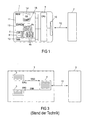
- the smart card 1 shown in Fig. 1 are usually equipped with a processor 9 (CPU), which performs functions 4a (FCT) when using the smart card to certain services of the smart card 1 by means of a data communication 12 with an external data communication device 2 to provide.
- a processor 9 CPU
- FCT functions 4a
- OS operating system
- EEPROM memory 14 non-volatile flash or EEPROM memory 14 as application functions or in the form of library functions.
- the execution of a function 4a by the processor 9 usually requires an interaction or data communication 12 between the chip card 1 and the external data communication device 2 via a data communication interface 10.
- Such functions 4a are used, for example, in applications of a (U) SIM mobile communication card configured smart card 1 in interaction with a telecommunications terminal, z. As a mobile phone performed, with the mobile card is in contact.
- the successful execution of a function 4a is based in particular on an interaction with the external communication device 2, since the function 4a, for. B. call certain additional functions in the data communication device 2, query data or cause other effects outside of the data carrier 1.
- the chip card 1 comprises a compatibility device 15 (COMP) which, when calling a function 4a, checks its compatibility with the relevant deployment environment 2.
- COMP compatibility device 15
- the compatibility device 15 is preferably configured as a layer of the operating system 14 of the chip card 1 or as an operating system extension or component which has priority in terms of its priority between the operating system 14 and further Application, library and other functions 4a is arranged.
- This compatibility device 15 checks the compatibility of a function 4a to be performed with the environment of use 2 and, if an incompatibility is established, calls an incompatibility routine 4b (ROUT) provided for this case, which is executed in place of the incompatible function 4a.
- An incompatibility routine 4b of the functions 4a preferably lies in the EEPROM memory 12 of the chip card 1 and is called via rules 8 (RULES) as a function of the respective incompatible function 4a and the determined use environment 2.
- the rules 8 represent a differentiated control system for incompatibility and error handling by the compatibility device 15.
- the rules 8 are preferably combined in a rule database 6 (DB), which is also stored in the EEPROM memory 12.
- the update of the rules database 6 and the adaptation of the rules 8 to new insights into the compatibility of certain functions 4a with specific deployment environments 2 can be performed by the compatibility facility 15 by setting the results of each compatibility check in the form of new or updated rules 8 in the rule database 6 become.
- an incompatibility routine 4b to be invoked instead of an incompatible function 4a must be determined only once for a specific operating environment and is then available via a query of the rule database 6.
- the rule database is formed by a list of alternative function calls.
- the function calls contained in the list can be successively checked until a compatible function call is recognized.
- An assignment of function calls to deployment environments is not mandatory.
- the list can also be used to simply mark the current function call to be used. Alternatively, however, it is also possible-for example when using jump tables for function calls-to use a separate list (jump table) for the function calls currently to be used. The alternative function call is then immediately saved as a new function call. The list will refresh after a first use in a deployment environment or a change of deployment environment.
- the rule database 6 or a corresponding list can be updated and adapted from the outside via a privileged maintenance access (not shown), eg. B. from a publisher or manufacturer of the smart card 1.
- a privileged maintenance access (not shown), eg. B. from a publisher or manufacturer of the smart card 1.
- this is for example possible via the air interface of a mobile phone, can be accessed via the directly to the EEPROM memory 12 with the rule database 6.
- the rule database 6 can be updated by an appropriate communication with a background system of an operator of the terminals.
- certain functions of the chip card 1 can be switched on or off depending on the type of terminal.
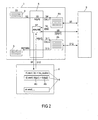
- Fig. 3 shows the call of a function 4 in the context of the execution of a program 3 in a portable data carrier 1 according to the prior art.
- the portable data carrier 1 is in contact with an external data communication device 2.
- a parameterized library or application function 4 fct (p) is called (CALL).
- the function 4 is dependent on the function parameter p, which represents, for example, input data to be processed by the function or a specific variant of the Function fct (p) specified.
- the function 4 performed a data communication 12 with the data communication device 2, for example, data is exchanged or interrogated between the data carrier 1 and the data communication device 2.
- Fig. 2 shows a stepwise compatibility check by a compatibility means 15 of a smart card 1 according to the present invention.
- a main program 3 is started, eg by the operating system 14 of the chip card 1.
- the main program 3 calls the function fct (p1) 4a. This call is forwarded to or registered by the compatibility device 15.
- the compatibility device 15 checks whether the function fct (p1) 4a is a function that must interact with the deployment environment 2 and therefore must be compatible with it. If this is the case, perform a compatibility check of the called function fct ( p1 ) 4a.
- step S4 the function fct ( p1 ) 4a is finally called (CALL1), which results in an interaction or data communication between the called function 4a and the deployment environment 2 of the smart card 1 in step S5.
- the environment of use is essentially represented by the data communication device 2, but may also include other devices whose technical feature may have an influence on the execution of the function fct (p1) 4a, z. A network, background system, subordinate databases, and the like.
- step S6 the result of the operation becomes the function fct (p1) 4a is returned, so that the compatibility device 15 can check in step S7 on the basis of the result of the function whether the function fct (p1) 4a is compatible with the environment of use 2 (ANAYSE).
- step S9 queries the rules 8 of the rule database 6 for an incompatibility routine to the incompatible function fct ( p1 ) 4a. Since the selection of an incompatibility routine 4b depends not only on the incompatible function 4a but also on the deployment environment 2, the compatibility device 15 determines in advance in step S8 information (ENV1) about the deployment environment 2, which for example comprise the technical features and conditions of the communication device 2, of which the execution of the function 4a depends.
- ELR error message
- the rules r1, r2 to rn laid down in the rule database 6 map incompatible functions 4a [ fct, fct (p1) ] as a function of the respectively determined use environment 2 [ env1, env2 ] to associated incompatibility routines 4b [ inc_routine, fct (p2) ] , which ensure a compatible with the environment of use 2 processing.
- rule r 2 applies, which proposes the alternative function fct ( p2 ) 4b in the event that the function fct ( p1 ) specified by the function parameter p 1 is incompatible with the use environment 2 ( env1 ) determined in step S8 , which depends on the alternative parameter p2.
- the thus determined alternative function fct (p2) 4b is then called and executed by the compatibility device 15 instead of the incompatible function 4a in step S11 (CALL2).
- the alternative function fct (p2) like the incompatible function fct (p1) 4a, has an interaction S12 with the deployment environment / data communication device 2 results and returns in step S13 a function result to the compatibility device 15 and further to the main program 3 back, which can now continue properly.
- a mobile telephone which represents the deployment environment 2 of the mobile communication card 1
- the compatibility device 15 can derive a rule 8 from the rule database 6, which indicates that a function 4a to be executed initially uses a divider 8, which can be specified, for example, via a corresponding function parameter. If the compatibility device 15 detects an incompatibility, stepwise dividers of 16, 32, 64 up to 372 may be used to try out correspondingly slower and less problematic data communications.
- the compatibility device 15 can create a rule 8 in the rule database 6 for a divider determined in this way, which specifies the successful divider for the relevant function 4a.
- the deployment environment 2 can be specified, for example, by a unique serial number of the mobile phone 2.
- the most suitable transmission parameter is then automatically given by the compatibility device 15.
- mobile communication cards 1 include a microbrowser for performing additional functions 4a by interpreting a specific bytecode.
- microbrowsers are very complex and sometimes faulty, it is expedient to provide rules 8 in the rule database 6, which deactivates the microbrowser if the microbrowser or its additional functions 4a with a mobile phone 2 are incompatible. This leaves at least the elementary mobile radio functions available to a user of the relevant mobile communications card 1.
- the compatibility device 15 may be difficult for the compatibility device 15 to reliably detect the incompatibility of a function 4a to be performed based solely on its design. Rather, an incompatibility of the above-mentioned microbrowser z. B. also be monitored by monitoring other, dependent on the microbrowser functions. For example, the compatibility device 15 can cyclically check whether, after the microbrowser has been called, data communication continues to take place, eg as part of an authentication. If this is not the case, the compatibility device 15 recognizes that the use of the microbrowser z. B. the mobile card 1 and / or the mobile phone 2 blocked, so that the microbrowser deactivated and the mobile phone card 1 must be restarted. Such an operation of the compatibility device 15 is comparable to that of a "watch dog" in conventional microcontrollers.
Landscapes
- Engineering & Computer Science (AREA)
- Physics & Mathematics (AREA)
- Business, Economics & Management (AREA)
- General Physics & Mathematics (AREA)
- Theoretical Computer Science (AREA)
- Strategic Management (AREA)
- Computer Networks & Wireless Communication (AREA)
- Accounting & Taxation (AREA)
- Software Systems (AREA)
- General Business, Economics & Management (AREA)
- Microelectronics & Electronic Packaging (AREA)
- General Engineering & Computer Science (AREA)
- Mobile Radio Communication Systems (AREA)
- Debugging And Monitoring (AREA)
Abstract
Description
- Die vorliegende Erfindung betrifft ein Verfahren zum Ausführen einer Funktion eines portablen Datenträgers im Rahmen eines Einsatzes des Datenträgers in einer bestimmten Einsatzumgebung sowie einen derartigen portablen Datenträger.
- Portable Datenträger, wie z. B. Chipkarten, Smart Cards, Mobilfunkkarten, sichere Multimediakarten und dergleichen werden häufig in heterogenen Umgebungen eingesetzt und müssen deshalb über eine besondere Robustheit im Hinblick auf z. B. unterschiedliche Übertragungsprotokolle, Übertragungsgeschwindigkeiten und sonstige technische Gegebenheiten von typischen Einsatzumgebung des Datenträgers verfügen. Insbesondere ist es wünschenswert, dass sich ein portabler Datenträger an wechselnde Kommunikationen mit verschiedenen externen Kommunikationsvorrichtungen anpassen kann, die üblicherweise die Hauptkomponente einer Einsatzumgebung des Datenträgers bilden, damit dessen Funktionen zuverlässig die gewünschten Ergebnisse erzielen.
- In einem speziellen Kontext wird eine vergleichbare Anforderung z. B. von in Deutschland gebräuchlichen Telefonkarten erfüllt, indem diese auf ein von dem Kartentelefon vorgegebenes Kommunikationsprotokoll (T = 1 oder T = 14) mit einem Neustart (bzw. "Warmstart") und Umschalten des Protokolls reagieren. Die
DE 10 2004 014 885 A1 offenbart darüber hinaus ein Verfahren zum Optimieren von ausführbaren Programmen eines tragbaren Datenträgers mittels eines Diagnoseelements, das während einer Ausführung der Programme statistische Daten sammelt, die zur Optimierung des Ressourcenverbrauchs verwendet werden. Derartige Ansätze sind jedoch zur automatischen Anpassung von portablen Datenträgern an wechselnde Einsatzumgebungen nicht praktikable bzw. nicht geeignet. - Demzufolge ist es die Aufgabe der vorliegenden Erfindung, einen flexiblen und robusten Einsatz von portablen Datenträgern in wechselnden Einsatzumgebungen zu ermöglichen.
- Diese Aufgabe wird erfindungsgemäß durch ein Verfahren sowie einen Datenträger mit den Merkmalen der unabhängigen Ansprüche gelöst. Die davon abhängigen Ansprüche beschreiben vorteilhafte Ausgestaltungen und Weiterbildungen der Erfindung.
- Erfindungsgemäß wird eine von einem Prozessor ausführbare Funktion eines portablen Datenträgers auf ihre Kompatibilität mit einer bestimmten Einsatzumgebung geprüft, in welcher der Datenträger von dem Benutzer eingesetzt wird. Falls eine Inkompatibilität der Funktion mit der betreffenden Einsatzumgebung festgestellt wird, wird eine Inkompatibilitätsroutine des Datenträgers anstelle der Funktion aufgerufen, um in der vorliegenden Einsatzumgebung die mit der Ausführung der Funktion beabsichtigte oder eine alternative Wirkung zu erzielen. Falls die Funktion mit der Einsatzumgebung kompatibel ist, wird sie regulär ausgeführt bzw. ihr Funktionsergebnis wird übernommen.
- Hierdurch wird ermöglicht, einen portablen Datenträger in heterogenen Einsatzumgebungen mit einem deutlich reduzierten bzw. nicht vorhandenen Fehlerrisiko im Hinblick auf Inkompatibilitäten einzusetzen. Die flexible Behandlung einer Inkompatibilität durch eine auf die Funktion und die betreffende Einsatzumgebung abgestimmte Inkompatibilitätsroutine wird durch ein individuelles Reagieren auf sich verändernde technische Gegebenheiten erreicht. Außerdem wird die Interaktion eines portablen Datenträgers mit einer externen Kommunikationsvorrichtung ermöglicht, die zumindest teilweise die betreffende Einsatzumgebung repräsentiert. Insbesondere kann die erfindungsgemäße Technologie verwendet werden, um neue Funktionen auf einem portablen Datenträger zu implementieren, von denen im Voraus angenommen werden kann, dass sie mit bestimmten Einsatzumgebungen des Datenträgers inkompatibel sind, indem gleichzeitig eine diese Inkompatibilität kompensierende Inkompatibilitätsroutine bereitgestellt wird. Daraus ergibt sich für Hersteller und Herausgeber von portablen Datenträgern eine praktikable Migrationsmöglichkeit bei der Umstellung, Aktualisierung oder Portierung von Softwaremodulen und Funktionen. Auch hat die vorliegende Erfindung eine deutlich erhöhte Robustheit beim Einsatz von portablen Datenträgern zur Folge, ohne dass Adaptionen an bestimmten Einsatzumgebungen oder Änderungen an zentralen Systemkomponenten des Datenträgers notwendig sind.
- Beispiele für Einsatzumgebungen, in denen portable Datenträger üblicherweise eingesetzt werden, sind z.B. Geldautomaten, Fahrkartenautomaten, Mobiltelefone, Computer, Notebooks sowie beliebige andere elektronische Kommunikationsvorrichtungen, die mit portablen Datenträgern, wie z. B. Chipkarten, Mobilfunkkarten, sicheren Multimediakarten und dergleichen, eine Dantekommunikation durchführen können.
- Ein erfindungsgemäßer portabler Datenträger umfasst zur Interaktion und Datenkommunikation mit einer externen Datenkommunikationsvorrichtung bei einem Einsatz des Datenträgers in einer bestimmten Einsatzumgebung eine Datenkommunikationsschnittstelle, sowie einen Speicher und einen Prozessor zum Speichern und Ausführen von Funktionen des Datenträgers, die im Rahmen des Einsatzes in der Einsatzumgebung aufgerufen werden. Eine spezielle Kompatibilitätseinrichtung führt die oben beschriebene Kompatibilitätsprüfung einer auszuführenden Funktion durch und ruft gegebenenfalls eine zugehörige Inkompatibilitätsroutine auf, die ebenfalls im Speicher des Datenträgers abgelegt ist und von dem Prozessor ausgeführt wird.
- Die Kompatibilitätseinrichtung kann prinzipiell in jeder beliebigen Form auf dem Datenträger implementiert sein, beispielsweise als Sicherheitsapplikation, die vor einer Ausführung einer Funktion eine Kompatibilitätsprüfung durchführt, oder in Form eines auf dem Datenträger vorliegenden separaten integrierten Schaltkreises. Vorzugsweise ist die Kompatibilitätseinrichtung jedoch als zentrale Kompatibilitätsschicht eines Betriebssystems des Datenträgers ausgestaltet, die funktional zwischen dem Betriebssystem und den auszuführenden Applikationen bzw. Funktionen angeordnet ist und für jede aufgerufene Funktion eine Kompatibilitätsprüfung durchführt. Zusätzlich kann die Kompatibilitätseinrichtung vor der eigentlichen Kompatibilitätsprüfung ermitteln, ob diese überhaupt notwendig ist. So kann beispielsweise auf eine Kompatibilitätsprüfung verzichtet werden, wenn eine auszuführende Funktion nicht mit der betreffenden Einsatzumgebung in Wechselwirkung tritt und bezüglich des Datenträgers keine Außenwirkung entfaltet.
- Die eigentliche Kompatibilitätsprüfung wird durchgeführt, indem die zu überprüfende Funktion aufgerufen und ein Funktionsergebnis in Abhängigkeit von der betreffenden Einsatzumgebung des Datenträgers erzeugt wird. Anhand des dann vorliegenden Funktionsergebnisses kann die Kompatibilitätseinrichtung eine Inkompatibilität der Funktion mit der Einsatzumgebung feststellen, beispielsweise dadurch, dass das Funktionsergebnis eine Fehlermeldung oder ein anderes als das übliche und/ oder erwünschte und/ oder erwartete Funktionsergebnis repräsentiert. Die Kompatibilitätsprüfung wird also vorzugsweise dadurch durchgeführt, dass die zu prüfende Funktion regulär in der Einsatzumgebung ausgeführt wird und deren Funktionsergebnis vor der Weiterverarbeitung durch den Datenträger von der Kompatibilitätseinrichtung auf Kompatibilität mit der Einsatzumgebung überprüft wird.
- Sofern eine Inkompatibilität einer aufgerufenen Funktion festgestellt wird, wird eine in dem Speicher des Datenträgers vorliegende Inkompatibilitätsroutine ermittelt, indem zunächst Informationen über die betreffende Einsatzumgebung beschafft werden, bezüglich der die Inkompatibilität festgestellt wurde. Basierend auf diesen ermittelten Informationen wird dann abhängig von der inkompatiblen Funktion und von der vorliegenden Einsatzumgebung eine Inkompatibilitätsroutine ermittelt. Die von der Kompatibilitätseinrichtung ermittelten Informationen über die Einsatzumgebung umfassen insbesondere eine Identifikation der externen Datenkommunikationsvorrichtung, mit der der Datenträger beim Ausführen der inkompatiblen Funktion in Interaktion steht bzw. mit der er eine Datenkommunikationsverbindung unterhält. Derartige Informationen können beispielsweise Datenkommunikationsprotokolle, Datenübertragungsgeschwindigkeiten oder eine Betriebsystem- und/ oder Softwareausstattung der Datenkommunikationsvorrichtung betreffen, aber auch technische Informationen über ein hinter der Datenkommunikationsvorrichtung stehendes Netzwerk oder über eine größere technische Infrastruktur, deren Teil die Datenkommunikationsvorrichtung ist. Insbesondere umfassen die Informationen über die Einsatzumgebung alle Merkmale einer externen Datenkommunikationsvorrichtung, die die Ausführung einer Funktion des Datenträgers in Interaktion mit der Datenkommunikationsvorrichtung beeinflussen können oder von denen das Funktionsergebnis abhängen kann.
- Der portable Datenträger umfasst in dem Speicher eine Regeldatenbank mit Regeln, die ein bestimmtes Verhalten des Datenträgers im Falle einer Inkompatibilität vorgeben. Diese Regeln stellen eine Verknüpfung zwischen den regulären Funktionen des Datenträgers und zugehörigen Inkompatibilitätsroutinen her, die bei einer Inkompatibilität der betreffenden Funktion von der Kompatibilitätseinrichtung aufgerufen werden. Da eine Inkompatibilitätsroutine von der betreffenden Einsatzumgebung abhängig ist, mit der eine bestimmte Funktion des Datenträgers inkompatibel ist, berücksichtigen die Regeln der Regeldatenbank beim Abbilden einer inkompatiblen Funktion auf eine Inkompatibilitätsroutine insbesondere auch die Einsatzumgebung.
- Diese Regeldatenbank bzw. deren Regeln müssen nicht als starres, unveränderliches Regelsystem ausgestaltet sein, sondern können adaptierbar und/ oder lernend sein, indem z. B. die Kompatibilitätseinrichtung die Ergebnisse einzelner Kompatibilitätsprüfungen in das Regelsystem durch Anpassen bestehender Regeln oder Ergänzen von neuen Regeln integriert. Dadurch, dass die Kompatibilitätseinrichtung die Regeldatenbank regelmäßig mit Erkenntnissen über die Kompatibilität von Funktionen mit bestimmten Einsatzumgebungen aktualisiert, ist es möglich, dass die für eine bestimmte Einsatzumgebung am besten geeignete Inkompatibilitätsroutine schnell und zuverlässig ermittelt werden kann. Ebenso ist es möglich, dass ein privilegierter Wartungszugang zur der Regeldatenbank von außen über die Datenkommunikationsschnittstelle des Datenträgers besteht, z. B. durch einen Herausgeber oder Hersteller des Datenträgers, um die Regeln bei Bedarf anzupassen oder zu aktualisieren.
- Portable Datenträger, wie z. B. Chipkarten oder Mobilfunkkarten, umfassen üblicherweise eine Vielzahl von Funktionen, deren Ausführung von zumindest einem Funktionsparameter abhängig ist. Als Inkompatibilitätsroutinen können Alternativfunktionen der inkompatiblen Funktion eingesetzt werden, die in der betreffenden Einsatzumgebung diejenige Wirkung erzielen, die ursprünglich mit dem Ausführen der inkompatiblen Funktion angestrebt wurde. Eine derartige Alternativfunktion kann bei einer parametrierten Funktion beispielsweise darin bestehen, dass anstelle eines verwendeten Funktionsparameters ein Alternativfunktionsparameter ausgewählt wird, der auf die vorliegende Einsatzumgebung abgestimmt ist. So ist es beispielsweise möglich, dass ein Funktionsparameter ein bestimmtes Datenkommunikationsprotokoll oder eine Übertragungsgeschwindigkeit betrifft, während ein Alternativfunktionsparameter ein anderes Datenkommunikationsprotokoll oder eine geringere oder höhere Übertragungsgeschwindigkeit angibt.
- Weitere Merkmale und Vorteile der Erfindung ergeben sich aus der folgenden Beschreibung verschiedener erfindungsgemäßer Ausführungsbeispiele sowie weiterer Ausführungsalternativen im Zusammenhang mit den begleitenden Zeichnungen. Darin zeigen:
- Fig.1
- eine Chipkarte mit einer erfindungsgemäßen Kompatibilitätseinrichtung;
- Fig. 2
- eine Darstellung eines Verfahrensablaufs zum Prüfen der Kompatibilität einer Funktion mit einer Einsatzumgebung; und
- Fig. 3
- eine Darstellung eines Funktionsaufrufs gemäß dem Stand der Technik.
- Herkömmliche portable Datenträger, wie z. B. die in Fig. 1 dargestellte Chipkarte 1, sind zumeist mit einem Prozessor 9 (CPU) ausgestattet, der bei einem Einsatz der Chipkarte 1 Funktionen 4a (FCT) ausführt, um bestimmte Dienstleistungen der Chipkarte 1 mittels einer Datenkommunikation 12 mit einer externen Datenkommunikationsvorrichtung 2 bereitzustellen. Zur Steuerung der Chipkarte 1 umfasst diese ein Betriebssystem 14 (OS), das in einem permanenten ROM-Speicher 11 abgelegt ist, während die Funktionen 4a sowohl in dem ROM-Speicher 11, z. B. als Teil des Betriebssystems 14 oder als Systemkomponenten, oder in einem nicht-flüchtigen Flash- oder EEPROM-Speicher 14 als Applikationsfunktionen oder in Form von Bibliotheksfunktionen abgelegt sein können.
- Die Ausführung einer Funktion 4a durch den Prozessor 9 erfordert in der Regel eine Interaktion bzw. Datenkommunikation 12 zwischen der Chipkarte 1 und der externen Datenkommunikationsvorrichtung 2 über eine Datenkommunikationsschnittstelle 10. Derartige Funktionen 4a werden beispielsweise im Rahmen von Anwendungen einer als (U)SIM-Mobilfunkkarte ausgestalteten Chipkarte 1 in Interaktion mit einem Telekommunikationsendgerät, z. B. einem Mobiltelefon, durchgeführt, mit dem die Mobilfunkkarte in Kontakt steht. Die erfolgreiche Ausführung einer Funktion 4a basiert insbesondere auf einer Wechselwirkung mit der externen Kommunikationsvorrichtung 2, da die Funktion 4a z. B. bestimmte weitere Funktionen in der Datenkommunikationsvorrichtung 2 aufrufen, Daten abfragen oder sonstige Wirkungen außerhalb des Datenträgers 1 hervorrufen kann.
- Bei der Vielzahl von Funktionen 4a, die in modernen Chipkarten 1 vorhanden sind, ist jedoch nicht immer garantiert, dass diese Funktionen 4a mit der Vielzahl von verschiedenen Einsatzumgebungen 2 kompatibel sind und in Interaktion mit der jeweiligen Einsatzumgebung 2 die gewünschten Ergebnisse erzielen. Portable Datenträger, wie z. B. Chipkarten 1, die Dienstleistungen von Dienstleistungsunternehmen, wie z. B. Banken oder dergleichen, bereitstellen, kommen mit vielen verschiedenen Kommunikationsvorrichtungen 2 in Kontakt, die mitunter unterschiedlichste technische Ausgestaltungen aufweisen - d. h. verschiedene Einsatzumgebungen 2 der Chipkarte 1 repräsentieren. Um zu ermöglichen, dass in solchen heterogenen Umgebungen Funktionen 4a dennoch zu dem gewünschten Erfolg führen, umfasst die Chipkarte 1 eine Kompatibilitätseinrichtung 15 (COMP), die bei einem Aufruf einer Funktion 4a deren Kompatibilität mit der betreffenden Einsatzumgebung 2 prüft. Die Kompatibilitätsvorrichtung 15 ist hierbei vorzugsweise als Schicht des Betriebssystems 14 der Chipkarte 1 bzw. als Betriebssystemerweiterung oder -komponente ausgestaltet, die bezüglich ihrer Priorität zwischen dem Betriebssystem 14 und weiteren Applikations-, Bibliotheks- und sonstigen Funktionen 4a angeordnet ist. Diese Kompatibilitätseinrichtung 15 prüft die Kompatibilität einer auszuführenden Funktion 4a mit der Einsatzumgebung 2 und ruft bei einer festgestellten Inkompatibilität eine für diesen Fall vorgesehene Inkompatibilitätsroutine 4b (ROUT) auf, die anstelle der inkompatiblen Funktion 4a ausgeführt wird.
- Eine Inkompatibilitätsroutine 4b der Funktionen 4a liegt vorzugsweise im EEPROM-Speicher 12 der Chipkarte 1 und wird über Regeln 8 (RULES) in Abhängigkeit von der jeweiligen inkompatiblen Funktion 4a und der ermittelten Einsatzumgebung 2 aufgerufen. Die Regeln 8 repräsentieren ein differenziertes Regelsystem zur Inkompatibilitäts- und Fehlerbehandlung durch die Kompatibilitätseinrichtung 15. Die Regeln 8 sind vorzugsweise in einer Regeldatenbank 6 (DB) zusammengefasst, die ebenfalls im EEPROM-Speicher 12 abgelegt ist.
- Die Aktualisierung der Regeldatenbank 6 und die Anpassung der Regeln 8 an neue Erkenntnisse über die Kompatibilität bestimmter Funktionen 4a mit bestimmten Einsatzumgebungen 2 kann von der Kompatibilitätseinrichtung 15 durchgeführt werden, indem die Ergebnisse jeder Kompatibilitätsprüfung in Form von neuen oder aktualisierten Regeln 8 in der Regeldatenbank 6 niedergelegt werden. Dadurch muss für eine bestimmte Einsatzumgebung eine anstelle einer inkompatiblen Funktion 4a aufzurufende Inkompatibilitätsroutine 4b nur einmal ermittelt werden und ist danach über eine Abfrage der Regeldatenbank 6 verfügbar.
- In einer einfachen Ausgestaltung wird die Regeldatenbank durch eine Liste von alternativen Funktionsaufrufen gebildet. Zu einer auszuführenden Funktion können nacheinander die in der Liste enthaltenen Funktionsaufrufe geprüft werden, bis ein kompatibler Funktionsaufruf erkannt wird. Eine Zuordnung der Funktionsaufrufe zu Einsatzumgebungen ist nicht zwingend erforderlich.
- In der Liste kann auch einfach der jeweils aktuell zu verwendende Funktionsaufruf markiert werden. Alternativ kann aber auch - beispielsweise bei Verwendung von Sprungtabellen für Funktionsaufrufe - eine separate Liste (Sprungtabelle) für die aktuell zu verwendenden Funktionsaufrufe verwendet werden. Der alternative Funktionsaufruf wird dann unmittelbar als neuer Funktionsaufruf gespeichert. Die Liste wird sich nach einer erstmaligen Verwendung in einer Einsatzumgebung bzw. einem Wechsel der Einsatzumgebung aktualisieren.
- Darüber hinaus ist es möglich, dass die Regeldatenbank 6 oder eine entsprechende Liste von außen über einen privilegierten Wartungszugang (nicht dargestellt) aktualisiert und angepasst werden kann, z. B. von einem Herausgeber oder Hersteller der Chipkarte 1. Im Mobilfunksektor ist dies beispielsweise über die Luftschnittstelle eines Mobiltelefons möglich, über die direkt auf den EEPROM-Speicher 12 mit der Regeldatenbank 6 zugegriffen werden kann. Bei fest installierten Terminals, z. B. Bank- oder Fahrkartenautomaten, kann die Regeldatenbank 6 durch eine entsprechende Kommunikation mit einem Hintergrundsystem eines Betreibers der Terminals aktualisiert werden. So können beispielsweise auch bestimmte Funktionen der Chipkarte 1 in Abhängigkeit von dem Typ des Terminals ein- oder ausgeschaltet werden.
- Fig. 3 zeigt den Aufruf einer Funktion 4 im Rahmen der Abarbeitung eines Programms 3 in einem portablen Datenträger 1 gemäß dem Stand der Technik. Der portable Datenträger 1 steht in Kontakt mit einer externen Datenkommunikationsvorrichtung 2. Bei der Abarbeitung des Programms 3 durch den Prozessor 9 der Chipkarte 1 wird an einem bestimmten Punkt eine parametrierte Bibliotheks- oder Applikationsfunktion 4 fct(p) aufgerufen (CALL). Die Funktion 4 ist abhängig von dem Funktionsparameter p, der beispielsweise von der Funktion zu verarbeitende Eingabedaten repräsentiert oder eine bestimmte Variante der Funktion fct(p) spezifiziert. Nach dem Aufruf führte die Funktion 4 eine Datenkommunikation 12 mit der Datenkommunikationsvorrichtung 2 durch, beispielsweise werden Daten zwischen dem Datenträger 1 und der Datenkommunikationsvorrichtung 2 ausgetauscht oder abgefragt. Falls die Funktion 4 nicht mit der durch die Datenkommunikationsvorrichtung 2 repräsentierten Einsatzumgebung kompatibel ist, beispielsweise weil der Datenträger 1 ein bestimmtes Datenkommunikationsprotokoll verwendet, das die Datenkommunikationsvorrichtung 2 nicht unterstützt, kommt es zu einer Fehlermeldung (ERR) als Rückgabewert an das Hauptprogramm 3, da die Funktion 4 nicht ordnungsgemäß beendet werden kann. Die Funktion 4 wird dann abgebrochen (END).
- Demgegenüber zeigt Fig. 2 eine schrittweise Kompatibilitätsprüfung durch eine Kompatibilitätseinrichtung 15 einer Chipkarte 1 gemäß der vorliegenden Erfindung. Beginnend mit Schritt S1 wird ein Hauptprogramm 3 gestartet, z.B. durch das Betriebssystem 14 der Chipkarte 1. In Schritt S2 ruft das Hauptprogramm 3 die Funktion fct(p1) 4a auf. Dieser Aufruf wird an die Kompatibilitätseinrichtung 15 weitergeleitet bzw. von dieser registriert. In Schritt S3 prüft die Kompatibilitätseinrichtung 15, ob es sich bei der Funktion fct(p1) 4a um eine Funktion handelt, die eine Interaktion mit der Einsatzumgebung 2 durchführt und deshalb mit dieser kompatibel sein muss. Falls dies der Fall ist, ist eine Kompatibilitätsprüfung der aufgerufenen Funktion fct(p1) 4a durchzuführen. In Schritt S4 wird die Funktion fct(p1) 4a schließlich aufgerufen (CALL1), was in Schritt S5 eine Wechselwirkung bzw. Datenkommunikation zwischen der aufgerufenen Funktion 4a und der Einsatzumgebung 2 der Chipkarte 1 zur Folge hat. Die Einsatzumgebung wird dabei im wesentlichen durch die Datenkommunikationsvorrichtung 2 repräsentiert, kann aber auch weitere Vorrichtungen umfassen, deren technische Merkmal einen Einfluss auf die Ausführung der Funktion fct(p1) 4a haben können, z. B. ein Netzwerk, Hintergrundsystem, nachgeordnete Datenbanken und dergleichen. In Schritt S6 wird das Funktionsergebnis der Funktion fct(p1) 4a zurückgegeben, so dass die Kompatibilitätsvorrichtung 15 in Schritt S7 anhand des Funktionsergebnisses überprüfen kann, ob die Funktion fct(p1) 4a mit der Einsatzumgebung 2 kompatibel ist (ANAYSE).
- Falls das Funktionsergebnis nicht dem üblichen und/ oder erwarteten Funktionsergebnis der Funktion fct(p1) 4a entspricht, bzw. falls es sich bei dem Funktionsergebnis um eine Fehlermeldung (ERR) handelt, liegt eine Inkompatibilität der Funktion 4a mit der Einsatzumgebung 2 vor und die Kompatibilitätseinrichtung 15 fragt in Schritt S9 die Regeln 8 der Regeldatenbank 6 nach einer Inkompatibilitätsroutine zu der inkompatiblen Funktion fct(p1) 4a ab. Da die Auswahl einer Inkompatibilitätsroutine 4b nicht nur von der inkompatiblen Funktion 4a sondern auch von der Einsatzumgebung 2 abhängt, ermittelt die Kompatibilitätseinrichtung 15 vorher in Schritt S8 Informationen (ENV1) über die Einsatzumgebung 2, die z.B. diejenigen technische Merkmale und Gegebenheiten der Kommunikationsvorrichtung 2 umfassen, von denen die Ausführung der Funktion 4a abhängt. Die in der Regeldatenbank 6 niedergelegten Regeln r1, r2 bis rn bilden inkompatible Funktionen 4a [fct, fct(p1)] in Abhängigkeit von der jeweils ermittelten Einsatzumgebung 2 [env1, env2] auf zugehörige Inkompatibilitätsroutinen 4b [inc_routine, fct(p2)] ab, die eine mit der Einsatzumgebung 2 kompatible Weiterverarbeitung gewährleisten. Im vorliegenden Fall trifft die Regel r2 zu, die für den Fall, dass die durch den Funktionsparameter p1 spezifizierte Funktion fct(p1) inkompatibel mit der in Schritt S8 ermittelten Einsatzumgebung 2 (env1) ist, die Alternativfunktion fct(p2) 4b vorschlägt, die von dem Alternativparameter p2 abhängig ist.
- Die so ermittelte Alternativfunktion fct(p2) 4b wird dann von der Kompatibilitätseinrichtung 15 anstelle der inkompatiblen Funktion 4a in Schritt S11 aufgerufen und ausgeführt (CALL2). Die Alternativfunktion fct(p2) hat ebenso wie die inkompatible Funktion fct(p1) 4a eine Interaktion S12 mit der Einsatzumgebung/Datenkommunikationsvorrichtung 2 zur Folge und liefert in Schritt S13 ein Funktionsergebnis an die Kompatibilitätseinrichtung 15 und weiter an das Hauptprogramm 3 zurück, das nunmehr ordnungsgemäß fortfahren kann.
- Abschließend werden drei beispielhafte Anwendungsfälle des oben erläuterten Verfahrens im Zusammenhang mit einer (U)SIM-Mobilfunkkarte als portablem Datenträger 1 beschrieben. (U)SIM-Mobilfunkkarten 1 nutzen zur Datenkommunikation 12 mit einem Mobiltelefon, das die Einsatzumgebung 2 der Mobilfunkkarte 1 repräsentiert, zumeist das Übertragungsprotokoll T=1. Gegenwärtig haben Mobiltelefone 2 jedoch häufig fehlerhafte Implementierungen des Übertragungsprotokolls, so dass das Protokoll T=1 nicht immer problemlos eingesetzt werden kann, obwohl es gegenüber dem Alternativprotokoll T=0 Vorteile besitzt. Um die Inkompatibilität einer Funktion 4a zu kompensieren, die sich auf das Übertragungsprotokoll T=1 stützt, kann eine in der Regeldatenbank 6 niedergelegte Regel 8 beispielsweise angeben, dass bei einer Inkompatibilität des Protokolls T=1 bezüglich eines bestimmten Mobiltelefons 2, eine Alternativfunktion 4b verwendet wird, die sich auf das Übertragungsprotokoll T=0 stützt.
- Des Weiteren werden im Mobilfunkbereich zur Datenkommunikation zumeist Teiler bis 8 benutzt. Je nach der Ausgestaltung des Mobiltelefons 2 kann der Teiler 8, der eine vergleichsweise hohe Übertragungsgeschwindigkeit zur Folge hat, nicht zuverlässig eingesetzt werden, so dass eine Funktion 4a mit dem Teiler 8 inkompatibel mit dem betreffenden Mobiltelefon 2 sein kann. In diesem Fall kann die Kompatibilitätseinrichtung 15 der Regeldatenbank 6 eine Regel 8 entnehmen, die angibt, dass eine auszuführende Funktion 4a anfänglich einen Teiler 8 verwendet, der z.B. über einen entsprechenden Funktionsparameter angegeben werden kann. Sofern die Kompatibilitätseinrichtung 15 eine Inkompatibilität feststellt, können stufenweise Teiler von 16, 32, 64 bis zu 372 verwendet werden, um entsprechend langsamere und weniger problemanfällige Datenkommunikationen auszuprobieren. Die Kompatibilitätseinrichtung 15 kann für einen auf diese Weise ermittelten Teiler eine Regel 8 in der Regeldatenbank 6 anlegen, die für die betreffende Funktion 4a den erfolgreichen Teiler vorgibt. In der Regeldatenbank 8 kann die Einsatzumgebung 2 beispielsweise durch eine eindeutige Seriennummer des Mobiltelefons 2 spezifiziert werden. Bei einem zukünftigen Einsatz der Mobilfunkkarte 1 in dem Mobilfunktelefon 2 wird dann automatisch der am besten geeignete Übertragungsparameter von der Kompatibilitätseinrichtung 15 vorgegeben.
- Des Weiteren umfassen viele Mobilfunkkarten 1 einen Mikrobrowser zum Ausführen von Zusatzfunktionen 4a durch Interpretieren eines spezieller Bytecodes. Da derartige Mikrobrowser jedoch sehr komplex und mitunter fehlerhaft sind, ist es zweckmäßig, in der Regeldatenbank 6 Regeln 8 bereitzustellen, die bei einer Inkompatibilität des Mikrobrowsers bzw. der von ihm ausgeführten Zusatzfunktionen 4a mit einem Mobiltelefon 2 den Mikrobrowser deaktiviert. Damit bleiben für einen Benutzer der betreffenden Mobilfunkkarte 1 zumindest die elementaren Mobilfunkfunktionen verfügbar.
- Darüber hinaus kann es für die Kompatibilitätseinrichtung 15 in manchen Fällen schwierig sein, die Inkompatibilität einer auszuführenden Funktion 4a allein anhand ihrer Ausführung zuverlässig festzustellen. Vielmehr kann eine Inkompatibilität des oben angesprochenen Mikrobrowsers z. B. auch durch Überwachen anderer, von dem Mikrobrowser abhängiger Funktionen erkannt werden. So kann die Kompatibilitätseinrichtung 15 beispielsweise zyklisch prüfen, ob nach dem Aufruf des Mikrobrowsers weiterhin eine Datenkommunikation stattfindet, z.B. im Rahmen einer Authentisierung. Sofern dies nicht der Fall ist, erkennt die Kompatibilitätseinrichtung 15, dass die Benutzung des Mikrobrowsers z. B. die Mobilfunkkarte 1 und/ oder das Mobiltelefon 2 blockiert, so dass der Mikrobrowser deaktiviert und die Mobilfunkkarte 1 neu gestartet werden muss. Eine derartige Arbeitsweise der Kompatibilitätseinrichtung 15 ist vergleichbar mit derjenigen eines "Watch Dog" bei herkömmlichen Mikrocontrollern.
Claims (23)
- Verfahren zur Steuerung von Funktionsaufrufen in einem portablen Datenträger (1) im Rahmen eines Einsatzes des Datenträgers (1) in einer bestimmten Einsatzumgebung (2), gekennzeichnet durch die Schritte in dem tragbaren Datenträger:- Prüfen (S4 - S7) einer Kompatibilität einer auszuführenden Funktion (4a) mit der Einsatzumgebung (2), mit den Teilschritten des Prüfens:- Aufrufen (S4) der auszuführenden Funktion (4a) und Erhalten (S6) eines Funktionsergebnisses in Abhängigkeit von der Einsatzumgebung (2) des Datenträgers (1); und- Feststellen (S7) einer Inkompatibilität der Funktion (4a) mit der Einsatzumgebung (2), falls das Funktionsergebnis einen Ausführungsfehler anzeigt; und- Aufrufen (S8 - S11) einer Inkompatibilitätsroutine (4b) des Datenträgers (1), falls beim Prüfen (S3 - S7) der Kompatibilität eine Inkompatibilität der Funktion (4a) mit der Einsatzumgebung (2) festgestellt wird, wobei die Inkompatibilitätsroutine (4b) in der Einsatzumgebung (2) die Wirkung der inkompatiblen Funktion (4a) erbringt.
- Verfahren nach Anspruch 1, dadurch gekennzeichnet, dass das Prüfen (S4 - S7) der Kompatibilität und das Aufrufen (S8 - S11) der Inkompatibilitätsroutine (4b) für eine Mehrzahl von ausführbaren Funktionen von einer zentralen Kompatibilitätseinrichtung (15) des Datenträgers (1) gesteuert wird.
- Verfahren nach Anspruch 1 oder 2, dadurch gekennzeichnet, dass der Datenträger angepasst ist, bei nach dem Erkennen einer Inkompatibilität erfolgenden Aufrufen der auszuführenden, inkompatiblen Funktion (4a) anstelle der inkompatiblen Funktion (4a) unmittelbar einen alternativen Funktionsaufruf (4b) durchzuführen.
- Verfahren nach einem der Ansprüche 1 bis 3, dadurch gekennzeichnet, dass in dem Schritt des Aufrufens (S8 - S11) der Inkompatibilitätsroutine (4b) des Datenträgers (1) eine Liste mit alternativen Funktionsaufrufen für eine Mehrzahl von ausführbaren Funktionen verwendet.
- Verfahren nach einem der Ansprüche 1 bis 4, dadurch gekennzeichnet, dass für die inkompatible Funktion (4a) ein alternativer Funktionsaufruf (4b) bestimmt wird, insbesondere unabhängig von und/oder ohne Informationen über die Einsatzumgebung (2) des Datenträgers (1)
- Verfahren nach Anspruch 1 bis 4, gekennzeichnet durch, einen Schritt des Ermittelns (S3; S8) von Informationen über die Einsatzumgebung (2) des Datenträgers (1).
- Verfahren nach Anspruch 6, dadurch gekennzeichnet, dass das Ermitteln (S8) von Informationen über die Einsatzumgebung (2) ein Identifizieren einer externen Datenkommunikationsvorrichtung umfasst, mit der der Datenträger (1) beim Ausführen (S4, S5) der Funktion (4a) eine Datenkommunikationsverbindung (12) unterhält und/oder in Interaktion steht.
- Verfahren nach Anspruch 6 oder 7, gekennzeichnet durch, einen Schritt des Auswählens (S3; S9, S10) einer Inkompatibilitätsroutine (4b) basierend auf den ermittelten Informationen über die Einsatzumgebung (2) des Datenträgers (1).
- Verfahren nach Anspruch 8, dadurch gekennzeichnet, dass das Auswählen (S9, S10) der Inkompatibilitätsroutine (4b) durch Anwenden von in einer Regeldatenbank (6) niedergelegten Regeln (8) durchgeführt wird, die ausführbare Funktionen (4a) in Abhängigkeit von möglichen Einsatzumgebungen (2) des Datenträgers (1) mit Inkompatibilitätsroutinen (4b) verknüpfen.
- Verfahren nach Anspruch 9, dadurch gekennzeichnet, dass die in der Regeldatenbank (6) niedergelegten Regeln (8) aufgrund des Prüfens (S3 - S7) der Kompatibilität einer Funktion (4a) mit einer bestimmten Einsatzumgebung (2) angepasst und/ oder ergänzt werden.
- Verfahren nach Anspruch 9 oder 10, dadurch gekennzeichnet, dass die in der Regeldatenbank (6) niedergelegten Regeln (8) über einen privilegierten Wartungszugang von außerhalb des Datenträgers (1) angepasst und/oder ergänzt werden.
- Verfahren nach einem der Ansprüche 1 bis 11, dadurch gekennzeichnet, dass als Inkompatibilitätsroutine (4b) eine Alternativfunktion zu der inkompatiblen Funktion (4a) aufgerufen wird.
- Verfahren nach Anspruch 1 bis 12, dadurch gekennzeichnet, dass die Funktion (4a) abhängig von einem Funktionsparameter ausgeführt wird (S4 - S6) und die Inkompatibilitätsroutine (4b) einen Alternativfunktionsparameter verwendet (S11 - S13).
- Verfahren nach einem der Ansprüche 1 bis 13, dadurch gekennzeichnet, dass das Verfahren auf einer Mobilfunkkarte ausgeführt wird, die mit einem Telekommunikationsendgerät verbunden ist, das die Einsatzumgebung (2) der Mobilfunkkarte repräsentiert.
- Portabler Datenträger (1), umfassend einen Speicher (11, 12), eine Datenkommunikationsschnittstelle (10) und einen Prozessor (9) zum Ausführen einer Funktion (4a) des Datenträgers (1) im Rahmen des Einsatzes des Datenträgers (1) in einer Einsatzumgebung (2), gekennzeichnet durch eine zentrale Kompatibilitätseinrichtung (15) für eine Mehrzahl von unterschiedlichen Funktionen, die eingerichtet ist, eine Kompatibilität der auszuführenden Funktion (4a) mit der Einsatzumgebung (2) durch Auswerten eines Funktionsergebnisses der aufgerufenen Funktion (4a) festzustellen und die eingerichtet ist, einen alternativen Funktionsaufruf (4b) in dem Datenträger (1) durchzuführen, falls der Aufruf der Funktion (4a) mit der Einsatzumgebung (2) inkompatibel ist.
- Verfahren nach Anspruch 15, dadurch gekennzeichnet, dass die zentrale Kompatibilitätseinrichtung (15) für eine Mehrzahl von unterschiedlichen Funktionen deren Funktionsaufrufe prüft und nach erkannter Inkompatibilität anpasst.
- Datenträger (1) nach Anspruch 15 oder 16, dadurch gekennzeichnet, dass die Kompatibilitätseinrichtung (15) als eine einem Betriebssystem (14) des Datenträgers (1) vorgeschaltete zentrale Kompatibilitätsschicht ausgestaltet ist, die die Kompatibilität aller Funktionen (4a) prüft, die bei einer Ausführung eine Wirkung auf der Einsatzumgebung (2) entfalten und/ oder mit der Einsatzumgebung (2) interagieren.
- Datenträger (1) nach einem der Ansprüche 15 bis 17, dadurch gekennzeichnet, dass die Kompatibilitätseinrichtung (15) eingerichtet ist, die Kompatibilität der Funktion (4a) zu prüfen, indem die Funktion (4a) aus dem Speicher (11, 12) aufgerufen wird und in Abhängigkeit von der Einsatzumgebung (2) des Datenträgers (1) durch Ausführen der Funktion (4a) mittels des Prozessors (9) ein Funktionsergebnis erzielt wird, wobei eine Inkompatibilität der Funktion (4a) mit der Einsatzumgebung (2) des Datenträgers (1) anhand eines mit dem Funktionsergebnis angezeigten Ausführungsfehlers festgestellt wird.
- Datenträger (1) nach einem der Ansprüche 15 bis 18, dadurch gekennzeichnet, dass die Kompatibilitätseinrichtung (15) eingerichtet ist, den alternativen Funktionsaufruf (4b) durchzuführen, indem Informationen über die Einsatzumgebung (2) des Datenträgers (1) ermittelt werden und basierend auf den ermittelten Informationen über die Einsatzumgebung (2) der alternative Funktionsaufruf (4b) ausgewählt wird.
- Datenträger (1) nach Anspruch 19, dadurch gekennzeichnet, dass der Datenträger (1) beim Ausführen der Funktion (4a) über die Datenkommunikationsschnittstelle (10) mit einer externen Datenkommunikationsvorrichtung eine Datenkommunikationsverbindung (12) unterhält und/ oder in Internaktion steht und die Kompatibilitätseinrichtung (15) eingerichtet ist, die Informationen über die Einsatzumgebung (2) zu ermitteln, indem die externe Datenkommunikationsvorrichtung über die Datenkommunikationsschnittstelle (10) identifiziert wird.
- Datenträger (1) nach einem der Ansprüche 12 bis 20, dadurch gekennzeichnet, dass der alternative Funktionsaufruf eine Alternativfunktion zu der inkompatiblen Funktion (4a) ist, die in der Einsatzumgebung (2) des Datenträgers (1) die Wirkung der Funktion (4a) hat.
- Datenträger (1) nach einem der Ansprüche 12 bis 21, dadurch gekennzeichnet, dass die Funktion (4a) von einem Funktionsparameter abhängig ist und die Kompatibilitätseinrichtung (15) eingerichtet ist, die Funktion (4a) mit einem Alternativfunktionsparameter aufzurufen.
- Datenträger (1) nach einem der Ansprüche 12 bis 22, dadurch gekennzeichnet, dass der Datenträger (1) eine in ein Telekommunikationsendgerät eingesetzte Mobilfunkkarte ist, wobei das Telekommunikationsendgerät die Einsatzumgebung (2) der Mobilfunkkarte bildet.
Applications Claiming Priority (1)
| Application Number | Priority Date | Filing Date | Title |
|---|---|---|---|
| DE102006051336A DE102006051336A1 (de) | 2006-10-31 | 2006-10-31 | Kompatibilitätsprüfung in einem portablen Datenträger |
Publications (3)
| Publication Number | Publication Date |
|---|---|
| EP1923790A2 true EP1923790A2 (de) | 2008-05-21 |
| EP1923790A3 EP1923790A3 (de) | 2010-05-19 |
| EP1923790B1 EP1923790B1 (de) | 2017-09-06 |
Family
ID=39239307
Family Applications (1)
| Application Number | Title | Priority Date | Filing Date |
|---|---|---|---|
| EP07021021.6A Not-in-force EP1923790B1 (de) | 2006-10-31 | 2007-10-26 | Kompatibilitätsprüfung in einem portablen Datenträger |
Country Status (2)
| Country | Link |
|---|---|
| EP (1) | EP1923790B1 (de) |
| DE (1) | DE102006051336A1 (de) |
Citations (2)
| Publication number | Priority date | Publication date | Assignee | Title |
|---|---|---|---|---|
| WO1998059325A2 (de) | 1997-06-23 | 1998-12-30 | Siemens Aktiengesellschaft | Chipkarte zur ausführung von nicht änderbaren system-programmroutinen und diesen zugeordneten ersatz-programmroutinen, sowie verfahren zum betrieb der chipkarte |
| US20060053244A1 (en) | 2004-09-09 | 2006-03-09 | Stmicroelectronics, Inc. | Generic universal serial bus device operable at low and full speed and adapted for use in a smart card device |
Family Cites Families (5)
| Publication number | Priority date | Publication date | Assignee | Title |
|---|---|---|---|---|
| DE4327334C1 (de) * | 1993-08-15 | 1995-01-12 | Angewandte Digital Elektronik | Chipkarte |
| DE19509517C1 (de) * | 1995-03-20 | 1996-10-10 | Angewandte Digital Elektronik | Vorrichtung, bestehend aus mindestens einem Kartenendgerät zur Übertragung von Energie zu einer Chipkarte und zum Datenaustausch mit der Chipkarte über elektromagnetische Wellen |
| US5844218A (en) * | 1996-07-16 | 1998-12-01 | Transaction Technology, Inc. | Method and system for using an application programmable smart card for financial transactions in multiple countries |
| US6073113A (en) * | 1998-06-29 | 2000-06-06 | Sun Microsystems, Inc. | Compatibility checking between instruments, operations and protocols in electronic commerce |
| TWI271659B (en) * | 2004-05-05 | 2007-01-21 | Prolific Technology Inc | Memory card equipped with a multi-interface function and method for choosing a compatible transmission mode |
-
2006
- 2006-10-31 DE DE102006051336A patent/DE102006051336A1/de not_active Withdrawn
-
2007
- 2007-10-26 EP EP07021021.6A patent/EP1923790B1/de not_active Not-in-force
Patent Citations (2)
| Publication number | Priority date | Publication date | Assignee | Title |
|---|---|---|---|---|
| WO1998059325A2 (de) | 1997-06-23 | 1998-12-30 | Siemens Aktiengesellschaft | Chipkarte zur ausführung von nicht änderbaren system-programmroutinen und diesen zugeordneten ersatz-programmroutinen, sowie verfahren zum betrieb der chipkarte |
| US20060053244A1 (en) | 2004-09-09 | 2006-03-09 | Stmicroelectronics, Inc. | Generic universal serial bus device operable at low and full speed and adapted for use in a smart card device |
Also Published As
| Publication number | Publication date |
|---|---|
| DE102006051336A1 (de) | 2008-05-08 |
| EP1923790A3 (de) | 2010-05-19 |
| EP1923790B1 (de) | 2017-09-06 |
Similar Documents
| Publication | Publication Date | Title |
|---|---|---|
| DE69123775T2 (de) | Programmsteuersystem für eine tragbare Datenspeichervorrichtung | |
| US8392884B2 (en) | Test case automatic generation method for testing proactive GSM application on SIM cards | |
| EP1611510B1 (de) | Kontrollierte ausführung eines für eine virtuelle maschine vorgesehenen programms auf einem tragbaren datenträger | |
| CN107844520A (zh) | 电子装置、车辆数据导入方法及存储介质 | |
| EP2673731B1 (de) | Verfahren zur programmierung eines mobilendgeräte-chips | |
| DE10303054A1 (de) | Verifizieren einer Programmversion | |
| EP1923790B1 (de) | Kompatibilitätsprüfung in einem portablen Datenträger | |
| WO2005022382A2 (de) | Verfahren zur installation einer programmkomponente | |
| CN114691440A (zh) | 设备的数据提取方法、装置、计算机设备和存储介质 | |
| WO2022253537A1 (de) | Verfahren und system zum erkennen und beseitigen von schwachstellen in einzelnen dateisystemschichten eines container-images | |
| WO2009024373A2 (de) | Verfahren zum prüfen einer auf einer ersten einrichtung auszuführenden oder zu installierenden version eines softwareproduktes | |
| EP3452946B1 (de) | Verfahren zur erstmaligen inbetriebnahme eines nicht vollständig personalisierten sicheren elements | |
| DE102004010179A1 (de) | Verfahren und Datenverarbeitungsgerät zur Aktualisierung von Rechnerprogrammen per Datenübertragung | |
| CN110532533B (zh) | 表格精度配置化方法、装置、计算机设备以及存储介质 | |
| DE102007027935A1 (de) | Tragbarer Datenträger und Verfahren zur Personalisierung eines tragbaren Datenträgers | |
| EP3814891A1 (de) | Effiziente firmware-updates | |
| DE102004006308B4 (de) | Verfahren zum Verändern von Programmcode eines tragbaren Datenträgers mittels Patchdaten | |
| DE102004014885B4 (de) | Verfahren zur Optimierung eines Programms eines tragbaren Datenträgers | |
| EP3488375A1 (de) | Chipset mit gesicherter firmware | |
| EP1999731A2 (de) | Speicherverwaltung von chipkarten | |
| DE102021000077A1 (de) | Integriertes Teilnehmeridentitätsmodul mit Anti-Rollback-Mechanismus | |
| DE102021004912A1 (de) | Universal integrated chip card, uicc, zum verwalten von profilen, sowie verfahren | |
| EP4659100A1 (de) | Installieren eines betriebssystems in einer prozessoreinrichtung, insbesondere einem sicherheitsmodul | |
| WO2016155881A1 (de) | Verfahren zum unterstützen einer installation einer applikation | |
| EP2747085B1 (de) | Verfahren zum Betreiben eines Sicherheitselements sowie ein solches Sicherheitselement |
Legal Events
| Date | Code | Title | Description |
|---|---|---|---|
| PUAI | Public reference made under article 153(3) epc to a published international application that has entered the european phase |
Free format text: ORIGINAL CODE: 0009012 |
|
| AK | Designated contracting states |
Kind code of ref document: A2 Designated state(s): AT BE BG CH CY CZ DE DK EE ES FI FR GB GR HU IE IS IT LI LT LU LV MC MT NL PL PT RO SE SI SK TR |
|
| AX | Request for extension of the european patent |
Extension state: AL BA HR MK RS |
|
| PUAL | Search report despatched |
Free format text: ORIGINAL CODE: 0009013 |
|
| AK | Designated contracting states |
Kind code of ref document: A3 Designated state(s): AT BE BG CH CY CZ DE DK EE ES FI FR GB GR HU IE IS IT LI LT LU LV MC MT NL PL PT RO SE SI SK TR |
|
| AX | Request for extension of the european patent |
Extension state: AL BA HR MK RS |
|
| RIC1 | Information provided on ipc code assigned before grant |
Ipc: G06F 11/07 20060101AFI20100412BHEP |
|
| 17P | Request for examination filed |
Effective date: 20101119 |
|
| AKX | Designation fees paid |
Designated state(s): AT BE BG CH CY CZ DE DK EE ES FI FR GB GR HU IE IS IT LI LT LU LV MC MT NL PL PT RO SE SI SK TR |
|
| 17Q | First examination report despatched |
Effective date: 20111202 |
|
| REG | Reference to a national code |
Ref country code: DE Ref legal event code: R079 Ref document number: 502007015848 Country of ref document: DE Free format text: PREVIOUS MAIN CLASS: G06F0011360000 Ipc: G06F0011070000 |
|
| GRAP | Despatch of communication of intention to grant a patent |
Free format text: ORIGINAL CODE: EPIDOSNIGR1 |
|
| RIC1 | Information provided on ipc code assigned before grant |
Ipc: G06F 11/07 20060101AFI20170222BHEP Ipc: G06Q 20/34 20120101ALI20170222BHEP Ipc: G06Q 20/32 20120101ALI20170222BHEP Ipc: G06F 9/445 20060101ALI20170222BHEP Ipc: G07F 7/10 20060101ALI20170222BHEP |
|
| INTG | Intention to grant announced |
Effective date: 20170330 |
|
| GRAS | Grant fee paid |
Free format text: ORIGINAL CODE: EPIDOSNIGR3 |
|
| GRAA | (expected) grant |
Free format text: ORIGINAL CODE: 0009210 |
|
| RAP1 | Party data changed (applicant data changed or rights of an application transferred) |
Owner name: GIESECKE+DEVRIENT MOBILE SECURITY GMBH |
|
| AK | Designated contracting states |
Kind code of ref document: B1 Designated state(s): AT BE BG CH CY CZ DE DK EE ES FI FR GB GR HU IE IS IT LI LT LU LV MC MT NL PL PT RO SE SI SK TR |
|
| REG | Reference to a national code |
Ref country code: GB Ref legal event code: FG4D Free format text: NOT ENGLISH |
|
| REG | Reference to a national code |
Ref country code: CH Ref legal event code: EP Ref country code: AT Ref legal event code: REF Ref document number: 926559 Country of ref document: AT Kind code of ref document: T Effective date: 20170915 |
|
| REG | Reference to a national code |
Ref country code: IE Ref legal event code: FG4D Free format text: LANGUAGE OF EP DOCUMENT: GERMAN |
|
| REG | Reference to a national code |
Ref country code: DE Ref legal event code: R096 Ref document number: 502007015848 Country of ref document: DE |
|
| REG | Reference to a national code |
Ref country code: FR Ref legal event code: PLFP Year of fee payment: 11 |
|
| REG | Reference to a national code |
Ref country code: NL Ref legal event code: MP Effective date: 20170906 |
|
| REG | Reference to a national code |
Ref country code: LT Ref legal event code: MG4D |
|
| PG25 | Lapsed in a contracting state [announced via postgrant information from national office to epo] |
Ref country code: SE Free format text: LAPSE BECAUSE OF FAILURE TO SUBMIT A TRANSLATION OF THE DESCRIPTION OR TO PAY THE FEE WITHIN THE PRESCRIBED TIME-LIMIT Effective date: 20170906 Ref country code: FI Free format text: LAPSE BECAUSE OF FAILURE TO SUBMIT A TRANSLATION OF THE DESCRIPTION OR TO PAY THE FEE WITHIN THE PRESCRIBED TIME-LIMIT Effective date: 20170906 Ref country code: LT Free format text: LAPSE BECAUSE OF FAILURE TO SUBMIT A TRANSLATION OF THE DESCRIPTION OR TO PAY THE FEE WITHIN THE PRESCRIBED TIME-LIMIT Effective date: 20170906 |
|
| PG25 | Lapsed in a contracting state [announced via postgrant information from national office to epo] |
Ref country code: BG Free format text: LAPSE BECAUSE OF FAILURE TO SUBMIT A TRANSLATION OF THE DESCRIPTION OR TO PAY THE FEE WITHIN THE PRESCRIBED TIME-LIMIT Effective date: 20171206 Ref country code: LV Free format text: LAPSE BECAUSE OF FAILURE TO SUBMIT A TRANSLATION OF THE DESCRIPTION OR TO PAY THE FEE WITHIN THE PRESCRIBED TIME-LIMIT Effective date: 20170906 Ref country code: ES Free format text: LAPSE BECAUSE OF FAILURE TO SUBMIT A TRANSLATION OF THE DESCRIPTION OR TO PAY THE FEE WITHIN THE PRESCRIBED TIME-LIMIT Effective date: 20170906 Ref country code: GR Free format text: LAPSE BECAUSE OF FAILURE TO SUBMIT A TRANSLATION OF THE DESCRIPTION OR TO PAY THE FEE WITHIN THE PRESCRIBED TIME-LIMIT Effective date: 20171207 |
|
| PG25 | Lapsed in a contracting state [announced via postgrant information from national office to epo] |
Ref country code: NL Free format text: LAPSE BECAUSE OF FAILURE TO SUBMIT A TRANSLATION OF THE DESCRIPTION OR TO PAY THE FEE WITHIN THE PRESCRIBED TIME-LIMIT Effective date: 20170906 |
|
| PG25 | Lapsed in a contracting state [announced via postgrant information from national office to epo] |
Ref country code: CZ Free format text: LAPSE BECAUSE OF FAILURE TO SUBMIT A TRANSLATION OF THE DESCRIPTION OR TO PAY THE FEE WITHIN THE PRESCRIBED TIME-LIMIT Effective date: 20170906 Ref country code: PL Free format text: LAPSE BECAUSE OF FAILURE TO SUBMIT A TRANSLATION OF THE DESCRIPTION OR TO PAY THE FEE WITHIN THE PRESCRIBED TIME-LIMIT Effective date: 20170906 Ref country code: RO Free format text: LAPSE BECAUSE OF FAILURE TO SUBMIT A TRANSLATION OF THE DESCRIPTION OR TO PAY THE FEE WITHIN THE PRESCRIBED TIME-LIMIT Effective date: 20170906 |
|
| PG25 | Lapsed in a contracting state [announced via postgrant information from national office to epo] |
Ref country code: SK Free format text: LAPSE BECAUSE OF FAILURE TO SUBMIT A TRANSLATION OF THE DESCRIPTION OR TO PAY THE FEE WITHIN THE PRESCRIBED TIME-LIMIT Effective date: 20170906 Ref country code: IT Free format text: LAPSE BECAUSE OF FAILURE TO SUBMIT A TRANSLATION OF THE DESCRIPTION OR TO PAY THE FEE WITHIN THE PRESCRIBED TIME-LIMIT Effective date: 20170906 Ref country code: EE Free format text: LAPSE BECAUSE OF FAILURE TO SUBMIT A TRANSLATION OF THE DESCRIPTION OR TO PAY THE FEE WITHIN THE PRESCRIBED TIME-LIMIT Effective date: 20170906 Ref country code: IS Free format text: LAPSE BECAUSE OF FAILURE TO SUBMIT A TRANSLATION OF THE DESCRIPTION OR TO PAY THE FEE WITHIN THE PRESCRIBED TIME-LIMIT Effective date: 20180106 |
|
| REG | Reference to a national code |
Ref country code: CH Ref legal event code: PL |
|
| REG | Reference to a national code |
Ref country code: DE Ref legal event code: R097 Ref document number: 502007015848 Country of ref document: DE |
|
| PG25 | Lapsed in a contracting state [announced via postgrant information from national office to epo] |
Ref country code: MC Free format text: LAPSE BECAUSE OF FAILURE TO SUBMIT A TRANSLATION OF THE DESCRIPTION OR TO PAY THE FEE WITHIN THE PRESCRIBED TIME-LIMIT Effective date: 20170906 |
|
| PLBE | No opposition filed within time limit |
Free format text: ORIGINAL CODE: 0009261 |
|
| STAA | Information on the status of an ep patent application or granted ep patent |
Free format text: STATUS: NO OPPOSITION FILED WITHIN TIME LIMIT |
|
| REG | Reference to a national code |
Ref country code: FR Ref legal event code: TP Owner name: GIESECKE+DEVRIENT MOBILE SECURITY GMBH, DE Effective date: 20180619 |
|
| REG | Reference to a national code |
Ref country code: IE Ref legal event code: MM4A |
|
| PG25 | Lapsed in a contracting state [announced via postgrant information from national office to epo] |
Ref country code: CH Free format text: LAPSE BECAUSE OF NON-PAYMENT OF DUE FEES Effective date: 20171031 Ref country code: DK Free format text: LAPSE BECAUSE OF FAILURE TO SUBMIT A TRANSLATION OF THE DESCRIPTION OR TO PAY THE FEE WITHIN THE PRESCRIBED TIME-LIMIT Effective date: 20170906 Ref country code: LU Free format text: LAPSE BECAUSE OF NON-PAYMENT OF DUE FEES Effective date: 20171026 Ref country code: LI Free format text: LAPSE BECAUSE OF NON-PAYMENT OF DUE FEES Effective date: 20171031 |
|
| 26N | No opposition filed |
Effective date: 20180607 |
|
| REG | Reference to a national code |
Ref country code: BE Ref legal event code: MM Effective date: 20171031 |
|
| GBPC | Gb: european patent ceased through non-payment of renewal fee |
Effective date: 20171206 |
|
| PG25 | Lapsed in a contracting state [announced via postgrant information from national office to epo] |
Ref country code: BE Free format text: LAPSE BECAUSE OF NON-PAYMENT OF DUE FEES Effective date: 20171031 Ref country code: SI Free format text: LAPSE BECAUSE OF FAILURE TO SUBMIT A TRANSLATION OF THE DESCRIPTION OR TO PAY THE FEE WITHIN THE PRESCRIBED TIME-LIMIT Effective date: 20170906 |
|
| PG25 | Lapsed in a contracting state [announced via postgrant information from national office to epo] |
Ref country code: MT Free format text: LAPSE BECAUSE OF FAILURE TO SUBMIT A TRANSLATION OF THE DESCRIPTION OR TO PAY THE FEE WITHIN THE PRESCRIBED TIME-LIMIT Effective date: 20170906 |
|
| REG | Reference to a national code |
Ref country code: FR Ref legal event code: PLFP Year of fee payment: 12 |
|
| PG25 | Lapsed in a contracting state [announced via postgrant information from national office to epo] |
Ref country code: IE Free format text: LAPSE BECAUSE OF NON-PAYMENT OF DUE FEES Effective date: 20171026 |
|
| PG25 | Lapsed in a contracting state [announced via postgrant information from national office to epo] |
Ref country code: GB Free format text: LAPSE BECAUSE OF NON-PAYMENT OF DUE FEES Effective date: 20171206 |
|
| REG | Reference to a national code |
Ref country code: AT Ref legal event code: MM01 Ref document number: 926559 Country of ref document: AT Kind code of ref document: T Effective date: 20171026 |
|
| PG25 | Lapsed in a contracting state [announced via postgrant information from national office to epo] |
Ref country code: AT Free format text: LAPSE BECAUSE OF NON-PAYMENT OF DUE FEES Effective date: 20171026 |
|
| PGFP | Annual fee paid to national office [announced via postgrant information from national office to epo] |
Ref country code: DE Payment date: 20181031 Year of fee payment: 12 |
|
| PGFP | Annual fee paid to national office [announced via postgrant information from national office to epo] |
Ref country code: FR Payment date: 20181023 Year of fee payment: 12 |
|
| PG25 | Lapsed in a contracting state [announced via postgrant information from national office to epo] |
Ref country code: HU Free format text: LAPSE BECAUSE OF FAILURE TO SUBMIT A TRANSLATION OF THE DESCRIPTION OR TO PAY THE FEE WITHIN THE PRESCRIBED TIME-LIMIT; INVALID AB INITIO Effective date: 20071026 |
|
| PG25 | Lapsed in a contracting state [announced via postgrant information from national office to epo] |
Ref country code: CY Free format text: LAPSE BECAUSE OF NON-PAYMENT OF DUE FEES Effective date: 20170906 |
|
| PG25 | Lapsed in a contracting state [announced via postgrant information from national office to epo] |
Ref country code: TR Free format text: LAPSE BECAUSE OF FAILURE TO SUBMIT A TRANSLATION OF THE DESCRIPTION OR TO PAY THE FEE WITHIN THE PRESCRIBED TIME-LIMIT Effective date: 20170906 |
|
| REG | Reference to a national code |
Ref country code: DE Ref legal event code: R119 Ref document number: 502007015848 Country of ref document: DE |
|
| PG25 | Lapsed in a contracting state [announced via postgrant information from national office to epo] |
Ref country code: PT Free format text: LAPSE BECAUSE OF FAILURE TO SUBMIT A TRANSLATION OF THE DESCRIPTION OR TO PAY THE FEE WITHIN THE PRESCRIBED TIME-LIMIT Effective date: 20170906 |
|
| PG25 | Lapsed in a contracting state [announced via postgrant information from national office to epo] |
Ref country code: DE Free format text: LAPSE BECAUSE OF NON-PAYMENT OF DUE FEES Effective date: 20200501 |
|
| PG25 | Lapsed in a contracting state [announced via postgrant information from national office to epo] |
Ref country code: FR Free format text: LAPSE BECAUSE OF NON-PAYMENT OF DUE FEES Effective date: 20191031 |