EP1923350A2 - Method for fabricating magnesium-based hydrogen storage materials - Google Patents
Method for fabricating magnesium-based hydrogen storage materials Download PDFInfo
- Publication number
- EP1923350A2 EP1923350A2 EP07021936A EP07021936A EP1923350A2 EP 1923350 A2 EP1923350 A2 EP 1923350A2 EP 07021936 A EP07021936 A EP 07021936A EP 07021936 A EP07021936 A EP 07021936A EP 1923350 A2 EP1923350 A2 EP 1923350A2
- Authority
- EP
- European Patent Office
- Prior art keywords
- mixture
- transition metal
- metal halide
- powder
- magnesium
- Prior art date
- Legal status (The legal status is an assumption and is not a legal conclusion. Google has not performed a legal analysis and makes no representation as to the accuracy of the status listed.)
- Granted
Links
Images



Classifications
-
- C—CHEMISTRY; METALLURGY
- C01—INORGANIC CHEMISTRY
- C01B—NON-METALLIC ELEMENTS; COMPOUNDS THEREOF; METALLOIDS OR COMPOUNDS THEREOF NOT COVERED BY SUBCLASS C01C
- C01B3/00—Hydrogen; Gaseous mixtures containing hydrogen; Separation of hydrogen from mixtures containing it; Purification of hydrogen; Reversible storage of hydrogen
- C01B3/0005—Reversible storage of hydrogen, e.g. by hydrogen getters or electrodes
- C01B3/001—Reversible storage of hydrogen, e.g. by hydrogen getters or electrodes characterised by the uptaking media; Treatment thereof
- C01B3/0018—Inorganic elements or compounds, e.g. oxides, nitrides, borohydrides or zeolites; Solutions thereof
- C01B3/0026—Metals or metal hydrides
-
- C—CHEMISTRY; METALLURGY
- C01—INORGANIC CHEMISTRY
- C01B—NON-METALLIC ELEMENTS; COMPOUNDS THEREOF; METALLOIDS OR COMPOUNDS THEREOF NOT COVERED BY SUBCLASS C01C
- C01B3/00—Hydrogen; Gaseous mixtures containing hydrogen; Separation of hydrogen from mixtures containing it; Purification of hydrogen; Reversible storage of hydrogen
-
- C—CHEMISTRY; METALLURGY
- C01—INORGANIC CHEMISTRY
- C01B—NON-METALLIC ELEMENTS; COMPOUNDS THEREOF; METALLOIDS OR COMPOUNDS THEREOF NOT COVERED BY SUBCLASS C01C
- C01B3/00—Hydrogen; Gaseous mixtures containing hydrogen; Separation of hydrogen from mixtures containing it; Purification of hydrogen; Reversible storage of hydrogen
- C01B3/0005—Reversible storage of hydrogen, e.g. by hydrogen getters or electrodes
- C01B3/001—Reversible storage of hydrogen, e.g. by hydrogen getters or electrodes characterised by the uptaking media; Treatment thereof
- C01B3/0078—Composite solid storage media, e.g. mixtures of polymers and metal hydrides, coated solid compounds or structurally heterogeneous solid compounds
-
- C—CHEMISTRY; METALLURGY
- C01—INORGANIC CHEMISTRY
- C01F—COMPOUNDS OF THE METALS BERYLLIUM, MAGNESIUM, ALUMINIUM, CALCIUM, STRONTIUM, BARIUM, RADIUM, THORIUM, OR OF THE RARE-EARTH METALS
- C01F5/00—Compounds of magnesium
-
- Y—GENERAL TAGGING OF NEW TECHNOLOGICAL DEVELOPMENTS; GENERAL TAGGING OF CROSS-SECTIONAL TECHNOLOGIES SPANNING OVER SEVERAL SECTIONS OF THE IPC; TECHNICAL SUBJECTS COVERED BY FORMER USPC CROSS-REFERENCE ART COLLECTIONS [XRACs] AND DIGESTS
- Y02—TECHNOLOGIES OR APPLICATIONS FOR MITIGATION OR ADAPTATION AGAINST CLIMATE CHANGE
- Y02E—REDUCTION OF GREENHOUSE GAS [GHG] EMISSIONS, RELATED TO ENERGY GENERATION, TRANSMISSION OR DISTRIBUTION
- Y02E60/00—Enabling technologies; Technologies with a potential or indirect contribution to GHG emissions mitigation
- Y02E60/30—Hydrogen technology
- Y02E60/32—Hydrogen storage
-
- Y—GENERAL TAGGING OF NEW TECHNOLOGICAL DEVELOPMENTS; GENERAL TAGGING OF CROSS-SECTIONAL TECHNOLOGIES SPANNING OVER SEVERAL SECTIONS OF THE IPC; TECHNICAL SUBJECTS COVERED BY FORMER USPC CROSS-REFERENCE ART COLLECTIONS [XRACs] AND DIGESTS
- Y10—TECHNICAL SUBJECTS COVERED BY FORMER USPC
- Y10S—TECHNICAL SUBJECTS COVERED BY FORMER USPC CROSS-REFERENCE ART COLLECTIONS [XRACs] AND DIGESTS
- Y10S420/00—Alloys or metallic compositions
- Y10S420/90—Hydrogen storage
Definitions
- the present invention relates to a method for fabricating a magnesium-based hydrogen storage material, more specifically, a method for fabricating a magnesium-based hydrogen storage material by using a high energy ball milling.
- Hydrogen can be stored in the forms of a solid, liquid or gas, but a solid-phase hydrogen storage technology which stores hydrogen in the form of a solid material is preferable in terms of stability and efficiency.
- Magnesium hydride (MgH 2 ) has a theoretically high hydrogen storage capacity of 7.6% by weight and thus, it is an attractive candidate as a solid-phase hydrogen storage material of a high capacity.
- MgH 2 Magnesium hydride
- storage storage
- decomposition emission
- U.S. Patent No. 6,572,881 and 6,752,881 U.S. Patent No. 6,572,881 and 6,752,881
- the conventional method for adding the catalyst to magnesium hydride is conducted by pretreating a magnesium hydride powder by high energy ball milling for several tens of hours, subsequently mixing a transition metal powder or an oxide thereof with the ball-milled magnesium hydride powder, and then, conducting high energy ball milling of the powder mixture for several tens of hours or more [ W Oelerich et al. "Metal oxides as catalysts for improved hydrogen sorption in nanocrystalline Mg-based materials," Journal of Alloys and Compounds, 315, 237-242 (2001 )].
- the above method has problems in that a) it requires two steps of a complicated high energy ball milling process, b) the productivity is low due to the excessively long high energy ball milling process time, and c) the probability of incorporating impurities during high energy ball milling is high.
- the present invention provides a method for fabricating a magnesium-based hydrogen storage material, comprising: a) forming a mixture of a magnesium hydride powder and a transition metal halide powder, b) adding the mixture and balls into a vessel, c) filling the vessel with an inert gas or hydrogen, and d) subjecting the mixture to high energy ball milling for 5 to 30 minutes, wherein the transition metal halide may comprise at least one selected from the group consisting of fluorides and chlorides of titanium(Ti), vanadium(V), zirconium(Zr), niobium(Nb), nickel(Ni), iron(Fe) and chrome(Cr); the transition metal halide powder may be added in step a) in an amount of 0.1 to 5 mol% on the basis of the mixture; the ball may have a diameter of 5 to 30 mm; the weight ratio of the mixture to the ball may be 1:1 to 1:100; the ball milling may be conducted using a shaker mill, vibratory mill
- FIG 1 shows a flow chart representing the inventive method for fabricating a magnesium-based hydrogen storage material.
- a magnesium hydride powder and a transition metal halide powder are mixed each other (S10), wherein the transition metal halide powder may be used in an amount of 0.1 to 5 mol% on the basis of the mixture.
- the amount of the transition metal halide powder is less than 0.1 mol%, its catalyst function becomes unsatisfactory.
- its amount is more than 5 mol%, the content of magnesium hydride storing hydrogen relatively becomes low resulting in reducing hydrogen storage capacity on the basis of total material.
- the mixture of the magnesium hydride powder and the transition metal halide powder is added into a vessel with several balls (S20), wherein it is preferable that the ball has a diameter of 5 to 30 mm. If the diameter of the ball is less than 5 mm, the probability of incorporating the impurities is high, while if the diameter of the ball is more than 30 mm, the openings between the balls are broad, and, therefore, the uniform mixing of the powders can not be achieved.
- the weight ratio of the mixture to the balls is preferably 1:1 to 1:100 since if the weight ratio is less than 1:1, the chemical reaction of the powder may not occur due to the low strength of milling, while if the weight ratio is more than 1:100, the material (e.g., iron) constituting the balls or the vessel may be incorporated as impurities to the powder mixture due to the high strength of milling.
- the material e.g., iron
- an inert gas or hydrogen for preventing the explosion resulting from high energy ball milling is filled into the vessel containing the mixture and the balls (S30).
- the inert gas suitable for use in the present invention may be argon (Ar) or helium (He).
- the reaction vessel is hermetically sealed and the mixture is treated by high energy ball milling (S40), and, thus, the transition metal halide catalyst is dispersed in magnesium hydride.
- the high energy ball milling may be conducted for 5 to 30 minutes by using a shaker mill, vibratory mill, planetary mill or attritor mill.
- the milling time is less than 5 minute, the transition metal halide catalyst may not homogeneously be dispersed in magnesium hydride.
- the milling time is more than 30 minutes, the probability of incorporating the impurities is high, and segregation and cohesion of the catalyst may occur, to induce reduction of the effect of the catalyst.
- a magnesium hydride powder was mixed with at least one transition metal halide powder selected from the group consisting of niobium fluoride (NbF 5 ), titanium fluoride (TiF 3 ), zirconium fluoride (ZrF 4 ), zirconium chloride (ZrCl 4 ), vanadium fluoride (VF 4 ), vanadium chloride (VCl 3 ), nickel fluoride (NiF 2 ), nickel chloride (NiCl 2 ), chrome fluoride (CrF 2 ), chrome chloride (CrCl 3 ), iron fluoride (FeF 2 ) and iron chloride (FeCl 3 ) in a magnesium hydride powder to transition metal halide powder mole ratio of 99:1.
- transition metal halide powder selected from the group consisting of niobium fluoride (NbF 5 ), titanium fluoride (TiF 3 ), zirconium fluoride (ZrF 4 ), zirconium chloride (Zr
- the hydrogen emission reaction of magnesium hydride represented by the formula (I) is an endothermic reaction in view of the peak shown in FIG 2.
- the transition metal halide is generally effective in lowering the hydrogen emission temperature by about 50 to 100°C although such effect more or less depends on the type of the transition metal halide.
- FIG 3 shows the hydrogen emission characteristics of the two batches of magnesium hydride containing dispersed niobium fluoride prepared by milling for 15 minutes and 60 minutes, respectively. As shown in FIG. 3, as the milling time was extended to 60 minutes, the hydrogen emission temperature markedly increased, and the heat absorption peak split into two and became irregular.
- the method for fabricating a magnesium-based hydrogen storage material according to the present invention is effective in minimizing the loss of the hydrogen storage capacity and accelerating both the hydrogen storage and emission rates of magnesium hydride.
Landscapes
- Chemical & Material Sciences (AREA)
- Organic Chemistry (AREA)
- Inorganic Chemistry (AREA)
- Engineering & Computer Science (AREA)
- Combustion & Propulsion (AREA)
- Chemical Kinetics & Catalysis (AREA)
- Geology (AREA)
- Life Sciences & Earth Sciences (AREA)
- Environmental & Geological Engineering (AREA)
- General Life Sciences & Earth Sciences (AREA)
- Hydrogen, Water And Hydrids (AREA)
- Solid-Sorbent Or Filter-Aiding Compositions (AREA)
- Manufacture Of Metal Powder And Suspensions Thereof (AREA)
- Powder Metallurgy (AREA)
Abstract
Description
- The present invention relates to a method for fabricating a magnesium-based hydrogen storage material, more specifically, a method for fabricating a magnesium-based hydrogen storage material by using a high energy ball milling.
- Hydrogen can be stored in the forms of a solid, liquid or gas, but a solid-phase hydrogen storage technology which stores hydrogen in the form of a solid material is preferable in terms of stability and efficiency.
- Magnesium hydride (MgH2) has a theoretically high hydrogen storage capacity of 7.6% by weight and thus, it is an attractive candidate as a solid-phase hydrogen storage material of a high capacity. However, there exists the problem that the rate of MgH2 formation (storage) and decomposition (emission) are extremely low. It has been reported in early 2000 that if a transition metal or an oxide thereof is added as a catalyst into magnesium hydride, the rates for hydrogen storage and emission become rapid (
U.S. Patent No. 6,572,881 and6,752,881 ), which induces active studies on magnesium hydride as a hydrogen storage material. - The conventional method for adding the catalyst to magnesium hydride is conducted by pretreating a magnesium hydride powder by high energy ball milling for several tens of hours, subsequently mixing a transition metal powder or an oxide thereof with the ball-milled magnesium hydride powder, and then, conducting high energy ball milling of the powder mixture for several tens of hours or more [W Oelerich et al. "Metal oxides as catalysts for improved hydrogen sorption in nanocrystalline Mg-based materials," Journal of Alloys and Compounds, 315, 237-242 (2001)].
- However, the above method has problems in that a) it requires two steps of a complicated high energy ball milling process, b) the productivity is low due to the excessively long high energy ball milling process time, and c) the probability of incorporating impurities during high energy ball milling is high.
- Accordingly, it is an object of the present invention to maximize the hydrogen storage capacity of magnesium hydride, and to accelerate the rates for hydrogen storage and emission by solving the above problems.
- In order to attain this object, the present invention provides a method for fabricating a magnesium-based hydrogen storage material, comprising: a) forming a mixture of a magnesium hydride powder and a transition metal halide powder, b) adding the mixture and balls into a vessel, c) filling the vessel with an inert gas or hydrogen, and d) subjecting the mixture to high energy ball milling for 5 to 30 minutes, wherein the transition metal halide may comprise at least one selected from the group consisting of fluorides and chlorides of titanium(Ti), vanadium(V), zirconium(Zr), niobium(Nb), nickel(Ni), iron(Fe) and chrome(Cr); the transition metal halide powder may be added in step a) in an amount of 0.1 to 5 mol% on the basis of the mixture; the ball may have a diameter of 5 to 30 mm; the weight ratio of the mixture to the ball may be 1:1 to 1:100; the ball milling may be conducted using a shaker mill, vibratory mill, planetary mill or attritor mill; and the inert gas may be argon or helium.
- The above and other objects and features of the present invention will become apparent from the following description of the invention taken in conjugation with the following accompanying drawings, which respectively show:
- FIG 1: a flow chart representing the inventive method;
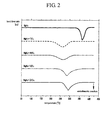
- FIG 2: the results of differential scanning calorimetry measurements conducted to evaluate the change in the hydrogen emission of magnesium hydride when a transition metal halide is dispersed therein by high energy ball milling;
- FIG 3: the results of differential scanning calorimetry measurements conducted to evaluate the change in the hydrogen emission of magnesium hydride after carrying out high energy ball milling of magnesium hydride with which niobium fluoride is mixed; and
- FIG 4: the results of measurements conducted to evaluate the change in the hydrogen storage amount of magnesium hydride as function of time when a transition metal halide is dispersed therein by high energy ball milling.
- FIG 1 shows a flow chart representing the inventive method for fabricating a magnesium-based hydrogen storage material.
- First of all, a magnesium hydride powder and a transition metal halide powder are mixed each other (S10), wherein the transition metal halide powder may be used in an amount of 0.1 to 5 mol% on the basis of the mixture. When the amount of the transition metal halide powder is less than 0.1 mol%, its catalyst function becomes unsatisfactory. When its amount is more than 5 mol%, the content of magnesium hydride storing hydrogen relatively becomes low resulting in reducing hydrogen storage capacity on the basis of total material.
- Subsequently, the mixture of the magnesium hydride powder and the transition metal halide powder is added into a vessel with several balls (S20), wherein it is preferable that the ball has a diameter of 5 to 30 mm. If the diameter of the ball is less than 5 mm, the probability of incorporating the impurities is high, while if the diameter of the ball is more than 30 mm, the openings between the balls are broad, and, therefore, the uniform mixing of the powders can not be achieved. Further, the weight ratio of the mixture to the balls is preferably 1:1 to 1:100 since if the weight ratio is less than 1:1, the chemical reaction of the powder may not occur due to the low strength of milling, while if the weight ratio is more than 1:100, the material (e.g., iron) constituting the balls or the vessel may be incorporated as impurities to the powder mixture due to the high strength of milling.
- Next, an inert gas or hydrogen for preventing the explosion resulting from high energy ball milling is filled into the vessel containing the mixture and the balls (S30). The inert gas suitable for use in the present invention may be argon (Ar) or helium (He).
- Then, the reaction vessel is hermetically sealed and the mixture is treated by high energy ball milling (S40), and, thus, the transition metal halide catalyst is dispersed in magnesium hydride. The high energy ball milling may be conducted for 5 to 30 minutes by using a shaker mill, vibratory mill, planetary mill or attritor mill. When the milling time is less than 5 minute, the transition metal halide catalyst may not homogeneously be dispersed in magnesium hydride. When the milling time is more than 30 minutes, the probability of incorporating the impurities is high, and segregation and cohesion of the catalyst may occur, to induce reduction of the effect of the catalyst. Those having ordinary skill in the relevant art the present invention pertain to can easily understand high energy ball milling, and, therefore, the concrete explanation thereon is omitted.
- The following Examples are given for the purpose of illustration only, and are not intended to limit the scope of the invention.
- A magnesium hydride powder was mixed with at least one transition metal halide powder selected from the group consisting of niobium fluoride (NbF5), titanium fluoride (TiF3), zirconium fluoride (ZrF4), zirconium chloride (ZrCl4), vanadium fluoride (VF4), vanadium chloride (VCl3), nickel fluoride (NiF2), nickel chloride (NiCl2), chrome fluoride (CrF2), chrome chloride (CrCl3), iron fluoride (FeF2) and iron chloride (FeCl3) in a magnesium hydride powder to transition metal halide powder mole ratio of 99:1.
- 1 g of the mixture and ten balls made of Cr steel having a diameter of 7.9 mm were introduced into a 70 ml vessel made of tool steel, and subsequently the vessel was filled with argon (Ar), followed by conducting high energy ball milling for 15 minutes using a shaker mill.
- The hydrogen emission properties of the resulting magnesium hydride having a transition metal halide catalyst dispersed therein were analyzed by differential scanning calorimetry, and the results are shown together with the result obtained for magnesium hydride having no catalyst in FIG 2.
- The hydrogen emission reaction of magnesium hydride represented by the formula (I) is an endothermic reaction in view of the peak shown in FIG 2.
MgH2 → Mg + H2 (I)
- It was thus found that in case of magnesium hydride having no catalyst, hydrogen emission starts at a temperature in the range of 320 to 400°C, while in case of magnesium hydride having the catalyst dispersed therein, the emission reaction occurs at a temperature of 300°C or less. Therefore, the transition metal halide is generally effective in lowering the hydrogen emission temperature by about 50 to 100°C although such effect more or less depends on the type of the transition metal halide.
- A magnesium hydride powder having niobium fluoride dispersed therein was prepared by the above procedure except for extending the milling time to 60 minutes. FIG 3 shows the hydrogen emission characteristics of the two batches of magnesium hydride containing dispersed niobium fluoride prepared by milling for 15 minutes and 60 minutes, respectively. As shown in FIG. 3, as the milling time was extended to 60 minutes, the hydrogen emission temperature markedly increased, and the heat absorption peak split into two and became irregular.
- The rates of hydrogen uptake (storage) of the samples obtained after the hydrogen emission experiments conducted above were measured under a hydrogen pressure of 10 bar at 300°C by high pressure differential scanning calorimetry, and the results are shown in FIG 4. As shown in FIG 4, in case of magnesium hydride to which no catalyst was added, the hydrogen uptake rate was slow, proceeded to the point of only about 4.5% by weight for 800 seconds, while in case of magnesium hydride having a transition metal halide dispersed therein, the hydrogen uptake rate was fast, proceeded to the point of about 6% by weight which close to the saturation point within 500 seconds.
- As described above, the method for fabricating a magnesium-based hydrogen storage material according to the present invention is effective in minimizing the loss of the hydrogen storage capacity and accelerating both the hydrogen storage and emission rates of magnesium hydride.
- The invention has been described with respect to the above specific embodiments, but it is not limited to these embodiments and it should be recognized that various modifications and changes may be made to the invention within the scope of the claims, the specification and the appended drawings, which also fall within the scope of the invention.
Claims (7)
- A method for fabricating a magnesium-based hydrogen storage material, comprising:a) forming a mixture of a magnesium hydride powder and a transition metal halide powder,b) adding the mixture and balls into a vessel,c) filling the vessel with an inert gas or hydrogen, andd) subjecting the mixture to high energy ball milling for 5 to 30 minutes.
- The method of claim 1, wherein the transition metal halide powder is added in step a) in an amount of 0.1 to 5 mol% on the basis of the mixture.
- The method of claim 2, wherein the transition metal halide comprises at least one selected from the group consisting of fluorides and chlorides of titanium(Ti), vanadium(V), zirconium(Zr), niobium(Nb), nickel(Ni), iron(Fe) and chrome(Cr).
- The method of claim 2, wherein the ball has a diameter of 5 to 30 mm.
- The method of claim 2, wherein the weight ratio of the mixture to the ball is 1:1 to 1:100.
- The method of claim 2, wherein the ball milling is conducted using a shaker mill, vibratory mill, planetary mill or attritor mill.
- The method of claim 2, wherein the inert gas is argon or helium.
Applications Claiming Priority (1)
| Application Number | Priority Date | Filing Date | Title |
|---|---|---|---|
| KR1020060112215A KR100811116B1 (en) | 2006-11-14 | 2006-11-14 | Method of manufacturing magnesium-based hydrogen storage material |
Publications (3)
| Publication Number | Publication Date |
|---|---|
| EP1923350A2 true EP1923350A2 (en) | 2008-05-21 |
| EP1923350A3 EP1923350A3 (en) | 2009-01-07 |
| EP1923350B1 EP1923350B1 (en) | 2012-03-21 |
Family
ID=39135222
Family Applications (1)
| Application Number | Title | Priority Date | Filing Date |
|---|---|---|---|
| EP07021936A Not-in-force EP1923350B1 (en) | 2006-11-14 | 2007-11-12 | Method for fabricating magnesium-based hydrogen storage materials |
Country Status (5)
| Country | Link |
|---|---|
| US (1) | US7871537B2 (en) |
| EP (1) | EP1923350B1 (en) |
| JP (1) | JP4918463B2 (en) |
| KR (1) | KR100811116B1 (en) |
| AT (1) | ATE550294T1 (en) |
Cited By (2)
| Publication number | Priority date | Publication date | Assignee | Title |
|---|---|---|---|---|
| CN104004933A (en) * | 2014-04-30 | 2014-08-27 | 燕山大学 | Method for preparation of hydrogen storage material by utilizing magnesium rare earth waste residue |
| CN111137858A (en) * | 2020-02-26 | 2020-05-12 | 江苏集萃分子工程研究院有限公司 | Composite material for hydrogen production by hydrolysis of magnesium hydride and preparation method thereof |
Families Citing this family (17)
| Publication number | Priority date | Publication date | Assignee | Title |
|---|---|---|---|---|
| CA2631624A1 (en) * | 2005-11-30 | 2007-06-07 | University Of Washington | Carbon-based foam nanocomposite hydrogen storage material |
| JP5381513B2 (en) * | 2009-08-28 | 2014-01-08 | 株式会社豊田中央研究所 | Mixture and method for producing the same, method for producing hydrogen gas, and hydrogen generator |
| KR101062476B1 (en) | 2009-10-28 | 2011-09-06 | 한국기계연구원 | Magnesium-based hydrogen generating powder and preparation method thereof |
| KR101546037B1 (en) * | 2013-09-24 | 2015-08-21 | 한국과학기술연구원 | Magnesium based hydrogen storage material and the fabrication method thereof |
| CN104386649B (en) * | 2014-06-30 | 2017-03-29 | 长沙理工大学 | Method for reducing hydrogen release temperature of magnesium-based hydride by solid solution doping of transition metal |
| CN104961099A (en) * | 2015-06-24 | 2015-10-07 | 上海大学 | Preparation method for phosphor-adulterating coupling nanometer-confined Mg-based hydrogen storage material |
| CN105036075B (en) * | 2015-06-25 | 2017-05-03 | 桂林电子科技大学 | Al-BiBr3 aluminum base composite hydrogen production material and preparation method thereof |
| US9828245B1 (en) * | 2017-02-07 | 2017-11-28 | Kuwait Institute For Scientific Research | Method of synthesizing MgH2/Ni nanocomposites |
| CN108103337B (en) * | 2017-11-21 | 2020-01-07 | 上海交通大学 | Preparation method of magnesium-based hydrogen storage material |
| MA52524B1 (en) * | 2018-11-26 | 2021-11-30 | Se Corp | A device for generating hydrogen, a system for generating energy, a method for generating hydrogen and a method for generating energy. |
| CN110155940B (en) * | 2019-04-16 | 2020-11-03 | 浙江大学 | Magnesium-based hydrogen storage material capable of absorbing hydrogen at room temperature and preparation method thereof |
| KR102389205B1 (en) * | 2020-11-13 | 2022-04-21 | 한국과학기술원 | Magnesium nanosheet, and hydrogen storage system |
| CN113862536B (en) * | 2021-09-14 | 2022-07-08 | 钢铁研究总院 | A kind of Mg-Al-Y based hydrogen storage material and preparation method thereof |
| CN114505475B (en) * | 2022-02-18 | 2023-12-05 | 广东省科学院新材料研究所 | Low-temperature high-capacity magnesium-based hydrogen storage powder and preparation method thereof |
| DE112023002343T5 (en) * | 2022-11-04 | 2025-02-27 | Korea Advanced Institute Of Science And Technology | POROUS MAGNESIUM STRUCTURE FOR STORING HYDROGEN, METHOD FOR PRODUCING SAME AND METHOD FOR STORING HYDROGEN |
| KR102751766B1 (en) * | 2023-12-07 | 2025-01-10 | 김종필 | Apparatus and method for producing solid hydrogen |
| CN119524887B (en) * | 2024-11-10 | 2025-08-22 | 西安工业大学 | An iron-based/graphene catalyst and its preparation method and application |
Family Cites Families (21)
| Publication number | Priority date | Publication date | Assignee | Title |
|---|---|---|---|---|
| US3485585A (en) * | 1964-09-01 | 1969-12-23 | Hercules Inc | Preparation of metal hydrides |
| DE2804445A1 (en) * | 1978-02-02 | 1979-08-09 | Studiengesellschaft Kohle Mbh | METHOD FOR MANUFACTURING MAGNESIUM HYDRIDS |
| FR2424760A1 (en) * | 1978-05-05 | 1979-11-30 | Charbonnages Ste Chimique | CATALYSTS INCLUDING MAGNESIUM AND A TRANSITION METAL |
| EP0090926A1 (en) * | 1982-03-26 | 1983-10-12 | Conoco Phillips Company | A soluble magnesium hydride reagent |
| DE4024205A1 (en) * | 1990-07-31 | 1992-02-06 | Studiengesellschaft Kohle Mbh | METAL-MAGNESIUM COMPOUNDS, METHOD FOR THEIR PRODUCTION AND THEIR USE FOR THE PRODUCTION OF FINE DISTRIBUTED METAL AND ALLOY POWDER AND INTERMETALLIC COMPOUNDS |
| DE4235334A1 (en) * | 1992-10-20 | 1994-04-21 | Goldschmidt Ag Th | Halogen-magnesium-aluminum hydride halides, process for their preparation and their use as reducing agents |
| US5831103A (en) * | 1992-10-20 | 1998-11-03 | Th. Goldschmidt Ag | Halogen-magnesium-aluminum hydridohalides, methods for their synthesis and their use as reducing agents |
| EP0744234B1 (en) * | 1995-05-26 | 1999-10-27 | Th. Goldschmidt AG | Process for preparing nanocrystalline and X-rays-amorphous metal powder |
| CA2217095A1 (en) * | 1997-10-22 | 1999-04-22 | Hydro-Quebec | Activated interface nanocomposites prepared by mechanical grinding of magnesium hydrides and their use for hydrogen storage |
| ATE310711T1 (en) * | 1999-03-26 | 2005-12-15 | Geesthacht Gkss Forschung | METAL-CONTAINING HYDROGEN STORAGE MATERIAL AND METHOD FOR THE PRODUCTION THEREOF |
| GB0219112D0 (en) | 2002-08-16 | 2002-09-25 | Johnson Matthey Plc | Reactive milling process |
| JP4280816B2 (en) | 2002-12-26 | 2009-06-17 | 独立行政法人産業技術総合研究所 | Hydrogen storage material and manufacturing method thereof |
| JP2005053731A (en) * | 2003-08-01 | 2005-03-03 | Taiheiyo Cement Corp | Hydrogen storing body and its manufacturing method |
| JP4615908B2 (en) * | 2004-06-24 | 2011-01-19 | 太平洋セメント株式会社 | Hydrogen storage material and method for producing the same |
| US7537748B2 (en) * | 2003-08-11 | 2009-05-26 | National University Corporation, Hiroshima University | Hydrogen storage matter and manufacturing method and apparatus for the same |
| JP2006305486A (en) * | 2004-05-14 | 2006-11-09 | Taiheiyo Cement Corp | Hydrogen storage material and its manufacturing method |
| JP2006035161A (en) * | 2004-07-29 | 2006-02-09 | Toyota Central Res & Dev Lab Inc | Magnesium-based hydrogen storage material |
| US20060194695A1 (en) | 2004-08-27 | 2006-08-31 | Westinghouse Savannah River Co., Llc | Destabilized and catalyzed borohydrided for reversible hydrogen storage |
| US8105974B2 (en) * | 2004-08-27 | 2012-01-31 | Toyota Motor Engineering & Manufacturing North America, Inc. | Destabilized and catalyzed borohydride for reversible hydrogen storage |
| WO2006104079A1 (en) * | 2005-03-28 | 2006-10-05 | Taiheiyo Cement Corporation | Hydrogen-storing materials and process for production of the same |
| KR100839827B1 (en) * | 2007-03-23 | 2008-06-19 | 한국과학기술연구원 | Process for preparing transition metal boride powder |
-
2006
- 2006-11-14 KR KR1020060112215A patent/KR100811116B1/en not_active Expired - Fee Related
-
2007
- 2007-11-12 EP EP07021936A patent/EP1923350B1/en not_active Not-in-force
- 2007-11-12 AT AT07021936T patent/ATE550294T1/en active
- 2007-11-14 JP JP2007295096A patent/JP4918463B2/en not_active Expired - Fee Related
- 2007-11-14 US US11/939,636 patent/US7871537B2/en not_active Expired - Fee Related
Non-Patent Citations (2)
| Title |
|---|
| V. V. BHAT ET AL.: "Catalytic Activity of Oxides and Halides on Hydrogen Storage of MgH2", JOURNAL OF POWER SOURCES, vol. 159, 2006, pages 107 - 110 |
| W. OELERICH ET AL.: "Metal oxides as catalysts for improved hydrogen sorption in nanocrystalline Mg-based materials", JOURNAL OFALLOYS AND COMPOUNDS, vol. 315, 2001, pages 237 - 242 |
Cited By (3)
| Publication number | Priority date | Publication date | Assignee | Title |
|---|---|---|---|---|
| CN104004933A (en) * | 2014-04-30 | 2014-08-27 | 燕山大学 | Method for preparation of hydrogen storage material by utilizing magnesium rare earth waste residue |
| CN104004933B (en) * | 2014-04-30 | 2016-04-06 | 燕山大学 | A kind of method utilizing magnesium rare earth waste to prepare hydrogen storage material |
| CN111137858A (en) * | 2020-02-26 | 2020-05-12 | 江苏集萃分子工程研究院有限公司 | Composite material for hydrogen production by hydrolysis of magnesium hydride and preparation method thereof |
Also Published As
| Publication number | Publication date |
|---|---|
| EP1923350A3 (en) | 2009-01-07 |
| KR100811116B1 (en) | 2008-03-06 |
| JP4918463B2 (en) | 2012-04-18 |
| JP2008120675A (en) | 2008-05-29 |
| US20080111105A1 (en) | 2008-05-15 |
| US7871537B2 (en) | 2011-01-18 |
| ATE550294T1 (en) | 2012-04-15 |
| EP1923350B1 (en) | 2012-03-21 |
Similar Documents
| Publication | Publication Date | Title |
|---|---|---|
| US7871537B2 (en) | Method for fabricating magnesium-based hydrogen storage material | |
| Wang et al. | Thermodynamic and kinetic regulation for Mg‐based hydrogen storage materials: challenges, strategies, and perspectives | |
| Floriano et al. | Iron and niobium based additives in magnesium hydride: Microstructure and hydrogen storage properties | |
| CN1125886C (en) | Hydrogen-absorbing alloy | |
| US6387152B1 (en) | Process for manufacturing nanocrystalline metal hydrides | |
| Young et al. | Effects of B, Fe, Gd, Mg, and C on the structure, hydrogen storage, and electrochemical properties of vanadium-free AB2 metal hydride alloy | |
| US4278466A (en) | Titanium alloy composition and method for the storage of hydrogen | |
| JP2008266781A (en) | Method for producing Mg-Al-based hydrogen storage alloy powder, and Mg-Al-based hydrogen storage alloy powder obtained by the production method | |
| US6207104B1 (en) | Ternary hydrogen storage alloy and process for production thereof | |
| JPH101731A (en) | Hydrogen storage alloy and manufacturing method | |
| EP4227025B1 (en) | Method for producing tife-based alloys useful for hydrogen storage applications | |
| Zhang et al. | Phase structures and electrochemical properties of Cr-added V3TiNi0. 56Hf0. 24Mn0. 15 alloys | |
| Li et al. | Hydrogen storage properties of mechanically alloyedMg–8 mol% LaNi0. 5 composite | |
| JPH11310844A (en) | Hydrogen storage alloy and hydrogen storage alloy electrode | |
| Liu et al. | Surface properties of the fluorinated La-incorporated Ti/Zr-based AB2 laves phase alloys | |
| CN117127045B (en) | Light high-entropy hydrogen storage alloy and preparation method and application thereof | |
| Miyamura et al. | Metal hydride electrodes using titanium–iron-based alloys | |
| Kelton | Ti/Zr-based quasicrystals-formation, structure and hydrogen storage properties | |
| Léon et al. | Fluorescence XAFS study of NaAlH 4 doped with a Ce-based precursor | |
| EP1384792A1 (en) | Hydrogen occlusion alloy | |
| Kwak et al. | Enhancement of the hydrogen uptake and release rates of Mg by the addition of TaF5 and VCl3 with reactive mechanical grinding | |
| Narasimhan et al. | Ab initio study of polytetrahedral packing: The Al-Mg system | |
| JP2005306724A (en) | Material for hydrogen storage, production method for the same, and method for storing hydrogen | |
| JP4575866B2 (en) | Method for producing hydrogen storage material | |
| Reilly et al. | Properties of Li nanocomposite electrode materials prepared via hydrogen-driven, solid-state, metallurgical reactions |
Legal Events
| Date | Code | Title | Description |
|---|---|---|---|
| PUAI | Public reference made under article 153(3) epc to a published international application that has entered the european phase |
Free format text: ORIGINAL CODE: 0009012 |
|
| 17P | Request for examination filed |
Effective date: 20071112 |
|
| AK | Designated contracting states |
Kind code of ref document: A2 Designated state(s): AT BE BG CH CY CZ DE DK EE ES FI FR GB GR HU IE IS IT LI LT LU LV MC MT NL PL PT RO SE SI SK TR |
|
| AX | Request for extension of the european patent |
Extension state: AL BA HR MK RS |
|
| RIN1 | Information on inventor provided before grant (corrected) |
Inventor name: JAE-HYEOK, SHIM Inventor name: YOUNG-WHAN, CHO Inventor name: SEON-AH, JIN |
|
| PUAL | Search report despatched |
Free format text: ORIGINAL CODE: 0009013 |
|
| AK | Designated contracting states |
Kind code of ref document: A3 Designated state(s): AT BE BG CH CY CZ DE DK EE ES FI FR GB GR HU IE IS IT LI LT LU LV MC MT NL PL PT RO SE SI SK TR |
|
| AX | Request for extension of the european patent |
Extension state: AL BA HR MK RS |
|
| 17Q | First examination report despatched |
Effective date: 20090728 |
|
| AKX | Designation fees paid |
Designated state(s): AT BE BG CH CY CZ DE DK EE ES FI FR GB GR HU IE IS IT LI LT LU LV MC MT NL PL PT RO SE SI SK TR |
|
| RAP1 | Party data changed (applicant data changed or rights of an application transferred) |
Owner name: KOREA INSTITUTE OF SCIENCE AND TECHNOLOGY |
|
| GRAP | Despatch of communication of intention to grant a patent |
Free format text: ORIGINAL CODE: EPIDOSNIGR1 |
|
| GRAS | Grant fee paid |
Free format text: ORIGINAL CODE: EPIDOSNIGR3 |
|
| GRAA | (expected) grant |
Free format text: ORIGINAL CODE: 0009210 |
|
| AK | Designated contracting states |
Kind code of ref document: B1 Designated state(s): AT BE BG CH CY CZ DE DK EE ES FI FR GB GR HU IE IS IT LI LT LU LV MC MT NL PL PT RO SE SI SK TR |
|
| REG | Reference to a national code |
Ref country code: GB Ref legal event code: FG4D |
|
| REG | Reference to a national code |
Ref country code: CH Ref legal event code: EP |
|
| REG | Reference to a national code |
Ref country code: IE Ref legal event code: FG4D |
|
| REG | Reference to a national code |
Ref country code: AT Ref legal event code: REF Ref document number: 550294 Country of ref document: AT Kind code of ref document: T Effective date: 20120415 |
|
| REG | Reference to a national code |
Ref country code: DE Ref legal event code: R096 Ref document number: 602007021401 Country of ref document: DE Effective date: 20120516 |
|
| REG | Reference to a national code |
Ref country code: NL Ref legal event code: VDEP Effective date: 20120321 |
|
| PG25 | Lapsed in a contracting state [announced via postgrant information from national office to epo] |
Ref country code: LT Free format text: LAPSE BECAUSE OF FAILURE TO SUBMIT A TRANSLATION OF THE DESCRIPTION OR TO PAY THE FEE WITHIN THE PRESCRIBED TIME-LIMIT Effective date: 20120321 |
|
| LTIE | Lt: invalidation of european patent or patent extension |
Effective date: 20120321 |
|
| PG25 | Lapsed in a contracting state [announced via postgrant information from national office to epo] |
Ref country code: LV Free format text: LAPSE BECAUSE OF FAILURE TO SUBMIT A TRANSLATION OF THE DESCRIPTION OR TO PAY THE FEE WITHIN THE PRESCRIBED TIME-LIMIT Effective date: 20120321 Ref country code: GR Free format text: LAPSE BECAUSE OF FAILURE TO SUBMIT A TRANSLATION OF THE DESCRIPTION OR TO PAY THE FEE WITHIN THE PRESCRIBED TIME-LIMIT Effective date: 20120622 Ref country code: FI Free format text: LAPSE BECAUSE OF FAILURE TO SUBMIT A TRANSLATION OF THE DESCRIPTION OR TO PAY THE FEE WITHIN THE PRESCRIBED TIME-LIMIT Effective date: 20120321 |
|
| REG | Reference to a national code |
Ref country code: AT Ref legal event code: MK05 Ref document number: 550294 Country of ref document: AT Kind code of ref document: T Effective date: 20120321 |
|
| PG25 | Lapsed in a contracting state [announced via postgrant information from national office to epo] |
Ref country code: CY Free format text: LAPSE BECAUSE OF FAILURE TO SUBMIT A TRANSLATION OF THE DESCRIPTION OR TO PAY THE FEE WITHIN THE PRESCRIBED TIME-LIMIT Effective date: 20120321 |
|
| PG25 | Lapsed in a contracting state [announced via postgrant information from national office to epo] |
Ref country code: RO Free format text: LAPSE BECAUSE OF FAILURE TO SUBMIT A TRANSLATION OF THE DESCRIPTION OR TO PAY THE FEE WITHIN THE PRESCRIBED TIME-LIMIT Effective date: 20120321 Ref country code: PL Free format text: LAPSE BECAUSE OF FAILURE TO SUBMIT A TRANSLATION OF THE DESCRIPTION OR TO PAY THE FEE WITHIN THE PRESCRIBED TIME-LIMIT Effective date: 20120321 Ref country code: SI Free format text: LAPSE BECAUSE OF FAILURE TO SUBMIT A TRANSLATION OF THE DESCRIPTION OR TO PAY THE FEE WITHIN THE PRESCRIBED TIME-LIMIT Effective date: 20120321 Ref country code: IS Free format text: LAPSE BECAUSE OF FAILURE TO SUBMIT A TRANSLATION OF THE DESCRIPTION OR TO PAY THE FEE WITHIN THE PRESCRIBED TIME-LIMIT Effective date: 20120721 Ref country code: SE Free format text: LAPSE BECAUSE OF FAILURE TO SUBMIT A TRANSLATION OF THE DESCRIPTION OR TO PAY THE FEE WITHIN THE PRESCRIBED TIME-LIMIT Effective date: 20120321 Ref country code: EE Free format text: LAPSE BECAUSE OF FAILURE TO SUBMIT A TRANSLATION OF THE DESCRIPTION OR TO PAY THE FEE WITHIN THE PRESCRIBED TIME-LIMIT Effective date: 20120321 Ref country code: BE Free format text: LAPSE BECAUSE OF FAILURE TO SUBMIT A TRANSLATION OF THE DESCRIPTION OR TO PAY THE FEE WITHIN THE PRESCRIBED TIME-LIMIT Effective date: 20120321 Ref country code: CZ Free format text: LAPSE BECAUSE OF FAILURE TO SUBMIT A TRANSLATION OF THE DESCRIPTION OR TO PAY THE FEE WITHIN THE PRESCRIBED TIME-LIMIT Effective date: 20120321 |
|
| PG25 | Lapsed in a contracting state [announced via postgrant information from national office to epo] |
Ref country code: SK Free format text: LAPSE BECAUSE OF FAILURE TO SUBMIT A TRANSLATION OF THE DESCRIPTION OR TO PAY THE FEE WITHIN THE PRESCRIBED TIME-LIMIT Effective date: 20120321 Ref country code: PT Free format text: LAPSE BECAUSE OF FAILURE TO SUBMIT A TRANSLATION OF THE DESCRIPTION OR TO PAY THE FEE WITHIN THE PRESCRIBED TIME-LIMIT Effective date: 20120723 |
|
| PLBE | No opposition filed within time limit |
Free format text: ORIGINAL CODE: 0009261 |
|
| STAA | Information on the status of an ep patent application or granted ep patent |
Free format text: STATUS: NO OPPOSITION FILED WITHIN TIME LIMIT |
|
| PG25 | Lapsed in a contracting state [announced via postgrant information from national office to epo] |
Ref country code: AT Free format text: LAPSE BECAUSE OF FAILURE TO SUBMIT A TRANSLATION OF THE DESCRIPTION OR TO PAY THE FEE WITHIN THE PRESCRIBED TIME-LIMIT Effective date: 20120321 Ref country code: NL Free format text: LAPSE BECAUSE OF FAILURE TO SUBMIT A TRANSLATION OF THE DESCRIPTION OR TO PAY THE FEE WITHIN THE PRESCRIBED TIME-LIMIT Effective date: 20120321 Ref country code: DK Free format text: LAPSE BECAUSE OF FAILURE TO SUBMIT A TRANSLATION OF THE DESCRIPTION OR TO PAY THE FEE WITHIN THE PRESCRIBED TIME-LIMIT Effective date: 20120321 |
|
| 26N | No opposition filed |
Effective date: 20130102 |
|
| PG25 | Lapsed in a contracting state [announced via postgrant information from national office to epo] |
Ref country code: IT Free format text: LAPSE BECAUSE OF FAILURE TO SUBMIT A TRANSLATION OF THE DESCRIPTION OR TO PAY THE FEE WITHIN THE PRESCRIBED TIME-LIMIT Effective date: 20120321 |
|
| REG | Reference to a national code |
Ref country code: DE Ref legal event code: R097 Ref document number: 602007021401 Country of ref document: DE Effective date: 20130102 |
|
| PG25 | Lapsed in a contracting state [announced via postgrant information from national office to epo] |
Ref country code: ES Free format text: LAPSE BECAUSE OF FAILURE TO SUBMIT A TRANSLATION OF THE DESCRIPTION OR TO PAY THE FEE WITHIN THE PRESCRIBED TIME-LIMIT Effective date: 20120702 |
|
| REG | Reference to a national code |
Ref country code: CH Ref legal event code: PL |
|
| GBPC | Gb: european patent ceased through non-payment of renewal fee |
Effective date: 20121112 |
|
| PG25 | Lapsed in a contracting state [announced via postgrant information from national office to epo] |
Ref country code: CH Free format text: LAPSE BECAUSE OF NON-PAYMENT OF DUE FEES Effective date: 20121130 Ref country code: BG Free format text: LAPSE BECAUSE OF FAILURE TO SUBMIT A TRANSLATION OF THE DESCRIPTION OR TO PAY THE FEE WITHIN THE PRESCRIBED TIME-LIMIT Effective date: 20120621 Ref country code: LI Free format text: LAPSE BECAUSE OF NON-PAYMENT OF DUE FEES Effective date: 20121130 |
|
| REG | Reference to a national code |
Ref country code: IE Ref legal event code: MM4A |
|
| PG25 | Lapsed in a contracting state [announced via postgrant information from national office to epo] |
Ref country code: IE Free format text: LAPSE BECAUSE OF NON-PAYMENT OF DUE FEES Effective date: 20121112 |
|
| PG25 | Lapsed in a contracting state [announced via postgrant information from national office to epo] |
Ref country code: MT Free format text: LAPSE BECAUSE OF FAILURE TO SUBMIT A TRANSLATION OF THE DESCRIPTION OR TO PAY THE FEE WITHIN THE PRESCRIBED TIME-LIMIT Effective date: 20120321 Ref country code: GB Free format text: LAPSE BECAUSE OF NON-PAYMENT OF DUE FEES Effective date: 20121112 |
|
| PGFP | Annual fee paid to national office [announced via postgrant information from national office to epo] |
Ref country code: DE Payment date: 20131024 Year of fee payment: 7 Ref country code: FR Payment date: 20131024 Year of fee payment: 7 |
|
| PG25 | Lapsed in a contracting state [announced via postgrant information from national office to epo] |
Ref country code: MC Free format text: LAPSE BECAUSE OF NON-PAYMENT OF DUE FEES Effective date: 20121130 Ref country code: TR Free format text: LAPSE BECAUSE OF FAILURE TO SUBMIT A TRANSLATION OF THE DESCRIPTION OR TO PAY THE FEE WITHIN THE PRESCRIBED TIME-LIMIT Effective date: 20120321 |
|
| PG25 | Lapsed in a contracting state [announced via postgrant information from national office to epo] |
Ref country code: LU Free format text: LAPSE BECAUSE OF NON-PAYMENT OF DUE FEES Effective date: 20121112 |
|
| PG25 | Lapsed in a contracting state [announced via postgrant information from national office to epo] |
Ref country code: HU Free format text: LAPSE BECAUSE OF FAILURE TO SUBMIT A TRANSLATION OF THE DESCRIPTION OR TO PAY THE FEE WITHIN THE PRESCRIBED TIME-LIMIT Effective date: 20071112 |
|
| REG | Reference to a national code |
Ref country code: DE Ref legal event code: R119 Ref document number: 602007021401 Country of ref document: DE |
|
| REG | Reference to a national code |
Ref country code: FR Ref legal event code: ST Effective date: 20150731 |
|
| PG25 | Lapsed in a contracting state [announced via postgrant information from national office to epo] |
Ref country code: DE Free format text: LAPSE BECAUSE OF NON-PAYMENT OF DUE FEES Effective date: 20150602 |
|
| PG25 | Lapsed in a contracting state [announced via postgrant information from national office to epo] |
Ref country code: FR Free format text: LAPSE BECAUSE OF NON-PAYMENT OF DUE FEES Effective date: 20141201 |