EP1923052A1 - Novel polymorphs and pseudopolymorphs of risedronate sodium - Google Patents
Novel polymorphs and pseudopolymorphs of risedronate sodium Download PDFInfo
- Publication number
- EP1923052A1 EP1923052A1 EP08002116A EP08002116A EP1923052A1 EP 1923052 A1 EP1923052 A1 EP 1923052A1 EP 08002116 A EP08002116 A EP 08002116A EP 08002116 A EP08002116 A EP 08002116A EP 1923052 A1 EP1923052 A1 EP 1923052A1
- Authority
- EP
- European Patent Office
- Prior art keywords
- sodium
- risedronate
- risedronate sodium
- characteristic
- mixture
- Prior art date
- Legal status (The legal status is an assumption and is not a legal conclusion. Google has not performed a legal analysis and makes no representation as to the accuracy of the status listed.)
- Withdrawn
Links
- IIDJRNMFWXDHID-UHFFFAOYSA-N Risedronic acid Chemical compound OP(=O)(O)C(P(O)(O)=O)(O)CC1=CC=CN=C1 IIDJRNMFWXDHID-UHFFFAOYSA-N 0.000 title claims abstract description 500
- 229960000759 risedronic acid Drugs 0.000 title claims abstract description 378
- 238000000034 method Methods 0.000 claims abstract description 152
- 239000008194 pharmaceutical composition Substances 0.000 claims abstract description 38
- 229940089617 risedronate Drugs 0.000 claims abstract description 25
- LFQSCWFLJHTTHZ-UHFFFAOYSA-N Ethanol Chemical compound CCO LFQSCWFLJHTTHZ-UHFFFAOYSA-N 0.000 claims description 195
- HEMHJVSKTPXQMS-UHFFFAOYSA-M Sodium hydroxide Chemical group [OH-].[Na+] HEMHJVSKTPXQMS-UHFFFAOYSA-M 0.000 claims description 177
- 239000000203 mixture Substances 0.000 claims description 160
- XLYOFNOQVPJJNP-UHFFFAOYSA-N water Substances O XLYOFNOQVPJJNP-UHFFFAOYSA-N 0.000 claims description 143
- OKKJLVBELUTLKV-UHFFFAOYSA-N Methanol Chemical compound OC OKKJLVBELUTLKV-UHFFFAOYSA-N 0.000 claims description 129
- 238000010992 reflux Methods 0.000 claims description 115
- 238000001816 cooling Methods 0.000 claims description 74
- KFZMGEQAYNKOFK-UHFFFAOYSA-N Isopropanol Chemical compound CC(C)O KFZMGEQAYNKOFK-UHFFFAOYSA-N 0.000 claims description 54
- DGAQECJNVWCQMB-PUAWFVPOSA-M Ilexoside XXIX Chemical compound C[C@@H]1CC[C@@]2(CC[C@@]3(C(=CC[C@H]4[C@]3(CC[C@@H]5[C@@]4(CC[C@@H](C5(C)C)OS(=O)(=O)[O-])C)C)[C@@H]2[C@]1(C)O)C)C(=O)O[C@H]6[C@@H]([C@H]([C@@H]([C@H](O6)CO)O)O)O.[Na+] DGAQECJNVWCQMB-PUAWFVPOSA-M 0.000 claims description 49
- 239000011734 sodium Substances 0.000 claims description 46
- 229910052708 sodium Inorganic materials 0.000 claims description 45
- 238000004519 manufacturing process Methods 0.000 claims description 43
- 239000007788 liquid Substances 0.000 claims description 28
- 230000009466 transformation Effects 0.000 claims description 25
- 239000000546 pharmaceutical excipient Substances 0.000 claims description 24
- 208000001132 Osteoporosis Diseases 0.000 claims description 15
- 238000010438 heat treatment Methods 0.000 claims description 11
- 238000003860 storage Methods 0.000 claims description 7
- 239000003814 drug Substances 0.000 claims description 3
- 238000002955 isolation Methods 0.000 claims description 2
- QXNVGIXVLWOKEQ-UHFFFAOYSA-N Disodium Chemical compound [Na][Na] QXNVGIXVLWOKEQ-UHFFFAOYSA-N 0.000 abstract description 5
- 239000013078 crystal Substances 0.000 description 72
- 238000002441 X-ray diffraction Methods 0.000 description 60
- 239000011541 reaction mixture Substances 0.000 description 50
- 239000000725 suspension Substances 0.000 description 50
- 239000000243 solution Substances 0.000 description 46
- 235000015424 sodium Nutrition 0.000 description 35
- 230000009102 absorption Effects 0.000 description 33
- 238000010521 absorption reaction Methods 0.000 description 33
- 239000002244 precipitate Substances 0.000 description 33
- 238000002360 preparation method Methods 0.000 description 30
- 238000002411 thermogravimetry Methods 0.000 description 25
- 238000001157 Fourier transform infrared spectrum Methods 0.000 description 23
- 239000007787 solid Substances 0.000 description 22
- 239000003826 tablet Substances 0.000 description 19
- 238000001757 thermogravimetry curve Methods 0.000 description 18
- 230000004580 weight loss Effects 0.000 description 18
- 238000010586 diagram Methods 0.000 description 17
- 229960004592 isopropanol Drugs 0.000 description 16
- 150000004682 monohydrates Chemical class 0.000 description 14
- 238000000634 powder X-ray diffraction Methods 0.000 description 13
- 230000008569 process Effects 0.000 description 13
- -1 20% Chemical compound 0.000 description 11
- 238000005033 Fourier transform infrared spectroscopy Methods 0.000 description 11
- 239000004480 active ingredient Substances 0.000 description 11
- 239000000047 product Substances 0.000 description 11
- 239000002552 dosage form Substances 0.000 description 9
- 150000001875 compounds Chemical class 0.000 description 8
- 238000006243 chemical reaction Methods 0.000 description 7
- XTUSEBKMEQERQV-UHFFFAOYSA-N propan-2-ol;hydrate Chemical compound O.CC(C)O XTUSEBKMEQERQV-UHFFFAOYSA-N 0.000 description 7
- 229920002472 Starch Polymers 0.000 description 6
- 238000000137 annealing Methods 0.000 description 6
- 239000000463 material Substances 0.000 description 6
- 239000002609 medium Substances 0.000 description 6
- 239000000843 powder Substances 0.000 description 6
- 239000008107 starch Substances 0.000 description 6
- 235000019698 starch Nutrition 0.000 description 6
- 238000001914 filtration Methods 0.000 description 5
- 238000009472 formulation Methods 0.000 description 5
- 229940032147 starch Drugs 0.000 description 5
- 210000000988 bone and bone Anatomy 0.000 description 4
- 150000001768 cations Chemical class 0.000 description 4
- 239000001913 cellulose Substances 0.000 description 4
- 238000004090 dissolution Methods 0.000 description 4
- 235000002639 sodium chloride Nutrition 0.000 description 4
- 239000000454 talc Substances 0.000 description 4
- 235000012222 talc Nutrition 0.000 description 4
- 229910052623 talc Inorganic materials 0.000 description 4
- 229940033134 talc Drugs 0.000 description 4
- OYPRJOBELJOOCE-UHFFFAOYSA-N Calcium Chemical compound [Ca] OYPRJOBELJOOCE-UHFFFAOYSA-N 0.000 description 3
- UFHFLCQGNIYNRP-UHFFFAOYSA-N Hydrogen Chemical compound [H][H] UFHFLCQGNIYNRP-UHFFFAOYSA-N 0.000 description 3
- WHNWPMSKXPGLAX-UHFFFAOYSA-N N-Vinyl-2-pyrrolidone Chemical compound C=CN1CCCC1=O WHNWPMSKXPGLAX-UHFFFAOYSA-N 0.000 description 3
- VYPSYNLAJGMNEJ-UHFFFAOYSA-N Silicium dioxide Chemical compound O=[Si]=O VYPSYNLAJGMNEJ-UHFFFAOYSA-N 0.000 description 3
- DPXJVFZANSGRMM-UHFFFAOYSA-N acetic acid;2,3,4,5,6-pentahydroxyhexanal;sodium Chemical compound [Na].CC(O)=O.OCC(O)C(O)C(O)C(O)C=O DPXJVFZANSGRMM-UHFFFAOYSA-N 0.000 description 3
- 150000001298 alcohols Chemical class 0.000 description 3
- 239000011575 calcium Substances 0.000 description 3
- 229910052791 calcium Inorganic materials 0.000 description 3
- KRKNYBCHXYNGOX-UHFFFAOYSA-N citric acid Chemical compound OC(=O)CC(O)(C(O)=O)CC(O)=O KRKNYBCHXYNGOX-UHFFFAOYSA-N 0.000 description 3
- HYFDYHPNTXOPPO-UHFFFAOYSA-L disodium;hydroxy-(1-hydroxy-1-phosphono-2-pyridin-3-ylethyl)phosphinate;pentahydrate Chemical group O.O.O.O.O.[Na+].[Na+].OP(=O)(O)C(P(O)([O-])=O)(O)CC1=CC=CN=C1.OP(=O)(O)C(P(O)([O-])=O)(O)CC1=CC=CN=C1 HYFDYHPNTXOPPO-UHFFFAOYSA-L 0.000 description 3
- IDGUHHHQCWSQLU-UHFFFAOYSA-N ethanol;hydrate Chemical compound O.CCO IDGUHHHQCWSQLU-UHFFFAOYSA-N 0.000 description 3
- 238000005259 measurement Methods 0.000 description 3
- 239000008184 oral solid dosage form Substances 0.000 description 3
- 239000000825 pharmaceutical preparation Substances 0.000 description 3
- 229940127557 pharmaceutical product Drugs 0.000 description 3
- 229920003124 powdered cellulose Polymers 0.000 description 3
- 235000019814 powdered cellulose Nutrition 0.000 description 3
- 239000002002 slurry Substances 0.000 description 3
- 239000008247 solid mixture Substances 0.000 description 3
- QORWJWZARLRLPR-UHFFFAOYSA-H tricalcium bis(phosphate) Chemical compound [Ca+2].[Ca+2].[Ca+2].[O-]P([O-])([O-])=O.[O-]P([O-])([O-])=O QORWJWZARLRLPR-UHFFFAOYSA-H 0.000 description 3
- 235000019731 tricalcium phosphate Nutrition 0.000 description 3
- IXPNQXFRVYWDDI-UHFFFAOYSA-N 1-methyl-2,4-dioxo-1,3-diazinane-5-carboximidamide Chemical compound CN1CC(C(N)=N)C(=O)NC1=O IXPNQXFRVYWDDI-UHFFFAOYSA-N 0.000 description 2
- VBICKXHEKHSIBG-UHFFFAOYSA-N 1-monostearoylglycerol Chemical compound CCCCCCCCCCCCCCCCCC(=O)OCC(O)CO VBICKXHEKHSIBG-UHFFFAOYSA-N 0.000 description 2
- XPCTZQVDEJYUGT-UHFFFAOYSA-N 3-hydroxy-2-methyl-4-pyrone Chemical compound CC=1OC=CC(=O)C=1O XPCTZQVDEJYUGT-UHFFFAOYSA-N 0.000 description 2
- 208000010392 Bone Fractures Diseases 0.000 description 2
- VTYYLEPIZMXCLO-UHFFFAOYSA-L Calcium carbonate Chemical compound [Ca+2].[O-]C([O-])=O VTYYLEPIZMXCLO-UHFFFAOYSA-L 0.000 description 2
- 229920001353 Dextrin Polymers 0.000 description 2
- 239000004375 Dextrin Substances 0.000 description 2
- 239000004097 EU approved flavor enhancer Substances 0.000 description 2
- 206010017076 Fracture Diseases 0.000 description 2
- VZCYOOQTPOCHFL-OWOJBTEDSA-N Fumaric acid Chemical compound OC(=O)\C=C\C(O)=O VZCYOOQTPOCHFL-OWOJBTEDSA-N 0.000 description 2
- WQZGKKKJIJFFOK-GASJEMHNSA-N Glucose Natural products OC[C@H]1OC(O)[C@H](O)[C@@H](O)[C@@H]1O WQZGKKKJIJFFOK-GASJEMHNSA-N 0.000 description 2
- 229920002907 Guar gum Polymers 0.000 description 2
- 239000005913 Maltodextrin Substances 0.000 description 2
- 229920002774 Maltodextrin Polymers 0.000 description 2
- 229920000168 Microcrystalline cellulose Polymers 0.000 description 2
- 229920000881 Modified starch Polymers 0.000 description 2
- WCUXLLCKKVVCTQ-UHFFFAOYSA-M Potassium chloride Chemical compound [Cl-].[K+] WCUXLLCKKVVCTQ-UHFFFAOYSA-M 0.000 description 2
- CDBYLPFSWZWCQE-UHFFFAOYSA-L Sodium Carbonate Chemical compound [Na+].[Na+].[O-]C([O-])=O CDBYLPFSWZWCQE-UHFFFAOYSA-L 0.000 description 2
- FAPWRFPIFSIZLT-UHFFFAOYSA-M Sodium chloride Chemical compound [Na+].[Cl-] FAPWRFPIFSIZLT-UHFFFAOYSA-M 0.000 description 2
- 229920002125 Sokalan® Polymers 0.000 description 2
- 229940037127 actonel Drugs 0.000 description 2
- 125000003158 alcohol group Chemical group 0.000 description 2
- 235000010443 alginic acid Nutrition 0.000 description 2
- 229920000615 alginic acid Polymers 0.000 description 2
- 239000000783 alginic acid Substances 0.000 description 2
- 229960001126 alginic acid Drugs 0.000 description 2
- 150000004781 alginic acids Chemical class 0.000 description 2
- SNAAJJQQZSMGQD-UHFFFAOYSA-N aluminum magnesium Chemical compound [Mg].[Al] SNAAJJQQZSMGQD-UHFFFAOYSA-N 0.000 description 2
- 230000015572 biosynthetic process Effects 0.000 description 2
- 230000037182 bone density Effects 0.000 description 2
- OSGAYBCDTDRGGQ-UHFFFAOYSA-L calcium sulfate Chemical compound [Ca+2].[O-]S([O-])(=O)=O OSGAYBCDTDRGGQ-UHFFFAOYSA-L 0.000 description 2
- 229920003123 carboxymethyl cellulose sodium Polymers 0.000 description 2
- 229940063834 carboxymethylcellulose sodium Drugs 0.000 description 2
- 229940075614 colloidal silicon dioxide Drugs 0.000 description 2
- 238000005056 compaction Methods 0.000 description 2
- 238000000354 decomposition reaction Methods 0.000 description 2
- 235000019425 dextrin Nutrition 0.000 description 2
- 238000004455 differential thermal analysis Methods 0.000 description 2
- 238000002050 diffraction method Methods 0.000 description 2
- 239000003085 diluting agent Substances 0.000 description 2
- 208000037265 diseases, disorders, signs and symptoms Diseases 0.000 description 2
- 239000007884 disintegrant Substances 0.000 description 2
- 230000000694 effects Effects 0.000 description 2
- CBOQJANXLMLOSS-UHFFFAOYSA-N ethyl vanillin Chemical group CCOC1=CC(C=O)=CC=C1O CBOQJANXLMLOSS-UHFFFAOYSA-N 0.000 description 2
- 230000001747 exhibiting effect Effects 0.000 description 2
- 239000000796 flavoring agent Substances 0.000 description 2
- 235000013355 food flavoring agent Nutrition 0.000 description 2
- 235000019264 food flavour enhancer Nutrition 0.000 description 2
- 239000000665 guar gum Substances 0.000 description 2
- 235000010417 guar gum Nutrition 0.000 description 2
- 229960002154 guar gum Drugs 0.000 description 2
- 239000008172 hydrogenated vegetable oil Substances 0.000 description 2
- 150000007529 inorganic bases Chemical class 0.000 description 2
- 239000006194 liquid suspension Substances 0.000 description 2
- 239000000314 lubricant Substances 0.000 description 2
- HQKMJHAJHXVSDF-UHFFFAOYSA-L magnesium stearate Chemical compound [Mg+2].CCCCCCCCCCCCCCCCCC([O-])=O.CCCCCCCCCCCCCCCCCC([O-])=O HQKMJHAJHXVSDF-UHFFFAOYSA-L 0.000 description 2
- 229940035034 maltodextrin Drugs 0.000 description 2
- 229920000609 methyl cellulose Polymers 0.000 description 2
- 239000001923 methylcellulose Substances 0.000 description 2
- 235000010981 methylcellulose Nutrition 0.000 description 2
- 235000019813 microcrystalline cellulose Nutrition 0.000 description 2
- 239000008108 microcrystalline cellulose Substances 0.000 description 2
- 229940016286 microcrystalline cellulose Drugs 0.000 description 2
- 238000012544 monitoring process Methods 0.000 description 2
- 150000004686 pentahydrates Chemical class 0.000 description 2
- 229920000191 poly(N-vinyl pyrrolidone) Polymers 0.000 description 2
- 229920000193 polymethacrylate Polymers 0.000 description 2
- 238000012545 processing Methods 0.000 description 2
- BDERNNFJNOPAEC-UHFFFAOYSA-N propan-1-ol Chemical compound CCCO BDERNNFJNOPAEC-UHFFFAOYSA-N 0.000 description 2
- 230000005855 radiation Effects 0.000 description 2
- 150000003839 salts Chemical class 0.000 description 2
- 235000010413 sodium alginate Nutrition 0.000 description 2
- 239000000661 sodium alginate Substances 0.000 description 2
- 229940005550 sodium alginate Drugs 0.000 description 2
- 238000013112 stability test Methods 0.000 description 2
- 210000002784 stomach Anatomy 0.000 description 2
- 239000006188 syrup Substances 0.000 description 2
- 235000020357 syrup Nutrition 0.000 description 2
- NOOLISFMXDJSKH-UTLUCORTSA-N (+)-Neomenthol Chemical compound CC(C)[C@@H]1CC[C@@H](C)C[C@@H]1O NOOLISFMXDJSKH-UTLUCORTSA-N 0.000 description 1
- 238000001644 13C nuclear magnetic resonance spectroscopy Methods 0.000 description 1
- NIXOWILDQLNWCW-UHFFFAOYSA-N Acrylic acid Chemical compound OC(=O)C=C NIXOWILDQLNWCW-UHFFFAOYSA-N 0.000 description 1
- 239000005995 Aluminium silicate Substances 0.000 description 1
- IJGRMHOSHXDMSA-UHFFFAOYSA-N Atomic nitrogen Chemical compound N#N IJGRMHOSHXDMSA-UHFFFAOYSA-N 0.000 description 1
- BVKZGUZCCUSVTD-UHFFFAOYSA-M Bicarbonate Chemical compound OC([O-])=O BVKZGUZCCUSVTD-UHFFFAOYSA-M 0.000 description 1
- 229940122361 Bisphosphonate Drugs 0.000 description 1
- PTHCMJGKKRQCBF-UHFFFAOYSA-N Cellulose, microcrystalline Chemical compound OC1C(O)C(OC)OC(CO)C1OC1C(O)C(O)C(OC)C(CO)O1 PTHCMJGKKRQCBF-UHFFFAOYSA-N 0.000 description 1
- RYGMFSIKBFXOCR-UHFFFAOYSA-N Copper Chemical compound [Cu] RYGMFSIKBFXOCR-UHFFFAOYSA-N 0.000 description 1
- 229920002785 Croscarmellose sodium Polymers 0.000 description 1
- FBPFZTCFMRRESA-FSIIMWSLSA-N D-Glucitol Natural products OC[C@H](O)[C@H](O)[C@@H](O)[C@H](O)CO FBPFZTCFMRRESA-FSIIMWSLSA-N 0.000 description 1
- FBPFZTCFMRRESA-KVTDHHQDSA-N D-Mannitol Chemical compound OC[C@@H](O)[C@@H](O)[C@H](O)[C@H](O)CO FBPFZTCFMRRESA-KVTDHHQDSA-N 0.000 description 1
- FBPFZTCFMRRESA-JGWLITMVSA-N D-glucitol Chemical compound OC[C@H](O)[C@@H](O)[C@H](O)[C@H](O)CO FBPFZTCFMRRESA-JGWLITMVSA-N 0.000 description 1
- NOOLISFMXDJSKH-UHFFFAOYSA-N DL-menthol Natural products CC(C)C1CCC(C)CC1O NOOLISFMXDJSKH-UHFFFAOYSA-N 0.000 description 1
- FEWJPZIEWOKRBE-JCYAYHJZSA-N Dextrotartaric acid Chemical compound OC(=O)[C@H](O)[C@@H](O)C(O)=O FEWJPZIEWOKRBE-JCYAYHJZSA-N 0.000 description 1
- 239000001856 Ethyl cellulose Substances 0.000 description 1
- ZZSNKZQZMQGXPY-UHFFFAOYSA-N Ethyl cellulose Chemical compound CCOCC1OC(OC)C(OCC)C(OCC)C1OC1C(O)C(O)C(OC)C(CO)O1 ZZSNKZQZMQGXPY-UHFFFAOYSA-N 0.000 description 1
- YIKYNHJUKRTCJL-UHFFFAOYSA-N Ethyl maltol Chemical compound CCC=1OC=CC(=O)C=1O YIKYNHJUKRTCJL-UHFFFAOYSA-N 0.000 description 1
- DBVJJBKOTRCVKF-UHFFFAOYSA-N Etidronic acid Chemical compound OP(=O)(O)C(O)(C)P(O)(O)=O DBVJJBKOTRCVKF-UHFFFAOYSA-N 0.000 description 1
- 229920003134 Eudragit® polymer Polymers 0.000 description 1
- 108010010803 Gelatin Proteins 0.000 description 1
- 239000004354 Hydroxyethyl cellulose Substances 0.000 description 1
- 229920000663 Hydroxyethyl cellulose Polymers 0.000 description 1
- 229920002153 Hydroxypropyl cellulose Polymers 0.000 description 1
- 238000004566 IR spectroscopy Methods 0.000 description 1
- GUBGYTABKSRVRQ-QKKXKWKRSA-N Lactose Natural products OC[C@H]1O[C@@H](O[C@H]2[C@H](O)[C@@H](O)C(O)O[C@@H]2CO)[C@H](O)[C@@H](O)[C@H]1O GUBGYTABKSRVRQ-QKKXKWKRSA-N 0.000 description 1
- 240000007472 Leucaena leucocephala Species 0.000 description 1
- 235000010643 Leucaena leucocephala Nutrition 0.000 description 1
- HYMLWHLQFGRFIY-UHFFFAOYSA-N Maltol Natural products CC1OC=CC(=O)C1=O HYMLWHLQFGRFIY-UHFFFAOYSA-N 0.000 description 1
- 229930195725 Mannitol Natural products 0.000 description 1
- 229920003091 Methocel™ Polymers 0.000 description 1
- VVQNEPGJFQJSBK-UHFFFAOYSA-N Methyl methacrylate Chemical compound COC(=O)C(C)=C VVQNEPGJFQJSBK-UHFFFAOYSA-N 0.000 description 1
- UQONAEXHTGDOIH-AWEZNQCLSA-N O=C(N1CC[C@@H](C1)N1CCCC1=O)C1=CC2=C(NC3(CC3)CCO2)N=C1 Chemical compound O=C(N1CC[C@@H](C1)N1CCCC1=O)C1=CC2=C(NC3(CC3)CCO2)N=C1 UQONAEXHTGDOIH-AWEZNQCLSA-N 0.000 description 1
- 229920003072 Plasdone™ povidone Polymers 0.000 description 1
- 239000002202 Polyethylene glycol Substances 0.000 description 1
- DRFDPXKCEWYIAW-UHFFFAOYSA-M Risedronate sodium Chemical compound [Na+].OP(=O)(O)C(P(O)([O-])=O)(O)CC1=CC=CN=C1 DRFDPXKCEWYIAW-UHFFFAOYSA-M 0.000 description 1
- 208000005770 Secondary Hyperparathyroidism Diseases 0.000 description 1
- XUIMIQQOPSSXEZ-UHFFFAOYSA-N Silicon Chemical compound [Si] XUIMIQQOPSSXEZ-UHFFFAOYSA-N 0.000 description 1
- KEAYESYHFKHZAL-UHFFFAOYSA-N Sodium Chemical class [Na] KEAYESYHFKHZAL-UHFFFAOYSA-N 0.000 description 1
- DBMJMQXJHONAFJ-UHFFFAOYSA-M Sodium laurylsulphate Chemical compound [Na+].CCCCCCCCCCCCOS([O-])(=O)=O DBMJMQXJHONAFJ-UHFFFAOYSA-M 0.000 description 1
- 235000021355 Stearic acid Nutrition 0.000 description 1
- FEWJPZIEWOKRBE-UHFFFAOYSA-N Tartaric acid Natural products [H+].[H+].[O-]C(=O)C(O)C(O)C([O-])=O FEWJPZIEWOKRBE-UHFFFAOYSA-N 0.000 description 1
- 239000002253 acid Substances 0.000 description 1
- 150000007513 acids Chemical class 0.000 description 1
- 239000013543 active substance Substances 0.000 description 1
- 239000012615 aggregate Substances 0.000 description 1
- 238000013019 agitation Methods 0.000 description 1
- 125000000217 alkyl group Chemical group 0.000 description 1
- XAGFODPZIPBFFR-UHFFFAOYSA-N aluminium Chemical compound [Al] XAGFODPZIPBFFR-UHFFFAOYSA-N 0.000 description 1
- 229910052782 aluminium Inorganic materials 0.000 description 1
- PNEYBMLMFCGWSK-UHFFFAOYSA-N aluminium oxide Inorganic materials [O-2].[O-2].[O-2].[Al+3].[Al+3] PNEYBMLMFCGWSK-UHFFFAOYSA-N 0.000 description 1
- 235000012211 aluminium silicate Nutrition 0.000 description 1
- 238000004458 analytical method Methods 0.000 description 1
- 239000012736 aqueous medium Substances 0.000 description 1
- 239000007864 aqueous solution Substances 0.000 description 1
- 230000008901 benefit Effects 0.000 description 1
- WQZGKKKJIJFFOK-VFUOTHLCSA-N beta-D-glucose Chemical compound OC[C@H]1O[C@@H](O)[C@H](O)[C@@H](O)[C@@H]1O WQZGKKKJIJFFOK-VFUOTHLCSA-N 0.000 description 1
- 239000011230 binding agent Substances 0.000 description 1
- 150000004663 bisphosphonates Chemical class 0.000 description 1
- 229910000019 calcium carbonate Inorganic materials 0.000 description 1
- 230000004094 calcium homeostasis Effects 0.000 description 1
- XAAHAAMILDNBPS-UHFFFAOYSA-L calcium hydrogenphosphate dihydrate Chemical compound O.O.[Ca+2].OP([O-])([O-])=O XAAHAAMILDNBPS-UHFFFAOYSA-L 0.000 description 1
- CJZGTCYPCWQAJB-UHFFFAOYSA-L calcium stearate Chemical compound [Ca+2].CCCCCCCCCCCCCCCCCC([O-])=O.CCCCCCCCCCCCCCCCCC([O-])=O CJZGTCYPCWQAJB-UHFFFAOYSA-L 0.000 description 1
- 235000013539 calcium stearate Nutrition 0.000 description 1
- 239000008116 calcium stearate Substances 0.000 description 1
- 229940078456 calcium stearate Drugs 0.000 description 1
- 229940069978 calcium supplement Drugs 0.000 description 1
- 239000002775 capsule Substances 0.000 description 1
- 239000007963 capsule composition Substances 0.000 description 1
- 229960001631 carbomer Drugs 0.000 description 1
- 229910052799 carbon Inorganic materials 0.000 description 1
- 125000004432 carbon atom Chemical group C* 0.000 description 1
- 229940084030 carboxymethylcellulose calcium Drugs 0.000 description 1
- 239000004359 castor oil Substances 0.000 description 1
- 235000019438 castor oil Nutrition 0.000 description 1
- 235000010980 cellulose Nutrition 0.000 description 1
- 229920002678 cellulose Polymers 0.000 description 1
- 238000005119 centrifugation Methods 0.000 description 1
- 230000008859 change Effects 0.000 description 1
- 238000012512 characterization method Methods 0.000 description 1
- 229960004106 citric acid Drugs 0.000 description 1
- 239000003086 colorant Substances 0.000 description 1
- 238000007906 compression Methods 0.000 description 1
- 230000006835 compression Effects 0.000 description 1
- 229910052802 copper Inorganic materials 0.000 description 1
- 239000010949 copper Substances 0.000 description 1
- 229960001681 croscarmellose sodium Drugs 0.000 description 1
- 229960000913 crospovidone Drugs 0.000 description 1
- 235000010947 crosslinked sodium carboxy methyl cellulose Nutrition 0.000 description 1
- 238000004807 desolvation Methods 0.000 description 1
- 230000006866 deterioration Effects 0.000 description 1
- 229940096516 dextrates Drugs 0.000 description 1
- 239000008121 dextrose Substances 0.000 description 1
- 238000000113 differential scanning calorimetry Methods 0.000 description 1
- FSBVERYRVPGNGG-UHFFFAOYSA-N dimagnesium dioxido-bis[[oxido(oxo)silyl]oxy]silane hydrate Chemical compound O.[Mg+2].[Mg+2].[O-][Si](=O)O[Si]([O-])([O-])O[Si]([O-])=O FSBVERYRVPGNGG-UHFFFAOYSA-N 0.000 description 1
- 229910001873 dinitrogen Inorganic materials 0.000 description 1
- 201000010099 disease Diseases 0.000 description 1
- 208000035475 disorder Diseases 0.000 description 1
- 229940079593 drug Drugs 0.000 description 1
- 238000001035 drying Methods 0.000 description 1
- ZYBWTEQKHIADDQ-UHFFFAOYSA-N ethanol;methanol Chemical compound OC.CCO ZYBWTEQKHIADDQ-UHFFFAOYSA-N 0.000 description 1
- MVPICKVDHDWCJQ-UHFFFAOYSA-N ethyl 3-pyrrolidin-1-ylpropanoate Chemical compound CCOC(=O)CCN1CCCC1 MVPICKVDHDWCJQ-UHFFFAOYSA-N 0.000 description 1
- 235000019325 ethyl cellulose Nutrition 0.000 description 1
- 229920001249 ethyl cellulose Polymers 0.000 description 1
- 229940093503 ethyl maltol Drugs 0.000 description 1
- 229940073505 ethyl vanillin Drugs 0.000 description 1
- 229940009626 etidronate Drugs 0.000 description 1
- 239000012530 fluid Substances 0.000 description 1
- 239000001530 fumaric acid Substances 0.000 description 1
- 229960002598 fumaric acid Drugs 0.000 description 1
- 229920000159 gelatin Polymers 0.000 description 1
- 239000008273 gelatin Substances 0.000 description 1
- 235000019322 gelatine Nutrition 0.000 description 1
- 235000011852 gelatine desserts Nutrition 0.000 description 1
- ZEMPKEQAKRGZGQ-XOQCFJPHSA-N glycerol triricinoleate Natural products CCCCCC[C@@H](O)CC=CCCCCCCCC(=O)OC[C@@H](COC(=O)CCCCCCCC=CC[C@@H](O)CCCCCC)OC(=O)CCCCCCCC=CC[C@H](O)CCCCCC ZEMPKEQAKRGZGQ-XOQCFJPHSA-N 0.000 description 1
- 229940075507 glyceryl monostearate Drugs 0.000 description 1
- FETSQPAGYOVAQU-UHFFFAOYSA-N glyceryl palmitostearate Chemical compound OCC(O)CO.CCCCCCCCCCCCCCCC(O)=O.CCCCCCCCCCCCCCCCCC(O)=O FETSQPAGYOVAQU-UHFFFAOYSA-N 0.000 description 1
- 229940046813 glyceryl palmitostearate Drugs 0.000 description 1
- 239000008187 granular material Substances 0.000 description 1
- 230000005484 gravity Effects 0.000 description 1
- 150000004677 hydrates Chemical class 0.000 description 1
- 230000036571 hydration Effects 0.000 description 1
- 238000006703 hydration reaction Methods 0.000 description 1
- 235000019447 hydroxyethyl cellulose Nutrition 0.000 description 1
- 239000001863 hydroxypropyl cellulose Substances 0.000 description 1
- 235000010977 hydroxypropyl cellulose Nutrition 0.000 description 1
- 239000001866 hydroxypropyl methyl cellulose Substances 0.000 description 1
- 235000010979 hydroxypropyl methyl cellulose Nutrition 0.000 description 1
- 229920003088 hydroxypropyl methyl cellulose Polymers 0.000 description 1
- UFVKGYZPFZQRLF-UHFFFAOYSA-N hydroxypropyl methyl cellulose Chemical compound OC1C(O)C(OC)OC(CO)C1OC1C(O)C(O)C(OC2C(C(O)C(OC3C(C(O)C(O)C(CO)O3)O)C(CO)O2)O)C(CO)O1 UFVKGYZPFZQRLF-UHFFFAOYSA-N 0.000 description 1
- 229910052500 inorganic mineral Inorganic materials 0.000 description 1
- 238000007918 intramuscular administration Methods 0.000 description 1
- 238000001990 intravenous administration Methods 0.000 description 1
- NLYAJNPCOHFWQQ-UHFFFAOYSA-N kaolin Chemical compound O.O.O=[Al]O[Si](=O)O[Si](=O)O[Al]=O NLYAJNPCOHFWQQ-UHFFFAOYSA-N 0.000 description 1
- 239000008101 lactose Substances 0.000 description 1
- 239000007937 lozenge Substances 0.000 description 1
- ZLNQQNXFFQJAID-UHFFFAOYSA-L magnesium carbonate Chemical compound [Mg+2].[O-]C([O-])=O ZLNQQNXFFQJAID-UHFFFAOYSA-L 0.000 description 1
- 239000001095 magnesium carbonate Substances 0.000 description 1
- 229910000021 magnesium carbonate Inorganic materials 0.000 description 1
- 235000014380 magnesium carbonate Nutrition 0.000 description 1
- 239000000395 magnesium oxide Substances 0.000 description 1
- CPLXHLVBOLITMK-UHFFFAOYSA-N magnesium oxide Inorganic materials [Mg]=O CPLXHLVBOLITMK-UHFFFAOYSA-N 0.000 description 1
- 235000012245 magnesium oxide Nutrition 0.000 description 1
- 239000000391 magnesium silicate Substances 0.000 description 1
- 235000019359 magnesium stearate Nutrition 0.000 description 1
- 229940057948 magnesium stearate Drugs 0.000 description 1
- 229940099273 magnesium trisilicate Drugs 0.000 description 1
- 229910000386 magnesium trisilicate Inorganic materials 0.000 description 1
- 235000019793 magnesium trisilicate Nutrition 0.000 description 1
- AXZKOIWUVFPNLO-UHFFFAOYSA-N magnesium;oxygen(2-) Chemical compound [O-2].[Mg+2] AXZKOIWUVFPNLO-UHFFFAOYSA-N 0.000 description 1
- 229940043353 maltol Drugs 0.000 description 1
- 239000000594 mannitol Substances 0.000 description 1
- 235000010355 mannitol Nutrition 0.000 description 1
- 238000002844 melting Methods 0.000 description 1
- 230000008018 melting Effects 0.000 description 1
- 229940041616 menthol Drugs 0.000 description 1
- 229960002900 methylcellulose Drugs 0.000 description 1
- 235000010755 mineral Nutrition 0.000 description 1
- 239000011707 mineral Substances 0.000 description 1
- 239000002480 mineral oil Substances 0.000 description 1
- 235000010446 mineral oil Nutrition 0.000 description 1
- 239000001788 mono and diglycerides of fatty acids Substances 0.000 description 1
- QIQXTHQIDYTFRH-UHFFFAOYSA-N octadecanoic acid Chemical compound CCCCCCCCCCCCCCCCCC(O)=O QIQXTHQIDYTFRH-UHFFFAOYSA-N 0.000 description 1
- OQCDKBAXFALNLD-UHFFFAOYSA-N octadecanoic acid Natural products CCCCCCCC(C)CCCCCCCCC(O)=O OQCDKBAXFALNLD-UHFFFAOYSA-N 0.000 description 1
- WRUUGTRCQOWXEG-UHFFFAOYSA-N pamidronate Chemical compound NCCC(O)(P(O)(O)=O)P(O)(O)=O WRUUGTRCQOWXEG-UHFFFAOYSA-N 0.000 description 1
- 229940046231 pamidronate Drugs 0.000 description 1
- 239000002245 particle Substances 0.000 description 1
- 230000000704 physical effect Effects 0.000 description 1
- 229960000540 polacrilin potassium Drugs 0.000 description 1
- 229920001223 polyethylene glycol Polymers 0.000 description 1
- 235000013809 polyvinylpolypyrrolidone Nutrition 0.000 description 1
- 229920000523 polyvinylpolypyrrolidone Polymers 0.000 description 1
- 229920000036 polyvinylpyrrolidone Polymers 0.000 description 1
- 235000013855 polyvinylpyrrolidone Nutrition 0.000 description 1
- 239000001103 potassium chloride Substances 0.000 description 1
- 235000011164 potassium chloride Nutrition 0.000 description 1
- WVWZXTJUCNEUAE-UHFFFAOYSA-M potassium;1,2-bis(ethenyl)benzene;2-methylprop-2-enoate Chemical compound [K+].CC(=C)C([O-])=O.C=CC1=CC=CC=C1C=C WVWZXTJUCNEUAE-UHFFFAOYSA-M 0.000 description 1
- 229940069328 povidone Drugs 0.000 description 1
- 230000000750 progressive effect Effects 0.000 description 1
- 239000010453 quartz Substances 0.000 description 1
- 239000012925 reference material Substances 0.000 description 1
- 238000012552 review Methods 0.000 description 1
- 238000010956 selective crystallization Methods 0.000 description 1
- 229910052710 silicon Inorganic materials 0.000 description 1
- 239000010703 silicon Substances 0.000 description 1
- 235000012239 silicon dioxide Nutrition 0.000 description 1
- 238000004467 single crystal X-ray diffraction Methods 0.000 description 1
- WXMKPNITSTVMEF-UHFFFAOYSA-M sodium benzoate Chemical compound [Na+].[O-]C(=O)C1=CC=CC=C1 WXMKPNITSTVMEF-UHFFFAOYSA-M 0.000 description 1
- 235000010234 sodium benzoate Nutrition 0.000 description 1
- 239000004299 sodium benzoate Substances 0.000 description 1
- 229910000029 sodium carbonate Inorganic materials 0.000 description 1
- 239000011780 sodium chloride Substances 0.000 description 1
- 235000019333 sodium laurylsulphate Nutrition 0.000 description 1
- 229940080313 sodium starch Drugs 0.000 description 1
- 229920003109 sodium starch glycolate Polymers 0.000 description 1
- 239000008109 sodium starch glycolate Substances 0.000 description 1
- 229940079832 sodium starch glycolate Drugs 0.000 description 1
- 229940045902 sodium stearyl fumarate Drugs 0.000 description 1
- 239000007909 solid dosage form Substances 0.000 description 1
- 239000002904 solvent Substances 0.000 description 1
- 239000000600 sorbitol Substances 0.000 description 1
- 235000010356 sorbitol Nutrition 0.000 description 1
- 238000004611 spectroscopical analysis Methods 0.000 description 1
- 238000001228 spectrum Methods 0.000 description 1
- 238000010561 standard procedure Methods 0.000 description 1
- 239000008117 stearic acid Substances 0.000 description 1
- 229960004274 stearic acid Drugs 0.000 description 1
- 238000007920 subcutaneous administration Methods 0.000 description 1
- 239000000126 substance Substances 0.000 description 1
- 230000009469 supplementation Effects 0.000 description 1
- 239000000829 suppository Substances 0.000 description 1
- 239000007916 tablet composition Substances 0.000 description 1
- 239000011975 tartaric acid Substances 0.000 description 1
- 235000002906 tartaric acid Nutrition 0.000 description 1
- 230000001225 therapeutic effect Effects 0.000 description 1
- 238000002560 therapeutic procedure Methods 0.000 description 1
- 238000002076 thermal analysis method Methods 0.000 description 1
- VZCYOOQTPOCHFL-UHFFFAOYSA-N trans-butenedioic acid Natural products OC(=O)C=CC(O)=O VZCYOOQTPOCHFL-UHFFFAOYSA-N 0.000 description 1
- 238000000844 transformation Methods 0.000 description 1
- 230000036325 urinary excretion Effects 0.000 description 1
- 238000002424 x-ray crystallography Methods 0.000 description 1
- XOOUIPVCVHRTMJ-UHFFFAOYSA-L zinc stearate Chemical compound [Zn+2].CCCCCCCCCCCCCCCCCC([O-])=O.CCCCCCCCCCCCCCCCCC([O-])=O XOOUIPVCVHRTMJ-UHFFFAOYSA-L 0.000 description 1
- 229940057977 zinc stearate Drugs 0.000 description 1
Images








Classifications
-
- C—CHEMISTRY; METALLURGY
- C07—ORGANIC CHEMISTRY
- C07F—ACYCLIC, CARBOCYCLIC OR HETEROCYCLIC COMPOUNDS CONTAINING ELEMENTS OTHER THAN CARBON, HYDROGEN, HALOGEN, OXYGEN, NITROGEN, SULFUR, SELENIUM OR TELLURIUM
- C07F9/00—Compounds containing elements of Groups 5 or 15 of the Periodic Table
- C07F9/02—Phosphorus compounds
- C07F9/547—Heterocyclic compounds, e.g. containing phosphorus as a ring hetero atom
- C07F9/553—Heterocyclic compounds, e.g. containing phosphorus as a ring hetero atom having one nitrogen atom as the only ring hetero atom
- C07F9/576—Six-membered rings
- C07F9/58—Pyridine rings
-
- A—HUMAN NECESSITIES
- A61—MEDICAL OR VETERINARY SCIENCE; HYGIENE
- A61P—SPECIFIC THERAPEUTIC ACTIVITY OF CHEMICAL COMPOUNDS OR MEDICINAL PREPARATIONS
- A61P19/00—Drugs for skeletal disorders
- A61P19/08—Drugs for skeletal disorders for bone diseases, e.g. rachitism, Paget's disease
- A61P19/10—Drugs for skeletal disorders for bone diseases, e.g. rachitism, Paget's disease for osteoporosis
Definitions
- the present invention relates to novel polymorphs and pseudopolymorphs of risedronate sodium and methods of making them.
- the invention further relates to pharmaceutical compositions containing risedronate sodium in various polymorphic or pseudopolymorphic forms.
- Osteoporosis is a disease characterized by a progressive loss of bone mineral. Osteoporosis is also characterized by low bone mass and architectural deterioration of bone tissue leading to enhanced bone fragility and increase in the risk of fracture. The goal of therapy in treatment of osteoporosis is to improve calcium absorption and decrease urinary excretion of calcium thus reversing secondary hyperparathyroidism.
- Calcium supplements are widely used in managing established osteoporosis but there have been few satisfactory prospective studies of calcium supplementation on bone density or the risk of further fracture.
- the bisphosphonates, for example etidronate, pamidronate, and risedronate are useful in treating osteoporosis.
- foreign molecules for example solvent molecules
- the present invention relates to the solid state forms (i.e. polymorphs and pseudopolymorphs) of risedronate sodium that can be prepared by any of the methods herein described.
- the polymorphs and pseudopolymorphs can be influenced by controlling the conditions under which the salt is obtained in solid form.
- Solid state physical properties that can differ from one polymorph (or pseudopolymorph) to the next include, for example, the flowability of the milled solid. Flowability affects the ease with which the material is handled during processing into a pharmaceutical product.
- a formulation specialist When particles of the powdered compound do not flow past each other easily, a formulation specialist must take that fact into account in developing a tablet or capsule formulation, which may necessitate the use of glidants such as colloidal silicon dioxide, talc, starch, or tribasic calcium phosphate.
- glidants such as colloidal silicon dioxide, talc, starch, or tribasic calcium phosphate.
- Another important solid state property of a pharmaceutical compound that can depend on crystal structure is its rate of dissolution in aqueous media.
- the rate of dissolution of an active ingredient in a patient's stomach fluid can have therapeutic consequences because it imposes an upper limit on the rate at which an orally-administered active ingredient can reach the patient's bloodstream.
- the rate of dissolution is also a consideration in formulating syrups, elixirs and other liquid medicaments.
- the solid state form of a compound can also affect its behavior on compaction and its storage stability.
- Thermodynamic properties can be used to distinguish between polymorphs and pseudopolymorphs.
- Thermodynamic properties that can be used to distinguish between polymorphs can be measured in the laboratory by such techniques as capillary melting point, thermogravimetric analysis (TGA), differential scanning calorimetry (DSC), and differential thermal analysis (DTA).
- a particular polymorphic form can also possess distinct spectroscopic properties that may be detectable by, for example, solid state 13 C NMR spectroscopy and infrared (IR) spectroscopy.
- X-ray crystallography on powders can be used to obtain x-ray diffractograms unequivocally distinguish among the crystal structure of different polymorphs and pseudopolymorphs.
- the monohydrate and the hemipentahydrate are preferred forms and that the hemipentahydrate is the thermodynamically preferred crystalline form under processing conditions based on the observation that the monohydrate crystals convert to the hemipentahydrate form.
- the '520 patent also discloses that the monohydrate has a water content from about 5.0% to about 7.1%, more preferably about 5.6% to about 6.5%, and most preferably 5.6%.
- the hemipentahydrate has a water content from about 11.9% to about 13.9%, more preferably about 12.5% to about 13.2%, and most preferably 12.9%.
- the monohydrate and the hemipentahydrate are further characterized by single crystal X-Ray crystallography, and thermogravimetric analysis, but x-ray results were not disclosed.
- the present inventors collected x-ray diffraction and TGA data for the forms disclosed in the '520 patent.
- a process for preparation of the hemipentahydrate form is disclosed.
- a pharmaceutical composition comprising risedronate from about 50% to about 100% hemipentahydrate and from about 50% to about 0% monohydrate is disclosed.
- the '520 patent also discloses methods to selectively make the monohydrate.
- the present inventors have repeated example 2 of the '520 patent.
- the product we obtained following the teachings of the '520 patent are a mixture of forms B, A, BB, by x-ray analysis.
- the present invention provides risedronate sodium having at least one characteristic of form B, which is characterized by x-ray diffraction peaks (reflections) at 2 ⁇ values of about 6.0, 14.4, 19.6, 24.9, and 25.4 degrees, or by FTIR absorption bands at about 624, 951, 796, 912, 931, 1046,1105, 1123, 1323, and 1641 cm -1 .
- Form B is a monohydrate as proved by single crystal x-ray analysis.
- the present invention relates to pure risedronate sodium form B.
- the present invention relates to risedronate sodium form B, stable against transformation to form A.
- the present invention relates to a method of making risedronate sodium having at least one characteristic of form B, especially pure form B, including the step of refluxing a combination of risedronic acid, a sodium base, especially sodium hydroxide, and a mixture of an alcohol, especially ethanol, and water (40-60% water, v/v in alcohol), methanol and water (20%-70%water, v/v, in alcohol), or isopropanol and water (40% - 60% water, v/v, in alcohol).
- Form B so made is stable against transformation to form A.
- the present invention relates to a method of making risedronate sodium having at least one characteristic of form B including the step of exposing risedronate sodium form D to an atmosphere of 80% to 100% RH.
- the product so made is stable against transformation to form A.
- the present invention relates to a method of making risedronate sodium having at least one characteristic of form B including the step of treating risedronate sodium form A with a lower alkanol at a temperature between about room temperature and reflux.
- the present invention provides a method for preparation of risedronate sodium form B by exposing to high relative humidity of 60-100% RH, more preferably 80% RH, risedronate sodium form D for a period of time between 3 and 20 days, more preferably 5-10 days.
- the present invention provides pure risedronate sodium form B.
- Pure risedronate sodium form B has less than about 2% by weight of form A.
- the present invention provides stable risedronate sodium form B.
- Stable form B does not transform to form A even when exposed to high relative humidity.
- the present invention relates to risedronate sodium in crystalline form B that is stable against transformation to risedronate sodium in crystalline form A.
- the present invention relates to risedronate sodium in crystalline form B, stable against transformation to risedronate sodium in crystalline form A when exposed to 75% RH at 40° C for at least three months.
- the present invention provides risedronate sodium having at least one characteristic of form B1.
- Form B1 has characteristic x-ray diffraction peaks (reflections) at 2 ⁇ values of about 6.5, 14.7, 21.2, 27.7, and 32.4 degrees 2 ⁇ .
- the present invention relates to a method of making risedronate sodium having at least one characteristic of form B1 including the step of refluxing a combination of risedronic acid, at least about two equivalents of a sodium base, and a liquid that is a mixture of an alcohol, especially ethanol, and water (5-25% ethanol, v/v in alcohol).
- the method can further include one or more cooling steps to room temperature or 5°C or less.
- the present invention relates to a method of making risedronate sodium having at least one characteristic of form B1 including the steps of refluxing a suspension of risedronic acid and at least about two equivalents of a sodium base in a mixture of water and ethanol, 50/50 v/v, cooling the suspension to a temperature of about room temperature, further cooling the suspension to a temperature of about 5°C or less, and isolating risedronate sodium having at least one characteristic of form B1 from the suspension.
- the present invention relates to a method of making risedronate sodium having at least one characteristic of form B1 including the steps of refluxing a mixture of risedronic acid, at least about two equivalents of a sodium base, and a liquid comprising water and ethanol, 50/50 v/v, and isolating risedronate disodium having at least one characteristic of form B1 from the mixture.
- the present invention relates to a method of making risedronate sodium form B in admixture with form B1 including the steps of refluxing a combination of risedronic acid and a sodium base in a liquid made-up of between about 5% and about 25%, v/v, ethanol, the remainder essentially water, and isolating the risedronate sodium form the combination.
- the present invention relates to risedronate sodium having at least one characteristic of form BB, which is characterized by x-ray diffraction peaks (reflections) at 2 ⁇ values of about 8.5, 9.1, and 9.5, degrees 2 ⁇ .
- X-ray peaks at 5.9, 16.7, 22.0, 24.7, and 28.0 degrees 2 ⁇ is a further characteristic of form BB.
- the present invention relates to risedronate sodium form BB.
- the present invention relates to a method of making risedronate sodium having at least one characteristic of form BB including the steps of providing a solution of risedronate sodium in water at a temperature of about 70°C or more, adding iso-propanol to the solution to obtain a solid-in-liquid suspension, isolating the solid from the suspension, refluxing the isolated solid in suspension in iso-propanol for at least about 10, hours, and isolating risedronate sodium having at least one characteristic of form BB from the suspension.
- the present invention relates to a method of making risedronate sodium having at least one characteristic of from BB including the steps of exposing risedronate sodium having at least one characteristic of form F to an atmosphere having a relative humidity of at least about 80%.
- the present invention relates to risedronate sodium having at least one characteristic of form C, which characterized by x-ray diffraction peaks (reflections) at 2 ⁇ values of about 5.6, 10.3, 12.9, 26.5, and 30.9 degrees 2 ⁇ , or by FTIR absorption bands at about 615, 666, 1089, 1563, and 1615 cm -1 .
- the present invention relates to a method of making risedronate sodium having at least one characteristic of form C including the step of refluxing a combination of risedronic acid, a sodium base (especially sodium hydroxide), and an alcohol - water mixture, especially an ethanol - water mixture having about 3%, v/v, ethanol, the remainder being water.
- the method can include one or more cooling steps, for example cooling the mixture to a temperature of 5°C or less.
- the present invention relates to risedronate sodium having at least one characteristic of form D, which can be characterized by x-ray diffraction peaks (reflections) at about 9.9, 17.2, 22.1, 27.9, and 29.2 degrees 2 ⁇ , or by FTIR absorption bands at about 697, 807, 854, 955, 1187, 1218, 1576, 1646, and 1719 cm -1 .
- the present invention relates to a method of making risedronate sodium having at least one characteristic of form D including the step of refluxing a combination of risedronic acid, a sodium base (especially sodium hydroxide), and an alcohol or an alcohol/water mixture, especially methanol or a mixture of methanol and water, wherein the mixture is made-up of 1 to about 11%, v/v, water.
- the method can include one or more cooling steps prior to isolating the risedronate sodium, for example cooling to room temperature or to a temperature of about 5° C or less.
- the present invention relates to risedronate sodium having at least one characteristic of form E.
- Form E is characterized by x-ray diffraction peaks (reflections) at 2 ⁇ values of about 8.4, 8.9, 13.6, 27.6, and 27.9 degrees, or by FTIR absorption bands at about 801, 890, 935, 1656, and 1689 cm -1 .
- the present invention relates to a method of making risedronate sodium having at least one characteristic of form E including the step of refluxing a combination of risedronic acid, a sodium base and an alcohol - water mixture selected from: ethanol containing up to about 80% (v/v) water and methanol containing up to about 80% (v/v) water.
- the method can include one or more cooling steps before isolating the risedronate sodium, for example cooling to a temperature of about 5° C or less.
- the present invention relates to risedronate sodium having at least one characteristic of form F.
- Form F can be characterized by x-ray diffraction peaks (reflections) at 2 ⁇ values of about 6.6, 8.4, 8.9, 12.2, and 18.6 degrees, or by FTIR absorption bands at about 971, 1133, and 1306 cm -1 .
- Form F is stable against transformation to form A hemipentahydrate when exposed to high relative humidity.
- the present invention relates to a method of making form F including the step of heating risedronate sodium forms B and A to a temperature between about 120° and 180° C for about 2 to about 10 hours.
- the present invention relates to risedronate sodium having at least one characteristic of form G.
- Form G is characterized by x-ray diffraction peaks at 2 ⁇ values of about 8.0, 9.9, 12.2, 15.2, and 19.6 degrees, or by FTIR absorption band s at about 724, 871, 1174, and 1285 cm -1 .
- the present invention relates to a method of making risedronate sodium having at least one characteristic of form G including the step of heating a combination of risedronate forms A and E at a temperature of between about 120° and 180°C.
- the present invention relates to the just-recited method for making form G wherein the temperature is about 160°C and the time of heating is between about 5 and about 8 hours.
- the present invention relates to risedronate sodium having at least one characteristic of form H.
- Form H is characterized by x-ray diffraction peaks (reflections) at 2 ⁇ values of about 6.9, 9.8, 10.9, 13.7, 16.0, and 18.0 degrees.
- the present invention relates to a method of making risedronate sodium having at least one characteristic of form H including the step of exposing risedronate sodium form C to high relative humidity (> 60% RH) for about 3 to about 20 days.
- the present invention relates to the just-recited method for making form H wherein the percent relative humidity is >80% and the risedronate sodium is exposed for a period of about 7 to about 14 days.
- the invention provides a method for preparation of risedronate sodium having at least one characteristic of form A by combining at reflux temperature risedronic acid and sodium hydroxide in water or water solutions of isopropanol or ethanol (e.g., 20%, v/v, isopropanol and water) to yield product having at least one characteristic of form A, the reaction taking place for a period of at least about 1 hour.
- the method can further include one or more cooling steps prior to isolating risedronate sodium, for example cooling to a temperature of about 5° C or less.
- the present invention provides a method for preparation of form A by exposing to high relative humidity of 60-100% RH risedronate sodium form G for a period of time between 3 and 10 days.
- the present invention provides a method of making form A according to the just-recited method wherein the %RH is greater that about 80% and the exposure is for a time of about 7 days.
- the present invention provides a method for preparation of form A by exposing to high relative humidity of 60-100% RH, more preferrably 80% RH, form E or form G for a period of time between 3 and 10 days, more preferrably 7 days.
- the present invention relates to a method of making risedronate sodium having at least one characteristic of form A including the step of treating risedronate sodium with water at a temperature between about room temperature and reflux temperature.
- the present invention provides a method for preparation of form H by exposing to high relative humidity of 60-100% RH, more preferrably 80% RH, form C for a period of time between 3 and 20 days, more preferrably 5-10 days.
- Another aspect of the present invention is preparation of form A by heating form E at temperatures in the range 30-100°C.
- the present invention relates to pharmaceutical compositions, suitable for administration to a host in need of treatment for disorders relating to, for example, calcium homeostasis or bone density, containing one or more of forms A, B, B1, BB, C, D, E, F, G, and H of risedronate sodium and at least one pharmaceutically acceptable excipient.
- the present invention provides a pharmaceutical composition containing pure risedronate sodium form B.
- the present invention provides a pharmaceutical composition containing risedronate sodium form B, stable against transformation to form A.
- the present invention provides a pharmaceutical composition containing stable risedronate sodium form B. Upon exposure to 75 % RH at 40°C for a period of about 6 months, less than 40% by weight of the risedronate sodium in this composition transforms to form A.
- risedronate sodium and sodium risedronate refer to the monosodium salt of risedronic acid, i.e., 1-hydroxy-2(3-pyridinyl)ethylidene bis phosphonic acid monosodium salt.
- Risedronate sodium has the empirical formula C 7 H 10 NO 7 P 2 Na.
- risedronate sodium and sodium risedronate do not denote the material in any particular physical state and include amorphous material as well as material in any crystalline form.
- the term "about” indicates that variation in the measured quantity as would be expected by the skilled artisan making the measurement or determination and exercising a level of care commensurate with the objective of the measurement and the precision of the measuring apparatus being used.
- sodium base refers to a base having sodium as a cation.
- Examples of sodium bases include NaOH, Na 2 CO 3 , and Na HCO 3 .
- NaOH is the preferred sodium base.
- lower alkanol refers to compounds of the general formula ROH, where R is a linear or branched alkyl group having up to 6 carbon atoms.
- v/v and volume/volume refer to the ratio of volumes of liquids (e.g. alcohols and water) that are combined to make the liquid.
- 50/50, v/v refers to a mixture made by combining approximately equal volumes of two liquids.
- TGA weight loss is determined by calculating the weight loss over the temperature range up to about 200° by 220°C at the inflection point of the weight loss curve (see Figures).
- RH and %RH have the customary meanings and denote the percent relative humidity of an atmosphere.
- room temperature refers to a temperature of about 25° C.
- X-ray diffraction data described herein was obtained by the powder diffraction method.
- X-Ray powder diffraction data were obtained using methods known in the art with a SCINTAG powder X-Ray diffractometer model X'TRA equipped with a solid state detector. Copper radiation of 1.5418 ⁇ was used.
- X-ray diffraction analysis can be used to detect and quantify one crystalline form of risedronate sodium in another. Using x-ray diffraction analysis, the presence of about 1% by weight or less of form A in form B can be detected.
- FTIR Fourier Transform Inrfared spectroscopy
- Thermogravimetric analysis is a technique of thermal analysis well known in the art and measures the change in weight of a sample as a function of temperature. The technique is particularly well suited for measurement of, for example, decomposition and desolvation. TGA results reported herein were obtained using a Mettler TG50. Sample size was between about 6 and about 15 mg. Samples were analyzed at a heating rate of 10°C/min from 25°C to 250C. The oven was purged with nitrogen gas at a flow rate of 40 ml/min. Standard alumina crucibles covered by lids with one hole were used.
- the phrase "having at least one characteristic of form '#"', where '#' is a letter or letter and Arabic numeral refers to a crystalline form of risedronate sodium that exhibits at least the characteristic x-ray peaks or the characteristic FTIR absorption bands of form '#'.
- the phrase "does not substantially convert to the hemipentahydrate form” means that not more than about 20% of the polymorph or pseudopolymorph converts or rearranges to hemipentahydrate (risedronate sodium form A).
- the term pure denotes form B substantially free of risedronate sodium hemipentahydrate form A.
- Substantially free means less than about 1 % on a weight basis as determined by, for example, x-ray diffraction analysis.
- stable against transformation to form A means that not more than about 20% of form B transforms to form A under the specified conditions.
- the stability of crystalline forms of risedronate sodium against transformation to form A is measured by exposing a sample to an atmosphere having a percent relative humidity (RH or %RH) of at least about 50% at a temperature greater than room temperature for a period of time. It is convenient to evaluate the stability of a crystalline form of risedronate sodium against transformation to form A by exposing a sample to an atmosphere having RH of about 75% at a temperature of 40°C for a period of at least 3 months. The experience of the skilled artisan teaches that a pharmaceutical that is stable under these conditions will be stable for at least 2 years at room temperature. Hence, the skilled artisan would anticipate, with reasonable expectation of being correct, that form B stable against transformation to form A when exposed to 40°C/ 75% RH for six months would not substantially convert to form A when stored at room temperature for four years.
- RH or %RH percent relative humidity
- Hemipentahydrate reference material was prepared according to the procedure of example 1 in the '520 patent.
- the hemipentahydrate was denominated by us form A, and was identified as the crystal form present in the commercial tablet ACTONEL.
- Form A hemipentahydrate prepared according to the procedure of example 1 in the '520 patent, has been characterized by X-Ray, FTIR, and TGA.
- Form A is its x-ray diffraction pattern.
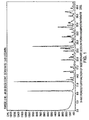
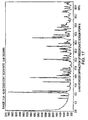
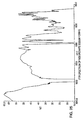
- the x-ray diffraction diagram of form A is shown in Fig.1
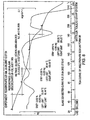
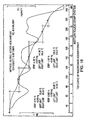
- the TGA curve obtained is shown in Fig.2 .
- Form A hemipentahydrate is characterized by x-ray peaks at 8.9, 12.2, 24.6 degrees 2-theta and other peaks at 12.9, 13.5, 15.4, 15.7, 27.8, 28.1, 31.3 degrees 2-theta.
- the TGA curve shows multiple weight loss steps, for an overall weight loss of 12-14%, which conforms to the value of 11.9-13.9% water content reported in the '520 patent.
- form A Another characteristic of form A is its absorption bands in FTIR spectroscopy.
- the FTIR spectrum of form A shows characteristic peaks at 800, 889, 935, 1132, 1637, 1657, 1689 cm -1 .
- the present invention provides risedronate sodium having the characteristics of form B that was shown to be monohydrate by single crystal x-ray analysis.
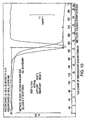
- Form B has a weight loss in TGA of between about 5% and about 8%.
- the TGA weight loss step of monohydrate form B is larger than the expected based on theoretical water content of 5.6%; presumably due in the fact that the TGA weight loss step also reflects decomposition processes.
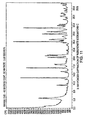
- Form B is its x-ray diffraction pattern.
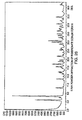
- Form B is characterized by x-ray diffraction peaks at 2 ⁇ values of about 6.0, 14.4, 19.6, 24.9, and 25.4 degrees.
- the x-ray diffraction diagram for form B is shown in Figure 4 .
- Principle x-ray diffraction peaks (reflections) for risedronate sodium form B are collect with those of other crystal forms in Table I.
- form B Another characteristic of form B is its absorption bands in FTIR.
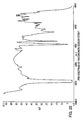
- the FTIR spectrum of form B is shown in figure 6 .
- Absorption bands characteristic of form B include those at 624, 951, 796, 912, 931, 1046, 1105, 1123, 1323, and 1641 cm -1 .
- FTIR absorption bands characteristic for form B are collected with those of other crystalline forms of risedronate sodium in Table III.
- the present invention provides pure risedronate sodium form B.
- Pure risedronate sodium form B of the present invention is also physically stable and does not substantially convert (transform) to form A hemipentahydrate when exposed to 75% to 100% RH for one week or more; or upon storage at 40°C and 75%RH for 6 months.
- Pure risedronate sodium has less than about 1% by weight form A.
- the present invention provides risedronate sodium form B that is stable against transformation to form A.
- the present invention provides risedronate sodium having the characteristics of form BB.
- Form BB has a TGA weight loss between about 9% and about 11%.
- Form BB has characteristic x-ray diffraction peaks at 2 ⁇ values of about 8.5, 9.1, 9.5, and 12.2 degrees ⁇ and other peaks at 14.3, 16.9, 19.7, 23.5, 28.8, and 33.6 degrees 2 ⁇ .
- the x-ray diffraction diagram of form BB is shown in Figure 7 .
- the TGA curve for risedronate sodium form BB is shown in Figure 8 .
- the present invention provides risedronate sodium having characteristics of form B1.
- One characteristic of form B1 is its x-ray diffraction diagram.
- Form B1 is characterized by x-ray diffraction peaks at 2 ⁇ values at about 6.5, 14.7, 21.2, 27.7, and 32.4 degrees 2 ⁇ and is further characterized by x-ray diffraction peaks at 14.3, 16.9, 19.7, 23.5, 28.8, and 33.6 degrees 2 ⁇ .
- the x-ray diffraction diagram of form B1 is shown in Figure 9 .
- the characteristic x-ray diffraction peaks for form B1 are collected with those for other risedronate sodium crystal forms in Table II.
- Form B1 is a disodium salt.
- the TGA thermogram for form B1 is shown in Figure 10 .
- the present invention provides risedronate sodium having the characteristics of form C.
- Form C has a TGA weight loss of about 7%.
- the TGA curve for form C is shown in Figure 12 .
- Form C is characterized by x-ray diffraction peaks at 20 values of about 5.6, 10.3, 12.9, 16.5, and 30.9. The locations of characteristic x-ray peaks for form C are collected with those of other crystal forms of risedronate sodium in Table II.
- Form C Another characteristic of form C is its absorption bands in FTIR spectroscopy.
- Risedronate sodium form C is characterized through its FTIR spectrum.
- Characteristic absorption band for form C include those at 615, 666, 1089, 1563, and 1625 cm -1 .
- FTIR absorption bands characteristic of form C are collected with those of other crystalline forms of risedronate sodium in Table III.
- Form C does not substantially convert (transform) to form A in high humidity atmosphere of 80%-100% at room temperature, preferably 80% relative humidity humidities for at least a period of one week.
- the present invention provides risedronate sodium having the characteristics of form D, which has a TGA weight loss of not more than about 3%.
- the TGA curve for form D is shown in Figure 15 .
- One characteristic of form D is its x-ray diffraction pattern.
- Form D is characterized by x-ray diffraction peaks at 2 ⁇ values of about 9.9, 17.2, 22.1, 27.9, and 29.2 degrees.
- the x-ray diffraction diagram of form D is shown in Figure 14 .
- the locations of characteristic x-ray peaks for form D are collected with those of other polymorphs of risedronate sodium in Table II.
- FTIR FTIR absorption bands in FTIR.
- Risedronate sodium form D is characterized by means of its FTIR spectrum.
- the FTIR spectrum for form D is shown in Figure 16 .
- Absorption bands characteristic of form D include those at 697, 807, 854, 955, 1187, 1218, 1576, 1646, and 1719 cm -1 .
- FTIR absorption bands for form D are collected with those of other crystalline forms of risedronate sodium in Table III.
- Form D does not substantially convert (transform) to form A in high humidity atmosphere of 80%-100% RH at room temperature for at least a period of one week.
- Form D can be converted to form B by exposing it to an atmosphere of 80% to 100% RH for at least about one week.
- the present invention provides risedronate sodium having the characteristics of form E, which can be characterized by x-ray diffraction peaks at 2 ⁇ values of about 8.4, 8.9, 13.6, 27.6, and 27.9 degrees and a TGA weight loss of 9% to 12%.
- the locations of the characteristic diffraction peaks for form E are collected with those of other crystalline forms of risedronate sodium in Table II.
- Form E Another characteristic of form E is its absorption bands in FTIR spectroscopy.
- the FTIR spectrum for form E is shown in Figure 19 .
- Absorption bands characteristic of form E include those at 801, 890, 935, 1656, and 1689 cm -1 .
- Characteristic FTIR absorption bands for form E are collected with those of other crystalline forms of risedronate sodium in Table III.
- the present invention provides risedronate sodium having the characteristics of form F, which has a TGA weight loss between about 4% and about 6%.
- the TGA curve for form F is shown in figure 21 .
- form F is its x-ray diffraction pattern.
- Risedronate sodium form F is characterized by x-ray diffraction peaks at values of 2 ⁇ of about 6.6, 8.4, 8.9, 12.2, and 18.6 degrees.
- the x-ray diffraction diagram of form F is shown in Figure 20 .
- the locations of characteristic x-ray peaks for form F are collected with those of other crystalline forms of risedronate sodium in Table II.
- Risedronate sodium form F can be further characterized by means of FTIR spectroscopy.
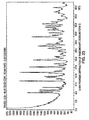
- the FTIR spectrum of form F is shown in figure 22 .
- Absorption bands characteristic of form F include those 971, 1133, and 1306 cm -1 .
- Characteristic absorption bands of FTIR absorptions for form F are collected with those of other crystalline forms of risedronate sodium in Table III.
- Form F does not substantially rearrange (transform) to the hemipentahydrate form at up to 100% relative humidity during one week storage.
- high humidity atmosphere of 80%-100% RH form F transforms to form BB during storage of one week or more.
- the present invention provides risedronate sodium having the characteristics of form G, which has a TGA weight loss between about 9% and about 11%.
- the TGA curve of form G is shown in Figure 24 .
- risedronate sodium form G is characterized by x-ray diffraction peaks at 2 ⁇ values of about 8.0, 9.9, 12.2, 15.2, and 19.6 degrees.
- the x-ray diffraction diagram of form G is shown in figure 23 .
- the locations of the characteristic diffraction peaks of form G are collected with those of other crystalline forms of risedronate sodium in Table II.
- Another characteristic of form G is its absorption bands in FTIR spectroscopy.
- Risedronate sodium form G can be further characterized by FTIR spectroscopy.
- the FTIR spectrum of form G is shown in Figure 25 .
- Characteristic FTIR absorption bands of form G include those at 724, 871, 1174,and 1285 cm -1 .
- Characteristic FTIR absorption bands for form G are collected with those for other crystalline forms of risedronate sodium in Table III.
- the present invention provides risedronate sodium having the characteristics of form H, which can be characterized by x-ray diffraction peaks at values of 2 ⁇ of about 6.9, 9.8, 10.9, 13.7, 16.0, and 18.0 degrees.
- the characteristic x-ray diffraction peaks for form H are collected with those of other crystalline forms of risedronate sodium in Table II.
- Form H is further characterized by a TGA weight loss of 22%, which corresponds to the water content of pentahydrate.
- Table II Risedronate sodium XRD peaks (degrees 2-theta) Form A (hemipenta) Form B Form B1 Form BB Form C Form D Form E Form F Form G
- Form H 8.9 6.0 6.5 5.9 5.6 9.9 6.5 8.0 8.0 6.9 12.2 12.0 14.3 8.5 10.3 13.8 7.4 8.4 8.3 9.8 12.9 13.4 14.7 9.1 12.9 14.2 8.4 8.9 8.9 10.9 13.5 14.4 16.9 9.5 15.2 16.5 8.9 12.2 9.9 13.7 15.4 16.5 19.7 12.2 16.5 17.2 13.6 14.0 12.2 16.0 15.7 17.1 21.2 16.7 17.6 18.3 14.4 15.6 13.5 17.2 19.8 18.1 23.5 22.0 17.8 18.5 16.4 16.9 13.8 18.0 22.9 19.0 27.7 24.7 20.3 22.1 20.1 19.8 15.2 19.0 24.6 19.6 28.8 28.0 20.9
- novel crystal forms (polymorphs and pseudopolymorphs) of the present invention can be prepared by several methods. These methods include a reflux method, an annealing (thermal) method, and a humidification method.
- the reflux method is preferred when risedronate sodium having the characteristics of any of forms B, BB, B1, C, D, or E is desired.
- risedronic acid is combined with a suitable base having sodium as a counterion (cation) and a reflux medium that can be water, an alcohol, or a mixture of an alcohol and water.
- a reflux medium that can be water, an alcohol, or a mixture of an alcohol and water.
- Sodium hydroxide is a preferred sodium base.
- the particular alcohol and the composition of the alcohol - water mixture are chosen according to the form desired.
- Table III will provide guidance to the skilled artisan in selecting the appropriate reflux medium.
- the composition of reflux media are expressed on a volume / volume basis (abbreviated v/v). That is, 50% v/v means a mixture of approximately equal volumes.
- ⁇ 1 to 2 equivalents of sodium hydroxide are combined with risedronic acid and water, alcohol, or an alcohol- water mixture.
- the total volume of reflux medium is not critical and can be, for example, between about 15 and about 25 milliliters per gram of risedronic acid used.
- a solution of sodium hydroxide in the chosen reflux medium is added to a suspension of risedronic acid in the reflux medium (12 to 22 mL per gram of risedronic acid are convenient).
- the mixture is refluxed for 0.5 to 30 hours, preferably 3 to 24 hours.
- the mixture is then cooled to room temperature and then to less than about 5°C, most preferably to about 0°C.
- the solids are separated and collected by any suitable means, such as filtration (gravity or suction) or centrifugation, to mention just two.
- the annealing (incubating) method is preferred when forms F and G are desired.
- Annealing can be accomplished by exposing the starting risedronate sodium to the desired temperature for the desired time using, for example, an oven. The skilled artisan will know to adjust the annealing time according to the temperature chosen. Lower annealing temperatures generally require longer annealing times.
- risedronate sodium having at least one characteristic of form B can be made by refluxing a combination of risedronic acid, a sodium base, and a liquid that is a mixture with water of an alcohol selected from methanol, ethanol, n-propanol, and iso-propanol.
- the present invention provides a process by which form B is obtained, by combining at reflux temperature a suspension of risedronic acid in a mixture of water and an alcohol, preferably ethanol, methanol, or isopropanol with a solution of sodium hydroxide in a mixture of alcohol and water.
- the reaction to yield product having the characteristics of form B takes place for a period of 0.5-30 hours, more preferably 20 hours.
- the present invention provides a process by which form B is obtained by combining, at reflux temperature, risedronic acid and about one to about one-and-one half equivalents of sodium hydroxide in mixture of water and ethanol (40% to 60%, especially 50%, v/v, water in ethanol, see Table III), wherein the combination is a suspension.
- the present invention provides a process by which risedronate sodium having at least one characteristic of form B is obtained, by combining at reflux temperature a suspension of risedronic acid in a mixture of water and methanol (20% to 70%, v/v, methanol, see Table III) with a solution of about one to about one-and-one half equivalents of sodium hydroxide in a mixture of alcohol and water.
- the present invention provides a process by which risedronate sodium having at least one characteristic of form B is obtained, by combining at reflux temperature a suspension of risedronic acid in a liquid that is a mixture of water and isopropanol (40% to 60%, v/v, isopropanol) with a solution of sodium hydroxide in a mixture of alcohol and water.
- the present invention provides a method of making risedronate sodium having at least one characteristic of form B including the step of treating risedronate sodium with a lower alkanol at a temperature between about room temperature and reflux temperature. Treatment can be effected by agitating a combination of risedronate sodium having at least one characteristic of form A and a lower alkanol for a time sufficient to effect the transformation.
- the skilled artisan will know to optimize the treatment time by routine experimentation by monitoring the transformation using, for example, x-ray diffraction analysis.
- Another embodiment of the invention provides a process by which form B, alone or in admixture with form B 1 is obtained, by combining at reflux temperature risedronic acid and one equivalent sodium hydroxide in an ethanol water mixture (5% - 25%, v/v, water in ethanol) for a period of 5-20 hours, most preferably 10 hours.
- the present invention provides a method for making risedronate sodium having at least one characteristic of form B1 including the step of refluxing risedronic acid and two equivalents of an inorganic base, having sodium as the cation preferably NaOH in a 50/50 (v/v), alcohol/water, for 5 to 20, preferably 10 hours.
- an inorganic base having sodium as the cation e.g. NaOH
- the product having the characteristics of B1 is formed in preference to form B.
- Another aspect of the invention is the process by which risedronate sodium having at least one characteristic of form C is obtained, by combining at reflux temperature risedronic acid and sodium hydroxide in an ethanol-water mixture (3%water in ethanol, v/v) for a period of 10-30 hours, most preferably about 20 hours.
- the present invention provides a process by which risedronate sodium having at least one characteristic of form D is obtained by combining, at reflux temperature, risedronic acid and sodium hydroxide in methanol or ethanol or in a mixture of methanol and water (up to 11 %water v/v) for a period of 10-30 hours, most preferably about 20 hours.
- the present invention provides a method by which form E, alone or in admixture with form A, is obtained by combining at reflux temperature risedronic acid and sodium hydroxide in a liquid that is water or a mixture of alcohols, preferably ethanol or methanol more preferably ethanol in water (up to 20% v/v ethanol) or methanol in water (up to 20% v/v methanol).
- a liquid that is water or a mixture of alcohols, preferably ethanol or methanol more preferably ethanol in water (up to 20% v/v ethanol) or methanol in water (up to 20% v/v methanol).
- the reaction to yield a product exhibiting the characteristics of form E takes place for a period of at least 1 hour.
- the present invention provides a method by which risedronate sodium having at least one characteristic of form BB is obtained by providing a solution of risedronate sodium in water at elevated temperature, preferably at 70°C, and adding IPA to the solution to obtain a suspension, isolating the suspended solid, drying the isolated precipitate, and suspending the dried precipitate in IPA at reflux for at least about 10 hours, especially about 17 hours.
- Another aspect of the invention is the process by which risedronate sodium having at least one characteristic of form F is obtained, by heating a mixture of forms B and A at temperatures in the range 100-200°C, most preferably 120-180°C, most preferably 160°C.
- the time needed for the conversion depends on the temperature. At 160°C a period of 2-10 hours is used, preferably 5-8 hours.
- Another embodiment of the invention is the process by which risedronate sodium having at least one characteristic of form G is obtained, by heating a mixture of forms A and E at temperatures in the range 100-200°C, most preferably 120-180°C, most preferably 160°C.
- the time needed for the conversion depends on the temperature. At 160°C a period of 2-10 hours is used, preferably 5-8 hours.
- Another embodiment of the invention is the process by which risedronate sodium having at least one characteristic of form H is obtained, by exposing at high relative humidity, in the range 60-100% relative humidity, preferably 80% relative humidity, risedronate sodium form C.
- the period needed for the conversion is 3-20 days, preferably 7-14 days.
- the present invention provides a method for preparation of risedronate sodium having at least one characteristic of form A by combining at reflux temperature risedronic acid and sodium hydroxide in aqueous solution of isopropanol(80-100% v/v water). Under these conditions, formation of product exhibiting the characteristics of form A is usually complete in about 2 hours or less.
- the present invention provides a method for the preparation of form BB by exposing form F to high relative humidity of 60-100% RH, more preferrably 80% RH, for a period of time between 3 and 10 days, more preferrably 7 days.
- the present invention provides a method for the preparation of risedronate sodium having at least one characteristic of form A by exposing form G to high relative humidity of 60-100% RH, more preferrably 80% RH, for a period of time between 3 and 10 days, more preferrably 7 days.
- the present invention provides a method for the preparation of risedronate sodium having at least one characteristic of form A by exposing to high relative humidity of 60-100% RH, more preferrably 80% RH, risedronate sodium having at least one characteristic of either form E or form G for a period of time between 3 and 10 days, more preferably 7 days.
- Another embodiment of the invention is preparation of risedronate sodium having at least one characteristic of form B by exposing risedronate sodium having at least one characteristic of form D to high relative humidity of 60-100% RH, more preferrably 80% RH, for a period of time between 3 and 20 days, more preferably 5-10 days.
- the present method provides a method for the preparation of risedronate sodium having at least one characteristic of form H by exposing form C to high relative humidity of 60-100% RH, more preferrably 80% RH, for a period of time between 3 and 20 days, more preferably 5-10 days.
- the humidification method is preferred when form H is desired.
- the present invention provides a method for the preparation of a risedronate sodium having at least one characteristic of form A by incubating form E at temperatures in the range 30-100°C, most preferably 50-80°C, most preferably 60°C.
- the time needed for the conversion depends on the temperature. At 60°C a period of 10-30 hours is used, preferably 20 hours.
- the present invention provides a method of making risedronate sodium having at least one characteristic of form A including the steps of treating risedronate sodium form B or form D with water at a temperature from room temperature up to about reflux temperature. Treatment can be by agitation of a mixture of form B or D and water as a slurry or suspension. The risedronate sodium is treated for a time sufficient to effect the transformation. The skilled artisan will know to optimize the treatment time by routine experimentation by monitoring the transformation by, for example, x-ray diffraction analysis.
- the present invention provides a pharmaceutical composition including at least one ofrisedronate sodium forms B, B1, BB, C, D, E, F, G, or H and at least one pharmaceutically acceptable excipient.
- the pharmaceutical composition is in the form of an oral solid dosage form.
- the present invention provides a pharmaceutical composition including stable risedronate sodium form B and at least one pharmaceutically acceptable excipient.
- the pharmaceutical composition is in the form of an oral solid dosage form.
- Tablets were prepared according to standard formulations and form B in the tablets was found to be stable for 5 months under stressed conditions of 40° C and 75% RH.
- the stability of risedronate sodium form B in tablets is not limited to particular formulations.
- the present invention provides a pharmaceutical composition including pure risedronate sodium form B and at least one pharmaceutically acceptable excipient.
- the pharmaceutical composition is in the form of an oral solid dosage form.
- Risedronate sodium having at least one characteristic of any form herein described may be formulated into a variety of pharmaceutical compositions and dosage forms that are useful in treating patients afflicted with, for example, osteoporosis.
- compositions of the present invention contain one or more of the herein described polymorphs of risedronate sodium.
- risedronate sodium pharmaceutical compositions of the present invention may contain one or more excipients. Excipients are added to the composition for a variety of purposes.
- Diluents increase the bulk of a solid pharmaceutical composition and may make a pharmaceutical dosage form containing the composition easier for the patient and caregiver to handle.
- Diluents for solid compositions include, for example, microcrystalline cellulose (e.g. AVICEL ® , microfine cellulose, lactose, starch, pregelitinized starch, calcium carbonate, calcium sulfate, sugar, dextrates, dextrin, dextrose, dibasic calcium phosphate dihydrate, tribasic calcium phosphate, kaolin, magnesium carbonate, magnesium oxide, maltodextrin, mannitol, polymethacrylates (e.g. EUDRAGIT ® ), potassium chloride, powdered cellulose, sodium chloride, sorbitol and talc.
- microcrystalline cellulose e.g. AVICEL ®
- microfine cellulose e.g. AVICEL ®
- lactose lactose
- starch pregelitinized
- Solid pharmaceutical compositions that are compacted into a dosage form like a tablet may include excipients whose functions include helping to bind the active ingredient and other excipients together after compression.
- Binders for solid pharmaceutical compositions include acacia, alginic acid, carbomer (e.g. carbopol), carboxymethylcellulose sodium, dextrin, ethyl cellulose, gelatin, guar gum, hydrogenated vegetable oil, hydroxyethyl cellulose, hydroxypropyl cellulose (e.g. KLUCEL®), hydroxypropyl methyl cellulose (e.g. METHOCEL®), liquid glucose, magnesium aluminum silicate, maltodextrin, methylcellulose, polymethacrylates, povidone (e.g. KOLLIDON®, PLASDONE®), pregelatinized starch, sodium alginate and starch.
- the dissolution rate of a compacted solid pharmaceutical composition in the patient's stomach may be increased by the addition of a disintegrant to the composition
- Disintegrants include alginic acid, carboxymethylcellulose calcium, carboxymethylcellulose sodium (e.g. AC-DI-SOL®, PRIMELLOSE®), colloidal silicon dioxide, croscarmellose sodium, crospovidone (e.g. KOLLIDON®, POLYPLASDONE®), guar gum, magnesium aluminum silicate, methyl cellulose, microcrystalline cellulose, polacrilin potassium, powdered cellulose, pregelatinized starch, sodium alginate, sodium starch glycolate (e.g. EXPLOTAB®) and starch.
- alginic acid e.g. AC-DI-SOL®, PRIMELLOSE®
- colloidal silicon dioxide e.g. KOLLIDON®, POLYPLASDONE®
- guar gum e.g. KOLLIDON®, POLYPLASDONE®
- magnesium aluminum silicate e.g. KOLLIDON®, POLYPLASDONE®
- powdered cellulose
- Glidants can be added to improve the flow properties of non-compacted solid compositions and improve the accuracy of dosing.
- Excipients that may function as glidants include colloidal silicon dixoide, magnesium trisilicate, powdered cellulose, starch, talc and tribasic calcium phosphate.
- a dosage form such as a tablet
- the composition is subjected to pressure from a punch and die.
- Some excipients and active ingredients have a tendency to adhere to the surfaces of the punch and die, which can cause the product to have pitting and other surface irregularities.
- a lubricant can be added to the composition to reduce adhesion and ease release of the product from the die.
- Lubricants include magnesium stearate, calcium stearate, glyceryl monostearate, glyceryl palmitostearate, hydrogenated castor oil, hydrogenated vegetable oil, mineral oil, polyethylene glycol, sodium benzoate, sodium lauryl sulfate, sodium stearyl fumarate, stearic acid, talc and zinc stearate.
- Flavoring agents and flavor enhancers make the dosage form more palatable to the patient.
- Common flavoring agents and flavor enhancers for pharmaceutical products that may be included in the composition of the present invention include maltol, vanillin, ethyl vanillin, menthol, citric acid, fumaric acid ethyl maltol, and tartaric acid.
- compositions may also be colored using any pharmaceutically acceptable colorant to improve their appearance and/or facilitate patient identification of the product and unit dosage level.
- the solid compositions of the present invention include powders, granulates, aggregates and compacted compositions.
- the dosages include dosages suitable for oral, buccal, rectal, parenteral (including subcutaneous, intramuscular, and intravenous), inhalant and ophthalmic administration. Although the most suitable route in any given case will depend on the nature and severity of the condition being treated, the most preferred route of the present invention is oral.
- the dosages may be conveniently presented in unit dosage form and prepared by any of the methods well-known in the pharmaceutical arts.
- Dosage forms include solid dosage forms like tablets, powders, capsules, suppositories, sachets, troches and lozenges as well as liquid syrups, suspensions and elixirs.
- An especially preferred dosage form of the present invention is a tablet.
- the identity of the particular polymorph formed was determined by x-ray diffraction and, where appropriate, TGA and FTIR.
- a solution of sodium hydroxide (1.18g, 1 eq.) in a mixture of water/ethanol (39% v/v) (20.5ml) was added dropwise to a suspension of risedronic acid (8.35g) in a mixture of water/ethanol (39% v/v) (116ml) at reflux temperature.
- the reaction mixture was heated at reflux temperature for 18 hours.
- the reaction mixture was cooled to room temperature. Further cooling was performed using an ice-bath.
- the precipitate was then filtered, washed with ethanol (2x10ml) and dried in a vacuum oven at 50°C for 24 hours to give 8.50g (88%) of sodium risedronate crystal form B.
- the reaction mixture was heated at reflux temperature for 19 hours.
- the reaction mixture was cooled to room temperature. Further cooling was performed using an ice-bath.
- the precipitate was then filtered, washed with ethanol (1 x20ml) and dried in a vacuum oven at 50°C for 20 hours to give 7.55g of sodium risedronate crystal form B.
- a solution of sodium hydroxide (1.18g,1eq.) in a mixture of water/methanol (24% v/v) (16.6ml) was added dropwise to a suspension of risedronic acid (8.35g) in a mixture of water/methanol (24% v/v) (94ml) at reflux temperature.
- the reaction mixture was heated at reflux temperature for 18.5 hours.
- the reaction mixture was cooled to room temperature. Further cooling was performed using an ice-bath.
- the precipitate was then filtered, washed with methanol (2x10ml) and dried in a vacuum oven at 50°C for 19 hours to give 8.69g of sodium risedronate crystal form B.
- a solution of sodium hydroxide (1.18g,1eq.) in a mixture of water/methanol (39% v/v) (20.6ml) was added dropwise to a suspension of risedronic acid (8.35g) in a mixture of water/methanol (39% v/v) (117ml) at reflux temperature.
- the reaction mixture was heated at reflux temperature for 18.5 hours.
- the reaction mixture was cooled to room temperature. Further cooling was performed using an ice-bath.
- the precipitate was then filtered, washed with methanol (2x10ml) and dried in a vacuum oven at 50°C for 19 hours to give 8.30g of sodium risedronate crystal form B.
- a solution of sodium hydroxide (1.18g,1eq.) in a mixture of water/methanol (60% v/v) (31.3ml) was added dropwise to a suspension of risedronic acid (8.35g) in a mixture of water/methanol (60% v/v) (178ml) at reflux temperature.
- the reaction mixture was heated at reflux temperature for 18 hours.
- the reaction mixture was cooled to room temperature. Further cooling was performed using an ice-bath.
- the precipitate was then filtered, washed with methanol (2x10ml) and dried in a vacuum oven at 50°C for 22 hours to give 7.75g of sodium risedronate crystal form B .
- a solution of sodium hydroxide (1.18g, 1eq.) in a mixture of water/methanol (70% v/v) (41.8ml) was added dropwise to a suspension of risedronic acid (8.35g) in a mixture of water/methanol (70% v/v) (237ml) at reflux temperature.
- the reaction mixture was heated at reflux temperature for 19 hours.
- the reaction mixture was cooled to room temperature. Further cooling was performed using an ice-bath.
- the precipitate was then filtered, washed with methanol (2x10ml) and dried in a vacuum oven at 50°C for 23 hours to give 6.55g of sodium risedronate crystal form B .
- the reaction mixture was heated at reflux temperature for 19 hours.
- the reaction mixture was cooled to room temperature. Further cooling was performed using an ice-bath.
- the precipitate was then filtered, washed with IPA (1x25ml) and dried in a vacuum oven at 50°C for 27 hours to give 8.53g of sodium risedronate crystal form B .
- a solution of sodium hydroxide (1.18g, 1eq.) in a mixture of water/ethanol (3% v/v) (12.4ml) was added dropwise to a suspension of risedronic acid (8.35g) in a mixture of water/ethanol (3% v/v) (70ml) at reflux temperature.
- the reaction mixture was heated at reflux temperature for 18 hours.
- the reaction mixture was cooled to room temperature. Further cooling was performed using an ice-bath.
- the precipitate was then filtered, washed with ethanol (2 ⁇ 10ml) and dried in a vacuum oven at 50°C for 22 hours to give 8.20g (89%)of sodium risedronate crystal form C .
- a solution of sodium hydroxide (1.18g, 1eq.) in a mixture of water/methanol (11% v/v) (14ml) was added dropwise to a suspension of risedronic acid (8.35g) in a mixture of water/methanol (11% v/v) (80ml) at reflux temperature.
- the reaction mixture was heated at reflux temperature for 18 hours.
- the reaction mixture was cooled to room temperature. Further cooling was performed using an ice-bath.
- the precipitate was then filtered, washed with methanol (1x10ml) and dried in a vacuum oven at 50°C for 20 hours to give 8.20g (90%)of sodium risedronate crystal form D .
- the reaction mixture was heated at reflux temperature for 19 hours.
- the reaction mixture was cooled to room temperature. Further cooling was performed using an ice-bath.
- the precipitate was then filtered, washed with ethanol (1x20ml) and dried in a vacuum oven at 50°C for 20 hours to give 6.17g of sodium risedronate crystal form E in a mixture with form A.
- the reaction mixture was heated at reflux temperature for 2 hours.
- the reaction mixture was cooled to room temperature and stirred at this temperature for 16 hours. Further cooling was performed using an ice-bath.
- the precipitate was then filtered, washed with IPA (1 ⁇ 20ml) and dried in a vacuum oven at 50°C for 24 hours to give 6.09g of sodium risedronate crystal form A.
- a suspension of sodium risedronate (10.0g) in water (220 mL) was heated to 70°C and maintained at that temperature for two hours.
- Cold (0°C) IPA (1600 mL) was added, in one portion, to the hot solution to obtain a precipitate.
- the mixture was then cooled in an ice bath for 1.5 hours.
- the precipitate was then filtered, washed with IPA (2 x 30 mL), and dried in a vacuum oven at 50°C for 25 hours to yield 8.8 g (92%) of sodium risedronate for BB.
- the obtained risedronate sodium we stirred in IPA (150mL) at reflux temperature for 17 hours.
- the solid was then isolated by filtration, washed with IPA (2x17 mL) and dried in vacuo at 50°C for 27 hours to give 7.9g (90%) of sodium risedronate crystal form BB.
- a solution of sodium hydroxide (1.18g, 1eq.) in a mixture of water/ethanol (11% v/v) (14ml) was added dropwise to a suspension of risedronic acid (8.35g) in a mixture of water/ethanol (11% v/v) (80ml) at reflux temperature.
- the reaction mixture was heated at reflux temperature for 19 hours.
- the reaction mixture was cooled to room temperature. Further cooling was performed using an ice-bath.
- the precipitate was then filtered, washed with ethanol (2x10ml) and dried in a vacuum oven at 50°C for 41 hours to give 8.67g of sodium risedronate mixture of crystal form B1 and B.
- a solution of sodium hydroxide (1.18g, 1eq.) in a mixture of water/ethanol (20% v/v) (15.7ml) was added dropwise to a suspension of risedronic acid (8.35g) in a mixture of water/ethanol (20% v/v) (89ml) at reflux temperature.
- the reaction mixture was heated at reflux temperature for 20 hours.
- the reaction mixture was cooled to room temperature. Further cooling was performed using an ice-bath.
- the precipitate was then filtered, washed with ethanol (1x20ml) and dried in a vacuum oven at 50°C for 24 hours to give 8.75g of sodium risedronate mixture of crystal form B1 and B.
- risedronate form E was kept in an open bottle in the oven at 60°C 20 hours, to yield a mixture of form E and form A.
- risedronate form C was spread in a petri dish at a controlled relative humidity ( ⁇ 5%) of 80% for a period of one week, to yield a mixture of form C and form H.
- risedronate form D was spread in a petri dish at a controlled relative humidity ( ⁇ 5%) of 80% for a period of one week, to yield a mixture of form D and form B.
- risedronate form E was spread in a petri dish at a controlled relative humidity ( ⁇ 5%) of 80% for a period of one week, to yield form A with a small quantity of form D.
- risedronate form F was spread in a petri dish at a controlled relative humidity ( ⁇ 5%) of 80% for a period of one week, to yield a mixture of form BB .
- risedronate form F was spread in a petri dish at a controlled relative humidity ( ⁇ 5%) of 100% for a period of one week, to yield form BB.
- a tablet containing Risedronate sodium active ingredient (about 12% w/w of the tablet) was kept in a securitainer at 40 degrees, 75% relative humidity for 6 months.
- a tablet containing Risedronate sodium active ingredient (about 12% w/w of the tablet) was kept in a securitainer at ambient temperature for 4 months.
Landscapes
- Health & Medical Sciences (AREA)
- Chemical & Material Sciences (AREA)
- Organic Chemistry (AREA)
- Physical Education & Sports Medicine (AREA)
- Orthopedic Medicine & Surgery (AREA)
- Rheumatology (AREA)
- General Health & Medical Sciences (AREA)
- Life Sciences & Earth Sciences (AREA)
- Bioinformatics & Cheminformatics (AREA)
- Engineering & Computer Science (AREA)
- Nuclear Medicine, Radiotherapy & Molecular Imaging (AREA)
- General Chemical & Material Sciences (AREA)
- Pharmacology & Pharmacy (AREA)
- Chemical Kinetics & Catalysis (AREA)
- Animal Behavior & Ethology (AREA)
- Medicinal Chemistry (AREA)
- Public Health (AREA)
- Veterinary Medicine (AREA)
- Biochemistry (AREA)
- Molecular Biology (AREA)
- Pharmaceuticals Containing Other Organic And Inorganic Compounds (AREA)
- Acyclic And Carbocyclic Compounds In Medicinal Compositions (AREA)
Abstract
Description
- This application claims the benefit of provisional applications Serial No.
60/372,465, filed April 11, 2002 No. 60/404,174, filed August 16, 2002 No. 60/405,668, filed August 22, 2002 - The present invention relates to novel polymorphs and pseudopolymorphs of risedronate sodium and methods of making them. The invention further relates to pharmaceutical compositions containing risedronate sodium in various polymorphic or pseudopolymorphic forms.
- Osteoporosis is a disease characterized by a progressive loss of bone mineral. Osteoporosis is also characterized by low bone mass and architectural deterioration of bone tissue leading to enhanced bone fragility and increase in the risk of fracture. The goal of therapy in treatment of osteoporosis is to improve calcium absorption and decrease urinary excretion of calcium thus reversing secondary hyperparathyroidism. Calcium supplements are widely used in managing established osteoporosis but there have been few satisfactory prospective studies of calcium supplementation on bone density or the risk of further fracture. The bisphosphonates, for example etidronate, pamidronate, and risedronate are useful in treating osteoporosis. Risedronate sodium [1-hydroxy-2(3-pyridinyl)ethylidene] bis phosphonic acid monosodium salt), the subject of the present invention, is presently marketed under the tradename Actonel® for treatment of osteoporosis.
- Many pharmacologically active substances can exist in more than one crystalline form. The discovery of a new crystalline form of a pharmaceutically useful compound provides an opportunity to improve the performance characteristics of a pharmaceutical product. It enlarges the repertoire of materials that a formulation scientist has available for designing, for example, a pharmaceutical dosage form of a drug with a targeted release profile or other desired characteristic. It is clearly advantageous when this repertoire is enlarged by the discovery of new crystalline forms of a useful compound. For a general review of polymorphs and the pharmaceutical applications of polymorphs consult G.M. Wall, Pharm Manuf. 3, 33 (1986); J.K. Haleblian and W. McCrone, J. Pharm. Sci., 58, 911 (1969); and J.K. Haleblian, J. Pharm. Sci., 64, 1269 (1975), all of which are incorporated herein by reference.
- In some cases, foreign molecules, for example solvent molecules, can be regularly incorporated into the crystal structure of a compound. Strictly speaking, such compounds are not true polymorphs and are often referred to as pseudopolymorphs.
- The present invention relates to the solid state forms (i.e. polymorphs and pseudopolymorphs) of risedronate sodium that can be prepared by any of the methods herein described. The polymorphs and pseudopolymorphs can be influenced by controlling the conditions under which the salt is obtained in solid form. Solid state physical properties that can differ from one polymorph (or pseudopolymorph) to the next include, for example, the flowability of the milled solid. Flowability affects the ease with which the material is handled during processing into a pharmaceutical product. When particles of the powdered compound do not flow past each other easily, a formulation specialist must take that fact into account in developing a tablet or capsule formulation, which may necessitate the use of glidants such as colloidal silicon dioxide, talc, starch, or tribasic calcium phosphate.
- Another important solid state property of a pharmaceutical compound that can depend on crystal structure is its rate of dissolution in aqueous media. The rate of dissolution of an active ingredient in a patient's stomach fluid can have therapeutic consequences because it imposes an upper limit on the rate at which an orally-administered active ingredient can reach the patient's bloodstream. The rate of dissolution is also a consideration in formulating syrups, elixirs and other liquid medicaments. The solid state form of a compound can also affect its behavior on compaction and its storage stability.
- These practical physical characteristics can be influenced by the conformation and orientation of molecules in the unit cell, which defines a particular polymorphic form of a substance. The polymorphic form may give rise to thermodynamic properties that are different from those of the amorphous material or another polymorphic (or pseudopolymorphic) form. Thermodynamic properties can be used to distinguish between polymorphs and pseudopolymorphs. Thermodynamic properties that can be used to distinguish between polymorphs can be measured in the laboratory by such techniques as capillary melting point, thermogravimetric analysis (TGA), differential scanning calorimetry (DSC), and differential thermal analysis (DTA).
- A particular polymorphic form can also possess distinct spectroscopic properties that may be detectable by, for example, solid state 13C NMR spectroscopy and infrared (IR) spectroscopy.
- X-ray crystallography on powders (powder diffractometry) can be used to obtain x-ray diffractograms unequivocally distinguish among the crystal structure of different polymorphs and pseudopolymorphs.
-
United States Patent 6,410,520 ("the '520 patent") describes selective crystallization of risedronate sodium as a monohydrate or hemipentahydrate (pseudopolymorphs). Atpage 1, the application states, without citation, "It is known in the literature that some bisphonic [sic] acids and their salts are capable of forming hydrates, risedronate sodium exists in three hydration states: mono, hemipenta and anhydrous." The publication also states that the mono and hemipentahydrates were characterized by various means including x-ray diffraction. However, the present inventors have found no such characterization data in the literature for the monohydrate. Also, the present inventors are not aware of any teach in the prior art where a process to make the monohydrate is shown. - In the '520 patent it is written that the monohydrate and the hemipentahydrate are preferred forms and that the hemipentahydrate is the thermodynamically preferred crystalline form under processing conditions based on the observation that the monohydrate crystals convert to the hemipentahydrate form.
- The '520 patent also discloses that the monohydrate has a water content from about 5.0% to about 7.1%, more preferably about 5.6% to about 6.5%, and most preferably 5.6%.
- The application also discloses that the hemipentahydrate has a water content from about 11.9% to about 13.9%, more preferably about 12.5% to about 13.2%, and most preferably 12.9%. The monohydrate and the hemipentahydrate are further characterized by single crystal X-Ray crystallography, and thermogravimetric analysis, but x-ray results were not disclosed. The present inventors collected x-ray diffraction and TGA data for the forms disclosed in the '520 patent.
- In the '520 patent, a process for preparation of the hemipentahydrate form is disclosed. Also, a pharmaceutical composition comprising risedronate from about 50% to about 100% hemipentahydrate and from about 50% to about 0% monohydrate is disclosed.
- The '520 patent also discloses methods to selectively make the monohydrate. The present inventors have repeated example 2 of the '520 patent. The product we obtained following the teachings of the '520 patent are a mixture of forms B, A, BB, by x-ray analysis.
- In one aspect, the present invention provides risedronate sodium having at least one characteristic of form B, which is characterized by x-ray diffraction peaks (reflections) at 2θ values of about 6.0, 14.4, 19.6, 24.9, and 25.4 degrees, or by FTIR absorption bands at about 624, 951, 796, 912, 931, 1046,1105, 1123, 1323, and 1641 cm-1. Form B is a monohydrate as proved by single crystal x-ray analysis.
- In another aspect, the present invention relates to pure risedronate sodium form B.
- In another aspect, the present invention relates to risedronate sodium form B, stable against transformation to form A.
- In a further aspect, the present invention relates to a method of making risedronate sodium having at least one characteristic of form B, especially pure form B, including the step of refluxing a combination of risedronic acid, a sodium base, especially sodium hydroxide, and a mixture of an alcohol, especially ethanol, and water (40-60% water, v/v in alcohol), methanol and water (20%-70%water, v/v, in alcohol), or isopropanol and water (40% - 60% water, v/v, in alcohol). Form B so made is stable against transformation to form A.
- In another aspect, the present invention relates to a method of making risedronate sodium having at least one characteristic of form B including the step of exposing risedronate sodium form D to an atmosphere of 80% to 100% RH. The product so made is stable against transformation to form A.
- In another aspect, the present invention relates to a method of making risedronate sodium having at least one characteristic of form B including the step of treating risedronate sodium form A with a lower alkanol at a temperature between about room temperature and reflux.
- In still another aspect, the present invention provides a method for preparation of risedronate sodium form B by exposing to high relative humidity of 60-100% RH, more preferably 80% RH, risedronate sodium form D for a period of time between 3 and 20 days, more preferably 5-10 days.
- In still another aspect, the present invention provides pure risedronate sodium form B. Pure risedronate sodium form B has less than about 2% by weight of form A.
- In another aspect, the present invention provides stable risedronate sodium form B. Stable form B does not transform to form A even when exposed to high relative humidity.
- In yet another aspect, the present invention relates to risedronate sodium in crystalline form B that is stable against transformation to risedronate sodium in crystalline form A.
- In still a further aspect, the present invention relates to risedronate sodium in crystalline form B, stable against transformation to risedronate sodium in crystalline form A when exposed to 75% RH at 40° C for at least three months.
- In another aspect, the present invention provides risedronate sodium having at least one characteristic of form B1. Form B1 has characteristic x-ray diffraction peaks (reflections) at 2θ values of about 6.5, 14.7, 21.2, 27.7, and 32.4 degrees 2θ.
- In a further aspect, the present invention relates to a method of making risedronate sodium having at least one characteristic of form B1 including the step of refluxing a combination of risedronic acid, at least about two equivalents of a sodium base, and a liquid that is a mixture of an alcohol, especially ethanol, and water (5-25% ethanol, v/v in alcohol). The method can further include one or more cooling steps to room temperature or 5°C or less.
- In another aspect, the present invention relates to a method of making risedronate sodium having at least one characteristic of form B1 including the steps of refluxing a suspension of risedronic acid and at least about two equivalents of a sodium base in a mixture of water and ethanol, 50/50 v/v, cooling the suspension to a temperature of about room temperature, further cooling the suspension to a temperature of about 5°C or less, and isolating risedronate sodium having at least one characteristic of form B1 from the suspension.
- In another aspect, the present invention relates to a method of making risedronate sodium having at least one characteristic of form B1 including the steps of refluxing a mixture of risedronic acid, at least about two equivalents of a sodium base, and a liquid comprising water and ethanol, 50/50 v/v, and isolating risedronate disodium having at least one characteristic of form B1 from the mixture.
- In yet another aspect, the present invention relates to a method of making risedronate sodium form B in admixture with form B1 including the steps of refluxing a combination of risedronic acid and a sodium base in a liquid made-up of between about 5% and about 25%, v/v, ethanol, the remainder essentially water, and isolating the risedronate sodium form the combination.
- In still another aspect, the present invention relates to risedronate sodium having at least one characteristic of form BB, which is characterized by x-ray diffraction peaks (reflections) at 2θ values of about 8.5, 9.1, and 9.5, degrees 2θ. X-ray peaks at 5.9, 16.7, 22.0, 24.7, and 28.0 degrees 2θ is a further characteristic of form BB.
- In another aspect, the present invention relates to risedronate sodium form BB.
- In another aspect, the present invention relates to a method of making risedronate sodium having at least one characteristic of form BB including the steps of providing a solution of risedronate sodium in water at a temperature of about 70°C or more, adding iso-propanol to the solution to obtain a solid-in-liquid suspension, isolating the solid from the suspension, refluxing the isolated solid in suspension in iso-propanol for at least about 10, hours, and isolating risedronate sodium having at least one characteristic of form BB from the suspension.
- In yet another aspect, the present invention relates to a method of making risedronate sodium having at least one characteristic of from BB including the steps of exposing risedronate sodium having at least one characteristic of form F to an atmosphere having a relative humidity of at least about 80%.
- In yet another aspect, the present invention relates to risedronate sodium having at least one characteristic of form C, which characterized by x-ray diffraction peaks (reflections) at 2θ values of about 5.6, 10.3, 12.9, 26.5, and 30.9 degrees 2θ, or by FTIR absorption bands at about 615, 666, 1089, 1563, and 1615 cm-1.
- In another aspect, the present invention relates to a method of making risedronate sodium having at least one characteristic of form C including the step of refluxing a combination of risedronic acid, a sodium base (especially sodium hydroxide), and an alcohol - water mixture, especially an ethanol - water mixture having about 3%, v/v, ethanol, the remainder being water. The method can include one or more cooling steps, for example cooling the mixture to a temperature of 5°C or less.
- In a further aspect, the present invention relates to risedronate sodium having at least one characteristic of form D, which can be characterized by x-ray diffraction peaks (reflections) at about 9.9, 17.2, 22.1, 27.9, and 29.2 degrees 2θ, or by FTIR absorption bands at about 697, 807, 854, 955, 1187, 1218, 1576, 1646, and 1719 cm-1.
- In yet another aspect, the present invention relates to a method of making risedronate sodium having at least one characteristic of form D including the step of refluxing a combination of risedronic acid, a sodium base (especially sodium hydroxide), and an alcohol or an alcohol/water mixture, especially methanol or a mixture of methanol and water, wherein the mixture is made-up of 1 to about 11%, v/v, water. The method can include one or more cooling steps prior to isolating the risedronate sodium, for example cooling to room temperature or to a temperature of about 5° C or less.
- In another aspect, the present invention relates to risedronate sodium having at least one characteristic of form E. Form E is characterized by x-ray diffraction peaks (reflections) at 2θ values of about 8.4, 8.9, 13.6, 27.6, and 27.9 degrees, or by FTIR absorption bands at about 801, 890, 935, 1656, and 1689 cm-1.
- In another aspect, the present invention relates to a method of making risedronate sodium having at least one characteristic of form E including the step of refluxing a combination of risedronic acid, a sodium base and an alcohol - water mixture selected from: ethanol containing up to about 80% (v/v) water and methanol containing up to about 80% (v/v) water. The method can include one or more cooling steps before isolating the risedronate sodium, for example cooling to a temperature of about 5° C or less.
- In a further aspect, the present invention relates to risedronate sodium having at least one characteristic of form F. Form F can be characterized by x-ray diffraction peaks (reflections) at 2θ values of about 6.6, 8.4, 8.9, 12.2, and 18.6 degrees, or by FTIR absorption bands at about 971, 1133, and 1306 cm-1. Form F is stable against transformation to form A hemipentahydrate when exposed to high relative humidity.
- In another aspect, the present invention relates to a method of making form F including the step of heating risedronate sodium forms B and A to a temperature between about 120° and 180° C for about 2 to about 10 hours.
- In still another aspect, the present invention relates to risedronate sodium having at least one characteristic of form G. Form G is characterized by x-ray diffraction peaks at 2θ values of about 8.0, 9.9, 12.2, 15.2, and 19.6 degrees, or by FTIR absorption band s at about 724, 871, 1174, and 1285 cm-1.
- In another aspect, the present invention relates to a method of making risedronate sodium having at least one characteristic of form G including the step of heating a combination of risedronate forms A and E at a temperature of between about 120° and 180°C. In another aspect, the present invention relates to the just-recited method for making form G wherein the temperature is about 160°C and the time of heating is between about 5 and about 8 hours.
- In still a further aspect, the present invention relates to risedronate sodium having at least one characteristic of form H. Form H is characterized by x-ray diffraction peaks (reflections) at 2θ values of about 6.9, 9.8, 10.9, 13.7, 16.0, and 18.0 degrees.
- In another aspect, the present invention relates to a method of making risedronate sodium having at least one characteristic of form H including the step of exposing risedronate sodium form C to high relative humidity (> 60% RH) for about 3 to about 20 days. In still another aspect, the present invention relates to the just-recited method for making form H wherein the percent relative humidity is >80% and the risedronate sodium is exposed for a period of about 7 to about 14 days.
- In another aspect, the invention provides a method for preparation of risedronate sodium having at least one characteristic of form A by combining at reflux temperature risedronic acid and sodium hydroxide in water or water solutions of isopropanol or ethanol (e.g., 20%, v/v, isopropanol and water) to yield product having at least one characteristic of form A, the reaction taking place for a period of at least about 1 hour. The method can further include one or more cooling steps prior to isolating risedronate sodium, for example cooling to a temperature of about 5° C or less.
- In yet another aspect, the present invention provides a method for preparation of form A by exposing to high relative humidity of 60-100% RH risedronate sodium form G for a period of time between 3 and 10 days. In another aspect, the present invention provides a method of making form A according to the just-recited method wherein the %RH is greater that about 80% and the exposure is for a time of about 7 days.
- In still another aspect, the present invention provides a method for preparation of form A by exposing to high relative humidity of 60-100% RH, more preferrably 80% RH, form E or form G for a period of time between 3 and 10 days, more preferrably 7 days.
- In yet a further aspect, the present invention relates to a method of making risedronate sodium having at least one characteristic of form A including the step of treating risedronate sodium with water at a temperature between about room temperature and reflux temperature.
- In still a further aspect, the present invention provides a method for preparation of form H by exposing to high relative humidity of 60-100% RH, more preferrably 80% RH, form C for a period of time between 3 and 20 days, more preferrably 5-10 days.
- Another aspect of the present invention is preparation of form A by heating form E at temperatures in the range 30-100°C.
- In yet another aspect, the present invention relates to pharmaceutical compositions, suitable for administration to a host in need of treatment for disorders relating to, for example, calcium homeostasis or bone density, containing one or more of forms A, B, B1, BB, C, D, E, F, G, and H of risedronate sodium and at least one pharmaceutically acceptable excipient.
- In still another aspect, the present invention provides a pharmaceutical composition containing pure risedronate sodium form B.
- In another aspect, the present invention provides a pharmaceutical composition containing risedronate sodium form B, stable against transformation to form A.
- In yet another aspect, the present invention provides a pharmaceutical composition containing stable risedronate sodium form B. Upon exposure to 75 % RH at 40°C for a period of about 6 months, less than 40% by weight of the risedronate sodium in this composition transforms to form A.
-
-
Figure 1 is the x-ray powder diffraction diagram of risedronate sodium form A hemipentahydrate. -
Figure 2 is the TGA curve of Risedronate sodium form A hemipentahydrate. -
Figure 3 is the FTIR spectrum of Risedronate sodium form A hemipentahydrate. -
Figure 4 is the X-Ray powder diffraction of Risedronate sodium form B. -
Figure 5 is the TGA curve of Risedronate sodium form B. -
Figure 6 is the FTIR spectrum of Risedronate sodium form B. -
Figure 7 is the X-Ray powder diffraction of Risedronate sodium form BB. -
Figure 8 is the TGA curve of Risedronate sodium form BB. -
Figure 9 is the X-Ray powder diffraction of Risedronate sodium form B1. -
Figure 10 is the TGA curve of Risedronate sodium form B1. -
Figure 11 is the X-Ray powder diffraction of Risedronate sodium form C. -
Figure 12 is the TGA curve of Risedronate sodium form C. -
Figure 13 is the FTIR spectrum of Risedronate sodium form C. -
Figure 14 is the X-Ray powder diffraction of Risedronate sodium form D. -
Figure 15 is the TGA curve of Risedronate sodium form D. -
Figure 16 is the FTIR spectrum of Risedronate sodium form D. -
Figure 17 is the X-Ray powder diffraction of Risedronate sodium form E. -
Figure 18 is the TGA curve of Risedronate sodium form E. -
Figure 19 is the FTIR spectrum of Risedronate sodium form E. -
Figure 20 is the X-Ray powder diffraction of Risedronate sodium form F. -
Figure 21 is the TGA curve of Risedronate sodium form F. -
Figure 22 is the FTIR spectrum of Risedronate sodium form F. -
Figure 23 is the X-Ray powder diffraction of Risedronate sodium form G. -
Figure 24 is the TGA curve of Risedronate sodium form G. -
Figure 25 is the FTIR spectrum of Risedronate sodium form G. -
Figure 26 is the FTIR spectrum of risedronate sodium form H. - As used herein, risedronate sodium and sodium risedronate refer to the monosodium salt of risedronic acid, i.e., 1-hydroxy-2(3-pyridinyl)ethylidene bis phosphonic acid monosodium salt. Risedronate sodium has the empirical formula C7H10NO7P2Na.
- Unless otherwise required by the context, as used herein risedronate sodium and sodium risedronate do not denote the material in any particular physical state and include amorphous material as well as material in any crystalline form.
- As used herein in connection with a measured quantity, the term "about" indicates that variation in the measured quantity as would be expected by the skilled artisan making the measurement or determination and exercising a level of care commensurate with the objective of the measurement and the precision of the measuring apparatus being used.
- As used herein, the term sodium base refers to a base having sodium as a cation. Examples of sodium bases include NaOH, Na2CO3, and Na HCO3. NaOH is the preferred sodium base.
- As used herein, the term lower alkanol refers to compounds of the general formula ROH, where R is a linear or branched alkyl group having up to 6 carbon atoms.
- As used herein in connection with liquids that are mixtures, v/v and volume/volume refer to the ratio of volumes of liquids (e.g. alcohols and water) that are combined to make the liquid. Thus, 50/50, v/v, refers to a mixture made by combining approximately equal volumes of two liquids.
- As used herein TGA weight loss is determined by calculating the weight loss over the temperature range up to about 200° by 220°C at the inflection point of the weight loss curve (see Figures).
- The abbreviations "RH" and "%RH" have the customary meanings and denote the percent relative humidity of an atmosphere.
- The term room temperature refers to a temperature of about 25° C.
- X-ray diffraction data described herein was obtained by the powder diffraction method. X-Ray powder diffraction data were obtained using methods known in the art with a SCINTAG powder X-Ray diffractometer model X'TRA equipped with a solid state detector. Copper radiation of 1.5418 Å was used. A round aluminum sample holder with a round zero background quartz plate, with cavity of 25mm x 0.5 mm.
- X-ray diffraction analysis can be used to detect and quantify one crystalline form of risedronate sodium in another. Using x-ray diffraction analysis, the presence of about 1% by weight or less of form A in form B can be detected.
- Fourier Transform Inrfared spectroscopy (FTIR) is an analytical technique well known in the art employing polychromatic radiation and Fourier transformation of the interferogram obtained. FTIR spectra disclosed herein were recorded for nujol mulls of samples using a
Perkin Elmer Spectrum 1 instrument. - Thermogravimetric analysis (TGA) is a technique of thermal analysis well known in the art and measures the change in weight of a sample as a function of temperature. The technique is particularly well suited for measurement of, for example, decomposition and desolvation. TGA results reported herein were obtained using a Mettler TG50. Sample size was between about 6 and about 15 mg. Samples were analyzed at a heating rate of 10°C/min from 25°C to 250C. The oven was purged with nitrogen gas at a flow rate of 40 ml/min. Standard alumina crucibles covered by lids with one hole were used.
- As used herein, the phrase "having at least one characteristic of form '#"', where '#' is a letter or letter and Arabic numeral (e.g. form B, form B1, etc.), refers to a crystalline form of risedronate sodium that exhibits at least the characteristic x-ray peaks or the characteristic FTIR absorption bands of form '#'.
- As used herein in connection with a crystalline form (polymorph or pseudopolymorph) of risedronate sodium, the phrase "does not substantially convert to the hemipentahydrate form" means that not more than about 20% of the polymorph or pseudopolymorph converts or rearranges to hemipentahydrate (risedronate sodium form A).
- As used herein in connection with risedronate sodium form B, the term pure denotes form B substantially free of risedronate sodium hemipentahydrate form A. Substantially free means less than about 1 % on a weight basis as determined by, for example, x-ray diffraction analysis.
- As used herein in connection with form B, stable against transformation to form A means that not more than about 20% of form B transforms to form A under the specified conditions. When made according to the preferred embodiments of the present invention, less than 20% of form B transforms to form A upon exposure to a RH of 75% at 40° C for a period of at least three months.
- The stability of crystalline forms of risedronate sodium against transformation to form A is measured by exposing a sample to an atmosphere having a percent relative humidity (RH or %RH) of at least about 50% at a temperature greater than room temperature for a period of time. It is convenient to evaluate the stability of a crystalline form of risedronate sodium against transformation to form A by exposing a sample to an atmosphere having RH of about 75% at a temperature of 40°C for a period of at least 3 months. The experience of the skilled artisan teaches that a pharmaceutical that is stable under these conditions will be stable for at least 2 years at room temperature. Hence, the skilled artisan would anticipate, with reasonable expectation of being correct, that form B stable against transformation to form A when exposed to 40°C/ 75% RH for six months would not substantially convert to form A when stored at room temperature for four years.
- Hemipentahydrate reference material was prepared according to the procedure of example 1 in the '520 patent. The hemipentahydrate was denominated by us form A, and was identified as the crystal form present in the commercial tablet ACTONEL.
- Form A hemipentahydrate, prepared according to the procedure of example 1 in the '520 patent, has been characterized by X-Ray, FTIR, and TGA.
- One characteristic of form A is its x-ray diffraction pattern. The x-ray diffraction diagram of form A is shown in
Fig.1 , and the TGA curve obtained is shown inFig.2 . Form A hemipentahydrate is characterized by x-ray peaks at 8.9, 12.2, 24.6 degrees 2-theta and other peaks at 12.9, 13.5, 15.4, 15.7, 27.8, 28.1, 31.3 degrees 2-theta. The TGA curve shows multiple weight loss steps, for an overall weight loss of 12-14%, which conforms to the value of 11.9-13.9% water content reported in the '520 patent. - Another characteristic of form A is its absorption bands in FTIR spectroscopy. The FTIR spectrum of form A shows characteristic peaks at 800, 889, 935, 1132, 1637, 1657, 1689 cm-1.
- The procedure of examples 1 and 2 of the '520 patent for the preparation of the so called monohydrate form was repeated and, in our hands, consistently led to a product that included forms B, BB and A. The X-Ray powder diffraction pattern of form BB differs from that of form A. The TGA thermogram shows multiple weight loss steps, for an overall weight loss of 9.5-10.0%, which does not conform to the value of 5.0-7.1 % for the monohydrate reported in the '520 patent.
- In one embodiment, the present invention provides risedronate sodium having the characteristics of form B that was shown to be monohydrate by single crystal x-ray analysis. Form B has a weight loss in TGA of between about 5% and about 8%. The TGA weight loss step of monohydrate form B is larger than the expected based on theoretical water content of 5.6%; presumably due in the fact that the TGA weight loss step also reflects decomposition processes.
- One characteristic of form B is its x-ray diffraction pattern. Form B is characterized by x-ray diffraction peaks at 2θ values of about 6.0, 14.4, 19.6, 24.9, and 25.4 degrees. The x-ray diffraction diagram for form B is shown in
Figure 4 . Principle x-ray diffraction peaks (reflections) for risedronate sodium form B are collect with those of other crystal forms in Table I. - Another characteristic of form B is its absorption bands in FTIR. The FTIR spectrum of form B is shown in
figure 6 . Absorption bands characteristic of form B include those at 624, 951, 796, 912, 931, 1046, 1105, 1123, 1323, and 1641 cm-1. FTIR absorption bands characteristic for form B are collected with those of other crystalline forms of risedronate sodium in Table III. - In another embodiment the present invention provides pure risedronate sodium form B. Pure risedronate sodium form B of the present invention is also physically stable and does not substantially convert (transform) to form A hemipentahydrate when exposed to 75% to 100% RH for one week or more; or upon storage at 40°C and 75%RH for 6 months. Pure risedronate sodium has less than about 1% by weight form A.
- In another embodiment, the present invention provides risedronate sodium form B that is stable against transformation to form A.
- In another embodiment, the present invention provides risedronate sodium having the characteristics of form BB. Form BB has a TGA weight loss between about 9% and about 11%.
- One characteristic of form BB is its x-ray diffraction pattern. Form BB has characteristic x-ray diffraction peaks at 2θ values of about 8.5, 9.1, 9.5, and 12.2 degrees θ and other peaks at 14.3, 16.9, 19.7, 23.5, 28.8, and 33.6 degrees 2θ. The x-ray diffraction diagram of form BB is shown in
Figure 7 . The TGA curve for risedronate sodium form BB is shown inFigure 8 . - In another embodiment, the present invention provides risedronate sodium having characteristics of form B1. One characteristic of form B1 is its x-ray diffraction diagram. Form B1 is characterized by x-ray diffraction peaks at 2θ values at about 6.5, 14.7, 21.2, 27.7, and 32.4 degrees 2θ and is further characterized by x-ray diffraction peaks at 14.3, 16.9, 19.7, 23.5, 28.8, and 33.6 degrees 2θ. The x-ray diffraction diagram of form B1 is shown in
Figure 9 . The characteristic x-ray diffraction peaks for form B1 are collected with those for other risedronate sodium crystal forms in Table II. Form B1 is a disodium salt. - The TGA thermogram for form B1 is shown in
Figure 10 . - In another embodiment, the present invention provides risedronate sodium having the characteristics of form C. Form C has a TGA weight loss of about 7%. The TGA curve for form C is shown in
Figure 12 . Form C is characterized by x-ray diffraction peaks at 20 values of about 5.6, 10.3, 12.9, 16.5, and 30.9. The locations of characteristic x-ray peaks for form C are collected with those of other crystal forms of risedronate sodium in Table II. - Another characteristic of form C is its absorption bands in FTIR spectroscopy. Risedronate sodium form C is characterized through its FTIR spectrum. Characteristic absorption band for form C include those at 615, 666, 1089, 1563, and 1625 cm-1. FTIR absorption bands characteristic of form C are collected with those of other crystalline forms of risedronate sodium in Table III.
- Form C does not substantially convert (transform) to form A in high humidity atmosphere of 80%-100% at room temperature, preferably 80% relative humidity humidities for at least a period of one week.
- In another embodiment, the present invention provides risedronate sodium having the characteristics of form D, which has a TGA weight loss of not more than about 3%. The TGA curve for form D is shown in
Figure 15 . One characteristic of form D is its x-ray diffraction pattern. Form D is characterized by x-ray diffraction peaks at 2θ values of about 9.9, 17.2, 22.1, 27.9, and 29.2 degrees. The x-ray diffraction diagram of form D is shown inFigure 14 . The locations of characteristic x-ray peaks for form D are collected with those of other polymorphs of risedronate sodium in Table II. - Another characteristic of form D is its absorption bands in FTIR. Risedronate sodium form D is characterized by means of its FTIR spectrum. The FTIR spectrum for form D is shown in
Figure 16 . Absorption bands characteristic of form D include those at 697, 807, 854, 955, 1187, 1218, 1576, 1646, and 1719 cm-1. FTIR absorption bands for form D are collected with those of other crystalline forms of risedronate sodium in Table III. - Form D does not substantially convert (transform) to form A in high humidity atmosphere of 80%-100% RH at room temperature for at least a period of one week. Form D can be converted to form B by exposing it to an atmosphere of 80% to 100% RH for at least about one week.
- In yet another embodiment, the present invention provides risedronate sodium having the characteristics of form E, which can be characterized by x-ray diffraction peaks at 2θ values of about 8.4, 8.9, 13.6, 27.6, and 27.9 degrees and a TGA weight loss of 9% to 12%. The locations of the characteristic diffraction peaks for form E are collected with those of other crystalline forms of risedronate sodium in Table II.
- Another characteristic of form E is its absorption bands in FTIR spectroscopy. The FTIR spectrum for form E is shown in
Figure 19 . Absorption bands characteristic of form E include those at 801, 890, 935, 1656, and 1689 cm-1. Characteristic FTIR absorption bands for form E are collected with those of other crystalline forms of risedronate sodium in Table III. - In another embodiment, the present invention provides risedronate sodium having the characteristics of form F, which has a TGA weight loss between about 4% and about 6%. The TGA curve for form F is shown in
figure 21 . - One characteristic of form F is its x-ray diffraction pattern. Risedronate sodium form F is characterized by x-ray diffraction peaks at values of 2θ of about 6.6, 8.4, 8.9, 12.2, and 18.6 degrees. The x-ray diffraction diagram of form F is shown in
Figure 20 . The locations of characteristic x-ray peaks for form F are collected with those of other crystalline forms of risedronate sodium in Table II. - Risedronate sodium form F can be further characterized by means of FTIR spectroscopy. The FTIR spectrum of form F is shown in
figure 22 . Absorption bands characteristic of form F include those 971, 1133, and 1306 cm-1. Characteristic absorption bands of FTIR absorptions for form F are collected with those of other crystalline forms of risedronate sodium in Table III. - Form F does not substantially rearrange (transform) to the hemipentahydrate form at up to 100% relative humidity during one week storage. In high humidity atmosphere of 80%-100% RH form F transforms to form BB during storage of one week or more.
- In yet another embodiment, the present invention provides risedronate sodium having the characteristics of form G, which has a TGA weight loss between about 9% and about 11%. The TGA curve of form G is shown in
Figure 24 . - One characteristic of form G is its x-ray diffraction pattern. Risedronate sodium form G is characterized by x-ray diffraction peaks at 2θ values of about 8.0, 9.9, 12.2, 15.2, and 19.6 degrees. The x-ray diffraction diagram of form G is shown in
figure 23 . The locations of the characteristic diffraction peaks of form G are collected with those of other crystalline forms of risedronate sodium in Table II. - Another characteristic of form G is its absorption bands in FTIR spectroscopy. Risedronate sodium form G can be further characterized by FTIR spectroscopy. The FTIR spectrum of form G is shown in
Figure 25 . Characteristic FTIR absorption bands of form G include those at 724, 871, 1174,and 1285 cm-1. Characteristic FTIR absorption bands for form G are collected with those for other crystalline forms of risedronate sodium in Table III. - In yet another embodiment, the present invention provides risedronate sodium having the characteristics of form H, which can be characterized by x-ray diffraction peaks at values of 2θ of about 6.9, 9.8, 10.9, 13.7, 16.0, and 18.0 degrees. The characteristic x-ray diffraction peaks for form H are collected with those of other crystalline forms of risedronate sodium in Table II.
- Form H is further characterized by a TGA weight loss of 22%, which corresponds to the water content of pentahydrate.
Table II Risedronate sodium XRD peaks (degrees 2-theta) Form A (hemipenta) Form B Form B1 Form BB Form C Form D Form E Form F Form G Form H 8.9 6.0 6.5 5.9 5.6 9.9 6.5 8.0 8.0 6.9 12.2 12.0 14.3 8.5 10.3 13.8 7.4 8.4 8.3 9.8 12.9 13.4 14.7 9.1 12.9 14.2 8.4 8.9 8.9 10.9 13.5 14.4 16.9 9.5 15.2 16.5 8.9 12.2 9.9 13.7 15.4 16.5 19.7 12.2 16.5 17.2 13.6 14.0 12.2 16.0 15.7 17.1 21.2 16.7 17.6 18.3 14.4 15.6 13.5 17.2 19.8 18.1 23.5 22.0 17.8 18.5 16.4 16.9 13.8 18.0 22.9 19.0 27.7 24.7 20.3 22.1 20.1 19.8 15.2 19.0 24.6 19.6 28.8 28.0 20.9 22.7 22.9 18.6 17.1 19.5 27.8 21.8 32.4 20.5 21.2 23.6 23.9 21.5 19.6 20.9 28.1 24.9 33.6 23.9 26.0 24.3 24.6 27.8 23.7 23.2 31.3 25.4 24.6 26.7 24.7 27.6 24.6 25.2 36.5 26.5 27.8 28.8 27.9 27.9 25.2 25.9 30.2 30.2 29.6 29.2 28.5 27.8 26.4 30.9 33.9 30.2 32.4 27.5 30.0 Table III Risedronate FTIR Peaks (in cm-1) Pentahydrate (form A) Form B Form C Form D Form E Form F Form G 604 610 615 608 604 604 607 629 624 666 630 630 661 623 660 660 815 660 660 694 659 687 692 888 697 687 791 694 800 951 972 807 801 824 724 796 1016 825 819 888 792 818 817 1052 854 890 937 822 889 858 1089 889 934 971 859 884 1151 915 1033 1061 871 915 912 1273 955 1212 1133 886 935 931 1563 985 1275 1275 916 1023 945 1615 1017 1212 1306 934 1032 983 1682 1052 1275 1568 945 1061 1046 1082 1318 1628 970 1132 1080 1136 1569 985 1212 1105 1187 1638 1043 1275 1123 1218 1656 1060 1319 1152 1283 1689 1174 1568 1210 1576 1285 1637 1276 1627 1567 1657 1323 1646 1627 1689 1567 1719 1641 - The novel crystal forms (polymorphs and pseudopolymorphs) of the present invention can be prepared by several methods. These methods include a reflux method, an annealing (thermal) method, and a humidification method.
- The reflux method is preferred when risedronate sodium having the characteristics of any of forms B, BB, B1, C, D, or E is desired. In the reflux method, risedronic acid is combined with a suitable base having sodium as a counterion (cation) and a reflux medium that can be water, an alcohol, or a mixture of an alcohol and water. Sodium hydroxide is a preferred sodium base. The particular alcohol and the composition of the alcohol - water mixture are chosen according to the form desired. The following table (Table III) will provide guidance to the skilled artisan in selecting the appropriate reflux medium. The composition of reflux media are expressed on a volume / volume basis (abbreviated v/v). That is, 50% v/v means a mixture of approximately equal volumes.
Table III Polymorph Produced in the Reflux Method Using Various Reflux Media (Alcohols and Alcohol - Water Mixtures) % H2O (v/v) MeOH EtOH IPA 0 D D Risedronic acid 3 C 10 D B >> B1 B+risedronic acid 20 B B >> B1 B+risedronic acid 40 B B B 60 B B B 70 B B+A 80 E A+E A 100 A+E - Generally, 1 to 2 equivalents of sodium hydroxide are combined with risedronic acid and water, alcohol, or an alcohol- water mixture. The total volume of reflux medium is not critical and can be, for example, between about 15 and about 25 milliliters per gram of risedronic acid used. In preferred embodiments, a solution of sodium hydroxide in the chosen reflux medium is added to a suspension of risedronic acid in the reflux medium (12 to 22 mL per gram of risedronic acid are convenient). The mixture is refluxed for 0.5 to 30 hours, preferably 3 to 24 hours. Optionally but preferably, the mixture is then cooled to room temperature and then to less than about 5°C, most preferably to about 0°C. The solids are separated and collected by any suitable means, such as filtration (gravity or suction) or centrifugation, to mention just two.
- The annealing (incubating) method is preferred when forms F and G are desired. Annealing can be accomplished by exposing the starting risedronate sodium to the desired temperature for the desired time using, for example, an oven. The skilled artisan will know to adjust the annealing time according to the temperature chosen. Lower annealing temperatures generally require longer annealing times.
- In the practice of the present invention, risedronate sodium having at least one characteristic of form B can be made by refluxing a combination of risedronic acid, a sodium base, and a liquid that is a mixture with water of an alcohol selected from methanol, ethanol, n-propanol, and iso-propanol.
- In a particular embodiment, the present invention provides a process by which form B is obtained, by combining at reflux temperature a suspension of risedronic acid in a mixture of water and an alcohol, preferably ethanol, methanol, or isopropanol with a solution of sodium hydroxide in a mixture of alcohol and water. The reaction to yield product having the characteristics of form B takes place for a period of 0.5-30 hours, more preferably 20 hours.
- In another embodiment, the present invention provides a process by which form B is obtained by combining, at reflux temperature, risedronic acid and about one to about one-and-one half equivalents of sodium hydroxide in mixture of water and ethanol (40% to 60%, especially 50%, v/v, water in ethanol, see Table III), wherein the combination is a suspension.
- In another embodiment, the present invention provides a process by which risedronate sodium having at least one characteristic of form B is obtained, by combining at reflux temperature a suspension of risedronic acid in a mixture of water and methanol (20% to 70%, v/v, methanol, see Table III) with a solution of about one to about one-and-one half equivalents of sodium hydroxide in a mixture of alcohol and water.
- In another embodiment, the present invention provides a process by which risedronate sodium having at least one characteristic of form B is obtained, by combining at reflux temperature a suspension of risedronic acid in a liquid that is a mixture of water and isopropanol (40% to 60%, v/v, isopropanol) with a solution of sodium hydroxide in a mixture of alcohol and water.
- In yet another embodiment, the present invention provides a method of making risedronate sodium having at least one characteristic of form B including the step of treating risedronate sodium with a lower alkanol at a temperature between about room temperature and reflux temperature. Treatment can be effected by agitating a combination of risedronate sodium having at least one characteristic of form A and a lower alkanol for a time sufficient to effect the transformation. The skilled artisan will know to optimize the treatment time by routine experimentation by monitoring the transformation using, for example, x-ray diffraction analysis.
- Another embodiment of the invention provides a process by which form B, alone or in admixture with
form B 1 is obtained, by combining at reflux temperature risedronic acid and one equivalent sodium hydroxide in an ethanol water mixture (5% - 25%, v/v, water in ethanol) for a period of 5-20 hours, most preferably 10 hours. - In another embodiment, the present invention provides a method for making risedronate sodium having at least one characteristic of form B1 including the step of refluxing risedronic acid and two equivalents of an inorganic base, having sodium as the cation preferably NaOH in a 50/50 (v/v), alcohol/water, for 5 to 20, preferably 10 hours. With the appropriate reflux medium, use of at least about 2 equivalents of an inorganic base having sodium as the cation (e.g. NaOH) ensures that the product having the characteristics of B1 is formed in preference to form B.
- Another aspect of the invention is the process by which risedronate sodium having at least one characteristic of form C is obtained, by combining at reflux temperature risedronic acid and sodium hydroxide in an ethanol-water mixture (3%water in ethanol, v/v) for a period of 10-30 hours, most preferably about 20 hours.
- In another embodiment, the present invention provides a process by which risedronate sodium having at least one characteristic of form D is obtained by combining, at reflux temperature, risedronic acid and sodium hydroxide in methanol or ethanol or in a mixture of methanol and water (up to 11 %water v/v) for a period of 10-30 hours, most preferably about 20 hours.
- In yet another embodiment the present invention provides a method by which form E, alone or in admixture with form A, is obtained by combining at reflux temperature risedronic acid and sodium hydroxide in a liquid that is water or a mixture of alcohols, preferably ethanol or methanol more preferably ethanol in water (up to 20% v/v ethanol) or methanol in water (up to 20% v/v methanol). The reaction to yield a product exhibiting the characteristics of form E takes place for a period of at least 1 hour.
- In another embodiment, the present invention provides a method by which risedronate sodium having at least one characteristic of form BB is obtained by providing a solution of risedronate sodium in water at elevated temperature, preferably at 70°C, and adding IPA to the solution to obtain a suspension, isolating the suspended solid, drying the isolated precipitate, and suspending the dried precipitate in IPA at reflux for at least about 10 hours, especially about 17 hours.
- Another aspect of the invention is the process by which risedronate sodium having at least one characteristic of form F is obtained, by heating a mixture of forms B and A at temperatures in the range 100-200°C, most preferably 120-180°C, most preferably 160°C. The time needed for the conversion depends on the temperature. At 160°C a period of 2-10 hours is used, preferably 5-8 hours.
- Another embodiment of the invention is the process by which risedronate sodium having at least one characteristic of form G is obtained, by heating a mixture of forms A and E at temperatures in the range 100-200°C, most preferably 120-180°C, most preferably 160°C. The time needed for the conversion depends on the temperature. At 160°C a period of 2-10 hours is used, preferably 5-8 hours.
- Another embodiment of the invention is the process by which risedronate sodium having at least one characteristic of form H is obtained, by exposing at high relative humidity, in the range 60-100% relative humidity, preferably 80% relative humidity, risedronate sodium form C. The period needed for the conversion is 3-20 days, preferably 7-14 days.
- In another embodiment, the present invention provides a method for preparation of risedronate sodium having at least one characteristic of form A by combining at reflux temperature risedronic acid and sodium hydroxide in aqueous solution of isopropanol(80-100% v/v water). Under these conditions, formation of product exhibiting the characteristics of form A is usually complete in about 2 hours or less.
- In another embodiment, the present invention provides a method for the preparation of form BB by exposing form F to high relative humidity of 60-100% RH, more preferrably 80% RH, for a period of time between 3 and 10 days, more preferrably 7 days.
- In still another embodiment, the present invention provides a method for the preparation of risedronate sodium having at least one characteristic of form A by exposing form G to high relative humidity of 60-100% RH, more preferrably 80% RH, for a period of time between 3 and 10 days, more preferrably 7 days.
- In yet another embodiment, the present invention provides a method for the preparation of risedronate sodium having at least one characteristic of form A by exposing to high relative humidity of 60-100% RH, more preferrably 80% RH, risedronate sodium having at least one characteristic of either form E or form G for a period of time between 3 and 10 days, more preferably 7 days.
- Another embodiment of the invention is preparation of risedronate sodium having at least one characteristic of form B by exposing risedronate sodium having at least one characteristic of form D to high relative humidity of 60-100% RH, more preferrably 80% RH, for a period of time between 3 and 20 days, more preferably 5-10 days.
- In another embodiment, the present method provides a method for the preparation of risedronate sodium having at least one characteristic of form H by exposing form C to high relative humidity of 60-100% RH, more preferrably 80% RH, for a period of time between 3 and 20 days, more preferably 5-10 days.
- The humidification method is preferred when form H is desired.
- In still a further embodiment, the present invention provides a method for the preparation of a risedronate sodium having at least one characteristic of form A by incubating form E at temperatures in the range 30-100°C, most preferably 50-80°C, most preferably 60°C. The time needed for the conversion depends on the temperature. At 60°C a period of 10-30 hours is used, preferably 20 hours.
- In another embodiment, the present invention provides a method of making risedronate sodium having at least one characteristic of form A including the steps of treating risedronate sodium form B or form D with water at a temperature from room temperature up to about reflux temperature. Treatment can be by agitation of a mixture of form B or D and water as a slurry or suspension. The risedronate sodium is treated for a time sufficient to effect the transformation. The skilled artisan will know to optimize the treatment time by routine experimentation by monitoring the transformation by, for example, x-ray diffraction analysis.
- In still another embodiment, the present invention provides a pharmaceutical composition including at least one ofrisedronate sodium forms B, B1, BB, C, D, E, F, G, or H and at least one pharmaceutically acceptable excipient. Preferably the pharmaceutical composition is in the form of an oral solid dosage form.
- In yet another embodiment, the present invention provides a pharmaceutical composition including stable risedronate sodium form B and at least one pharmaceutically acceptable excipient. Preferably the pharmaceutical composition is in the form of an oral solid dosage form.
- Tablets were prepared according to standard formulations and form B in the tablets was found to be stable for 5 months under stressed conditions of 40° C and 75% RH. The stability of risedronate sodium form B in tablets is not limited to particular formulations.
- In yet another embodiment, the present invention provides a pharmaceutical composition including pure risedronate sodium form B and at least one pharmaceutically acceptable excipient. Preferably the pharmaceutical composition is in the form of an oral solid dosage form.
- Risedronate sodium having at least one characteristic of any form herein described may be formulated into a variety of pharmaceutical compositions and dosage forms that are useful in treating patients afflicted with, for example, osteoporosis.
- Pharmaceutical compositions of the present invention contain one or more of the herein described polymorphs of risedronate sodium. In addition to the active ingredient(s), risedronate sodium pharmaceutical compositions of the present invention may contain one or more excipients. Excipients are added to the composition for a variety of purposes.
- Diluents increase the bulk of a solid pharmaceutical composition and may make a pharmaceutical dosage form containing the composition easier for the patient and caregiver to handle. Diluents for solid compositions include, for example, microcrystalline cellulose (e.g. AVICEL®, microfine cellulose, lactose, starch, pregelitinized starch, calcium carbonate, calcium sulfate, sugar, dextrates, dextrin, dextrose, dibasic calcium phosphate dihydrate, tribasic calcium phosphate, kaolin, magnesium carbonate, magnesium oxide, maltodextrin, mannitol, polymethacrylates (e.g. EUDRAGIT®), potassium chloride, powdered cellulose, sodium chloride, sorbitol and talc.
- Solid pharmaceutical compositions that are compacted into a dosage form like a tablet may include excipients whose functions include helping to bind the active ingredient and other excipients together after compression. Binders for solid pharmaceutical compositions include acacia, alginic acid, carbomer (e.g. carbopol), carboxymethylcellulose sodium, dextrin, ethyl cellulose, gelatin, guar gum, hydrogenated vegetable oil, hydroxyethyl cellulose, hydroxypropyl cellulose (e.g. KLUCEL®), hydroxypropyl methyl cellulose (e.g. METHOCEL®), liquid glucose, magnesium aluminum silicate, maltodextrin, methylcellulose, polymethacrylates, povidone (e.g. KOLLIDON®, PLASDONE®), pregelatinized starch, sodium alginate and starch. The dissolution rate of a compacted solid pharmaceutical composition in the patient's stomach may be increased by the addition of a disintegrant to the composition.
- Disintegrants include alginic acid, carboxymethylcellulose calcium, carboxymethylcellulose sodium (e.g. AC-DI-SOL®, PRIMELLOSE®), colloidal silicon dioxide, croscarmellose sodium, crospovidone (e.g. KOLLIDON®, POLYPLASDONE®), guar gum, magnesium aluminum silicate, methyl cellulose, microcrystalline cellulose, polacrilin potassium, powdered cellulose, pregelatinized starch, sodium alginate, sodium starch glycolate (e.g. EXPLOTAB®) and starch.
- Glidants can be added to improve the flow properties of non-compacted solid compositions and improve the accuracy of dosing. Excipients that may function as glidants include colloidal silicon dixoide, magnesium trisilicate, powdered cellulose, starch, talc and tribasic calcium phosphate.
- When a dosage form such as a tablet is made by compaction of a powdered composition, the composition is subjected to pressure from a punch and die. Some excipients and active ingredients have a tendency to adhere to the surfaces of the punch and die, which can cause the product to have pitting and other surface irregularities. A lubricant can be added to the composition to reduce adhesion and ease release of the product from the die. Lubricants include magnesium stearate, calcium stearate, glyceryl monostearate, glyceryl palmitostearate, hydrogenated castor oil, hydrogenated vegetable oil, mineral oil, polyethylene glycol, sodium benzoate, sodium lauryl sulfate, sodium stearyl fumarate, stearic acid, talc and zinc stearate.
- Flavoring agents and flavor enhancers make the dosage form more palatable to the patient. Common flavoring agents and flavor enhancers for pharmaceutical products that may be included in the composition of the present invention include maltol, vanillin, ethyl vanillin, menthol, citric acid, fumaric acid ethyl maltol, and tartaric acid.
- Compositions may also be colored using any pharmaceutically acceptable colorant to improve their appearance and/or facilitate patient identification of the product and unit dosage level.
- Selection of excipients and the amounts to use may be readily determined by the formulation scientist based upon experience and consideration of standard procedures and reference works in the field.
- The solid compositions of the present invention include powders, granulates, aggregates and compacted compositions. The dosages include dosages suitable for oral, buccal, rectal, parenteral (including subcutaneous, intramuscular, and intravenous), inhalant and ophthalmic administration. Although the most suitable route in any given case will depend on the nature and severity of the condition being treated, the most preferred route of the present invention is oral. The dosages may be conveniently presented in unit dosage form and prepared by any of the methods well-known in the pharmaceutical arts.
- Dosage forms include solid dosage forms like tablets, powders, capsules, suppositories, sachets, troches and lozenges as well as liquid syrups, suspensions and elixirs. An especially preferred dosage form of the present invention is a tablet.
- The present invention can be further demonstrated with the following non-limiting examples.
- In the following examples, the identity of the particular polymorph formed was determined by x-ray diffraction and, where appropriate, TGA and FTIR.
- A solution of sodium hydroxide (1.18g, 1 eq.) in a mixture of water/ethanol (32% v/v) (18.5ml) was added dropwise to a suspension of risedronic acid (8.35g) in a mixture of water/ethanol (32% v/v) (105ml) at reflux temperature. The reaction mixture was heated at reflux temperature for 18 hours. The reaction mixture was cooled to room temperature. Further cooling was performed using an ice-bath. The precipitate was then filtered, washed with ethanol (2x10ml) and dried in a vacuum oven at 50°C for 24 hours to give 8.77g (91%) of sodium risedronate crystal form B.
- A solution of sodium hydroxide (1.47g, 1eq.) in water (100ml) was added in one portion to a suspension of Risedronic acid (10.0g) in Ethanol (100ml) at reflux temperature. The reaction mixture was heated at reflux temperature for additional 18 hours. Then the reaction mixture was cooled to room temperature. Further cooling was performed using an ice-bath. The precipitate was then filtered, washed with Ethanol (1x15ml) and dried in a vacuum oven at 50°C for 27 hours to give 9.35g of Sodium Risedronate crystal form B.
- A solution of sodium hydroxide (1.18g, 1 eq.) in a mixture of water/Ethanol (60% v/v) (126ml) was added in one portion to dry solid risedronic acid (8.35g) at room temperature. The reaction mixture was then heated to reflux temperature for 18 hours. Then the reaction mixture was cooled to room temperature. Further cooling was performed using an ice-bath. The precipitate was then filtered, washed with Ethanol (1 x 10ml) and dried in a vacuum oven at 50°C for 24 hours to give 8.04g (84%) of Sodium Risedronate crystal form B (LOD by TGA=6.22%).
- A solution of sodium hydroxide (1.38g, 1 eq.) in a mixture of water/Bthanol (50% v/v) (30ml) was added dropwise to a suspension of Risedronic acid (10.0g) in a mixture of water/Ethanol (50% v/v) (170ml) at reflux temperature. The reaction mixture was heated at reflux temperature until the pH was 4.10-4.30 (about 1 hour). The reaction mixture was cooled to room temperature. Further cooling was performed using an ice-bath. The precipitate was then collected by filtration, washed with a mixture of water/Ethanol (1:1) (1x20ml), and dried in a vacuum oven at 50°C for 14 hours to give 7.50g of Sodium Risedronate crystal form B.
- A solution of sodium hydroxide (1.18g, 1 eq.) in a mixture of water/ethanol (39% v/v) (20.5ml) was added dropwise to a suspension of risedronic acid (8.35g) in a mixture of water/ethanol (39% v/v) (116ml) at reflux temperature. The reaction mixture was heated at reflux temperature for 18 hours. The reaction mixture was cooled to room temperature. Further cooling was performed using an ice-bath. The precipitate was then filtered, washed with ethanol (2x10ml) and dried in a vacuum oven at 50°C for 24 hours to give 8.50g (88%) of sodium risedronate crystal form B.
- A solution of sodium hydroxide (1.18g, 1eq.) in a mixture of water/ethanol (60% v/v) (31ml) was added dropwise to a suspension of risedronic acid (8.35g) in a mixture of water/ethanol (60% v/v) (178ml) at reflux temperature. The reaction mixture was heated at reflux temperature for 19 hours. The reaction mixture was cooled to room temperature. Further cooling was performed using an ice-bath. The precipitate was then filtered, washed with ethanol (1 x20ml) and dried in a vacuum oven at 50°C for 20 hours to give 7.55g of sodium risedronate crystal form B.
- A solution of sodium hydroxide (1.18g,1eq.) in a mixture of water/methanol (24% v/v) (16.6ml) was added dropwise to a suspension of risedronic acid (8.35g) in a mixture of water/methanol (24% v/v) (94ml) at reflux temperature. The reaction mixture was heated at reflux temperature for 18.5 hours. The reaction mixture was cooled to room temperature. Further cooling was performed using an ice-bath. The precipitate was then filtered, washed with methanol (2x10ml) and dried in a vacuum oven at 50°C for 19 hours to give 8.69g of sodium risedronate crystal form B.
- A solution of sodium hydroxide (1.18g,1eq.) in a mixture of water/methanol (39% v/v) (20.6ml) was added dropwise to a suspension of risedronic acid (8.35g) in a mixture of water/methanol (39% v/v) (117ml) at reflux temperature. The reaction mixture was heated at reflux temperature for 18.5 hours. The reaction mixture was cooled to room temperature. Further cooling was performed using an ice-bath. The precipitate was then filtered, washed with methanol (2x10ml) and dried in a vacuum oven at 50°C for 19 hours to give 8.30g of sodium risedronate crystal form B.
- A solution of sodium hydroxide (1.18g,1eq.) in a mixture of water/methanol (60% v/v) (31.3ml) was added dropwise to a suspension of risedronic acid (8.35g) in a mixture of water/methanol (60% v/v) (178ml) at reflux temperature. The reaction mixture was heated at reflux temperature for 18 hours. The reaction mixture was cooled to room temperature. Further cooling was performed using an ice-bath. The precipitate was then filtered, washed with methanol (2x10ml) and dried in a vacuum oven at 50°C for 22 hours to give 7.75g of sodium risedronate crystal form B.
- A solution of sodium hydroxide (1.18g, 1eq.) in a mixture of water/methanol (70% v/v) (41.8ml) was added dropwise to a suspension of risedronic acid (8.35g) in a mixture of water/methanol (70% v/v) (237ml) at reflux temperature. The reaction mixture was heated at reflux temperature for 19 hours. The reaction mixture was cooled to room temperature. Further cooling was performed using an ice-bath. The precipitate was then filtered, washed with methanol (2x10ml) and dried in a vacuum oven at 50°C for 23 hours to give 6.55g of sodium risedronate crystal form B.
- A solution of sodium hydroxide (1.18g, 1eq.) in a mixture of water/IPA (40% v/v) (21ml) was added dropwise to a suspension of risedronic acid (8.35g) in a mixture of water/IPA (40% v/v) (119ml) at reflux temperature. The reaction mixture was heated at reflux temperature for 19 hours. The reaction mixture was cooled to room temperature. Further cooling was performed using an ice-bath. The precipitate was then filtered, washed with IPA (1x25ml) and dried in a vacuum oven at 50°C for 27 hours to give 8.53g of sodium risedronate crystal form B.
- A solution of sodium hydroxide (1.18g, 1eq.) in a mixture of water/IPA (60% v/v) (31 ml) was added dropwise to a suspension of risedronic acid (8.35g) in a mixture of water/IPA (60% v/v) (178ml) at reflux temperature. The reaction mixture was heated at reflux temperature for 19 hours. Then the reaction mixture was cooled to room temperature. Further cooling was performed using an ice-bath. The precipitate was then filtered, washed with IPA (1x25ml) and dried in a vacuum oven at 50°C for 23 hours to give 8.09g of sodium risedronate crystal form B.
- A solution of sodium hydroxide (1.18g, 1eq.) in a mixture of water/ethanol (3% v/v) (12.4ml) was added dropwise to a suspension of risedronic acid (8.35g) in a mixture of water/ethanol (3% v/v) (70ml) at reflux temperature. The reaction mixture was heated at reflux temperature for 18 hours. The reaction mixture was cooled to room temperature. Further cooling was performed using an ice-bath. The precipitate was then filtered, washed with ethanol (2×10ml) and dried in a vacuum oven at 50°C for 22 hours to give 8.20g (89%)of sodium risedronate crystal form C.
- A solution of sodium hydroxide (1.18g, 1eq.) in a mixture of water/methanol (11% v/v) (14ml) was added dropwise to a suspension of risedronic acid (8.35g) in a mixture of water/methanol (11% v/v) (80ml) at reflux temperature. The reaction mixture was heated at reflux temperature for 18 hours. The reaction mixture was cooled to room temperature. Further cooling was performed using an ice-bath. The precipitate was then filtered, washed with methanol (1x10ml) and dried in a vacuum oven at 50°C for 20 hours to give 8.20g (90%)of sodium risedronate crystal form D.
- A solution of sodium hydroxide (1.18g, 1eq.) in a mixture of water/methanol (80% v/v) (62.6ml) was added dropwise to a suspension of risedronic acid (8.35g) in a mixture of water/methanol (80% v/v) (355ml) at reflux temperature. The reaction mixture was heated at reflux temperature for 2 hours. The reaction mixture was cooled to room temperature. Further cooling was performed using an ice-bath. The precipitate was then filtered, washed with methanol (1x10ml) and dried in a vacuum oven at 50°C for 24 hours to give 5.27g (51 %)of sodium risedronate crystal form E.
- A solution of sodium hydroxide (1.18g, 1eq.) in a mixture of water/ethanol (80% v/v) (63ml) was added dropwise to a suspension of risedronic acid (8.35g) in a mixture of water/ethanol (80% v/v) (354.5ml) at reflux temperature. The reaction mixture was heated at reflux temperature for 19 hours. The reaction mixture was cooled to room temperature. Further cooling was performed using an ice-bath. The precipitate was then filtered, washed with ethanol (1x20ml) and dried in a vacuum oven at 50°C for 20 hours to give 6.17g of sodium risedronate crystal form E in a mixture with form A.
- A solution of sodium hydroxide (1.18g,1eq.) in water (12.5ml) was added dropwise to a suspension of risedronic acid (8.35g) water (71ml) at reflux temperature. The reaction mixture was heated at reflux temperature for 1 hour. The reaction mixture was cooled to room temperature and stirred at this temperature for 16 hours. Further cooling was performed using an ice-bath. The precipitate was then filtered, washed with ethanol (1x20ml) and dried in a vacuum oven at 50°C for 19 hours to give 6.01 g of sodium risedronate crystal form E in a mixture with crystal form A.
- A solution of sodium hydroxide (1.18g, 1eq.) in a mixture of water/IPA (80% v/v) (63ml) was added dropwise to a suspension of risedronic acid (8.35g) in a mixture of water/IPA (80% v/v) (354.5ml) at reflux temperature. The reaction mixture was heated at reflux temperature for 2 hours. The reaction mixture was cooled to room temperature and stirred at this temperature for 16 hours. Further cooling was performed using an ice-bath. The precipitate was then filtered, washed with IPA (1×20ml) and dried in a vacuum oven at 50°C for 24 hours to give 6.09g of sodium risedronate crystal form A.
- A suspension of sodium risedronate (10.0g) in water (220 mL) was heated to 70°C and maintained at that temperature for two hours. Cold (0°C) IPA (1600 mL) was added, in one portion, to the hot solution to obtain a precipitate. The mixture was then cooled in an ice bath for 1.5 hours. The precipitate was then filtered, washed with IPA (2 x 30 mL), and dried in a vacuum oven at 50°C for 25 hours to yield 8.8 g (92%) of sodium risedronate for BB. The obtained risedronate sodium we stirred in IPA (150mL) at reflux temperature for 17 hours. The solid was then isolated by filtration, washed with IPA (2x17 mL) and dried in vacuo at 50°C for 27 hours to give 7.9g (90%) of sodium risedronate crystal form BB.
- A solution of sodium hydroxide (2.77g, two equivalents) in a mixture of water/Ethanol (50% v/v) (30ml) was added dropwise to a suspension of Risedronic acid (10.0g) in a mixture of water/Ethanol (50% v/v) (170ml) at reflux temperature. The reaction mixture was held at reflux temperature for 24 hours. The reaction mixture was cooled to room temperature. Further cooling was performed using an ice-bath. The precipitate was collected by filtration, washed with Ethanol (1x10ml) and dried in a vacuum oven at 50°C for 24 hours to give 7.80g of sodium risedronate crystal form B1.
- A solution of sodium hydroxide (1.18g,1 eq.) in a mixture of water/ethanol (24% v/v) (16.5ml) was added dropwise to a suspension of risedronic acid (8.35g) in a mixture of water/ethanol (24% v/v) (94ml) at reflux temperature. The reaction mixture was heated at reflux temperature for 19 hours. The reaction mixture was cooled to room temperature. Further cooling was performed using an ice-bath. The precipitate was then filtered, washed with ethanol (2×10ml) and dried in a vacuum oven at 50°C for 24 hours to give 8.84g (92%) of sodium risedronate mixture of crystal form B1 and B (LOD by TGA=6.9%).
- A solution of sodium hydroxide (1.18g, 1eq.) in a mixture of water/ethanol (6% v/v) (13.3ml) was added dropwise to a suspension of risedronic acid (8.35g) in a mixture of water/ethanol (6% v/v) (75.5ml) at reflux temperature. The reaction mixture was heated at reflux temperature for 18 hours. The reaction mixture was cooled to room temperature. Further cooling was performed using an ice-bath. The precipitate was then filtered, washed with ethanol (2x10ml) and dried in a vacuum oven at 50°C for 41 hours to give 8.96g (90%) of sodium risedronate mixture of crystal form B1 and B (LOD by TGA=6.65%).
- A solution of sodium hydroxide (1.18g, 1eq.) in a mixture of water/ethanol (11% v/v) (14ml) was added dropwise to a suspension of risedronic acid (8.35g) in a mixture of water/ethanol (11% v/v) (80ml) at reflux temperature. The reaction mixture was heated at reflux temperature for 19 hours. The reaction mixture was cooled to room temperature. Further cooling was performed using an ice-bath. The precipitate was then filtered, washed with ethanol (2x10ml) and dried in a vacuum oven at 50°C for 41 hours to give 8.67g of sodium risedronate mixture of crystal form B1 and B.
- A solution of sodium hydroxide (1.18g, 1eq.) in a mixture of water/ethanol (16% v/v) (15ml) was added dropwise to a suspension of risedronic acid (8.35g) in a mixture of water/ethanol (16% v/v) (84.5ml) at reflux temperature. The reaction mixture was heated at reflux temperature for 21 hours. The reaction mixture was cooled to room temperature. Further cooling was performed using an ice-bath. The precipitate was then filtered, washed with ethanol (2x10ml) and dried in a vacuum oven at 50°C for 24 hours to give 8.73g (90%) of sodium risedronate mixture of crystal form B1 and B (LOD by TGA=7.1%).
- A solution of sodium hydroxide (1.18g, 1eq.) in a mixture of water/ethanol (20% v/v) (15.7ml) was added dropwise to a suspension of risedronic acid (8.35g) in a mixture of water/ethanol (20% v/v) (89ml) at reflux temperature. The reaction mixture was heated at reflux temperature for 20 hours. The reaction mixture was cooled to room temperature. Further cooling was performed using an ice-bath. The precipitate was then filtered, washed with ethanol (1x20ml) and dried in a vacuum oven at 50°C for 24 hours to give 8.75g of sodium risedronate mixture of crystal form B1 and B.
- 1.23g (1 eq.) of sodium hydroxide were added to a suspension of risedronic acid (8.35g) in ethanol (834ml) at room temperature. The reaction mixture was heated to reflux temperature for 13 days. The reaction mixture was cooled to room temperature. Further cooling was performed using an ice-bath. The precipitate was then filtered, washed with ethanol (1x15ml) and dried in a vacuum oven at 50°C for 48 hours to give 7.28g of sodium risedronate crystal form D.
- About 100 mg of a mixture of risedronate forms B and A was kept in an open bottle in the oven at 160°C
5 hours, to yield form F. - About 100 mg risedronate mixture of forms A and E was kept in an open bottle in the oven at 160°
C 5 hours, to yield form G. - About 100 mg risedronate form E was kept in an open bottle in the oven at 60°
C 20 hours, to yield a mixture of form E and form A. - About 100 mg risedronate form C was spread in a petri dish at a controlled relative humidity (±5%) of 80% for a period of one week, to yield a mixture of form C and form H.
- About 100 mg risedronate form D was spread in a petri dish at a controlled relative humidity (±5%) of 80% for a period of one week, to yield a mixture of form D and form B.
- About 100 mg risedronate form E was spread in a petri dish at a controlled relative humidity (±5%) of 80% for a period of one week, to yield form A with a small quantity of form D.
- About 100 mg risedronate form F was spread in a petri dish at a controlled relative humidity (±5%) of 80% for a period of one week, to yield a mixture of form BB .
- About 100 mg risedronate form F was spread in a petri dish at a controlled relative humidity (±5%) of 100% for a period of one week, to yield form BB.
- About 100 mg risedronate form G was spread in a petri dish at a controlled relative humidity (±5%) of 100% for a period of one week, to yield a mixture of form G and form A.
Table V Summary of physical stability at high relative humidity (One week storage at relative humidities) Crystal Form Relative humidity (%) Resulting form TGA Weight Loss (%) A (LB-91 80 A 13.6 B (LB-89) 80 B 6.5 C (LB-87) 80 H 16.0 D (MS-273) 80 D>B 1.1 % E (MS-277) 80 A 14.0 F (LB- 104 160C 8 hr)20-60 F 4-6 80-100 BB>A 11.3-12.3 G (MS- 257 160C 8 hr)20-80 G 9.4-10.2 100 G+A 12.6 - Sodium Risedronate hemipentahydrate (10.0g) was stirred in a mixture ofwater/Ethanol (1:1, 200ml). The suspension was heated at reflux temperature for 19 hours and then cooled to room temperature. The solid was filtered, washed with Ethanol (1x20ml) and dried in a vacuum oven at 50°C for 24 hours to give 8.78g of sodium risedronate crystal form B.
Form D to Form A (in water at reflux) - Sodium Risedronate crystal form D (3.0g) was stirred in water (30ml). The suspension was heated to reflux temperature to obtain a clear solution. Then the solution was cooled to room temperature. The resulting precipitate was filtered, washed with water (1x5ml), and dried in a vacuum oven at 50°C for 29 hours to give 1.58g of sodium risedronate crystal form A.
- Sodium Risedronate crystal form D (2.0g) was stirred in water (30ml) at room temperature for 16 hours. The solid was then collected by filtration, washed with water (1 x 2ml) and dried in a vacuum oven at 50°C for 23 hours to give 0.25g of sodium risedronate crystal form A.
- The mother-liquid was evaporated to dryness to give 1.30g of Sodium Risedronate crystal form B.
- Sodium Risedronate crystal form B (2.0g) was stirred in water (20m1). The suspension was heated to reflux temperature to obtain a clear solution. Then the solution was cooled to room temperature. Further cooling was performed using an ice-bath. The resulting precipitate was filtered, washed with water (1× 10ml), and dried in a vacuum oven at 50°C for 72 hours to give 0.58g of sodium risedronate crystal form A.
- Sodium Risedronate crystal form BB>A (2.0g) was stirred in water (25ml). The suspension was heated at reflux temperature for 18 hours to obtain a turbid solution and the turbid solution was cooled to room temperature. Further cooling was performed using an ice-bath. The resulting precipitate was filtered, washed with water (2x5ml) and dried in a vacuum oven at 50°C for 22 hours to give 0.22g of sodium risedronate crystal form A.
- Sodium risedronate crystal form BB>A (3.0g) was stirred in Ethanol (45ml). The suspension was heated at reflux temperature for 18 hours to. The resulting solution was cooled to room temperature. The resulting precipitate was filtered, washed with water (1x15ml) and dried in a vacuum oven at 50°C for 26 hours to give 2.71 g of sodium risedronate crystal form D.
- A tablet containing Risedronate sodium active ingredient (about 12% w/w of the tablet) was kept in a securitainer at 40 degrees, 75% relative humidity for 6 months. The crystal form (detected from X-Ray powder diffraction data) of Risedronate active ingredient in the tablet are shown in the following table.
Crystal form of Risedronate sodium active ingredient in a pharmaceutical tablet kept at 40°C. 75% RH Time Interval Crystal form t=0 B 2 Weeks B 1 Month B 2 Months B 5 Months B 6 Months B - A tablet containing Risedronate sodium active ingredient (about 12% w/w of the tablet) was kept in a securitainer at ambient temperature for 4 months. The crystal form (detected from X-Ray powder diffraction data) of Risedronate active ingredient in the tablet are shown in the following table.
Crystal form of Risedronate sodium active ingredient in a pharmaceutical tablet kept at ambient temperature Time Interval Crystal form t = 0 B 4 Months B - Further aspects and features of the present invention are set out in the following numbered clauses.
- 1. Risedronate sodium in crystalline form B characterized by X-ray peaks at 6.0, 14.4, 19.6, 24.9 and 25.4 degrees two-theta.
- 2. The risedronate sodium in crystalline form B of
clause 1, that is pure form B, comprising less than about 1 weight % risedronate sodium in crystalline form A. - 3. The substantially pure risedronate sodium in crystalline form B of
clause 2, comprising less than about 0.5 weight % risedronate sodium in crystalline form A. - 4. The substantially pure risedronate sodium in crystalline form B of
clause 2, stable against transformation to risedronate sodium in crystalline form A. - 5. The Risedronate sodium of
clause 4 wherein less than about 20% of form B is converted to form A during storage for two years at room temperature. - 6. Risedronate sodium in crystalline form B stable against transformation to risedronate sodium in crystalline form A when exposed to 75% RH at 40° C for at least about three months.
- 7. The risedronate sodium form B of
clause 6 stable against transformation to risedronate sodium in crystalline form A when exposed to 75% RH at 40°C for at least about 5 months. - 8. The risedronate sodium form B of clause 7 stable against transformation to risedronate sodium in crystalline form A when exposed to 75% RH at 40°C for at least about 6 months.
- 9. Risedronate sodium form B wherein not more that about 20% by weight of the form B transforms to form A when exposed to 75% RH at 40°C for at least 3 months.
- 10. The risedronate sodium form B of clause 9 wherein not more than about 10% by weight of the form B transforms to form A when exposed to 75% RH at 40°C for at least 3 months.
- 11. The risedronate sodium form B of
clause 10 wherein not more than about 5% by weight of the form B transforms to form A when exposed to 75% RH at 40° C for at least 3 months. - 12. Risedronate sodium in a crystalline form characterized by x-ray diffraction peaks at 6.0, 14.4, 19.6, 24.9 and 25.4 degrees two-theta.
- 13. The risedronate sodium of
clause 12 characterized by an x-ray diffraction diagram substantially as shown infigure 4 . - 14. Risedronate sodium in a crystalline form characterized by FTIR absorption bands at 624, 951, 796, 912, 931, 1046, 1105, 1123, 1373, and 1641 cm-1.
- 15. The risedronate sodium of
clause 14 characterized by a FTIR spectrum substantially as shown infigure 6 . - 16. A method for preparing risedronate sodium having at least one characteristic of form B comprising the steps of:
- refluxing a mixture of risedronic acid, a sodium base, and a liquid comprising about 40% to about 60% v/v lower alkanol in water, and
- isolating risedronate sodium having at least one characteristic of form B from the resulting mixture.
- 17. The method of
clause 16 further comprising the step of, before isolating risedronate sodium having at least one characteristic of form B, cooling the mixture. - 18. The method of clause 17 wherein the cooling is to a temperature of about room temperature.
- 19. The method of clause 17 wherein the cooling is to a temperature of about 5° C or less.
- 20. The method of
clause 16 wherein the molar ratio between risedronic acid and the sodium base is between about 1:0.8 and about 1:1.2. - 21. Method of
clause 20 wherein the molar ratio between risedronic acid and the sodium base is between about 1:1 and about 1:1.2. - 22. The method of
clause 20 wherein the sodium base is sodium hydroxide. - 23. The method of
clause 16 wherein the lower alkanol is selected from the group consisting of methanol, ethanol and isopropanol. - 24. The method of
clause 16 wherein the liquid consists essentially of a mixture of about 50% ethanol and about 50%, v/v, water. - 25. The method of
clause 16 wherein the liquid consists essentially of a mixture of about 50% methanol and about 50% water, v/v. - 26. The method of
clause 16 wherein the risedronate sodium having at least one characteristic of form B is pure form B. - 27. The method of
clause 16 wherein the risedronate sodium having at least one characteristic of form B is stable form B. - 28. A method for preparing risedronate sodium having at least one characteristic of form B comprising the steps of:
- refluxing a mixture of risedronic acid, a sodium base, and a liquid comprising about 20% to about 70%, v/v, methanol in water, and
- isolating risedronate having at least one characteristic of form B from the resulting mixture.
- 29. The method of
clause 28 further comprising the step of, prior to isolating risedronate sodium having at least one characteristic of form B, cooling the mixture. - 30. The method of
clause 29 wherein the cooling is to a temperature of about room temperature. - 31. The method of
clause 29 wherein the cooling is to a temperature of about 5°C or less. - 32. The method of
clause 28 wherein the molar ratio between risedronic acid and the sodium base is between about 1:0.8 and about 1:1.2. - 33. The method of
clause 32 wherein the molar ratio between risedronic acid and the sodium base is between about 1:1 and about 1: 1.2. - 34. The method of
clause 28 wherein the sodium base is sodium hydroxide. - 35. The method of
clause 28 wherein the risedronate sodium having at least one characteristic of form B is pure form B. - 36. The method of
clause 28 wherein the risedronate sodium having at least one characteristic of form B is stable form B. - 37. Risedronate sodium in a crystalline form characterized by x-ray peaks at about 8.5, 9.1, 9.5, and 12.2 +/- 0.2 degrees two-theta.
- 38. The risedronate sodium of clause 37 characterized by additional x-ray peaks at about 14.3, 16.9, 19.7, 23.5, 28.8, and 33.6 +/- 0.2 degrees two-theta.
- 39. The risedronate sodium of
clause 38 characterized by an x-ray diffraction diagram substantially as shown infigure 7 . - 40. Risedronate sodium in form BB.
- 41. A method of making risedronate sodium having at least one characteristic of form BB comprising the steps of:
- a) providing a solution of risedronate sodium in water at a temperature of about 70°C or more,
- b) adding iso-propanol to the solution to obtain a solid-in-liquid suspension,
- c) isolating the solid from the suspension,
- d) refluxing the isolated solid in suspension in iso-propanol for at least about 10 hours, and
- e) isolating risedronate sodium having at least one characteristic of form BB from the suspension.
- 42. Risedronate sodium having at least one characteristic of form BB made by the method of clause 41.
- 43. A method of making risedronate sodium having at least one characteristic of form BB comprising the step of exposing risedronate sodium having at least one characteristic of form F to an atmosphere having a relative humidity of at least about 80%.
- 44. The method of clause 43 wherein the risedronate sodium having at least one characteristic of form F is exposed for a period of time of at least about 1 week.
- 45. Risedronate sodium having at least one characteristic of form BB made by the method of clause 43.
- 46. Risedronate disodium salt in a crystalline form characterized by x-ray diffraction peaks at about 6.5, 14.7, 21.2, 27.7, and 32.4 +/- 0.2 degrees two-theta.
- 47. The risedronate disodium salt of clause 46 having an x-ray diffraction diagram substantially as shown in
figure 9 . - 48. A method of making risedronate sodium in crystalline form B in admixture with
crystalline form B 1 comprising the steps of:- refluxing a combination of risedronic acid and a sodium base in a liquid comprising between about 5% and about 25%, v/v, ethanol, the remainder consisting essentially of water, and
- isolating the risedronate sodium form B from the combination.
- 49. The method of clause 48 further comprising the step, prior to the isolation step, of cooling the combination.
- 50. The method of clause 49 wherein the cooling is to a temperature of about room temperature.
- 51. The method of clause 49 wherein the cooling is to a temperature of about 5°C or less.
- 52. The method of clause 48 wherein the sodium base is sodium hydroxide.
- 53. A method of making risedronate disodium in a crystalline form having at least one characteristic of form B comprising the steps of;
- refluxing a mixture of risedronic acid, at least about two equivalents of a sodium base, and a liquid comprising water and ethanol, 50/50 v/v, and
- isolating risedronate disodium having at least one characteristic of form B1 from the mixture.
- 54. The method of clause 53 further comprising the step, before the isolating step, of cooling the combination.
- 55. The method of clause 54 wherein the cooling is to a temperature of about room temperature.
- 56. The method of clause 54 wherein the cooling is to a temperature of about 5°C or less.
- 57. The method of clause 53 wherein the sodium base is sodium hydroxide.
- 58. Risedronate sodium having at least one characteristic of form B1 made by the method of clause 52.
- 59. Risedronate sodium in a crystalline form characterized by X-ray peaks at about 5.6, 10.3, 12.9, 26.5, and 30.9° +/- 0.2 degrees two-theta.
- 60. The risedronate sodium of clause 59 characterized by an x-ray diffraction diagram substantially as shown in
figure 11 . - 61. Risedronate sodium in a crystalline form characterized by absorption bands at about 615, 666, 1089, 1563 and 1615 cm-1 in FTIR spectroscopy.
- 62. The risedronate sodium of clause 61 characterized by an FTIR spectrum substantially as shown in
figure 13 . - 63. A method of making risedronate sodium having at least one characteristic of form C comprising the step of refluxing a mixture of risedronic acid, a sodium base, and a liquid comprising about 3%, v/v, ethanol, the remainder of the mixture by volume consisting essentially of water.
- 64. The method of clause 63 further comprising the steps of:
- cooling the mixture to about room temperature,
- isolating risedronate sodium having at least one characteristic of form C.
- 65. The method of clause 64 further comprising the step of, before isolating risedronate sodium having at least one characteristic of form C, further cooling the mixture to a temperature of about 5° C or less.
- 66. The method of clause 63 wherein the sodium base is sodium hydroxide.
- 67. Risedronate sodium having at least one characteristic of form C made by the method of clause 63.
- 68. Risedronate sodium in a crystalline form characterized by x-ray diffraction peaks at about 9.9, 17.2, 22.1, 27.9, and 29.2 +/- 0.2 degrees two-theta.
- 69. The risedronate sodium of clause 68 characterized by an x-ray diffraction diagram substantially as shown in
figure 14 . - 70. Risedronate sodium in a crystalline form characterized by absorption bands at 697, 807, 854, 955, 1187, 1218, 1576, 1646, and 1719 cm-1 in FTIR spectroscopy.
- 71. The risedronate sodium of
clause 70 characterized by an FTIR spectrum substantially as shown infigure 16 . - 72. A method of making risedronate sodium having at least one characteristic of form D comprising the step of refluxing a mixture of risedronic acid, a sodium base, and a liquid that is selected from the group consisting of ethanol, methanol, and mixtures of methanol and water having up to about 11 %, v/v, water.
- 73. The method of clause 72 further comprising the steps of:
- cooling the mixture to a temperature of about room temperature, and
- isolating risedronate sodium having at least one characteristic form D.
- 74. The method of clause 73 further comprising the step of, prior to isolating risedronate sodium having at least one characteristic of form D, further cooling the mixture to a temperature of about 5° C or less.
- 75. Risedronate sodium having at least one characteristic of form D made by the method of clause 72.
- 76. A method of making risedronate sodium comprising crystalline form B comprising the step of exposing risedronate sodium crystalline form D to an atmosphere of 80% to 100% relative humidity.
- 77. The method of clause 76 wherein the risedronate sodium having at least one characteristic form B is pure form B.
- 78. Risedronate sodium in a crystalline form characterized by x-ray peaks at about 8.4, 8.9, 13.6, 27.6, and 27.9 +/- 0.2 degrees two-theta.
- 79. The method of clause 76 wherein the risedronate sodium having at least one characteristic of form B is stable form B.
- 80. The risedronate sodium of clause 79 characterized by an x-ray diffraction diagram substantially as shown in
figure 17 . - 81. Risedronate sodium in crystalline a crystalline form characterized by absorption bands at 801, 890, 935, 1656, and 1689 cm-1 in FTIR spectroscopy.
- 82. The risedronate sodium of clause 81 characterized by an FTIR spectrum substantially as shown in
figure 19 . - 83. A method of making risedronate sodium having at least one characteristic of form E comprising the step of refluxing a combination of risedronic acid, a sodium base, and a liquid comprising 80%, v/v water, the remainder being methanol.
- 84. The method of
clause 83 further comprising the steps of:- cooling the combination to a temperature of about room temperature,
- isolating risedronate sodium having at least one characteristic of form E.
- 85. The method of clause 84 further comprising the step of, before isolating the risedronate sodium having at least one characteristic of form E, cooling the mixture to a temperature of about 5° C or less.
- 86. The method of
clause 83 wherein the sodium base is sodium hydroxide. - 87. Risedronate sodium having at least one characteristic of form E made by the method of
clause 83. - 88. A method of making risedronate sodium comprising crystalline form E comprising the steps of:
- a) refluxing a combination of risedronic acid, sodium hydroxide, and water,
- b) cooling the combination to a temperature of about room temperature, and
- c) isolating risedronate sodium comprising form E from the combination.
- 89. The method of clause 88 further comprising the step, before step c, of further cooling the combination to a temperature of about 5° C or less.
- 90. Risedronate sodium in a crystalline form characterized by x-ray peaks at about 6.6, 8.4, 8.9, 12.2, and 18.6 +/- 0.2 degrees two-theta.
- 91. The risedronate sodium of
clause 90 characterized by an x-ray diffraction diagram substantially as shown infigure 20 . - 92. Risedronate sodium in a crystalline form characterized by absorption bands at 971, 1133, and 1306 cm-1 in FTIR spectroscopy.
- 93. The risedronate sodium of clause 92 characterized by an FTIR spectrum substantially as shown in
figure 22 . - 94. Risedronate sodium having at least one characteristic of form F stable against transformation to form A in an atmosphere having a relative humidity up to 60%.
- 95. A method of making risedronate sodium having at least one characteristic of form F comprising the step of heating risedronate sodium form A, form B, or a mixture of these at 160°C.
- 96. Risedronate sodium having at least one characteristic of form F made by the method of clause 95.
- 97. Risedronate sodium in a crystalline form characterized by x-ray peaks at about 8.0, 9.9, 12.2, 15.2, and 19.6 +/- 0.2 degrees two-theta.
- 98. The risedronate sodium of clause 97 characterized by an x-ray diffraction diagram substantially as shown in
figure 23 . - 99. Risedronate sodium in a crystalline form characterized by absorption bands at 724, 871, 1174, and 1285 cm-1 in FTIR spectroscopy.
- 100. The risedronate sodium of clause 99 characterized by an FTIR spectrum substantially as shown in
figure 25 . - 101. A method of making risedronate sodium having at least one characteristic of form G comprising the step of heating a mixture of risedronate sodium forms A and E at a temperature between about 120° and about 180° C.
- 102. Risedronate sodium having at least one characteristic of form G made by the method of clause 101.
- 103. Risedronate sodium in a crystalline form characterized by x-ray diffraction reflections at about 6.9, 9.8, 10.9, 13.7, 16.0, and 18.0 +/- 0.2 degrees two theta.
- 104. A method for making risedronate sodium having at least one characteristic of form H comprising the step of exposing risedronate sodium form C in an atmosphere having a relative humidity between about 60% and about 100%.
- 105. The method of clause 104 wherein the atmosphere has a relative humidity of at least about 80%.
- 106. Risedronate sodium having at least one characteristic of form H made by the method of clause 104.
- 107. A method of making risedronate sodium form B comprising the steps of:
- a) combining a solution of sodium hydroxide in a mixture of water and ethanol, 60% v/v, with risedronic acid, wherein the amount of sodium hydroxide combined is about one equivalent based on risedronic acid,
- b) heating the combination at reflux for a reflux time,
- c) cooling the mixture to about room temperature,
- d) further cooling the mixture to a temperature of about 5° C or less, and
- e) isolating risedronate sodium form B.
- 108. The method of clause 107 wherein the risedronate sodium form B is risedronate sodium pure form B.
- 109. The method of clause 107 wherein the risedronate sodium form B is risedronate sodium stable form B.
- 110. A method of making risedronate sodium having at least one characteristic of form A comprising the step of refluxing a mixture of risedronic acid, a sodium base, and a liquid comprising about 20%, v/v, iso-propanol and water.
- 111. The method of clause 110 further comprising the steps of:
- cooling the mixture to a temperature of about room temperature, and
- isolating risedronate sodium having at least one characteristic form A.
- 112. The method of clause 110 further comprising the step of, before isolating risedronate sodium having at least one characteristic of form A, further cooling the mixture to a temperature of about 5°C or less.
- 113. A method of making risedronate sodium having at least one characteristic of form A comprising the steps of:
- a) refluxing a water solution of sodium risedronate,
- b) cooling the solution to obtain a suspension, and
- c) isolating risedronate sodium having at least one characteristic of form A from the suspension.
- 114. A method of making risedronate sodium form A comprising the step of exposing risedronate sodium form E, risedronate sodium form G, or a mixture of risedronate sodium forms E and G to an atmosphere having a relative humidity of at least about 80% for a period of about one week.
- 115. A method of making risedronate sodium form A comprising the step of incubating risedronate sodium form E at 60° C for a period of at least about 5 hours.
- 116. A method of making risedronate sodium form A comprising the step of treating risedronate sodium form B or form D, or a mixture of these, with water at a temperature between about room temperature and about reflux temperature.
- 117. The method of clause 116 wherein the risedronate sodium is risedronate sodium form B.
- 118. The method of clause 116 wherein the risedronate sodium is risedronate sodium form D.
- 119. A method of making risedronate sodium having at least one characteristic form B comprising the step of treating risedronate sodium form A with 1:1, v/v, mixture of a lower alkanol and water at a temperature between about room temperature and about reflux temperature.
- 120. The method of clause 119 wherein the risedronate sodium having at least one characteristic of form B is risedronate sodium pure form B.
- 121. The method of clause 119 wherein the lower alkanol is ethanol.
- 122. A method of making risedronate sodium having at least one characteristic of form D comprising the step of treating risedronate sodium comprising form BB in ethanol at a temperature between about room temperature and about reflux temperature.
- 123. Risedronate sodium having at least one characteristic of form D made by the method of clause 122.
- 124. A pharmaceutical composition comprising pure risedroante sodium form B and at least one pharmaceutically acceptable excipient.
- 125. The pharmaceutical composition of clause 124 wherein at least about 60% by weight of the risedronate sodium form B remains untransformed to form A when the composition is stored for at least 3 months at 40°C and 75% RH.
- 126. The pharmaceutical composition of clause 125 wherein at least about 60% by weight of the risedronate sodium form B remains untransformed to form A when the composition is stored for at least 6 months at 40°C and 75% RH.
- 127. The pharmaceutical composition of clause 125 wherein at least about 60% by weight of the risedronate sodium form B remains untransformed to form A when the composition is stored for at least about 2 years at a temperature of about 25°C and 75% RH. 6 months at 40°C and 75% RH.
- 128. The pharmaceutical composition of clause 125 in the form of a tablet.
- 129. A pharmaceutical composition comprising stable risedronate sodium form B and at least one pharmaceutically acceptable excipient.
- 130. A pharmaceutical composition comprising risedronate sodium crystalline form C and at least one pharmaceutically acceptable excipient.
- 131. A pharmaceutical composition comprising risedronate sodium crystalline form B1 and at least on pharmaceutically acceptable excipient.
- 132. A pharmaceutical composition comprising risedronate sodium crystalline form D and at least one pharmaceutically acceptable excipient.
- 133. A pharmaceutical composition comprising risedronate sodium crystalline form BB and at least one pharmaceutically acceptable excipient.
- 134. A pharmaceutical composition comprising risedronate sodium crystalline form E and at least one pharmaceutically acceptable excipient.
- 135. A pharmaceutical composition comprising risedronate sodium crystalline form F and at least one pharmaceutically acceptable excipient.
- 136. A pharmaceutical composition comprising risedronate sodium crystalline form G and at least one pharmaceutically acceptable excipient.
- 137. A pharmaceutical composition comprising risedronate sodium crystalline form H and at least one pharmaceutically acceptable excipient.
- 138. A method of treating osteoporosis comprising the step of administering to a patient suffering from osteoporosis an osteoporosis treating effective amount of risedronate sodium pure form B.
- 139. A method of treating osteoporosis comprising the step of administering to a patient suffering from osteoporosis an osteoporosis treating effective amount of at least one of risedronate sodium crystal forms B, C, D, B1, BB, E, F, G, and H.
Claims (49)
- Risedronate sodium in crystalline form B characterized by X-ray peaks at 6.0, 14.4, 19.6, 24.9 and 25.4 degrees two-theta, comprising less than about 1 weight % risedronate sodium in crystalline form A.
- The risedronate sodium in crystalline form B of claim 1, comprising less than about 0.5 weight % risedronate sodium in crystalline form A.
- The risedronate sodium in crystalline form B of claim 1, wherein the form B is stable against transformation to risedronate sodium in crystalline form A.
- The risedronate sodium in crystalline form B of claim 3, wherein less than about 20% of form B is converted to form A during storage for two years at room temperature.
- The risedronate sodium in crystalline form B of claim 3, wherein the form B is stable against transformation to risedronate sodium in crystalline form A when exposed to 75% RH at 40°C for at least about three months, preferably for at least about 5 months, more preferably for at least about 6 months.
- The risedronate sodium in crystalline form B of claim 1, wherein not more than about 20% by weight of the form B transforms to form A when exposed to 75% RH at 40°C for at least 3 months.
- The risedronate sodium in crystalline form B of claim 6, wherein not more than about 10% by weight of the form B transforms to form A when exposed to 75% RH at 40°C for at least 3 months.
- The risedronate sodium in crystalline form B of claim 7 wherein not more than about 5% by weight of the form B transforms to form A when exposed to 75% RH at 40°C for at least 3 months.
- A method for preparing risedronate sodium having at least one characteristic of form B comprising the steps of :refluxing a mixture of risedronic acid, a sodium base, and a liquid comprising about 40% to about 60% v/v lower alkanol in water, andisolating risedronate sodium having at least one characteristic of form B from the resulting mixture.
- The method of claim 9 further comprising the step of, before isolating risedronate sodium having at least one characteristic of form B, cooling the mixture.
- The method of claim 10 wherein the cooling is to a temperature of about room temperature.
- The method of claim 10 wherein the cooling is to a temperature of about 5°C or less.
- The method of any one of claims 9 to 12 wherein the molar ratio between risedronic acid and the sodium base is between about 1:0.8 and about 1:1.2.
- The method of claim 13 wherein the molar ratio between risedronic acid and the sodium base is between about 1:1 and about 1:1.2.
- The method of any one of claims 9 to 14, wherein the sodium base is sodium hydroxide.
- The method of any one of claims 9 to 15, wherein the lower alkanol is selected from the group consisting of methanol, ethanol and isopropanol.
- The method of any one of claims 9 to 15, wherein the liquid consists essentially of a mixture of about 50% ethanol and about 50%, v/v, water.
- The method of any one of claims 9 to 15, wherein the liquid consists essentially of a mixture of about 50% methanol and about 50% water, v/v.
- The method of any one of claims 9 to 18, wherein the risedronate sodium having at least one characteristic of form B is pure form B.
- The method of any one of claims 9 to 19, wherein the risedronate sodium having at least one characteristic of form B is stable form B.
- A method for preparing risedronate sodium having at least one characteristic of form B comprising the steps of :refluxing a mixture of risedronic acid, a sodium base, and a liquid comprising about 20% to about 70%, v/v, methanol in water, andisolating risedronate having at least one characteristic of form B from the resulting mixture.
- The method of claim 21 further comprising the step of, prior to isolating risedronate sodium having at least one characteristic of form B, cooling the mixture.
- The method of claim 22 wherein the cooling is to a temperature of about room temperature.
- The method of claim 22 wherein the cooling is to a temperature of about 5°C or less.
- The method of any one of claims 21 to 24, wherein the molar ratio between risedronic acid and the sodium base is between about 1:0.8 and about 1:1.2.
- The method of claim 25 wherein the molar ratio between risedronic acid and the sodium base is between about 1:1 and about 1:1.2.
- The method of any one of claims 21 to 26, wherein the sodium base is sodium hydroxide.
- The method of any one of claims 21 to 27 wherein the risedronate sodium having at least one characteristic of form B is pure form B.
- The method of any one of claims 21 to 28, wherein the risedronate sodium having at least one characteristic of form B is stable form B.
- A method of making risedronate sodium in crystalline form B in admixture with crystalline form B1 comprising the steps of:refluxing a combination of risedronic acid and a sodium base in a liquid comprising between about 5% and about 25%, v/v, ethanol, the remainder consisting essentially of water, andisolating the risedronate sodium form B from the combination.
- The method of claim 30 further comprising the step, prior to the isolation step, of cooling the combination.
- The method of claim 31 wherein the cooling is to a temperature of about room temperature.
- The method of claim 31 wherein the cooling is to a temperature of about 5°C or less.
- The method of any one of claims 30 to 33, wherein the sodium base is sodium hydroxide.
- A method of making risedronate sodium comprising crystalline form B comprising the step of exposing risedronate sodium crystalline form D to an atmosphere of 80% to 100% relative humidity.
- The method of claim 35 wherein the risedronate sodium having at least one characteristic form B is pure form B.
- The method of claim 35 or claim 36 wherein the risedronate sodium having at least one characteristic of form B is stable form B.
- A method of making risedronate sodium form B comprising the steps of :a) combining a solution of sodium hydroxide in a mixture of water and ethanol, 60% v/v, with risedronic acid, wherein the amount of sodium hydroxide combined is about one equivalent based on risedronic acid,b) heating the combination at reflux for a reflux time,c) cooling the mixture to about room temperature,d) further cooling the mixture to a temperature of about 5°C or less, ande) isolating risedronate sodium form B.
- The method of claim 38 wherein the risedronate sodium form B is risedronate sodium pure form B.
- The method of claim 38 or claim 39 wherein the risedronate sodium form B is risedronate sodium stable form B.
- A method of making risedronate sodium having at least one characteristic form B comprising the step of treating risedronate sodium form A with 1:1, v/v, mixture of a lower alkanol and water at a temperature between about room temperature and about reflux temperature.
- The method of claim 41, wherein the risedronate sodium having at least one characteristic of form B is risedronate sodium pure form B.
- The method of claim 41 or claim 42, wherein the lower alkanol is ethanol.
- A pharmaceutical composition comprising pure risedroante sodium form B and at least one pharmaceutically acceptable excipient.
- A pharmaceutical composition comprising risedroante sodium form B as defined in any one of claims 1 to 8, and at least one pharmaceutically acceptable excipient.
- The pharmaceutical composition of claim 44 or claim 45 in the form of a tablet.
- A pharmaceutical composition comprising stable risedronate sodium form B and at least one pharmaceutically acceptable excipient.
- Risedronate sodium in crystalline form B as defined in any one of claims 1 to 8 for use in the treatment of osteoporosis.
- Use of risedronate sodium in crystalline form B as defined in any one of claims 1 to 8 in the manufacture of a medicament for the treatment of osteoporosis.
Applications Claiming Priority (4)
| Application Number | Priority Date | Filing Date | Title |
|---|---|---|---|
| US37246502P | 2002-04-11 | 2002-04-11 | |
| US40417402P | 2002-08-16 | 2002-08-16 | |
| US40566802P | 2002-08-22 | 2002-08-22 | |
| EP03707310A EP1492502A4 (en) | 2002-04-11 | 2003-01-06 | Novel polymorphs and pseudopolymorphs of risedronate sodium |
Related Parent Applications (1)
| Application Number | Title | Priority Date | Filing Date |
|---|---|---|---|
| EP03707310A Division EP1492502A4 (en) | 2002-04-11 | 2003-01-06 | Novel polymorphs and pseudopolymorphs of risedronate sodium |
Publications (1)
| Publication Number | Publication Date |
|---|---|
| EP1923052A1 true EP1923052A1 (en) | 2008-05-21 |
Family
ID=39313300
Family Applications (1)
| Application Number | Title | Priority Date | Filing Date |
|---|---|---|---|
| EP08002116A Withdrawn EP1923052A1 (en) | 2002-04-11 | 2003-01-06 | Novel polymorphs and pseudopolymorphs of risedronate sodium |
Country Status (1)
| Country | Link |
|---|---|
| EP (1) | EP1923052A1 (en) |
Citations (1)
| Publication number | Priority date | Publication date | Assignee | Title |
|---|---|---|---|---|
| WO2001056983A2 (en) * | 2000-02-01 | 2001-08-09 | The Procter & Gamble Company | Selective crystallization of 3-pyridyl-1-hydroxyethylidene-1,1-bisphosphonic acid sodium as the hemipentahydrate or monohydrate |
-
2003
- 2003-01-06 EP EP08002116A patent/EP1923052A1/en not_active Withdrawn
Patent Citations (2)
| Publication number | Priority date | Publication date | Assignee | Title |
|---|---|---|---|---|
| WO2001056983A2 (en) * | 2000-02-01 | 2001-08-09 | The Procter & Gamble Company | Selective crystallization of 3-pyridyl-1-hydroxyethylidene-1,1-bisphosphonic acid sodium as the hemipentahydrate or monohydrate |
| US6410520B2 (en) | 2000-02-01 | 2002-06-25 | The Procter & Gamble Company | Selective crystallization of 3-pyridyl-1-hydroxyethylidene-1, 1-bisphosphonic acid sodium as the hemipentahydrate or monohydrate |
Non-Patent Citations (5)
| Title |
|---|
| "Scientific Considerations of Polymorphism in Pharmaceutical Solids: Abbreviated New Drug Applications", BACKGROUND INFORMATION FOR THE OCTOBER 2002 ACPS MEETING, 2002, XP002475038, Retrieved from the Internet <URL:www.fda.gov/ohrms/dockets/ac/02/briefing/3900B1_04_Polymorphism.htm> [retrieved on 20080404] * |
| G.M. WALL, PHARM MANUF., vol. 3, 1986, pages 33 |
| J.K. HALEBLIAN, J. PHARM. SCI., vol. 64, 1975, pages 1269 |
| J.K. HALEBLIAN; W. MCCRONE, J. PHARM. SCI., vol. 58, 1969, pages 911 |
| KIECZYKOWSKI G R: "Preparation of (4-amino-1-hydroxybutylidene)bisphosphonic acid sodium salt, MK217 (ALENDRONATE SODIUM). AN IMPROVED PROCEDURE FOR THE PREPARATION OF 1-HYDROXY-1,1,-BISPHOSPHONIC ACIDS", JOURNAL OF ORGANIC CHEMISTRY, AMERICAN CHEMICAL SOCIETY. EASTON, US, vol. 60, no. 25, 1995, pages 8310 - 8312, XP002162672, ISSN: 0022-3263 * |
Similar Documents
| Publication | Publication Date | Title |
|---|---|---|
| US20030195170A1 (en) | Novel polymorphs and pseudopolymorphs of risedronate sodium | |
| US6849736B2 (en) | Crystalline forms of valacyclovir hydrochloride | |
| MX2007016172A (en) | Substantially pure o-desmethylvenlafaxine and processes for preparing it. | |
| WO2020014406A1 (en) | Solid state forms of omecamtiv mecarbil & omecamtiv mecarbil dihcl | |
| TWI613182B (en) | Bicyclic compound | |
| EP3672968A1 (en) | Ribociclib salts and solid state forms thereof | |
| KR20010079701A (en) | Novel hydrate forms of alendronate sodium, processes for manufacture thereof, and pharmaceutical compositions thereof | |
| AU2006278951B2 (en) | A crystalline form of the zoledronic acid, a process to obtain it and the pharmaceutical composition comprising it | |
| US20050043329A1 (en) | Crystalline forms of valacyclovir hydrochloride | |
| US20080269488A1 (en) | Novel crystalline forms of gatifloxacin | |
| KR101703258B1 (en) | Preparation method for (r)-9-[2-(phosphonomethoxy)propyl]adenine with high purity | |
| EP1545530A1 (en) | Novel crystalline forms of gatifloxacin | |
| US20090149427A1 (en) | Pharmaceutically acceptable salts and hydrates of risedronic acid | |
| EP2009016A2 (en) | Process for preparing crystalline form of ibandronate sodium | |
| JP5052816B2 (en) | Method for producing 3-pyridyl-1-hydroxyethylidene-1,1-bisphosphonic acid sodium salt 2.5 hydrate A-type crystal | |
| EP1888606A2 (en) | Process and novel salt | |
| KR20150137899A (en) | Improved Method for Preparing (R)-9-[2-(phosphonomethoxy)propyl]adenine | |
| JPWO1987007609A1 (en) | 1,1,2-triaryl-1-butene derivatives | |
| ZA200401268B (en) | Crystalline forms of valacyclovir hydrochloride | |
| JPH09278654A (en) | Medicine containing 2-phenylpyridine derivative |
Legal Events
| Date | Code | Title | Description |
|---|---|---|---|
| PUAI | Public reference made under article 153(3) epc to a published international application that has entered the european phase |
Free format text: ORIGINAL CODE: 0009012 |
|
| 17P | Request for examination filed |
Effective date: 20080226 |
|
| AC | Divisional application: reference to earlier application |
Ref document number: 1492502 Country of ref document: EP Kind code of ref document: P |
|
| AK | Designated contracting states |
Kind code of ref document: A1 Designated state(s): AT BE BG CH CY CZ DE DK EE ES FI FR GB GR HU IE IT LI LU MC NL PT SE SI SK TR |
|
| AX | Request for extension of the european patent |
Extension state: RO |
|
| 17Q | First examination report despatched |
Effective date: 20080603 |
|
| RIN1 | Information on inventor provided before grant (corrected) |
Inventor name: KOVALEVSKI-ISHAI, ETI Inventor name: LIFSHITZ-LIRON, REVITAL Inventor name: ARONHIME, JUDITH Inventor name: LIDOR-HADAS, RAMI |
|
| AKX | Designation fees paid |
Designated state(s): AT BE BG CH CY CZ DE DK EE ES FI FR GB GR HU IE IT LI LU MC NL PT SE SI SK TR |
|
| AXX | Extension fees paid |
Extension state: RO Payment date: 20080226 |
|
| STAA | Information on the status of an ep patent application or granted ep patent |
Free format text: STATUS: THE APPLICATION IS DEEMED TO BE WITHDRAWN |
|
| 18D | Application deemed to be withdrawn |
Effective date: 20100119 |