EP1921077A1 - Agent for treating and/or preventing sleep disorder - Google Patents
Agent for treating and/or preventing sleep disorder Download PDFInfo
- Publication number
- EP1921077A1 EP1921077A1 EP06782197A EP06782197A EP1921077A1 EP 1921077 A1 EP1921077 A1 EP 1921077A1 EP 06782197 A EP06782197 A EP 06782197A EP 06782197 A EP06782197 A EP 06782197A EP 1921077 A1 EP1921077 A1 EP 1921077A1
- Authority
- EP
- European Patent Office
- Prior art keywords
- substituted
- unsubstituted
- compound
- heterocyclic group
- sleep disorder
- Prior art date
- Legal status (The legal status is an assumption and is not a legal conclusion. Google has not performed a legal analysis and makes no representation as to the accuracy of the status listed.)
- Granted
Links
- GTKUUSHHXAOVTI-UHFFFAOYSA-N C[NH+](C1CCOCC1)[O-] Chemical compound C[NH+](C1CCOCC1)[O-] GTKUUSHHXAOVTI-UHFFFAOYSA-N 0.000 description 15
- 0 Cc1c(*)nc(N)[s]1 Chemical compound Cc1c(*)nc(N)[s]1 0.000 description 13
- AJKVQEKCUACUMD-UHFFFAOYSA-N CC(c1ccccn1)=O Chemical compound CC(c1ccccn1)=O AJKVQEKCUACUMD-UHFFFAOYSA-N 0.000 description 6
- FPQMUQPPAYCAME-UHFFFAOYSA-N CC(c1nc(C)ccc1)=O Chemical compound CC(c1nc(C)ccc1)=O FPQMUQPPAYCAME-UHFFFAOYSA-N 0.000 description 3
- GWIDQKWZSRPDQO-UHFFFAOYSA-N C[NH+](c1ccccc1)[O-] Chemical compound C[NH+](c1ccccc1)[O-] GWIDQKWZSRPDQO-UHFFFAOYSA-N 0.000 description 3
- YXWWHNCQZBVZPV-UHFFFAOYSA-N CC(c1ccccc1C)=O Chemical compound CC(c1ccccc1C)=O YXWWHNCQZBVZPV-UHFFFAOYSA-N 0.000 description 2
- WMQUKDQWMMOHSA-UHFFFAOYSA-N CC(c1ccncc1)=O Chemical compound CC(c1ccncc1)=O WMQUKDQWMMOHSA-UHFFFAOYSA-N 0.000 description 2
- WEGYGNROSJDEIW-UHFFFAOYSA-N CC(c1cnccc1)=O Chemical compound CC(c1cnccc1)=O WEGYGNROSJDEIW-UHFFFAOYSA-N 0.000 description 2
- SJRJJKPEHAURKC-UHFFFAOYSA-N CN1CCOCC1 Chemical compound CN1CCOCC1 SJRJJKPEHAURKC-UHFFFAOYSA-N 0.000 description 2
- DNUKHHXRXFHMMJ-UHFFFAOYSA-N CC(C(C=C1)=CN(Cc2ccccc2)C1=O)=O Chemical compound CC(C(C=C1)=CN(Cc2ccccc2)C1=O)=O DNUKHHXRXFHMMJ-UHFFFAOYSA-N 0.000 description 1
- ZKHLFWXYXONBFA-UHFFFAOYSA-N CC(C(C=CN1Cc2ccccc2)=CC1=O)=O Chemical compound CC(C(C=CN1Cc2ccccc2)=CC1=O)=O ZKHLFWXYXONBFA-UHFFFAOYSA-N 0.000 description 1
- BUZYGTVTZYSBCU-UHFFFAOYSA-N CC(c(cc1)ccc1Cl)=O Chemical compound CC(c(cc1)ccc1Cl)=O BUZYGTVTZYSBCU-UHFFFAOYSA-N 0.000 description 1
- OUJWJKBMKQBRTR-UHFFFAOYSA-N CC(c(cn1)cc2c1[o]cc2)=O Chemical compound CC(c(cn1)cc2c1[o]cc2)=O OUJWJKBMKQBRTR-UHFFFAOYSA-N 0.000 description 1
- HRVQMQWVGKYDCF-UHFFFAOYSA-N CC(c1cc(C)ccn1)=O Chemical compound CC(c1cc(C)ccn1)=O HRVQMQWVGKYDCF-UHFFFAOYSA-N 0.000 description 1
- NIGBUKPEJHINOG-UHFFFAOYSA-N CC(c1cc(C)ncc1)=O Chemical compound CC(c1cc(C)ncc1)=O NIGBUKPEJHINOG-UHFFFAOYSA-N 0.000 description 1
- QKHNFJNAIQREPI-UHFFFAOYSA-N CC(c1cc(CN(C)CCN(C)C)ncc1)=O Chemical compound CC(c1cc(CN(C)CCN(C)C)ncc1)=O QKHNFJNAIQREPI-UHFFFAOYSA-N 0.000 description 1
- XBHVXNDSFZMZCD-UHFFFAOYSA-N CC(c1cc(CN(C)CCOC)ncc1)=O Chemical compound CC(c1cc(CN(C)CCOC)ncc1)=O XBHVXNDSFZMZCD-UHFFFAOYSA-N 0.000 description 1
- UWYQQODSQIHQJJ-UHFFFAOYSA-N CC(c1cc(N2CCOCC2)ncc1)=O Chemical compound CC(c1cc(N2CCOCC2)ncc1)=O UWYQQODSQIHQJJ-UHFFFAOYSA-N 0.000 description 1
- WMQUKDQWMMOHSA-UHFFFAOYSA-O CC(c1cc[nH+]cc1)=O Chemical compound CC(c1cc[nH+]cc1)=O WMQUKDQWMMOHSA-UHFFFAOYSA-O 0.000 description 1
- LTYSXZDWRATAIX-XBXARRHUSA-N CC(c1ccc(/C=N/O)[o]1)=O Chemical compound CC(c1ccc(/C=N/O)[o]1)=O LTYSXZDWRATAIX-XBXARRHUSA-N 0.000 description 1
- KEFJLCGVTHRGAH-UHFFFAOYSA-N CC(c1ccc(C)[o]1)=O Chemical compound CC(c1ccc(C)[o]1)=O KEFJLCGVTHRGAH-UHFFFAOYSA-N 0.000 description 1
- GAECNRSTNDHUBE-UHFFFAOYSA-N CC(c1ccc(CCl)cc1)=O Chemical compound CC(c1ccc(CCl)cc1)=O GAECNRSTNDHUBE-UHFFFAOYSA-N 0.000 description 1
- NNBYTRDSKTZTGA-UHFFFAOYSA-N CC(c1cccnc1C)=O Chemical compound CC(c1cccnc1C)=O NNBYTRDSKTZTGA-UHFFFAOYSA-N 0.000 description 1
- USENXBJIUNFKAX-UHFFFAOYSA-N CC(c1ccncc1Cl)=O Chemical compound CC(c1ccncc1Cl)=O USENXBJIUNFKAX-UHFFFAOYSA-N 0.000 description 1
- JLXNMBTVYYEBIM-UHFFFAOYSA-N CC(c1cnc(C2CC2)nc1)=O Chemical compound CC(c1cnc(C2CC2)nc1)=O JLXNMBTVYYEBIM-UHFFFAOYSA-N 0.000 description 1
- DBZAKQWXICEWNW-UHFFFAOYSA-N CC(c1cnccn1)=O Chemical compound CC(c1cnccn1)=O DBZAKQWXICEWNW-UHFFFAOYSA-N 0.000 description 1
- LKXBUCFKVQDHHO-UHFFFAOYSA-N CCN(C=C(C=C1)C(C)=O)C1=O Chemical compound CCN(C=C(C=C1)C(C)=O)C1=O LKXBUCFKVQDHHO-UHFFFAOYSA-N 0.000 description 1
- IALCHQSREKZSLZ-UHFFFAOYSA-N CNC(N(C)C1C(CC2)OC2C1)=O Chemical compound CNC(N(C)C1C(CC2)OC2C1)=O IALCHQSREKZSLZ-UHFFFAOYSA-N 0.000 description 1
- QXVRGXLNACOWGZ-UHFFFAOYSA-N CNC(OC(CC1C2)C2CC1O)=O Chemical compound CNC(OC(CC1C2)C2CC1O)=O QXVRGXLNACOWGZ-UHFFFAOYSA-N 0.000 description 1
- IMDIBQXEYXCMBW-UHFFFAOYSA-N C[N+](c1ccc[o]1)=O Chemical compound C[N+](c1ccc[o]1)=O IMDIBQXEYXCMBW-UHFFFAOYSA-N 0.000 description 1
- RTLIGSBOOHDFJU-UHFFFAOYSA-N C[NH+](C1CC1)[O-] Chemical compound C[NH+](C1CC1)[O-] RTLIGSBOOHDFJU-UHFFFAOYSA-N 0.000 description 1
- HGCJRQYJPJCHMD-UHFFFAOYSA-N C[NH+](C1CCNCC1)[O-] Chemical compound C[NH+](C1CCNCC1)[O-] HGCJRQYJPJCHMD-UHFFFAOYSA-N 0.000 description 1
- MLZRDEICXSLUPL-UHFFFAOYSA-N C[NH+](c1ccc2OCCOc2c1)[O-] Chemical compound C[NH+](c1ccc2OCCOc2c1)[O-] MLZRDEICXSLUPL-UHFFFAOYSA-N 0.000 description 1
- JGBMEVRLHJFILR-UHFFFAOYSA-N C[NH+](c1ccc[nH]1)[O-] Chemical compound C[NH+](c1ccc[nH]1)[O-] JGBMEVRLHJFILR-UHFFFAOYSA-N 0.000 description 1
- BJMUOUXGBFNLSN-UHFFFAOYSA-N Cc1cc2ccccc2[n]1C Chemical compound Cc1cc2ccccc2[n]1C BJMUOUXGBFNLSN-UHFFFAOYSA-N 0.000 description 1
- WOHTZEFVAIYCGP-UHFFFAOYSA-N Cc1cccc(C(I)=O)n1 Chemical compound Cc1cccc(C(I)=O)n1 WOHTZEFVAIYCGP-UHFFFAOYSA-N 0.000 description 1
- WSQSWBUJKXFBOK-UHFFFAOYSA-N Cc1nc(CCOC2)c2[nH]1 Chemical compound Cc1nc(CCOC2)c2[nH]1 WSQSWBUJKXFBOK-UHFFFAOYSA-N 0.000 description 1
- ACIVWOGRQLCQLI-UHFFFAOYSA-N O=C(c1ncccc1)I Chemical compound O=C(c1ncccc1)I ACIVWOGRQLCQLI-UHFFFAOYSA-N 0.000 description 1
Classifications
-
- C—CHEMISTRY; METALLURGY
- C07—ORGANIC CHEMISTRY
- C07D—HETEROCYCLIC COMPOUNDS
- C07D417/00—Heterocyclic compounds containing two or more hetero rings, at least one ring having nitrogen and sulfur atoms as the only ring hetero atoms, not provided for by group C07D415/00
- C07D417/14—Heterocyclic compounds containing two or more hetero rings, at least one ring having nitrogen and sulfur atoms as the only ring hetero atoms, not provided for by group C07D415/00 containing three or more hetero rings
-
- A—HUMAN NECESSITIES
- A61—MEDICAL OR VETERINARY SCIENCE; HYGIENE
- A61K—PREPARATIONS FOR MEDICAL, DENTAL OR TOILETRY PURPOSES
- A61K31/00—Medicinal preparations containing organic active ingredients
- A61K31/33—Heterocyclic compounds
- A61K31/395—Heterocyclic compounds having nitrogen as a ring hetero atom, e.g. guanethidine or rifamycins
- A61K31/435—Heterocyclic compounds having nitrogen as a ring hetero atom, e.g. guanethidine or rifamycins having six-membered rings with one nitrogen as the only ring hetero atom
- A61K31/44—Non condensed pyridines; Hydrogenated derivatives thereof
- A61K31/4427—Non condensed pyridines; Hydrogenated derivatives thereof containing further heterocyclic ring systems
- A61K31/4439—Non condensed pyridines; Hydrogenated derivatives thereof containing further heterocyclic ring systems containing a five-membered ring with nitrogen as a ring hetero atom, e.g. omeprazole
-
- A—HUMAN NECESSITIES
- A61—MEDICAL OR VETERINARY SCIENCE; HYGIENE
- A61K—PREPARATIONS FOR MEDICAL, DENTAL OR TOILETRY PURPOSES
- A61K31/00—Medicinal preparations containing organic active ingredients
- A61K31/33—Heterocyclic compounds
- A61K31/395—Heterocyclic compounds having nitrogen as a ring hetero atom, e.g. guanethidine or rifamycins
- A61K31/435—Heterocyclic compounds having nitrogen as a ring hetero atom, e.g. guanethidine or rifamycins having six-membered rings with one nitrogen as the only ring hetero atom
- A61K31/44—Non condensed pyridines; Hydrogenated derivatives thereof
- A61K31/4427—Non condensed pyridines; Hydrogenated derivatives thereof containing further heterocyclic ring systems
- A61K31/444—Non condensed pyridines; Hydrogenated derivatives thereof containing further heterocyclic ring systems containing a six-membered ring with nitrogen as a ring heteroatom, e.g. amrinone
-
- A—HUMAN NECESSITIES
- A61—MEDICAL OR VETERINARY SCIENCE; HYGIENE
- A61K—PREPARATIONS FOR MEDICAL, DENTAL OR TOILETRY PURPOSES
- A61K31/00—Medicinal preparations containing organic active ingredients
- A61K31/33—Heterocyclic compounds
- A61K31/395—Heterocyclic compounds having nitrogen as a ring hetero atom, e.g. guanethidine or rifamycins
- A61K31/495—Heterocyclic compounds having nitrogen as a ring hetero atom, e.g. guanethidine or rifamycins having six-membered rings with two or more nitrogen atoms as the only ring heteroatoms, e.g. piperazine or tetrazines
- A61K31/505—Pyrimidines; Hydrogenated pyrimidines, e.g. trimethoprim
- A61K31/506—Pyrimidines; Hydrogenated pyrimidines, e.g. trimethoprim not condensed and containing further heterocyclic rings
-
- A—HUMAN NECESSITIES
- A61—MEDICAL OR VETERINARY SCIENCE; HYGIENE
- A61K—PREPARATIONS FOR MEDICAL, DENTAL OR TOILETRY PURPOSES
- A61K31/00—Medicinal preparations containing organic active ingredients
- A61K31/33—Heterocyclic compounds
- A61K31/395—Heterocyclic compounds having nitrogen as a ring hetero atom, e.g. guanethidine or rifamycins
- A61K31/535—Heterocyclic compounds having nitrogen as a ring hetero atom, e.g. guanethidine or rifamycins having six-membered rings with at least one nitrogen and one oxygen as the ring hetero atoms, e.g. 1,2-oxazines
- A61K31/5375—1,4-Oxazines, e.g. morpholine
- A61K31/5377—1,4-Oxazines, e.g. morpholine not condensed and containing further heterocyclic rings, e.g. timolol
-
- A—HUMAN NECESSITIES
- A61—MEDICAL OR VETERINARY SCIENCE; HYGIENE
- A61P—SPECIFIC THERAPEUTIC ACTIVITY OF CHEMICAL COMPOUNDS OR MEDICINAL PREPARATIONS
- A61P25/00—Drugs for disorders of the nervous system
-
- A—HUMAN NECESSITIES
- A61—MEDICAL OR VETERINARY SCIENCE; HYGIENE
- A61P—SPECIFIC THERAPEUTIC ACTIVITY OF CHEMICAL COMPOUNDS OR MEDICINAL PREPARATIONS
- A61P25/00—Drugs for disorders of the nervous system
- A61P25/20—Hypnotics; Sedatives
-
- A—HUMAN NECESSITIES
- A61—MEDICAL OR VETERINARY SCIENCE; HYGIENE
- A61P—SPECIFIC THERAPEUTIC ACTIVITY OF CHEMICAL COMPOUNDS OR MEDICINAL PREPARATIONS
- A61P25/00—Drugs for disorders of the nervous system
- A61P25/26—Psychostimulants, e.g. nicotine, cocaine
Definitions
- the present invention relates to therapeutic and/or preventive agents for a sleep disorder comprising a thiazole derivative or a pharmaceutically acceptable salt thereof.
- DSCAD Diagnostic Classification of Sleep and Arousal Disorders
- ASDC Association of Sleep Disorders Centers
- DSCAD classifies sleep disorders broadly into nine categories: (1) psychophysiological insomnia; (2) sleep disorders associated with mental disorders; (3) sleep disorders associated with a regular use of drugs and alcohol; (4) insomnias associated with sleep-induced breathing disorders; (5) sleep disorders associated with nocturnal myoclonus and restless legs syndrome (RLS); (6) sleep disorders by other disorders, drugs, and environmental conditions; (7) childhood onset insomnias; (8) other types of insomnia; and (9) sleep abnormalities with no symptoms of insomnia.
- Each of these categories is based on the state of disorder.
- ICSD International Classification of Sleep Disorders
- ASDA American Sleep Disorders Association
- ICSD classifies sleep disorders broadly into four categories: (1) dyssomnias comprising disorders that are primarily disorders of sleep per se [for example, intrinsic sleep disorders such as narcolepsy, extrinsic sleep disorders, and circadian rhythm sleep disorders]; (2) parasomnias comprising disorders of abnormal behaviors that occur during sleep (also known as abnormal behavior during sleep) [arousal disorders, sleep-wake transition disorders, parasomnias usually associated with REM sleep, and other parasomnias]; (3) sleep disorders associated with medical/psychiatric disorders [sleep disorders associated with mental disorders, sleep disorders associated with neurologic disorders, and sleep disorders associated with other medical disorders]; and (4) proposed sleep disorders [for example, short sleeper, long sleeper, subwakefulness syndrome, and the like]. To this date, this classification includes about 90 categories of sleep disorders. Currently, further classifications have been made continuously based on etiology.
- sleep disorders are classified into (1) nonorganic sleep disorders (F51: for example, nonorganic insomnia, nonorganic hypersomnia, sleep walking, sleep terrors, nonorganic disorder of the sleep-wake schedule, nightmares, and the like); (2) sleep disorders [G47: for example, sleep apnoea, disorders of initiating and maintaining sleep (insomnias), disorders of excessive somnolence (hypersomnia), cataplexy, narcolepsy, cataplexy attacks, disorders of the sleep-wake schedule (such as irregular sleep pattern, sleep rhythm disorder, and delayed sleep phase syndrome), and the like]; (3) other respiratory conditions originating in the perinatal period (P28: for example, primary sleep apnoea of newborn, and the like); and (4) personal history of risk-factors, not elsewhere classified (Z91: for example, personal history of unhealthy sleep-wake schedule
- sleep disorders are classified into the following symptoms: (1) insomnia (disorders falling asleep, difficulty staying asleep, or a disturbance in sleep patterns that causes inadequate sleep, and the like; for example, sleep-onset insomnia (difficulty falling asleep), early morning awakening, sleep-wake reversals, rebound insomnia, and the like); (2) hypersomnia (defined as a pathological increase of at least 25% in total sleeping time; for example, narcolepsy, sudden episode of sleep, and the like); (3) sleep apnoea syndromes, parasomnias (based on patients' chief complaints); and the like.
- insomnia disorders falling asleep, difficulty staying asleep, or a disturbance in sleep patterns that causes inadequate sleep, and the like
- hypersomnia defined as a pathological increase of at least 25% in total sleeping time; for example, narcolepsy, sudden episode of sleep, and the like
- sleep apnoea syndromes parasomnias (based on patients' chief complaints); and the like.
- sleep disorders are broadly classified into (1) insomnias, (2) hypersomnia, (3) parasomnias, and (4) disorders of sleep-wake schedule (corresponding to the circadian rhythm sleep disorders of ICSD). These classifications are made symptomatically based on patients' chief complaints, separately from the international classifications described above. Depending on etiology, a different medical treatment is given to each type of the sleep disorder.
- Non-Patent Document 1 a thiazole derivative having antagonistic activity against adenosine A 3 receptor (see Patent Documents 1 and 2), a thiazole derivative having antagonistic activity against adenosine A 2B receptor and adenosine A 3 receptor (see Patent Documents 3 and 4), a thiazole derivative having antagonistic activity against adenosine A 1 receptor and adenosine A 2A receptor (see Patent Document 5), a thiazole derivative having antagonistic activity against adenosine A 2A receptor (see Patent Documents 6 to 8), and the like are known.
- An object of the present invention is to provide therapeutic and/or preventive agents for a sleep disorder such as hypersomnia [for example, narcolepsy, recurrent hypersomnia (periodic hypersomnia), idiopathic hypersomnia, posttraumatic hypersomnia, a circadian rhythm sleep disorder, or the like], comprising a thiazole derivative or a pharmaceutically acceptable salt thereof, as an active ingredient, medicaments for improving daytime sleepiness, and the like.
- a sleep disorder such as hypersomnia [for example, narcolepsy, recurrent hypersomnia (periodic hypersomnia), idiopathic hypersomnia, posttraumatic hypersomnia, a circadian rhythm sleep disorder, or the like]
- a sleep disorder such as hypersomnia [for example, narcolepsy, recurrent hypersomnia (periodic hypersomnia), idiopathic hypersomnia, posttraumatic hypersomnia, a circadian rhythm sleep disorder, or the like
- a therapeutic and/or preventive agent for a sleep disorder which comprises a thiazole derivative represented by the general formula (I):
- R 1 represents a substituted or unsubstituted five-membered aromatic heterocyclic group having at least one oxygen atom
- R 2 represents halogen, substituted or unsubstituted lower alkyl, substituted or unsubstituted lower alkenyl, substituted or unsubstituted lower alkynyl, substituted or unsubstituted cycloalkyl, substituted or unsubstituted aryl, substituted or unsubstituted aralkyl, a substituted or unsubstituted aliphatic heterocyclic group, a substituted or unsubstituted aromatic heterocyclic group, substituted or unsubstituted aliphatic heterocyclic alkyl, substituted or unsubstituted aromatic heterocyclic alkyl, -NR 4 R 5 (wherein R 4 and R 5 may be the same or different, and each represents a hydrogen atom, substituted or unsubstituted lower alkyl, substituted or unsubstit
- R 17 and R 18 may be the same or different, and each represents a hydrogen atom, halogen, hydroxy, nitro, azido, amino, cyano, carboxy, formyl, substituted or unsubstituted lower alkyl, substituted or unsubstituted lower alkenyl, substituted or unsubstituted lower alkynyl, substituted or unsubstituted lower alkanoyl, substituted or unsubstituted lower alkoxy, substituted or unsubstituted cycloalkyl, substituted or unsubstituted lower alkylamino, substituted or unsubstituted di-(lower alkyl)amino, substituted or unsubstituted aryl, substituted or unsubstituted aralkyl, substituted or unsubstituted aroyl, a substituted or unsubstituted aliphatic heterocyclic group,
- (11) The therapeutic and/or preventive agent for a sleep disorder according to any one of (1) to (10), wherein R 3 is -NR 10 R 11 (wherein R 10 and R 11 have the same meanings as defined above, respectively).
- a medicament for improving daytime sleepiness which comprises the thiazole derivative or the pharmaceutically acceptable salt thereof according to any one of (1) to (20).
- a method for treating and/or preventing a sleep disorder which comprises administering an effective amount of the thiazole derivative or the pharmaceutically acceptable salt thereof according to any one of (1) to (20).
- the sleep disorder is hypersomnia.
- the sleep disorder is a sleep disorder selected from narcolepsy, recurrent hypersomnia (periodic hypersomnia), idiopathic hypersomnia, and posttraumatic hypersomnia.
- the method according to (25), wherein the sleep disorder is a circadian rhythm sleep disorders.
- a method for improving daytime sleepiness which comprises administering an effective amount of the thiazole derivative or the pharmaceutically acceptable salt thereof according to any one of (1) to (20).
- (30) Use of the thiazole derivative or the pharmaceutically acceptable salt thereof according to any one of (1) to (20) for the manufacture of a therapeutic and/or preventive agent for a sleep disorder.
- the use according to (30), wherein the sleep disorder is hypersomnia.
- the sleep disorder is a sleep disorder selected from narcolepsy, recurrent hypersomnia (periodic hypersomnia), idiopathic hypersomnia, and posttraumatic hypersomnia.
- the use according to (30), wherein the sleep disorder is a circadian rhythm sleep disorders.
- (34) Use of the thiazole derivative or the pharmaceutically acceptable salt thereof according to any one of (1) to (20) for the manufacture of a medicament for improving daytime sleepiness.
- the present invention provides therapeutic and/or preventive agents for a sleep disorder, particularly hypersomnia and/or a sleep disorder accompanying daytime sleepiness [for example, narcolepsy, recurrent hypersomnia (periodic hypersomnia), idiopathic hypersomnia, posttraumatic hypersomnia, a circadian rhythm sleep disorder, or the like], comprising a thiazole derivative or a pharmaceutically acceptable salt thereof as an active ingredient.
- a sleep disorder particularly hypersomnia and/or a sleep disorder accompanying daytime sleepiness
- a sleep disorder for example, narcolepsy, recurrent hypersomnia (periodic hypersomnia), idiopathic hypersomnia, posttraumatic hypersomnia, a circadian rhythm sleep disorder, or the like
- a thiazole derivative or a pharmaceutically acceptable salt thereof for example, a thiazole derivative or a pharmaceutically acceptable salt thereof as an active ingredient.
- substituent (a) of the substituted lower alkoxy, the substituted lower alkanoyloxy, the substituted lower alkylsulfanyl, and the substituted lower alkyl of -NR x R y as exemplified in substituent (A) include substituents which may be the same or different and in number of, for example, 1 to 3.
- halogen hydroxy, hydroxyimino, methoxyimino, nitro, azido, amino, cyano, carboxy, cycloalkyl, substituted or unsubstituted lower alkoxy, substituted or unsubstituted substituted lower alkanoyloxy, substituted or unsubstituted lower alkylamino, substituted or unsubstituted di-(lower alkyl)amino, aryloxy, aromatic heterocyclic oxy, aliphatic heterocyclic oxy, aralkyloxy, aralkylamino, aromatic heterocyclic alkyloxy, aromatic heterocyclic alkylamino, aliphatic heterocyclic alkyloxy, aliphatic heterocyclic alkylamino, and the like.
- substituent (b) of the substituted lower alkoxy, the substituted lower alkanoyloxy, the substituted lower alkylamino, and the substituted di-(lower alkyl)amino examples include substituents which may be the same or different and in number of, for example, 1 to 3. Specific examples include halogen, hydroxy, amino, lower alkoxy, lower alkylamino, di-(lower alkyl)amino, and the like.
- substituent (c) of the substituted adamantyl defined as R x and R y of -NR x R y as exemplified in substituent (A) include substituents which may be the same or different and in number of, for example, 1 to 3. Specific examples include lower alkyl, lower alkoxy, hydroxy, oxo, formyl, and the like.
- substituent (d) of the substituted cycloalkyl, the substituted aliphatic heterocyclic alkyloxy, the substituted aliphatic heterocyclic alkylsulfanyl, and the substituted aliphatic heterocyclic alkyl defined as R x and R y of -NR x R y as exemplified in substituent (A) include substituents which may be the same or different and in number of, for example, 1 to 3. Specific examples include the groups exemplified in substituent (a), lower alkyl, oxo, formyl, and the like.
- substituent (e) of the substituted aryloxy, the substituted aromatic heterocyclic oxy, the substituted aliphatic heterocyclic oxy, the substituted aralkyloxy, the substituted aralkylsulfanyl, the substituted aromatic heterocyclic alkyloxy, the substituted aromatic heterocyclic alkylsulfanyl, and the substituted aralkyl and the substituted aromatic heterocyclic alkyl defined as R x and R y of -NR x R y as exemplified in substituent (A) include substituents which may be the same or different and in number of, for example, 1 to 3.
- halogen hydroxy, nitro, azido, amino, cyano, carboxy, formyl, substituted or unsubstituted lower alkyl, substituted or unsubstituted lower alkanoyl, cycloalkyl, lower alkoxy, lower alkylsulfanyl, lower alkylsulfonyl, lower alkoxycarbonyl, lower alkylaminocarbonyl, di-(lower alkyl)aminocarbonyl, lower alkylamino, di-(lower alkyl)amino, aryl, an aliphatic heterocyclic group, an aromatic heterocyclic group, aryloxy, aromatic heterocyclic oxy, aliphatic heterocyclic oxy, aralkyl, aromatic heterocyclic alkyl, aliphatic heterocyclic alkyl, aralkylcarbonyl, aromatic heterocyclic alkylcarbonyl, aliphatic heterocyclic alkylcarbonyl, and the like.
- substituents of the substituted lower alkyl and the substituted lower alkanoyl as exemplified in substituent (e) include substituents which may be the same or different and in number of, for example, 1 to 3. Specific examples include the groups exemplified in substituent (b), and the like.
- substituents as substituent (A) include 1 to 3 substituents selected from the group consisting of: halogen; hydroxy; cyano; carboxy; formyl; lower alkoxy which may be substituted with 1 to 3 substituents selected from halogen, hydroxy, lower alkoxy, amino, lower alkylamino, and di-(lower alkyl)amino; lower alkanoyloxy; lower alkylsulfanyl; -NR x1 R y1 (wherein R x1 and R y1 may be the same or different, and each represents a hydrogen atom; lower alkyl which may be substituted with 1 to 3 substituents selected from hydroxy, lower alkoxy, amino, lower alkylamino, and di-(lower alkyl)amino; adamantyl which may be substituted with 1 to 3 substituents selected from oxo, hydroxy, and lower alkoxy; aralkyl which may be substituted with 1 to 3 substituents selected from
- substituents examples include 1 to 3 substituents selected from the group consisting of: halogen; hydroxy; lower alkoxy; - NR X1 R Y1 (wherein R X1 and R Y1 may be the same or different, and each represents a hydrogen atom; lower alkyl which may be substituted with 1 to 3 substituents selected from hydroxy and lower alkoxy; or adamantyl which may be substituted with hydroxy); aryloxy; and aromatic heterocyclic oxy.
- substituents selected from the group consisting of: halogen; hydroxy; lower alkoxy; - NR X1 R Y1 (wherein R X1 and R Y1 may be the same or different, and each represents a hydrogen atom; lower alkyl which may be substituted with 1 to 3 substituents selected from hydroxy and lower alkoxy; or adamantyl which may be substituted with hydroxy); aryloxy; and aromatic heterocyclic oxy.
- substituent (B) of the substituted lower alkanoyl, the substituted lower alkenyl, the substituted lower alkynyl, the substituted lower alkoxy, the substituted lower alkylamino, and the substituted di-(lower alkyl)amino include substituents which may be the same or different and in number of, for example, 1 to 3. Specific examples include the groups exemplified in substituent (A), substituted or unsubstituted aryl, a substituted or unsubstituted aliphatic heterocyclic group, a substituted or unsubstituted aromatic heterocyclic group, and the like.
- substituent (f) of the substituted aryl and substituted aromatic heterocyclic group exemplified in substituent (B) include substituents which may be the same or different and in number of, for example, 1 to 3. Specific examples include the groups exemplified in substituent (a), lower alkyl, and the like. Examples of substituent (g) of the substituted aliphatic heterocyclic group exemplified in substituent (B) include substituents which may be the same or different and in number of, for example, 1 to 3. Specific examples include the groups exemplified in substituent (a), lower alkyl, oxo, formyl, and the like.
- substituents as substituent (B) include 1 to 3 substituents selected from the group consisting of halogen; hydroxy; cyano; carboxy; formyl; lower alkoxy which may be substituted with 1 to 3 substituents selected from halogen, hydroxy, lower alkoxy, amino, lower alkylamino, and di-(lower alkyl)amino; lower alkanoyloxy; lower alkylsulfanyl; -NR x1 R y1 (wherein R x1 and R y1 have the same meanings as described above, respectively); cycloalkyl; aryloxy which may be substituted with 1 to 3 substituents selected from halogen, hydroxy, and lower alkoxy; aromatic heterocyclic oxy which may be substituted with 1 to 3 substituents selected from hydroxy, lower alkoxy, and lower alkyl; aralkyloxy which may be substituted with 1 to 3 substituents selected from halogen, hydroxy, and lower alkoxy;
- substituents examples include 1 to 3 substituents selected from the group consisting of hydroxy, lower alkoxy, and aryl.
- substituent (C) of the substituted cycloalkyl and the substituted carbon ring formed by combining together with the respectively adjacent two carbon atoms include substituents which may be the same or different and in number of, for example, 1 to 3. Specific examples include the groups exemplified in substituent (A), lower alkyl, oxo, methylenedioxy, ethylenedioxy, trimethylenedioxy, and the like.
- substituents as substituent (C) include lower alkyl; oxo; methylenedioxy; ethylenedioxy; trimethylenedioxy; halogen; hydroxy; cyano; carboxy; formyl; lower alkoxy which may be substituted with 1 to 3 substituents selected from halogen, hydroxy, lower alkoxy, amino, lower alkylamino, and di-(lower alkyl)amino; lower alkanoyloxy; lower alkylsulfanyl; -NR x1 R y1 (wherein R x1 and R y1 have the same meanings as described above, respectively); cycloalkyl; aryloxy which may be substituted with 1 to 3 substituents selected from halogen, hydroxy, and lower alkoxy; aromatic heterocyclic oxy which may be substituted with 1 to 3 substituents selected from hydroxy, lower alkoxy, and lower alkyl; aralkyloxy which may be substituted with 1 to 3 substituents
- substituents examples include 1 to 3 substituents selected from the group consisting of lower alkyl, oxo, hydroxy, lower alkoxy, ethylenedioxy, and trimethylenedioxy.
- substituent (D) of the substituted aryl, the substituted aralkyl, the substituted aroyl, the substituted aromatic heterocyclic group, the substituted five-membered aromatic heterocyclic group having at least one oxygen atom, the substituted furyl, the substituted aromatic heterocyclic alkyl, and the heterocyclic ring formed together with the respectively adjacent two carbon atoms include substituents which may be the same or different and in number of, for example, 1 to 4.
- R x2 and R y2 may be the same or different, and each represents a hydrogen atom, substituted or unsubstituted lower alkyl, substituted or unsubstituted aralkyl, substituted or unsubstituted aromatic heterocyclic alkyl, or substituted or unsubstituted aliphatic heterocyclic
- Examples of a substituent of the substituted lower alkyl, the substituted lower alkenyl, the substituted lower alkynyl, the substituted lower alkanoyl, the substituted lower alkoxy, the substituted lower alkanoyloxy, the substituted lower alkyl defined as R x2 and R y2 of -NR x2 R y2 , the substituted lower alkylsulfanyl, the substituted lower alkylsulfonyl, the substituted lower alkylaminosulfonyl, the substituted di-(lower alkyl)aminosulfonyl, the substituted lower alkoxycarbonyl, the substituted lower alkylcarbamoyl, and the substituted di-(lower alkyl)carbamoyl as exemplified in substituent (D) include substituents which may be the same or different and in number of, for example, 1 to 3. Specific examples include the groups exemplified in substituent (a), and the like.
- Examples of a substituent of the substituted aryl, the substituted aryloxy, the substituted aromatic heterocyclic group, the substituted aromatic heterocyclic oxy, the substituted aliphatic heterocyclic oxy, the substituted aralkyl, the substituted aromatic heterocyclic alkyl, the substituted aralkyloxy, the substituted aralkylsulfanyl, the substituted aromatic heterocyclic alkyloxy, the substituted aromatic heterocyclic alkylsulfanyl, the substituted aralkyl and the substituted aromatic heterocyclic alkyl defined as R x2 and R y2 of - NR x2 R y2 , as exemplified in substituent (D) include substituents which may be the same or different and in number of, for example, 1 to 3. Specific examples include the groups exemplified in substituent (e), and the like.
- substituent (h) of the substituted cycloalkyl, the substituted aliphatic heterocyclic group, the substituted aliphatic heterocyclic alkyl, the substituted aliphatic heterocyclic alkyloxy, the substituted aliphatic heterocyclic alkylsulfanyl, and the substituted aliphatic heterocyclic alkyl defined as R x2 and R y2 of -NR x2 R y2 as exemplified in substituent (D) include substituents which may be the same or different and in number of, for example, 1 to 3. Specific examples include the groups exemplified in substituent (a), lower alkyl, oxo, and the like.
- substituents as substituent (D) include 1 to 3 substituents selected from the group consisting of: oxo; hydroxyimino; methoxyimino; halogen; hydroxy; nitro; cyano; carboxy; formyl; lower alkyl which may be substituted with 1 to 3 substituents selected from halogen, -OR z1 [wherein R z1 represents a hydrogen atom; lower alkyl which may be substituted with 1 to 3 substituents selected from hydroxy, lower alkoxy, and -NR x3 R y3 (wherein R x3 and R y3 may be the same or different, and each represents a hydrogen atom; or lower alkyl which may be substituted with hydroxy, lower alkoxy, amino, lower alkylamino, or di-(lower alkyl)amino); aralkyl which may be substituted with 1 to 3 substituents selected from halogen, hydroxy, and lower alkoxy; or aromatic heterocyclic al
- substituents examples include oxo; hydroxyimino; halogen; hydroxy; nitro; cyano; carboxy; formyl; lower alkyl which may be substituted with 1 to 3 substituents selected from halogen, -OR Z1 [wherein R Z1 represents a hydrogen atom or lower alkyl which may be substituted with -NR X3 R Y3 (wherein R X3 and R Y3 may be the same or different, and each represents a hydrogen atom or lower alkyl)], and -NR X4 R Y4 (wherein R X4 and R Y4 may be the same or different, and each represents a hydrogen atom; or lower alkyl which may be substituted with lower alkoxy or di-(lower alkyl)amino); cycloalkyl; aryl which may be substituted with 1 to 3 substituents selected from hydroxy and lower alkoxy; an aromatic heterocyclic group which may be substituted with 1 to 3 substituents selected
- substituent (E) of the substituted aliphatic heterocyclic group, the substituted aliphatic heterocyclic alkyl, the substituted nitrogen-containing heterocyclic group formed together with the adjacent nitrogen atom, and the substituted aliphatic heterocyclic group having at least one oxygen atom include substituents which may be the same or different and in number of, for example, 1 to 3. Specific examples include the groups exemplified in substituent (D), methylenedioxy, ethylenedioxy, trimethylenedioxy, oxo, and the like.
- substituents as substituent (E) include 1 to 3 substituents selected from the group consisting of: methylenedioxy; ethylenedioxy; trimethylenedioxy; oxo; hydroxyimino; methoxyimino; halogen; hydroxy; nitro; cyano; carboxy; formyl; lower alkyl which may be substituted with cycloalkyl, halogen, -OR z2 [wherein R z2 represents a hydrogen atom; lower alkyl which may be substituted with 1 to 3 substituents selected from hydroxy, lower alkoxy, and -NR x6 R y6 (wherein R x6 and R y6 may be the same or different, and each represents a hydrogen atom; or lower alkyl which may be substituted with 1 to 3 substituents selected from hydroxy, lower alkoxy, amino, lower alkylamino, and di-(lower alkyl)amino); aralkyl which may be substituted with 1 to
- substituents examples include 1 to 3 substituents selected from the group consisting of: ethylenedioxy; oxo; halogen; hydroxy; cyano; lower alkyl which may be substituted with 1 to 3 substituents selected from cycloalkyl, halogen, hydroxy, and lower alkoxy; aryl; an aromatic heterocyclic group; an aliphatic heterocyclic group; lower alkoxycarbonyl; di-(lower alkyl)carbamoyl; aromatic heterocyclic alkyl; lower alkoxy; -NR X9 R Y9 (wherein R X9 and R Y9 may be the same or different, and each represents a hydrogen atom or lower alkyl); lower alkylsulfonyl; and di-(lower alkyl)aminosulfonyl.
- the lower alkyl moiety of the lower alkyl, the lower alkoxy, the lower alkanoyl, the lower alkanoyloxy, the lower alkylsulfanyl, the lower alkoxycarbonyl, the lower alkylcarbamoyl, the di-(lower alkyl)carbamoyl, the lower alkylsulfonyl, the lower alkylaminosulfonyl, the di-(lower alkyl)aminosulfonyl, and the tri(lower alkyl)silyl exemplified above in (xvi) to (xx) has the same meaning as described above the lower alkyl(i).
- the two lower alkyl moieties of the di-(lower alkyl)amino, the di-(lower alkyl)carbamoyl, and the di-(lower alkyl)aminosulfonyl may be the same or different, and the three lower alkyl moieties of the tri(lower alkyl)silyl may be the same or different.
- the aralkyl moiety of the aralkyl, the aralkyloxy, the aralkylamino, and the aralkylsulfanyl has the same meaning as described above the aralkyl(x).
- halogen and the cycloalkyl have the same meanings as described above the halogen (xiv) and the cycloalkyl (iv), respectively.
- the aryl moiety of the aryl and the aryloxy has the same meaning as described above the aryl (v).
- the aromatic heterocyclic group moiety of the aromatic heterocyclic group, the aromatic heterocyclic oxy, the aromatic heterocyclic alkyloxy, the aromatic heterocyclic alkylamino, the aromatic heterocyclic alkylsulfanyl, and the aromatic heterocyclic alkyl, and the aliphatic heterocyclic group moiety of the aliphatic heterocyclic group, the aliphatic heterocyclic oxy, the aliphatic heterocyclic alkyloxy, the aliphatic heterocyclic alkylamino, the aliphatic heterocyclic alkylsulfanyl, and the aliphatic heterocyclic alkyl have the same meanings as described above the aromatic heterocyclic group (vi) and the aliphatic heterocyclic group (viii), respectively.
- the alkylene moiety of the aromatic heterocyclic alkyloxy, the aromatic heterocyclic alkylamino, the aromatic heterocyclic alkylsulfanyl, and the aromatic heterocyclic alkyl, and the alkylene moiety of the aliphatic heterocyclic alkyloxy, the aliphatic heterocyclic alkylamino, the aliphatic heterocyclic alkylsulfanyl, and the aliphatic heterocyclic alkyl have the same meanings as described above the alkyl moiety (ix).
- R 11 is preferably -COR 12 (wherein R 12 has the same meaing as described above), and more preferably -COR 12A [wherein R 12A represents substituted or unsubstituted aryl, a substituted or unsubstituted aromatic heterocyclic group, -OR 15 (wherein R 15 has the same meaning as described above), substituted or unsubstituted aliphatic heterocyclic alkyl, substituted or unsubstituted aromatic heterocyclic alkyl, and the like], and further preferably -COR 12B (wherein R 12B represents substituted or unsubstituted aryl, a substituted or unsubstituted aromatic heterocyclic group, substituted or unsubstituted aliphatic heterocyclic alkyl, substituted
- Compound (I) is a compound with affinity to adenosine A 2A receptor preferably at least 10 times, more preferably at least 50 times, further preferably at least 100 times, even more preferably at least 500 times, and most preferably at least 1000 times greater than that to adenosine A 1 receptor, for example.
- Affinity can be determined according to the conventional manner, for example, by the method according to Test Example 1 described below, or by the methods described in, for example, Naunyn Schmiedebergs Arch Pharmacol. 1987, 355(1), p.59-63 ; Naunyn Schmiedebergs Arch Pharmacol. 1987, 355(2), p.204-210 ; Br. J. Pharmacol. 1996, 117(8), p.1645-1652 ; and the like.
- the pharmaceutically acceptable salts of Compound (I) include, for example, acid addition salts, metal salts, ammonium salts, organic amine addition salts, amino acid addition salts, and the like that are pharmaceutically acceptable.
- the pharmaceutically acceptable acid addition salts of Compound (I) include, for example, inorganic acid salts such as hydrochloride, sulfate, and phosphate, and organic acid salts such as acetate, maleate, fumarate, and citrate, and the like.
- Examples of pharmaceutically acceptable metal salts include: alkali metal salts such as sodium salt and potassium salt; alkaline earth metal salts such as magnesium salt and calcium salt; aluminum salt; zinc salt; and the like.
- Examples of pharmaceutically acceptable ammonium salts include salts of ammonium, tetramethylammonium, or the like.
- Examples of pharmaceutically acceptable organic amine addition salts include addition salts of morpholine, piperidine, or the like.
- Examples of pharmaceutically acceptable amino acid addition salts include addition salts of lysine, glycine, phenylalanine, asparatic acid, glutamic acid, or the like.
- the sleep disorder treated and/or prevented by therapeutic and/or preventive agents for a sleep disorder of the present invention, or the sleep disorder improved by the improver of daytime sleepiness of the present invention may be any of the sleep disorders given in ICSD; ICD-10; the Merck Manual, 17th Editi on; the DSM-III-R or DSM-IV of the American Psychiatric Association; and the like (for classification of sleep disorders, refer to Seishin Shinkei Yakuri, Yasuo Hishikawa, Vol.18, No.2, p.65-72 ).
- a sleep disorder that is preferable among these sleep disorders are those in which symptoms are expected to be treated and/or prevented, or improved by the stimulant activity or sleepiness improving activity, and specifically sleep disorders that involve excessive sleep and/or daytime sleepiness, and the like.
- a sleep disorder including narcolepsy; hypersomnia such as recurrent hypersomnia (periodic hypersomnia), idiopathic hypersomnia, and posttraumatic hypersomnia; circadian rhythm sleep disorder such as time zone change syndrome (jet lag syndrome, jet lag), shift work sleep disorder, irregular sleep-wake pattern, delayed sleep phase syndrome, and non-24-hour sleep-wake disorder; and the like can be treated and/or prevented, or improved.
- hypersomnia such as recurrent hypersomnia (periodic hypersomnia), idiopathic hypersomnia, and posttraumatic hypersomnia
- circadian rhythm sleep disorder such as time zone change syndrome (jet lag syndrome, jet lag), shift work sleep disorder, irregular sleep-wake pattern, delayed sleep phase syndrome, and non-24-hour sleep-wake disorder
- the following will describe preparation methods of Compound (I).
- the compounds included in Compound (I) may be prepared by the method described in WO2005/063743 and the like, or modified methods thereof, or alternatively by the methods described below.
- the desired compound in the preparation methods below, in the case where the defined groups undergo changes under the conditions of the each preparation method or are inappropriate for performing the methods, the desired compound can be prepared by employing the method of introducing and removing protective groups commonly used in organic synthetic chemistry, as described in, for example, Protective Groups in Organic Synthesis, T.W. Greene, John Wiley & Sons Inc., 1999 , and the like.
- the order of reaction steps, such as introduction of substituents may be changed as well.
- Compound (I) can be prepared according to the following steps.
- Amoung Compound (I), Compound (Ia-i) in which R 3 is -NH 2 , Compound (Ia-ii) in which R 3 is -NHR 11a (wherein R 11a represents any of the groups defined above as R 11 except for hydrogen atom), or Compound (Ia-iii) in which R 3 is -NR 10a R 11a (wherein R 10a represents any of the groups defined above as R 10 except for hydrogen atom, and R 11a has the same meaning as described above) can be prepared by the methods described in, for example, Japanese Published Unexamined Patent Application No. 5-155871 , Japanese Published Unexamined Patent Application No. 11-193281 , and the like, or similar methods thereof.
- Compound (I) can be prepared according to the following steps.
- R 1 , R 2 , R 10a , and R 11a have the same meanings as described above, respectively, and Y represents a chlorine atom, a bromine atom, or an iodine atom
- Compound (IV) can be prepared by reacting Compound (III) with 1 to 200 equivalents of, preferably, 1 to 5 equivalents of halogenating agent without solvent or in a solvent inert to the reaction, at a temperature between - 30°C and 150°C, preferably between 0°C and 100°C, for 5 minutes to 72 hours.
- Compound (III) can be obtained either commercially or by the methods described in, for example, WO03/35639 , Japanese Published Unexamined Patent Application No. 11-193281 , and the like or similar methods thereof.
- the hydrogenating agent include chlorine, bromine, iodine, N,N,N,N -tetra- n -butylammonium tribromide, pyridinium tribromide, and the like.
- solvent inert to the reaction examples include acetone, 1,4-dioxane, acetonitrile, chloroform, dichloromethane, tetrahydrofuran (THF), ethyl acetate, N,N-dimethylformamide (DMF), acetic acid, water, and the like, which may be used alone or in combination.
- Compound (Ia-i) can be prepared by reacting Compound (IV) with preferably 1 to 20 equivalents of thiourea in a solvent inert to the reaction, at a temperature between -30°C and 150°C, preferably between room temperature and 100°C, for 5 minutes to 72 hours.
- solvent inert to the reaction examples include toluene, hexane, THF, DMF, ethanol, acetonitrile, and the like, which may be used alone or in combination.
- Compound (Ia-ii) can be prepared by reacting Compound (Ia-i) with preferably 1 to 100 equivalents of R 11a Y (wherein R 11a and Y have the same meanings as described above, respectively), if necessary, in the presence of preferably 1 to 100 equivalents of base, without solvent or in a solvent inert to the reaction, at a temperature between -30°C and 150°C for 5 minutes to 72 hours.
- R 11a is -COR 12 (wherein R 12 has the same meaning as described above)
- R 11a -O-R 11a (wherein R 11a has the same meaning as described above) may be used instead of R 11a Y.
- solvent inert to the reaction examples include acetonitrile, dichloromethane, 1,2-dichloroethane, chloroform, 1,2-dimethoxyethane, DMF, N,N-dimethyl acetamide (DMA), 1,4-dioxane, THF, diethyl ether, diisopropyl ether, benzene, toluene, xylene, pyridine, N,N-dimethyl imidazolidinone (DMI), N-methyl pyrrolidone (NMP), sulfolane, and the like, which may be used alone or in combination.
- DMI N,N-dimethyl imidazolidinone
- NMP N-methyl pyrrolidone
- Examples of the base include pyridine, triethylamine, diisopropylethylamine, N-methylmorpholine, N-methylpiperidine, 1,8-diazabicyclo[5.4.0]undec-7-ene (DBU), N,N-dimethylaminopyridine (DMAP), potassium acetate, potassium carbonate, cesium carbonate, sodium carbonate, sodium bicarbonate, sodium hydroxide, lithium hydroxide, potassium hydroxide, potassium phosphate, and the like.
- Compound (Ia-iii) can be prepared by reacting Compound (Ia-ii) in the same manner as in Step 3 with preferably 1 to 100 equivalents of R 10a Y (wherein R 10a and Y have the same meanings as described above, respectively).
- R 10a is -COR 12 (wherein R 12 has the same meaning as described above)
- R 10a -O-R 10a (wherein R 10a has the same meainng as described above) may be used instead of R 10a Y.
- Amoung Compound (I), Compound (Id) in which R 2 is -COR 6 (wherein R 6 has the same meaning as described above), and R 3 is -NR 10 R 11 (wherein R 10 and R 11 have the same meanings as described above, respectively) can be prepared according to the following steps.
- R 9a represents lower alkyl or substituted or unsubstituted aralkyl as defined for R 9
- R 7a represents lower alkyl as defined for R 7
- R 8a represents lower alkoxy as defined for R 8
- Compound (Ib-ii) can be prepared from Compound (Ib-i) obtained by the method described in Preparation Method 1, according to the method of removing protective groups described in, for example, Protective Groups in Organic Synthesis, T. W. Greene, John Wiley & Sons Inc., 1981 , and the like.
- Compound (Ib-ii) can be prepared by treating Compound (Ib-i) with preferably 1 equivalent to a large excess amount of base in a water-containing solvent, at a temperature between 0°C and the boiling point of the solvent used, for 5 minutes to 72 hours.
- a water-containing solvent include water-containing methanol, water-containing ethanol, water-containing propanol, water-containing THF, water-containing 1,4-dioxane, water-containing 1,2-dimethoxyethane, water-containing toluene, water-containing dichloromethane, water-containing DMF, and the like, which may be used alone or in combination.
- Compound (Ib-ii) can be prepared by treating Compound (Ib-i) with 1 equivalent to a large excess amount of acid without solvent or in a solvent inert to the reaction, at a temperature between -30°C and 100°C for 5 minutes to 72 hours.
- Examples of the solvent inert to the reaction include methanol, ethanol, propanol, THF, 1,4-dioxane, 1,2-dimethoxyethane, toluene, ethyl acetate, dichloromethane, DMF, water, and the like, which may be used alone or in combination.
- Examples of the acid include trifluoroacetic acid, hydrochloric acid, sulfuric acid, and the like.
- Compound (Ic) can be prepared by reacting Compound (Ib-ii) with preferably 1 to 100 equivalents of HNR 7a R 8a (wherein R 7a and R 8a have the same meanings as described above, respectively) in the presence of preferably 1 to 30 equivalents of condensing agent, and in the presence of preferably 1 to 30 equivalents of additive if necessary, without solvent or in a solvent inert to the reaction, at a temperature between -30°C and 100°C for 5 minutes to 72 hours.
- solvent inert to the reaction examples include acetonitrile, dichloromethane, 1,2-dichloroethane, chloroform, 1,2-dimethoxyethane, DMF, DMA, 1,4-dioxane, THF, diethyl ether, diisopropyl ether, benzene, toluene, xylene, pyridine, DMI, NMP, sulfolane, water, and the like, which may be used alone or in combination.
- condensing agent examples include dicyclohexylimide (DCC), diisopropylcarbodiimide, N-(3-dimethylaminopropyl)-N'-ethylcarbodiimide (EDC), EDC hydrochloride, benzotriazole-1-yl-tris(dimethylamino)phosphonium hexafluorophosphate (BOP), benzotriazole-1-yl-tripyrrolidino-phosphonium hexafluorophosphate (PyBOP), diphenylphosphoryl azide (DPPA), and the like.
- DCC dicyclohexylimide
- EDC N-(3-dimethylaminopropyl)-N'-ethylcarbodiimide
- EDC hydrochloride benzotriazole-1-yl-tris(dimethylamino)phosphonium hexafluorophosphate (BOP), benzotriazole-1-yl
- Examples of the additive include 1-hydroxybenzotriazole hydrate, triethylamine, and the like.
- Compound (Id) can be prepared by reacting Compound (Ic) with preferably 1 to 50 equivalents of R 6 M (wherein R 6 has the same meaning as described above, and M represents a metal group such as MgCl, MgBr, MgI, Li, ZnCH 3 , ZnCH 2 CH 3 , and Ti(OCH(CH 3 ) 2 ) 3 , in a solvent inert to the reaction, at a temperature between -78° and the boiling point of the solvent used, for 5 minutes to 72 hours.
- R 6 M represents a metal group such as MgCl, MgBr, MgI, Li, ZnCH 3 , ZnCH 2 CH 3 , and Ti(OCH(CH 3 ) 2 ) 3
- solvent inert to the reaction examples include diethyl ether, THF, 1,4-dioxane, 1,2-dimethoxyethane, toluene, and the like, which may be used alone or in combination.
- Compound (Id) can also be prepared according to the following steps.
- R 19 represents: lower alkoxy such as methoxy, ethoxy, propanoxy, and t-butoxy; phenoxy; phenoxy substituted with one to five fluorine atoms, chlorine atoms, bromine atoms, methoxy, ethoxy, methyl, and the like; or -NR 20 R 21 (wherein R 20 represents lower alkyl such as methyl and ethyl, and R 21 represents lower alkoxy such as methoxy and ethoxy)]
- Compound (Ie-i) can be prepared using Compound (V), by the method described in, for example, Journal of the Chemical Society (J. Chem. Soc.), p.114, 1947 , and the like, or similar methods thereof.
- Compound (Ie-i) can be prepared by reacting Compound (V) with preferably 1 to 20 equivalents of brominating agent in a solvent inert to the reaction, at a temperature between -30°C and the boiling point of the solvent used, for 5 minutes to 72 hours.
- Compound (V) can be obtained either commercially or by the method described in, for example, Journal of the American Chemical Society (J. Am. Chem. Soc.), Vol. 72, p.3722, 1953 , and the like, or similar methods thereof.
- Compound (V) can also be obtained according to the method described in Preparation Method 1.
- Examples of the solvent inert to the reaction include dichloromethane, chloroform, 1,2-dichloroethane, and the like, which may be used alone or in combination.
- Examples of the brominating agent include N-bromosuccinimide, bromine, N,N,N,N-tetra-n-butylammonium tribromide, pyridinium tribromide, and the like.
- Compound (Ie-ii) can be prepared by reacting Compound (Ie-i) with preferably 1 to 100 equivalents of formylating agent in a solvent inert to the reaction, in the presence of preferably 1 to 20 equivalents of base, at a temperature between -78°C and room temperature for 5 minutes to 72 hours.
- Examples of the solvent inert to the reaction include THF, diethyl ether, 1,4-dioxane, 1,2-dimethoxyethane, hexane, and the like, which may be used alone or in combination.
- Examples of the formylating agent include DMF, N- methyl-N-phenylformamide, N-methyl-N-(2-pyridyl)formamide, morpholinoformamide, and the like. DMF is preferable among these examples.
- Examples of the base include lithium diisopropylamide, lithium bis(trimethylsilyl)amide, methyllithium, n-butyl lithium, lithium hydride, sodium hydride, potassium hydride, methyl magnesium bromide, ethyl magnesium bromide, isopropyl magnesium chloride, and the like.
- Compound (Ie-iii) can be prepared by reacting Compound (Ie-ii) with preferably 1 to 50 equivalents of R 6 M (wherein R 6 and M have the same meanings as described above, respectively) in a solvent inert to the reaction, at a temperature between -78°C and the boiling point of the solvent used, for 5 minutes to 72 hours.
- solvent inert to the reaction examples include diethyl ether, THF, 1,4-dioxane, 1,2-dimethoxyethane, toluene, and the like, which may be used alone or in combination.
- Compound (Ie-iii) can also be prepared by reacting Compound (Ie-i) with preferably 1 to 100 equivalents of R 6 CHO (wherein R 6 has the same meaning as described above) in a solvent inert to the reaction, in the presence of preferably 1 to 20 equivalents of base, at a temperature between -78°C and room temperature for 5 minutes to 72 hours.
- Examples of the solvent inert to the reaction include THF, diethyl ether, 1,4-dioxane, 1,2-dimethoxyethane, hexane, and the like, which may be used alone or in combination.
- Examples of the base include lithium diisopropylamide, lithium bis(trimethylsilyl)amide, methyllithium, n-butyl lithium, lithium hydride, sodium hydride, potassium hydride, methyl magnesium bromide, ethyl magnesium bromide, isopropyl magnesium chloride, and the like.
- Compound (Id) can be prepared by treating Compound (Ie-iii) with preferably 1 to 100 equivalents of oxidizing agent without solvent or in a solvent inert to the reaction, at a temperature between -78°C and the boiling point of the solvent for 5 minutes to 72 hours.
- solvent inert to the reaction examples include acetonitrile, dichloromethane, 1,2-dichloroethane, chloroform, 1,2-dimethoxyethane, DMF, DMA, 1,4-dioxane, THF, diethyl ether, diisopropyl ether, benzene, toluene, xylene, pyridine, DMI, NMP, sulfolane, water, and the like, which may be used alone or in combination.
- oxidizing agent examples include chromic acid, pyridinium chlorochromate (PCC), pyridinium dichlorochromate (PDC), dimethyl sulfoxide (DMSO)-oxalyl chloride, DMSO-DCC, tetrapropylammonium perruthenate (TPAP), Dess-Martin reagent (DMP: 1,1,1-triacetoxy-1,1-dihydro-1,2-benziodoxol-3(1 H )-one, Jikken Kagaku Kouza, 5th Edition, Vol.15, p.27, Nihon Kagaku-Kai, Maruzen, 2003 ), 2-iodoxybenzoic acid (IBX), 2,2,6,6-tetramethylpiperidine-N-oxide (TEMPO), manganese dioxide, and the like.
- PCC pyridinium chlorochromate
- PDC pyridinium dichlorochromate
- DMSO-oxalyl chloride DM
- Compound (Id) can also be prepared by reacting Compound (Ie-i) with preferably 1 to 100 equivalents of R 6 -COR 19 (wherein R 6 and R 19 have the same meanings as described above, respectively) in a solvent inert to the reaction, in the presence of preferably 1 to 20 equivalents of base, at a temperature between -78°C and room temperature for 5 minutes to 72 hours.
- Examples of the solvent inert to the reaction include THF, diethyl ether, 1,4-dioxane, 1,2-dimethoxyethane, hexane, and the like, which may be used alone or in combination.
- Examples of the base include lithium diisopropylamide, lithium bis(trimethylsilyl)amide, methyllithium, n-butyl lithium, lithium hydride, sodium hydride, potassium hydride, methyl magnesium bromide, ethyl magnesium bromide, isopropyl magnesium chloride, and the like.
- Amoung Compound (I), Compound (Ia-v) in which R 2 is -NR 4 R 5 (wherein R 4 and R 5 have the same meanings as described above, respectively), and R 3 is -NR 10 R 11 (wherein R 10 and R 11 have the same meanings as described above, respectively) can be prepared according to the following step.
- R 1 , R 2 , R 10 and R 11 have the same meanings as described above, respectively).
- Compound (Ia-v) can be prepared using Compound (Ie-i) obtained in Step 8 of Preparation Method 3, by the method described in, for example, EP518731 , or similar methods thereof.
- Compound (Ia-v) can be prepared by reacting Compound (le-i) with preferably 1 to 200 equivalents of HNR 4 R 5 (wherein R 4 and R 5 have the same meanings as described above, respectively) without solvent or in a solvent inert to the reaction, in the presence of preferably 1 to 100 equivalents of base if necessary, at a temperature between -30°C and 150°C for 5 minutes to 72 hours.
- solvent inert to the reaction examples include acetonitrile, methanol, ethanol, dichloromethane, chloroform, 1,2-dichloroethane, 1,2-dimethoxyethane, DMF, DMA, 1,4-dioxane, THF, diethyl ether, diisopropyl ether, benzene, toluene, xylene, DMI, NMP, sulfolane, water, and the like, which may be used alone or in combination. DMF or DMA is preferable among these examples.
- Examples of the base include triethylamine, diisopropylethylamine, DBU, potassium carbonate, sodium hydroxide, and the like.
- Compound (If) can be prepared by reacting Compound (Ie-ii) obtained in Step 9 of Preparation Method 3 with preferably 1 to 200 equivalents of HNR 22 R 23 (wherein R 22 and R 23 have the same meanings as described above, respectively) in a solvent inert to the reaction, in the presence of preferably 1 to 50 equivalents of reducing agent, at a temperature between -30°C and the boiling point of the solvent used, for 5 minutes to 72 hours.
- Examples of the reducing agent include sodium triacetoxyborohydride, sodium borohydride, sodium cyanogenborohydride, and the like. Sodium triacetoxyborohydride is preferable among these examples.
- Examples of the solvent inert to the reaction include, but are not particularly limited to, methanol, ethanol, dichloromethane, chloroform, 1,2-dichloroethane, THF, 1,4-dioxane, diethyl ether, diisopropyl ether, benzene, toluene, xylene, DMF, water, and the like, which may be used alone or in combination.
- Compound (Ig) in which R 3 is -NHCONR 13 R 14 (wherein R 13 and R 14 have the same meanings as described above, respectively), or -NHCOOR 15 (wherein R 15 has the same meaning as described above) can be prepared according to the following steps.
- L represents a leaving group including: halogen such as a chlorine atom, a bromine atom, and an iodine atom; lower alkoxy such as methoxy, ethoxy, and t-butoxy; phenoxy; or phenoxy substituted with a fluorine atom, a chlorine atom, a bromine atom, methoxy, ethoxy, methyl, nitro, cyano, and the like]
- Compound (VI) can be prepared using Compound (Ia-i) obtained by Preparation Methods 1 to 5 and the like, by the methods described in Jikken Kagaku Kouza, 4th Edition, Vol.20, p.473-483, Nihon Kagaku-Kai, Maruzen, 1992 , and the like, or similar methods thereof.
- Compound (VI) can be prepared by reacting Compound (Ia-i) with preferably 1 to 20 equivalents of phosgene or isoster thereof without solvent or in a solvent inert to the reaction, in the presence of preferably 1 to 100 equivalents of base if necessary, at a temperature between -30°C and 150°C for 5 minutes to 72 hours.
- solvent inert to the reaction examples include acetonitrile, methanol, ethanol, dichloromethane, chloroform, 1,2-dichloroethane, 1,2-dimethoxyethane, DMF, DMA, 1,4-dioxane, THF, diethyl ether, diisopropyl ether, benzene, toluene, xylene, DMI, NMP, sulfolane, water, and the like, which may be used alone or in combination.
- Examples of the isoster of phosgene include triphosgene, 1,1'-carbonyldiimidazole (CDI), and the like.
- Examples of the base include triethylamine, diisopropylethylamine, DBU, potassium carbonate, sodium hydroxide, and the like.
- Compound (Ig) can be prepared by reacting Compound (VI) with preferably 1 to 200 equivalents of HR 13 R 14 (wherein R 13 and R 14 have the same meanings as described above, respectively) or HOR 15 (wherein R 15 has the same meaning as described above) without solvent or in a solvent inert to the reaction, in the presence of preferably 1 to 100 equivalents of base if necessary, at a temperature between -30°C and 150°C for 5 minutes to 72 hours.
- solvent inert to the reaction examples include acetonitrile, dichloromethane, chloroform, 1,2-dichloroethane, 1,2-dimethoxyethane, DMF, DMA, 1,4-dioxane, THF, diethyl ether, diisopropyl ether, benzene, toluene, xylene, DMI, NMP, sulfolane, water, and the like, which may be used alone or in combination.
- Examples of the base include triethylamine, diisopropylethylamine, DBU, and the like. Further, Compound (Ig) can also be prepared by performing Step 17 without isolating Compound (VI) in Step 16.
- Compound (VII) can be prepared by reacting Compound (Ia-i) with preferably 1 to 50 equivalents of YCOL (wherein Y and L have the same meanings as described above, respectively) in a solvent inert to the reaction, in the presence of preferably 1 to 100 equivalents of base if necessary, at a temperature between -30°C and 150°C for 5 minutes to 72 hours.
- YCOL (wherein Y and L have the same meanings as described above, respectively) can be obtained either commercially or by the method described in Journal of the American Chemical Society, 1954, Vol.76, p.4458 , and the like, or similar methods thereof.
- the solvent inert to the reaction include acetonitrile, dichloromethane, 1,2-dichloroethane, chloroform, 1,2-dimethoxyethane, DMF, DMA, 1,4-dioxane, THF, diethyl ether, diisopropyl ether, benzene, toluene, xylene, pyridine, DMI, NMP, sulfolane, and the like, which may be used alone or in combination.
- Examples of the base include pyridine, triethylamine, diisopropylethylamine, N-methylmorpholine, N-methylpiperidine, DBU, DMAP, potassium acetate, potassium carbonate, cesium carbonate, sodium carbonate, sodium bicarbonate, sodium hydroxide, lithium hydroxide, potassium hydroxide, potassium phosphate, and the like.
- Compound (Ig) can be prepared using Compound (VII), in the same manner as in the method of step 17.
- Compound (Ig) can also be prepared by performing Step 19 without isolating Compound (VII) in Step 18.
- Compound (Ig-i) in which R 3 is - NHCONHR 14 (wherein R 14 has the same meaning as described above) can be prepared according to the following step.
- Compound (Ig-i) can be prepared by reacting Compound (Ia-i) obtained by preparation methods 1 to 5 and the like, with preferably 1 to 20 equivalents of R 14 -NCO (wherein R 14 has the same meaning as described above) in a solvent inert to the reaction at a temperature between 0°C and the boiling point of the solvent used, for 5 minutes to 72 hours.
- R 14 -NCO (wherein R 14 has the same meaning as described above) can be obtained either commercially or by the method described in Jikken Kagaku Kouza, 4th Edition, Vol.20, p.473-483, Nihon Kagaku-Kai, Maruzen, 1992 , and the like, or similar methods thereof.
- the solvent inert to the reaction include acetonitrile, THF, 1,4-dioxane, DMF, dichloromethane, 1,2-dichloroethane, diethyl ether, benzene, toluene, water, and the like.
- R 1 , R 2 , R 16 and Y have the same meanings as described above, respectively, and R 24 represents lower alkyl such as methyl, ethyl, propyl, and t-butyl
- Compound (IX) can be prepared using Compound (IV) obtained by Preparation Method 1, by the method described in Journal of Medicinal and Pharmaceutical Chemistry, 1959, Vol.2, p.588 , and the like, or similar methods thereof.
- Compound (IX) can be prepared by reacting Compound (IV) with preferably 1 to 20 equivalents of Compound (VIII) in a solvent inert to the reaction at a temperature between room temperature and 100°C for 5 minutes to 72 hours.
- solvent inert to the reaction include toluene, hexane, THF, DMF, methanol, ethanol, diethyl ether, acetonitrile, and the like, which may be used alone or in combination.
- Compound (VIII) can be obtained either commercially or by the method described in Journal of Medicinal and Pharmaceutical Chemistry, 1959, Vol.2, p.588 , and the like, or similar methods thereof. Further, Compound (IX) can also be prepared by successively performing Step 21, without isolating Compound (IV) from R 1 COCH 2 R 2 as in Step 1 of Preparation Method 1.
- Compound (X) can be prepared using Compound (IX), in the same manner as in the method in Step 5 of Preparation Method 2.
- Compound (Ih) can be prepared using Compound (X) and H 2 NR 16 (wherein R 16 has the same meaning as described above), in the same manner as in the method in Step 6 of Preparation Method 2.
- Compound (Ih) can also be prepared according to the following steps.
- Compound (XI) can be prepared by reacting Compound (Ia-i) with preferably 1 to 20 equivalents of cyanating agent in a solvent inert to the reaction, in the presence of preferably 1 to 20 equivalents of nitrite compound, at a temperature between -30°C and 150°C for 5 minutes to 72 hours.
- nitrite compound examples include sodium nitrite, tert-butyl nitrite, isoamyl nitrite, and the like.
- cyanating agent examples include copper(I) cyanide, sodium cyanide, potassium cyanide, tetrabutylammonium cyanide, zinc cyanide, copper(I) potassium cyanide, and the like.
- solvent inert to the reaction examples include toluene, acetonitrile, dimethyl sulfoxide, water, and the like, which may be used alone or in combination.
- Compound (X) can be prepared from Compound (XI) by the method described in Jikken Kagaku Kouza, 5th Edition, Vol.15, p.15, Nihon Kagaku-Kai, Maruzen, 2003 , and the like, or similar methods thereof.
- Compound (X) can be prepared by treating Compound (XI) with 1 equivalent to a large excess amount of base in a water-containing solvent, at a temperature between 0°C and the boiling point of the solvent used, for 5 minutes to 72 hours.
- the base include sodium hydroxide, potassium hydroxide, lithium hydroxide, and the like.
- the water-containing solvent include water-containing methanol, water-containing ethanol, water-containing propanol, water-containing THF, water-containing 1,4-dioxane, water-containing 1,2-dimethoxyethane, water-containing toluene, water-containing dichloromethane, water-containing DMF, and the like, which may be used either alone or in combination.
- Compound (Ih) can be prepared using Compound (X) and H 2 NR 16 (wherein R 16 has the same meaning as described above), in the same manner as in Step 23 of Preparation Method 8.
- R 1 , R 2 , R 17 , R 18 , X and Y have the same meanings as described above, respectively,
- P represents a hydrogen atom or a protective group (examples of the protective group including tert-butoxycarbonyl (Boc group), benzyloxycarbonyl (Z group), benzyl, acetyl, benzoyl, and the like)
- M 1 represents trimethyl tin, tributyl tin, triphenyl tin, -B(OR 25 )OR 26 (wherein R 25 and R 26 may be the same or different, and each represents a hydrogen atom or lower alkyl such as methyl, ethyl, propyl, isopropyl, and butyl), or 4,4,5,5-tetra methyl-1,3,2-dioxaborolan]
- Compound (XIII) can be prepared by reacting Compound (XII) with preferably 1 equivalent to an excess amount of hydrogen halide (YH) in a solvent inert to the reaction, at a temperature between -30°C and the boiling point of the solvent used, for 5 minutes to 72 hours.
- YH hydrogen halide
- Compound (XII) can be obtained by the method described in, for example, Journal of Organic Chemistry, 1948, Vol.13, p.722 , and the like, or similar methods thereof.
- the hydrogen halide include hydrogen chloride, hydrogen bromide, hydrogen iodide, and the like.
- the solvent inert to the reaction include dichloromethane, chloroform, 1,2-dichloroethane, 1,4-dioxane, THF, diethyl ether, diisopropyl ether, acetonitrile, acetic acid, ethyl acetate, and the like, which may be used alone or in combination.
- Compound (XV) or (Ii) can be prepared by reacting Compound (XIII) with Compound (XIV) in a solvent inert to the reaction in the presence of a catalytic amount of palladium compound, at a temperature between room temperature and 140°C for 5 minutes to 72 hours.
- Compound (XV) can be obtained by the methods described in Journal of Organic Chemistry, 2002, Vol.67, p.7551 ; Synlett, 1992, p.805 ; WO03/053925 , and the like, or similar methods thereof.
- the reaction may be performed by adding preferably 0.2 to 5 equivalents of, for example, inorganic salts such as lithium chloride, potassium chloride, silver oxide, copper oxide, silver nitrate, and silver acetate, or bases such as triethylamine, sodium ethoxide, sodium carbonate, and sodium hydroxide, preferably sodium carbonate.
- inorganic salts such as lithium chloride, potassium chloride, silver oxide, copper oxide, silver nitrate, and silver acetate
- bases such as triethylamine, sodium ethoxide, sodium carbonate, and sodium hydroxide, preferably sodium carbonate.
- the palladium compound examples include bis(triphenylphosphine)palladium(II) chloride, tetrakis(triphenylphosphine)palladium(O), [1,2-bis(diphenylphosphino)ethane]palladium(II) chloride, [1,1'-bis(diphenylphosphino)ferrocene]palladium(II) chloride, and the like.
- solvent inert to the reaction examples include diethyl ether, THF, 1,4-dioxane, DMF, DMA, DMSO, benzene, toluene, xylene, dichloromethane, chloroform, carbon tetrachloride, 1,2-dichloroethane, acetonitrile, ethyl acetate, methyl acetate, methylethyl ketone, methanol, ethanol, propanol, isopropyl alcohol, butanol, hexane, water, and the like, which may be used alone or in combination.
- Compound (Ii) can be prepared by removing protecting group P from Compound (XV) using the method of removing protective groups commonly used in organic synthetic chemistry [for example, the methods described in Protective Groups in Organic Synthesis, T.W. Greene, John Wiley & Sons Inc., 1999 , and the like].
- Compound (Ii) when P is a Boc group, Compound (Ii) can be prepared by treating Compound (XV) with hydrochloric acid, trifluoroacetic acid, and the like.
- P when P is a Z group or a benzyl group, Compound (Ii) can be prepared by subjecting Compound (XV) to a reduction reaction such as a hydrogenation reaction, for example.
- R 27 and R 28 may be the same or different, and each represents lower alkyl such as methyl, ethyl, propyl, or represent -(CH 2 ) 2 - or -(CH 2 ) 3 -together with each other]
- Compound (XVIII) can be prepared by the method described in Synthetic Communications, 2001, Vol.31, p.3747 , and the like, or similar methods thereof.
- Compound (XVIII) can be prepared by reacting Compound (IV) obtained in Step 1 of Preparation Method 1 with preferably 1 to 20 equivalents of rubeanic acid (Compound (XVII)) in a solvent inert to the reaction, at a temperature between room temperature and 100°C, for 5 minutes to 72 hours.
- the solvent inert to the reaction include toluene, hexane, THF, DMF, methanol, ethanol, diethyl ether, acetonitrile, and the like, which may be used alone or in combination.
- Compound (Ii-i) can be prepared by reacting Compound (XVIII) with an excess amount of methyl iodide in a solvent inert to the reaction, at a temperature between 0°C and 40°C for 5 minutes to 72 hours, and then with Compound (XIX) in a solvent inert to the reaction, at a temperature between room temperature and the boiling point of the solvent used, for 5 minutes to 72 hours.
- Compound (XIX) can be obtained either commercially or by the methods described in Journal of the Chemical Society, 1949, Vol.71, p.2473 ; Synthetic Communications, 2000, Vol.30, p.2287 ; and the like, or similar methods thereof.
- solvent inert to the reaction include toluene, hexane, THF, DMF, methanol, ethanol, diethyl ether, acetonitrile, acetone, and the like, which may be used alone or in combination.
- Compound (Ii-i) can also be prepared via the following two steps.
- Compound (XXI) can be prepared using Compound (XVIII) and Compound (XX), in the same manner as in the method of Step 31.
- Compound (XX) can by obtained either commercially or by the method described in Tetrahedron, 1995, Vol.51, p.5147 , and the like, or similar methods thereof.
- Compound (li-i) can be prepared using Compound (XXI), by the method of removing protective groups described in, for example, Protective Groups in Organic Synthesis, T.W. Greene, John Wiley & Sons Inc., 1981 , and the like, or similar methods thereof.
- Compound (Ii-i) can be prepared by treating Compound (XXI) with preferably 1 equivalent to a large excess amount of acid in a solvent inert to the reaction, at a temperature between 0°C and the boiling point of the solvent used, for 5 minutes to 72 hours.
- the acid include hydrochloric acid, sulfuric acid, acetic acid, trifluoroacetic acid, and the like.
- the solvent inert to the reaction include dichloromethane, chloroform, acetone, diethyl ether, THF, water, and the like, which may be used alone or in combination.
- Compound (Ii-i) can also be prepared by successively performing Step 33 without isolating Compound (XXI) obtained in Step 32.
- Compound (Ii-i) can also be prepared according to the following steps.
- R 1 , R 2 , R 17 , R 18 , R 27 , and R 28 have the same meanings as described above, respectively.
- Compound (XXII) can be prepared using Compound (X) and Compound (XIX) or (XX) by performing Step 26 of Preparation Method 9, and if necessary successively Step 33 of Preparation Method 11.
- Compound (Ii-i) can be prepared by reacting Compound (XXII) with preferably 1 equivalent to an excess amount of ammonia compound without solvent or in a solvent inert to the reaction, at a temperature between room temperature and 150°C for 5 minutes to 72 hours.
- ammonia compound examples include ammonia, ammonium formate, ammonium acetate, ammonium trifluoroacetate, and the like.
- solvent inert to the reaction examples include acetic acid, DMF, water, and the like, which may be used alone or in combination.
- Compound (Ii-i) can also be prepared according to the following steps.
- Compound (XXIII) can be prepared using Compound (XIII) obtained in Step 27 of Preparation Method 10, in the same manner as in the method in Step 9 of Preparation Method 3.
- Compound (XXV) can be prepared by reacting Compound (XXIII) with preferably 1 to 200 equivalents of Compound (XXIV) in a solvent, at a temperature between -30°C and the boiling point of the solvent used, for 5 minutes to 72 hours.
- Compound (XXIV) can be obtained either commercially or by the methods described in Journal of the Chemical Society, 1957, p.2197 ; Journal of Organic Chemistry, 1960, Vol.25, p.1752 ; and the like, or similar methods thereof.
- the solvent include methanol, ethanol, dichloromethane, chloroform, 1,2-dichloroethane, THF, 1,4-dioxane, diethyl ether, diisopropyl ether, benzene, nitrobenzene, toluene, xylene, DMF, water, and the like, which may be used alone or in combination.
- Compound (li-i) can be prepared by treating Compound (XXV) with preferably 1 to 100 equivalents of oxidizing agent in a solvent inert to the reaction, at a temperature between -78°C and the boiling point of the solvent used, for 5 minutes to 72 hours.
- oxidizing agent examples include m-chloroperbenzoic acid, 2,3-dichloro-5,6-dicyano-1,4-benzoquinone (DDQ), benzofuroxan, potassium permanganate, hydrogen peroxide, peracetic acid, tert-butyl hydroperoxide, and the like.
- solvent inert to the reaction examples include acetonitrile, dichloromethane, 1,2-dichloroethane, chloroform, 1,2-dimethoxyethane, DMF, DMA, 1,4-dioxane, THF, diethyl ether, diisopropyl ether, benzene, toluene, xylene, pyridine, DMI, NMP, sulfolane, water, and the like, which may be used either alone or in combination.
- the intermediates and desired compounds of the foregoing preparation methods may be isolated and purified by separation and purification methods commonly used in organic synthetic chemistry, for example, such as filtration, extraction, washing, drying, condensation, recrystallization, and various types of chromatography.
- the intermediates may be supplied to the next reaction without any purification.
- Compound (I) it may exist as stereoisomers such as regioisomer, geometrical isomer, and optical isomer, or tautomers. These and all other possible isomers and mixtures thereof can also be used for therapeutic and/or preventive agents for sleep disorder of the present invention.
- Compound (I) when Compound (I) is obtained in the form of a salt, it may be purified as it is. Further, when Compound (I) is obtained in a free form, Compound (I) may be dissolved or suspended in a suitable solvent, followed by addition of an acid or a base to form a salt. Then, the resulting salt may be isolated and purified.
- Compound (I) and a pharmaceutically acceptable salt thereof may exist as an adduct with water or various solvents. Such adducts can also be used for therapeutic and/or preventive agents for sleep disorder of the present invention.
- Table 1-1 through Table 4 below show specific examples of Compound (I) obtained by the present invention. It should be noted however that the compounds used in the present invention are not limited to these examples.
- Table 1-1 Compound Number R 2 R 11 1 2 3 4 5 6 7 8 9 10 11 12
- Table 1-2 Compound Number R 2 R 11 13 14 15 16 17 18 19 20 21 22 23 24
- Table 1-3 Table 1-3 Compound Number R 2 R 11 25 26 27 28 29 30 31 32 33 34 35 36
- Table 2-1 Compound Number R 2 R 11 40 41 42 43 44 45 46 47 48 49 50
- Table 2-2 Compound Number R 2 R 11 51 52 53 54 55 56 57 58 59
- Table 2-5 Compound Number R 2 R 11 78 79 80 81 82 83 84 85 86
- Table 2-6 Compound Number R 2 R 11 87 88 89 90 91 92 93 94 95 96
- Table 2-7 Compound Number R 2 R 11 97 98 99 100 101 102 103 104 105 106 107
- Table 2-8 Compound Number R 2 R 11 108 109 110 111 112 113 114 115 116
- Table 2-9 Compound Number R 2 R 11 117 118 119 120 121 122 123 124
- Table 2-10 Compound Number R 2 R 11 125 126 127 128 129 130 131 132 133
- Table 2-12 Compound Number R 2 R 11 144 145 146 147 148 149 150 151 152 153
- Table 2-13 Compound Number R 2 R 11 154 155 156 157 158 159 160 161 162 163 164
- Table 2-15 Compound Number R 2 R 11 175 176 177 178 179 180 181 182 183 184 185
- Table 2-16 Compound Number R 2 R 11 186 187 188 189 190 191 192 193 194 195
- Table 2-17 Compound Number R 2 R 11 196 197 198 199 200 201 202 203 204
- Table 2-19 Compound Number R 2 R 11 215 216 217 218 219 220 221 222 223 224 225
- Table 2-20 Compound Number R 2 R 11 226 227 228 229 230 231 232 233 234 235 236
- Table 2-21 Compound Number R 2 R 11 237 238 239 240 241 242 243 244
- Table 2-22 Compound Number R 2 R 11 245 246 247 248 249 250 251 252 253 254
- Table 2-23 Compound Number R 2 R 11 255 256 257 258 259 260 261 262 263 264 265
- Table 2-26 Compound Number R 2 R 11 285 286 287 288 289 290 291 292 293 294 295
- Table 2-27 Compound Number R 2 R 11 296 297 298 299 300 301 302 303 304 305 306
- Table 2-29 Compound Number R 2 R 11 318 319 320 321 322 323 324 325 326 327 328
- Table 2-30 Compound Number R 2 R 11 329 330 331 332 333 334 335 336 337 338 339
- Table 2-31 Compound Number R 2 R 11 340 341 342 343 344 345 346 -H 347 348 349 350
- Table 2-32 Compound Number R 2 R 11 351 352 353 354 355 356 357 358 359 360 361
- Table 2-34 Compound Number R 2 R 11 372 373 374 375 376 377 378 379 380
- Table 2-35 Compound Number R 2 R 11 381 382 383 384 385 386 387 388 389 390
- Table 2-36 Compound Number R 2 R 11 391 392 393 394 395 396 397 398
- Table 2-37 Compound Number R 2 R 11 399 400 401 402 403 404 405 406 407
- Table 2-38 Compound Number R 2 R 11 408 409 410 411 412 413 414 415 416 417 418
- Table 2-40 Compound Number R 2 R 11 430 431 432 433 434 435 436 437 438 439 440
- Table 2-41 Compound Number R 2 R 11 441 442 443 444 445 446 447 448 449 450
- Table 2-42 Compound Number R 2 R 11 451 452 453 454 455 456 457 458 459 460 461
- Table 2-43 Compound Number R 2 R 11 462 463 464 465 466 467 468 469 470 471
- Table 2-45 Compound Number R 2 R 11 482 483 484 485 486 487 488 489 490 491 492
- Table 3-1 Compound Number R 2 R 3 509 510 511 512 513 514 515 516 517 518 519
- Table 3-2 Compound Number R 2 R 3 520 521 522 523 524 525 526 527 528 529
- Table 3-3 Compound Number R 2 R 3 530 531 532 533 534 535 536 537 538 539 540
- Table 3-4 Compound Number R 2 R 4 541 542 543 544 545 546. 547 548 549 550
- Test Example 1 Adenosine Receptor Binding Activity (Adenosine A 2A Receptor Binding Assay)
- Rat (SD rat, Japan SLC, Inc . ) striatum is suspended in 50 mL of ice-cooled tris(hydroxymethyl)-aminomethane hydrochloride (Tris HCl) buffer (50 mmol/L, pH 7.7), using a Polytron homogenizer (Kinematica, Inc.). The suspension is centrifuged (48,000 x g, 20 minutes) and the resulting precipitate is resuspended by adding the same amount of Tris HCl buffer (50 mmol/L) thereto, followed by centrifugation under the same conditions.
- Tris HCl tris(hydroxymethyl)-aminomethane hydrochloride
- the resulting final precipitate is suspended in Tris HCl buffer (50 mmol/L) [containing magnesium chloride (10 mmol/L), and adenosine deaminase (0.02 unit/mg tissue) (Sigma)] to prepare the suspension at the tissue concentration of 5 mg (wet weight)/mL.
- the mixture is allowed to stand at 25°C for 120 minutes, followed by rapid suction filtration using glass-fiber filter paper (GF/C; Whatman), then immediately washed three times with 200 ⁇ L of ice-cooled Tris HCl buffer (50 mmol/L).
- the glass-fiber filter paper is then placed in a vial container, and MicroScinti (PerkinElmer) is added to measure the radioactivity with a TopCount (PerkinElmer).
- Percent inhibition of adenosine A 2A receptor binding ( 3 H-CGS21680 binding) by the test compound can be calculated by the following equation.
- the total bound radioactivity refers to bound radioactivity of 3 H-CGS21680 that has bound to the receptors in the absence of the assay compound.
- the nonspecific bound radioactivity refers to bound radioactivity of 3 H-CGS21680 in the presence of 100 mmol/L of cyclopentyladenosine (CPA; Sigma).
- the bound radioactivity in the presence of medicament refers to bound radioactivity of 3 H-CGS21680 in presence of 10 -7 mol/L of test compound.
- percent inhibition for the adenosine A 2A receptor by Compound (I) or a pharmaceutically acceptable salt thereof can be determined at different concentrations by appropriately adjusting the concentration of the test compound. According to the test, it is confirmed that Compound (I) has the antagonistic activity to the adenosine A 2A receptor.
- the test was conducted to examine influence of Compound (I) of the present invention on pentobarbital sodium-induced sleeping time, according to the method of Iyakuhin no Kaihatsu, Vol.9, Iyakuhin no Tansaku I, "antihypnotic", p.220-226 , Hirokawa Shoten.
- Table 5-1 Test compound Dose (mg/kg, p.o.) Sleeping time (min) Mean value ⁇ standard deviation Control - 52.12 ⁇ 5.20 1 10 15.58 ⁇ 8.50**** 5 10 0.82 ⁇ 0.82*** 7 10 6.38 ⁇ 4.58* 8 10 4.16 ⁇ 4.16* 11 10 22.75 ⁇ 6.63**** Control - 35.56 ⁇ 5.21 95 10 0.45 ⁇ 0.45*** 136 10 1.89 ⁇ 1.81*** 361 10 1.65 ⁇ 1.40*** 367 10 0.10 ⁇ 0.10*** 376 10 0.00 ⁇ 0.00*** 416 10 0.06 ⁇ 0.06*** 420 10 0.00 ⁇ 0.00*** 407 10 0.00 ⁇ 0.00*** *, **, ***, and **** mean significant difference over the control groups *: p ⁇ 0.001, Student's t-test **: p ⁇ 0.01, Aspin-Welch test ***: p ⁇ 0.001, Aspin-Welch test ****: p ⁇ 0.01, Student's t-test
- Table 5-2 Test compound Dose (mg/kg, p.o.) Sleeping time (min) Mean value ⁇ standard deviation Control - 40.00 ⁇ 5.32 508 10 14.26 ⁇ 4.35** 78 10 8.66 ⁇ 4.67* 114 10 0.63 ⁇ 0.53* 142 10 4.52 ⁇ 4.41* 157 10 9.39 ⁇ 5.68**** 336 10 1.60 ⁇ 1.56*** Control - 45.87 ⁇ 4.17 99 10 0.05 ⁇ 0.02*** 360 10 0.03 ⁇ 0.02*** 373 10 0.03 ⁇ 0.02*** 365 10 0.05 ⁇ 0.05*** 463 10 0.00 ⁇ 0.00*** 409 10 0.05 ⁇ 0.05*** *, **, ***, and **** mean significant difference over the control groups *: p ⁇ 0.001, Student's t-test **: p ⁇ 0.01, Aspin-Welch test ***: p ⁇ 0.001, Aspin-Welch test ****: p ⁇ 0.01, Student's t-test
- Compound (I) or a pharmaceutically acceptable salt thereof had the effect for reducing the sleeping time induced by pentobarbital sodium.
- Compound (I) suppress sleep induced by hypnotics such as pentobarbital sodium. That is, it is considered that Compound (I) has stimulant activity, and is useful to treating and/or preventing a sleep disorder and improving daytime sleepiness, and the like, for example.
- Compound (I) can suitably treat and/or prevent or improve sleep disorders, particularly those whose symptoms are expected to be treated and/or prevented, or improved by the stimulant activity or sleepiness improving activity, or more specifically sleep disorders that involve excessive sleep and/or daytime sleepiness.
- Compound (I) a sleep disorder, particularly narcolepsy
- hypersomnia such as recurrent hypersomnia (periodic hypersomnia), idiopathic hypersomnia, and posttraumatic hypersomnia
- a circadian rhythm sleep disorder such as time zone change syndrome (jet lag syndrome, jet lag), a shift work sleep disorder, irregular sleep-wake pattern, delayed sleep phase syndrome, or a non-24-hour sleep-wake disorder; and the like can be suitably treated and/or prevented or improved.
- Compound (I) or a pharmaceutically acceptable salt thereof can be administered alone. However, usually, Compound (I) or a pharmaceutically acceptable salt thereof is preferably provided in various pharmaceutical preparations.
- the pharmaceutical preparations may be used for animals or humans.
- Pharmaceutical preparations according to the present invention may include Compound (I) or a pharmaceutically acceptable salt thereof as an active ingredient either alone or as a mixture with an active ingredient for any other treatment.
- these pharmaceutical preparations are prepared by mixing the active ingredient with one or more pharmaceutically acceptable carriers and then subjecting the mixture to any method well-known in the technical field of pharmaceutics.
- the administration route it is preferred to select the most effective route of administration.
- the administration route include oral administration and parenteral administration such as intravenous administration.
- administration form include tablets, injections, and the like.
- Suitable dosage forms for the oral administration for example, tablets, can be prepared by using excipients such as lactose, disintegrators such as starch, lubricants such as magnesium stearate, binders such as hydroxypropylcellulose, surfactants such as fatty acid ester, and plasticizers such as glycerine, and the like.
- Suitable dosage forms for the parenteral administration can be prepared by using diluents or solvent such as a salt solution, a glucose solution, or a mixture of brine and glucose solution, and the like.
- diluents or solvent such as a salt solution, a glucose solution, or a mixture of brine and glucose solution, and the like.
- one or more additives selected from the excipients, disintegrators, lubricants, binders, surfactants, plasticizers which are exemplified in the oral administration, diluents, preservatives, flavors, and the like, may be added.
- Compound (I) or a pharmaceutically acceptable salt thereof is usually administered systemically or locally by oral or parenteral administration when used for the foregoing purposes.
- the doses and the frequencies of administration may vary depending upon dosage form, age and body weight of a patient, nature or seriousness of the symptom to be treated, and the like.
- a dose of 0.01 to 1000 mg, preferably, 0.05 to 500 mg is administered to an adult patient once or several times a day.
- parenteral administration such as the intravenous administration
- a dose of 0.001 to 1000 mg, preferably, 0.01 to 300 mg is administered to an adult patient once or several times a day, or continuously to the vein for 1 to 24 hours a day.
- these doses and frequencies of administration may vary by the various conditions described above.
- Tablets having the following composition are prepared according to the conventional manner.
- Compound 78 40 g
- lactose (286.8 g) and potato starch 60 g
- 10% hydroxypropylcellulose aqueous solution 120 g
- the mixture is kneaded according to the conventional manner, granulated, dried, and sized into a powder for tabletting.
- magnesium stearate 1.2 g
- the powders are then punched with a tabletting machine equipped with a punch having a diameter of 8 mm (Kikusui Seisakusho, model RT-15) to obtain tablets (containing 20 mg of active ingredient per tablet).
- An injection having the following composition is prepared according to the conventional manner.
- Compound 95 (1 g) and D-mannitol (5 g) are added to distilled water for injection and mixed therewith. This is followed by addition of hydrochloric acid and an aqueous solution of sodium hydroxide to adjust the pH at 6.
- the total volume is adjusted to 1000 mL with distilled water for injection.
- 2 mL of the mixture is aseptically charged to each glass vial to obtain an injection (containing 2 mg of active ingredient per vial).
Landscapes
- Health & Medical Sciences (AREA)
- Chemical & Material Sciences (AREA)
- Medicinal Chemistry (AREA)
- Veterinary Medicine (AREA)
- Public Health (AREA)
- General Health & Medical Sciences (AREA)
- Animal Behavior & Ethology (AREA)
- Life Sciences & Earth Sciences (AREA)
- Pharmacology & Pharmacy (AREA)
- Organic Chemistry (AREA)
- Epidemiology (AREA)
- Nuclear Medicine, Radiotherapy & Molecular Imaging (AREA)
- Chemical Kinetics & Catalysis (AREA)
- Neurosurgery (AREA)
- Neurology (AREA)
- Biomedical Technology (AREA)
- Bioinformatics & Cheminformatics (AREA)
- Engineering & Computer Science (AREA)
- General Chemical & Material Sciences (AREA)
- Psychiatry (AREA)
- Anesthesiology (AREA)
- Pharmaceuticals Containing Other Organic And Inorganic Compounds (AREA)
- Nitrogen Condensed Heterocyclic Rings (AREA)
- Plural Heterocyclic Compounds (AREA)
- Heterocyclic Carbon Compounds Containing A Hetero Ring Having Oxygen Or Sulfur (AREA)
- Nitrogen And Oxygen Or Sulfur-Condensed Heterocyclic Ring Systems (AREA)
Abstract
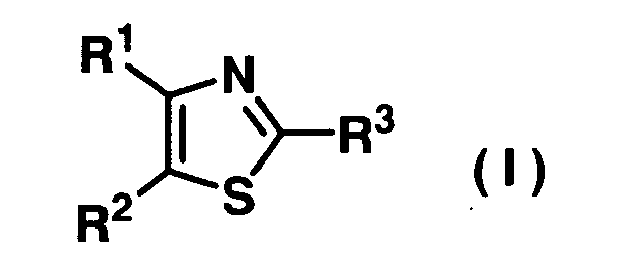
Description
- The present invention relates to therapeutic and/or preventive agents for a sleep disorder comprising a thiazole derivative or a pharmaceutically acceptable salt thereof.
- Various classifications have been proposed for sleep disorders based on symptoms and causes, as given below for example.
(i) The Diagnostic Classification of Sleep and Arousal Disorders (DSCAD) was proposed in 1979 by the Association of Sleep Disorders Centers (ASDC) of the United States (Sleep, Vol.2, p.1-154, 1979). This is the earliest classification that grouped sleep disorders in view of "Disorders of Initiating and Maintaining Sleep (DIMS)". - DSCAD classifies sleep disorders broadly into nine categories: (1) psychophysiological insomnia; (2) sleep disorders associated with mental disorders; (3) sleep disorders associated with a regular use of drugs and alcohol; (4) insomnias associated with sleep-induced breathing disorders; (5) sleep disorders associated with nocturnal myoclonus and restless legs syndrome (RLS); (6) sleep disorders by other disorders, drugs, and environmental conditions; (7) childhood onset insomnias; (8) other types of insomnia; and (9) sleep abnormalities with no symptoms of insomnia. Each of these categories is based on the state of disorder.
- (ii) The International Classification of Sleep Disorders (ICSD) was reported in 1990 by the American Sleep Disorders Association (ASDA) (ICSD-International classification of sleep disorders: Diagnostic and coding manual, Diagnostic Classification Steering Committee, Thorpy MJ, Chairman. Rochester, Minnesota: American Sleep Disorders Association, 1990), and was revised in 2000.
- ICSD classifies sleep disorders broadly into four categories: (1) dyssomnias comprising disorders that are primarily disorders of sleep per se [for example, intrinsic sleep disorders such as narcolepsy, extrinsic sleep disorders, and circadian rhythm sleep disorders]; (2) parasomnias comprising disorders of abnormal behaviors that occur during sleep (also known as abnormal behavior during sleep) [arousal disorders, sleep-wake transition disorders, parasomnias usually associated with REM sleep, and other parasomnias]; (3) sleep disorders associated with medical/psychiatric disorders [sleep disorders associated with mental disorders, sleep disorders associated with neurologic disorders, and sleep disorders associated with other medical disorders]; and (4) proposed sleep disorders [for example, short sleeper, long sleeper, subwakefulness syndrome, and the like]. To this date, this classification includes about 90 categories of sleep disorders. Currently, further classifications have been made continuously based on etiology.
- (iii) According to the International Classification of Diseases, Tenth Edition (ICD-10) (1992), which have been published by World Health Organization (WHO), sleep disorders are classified into (1) nonorganic sleep disorders (F51: for example, nonorganic insomnia, nonorganic hypersomnia, sleep walking, sleep terrors, nonorganic disorder of the sleep-wake schedule, nightmares, and the like); (2) sleep disorders [G47: for example, sleep apnoea, disorders of initiating and maintaining sleep (insomnias), disorders of excessive somnolence (hypersomnia), cataplexy, narcolepsy, cataplexy attacks, disorders of the sleep-wake schedule (such as irregular sleep pattern, sleep rhythm disorder, and delayed sleep phase syndrome), and the like]; (3) other respiratory conditions originating in the perinatal period (P28: for example, primary sleep apnoea of newborn, and the like); and (4) personal history of risk-factors, not elsewhere classified (Z91: for example, personal history of unhealthy sleep-wake schedule, and the like).
- (iv) The Merck Manual, Seventeenth Edition, Section 14, Chapter 173 defines sleep disorders as disorders that affect the ability to fall asleep, stay asleep, or stay awake or that produce sleep-related abnormal behaviors, and the like. According to the Manual, sleep disorders are classified into the following symptoms: (1) insomnia (disorders falling asleep, difficulty staying asleep, or a disturbance in sleep patterns that causes inadequate sleep, and the like; for example, sleep-onset insomnia (difficulty falling asleep), early morning awakening, sleep-wake reversals, rebound insomnia, and the like); (2) hypersomnia (defined as a pathological increase of at least 25% in total sleeping time; for example, narcolepsy, sudden episode of sleep, and the like); (3) sleep apnoea syndromes, parasomnias (based on patients' chief complaints); and the like.
- (v) In actual clinical treatment, sleep disorders are broadly classified into (1) insomnias, (2) hypersomnia, (3) parasomnias, and (4) disorders of sleep-wake schedule (corresponding to the circadian rhythm sleep disorders of ICSD). These classifications are made symptomatically based on patients' chief complaints, separately from the international classifications described above. Depending on etiology, a different medical treatment is given to each type of the sleep disorder.
Given a wide variety of symptoms and etiology of sleep disorders, a holistic approach has been proposed for the adjustment of sleep-wake schedules depending on symptoms and etiology, using non-drug therapy in combination with, for example, (i) for the symptoms of insomnia, drugs that help induce sleep or deepen sleep at nighttime, and the like (for example, sedative hypnotics, psychoactive drugs, antidepressants, and the like such as barbiturates and benzodiazepines), and (ii) for the symptoms of hypersomnia, drugs that have stimulant activity for daytime sleepiness (for example, such as psychoanaleptics). - Meanwhile, the stimulant activity of caffeine has been known for long. Recently, it has been reported that the stimulant activity of caffeine is regulated by adenosine A2A receptor [see Non-Patent Document 1].
Also, a thiazole derivative having antagonistic activity against adenosine A3 receptor (see Patent Documents 1 and 2), a thiazole derivative having antagonistic activity against adenosine A2B receptor and adenosine A3 receptor (see Patent Documents 3 and 4), a thiazole derivative having antagonistic activity against adenosine A1 receptor and adenosine A2A receptor (see Patent Document 5), a thiazole derivative having antagonistic activity against adenosine A2A receptor (see Patent Documents 6 to 8), and the like are known. - Patent Document 1:
WO 99/21555 - Patent Document 2: Japanese Published Unexamined Patent Application No.
114779/2001 - Patent Document 3:
WO99/64418 - Patent Document 4:
US Published Patent Application No. 20040053982 - Patent Document 5:
WO03/039451 - Patent Document 6:
W02005/039572 - Patent Document 7:
W02005/063743 - Patent Document 8:
W02006/032273 - Non-Patent Document 1: Nature Neuroscience, p.1, 2005
- An object of the present invention is to provide therapeutic and/or preventive agents for a sleep disorder such as hypersomnia [for example, narcolepsy, recurrent hypersomnia (periodic hypersomnia), idiopathic hypersomnia, posttraumatic hypersomnia, a circadian rhythm sleep disorder, or the like], comprising a thiazole derivative or a pharmaceutically acceptable salt thereof, as an active ingredient, medicaments for improving daytime sleepiness, and the like.
- (1) A therapeutic and/or preventive agent for a sleep disorder, which comprises a thiazole derivative represented by the general formula (I):
-

- <wherein R1 represents a substituted or unsubstituted five-membered aromatic heterocyclic group having at least one oxygen atom,
R2 represents halogen, substituted or unsubstituted lower alkyl, substituted or unsubstituted lower alkenyl, substituted or unsubstituted lower alkynyl, substituted or unsubstituted cycloalkyl, substituted or unsubstituted aryl, substituted or unsubstituted aralkyl, a substituted or unsubstituted aliphatic heterocyclic group, a substituted or unsubstituted aromatic heterocyclic group, substituted or unsubstituted aliphatic heterocyclic alkyl, substituted or unsubstituted aromatic heterocyclic alkyl, -NR4R5 (wherein R4 and R5 may be the same or different, and each represents a hydrogen atom, substituted or unsubstituted lower alkyl, substituted or unsubstituted lower alkenyl, substituted or unsubstituted lower alkynyl, substituted or unsubstituted lower alkanoyl, substituted or unsubstituted cycloalkyl, substituted or unsubstituted aryl, substituted or unsubstituted aralkyl, a substituted or unsubstituted aliphatic heterocyclic group, a substituted or unsubstituted aromatic heterocyclic group, substituted or unsubstituted aliphatic heterocyclic alkyl, or substituted or unsubstituted aromatic heterocyclic alkyl, or R4 and R5 are combined together with the adjacent nitrogen atom thereto to represent a substituted or unsubstituted nitrogen-containing heterocyclic group), -COR6 (wherein R6 represents a hydrogen atom, substituted or unsubstituted lower alkyl, substituted or unsubstituted lower alkenyl, substituted or unsubstituted lower alkynyl, substituted or unsubstituted cycloalkyl, substituted or unsubstituted aryl, substituted or unsubstituted aralkyl, a substituted or unsubstituted aliphatic heterocyclic group, a substituted or unsubstituted aromatic heterocyclic group, substituted or unsubstituted aliphatic heterocyclic alkyl, substituted or unsubstituted aromatic heterocyclic alkyl, -NR7R8 (wherein R7 and R8 may be the same or different, and each represents a hydrogen atom, substituted or unsubstituted lower alkyl, substituted or unsubstituted lower alkenyl, substituted or unsubstituted lower alkynyl, substituted or unsubstituted lower alkanoyl, substituted or unsubstituted lower alkoxy, substituted or unsubstituted cycloalkyl, substituted or unsubstituted aryl, substituted or unsubstituted aralkyl, a substituted or unsubstituted aliphatic heterocyclic group, a substituted or unsubstituted aromatic heterocyclic group, substituted or unsubstituted aliphatic heterocyclic alkyl, or substituted or unsubstituted aromatic heterocyclic alkyl, or R7 and R8 are combined together with the adjacent nitrogen atom thereto to represent a substituted or unsubstituted nitrogen-containing heterocyclic group), or -OR9 (wherein R9 represents a hydrogen atom, substituted or unsubstituted lower alkyl, substituted or unsubstituted lower alkenyl, substituted or unsubstituted lower alkynyl, substituted or unsubstituted cycloalkyl, substituted or unsubstituted aryl, substituted or unsubstituted aralkyl, a substituted or unsubstituted aliphatic heterocyclic group, a substituted or unsubstituted aromatic heterocyclic group, substituted or unsubstituted aliphatic heterocyclic alkyl, or substituted or unsubstituted aromatic heterocyclic alkyl), and
R3 represents -NR10R11 {wherein R10 and R11 may be the same or different, and each represents a hydrogen atom, substituted or unsubstituted lower alkyl, substituted or unsubstituted lower alkenyl, substituted or unsubstituted lower alkynyl, substituted or unsubstituted aralkyl, substituted or unsubstituted aliphatic heterocyclic alkyl, substituted or unsubstituted aromatic heterocyclic alkyl, -COR12 [wherein R12 represents a hydrogen atom, substituted or unsubstituted lower alkyl, substituted or unsubstituted lower alkenyl, substituted or unsubstituted lower alkynyl, substituted or unsubstituted cycloalkyl, substituted or unsubstituted aryl, substituted or unsubstituted aralkyl, a substituted or unsubstituted aliphatic heterocyclic group, a substituted or unsubstituted aromatic heterocyclic group, substituted or unsubstituted aliphatic heterocyclic alkyl, substituted or unsubstituted aromatic heterocyclic alkyl, -NR13R14 (wherein R13 and R14 may be the same or different, and each represents a hydrogen atom, substituted or unsubstituted lower alkyl, substituted or unsubstituted lower alkenyl, substituted or unsubstituted lower alkynyl, substituted or unsubstituted lower alkanoyl, substituted or unsubstituted lower alkoxy, substituted or unsubstituted cycloalkyl, substituted or unsubstituted aryl, substituted or unsubstituted aralkyl, a substituted or unsubstituted aliphatic heterocyclic group, a substituted or unsubstituted aromatic heterocyclic group, substituted or unsubstituted aliphatic heterocyclic alkyl, or substituted or unsubstituted aromatic heterocyclic alkyl, or R13 and R14 are combined together with the adjacent nitrogen atom thereto to represent a substituted or unsubstituted nitrogen-containing heterocyclic group), or -OR15 (wherein R15 represents a hydrogen atom, substituted or unsubstituted lower alkyl, substituted or unsubstituted lower alkenyl, substituted or unsubstituted lower alkynyl, substituted or unsubstituted cycloalkyl, substituted or unsubstituted aryl, substituted or unsubstituted aralkyl, a substituted or unsubstituted aliphatic heterocyclic group, a substituted or unsubstituted aromatic heterocyclic group, substituted or unsubstituted aliphatic heterocyclic alkyl, or substituted or unsubstituted aromatic heterocyclic alkyl)], or R10 and R11 are combined together with the adjacent nitrogen atom thereto to represent a substituted or unsubstituted nitrogen-containing heterocyclic group}, -CONHR16 (wherein R16 represents a hydrogen atom, substituted or unsubstituted lower alkyl, substituted or unsubstituted lower alkenyl, substituted or unsubstituted lower alkynyl, substituted or unsubstituted lower alkanoyl, substituted or unsubstituted cycloalkyl, substituted or unsubstituted aryl, substituted or unsubstituted aralkyl, substituted or unsubstituted aroyl, a substituted or unsubstituted aliphatic heterocyclic group, a substituted or unsubstituted aromatic heterocyclic group, substituted or unsubstituted aliphatic heterocyclic alkyl, or substituted or unsubstituted aromatic heterocyclic alkyl), or the general formula (II) -

- (wherein =X- represents =CH- or =N-, and R17 and R18 may be the same or different, and each represents a hydrogen atom, halogen, hydroxy, nitro, azido, amino, cyano, carboxy, formyl, substituted or unsubstituted lower alkyl, substituted or unsubstituted lower alkenyl, substituted or unsubstituted lower alkynyl, substituted or unsubstituted lower alkanoyl, substituted or unsubstituted lower alkoxy, substituted or unsubstituted cycloalkyl, substituted or unsubstituted lower alkylamino, substituted or unsubstituted di-(lower alkyl)amino, substituted or unsubstituted aryl, substituted or unsubstituted aralkyl, substituted or unsubstituted aroyl, a substituted or unsubstituted aliphatic heterocyclic group, a substituted or unsubstituted aromatic heterocyclic group, substituted or unsubstituted aliphatic heterocyclic alkyl, or substituted or unsubstituted aromatic heterocyclic alkyl, or R17 and R18 are combined together with the respectively adjacent two carbon atoms thereto to form a substituted or unsubstituted carbon ring or a substituted or unsubstituted heterocyclic ring)>, or a pharmaceutically acceptable salt thereof, as an active ingredient.
(2). The therapeutic and/or preventive agent for a sleep disorder according to (1), wherein R1 is substituted or unsubstituted furyl.
(3) The therapeutic and/or preventive agent for a sleep disorder according to (1) or (2), wherein R2 is -COR6 (wherein R6 has the same meaning as defined above).
(4) The therapeutic and/or preventive agent for a sleep disorder according to (1) or (2), wherein R2 is a substituted or unsubstituted aliphatic heterocyclic group.
(5) The therapeutic and/or preventive agent for a sleep disorder according to (1) or (2), wherein R2 is a substituted or unsubstituted aromatic heterocyclic group.
(6) The therapeutic and/or preventive agent for a sleep disorder according to (3), wherein R6 is substituted or unsubstituted cycloalkyl, substituted or unsubstituted aryl, a substituted or unsubstituted aromatic heterocyclic group, or a substituted or unsubstituted aliphatic heterocyclic group.
(7) The therapeutic and/or preventive agent for a sleep disorder according to (3), wherein R6 is a substituted or unsubstituted aromatic heterocyclic group.
(8) The therapeutic and/or preventive agent for a sleep disorder according to (3), wherein R6 is a substituted or unsubstituted aliphatic heterocyclic group.
(9) The therapeutic and/or preventive agent for a sleep disorder according to (3), wherein R6 is a substituted or unsubstituted aliphatic heterocyclic group having at least one oxygen atom.
(10) The therapeutic and/or preventive agent for a sleep disorder according to (3), wherein R6 is substituted or unsubstituted lower alkyl.
(11) The therapeutic and/or preventive agent for a sleep disorder according to any one of (1) to (10), wherein R3 is -NR10R11 (wherein R10 and R11 have the same meanings as defined above, respectively).
(12) The therapeutic and/or preventive agent for a sleep disorder according to any one of (1) to (10), wherein R3 is -NHR11 (wherein R11 has the same meaning as defined above).
(13) The therapeutic and/or preventive agent for a sleep disorder according to (11) or (12), wherein R11 is -COR12 (wherein R12 has the same meaning as defined above).
(14) The therapeutic and/or preventive agent for a sleep disorder according to (13), wherein R12 is substituted or unsubstituted aryl.
(15) The therapeutic and/or preventive agent for a sleep disorder according to (13), wherein R12 is a substituted or unsubstituted aromatic heterocyclic group.
(16) The therapeutic and/or preventive agent for a sleep disorder according to (13), wherein R12 is -OR15 (wherein R15 has the same meaning as defined above).
(17) The therapeutic and/or preventive agent for a sleep disorder according to (13), wherein R12 is substituted or unsubstituted aromatic heterocyclic alkyl.
(18) The therapeutic and/or preventive agent for a sleep disorder according to (13), wherein R12 is substituted or unsubstituted aliphatic heterocyclic alkyl.
(19) The therapeutic and/or preventive agent for a sleep disorder according to any one of (1) to (10), wherein R3 is -CONHR16 (wherein R16 has the same meaning as defined above).
(20) The therapeutic and/or preventive agent for a sleep disorder according to any one of (1) to (10), wherein R3 is the general formula (II) -

- (wherein X, R17, and R18 have the same meanings as defined above, respectively).
(21) The therapeutic and/or preventive agent for a sleep disorder according to any one of (1) to (20), wherein the sleep disorder is hypersomnia.
(22) The therapeutic and/or preventive agent for a sleep disorder according to any one of (1) to (20), wherein the sleep disorder is a sleep disorder selected from narcolepsy, recurrent hypersomnia (periodic hypersomnia), idiopathic hypersomnia, and posttraumatic hypersomnia.
(23) The therapeutic and/or preventive agent for a sleep disorder according to any one of (1) to (20), wherein the sleep disorder is a circadian rhythm sleep disorders.
(24) A medicament for improving daytime sleepiness, which comprises the thiazole derivative or the pharmaceutically acceptable salt thereof according to any one of (1) to (20).
(25) A method for treating and/or preventing a sleep disorder, which comprises administering an effective amount of the thiazole derivative or the pharmaceutically acceptable salt thereof according to any one of (1) to (20).
(26) The method according to (25) wherein the sleep disorder is hypersomnia.
(27) The method according to (25), wherein the sleep disorder is a sleep disorder selected from narcolepsy, recurrent hypersomnia (periodic hypersomnia), idiopathic hypersomnia, and posttraumatic hypersomnia.
(28) The method according to (25), wherein the sleep disorder is a circadian rhythm sleep disorders.
(29) A method for improving daytime sleepiness, which comprises administering an effective amount of the thiazole derivative or the pharmaceutically acceptable salt thereof according to any one of (1) to (20).
(30) Use of the thiazole derivative or the pharmaceutically acceptable salt thereof according to any one of (1) to (20) for the manufacture of a therapeutic and/or preventive agent for a sleep disorder.
(31) The use according to (30), wherein the sleep disorder is hypersomnia.
(32) The use according to (30), wherein the sleep disorder is a sleep disorder selected from narcolepsy, recurrent hypersomnia (periodic hypersomnia), idiopathic hypersomnia, and posttraumatic hypersomnia.
(33) The use according to (30), wherein the sleep disorder is a circadian rhythm sleep disorders.
(34) Use of the thiazole derivative or the pharmaceutically acceptable salt thereof according to any one of (1) to (20) for the manufacture of a medicament for improving daytime sleepiness. - The present invention provides therapeutic and/or preventive agents for a sleep disorder, particularly hypersomnia and/or a sleep disorder accompanying daytime sleepiness [for example, narcolepsy, recurrent hypersomnia (periodic hypersomnia), idiopathic hypersomnia, posttraumatic hypersomnia, a circadian rhythm sleep disorder, or the like], comprising a thiazole derivative or a pharmaceutically acceptable salt thereof as an active ingredient.
- In the following, the compounds represented by general formula (I) will be referred to as Compound (I). The compounds having the other formula numbers are referred in the same manner.
The respective groups of general formula (I) defined above are further defined as follows: - (i) Examples of a lower alkyl moiety of the lower alkyl, the lower alkanoyl, the lower alkoxy, the lower alkylamino, and the di-(lower alkyl)amino include linear or branched alkyl each having 1 to 10 carbon atoms. Specific examples include methyl, ethyl, propyl, isopropyl, butyl, isobutyl, sec-butyl, tert-butyl, pentyl, isopentyl, neopentyl, hexyl, heptyl, octyl, nonyl, decyl, and the like. The two lower alkyl moieties of the di-(lower alkyl)amino may be the same or different.
- (ii) Examples of the lower alkenyl include linear or branched alkenyl each having 2 to 10 carbon atoms. Specific examples include vinyl, allyl, 1-propenyl, butenyl, pentenyl, hexenyl, heptenyl, octenyl, nonenyl, decenyl, and the like.
- (iii) Examples of the lower alkynyl include linear or branched alkynyl each having 2 to 10 carbon atoms. Specific examples include ethynyl, propynyl, butynyl, pentynyl, hexynyl, heptynyl, octynyl, nonynyl, decynyl, and the like.
- (iv) Examples of the cycloalkyl include cycloalkyl having 3 to 8 carbon atoms, a bridged cyclic hydrocarbon group having 4 to 8 carbon atoms, a bicyclic or tricyclic spiro hydrocarbon group having spiro-linked cycloalkyl having 3 to 8 carbon atoms, and the like. Specific examples include cyclopropyl, cyclobutyl, cyclopentyl, cyclohexyl, cycloheptyl, cyclooctyl, adamantyl, noradamantyl, bicyclo[2.2.1]heptyl, spiro[4.5]decanyl, and the like.
- (v) Examples of an aryl moiety of the aryl and the aroyl include aryl having 6 to 10 carbon atoms. Specific examples include phenyl, naphthyl, and the like.
- (vi) Examples of an aromatic heterocyclic group moiety of the aromatic heterocyclic group and the aromatic heterocyclic alkyl include: a five-membered or six-membered monocyclic aromatic heterocyclic group having at least one atom selected from a nitrogen atom, an oxygen atom, and a sulfur atom; a fused bicyclic or tricyclic aromatic heterocyclic group with four- to eight-membered rings fused together, having at least one atom selected from a nitrogen atom, an oxygen atom, and a sulfur atom, and the like. Specific examples include furyl, thienyl, pyrrolyl, pyridyl, N-oxopyridyl, pyrazinyl, imidazolyl, pyrazolyl, triazolyl, thiazolyl, isothiazolyl, thiadiazolyl, oxazolyl, isooxazolyl, oxadiazolyl, pyrimidinyl, pyridazinyl, indolyl, isoindolyl, benzothienyl, benzofuranyl, benzothiazolyl, benzoimidazolyl, benzothiadiazolyl, benzotriazolyl, quinolyl, isoquinolyl, quinazolynyl, furo[2,3-b]pyridyl, and the like.
- (vii) Examples of the five-membered aromatic heterocyclic group having at least one oxygen atom include the five-membered monocyclic aromatic heterocyclic group having at least one oxygen atom exemplified above as a five-membered monocyclic aromatic heterocyclic group in the aromatic heterocyclic group (vi). Specific examples include furyl, oxazolyl, isooxazolyl, oxadiazolyl, and the like.
- (viii) Examples of an aliphatic heterocyclic group moiety of the aliphatic heterocyclic group and the aliphatic heterocyclic alkyl include: a three- to eight-membered monocyclic aliphatic heterocyclic group having at least one atom selected from a nitrogen atom, an oxygen atom, and a sulfur atom; a fused bicyclic or tricyclic aliphatic heterocyclic group with four- to eight-membered rings fused together, having at least one atom selected from a nitrogen atom, an oxygen atom, and a sulfur atom; a bridged heterocyclic group with five- to ten-membered rings having two bridgehead carbon atoms forming bridges, having at least one atom selected from a nitrogen atom, an oxygen atom, and a sulfur atom; a bicyclic or tricyclic spiro aliphatic heterocyclic group with spiro-linked four-to eight-membered rings, having at least one atom selected from a nitrogen atom, an oxygen atom, and a sulfur atom; and the like. Specific examples include pyrrolidinyl, imidazolidinyl , thiazolidinyl , piperidinyl, piperazinyl, morpholinyl, thiomorpholinyl, piperidino, morpholino, thiomorpholino, oxazolynyl, dioxolanyl, dioxanyl, dioxepanyl, dihydropyridyl, tetrahydropyridyl, pyranyl, dihydropyranyl, tetrahydropyranyl, tetrahydroisoquinolinyl, tetrahydroquinolinyl, indolynyl, isoindolynyl, octahydropyrazino[2,1-c][1,4]oxadinyl, dihydropyridazinyl, oxyranyl, oxetanyl, oxolanyl, thiolanyl, thianyl, aziridinyl, azetidinyl, azolidinyl, perhydrooxazepinyl, perhydrothiazepinyl, perhydroazepinyl, perhydroazocinyl, perhydrodiazepinyl, succinimido, phthalimido, glutarimido, 1,3-benzodioxolyl, 1,4-benzodioxanyl, 3,4-dihydro-2H-1,5-benzodioxepinyl, 1,4-dioxaspiro[4.5]decanyl, 1,4-dioxa-8-azaspiro[4.5]decanyl, octahydropyrrolo[1,2-a]pyrazinyl, octahydropyrazino[2,1-c][1,4]oxadinyl, octahydropyrazino[2,1-c][1,4]thiadinyl, 1-oxaspiro[4.5]decanyl, 1-oxa-8-azaspiro[4.5]decanyl, 8-oxa-3-azabicyclo[3.2.1]octanyl, 7-oxa-bicyclo[2.2.1]heptyl, 2-oxa-5-azabicyclo[2.2.1]heptyl, and the like.
- (ix) Examples of an alkylene moiety of the aromatic heterocyclic alkyl and the aliphatic heterocyclic alkyl include linear or branched alkylene each having 1 to 10 carbon atoms. Specific examples include methylene, ethylene, trimethylene, propylene, tetramethylene, pentamethylene, hexamethylene, heptamethylene, octamethylene, nonamethylene, decamethylene, and the like.
- (x) Examples of the aralkyl include aralkyl having 7 to 16 carbon atoms. Specific examples include benzyl, phenethyl, phenylpropyl, phenylbutyl, phenylpentyl, phenylhexyl, phenylheptyl, phenyloctyl, phenylnonyl, phenyldecyl, naphthylmethyl, naphthylethyl, naphthylpropyl, naphthylbutyl, naphthylpentyl, naphthylhexyl, anthrylmethyl, anthrylethyl, and the like.
- (xi) Examples of the nitrogen-containing heterocyclic group formed together with the adjacent nitrogen atom include a five-membered or six-membered monocyclic heterocyclic group having at least one nitrogen atom (the monocyclic heterocyclic group may include another nitrogen atom(s), (an) oxygen atom(s), or (a) sulfur atom(s)), and a fused bicyclic or tricyclic heterocyclic group with three- to eight-membered rings fused together, having at least one nitrogen atom (the fused heterocyclic group may include another nitrogen atom(s), (an) oxygen atom(s), or (a) sulfur atom(s)). Specific examples include aziridinyl, azetidinyl, pyrrolidinyl, piperidino, azepanyl, pyrrolyl, imidazolidinyl , imidazolyl, pyrazolidinyl, pyrazolinyl, pyrazolyl, piperazinyl, homopiperazinyl, oxazolidinyl, 2H-oxazolyl, thioxazolidinyl, 2H-thioxazolyl, morpholino, thiomorpholinyl, dihydroindolyl, dihydroisoindolyl, indolyl, isoindolyl, tetrahydroquinolyl, tetrahydroisoquinolyl, dihydrobenzooxazolyl, dihydrobenzothioxazolyl, benzoimidazolidinyl , benzoimidazolyl, dihydroindazolyl, indazolyl, benzotriazolyl, pyrrolopyridinyl, pyrrolopyrimidinyl, imidazopyridinyl, purinyl, and the like.
- (xii) Examples of a carbocyclic moiety of the carbon ring formed together with the respectively adjacent two carbon atoms include a three- to eight-membered alicyclic or aromatic carbon ring. Specific examples include cyclopropene, cyclobutene, cyclopentene, cyclohexene, cycloheptene, cyclooctene, benzene, and the like.
- (xiii) Examples of a heterocyclic moiety of the heterocyclic ring formed together with the respectively adjacent two carbon atoms include a three- to eight-membered aliphatic heterocyclic or aromatic heterocyclic ring. Specific examples include: a three- to eight-membered monocyclic aliphatic or aromatic heterocyclic ring, having at least one atom selected from a nitrogen atom, an oxygen atom, and a sulfur atom; a fused bicyclic or tricyclic, aliphatic or aromatic heterocyclic ring, with four- to eight-membered rings fused together, having at least one atom selected from a nitrogen atom, an oxygen atom, and a sulfur atom. Specific examples include pyrrolidine, imidazolidine, thiazolidine, piperidine, piperazine, morpholine, thiomorpholine, oxazoline, dioxolan, dioxane, dioxepane, dihydropyridine, tetrahydropyridine, pyran, dihydropyran, tetrahydropyran, tetrahydroisoquinoline, tetrahydroquinoline, indoline, isoindoline, octahydropyrazino[2,1-c][1,4]oxazine, dihydropyridazine, oxirane, oxetane, oxolane, thiorane, thiane, aziridine, azetidine, azolidine, perhydrooxazepine, perhydrothiazepine, perhydroazepine, perhydroazocine, perhydrodiazepine, succinimide, phthalimide, glutarimide, 1,3-benzodioxone, 1,4-benzodioxane, 3,4-dihydro-2H-1,5-benzodioxepine, furan, thiophene, pyrrole, pyridine, N-oxopyridine, pyrazine, imidazole, pyrazole, triazole, thiazole, isothiazole, thiadiazole, oxazole, isooxazole, oxadiazole, pyrimidine, pyridazine, indoline, isoindoline, benzothiophene, benzofuran, benzothiazole, benzoimidazole, benzothiadiazole, benzotriazole, quinoline, isoquinoline, quinazoline, and the like.
- (xiv) The halogen means each atom of fluorine, chlorine, bromine, and iodine.
- (xv) Examples of the aliphatic heterocyclic group having at least one oxygen atom include the aliphatic heterocyclic group having at least one oxygen atom exemplified above in the aliphatic heterocyclic group (viii). Specific examples include morpholinyl, morpholino, oxazolynyl, dioxolanyl, dioxanyl, dioxepanyl, pyranyl, dihydropyranyl, tetrahydropyranyl, octahydropyrazino[2,1-c][1,4]oxadinyl, oxiranyl, oxetanyl, oxolanyl, perhydrooxazepinyl, 1,3-benzodioxolyl, 1,4-benzodioxanyl, 3,4-dihydro-2H-1,5-benzodioxepinyl, 1,4-dioxaspiro[4.5]decanyl, 1,4-dioxa-8-azaspiro[4.5]decanyl, octahydropyrazino[2,1-c][1,4]oxadinyl, and the like.
- (xvi) Examples of substituent (A) of the substituted lower alkyl include substituents which may be the same or different and in number of, for example, 1 to 3. Specific examples include halogen, hydroxy, nitro, azido, cyano, carboxy, formyl, substituted or unsubstituted lower alkoxy, substituted or unsubstituted lower alkanoyloxy, substituted or unsubstituted lower alkylsulfanyl, -NRxRy (wherein Rx and Ry may be the same or different, and each represents a hydrogen atom, substituted or unsubstituted lower alkyl, substituted or unsubstituted adamantyl, substituted or unsubstituted aralkyl, substituted or unsubstituted aromatic heterocyclic alkyl, or substituted or unsubstituted aliphatic heterocyclic alkyl), substituted or unsubstituted cycloalkyl, substituted or unsubstituted aryloxy, substituted or unsubstituted aromatic heterocyclic oxy, substituted or unsubstituted aliphatic heterocyclic oxy, substituted or unsubstituted aralkyloxy, substituted or unsubstituted aralkylsulfanyl, substituted or unsubstituted aromatic heterocyclic alkyloxy, substituted or unsubstituted aromatic heterocyclic alkylsulfanyl, substituted or unsubstituted aliphatic heterocyclic alkyloxy, substituted or unsubstituted aliphatic heterocyclic alkylsulfanyl, and the like.
- Examples of substituent (a) of the substituted lower alkoxy, the substituted lower alkanoyloxy, the substituted lower alkylsulfanyl, and the substituted lower alkyl of -NRxRy as exemplified in substituent (A) include substituents which may be the same or different and in number of, for example, 1 to 3. Specific examples include halogen, hydroxy, hydroxyimino, methoxyimino, nitro, azido, amino, cyano, carboxy, cycloalkyl, substituted or unsubstituted lower alkoxy, substituted or unsubstituted substituted lower alkanoyloxy, substituted or unsubstituted lower alkylamino, substituted or unsubstituted di-(lower alkyl)amino, aryloxy, aromatic heterocyclic oxy, aliphatic heterocyclic oxy, aralkyloxy, aralkylamino, aromatic heterocyclic alkyloxy, aromatic heterocyclic alkylamino, aliphatic heterocyclic alkyloxy, aliphatic heterocyclic alkylamino, and the like.
- Examples of substituent (b) of the substituted lower alkoxy, the substituted lower alkanoyloxy, the substituted lower alkylamino, and the substituted di-(lower alkyl)amino as exemplified in substituent (a) include substituents which may be the same or different and in number of, for example, 1 to 3. Specific examples include halogen, hydroxy, amino, lower alkoxy, lower alkylamino, di-(lower alkyl)amino, and the like.
Examples of substituent (c) of the substituted adamantyl defined as Rx and Ry of -NRxRy as exemplified in substituent (A) include substituents which may be the same or different and in number of, for example, 1 to 3. Specific examples include lower alkyl, lower alkoxy, hydroxy, oxo, formyl, and the like. - Examples of substituent (d) of the substituted cycloalkyl, the substituted aliphatic heterocyclic alkyloxy, the substituted aliphatic heterocyclic alkylsulfanyl, and the substituted aliphatic heterocyclic alkyl defined as Rx and Ry of -NRxRy as exemplified in substituent (A) include substituents which may be the same or different and in number of, for example, 1 to 3. Specific examples include the groups exemplified in substituent (a), lower alkyl, oxo, formyl, and the like.
- Examples of substituent (e) of the substituted aryloxy, the substituted aromatic heterocyclic oxy, the substituted aliphatic heterocyclic oxy, the substituted aralkyloxy, the substituted aralkylsulfanyl, the substituted aromatic heterocyclic alkyloxy, the substituted aromatic heterocyclic alkylsulfanyl, and the substituted aralkyl and the substituted aromatic heterocyclic alkyl defined as Rx and Ry of -NRxRy as exemplified in substituent (A) include substituents which may be the same or different and in number of, for example, 1 to 3. Specific examples include halogen, hydroxy, nitro, azido, amino, cyano, carboxy, formyl, substituted or unsubstituted lower alkyl, substituted or unsubstituted lower alkanoyl, cycloalkyl, lower alkoxy, lower alkylsulfanyl, lower alkylsulfonyl, lower alkoxycarbonyl, lower alkylaminocarbonyl, di-(lower alkyl)aminocarbonyl, lower alkylamino, di-(lower alkyl)amino, aryl, an aliphatic heterocyclic group, an aromatic heterocyclic group, aryloxy, aromatic heterocyclic oxy, aliphatic heterocyclic oxy, aralkyl, aromatic heterocyclic alkyl, aliphatic heterocyclic alkyl, aralkylcarbonyl, aromatic heterocyclic alkylcarbonyl, aliphatic heterocyclic alkylcarbonyl, and the like.
- Examples of a substituent of the substituted lower alkyl and the substituted lower alkanoyl as exemplified in substituent (e) include substituents which may be the same or different and in number of, for example, 1 to 3. Specific examples include the groups exemplified in substituent (b), and the like.
More preferable examples of substituents as substituent (A) include 1 to 3 substituents selected from the group consisting of: halogen; hydroxy; cyano; carboxy; formyl; lower alkoxy which may be substituted with 1 to 3 substituents selected from halogen, hydroxy, lower alkoxy, amino, lower alkylamino, and di-(lower alkyl)amino; lower alkanoyloxy; lower alkylsulfanyl; -NRx1Ry1 (wherein Rx1 and Ry1 may be the same or different, and each represents a hydrogen atom; lower alkyl which may be substituted with 1 to 3 substituents selected from hydroxy, lower alkoxy, amino, lower alkylamino, and di-(lower alkyl)amino; adamantyl which may be substituted with 1 to 3 substituents selected from oxo, hydroxy, and lower alkoxy; aralkyl which may be substituted with 1 to 3 substituents selected from halogen, hydroxy, and lower alkoxy; aromatic heterocyclic alkyl which may be substituted with 1 to 3 substituents selected from hydroxy, lower alkoxy, and lower alkyl; or aliphatic heterocyclic alkyl which may be substituted with 1 to 3 substituents selected from oxo, hydroxy, lower alkoxy, and lower alkyl); cycloalkyl; aryloxy which may be substituted with 1 to 3 substituents selected from halogen, hydroxy, and lower alkoxy; aromatic heterocyclic oxy which may be substituted with 1 to 3 substituents selected from hydroxy, lower alkoxy, and lower alkyl; aralkyloxy which may be substituted with 1 to 3 substituents selected from halogen, hydroxy, and lower alkoxy; aromatic heterocyclic alkyloxy which may be substituted with 1 to 3 substituents selected from hydroxy, lower alkoxy, and lower alkyl; and aliphatic heterocyclic alkyloxy which may be substituted with 1 to 3 substituents selected from oxo, hydroxy, lower alkoxy, and lower alkyl.
Examples of more preferable substituents as substituent (A) include 1 to 3 substituents selected from the group consisting of: halogen; hydroxy; lower alkoxy; - NRX1RY1 (wherein RX1 and RY1 may be the same or different, and each represents a hydrogen atom; lower alkyl which may be substituted with 1 to 3 substituents selected from hydroxy and lower alkoxy; or adamantyl which may be substituted with hydroxy); aryloxy; and aromatic heterocyclic oxy.
(xvii) Examples of substituent (B) of the substituted lower alkanoyl, the substituted lower alkenyl, the substituted lower alkynyl, the substituted lower alkoxy, the substituted lower alkylamino, and the substituted di-(lower alkyl)amino include substituents which may be the same or different and in number of, for example, 1 to 3. Specific examples include the groups exemplified in substituent (A), substituted or unsubstituted aryl, a substituted or unsubstituted aliphatic heterocyclic group, a substituted or unsubstituted aromatic heterocyclic group, and the like. - Examples of substituent (f) of the substituted aryl and substituted aromatic heterocyclic group exemplified in substituent (B) include substituents which may be the same or different and in number of, for example, 1 to 3. Specific examples include the groups exemplified in substituent (a), lower alkyl, and the like.
Examples of substituent (g) of the substituted aliphatic heterocyclic group exemplified in substituent (B) include substituents which may be the same or different and in number of, for example, 1 to 3. Specific examples include the groups exemplified in substituent (a), lower alkyl, oxo, formyl, and the like. - More preferable examples of substituents as substituent (B) include 1 to 3 substituents selected from the group consisting of halogen; hydroxy; cyano; carboxy; formyl; lower alkoxy which may be substituted with 1 to 3 substituents selected from halogen, hydroxy, lower alkoxy, amino, lower alkylamino, and di-(lower alkyl)amino; lower alkanoyloxy; lower alkylsulfanyl; -NRx1Ry1 (wherein Rx1 and Ry1 have the same meanings as described above, respectively); cycloalkyl; aryloxy which may be substituted with 1 to 3 substituents selected from halogen, hydroxy, and lower alkoxy; aromatic heterocyclic oxy which may be substituted with 1 to 3 substituents selected from hydroxy, lower alkoxy, and lower alkyl; aralkyloxy which may be substituted with 1 to 3 substituents selected from halogen, hydroxy, and lower alkoxy; aromatic heterocyclic alkyloxy which may be substituted with 1 to 3 substituents selected from hydroxy, lower alkoxy, and lower alkyl; aliphatic heterocyclic alkyloxy which may be substituted with 1 to 3 substituents selected from oxo, hydroxy, lower alkoxy, and lower alkyl; aryl; and an aromatic heterocyclic group.
Examples of further more preferable substituents as substituent (B) include 1 to 3 substituents selected from the group consisting of hydroxy, lower alkoxy, and aryl.
(xviii) Examples of substituent (C) of the substituted cycloalkyl and the substituted carbon ring formed by combining together with the respectively adjacent two carbon atoms include substituents which may be the same or different and in number of, for example, 1 to 3. Specific examples include the groups exemplified in substituent (A), lower alkyl, oxo, methylenedioxy, ethylenedioxy, trimethylenedioxy, and the like. - More preferable examples of substituents as substituent (C) include lower alkyl; oxo; methylenedioxy; ethylenedioxy; trimethylenedioxy; halogen; hydroxy; cyano; carboxy; formyl; lower alkoxy which may be substituted with 1 to 3 substituents selected from halogen, hydroxy, lower alkoxy, amino, lower alkylamino, and di-(lower alkyl)amino; lower alkanoyloxy; lower alkylsulfanyl; -NRx1Ry1 (wherein Rx1 and Ry1 have the same meanings as described above, respectively); cycloalkyl; aryloxy which may be substituted with 1 to 3 substituents selected from halogen, hydroxy, and lower alkoxy; aromatic heterocyclic oxy which may be substituted with 1 to 3 substituents selected from hydroxy, lower alkoxy, and lower alkyl; aralkyloxy which may be substituted with 1 to 3 substituents selected from halogen, hydroxy, and lower alkoxy; aromatic heterocyclic alkyloxy which may be substituted with 1 to 3 substituents selected from hydroxy, lower alkoxy, and lower alkyl; and aliphatic heterocyclic alkyloxy which may be substituted with 1 to 3 substituents selected from oxo, hydroxy, lower alkoxy, and lower alkyl.
Examples of further more preferable substituents include 1 to 3 substituents selected from the group consisting of lower alkyl, oxo, hydroxy, lower alkoxy, ethylenedioxy, and trimethylenedioxy. (xix) Examples of substituent (D) of the substituted aryl, the substituted aralkyl, the substituted aroyl, the substituted aromatic heterocyclic group, the substituted five-membered aromatic heterocyclic group having at least one oxygen atom, the substituted furyl, the substituted aromatic heterocyclic alkyl, and the heterocyclic ring formed together with the respectively adjacent two carbon atoms include substituents which may be the same or different and in number of, for example, 1 to 4. Specific examples include oxo, hydroxyimino, methoxyimino, halogen, hydroxy, nitro, azido, cyano, carboxy, formyl, substituted or unsubstituted lower alkyl, substituted or unsubstituted lower alkanoyl, substituted or unsubstituted lower alkenyl, substituted or unsubstituted lower alkynyl, substituted or unsubstituted cycloalkyl, substituted or unsubstituted lower alkoxy, substituted or unsubstituted lower alkanoyloxy, -NRx2Ry2 (wherein Rx2 and Ry2 may be the same or different, and each represents a hydrogen atom, substituted or unsubstituted lower alkyl, substituted or unsubstituted aralkyl, substituted or unsubstituted aromatic heterocyclic alkyl, or substituted or unsubstituted aliphatic heterocyclic alkyl), substituted or unsubstituted lower alkylsulfanyl, substituted or unsubstituted lower alkylsulfonyl, sulfamoyl, substituted or unsubstituted lower alkylaminosulfonyl, substituted or unsubstituted di-(lower alkyl)aminosulfonyl, substituted or unsubstituted lower alkoxycarbonyl, substituted or unsubstituted lower alkylcarbamoyl, substituted or unsubstituted di-(lower alkyl)carbamoyl, aromatic heterocyclic carbonyl, aliphatic heterocyclic carbonyl, substituted or unsubstituted aryl, a substituted or unsubstituted aliphatic heterocyclic group, a substituted or unsubstituted aromatic heterocyclic group, substituted or unsubstituted aryloxy, substituted or unsubstituted aromatic heterocyclic oxy, substituted or unsubstituted aliphatic heterocyclic oxy, tri(lower alkyl)silyl, substituted or unsubstituted aralkyl, substituted or unsubstituted aromatic heterocyclic alkyl, substituted or unsubstituted aliphatic heterocyclic alkyl, substituted or unsubstituted aralkyloxy, substituted or unsubstituted aralkylsulfanyl, substituted or unsubstituted aromatic heterocyclic alkyloxy, substituted or unsubstituted aromatic heterocyclic alkylsulfanyl, substituted or unsubstituted aliphatic heterocyclic alkyloxy, substituted or unsubstituted aliphatic heterocyclic alkylsulfanyl, and the like. - Examples of a substituent of the substituted lower alkyl, the substituted lower alkenyl, the substituted lower alkynyl, the substituted lower alkanoyl, the substituted lower alkoxy, the substituted lower alkanoyloxy, the substituted lower alkyl defined as Rx2 and Ry2 of -NRx2Ry2, the substituted lower alkylsulfanyl, the substituted lower alkylsulfonyl, the substituted lower alkylaminosulfonyl, the substituted di-(lower alkyl)aminosulfonyl, the substituted lower alkoxycarbonyl, the substituted lower alkylcarbamoyl, and the substituted di-(lower alkyl)carbamoyl as exemplified in substituent (D) include substituents which may be the same or different and in number of, for example, 1 to 3. Specific examples include the groups exemplified in substituent (a), and the like.
- Examples of a substituent of the substituted aryl, the substituted aryloxy, the substituted aromatic heterocyclic group, the substituted aromatic heterocyclic oxy, the substituted aliphatic heterocyclic oxy, the substituted aralkyl, the substituted aromatic heterocyclic alkyl, the substituted aralkyloxy, the substituted aralkylsulfanyl, the substituted aromatic heterocyclic alkyloxy, the substituted aromatic heterocyclic alkylsulfanyl, the substituted aralkyl and the substituted aromatic heterocyclic alkyl defined as Rx2 and Ry2 of - NRx2Ry2, as exemplified in substituent (D) include substituents which may be the same or different and in number of, for example, 1 to 3. Specific examples include the groups exemplified in substituent (e), and the like.
- Examples of substituent (h) of the substituted cycloalkyl, the substituted aliphatic heterocyclic group, the substituted aliphatic heterocyclic alkyl, the substituted aliphatic heterocyclic alkyloxy, the substituted aliphatic heterocyclic alkylsulfanyl, and the substituted aliphatic heterocyclic alkyl defined as Rx2 and Ry2 of -NRx2Ry2 as exemplified in substituent (D) include substituents which may be the same or different and in number of, for example, 1 to 3. Specific examples include the groups exemplified in substituent (a), lower alkyl, oxo, and the like.
- More preferable examples of substituents as substituent (D) include 1 to 3 substituents selected from the group consisting of: oxo; hydroxyimino; methoxyimino; halogen; hydroxy; nitro; cyano; carboxy; formyl; lower alkyl which may be substituted with 1 to 3 substituents selected from halogen, -ORz1 [wherein Rz1 represents a hydrogen atom; lower alkyl which may be substituted with 1 to 3 substituents selected from hydroxy, lower alkoxy, and -NRx3Ry3 (wherein Rx3 and Ry3 may be the same or different, and each represents a hydrogen atom; or lower alkyl which may be substituted with hydroxy, lower alkoxy, amino, lower alkylamino, or di-(lower alkyl)amino); aralkyl which may be substituted with 1 to 3 substituents selected from halogen, hydroxy, and lower alkoxy; or aromatic heterocyclic alkyl which may be substituted with 1 to 3 substituents selected from lower alkyl, hydroxy, and lower alkoxy], and -NRx4Ry4 (wherein Rx4 and Ry4 may be the same or different, and each represents a hydrogen atom; or lower alkyl which may be substituted with hydroxy, lower alkoxy, amino, lower alkylamino, or di-(lower alkyl)amino); cycloalkyl; aryl which may be substituted with 1 to 3 substituents selected from hydroxy and lower alkoxy; an aromatic heterocyclic group which may be substituted with 1 to 3 substituents selected from lower alkyl, hydroxy, and lower alkoxy; an aliphatic heterocyclic group which may be substituted with 1 to 3 substituents selected from oxo, lower alkyl, hydroxy, and lower alkoxy; lower alkanoyl; lower alkoxycarbonyl; carbamoyl; lower alkylcarbamoyl; di-(lower alkyl)carbamoyl; aralkyl which may be substituted with 1 to 3 substituents selected from hydroxy and lower alkoxy; aromatic heterocyclic alkyl which may be substituted with 1 to 3 substituents selected from lower alkyl, hydroxy, and lower alkoxy; aliphatic heterocyclic alkyl which may be substituted with 1 to 3 substituents selected from oxo, lower alkyl, hydroxy, and lower alkoxy; lower alkoxy which may be substituted with 1 to 3 substituents selected from halogen, hydroxy, and lower alkoxy; aralkyloxy which may be substituted with 1 to 3 substituents selected from hydroxy and lower alkoxy; aromatic heterocyclic alkyloxy which may be substituted with 1 to 3 substituents selected from lower alkyl, hydroxy, and lower alkoxy; -NRx5Ry5 (wherein Rx5 and Ry5 may be the same or different, and each represents a hydrogen atom; lower alkyl which may be substituted with 1 to 3 substituents selected from hydroxy, lower alkoxy, amino, lower alkylamino, and di-(lower alkyl)amino; aralkyl which may be substituted with 1 to 3 substituents selected from hydroxy and lower alkoxy; aromatic heterocyclic alkyl which may be substituted with 1 to 3 substituents selected from lower alkyl, hydroxy, and lower alkoxy; or aliphatic heterocyclic alkyl which may be substituted with 1 to 3 substituents selected from oxo, lower alkyl, hydroxy, and lower alkoxy); lower alkylsulfonyl; and tri(lower alkyl)silyl.
Examples of further more preferable substituents include oxo; hydroxyimino; halogen; hydroxy; nitro; cyano; carboxy; formyl; lower alkyl which may be substituted with 1 to 3 substituents selected from halogen, -ORZ1 [wherein RZ1 represents a hydrogen atom or lower alkyl which may be substituted with -NRX3RY3 (wherein RX3 and RY3 may be the same or different, and each represents a hydrogen atom or lower alkyl)], and -NRX4RY4 (wherein RX4 and RY4 may be the same or different, and each represents a hydrogen atom; or lower alkyl which may be substituted with lower alkoxy or di-(lower alkyl)amino); cycloalkyl; aryl which may be substituted with 1 to 3 substituents selected from hydroxy and lower alkoxy; an aromatic heterocyclic group which may be substituted with 1 to 3 substituents selected from hydroxy and lower alkoxy; aliphatic heterocyclic alkyl which may be substituted with 1 to 3 substituents selected from oxo, lower alkyl, hydroxy, and lower alkoxy; lower alkanoyl; lower alkylcarbamoyl; di-(lower alkyl)carbamoyl; aralkyl; aromatic heterocyclic alkyl; aliphatic heterocyclic group; lower alkoxy; -NRX5RY5 (wherein RX5 and RY5 may be the same or different, and each represents a hydrogen atom; or lower alkyl which may be substituted with hydroxy); lower alkylsulfonyl; and tri(lower alkyl)silyl.
(xx) Examples of substituent (E) of the substituted aliphatic heterocyclic group, the substituted aliphatic heterocyclic alkyl, the substituted nitrogen-containing heterocyclic group formed together with the adjacent nitrogen atom, and the substituted aliphatic heterocyclic group having at least one oxygen atom include substituents which may be the same or different and in number of, for example, 1 to 3. Specific examples include the groups exemplified in substituent (D), methylenedioxy, ethylenedioxy, trimethylenedioxy, oxo, and the like. - More preferable examples of substituents as substituent (E) include 1 to 3 substituents selected from the group consisting of: methylenedioxy; ethylenedioxy; trimethylenedioxy; oxo; hydroxyimino; methoxyimino; halogen; hydroxy; nitro; cyano; carboxy; formyl; lower alkyl which may be substituted with cycloalkyl, halogen, -ORz2 [wherein Rz2 represents a hydrogen atom; lower alkyl which may be substituted with 1 to 3 substituents selected from hydroxy, lower alkoxy, and -NRx6Ry6 (wherein Rx6 and Ry6 may be the same or different, and each represents a hydrogen atom; or lower alkyl which may be substituted with 1 to 3 substituents selected from hydroxy, lower alkoxy, amino, lower alkylamino, and di-(lower alkyl)amino); aralkyl which may be substituted with 1 to 3 substituents selected from halogen, hydroxy, and lower alkoxy; or aromatic heterocyclic alkyl which may be substituted with 1 to 3 substituents selected from lower alkyl, hydroxy, and lower alkoxy], and -NRx7Ry7 (wherein Rx7 and Ry7 may be the same or different, and each represents a hydrogen atom; or lower alkyl which may be substituted with hydroxy, lower alkoxy, amino, lower alkylamino, or di-(lower alkyl)amino); cycloalkyl; aryl which may be substituted with 1 to 3 substituents selected from hydroxy and lower alkoxy; an aromatic heterocyclic group which may be substituted with 1 to 3 substituents selected from lower alkyl, hydroxy, and lower alkoxy; an aliphatic heterocyclic group which may be substituted with 1 to 3 substituents selected from oxo, lower alkyl, hydroxy, and lower alkoxy; lower alkanoyl; lower alkoxycarbonyl; carbamoyl; lower alkylcarbamoyl; di-(lower alkyl)carbamoyl; aralkyl which may be substituted with 1 to 3 substituents selected from hydroxy and lower alkoxy; aromatic heterocyclic alkyl which may be substituted with 1 to 3 substituents selected from lower alkyl, hydroxy, and lower alkoxy; aliphatic heterocyclic alkyl which may be substituted with oxo, lower alkyl, hydroxy, or lower alkoxy; lower alkoxy which may be substituted with 1 to 3 substituents selected from halogen, hydroxy, and lower alkoxy; aralkyloxy which may be substituted with 1 to 3 substituents selected from hydroxy and lower alkoxy; aromatic heterocyclic alkyloxy which may be substituted with 1 to 3 substituents selected from lower alkyl, hydroxy, and lower alkoxy; -NRx8Ry8 (wherein Rx8 and Ry8 may be the same or different, and each represents a hydrogen atom; lower alkyl which may be substituted with 1 to 3 substituents selected from hydroxy, lower alkoxy, amino, lower alkylamino, and di-(lower alkyl)amino; aralkyl which may be substituted with 1 to 3 substituents selected from hydroxy and lower alkoxy; aromatic heterocyclic alkyl which may be substituted with 1 to 3 substituents selected from lower alkyl, hydroxy, and lower alkoxy; or aliphatic heterocyclic alkyl which may be substituted with 1 to 3 substituents selected from oxo, lower alkyl, hydroxy, and lower alkoxy); lower alkylsulfonyl; lower alkylaminosulfonyl; and di-(lower alkyl)aminosulfonyl.
Examples of further more preferable substituents as substituent (E) include 1 to 3 substituents selected from the group consisting of: ethylenedioxy; oxo; halogen; hydroxy; cyano; lower alkyl which may be substituted with 1 to 3 substituents selected from cycloalkyl, halogen, hydroxy, and lower alkoxy; aryl; an aromatic heterocyclic group; an aliphatic heterocyclic group; lower alkoxycarbonyl; di-(lower alkyl)carbamoyl; aromatic heterocyclic alkyl; lower alkoxy; -NRX9RY9 (wherein RX9 and RY9 may be the same or different, and each represents a hydrogen atom or lower alkyl); lower alkylsulfonyl; and di-(lower alkyl)aminosulfonyl. - The lower alkyl moiety of the lower alkyl, the lower alkoxy, the lower alkanoyl, the lower alkanoyloxy, the lower alkylsulfanyl, the lower alkoxycarbonyl, the lower alkylcarbamoyl, the di-(lower alkyl)carbamoyl, the lower alkylsulfonyl, the lower alkylaminosulfonyl, the di-(lower alkyl)aminosulfonyl, and the tri(lower alkyl)silyl exemplified above in (xvi) to (xx) has the same meaning as described above the lower alkyl(i). The two lower alkyl moieties of the di-(lower alkyl)amino, the di-(lower alkyl)carbamoyl, and the di-(lower alkyl)aminosulfonyl may be the same or different, and the three lower alkyl moieties of the tri(lower alkyl)silyl may be the same or different. The aralkyl moiety of the aralkyl, the aralkyloxy, the aralkylamino, and the aralkylsulfanyl has the same meaning as described above the aralkyl(x). The halogen and the cycloalkyl have the same meanings as described above the halogen (xiv) and the cycloalkyl (iv), respectively. The aryl moiety of the aryl and the aryloxy has the same meaning as described above the aryl (v). The aromatic heterocyclic group moiety of the aromatic heterocyclic group, the aromatic heterocyclic oxy, the aromatic heterocyclic alkyloxy, the aromatic heterocyclic alkylamino, the aromatic heterocyclic alkylsulfanyl, and the aromatic heterocyclic alkyl, and the aliphatic heterocyclic group moiety of the aliphatic heterocyclic group, the aliphatic heterocyclic oxy, the aliphatic heterocyclic alkyloxy, the aliphatic heterocyclic alkylamino, the aliphatic heterocyclic alkylsulfanyl, and the aliphatic heterocyclic alkyl have the same meanings as described above the aromatic heterocyclic group (vi) and the aliphatic heterocyclic group (viii), respectively. The alkylene moiety of the aromatic heterocyclic alkyloxy, the aromatic heterocyclic alkylamino, the aromatic heterocyclic alkylsulfanyl, and the aromatic heterocyclic alkyl, and the alkylene moiety of the aliphatic heterocyclic alkyloxy, the aliphatic heterocyclic alkylamino, the aliphatic heterocyclic alkylsulfanyl, and the aliphatic heterocyclic alkyl have the same meanings as described above the alkyl moiety (ix).
- In each group of Compound (I):
- (1) R1 is preferably a furyl group, and more preferably a 2-furyl group, and the like, for example.
- (2) R2 is preferably a substituted or unsubstituted aliphatic heterocyclic group, a substituted or unsubstituted aromatic heterocyclic group, -COR6 (wherein R6 has the same meaning as described above), and the like, and more preferably a substituted or unsubstituted aromatic heterocyclic group, -COR6 (wherein R6 has the same meaning as described above), and the like, for example.
In above -COR6, R6 is preferably substituted or unsubstituted aryl, substituted or unsubstituted cycloalkyl, a substituted or unsubstituted aromatic heterocyclic group, a substituted or unsubstituted aliphatic heterocyclic group, and the like, and more preferably substituted or unsubstituted aryl, a substituted or unsubstituted aromatic heterocyclic group, a substituted or unsubstituted aliphatic heterocyclic group, and the like, and further preferably a substituted or unsubstituted aromatic heterocyclic group, a substituted or unsubstituted aliphatic heterocyclic group, and the like, and even more preferably a substituted or unsubstituted aliphatic heterocyclic group having at least one oxygen atom, and the like, for example. Substituted or unsubstituted lower alkyl is also preferable as R6, for example. Specific examples are preferably pyridyl; morpholino; and -COR6A (wherein R6A represents phenyl which may be substituted with lower alkyl, lower alkoxy, halogen, cyano, and the like; cycloalkyl which may be substituted with oxo and the like; pyridyl which may be substituted with lower alkyl, lower alkoxy, halogen, dimethylamino, an aliphatic heterocyclic group, and the like; or an aliphatic heterocyclic group having at least one oxygen atom, such as dioxolanyl, dioxanyl, dioxepanyl, pyranyl, dihydropyranyl, and tetrahydropyranyl, which may be substituted with lower alkyl, lower alkoxy, and the like), and more preferably pyridyl, -COR6A (wherein R6A has the same meaning as described above), and the like. In above -COR6A, preferable examples of R6A include phenyl which may be substituted with lower alkyl, lower alkoxy, halogen, cyano, and the like; pyridyl which may be substituted with lower alkyl, lower alkoxy, halogen, dimethylamino, an aliphatic heterocyclic group, and the like; an aliphatic heterocyclic group having at least one oxygen atom, such as oxolanyl, dioxanyl, dioxepanyl, pyranyl, dihydropyranyl, and tetrahydropyranyl, which may be substituted with lower alkyl, lower alkoxy, and the like; and the like. More preferable examples are pyridyl which may be substituted with lower alkyl, lower alkoxy, halogen, dimethylamino, an aliphatic heterocyclic group, and the like; an aliphatic heterocyclic group having at least one oxygen atom, such as oxolanyl, dioxanyl, dioxepanyl, pyranyl, dihydropyranyl, and tetrahydropyranyl, which may be substituted with lower alkyl, lower alkoxy, and the like; and the like. An even more preferable example is an aliphatic heterocyclic group having at least one oxygen atom, such as oxolanyl, dioxanyl, dioxepanyl, pyranyl, dihydropyranyl, and tetrahydropyranyl, which may be substituted with lower alkyl, lower alkoxy, and the like; and the like. - (3) R3 is preferably -NR10R10 (wherein R10 and R10 have the same meanings as described above, respectively), -CONHR16 (wherein R16 has the same meaning as described above), and general formula (II)
-

- (wherein X, R17 and R18 have the same meanings as described above, respectively), and more preferably -NHR11 (wherein R11 has the same meaning as described above), for example. In above -NHR11, R11 is preferably -COR12 (wherein R12 has the same meaing as described above), and more preferably -COR12A [wherein R12A represents substituted or unsubstituted aryl, a substituted or unsubstituted aromatic heterocyclic group, -OR15 (wherein R15 has the same meaning as described above), substituted or unsubstituted aliphatic heterocyclic alkyl, substituted or unsubstituted aromatic heterocyclic alkyl, and the like], and further preferably -COR12B (wherein R12B represents substituted or unsubstituted aryl, a substituted or unsubstituted aromatic heterocyclic group, substituted or unsubstituted aliphatic heterocyclic alkyl, substituted or unsubstituted aromatic heterocyclic alkyl, and the like), and even more preferably -COR12c (wherein R12c represents substituted or unsubstituted aryl, a substituted or unsubstituted aromatic heterocyclic group, and the like), for example. Further, -COR12D (wherein R12D represents a substituted or unsubstituted aromatic heterocyclic group),
- COR12E (wherein R12E represents substituted or unsubstituted aliphatic heterocyclic alkyl), and the like are also even more preferable.
- The foregoing preferable groups for R1, R2, and R3 have the same meanings as described above in corresponding
- (i) to (xv). Examples of substituents of the each group include the groups as exemplified above in corresponding substituents (A), (B), (C), (D), and (E).
Also, for example, on the adenosine A2A receptor binding assay described in Test Example 1 below, Compound- (I) is preferably a compound having an inhibitory effect of 50% or greater at a Compound (I) concentration of 3 × 10⁻⁸ mol/L, more preferably a compound having an inhibitory effect of 50% or greater at a Compound (I) concentration of 1 ×10⁻⁸ mol/L, further preferably a compound having an inhibitory effect of 50% or greater at a Compound (I) concentration of 3 × 10⁻⁹ mol/L, and even more preferably a compound having an inhibitory effect of 50% or greater at a Compound (I) concentration of 1 × 10⁻⁹ mol/L . In terms of Ki value obtained in the same assay, a compound having an inhibitory effect at 30 nmol/L or less is preferable, a compound having an inhibitory effect at 10 nmol/L or less is more preferable, a compound having an inhibitory effect at 3 nmol/L or less is further preferable, and a compound having an inhibitory effect at 1 nmol/L or less is even more preferable.
- Further, Compound (I) is a compound with affinity to adenosine A2A receptor preferably at least 10 times, more preferably at least 50 times, further preferably at least 100 times, even more preferably at least 500 times, and most preferably at least 1000 times greater than that to adenosine A1 receptor, for example. Affinity can be determined according to the conventional manner, for example, by the method according to Test Example 1 described below, or by the methods described in, for example, Naunyn Schmiedebergs Arch Pharmacol. 1987, 355(1), p.59-63; Naunyn Schmiedebergs Arch Pharmacol. 1987, 355(2), p.204-210; Br. J. Pharmacol. 1996, 117(8), p.1645-1652; and the like.
- The pharmaceutically acceptable salts of Compound (I) include, for example, acid addition salts, metal salts, ammonium salts, organic amine addition salts, amino acid addition salts, and the like that are pharmaceutically acceptable. The pharmaceutically acceptable acid addition salts of Compound (I) include, for example, inorganic acid salts such as hydrochloride, sulfate, and phosphate, and organic acid salts such as acetate, maleate, fumarate, and citrate, and the like. Examples of pharmaceutically acceptable metal salts include: alkali metal salts such as sodium salt and potassium salt; alkaline earth metal salts such as magnesium salt and calcium salt; aluminum salt; zinc salt; and the like. Examples of pharmaceutically acceptable ammonium salts include salts of ammonium, tetramethylammonium, or the like. Examples of pharmaceutically acceptable organic amine addition salts include addition salts of morpholine, piperidine, or the like. Examples of pharmaceutically acceptable amino acid addition salts include addition salts of lysine, glycine, phenylalanine, asparatic acid, glutamic acid, or the like.
- The sleep disorder treated and/or prevented by therapeutic and/or preventive agents for a sleep disorder of the present invention, or the sleep disorder improved by the improver of daytime sleepiness of the present invention may be any of the sleep disorders given in ICSD; ICD-10; the Merck Manual, 17th Edition; the DSM-III-R or DSM-IV of the American Psychiatric Association; and the like (for classification of sleep disorders, refer to Seishin Shinkei Yakuri, Yasuo Hishikawa, Vol.18, No.2, p.65-72). A sleep disorder that is preferable among these sleep disorders are those in which symptoms are expected to be treated and/or prevented, or improved by the stimulant activity or sleepiness improving activity, and specifically sleep disorders that involve excessive sleep and/or daytime sleepiness, and the like.
- More specifically, by use of therapeutic and/or preventive agents for a sleep disorder of the present invention, a sleep disorder including narcolepsy; hypersomnia such as recurrent hypersomnia (periodic hypersomnia), idiopathic hypersomnia, and posttraumatic hypersomnia; circadian rhythm sleep disorder such as time zone change syndrome (jet lag syndrome, jet lag), shift work sleep disorder, irregular sleep-wake pattern, delayed sleep phase syndrome, and non-24-hour sleep-wake disorder; and the like can be treated and/or prevented, or improved.
- The following will describe preparation methods of Compound (I). The compounds included in Compound (I) may be prepared by the method described in
WO2005/063743 and the like, or modified methods thereof, or alternatively by the methods described below.
Note that, in the preparation methods below, in the case where the defined groups undergo changes under the conditions of the each preparation method or are inappropriate for performing the methods, the desired compound can be prepared by employing the method of introducing and removing protective groups commonly used in organic synthetic chemistry, as described in, for example, Protective Groups in Organic Synthesis, T.W. Greene, John Wiley & Sons Inc., 1999, and the like. As required, the order of reaction steps, such as introduction of substituents may be changed as well. - Compound (I) can be prepared according to the following steps.
- Amoung Compound (I), Compound (Ia-i) in which R3 is -NH2, Compound (Ia-ii) in which R3 is -NHR11a (wherein R11a represents any of the groups defined above as R11 except for hydrogen atom), or Compound (Ia-iii) in which R3 is -NR10aR11a (wherein R10a represents any of the groups defined above as R10 except for hydrogen atom, and R11a has the same meaning as described above) can be prepared by the methods described in, for example, Japanese Published Unexamined Patent Application No.
5-155871 11-193281 -

- (Wherein R1, R2, R10a, and R11a have the same meanings as described above, respectively, and Y represents a chlorine atom, a bromine atom, or an iodine atom)
- Compound (IV) can be prepared by reacting Compound (III) with 1 to 200 equivalents of, preferably, 1 to 5 equivalents of halogenating agent without solvent or in a solvent inert to the reaction, at a temperature between - 30°C and 150°C, preferably between 0°C and 100°C, for 5 minutes to 72 hours.
- Compound (III) can be obtained either commercially or by the methods described in, for example,
WO03/35639 11-193281
Examples of the hydrogenating agent include chlorine, bromine, iodine, N,N,N,N-tetra-n-butylammonium tribromide, pyridinium tribromide, and the like.
Examples of the solvent inert to the reaction include acetone, 1,4-dioxane, acetonitrile, chloroform, dichloromethane, tetrahydrofuran (THF), ethyl acetate, N,N-dimethylformamide (DMF), acetic acid, water, and the like, which may be used alone or in combination. - Compound (Ia-i) can be prepared by reacting Compound (IV) with preferably 1 to 20 equivalents of thiourea in a solvent inert to the reaction, at a temperature between -30°C and 150°C, preferably between room temperature and 100°C, for 5 minutes to 72 hours.
- Examples of the solvent inert to the reaction include toluene, hexane, THF, DMF, ethanol, acetonitrile, and the like, which may be used alone or in combination.
- Compound (Ia-ii) can be prepared by reacting Compound (Ia-i) with preferably 1 to 100 equivalents of R11aY (wherein R11a and Y have the same meanings as described above, respectively), if necessary, in the presence of preferably 1 to 100 equivalents of base, without solvent or in a solvent inert to the reaction, at a temperature between -30°C and 150°C for 5 minutes to 72 hours. When R11a is -COR12 (wherein R12 has the same meaning as described above), R11a-O-R11a (wherein R11a has the same meaning as described above) may be used instead of R11aY.
- Examples of the solvent inert to the reaction include acetonitrile, dichloromethane, 1,2-dichloroethane, chloroform, 1,2-dimethoxyethane, DMF, N,N-dimethyl acetamide (DMA), 1,4-dioxane, THF, diethyl ether, diisopropyl ether, benzene, toluene, xylene, pyridine, N,N-dimethyl imidazolidinone (DMI), N-methyl pyrrolidone (NMP), sulfolane, and the like, which may be used alone or in combination.
- Examples of the base include pyridine, triethylamine, diisopropylethylamine, N-methylmorpholine, N-methylpiperidine, 1,8-diazabicyclo[5.4.0]undec-7-ene (DBU), N,N-dimethylaminopyridine (DMAP), potassium acetate, potassium carbonate, cesium carbonate, sodium carbonate, sodium bicarbonate, sodium hydroxide, lithium hydroxide, potassium hydroxide, potassium phosphate, and the like.
- Compound (Ia-iii) can be prepared by reacting Compound (Ia-ii) in the same manner as in Step 3 with preferably 1 to 100 equivalents of R10aY (wherein R10a and Y have the same meanings as described above, respectively). When R10a is -COR12 (wherein R12 has the same meaning as described above), R10a-O-R10a (wherein R10a has the same meainng as described above) may be used instead of R10aY.
- Amoung Compound (I), Compound (Id) in which R2 is -COR6 (wherein R6 has the same meaning as described above), and R3 is -NR10R11 (wherein R10 and R11 have the same meanings as described above, respectively) can be prepared according to the following steps.
-

- (Wherein R1, R6, R10 and R11 have the same meanings as described above, respectively, R9a represents lower alkyl or substituted or unsubstituted aralkyl as defined for R9, R7a represents lower alkyl as defined for R7, and R8a represents lower alkoxy as defined for R8)
- Compound (Ib-ii) can be prepared from Compound (Ib-i) obtained by the method described in Preparation Method 1, according to the method of removing protective groups described in, for example, Protective Groups in Organic Synthesis, T. W. Greene, John Wiley & Sons Inc., 1981, and the like.
- For example, when R9a is methyl or ethyl, Compound (Ib-ii) can be prepared by treating Compound (Ib-i) with preferably 1 equivalent to a large excess amount of base in a water-containing solvent, at a temperature between 0°C and the boiling point of the solvent used, for 5 minutes to 72 hours.
Examples of the water-containing solvent include water-containing methanol, water-containing ethanol, water-containing propanol, water-containing THF, water-containing 1,4-dioxane, water-containing 1,2-dimethoxyethane, water-containing toluene, water-containing dichloromethane, water-containing DMF, and the like, which may be used alone or in combination. - Examples of the base include sodium hydroxide, potassium hydroxide, lithium hydroxide, and the like.
Also, when R9a is tert-butyl for example, Compound (Ib-ii) can be prepared by treating Compound (Ib-i) with 1 equivalent to a large excess amount of acid without solvent or in a solvent inert to the reaction, at a temperature between -30°C and 100°C for 5 minutes to 72 hours. - Examples of the solvent inert to the reaction include methanol, ethanol, propanol, THF, 1,4-dioxane, 1,2-dimethoxyethane, toluene, ethyl acetate, dichloromethane, DMF, water, and the like, which may be used alone or in combination.
Examples of the acid include trifluoroacetic acid, hydrochloric acid, sulfuric acid, and the like. Step 6
Compound (Ic) can be prepared by reacting Compound (Ib-ii) with preferably 1 to 100 equivalents of HNR7aR8a (wherein R7a and R8a have the same meanings as described above, respectively) in the presence of preferably 1 to 30 equivalents of condensing agent, and in the presence of preferably 1 to 30 equivalents of additive if necessary, without solvent or in a solvent inert to the reaction, at a temperature between -30°C and 100°C for 5 minutes to 72 hours. - Examples of the solvent inert to the reaction include acetonitrile, dichloromethane, 1,2-dichloroethane, chloroform, 1,2-dimethoxyethane, DMF, DMA, 1,4-dioxane, THF, diethyl ether, diisopropyl ether, benzene, toluene, xylene, pyridine, DMI, NMP, sulfolane, water, and the like, which may be used alone or in combination.
- Examples of the condensing agent include dicyclohexylimide (DCC), diisopropylcarbodiimide, N-(3-dimethylaminopropyl)-N'-ethylcarbodiimide (EDC), EDC hydrochloride, benzotriazole-1-yl-tris(dimethylamino)phosphonium hexafluorophosphate (BOP), benzotriazole-1-yl-tripyrrolidino-phosphonium hexafluorophosphate (PyBOP), diphenylphosphoryl azide (DPPA), and the like.
- Examples of the additive include 1-hydroxybenzotriazole hydrate, triethylamine, and the like.
- Compound (Id) can be prepared by reacting Compound (Ic) with preferably 1 to 50 equivalents of R6M (wherein R6 has the same meaning as described above, and M represents a metal group such as MgCl, MgBr, MgI, Li, ZnCH3, ZnCH2CH3, and Ti(OCH(CH3)2)3, in a solvent inert to the reaction, at a temperature between -78° and the boiling point of the solvent used, for 5 minutes to 72 hours.
- Examples of the solvent inert to the reaction include diethyl ether, THF, 1,4-dioxane, 1,2-dimethoxyethane, toluene, and the like, which may be used alone or in combination.
- Compound (Id) can also be prepared according to the following steps.
-

- [Wherein R1, R6, R10 and R11 have the same meanings as described above, respectively, R19 represents: lower alkoxy such as methoxy, ethoxy, propanoxy, and t-butoxy; phenoxy; phenoxy substituted with one to five fluorine atoms, chlorine atoms, bromine atoms, methoxy, ethoxy, methyl, and the like; or -NR20R21 (wherein R20 represents lower alkyl such as methyl and ethyl, and R21 represents lower alkoxy such as methoxy and ethoxy)]
- Compound (Ie-i) can be prepared using Compound (V), by the method described in, for example, Journal of the Chemical Society (J. Chem. Soc.), p.114, 1947, and the like, or similar methods thereof.
- Specifically, Compound (Ie-i) can be prepared by reacting Compound (V) with preferably 1 to 20 equivalents of brominating agent in a solvent inert to the reaction, at a temperature between -30°C and the boiling point of the solvent used, for 5 minutes to 72 hours.
Compound (V) can be obtained either commercially or by the method described in, for example, Journal of the American Chemical Society (J. Am. Chem. Soc.), Vol. 72, p.3722, 1953, and the like, or similar methods thereof. Compound (V) can also be obtained according to the method described in Preparation Method 1. - Examples of the solvent inert to the reaction include dichloromethane, chloroform, 1,2-dichloroethane, and the like, which may be used alone or in combination.
Examples of the brominating agent include N-bromosuccinimide, bromine, N,N,N,N-tetra-n-butylammonium tribromide, pyridinium tribromide, and the like. - Compound (Ie-ii) can be prepared by reacting Compound (Ie-i) with preferably 1 to 100 equivalents of formylating agent in a solvent inert to the reaction, in the presence of preferably 1 to 20 equivalents of base, at a temperature between -78°C and room temperature for 5 minutes to 72 hours.
- Examples of the solvent inert to the reaction include THF, diethyl ether, 1,4-dioxane, 1,2-dimethoxyethane, hexane, and the like, which may be used alone or in combination.
Examples of the formylating agent include DMF, N-methyl-N-phenylformamide, N-methyl-N-(2-pyridyl)formamide, morpholinoformamide, and the like. DMF is preferable among these examples. - Examples of the base include lithium diisopropylamide, lithium bis(trimethylsilyl)amide, methyllithium, n-butyl lithium, lithium hydride, sodium hydride, potassium hydride, methyl magnesium bromide, ethyl magnesium bromide, isopropyl magnesium chloride, and the like.
- Compound (Ie-iii) can be prepared by reacting Compound (Ie-ii) with preferably 1 to 50 equivalents of R6M (wherein R6 and M have the same meanings as described above, respectively) in a solvent inert to the reaction, at a temperature between -78°C and the boiling point of the solvent used, for 5 minutes to 72 hours.
- Examples of the solvent inert to the reaction include diethyl ether, THF, 1,4-dioxane, 1,2-dimethoxyethane, toluene, and the like, which may be used alone or in combination.
- Alternatively, Compound (Ie-iii) can also be prepared by reacting Compound (Ie-i) with preferably 1 to 100 equivalents of R6CHO (wherein R6 has the same meaning as described above) in a solvent inert to the reaction, in the presence of preferably 1 to 20 equivalents of base, at a temperature between -78°C and room temperature for 5 minutes to 72 hours.
- Examples of the solvent inert to the reaction include THF, diethyl ether, 1,4-dioxane, 1,2-dimethoxyethane, hexane, and the like, which may be used alone or in combination.
Examples of the base include lithium diisopropylamide, lithium bis(trimethylsilyl)amide, methyllithium, n-butyl lithium, lithium hydride, sodium hydride, potassium hydride, methyl magnesium bromide, ethyl magnesium bromide, isopropyl magnesium chloride, and the like. - Compound (Id) can be prepared by treating Compound (Ie-iii) with preferably 1 to 100 equivalents of oxidizing agent without solvent or in a solvent inert to the reaction, at a temperature between -78°C and the boiling point of the solvent for 5 minutes to 72 hours.
- Examples of the solvent inert to the reaction include acetonitrile, dichloromethane, 1,2-dichloroethane, chloroform, 1,2-dimethoxyethane, DMF, DMA, 1,4-dioxane, THF, diethyl ether, diisopropyl ether, benzene, toluene, xylene, pyridine, DMI, NMP, sulfolane, water, and the like, which may be used alone or in combination.
- Examples of the oxidizing agent include chromic acid, pyridinium chlorochromate (PCC), pyridinium dichlorochromate (PDC), dimethyl sulfoxide (DMSO)-oxalyl chloride, DMSO-DCC, tetrapropylammonium perruthenate (TPAP), Dess-Martin reagent (DMP: 1,1,1-triacetoxy-1,1-dihydro-1,2-benziodoxol-3(1H)-one, Jikken Kagaku Kouza, 5th Edition, Vol.15, p.27, Nihon Kagaku-Kai, Maruzen, 2003), 2-iodoxybenzoic acid (IBX), 2,2,6,6-tetramethylpiperidine-N-oxide (TEMPO), manganese dioxide, and the like.
- Compound (Id) can also be prepared by reacting Compound (Ie-i) with preferably 1 to 100 equivalents of R6-COR19 (wherein R6 and R19 have the same meanings as described above, respectively) in a solvent inert to the reaction, in the presence of preferably 1 to 20 equivalents of base, at a temperature between -78°C and room temperature for 5 minutes to 72 hours.
- Examples of the solvent inert to the reaction include THF, diethyl ether, 1,4-dioxane, 1,2-dimethoxyethane, hexane, and the like, which may be used alone or in combination.
Examples of the base include lithium diisopropylamide, lithium bis(trimethylsilyl)amide, methyllithium, n-butyl lithium, lithium hydride, sodium hydride, potassium hydride, methyl magnesium bromide, ethyl magnesium bromide, isopropyl magnesium chloride, and the like. - Amoung Compound (I), Compound (Ia-v) in which R2 is -NR4R5 (wherein R4 and R5 have the same meanings as described above, respectively), and R3 is -NR10R11 (wherein R10 and R11 have the same meanings as described above, respectively) can be prepared according to the following step.
-

- (Wherein R1, R2, R10 and R11 have the same meanings as described above, respectively).
- Compound (Ia-v) can be prepared using Compound (Ie-i) obtained in Step 8 of Preparation Method 3, by the method described in, for example,
EP518731
Specifically, Compound (Ia-v) can be prepared by reacting Compound (le-i) with preferably 1 to 200 equivalents of HNR4R5 (wherein R4 and R5 have the same meanings as described above, respectively) without solvent or in a solvent inert to the reaction, in the presence of preferably 1 to 100 equivalents of base if necessary, at a temperature between -30°C and 150°C for 5 minutes to 72 hours. - Examples of the solvent inert to the reaction include acetonitrile, methanol, ethanol, dichloromethane, chloroform, 1,2-dichloroethane, 1,2-dimethoxyethane, DMF, DMA, 1,4-dioxane, THF, diethyl ether, diisopropyl ether, benzene, toluene, xylene, DMI, NMP, sulfolane, water, and the like, which may be used alone or in combination. DMF or DMA is preferable among these examples.
- Examples of the base include triethylamine, diisopropylethylamine, DBU, potassium carbonate, sodium hydroxide, and the like.
- Amoung Compound (I), Compound (If) in which R2 is -CH2NR22R23 (wherein R22 and R23 represent Rx and Ry of the substituent -NRxRy (wherein Rx and Ry have the same meanings as described above, respectively) of the substituted lower alkyl defined for R2, or are combined together with the adjacent nitrogen atom thereto to represent an aliphatic heterocyclic group of the substituted or unsubstituted aliphatic heterocyclic alkyl defined for R2) can be prepared according to the following step.
-

- (Wherein R1, R10, R11, R22, and R23 have the same meanings as described above, respectively)
- Compound (If) can be prepared by reacting Compound (Ie-ii) obtained in Step 9 of Preparation Method 3 with preferably 1 to 200 equivalents of HNR22R23 (wherein R22 and R23 have the same meanings as described above, respectively) in a solvent inert to the reaction, in the presence of preferably 1 to 50 equivalents of reducing agent, at a temperature between -30°C and the boiling point of the solvent used, for 5 minutes to 72 hours.
- Examples of the reducing agent include sodium triacetoxyborohydride, sodium borohydride, sodium cyanogenborohydride, and the like. Sodium triacetoxyborohydride is preferable among these examples.
Examples of the solvent inert to the reaction include, but are not particularly limited to, methanol, ethanol, dichloromethane, chloroform, 1,2-dichloroethane, THF, 1,4-dioxane, diethyl ether, diisopropyl ether, benzene, toluene, xylene, DMF, water, and the like, which may be used alone or in combination. - Among Compound (I), Compound (Ig) in which R3 is -NHCONR13R14 (wherein R13 and R14 have the same meanings as described above, respectively), or -NHCOOR15 (wherein R15 has the same meaning as described above) can be prepared according to the following steps.
-
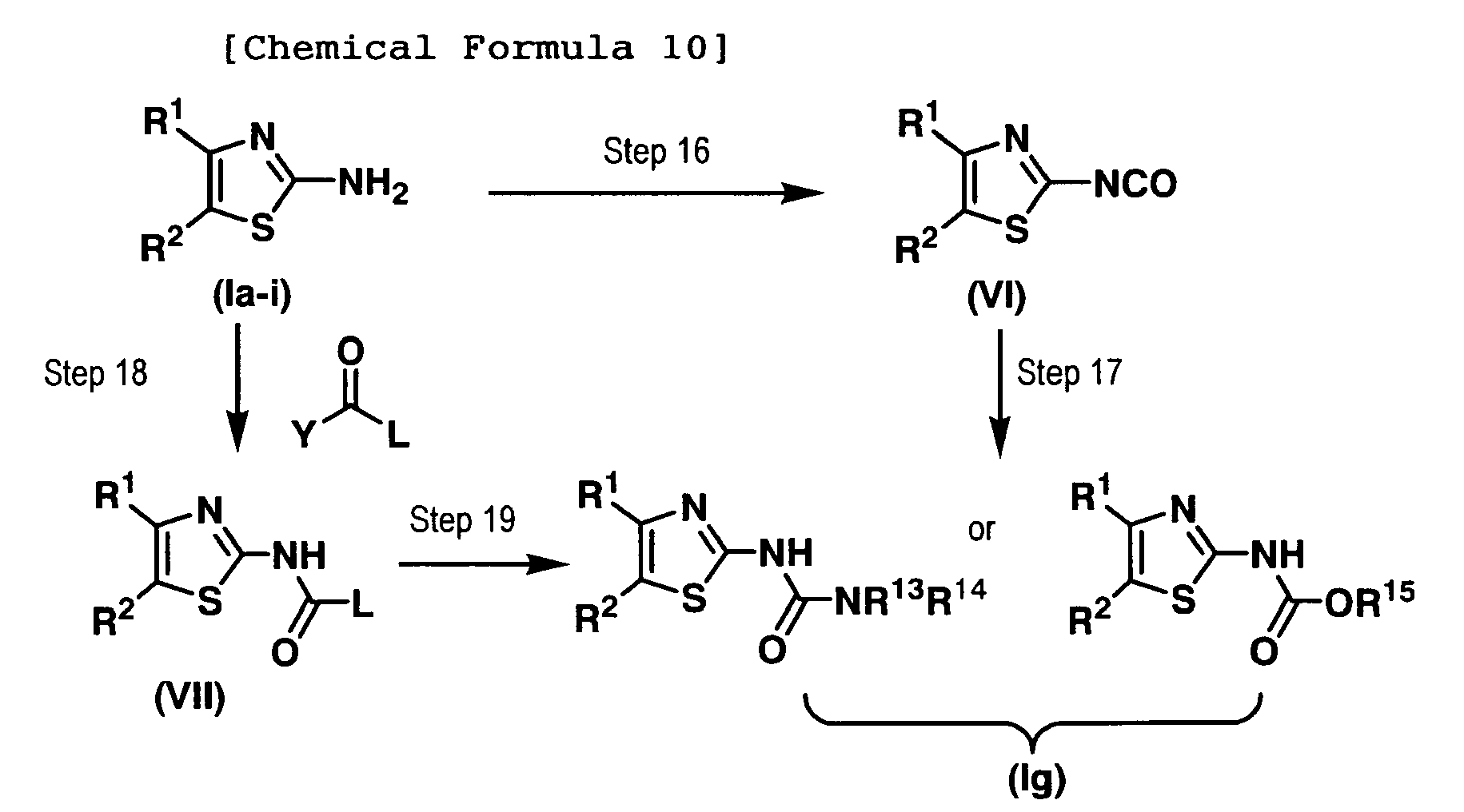
- [Wherein R1, R2, R13 , R14, R15 and Y have the same meanings as described above, respectively, L represents a leaving group including: halogen such as a chlorine atom, a bromine atom, and an iodine atom; lower alkoxy such as methoxy, ethoxy, and t-butoxy; phenoxy; or phenoxy substituted with a fluorine atom, a chlorine atom, a bromine atom, methoxy, ethoxy, methyl, nitro, cyano, and the like]
- Compound (VI) can be prepared using Compound (Ia-i) obtained by Preparation Methods 1 to 5 and the like, by the methods described in Jikken Kagaku Kouza, 4th Edition, Vol.20, p.473-483, Nihon Kagaku-Kai, Maruzen, 1992, and the like, or similar methods thereof.
- For example, Compound (VI) can be prepared by reacting Compound (Ia-i) with preferably 1 to 20 equivalents of phosgene or isoster thereof without solvent or in a solvent inert to the reaction, in the presence of preferably 1 to 100 equivalents of base if necessary, at a temperature between -30°C and 150°C for 5 minutes to 72 hours.
Examples of the solvent inert to the reaction include acetonitrile, methanol, ethanol, dichloromethane, chloroform, 1,2-dichloroethane, 1,2-dimethoxyethane, DMF, DMA, 1,4-dioxane, THF, diethyl ether, diisopropyl ether, benzene, toluene, xylene, DMI, NMP, sulfolane, water, and the like, which may be used alone or in combination. - Examples of the isoster of phosgene include triphosgene, 1,1'-carbonyldiimidazole (CDI), and the like.
Examples of the base include triethylamine, diisopropylethylamine, DBU, potassium carbonate, sodium hydroxide, and the like. - Compound (Ig) can be prepared by reacting Compound (VI) with preferably 1 to 200 equivalents of HR13R14 (wherein R13 and R14 have the same meanings as described above, respectively) or HOR15 (wherein R15 has the same meaning as described above) without solvent or in a solvent inert to the reaction, in the presence of preferably 1 to 100 equivalents of base if necessary, at a temperature between -30°C and 150°C for 5 minutes to 72 hours.
- Examples of the solvent inert to the reaction include acetonitrile, dichloromethane, chloroform, 1,2-dichloroethane, 1,2-dimethoxyethane, DMF, DMA, 1,4-dioxane, THF, diethyl ether, diisopropyl ether, benzene, toluene, xylene, DMI, NMP, sulfolane, water, and the like, which may be used alone or in combination.
- Examples of the base include triethylamine, diisopropylethylamine, DBU, and the like.
Further, Compound (Ig) can also be prepared by performing Step 17 without isolating Compound (VI) in Step 16. - Compound (VII) can be prepared by reacting Compound (Ia-i) with preferably 1 to 50 equivalents of YCOL (wherein Y and L have the same meanings as described above, respectively) in a solvent inert to the reaction, in the presence of preferably 1 to 100 equivalents of base if necessary, at a temperature between -30°C and 150°C for 5 minutes to 72 hours.
- YCOL (wherein Y and L have the same meanings as described above, respectively) can be obtained either commercially or by the method described in Journal of the American Chemical Society, 1954, Vol.76, p.4458, and the like, or similar methods thereof.
Examples of the solvent inert to the reaction include acetonitrile, dichloromethane, 1,2-dichloroethane, chloroform, 1,2-dimethoxyethane, DMF, DMA, 1,4-dioxane, THF, diethyl ether, diisopropyl ether, benzene, toluene, xylene, pyridine, DMI, NMP, sulfolane, and the like, which may be used alone or in combination. - Examples of the base include pyridine, triethylamine, diisopropylethylamine, N-methylmorpholine, N-methylpiperidine, DBU, DMAP, potassium acetate, potassium carbonate, cesium carbonate, sodium carbonate, sodium bicarbonate, sodium hydroxide, lithium hydroxide, potassium hydroxide, potassium phosphate, and the like.
- Compound (Ig) can be prepared using Compound (VII), in the same manner as in the method of step 17.
- Further, Compound (Ig) can also be prepared by performing Step 19 without isolating Compound (VII) in Step 18.
- Among Compound (I), Compound (Ig-i) in which R3 is - NHCONHR14 (wherein R14 has the same meaning as described above) can be prepared according to the following step.
-

- (Wherein R1, R2 and R14 have the same meanings as described above, respectively)
- Compound (Ig-i) can be prepared by reacting Compound (Ia-i) obtained by preparation methods 1 to 5 and the like, with preferably 1 to 20 equivalents of R14-NCO (wherein R14 has the same meaning as described above) in a solvent inert to the reaction at a temperature between 0°C and the boiling point of the solvent used, for 5 minutes to 72 hours.
- R14-NCO (wherein R14 has the same meaning as described above) can be obtained either commercially or by the method described in Jikken Kagaku Kouza, 4th Edition, Vol.20, p.473-483, Nihon Kagaku-Kai, Maruzen, 1992, and the like, or similar methods thereof.
Examples of the solvent inert to the reaction include acetonitrile, THF, 1,4-dioxane, DMF, dichloromethane, 1,2-dichloroethane, diethyl ether, benzene, toluene, water, and the like. - Among Compound (I), Compound (Ih) in which R3 is -CONHR16 (wherein R16 has the same meaning as described above) can be prepared according to the following steps.
-


- (Wherein R1, R2, R16 and Y have the same meanings as described above, respectively, and R24 represents lower alkyl such as methyl, ethyl, propyl, and t-butyl)
- Compound (IX) can be prepared using Compound (IV) obtained by Preparation Method 1, by the method described in Journal of Medicinal and Pharmaceutical Chemistry, 1959, Vol.2, p.588, and the like, or similar methods thereof.
- For example, Compound (IX) can be prepared by reacting Compound (IV) with preferably 1 to 20 equivalents of Compound (VIII) in a solvent inert to the reaction at a temperature between room temperature and 100°C for 5 minutes to 72 hours.
Examples of the solvent inert to the reaction include toluene, hexane, THF, DMF, methanol, ethanol, diethyl ether, acetonitrile, and the like, which may be used alone or in combination. - Compound (VIII) can be obtained either commercially or by the method described in Journal of Medicinal and Pharmaceutical Chemistry, 1959, Vol.2, p.588, and the like, or similar methods thereof.
Further, Compound (IX) can also be prepared by successively performing Step 21, without isolating Compound (IV) from R1COCH2R2 as in Step 1 of Preparation Method 1. - Compound (X) can be prepared using Compound (IX), in the same manner as in the method in Step 5 of Preparation Method 2.
- Compound (Ih) can be prepared using Compound (X) and H2NR16 (wherein R16 has the same meaning as described above), in the same manner as in the method in Step 6 of Preparation Method 2.
- Compound (Ih) can also be prepared according to the following steps.
-


- (Wherein R1, R2 and R16 have the same meanings as described above, respectively)
- Compound (XI) can be prepared by reacting Compound (Ia-i) with preferably 1 to 20 equivalents of cyanating agent in a solvent inert to the reaction, in the presence of preferably 1 to 20 equivalents of nitrite compound, at a temperature between -30°C and 150°C for 5 minutes to 72 hours.
- Examples of the nitrite compound include sodium nitrite, tert-butyl nitrite, isoamyl nitrite, and the like.
Examples of the cyanating agent include copper(I) cyanide, sodium cyanide, potassium cyanide, tetrabutylammonium cyanide, zinc cyanide, copper(I) potassium cyanide, and the like. - Examples of the solvent inert to the reaction include toluene, acetonitrile, dimethyl sulfoxide, water, and the like, which may be used alone or in combination.
- Compound (X) can be prepared from Compound (XI) by the method described in Jikken Kagaku Kouza, 5th Edition, Vol.15, p.15, Nihon Kagaku-Kai, Maruzen, 2003, and the like, or similar methods thereof.
- For example, Compound (X) can be prepared by treating Compound (XI) with 1 equivalent to a large excess amount of base in a water-containing solvent, at a temperature between 0°C and the boiling point of the solvent used, for 5 minutes to 72 hours.
Examples of the base include sodium hydroxide, potassium hydroxide, lithium hydroxide, and the like.
Examples of the water-containing solvent include water-containing methanol, water-containing ethanol, water-containing propanol, water-containing THF, water-containing 1,4-dioxane, water-containing 1,2-dimethoxyethane, water-containing toluene, water-containing dichloromethane, water-containing DMF, and the like, which may be used either alone or in combination. - Compound (Ih) can be prepared using Compound (X) and H2NR16 (wherein R16 has the same meaning as described above), in the same manner as in Step 23 of Preparation Method 8.
- Among Compound (I), Compound (Ii) in which R3 is represented by the foregoing formula (II) can be prepared according to the following steps.
-

- [Wherein R1, R2, R17, R18, X and Y have the same meanings as described above, respectively, P represents a hydrogen atom or a protective group (examples of the protective group including tert-butoxycarbonyl (Boc group), benzyloxycarbonyl (Z group), benzyl, acetyl, benzoyl, and the like), and M1 represents trimethyl tin, tributyl tin, triphenyl tin, -B(OR25)OR26 (wherein R25 and R26 may be the same or different, and each represents a hydrogen atom or lower alkyl such as methyl, ethyl, propyl, isopropyl, and butyl), or 4,4,5,5-tetra methyl-1,3,2-dioxaborolan]
- Compound (XIII) can be prepared by reacting Compound (XII) with preferably 1 equivalent to an excess amount of hydrogen halide (YH) in a solvent inert to the reaction, at a temperature between -30°C and the boiling point of the solvent used, for 5 minutes to 72 hours.
- Compound (XII) can be obtained by the method described in, for example, Journal of Organic Chemistry, 1948, Vol.13, p.722, and the like, or similar methods thereof.
Examples of the hydrogen halide include hydrogen chloride, hydrogen bromide, hydrogen iodide, and the like.
Examples of the solvent inert to the reaction include dichloromethane, chloroform, 1,2-dichloroethane, 1,4-dioxane, THF, diethyl ether, diisopropyl ether, acetonitrile, acetic acid, ethyl acetate, and the like, which may be used alone or in combination. - Compound (XV) or (Ii) can be prepared by reacting Compound (XIII) with Compound (XIV) in a solvent inert to the reaction in the presence of a catalytic amount of palladium compound, at a temperature between room temperature and 140°C for 5 minutes to 72 hours.
- Compound (XV) can be obtained by the methods described in Journal of Organic Chemistry, 2002, Vol.67, p.7551; Synlett, 1992, p.805;
WO03/053925
The reaction may be performed by adding preferably 0.2 to 5 equivalents of, for example, inorganic salts such as lithium chloride, potassium chloride, silver oxide, copper oxide, silver nitrate, and silver acetate, or bases such as triethylamine, sodium ethoxide, sodium carbonate, and sodium hydroxide, preferably sodium carbonate. - Examples of the palladium compound include bis(triphenylphosphine)palladium(II) chloride, tetrakis(triphenylphosphine)palladium(O), [1,2-bis(diphenylphosphino)ethane]palladium(II) chloride, [1,1'-bis(diphenylphosphino)ferrocene]palladium(II) chloride, and the like.
Examples of the solvent inert to the reaction include diethyl ether, THF, 1,4-dioxane, DMF, DMA, DMSO, benzene, toluene, xylene, dichloromethane, chloroform, carbon tetrachloride, 1,2-dichloroethane, acetonitrile, ethyl acetate, methyl acetate, methylethyl ketone, methanol, ethanol, propanol, isopropyl alcohol, butanol, hexane, water, and the like, which may be used alone or in combination. - Compound (Ii) can be prepared by removing protecting group P from Compound (XV) using the method of removing protective groups commonly used in organic synthetic chemistry [for example, the methods described in Protective Groups in Organic Synthesis, T.W. Greene, John Wiley & Sons Inc., 1999, and the like].
- For example, when P is a Boc group, Compound (Ii) can be prepared by treating Compound (XV) with hydrochloric acid, trifluoroacetic acid, and the like. When P is a Z group or a benzyl group, Compound (Ii) can be prepared by subjecting Compound (XV) to a reduction reaction such as a hydrogenation reaction, for example.
- Among Compound (I), Compound (Ii-i) in which R3 is represented by the foregoing formula (II) and X is a nitrogen atom can be prepared according to the following steps.
-


- [Wherein R1, R2, R17, R18 and Y have the same meanings as described above, respectively, R27 and R28 may be the same or different, and each represents lower alkyl such as methyl, ethyl, propyl, or represent -(CH2)2- or -(CH2)3-together with each other]
- Compound (XVIII) can be prepared by the method described in Synthetic Communications, 2001, Vol.31, p.3747, and the like, or similar methods thereof.
- For example, Compound (XVIII) can be prepared by reacting Compound (IV) obtained in Step 1 of Preparation Method 1 with preferably 1 to 20 equivalents of rubeanic acid (Compound (XVII)) in a solvent inert to the reaction, at a temperature between room temperature and 100°C, for 5 minutes to 72 hours.
Examples of the solvent inert to the reaction include toluene, hexane, THF, DMF, methanol, ethanol, diethyl ether, acetonitrile, and the like, which may be used alone or in combination. - Compound (Ii-i) can be prepared by reacting Compound (XVIII) with an excess amount of methyl iodide in a solvent inert to the reaction, at a temperature between 0°C and 40°C for 5 minutes to 72 hours, and then with Compound (XIX) in a solvent inert to the reaction, at a temperature between room temperature and the boiling point of the solvent used, for 5 minutes to 72 hours.
- Compound (XIX) can be obtained either commercially or by the methods described in Journal of the Chemical Society, 1949, Vol.71, p.2473; Synthetic Communications, 2000, Vol.30, p.2287; and the like, or similar methods thereof.
Examples of the solvent inert to the reaction include toluene, hexane, THF, DMF, methanol, ethanol, diethyl ether, acetonitrile, acetone, and the like, which may be used alone or in combination. - Compound (Ii-i) can also be prepared via the following two steps.
- Compound (XXI) can be prepared using Compound (XVIII) and Compound (XX), in the same manner as in the method of Step 31.
Compound (XX) can by obtained either commercially or by the method described in Tetrahedron, 1995, Vol.51, p.5147, and the like, or similar methods thereof. - Compound (li-i) can be prepared using Compound (XXI), by the method of removing protective groups described in, for example, Protective Groups in Organic Synthesis, T.W. Greene, John Wiley & Sons Inc., 1981, and the like, or similar methods thereof.
- For example, Compound (Ii-i) can be prepared by treating Compound (XXI) with preferably 1 equivalent to a large excess amount of acid in a solvent inert to the reaction, at a temperature between 0°C and the boiling point of the solvent used, for 5 minutes to 72 hours.
Examples of the acid include hydrochloric acid, sulfuric acid, acetic acid, trifluoroacetic acid, and the like.
Examples of the solvent inert to the reaction include dichloromethane, chloroform, acetone, diethyl ether, THF, water, and the like, which may be used alone or in combination. - Further, Compound (Ii-i) can also be prepared by successively performing Step 33 without isolating Compound (XXI) obtained in Step 32.
- Compound (Ii-i) can also be prepared according to the following steps.
-

- (Wherein R1, R2, R17, R18 , R27, and R28 have the same meanings as described above, respectively)
- Compound (XXII) can be prepared using Compound (X) and Compound (XIX) or (XX) by performing Step 26 of Preparation Method 9, and if necessary successively Step 33 of Preparation Method 11.
- Compound (Ii-i) can be prepared by reacting Compound (XXII) with preferably 1 equivalent to an excess amount of ammonia compound without solvent or in a solvent inert to the reaction, at a temperature between room temperature and 150°C for 5 minutes to 72 hours.
- Examples of the ammonia compound include ammonia, ammonium formate, ammonium acetate, ammonium trifluoroacetate, and the like.
Examples of the solvent inert to the reaction include acetic acid, DMF, water, and the like, which may be used alone or in combination. - Compound (Ii-i) can also be prepared according to the following steps.
-


- (Wherein R1, R2, R17, R18, and Y have the same meanings as described above, respectively)
- Compound (XXIII) can be prepared using Compound (XIII) obtained in Step 27 of Preparation Method 10, in the same manner as in the method in Step 9 of Preparation Method 3.
- Compound (XXV) can be prepared by reacting Compound (XXIII) with preferably 1 to 200 equivalents of Compound (XXIV) in a solvent, at a temperature between -30°C and the boiling point of the solvent used, for 5 minutes to 72 hours.
- Compound (XXIV) can be obtained either commercially or by the methods described in Journal of the Chemical Society, 1957, p.2197; Journal of Organic Chemistry, 1960, Vol.25, p.1752; and the like, or similar methods thereof.
Examples of the solvent include methanol, ethanol, dichloromethane, chloroform, 1,2-dichloroethane, THF, 1,4-dioxane, diethyl ether, diisopropyl ether, benzene, nitrobenzene, toluene, xylene, DMF, water, and the like, which may be used alone or in combination. - In the case where nitrobenzene is used as the solvent in this step, Compound (Ii-i), which is the desired compound of the next Step 38 can be directly prepared from Compound (XXIII).
- Compound (li-i) can be prepared by treating Compound (XXV) with preferably 1 to 100 equivalents of oxidizing agent in a solvent inert to the reaction, at a temperature between -78°C and the boiling point of the solvent used, for 5 minutes to 72 hours.
- Examples of the oxidizing agent include m-chloroperbenzoic acid, 2,3-dichloro-5,6-dicyano-1,4-benzoquinone (DDQ), benzofuroxan, potassium permanganate, hydrogen peroxide, peracetic acid, tert-butyl hydroperoxide, and the like.
Examples of the solvent inert to the reaction include acetonitrile, dichloromethane, 1,2-dichloroethane, chloroform, 1,2-dimethoxyethane, DMF, DMA, 1,4-dioxane, THF, diethyl ether, diisopropyl ether, benzene, toluene, xylene, pyridine, DMI, NMP, sulfolane, water, and the like, which may be used either alone or in combination. - The intermediates and desired compounds of the foregoing preparation methods may be isolated and purified by separation and purification methods commonly used in organic synthetic chemistry, for example, such as filtration, extraction, washing, drying, condensation, recrystallization, and various types of chromatography. The intermediates may be supplied to the next reaction without any purification.
Among Compound (I), it may exist as stereoisomers such as regioisomer, geometrical isomer, and optical isomer, or tautomers. These and all other possible isomers and mixtures thereof can also be used for therapeutic and/or preventive agents for sleep disorder of the present invention. - To obtain a salt of Compound (I), when Compound (I) is obtained in the form of a salt, it may be purified as it is. Further, when Compound (I) is obtained in a free form, Compound (I) may be dissolved or suspended in a suitable solvent, followed by addition of an acid or a base to form a salt. Then, the resulting salt may be isolated and purified.
Compound (I) and a pharmaceutically acceptable salt thereof may exist as an adduct with water or various solvents. Such adducts can also be used for therapeutic and/or preventive agents for sleep disorder of the present invention. - Table 1-1 through Table 4 below show specific examples of Compound (I) obtained by the present invention. It should be noted however that the compounds used in the present invention are not limited to these examples.
- [Table 1-1]
Table 1-1 
Compound Number R2 R11 1 

2 

3 

4 

5 

6 

7 

8 
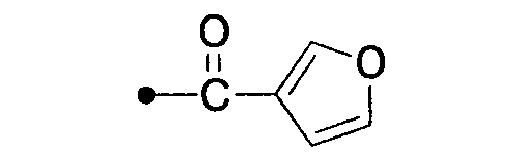
9 

10 
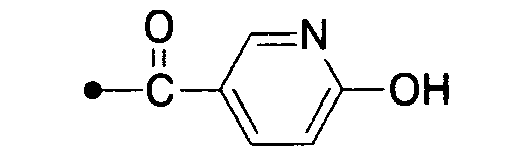
11 

12 

- [Table 1-2]
Table 1-2 
Compound Number R2 R11 13 

14 

15 

16 

17 
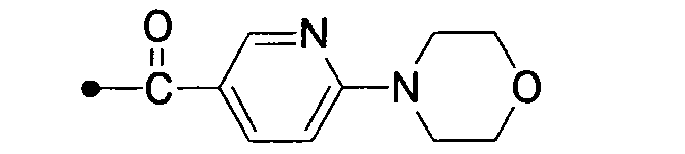
18 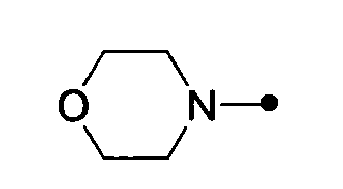

19 

20 

21 

22 

23 

24 

- [Table 1-3]
Table 1-3 
Compound Number R2 R11 25 

26 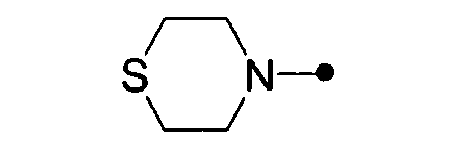

27 

28 
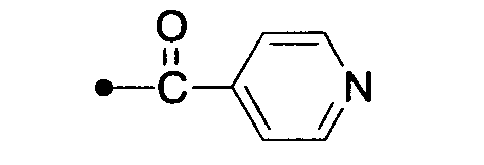
29 

30 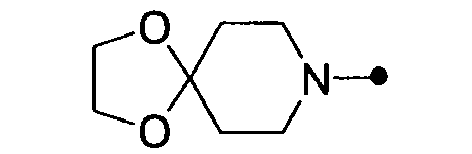

31 

32 

33 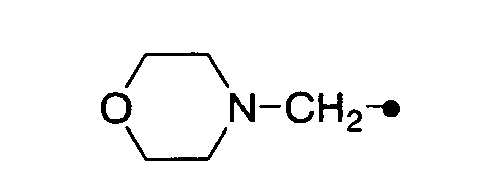

34 

35 

36 

- [Table 1-4]
Table 1-4 
Compound Number R2 R11 37 

38 

39 

- [Table 2-1]
Table 2-1 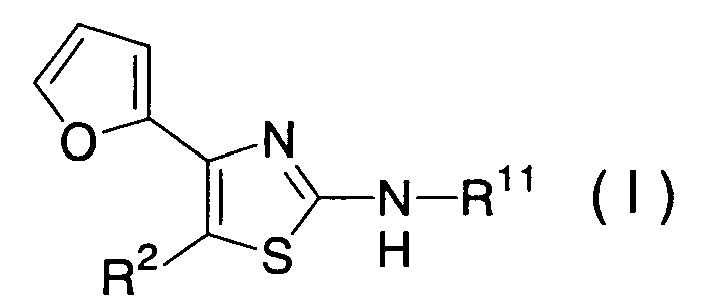
Compound Number R2 R11 40 

41 

42 

43 

44 

45 

46 

47 

48 

49 

50 

- [Table 2-2]
Table 2-2 
Compound Number R2 R11 51 

52 
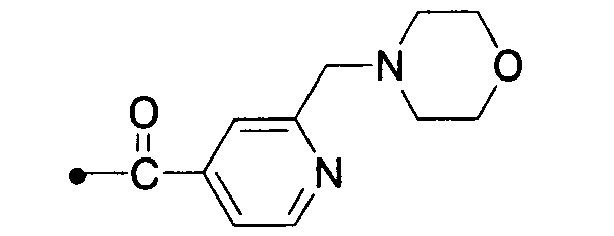
53 

54 

55 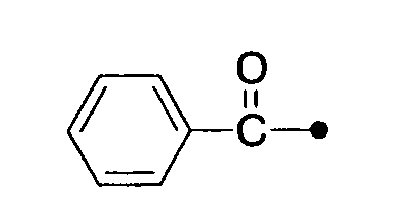

56 

57 

58 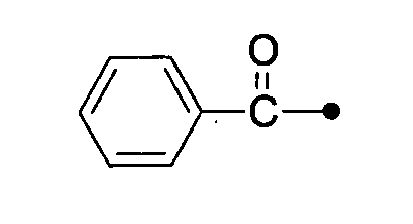

59 

- [Table 2-3]
Table 2-3 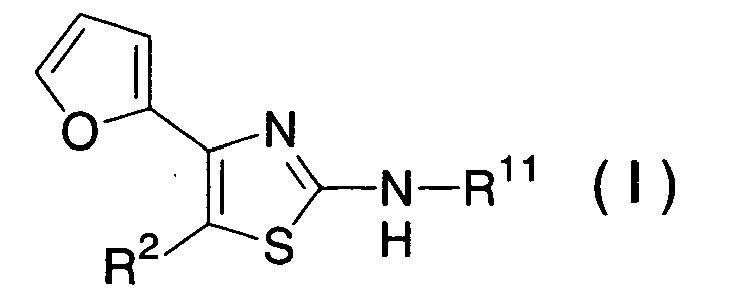
Compound Number R2 R11 60 

61 

62 

63 

64 

65 

66 

67 

68 

- [Table 2-4]
Table 2-4 
Compound Number R2 R11 69 

70 

71 

72 

73 

74 

75 

76 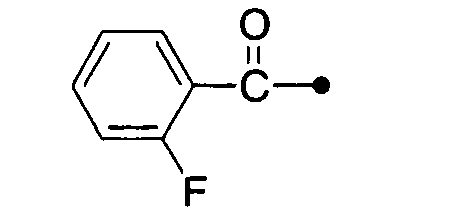

77 

- [Table 2-5]
Table 2-5 
Compound Number R2 R11 78 

79 

80 

81 

82 

83 

84 

85 

86 

- [Table 2-6]
Table 2-6 
Compound Number R2 R11 87 

88 
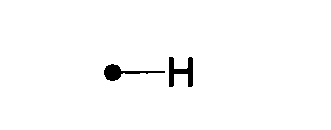
89 

90 

91 

92 

93 

94 

95 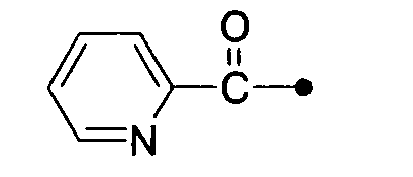

96 

- [Table 2-7]
Table 2-7 
Compound Number R2 R11 97 

98 
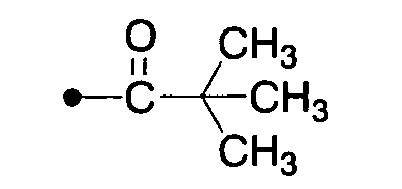
99 

100 

101 

102 

103 

104 

105 

106 

107 

- [Table 2-8]
Table 2-8 
Compound Number R2 R11 108 

109 

110 

111 

112 

113 

114 
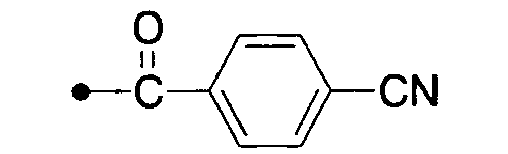
115 

116 

- [Table 2-9]
Table 2-9 
Compound Number R2 R11 117 

118 

119 

120 

121 

122 
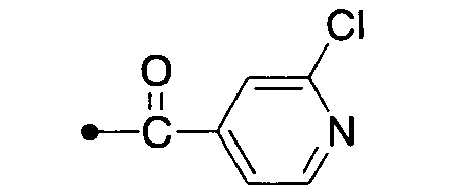
123 

124 

- [Table 2-10]
Table 2-10 
Compound Number R2 R11 125 

126 

127 

128 

129 
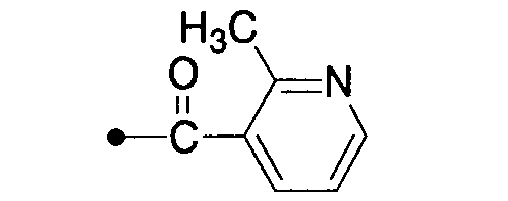
130 

131 

132 
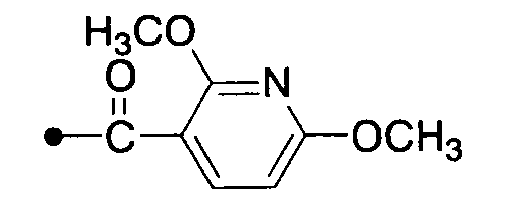
133 

- [Table 2-11]
Table 2-11 
Compound Number R2 R11 134 

135 

136 

137 

138 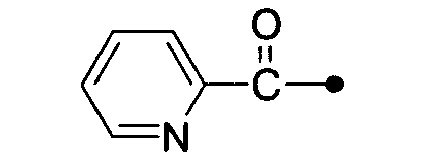

139 

140 

141 

142 

143 

- [Table 2-12]
Table 2-12 
Compound Number R2 R11 144 

145 

146 

147 
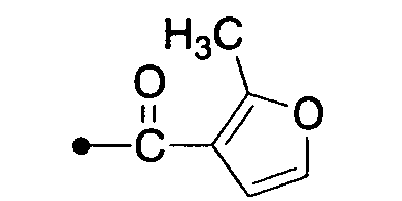
148 

149 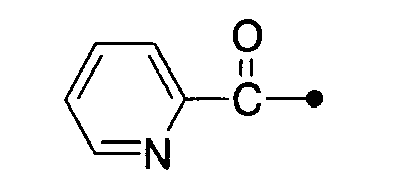

150 

151 

152 

153 
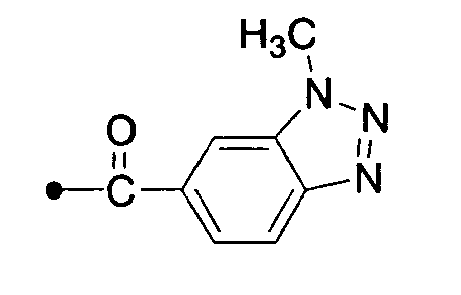
- [Table 2-13]
Table 2-13 
Compound Number R2 R11 154 

155 

156 
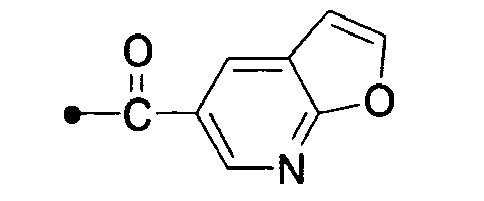
157 

158 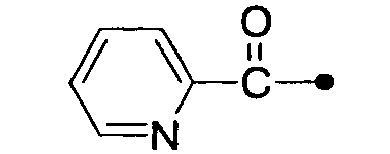

159 

160 

161 

162 

163 

164 

- [Table 2-14]
Table 2-14 
Compound Number R2 R11 165 

166 

167 

168 

169 

170 

171 

172 

173 

174 

- [Table 2-15]
Table 2-15 
Compound Number R2 R11 175 

176 

177 

178 

179 

180 

181 

182 

183 

184 

185 

- [Table 2-16]
Table 2-16 
Compound Number R2 R11 186 

187 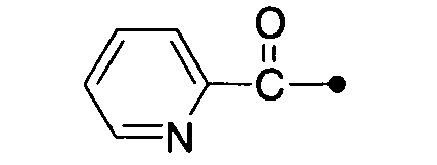

188 

189 

190 

191 

192 

193 

194 

195 

- [Table 2-17]
Table 2-17 
Compound Number R2 R11 196 

197 

198 

199 

200 

201 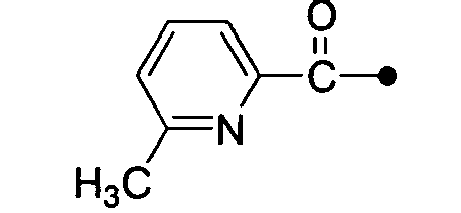

202 

203 

204 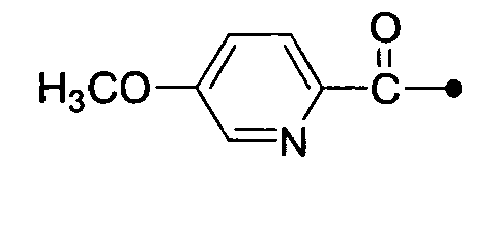

- [Table 2-18]
Table 2-18 
Compound Number R2 R11 205 

206 

207 

208 

209 

210 

211 

212 

213 

214 

- [Table 2-19]
Table 2-19 
Compound Number R2 R11 215 

216 

217 

218 

219 

220 

221 

222 

223 

224 

225 

- [Table 2-20]
Table 2-20 Compound Number R2 R11 226 

227 

228 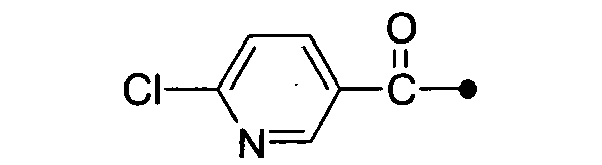

229 

230 

231 

232 

233 

234 

235 

236 

- [Table 2-21]
Table 2-21 
Compound Number R2 R11 237 

238 

239 

240 

241 

242 

243 

244 

- [Table 2-22]
Table 2-22 
Compound Number R2 R11 245 

246 

247 

248 

249 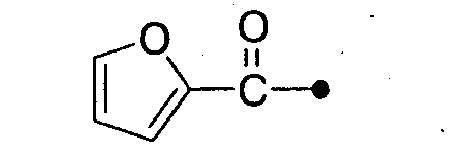

250 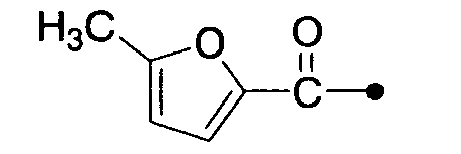

251 

252 

253 

254 

- [Table 2-23]
Table 2-23 
Compound Number R2 R11 255 

256 

257 

258 

259 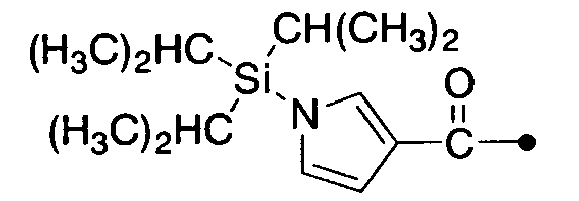

260 

261 

262 

263 

264 

265 

- [Table 2-24]
Table 2-24 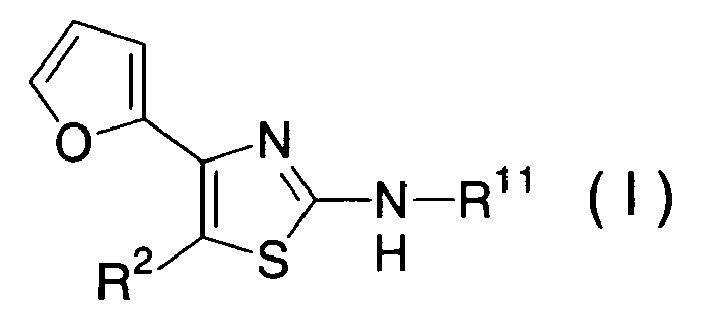
Compound Number R2 R11 266 

267 

268 

269 
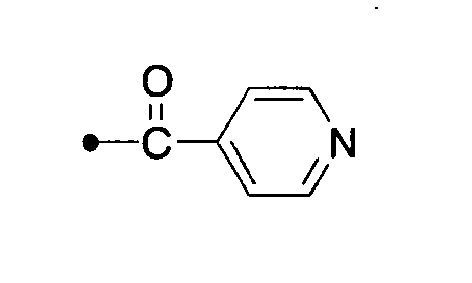
270 

271 
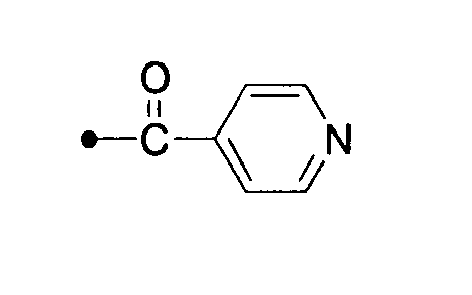
272 

273 

274 

- [Table 2-25]
Table 2-25 
Compound Number R2 R11 275 

276 

277 

278 

279 

280 

281 

282 

283 

284 

- [Table 2-26]
Table 2-26 
Compound Number R2 R11 285 

286 

287 

288 

289 

290 

291 

292 

293 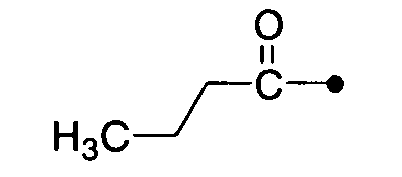

294 

295 

- [Table 2-27]
Table 2-27 
Compound Number R2 R11 296 
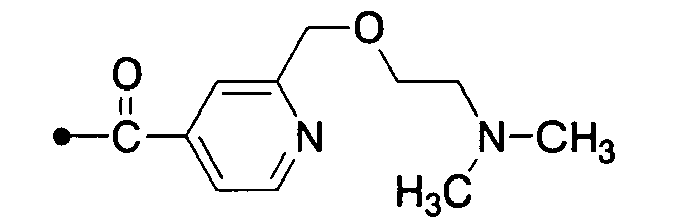
297 

298 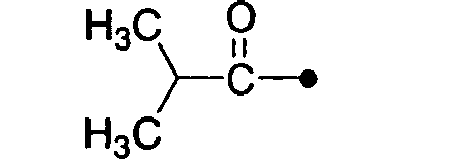

299 

300 

301 

302 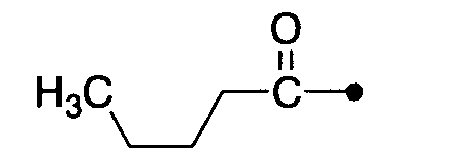

303 

304 

305 

306 

- [Table 2-28]
Table 2-28 
Compound Number R2 R11 307 

308 

309 

310 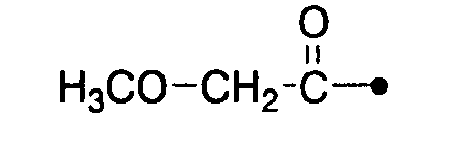

311 

312 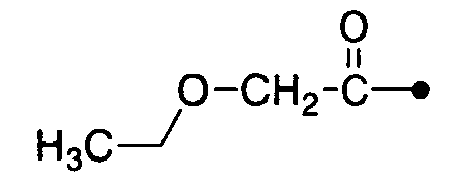

313 

314 

315 

316 

317 

- [Table 2-29]
Table 2-29 
Compound Number R2 R11 318 

319 

320 

321 

322 

323 

324 

325 

326 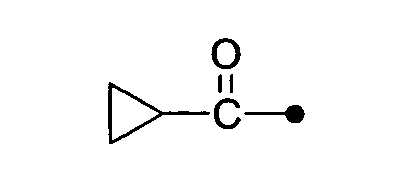

327 

328 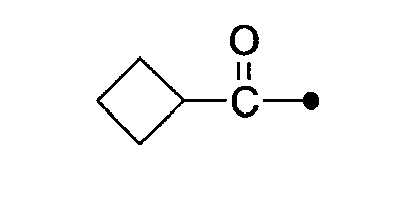

- [Table 2-30]
Table 2-30 
Compound Number R2 R11 329 

330 

331 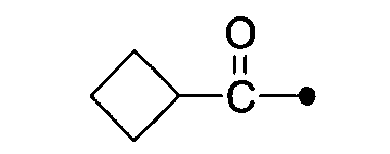

332 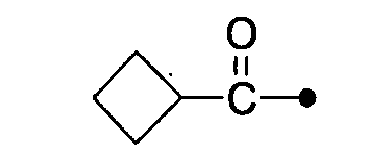

333 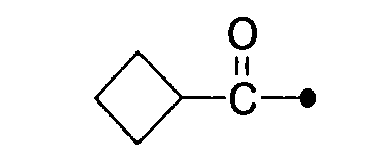

334 

335 

336 

337 

338 

339 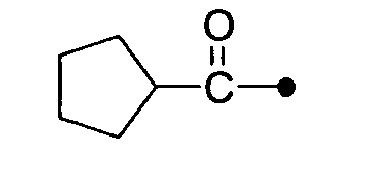

- [Table 2-31]
Table 2-31 
Compound Number R2 R11 340 

341 

342 

343 

344 

345 

346 
-H 347 

348 

349 

350 

- [Table 2-32]
Table 2-32 
Compound Number R2 R11 351 

352 

353 

354 

355 

356 

357 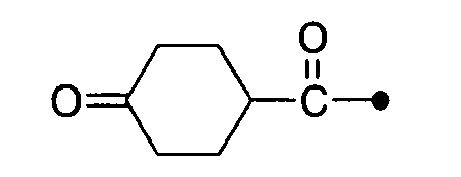

358 

359 

360 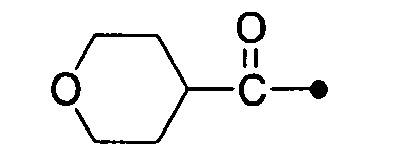

361 

- [Table 2-33]
Table 2-33 
Compound Number R2 R11 362 

363 

364 

365 

366 

367 

368 

369 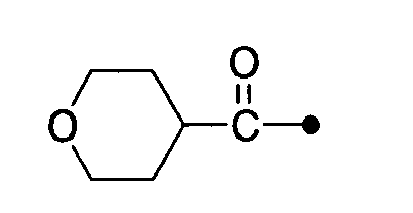

370 
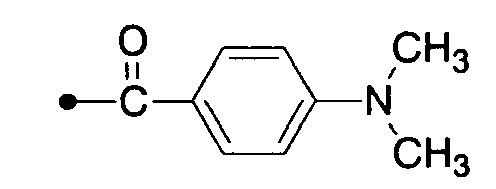
371 

- [Table 2-34]
Table 2-34 
Compound Number R2 R11 372 

373 
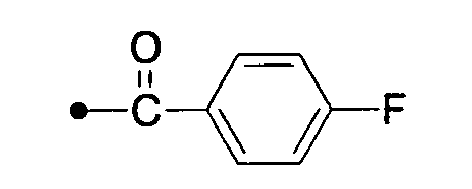
374 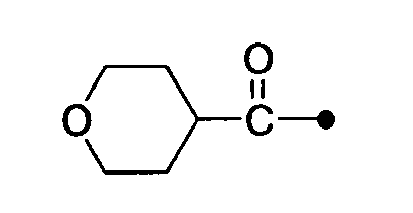

375 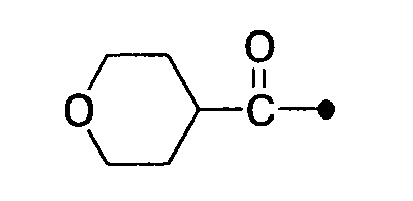

376 

377 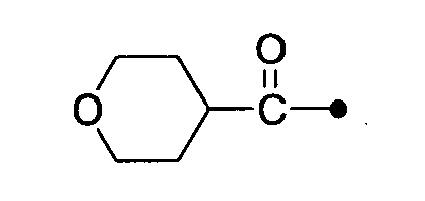

378 

379 

380 

- [Table 2-35]
Table 2-35 
Compound Number R2 R11 381 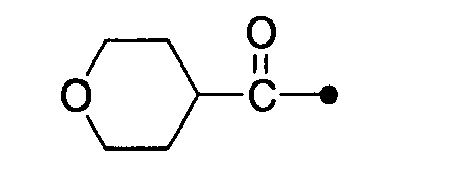

382 

383 

384 

385 

386 

387 

388 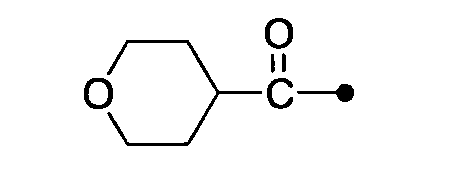

389 

390 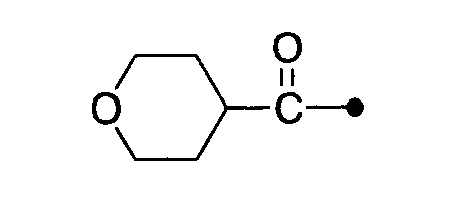

- [Table 2-36]
Table 2-36 
Compound Number R2 R11 391 

392 

393 

394 

395 

396 

397 

398 

- [Table 2-37]
Table 2-37 
Compound Number R2 R11 399 

400 

401 

402 

403 

404 

405 

406 

407 

- [Table 2-38]
Table 2-38 
Compound Number R2 R11 408 

409 

410 

411 

412 

413 

414 

415 
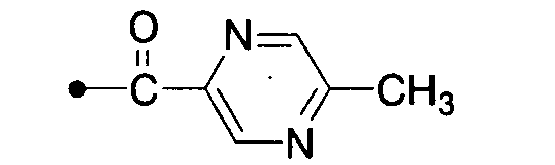
416 

417 

418 

- [Table 2-39]
Table 2-39 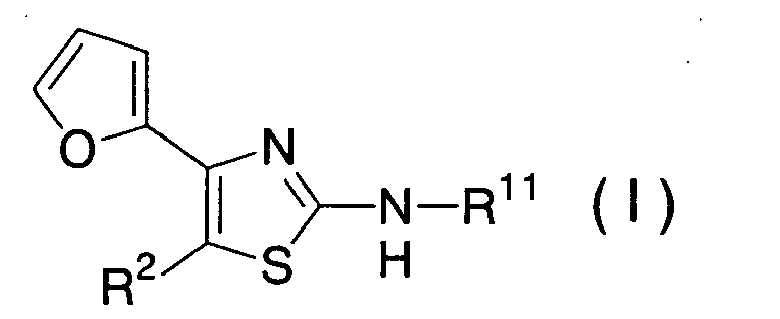
Compound Number. R2 R11 419 

420 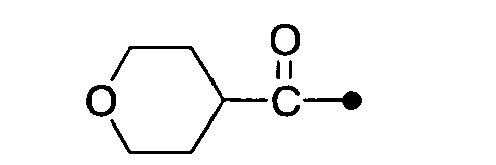

421 

422 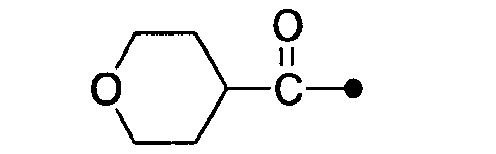

423 

424 

425 

426 

427 

428 

429 

- [Table 2-40]
Table 2-40 
Compound Number R 2 R11 430 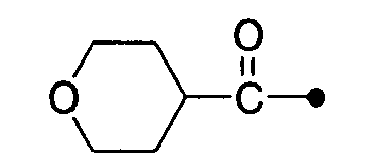

431 

432 

433 

434 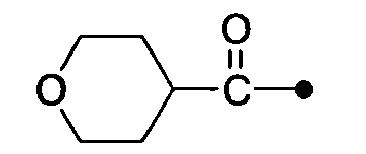

435 

436 
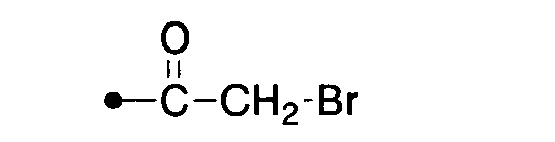
437 

438 

439 

440 

- [Table 2-41]
Table 2-41 
Compound Number R2 R11 441 

442 

443 

444 

445 

446 
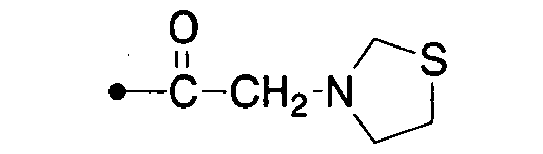
447 

448 

449 

450 

- [Table 2-42]
Table 2-42 
Compound Number R2 R11 451 

452 

453 

454 

455 

456 
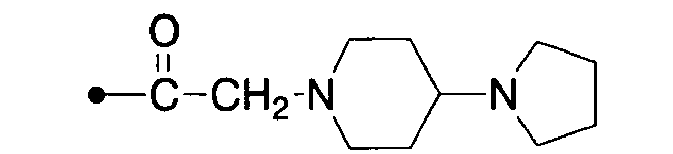
457 

458 

459 

460 

461 
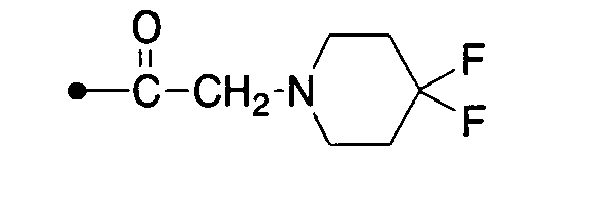
- [Table 2-43]
Table 2-43 
Compound Number R2 R11 462 

463 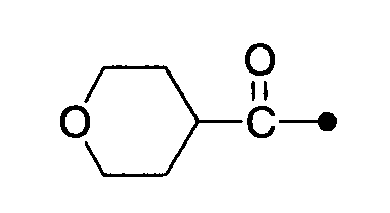

464 

465 

466 

467 

468 

469 

470 

471 

- [Table 2-44]
Table 2-44 
Compound Number R2 R11 472 

473 

474 

475 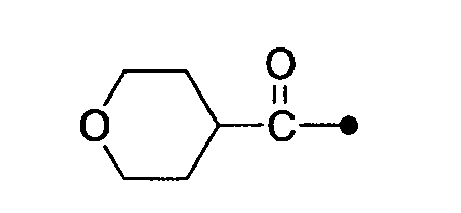

476 

477 

478 

479 

480 

481 

- [Table 2-45]
Table 2-45 
Compound Number R2 R11 482 

483 

484 

485 

486 

487 

488 

489 

490 

491 

492 

- [Table 2-46]
Table 2-46 
Compound Number R2 R11 493 

494 

495 

496 

497 

498 

499 

500 

501 

502 

- [Table 2-47]
Table 2-47 
Compound Number R2 R11 503 

504 

505 

506 

507 

508 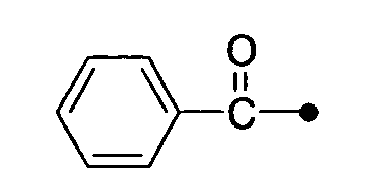

- [Table 3-1]
Table 3-1 
Compound Number R2 R3 509 

510 

511 

512 

513 

514 

515 

516 

517 

518 

519 
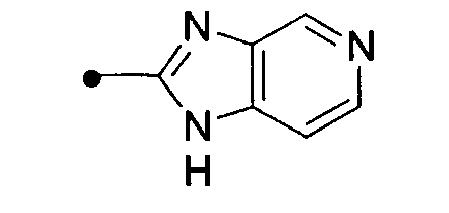
- [Table 3-2]
Table 3-2 
Compound Number R2 R3 520 

521 

522 

523 

524 

525 

526 

527 
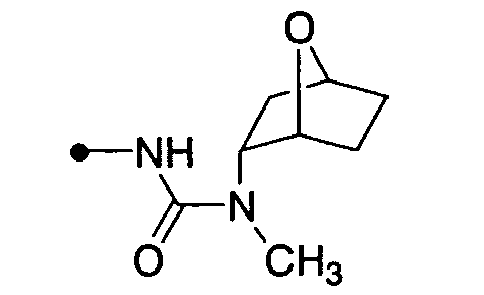
528 

529 

- [Table 3-3]
Table 3-3 
Compound Number R2 R3 530 

531 

532 

533 

534 

535 

536 

537 

538 

539 

540 

- [Table 3-4]
Table 3-4 
Compound Number R2 R4 541 

542 

543 

544 

545 

546. 

547 

548 

549 

550 

- [Table 4]
Table 4 
Compound Number R2 R4 551 
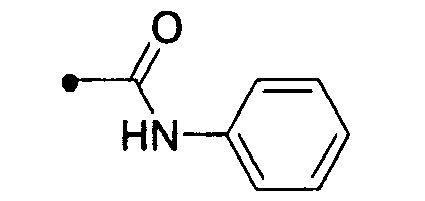
552 

553 

554 

- The test is performed according to the method of Bruns et al. (Molecular Pharmacology, Vol.29, p.331, 1986).
Rat (SD rat, Japan SLC, Inc . ) striatum is suspended in 50 mL of ice-cooled tris(hydroxymethyl)-aminomethane hydrochloride (Tris HCl) buffer (50 mmol/L, pH 7.7), using a Polytron homogenizer (Kinematica, Inc.). The suspension is centrifuged (48,000 x g, 20 minutes) and the resulting precipitate is resuspended by adding the same amount of Tris HCl buffer (50 mmol/L) thereto, followed by centrifugation under the same conditions. The resulting final precipitate is suspended in Tris HCl buffer (50 mmol/L) [containing magnesium chloride (10 mmol/L), and adenosine deaminase (0.02 unit/mg tissue) (Sigma)] to prepare the suspension at the tissue concentration of 5 mg (wet weight)/mL. - To 100 µl of tissue suspension, 80 µl of tritium-labeled CGS-21680 {3H-2-[p-(2-carboxyethyl)phenethylamino]-5'-(N-ethylcarboxamido)-adenosine: 40 Ci/mmol; New England Nuclear [ The Journal of Pharmacology and Experimental Therapeutics, Vol.251, p.888, 1989]} (final concentration of 6.0 mmol/L), and 20 µL of test compound solution (10-7 mol/L, DMSO solution of test compound diluted with Tris HCl buffer) are added. The mixture is allowed to stand at 25°C for 120 minutes, followed by rapid suction filtration using glass-fiber filter paper (GF/C; Whatman), then immediately washed three times with 200 µL of ice-cooled Tris HCl buffer (50 mmol/L). The glass-fiber filter paper is then placed in a vial container, and MicroScinti (PerkinElmer) is added to measure the radioactivity with a TopCount (PerkinElmer).
- Percent inhibition of adenosine A2A receptor binding (3H-CGS21680 binding) by the test compound can be calculated by the following equation.
-

- The total bound radioactivity refers to bound radioactivity of 3H-CGS21680 that has bound to the receptors in the absence of the assay compound. The nonspecific bound radioactivity refers to bound radioactivity of 3H-CGS21680 in the presence of 100 mmol/L of cyclopentyladenosine (CPA; Sigma). The bound radioactivity in the presence of medicament refers to bound radioactivity of 3H-CGS21680 in presence of 10-7 mol/L of test compound.
- In the above test, percent inhibition for the adenosine A2A receptor by Compound (I) or a pharmaceutically acceptable salt thereof can be determined at different concentrations by appropriately adjusting the concentration of the test compound. According to the test, it is confirmed that Compound (I) has the antagonistic activity to the adenosine A2A receptor.
- The test was conducted to examine influence of Compound (I) of the present invention on pentobarbital sodium-induced sleeping time, according to the method of Iyakuhin no Kaihatsu, Vol.9, Iyakuhin no Tansaku I, "antihypnotic", p.220-226, Hirokawa Shoten.
- (1) Test Material
For the test, ddY male mice (19-21 g body weight; Japan SLC, Inc.) were used. All test compounds were used by suspending in distilled water (Otsuka Pharmaceutical Factory, Inc.) containing 0.5 volume/weight% methylcellulose (0.5% MC: Wako Pure Chemical Industries, Ltd.) . A volume of 0.1 mL was administered per 10 g body weight of mice. - (2) Test Method
Groups of seven mice were used. To the control groups were orally adminidtrated 0.5% MC, whereas a suspension of the test compound was orally administered to the test compound administered groups. One hour after the administration, pentobarbital sodium (pentobarbital-Na: Tokyo Chemical Industry Co., Ltd., 25 mg/kg) was administered subcutaneously. Mouse placed in a recumbent position, the mouse immediately returns to a proper upright position (this is known as righting reflex). However, the administration of pentobarbital sodium eliminated the righting reflex in the control groups. The time period in which the administration of test compound eliminated the righting reflex was regarded as a sleeping time. By a measurement of time disappearing righting reflex immediately after the administration, the sleeping time was determined. The results are shown in Table 5-1 and Table 5-2. - [Table 5-1]
Table 5-1 Test compound Dose (mg/kg, p.o.) Sleeping time (min) Mean value ± standard deviation Control - 52.12±5.20 1 10 15.58±8.50**** 5 10 0.82±0.82*** 7 10 6.38±4.58* 8 10 4.16±4.16* 11 10 22.75±6.63**** Control - 35.56±5.21 95 10 0.45±0.45*** 136 10 1.89±1.81*** 361 10 1.65±1.40*** 367 10 0.10±0.10*** 376 10 0.00±0.00*** 416 10 0.06±0.06*** 420 10 0.00±0.00*** 407 10 0.00±0.00*** *, **, ***, and **** mean significant difference over the control groups
*: p<0.001, Student's t-test
**: p<0.01, Aspin-Welch test
***: p<0.001, Aspin-Welch test
****: p<0.01, Student's t-test - [Table 5-2]
Table 5-2 Test compound Dose (mg/kg, p.o.) Sleeping time (min) Mean value ± standard deviation Control - 40.00±5.32 508 10 14.26±4.35** 78 10 8.66±4.67* 114 10 0.63±0.53* 142 10 4.52±4.41* 157 10 9.39±5.68**** 336 10 1.60±1.56*** Control - 45.87±4.17 99 10 0.05±0.02*** 360 10 0.03±0.02*** 373 10 0.03±0.02*** 365 10 0.05±0.05*** 463 10 0.00±0.00*** 409 10 0.05±0.05*** *, **, ***, and **** mean significant difference over the control groups
*: p<0.001, Student's t-test
**: p<0.01, Aspin-Welch test
***: p<0.001, Aspin-Welch test
****: p<0.01, Student's t-test - From the above results, it was shown that Compound (I) or a pharmaceutically acceptable salt thereof had the effect for reducing the sleeping time induced by pentobarbital sodium. In other words, it was shown that Compound (I) suppress sleep induced by hypnotics such as pentobarbital sodium. That is, it is considered that Compound (I) has stimulant activity, and is useful to treating and/or preventing a sleep disorder and improving daytime sleepiness, and the like, for example.
- It is therefore considered that Compound (I) can suitably treat and/or prevent or improve sleep disorders, particularly those whose symptoms are expected to be treated and/or prevented, or improved by the stimulant activity or sleepiness improving activity, or more specifically sleep disorders that involve excessive sleep and/or daytime sleepiness.
More specifically, it is considered that by administrating Compound (I), a sleep disorder, particularly narcolepsy; hypersomnia such as recurrent hypersomnia (periodic hypersomnia), idiopathic hypersomnia, and posttraumatic hypersomnia; a circadian rhythm sleep disorder such as time zone change syndrome (jet lag syndrome, jet lag), a shift work sleep disorder, irregular sleep-wake pattern, delayed sleep phase syndrome, or a non-24-hour sleep-wake disorder; and the like can be suitably treated and/or prevented or improved. - Compound (I) or a pharmaceutically acceptable salt thereof can be administered alone. However, usually, Compound (I) or a pharmaceutically acceptable salt thereof is preferably provided in various pharmaceutical preparations. The pharmaceutical preparations may be used for animals or humans.
Pharmaceutical preparations according to the present invention may include Compound (I) or a pharmaceutically acceptable salt thereof as an active ingredient either alone or as a mixture with an active ingredient for any other treatment. Furthermore, these pharmaceutical preparations are prepared by mixing the active ingredient with one or more pharmaceutically acceptable carriers and then subjecting the mixture to any method well-known in the technical field of pharmaceutics. - As for the administration route, it is preferred to select the most effective route of administration. Examples of the administration route include oral administration and parenteral administration such as intravenous administration.
Examples of administration form include tablets, injections, and the like.
Suitable dosage forms for the oral administration, for example, tablets, can be prepared by using excipients such as lactose, disintegrators such as starch, lubricants such as magnesium stearate, binders such as hydroxypropylcellulose, surfactants such as fatty acid ester, and plasticizers such as glycerine, and the like. - Suitable dosage forms for the parenteral administration, for example, injections, can be prepared by using diluents or solvent such as a salt solution, a glucose solution, or a mixture of brine and glucose solution, and the like.
In the above dosage forms for the parenteral administration, one or more additives selected from the excipients, disintegrators, lubricants, binders, surfactants, plasticizers, which are exemplified in the oral administration, diluents, preservatives, flavors, and the like, may be added. - Compound (I) or a pharmaceutically acceptable salt thereof is usually administered systemically or locally by oral or parenteral administration when used for the foregoing purposes. The doses and the frequencies of administration may vary depending upon dosage form, age and body weight of a patient, nature or seriousness of the symptom to be treated, and the like. In the oral administration, in general, a dose of 0.01 to 1000 mg, preferably, 0.05 to 500 mg, is administered to an adult patient once or several times a day. In the parenteral administration such as the intravenous administration, in general, a dose of 0.001 to 1000 mg, preferably, 0.01 to 300 mg, is administered to an adult patient once or several times a day, or continuously to the vein for 1 to 24 hours a day. However, these doses and frequencies of administration may vary by the various conditions described above.
- The present invention will be discussed in detail based on Examples and Reference Examples below.
The proton nuclear magnetic resonance spectrum (1H NMR) used in Reference Examples was measured at 270 MHz or 300 MHz, and, depending on the compound and measurement conditions, exchanged protons may not be observed clearly. Signal multiplicity is given by the notation commonly used. The symbol "br" denotes an apparently wide signal. - Tablets having the following composition are prepared according to the conventional manner. Compound 78 (40 g), lactose (286.8 g) and potato starch (60 g) are mixed together, and 10% hydroxypropylcellulose aqueous solution (120 g) is added thereto. The mixture is kneaded according to the conventional manner, granulated, dried, and sized into a powder for tabletting. This is followed by addition of magnesium stearate (1.2 g) and mixing. The powders are then punched with a tabletting machine equipped with a punch having a diameter of 8 mm (Kikusui Seisakusho, model RT-15) to obtain tablets (containing 20 mg of active ingredient per tablet).
-
[Table 6] Formulation Compound 78 20 mg Lactose 143.4 mg Potato starch 30 mg Hydroxypropylcellulose 6 mg Magnesium stearate 0.6 mg 200 mg - An injection having the following composition is prepared according to the conventional manner. Compound 95 (1 g) and D-mannitol (5 g) are added to distilled water for injection and mixed therewith. This is followed by addition of hydrochloric acid and an aqueous solution of sodium hydroxide to adjust the pH at 6. The total volume is adjusted to 1000 mL with distilled water for injection. Then, 2 mL of the mixture is aseptically charged to each glass vial to obtain an injection (containing 2 mg of active ingredient per vial).
-
[Table 7] Formulation Compound 95 2 mg D-mannitol 10 mg Hydrochloric acid appropriate amount NaOH aqueous solution appropriate amount Distilled water for injection appropriate amount 2.00 mL - Using Compound 376 (40 g), the title tablets (containing 20 mg of active ingredient per tablet) are obtained in the same manner as in Preparation Example 1.
-
[Table 8] Formulation Compound 376 20 mg Lactose 143.4 mg Potato starch 30 mg Hydroxypropylcellulose 6 mg Magnesium stearate 0.6 mg 200 mg - Using Compound 420 (40 g), the title tablets (containing 20 mg of active ingredient per tablet) are obtained in the same manner as in Preparation Example 1.
-
[Table 9] Formulation Compound 420 20 mg Lactose 143.4 mg Potato starch 30 mg Hydroxypropylcellulose 6 mg Magnesium stearate 0.6 mg 200 mg - Using Compound 463 (1 g), the title injection (containing 2 mg of active ingredient per vial) is obtained in the same manner as in Preparation Example 2.
-
[Table 10] Formulation Compound 463 2 mg D-mannitol 10 mg Hydrochloric acid appropriate amount NaOH aqueous solution appropriate amount Distilled water for injection appropriate amount 2.00 mL - Using Compound 1 (40 g), the title tablets (containing 20 mg of active ingredient per tablet) are obtained in the same manner as in Preparation Example 1.
-
[Table 11] Formulation Compound 1 20 mg Lactose 143.4 mg Potato starch 30 mg Hydroxypropylcellulose 6 mg Magnesium stearate 0.6 mg 200 mg - Using Compound 1 (1 g), the title injection (containing 2 mg of active ingredient per vial) is obtained in the same manner as in Preparation Example 2.
-
[Table 12] Formulation Compound 1 2 mg D-mannitol 10 mg Hydrochloric acid appropriate amount NaOH aqueous solution appropriate amount Distilled water for injection appropriate amount appropriate amount 2.00 mL - Using Compound 407 (40 g), the title tablets (containing 20 mg of active ingredient per tablet) are obtained in the same manner as in Preparation Example 1.
-
[Table 13] Formulation Compound 407 20 mg Lactose 143.4 mg Potato starch 30 mg Hydroxypropylcellulose 6 mg Magnesium stearate 0.6 mg 200 mg - Using Compound 409 (40 g), the title tablets (containing 20 mg of active ingredient per tablet) are obtained in the same manner as in Preparation Example 1.
-
[Table 14] Formulation Compound 409 20 mg Lactose 143.4 mg Potato starch 30 mg Hydroxypropylcellulose 6 mg Magnesium stearate 0.6 mg 200 mg - Using Compound 373 (40 g), the title tablets (containing 20 mg of active ingredient per tablet) are obtained in the same manner as in Preparation Example 1.
-
[Table 15] Formulation Compound 373 20 mg Lactose 143.4 mg Potato starch 30 mg Hydroxypropylcellulose 6 mg Magnesium stearate 0.6 mg 200 mg - Using Compound 416 (40 g), the title tablets (containing 20 mg of active ingredient per tablet) are obtained in the same manner as in Preparation Example 1.
-
[Table 16] Formulation Compound 416 20 mg Lactose 143.4 mg Potato starch 30 mg Hydroxypropylcellulose 6 mg Magnesium stearate 0.6 mg 200 mg - Using Compound 5 (1 g), the title injection (containing 2 mg of active ingredient per vial) is obtained in the same manner as in Preparation Example 2.
-
[Table 17] Formulation Compound 5 2 mg D-mannitol 10 mg Hydrochloric acid appropriate amount NaOH aqueous solution appropriate amount Distilled water for injection appropriate amount 2.00 mL - Using Compound 360 (1 g), the title injection (containing 2 mg of active ingredient per vial) is obtained in the same manner as in Preparation Example 2.
-
[Table 18] Formulation Compound 360 2 mg D-mannitol 10 mg Hydrochloric acid appropriate amount NaOH aqueous solution appropriate amount Distilled water for injection appropriate amount 2.00 mL - Compounds 1 to 508 were obtained according to the methods described in
WO2005/063743 . - 1H NMR (DMSO-d6, δ ppm): 6.61 (dd, J = 1.8, 3.3 Hz, 1H), 6.74 (dd, J = 0.7, 3.3 Hz, 1H), 7.46 (dd, J = 1.5, 4.6 Hz, 2H), 7.67 (dd, J = 0.7, 1.8 Hz, 1H), 8.02 (dd, J = 1.5, 4.6 Hz, 2H), 8.63 (dd, J = 1.5, 4.6 Hz, 2H), 8.83 (dd, J = 1.5, 4.6 Hz, 2H). ESIMS m/z: [M+H]+ 349.
- 1H NMR (DMSO-d6, δ ppm): 2.20 (s, 3H), 6.58 (dd, J = 1.8, 3.3 Hz, 1H), 6.68 (dd, J = 0.7, 3.3 Hz, 1H), 7.42 (dd, J = 1.5, 4.5 Hz, 2H), 7.62 (dd, J = 0.7, 1.8 Hz, 1H), 8.58 (dd, J = 1.5, 4.5 Hz, 2H), 12.50 (br s, 1H). ESIMS m/z: [M+H]+ 286.
- 1H NMR (DMSO-d6, δ ppm): 3.34 (s, 3H), 4.20 (s, 2H), 6.59 (dd, J = 1.8, 3.3 Hz, 1H), 6.70 (d, J = 3.3 Hz, 1H), 7.43 (d, J = 6.1 Hz, 2H), 7.65 (d, J = 1.8 Hz, 1H), 8.61 (d, J = 6.1 Hz, 2H), 12.5 (br s, 1H). APCIMS m/z: [M+H]+ 315.
- 1H NMR (DMSO-d6, δ ppm): 1.24-1.86 (10H, m), 2.50-2.56 (m, 1H), 6.58 (dd, J = 1.8, 3.3 Hz, 1H), 6.69 (d, J = 3.3 Hz, 1H), 7.41 (d, J = 6.0 Hz, 2H), 7.64 (d, J = 1.8 Hz, 1H), 8.56 (d, J = 6.0 Hz, 2H), 12.4 (br s, 1H). ESIMS m/z: [M+H]+ 354.
- 1H NMR (DMSO-d6, δ ppm): 6.61 (dd, J = 1.8, 3.3 Hz, 1H), 6.75 (d, J = 3.3 Hz, 1H), 7.48 (d, J = 6.1 Hz, 2H), 7.59-7.63 (m, 1H), 7.67-7.68 (m, 1H), 8.44-8.48 (m, 1H), 8.64 (d, J = 6.1 Hz, 2H), 8.81-8.83 (m, 1H), 9.24-9.25 (m, 1H).
APCIMS m/z: [M+H]+ 349. - 1H NMR (DMSO-d6, δ ppm): 6.58 (dd, J = 1.8, 3.3 Hz, 1H), 6.74 (d, J = 3.3 Hz, 1H), 7.45 (d, J = 6.1 Hz, 2H), 7.66 (d, J = 1.8Hz, 1H), 8.61 (d, J = 6.1 Hz, 2H), 8.83-8.84 (m, 1H), 8.94-8.95 (m, 1H), 9.30-9.31 (m, 1H), 12.85 (br s, 1H). APCIMS m/z: [M+H]+ 350.
- 1H NMR (DMSO-d6, δ ppm): 6.60 (dd, J = 1.8, 3.3 Hz, 1H), 6.74 (d, J = 3.3Hz, 1H), 6.77 (dd, J = 1.7, 3.5 Hz, 1H), 7.45 (d, J = 6.0 Hz, 2H), 7.67 (d, J = 1.8 Hz, 1H), 7.76 (d, J = 3.5 Hz, 1H), 8.05 (d, J = 1.7 Hz, 1H), 8.62 (d, J = 6.0 Hz, 2H), 13.02 (br s, 1H). APCIMS m/z: [M+H]+ 338.
- 1H NMR (DMSO-d6, δ ppm ) : 6.59 (dd, J = 1.8, 3.3 Hz, 1H), 6.71 (d, J = 3.3 Hz, 1H), 7.12-7.13 (m, 1H), 7.42-7.44 (m, 2H), 7.65 (d, J = 1.8 Hz, 1H), 7.85-7.86 (m, 1H), 8.30-8.62 (m, 3H), 12.84 (br s, 1H). APCIMS m/z: [M+H]+ 338.
- 1H NMR (DMSO-d6, δ ppm): 6.62 (dd, J = 1.7, 3.5 Hz, 1H), 6.77 (dd, J = 0.7, 3.5 Hz, 1H), 7.53 (dd, J = 1.7, 4.6 Hz, 2H), 7.58-7.63 (m, 1H), 7.68 (dd, J = 0.7, 1.7 Hz, 1H), 7.96-7.99 (m, 1H), 8.44-8.46 (m, 1H), 8.66 (dd, J = 1.7, 4.6 Hz, 2H), 8.83-8.84 (m, 1H). APCIMS m/z: [M+H]+ 365.
- 1H NMR (DMSO-d6, δ ppm): 6.42 (d, J = 9.7 Hz, 1H), 6.58 (dd, J = 1.7, 3.3 Hz, 1H), 6.70 (d, J = 3.3 Hz, 1H), 7.42 (d, J = 6.1 Hz, 2H), 7.64 (d, J = 1.7 Hz, 1H), 8.03 (dd, J = 2.8, 9.7 Hz, 1H), 8.42 (d, J = 2.8 Hz, 1H), 8.59 (d, J = 6.1 Hz, 2H). APCIMS m/z: [M+H]+ 365.
- 1H NMR (DMSO-d6, δ ppm): 5.23 (s, 2H), 6.42 (dd, J = 1.9, 3.2 Hz, 1H), 6.57 (dd, J = 0.8, 3.2 Hz, 1H), 6.93 (m, 1H), 7.17 (m, 1H), 7.28 (d, J = 8.4 Hz, 2H), 7.36 (dd, J = 0.8, 1.9 Hz, 1H), 7.42 (dd, J = 1.6, 4.6 Hz, 2H), 7.60 (m, 1H), 7.96 (d, J = 8.4 Hz, 2H), 8.65 (dd, J = 1.6, 4.6 Hz, 2H), 10.15 (br s, 1H). APCIMS m/z: [M+H]+ 428.
- 1H NMR (DMSO-d6, δ ppm): 6.53-6.55 (m, 2H), 7.43-7.46 (m, 5H), 7.61 (dd, J = 0.7, 1.8 Hz, 1H), 8.02 (dd, J = 1.7, 4.5 Hz, 2H), 8.82 (dd, J = 1.7, 4.5 Hz, 2H), 13.23 (br s, 1H). ESIMS m/z: [M+H]+ 348.
- 1H NMR (DMSO-d6, δ ppm): 4.39 (s, 2H), 6.34 (dd, J = 1.8, 3.5 Hz, 1H), 6.50 (d, J = 3.5 Hz, 1H), 7.26-7.36 (m, 6H), 7.63 (dd, J = 1.7, 4.5 Hz, 2H), 8.71 (dd, J = 1.7, 4.5 Hz, 2H), 10.90 (br s, 1H). ESIMS m/z: [M-H]- 360.
- 1H NMR (DMSO-d6, δ ppm): 2.18 (s, 3H), 6.59 (dd, J = 1.8, 3.3 Hz, 1H), 6.71 (dd, J = 0.7, 3.3 Hz, 1H), 7.44 (dd, J = 1.5, 4.6 Hz, 2H), 7.66 (dd, J = 0.7, 1.8 Hz, 1H), 8.22 (dd, J = 1.5, 4.6 Hz, 2H), 12.5 (br s, 1H). ESIMS m/z: [M+H]+ 302.
- 1H NMR (CDCl3, δ ppm): 3.04 (t, J = 4.3 Hz, 4H), 3.90 (t, J = 4.3 Hz, 4H), 6.41 (dd, J = 1.6, 3.5 Hz, 1H), 6.79 (d, J = 3.5 Hz, 1H), 7.23 (d, J = 1.6 Hz, 1H), 7.36 (d, J = 8.4 Hz, 1H), 8.11 (dd, J = 2.2, 8.4 Hz, 1H), 8.84 (d, J = 2.2 Hz, 1H).
- 1H NMR (DMSO-d6, δ ppm): 2.91 (t, J = 4.4 Hz, 4H), 3.30-3.43 (m, 2H), 3.51-3.54 (m, 2H), 3.78 (t, J = 4.4 Hz, 4H), 4.74 (m, 1H), 6.55 (d, J = 8.9 Hz, 1H), 6.60 (dd, J = 1.9, 3.2 Hz, 1H), 6.81 (dd, J = 0.8, 3.2 Hz, 1H), 7.36 (t, J = 8.1 Hz, 1H), 7.68 (dd, J = 0.8, 1.9 Hz, 1H), 8.00 (dd, J = 2.2, 8.9 Hz, 1H), 8.75 (d, J = 2.2 Hz, 1H). APCIMS m/z: [M+H]+ 416.
- 1H NMR (CDCl3, δ ppm): 3.02 (t, J = 4.6 Hz, 4H), 3.68 (t, J = 4.7 Hz, 4H), 3.82 (t, J = 4.7 Hz, 4H), 3.89 (t, J = 4.6 Hz, 4H), 6.51 (dd, J = 1.9, 3.5 Hz, 1H), 6.66 (d, J = 9.2 Hz, 1H), 6.88 (d, J = 3.5 Hz, 1H), 7.45 (d, J = 1.9 Hz, 1H), 7.98 (dd, J = 2.4, 9.2 Hz, 1H), 8.72 (d, J = 2.4 Hz, 1H). APCIMS m/z: [M+H]+ 442.
- 1H NMR (CDCl3, δ ppm) : 2.37 (s, 3H), 2.55 (t, J = 4.9 Hz, 4H), 3.03 (t, J = 4.6 Hz, 4H), 3.66 (t, J = 4.9 Hz, 4H), 3.90 (t, J = 4.6 Hz, 4H), 6.51 (dd, J = 1.9, 3.2 Hz, 1H), 6.87 (dd, J = 0.8; 3.2 Hz, 1H), 6.90 (dd, J = 1.3, 5.1 Hz, 1H), 7.11 (d, J = 1.3 Hz, 1H), 7.44 (dd, J = 0.8, 1.9 Hz, 1H), 8.32 (d, J = 5.1 Hz, 1H), 9.50 (br s, 1H). APCIMS m/z: [M+H]+ 455.
- 1H NMR (CDCl3, δ ppm): 1.70-1.95 (m, 4H), 2.40-2.55 (m, 1H), 2.85-2.95 (m, 2H), 2.99 (t, J = 4.6 Hz, 4H), 3.88 (t, J = 4.6 Hz, 4H), 4.35-4.45 (m, 2H), 6.52 (dd, J = 1.9, 3.5 Hz, 1H), 6.60 (d, J = 9.4 Hz, 1H), 6.87 (dd, J = 0.8, 3.5 Hz, 1H), 7.45 (dd, J = 0.8, 1.9 Hz, 1H), 7.61 (dd, J = 2.2, 9.4 Hz, 1H), 8.40 (d, J = 2.2 Hz, 1H), 9.76 (br s, 1H).
APCIMS m/z: [M+H]+ 465. - 1H NMR (CDCl3, δ ppm): 1.70-1.90 (m, 2H), 1.90-2.00 (m, 2H), 2.45-2.55 (m, 1H), 2.99 (t, J = 4.7 Hz, 4H), 3.04 (s, 3H), 3.05-3.10 (m, 2H), 3.88 (t, J = 4.7 Hz, 4H), 4.41-4.51 (m, 2H), 6.52 (dd, J = 1.9, 3.2 Hz, 1H), 6.63 (d, J = 9.2 Hz, 1H), 6.87 (d, J = 3.2 Hz, 1H), 7.45 (d, J = 1.9 Hz, 1H), 7.87 (dd, J = 2.4, 9.2 Hz, 1H), 8.63 (d, J = 2.4 Hz, 1H), 9.51 (br s, 1H). APCIMS m/z: [M+H]+ 518.
- 1H NMR (CDCl3, δ ppm): 1.60-1.90 (m, 4H), 2.30-2.50 (m, 1H), 2.65-2.85 (m, 2H), 2.99 (t, J = 4.3 Hz, 4H), 3.26 (t, J = 4.3 Hz, 4H), 3.68 (t, J = 4.3 Hz, 4H), 3.66-3.76 (m, 2H), 3.88 (t, J = 4.3 Hz, 4H), 6.51 (dd, J = 1.9, 3.5 Hz, 1H), 6.87 (d, J = 3.5 Hz, 1H), 7.44 (d, J = 1.9 Hz, 1H), 9.73 (br s, 1H). APCIMS m/z: [M+H]+ 476.
- 1H NMR (CDCl3, δ ppm): 1.80-2.00 (m, 4H), 2.35-2.50 (m, 1H), 2.70-2.85 (m, 2H), 2.80 (s, 3H), 2.99 (t, J = 4.3 Hz, 4H), 3.76 (ddd, J = 3.8, 3.8, 14.6 Hz, 2H), 3.88 (t, J = 4.3 Hz, 4H), 6.52 (dd, J = 1.9, 3.5 Hz, 1H), 6.87 (d, J = 3.5 Hz, 1H), 7.45 (d, J = 1.9 Hz, 1H), 9.67 (br s, 1H). APCIMS m/z: [M+H]+ 441.
- 1H NMR (CDCl3, δ ppm): 1.70-1.95 (m, 4H), 2.25-2.45 (m, 1H), 2.70-2.85 (m, 2H), 2.83 (s, 6H), 2.99 (t, J = 4.6 Hz, 4H), 3.78 (ddd, J = 3.8, 3.8, 14.8 Hz, 2H), 3.89 (t, J = 4.6 Hz, 4H), 6.52 (dd, J = 1.9, 3.2 Hz, 1H), 6.87 (d, J = 3.2 Hz, 1H), 7.44 (d, J = 1.9 Hz, 1H), 9.75 (br s, 1H). APCIMS m/z: [M+H]+ 470.
- 1H NMR (CDCl3, δ ppm): 1.81-1.84 (m, 4H), 2.48-2.51 (m, 2H), 3.03 (t, J = 4.6 Hz, 4H), 3.22-3.26 (m, 2H), 3.90 (t, J = 4.6 Hz, 4H), 4.66 (s, 2H), 6.51 (dd, J = 1.9, 3.5 Hz, 1H), 6.88 (dd, J = 0.5, 3.5 Hz, 1H), 7.45 (dd, J = 0.5, 1.9 Hz, 1H), 7.67 (d, J = 13.5 Hz, 2H), 7.87 (d, J = 13.5 Hz, 2H), 9.45 (br s, 1H). APCIMS m/z: [M+H]+ 467.
- 1H NMR (CDCl3, δ ppm): 2.47 (s, 3H), 2.70-2.81 (m, 4H), 3.10-3.19 (m, 4H), 6.40 (dd, J =1.8, 3.3 Hz, 1H), 6.76 (d, J = 3.3 Hz, 1H), 7.28 (d, J = 1.8 Hz, 1H), 7.66 (d, J = 6.1 Hz, 2H), 8.74 (d, J = 6.1 Hz, 2H). APCIMS m/z: [M+H]+ 370.
- 1H NMR (CDCl3, δ ppm): 2.84-2.87 (m, 4H), 3.25-3.28 (m, 4H), 6.45 (dd, J = 1.8, 3.5 Hz, 1H), 6.81 (d, J = 3.5 Hz, 1H), 7.34 (d, J = 1.8 Hz, 1H), 7.69 (dd, J = 1.7, 4.6 Hz, 2H), 8.78 (dd, J = 1.7, 4.6 Hz, 2H), 10.2 (br s, 1H). APCIMS m/z: [M+H]+ 373.
- 1H NMR (DMSO-d6, δ ppm) : 2.93-3.33 (m, 8H), 6.61 (dd, J = 1.8, 3.3 Hz, 1H), 6.88 (d, J = 3.3 Hz, 1H), 7.70 (d, J = 1.8 Hz, 1H), 7.97 (d, J = 6.2 Hz, 2H), 8.79 (d, J = 6.2 Hz, 2H). APCIMS m/z: [M+H]+ 389.
- 1H NMR (CDCl3, δ ppm): 3.21-3.24 (m, 4H), 3.52-3.56 (m, 4H), 6.47 (dd, J = 1.8, 3.3 Hz, 1H), 6.74 (d, J = 3.3 Hz, 1H), 7.42 (d, J = 1.8 Hz, 1H), 7.76 (d, J = 6.1 Hz, 2H), 8.80 (d, J = 6.1 Hz, 2H). APCIMS m/z: [M+H]+ 405.
- 1H NMR (DMSO-d6, δ ppm): 2.11 (s, 3H), 2.98-3.02 (m, 2H), 3.21-3.25 (m, 2H), 4.13 (s, 2H), 6.55 (dd, J = 1.8, 3.3 Hz, 1H), 6.67 (dd, J = 0.8, 3.3 Hz, 1H), 7.10-7.19 (m, 4H), 7.67 (dd, J = 0.8, 1.8 Hz, 1H), 12.08 (br s, 1H). ESIMS m/z: [M+H]+ 340.
- 1H NMR (CDCl3, δ ppm): 1.87-1.91 (m, 4H), 2.14 (s, 3H), 3.05-3.09 (m, 4H), 3.98 (s, 4H), 6.47 (dd, J = 1.8, 3.3 Hz, 1H), 6.80 (dd, J = 0.7, 3.3 Hz, 1H), 7.39 (dd, J = 0.7, 1.8 Hz, 1H), 10.61 (br s, 1H). APCIMS m/z: [M+H]+ 350.
- 1H NMR (DMSO-d6, δ ppm): 2.09 (s, 3H), 2.72 (s, 3H), 3.03-3.07 (m, 2H), 3.19 (s, 3H), 3.41-3.45 (m, 2H), 6.56 (dd, J = 1.8, 3.3 Hz, 1H), 6.60 (s, 1H), 6.77 (dd, J = 0.7, 3.3 Hz, 1H), 7.64 (dd, J = 0.7, 1.8 Hz, 1H), 12.08 (br s, 1H). APCIMS m/z: [M+H]+ 296.
- 1H NMR (DMSO-d6, δ ppm): 6.77 (dd, J = 1.7, 3.5 Hz, 1H), 7.18 (dd, J = 0.7, 3.5 Hz, 1H), 8.00-8.03 (m, 3H), 8.84 (dd, J = 1.7, 4.6 Hz, 2H), 10.46 (s, 1H), 13.60 (br s, 1H).
- 1H NMR (DMSO-d6, δ ppm): 3.31-3.34 (m, 4H), 3.59-3.62 (m, 4H), 3.95 (s, 2H), 6.62 (dd, J = 1.8, 3.3 Hz, 1H), 6.75 (dd, J = 0.9, 3.3 Hz, 1H), 7.79 (dd, J = 0.9, 1.8 Hz, 1H), 7.99 (dd, J = 1.7, 4.4 Hz, 2H), 8.81 (dd, J = 1.7, 4.4 Hz, 2H), 13.02 (br s, 1H) ESIMS m/z: [M-H]+ 371.
- 1H NMR (CDCl3, δ ppm): 2.60-2.63 (m, 4H), 3.74-3.77 (m, 4H), 3.94 (s, 2H), 6.42 (dd, J = 1.8, 3.3 Hz, 1H), 6.61 (d, J = 3.3 Hz, 1H), 7.41 (d, J = 1.8 Hz, 1H), 7.42-7.44 (m, 1H), 8.24-8.28 (m, 1H), 8.78-8.83 (m, 1H), 9.18-9.19 (m, 1H).
APCIMS m/z: [M-H]- 369. - 1H NMR (CDCl3, δ ppm): 6.33 (dd, J = 1.8, 3.3 Hz, 1H), 6.46 (dd, J = 3.3 Hz, 1H), 7.11 (dd, J = 3.7, 5.1 Hz, 1H), 7.27 (dd, J = 1.5, 3.7 Hz, 1H), 7.34 (d, J = 1.8 Hz, 1H), 7.41 (dd, J = 1.5, 5.1 Hz, 1H), 7.43-7.53 (m, 2H), 7.54-7.62 (m, 1H), 7.86-7.94 (m, 2H), 9.59 (br s, 1H). APCIMS m/z: [M+H]+ 353.
- 1H NMR (CDCl3, δ ppm): 3.55 (s, 3H), 6.05 (d, J = 3.5 Hz, 1H), 6.29 (dd, J = 1.6, 3.5 Hz, 1H), 6.73 (s, 1H), 7.14-7.22 (m, 1H), 7.24-7.41 (m, 2H), 7.35 (d, J = 1.6 Hz, 1H), 7.50-7.71 (m, 4H), 7.91-7.97 (m, 2H), 9.76 (br s, 1H).
mp: 195-196 °C. - 1H NMR (DMSO-d6, δ ppm): 3.46 (s, 3H), 6.21 (dd, J = 1.6, 7.0 Hz, 1H), 6.46 (d, J = 1.6 Hz, 1H), 6.62 (dd, J = 1.9, 3.5 Hz, 1H), 6.77 (dd, J = 0.8, 3.5 Hz, 1H), 7.74 (d, J = 7.0 Hz, 1H), 7.74 (dd, J = 0.8, 1.9 Hz, 1H), 8.01 (dd, J = 1.6, 4.6 Hz, 2H), 8.82 (dd, J = 1.6, 4.6 Hz, 2H), 13.35 (br s, 1H). APCIMS m/z: [M+H]+ 379. mp: 280-282 °C.
- 1H NMR (DMSO-d6, δ ppm): 3.49 (s, 3H), 6.46 (d, J = 9.4 Hz, 1H), 6.57 (dd, J = 1.9, 3.5 Hz, 1H), 6.66 (dd, J = 0.8, 3.5 Hz, 1H), 7.44 (dd, J = 2.7, 9.4 Hz, 1H), 7.67 (dd, J = 0.8, 1.9 Hz, 1H), 8.00 (d, J = 2.7 Hz, 1H), 8.01 (dd, J = 1.6, 4.3 Hz, 2H), 8.20 (dd, J = 1.6, 4.3 Hz, 2H), 13.22 (br s, 1H). APCIMS m/z: [M+H]+ 379. mp: 294-295 °C.
- 1H NMR (DMSO-d6, δ ppm): 1.32-1.34 (m, 6H), 5.17-5.22 (m, 1H), 6.66 (dd, J = 1.8, 3.3 Hz, 1H), 6.85 (d, J = 3.3 Hz, 1H), 6.96 (d, J = 9.7 Hz, 1H), 7.45 (d, J = 9.7 Hz, 1H), 7.78 (d, J = 1.8 Hz, 1H), 8.03 (d, J = 4.5 Hz, 2H), 8.85 (d, J = 4.5 Hz, 2H), 13.3 (s, 1H). APCIMS m/z: [M+H]+ 408.
mp: 190-194 °C. - 1H NMR (CDCl3, δ ppm): 1.37 (t, J = 7.0 Hz, 3H), 1.46 (s, 9H), 4.35 (q, J = 7.0 Hz, 2H), 6.55 (dd, J= 1.6, 3.5 Hz, 1H), 7.52 (dd, J = 0.3, 1.6 Hz, 1H), 7.79 (dd, J = 0.3, 3.5 Hz, 1H), 9.43 (br s, 1H). ESIMS m/z: [M+H]+ 339.
- 1H NMR (DMSO-d6, δ ppm): 1.50 (s, 9H), 6.61 (dd, J = 1.9, 3.2 Hz, 1H), 7.55 (dd, J = 0.8, 3.2 Hz, 1H), 7.76 (dd, J = 0.8, 1.9 Hz, 1H), 12.00 (br s, 1H). APCIMS m/z: [M+H]+ 311.
- 1H NMR (CDCl3, δ ppm): 1.46 (s, 9H), 3.34 (s, 3H), 3.67 (s, 3H), 6.47 (dd, J = 1.6, 3.5 Hz, 1H), 7.04 (dd, J = 0.8, 3.5 Hz, 1H), 7.47 (dd, J = 0.8, 1.6 Hz, 1H), 9.23 (br s, 1H).
- 1H NMR (CDCl3, δ ppm): 1.49 (s, 9H), 6.38 (dd, J = 1.8, 3.5 Hz, 1H), 7.10 (d, J = 3.5 Hz, 1H), 7.27 (d, J = 1.8 Hz, 1H), 7.36-7.53 (m, 3H), 7.76-7.78 (m, 2H).
- 1H NMR (DMSO-d6, δ ppm): 6.40 (dd, J = 1.8, 3.5 Hz, 1H), 6.80 (dd, J = 0.7, 3.5 Hz, 1H), 7.30 (dd, J = 0.7, 1.8 Hz, 1H), 7.31-7.37 (m, 2H), 7.44-7.55 (m, 3H), 8.00 (s, 2H).
- 1H NMR (CDCl3, δ ppm): 1.63 (s, 6H), 6.44 (dd, J = 1.8, 3.5 Hz, 1H), 7.21 (dd, J = 0.7, 3.5 Hz, 1H), 7.38 (dd, J = 0.7, 1.8 Hz, 1H), 7.39-7.53 (m, 3H), 7.78-7.82 (m, 2H), 10.6 (s, 1H). APCIMS m/z: [M+H]+ 357. mp: 153-154 °C.
- 1H NMR (CDCl3, δ ppm): 1.26-1.32 (m, 2H), 1.51-1.56 (m, 2H), 6.41 (dd, J = 1.8, 3.5 Hz, 1H), 7.13 (dd, J = 0.7, 3.5 Hz, 1H), 7.34 (dd, J = 0.7, 1.8 Hz, 1H), 7.37-7.42 (m, 2H), 7.49-7.52 (m, 1H), 7.77-7.80 (m, 2H), 10.31 (s, 1H).
APCIMS m/z: [M+H]+ 355. mp: 202-205 °C. - 1H NMR (DMSO-d6, δ ppm): 2.94 (s, 3H), 3.02 (s, 3H), 6.50 (dd, J = 1.8, 3.5 Hz, 1H), 6.94 (dd, J = 0.8, 3.5 Hz, 1H), 7.45-7.49 (m, 3H), 7.56-7.73 (m, 5H), 8.16-8.20 (m, 2H).
APCIMS m/z: [M+H]+ 386. mp: 222-224 °C. - 1H NMR (CDCl3, δ ppm): 4.69 (s, 2H), 6.22 (dd, J = 1.7, 3.3 Hz, 1H), 6.97 (d, J = 3.3 Hz, 1H), 7.12 (d, J = 1.7 Hz, 1H), 7.39-7.64 (m, 4H), 7.81-7.85 (m, 3H), 8.66-8.68 (m, 1H).
- 1H NMR (CDCl3, δ ppm): 2.30 (s, 6H), 3.65 (s, 2H), 6.30 (dd, J = 1.8, 3.3 Hz, 1H), 7.06 (d, J = 3.3 Hz, 1H), 7.21 (d, J = 1.8 Hz, 1H), 7.39-7.44 (m, 2H), 7.52-7.57 (m, 1H), 7.65 (dd, J = 1.5, 5.0 Hz, 1H), 7.80 (d, J = 1.5 Hz, 1H), 7.81-7.87 (m, 2H), 8.72 (d, J = 5.0 Hz, 1H). APCIMS m/z: [M+H]+ 433. mp: 205-209 °C.
- 1H NMR (DMSO-d6, δ ppm): 2.31 (s, 3H), 2.48 (s, 3H), 2.49 (s, 3H), 2.70 (t, J = 6.2 Hz, 2H), 2.84 (t, J = 6.2 Hz, 2H), 3.78 (s, 2H), 6.42 (dd, J = 1.9, 3.2 Hz, 1H), 6.88 (dd, J = 0.8, 3.2 Hz, 1H), 7.35-7.44 (m, 3H), 7.47-7.55 (m, 1H), 7.64-7.69 (m, 2H), 7.88 (dd, J = 1.9, 5.1 Hz, 1H), 8.06 (m, 1H), 8.62 (dd, J = 0.8, 5.1 Hz, 1H). APCIMS m/z: [M+H]+ 490.
- 1H NMR (DMSO-d6, δ ppm) : 2.87 (s, 3H), 3.31 (s, 3H), 3.41 (t, J = 5.4 Hz, 2H), 3.77 (t, J = 5.4 Hz, 2H), 4.59 (s, 2H), 6.48 (dd, J = 1.6, 3.2 Hz, 1H), 6.89 (dd, J = 0.8, 3.2 Hz 1H), 7.41-7.49 (m, 3H), 7.55-7.61 (m, 1H), 7.70-7.76 (m, 2H), 8.11 (dd, J = 1.6, 5.1 Hz, 1H), 8.21 (d, J = 1.6 Hz, 1H), 8.90 (d, J = 5.1 Hz, 1H). APCIMS m/z: [M+H]+ 477.
- 1H NMR (CDCl3, δ ppm): 2.52-2.53 (m, 4H), 3.71 (s, 2H), 3.72-3.75 (m, 4H), 6.29 (dd, J = 1.8, 3.5 Hz, 1H), 7.04 (d, J = 3.5 Hz, 1H), 7.21 (d, J = 1.8 Hz, 1H), 7.39-7.45 (m, 2H), 7.53-7.58 (m, 1H), 7.62 (dd, J = 1.8, 5.1 Hz, 1H), 7.80 (d, J = 1.8 Hz, 1H), 7.83-7.87 (m, 2H), 8.72 (d, J = 5.1 Hz, 1H). APCIMS m/z: [M+H]+ 475. mp: 212-213 °C
- 1H NMR (DMSO-d6, δ ppm): 3.13 (s, 3H), 3.35 (s, 3H), 3.59 (t, J = 5.5 Hz, 2H), 3.79 (t, J = 5.5 Hz, 2H), 6.35 (dd, J = 1.8, 3.5 Hz, 1H), 6.89 (dd, J = 1.3, 5. 1 Hz, 1H), 7.01 (d, J = 1.8 Hz, 1H), 7.07 (d, J = 3.5 Hz, 1H), 7.38-7.43 (m, 2H), 7.51-7.56 (m, 1H), 7.79-7.82 (m, 2H), 8.06 (d, J = 1.3 Hz, 1H), 8.26 (d, J = 5.1 Hz, 1H), 10.70 (br s, 1H). APCIMS m/z: [M+H]+ 463. mp: 145-147 °C.
- 1H NMR (DMSO-d6, δ ppm): 1.55-1.64 (m, 6H), 3.61-3.65 (m, 4H), 6.51 (dd, J = 1.8, 3.5 Hz, 1H), 6.96 (d, J = 3.5 Hz, 1H), 7.12 (d, J = 5.0 Hz, 1H), 7.43-7.51 (m, 4H), 7.58-7.63 (m, 1H), 7.72-7.74 (m, 2H), 8.27 (d, J = 5.0 Hz, 1H), 13.38 (br s, 1H). APCIMS m/z: [M+H]+ 459. mp: 195-198 °C.
- 1H NMR (CDCl3, δ ppm): 6.31 (dd, J = 1.8, 3.3 Hz, 1H), 7.02 (d, J = 3.3 Hz, 1H), 7.21 (d, J = 1.8 Hz, 1H), 7.39-7.46 (m, 3H), 7.52-7.57 (m, 1H), 7.79-7.82 (m, 2H), 8.16 (dd, J = 2.6, 8.1 Hz, 1H), 8.93 (d, J = 2.6 Hz, 1H).
- 1H NMR (CDCl3, δ ppm): 3.67-3.70 (m, 4H), 3.80-3.83 (m, 4H), 6.37 (dd, J = 1.8, 3.7 Hz, 1H), 6.62 (d, J = 9.2 Hz, 1H), 7.14 (d, J = 3.7 Hz, 1H), 7.30 (d, J = 1.8 Hz, 1H), 7.38-7.43 (m, 2H), 7.51-7.56 (m, 1H), 7.80-7.83 (m, 2H), 7.97 (dd, J = 2.6, 9.2 Hz, 1H), 8.73 (d, J = 2.6 Hz, 1H), 10.02 (br s, 1H). APCIMS m/z: [M+H]+ 461.
- 1H NMR (DMSO-d6, δ ppm): 6.41 (d, J = 9.7 Hz, 1H), 6.48 (dd, J = 1.8, 3.5 Hz, 1H), 6.93 (d, J = 3.5 Hz, 1H), 7.41-7.46 (m, 3H), 7.55-7.60 (m, 1H), 7.68-7.70 (m, 2H), 8.02 (dd, J = 2.8, 9.7 Hz, 1H), 8.44 (d, J = 2.8 Hz, 1H). APCIMS m/z: [M+H]+ 392. mp: > 300 °C.
- 1H NMR (DMSO-d6, δ ppm) : 3.99 (s, 3H), 6.45 (dd, J = 1.8, 3.5 Hz, 1H), 6.91 (d, J = 3.5 Hz, 1H), 7.38-7.43 (m, 3H), 7.51-7.57 (m, 1H), 7.65-7.67 (m, 2H), 7.94 (d, J = 5.0 Hz, 1H), 8.09 (s, 1H), 8.71 (d, J = 5.0 Hz, 1H) . APCIMS m/z: [M+H]+ 406. mp: 220-225 °C.
- 1H NMR (DMSO-d6, δ ppm): 1.36 (t, J = 7.1 Hz, 3H), 4.00 (q, J = 7.1 Hz, 2H), 6.27 (dd, J = 1.8, 3.3 Hz, 1H), 6.50 (d, J = 9.5 Hz, 1H), 6.95 (d, J = 3.3 Hz, 1H), 7.17 (d, J = 1.8 Hz, 1H), 7.37-7.42 (m, 2H), 7.50-7.56 (m, 1H), 7.69 (dd, J = 2.6, 9.5 Hz, 1H), 7.78-7.82 (m, 2H), 8.23 (d, J = 2.6 Hz, 1H), 11.28 (br s, 1H). APCIMS m/z: [M+H]+ 420.
mp: 109-114 °C. - 1H NMR (DMSO-d6, δ ppm): 5.22 (s, 2H), 6.49 (dd, J = 1.8, 3.5 Hz, 1H), 6.55 (d, J = 9.6 Hz, 1H), 6.92 (d, J = 3.5 Hz, 1H), 7.28 (d, J = 5.9 Hz, 2H), 7.41-7.47 (m, 3H), 7.56-7.61 (m, 1H), 7.68-7.72 (m, 2H), 8.10 (dd, J = 2.5, 9.6 Hz, 1H), 8.54 (d, J = 5.9 Hz, 2H), 8.91 (d, J = 2.5 Hz, 1H), 13.01 (br s, 1H). APCIMS m/z: [M+H]+ 483. mp: 270-275 °C.
- 1H NMR (DMSO-d6, δ ppm): 6.49 (dd, J = 1.8, 3.5 Hz, 1H), 6.94 (d, J = 3.5 Hz, 1H), 7.41-7.47 (m, 3H), 7.56-7.59 (m, 1H), 7.69-7.72 (m, 2H), 8.22-8.25 (m, 1H), 9.51-9.53 (m, 1H), 9.71-9.73 (m, 1H). APCIMS m/z: [M+H]+ 377. mp: 225-248 °C.
- 1H NMR (CDCl3, δ ppm): 1.48 (s, 9H), 2.42 (s, 3H), 6.45 (dd, J = 1.6, 3.5 Hz, 1H), 7.13-7.40 (m, 5H), 7.50-7.55 (m, 1H), 8.86 (br s, 1H). APCIMS m/z: [M+H]+ 385.
- 1H NMR (DMSO-d6, δ ppm): 2.37 (s, 3H), 6.40 (dd, J = 1.6, 3.2 Hz, 1H), 7.05-7.30 (m, 4H), 7.39 (dd, J = 0.5, 1.6 Hz, 1H), 8.05 (br s, 2H). APCIMS m/z: [M+H]+ 285.
- 1H NMR (DMSO-d6, δ ppm): 2.31 (s, 3H), 6.52 (dd, J = 1.9, 3. 5 Hz, 1H), 6.95 (d, J = 3.5 Hz, 1H), 7.30-7.45 (m, 2H), 7.51 (d, J = 1.9 Hz, 1H), 7.52-7.55 (m, 2H), 8.02 (dd, J = 1.6, 4.6 Hz, 2H), 8.83 (dd, J = 1.6, 4.6 Hz, 2H), 13.58 (br s, 1H). APCIMS m/z: [M+H]+ 390.
- 1H NMR (CDCl3, δ ppm): 1.52 (s, 9H), 2.35 (s, 3H), 6.39 (dd, J = 1.9, 3.5 Hz, 1H), 7.09 (d, J = 3.5 Hz, 1H), 7.26-7.33 (m, 3H), 7.53-7.59 (m, 2H), 8.55 (br s, 1H). APCIMS m/z: [M+H]+ 385.
- 1H NMR (DMSO-d6, δ ppm) : 2.25 (s, 3H), 6.41 (dd, J = 1.6, 3.2 Hz, 1H), 6.80 (d, J = 3.2 Hz, 1H), 7.18-7.36 (m, 6H), 7.98 (br s, 2H). APCIMS m/z: [M+H]+ 285.
- 1H NMR (DMSO-d6, δ ppm): 2.35 (s, 3H), 6.54 (dd, J = 1.6, 3.5 Hz, 1H), 7.17-7.21 (m, 1H), 7.23 (dd, J = 0.8, 3.5 Hz, 1H), 7.30-7.43 (m, 3H), 7.62 (dd, J = 0.8, 1.6 Hz, 1H), 8.00 (dd, J = 1.6, 4.6 Hz, 2H), 8.83 (dd, J = 1.6, 4.6 Hz, 2H), 13.61 (br s, 1H). APCIMS m/z: [M+H]+ 390.
- 1H NMR (DMSO-d6, δ ppm) : 2.37 (s, 3H), 6.53 (dd, J = 1.8, 3.3 Hz, 1H), 6.95 (d, J = 3.3 Hz, 1H), 7.28 (d, J = 8.1 Hz, 2H), 7.54 (d, J = 1.8 Hz, 1H), 7.66 (d, J = 8.1 Hz, 2H), 8.03 (dd, J = 1.5, 4.5 Hz, 2H), 8.84 (dd, J = 1.5, 4.5 Hz, 2H), 13.58 (br s, 1H). APCIMS m/z: [M+H]+ 390.
- 1H NMR (CDCl3, δ ppm): 1.48 (s, 9H), 3.74 (s, 3H), 6.45 (dd, J = 1.9, 3.5 Hz, 1H), 6.83-6.92 (m, 1H), 6.97 (ddd, J = 0.8, 7.3, 7.3 Hz, 1H), 7.35-7.37 (m, 1H), 7.39-7.43 (m, 2H), 7.54-7.57 (m, 1H), 8.78 (br s, 1H). APCIMS m/z: [M+H]+ 401.
- 1H NMR (DMSO-d6, δ ppm) : 3.64 (s, 3H), 6.42 (dd, J = 1.6, 3.2 Hz, 1H), 6.88-7.04 (m, 3H), 7.19-7.23 (m, 1H), 7.30-7.40 (m, 1H), 7.41-7.43 (m, 1H), 7.97 (br s, 2H). APCIMS m/z: [M+H]+ 301.
- 1H NMR (DMSO-d6, δ ppm) : 3.67 (s, 3H), 6.56 (dd, J = 1.6, 3.2 Hz, 1H), 7.03 (dd, J = 7.5, 7.5 Hz, 1H), 7.09 (d, J = 8.6 Hz 1H), 7.28 (dd, J = 0.5, 3.2 Hz, 1H), 7.40 (dd, J = 1.6, 7.5 Hz, 1H), 7.50 (ddd, J = 1.6, 7.5, 8.6 Hz, 1H), 7.53 (dd, J = 0.5, 1.6 Hz, 1H), 8.00 (dd, J = 1.6, 4.3 Hz, 2H), 8.82 (dd, J = 1.6, 4.3 Hz, 2H), 13.55 (br s, 1H). APCIMS m/z: [M+H]+ 406.
- 1H NMR (DMSO-d6, δ ppm): 3.75 (s, 3H), 6.53 (dd, J = 1.6, 3.5 Hz, 1H), 6.97 (dd, J = 0.5, 3.5 Hz, 1H), 7.17 (ddd, J = 1.1, 2.7, 7.5 Hz, 1H), 7.22-7.32 (m, 2H), 7.30-7.40 (m, 1H), 7.52 (dd, J = 0.5, 1.6 Hz, 1H), 8.03 (dd, J = 1.6, 4.6 Hz, 2H), 8.84 (dd, J = 1.6, 4.6 Hz, 2H), 13.59 (br s, 1H). APCIMS m/z: [M+H]+ 406.
- 1H. NMR (DMSO-d6, δ ppm): 3.09 (s, 3H), 6.53 (dd, J = 1.6, 3.5 Hz, 1H), 6.89 (dd, J = 0.8, 3.5 Hz, 1H), 7.00 (dd, J = 2.2, 8.9 Hz, 2H), 7.55 (dd, J = 0.8, 1.6 Hz, 1H), 7.76 (dd, J = 2.2, 8.9 Hz, 2H), 8.03 (dd, J = 1.6, 4.6 Hz, 2H), 8.84 (dd, J = 1.6, 4.6 Hz, 2H), 13.54 (br s, 1H). APCIMS m/z: [M+H]+ 406.
- 1H NMR (CDCl3, δ ppm): 1.51 (s, 9H), 6.43 (dd, J = 1.6, 3.5 Hz, 1H), 7.06 (ddd, J = 1.1, 8.7, 9.5 Hz, 1H), 7.18 (ddd, J = 1.1, 7.6, 7.6 Hz, 1H), 7.35 (d, J = 3.5 Hz, 1H), 7.39-7.48 (m, 2H), 7.53 (ddd, J = 1.6, 7.6, 7.6 Hz, 1H), 8.56 (br s, 1H). APCIMS m/z: [M+H]+ 389.
- 1H NMR (DMSO-d6, δ ppm): 6.40 (dd, J = 1.9, 3.5 Hz, 1H), 6.88 (dd, J = 0.8, 3.5 Hz, 1H), 7.14 (d, J = 8.1 Hz, 1H), 7.18 (dd, J = 3.0, 3.8 Hz, 1H), 7.34 (dd, J = 0.8, 1.9 Hz, 1H), 7.36-7.49 (m, 2H), 8.17 (br s, 2H). APCIMS m/z: [M+H]+ 289.
- 1H NMR (DMSO-d6, δ ppm): 6.46 (dd, J = 1.9, 3.2 Hz, 1H), 7.15-7.25 (m, 3H), 7.36-7.46 (m, 2H), 7.49 (dd, J = 0.8, 1.9 Hz, 1H), 7.96 (d, J = 5.4 Hz, 2H), 8.63 (d, J = 5.4 Hz, 2H). APCIMS m/z: [M+H]+ 394.
- 1H NMR (DMSO-d6, δ ppm): 6.53 (dd, J = 1.8, 3.6 Hz, 1H), 6.97 (d, J = 3.6 Hz, 1H), 7.40-7.55 (m, 5H), 8.03 (dd, J = 1.5, 4.2 Hz, 2H), 8.84 (dd, J = 1.5, 4.2 Hz , 2H), 13.64 (br s, 1H). ESIMS m/z: [M+H]+ 394.
- 1H NMR (DMSO-d6, δ ppm): 6.53 (dd, J = 1.6, 3.5 Hz, 1H), 6.92 (dd, J = 0.8, 3.5 Hz, 1H), 7.28 (ddd, J = 1.9, 8.9, 8.9 Hz, 2H), 7.51 (dd, J = 0.8, 1.6 Hz, 1H), 7.81 (ddd, J = 1.9, 5.4, 8.9 Hz, 2H), 8.03 (dd, J = 1.9, 4.6 Hz, 2H), 8.84 (dd, J = 1.9, 4.6 Hz, 2H), 13.60 (br s, 1H). ESIMS m/z: [M+H]+ 394.
- 1H NMR (CDCl3, δ ppm): 1.48 (s, 9H), 6.48 (dd, J = 1.6, 3.2 Hz, 1H), 7.20-7.42 (m, 6H), 7.68 (d, J = 1,6 Hz, 1H), 8.87 (br s, 1H). APCIMS m/z: [35ClM+H]+ 405, [37ClM+H]+ 407.
- 1H NMR (DMSO-d6, δ ppm): 6.42 (dd, J = 1.6, 3.2 Hz, 1H), 7.03 (d, J = 3.2 Hz, 1H), 7.26-7.47 (m, 5H), 8.19 (br s, 2H). APCIMS m/z: [35ClM+H]+ 305, [37ClM+H]+ 307.
- 1H NMR (DMSO-d6, δ ppm): 6.58 (dd, J = 1.6, 3.5 Hz, 1H), 7.36 (dd, J = 0.8, 3.5 Hz, 1H), 7.42 (ddd, J = 3.2, 6.5, 7.8 Hz, 1H), 7.51-7.59 (m, 3H), 7.65 (dd, J = 0.8, 1.6 Hz, 1H), 8.00 (dd, J = 1.6, 4.6 Hz, 2H), 8.83 (dd, J = 1.6, 4.6 Hz, 2H), 13.69 (br s, 1H). APCIMS m/z: [35ClM+H]+ 410, [37ClM+H]+ 412.
- 1H NMR (DMSO-d6, δ ppm): 6.53 (dd, J = 1.6, 3.5 Hz, 1H), 6.98 (d, J = 3.5 Hz 1H), 7.44-7.51 (m, 2H), 7.63 (d, J = 1.6 Hz, 1H), 7.65-7.69 (m, 2H), 8.03 (dd, J = 1.6, 4.6 Hz, 2H), 8.84 (dd, J = 1.6, 4.6 Hz, 2H), 13.63 (br s, 1H). ESIMS m/z: [35ClM+H]+ + 410 , [37ClM+H]+ 412.
- 1H NMR (DMSO-d6, δ ppm): 6.54 (dd, J = 1.8, 3.6 Hz, 1H), 6.95 (d, J = 3.6 Hz, 1H), 7.52 (d, J = 1.8 Hz, 1H), 7.52 (d, J = 8.4 Hz, 2H), 7.73 (d, J = 8.4 Hz, 2H), 8.03 (d, J = 6.0 Hz, 2H), 8.84 (d, J = 6.0 Hz, 2H), 13.63 (br s, 1H). ESIMS m/z: [35ClM-H]- 408, [37ClM-H]- 410.
- 1H NMR (CDCl3, δ ppm): 1.52 (s, 9H), 6.39 (dd, J = 1.9, 3.5 Hz, 1H), 7.19-7.22 (m, 1H), 7.26-7.28 (m, 1H), 7.50-7.65 (m, 3H), 7.67-7.75 (m, 1H), 8.54 (br s, 1H). APCIMS m/z: [M+H]+ 396.
- 1H NMR (DMSO-d6, δ ppm): 6.38 (dd, J = 1.9, 3.5 Hz, 1H), 6.80 (dd, J = 0.8, 3.5 Hz, 1H), 7.22 (dd, J = 0.8, 1.9 Hz, 1H), 7.47-7.52 (m, 1H), 7.55-7.60 (m, 2H), 7.83-7.88 (m, 1H), 8.29 (br s, 2H). APCIMS m/z: [M+H]+ 296.
- 1H NMR (DMSO-d6, δ ppm): 6.50 (dd, J = 1.6, 3.5 Hz, 1H), 7.04 (dd, J = 0.8, 3.5 Hz, 1H), 7.45 (dd, J = 0.8, 1.6 Hz, 1H), 7.67-7.73 (m, 3H), 7.95 -8.00 (m, 1H), 8.03 (dd, J = 1.6, 4.3 Hz, 2H), 8.84 (dd, J = 1.6, 4.3 Hz, 2H), 13.70 (br s, 1H). APCIMS m/z: [M+H]+ 401.
- 1H NMR (CDCl3, δ ppm): 1.54 (s, 9H), 6.40 (dd, J = 1.9, 3.5 Hz, 1H), 7.05 (d, J = 3.5 Hz, 1H), 7.18 (d, J = 1.9 Hz, 1H) , 7.50 (dd, J = 7.8, 7.8 Hz, 1H), 7.75 (ddd, J = 1.3, 1.3, 7.8 Hz, 1H), 7.94 (ddd, J = 1.3, 1.3, 7.8 Hz, 1H), 7.95-7.99 (m, 1H), 8.51 (br s, 1H). APCIMS m/z: [M+H]+ 396.
- 1H NMR (DMSO-d6, δ ppm): 6.41 (dd, J = 1.9, 3.5 Hz, 1H), 6.78 (dd, J = 0.8, 3.5 Hz, 1H), 7.27 (dd, J = 0.8, 1.9 Hz, 1H), 7.54 (dd, J = 7.8, 7.8 Hz, 1H), 7.79 (ddd, J = 1.3, 1.3, 7.8 Hz, 1H), 7.85 (dd, J = 1.3, 1.3 Hz, 1H), 7.89 (ddd, J = 1.3, 1.3, 7.8 Hz, 1H), 8.17 (br s, 2H). APCIMS m/z: [M+H]+ 296.
- 1H NMR (DMSO-d6, δ ppm): 6.51 (dd, J = 1.9, 3.5 Hz, 1H), 6.96 (d, J = 3.5 Hz, 1H), 7.46 (d, J = 1.9 Hz, 1H), 7.65 (dd, J = 7.8, 7.8 Hz, 1H), 7.96-8.08 (m, 5H), 8.84 (d, J = 5.9 Hz, 2H), 13.66 (br s, 1H). APCIMS m/z: [M+H]+ 401.
- 1H NMR (CDCl3, δ ppm): 1.51 (s, 9H), 6.39 (dd, J = 1.9, 3.5 Hz, 1H), 7.07 (d, J = 3.5, Hz, 1H), 7.17 (d, J = 1.9 Hz, 1H), 7.65 (dd, J = 1.9, 8.6 Hz, 2H), 7.79 (dd, J = 1.9, 8.6 Hz, 2H), 8.79 (br s, 1H). APCIMS m/z: [M+H]+ 396.
- 1H NMR (DMSO-d6, δ ppm ) : 6.41 (dd, J = 1.6, 3.2 Hz, 1H), 6.90 (dd, J = 0.5, 3.2 Hz, 1H), 7.27 (dd, J = 0.5, 1.6 Hz, 1H), 7.62 (dd, J = 1.9, 8.1 Hz, 2H), 7.78 (dd, J = 1.9, 8.1 Hz, 2H), 8.18 (br s, 2H). APCIMS m/z: [M+H]+ 296.
- 1H NMR (DMSO-d6, δ ppm): 6.52 (dd, J = 1.9, 3.5 Hz, 1H), 6.98 (dd, J = 0.8, 3.5 Hz, 1H), 7.46 (dd, J = 0.8, 1.9 Hz, 1H), 7.82 (dd, J = 2.2, 8.6 Hz, 2H), 7.91 (dd, J = 2.2, 8.6 Hz, 2H), 8.03 (dd, J = 1.9, 4.6 Hz, 2H), 8.84 (dd, J = 1.9, 4.6 Hz, 2H), 13.67 (br s, 1H). ESIMS m/z: [M+H]+ 401.
- 1H NMR (CDCl3, δ ppm): 1.46 (s, 9H), 6.53 (dd, J = 1.8, 3.7 Hz, 1H), 7.43-7.47 (m, 1H), 7.48 (d, J = 1.8 Hz, 1H), 7.84 (d, J = 3.7 Hz, 1H), 7.84-7.89 (m, 1H), 8.14-8.17 (m, 1H), 8.70-8.71 (m, 1H).
- 1H NMR (CDCl3, δ ppm): 6.03 (br s, 2H), 6.53 (dd, J = 1.8, 3.5 Hz, 1H), 7.43-7.46 (m, 1H), 7.51 (d, J = 1.8 Hz, 1H), 7.86-7.89 (m, 1H), 7.95 (d, J = 3.5 Hz, 1H), 8.14-8.17 (m, 1H), 8.60-8.61 (m, 1H).
- 1H NMR (DMSO-d6, δ ppm): 6.65 (dd, J = 1.7, 3.5 Hz, 1H), 7.47 (d, J = 3.5 Hz, 1H), 7.67-7.71 (m, 1H), 7.73 (d, J = 1.7 Hz, 1H), 8.05 (d, J = 6.1 Hz, 2H), 8.09-8.11 (m, 2H), 8.71-8.74 (m, 1H), 8.84 (d, J = 6.1 Hz, 2H), 13.5 (br s, 1H). APCIMS m/z: [M+H]+ 377. mp: 218-227 °C.
- 1H NMR (CDCl3, δ ppm): 2.20 (s, 3H), 6.57 (dd, J = 1.8, 3.6 Hz, 1H), 7.49 (dd, J = 7.2, 11.3 Hz, 1H), 7.54 (d, J = 1.8 Hz, 1H), 7.85 (d, J = 3.6 Hz, 1H), 7.90 (dd, J = 11.3, 11.5 Hz, 1H), 8.19 (d, J = 11.5 Hz, 1H), 8.74 (d, J = 7.2 Hz, 1H), 9.72 (br s, 1H). APCIMS m/z: [M+H]+ 314. mp: 216-217 °C.
- 1H NMR (CDCl3, δ ppm): 0.98 (t, J = 7.3 Hz, 3H), 1.68-1.84 (m, 2H), 2.37 (t, J = 7.3 Hz, 2H), 6.57 (dd, J = 1.9, 3.5 Hz, 1H), 7.49 (dd, J = 4.9, 7.6 Hz, 1H), 7.53 (d, J = 1.9 Hz, 1H), 7.86 (d, J = 3.5 Hz, 1H), 7.89 (dd, J = 7.6, 7.8 Hz, 1H), 8.19 (d, J = 7.8 Hz, 1H), 8.73 (d, J = 4.9 Hz, 1H), 9.60 (br s, 1H). APCIMS m/z: [M+H]+ 342. mp: 148-149 °C.
- 1H NMR (CDCl3, δ ppm): 1.36 (s, 9H), 6.58 (dd, J = 1.6, 3.2 Hz, 1H), 7.48 (dd, J = 4.9, 7.6 Hz, 1H), 7.57 (d, J = 1.6 Hz, 1H), 7.89 (dd, J = 7.6, 8.1 Hz, 1H), 7.92 (d, J = 3.2 Hz, 1H), 8.19 (d, J = 8.1 Hz, 1H), 8.74 (d, J = 4.9 Hz, 1H), 9.10 (br s, 1H). APCIMS m/z: [M+H]+ 356. mp: 186-187 °C.
- 1H NMR (CDCl3, δ ppm): 0.82-0.92 (m, 2H), 1.12-1.21 (m, 2H), 1.37-1.48 (m, 1H), 6.55 (dd, J = 1.6, 3.5 Hz, 1H), 7.46 (dd, J = 4.9, 7.6 Hz, 1H), 7.53 (dd, J = 0.8, 1.6 Hz, 1H), 7.88 (dd, J = 7.6, 7.8 Hz, 1H), 7.89 (dd, J = 0.8, 1.6 Hz, 1H), 8.17 (d, J = 7.8 Hz, 1H), 8.7 (d, J = 4.9 Hz, 1H), 10.91 (br s, 1H). APCIMS m/z: [M+H]+ 340. mp: 191-192 °C.
- 1H NMR (DMSO-d6, δ ppm): 0.77-0.84 (m, 2H), 1.25-1.31 (m, 2H), 1.44 (s, 3H), 6.61 (dd, J = 1.9, 3.5 Hz, 1H), 7.39 (dd, J = 0.5, 3.5 Hz, 1H), 7.60-7.69 (m, 1H), 7.68 (dd, J = 0.5, 1.9 Hz, 1H), 8.01-8.10 (m, 2H), 8.64-8.69 (m, 1H), 12.14 (br s, 1H). APCIMS m/z: [M+H]+ 354. mp: 195-196 °C.
- 1H NMR (CDCl3, δ ppm): 1.77-2.38 (m, 6H), 3.33-3.48 (m, 1H), 6.61 (dd, J = 1.6, 3.2 Hz, 1H), 7.40 (d, J = 3.2 Hz, 1H), 7.61-7.71 (m, 1H), 7.67 (d, J = 1.6 Hz, 1H), 8.01-8.10 (m, 2H), 8.68 (d, J = 4.6 Hz, 1H), 12.56 (br s, 1H). APCIMS m/z: [M+H]+ 354.
mp: 165-170 °C. - 1H NMR (CDCl3, δ ppm): 1.62-1.98 (m, 4H), 2.44-2.64 (m, 1H), 3.33-3.46 (m, 2H), 3.95-4.07 (m, 2H), 6.57 (dd, J = 1.9, 3.8 Hz, 1H), 7.48 (ddd, J = 1.1, 4.9, 7.6 Hz, 1H), 7.54 (dd, J = 1.6, 1.9 Hz, 1H), 7.88 (ddd, J = 1.6, 7.6, 7.8 Hz, 1H), 7.88 (dd, J = 1.6, 3.8 Hz, 1H), 8.19 (ddd, J = 0.8, 1.1, 7.8 Hz, 1H), 8.72 (ddd, J = 0.8, 1.6, 4.9 Hz, 1H), 9.67 (br s, 1H). APCIMS m/z: [M+H]+ 384. mp: 234-235 °C.
- 1H NMR (DMSO-d6, δ ppm): 1.30-1.59 (m, 2H), 1.41 (s, 9H), 1.81-1.93 (m, 2H), 2.67-2.89 (m, 3H), 3.92-4.11 (m, 2H), 6.62 (dd, J = 1.6, 3.2. Hz, 1H), 7.42 (dd, J = 0.5, 3.2 Hz, 1H), 7.62-7.71 (m, 1H), 7.68 (d, J = 1.6 Hz, 1H), 8.02-8.10 (m, 2H), 8.66-8.70 (m, 1H), 12.76 (br s, 1H).
- 1H NMR (DMSO-d6, δ ppm): 1.74-1.92 (m, 2H), 1.98-2.12 (m, 2H), 2.79-3.02 (m, 3H), 3.29-3.40 (m, 2H), 6.62 (dd, J = 1.6, 3.5 Hz, 1H), 7.42 (d, J = 3.5 Hz, 1H), 7.63-7.70 (m, 1H), 7.68 (d, J = 1.6 Hz, 1H), 8.02-8.11 (m, 2H), 8.66-8.70 (m, 1H).
- 1H NMR (DMSO-d6, δ ppm): 1.57-1.75 (m, 2H), 1.77-1.89 (m, 2H), 1.94-2.07 (m, 2H), 2.38-2.68 (m, 1H), 2.79-2.91 (m, 2H), 3.52 (s, 2H), 6.61 (dd, J = 1.6, 3.2 Hz, 1H), 7.36 (dd, J = 4.9, 7.8 Hz, 1H), 7.41 (d, J = 3.2 Hz, 1H), 7.64 (dd, J = 4.6, 4.6 Hz, 1H), 7.67 (d, J = 1.6 Hz, 1H), 7.72 (d, J = 7.8 Hz, 1H), 8.03-8.09 (m, 2H), 8.47 (d, J = 4.9 Hz, 1H), 8.50 (s, 1H), 8.67 (d, J = 4.6 Hz, 1H), 12.67 (br s, 1H). APCIMS m/z: [M+H]+ 474. mp: 208-209 °C.
- 1H NMR (DMSO-d6, δ ppm): 1.61-1.79 (m, 2H), 1.89-1.92 (m, 2H), 1.96-2.08 (m, 2H), 2.41-2.63 (m, 1H), 2.79-2.88 (m, 2H), 3.52 (s, 2H), 6.61 (dd, J = 1.8, 3.3 Hz, 1H), 7.33 (d, J = 5.7 Hz, 2H), 7.42 (d, J = 3.3 Hz, 1H), 7.66 (dd, J = 3.9, 4.8 Hz, 1H) , 7.68 (d, J = 1.8 Hz, 1H) , 8.05-8. 10 (m, 2H) , 8.51 (d, J = 5.7 Hz, 2H) , 8.69 (d, J = 4.8 Hz, 1H) , 12.71 (br s, 1H). APCIMS m/z: [M+H]+ 474. mp: 240-241 °C.
- 1H NMR (CDCl3, δ ppm): 6.58 (dd, J = 1.9, 3.8 Hz, 1H), 7.48-7.59 (m, 4H), 7.60-7.69 (m, 1H), 7.87-8.00 (m, 4H), 8.22 (d, J = 7.6 Hz, 1H), 8.78 (d, J = 4.9 Hz, 1H), 9.79 (br s, 1H). APCIMS m/z: [M+H]+ 376. mp: 165-171 °C.
- 1H NMR (CDCl3, δ ppm): 4.13 (s, 3H), 6.57 (dd, J = 1.6, 3.5 Hz, 1H), 7.08 (d, J = 8.4 Hz, 1H), 7.16 (dd, J = 6.8, 7.8 Hz, 1H), 7.48 (ddd, J = 1.4, 4.9, 7.6 Hz, 1H), 7.56 (d, J = 1.6 Hz, 1H), 7.58 (ddd, J = 1.9, 6.8, 7.8 Hz, 1H), 7.81 (d, J = 3.5 Hz, 1H), 7.89 (ddd, J = 1.6, 7.6, 7.8 Hz, 1H), 8.17 (ddd, J = 0.8, 1.4, 7.8 Hz, 1H), 8.31 (dd, J = 1.9, 7.8 Hz, 1H), 8.75 (ddd, J = 0.8, 1.6, 4.9 Hz, 1H), 11.44 (br s, 1H). APCIMS m/z: [M+H]+ 406. mp: 205-208 °C.
- 1H NMR (CDCl3, δ ppm): 3.88 (s, 3H), 6.56 (dd, J = 1.9, 3.8 Hz, 1H), 7.16 (ddd, J = 1.4, 2.4, 5.6 Hz, 1H), 7.43 (dd, J = 5.6, 5.6 Hz, 1H), 7.46-7.57 (m, 3H), 7.54 (dd, J = 0.8, 1.9 Hz, 1H), 7.87-7.95 (m, 1H), 7.91 (dd, J = 0.8, 3.8 Hz, 1H), 8.22 (d, J = 7.8 Hz, 1H), 8.77 (d, J = 4.9 Hz, 1H), 9.85 (br s, 1H). APCIMS m/z: [M+H]+ 406. mp: 165-166 °C.
- 1H NMR (CDCl3, δ ppm): 3.90 (s, 3H), 6.57 (dd, J = 1.9, 3.8 Hz, 1H), 7.02 (d, J = 8.6 Hz, 2H), 7.50 (dd, J = 4.9, 7.8 Hz, 1H), 7.54 (d, J = 1.9 Hz, 1H), 7.86-7.97 (m, 2H), 7.93 (d, J = 8.6 Hz, 2H), 8.21 (d, J = 7.8 Hz, 1H), 8.77 (d, J = 4.9 Hz, 1H), 9.75 (br s, 1H). APCIMS m/z: [M+H]+ 406. mp: 187-188 °C. ,
- 1H NMR (DMSO-d6, δ ppm): 3.86 (s, 3H), 3.88 (s, 3H), 6.63 (dd, J = 1.9, 3.5 Hz, 1H), 7.14 (d, J = 8.4 Hz, 1H), 7.44 (d, J = 3.5 Hz, 1H), 7.64-7.72 (m, 1H), 7.70 (d, J = 1.9 Hz, 1H), 7.82 (d, J = 2.2 Hz, 1H), 7.85 (dd, J = 2.2, 8.4 Hz, 1H), 8.06-8.11 (m, 2H), 8.68-8.73 (m, 1H), 13.04 (br s, 1H). APCIMS m/z: [M+H]+ 436. mp: 169-170 °C.
- 1H NMR (DMSO-d6, δ ppm) : 3.77 (s, 3H), 3.90 (s, 6H), 6.64 (dd, J = 1.6, 3.2 Hz, 1H), 7.47 (d, J = 3.2 Hz, 1H), 7.58 (s, 2H), 7.65-7.73 (m, 1H), 7.72 (d, J = 1.6 Hz, 1H), 8.04-8.12 (m, 2H), 8.69-8.74 (m, 1H), 13.16 (br s, 1H).
APCIMS m/z: [M+H]+ 466. mp: 172-180 °C (dec.). - 1H NMR (CDCl3, δ ppm): 6.50 (dd, J = 1.6, 3.2 Hz, 1H), 7.46 (d, J = 1.6 Hz, 1H), 7.52 (ddd, J = 1.1, 4.9, 7.6 Hz, 1H), 7.62 (dd, J = 8.0, 8.1 Hz, 1H), 7.86 (d, J = 8.0 Hz, 1H), 7.88 (d, J = 3.2 Hz, 1H), 7.92 (ddd, J = 1.6, 7.6, 7.8 Hz, 1H), 8.13 (d, J = 8.1 Hz, 1H), 8.22 (ddd, J = 0.8, 1.1, 7.8 Hz, 1H), 8.26 (s, 1H), 8.78 (ddd, J = 0.8, 1.6, 4.9 Hz, 1H). APCIMS m/z: [M+H]+ 401. mp: 234-237 °C.
- 1H NMR (CDCl3, δ ppm): 6.51 (dd, J = 1.6, 3.5 Hz, 1H), 7.45 (d, J = 1.6 Hz, 1H), 7.53 (dd, J = 4.6, 7.6 Hz, 1H), 7.79 (d, J = 8.1 Hz, 2H), 7.85 (d, J = 3.5 Hz, 1H), 7.93 (dd, J = 7.6, 8.1 Hz, 1H), 8.03 (d, J = 8.1 Hz, 2H), 8.24 (d, J = 8.1 Hz, 1H) , 8.78 (d, J = 4.6 Hz, 1H), 10.50 (br s, 1H).
APCIMS m/z: [M+H]+ 401. mp: 232-235 °C. - 1H NMR (DMSO-d6, δ ppm): 2.70 (s, 3H), 6.64 (dd, J = 1.3, 3.5 Hz, 1H), 7.46 (d, J = 3.5 Hz, 1H), 7.63-7.78 (m, 3H), 8.03-8.13 (m, 2H), 8.20 (d, J = 7.0 Hz, 1H), 8.37 (d, J = 6.8 Hz, 1H), 8.68-8.74 (m, 1H), 8.77 (s, 1H), 13.43 (br s, 1H). APCIMS m/z: [M+H]+ 418. mp: 168-169 °C.
- 1H NMR (DMSO-d6, δ ppm) : 2.66 (s, 3H), 6.64 (dd, J = 1.6, 3.2 Hz, 1H), 7.46 (d, J = 3.2 Hz, 1H), 7.65-7.75 (m, 1H), 7.72 (d, J = 1.6 Hz, 1H), 8.04-8.14 (m, 2H), 8.11 (d, J = 8.4 Hz, 2H), 8.28 (d, J = 8.4 Hz, 2H), 8.69-8.75 (m, 1H), 13.40 (br s, 1H). APCIMS m/z: [M+H]+ 418. mp: 204-206 °C.
- 1H NMR (DMSO-d6, δ ppm): 6.17 (s, 2H) , 6.63 (dd, J = 1.6, 3.5 Hz, 1H) , 7.09 (d, J = 8.4 Hz, 1H) , 7.44 (dd, J = 0.8, 3.5 Hz, 1H), 7.64-7.72 (m, 1H), 7.70 (dd, J = 0.8, 1.6 Hz, 1H), 7.73 (d, J = 1.9 Hz, 1H), 7.82 (dd, J = 1.9, 8.4 Hz, 1H), 8.05-8.11 (m, 2H), 8.68-8.73 (m, 1H), 12.99 (br s, 1H). APCIMS m/z: [M+H]+ 420. mp: 235-236 °C.
- 1H NMR (DMSO-d6, δ ppm) : 4.28-4.38 (m, 4H), 6.63 (dd, J = 1.9, 3.5 Hz, 1H), 7.02 (d, J = 8.6 Hz, 1H), 7.44 (dd, J = 0.5, 3.5 Hz, 1H), 7.63-7.73 (m, 1H), 7.71 (dd, J = 0.5, 1.9 Hz, 1H) , 7.74 (dd, J = 2.2, 8.6 Hz, 1H) , 7.77 (d, J = 2.2 Hz, 1H), 8.03-8.11 (m, 2H), 8.68-8.73 (m, 1H), 13.00 (br s, 1H). APCIMS m/z: [M+H]+ 434. mp: 189-191 °C.
- 1H NMR (DMSO-d6, δ ppm): 4.44 (dd, J = 3.0, 12.2 Hz, 1H), 4.53 (dd, J = 3.8, 12.2 Hz, 1H), 5.24 (dd, J = 3.0, 3.8 Hz, 1H), 6.63 (dd, J = 1.9, 3.5 Hz, 1H), 6.84-6.95 (m, 3H), 6.99-7.05 (m, 1H), 7.46 (dd, J = 0.8, 3.5 Hz, 1H), 7.62-7.69 (m, 1H), 7.71 (dd, J = 0.8, 1.9 Hz, 1H), 8.02-8.11 (m, 2H), 8.66-8.70 (m, 1H), 13.10 (br s, 1H). APCIMS m/z: [M+H]+ 434. mp: 103-104 °C.
- 1H NMR (DMSO-d6, δ ppm): 2.59 (s, 3H), 6.65 (dd, J = 1.9, 3.5 Hz, 1H), 7.46 (dd, J = 0.8, 3.5 Hz, 1H), 7.66-7.75 (m, 1H), 7.73 (dd, J = 0.8, 1.9 Hz, 1H), 7.85 (dd, J = 1.1, 5.1 Hz, 1H) , 7.94 (d, J = 1.1 Hz, 1H) , 8.05-8. 14 (m, 2H), 8.69 (d, J = 5.1 Hz, 1H) , 8.69-8.74 (m, 1H), 13.43 (br s, 1H). APCIMS m/z: [M+H]+ 391. mp: 187-188 °C.
- 1H NMR (DMSO-d6, δ ppm): 3.78 (s, 3H), 5.31 (s, 2H) , 6.42 (dd, J= 1.8, 3.6 Hz, 1H), 6.86 (d, J = 8.9 Hz, 2H), 7.21 (dd, J = 1.0, 1.6 Hz, 1H), 7.31 (dd, J = 1.6, 5.4 Hz, 1H), 7.35 (d, J = 8.9 Hz, 2H), 7.36 (dd, J = 0.7, 1.8 Hz, 1H), 7.51 (ddd, J = 1.2, 4.8, 7.6 Hz, 1H), 7.70 (dd, J = 0.7, 3.6 Hz, 1H), 7.91 (ddd, J = 1.8, 7.6, 7.9 Hz, 1H), 8.04 (br s, 1H), 8.19 (ddd, J = 1.0, 1.2, 7.9 Hz, 1H), 8.27 (dd, J = 1.0, 5.4 Hz, 1H), 8.77 (ddd, J = 1.0, 1.8, 4.8 Hz, 1H).
- 1H NMR (DMSO-d6, δ ppm): 6.65 (dd, J = 1.6, 3.2 Hz, 1H), 7.47 (d, J = 3.2 Hz, 1H), 7.66-7.73 (m, 1H), 7.74 (d, J = 1.6 Hz, 1H), 8.04 (dd, J = 1.6, 5.4 Hz, 1H), 8.08-8.14 (m, 2H), 8.20 (d, J = 1.6 Hz, 1H), 8.68 (d, J = 5.4 Hz, 1H), 8.70-8.75 (m, 1H), 13.57 (br s, 1H) . APCIMS m/z: [35ClM+H]+ 411, [37ClM+H]+ 413. mp: 219-225 °C.
- 1H NMR (DMSO-d6, δ ppm): 6.64 (dd, J = 1.6, 3.5 Hz, 1H), 7.46 (d, J = 3.5 Hz, 1H), 7.65-7.74 (m, 1H), 7.73 (d, J = 1.6 Hz, 1H), 7.78 (d, J = 4.9 Hz, 1H), 8.06-8.17 (m, 2H), 8.72 (d, J = 4.9 Hz, 1H), 8.72-8.76 (m, 1H), 8.84 (s, 1H), 13.57 (br s, 1H). APCIMS m/z: [35ClM+H]+ 411, [37ClM+H]+ 413. mp: 206-207 °C.
- 1H NMR (DMSO-d6, δ ppm): 6.65 (dd, J = 1.6, 3.5 Hz, 1H), 7.48 (d, J = 0.5 Hz, 1H), 7.66-7.72 (m, 1H), 7.74 (d, J = 0.5 Hz, 1H), 8.05-8.15 (m, 2H), 8.19 (s, 2H), 8.69-8.75 (m, 1H), 13.59 (br s, 1H). APCIMS m/z: [35Cl35Cl M+H]+ 445, [35Cl37ClM+H]+ 447. mp: 254-258 °C.
- 1H NMR (CDCl3, δ ppm): 3.17 (s, 3H), 3.34 (s, 3H), 3.61 (t, J = 5.4 Hz, 2H), 3.82 (t, J = 5.4 Hz, 2H), 6.56 (dd, J = 1.9, 3.8 Hz, 1H), 6.91 (d, J = 5.1 Hz, 1H), 7.04-7-08 (m, 1H), 7.50 (ddd, J = 1.6, 4.9, 7.3 Hz, 1H), 7.54 (d, J = 1.9 Hz, 1H), 7.90 (ddd, J = 1.6, 7.3, 7.8 Hz, 1H), 7.91 (d, J = 3.8 Hz, 1H), 8.21 (d, J = 7.8 Hz, 1H), 8.29 (d, J = 5.1 Hz, 1H), 8.75 (dd, J = 1.6, 4.9 Hz, 1H). APCIMS m/z: [M+H]+ 464. mp: 114-117 °C.
- 1H NMR (CDCl3, δ ppm): 1.50-1.82 (m, 6H), 3.53-3.80 (m, 4H), 6.55 (dd, J = 1.9, 3.8 Hz, 1H), 6.88 (d, J = 5.1 Hz, 1H), 7.14 (s, 1H), 7.50 (ddd, J = 1.4, 4.9, 7.8 Hz, 1H) , 7.52 (dd, J = 0.5, 1.9 Hz, 1H), 7.90 (ddd, J = 1.9, 7.8, 7.8 Hz, 1H), 7.90 (dd, J = 0.5, 3.8 Hz, 1H), 8.21 (ddd, J = 0.8, 1.4, 7.8 Hz, 1H), 8.29 (d, J = 5.1 Hz, 1H), 8.75 (ddd, J = 0.8, 1.9, 4.9 Hz, 1H), 9.97 (br s, 1H). APCIMS m/z: [M+H]+ 460. mp: 136-141 °C.
- 1H NMR (CDCl3, δ ppm): 3.59-3.67 (m, 4H), 3.79-3.87 (m, 4H), 6.57 (dd, J = 1.6, 3.5 Hz, 1H), 7.04 (d, J = 4.6 Hz, 1H), 7.21 (s, 1H), 7.52 (dd, J = 4.9, 7.6 Hz, 1H), 7.56 (d, J = 1.6 Hz, 1H), 7.92 (ddd, J = 1.9, 7.6, 7.8 Hz, 1H), 7.95 (d, J = 3.5 Hz, 1H) , 8.22 (d, J = 7.8 Hz, 1H), 8.35 (d, J = 4.6 Hz, 1H), 8.76 (dd, J = 1.9, 4.9 Hz, 1H). APCIMS m/z: [M+H]+ 462. mp: 216-217 °C
- 1H NMR (DMSO-d6, δ ppm): 6.65 (dd, J = 1.9, 3.5 Hz, 1H), 7.48 (d, J = 3.5 Hz, 1H), 7.62 (dd, J = 5.1, 8.1 Hz, 1H), 7.66-7.73 (m, 1H), 7.73 (d, J = 1.9 Hz, 1H), 8.05-8.14 (m, 2H), 8.50 (ddd, J = 1.4, 2.2, 8.1 Hz, 1H), 8.71-8.75 (m, 1H), 8.83 (dd, J = 1.4, 5.1 Hz, 1H), 9.28 (d, J = 2.2 Hz, 1H), 13.43 (br s, 1H). APCIMS m/z: [M+H]+ 377.
- 1H NMR (DMSO-d6, δ ppm): 2.63 (s, 3H), 6.63 (dd, J = 1.9, 3.5 Hz, 1H), 7.38 (dd, J = 4.9, 7.8 Hz, 1H), 7.44 (dd, J = 0.8, 3.5 Hz, 1H), 7.65-7.73 (m 1H), 7.71 (dd, J = 0.8, 1.9 Hz, 1H), 8.04-8.14 (m, 2H), 8.05 (dd, J = 1.6, 7.8 Hz, 1H), 8.61 (dd, J = 1.6, 4.9 Hz, 1H), 8.71-8.75 (m 1H), 12.67 (br s, 1H). APCIMS m/z: [M+H]+ 391. mp: 186-187 °C.
- 1H NMR (DMSO-d6, δ ppm): 2.58 (s, 3H), 6.64 (dd, J = 1.6, 3.5 Hz, 1H), 7.46 (d, J = 7.8 Hz, 1H), 7.46 (dd, J = 0.8, 3.5 Hz, 1H), 7.65-7.74 (m, 1H), 7.72 (dd, J = 0.8, 1.6 Hz, 1H), 8.04-8.13 (m, 2H), 8.38 (dd, J = 2.4, 7.8 Hz, 1H), 8.69-8.74 (m, 1H), 9.17 (d, J = 2.4 Hz, 1H), 13.31 (br s, 1H). APCIMS m/z: [M+H]+ 391. mp: 210-215 °C.
- 1H NMR (DMSO-d6, δ ppm): 2.41 (s, 3H), 6.64 (dd, J = 1.9, 3.5 Hz, 1H), 7.46 (dd, J = 0.8, 3.5 Hz, 1H), 7.65-7.75 (m, 1H), 7.73 (dd, J = 0.8, 1.9 Hz, 1H), 8.05-8.14 (m, 2H), 8.33 (dd, J = 1.4, 1.9 Hz, 1H), 8.67 (d, J = 1.4 Hz, 1H), 8.70-8.73 (m, 1H), 9.08 (d, J = 1.9 Hz, 1H), 13.35 (br s, 1H). APCIMS m/z: [M+H]+ 391. mp: 245-248 °c.
- 1H NMR (DMSO-d6, δ ppm): 3.97 (s, 3H) , 4.09 (s, 3H) , 6.58 (d, J = 8.6 Hz, 1H), 6.63 (dd, J = 1.9, 3.2 Hz 1H), 7.45 (d, J = 3.2 Hz, 1H), 7.64-7.71 (m, 1H) , 7.71 (d, J = 1.9 Hz, 1H), 8.03-8.12 (m, 2H), 8.18 (d, J = 8.6 Hz, 1H), 8.69-8.73 (m, 1H), 11.97 (br s, 1H). APCIMS m/z: [M+H]+ 437. mp: 201-202 °C.
- 1H NMR (DMSO-d6, δ ppm): 6.64 (dd, J = 1.6, 3.2 Hz, 1H), 7.47 (d, J = 3.2 Hz, 1H) , 7.65-7.74 (m, 1H) , 7.72 (d, J = 1.6 Hz, 1H) , 7.76 (d, J = 8.4 Hz, 1H), 8.04-8.14 (m, 2H), 8.52 (dd, J = 2.4, 8.4 Hz, 1H), 8.70-8.74 (m, 1H), 9.12 (d, J = 2.4 Hz, 1H), 13.47 (br s, 1H). mp: 136-138 °C.
- 1H NMR (DMSO-d6, δ ppm): 6.65 (dd, J = 1.9, 3.8 Hz, 1H), 7.48 (dd, J = 0.8, 3.8 Hz, 1H), 7.65-7.72 (m, 1H), 7.73 (dd, J = 0.8, 1.9 Hz, 1H), 8.06-8.15 (m, 2H), 8.71-8.77 (m, 1H), 8.75 (dd, J = 1.9, 2.2 Hz, 1H), 8.97 (d, J = 2.2 Hz, 1H), 9.22 (d, J = 1.9 Hz, 1H), 13.46 (br s, 1H). APCIMS m/z: [79BrM+H]+ 455, [81BrM+H]+ 457. mp: 259-262 °C.
- 1H NMR (DMSO-d6, δ ppm): 6.66 (dd, J = 1.9, 3.5 Hz, 1H), 7.51 (d, J = 3.5 Hz, 1H), 7.66-7.73 (m, 1H), 7.75 (d, J = 1.9 Hz, 1H), 8.05-8.16 (m, 2H), 8.30 (dd, J = 2.4, 5.4 Hz, 1H), 8.71-8.77 (m, 1H), 9.56 (dd, J = 1.1, 5.4 Hz, 1H), 9.78 (dd, J = 1.1, 2.4 Hz, 1H), 13.73 (br s, 1H) . APCIMS m/z: [M+H]+ 378. mp: 270-274 °C.
- 1H NMR (DMSO-d6, δ ppm) : 2.73 (s, 3H), 6.65 (dd , J = 1.6, 3.5 Hz, 1H), 7.50 (dd, J = 0.8, 3.5 Hz, 1H), 7.66-7.73 (m, 1H), 7.74 (dd, J = 0.8, 1.6 Hz, 1H), 8.05-8.15 (m, 2H), 8.70-8.75 (m, 1H), 9.32 (s, 2H), 13.51 (br s, 1H). APCIMS m/z: [M+H]+ 392. mp: 255-265 °C (dec.).
- 1H NMR (DMSO-d6, δ ppm): 1.09-1.24 (m, 4H), 2.27-2.39 (m, 1H), 6.64 (dd, J = 1.6, 3.5 Hz, 1H), 7.49 (d, J = 3.5 Hz, 1H), 7.65-7.73 (m, 1H), 7.73 (d, J = 1.6 Hz, 1H), 8.04-8.15 (m, 2H), 8.70-8.75 (m, 1H), 9.26 (s, 2H). APCIMS m/z: [M+H]+ 418. mp: 150-154 °C.
- 1H NMR (DMSO-d6, δ ppm): 2.65 (s, 3H), 6.63 (dd, J = 1.6, 3.2 Hz, 1H) , 7.41 (d, J = 3.2 Hz, 1H) , 7.66-7.74 (m, 1H), 7.71 (d, J = 1.6 Hz, 1H), 8.07-8.14 (m, 2H), 8.69-8.74 (m, 1H), 8.75 (s, 1H), 9.22 (s, 1H), 12.94 (br s, 1H). APCIMS m/z: [M+H]+ 392. mp: 208-209 °C.
- 1H NMR (DMSO-d6, δ ppm): 6.64 (dd, J = 1.9, 3.5 Hz, 1H), 6.69 (dd, J = 1.9, 6.8 Hz, 1H), 7.09 (d, J = 1.9 Hz, 1H), 7.46 (d, J = 3.5 Hz, 1H), 7.56 (d, J = 6.8 Hz, 1H), 7.65-7.75 (m, 1H), 7.73 (d, J = 1.9 Hz, 1H), 8.04-8.15 (m, 2H), 8.68-8.77 (m, 1H), 13.27 (br s, 1H). APCIMS m/z: [M+H]+ 393. mp: 170-180 °C (dec.).
- 1H NMR (DMSO-d6, δ ppm): 5.12 (s, 2H), 6.64 (dd, J = 1.9, 3.5 Hz, 1H), 6.78 (dd, J = 1.6, 7.3 Hz, 1H), 7.20 (d, J = 1.6 Hz, 1H), 7.28-7.41 (m, 5H), 7.45 (dd, J = 0.5, 3.5 Hz, 1H), 7.65-7.74 (m, 1H), 7.72 (dd, J = 0.5, 1.9 Hz, 1H), 8.00 (d, J = 7.3 Hz, 1H), 8.04-8.13 (m, 2H), 8.69-8.74 (m, 1H), 13.35 (br s, 1H). APCIMS m/z: [M+H]+ 483. mp: 269-270 °C.
- 1H NMR (DMSO-d6, δ ppm): 3.54 (s, 3H), 6.64 (dd, J = 1.9, 3.5 Hz, 1H), 6.74 (dd, J = 2.2, 7.0 Hz, 1H), 7.15 (d, J = 2.2 Hz, 1H), 7.46 (dd, J = 0.8, 3.5 Hz, 1H), 7.65-7.72 (m, 1H), 7.73 (dd, J = 0.8, 1.9 Hz, 1H), 7.88 (d, J = 7.0 Hz, 1H), 8.04-8.14 (m, 2H), 8.70-8.74 (m, 1H), 13.36 (br s, 1H). APCIMS m/z: [M+H]+ 407. mp: 280-285 °C.
- 1H NMR (CDCl3, δ ppm): 6.57 (dd, J = 1.9, 3.8 Hz, 1H), 6.62 (dd, J = 1.9, 3.8 Hz, 1H), 7.41 (dd, J = 0.8, 3.8 Hz, 1H), 7.49 (ddd, J = 1.4, 4.9, 7.6 Hz, 1H), 7.56 (dd, J = 0.8, 1.9 Hz, 1H) , 7.59 (dd, J = 0.8, 1.9 Hz, 1H) , 7.89 (ddd, J = 1.9, 7.6, 8.1 Hz, 1H) , 7.92 (dd, J = 0.8, 3.8 Hz, 1H) , 8.19 (ddd, J = 0.8, 1.4, 8.1 Hz, 1H), 8.74 (ddd, J = 0.8, 1.9, 4.9 Hz, 1H), 10.11 (br s, 1H). APCIMS m/z: [M+H]+ 366. mp: 184-185 °C.
- 1H NMR (DMSO-d6, δ ppm): 6.63 (dd, J = 1.9, 3.5 Hz, 1H) , 6.92 (d, J = 3.5 Hz, 1H), 7.45 (dd, J = 0.5, 3.5 Hz, 1H), 7.64-7.73 (m, 1H), 7.70 (dd, J = 0.5, 1.9 Hz, 1H), 7.81 (d, J = 3.5 Hz, 1H), 8.03-8.13 (m, 2H), 8.67-8.72 (m, 1H), 13.23 (br s, 1H) . APCIMS m/z: [79BrM+H]+ 444, [81BrM+H]+ 446. mp: 211-212 °C.
- 1H NMR (DMSO-d6, δ ppm): 6.65 (dd, J = 1.6, 3.5 Hz, 1H), 7.48 (dd, J = 0.5, 1.6 Hz, 1H), 7.66-7.74 (m, 1H), 7.73 (dd, J = 0.5, 1.6 Hz, 1H), 7.85 (d, J = 4.1 Hz, 1H), 7.98 (d, J = 4.1 Hz, 1H), 8.05-8.14 (m, 2H), 8.69-8.73 (m, 1H), 13.72 (br s, 1H). APCIMS m/z: [M+H]+ 411. mp: 278-283 °C (dec.).
- 1H NMR (DMSO-d6, δ ppm): 2.40 (s, 3H) , 6.62 (dd, J = 1.9, 3.5 Hz, 1H) , 6.67 (d, J = 1.6 Hz, 1H) , 7.40 (dd, J = 0.5, 3.5 Hz, 1H), 7.62-7.72 (m, 1H), 7.70 (dd, J = 0.5, 1.9 Hz, 1H), 7.88 (d, J = 1.6 Hz, 1H), 8.03-8.11 (m, 2H), 8.69-8.73 (m, 1H), 12.87 (br s, 1H). APCIMS m/z: [M+H]+ 380. mp: 174-176 °C.
- 1H NMR (DMSO-d6, δ ppm): 6.63 (dd, J = 1.6, 3.2 Hz, 1H), 7.14 (d, J = 1.9 Hz, 1H), 7.44 (d, J = 3.2 Hz, 1H), 7.67 (ddd, J = 2.3, 4.6, 4.9 Hz, 1H), 7.69 (d, J = 1.6 Hz, 1H), 7.87 (dd, J = 1.9, 1.9 Hz, 1H), 8.03-8.11 (m, 2H), 8.64-8.68 (m, 1H), 8.69 (d, J = 4.6 Hz, 1H), 13.00 (br s, 1H). APCIMS m/z: [M+H]+ 366. mp: 187-189 °C.
- 1H NMR (DMSO-d6, δ ppm): 2.63 (s, 3H), 6.63 (dd, J = 1.6, 3.5 Hz, 1H), 7.37 (d, J = 2.2 Hz, 1H), 7.44 (dd, J = 1.0, 3.5 Hz, 1H), 7.64-7.75 (m, 1H), 7.65 (d, J = 2.2 Hz, 1H), 7.70 (dd, J = 1.0, 1.6 Hz, 1H), 8.03-8.11 (m, 2H), 8.69-8.74 (m, 1H), 12.74 (br s, 1H). APCIMS m/z: [M+H]+ 380. mp: 183-186 °C.
- 1H NMR (DMSO-d6, δ ppm): 2.27 (s, 3H) , 2.58 (s, 3H), 6.62 (dd, J = 1.9, 3.5 Hz, 1H), 6.96 (s, 1H), 7.44 (dd, J = 0.5, 3.5 Hz, 1H), 7.62-7.72 (m, 1H), 7.70 (dd, J = 0.5, 1.9 Hz, 1H), 8.03-8.11 (m, 2H), 8.69-8.73 (m, 1H), 12.65 (br s, 1H). APCIMS m/z: [M+H]+ 394. mp: 195-198 °C.
- 1H NMR (CDCl3, δ ppm): 6.55 (dd, J = 1.9, 3.5 Hz, 1H), 7.16 (dd, J = 4.1, 5.1 Hz, 1H), 7.49 (ddd, J = 1.1, 4.9, 7.6 Hz, 1H), 7.53 (dd, J = 1.1, 1.9 Hz, 1H), 7.66 (d, J = 5.1 Hz, 1H), 7.74 (dd, J = 1.1, 3.5 Hz, 1H), 7.89 (ddd, J = 1.6, 7.6, 7.6 Hz, 1H), 7.92 (d, J = 4.1 Hz, 1H), 8.19 (ddd, J = 0.8, 1.1, 7.6 Hz, 1H), 8.75 (ddd, J = 0.8, 1.6, 4.9 Hz, 1H). APCIMS m/z: [M+H]+ 382. mp: 197-199 °C.
- 1H NMR (DMSO-d6, δ ppm ) : 6.64 (dd, J = 1.9,3.5 Hz, 1H), 7.46 (d, J = 3.5 Hz, 1H), 7.61 (d, J = 1.9 Hz, 1H), 7.69 (ddd, J = 2.4, 4.9, 6.5 Hz, 1H), 7.72 (d, J = 1.9 Hz, 1H), 8.05-8.15 (m, 2H), 8.72 (d, J = 4.9 Hz, 1H), 8.88 (d, J = 1.9 Hz, 1H). APCIMS m/z: [M+H]+ 367. mp: 223-230 °C.
- 1H NMR (DMSO-d6, δ ppm): 2.53 (s, 3H), 6.63 (dd, J = 1.6, 3.5 Hz, 1H), 6.90 (s, 1H), 7.42 (dd, J = 0.5, 3.5 Hz, 1H), 7.65-7.74 (m, 1H), 7.72 (dd, J = 0.5, 1.6 Hz, 1H), 8.04-8.13 (m, 2H), 8.68-8.74 (m, 1H), 13.47 (br s, 1H). APCIMS m/z: [M+H]+ 381. mp: 209-213 °C.
- 1H NMR (DMSO-d6, δ ppm): 6.65 (dd, J = 1.6, 3.2 Hz, 1H), 7.48 (dd, J = 0.5, 3.2 Hz, 1H), 7.66-7.73 (m, 1H), 7.74 (dd, J = 0.5, 1.6 Hz, 1H), 8.05-8.15 (m, 2H), 8.47 (dd, J = 1.6, 8.6 Hz, 1H), 8.60 (dd, J = 0.8, 8.6 Hz, 1H), 8.72-8.77 (m, 1H), 9.56 (dd, J = 0.8, 1.6 Hz, 1H), 13.58 (br s, 1H). APCIMS m/z: [M+H]+ 434. mp: 213-218 °C.
- 1H NMR (DMSO-d6, δ ppm): 4.37 (s, 3H), 6.64 (dd, J = 1.6, 3.5 Hz, 1H), 7.46 (d, J = 3.5 Hz, 1H), 7.65-7.74 (m, 1H), 7.72 (d, J = 1.6 Hz, 1H), 8.03 (d, J = 8.6 Hz, 1H), 8.07-8.13 (m, 2H), 8.29 (dd, J = 1.4, 8.6 Hz, 1H), 8.70-8.75 (m, 1H), 8.97 (d, J = 1.4 Hz, 1H), 13.38 (br s, 1H). APCIMS m/z: [M+H]+431. mp: 230-231 °C.
- 1H NMR (DMSO-d6, δ ppm): 1.50 (d, J = 6.6 Hz, 3H), 4.89 (dq, J = 5.3, 6.6 Hz, 1H), 5.63 (d, J = 5.3 Hz, 1H), 6.64 (dd, J = 1.6, 3.2 Hz, 1H), 6.88 (s, 1H), 7.45 (d, J = 3.2 Hz, 1H), 7.65-7.75 (m, 1H), 7.72 (d, J = 7.8 Hz, 1H), 7.72 (d, J = 1.6 Hz, 1H), 8.07-8.14 (m, 2H), 8.11 (dd, J = 1.6, 7.8 Hz, 1H), 8.49 (d, J = 1.6 Hz, 1H), 8.70-8.75 (m, 1H), 13.19 (br s, 1H). APCIMS m/z: [M+H]+ 460. mp: 246-249 °C.
- 1H NMR (DMSO-d6, δ ppm): 1.55 (s, 6H), 5.52 (br s, 1H), 6.64 (dd, J = 1.6, 3.2 Hz, 1H), 6.84 (s, 1H), 7.45 (d, J = 3.2 Hz, 1H), 7.65-7.75 (m, 1H), 7.71 (d, J = 8.9 Hz, 1H), 7.72 (d, J = 1.6 Hz, 1H), 8.04-8.12 (m, 2H), 8.09 (dd, J = 1.4, 8.9 Hz, 1H) , 8.48 (d, J = 1.4 Hz, 1H), 8.69-8.74 (m, 1H), 13.19 (br s, 1H). APCIMS m/z: [M+H]+ 474. mp: 230-231 °C.
- 1H NMR (DMSO-d6, δ ppm): 6.65 (dd, J = 1.9, 3.5 Hz, 1H), 7.21 (d, J = 2.4 Hz, 1H), 7.47 (d, J = 3.5 Hz, 1H), 7.65-7.75 (m, 1H), 7.73 (d, J = 1.9 Hz, 1H), 8.05-8.14 (m, 2H), 8.28 (d, J = 2.4 Hz, 1H), 8.70-8.76 (m, 1H), 8.89 (d, J = 1.9 Hz, 1H), 9.07 (d, J = 1.9 Hz, 1H). APCIMS m/z: [M+H]+ 417. mp: 234-235 °C.
- 1H NMR (CDCl3, δ ppm): 3.85 (s, 3H), 6.56 (dd, J = 1.6, 3.2 Hz, 1H), 7.44-7.53 (m, 2H), 7.82-7.93 (m, 2H), 8.19 (d, J = 7.8 Hz, 1H), 8.71 (d, J = 4.5 Hz, 1H), 8.98 (br s, 1H).
APCIMS m/z: [M+H]+ 330. - 1H NMR (CDCl3, δ ppm): 1.30 (t, J = 7.0 Hz, 3H), 4.28 (q, J = 7.0 Hz, 2H), 6.55 (dd, J = 1.9, 3.5 Hz, 1H), 7.48 (ddd, J = 0.8, 4.6, 7.6 Hz, 1H), 7.51 (dd, J = 0.8, 1.9 Hz, 1H), 7.85 (dd, J = 0.8, 3.5 Hz, 1H), 7.89 (ddd, J = 1.9, 7.6, 7.8 Hz, 1H), 8.19 (ddd, J = 0.8, 0.8, 7,8 Hz, 1H), 8.71 (ddd, J = 0.8, 1.9, 4.6 Hz, 1H), 9.24 (br s, 1H). APCIMS m/z: [M+H]+ 344. mp: 158-159 °C.
- 1H NMR (CDCl3, δ ppm): 1.54-1.90 (m, 2H), 2.04-2.22 (m, 2H), 2.32-2.46 (m, 2H), 5.01-5.15 (m, 1H), 6.57 (dd, J = 1.8, 3.5 Hz, 1H), 7.49 (ddd, J = 1.0, 4.8, 7.6 Hz, 1H), 7.54 (d, J = 1.8 Hz, 1H), 7.90 (ddd, J = 1.6, 7.6, 7.9 Hz, 1H), 7.91 (d, J = 3.5 Hz, 1H), 8.19 (ddd, J = 0.9, 1.0, 7.9 Hz, 1H), 8.72 (ddd, J = 0.9, 1.6, 4.8 Hz, 1H). APCIMS m/z: [M+H]+ 370. mp: 152-153 °C.
- 1H NMR (CDCl3, δ ppm): 1.55-2.01 (m, 8H), 5.25-5.35 (m, 1H), 6.57 (dd, J = 1.6, 3.5 Hz, 1H), 7.49 (ddd, J = 1.2, 4.6, 7.4 Hz, 1H), 7.54 (dd, J = 0.7, 1.6 Hz, 1H), 7.90 (ddd, J = 1.7, 7.4, 7.9 Hz, 1H), 7.90 (dd, J = 0.7, 3.5 Hz, 1H), 8.19 (ddd, J = 1.0, 1.2, 7.9 Hz, 1H), 8.72 (ddd, J = 1.0, 1.7, 4.6 Hz, 1H). APCIMS m/z: [M+H]+ 384. mp: 162-163 °C.
- 1H NMR (CDCl3, δ ppm): 1.71-1.86 (m, 2H), 1.97-2.09 (m, 2H), 3.51-3.62 (m 2H), 3.89-4.00 (m, 2H), 5.01-5.12 (m, 1H), 6.58 (dd, J = 1.8, 3.5 Hz, 1H) , 7.50 (ddd, J = 1.3, 4.8, 7.6 Hz, 1H), 7.56 (dd, J = 0.7, 1.8 Hz, 1H), 7.91 (d, J = 0.7, 3.5 Hz, 1H), 7.92 (ddd, J = 1.7, 7.6, 7.9 Hz, 1H), 8.21 (ddd, J = 0.8, 1.3, 7.9 Hz, 1H), 8.72 (ddd, J = 0.8, 1.7, 4.8 Hz, 1H). APCIMS m/z: [M+H]+ 400. mp: 144-145 °C.
- 1H NMR (DMSO-d6, δ ppm): 1.59-1.74 (m, 2H), 1.87-1.99 (m, 2H), 2.11-2.25 (m, 2H), 2.19 (s, 3H), 2.59-2.70 (m, 2H), 4.70-4.81 (m, 1H), 6.61 (dd, J = 1.6, 3.2 Hz, 1H), 7.41 (dd, J = 0.5, 3.2 Hz, 1H), 7.60-7.70 (m, 1H), 7.68 (dd, J = 0.5, 1.6 Hz, 1H), 8.03-8.08 (m, 2H), 8.64-8.69 (m, 1H).
APCIMS m/z: [M+H]+ 413. mp: 222-225 °C. - 1H NMR (CDCl3, δ ppm): 4.56-4.61 (m, 2H), 4.73-4.79 (m, 2H), 5.21-5.43 (m, 1H), 6.58 (dd, J = 1.8, 3.6 Hz, 1H), 7.51 (ddd, J = 1.3, 4.8, 7.6 Hz, 1H), 7.56 (dd, J = 0.7, 1.8 Hz, 1H), 7.90 (ddd, J = 1.5, 7.6, 8.1 Hz, 1H), 7.90 (dd, J = 0.7, 3.6 Hz, 1H), 8.22 (ddd, J = 0.8, 1.3, 8.1 Hz, 1H), 8.73 (ddd, J = 0.8, 1.5, 4.8 Hz, 1H). APCIMS m/z: [M+H]+ 394. mp: 158-159 °C.
- 1H NMR (CDCl3, δ ppm): 3.51-3.59 (m, 4H), 3.68-3.75 (m, 4H), 6.58 (dd, J = 1.8, 3.6 Hz, 1H), 7.48 (ddd, J = 1.2, 4.8, 7.6 Hz, 1H), 7.55 (d, J = 1.8 Hz, 1H), 7.89 (ddd, J = 1.7, 7.6, 7.9 Hz, 1H), 7.96 (d, J = 3.6 Hz, 1H), 8.18 (ddd, J = 0.8, 1.2, 7.9 Hz, 1H), 8.74 (ddd, J = 0.8, 1.7, 4.8 Hz, 1H). APCIMS m/z: [M+H]+ 385. mp: 144-145 °C.
- 1H NMR (CDCl3, δ ppm): 1.57-1.71 (m, 6H), 3.48-3.56 (m, 4H), 6.57 (dd, J = 1.7, 3.5 Hz, 1H), 7.46, (ddd, J = 1.0, 4.6, 7.6 Hz, 1H), 7.55 (d, J = 1.7 Hz, 1H), 7.88 (ddd, J = 1.7, 7.6, 7.9 Hz, 1H), 7.94 (d, J = 3.5 Hz, 1H), 8.17 (ddd, J = 1.0, 1.1, 7.9 Hz, 1H), 8.73 (ddd, J = 1.1, 1.7, 4.6 Hz, 1H). APCIMS m/z: [M+H]+ 383. mp: 182-185 °C.
- 1H NMR (DMSO-d6, δ ppm): 1.51 (d, J = 6.5 Hz, 3H), 3.30 (d, J = 6.5 Hz, 3H), 3.75-3.87 (m, 1H), 6.50 (br d, J = 7.3 Hz, 1H), 6.58 (dd, J = 1.9, 3.5 Hz, 1H), 7.37 (dd, J = 0.8, 3.5 Hz, 1H), 7.59-7.66 (m, 1H), 7.63 (dd, J = 0.8, 1.9 Hz, 1H), 7.99-8.08 (m, 2H), 8.62-8.66 (m, 1H), 10.90 (br s, 1H). APCIMS m/z: [M+H]+ 357. mp: 182-186 °C.
- 1H NMR (DMSO-d6, δ ppm): 1.33 (s, 9H), 6.49 (br s, 1H), 6.59 (dd, J = 1.9, 3.5 Hz, 1H), 7.40 (dd, J = 0.8, 3.5 Hz, 1H), 7.59-7.62 (m, 1H), 7.65 (dd, J = 0.8, 1.9 Hz, 1H), 8.00-8.09 (m, 2H), 8.65-8.69 (m, 1H), 10.71 (br s, 1H). APCIMS m/z: [M+H]+ 371. mp: 123-124 °C.
- 1H NMR (DMSO-d6, δ ppm): 3.27-3.38 (m, 2H), 3.29 (s, 3H), 3.42 (t, J = 4.9 Hz, 2H), 6.59 (dd, J = 1.9, 3.5 Hz, 1H), 6.74 (t, J = 5.4 Hz, 1H), 7.38 (dd, J = 0.5, 3.5 Hz, 1H), 7.59-7.66 (m, 1H), 7.63 (dd, J = 0.5, 1.9 Hz, 1H), 8.00-8.09 (m, 2H), 8.01-8.07 (m, 1H), 11.09 (br s, 1H). APCIMS m/z: [M+H]+ 373. mp: 150-151 °C.
- 1H NMR (DMSO-d6, δ ppm) : 1.65-1.76 (m, 2H) , 3.17-3.26 (m, 2H), 3.25 (s, 3H), 3.37 (t, J = 6.2 Hz, 2H), 6.58 (dd, J = 1.6, 3.2 Hz, 1H), 6.67 (t, J = 6.3 Hz, 1H), 7.38 (dd, J = 0.8, 3.2 Hz, 1H), 7.59-7.66 (m, 1H), 7.63 (dd, J = 0.8, 1.6 Hz, 1H), 7.99-8.08 (m 2H), 8.62-8.66 (m, 1H), 11.18 (br s, 1H). APCIMS m/z: [M+H]+ 387. mp: 169-170 °C.
- 1H NMR (CDCl3, δ ppm): 4.30 (s, 2H), 6.57 (dd, J = 1.6, 3.5 Hz, 1H), 7.49 (ddd, J = 1.1, 4.6, 7.6 Hz, 1H), 7.55 (dd, J = 0.8, 1.6 Hz, 1H), 7.85 (dd, J = 0.8, 3.5 Hz, 1H), 7.89 (ddd, J = 1.9, 7.6, 8.1 Hz, 1H), 8.19 (ddd, J = 1.0, 1.1, 8.1 Hz, 1H), 8.72 (ddd, J = 1.0, 1.9, 4.6 Hz, 1H), 10.10 (br s, 1H). APCIMS m/z: [35ClM+H]+ 348, [37ClM+H]+ 350. mp: 184-185 °C.
- 1H NMR (CDCl3, δ ppm): 4.05 (s, 2H), 6.56 (dd, J = 1.6, 3.5 Hz, 1H), 7.46 (ddd, J = 1.4, 4.6, 7.6 Hz, 1H), 7.52 (dd, J = 0.8, 1.6 Hz, 1H), 7.78 (dd, J = 0.8, 3.5 Hz, 1H), 7.89 (ddd, J = 1.9, 7.6, 7.8 Hz, 1H), 8.17 (ddd, J = 0.8, 1.4, 7.8 Hz, 1H), 8.71 (ddd, J = 0.8, 1.6, 4.6 Hz, 1H).
- 1H NMR (DMSO-d6, δ ppm): 2.48-2.62 (m, 4H), 3.36 (s, 2H), 3.58-3.64 (m, 4H), 6.62 (dd, J = 1.9, 3.5 Hz, 1H), 7.41 (dd, J = 0.8, 3.5 Hz, 1H), 7.63-7.70 (m, 1H), 7.68 (dd, J = 0.8, 1.9 Hz, 1H), 8.05-8.10 (m, 2H), 8.66-8.70 (m, 1H). APCIMS m/z: [M+H]+ 399. mp: 170-171 °C.
- 2-(cis-2,6-Dimethylmorpholino)-N-[4-(2-furyl)-5-(pyridin-2-ylcarbonyl)thiazol-2-yl]acetamide (Compound 173) 1H NMR (DMSO-d6, δ ppm): 1.05 (d, J = 6.3 Hz, 6H), 1.84-1.97 (m, 2H), 2.74-2.82 (m, 2H), 3.34 (s, 2H), 3.55-3.68 (m, 2H), 6.61 (dd, J = 1.6, 3.5 Hz, 1H), 7.40 (d, J = 3.5 Hz, 1H), 7.71-7.79 (m, 2H), 8.03-8.08 (m, 2H), 8.64-8.70 (m, 1H). APCIMS m/z: [M+H]+ 427. mp: 188-191 °C.
- 1H NMR (DMSO-d6, δ ppm): 0.90 (d, J = 6.1 Hz, 3H), 1.10-1.41 (m, 3H), 1.52-1.63 (m, 2H), 2.13-2.24 (m, 2H), 2.80-2.90 (m, 2H), 3.33 (s, 2H), 6.62 (dd, J = 1.6, 3.5 Hz, 1H), 7.41 (d, J = 3.5 Hz, 1H), 7.63-7.71 (m, 2H), 8.02-8.11 (m, 2H), 8.66-8.70 (m, 1H). APCIMS m/z: [M+H]+ 411. mp: 104-106 °C.
- 1H NMR (DMSO-d6, δ ppm): 1.62-2.24 (m, 4H), 3.13-3.68 (m, 8H), 4.33 (s, 2H), 6.65 (dd, J = 1.6, 3.5 Hz, 1H), 7.47 (d, J = 3.5 Hz, 1H), 7.66-7.74 (m, 1H), 7.73 (d, J = 1.6 Hz, 1H), 8.05-8.15 (m, 2H), 8.68-8.73 (m, 1H). APCIMS m/z: [M+H]+ 427. mp: 220-232 °C (dec.).
- 1H NMR (DMSO-d6, δ ppm): 1.06 (t, J = 7.0 Hz, 3H), 1.17 (t, J = 6.8 Hz, 3H), 1.43-2.15 (m, 4H), 3.08-3.83 (m, 9H), 4.36 (s, 2H), 6.65 (dd, J = 1.9, 3.5 Hz, 1H), 7.48 (d, J = 3.5 Hz, 1H), 7.66-7.77 (m, 2H), 8.05-8.15 (m, 2H), 8.70-8.76 (m, 1H). APCIMS m/z: [M+H]+ 496. mp: 180-185 °C.
- 1H NMR (DMSO-d6, δ ppm): 1.62-1.70 (m, 4H), 2.58-2.66 (m, 4H), 3.39 (s, 2H), 3.86 (s, 4H), 6.62 (dd, J = 1.6, 3.0 Hz, 1H), 7.42 (d, J = 3.0 Hz, 1H), 7.64-7.71 (m, 2H), 8.03-8.10 (m, 2H), 8.67-8.71 (m, 1H). APCIMS m/z: [M+H]+ 455. mp: 188-204 °C.
- 1H NMR (DMSO-d6, δ ppm): 1.22-2.01 (m, 14H), 2.16-2.42 (m, 2H), 2.91-3.12 (m, 3H), 3.39 (s, 2H), 6.62 (dd, J = 1.9, 3.5 Hz, 1H), 7.41 (d, J = 3.5 Hz, 1H), 7.63-7.71 (m, 2H), 8.05-8.12 (m, 2H), 8.65-8.70 (m, 1H). APCIMS m/z: [M+H]+ 480. mp: 214-220 °C (dec.).
- 1H NMR (DMSO-d6, δ ppm): 1.35-1.63 (m, 2H), 1.63-1.90 (m, 2H), 2.06-2.35 (m, 3H), 2.35-2.67 (m, 1H), 2.79-3.02 (m, 2H), 3.22-3.49 (m, 5H), 3.49-3.73 (m, 4H), 6.62 (dd, J = 1.6, 3.5 Hz, 1H), 7.42 (d, J = 3.5 Hz, 1H), 7.63-7.70 (m, 2H), 8.03-8.11 (m, 2H), 8.66-8.70 (m, 1H). APCIMS m/z: [M+H]+ 482. mp: 149-150 °c.
- 1H NMR (DMSO-d6, δ ppm): 2.68 (s, 3H), 2.61-3.24 (m, 8H), 3.49 (s, 2H), 6.60-6.64 (m, 1H), 7.40-7.44 (m, 1H), 7.63-7.71 (m, 2H), 8.03-8.12 (m, 2H), 8.65-8.71 (m, 1H). APCIMS m/z: [M+H]+ 412. mp: 136-145 °C.
- 1H NMR (DMSO-d6, δ ppm): 0.99 (t, J = 7.0 Hz, 3H), 2.32 (q, J = 7.0 Hz, 2H), 2.49-2.60 (m, 4H), 3.21-3.44 (m, 4H), 3.34 (s, 2H), 6.61 (dd, J = 1.9, 4.1 Hz, 1H), 7.41 (d, J = 4.1 Hz, 1H) , 7.62-7.70 (m, 1H) , 7.68 (d, J = 1.9 Hz, 1H), 8.04-8.10 (m, 2H), 8.66-8.70 (m, 1H). APCIMS m/z: [M+H]+ 426. mp: 142-144 °C.
- 1H NMR (DMSO-d6, δ ppm): 0.97 (d, J = 6.5 Hz, 6H), 2.43-2.68 (m, 5H), 3.25-3.36 (m, 4H), 3.33 (s, 2H), 6.61 (dd, J = 1.9, 3.5 Hz, 1H), 7.41 (d, J = 3.5 Hz, 1H), 7.63-7.71 (m, 2H), 8.04-8.09 (m, 2H), 8.66-8.70 (m, 1H). APCIMS m/z: [M+H]+ 440. mp: 154-155 °C.
- 1H NMR (DMSO-d6, δ ppm): 1.99 (s, 3H), 2.53-2.61 (m, 2H), 3.27-3.35 (m, 2H), 3.40-3.51 (m, 4H), 3.42 (s, 2H), 6.62 (dd, J = 1.9, 3.5 Hz, 1H), 7.43 (d, J = 3.5 Hz, 1H), 7.62-7.71 (m, 1H), 7.69 (d, J = 1.9 Hz, 1H), 8.05-8.11 (m, 2H), 8.67-8.71 (m, 1H). APCIMS m/z: [M+H]+ 440. mp: 170-171 °C.
- 1H NMR (DMSO-d6, δ ppm): 2.66-2.74 (m, 4H), 3.13-3.21 (m, 4H), 3.43 (s, 2H), 6.61 (dd, J = 1.9, 3.2 Hz, 1H), 6.78 (t, J = 7.6 Hz, 1H), 6.94 (d, J = 8.9 Hz, 2H), 7.21 (dd, J = 7.6, 8.9 Hz, 2H), 7.40 (d, J = 3.2 Hz, 1H), 7.62-7.69 (m, 2H), 8.05-8.09 (m, 2H), 8.66-8.70 (m, 1H). APCIMS m/z: [M+H]+ 474. mp: 203-204 °C.
- 1H NMR (DMSO-d6, δ ppm): 2.61-2.69 (m, 4H), 3.43 (s, 2H), 3.49-3.57 (m, 4H), 6.60-6.70 (m, 2H), 6.82 (d, J = 8.9 Hz, 1H), 7.42 (d, J = 3.5 Hz, 1H), 7.48-7.57 (m, 1H), 7.63-7.71 (m, 2H), 8.05-8.13 (m, 3H), 8.67-8.72 (m, 1H). APCIMS m/z: [M+H]+ 475. mp: 215-218 °C.
- 1H NMR (DMSO-d6, δ ppm): 2.55-2.65 (m, 4H), 3.43 (s, 2H), 3.73-3.82 (m, 4H), 6.62 (t, J = 4.9 Hz, 1H), 6.62 (dd, J = 1.9, 3.5 Hz, 1H), 7.42 (d, J = 3.5 Hz, 1H), 7.63-7.70 (m, 1H), 7.68 (d, J = 1.9 Hz, 1H), 8.05-8.10 (m, 2H), 8.36 (d, J = 4.9 Hz, 2H), 8.67-8.71 (m, 1H), 12.60 (br s, 1H). APCIMS m/z: [M+H]+ 476. mp: 199-200 °C.
- 1H NMR (DMSO-d6, δ ppm): 1.28-1.47 (m, 2H), 1.64-1.76 (m, 2H), 2.22-2.66 (m, 7H), 3.14-3.42 (m, 6H), 3.82-3.92 (m, 2H), 6.62 (dd, J = 1.6, 3.2 Hz, 1H), 7.42 (d, J = 3.2 Hz, 1H), 7.63-7.71 (m, 2H), 8.02-8.11 (m, 2H), 8.66-8.70 (m, 1H). APCIMS m/z: [M+H]+ 482. mp: 172-188 °C.
- 1H NMR (DMSO-d6, δ ppm): 2.89 (s, 3H), 3.38-3.69 (m, 4H), 3.84-3.90 (m, 2H), 4.22-4.32 (m, 2H), 6.64 (dd, J = 1.9, 3.5 Hz, 1H), 7.48 (d, J = 3.5 Hz, 1H), 7.65-7.75 (m, 2H), 8.05-8.15 (m, 2H), 8.68-8.73 (m, 1H). APCIMS m/z: [M+H]+ 426. mp: 170-188 °C.
- 1H NMR (DMSO-d6, δ ppm): 2.82-2.90 (m, 2H) , 3.07-3.15 (m, 2H), 3.36-3.48 (m, 2H), 4.11 (s, 2H), 6.62 (dd, J = 1.9, 3.5 Hz, 1H), 7.42 (d, J = 3.5 Hz, 1H), 7.62-7.72 (m, 2H), 8.05-8.12 (m, 2H), 8.67-8.71 (m, 1H). APCIMS m/z: [M+H]+ 401. mp: 153-155 °C.
- 1H NMR (DMSO-d6, δ ppm) : 2.60-2.69 (m, 4H) , 2.78-2.86 (m, 4H), 3.41 (s, 2H), 6.62 (dd, J = 1.9, 3.5 Hz, 1H), 7.42 (d, J = 3.5 Hz, 1H), 7.62-7.72 (m, 2H), 8.02-8.10 (m, 2H), 8.66-8.71 (m, 1H). APCIMS m/z: [M+H]+ 415. mp: 148-149 °C.
- 1H NMR (DMSO-d6, δ ppm): 4.02 (s, 3H), 6.66 (dd, J = 1.7, 3.5 Hz, 1H), 7.15 (d, J = 8.3 Hz, 1H), 7.51 (d, J = 3.5 Hz, 1H), 7.74-7.77 (m, 2H), 7.98 (dd, J = 8.3, 8.3 Hz, 1H), 8.03 (d, J = 6.1 Hz, 2H), 8.83 (d, J = 6.1 Hz, 2H), 13.49 (br s, 1H). APCIMS m/z: [M+H]+ 407. mp: 247-250 °C.
- 1H NMR (DMSO-d6, δ ppm): 2.56 (s, 3H), 6.64 (dd, J = 1.7, 3.6 Hz, 1H), 7.44 (d, J = 3.6 Hz, 1H), 7.52-7.55 (m, 1H), 7.71 (d, J = 1.7 Hz, 1H), 7.89-7.99 (m, 2H), 8.05 (d, J = 5.9 Hz, 2H), 8.84 (d, J = 5.9 Hz, 2H), 13.49 (br s, 1H) .
APCIMS m/z: [M+H]+ 391. mp: 238-241 °C. - 1H NMR (CDCl3, δ ppm): 1.48 (s, 9H), 2.68 (s, 3H), 6.54 (dd, J = 1.7, 3.3 Hz, 1H), 7.31 (d, J = 7.6 Hz, 1H), 7.49 (d, J = 1.7 Hz, 1H) , 7.75 (t, J = 7.6 Hz, 1H), 7.82 (d, J = 3.3 Hz, 1H), 7.95 (d, J = 7.6 Hz, 1H), 9.33 (br s, 1H).
- 1H NMR (DMSO-d6, δ ppm): 2.45 (s, 3H), 6.53 (dd, J = 1.8, 3.3 Hz, 1H), 7.36 (d, J = 3.3 Hz, 1H), 7.39-7.42 (m, 1H), 7.54 (d, J = 1.8 Hz, 1H), 7.73-7.89 (m, 2H), 8.00 (br s, 2H).
- 1H NMR (DMSO-d6, δ ppm): 2.51 (s, 3H), 2.54 (t, J = 4.6 Hz, 4H), 3.36 (s, 2H), 3.62 (t, J = 4.6 Hz, 4H), 6.61 (dd, J = 1.7, 3.5 Hz, 1H), 7.38 (d, J = 3.5 Hz, 1H), 7.51 (d, J = 7.6 Hz, 1H), 7.66 (d, J = 1.7 Hz, 1H), 7.85-7.97 (m, 2H), 12.5 (br s, 1H). APCIMS m/z: [M+H]+ 413.
- 1H NMR (CDCl3, δ ppm): 1.65-1.78 (m, 2H), 1.95-2.05 (m, 2H), 2.41-2.50 (m, 2H), 2.69 (s, 3H), 2.80-2.88 (m, 2H), 3.29 (s, 2H), 3.79-3.85 (m, 1H), 6.58 (dd, J = 1.7, 3.5 Hz, 1H), 7.33 (d, J = 7.9 Hz, 1H), 7.56 (dd, J = 0.7, 1.7 Hz, 1H), 7.77 (dd, J = 7.9, 7.9 Hz, 1H), 7.85 (dd, J = 0.7, 3.5 Hz, 1H), 7.98 (d, J = 7.9 Hz, 1H). APCIMS m/z: [M+H]+427.
- 1H NMR (DMSO-d6, δ ppm): 2.52 (s, 3H), 2.77 (s, 2H), 2.79 (s, 3H), 2.93-3.89 (m, 8H), 6.62 (dd, J = 1.7, 3.3 Hz, 1H), 7.41 (d, J = 3.3 Hz, 1H), 7.51-7.54 (m, 1H), 7.68 (d, J = 1.7 Hz, 1H), 7.87-7.98 (m, 2H). APCIMS m/z: [M+H]+ 426.
- 1H NMR (DMSO-d6, δ ppm): 1.23-1.28 (m, 3H), 2.52 (s, 3H), 3.05-3.81 (m, 12H), 6.63 (dd, J = 1.8, 3.3 Hz, 1H), 7.41 (d, J = 3.3 Hz, 1H), 7.52-7.54 (m, 1H) , 7.68 (d, J = 1.8 Hz, 1H), 7.87-7.98 (m, 2H). APCIMS m/z: [M+H]+ 440.
- 1H NMR (CDCl3, δ ppm): 2.12 (s, 3H), 2.70 (s, 3H) , 2.59-2.64 (m, 4H), 3.33 (s, 2H), 3.56-3.74 (m, 4H), 6.58 (dd, J = 1.7, 3.5 Hz, 1H), 7.34 (d, J = 7.7 Hz, 1H), 7.57 (d, J = 1.7 Hz, 1H), 7.78 (dd, J = 7.7, 7.7 Hz, 1H) , 7.88 (d, J = 3.5 Hz, 1H), 7.99 (d, J = 7.7 Hz, 1H), 10.39 (br s, 1H). APCIMS m/z: [M+H]+ 454.
- 1H NMR (DMSO-d6, δ ppm): 2.70 (s, 3H), 2.74 (t, J = 5.1 Hz, 4H), 3.36 (s, 2H), 3.66 (t, J = 5.1 Hz, 4H), 6.57 (dd, J = 1.7, 3.5 Hz, 1H), 6.65-6.68 (m, 2H), 7.34 (d, J = 7.8 Hz, 1H), 7.48-7.54 (m, 1H), 7.55 (d, J = 1.7 Hz, 1H), 7.77 (t, J = 7.8 Hz, 1H), 7.85 (d, J = 3.5 Hz, 1H), 7.99 (d, J = 7.8 Hz, 1H), 8.20-8.22 (m, 1H), 10.45 (br s, 1H). APCIMS m/z: [M+H]+ 489.
- 1H NMR (CDCl3, δ ppm): 1.58-1.87 (m, 5H), 2.28-2.36 (m, 2H), 2.57 (t, J = 4.5 Hz, 4H), 2.69 (s, 3H), 2.94-2.98 (m, 2H), 3.27 (s, 2H), 3.74 (t, J = 4.5 Hz, 4H), 6.57 (dd, J = 1.7, 3.5 Hz, 1H), 7.33 (d, J = 7.8 Hz, 1H), 7.56 (d, J =1.7 Hz, 1H), 7.77 (dd, J = 7.8, 7.8 Hz, 1H) , 7.84 (d, J = 3.5 Hz, 1H), 7.98 (d, J = 7.8 Hz, 1H). APCIMS m/z: [M+H]+ 496.
- 1H NMR (DMSO-d6, δ ppm): 2.43 (s, 3H) , 6.66 (dd, J = 1.7, 3.5 Hz, 1H), 7.49 (dd, J = 0.7, 3.5 Hz, 1H), 7.76 (dd, J = 0.7, 1.7 Hz, 1H), 7.88-7.92 (m, 1H), 8.03-8.06 (m, 3H), 8.59-8.60 (m, 1H), 8.84 (d, J = 6.1 Hz, 2H). APCIMS m/z: [M+H]+ 391. mp: 255-257 °C.
- 1H NMR (DMSO-d6, δ ppm): 2.46 (s, 3H), 6.65 (dd, J = 1.7, 3.5 Hz, 1H), 7.48 (dd, J = 0.7, 3.5 Hz, 1H), 7.52 (d, J = 4.8 Hz, 1H), 7.75 (dd, J = 0.7, 1.7 Hz, 1H), 7.96 (s, 1H), 8.05 (d, J = 6.1 Hz, 2H) , 8.59 (d, J = 4.8 Hz, 1H), 8.84 (d, J = 6.1 Hz, 2H), 13.49 (br s, 1H). APCIMS m/z: [M+H]+ 391. mp: 240-245 °C.
- 1H NMR (CDCl3, δ ppm): 1.57 (s, 9H), 3.95 (s, 3H), 6.54 (dd, J = 1.6, 3.4 Hz, 1H), 7.32 (dd, J = 3.0, 8.8 Hz, 1H), 7.51 (dd, J = 0.8, 1.6 Hz, 1H), 7.70 (dd, J = 0.8, 3.4 Hz, 1H), 8.18 (dd, J = 0.7, 8.8 Hz, 1H), 8.39 (dd, J = 0.7, 3.0 Hz, 1H).
- 1H NMR (DMSO-d6, δ ppm): 3.91 (s, 3H), 6.56 (dd, J = 1.7, 3.5 Hz, 1H), 7.44 (dd, J = 0.7, 3.5 Hz, 1H), 7.56 (dd, J = 3.0, 8.7 Hz, 1H), 7.63 (dd, J = 0.7, 1.7 Hz, 1H), 7.92 (br s, 2H), 8.02 (d, J = 9.2 Hz, 1H), 8.26 (d, J = 3.0 Hz, 1H).
- 1H NMR (DMSO-d6, δ ppm): 3.97 (s, 3H), 6.64 (dd, J = 1.8, 3.5 Hz, 1H), 7.43 (d, J = 3.5 Hz, 1H), 7.64 (dd, J = 3.0, 8.8 Hz, 1H), 7.75 (d, J = 1.8 Hz, 1H), 8.05 (dd, J = 1.7, 4.5 Hz, 2H), 8.15 (d, J = 8.8 Hz, 1H), 8.43 (d, J = 3.0 Hz, 1H), 8.84 (dd, J = 1.7, 4.5 Hz, 2H), 13.46 (br s, 1H).
- 1H NMR (DMSO-d6, δ ppm) : 3.60-3.64 (m, 4H), 3.75-3.79 (m, 4H), 6.66 (dd, J = 1.6, 3.5 Hz, 1H), 7.15 (d, J = 8.6 Hz, 1H), 7.43 (d, J = 7.3 Hz 1H), 7.55 (d, J = 3.5 Hz, 1H), 7.78 (d, J = 1.6 Hz, 1H), 7.81 (dd, J = 7.3, 8.6 Hz, 1H), 8.04 (dd, J = 0.8, 5.4 Hz, 2H), 8.83 (dd, J = 0.8, 5.4 Hz, 2H), 13.47 (br s, 1H). APCIMS m/z: [M+H]+ 450. mp: 258-262 °C.
- 1H NMR (CDCl3, δ ppm): 1.51 (s, 9H), 6.25 (dd, J = 1.9, 3.4 Hz, 1H), 6.68 (d, J = 3.4 Hz, 1H), 7.03 (d, J = 1.9 Hz, 1H), 7.37 (dd, J = 4.9, 7.9 Hz, 1H), 8.12 (dd, J = 1.9, 7.9 Hz, 1H), 8.65 (dd, J = 1.9, 4.9 Hz, 1H), 9.10 (s, 1H), 10.32 (br s, 1H).
- 1H NMR (CDCl3, δ ppm): 6.32 (dd, J = 1.8, 3.3 Hz, 1H), 6.91 (d, J = 3.3 Hz, 1H), 7.10 (d, J = 1.8 Hz, 1H) , 7.27-7.31 (m, 1H), 7.93-7.96 (m, 1H), 8.62-8.64 (m, 1H), 8.83-8.84 (m, 1H).
- 1H NMR (DMSO-d6, δ ppm): 6.50 (dd, J = 1.8, 3.5 Hz, 1H), 6.97 (d, J = 3.5 Hz, 1H), 7.46 (d, J = 1.8 Hz, 1H), 7.44-7.48 (m, 1H), 8.01-8.06 (m, 1H), 8.02 (d, J = 6.2 Hz, 2H), 8.04-8.07 (m, 1H), 8.70-8.72 (m, 1H), 8.80-8.81 (m, 1H), 8.83 (d, J = 6.2 Hz, 2H). APCIMS m/z: [M+H]+ 377. mp: 245-248 °C.
- 1H NMR (CDCl3, δ ppm): 0.92-0.98 (m, 2H), 1.15-1.19 (m, 2H), 1.50-1.59 (m, 1H), 6.30-6.31 (m, 1H), 6.80 (s, 1H), 7.12 (s, 1H), 7.41 (dd, J = 4.8, 8.0 Hz, 1H), 8.17 (dd, J = 1.5, 8.0 Hz, 1H), 8.70 (dd, J = 1.5, 4.8 Hz, 1H), 9.14 (s, 1H).
ESIMS m/z: [M+H]+ 340. mp: 231-233 °C. - 1H NMR (DMSO-d6, δ ppm): 6.51 (dd, J = 1.7, 3.2 Hz, 1H), 6.98 (d, J = 3.2 Hz, 1H), 7.45-7.49 (m, 2H), 8.04-8.05 (m, 1H), 8.06 (d, J = 8.1 Hz, 2H), 8.28 (d, J = 8.1 Hz, 2H), 8.71 (d, J = 4.8 Hz, 1H), 8.80-8.81 (m, 1H). ESIMS m/z: [M+H]+ 401. mp: 288-290 °C.
- 1H NMR (DMSO-d6, δ ppm) : 6.50 (dd, J = 2.0, 3.3 Hz, 1H) , 6.78 (dd, J = 1.6, 3.5 Hz, 1H), 6.96 (d, J = 3.5 Hz, 1H), 7.43-7.48 (m, 2H), 7.79 (s, 1H), 8.03 (d, J = 7.9 Hz, 1H), 8.07 (s, 1H), 8.70 (dd, J = 1.6, 4.9 Hz, 1H), 8.80 (d, J = 2.2 Hz, 1H), 13.34 (br s, 1H). ESIMS m/z: [M+H]+ 366. mp: 234-236 °C.
- 1H NMR (CDCl3, δ ppm): 1.43 (s, 9H), 2.61 (s, 3H), 6.41 (dd, J = 1.8, 3.5 Hz, 1H), 7.05-7.10 (m, 1H), 7.24 (d, J = 1.8 Hz, 1H), 7.40 (d, J = 3.5 Hz, 1H), 7.57-7.60 (m, 1H), 8.52-8.54 (m, 1H).
- 1H NMR (CDCl3, δ ppm): 2.53 (s, 3H), 6.12-6.14 (m, 1H), 6.93-7.05 (m, 2H), 7.44-7.47 (m, 1H), 8.19-8.21 (m, 1H), 8.51-8.54 (m, 1H).
- 1H NMR (DMSO-d6, δ ppm): 2.53 (s, 3H) , 6.53 (dd, J = 1.7, 3.5 Hz, 1H), 7.15 (dd, J = 0.7, 3.5 Hz, 1H), 7.21 (dd, J = 4.8, 7.7 Hz, 1H), 7.55 (dd, J = 0.7, 1.7 Hz, 1H), 7.75 (dd, J = 1.8, 7.7 Hz, 1H), 8.01 (d, J = 6.1 Hz, 2H), 8.53 (dd, J = 1.8, 4.8 Hz, 1H), 8.84 (d, J = 6.1 Hz, 2H), 13.7 (br s, 1H). APCIMS m/z: [M+H]+ 391. mp: 230-234 °C.
- 1H NMR (CDCl3, δ ppm): 1.49 (s, 9H), 3.31 (s, 3H), 6.48 (dd, J = 1.7, 3.3 Hz, 1H), 6.91 (d, J = 3.3 Hz, 1H), 7.29 (d, J = 8.3 Hz, 1H), 7.46 (d, J = 1.7 Hz, 1H), 7.89 (dd, J = 2.3, 8.3 Hz, 1H), 8.65 (d, J = 2.3 Hz, 1H), 12.2 (br s, 1H).
- 1H NMR (DMSO-d6, δ ppm): 2.45 (s, 3H), 6.41 (dd, J = 1.7, 3.3 Hz, 1H), 6.79 (d, J = 3.3 Hz, 1H), 7.20 (d, J = 7.9 Hz, 1H), 7.32 (d, J = 1.7 Hz, 1H), 7.75 (dd, J = 2.3, 7.9 Hz, 1H), 8.51 (d, J = 2.3 Hz, 1H).
- 1H NMR (DMSO-d6, δ ppm): 2.51 (s, 3H), 6.52 (dd, J = 1.8, 3.5 Hz, 1H), 6.97 (dd, J = 0.7, 3.5 Hz, 1H), 7.32 (d, J = 8.1 Hz, 1H), 7.50 (dd, J = 0.7, 1.8 Hz, 1H), 7.95 (dd, J = 2.3, 8.1 Hz, 1H), 8.02 (d, J = 6.1 Hz, 2H), 8.70 (d, J = 2.3 Hz, 1H), 8.83 (d, J = 6.1 Hz, 2H), 13.6 (s, 1H). APCIMS m/z: [M+H]+ 391. mp: 230-232 °C (dec.).
- 1H NMR (DMSO-d6, δ ppm ) : 2.51 (s, 3H) , 6.52 (dd, J = 1.7, 3.5 Hz, 1H) , 6.97 (dd, J = 0.8, 3.5 Hz, 1H) , 7.32 (d, J = 8.1 Hz, 1H), 7.51 (dd, J = 0.8, 1.7 Hz, 1H), 7.95 (dd, J = 2.3, 8.1 Hz, 1H) , 8.06 (d, J = 8.4 Hz, 2H), 8.26 (d, J = 8.4 Hz, 2H), 8.70 (d, J = 2.3 Hz, 1H), 13.6 (br s, 1H). APCIMS m/z: [M+H]+ 415. mp: 261-265 °C.
- 1H NMR (DMSO-d6, δ ppm) : 2.51 (s, 3H), 6.50 (dd, J = 1.8, 3.3 Hz, 1H), 6.76 (dd, J = 1.8, 3.5 Hz, 1H), 6.94 (d, J = 3.3 Hz, 1H), 7.30 (d, J = 8.1 Hz, 1H), 7.48 (d, J = 1.8 Hz, 1H), 7.77 (d, J = 3.5 Hz, 1H), 7.92 (dd, J = 2.1, 8.1 Hz, 1H), 8.05 (d, J = 1.8 Hz, 1H), 8.68 (d, J = 2.1 Hz, 1H), 13.3 (br s, 1H). APCIMS m/z: [M+H]+ 380. mp: 197-209 °C.
- 1H NMR (DMSO-d6, δ ppm): 2.47 (s, 3H), 6.50 (dd, J = 1.8, 3.5 Hz, 1H) , 6.94 (d, J = 3.5 Hz, 1H) , 7.11-7.12 (m, 1H) , 7.30 (d, J = 8.1 Hz, 1H), 7.47 (d, J = 1.8 Hz, 1H) , 7.84-7.86 (m, 1H), 7.92 (dd, J = 2.3, 8.1 Hz, 1H), 8.63-8.64 (m, 1H), 8.67 (d, J = 2.3 Hz, 1H). APCIMS m/z: [M+H]+ 380.
mp: 229-231 °C. - 1H NMR (CDCl3, δ ppm): 1.47 (s, 9H), 3.99 (s, 3H), 6.39 (dd, J = 1.8, 3.3 Hz, 1H), 6.74 (dd, J = 0.9, 8.4 Hz, 1H), 6.98 (d, J = 0.6, 3.3 Hz, 1H), 7.23 (dd, J = 0.9, 2.4 Hz, 1H), 8.02 (dd, J = 2.4, 8.4 Hz, 1H), 8.66 (dd, J = 0.6, 1.8 Hz, 1H), 9.48 (br s, 1H). APCIMS m/z: [M+H]+ 402.
- 1H NMR (DMSO-d6, δ ppm): 3.85 (s, 3H), 6.43 (dd, J = 1.6, 3.2 Hz, 1H), 6.74 (d, J = 8.7 Hz, 1H), 6.77 (d, J = 3.2 Hz, 1H), 7.37 (d, J = 1.6 Hz, 1H), 7.81 (dd, J = 2.4, 8.7 Hz, 1H), 8.03 (br s, 2H), 8.32 (d, J = 2.4 Hz, 1H). APCIMS m/z: [M+H]+ 302.
- 1H NMR (DMSO-d6, δ ppm) : 3.91 (s, 3H), 6.54 (dd, J = 1.9, 3.5 Hz, 1H), 6.87 (dd, J = 0.8, 8.4 Hz, 1H), 6.95 (dd, J = 0.8, 3.5 Hz, 1H), 7.54 (dd, J = 0.8, 1.9 Hz, 1H), 8.01 (dd, J = 2.7, 8.4 Hz, 1H), 8.03 (dd, J = 1.3, 5.4 Hz, 2H), 8.52 (dd, J = 0.8, 2.7 Hz, 1H), 8.81 (dd, J = 1.3, 5.4 Hz, 2H), 13.60 (br s, 1H). APCIMS m/z: [M+H]+ 407. mp: 246-257 °C (dec.).
- 1H NMR (CDCl3, δ ppm): 1.53 (s, 9H), 6.41 (dd, J = 1.9, 3.5 Hz, 1H), 7.02 (dd, J = 0.5, 3.5 Hz, 1H), 7.21 (dd, J = 0.5, 1.9 Hz, 1H), 7.34 (dd, 0.5, 8.1 Hz, 1H), 7.98 (dd, J = 2.4, 8.1 Hz, 1H), 8.59 (br s, 1H), 8.71 (dd, J = 0.5, 2.4 Hz, 1H).
- 1H NMR (DMSO-d6, δ ppm): 6.45 (dd, J = 1.6, 3.2 Hz, 1H), 6.79 (d, J = 3.2 Hz, 1H), 7.35 (d, J = 1.6, Hz, 1H), 7.47 (d, J = 8.1 Hz, 1H), 7.90 (dd, J = 2.2, 8.1 Hz, 1H), 8.22 (br s, 2H), 8.45 (d, J = 2.2 Hz, 1H) . APCIMS m/z: [M+H]+ 306.
- 1H NMR (DMSO-d6, δ ppm): 6.54 (dd, J = 1.6, 3.2 Hz, 1H), 6.93 (d, J = 1.6 Hz, 1H), 7.50-7.56 (m, 2H), 7.67-7.69 (m, 1H), 8.02 (d, J = 6.0 Hz, 2H), 8.33-8.35 (m, 1H), 8.83 (d, J = 6.0 Hz, 2H), 13.65 (br s, 1H). APCIMS m/z: [35ClM-H]-409, [37ClM-H]- 411.
- 1H NMR (DMSO-d6, δ ppm): 3.12 (s, 6H), 6.55 (dd, J = 1.6, 3.2 Hz, 1H), 6.67 (d, J = 8.6 Hz, 1H), 6.88 (d, J = 3.2 Hz, 1H), 7.61 (d, J = 1.6 Hz, 1H), 7.86 (dd, J = 2.4, 8.6 Hz, 1H), 8.03 (dd, J = 1.6, 4.6 Hz, 2H) 8.47 (d, J = 2.4 Hz, 1H), 8.84 (dd, J = 1.6, 4.6 Hz, 2H), 13.51 (br s, 1H).
APCIMS m/z: [M+H]+ 420. mp: 260-265 °C (dec.). - 1H NMR (DMSO-d6, δ ppm): 3.25-3.35 (m, 4H), 3.60-3.70 (m, 4H) , 6.55 (dd, J = 1.9, 3.2 Hz, 1H) , 6.86 (d, J = 9.2 Hz, 1H), 6.90 (dd, J = 0.8, 3.2 Hz, 1H), 7.61 (dd, J = 0.8, 1.9 Hz, 1H), 7.88 (dd, J = 2.4, 9.2 Hz, 1H), 8.03 (dd, J = 1.6, 6.2 Hz, 2H), 8.48 (d, J = 2.4 Hz, 1H), 8.84 (dd, J = 1.6, 6.2 Hz, 2H), 13.52 (br s, 1H). APCIMS m/z: [M+H]+ 462. mp: 195-205 °C.
- 1H NMR (DMSO-d6, δ ppm): 2.28 (s, 3H), 2.47-2.50 (m, 4H), 3.65-3.75 (m, 4H), 6.55 (dd, J = 1.6, 3.2 Hz, 1H), 6.87 (d, J = 9.2 Hz, 1H), 6.90 (d, J = 3.2 Hz, 1H), 7.60 (d, J = 1.6 Hz, 1H), 7.86 (dd, J = 2.4, 9.2 Hz, 1H), 8.02 (dd, J = 1.4, 4.5 Hz, 2H), 8.47 (d, J = 2.4 Hz, 1H), 8.81 (dd, J = 1.4, 4.5 Hz, 2H). APCIMS m/z: [M+H]+ 475. mp: 195-205 °C.
- 1H NMR (DMSO-d6, δ ppm): 1.28-1.41 (m, 2H), 1.75-1.80 (m, 2H), 3.16-3.17 (m, 2H), 3.72-3.78 (m, 1H), 4.06-4.12 (m, 2H), 4.76 (d, J = 4.0 Hz, 1H), 6.55 (dd, J = 1.6, 3.5 Hz, 1H), 6.86 (d, J = 9.2 Hz, 1H), 6.88 (dd, J = 0.8, 3.5 Hz, 1H), 7.60 (dd, J = 0.8, 1.6 Hz, 1H), 7.83 (dd, J = 2.4, 9.2 Hz, 1H), 8.03 (dd, J = 1.6, 4.6 Hz, 2H), 8.45 (d, J = 2.4 Hz, 1H), 8.84 (dd, J = 1.6, 4.6 Hz, 2H), 13.51 (br s, 1H). APCIMS m/z: [M+H]+ 476. mp: 264-268 °C.
- 1H NMR (CDCl3, δ ppm): 1.51 (s, 9H), 6.40 (dd, J = 1.7, 3.3 Hz, 1H), 7.14 (d, J = 3.3 Hz, 1H), 7.16 (d, J = 1.7 Hz, 1H), 7.55 (d, J = 6.1 Hz, 2H), 8.67 (d, J = 6.1 Hz, 2H).
- 1H NMR (CDCl3, δ ppm): 5.68 (br s, 2H), 6.35 (dd, J = 1.8, 3.3 Hz, 1H), 6.98 (d, J = 3.3 Hz, 1H), 7.04 (d, J = 1.8 Hz, 1H), 7.51 (d, J = 6.1 Hz, 2H), 8.62 (d, J = 6.1 Hz, 2H).
- 1H NMR (DMSO-d6, δ ppm ) : 6.53 (dd, J = 1.8, 3.5 Hz, 1H), 7.05 (dd, J = 0.7, 3.5 Hz, 1H), 7.47 (dd, J = 0.7, 1.8 Hz, 1H), 7.55 (d, J = 5.8 Hz, 2H), 8.03 (d, J = 6.1 Hz, 2H), 8.65 (d, J = 5.8 Hz, 2H), 8.84 (d, J = 6.1 Hz, 2H). APCIMS m/z: [M+H]+ 377. mp: 276-285 °C.
- 1H NMR (CDCl3, δ ppm): 1.53 (s, 9H), 2.57 (s, 3H), 6.42 (dd, J = 1.7, 3.5 Hz, 1H), 7.20 (d, J = 3.5 Hz, 1H), 7.24 (d, J = 1.7 Hz, 1H), 7.30 (d, J = 5.1 Hz, 1H), 7.35 (s, 1H), 8.56 (d, J = 5.1 Hz, 1H).
- 1H NMR (CDCl3, δ ppm): 2.53 (s, 3H), 5.67 (br s, 2H), 6.36 (dd, J = 1.8, 3.5 Hz, 1H), 7.03 (d, J = 3.5 Hz, 1H), 7.14 (d, J = 1.8 Hz, 1H) , 7.24 (d, J = 5.1 Hz, 1H) , 7.28 (s, 1H), 8.50 (d, J = 5.1 Hz, 1H).
- 1H NMR (CDCl3, δ ppm): 2.59 (s, 3H), 6.38 (dd, J = 1.7, 3.5 Hz, 1H), 7.17 (d, J = 3.5 Hz, 1H), 7.22 (d, J = 1.7 Hz, 1H), 7.35 (d, J = 5.1 Hz, 1H), 7.40 (s, 1H), 7.76 (d, J = 6.1 Hz, 2H), 8.59 (d, J = 5.1 Hz, 1H), 8.85 (d, J = 6.1 Hz, 2H). APCIMS m/z: [M+H]+ 391. mp: 223-225 °C.
- 1H NMR (DMSO-d6, δ ppm): 2.47 (s, 3H), 2.59 (s, 3H), 6.54 (dd, J = 1.8, 3.3 Hz, 1H), 7.05 (d, J = 3.3 Hz, 1H), 7.35 (d, J = 5.1 Hz, 1H), 7.40 (s, 1H), 7.48 (d, J = 1.8 Hz, 1H), 7.83 (d, J = 5.0 Hz, 1H), 7.92 (s, 1H), 8.54 (d, J = 5.0 Hz, 1H), 8.69 (d, J = 5.1 Hz, 1H), 13.6 (br s, 1H). APCIMS m/z: [M+H]+ 405. mp: 205-229 °C.
- 1H NMR (CDCl3, δ ppm): 1.47 (s, 9H), 3.94 (s, 3H), 6.44 (dd, J = 1.9, 3.5 Hz, 1H), 6.96 (dd, J = 0.8, 1.4 Hz, 1H), 7.09 (dd, J = 1.4, 5.1 Hz, 1H), 7.28-7.34 (m, 2H), 8.21 (dd, J = 0.8, 5.1 Hz, 1H), 9.26 (br s, 1H). APCIMS m/z: [M+H]+ 402.
- 1H NMR (DMSO-d6, δ ppm ) : 3.82 (s, 3H), 6.45 (dd, J = 1.6, 3.2 Hz, 1H), 6.75 (dd, J = 0.8, 1.4 Hz, 1H), 6.92 (dd, J = 0.5, 3.2 Hz, 1H), 6.96 (dd, J = 1.4, 5.1 Hz, 1H), 7.35 (dd, J = 0.5, 1.6 Hz, 1H), 8.13 (dd, J = 0.8, 5.1 Hz, 1H), 8.22 (br s, 2H). APCIMS m/z: [M+H]+ 302.
- 1H NMR (DMSO-d6, δ ppm): 3.87 (s, 3H) , 6.54-6.58 (m, 1H) , 6.96 (s, 1H), 7.12 (d, J = 3.2 Hz, 1H), 7.16 (d, J = 5.1 Hz, 1H) , 7. 55 (s, 1H) , 8.03 (d, J = 4.9 Hz, 2H) , 8.26 (d, J = 5.1 Hz, 1H) , 8.84 (d, J = 4.9 Hz, 2H) , 13.69 (br s, 1H). APCIMS m/z: [M+H]+ 407. mp: 237-239 °C.
- 1H NMR (CDCl3, δ ppm): 1.49 (s, 9H), 3.49 (t, J = 4.8 Hz, 4H), 3.80 (t, J = 4.8 Hz, 4H), 6.44 (dd, J = 1.8, 3.6 Hz, 1H), 6.82-6.84 (m, 1H), 6.86 (dd, J = 1.8, 4.8 Hz, 1H), 7.24-7.27 (m, 1H), 7.30-7.32 (m, 1H), 8.23 (dd, J = 0.6, 4.8 Hz, 1H), 9.11 (br s, 1H). APCIMS m/z: [M+H]+ 457.
- 1H NMR (DMSO-d6, δ ppm): 3.33 (t, J = 5.1 Hz, 4H), 3.64 (t, J = 5.1 Hz, 4H), 6.46 (dd, J = 1.6, 3.5 Hz, 1H), 6.70 (dd, J = 0.8, 3.5 Hz, 1H), 6.71-6.72 (m, 1H), 6.92 (d, J = 3.5 Hz, 1H), 7.36-7.38 (m, 1H), 8.12 (d, J = 5.1 Hz, 1H), 8.16 (br s, 2H). APCIMS m/z: [M+H]+ 357.
- 1H NMR (DMSO-d6, δ ppm): 3.40 (dd, J = 4.1, 5.1 Hz, 4H), 3.66 (dd, J = 4.1, 5.1 Hz, 4H), 6.57 (dd, J = 1.6, 3.2 Hz, 1H), 6.86 (d, J = 4.9 Hz, 1H), 6.93 (s, 1H), 7.10 (d, J = 3.2 Hz, 1H), 7.56 (d, J = 1.6 Hz, 1H), 8.03 (dd. J =1.6, 4.4 Hz, 2H), 8.22 (d, J = 4.9 Hz, 1H), 8.84 (dd, J = 1.6, 4.4 Hz, 2H), 13.67 (br s, 1H). APCIMS m/z: [M+H]+ 462.
mp: 270-273 °C. - 1H NMR (CDCl3, δ ppm): 1.51 (s, 9H), 6.47 (dd, J = 1.8, 3.3 Hz, 1H), 6.53 (dd, J = 1.7, 3.5 Hz, 1H), 7.28 (d, J = 3.3 Hz, 1H), 7.45-7.46 (m, 2H), 7.60 (d, J = 1.7 Hz, 1H).
- 1H NMR (CDCl3, δ ppm): 6.45-6.46 (m, 1H), 6.49-6.51 (m, 1H), 7.17-7.18 (m, 1H), 7.40-7.44 (m, 2H), 7.51-7.52 (m, 1H).
- 1H NMR (DMSO-d6, δ ppm): 6.60 (dd, J = 1.8, 3.7 Hz, 1H), 6.73 (dd, J = 1.5, 3.7 Hz, 1H), 7.09 (d, J = 3.7 Hz, 1H), 7.32 (d, J = 3.7 Hz, 1H), 7.68 (d, J = 1.8 Hz, 1H), 8.00 (d, J = 1.5 Hz, 1H), 8.01 (d, J = 5.5 Hz, 2H), 8.82 (d, J = 5.5 Hz, 2H). APCIMS m/z: [M+H]+ 366. mp: 245-248 °C.
- 1H NMR (DMSO-d6, δ ppm): 2.41 (s, 3H), 6.21 (d, J = 3.5 Hz, 1H), 6.44 (dd, J = 1.8, 3.5 Hz, 1H), 7.26 (d, J = 3.5 Hz, 1H), 7.32 (dd, J = 0.7, 3.5 Hz, 1H), 7.41 (dd, J = 0.7, 1.8 Hz, 1H), 7.75 (d, J = 6.1 Hz, 2H), 8.85 (d, J = 6.1 Hz, 2H). APCIMS m/z: [M+H]+ 380. mp: 185-189 °C.
- 1H NMR (CDCl3, δ ppm): 1.50 (s, 9H), 6.44-6.48 (m, 1H), 6.82-6.83 (m, 1H), 7.31-7.45 (m, 3H), 7.94-7.96 (m, 1H), 8.67 (br s, 1H).
- 1H NMR (CDCl3, δ ppm): 6.39 (dd, J = 1.8, 3.7 Hz, 1H), 6.67 (dd, J = 0.7, 1.8 Hz, 1H), 7.21 (dd, J = 0.7, 3.7 Hz, 1H), 7.32-7.33 (m, 1H), 7.34-7.35 (m, 1H), 7.78-7.79 (m, 1H).
- 1H NMR (DMSO-d6, δ ppm): 6.61 (dd, J = 1.8, 3.5 Hz, 1H), 6.83-6.84 (m, 1H), 7.09 (dd, J = 0.8, 3.5 Hz, 1H), 7.71 (dd, J = 0.8, 1.8 Hz, 1H), 7.83-7.84 (m, 1H), 8.03 (d, J =5.9 Hz, 2H), 8.31-8.32 (m, 1H), 8.84 (d, J = 5.9 Hz, 2H). APCIMS m/z: [M+H]+ 366. mp: 217-231 °C.
- 1H NMR (DMSO-d6, δ ppm): 6.59 (dd, J = 1.8, 3.5 Hz, 1H), 7.02 (d, J = 3.5 Hz, 1H), 7.20 (dd, J = 3.9, 5.2 Hz, 1H), 7.67 (d, J = 1.8 Hz, 1H), 7.68 (dd, J = 1.1, 3.9 Hz, 1H), 8.03 (d, J = 6.1 Hz, 2H), 8.09 (dd, J = 1.1, 5.2 Hz, 1H), 8.84 (d, J = 6.1 Hz, 2H), 13.6 (br s, 1H). APCIMS m/z: [M+H]+ 382. mp: 208-210 °C.
- 1H NMR (DMSO-d6, δ ppm): 6.72 (dd, J = 1.7, 3.5 Hz, 1H), 7.73 (d, J = 3.5 Hz, 1H), 7.89 (d, J = 1.7 Hz, 1H), 8.06 (d, J = 6.1 Hz, 2H), 8.26 (d, J = 3.1 Hz, 1H), 8.30 (d, J = 3.1 Hz, 1H), 8.85 (d, J = 6.1 Hz, 2H), 13.7 (br s, 1H). APCIMS m/z: [M+H]+ 383. mp: 228-240 °C.
- 1H NMR (DMSO-d6, δ ppm) : 2.59 (s, 3H), 6.71 (dd, J = 1.8, 3.5 Hz, 1H), 7.71 (d, J = 3.5 Hz, 1H), 7.88 (d, J = 1.8 Hz, 1H), 7.96 (s, 1H), 8.05 (d, J = 6.1 Hz, 2H), 8.85 (d, J = 6.1 Hz, 2H), 13.6 (br s, 1H). APCIMS m/z: [M+H]+ 397. mp: 275-277 °C (dec.).
- 1H NMR (DMSO-d6, δ ppm): 2.50 (s, 3H), 6.69 (dd, J = 1.8, 3.5 Hz, 1H), 7.64 (d, J = 3.5 Hz, 1H), 7.83-7.85 (m, 2H), 8.04 (d, J = 6.1 Hz, 2H), 8.83 (d, J = 6.1 Hz, 2H), 13.6 (br s, 1H). APCIMS m/z: [M+H]+ 397. mp: 250-255 °C.
- 1H NMR (DMSO-d6, δ ppm): 2.41 (s, 3H), 2.48 (s, 3H), 6.69 (dd, J = 1.8, 3.5 Hz, 1H), 7.64 (dd, J = 0.7, 3.5 Hz, 1H), 7.86 (dd, J = 0.7, 1.8 Hz, 1H), 8.05 (d, J = 6.1 Hz, 2H), 8.84 (d. J = 6.1 Hz, 2H), 13.6 (br s, 1H). APCIMS m/z: [M+H]+ 411. mp: 270-272 °C (dec.).
- 1H NMR (DMSO-d6, δ ppm): 0.96-1.03 (m, 18H), 1.41-1.49 (m, 3H), 6.52 (dd, J = 1.8, 3.5 Hz, 1H), 6.64-6.65 (m, 1H), 6.91-6.92 (m, 2H), 7.31-7.32 (m, 1H), 7.80 (dd, J = 0.7, 1.8 Hz, 1H), 8.00 (d, J = 6.1 Hz, 2H), 8.80 (d, J = 6.1 Hz, 2H).
- 1H NMR (DMSO-d6, δ ppm): 6.51-6. 54 (m, 1H), 6.57 (dd, J = 1.8, 3.3 Hz, 1H), 6.89-6.90 (m, 1H), 6.97 (d, J = 3.3 Hz, 1H), 7.41-7.42 (m, 1H), 7.68 (d, J = 1.8 Hz, 1H), 8.03 (d, J = 6.1 Hz, 2H), 8.83 (d, J = 6.1 Hz, 2H), 11.6 (br s, 1H), 13.5 (br s, 1H). mp: 259-260 °C.
- 1H NMR (DMSO-d6, δ ppm) : 3.69 (s, 3H), 6.36 (dd, J = 1.8, 3.5 Hz, 1H), 6.61-6.62 (m, 1H), 6.71-6.72 (m, 1H), 7.16 (d, J = 3.5 Hz, 1H), 7.29 (d, J = 1.8 Hz, 1H), 7.33-7.34 (m, 1H), 7.74 (d, J = 6.1 Hz, 2H), 8.82 (d, J = 6.1 Hz, 2H), 10.7 (br s, 1H). APCIMS m/z: [M+H]+ 379. mp: 209-211 °C.
- 1H NMR (DMSO-d6, δ ppm): 1.44 (t, J = 7.3 Hz, 3H), 3.94 (q, J = 7.3 Hz, 2H), 6.34 (dd, J = 1.7, 3.3 Hz, 1H), 6.66-6.72 (m, 2H), 7.11 (d, J = 3.3 Hz, 1H), 7.31 (d, J = 1.7 Hz, 1H), 7.33-7.34 (m, 1H), 7.73 (d, J = 6.1 Hz, 2H), 8.80 (d, J = 6.1 Hz, 2H), 10.9 (br s, 1H). APCIMS m/z: [M+H]+ 393.
mp: 127-134 °C. - 1H NMR (DMSO-d6, δ ppm): 5.06 (s, 2H), 6.35 (dd, J = 1.8, 3.5 Hz, 1H), 6.65-6.75 (m, 2H), 7.11-7.14 (m, 3H), 7.31-7.37 (m, 5H), 7.73 (d, J = 6.1 Hz, 2H), 8.81 (d, J = 6.1 Hz, 2H), 10.6 (br s, 1H). APCIMS m/z: [M+H]+ 455. mp: 175-178 °C.
- 1H NMR (DMSO-d6, δ ppm): 1.40 (s, 9H), 6.71 (dd, J = 1.9, 3.5 Hz, 1H), 7.59 (d, J = 3.5 Hz, 1H), 7.84 (d, J = 1.9 Hz, 1H), 8.05 (dd, J = 1.6, 6.2 Hz, 2H), 8.85 (dd, J = 1.6, 6.2 Hz, 2H), 13.77 (br s, 1H). ESIMS m/z: [M+H]+ 424. mp: 190-255 °C (dec.).
- 1H NMR (DMSO-d6, δ ppm): 6.18 (d, J = 9.5 Hz, 1H), 6.50 (dd, J = 1.6, 3.2 Hz, 1H), 6.73 (d, J = 3.2 Hz, 1H), 7.54 (d, J = 1.6 Hz, 1H), 7.60 (dd, J = 2.4, 9.5 Hz, 1H), 7.74 (d, J = 2.4 Hz, 1H), 7.83 (br s, 2H).
- 1H NMR (DMSO-d6, δ ppm): 3.30 (s, 3H), 6.30 (d, J = 9.7 Hz, 1H), 6.51 (dd, J = 1.6, 3.2 Hz, 1H), 6.74 (dd, J = 0.5, 3.2 Hz, 1H), 7.51 (dd, J = 0.5, 1.6 Hz, 1H), 7.60 (dd, J = 2.7, 9.7 Hz, 1H), 7.94 (br s, 2H), 8.11 (d, J = 2.7 Hz, 1H). ESIMS m/z: [M+H]+ 302.
- 1H NMR (DMSO-d6, δ ppm): 3.33 (s, 3H), 6.41 (d, J = 9.7 Hz, 1H), 6.59 (dd, J = 2.2, 3.2 Hz, 1H), 6.88 (d, J = 3.2 Hz, 1H), 7.65 (d, J = 2.2 Hz, 1H), 7.77(dd, J = 2.4, 9.7 Hz 1H), 8.03 (dd, J = 1.6, 4.6 Hz, 2H), 8.37 (d, J = 2.4 Hz, 1H), 8.84 (dd, J = 1.6, 4.6 Hz, 2H), 13.58 (br s, 1H). APCIMS m/z: [M+H]+ 407. mp: 294-295 °C.
- 1H NMR (DMSO-d6, δ ppm): 1.01 (t, J = 6.5 Hz, 3H), 3.79 (q, J = 6.5 Hz, 2H), 6.34 (d, J = 9.5 Hz, 1H), 6.50 (dd, J = 1.6, 3.2 Hz, 1H), 6.74 (d, J = 3.2 Hz, 1H), 7.51 (d, J = 1.6 Hz, 1H), 7.64 (dd, J = 2.4, 9.5 Hz, 1H), 7.93 (br s, 2H), 8.11 (d, J = 2.4 Hz, 1H). APCIMS m/z: [M+H]+ 316.
- 1H NMR (DMSO-d6, δ ppm): 1.04 (t, J = 7.3 Hz, 3H), 3.85 (q, J = 7.3 Hz, 2H), 6.43 (d, J = 9.7 Hz, 1H), 6.58 (dd, J = 1.6, 3.2 Hz, 1H), 6.88 (d, J = 3.2 Hz, 1H), 7.64 (d, J = 1.6 Hz, 1H), 7.98 (dd, J = 2.7, 9.7 Hz, 1H), 8.04 (dd, J = 1.6, 4.4 Hz, 2H), 8.32 (d, J = 2.7 Hz, 1H), 8.85 (dd, J = 1.6, 4.4 Hz 2H), 13.59 (br s, 1H). APCIMS m/z: [M+H]+ 421. mp: 295-296 °C.
- 1H NMR (DMSO-d6, δ ppm): 5.02 (s, 2H), 6.36 (d, J = 9.7 Hz, 1H), 6.45 (dd, J = 1.6, 3.2 Hz, 1H), 6.70 (dd, J = 0.5, 3.2 Hz, 1H), 7.10 (dd, J = 1.6, 7.5 Hz, 2H), 7.20-7.30 (m, 3H), 7.43 (dd, J = 0.5, 1.6 Hz, 1H), 7.64 (dd, J = 2.7, 9.7 Hz, 1H), 7.90 (br s, 2H), 8.29 (d, J = 2.7 Hz, 1H). APCIMS m/z: [M+H]+ 378.
- 1H NMR (DMSO-d6, δ ppm): 5.05 (s, 2H), 6.45 (d, J = 9.5 Hz, 1H), 6.54 (dd, J = 1.9, 3.2 Hz, 1H), 6.83 (d, J = 3.2 Hz, 1H), 7.04-7.12 (m, 2H), 7.24-7.30 (m, 3H), 7.58 (d, J = 1.9 Hz, 1H), 7.82 (dd, J = 2.7, 9.5 Hz, 1H), 8.02 (dd, J = 1.6, 4.6 Hz, 2H), 8.51 (d, J = 2.7 Hz, 1H), 8.83 (dd, J = 1.6, 4.6 Hz, 2H), 13.57 (br s, 1H). APCIMS m/z: [M+H]+ 483. mp: 265-282 °C (dec.).
- 1H NMR (DMSO-d6, δ ppm): 6.15 (dd, J = 1.6, 6.2 Hz, 1H), 6.22 (d, J = 1.6 Hz, 1H), 6.51 (dd, J = 1.9, 3.5 Hz, 1H), 6.98 (d, J = 3.5 Hz, 1H) , 7.33 (d, J = 6.2 Hz, 1H), 7.52 (d, J = 1.9 Hz, 1H), 11.65 (br s, 1H). APCIMS m/z: [M+H]+ 288.
- 1H NMR (DMSO-d6, δ ppm): 3.39 (s, 3H), 6.19 (dd , J = 1.9, 7.0 Hz, 1H), 6.30 (d, J = 1.9 Hz, 1H), 6.51 (dd, J = 1.9, 3.5 Hz, 1H), 7.00 (dd J = 0.8, 3.5 Hz, 1H), 7.51 (dd, J = 0.8, 1.9 Hz, 1H), 7.66 (d, J = 7.0 Hz, 1H), 8.20 (br s, 2H). APCIMS m/z: [M+H]+ 302.
- 1H NMR (DMSO-d6, δ ppm): 3.44 (s, 3H), 6.38 (dd, J = 1.9, 7.0 Hz, 1H), 6.53 (d, J = 1.9 Hz, 1H), 6.62 (dd, J = 1.6, 3.5 Hz, 1H), 7.19 (dd, J = 0.5, 3.5 Hz, 1H), 7.70-7.77 (m, 2H), 8.03 (dd, J = 1.6, 4.6 Hz, 2H), 8.84 (dd, J = 1.6, 4.6 Hz, 2H), 13.69 (br s, 1H). APCIMS m/z: [M+H]+ 407. mp: 243-255 °C (dec.).
- 1H NMR (DMSO-d6, δ ppm): 1.18 (t, J = 7.3 Hz, 3H), 3.86 (q, J = 7.3 Hz, 2H), 6.20 (dd, J = 1.6, 4.9 Hz, 1H), 6.26 (d, J = 1.6 Hz, 1H), 6.49 (dd, J = 1.6, 3.2 Hz, 1H), 6.95 (dd, J = 0.5, 3.2 Hz, 1H), 7.48 (dd, J = 0.5, 1.6 Hz, 1H), 7.66 (d, J = 4.9 Hz, 1H), 8.21 (br s, 2H). APCIMS m/z: [M+H]+ 316.
- 1H NMR (DMSO-d6, δ ppm): 1.21 (t, J = 7.0 Hz, 3H), 3.91 (q, J = 7.0 Hz, 2H), 6.38 (dd, J = 1.9, 7.3 Hz, 1H), 6.50 (d, J = 1.9 Hz, 1H), 6.60 (dd, J = 1.9, 3.2 Hz, 1H), 7.15 (dd, J = 0.8, 3.2 Hz, 1H), 7.65 (dd, J = 0.8, 1.9 Hz, 1H), 7.78 (d, J = 7.3 Hz, 1H), 8.02 (dd, J = 1.6, 4.4 Hz, 2H), 8.84 (dd, J = 1.6, 4.4 Hz, 2H), 13.69 (br s, 1H). APCIMS m/z: [M+H]+ 421. mp: 277-281 °c.
- 1H NMR (DMSO-d6, δ ppm): 5.07 (s, 2H), 6.23 (dd, J = 2.2, 7.0 Hz, 1H) , 6.32 (d, J = 2.2 Hz, 1H) , 6.42 (dd, J = 1.9, 3.5 Hz, 1H), 6.91 (dd, J = 0.8, 3.5 Hz, 1H), 7.20-7.24 (m, 2H), 7.29-7.41 (m, 4H), 7.74 (d, J = 7.0 Hz, 1H), 8.22 (br s, 2H). APCIMS m/z: [M+H]+ 378.
- 1H NMR (DMSO-d6, δ ppm): 5.11 (s, 2H), 6.41 (dd, J = 1.9, 6.7 Hz, 1H), 6.54 (d, J = 1.9 Hz, 1H), 6.55 (dd, J = 1.9, 3.5 Hz, 1H), 7.09 (dd, J = 0.8, 3.5 Hz, 1H), 7.20-7.41 (m, 5H), 7.55 (dd, J = 0.8, 1.9 Hz, 1H), 7.85 (d, J = 6.7 Hz, 1H), 8.02 (dd, J = 1.6, 4.3 Hz, 2H), 8.83 (dd, J = 1.6, 4.3 Hz, 2H), 13.68 (br s, 1H). APCIMS m/z: [M+H]+ 483. mp: 288-291 °C.
- 1H NMR (CDCl3, δ ppm): 1.53 (s, 9H), 6.54 (dd, J = 1.8, 3.7 Hz, 1H), 7.47 (d, J = 1.8 Hz, 1H), 7.82 (d, J = 3.7 Hz, 1H), 8.63-8.64 (m, 1H), 8.72-8.73 (m, 1H), 9.34-9.35 (m, 1H).
- 1H NMR (CDCl3, δ ppm): 6.48 (dd, J = 1.8, 3.5 Hz, 1H), 7.42 (d, J = 1.8 Hz, 1H), 7.84 (d, J = 3.5 Hz, 1H), 8.49 (dd, J = 1.5, 2.5 Hz, 1H), 8.66 (d, J = 2.5 Hz, 1H), 9.29 (d, J = 1.5 Hz, 1H).
- 1H NMR (DMSO-d6, δ ppm): 6.63 (dd, J = 1.8, 3.5 Hz, 1H) , 7.40 (d, J = 3.5 Hz, 1H), 7.66 (d, J = 1.8 Hz, 1H) , 8.05 (d, J = 5.9 Hz, 2H), 8.74 (dd, J = 1.3, 2.5 Hz, 1H), 8.85 (d, J = 5.9 Hz, 2H), 8.89 (d, J = 2.5 Hz, 1H), 9.23 (d, J = 1.3 Hz, 1H). APCIMS m/z: [M+H]+ 378. mp: > 300 °C.
- 1H NMR (DMSO-d6, δ ppm): 6.64 (dd, J = 1.8, 3.5 Hz, 1H), 7.42 (dd, J = 0.7, 3.5 Hz, 1H), 7.66 (dd, J = 0.7, 1.8 Hz, 1H), 8.02-8.03 (m, 1H), 8.05 (d, J = 6.1 Hz, 2H), 8.85 (d, J = 6.1 Hz, 2H), 9.12-9.14 (m, 1H), 9.33-9.34 (m, 1H), 13.6 (br s, 1H). APCIMS m/z: [M+H]+ 378. mp: > 300 °C.
- 1H NMR (DMSO-d6, δ ppm): 6.36 (d, J = 9.6 Hz, 1H), 6.46 (dd, J = 1.8, 3.3 Hz, 1H), 6.94 (dd, J = 0.7, 3.3 Hz, 1H), 7.38-7.53 (m, 4H), 7.65 (d, J = 6.1 Hz, 2H), 8.05 (dd, J = 2.5, 9.6 Hz, 1H). APCIMS m/z: [M+H]+ 378. mp: 280-281 °C.
- 1H NMR (DMSO, δ ppm): 3.33 (s, 3H), 6.71 (dd, J = 1.8, 3.5 Hz, 1H), 7.43 (dd, J = 0.7, 3.5 Hz, 1H), 7.91 (dd, J = 0.7, 1.8 Hz, 1H), 8.02 (d, J = 4.4 Hz, 2H), 8.83 (d, J = 4.4 Hz, 2H), 13.55 (br s, 1H). ESIMS m/z: [M+H]+ 314. mp: 252-259 °C (dec.).
- 1H NMR (CDCl3, δ ppm): 1.53 (s, 9H), 6.61 (dd, J = 1.6, 3.5 Hz, 1H), 7.61 (dd, J= 0.8, 1.6 Hz, 1H), 8.06 (dd, J = 0.8, 3.5 Hz, 1H), 8.90 (br s, 1H). ESIMS m/z: [M-H]- 361.
- 1H NMR (DMSO-d6, δ ppm): 6.71 (dd, J = 1.6, 3.5 Hz, 1H), 7.83 (d, J = 3.5 Hz, 1H), 7.92 (d, J = 1.6 Hz, 1H), 8.75 (br s, 2H) APCIMS m/z: [M+H]+ 263.
- 1H NMR (DMSO-d6, δ ppm): 6.79 (dd, J = 1.6, 3.5 Hz, 1H), 7.81 (dd, J = 0.8, 3.5 Hz, 1H), 8.01 (dd, J = 0.8, 1.6 Hz, 1H), 8.05 (dd, J = 1.6, 4.3 Hz, 2H), 8.86 (dd, J = 1.6, 4.3 Hz, 2H). APCIMS m/z: [M-H]- 366. mp: 268-270 °C.
- 1H NMR (DMSO, δ ppm): 1.08 (t, J = 7.2 Hz, 3H), 2.88 (q, J = 7.2 Hz, 2H), 6.70 (dd, J = 1.8, 3.7 Hz, 1H), 7.46 (dd, J = 0.7, 3.7 Hz, 1H), 7.89 (dd, J = 0.7, 1.8 Hz, 1H), 8.02 (d, J = 4.4 Hz, 2H), 8.83 (d, J = 4.4 Hz, 2H), 13.52 (br s, 1H). ESIMS m/z: [M+H]+ 328. mp: 225-240 °C (dec.).
- 1H NMR (DMSO, δ ppm): 0.90 (t, J = 7.3 Hz, 3H) , 1.60-1.66 (m, 2H), 2.82 (t, J = 7.3 Hz, 2H), 6.70 (dd, J = 1.8, 3.5 Hz, 1H), 7.46 (dd, J = 0.8, 3.5 Hz, 1H), 7.90 (dd, J = 0.8, 1.8 Hz, 1H), 8.02 (d, J = 4.5 Hz, 2H), 8.83 (d, J = 4.5 Hz, 2H), 13.55 (br s, 1H). ESIMS m/z: [M-H]- 340. mp: 191-194 °C.
- 1H NMR (CDCl3, δ ppm): 0.86 (t, J = 7.3 Hz, 3H), 1.15-1.60 (m, 2H), 1.50 (s, 9H), 1.70-2.05 (m, 2H), 6.48 (dd, J = 1.8 Hz, 3.3 Hz, 1H), 6.99 (dd, J = 0.8, 1.8 Hz, 1H), 7.47 (dd, J = 0.8, 3.3 Hz, 1H), 8.20 (br s, 1H). ESIMS m/z: [M+H]+ 337.
- 1H NMR (CDCl3, δ ppm): 0.86 (t, J = 7.3 Hz, 3H), 1.15-2.05 (m, 4H), 5.46 (br s, 2H), 6.53 (dd, J = 1.8 Hz, 3.6 Hz, 1H), 7.54 (dd, J = 0.7, 1.8 Hz, 1H), 7.66 (dd, J = 0.7 Hz, 3.6 Hz, 1H). ESIMS m/z: [M+H]+ 237.
- 1H NMR (CDCl3, δ ppm): 0.92-1.02 (m, 2H), 0.95 (t, J = 7.3 Hz, 3H), 1.16-1.25 (m, 2H), 1.42-1.53 (m, 1H), 1.73-1.79 (m, 2H), 2.81 (t, J = 7.3 Hz, 2H), 6.56 (dd, J = 1.8, 3.7 Hz, 1H), 7.56 (dd, J = 0.7, 1.8 Hz, 1H), 7.84 (dd, J = 0.7, 3.7 Hz, 1H), 9.95 (br s, 1H). ESIMS m/z: [M+H]+ 305. mp: 170-172 °C.
- 1H NMR (CDCl3, δ ppm): 1.00 (t, J = 7.3 Hz, 3H), 1.76-1.82 (m, 2H), 2.85 (t, J = 7.3 Hz, 1H), . 6.57 (dd, J = 1.7 Hz, 3.3 Hz, 1H), 6.65 (dd, J = 1.8, 3.7 Hz, 1H), 7.41 (dd, J = 0.7, 3.7 Hz, 1H), 7.59 (dd, J = 0.7, 1.8 Hz, 1H), 7.60 (dd, J = 0.7, 1.8 Hz, 1H), 7.82 (dd, J = 0.7 Hz, 3.3 Hz, 1H), 9.80 (br s, 1H). ESIMS m/z: [M+H]+ 331. mp: 172-176 °C.
- 1H NMR (CDCl3, δ ppm): 1.02 (t, J = 7.4 Hz, 3H), 1.78-1.84 (m, 2H), 2.87 (t, J = 7.4 Hz, 2H), 4.71 (s, 2H), 6.44 (dd, J = 1.8, 3.6 Hz, 1H), 7.38 (dd, J = 0.7, 1.8 Hz, 1H), 7.61-7.71 (m, 1H), 7.74 (dd, J = 0.7, 3.6 Hz, 1H), 7.88 (s, 1H), 8.73 (d, J = 5.1 Hz, 1H).
- 1H NMR (CDCl3, δ ppm): 1.01 (t, J = 7.3 Hz, 3H), 1.77-1.83 (m, 2H), 2.87 (t, J = 7.3 Hz, 2H), 4.60 (s, 2H), 6.43 (d, J = 1.8, 3.5 Hz, 1H), 7.39 (d, J = 1.8 Hz, 1H), 7.61-7.71 (m, 1H), 7.73 (d, J = 3.5 Hz, 1H), 7.79 (s, 1H), 8.71 (d, J = 5.0 Hz, 1H). APCIMS m/z: [M+H]+ 386.
- 1H NMR (DMSO-d6, δ ppm) : 0.88 (t, J = 7.4 Hz, 3H), 1.57-1.63(m, 2H), 2.64 (t, J = 7.4 Hz, 2H) , 3.16 (s, 6H), 3.53 (t, J = 5.0 Hz, 2H) , 3.95 (t, J = 5.0 Hz, 2H) , 4.76 (s, 2H), 6.60 (dd, J = 1.8, 3.3 Hz, 1H), 7.34 (dd, J = 0.8, 3.3 Hz, 1H), 7.77 (dd, J = 0.8, 1.8 Hz, 1H), 8.05-8.15 (m, 1H), 8.35 (s, 1H), 8.77 (d, J = 5.0 Hz, 1H). APCIMS m/z: [M+H]+ 443.
- 1H NMR (CDCl3, d ppm): 0.987 (t, J = 7.4 Hz, 3H), 1.74-1.80 (m, 2H), 2.67 (t, J = 4.6 Hz, 4H), 2.82 (t, J = 7.4 Hz, 2H) , 3.79 (t, J = 4.6 Hz, 4H), 6.57 (dd, J = 1.7, 3.5 Hz, 1H), 7.59 (dd, J = 0.7, 1.7 Hz, 1H), 7.80 (dd, J = 0.7, 3.5 Hz, 1H). APCIMS m/z: [M+H]+ 364.
- 1H NMR (CDCl3, δ ppm): 1.22 (d, J = 7.0 Hz, 6H), 1.54 (s, 9H), 3.16 (septet, J = 7.0 Hz, 1H), 6.54 (dd, J = 1.8, 3.7 Hz, 1H), 7.55 (dd, J = 0.7, 1.8 Hz, 1H), 7.79 (dd, J = 0.7, 3.7 Hz, 1H), 8.52 (br s, 1H). ESIMS m/z: [M+H]+ 337.
- 1H NMR (CDCl3, δ ppm): 1.18 (d, J = 6.8 Hz, 6H), 3.00 (septet, J = 6.8 Hz, 2H), 5.46 (br s, 2H), 6.53 (dd, J = 1.8, 3.6 Hz, 1H), 7.54 (dd, J = 0.7, 1.8 Hz, 1H), 7.66 (dd, J = 0.7, 3.6 Hz, 1H). ESIMS m/z: [M+H]+ 237. mp: 195-199 °C.
- 1H NMR (CDCl3, δ ppm): 1.27 (d, J = 6.6 Hz, 6H), 3.26 (septet, J = 6.6 Hz, 1H ) , 6.53 (dd, J = 1.8, 3.7 Hz, 1H), 7.52 (dd, J = 0.8, 1.8 Hz, 1H) , 7.74 (d, J = 4.4 Hz, 2H), 7.82 (dd, J = 0.8, 3.7 Hz, 1H), 8.87 (d, J = 4.4 Hz, 2H), 10.17 (br s, 1H). ESIMS m/z: [M+H]+ 342. mp: 179-182 °C.
- 1H NMR (CDCl3, δ ppm): 0.93-1.03 (m, 2H), 1.15-1.25 (m, 2H), 1.23 (d. J = 7.0 Hz, 6H), 1.43-1.53 (m, 1H), 3.16 (septet, J = 7.0 Hz, 1H), 6.55 (dd, J = 1.8, 3.7 Hz, 1H), 7.56 (dd, J = 0.7, 1.8 Hz, 1H), 7.85 (dd, J = 0.7, 3.7 Hz, 1H), 10.07 (br s, 1H). ESIMS m/z: [M+H]+ 305. mp: 178-182 °C.
- 1H NMR (CDCl3, δ ppm): 0.93 (t, J = 7.3 Hz, 3H), 1.31-1.42 (m, 2H), 1.53 (s, 9H), 1.62-1.77 (m, 2H), 2.82 (t, J = 7.3 Hz, 2H), 6.55 (dd, J = 1.8, 3.4 Hz, 1H), 7.55 (dd, J = 0.8, 1.8 Hz, 1H), 7.78 (d, J = 0.8, 3.4 Hz, 1H), 8.62 (br s, 1H).
- 1H NMR (CDCl3, δ ppm): 0.91 (t, J = 7.3 Hz, 3H), 1.29-1.41 (m, 2H), 1.61-1.72 (m, 2H), 2.69 (t, J = 7.3 Hz, 2H), 5.99 (br s, 2H) , 6.55 (dd, J = 1.8, 3.5 Hz, 1H) , 7.56 (dd, J = 1.0, 1.8 Hz, 1H), 7.62 (dd, J = 1.0, 3.5 Hz, 1H).
- 1H NMR (CDCl3, δ ppm): 1.33 (s, 9H), 1.51 (s, 9H), 6.47 (dd, J = 1.8 Hz, 3.5 Hz, 1H), 7.10 (d, J = 3.5 Hz, 1H), 7.46 (d, J = 1.8 Hz, 1H), 8.63 (br s, 1H). ESIMS m/z: [M+H]+ 351.
- 1H NMR (CDCl3, δ ppm): 1.30 (s, 9H), 5.26 (br s, 2H), 6.47 (dd, J = 1.8 Hz, 3.5 Hz, 1H), 7.30 (d, J = 3.5 Hz, 1H), 7.47 (d, J = 1.8 Hz, 1H). ESIMS m/z: [M+H]+ 251.
- 1H NMR (CDCl3, δ ppm): 1.36 (s, 9H), 6.45 (dd, J = 1.8 Hz, 3.5 Hz, 1H), 7.09 (dd, J = 0.5, 3.5 Hz, 1H), 7.44 (dd, J = 0.5 Hz, 1.8 Hz, 1H), 7.75 (d, J = 4.5 Hz, 2H), 8.86 (d, J = 4.5 Hz, 2H), 10.05 (br s, 1H). ESIMS m/z: [M+H]+ 356.
mp: 240-245 °C. - 1H NMR (CDCl3, δ ppm): 0.88-0.98 (m, 2H), 1.13-1.20 (m, 2H), 1.32 (s, 9H), 1.40-1.50 (m, 1H), 6.48 (dd, J = 1.8, 3.7 Hz, 1H), 7.16 (dd, J = 0.7, 3.7 Hz, 1H), 7.48 (dd, J = 0.7, 1.8 Hz, 1H), 10.15 (br s, 1H). ESIMS m/z: [M+H]+ 319. mp: 133-134 °C.
- 1H NMR (CDCl3, δ ppm): 1.46 (s, 9H), 3.47 (s, 3H), 4.41 (s, 2H), 6.54 (dd, J = 1.7, 3.5 Hz, 1H), 7.53 (d, J = 1.7 Hz, 1H), 7.80 (d, J = 3.5 Hz, 1H).
- 1H NMR (CDCl3, δ ppm): 3.43 (s, 3H), 4.29 (s, 2H), 6.54 (dd, J = 1.8, 3.5 Hz, 1H), 7.55 (d, J = 1.8 Hz, 1H), 7.69 (d, J = 3.5 Hz, 1H).
- H NMR (CDCl3, δ ppm): 3.51 (s, 3H), 4.44 (s, 2H), 6.48 (dd, J = 1.8, 3.7 Hz, 1H), 7.44-7.46 (m, 2H), 7.77 (d, J = 3.7 Hz, 1H), 8.18 (dd, J = 2.2, 8.4 Hz, 1H), 8.92 (d, J = 2.2 Hz, 1H). APCIMS m/z: [M+H]+ 378. mp: 174-183 °C.
- 1H NMR (CDCl3, δ ppm): 3.50 (s, 3H), 4.45 (s, 2H), 6.51 (dd, J = 1.8, 3.3 Hz, 1H), 7.15-7.21 (m, 2H), 7.50 (d, J = 1.8 Hz, 1H), 7.82 (d, J = 3.3 Hz, 1H), 7.93-7.97 (m, 2H). APCIMS m/z: [M+H]+ 361. mp: 166-167 °C.
- 1H NMR (CDCl3, δ ppm): 1.27 (t, J = 6.9 Hz, 3H), 1.51 (s, 9H), 3.61 (q, J = 6.9 Hz, 2H), 4.44 (s, 2H), 6.54 (dd, J = 1.8, 3.5 Hz, 1H), 7.55 (d, J = 1.8 Hz, 1H), 7.81 (d, J = 3.5 Hz, 1H).
- 1H NMR (CDCl3, δ ppm): 1.24 (t, J = 7.1 Hz, 3H), 3.57 (q, J = 7.1 Hz, 2H), 4.31 (s, 2H), 6.54 (dd, J = 1.8, 3.5 Hz, 1H), 7.56 (d, J = 1.8 Hz, 1H), 7.75 (d, J = 3.5 Hz, 1H).
- 1H NMR (CDCl3, δ ppm): 1.45 (s, 9H), 5.76 (dd, J = 1.7, 10.2 Hz, 1H), 6.42 (dd, J = 1.7, 16.8 Hz, 1H), 6.53 (dd, J = 1.8, 3.5 Hz, 1H), 6.83 (dd, J = 10.2, 16.8 Hz, 1H), 7.53 (d, J = 1.8 Hz, 1H), 7.56 (d, J = 3.5 Hz, 1H).
- 1H NMR (CDCl3, δ ppm): 1.47 (s, 9H), 3.07 (t, J = 6.1 Hz, 2H), 3.33 (s, 3H), 3.76 (t, J = 6.1 Hz, 2H), 6.52 (dd, J = 1.8, 3.5 Hz, 1H), 7.53 (d, J = 1.8 Hz, 1H), 7.72 (d, J = 3.5 Hz, 1H).
- 1H NMR (CDCl3, δ ppm): 2.96 (t, J = 6.2 Hz, 2H), 3.33 (s, 3H), 3.72 (t, J = 6.2 Hz, 2H), 5.61 (br s, 2H), 6.52 (dd, J = 1.8, 3.5 Hz, 1H), 7.53-7.54 (m, 2H).
- 1H NMR (CDCl3, δ ppm): 1.16 (t, J = 6.9 Hz, 3H), 3.08 (t, J = 6.4 Hz, 2H), 3.49 (q, J = 6.9 Hz, 2H), 3.80 (t, J = 6.4 Hz, 2H), 6.52 (dd, J = 1.8, 3.6 Hz, 1H), 7.53 (d, J = 1.8 Hz, 1H), 7.70 (d, J = 3.6 Hz, 1H).
- 1H NMR (CDCl3, δ ppm): 1.16 (t, J = 7.0 Hz, 3H), 2.97 (t, J = 6.6 Hz, 2H), 3.48 (q, J = 7.0 Hz, 2H), 3.76 (t, J = 6.6 Hz, 2H), 5.70 (br s, 2H), 6.51 (dd, J = 1.8, 3.5 Hz, 1H), 7.53 (dd, J = 0.7, 1.8 Hz, 1H), 7.56 (dd, J = 0.7, 3.5 Hz, 1H).
- 1H NMR (DMSO-d6, δ ppm): 3.37 (s, 3H) , 4.45 (s, 2H) , 6.74 (dd, J = 1.7, 3.5 Hz, 1H), 7.76 (dd, J = 0.8, 3.5 Hz, 1H), 7.95 (dd, J = 0.8, 1.7 Hz, 1H), 8.04 (dd, J = 1.6, 4.5 Hz, 2H), 8.84 (dd, J = 1.6, 4.5 Hz, 2H), 13.80 (br s, 1H). ESIMS m/z: [M+H]+ 368. mp: 198-200 °C.
- 1H NMR (CDCl3, δ ppm): 1.55 (s, 9H), 3.47 (s, 3H), 4.34 (s, 2H), 6.58 (dd, J = 1.8, 3.0 Hz, 1H), 7.59 (dd, J = 1.2, 1.8 Hz, 1H), 8.02 (dd, J = 1.2, 3.0 Hz, 1H), 8.67 (br s, 1H).
- 1H NMR (CDCl3, δ ppm): 1.48 (s, 9H), 1.98-2.03 (m, 2H), 2.93 (t, J = 7.0 Hz, 2H), 3.32 (s, 3H), 3.43 (t, J = 7.0 Hz, 2H), 6.55 (dd, J = 1.0, 3.3 Hz, 1H), 7.54 (d, J = 1.0 Hz, 1H), 7.79 (d, J = 3.3 Hz, 1H), 9.28 (br s, 1H).
- 1H NMR (CDCl3, δ ppm): 1.96 (t, J = 7.0 Hz, 2H), 2.76-2.81 (m, 2H), 3.31 (s, 3H), 3.42 (t, J = 7.0 Hz, 2H), 6.00 (br s, 2H), 6.54 (dd, J = 1.8, 3.3 Hz, 1H), 7.55 (d, J = 1.8 Hz, 1H), 7.63 (d, J = 3.3 Hz, 1H).
- 1H NMR (CDCl3, δ ppm): 1.03-1.10 (m, 2H), 1.29-1.34 (m, 2H), 2.35-2.43 (m, 1H), 6.50 (dd, J = 1.7, 3.5 Hz, 1H), 7.50 (dd, J = 0.7 Hz, 3.5 Hz, 1H), 7.61 (dd, J = 0.7 Hz, 1.7 Hz, 1H) , 7.76 (d, J = 4.4 Hz, 2H) , 8.85 (d, J = 4.4 Hz, 2H), 10.34 (br s, 1H). ESIMS m/z: [M+H]+ 340. mp: 225-230°C (dec.).
- 1H NMR (CDCl3, δ ppm): 0.90-1.03 (m, 2H), 1.16-1.36 (m, 2H), 1.52 (s, 9H), 1.78-1.99 (m, 1H), 6.53 (dd, J = 1.7 Hz, 3.3 Hz, 1H). 6.74 (d, J = 3.3 Hz, 1H), 7.55 (d, J = 1.7 Hz, 1H), 8.30 (br s, 1H). ESIMS m/z: [M+H]+ 335.
- 1H NMR (CDCl3, δ ppm): 1.03-1.10 (m, 2H), 1.28-1.35 (m, 2H), 2.35-2.45 (m, 1H), 5.46 (br s, 2H), 6.53 (dd, J = 1.8, 3.6 Hz, 1H), 7.54 (dd, J = 0.7, 1.8 Hz, 1H), 7.66 (dd, J = 0.7, 3.6 Hz, 1H). ESIMS m/z: [M+H]+ 235.
- 1H NMR (CDCl3, δ ppm): 0.80-1.07 (m, 2H), 1.24-1.32 (m, 2H), 2.37-2.42 (m, 1H), 4.12 (s, 3H), 6.55 (dd, J = 1.8, 3.5 Hz, 1H), 7.08 (d, J = 8.4 Hz, 1H), 7.18 (ddd, J = 1.0 Hz, 7.4 Hz, 7.8 Hz, 1H), 7.55-7.65 (m, 3H), 8.32 (dd, J = 1.8 Hz, 7.8 Hz, 1H), 11.23 (br s, 1H). ESIMS m/z: [M+H]+ 369. mp: 150-154 °C.
- 1H NMR (CDCl3, δ ppm): 1.00-1.03 (m, 2H), 1.22-1.18 (m, 2H), 2.30-2.38 (m, 1H), 2.61 (t, J = 4.6 Hz, 4H), 3.77 (t, J = 4.6 Hz, 4H), 6.53 (dd, J = 1.8, 3.5 Hz, 1H), 7.56 (dd, J = 0.7, 1.8 Hz, 1H), 7.60 (J = 0.7, 3.5 Hz, 1H). APCIMS m/z: [M+H]+ 362.
- 1H NMR (CDCl3, δ ppm): 1.48 (s, 9H), 1.80-2.10 (m, 2H), 2.15-2.33 (m, 2H), 2.35-2.48 (m, 2H), 3.70-3.77 (m, 1H), 6.55 (dd, J = 1.8, 3.5 Hz, 1H), 7.55 (dd, J = 0.7 Hz, 1.8 Hz, 1H), 7.87 (dd, J = 0.7, 3.5 Hz, 1H), 9.28 (br s, 1H).
- 1H NMR (CDCl3, δ ppm): 1.80-2.05 (m, 2H), 2.10-2.22 (m, 2H), 2.30-2.45 (m, 2H), 3.55-3.61 (m, 1H), 5.56 (br s, 2H), 6.55 (dd, J = 1.8, 3.5 Hz, 1H), 7.55 (dd, J = 0.8, 1.8 Hz, 1H), 7.70 (dd, J = 0.8, 3.5 Hz, 1H). ESIMS m/z: [M+H]+ 249. mp: 125-160 °C (dec.).
- 1H NMR (CDCl3, δ ppm): 1.85-2.18 (m, 2H), 2.25-2.40 (m, 2H), 2.40-2.55 (m, 2H), 3.76-3.82 (m, 1H), 6.53 (dd, J = 1.8, 3.5 Hz, 1H), 7.50 (dd, J = 0.8, 1.8 Hz, 1H), 7.73 (d, J = 4.5 Hz, 2H), 7.85 (dd, J = 0.8, 3.5 Hz, 1H), 8.84 (d, J = 4.5 Hz, 1H), 8.85 (d, J = 4.5 Hz, 1H), 10.27 (br s, 1H). ESIMS m/z: [M+H]+ 354. mp: 227-235 °C (dec.)
- 1H NMR (CDCl3, δ ppm): 1.93-2.13 (m, 2H), 2.23-2.50 (m, 4H), 3.74-3.80 (m, 1H), 6.58 (dd, J = 1.8, 3.7 Hz, 1H), 6.64 (dd, J = 1.8, 3.7 Hz, 1H), 7.39-7.41 (m, 3H), 7.90 (dd, J = 0.7, 3.7 Hz, 1H), 9.81 (br s, 1H). ESIMS m/z: [M+H]+ 343. mp: 188-192 °C.
- 1H NMR (CDCl3, δ ppm): 1.85-2.14 (m, 2H), 2.24-2.50 (m, 4H), 3.76-3.82 (m, 1H), 6.51 (dd, J = 1.8, 3.7 Hz, 1H), 7.47 (dd, J = 0.7, 1.8 Hz, 1H), 7.80 (d, J = 8.8 Hz, 2H), 7.85 (dd, J = 0.7, 3.7 Hz, 1H), 8.01 (d, J = 8.8 Hz, 2H), 10.41 (br s, 1H). ESIMS m/z: [M-H]- 376. mp: 220-225°C.
- 1H NMR (CDCl3, δ ppm): 0.91-0.99 (m, 2H), 1.15-1.25 (m, 2H), 1.80-2.10 (m, 2H), 2.20-2.49 (m, 5H), 3.69-3.75 (m, 1H), 6.56 (dd, J = 1.7, 3.5 Hz, 1H), 7.56 (dd, J = 0.7, 1.7 Hz, 1H), 7.91 (dd, J = 0.7, 3.5 Hz, 1H), 10.09 (br s, 1H). ESIMS m/z: [M+H]+ 317. mp: 200-205 °C.
- 1H NMR (CDCl3, δ ppm): 1.38 (s, 9H), 1.77 (s, 3H), 4.44 (d, J = 6.1 Hz, 2H), 5.05 (d, J = 6.1 Hz, 2H), 6.50 (dd, J = 1.8, 3.6 Hz, 1H), 7.48 (dd, J = 0.8, 1.8 Hz, 1H), 7.84 (dd, J = 0.8, 3.6 Hz, 1H).
- 1H NMR (CDCl3, δ ppm): 1.75 (s, 3H), 4.37 (d, J = 6.1 Hz, 2H), 5.02 (d, J = 6.1 Hz, 2H), 6.56 (dd, J = 1.8, 3.6 Hz, 1H), 7.57 (d, J = 1.8 Hz, 1H), 7.88 (d, J = 3.6 Hz, 1H).
- 1H NMR (CDCl3, δ ppm): 1.62-1.84 (m, 4H), 1.90-2.03 (m, 4H), 3.42-3.48 (m, 1H), 6.53 (dd, J = 1.8, 3.5 Hz, 1H), 7.52 (dd, J = 0.7, 3.5 Hz, 1H), 7.74 (d, J = 4.4 Hz, 2H), 7.85 (dd, J = 0.7, 1.8 Hz, 1H), 8.86 (d, J = 4.4 Hz, 1H), 8.88 (d, J = 4.4 Hz, 1H), 10.16 (br s, 1H). ESIMS m/z: [M+H]+ 368. mp: 168-181 °C.
- 1H NMR (CDCl3, δ ppm): 1.20-2.10 (m, 8H), 1.51 (s, 9H), 2.96-3.02 (m, 1H), 6.45 (dd, J = 1.8 Hz, 3.3 Hz, 1H), 6.65 (d, J = 3.3 Hz, 1H), 7.41 (d, J = 1.8 Hz, 1H), 8.45 (br s, 1H). ESIMS m/z: [M+H]+ 363.
- 1H NMR (CDCl3, δ ppm): 1.20-2.10 (m, 8H), 2.96-3.02 (m, 1H), 5.46 (br s, 2H), 6.53 (dd, J = 1.8, 3.6 Hz, 1H), 7.54 (dd, J = 0.7, 1.8 Hz, 1H), 7.66 (dd, J = 0.7, 3.6 Hz, 1H). ESIMS m/z: [M+H]+ 263.
- 1H NMR (CDCl3, δ ppm): 0.94-1.04 (m, 2H), 1.16-1.25 (m, 2H), 1.46-1.82 (m, 6H), 1.86-1.99 (m, 3H), 3.32-3.41 (m, 1H), 6.55 (dd, J = 1.8, 3.5 Hz, 1H), 7.56 (dd, J = 0.7, 1.8 Hz, 1H), 7.87 (dd, J = 0.7, 3.5 Hz, 1H), 9.83 (br s, 1H). ESIMS m/z: [M+H]+ 331. mp: 182-187 °C.
- 1H NMR (CDCl3, δ ppm): 1.55-1.80 (m, 4H), 1.85-2.00 (m, 4H), 3.35-3.41 (m, 1H), 3.45-3.53 (m, 4H), 3.65-3.73 (m, 4H), 6.56 (dd, J = 1.8, 3.5 Hz, 1H), 7.52 (dd, J = 0.7, 1.8 Hz, 1H), 7.93 (dd, J = 0.7, 3.5 Hz, 1H), 9.23 (br s, 1H). ESIMS m/z: [M+H]+ 376. mp: 108-110 °C.
- 1H NMR (CDCl3, δ ppm): 0.86-1.40 (m, 6H), 1.45 (s, 9H), 1.50-1.80 (m, 4H), 2.05-2.15 (m, 1H), 5.21 (d, J = 8.1 Hz, 1H), 6.46 (dd, J = 1.9, 3.5 Hz, 1H), 6.65 (dd, J = 0.8, 3.5 Hz, 1H), 7.45 (dd, J = 0.8, 1.9 Hz, 1H), 8.55 (br s, 1H).
- 1H NMR (CDCl3, δ ppm): 1.15-1.35 (m, 4H), 1.56 (s, 9H), 1.65-1.95 (m, 6H), 2.85 (tt, J = 3.4, 11.0 Hz, 1H), 6.53 (dd, J = 0.9, 1.8 Hz, 1H), 7.54 (dd, J = 0.9, 3.3 Hz, 1H), 7.75 (dd, J = 1.7, 3.3 Hz, 1H).
- 1H NMR (DMSO-d6, δ ppm): 1.10-1.45 (m, 4H), 1.50-1.80 (m, 6H), 2.80-2.95 (m, 1H), 6.64 (dd, J = 1.8, 3.5 Hz, 1H), 7.21 (d, J = 3.5 Hz, 1H) , 7.82 (d, J = 1.8 Hz, 1H) , 7.87 (br s, 1H).
- 1H NMR (DMSO-d6, δ ppm) : 1.05-1.45 (m, 4H), 1.55-1.90 (m, 6H), 2.86-2.94 (m, 1H), 6.70 (dd, J = 1.6, 3.2 Hz, 1H), 7.40 (d, J = 3.2 Hz, 1H), 7.89 (d, J = 1.6 Hz 1H), 8.02 (dd, J = 1.9, 4.3 Hz, 2H), 8.83 (dd, J = 1.9, 4.3 Hz, 2H), 13.54 (br s, 1H). mp: 197-199 °C.
- 1H NMR (CDCl3, δ ppm): 1.23-2.17 (m, 19H), 3.30-3.36 (m, 4H), 6.53 (dd, J = 1.7, 3.5 Hz, 1H), 7.54 (d, J = 1.7, Hz, 1H), 7.76 (d, J = 3.5 Hz, 1H).
- 1H NMR (CDCl3, δ ppm): 1.26-2.02 (m, 8H), 2.70-2.78 (m, 1H), 3.29-3.36 (m, 3H), 5.57-5.60 (m, 2H), 6.52-6.55 (m, 1H), 7.53-7.54 (m, 1H), 7.59-7.60 (m, 1H).
- 1H NMR (DMSO-d6, δ ppm): 1.08-2.08 (m, 8H), 2.84-3.01 (m, 1H), 3.20-3.23 (m, 3H), 6.68-6.71 (m, 1H), 7.39-7.42 (m, 1H), 7.89-7.90 (m, 1H), 8.02 (d, J = 5.9 Hz, 2H), 8.82 (d, J = 5.9 Hz, 2H), 13.6 (br s, 1H). APCIMS m/z: [M+H]+ 412.
mp: 180-187 °C. - 1H NMR (DMSO-d6, δ ppm): 1.10-2.17 (m, 9H), 2.88-2.97 (m, 1H), 3.20-3.23 (m, 3H), 6.69-6.71 (m, 1H), 7.40-7.43 (m, 1H), 7.88-7.91 (m, 1H), 8.06 (d, J = 8.3 Hz, 2H), 8.26 (d, J = 8.3 Hz, 2H), 13.5 (br s, 1H). APCIMS m/z: [M+H]+ 436.
mp: 105-109 °C. - 1H NMR (CDCl3, δ ppm): 1.55-2.15 (m, 10H), 5.82-5.92 (m, 2H), 6.52-6.54 (m, 1H), 7.54-7.59 (m, 2H).
- 1H NMR (CDCl3, δ ppm): 1.52 (s, 9H), 1.57-1.64 (m, 2H), 1.82-1.95 (m, 6H), 2.85-3.00 (m, 1H), 3.95 (s, 4H), 6.54 (dd, J = 1.8, 3.3 Hz, 1H), 7.53 (d, J = 1.8 Hz, 1H), 7.73 (d, J = 3.3 Hz, 1H).
- 1H NMR (DMSO-d6, δ ppm): 1.35-1.73 (m. 8H), 2.67-2.74 (m, 1H), 3.84 (s, 3H), 6.65 (dd, J = 1.8, 3.5 Hz, 1H), 7.22 (dd, J = 0.7, 3.5 Hz, 1H), 7.84 (dd, J = 0.7, 1.8 Hz, 1H), 7.97 (br s, 2H).
- 1H NMR (DMSO-d6, δ ppm): 1.70-1.79 (m, 2H) , 2.01-2.08 (m, 2H), 2.20-2.36 (m, 4H), 3.18-3.26 (m, 1H), 6.64 (dd, J = 1.8, 3.5 Hz, 1H), 7.28 (dd, J = 0.8, 3.5 Hz, 1H), 7.85 (dd, J = 0.8, 1.8 Hz, 1H), 8.01 (br s, 2H).
- 1H NMR (DMSO-d6, δ ppm): 2.07-2.60 (m, 8H) , 3.36-3.23 (m, 1H), 6.56 (dd, J = 1.8, 3.5 Hz, 1H), 7.54 (dd, J = 0.7, 1.8 Hz, 1H), 7.75 (dd, J = 0.7, 3.5 Hz, 1H), 7.80 (d, J = 6.1 Hz, 2H), 8.88 (d, J = 6.1 Hz, 2H). APCIMS m/z: [M+H]+ 396. mp: 206-212 °C.
- 1H NMR (CDCl3, δ ppm): 2.04-2.60 (m, 8H), 2.66 (s, 3H), 3.35-3.43 (m, 1H), 6.54 (dd, J = 1.8, 3.6 Hz, 1H), 7.52 (dd, J = 0.7, 1.8 Hz, 1H), 7.57 (d, J = 5.1 Hz, 1H), 7.62 (s, 1H), 7.75 (dd, J = 0.7, 3.6 Hz, 1H), 8.72 (d, J = 5.1 Hz, 1H). APCIMS m/z: [M+H]+ 410. mp: 108-115 °C.
- 1H NMR (CDCl3, δ ppm): 2.03-2.57 (m, 8H), 3.30-3.39 (m, 1H), 6.57 (dd, J = 1.8, 3.5 Hz, 1H), 6.64 (dd, J = 1.7, 3.6 Hz, 1H), 7.42 (d, J = 3.6 Hz, 1H), 7.59-7.60 (m, 2H), 7.79 (d, J = 3.5 Hz, 1H). APCIMS m/z: [M+H]+ 385. mp: 232-235 °C.
- 1H NMR (CDCl3, δ ppm): 2.06-2.58 (m, 8H), 3.33-3.41 (m, 1H), 3.88 (s, 3H), 6.56 (dd, J = 1.7, 3.6 Hz, 1H), 7.16-7.20 (m, 1H), 7.41-7.51 (m, 3H), 7.58 (d, J = 1.7 Hz, 1H), 7.82 (d, J = 3.6 Hz, 1H). APCIMS m/z: [M+H]+ 425. mp: 176-183 °C.
- 1H NMR (CDCl3, δ ppm): 2.06-2.58 (m, 8H), 3.32-3.40 (m, 1H), 6.51 (dd, J = 1.8, 3.5 Hz, 1H), 7.48 (dd, J = 0.7, 1.8 Hz, 1H), 7.74 (dd, J = 0.7, 3.5 Hz, 1H), 7.81 (d, J = 8.6 Hz, 2H), 8.06 (d, J = 8.6 Hz, 2H). APCIMS m/z: [M-H]- 418.
mp: 211-212 °C. - 1H NMR (CDCl3, δ ppm): 1.53 (s, 9H), 1.76-1.94 (m, 4H), 3.06-3.18 (m, 1H), 3.46 (ddd, J = 2.7, 11.6, 11.6 Hz, 2H), 4.03 (ddd, J = 2.7, 4.0, 11.6 Hz, 2H) , 6.55 (dd, J = 1.9, 3.5 Hz, 1H), 7.55 (dd, J = 0.8, 1.9 Hz, 1H), 7.76 (dd, J = 0.8, 3.5 Hz, 1H), 8.68 (br s, 1H). APCIMS m/z: [M+H]+ 379.
- 1H NMR (DMSO-d6, δ ppm): 1.52-1.64 (m, 4H), 2.89-3.03 (m, 1H), 3.24 (ddd, J = 3.8, 11.3, 11.3 Hz, 2H), 3.85 (ddd, J = 2.7, 3.8, 11.3 Hz, 2H), 6.65 (dd, J = 1.9, 3.5 Hz, 1H), 7.24 (d, J = 3.5 Hz, 1H), 7.84 (d, J = 1.9 Hz, 1H), 7.96 (br s, 2H). APCIMS m/z: [M+H]+ 279.
- 1H NMR (DMSO-d6, δ ppm): 1.50-1.90 (m, 4H) , 3.15-3.25 (m, 1H), 3.35 (ddd, J = 2.7, 11.6, 11.6 Hz, 2H), 3.89 (ddd, J = 2.7, 4.0, 11.6 Hz, 2H), 6.71 (dd, J = 1.9, 3.5 Hz, 1H), 7.43 (dd, J = 0.8, 3.5 Hz, 1H), 7.91 (dd, J = 0.8, 1.9 Hz, 1H), 8.02 (dd, J = 1.6, 4.6 Hz, 2H), 8.84 (dd, J = 1.6, 4.6 Hz, 2H), 13.56 (br s, 1H). APCIMS m/z: [M+H]+ 384. mp: 202-209 °C.
- 1H NMR (DMSO-d6, δ ppm): 0.90-1.04 (m, 4H), 1.50-1.76 (m, 4H), 1.92-2.03 (m, 1H), 3.07-3.21 (m, 1H), 3.25-3.40 (m, 2H), 3.83-3.91 (m, 2H), 6.69 (dd, J = 1.9, 3.5 Hz, 1H), 7. 41 (d, J = 3.5 Hz, 1H) , 7.88 (d, J = 1.9 Hz, 1H) , 13.04 (br s, 1H). APCIMS m/z: [M+H]+ 347. mp: 182-183 °C.
- 1H NMR (DMSO-d6, δ ppm): 1.50-1.80 (m, 4H), 3.13-3.26 (m, 1H), 3.36 (ddd, J = 2.2, 11.3, 11.3 Hz, 2H), 3.84-3.93 (m, 2H), 6.70 (dd, J = 1.6, 3.5 Hz, 1H), 7.44 (d, J = 3.5 Hz, 1H), 7.53- 7.61 (m, 2H), 7.64-7.72 (m. 1H), 7.91 (d, J = 1.6 Hz, 1H), 8.11-8.18 (m, 2H), 13.27 (br s, 1H). APCIMS m/z: [M+H]+ 383. mp: 221-222 °C.
- 1H NMR (DMSO-d6, δ ppm): 1.55-1.85 (m, 4H), 2.44 (s, 3H), 3.14-3.26 (m, 1H), 3.36 (ddd, J = 2.2, 11.9, 11.9 Hz, 2H), 3.84-3.92 (m, 2H), 6.69 (dd, J = 1.9, 3.5 Hz, 1H), 7.27-7.51 (m, 4H), 7.60-7.66 (m, 1H), 7.89 (d, J = 1.9 Hz, 1H), 13.14 (br s, 1H). APCIMS m/z: [M+H]+ 397. mp: 204-206 °C.
- 1H NMR (DMSO-d6, δ ppm) : 1.52-1.74 (m, 4H) , 2.38 (s, 3H), 3.03-3.16 (m, 1H), 3.34 (ddd, J = 2.4, 11.3, 11.3 Hz, 2H), 3.84-3.94 (m, 2H) , 6.62 (dd, J = 1.9, 3.5 Hz, 1H), 7.20-7.37 (m, 2H), 7.40 (dd, J = 0.5. 3.5 Hz, 1H), 7.80 (dd, J = 0.5, 1.9 Hz, 1H), 7.90-7.95 (m, 1H), 7.97-8.01 (m, 1H), 13.17 (br s, 1H). APCIMS m/z: [M+H]+ 397. mp: 197-201 °C.
- 1H NMR (DMSO-d6, δ ppm): 1.54-1.76 (m, 4H), 2.40 (s, 3H), 3.13-3.26 (m, 1H), 3.36 (ddd, J = 2.2, 11.3, 11.3 Hz, 2H), 3.84-3.94 (m, 2H), 6.70 (dd, J = 1.9, 3.5 Hz, 1H), 7.38 (d, J = 8.4 Hz, 2H) , 7.44 (d, J = 3.5 Hz, 1H) , 7.91 (d, J = 1.9 Hz, 1H) , 8.06 (d, J = 8.4 Hz, 2H) , 13. 18 (br s, 1H) . APCIMS m/z: [M+H]+ 397. mp: 190-192 °C.
- 1H NMR (DMSO-d6, δ ppm): 1.55-1.80 (m, 4H) , 3.15-3.25 (m, 1H), 3.35 (ddd, J = 2.2, 11.6, 11.6 Hz, 2H), 3.80-3.95 (m, 2H) , 3.92 (s, 3H) , 6.69 (dd, J = 1.6, 3.2 Hz, 1H) , 7.05-7.15 (m, 1H), 7.16-7.24 (m, 1H), 7.41 (d, J = 3.2 Hz, 1H), 7.55-7.63 (m, 1H), 7.70 (dd, J = 1.3, 8.6 Hz, 1H), 7.90 (d, J = 1.6 Hz, 1H), 12.47 (br s, 1H). APCIMS m/z: [M+H]+ 413.
mp: 181-184 °C. - 1H NMR (DMSO-d6, δ ppm): 1.55-1.80 (m, 4H), 3.14-3.24 (m, 1H), 3.36 (ddd, J = 2.4, 11.3, 11.3 Hz, 2H), 3.86 (s, 3H), 3.87-3.92 (m, 2H), 6.70 (dd, J = 1.6, 3.5 Hz, 1H), 7.20-7.26 (m, 1H), 7.45 (dd, J = 0.8, 3.5 Hz, 1H), 7.43-7.53 (m, 1H), 7.69-7.77 (m, 2H), 7.91 (dd, J = 0.8, 1.6 Hz, 1H), 13.27 (br s, 1H). APCIMS m/z: [M+H]4 413. mp: 198-200 °C.
- 1H NMR (DMSO-d6, δ ppm): 1.54-1.76 (m, 4H), 3.13-3.24 (m, 1H), 3.36 (ddd, J = 2.2, 11.3, 11.3 Hz, 2H), 3.86 (s, 3H), 3.89-3.91 (m, 2H), 6.70 (dd, J = 1.6, 3.2 Hz, 1H), 7.10 (dd, J = 1.9, 8.9 Hz, 2H), 7.45 (dd, J = 0.5, 3.2 Hz, 1H), 7.90 (dd, J = 0.5, 1.6 Hz, 1H), 8.15 (dd, J = 1.9, 8.9 Hz), 13.10 (br s, 1H). APCIMS m/z: [M+H]+ 413. mp: 184-188 °C.
- 1H NMR (DMSO-d6, δ ppm): 1.55-1.75 (m, 4H), 2.99 (s, 6H), 3.13-3.23 (m, 1H), 3.35 (ddd, J = 2.2, 11.6, 11.6 Hz, 2H), 3.89 (ddd, J = 2.2, 3.8, 11.6 Hz, 2H) , 6.70 (dd, J = 1.9, 3.5 Hz, 1H) , 6.99 (ddd, J = 1.4, 2.7, 8.1 Hz, 1H), 7.31-7.48 (m, 4H), 7.90 (dd, J = 0.8, 1.9 Hz, 1H), 13.19 (br s, 1H). APCIMS m/z: [M+H]+ 426. mp: 239-243 °C.
- 1H NMR (DMSO-d6, δ ppm): 1.55-1.80 (m, 4H), 3.03 (s, 6H), 3.11-3.22 (m, 1H), 3.35 (ddd, J = 2.2, 11.6, 11.6 Hz, 2H), 3.85-3.93 (m, 2H), 6.69 (dd, J = 1.6, 3.5 Hz, 1H), 6.77 (d, J = 9.2 Hz, 2H), 7.45 (dd, J = 0.8, 3.5 Hz, 1H), 7.89 (dd, J = 0.8, 1.6 Hz, 1H) , 8.05 (d, J.= 9.2 Hz, 2H), 12.81 (br s, 1H). APCIMS m/z: [M+H]+ 426. mp: 238-240 °C.
- 1H NMR (DMSO-d6, δ ppm): 1.54-1.76 (m, 4H), 3.15-3.25 (m, 1H), 3.36 (ddd, J = 2.2, 11.3, 11.3 Hz, 2H), 3.84-3.93 (m, 2H), 6.69 (dd, J = 1.9, 3.5 Hz, 1H), 7.35-7.50 (m, 3H) 7.61-7.71 (m, 1H), 7.75-7.83 (m, 1H), 7.89 (d, J = 1.9 Hz, 1H), 13.23 (br s, 1H). APCIMS m/z: [M+H]+ 401. mp: 172-176 °C.
- 1H NMR (DMSO-d6, δ ppm): 1.50-1.80 (m, 4H), 3.15-3.25 (m, 1H), 3.36 (ddd, J = 2.2, 11.6, 11.6 Hz, 2H), 3.89 (ddd, J = 2.2, 4.0, 11.6 Hz, 2H), 6.70 (dd, J = 1.6, 3.2 Hz, 1H), 7.44 (d, J = 3.2 Hz, 1H), 7.49-7.68 (m, 2H), 7.90 (dd, J = 0.8, 1.6 Hz, 1H), 7.94-8.02 (m, 2H), 13.34 (br s, 1H). APCIMS m/z: [M+H]+ 401. mp: 229-231 °C.
- 1H NMR (DMSO-d6, δ ppm): 1.58-1.78 (m, 4H), 3.15-3.25 (m, 1H), 3.35-3.55 (m, 2H), 3.88 (ddd, J = 1.9, 3.8, 11.3 Hz, 2H), 6.70 (dd, J = 1.6, 3.2 Hz, 1H), 7.37-7.46 (m, 3H), 7.90 (dd, J = 0.8, 1.6 Hz, 1H), 8.20-8.26 (m, 2H), 13.27 (br s, 1H). APCIMS m/z: [M+H]+ 401. mp: 131-132 °C.
- 1H NMR (DMSO-d6, δ ppm): 1.55-1.85 (m, 4H), 3.15-3.25 (m, 1H), 336 (ddd, J = 2.4, 11.3, 11.3 Hz, 2H), 3.88 (ddd, J = 2.4, 3.8, 11.3 Hz, 2H), 6.69 (dd, J = 1.6, 3.5 Hz, 1H), 7.39 (d, J = 3.5 Hz, 1H), 7.45-7.70 (m, 5H), 7.89 (dd, J = 0.8, 1.6 Hz, 1H), 13.34 (br s, 1H). APCIMS m/z: [35ClM+H]+ 417, [37ClM+H]+ 419. mp: 160-162 °C.
- 1H NMR (DMSO-d6, δ ppm): 1.55-1.80 (m, 4H), 3.12-3.25 (m, 1H), 3.36 (ddd, J = 2.2, 12.1, 12.1 Hz, 2H), 3.86-3.92 (m, 2H), 6.70 (dd, J = 1.9, 3.5 Hz, 1H), 7.43 (d, J = 3.5 Hz, 1H), 7.60 (dd, J = 7.8, 7.8 Hz, 1H), 7.72-7.76 (m, 1H), 7.90 (d, J = 1.9 Hz, 1H), 8.09 (dd, J = 1.1, 7.8 Hz, 1H), 8.19-8.20 (m, 1H), 13.36 (br s, 1H). APCIMS m/z: [35ClM+H]+ 417, [37ClM+H]+ 419. mp: 210-212 °C.
- 1H NMR (DMSO-d6, δ ppm): 1.55-1.85 (m, 4H), 3.15-3.25 (m, 1H), 3.34-3.42 (m, 2H), 3.84-3.93 (m, 2H), 6.70 (dd, J = 1.9, 3.5 Hz, 1H), 7.44 (dd, J = 0.8, 3.5 Hz, 1H), 7.65 (dd, J= 1.6, 8.4 Hz, 2H), 7.90 (dd, J = 0.8, 1.9 Hz, 1H), 8.15 (dd, J = 1.6, 8.4 Hz, 2H), 13.35 (br s, 1H). APCIMS m/z: [35ClM+H]+ 417, [37ClM+H]+ 419. mp: 204-206°C.
- 1H NMR (DMSO-d6, δ ppm): 1.50-1.80 (m, 4H), 3.12-3.22 (m, 1H), 3.28-3.38 (m, 2H), 3.88 (ddd. J = 2.2, 11.3, 11.3 Hz, 2H), 6.73 (dd, J = 1.9, 3.5 Hz, 1H), 7.50 (d, J = 3.5 Hz, 1H), 7.80-8.20 (m, 5H), 11.27 (br s, 1H). APCIMS m/z: [M+H]+ 408. mp: 221-224 °C.
- 1H NMR (DMSO-d6, δ ppm): 1.55-1.76 (m, 4H), 3.15-3.25 (m, 1H), 3.37 (ddd, J = 1.6, 11.6, 11.6 Hz, 2H), 3.80-3.91 (m, 2H), 6.71 (dd, J = 1.6, 3.2 Hz, 1H), 7.45 (d, J = 3.2 Hz, 1H), 7.79 (dd, J = 7.8, 7.8 Hz, 1H), 7.92 (d, J = 1.6 Hz, 1H) , 8.14 (d, J = 7.8 Hz, 1H), 8.40 (d, J = 7.8 Hz, 1H), 8.58 (s, 1H), 13.47 (br s, 1H). APCIMS m/z: [M+H]+ 408. mp: 257-260 °C.
- 1H NMR (DMSO-d6, δ ppm): 1.50-1.80 (m, 4H) , 3.10-3.30 (m, 1H), 3.35-3.50 (m, 2H), 3.84-3.93 (m, 2H), 6.70 (dd, J = 1.9, 3.5 Hz, 1H), 7.44 (d, J = 3.5 Hz, 1H) , 7.90 (d, J = 1.9 Hz, 1H), 8.05 (d, J = 8.4 Hz, 2H), 8.26 (d, J = 8.4 Hz, 2H), 13.53 (br s, 1H). APCIMS m/z: [M-H]- 406. mp: 231-234 °C.
- 1H NMR (DMSO-d6, δ ppm): 1.50-1.80 (m, 4H) , 3.10-3.22 (m, 1H), 3.36 (ddd, J = 2.2, 11.3, 11.3 Hz, 2H), 3.85-3.92 (m, 2H), 6.70 (dd, J = 1.6, 3.5 Hz, 1H), 7.41 (d, J = 3.5 Hz, 1H), 7.52-7.60 (m, 2H), 7.73 (ddd, J = 1.6, 7.6, 7. 6 Hz 1H), 7.83 (dd, J = 1.6, 7.6 Hz, 1H), 7.89 (d, J = 1.6 Hz, 1H), 13.41 (br s, 1H). APCIMS m/z: [M+H]+ 467. mp: 131-134 °C.
- 1H NMR (DMSO-d6, δ ppm) : 1.50-1.80 (m, 4H) , 3.10-3.25 (m, 1H), 3.36 (ddd, J = 2.2, 11.6, 11.6 Hz, 2H), 3.85-3.93 (m, 2H), 6.71 (dd, J = 1.6, 3.2 Hz, 1H), 7.45 (d, J = 3.2 Hz, 1H), 7.68-7.75 (m, 2H), 7.90 (d, J = 1.6 Hz, 1H), 8.12-8.21 (m, 2H), 13.49 (br s, 1H). APCIMS m/z: [M+H]+ 467. mp: 197-198 °C.
- 1H NMR (DMSO-d6, δ ppm): 1.50-1.80 (m, 4H), 3.15-3.25 (m, 1H), 3.36 (ddd, J = 2.2, 11.6, 11.6 Hz, 2H), 3.85-3.94 (m, 2H), 6.70 (dd, J = 1.6, 3.2 Hz, 1H), 7.44 (d, J = 3.2 Hz, 1H), 7.57 (d, J = 8.1 Hz, 2H), 7.90 (d, J = 1.6 Hz, 1H), 8.27 (d, J = 8.1 Hz, 2H) , 13.39 (br s, 1H). APCIMS m/z: [M+H]+ 467. mp: 177-180 °C.
- 1H NMR (DMSO-d6, δ ppm): 1.55-1.78 (m, 4H), 3.13-3.27 (m, 1H), 3.36 (ddd, J = 2.4, 11.3, 11.3 Hz, 2H), 3.89 (ddd, J = 2.4, 3.8, 11.3 Hz, 2H), 4.86 (s, 2H), 6.70 (dd, J = 1.9, 3.5 Hz, 1H), 7.44 (dd, J = 0.5, 3.5 Hz, 1H), 7.63 (d, J = 8.4 Hz, 2H), 7.90 (dd, J = 0.5, 1.9 Hz, 1H), 8.14 (d, J = 8.4 Hz, 2H), 13.30 (br s, 1H). APCIMS m/z: [35ClM+H]+ 431, [37ClM+H]+ 433.
- 1H NMR (DMSO-d6, δ ppm) : 1.55-1.80 (m, 4H) , 2.20 (s, 6H), 3.10-3.20 (m, 1H), 3.36 (ddd, J = 2.4, 11.6, 11.6 Hz, 2H), 3.52 (s, 2H), 3.85-3.93 (m, 2H), 6.70 (dd, J = 1.9, 3.5 Hz, 1H), 7.44 (d, J = 3.5 Hz, 1H), 7.48 (d, J = 8.1 Hz, 2H), 7.90 (d, J = 1.9 Hz, 1H), 8.12 (d, J = 8.1 Hz, 2H), 13.06 (br s, 1H). APCIMS m/z: [M+H]+ 440. mp: 109-112 °C.
- 1H NMR (DMSO-d6, δ ppm) : 1.20-1.50 (m, 6H) , 1.50-1.80 (m, 6H), 2.30-2.45 (m, 2H), 3.10-3.25 (m, 1H), 3.30-3.45 (m, 2H) , 3.55 (s, 2H) , 3.85-3.93 (m, 2H), 6.69 (dd, J = 1.6, 3.2 Hz, 1H), 7.44 (d, J = 3.2 Hz, 1H), 7.48 (d, J = 8.1 Hz, 2H), 7.90 (d, J = 1.6 Hz, 1H), 8.11 (d, J = 8.1 Hz, 2H), 13.07 (br s, 1H). APCIMS m/z: [M+H]+ 480. mp: 160-162 °C.
- 1H NMR (DMSO-d6, δ ppm): 1.40-1.50 (m, 2H), 1.65-1.85 (m, 4H), 2.00-2.10 (m, 2H), 2.85-2.90 (m, 2H), 2.84 (ddd, J = 3.5, 9.4, 11.3 Hz, 2H), 3.05-3.20 (m, 1H), 3.20-3.40 (m, 3H), 3.45 (s, 2H), 3.70-3.80 (m, 1H), 3.85-3.95 (m, 2H), 4.45-4.50 (m, 1H), 6.63 (dd, J = 1.6, 3.5 Hz, 1H), 7.35 (d, J = 8.4 Hz, 2H), 7.41 (d, J = 3.5 Hz, 1H), 7.80 (d, J = 1.6 Hz, 1H), 8.09 (d, J = 8.4 Hz, 2H). APCIMS m/z: [M+H]+ 496. mp: 194-195 °C.
- 1H NMR (DMSO-d6, δ ppm): 1.50-1.80 (m, 4H), 2.38 (t, J = 4.3 Hz, 4H), 3.10-3.25 (m, 1H), 3.36 (ddd, J = 2.4, 11.3, 11.3 Hz, 2H), 3.56 (s, 2H), 3.59 (t, J = 4.3 Hz, 4H), 3.85-3.93 (m, 2H), 6.69 (dd, J = 1.9, 3.5 Hz, 1H), 7.44 (dd, J = 0.8, 3.5 Hz, 1H), 7.49 (d, J = 8.4 Hz, 2H), 7.89 (dd, J = 0.8, 1.9 Hz, 1H), 8.12 (d, J = 8.4 Hz, 2H), 12.67 (br s, 1H). APCIMS m/z: [M+H]+ 482. mp: 92-96 °C.
- 1H NMR (DMSO-d6, δ ppm): 1.50-1.75 (m, 4H), 3.15-3.25 (m, 1H), 3.36 (ddd, J = 2.4, 11.3, 11.3 Hz, 2H), 3.83 (s, 3H), 3.84-3.94 (m, 2H), 3.87 (s, 3H), 6.69 (dd, J = 1.9, 3.5 Hz, 1H), 7.17-7.21 (m, 2H), 7.23-7.30 (m, 1H), 7.41 (dd, J = 0.5, 3.5 Hz, 1H), 7.89 (dd, J = 0.5, 1.9 Hz, 1H), 12.80 (br s, 1H). APCIMS m/z: [M+H]+ 443. mp: 198-200 °C.
- 1H NMR (DMSO-d6, δ ppm): 1.54-1.75 (m, 4H), 3.12-3.22 (m, 1H), 3.34 (ddd, J = 2.4, 11.3, 11.3 Hz, 2H), 3.89 (s, 3H), 3.90-3.95 (m, 2H), 3.97 (s, 3H), 6.69 (dd, J = 1.9, 3.2 Hz, 1H), 6.72-6.77 (m, 2H), 7,41 (d, J = 3.2 Hz, 1H), 7.80 (dd, J = 3.0, 8.4 Hz, 1H), 7.89 (d, J = 1.9 Hz, 1H), 11.94 (br s, 1H). APCIMS m/z: [M+H]+ 443. mp: 219-222 °C.
- 1H NMR (DMSO-d6, δ ppm): 1.50-1.80 (m, 4H), 3.10-3.25 (m, 1H), 3.35 (ddd, J = 2.2, 11.3, 11.3 Hz, 2H), 3.77 (s, 3H), 3.80-3.92 (m, 2H), 3.88 (s, 3H), 6.69 (dd, J = 1.9, 3.5 Hz, 1H), 7.15-7.24 (m, 2H), 7.25-7.31 (m, 1H), 7.41 (d, J = 3.5 Hz, 1H) , 7.90 (d, J = 1.9 Hz, 1H) , 12.44 (br s, 1H) . APCIMS m/z: [M+H]+ 443. mp: 107-110 °C.
- 1H NMR (DMSO-d6, δ ppm): 1.54-1.76 (m, 4H), 3.12-3.24 (m, 1H), 3.32-3.42 (m, 2H), 3.76 (s, 6H), 3.84-3.92 (m, 2H), 6.68 (dd, J = 1.6, 3.0 Hz, 1H), 6.75 (d, J = 8.4 Hz, 2H), 7.37 (d, J = 3.0 Hz, 1H), 7.42 (t, J = 8.4 Hz, 1H), 7.88 (d, J = 1.6 Hz, 1H), 12.93 (br s, 1H). APCIMS m/z: [M+H]+ 443. mp: 152-156 °C.
- 1H NMR (DMSO-d6, δ ppm): 1.55-1.80 (m, 4H), 3.10-3.25 (m, 1H), 3.35 (ddd, J = 2.2, 11.3, 11.3 Hz, 2H), 3.86 (s, 3H), 3.87 (s, 3H), 3.88-3.92 (m, 2H), 6.70 (dd, J = 1.6, 3.2 Hz, 1H) , 7.13 (d, J = 8.4 Hz, 1H), 7.45 (d, J = 3.2 Hz, 1H) , 7.78-7.82 (m, 2H), 7.84 (d, J = 1.6 Hz, 1H), 13.11 (br s, 1H). APCIMS m/z: [M+H]+ 443. mp: 289-292 °C.
- 1H NMR (DMSO-d6, δ ppm): 1.50-1.80 (m, 4H) , 3.10-3.25 (m, 1H), 3.36 (ddd, J = 2.2, 11.3, 11.3 Hz, 2H), 3.84 (s, 6H), 3.80-3.92 (m, 2H), 6.70 (dd, J = 1.9, 3.5 Hz, 1H), 6.78 (t, J = 2.7 Hz, 1H), 7.35 (d, J = 2.7 Hz, 2H), 7.45 (dd, J = 0.8, 3.5 Hz, 1H), 7.91 (dd, J = 0.8, 1.9 Hz, 1H), 13.25 (br s, 1H). APCIMS m/z: [M+H]+ 443. mp: 278-280 °C.
- 1H NMR (DMSO-d6, δ ppm) : 1.50-1.80 (m, 4H), 3.15-3.25 (m, 1H), 3.36 (ddd, J = 2.4, 11.3, 11.3 Hz, 2H), 3.84-3.93 (m, 2H), 6.70 (dd, J = 1.6, 3.5 Hz, 1H), 7.34-7.41 (m, 1H), 7.42 (dd, J = 0.8, 3.5 Hz, 1H), 7.57-7.77 (m, 2H), 7.90 (dd, J = 0.8, 1.6 Hz, 1H), 13.42 (br s, 1H). APCIMS m/z: [M+H]+ 419. mp: 154-160 °C.
- 1H NMR (DMSO-d6, δ ppm) : 1.50-1.80 (m, 4H), 3.15-3.25 (m, 1H), 3.36 (ddd, J = 2.2, 11.3, 11.3 Hz, 2H), 3.84-3.93 (m, 2H), 6.70 (dd, J = 1.6, 3.5 Hz, 1H), 7.22-7.32 (m, 1H), 7.42 (dd, J = 0.8, 3.5 Hz, 1H), 7.44-7.52 (m, 1H), 7.85-7.92 (m, 2H), 13.28 (br s, 1H). APCIMS m/z: [M+H]+ 419. mp: 213-215 °C.
- 1H NMR (DMSO-d6, δ ppm): 1.50-1.80 (m, 4H), 3.15-3.25 (m, 1H), 3.36 (ddd, J = 2.2, 11.3, 11.3 Hz, 2H), 3.88 (ddd, J = 2.2, 4.3, 11.3 Hz, 2H), 6.70 (dd, J = 1.9, 3.5 Hz, 1H), 7.41 (dd, J = 0.8, 3.5 Hz, 1H), 7.43-7.58 (m, 2H), 7.68 (ddd, J = 3.0, 5.4, 8.4 Hz, 1H), 7.90 (dd, J = 0.8, 1.9 Hz, 1H), 13.37 (br s, 1H). APCIMS m/z: [M+H]+ 419. mp: 172-174 °C.
- 1H NMR (DMSO-d6, δ ppm): 1.50-1.80 (m, 4H), 3.15-3.25 (m, 1H), 3.36 (ddd, J = 2.4, 11.6, 11.6 Hz, 2H), 3.83-3.92 (m, 2H), 6.70 (dd, J = 1.6, 3.5 Hz, 1H), 7.29 (t, J = 8.1 Hz, 1H), 7.40 (d, J = 3.5 Hz, 1H), 7.60-7.73 (m, 2H), 7.90 (d, J = 1.9 Hz, 1H), 13.60 (br s, 1H). APCIMS m/z: [M+H]+ 419. mp: 168-170 °C.
- 1H NMR (DMSO-d6, δ ppm): 1.50-1.80 (m, 4H), 3.15-3.25 (m, 1H), 3.36 (ddd, J = 2.4, 11.6, 11.6 Hz, 2H), 3.83-3.92 (m, 2H), 6.70 (dd, J = 1.9, 3.5 Hz, 1H), 7.45 (d, J = 3.5 Hz, 1H), 7.63-7.73 (m, 1H), 7.90 (d, J = 1.9 Hz, 1H), 8.02-8.08 (m, 1H), 8.24 (ddd, J = 2.2, 7.5, 11.3 Hz, 1H), 13.37 (br s, 1H). APCIMS m/z: [M+H]+ 419. mp: 208-210 °C.
- 1H NMR (DMSO-d6, δ ppm): 1.50-1.80 (m, 4H), 3.15-3.25 (m, 1H), 3.36 (ddd, J = 2.4, 11.3, 11.3 Hz, 2H), 3.83-3.93 (m, 2H), 6.71 (dd, J = 1.9, 3.5 Hz, 1H), 7.44 (dd, J = 0.8, 3.5 Hz, 1H), 7.58-7.67 (m, 1H), 7.84-7.90 (m, 2H), 7.91 (dd, J = 0.8, 1.9 Hz, 1H), 13.43 (br s, 1H). APCIMS m/z: [M+H]+ 419. mp: 259-265 °C.
- 1H NMR (DMSO-d6, δ ppm) : 1.50-1.80 (m, 4H), 3.10-3.22 (m, 1H), 3.35 (ddd, J = 2.4, 11.6, 11.6 Hz, 2H), 3.83-3.93 (m, 2H), 4.29-4.34 (m, 2H), 4.39-4.43 (m, 2H), 6.69 (dd, J = 1.6, 3.2 Hz, 1H), 6.96 (dd, J = 7.8, 7.8 Hz, 1H), 7.09 (dd, J = 1.6, 7.8 Hz, 1H), 7.23 (dd, J = 1.6, 7.8 Hz, 1H), 7.42 (d, J = 3.2 Hz, 1H), 7.89 (d, J = 1.6 Hz, 1H), 12.52 (br s, 1H). APCIMS m/z: [M+H]+ 441. mp: 188-190 °C.
- 1H NMR (DMSO-d6, δ ppm) : 1.50-1.80 (m, 4H) , 3.15-3.25 (m, 1H), 3.36 (ddd, J = 2.4, 11.6, 11.6 Hz, 2H), 3.83-3.93 (m, 2H), 6.16 (s, 2H), 6.70 (dd, J = 1.6, 3.2 Hz, 1H), 7.09 (d, J = 8.1 Hz, 1H), 7.45 (d, J = 3.2 Hz, 1H), 7.70 (d, J = 1.9 Hz, 1H), 7.79 (dd, J = 1.9, 8.1 Hz, 1H), 7.90 (d, J = 1.6 Hz, 1H), 13.07 (br s, 1H). APCIMS m/z: [M+H]+ 427.
mp: 194-196 °C. - 1H NMR (DMSO-d6, δ ppm): 1.50-1.80 (m, 4H), 3.10-3.30 (m, 1H), 3.36 (ddd, J = 2.2, 11.6, 11.6 Hz, 2H), 3.85-3.92 (m, 2H), 6.70 (dd, J = 1.6, 3.2 Hz, 1H), 7.37 (dd, J = 8.1, 8.1 Hz, 1H) , 7.45 (d, J = 3.2 Hz, 1H) , 7.69 (dd, J = 0.8, 8.1 Hz, 1H), 7.82 (dd, J = 0.8, 8.1 Hz, 1H), 7.90 (d, J = 1.6 Hz, 1H), 13.43 (br s, 1H). APCIMS m/z: [M+H]+ 463.
mp: 206-207 °C. - 1H NMR (DMSO-d6, δ ppm): 1.50-1.80 (m, 4H), 3.15-3.25 (m, 1H), 3.36 (ddd, J = 2.4, 11.6, 11.6 Hz, 2H), 3.85-3.92 (m, 2H), 6.70 (dd, J = 1.6, 3.5 Hz, 1H), 7.45 (d, J = 3.5 Hz, 1H), 7.63 (d, J = 8.6 Hz, 1H), 7.90 (d, J = 1.6 Hz, 1H), 8.08 (dd, J = 1.6, 8.6 Hz, 1H), 8.18 (d, J = 1.6 Hz, 1H), 13.33 (br s, 1H). APCIMS m/z: [M+H]+ 463. mp: 124-129 °C.
- 1H NMR (DMSO-d6, δ ppm): 1.50-1.80 (m, 4H) , 3.15-3.25 (m, 1H), 3.36 (ddd, J = 2.7, 11.3, 11.3 Hz, 2H), 3.85-3.92 (m, 2H), 6.71 (dd, J = 1.6, 3.5 Hz, 1H), 7.44 (dd, J = 0.8, 3.5 Hz, 1H), 7.92 (dd, J = 0.8, 1.6 Hz, 1H), 8.01 (dd, J = 1.4, 5.1 Hz, 1H), 8.17 (dd, J = 0.8, 1.4 Hz, 1H), 8.67 (dd, J = 0.8, 5.1 Hz, 1H), 13.64 (br s, 1H). APCIMS m/z: [35ClM+H]+ 418, [37ClM+H]+ 420. mp: 185-186 °C.
- 1H NMR (DMSO-d6, δ ppm): 1.50-1.80 (m, 4H), 2.58 (s, 3H), 3.15-3.25 (m, 1H), 3.35-3.38 (m, 2H), 3.83-3.93 (m, 2H), 6.71 (dd, J = 1.9, 3.5 Hz, 1H), 7.43 (dd, J = 0.8, 3.5 Hz, 1H), 7.81 (dd, J = 1.1, 5.1 Hz, 1H), 7.89-7.92 (m, 2H), 8.68 (d, J = 5.1 Hz, 1H), 13.48 (br s, 1H). APCIMS m/z: [M+H]+ 398. mp: 169-173 °C.
- 1H NMR (DMSO-d6, δ ppm): 1.54-1.76 (m, 4H), 3.15-3.25 (m, 1H), 3.36 (ddd, J = 2.2, 11.3, 11.3 Hz, 2H), 3.84-3.93 (m, 2H), 6.71 (dd, J = 1.9, 3.5 Hz, 1H), 7.45 (d, J = 3.5 Hz, 1H), 7.61 (dd, J = 4.9, 8.4 Hz, 1H), 7.90 (d, J = 1.9 Hz, 1H), 8.46 (ddd, J = 2.2, 2.2, 8.4 Hz, 1H), 8.80 (dd, J = 2.2, 4.9 Hz, 1H) , 9.25 (d, J = 2.2 Hz, 1H), 13.50 (br s, 1H). APCIMS m/z: [M+H]+ 384. mp: 209-212 °C.
- 1H NMR (DMSO-d6, δ ppm) : 1.50-1.80 (m, 4H) , 3.15-3.27 (m, 1H), 3.36 (ddd, J = 2.2, 11.6, 11.6 Hz, 2H), 3.89 (ddd, J = 2.2, 4.0, 11.6 Hz, 2H), 6.71 (dd, J = 1.9, 3.5 Hz, 1H), 7.44 (dd, J = 0.5, 3.5 Hz, 1H), 7.76 (dd, J = 0.5, 8.6 Hz, 1H), 7.91 (dd, J = 0.5, 1.9 Hz, 1H), 8.49 (dd, J = 2.7, 8.6 Hz, 1H), 9.90 (dd, J = 0.5, 2.7 Hz, 1H), 13.55 (br s, 1H). APCIMS m/z: [35ClM+H]+ 416, [37ClM+H]+ 418 . mp: 233-235 °C.
- 1H NMR (DMSO-d6, δ ppm): 1.50-1.75 (m, 4H), 3.12-3.23 (m, 1H), 3.35 (ddd, J = 2.4, 11.6, 11.6 Hz, 2H), 3.60-3.70 (m, 8H), 3.83-3.93 (m, 2H), 6.69 (dd, J = 1.6, 3.2 Hz, 1H), 6.94 (d, J = 9.4 Hz, 1H), 7.45 (d, J = 3.2 Hz, 1H), 7.89 (d, J = 1.6, Hz, 1H), 8.24 (dd, J = 2.4, 9.4 Hz, 1H), 8.90 (d, J = 2.4 Hz, 1H), 12.98 (br s, 1H). APCIMS m/z: [M+H]+ 469. mp: 166-170 °C.
- 1H NMR (DMSO-d6, δ ppm): 1.54-1.78 (m, 4H), 2.57 (s, 3H), 3.16-3.25 (m, 1H), 3.32-3.48 (m, 2H), 3.84-3.93 (m, 2H), 6.70 (dd, J = 1.9, 3.5 Hz, 1H), 7.43-7.49 (m, 2H), 7.91 (d, J = 1.9 Hz, 1H), 8.35 (dd, J = 2.4, 8.1Hz, 1H), 9.14 (d, J = 2.4 Hz, 1H), 13.40 (br s, 1H). APCIMS m/z: [M+H]+ 398.
mp: 209-211 °C. - 1H NMR (DMSO-d6, δ ppm): 1.50-1.80 (m, 4H), 3.15-3.25 (m, 1H), 3.37 (ddd, J = 2.4, 11.3, 11.3 Hz, 2H), 3.89 (ddd, J = 2.4, 4.3, 11.3 Hz, 2H), 6.72 (dd, J = 1.9, 3.5 Hz, 1H), 7.45 (dd, J = 0.8, 3.5 Hz, 1H), 7.92 (dd, J = 0.8, 1.9 Hz, 1H), 8.15 (dd, J = 0.8, 8.1 Hz, 1H), 8.72 (dd, J = 1.6, 8.1 Hz, 1H), 9.39 (dd, J = 0.8, 1.6 Hz, 1H), 13.71 (br s, 1H). APCIMS m/z: [M+H]+ 452. mp: 217-222 °C.
- 1H NMR (DMSO-d6, δ ppm) : 1.50-1.80 (m, 4H), 2.40 (s, 3H), 3.15-3.25 (m, 1H), 3.36 (ddd, J = 2.4, 11.6, 11.6 Hz, 2H), 3.89 (ddd, J = 2.2, 4.4, 11.6 Hz, 2H), 6.71 (dd, J = 1.9, 3.2 Hz, 1H), 7.43 (dd, J = 0.8, 3.2 Hz, 1H), 7.91 (dd, J = 0.8, 1.9 Hz, 1H), 8.28-8.31 (m, 1H), 8.67 (d, J = 1.6 Hz, 1H) , 9.05 (d, J = 1.6 Hz, 1H) , 13.42 (br s, 1H). APCIMS m/z: [M+H]+ 398. mp: 239-243 °C.
- 1H NMR (DMSO-d6, δ ppm): 1.53-1.78 (m, 4H), 3.15-3.27 (m, 1H), 3.35 (ddd, J = 2.4, 11.6, 11.6 Hz, 2H), 3.88 (ddd, J = 2.4, 4.3, 11.6 Hz, 2H), 6.71 (dd, J = 1.6, 3.2 Hz, 1H), 7.37 (dd, J = 0.8, 3.2 Hz, 1H), 7.74 (ddd, J = 1.3, 4.9, 7.5 Hz, 1H), 7.92 (dd, J = 0.8, 1.6 Hz, 1H), 8.11 (ddd, J = 1.6, 7.5, 7.5 Hz, 1H), 8.20 (ddd, J = 1.3, 1.3, 7.5 Hz, 1H), 8.78 (ddd, J = 1.3, 1.6, 4.9 Hz, 1H), 12.62 (br s, 1H). APCIMS m/z: [M+H]+ 384. mp: 185-186 °C.
- 1H NMR (DMSO-d6, δ ppm): 1.55-176 (m, 4H), 2.73 (s, 3H), 3.16-3.30 (m, 1H), 3.30-3.50 (m, 2H), 3.80-3.93 (m, 2H), 6.71 (dd, J = 1.6, 3.2 Hz, 1H) , 7.44 (d, J = 3.2 Hz, 1H) , 7.92 (d, J = 1.6 Hz, 1H) , 9.29 (s, 2H) , 13.58 (br s, 1H) . APCIMS m/z: [M+H]+ 399.
- 1H NMR (DMSO-d6, δ ppm): 1.50-1.80 (m, 4H), 3.10-3.30 (m, 1H), 3.35 (ddd, J = 2.2, 11.3, 11.3 Hz, 2H), 3.85-3.94 (m, 2H), 6.71 (dd, J = 1.9, 3.5 Hz, 1H), 7.39 (d, J = 3.5 Hz, 1H), 7.92 (d, J = 1.9 Hz, 1H), 8.85 (dd, J = 1.3, 2.4 Hz, 1H), 8.96 (d, J = 2.4 Hz, 1H), 9.33 (d, J = 1.3 Hz, 1H), 13.18 (br s, 1H). APCIMS m/z: [M+H]+ 385. mp: 200-205 °C.
- 1H NMR (DMSO-d6, δ ppm): 1.50-1.80 (m, 4H), 2.65 (s, 3H), 3.15-3.25 (m, 1H), 3.35 (ddd, J = 2.2, 11.3, 11.3 Hz, 2H), 3.85-3.93 (m, 2H), 6.71 (dd, J = 1.9, 3.5 Hz, 1H), 7.38 (dd, J = 0.5, 3.5 Hz, 1H), 7.92 (dd, J = 0.5, 1.9 Hz, 1H), 8.74 (d, J = 1.1 Hz, 1H), 9.20 (d, J = 1.1 Hz, 1H), 13.07 (br s, 1H). APCIMS m/z: [M+H]+ 399. mp: 130-131 °C.
- 1H NMR (DMSO-d6, δ ppm): 1.54-1.74 (m, 4H), 3.13-3.24 (m, 1H), 3.26-3.40 (m, 2H), 3.84-3.92 (m, 2H), 6.70 (dd, J = 1.6, 3.5 Hz, 1H), 6.77 (dd, J = 1.6, 3.5 Hz, 1H), 7.42 (d, J = 3.5 Hz, 1H), 7.78 (d, J = 3.5 Hz, 1H) , 7.90 (d, J = 1.6 Hz, 1H), 8.06 (d, J = 1.6 Hz, 1H), 13.22 (br s, 1H). APCIMS m/z: [M+H]+ 373. mp: 196-198 °C.
- 1H NMR (DMSO-d6, δ ppm) : 1.50-1.80 (m, 4H) , 2.40 (s, 3H), 3.13-3.24 (m, 1H), 3.34 (ddd, J = 2.4, 11.6, 11.6 Hz, 2H), 3.84-3.91 (m, 2H), 6.41 (d, J = 3.5 Hz, 1H), 6.70 (dd, J = 1.6, 3.5 Hz, 1H), 7.41 (dd, J = 0.8, 3.5 Hz, 1H), 7.70 (d, J = 3.5 Hz, 1H), 7.90 (dd, J = 0.8, 1,9 Hz, 1H), 13.08 (br s, 1H). APCIMS m/z: [M+H]+ 387. mp: 209-212 °C.
- 1H NMR (DMSO-d6, δ ppm): 1.50-1.80 (m, 4H), 3.10-3.22 (m, 1H), 3.35 (ddd, J = 2.2, 11.6, 11.6 Hz, 2H), 3.82-3.92 (m, 2H), 6.70 (dd, J = 1.6, 3.5 Hz, 1H), 7.41 (d, J = 3.5 Hz, 1H), 7.67 (d, J = 3.8 Hz 1H), 7.87 (d, J = 3.8 Hz, 1H), 7.90 (d, J = 1.6 Hz, 1H), 9.78 (s, 1H), 13.63 (br s, 1H).
APCIMS m/z: [M+H]+ 401. - 1H NMR (DMSO-d6, δ ppm): 1.50-1.75 (m, 4H), 3.15-3.35 (m, 3H), 3.85-3.92 (m, 2H), 6.71 (dd, J = 1.6, 3.2 Hz, 1H), 7.43 (d, J = 3.2 Hz, 1H), 7.82 (d, J = 4.1 Hz, 1H), 7.86 (d, J = 4.1 Hz, 1H), 7.91 (d, J = 1.6 Hz, 1H), 13.66 (br s, 1H). APCIMS m/z: [M+H]+ 398. mp: 222-223 °C.
- 1H NMR (DMSO-d6, δ ppm): 1.53-1.73 (m, 4H), 3.13-3.24 (m, 1H), 3.40 (ddd, J = 2.4, 11.3, 11.3 Hz, 2H), 3.88 (ddd, J = 2.4, 4.0, 11.3 Hz, 2H), 6.70 (dd, J = 1.9, 3.5 Hz, 1H), 7.12-7.14 (m, 1H), 7.43 (dd, J = 0.8, 3.5 Hz, 1H), 7.85-7.89 (m, 1H), 7.90 (dd, J = 0.8, 1.9 Hz, 1H), 8.65-8.69 (m, 1H), 13.08 (br s, 1H). APCIMS m/z: [M+H]+ 373. mp: 236-238 °C .
- 1H NMR (DMSO-d6, δ ppm): 1.53-1.77 (m, 4H), 3.12-3.24 (m, 1H), 3.35 (ddd, J = 2.4, 11.3, 11.3 Hz, 2H), 3.89 (ddd, J = 2.4, 3.8, 11.3 Hz, 2H), 6.70 (dd, J = 1.9, 3.5 Hz, 1H), 7.28 (dd, J = 1.4, 4.9 Hz, 1H), 7.45 (dd, J = 0.5, 3.5 Hz 1H), 7.90 (dd, J = 0.5, 1.9 Hz, 1H), 8.04 (dd, J = 0.8, 4.9 Hz, 1H), 8.34 (dd, J = 0.8, 1.4 Hz, 1H), 13.35 (br s, 1H). APCIMS m/z: [M+H]+ 389. mp: 231-232 °C.
- 1H NMR (DMSO-d6, δ ppm): 1.54-1.76 (m, 4H), 3.13-3.25 (m, 1H), 3.35 (ddd, J = 2.2, 11.6, 11.6 Hz, 2H), 3.84-3.93 (m, 2H), 6.70 (dd, J = 1.6, 3.2 Hz, 1H), 7.44 (d, J = 3.2 Hz, 1H), 7.72 (dd, J = 2.7, 5.1 Hz, 1H), 7.78 (dd, J = 1.3, 2.7 Hz, 1H) , 7.90 (d, J = 1.6 Hz, 1H) , 8.70 (dd, J = 1.3, 2.7 Hz, 1H), 13.13 (br s, 1H). APCIMS m/z: [M+H]+ 389. mp: 227-229 °C.
- 1H NMR (DMSO-d6, δ ppm): 1.50-1.75 (m, 4H), 3.10-3.20 (m, 1H), 3.35 (ddd, J = 2.2, 11.3, 11.3 Hz, 2H), 3.88 (ddd, J = 2.2, 4.1, 11.3 Hz, 2H), 3.92 (s, 3H), 6.70 (dd, J = 1.6, 3.5 Hz, 1H), 7.44 (dd, J = 0.8, 1.6 Hz, 1H), 7.90 (dd, J = 0.8, 3.5 Hz, 1H), 8.22 (s, 1H), 8.53 (s, 1H), 12.94 (br s, 1H). APCIMS m/z: [M+H]+ 387. mp: 243-247 °C.
- 1H NMR (DMSO-d6, δ ppm): 1.41 (t, J = 7.0 Hz, 3H) , 1.50-1.80 (m, 4H), 3.10-3.25 (m, 1H), 3.30-3.45 (m, 2H), 3.83-3.92 (m, 2H), 4.21 (q, J = 7.0 Hz, 2H), 6.70 (dd, J = 1,6, 3.5 Hz, 1H), 7.43 (d, J = 3.5 Hz, 1H), 7.90 (d, J = 1.6 Hz, 1H), 8.23 (s, 1H), 8.58 (s, 1H). 12.93 (br s, 1H). APCIMS m/z: [M+H]+ 401. mp: 170-174 °C.
- 1H NMR (DMSO-d6, δ ppm): 1.50-1.80 (m, 4H), 3.20-3.30 (m, 1H), 3.30-3.45 (m, 2H), 3.82-3.92 (m, 2H), 6.71 (dd, J = 1,6, 3.2 Hz, 1H), 7.38-7.44 (m, 2H), 7.43 (d, J = 3.2 Hz, 1H), 7.55-7.62 (m, 2H), 7.85-7.93 (m, 2H), 8.50 (s, 1H), 9.30 (s, 1H), 13.08 (br s, 1H). APCIMS m/z: [M+H]+ 449.
mp: 217-220 °C. - 1H NMR (DMSO-d6, δ ppm): 1.53-1.79 (m, 4H), 3.15-3.26 (m, 1H), 3.36 (ddd, J = 2.2, 11.6, 11.6 Hz, 2H), 3.83-3.92 (m, 2H), 6.71 (dd, J = 1.6, 3.5 Hz, 1H), 7.42 (d, J = 3.5 Hz, 1H), 7.59 (d, J = 1.9 Hz, 1H), 7.91 (d, J = 1.6 Hz, 1H) 8.87 (d, J = 1.9 Hz, 1H) , 13.78 (br s, 1H) . APCIMS m/z: [M+H]+ 372.
- 1H NMR (DMSO-d6, δ ppm): 1.50-1.75 (m, 4H), 1.80-2.20 (m, 3H), 2.20-2.30 (m, 1H), 3.10-3.25 (m, 1H), 3.33 (ddd, J = 2.2, 11.3, 11.3 Hz, 2H), 3.77-4.02 (m, 4H), 4.58 (dd, J = 5.4, 8.1 Hz, 1H), 6.69 (dd, J = 1.9, 3.5 Hz, 1H), 7.38 (dd, J = 0.8, 3.5 Hz, 1H), 7.89 (dd, J = 0,8, 1.9 Hz, 1H), 12.66 (br s, 1H). APCIMS m/z: [M+H]+ 377. mp: 115-117 °C.
- 1H NMR (DMSO-d6, δ ppm): 1.50-1.80 (m, 4H), 2.05-2.15 (m, 2H), 3.10-3.25 (m, 1H), 3.30-3.45 (m, 3H), 3.70-4.00 (m, 6H), 6.69 (dd, J = 1.9, 3.5 Hz, 1H), 7.40 (dd, J = 0.8, 3.5 Hz, 1H) , 7.89 (dd, J = 0.8, 1.9 Hz, 1H), 12.90 (br s, 1H). APCIMS m/z: [M+H]+ 377. mp: 164-166 °C.
- 1H NMR (DMSO-d6, δ ppm): 1.20-1.40 (m, 2H), 1.50-1.75 (m, 8H), 1.95-2.10 (m, 1H), 2.43 (d, J = 7.0 Hz, 2H), 3.15-3.30 (m, 1H), 3.33 (ddd, J = 2.2, 11.6, 11.6 Hz, 2H), 3.80-3.90 (m, 4H), 6.69 (dd, J = 1.9, 3.5 Hz, 1H), 7.39 (dd, J = 0.8, 3.5 Hz, 1H), 7.88 (dd, J = 0,8, 1.9 Hz, 1H), 12.77 (br s, 1H). APCIMS m/z: [M+H]+ 405. mp: 206-209 °C.
- 1H NMR (DMSO-d6, δ ppm): 1.49-1.75 (m, 4H), 3.08-3.20 (m, 1H), 3.36-3.50 (m, 2H), 3.82 (s, 2H), 3.83-3.90 (m, 2H), 6.69 (dd, J = 1.9, 3.5 Hz, 1H), 7.20-7.35 (m, 5H), 7.40 (d, J = 3.5 Hz, 1H), 7.89 (d, J = 1.9 Hz, 1H), 13.02.(br s, 1H). APCIMS m/z: [M+H]+ 397. mp: 140-142 °C.
- 1H NMR (DMSO-d6, δ ppm) : 1.50-1.67 (m, 4H), 2.81 (t, J = 6.7 Hz, 2H) , 2.94 (t, J = 6.7 Hz, 2H) , 3.10-3.22 (m, 1H) , 3.34 (ddd, J = 2.4, 10.8, 10.8 Hz, 2H), 3.83-3.93 (m, 2H), 6.68 (dd, J = 1.9, 3.5 Hz, 1H), 7.15-7.29 (m, 5H), 7.38 (d, J = 3.5 Hz, 1H), 7.88 (d, J = 1.9 Hz, 1H), 12.78 (br s, 1H). APCIMS m/z: [M+H]+ 411. mp: 161-164 °C.
- 1H NMR (DMSO-d6, δ ppm) : 1.50-1.75 (m, 4H) , 3.10-3.30 (m, 1H), 3.35-3.45 (m, 2H), 3.83-3.93 (m, 2H), 6.70 (dd, J = 1.6, 3.2 Hz, 1H), 6.92 (d, J = 15.6 Hz, 1H), 7.40 (d, J = 3.2 Hz, 1H), 7.45-7.51 (m, 3H), 7.63-7.69 (m, 2H), 7.80 (d, J = 15.6 Hz, 1H), 7.91 (d, J = 1.6 Hz, 1H), 13.04 (br s, 1H). APCIMS m/z: [M+H]+ 409. mp: 253-256 °C.
- 1H NMR (DMSO-d6, δ ppm) : 1.50-1.78 (m, 4H) , 3.11-3.23 (m, 1H), 3.32-3.38 (m, 2H), 3.82-3.88 (m, 2H), 4.92 (s, 2H), 6.70 (dd, J = 1.9, 3.5 Hz, 1H), 6.95-7.02 (m, 3H), 7.31 (dd, J = 7.8, 7.8 Hz, 2H), 7.39 (d, J = 3.5 Hz, 1H), 7.90 (d, J = 1.9 Hz, 1H), 13.05 (br s, 1H). APCIMS m/z: [M+H]+ 413. mp: 148-150 °C.
- 1H NMR (DMSO-d6, δ ppm) : 1.50-1.80 (m, 4H) , 3.10-3.22 (m, 1H), 3.34 (ddd, J = 2.2, 11.3, 11.3 Hz, 2H), 3.36 (s. 3H), 3.87 (ddd, J = 2.2, 4.3, 11.3 Hz, 2H), 4.20 (s, 2H), 6.69 (dd, J = 1.6, 3.2 Hz, 1H), 7.38 (dd, J = 0.8, 3.2 Hz, 1H), 7.89 (dd, J = 0.8, 1.6 Hz, 1H), 12.75 (br s, 1H). APCIMS m/z: [M+H]+ 351. mp: 148-149 °C.
- 1H NMR (CDCl3, δ ppm): 1.65-2.00 (m, 4H), 3.15 (tt, J = 4.3, 10.7 Hz, 1H), 3.49 (ddd, J = 2.8, 11.4, 11.4 Hz, 2H), 4.00-4.08 (m, 2H), 4.05 (s, 2H), 6.58 (dd, J = 1.8, 3.6 Hz, 1H), 7.58 (dd, J = 0.8, 1.8 Hz, 1H), 7.74 (dd, J = 0.8, 3.6 Hz, 1H).
- 1H NMR (DMSO-d6, δ ppm): 1.16 (t, J = 7.0 Hz, 3H), 1.50-1.75 (m, 4H), 3.10-3.25 (m, 1H), 3.34 (ddd, J = 2.7, 11.6, 11.6 Hz, 2H), 3.56 (q, J = 7.0 Hz, 2H), 3.87 (ddd, J = 2.7, 4.3, 11.6 Hz, 2H), 4.23 (s, 2H), 6.69 (dd, J = 1.9, 3.5 Hz, 1H), 7.38 (dd, J = 0.8, 3.5 Hz, 1H), 7.89 (dd, J = 0.8, 1.9 Hz, 1H), 12.70 (br s, 1H). APCIMS m/z: [M+H]+ 365.
mp: 121-126 °C. - 1H NMR (DMSO-d6, δ ppm): 1.50-1.75 (m, 4H), 2.32 (s, 6H), 3.10-3.22 (m, 1H), 3.30 (s, 2H), 3.30-3.45 (m, 2H), 3.83-3.92 (m, 2H), 6.68 (dd, J = 1.6, 3.5 Hz, 1H), 7.38 (d, J = 3.5 Hz, 1H), 7.88 (d, J = 1.6 Hz, 1H). APCIMS m/z: [M+H]+ 364. mp: 129-130 °C.
- 1H NMR (DMSO-d6, δ ppm): 1.50-1.75 (m, 4H) , 2.37 (s, 3H), 2.69 (t, J = 5.4 Hz, 2H), 3.10-3.20 (m, 1H), 3.26 (s, 3H), 3.34 (ddd, J = 2.4, 11.3, 11.3 Hz, 2H), 3.44 (s, 2H), 3.44 (q, J = 5.4 Hz, 2H), 3.87 (ddd, J = 2.4, 3.8, 11.3 Hz, 2H), 6.69 (dd, J = 1.9, 3.5 Hz, 1H), 7.38 (d, J = 3.5 Hz, 1H), 7.89 (d, J = 1.9 Hz, 1H). APCIMS m/z: [M+H]+ 408. mp: 103-105 °C.
- 1H NMR (CDCl3, δ ppm): 1.70-2.00 (m, 4H), 2.88 (t, J = 5.1 Hz, 4H), 3.10-3.20 (m, 1H), 3.23 (s, 6H), 3.30-3.40 (m, 2H), 3.49 (t, J = 5.1 Hz, 4H), 3.58 (s, 2H), 4.03, (ddd, J = 2.7, 3.8, 11.3 Hz, 2H), 6.55 (dd, J = 1.6, 3.5 Hz, 1H), 7.56 (dd, J = 0.8, 1.6 Hz, 1H), 7.64 (dd, J = 0.8, 3.5 Hz, 1H), 11.55 (br s, 1H). APCIMS m/z: [M+H]+ 452.
- 1H NMR (DMSO-d6, δ ppm): 1.50-1.80 (m, 6H), 2.63-2.71 (m, 4H), 3.10-3.22 (m, 1H), 3.25-3.40 (m, 4H), 3.51 (s, 2H), 3.87 (ddd, J = 2.2, 4.0, 12.1 Hz, 2H), 6.68 (dd, J = 1.9, 3.5 Hz, 1H), 7.38 (dd, J = 0.8, 3.5 Hz, 1H), 7.87 (dd, J = 0.8, 1.9 Hz, 1H). APCIMS m/z: [M+H]+ 390. mp: 115-117 °C.
- 1H NMR (DMSO-d6, δ ppm) : 1.45-1.95 (m, 8H), 2.84-2.89 (m, 1H), 3.00-3.05 (m, 1H), 3.10-3.40 (m, 6H), 3.20 (s, 3H), 3.48 (d, J = 16.7 Hz, 1H), 3.72 (d, J = 16.7 Hz, 1H), 3.87 (ddd, J = 2.4, 4.0, 11.6 Hz, 2H), 6.69 (dd, J = 1.9, 3.5 Hz, 1H), 7.39 (dd, J = 0.8, 3.5 Hz, 1H), 7.89 (dd, J = 0.8, 1.9 Hz, 1H). APCIMS m/z: [M+H]+ 434. mp: 103-104 °C.
- 1H NMR (DMSO-d6, δ ppm): 1.45-1.95 (m, 8H), 2.84-2.89 (m, 1H), 3.00-3.05 (m, 1H), 3.10-3.40 (m, 6H), 3.20 (s, 3H), 3.48 (d, J = 16.7 Hz, 1H), 3.72 (d, J = 16.7 Hz, 1H), 3.87 (ddd, J = 2.4, 4.0, 11.6 Hz, 2H) , 6.69 (dd, J = 1.9, 3.5 Hz, 1H), 7.39 (dd, J = 0.8, 3.5 Hz, 1H), 7.89 (dd, J = 0.8, 1.9 Hz, 1H). APCIMS m/z: [M+H]+ 434. mp: 102-103 °C.
- 1H NMR (CDCl3, δ ppm): 1.70-2.15 (m, 6H), 2.26 (m, 6H), 2.45-2.55 (m, 1H), 2.55-2.80 (m, 2H), 2.85-3.05 (m, 2H), 3.10-3.20 (m, 1H), 3.40-3.60 (m, 4H), 4.00-4.09 (m, 2H), 6.58 (dd, J = 1.6, 3.2 Hz, 1H), 7.59 (d, J = 1.6 Hz, 1H), 7.78 (d, J = 3.2 Hz, 1H). APCIMS m/z: [M+H]+ 433.
- 1H NMR (CDCl3, δ ppm): 1.70-2.00 (m, 4H), 3.10-3.20 (m, 1H), 3.49 (ddd, J = 2.7, 11.3, 11.3 Hz, 2H), 3.73 (s, 2H), 4.04 (ddd, J = 2.7, 3.5, 11.3 Hz, 2H), 4.16 (s, 4H), 6.55 (dd, J = 1.9, 3.8 Hz, 1H), 7.20-7.30 (m, 4H), 7.54 (dd, J = 0.8, 1.9 Hz, 1H), 7.77 (dd, J = 0.8, 3.8 Hz, 1H). APCIMS m/z: [M+H]+ 438.
- 1H NMR (CDCl3, δ ppm): 1.75-2.00 (m, 4H), 2.96-3.03 (m, 2H), 3.10-3.20 (m, 3H), 3.37 (s, 2H), 3.49 (ddd, J = 3.0, 11.6, 11.6 Hz, 2H) , 4.04 (ddd, J = 3.0, 4.0, 11.6 Hz, 2H), 4.04 (s, 2H), 6.58 (dd, J = 1.9, 3.5 Hz, 1H), 7.59 (dd, J = 0.8, 1.9 Hz, 1H) , 7.82 (dd, J = 0.8, 3.5 Hz, 1H), 10.71 (br s, 1H). APCIMS m/z: [M+H]+ 408.
- 1H NMR (DMSO-d6, δ ppm) : 1.35-1.45 (m, 2H), 1.50-1.80 (m, 8H), 3.05-3.20 (m, 1H), 3.29 (s, 2H), 3.30-3.50 (m, 6H), 3.87 (ddd, J = 2.4, 3.8, 11.6 Hz, 2H), 6.68 (dd, J = 1.9, 3.5 Hz, 1H), 7.39 (dd, J = 0.5, 3.5 Hz, 1H), 7.88 (dd, J = 0.5, 1.9 Hz, 1H). APCIMS m/z: [M+H]+ 404. mp: 146-147 °C.
- 1H NMR (DMSO-d6, δ ppm): 1.30-1.50 (m, 2H), 1.50-1.75 (m, 6H), 2.28 (ddd, J = 2.4, 9.7, 12.1 Hz, 2H), 2.80-2.90 (m, 2H), 3.10-3.22 (m, 1H), 3.30-3.50 (m, 4H), 3.33 (s, 2H), 3.83-3.92 (m, 2H), 6.69 (dd, J = 1.9, 3.5 Hz, 1H), 7.39 (dd, J = 0.8, 3.5 Hz, 1H), 7.88 (dd, J = 0.8, 1.9 Hz, 1H). APCIMS m/z: [M+H]+ 420. mp: 178-180 °C.
- 1H NMR (CDCl3, δ ppm): 1.75-2.00 (m, 8H), 2.45-2.60 (m, 2H), 2.55-2.70 (m, 1H) , 2.82 (dd, J = 2.4, 8.1 Hz, 1H), 3.10-3.20 (m, 1H), 3.31 (s, 2H), 3.48 (ddd, J = 2.7, 11.3, 11.3 Hz, 2H), 3.80-3.95 (m, 1H), 4.03 (ddd, J = 2.4, 4.0, 11.3 Hz, 2H), 6.57 (dd, J = 1.6, 3.2 Hz, 1H), 7.58 (d, J = 1.6 Hz, 1H), 7.74 (d, J = 3.2 Hz, 1H). APCIMS m/z: [M+H]+ 420.
- 1H NMR (DMSO-d6, δ ppm): 1.40-1.85 (m, 8H), 2.32 (ddd, J = 2.7, 9.2, 11.6 Hz, 2H), 2.70-2.80 (m, 2H), 3.22 (s, 3H), 3.30-3.80 (m, 4H), 3.34 (s, 2H), 3.87 (ddd, J = 2.2, 4.3, 11.3 Hz, 2H) , 6.69 (dd, J = 1.6, 3.5 Hz, 1H) , 7.39 (dd, J = 0.8, 3.5 Hz, 1H), 7.88 (dd, J = 0.8, 1.6 Hz, 1H). APCIMS m/z: [M+H]+ 434. mp: 109-111 °C.
- 1H NMR (CDCl3, δ ppm): 1.11 (s, 3H), 1.45-1.75 (m, 8H), 2.50-2.55 (m, 4H), 3.10-3.20 (m, 1H), 3.34 (ddd, J = 2.7, 11.3, 11.3 Hz, 2H), 3.34 (s, 2H), 3.87 (ddd, J = 2.7, 4.3, 11.3 Hz, 2H), 6.68 (dd, J = 1.6, 3.5 Hz, 1H), 7.39 (dd, J = 0.5, 3.5 Hz, 1H), 7.88 (dd, J = 0.5, 1.6 Hz, 1H). APCIMS m/z: [M+H]+ 434. mp: 151-153 °C.
- 1H NMR (CDCl3, δ ppm): 1.60-2.00 (m, 9H), 2.08-2.18 (m, 1H), 2.18-2.38 (m, 1H), 2.71-2.91(m, 1H), 2.94 (dd, J = 1.6, 10.8 Hz, 1H), 3.10-3.20 (m, 1H), 3.28 (s, 2H), 3.48 (ddd, J = 3.0, 11.3, 11.3 Hz, 2H), 3.50-3.64 (m, 2H), 4.04 (ddd, J = 3.0, 4.0, 11.3 Hz, 2H), 6.57 (dd, J = 1.6, 3.5 Hz, 1H), 7.59 (dd, J = 0.8, 1.6 Hz, 1H), 7.76 (dd, J = 0.8, 3.5 Hz, 1H). APCIMS m/z: [M+H]+ 434.
- 1H NMR (CDCl3, δ ppm): 1.30-1.60 (m, 3H), 1.70-2.00 (m, 8H), 2.31 (ddd, J = 2.4, 11.9, 11.9 Hz, 2H), 2.86-2.96 (m, 2H), 3.10-3.20 (m, 1H), 3.28 (s, 2H), 3.48 (ddd, J = 3.0, 11.6, 11.6 Hz, 2H), 3.55 (d, J = 3.5 Hz, 2H), 4.04 (ddd, J = 3.0, 4.0, 11.6 Hz, 2H), 6.58 (dd, J = 1.6, 3.5 Hz, 1H), 7.59 (dd, J = 0.8, 1.6 Hz, 1H), 7.77 (dd, J = 0.8, 3.5 Hz, 1H).
APCIMS m/z: [M+H]+ 434. - 1H NMR (CDCl3, δ ppm): 1.22 (s, 6H), 1.40-1.60 (m, 4H), 1.70-2.00 (m, 6H), 2.26 (ddd, J = 2.2, 11.3, 11.3 Hz, 2H) 2.93-3.00 (m, 2H), 3.05-3.15 (m, 1H), 3.27 (s, 2H), 3.49 (ddd, J = 2.7, 11.3, 11.3 Hz, 2H), 4.03 (ddd, J = 2.7, 3.8, 11.3 Hz, 2H), 6.57 (dd, J = 1.6, 3.5 Hz, 1H), 7.59 (dd, J = 0.8, 1.6 Hz, 1H), 7.79 (dd, J = 0.8, 3.5 Hz, 1H). APCIMS m/z: [M+H]+ 462.
- 1H NMR (CDCl3, δ ppm): 1.26 (s, 6H), 1.40-1.70 (m, 3H), 1.70-2.00 (m, 8H), 2.27-2.34 (m, 2H), 2.80-2.90 (m, 2H), 3.10-3.20 (m, 1H), 3.25 (s, 2H), 3.42-3.54 (m, 3H), 3.99-4.09 (m, 2H), 6.57 (dd, J = 1.6, 3.5 Hz, 1H), 7.59 (d, J = 1.6 Hz, 1H), 7.78 (d, J = 3.5 Hz, 1H). APCIMS m/z: [M+H]+ 476.
- 1H NMR (DMSO-d6, δ ppm): 1.30-1.75 (m, 12H), 1.95-2.05 (m, 1H), 2.10-2.20 (m, 2H), 2.70-2.85 (m, 2H), 3.10-3.20 (m, 1H), 3.25-3.40 (m, 8H), 3.83-3.93 (m, 2H), 6.68 (dd, J = 1.6, 3 . 2 Hz, 1H), 7.39 (d, J = 3.2 Hz, 1H), 7.88 (d, J = 1.6 Hz, 1H). ESIMS m/z: [M+H]+ 473. mp: 183-184 °C.
- 1H NMR (DMSO-d6, δ ppm): 1.30-1.75 (m, 12H), 2.13-2.20 (m, 2H), 2.50-2.60 (m, 3H), 2.80-2.95 (m, 2H), 3.15-3.25 (m, 1H), 3.25-3.40 (m, 6H), 3.33 (s, 2H), 3.83-3.93 (m, 2H), 6.69 (dd, J = 1.6, 3.5 Hz, 1H), 7.39 (dd, J = 0.8, 3.5 Hz, 1H), 7.88 (dd, J = 0.8, 1.6 Hz, 1H). APCIMS m/z: [M+H]+ 487. mp: 177-179 °C.
- 1H NMR (DMSO-d6, δ ppm): 1.30-1.55 (m, 2H), 1.55-1.80 (m, 6H), 2.05-2.30 (m, 3H), 2.44 (t, J = 4.3 Hz, 4H), 2.90 (d, J = 11.6 Hz, 2H), 3.10-3.25 (m, 1H), 3.34 (ddd, J = 2.2, 11.3, 11.3 Hz, 2H), 3.34 (s, 2H), 3.56 (t, J = 4.3 Hz, 4H), 3.87 (ddd, J = 2.2, 3.8, 11.3 Hz, 2H), 6.69 (dd, J = 1.9, 3.5 Hz, 1H), 7.39 (dd, J = 0.5, 3.5 Hz, 1H), 7.88 (dd, J = 0.5, 1.9 Hz, 1H). APCIMS m/z: [M+H]+ 489. mp: 193-195 °C.
- 1H NMR (DMSO-d6, δ ppm): 1.52-1.75 (m, 8H), 2.55-2.70 (m, 4H), 3.15-3.25 (m, 1H), 3.25-3.35 (m, 2H), 3.37 (s, 2H), 3.86 (s, 4H), 3.86-3.93 (m, 2H), 6.69 (dd, J = 1.9, 3.5 Hz, 1H), 7.39 (d, J = 3.5 Hz, 1H), 7.89 (d, J = 1.9 Hz, 1H). APCIMS m/z: [M+H]+ 462. mp: 186-187 °C.
- 1H NMR (DMSO-d6, δ ppm): 1.50-1.80 (m, 6H), 2.65-2.75 (m, 2H), 2.85-3.00 (m, 1H), 3.10-3.20 (m, 1H), 3.30-3.50 (m, 6H), 3.40 (s, 2H), 3.83-3.93 (m, 2H), 6.69 (dd, J = 1.9, 3.5 Hz, 1H), 7.40 (d, J = 3.5 Hz, 1H), 7.89 (d, J = 1.9 Hz, 1H), 12.59 (br s, 1H). APCIMS m/z: [M+H]+ 429.
- 1H NMR (CDCl3, δ ppm): 1.70-2.00 (m, 4H), 2.00-2.20 (m, 4H), 2.70-2.80 (m, 4H), 3.05-3.20 (m, 1H), 3.37 (s, 2H), 3.47 (ddd, J = 2.7, 11.3, 11.3 Hz, 2H), 4.04 (ddd, J = 2.7, 4.0, 11.3 Hz, 2H), 6.58 (dd, J = 1.9, 3.8 Hz, 1H), 7.59 (d, J = 1.9 Hz, 1H), 7.77 (d, J = 3.8 Hz, 1H), 10.43 (br s, 1H).
APCIMS m/z: [M+H]+ 440. - 1H NMR (CDCl3, δ ppm): 1.70-1.95 (m, 4H), 2.20-2.35 (m, 2H), 2.73-2.77 (m, 1H), 3.05-3.20 (m, 3H), 3.37 (s, 2H), 3.49 (ddd, J = 2.7, 11.6, 11.6 Hz, 2H), 4.04 (ddd, J = 2.7, 4.0, 11.6 Hz, 2H), 5.60-5.70 (m, 1H), 5.75-5.85 (m, 1H), 6.57 (dd, J = 1.9, 3.5 Hz, 1H), 7.59 (d, J = 1.9 Hz, 1H), 7.79 (d, J = 3.5 Hz, 1H). APCIMS m/z: [M+H]+ 402.
- 1H NMR (DMSO-d6, δ ppm): 1.50-1.80 (m, 4H), 3.15-3.25 (m, 1H), 3.33-3.38 (m, 6H), 3.39 (s, 2H), 3.60 (t, J = 4.6 Hz, 4H), 3.87 (ddd, J = 2.4, 4.0, 11.6 Hz, 2H), 6.71 (dd, J = 1.6, 3.5 Hz, 1H), 7.39 (dd, J = 0.8, 3.5 Hz, 1H), 7.89 (dd, J = 0.8, 1.6 Hz, 1H), 12.63 (br s, 1H). APCIMS m/z: [M+H]+ 406. mp: 110-104 °C.
- 1H NMR (CDCl3, δ ppm): 1.18 (d, J = 6.2 Hz, 6H), 1.70-2.00 (m, 4H), 2.00-2.10 (m, 2H), 2.65-2.80 (m, 4H), 3.05-3.20 (m, 1H), 3.28 (s, 2H), 3.49 (ddd, J = 3.0, 11.3, 11.3 Hz, 2H), 4.04 (ddd, J = 3.0, 4.0, 11.3 Hz, 2H), 6.58 (dd, J = 1.9, 3.8 Hz, 1H), 7.60 (dd, J = 0.8, 1.9 Hz, 1H), 7.78 (dd, J = 0.8, 3.8 Hz, 1H), 10.45 (br s, 1H). APCIMS m/z: [M+H]+ 434.
- 1H NMR (CDCl3, δ ppm): 1.44 (s, 9H), 1.70-2.00 (m, 4H), 2.57 (t, J = 4.9 Hz, 4H), 3.05-3.20 (m, 1H), 3.32 (s, 2H), 3.49 (ddd, J = 2.7, 11.6, 11.6 Hz, 2H), 3.53 (t, J = 4.9 Hz, 4H), 4.04 (ddd, J = 2.7, 4.0, 11.6 Hz, 2H), 6.58 (dd, J = 1.9, 3.8 Hz, 1H), 7.59 (dd, J = 0.8, 1.9 Hz, 1H), 7.78 (dd, J = 0.8, 3.8 Hz, 1H), 10.46 (br s, 1H). APCIMS m/z: [M+H]+ 505.
- 1H NMR (CDCl3, δ ppm): 1.50-1.80 (m, 4H), 2.74-2.80 (m, 4H), 3.10-3.20 (m, 1H), 3.34 (s, 2H), 3.35-3.45 (m, 8H), 3.87 (ddd, J = 2.2, 4.3, 11.1 Hz, 2H) , 6.67 (dd, J = 1.9, 3.5 Hz, 1H), 7.38 (dd, J = 0.5, 3.5 Hz, 1H), 7.87 (dd, J = 0.5, 1.9 Hz, 1H). APCIMS m/z: [M+H]+ 405.
- 1H NMR (DMSO-d6, δ ppm) : 1.40-1.75 (m, 4H), 2.30-2.45 (m, 4H), 3.10-3.22 (m, 1H), 3.33 (s, 3H), 3.34-3.50 (m, 8H), 3.87 (ddd, J = 2.2, 12.1, 12.1 Hz, 2H), 6.69 (dd, J = 1.9, 3.5 Hz, 1H), 7.39 (dd, J = 0.8, 3.5 Hz, 1H), 7.89 (dd, J = 0,8, 1.9 Hz, 1H). APCIMS m/z: [M+H]+ 419. mp: 106-112 °C.
- 1H NMR (DMSO-d6, δ ppm): 1.08 (d, J = 6.5 Hz, 6H) , 1.70-2.00 (m, 4H), 2.65-2.80 (m, 9H), 3.05-3.20 (m, 1H), 3.30 (s, 2H), 3.49 (ddd, J = 2.7, 11.3, 11.3 Hz, 2H), 3.95-4.05 (m, 2H) , 6.58 (dd, J = 1.6, 3.2 Hz, 1H) , 7.59 (d, J = 1.6 Hz, 1H), 7.79 (d, J = 3.2 Hz, 1H). APCIMS m/z: [M+H]+ 447.
- 1H NMR (DMSO-d6, δ ppm): 1.28 (t, J = 7.0 Hz, 3H), 1.75-2.00 (m, 4H), 2.59 (dd, J = 7.5, 7.8 Hz, 4H), 3.05-3.20 (m, 1H), 3.33 (s, 2H), 3.48 (ddd, J = 3.0, 11.6, 11.6 Hz, 2H), 3.59 (dd, J = 7.5, 7.8 Hz, 4H), 4.04 (ddd, J = 3.0, 4.0, 11.6 Hz, 2H), 4.16 (q, J = 7.0 Hz, 2H), 6.58 (dd, J = 1.9, 3.8 Hz, 1H), 7.59 (dd, J = 0.5, 1.9 Hz, 1H), 7.78 (dd, J = 0.5, 3.8 Hz, 1H), 10.44 (br s, 1H). APCIMS m/z: [M+H]+ 477.
- 1H NMR (DMSO-d6, δ ppm): 1.07 (s, 6H) , 1.50-1.80 (m, 4H), 2.48-2.58 (m, 4H), 3.10-3.40 (m, 10H), 3.38 (s, 2H), 3.83-3.92 (m, 2H), 6.69 (dd, J = 1.9, 3.5 Hz, 1H), 7.39 (d, J = 3.5 Hz, 1H), 7.88 (d, J = 1.9 Hz, 1H). APCIMS m/z: [M+H]+ 477. mp: 106-108 °C.
- 1H NMR (DMSO-d6, δ ppm): 1.08 (s, 6H) , 1.50-1.80 (m, 4H), 2.51-2.53 (m, 4H) , 3.07 (s, 3H) , 3.10-3.22 (m, 3H) , 3.30-3.45 (m, 6H), 3.32 (s, 2H), 3.83-3.92 (m, 2H), 6.69 (dd, J = 1.9, 3.5 Hz, 1H), 7.39 (d, J = 3.5 Hz, 1H), 7.88 (d, J = 1.9 Hz, 1H). APCIMS m/z: [M+H]+ 491. mp: 105-107 °C.
- 1H NMR (DMSO-d6, δ ppm): 0.40-0.44 (m, 2H), 0.65-0.69 (m, 2H), 1.50-1.80 (m, 4H), 2.46 (s, 2H), 2.49-2.55 (m, 4H), 3.10-3.20 (m, 1H), 3.20 (s, 3H), 3.30-3.80 (m, 6H), 3.33 (s, 2H), 3.83-3.92 (m, 2H), 6.69 (dd, J = 1.9, 3.5 Hz, 1H), 7.39 (d, J = 3.5 Hz, 1H), 7.88 (d, J = 1.9 Hz, 1H). APCIMS m/z: [M+H]+ 489. mp: 155-157 °C.
- 1H NMR (DMSO-d6, δ ppm): 1.40-1.80 (m, 7H), 1.95-2.05 (m, 2H), 2.20-2.35 (m, 2H), 2.70-2.97 (m, 4H), 3.15-3.20 (m, 1H), 3.16 (s, 3H), 3.25-3.40 (m, 1H), 3.38 (s, 2H), 3.83-3.93 (m, 4H), 6.69 (dd, J = 1.9, 3.5 Hz, 1H), 7.39 (d, J = 3.5 Hz, 1H), 7.88 (d, J = 1.9 Hz, 1H). APCIMS m/z: [M+H]+ 475.
- 1H NMR (DMSO-d6, δ ppm): 1.50-1.80 (m, 6H), 1.90-2.00 (m, 2H), 2.10-2.20 (m, 3H), 2.35-2.45 (m, 2H), 2.45-2.50 (m, 1H), 3.10-3.20 (m, 1H), 3.30-3.50 (m, 3H), 3.34 (s, 2H), 3.83-3.92 (m, 2H), 4.14-4.20 (m, 1H), 6.69 (dd, J = 1.9, 3.5 Hz, 1H), 7.39 (d, J = 3.5 Hz, 1H), 7.89 (d, J = 1.9 Hz, 1H). APCIMS m/z: [M+H]+ 461.
- 1H NMR (DMSO-d6, δ ppm): 1.50-1.80 (m, 4H), 1.95-2.00 (m, 1H), 2.05-2.40 (m, 6H), 2.55-2.80 (m, 4H), 2.95-3.05 (m, 1H), 3.10-3.20 (m, 1H), 3.30-3.50 (m, 5H), 3.83-3.93 (m, 2H), 6.69 (dd, J = 1.6, 3.2 Hz, 1H), 7.39 (d, J = 3.2 Hz, 1H), 7.88 (d, J = 1.6 Hz, 1H), 12.60 (br s, 1H). APCIMS m/z: [M+H]+ 477.
- 1H NMR (CDCl3, δ ppm): 1.75-2.00 (m, 6H), 2.75-2.85 (m, 45H), 3.05-3.20 (m, 1H), 3.31 (s, 2H), 3.36-3.54 (m, 6H), 4.00-4.10 (m, 8H), 6.58 (dd, J = 1.9, 3.5 Hz, 1H), 7.60 (dd, J = 0.8, 1.9 Hz, 1H), 7.79 (dd, J = 0.8, 3.5 Hz, 1H).
APCIMS m/z: [M+H]+ 489. - 1H NMR (CDCl3, δ ppm): 1.75-2.00 (m, 4H), 2.29 (dd, J = 11.0, 11.0 Hz, 1H), 2.41 (ddd, J = 3.6, 11.0, 11.0 Hz, 1H), 2.75-2.88 (m, 1H), 2.88-3.00 (m, 2H), 3.05-3.20 (m, 1H), 3.37 (s, 2H), 3.49 (ddd, J = 2.7, 11.0, 11.0 Hz, 2H), 3.55, (dd, J = 7.0, 11.0 Hz, 1H), 3.65-3.80 (m, 1H), 3.96-4.08 (m, 3H), 4.18 (d, J = 7.0 Hz, 2H), 4.66 (dd, J = 2.7, 11.9 Hz, 1H), 6.59 (dd, J = 1.9, 3.8 Hz, 1H), 7.60 (d, J = 1.9 Hz, 1H), 7.78 (d, J = 3.8 Hz, 1H), 10.35 (br s, 1H). APCIMS m/z: [M+H]+ 475.
- 1H NMR (CDCl3, δ ppm): 1.70-2.00 (m, 4H), 2.11 (dd, J = 13.2, 13.2 Hz, 1H), 2.35-2.85 (m, 8H), 3.05-3.20 (m, 1H), 3.23 (dd, J = 13.2, 13.2 Hz, 1H), 3.30 (s, 2H), 3.48 (ddd, J = 2.7, 11.3, 11.3 Hz, 2H), 3.60-3.72 (m, 2H), 3.88 (dd, J = 3.5, 11.1 Hz, 1H) , 4.04 (ddd, J = 2.7, 4.0, 11.3 Hz, 2H), 6.58 (dd, J = 1.6, 3.5 Hz, 1H), 7.60 (dd, J = 0.8, 1.6 Hz, 1H) , 7.78 (dd, J = 0.8, 3. 5 Hz, 1H), 10.46 (br s, 1H). APCIMS m/z: [M+H]+ 461.
- 1H NMR (CDCl3, δ ppm): 1.75-2.00 (m, 4H), 2.92 (dd, J = 5.1, 5.6 Hz, 2H), 3.02 (s, 3H), 3.10-3.20 (m, 1H), 3.32 (s, 2H), 3.41 (s, 2H), 3.45 (dd, J = 5.1, 5.6 Hz, 2H), 3.48 (ddd, J = 2.7, 11.3, 11.3 Hz, 2H), 4.04 (ddd, J = 2.7, 4.0, 11.3 Hz, 2H), 6.57 (dd, J = 1.9, 3.8 Hz, 1H), 7.59 (dd, J = 0.8, 1.9 Hz, 1H), 7.79 (dd, J = 0.8, 3.8 Hz, 1H), 10.40 (br s, 1H). APCIMS m/z: [M+H]+ 433.
- 1H NMR (CDCl3, δ ppm): 1.70-2.00 (m, 6H), 2.86-2.93 (m, 4H), 3.10-3.20 (m, 1H), 3.47 (s, 2H), 3.48 (ddd, J = 2.7, 11.1, 11.1 Hz, 2H), 3.75-3.87 (m, 4H), 4.03 (ddd, J = 2.7, 3.7, 11.1 Hz, 2H), 6.57 (dd, J = 1.9, 3.5 Hz, 1H), 7.59 (d, J = 1.9 Hz, 1H), 7.78 (d, J = 3.5 Hz, 1H). APCIMS m/z: [M+H]+ 420.
- 1H NMR (DMSO-d6, δ ppm): 1.50-1.80 (m, 4H) , 1.85-2.00 (m, 2H), 2.78 (s, 3H), 2.80-2.90 (m, 2H), 2.95-3.05 (m, 2H), 3.10-3.20 (m, 1H), 3.30-3.45 (m, 6H), 3.62 (s, 2H), 3.83-3.93 (m, 2H), 6.69 (dd, J = 1.6, 3.5 Hz, 1H), 7.40 (d, J = 3.5 Hz, 1H), 7.89 (d, J = 1.6 Hz, 1H). APCIMS m/z: [M+H]+ 433. mp: 94-96 °C.
- 1H NMR (DMSO-d6, δ ppm): 1.50-1.80 (m, 16H), 2.00-2.05 (m, 3H), 3.10-3.25 (m, 1H), 3.35-3.50 (m, 2H), 3.53 (s, 2H), 3.87 (ddd, J = 2.4, 4.0, 12.1 Hz, 2H), 6.66 (dd, J = 1.6, 3.2 Hz, 1H), 7.33 (dd, J = 0.8, 3.2 Hz, 1H), 7.84 (dd, J = 0.8, 1.6 Hz, 1H). APCIMS m/z: [M+H]+ 470. mp: 168-170 °C.
- 1H NMR (DMSO-d6, δ ppm): 1.25-1.75 (m, 16H), 2.10-2.15 (m, 2H), 3.05-3.20 (m, 1H), 3.30-3.40 (m, 2H), 3.51 (s, 2H), 3.84-3.90 (m, 2H), 6.66 (dd, J = 1.9, 3.5 Hz, 1H), 7.34 (dd, J = 0.5, 3.5 Hz, 1H), 7.85 (dd, J = 0.5, 1.9 Hz, 1H). APCIMS m/z: [M+H]+ 486. mp: 176-178 °C.
- 1H NMR (CDCl3, δ ppm): 1.70-2.00 (m, 4H), 3.05-3.20 (m, 1H), 3.40-3.50 (m, 2H), 3.90-4.10 (m, 2H), 4.98 (s, 2H), 6.54 (dd, J = 1.6, 3.2 Hz, 1H), 7.07 (s, 1H), 7.18 (s, 1H), 7.53 (d, J = 1.6 Hz, 1H), 7.65 (d, J = 3.2 Hz, 1H), 7.73 (s, 1H). APCIMS m/z: [M+H]+ 387.
- 1H NMR (DMSO-d6, δ ppm): 1.70-1.95 (m, 4H), 2.43 (s, 3H), 3.10-3.20 (m, 1H), 3.45 (ddd, J = 2.7, 11.3, 11.3 Hz, 2H), 4.00-4.05 (m, 2H), 4.93 (s, 2H), 6.53 (dd, J = 1.6, 3.2 Hz, 1H), 6.96 (d, J = 0.5 Hz, 1H), 7.03 (d, J = 0.5 Hz, 1H), 7.43 (d, J = 1.6 Hz, 1H), 7.66 (d, J = 3.2 Hz, 1H). APCIMS m/z: [M+H]+ 401.
- 1H NMR (DMSO-d6, δ ppm): 1.27 (t, J = 7.0 Hz, 3H), 1.50-1.76 (m, 4H), 3.05-3.18 (m, 1H), 3.22-3.40 (m, 2H), 3.82-3.92 (m, 2H), 4.25 (q, J = 7.0 Hz, 2H), 6.68 (dd, J = 1.6, 3.2 Hz, 1H), 7.36 (d, J = 3.2 Hz, 1H), 7.88 (d, J = 1.6 Hz, 1H), 12.39 (br s, 1H) . APCIMS m/z: [M+H]+ 351. mp: 152-153 °C.
- 1H NMR (CDCl3, δ ppm): 1.40 (s, 3H), 1.52 (s, 9H), 1.60-1.68 (m, 2H), 3.55-3.71 (m, 4H), 6.46 (dd, J = 1.8, 3.5 Hz, 1H), 7.14 (d, J = 3.5 Hz, 1H), 7.46 (d, J= 1.8 Hz, 1H).
- 1H NMR (CDCl3, δ ppm): 1.25 (s, 3H), 1.48-1.54 (m, 2H), 1.98-2.09 (m, 2H), 3.30-3.62 (m, 4H), 6.54 (dd, J = 1.8, 3.5 Hz, 1H), 6.98 (dd, J = 0.8, 3.5 Hz, 1H), 7.68 (dd, J = 0.8, 1.8 Hz, 1H), 7.72 (br s, 2H).
- 1H NMR (CDCl3, δ ppm): 1.52 (s, 9H), 1.93-2.11 (m, 4H), 3.23 (s, 3H), 3.76-3.79 (m, 4H), 6.53 (dd, J = 1.8, 3.3 Hz, 1H), 7.55 (d, J = 1.8 Hz, 1H), 7.80 (d, J = 3.3 Hz, 1H).
- 1H NMR (CDCl3, δ ppm): 1.85-2.09 (m, 4H), 3.22 (s, 3H), 3.73-3.78 (m, 4H), 5.64 (br s, 2H), 6.52 (dd, J = 1.8, 3.6 Hz, 1H), 7.54 (dd, J = 0.8, 1.8 Hz, 1H), 7.91 (dd, J = 0.8, 3.6 Hz, 1H).
- 1H NMR (CDCl3, δ ppm): 1.42 (s, 9H), 1.95-2.26 (m, 4H), 2.69-2.94 (m, 5H), 6.55 (dd, J = 1.8, 3.5 Hz, 1H), 7.52 (d, 1.8 Hz, 1H), 7.77 (d, J = 3.5 Hz, 1H).
- 1H NMR (CDCl3, δ ppm): 1.84-1.93 (m, 2H), 2.13-2.20 (m, 2H), 2.65-2.83 (m, 5H), 6.56 (dd, J = 1.7, 3.3 Hz, 1H), 7.52 (d, J = 3.3 Hz, 1H), 7.56 (d, J = 1.7 Hz, 1H).
- 1H NMR (CDCl3, δ ppm): 1.88-2.05 (m, 2H), 2.22-2.29 (m, 2H), 2.68-2.84 (m, 4H), 2.94-3.03 (m, 1H), 6.51 (dd, J = 1.8, 3.6 Hz, 1H), 7.48 (dd, J = 0.7, 3.6 Hz, 1H), 7.71-7.48 (m, 3H), 8.85 (d, J = 6.3 Hz, 2H), 10.6 (br s, 1H). APCIMS m/z: [M+H]- 398. mp: 203-210 °C.
- 1H NMR (DMSO-d6, δ ppm) : 1.65-1.69 (m, 2H), 2.13-2.17 (m, 2H), 2.65-2.73 (m, 4H), 2.73 (s, 3H), 3.04-3.20 (m, 1H), 6.71 (dd, J = 1.7, 3.5 Hz, 1H), 7.43 (d, J = 3.5 Hz, 1H), 7.92 (d, J = 1.7 Hz, 1H), 9.29 (s, 2H). APCIMS m/z: [M+H]+ 415. mp: 238-240 °C.
- 1H NMR (CDCl3, δ ppm): 1.51 (s, 9H), 1.93-2.09 (m, 2H), 2.41-2.76 (m, 4H), 3.08-3.30 (m, 3H), 6.56 (dd, J = 1.8, 3.3 Hz, 1H), 7.56 (d, J = 1.8 Hz, 1H), 7.60 (d, J = 3.3 Hz, 1H).
- 1H NMR (DMSO-d6, δ ppm): 1.62-1.75 (m, 2H), 2.01-2.26 (m, 2H), 2.51-2.68 (m, 2H), 2.85-3.24 (m, 3H), 6.64-6.67 (m, 1H), 7.26-7.32 (m, 1H), 7.84-7.89 (m, 1H), 8.02-8.04 (m, 2H).
- 1H NMR (CDCl3, δ ppm): 1.51 (s, 9H), 2.29-2.48 (m, 4H), 2.96-3.01 (m, 2H), 3.15-3.28 (m, 3H), 6.56 (dd, J = 1.7, 3.5 Hz, 1H), 7.55 (d, J = 1.7 Hz, 1H), 7.63 (d, J = 3.5 Hz, 1H).
- 1H NMR (DMSO-d6, δ ppm) : 1.96-2.15 (m, 4H) , 3.05-3.20 (m, 5H), 6.66 (dd, J = 1.8, 3.5 Hz, 1H), 7.33 (d, J = 3.5 Hz, 1H), 7.88 (d, J = 1.8 Hz, 1H).
- 1H NMR (CDCl3, δ ppm): 1.54 (s, 9H), 4.13 (s, 2H), 6.53 (dd, J = 1.8, 3.3 Hz, 1H), 7.20-7.40 (m, 5H), 7.56 (d, J = 1.8 Hz, 1H), 7.79 (d, J = 3.3 Hz, 1H), 8.60 (brs, 1H). ESIMS m/z: [M+H]+ 385.
- 1H NMR (CDCl3, δ ppm): 4.01 (s, 2H), 5.68 (br s, 2H), 6.53 (dd, J = 1.7 Hz, 3.6 Hz, 1H), 7.18-7.35 (m, 5H), 7.55 (dd, J = 0.7, 1.8 Hz, 1H), 7.68 (dd, J = 0.7 Hz, 3.6 Hz, 1H). ESIMS m/z: [M+H]+ 285.
- 1H NMR (CDCl3, δ ppm): 1.54 (s, 9H), 3.77 (s, 3H), 4.13 (s, 2H), 6.50 (dd, J = 1.8, 3.7 Hz, 1H), 6.88 (dd, J = 1.1 Hz, 8.4 Hz, 1H), 6.93 (ddd, J = 1.1 Hz, 7.3 Hz, 7.4 Hz, 1H), 7.15 (dd, J = 1.6 Hz, 7.3 Hz, 1H), 7.25 (ddd, J = 1.6 Hz, 7.4 Hz, 7.5 Hz, 1H), 7.54 (dd, J = 0.7 Hz, 1.8 Hz, 1H), 7.79 (dd, J = 0.7 Hz, 3.7 Hz, 1H), 8.58 (brs, 1H). ESIMS m/z: [M+H]+ 415.
- 1H NMR (CDCl3, δ ppm): 3.77 (s, 3H), 4.01 (s, 2H), 5.51 (brs, 2H) , 6.49 (dd, J = 1.8, 3.5 Hz, 1H) , 6.82-6.95 (m, 2H), 7.10-7.29 (m, 2H), 7.59 (dd, J = 0.7, 1.8 Hz, 1H)., 7.75 (dd, J = 0.7, 3.5 Hz, 1H). ESIMS m/z: [M+H]+ 315.
- 1H NMR (CDCl3, δ ppm): 1.50 (s, 9H), 6.57 (dd, J = 1.8, 3.4 Hz, 1H), 6.99 (dd, J = 0.8, 3.4 Hz, 1H), 7.60 (dd, J = 0.8, 1.8 Hz, 1H), 8.95 (br s, 1H), 10.52 (s, 1H).
- 1H NMR (DMSO-d6, δ ppm): 6.68 (dd, J = 1.8, 3.5 Hz, 1H), 7.61 (dd, J = 1.0, 3.5 Hz, 1H), 7.86 (dd, J = 1.0, 1.8 Hz, 1H), 8.20 (dd, J = 1.7, 4.8 Hz, 2H), 8.94 (dd, J = 1.7, 4.8 Hz, 2H).
- 1H NMR (DMSO-d6, δ ppm): 3.59-3.68 (m, 8H), 6.39 (dd, J = 1.8, 3.3 Hz, 1H), 6.67 (dd, J = 0.7, 3.3 Hz, 1H), 7.27 (dd, J = 0.7, 1.8 Hz, 1H), 7.78 (dd, J = 1.6, 4.5 Hz, 2H), 8.81 (dd, J = 1.6, 4.5 Hz, 2H), 10.82 (br s, 1H). ESIMS m/z: [M-H]- 383.
- 1H NMR (DMSO-d6, d ppm) : 2.81 (s, 3H), 3.01 (s, 3H), 6.62 (dd, J = 1.8, 3.3 Hz, 1H), 6.74 (dd, J = 0.7, 3.3 Hz, 1H), 7.77 (dd, J = 0.7, 1.8 Hz, 1H), 7.94 (d, J = 6.1 Hz, 2H), 8.81 (d, J = 6.1 Hz, 2H). ESIMS m/z: [M-H]+ 343.
- 1H NMR (CDCl3, δ ppm): 3.38 (s, 3H), 3.70 (s, 3H), 6.40 (dd, J = 1.8, 3.5 Hz, 1H), 7.03 (dd, J = 0.7, 3.5 Hz, 1H), 7.37 (dd, J = 0.7, 1.8 Hz, 1H), 7.75 (dd, J = 1.7, 4.6 Hz, 2H), 8.82 (dd, J = 1.7, 4.6 Hz, 2H).
- 1H NMR (CDCl3, δ ppm): 6.52 (dd, J = 1.8, 3.5 Hz, 1H), 6.96 (dd, J = 0.7, 3.5 Hz 1H), 7.44-7.49 (m, 2H), 7.50 (dd, J = 0.7, 1.8 Hz, 1H), 7.58-7.63 (m, 1H), 7.72-7.75 (m, 2H), 8.03 (dd, J = 1.7, 4.4 Hz, 2H), 8.84 (dd, J = 1.7, 4.4 Hz, 2H). ESIMS m/z: [M+H]+ 376.
- 2-Bromo-4-(2-furyl)thiazol-5-yl tetrahydropyran-4-yl ketone (100 mg, 0.292 mmol) obtained in Reference Example 558 was dissolved in 1,4-dioxane (3 mL). To the solution was added 1H-indole-2-boronic acid (101 mg, 0.627 mmol), tetrakis(triphenylphosphine)palladium(0) (28.4 mg, 0.0245 mmol) and sodium carbonate (104 mg, 0.982 mmol), and the mixture was stirred at 60°C for 1 hour. Water was added to the reaction mixture, and the mixture was extracted with ethyl acetate. The organic layer was dried over anhydrous magnesium sulfate, and the solvent was evaporated under reduced pressure. The resulting residue was purified by silica gel column chromatography (hexane:ethyl acetate = 1:1) to give a title compound (17.0 mg, 15 %).
- 1H NMR (CDCl3, δ ppm): 1.78-1.94 (m, 4H), 3.12-3.22 (m, 1H), 3.40-3.49 (m, 2H), 4.01-4.07 (m, 2H), 6.62 (dd, J = 1.8, 3.6 Hz, 1H), 7.13-7.16 (m, 2H), 7.28-7.34 (m, 1H), 7.40-7.44 (m, 1H), 7.50 (dd, J = 0.8, 3.6 Hz, 1H), 7.62 (dd, J = 0.8, 1.8 Hz, 1H), 7.65-7.68 (m, 1H), 9.32 (br s, 1H). ESIMS m/z: [M+H]+ 379.
-
- Step 1: Methyl tetrahydropyran-4-carboxylate (1.33 mL, 10.0 mmol) was dissolved in THF (20 mL), and N,O-dimethylhydroxylamine hydrochloride (1.51 g, 15.5 mmol) added thereto , then the mixture was stirred. Under an argon atmosphere, THF solution of isopropyl magnesium chloride (2.0 mol/L; 15.0 mL, 30.0 mmol) was added dropwise to the reaction mixture at -30°C, and the mixture was stirred at -5°C for 1 hour. Water was added to the reaction mixture, and the mixture was extracted with ethyl acetate. The organic layer was washed with brine and dried over anhydrous magnesium sulfate. The solvent was then evaporated under reduced pressure. The resulting residue was purified by distillation under reduced pressure to give N-methoxy-N-methyltetrahydropyran-4-carboxamide (1.00 g, 58%).
Boiling point: 125-129 °C / 8.0 hPa, 1H NMR (CDCl3, δ ppm): 1.57-1.66 (m, 2H), 1.77-1.93 (m, 2H), 2.85-2.94 (m, 1H), 3.18 (s, 3H), 3.44 (ddd, J = 2.4, 11.9, 11.9 Hz, 2H), 3.69 (s, 3H), 4.00 (ddd, J = 2.4, 11.9, 11.9 Hz, 2H). - Step 2: 2-(Benzoimidazol-2-yl)-4-(2-furyl)thiazole (167 mg, 0.625 mmol) obtained in Reference Example 562 was dissolved in THF (5 mL). To the solution was added n-hexane solution of n-butyl lithium (1.58 mol/L; 1.01 mL, 1.56 mmol) at -78°C under an argon atomospher, and the mixture was stirred at -78°C for 10 minutes. The THF solution (1 mL) of N-methoxy-N-methyltetrahydropyran-4-carboxamide (270 mg, 1.56 mmol) obtained in Step 1 was added dropwise to the mixture, and the mixture was stirred at room temperature for 1 hour. The reaction mixture was then poured into a saturated ammonium chloride aqueous solution, and the mixture was extracted with ethyl acetate. The organic layer was washed with brine and dried over anhydrous magnesium sulfate. The solvent was then evaporated under reduced pressure. The resulting residue was purified by silica gel column chromatography (hexane:ethyl acetate = 1:1) to give a title compound (191 mg, 81%).
- The title compound (71.0 mg, 40%) was obtained in the same manner as in Reference Example 517 using 4-(2-furyl)-2-(imidazo[4,5-b]pyridin-2-yl)thiazole (125 mg, 0.466 mmol) obtained in Reference Example 478, instead of 2-(benzimidazol-2-yl)-4-(2-furyl)thiazole.
1H NMR (DMSO-d6, δ ppm): 1.57-1.91 (m, 4H), 3.26-3.41 (m, 3H), 3.86-3.93 (m, 2H), 6.77 (dd, J = 1.8, 3.5 Hz, 1H), 7.33-7.39 (m, 1H), 7.41 (dd, J = 0.8, 3.5 H, 1H), 7.98 (dd, J = 0.8, 1.8 Hz, 1H), 8.07-8.10 (m, 1H), 8.47-8.50 (m, 1H). APCIMS m/z: [M+H]+ 381. mp: 265-268 °C (dec.). - The title compound (7.00 mg, 4%) was obtained in the same manner as in Reference Example 517 using 4-(2-furyl)-2-(imidazo[4,5-c]pyridin-2-yl)thiazole (137 mg, 0.511 mmol) obtained in Reference Example 564, instead of 2-(benzimidazol-2-yl)-4-(2-furyl)thiazole.
1H NMR (CDCl3, δ ppm): 1.89-1.95 (m, 4H), 3.18-3.21 (m, 1H), 3.42-3.52 (m, 2H), 4.04-4.11 (m, 2H), 6.61 (dd, J = 1.8, 3.5 Hz, 1H), 7.59-7.62 (m, 3H), 8.54 (d, J = 5.6 Hz, 1H), 9.19 (s, 1H). APCIMS m/z: [M+H]+ 381. - The title compound (113 mg, 84%) was obtained in the same manner as in Reference Example 517 using 4-(2-furyl)-2-[4-(4-methoxyphenyl)imidazol-2-yl]thiazole (100 mg, 0.309 mmol) obtained in Reference Example 566, instead of 2-(benzimidazol-2-yl)-4-(2-furyl)thiazole.
1H NMR (DMSO-d6, δ ppm): 1.53-1.78 (m, 4H) , 3.23-3.39 (m, 3H) , 3.78 (s, 3H) , 3.86-3.90 (m, 2H) , 6.73 (dd, J = 1.7, 3.3 Hz, 1H), 6.96-6.99 (m, 2H), 7.42 (d, J = 3.3 Hz, 1H), 7.79-7.82 (m, 3H), 7.94 (d, J = 1.7 Hz, 1H). APCIMS m/z: [M+H]+ 436. mp: 178-180 °C. - The title compound (23.0 mg, 10%) was obtained in the same manner as in Reference Example 517 using 2-[4-(2-furylthiazol-2-yl)-4,5,6,7-tetrahydro-1H-benzimidazole (167 mg, 0.615 mmol) obtained in Reference Example 568, instead of 2-(benzimidazol-2-yl)-4-(2-furyl)thiazole.
1H NMR (CDCl3, δ ppm): 1.84-1.96 (m, 12H), 3.08-3.15 (m, 1H), 3.40-3.49 (m, 2H), 4.01-4.07 (m, 2H), 6.58 (dd, J = 1.7, 3.5 Hz, 1H), 7.58 (dd, J = 0.7, 1.7 Hz, 1H), 7.70 (dd, J = 0.7, 3.5 Hz, 1H). - The title compound (17.0 mg, 9%) was obtained in the same manner as in Reference Example 517 using 2-[4-(2-furylthiazol-2-yl)-3,4,6,7-tetrahydrothiopyrano[3,4-d]imidazole(133 mg, 0.460 mmol) obtained in Reference Example 569, instead of 2-(benzimidazol-2-yl)-4-(2-furyl)thiazole.
1H NMR (CDCl3, δ ppm): 1.72-1.92 (m, 4H), 2.97 (s, 4H), 3.09-3.15 (m, 1H), 3.41-3.49 (m, 2H), 3.76 (s, 2H), 4.03-4.07 (m, 2H), 6.60 (dd, J = 1.6, 3.3 Hz, 1H), 7.59 (d, J = 1.6 Hz, 1H), 7.72 (d, J = 3.3 Hz, 1H). - The title compound (57.0 mg, 27%) was obtained in the same manner as in Reference Example 517 from 2-(benzimidazol-2-yl)-4-(2-furyl)thiazole (150 mg, 0.561 mmol), using N-methoxy-N-methyl-pyridine-2-carboxamide, instead of N-methoxy-N-methyl-tetrahydropyran-4-carboxamide.
1H NMR (CDCl3, δ ppm): 6.71 (dd, J = 1.8, 3.5 Hz, 1H), 7.30-7.36 (m, 2H) , 7.48 (dd, J = 0.7, 3.5 Hz, 1H) , 7.59-7.61 (m, 1H), 7.74-7.78 (m, 2H), 7.84 (dd, J = 0.7, 1.8 Hz, 1H), 8.13-8.20 (m, 2H), 8.78-8.80 (m, 1H), 13.6 (br s, 1H). - The title compound (36.0 mg, 19%) was obtained in the same manner as in Reference Example 517 using N-methoxy-N-methyl-pyridine-2-carboxamide instead of N-methoxy-N-methyl-tetrahydropyran-4-carboxamide, and using 2-[4-(2-furylthiazol-2-yl)-3,4,6,7-tetrahydrothiopyrano[3,4-d]imidazole (137 mg, 0.473 mmol) obtained in Reference Example 569 instead of 2-(benzimidazol-2-yl)-4-(2-furyl)thiazole.
1H NMR (CDCl3, δ ppm): 2.95 (m, 4H), 3.76-3.78 (m, 2H), 6.59 (dd, J = 1.7, 3.5 Hz, 1H), 7.51-7.54 (m, 2H), 7.78 (dd, J = 0.7, 3.5 Hz, 1H), 7.88-7.95 (m, 1H), 8.21-8.24 (m, 1H), 8.69-8.71 (m, 1H). - The title compound (18.0 mg, 11%) was obtained in the same manner as in Reference Example 517 using 4-(2-furyl)-N-phenylthiazole-2-carboxamide (120 mg, 0.444 mmol) obtained in Reference Example 570, instead of 2-(benzimidazol-2-yl)-4-(2-furyl)thiazole.
1H NMR (CDCl3, δ ppm): 1.80-1.92 (m, 4H), 3.12-3.23 (m, 1H), 3.40-3.50 (m, 2H), 4.01-4.07 (m, 2H), 6.62 (dd, J = 1.8, 3.6 Hz, 1H), 7.21-7.24 (m, 1H), 7.38-7.48 (m, 3H), 7.62 (d, J = 1.8 Hz, 1H), 7.72-7.75 (m, 2H), 9.12 (br s, 1H). - The title compound (32.0 mg, 12%) was obtained in the same manner as in Reference Example 517 using 4-(2-furyl)-N-isobutylthiazol-2-carboxamide (186 mg, 0.743 mmol) obtained in Reference Example 571, instead of 2-(benzimidazol-2-yl)-4-(2-furyl)thiazole.
1H NMR (CDCl3, δ ppm): 1.00 (d, J = 6.8 Hz, 6H), 1.82-2.05 (m, 5H), 3.12-3.16 (m, 1H), 3.29-3.49 (m, 4H), 3.99-4.06 (m, 2H), 6.59 (dd, J = 1.7, 3.5 Hz, 1H), 7.44 (dd, J = 0.8, 3.5 Hz, 1H), 7.59 (dd, J = 0.8, 1.7 Hz, 1H). - The title compound (172 mg, 50%) was obtained in the same manner as in Reference Example 517 using N-methoxy-N-methyl-pyridine-2-carboxamide instead of N-methoxy-N-methyl-tetrahydropyran-4-carboxamide, and using 4-(2-furyl)-N-isobutylthiazol-2-carboxamide (241 mg, 0.963 mmol) obtained in Reference Example 571 instead of 2-(benzimidazol-2-yl)-4-(2-furyl)thiazole.
1H NMR (CDCl3, δ ppm): 1.00 (d, J = 6.8 Hz, 6H), 1.92-1.97 (m, 1H), 3.29-3.34 (m, 2H), 6.54 (dd, J = 1.7, 3.5 Hz, 1H), 7.45-7.54 (m, 3H), 7.88-7.94 (m, 1H), 8.19-8.22 (m, 1H), 8.65-8.67 (m, 1H). -
- Step 1: 2-Acetylfuran (5.10 g, 46.0 mmol) was dissolved in a mixed solvent of dichloromethane (50 mL) and methanol (50 mL), and N,N,N,N-tetra-n-butylammonium tribromide (22.3 g, 46.0 mmol) added thereto, then the solution was stirred at room temperature for 1 hour. The reaction mixture was concentrated under reduced pressure, and water was added to the resulting residue, then the mixture was extracted with ethyl acetate. The organic layer was washed with brine and dried over anhydrous magnesium sulfate. The solvent was then evaporated under reduced pressure. The resulting residue was dissolved in acetonitrile (60 mL), and thiourea (3.5 g, 46.0 mmol) added thereto, then the solution was stirred at room temperature for 30 minutes. The precipitated solid was collected by filtration, and to the resulting solid was added saturated sodium bicarbonate aqueous solution and ethyl acetate added, then the mixture was extracted. The organic layer was washed with brine and dried over anhydrous magnesium sulfate. The solvent was then evaporated under reduced pressure. The resulting residue was purified by silica gel column chromatography (hexane:ethyl acetate = 3:1) to give 2-amino-4-(2-furyl)thiazole (1.53 g, 20%).
1H NMR (CDCl3, δ ppm): 5.17 (br s, 2H), 6.43 (dd, J = 2.0, 3.3 Hz, 1H) , 6.61 (d, J = 3.3 Hz, 1H) , 6.69 (s, 1H) , 7.49 (d, J = 2.0 Hz, 1H). - Step 2: 2-Amino-4-(2-furyl)thiazole (330 mg, 1.99 mmol) obtained in Step 1 was suspended in chloroform (4 mL). To the suspension was added N-bromosuccinimide (360 mg, 2.02 mmol), and the mixture was stirred at room temperature for 1 hour. Water was added to the reaction mixture, and the mixture was extracted with ethyl acetate. The organic layer was washed with brine and dried over anhydrous magnesium sulfate. The solvent was then evaporated under reduced pressure to give a title compound (438 mg, 90%).
1H NMR (CDCl3, δ ppm): 5.08 (br s, 2H), 6.48 (dd, J = 2.0, 3.3 Hz, 1H), 6.96 (d, J = 3.3 Hz, 1H), 7.48 (d, J = 2.0 Hz, 1H). - Compound a (12.0 g, 49.0 mmol) obtained in Reference Example 555, di-tert-butyl dicarbonate (21.3 g, 97.9 mmol), triethylamine (17.1 mL, 122 mmol), and N,N-dimethylaminopyridine (0.60 g, 4.91 mmol) were dissolved in DMI (200 mL), and the mixture was stirred for overnight at room temperature. Water was added to the reaction mixture, and the mixture was extracted with ethyl acetate. The organic layer was washed with brine and dried over anhydrous magnesium sulfate. The solvent was then evaporated under reduced pressure. The resulting residue was purified by silica gel column chromatography (hexane:ethyl acetate = 5:1) to give a title compound (14.2 g, 84%).
1H NMR (DMSO-d6, δ ppm): 1.49 (s, 9H), 6.64 (dd, J = 2.0, 3.3 Hz, 1H), 6.91 (dd, J = 0.7, 3.3 Hz, 1H), 7.80 (dd, J = 0.7, 2.0 Hz, 1H). -
- Step 1: Tetrahydropyran-4-carboxylic acid (1.00 g, 7.69 mmol), phenol (651 mg, 6.92 mmol), and PyBOP (4.40 g, 8.45 mmol) were dissolved in DMF (15 mL). To the solution was added triethylamine (2.36 mL, 16.9 mmol), and the mixture was stirred at room temperature for 4 hours. The reaction mixture was poured into water, and the mixture was extracted with ethyl acetate. The organic layer was successively washed with saturated sodium bicarbonate aqueous solution and brine, and dried over anhydrous magnesium sulfate. The solvent was then evaporated under reduced pressure. The resulting residue was purified by silica gel column chromatography (hexane:ethyl acetate = 3:2) to give phenyl tetrahydropyran-4-carboxylate (1.28 g, 81%).
1H NMR (CDCl3, δ ppm): 1.62-1.79 (m, 2H), 1.86-1.96 (m, 2H), 2.89 (tt, J = 4.6, 11.0 Hz, 1H), 3.42 (ddd, J = 2.4, 11.0, 11.0 Hz, 2H), 3.88 (ddd, J = 2.4, 11.0, 11.0 Hz, 2H), 7.09-7.16 (m, 2H), 7.22-7.31 (m, 1H), 7.37-7.44 (m, 2H). - Step 2: Compound b (1.04 g, 3.00 mmol) obtained in Reference Example 556 was dissolved in THF (8 mL). To the solution was added n-hexane solution of n-butyl lithium (1.58 mol/L; 4.20 mL, 6.61 mmol) at -78°C under an argon atmosphere, and the mixture was stirred at -78°C for 10 minutes. The THF solution (4 mL) of phenyl tetrahydropyran-4-carboxylate (620 mg, 3.00 mmol) obtained in Step 1 was added dropwise to the mixture, and the mixture was stirred at room temperature for 1 hour. The reaction mixture was poured into a saturated ammonium chloride aqueous solution, and the mixture was extracted with ethyl acetate. The organic layer was washed with brine and dried over anhydrous magnesium sulfate. The solvent was then evaporated under reduced pressure. The resulting residue was purified by silica gel column chromatography (hexane:ethyl acetate = 3:2) to give N-[4-(2-furyl)-5-(tetrahydropyran-4-ylcarbonyl)thiazol-2-yl]tert-butyl carbamate (350 mg, 31%).
1H NMR (CDCl3, δ ppm): 1.53 (s, 9H), 1.76-1.94 (m, 4H), 3.06-3.18 (m, 1H), 3.46 (ddd, J = 2.7, 11.6, 11.6 Hz, 2H), 4.03 (ddd, J = 2.7, 4.0, 11.6 Hz, 2H), 6.55 (dd, J = 1.9, 3.5 Hz, 1H), 7.55 (dd, J = 0.8, 1.9 Hz, 1H), 7.76 (dd, J = 0.8, 3.5 Hz, 1H), 8.68 (br s, 1H). - Step 3: tert-Butyl N-[4-(2-furyl)-5-(tetrahydropyran-4-ylcarbonyl)thiazole-2-yl]carbamate (350 mg, 0.93 mmol) obtained in Step 2 was dissolved in trifluoroacetic acid (5 mL), and the mixture was stirred at room temperature for 1 hour. The reaction mixture was concentrated under reduced pressure, and ethyl acetate and saturated sodium bicarbonate aqueous solution were added thereto, then the mixture was extracted. The organic layer was washed with brine and dried over anhydrous magnesium sulfate. The solvent was then evaporated under reduced pressure. The resulting residue was purified by silica gel column chromatography (hexane:ethyl acetate = 1:4) to give a title compound (212 mg, 72%).
1H NMR (DMSO-d6, δ ppm) : 1.52-1.64 (m, 4H), 2.89-3.03 (m, 1H), 3.24 (ddd, J = 3.8, 11.3, 11.3 Hz, 2H), 3.85 (ddd, J = 2.7, 3.8, 11.3 Hz, 2H), 6.65 (dd, J = 1.9, 3.5 Hz, 1H), 7.24 (d, J = 3.5 Hz, 1H) , 7.84 (d, J = 1.9 Hz, 1H) , 7.96 (br s, 2H). - Compound c (163 mg, 0.600 mmol) obtained in Reference Example 557 was dissolved in acetonitrile (5 mL). To the solution were added isoamyl nitrite (0.242 mL, 1.80 mmol) and copper (II) bromide (134 mg, 0.600 mmol), and the mixture was stirred at 60°C for 1 hour. The reaction mixture was concentrated under reduced pressure, and the resulting residue was purified by silica gel column chromatography (hexane:ethyl acetate = 3:1) to give a title,compound (85.0 mg, 41%).
1H NMR (CDCl3, δ ppm): 1.75-1.92 (m, 4H), 3.11-3.18 (m, 1H), 3.36-3.45 (m, 2H), 3.98-4.05 (m, 2H), 6.58 (dd, J = 1.7, 3.6 Hz, 1H), 7.39 (dd, J = 0.7, 3.6 Hz, 1H), 7.58 (dd, J = 0.7, 1.7 Hz, 1H). - 2-Acetylfuran (10.0 mL, 100 mmol) was dissolved in ethanol (200 mL). To the solution was added N,N,N,N-tetra-n-butylammonium tribromide (50.6 g, 105 mmol), and the mixture was stirred at 50°C for 1 hour. Sodium thiocyanate (8.91 g, 110 mmol) was added to the reaction mixture, and the mixture was further stirred for 1 hour. A saturated sodium bicarbonate aqueous solution was added to the reaction mixture, and the mixture extracted with ethyl acetate. The organic layer was dried over anhydrous magnesium sulfate, and the solvent was evaporated under reduced pressure. The precipitated crystals were collected by filtration to give a title compound (11.2 g, 67%).
1H NMR (CDCl3, δ ppm): 4.44 (s, 2H), 6.65 (dd, J = 1.6, 3.7 Hz, 1H), 7.38 (dd, J = 0.7, 3.7 Hz, 1H), 7.68 (dd, J = 0.7, 1.6 Hz, 1H). - (2-Furoyl)methylthiocyanate (896 mg, 5.20 mmol) obtained in Reference Example 559 was dissolved in ethyl acetate (25 mL). To the solution was added acetic acid solution of hydrogen bromide (1.85 mL, 10.4 mmol) at 0°C under an argon atmosphere, and the mixture was stirred at room temperature for 2 hours. The reaction mixture was concentrated under reduced pressure, and a saturated sodium bicarbonate aqueous solution was added thereto. The mixture was then extracted with ethyl acetate. The organic layer was dried over anhydrous magnesium sulfate, and the solvent was evaporated under reduced pressure. The resulting residue was purified by silica gel column chromatography (hexane:ethyl acetate = 3:1) to give a title compound (814 mg, 68%).
1H NMR (CDCl3, δ ppm): 6.48 (dd, J = 1.7, 3.3 Hz, 1H), 6.83 (dd, J = 0.7, 3.3 Hz, 1H), 7.34 (s, 1H), 7.43 (dd, J = 0.7, 1.7 Hz, 1H). - 2-Bromo-4-(2-furyl)thiazole (3.00 g, 13.0 mmol) obtained in Reference Example 560 was dissolved in THF(65 mL). To the solution was added n-hexane solution of n-butyl lithium (1.58 mol/L; 9.11 mL, 14.3 mmol) at -78°C under an argon atmosphere, and the mixture was stirred at -78°C for 10 minutes. DMF (2.02 mL, 26.1 mmol) added dropwise thereto, and the mixture was stirred at room temperature for 1 hour. The reaction mixture was poured into a saturated ammonium chloride aqueous solution, and the mixture was extracted with ethyl acetate. The organic layer was washed with brine and dried over anhydrous magnesium sulfate. The solvent was then evaporated under reduced pressure. The resulting residue was purified by silica gel column chromatography (hexane:ethyl acetate = 3:1) to give a title compound (1.49 g, 64%).
1H NMR (CDCl3, δ ppm): 6.54 (dd, J = 1.8, 3.5 Hz, 1H), 6.93 (dd, J = 0.7, 3.5 Hz, 1H), 7.51 (dd, J = 0.7, 1.8 Hz, 1H), 7.81 (s, 1H), 10.04 (s, 1H). - 2-Formyl-4-(2-furyl)thiazole (116 mg, 0.647 mmol) obtained in Reference Example 561 was dissolved in nitrobenzene (5 mL). To the solution was added ortho-phenylenediamine (77.0 mg, 0.712 mmol), and the mixture was stirred at 150°C for 10 hours. The reaction mixture was directly purified by silica gel column chromatography (chloroform/methanol = 95:5) to give a title compound (81.0 mg, 47%).
1H NMR (CDCl3, δ ppm): 6.53 (dd, J = 1.8, 3.5 Hz, 1H), 6.86-6.88 (d, J = 3.5 Hz, 1H), 7.26-7.34 (m, 2H), 7.49-7.58 (m, 3H), 7.85 (d, J = 1.8 Hz, 1H). - The title compound (148 mg, 49%) was obtained in the same manner as in Reference Example 562 from 2-formyl-4-(2-furyl)thiazole (200 mg, 1.12 mmol), using 2,3-diaminopyridine instead of ortho-phenylenediamine.
1H NMR (DMSO-d6, δ ppm): 6.69 (dd, J = 1.7, 3.3 Hz, 1H), 6.98 (d, J = 3.3 Hz, 1H), 7.32-7.39 (m, 1H), 7.84 (d, J = 1.7 Hz, 1H), 8.07-8.11 (m, 1H), 8.12 (s, 1H), 8.46-8.48 (m, 1H). - The title compound (137 mg, 46%) was obtained in the same manner as in Reference Example 562 from 2-formyl-4-(2-furyl)thiazole(200 mg, 1.12 mmol), using 3,4-diaminopyridine instead of ortho-phenylenediamine. 1H NMR (DMSO-d6, δ ppm): 6.68 (dd, J = 1.8, 3.3 Hz, 1H), 6.97 (d, J = 3.3 Hz, 1H), 7.60-7.63 (m, 1H), 7.84 (d, J = 1.8 Hz, 1H), 8.11 (s, 1H), 8.35-8.37 (m, 1H), 9.00-9.01 (m, 1H).
- The title compound (1.01 g, 48%) was obtained in the same manner as in Reference Example 559 from 2-acetylfuran (1.00 mL, 10.0 mmol) using rubeanic acid instead of sodium thiocyanate.
1H NMR (DMSO-d6, δ ppm): 6.64 (dd, J = 1.7, 3.3 Hz, 1H), 6.91 (dd, J = 0.7, 3.3 Hz, 1H), 7.79 (dd, J = 0.7, 1.7 Hz, 1H), 8.06 (s, 1H), 10.21 (br s, 2H). - 4-(2-Furyl)thiazole-2-thioamide (210 mg, 1.00 mmol) obtained in Reference Example 565 was dissolved in THF (25 mL). To the solution was added methyl iodide (5 mL), and the mixture was stirred at room temperature for 3 days. The reaction mixture was concentrated under reduced pressure, and 2-amino-4'-methoxyacetophenone hydrochloride (807 mg, 4.00 mmol) added thereto and the mixture was stirred overnight at 50°C. A saturated sodium bicarbonate aqueous solution was added to the reaction mixture, and the mixture was extracted with ethyl acetate. The organic layer was dried over anhydrous magnesium sulfate, and the solvent was evaporated under reduced pressure. The resulting residue was purified by silica gel column chromatography (chloroform/methanol = 97:3) to give a title compound (105 mg, 31%).
1H NMR (DMSO-d6, δ ppm): 3.78 (s, 3H) , 6.65 (dd, J = 1.8, 3.3 Hz, 1H), 6.89 (d, J = 3.3 Hz, 1H), 6.92-7.02 (m, 2H), 7.73-7.85 (m, 5H). - The title compound (2.55 g, 30%) was obtained in the same manner as in Reference Example 559 from acetylfuran (3.77 mL, 37.5 mmol), using ethyl thiooxamate instead of sodium thiocyanate.
1H NMR (CDCl3, δ ppm): 1.46 (t, J = 7.1 Hz, 3H), 4.51 (q, J = 7.1 Hz, 2H), 6.51 (dd, J = 1.7, 3.3 Hz, 1H), 6.98 (d, J = 3.3 Hz, 1H), 7.47 (d, J = 1.7 Hz, 1H), 7.68 (s, 1H). -
- Step 1: Ethyl 4-(2-furyl)thiazol-2-carboxylate (335 mg, 1.50 mmol) obtained in Reference Example 567 was dissolved in methanol. To the solution was added 4 mol/L of sodium hydroxide aqueous solution (2.5 mL), and the mixture was stirred at 50°C for 1 hour. After neutralization with hydrochloric acid, the solvent was evaporated under reduced pressure. The resulting residue was dissolved in DMF (5 mL), and 2-aminocyclohexanol (518 mg, 4.50 mmol), EDC hydrochloride (864 mg, 4.50 mmol), and 1-hydroxybenzotriazole monohydrate (689 mg, 4.50 mmol) were added thereto, then the mixture was stirred at room temperature for 3 hours. Water and ethyl acetate were added to the reaction mixture, and the mixture was extracted. The organic layer was washed with brine and dried over anhydrous magnesium sulfate. The solvent was then evaporated under reduced pressure. The resulting residue was purified by silica gel column chromatography (hexane:ethyl acetate = 1:1) to give 4-(2-furyl)-N-(2-hydroxycyclohexyl)thiazole-2-carboxamide (413 mg, 94 %).
1H NMR (CDCl3, δ ppm): 1.26-1.49 (m, 4H), 1.74-1.81 (m, 2H), 2.04-2.16 (m, 2H), 3.48-3.55 (m, 1H), 3.78-4.00 (m, 1H), 6.51 (dd, J = 1.8, 3.3 Hz, 1H), 6.81 (dd, J = 0.7, 3.3 Hz, 1H), 7.48 (dd, J = 0.7, 1.8 Hz, 1H), 7.61 (s, 1H). - Step 2: Oxalyl chloride (0.776 mL, 1.55 mol) and dimethyl sulfoxide (0.240 mL, 3.38 mmol) were dissolved in dichloromethane (3 mL), and the mixture was stirred at - 60°C for 10 minutes. To the solution was added 4-(2-furyl)-N-(2-hydroxycyclohexyl)thiazole-2-carboxamide (413 mg, 1.41 mmol) obtained in Step 1 and the mixture was stirred for 15 minutes. Triethylamine (0.983 mL, 7.05 mmol) was added to the mixture, and the mixture was stirred at room temperature for 10 minutes, then water and ethyl acetate were added thereto and the mixture was extracted. The organic layer was washed with brine and dried over anhydrous magnesium sulfate. The solvent was then evaporated under reduced pressure, and the resulting residue was purified by silica gel column chromatography (hexane:ethyl acetate = 1:1) to give 4-(2-furyl)-N-(2-oxocyclohexyl)thiazole-2-carboxamide (339 mg, 83 %).
1H NMR (CDCl3, δ ppm): 1.54-1.96 (m, 4H), 2.16-2.19 (m, 1H), 2.42-2.78 (m, 3H), 4.62-4.72 (m, 1H), 6.52 (dd, J = 1.8, 3.3 Hz, 1H), 6.90 (dd, J = 0.7, 3.3 Hz, 1H), 7.47 (dd, J = 0.7, 1.8 Hz, 1H), 7.62 (s, 1H), 8.12-8.14 (m, 1H). - Step 3: 4-(2-Furyl)-N-(2-oxocyclohexyl)thiazole-2-carboxamide (239 mg, 0.823 mmol) obtained in Step 2 and ammonium trifluoroacetate (1.00 g, 7.63 mmol) were stirred at 140°C for 2 hours, and water and ethyl acetate were added thereto, then the mixture was extracted. The organic layer was washed with brine and dried over anhydrous magnesium sulfate. The solvent was then evaporated under reduced pressure, and the resulting residue was purified by silica gel column chromatography (hexane:ethyl acetate = 1:1) to give a title compound (63.0 mg, 28%).
1H NMR (CDCl3, δ ppm): 1.81-1.86 (m, 4H), 2.57-2.65 (m, 4H), 6.48 (dd, J = 1.8, 3.3 Hz, 1H), 6.76 (dd, J = 0.7, 3.3 Hz, 1H), 7.31 (s, 1H), 7.46 (dd, J = 0.7, 1.8 Hz, 1H). -
- Step 1: 4-Oxothiane (2.32 g, 20.0 mmol) was dissolved in ethanol. To the solution were added hydroxylamine hydrochloride (2.78 g, 40.0 mmol) and potassium carbonate' (5.52 g, 40.0 mmol), and the mixture was heated to reflux for 1 hour. Water and ethyl acetate were added to the mixture, and the mixture was extracted. The organic layer was washed with brine and dried over anhydrous magnesium sulfate. The solvent was then evaporated under reduced pressure. The resulting residue was dissolved in pyridine (20 mL). p-Toluenesulfonyl chloride (6.46 g, 24.0 mmol) was added at -20°C, and the mixture was stirred at -20°C for 1 hour. Water and ethyl acetate were added to the mixture, and the mixture was extracted. The organic layer was washed with brine and dried over anhydrous magnesium sulfate. The solvent was then evaporated under reduced pressure. The resulting residue was dissolved in ethanol, and an ethanol solution of potassium ethoxide (4 mol/L; 15.7 mL, 40.0 mmol) was added to the solution at 0°C, then the mixture was stirred for 1 hour. After stirring the mixture at 50°C for another 1 hour, water and ethyl acetate were added thereto, and the mixture was extracted. The organic layer was washed with brine and dried over anhydrous magnesium sulfate. The solvent was then evaporated under reduced pressure. The resulting residue was purified by silica gel column chromatography (ethyl acetate) to give 3-amino-4,4-diethoxythiopyran (2.31 g, 56%).
1H NMR (CDCl3, δ ppm): 1.19 (t, J = 7.1 Hz, 6H), 1.85-1.98 (m, 2H), 2.28-2.37 (m, 1H), 2.50-2.57 (m, 1H), 2.69-2.84 (m, 1H), 3.14-3.28 (m, 2H), 3.42 (q, J = 7.1 Hz, 4H). - Step 2: 4-(2-Furyl)thiazol-2-thioamide (210 mg, 1.00 mmol) obtained in Reference Example 565 was dissolved in THF (25 mL). To the solution was added methyl iodide (5 mL), and the mixture was stirred at room temperature for 3 days.
After evaporating the solvent under reduced pressure, 3-amino-4,4-diethoxythiopyran (821 mg, 4.00 mmol) obtained in Step 1 was added thereto and the mixture was stirred overnight at 50°C. The solvent was evaporated under reduced pressure. The resulting residue was dissolved in 2 mL of hydrochloric acid (6 mol/L), and the mixture was stirred at room temperature for 1 hour. After neutralizing the reaction mixture with sodium hydroxide, water and ethyl acetate were added thereto, and the mixture was extracted. The organic layer was dried over anhydrous magnesium sulfate, and the solvent was evaporated under reduced pressure. The solvent was evaporated under reduced pressure, and the resulting residue was purified by silica gel column chromatography (chloroform/methanol = 97:3) to give a title compound (270 mg, 93%).
1H NMR (CDCl3, δ ppm): 2.88-3.25 (m, 4H), 3.72-3.90 (m, 2H), 6.48 (dd, J = 1.8, 3.3 Hz, 1H), 6.75 (d, J = 3.3 Hz, 1H), 7.41 (s, 1H), 7.46 (d, J = 1.8 Hz, 1H). - Ethyl 4-(2-furyl)thiazol-2-carboxylate (223 mg, 1.00 mmol) obtained in Reference Example 567 was dissolved in methanol. To the solution was added 2 mL of sodium hydroxide aqueous solution (4mol/L), and the mixture was stirred at 50°C for 1 hour. After neutralization with hydrochloric acid, the solvent was evaporated under reduced pressure. The resulting residue was dissolved in DMF (5 mL). To the solution were added aniline (0.273 mL, 3.00 mmol), EDC hydrochloride (576 mg, 3.00 mmol), and 1-hydroxybenzotriazole monohydrate (459 mg, 3.00 mmol), and the mixture was stirred at room temperature for 3 hours. Water was added to the reaction mixture, and precipitated crystals were collected by filtration to give a title compound (242 mg, 90%).
1H NMR (CDCl3, δ ppm): 6.54 (dd, J = 1.8, 3.5 Hz, 1H), 6.90 (dd, J = 0.7, 3.5 Hz, 1H), 7.16-7.22 (m, 1H), 7.38-7.43 (m, 2H), 7.50 (dd, J = 0.7, 1.8 Hz, 1H), 7.69 (s, 1H), 7.73-7.76 (m, 2H). - The title compound (537 mg, 96%) was obtained in the same manner as in Reference Example 570 from ethyl 4-(2-furyl)thiazol-2-carboxylate (500 mg, 2.24 mmol), using isobutylamine instead of aniline.
1H NMR (CDCl3, δ ppm): 0.98-1.02 (m, 6H), 1.82-2.04 (m, 1H), 3.29-3.34 (m, 2H), 6.51 (dd, J = 1.8, 3.5 Hz, 1H), 6.82 (d, J = 3.5 Hz, 1H), 7.47 (d, J = 1.8 Hz, 1H), 7.62 (s, 1H). - The present invention can provide therapeutic and/or preventive agents for a sleep disorder comprising a thiazole derivative or a pharmaceutically acceptable salt thereof as an active ingredient.
Claims (34)
- A therapeutic and/or preventive agent for a sleep disorder, which comprises a thiazole derivative represented by the general formula (I):

R2 represents halogen, substituted or unsubstituted lower alkyl, substituted or unsubstituted lower alkenyl, substituted or unsubstituted lower alkynyl, substituted or unsubstituted cycloalkyl, substituted or unsubstituted aryl, substituted or unsubstituted aralkyl, a substituted or unsubstituted aliphatic heterocyclic group, a substituted or unsubstituted aromatic heterocyclic group, substituted or unsubstituted aliphatic heterocyclic alkyl, substituted or unsubstituted aromatic heterocyclic alkyl, -NR4R5 (wherein R4 and R5 may be the same or different, and each represents a hydrogen atom, substituted or unsubstituted lower alkyl, substituted or unsubstituted lower alkenyl, substituted or unsubstituted lower alkynyl, substituted or unsubstituted lower alkanoyl, substituted or unsubstituted cycloalkyl, substituted or unsubstituted aryl, substituted or unsubstituted aralkyl, a substituted or unsubstituted aliphatic heterocyclic group, a substituted or unsubstituted aromatic heterocyclic group, substituted or unsubstituted aliphatic heterocyclic alkyl, or substituted or unsubstituted aromatic heterocyclic alkyl, or R4 and R5 are combined together with the adjacent nitrogen atom thereto to represent a substituted or unsubstituted nitrogen-containing heterocyclic group), -COR6 (wherein R6 represents a hydrogen atom, substituted or unsubstituted lower alkyl, substituted or unsubstituted lower alkenyl, substituted or unsubstituted lower alkynyl, substituted or unsubstituted cycloalkyl, substituted or unsubstituted aryl, substituted or unsubstituted aralkyl, a substituted or unsubstituted aliphatic heterocyclic group, a substituted or unsubstituted aromatic heterocyclic group, substituted or unsubstituted aliphatic heterocyclic alkyl, substituted or unsubstituted aromatic heterocyclic alkyl, -NR7R8 (wherein R7 and R8 may be the same or different, and each represents a hydrogen atom, substituted or unsubstituted lower alkyl, substituted or unsubstituted lower alkenyl, substituted or unsubstituted lower alkynyl, substituted or unsubstituted lower alkanoyl, substituted or unsubstituted lower alkoxy, substituted or unsubstituted cycloalkyl, substituted or unsubstituted aryl, substituted or unsubstituted aralkyl, a substituted or unsubstituted aliphatic heterocyclic group, a substituted or unsubstituted aromatic heterocyclic group, substituted or unsubstituted aliphatic heterocyclic alkyl, or substituted or unsubstituted aromatic heterocyclic alkyl, or R7 and R8 are combined together with the adjacent nitrogen atom thereto to represent a substituted or unsubstituted nitrogen-containing heterocyclic group), or -OR9 (wherein R9 represents a hydrogen atom, substituted or unsubstituted lower alkyl, substituted or unsubstituted lower alkenyl, substituted or unsubstituted lower alkynyl, substituted or unsubstituted cycloalkyl, substituted or unsubstituted aryl, substituted or unsubstituted aralkyl, a substituted or unsubstituted aliphatic heterocyclic group, a substituted or unsubstituted aromatic heterocyclic group, substituted or unsubstituted aliphatic heterocyclic alkyl, or substituted or unsubstituted aromatic heterocyclic alkyl), and
R3 represents -NR10R11 {wherein R10 and R11 may be the same or different, and each represents a hydrogen atom, substituted or unsubstituted lower alkyl, substituted or unsubstituted lower alkenyl, substituted or unsubstituted lower alkynyl, substituted or unsubstituted aralkyl, substituted or unsubstituted aliphatic heterocyclic alkyl, substituted or unsubstituted aromatic heterocyclic alkyl, -COR12 [wherein R12 represents a hydrogen atom, substituted or unsubstituted lower alkyl, substituted or unsubstituted lower alkenyl, substituted or unsubstituted lower alkynyl, substituted or unsubstituted cycloalkyl, substituted or unsubstituted aryl, substituted or unsubstituted aralkyl, a substituted or unsubstituted aliphatic heterocyclic group, a substituted or unsubstituted aromatic heterocyclic group, substituted or unsubstituted aliphatic heterocyclic alkyl, substituted or unsubstituted aromatic heterocyclic alkyl, -NR13R14 (wherein R13 and R14 may be the same or different, and each represents a hydrogen atom, substituted or unsubstituted lower alkyl, substituted or unsubstituted lower alkenyl, substituted or unsubstituted lower alkynyl, substituted or unsubstituted lower alkanoyl, substituted or unsubstituted lower alkoxy, substituted or unsubstituted cycloalkyl, substituted or unsubstituted aryl, substituted or unsubstituted aralkyl, a substituted or unsubstituted aliphatic heterocyclic group, a substituted or unsubstituted aromatic heterocyclic group, substituted or unsubstituted aliphatic heterocyclic alkyl, or substituted or unsubstituted aromatic heterocyclic alkyl, or R13 and R14 are combined together with the adjacent nitrogen atom thereto to represent a substituted or unsubstituted nitrogen-containing heterocyclic group), or -OR15 (wherein R15 represents a hydrogen atom, substituted or unsubstituted lower alkyl, substituted or unsubstituted lower alkenyl, substituted or unsubstituted lower alkynyl, substituted or unsubstituted cycloalkyl, substituted or unsubstituted aryl, substituted or unsubstituted aralkyl, a substituted or unsubstituted aliphatic heterocyclic group, a substituted or unsubstituted aromatic heterocyclic group, substituted or unsubstituted aliphatic heterocyclic alkyl, or substituted or unsubstituted aromatic heterocyclic alkyl)], or R10 and R11 are combined together with the adjacent nitrogen atom thereto to represent a substituted or unsubstituted nitrogen-containing heterocyclic group}, -CONHR16 (wherein R16 represents a hydrogen atom, substituted or unsubstituted lower alkyl, substituted or unsubstituted lower alkenyl, substituted or unsubstituted lower alkynyl, substituted or unsubstituted lower alkanoyl, substituted or unsubstituted cycloalkyl, substituted or unsubstituted aryl, substituted or unsubstituted aralkyl, substituted or unsubstituted aroyl, a substituted or unsubstituted aliphatic heterocyclic group, a substituted or unsubstituted aromatic heterocyclic group, substituted or unsubstituted aliphatic heterocyclic alkyl, or substituted or unsubstituted aromatic heterocyclic alkyl), or the general formula (II)

or a pharmaceutically acceptable salt thereof, as an active ingredient. - The therapeutic and/or preventive agent for a sleep disorder according to claim 1, wherein R1 is substituted or unsubstituted furyl.
- The therapeutic and/or preventive agent for a sleep disorder according to claim 1 or 2, wherein R2 is -COR6 (wherein R6 has the same meaning as defined above).
- The therapeutic and/or preventive agent for a sleep disorder according to claim 1 or 2, wherein R2 is a substituted or unsubstituted aliphatic heterocyclic group.
- The therapeutic and/or preventive agent for a sleep disorder according to claim 1 or 2, wherein R2 is a substituted or unsubstituted aromatic heterocyclic group.
- The therapeutic and/or preventive agent for a sleep disorder according to claim 3, wherein R6 is substituted or unsubstituted cycloalkyl, substituted or unsubstituted aryl, a substituted or unsubstituted aromatic heterocyclic group, or a substituted or unsubstituted aliphatic heterocyclic group.
- The therapeutic and/or preventive agent for a sleep disorder according to claim 3, wherein R6 is a substituted or unsubstituted aromatic heterocyclic group.
- The therapeutic and/or preventive agent for a sleep disorder according to claim 3, wherein R6 is a substituted or unsubstituted aliphatic heterocyclic group.
- The therapeutic and/or preventive agent for a sleep disorder according to claim 3, wherein R6 is a substituted or unsubstituted aliphatic heterocyclic group having at least one oxygen atom.
- The therapeutic and/or preventive agent for a sleep disorder according to claim 3, wherein R6 is substituted or unsubstituted lower alkyl.
- The therapeutic and/or preventive agent for a sleep disorder according to any one of claims 1 to 10,
wherein R3 is -NR10R11 (wherein R10 and R11 have the same meanings as defined above, respectively). - The therapeutic and/or preventive agent for a sleep disorder according to any one of claims 1 to 10,
wherein R3 is -NHR11 (wherein R11 has the same meaning as defined above). - The therapeutic and/or preventive agent for a sleep disorder according to claim 11 or 12, wherein R11 is -COR12 (wherein R12 has the same meaning as defined above).
- The therapeutic and/or preventive agent for a sleep disorder according to claim 13, wherein R12 is substituted or unsubstituted aryl.
- The therapeutic and/or preventive agent for a sleep disorder according to claim 13, wherein R12 is a substituted or unsubstituted aromatic heterocyclic group.
- The therapeutic and/or preventive agent for a sleep disorder according to claim 13, wherein R12 is -OR15 (wherein R15 has the same meaning as defined above).
- The therapeutic and/or preventive agent for a sleep disorder according to claim 13, wherein R12 is substituted or unsubstituted aromatic heterocyclic alkyl.
- The therapeutic and/or preventive agent for a sleep disorder according to claim 13, wherein R12 is substituted or unsubstituted aliphatic heterocyclic alkyl.
- The therapeutic and/or preventive agent for a sleep disorder according to any one of claims 1 to 10, wherein R3 is -CONHR16 (wherein R16 has the same meaning as defined above).
- The therapeutic and/or preventive agent for a sleep disorder according to any one of claims 1 to 10, wherein R3 is the general formula (II)

- The therapeutic and/or preventive agent for a sleep disorder according to any one of claims 1 to 20, wherein the sleep disorder is hypersomnia.
- The therapeutic and/or preventive agent for a sleep disorder according to any one of claims 1 to 20, wherein the sleep disorder is a sleep disorder selected from narcolepsy, recurrent hypersomnia (periodic hypersomnia), idiopathic hypersomnia, and posttraumatic hypersomnia.
- The therapeutic and/or preventive agent for a sleep disorder according to any one of claims 1 to 20, wherein the sleep disorder is a circadian rhythm sleep disorders.
- A medicament for improving daytime sleepiness, which comprises the thiazole derivative or the pharmaceutically acceptable salt thereof according to any one of claims 1 to 20.
- A method for treating and/or preventing a sleep disorder, which comprises administering an effective amount of the thiazole derivative or the pharmaceutically acceptable salt thereof according to any one of claims 1 to 20.
- The method according to claim 25, wherein the sleep disorder is hypersomnia.
- The method according to claim 25, wherein the sleep disorder is a sleep disorder selected from narcolepsy, recurrent hypersomnia (periodic hypersomnia), idiopathic hypersomnia, and posttraumatic hypersomnia.
- The method according to claim 25, wherein the sleep disorder is a circadian rhythm sleep disorders.
- A method for improving daytime sleepiness, which comprises administering an effective amount of the thiazole derivative or the pharmaceutically acceptable salt thereof according to any one of claims 1 to 20.
- Use of the thiazole derivative or the pharmaceutically acceptable salt thereof according to any one of claims 1 to 20 for the manufacture of a therapeutic and/or preventive agent for a sleep disorder.
- The use according to claim 30, wherein the sleep disorder is hypersomnia.
- The use according to claim 30, wherein the sleep disorder is a sleep disorder selected from narcolepsy, recurrent hypersomnia (periodic hypersomnia), idiopathic hypersomnia, and posttraumatic hypersomnia.
- The use according to claim 30, wherein the sleep disorder is a circadian rhythm sleep disorders.
- Use of the thiazole derivative or the pharmaceutically acceptable salt thereof according to any one of claims 1 to 20 for the mnufacture of a medicament for improving daytime sleepiness.
Priority Applications (2)
| Application Number | Priority Date | Filing Date | Title |
|---|---|---|---|
| SI200632206T SI1921077T1 (en) | 2005-08-02 | 2006-08-02 | Agent for treating and/or preventing sleep disorder |
| PL06782197T PL1921077T3 (en) | 2005-08-02 | 2006-08-02 | Agent for treating and/or preventing sleep disorder |
Applications Claiming Priority (2)
| Application Number | Priority Date | Filing Date | Title |
|---|---|---|---|
| JP2005223547 | 2005-08-02 | ||
| PCT/JP2006/315328 WO2007015528A1 (en) | 2005-08-02 | 2006-08-02 | Agent for treating and/or preventing sleep disorder |
Publications (3)
| Publication Number | Publication Date |
|---|---|
| EP1921077A1 true EP1921077A1 (en) | 2008-05-14 |
| EP1921077A4 EP1921077A4 (en) | 2009-01-28 |
| EP1921077B1 EP1921077B1 (en) | 2017-07-26 |
Family
ID=37708808
Family Applications (1)
| Application Number | Title | Priority Date | Filing Date |
|---|---|---|---|
| EP06782197.5A Expired - Lifetime EP1921077B1 (en) | 2005-08-02 | 2006-08-02 | Agent for treating and/or preventing sleep disorder |
Country Status (14)
| Country | Link |
|---|---|
| US (1) | US7928098B2 (en) |
| EP (1) | EP1921077B1 (en) |
| JP (1) | JP5121453B2 (en) |
| CA (1) | CA2617817C (en) |
| CY (1) | CY1119488T1 (en) |
| DK (1) | DK1921077T3 (en) |
| ES (1) | ES2643340T3 (en) |
| HU (1) | HUE034666T2 (en) |
| LT (1) | LT1921077T (en) |
| PL (1) | PL1921077T3 (en) |
| PT (1) | PT1921077T (en) |
| SI (1) | SI1921077T1 (en) |
| TW (1) | TWI457125B (en) |
| WO (1) | WO2007015528A1 (en) |
Cited By (8)
| Publication number | Priority date | Publication date | Assignee | Title |
|---|---|---|---|---|
| CN102414209A (en) * | 2009-04-28 | 2012-04-11 | 协和发酵麒麟株式会社 | Dyskinesia Therapeutics |
| US8236835B2 (en) | 2006-09-22 | 2012-08-07 | Novartis Ag | Heterocyclic inhibitors of stearoyl-CoA desaturase |
| US8258160B2 (en) | 2006-12-20 | 2012-09-04 | Novartis Ag | SCD1 inhibitors triazole and tetrazole compounds |
| US8314138B2 (en) | 2006-08-24 | 2012-11-20 | Novartis Ag | Pyrazole derivative as SCD1 inhibitors for the treatment of diabetes |
| CN103180316A (en) * | 2010-08-27 | 2013-06-26 | 钙医学公司 | Compounds that regulate intracellular calcium |
| WO2013178362A1 (en) | 2012-05-31 | 2013-12-05 | Phenex Pharmaceuticals Ag | Carboxamide or sulfonamide substituted thiazoles and related derivatives as modulators for the orphan nuclear receptor ror[gamma] |
| US9512116B2 (en) | 2012-10-12 | 2016-12-06 | Calcimedica, Inc. | Compounds that modulate intracellular calcium |
| WO2017178820A1 (en) * | 2016-04-15 | 2017-10-19 | Oxford University Innovation Limited | Adenosine receptor modulators for the treatment of circadian rhythm disorders |
Families Citing this family (13)
| Publication number | Priority date | Publication date | Assignee | Title |
|---|---|---|---|---|
| TWI349550B (en) * | 2003-12-26 | 2011-10-01 | A thiazole derivative and adenosine a2a receptor antagonist containing the same | |
| WO2006032273A1 (en) | 2004-09-22 | 2006-03-30 | H. Lundbeck A/S | 2-acylaminothiazole derivatives |
| US7674912B2 (en) | 2005-04-25 | 2010-03-09 | H. Lundbeck A/S | Pro-drugs of N-thiazol-2-yl-benzamide derivatives |
| NZ590793A (en) * | 2008-07-23 | 2012-07-27 | Kyowa Hakko Kirin Co Ltd | Therapeutic agent for migraine |
| UA110097C2 (en) | 2009-09-02 | 2015-11-25 | THERAPEUTIC AGENT FOR TREATMENT OF DISORDERS | |
| UA113383C2 (en) * | 2009-09-02 | 2017-01-25 | THERAPEUTIC AGENT FOR TREATMENT OF ANXIETY DISORDERS | |
| WO2016087615A1 (en) * | 2014-12-04 | 2016-06-09 | Procomcure Biotech Gmbh | Novel imidazole-based heterocyclic compounds |
| ES2859674T3 (en) | 2014-12-04 | 2021-10-04 | Procomcure Biotech Gmbh | Imidazole-based antimicrobial agents |
| JO3546B1 (en) | 2015-01-09 | 2020-07-05 | Kyowa Kirin Co Ltd | Method for the production of a thiazole derivative |
| WO2016160938A1 (en) * | 2015-04-02 | 2016-10-06 | Abbvie Inc. | N-(1,3-thiazol-2-yl)pyrimidine-5-carboxamides as trpv3 modulators |
| CN109293652B (en) * | 2017-07-24 | 2021-10-22 | 四川科伦博泰生物医药股份有限公司 | A kind of substituted thiazole derivative and use thereof |
| EP4448492B1 (en) | 2021-12-17 | 2026-03-04 | Reglagene, Inc. | Compositions and methods of making and using small molecules in the treatment of cancer |
| JP7894535B2 (en) * | 2023-02-28 | 2026-07-23 | レグラジーン、インコーポレイテッド | Compositions and methods for producing and using small molecules for the treatment of health conditions |
Family Cites Families (18)
| Publication number | Priority date | Publication date | Assignee | Title |
|---|---|---|---|---|
| FR2677356B1 (en) | 1991-06-05 | 1995-03-17 | Sanofi Sa | HETEROCYCLIC DERIVATIVES OF SUBSTITUTED ACYLAMINO-2 THIAZOLES-5, THEIR PREPARATION AND PHARMACEUTICAL COMPOSITIONS CONTAINING THE SAME. |
| JPH11193281A (en) | 1997-10-27 | 1999-07-21 | Takeda Chem Ind Ltd | Adenosine a3 receptor antagonistic agent and thiazole compound |
| WO1999064418A1 (en) | 1998-06-05 | 1999-12-16 | Novartis Ag | Aryl pyridinyl thiazoles |
| IL146105A (en) * | 1999-04-23 | 2005-09-25 | Tadeda Pharmaceutical Company | 5-pyridyl-1, 3-azole compounds, process for producing the same and use therefor |
| JP3333774B2 (en) | 1999-04-23 | 2002-10-15 | 武田薬品工業株式会社 | 5-pyridyl-1,3-azole compounds, their production and use |
| JP2002302488A (en) * | 2000-03-30 | 2002-10-18 | Takeda Chem Ind Ltd | Substituted 1,3-thiazole compound, its production method and use thereof |
| CA2404384A1 (en) | 2000-03-30 | 2001-10-11 | Takeda Chemical Industries, Ltd. | Substituted 1,3-thiazole compounds, their production and use |
| GB0028383D0 (en) * | 2000-11-21 | 2001-01-03 | Novartis Ag | Organic compounds |
| GB0100624D0 (en) * | 2001-01-10 | 2001-02-21 | Vernalis Res Ltd | Chemical compounds VII |
| US6643966B2 (en) * | 2001-03-05 | 2003-11-11 | Anthony J. Schmitt | Banner sign display stand |
| WO2002079204A1 (en) * | 2001-03-28 | 2002-10-10 | Kyowa Hakko Kogyo Co., Ltd. | 8-thiazolyl[1,2,4]triazolo[1,5-c]pyrimidine derivative |
| TWI330183B (en) | 2001-10-22 | 2010-09-11 | Eisai R&D Man Co Ltd | |
| JP2005510508A (en) * | 2001-11-08 | 2005-04-21 | 藤沢薬品工業株式会社 | Thiazolepyridazinones as adenosine antagonists |
| GB0130705D0 (en) | 2001-12-21 | 2002-02-06 | Glaxo Group Ltd | Chemical compounds |
| TW200524887A (en) * | 2003-10-27 | 2005-08-01 | Lundbeck & Co As H | N-thiazol-2-yl-benzamide derivatives |
| TWI349550B (en) * | 2003-12-26 | 2011-10-01 | A thiazole derivative and adenosine a2a receptor antagonist containing the same | |
| WO2006032273A1 (en) | 2004-09-22 | 2006-03-30 | H. Lundbeck A/S | 2-acylaminothiazole derivatives |
| EP1894930A4 (en) * | 2005-06-23 | 2010-06-23 | Kyowa Hakko Kirin Co Ltd | Thiazole derivative |
-
2006
- 2006-08-02 DK DK06782197.5T patent/DK1921077T3/en active
- 2006-08-02 PT PT67821975T patent/PT1921077T/en unknown
- 2006-08-02 WO PCT/JP2006/315328 patent/WO2007015528A1/en not_active Ceased
- 2006-08-02 PL PL06782197T patent/PL1921077T3/en unknown
- 2006-08-02 US US11/997,585 patent/US7928098B2/en active Active
- 2006-08-02 JP JP2007529513A patent/JP5121453B2/en not_active Expired - Fee Related
- 2006-08-02 ES ES06782197.5T patent/ES2643340T3/en not_active Expired - Lifetime
- 2006-08-02 TW TW095128280A patent/TWI457125B/en not_active IP Right Cessation
- 2006-08-02 HU HUE06782197A patent/HUE034666T2/en unknown
- 2006-08-02 EP EP06782197.5A patent/EP1921077B1/en not_active Expired - Lifetime
- 2006-08-02 LT LTEP06782197.5T patent/LT1921077T/en unknown
- 2006-08-02 CA CA2617817A patent/CA2617817C/en not_active Expired - Fee Related
- 2006-08-02 SI SI200632206T patent/SI1921077T1/en unknown
-
2017
- 2017-10-20 CY CY20171101091T patent/CY1119488T1/en unknown
Cited By (18)
| Publication number | Priority date | Publication date | Assignee | Title |
|---|---|---|---|---|
| US8314138B2 (en) | 2006-08-24 | 2012-11-20 | Novartis Ag | Pyrazole derivative as SCD1 inhibitors for the treatment of diabetes |
| US8236835B2 (en) | 2006-09-22 | 2012-08-07 | Novartis Ag | Heterocyclic inhibitors of stearoyl-CoA desaturase |
| US8258160B2 (en) | 2006-12-20 | 2012-09-04 | Novartis Ag | SCD1 inhibitors triazole and tetrazole compounds |
| CN102414209B (en) * | 2009-04-28 | 2015-01-28 | 协和发酵麒麟株式会社 | Dyskinesia Therapeutics |
| CN102414209A (en) * | 2009-04-28 | 2012-04-11 | 协和发酵麒麟株式会社 | Dyskinesia Therapeutics |
| AU2010242375B2 (en) * | 2009-04-28 | 2015-11-05 | Kyowa Kirin Co., Ltd. | Therapeutic agent for motor disorders |
| CN104557904A (en) * | 2009-04-28 | 2015-04-29 | 协和发酵麒麟株式会社 | Therapeutic agent for motor disorders |
| CN103180316A (en) * | 2010-08-27 | 2013-06-26 | 钙医学公司 | Compounds that regulate intracellular calcium |
| EP2609095A4 (en) * | 2010-08-27 | 2014-06-18 | Calcimedica Inc | Compounds that modulate intracellular calcium |
| US9079891B2 (en) | 2010-08-27 | 2015-07-14 | Calcimedica, Inc. | Compounds that modulate intracellular calcium |
| CN106905311A (en) * | 2010-08-27 | 2017-06-30 | 钙医学公司 | Adjust the compound of intracellular Ca2+ |
| US10336738B2 (en) | 2010-08-27 | 2019-07-02 | Calcimedica, Inc. | Compounds that modulate intracellular calcium |
| CN114591311A (en) * | 2010-08-27 | 2022-06-07 | 钙医学公司 | Compounds that modulate intracellular calcium |
| WO2013178362A1 (en) | 2012-05-31 | 2013-12-05 | Phenex Pharmaceuticals Ag | Carboxamide or sulfonamide substituted thiazoles and related derivatives as modulators for the orphan nuclear receptor ror[gamma] |
| US9512116B2 (en) | 2012-10-12 | 2016-12-06 | Calcimedica, Inc. | Compounds that modulate intracellular calcium |
| WO2017178820A1 (en) * | 2016-04-15 | 2017-10-19 | Oxford University Innovation Limited | Adenosine receptor modulators for the treatment of circadian rhythm disorders |
| GB2555264A (en) * | 2016-04-15 | 2018-04-25 | Univ Oxford Innovation Ltd | Adenosine receptor modulators for the treatment of circadian rhythm disorders |
| US11931374B2 (en) | 2016-04-15 | 2024-03-19 | Oxford University Innovation Limited | Adenosine receptor modulators for the treatment of circadian rhythm disorders |
Also Published As
| Publication number | Publication date |
|---|---|
| SI1921077T1 (en) | 2017-11-30 |
| US7928098B2 (en) | 2011-04-19 |
| HUE034666T2 (en) | 2018-02-28 |
| TWI457125B (en) | 2014-10-21 |
| CA2617817C (en) | 2014-05-27 |
| LT1921077T (en) | 2017-09-25 |
| PT1921077T (en) | 2017-10-26 |
| CA2617817A1 (en) | 2007-02-08 |
| JP5121453B2 (en) | 2013-01-16 |
| EP1921077A4 (en) | 2009-01-28 |
| JPWO2007015528A1 (en) | 2009-02-19 |
| EP1921077B1 (en) | 2017-07-26 |
| DK1921077T3 (en) | 2017-10-23 |
| CY1119488T1 (en) | 2018-03-07 |
| WO2007015528A1 (en) | 2007-02-08 |
| PL1921077T3 (en) | 2018-01-31 |
| US20100152162A1 (en) | 2010-06-17 |
| TW200740434A (en) | 2007-11-01 |
| ES2643340T3 (en) | 2017-11-22 |
Similar Documents
| Publication | Publication Date | Title |
|---|---|---|
| EP1700856B1 (en) | Thiazole derivative | |
| EP1921077B1 (en) | Agent for treating and/or preventing sleep disorder | |
| EP4667458A1 (en) | Pharmaceutical composition for treatment of cancer, comprising sos1 inhibitor and anticancer drug | |
| EP3324977B1 (en) | Benzodiazepine derivatives as rsv inhibitors | |
| EP2671582B1 (en) | Ring-fused heterocyclic derivative | |
| EP2906558B1 (en) | Sodium channel blockers, preparation method thereof and use thereof | |
| EP3336084A1 (en) | 6-(5-hydroxy-1h-pyrazol-1-yl)nicotinamide derivatives and their use as phd inhibitors | |
| EP4313967B1 (en) | Khk inhibitors | |
| HK1224660A1 (en) | Thiazole derivatives | |
| HK1224660B (en) | Thiazole derivatives | |
| HK1091837B (en) | Thiazole derivative | |
| HK40092179A (en) | P38 mapk/mk2 pathway regulator, and composition, preparation method, and use thereof | |
| HK1251484B (en) | Benzodiazepine derivatives as rsv inhibitors | |
| HK1188116A (en) | Ring-fused heterocyclic derivative | |
| MXPA06007357A (en) | Thiazole derivative |
Legal Events
| Date | Code | Title | Description |
|---|---|---|---|
| PUAI | Public reference made under article 153(3) epc to a published international application that has entered the european phase |
Free format text: ORIGINAL CODE: 0009012 |
|
| 17P | Request for examination filed |
Effective date: 20080215 |
|
| AK | Designated contracting states |
Kind code of ref document: A1 Designated state(s): AT BE BG CH CY CZ DE DK EE ES FI FR GB GR HU IE IS IT LI LT LU LV MC NL PL PT RO SE SI SK TR |
|
| A4 | Supplementary search report drawn up and despatched |
Effective date: 20090105 |
|
| 17Q | First examination report despatched |
Effective date: 20090320 |
|
| RAP1 | Party data changed (applicant data changed or rights of an application transferred) |
Owner name: KYOWA HAKKO KIRIN CO., LTD. |
|
| DAX | Request for extension of the european patent (deleted) | ||
| GRAP | Despatch of communication of intention to grant a patent |
Free format text: ORIGINAL CODE: EPIDOSNIGR1 |
|
| INTG | Intention to grant announced |
Effective date: 20160824 |
|
| RIN1 | Information on inventor provided before grant (corrected) |
Inventor name: ICHIKAWA, SHUNJI Inventor name: NAKAJIMA, TAKAO Inventor name: UESAKA, NORIAKI |
|
| GRAJ | Information related to disapproval of communication of intention to grant by the applicant or resumption of examination proceedings by the epo deleted |
Free format text: ORIGINAL CODE: EPIDOSDIGR1 |
|
| GRAP | Despatch of communication of intention to grant a patent |
Free format text: ORIGINAL CODE: EPIDOSNIGR1 |
|
| INTC | Intention to grant announced (deleted) | ||
| INTG | Intention to grant announced |
Effective date: 20170201 |
|
| GRAS | Grant fee paid |
Free format text: ORIGINAL CODE: EPIDOSNIGR3 |
|
| GRAA | (expected) grant |
Free format text: ORIGINAL CODE: 0009210 |
|
| AK | Designated contracting states |
Kind code of ref document: B1 Designated state(s): AT BE BG CH CY CZ DE DK EE ES FI FR GB GR HU IE IS IT LI LT LU LV MC NL PL PT RO SE SI SK TR |
|
| REG | Reference to a national code |
Ref country code: GB Ref legal event code: FG4D |
|
| RIN1 | Information on inventor provided before grant (corrected) |
Inventor name: UESAKA, NORIAKI Inventor name: NAKAJIMA, TAKAO Inventor name: ICHIKAWA, SHUNJI |
|
| REG | Reference to a national code |
Ref country code: CH Ref legal event code: EP |
|
| REG | Reference to a national code |
Ref country code: AT Ref legal event code: REF Ref document number: 912257 Country of ref document: AT Kind code of ref document: T Effective date: 20170815 |
|
| REG | Reference to a national code |
Ref country code: IE Ref legal event code: FG4D |
|
| RIN2 | Information on inventor provided after grant (corrected) |
Inventor name: NAKAJIMA, TAKAO Inventor name: UESAKA, NORIAKI Inventor name: ICHIKAWA, SHUNJI |
|
| REG | Reference to a national code |
Ref country code: DE Ref legal event code: R096 Ref document number: 602006053140 Country of ref document: DE Ref country code: FR Ref legal event code: PLFP Year of fee payment: 12 |
|
| REG | Reference to a national code |
Ref country code: NL Ref legal event code: FP |
|
| REG | Reference to a national code |
Ref country code: CH Ref legal event code: NV Representative=s name: BOHEST AG, CH |
|
| REG | Reference to a national code |
Ref country code: RO Ref legal event code: EPE |
|
| REG | Reference to a national code |
Ref country code: SE Ref legal event code: TRGR |
|
| REG | Reference to a national code |
Ref country code: DK Ref legal event code: T3 Effective date: 20171019 |
|
| REG | Reference to a national code |
Ref country code: PT Ref legal event code: SC4A Ref document number: 1921077 Country of ref document: PT Date of ref document: 20171026 Kind code of ref document: T Free format text: AVAILABILITY OF NATIONAL TRANSLATION Effective date: 20171016 |
|
| REG | Reference to a national code |
Ref country code: ES Ref legal event code: FG2A Ref document number: 2643340 Country of ref document: ES Kind code of ref document: T3 Effective date: 20171122 |
|
| REG | Reference to a national code |
Ref country code: EE Ref legal event code: FG4A Ref document number: E014444 Country of ref document: EE Effective date: 20171025 |
|
| REG | Reference to a national code |
Ref country code: HU Ref legal event code: AG4A Ref document number: E034666 Country of ref document: HU |
|
| REG | Reference to a national code |
Ref country code: GR Ref legal event code: EP Ref document number: 20170402809 Country of ref document: GR Effective date: 20180330 |
|
| REG | Reference to a national code |
Ref country code: DE Ref legal event code: R097 Ref document number: 602006053140 Country of ref document: DE |
|
| PLBE | No opposition filed within time limit |
Free format text: ORIGINAL CODE: 0009261 |
|
| STAA | Information on the status of an ep patent application or granted ep patent |
Free format text: STATUS: NO OPPOSITION FILED WITHIN TIME LIMIT |
|
| 26N | No opposition filed |
Effective date: 20180430 |
|
| REG | Reference to a national code |
Ref country code: FR Ref legal event code: PLFP Year of fee payment: 13 |
|
| REG | Reference to a national code |
Ref country code: AT Ref legal event code: UEP Ref document number: 912257 Country of ref document: AT Kind code of ref document: T Effective date: 20170726 |
|
| REG | Reference to a national code |
Ref country code: CH Ref legal event code: PFA Owner name: KYOWA KIRIN CO., LTD., JP Free format text: FORMER OWNER: KYOWA HAKKO KIRIN CO., LTD., JP Ref country code: EE Ref legal event code: HC1A Ref document number: E014444 Country of ref document: EE |
|
| REG | Reference to a national code |
Ref country code: DE Ref legal event code: R082 Ref document number: 602006053140 Country of ref document: DE Representative=s name: VOSSIUS & PARTNER PATENTANWAELTE RECHTSANWAELT, DE Ref country code: DE Ref legal event code: R081 Ref document number: 602006053140 Country of ref document: DE Owner name: KYOWA KIRIN CO., LTD., JP Free format text: FORMER OWNER: KYOWA HAKKO KIRIN CO.LTD., TOKYO, CHIYODA-KU, JP |
|
| REG | Reference to a national code |
Ref country code: LU Ref legal event code: HC Owner name: KYOWA KIRIN CO., LTD.; JP Free format text: FORMER OWNER: KYOWA HAKKO KIRIN CO., LTD. Effective date: 20191105 |
|
| REG | Reference to a national code |
Ref country code: SK Ref legal event code: TC4A Ref document number: E 26227 Country of ref document: SK Owner name: KYOWA KIRIN CO., LTD., TOKYO, JP Effective date: 20200120 |
|
| REG | Reference to a national code |
Ref country code: ES Ref legal event code: PC2A Owner name: KYOWA KIRIN CO., LTD. Effective date: 20200212 |
|
| REG | Reference to a national code |
Ref country code: NL Ref legal event code: HC Owner name: KYOWA KIRIN CO., LTD.; JP Free format text: DETAILS ASSIGNMENT: CHANGE OF OWNER(S), CHANGE OF OWNER(S) NAME; FORMER OWNER NAME: KYOWA HAKKO KIRIN CO., LTD. Effective date: 20200218 |
|
| REG | Reference to a national code |
Ref country code: HU Ref legal event code: HC9C Owner name: KYOWA KIRIN CO., LTD., JP Free format text: FORMER OWNER(S): KYOWA HAKKO KIRIN CO., LTD., JP |
|
| REG | Reference to a national code |
Ref country code: BE Ref legal event code: HC Owner name: KYOWA KIRIN CO., LTD.; JP Free format text: DETAILS ASSIGNMENT: CHANGE OF OWNER(S), CHANGEMENT DE NOM DU PROPRIETAIRE; FORMER OWNER NAME: KYOWA HAKKO KIRIN CO., LTD. Effective date: 20191223 |
|
| REG | Reference to a national code |
Ref country code: SI Ref legal event code: SP73 Owner name: KYOWA KIRIN CO., LTD.; JP Effective date: 20200302 |
|
| REG | Reference to a national code |
Ref country code: FI Ref legal event code: PCE Owner name: KYOWA KIRIN CO., LTD. |
|
| REG | Reference to a national code |
Ref country code: AT Ref legal event code: HC Ref document number: 912257 Country of ref document: AT Kind code of ref document: T Owner name: KYOWA KIRIN CO., LTD., JP Effective date: 20200727 |
|
| PGFP | Annual fee paid to national office [announced via postgrant information from national office to epo] |
Ref country code: LU Payment date: 20210817 Year of fee payment: 16 Ref country code: NL Payment date: 20210824 Year of fee payment: 16 |
|
| PGFP | Annual fee paid to national office [announced via postgrant information from national office to epo] |
Ref country code: LT Payment date: 20210707 Year of fee payment: 16 Ref country code: MC Payment date: 20210723 Year of fee payment: 16 Ref country code: IE Payment date: 20210708 Year of fee payment: 16 Ref country code: BG Payment date: 20210709 Year of fee payment: 16 Ref country code: CZ Payment date: 20210802 Year of fee payment: 16 Ref country code: FI Payment date: 20210819 Year of fee payment: 16 Ref country code: AT Payment date: 20210709 Year of fee payment: 16 Ref country code: CY Payment date: 20210720 Year of fee payment: 16 Ref country code: EE Payment date: 20210706 Year of fee payment: 16 |
|
| PGFP | Annual fee paid to national office [announced via postgrant information from national office to epo] |
Ref country code: DK Payment date: 20210716 Year of fee payment: 16 Ref country code: LV Payment date: 20210709 Year of fee payment: 16 Ref country code: IS Payment date: 20210810 Year of fee payment: 16 Ref country code: RO Payment date: 20210802 Year of fee payment: 16 Ref country code: HU Payment date: 20210717 Year of fee payment: 16 Ref country code: PL Payment date: 20210706 Year of fee payment: 16 Ref country code: GR Payment date: 20210706 Year of fee payment: 16 Ref country code: CH Payment date: 20210809 Year of fee payment: 16 Ref country code: BE Payment date: 20210714 Year of fee payment: 16 Ref country code: TR Payment date: 20210706 Year of fee payment: 16 Ref country code: SE Payment date: 20210818 Year of fee payment: 16 Ref country code: SK Payment date: 20210730 Year of fee payment: 16 Ref country code: SI Payment date: 20210707 Year of fee payment: 16 |
|
| PGFP | Annual fee paid to national office [announced via postgrant information from national office to epo] |
Ref country code: PT Payment date: 20210708 Year of fee payment: 16 |
|
| PGFP | Annual fee paid to national office [announced via postgrant information from national office to epo] |
Ref country code: IT Payment date: 20220727 Year of fee payment: 17 Ref country code: GB Payment date: 20220706 Year of fee payment: 17 Ref country code: ES Payment date: 20220905 Year of fee payment: 17 Ref country code: DE Payment date: 20220630 Year of fee payment: 17 |
|
| PGFP | Annual fee paid to national office [announced via postgrant information from national office to epo] |
Ref country code: FR Payment date: 20220707 Year of fee payment: 17 |
|
| REG | Reference to a national code |
Ref country code: LT Ref legal event code: MM4D Effective date: 20220802 |
|
| REG | Reference to a national code |
Ref country code: EE Ref legal event code: MM4A Ref document number: E014444 Country of ref document: EE Effective date: 20220831 |
|
| REG | Reference to a national code |
Ref country code: DK Ref legal event code: EBP Effective date: 20220831 |
|
| REG | Reference to a national code |
Ref country code: SE Ref legal event code: EUG |
|
| REG | Reference to a national code |
Ref country code: SK Ref legal event code: MM4A Ref document number: E 26227 Country of ref document: SK Effective date: 20220802 |
|
| PG25 | Lapsed in a contracting state [announced via postgrant information from national office to epo] |
Ref country code: MC Free format text: LAPSE BECAUSE OF NON-PAYMENT OF DUE FEES Effective date: 20220831 |
|
| REG | Reference to a national code |
Ref country code: CH Ref legal event code: PL |
|
| REG | Reference to a national code |
Ref country code: NL Ref legal event code: MM Effective date: 20220901 |
|
| REG | Reference to a national code |
Ref country code: AT Ref legal event code: MM01 Ref document number: 912257 Country of ref document: AT Kind code of ref document: T Effective date: 20220802 |
|
| PG25 | Lapsed in a contracting state [announced via postgrant information from national office to epo] |
Ref country code: SE Free format text: LAPSE BECAUSE OF NON-PAYMENT OF DUE FEES Effective date: 20220803 Ref country code: RO Free format text: LAPSE BECAUSE OF NON-PAYMENT OF DUE FEES Effective date: 20220802 Ref country code: PT Free format text: LAPSE BECAUSE OF NON-PAYMENT OF DUE FEES Effective date: 20230202 Ref country code: LU Free format text: LAPSE BECAUSE OF NON-PAYMENT OF DUE FEES Effective date: 20220802 Ref country code: LT Free format text: LAPSE BECAUSE OF NON-PAYMENT OF DUE FEES Effective date: 20220802 Ref country code: LI Free format text: LAPSE BECAUSE OF NON-PAYMENT OF DUE FEES Effective date: 20220831 Ref country code: FI Free format text: LAPSE BECAUSE OF NON-PAYMENT OF DUE FEES Effective date: 20220802 Ref country code: CZ Free format text: LAPSE BECAUSE OF NON-PAYMENT OF DUE FEES Effective date: 20220802 Ref country code: CH Free format text: LAPSE BECAUSE OF NON-PAYMENT OF DUE FEES Effective date: 20220831 Ref country code: AT Free format text: LAPSE BECAUSE OF NON-PAYMENT OF DUE FEES Effective date: 20220802 |
|
| REG | Reference to a national code |
Ref country code: SI Ref legal event code: KO00 Effective date: 20230314 |
|
| REG | Reference to a national code |
Ref country code: BE Ref legal event code: MM Effective date: 20220831 |
|
| PG25 | Lapsed in a contracting state [announced via postgrant information from national office to epo] |
Ref country code: SK Free format text: LAPSE BECAUSE OF NON-PAYMENT OF DUE FEES Effective date: 20220802 Ref country code: SI Free format text: LAPSE BECAUSE OF NON-PAYMENT OF DUE FEES Effective date: 20220803 Ref country code: LV Free format text: LAPSE BECAUSE OF NON-PAYMENT OF DUE FEES Effective date: 20220802 Ref country code: HU Free format text: LAPSE BECAUSE OF NON-PAYMENT OF DUE FEES Effective date: 20220803 Ref country code: GR Free format text: LAPSE BECAUSE OF NON-PAYMENT OF DUE FEES Effective date: 20230306 Ref country code: EE Free format text: LAPSE BECAUSE OF NON-PAYMENT OF DUE FEES Effective date: 20220831 Ref country code: CY Free format text: LAPSE BECAUSE OF NON-PAYMENT OF DUE FEES Effective date: 20220802 |
|
| PG25 | Lapsed in a contracting state [announced via postgrant information from national office to epo] |
Ref country code: NL Free format text: LAPSE BECAUSE OF NON-PAYMENT OF DUE FEES Effective date: 20220901 |
|
| PG25 | Lapsed in a contracting state [announced via postgrant information from national office to epo] |
Ref country code: IE Free format text: LAPSE BECAUSE OF NON-PAYMENT OF DUE FEES Effective date: 20220802 Ref country code: DK Free format text: LAPSE BECAUSE OF NON-PAYMENT OF DUE FEES Effective date: 20220831 |
|
| PG25 | Lapsed in a contracting state [announced via postgrant information from national office to epo] |
Ref country code: BE Free format text: LAPSE BECAUSE OF NON-PAYMENT OF DUE FEES Effective date: 20220831 |
|
| PG25 | Lapsed in a contracting state [announced via postgrant information from national office to epo] |
Ref country code: PL Free format text: LAPSE BECAUSE OF NON-PAYMENT OF DUE FEES Effective date: 20220802 |
|
| REG | Reference to a national code |
Ref country code: DE Ref legal event code: R119 Ref document number: 602006053140 Country of ref document: DE |
|
| GBPC | Gb: european patent ceased through non-payment of renewal fee |
Effective date: 20230802 |
|
| PG25 | Lapsed in a contracting state [announced via postgrant information from national office to epo] |
Ref country code: GB Free format text: LAPSE BECAUSE OF NON-PAYMENT OF DUE FEES Effective date: 20230802 |
|
| PG25 | Lapsed in a contracting state [announced via postgrant information from national office to epo] |
Ref country code: IT Free format text: LAPSE BECAUSE OF NON-PAYMENT OF DUE FEES Effective date: 20230802 Ref country code: GB Free format text: LAPSE BECAUSE OF NON-PAYMENT OF DUE FEES Effective date: 20230802 Ref country code: FR Free format text: LAPSE BECAUSE OF NON-PAYMENT OF DUE FEES Effective date: 20230831 Ref country code: DE Free format text: LAPSE BECAUSE OF NON-PAYMENT OF DUE FEES Effective date: 20240301 Ref country code: BG Free format text: LAPSE BECAUSE OF NON-PAYMENT OF DUE FEES Effective date: 20220802 |
|
| REG | Reference to a national code |
Ref country code: ES Ref legal event code: FD2A Effective date: 20240927 |
|
| PG25 | Lapsed in a contracting state [announced via postgrant information from national office to epo] |
Ref country code: TR Free format text: LAPSE BECAUSE OF NON-PAYMENT OF DUE FEES Effective date: 20220802 |
|
| PG25 | Lapsed in a contracting state [announced via postgrant information from national office to epo] |
Ref country code: ES Free format text: LAPSE BECAUSE OF NON-PAYMENT OF DUE FEES Effective date: 20230803 |
|
| PG25 | Lapsed in a contracting state [announced via postgrant information from national office to epo] |
Ref country code: ES Free format text: LAPSE BECAUSE OF NON-PAYMENT OF DUE FEES Effective date: 20230803 |
|
| PG25 | Lapsed in a contracting state [announced via postgrant information from national office to epo] |
Ref country code: IS Free format text: LAPSE BECAUSE OF NON-PAYMENT OF DUE FEES Effective date: 20230306 |