EP1916482A2 - Method for detecting onset of uncontrolled fuel in a gas turbine combustor - Google Patents
Method for detecting onset of uncontrolled fuel in a gas turbine combustor Download PDFInfo
- Publication number
- EP1916482A2 EP1916482A2 EP07118742A EP07118742A EP1916482A2 EP 1916482 A2 EP1916482 A2 EP 1916482A2 EP 07118742 A EP07118742 A EP 07118742A EP 07118742 A EP07118742 A EP 07118742A EP 1916482 A2 EP1916482 A2 EP 1916482A2
- Authority
- EP
- European Patent Office
- Prior art keywords
- liquid fuel
- fuel
- fnp
- prefill
- gas
- Prior art date
- Legal status (The legal status is an assumption and is not a legal conclusion. Google has not performed a legal analysis and makes no representation as to the accuracy of the status listed.)
- Withdrawn
Links
Images



Classifications
-
- F—MECHANICAL ENGINEERING; LIGHTING; HEATING; WEAPONS; BLASTING
- F23—COMBUSTION APPARATUS; COMBUSTION PROCESSES
- F23R—GENERATING COMBUSTION PRODUCTS OF HIGH PRESSURE OR HIGH VELOCITY, e.g. GAS-TURBINE COMBUSTION CHAMBERS
- F23R3/00—Continuous combustion chambers using liquid or gaseous fuel
- F23R3/28—Continuous combustion chambers using liquid or gaseous fuel characterised by the fuel supply
- F23R3/36—Supply of different fuels
-
- F—MECHANICAL ENGINEERING; LIGHTING; HEATING; WEAPONS; BLASTING
- F02—COMBUSTION ENGINES; HOT-GAS OR COMBUSTION-PRODUCT ENGINE PLANTS
- F02C—GAS-TURBINE PLANTS; AIR INTAKES FOR JET-PROPULSION PLANTS; CONTROLLING FUEL SUPPLY IN AIR-BREATHING JET-PROPULSION PLANTS
- F02C3/00—Gas-turbine plants characterised by the use of combustion products as the working fluid
- F02C3/20—Gas-turbine plants characterised by the use of combustion products as the working fluid using a special fuel, oxidant, or dilution fluid to generate the combustion products
- F02C3/22—Gas-turbine plants characterised by the use of combustion products as the working fluid using a special fuel, oxidant, or dilution fluid to generate the combustion products the fuel or oxidant being gaseous at standard temperature and pressure
-
- F—MECHANICAL ENGINEERING; LIGHTING; HEATING; WEAPONS; BLASTING
- F02—COMBUSTION ENGINES; HOT-GAS OR COMBUSTION-PRODUCT ENGINE PLANTS
- F02C—GAS-TURBINE PLANTS; AIR INTAKES FOR JET-PROPULSION PLANTS; CONTROLLING FUEL SUPPLY IN AIR-BREATHING JET-PROPULSION PLANTS
- F02C3/00—Gas-turbine plants characterised by the use of combustion products as the working fluid
- F02C3/20—Gas-turbine plants characterised by the use of combustion products as the working fluid using a special fuel, oxidant, or dilution fluid to generate the combustion products
- F02C3/24—Gas-turbine plants characterised by the use of combustion products as the working fluid using a special fuel, oxidant, or dilution fluid to generate the combustion products the fuel or oxidant being liquid at standard temperature and pressure
-
- F—MECHANICAL ENGINEERING; LIGHTING; HEATING; WEAPONS; BLASTING
- F02—COMBUSTION ENGINES; HOT-GAS OR COMBUSTION-PRODUCT ENGINE PLANTS
- F02C—GAS-TURBINE PLANTS; AIR INTAKES FOR JET-PROPULSION PLANTS; CONTROLLING FUEL SUPPLY IN AIR-BREATHING JET-PROPULSION PLANTS
- F02C9/00—Controlling gas-turbine plants; Controlling fuel supply in air- breathing jet-propulsion plants
- F02C9/26—Control of fuel supply
- F02C9/40—Control of fuel supply specially adapted to the use of a special fuel or a plurality of fuels
-
- F—MECHANICAL ENGINEERING; LIGHTING; HEATING; WEAPONS; BLASTING
- F23—COMBUSTION APPARATUS; COMBUSTION PROCESSES
- F23N—REGULATING OR CONTROLLING COMBUSTION
- F23N1/00—Regulating fuel supply
- F23N1/002—Regulating fuel supply using electronic means
-
- F—MECHANICAL ENGINEERING; LIGHTING; HEATING; WEAPONS; BLASTING
- F23—COMBUSTION APPARATUS; COMBUSTION PROCESSES
- F23N—REGULATING OR CONTROLLING COMBUSTION
- F23N2237/00—Controlling
- F23N2237/08—Controlling two or more different types of fuel simultaneously
-
- F—MECHANICAL ENGINEERING; LIGHTING; HEATING; WEAPONS; BLASTING
- F23—COMBUSTION APPARATUS; COMBUSTION PROCESSES
- F23N—REGULATING OR CONTROLLING COMBUSTION
- F23N2239/00—Fuels
- F23N2239/04—Gaseous fuels
-
- F—MECHANICAL ENGINEERING; LIGHTING; HEATING; WEAPONS; BLASTING
- F23—COMBUSTION APPARATUS; COMBUSTION PROCESSES
- F23N—REGULATING OR CONTROLLING COMBUSTION
- F23N2239/00—Fuels
- F23N2239/06—Liquid fuels
-
- F—MECHANICAL ENGINEERING; LIGHTING; HEATING; WEAPONS; BLASTING
- F23—COMBUSTION APPARATUS; COMBUSTION PROCESSES
- F23N—REGULATING OR CONTROLLING COMBUSTION
- F23N2241/00—Applications
- F23N2241/20—Gas turbines
Definitions
- the invention relates generally to a method for gas turbine control and more specifically to a method for detecting the onset of liquid fuel in a gas turbine combustor to permit control of the gas turbine during a transfer from operation with a gas fuel to operation with a liquid fuel.
- Industrial gas turbines are often capable of alternatively running on liquid and gaseous fuels, e.g., natural gas. These gas turbines have fuel supply systems for both liquid and gas fuels. The gas turbines generally do not burn both gas and liquid fuels at the same time. Rather, when the gas turbine burns liquid fuel, the gas fuel supply is turned off. Similarly, when the gas turbine burns gaseous fuel, the liquid fuel supply is turned off. Fuel transfers occur during the operation of the gas turbine as the fuel supply is switched from liquid fuel to gaseous fuel, and vice versa.
- Gas turbines that burn both liquid and gaseous fuel require a liquid fuel purge system to clear the fuel nozzles in the combustors of liquid fuel.
- the liquid fuel supply system is generally turned off when a gas turbine operates on gaseous fuel.
- the purge system operates to flush out any remaining liquid fuel from the nozzles of the combustor and provide continuous cooling airflow to the nozzles.
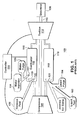
- FIG. 1 is a simplified schematic diagram of an exemplary gas turbine having liquid and gas fuel systems.
- FIG. 1 shows schematically a gas turbine 100 having liquid fuel system 102 and a liquid fuel purge system 104.
- the gas turbine is also capable of running on a gas, such as natural gas, and includes a gaseous fuel system 106.
- Other major components of the gas turbine include a main compressor 108, a combustor 110, a turbine 112 and a controller 114.
- the power output of the gas turbine 112 is a rotating turbine shaft 116, which may be coupled to a generator 130 that produces electric power.
- the combustor may be an annular array of combustion chambers, i.e., cans 118, each of which has a liquid fuel nozzle 120 and a gas fuel nozzle 122.
- the combustor may alternatively be an annular chamber. Combustion is initiated within the combustion cans at points slightly downstream of the nozzles. Air from the compressor 108 flows around and through the combustion cans 118 to provide oxygen for combustion.
- water injection nozzles 124 are arranged within the combustor 110 to add energy to the hot combustion gases and to cool the combustion cans 118.
- the air for the liquid fuel system purge may be provided from the compressor 108, boosted by a purge air compressor (not shown) and controlled by other elements of the system (not shown).
- the liquid fuel purge system 104 blows compressed air into the liquid fuel system 102 through the liquid fuel nozzles 120 of the liquid fuel 102 system to purge liquid fuel and provide a flow of continuous cooling air to the liquid fuel nozzles 120.
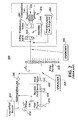
- FIG. 2 is a simplified diagram of a gas turbine engine with an existing liquid fuel system.
- Liquid fuel is provided to the liquid fuel system 200 from a liquid fuel source 205.
- the liquid fuel system 200 includes a flowpath to a flow divider 230 through a low pressure filter 210, a fuel pump 215, a bypass control valve 220, and a stop valve 225.
- Pressure relief valve 235, bypass control valve 220 and stop valve 225 may recirculate liquid fuel flow through recirculation line 240 to the upstream side of the low pressure filter 210.
- the flow divider 230 divides liquid fuel flow into a plurality of liquid fuel flow paths leading to individual combustion cans 270.
- Each liquid fuel flow path downstream of the flow divider includes a 3-way (endcover) valve 245 and a distribution valve 260 before entering the combustion can 270.
- Three-way valve 245 permits flow to the combustion can nozzles from the liquid fuel flow path (described above) or from a liquid fuel purge air system 280.
- Three-way valve 245 is designed to selectably allow flow to the combustor nozzles 120 from the liquid fuel while preventing backflow of fuel to the liquid fuel purge air system or to allow purge air to the combustor nozzles 120 while preventing backflow of purge air into the liquid fuel system upstream of the three-way valve. By preventing purge air from entering the liquid fuel system, the air-fuel interfaces with the fuel supply are minimized.
- the 3-way valve 245 When gas fuel is supplying the turbine, the 3-way valve 245 is positioned to block liquid fuel flow and allow purge air to pass for cooling the fuel nozzles in the combustor. This purge must be shut off when liquid fuel is turned on.
- the discussion that follows describes a current generation fuel system, which uses a 3-way (endcover) isolation valve ( Traver et al., US Patent 6,438,963 ) to separate the purge air from the liquid fuel.
- the invention does not require this hardware; the use of 2 check valves, or 2 way on/off valves could be employed.
- the piping between the 3-way valve 245 and the combustion can 270 has a known volume that is always filled with purge air before a liquid fuel transfer.
- the known volume 290 is kept small to minimize the affect of purge introduction (causing a load spike). Leakage of air into the system will occur over time. The rate of air leakage into the system is dependent on a number of variable factors, which cannot be controlled or predicted. This results in the piping upstream of the 3-way valve 245 being filled with some volume of air, dependent mostly on the time since the last fuel transfer. While the physical volume of piping is known, the amount filled with air is unknown. Since the volume of the piping upstream is also much greater than the volume downstream of it, an unknown and potentially substantial volume 295 of air must be displaced with prefill liquid fuel before the liquid fuel reaches the combustors 270.
- liquid fuel prefill has been controlled with only the flow measurement feedback, using an open loop setting (not closed on any global parameter).
- the bypass control valve 220 is controlled to a nominal value to reach a target prefill flowrate and held there for a specified period (delay time) before the fuel control is ramped up to the full load reference.
- the prefill has seen changes over the years to deal with a number of issues in addition to the basic goal of prefilling the fuel system.
- the prefill flowrate was set to a very low value (approximately 2 %) for an extended period of time, typically 30 seconds. Later, the prefill period was increased to 60 seconds and 120 seconds in some cases. The extension of the prefill period was done to have confidence that the liquid fuel lines would be prefilled, and at the same time not to introduce too much "uncontrolled fuel” through use of the open loop setpoint.
- Controlled fuel is fuel that is provided to the combustors in response to a fuel reference demand for a given power output.
- Uncontrolled fuel is fuel that is introduced to the combustors, but which is not recognized in the turbine control fuel demand signals.
- Liquid fuel prefill is not included in the fuel demand calculation to avoid a detrimental dip in load if the liquid fuel prefill does not reach the combustors as expected, thus creating an under-fueled condition.
- the side effects of the uncontrolled fuel reaching the combustors is to supply additional energy resulting in an initial load and temperature spike and then causing global fuel demand to be driven down over time to hold the same load output.
- the extended prefill period (60 seconds to 120 seconds) was used to ensure complete prefill of the liquid fuel lines, in the face of uncertainty about the unknown amount of air in the system.
- the current control is only an estimate to ensure the presence of liquid fuel, because the volume to be filled is an unknown that can vary with many factors.
- FIG. 3 illustrates an existing timer based algorithm for control of a transfer from gas fuel to liquid fuel.
- step 310 a fuel transfer request is initiated, in which the stop valve in the liquid fuel system is commanded to open to a prefill position. The system waits for the stop valve to start moving in step 320 before a command is issued in step 330 for prefilling to commence.
- a fixed time delay shown at an exemplary value of 20 seconds is initiated in step 340.
- the fixed 20 second time delay is provided to allow the liquid fuel lines to prefill and fuel to reach the nozzles.
- the fuel transfer between the gas fuel and the liquid fuel is initiated in step 350.
- the liquid fuel prefill uncontrolled fuel
- the gas fuel line is purged with air in step 370.
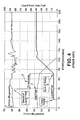
- FIG. 4 illustrates, in curve 1, the response of power output (driven megawatts output at the generator) of a gas turbine to an over-prefill of liquid fuel due to the prefill delay period being too long.
- gas fuel is being provided to deliver about 58 driven megawatts.
- a liquid fuel prefill at 2 is commenced.
- the driven megawatts begins to rise at 3 in response to the prefill liquid fuel (uncontrolled fuel) reaching the combustors, adding to the energy beyond that called for by global demand to maintain the 58 driven megawatts.
- the global demand for the gas fuel is slightly reduced at 4 due to the incremental energy being supplied by the uncontrolled liquid prefill fuel.
- the fuel switchover occurs with the gas fuel being supplied ramped off and the controlled liquid fuel being ramped up.
- the prefill in this case, extends about 30 seconds at 6 beyond the onset of liquid fuel at 3.
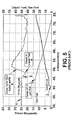
- FIG. 5 illustrates, in curve 1, response of power output (driven megawatts) of a gas turbine to an under-prefill of liquid fuel due to the prefill delay period being too short.
- Prefilling begins at 2 (about 41 seconds).
- gas fuel is being provided to deliver about 25 driven megawatts.
- a fuel switchover at 3 commences with a ramp-off of the gas fuel and a ramp-on of the liquid fuel supply.
- the 4 second prefill is not sufficient to fill the liquid fuel line, so actual delivery onset 4 of liquid fuel to the combustors does not begin until about 48 seconds.
- Under-prefilling has two negative side effects. First there is the potential to flameout if the liquid fuel does not arrive quickly after the ramp-off of the gas fuel. Second, if liquid fuel does arrive in time, the control valve will be ramping up, bringing a larger amount of fuel into the combustion can than desired, which will cause a large spike in generated power, which could trip the unit due to over-temperature protection.
- One aspect of the present invention relates to a method by which a control system can detect the onset of liquid fuel to the combustor during a fuel transfer, thereby increasing the reliability of gas fuel to liquid fuel transfers. It eliminates the uncertainty due to the unknown amount of air in the liquid fuel system, resulting in neither too much nor too little uncontrolled fuel.
- a method for performing a transfer from gas fuel operation to liquid fuel operation in a gas turbine.
- the method includes initiating a predetermined liquid fuel prefill flow rate to through the liquid fuel system, sensing an onset of uncontrolled liquid fuel flow to the combustor nozzles, and initiating transfer from gas fuel operation to liquid fuel operation when the flow of uncontrolled liquid fuel at the combustor nozzles is sensed.
- FNP Fuel Normalized Power
- the monitoring changes of FNP may further include tracking the FNP values; sensing when the liquid fuel stop valve begins to open; determining when the FNP exceeds a threshold value; and determining that liquid fuel prefill is reaching the combustor nozzles when FNP exceeds the threshold value.
- Tracking the FNP values may incorporate applying a filter to the tracked FNP values, wherein the filtering method incorporates applying a moving average to the tracked values of FNP.
- Determining when the FNP exceeds a threshold value may include capturing the FNP value when a liquid fuel stop valve begins to open; setting a minimum FNP as the captured FNP value; establishing the threshold value for FNP as the minimum FNP value plus a predetermined offset; setting the minimum FNP value to the current FNP value when the the current FNP value is less than the minimum FNP value; and adjusting the threshold value to a new lower FNP value, until a local minimum FNP value is achieved.
- the method for performing a transfer from gas fuel operation to liquid fuel may also include the step of establishing the threshold value for FNP further including setting a predetermined offset value that is large enough not to be masked by a moving filter on FNP values and that is smaller than a transient from a fuel transfer.
- a prefill timer may be inititated when the liquid fuel prefill flow rate is commenced.
- the step of initiating a prefill timer may include setting a predetermined maximum prefill time; initiating a fuel transfer when the predetermined maximum prefill time has been reached; and then terminating the prefilling with the uncontrolled liquid fuel.
- initiating a prefill timer may incorporate setting a predetermined minimum prefill time; and maintaining prefill at least until the predetermined minimum prefill time has been reached.
- the minimum prefill time may be based on calculating the period necessary to prefill the known volume of piping, between an endcover valve and the combustion nozzles at the predetermined prefill flow rate, and then setting the timer to the calculated period.
- a controller for a dual gas and liquid fuel system of a gas turbine includes an output signal for initiating a predetermined liquid fuel prefill flow rate through the liquid fuel system, an input signal sensing an onset of uncontrolled liquid fuel flow to the combustor nozzles, and an output signal initiating transfer from gas fuel operation to liquid fuel operation when the flow of the uncontrolled liquid fuel at the combustor nozzles is sensed.
- the controller also incorporates a sensor signal for sensing when the liquid fuel stop valve begins to open; and an algorithm for determining when the FNP exceeds a threshold value; and determining that the uncontrolled liquid fuel prefill is reaching the combustor nozzles when FNP exceeds the threshold value.
- FIG. 1 is a simplified schematic diagram of an exemplary gas turbine having liquid and gas fuel systems
- FIG. 2 is a simplified diagram of a gas turbine engine with an existing liquid fuel system
- FIG. 3 illustrates an existing timer based algorithm for control of a transfer from gas fuel to liquid fuel
- FIG. 4 illustrates response of power output (driven megawatts) of a gas turbine to an over-prefill of liquid fuel due to the prefill delay period being too long;
- FIG. 5 illustrates response of power output (driven megawatts) of a gas turbine to an under-prefill of liquid fuel due to the prefill delay period being too short;
- FIG. 6 illustrates an example of a noisy FNP signal and a filtered FNP signal
- FIG. 7 is a graph illustrating the relative response, in a computer simulation of the Driven Megawatts parameter and Fuel Normalized Power parameters to a fuel transfer;
- FIG. 8 is an illustration of response of the threshold algorithm to a fuel transfer at high load
- FIG. 9 is an illustration of a response of the threshold algorithm to a fuel transfer at a low load
- FIG. 10 is a flow chart of a fuel transfer incorporating the inventive threshold algorithm.
- FIG. 11 is a flow chart of control signals provided to the gas turbine controller associated with sensing the onset of uncontrolled fuel during a gas fuel to liquid fuel transfer.
- the following embodiments of the present invention have many advantages, including a method for prefilling liquid fuel system lines that can determine when the fuel lines are prefilled, thereby allowing fuel switchovers with greater reliability and smaller transients
- One object of the invention is to increase the reliability of transfers from gas fuel to liquid fuel in a gas turbine engine by monitoring additional feedback signals to determine the point in time at which uncontrolled liquid fuel reaches the combustor nozzles during a prefill by the effect on produced turbine power.
- Fuel Normalized Power is a very useful signal, in that it is not affected by changes in the global fuel demand (changing load request) and has a much faster transport delay than alternative signals, such as temperature. Monitoring changes in FNP can permit detecting, with confidence, the onset of uncontrolled fuel.
- the first step in detection of uncontrolled fuel is to differentiate it from controlled fuel by using a signal that leaves uncontrolled fuel as the dominant factor.
- An increase in turbine output power is a net result of supplying uncontrolled fuel to the combustors, but the fuel reference demand signal supplied by the controller is a more dominant factor.
- FIG. 6 illustrates an example of a response of noisy FNP signal and a filtered FNP signal to a fuel transfer.
- the selection of a filter frequency was based on the investigation of site data and balancing acceptable noise against the lag imposed by filtering.
- the implementation described here uses a 2.5 Hz moving average. This selection injects about half a second of lag into the signal, but brings the noise to a level that can be accounted for in conjunction with use in a threshold algorithm.
- FIG. 7 is a graph illustrating the relative response, in a computer simulation of the Driven Megawatts parameter and Fuel Normalized Power parameter to a fuel transfer.
- the left vertical axis of the graph displays units of Driven Megawatts and the right vertical axis displays units of Fuel Normalized Power.
- the sharp peak at 1 in Fuel Normalized Power between 100 seconds and 120 seconds illustrates the superior detection capability of this parameter to sense power change due to uncontrolled fuel, when compared with the smaller relative response of Driven Megawatts with a peak at 2 and an undershoot at 3.
- the FNP parameter can accentuate changes in power due to uncontrolled fuel, it is applied in an algorithm to determine when power is being produced from uncontrolled fuel entering the combustor nozzles, indicating thereby that the liquid fuel lines are filled and that the fuel transfer may proceed. It was
- the inventive algorithm must discriminate between changes in FNP caused by uncontrolled fuel reaching the nozzles and FNP increases caused by other factors. For example, when transferring to liquid fuel at high load, the unit is required to first transfer between gaseous combustion modes. This transfer between gaseous combustion modes has a transient effect on the FNP very similar to the effect seen from liquid fuel reaching the nozzle. Any such transients that occur before the liquid fuel stop valves initiates liquid fuel flow cannot be associated with the fuel flow to the nozzles. Delaying the inventive algorithm until the liquid stop valve moves mitigates the risk of a false positive based on this transient, however the spillover of this transient into the liquid fuel transient places limits on the threshold algorithm.
- a basic threshold method is to capture the value of FNP when the liquid stop valve starts moving, and trigger when the current value exceeds the captured value plus some selected offset.
- the mode transfer transient spillover places an upper bound on this value, and the amount of relative noise post-filtering at low load places a lower bound on it.
- the acceptable value range is very tight.
- One solution is to use a more aggressive filter, but this weakens the response time of the overall detection algorithm.
- a better solution is to exploit the nature of the high load transients to significantly push out the upper bound.
- FIG. 8 and FIG. 9 illustrate backfit responses of the threshold algorithm to a fuel transfer under the prior art algorithm for transfers with a fixed liquid prefill time delay.
- the fuel transfers of FIG. 8 and FIG. 9 are at high load and low load, respectively, using site data.
- FIG. 8 includes a filtered FNP transient curve 1, a liquid fuel prefill curve 2, and a liquid fuel ramp-up curve 3.
- a threshold curve 4 based on the filtered FNP curve 1 with an offset of 0.25, is shown with a solid line.
- FIG. 8 reflects a short prefill time leading to an undershoot of FNP at 10 and an overshoot at 11
- an initial FNP spike at 7 begins (at about 40 seconds) due to a transfer between gaseous combustion modes prior to inception of a gas fuel to liquid fuel transfer.
- the presence of the FNP spike at 7 is not associated with introduction of the non-controlled liquid fuel.
- the inventive threshold algorithm captures the initial value at 8 (3.42) of FNP when the liquid fuel stop valve begins opening at 9 (at about 47 seconds), and then continues to track the current value of FNP to find a local minimum for the parameter and hold the lowest value.
- the threshold algorithm establishes a threshold value set to the current FNP minimum value plus a predetermined offset (.25) above this local minimum. This threshold setting must be small enough to be satisfied during the transient that results from the fuel transfer.
- the initial threshold value at 12 is about 3.67.
- the threshold value changes until a local minimum is reached for FNP at 10, thereby establishing the final threshold value at 13 (about 3.42).
- This approach allows for a larger gap between the upper and lower bound and thus enables faster response due to a less aggressive filtering method.
- Dashed line 5 represents backfit data showing the expected FNP transient that would have resulted had control under the inventive threshold algorithm been utilized.
- Dashed line 6 represents backfit data showing the expected threshold values that would have resulted from use of the inventive algorithm.
- Use of the threshold algorithm would have maintained prefilling longer (until 60 seconds at 14) resulting in a smaller FNP undershoot
- Figure 9 depicts similar backfit responses using the inventive threshold algorithm with a 0.25 offset during a fuel transfer at low load with an under-prefill. Actual response to the transfer for filtered FNP is shown in curve 1 and for threshold values in curve 2. Backfit data showing the expected response of the threshold value and FNP, had the transfer been made according to the inventive threshold algorithm, are provided as dashed curves 3 and 4, respectively. The expected behavior with the inventive threshold algorithm does not result in an undershoot of filtered FNP, as occurs at 5 with the prior art algorithm.
- the liquid fuel system on the combustor side of the 3-way valve is purged with air when not in use. This establishes a known minimum volume that is always empty during a subsequent gas to liquid fuel transfer. This value is used along with the position reference on the valve during prefill to calculate a minimum time within which the piping could possibly fill.
- the inventive algorithm employs a minimum prefill time for the prefill timer to ensure as a minimum that the piping downstream of the 3-way valve is full to the combustor nozzles. This allows for increased reliability through added protection against under-prefilling, a major cause of transfer related trips.
- the inventive algorithm also includes a maximum prefill time to avoid confusing the operator in the case of very large volumes to fill with liquid fuel, where the system would appear unresponsive and suddenly transfer several minutes later. Therefore, the transfer from gas to liquid fuel is performed when the maximum prefill timer has elapsed, even if the threshold algorithm has not identified the presence of uncontrolled liquid fuel at the combustors.
- FIG. 10 is a flow chart incorporating the inventive threshold algorithm for fuel transfer control.
- a fuel transfer request is initiated at step 910. Based on the fuel transfer request, opening of the stop valve is initiated with the prefill control waiting for the stop valve opening to be sensed in step 920, before the command to start prefilling is issued in step 930.
- a prefill timer is initiated.
- the tracking of the current FNP value begins with a parameter MINIMUM (minimum FNP) capturing an initial value for FNP.
- a parameter THRESHOLD is continuously assigned the MINIMUM value plus a predetermined offset value, OFFSET.
- step 955 it is determined if the prefill timer exceeds a predetermined time, MAX_TIME. If MAX_TIME is exceeded, the prefill is complete in step 985. If the prefill timer has not exceeded MAX_TIME in step 955, then the prefill timer is checked in step 965 to determine if a MIN_TIME is exceeded. If MIN_TIME is exceeded, then the current FNP value is tested in step 970 to determine if it is above the THRESHOLD value. Being above the THRESHOLD value in step 970 provides a high probability that the uncontrolled prefill liquid fuel has reached the combustor nozzles, so the prefill is complete per step 985.
- MAX_TIME a predetermined time
- the prefill timer has not exceeded MIN_TIME in step 965 or if the current FNP value is not above the THRESHOLD value, then the prefill is not complete. Prefilling continues while further testing takes place in step 975 to determine a local minimum for FNP. Subsequent increases in FNP off the local minimum may then be attributed to a change produced by uncontrolled prefill fuel reaching the combustion nozzles. If the current FNP value is above the MINIMUM, then the testing for exceeding the THRESHOLD is repeated in step 950.
- step 985 When the prefill with the uncontrolled liquid fuel is completed in step 985, the fuel transfer between the gas fuel and the liquid fuel is begun in step 1000.
- the prefill of the uncontrolled liquid fuel is ramped off in step 1010.
- the gas fuel line is purged with air in step 1020.
- FIG. 11 is a flow chart of control signals provided to the gas turbine controller associated with sensing the onset of uncontrolled fuel during a gas fuel to liquid fuel transfer.
- Figure 11 includes a controller 114, a compressor 108, a turbine 112, a generator 130 and elements of the liquid fuel system, such as stop valve 235.
- the controller 114 also receives a stop valve opening signal 455 from a sensor on the stop valve 235.
- the FNP parameter 438 is input to threshold algorithm 460.
- a prefill timer 450 is initiated.
- Threshold algorithm 460 also receives inputs from the timer 450 when a predetermined maximum prefill time signal 440 has elapsed and when a predetermined minimum prefill time signal 445 has elapsed.
- the controller 114 executes the threshold algorithm 460 in accordance with FIG. 10 to determine the onset of uncontrolled liquid fuel to the combustors.
- the controller 114 begins the fuel transfer from gas fuel to controlled liquid fuel.
- the fuel transfer includes the ramping on of controlled liquid fuel to the fuel reference level for a demanded output power and ramping off of the uncontrolled liquid fuel prefill.
- Output signal 490 from a liquid fuel control function 465 controls liquid fuel flowrates through liquid fuel bypass control valve 220 (FIG. 2) according to signal 490.
- Signal 470 is the output control for the stop valve control 235 in response to fuel transfer request signal 480.
- Dual fuel gas turbines have been historically experience problems during gas to liquid fuel transfers.
- This invention corrects one of the major reliability issues, using a purely software based solution.
- This software is applicable to all dual fuel gas turbine engines, and offers customers increased confidence in gas to liquid fuel transfers. As a result, improved functionality is provided for both emergency backup transfers and for operation flexibility.
- Increasing reliability of the liquid fuel system (and by extension, customer confidence in it) is an important step in making liquid fuel and hence dual fuel control more viable options.
Landscapes
- Engineering & Computer Science (AREA)
- Chemical & Material Sciences (AREA)
- Combustion & Propulsion (AREA)
- Mechanical Engineering (AREA)
- General Engineering & Computer Science (AREA)
- Engine Equipment That Uses Special Cycles (AREA)
- Feeding And Controlling Fuel (AREA)
Abstract
Description
- The invention relates generally to a method for gas turbine control and more specifically to a method for detecting the onset of liquid fuel in a gas turbine combustor to permit control of the gas turbine during a transfer from operation with a gas fuel to operation with a liquid fuel.
- Industrial gas turbines are often capable of alternatively running on liquid and gaseous fuels, e.g., natural gas. These gas turbines have fuel supply systems for both liquid and gas fuels. The gas turbines generally do not burn both gas and liquid fuels at the same time. Rather, when the gas turbine burns liquid fuel, the gas fuel supply is turned off. Similarly, when the gas turbine burns gaseous fuel, the liquid fuel supply is turned off. Fuel transfers occur during the operation of the gas turbine as the fuel supply is switched from liquid fuel to gaseous fuel, and vice versa.
- Gas turbines that burn both liquid and gaseous fuel require a liquid fuel purge system to clear the fuel nozzles in the combustors of liquid fuel. The liquid fuel supply system is generally turned off when a gas turbine operates on gaseous fuel. When the liquid fuel system is turned off, the purge system operates to flush out any remaining liquid fuel from the nozzles of the combustor and provide continuous cooling airflow to the nozzles.
- FIG. 1 is a simplified schematic diagram of an exemplary gas turbine having liquid and gas fuel systems. FIG. 1 shows schematically a
gas turbine 100 havingliquid fuel system 102 and a liquidfuel purge system 104. The gas turbine is also capable of running on a gas, such as natural gas, and includes agaseous fuel system 106. Other major components of the gas turbine include amain compressor 108, acombustor 110, aturbine 112 and acontroller 114. The power output of thegas turbine 112 is a rotatingturbine shaft 116, which may be coupled to agenerator 130 that produces electric power. - In the exemplary industrial gas turbine shown, the combustor may be an annular array of combustion chambers, i.e.,
cans 118, each of which has aliquid fuel nozzle 120 and agas fuel nozzle 122. The combustor may alternatively be an annular chamber. Combustion is initiated within the combustion cans at points slightly downstream of the nozzles. Air from thecompressor 108 flows around and through thecombustion cans 118 to provide oxygen for combustion. Moreover,water injection nozzles 124 are arranged within thecombustor 110 to add energy to the hot combustion gases and to cool thecombustion cans 118. - The air for the liquid fuel system purge may be provided from the
compressor 108, boosted by a purge air compressor (not shown) and controlled by other elements of the system (not shown). When thegas turbine 100 operates on natural gas (or other gaseous fuel), the liquidfuel purge system 104 blows compressed air into theliquid fuel system 102 through theliquid fuel nozzles 120 of theliquid fuel 102 system to purge liquid fuel and provide a flow of continuous cooling air to theliquid fuel nozzles 120. - FIG. 2 is a simplified diagram of a gas turbine engine with an existing liquid fuel system. Liquid fuel is provided to the
liquid fuel system 200 from aliquid fuel source 205. Theliquid fuel system 200 includes a flowpath to aflow divider 230 through alow pressure filter 210, afuel pump 215, abypass control valve 220, and astop valve 225.Pressure relief valve 235,bypass control valve 220 andstop valve 225 may recirculate liquid fuel flow throughrecirculation line 240 to the upstream side of thelow pressure filter 210. Theflow divider 230 divides liquid fuel flow into a plurality of liquid fuel flow paths leading toindividual combustion cans 270. Each liquid fuel flow path downstream of the flow divider includes a 3-way (endcover)valve 245 and adistribution valve 260 before entering the combustion can 270. - Three-
way valve 245 permits flow to the combustion can nozzles from the liquid fuel flow path (described above) or from a liquid fuelpurge air system 280. Three-way valve 245 is designed to selectably allow flow to thecombustor nozzles 120 from the liquid fuel while preventing backflow of fuel to the liquid fuel purge air system or to allow purge air to thecombustor nozzles 120 while preventing backflow of purge air into the liquid fuel system upstream of the three-way valve. By preventing purge air from entering the liquid fuel system, the air-fuel interfaces with the fuel supply are minimized. - When gas fuel is supplying the turbine, the 3-
way valve 245 is positioned to block liquid fuel flow and allow purge air to pass for cooling the fuel nozzles in the combustor. This purge must be shut off when liquid fuel is turned on. The discussion that follows describes a current generation fuel system, which uses a 3-way (endcover) isolation valve (Traver et al., US Patent 6,438,963 ) to separate the purge air from the liquid fuel. The invention does not require this hardware; the use of 2 check valves, or 2 way on/off valves could be employed. - During a transfer from one fuel source to another, it is desired that continuity of turbine output power be maintained while minimizing any undershoots or overshoots of output power and temperature. In a transfer from operation with a gas fuel to operation with a liquid fuel, the 3-
way valve 245 is switched to the liquid fuel line, the stop valve is opened, and the control valve is commanded to some small "prefill" flow. As the liquid fuel line is prefilled, the gas fuel is held at a required demand reference for the generator output output. The liquid fuel must refill the piping, which was previously filled with purge air, before liquid fuel reaches thecombustor nozzles 120. - The piping between the 3-
way valve 245 and the combustion can 270 has a known volume that is always filled with purge air before a liquid fuel transfer. The knownvolume 290 is kept small to minimize the affect of purge introduction (causing a load spike). Leakage of air into the system will occur over time. The rate of air leakage into the system is dependent on a number of variable factors, which cannot be controlled or predicted. This results in the piping upstream of the 3-way valve 245 being filled with some volume of air, dependent mostly on the time since the last fuel transfer. While the physical volume of piping is known, the amount filled with air is unknown. Since the volume of the piping upstream is also much greater than the volume downstream of it, an unknown and potentiallysubstantial volume 295 of air must be displaced with prefill liquid fuel before the liquid fuel reaches thecombustors 270. - The foregoing factors may cause poor reliability of gas to liquid fuel transfers, including power overshoots and undershoots and sometimes dropped load. Preventive maintenance procedures for the liquid fuel system require transferring to liquid fuel operation periodically to exercise the system. Difficulty with the transfers may discourage operators from carrying out the transfers necessary for exercising the liquid fuel system, exacerbating the reliability problems of the system.
- Historically, liquid fuel prefill has been controlled with only the flow measurement feedback, using an open loop setting (not closed on any global parameter). Upon selection of liquid fuel, the
bypass control valve 220 is controlled to a nominal value to reach a target prefill flowrate and held there for a specified period (delay time) before the fuel control is ramped up to the full load reference. The prefill has seen changes over the years to deal with a number of issues in addition to the basic goal of prefilling the fuel system. At one time, the prefill flowrate was set to a very low value (approximately 2 %) for an extended period of time, typically 30 seconds. Later, the prefill period was increased to 60 seconds and 120 seconds in some cases. The extension of the prefill period was done to have confidence that the liquid fuel lines would be prefilled, and at the same time not to introduce too much "uncontrolled fuel" through use of the open loop setpoint. - Controlled fuel is fuel that is provided to the combustors in response to a fuel reference demand for a given power output. Uncontrolled fuel is fuel that is introduced to the combustors, but which is not recognized in the turbine control fuel demand signals. Liquid fuel prefill is not included in the fuel demand calculation to avoid a detrimental dip in load if the liquid fuel prefill does not reach the combustors as expected, thus creating an under-fueled condition. The side effects of the uncontrolled fuel reaching the combustors is to supply additional energy resulting in an initial load and temperature spike and then causing global fuel demand to be driven down over time to hold the same load output.
- The extended prefill period (60 seconds to 120 seconds) was used to ensure complete prefill of the liquid fuel lines, in the face of uncertainty about the unknown amount of air in the system. The current control is only an estimate to ensure the presence of liquid fuel, because the volume to be filled is an unknown that can vary with many factors.
- FIG. 3 illustrates an existing timer based algorithm for control of a transfer from gas fuel to liquid fuel. In step 310 a fuel transfer request is initiated, in which the stop valve in the liquid fuel system is commanded to open to a prefill position. The system waits for the stop valve to start moving in
step 320 before a command is issued instep 330 for prefilling to commence. In this existing algorithm, a fixed time delay, shown at an exemplary value of 20 seconds is initiated instep 340. The fixed 20 second time delay is provided to allow the liquid fuel lines to prefill and fuel to reach the nozzles. When the fixed time delay has expired, the fuel transfer between the gas fuel and the liquid fuel is initiated instep 350. After the time delay ofstep 340 has expired, the liquid fuel prefill (uncontrolled fuel) is ramped off instep 360. Finally, the gas fuel line is purged with air instep 370. - FIG. 4 illustrates, in
curve 1, the response of power output (driven megawatts output at the generator) of a gas turbine to an over-prefill of liquid fuel due to the prefill delay period being too long. Initially, gas fuel is being provided to deliver about 58 driven megawatts. At about 18 seconds, a liquid fuel prefill at 2 is commenced. At about 38 seconds, the driven megawatts begins to rise at 3 in response to the prefill liquid fuel (uncontrolled fuel) reaching the combustors, adding to the energy beyond that called for by global demand to maintain the 58 driven megawatts. Starting at about 40 seconds, the global demand for the gas fuel is slightly reduced at 4 due to the incremental energy being supplied by the uncontrolled liquid prefill fuel. At the end of the prefill delay period at 5, the fuel switchover occurs with the gas fuel being supplied ramped off and the controlled liquid fuel being ramped up. The prefill, in this case, extends about 30 seconds at 6 beyond the onset of liquid fuel at 3. - If the delay is set too long, as occurs in FIG. 4, the system will be running with uncontrolled fuel. In addition, for a low prefill value of approximately 1%-2%, the errors in the system would not be a guarantee of repeatable prefills, which drove the longer prefill periods. For emergency transfer conditions where the gas fuel is being lost and switching to liquid fuel must be done quickly, many failed transfers may occur.
- FIG. 5 illustrates, in
curve 1, response of power output (driven megawatts) of a gas turbine to an under-prefill of liquid fuel due to the prefill delay period being too short. Prefilling begins at 2 (about 41 seconds). When the prefill delay period is set too short, the system will start ramping gas fuel off before the arrival of liquid fuel at the combustors. Initially, gas fuel is being provided to deliver about 25 driven megawatts. At about 44 seconds, a fuel switchover at 3 commences with a ramp-off of the gas fuel and a ramp-on of the liquid fuel supply. The 4 second prefill is not sufficient to fill the liquid fuel line, soactual delivery onset 4 of liquid fuel to the combustors does not begin until about 48 seconds. Between 44 and 48 seconds (at 5) the combustor is undersupplied, leading to a drop-off of driven megawatts to about 21. At 48 seconds with the onset of liquid fuel delivery at 4 to the combustor nozzles at a higher ramped rate, a power spike at 6 to about 33 driven megawatts results. - Under-prefilling has two negative side effects. First there is the potential to flameout if the liquid fuel does not arrive quickly after the ramp-off of the gas fuel. Second, if liquid fuel does arrive in time, the control valve will be ramping up, bringing a larger amount of fuel into the combustion can than desired, which will cause a large spike in generated power, which could trip the unit due to over-temperature protection.
- As combustion systems evolved to make use of multiple fuel nozzles in a combustor, the very low prefill values had to be raised to avoid possible damage to the fuel nozzles, this with the need for emergency transfers resulted in much higher prefill levels (approximately 6% to 8%). The potential side effects (over-temperature tripping, load shedding of the global fuel reference) are greatly increased if the prefill times are too long
- Accordingly, there is a need to provide a method of prefilling liquid fuel system lines that can determine when the fuel lines are prefilled, thereby allowing fuel switchovers with greater reliability and smaller transients.
- One aspect of the present invention relates to a method by which a control system can detect the onset of liquid fuel to the combustor during a fuel transfer, thereby increasing the reliability of gas fuel to liquid fuel transfers. It eliminates the uncertainty due to the unknown amount of air in the liquid fuel system, resulting in neither too much nor too little uncontrolled fuel.
- Briefly in accordance with an aspect of the present invention, a method is provided for performing a transfer from gas fuel operation to liquid fuel operation in a gas turbine. The method includes initiating a predetermined liquid fuel prefill flow rate to through the liquid fuel system, sensing an onset of uncontrolled liquid fuel flow to the combustor nozzles, and initiating transfer from gas fuel operation to liquid fuel operation when the flow of uncontrolled liquid fuel at the combustor nozzles is sensed.
- The step of sensing the onset of uncontrolled liquid fuel flow to the combustor nozzles includes monitoring changes of a Fuel Normalized Power (FNP) power according to the following:

where Power represents Driven Megawatts at the output of the generator; Fuelref represents Total Fuel Reference demand supplied to the machine; PercentLiq represents Proportion percent of Liquid Fuel where (1= Total Liquid, 0 = Total Gas); Fuelref FSNL-LIQ represents a Fuel Reference required at Full Speed No Load on Liquid Fuel (Constant); and Fuelref FSNL-GAS represents Fuel Reference required at Full Speed No Load on Gas Fuel (Constant). - The monitoring changes of FNP may further include tracking the FNP values; sensing when the liquid fuel stop valve begins to open; determining when the FNP exceeds a threshold value; and determining that liquid fuel prefill is reaching the combustor nozzles when FNP exceeds the threshold value. Tracking the FNP values may incorporate applying a filter to the tracked FNP values, wherein the filtering method incorporates applying a moving average to the tracked values of FNP.
- Determining when the FNP exceeds a threshold value may include capturing the FNP value when a liquid fuel stop valve begins to open; setting a minimum FNP as the captured FNP value; establishing the threshold value for FNP as the minimum FNP value plus a predetermined offset; setting the minimum FNP value to the current FNP value when the the current FNP value is less than the minimum FNP value; and adjusting the threshold value to a new lower FNP value, until a local minimum FNP value is achieved.
- The method for performing a transfer from gas fuel operation to liquid fuel may also include the step of establishing the threshold value for FNP further including setting a predetermined offset value that is large enough not to be masked by a moving filter on FNP values and that is smaller than a transient from a fuel transfer.
- According to the method, a prefill timer may be inititated when the liquid fuel prefill flow rate is commenced. The step of initiating a prefill timer may include setting a predetermined maximum prefill time; initiating a fuel transfer when the predetermined maximum prefill time has been reached; and then terminating the prefilling with the uncontrolled liquid fuel.
- Additionally, initiating a prefill timer may incorporate setting a predetermined minimum prefill time; and maintaining prefill at least until the predetermined minimum prefill time has been reached. The minimum prefill time may be based on calculating the period necessary to prefill the known volume of piping, between an endcover valve and the combustion nozzles at the predetermined prefill flow rate, and then setting the timer to the calculated period.
- According to another aspect of the present invention, a controller for a dual gas and liquid fuel system of a gas turbine is provided. The controller includes an output signal for initiating a predetermined liquid fuel prefill flow rate through the liquid fuel system, an input signal sensing an onset of uncontrolled liquid fuel flow to the combustor nozzles, and an output signal initiating transfer from gas fuel operation to liquid fuel operation when the flow of the uncontrolled liquid fuel at the combustor nozzles is sensed.
- Another aspect of the present invention provides a gas turbine including a gas and liquid dual fuel system with an air purge system; a liquid fuel stop valve; a liquid fuel prefill timer, including a predetermined minimum prefill time and a predetermined maximum prefill time; and a controller including an input signal sensing an onset of uncontrolled liquid fuel flow to the combustor nozzles further including Fuel Normalized Power (FNP) according to:

where Power represents Driven Megawatts at the output of the generator; Fuelref represents Total Fuel Reference demand supplied to the machine; PercentLiq represents Proportion percent of Liquid Fuel where (1= Total Liquid, 0 = Total Gas); Fuelref FSNL-LIQ represents Fuel Reference required at Full Speed No Load on Liquid Fuel (Constant); and Fuelref FSNL-GAS represents Fuel Reference required at Full Speed No Load on Gas Fuel (Constant). The controller also incorporates a sensor signal for sensing when the liquid fuel stop valve begins to open; and an algorithm for determining when the FNP exceeds a threshold value; and determining that the uncontrolled liquid fuel prefill is reaching the combustor nozzles when FNP exceeds the threshold value. - Various features, aspects, and advantages of the present invention will become better understood when the following detailed description is read with reference to the accompanying drawings in which like characters represent like parts throughout the drawings, wherein:
- FIG. 1 is a simplified schematic diagram of an exemplary gas turbine having liquid and gas fuel systems;
- FIG. 2 is a simplified diagram of a gas turbine engine with an existing liquid fuel system;
- FIG. 3 illustrates an existing timer based algorithm for control of a transfer from gas fuel to liquid fuel,
- FIG. 4 illustrates response of power output (driven megawatts) of a gas turbine to an over-prefill of liquid fuel due to the prefill delay period being too long;
- FIG. 5 illustrates response of power output (driven megawatts) of a gas turbine to an under-prefill of liquid fuel due to the prefill delay period being too short;
- FIG. 6 illustrates an example of a noisy FNP signal and a filtered FNP signal;
- FIG. 7 is a graph illustrating the relative response, in a computer simulation of the Driven Megawatts parameter and Fuel Normalized Power parameters to a fuel transfer;
- FIG. 8 is an illustration of response of the threshold algorithm to a fuel transfer at high load;
- FIG. 9 is an illustration of a response of the threshold algorithm to a fuel transfer at a low load;
- FIG. 10 is a flow chart of a fuel transfer incorporating the inventive threshold algorithm; and
- FIG. 11 is a flow chart of control signals provided to the gas turbine controller associated with sensing the onset of uncontrolled fuel during a gas fuel to liquid fuel transfer.
- The following embodiments of the present invention have many advantages, including a method for prefilling liquid fuel system lines that can determine when the fuel lines are prefilled, thereby allowing fuel switchovers with greater reliability and smaller transients
- One object of the invention is to increase the reliability of transfers from gas fuel to liquid fuel in a gas turbine engine by monitoring additional feedback signals to determine the point in time at which uncontrolled liquid fuel reaches the combustor nozzles during a prefill by the effect on produced turbine power. To this end, Fuel Normalized Power (FNP) is a very useful signal, in that it is not affected by changes in the global fuel demand (changing load request) and has a much faster transport delay than alternative signals, such as temperature. Monitoring changes in FNP can permit detecting, with confidence, the onset of uncontrolled fuel.
- The first step in detection of uncontrolled fuel is to differentiate it from controlled fuel by using a signal that leaves uncontrolled fuel as the dominant factor. An increase in turbine output power is a net result of supplying uncontrolled fuel to the combustors, but the fuel reference demand signal supplied by the controller is a more dominant factor. Fuel Normalized Power (FNP) is power normalized to the current fuel reference, less the amount to hold speed at no power, as calculated below in Equation 1:

where Power is represented in Driven Megawatts at the output of the generator; Fuelref represents Total Fuel Reference demand supplied to the machine; PercentLiq represents Proportion percent of Liquid Fuel where (1= Total Liquid, 0 = Total Gas); Fuelref FSNL-LIQ represents a Fuel Reference required at Full Speed No Load on Liquid Fuel (Constant); and Fuelref FSNL-GAS represents a Fuel Reference required at Full Speed No Load on Gas Fuel (Constant). - Driven watts (feedback) and fuel stroke reference (fuel demand) are measured with two different signal types, each with its own inherent noise. There is also a lag between the fuel demand and the actual power produced (typically fuel transport lag). Dividing one noisy signal by another with uncorrelated noise can easily lead to compounded noise in the resulting signal. To alleviate the noise issue, the signal needs to be filtered.
- FIG. 6 illustrates an example of a response of noisy FNP signal and a filtered FNP signal to a fuel transfer. The selection of a filter frequency was based on the investigation of site data and balancing acceptable noise against the lag imposed by filtering. The implementation described here uses a 2.5 Hz moving average. This selection injects about half a second of lag into the signal, but brings the noise to a level that can be accounted for in conjunction with use in a threshold algorithm.
- FIG. 7 is a graph illustrating the relative response, in a computer simulation of the Driven Megawatts parameter and Fuel Normalized Power parameter to a fuel transfer. The left vertical axis of the graph displays units of Driven Megawatts and the right vertical axis displays units of Fuel Normalized Power. The sharp peak at 1 in Fuel Normalized Power between 100 seconds and 120 seconds illustrates the superior detection capability of this parameter to sense power change due to uncontrolled fuel, when compared with the smaller relative response of Driven Megawatts with a peak at 2 and an undershoot at 3.
- Because the FNP parameter can accentuate changes in power due to uncontrolled fuel, it is applied in an algorithm to determine when power is being produced from uncontrolled fuel entering the combustor nozzles, indicating thereby that the liquid fuel lines are filled and that the fuel transfer may proceed. It was
- desired to establish a threshold value for a change in the FNP parameter that would indicate the fuel was reaching the nozzles.
- To be effective, the inventive algorithm must discriminate between changes in FNP caused by uncontrolled fuel reaching the nozzles and FNP increases caused by other factors. For example, when transferring to liquid fuel at high load, the unit is required to first transfer between gaseous combustion modes. This transfer between gaseous combustion modes has a transient effect on the FNP very similar to the effect seen from liquid fuel reaching the nozzle. Any such transients that occur before the liquid fuel stop valves initiates liquid fuel flow cannot be associated with the fuel flow to the nozzles. Delaying the inventive algorithm until the liquid stop valve moves mitigates the risk of a false positive based on this transient, however the spillover of this transient into the liquid fuel transient places limits on the threshold algorithm.
- A basic threshold method is to capture the value of FNP when the liquid stop valve starts moving, and trigger when the current value exceeds the captured value plus some selected offset. The mode transfer transient spillover places an upper bound on this value, and the amount of relative noise post-filtering at low load places a lower bound on it. At 2.5 Hz filtering, the acceptable value range is very tight. One solution is to use a more aggressive filter, but this weakens the response time of the overall detection algorithm. A better solution is to exploit the nature of the high load transients to significantly push out the upper bound.
- FIG. 8 and FIG. 9 illustrate backfit responses of the threshold algorithm to a fuel transfer under the prior art algorithm for transfers with a fixed liquid prefill time delay. The fuel transfers of FIG. 8 and FIG. 9 are at high load and low load, respectively, using site data.
- FIG. 8 includes a filtered FNP
transient curve 1, a liquidfuel prefill curve 2, and a liquid fuel ramp-upcurve 3. Athreshold curve 4, based on the filteredFNP curve 1 with an offset of 0.25, is shown with a solid line. Expected behavior of filteredFNP curve 5 and thethreshold curve 6, had prefilling proceeded in accordance with the inventive control algorithm, are shown as dashed lines. FIG. 8 reflects a short prefill time leading to an undershoot of FNP at 10 and an overshoot at 11 - In FIG. 8, an initial FNP spike at 7 begins (at about 40 seconds) due to a transfer between gaseous combustion modes prior to inception of a gas fuel to liquid fuel transfer. The presence of the FNP spike at 7 is not associated with introduction of the non-controlled liquid fuel. The inventive threshold algorithm captures the initial value at 8 (3.42) of FNP when the liquid fuel stop valve begins opening at 9 (at about 47 seconds), and then continues to track the current value of FNP to find a local minimum for the parameter and hold the lowest value. The threshold algorithm establishes a threshold value set to the current FNP minimum value plus a predetermined offset (.25) above this local minimum. This threshold setting must be small enough to be satisfied during the transient that results from the fuel transfer. The initial threshold value at 12 is about 3.67. The threshold value changes until a local minimum is reached for FNP at 10, thereby establishing the final threshold value at 13 (about 3.42). This approach allows for a larger gap between the upper and lower bound and thus enables faster response due to a less aggressive filtering method. Dashed
line 5 represents backfit data showing the expected FNP transient that would have resulted had control under the inventive threshold algorithm been utilized. Dashedline 6 represents backfit data showing the expected threshold values that would have resulted from use of the inventive algorithm. Use of the threshold algorithm would have maintained prefilling longer (until 60 seconds at 14) resulting in a smaller FNP undershoot - Figure 9 depicts similar backfit responses using the inventive threshold algorithm with a 0.25 offset during a fuel transfer at low load with an under-prefill. Actual response to the transfer for filtered FNP is shown in
curve 1 and for threshold values incurve 2. Backfit data showing the expected response of the threshold value and FNP, had the transfer been made according to the inventive threshold algorithm, are provided as dashedcurves - The liquid fuel system on the combustor side of the 3-way valve is purged with air when not in use. This establishes a known minimum volume that is always empty during a subsequent gas to liquid fuel transfer. This value is used along with the position reference on the valve during prefill to calculate a minimum time within which the piping could possibly fill. The inventive algorithm employs a minimum prefill time for the prefill timer to ensure as a minimum that the piping downstream of the 3-way valve is full to the combustor nozzles. This allows for increased reliability through added protection against under-prefilling, a major cause of transfer related trips. The inventive algorithm also includes a maximum prefill time to avoid confusing the operator in the case of very large volumes to fill with liquid fuel, where the system would appear unresponsive and suddenly transfer several minutes later. Therefore, the transfer from gas to liquid fuel is performed when the maximum prefill timer has elapsed, even if the threshold algorithm has not identified the presence of uncontrolled liquid fuel at the combustors.
- FIG. 10 is a flow chart incorporating the inventive threshold algorithm for fuel transfer control. A fuel transfer request is initiated at
step 910. Based on the fuel transfer request, opening of the stop valve is initiated with the prefill control waiting for the stop valve opening to be sensed instep 920, before the command to start prefilling is issued instep 930. - In
step 940, a prefill timer is initiated. Instep 945, the tracking of the current FNP value begins with a parameter MINIMUM (minimum FNP) capturing an initial value for FNP. Instep 950, a parameter THRESHOLD is continuously assigned the MINIMUM value plus a predetermined offset value, OFFSET. - In
step 955, it is determined if the prefill timer exceeds a predetermined time, MAX_TIME. If MAX_TIME is exceeded, the prefill is complete instep 985. If the prefill timer has not exceeded MAX_TIME instep 955, then the prefill timer is checked instep 965 to determine if a MIN_TIME is exceeded. If MIN_TIME is exceeded, then the current FNP value is tested instep 970 to determine if it is above the THRESHOLD value. Being above the THRESHOLD value instep 970 provides a high probability that the uncontrolled prefill liquid fuel has reached the combustor nozzles, so the prefill is complete perstep 985. - Alternatively, if either the prefill timer has not exceeded MIN_TIME in
step 965 or if the current FNP value is not above the THRESHOLD value, then the prefill is not complete. Prefilling continues while further testing takes place instep 975 to determine a local minimum for FNP. Subsequent increases in FNP off the local minimum may then be attributed to a change produced by uncontrolled prefill fuel reaching the combustion nozzles. If the current FNP value is above the MINIMUM, then the testing for exceeding the THRESHOLD is repeated instep 950. If instead, the current value for FNP is below the last MINIMUM value, then MINIMUM is assigned the lower value for FNP instep 980 while searching continues for a local minimum value and the THRESHOLD is reset instep 980 to recognize the new MINIMUM. The loop is repeated until prefill is completed instep 985. - When the prefill with the uncontrolled liquid fuel is completed in
step 985, the fuel transfer between the gas fuel and the liquid fuel is begun instep 1000. The prefill of the uncontrolled liquid fuel is ramped off instep 1010. When the fuel transfer is complete, the gas fuel line is purged with air instep 1020. - FIG. 11 is a flow chart of control signals provided to the gas turbine controller associated with sensing the onset of uncontrolled fuel during a gas fuel to liquid fuel transfer. Figure 11 includes a
controller 114, acompressor 108, aturbine 112, agenerator 130 and elements of the liquid fuel system, such asstop valve 235. Thecontroller 114 receives input signals for Power 410 (representing Driven Megawatts at the output of the generator); Fuelref 415 (representing a Total Fuel Reference demand supplied to the machine); PercentLiq 420 (representing a Proportion percent of Liquid Fuel where (1= Total Liquid, 0 = Total Gas); Fuelref FSNL-LIQ 425 (representing Fuel Reference required at Full Speed No Load on Liquid Fuel (Constant)); and Fuelref FSNL-GAS 430 (representing Fuel Reference required at Full Speed No Load on Gas Fuel (Constant)). Using the above input signals, thecontroller 114 calculates Fuel Normalized Power (FNP) 435 according toEquation 1, as described previously. - The
controller 114 also receives a stopvalve opening signal 455 from a sensor on thestop valve 235. TheFNP parameter 438 is input tothreshold algorithm 460. Following afuel transfer request 480, after the controller receives the stopvalve opening signal 455 and after a command to start prefilling has been issued, aprefill timer 450 is initiated.Threshold algorithm 460 also receives inputs from thetimer 450 when a predetermined maximumprefill time signal 440 has elapsed and when a predetermined minimumprefill time signal 445 has elapsed. Thecontroller 114 executes thethreshold algorithm 460 in accordance with FIG. 10 to determine the onset of uncontrolled liquid fuel to the combustors. When the onset of uncontrolled liquid fuel to the combustors is sensed in accordance with FIG. 10, thecontroller 114 begins the fuel transfer from gas fuel to controlled liquid fuel. The fuel transfer includes the ramping on of controlled liquid fuel to the fuel reference level for a demanded output power and ramping off of the uncontrolled liquid fuel prefill.Output signal 490 from a liquidfuel control function 465 controls liquid fuel flowrates through liquid fuel bypass control valve 220 (FIG. 2) according to signal 490.Signal 470 is the output control for thestop valve control 235 in response to fueltransfer request signal 480. - Dual fuel gas turbines have been historically experience problems during gas to liquid fuel transfers. This invention corrects one of the major reliability issues, using a purely software based solution. This software is applicable to all dual fuel gas turbine engines, and offers customers increased confidence in gas to liquid fuel transfers. As a result, improved functionality is provided for both emergency backup transfers and for operation flexibility. Increasing reliability of the liquid fuel system (and by extension, customer confidence in it) is an important step in making liquid fuel and hence dual fuel control more viable options.
- While only certain features of the invention have been illustrated and described herein, many modifications and changes will occur to those skilled in the art. It is, therefore, to be understood that the appended claims are intended to cover all such modifications and changes as fall within the true spirit of the invention. Various aspects and embodiments of the present invention are now defined in the following numbered clauses:
- 1. A method for performing a transfer from gas fuel operation to liquid fuel operation in a gas turbine, the method comprising:
- initiating a predetermined liquid fuel prefill flow rate to through the liquid fuel system;
- sensing an onset of uncontrolled liquid fuel flow to combustor nozzles; and
- initiating the transfer from gas fuel operation to liquid fuel operation when the flow of uncontrolled liquid fuel at the combustor nozzles is sensed.
- 2. The method for performing a transfer from gas fuel operation to liquid fuel operation in a gas turbine according to
Clause 1, the step of sensing the onset of uncontrolled liquid fuel flow to the combustor nozzles comprising monitoring changes of a Fuel Normalized Power (FNP) according to the following:
where Power is represented in Driven Megawatts at the output of the generator; Fuelref represents Total Fuel Reference demand supplied to the machine; PercentLiq represents Proportion percent of Liquid Fuel where (1= Total Liquid, 0 = Total Gas); Fuelref FSNL-LIQ represents Fuel Reference required at Full Speed No Load on Liquid Fuel (Constant); and Fuelref FSNL-GAS represents Fuel Reference required at Full Speed No Load on Gas Fuel (Constant). - 3. The method for performing a transfer from gas fuel operation to liquid fuel operation in a gas turbine according to any preceding Clause, the step of monitoring changes of FNP comprising:
- tracking the FNP;
- sensing when the liquid fuel stop valve begins to open;
- determining when the FNP exceeds a threshold value; and
- determining that an uncontrolled liquid fuel prefill is reaching the combustor nozzles when DWNC power exceeds the threshold value.
- 4. The method for performing a transfer from gas fuel operation to liquid fuel operation in a gas turbine according to any preceding Clause, the step of tracking the FNP comprising applying a filter to the tracked FNP.
- 5. The method for performing a transfer from gas fuel operation to liquid fuel operation in a gas turbine according to any preceding Clause, the step of applying a filter to the measured FNP comprising applying a moving average to the tracked FNP.
- 6. The method for performing a transfer from gas fuel operation to liquid fuel operation in a gas turbine according to any preceding Clause, the step of determining when the FNP exceeds a threshold value comprising:
- capturing the FNP when the liquid fuel stop valve begins to open;
- setting a minimum FNP as the captured FNP;
- establishing the threshold value for FNP as the minimum FNP plus a predetermined offset;
- setting the minimum FNP to the current FNP when the the current FNP is less than the minimum FNP; and
- setting the threshold value to a new lower FNP, until a local minimum FNP is achieved.
- 7. The method for performing a transfer from gas fuel operation to liquid fuel operation in a gas turbine according to any preceding Clause, the step of establishing the threshold value for FNP further comprising: setting a predetermined offset that is large enough not to be masked by a moving filter on FNP and that is smaller than a transient from a fuel transfer.
- 8. The method for performing a transfer from gas fuel operation to liquid fuel operation in a gas turbine according to
Clause - 9. The method for performing a transfer from gas fuel operation to liquid fuel operation in a gas turbine according to any one of
Clauses 6 to 8, the step of initiating a prefill timer comprising:- setting a predetermined maximum prefill time;
- initiating a fuel transfer when the predetermined maximum prefill time has been reached; and
- terminating the prefill with the uncontrolled liquid fuel.
- 10. The method for performing a transfer from gas fuel operation to liquid fuel operation in a gas turbine according to
Clause 9, the step of setting a predetermined maximum prefill time comprising: providing a fixed time in which a transfer must occur to prevent unexpected transfer after long prefill times. - 11. The method for performing a transfer from gas fuel operation to liquid fuel operation in a gas turbine according to
Clause 8 or any Clause dependent thereon, the step of initiating a prefill timer further comprising:- setting a predetermined minimum prefill time; and
- maintaining prefill at least until the predetermined minimum prefill time has been reached.
- 12. The method for performing a transfer from gas fuel operation to liquid fuel operation in a gas turbine according to any one of
Clauses 6 to 11, the step of setting a predetermined minimum prefill time comprising:- calculating the period necessary to prefill a known volume of piping, filled with purge air and located upstream of combustor nozzles, at the predetermined prefill flow rate; and
- setting the predetermined minimum prefill time to the calculated period.
- 13. A controller for a dual gas and liquid fuel system of a gas turbine, the controller comprising:
- an output signal for initiating a predetermined uncontrolled liquid fuel prefill flow rate through the liquid fuel system;
- an input signal sensing an onset of uncontrolled liquid fuel flow to combustor nozzles; and
- an output signal initiating transfer from gas fuel operation to liquid fuel operation when the flow of uncontrolled liquid fuel at the combustor nozzles is sensed.
- 14. The controller for a dual gas and liquid fuel system of a gas turbine according to
Clause 13, the input signal sensing an onset of uncontrolled liquid fuel flow to the combustor nozzles further comprising Fuel Normalized Power (FNP) according to:
where Power represent Driven Megawatts at the output of a generator; Fuelref represents Total Fuel Reference demand supplied to the machine; PercentLiq represents Proportion percent of Liquid Fuel where (1= Total Liquid, 0 =Total Gas); Fuelref FSNL-LIQ represents Fuel Reference required at Full Speed No Load on Liquid Fuel (Constant); and Fuelref FSNL-GAS represents Fuel Reference required at Full Speed No Load on Gas Fuel (Constant). - 15. The controller for a dual gas and liquid fuel system of a gas turbine according to
Clause - a sensor signal for sensing when the liquid fuel stop valve begins to open;
- an algorithm for determining when the FNP exceeds a threshold value; and determining that the uncontrolled liquid fuel prefill is reaching the combustor nozzles when FNP exceeds the threshold value.
- 16. The controller for a dual gas and liquid fuel system of a gas turbine according to any one
Clauses 13 to 15, the algorithm for tracking the FNP comprising a moving average filter for the tracked DWNC power. - 17. The controller for a dual gas and liquid fuel system of a gas turbine according to any one of
Clauses 13 to 16, the algorithm for determining when the FNP exceeds a threshold value further comprising:- capturing the FNP when the liquid fuel stop valve begins to open;
- setting a minimum FNP as the captured FNP;
- establishing the threshold value for FNP as the minimum FNP plus a predetermined offset;
- setting the minimum FNP to the current FNP when the the current FNP is less than the minimum FNP; and
- adjusting the threshold value to a new lower FNP, until a local minimum FNP is achieved.
- 18. The controller for a dual gas and liquid fuel system of a gas turbine according to any one of
Clauses 13 to 17, the algorithm for determining when the FNP exceeds a threshold value further comprising: a threshold value for FNP including a predetermined offset value that is large enough not to be masked by a moving filter on FNP and that is smaller than a transient from a fuel transfer. - 19. The controller for a dual gas and liquid fuel system of a gas turbine according to any one of
Clauses 13 to 18, the algorithm for determining when FNP exceeds a threshold value, further comprising:- a prefill timer initiated when a command to start prefilling is issued; and
- the algorithm for determining when the FNP exceeds a threshold value including setting a predetermined maximum prefill time and terminating the prefilling with liquid fuel and initiating a fuel transfer when the predetermined maximum prefill time has been reached, and setting a predetermined minimum timer time and maintaining prefill at least until the minimum timer time has been reached.
- 20. A gas turbine comprising:
- a gas and liquid dual fuel system including an air purge system;
- a liquid fuel stop valve;
- a liquid fuel prefill timer, including a predetermined minimum prefill time and a predetermined maximum prefill time;
- a controller including an input signal sensing an onset of uncontrolled liquid fuel flow to combustor nozzles further including Fuel Normalized Power (FNP) according to:

Claims (10)
- A method for performing a transfer from gas fuel operation to liquid fuel operation in a gas turbine, the method comprising:initiating (930) a predetermined liquid fuel prefill flow rate to through the liquid fuel system;sensing (985) an onset of uncontrolled liquid fuel flow to combustor nozzles; andinitiating (1000) the transfer from gas fuel operation to liquid fuel operation when the flow of uncontrolled liquid fuel at the combustor nozzles is sensed.
- The method for performing a transfer from gas fuel operation to liquid fuel operation in a gas turbine according to Claim 1, the step of sensing the onset of uncontrolled liquid fuel flow to the combustor nozzles comprising monitoring (945) changes of a Fuel Normalized Power (FNP) according to the following:

where Power is represented in Driven Megawatts at the output of the generator; Fuelref represents Total Fuel Reference demand supplied to the machine; PercentLiq represents Proportion percent of Liquid Fuel where (1= Total Liquid, 0 = Total Gas); Fuelref FSNL-LIQ represents Fuel Reference required at Full Speed No Load on Liquid Fuel (Constant); and Fuelref FSNL-GAS represents Fuel Reference required at Full Speed No Load on Gas Fuel (Constant). - The method for performing a transfer from gas fuel operation to liquid fuel operation in a gas turbine according to Claim 1 or Claim 2, the step of monitoring changes of FNP comprising:tracking the FNP (945);sensing (920) when the liquid fuel stop valve begins to open;determining (970) when the FNP exceeds a threshold value; anddetermining (970) that an uncontrolled liquid fuel prefill is reaching the combustor nozzles when FNP power exceeds the threshold value.
- The method for performing a transfer from gas fuel operation to liquid fuel operation in a gas turbine according to Claim 3, the step of tracking the FNP comprising:applying (945) a filter to the tracked FNP.
- The method for performing a transfer from gas fuel operation to liquid fuel operation in a gas turbine according to Claim 4, the step of applying a filter to the measured FNP comprising:applying (945) a moving average to the tracked FNP.
- The method for performing a transfer from gas fuel operation to liquid fuel operation in a gas turbine according to Claim 3 or any Claim dependent thereon, the step of determining when the FNP exceeds a threshold value comprising:capturing (945) the FNP when the liquid fuel stop valve begins to open;setting (945) a minimum FNP as the captured FNP;establishing (955) the threshold value for FNP as the minimum FNP plus a predetermined offset;setting (980) the minimum FNP to the current FNP when the the current FNP is less than the minimum FNP; andsetting (950) the threshold value to a new lower FNP, until a local minimum FNP is achieved.
- The method for performing a transfer from gas fuel operation to liquid fuel operation in a gas turbine according to Claim 6, the step of establishing the threshold value for FNP further comprising:setting (950) a predetermined offset that is large enough not to be masked by a moving filter on FNP and that is smaller than a transient from a fuel transfer.
- The method for performing a transfer from gas fuel operation to liquid fuel operation in a gas turbine according to Claim 6 or Claim 7, further comprising:initiating (940) a prefill timer when an uncontrolled liquid fuel prefill flow rate is initiated.
- The method for performing a transfer from gas fuel operation to liquid fuel operation in a gas turbine according to Claim 7 or any Claim dependent thereon, the step of initiating a prefill timer comprising:setting (955) a predetermined maximum prefill time including providing a fixed time in which a transfer must occur to prevent unexpected transfer after long prefill times;initiating (1000) a fuel transfer when the predetermined maximum prefill time has been reached; andterminating (1010) the prefill with the uncontrolled liquid fuel.
- The method for performing a transfer from gas fuel operation to liquid fuel operation in a gas turbine according to Claim 8 or any Claim dependent thereon, the step of initiating a prefill timer further comprising:calculating a period necessary to prefill a known volume of piping, filled with purge air and located upstream of combustor nozzles, at the predetermined prefill flow rate; andsetting a predetermined minimum prefill time to the calculated period; andmaintaining (965) prefill at least until the predetermined minimum prefill time has been reached.
Applications Claiming Priority (1)
| Application Number | Priority Date | Filing Date | Title |
|---|---|---|---|
| US11/586,763 US7950238B2 (en) | 2006-10-26 | 2006-10-26 | Method for detecting onset of uncontrolled fuel in a gas turbine combustor |
Publications (2)
| Publication Number | Publication Date |
|---|---|
| EP1916482A2 true EP1916482A2 (en) | 2008-04-30 |
| EP1916482A3 EP1916482A3 (en) | 2013-01-09 |
Family
ID=38961119
Family Applications (1)
| Application Number | Title | Priority Date | Filing Date |
|---|---|---|---|
| EP07118742A Withdrawn EP1916482A3 (en) | 2006-10-26 | 2007-10-18 | Method for detecting onset of uncontrolled fuel in a gas turbine combustor |
Country Status (4)
| Country | Link |
|---|---|
| US (1) | US7950238B2 (en) |
| EP (1) | EP1916482A3 (en) |
| JP (1) | JP5179143B2 (en) |
| CN (1) | CN101169074B (en) |
Cited By (1)
| Publication number | Priority date | Publication date | Assignee | Title |
|---|---|---|---|---|
| US10443510B2 (en) | 2016-07-14 | 2019-10-15 | General Electric Company | Model based bump-less transfer between passive and active mode operation of three-way check valve for liquid fuel delivery in gas turbine systems |
Families Citing this family (29)
| Publication number | Priority date | Publication date | Assignee | Title |
|---|---|---|---|---|
| US7854110B2 (en) * | 2006-11-16 | 2010-12-21 | Siemens Energy, Inc. | Integrated fuel gas characterization system |
| US7770400B2 (en) * | 2006-12-26 | 2010-08-10 | General Electric Company | Non-linear fuel transfers for gas turbines |
| US7950216B2 (en) * | 2007-01-30 | 2011-05-31 | Pratt & Whitney Canada Corp. | Gas turbine engine fuel control system |
| US8250017B2 (en) * | 2007-08-23 | 2012-08-21 | General Electric Company | System and method for prediction of gas turbine trips due to gas control valve failures |
| JP2010133682A (en) * | 2008-12-08 | 2010-06-17 | Niigata Power Systems Co Ltd | Combustion treatment device for liquid voc (volatile organic compound) |
| US9354618B2 (en) | 2009-05-08 | 2016-05-31 | Gas Turbine Efficiency Sweden Ab | Automated tuning of multiple fuel gas turbine combustion systems |
| US9671797B2 (en) | 2009-05-08 | 2017-06-06 | Gas Turbine Efficiency Sweden Ab | Optimization of gas turbine combustion systems low load performance on simple cycle and heat recovery steam generator applications |
| US9267443B2 (en) | 2009-05-08 | 2016-02-23 | Gas Turbine Efficiency Sweden Ab | Automated tuning of gas turbine combustion systems |
| US8437941B2 (en) | 2009-05-08 | 2013-05-07 | Gas Turbine Efficiency Sweden Ab | Automated tuning of gas turbine combustion systems |
| US20110146288A1 (en) * | 2009-12-23 | 2011-06-23 | General Electric Company | Method of controlling a fuel flow to a turbomachine |
| US20110167782A1 (en) * | 2010-01-13 | 2011-07-14 | Scott Arthur Tetzlaff | Systems and apparatus for a fuel control assembly for use in a gas turbine engine |
| US9188061B2 (en) * | 2011-10-24 | 2015-11-17 | General Electric Company | System for turbine combustor fuel assembly |
| US9279370B2 (en) * | 2011-10-28 | 2016-03-08 | General Electric Company | Turbomachine and method of operating a turbomachine to perform a fuel change over at a high load |
| US9650955B2 (en) * | 2011-11-10 | 2017-05-16 | General Electric Company | System for purging gas fuel circuit for a gas turbine engine |
| EP2597372A2 (en) | 2011-11-23 | 2013-05-29 | Alstom Technology Ltd | Method for Operating a Combustion Device During Transient Operation |
| JP5946690B2 (en) | 2012-05-02 | 2016-07-06 | 三菱日立パワーシステムズ株式会社 | Purge method and purge apparatus for gas turbine combustor |
| JP5877119B2 (en) * | 2012-05-07 | 2016-03-02 | 三菱日立パワーシステムズ株式会社 | Gas turbine combustor and gas turbine operating method |
| US20150075170A1 (en) * | 2013-09-17 | 2015-03-19 | General Electric Company | Method and system for augmenting the detection reliability of secondary flame detectors in a gas turbine |
| US20160061108A1 (en) * | 2014-08-27 | 2016-03-03 | Siemens Energy, Inc. | Diffusion flame burner for a gas turbine engine |
| US9791351B2 (en) * | 2015-02-06 | 2017-10-17 | General Electric Company | Gas turbine combustion profile monitoring |
| US20170051682A1 (en) * | 2015-08-20 | 2017-02-23 | General Electric Company | System and method for abatement of dynamic property changes with proactive diagnostics and conditioning |
| JP6742778B2 (en) * | 2016-03-29 | 2020-08-19 | 三菱重工業株式会社 | Gas turbine and control method thereof |
| US10233846B2 (en) * | 2016-09-20 | 2019-03-19 | General Electric Company | Smart liquid fuel system with ability to self-diagnostics |
| US10408132B2 (en) | 2016-11-17 | 2019-09-10 | General Electric Company | Systems and methods for adaptively purging fuel circuits |
| US10634358B2 (en) * | 2017-06-16 | 2020-04-28 | General Electric Company | System and method for igniting liquid fuel in a gas turbine combustor |
| EP3963191B8 (en) * | 2019-05-30 | 2025-06-18 | Siemens Energy Global GmbH & Co. KG | Gas turbine water injection for emissions reduction |
| US11326521B2 (en) | 2020-06-30 | 2022-05-10 | General Electric Company | Methods of igniting liquid fuel in a turbomachine |
| US20220178544A1 (en) * | 2020-12-09 | 2022-06-09 | Pratt & Whitney Canada Corp. | Method of operating an aircraft engine and fuel system using multiple fuel types |
| CN113700559B (en) * | 2021-09-15 | 2024-07-02 | 中国船舶重工集团公司第七0三研究所 | Dual-fuel gas turbine generator set of offshore facility |
Family Cites Families (9)
| Publication number | Priority date | Publication date | Assignee | Title |
|---|---|---|---|---|
| GB1056477A (en) * | 1964-12-12 | 1967-01-25 | Rolls Royce | Liquid or gas supply system for a gas turbine engine |
| GB1410525A (en) * | 1971-12-06 | 1975-10-15 | Westinghouse Electric Corp | Industrial dual fuel gas turbine electric power plant syxtem and method permitting generator synchronization |
| US3979904A (en) * | 1974-08-08 | 1976-09-14 | Westinghouse Electric Corporation | Combined cycle electric power plant and a gas turbine having improved liquid fuel flow detection |
| JPH07247865A (en) * | 1994-03-07 | 1995-09-26 | Mitsubishi Heavy Ind Ltd | Fuel feeding method for gas turbine |
| JPH10317992A (en) * | 1997-05-19 | 1998-12-02 | Mitsubishi Heavy Ind Ltd | Preventing device for load fluctuation at time of changeover of fuel of gas turbine |
| US6145294A (en) * | 1998-04-09 | 2000-11-14 | General Electric Co. | Liquid fuel and water injection purge system for a gas turbine |
| US6438963B1 (en) | 2000-08-31 | 2002-08-27 | General Electric Company | Liquid fuel and water injection purge systems and method for a gas turbine having a three-way purge valve |
| HUE059355T2 (en) * | 2002-10-10 | 2022-11-28 | Lpp Comb Llc | Process for vaporizing liquid fuels for combustion |
| US7451602B2 (en) * | 2005-11-07 | 2008-11-18 | General Electric Company | Methods and apparatus for injecting fluids into turbine engines |
-
2006
- 2006-10-26 US US11/586,763 patent/US7950238B2/en active Active
-
2007
- 2007-10-18 EP EP07118742A patent/EP1916482A3/en not_active Withdrawn
- 2007-10-25 JP JP2007277046A patent/JP5179143B2/en active Active
- 2007-10-26 CN CN2007101679486A patent/CN101169074B/en active Active
Cited By (1)
| Publication number | Priority date | Publication date | Assignee | Title |
|---|---|---|---|---|
| US10443510B2 (en) | 2016-07-14 | 2019-10-15 | General Electric Company | Model based bump-less transfer between passive and active mode operation of three-way check valve for liquid fuel delivery in gas turbine systems |
Also Published As
| Publication number | Publication date |
|---|---|
| CN101169074B (en) | 2013-08-21 |
| EP1916482A3 (en) | 2013-01-09 |
| JP5179143B2 (en) | 2013-04-10 |
| JP2008106777A (en) | 2008-05-08 |
| CN101169074A (en) | 2008-04-30 |
| US7950238B2 (en) | 2011-05-31 |
| US20080098746A1 (en) | 2008-05-01 |
Similar Documents
| Publication | Publication Date | Title |
|---|---|---|
| EP1916482A2 (en) | Method for detecting onset of uncontrolled fuel in a gas turbine combustor | |
| EP2031192B1 (en) | Method and system for detection of gas turbine combustion blowouts utilizing fuel normalized power response | |
| CN101368514B (en) | Method of mitigating undesired gas turbine transient response using event based actions | |
| US7770400B2 (en) | Non-linear fuel transfers for gas turbines | |
| KR100884135B1 (en) | Method and system for determining estimated operating emission level for exhaust gas of gas turbine | |
| EP3205834B1 (en) | Bowed rotor start mitigation in a gas turbine engine | |
| EP3176405B1 (en) | Two-shaft gas turbine having steam injection mechanism | |
| KR20140071385A (en) | Valve control device, gas turbine, and valve control method | |
| US11187161B2 (en) | Fuel flow control | |
| US11920523B2 (en) | Combustion control device for gas turbine, combustion control method, and program | |
| US20090000267A1 (en) | System and methods for heat recovery steam generators hot purging | |
| EP3324023A1 (en) | Systems and methods for adaptive fuel distribution in fuel circuits | |
| CN105927392B (en) | Method for controlling operation of a gas turbine with sequential combustion | |
| US11519340B2 (en) | System and method for controlling a speed of rotation of an aircraft turbine engine with fault management | |
| US20180135530A1 (en) | Systems and methods for adaptively purging fuel circuits | |
| FR3018561A1 (en) | METHOD FOR MONITORING THE OPERATION OF VALVES OF A GAS TURBINE GAS SUPPLY DEVICE | |
| US11053849B2 (en) | Anti icing method and apparatus | |
| US20100326081A1 (en) | Method for mitigating a fuel system transient | |
| RU2801768C1 (en) | Method for protecting a gas turbine engine from compressor surge | |
| RU2798129C1 (en) | Method for protecting gas turbine engine from surge | |
| RU2416036C2 (en) | Gas turbine engine control method | |
| Martis et al. | Engine Performance Improvement by Controlling the Low Pressure Compressor Working Line |
Legal Events
| Date | Code | Title | Description |
|---|---|---|---|
| PUAI | Public reference made under article 153(3) epc to a published international application that has entered the european phase |
Free format text: ORIGINAL CODE: 0009012 |
|
| AK | Designated contracting states |
Kind code of ref document: A2 Designated state(s): AT BE BG CH CY CZ DE DK EE ES FI FR GB GR HU IE IS IT LI LT LU LV MC MT NL PL PT RO SE SI SK TR |
|
| AX | Request for extension of the european patent |
Extension state: AL BA HR MK RS |
|
| RIN1 | Information on inventor provided before grant (corrected) |
Inventor name: SEELY, WILLIAM F. Inventor name: FULLER, JASON D. Inventor name: IASILLO, ROBERT J. |
|
| PUAL | Search report despatched |
Free format text: ORIGINAL CODE: 0009013 |
|
| AK | Designated contracting states |
Kind code of ref document: A3 Designated state(s): AT BE BG CH CY CZ DE DK EE ES FI FR GB GR HU IE IS IT LI LT LU LV MC MT NL PL PT RO SE SI SK TR |
|
| AX | Request for extension of the european patent |
Extension state: AL BA HR MK RS |
|
| RIC1 | Information provided on ipc code assigned before grant |
Ipc: F23R 3/36 20060101AFI20121204BHEP Ipc: F02C 9/40 20060101ALI20121204BHEP |
|
| AKY | No designation fees paid | ||
| REG | Reference to a national code |
Ref country code: DE Ref legal event code: R108 |
|
| REG | Reference to a national code |
Ref country code: DE Ref legal event code: R108 Effective date: 20130911 |
|
| STAA | Information on the status of an ep patent application or granted ep patent |
Free format text: STATUS: THE APPLICATION IS DEEMED TO BE WITHDRAWN |
|
| 18D | Application deemed to be withdrawn |
Effective date: 20130710 |