EP1916241A1 - Crystal of phenylalanine derivative, process for producing the same and use thereof - Google Patents
Crystal of phenylalanine derivative, process for producing the same and use thereof Download PDFInfo
- Publication number
- EP1916241A1 EP1916241A1 EP06767091A EP06767091A EP1916241A1 EP 1916241 A1 EP1916241 A1 EP 1916241A1 EP 06767091 A EP06767091 A EP 06767091A EP 06767091 A EP06767091 A EP 06767091A EP 1916241 A1 EP1916241 A1 EP 1916241A1
- Authority
- EP
- European Patent Office
- Prior art keywords
- crystal
- crystal form
- compound
- formula
- salt
- Prior art date
- Legal status (The legal status is an assumption and is not a legal conclusion. Google has not performed a legal analysis and makes no representation as to the accuracy of the status listed.)
- Granted
Links
- 239000013078 crystal Substances 0.000 title claims abstract description 693
- 238000000034 method Methods 0.000 title claims description 101
- 230000008569 process Effects 0.000 title claims description 21
- 150000002993 phenylalanine derivatives Chemical class 0.000 title abstract description 5
- 238000004519 manufacturing process Methods 0.000 claims abstract description 49
- 239000008194 pharmaceutical composition Substances 0.000 claims abstract description 11
- 239000004480 active ingredient Substances 0.000 claims abstract description 9
- 150000001875 compounds Chemical class 0.000 claims description 313
- CSCPPACGZOOCGX-UHFFFAOYSA-N Acetone Chemical compound CC(C)=O CSCPPACGZOOCGX-UHFFFAOYSA-N 0.000 claims description 216
- WEVYAHXRMPXWCK-UHFFFAOYSA-N Acetonitrile Chemical compound CC#N WEVYAHXRMPXWCK-UHFFFAOYSA-N 0.000 claims description 141
- 238000001816 cooling Methods 0.000 claims description 131
- 238000000634 powder X-ray diffraction Methods 0.000 claims description 120
- XEKOWRVHYACXOJ-UHFFFAOYSA-N Ethyl acetate Chemical compound CCOC(C)=O XEKOWRVHYACXOJ-UHFFFAOYSA-N 0.000 claims description 96
- 239000002904 solvent Substances 0.000 claims description 91
- LFQSCWFLJHTTHZ-UHFFFAOYSA-N Ethanol Chemical compound CCO LFQSCWFLJHTTHZ-UHFFFAOYSA-N 0.000 claims description 89
- 238000010438 heat treatment Methods 0.000 claims description 87
- QCQCHGYLTSGIGX-GHXANHINSA-N 4-[[(3ar,5ar,5br,7ar,9s,11ar,11br,13as)-5a,5b,8,8,11a-pentamethyl-3a-[(5-methylpyridine-3-carbonyl)amino]-2-oxo-1-propan-2-yl-4,5,6,7,7a,9,10,11,11b,12,13,13a-dodecahydro-3h-cyclopenta[a]chrysen-9-yl]oxy]-2,2-dimethyl-4-oxobutanoic acid Chemical compound N([C@@]12CC[C@@]3(C)[C@]4(C)CC[C@H]5C(C)(C)[C@@H](OC(=O)CC(C)(C)C(O)=O)CC[C@]5(C)[C@H]4CC[C@@H]3C1=C(C(C2)=O)C(C)C)C(=O)C1=CN=CC(C)=C1 QCQCHGYLTSGIGX-GHXANHINSA-N 0.000 claims description 79
- OKKJLVBELUTLKV-UHFFFAOYSA-N Methanol Chemical compound OC OKKJLVBELUTLKV-UHFFFAOYSA-N 0.000 claims description 72
- XTHFKEDIFFGKHM-UHFFFAOYSA-N Dimethoxyethane Chemical compound COCCOC XTHFKEDIFFGKHM-UHFFFAOYSA-N 0.000 claims description 67
- WYURNTSHIVDZCO-UHFFFAOYSA-N Tetrahydrofuran Chemical compound C1CCOC1 WYURNTSHIVDZCO-UHFFFAOYSA-N 0.000 claims description 63
- XLYOFNOQVPJJNP-UHFFFAOYSA-N water Substances O XLYOFNOQVPJJNP-UHFFFAOYSA-N 0.000 claims description 50
- YMWUJEATGCHHMB-UHFFFAOYSA-N Dichloromethane Chemical compound ClCCl YMWUJEATGCHHMB-UHFFFAOYSA-N 0.000 claims description 48
- LRHPLDYGYMQRHN-UHFFFAOYSA-N N-Butanol Chemical compound CCCCO LRHPLDYGYMQRHN-UHFFFAOYSA-N 0.000 claims description 47
- RTZKZFJDLAIYFH-UHFFFAOYSA-N Diethyl ether Chemical compound CCOCC RTZKZFJDLAIYFH-UHFFFAOYSA-N 0.000 claims description 46
- VEXZGXHMUGYJMC-UHFFFAOYSA-N Hydrochloric acid Chemical compound Cl VEXZGXHMUGYJMC-UHFFFAOYSA-N 0.000 claims description 41
- JHIVVAPYMSGYDF-UHFFFAOYSA-N cyclohexanone Chemical compound O=C1CCCCC1 JHIVVAPYMSGYDF-UHFFFAOYSA-N 0.000 claims description 40
- JUJWROOIHBZHMG-UHFFFAOYSA-N Pyridine Chemical compound C1=CC=NC=C1 JUJWROOIHBZHMG-UHFFFAOYSA-N 0.000 claims description 36
- ZMXDDKWLCZADIW-UHFFFAOYSA-N N,N-Dimethylformamide Chemical compound CN(C)C=O ZMXDDKWLCZADIW-UHFFFAOYSA-N 0.000 claims description 33
- YLQBMQCUIZJEEH-UHFFFAOYSA-N tetrahydrofuran Natural products C=1C=COC=1 YLQBMQCUIZJEEH-UHFFFAOYSA-N 0.000 claims description 31
- CPELXLSAUQHCOX-UHFFFAOYSA-N Hydrogen bromide Chemical class Br CPELXLSAUQHCOX-UHFFFAOYSA-N 0.000 claims description 27
- 239000000203 mixture Substances 0.000 claims description 26
- BDERNNFJNOPAEC-UHFFFAOYSA-N propan-1-ol Chemical compound CCCO BDERNNFJNOPAEC-UHFFFAOYSA-N 0.000 claims description 24
- LYGJENNIWJXYER-UHFFFAOYSA-N nitromethane Chemical compound C[N+]([O-])=O LYGJENNIWJXYER-UHFFFAOYSA-N 0.000 claims description 23
- 239000003795 chemical substances by application Substances 0.000 claims description 19
- IMNFDUFMRHMDMM-UHFFFAOYSA-N N-Heptane Chemical compound CCCCCCC IMNFDUFMRHMDMM-UHFFFAOYSA-N 0.000 claims description 18
- UMJSCPRVCHMLSP-UHFFFAOYSA-N pyridine Natural products COC1=CC=CN=C1 UMJSCPRVCHMLSP-UHFFFAOYSA-N 0.000 claims description 18
- JMMWKPVZQRWMSS-UHFFFAOYSA-N isopropanol acetate Natural products CC(C)OC(C)=O JMMWKPVZQRWMSS-UHFFFAOYSA-N 0.000 claims description 15
- 229940011051 isopropyl acetate Drugs 0.000 claims description 15
- GWYFCOCPABKNJV-UHFFFAOYSA-N isovaleric acid Chemical compound CC(C)CC(O)=O GWYFCOCPABKNJV-UHFFFAOYSA-N 0.000 claims description 15
- 150000003839 salts Chemical class 0.000 claims description 15
- 150000002688 maleic acid derivatives Chemical class 0.000 claims description 14
- IAZDPXIOMUYVGZ-UHFFFAOYSA-N Dimethylsulphoxide Chemical compound CS(C)=O IAZDPXIOMUYVGZ-UHFFFAOYSA-N 0.000 claims description 13
- IXCSERBJSXMMFS-UHFFFAOYSA-N hydrogen chloride Substances Cl.Cl IXCSERBJSXMMFS-UHFFFAOYSA-N 0.000 claims description 13
- 229910000041 hydrogen chloride Inorganic materials 0.000 claims description 13
- YKGMKSIHIVVYKY-UHFFFAOYSA-N dabrafenib mesylate Chemical compound CS(O)(=O)=O.S1C(C(C)(C)C)=NC(C=2C(=C(NS(=O)(=O)C=3C(=CC=CC=3F)F)C=CC=2)F)=C1C1=CC=NC(N)=N1 YKGMKSIHIVVYKY-UHFFFAOYSA-N 0.000 claims description 11
- 238000002329 infrared spectrum Methods 0.000 claims description 11
- 101100083259 Neurospora crassa (strain ATCC 24698 / 74-OR23-1A / CBS 708.71 / DSM 1257 / FGSC 987) pho-4 gene Proteins 0.000 claims description 10
- 101100424383 Rattus norvegicus Taar4 gene Proteins 0.000 claims description 10
- 101150008710 TAAR1 gene Proteins 0.000 claims description 10
- 239000003814 drug Substances 0.000 claims description 10
- FEWJPZIEWOKRBE-LWMBPPNESA-N levotartaric acid Chemical class OC(=O)[C@@H](O)[C@H](O)C(O)=O FEWJPZIEWOKRBE-LWMBPPNESA-N 0.000 claims description 10
- 150000003467 sulfuric acid derivatives Chemical class 0.000 claims description 10
- FEWJPZIEWOKRBE-JCYAYHJZSA-N Dextrotartaric acid Chemical class OC(=O)[C@H](O)[C@@H](O)C(O)=O FEWJPZIEWOKRBE-JCYAYHJZSA-N 0.000 claims description 9
- 108010041012 Integrin alpha4 Proteins 0.000 claims description 9
- 101100115751 Trypanosoma brucei brucei dnaaf11 gene Proteins 0.000 claims description 9
- 159000000021 acetate salts Chemical class 0.000 claims description 9
- 150000001860 citric acid derivatives Chemical class 0.000 claims description 9
- 238000002156 mixing Methods 0.000 claims description 8
- 229940124597 therapeutic agent Drugs 0.000 claims description 8
- 101100446038 Mus musculus Fabp5 gene Proteins 0.000 claims description 7
- 238000001460 carbon-13 nuclear magnetic resonance spectrum Methods 0.000 claims description 7
- VZCYOOQTPOCHFL-UPHRSURJSA-N maleic acid Chemical compound OC(=O)\C=C/C(O)=O VZCYOOQTPOCHFL-UPHRSURJSA-N 0.000 claims description 7
- 230000003449 preventive effect Effects 0.000 claims description 7
- VZCYOOQTPOCHFL-UHFFFAOYSA-N trans-butenedioic acid Natural products OC(=O)C=CC(O)=O VZCYOOQTPOCHFL-UHFFFAOYSA-N 0.000 claims description 7
- QPFMBZIOSGYJDE-UHFFFAOYSA-N 1,1,2,2-tetrachloroethane Chemical compound ClC(Cl)C(Cl)Cl QPFMBZIOSGYJDE-UHFFFAOYSA-N 0.000 claims description 6
- ZAFNJMIOTHYJRJ-UHFFFAOYSA-N Diisopropyl ether Chemical compound CC(C)OC(C)C ZAFNJMIOTHYJRJ-UHFFFAOYSA-N 0.000 claims description 6
- 206010028980 Neoplasm Diseases 0.000 claims description 6
- 239000000725 suspension Substances 0.000 claims description 5
- 208000022559 Inflammatory bowel disease Diseases 0.000 claims description 4
- RHQDFWAXVIIEBN-UHFFFAOYSA-N Trifluoroethanol Chemical compound OCC(F)(F)F RHQDFWAXVIIEBN-UHFFFAOYSA-N 0.000 claims description 4
- 230000007170 pathology Effects 0.000 claims description 4
- LRLRAYMYEXQKID-UHFFFAOYSA-N 1-methyl-4-(trifluoromethyl)benzene Chemical compound CC1=CC=C(C(F)(F)F)C=C1 LRLRAYMYEXQKID-UHFFFAOYSA-N 0.000 claims description 3
- 208000024172 Cardiovascular disease Diseases 0.000 claims description 3
- LYCAIKOWRPUZTN-UHFFFAOYSA-N Ethylene glycol Chemical compound OCCO LYCAIKOWRPUZTN-UHFFFAOYSA-N 0.000 claims description 3
- 206010020751 Hypersensitivity Diseases 0.000 claims description 3
- 206010027476 Metastases Diseases 0.000 claims description 3
- BZLVMXJERCGZMT-UHFFFAOYSA-N Methyl tert-butyl ether Chemical compound COC(C)(C)C BZLVMXJERCGZMT-UHFFFAOYSA-N 0.000 claims description 3
- FXHOOIRPVKKKFG-UHFFFAOYSA-N N,N-Dimethylacetamide Chemical compound CN(C)C(C)=O FXHOOIRPVKKKFG-UHFFFAOYSA-N 0.000 claims description 3
- 201000004681 Psoriasis Diseases 0.000 claims description 3
- 208000021386 Sjogren Syndrome Diseases 0.000 claims description 3
- 208000026935 allergic disease Diseases 0.000 claims description 3
- 230000007815 allergy Effects 0.000 claims description 3
- 208000011775 arteriosclerosis disease Diseases 0.000 claims description 3
- 208000006673 asthma Diseases 0.000 claims description 3
- 206010012601 diabetes mellitus Diseases 0.000 claims description 3
- 208000027866 inflammatory disease Diseases 0.000 claims description 3
- 230000009401 metastasis Effects 0.000 claims description 3
- 201000006417 multiple sclerosis Diseases 0.000 claims description 3
- 230000035755 proliferation Effects 0.000 claims description 3
- 208000037803 restenosis Diseases 0.000 claims description 3
- 206010039073 rheumatoid arthritis Diseases 0.000 claims description 3
- 201000000596 systemic lupus erythematosus Diseases 0.000 claims description 3
- 238000002054 transplantation Methods 0.000 claims description 3
- AMQJEAYHLZJPGS-UHFFFAOYSA-N N-Pentanol Chemical compound CCCCCO AMQJEAYHLZJPGS-UHFFFAOYSA-N 0.000 claims description 2
- 229940125798 integrin inhibitor Drugs 0.000 claims description 2
- 125000002467 phosphate group Chemical class [H]OP(=O)(O[H])O[*] 0.000 claims 2
- 238000004321 preservation Methods 0.000 abstract description 4
- 230000032683 aging Effects 0.000 description 48
- KFZMGEQAYNKOFK-UHFFFAOYSA-N Isopropanol Chemical compound CC(C)O KFZMGEQAYNKOFK-UHFFFAOYSA-N 0.000 description 45
- 230000002829 reductive effect Effects 0.000 description 38
- 238000002360 preparation method Methods 0.000 description 36
- BTANRVKWQNVYAZ-UHFFFAOYSA-N butan-2-ol Chemical compound CCC(C)O BTANRVKWQNVYAZ-UHFFFAOYSA-N 0.000 description 33
- 239000000243 solution Substances 0.000 description 30
- 239000000126 substance Substances 0.000 description 30
- 238000012360 testing method Methods 0.000 description 23
- 239000000376 reactant Substances 0.000 description 21
- 239000007787 solid Substances 0.000 description 19
- -1 acidulants Substances 0.000 description 18
- 238000003756 stirring Methods 0.000 description 18
- IAZDPXIOMUYVGZ-WFGJKAKNSA-N Dimethyl sulfoxide Chemical compound [2H]C([2H])([2H])S(=O)C([2H])([2H])[2H] IAZDPXIOMUYVGZ-WFGJKAKNSA-N 0.000 description 16
- FFBHFFJDDLITSX-UHFFFAOYSA-N benzyl N-[2-hydroxy-4-(3-oxomorpholin-4-yl)phenyl]carbamate Chemical compound OC1=C(NC(=O)OCC2=CC=CC=C2)C=CC(=C1)N1CCOCC1=O FFBHFFJDDLITSX-UHFFFAOYSA-N 0.000 description 15
- 238000001035 drying Methods 0.000 description 15
- 230000015572 biosynthetic process Effects 0.000 description 14
- 238000003786 synthesis reaction Methods 0.000 description 14
- 238000001938 differential scanning calorimetry curve Methods 0.000 description 13
- 238000001914 filtration Methods 0.000 description 13
- KRKNYBCHXYNGOX-UHFFFAOYSA-N citric acid Chemical compound OC(=O)CC(O)(C(O)=O)CC(O)=O KRKNYBCHXYNGOX-UHFFFAOYSA-N 0.000 description 12
- VLKZOEOYAKHREP-UHFFFAOYSA-N n-Hexane Chemical compound CCCCCC VLKZOEOYAKHREP-UHFFFAOYSA-N 0.000 description 12
- 239000002002 slurry Substances 0.000 description 12
- 238000005259 measurement Methods 0.000 description 11
- DKGAVHZHDRPRBM-UHFFFAOYSA-N Tert-Butanol Chemical compound CC(C)(C)O DKGAVHZHDRPRBM-UHFFFAOYSA-N 0.000 description 10
- 210000004027 cell Anatomy 0.000 description 10
- 238000005160 1H NMR spectroscopy Methods 0.000 description 9
- 238000000691 measurement method Methods 0.000 description 9
- 239000011259 mixed solution Substances 0.000 description 9
- 150000003013 phosphoric acid derivatives Chemical class 0.000 description 9
- 210000004698 lymphocyte Anatomy 0.000 description 8
- 229960005190 phenylalanine Drugs 0.000 description 8
- 239000000843 powder Substances 0.000 description 8
- 239000007864 aqueous solution Substances 0.000 description 7
- 239000000872 buffer Substances 0.000 description 7
- 238000000113 differential scanning calorimetry Methods 0.000 description 7
- 230000002401 inhibitory effect Effects 0.000 description 7
- QTBSBXVTEAMEQO-UHFFFAOYSA-N Acetic acid Chemical compound CC(O)=O QTBSBXVTEAMEQO-UHFFFAOYSA-N 0.000 description 6
- AFVFQIVMOAPDHO-UHFFFAOYSA-N Methanesulfonic acid Chemical compound CS(O)(=O)=O AFVFQIVMOAPDHO-UHFFFAOYSA-N 0.000 description 6
- FAPWRFPIFSIZLT-UHFFFAOYSA-M Sodium chloride Chemical class [Na+].[Cl-] FAPWRFPIFSIZLT-UHFFFAOYSA-M 0.000 description 6
- HEMHJVSKTPXQMS-UHFFFAOYSA-M Sodium hydroxide Chemical compound [OH-].[Na+] HEMHJVSKTPXQMS-UHFFFAOYSA-M 0.000 description 6
- QAOWNCQODCNURD-UHFFFAOYSA-N Sulfuric acid Chemical compound OS(O)(=O)=O QAOWNCQODCNURD-UHFFFAOYSA-N 0.000 description 6
- ZMANZCXQSJIPKH-UHFFFAOYSA-N Triethylamine Chemical compound CCN(CC)CC ZMANZCXQSJIPKH-UHFFFAOYSA-N 0.000 description 6
- ZGEGCLOFRBLKSE-UHFFFAOYSA-N methylene hexane Natural products CCCCCC=C ZGEGCLOFRBLKSE-UHFFFAOYSA-N 0.000 description 6
- 239000012044 organic layer Substances 0.000 description 6
- 210000005259 peripheral blood Anatomy 0.000 description 6
- 239000011886 peripheral blood Substances 0.000 description 6
- OFOBLEOULBTSOW-UHFFFAOYSA-N Propanedioic acid Natural products OC(=O)CC(O)=O OFOBLEOULBTSOW-UHFFFAOYSA-N 0.000 description 5
- 108010000134 Vascular Cell Adhesion Molecule-1 Proteins 0.000 description 5
- 102100023543 Vascular cell adhesion protein 1 Human genes 0.000 description 5
- 238000002835 absorbance Methods 0.000 description 5
- 239000002253 acid Substances 0.000 description 5
- 229940088679 drug related substance Drugs 0.000 description 5
- 230000000694 effects Effects 0.000 description 5
- 239000000706 filtrate Substances 0.000 description 5
- 239000011976 maleic acid Substances 0.000 description 5
- 210000002381 plasma Anatomy 0.000 description 5
- 238000001228 spectrum Methods 0.000 description 5
- 239000003826 tablet Substances 0.000 description 5
- NBIIXXVUZAFLBC-UHFFFAOYSA-N Phosphoric acid Chemical compound OP(O)(O)=O NBIIXXVUZAFLBC-UHFFFAOYSA-N 0.000 description 4
- WCUXLLCKKVVCTQ-UHFFFAOYSA-M Potassium chloride Chemical compound [Cl-].[K+] WCUXLLCKKVVCTQ-UHFFFAOYSA-M 0.000 description 4
- VYPSYNLAJGMNEJ-UHFFFAOYSA-N Silicium dioxide Chemical compound O=[Si]=O VYPSYNLAJGMNEJ-UHFFFAOYSA-N 0.000 description 4
- PMZURENOXWZQFD-UHFFFAOYSA-L Sodium Sulfate Chemical compound [Na+].[Na+].[O-]S([O-])(=O)=O PMZURENOXWZQFD-UHFFFAOYSA-L 0.000 description 4
- UIIMBOGNXHQVGW-UHFFFAOYSA-M Sodium bicarbonate Chemical compound [Na+].OC([O-])=O UIIMBOGNXHQVGW-UHFFFAOYSA-M 0.000 description 4
- XAGFODPZIPBFFR-UHFFFAOYSA-N aluminium Chemical compound [Al] XAGFODPZIPBFFR-UHFFFAOYSA-N 0.000 description 4
- 229910052782 aluminium Inorganic materials 0.000 description 4
- 238000000605 extraction Methods 0.000 description 4
- 229910000042 hydrogen bromide Inorganic materials 0.000 description 4
- 238000013341 scale-up Methods 0.000 description 4
- XHFLOLLMZOTPSM-UHFFFAOYSA-M sodium;hydrogen carbonate;hydrate Chemical class [OH-].[Na+].OC(O)=O XHFLOLLMZOTPSM-UHFFFAOYSA-M 0.000 description 4
- 238000000371 solid-state nuclear magnetic resonance spectroscopy Methods 0.000 description 4
- 238000001179 sorption measurement Methods 0.000 description 4
- 230000001225 therapeutic effect Effects 0.000 description 4
- MSXVEPNJUHWQHW-UHFFFAOYSA-N 2-methylbutan-2-ol Chemical compound CCC(C)(C)O MSXVEPNJUHWQHW-UHFFFAOYSA-N 0.000 description 3
- 239000006144 Dulbecco’s modified Eagle's medium Substances 0.000 description 3
- 108010010803 Gelatin Proteins 0.000 description 3
- DNIAPMSPPWPWGF-UHFFFAOYSA-N Propylene glycol Chemical compound CC(O)CO DNIAPMSPPWPWGF-UHFFFAOYSA-N 0.000 description 3
- 241000700159 Rattus Species 0.000 description 3
- 239000011230 binding agent Substances 0.000 description 3
- 210000004369 blood Anatomy 0.000 description 3
- 239000008280 blood Substances 0.000 description 3
- 230000008859 change Effects 0.000 description 3
- 239000003086 colorant Substances 0.000 description 3
- 238000010586 diagram Methods 0.000 description 3
- 238000007865 diluting Methods 0.000 description 3
- 239000008273 gelatin Substances 0.000 description 3
- 229920000159 gelatin Polymers 0.000 description 3
- 229940014259 gelatin Drugs 0.000 description 3
- 235000019322 gelatine Nutrition 0.000 description 3
- 235000011852 gelatine desserts Nutrition 0.000 description 3
- 239000008187 granular material Substances 0.000 description 3
- 239000000314 lubricant Substances 0.000 description 3
- 239000012046 mixed solvent Substances 0.000 description 3
- 239000000546 pharmaceutical excipient Substances 0.000 description 3
- 239000000651 prodrug Substances 0.000 description 3
- 229940002612 prodrug Drugs 0.000 description 3
- 210000002966 serum Anatomy 0.000 description 3
- 239000000829 suppository Substances 0.000 description 3
- 239000000375 suspending agent Substances 0.000 description 3
- PPPNTBPVQUEWKE-ZDUSSCGKSA-N (2s)-2-[(2,6-dichlorobenzoyl)amino]-3-(4-nitrophenyl)propanoic acid Chemical compound C([C@@H](C(=O)O)NC(=O)C=1C(=CC=CC=1Cl)Cl)C1=CC=C([N+]([O-])=O)C=C1 PPPNTBPVQUEWKE-ZDUSSCGKSA-N 0.000 description 2
- MAYZWDRUFKUGGP-VIFPVBQESA-N (3s)-1-[5-tert-butyl-3-[(1-methyltetrazol-5-yl)methyl]triazolo[4,5-d]pyrimidin-7-yl]pyrrolidin-3-ol Chemical compound CN1N=NN=C1CN1C2=NC(C(C)(C)C)=NC(N3C[C@@H](O)CC3)=C2N=N1 MAYZWDRUFKUGGP-VIFPVBQESA-N 0.000 description 2
- WORJRXHJTUTINR-UHFFFAOYSA-N 1,4-dioxane;hydron;chloride Chemical compound Cl.C1COCCO1 WORJRXHJTUTINR-UHFFFAOYSA-N 0.000 description 2
- BMYNFMYTOJXKLE-UHFFFAOYSA-N 3-azaniumyl-2-hydroxypropanoate Chemical compound NCC(O)C(O)=O BMYNFMYTOJXKLE-UHFFFAOYSA-N 0.000 description 2
- 206010002091 Anaesthesia Diseases 0.000 description 2
- 206010002556 Ankylosing Spondylitis Diseases 0.000 description 2
- VTYYLEPIZMXCLO-UHFFFAOYSA-L Calcium carbonate Chemical compound [Ca+2].[O-]C([O-])=O VTYYLEPIZMXCLO-UHFFFAOYSA-L 0.000 description 2
- UGFAIRIUMAVXCW-UHFFFAOYSA-N Carbon monoxide Chemical compound [O+]#[C-] UGFAIRIUMAVXCW-UHFFFAOYSA-N 0.000 description 2
- HEDRZPFGACZZDS-UHFFFAOYSA-N Chloroform Chemical compound ClC(Cl)Cl HEDRZPFGACZZDS-UHFFFAOYSA-N 0.000 description 2
- 241000792859 Enema Species 0.000 description 2
- 108010008212 Integrin alpha4beta1 Proteins 0.000 description 2
- 102000003855 L-lactate dehydrogenase Human genes 0.000 description 2
- 108700023483 L-lactate dehydrogenases Proteins 0.000 description 2
- 241000700157 Rattus norvegicus Species 0.000 description 2
- 206010046851 Uveitis Diseases 0.000 description 2
- 239000000654 additive Substances 0.000 description 2
- 229910000147 aluminium phosphate Inorganic materials 0.000 description 2
- 230000037005 anaesthesia Effects 0.000 description 2
- 150000008064 anhydrides Chemical class 0.000 description 2
- 230000003042 antagnostic effect Effects 0.000 description 2
- 239000012298 atmosphere Substances 0.000 description 2
- 239000012148 binding buffer Substances 0.000 description 2
- 239000002775 capsule Substances 0.000 description 2
- 229910002091 carbon monoxide Inorganic materials 0.000 description 2
- 239000001913 cellulose Substances 0.000 description 2
- 229920002678 cellulose Polymers 0.000 description 2
- 235000010980 cellulose Nutrition 0.000 description 2
- 208000026106 cerebrovascular disease Diseases 0.000 description 2
- 238000006243 chemical reaction Methods 0.000 description 2
- 238000002784 cytotoxicity assay Methods 0.000 description 2
- 231100000263 cytotoxicity test Toxicity 0.000 description 2
- 229960001270 d- tartaric acid Drugs 0.000 description 2
- 238000010790 dilution Methods 0.000 description 2
- 239000012895 dilution Substances 0.000 description 2
- 201000010099 disease Diseases 0.000 description 2
- 208000037265 diseases, disorders, signs and symptoms Diseases 0.000 description 2
- 239000002552 dosage form Substances 0.000 description 2
- 239000008298 dragée Substances 0.000 description 2
- 229940079593 drug Drugs 0.000 description 2
- 239000003937 drug carrier Substances 0.000 description 2
- 239000000839 emulsion Substances 0.000 description 2
- 239000007920 enema Substances 0.000 description 2
- 229940095399 enema Drugs 0.000 description 2
- 239000003889 eye drop Substances 0.000 description 2
- 229940012356 eye drops Drugs 0.000 description 2
- 239000012535 impurity Substances 0.000 description 2
- 238000001727 in vivo Methods 0.000 description 2
- 238000011534 incubation Methods 0.000 description 2
- 238000001990 intravenous administration Methods 0.000 description 2
- ZXEKIIBDNHEJCQ-UHFFFAOYSA-N isobutanol Chemical compound CC(C)CO ZXEKIIBDNHEJCQ-UHFFFAOYSA-N 0.000 description 2
- 239000010410 layer Substances 0.000 description 2
- HQKMJHAJHXVSDF-UHFFFAOYSA-L magnesium stearate Chemical compound [Mg+2].CCCCCCCCCCCCCCCCCC([O-])=O.CCCCCCCCCCCCCCCCCC([O-])=O HQKMJHAJHXVSDF-UHFFFAOYSA-L 0.000 description 2
- 239000002609 medium Substances 0.000 description 2
- 239000002674 ointment Substances 0.000 description 2
- XHXFXVLFKHQFAL-UHFFFAOYSA-N phosphoryl trichloride Chemical compound ClP(Cl)(Cl)=O XHXFXVLFKHQFAL-UHFFFAOYSA-N 0.000 description 2
- 239000006187 pill Substances 0.000 description 2
- 229940068918 polyethylene glycol 400 Drugs 0.000 description 2
- BWHMMNNQKKPAPP-UHFFFAOYSA-L potassium carbonate Chemical compound [K+].[K+].[O-]C([O-])=O BWHMMNNQKKPAPP-UHFFFAOYSA-L 0.000 description 2
- 239000001103 potassium chloride Substances 0.000 description 2
- 235000011164 potassium chloride Nutrition 0.000 description 2
- 238000005070 sampling Methods 0.000 description 2
- 239000004065 semiconductor Substances 0.000 description 2
- 229910000030 sodium bicarbonate Inorganic materials 0.000 description 2
- 229910000033 sodium borohydride Inorganic materials 0.000 description 2
- 239000012279 sodium borohydride Substances 0.000 description 2
- 239000007940 sugar coated tablet Substances 0.000 description 2
- 239000006228 supernatant Substances 0.000 description 2
- 239000006188 syrup Substances 0.000 description 2
- 235000020357 syrup Nutrition 0.000 description 2
- 210000003462 vein Anatomy 0.000 description 2
- 238000005406 washing Methods 0.000 description 2
- NOOLISFMXDJSKH-UTLUCORTSA-N (+)-Neomenthol Chemical compound CC(C)[C@@H]1CC[C@@H](C)C[C@@H]1O NOOLISFMXDJSKH-UTLUCORTSA-N 0.000 description 1
- DTGKSKDOIYIVQL-WEDXCCLWSA-N (+)-borneol Chemical compound C1C[C@@]2(C)[C@@H](O)C[C@@H]1C2(C)C DTGKSKDOIYIVQL-WEDXCCLWSA-N 0.000 description 1
- REPVLJRCJUVQFA-UHFFFAOYSA-N (-)-isopinocampheol Natural products C1C(O)C(C)C2C(C)(C)C1C2 REPVLJRCJUVQFA-UHFFFAOYSA-N 0.000 description 1
- ILSYTMBVJDPAKS-ZVGUSBNCSA-N (2R,3R)-2,3-dihydroxybutanedioic acid propan-2-one Chemical compound CC(C)=O.OC(=O)[C@H](O)[C@@H](O)C(O)=O ILSYTMBVJDPAKS-ZVGUSBNCSA-N 0.000 description 1
- LNAZSHAWQACDHT-XIYTZBAFSA-N (2r,3r,4s,5r,6s)-4,5-dimethoxy-2-(methoxymethyl)-3-[(2s,3r,4s,5r,6r)-3,4,5-trimethoxy-6-(methoxymethyl)oxan-2-yl]oxy-6-[(2r,3r,4s,5r,6r)-4,5,6-trimethoxy-2-(methoxymethyl)oxan-3-yl]oxyoxane Chemical compound CO[C@@H]1[C@@H](OC)[C@H](OC)[C@@H](COC)O[C@H]1O[C@H]1[C@H](OC)[C@@H](OC)[C@H](O[C@H]2[C@@H]([C@@H](OC)[C@H](OC)O[C@@H]2COC)OC)O[C@@H]1COC LNAZSHAWQACDHT-XIYTZBAFSA-N 0.000 description 1
- PWQLDRJQZFKDQJ-ZDUSSCGKSA-N (2s)-3-(4-aminophenyl)-2-[(2,6-dichlorobenzoyl)amino]propanoic acid Chemical compound C1=CC(N)=CC=C1C[C@@H](C(O)=O)NC(=O)C1=C(Cl)C=CC=C1Cl PWQLDRJQZFKDQJ-ZDUSSCGKSA-N 0.000 description 1
- RYHBNJHYFVUHQT-UHFFFAOYSA-N 1,4-Dioxane Chemical compound C1COCCO1 RYHBNJHYFVUHQT-UHFFFAOYSA-N 0.000 description 1
- LMDZBCPBFSXMTL-UHFFFAOYSA-N 1-Ethyl-3-(3-dimethylaminopropyl)carbodiimide Substances CCN=C=NCCCN(C)C LMDZBCPBFSXMTL-UHFFFAOYSA-N 0.000 description 1
- PJUPKRYGDFTMTM-UHFFFAOYSA-N 1-hydroxybenzotriazole;hydrate Chemical compound O.C1=CC=C2N(O)N=NC2=C1 PJUPKRYGDFTMTM-UHFFFAOYSA-N 0.000 description 1
- CXBDYQVECUFKRK-UHFFFAOYSA-N 1-methoxybutane Chemical compound CCCCOC CXBDYQVECUFKRK-UHFFFAOYSA-N 0.000 description 1
- JKMHFZQWWAIEOD-UHFFFAOYSA-N 2-[4-(2-hydroxyethyl)piperazin-1-yl]ethanesulfonic acid Chemical compound OCC[NH+]1CCN(CCS([O-])(=O)=O)CC1 JKMHFZQWWAIEOD-UHFFFAOYSA-N 0.000 description 1
- GOLGILSVWFKZRQ-UHFFFAOYSA-N 2-amino-5-iodobenzoic acid Chemical compound NC1=CC=C(I)C=C1C(O)=O GOLGILSVWFKZRQ-UHFFFAOYSA-N 0.000 description 1
- WWCDLXGTIXEJRY-UHFFFAOYSA-N 2-hydroxypropane-1,2,3-tricarboxylic acid;propan-2-one Chemical compound CC(C)=O.OC(=O)CC(O)(C(O)=O)CC(O)=O WWCDLXGTIXEJRY-UHFFFAOYSA-N 0.000 description 1
- FPQQSJJWHUJYPU-UHFFFAOYSA-N 3-(dimethylamino)propyliminomethylidene-ethylazanium;chloride Chemical compound Cl.CCN=C=NCCCN(C)C FPQQSJJWHUJYPU-UHFFFAOYSA-N 0.000 description 1
- 244000215068 Acacia senegal Species 0.000 description 1
- 229920001817 Agar Polymers 0.000 description 1
- 208000024827 Alzheimer disease Diseases 0.000 description 1
- 241000416162 Astragalus gummifer Species 0.000 description 1
- 206010003827 Autoimmune hepatitis Diseases 0.000 description 1
- CDCHZHOTQNNGPH-UHFFFAOYSA-N CC(C)OC(C(Cc(cc1)ccc1N(C(c(cc(CNC)cc1)c1N1C)=O)C1=O)NC(c(c(Cl)ccc1)c1Cl)=O)=O Chemical compound CC(C)OC(C(Cc(cc1)ccc1N(C(c(cc(CNC)cc1)c1N1C)=O)C1=O)NC(c(c(Cl)ccc1)c1Cl)=O)=O CDCHZHOTQNNGPH-UHFFFAOYSA-N 0.000 description 1
- 101100083253 Caenorhabditis elegans pho-1 gene Proteins 0.000 description 1
- 206010008609 Cholangitis sclerosing Diseases 0.000 description 1
- 206010008909 Chronic Hepatitis Diseases 0.000 description 1
- 208000006545 Chronic Obstructive Pulmonary Disease Diseases 0.000 description 1
- 244000223760 Cinnamomum zeylanicum Species 0.000 description 1
- 206010009900 Colitis ulcerative Diseases 0.000 description 1
- 229920002261 Corn starch Polymers 0.000 description 1
- 208000011231 Crohn disease Diseases 0.000 description 1
- NOOLISFMXDJSKH-UHFFFAOYSA-N DL-menthol Natural products CC(C)C1CCC(C)CC1O NOOLISFMXDJSKH-UHFFFAOYSA-N 0.000 description 1
- 229920002307 Dextran Polymers 0.000 description 1
- 206010015084 Episcleritis Diseases 0.000 description 1
- 206010015226 Erythema nodosum Diseases 0.000 description 1
- 239000001856 Ethyl cellulose Substances 0.000 description 1
- ZZSNKZQZMQGXPY-UHFFFAOYSA-N Ethyl cellulose Chemical compound CCOCC1OC(OC)C(OCC)C(OCC)C1OC1C(O)C(O)C(OC)C(CO)O1 ZZSNKZQZMQGXPY-UHFFFAOYSA-N 0.000 description 1
- 208000007465 Giant cell arteritis Diseases 0.000 description 1
- WQZGKKKJIJFFOK-GASJEMHNSA-N Glucose Natural products OC[C@H]1OC(O)[C@H](O)[C@@H](O)[C@@H]1O WQZGKKKJIJFFOK-GASJEMHNSA-N 0.000 description 1
- 229920000084 Gum arabic Polymers 0.000 description 1
- 239000007995 HEPES buffer Substances 0.000 description 1
- 208000005176 Hepatitis C Diseases 0.000 description 1
- 101000622304 Homo sapiens Vascular cell adhesion protein 1 Proteins 0.000 description 1
- UFHFLCQGNIYNRP-UHFFFAOYSA-N Hydrogen Chemical compound [H][H] UFHFLCQGNIYNRP-UHFFFAOYSA-N 0.000 description 1
- 229920002153 Hydroxypropyl cellulose Polymers 0.000 description 1
- GUBGYTABKSRVRQ-QKKXKWKRSA-N Lactose Natural products OC[C@H]1O[C@@H](O[C@H]2[C@H](O)[C@@H](O)C(O)O[C@@H]2CO)[C@H](O)[C@@H](O)[C@H]1O GUBGYTABKSRVRQ-QKKXKWKRSA-N 0.000 description 1
- 229910021380 Manganese Chloride Inorganic materials 0.000 description 1
- GLFNIEUTAYBVOC-UHFFFAOYSA-L Manganese chloride Chemical compound Cl[Mn]Cl GLFNIEUTAYBVOC-UHFFFAOYSA-L 0.000 description 1
- 239000002202 Polyethylene glycol Substances 0.000 description 1
- 239000004372 Polyvinyl alcohol Substances 0.000 description 1
- 201000001263 Psoriatic Arthritis Diseases 0.000 description 1
- 206010039361 Sacroiliitis Diseases 0.000 description 1
- 206010039705 Scleritis Diseases 0.000 description 1
- 229920001800 Shellac Polymers 0.000 description 1
- 229920002472 Starch Polymers 0.000 description 1
- CZMRCDWAGMRECN-UGDNZRGBSA-N Sucrose Chemical compound O[C@H]1[C@H](O)[C@@H](CO)O[C@@]1(CO)O[C@@H]1[C@H](O)[C@@H](O)[C@H](O)[C@@H](CO)O1 CZMRCDWAGMRECN-UGDNZRGBSA-N 0.000 description 1
- 229930006000 Sucrose Natural products 0.000 description 1
- 201000009594 Systemic Scleroderma Diseases 0.000 description 1
- 206010042953 Systemic sclerosis Diseases 0.000 description 1
- 210000001744 T-lymphocyte Anatomy 0.000 description 1
- 244000299461 Theobroma cacao Species 0.000 description 1
- 235000009470 Theobroma cacao Nutrition 0.000 description 1
- 229920001615 Tragacanth Polymers 0.000 description 1
- 208000030886 Traumatic Brain injury Diseases 0.000 description 1
- OKJPEAGHQZHRQV-UHFFFAOYSA-N Triiodomethane Natural products IC(I)I OKJPEAGHQZHRQV-UHFFFAOYSA-N 0.000 description 1
- 229920004890 Triton X-100 Polymers 0.000 description 1
- 239000013504 Triton X-100 Substances 0.000 description 1
- 201000006704 Ulcerative Colitis Diseases 0.000 description 1
- 230000003187 abdominal effect Effects 0.000 description 1
- 238000010521 absorption reaction Methods 0.000 description 1
- 235000010489 acacia gum Nutrition 0.000 description 1
- 239000000205 acacia gum Substances 0.000 description 1
- PBCJIPOGFJYBJE-UHFFFAOYSA-N acetonitrile;hydrate Chemical compound O.CC#N PBCJIPOGFJYBJE-UHFFFAOYSA-N 0.000 description 1
- 150000007513 acids Chemical class 0.000 description 1
- 239000008186 active pharmaceutical agent Substances 0.000 description 1
- 239000000853 adhesive Substances 0.000 description 1
- 230000001070 adhesive effect Effects 0.000 description 1
- 239000008272 agar Substances 0.000 description 1
- 235000010419 agar Nutrition 0.000 description 1
- 150000001298 alcohols Chemical class 0.000 description 1
- 238000004458 analytical method Methods 0.000 description 1
- 239000004599 antimicrobial Substances 0.000 description 1
- 239000003963 antioxidant agent Substances 0.000 description 1
- 159000000032 aromatic acids Chemical class 0.000 description 1
- 238000003556 assay Methods 0.000 description 1
- WQZGKKKJIJFFOK-VFUOTHLCSA-N beta-D-glucose Chemical compound OC[C@H]1O[C@@H](O)[C@H](O)[C@@H](O)[C@@H]1O WQZGKKKJIJFFOK-VFUOTHLCSA-N 0.000 description 1
- 210000004204 blood vessel Anatomy 0.000 description 1
- 230000037396 body weight Effects 0.000 description 1
- 229940116229 borneol Drugs 0.000 description 1
- CKDOCTFBFTVPSN-UHFFFAOYSA-N borneol Natural products C1CC2(C)C(C)CC1C2(C)C CKDOCTFBFTVPSN-UHFFFAOYSA-N 0.000 description 1
- 230000005587 bubbling Effects 0.000 description 1
- 229910000019 calcium carbonate Inorganic materials 0.000 description 1
- 235000010216 calcium carbonate Nutrition 0.000 description 1
- FNAQSUUGMSOBHW-UHFFFAOYSA-H calcium citrate Chemical compound [Ca+2].[Ca+2].[Ca+2].[O-]C(=O)CC(O)(CC([O-])=O)C([O-])=O.[O-]C(=O)CC(O)(CC([O-])=O)C([O-])=O FNAQSUUGMSOBHW-UHFFFAOYSA-H 0.000 description 1
- 239000001354 calcium citrate Substances 0.000 description 1
- 229910052799 carbon Inorganic materials 0.000 description 1
- 125000004432 carbon atom Chemical group C* 0.000 description 1
- PFKFTWBEEFSNDU-UHFFFAOYSA-N carbonyldiimidazole Chemical compound C1=CN=CN1C(=O)N1C=CN=C1 PFKFTWBEEFSNDU-UHFFFAOYSA-N 0.000 description 1
- 150000001732 carboxylic acid derivatives Chemical class 0.000 description 1
- 239000000969 carrier Substances 0.000 description 1
- 239000006285 cell suspension Substances 0.000 description 1
- 206010008118 cerebral infarction Diseases 0.000 description 1
- WORJEOGGNQDSOE-UHFFFAOYSA-N chloroform;methanol Chemical compound OC.ClC(Cl)Cl WORJEOGGNQDSOE-UHFFFAOYSA-N 0.000 description 1
- 235000017803 cinnamon Nutrition 0.000 description 1
- 208000019425 cirrhosis of liver Diseases 0.000 description 1
- 239000008120 corn starch Substances 0.000 description 1
- 239000013058 crude material Substances 0.000 description 1
- 239000012043 crude product Substances 0.000 description 1
- 238000002425 crystallisation Methods 0.000 description 1
- 230000008025 crystallization Effects 0.000 description 1
- 239000003085 diluting agent Substances 0.000 description 1
- QLBHNVFOQLIYTH-UHFFFAOYSA-L dipotassium;2-[2-[bis(carboxymethyl)amino]ethyl-(carboxylatomethyl)amino]acetate Chemical compound [K+].[K+].OC(=O)CN(CC([O-])=O)CCN(CC(O)=O)CC([O-])=O QLBHNVFOQLIYTH-UHFFFAOYSA-L 0.000 description 1
- 230000008034 disappearance Effects 0.000 description 1
- 239000012153 distilled water Substances 0.000 description 1
- DTGKSKDOIYIVQL-UHFFFAOYSA-N dl-isoborneol Natural products C1CC2(C)C(O)CC1C2(C)C DTGKSKDOIYIVQL-UHFFFAOYSA-N 0.000 description 1
- 229940126534 drug product Drugs 0.000 description 1
- 230000007613 environmental effect Effects 0.000 description 1
- LBAQSKZHMLAFHH-UHFFFAOYSA-N ethoxyethane;hydron;chloride Chemical compound Cl.CCOCC LBAQSKZHMLAFHH-UHFFFAOYSA-N 0.000 description 1
- VFRSADQPWYCXDG-LEUCUCNGSA-N ethyl (2s,5s)-5-methylpyrrolidine-2-carboxylate;2,2,2-trifluoroacetic acid Chemical compound OC(=O)C(F)(F)F.CCOC(=O)[C@@H]1CC[C@H](C)N1 VFRSADQPWYCXDG-LEUCUCNGSA-N 0.000 description 1
- 235000019325 ethyl cellulose Nutrition 0.000 description 1
- 229920001249 ethyl cellulose Polymers 0.000 description 1
- RIFGWPKJUGCATF-UHFFFAOYSA-N ethyl chloroformate Chemical compound CCOC(Cl)=O RIFGWPKJUGCATF-UHFFFAOYSA-N 0.000 description 1
- 238000011156 evaluation Methods 0.000 description 1
- 239000000796 flavoring agent Substances 0.000 description 1
- 239000004088 foaming agent Substances 0.000 description 1
- 235000013305 food Nutrition 0.000 description 1
- 235000013355 food flavoring agent Nutrition 0.000 description 1
- 235000003599 food sweetener Nutrition 0.000 description 1
- 238000004108 freeze drying Methods 0.000 description 1
- 239000007789 gas Substances 0.000 description 1
- 239000008103 glucose Substances 0.000 description 1
- 208000006454 hepatitis Diseases 0.000 description 1
- 238000004128 high performance liquid chromatography Methods 0.000 description 1
- 150000004677 hydrates Chemical class 0.000 description 1
- 239000001257 hydrogen Substances 0.000 description 1
- 229910052739 hydrogen Inorganic materials 0.000 description 1
- 239000008172 hydrogenated vegetable oil Substances 0.000 description 1
- AKPUJVVHYUHGKY-UHFFFAOYSA-N hydron;propan-2-ol;chloride Chemical compound Cl.CC(C)O AKPUJVVHYUHGKY-UHFFFAOYSA-N 0.000 description 1
- 239000001341 hydroxy propyl starch Substances 0.000 description 1
- 239000001863 hydroxypropyl cellulose Substances 0.000 description 1
- 235000010977 hydroxypropyl cellulose Nutrition 0.000 description 1
- 235000013828 hydroxypropyl starch Nutrition 0.000 description 1
- 229940071676 hydroxypropylcellulose Drugs 0.000 description 1
- 239000003112 inhibitor Substances 0.000 description 1
- 230000005764 inhibitory process Effects 0.000 description 1
- 238000001361 intraarterial administration Methods 0.000 description 1
- 238000007918 intramuscular administration Methods 0.000 description 1
- INQOMBQAUSQDDS-UHFFFAOYSA-N iodomethane Chemical compound IC INQOMBQAUSQDDS-UHFFFAOYSA-N 0.000 description 1
- 201000004614 iritis Diseases 0.000 description 1
- 230000000302 ischemic effect Effects 0.000 description 1
- FZWBNHMXJMCXLU-BLAUPYHCSA-N isomaltotriose Chemical compound O[C@@H]1[C@@H](O)[C@H](O)[C@@H](CO)O[C@@H]1OC[C@@H]1[C@@H](O)[C@H](O)[C@@H](O)[C@@H](OC[C@@H](O)[C@@H](O)[C@H](O)[C@@H](O)C=O)O1 FZWBNHMXJMCXLU-BLAUPYHCSA-N 0.000 description 1
- 239000008101 lactose Substances 0.000 description 1
- 201000010260 leiomyoma Diseases 0.000 description 1
- 239000007788 liquid Substances 0.000 description 1
- 238000004811 liquid chromatography Methods 0.000 description 1
- 238000004895 liquid chromatography mass spectrometry Methods 0.000 description 1
- 210000004072 lung Anatomy 0.000 description 1
- 235000019359 magnesium stearate Nutrition 0.000 description 1
- 230000014759 maintenance of location Effects 0.000 description 1
- 239000011565 manganese chloride Substances 0.000 description 1
- 239000000463 material Substances 0.000 description 1
- 238000002844 melting Methods 0.000 description 1
- 230000008018 melting Effects 0.000 description 1
- 239000012528 membrane Substances 0.000 description 1
- 239000001525 mentha piperita l. herb oil Substances 0.000 description 1
- 229940041616 menthol Drugs 0.000 description 1
- JHHMSRLTZAUMOJ-UHFFFAOYSA-N methanamine;oxolane Chemical compound NC.C1CCOC1 JHHMSRLTZAUMOJ-UHFFFAOYSA-N 0.000 description 1
- 229940098779 methanesulfonic acid Drugs 0.000 description 1
- OPGQKSHKFCOBGF-UHFFFAOYSA-N methanesulfonic acid;methanol Chemical compound OC.CS(O)(=O)=O OPGQKSHKFCOBGF-UHFFFAOYSA-N 0.000 description 1
- 229920000609 methyl cellulose Polymers 0.000 description 1
- 125000002496 methyl group Chemical group [H]C([H])([H])* 0.000 description 1
- 239000001923 methylcellulose Substances 0.000 description 1
- 235000010981 methylcellulose Nutrition 0.000 description 1
- 235000013336 milk Nutrition 0.000 description 1
- 239000008267 milk Substances 0.000 description 1
- 210000004080 milk Anatomy 0.000 description 1
- 210000000056 organ Anatomy 0.000 description 1
- 201000008482 osteoarthritis Diseases 0.000 description 1
- YJVFFLUZDVXJQI-UHFFFAOYSA-L palladium(ii) acetate Chemical compound [Pd+2].CC([O-])=O.CC([O-])=O YJVFFLUZDVXJQI-UHFFFAOYSA-L 0.000 description 1
- 238000007911 parenteral administration Methods 0.000 description 1
- 239000001814 pectin Substances 0.000 description 1
- 235000010987 pectin Nutrition 0.000 description 1
- 229920001277 pectin Polymers 0.000 description 1
- 235000019477 peppermint oil Nutrition 0.000 description 1
- 230000035699 permeability Effects 0.000 description 1
- 239000000825 pharmaceutical preparation Substances 0.000 description 1
- 230000036470 plasma concentration Effects 0.000 description 1
- 229920001223 polyethylene glycol Polymers 0.000 description 1
- 229920002451 polyvinyl alcohol Polymers 0.000 description 1
- 229920001289 polyvinyl ether Polymers 0.000 description 1
- 239000001267 polyvinylpyrrolidone Substances 0.000 description 1
- 229920000036 polyvinylpyrrolidone Polymers 0.000 description 1
- 235000013855 polyvinylpyrrolidone Nutrition 0.000 description 1
- 229910000027 potassium carbonate Inorganic materials 0.000 description 1
- 201000011461 pre-eclampsia Diseases 0.000 description 1
- 230000001376 precipitating effect Effects 0.000 description 1
- 239000003755 preservative agent Substances 0.000 description 1
- 125000002924 primary amino group Chemical group [H]N([H])* 0.000 description 1
- 201000000742 primary sclerosing cholangitis Diseases 0.000 description 1
- 208000009954 pyoderma gangrenosum Diseases 0.000 description 1
- 239000002994 raw material Substances 0.000 description 1
- 230000004044 response Effects 0.000 description 1
- 201000000306 sarcoidosis Diseases 0.000 description 1
- 208000010157 sclerosing cholangitis Diseases 0.000 description 1
- ZLGIYFNHBLSMPS-ATJNOEHPSA-N shellac Chemical compound OCCCCCC(O)C(O)CCCCCCCC(O)=O.C1C23[C@H](C(O)=O)CCC2[C@](C)(CO)[C@@H]1C(C(O)=O)=C[C@@H]3O ZLGIYFNHBLSMPS-ATJNOEHPSA-N 0.000 description 1
- 239000004208 shellac Substances 0.000 description 1
- 235000013874 shellac Nutrition 0.000 description 1
- 229940113147 shellac Drugs 0.000 description 1
- 238000010898 silica gel chromatography Methods 0.000 description 1
- 239000000377 silicon dioxide Substances 0.000 description 1
- 235000017557 sodium bicarbonate Nutrition 0.000 description 1
- 229910052938 sodium sulfate Inorganic materials 0.000 description 1
- 235000011152 sodium sulphate Nutrition 0.000 description 1
- 239000012453 solvate Substances 0.000 description 1
- 208000020431 spinal cord injury Diseases 0.000 description 1
- 238000013112 stability test Methods 0.000 description 1
- 239000003381 stabilizer Substances 0.000 description 1
- 235000019698 starch Nutrition 0.000 description 1
- 239000008107 starch Substances 0.000 description 1
- 239000012089 stop solution Substances 0.000 description 1
- 238000007920 subcutaneous administration Methods 0.000 description 1
- 239000000758 substrate Substances 0.000 description 1
- 239000005720 sucrose Substances 0.000 description 1
- 239000003765 sweetening agent Substances 0.000 description 1
- 150000003892 tartrate salts Chemical class 0.000 description 1
- 206010043207 temporal arteritis Diseases 0.000 description 1
- 235000010487 tragacanth Nutrition 0.000 description 1
- 239000000196 tragacanth Substances 0.000 description 1
- 229940116362 tragacanth Drugs 0.000 description 1
- 230000009529 traumatic brain injury Effects 0.000 description 1
- 235000013337 tricalcium citrate Nutrition 0.000 description 1
- 239000003981 vehicle Substances 0.000 description 1
- 229920003169 water-soluble polymer Polymers 0.000 description 1
Images























Classifications
-
- C—CHEMISTRY; METALLURGY
- C07—ORGANIC CHEMISTRY
- C07D—HETEROCYCLIC COMPOUNDS
- C07D239/00—Heterocyclic compounds containing 1,3-diazine or hydrogenated 1,3-diazine rings
- C07D239/70—Heterocyclic compounds containing 1,3-diazine or hydrogenated 1,3-diazine rings condensed with carbocyclic rings or ring systems
- C07D239/72—Quinazolines; Hydrogenated quinazolines
- C07D239/95—Quinazolines; Hydrogenated quinazolines with hetero atoms directly attached in positions 2 and 4
- C07D239/96—Two oxygen atoms
-
- A—HUMAN NECESSITIES
- A61—MEDICAL OR VETERINARY SCIENCE; HYGIENE
- A61K—PREPARATIONS FOR MEDICAL, DENTAL OR TOILETRY PURPOSES
- A61K31/00—Medicinal preparations containing organic active ingredients
- A61K31/33—Heterocyclic compounds
- A61K31/395—Heterocyclic compounds having nitrogen as a ring hetero atom, e.g. guanethidine or rifamycins
- A61K31/495—Heterocyclic compounds having nitrogen as a ring hetero atom, e.g. guanethidine or rifamycins having six-membered rings with two or more nitrogen atoms as the only ring heteroatoms, e.g. piperazine or tetrazines
- A61K31/505—Pyrimidines; Hydrogenated pyrimidines, e.g. trimethoprim
- A61K31/517—Pyrimidines; Hydrogenated pyrimidines, e.g. trimethoprim ortho- or peri-condensed with carbocyclic ring systems, e.g. quinazoline, perimidine
-
- A—HUMAN NECESSITIES
- A61—MEDICAL OR VETERINARY SCIENCE; HYGIENE
- A61P—SPECIFIC THERAPEUTIC ACTIVITY OF CHEMICAL COMPOUNDS OR MEDICINAL PREPARATIONS
- A61P1/00—Drugs for disorders of the alimentary tract or the digestive system
-
- A—HUMAN NECESSITIES
- A61—MEDICAL OR VETERINARY SCIENCE; HYGIENE
- A61P—SPECIFIC THERAPEUTIC ACTIVITY OF CHEMICAL COMPOUNDS OR MEDICINAL PREPARATIONS
- A61P1/00—Drugs for disorders of the alimentary tract or the digestive system
- A61P1/04—Drugs for disorders of the alimentary tract or the digestive system for ulcers, gastritis or reflux esophagitis, e.g. antacids, inhibitors of acid secretion, mucosal protectants
-
- A—HUMAN NECESSITIES
- A61—MEDICAL OR VETERINARY SCIENCE; HYGIENE
- A61P—SPECIFIC THERAPEUTIC ACTIVITY OF CHEMICAL COMPOUNDS OR MEDICINAL PREPARATIONS
- A61P11/00—Drugs for disorders of the respiratory system
- A61P11/06—Antiasthmatics
-
- A—HUMAN NECESSITIES
- A61—MEDICAL OR VETERINARY SCIENCE; HYGIENE
- A61P—SPECIFIC THERAPEUTIC ACTIVITY OF CHEMICAL COMPOUNDS OR MEDICINAL PREPARATIONS
- A61P17/00—Drugs for dermatological disorders
- A61P17/06—Antipsoriatics
-
- A—HUMAN NECESSITIES
- A61—MEDICAL OR VETERINARY SCIENCE; HYGIENE
- A61P—SPECIFIC THERAPEUTIC ACTIVITY OF CHEMICAL COMPOUNDS OR MEDICINAL PREPARATIONS
- A61P19/00—Drugs for skeletal disorders
- A61P19/02—Drugs for skeletal disorders for joint disorders, e.g. arthritis, arthrosis
-
- A—HUMAN NECESSITIES
- A61—MEDICAL OR VETERINARY SCIENCE; HYGIENE
- A61P—SPECIFIC THERAPEUTIC ACTIVITY OF CHEMICAL COMPOUNDS OR MEDICINAL PREPARATIONS
- A61P25/00—Drugs for disorders of the nervous system
-
- A—HUMAN NECESSITIES
- A61—MEDICAL OR VETERINARY SCIENCE; HYGIENE
- A61P—SPECIFIC THERAPEUTIC ACTIVITY OF CHEMICAL COMPOUNDS OR MEDICINAL PREPARATIONS
- A61P29/00—Non-central analgesic, antipyretic or antiinflammatory agents, e.g. antirheumatic agents; Non-steroidal antiinflammatory drugs [NSAID]
-
- A—HUMAN NECESSITIES
- A61—MEDICAL OR VETERINARY SCIENCE; HYGIENE
- A61P—SPECIFIC THERAPEUTIC ACTIVITY OF CHEMICAL COMPOUNDS OR MEDICINAL PREPARATIONS
- A61P3/00—Drugs for disorders of the metabolism
- A61P3/08—Drugs for disorders of the metabolism for glucose homeostasis
- A61P3/10—Drugs for disorders of the metabolism for glucose homeostasis for hyperglycaemia, e.g. antidiabetics
-
- A—HUMAN NECESSITIES
- A61—MEDICAL OR VETERINARY SCIENCE; HYGIENE
- A61P—SPECIFIC THERAPEUTIC ACTIVITY OF CHEMICAL COMPOUNDS OR MEDICINAL PREPARATIONS
- A61P35/00—Antineoplastic agents
-
- A—HUMAN NECESSITIES
- A61—MEDICAL OR VETERINARY SCIENCE; HYGIENE
- A61P—SPECIFIC THERAPEUTIC ACTIVITY OF CHEMICAL COMPOUNDS OR MEDICINAL PREPARATIONS
- A61P35/00—Antineoplastic agents
- A61P35/04—Antineoplastic agents specific for metastasis
-
- A—HUMAN NECESSITIES
- A61—MEDICAL OR VETERINARY SCIENCE; HYGIENE
- A61P—SPECIFIC THERAPEUTIC ACTIVITY OF CHEMICAL COMPOUNDS OR MEDICINAL PREPARATIONS
- A61P37/00—Drugs for immunological or allergic disorders
- A61P37/02—Immunomodulators
-
- A—HUMAN NECESSITIES
- A61—MEDICAL OR VETERINARY SCIENCE; HYGIENE
- A61P—SPECIFIC THERAPEUTIC ACTIVITY OF CHEMICAL COMPOUNDS OR MEDICINAL PREPARATIONS
- A61P37/00—Drugs for immunological or allergic disorders
- A61P37/02—Immunomodulators
- A61P37/06—Immunosuppressants, e.g. drugs for graft rejection
-
- A—HUMAN NECESSITIES
- A61—MEDICAL OR VETERINARY SCIENCE; HYGIENE
- A61P—SPECIFIC THERAPEUTIC ACTIVITY OF CHEMICAL COMPOUNDS OR MEDICINAL PREPARATIONS
- A61P37/00—Drugs for immunological or allergic disorders
- A61P37/08—Antiallergic agents
-
- A—HUMAN NECESSITIES
- A61—MEDICAL OR VETERINARY SCIENCE; HYGIENE
- A61P—SPECIFIC THERAPEUTIC ACTIVITY OF CHEMICAL COMPOUNDS OR MEDICINAL PREPARATIONS
- A61P43/00—Drugs for specific purposes, not provided for in groups A61P1/00-A61P41/00
-
- A—HUMAN NECESSITIES
- A61—MEDICAL OR VETERINARY SCIENCE; HYGIENE
- A61P—SPECIFIC THERAPEUTIC ACTIVITY OF CHEMICAL COMPOUNDS OR MEDICINAL PREPARATIONS
- A61P9/00—Drugs for disorders of the cardiovascular system
-
- A—HUMAN NECESSITIES
- A61—MEDICAL OR VETERINARY SCIENCE; HYGIENE
- A61P—SPECIFIC THERAPEUTIC ACTIVITY OF CHEMICAL COMPOUNDS OR MEDICINAL PREPARATIONS
- A61P9/00—Drugs for disorders of the cardiovascular system
- A61P9/10—Drugs for disorders of the cardiovascular system for treating ischaemic or atherosclerotic diseases, e.g. antianginal drugs, coronary vasodilators, drugs for myocardial infarction, retinopathy, cerebrovascula insufficiency, renal arteriosclerosis
-
- C—CHEMISTRY; METALLURGY
- C07—ORGANIC CHEMISTRY
- C07B—GENERAL METHODS OF ORGANIC CHEMISTRY; APPARATUS THEREFOR
- C07B2200/00—Indexing scheme relating to specific properties of organic compounds
- C07B2200/13—Crystalline forms, e.g. polymorphs
Definitions
- the present invention relates to crystals of phenylalanine derivatives which have a specific structural formula, production method thereof and use thereof, and particularly the use thereof as an active ingredient of pharmaceutical compositions.
- Patent Literatures 1 and 2 It is already known that phenylalanine derivatives have ⁇ 4 integrin inhibiting action and they are useful compounds as therapeutic agents for inflammatory bowel diseases or the like.
- a compound of the following formula (I) (hereinafter also referred to as a compound (I)) disclosed in Example 151 of the above PCT application or pharmaceutically acceptable salts thereof is a prodrug of a compound of the following formula (II) disclosed in Example 99 of the PCT application.
- the compound of the formula (II) which is the active compound has extremely excellent ⁇ 4 integrin inhibiting activity, and the total clearance thereof is low (which means that it is excellent in retention in plasma). Thus, it is the compound valuable in the actual use.
- Example 151 of the PCT application is obtained by the method comprising the steps of: stirring a mixture of a corresponding carboxylic acid, corresponding alcohol and a 4M hydrogen chloride dioxane solution at 90°C for several hours; removing the solvent and purifying the obtained crude material with high-performance liquid chromatography (water/acetonitrile, each containing 0.1% TFA); and then collecting the compound by freeze-drying (which is the method in accordance with Method C of Examples 101 to 121 or Process 3 of Example 53). Namely, the obtained compound was an inferior crystalline form of trifluoroacetate salt.
- drug substances inferior in crystallinity such as amorphia and noncrystalline solid substances are physically and chemically unstable against environmental conditions such as temperature, humidity and air, and they are highly hygroscopic. Therefore, such drug substances tend to have problems upon developing pharmaceutical compositions wherein the high purity of the substance is required, and they also tend to be accompanied by difficulties upon manufacturing on the industrial scale.
- the object of the present invention is to provide a compound (I) or salts thereof in a crystalline form excellent in usability.
- the further object of the present invention is to provide a crystal excellent in preservation stability, humidity resistance or solubility as the compound (I) or salts thereof.
- the additional object of the present invention is to provide a crystal which can be manufactured on the industrial scale as the compound (I).
- the inventors thoroughly searched to solve the above problems and examined crystalline forms of the compound (I) or pharmaceutically acceptable salts thereof. As a result, they found that various crystalline forms are produced by heating the compound in a specific solvent(s) and then cooling it down to the specific temperature; and that the above problems can be solved by using such crystals.
- the present invention has been completed based on this finding.
- the present invention is as follows.
- crystal according to (1) wherein the crystal of a hydrochloride salt of the compound of the formula (I) is either crystal form NW1, crystal form NW2, crystal form NW4, crystal form NW5, crystal form N1, crystal form N2, crystal form N3, crystal form N4, crystal form N5, crystal form Cl6, crystal form Cl7 or crystal form Cl8, each of which shows the peak at the following diffraction angles (2 ⁇ ) in the powder X-ray diffraction pattern.
- crystal according to (1) wherein the crystal of a citrate salt of the compound of the formula (I) is either crystal form Ca1, crystal form Ca2, crystal form Ca3 or crystal form Ca4, each of which shows the peak at the following diffraction angles (2 ⁇ ) in the powder X-ray diffraction pattern.
- a production method of the crystal according to (2) which comprises the steps of: heating the compound of the formula (I) in a solvent selected from the group consisting of methanol, ethanol, propanol, butanol, amyl alcohol, dimethylformamide, dimethyl sulfoxide, dichloromethane, diethyl ether and pyridine; and then cooling it down to 0 to 30°C.
- a solvent selected from the group consisting of methanol, ethanol, propanol, butanol, amyl alcohol, dimethylformamide, dimethyl sulfoxide, dichloromethane, diethyl ether and pyridine
- a production method of the crystal according to (3) or (4) which comprises the steps of: heating the hydrochloride salt of the compound of the formula (I) in a solvent selected from the group consisting of methanol, ethanol, propanol, butanol, acetone, diethyl ether, nitromethane, 1,2-dimethoxyethane, isopropyl acetate, ethyl acetate, acetonitrile, tetrahydrofuran, 4-trifluoromethyl toluene and pyridine; and then cooling it down to 0 to 30°C.
- a solvent selected from the group consisting of methanol, ethanol, propanol, butanol, acetone, diethyl ether, nitromethane, 1,2-dimethoxyethane, isopropyl acetate, ethyl acetate, acetonitrile, tetrahydrofuran, 4-trifluoromethyl toluene and
- a production method of the crystal according to (5) which comprises the steps of: heating the sulfate salt of the compound of the formula (I) in a solvent selected from the group consisting of methanol, ethanol, 1,2-ethanediol, acetone, nitromethane, ethyl acetate, 1,2-dimethoxyethane, diethyl ether, dichloromethane, cyclohexanone, n-heptane, tetrahydrofuran and pyridine; and then cooling it down to 0 to 30°C.
- a solvent selected from the group consisting of methanol, ethanol, 1,2-ethanediol, acetone, nitromethane, ethyl acetate, 1,2-dimethoxyethane, diethyl ether, dichloromethane, cyclohexanone, n-heptane, tetrahydrofuran and pyridine
- a production method of the crystal according to (6) which comprises the steps of: heating the hydrobromide salt of the compound of the formula (I) in a solvent selected from the group consisting of water, ethanol, propanol, butanol, acetone, diisopropyl ether, acetonitrile, ethyl acetate, 1,2-dimethoxyethane, cyclohexanone and tetrahydrofuran; and then cooling it down to 0 to 30°C.
- a solvent selected from the group consisting of water, ethanol, propanol, butanol, acetone, diisopropyl ether, acetonitrile, ethyl acetate, 1,2-dimethoxyethane, cyclohexanone and tetrahydrofuran
- a production method of the crystal according to (7) which comprises the steps of: heating the phosphate salt of the compound of the formula (I) in a solvent selected from the group consisting of water, methanol, propanol, acetone, diisopropyl ether, diethyl ether, acetonitrile, ethyl acetate, isopropyl acetate, 1,2-dimethoxyethane, 1,1,2,2-tetrachloroethane, nitromethane, dichloromethane, 2,2,2-trifluoroethanol, N,N-dimethylacetamide, cyclohexanone, n-heptane, tetrahydrofuran and pyridine; and then cooling it down to 0 to 30°C.
- a solvent selected from the group consisting of water, methanol, propanol, acetone, diisopropyl ether, diethyl ether, acetonitrile, ethyl acetate
- a production method of the crystal according to (8) which comprises the steps of: heating the maleate salt of the compound of the formula (I) in a solvent selected from the group consisting of ethanol, propanol, butanol, acetone, acetonitrile, ethyl acetate, isopropyl acetate, 1,2-dimethoxyethane and nitromethane; and then cooling it down to 0 to 30°C.
- a solvent selected from the group consisting of ethanol, propanol, butanol, acetone, acetonitrile, ethyl acetate, isopropyl acetate, 1,2-dimethoxyethane and nitromethane
- a solvent selected from the group consisting of propanol, butanol, acetone, acetonitrile, ethyl acetate, isopropyl acetate and nitromethane
- a pharmaceutical composition which contains the crystal according to any one of (1) to (21).
- An ⁇ 4 integrin inhibitor which contains the crystal according to any one of (1) to (21).
- a therapeutic agent or preventive agent for inflammatory diseases in which ⁇ 4 integrin-depending adhesion process participates in the pathology which contains the crystal according to any one of (1) to (21) as an active ingredient.
- (41) A hydrochloride salt of the compound of the formula (I), hydrobromide thereof or maleate thereof.
- the compound of the above formula (I) in the present invention is a prodrug of an active form of the following formula (II).
- salts of the compound of the formula (I) are preferably a hydrochloride salt, hydrobromide salt and maleate salt, and a hydrochloride salt is particularly preferable.
- the crystal of the compound of the above formula (I) may be crystals of the free form, or a hydrate or solvate thereof.
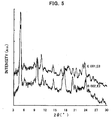
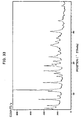
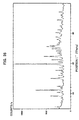
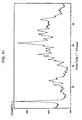
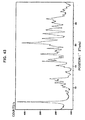
- these crystals are crystal form A, crystal form B, crystal form D, crystal form E and crystal form F as mentioned in above (2), each of which shows the peak at the specific diffraction angles (2 ⁇ ) in the powder X-ray diffraction pattern.
- crystal form A can be obtained by the method comprising the steps of: heating the compound of the formula (I) preferably at 50 to 80°C and more preferably at 60°C, preferably in dimethylformamide or pyridine, and more preferably in pyridine; quickly cooling it down (for example, at a cooling rate of 20 to 40°C/hour and preferably 30°C/hour) to 2 to 20°C and preferably to 5°C; aging the compound at the same temperature for about 24 hours; and collecting the precipitated crystal.
- the crystal obtained as above is usually in the form of hydrates.
- Crystal form B can be obtained by the method comprising the steps of: heating the compound of the formula (I) preferably at 50 to 80°C and more preferably at 60°C, preferably in 1-butanol, t-butanol, 2-butanol, 1-propanol, 2-propanol, ethanol, diethyl ether or dimethyl sulfoxide, and more preferably in 1-butanol, t-butanol or ethanol; quickly (for example, at a cooling rate of 20 to 40°C/hour and preferably 30°C/hour) or slowly (at a cooling rate of 0.5 to 3°C/hour and preferably 1°C/hour) cooling it down to 2 to 20°C and preferably to 5°C; aging the compound at the same temperature for about 24 hours; and collecting the precipitated crystal.
- the compound of the formula (I) preferably at 50 to 80°C and more preferably at 60°C, preferably in 1-butanol, t-butanol, 2-butano
- Crystal form D can be obtained by the method comprising the steps of: heating the compound of the formula (I) preferably at 50 to 80°C and more preferably at 60°C, preferably in ethanol; quickly (for example, at a cooling rate of 20 to 40°C/hour and preferably 30°C/hour) or slowly (at a cooling rate of 0.5 to 3°C /hour and preferably 1°C/hour) cooling it down to 2 to 20°C and preferably to 5°C; aging the compound at the same temperature for about 24 hours; and collecting the precipitated crystal.
- Crystal form E can be obtained by the method comprising the steps of: heating the compound of the formula (I) preferably at 50 to 80°C and more preferably at 60°C, preferably in ethanol, dichloromethane or diethyl ether, and more preferably in ethanol; then, slowly (at a cooling rate of 0.5 to 3°C/hour and preferably 1°C/hour) cooling it down to 2 to 20°C and preferably to 5°C; aging the compound at the same temperature for about 24 hours; and collecting the precipitated crystal.
- the crystal obtained as above is usually in the form of anhydrides.
- Crystal form F can be obtained by the method comprising the steps of: heating the compound of the formula (I) preferably at 50 to 80°C and more preferably at 60°C, preferably in t-amyl alcohol; then, slowly (at a cooling rate of 0.5 to 3°C /hour and preferably 1°C /hour) cooling it down to 2 to 20°C and preferably to 5°C; aging the compound at the same temperature for about 24 hours; and collecting the precipitated crystal.
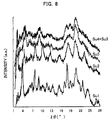
- the crystal of the hydrochloride salt of the compound of the formula (I) is either crystal form Cl1, crystal form Cl2, crystal form Cl3, crystal form Cl4 or crystal form Cl5, each of which shows the peak at the specific diffraction angles (2 ⁇ ) in the powder X-ray diffraction pattern as mentioned in above (3).
- the crystal of the hydrochloride salt of the compound of the formula (I) is either crystal form NW1, crystal form NW2, crystal form NW4, crystal form NW5, crystal form N1, crystal form N2, crystal form N3, crystal form N4, crystal form N5, crystal form Cl6, crystal form Cl7 or crystal form Cl8, each of which shows the peak at the specific diffraction angles (2 ⁇ ) in the powder X-ray diffraction pattern as mentioned in above (4).
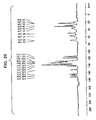
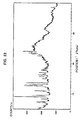
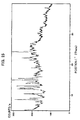
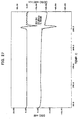
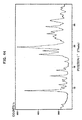
- Crystal form Cl5 is also specified by the peak at the specific diffraction angles (2 ⁇ ) in the powder X-ray diffraction pattern of above (14), the 13C-NMR spectrum of Figure 20 , and/or the infrared spectrum of Figure 21 as mentioned in above (14) to (17).
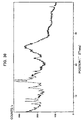
- crystal form N2 is also specified by the peak at the specific diffraction angles (2 ⁇ ) in the powder X-ray diffraction pattern of above (18), the 13C-NMR spectrum of Figure 28 , and/or the infrared spectrum of Figure 29 as mentioned in above (18) to (21).
- crystal form Cl1 can be obtained by the method comprising the steps of: heating the hydrochloride salt of the compound of the formula (I) preferably at 50 to 80 °C and more preferably at 60 °C , preferably in 4-trifluoromethyl toluene, pyridine or acetone and more preferably in pyridine; then, slowly (at a cooling rate of 0.5 to 3°C/hour and preferably 1°C/hour) cooling it down to 2 to 20°C and preferably to 5°C; aging the compound at the same temperature for about 1 hour or 72 hours; and collecting the precipitated crystal.
- Crystal form Cl2 can be obtained by the method comprising the steps of: heating the hydrochloride salt of the compound of the formula (I) preferably at 50 to 80°C and more preferably at 60°C, preferably in nitromethane or diethyl ether and more preferably in nitromethane; then, slowly (at a cooling rate of 0.5 to 3°C /hour and preferably 1°C/hour) cooling it down to 2 to 20°C and preferably to 5°C; aging the compound at the same temperature for about 1 hour or 72 hours; and collecting the precipitated crystal.
- Crystal form Cl3 can be obtained by the method comprising the steps of: heating the hydrochloride salt of the compound of the formula (I) preferably at 50 to 80 °C and more preferably at 60 °C , preferably in 2-butanol or 1,2-dimethoxyethane and more preferably in 2-butanol; then, slowly (at a cooling rate of 0.5 to 3°C/hour and preferably 1°C/hour) cooling it down to 2 to 20°C and preferably to 5°C; aging the compound at the same temperature for about 1 hour or 72 hours; and collecting the precipitated crystal.
- Crystal form Cl4 can be obtained by the method comprising the steps of: heating the hydrochloride salt of the compound of the formula (I) preferably at 50 to 80°C and more preferably at 60°C, preferably in isopropyl acetate or methanol; then, slowly (at a cooling rate of 0.5 to 3°C/hour and preferably 1°C/hour) cooling it down to 2 to 20°C and preferably to 5°C; aging the compound at the same temperature for about 1 hour; and collecting the precipitated crystal.
- crystal form Cl4 can be obtained by the same method as mentioned above provided that the aging time becomes about 72 hours.
- Crystal form Cl5 can be obtained by the method comprising the steps of: heating the hydrochloride salt of the compound of the formula (I) preferably at 50 to 80°C and more preferably at 60°C, preferably in tetrahydrofuran (THF); then, at a cooling rate of 0.5 to 10°C/hour and preferably slowly (at a cooling rate of 0.5 to 3°C/hour and preferably 1°C/hour) cooling it down to 2 to 20°C and preferably to 5°C; aging the compound at the same temperature for about 1 hour or 72 hours; and collecting the precipitated crystal.
- THF tetrahydrofuran
- Crystal form Cl5 is a particularly preferable crystal.
- Crystal form Cl5 can also be obtained by the production method comprising the step of adding a hydrogen chloride to a mixture comprising the compound of the formula (I) and acetone.
- a hydrogen chloride it is possible to use hydrogen chloride gas, a hydrochloric acid or alcohols having 1 to 6 carbon atom(s) which comprise hydrogen chloride, for example.
- crystal form Cl5 can be obtained by the method comprising the steps of: preparing a hydrochloric acid by diluting it with acetone to become 0.05 to 1.00mmol/mL in hydrogen chloride concentration; adding it to an acetone solution of the compound (free form) of the formula (I); heating the mixture with stirring preferably to 50 to 80 °C and more preferably to 60 °C ; then, comparatively slowly (at a cooling rate of 0.5 to 10°C/hour) cooling it down to 2 to 20°C and preferably to 5°C; aging the compound at the same temperature for about 1 to 72 hour(s); and filtering out the precipitated crystal and drying it at 60 to 85°C under reduced pressure.
- Crystal form Cl5 can also be obtained by the production method comprising the steps of: heating the hydrochloride salt of the compound of the formula (I) in a mixed solvent comprising acetone and water; adding an acetone solvent thereto; and then cooling it down.
- crystal form Cl5 can be obtained by the method comprising the steps of: heating a mixture of a mixed solvent comprising acetone and water and the hydrochloride salt of the compound of the formula (I) preferably to 50 to 80 °C and more preferably to 65 °C to dissolve the compound; filtering the dissolved solution under heating; adding acetone dropwise to a filtrate and also adding a seed crystal thereto if necessary; then cooling down the obtained slurry to 2 to 20°C and preferably to 10°C; and filtering out the precipitated crystal and drying it at 60 to 85°C and preferably at 80°C under reduced pressure.
- Crystal form Cl5 can also be obtained by the production method comprising the step of: mixing the hydrochloride salt of the compound of the formula (I) and two or more solvents selected from the group consisting of acetone, water, THF, acetonitrile, methanol, ethanol, propanol and isopropyl acetate to obtain a suspension thereof.
- crystal form Cl5 can be obtained by the method comprising the steps of: suspending the hydrochloride salt of the compound of the formula (I) other than crystal form Cl5 to acetone; stirring the suspension at 10 to 55°C and preferably at 25°C; and filtering out the precipitated crystal and drying it at 60 to 85°C and preferably at 80°C under reduced pressure.
- Crystal form NW1, crystal form NW2 and crystal form NW5 can be obtained, for example, by the method comprising the steps of: mixing the hydrochloride salt of the compound of the formula (I) and a mixed solution of acetonitrile/water and then cooling down the mixture, or heating the mixture and then cooling it down; adding acetonitrile or acetone dropwise thereto; and separating the precipitated crystal from the slurry.
- each of crystal form NW1, crystal form NW2 and crystal form NW5 can be obtained by adjusting a quantitative ratio of the hydrochloride salt of the compound of the formula (I) and a mixed solution of acetonitrile/water, the subsequent cooling or heating temperature, or the kind of a solvent added dropwise.
- Crystal form N1 can be obtained by drying crystal form NW1 under reduced pressure.
- Crystal form N2 can be obtained by drying crystal form NW2 under reduced pressure.
- crystal form N3 can be obtained by drying crystal form NW2 under reduced pressure, depending on the condition of the solvent adhesion to crystal form NW2.
- Crystal form N5 can be obtained by drying crystal form NW5 under reduced pressure.
- Crystal form N2 can also be obtained by the production method comprising the steps of: heating the hydrochloride salt of the compound of the formula (I) in a solvent comprising acetonitrile and water; adding an acetone solvent thereto; and then cooling it down.
- crystal form N2 can be obtained by the method comprising the steps of mixing the hydrochloride salt of the compound (I) and preferably 55 to 95 vol.% and more preferably 75 vol.% of a mixed solution of acetonitrile/water, and heating the mixture preferably to 55 to 85°C and more preferably to 70°C to dissolve it; cooling down the solution preferably to 25 to 35 °C and more preferably 30°C and adding acetone dropwise thereto and stirring it overnight; then separating the precipitated crystal from the slurry; and then drying the obtained wet crystal under reduced pressure with heating it preferably to 70 to 90°C and more preferably to 80°C.
- Crystal form NW4 can be obtained, for example, by the method comprising the steps of: mixing acetonitrile and the hydrochloride salt of the compound of the formula (I) and then cooling down the mixture, or heating the mixture and then cooling it down; and separating the precipitated crystal from the slurry.
- crystal form NW4 can be obtained by adjusting a quantitative ratio of acetonitrile and the hydrochloride salt of the compound of the formula (I), or the subsequent cooling or heating temperature.
- Crystal form N4 can be obtained by drying crystal form NW4 under reduced pressure.
- Each of crystal form Cl6, crystal form Cl7 and crystal form Cl8 can be obtained by the method comprising the steps of: using diethyl ether, 1,2-dimethoxyethane (DME), and 2-propanol as a solvent, respectively, and diluting a hydrochloric acid with each solvent to prepare it to become 0.05 to 1.00mmol/mL in concentration; adding the diluent to the compound (free form) of the formula (I) and heating the mixture with stirring preferably to 50 to 80°C and more preferably to 60°C; then, comparatively slowly (at a cooling rate of 0.5 to 10°C/hour) cooling it down to 2 to 20°C and preferably to 5°C; aging the compound at the same temperature for about 1 to 72 hour(s); and filtering out the precipitated crystal and drying it at room temperature for 24 hours or more under reduced pressure.
- the crystal of a sulfate salt of the compound of the formula (I) is either crystal form Su1, crystal form Su2 or crystal form Su3, each of which shows the peak at the specific diffraction angles (2 ⁇ ) in the powder X-ray diffraction pattern as mentioned in above (5).
- crystal form Su1 can be obtained by the method comprising the steps of: heating the sulfate salt of the compound of the formula (I) preferably at 50 to 80 °C and more preferably at 60 °C, preferably in 1,2-ethanediol, cyclohexanone, pyridine or n-heptane and more preferably in pyridine; then, slowly (at a cooling rate of 0.5 to 3°C/hour and preferably 1°C/hour) cooling it down to 2 to 20°C and preferably to 5°C; aging the compound at the same temperature for about 1 hour; and collecting the precipitated crystal.
- Crystal form Su2 can be obtained by the method comprising the steps of: heating the sulfate salt of the compound of the formula (I) preferably at 50 to 80°C and more preferably at 60°C, preferably in nitromethane or ethyl acetate and more preferably in nitromethane; then, slowly (at a cooling rate of 0.5 to 3°C /hour and preferably 1°C/hour) cooling it down to 2 to 20°C and preferably to 5°C; aging the compound at the same temperature for about 1 hour; and collecting the precipitated crystal.
- Crystal form Su3 can be obtained by the method comprising the steps of: heating the sulfate salt of the compound of the formula (I) preferably at 50 to 80°C and more preferably at 60°C, preferably in 1,2-dimethoxyethane, ethanol, tetrahydrofuran, acetone or dichloromethane; then, slowly (at a cooling rate of 0.5 to 3°C/hour and preferably 1°C/hour) cooling it down to 2 to 20°C and preferably to 5°C; aging the compound at the same temperature for about 1 hour; and collecting the precipitated crystal.
- crystal form Su3 can also be obtained by the same method as mentioned above provided that the aging time becomes about 72 hours.
- the crystal of a hydrobromide salt of the compound of the formula (I) is either crystal form Br1, crystal form Br2, crystal form Br3, crystal form Br4 or crystal form Br5, each of which shows the peak at the specific diffraction angles (2 ⁇ ) in the powder X-ray diffraction pattern as mentioned in above (6).
- crystal form Br1 can be obtained by the method comprising the steps of: heating the hydrobromide salt of the compound of the formula (I) preferably at 50 to 80 °C and more preferably at 60 °C , preferably in cyclohexanone; then, slowly (at a cooling rate of 0.5 to 3°C/hour and preferably 1°C/hour) cooling it down to 2 to 20°C and preferably to 5°C; aging the compound at the same temperature for about 1 hour or 72 hours; and collecting the precipitated crystal.
- Crystal form Br2 can be obtained by the method comprising the steps of: heating the hydrobromide salt of the compound of the formula (I) preferably at 50 to 80°C and more preferably at 60°C, preferably in water; then, slowly (at a cooling rate of 0.5 to 3°C/hour and preferably 1°C/hour) cooling it down to 2 to 20°C and preferably to 5°C; aging the compound at the same temperature for about 1 hour; and collecting the precipitated crystal.
- Crystal form Br3 can be obtained by the method comprising the steps of: heating the hydrobromide salt of the compound of the formula (I) preferably at 50 to 80°C and more preferably at 60°C, preferably in acetone, acetonitrile or 2-propanol and more preferably in acetonitrile; then, slowly (at a cooling rate of 0.5 to 3°C/hour and preferably 1°C /hour) cooling it down to 2 to 20°C and preferably to 5°C; aging the compound at the same temperature for about 1 hour; and collecting the precipitated crystal.
- Crystal form Br4 can be obtained by the method comprising the steps of heating the hydrobromide salt of the compound of the formula (I) preferably at 50 to 80°C and more preferably at 60°C, preferably in 2-butanol, 2-propanol or tetrahydrofuran and more preferably in tetrahydrofuran; then, slowly (at a cooling rate of 0.5 to 3°C/hour and preferably 1°C/hour) cooling it down to 2 to 20°C and preferably to 5°C; aging the compound at the same temperature for about 1 hour; and collecting the precipitated crystal.
- crystal form Br4 by the same method as mentioned above provided that the above solvents, acetonitrile or diisopropylether is used as a solvent and the aging time becomes about 72 hours. In such a case, it is particularly preferable to use 2-butanol or tetrahydrofuran.
- Crystal form Br5 can be obtained by the method comprising the steps of: heating the hydrobromide salt of the compound of the formula (I) preferably at 50 to 80°C and more preferably at 60°C, preferably in ethyl acetate, acetone or 1,2-dimethoxyethane and more preferably in ethyl acetate or 1,2-dimethoxyethane; then, slowly (at a cooling rate of 0.5 to 3 °C /hour and preferably 1°C/hour) cooling it down to 2 to 20°C and preferably to 5°C; aging the compound at the same temperature for about 1 hour; and collecting the precipitated crystal.
- the crystal of a phosphate salt of the compound of the formula (I) is either crystal form Pho1, crystal form Pho2, crystal form Pho3 or crystal form Pho4, each of which shows the peak at the specific diffraction angles (2 ⁇ ) in the powder X-ray diffraction pattern as mentioned in above (7).
- crystal form Pho1 can be obtained by the method comprising the steps of: heating the phosphate salt of the compound of the formula (I) preferably at 50 to 80 °C and more preferably at 60 °C , preferably in cyclohexanone, pyridine, acetone or dichloromethane and more preferably in cyclohexanone, pyridine or acetone; then, slowly (at a cooling rate of 0.5 to 3°C /hour and preferably 1°C/hour) cooling it down to 2 to 20°C and preferably to 5°C; aging the compound at the same temperature for about 1 hour; and collecting the precipitated crystal.
- Crystal form Pho2 can be obtained by the method comprising the steps of: heating the phosphate salt of the compound of the formula (I) preferably at 50 to 80 °C and more preferably at 60 °C , preferably in 1,1,2,2-tetrachloroethane, 1,2-dimethoxyethane, nitromethane, water, n-heptane, isopropyl acetate, acetonitrile, ethyl acetate, diisopropyl ether, tetrahydrofuran or diethyl ether and more preferably in water; then, slowly (at a cooling rate of 0.5 to 3°C/hour and preferably 1°C/hour) cooling it down to 2 to 20°C and preferably to 5°C; aging the compound at the same temperature for about 1 hour; and collecting the precipitated crystal.
- heating the phosphate salt of the compound of the formula (I) preferably at 50 to 80 °C and more preferably at 60 °C , preferably
- Crystal form Pho3 can be obtained by the method comprising the steps of: heating the phosphate salt of the compound of the formula (I) preferably at 50 to 80°C and more preferably at 60°C, preferably in methanol; then, slowly (at a cooling rate of 0.5 to 3°C/hour and preferably 1°C/hour) cooling it down to 2 to 20°C and preferably to 5°C; aging the compound at the same temperature for about 1 hour or 72 hours; and collecting the precipitated crystal.
- Crystal form Pho4 can be obtained by the method comprising the steps of: heating the phosphate salt of the compound of the formula (I) preferably at 50 to 80°C and more preferably at 60°C, preferably in 2,2,2-trifluoroethanol then, slowly (at a cooling rate of 0.5 to 3°C/hour and preferably 1°C/hour) cooling it down to 2 to 20°C and preferably to 5°C; aging the compound at the same temperature for about 1 hour or 72 hours; and collecting the precipitated crystal.
- the crystal of a maleate salt of the compound of the formula (I) is either crystal form Mall, crystal form Mal2 or crystal form Mal3, each of which shows the peak at the specific diffraction angles (2 ⁇ ) in the powder X-ray diffraction pattern as mentioned in above (8).
- crystal form Mall can be obtained by the method comprising the steps of: heating the maleate salt of the compound of the formula (I) preferably at 50 to 80°C and more preferably at 60°C, preferably in nitromethane, 2-butanol, isopropyl acetate, 2-propanol or ethanol and more preferably in 2-butanol, 2-propanol or ethanol; then, slowly (at a cooling rate of 0.5 to 3°C/hour and preferably 1°C/hour) cooling it down to 2 to 20°C and preferably to 5°C; aging the compound at the same temperature for about 1 hour; and collecting the precipitated crystal.
- Crystal form Mal2 can be obtained by the method comprising the steps of: heating the maleate salt of the compound of the formula (I) preferably at 50 to 80 °C and more preferably at 60 °C , preferably in 1,2-dimethoxyethane, acetonitrile or ethyl acetate; then, slowly (at a cooling rate of 0.5 to 3°C/hour and preferably 1°C/hour) cooling it down to 2 to 20°C and preferably to 5°C; aging the compound at the same temperature for about 1 hour or 72 hours; and collecting the precipitated crystal.
- Crystal form Mal3 can be obtained by the method comprising the steps of: heating the maleate salt of the compound of the formula (I) preferably at 50 to 80°C and more preferably at 60°C, preferably in acetone; then, slowly (at a cooling rate of 0.5 to 3°C/hour and preferably 1°C/hour) cooling it down to 2 to 20°C and preferably to 5°C; aging the compound at the same temperature for about 1 hour; and collecting the precipitated crystal.
- the crystal of an acetate salt of the compound of the formula (I) is either crystal form Aca1, crystal form Aca2 or crystal form Aca3, each of which shows the peak at the specific diffraction angles (2 ⁇ ) in the powder X-ray diffraction pattern as mentioned in above (9).
- crystal form Aca1 can be obtained by the method comprising the steps of: heating the acetate salt of the compound of the formula (I) preferably at 50 to 80°C and more preferably at 60°C, preferably in nitromethane, acetonitrile or acetone and more preferably in acetone; then, slowly (at a cooling rate of 0.5 to 3°C/hour and preferably 1°C/hour) cooling it down to 2 to 20°C and preferably to 5°C; aging the compound at the same temperature for about 1 hour; and collecting the precipitated crystal.
- Crystal form Aca2 can be obtained by the method comprising the steps of: heating the acetate salt of the compound of the formula (I) preferably at 50 to 80°C and more preferably at 60°C, preferably in 2-butanol; then, slowly (at a cooling rate of 0.5 to 3°C/hour and preferably 1°C/hour) cooling it down to 2 to 20°C and preferably to 5°C; aging the compound at the same temperature for about 1 hour; and collecting the precipitated crystal.
- Crystal form Aca3 can be obtained by the method comprising the steps of: heating the acetate salt of the compound of the formula (I) preferably at 50 to 80°C and more preferably at 60°C, preferably in ethyl acetate; then, slowly (at a cooling rate of 0.5 to 3°C/hour and preferably 1°C/hour) cooling it down to 2 to 20°C and preferably to 5°C; aging the compound at the same temperature for about 1 hour; and collecting the precipitated crystal.
- the crystal of a D-tartrate salt of the compound of the formula (I) is either crystal form Tar1 or crystal form Tar2, each of which shows the peak at the specific diffraction angles (2 ⁇ ) in the powder X-ray diffraction pattern as mentioned in above (10).
- crystal form Tar1 can be obtained by the method comprising the steps of: heating the D-tartrate salt of the compound of the formula (I) preferably at 50 to 80 °C and more preferably at 60 °C , preferably in cyclohexanone, nitromethane, 1,2-dimethoxyethane or acetone and more preferably in cyclohexanone; then, slowly (at a cooling rate of 0.5 to 3°C/hour and preferably 1°C/hour) cooling it down to 2 to 20°C and preferably to 5°C; aging the compound at the same temperature for about 1 hour; and collecting the precipitated crystal.
- Crystal form Tar2 can be obtained by the method comprising the steps of: heating the D-tartrate salt of the compound of the formula (I) preferably at 50 to 80°C and more preferably at 60°C, preferably in methanol; then, slowly (at a cooling rate of 0.5 to 3°C/hour and preferably 1°C/hour) cooling it down to 2 to 20°C and preferably to 5°C; aging the compound at the same temperature for about 1 hour or 72 hours; and collecting the precipitated crystal.
- the crystal of an L-tartrate salt of the compound of the formula (I) is either crystal form L-Tar1 or crystal form L-Tar2, each of which shows the peak at the specific diffraction angles (2 ⁇ ) in the powder X-ray diffraction pattern as mentioned in above (11).
- crystals can be obtained by the method comprising the steps of: dissolving the compound of the formula (I) together with an L-tartaric acid preferably in 1,2-dimethoxyethane (for crystal form L-Tar1) or acetone (for crystal form L-Tar2); heating the dissolved solution preferably at 50 to 80°C and more preferably at 60°C; then, comparatively slowly (at a cooling rate of 0.5 to 10°C/hour and preferably 1°C/hour) cooling it down to 2 to 20°C and preferably to 5 °C ; aging the compound at the same temperature; and filtering out the precipitated crystal and drying it under reduced pressure.
- L-tartaric acid preferably in 1,2-dimethoxyethane
- acetone for crystal form L-Tar2
- the crystal of a methanesulfonate salt of the compound of the formula (I) is either crystal form Ms1, crystal form Ms2, crystal form Ms3, crystal form Ms4 or crystal form Ms5, each of which shows the peak at the specific diffraction angles (2 ⁇ ) in the powder X-ray diffraction pattern as mentioned in above (12).
- crystals can be obtained by the method comprising the steps of: dissolving the compound of the formula (I) together with a methanesulfonic acid preferably in methanol (for crystal form Ms1), THF (for crystal form Ms2), t-butyl methyl ether (for crystal form Ms3), DME (for crystal form Ms4) or acetone (for crystal form Ms5); heating the dissolved solution preferably at 50 to 80°C and more preferably at 60°C; then, comparatively slowly (at a cooling rate of 0.5 to 10°C/hour and preferably 1°C/hour) cooling it down to 2 to 20°C and preferably to 5°C; aging the compound at the same temperature; and filtering out the precipitated crystal and drying it under reduced pressure.
- a methanesulfonic acid preferably in methanol (for crystal form Ms1), THF (for crystal form Ms2), t-butyl methyl ether (for crystal form Ms3), DME (for crystal form Ms
- the crystal of a citrate salt of the compound of the formula (I) is either crystal form Ca1, crystal form Ca2, crystal form Ca3 or crystal form Ca4, each of which shows the peak at the specific diffraction angles (2 ⁇ ) in the powder X-ray diffraction pattern as mentioned in above (13).
- crystals can be obtained by the method comprising the steps of dissolving the compound of the formula (I) together with a citric acid preferably in IPA (2-propanol) (for crystal form Ca1), 1-butanol (for crystal form Ca2), DME (for crystal form Ca3) or acetone (for crystal form Ca4); heating the dissolved solution preferably at 50 to 80 °C and more preferably at 60 °C ; then, comparatively slowly (at a cooling rate of 0.5 to 10°C/hour and preferably 1°C /hour) cooling it down to 2 to 20°C and preferably to 5°C; aging the compound at the same temperature; and filtering out the precipitated crystal and drying it under reduced pressure.
- IPA 2-propanol
- 1-butanol for crystal form Ca2
- DME for crystal form Ca3
- acetone for crystal form Ca4
- propanol means 1-propanol or 2-propanol and preferably 2-propanol.
- butanol means 1-butanol, 2-butanol, 2-methyl-1-propanol or tert-butanol and preferably 1-butanol.
- the peaks of the diffraction angles (2 ⁇ ) in the powder X-ray diffraction pattern can slightly change due to nuances such as the measurement condition or the like.
- the diffraction angles described in the present specification can accept such error.
- the overall pattern is important in 13C-NMR spectra, infrared spectra or DSC data in order to identify the crystals. Such spectra can slightly change due to the measurement condition or the like.
- the aging time of 1 hour can be changed to 30 minutes to 5 hours.
- about 72 hours can be changed to 48 hours or more, and preferably 48 to 120 hours.
- Crystal form Cl5, crystal form Br3, crystal form Br4, crystal form Br5 and crystal form Mal2 are preferable among the above crystals. Crystal form Cl5 and crystal form Br5 are particularly preferable. In addition to them, crystal form N2 is also particularly preferable.
- Salts of the compound of the formula (I) used for producing the crystals of the present invention may be those which are salts before they are added to a solvent, or they may become salts in the reaction when the free form is added to a solvent and then a corresponding acid is further added thereto.
- a hydrochloric acid or the like to the compound (free form) of the formula (I) so that an acid such as a hydrogen chloride, hydrogen bromide and an acetic acid becomes 1:1 or more in a molar ratio, preferably around 1:1.05 to 1:1.2 in a molar ratio and more preferably 1:1.1 in a molar ratio.
- Salts of the compound of the formula (I), particularly a hydrochloride salt, hydrobromide salt and maleate salt thereof are useful in itself in that they become raw materials of the above preferable crystals.
- the amount of a solvent for precipitating crystals can be optional.
- the solvent is preferably 2 to 1000 parts by weight and particularly preferably 5 to 40 parts by weight.
- another crystal may be produced by another production method of the present invention by using the crystal which is prepared by using amorphia or an amorphous solid substance, as well as the production method by using amorphia or an amorphous solid substance itself.
- the crystals of the present invention are easy to be used and excellent in "preservation stability” or “humidity resistance” of drug substances or drug products and, therefore, they are useful in that they are crystals which can be manufactured on the industrial scale. In addition to them, such crystals are also excellent in solubility.
- the compound of the above formula (I) which is a prodrug of the compound of the above formula (II) has an excellent durability of the effect particularly after the oral administration. Besides, since its membrane permeability is good, the area under the plasma concentration-time curve and bioavailability thereof are high in oral administration. The compound is also excellent in safety
- the crystals of the present invention can be used as excellent ⁇ 4 integrin inhibitors. Further, they can be effectively used as an active ingredient of therapeutic agents or preventive agents for inflammatory diseases in which ⁇ 4 integrin-depending adhesion process participates in the pathology, such as rheumatoid arthritis, inflammatory bowel diseases (including Crohn's disease and ulcerative colitis), systemic lupus erythematosus, multiple sclerosis, Sjögren's syndrome, asthma, psoriasis, allergy, diabetes, cardiovascular diseases, arterial sclerosis, restenosis, tumor proliferation, tumor metastasis or transplantation rejection.
- inflammatory diseases in which ⁇ 4 integrin-depending adhesion process participates in the pathology such as rheumatoid arthritis, inflammatory bowel diseases (including Crohn's disease and ulcerative colitis), systemic lupus erythematosus, multiple sclerosis, Sjögren's syndrome, asthma, psoriasis,
- the crystals can be effectively used as an active ingredient of therapeutic agents or preventive agents for preeclampsia, ischemic cerebrovascular disorders (including cerebral infarction), systemic sclerosis, ankylosing spondylitis, arthritis psoriatica, sarcoidosis, giant cell arteritis, uveitides, fibroid lung, chronic obstructive pulmonary disease, osteoarthritis, Alzheimer's disease, spinal cord injury, traumatic brain injury, primary sclerosing cholangitis, liver cirrhosis caused by hepatitis C, active chronic hepatitis, sacroiliitis, ankylosing spondylitis, episcleritis, ulceris, uveitis, erythema nodosum, pyoderma gangrenosum and autoimmune hepatitis.
- ischemic cerebrovascular disorders including cerebral infarction
- systemic sclerosis including cerebral infarction
- crystals can be effectively used as an active ingredient of therapeutic agents or preventive agents for the diseases in which ⁇ 4 integrin may participate in the pathology in addition to the above diseases.
- the administered dose used for the above purposes is determined by the intended therapeutic effect, administration method, treatment period, age, body weight and the like.
- an oral or parenteral route such as intravenous, intra-arterial, subcutaneous or intramuscular administration, suppositories, enema administration, ointment, patch, sublingual administration, eye-drops, inhalation and the like
- the dose is usually 1 ⁇ g to 5 g and preferably 1mg to 1g a day for adults in the oral administration, and 0.01 ⁇ g to 1 g a day for adults in the parenteral administration.
- the crystals of the present invention can be applied to various dosage forms, and they can be prepared to pharmaceutical compositions without change or with various pharmaceutically acceptable carriers.
- the pharmaceutical compositions comprising the crystal(s) of the present invention preferably contain the crystal(s) of the present invention more than the ratio in which the practical therapeutic effect can be produced.
- the ratio in which the practical therapeutic effect can be produced is determined by the administered dose of the above pharmaceutical composition, the intended therapeutic effect, or the like.
- Examples of pharmaceutically acceptable carriers include various common organic or inorganic carriers as materials for preparation, such as excipients, lubricants, binders, disintegrating agents, water-soluble polymers, and basic inorganic salts in solid preparations; and solvents, solubilizing agents, suspending agents, tonicity agents, buffers, and soothing agents in liquid preparations. If necessary, it is possible to use common additives such as antiseptic agents, antioxidants, coloring agents, sweetening agents, acidulants, foaming agents, flavoring agents, or the like.
- the dosage forms of such pharmaceutical compositions are, for example, tablets, powders, pills, granules, capsules, suppositories, solutions, sugar-coated tablets, depots, syrups, suspending agents, emulsions, troches, sublingual agents, patches, oral disintegrating agents (tablets), inhalers, enema agents, ointments, patches, adhesives and eye-drops. They can be prepared with ordinary preparation additives by ordinary methods.
- compositions can be produced by common methods in the preparation technical field and, for instance, by the methods described in Japanese Pharmacopoeia. The production methods of preparations are described below in detail.
- excipients when the crystals of the present invention are prepared as oral preparations, excipients and, if necessary, binders, disintegrating agents, lubricants, coloring agents, flavoring and freshening substance are added to the crystals. Then, they are formed as tablets, powders, pills, granules, capsules, suppositories, solutions, sugar-coated tablets, depots, syrups, suspending agents, emulsions, troches, sublingual agents, oral disintegrating agents (tablets), inhalers or the like in accordance with ordinary methods.
- excipients include lactose, corn starch, sucrose, glucose, sorbit and crystalline cellulose.
- binders include polyvinyl alcohol, polyvinyl ether, ethylcellulose, methylcellulose, gum arabic, tragacanth, gelatin, shellac, hydroxypropylcellulose, hydroxypropylstarch and polyvinyl pyrrolidone.
- disintegrating agents are starch, agar, gelatin powder, crystalline cellulose, calcium carbonate, sodium hydrogen carbonate, calcium citrate, dextran and pectin.
- lubricants are magnesium stearate, tarc, polyethylene glycol, silica, hydrogenated vegetable oil.
- coloring agents are those which are permitted to be added to pharmaceutical compositions.
- cocoa powder, menthol, aromatic acids, peppermint oil, borneol, cinnamon powder and the like are used as flavoring and freshening substance.
- These tablets or granules may be coated, if necessary, with sugar, gelatin and the like.
- injectable agents When injectable agents are prepared, pH adjusters, buffers, stabilizing agents, preservatives or the like are added thereto, if necessary, and then they are prepared as subcutaneously, intramuscularly or intravenously injectable agents in accordance with ordinary methods.
- Process 2 Synthesis of isopropyl ester of 4-amino-N-(2,6-dichlorobenzoyl)-L-phenylalanine (Namely, Synthesis of isopropyl ester of (S)-2-(2,6-dichlorobenzoylamino)-3-(4-aminophenyl) propionic acid
- Process 3 Synthesis of isopropyl ester of 4-[(2-amino-5-iodobenzoyl)amino]-N-(2,6-dichlorobenzoyl)-L-phenylalanine
- Process 4 Synthesis of isopropyl ester of N-(2,6-dichlorobenzoyl)-4-(6-iodo-2,4-dioxo-1,2,3,4-tetrahydroquinazoline-3(2H)-yl)-L-phenylalanine
- N,N-carbonyldiimidazole (28.16g) was dissolved in 150mL of dimethylformamide and heated up to 80°C.
- a dimethylformamide solution (150mL) of the compound obtained in Process 3 (37.06g) was added dropwise thereto and stirred overnight. After cooling it down to room temperature, ethyl acetate and water were added thereto and extraction was conducted. Then, the organic layer thereof was washed with water and a saturated saline solution respectively, and dried with anhydrous sodium sulfate. After removing the solvent under reduced pressure, the obtained solid substance was suspended in methylene chloride and hexane, filtered out and dried to obtain the title compound (33.06g).
- Process 5 Synthesis of isopropyl ester of N-(2,6-dichlorobenzoyl)-4-(6-iodo-1-methyl-2,4-dioxo-1,2,3,4-tetrahydroquinazoline-3(2H)-yl)-L-phenylalanine
- Process 6 Synthesis of isopropyl ester of N-(2,6-dichlorobenzoyl)-4-(6-carboxy-1-methyl-2,4-dioxo-1,2,3,4-tetrahydroquinazoline-3(2H)-yl)-L-phenylalanine
- Process 8 Synthesis of isopropyl ester of 4-[6-(chloromethyl)-1-methyl-2,4-dioxo-1,2,3,4-tetrahydroquinazoline-3(2H)-yl]-N-(2,6-dichlorobenzoyl)-L-phenylalanine
- a mixed solvent of methylene chloride (140mL) and dimethylformamide (140mL) was cooled down to 0°C, and then phosphorous oxychloride (4.1mL) was added thereto and stirred for 30 minutes. Then, the compound obtained in Process 7 (25.69g) was added thereto at 0°C and stirred at room temperature for 1 hour. Further, phosphorous oxychloride (0.4mL) was added thereto and stirred for 1 hour. Then, ethyl acetate (400mL) and a saturated sodium bicarbonate water (100mL) were further added thereto and vigorously stirred.
- Test Example 1 Assay of antagonistic activity to VCAM-1/ ⁇ 4 ⁇ 1 integrin binding under the existence of blood serum
- test substance antagonistic to the binding of cell strain of human T cells, Jurkat(ATCC TIB-152), known to express integrin ⁇ 4 ⁇ 1, to VCAM-1 was determined.
- DMEM Dulbecco modified Eagle medium
- test substance Sixty ⁇ L of a test substance of various concentrations obtained by the dilution with the binding buffer was added to a round-bottom 96-well plates (IWAKI). Immediately thereafter, 60 ⁇ L of the Jurkat cells (1 x 10 6 cells/mL) were added thereto and shaken on a plate shaker (IKA-Labortechnik, IKA-SCHUTTLER MTS-4) at 1000 rpm for 10 seconds. In 120 ⁇ L of the cell suspensions to which the test substance was added, each 100 ⁇ L thereof was transferred on the VCAM-1/Fc-coated plate and incubated in dark place at room temperature for 60 minutes. After the shaking on the plate shaker at 1000 rpm for 30 seconds, the solution was immediately removed.
- the unbound cells were removed by washing them with PBS once.
- Buffer C PBS containing 0.82% Triton X-100
- the bound Jurkat cells were lysed.
- 50 ⁇ L of supernatant thereof was transferred to a 96-well microtiter plate (Nunc Maxisorp).
- Substrate Buffer Promega, CytoTox 96 Non-Radioactive Cytotoxicity Assay
- Stop Solution Promega, CytoTox 96 Non-Radioactive Cytotoxicity Assay
- the absorbance thus obtained detects an activity of lactate dehydrogenase (LDH) dissolved in the supernatant of each well. Namely, the absorbance is proportional to the number of remaining Jurkat cells on the plate via the binding to VCAM-1.
- LDH lactate dehydrogenase
- the test was conducted in duplicate and the binding rate of each test substance in various concentrations was determined while the absorbance of the test substance-free well was determined to be 100 % and the absorbance of the Jurkat-cell-free well was determined to be 0 %.
- the concentration for the 50 % binding inhibition, IC 50 was calculated.
- IC 50 of the compound of the formula (II) was 11.2nM, which was highly superior to IC 50 of the compound of Example 1 in WO 02/16329 (Patent Literature 1), 148.8nM.
- Test Example 2 Pharmaacokinetic study by intravenous administration to a rat
- the compound of the formula (II) which is the active form was weighed by a scale, they were adjusted by dimethylsulfoxide to become 10mg/mL. Polyethylene glycol 400 and distilled water were added thereto to prepare 1mg/mL of an administration solution. 1mg/mL of the administration solution was intravenously administered as a single dose to a Wistar rat in an amount of 1mL/kg. 1, 5, 10, 30, 60 and 180 minutes later, the drug concentration in the blood plasma obtained by blood drawing from its cervical vein over time under anesthesia was determined with LC/MS. From the obtained results, the area under the plasma concentration time curve from zero to time infinity (AUCinf(iv)) was calculated in accordance with the trapezoidal method of pharmacokinetic analysis.
- AUCinf(iv) area under the plasma concentration time curve from zero to time infinity
- Test Example 3 Activity to elevate the number of lymphocytes in the peripheral blood in a rat
- the final concentration of DMSO was adjusted to 2.5%.
- the dosing solution of a test substance (30mg/kg) was orally administered to male Wistar rats (6 to 8 weeks age) in the amount of 4mL/kg.
- the blood was drawn from the abdominal large vein under anesthesia and mixed in an EDTA-2K coated container for blood collection.
- Patent Literature 1 Evaluation of the number of lymphocyte in the peripheral blood after 12 hours after administration results that the compound of Example 1 in WO02/16329 (Patent Literature 1) was failed (120%) and the compound of the formula (I) was passed (150% or higher).
- the compound (free form) of the formula (I) prepared in the referential example was dissolved in tetrahydrofuran (THF), and the solvent was removed under reduced pressure to obtain amorphia of the compound (I).
- the crystal was also collected by the same method as mentioned above provided that the solvent was changed to 1-butanol or ethanol.
- 002 B2 represents the crystal obtained from t-butanol
- 002 E1 represents the crystal obtained from 1-butanol
- 002 E2 represents the crystal obtained from ethanol.
- Nitromethane comprising a hydrogen chloride of which molar ratio to the compound (free form) of the formula (I) prepared in Process 1 of Example 1 becomes 1.1:1 was added to said compound so that the concentration becomes the free form equivalent to 75mg/1mL in nitromethane.
- the mixture was put in 1 well of a 96-well plate and dissolved by being heated up to 60°C Then, the reactant was slowly cooled down to 5°C (at a cooling rate of 1°C/hour), aged at the same temperature for about 72 hours, and then the precipitated crystal form Cl2 was collected.
- Crystal form Cl3 and crystal form Cl4 were obtained by the same method as mentioned above provided that the following condition was changed:
- a sulfuric acid aqueous solution was added to the compound (free form) of the formula (I) prepared in Process 1 of Example 1 so that the molar ratio of a sulfuric acid to said compound becomes 1.1:1, and then water was evaporated.
- the sulfate salt thus obtained was added to pyridine to become the free form equivalent to 75mg/1mL in pyridine, put in 1 well of a 96-well plate and dissolved by being heated up to 60°C Then, the reactant was slowly cooled down to 5°C (at a cooling rate of 1°C/hour), aged at the same temperature for about 72 hours, and then the precipitated crystal form Su1 was collected.
- Crystal form Su2 and crystal form Su3 were obtained by the same method as mentioned above provided that the following condition was changed:
- Cyclohexanone comprising a hydrogen bromide of which molar ratio to the compound of the formula (I) (free form) prepared in Process 1 of Example 1 becomes 1.1:1 was added to said compound so that the concentration becomes the free form equivalent to 75mg/1mL in cycloheanone.
- the mixture was put in 1 well of a 96-well plate and dissolved by being heated up to 60°C Then, the reactant was slowly cooled down to 5°C (at a cooling rate of 1°C/hour), aged at the same temperature for about 72 hours, and then the precipitated crystal form Br1 was collected.
- a phosphoric acid aqueous solution was added to the compound (free form) of the formula (I) prepared in Process 1 of Example 1 so that the molar ratio of a phosphoric acid to said compound becomes 1.1:1, and then water was evaporated.
- the phosphate salt thus obtained was added to cyclohexanone to become the free form equivalent to 75mg/1mL in cyclohexanone, put in 1 well of a 96-well plate and dissolved by being heated up to 60°C Then, the reactant was slowly cooled down to 5°C (at a cooling rate of 1°C/hour), aged at the same temperature for about 1 hour, and then the precipitated crystal form Pho 1 was collected.
- a maleic acid aqueous solution was added to the compound (free form) of the formula (I) prepared in Process 1 of Example 1 so that the molar ratio of a maleic acid to said compound becomes 1.1:1, and then water was evaporated.
- the maleate salt thus obtained was added to ethanol to become the free form equivalent to 75mg/1mL in ethanol, put in 1 well of a 96-well plate and dissolved by being heated up to 60°C Then, the reactant was slowly cooled down to 5°C (at a cooling rate of 1°C/hour), aged at the same temperature for about 1 hour, and then the precipitated crystal form Mal1 was collected.
- Crystal form Mal2 and crystal form Mal3 were obtained by the same method as mentioned above provided that the following condition was changed:
- Acetone comprising an acetic acid of which molar ratio to the compound (free form) of the formula (I) prepared in Process 1 of Example 1 becomes 1.1:1 was added to said compound so that the concentration becomes the free form equivalent to 75mg/1mL in acetone.
- the mixture was put in 1 well of a 96-well plate and dissolved by being heated up to 60°C Then, the reactant was slowly cooled down to 5°C (at a cooling rate of 1°C/hour), aged at the same temperature for about 1 hour, and then the precipitated crystal form Aca1 was collected.
- a D-tartaric acid aqueous solution was added to the compound (free form) of the formula (I) prepared in Process 1 of Example 1 so that the molar ratio of a D-tartaric acid to said compound becomes 1.1:1, and then water was evaporated.
- the D-tartrate salt thus obtained was added to cyclohexanone to become the free form equivalent to 75mg/lmL in cyclohexanone, put in 1 well of a 96-well plate and dissolved by being heated up to 60°C Then, the reactant was slowly cooled down to 5°C (at a cooling rate of 1°C/hour), aged at the same temperature for about 1 hour, and then the precipitated crystal form Tar1 was collected.
- Crystal form Tar2 was obtained by the same method as mentioned above provided that the following condition was changed:
- a maleic acid was dissolved in ethyl acetate to become 0.14mmol/mL. 10mL thereof was added to the compound (I) (750mg, 1.25mmol) prepared in the referential example, and the mixture was heated up from 20°C to 60°C with stirring it (at a heating rate of 1°C/min.) The reactant was kept at 60°C for 30 minutes and cooled down from 60°C to 5°C for 55 hours (at a cooling rate of 1°C /hour). Then, it was aged at 5°C for about 14 hours, filtered and dried under reduced pressure (at room temperature for 24 hours) to obtain a white crystal.
- a hydrochloric acid was diluted with tetrahydrofuran to become 0.14mmol/mL. 10mL thereof was added to the compound (I) (free form, 750mg, 1.25mmol) prepared in the referential example, and the mixture was heated up from 20°C to 60°C with stirring it (at a heating rate of 1°C/min.) The reactant was kept at 60°C for 30 minutes and cooled down from 60°C to 5°C for 55 hours (at a cooling rate of 1°C/hour). Then, it was aged at 5°C for about 14 hours, filtered and dried under reduced pressure (at room temperature for 90 hours) to obtain a white crystal (715mg).
- Figure 16 shows the result of the powder X-ray diffraction pattern.
- a hydrochloric acid (5.92mL, 71.0mmol) was diluted with acetone (76.6mL) to become 0.86mmol/mL.
- the dilution was added to an acetone solution (433mL) of the compound (I) (free form, 38.3g, 64.1mmol) prepared in the referential example, and the mixture was heated up from 20°C to 60°C with stirring it (at a heating rate of 1°C/min.)
- the reactant was kept at 60°C for 30 minutes and cooled down from 60°C to 5°C for 5.5 hours (at a cooling rate of 10°C/hour). Then, it was aged at 5°C for about 6 hours, filtered and dried under reduced pressure (at 60°C for a few days) to obtain a white crystal (36.23g).
- the powder X-ray diffraction pattern thereof represented Cl5-type.
- a hydrobromic acid was diluted with 1,2-dimethoxyethane to become 0.14mmol/mL. 10mL thereof was added to the compound (I) (750mg, 1.25mmol) prepared in the referential example, and the mixture was heated up from 20°C to 60°C with stirring it (at a heating rate of 1°C/min.) The reactant was kept at 60°C for 30 minutes and cooled down from 60°C to 5°C for 55 hours (at a cooling rate of 1°C/hour). Then, it was aged at 5°C for about 14 hours, filtered and dried under reduced pressure (at room temperature for 114 hours) to obtain a white crystal (803mg).
- Example 24 Preparation of crystal forms Cl6, Cl7, Cl8, Ca1, Ca2, Ca3, Ca4, Ms1, Ms2, Ms3, Ms4, Ms5, L-Tar1 and L-Tar2)
- 0.14mmol/mL of an acid solution was prepared by using acids and solvents described in Table 1. 6.7mL of the solution was added to the compound (I) (500mg, 0.837mmol) prepared in the referential example and heated up from 20°C to 60°C (at a heating rate of 1°C/minute) with stirring. The reactant was kept at 60°C for 30 minutes and cooled down from 60°C to 5°C for 11 hours (at a cooling rate of 5°C/hour). Then, it was aged at 5°C for about 11 hours, filtered and dried under reduced pressure (at room temperature for 48 hours or more) to obtain a crystal. Table 1 Example Form Acid Solvent Cl6 conc.HCl Ether Cl7 conc.
- HCl DME Cl8 conc.HCl IPA Ca1 Citric acid IPA Ca2 Citric acid 1-BuOH Ca3 Citric acid DME Ca4 Citric acid Acetone Ms1 MsOH MeOH Ms2 MsOH THF Ms3 MsOH t BuOMe Ms4 MsOH DME Ms5 MsOH Acetone L-Tar1 L-Tartaric acid DME L-Tar2 L-Tartaric acid Acetone Ether: diethyl ether
- Test Example 4 confirmed thermodynamically stable crystal types
- Test Example 5 confirmed chemically stable crystal types
- Test Example 6 confirmed stable crystal types which do not depend on relative humidity
- Test Example 7 confirmed poorly hygroscopic crystal types.
- the melting point of crystal from Cl5 by DSC is high temperature around 255 °C (250 to 260 °C), and that of crystal form Br5 by DSC is also high temperature around 226°C (221 to 231°C).
- Crystal form Cl5, crystal form Br5 and crystal form A were preserved in the following condition, and then the amount of impurities in each sample was compared. However, the increase in the impurities by heating was not observed.
- Test Example 6 Powder X-ray diffraction measurement under the control of relative humidity
- the water adsorption amount of each of crystal form Cl5 and M12-crystal was low even in 100% relative humidity, that is, 4% or lower.
Landscapes
- Health & Medical Sciences (AREA)
- Chemical & Material Sciences (AREA)
- Organic Chemistry (AREA)
- Public Health (AREA)
- Medicinal Chemistry (AREA)
- Pharmacology & Pharmacy (AREA)
- Life Sciences & Earth Sciences (AREA)
- Animal Behavior & Ethology (AREA)
- General Health & Medical Sciences (AREA)
- Veterinary Medicine (AREA)
- General Chemical & Material Sciences (AREA)
- Nuclear Medicine, Radiotherapy & Molecular Imaging (AREA)
- Chemical Kinetics & Catalysis (AREA)
- Bioinformatics & Cheminformatics (AREA)
- Engineering & Computer Science (AREA)
- Immunology (AREA)
- Pulmonology (AREA)
- Diabetes (AREA)
- Rheumatology (AREA)
- Cardiology (AREA)
- Heart & Thoracic Surgery (AREA)
- Neurosurgery (AREA)
- Endocrinology (AREA)
- Pain & Pain Management (AREA)
- Urology & Nephrology (AREA)
- Biomedical Technology (AREA)
- Neurology (AREA)
- Transplantation (AREA)
- Oncology (AREA)
- Emergency Medicine (AREA)
- Vascular Medicine (AREA)
- Hematology (AREA)
- Obesity (AREA)
- Dermatology (AREA)
- Orthopedic Medicine & Surgery (AREA)
- Physical Education & Sports Medicine (AREA)
- Epidemiology (AREA)
- Pharmaceuticals Containing Other Organic And Inorganic Compounds (AREA)
- Organic Low-Molecular-Weight Compounds And Preparation Thereof (AREA)
Abstract
Description
- The present invention relates to crystals of phenylalanine derivatives which have a specific structural formula, production method thereof and use thereof, and particularly the use thereof as an active ingredient of pharmaceutical compositions.
- It is already known that phenylalanine derivatives have
α 4 integrin inhibiting action and they are useful compounds as therapeutic agents for inflammatory bowel diseases or the like (Patent Literatures 1 and 2). - In response, the inventors have found that specific novel phenylalanine derivatives which are not specifically described in the above patent literatures have particularly
high α 4 integrin inhibiting activity under the existence of serum; the total clearance thereof is low; the area under the plasma concentration-time curve and bioavailability thereof are high in oral administration; andα 4 integrin inhibiting activity thereof in vivo is also high in oral administration. The PCT application was filed (PCT/JP2004/019704 - A compound of the following formula (I) (hereinafter also referred to as a compound (I)) disclosed in Example 151 of the above PCT application or pharmaceutically acceptable salts thereof is a prodrug of a compound of the following formula (II) disclosed in Example 99 of the PCT application. The compound of the formula (II) which is the active compound has extremely excellent α4 integrin inhibiting activity, and the total clearance thereof is low (which means that it is excellent in retention in plasma). Thus, it is the compound valuable in the actual use. However, the compound of the following formula (I) disclosed in Example 151 of the PCT application is obtained by the method comprising the steps of: stirring a mixture of a corresponding carboxylic acid, corresponding alcohol and a 4M hydrogen chloride dioxane solution at 90°C for several hours; removing the solvent and purifying the obtained crude material with high-performance liquid chromatography (water/acetonitrile, each containing 0.1% TFA); and then collecting the compound by freeze-drying (which is the method in accordance with Method C of Examples 101 to 121 or
Process 3 of Example 53). Namely, the obtained compound was an inferior crystalline form of trifluoroacetate salt. - In general, when preserving a drug substance, or manufacturing or preserving a preparation, drug substances inferior in crystallinity such as amorphia and noncrystalline solid substances are physically and chemically unstable against environmental conditions such as temperature, humidity and air, and they are highly hygroscopic. Therefore, such drug substances tend to have problems upon developing pharmaceutical compositions wherein the high purity of the substance is required, and they also tend to be accompanied by difficulties upon manufacturing on the industrial scale.
- Further, in general, since drug substances inferior in crystallinity such as amorphia and noncrystalline solid substances have the degradability by moisture absorption, solvents which can be used upon manufacturing a preparation are limited to anhydrides, and, therefore, it may cause the increase in preparation cost.
- Patent Literature 1:
WO 02/16329 - Patent Literature 2: 1
WO03/070709 - Patent Literature 3:
WO2004/074264 - The object of the present invention is to provide a compound (I) or salts thereof in a crystalline form excellent in usability.
- The further object of the present invention is to provide a crystal excellent in preservation stability, humidity resistance or solubility as the compound (I) or salts thereof.
- The additional object of the present invention is to provide a crystal which can be manufactured on the industrial scale as the compound (I).
- The inventors thoroughly searched to solve the above problems and examined crystalline forms of the compound (I) or pharmaceutically acceptable salts thereof. As a result, they found that various crystalline forms are produced by heating the compound in a specific solvent(s) and then cooling it down to the specific temperature; and that the above problems can be solved by using such crystals. The present invention has been completed based on this finding.
- Namely, the present invention is as follows.
(1) A crystal of a compound of the formula (I) or salts thereof.
(2) The crystal according to (1), wherein the crystal of the compound of the formula (I) is either crystal form A, crystal form B, crystal form D, crystal form E or crystal form F, each of which shows the peak at the following diffraction angles (2 θ) in the powder X-ray diffraction pattern.A B D E F 8.5 9.7 4.4 5.9 5.5 10.4 11.4 5.2 14.3 8.0 15.4 14.5 9.2 20.1 18.2 16.9 20.0 20.6 23.0 19.4 23.5 23.8 21.9
(3) The crystal according to (1), wherein the crystal of a hydrochloride salt of the compound of the formula (I) is either crystal form Cl1, crystal form Cl2, crystal form Cl3, crystal form Cl4 or crystal form Cl5, each of which shows the peak at the following diffraction angles (2θ) in the powder X-ray diffraction pattern.Cl1 Cl2 Cl3 Cl4 Cl5 2.9 8.5 3.6 4.9 8.2 7.7 10.5 8.9 17.5 11.2 11.6 16.0 12.4 12.4 20.3 17.0 14.3 23.6 15.6
(4) The crystal according to (1), wherein the crystal of a hydrochloride salt of the compound of the formula (I) is either crystal form NW1, crystal form NW2, crystal form NW4, crystal form NW5, crystal form N1, crystal form N2, crystal form N3, crystal form N4, crystal form N5, crystal form Cl6, crystal form Cl7 or crystal form Cl8, each of which shows the peak at the following diffraction angles (2θ) in the powder X-ray diffraction pattern.NW1 NW2 NW4 NW5 N1 N2 N3 N4 N5 Cl6 Cl7 Cl8 9.1 8.6 5.8 9.2 6.0 6.4 8.4 5.5 5.4 8.7 8.5 8.9 12.6 10.4 7.6 11.2 6.7 8.5 9.2 8.3 10.7 12.1 11.9 12.5 13.0 12.0 8.7 15.0 12.4 9.3 14.7 11.3 17.1 17.8 14.0 17.8 13.6 12.4 10.4 19.9 13.4 12.9 15.2 13.7 19.0 19.3 17.9 24.1 13.0 22.5 22.4 13.5 14.8 17.5 25.5 19.4 15.0 24.9 13.9 15.3 19.2 15.5 25.6 24.2 25.9
(5) The crystal according to (1), wherein the crystal of a sulfate salt of the compound of the formula (I) is either crystal form Su1, crystal form Su2 or crystal form Su3, each of which shows the peak at the following diffraction angles (2θ) in the powder X-ray diffraction pattern.Su1 Su2 Su3 3.8 2.3 4.7 7.7 12.6 9.1 11.4 18.2 13.3 23.1 22.6
(6) The crystal according to (1), wherein the crystal of a hydrobromide salt of the compound of the formula (I) is either crystal form Br1, crystal form Br2, crystal form Br3, crystal form Br4 or crystal form Br5, each of which shows the peak at the following diffraction angles (2θ) in the powder X-ray diffraction pattern.Br1 Br2 Br3 Br4 Br5 5.7 3.6 8.4 7.7 5.0 10.1 4.4 11.5 10.1 9.5 8.9 17.2 16.4 12.2 20.1 13.4 14.2 14.9
(7) The crystal according to (1), wherein the crystal of a phosphate salt of the compound of the formula (I) is either crystal form Pho1, crystal form Pho2, crystal form Pho3 or crystal form Pho4, each of which shows the peak at the following diffraction angles (2θ) in the powder X-ray diffraction pattern.Pho1 Pho2 Pho3 Pho4 2.5 4.3 3.5 4.1 1 1.9 6.9 5.1 6.4 17.2 10.1 6.9 7.6 18.3 16.9 14.0 11.5 12.1 12.7
(8) The crystal according to (1), wherein the crystal of a maleate salt of the compound of the formula (I) is either crystal form Mal1, crystal form Mal2 or crystal form Mal3, each of which shows the peak at the following diffraction angles (2θ) in the powder X-ray diffraction pattern.Mal1 Mal2 Mal3 3.7 2.8 8.2 7.7 4.8 10.8 8.5 7.3 9.4 13.8 14.6 15.3
(9) The crystal according to (1), wherein the crystal of an acetate salt of the compound of the formula (I) is either crystal form Aca1, crystal form Aca2 or crystal form Aca3, each of which shows the peak at the following diffraction angles (2θ) in the powder X-ray diffraction pattern.Aca1 Aca2 Aca3 5.7 3.8 4.9 8.1 4.7 18.5 8.5 9.2 19.3 11.3 12.4 17.7 18.3 19.1
(10) The crystal according to (1), wherein the crystal of a D-tartrate salt of the compound of the formula (I) is either crystal form Tar1 or crystal form Tar2, each of which shows the peak at the following diffraction angles (2θ) in the powder X-ray diffraction pattern.Tar1 Tar2 2.4 4.0 8.5 8.0 14.5 9.3 16.6 11.0 18.5 17.9
(11) The crystal according to (1), wherein the crystal of an L-tartrate salt of the compound of the formula (I) is either crystal form L-Tar1 or crystal form L-Tar2, each of which shows the peak at the following diffraction angles (2θ) in the powder X-ray diffraction pattern.L-Tar1 L-Tar2 7.1 7.2 8.9 9.5 11.8 16.8 12.9 18.3
(12) The crystal according to (1), wherein the crystal of a methanesulfonate salt of the compound of the formula (I) is either crystal form Ms1, crystal form Ms2, crystal form Ms3, crystal form Ms4 or crystal form Ms5, each of which shows the peak at the following diffraction angles (2θ) in the powder X-ray diffraction pattern.Ms1 Ms2 Ms3 Ms4 Ms5 13.3 9.8 9.5 9.4 8.1 19.2 15.7 13.9 13.1 9.4 22.9 17.5 16.9 23.4 13.2 25.7 18.0 23.9 17.5 18.4
(13) The crystal according to (1), wherein the crystal of a citrate salt of the compound of the formula (I) is either crystal form Ca1, crystal form Ca2, crystal form Ca3 or crystal form Ca4, each of which shows the peak at the following diffraction angles (2θ) in the powder X-ray diffraction pattern.Ca1 Ca2 Ca3 Ca4 6.7 8.3 6.8 9.5 17.3 11.8 16.2 12.9 17.9 17.2 20.5 18.1 20.6 22.7 19.9 26.0
(14) The crystal according to (1) which shows the peak at the diffraction angles (2 θ) of 8.2, 11.2, 14.3 and 15.6 in the powder X-ray diffraction pattern.
(15) The crystal according to (1) which has a 13C-NMR spectrum ofFigure 20 .
(16) The crystal according to (1) which has an infrared spectrum ofFigure 21 .
(17) The crystal according to any one of (14) to (16), which is a crystal of a hydrochloride salt of the compound of the formula (I).
(18) The crystal according to (1) which shows the peak at the diffraction angles (2 θ) of 6.4, 9.3, 12.9 and 15.3 in the powder X-ray diffraction pattern.
(19) The crystal according to (1) which has a 13C-NMR spectrum ofFigure 28 .
(20) The crystal according to (1) which has an infrared spectrum ofFigure 29 .
(21) The crystal according to any one of (18) to (20), which is a crystal of a hydrochloride salt of the compound of the formula (I).
(22) A production method of the crystal according to (2), which comprises the steps of: heating the compound of the formula (I) in a solvent selected from the group consisting of methanol, ethanol, propanol, butanol, amyl alcohol, dimethylformamide, dimethyl sulfoxide, dichloromethane, diethyl ether and pyridine; and then cooling it down to 0 to 30°C.
(23) A production method of the crystal according to (3) or (4), which comprises the steps of: heating the hydrochloride salt of the compound of the formula (I) in a solvent selected from the group consisting of methanol, ethanol, propanol, butanol, acetone, diethyl ether, nitromethane, 1,2-dimethoxyethane, isopropyl acetate, ethyl acetate, acetonitrile, tetrahydrofuran, 4-trifluoromethyl toluene and pyridine; and then cooling it down to 0 to 30°C.
(24) A production method of the crystal according to (5), which comprises the steps of: heating the sulfate salt of the compound of the formula (I) in a solvent selected from the group consisting of methanol, ethanol, 1,2-ethanediol, acetone, nitromethane, ethyl acetate, 1,2-dimethoxyethane, diethyl ether, dichloromethane, cyclohexanone, n-heptane, tetrahydrofuran and pyridine; and then cooling it down to 0 to 30°C.
(25) A production method of the crystal according to (6), which comprises the steps of: heating the hydrobromide salt of the compound of the formula (I) in a solvent selected from the group consisting of water, ethanol, propanol, butanol, acetone, diisopropyl ether, acetonitrile, ethyl acetate, 1,2-dimethoxyethane, cyclohexanone and tetrahydrofuran; and then cooling it down to 0 to 30°C.
(26) A production method of the crystal according to (7), which comprises the steps of: heating the phosphate salt of the compound of the formula (I) in a solvent selected from the group consisting of water, methanol, propanol, acetone, diisopropyl ether, diethyl ether, acetonitrile, ethyl acetate, isopropyl acetate, 1,2-dimethoxyethane, 1,1,2,2-tetrachloroethane, nitromethane, dichloromethane, 2,2,2-trifluoroethanol, N,N-dimethylacetamide, cyclohexanone, n-heptane, tetrahydrofuran and pyridine; and then cooling it down to 0 to 30°C.
(27) A production method of the crystal according to (8), which comprises the steps of: heating the maleate salt of the compound of the formula (I) in a solvent selected from the group consisting of ethanol, propanol, butanol, acetone, acetonitrile, ethyl acetate, isopropyl acetate, 1,2-dimethoxyethane and nitromethane; and then cooling it down to 0 to 30°C.
(28) A production method of the crystal according to (9), which comprises the steps of: heating the acetate salt of the compound of the formula (I) in a solvent selected from the group consisting of propanol, butanol, acetone, acetonitrile, ethyl acetate, isopropyl acetate and nitromethane; and then cooling it down to 0 to 30°C.
(29) A production method of the crystal according to (10), which comprises the steps of: heating the D-tartrate salt of the compound of the formula (I) in a solvent selected from the group consisting of methanol, acetone, 1,2-dimethoxyethane, nitromethane and cyclohexanone; and then cooling it down to 0 to 30°C.
(30) A production method of the crystal according to (11), which comprises the steps of: heating the L-tartrate salt of the compound of the formula (I) in a solvent selected from the group consisting of acetone and 1,2-dimethoxyethane; and then cooling it down to 0 to 30°C.
(31) A production method of the crystal according to (12), which comprises the steps of: heating the methanesulfonate salt of the compound of the formula (I) in a solvent selected from the group consisting of methanol, acetone, 1,2-dimethoxyethane, tetrahydrofuran and tert-butyl methyl ether; and then cooling it down to 0 to 30°C.
(32) A production method of the crystal according to (13), which comprises the steps of: heating the citrate salt of the compound of the formula (I) in a solvent selected from the group consisting of acetone, 1,2-dimethoxyethane, butanol and propanol; and then cooling it down to 0 to 30°C.
(33) A production method of the crystal according to any one of (14) to (17), which comprises the step of adding a hydrogen chloride to a mixture comprising the compound of the formula (I) and acetone.
(34) A production method of the crystal according to any one of (14) to (17), which comprises the steps of: heating the hydrochloride salt of the compound of the formula (I) in a solvent comprising acetone and water; adding an acetone solvent thereto; and then cooling it down.
(35) A production method of the crystal according to any one of (14) to (17), which comprises the step of: mixing the hydrochloride salt of the compound of the formula (I) and two or more solvents selected from the group consisting of acetone, water, tetrahydrofuran, acetonitrile, methanol, ethanol, propanol and isopropyl acetate to obtain a suspension thereof.
(36) A production method of the crystal according to any one of (18) to (21), which comprises the steps of: heating the hydrochloride salt of the compound of the formula (I) in a solvent comprising acetonitrile and water; adding an acetone solvent thereto; and then cooling it down.
(37) A pharmaceutical composition which contains the crystal according to any one of (1) to (21).
(38) An α4 integrin inhibitor which contains the crystal according to any one of (1) to (21).
(39) A therapeutic agent or preventive agent for inflammatory diseases in which α4 integrin-depending adhesion process participates in the pathology, which contains the crystal according to any one of (1) to (21) as an active ingredient.
(40) A therapeutic agent or preventive agent for either rheumatoid arthritis, inflammatory bowel diseases, systemic lupus erythematosus, multiple sclerosis, Sjögren's syndrome, asthma, psoriasis, allergy, diabetes, cardiovascular diseases, arterial sclerosis, restenosis, tumor proliferation, tumor metastasis or transplantation rejection, which contains the crystal according to any one of (1) to (21) as an active ingredient.
(41) A hydrochloride salt of the compound of the formula (I), hydrobromide thereof or maleate thereof. -
-
Figure 1 shows a powder X-ray diffraction pattern of crystal form A of the compound (free form) of the formula (I) of the present invention. -
Figure 2 shows a DSC curve of crystal form A of the compound (free form) of the formula (I) of the present invention. (Preparation of crystal form A) -
Figure 3 shows a powder X-ray diffraction pattern of crystal form B of the compound (free form) of the formula (I) of the present invention. -
Figure 4 shows a powder X-ray diffraction pattern of crystal form D of the compound (free form) of the formula (I) of the present invention. -
Figure 5 shows a powder X-ray diffraction pattern of crystal form E of the compound (free form) of the formula (I) of the present invention. -
Figure 6 shows a powder X-ray diffraction pattern of crystal form F of the compound (free form) of the formula (I) of the present invention. -
Figure 7 shows each powder X-ray diffraction pattern of crystal form Cl1 to crystal form Cl4 of a hydrochloride salt of the compound of the formula (I) of the present invention. -
Figure 8 shows each powder X-ray diffraction pattern of crystal form Su1 to crystal form Su3 of a sulfate salt of the compound of the formula (I) of the present invention. -
Figure 9 shows each powder X-ray diffraction pattern of crystal form Br1 to crystal form Br5 of a hydrobromide salt of the compound of the formula (I) of the present invention. -
Figure 10 shows a DSC curve of Crystal form Br4 of a hydrobromide salt of the compound of the formula (I) of the present invention. -
Figure 11 shows each powder X-ray diffraction pattern of crystal form Pho1 to crystal form Pho4 of a phosphate salt of the compound of the formula (I) of the present invention. -
Figure 12 shows each powder X-ray diffraction pattern of crystal form Mal1 to crystal form Mal3 of a maleate salt of the compound of the formula (I) of the present invention. -
Figure 13 shows each powder X-ray diffraction pattern of crystal form Aca1 to crystal form Aca3 of an acetate salt of the compound of the formula (I) of the present invention. -
Figure 14 shows each powder X-ray diffraction pattern of crystal form Tar1 and crystal form Tar2 of a tartrate salt of the compound of the formula (I) of the present invention. -
Figure 15 shows a powder X-ray diffraction pattern diagram on crystal form Mal2 of a maleate salt of the compound of the formula (I) of the present invention (horizontal axis: diffraction angle 2θ [° ]; vertical axis: intensity [CPS]). -
Figure 16 shows a powder X-ray diffraction pattern diagram on crystal form Cl5 of a hydrochloride salt of the compound of the formula (I) of the present invention (horizontal axis: diffraction angle 2θ [° ]; vertical axis: intensity [CPS]). -
Figure 17 shows a powder X-ray diffraction pattern diagram on crystal form Br5 of a hydrobromide salt of the compound of the formula (I) of the present invention (horizontal axis: diffraction angle 2θ [° ]; vertical axis: intensity [CPS]). -
Figure 18 shows a DSC curve of crystal form Cl5 of a hydrochloride salt of the compound of the formula (I) of the present invention. The horizontal axis is Temp (°C). -
Figure 19 shows a DSC curve of crystal form Br5 of a hydrobromide salt of the compound of the formula (I) of the present invention. -
Figure 20 shows the solid-state NMR spectrum data of crystal form Cl5 of a hydrochloride salt of the compound of the formula (I) of the present invention. -
Figure 21 shows the infrared spectrum data of crystal form Cl5 of a hydrochloride salt of the compound of the formula (I) of the present invention. -
Figure 22 shows a powder X-ray diffraction pattern of crystal form NW1 of a hydrochloride salt of the compound of the formula (I) of the present invention. -
Figure 23 shows a powder X-ray diffraction pattern of crystal form N1 of a hydrochloride salt of the compound of the formula (I) of the present invention. -
Figure 24 shows a DSC curve of crystal form N1 of a hydrochloride salt of the compound of the formula (I) of the present invention. -
Figure 25 shows a powder X-ray diffraction pattern of crystal form NW2 of a hydrochloride salt of the compound of the formula (I) of the present invention. -
Figure 26 shows a powder X-ray diffraction pattern of crystal form N2 of a hydrochloride salt of the compound of the formula (I) of the present invention. -
Figure 27 shows a DSC curve of crystal form N2 of a hydrochloride salt of the compound of the formula (I) of the present invention. -
Figure 28 shows the solid-state NMR spectrum data of crystal form N2 of a hydrochloride salt of the compound of the formula (I) of the present invention. -
Figure 29 shows the infrared spectrum data of crystal form N2 of a hydrochloride salt of the compound of the formula (I) of the present invention. -
Figure 30 shows a powder X-ray diffraction pattern of crystal form N3 of a hydrochloride salt of the compound of the formula (I) of the present invention. -
Figure 31 shows a DSC curve of crystal form N3 of a hydrochloride salt of the compound of the formula (I) of the present invention. -
Figure 32 shows a powder X-ray diffraction pattern of crystal form NW4 of a hydrochloride salt of the compound of the formula (I) of the present invention. -
Figure 33 shows a powder X-ray diffraction pattern of crystal form N4 of a hydrochloride salt of the compound of the formula (I) of the present invention. -
Figure 34 shows a DSC curve of crystal form N4 of a hydrochloride salt of the compound of the formula (I) of the present invention. -
Figure 35 shows a powder X-ray diffraction pattern of crystal form NW5 of a hydrochloride salt of the compound of the formula (I) of the present invention. -
Figure 36 shows a powder X-ray diffraction pattern of crystal form N5 of a hydrochloride salt of the compound of the formula (I) of the present invention. -
Figure 37 shows a DSC curve of crystal form N5 of a hydrochloride salt of the compound of the formula (I) of the present invention. -
Figure 38 shows a powder X-ray diffraction pattern of crystal form Cl6 of a hydrochloride salt of the compound of the formula (I) of the present invention. -
Figure 39 shows a powder X-ray diffraction pattern of crystal form Cl7 of a hydrochloride salt of the compound of the formula (I) of the present invention. -
Figure 40 shows a powder X-ray diffraction pattern of crystal form Cl8 of a hydrochloride salt of the compound of the formula (I) of the present invention. -
Figure 41 shows a powder X-ray diffraction pattern of crystal form Ca1 of a citrate salt of the compound of the formula (I) of the present invention. -
Figure 42 shows a powder X-ray diffraction pattern of crystal form Ca2 of a citrate salt of the compound of the formula (I) of the present invention. -
Figure 43 shows a powder X-ray diffraction pattern of crystal form Ca3 of a citrate salt of the compound of the formula (I) of the present invention. -
Figure 44 shows a powder X-ray diffraction pattern of crystal form Ca4 of a citrate salt of the compound of the formula (I) of the present invention. -
Figure 45 shows a powder X-ray diffraction pattern of crystal form Ms1 of a methanesulfonate salt of the compound of the formula (I) of the present invention. -
Figure 46 shows a powder X-ray diffraction pattern of crystal form Ms2 of a methanesulfonate salt of the compound of the formula (I) of the present invention. -
Figure 47 shows a powder X-ray diffraction pattern of crystal form Ms3 of a methanesulfonate salt of the compound of the formula (I) of the present invention. -
Figure 48 shows a powder X-ray diffraction pattern of crystal form Ms4 of a methanesulfonate salt of the compound of the formula (I) of the present invention. -
Figure 49 shows a powder X-ray diffraction pattern of crystal form Ms5 of a methanesulfonate salt of the compound of the formula (I) of the present invention. -
Figure 50 shows a powder X-ray diffraction pattern of crystal form L-Tar1 of an L-tartrate salt of the compound of the formula (I) of the present invention. -
Figure 51 shows a powder X-ray diffraction pattern of crystal form L-Tar2 of an L-tartrate salt of the compound of the formula (I) of the present invention. -
Figure 52 shows a DSC curve of crystal form Cl6 of a hydrochloride salt of the compound of the formula (I) of the present invention. -
Figure 53 shows a DSC curve of crystal form Cl7 of a hydrochloride salt of the compound of the formula (I) of the present invention. -
Figure 54 shows a DSC curve of crystal form Cl8 of a hydrochloride salt of the compound of the formula (I) of the present invention. -
Figure 55 shows a DSC curve of Crystal form Ms1 of a methanesulfonate salt of the compound of the formula (I) of the present invention. - The compound of the above formula (I) in the present invention is a prodrug of an active form of the following formula (II).
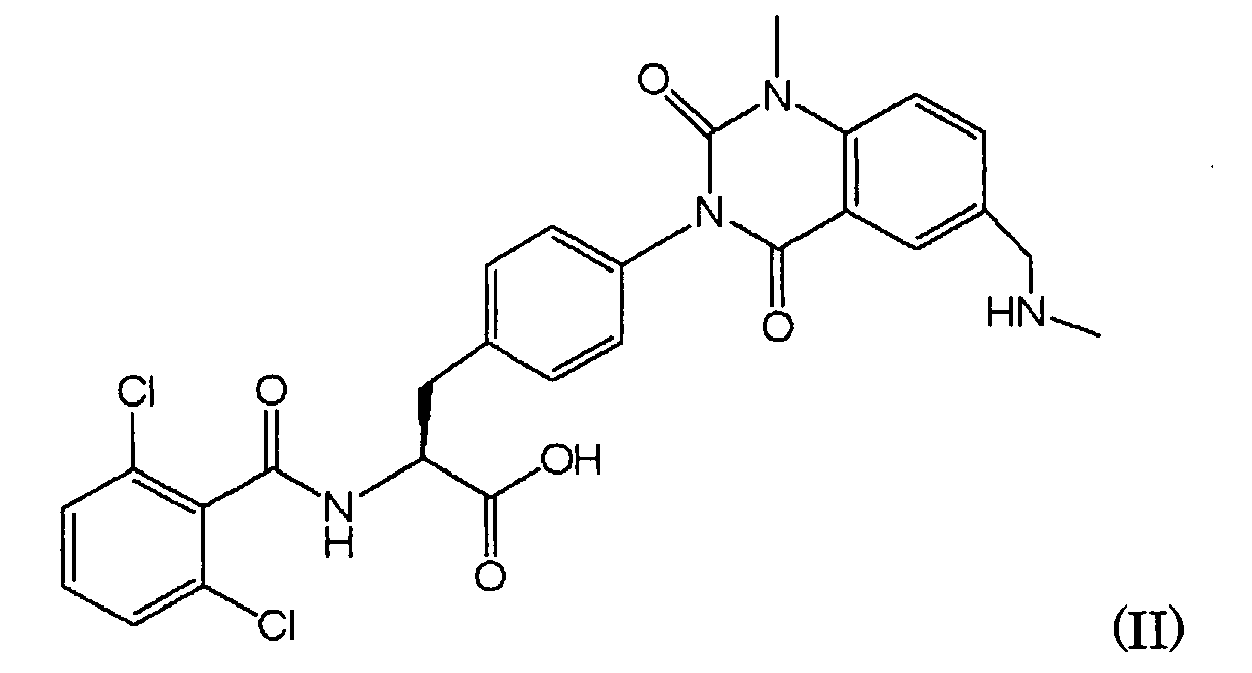
- In the crystal of (1), salts of the compound of the formula (I) are preferably a hydrochloride salt, hydrobromide salt and maleate salt, and a hydrochloride salt is particularly preferable.
- The crystal of the compound of the above formula (I) may be crystals of the free form, or a hydrate or solvate thereof. Examples of these crystals are crystal form A, crystal form B, crystal form D, crystal form E and crystal form F as mentioned in above (2), each of which shows the peak at the specific diffraction angles (2θ) in the powder X-ray diffraction pattern.
- Among them, crystal form A can be obtained by the method comprising the steps of: heating the compound of the formula (I) preferably at 50 to 80°C and more preferably at 60°C, preferably in dimethylformamide or pyridine, and more preferably in pyridine; quickly cooling it down (for example, at a cooling rate of 20 to 40°C/hour and preferably 30°C/hour) to 2 to 20°C and preferably to 5°C; aging the compound at the same temperature for about 24 hours; and collecting the precipitated crystal. The crystal obtained as above is usually in the form of hydrates.
- Crystal form B can be obtained by the method comprising the steps of: heating the compound of the formula (I) preferably at 50 to 80°C and more preferably at 60°C, preferably in 1-butanol, t-butanol, 2-butanol, 1-propanol, 2-propanol, ethanol, diethyl ether or dimethyl sulfoxide, and more preferably in 1-butanol, t-butanol or ethanol; quickly (for example, at a cooling rate of 20 to 40°C/hour and preferably 30°C/hour) or slowly (at a cooling rate of 0.5 to 3°C/hour and preferably 1°C/hour) cooling it down to 2 to 20°C and preferably to 5°C; aging the compound at the same temperature for about 24 hours; and collecting the precipitated crystal.
- Crystal form D can be obtained by the method comprising the steps of: heating the compound of the formula (I) preferably at 50 to 80°C and more preferably at 60°C, preferably in ethanol; quickly (for example, at a cooling rate of 20 to 40°C/hour and preferably 30°C/hour) or slowly (at a cooling rate of 0.5 to 3°C /hour and preferably 1°C/hour) cooling it down to 2 to 20°C and preferably to 5°C; aging the compound at the same temperature for about 24 hours; and collecting the precipitated crystal.
- Crystal form E can be obtained by the method comprising the steps of: heating the compound of the formula (I) preferably at 50 to 80°C and more preferably at 60°C, preferably in ethanol, dichloromethane or diethyl ether, and more preferably in ethanol; then, slowly (at a cooling rate of 0.5 to 3°C/hour and preferably 1°C/hour) cooling it down to 2 to 20°C and preferably to 5°C; aging the compound at the same temperature for about 24 hours; and collecting the precipitated crystal. The crystal obtained as above is usually in the form of anhydrides.
- Crystal form F can be obtained by the method comprising the steps of: heating the compound of the formula (I) preferably at 50 to 80°C and more preferably at 60°C, preferably in t-amyl alcohol; then, slowly (at a cooling rate of 0.5 to 3°C /hour and preferably 1°C /hour) cooling it down to 2 to 20°C and preferably to 5°C; aging the compound at the same temperature for about 24 hours; and collecting the precipitated crystal.
- The crystal of the hydrochloride salt of the compound of the formula (I) is either crystal form Cl1, crystal form Cl2, crystal form Cl3, crystal form Cl4 or crystal form Cl5, each of which shows the peak at the specific diffraction angles (2θ) in the powder X-ray diffraction pattern as mentioned in above (3). Further, the crystal of the hydrochloride salt of the compound of the formula (I) is either crystal form NW1, crystal form NW2, crystal form NW4, crystal form NW5, crystal form N1, crystal form N2, crystal form N3, crystal form N4, crystal form N5, crystal form Cl6, crystal form Cl7 or crystal form Cl8, each of which shows the peak at the specific diffraction angles (2θ) in the powder X-ray diffraction pattern as mentioned in above (4). Crystal form Cl5 is also specified by the peak at the specific diffraction angles (2θ) in the powder X-ray diffraction pattern of above (14), the 13C-NMR spectrum of
Figure 20 , and/or the infrared spectrum ofFigure 21 as mentioned in above (14) to (17). Further, crystal form N2 is also specified by the peak at the specific diffraction angles (2θ) in the powder X-ray diffraction pattern of above (18), the 13C-NMR spectrum ofFigure 28 , and/or the infrared spectrum ofFigure 29 as mentioned in above (18) to (21). - Among them, crystal form Cl1 can be obtained by the method comprising the steps of: heating the hydrochloride salt of the compound of the formula (I) preferably at 50 to 80 °C and more preferably at 60 °C , preferably in 4-trifluoromethyl toluene, pyridine or acetone and more preferably in pyridine; then, slowly (at a cooling rate of 0.5 to 3°C/hour and preferably 1°C/hour) cooling it down to 2 to 20°C and preferably to 5°C; aging the compound at the same temperature for about 1 hour or 72 hours; and collecting the precipitated crystal.
- Crystal form Cl2 can be obtained by the method comprising the steps of: heating the hydrochloride salt of the compound of the formula (I) preferably at 50 to 80°C and more preferably at 60°C, preferably in nitromethane or diethyl ether and more preferably in nitromethane; then, slowly (at a cooling rate of 0.5 to 3°C /hour and preferably 1°C/hour) cooling it down to 2 to 20°C and preferably to 5°C; aging the compound at the same temperature for about 1 hour or 72 hours; and collecting the precipitated crystal.
- Crystal form Cl3 can be obtained by the method comprising the steps of: heating the hydrochloride salt of the compound of the formula (I) preferably at 50 to 80 °C and more preferably at 60 °C , preferably in 2-butanol or 1,2-dimethoxyethane and more preferably in 2-butanol; then, slowly (at a cooling rate of 0.5 to 3°C/hour and preferably 1°C/hour) cooling it down to 2 to 20°C and preferably to 5°C; aging the compound at the same temperature for about 1 hour or 72 hours; and collecting the precipitated crystal.
- Crystal form Cl4 can be obtained by the method comprising the steps of: heating the hydrochloride salt of the compound of the formula (I) preferably at 50 to 80°C and more preferably at 60°C, preferably in isopropyl acetate or methanol; then, slowly (at a cooling rate of 0.5 to 3°C/hour and preferably 1°C/hour) cooling it down to 2 to 20°C and preferably to 5°C; aging the compound at the same temperature for about 1 hour; and collecting the precipitated crystal. In the case of using 2-propanol, acetonitrile, ethanol or ethyl acetate and preferably 2-propanol as a solvent, crystal form Cl4 can be obtained by the same method as mentioned above provided that the aging time becomes about 72 hours.
- Crystal form Cl5 can be obtained by the method comprising the steps of: heating the hydrochloride salt of the compound of the formula (I) preferably at 50 to 80°C and more preferably at 60°C, preferably in tetrahydrofuran (THF); then, at a cooling rate of 0.5 to 10°C/hour and preferably slowly (at a cooling rate of 0.5 to 3°C/hour and preferably 1°C/hour) cooling it down to 2 to 20°C and preferably to 5°C; aging the compound at the same temperature for about 1 hour or 72 hours; and collecting the precipitated crystal.
- Crystal form Cl5 is a particularly preferable crystal.
- Crystal form Cl5 can also be obtained by the production method comprising the step of adding a hydrogen chloride to a mixture comprising the compound of the formula (I) and acetone. In the case of adding the hydrogen chloride, it is possible to use hydrogen chloride gas, a hydrochloric acid or alcohols having 1 to 6 carbon atom(s) which comprise hydrogen chloride, for example.
- More specifically, crystal form Cl5 can be obtained by the method comprising the steps of: preparing a hydrochloric acid by diluting it with acetone to become 0.05 to 1.00mmol/mL in hydrogen chloride concentration; adding it to an acetone solution of the compound (free form) of the formula (I); heating the mixture with stirring preferably to 50 to 80 °C and more preferably to 60 °C ; then, comparatively slowly (at a cooling rate of 0.5 to 10°C/hour) cooling it down to 2 to 20°C and preferably to 5°C; aging the compound at the same temperature for about 1 to 72 hour(s); and filtering out the precipitated crystal and drying it at 60 to 85°C under reduced pressure.
- Crystal form Cl5 can also be obtained by the production method comprising the steps of: heating the hydrochloride salt of the compound of the formula (I) in a mixed solvent comprising acetone and water; adding an acetone solvent thereto; and then cooling it down.
- More specifically, crystal form Cl5 can be obtained by the method comprising the steps of: heating a mixture of a mixed solvent comprising acetone and water and the hydrochloride salt of the compound of the formula (I) preferably to 50 to 80 °C and more preferably to 65 °C to dissolve the compound; filtering the dissolved solution under heating; adding acetone dropwise to a filtrate and also adding a seed crystal thereto if necessary; then cooling down the obtained slurry to 2 to 20°C and preferably to 10°C; and filtering out the precipitated crystal and drying it at 60 to 85°C and preferably at 80°C under reduced pressure.
- Crystal form Cl5 can also be obtained by the production method comprising the step of: mixing the hydrochloride salt of the compound of the formula (I) and two or more solvents selected from the group consisting of acetone, water, THF, acetonitrile, methanol, ethanol, propanol and isopropyl acetate to obtain a suspension thereof.
- More specifically, crystal form Cl5 can be obtained by the method comprising the steps of: suspending the hydrochloride salt of the compound of the formula (I) other than crystal form Cl5 to acetone; stirring the suspension at 10 to 55°C and preferably at 25°C; and filtering out the precipitated crystal and drying it at 60 to 85°C and preferably at 80°C under reduced pressure.
- Crystal form NW1, crystal form NW2 and crystal form NW5 can be obtained, for example, by the method comprising the steps of: mixing the hydrochloride salt of the compound of the formula (I) and a mixed solution of acetonitrile/water and then cooling down the mixture, or heating the mixture and then cooling it down; adding acetonitrile or acetone dropwise thereto; and separating the precipitated crystal from the slurry. In this method, each of crystal form NW1, crystal form NW2 and crystal form NW5 can be obtained by adjusting a quantitative ratio of the hydrochloride salt of the compound of the formula (I) and a mixed solution of acetonitrile/water, the subsequent cooling or heating temperature, or the kind of a solvent added dropwise.
- Crystal form N1 can be obtained by drying crystal form NW1 under reduced pressure. Crystal form N2 can be obtained by drying crystal form NW2 under reduced pressure. Meanwhile, crystal form N3 can be obtained by drying crystal form NW2 under reduced pressure, depending on the condition of the solvent adhesion to crystal form NW2. Crystal form N5 can be obtained by drying crystal form NW5 under reduced pressure.
- Crystal form N2 can also be obtained by the production method comprising the steps of: heating the hydrochloride salt of the compound of the formula (I) in a solvent comprising acetonitrile and water; adding an acetone solvent thereto; and then cooling it down.
- For example, crystal form N2 can be obtained by the method comprising the steps of mixing the hydrochloride salt of the compound (I) and preferably 55 to 95 vol.% and more preferably 75 vol.% of a mixed solution of acetonitrile/water, and heating the mixture preferably to 55 to 85°C and more preferably to 70°C to dissolve it; cooling down the solution preferably to 25 to 35 °C and more preferably 30°C and adding acetone dropwise thereto and stirring it overnight; then separating the precipitated crystal from the slurry; and then drying the obtained wet crystal under reduced pressure with heating it preferably to 70 to 90°C and more preferably to 80°C.
- Crystal form NW4 can be obtained, for example, by the method comprising the steps of: mixing acetonitrile and the hydrochloride salt of the compound of the formula (I) and then cooling down the mixture, or heating the mixture and then cooling it down; and separating the precipitated crystal from the slurry. In this method, crystal form NW4 can be obtained by adjusting a quantitative ratio of acetonitrile and the hydrochloride salt of the compound of the formula (I), or the subsequent cooling or heating temperature.
- Crystal form N4 can be obtained by drying crystal form NW4 under reduced pressure.
- Each of crystal form Cl6, crystal form Cl7 and crystal form Cl8 can be obtained by the method comprising the steps of: using diethyl ether, 1,2-dimethoxyethane (DME), and 2-propanol as a solvent, respectively, and diluting a hydrochloric acid with each solvent to prepare it to become 0.05 to 1.00mmol/mL in concentration; adding the diluent to the compound (free form) of the formula (I) and heating the mixture with stirring preferably to 50 to 80°C and more preferably to 60°C; then, comparatively slowly (at a cooling rate of 0.5 to 10°C/hour) cooling it down to 2 to 20°C and preferably to 5°C; aging the compound at the same temperature for about 1 to 72 hour(s); and filtering out the precipitated crystal and drying it at room temperature for 24 hours or more under reduced pressure.
- The crystal of a sulfate salt of the compound of the formula (I) is either crystal form Su1, crystal form Su2 or crystal form Su3, each of which shows the peak at the specific diffraction angles (2θ) in the powder X-ray diffraction pattern as mentioned in above (5).
- Among them, crystal form Su1 can be obtained by the method comprising the steps of: heating the sulfate salt of the compound of the formula (I) preferably at 50 to 80 °C and more preferably at 60 °C, preferably in 1,2-ethanediol, cyclohexanone, pyridine or n-heptane and more preferably in pyridine; then, slowly (at a cooling rate of 0.5 to 3°C/hour and preferably 1°C/hour) cooling it down to 2 to 20°C and preferably to 5°C; aging the compound at the same temperature for about 1 hour; and collecting the precipitated crystal.
- Crystal form Su2 can be obtained by the method comprising the steps of: heating the sulfate salt of the compound of the formula (I) preferably at 50 to 80°C and more preferably at 60°C, preferably in nitromethane or ethyl acetate and more preferably in nitromethane; then, slowly (at a cooling rate of 0.5 to 3°C /hour and preferably 1°C/hour) cooling it down to 2 to 20°C and preferably to 5°C; aging the compound at the same temperature for about 1 hour; and collecting the precipitated crystal.
- Crystal form Su3 can be obtained by the method comprising the steps of: heating the sulfate salt of the compound of the formula (I) preferably at 50 to 80°C and more preferably at 60°C, preferably in 1,2-dimethoxyethane, ethanol, tetrahydrofuran, acetone or dichloromethane; then, slowly (at a cooling rate of 0.5 to 3°C/hour and preferably 1°C/hour) cooling it down to 2 to 20°C and preferably to 5°C; aging the compound at the same temperature for about 1 hour; and collecting the precipitated crystal. In the case of using ethyl acetate, methanol or diethyl ether as a solvent, crystal form Su3 can also be obtained by the same method as mentioned above provided that the aging time becomes about 72 hours.
- The crystal of a hydrobromide salt of the compound of the formula (I) is either crystal form Br1, crystal form Br2, crystal form Br3, crystal form Br4 or crystal form Br5, each of which shows the peak at the specific diffraction angles (2 θ) in the powder X-ray diffraction pattern as mentioned in above (6).
- Among them, crystal form Br1 can be obtained by the method comprising the steps of: heating the hydrobromide salt of the compound of the formula (I) preferably at 50 to 80 °C and more preferably at 60 °C , preferably in cyclohexanone; then, slowly (at a cooling rate of 0.5 to 3°C/hour and preferably 1°C/hour) cooling it down to 2 to 20°C and preferably to 5°C; aging the compound at the same temperature for about 1 hour or 72 hours; and collecting the precipitated crystal.
- Crystal form Br2 can be obtained by the method comprising the steps of: heating the hydrobromide salt of the compound of the formula (I) preferably at 50 to 80°C and more preferably at 60°C, preferably in water; then, slowly (at a cooling rate of 0.5 to 3°C/hour and preferably 1°C/hour) cooling it down to 2 to 20°C and preferably to 5°C; aging the compound at the same temperature for about 1 hour; and collecting the precipitated crystal. However, it is preferable to obtain crystal form Br2 by the same method as mentioned above provided that water or ethanol is used as a solvent and the aging time becomes about 72 hours.
- Crystal form Br3 can be obtained by the method comprising the steps of: heating the hydrobromide salt of the compound of the formula (I) preferably at 50 to 80°C and more preferably at 60°C, preferably in acetone, acetonitrile or 2-propanol and more preferably in acetonitrile; then, slowly (at a cooling rate of 0.5 to 3°C/hour and preferably 1°C /hour) cooling it down to 2 to 20°C and preferably to 5°C; aging the compound at the same temperature for about 1 hour; and collecting the precipitated crystal.
- Crystal form Br4 can be obtained by the method comprising the steps of heating the hydrobromide salt of the compound of the formula (I) preferably at 50 to 80°C and more preferably at 60°C, preferably in 2-butanol, 2-propanol or tetrahydrofuran and more preferably in tetrahydrofuran; then, slowly (at a cooling rate of 0.5 to 3°C/hour and preferably 1°C/hour) cooling it down to 2 to 20°C and preferably to 5°C; aging the compound at the same temperature for about 1 hour; and collecting the precipitated crystal. However, it is preferable to obtain crystal form Br4 by the same method as mentioned above provided that the above solvents, acetonitrile or diisopropylether is used as a solvent and the aging time becomes about 72 hours. In such a case, it is particularly preferable to use 2-butanol or tetrahydrofuran.
- Crystal form Br5 can be obtained by the method comprising the steps of: heating the hydrobromide salt of the compound of the formula (I) preferably at 50 to 80°C and more preferably at 60°C, preferably in ethyl acetate, acetone or 1,2-dimethoxyethane and more preferably in ethyl acetate or 1,2-dimethoxyethane; then, slowly (at a cooling rate of 0.5 to 3 °C /hour and preferably 1°C/hour) cooling it down to 2 to 20°C and preferably to 5°C; aging the compound at the same temperature for about 1 hour; and collecting the precipitated crystal. However, it is preferable to obtain crystal form Br5 by the same method as mentioned above provided that ethyl acetate or 1,2-dimethoxyethane is used as a solvent and the aging time becomes about 72 hours.
- The crystal of a phosphate salt of the compound of the formula (I) is either crystal form Pho1, crystal form Pho2, crystal form Pho3 or crystal form Pho4, each of which shows the peak at the specific diffraction angles (2 θ) in the powder X-ray diffraction pattern as mentioned in above (7).
- Among them, crystal form Pho1 can be obtained by the method comprising the steps of: heating the phosphate salt of the compound of the formula (I) preferably at 50 to 80 °C and more preferably at 60 °C , preferably in cyclohexanone, pyridine, acetone or dichloromethane and more preferably in cyclohexanone, pyridine or acetone; then, slowly (at a cooling rate of 0.5 to 3°C /hour and preferably 1°C/hour) cooling it down to 2 to 20°C and preferably to 5°C; aging the compound at the same temperature for about 1 hour; and collecting the precipitated crystal. However, it is also preferable to obtain crystal form Pho1 by the same method as mentioned above provided that N,N-dimethylacetamide or acetone is used as a solvent and the aging time becomes about 72 hours.
- Crystal form Pho2 can be obtained by the method comprising the steps of: heating the phosphate salt of the compound of the formula (I) preferably at 50 to 80 °C and more preferably at 60 °C , preferably in 1,1,2,2-tetrachloroethane, 1,2-dimethoxyethane, nitromethane, water, n-heptane, isopropyl acetate, acetonitrile, ethyl acetate, diisopropyl ether, tetrahydrofuran or diethyl ether and more preferably in water; then, slowly (at a cooling rate of 0.5 to 3°C/hour and preferably 1°C/hour) cooling it down to 2 to 20°C and preferably to 5°C; aging the compound at the same temperature for about 1 hour; and collecting the precipitated crystal.
- Crystal form Pho3 can be obtained by the method comprising the steps of: heating the phosphate salt of the compound of the formula (I) preferably at 50 to 80°C and more preferably at 60°C, preferably in methanol; then, slowly (at a cooling rate of 0.5 to 3°C/hour and preferably 1°C/hour) cooling it down to 2 to 20°C and preferably to 5°C; aging the compound at the same temperature for about 1 hour or 72 hours; and collecting the precipitated crystal.
- Crystal form Pho4 can be obtained by the method comprising the steps of: heating the phosphate salt of the compound of the formula (I) preferably at 50 to 80°C and more preferably at 60°C, preferably in 2,2,2-trifluoroethanol then, slowly (at a cooling rate of 0.5 to 3°C/hour and preferably 1°C/hour) cooling it down to 2 to 20°C and preferably to 5°C; aging the compound at the same temperature for about 1 hour or 72 hours; and collecting the precipitated crystal.
- The crystal of a maleate salt of the compound of the formula (I) is either crystal form Mall, crystal form Mal2 or crystal form Mal3, each of which shows the peak at the specific diffraction angles (2θ) in the powder X-ray diffraction pattern as mentioned in above (8).
- Among them, crystal form Mall can be obtained by the method comprising the steps of: heating the maleate salt of the compound of the formula (I) preferably at 50 to 80°C and more preferably at 60°C, preferably in nitromethane, 2-butanol, isopropyl acetate, 2-propanol or ethanol and more preferably in 2-butanol, 2-propanol or ethanol; then, slowly (at a cooling rate of 0.5 to 3°C/hour and preferably 1°C/hour) cooling it down to 2 to 20°C and preferably to 5°C; aging the compound at the same temperature for about 1 hour; and collecting the precipitated crystal.
- Crystal form Mal2 can be obtained by the method comprising the steps of: heating the maleate salt of the compound of the formula (I) preferably at 50 to 80 °C and more preferably at 60 °C , preferably in 1,2-dimethoxyethane, acetonitrile or ethyl acetate; then, slowly (at a cooling rate of 0.5 to 3°C/hour and preferably 1°C/hour) cooling it down to 2 to 20°C and preferably to 5°C; aging the compound at the same temperature for about 1 hour or 72 hours; and collecting the precipitated crystal.
- Crystal form Mal3 can be obtained by the method comprising the steps of: heating the maleate salt of the compound of the formula (I) preferably at 50 to 80°C and more preferably at 60°C, preferably in acetone; then, slowly (at a cooling rate of 0.5 to 3°C/hour and preferably 1°C/hour) cooling it down to 2 to 20°C and preferably to 5°C; aging the compound at the same temperature for about 1 hour; and collecting the precipitated crystal.
- The crystal of an acetate salt of the compound of the formula (I) is either crystal form Aca1, crystal form Aca2 or crystal form Aca3, each of which shows the peak at the specific diffraction angles (2θ) in the powder X-ray diffraction pattern as mentioned in above (9).
- Among them, crystal form Aca1 can be obtained by the method comprising the steps of: heating the acetate salt of the compound of the formula (I) preferably at 50 to 80°C and more preferably at 60°C, preferably in nitromethane, acetonitrile or acetone and more preferably in acetone; then, slowly (at a cooling rate of 0.5 to 3°C/hour and preferably 1°C/hour) cooling it down to 2 to 20°C and preferably to 5°C; aging the compound at the same temperature for about 1 hour; and collecting the precipitated crystal. However, it is preferable to obtain crystal form Aca1 by the same method as mentioned above provided that isopropyl acetate, acetonitrile or acetone is used as a solvent and the aging time becomes about 72 hours.
- Crystal form Aca2 can be obtained by the method comprising the steps of: heating the acetate salt of the compound of the formula (I) preferably at 50 to 80°C and more preferably at 60°C, preferably in 2-butanol; then, slowly (at a cooling rate of 0.5 to 3°C/hour and preferably 1°C/hour) cooling it down to 2 to 20°C and preferably to 5°C; aging the compound at the same temperature for about 1 hour; and collecting the precipitated crystal.
- Crystal form Aca3 can be obtained by the method comprising the steps of: heating the acetate salt of the compound of the formula (I) preferably at 50 to 80°C and more preferably at 60°C, preferably in ethyl acetate; then, slowly (at a cooling rate of 0.5 to 3°C/hour and preferably 1°C/hour) cooling it down to 2 to 20°C and preferably to 5°C; aging the compound at the same temperature for about 1 hour; and collecting the precipitated crystal. However, it is preferable to obtain crystal form Aca by the same method as mentioned above provided that 2-propanol is used as a solvent and the aging time becomes about 72 hours.
- The crystal of a D-tartrate salt of the compound of the formula (I) is either crystal form Tar1 or crystal form Tar2, each of which shows the peak at the specific diffraction angles (2θ) in the powder X-ray diffraction pattern as mentioned in above (10).
- Among them, crystal form Tar1 can be obtained by the method comprising the steps of: heating the D-tartrate salt of the compound of the formula (I) preferably at 50 to 80 °C and more preferably at 60 °C , preferably in cyclohexanone, nitromethane, 1,2-dimethoxyethane or acetone and more preferably in cyclohexanone; then, slowly (at a cooling rate of 0.5 to 3°C/hour and preferably 1°C/hour) cooling it down to 2 to 20°C and preferably to 5°C; aging the compound at the same temperature for about 1 hour; and collecting the precipitated crystal. However, it is preferable to obtain crystal form Tar1 by the same method as mentioned above provided that cyclohexanone is used as a solvent and the aging time becomes about 72 hours.
- Crystal form Tar2 can be obtained by the method comprising the steps of: heating the D-tartrate salt of the compound of the formula (I) preferably at 50 to 80°C and more preferably at 60°C, preferably in methanol; then, slowly (at a cooling rate of 0.5 to 3°C/hour and preferably 1°C/hour) cooling it down to 2 to 20°C and preferably to 5°C; aging the compound at the same temperature for about 1 hour or 72 hours; and collecting the precipitated crystal.
- The crystal of an L-tartrate salt of the compound of the formula (I) is either crystal form L-Tar1 or crystal form L-Tar2, each of which shows the peak at the specific diffraction angles (2θ) in the powder X-ray diffraction pattern as mentioned in above (11).
- These crystals can be obtained by the method comprising the steps of: dissolving the compound of the formula (I) together with an L-tartaric acid preferably in 1,2-dimethoxyethane (for crystal form L-Tar1) or acetone (for crystal form L-Tar2); heating the dissolved solution preferably at 50 to 80°C and more preferably at 60°C; then, comparatively slowly (at a cooling rate of 0.5 to 10°C/hour and preferably 1°C/hour) cooling it down to 2 to 20°C and preferably to 5 °C ; aging the compound at the same temperature; and filtering out the precipitated crystal and drying it under reduced pressure.
- The crystal of a methanesulfonate salt of the compound of the formula (I) is either crystal form Ms1, crystal form Ms2, crystal form Ms3, crystal form Ms4 or crystal form Ms5, each of which shows the peak at the specific diffraction angles (2θ) in the powder X-ray diffraction pattern as mentioned in above (12).
- These crystals can be obtained by the method comprising the steps of: dissolving the compound of the formula (I) together with a methanesulfonic acid preferably in methanol (for crystal form Ms1), THF (for crystal form Ms2), t-butyl methyl ether (for crystal form Ms3), DME (for crystal form Ms4) or acetone (for crystal form Ms5); heating the dissolved solution preferably at 50 to 80°C and more preferably at 60°C; then, comparatively slowly (at a cooling rate of 0.5 to 10°C/hour and preferably 1°C/hour) cooling it down to 2 to 20°C and preferably to 5°C; aging the compound at the same temperature; and filtering out the precipitated crystal and drying it under reduced pressure.
- The crystal of a citrate salt of the compound of the formula (I) is either crystal form Ca1, crystal form Ca2, crystal form Ca3 or crystal form Ca4, each of which shows the peak at the specific diffraction angles (2θ) in the powder X-ray diffraction pattern as mentioned in above (13).
- These crystals can be obtained by the method comprising the steps of dissolving the compound of the formula (I) together with a citric acid preferably in IPA (2-propanol) (for crystal form Ca1), 1-butanol (for crystal form Ca2), DME (for crystal form Ca3) or acetone (for crystal form Ca4); heating the dissolved solution preferably at 50 to 80 °C and more preferably at 60 °C ; then, comparatively slowly (at a cooling rate of 0.5 to 10°C/hour and preferably 1°C /hour) cooling it down to 2 to 20°C and preferably to 5°C; aging the compound at the same temperature; and filtering out the precipitated crystal and drying it under reduced pressure.
- In the present specification, "propanol" means 1-propanol or 2-propanol and preferably 2-propanol. Similarly, "butanol" means 1-butanol, 2-butanol, 2-methyl-1-propanol or tert-butanol and preferably 1-butanol.
- Meanwhile, the peaks of the diffraction angles (2 θ) in the powder X-ray diffraction pattern can slightly change due to nuances such as the measurement condition or the like. The diffraction angles described in the present specification can accept such error.
- Further, the overall pattern is important in 13C-NMR spectra, infrared spectra or DSC data in order to identify the crystals. Such spectra can slightly change due to the measurement condition or the like.
- In the above production methods, the aging time of 1 hour can be changed to 30 minutes to 5 hours. Similarly, about 72 hours can be changed to 48 hours or more, and preferably 48 to 120 hours.
- Crystal form Cl5, crystal form Br3, crystal form Br4, crystal form Br5 and crystal form Mal2 are preferable among the above crystals. Crystal form Cl5 and crystal form Br5 are particularly preferable. In addition to them, crystal form N2 is also particularly preferable.
- Salts of the compound of the formula (I) used for producing the crystals of the present invention may be those which are salts before they are added to a solvent, or they may become salts in the reaction when the free form is added to a solvent and then a corresponding acid is further added thereto.
- When preparing the above salts, it is preferable to add a hydrochloric acid or the like to the compound (free form) of the formula (I) so that an acid such as a hydrogen chloride, hydrogen bromide and an acetic acid becomes 1:1 or more in a molar ratio, preferably around 1:1.05 to 1:1.2 in a molar ratio and more preferably 1:1.1 in a molar ratio.
- Salts of the compound of the formula (I), particularly a hydrochloride salt, hydrobromide salt and maleate salt thereof are useful in itself in that they become raw materials of the above preferable crystals.
- Further, the amount of a solvent for precipitating crystals can be optional. When the compound (free form) of the formula (I) or salts thereof is 1 part by weight, the solvent is preferably 2 to 1000 parts by weight and particularly preferably 5 to 40 parts by weight.
- In the production methods of the present invention, another crystal may be produced by another production method of the present invention by using the crystal which is prepared by using amorphia or an amorphous solid substance, as well as the production method by using amorphia or an amorphous solid substance itself.
- The crystals of the present invention are easy to be used and excellent in "preservation stability" or "humidity resistance" of drug substances or drug products and, therefore, they are useful in that they are crystals which can be manufactured on the industrial scale. In addition to them, such crystals are also excellent in solubility.
- The compound of the above formula (I) which is a prodrug of the compound of the above formula (II) has an excellent durability of the effect particularly after the oral administration. Besides, since its membrane permeability is good, the area under the plasma concentration-time curve and bioavailability thereof are high in oral administration. The compound is also excellent in safety
- Thus, the crystals of the present invention can be used as
excellent α 4 integrin inhibitors. Further, they can be effectively used as an active ingredient of therapeutic agents or preventive agents for inflammatory diseases in which α 4 integrin-depending adhesion process participates in the pathology, such as rheumatoid arthritis, inflammatory bowel diseases (including Crohn's disease and ulcerative colitis), systemic lupus erythematosus, multiple sclerosis, Sjögren's syndrome, asthma, psoriasis, allergy, diabetes, cardiovascular diseases, arterial sclerosis, restenosis, tumor proliferation, tumor metastasis or transplantation rejection. - In addition, the crystals can be effectively used as an active ingredient of therapeutic agents or preventive agents for preeclampsia, ischemic cerebrovascular disorders (including cerebral infarction), systemic sclerosis, ankylosing spondylitis, arthritis psoriatica, sarcoidosis, giant cell arteritis, uveitides, fibroid lung, chronic obstructive pulmonary disease, osteoarthritis, Alzheimer's disease, spinal cord injury, traumatic brain injury, primary sclerosing cholangitis, liver cirrhosis caused by hepatitis C, active chronic hepatitis, sacroiliitis, ankylosing spondylitis, episcleritis, iritis, uveitis, erythema nodosum, pyoderma gangrenosum and autoimmune hepatitis.
- Further, the crystals can be effectively used as an active ingredient of therapeutic agents or preventive agents for the diseases in which α4 integrin may participate in the pathology in addition to the above diseases.
- The administered dose used for the above purposes is determined by the intended therapeutic effect, administration method, treatment period, age, body weight and the like. For example, by an oral or parenteral route (such as intravenous, intra-arterial, subcutaneous or intramuscular administration, suppositories, enema administration, ointment, patch, sublingual administration, eye-drops, inhalation and the like), the dose is usually 1 µg to 5 g and preferably 1mg to 1g a day for adults in the oral administration, and 0.01 µg to 1 g a day for adults in the parenteral administration.
- The crystals of the present invention can be applied to various dosage forms, and they can be prepared to pharmaceutical compositions without change or with various pharmaceutically acceptable carriers.
- The pharmaceutical compositions comprising the crystal(s) of the present invention preferably contain the crystal(s) of the present invention more than the ratio in which the practical therapeutic effect can be produced. The ratio in which the practical therapeutic effect can be produced is determined by the administered dose of the above pharmaceutical composition, the intended therapeutic effect, or the like.
- Examples of pharmaceutically acceptable carriers include various common organic or inorganic carriers as materials for preparation, such as excipients, lubricants, binders, disintegrating agents, water-soluble polymers, and basic inorganic salts in solid preparations; and solvents, solubilizing agents, suspending agents, tonicity agents, buffers, and soothing agents in liquid preparations. If necessary, it is possible to use common additives such as antiseptic agents, antioxidants, coloring agents, sweetening agents, acidulants, foaming agents, flavoring agents, or the like.
- The dosage forms of such pharmaceutical compositions are, for example, tablets, powders, pills, granules, capsules, suppositories, solutions, sugar-coated tablets, depots, syrups, suspending agents, emulsions, troches, sublingual agents, patches, oral disintegrating agents (tablets), inhalers, enema agents, ointments, patches, adhesives and eye-drops. They can be prepared with ordinary preparation additives by ordinary methods.
- The above pharmaceutical compositions can be produced by common methods in the preparation technical field and, for instance, by the methods described in Japanese Pharmacopoeia. The production methods of preparations are described below in detail.
- For example, when the crystals of the present invention are prepared as oral preparations, excipients and, if necessary, binders, disintegrating agents, lubricants, coloring agents, flavoring and freshening substance are added to the crystals. Then, they are formed as tablets, powders, pills, granules, capsules, suppositories, solutions, sugar-coated tablets, depots, syrups, suspending agents, emulsions, troches, sublingual agents, oral disintegrating agents (tablets), inhalers or the like in accordance with ordinary methods. Examples of excipients include lactose, corn starch, sucrose, glucose, sorbit and crystalline cellulose. Examples of binders include polyvinyl alcohol, polyvinyl ether, ethylcellulose, methylcellulose, gum arabic, tragacanth, gelatin, shellac, hydroxypropylcellulose, hydroxypropylstarch and polyvinyl pyrrolidone. Examples of disintegrating agents are starch, agar, gelatin powder, crystalline cellulose, calcium carbonate, sodium hydrogen carbonate, calcium citrate, dextran and pectin. Examples of lubricants are magnesium stearate, tarc, polyethylene glycol, silica, hydrogenated vegetable oil. Examples of coloring agents are those which are permitted to be added to pharmaceutical compositions. Further, cocoa powder, menthol, aromatic acids, peppermint oil, borneol, cinnamon powder and the like are used as flavoring and freshening substance. These tablets or granules may be coated, if necessary, with sugar, gelatin and the like.
- When injectable agents are prepared, pH adjusters, buffers, stabilizing agents, preservatives or the like are added thereto, if necessary, and then they are prepared as subcutaneously, intramuscularly or intravenously injectable agents in accordance with ordinary methods.
- Next, Examples will further illustrate the production of the crystals of the present invention. They only explain the present invention and do not particularly limit the invention.
- Isopropanol (130mL), tetrahydrofuran (50mL) and a sulfuric acid (0.44mL) were added to 4-nitro-N-(2,6-dichlorobenzoyl)-L-phenylalanine (Patent Literature 3:
WO2004/074264 ) (2.95g, 7.70mmol) and stirred at 50°C for 5 days. After removing the solvent under reduced pressure, the obtained solid substance was washed with water and dried to obtain the title compound (3.28g).
MS(ESI) m/z 425(MH+) - Isopropanol (6mL), tetrahydrofuran (3mL) and 3% Pt-S/C (20mg) were added to the compound obtained in Process 1 (98mg) and stirred under hydrogen atmosphere at room temperature overnight. After filtering the reaction solution, the filtrate was washed with isopropanol and condensed under reduced pressure to obtain the title compound (92mg).
MS(ESI) m/z 395(MH+) - The compound obtained in Process 2 (26.9g), 1-hydroxybenzotriazole monohydrate (11.5g) and 5-iodoanthranilic acid (17.8g) were dissolved in dimethylformamide (200mL) and cooled down to 0 °C . Then, 1-ethyl-3-(3-dimethylaminopropyl)carbodiimide hydrochloride (13.7g) was added thereto and stirred at room temperature for 16 hours. The organic layer to which ethyl acetate was added was washed with a 0.1N aqueous solution of sodium hydroxide, water, a 0.1N hydrochloric acid and a saturated saline solution respectively, and dried with anhydrous sodium sulfate. After removing the solvent under reduced pressure, the residue was suspended in methylene chloride and hexane, filtered out and dried to obtain the title compound (37.06g).
MS(ESI MH+): 640 - N,N-carbonyldiimidazole (28.16g) was dissolved in 150mL of dimethylformamide and heated up to 80°C. A dimethylformamide solution (150mL) of the compound obtained in Process 3 (37.06g) was added dropwise thereto and stirred overnight. After cooling it down to room temperature, ethyl acetate and water were added thereto and extraction was conducted. Then, the organic layer thereof was washed with water and a saturated saline solution respectively, and dried with anhydrous sodium sulfate. After removing the solvent under reduced pressure, the obtained solid substance was suspended in methylene chloride and hexane, filtered out and dried to obtain the title compound (33.06g).
MS(ESI MH+):666 - The compound obtained in Process 4 (33.06g) and potassium carbonate (14.5g) were added to dimethylformamide (200mL), and then iodomethane (10mL) was further added thereto. After stirring the mixture at room temperature for 4 hours, the insoluble substance was filtered by Celite filtration. Then, ethyl acetate and water were added to the filtrate and extraction was conducted. The obtained organic layer was washed with a 1N hydrochloric acid, a saturated sodium bicarbonate water and a saturated saline solution respectively. After removing the solvent, the obtained solid substance was suspended in methylene chloride and hexane, filtered out and dried to obtain the title compound (31.85g).
MS(ESI MH+): 680 - The compound obtained in Process 5 (31.85g) was dissolved in dimethylformamide (140mL), and triethylamine (13.1mL) and water (8.5mL) were added thereto. After bubbling carbon monoxide, palladium acetate (52mg) was further added thereto and stirred at 70 °C under carbon monoxide atmosphere for 11 hours. After filtering the insoluble substance by Celite filtration, dimethylformamide was removed under reduced pressure. Then, ethyl acetate and a 1N hydrochloric acid were added thereto and extraction was conducted. The obtained organic layer was washed with a 1N hydrochloric acid and a saturated saline solution respectively, and dried with sodium sulfate. After removing the solvent under reduced pressure, the obtained solid substance suspended in methylene chloride and hexane, filtered out and dried to obtain the title compound (27.23g).
MS(ESI MH+): 598 - The compound obtained in Process 6 (27.23g) was dissolved in tetrahydrofuran (200mL). Triethylamine (9.51mL) was added thereto and cooled down to 0°C. Then, ethyl chloroformate (4.56mL) was added dropwise thereto and stirred for 30 minutes. After filtering out the insoluble substance, the filtrate was cooled down to 0°C and sodium borohydride (2.58g) and ice (5 pieces) were added thereto. After stirring it for 1 hour, sodium borohydride (0.25g) was further added thereto and stirred for 20 minutes. Then, a 1N hydrochloric acid, and then ethyl acetate and water were added thereto and extraction was conducted. The organic layer thereof was washed with a 0.3N hydrochloric acid, water, a saturated sodium bicarbonate water and a saturated saline solution respectively. After removing the solvent, the obtained solid substance was suspended in methylene chloride and hexane, filtered out and dried to obtain the title compound (25.69g).
MS(ESI MH+): 584 - A mixed solvent of methylene chloride (140mL) and dimethylformamide (140mL) was cooled down to 0°C, and then phosphorous oxychloride (4.1mL) was added thereto and stirred for 30 minutes. Then, the compound obtained in Process 7 (25.69g) was added thereto at 0°C and stirred at room temperature for 1 hour. Further, phosphorous oxychloride (0.4mL) was added thereto and stirred for 1 hour. Then, ethyl acetate (400mL) and a saturated sodium bicarbonate water (100mL) were further added thereto and vigorously stirred. After ethyl acetate (500mL) and water (200mL) were added thereto to separate layers, the organic layer thereof was washed with a saturated sodium bicarbonate water, an aqueous solution of 1N sodium hydroxide and a saturated saline solution. Then, the layer was dried with anhydrous sodium sulfate. After removing the solvent under reduced pressure, the obtained solid substance was suspended in methylene chloride and hexane, filtered out and dried to obtain the title compound (20.32g).
MS(ESI MH+): 602 - An acetonitrile solution (450mL) of the compound obtained in Process 8 (20.32g) was added dropwise to a mixed solution of a 2M methylamine-tetrahydrofuran solution (200mL) and acetonitrile (100mL). The mixture was stirred at room temperature for 10 hours, and the solvent was removed under reduced pressure. A part of the obtained crude product was purified with silica gel column chromatography (chloroform-methanol, 5:1), and the residue was dissolved in chloroform and filtered. After condensing it under reduced pressure, water-acetonitrile was added thereto, and acetonitrile was removed under reduced pressure. Then, the residue was freeze-dried to obtain the title compound (2.04g).
MS(ESI MH+) : 597
1H-NMR(DMSO-d6) : δ 1.17(3H, d, J=6.3Hz), 1.21(3H, d, J=6.3Hz), 2.23(3H, s), 3.00(1H, dd, J=14.1, 9.9Hz), 3.17(1H, dd, J=14.1, 5.4Hz), 3.51(3H, s), 3.69(2H, s), 4.70-4.80(1H, m), 4.90-4.99(1H, m), 7.18(2H, d, J=8.3Hz), 7.35-7.45(6H, m), 7.74(1H, dd, J=8.6, 2.1Hz), 7.98(1H, d, J=2.1Hz), 9.22(1H, d, J=8.0Hz). - A 4N hydrogen chloride-dioxane solution (15mL) and water (3mL) were added to the compound (I) obtained in the referential example 1 (500mg, 0.838mmol), and stirred at 90°C for 3 hours. After removing the solvent, the reactant was purified with high-speed liquid chromatography (water/acetonitrile, each containing 0.1% TFA) to obtain the intended compound (330mg).
MS(ESI MH+) : 555
1H-NMR(DMSO-d6) : δ 2.58(3H, t, J=5.1Hz), 2.98(1H, dd, J=14.1, 10.5Hz), 3.24(1H, dd, J=14.1, 4.5Hz), 3.55(3H, s), 4.22-4.28(1H, m), 4.61-4.80(1H, m), 7.20(2H, d, J=8.4Hz), 7.39-7.46(5H, m), 7.60(1H, d, J=9.0Hz), 7.88(1H, d, J=6.9Hz), 8.24(1H, d, J=1.5Hz), 8.80(2H, brs), 9.15(1H, d, J=8.7Hz), 12.90(1H, brs) - The capacity of a test substance antagonistic to the binding of cell strain of human T cells, Jurkat(ATCC TIB-152), known to express integrin α4 β1, to VCAM-1 was determined.
- Fifty µ L/well of a solution (500ng/mL) of recombinant human VCAM-1/Fc (R & D systems) diluted with buffer A (0.1 M NaHCO3, pH 9.6) was added to a 96-well microtiter plate (Nunc Maxisorp). After the incubation thereof at 4°C overnight and washing it once with PBS, a buffer (buffer B) obtained by diluting Block Ace (Snow Brand Milk Products Co., Ltd.) with PBS to 1/2 concentration was added in the amount of 150 µL/well. After the incubation thereof at room temperature for 2 hours, buffer B was removed and the plate was washed with PBS once.
- Jurkat cells were washed with Dulbecco modified Eagle medium (SIGMA, hereinafter referred to as "DMEM") once. Then, the cells were suspended again in a binding buffer (DMEM containing 20mM HEPES, 0.1 % BSA, 2mM MnCl2 and 50% human blood serum (Sigma)) to become 1 x 10⁶ cells/mL.
- Sixty µL of a test substance of various concentrations obtained by the dilution with the binding buffer was added to a round-bottom 96-well plates (IWAKI). Immediately thereafter, 60 µL of the Jurkat cells (1 x 10⁶ cells/mL) were added thereto and shaken on a plate shaker (IKA-Labortechnik, IKA-SCHUTTLER MTS-4) at 1000 rpm for 10 seconds. In 120 µL of the cell suspensions to which the test substance was added, each 100 µL thereof was transferred on the VCAM-1/Fc-coated plate and incubated in dark place at room temperature for 60 minutes. After the shaking on the plate shaker at 1000 rpm for 30 seconds, the solution was immediately removed. Then, the unbound cells were removed by washing them with PBS once. Buffer C (PBS containing 0.82% Triton X-100) was added to the plate in the amount of 70 µL/well. After the shaking on the plate shaker at 1000 rpm for 5 minutes, the bound Jurkat cells were lysed. After centrifuging the cells on a plate centrifuge (SIGMA 4-15C) at room temperature at 2500 rpm for 5 minutes, 50 µL of supernatant thereof was transferred to a 96-well microtiter plate (Nunc Maxisorp). Each 50 µL of Substrate Buffer (Promega,
CytoTox 96 Non-Radioactive Cytotoxicity Assay) was added thereto, shaken on a plate shaker at 1000 rpm for 10 seconds and reacted in dark place at room temperature for 30 minutes. Then, each 50 µL of Stop Solution (Promega,CytoTox 96 Non-Radioactive Cytotoxicity Assay) was added thereto and shaken on a plate shaker at 1000 rpm for 10 seconds. Then, its absorbance at 490nm was determined with a plate reader (Molecular Devices, Vmax). - The absorbance thus obtained detects an activity of lactate dehydrogenase (LDH) dissolved in the supernatant of each well. Namely, the absorbance is proportional to the number of remaining Jurkat cells on the plate via the binding to VCAM-1. The test was conducted in duplicate and the binding rate of each test substance in various concentrations was determined while the absorbance of the test substance-free well was determined to be 100 % and the absorbance of the Jurkat-cell-free well was determined to be 0 %. The concentration for the 50 % binding inhibition, IC50, was calculated.
- As a result, IC50 of the compound of the formula (II) was 11.2nM, which was highly superior to IC50 of the compound of Example 1 in
WO 02/16329 - After the compound of the formula (II) which is the active form was weighed by a scale, they were adjusted by dimethylsulfoxide to become 10mg/mL.
Polyethylene glycol 400 and distilled water were added thereto to prepare 1mg/mL of an administration solution. 1mg/mL of the administration solution was intravenously administered as a single dose to a Wistar rat in an amount of 1mL/kg. 1, 5, 10, 30, 60 and 180 minutes later, the drug concentration in the blood plasma obtained by blood drawing from its cervical vein over time under anesthesia was determined with LC/MS. From the obtained results, the area under the plasma concentration time curve from zero to time infinity (AUCinf(iv)) was calculated in accordance with the trapezoidal method of pharmacokinetic analysis. The total body clearance (CLtot, [L/hr/kg]) was calculated as an index of drug disappearance in the blood plasma from a dose [mg/kg] and AUC [µ gxhr/mL] in accordance with the formula: CLtot = Dose ÷ AUcinf(iv). - As a result, CLtot of the compound of the formula (II) was 0.23[L/hr/kg], which was highly superior to CLtot of the compound of Example 1 in
WO 02/16329 - After the substance inhibiting the bond between α4 integrin and VCAM-1 is administered in vivo, in case its inhibitory activity works effectively, it is suggested that the number of lymphocytes in the peripheral blood is increasing by inhibiting adhesion of lymphocytes to the blood vessels or organs. Therefore, the activity of the compound of the formula (I) to elevate the number of lymphocytes in the rat was examined.
- The dosing solution was prepared by dissolving the compound of the formula (I) in dimethylsulfoxide, adding a mixed solution of polyethylene glycol 400 : propylene glycol = 1:1 thereto and turning it upside and down repeatedly. The final concentration of DMSO was adjusted to 2.5%.
- The dosing solution of a test substance (30mg/kg) was orally administered to male Wistar rats (6 to 8 weeks age) in the amount of 4mL/kg. After the settled time points after the administration, the blood was drawn from the abdominal large vein under anesthesia and mixed in an EDTA-2K coated container for blood collection. Then, the number of lymphocytes in the peripheral blood was determined by an automated comprehensive hematology analyzer (SF-3000, Sysmex). The test was conducted in n = 5, and the ratio (%) of the number of lymphocytes in the peripheral blood in a test substance-administered group to that in a vehicle-treated group(a control group) was calculated while the average value of the number of lymphocytes in the peripheral blood in a control group was determined to be 100%.
- Evaluation of the number of lymphocyte in the peripheral blood after 12 hours after administration results that the compound of Example 1 in
WO02/16329 - The measurement condition of the powder X-ray diffraction pattern described in Examples 1 to 15 is as follows:
- Device: Bruker GADDS diffractometer
- Target: CuKα monochromator
- Voltage: 40kV
- Current: 40mV
- Total time: 90 seconds or 180 seconds
- 2θ range: 1.5 to 41.5°
- The compound (free form) of the formula (I) prepared in the referential example was dissolved in tetrahydrofuran (THF), and the solvent was removed under reduced pressure to obtain amorphia of the compound (I).
- 3mg of the compound (I) obtained in
Process 1 was added to 40 µ L of dimethylformamide and heated up to 60°C. Then, the reactant was quickly cooled down to 5°C (at a cooling rate of 30°C/hour), aged at the same temperature for about 24 hours, and then the precipitated crystal was collected. The obtained crystal was in the form of a hydrate.Figure 1 shows the powder X-ray diffraction pattern thereof. - 3mg of the compound (free form) of the formula (I) prepared in
Process 1 of Example 1 was added to 40 µL of t-butanol and heated up to 60°C. Then, the reactant was quickly cooled down to 5°C (at a cooling rate of 30°C/hour), aged at the same temperature for about 24 hours, and then the precipitated crystal was collected. - In addition to it, the crystal was also collected by the same method as mentioned above provided that the solvent was changed to 1-butanol or ethanol.
- The powder X-ray diffraction pattern of the crystal thus obtained was measured.
Figure 3 shows the result thereof. - In the figure, 002 B2 represents the crystal obtained from t-butanol; 002 E1 represents the crystal obtained from 1-butanol; and 002 E2 represents the crystal obtained from ethanol.
- The compound (free form) of the formula (I) prepared in
Process 1 of Example 1 was added to methanol to become 75mg/1mL in methanol, put in 1 well of a 96-well plate and heated up to 60°C. Then, the reactant was quickly cooled down to 5°C (at a cooling rate of 30°C/hour), aged at the same temperature for about 24 hours, and then the precipitated crystal was collected. The powder X-ray diffraction pattern of the crystal thus obtained was measured.Figure 4 shows the result thereof together with the powder X-ray diffraction pattern of crystal form A. In the figure, FORM D represents crystal form D, and FORM A represents crystal form A. - The compound (free form) of the formula (I) prepared in
Process 1 of Example 1 was added to ethanol to become 75mg/1mL in ethanol, put in 1 well of a 96-well plate and heated up to 60°C. Then, the reactant was slowly cooled down to 5°C (at a cooling rate of 1°C/hour), aged at the same temperature for about 24 hours, and then the precipitated crystal was collected. The powder X-ray diffraction pattern of the crystal thus obtained was measured.Figure 5 shows the result thereof together with the powder X-ray diffraction pattern of crystal form B. In the figure, E001_E8 represents crystal form E and B002_E2 represents crystal form B. - The compound (free form) of the formula (I) prepared in
Process 1 of Example 1 was added to t-amyl alcohol to become 75mg/1mL in t-amyl alcohol, put in 1 well of a 96-well plate and heated up to 60°C. Then, the reactant was slowly cooled down to 5°C (at a cooling rate of 1°C/hour), aged at the same temperature for about 24 hours, and then the precipitated crystal was collected. The powder X-ray diffraction pattern of the crystal thus obtained was measured.Figure 6 shows the result thereof together with the powder X-ray diffraction pattern of crystal form A. In the figure, F001_H7 represents crystal form F and A represents crystal form A. - Nitromethane comprising a hydrogen chloride of which molar ratio to the compound (free form) of the formula (I) prepared in
Process 1 of Example 1 becomes 1.1:1 was added to said compound so that the concentration becomes the free form equivalent to 75mg/1mL in nitromethane. The mixture was put in 1 well of a 96-well plate and dissolved by being heated up to 60°C Then, the reactant was slowly cooled down to 5°C (at a cooling rate of 1°C/hour), aged at the same temperature for about 72 hours, and then the precipitated crystal form Cl2 was collected. - Crystal form Cl3 and crystal form Cl4 were obtained by the same method as mentioned above provided that the following condition was changed:
- Crystal form Cl3: use of 2-butanol as the solvent
- Crystal form Cl4: use of 2-propanol as the solvent.
- The powder X-ray diffraction pattern of each crystal thus obtained was measured.
Figure 7 shows the result thereof. - A sulfuric acid aqueous solution was added to the compound (free form) of the formula (I) prepared in
Process 1 of Example 1 so that the molar ratio of a sulfuric acid to said compound becomes 1.1:1, and then water was evaporated. The sulfate salt thus obtained was added to pyridine to become the free form equivalent to 75mg/1mL in pyridine, put in 1 well of a 96-well plate and dissolved by being heated up to 60°C Then, the reactant was slowly cooled down to 5°C (at a cooling rate of 1°C/hour), aged at the same temperature for about 72 hours, and then the precipitated crystal form Su1 was collected. - Crystal form Su2 and crystal form Su3 were obtained by the same method as mentioned above provided that the following condition was changed:
- Crystal form Su2: use of nitromethane as the solvent, and about 1 hour of aging time
- Crystal form Su3: use of ethanol as the solvent, and about 1 hour of aging time.
- The powder X-ray diffraction pattern of each crystal thus obtained was measured.
Figure 8 shows the result thereof. - Cyclohexanone comprising a hydrogen bromide of which molar ratio to the compound of the formula (I) (free form) prepared in
Process 1 of Example 1 becomes 1.1:1 was added to said compound so that the concentration becomes the free form equivalent to 75mg/1mL in cycloheanone. The mixture was put in 1 well of a 96-well plate and dissolved by being heated up to 60°C Then, the reactant was slowly cooled down to 5°C (at a cooling rate of 1°C/hour), aged at the same temperature for about 72 hours, and then the precipitated crystal form Br1 was collected. - Crystal form Br2 to crystal form Br5 were obtained by the same method as mentioned above provided that the following condition was changed:
- Crystal form Br2: use of ethanol as the solvent
- Crystal form Br3: use of acetonitrile as the solvent, and about 1 hour of aging time
- Crystal form Br4: use of tetrahydrofuran (THF) as the solvent
- Crystal form Br5: use of 1,2-dimethoxyethane as the solvent.
- The powder X-ray diffraction pattern of each crystal thus obtained was measured.
Figure 9 shows the result thereof. - A phosphoric acid aqueous solution was added to the compound (free form) of the formula (I) prepared in
Process 1 of Example 1 so that the molar ratio of a phosphoric acid to said compound becomes 1.1:1, and then water was evaporated. The phosphate salt thus obtained was added to cyclohexanone to become the free form equivalent to 75mg/1mL in cyclohexanone, put in 1 well of a 96-well plate and dissolved by being heated up to 60°C Then, the reactant was slowly cooled down to 5°C (at a cooling rate of 1°C/hour), aged at the same temperature for about 1 hour, and then the precipitatedcrystal form Pho 1 was collected. - Crystal form Pho2 to crystal form Pho4 were obtained by the same method as mentioned above provided that the following condition was changed:
- Crystal form Pho2: use of water as the solvent
- Crystal form Pho3: use of methanol as the solvent
- Crystal form Pho4: use of 2,2,2-trifluoroethanol as the solvent.
- The powder X-ray diffraction pattern of each crystal thus obtained was measured.
Figure 11 shows the result thereof. - A maleic acid aqueous solution was added to the compound (free form) of the formula (I) prepared in
Process 1 of Example 1 so that the molar ratio of a maleic acid to said compound becomes 1.1:1, and then water was evaporated. The maleate salt thus obtained was added to ethanol to become the free form equivalent to 75mg/1mL in ethanol, put in 1 well of a 96-well plate and dissolved by being heated up to 60°C Then, the reactant was slowly cooled down to 5°C (at a cooling rate of 1°C/hour), aged at the same temperature for about 1 hour, and then the precipitated crystal form Mal1 was collected. - Crystal form Mal2 and crystal form Mal3 were obtained by the same method as mentioned above provided that the following condition was changed:
- Crystal form Mal2: use of ethyl acetate as the solvent
- Crystal form Mal3: use of acetone as the solvent.
- The powder X-ray diffraction pattern of each crystal thus obtained was measured.
Figure 12 shows the result thereof. - Acetone comprising an acetic acid of which molar ratio to the compound (free form) of the formula (I) prepared in
Process 1 of Example 1 becomes 1.1:1 was added to said compound so that the concentration becomes the free form equivalent to 75mg/1mL in acetone. The mixture was put in 1 well of a 96-well plate and dissolved by being heated up to 60°C Then, the reactant was slowly cooled down to 5°C (at a cooling rate of 1°C/hour), aged at the same temperature for about 1 hour, and then the precipitated crystal form Aca1 was collected. - Crystal form Aca2 and crystal form Aca3 were obtained by the same method as mentioned above provided that the following condition was changed:
- Crystal form Aca2: use of 2-butanol as the solvent
- Crystal form Aca3: use of ethyl acetate as the solvent.
- The powder X-ray diffraction pattern of each crystal thus obtained was measured.
Figure 13 shows the result thereof. - A D-tartaric acid aqueous solution was added to the compound (free form) of the formula (I) prepared in
Process 1 of Example 1 so that the molar ratio of a D-tartaric acid to said compound becomes 1.1:1, and then water was evaporated. The D-tartrate salt thus obtained was added to cyclohexanone to become the free form equivalent to 75mg/lmL in cyclohexanone, put in 1 well of a 96-well plate and dissolved by being heated up to 60°C Then, the reactant was slowly cooled down to 5°C (at a cooling rate of 1°C/hour), aged at the same temperature for about 1 hour, and then the precipitated crystal form Tar1 was collected. - Crystal form Tar2 was obtained by the same method as mentioned above provided that the following condition was changed:
- Crystal form Tar2: use of methanol as the solvent.
- The powder X-ray diffraction pattern of each crystal thus obtained was measured.
Figure 14 shows the result thereof. - An acetone solution (1.0mL, 0.140mmol) to which a 37% hydrochloric acid was added in order to comprise 0.14mmol/mL of a hydrogen chloride was added to 76mg (0.127mmol) of the compound (free form) of the formula (I) prepared in the referential example (the molar ratio of said compound to a hydrogen chloride = 1:1.1). Stirring the mixture by a magnetic stir bar, it was heated at a heating rate of 1°C/minute, and kept at 60°C for 30 minutes. Then, the reactant was slowly cooled down to 5°C (at a cooling rate of 1°C/hour), aged at the same temperature for about 72 hours, and then the precipitated crystal form Cl1 was collected.
- When measuring the powder X-ray diffraction pattern of the crystal thus obtained, the pattern was the same as that of crystal form Cl1 in
Figure 7 . - A THF solution (1.1mL, 0.154mmol) to which a 48% hydrobromic acid was added in order to comprise 0.14mmol/mL of HBr was added to 82.7mg (0.139mmol) of the compound (free form) of the formula (I) prepared in the referential example (the molar ratio of said compound to HBr = 1:1.1). Stirring the mixture by a magnetic stir bar, it was heated at a heating rate of 1°C/minute, and kept at 60°C for 30 minutes to dissolve a hydrobromide salt. Then, the reactant was slowly cooled down to 5°C (at a cooling rate of 1°C/hour), aged at the same temperature for about 72 hours, and then the precipitated crystal form Br4 was collected.
- When measuring the powder X-ray diffraction pattern of the crystal thus obtained, the pattern was the same as that of crystal form Br4 obtained in Example 8.
- A solution (0.140mmol) wherein 16.3mg of a maleic acid (purity: 99%) was dissolved in 1.004mL of ethyl acetate was added to 75.3mg (0.126mmol) of the compound (free form) of the formula (I) prepared in the referential example (the molar ratio of said compound to a maleic acid = 1:1.1). Stirring the mixture by a magnetic stir bar, it was heated at a heating rate of 1°C/minute, and kept at 60°C for 30 minutes to dissolve a maleate salt. Then, the reactant was slowly cooled down to 5°C (at a cooling rate of 1°C/hour), aged at the same temperature for about 72 hours, and then the precipitated crystal form Mal2 was collected.
- When measuring the powder X-ray diffraction pattern of the crystal thus obtained, the pattern was the same as that of crystal form Mal2 obtained in Example 10.
- The measurement condition of the powder X-ray diffraction pattern described in Examples 16 to 18 and 24 is as follows:
- Device:
- Powder X-ray diffractometer, X'Pert-Pro-MPD (PANalytical)
- Detector:
- Semiconductor array detector, X'Celerator
- Target:
- Cu fully automatic monochromator
- Voltage:
- 40kV
- Current:
- 40mV
- Slit:
-
divergence 1/2°
scattering 1/2°
light-receiving 0.15mm - Scan Speed:
- 2° /min.
- 2θ range:
- 3 to 30°
- A maleic acid was dissolved in ethyl acetate to become 0.14mmol/mL. 10mL thereof was added to the compound (I) (750mg, 1.25mmol) prepared in the referential example, and the mixture was heated up from 20°C to 60°C with stirring it (at a heating rate of 1°C/min.) The reactant was kept at 60°C for 30 minutes and cooled down from 60°C to 5°C for 55 hours (at a cooling rate of 1°C /hour). Then, it was aged at 5°C for about 14 hours, filtered and dried under reduced pressure (at room temperature for 24 hours) to obtain a white crystal.
- Powder X-ray diffraction pattern:
Figure 15
1H-NMR(DMSO-d6) : δ 1.18(3H, d, J=6.3Hz), 1.23(3H, d, J=6.3Hz), 2.58(3H, s), 3.02(1H, dd, J=14.1, 9.9Hz), 3.19(1H, dd, J=14.1, 5.4Hz), 3.55(3H, s), 4.24(2H, s), 4.72-4.82(1H, m), 4.90-5.00(1H, m), 6.02(2H, s), 7.21(2H, d, J=8.4Hz), 7.39-7.48(5H, m), 7.59(1H, d, J=8.7Hz), 7.87(1H, dd, J=9.0, 2.4Hz), 8.24(1H, d, J=2.4Hz), 8.68-8.80(brs, 1H), 9.24(1H, d, J=8.1Hz). - A hydrochloric acid was diluted with tetrahydrofuran to become 0.14mmol/mL. 10mL thereof was added to the compound (I) (free form, 750mg, 1.25mmol) prepared in the referential example, and the mixture was heated up from 20°C to 60°C with stirring it (at a heating rate of 1°C/min.) The reactant was kept at 60°C for 30 minutes and cooled down from 60°C to 5°C for 55 hours (at a cooling rate of 1°C/hour). Then, it was aged at 5°C for about 14 hours, filtered and dried under reduced pressure (at room temperature for 90 hours) to obtain a white crystal (715mg).
-
Figure 16 shows the result of the powder X-ray diffraction pattern. - Further, the diffraction angles and intensities of main peaks are shown below:
Cl5 -type2θ Intensity 5.4 strong 8.2 strong 11.2 strong 12.4 weak 14.3 medium 15.6 medium 17.4 strong 18.4 weak 18.8 weak - Among the above, particularly characteristic peaks are 8.2, 11.2, 12.4, 14.3 and 15.6, and further 8.2, 11.2, 14.3 and 15.6.
1H-NMR(DMSO-d6) : δ 1.18(3H, d, J=6.3Hz), 1.23(3H, d, J=6.3Hz), 2.54(3H, s), 3.02(1H, dd, J=14.1, 9.9Hz), 3.19(1H, dd, J=14.1, 5.4Hz), 3.55(3H, s), 4.22(2H, s), 4.70-4.82(1H, m), 4.90-5.00(1H, m), 7.21(2H, d, J=8.4Hz), 7.35-7.48(5H, m), 7.59(1H, d, J=8.7Hz), 7.95(1H, dd, J=9.0, 2.4Hz), 8.23(1H, d, J=2.4Hz), 9.05-9.18(brs, 2H), 9.24(1H, d, J=8.1Hz). - A hydrochloric acid (5.92mL, 71.0mmol) was diluted with acetone (76.6mL) to become 0.86mmol/mL. The dilution was added to an acetone solution (433mL) of the compound (I) (free form, 38.3g, 64.1mmol) prepared in the referential example, and the mixture was heated up from 20°C to 60°C with stirring it (at a heating rate of 1°C/min.) The reactant was kept at 60°C for 30 minutes and cooled down from 60°C to 5°C for 5.5 hours (at a cooling rate of 10°C/hour). Then, it was aged at 5°C for about 6 hours, filtered and dried under reduced pressure (at 60°C for a few days) to obtain a white crystal (36.23g). The powder X-ray diffraction pattern thereof represented Cl5-type.
- 23mL of acetone and 15mL of water were mixed. 5.04g of a hydrochloride salt of the compound (I) (which is obtained, for example, by mixing the compound (I) (free form) and a dioxane solution comprising a hydrogen chloride; and then removing the solvent) was added thereto and dissolved by heating at 65°C. The dissolved solution was filtered under heating, and 220mL of acetone was added dropwise to a filtrate for 40 minutes. 30mg of a seed crystal was also added in said treatment. The obtained slurry was cooled down to 10 °C and stirred overnight. Then, the precipitated crystal was filtered .out and washed with 30mL of cold acetone. The obtained wet crystal was dried at 70 °C under reduced pressure to obtain 4.47g of a white crystal (yield 88.7%). The powder X-ray diffraction pattern thereof represented Cl5-type.
- 30.47g of a hydrochloride salt of the compound (I) was added to 112.5mL of acetonitrile and 37.5mL of water and dissolved by heating at 80°C. Then, the mixture was cooled down to 30°C and 600mL of acetone was added dropwise. The precipitated crystal slurry was stirred at 10°C overnight. Then, the crystal was separated by a centrifuge to obtain 61.11g of a wet crystal. The powder X-ray diffraction pattern of this wet crystal represented NW2-type. 10.75g of the wet crystal (dry weight 5.0g) was suspended in 100mL of acetone and stirred at 25°C overnight. The crystal was filtered out and dried at 80°C for 18 hours under reduced pressure to obtain 4.63g of a white crystalline solid substance. The powder X-ray diffraction pattern thereof represented Cl5-type.
-
Figure 20 shows the solid-state NMR spectrum data of crystal form Cl5 produced by the above method (device = AVANCE 400WB by BRUKER; measurement method = 13C-CPTOSS method; MAS=6KHz).Figure 21 shows the infrared spectrum data of said crystal (device = FTIR-8300 by Shimadzu Corporation; measurement method = potassium chloride method). - A hydrobromic acid was diluted with 1,2-dimethoxyethane to become 0.14mmol/mL. 10mL thereof was added to the compound (I) (750mg, 1.25mmol) prepared in the referential example, and the mixture was heated up from 20°C to 60°C with stirring it (at a heating rate of 1°C/min.) The reactant was kept at 60°C for 30 minutes and cooled down from 60°C to 5°C for 55 hours (at a cooling rate of 1°C/hour). Then, it was aged at 5°C for about 14 hours, filtered and dried under reduced pressure (at room temperature for 114 hours) to obtain a white crystal (803mg).
- Powder X-ray diffraction pattern:
Figure 17
1H-NMR(DMSO-d6) : δ 1.18(3H, d, J=6.3Hz), 1.23(3H, d, J=6.3Hz), 2.57(3H, s), 3.02(1H, dd, J=14.1, 9.9Hz), 3.20(1H, dd, J=14.1, 5.4Hz), 3.55(3H, s), 4.24(2H, s), 4.70-4.82(1H, m), 4.92-5.00(1H, m), 7.21(2H, d, J=8.4Hz), 7.38-7.48(5H, m), 7.59(1H, d, J=8.7Hz), 7.89(1H, dd, J=9.0, 2.4Hz), 8.23(1H, d, J=2.4Hz), 8.70-8.80(brs, 2H), 9.24(1H, d, J=8.1Hz). - The measurement condition of the powder X-ray diffraction pattern described in Examples 19 to 23 is as follows:
- Device:
- Powder X-ray diffractometer, X'Pert-Pro-MPD (PANalytical)
- Detector:
- Semiconductor array detector, X'Celerator
- Target:
- Cu fully automatic monochromator
- Voltage:
- 40kV
- Current:
- 55mV
- Slit:
-
divergence 1/2°
scattering 1/2°
light-receiving 0.15mm - 2θ range:
- 5 to 40°
- 20g of a hydrochloride salt of the compound (I) was suspended in 100mL of a mixed solution of 75vol.% acetonitrile/water (before mixing, acetonitrile (vol) water (vol) = 75:25) and heated up to 70°C to dissolve it. This solution was cooled down to 30°C, 500mL of acetonitrile was added dropwise and stirred at 10°C overnight. The precipitated crystal was separated from the slurry to obtain 32.79g of a wet crystal, which is NW 1-type. This crystal was dried at 80°C for 18 hours under reduced pressure to obtain 16.93g of a hydrochloride salt of the compound (I) (N1-type) as a white crystalline solid substance.
- Powder X-ray diffraction pattern:
Figures 22 and23 - 10g of a hydrochloride salt of the compound (I) was suspended in 50mL of a mixed solution of 75vol. % acetonitrile/water and heated up to 70°C to dissolve it. This solution was cooled down to 30°C, 200mL of acetonitrile was added dropwise and stirred at 10°C overnight. The precipitated crystal was separated from the slurry to obtain 19.20g of a wet crystal, which is NW2-type. This crystal was dried at 80 °C for 18 hours under reduced pressure to obtain 8.77g of a hydrochloride salt of the compound (I) (N2-type) as a white crystalline solid substance.
-
Figure 28 shows the solid-state NMR spectrum data thereof (device = AVANCE 400WB by BRUKER; measurement method = 13C-CPTOSS method; MAS=6KHz).Figure 29 shows the infrared spectrum data thereof (device = FTIR-8300 by Shimadzu Corporation; measurement method = potassium chloride method). - 2g of a hydrochloride salt of the compound (I) was suspended in 50mL of a mixed solution of 92.5vol.% acetonitrile/water and stirred at 10°C for 24 hours. The precipitated crystal was separated from the slurry to obtain a wet crystal of NW2-type. This crystal was dried at 80°C for 18 hours under reduced pressure to obtain 0.52g of a hydrochloride salt of the compound (I) (N3-type) as a white crystalline solid substance.
- 429mg of the compound (I) was added to 8mL of acetonitrile, stirred and dissolved by heating at 60°C. 0.8mL of water was added thereto, and then 0.12mL of a 6N hydrochloric acid aqueous solution wad added thereto. The mixture was cooled down to room temperature, and the precipitated solid substance was separated and washed with 2mL of acetonitrile. This crystal was dried at 60°C under reduced pressure to obtain 212mg of a hydrochloride salt of the compound (I) (N3-type) as a white crystalline solid substance.
- Powder X-ray diffraction pattern:
Figure 30 - 2g of a hydrochloride salt of the compound (I) was suspended in 60mL of acetonitrile and stirred at 10°C for 24 hours. The precipitated crystal was separated from the slurry to obtain a wet crystal of NW4-type. This crystal was dried at 80 °C for 18 hours under reduced pressure to obtain 0.73g of a hydrochloride salt of the compound (I) (N4-type) as a white crystalline solid substance.
- Powder X-ray diffraction pattern:
Figures 32 and33 - 7g of a hydrochloride salt of the compound (I) was suspended in 50mL of a mixed solution of 60vol.% acetonitrile/water and stirred at 50°C for 24 hours. The precipitated crystal was separated from the slurry to obtain a wet crystal of NW5-type. This crystal was dried at 80°C for 18 hours under reduced pressure to obtain 2.11g of a hydrochloride salt of the compound (I) (N5-type) as a white crystalline solid substance.
- 0.14mmol/mL of an acid solution was prepared by using acids and solvents described in Table 1. 6.7mL of the solution was added to the compound (I) (500mg, 0.837mmol) prepared in the referential example and heated up from 20°C to 60°C (at a heating rate of 1°C/minute) with stirring. The reactant was kept at 60°C for 30 minutes and cooled down from 60°C to 5°C for 11 hours (at a cooling rate of 5°C/hour). Then, it was aged at 5°C for about 11 hours, filtered and dried under reduced pressure (at room temperature for 48 hours or more) to obtain a crystal.
Table 1 Example Form Acid Solvent Cl6 conc.HCl Ether Cl7 conc. HCl DME Cl8 conc.HCl IPA Ca1 Citric acid IPA Ca2 Citric acid 1-BuOH Ca3 Citric acid DME Ca4 Citric acid Acetone Ms1 MsOH MeOH Ms2 MsOH THF Ms3 MsOH t BuOMe Ms4 MsOH DME Ms5 MsOH Acetone L-Tar1 L-Tartaric acid DME L-Tar2 L-Tartaric acid Acetone Ether: diethyl ether - The measurement results of 1H-NMR are shown below:
(Crystal form Ca4)
1H-NMR(DMSO-d6) : δ 1.19(3H, d, J=6.0Hz), 1.23(3H, d, J=6.0Hz), 2.45-2.58(m), 3.01(1H, dd, J=14.1, 9.9Hz), 3.19(1H, dd, J=14.4, 5.7Hz), 3.55(3H, s), 4.20(2H, s), 4.73-4.80(1H, m), 4.91-4.99(1H, m), 7.21(2H, d, J=9.0Hz), 7.37-7.47(5H, m), 7.58(1H, d, J=8.7Hz), 7.87(1H, d, J=8.4Hz), 8.22(1H, s), 9.24(1H, d, J=8.4Hz).
(Crystal form Ms 1)
1H-NMR(DMSO-d6) : δ 1.19(3H, d, J=6.3Hz), 1.23(3H, d, J=6.3Hz), 2.31(3H, s), 2.58(3H, s), 3.01(1H, dd, J=14.1, 9.9Hz), 3.19(1H, dd, J=14.1, 5.4Hz), 3.55(3H, s), 4.24(2H, brs), 4.77(1H, m), 4.95(1H, m), 7.21(2H, m), 7.38-7.47(5H, m), 7.59(1H, d, J=8.7Hz), 7.88(1H, dd, J=8.7, 2. 1Hz), 8.24(1H, d, J=2.1Hz), 8.75(brs, 2H), 9.24(1H, d, J=7.8Hz).
(Crystal form L- Tar 1)
1H-NMR(DMSO-d6) :δ 1.19(3H, d, J=6.0Hz), 1.23(3H, d, J=6.0Hz), 3.01(1H, dd, J=13.8, 9.6Hz), 3.19(1H, dd, J=13.8, 5.4Hz), 3.54(3H, s), 3.91(2H, s), 4.13(2H, s), 4.73-4.80(1H, m), 4.91-4.99(1H, m), 7.20(2H, d, J=8.4Hz), 7.37-7.47(5H, m), 7.56(1H, d, J=8.7Hz), 7.87(1H, d, J=8.4Hz), 8.19(1H, s), 9.24(1H, d, J=8.1Hz). - The following Test Examples will illustrate the effect of the present invention. Test Example 4 confirmed thermodynamically stable crystal types, and Test Example 5 confirmed chemically stable crystal types. Besides, Test Example 6 confirmed stable crystal types which do not depend on relative humidity, and Test Example 7 confirmed poorly hygroscopic crystal types.
- 1 to 5mg of a sample of each crystal obtained above (crystal forms A, Br4, Cl5 or Br5) was weighed by scales and sealed in an aluminum pan. Then, DSC was conducted in accordance with the following condition.
- Reference:
- An empty aluminum pan
- Sampling time:
- 0.2 sec.
- Range:
- 25 to 350°C
- Heating time:
- 10 or 20°C/min.
- The results are shown in
Figure 2 (crystal form A),Figure 10 (crystal form Br4),Figure 18 (crystal form Cl5) andFigure 19 (crystal form Br5). - The melting point of crystal from Cl5 by DSC is high temperature around 255 °C (250 to 260 °C), and that of crystal form Br5 by DSC is also high temperature around 226°C (221 to 231°C).
- Crystal form Cl5, crystal form Br5 and crystal form A were preserved in the following condition, and then the amount of impurities in each sample was compared. However, the increase in the impurities by heating was not observed.
- Duration:
- 4 weeks
- Temperature/humidity:
- 40°C/75% relative humidity - opened
60°C/opened
Room temperature/closed (control) - The powder X-ray diffraction of each of crystal form Cl5 and crystal form Mal2 was measured in the following condition, and the diffraction patterns between dry one and wet one were compared. However, there was no difference thereof in each crystal.
- Drying condition (dry): measurement of a sample with drying it at 50°C under reduced pressure
- Humid condition (wet): measurement of a sample under 85% relative humidity
- Powder diffractometer: RINT2100S by RIGAKU (and a temperature and humidity attachment for said diffractometer) Humidity generator: SRH-1R , Shinei Co., Inc.
- 50mg of each of crystal form Cl5 and M12-crystal was weighed by scales and vacuum dried at 50°C overnight. Then, at constant temperature, the water adsorption amount of each crystal was measured with an automatic vapor adsorption measurement apparatus (BELSORP-18, by BEL Japan, Inc.). (Mitsuiki et al., J. Agric. Food Chem., Vol. 46, No.9, Page 3528-34, 1998)
- The water adsorption amount of each of crystal form Cl5 and M12-crystal was low even in 100% relative humidity, that is, 4% or lower.
- 1 to 5mg of a sample of each crystal obtained above (crystal forms N1 to N5, Cl6 to Cl8 and Ms1) was weighed by scales and sealed in an aluminum pan. Then, DSC was conducted in accordance with the following condition.
- Reference:
- An empty aluminum pan
- Sampling time:
- 0.2 sec.
- Range:
- 40 to 300°C
- Heating time:
- 10 or 20°C/min.
- The results are shown in
Figure 24 (crystal form N1),Figure 27 (crystal form N2),Figure 31 (crystal form N3),Figure 34 (crystal form N4),Figure 37 (crystal form N5),Figure 52 (crystal form Cl6),Figure 53 (crystal form Cl7),Figure 54 (crystal form Cl8) andFigure 55 (crystal form Ms 1).
Claims (41)
- A crystal of a compound of the formula (I) or salts thereof.

- The crystal according to claim 1, wherein the crystal of the compound of the formula (I) is either crystal form A, crystal form B, crystal form D, crystal form E or crystal form F, each of which shows the peak at the following diffraction angles (2θ) in the powder X-ray diffraction pattern.
A B D E F 8.5 9.7 4.4 5.9 5.5 10.4 11.4 5.2 14.3 8.0 15.4 14.5 9.2 20.1 18.2 16,9 20.0 20.6 23.0 19.4 23.5 23.8 - 21.9 - The crystal according to claim 1, wherein the crystal of a hydrochloride salt of the compound of the formula (I) is either crystal form Cl1, crystal form Cl2, crystal form Cl3, crystal form Cl4 or crystal form Cl5, each of which shows the peak at the following diffraction angles (2θ) in the powder X-ray diffraction pattern.
Cl1 Cl2 Cl3 Cl4 Cl5 2.9 8.5 3.6 4.9 8.2 7.7 10.5 8.9 17.5 11.2 11.6 16.0 12.4 12.4 20.3 17.0 14.3 23.6 15.6 - The crystal according to claim 1, wherein the crystal of a hydrochloride salt ofhydrochloride salt of the compound of the formula (I) is either crystal form NW 1, crystal form NW2, crystal form NW4, crystal form NW5, crystal form N1, crystal form N2, crystal form N3, crystal form N4, crystal form N5, crystal form Cl6, crystal form Cl7 or crystal form Cl8, each of which shows the peak at the following diffraction angles (2 θ) in the powder X-ray diffraction pattern.
NW1 NW2 NW4 NW5 N1 N2 N3 N4 N5 Cl6 Cl7 Cl8 9.1 8.6 5.8 9.2 6.0 6.4 8.4 5.5 5.4 8.7 8.5 8.9 12.6 10.4 7.6 11.2 6.7 8.5 9.2 8.3 10.7 12.1 11.9 12.5 13.0 12.0 8.7 15.0 12.4 9.3 14.7 11.3 17.1 17.8 14.0 17.8 13.6 12.4 10.4 19.9 13.4 12.9 15.2 13.7 19.0 19.3 17.9 24.1 13.0 22.5 22.4 13.5 14.8 17.5 25.5 19.4 15.0 24.9 13.9 15.3 19.2 15.5 25.6 24.2 25.9 - The crystal according to claim 1, wherein the crystal of a sulfate salt of the compound of the formula (I) is either crystal form Su1, crystal form Su2 or crystal form Su3, each of which shows the peak at the following diffraction angles (2θ) in the powder X-ray diffraction pattern.
Su1 Su2 Su3 3.8 2.3 4.7 7.7 12.6 9.1 11.4 18.2 13.3 23.1 22.6 - The crystal according to claim 1, wherein the crystal of a hydrobromide salt of the compound of the formula (I) is either crystal form Br1, crystal form Br2, crystal form Br3, crystal form Br4 or crystal form Br5, each of which shows the peak at the following diffraction angles (2 θ) in the powder X-ray diffraction pattern.
Br1 Br2 Br3 Br4 Br5 5.7 3.6 8.4 7.7 5.0 10.1 4.4 11.5 10.1 9.5 8.9 17.2 16.4 12.2 20.1 13.4 14.2 14.9 - The crystal according to claim 1, wherein the crystal of a phosphate salt of the compound of the formula (I) is either crystal form Pho1, crystal form Pho2, crystal form Pho3 or crystal form Pho4, each of which shows the peak at the following diffraction angles (2 θ) in the powder X-ray diffraction pattern.
Pho1 Pho2 Pho3 Pho4 2.5 4.3 3.5 4.1 11.9 6.9 5.1 6.4 17.2 10.1 6.9 7.6 18.3 16.9 14.0 11.5 12.1 12.7 - The crystal according to claim 1, wherein the crystal of a maleate salt of the compound of the formula (I) is either crystal form Mal1, crystal form Mal2 or crystal form Mal3, each of which shows the peak at the following diffraction angles (2 θ) in the powder X-ray diffraction pattern.
Mal1 Mal2 Mal3 3.7 2.8 8.2 7.7 4.8 10.8 8.5 7.3 9.4 13.8 14.6 15.3 - The crystal according to claim 1, wherein the crystal of an acetate salt of the compound of the formula (I) is either crystal form Aca1, crystal form Aca2 or crystal form Aca3, each of which shows the peak at the following diffraction angles (2θ) in the powder X-ray diffraction pattern.
Aca1 1 Aca2 Aca3 5.7 3.8 4.9 8.1 4.7 18.5 8.5 9.2 19.3 1 1.3 12.4 17.7 18.3 19.1 - The crystal according to claim 1, wherein the crystal of a D-tartrate salt of the compound of the formula (I) is either crystal form Tar1 or crystal form Tar2, each of which shows the peak at the following diffraction angles (2θ) in the powder X-ray diffraction pattern.
Tar1 Tar2 2.4 4.0 8.5 8.0 14.5 9.3 16.6 11.0 18.5 17.9 - The crystal according to claim 1, wherein the crystal of an L-tartrate salt of the compound of the formula (I) is either crystal form L-Tar1 or crystal form L-Tar2, each of which shows the peak at the following diffraction angles (2θ) in the powder X-ray diffraction pattern.
L-Tar1 L-Tar2 7.1 7.2 8.9 9.5 11.8 16.8 12.9 18.3 - The crystal according to claim 1, wherein the crystal of a methanesulfonate salt of the compound of the formula (I) is either crystal form Ms1, crystal form Ms2, crystal form Ms3, crystal form Ms4 or crystal form Ms5, each of which shows the peak at the following diffraction angles (2θ) in the powder X-ray diffraction pattern.
Ms1 Ms2 Ms3 Ms4 Ms5 13.3 9.8 9.5 9.4 8.1 19.2 15.7 13.9 13.1 9.4 22.9 17.5 16.9 23.4 13.2 25.7 18.0 23.9 17.5 18.4 - The crystal according to claim 1, wherein the crystal of a citrate salt of the compound of the formula (I) is either crystal form Ca1, crystal form Ca2, crystal form Ca3 or crystal form Ca4, each of which shows the peak at the following diffraction angles (2θ) in the powder X-ray diffraction pattern.
Ca1 Ca2 Ca3 Ca4 6.7 8.3 6.8 9.5 17.3 11.8 16.2 12.9 17.9 17.2 20.5 18.1 20.6 22.7 19.9 26.0 - The crystal according to claim 1 which shows the peak at the diffraction angles(2 θ) of 8.2, 11.2, 14.3 and 15.6 in the powder X-ray diffraction pattern.
- The crystal according to claim 1 which has a 13C-NMR spectrum of Figure 20.
- The crystal according to claim 1 which has an infrared spectrum of Figure 21.
- The crystal according to any one of claims 14 to 16, which is a crystal of a hydrochloride salt of the compound of the formula (I).
- The crystal according to claim 1 which shows the peak at the diffraction angles (2θ) of 6.4, 9.3, 12.9 and 15.3 in the powder X-ray diffraction pattern.
- The crystal according to claim 1 which has a 13C-NMR spectrum of Figure 28.
- The crystal according to claim 1 which has an infrared spectrum of Figure 29.
- The crystal according to any one of claims 18 to 20, which is a crystal of a hydrochloride salt of the compound of the formula (I).
- A production method of the crystal according to claim 2, which comprises the steps of: heating the compound of the formula (I) in a solvent selected from the group consisting of methanol, ethanol, propanol, butanol, amyl alcohol, dimethylformamide, dimethyl sulfoxide, dichloromethane, diethyl ether and pyridine; and then cooling it down to 0 to 30°C.
- A production method of the crystal according to claim 3 or 4, which comprises the steps of: heating the hydrochloride salt of the compound of the formula (I) in a solvent selected from the group consisting of methanol, ethanol, propanol, butanol, acetone, diethyl ether, nitromethane, 1,2-dimethoxyethane, isopropyl acetate, ethyl acetate, acetonitrile, tetrahydrofuran, 4-trifluoromethyl toluene and pyridine; and then cooling it down to 0 to 30°C.
- A production method of the crystal according to claim 5, which comprises the steps of: heating the sulfate salt of the compound of the formula (I) in a solvent selected from the group consisting of methanol, ethanol, 1,2-ethanediol, acetone, nitromethane, ethyl acetate, 1,2-dimethoxyethane, diethyl ether, dichloromethane, cyclohexanone, n-heptane, tetrahydrofuran and pyridine; and then cooling it down to 0 to 30°C.
- A production method of the crystal according to claim 6, which comprises the steps of: heating the hydrobromide salt of the compound of the formula (I) in a solvent selected from the group consisting of water, ethanol, propanol, butanol, acetone, diisopropyl ether, acetonitrile, ethyl acetate, 1,2-dimethoxyethane, cyclohexanone and tetrahydrofuran; and then cooling it down to 0 to 30°C.
- A production method of the crystal according to claim 7, which comprises the steps of: heating the phosphate salt of the compound of the formula (I) in a solvent selected from the group consisting of water, methanol, propanol, acetone, diisopropyl ether, diethyl ether, acetonitrile, ethyl acetate, isopropyl acetate, 1,2-dimethoxyethane, 1,1,2,2-tetrachloroethane, nitromethane, dichloromethane, 2,2,2-trifluoroethanol, N,N-dimethylacetamide, cyclohexanone, n-heptane, tetrahydrofuran and pyridine; and then cooling it down to 0 to 30°C.
- A production method of the crystal according to claim 8, which comprises the steps of: heating the maleate salt of the compound of the formula (I) in a solvent selected from the group consisting of ethanol, propanol, butanol, acetone, acetonitrile, ethyl acetate, isopropyl acetate, 1,2-dimethoxyethane and nitromethane; and then cooling it down to 0 to 30°C.
- A production method of the crystal according to claim 9, which comprises the steps of: heating the acetate salt of the compound of the formula (I) in a solvent selected from the group consisting of propanol, butanol, acetone, acetonitrile, ethyl acetate, isopropyl acetate and nitromethane; and then cooling it down to 0 to 30°C.
- A production method of the crystal according to claim 10, which comprises the steps of: heating the D-tartrate salt of the compound of the formula (I) in a solvent selected from the group consisting of methanol, acetone, 1,2-dimethoxyethane, nitromethane and cyclohexanone; and then cooling it down to 0 to 30°C.
- A production method of the crystal according to claim 11, which comprises the steps of: heating the L-tartrate salt of the compound of the formula (I) in a solvent selected from the group consisting of acetone and 1,2-dimethoxyethane; and then cooling it down to 0 to 30°C.
- A production method of the crystal according to claim 12, which comprises the steps of: heating the methanesulfonate salt of the compound of the formula (I) in a solvent selected from the group consisting of methanol, acetone, 1,2-dimethoxyethane, tetrahydrofuran and tert-butyl methyl ether; and then cooling it down to 0 to 30°C.
- A production method of the crystal according to claim 13, which comprises the steps of: heating the citrate salt of the compound of the formula (I) in a solvent selected from the group consisting of acetone, 1,2-dimethoxyethane, butanol and propanol; and then cooling it down to 0 to 30°C.
- A production method of the crystal according to any one of claims 14 to 17, which comprises the step of adding a hydrogen chloride to a mixture comprising the compound of the formula (I) and acetone.
- A production method of the crystal according to any one of claims 14 to 17, which comprises the steps of: heating the hydrochloride salt of the compound of the formula (I) in a solvent comprising acetone and water; adding an acetone solvent thereto; and then cooling it down.
- A production method of the crystal according to any one of claims 14 to 17, which comprises the step of: mixing the hydrochloride salt of the compound of the formula (I) and two or more solvents selected from the group consisting of acetone, water, tetrahydrofuran, acetonitrile, methanol, ethanol, propanol and isopropyl acetate to obtain a suspension thereof.
- A production method of the crystal according to any one of claims 18 to 21, which comprises the steps of: heating the hydrochloride salt of the compound of the formula (I) in a solvent comprising acetonitrile and water; adding an acetone solvent thereto; and then cooling it down.
- A pharmaceutical composition which contains the crystal according to any one of claims 1 to 21.
- An α4 integrin inhibitor which contains the crystal according to any one of claims 1 to 21.
- A therapeutic agent or preventive agent for inflammatory diseases in which α4 integrin-depending adhesion process participates in the pathology, which contains the crystal according to any one of claims 1 to 21 as an active ingredient.
- A therapeutic agent or preventive agent for either rheumatoid arthritis, inflammatory bowel diseases, systemic lupus erythematosus, multiple sclerosis, Sjögren's syndrome, asthma, psoriasis, allergy, diabetes, cardiovascular diseases, arterial sclerosis, restenosis, tumor proliferation, tumor metastasis or transplantation rejection, which contains the crystal according to any one of claims 1 to 21 as an active ingredient.
- A hydrochloride salt of the compound of the formula (I), hydrobromide thereof or maleate thereof.
Priority Applications (1)
| Application Number | Priority Date | Filing Date | Title |
|---|---|---|---|
| EP11182479A EP2402326A1 (en) | 2005-06-21 | 2006-06-21 | Crystals of hydrochloride salts of a Phenylalanine Derivative, Production Method Thereof and Use Thereof as alpha4 integrin Inhibitors |
Applications Claiming Priority (2)
| Application Number | Priority Date | Filing Date | Title |
|---|---|---|---|
| JP2005181219 | 2005-06-21 | ||
| PCT/JP2006/312432 WO2006137450A1 (en) | 2005-06-21 | 2006-06-21 | Crystal of phenylalanine derivative, process for producing the same and use thereof |
Related Child Applications (1)
| Application Number | Title | Priority Date | Filing Date |
|---|---|---|---|
| EP11182479.3 Division-Into | 2011-09-23 |
Publications (3)
| Publication Number | Publication Date |
|---|---|
| EP1916241A1 true EP1916241A1 (en) | 2008-04-30 |
| EP1916241A4 EP1916241A4 (en) | 2009-08-05 |
| EP1916241B1 EP1916241B1 (en) | 2013-06-12 |
Family
ID=37570478
Family Applications (2)
| Application Number | Title | Priority Date | Filing Date |
|---|---|---|---|
| EP06767091.9A Active EP1916241B1 (en) | 2005-06-21 | 2006-06-21 | Crystal of phenylalanine derivative, process for producing the same and use thereof |
| EP11182479A Withdrawn EP2402326A1 (en) | 2005-06-21 | 2006-06-21 | Crystals of hydrochloride salts of a Phenylalanine Derivative, Production Method Thereof and Use Thereof as alpha4 integrin Inhibitors |
Family Applications After (1)
| Application Number | Title | Priority Date | Filing Date |
|---|---|---|---|
| EP11182479A Withdrawn EP2402326A1 (en) | 2005-06-21 | 2006-06-21 | Crystals of hydrochloride salts of a Phenylalanine Derivative, Production Method Thereof and Use Thereof as alpha4 integrin Inhibitors |
Country Status (9)
| Country | Link |
|---|---|
| US (2) | US7842700B2 (en) |
| EP (2) | EP1916241B1 (en) |
| JP (1) | JP5046188B2 (en) |
| KR (1) | KR20080024536A (en) |
| CN (2) | CN102503899B (en) |
| CA (1) | CA2613249A1 (en) |
| ES (1) | ES2416354T3 (en) |
| IL (1) | IL188306A0 (en) |
| WO (1) | WO2006137450A1 (en) |
Families Citing this family (17)
| Publication number | Priority date | Publication date | Assignee | Title |
|---|---|---|---|---|
| ATE497385T1 (en) | 2000-08-18 | 2011-02-15 | Ajinomoto Kk | NEW PHENYLALANINE DERIVATIVES |
| JP4572832B2 (en) * | 2003-02-20 | 2010-11-04 | 味の素株式会社 | Process for producing phenylalanine derivative having quinazolinedione skeleton and production intermediate |
| ES2451140T3 (en) * | 2003-11-27 | 2014-03-26 | Ajinomoto Co., Inc. | Phenylalanine derivative crystal and method for its production |
| ES2380135T3 (en) | 2006-11-22 | 2012-05-08 | Ajinomoto Co., Inc. | Method of preparation of phenylalanine derivatives having quinazolinadione skeleton and intermediates for their preparation |
| CA2682129A1 (en) | 2007-03-29 | 2008-10-09 | Progenics Pharmaceuticals, Inc. | Crystal forms and uses thereof |
| EP2554542B1 (en) | 2010-03-29 | 2015-10-07 | Ajinomoto Co., Inc. | Phenylalanine derivative hydrochloride salt crystal |
| BR112015031040A8 (en) * | 2013-06-11 | 2018-01-02 | Receptos Inc | NEW GLP-1 RECEIVER MODULATORS |
| MX381440B (en) | 2014-09-29 | 2025-03-12 | Ea Pharma Co Ltd | PHARMACEUTICAL COMPOSITION FOR TREATMENT OF ULCERATIVE COLITIS. |
| US11130851B2 (en) | 2018-02-15 | 2021-09-28 | Adeka Corporation | Particulate nucleating agent, resin composition, molded product, and production method thereof |
| KR102630416B1 (en) | 2018-10-30 | 2024-02-01 | 길리애드 사이언시즈, 인코포레이티드 | Quinoline derivatives as alpha4beta7 integrin inhibitors |
| AU2019373242B2 (en) | 2018-10-30 | 2023-07-13 | Gilead Sciences, Inc. | Compounds for inhibition of alpha 4 beta 7 integrin |
| ES3013256T3 (en) | 2018-10-30 | 2025-04-11 | Gilead Sciences Inc | Imidazo[1,2-a]pyridine derivatives as alpha4beta7 integrin inhibitors for the treatment of inflammatory diseases |
| US11179383B2 (en) | 2018-10-30 | 2021-11-23 | Gilead Sciences, Inc. | Compounds for inhibition of α4β7 integrin |
| US11419869B2 (en) | 2019-04-08 | 2022-08-23 | Pliant Therapeutics, Inc. | Dosage forms and regimens for amino acid compounds |
| AU2020304001B2 (en) * | 2019-06-24 | 2026-04-09 | Naurex Inc. | Solid forms of tert-butyl (S)-2-((2S,3R) -1-amino-3-hydroxy-1-oxobu tan-2-yl)-1-oxo-2, 5-diazaspiro [3.4] octan e-5-carboxylate and methods of preparing them |
| CN114222730B (en) | 2019-08-14 | 2024-09-10 | 吉利德科学公司 | Compounds for inhibiting α4β7 integrin |
| MX2023011664A (en) * | 2021-04-01 | 2023-10-11 | Array Biopharma Inc | Crystalline form of a shp2 inhibitor. |
Family Cites Families (6)
| Publication number | Priority date | Publication date | Assignee | Title |
|---|---|---|---|---|
| ATE497385T1 (en) | 2000-08-18 | 2011-02-15 | Ajinomoto Kk | NEW PHENYLALANINE DERIVATIVES |
| EP1477482B1 (en) * | 2002-02-20 | 2010-04-14 | Ajinomoto Co., Inc. | Novel phenylalanine derivative |
| JP4572832B2 (en) * | 2003-02-20 | 2010-11-04 | 味の素株式会社 | Process for producing phenylalanine derivative having quinazolinedione skeleton and production intermediate |
| ES2451140T3 (en) * | 2003-11-27 | 2014-03-26 | Ajinomoto Co., Inc. | Phenylalanine derivative crystal and method for its production |
| EP1700850B1 (en) * | 2003-12-22 | 2015-07-15 | Ajinomoto Co., Inc. | Phenylalanine derivative |
| ES2380135T3 (en) * | 2006-11-22 | 2012-05-08 | Ajinomoto Co., Inc. | Method of preparation of phenylalanine derivatives having quinazolinadione skeleton and intermediates for their preparation |
-
2006
- 2006-06-21 ES ES06767091T patent/ES2416354T3/en active Active
- 2006-06-21 CA CA002613249A patent/CA2613249A1/en not_active Abandoned
- 2006-06-21 KR KR1020087001534A patent/KR20080024536A/en not_active Ceased
- 2006-06-21 EP EP06767091.9A patent/EP1916241B1/en active Active
- 2006-06-21 JP JP2007522343A patent/JP5046188B2/en not_active Expired - Fee Related
- 2006-06-21 CN CN201110304181.3A patent/CN102503899B/en not_active Expired - Fee Related
- 2006-06-21 CN CN2006800305287A patent/CN101243056B/en not_active Expired - Fee Related
- 2006-06-21 WO PCT/JP2006/312432 patent/WO2006137450A1/en not_active Ceased
- 2006-06-21 EP EP11182479A patent/EP2402326A1/en not_active Withdrawn
-
2007
- 2007-12-20 IL IL188306A patent/IL188306A0/en not_active IP Right Cessation
- 2007-12-21 US US11/963,192 patent/US7842700B2/en not_active Expired - Fee Related
-
2010
- 2010-09-20 US US12/885,936 patent/US8268844B2/en not_active Expired - Fee Related
Non-Patent Citations (2)
| Title |
|---|
| No further relevant documents disclosed * |
| See also references of WO2006137450A1 * |
Also Published As
| Publication number | Publication date |
|---|---|
| JP5046188B2 (en) | 2012-10-10 |
| EP1916241B1 (en) | 2013-06-12 |
| CN101243056B (en) | 2013-03-27 |
| EP1916241A4 (en) | 2009-08-05 |
| KR20080024536A (en) | 2008-03-18 |
| US20080108637A1 (en) | 2008-05-08 |
| CN102503899B (en) | 2014-09-24 |
| JPWO2006137450A1 (en) | 2009-01-22 |
| US8268844B2 (en) | 2012-09-18 |
| ES2416354T3 (en) | 2013-07-31 |
| CN102503899A (en) | 2012-06-20 |
| CN101243056A (en) | 2008-08-13 |
| WO2006137450A1 (en) | 2006-12-28 |
| US7842700B2 (en) | 2010-11-30 |
| EP2402326A1 (en) | 2012-01-04 |
| IL188306A0 (en) | 2008-04-13 |
| CA2613249A1 (en) | 2006-12-28 |
| US20110009434A1 (en) | 2011-01-13 |
Similar Documents
| Publication | Publication Date | Title |
|---|---|---|
| US8268844B2 (en) | Crystals of isopropyl ester of N-(2,6-dichlorobenzoyl)-4-[6-(methylamino)methyl-1-methyl-2,4-dioxo-1,4-dihydroquinazoline-3(2H)-yl]-l-phenylalanine hydrochloride, production method thereof and use thereof | |
| AU2020220512B2 (en) | FGFR inhibitor compound in solid form and preparation method therefor | |
| AU2013201519B2 (en) | Salts of an epidermal growth factor receptor kinase inhibitor | |
| US7951942B2 (en) | Crystals of phenylalanine derivatives and production methods thereof | |
| KR102788829B1 (en) | Crystalline forms of Janus kinase inhibitors | |
| EP2554542A1 (en) | Phenylalanine derivative salt crystal | |
| CN111763215B (en) | A kind of compound with nitrogen-containing heterocyclic structure and preparation method and use thereof | |
| US20260022115A1 (en) | Polymorphic forms of a substituted-quinoxaline-type bridged-piperdine compound | |
| US11059810B2 (en) | Pharmaceutically acceptable salt as renal outer medullary potassium channel inhibitor | |
| AU2006319984B2 (en) | Acid addition salt of optically active dihydropyridine derivative | |
| EP4286382A1 (en) | Crystal form of methylpyrazole-substituted pyridoimidazole compound and preparation method therefor | |
| JP5308030B2 (en) | Solid forms of chemokine receptor antagonists and methods of use thereof | |
| EP1813602A1 (en) | Crystal of two-ring heterocyclic sulfonamide compound | |
| HK1205430B (en) | Salts of an epidermal growth factor receptor kinase inhibitor |
Legal Events
| Date | Code | Title | Description |
|---|---|---|---|
| PUAI | Public reference made under article 153(3) epc to a published international application that has entered the european phase |
Free format text: ORIGINAL CODE: 0009012 |
|
| 17P | Request for examination filed |
Effective date: 20080110 |
|
| AK | Designated contracting states |
Kind code of ref document: A1 Designated state(s): AT BE BG CH CY CZ DE DK EE ES FI FR GB GR HU IE IS IT LI LT LU LV MC NL PL PT RO SE SI SK TR |
|
| AX | Request for extension of the european patent |
Extension state: AL BA HR MK RS |
|
| A4 | Supplementary search report drawn up and despatched |
Effective date: 20090706 |
|
| 17Q | First examination report despatched |
Effective date: 20090916 |
|
| GRAP | Despatch of communication of intention to grant a patent |
Free format text: ORIGINAL CODE: EPIDOSNIGR1 |
|
| GRAS | Grant fee paid |
Free format text: ORIGINAL CODE: EPIDOSNIGR3 |
|
| GRAA | (expected) grant |
Free format text: ORIGINAL CODE: 0009210 |
|
| RIN1 | Information on inventor provided before grant (corrected) |
Inventor name: YAMADA, TATSUHIRO Inventor name: FUJITA, KOICHI Inventor name: OKUZUMI, TATSUYA Inventor name: YAMAGUCHI, HIDEYUKI Inventor name: OKADO, KOTARO Inventor name: TAKAHASHI, SHINICHIRO Inventor name: HIRASHIMA, HARUKO Inventor name: KATAOKA, NORIYASU |
|
| AK | Designated contracting states |
Kind code of ref document: B1 Designated state(s): AT BE BG CH CY CZ DE DK EE ES FI FR GB GR HU IE IS IT LI LT LU LV MC NL PL PT RO SE SI SK TR |
|
| AX | Request for extension of the european patent |
Extension state: AL BA HR MK RS |
|
| REG | Reference to a national code |
Ref country code: GB Ref legal event code: FG4D |
|
| REG | Reference to a national code |
Ref country code: CH Ref legal event code: EP |
|
| REG | Reference to a national code |
Ref country code: AT Ref legal event code: REF Ref document number: 616634 Country of ref document: AT Kind code of ref document: T Effective date: 20130615 |
|
| REG | Reference to a national code |
Ref country code: IE Ref legal event code: FG4D |
|
| REG | Reference to a national code |
Ref country code: DE Ref legal event code: R096 Ref document number: 602006036782 Country of ref document: DE Effective date: 20130808 |
|
| PG25 | Lapsed in a contracting state [announced via postgrant information from national office to epo] |
Ref country code: FI Free format text: LAPSE BECAUSE OF FAILURE TO SUBMIT A TRANSLATION OF THE DESCRIPTION OR TO PAY THE FEE WITHIN THE PRESCRIBED TIME-LIMIT Effective date: 20130612 Ref country code: SE Free format text: LAPSE BECAUSE OF FAILURE TO SUBMIT A TRANSLATION OF THE DESCRIPTION OR TO PAY THE FEE WITHIN THE PRESCRIBED TIME-LIMIT Effective date: 20130612 Ref country code: LT Free format text: LAPSE BECAUSE OF FAILURE TO SUBMIT A TRANSLATION OF THE DESCRIPTION OR TO PAY THE FEE WITHIN THE PRESCRIBED TIME-LIMIT Effective date: 20130612 Ref country code: GR Free format text: LAPSE BECAUSE OF FAILURE TO SUBMIT A TRANSLATION OF THE DESCRIPTION OR TO PAY THE FEE WITHIN THE PRESCRIBED TIME-LIMIT Effective date: 20130913 Ref country code: SI Free format text: LAPSE BECAUSE OF FAILURE TO SUBMIT A TRANSLATION OF THE DESCRIPTION OR TO PAY THE FEE WITHIN THE PRESCRIBED TIME-LIMIT Effective date: 20130612 |
|
| REG | Reference to a national code |
Ref country code: AT Ref legal event code: MK05 Ref document number: 616634 Country of ref document: AT Kind code of ref document: T Effective date: 20130612 |
|
| REG | Reference to a national code |
Ref country code: NL Ref legal event code: VDEP Effective date: 20130612 |
|
| REG | Reference to a national code |
Ref country code: LT Ref legal event code: MG4D |
|
| PG25 | Lapsed in a contracting state [announced via postgrant information from national office to epo] |
Ref country code: BG Free format text: LAPSE BECAUSE OF FAILURE TO SUBMIT A TRANSLATION OF THE DESCRIPTION OR TO PAY THE FEE WITHIN THE PRESCRIBED TIME-LIMIT Effective date: 20130912 |
|
| PG25 | Lapsed in a contracting state [announced via postgrant information from national office to epo] |
Ref country code: LV Free format text: LAPSE BECAUSE OF FAILURE TO SUBMIT A TRANSLATION OF THE DESCRIPTION OR TO PAY THE FEE WITHIN THE PRESCRIBED TIME-LIMIT Effective date: 20130612 |
|
| PG25 | Lapsed in a contracting state [announced via postgrant information from national office to epo] |
Ref country code: EE Free format text: LAPSE BECAUSE OF FAILURE TO SUBMIT A TRANSLATION OF THE DESCRIPTION OR TO PAY THE FEE WITHIN THE PRESCRIBED TIME-LIMIT Effective date: 20130612 Ref country code: AT Free format text: LAPSE BECAUSE OF FAILURE TO SUBMIT A TRANSLATION OF THE DESCRIPTION OR TO PAY THE FEE WITHIN THE PRESCRIBED TIME-LIMIT Effective date: 20130612 Ref country code: CZ Free format text: LAPSE BECAUSE OF FAILURE TO SUBMIT A TRANSLATION OF THE DESCRIPTION OR TO PAY THE FEE WITHIN THE PRESCRIBED TIME-LIMIT Effective date: 20130612 Ref country code: BE Free format text: LAPSE BECAUSE OF FAILURE TO SUBMIT A TRANSLATION OF THE DESCRIPTION OR TO PAY THE FEE WITHIN THE PRESCRIBED TIME-LIMIT Effective date: 20130612 Ref country code: PT Free format text: LAPSE BECAUSE OF FAILURE TO SUBMIT A TRANSLATION OF THE DESCRIPTION OR TO PAY THE FEE WITHIN THE PRESCRIBED TIME-LIMIT Effective date: 20131014 Ref country code: SK Free format text: LAPSE BECAUSE OF FAILURE TO SUBMIT A TRANSLATION OF THE DESCRIPTION OR TO PAY THE FEE WITHIN THE PRESCRIBED TIME-LIMIT Effective date: 20130612 Ref country code: IS Free format text: LAPSE BECAUSE OF FAILURE TO SUBMIT A TRANSLATION OF THE DESCRIPTION OR TO PAY THE FEE WITHIN THE PRESCRIBED TIME-LIMIT Effective date: 20131012 |
|
| REG | Reference to a national code |
Ref country code: CH Ref legal event code: PL |
|
| PG25 | Lapsed in a contracting state [announced via postgrant information from national office to epo] |
Ref country code: PL Free format text: LAPSE BECAUSE OF FAILURE TO SUBMIT A TRANSLATION OF THE DESCRIPTION OR TO PAY THE FEE WITHIN THE PRESCRIBED TIME-LIMIT Effective date: 20130612 Ref country code: RO Free format text: LAPSE BECAUSE OF FAILURE TO SUBMIT A TRANSLATION OF THE DESCRIPTION OR TO PAY THE FEE WITHIN THE PRESCRIBED TIME-LIMIT Effective date: 20130612 Ref country code: NL Free format text: LAPSE BECAUSE OF FAILURE TO SUBMIT A TRANSLATION OF THE DESCRIPTION OR TO PAY THE FEE WITHIN THE PRESCRIBED TIME-LIMIT Effective date: 20130612 |
|
| REG | Reference to a national code |
Ref country code: IE Ref legal event code: MM4A |
|
| PG25 | Lapsed in a contracting state [announced via postgrant information from national office to epo] |
Ref country code: MC Free format text: LAPSE BECAUSE OF FAILURE TO SUBMIT A TRANSLATION OF THE DESCRIPTION OR TO PAY THE FEE WITHIN THE PRESCRIBED TIME-LIMIT Effective date: 20130612 |
|
| PLBE | No opposition filed within time limit |
Free format text: ORIGINAL CODE: 0009261 |
|
| STAA | Information on the status of an ep patent application or granted ep patent |
Free format text: STATUS: NO OPPOSITION FILED WITHIN TIME LIMIT |
|
| PG25 | Lapsed in a contracting state [announced via postgrant information from national office to epo] |
Ref country code: DK Free format text: LAPSE BECAUSE OF FAILURE TO SUBMIT A TRANSLATION OF THE DESCRIPTION OR TO PAY THE FEE WITHIN THE PRESCRIBED TIME-LIMIT Effective date: 20130612 Ref country code: CH Free format text: LAPSE BECAUSE OF NON-PAYMENT OF DUE FEES Effective date: 20130630 Ref country code: IE Free format text: LAPSE BECAUSE OF NON-PAYMENT OF DUE FEES Effective date: 20130621 Ref country code: LI Free format text: LAPSE BECAUSE OF NON-PAYMENT OF DUE FEES Effective date: 20130630 |
|
| 26N | No opposition filed |
Effective date: 20140313 |
|
| REG | Reference to a national code |
Ref country code: DE Ref legal event code: R097 Ref document number: 602006036782 Country of ref document: DE Effective date: 20140313 |
|
| PG25 | Lapsed in a contracting state [announced via postgrant information from national office to epo] |
Ref country code: TR Free format text: LAPSE BECAUSE OF FAILURE TO SUBMIT A TRANSLATION OF THE DESCRIPTION OR TO PAY THE FEE WITHIN THE PRESCRIBED TIME-LIMIT Effective date: 20130612 Ref country code: CY Free format text: LAPSE BECAUSE OF FAILURE TO SUBMIT A TRANSLATION OF THE DESCRIPTION OR TO PAY THE FEE WITHIN THE PRESCRIBED TIME-LIMIT Effective date: 20130612 |
|
| PG25 | Lapsed in a contracting state [announced via postgrant information from national office to epo] |
Ref country code: LU Free format text: LAPSE BECAUSE OF NON-PAYMENT OF DUE FEES Effective date: 20130621 Ref country code: HU Free format text: LAPSE BECAUSE OF FAILURE TO SUBMIT A TRANSLATION OF THE DESCRIPTION OR TO PAY THE FEE WITHIN THE PRESCRIBED TIME-LIMIT; INVALID AB INITIO Effective date: 20060621 |
|
| REG | Reference to a national code |
Ref country code: FR Ref legal event code: PLFP Year of fee payment: 11 |
|
| REG | Reference to a national code |
Ref country code: ES Ref legal event code: PC2A Owner name: EA PHARMA CO., LTD Effective date: 20160926 |
|
| REG | Reference to a national code |
Ref country code: DE Ref legal event code: R082 Ref document number: 602006036782 Country of ref document: DE Representative=s name: PATENTANWAELTE STREHL, SCHUEBEL-HOPF & PARTNER, DE Ref country code: DE Ref legal event code: R081 Ref document number: 602006036782 Country of ref document: DE Owner name: EA PHARMA CO., LTD., JP Free format text: FORMER OWNER: AJINOMOTO CO., INC., TOKIO/TOKYO, JP Ref country code: DE Ref legal event code: R082 Ref document number: 602006036782 Country of ref document: DE Representative=s name: STREHL SCHUEBEL-HOPF & PARTNER MBB PATENTANWAE, DE |
|
| REG | Reference to a national code |
Ref country code: GB Ref legal event code: 732E Free format text: REGISTERED BETWEEN 20160908 AND 20160914 |
|
| REG | Reference to a national code |
Ref country code: FR Ref legal event code: TP Owner name: EA PHARMA CO., LTD., JP Effective date: 20161019 |
|
| REG | Reference to a national code |
Ref country code: FR Ref legal event code: PLFP Year of fee payment: 12 |
|
| PGFP | Annual fee paid to national office [announced via postgrant information from national office to epo] |
Ref country code: GB Payment date: 20170621 Year of fee payment: 12 Ref country code: FR Payment date: 20170511 Year of fee payment: 12 Ref country code: DE Payment date: 20170613 Year of fee payment: 12 |
|
| PGFP | Annual fee paid to national office [announced via postgrant information from national office to epo] |
Ref country code: IT Payment date: 20170619 Year of fee payment: 12 |
|
| PGFP | Annual fee paid to national office [announced via postgrant information from national office to epo] |
Ref country code: ES Payment date: 20170706 Year of fee payment: 12 |
|
| REG | Reference to a national code |
Ref country code: DE Ref legal event code: R119 Ref document number: 602006036782 Country of ref document: DE |
|
| GBPC | Gb: european patent ceased through non-payment of renewal fee |
Effective date: 20180621 |
|
| PG25 | Lapsed in a contracting state [announced via postgrant information from national office to epo] |
Ref country code: GB Free format text: LAPSE BECAUSE OF NON-PAYMENT OF DUE FEES Effective date: 20180621 Ref country code: DE Free format text: LAPSE BECAUSE OF NON-PAYMENT OF DUE FEES Effective date: 20190101 Ref country code: FR Free format text: LAPSE BECAUSE OF NON-PAYMENT OF DUE FEES Effective date: 20180630 Ref country code: IT Free format text: LAPSE BECAUSE OF NON-PAYMENT OF DUE FEES Effective date: 20180621 |
|
| REG | Reference to a national code |
Ref country code: ES Ref legal event code: FD2A Effective date: 20190916 |
|
| PG25 | Lapsed in a contracting state [announced via postgrant information from national office to epo] |
Ref country code: ES Free format text: LAPSE BECAUSE OF NON-PAYMENT OF DUE FEES Effective date: 20180622 |