EP1905188B1 - Method, apparatus and system for verifying authenticity of an object - Google Patents
Method, apparatus and system for verifying authenticity of an object Download PDFInfo
- Publication number
- EP1905188B1 EP1905188B1 EP06765992.0A EP06765992A EP1905188B1 EP 1905188 B1 EP1905188 B1 EP 1905188B1 EP 06765992 A EP06765992 A EP 06765992A EP 1905188 B1 EP1905188 B1 EP 1905188B1
- Authority
- EP
- European Patent Office
- Prior art keywords
- secret
- prvr
- authenticity
- zero knowledge
- public value
- Prior art date
- Legal status (The legal status is an assumption and is not a legal conclusion. Google has not performed a legal analysis and makes no representation as to the accuracy of the status listed.)
- Active
Links
Images


Classifications
-
- G—PHYSICS
- G06—COMPUTING OR CALCULATING; COUNTING
- G06F—ELECTRIC DIGITAL DATA PROCESSING
- G06F21/00—Security arrangements for protecting computers, components thereof, programs or data against unauthorised activity
- G06F21/30—Authentication, i.e. establishing the identity or authorisation of security principals
- G06F21/31—User authentication
- G06F21/34—User authentication involving the use of external additional devices, e.g. dongles or smart cards
-
- G—PHYSICS
- G06—COMPUTING OR CALCULATING; COUNTING
- G06F—ELECTRIC DIGITAL DATA PROCESSING
- G06F21/00—Security arrangements for protecting computers, components thereof, programs or data against unauthorised activity
- G06F21/30—Authentication, i.e. establishing the identity or authorisation of security principals
- G06F21/31—User authentication
- G06F21/33—User authentication using certificates
-
- G—PHYSICS
- G06—COMPUTING OR CALCULATING; COUNTING
- G06F—ELECTRIC DIGITAL DATA PROCESSING
- G06F21/00—Security arrangements for protecting computers, components thereof, programs or data against unauthorised activity
- G06F21/70—Protecting specific internal or peripheral components, in which the protection of a component leads to protection of the entire computer
- G06F21/71—Protecting specific internal or peripheral components, in which the protection of a component leads to protection of the entire computer to assure secure computing or processing of information
- G06F21/73—Protecting specific internal or peripheral components, in which the protection of a component leads to protection of the entire computer to assure secure computing or processing of information by creating or determining hardware identification, e.g. serial numbers
-
- H—ELECTRICITY
- H04—ELECTRIC COMMUNICATION TECHNIQUE
- H04L—TRANSMISSION OF DIGITAL INFORMATION, e.g. TELEGRAPHIC COMMUNICATION
- H04L9/00—Cryptographic mechanisms or cryptographic arrangements for secret or secure communications; Network security protocols
- H04L9/32—Cryptographic mechanisms or cryptographic arrangements for secret or secure communications; Network security protocols including means for verifying the identity or authority of a user of the system or for message authentication, e.g. authorization, entity authentication, data integrity or data verification, non-repudiation, key authentication or verification of credentials
- H04L9/321—Cryptographic mechanisms or cryptographic arrangements for secret or secure communications; Network security protocols including means for verifying the identity or authority of a user of the system or for message authentication, e.g. authorization, entity authentication, data integrity or data verification, non-repudiation, key authentication or verification of credentials involving a third party or a trusted authority
-
- H—ELECTRICITY
- H04—ELECTRIC COMMUNICATION TECHNIQUE
- H04L—TRANSMISSION OF DIGITAL INFORMATION, e.g. TELEGRAPHIC COMMUNICATION
- H04L9/00—Cryptographic mechanisms or cryptographic arrangements for secret or secure communications; Network security protocols
- H04L9/32—Cryptographic mechanisms or cryptographic arrangements for secret or secure communications; Network security protocols including means for verifying the identity or authority of a user of the system or for message authentication, e.g. authorization, entity authentication, data integrity or data verification, non-repudiation, key authentication or verification of credentials
- H04L9/3218—Cryptographic mechanisms or cryptographic arrangements for secret or secure communications; Network security protocols including means for verifying the identity or authority of a user of the system or for message authentication, e.g. authorization, entity authentication, data integrity or data verification, non-repudiation, key authentication or verification of credentials using proof of knowledge, e.g. Fiat-Shamir, GQ, Schnorr, ornon-interactive zero-knowledge proofs
-
- H—ELECTRICITY
- H04—ELECTRIC COMMUNICATION TECHNIQUE
- H04L—TRANSMISSION OF DIGITAL INFORMATION, e.g. TELEGRAPHIC COMMUNICATION
- H04L9/00—Cryptographic mechanisms or cryptographic arrangements for secret or secure communications; Network security protocols
- H04L9/32—Cryptographic mechanisms or cryptographic arrangements for secret or secure communications; Network security protocols including means for verifying the identity or authority of a user of the system or for message authentication, e.g. authorization, entity authentication, data integrity or data verification, non-repudiation, key authentication or verification of credentials
- H04L9/3234—Cryptographic mechanisms or cryptographic arrangements for secret or secure communications; Network security protocols including means for verifying the identity or authority of a user of the system or for message authentication, e.g. authorization, entity authentication, data integrity or data verification, non-repudiation, key authentication or verification of credentials involving additional secure or trusted devices, e.g. TPM, smartcard, USB or software token
-
- H—ELECTRICITY
- H04—ELECTRIC COMMUNICATION TECHNIQUE
- H04L—TRANSMISSION OF DIGITAL INFORMATION, e.g. TELEGRAPHIC COMMUNICATION
- H04L9/00—Cryptographic mechanisms or cryptographic arrangements for secret or secure communications; Network security protocols
- H04L9/32—Cryptographic mechanisms or cryptographic arrangements for secret or secure communications; Network security protocols including means for verifying the identity or authority of a user of the system or for message authentication, e.g. authorization, entity authentication, data integrity or data verification, non-repudiation, key authentication or verification of credentials
- H04L9/3271—Cryptographic mechanisms or cryptographic arrangements for secret or secure communications; Network security protocols including means for verifying the identity or authority of a user of the system or for message authentication, e.g. authorization, entity authentication, data integrity or data verification, non-repudiation, key authentication or verification of credentials using challenge-response
- H04L9/3278—Cryptographic mechanisms or cryptographic arrangements for secret or secure communications; Network security protocols including means for verifying the identity or authority of a user of the system or for message authentication, e.g. authorization, entity authentication, data integrity or data verification, non-repudiation, key authentication or verification of credentials using challenge-response using physically unclonable functions [PUF]
-
- G—PHYSICS
- G07—CHECKING-DEVICES
- G07C—TIME OR ATTENDANCE REGISTERS; REGISTERING OR INDICATING THE WORKING OF MACHINES; GENERATING RANDOM NUMBERS; VOTING OR LOTTERY APPARATUS; ARRANGEMENTS, SYSTEMS OR APPARATUS FOR CHECKING NOT PROVIDED FOR ELSEWHERE
- G07C9/00—Individual registration on entry or exit
- G07C9/20—Individual registration on entry or exit involving the use of a pass
-
- H—ELECTRICITY
- H04—ELECTRIC COMMUNICATION TECHNIQUE
- H04L—TRANSMISSION OF DIGITAL INFORMATION, e.g. TELEGRAPHIC COMMUNICATION
- H04L2209/00—Additional information or applications relating to cryptographic mechanisms or cryptographic arrangements for secret or secure communication H04L9/00
- H04L2209/08—Randomization, e.g. dummy operations or using noise
-
- H—ELECTRICITY
- H04—ELECTRIC COMMUNICATION TECHNIQUE
- H04L—TRANSMISSION OF DIGITAL INFORMATION, e.g. TELEGRAPHIC COMMUNICATION
- H04L2209/00—Additional information or applications relating to cryptographic mechanisms or cryptographic arrangements for secret or secure communication H04L9/00
- H04L2209/80—Wireless
- H04L2209/805—Lightweight hardware, e.g. radio-frequency identification [RFID] or sensor
-
- H—ELECTRICITY
- H04—ELECTRIC COMMUNICATION TECHNIQUE
- H04L—TRANSMISSION OF DIGITAL INFORMATION, e.g. TELEGRAPHIC COMMUNICATION
- H04L9/00—Cryptographic mechanisms or cryptographic arrangements for secret or secure communications; Network security protocols
- H04L9/32—Cryptographic mechanisms or cryptographic arrangements for secret or secure communications; Network security protocols including means for verifying the identity or authority of a user of the system or for message authentication, e.g. authorization, entity authentication, data integrity or data verification, non-repudiation, key authentication or verification of credentials
- H04L9/3218—Cryptographic mechanisms or cryptographic arrangements for secret or secure communications; Network security protocols including means for verifying the identity or authority of a user of the system or for message authentication, e.g. authorization, entity authentication, data integrity or data verification, non-repudiation, key authentication or verification of credentials using proof of knowledge, e.g. Fiat-Shamir, GQ, Schnorr, ornon-interactive zero-knowledge proofs
- H04L9/3221—Cryptographic mechanisms or cryptographic arrangements for secret or secure communications; Network security protocols including means for verifying the identity or authority of a user of the system or for message authentication, e.g. authorization, entity authentication, data integrity or data verification, non-repudiation, key authentication or verification of credentials using proof of knowledge, e.g. Fiat-Shamir, GQ, Schnorr, ornon-interactive zero-knowledge proofs interactive zero-knowledge proofs
-
- Y—GENERAL TAGGING OF NEW TECHNOLOGICAL DEVELOPMENTS; GENERAL TAGGING OF CROSS-SECTIONAL TECHNOLOGIES SPANNING OVER SEVERAL SECTIONS OF THE IPC; TECHNICAL SUBJECTS COVERED BY FORMER USPC CROSS-REFERENCE ART COLLECTIONS [XRACs] AND DIGESTS
- Y04—INFORMATION OR COMMUNICATION TECHNOLOGIES HAVING AN IMPACT ON OTHER TECHNOLOGY AREAS
- Y04S—SYSTEMS INTEGRATING TECHNOLOGIES RELATED TO POWER NETWORK OPERATION, COMMUNICATION OR INFORMATION TECHNOLOGIES FOR IMPROVING THE ELECTRICAL POWER GENERATION, TRANSMISSION, DISTRIBUTION, MANAGEMENT OR USAGE, i.e. SMART GRIDS
- Y04S40/00—Systems for electrical power generation, transmission, distribution or end-user application management characterised by the use of communication or information technologies, or communication or information technology specific aspects supporting them
- Y04S40/20—Information technology specific aspects, e.g. CAD, simulation, modelling, system security
Definitions
- a method for authenticating a work piece that includes an optically active medium is presented.
- the method can be used for establishing the validity of the work piece.
- Validity is established using a string that at least in part is based upon the optical characteristics of an optically active medium that is included on or embedded in one or more portions of the work piece.
- the object as set forth in the introductory paragraph further comprises: a first communication means for communicating with an apparatus for verifying authenticity, a storage means for storing a certificate CERT comprising a public value PV, the public value PV based on the secret S and resulting from application of a function F to the secret S, wherein the function F is selected such that it is computationally expensive to establish the secret S given the public value PV; and a first zero knowledge protocol means arranged to conduct a zero knowledge protocol with the apparatus for verifying authenticity, in order to prove to the apparatus for verifying authenticity, with a pre-determined probability, that the object has access to the physical token, using the secret S and the certificate.
- the present invention proposes to generate a secret S from said response.
- This secret S is used to generate an accompanying public value PV.
- the public value PV can be used in conjunction with the secret S for conducting a zero knowledge protocol.
- the zero knowledge protocol can be selected from a variety of zero knowledge protocols known to a person skilled in the art.
- the object for proving authenticity comprises storage means for storing the certificate comprising the public value PV signed by a Trusted Third Party TTP.
- the object can provide the apparatus with the public value PV before starting the zero knowledge protocol.
- the verifier can verify that the public value PV is legitimate by verifying the signature of the Trusted Third Party on the certificate.
- the verifier can further reduce the probability that a malicious object can cheat by continuously guessing the correct answers. It is possible to, a priori, determine the exact number of iterations needed to thwart a malicious object with a pre-determined probability in the range of [0,1).
- the present invention provides a sufficient proof of authenticity of the object in a secure fashion that, compared to the prior art, reduces the exposed information regarding the response of the physical token to the verifier.
- the present invention establishes the secret S using a physical token.
- the physical token can be combined with a challenge response means.
- the challenge response means presents a challenge C to the physical token.
- the token responds with a response R that is measured by the challenge response means.
- This measured response is used to generate the secret S.
- further processing is generally needed to improve noise robustness. Such processing can involve the use of so-called helper data.
- a preferred embodiment of the present invention is an object wherein the secret S, is generated anew each time the secret S is needed. In doing so the object does not need to store the secret S or intermediate values. This complicates matters for malicious parties that attempt to retrieve the secret S.
- the object for proving authenticity is fitted with means for wireless Near Field Communication.
- means for wireless Near Field Communication As a result such an object can conduct the aforementioned zero knowledge protocol over a wireless channel with an apparatus for verifying authenticity, provided both devices are in proximity.
- the system as set forth in the introductory paragraph comprises: an object according to the present invention and an apparatus for verifying authenticity, wherein the apparatus for verifying authenticity comprises; an obtaining means arranged to obtain a public value PV which has been derived from the secret S, a second zero knowledge protocol means arranged to conduct the zero knowledge protocol with the first zero knowledge protocol means, in order to verify, with the predetermined probability, that the object has access to the physical token, using the certificate and the public value PV.
- the present invention can be used in a system that first establishes authenticity, before proceeding to a more elaborate information exchange, such as a key exchange, or setting up a Secure Authenticated Channel.
- a more elaborate information exchange such as a key exchange, or setting up a Secure Authenticated Channel.
- the same procedure could be repeated with the roles of prover and verifier reversed, thereby establishing that both parties in fact are authentic before proceeding. This way information leakage to non-authentic equipment can be prevented.
- the present invention can be used in access control systems.
- access control could relate to access to a physical location, to information, to equipment, to a communication channel, or to a service.
- a physical token is often a complex physical system comprising many randomly distributed components.
- the complex physics governing the interaction between the physical token and the challenge e.g. multiple scattering waves in a disordered medium, leads to a random-looking output, or response, for each separate challenge.
- the complex small-scale structure of the physical token makes it hard to produce a physical copy.
- an optical physical token could comprise an optical medium containing many randomly distributed light scatterers.
- a challenge could be an incident beam, the response is then the consequent speckle pattern detected by a detector.
- the pattern of bright and dark spots can be converted into a bit string for further use in authenticating a product.
- acquisition noise can have many causes, e.g. token/detector misalignment, or environmental effects such as temperature, moisture and vibrations. Due to the noise, the bit string that is extracted from a response may contain errors.
- an Error Correcting Code can be applied.
- a helper data can be generated for individual challenge response pairs for the physical token prior to the actual authentication. Given a particular challenge a helper data can be constructed that in combination with the measured response provides a redundant representation of the response.
- An Error Correcting Code can capitalize on this redundancy and correct bit errors resulting from the acquisition process.
- helper data can also be used to randomize the secret S, for example by exclusive or-ing the response R with the helper data. This randomization process can be used for re-using challenge response pairs for different purposes. As such the randomization process does not add security, but adds flexibility.
- Other uses of helper data may include the generation of a secret S' that is shared by various provers, but based on different physical tokens.
- Fig. 1 presents a graphical representation of the communication between a prover PRV, a Trusted Third Party TTP, and a verifier VER in a method according to the present invention.
- the prover PRV has at least one secret S that can be generated using a physical token.
- the prover PRV can generate the secret S anew every time he desires to do so using the physical token. Effectively the secret S is stored inside the physical token.
- the present invention provides a method that allows the prover PRV to prove authenticity to the verifier VER using the secret S, without exposing the secret S to the verifier VER.
- a public value PV is generated that is based on the secret S.
- the public value PV can be generated using a one-way function, or a trapdoor one-way function. Which particular function is applied is determined by the choice of a zero knowledge protocol.
- a public value PV can be generated.
- the public value PV can be generated by the prover PV, or by a Trusted Third Party TTP.
- a Certification Authority can sign it, resulting in a certificate.
- the verifier VER can verify the signature of the Certification Authority, thereby establishing that the public value PV is indeed genuine.
- a Trusted Third Party TTP can sign the public value PV as depicted in Fig. 1 , resulting in a certificate CERT.
- the certificate CERT from the Trusted Third Party TTP can consist of a single public value PV or a link to the public value PV. Such a link could be a URL indicating where the verifier can obtain the actual public value PV.
- the certificate CERT could comprise a variety of public values for one or multiple provers. When multiple challenge response pairs are available for a prover PRV, the verifier VER could select a particular challenge and in doing so further complicate matters for malicious parties.
- the prover PRV provides the verifier VER with a certificate CERT signed by a Trusted Third Party TTP that comprises the public value PV for which the prover PRV can generate the accompanying secret S.
- the verifier VER can extract the public value PV, and verify using the signature that the public value PV is legitimate, thereby facilitating off-line proof of authenticity, without the need for a database of public values.
- Fig. 1 is divided in three steps: (i) a step SGN during which the public value PV is exchanged and signed by a Trusted Third Party, (ii) a step PREP for preparation of, and (iii) a step IT 1 comprising an iteration of a zero knowledge protocol.
- the prover PRV provides the public value PV to the Trusted Third Party TTP
- the prover PRV could alternatively provide the secret S, and let the Trusted Third Party TTP perform the one-way function F. This would expose the secret S during signing, but could simplify matters for the prover PRV, particularly when the one-way function F involves complex operations.
- the verifier VER requests a certificate CERT comprising the public value PV from the prover PRV.
- the prover PRV provides the certificate CERT to the verifier VER.
- the verifier VER extracts the public value PV.
- the verifier VER can check the signature on the certificate CERT using a public key of the Trusted Third Party, and thereby establish authenticity of the public value PV.
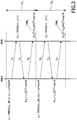
- Fig. 2 depicts two iterations of the GQ ZKP.
- the prover PRV selects a random value t 1 from the range ⁇ 0,1,..,N-1 ⁇ . This value is used to calculate the commitment U 1 .
- U 1 t 1 e mod N
- U 1 is transmitted to the verifier VER.
- the verifier VER selects a random challenge value from C 1 from the range ⁇ 0,1,..,e-1 ⁇ and sends it to the prover PRV.
- the prover PRV now calculates a response R 1 using the secret S, the random value t 1 , and the challenge C 1 . This response is sent to the verifier VER.
- R 1 t 1 S C 1 mod N
- the prover PRV is legitimate and has access to the secret S.
- the prover PRV could be a fraud that has cheated by guessing the challenge C 1 and fabricating a response R 1 .
- the probability that a malicious prover can cheat this way is 1/e.
- the probability that a malicious user can repeatedly guess the correct response value R 1 can be further reduced. Given a pre-determined reliability requirement it is possible to choose the appropriate number of iterations to accomplish a sufficient level of reliability.
- An object PRVR for proving authenticity according to the invention can be shipped together with a product that has to be authenticated.
- the object PRVR could be embedded in the product, and/or could even share functional components of that product.
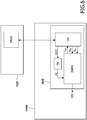
- Fig. 3 depicts an object PRVR for proving authenticity.
- a secret generation means SGM is depicted in which a challenge response means CRM provides a challenge C to a physical token PUF. This challenge results in a response R that is measured by the challenge response means and is subsequently used to generate a secret S.
- the embodiment of the object PRVR for proving authenticity depicted in Fig. 3 further comprises a combiner COMB, arranged to combine a helper data H and the response R and apply an Error Correcting Code decoder on the combined data.
- the output of the Error Correcting Code decoder is the secret S.
- the depicted embodiment further comprises a function means FM that is used to calculate the public value PV, by applying a (trapdoor) one-way function on the secret S.
- the public value PV can be sent to a Trusted Third Party TTP or a Certifying Authority for signing. By communicating the public value PV rather than the secret S, the secret S remains secure.
- the object PRVR depicted in Fig. 3 comprises a storage means STM for storing the helper data H and the signed public value PV.
- the public value PV is stored in the form of a certificate CERT returned by the Trusted Third Party TTP.
- Near Field Communication is particularly useful for ID tags, other applications may require different communication means.
- These communication means can be contact based, using conventional sockets, or contact surfaces, or based on alternate contact-less communication means such as optical communication means employing IR.
- An object PRVR for proving authenticity of a product can also be used to repeated enable and disable access to a device or apparatus.
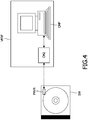
- Fig. 4 depicts an embodiment of a system for proving the authenticity of a software to a verifier before installation.
- the system comprises a software SW that is to be used in combination with an object PRVR for proving authenticity.
- the object PRVR could be attached to the carrier, jewel case, packaging, or manual.
- the software could be downloaded and the object PRVR could be used as an enabling token.
- the system also comprises an apparatus for verifying authenticity VERF comprising of a computer CMP and a second communication means CM2. Although the second communication means CM2 is depicted here as a separate device it could be integrated in said computer CMP.
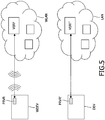
- Fig. 5 presents a block diagram of a system for proving authenticity of a wireless device WDEV to an apparatus for verifying authenticity in a wireless network WLAN.
- the system comprises a wireless device WDEV that comprises an object PRVR according to the present invention.
- the wireless device WDEV Before allowing the wireless device WDEV to join the wireless network WLAN, the wireless device WDEV has to prove authenticity to the apparatus for verifying authenticity VERF that is part of the wireless network WLAN.
- the latter apparatus is a base-station.
- a user could configure the apparatus for verifying authenticity VERF to deny access to wireless devices that the user deems unsafe.
- To configure the apparatus for verifying authenticity VERF the user could enroll all devices that are allowed to access the wireless network WLAN during installation.
- Fig. 5 also depicts a further system for proving the authenticity of a device DEV to a further apparatus for verifying authenticity VERF' in a wired network LAN.
- the device DEV has embedded in it a further object PRVR' according to the present invention for proving authenticity.
- Fig. 6 depicts an alternate system according to the invention.
- a passport PSSP fitted with an embedded object PRVR for proving authenticity is brought into proximity of a passport authentication terminal TRM.
- Authenticity can be verified using the method according to the present invention, thereby asserting the fact that the passport PSSP indeed is genuine.
- any reference signs placed between parentheses shall not be construed as limiting the claim.
- the word “comprising” does not exclude the presence of elements or steps other than those listed in a claim.
- the word “a” or “an” preceding an element does not exclude the presence of a plurality of such elements.
Landscapes
- Engineering & Computer Science (AREA)
- Computer Security & Cryptography (AREA)
- Theoretical Computer Science (AREA)
- Computer Networks & Wireless Communication (AREA)
- Signal Processing (AREA)
- Computer Hardware Design (AREA)
- Physics & Mathematics (AREA)
- Software Systems (AREA)
- General Engineering & Computer Science (AREA)
- General Physics & Mathematics (AREA)
- Mathematical Physics (AREA)
- Storage Device Security (AREA)
Description
- The invention relates to an object for proving authenticity, the object comprising; a secret generation means arranged to generate a secret S using a physical token. The invention also relates to a system for proving the authenticity of an object to an apparatus for verifying authenticity.
- The loss of revenues due to counterfeited and pirated objects constitutes a serious economic threat to manufacturers, and vendors alike. Products that are known to be susceptible to counterfeit practices range from watches, clothing, shoes, jewelry, CDs, DVDs, to software.
- Proof of authenticity is also a major issue for documents such as passports, driver's licenses, and banknotes. These documents are enabling, and therefore valuable. Passports and banknotes are good examples of documents that have been fitted with a multitude of means to prove authenticity.
- There is no clear definition of products that are susceptible to counterfeiting and piracy, there is however communality; they are desirable and generally there is either cost or effort involved in obtaining the authentic product. In response to counterfeiting and piracy legitimate vendors have added means to prove authenticity to their products such as holographic stickers.
- In
US2003/0063772 a method is presented for authenticating a work piece that includes an optically active medium. The method can be used for establishing the validity of the work piece. Validity is established using a string that at least in part is based upon the optical characteristics of an optically active medium that is included on or embedded in one or more portions of the work piece. - A problem of this method is that when authenticity of a work piece is established information from the work piece is exposed, in particular the response from said optically active element. Said information can be used for duplicating a work piece or its behavior.
- It is an object of the present invention to provide an object for proving authenticity that can provide a sufficient proof of authenticity using a physical token to a verifier in a manner that reduces the exposed information regarding the response of the physical token to the verifier.
- This objective is realized in that the object as set forth in the introductory paragraph further comprises: a first communication means for communicating with an apparatus for verifying authenticity, a storage means for storing a certificate CERT comprising a public value PV, the public value PV based on the secret S and resulting from application of a function F to the secret S, wherein the function F is selected such that it is computationally expensive to establish the secret S given the public value PV; and a first zero knowledge protocol means arranged to conduct a zero knowledge protocol with the apparatus for verifying authenticity, in order to prove to the apparatus for verifying authenticity, with a pre-determined probability, that the object has access to the physical token, using the secret S and the certificate.
- In conventional objects for proving authenticity that use a physical token to prove authenticity, unique characteristics of the physical token are used to sufficiently prove that the object has access to the physical token. To this end the physical token is challenged using a challenge response means in order to evoke a unique response from the physical token. This unique response is then used by the verifier to verify the object's authenticity. In the process the response is exposed to the verifier and/or other malicious parties.
- In contrast the present invention proposes to generate a secret S from said response. This secret S is used to generate an accompanying public value PV. The public value PV can be used in conjunction with the secret S for conducting a zero knowledge protocol. The zero knowledge protocol can be selected from a variety of zero knowledge protocols known to a person skilled in the art.
- The zero knowledge protocol exploits the fact that an object for proving authenticity can be challenged in such a way that only an object that has access to said secret, can respond correctly and reliably. The verifier can verify whether the response of the object is correct by using the public value PV derived from the secret S. The public value PV is derived from the secret S using a function F. In order not to expose the secret S, the function F has to be chosen such that it is computationally expensive to calculate the secret S given the public value PV.
- The object for proving authenticity according to the invention comprises storage means for storing the certificate comprising the public value PV signed by a Trusted Third Party TTP. By sending the certificate to the apparatus for verifying authenticity the object can provide the apparatus with the public value PV before starting the zero knowledge protocol. The verifier can verify that the public value PV is legitimate by verifying the signature of the Trusted Third Party on the certificate.
- As a result authenticity can be verified off-line, without the need to maintain a database of public values. The ability to work off-line allows applications such as the validation of authenticity of consumer products using a simple hand-held apparatus for verifying authenticity. As there is no database involved in this particular application, storage requirements can be kept to a minimum, and above all, there is no need to maintain and/or share such a database.
- By repeatedly challenging the object and verifying its response the verifier can further reduce the probability that a malicious object can cheat by continuously guessing the correct answers. It is possible to, a priori, determine the exact number of iterations needed to thwart a malicious object with a pre-determined probability in the range of [0,1).
- In doing so the present invention provides a sufficient proof of authenticity of the object in a secure fashion that, compared to the prior art, reduces the exposed information regarding the response of the physical token to the verifier.
- To generate the public value PV from the secret S, a preferred embodiment will apply a one-way function, or a trapdoor one-way function. A one-way function is a mathematical function that is significantly easier to compute in one direction than in the opposite direction. A one-way function can be used to compute the public value PV from the secret S in (fractions of) seconds. However to compute the secret S given the public value PV could take months to centuries. A trapdoor one-way function is a one-way function for which the inverse direction is easy given a certain piece of information, but difficult otherwise. Most public-key cryptosystems are based on (presumed) trapdoor one-way functions.
- The present invention establishes the secret S using a physical token. To this end the physical token can be combined with a challenge response means. The challenge response means presents a challenge C to the physical token. In return the token responds with a response R that is measured by the challenge response means. This measured response is used to generate the secret S. Although it is possible to use the measured response R directly, further processing is generally needed to improve noise robustness. Such processing can involve the use of so-called helper data.
- Helper data can be used for:
- 1. Randomization purposes
Helper data can be used to randomize the response of the physical token. By storing a pre-determined random data for a particular challenge it is possible to combine the helper data and the measured response such that the combined data is randomized and no longer correlated to the response R from the physical token. - 2. Noise compensation purposes
In preparation for a later authentication helper data can be constructed for each individual challenge response pair that can be used during authentication. During authentication the helper data H and the response R are combined and an Error Correcting Code is applied to capitalize on the redundancy to correct errors introduced during the acquisition process. - A preferred embodiment of the present invention is an object wherein the secret S, is generated anew each time the secret S is needed. In doing so the object does not need to store the secret S or intermediate values. This complicates matters for malicious parties that attempt to retrieve the secret S.
- The secret S is used once per iteration of the zero knowledge protocol. When the protocol requires many iterations it can be advantageous to temporarily store the secret S in a temporary storage instead of re-generating the secret S every time. However care should be taken to delete the secret S, and intermediate values once they are no longer needed.
- In one embodiment the object for proving authenticity is fitted with means for wireless Near Field Communication. As a result such an object can conduct the aforementioned zero knowledge protocol over a wireless channel with an apparatus for verifying authenticity, provided both devices are in proximity.
- A further object of the present invention is to provide a system for applying the object according to the present invention.
- This objective is realized in that the system as set forth in the introductory paragraph comprises: an object according to the present invention and an apparatus for verifying authenticity, wherein the apparatus for verifying authenticity comprises; an obtaining means arranged to obtain a public value PV which has been derived from the secret S, a second zero knowledge protocol means arranged to conduct the zero knowledge protocol with the first zero knowledge protocol means, in order to verify, with the predetermined probability, that the object has access to the physical token, using the certificate and the public value PV.
- The present invention can be used in a system that first establishes authenticity, before proceeding to a more elaborate information exchange, such as a key exchange, or setting up a Secure Authenticated Channel. The same procedure could be repeated with the roles of prover and verifier reversed, thereby establishing that both parties in fact are authentic before proceeding. This way information leakage to non-authentic equipment can be prevented.
- The present invention can be used in access control systems. Here access control could relate to access to a physical location, to information, to equipment, to a communication channel, or to a service.
- These and other aspects of the invention will be further elucidated and described with reference to the drawing, in which:
-
Fig. 1 is a communication diagram depicting a single iteration in a zero knowledge protocol in a method according to the present invention as well as the preparations for that iteration. -
Fig. 2 is a communication diagram depicting two iterations in the Guillou-Quisquater zero knowledge protocol in a method according to the present invention. -
Fig. 3 is a block diagram comprising an object for proving authenticity according to the present invention, and an apparatus for verifying authenticity. -
Fig. 4 is a block diagram of a system for proving the authenticity of a software to a verifier before installation according to the present invention. -
Fig. 5 is a block diagram of two systems for proving authenticity of a device to a verifier in a network. -
Fig. 6 is a block diagram of a system for proving the authenticity of a passport to a passport authentication terminal according to the present invention. - Throughout the drawing, the same reference numeral refers to the same element, or an element that performs the same function.
- To thwart counterfeiters manufacturers have fitted products with various means that help establish authenticity. Examples of such means are holographic stickers and labels that are being used to provide a proof of authenticity for pre-recorded media such as CDs and DVDs. Although currently hard to copy, these labels generally are not unique and do not allow authentication of individual products.
- With the introduction of relatively cheap and reliable physical tokens such as used in
US2003/0063772 the problem of authenticating individual products can be tackled. Suitable physical tokens are generally very hard to clone or duplicate. For this reason such physical tokens are also referred to as Physical Uncloneable Functions, or PUFs. - A physical token is often a complex physical system comprising many randomly distributed components. When probed with suitable challenges, the complex physics governing the interaction between the physical token and the challenge, e.g. multiple scattering waves in a disordered medium, leads to a random-looking output, or response, for each separate challenge. The complex small-scale structure of the physical token makes it hard to produce a physical copy.
- For example, an optical physical token could comprise an optical medium containing many randomly distributed light scatterers. A challenge could be an incident beam, the response is then the consequent speckle pattern detected by a detector. The pattern of bright and dark spots can be converted into a bit string for further use in authenticating a product.
- A problem with physical tokens, in contrast to digital tokens, is that the responses are susceptible to noise and perturbations, causing differences in responses for identical challenges. Such acquisition noise can have many causes, e.g. token/detector misalignment, or environmental effects such as temperature, moisture and vibrations. Due to the noise, the bit string that is extracted from a response may contain errors.
- Most cryptographic protocols however require that the bit string obtained is identical each time the physical token is challenged with a particular challenge. For example if the bit string is used as an encryption key, toggling a single bit will yield unrecognizable, useless results.
- To obtain more robust responses from the combination of the physical token and the challenge response means an Error Correcting Code can be applied. To this end a helper data can be generated for individual challenge response pairs for the physical token prior to the actual authentication. Given a particular challenge a helper data can be constructed that in combination with the measured response provides a redundant representation of the response. An Error Correcting Code can capitalize on this redundancy and correct bit errors resulting from the acquisition process.
- As indicated earlier on helper data can also be used to randomize the secret S, for example by exclusive or-ing the response R with the helper data. This randomization process can be used for re-using challenge response pairs for different purposes. As such the randomization process does not add security, but adds flexibility. Other uses of helper data may include the generation of a secret S' that is shared by various provers, but based on different physical tokens.
-
Fig. 1 presents a graphical representation of the communication between a prover PRV, a Trusted Third Party TTP, and a verifier VER in a method according to the present invention. The prover PRV has at least one secret S that can be generated using a physical token. The prover PRV can generate the secret S anew every time he desires to do so using the physical token. Effectively the secret S is stored inside the physical token. - During the proof of authenticity the prover PRV cannot expose the secret S, as this would compromise security. The present invention provides a method that allows the prover PRV to prove authenticity to the verifier VER using the secret S, without exposing the secret S to the verifier VER. To this end a public value PV is generated that is based on the secret S. To avoid exposing the secret S, the public value PV can be generated using a one-way function, or a trapdoor one-way function. Which particular function is applied is determined by the choice of a zero knowledge protocol.
- Once the prover PRV has generated the secret S a public value PV can be generated. The public value PV can be generated by the prover PV, or by a Trusted Third Party TTP. Once a public value PV is generated a Certification Authority can sign it, resulting in a certificate. The verifier VER can verify the signature of the Certification Authority, thereby establishing that the public value PV is indeed genuine. Alternatively a Trusted Third Party TTP can sign the public value PV as depicted in
Fig. 1 , resulting in a certificate CERT. - The certificate CERT from the Trusted Third Party TTP can consist of a single public value PV or a link to the public value PV. Such a link could be a URL indicating where the verifier can obtain the actual public value PV. Alternatively the certificate CERT could comprise a variety of public values for one or multiple provers. When multiple challenge response pairs are available for a prover PRV, the verifier VER could select a particular challenge and in doing so further complicate matters for malicious parties.
- In a particularly advantageous embodiment the prover PRV provides the verifier VER with a certificate CERT signed by a Trusted Third Party TTP that comprises the public value PV for which the prover PRV can generate the accompanying secret S. The verifier VER can extract the public value PV, and verify using the signature that the public value PV is legitimate, thereby facilitating off-line proof of authenticity, without the need for a database of public values.
- The communication is
Fig. 1 is divided in three steps: (i) a step SGN during which the public value PV is exchanged and signed by a Trusted Third Party, (ii) a step PREP for preparation of, and (iii) a step IT1 comprising an iteration of a zero knowledge protocol. - In the first step SGN, the prover provides the public value PV to the Trusted Third Party TTP. In response the Trusted Third Party TTP signs the public value PV and returns a certificate comprising the public value to the prover PRV. The prover then stores the certificate CERT.
- Although in the embodiment in
Fig. 1 the prover PRV provides the public value PV to the Trusted Third Party TTP, the prover PRV could alternatively provide the secret S, and let the Trusted Third Party TTP perform the one-way function F. This would expose the secret S during signing, but could simplify matters for the prover PRV, particularly when the one-way function F involves complex operations. - During the second step PREP the verifier VER requests a certificate CERT comprising the public value PV from the prover PRV. The prover PRV provides the certificate CERT to the verifier VER. In turn the verifier VER extracts the public value PV. The verifier VER can check the signature on the certificate CERT using a public key of the Trusted Third Party, and thereby establish authenticity of the public value PV.
- In the third step IT1 a single iteration of the zero knowledge protocol takes place. The prover PRV generates a commitment value U1 based on a randomization factor. The commitment value U1 is submitted to the verifier VER, the verifier generates a challenge value C1 and submits it to the prover PRV.
- Based on the randomization factor, the challenge value C1, and the secret S the prover generates a response R1. This response is sent to the verifier VER, who based on U1, and the public value PV verifies whether the response R1 is consistent with the response of a prover that knows the secret S.
-
Fig. 2 provides a more detailed view of the details of a zero knowledge protocol according to Guillou-Quisquater as disclosed inUS 5,140,634 (Attorney Docket PHQ 87030). The Guillou-Quisquater zero knowledge protocol, hereafter GQ ZKP, exploits the fact that it is difficult to calculate the eth root of a value modulo N. - For GQ ZKP, the public value can be written as:

- Where e is a prime number, and N is the product of two prime numbers p and q. Both the prover PRV and the verifier VER know the values of e and N. The security of the protocol can be improved by selecting a larger N.
-
Fig. 2 depicts two iterations of the GQ ZKP. During the first iteration IT1 the prover PRV selects a random value t1 from the range {0,1,..,N-1}. This value is used to calculate the commitment U1.
- U1 is transmitted to the verifier VER. The verifier VER selects a random challenge value from C1 from the range {0,1,..,e-1} and sends it to the prover PRV. The prover PRV now calculates a response R1 using the secret S, the random value t1, and the challenge C1. This response is sent to the verifier VER.

- The verifier VER can now verify whether the following equation holds:

- If this equation holds then the prover PRV is legitimate and has access to the secret S. Alternatively the prover PRV could be a fraud that has cheated by guessing the challenge C1 and fabricating a response R1. The probability that a malicious prover can cheat this way is 1/e. By increasing the number of iterations used in the zero knowledge protocol the probability that a malicious user can repeatedly guess the correct response value R1 can be further reduced. Given a pre-determined reliability requirement it is possible to choose the appropriate number of iterations to accomplish a sufficient level of reliability.
- Although the example depicted in
Fig. 2 presents the Guillou-Quisquater zero knowledge protocol, the present invention can also be used in conjunction with other zero knowledge protocols known to people skilled in the art. Well known zero knowledge protocols rely on the fact that certain calculations are known to be difficult, or computationally expensive. Two examples of such calculations are: (i) prime factorization (at the basis of the RSA algorithm), or (ii) calculating discrete logarithms (at the basis of the ElGamal algorithm). - In comparison zero knowledge protocols that are based on calculating discrete logarithms, and in particular (hyper-)elliptic curve discrete logarithms, tend to result in more compact hardware solutions, and hence are considered advantageous.
- An object PRVR for proving authenticity according to the invention can be shipped together with a product that has to be authenticated. Alternatively the object PRVR could be embedded in the product, and/or could even share functional components of that product.
-
Fig. 3 depicts an object PRVR for proving authenticity. In the block diagram a secret generation means SGM is depicted in which a challenge response means CRM provides a challenge C to a physical token PUF. This challenge results in a response R that is measured by the challenge response means and is subsequently used to generate a secret S. - The secret S is used in a first zero knowledge protocol means ZKPM1 to execute a zero knowledge protocol with an apparatus for verifying authenticity VERF. The first zero knowledge protocol means ZKPM1 is arranged to exchange at least one randomization value UN, at least one challenge CN, and at least one response RN with the apparatus for verifying authenticity VERF.
- The embodiment of the object PRVR for proving authenticity depicted in
Fig. 3 further comprises a combiner COMB, arranged to combine a helper data H and the response R and apply an Error Correcting Code decoder on the combined data. The output of the Error Correcting Code decoder is the secret S. Although in the embodiment depicted inFig. 3 the response R and helper data H are combined before applying the Error Correcting Code other implementations are feasible. - The depicted embodiment further comprises a function means FM that is used to calculate the public value PV, by applying a (trapdoor) one-way function on the secret S. The public value PV can be sent to a Trusted Third Party TTP or a Certifying Authority for signing. By communicating the public value PV rather than the secret S, the secret S remains secure.
- The object PRVR depicted in
Fig. 3 comprises a storage means STM for storing the helper data H and the signed public value PV. Here the public value PV is stored in the form of a certificate CERT returned by the Trusted Third Party TTP. - A particularly advantageous embodiment of the present invention is an object PRVR where all components are integrated on a single semiconductor that comprises a physical token in the form of a security coating deposited on the actual semiconductor. By removing the security coating from the semiconductor the semiconductor can no longer generate the secret S. As the secret S need not be stored in memory, a malicious user cannot obtain the secret S from the semiconductor by removing the security coating and probing the semiconductor. However with the security coating in place it is difficult to probe the semiconductor. The security coating provides an additional barrier against probing.
- The object PRVR in
Fig. 3 is furthermore fitted with a first communication means CM1 that is arranged to perform wireless Near Field Communication with both the Trusted Third Party TTP and with the apparatus for verifying authenticity VERF. Near Field Communication is particularly interesting for RF ID tags. By bringing a Near Field Communication enabled tag in the vicinity of a tag reader the tag can be powered using an electromagnetic radiation generated by the reader. Subsequently the object PRVR can prove authenticity to the apparatus for verifying authenticity VERF using the method according to the present invention. - Although Near Field Communication is particularly useful for ID tags, other applications may require different communication means. These communication means can be contact based, using conventional sockets, or contact surfaces, or based on alternate contact-less communication means such as optical communication means employing IR.
- The present invention can be used to facilitate a wireless LAN where base stations and clients can be authenticated using the present invention before exposing information related to the network such as the network ID and/or the network addresses. In fact the present invention is particularly suitable for performing a first phase during authentication of new devices in a networks and devices in general, wired or wireless.
-
Fig. 3 also depicts an apparatus for verifying authenticity VERF. This apparatus is the counterpart of the object PRVR, and the embodiment depicted inFig. 3 comprises a second communication means CM2 for communicating with the object PRVR, as well as a second zero knowledge protocol means ZKPM2 arranged to verify the responses provided by the first zero knowledge protocol means ZKPM1. In addition the apparatus for verifying authenticity VERF comprises an obtaining means OB for extracting the public value PV from the certificate CERT and verifying the accompanying signature. If the public value PV is genuine and the responses from the first zero knowledge protocol means ZKPM1 are correct, then the second zero knowledge protocol means ZKPM2 will generate a positive decision DEC. - Although the object PRVR depicted in
Fig. 3 uses a certificate CERT to obtain the public value PV other means can be envisaged that provide the apparatus with a trustworthy public value PV. These alternatives include; (i) a method where the said public value PV is obtained directly from a Trusted Third Party TTP, (ii) a method where an encrypted public value PV is obtained, that is encrypted using a secret key known to the verifier. - An object PRVR for proving authenticity of a product can also be used to repeated enable and disable access to a device or apparatus. A tag fitted with an object according to the present invention that could be used instead of conventional car keys.
-
Fig. 4 depicts an embodiment of a system for proving the authenticity of a software to a verifier before installation. The system comprises a software SW that is to be used in combination with an object PRVR for proving authenticity. The object PRVR could be attached to the carrier, jewel case, packaging, or manual. Alternatively the software could be downloaded and the object PRVR could be used as an enabling token. The system also comprises an apparatus for verifying authenticity VERF comprising of a computer CMP and a second communication means CM2. Although the second communication means CM2 is depicted here as a separate device it could be integrated in said computer CMP. - Once the computer has loaded the installation program, it can execute said program and conduct a zero knowledge protocol with the object PRVR for proving authenticity of the software. When proven to be authentic, it is possible to proceed with the installation. In case the object proves to be a fraud, the installation should be aborted. The advantage of such a system is that it does not require access to a network yet warrants end-users privacy.
- To further capitalize on the fact that the PRVR object comprises a physical token PUF, it is possible to subsequently use said physical token PUF to derive further encryption key(s) from the PUF for decrypting the encrypted part of the disc. Alternatively multiple challenge responses could be verified during normal use of the software, or during installation of patches.
-
Fig. 5 presents a block diagram of a system for proving authenticity of a wireless device WDEV to an apparatus for verifying authenticity in a wireless network WLAN. The system comprises a wireless device WDEV that comprises an object PRVR according to the present invention. Before allowing the wireless device WDEV to join the wireless network WLAN, the wireless device WDEV has to prove authenticity to the apparatus for verifying authenticity VERF that is part of the wireless network WLAN. In a preferred embodiment the latter apparatus is a base-station. A user could configure the apparatus for verifying authenticity VERF to deny access to wireless devices that the user deems unsafe. To configure the apparatus for verifying authenticity VERF the user could enroll all devices that are allowed to access the wireless network WLAN during installation. - The present invention can also be employed in a wired network.
Fig. 5 also depicts a further system for proving the authenticity of a device DEV to a further apparatus for verifying authenticity VERF' in a wired network LAN. The device DEV has embedded in it a further object PRVR' according to the present invention for proving authenticity. -
Fig. 6 depicts an alternate system according to the invention. Here a passport PSSP fitted with an embedded object PRVR for proving authenticity is brought into proximity of a passport authentication terminal TRM. Authenticity can be verified using the method according to the present invention, thereby asserting the fact that the passport PSSP indeed is genuine. - It should be noted that the above-mentioned embodiments illustrate rather than limit the invention, and that those skilled in the art will be able to design many alternative embodiments without departing from the scope of the appended claims.
- In the claims, any reference signs placed between parentheses shall not be construed as limiting the claim. The word "comprising" does not exclude the presence of elements or steps other than those listed in a claim. The word "a" or "an" preceding an element does not exclude the presence of a plurality of such elements.
- The invention can be implemented by means of hardware comprising several distinct elements, and by means of a suitably programmed computer. In the device claim enumerating several means, several of these means can be embodied by one and the same item of hardware. The mere fact that certain measures are recited in mutually different dependent claims does not indicate that a combination of these measures cannot be used to advantage.
Claims (16)
- An object (PRVR) for proving authenticity, the object comprising:- a secret generation means (SGM) arranged to generate a secret (S) using a physical token (PUF), the physical token being challengeable in order to evoke a unique response from the physical token, the secret (S) being generated from said response, the secret generation means (SGM) being arranged to:- generate a response (R) using the physical token (PUF), and- combine the response (R) with a helper data (H), and apply an Error Correcting Code, the object further characterized in that it comprises:- a first communication means (CM1) for communicating with an apparatus for verifying authenticity (VERF)- a storage means (STM) for storing a signed public value (PV), the public value (PV) based on the secret (S) and resulting from application of a function (F) to the secret (S), wherein the function (F) is selected such that it is computationally expensive to establish the secret (S) given the public value (PV); and- a first zero knowledge protocol means (ZKPM1) arranged to conduct a zero knowledge protocol with the apparatus for verifying authenticity (VERF), in order to prove to the apparatus for verifying authenticity (VERF), with a pre-determined probability, that the object (PRVR) has access to the physical token (PUF), using the secret (S), the secret S being generated anew each time the secret S is needed by the first zero knowledge protocol means.
- The object (PRVR) as claimed in claim 1, the storage means being for storing a certificate (CERT) comprising the public value (PV), the public value (PV) being stored in the form of the certificate.
- The object (PRVR) as claimed in claim 2, the certificate (CERT) comprising a variety of public values corresponding to multiple challenge responses pairs of the physical token (PUF).
- The object (PRVR) as claimed in claim 1, where the object (PRVR) further comprises a function means (FM) for applying the function (F) to the secret (S) in order to generate the public value (PV) based on the secret (S), and where the function (F) is selected such that it is computationally expensive to establish the secret (S) given the public value (PV).
- The object (PRVR) as claimed in claim 4, wherein the function (F) is a one-way function.
- The object (PRVR) as claimed in claim 4, wherein the function (F) is a trapdoor one-way function.
- The object (PRVR) as claimed in claim 1, where the secret generation means (SGM) is arranged to generate the secret (S) using the physical token (PUF) every time that the secret (S) is needed.
- The object (PRVR) as claimed in claim 1, the storage means (STM) being for storing the helper data (H) and the signed public value (PV).
- The object (PRVR) as claimed in claim 1, where the first communication means (CM1) is a means for Near Field Communication.
- The object (PRVR) as claimed in claim 9, wherein the object (PRVR) is a Near Field Communication enabled RF ID tag.
- The object (PRVR) as claimed in claim 1, where the first zero knowledge protocol means (ZKPM1) is arranged to conduct a zero knowledge protocol that is based on the fact that calculating the eth root modulo N is computationally expensive.
- The object (PRVR) as claimed in claim 1, where the first zero knowledge protocol means (ZKPM1) is arranged to conduct a zero knowledge protocol that is based on the fact that calculating discrete logarithms is computationally expensive.
- A system (SYS) for proving the authenticity of an object to an apparatus for verifying authenticity, the system comprising; an object (PRVR) according to claim 1 and an apparatus for verifying authenticity (VERF), wherein the apparatus for verifying authenticity (VERF) comprises:- an obtaining means (OB) arranged to obtain a public value (PV) which has been derived from the secret (S),- a second zero knowledge protocol means (ZKPM2) arranged to conduct the zero knowledge protocol with the first zero knowledge protocol means (ZKPM1), in order to verify, with the predetermined probability, that the object (PRVR) has access to the physical token (PUF), using the public value (PV).
- The system as claimed in claim 13, wherein the object (PRVR) is delivered together with a software (SW), and the apparatus for verifying authenticity (VERF) is a computer (CMP) arranged to run an authenticity verification program for conducting a zero knowledge protocol with said object (PRVR), in order to prove authenticity of said software (SW) with a predetermined probability before allowing said software (SW) to be installed.
- The system as claimed in claim 13, wherein the object (PRVR) is embedded in a passport (PSSP), and the apparatus for verifying authenticity (VERF) is a passport authentication terminal (TRM) arranged to conduct a zero knowledge protocol with said object (PRVR), in order to prove authenticity of said passport (PSSP) with a predetermined probability.
- A device (WDEV) for joining a network (WLAN), comprising the object of claim 1 for authenticating to an apparatus for verifying authenticity VERF that is part of the network.
Priority Applications (1)
| Application Number | Priority Date | Filing Date | Title |
|---|---|---|---|
| EP06765992.0A EP1905188B1 (en) | 2005-07-07 | 2006-07-04 | Method, apparatus and system for verifying authenticity of an object |
Applications Claiming Priority (3)
| Application Number | Priority Date | Filing Date | Title |
|---|---|---|---|
| EP05106196 | 2005-07-07 | ||
| EP06765992.0A EP1905188B1 (en) | 2005-07-07 | 2006-07-04 | Method, apparatus and system for verifying authenticity of an object |
| PCT/IB2006/052237 WO2007007229A1 (en) | 2005-07-07 | 2006-07-04 | Method, apparatus and system for verifying authenticity of an object |
Publications (2)
| Publication Number | Publication Date |
|---|---|
| EP1905188A1 EP1905188A1 (en) | 2008-04-02 |
| EP1905188B1 true EP1905188B1 (en) | 2018-05-30 |
Family
ID=37402607
Family Applications (1)
| Application Number | Title | Priority Date | Filing Date |
|---|---|---|---|
| EP06765992.0A Active EP1905188B1 (en) | 2005-07-07 | 2006-07-04 | Method, apparatus and system for verifying authenticity of an object |
Country Status (5)
| Country | Link |
|---|---|
| US (1) | US8886951B2 (en) |
| EP (1) | EP1905188B1 (en) |
| JP (1) | JP2008545323A (en) |
| CN (1) | CN101213786A (en) |
| WO (1) | WO2007007229A1 (en) |
Families Citing this family (50)
| Publication number | Priority date | Publication date | Assignee | Title |
|---|---|---|---|---|
| WO2006053304A2 (en) | 2004-11-12 | 2006-05-18 | Pufco, Inc. | Volatile device keys and applications thereof |
| US8224018B2 (en) * | 2006-01-23 | 2012-07-17 | Digimarc Corporation | Sensing data from physical objects |
| US8077905B2 (en) * | 2006-01-23 | 2011-12-13 | Digimarc Corporation | Capturing physical feature data |
| KR101366376B1 (en) | 2006-01-24 | 2014-02-24 | 베라요, 인크. | Signal generator based device security |
| US8510608B2 (en) * | 2006-11-06 | 2013-08-13 | Panasonic Corporation | Generating PUF error correcting code using redundant hardware |
| US20100217988A1 (en) * | 2007-04-12 | 2010-08-26 | Avow Systems, Inc. | Electronic document management and delivery |
| US8958563B2 (en) | 2007-06-11 | 2015-02-17 | Nxp B.V. | Method of generating a public key for an electronic device and electronic device |
| EP2018934A1 (en) * | 2007-07-26 | 2009-01-28 | Renishaw plc | Measurement device having authentication module |
| CN101542496B (en) | 2007-09-19 | 2012-09-05 | 美国威诚股份有限公司 | Authentication with physical unclonable functions |
| US8321538B2 (en) * | 2007-09-24 | 2012-11-27 | Hewlett-Packard Development Company, L.P. | Autonomous network device configuration method |
| US9032476B2 (en) * | 2009-05-12 | 2015-05-12 | Empire Technology Development Llc | Secure authentication |
| US20120128154A1 (en) * | 2010-11-23 | 2012-05-24 | Intuit Inc. | Establishing a secure proximity pairing between electronic devices |
| CA2726748A1 (en) * | 2010-12-16 | 2012-06-16 | Evgeny Lishak | A method of providing brand assurance and item authenticity using payment card industry infrastructure |
| US12020178B2 (en) | 2011-03-04 | 2024-06-25 | Digital Consolidation, Inc. | Method and apparatus for information representation, exchange, validation, and utilization through digital consolidation |
| US9064238B2 (en) | 2011-03-04 | 2015-06-23 | Factify | Method and apparatus for certification of facts |
| CA2830285C (en) * | 2011-03-18 | 2016-11-08 | Blackberry Limited | Keyed pv signatures |
| JP5770026B2 (en) | 2011-06-20 | 2015-08-26 | ルネサスエレクトロニクス株式会社 | Semiconductor device |
| JP5790318B2 (en) | 2011-08-29 | 2015-10-07 | ソニー株式会社 | Information processing apparatus, signature generation apparatus, information processing method, signature generation method, and program |
| US20130298211A1 (en) * | 2012-04-03 | 2013-11-07 | Verayo, Inc. | Authentication token |
| US9996480B2 (en) | 2012-07-18 | 2018-06-12 | Analog Devices, Inc. | Resilient device authentication system with metadata binding |
| WO2016025940A1 (en) * | 2014-08-15 | 2016-02-18 | Sypris Electronics, Llc | Resilient device authentication system with metadata binding |
| JP6030925B2 (en) | 2012-11-12 | 2016-11-24 | ルネサスエレクトロニクス株式会社 | Semiconductor device and information processing system |
| US9038133B2 (en) | 2012-12-07 | 2015-05-19 | International Business Machines Corporation | Self-authenticating of chip based on intrinsic features |
| JP6037450B2 (en) * | 2013-05-20 | 2016-12-07 | 日本電気株式会社 | Terminal authentication system and terminal authentication method |
| US20150134966A1 (en) | 2013-11-10 | 2015-05-14 | Sypris Electronics, Llc | Authentication System |
| EP2911086A1 (en) * | 2014-02-19 | 2015-08-26 | Renesas Electronics Europe GmbH | Integrated circuit with parts activated based on intrinsic features |
| US10432409B2 (en) | 2014-05-05 | 2019-10-01 | Analog Devices, Inc. | Authentication system and device including physical unclonable function and threshold cryptography |
| US9715590B2 (en) * | 2014-05-05 | 2017-07-25 | Analog Devices, Inc. | System and device for verifying the integrity of a system from its subcomponents |
| US9946858B2 (en) | 2014-05-05 | 2018-04-17 | Analog Devices, Inc. | Authentication system and device including physical unclonable function and threshold cryptography |
| US9672342B2 (en) | 2014-05-05 | 2017-06-06 | Analog Devices, Inc. | System and device binding metadata with hardware intrinsic properties |
| US9292692B2 (en) * | 2014-05-05 | 2016-03-22 | Sypris Electronics, Llc | System and device for verifying the integrity of a system from its subcomponents |
| JP6622795B2 (en) * | 2014-05-22 | 2019-12-18 | アナログ ディヴァイスィズ インク | Network authentication system using dynamic key generation |
| JP2017522807A (en) * | 2014-06-25 | 2017-08-10 | アナログ ディヴァイスィズ インク | Systems and devices that bind metadata with hardware-specific characteristics |
| JP6398483B2 (en) * | 2014-09-02 | 2018-10-03 | 凸版印刷株式会社 | Electronic signature apparatus, electronic signature system, electronic signature method and program |
| US10841087B2 (en) * | 2015-11-05 | 2020-11-17 | Mitsubishi Electric Corporation | Security device, system, and security method |
| US10033536B2 (en) | 2016-03-25 | 2018-07-24 | Credly, Inc. | Generation, management, and tracking of digital credentials |
| US10068074B2 (en) | 2016-03-25 | 2018-09-04 | Credly, Inc. | Generation, management, and tracking of digital credentials |
| KR101848554B1 (en) | 2016-07-19 | 2018-04-12 | 이화여자대학교 산학협력단 | Method for detecting counterfeit product from genuine ones and authentication server for detecting counterfeit product from genuine ones |
| FR3054345B1 (en) | 2016-07-22 | 2018-07-27 | Tagsys | SECURE RFID COMMUNICATION METHOD |
| WO2018022091A1 (en) * | 2016-07-29 | 2018-02-01 | Hewlett-Packard Development Company, L.P. | Unlocking machine-readable storage devices using a user token |
| CN106972926B (en) * | 2017-03-29 | 2019-12-10 | 北京经纬恒润科技有限公司 | encryption and decryption method, device and system for wireless automobile key |
| US10425235B2 (en) * | 2017-06-02 | 2019-09-24 | Analog Devices, Inc. | Device and system with global tamper resistance |
| US10958452B2 (en) | 2017-06-06 | 2021-03-23 | Analog Devices, Inc. | System and device including reconfigurable physical unclonable functions and threshold cryptography |
| US20190087832A1 (en) | 2017-09-15 | 2019-03-21 | Pearson Education, Inc. | Digital credential field data mapping |
| US10803104B2 (en) | 2017-11-01 | 2020-10-13 | Pearson Education, Inc. | Digital credential field mapping |
| US11570001B1 (en) | 2018-07-12 | 2023-01-31 | Protocol Labs, Inc. | Protocols for decentralized networks |
| US10708071B1 (en) | 2018-07-12 | 2020-07-07 | Protocol Labs, Inc. | Consensus protocols in distributed computing systems |
| US11245528B1 (en) | 2018-11-19 | 2022-02-08 | Protocol Labs, Inc. | Protocols for decentralized networks |
| EP4280535A4 (en) * | 2021-01-13 | 2024-03-13 | Fujitsu Limited | Control method, information processing system, information processing device, and control program |
| US12549371B1 (en) * | 2024-05-31 | 2026-02-10 | Kwok Hong Liu | Long-term access control for therapeutic journey authentication |
Family Cites Families (14)
| Publication number | Priority date | Publication date | Assignee | Title |
|---|---|---|---|---|
| US5140634A (en) | 1987-09-07 | 1992-08-18 | U.S Philips Corporation | Method and apparatus for authenticating accreditations and for authenticating and signing messages |
| DE3736882C2 (en) | 1987-10-30 | 1997-04-30 | Gao Ges Automation Org | Method for checking the authenticity of a data carrier with an integrated circuit |
| US6088453A (en) * | 1997-01-27 | 2000-07-11 | Kabushiki Kaisha Toshiba | Scheme for computing Montgomery division and Montgomery inverse realizing fast implementation |
| DE69724235T2 (en) * | 1997-05-28 | 2004-02-26 | Siemens Ag | Computer system and software protection method |
| US6854057B2 (en) * | 2001-09-06 | 2005-02-08 | America Online, Inc. | Digital certificate proxy |
| US20030063772A1 (en) * | 2001-09-06 | 2003-04-03 | Smith Joshua R. | System and method for authentication and tracking of a workpiece that includes an optically active medium |
| DE60221700T2 (en) | 2001-12-11 | 2008-04-30 | Tagsys S.A. | SYSTEMS FOR SAFELY MARKING DATA |
| US7840803B2 (en) | 2002-04-16 | 2010-11-23 | Massachusetts Institute Of Technology | Authentication of integrated circuits |
| US7840806B2 (en) * | 2002-10-16 | 2010-11-23 | Enterprise Information Management, Inc. | System and method of non-centralized zero knowledge authentication for a computer network |
| GB0228760D0 (en) * | 2002-12-10 | 2003-01-15 | Koninkl Philips Electronics Nv | Efficient implementation of zero knowledge protocols |
| US7245718B2 (en) * | 2003-08-26 | 2007-07-17 | Mitsubishi Electric Research Laboratories, Inc. | Low bandwidth zero knowledge authentication protocol and device |
| KR20060123134A (en) * | 2003-10-08 | 2006-12-01 | 스테판 제이. 잉베르그 | Method and system for establishing communication using privacy enhancement technology |
| US7490070B2 (en) * | 2004-06-10 | 2009-02-10 | Intel Corporation | Apparatus and method for proving the denial of a direct proof signature |
| EP1800433A1 (en) * | 2004-10-04 | 2007-06-27 | Koninklijke Philips Electronics N.V. | Two-way error correction for physical tokens |
-
2006
- 2006-07-04 WO PCT/IB2006/052237 patent/WO2007007229A1/en not_active Ceased
- 2006-07-04 EP EP06765992.0A patent/EP1905188B1/en active Active
- 2006-07-04 US US11/993,724 patent/US8886951B2/en active Active
- 2006-07-04 CN CNA2006800244527A patent/CN101213786A/en active Pending
- 2006-07-04 JP JP2008519125A patent/JP2008545323A/en active Pending
Non-Patent Citations (1)
| Title |
|---|
| "Chapter 5: Pseudorandom Bits and Sequences ED - Menezes A J; Van Oorschot P C; Vanstone S A", 1 October 1996 (1996-10-01), XP001525005, ISBN: 978-0-8493-8523-0, Retrieved from the Internet <URL:http://www.cacr.math.uwaterloo.ca/hac/> * |
Also Published As
| Publication number | Publication date |
|---|---|
| EP1905188A1 (en) | 2008-04-02 |
| US8886951B2 (en) | 2014-11-11 |
| CN101213786A (en) | 2008-07-02 |
| US20100122093A1 (en) | 2010-05-13 |
| JP2008545323A (en) | 2008-12-11 |
| WO2007007229A1 (en) | 2007-01-18 |
Similar Documents
| Publication | Publication Date | Title |
|---|---|---|
| US8886951B2 (en) | Method, apparatus and system for verifying authenticity of an object | |
| US9258296B2 (en) | System and method for generating a strong multi factor personalized server key from a simple user password | |
| US10803900B2 (en) | Method and apparatus for information carrier authentication | |
| JP5423088B2 (en) | Integrated circuit, encryption communication device, encryption communication system, information processing method, and encryption communication method | |
| US9832018B2 (en) | Method of generating a public key for an electronic device and electronic device | |
| US8856524B2 (en) | Cryptographic methods, host system, trusted platform module, computer arrangement, computer program product and computer program | |
| US20090183248A1 (en) | Two-way error correction for physical tokens | |
| CN101263503A (en) | Improved apparatus, system and method for determining authenticity of an item | |
| CN106576046B (en) | Systems and devices that bind metadata to hardware-intrinsic properties | |
| JP2009517910A (en) | Physical shared secrets and peripheral proofs using PUFS | |
| KR101004829B1 (en) | Apparatus and Method for Direct Anonymous Proof from Bilinear Maps | |
| CN116388972B (en) | Electronic contract encryption and decryption method and system based on mutual authentication | |
| CN101317361A (en) | Proximity Proof Using CPUF | |
| GB2434724A (en) | Secure transactions using authentication tokens based on a device "fingerprint" derived from its physical parameters | |
| JP2002208925A (en) | Qualification authentication method using variable authentication information | |
| TW200810470A (en) | Device and method using non-cycle accurate measurements for discovering emulated clients | |
| Malina et al. | Secure and efficient two-factor zero-knowledge authentication solution for access control systems | |
| Skoric | Security analysis of quantum-readout PUFs in the case of challenge-estimation attacks | |
| US20090119505A1 (en) | Transaction method and verification method | |
| CN101124767A (en) | Method and device for key generation and proof of authenticity | |
| JP2003152716A (en) | Qualification authentication method using variable authentication information | |
| US20150236858A1 (en) | Method for Creating a Derived Entity of an Original Data Carrier | |
| JP3746919B2 (en) | Qualification authentication method using variable authentication information | |
| CN114826653B (en) | Credential verification method, system, device, equipment and storage medium based on blockchain network | |
| Ouafi et al. | Traceable privacy of re |
Legal Events
| Date | Code | Title | Description |
|---|---|---|---|
| PUAI | Public reference made under article 153(3) epc to a published international application that has entered the european phase |
Free format text: ORIGINAL CODE: 0009012 |
|
| 17P | Request for examination filed |
Effective date: 20080207 |
|
| AK | Designated contracting states |
Kind code of ref document: A1 Designated state(s): AT BE BG CH CY CZ DE DK EE ES FI FR GB GR HU IE IS IT LI LT LU LV MC NL PL PT RO SE SI SK TR |
|
| DAX | Request for extension of the european patent (deleted) | ||
| RAP1 | Party data changed (applicant data changed or rights of an application transferred) |
Owner name: INTRINSIC ID B.V. |
|
| 17Q | First examination report despatched |
Effective date: 20110523 |
|
| RIN1 | Information on inventor provided before grant (corrected) |
Inventor name: TUYLS, PIM, T. Inventor name: WOLTERS, ROBERTUS, A., M. Inventor name: SKORIC, BORIS Inventor name: MAUBACH, STEFAN, J. |
|
| DAX | Request for extension of the european patent (deleted) | ||
| REG | Reference to a national code |
Ref country code: DE Ref legal event code: R079 Ref document number: 602006055510 Country of ref document: DE Free format text: PREVIOUS MAIN CLASS: H04L0009320000 Ipc: G06F0021730000 |
|
| RIC1 | Information provided on ipc code assigned before grant |
Ipc: G07C 9/00 20060101ALI20171012BHEP Ipc: H04L 9/32 20060101ALI20171012BHEP Ipc: G06F 21/34 20130101ALI20171012BHEP Ipc: G06F 21/33 20130101ALI20171012BHEP Ipc: G06F 21/73 20130101AFI20171012BHEP |
|
| GRAP | Despatch of communication of intention to grant a patent |
Free format text: ORIGINAL CODE: EPIDOSNIGR1 |
|
| INTG | Intention to grant announced |
Effective date: 20171124 |
|
| GRAJ | Information related to disapproval of communication of intention to grant by the applicant or resumption of examination proceedings by the epo deleted |
Free format text: ORIGINAL CODE: EPIDOSDIGR1 |
|
| INTC | Intention to grant announced (deleted) | ||
| GRAP | Despatch of communication of intention to grant a patent |
Free format text: ORIGINAL CODE: EPIDOSNIGR1 |
|
| GRAS | Grant fee paid |
Free format text: ORIGINAL CODE: EPIDOSNIGR3 |
|
| GRAA | (expected) grant |
Free format text: ORIGINAL CODE: 0009210 |
|
| INTG | Intention to grant announced |
Effective date: 20180404 |
|
| AK | Designated contracting states |
Kind code of ref document: B1 Designated state(s): AT BE BG CH CY CZ DE DK EE ES FI FR GB GR HU IE IS IT LI LT LU LV MC NL PL PT RO SE SI SK TR |
|
| REG | Reference to a national code |
Ref country code: GB Ref legal event code: FG4D |
|
| REG | Reference to a national code |
Ref country code: CH Ref legal event code: EP |
|
| REG | Reference to a national code |
Ref country code: AT Ref legal event code: REF Ref document number: 1004363 Country of ref document: AT Kind code of ref document: T Effective date: 20180615 |
|
| REG | Reference to a national code |
Ref country code: IE Ref legal event code: FG4D |
|
| REG | Reference to a national code |
Ref country code: DE Ref legal event code: R096 Ref document number: 602006055510 Country of ref document: DE |
|
| REG | Reference to a national code |
Ref country code: CH Ref legal event code: PK Free format text: BERICHTIGUNGEN |
|
| REG | Reference to a national code |
Ref country code: NL Ref legal event code: FP |
|
| REG | Reference to a national code |
Ref country code: FR Ref legal event code: PLFP Year of fee payment: 13 |
|
| RIN2 | Information on inventor provided after grant (corrected) |
Inventor name: WOLTERS, ROBERTUS, A., M. Inventor name: TUYLS, PIM, T. Inventor name: MAUBACH, STEFAN, J. Inventor name: SKORIC, BORIS |
|
| REG | Reference to a national code |
Ref country code: LT Ref legal event code: MG4D |
|
| PG25 | Lapsed in a contracting state [announced via postgrant information from national office to epo] |
Ref country code: ES Free format text: LAPSE BECAUSE OF FAILURE TO SUBMIT A TRANSLATION OF THE DESCRIPTION OR TO PAY THE FEE WITHIN THE PRESCRIBED TIME-LIMIT Effective date: 20180530 Ref country code: FI Free format text: LAPSE BECAUSE OF FAILURE TO SUBMIT A TRANSLATION OF THE DESCRIPTION OR TO PAY THE FEE WITHIN THE PRESCRIBED TIME-LIMIT Effective date: 20180530 Ref country code: SE Free format text: LAPSE BECAUSE OF FAILURE TO SUBMIT A TRANSLATION OF THE DESCRIPTION OR TO PAY THE FEE WITHIN THE PRESCRIBED TIME-LIMIT Effective date: 20180530 Ref country code: CY Free format text: LAPSE BECAUSE OF FAILURE TO SUBMIT A TRANSLATION OF THE DESCRIPTION OR TO PAY THE FEE WITHIN THE PRESCRIBED TIME-LIMIT Effective date: 20180530 Ref country code: LT Free format text: LAPSE BECAUSE OF FAILURE TO SUBMIT A TRANSLATION OF THE DESCRIPTION OR TO PAY THE FEE WITHIN THE PRESCRIBED TIME-LIMIT Effective date: 20180530 Ref country code: BG Free format text: LAPSE BECAUSE OF FAILURE TO SUBMIT A TRANSLATION OF THE DESCRIPTION OR TO PAY THE FEE WITHIN THE PRESCRIBED TIME-LIMIT Effective date: 20180830 |
|
| PG25 | Lapsed in a contracting state [announced via postgrant information from national office to epo] |
Ref country code: GR Free format text: LAPSE BECAUSE OF FAILURE TO SUBMIT A TRANSLATION OF THE DESCRIPTION OR TO PAY THE FEE WITHIN THE PRESCRIBED TIME-LIMIT Effective date: 20180831 Ref country code: LV Free format text: LAPSE BECAUSE OF FAILURE TO SUBMIT A TRANSLATION OF THE DESCRIPTION OR TO PAY THE FEE WITHIN THE PRESCRIBED TIME-LIMIT Effective date: 20180530 |
|
| REG | Reference to a national code |
Ref country code: CH Ref legal event code: PK Free format text: BERICHTIGUNGEN |
|
| REG | Reference to a national code |
Ref country code: AT Ref legal event code: MK05 Ref document number: 1004363 Country of ref document: AT Kind code of ref document: T Effective date: 20180530 |
|
| RIC2 | Information provided on ipc code assigned after grant |
Ipc: G06F 21/73 20130101AFI20171012BHEP Ipc: G06F 21/33 20130101ALI20171012BHEP Ipc: H04L 9/32 20060101ALI20171012BHEP Ipc: G07C 9/00 20060101ALI20171012BHEP Ipc: G06F 21/34 20130101ALI20171012BHEP |
|
| PG25 | Lapsed in a contracting state [announced via postgrant information from national office to epo] |
Ref country code: SK Free format text: LAPSE BECAUSE OF FAILURE TO SUBMIT A TRANSLATION OF THE DESCRIPTION OR TO PAY THE FEE WITHIN THE PRESCRIBED TIME-LIMIT Effective date: 20180530 Ref country code: CZ Free format text: LAPSE BECAUSE OF FAILURE TO SUBMIT A TRANSLATION OF THE DESCRIPTION OR TO PAY THE FEE WITHIN THE PRESCRIBED TIME-LIMIT Effective date: 20180530 Ref country code: RO Free format text: LAPSE BECAUSE OF FAILURE TO SUBMIT A TRANSLATION OF THE DESCRIPTION OR TO PAY THE FEE WITHIN THE PRESCRIBED TIME-LIMIT Effective date: 20180530 Ref country code: EE Free format text: LAPSE BECAUSE OF FAILURE TO SUBMIT A TRANSLATION OF THE DESCRIPTION OR TO PAY THE FEE WITHIN THE PRESCRIBED TIME-LIMIT Effective date: 20180530 Ref country code: DK Free format text: LAPSE BECAUSE OF FAILURE TO SUBMIT A TRANSLATION OF THE DESCRIPTION OR TO PAY THE FEE WITHIN THE PRESCRIBED TIME-LIMIT Effective date: 20180530 Ref country code: AT Free format text: LAPSE BECAUSE OF FAILURE TO SUBMIT A TRANSLATION OF THE DESCRIPTION OR TO PAY THE FEE WITHIN THE PRESCRIBED TIME-LIMIT Effective date: 20180530 Ref country code: PL Free format text: LAPSE BECAUSE OF FAILURE TO SUBMIT A TRANSLATION OF THE DESCRIPTION OR TO PAY THE FEE WITHIN THE PRESCRIBED TIME-LIMIT Effective date: 20180530 |
|
| REG | Reference to a national code |
Ref country code: CH Ref legal event code: PK Free format text: BERICHTIGUNGEN |
|
| RIC2 | Information provided on ipc code assigned after grant |
Ipc: H04L 9/32 20060101ALI20171012BHEP Ipc: G06F 21/34 20130101ALI20171012BHEP Ipc: G07C 9/00 20060101ALI20171012BHEP Ipc: G06F 21/73 20130101AFI20171012BHEP Ipc: G06F 21/33 20130101ALI20171012BHEP |
|
| PG25 | Lapsed in a contracting state [announced via postgrant information from national office to epo] |
Ref country code: IT Free format text: LAPSE BECAUSE OF FAILURE TO SUBMIT A TRANSLATION OF THE DESCRIPTION OR TO PAY THE FEE WITHIN THE PRESCRIBED TIME-LIMIT Effective date: 20180530 |
|
| REG | Reference to a national code |
Ref country code: CH Ref legal event code: PL |
|
| REG | Reference to a national code |
Ref country code: DE Ref legal event code: R097 Ref document number: 602006055510 Country of ref document: DE |
|
| PG25 | Lapsed in a contracting state [announced via postgrant information from national office to epo] |
Ref country code: MC Free format text: LAPSE BECAUSE OF FAILURE TO SUBMIT A TRANSLATION OF THE DESCRIPTION OR TO PAY THE FEE WITHIN THE PRESCRIBED TIME-LIMIT Effective date: 20180530 Ref country code: LU Free format text: LAPSE BECAUSE OF NON-PAYMENT OF DUE FEES Effective date: 20180704 |
|
| PLBE | No opposition filed within time limit |
Free format text: ORIGINAL CODE: 0009261 |
|
| STAA | Information on the status of an ep patent application or granted ep patent |
Free format text: STATUS: NO OPPOSITION FILED WITHIN TIME LIMIT |
|
| REG | Reference to a national code |
Ref country code: IE Ref legal event code: MM4A |
|
| PG25 | Lapsed in a contracting state [announced via postgrant information from national office to epo] |
Ref country code: IE Free format text: LAPSE BECAUSE OF NON-PAYMENT OF DUE FEES Effective date: 20180704 Ref country code: CH Free format text: LAPSE BECAUSE OF NON-PAYMENT OF DUE FEES Effective date: 20180731 Ref country code: LI Free format text: LAPSE BECAUSE OF NON-PAYMENT OF DUE FEES Effective date: 20180731 |
|
| 26N | No opposition filed |
Effective date: 20190301 |
|
| PG25 | Lapsed in a contracting state [announced via postgrant information from national office to epo] |
Ref country code: SI Free format text: LAPSE BECAUSE OF FAILURE TO SUBMIT A TRANSLATION OF THE DESCRIPTION OR TO PAY THE FEE WITHIN THE PRESCRIBED TIME-LIMIT Effective date: 20180530 |
|
| PG25 | Lapsed in a contracting state [announced via postgrant information from national office to epo] |
Ref country code: TR Free format text: LAPSE BECAUSE OF FAILURE TO SUBMIT A TRANSLATION OF THE DESCRIPTION OR TO PAY THE FEE WITHIN THE PRESCRIBED TIME-LIMIT Effective date: 20180530 |
|
| PG25 | Lapsed in a contracting state [announced via postgrant information from national office to epo] |
Ref country code: PT Free format text: LAPSE BECAUSE OF FAILURE TO SUBMIT A TRANSLATION OF THE DESCRIPTION OR TO PAY THE FEE WITHIN THE PRESCRIBED TIME-LIMIT Effective date: 20180530 Ref country code: HU Free format text: LAPSE BECAUSE OF FAILURE TO SUBMIT A TRANSLATION OF THE DESCRIPTION OR TO PAY THE FEE WITHIN THE PRESCRIBED TIME-LIMIT; INVALID AB INITIO Effective date: 20060704 |
|
| PG25 | Lapsed in a contracting state [announced via postgrant information from national office to epo] |
Ref country code: IS Free format text: LAPSE BECAUSE OF FAILURE TO SUBMIT A TRANSLATION OF THE DESCRIPTION OR TO PAY THE FEE WITHIN THE PRESCRIBED TIME-LIMIT Effective date: 20180930 |
|
| REG | Reference to a national code |
Ref country code: DE Ref legal event code: R081 Ref document number: 602006055510 Country of ref document: DE Owner name: SYNOPSYS, INC. (N.D.GES. DES STAATES DELAWARE), US Free format text: FORMER OWNER: INTRINSIC ID B.V., EINDHOVEN, NL |
|
| REG | Reference to a national code |
Ref country code: GB Ref legal event code: 732E Free format text: REGISTERED BETWEEN 20250313 AND 20250319 |
|
| PGFP | Annual fee paid to national office [announced via postgrant information from national office to epo] |
Ref country code: GB Payment date: 20250619 Year of fee payment: 20 |
|
| PGFP | Annual fee paid to national office [announced via postgrant information from national office to epo] |
Ref country code: NL Payment date: 20250620 Year of fee payment: 20 Ref country code: BE Payment date: 20250619 Year of fee payment: 20 |
|
| PGFP | Annual fee paid to national office [announced via postgrant information from national office to epo] |
Ref country code: FR Payment date: 20250619 Year of fee payment: 20 |
|
| PGFP | Annual fee paid to national office [announced via postgrant information from national office to epo] |
Ref country code: DE Payment date: 20250620 Year of fee payment: 20 |
|
| REG | Reference to a national code |
Ref country code: BE Ref legal event code: PD Owner name: SYNOPSYS, INC.; US Free format text: DETAILS ASSIGNMENT: CHANGE OF OWNER(S), ASSIGNMENT; FORMER OWNER NAME: INTRINSIC ID B.V. Effective date: 20251010 |