EP1903351A1 - System and method for providing authorization to use corrections provided by an RTK base station - Google Patents
System and method for providing authorization to use corrections provided by an RTK base station Download PDFInfo
- Publication number
- EP1903351A1 EP1903351A1 EP07116483A EP07116483A EP1903351A1 EP 1903351 A1 EP1903351 A1 EP 1903351A1 EP 07116483 A EP07116483 A EP 07116483A EP 07116483 A EP07116483 A EP 07116483A EP 1903351 A1 EP1903351 A1 EP 1903351A1
- Authority
- EP
- European Patent Office
- Prior art keywords
- differential gps
- mobile
- gps receiver
- correction signal
- base station
- Prior art date
- Legal status (The legal status is an assumption and is not a legal conclusion. Google has not performed a legal analysis and makes no representation as to the accuracy of the status listed.)
- Withdrawn
Links
- 238000012937 correction Methods 0.000 title claims abstract description 95
- 238000000034 method Methods 0.000 title claims abstract description 27
- 238000013475 authorization Methods 0.000 title claims abstract description 13
- 230000015654 memory Effects 0.000 description 7
- 238000005259 measurement Methods 0.000 description 4
- 230000003287 optical effect Effects 0.000 description 3
- 238000012545 processing Methods 0.000 description 3
- 241001061257 Emmelichthyidae Species 0.000 description 2
- 238000010586 diagram Methods 0.000 description 2
- 238000009313 farming Methods 0.000 description 2
- 239000004065 semiconductor Substances 0.000 description 2
- 235000008733 Citrus aurantifolia Nutrition 0.000 description 1
- 241001061260 Emmelichthys struhsakeri Species 0.000 description 1
- 241001124569 Lycaenidae Species 0.000 description 1
- 235000011941 Tilia x europaea Nutrition 0.000 description 1
- 238000013459 approach Methods 0.000 description 1
- 239000008264 cloud Substances 0.000 description 1
- 238000004590 computer program Methods 0.000 description 1
- 238000013461 design Methods 0.000 description 1
- 239000003337 fertilizer Substances 0.000 description 1
- 239000005433 ionosphere Substances 0.000 description 1
- 239000004571 lime Substances 0.000 description 1
- 238000012544 monitoring process Methods 0.000 description 1
- 239000000575 pesticide Substances 0.000 description 1
- 239000007787 solid Substances 0.000 description 1
- 239000005436 troposphere Substances 0.000 description 1
Images



Classifications
-
- G—PHYSICS
- G01—MEASURING; TESTING
- G01S—RADIO DIRECTION-FINDING; RADIO NAVIGATION; DETERMINING DISTANCE OR VELOCITY BY USE OF RADIO WAVES; LOCATING OR PRESENCE-DETECTING BY USE OF THE REFLECTION OR RERADIATION OF RADIO WAVES; ANALOGOUS ARRANGEMENTS USING OTHER WAVES
- G01S19/00—Satellite radio beacon positioning systems; Determining position, velocity or attitude using signals transmitted by such systems
- G01S19/01—Satellite radio beacon positioning systems transmitting time-stamped messages, e.g. GPS [Global Positioning System], GLONASS [Global Orbiting Navigation Satellite System] or GALILEO
- G01S19/03—Cooperating elements; Interaction or communication between different cooperating elements or between cooperating elements and receivers
- G01S19/07—Cooperating elements; Interaction or communication between different cooperating elements or between cooperating elements and receivers providing data for correcting measured positioning data, e.g. DGPS [differential GPS] or ionosphere corrections
- G01S19/071—DGPS corrections
-
- G—PHYSICS
- G01—MEASURING; TESTING
- G01S—RADIO DIRECTION-FINDING; RADIO NAVIGATION; DETERMINING DISTANCE OR VELOCITY BY USE OF RADIO WAVES; LOCATING OR PRESENCE-DETECTING BY USE OF THE REFLECTION OR RERADIATION OF RADIO WAVES; ANALOGOUS ARRANGEMENTS USING OTHER WAVES
- G01S19/00—Satellite radio beacon positioning systems; Determining position, velocity or attitude using signals transmitted by such systems
- G01S19/01—Satellite radio beacon positioning systems transmitting time-stamped messages, e.g. GPS [Global Positioning System], GLONASS [Global Orbiting Navigation Satellite System] or GALILEO
- G01S19/03—Cooperating elements; Interaction or communication between different cooperating elements or between cooperating elements and receivers
- G01S19/04—Cooperating elements; Interaction or communication between different cooperating elements or between cooperating elements and receivers providing carrier phase data
-
- H—ELECTRICITY
- H04—ELECTRIC COMMUNICATION TECHNIQUE
- H04W—WIRELESS COMMUNICATION NETWORKS
- H04W4/00—Services specially adapted for wireless communication networks; Facilities therefor
- H04W4/02—Services making use of location information
-
- H—ELECTRICITY
- H04—ELECTRIC COMMUNICATION TECHNIQUE
- H04W—WIRELESS COMMUNICATION NETWORKS
- H04W4/00—Services specially adapted for wireless communication networks; Facilities therefor
- H04W4/02—Services making use of location information
- H04W4/029—Location-based management or tracking services
Definitions
- the present invention relates to the field of satellite-based guidance systems, such as Global Positioning System (GPS)-based guidance systems, and particularly to a system and method for providing authorization to use corrections provided by a Differential Global Positioning System (DGPS) base station, such as an RTK (Real Time Kinematic) base station.
- GPS Global Positioning System
- DGPS Differential Global Positioning System
- RTK Real Time Kinematic
- Satellite-based guidance systems such as GPS-based guidance systems
- GPS-based guidance systems are commonly used today as a navigation aid in cars, airplanes, ships, computer-controlled harvesters, mine trucks and other vehicles.
- GPS-based guidance systems utilized in farming equipment may allow for precise application of crop protection products, such as fertilizers, pesticides or lime.
- crop protection products such as fertilizers, pesticides or lime.
- a number of current GPS-based guidance systems may be prone to inaccuracies (i.e.-GPS drift) due to atmospheric interference with GPS satellite signals received by a GPS receiver, such as interference from the ionosphere, troposphere, cloud cover, weather, tall buildings and the like.
- DGPS Differential GPS
- RTK Real Time Kinematic
- DGPS Differential GPS
- RTK systems may continuously compare data (ex.-GPS satellite signals) received from a GPS system to positional and elevation measurements for a surveyed location, such as a surveyed base station. The data comparison may be used to generate correction factors for adjusting measurements taken by mobile differential GPS receivers in the vicinity of the surveyed base station, since the satellite signals received by the mobile differential GPS receivers will be subject to atmospheric interference similar to that detected by the RTK system at the base station.
- RTK systems may further utilize radio links with the base station to send said correction factors to mobile differential GPS receivers for adjusting elevation measurements taken by the receivers.
- current RTK systems do not prevent unauthorized mobile differential GPS receivers (i.e., unauthorized rovers), such as those rovers for which RTK correction services have not been purchased, from applying correction signals received from the RTK base station.
- the present invention is directed to a method for providing authorization to use corrections provided by a differential GPS base station, including: providing an access list to the differential GPS base station; broadcasting the access list from the differential GPS base station; broadcasting a differential GPS correction signal from the differential GPS base station, wherein the differential GPS correction signal is applied by a mobile differential GPS receiver when the mobile differential GPS receiver receives the access list and only if the mobile differential GPS receiver determines that the access list authorizes the mobile differential GPS receiver to apply the differential GPS correction signal.
- a further embodiment of the present invention is directed to a method for providing authorization to use corrections provided by a differential GPS base station, including: receiving an access list at a mobile differential GPS receiver, the access list having been broadcast from the differential GPS base station; receiving a differential GPS correction signal at the mobile differential GPS receiver; and applying the differential GPS correction signal at the mobile differential GPS receiver when the mobile differential GPS receiver determines that the access list authorizes the mobile differential GPS receiver to apply the differential GPS correction signal, wherein the differential GPS correction signal is prevented from being applied at the mobile differential GPS receiver when the mobile differential GPS receiver determines that the access list does not authorize the mobile differential GPS receiver to apply the differential GPS correction signal.
- the present invention is further directed to a system, including: a differential GPS base station configured for broadcasting an access list and a differential GPS correction signal, the access list including a serial number of at least one mobile differential GPS receiver authorized for applying the differential GPS correction signal; and a mobile differential GPS receiver, the mobile differential GPS receiver configured for being communicatively coupled with the differential GPS base station, the mobile differential GPS receiver being configured for receiving the access list and the differential GPS correction signal broadcast by the differential GPS base station, wherein the mobile differential GPS receiver is further configured for applying the differential GPS correction signal when the mobile differential GPS receiver determines that the access list includes a serial number of the mobile differential GPS receiver.
- FIG. 1 illustrates a block diagram configuration for a system 100 in accordance with an exemplary embodiment of the present invention.
- the system 100 includes a Differential Global Positioning System (DGPS) base station 102, such as a Real Time Kinematic (RTK) base station.
- DGPS Differential Global Positioning System
- RTK Real Time Kinematic
- the DGPS base station 102 may be a fixed-position base station 102 configured for monitoring GPS satellites 104 and receiving signals from the GPS satellites 104.
- the DGPS base station 102 may utilize information provided by the signals received from the GPS satellites to continuously calculate the base station's position/location. In some situations, the base station's calculated position may change, even though the base station 102 has remained in a fixed position.
- the DGPS base station 102 may be further configured for calculating the degree of deviation in the GPS signal and for generating a differential GPS (DGPS) correction signal, such as an RTK correction signal, which includes a correction for correcting calculated position information, the correction being based upon the calculated degree of deviation.
- DGPS differential GPS
- the system 100 further includes at least one mobile differential GPS (DGPS) receiver (i.e., rover) 106.
- the mobile DGPS receiver 106 may be configured for being mounted on vehicles, such as tractors or other agriculture vehicles, so that it may be implemented with an assisted steering system, such as the GreenStar TM AutoTrac assisted steering system, for providing differential satellite-based navigation functionality to said vehicles.
- the mobile DGPS receiver 106 may be an RTK receiver, such as a StarFire TM RTK receiver.
- the mobile DGPS receiver 106 may be configured for receiving a signal from the GPS satellites 104 and utilizing the signal received from the GPS satellites to continuously calculate a position of the mobile DGPS receiver 106.
- Such capabilities may allow a vehicle to which the mobile DGPS receiver 106 may be connected to be maintained along a desired travel path, such as when plowing a field or the like.
- the mobile DGPS receiver 106 since the position of the mobile DGPS receiver 106 in the above scenario is not fixed, the mobile DGPS receiver 106 may not be able to determine when deviations (as may be caused by GPS drift) have been introduced to the signals it receives from the GPS satellites. This may result in the mobile DGPS receiver inaccurately calculating its position, causing the vehicle to which it is attached to deviate from the desired travel path.
- the DGPS base station 102 may be communicatively coupled with the mobile DGPS receiver 106.
- the mobile DGPS receiver 106 may be mounted on farming equipment in a nearby field and may be within communicative range of the DGPS base station 102.
- a suitable communicative range may be, for instance, 6 miles or less.
- the DGPS base station 102 is configured for broadcasting the DGPS correction signal discussed above.
- the DGPS base station 102 is also configured for broadcasting an access list.
- the access list includes information designating one or more DGPS receivers 106 as being authorized to apply the DGPS correction signal.
- the access list may list a serial number of at least one DGPS receiver 106 authorized to apply the DGPS correction signal.
- the mobile DGPS receiver 106 may be configured for receiving the access list broadcast by the DGPS base station 102.
- the mobile DGPS receiver 106 may be further configured, such as by containing instructions or routines, to read the access list and to determine if the access list authorizes the mobile DGPS receiver 106 to apply the DGPS correction signal.
- the access list may include one or more serial numbers corresponding to one or more mobile DGPS receivers authorized to apply the DGPS correction signal.
- a mobile DGPS receiver may be authorized if its user or owner has paid a subscription fee for applying DGPS correction signals broadcast from the DGPS base station 102, in which case, in the exemplary embodiment, a serial number associated with an authorized receiver 106 would be included on the access list.
- the mobile DGPS receiver 106 is configured for receiving the DGPS correction signal broadcast by the DGPS base station. Further, the mobile DGPS receiver 106 may be configured for applying the correction of the DGPS correction signal to position information (determined or calculated by the mobile DGPS receiver 106 utilizing GPS satellite signal(s) received by the mobile DGPS receiver 106) of the mobile DGPS receiver 106 when the mobile DGPS receiver 106 determines that the access list authorizes the mobile DGPS receiver 106 to apply the DGPS correction signal. For instance, after reading its serial number on the access list and making a determination that it is authorized to apply the DGPS correction signal, the mobile DGPS receiver 106 may then apply and use the DGPS correction signal.
- the mobile DGPS receiver 106 is able to more accurately determine its position, which allows the receiver 106 to guide or maintain a vehicle to which the receiver 106 may be mounted or attached on or along a desired travel path. It may be assumed that signal deviation affecting GPS satellite signals received at the base station 102 is the same for GPS satellite signals received at the mobile DGPS receiver 106 when the mobile DGPS receiver 106 is within range of the base station 102. Thus, the DGPS correction signal generated at the base station may be applied to the position information determined or calculated at the mobile DGPS receiver 106 for providing accurate, corrected position information.
- the mobile DGPS receiver 106 is configured for preventing the DGPS correction signal from being applied at or by the mobile DGPS receiver 106 when the receiver 106 determines that the access list does not authorize the receiver 106 to access the DGPS correction signal. For example, after reading the access list and failing to locate its serial number on the access list, the mobile DGPS receiver 106 may determine that it is not authorized to apply the DGPS correction signal. Thus, the mobile DGPS receiver 106 may prevent the DGPS correction signal from being applied at or by the receiver 106, such as by ignoring the DGPS correction signal.
- authorization to use corrections provided by the base station 102 may be achieved in that application of DGPS correction signals from the DGPS base station 102 for providing DGPS navigation capabilities may be limited to those DGPS receivers 106 having users/owners who have subscribed and/or paid to use or apply the DGPS correction signals from the base station 102.
- FIG. 2 is a flow chart illustrating a method for providing authorization to use corrections provided by a differential GPS base station 200 in accordance with an exemplary embodiment of the present invention.
- the method 200 includes providing an access list to the differential GPS base station 202.
- the method 200 further includes broadcasting the access list from the differential GPS base station 204.
- the method 200 further includes broadcasting a differential GPS correction signal, such as an RTK correction signal, from the differential GPS base station 206.
- the differential GPS correction signal is applied by a mobile differential GPS receiver when the mobile differential GPS receiver receives the access list and the mobile differential GPS receiver determines that the access list authorizes the mobile differential GPS receiver to apply or use the differential GPS correction signal.
- the differential GPS correction signal is prevented from being applied by the mobile differential GPS receiver when the mobile differential GPS receiver determines that the access list does not authorize the mobile differential GPS receiver to apply the differential GPS correction signal.
- the access list when received by the mobile differential GPS receiver, is read by the mobile differential GPS receiver to determine if a serial number of the mobile differential GPS receiver is included in the access list.
- the mobile differential GPS receiver determines that the access list authorizes the mobile differential GPS receiver to apply the differential GPS correction signal when the serial number of the mobile differential GPS receiver is included in the access list.
- the mobile differential GPS receiver determines that the access list does not authorize the mobile differential GPS receiver to apply the differential GPS correction signal when the serial number of the mobile differential GPS receiver is not included in the access list.
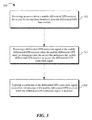
- FIG. 3 is a flowchart illustrating a method for providing authorization to use corrections provided by a differential GPS base station 300 in accordance with an additional exemplary embodiment of the present invention.
- the method 300 includes receiving an access list at a mobile differential GPS receiver, the access list having been broadcast from the differential GPS base station 302.
- the method 300 further includes receiving a differential GPS correction signal at the mobile differential GPS receiver 304.
- the method 300 further includes applying the differential GPS correction signal at the mobile differential GPS receiver when the mobile differential GPS receiver determines that the access list authorizes the mobile differential GPS receiver to apply the differential GPS correction signal 306.
- a correction of the differential GPS correction signal is applied to position information of the mobile differential GPS receiver when the differential GPS correction signal is applied by the mobile differential GPS receiver.
- the differential GPS correction signal is prevented from being applied at or by the mobile differential GPS receiver when the mobile differential GPS receiver determines that the access list does not authorize the mobile differential GPS receiver to apply the differential GPS correction signal.
- the step of receiving the access list at a mobile differential GPS receiver 302 may include the step of reading the access list 402.
- the step of receiving the access list at a mobile differential GPS receiver 302 may further include the step of determining if a serial number of the mobile differential GPS receiver is included in the access list 404.
- the mobile differential GPS receiver is authorized to apply the differential GPS correction signal when the serial number of the mobile differential GPS receiver is included in the access list.
- the mobile differential GPS receiver is not authorized to apply the differential GPS correction signal when the serial number of the mobile differential GPS receiver is not included in the access list.
- the invention may take the form of an entirely hardware embodiment, an entirely software embodiment or an embodiment containing both hardware and software elements.
- the invention is implemented in software, which includes but is not limited to firmware, resident software, microcode, and the like.
- the invention may take the form of a computer program product accessible from a computer-usable or computer-readable medium providing program code for use by or in connection with a computer or any instruction execution system.
- a computer-usable or computer readable medium may be any apparatus that may contain, store, communicate, propagate, or transport the program for use by or in connection with the instruction execution system, apparatus, or device.
- the medium may be an electronic, magnetic, optical, electromagnetic, infrared, or semiconductor system (or apparatus or device) or a propagation medium.
- a computer-readable medium include a semiconductor or solid state memory, magnetic tape, a removable computer diskette, a random access memory (RAM), a read-only memory (ROM), a rigid magnetic disk and an optical disk.
- Current examples of optical disks include compact disk-read only memory (CD-ROM), compact disk -read/write (CD-R/W) and DVD.
- a data processing system suitable for storing and/or executing program code will include at least one processor coupled directly or indirectly to memory elements through a system bus.
- the memory elements may include local memory employed during actual execution of the program code, bulk storage, and cache memories which provide temporary storage of at least some program code in order to reduce the number of times code must be retrieved from bulk storage during execution.
- I/O devices including but not limited to keyboards, microphone, speakers, displays, pointing devices, and the like
- I/O controllers may be coupled to the system either directly or through intervening I/O controllers.
- Network adapters may also be coupled to the system to enable the data processing system to become coupled to other data processing systems or storage devices through intervening private or public networks.
- Modems, cable modem and Ethernet cards are just a few of the currently available types of network adapters.
Landscapes
- Engineering & Computer Science (AREA)
- Radar, Positioning & Navigation (AREA)
- Remote Sensing (AREA)
- Computer Networks & Wireless Communication (AREA)
- Physics & Mathematics (AREA)
- General Physics & Mathematics (AREA)
- Position Fixing By Use Of Radio Waves (AREA)
- Mobile Radio Communication Systems (AREA)
- Circuits Of Receivers In General (AREA)
Abstract
providing an access list to the differential GPS base station (102);
broadcasting the access list from the differential GPS base station (102); and
broadcasting a differential GPS correction signal from the differential GPS base station (102),
wherein the differential GPS correction signal is applied by a mobile differential GPS receiver (106) when the mobile differential GPS receiver (106) receives the access list and the mobile differential GPS receiver (106) determines that the access list authorizes the mobile differential GPS receiver (106) to apply the differential GPS correction signal.
Description
- The present invention relates to the field of satellite-based guidance systems, such as Global Positioning System (GPS)-based guidance systems, and particularly to a system and method for providing authorization to use corrections provided by a Differential Global Positioning System (DGPS) base station, such as an RTK (Real Time Kinematic) base station.
- Satellite-based guidance systems, such as GPS-based guidance systems, are commonly used today as a navigation aid in cars, airplanes, ships, computer-controlled harvesters, mine trucks and other vehicles. For instance, GPS-based guidance systems utilized in farming equipment may allow for precise application of crop protection products, such as fertilizers, pesticides or lime. However, a number of current GPS-based guidance systems may be prone to inaccuracies (i.e.-GPS drift) due to atmospheric interference with GPS satellite signals received by a GPS receiver, such as interference from the ionosphere, troposphere, cloud cover, weather, tall buildings and the like.
- Differential GPS (DGPS) systems, such as Real Time Kinematic (RTK) systems, may be implemented for correcting inaccuracies in elevation measurements taken by GPS receivers, said inaccuracies being attributable to GPS drift. RTK systems may continuously compare data (ex.-GPS satellite signals) received from a GPS system to positional and elevation measurements for a surveyed location, such as a surveyed base station. The data comparison may be used to generate correction factors for adjusting measurements taken by mobile differential GPS receivers in the vicinity of the surveyed base station, since the satellite signals received by the mobile differential GPS receivers will be subject to atmospheric interference similar to that detected by the RTK system at the base station. RTK systems may further utilize radio links with the base station to send said correction factors to mobile differential GPS receivers for adjusting elevation measurements taken by the receivers. However, current RTK systems do not prevent unauthorized mobile differential GPS receivers (i.e., unauthorized rovers), such as those rovers for which RTK correction services have not been purchased, from applying correction signals received from the RTK base station.
- Therefore, it may be desirable to have a system and method for providing authorization to use corrections provided by a differential GPS base station which addresses the above-referenced problems and limitations of the current solutions.
- Accordingly, the present invention is directed to a method for providing authorization to use corrections provided by a differential GPS base station, including: providing an access list to the differential GPS base station; broadcasting the access list from the differential GPS base station; broadcasting a differential GPS correction signal from the differential GPS base station, wherein the differential GPS correction signal is applied by a mobile differential GPS receiver when the mobile differential GPS receiver receives the access list and only if the mobile differential GPS receiver determines that the access list authorizes the mobile differential GPS receiver to apply the differential GPS correction signal.
- A further embodiment of the present invention is directed to a method for providing authorization to use corrections provided by a differential GPS base station, including: receiving an access list at a mobile differential GPS receiver, the access list having been broadcast from the differential GPS base station; receiving a differential GPS correction signal at the mobile differential GPS receiver; and applying the differential GPS correction signal at the mobile differential GPS receiver when the mobile differential GPS receiver determines that the access list authorizes the mobile differential GPS receiver to apply the differential GPS correction signal, wherein the differential GPS correction signal is prevented from being applied at the mobile differential GPS receiver when the mobile differential GPS receiver determines that the access list does not authorize the mobile differential GPS receiver to apply the differential GPS correction signal.
- The present invention is further directed to a system, including: a differential GPS base station configured for broadcasting an access list and a differential GPS correction signal, the access list including a serial number of at least one mobile differential GPS receiver authorized for applying the differential GPS correction signal; and a mobile differential GPS receiver, the mobile differential GPS receiver configured for being communicatively coupled with the differential GPS base station, the mobile differential GPS receiver being configured for receiving the access list and the differential GPS correction signal broadcast by the differential GPS base station, wherein the mobile differential GPS receiver is further configured for applying the differential GPS correction signal when the mobile differential GPS receiver determines that the access list includes a serial number of the mobile differential GPS receiver.
- The numerous advantages of the present invention may be better understood by those skilled in the art by reference to the accompanying figures in which:
- FIG. 1 is a block diagram illustration of a system in accordance with an exemplary embodiment of the present invention;
- FIG. 2 is a flow chart illustrating a method for providing authorization to use corrections provided by a differential GPS base station in accordance with an exemplary embodiment of the present invention;
- FIG. 3 is a flow chart illustrating a method for providing authorization to use corrections provided by a differential GPS base station in accordance with an additional exemplary embodiment of the present invention; and
- FIG. 4 is a flow chart illustrating steps included in receiving an access list at a mobile differential GPS receiver, wherein receiving said access list is a step included in a method, as shown in FIG. 3, for providing authorization to use corrections provided by a differential GPS base station in accordance with an exemplary embodiment of the present invention.
- FIG. 1 illustrates a block diagram configuration for a
system 100 in accordance with an exemplary embodiment of the present invention. In a present embodiment thesystem 100 includes a Differential Global Positioning System (DGPS)base station 102, such as a Real Time Kinematic (RTK) base station. In the exemplary embodiment, the DGPSbase station 102 may be a fixed-position base station 102 configured for monitoringGPS satellites 104 and receiving signals from theGPS satellites 104. The DGPSbase station 102 may utilize information provided by the signals received from the GPS satellites to continuously calculate the base station's position/location. In some situations, the base station's calculated position may change, even though thebase station 102 has remained in a fixed position. This may be attributable to deviations in the signals received from theGPS satellites 104, a condition known as GPS drift, which may be caused by atmospheric conditions, physical obstructions (ex-tall buildings) or the like. The DGPSbase station 102 may be further configured for calculating the degree of deviation in the GPS signal and for generating a differential GPS (DGPS) correction signal, such as an RTK correction signal, which includes a correction for correcting calculated position information, the correction being based upon the calculated degree of deviation. - The
system 100 further includes at least one mobile differential GPS (DGPS) receiver (i.e., rover) 106. In current embodiments, the mobile DGPSreceiver 106 may be configured for being mounted on vehicles, such as tractors or other agriculture vehicles, so that it may be implemented with an assisted steering system, such as the GreenStar™ AutoTrac assisted steering system, for providing differential satellite-based navigation functionality to said vehicles. For example, themobile DGPS receiver 106 may be an RTK receiver, such as a StarFire™ RTK receiver. In the present embodiment, themobile DGPS receiver 106 may be configured for receiving a signal from theGPS satellites 104 and utilizing the signal received from the GPS satellites to continuously calculate a position of themobile DGPS receiver 106. Such capabilities may allow a vehicle to which themobile DGPS receiver 106 may be connected to be maintained along a desired travel path, such as when plowing a field or the like. However, since the position of themobile DGPS receiver 106 in the above scenario is not fixed, themobile DGPS receiver 106 may not be able to determine when deviations (as may be caused by GPS drift) have been introduced to the signals it receives from the GPS satellites. This may result in the mobile DGPS receiver inaccurately calculating its position, causing the vehicle to which it is attached to deviate from the desired travel path. - In an exemplary embodiment, the DGPS
base station 102 may be communicatively coupled with themobile DGPS receiver 106. For example, themobile DGPS receiver 106 may be mounted on farming equipment in a nearby field and may be within communicative range of the DGPSbase station 102. For embodiments implementing an RTK base station and an RTK receiver, a suitable communicative range may be, for instance, 6 miles or less. In present embodiments, the DGPSbase station 102 is configured for broadcasting the DGPS correction signal discussed above. The DGPSbase station 102 is also configured for broadcasting an access list. In the current embodiments, the access list includes information designating one ormore DGPS receivers 106 as being authorized to apply the DGPS correction signal. For instance, the access list may list a serial number of at least oneDGPS receiver 106 authorized to apply the DGPS correction signal. In further embodiments, themobile DGPS receiver 106 may be configured for receiving the access list broadcast by the DGPSbase station 102. Themobile DGPS receiver 106 may be further configured, such as by containing instructions or routines, to read the access list and to determine if the access list authorizes themobile DGPS receiver 106 to apply the DGPS correction signal. As discussed above, the access list may include one or more serial numbers corresponding to one or more mobile DGPS receivers authorized to apply the DGPS correction signal. For example, a mobile DGPS receiver may be authorized if its user or owner has paid a subscription fee for applying DGPS correction signals broadcast from the DGPSbase station 102, in which case, in the exemplary embodiment, a serial number associated with an authorizedreceiver 106 would be included on the access list. - In further embodiments, the
mobile DGPS receiver 106 is configured for receiving the DGPS correction signal broadcast by the DGPS base station. Further, themobile DGPS receiver 106 may be configured for applying the correction of the DGPS correction signal to position information (determined or calculated by themobile DGPS receiver 106 utilizing GPS satellite signal(s) received by the mobile DGPS receiver 106) of themobile DGPS receiver 106 when themobile DGPS receiver 106 determines that the access list authorizes themobile DGPS receiver 106 to apply the DGPS correction signal. For instance, after reading its serial number on the access list and making a determination that it is authorized to apply the DGPS correction signal, themobile DGPS receiver 106 may then apply and use the DGPS correction signal. By applying the correction, themobile DGPS receiver 106 is able to more accurately determine its position, which allows thereceiver 106 to guide or maintain a vehicle to which thereceiver 106 may be mounted or attached on or along a desired travel path. It may be assumed that signal deviation affecting GPS satellite signals received at thebase station 102 is the same for GPS satellite signals received at themobile DGPS receiver 106 when themobile DGPS receiver 106 is within range of thebase station 102. Thus, the DGPS correction signal generated at the base station may be applied to the position information determined or calculated at themobile DGPS receiver 106 for providing accurate, corrected position information. - In additional embodiments, the
mobile DGPS receiver 106 is configured for preventing the DGPS correction signal from being applied at or by themobile DGPS receiver 106 when thereceiver 106 determines that the access list does not authorize thereceiver 106 to access the DGPS correction signal. For example, after reading the access list and failing to locate its serial number on the access list, themobile DGPS receiver 106 may determine that it is not authorized to apply the DGPS correction signal. Thus, themobile DGPS receiver 106 may prevent the DGPS correction signal from being applied at or by thereceiver 106, such as by ignoring the DGPS correction signal. In this manner, authorization to use corrections provided by thebase station 102 may be achieved in that application of DGPS correction signals from theDGPS base station 102 for providing DGPS navigation capabilities may be limited to thoseDGPS receivers 106 having users/owners who have subscribed and/or paid to use or apply the DGPS correction signals from thebase station 102. - FIG. 2 is a flow chart illustrating a method for providing authorization to use corrections provided by a differential
GPS base station 200 in accordance with an exemplary embodiment of the present invention. Themethod 200 includes providing an access list to the differentialGPS base station 202. Themethod 200 further includes broadcasting the access list from the differentialGPS base station 204. Themethod 200 further includes broadcasting a differential GPS correction signal, such as an RTK correction signal, from the differentialGPS base station 206. In exemplary embodiments, the differential GPS correction signal is applied by a mobile differential GPS receiver when the mobile differential GPS receiver receives the access list and the mobile differential GPS receiver determines that the access list authorizes the mobile differential GPS receiver to apply or use the differential GPS correction signal. - In further embodiments, the differential GPS correction signal is prevented from being applied by the mobile differential GPS receiver when the mobile differential GPS receiver determines that the access list does not authorize the mobile differential GPS receiver to apply the differential GPS correction signal. In additional embodiments, the access list, when received by the mobile differential GPS receiver, is read by the mobile differential GPS receiver to determine if a serial number of the mobile differential GPS receiver is included in the access list. In still further embodiments, the mobile differential GPS receiver determines that the access list authorizes the mobile differential GPS receiver to apply the differential GPS correction signal when the serial number of the mobile differential GPS receiver is included in the access list. In additional embodiments, the mobile differential GPS receiver determines that the access list does not authorize the mobile differential GPS receiver to apply the differential GPS correction signal when the serial number of the mobile differential GPS receiver is not included in the access list.
- FIG. 3 is a flowchart illustrating a method for providing authorization to use corrections provided by a differential
GPS base station 300 in accordance with an additional exemplary embodiment of the present invention. Themethod 300 includes receiving an access list at a mobile differential GPS receiver, the access list having been broadcast from the differentialGPS base station 302. Themethod 300 further includes receiving a differential GPS correction signal at the mobiledifferential GPS receiver 304. Themethod 300 further includes applying the differential GPS correction signal at the mobile differential GPS receiver when the mobile differential GPS receiver determines that the access list authorizes the mobile differential GPS receiver to apply the differentialGPS correction signal 306. For instance, a correction of the differential GPS correction signal is applied to position information of the mobile differential GPS receiver when the differential GPS correction signal is applied by the mobile differential GPS receiver. In an exemplary embodiment, the differential GPS correction signal is prevented from being applied at or by the mobile differential GPS receiver when the mobile differential GPS receiver determines that the access list does not authorize the mobile differential GPS receiver to apply the differential GPS correction signal. - In further embodiments (as shown in FIG. 4), the step of receiving the access list at a mobile
differential GPS receiver 302 may include the step of reading theaccess list 402. The step of receiving the access list at a mobiledifferential GPS receiver 302 may further include the step of determining if a serial number of the mobile differential GPS receiver is included in theaccess list 404. In exemplary embodiments, the mobile differential GPS receiver is authorized to apply the differential GPS correction signal when the serial number of the mobile differential GPS receiver is included in the access list. Further, the mobile differential GPS receiver is not authorized to apply the differential GPS correction signal when the serial number of the mobile differential GPS receiver is not included in the access list. - It is contemplated that the invention may take the form of an entirely hardware embodiment, an entirely software embodiment or an embodiment containing both hardware and software elements. In a preferred embodiment, the invention is implemented in software, which includes but is not limited to firmware, resident software, microcode, and the like. Furthermore, the invention may take the form of a computer program product accessible from a computer-usable or computer-readable medium providing program code for use by or in connection with a computer or any instruction execution system. For the purposes of this description, a computer-usable or computer readable medium may be any apparatus that may contain, store, communicate, propagate, or transport the program for use by or in connection with the instruction execution system, apparatus, or device.
- It is further contemplated that the medium may be an electronic, magnetic, optical, electromagnetic, infrared, or semiconductor system (or apparatus or device) or a propagation medium. Examples of a computer-readable medium include a semiconductor or solid state memory, magnetic tape, a removable computer diskette, a random access memory (RAM), a read-only memory (ROM), a rigid magnetic disk and an optical disk. Current examples of optical disks include compact disk-read only memory (CD-ROM), compact disk -read/write (CD-R/W) and DVD.
- A data processing system suitable for storing and/or executing program code will include at least one processor coupled directly or indirectly to memory elements through a system bus. The memory elements may include local memory employed during actual execution of the program code, bulk storage, and cache memories which provide temporary storage of at least some program code in order to reduce the number of times code must be retrieved from bulk storage during execution.
- Input/output or I/O devices (including but not limited to keyboards, microphone, speakers, displays, pointing devices, and the like) may be coupled to the system either directly or through intervening I/O controllers.
- Network adapters may also be coupled to the system to enable the data processing system to become coupled to other data processing systems or storage devices through intervening private or public networks. Modems, cable modem and Ethernet cards are just a few of the currently available types of network adapters.
- It is understood that the specific order or hierarchy of steps in the foregoing disclosed methods are examples of exemplary approaches. Based upon design preferences, it is understood that the specific order or hierarchy of steps in the method can be rearranged while remaining within the scope of the present invention. The accompanying method claims present elements of the various steps in a sample order, and are not meant to be limited to the specific order or hierarchy presented.
Claims (11)
- A method for providing authorization to use corrections provided by a differential GPS base station (102), comprising:providing an access list to the differential GPS base station (102);broadcasting the access list from the differential GPS base station (102); andbroadcasting a differential GPS correction signal from the differential GPS base station (102),wherein the differential GPS correction signal is applied by a mobile differential GPS receiver (106) when the mobile differential GPS receiver (106) receives the access list and the mobile differential GPS receiver (106) determines that the access list authorizes the mobile differential GPS receiver (106) to apply the differential GPS correction signal.
- A method as claimed in claim 1, wherein the differential GPS correction signal is prevented from being applied by the mobile differential GPS receiver (106) when the mobile differential GPS receiver (106) determines that the access list does not authorize the mobile differential GPS receiver (106) to apply the differential GPS correction signal.
- A method as claimed in claim 1, wherein the access list, when received by the mobile differential GPS receiver (106), is read by the mobile differential GPS receiver (106) to determine if a serial number of the mobile differential GPS receiver (106) is included in the access list.
- A method as claimed in claim 3, wherein the mobile differential GPS receiver (106) determines that the access list authorizes the mobile differential GPS receiver (106) to apply the differential GPS correction signal when the serial number of the mobile differential GPS receiver (106) is included in the access list.
- A method as claimed in claim 3, wherein the mobile differential GPS receiver (106) determines that the access list does not authorize the mobile differential GPS receiver (106) to apply the differential GPS correction signal when the serial number of the mobile differential GPS receiver (106) is not included in the access list.
- A method as claimed in one of claims 1 to 5, wherein a correction of the differential GPS correction signal is applied to position information of the mobile differential GPS receiver (106) when the differential GPS correction signal is applied by the mobile differential GPS receiver (106).
- A method as claimed in one of claims 1 to 6, wherein the differential GPS base station (102) is a Real Time Kinematic (RTK) base station configured for broadcasting an RTK correction signal.
- A system (100), comprising:a differential GPS base station (102) configured for broadcasting an access list and a differential GPS correction signal, the access list including a serial number of at least one mobile differential GPS receiver authorized for applying the differential GPS correction signal; anda mobile differential GPS receiver (106), the mobile differential GPS receiver (106) configured for being communicatively coupled with the differential GPS base station (102), the mobile differential GPS receiver (106) being configured for receiving the access list and the differential GPS correction signal broadcast by the differential GPS base station (102),wherein the mobile differential GPS receiver (106) is further configured for applying the differential GPS correction signal when the mobile differential GPS receiver determines that the access list includes a serial number of the mobile differential GPS receiver (106).
- A system (100) as claimed in claim 8, wherein the mobile differential GPS receiver (106) is further configured for preventing the differential GPS correction signal from being applied at the mobile differential GPS receiver (106) when the mobile differential GPS receiver (106) determines that the access list does not include the serial number of the mobile differential GPS receiver (106).
- A system (100) as claimed in claim 8 or 9, wherein a correction of the differential GPS correction signal is applied to position information of the mobile differential GPS receiver (106) when the differential GPS correction signal is applied by the mobile differential GPS receiver (106).
- A system (100) as claimed in one of claims 8 to 10, wherein the differential GPS base station (102) is a Real Time Kinematic (RTK) base station configured for broadcasting an RTK correction signal and wherein the mobile differential GPS receiver (106) is an RTK receiver.
Applications Claiming Priority (1)
| Application Number | Priority Date | Filing Date | Title |
|---|---|---|---|
| US11/525,318 US20080122687A1 (en) | 2006-09-21 | 2006-09-21 | System and method for providing authorization to use corrections provided by an RTK base station |
Publications (1)
| Publication Number | Publication Date |
|---|---|
| EP1903351A1 true EP1903351A1 (en) | 2008-03-26 |
Family
ID=38822663
Family Applications (1)
| Application Number | Title | Priority Date | Filing Date |
|---|---|---|---|
| EP07116483A Withdrawn EP1903351A1 (en) | 2006-09-21 | 2007-09-14 | System and method for providing authorization to use corrections provided by an RTK base station |
Country Status (8)
| Country | Link |
|---|---|
| US (1) | US20080122687A1 (en) |
| EP (1) | EP1903351A1 (en) |
| CN (1) | CN101166056A (en) |
| AU (1) | AU2007216887A1 (en) |
| BR (1) | BRPI0703551A (en) |
| CA (1) | CA2602771A1 (en) |
| RU (1) | RU2007135046A (en) |
| ZA (1) | ZA200708053B (en) |
Cited By (2)
| Publication number | Priority date | Publication date | Assignee | Title |
|---|---|---|---|---|
| EP3444636A4 (en) * | 2016-04-13 | 2019-12-25 | Positec Power Tools (Suzhou) Co., Ltd | DIFFERENTIAL GLOBAL POSITIONING SYSTEM AND ASSOCIATED POSITIONING METHOD |
| US11107017B2 (en) | 2013-09-23 | 2021-08-31 | Farmobile, Llc | Farming data collection and exchange system |
Families Citing this family (12)
| Publication number | Priority date | Publication date | Assignee | Title |
|---|---|---|---|---|
| CN103458448B (en) * | 2012-06-05 | 2017-06-20 | 中国移动通信集团公司 | A kind of communication network failure diagnostic method and equipment |
| CN104348769B (en) * | 2013-07-29 | 2017-11-28 | 华为技术有限公司 | The mutual bearing calibration of channel correcting method, passage, apparatus and system |
| CN104749582B (en) * | 2013-12-27 | 2017-11-21 | 中国移动通信集团公司 | The sending method of differential data, the determination method and device of GPS location data |
| US9903952B2 (en) | 2015-03-18 | 2018-02-27 | Amazon Technologies, Inc. | GPS error correction via network of fixed point ground stations |
| CN108474856A (en) * | 2016-01-15 | 2018-08-31 | 松下知识产权经营株式会社 | GNSS correction datas diostribution device, GNSS correction datas dissemination system and GNSS correction data distribution methods |
| DE102019002516B4 (en) * | 2019-04-07 | 2025-01-30 | Androtec Gmbh | Measuring arrangement and method for optical or quasi-optical position determination |
| WO2021135714A1 (en) * | 2020-01-02 | 2021-07-08 | 苏州宝时得电动工具有限公司 | Base station sharing method and system for autonomous robots, and storage medium |
| US11019459B1 (en) * | 2020-01-07 | 2021-05-25 | Here Global B.V. | Method, apparatus, and system for base station selection for differential positioning |
| US12016257B2 (en) | 2020-02-19 | 2024-06-25 | Sabanto, Inc. | Methods for detecting and clearing debris from planter gauge wheels, closing wheels and seed tubes |
| US12461083B2 (en) | 2020-08-03 | 2025-11-04 | Sabanto, Inc. | Methods for improved agricultural procedures |
| CN113154193A (en) * | 2021-02-23 | 2021-07-23 | 韩玉坤 | Open-air portable mapping equipment convenient to adjust |
| CN114401524A (en) * | 2021-11-26 | 2022-04-26 | 江苏徐工工程机械研究院有限公司 | RTK base station monitoring system and method for unmanned mine transportation |
Citations (4)
| Publication number | Priority date | Publication date | Assignee | Title |
|---|---|---|---|---|
| US5592551A (en) | 1992-12-01 | 1997-01-07 | Scientific-Atlanta, Inc. | Method and apparatus for providing interactive electronic programming guide |
| WO2000069187A1 (en) * | 1999-05-07 | 2000-11-16 | Nokia Mobile Phones Limited | Gps assistance data delivery method and system |
| US20040225432A1 (en) | 1991-02-25 | 2004-11-11 | H. Robert Pilley | Method and system for the navigation and control of vehicles at an airport and in the surrounding airspace |
| US20050254652A1 (en) * | 2002-07-16 | 2005-11-17 | Haim Engler | Automated network security system and method |
Family Cites Families (4)
| Publication number | Priority date | Publication date | Assignee | Title |
|---|---|---|---|---|
| US5323322A (en) * | 1992-03-05 | 1994-06-21 | Trimble Navigation Limited | Networked differential GPS system |
| US5510798A (en) * | 1993-04-02 | 1996-04-23 | Bauer; William D. | Multiple-accuracy GPS system |
| US7227496B2 (en) * | 2005-05-26 | 2007-06-05 | Trimble Navigation Limited | GPS rover station having position dithering for controlling accuracy of secure positions |
| US7079075B1 (en) * | 2005-06-07 | 2006-07-18 | Trimble Navigation Limited | GPS rover station for synthesizing synthetic reference phases for controlling accuracy of high integrity positions |
-
2006
- 2006-09-21 US US11/525,318 patent/US20080122687A1/en not_active Abandoned
-
2007
- 2007-09-14 CA CA002602771A patent/CA2602771A1/en not_active Abandoned
- 2007-09-14 EP EP07116483A patent/EP1903351A1/en not_active Withdrawn
- 2007-09-19 ZA ZA200708053A patent/ZA200708053B/en unknown
- 2007-09-19 BR BRPI0703551-9A patent/BRPI0703551A/en not_active Application Discontinuation
- 2007-09-20 AU AU2007216887A patent/AU2007216887A1/en not_active Abandoned
- 2007-09-20 RU RU2007135046/28A patent/RU2007135046A/en not_active Application Discontinuation
- 2007-09-21 CN CNA2007101543274A patent/CN101166056A/en active Pending
Patent Citations (4)
| Publication number | Priority date | Publication date | Assignee | Title |
|---|---|---|---|---|
| US20040225432A1 (en) | 1991-02-25 | 2004-11-11 | H. Robert Pilley | Method and system for the navigation and control of vehicles at an airport and in the surrounding airspace |
| US5592551A (en) | 1992-12-01 | 1997-01-07 | Scientific-Atlanta, Inc. | Method and apparatus for providing interactive electronic programming guide |
| WO2000069187A1 (en) * | 1999-05-07 | 2000-11-16 | Nokia Mobile Phones Limited | Gps assistance data delivery method and system |
| US20050254652A1 (en) * | 2002-07-16 | 2005-11-17 | Haim Engler | Automated network security system and method |
Cited By (12)
| Publication number | Priority date | Publication date | Assignee | Title |
|---|---|---|---|---|
| US11107017B2 (en) | 2013-09-23 | 2021-08-31 | Farmobile, Llc | Farming data collection and exchange system |
| US11126937B2 (en) | 2013-09-23 | 2021-09-21 | Farmobile, Llc | Farming data collection and exchange system |
| US11151485B2 (en) * | 2013-09-23 | 2021-10-19 | Farmobile, Llc | Farming data collection and exchange system |
| US11164116B2 (en) | 2013-09-23 | 2021-11-02 | Farmobile, Llc | Farming data collection and exchange system |
| US11361261B2 (en) | 2013-09-23 | 2022-06-14 | Farmobile, Llc | Farming data collection and exchange system |
| US11361260B2 (en) | 2013-09-23 | 2022-06-14 | Farmobile, Llc | Farming data collection and exchange system |
| US11410094B2 (en) | 2013-09-23 | 2022-08-09 | Farmobile, Llc | Farming data collection and exchange system |
| US11507899B2 (en) | 2013-09-23 | 2022-11-22 | Farmobile, Llc | Farming data collection and exchange system |
| US11941554B2 (en) | 2013-09-23 | 2024-03-26 | AGI Suretrack LLC | Farming data collection and exchange system |
| US12271840B2 (en) | 2013-09-23 | 2025-04-08 | AGI Suretrack LLC | Farming data collection and exchange system |
| EP3444636A4 (en) * | 2016-04-13 | 2019-12-25 | Positec Power Tools (Suzhou) Co., Ltd | DIFFERENTIAL GLOBAL POSITIONING SYSTEM AND ASSOCIATED POSITIONING METHOD |
| CN113156471A (en) * | 2016-04-13 | 2021-07-23 | 苏州宝时得电动工具有限公司 | Positioning system and positioning method |
Also Published As
| Publication number | Publication date |
|---|---|
| CN101166056A (en) | 2008-04-23 |
| US20080122687A1 (en) | 2008-05-29 |
| CA2602771A1 (en) | 2008-03-21 |
| AU2007216887A1 (en) | 2008-04-10 |
| RU2007135046A (en) | 2009-03-27 |
| BRPI0703551A (en) | 2008-05-13 |
| ZA200708053B (en) | 2009-07-29 |
Similar Documents
| Publication | Publication Date | Title |
|---|---|---|
| CA2602771A1 (en) | System and method for providing authorization to use corrections provided by an rtk base station | |
| Guo et al. | Multi-GNSS precise point positioning for precision agriculture | |
| US20090157259A1 (en) | System and method for providing guidance towards a far-point position for a vehicle implementing a satellite-based guidance system | |
| de Bakker et al. | Real-time multi-GNSS single-frequency precise point positioning | |
| JP6855580B2 (en) | GNSS receiver protection level | |
| El‐Mowafy et al. | Integrity monitoring for positioning of intelligent transport systems using integrated RTK‐GNSS, IMU and vehicle odometer | |
| US8600601B2 (en) | Positioning system and method | |
| CN102645222A (en) | Satellite inertial navigation method and equipment | |
| EP1738138B1 (en) | System and method for creating accurate topographical maps using dgps | |
| KR102496103B1 (en) | How to determine the adaptive model of electron density distribution | |
| US9989644B2 (en) | Use of wide area reference receiver network data to mitigate local area error sources | |
| US9817126B2 (en) | Methods for identifying whether or not a satellite has a line of sight | |
| US9664794B2 (en) | Apparatus and method for monitoring malfunctioning state of global positioning system (GPS) satellite | |
| CN114609659A (en) | Method and system for correcting vehicle positioning data in integrated navigation system in real time | |
| CN111352141B (en) | Vehicle-mounted satellite precise single-point real-time positioning method based on high-precision map | |
| George | Automotive application of high precision GNSS | |
| Galdames et al. | Implementation and performance evaluation of an inertial navigation system/global navigation satellite system real‐time kinematic Ntrip navigation system aided by a robot operating system‐based emulated odometer for high‐accuracy land vehicle navigation in urban environments | |
| Kulik et al. | Development and research of differential mode GNSS model for intelligent transport functioning providing | |
| KR102031134B1 (en) | Method of navigating safety zone and navigator system associating therewith | |
| Rovira Más et al. | Global Navigation Systems | |
| Margaria et al. | The Local Integrity Approach for Urban Contexts: De? nition and Vehicular Experimental Assessment. |
Legal Events
| Date | Code | Title | Description |
|---|---|---|---|
| PUAI | Public reference made under article 153(3) epc to a published international application that has entered the european phase |
Free format text: ORIGINAL CODE: 0009012 |
|
| AK | Designated contracting states |
Kind code of ref document: A1 Designated state(s): AT BE BG CH CY CZ DE DK EE ES FI FR GB GR HU IE IS IT LI LT LU LV MC MT NL PL PT RO SE SI SK TR |
|
| AX | Request for extension of the european patent |
Extension state: AL BA HR MK YU |
|
| 17P | Request for examination filed |
Effective date: 20080926 |
|
| AKX | Designation fees paid |
Designated state(s): DE ES FR GB IT |
|
| 17Q | First examination report despatched |
Effective date: 20081112 |
|
| STAA | Information on the status of an ep patent application or granted ep patent |
Free format text: STATUS: THE APPLICATION IS DEEMED TO BE WITHDRAWN |
|
| 18D | Application deemed to be withdrawn |
Effective date: 20090503 |