EP1901536B1 - A method for realizing session communication between the calling party and the called party - Google Patents
A method for realizing session communication between the calling party and the called party Download PDFInfo
- Publication number
- EP1901536B1 EP1901536B1 EP06761302A EP06761302A EP1901536B1 EP 1901536 B1 EP1901536 B1 EP 1901536B1 EP 06761302 A EP06761302 A EP 06761302A EP 06761302 A EP06761302 A EP 06761302A EP 1901536 B1 EP1901536 B1 EP 1901536B1
- Authority
- EP
- European Patent Office
- Prior art keywords
- callee
- caller
- application server
- session
- soft switch
- Prior art date
- Legal status (The legal status is an assumption and is not a legal conclusion. Google has not performed a legal analysis and makes no representation as to the accuracy of the status listed.)
- Not-in-force
Links
- 238000000034 method Methods 0.000 title claims abstract description 43
- 238000004891 communication Methods 0.000 title abstract description 20
- 230000004044 response Effects 0.000 claims abstract description 64
- 230000002457 bidirectional effect Effects 0.000 claims description 4
- 230000008569 process Effects 0.000 abstract description 9
- 230000011664 signaling Effects 0.000 description 15
- 238000012545 processing Methods 0.000 description 4
- 230000005540 biological transmission Effects 0.000 description 3
- 238000010586 diagram Methods 0.000 description 3
- 238000005111 flow chemistry technique Methods 0.000 description 3
- 230000003993 interaction Effects 0.000 description 2
- 238000012986 modification Methods 0.000 description 2
- 230000004048 modification Effects 0.000 description 2
- 238000013459 approach Methods 0.000 description 1
- 230000008859 change Effects 0.000 description 1
- 238000005352 clarification Methods 0.000 description 1
- 238000004040 coloring Methods 0.000 description 1
- 230000000694 effects Effects 0.000 description 1
- 238000005516 engineering process Methods 0.000 description 1
- 230000006870 function Effects 0.000 description 1
- 230000000977 initiatory effect Effects 0.000 description 1
- 230000010354 integration Effects 0.000 description 1
- 230000007246 mechanism Effects 0.000 description 1
Images


Classifications
-
- H—ELECTRICITY
- H04—ELECTRIC COMMUNICATION TECHNIQUE
- H04Q—SELECTING
- H04Q3/00—Selecting arrangements
- H04Q3/0016—Arrangements providing connection between exchanges
- H04Q3/0025—Provisions for signalling
-
- H—ELECTRICITY
- H04—ELECTRIC COMMUNICATION TECHNIQUE
- H04L—TRANSMISSION OF DIGITAL INFORMATION, e.g. TELEGRAPHIC COMMUNICATION
- H04L65/00—Network arrangements, protocols or services for supporting real-time applications in data packet communication
- H04L65/1066—Session management
- H04L65/1069—Session establishment or de-establishment
-
- H—ELECTRICITY
- H04—ELECTRIC COMMUNICATION TECHNIQUE
- H04L—TRANSMISSION OF DIGITAL INFORMATION, e.g. TELEGRAPHIC COMMUNICATION
- H04L65/00—Network arrangements, protocols or services for supporting real-time applications in data packet communication
- H04L65/1066—Session management
- H04L65/1101—Session protocols
- H04L65/1104—Session initiation protocol [SIP]
-
- H—ELECTRICITY
- H04—ELECTRIC COMMUNICATION TECHNIQUE
- H04M—TELEPHONIC COMMUNICATION
- H04M3/00—Automatic or semi-automatic exchanges
- H04M3/42—Systems providing special services or facilities to subscribers
- H04M3/58—Arrangements for transferring received calls from one subscriber to another; Arrangements affording interim conversations between either the calling or the called party and a third party
-
- H—ELECTRICITY
- H04—ELECTRIC COMMUNICATION TECHNIQUE
- H04M—TELEPHONIC COMMUNICATION
- H04M3/00—Automatic or semi-automatic exchanges
- H04M3/42—Systems providing special services or facilities to subscribers
- H04M3/42017—Customized ring-back tones
-
- H—ELECTRICITY
- H04—ELECTRIC COMMUNICATION TECHNIQUE
- H04Q—SELECTING
- H04Q2213/00—Indexing scheme relating to selecting arrangements in general and for multiplex systems
- H04Q2213/1305—Software aspects
-
- H—ELECTRICITY
- H04—ELECTRIC COMMUNICATION TECHNIQUE
- H04Q—SELECTING
- H04Q2213/00—Indexing scheme relating to selecting arrangements in general and for multiplex systems
- H04Q2213/1307—Call setup
-
- H—ELECTRICITY
- H04—ELECTRIC COMMUNICATION TECHNIQUE
- H04Q—SELECTING
- H04Q2213/00—Indexing scheme relating to selecting arrangements in general and for multiplex systems
- H04Q2213/13176—Common channel signaling, CCS7
-
- H—ELECTRICITY
- H04—ELECTRIC COMMUNICATION TECHNIQUE
- H04Q—SELECTING
- H04Q2213/00—Indexing scheme relating to selecting arrangements in general and for multiplex systems
- H04Q2213/13204—Protocols
Definitions
- the present invention relates to the communication technology field, more specifically to a method for establishing a session between a caller and a callee.
- NGN next generation network
- SIP Session Initial Protocol
- RTP Real Time Transport Protocol
- SDP Session Description Protocol
- the caller dials the access code of the first service and sends the Invite Message containing its own SDP to the application server AS1 of the caller, which is trigged to perform the first service flow.
- the application server AS1 of the caller issues the routing number of the second service (i.e. the access code of the second service) to the soft switch according to the Invite Message. And according to the routing number, the soft switch triggers the application server AS2 of the second service to perform the flow of the second service. Then the application server AS2 calls the designated callee.
- the routing number of the second service i.e. the access code of the second service
- the application server AS2 After the callee picks up, the application server AS2 sends the Update Message containing a SDP of the callee to the caller.
- the SDP message of the callee is updated at the caller side and the 200 OK Response Message containing a SDP of the caller is sent to the soft switch.
- the callee transfers the Picked-up Response Message and reports it to the application server AS1 of the caller level by level, and the application server AS2 of the caller returns the ACK Message of the callee. And thus the session negotiation process since the number of the callee is issued is finished.
- the callee After being picked up, the callee sends immediately the Update Message containing its own SDP, and at this time the SDP of the callee in the Update Message is the current SDP of the callee.
- the SDP may change according to the variation of port number of the callee, hence, the caller is required to send the re-Invite Message to the callee after receiving the Update Message from the callee for renegotiation so as to obtain the latest SDP of the callee.
- the callee returns the 200 OK Response Message containing its own latest SDP to the caller and the renegotiation process of the callee since being picked up is completed. And the call is established between the caller and the callee.
- the real callee is the third callee whose SDP is different from that of the original one.
- the Update Message sent by the picked-up original callee includes its own SDP but not the SDP of the real callee (the third callee). Therefore, after receiving the Update Message from the original callee, the caller is required to send the re-Invite Message to the real callee for renegotiation so as to obtain the SDP of the real callee.
- the real callee returns the 200 OK Response Message containing its own SDP to the caller and thus the renegotiation process of the callee since being picked up is completed. The call is established between the caller and the real callee accordingly.
- US Patent Application 2005/0036492 A1 discloses, in the case that there is no question of a call redirect with the aid of the message Re-invite during the ringing state, how to solve the problem of controlling the redirecting of a bearer connection even in the ringing state by means that the first callee (subscriber B) requests an SDP offer from the second callee (subscriber C) via the SIP/SLP-T protocol using a corresponding parameter (header) "SDP Offer request" etc.
- Another US Patent Application 2005/0105511 A1 discloses a method and a system for establishing a media session, the method comprising: sending a media session invitation request from a first media communication deivce to a second media communication device; initiating a media session establishing from the second media communication device towards destination user equipment; sending a first media inativity indication from the second media communication device to the first media communication device; and sending a first media activity indication from the second media communication device to the first media communication device, in response to receiving a media session establishing accepted response from the destination user equipment to the second media communication device.
- the present invention provides a method for establishing a session between a caller and a callee, applying to a next generation network, after said callee picking up, further comprising:
- the application server of said callee when performing the session renegotiation with said callee, sends a re-request message without a session description protocol to said callee.
- said callee After the application server of said callee performs the session renegotiation with said callee, said callee returns its own session description protocol to its application server by the response message.
- said caller after the session update, said caller returning a response message containing a session description protocol of said caller to said callee specifically including the steps of:
- the method for establishing a session between a caller and a callee, wherein after a first callee picking up and forwarding or hooking to a second callee further including:
- the application server of said first callee when performing the session renegotiation with said second callee, sends a re-request message without a session description protocol to said second callee.
- said second callee after the application server of said first callee performs the session renegotiation with said second callee, said second callee returns its own session description protocol to its application server by the response message.
- said caller after the session update, said caller returning a response message containing a session description protocol of said caller to said second callee specifically including the steps of:
- the above method also includes:
- Figure 2 is the schematic diagram showing the network entities related in the establishment of the communication between the caller and the callee.
- the network elements are:
- the application server AS2 of the first callee sends the re-Invite Message without its SDP to a second callee and performs session renegotiation with the second callee, then the second callee returns the 200 OK Response Message containing its own SDP to the application server AS2 of the first callee, and the application server AS2 of the first callee sends the Update Message containing a SDP of the second callee to the application server AS1 of the caller so as to realize the update of the SDP of the callee at the caller side and accordingly guarantee the communication is established between the caller and the second callee.
- an embodiment of the method in the present invention for realizing the communication between the caller and the callee includes the following flows:
- the application server AS2 of the callee sends the re-Invite Message without its own SDP to the callee for the session renegotiation with the callee, then the callee returns the 200 OK Response Message containing its own SDP to the application server AS2 of the callee server, and the application server AS2 of the callee server sends the Update Message containing a SDP of the callee to the application server AS1 of the caller so as to realize the update of the SDP of the callee at the caller side and accordingly guarantee the communication is established between the caller and the callee.
- the above embodiments illustrate the multi-service triggering in detail with an example of triggering two service flows (relating two soft switches and two application servers).
- the realization principle for nesting triggering more than two services or flows is the same with that for triggering two services or flows, and the only difference is that it may relate to more soft switches and application servers to transmit the above signalings level by level.
Landscapes
- Engineering & Computer Science (AREA)
- Computer Networks & Wireless Communication (AREA)
- Signal Processing (AREA)
- Business, Economics & Management (AREA)
- General Business, Economics & Management (AREA)
- Multimedia (AREA)
- Telephonic Communication Services (AREA)
- Communication Control (AREA)
Abstract
Description
- The present invention relates to the communication technology field, more specifically to a method for establishing a session between a caller and a callee.
- The next generation network (NGN) is developing rapidly and introducing in a lot of new services. In the field of voice and multimedia services, it has become a trend to control and realize NGN services based on the flexible and extendable SIP (Session Initial Protocol) signaling and other auxiliary signalings such as RTP (Real Time Transport Protocol) and SDP (Session Description Protocol) etc.
- Currently many services are co-existing and in order to satisfy the increasing requirements of the users and to take into account the repeatability of service characteristics, it is necessary to combine the current services and to realize the nesting of different service characteristics, which results in the problem of nesting between multi-services accordingly.
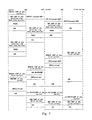
- However, the current NGN services only take into account the processing of the un-nesting call flows but can not process the multi-service nesting call flows properly. At the same time, for example when the hook, the forwarding or the port number changes, it is impossible to process when the SDP of the callee changes. Taking the typical multi-services nesting and forwarding as an example, when the user dials an intelligent service and triggers the corresponding intelligent flow it is necessary to forward the call once and trigger the application server twice and the detailed flow is illustrated in
Figure 1 as follows: - The caller dials the access code of the first service and sends the Invite Message containing its own SDP to the application server AS1 of the caller, which is trigged to perform the first service flow.
- The application server AS1 of the caller issues the routing number of the second service (i.e. the access code of the second service) to the soft switch according to the Invite Message. And according to the routing number, the soft switch triggers the application server AS2 of the second service to perform the flow of the second service. Then the application server AS2 calls the designated callee.
- After the callee picks up, the application server AS2 sends the Update Message containing a SDP of the callee to the caller.
- The SDP message of the callee is updated at the caller side and the 200 OK Response Message containing a SDP of the caller is sent to the soft switch.
- The callee transfers the Picked-up Response Message and reports it to the application server AS1 of the caller level by level, and the application server AS2 of the caller returns the ACK Message of the callee. And thus the session negotiation process since the number of the callee is issued is finished.
- During the above session negotiation process, after being picked up, the callee sends immediately the Update Message containing its own SDP, and at this time the SDP of the callee in the Update Message is the current SDP of the callee. The SDP may change according to the variation of port number of the callee, hence, the caller is required to send the re-Invite Message to the callee after receiving the Update Message from the callee for renegotiation so as to obtain the latest SDP of the callee. The callee returns the 200 OK Response Message containing its own latest SDP to the caller and the renegotiation process of the callee since being picked up is completed. And the call is established between the caller and the callee.
- In addition, during the above session negotiation process, if the picked-up callee (the original callee) is forwarded or hooked to the third callee, the real callee is the third callee whose SDP is different from that of the original one. The Update Message sent by the picked-up original callee includes its own SDP but not the SDP of the real callee (the third callee). Therefore, after receiving the Update Message from the original callee, the caller is required to send the re-Invite Message to the real callee for renegotiation so as to obtain the SDP of the real callee. The real callee returns the 200 OK Response Message containing its own SDP to the caller and thus the renegotiation process of the callee since being picked up is completed. The call is established between the caller and the real callee accordingly.
- The above flows show after the SDP of the callee is updated at the caller side, when the renegotiation between the caller and the callee is performed by employing re-Invite signaling time after time, it will relate to many devices and it is hard to be realized. In addition, in the mode based on B2B (the back to back mode in SIP protocol), the cross processing on the re-Invite signalings will definitely bring chaos. According to the above flows, if the forwarding or service flow nesting occurs for many times, the number of re-Invite signalings will be larger and it will be more likely to lead to chaos, which may cause the single pass status. Moreover, many re-Invite signalings will increase the load of network signalings and result in a higher probability of losing packets and transmission mistake, which will influence the service performance and may even cause the network to collapse.
-
US Patent Application 2005/0036492 A1 discloses, in the case that there is no question of a call redirect with the aid of the message Re-invite during the ringing state, how to solve the problem of controlling the redirecting of a bearer connection even in the ringing state by means that the first callee (subscriber B) requests an SDP offer from the second callee (subscriber C) via the SIP/SLP-T protocol using a corresponding parameter (header) "SDP Offer request" etc. - Another
US Patent Application 2005/0105511 A1 discloses a method and a system for establishing a media session, the method comprising: sending a media session invitation request from a first media communication deivce to a second media communication device; initiating a media session establishing from the second media communication device towards destination user equipment; sending a first media inativity indication from the second media communication device to the first media communication device; and sending a first media activity indication from the second media communication device to the first media communication device, in response to receiving a media session establishing accepted response from the destination user equipment to the second media communication device. - Internet draft document, "State update during a SIP dialog" (ELWELL SIEMENS V VENKATARAMANAN SYLANTRO SYSTEMS CORP J) examines the need for updating state information, such as remote party identity, during a SIP dialog. It explores existing mechanisms that might be appropriate and proposes minor clarifications to existing RFCs and drafts to achieve this.
- In Document "Approaches to implementing service in SIP networks" (HILT V ET AL, BELL LABS TECHNICAL JOURNAL, WILEY, CA), common service models suited for the targeted services and network environment of a service manufacturers are evaluated, and the new cooperative service model is introduced.
- The present invention provides a method for establishing a session between a caller and a callee, applying to a next generation network, after said callee picking up, further comprising:
- restarting first a session negotiation with said callee via a first application server corresponding to the callee; upon obtaining a session description protocol of said callee, then sending an update request message containing said session description protocol of said callee to a second application server corresponding to the caller via all levels soft switch;
- renegotiating, by the second application server, session with a caller according to said session description protocol of said callee;
- after the caller completing session update, returning a response message containing a session description protocol of said caller to said callee, thus a bidirectional session negotiation is completed between said caller and callee.
- According to an embodiment, when performing the session renegotiation with said callee, the application server of said callee sends a re-request message without a session description protocol to said callee.
- According to an embodiment after the application server of said callee performs the session renegotiation with said callee, said callee returns its own session description protocol to its application server by the response message.
- According to an embodiment, after the session update, said caller returning a response message containing a session description protocol of said caller to said callee specifically including the steps of:
- said caller returning a response message containing its own SDP to the application server of said caller;
- the application server of said caller returning a response message to the soft switch of said caller;
- the soft switch of said caller returning a response message to the soft switch of said callee level by level;
- the soft switch of said callee returning a response message to the application server of said callee; and
- the application server of said callee sending a final confirm response message containing a session description protocol of said caller to said callee.
- According to an embodiment the method further includes:
- after the bi-directional session negotiation between said caller and said callee, the application server of said callee transferring a picked-up message of said callee to the soft switch of said caller through the soft switch of said callee level by level;
- the soft switch of said caller transferring a picked-up message to the application server of said caller; and
- the application server of said caller sending a end message to the media resource server at said caller side so as to stop playing the ring back tone for said caller.
- According to an embodiment, the method for establishing a session between a caller and a callee, wherein after a first callee picking up and forwarding or hooking to a second callee, further including:
- restarting a session negotiation with said second callee via a first application server corresponding to said first callee, upon obtaining a session description protocol of said second callee, sending an update request message with said session description protocol of said second callee to a second application server corresponding to said caller via all levels of soft switches;
- renegotiating, by the second application server, a session with said caller according to said session description protocol of said second callee;
- after the caller completing session update, returning a response message containing a session description protocol of said caller to said second callee, thus a bidirectional session negotiation is completed between said caller and second callee.
- According to an embodiment, when performing the session renegotiation with said second callee, the application server of said first callee sends a re-request message without a session description protocol to said second callee.
- According to an embodiment, after the application server of said first callee performs the session renegotiation with said second callee, said second callee returns its own session description protocol to its application server by the response message.
- According to an embodiment, after the session update, said caller returning a response message containing a session description protocol of said caller to said second callee specifically including the steps of:
- said caller returning a response message containing its own SDP to the application server of said caller;
- the application server of said caller returning a response message to the soft switch of said caller;
- the soft switch of said caller returning a response message to the soft switch of said first callee level by level;
- the soft switch of said first callee returning a response message to the application server of said first callee; and
- the application server of said first callee sending a final confirm response message containing a session description protocol of said caller to said second callee.
- According to an embodiment, the above method also includes:
- after the bi-directional session negotiation between said caller and said first callee, the application server of said first callee transferring a picked-up message of said first callee to the soft switch of said caller through the soft switch of said first callee level by level;
- the soft switch of said caller sending a picked-up message to the application server of said caller; and
- the application server of said caller sending a end message to the media resource server at said caller side so as to stop playing the ring back tone for said caller.
- The present invention has one or more than one of the following advantages:
- (1) The present invention optimizes the SIP signaling flow in the case of forwarding or nesting services time by time, and provides a trigger method for forwarding different flows of multi-services or for forwarding and nesting different flows of one service, which can realize the combination and integration of services.
- (2) In the signaling flow according to the method of the present invention, after the first callee being picked up, the server of the first callee will perform the session negotiation with a second callee to obtain the SDP of the second callee and then the server of the caller will perform the session negotiation with a caller to update the SDP of the callee at the caller side. Thus, the bi-directional session negotiation between the caller and the second callee is guaranteed so as to ensure that the caller and callees can be connected properly.
- (3) It is not necessary to send the re-Invite signaling for many times according to the method of the present invention, and thus the problem of single pass status due to the chaos of signaling control is solved.
-
-
Figure 1 is the diagram showing the call flow processing in the related art; -
Figure 2 is the schematic diagram showing the network entities related in the establishment of the communication between the caller and the callee; -
Figure 3 is the flow chart showing the method for realizing the establishment of the communication between the caller and the callee according to an embodiment of the present invention. - Exemplary embodiments of the method of the present invention will be explained in detail with reference to the drawings.
-
Figure 2 is the schematic diagram showing the network entities related in the establishment of the communication between the caller and the callee. - The network elements are:
- the application server, which is used to perform the service logic and the call control of the soft switch;
- the media resource server (MRS), which is used to provide the voice interaction with a user, to realize the voice playing and interaction in the language management flow and outgoing call flow etc. and to accomplish the playing function of the coloring ring back tone service and the voice service;
- the soft switch, which is used to accomplish the service triggering, to receive the instruction from the application server so as to perform the call connection, to report events and to perform route transit;
- the database, which is used to store the service related data; and different kinds of user terminals.
- A typical example of forwarding the call once and triggering the application server twice is taken to illustrate the flows in the method for establishing the communication between the caller and the second callee according to an embodiment of the present invention the flow includes:
- 1. The caller dials the access code of service A with phone 1 (phone number N1) and the call is reported to the
soft switch 1. - 2. The soft switch determines whether the access code belongs to service A, if so, triggers the corresponding application server AS1.
- 3. The application server AS1 performs the service A flow, including: interacting with a MRS, collecting the card number and authenticating the password of the caller; operating together with a database to perform the data comparison etc..
- 4. The application server AS1 issues a routing number of a next service to the
soft switch 1, for example the routing number is the access code of service B. - 5. The
soft switch 1 routes the call to the relatedsoft switch 2 according to the access code of service B. - 6. The
soft switch 2 determines whether the access code is the access code of service B, if so, triggers the corresponding application server AS2. - 7. The application server AS2 performs the flow of service B and issues the routing number N2 to the
soft switch 2; thesoft switch 2 judges that the routing number N2 is a terminal number and initiates a call to that terminal (phone 2). - 8. The
phone 2 corresponding to N2 rings and the Ring Message is returned to thesoft switch 2. - 9. The
soft switch 2 returns the Ring Message of thephone 2 to thesoft switch 1. - 10. The
soft switch 1 returns the Ring Message of thephone 2 to the application server AS1 and the application server AS1 indicates the MRS to play the ring back tone for the caller; - 11. After the user of the
phone 2 picks up the phone, the call is transferred to thephone 3 with a number of N3; or the N2 is set to forward the call to the number N3. - 12. The user of the
phone 3 picks up the phone and the application server AS2 initiates a request to thephone 3 to negotiate on the reacquisition of the SDP of the second callee, wherein the second callee is thephone 3. - 13. The
phone 3 responds to the request and sends the Response Message containing its own SDP to accomplish the bi-directional session negotiation with a caller. - 14. The
phone 1 user communicates with aphone 3 user. - The SIP signaling realization procedure in the above flows is shown in
Figure 3 , which specifically includes: - 1. The caller dials the access code of service A and uses the Invite signaling containing its own SDP to request for triggering the service A flow, and the request is sent to the application server AS1 of the caller for controlling the service A flow.
- 2. The application server AS1 performs the corresponding service logic, sends the Invite Message containing a SDP of the caller to the MRS of the caller and requests to collect the card number and the password of the caller.
- 3. The MRS returns the 200 OK Response Message containing its own SDP to the application server AS1.
- 4. The application server AS1 transfers the 200 OK Response Message containing a SDP of the MRS to the caller and prepares to play the corresponding warning tone and to collect the card number and the password of the caller.
- 5. After performing the authentication for the service initiated by the caller, the application server AS1 interacts with a database and issues the routing number of a next service to the
soft switch 1 according to the service initiated by the caller, for example, the routing number is the access code of the next intelligent service B. - 6. The
soft switch 1 acquires thesoft switch 2 corresponding to the service according to the fact that the issued routing number is the access code of the service B (for simplification, thesoft switch 1 and thesoft switch 2 are combined as the soft switch inFigure 3 .), and sends the Invite Message containing a SDP of the caller through thesoft switch 2 to report to and then trigger the application server AS2 and then the procedure proceeds to the processing flow of the intelligent service B of the first callee. - 7. The application server AS2 performs the internal service flow processing and sends the Invite Request Message to the End Office.
- 8. After connecting to the first callee, the End Office returns the
Ring Message 180 containing a SDP of the first callee; the Ring Message may also not include the SDP of the first callee, if not, the SDP of the first callee will be included in the later picked-up Answering Message. - 9. The application server AS2 returns the
Ring Message 180 to thesoft switch 2, which will return it to thesoft switch 1. - 10. The
soft switch 1 transfers theRing Message 180 to the application server AS1. then AS1 sends the PRACK (the reliable transmission response message in SIP protocol) Message to thesoft switch 1, and thesoft switch 1 returns the 200 OK Response Message of the PRACK Message. - 11. The application server AS1 sends the Invite Request Message containing a SDP of the caller to the MRS of the caller and requests to play the back tone for the caller.
- 12. The MRS of the caller returns the 200 OK Response Message containing its own SDP to the application server AS1.
- 13. The application server AS1 sends the Invite Message containing a SDP of the MRS at the caller side to the caller, performs the session negotiation with a caller and plays the ring back tone to the caller.
- 14. The first callee picks up and returns the 200 OK Response Message containing a SDP of the first callee to the application server AS2.
- 15. After receiving the Picked-up Message of the first callee, the application server AS2 sends the re-Invite Message without its own SDP to the second callee for session renegotiation with the second callee; at this time, the call is forwarded to another terminal by the picked-up first callee, the real callee (i.e. the second callee) is the one after forwarding, so the SDP of the second callee can be obtained through the process of renegotiation.
- 16. The second callee returns the 200 OK Response Message containing its own SDP.
- 17. The application server AS2 sends the Update Message to the
soft switch 2, which then returns the Update Message containing a SDP of the second callee to thesoft switch 1. - 18. The soft switch returns the Update Message containing a SDP of the second callee to the application server AS1.
- 19. The application server AS1 sends the re-Invite Message containing a SDP of the second callee to the caller and performs the session negotiation with the caller so as to update the SDP of the callee at the caller side.
- 20. The caller updates the SDP of the callee, changes the SDP of the original connected MRS of the caller to the SDP of the second callee, and after the success of the update, returns the 200 OK Response Message containing its own SDP to the application server AS1.
- 21. The application server AS1 returns the 200 OK Response Message containing a SDP of the caller to the
soft switch 1, which then sends the Message to thesoft switch 2. - 22. The
soft switch 2 returns the 200 OK Response Message containing a SDP of the caller to the application server AS2. - 23. The application server AS2 sends the final ACK Message containing a SDP of the caller to the second callee and till then, a complete session renegotiation between the second callee and the caller is finished.
- 24. The application server AS2 returns the 200 OK Response Message for the picked-up first callee to the
soft switch 2, then thesoft switch 2 sends the Message to thesoft switch 1, thesoft switch 1 transfers it to the application server AS1, and after receiving the Picked-up Message of the first callee, the application server AS1 sends Bye Message (ending playing the ring) to the MRS of the caller to stop playing the ring back tone to the caller. - 25. The application server AS1 returns the final ACK Message to the caller.
- 26. The application server AS2 returns the final ACK Message through the
soft switches - It can be seen from the above procedure that in the multi-service nesting flow established by the call of the caller, after the first callee picks up, the application server AS2 of the first callee sends the re-Invite Message without its SDP to a second callee and performs session renegotiation with the second callee, then the second callee returns the 200 OK Response Message containing its own SDP to the application server AS2 of the first callee, and the application server AS2 of the first callee sends the Update Message containing a SDP of the second callee to the application server AS1 of the caller so as to realize the update of the SDP of the callee at the caller side and accordingly guarantee the communication is established between the caller and the second callee.
- The above is the illustration of embodiments of the present invention with a typical example of forwarding the call once and triggering the application server twice. Embodiments of the present invention can also be applied to the case in which only the forwarding exists.
- In addition, when there is only the multi-service nesting but without forwarding, as shown in
figure 3 , an embodiment of the method in the present invention for realizing the communication between the caller and the callee includes the following flows: - 1. The caller dials the access code of service A and uses the Invite signaling containing its own SDP to request for triggering the service A flow and the request is sent to the application server AS1 of the caller for controlling the service A flow.
- 2. The application server AS1 performs the corresponding service logic to send the Invite Message containing a SDP of the caller to the MRS of the caller and to request to collect the card number and the password of the caller.
- 3. The MRS returns the 200 OK Response Message containing its own SDP to the application server AS1.
- 4. The application server AS1 transfers the 200 OK Response Message containing a SDP of the MRS to the caller and prepares to play the corresponding warning tone and to collect the card number and the password.
- 5. After performing the authentication for the service initiated by the caller, the application server AS1 interacts with a database and issues the routing number of a next service to the
soft switch 1 according to the service initiated by the caller, for example, the routing number is the access code of the next intelligent service B. - 6. The
soft switch 1 acquires thesoft switch 2 corresponding to the service according to the fact that the issued routing number is the access code of the service B, and sends the Invite Message through thesoft switch 2 to trigger the application server AS2 and then the procedure proceeds to the processing flow of the intelligent service B of the callee. - 7. The application server AS2 performs the internal service flow processing and sends the Invite Request Message to the End Office.
- 8. After connecting to the callee, the End Office returns the
Ring Message 180 containing a SDP of the callee. Alternatively, the Ring Message may also have the structure without the SDP of the callee, if without, the SDP of the callee will be included in the later Picked-up Answering Message. - 9. The application server AS2 returns the
Ring Message 180 to thesoft switch 2, which then returns it to thesoft switch 1. - 10. The
soft switch 1 transfers theRing Message 180 to the application server AS1, then AS1 sends the PRACK (the reliable transmission response message in SIP protocol) Message to thesoft switch 1, and thesoft switch 1 returns the 200 OK Response Message of the PRACK Message. - 11. The application server AS1 sends the Invite Request Message containing a SDP of the caller to the MRS of the caller and requests to play the ring back tone for the caller.
- 12. The MRS of the caller returns the 200 OK Response Message containing its own SDP to the application server AS1.
- 13. The application server AS1 sends the Invite Message containing a SDP of the MRS at the caller side to the caller, performs the session negotiation with a caller and plays the ring back tone for the caller.
- 14. The callee picks up and returns the 200 OK Response Message containing a SDP of the callee to the application server AS2.
- 15. After receiving the Picked-up Message of the callee, the application server AS2 sends the re-Invite Message without its own SDP to the callee for the session renegotiation with the callee so as to obtain the latest SDP of the callee.
- 16. The callee returns the 200 OK Response Message containing its own SDP.
- 17. The application server AS2 sends the Update Message to the
soft switch 2, which then returns the Update Message containing a latest SDP of the callee to thesoft switch 1. - 18. The
soft switch 1 returns the Update Message containing a SDP of the callee to the application server AS1. - 19. The application server AS1 sends the re-Invite Message containing a SDP of the callee to the caller and performs the session negotiation with a caller so as to update the SDP of the callee at the caller side.
- 20. The caller performs the update of the SDP of the callee, changes the SDP of the original connected MRS of the caller to the latest SDP of the callee, and after the success of the update, returns the 200 OK Response Message containing its own SDP to the application server AS1.
- 21. The application server AS1 returns the 200 OK Response Message containing a SDP of the caller to the
soft switch 1, which then sends the Message to thesoft switch 2. - 22. The
soft switch 2 returns the 200 OK Response Message containing a SDP of the caller to the application server AS2. - 23. The application server AS2 sends the final ACK Message containing a SDP of the caller to the callee and till then, a complete session renegotiation between the callee and the caller is finished.
- 24. The application server AS2 returns the 200 OK Response Message for the picked-up callee to the
soft switch 2, thesoft switch 2 then sends the Message to thesoft switch 1, thesoft switch 1 transfers it to the application server AS1, and after receiving the Picked-up Message of the callee, the application server AS1 sends Bye Message (ending playing the ring) to the MRS of the caller to stop playing the ring back tone for the caller. - 25. The application server AS1 returns the final ACK Message to the caller.
- 26. The application server AS2 returns the final ACK Message through the
soft switches - It can be seen from the above procedure that in the multi-service nesting flow established by the call of the caller, after the callee picks up, the application server AS2 of the callee sends the re-Invite Message without its own SDP to the callee for the session renegotiation with the callee, then the callee returns the 200 OK Response Message containing its own SDP to the application server AS2 of the callee server, and the application server AS2 of the callee server sends the Update Message containing a SDP of the callee to the application server AS1 of the caller so as to realize the update of the SDP of the callee at the caller side and accordingly guarantee the communication is established between the caller and the callee.
- The above embodiments illustrate the multi-service triggering in detail with an example of triggering two service flows (relating two soft switches and two application servers). The realization principle for nesting triggering more than two services or flows is the same with that for triggering two services or flows, and the only difference is that it may relate to more soft switches and application servers to transmit the above signalings level by level.
- Obviously, those skilled in the art may make improvements and modifications to the present invention without departing from the range of the present invention. It is intended that the present invention covers the modifications and variations of this invention provided they come within the scope of the appended claims and their equivalents.
Claims (10)
- A method for establishing a session between a caller and a callee, applying to a next generation network, after said callee picking up, further comprising:restarting (15,16) first a session negotiation with said callee via a first application server corresponding to the callee; upon obtaining a session description protocol of said callee, then sending (17,18) an update request message containing said session description protocol of said callee to a second application server corresponding to the caller via all levels of soft switch;renegotiating (19), by the second application server, session with a caller according to said session description protocol of said callee;after the caller completing session update, returning (20, 21, 22, 23) a response message containing a session description protocol of said caller to said callee, thus a bidirectional session negotiation is completed between said caller and callee.
- The method according to claim 1, wherein,
when performing the session renegotiation with said callee, the application server of said callee sends (15) a re-request message without a session description protocol to said callee. - The method according to claim 1, wherein,
after the application server of said callee performs the session renegotiation with said callee, said callee returns (16) its own session description protocol to its application server by the response message. - The method according to claim 1, after the session update, said caller returning a response message containing a session description protocol of said caller to said callee specifically comprising the steps of:said caller returning (20) a response message containing its own SDP to the application server of said caller;the application server of said caller returning (21) a response message to the soft switch of said caller;the soft switch of said caller returning a response message to the soft switch of said callee level by level;the soft switch of said callee returning (22) a response message to the application server of said callee; andthe application server of said callee sending (23) a final confirm response message containing a session description protocol of said caller to said callee.
- The method according to claim 1, further comprising the steps of:after the bi-directional session negotiation between said caller and said callee, the application server of said callee transferring a picked-up message of said callee to the soft switch of said caller through the soft switch of said callee level by level;the soft switch of said caller transferring a picked-up message to the application server of said caller; andthe application server of said caller sending a end message to the media resource server at said caller side so as to stop playing the ring back tone for said caller.
- The method according to claim 1, wherein the callee is a first callee which picks up and forwards or hooks the call to a second callee, the method comprising:restarting a session negotiation with said second callee via a first application server corresponding to said first callee, upon obtaining a session description protocol of said second callee, sending an update request message containing said session description protocol of said second callee to a second application server corresponding to said caller via all levels of soft switches;renegotiating, by the second application server, a session with said caller according to said session description protocol of said second callee;after the caller completing the session update, returning a response message containing a session description protocol of said caller to said second callee, thus a bidirectional session negotiation is completed between said caller and second callee.
- The method according to claim 6, wherein,
when performing the session renegotiation with said second callee, the application server of said first callee sends a re-request message without a session description protocol to said second callee. - The method according to claim 6, wherein,
after the application server of said first callee performs the session renegotiation with said second callee, said second callee returns its own session description protocol to its application server by the response message. - The method according to claim 6, after the session update, said caller returning a response message containing a session description protocol of said caller to said second callee specifically comprising the steps of:said caller returning a response message containing its own SDP to the application server of said caller;the application server of said caller returning a response message to the soft switch of said caller;the soft switch of said caller returning a response message to the soft switch of said first callee level by level;the soft switch of said first callee returning a response message to the application server of said first callee; andthe application server of said first callee sending a final confirm response message containing a session description protocol of said caller to said second callee.
- The method according to claim 6, further comprising the steps of:after the bi-directional session negotiation between said caller and said first callee, the application server of said first callee transferring a picked-up message of said first callee to the soft switch of said caller through the soft switch of said first callee level by level;the soft switch of said caller sending a picked-up message to the application server of said caller; andthe application server of said caller sending a end message to the media resource server at said caller side so as to stop playing the ring back tone for said caller.
Applications Claiming Priority (2)
| Application Number | Priority Date | Filing Date | Title |
|---|---|---|---|
| CNB2005100803330A CN100544388C (en) | 2005-07-01 | 2005-07-01 | A method for controlling multiple forwarding and dialing of services |
| PCT/CN2006/001298 WO2007003093A1 (en) | 2005-07-01 | 2006-06-13 | A method for realizing session communication between the calling party and the called party |
Publications (3)
| Publication Number | Publication Date |
|---|---|
| EP1901536A1 EP1901536A1 (en) | 2008-03-19 |
| EP1901536A4 EP1901536A4 (en) | 2008-11-26 |
| EP1901536B1 true EP1901536B1 (en) | 2011-12-14 |
Family
ID=37133825
Family Applications (1)
| Application Number | Title | Priority Date | Filing Date |
|---|---|---|---|
| EP06761302A Not-in-force EP1901536B1 (en) | 2005-07-01 | 2006-06-13 | A method for realizing session communication between the calling party and the called party |
Country Status (6)
| Country | Link |
|---|---|
| US (1) | US8599831B2 (en) |
| EP (1) | EP1901536B1 (en) |
| CN (2) | CN100544388C (en) |
| AT (1) | ATE537659T1 (en) |
| ES (1) | ES2376348T3 (en) |
| WO (1) | WO2007003093A1 (en) |
Families Citing this family (18)
| Publication number | Priority date | Publication date | Assignee | Title |
|---|---|---|---|---|
| CN100544388C (en) * | 2005-07-01 | 2009-09-23 | 华为技术有限公司 | A method for controlling multiple forwarding and dialing of services |
| US8125931B2 (en) * | 2006-01-10 | 2012-02-28 | Utbk, Inc. | Systems and methods to provide availability indication |
| US8346945B2 (en) | 2006-09-14 | 2013-01-01 | Nokia Corporation | Dynamic SDP update in IPDC over DVB-H |
| CN101047718B (en) * | 2007-04-30 | 2011-07-06 | 华为技术有限公司 | System, method and server for implementing media consultation |
| CN101056284B (en) * | 2007-06-06 | 2011-08-24 | 中兴通讯股份有限公司 | A method for implementing the pure circuit switching in the next-generation network |
| CN101431737B (en) * | 2007-11-05 | 2012-07-04 | 华为技术有限公司 | Multimedia conversation call control method and application server thereof |
| EP2150016A1 (en) * | 2008-07-30 | 2010-02-03 | Alcatel Lucent | Method and system for selective call forwarding based on media attributes in telecommunication network |
| CN101577884B (en) * | 2008-09-19 | 2012-06-13 | 中兴通讯股份有限公司 | Media negotiation method for IP multimedia link |
| CN101997839B (en) * | 2009-08-20 | 2015-06-10 | 中兴通讯股份有限公司 | Method and application server for acquiring user capability from third part call control |
| CN102055741B (en) * | 2009-11-06 | 2013-08-14 | 华为终端有限公司 | Method, equipment and system of negotiating media session |
| US8982735B2 (en) | 2010-02-25 | 2015-03-17 | Genesys Telecommunications Laboratories, Inc. | Proxy media service for digital telephony |
| CN102843333A (en) * | 2011-06-20 | 2012-12-26 | 中兴通讯股份有限公司 | Implementation method and implementation device of business nesting |
| CN102932319B (en) * | 2011-08-12 | 2016-03-16 | 上海贝尔股份有限公司 | A kind of for keeping the method and apparatus conversed |
| CN102957815B (en) * | 2011-08-31 | 2016-08-03 | 中兴通讯股份有限公司 | A kind of CTD call business Colorful Ring Service implementation method and device |
| JP5947132B2 (en) * | 2012-07-11 | 2016-07-06 | 株式会社Nttドコモ | Application server, communication control method, and communication control program |
| FR3050352B1 (en) * | 2016-04-19 | 2019-05-03 | Onoff Telecom | METHOD OF MANAGING THE RECEPTION OF A TELEPHONE CALL ON A COMMUNICATION TERMINAL CALLED |
| CN107124519A (en) * | 2017-04-26 | 2017-09-01 | 林海 | A kind of means of communication based on cell phone address book |
| CN118803186B (en) * | 2023-12-20 | 2025-10-03 | 中国移动通信有限公司研究院 | Business collaboration method, device, equipment and medium |
Family Cites Families (11)
| Publication number | Priority date | Publication date | Assignee | Title |
|---|---|---|---|---|
| FR2822320B1 (en) * | 2001-03-16 | 2003-07-04 | Evolium Sas | METHOD FOR CONTROLLING MULTIMEDIA CALL SESSION IN A CELLULAR MOBILE RADIO COMMUNICATION SYSTEM |
| FI20011962A0 (en) * | 2001-10-09 | 2001-10-09 | Nokia Corp | The code converter arrangement |
| ATE293863T1 (en) * | 2002-01-23 | 2005-05-15 | Sony Int Europe Gmbh | A METHOD FOR TRANSMITTING END-TO-END QOS BY USING THE END-TO-END NEGOTIATION PROTOCOL (E2ENP) |
| US6987849B2 (en) | 2002-04-09 | 2006-01-17 | Tekelec | Method and systems for intelligent signaling router-based surveillance |
| CN100375481C (en) * | 2002-10-09 | 2008-03-12 | 中兴通讯股份有限公司 | Method and system for realizing interworking of telecommunication services among broadband heterogeneous networks |
| US7489771B2 (en) * | 2002-11-02 | 2009-02-10 | Verizon Business Global Llc | Systems and methods for implementing call pickup in a SIP environment |
| DE10335149A1 (en) * | 2003-07-31 | 2005-03-03 | Siemens Ag | Method for reversing a Bearer Redirect for SIP / SIP-T subscribers |
| EP1509018A1 (en) * | 2003-08-18 | 2005-02-23 | Siemens Aktiengesellschaft | Method, software product and apparatuses for signalling the modification of bearer channels using SIP protocol |
| FI20031659A0 (en) * | 2003-11-14 | 2003-11-14 | Nokia Corp | Procedure and system for forming a media session |
| US7548614B2 (en) * | 2005-02-25 | 2009-06-16 | Alcatel-Lucent Usa Inc. | Audible announcement played to calling party before establishment of two party stable call |
| CN100544388C (en) * | 2005-07-01 | 2009-09-23 | 华为技术有限公司 | A method for controlling multiple forwarding and dialing of services |
-
2005
- 2005-07-01 CN CNB2005100803330A patent/CN100544388C/en not_active Expired - Fee Related
-
2006
- 2006-06-13 WO PCT/CN2006/001298 patent/WO2007003093A1/en not_active Ceased
- 2006-06-13 CN CN2006800133276A patent/CN101164329B/en not_active Expired - Fee Related
- 2006-06-13 AT AT06761302T patent/ATE537659T1/en active
- 2006-06-13 ES ES06761302T patent/ES2376348T3/en active Active
- 2006-06-13 EP EP06761302A patent/EP1901536B1/en not_active Not-in-force
- 2006-06-30 US US11/479,133 patent/US8599831B2/en not_active Expired - Fee Related
Also Published As
| Publication number | Publication date |
|---|---|
| EP1901536A1 (en) | 2008-03-19 |
| CN101164329A (en) | 2008-04-16 |
| US8599831B2 (en) | 2013-12-03 |
| WO2007003093A1 (en) | 2007-01-11 |
| ES2376348T3 (en) | 2012-03-13 |
| CN1852358A (en) | 2006-10-25 |
| US20070071216A1 (en) | 2007-03-29 |
| CN100544388C (en) | 2009-09-23 |
| ATE537659T1 (en) | 2011-12-15 |
| EP1901536A4 (en) | 2008-11-26 |
| CN101164329B (en) | 2011-11-16 |
Similar Documents
| Publication | Publication Date | Title |
|---|---|---|
| US8599831B2 (en) | Method for establishing a session between a caller and a callee | |
| US9191521B2 (en) | Method and system for providing call waiting features in a SIP-based network | |
| US7839990B2 (en) | System and method of generating ring back tone | |
| EP1650969A1 (en) | Method for establishing an IP video-conference using a telephone network for voice transmission | |
| CN101433025A (en) | System and method for establishing a communication session between two endpoints that do not both support secure media | |
| US7545798B2 (en) | Communication system for controlling a call portion | |
| US20050180396A1 (en) | Managing routing path of voice over internet protocol (VoIP) system | |
| US9071690B2 (en) | Call transfer processing in SIP mode | |
| CN113014474A (en) | Multimedia implementation method and system in instant messaging | |
| KR100969458B1 (en) | Multimedia ringback service system using session establishment protocol and method | |
| CN100446528C (en) | Click-to dial service realizing method | |
| CN102905201A (en) | Session service control method and optical line terminal for passive optical network | |
| CN101536601A (en) | Call connection processing method and message transmitting and receiving proxy device | |
| US20030165145A1 (en) | Apparatus and method for compulsively receiving multi-calls over internet protocol phones in internet protocol telephony system | |
| WO2013082894A1 (en) | Operator call forwarding method and switchboard service application server | |
| JP2009218786A (en) | Telephone system and receive rejection releasing method | |
| EP2509272A1 (en) | Method and system for implementing call by media gateway | |
| KR100587945B1 (en) | Method and system of providing call transfer service | |
| JP4924156B2 (en) | Button telephone equipment | |
| CN101291328B (en) | Talking state switching system and switching method thereof in IP multimedia subsystem | |
| KR100640289B1 (en) | Operation method of IP terminal for receiving call service and its IP terminal | |
| KR20080055199A (en) | Internet telephony service system and method using hybrid terminal with PSTN and WIPIP | |
| CN1980283B (en) | Wide-band, narrow-band network integrated multi-media ring realizing method and system using MS for playing sound | |
| JP4585480B2 (en) | Telephone system and telephone exchange device | |
| US8630254B2 (en) | Telephone line switching apparatus, telephone line switching system, telephone relay system, telephone relay method, telephone relay program |
Legal Events
| Date | Code | Title | Description |
|---|---|---|---|
| PUAI | Public reference made under article 153(3) epc to a published international application that has entered the european phase |
Free format text: ORIGINAL CODE: 0009012 |
|
| 17P | Request for examination filed |
Effective date: 20080103 |
|
| AK | Designated contracting states |
Kind code of ref document: A1 Designated state(s): AT BE BG CH CY CZ DE DK EE ES FI FR GB GR HU IE IS IT LI LT LU LV MC NL PL PT RO SE SI SK TR |
|
| DAX | Request for extension of the european patent (deleted) | ||
| DAX | Request for extension of the european patent (deleted) | ||
| A4 | Supplementary search report drawn up and despatched |
Effective date: 20081027 |
|
| RIC1 | Information provided on ipc code assigned before grant |
Ipc: H04M 3/58 20060101AFI20081021BHEP Ipc: H04L 12/56 20060101ALI20070302BHEP |
|
| GRAP | Despatch of communication of intention to grant a patent |
Free format text: ORIGINAL CODE: EPIDOSNIGR1 |
|
| GRAS | Grant fee paid |
Free format text: ORIGINAL CODE: EPIDOSNIGR3 |
|
| GRAA | (expected) grant |
Free format text: ORIGINAL CODE: 0009210 |
|
| AK | Designated contracting states |
Kind code of ref document: B1 Designated state(s): AT BE BG CH CY CZ DE DK EE ES FI FR GB GR HU IE IS IT LI LT LU LV MC NL PL PT RO SE SI SK TR |
|
| REG | Reference to a national code |
Ref country code: GB Ref legal event code: FG4D |
|
| REG | Reference to a national code |
Ref country code: CH Ref legal event code: EP |
|
| REG | Reference to a national code |
Ref country code: IE Ref legal event code: FG4D |
|
| REG | Reference to a national code |
Ref country code: NL Ref legal event code: T3 |
|
| REG | Reference to a national code |
Ref country code: SE Ref legal event code: TRGR |
|
| REG | Reference to a national code |
Ref country code: DE Ref legal event code: R096 Ref document number: 602006026392 Country of ref document: DE Effective date: 20120216 |
|
| REG | Reference to a national code |
Ref country code: ES Ref legal event code: FG2A Ref document number: 2376348 Country of ref document: ES Kind code of ref document: T3 Effective date: 20120313 |
|
| PG25 | Lapsed in a contracting state [announced via postgrant information from national office to epo] |
Ref country code: LT Free format text: LAPSE BECAUSE OF FAILURE TO SUBMIT A TRANSLATION OF THE DESCRIPTION OR TO PAY THE FEE WITHIN THE PRESCRIBED TIME-LIMIT Effective date: 20111214 |
|
| LTIE | Lt: invalidation of european patent or patent extension |
Effective date: 20111214 |
|
| PG25 | Lapsed in a contracting state [announced via postgrant information from national office to epo] |
Ref country code: LV Free format text: LAPSE BECAUSE OF FAILURE TO SUBMIT A TRANSLATION OF THE DESCRIPTION OR TO PAY THE FEE WITHIN THE PRESCRIBED TIME-LIMIT Effective date: 20111214 Ref country code: SI Free format text: LAPSE BECAUSE OF FAILURE TO SUBMIT A TRANSLATION OF THE DESCRIPTION OR TO PAY THE FEE WITHIN THE PRESCRIBED TIME-LIMIT Effective date: 20111214 Ref country code: GR Free format text: LAPSE BECAUSE OF FAILURE TO SUBMIT A TRANSLATION OF THE DESCRIPTION OR TO PAY THE FEE WITHIN THE PRESCRIBED TIME-LIMIT Effective date: 20120315 |
|
| PG25 | Lapsed in a contracting state [announced via postgrant information from national office to epo] |
Ref country code: CY Free format text: LAPSE BECAUSE OF FAILURE TO SUBMIT A TRANSLATION OF THE DESCRIPTION OR TO PAY THE FEE WITHIN THE PRESCRIBED TIME-LIMIT Effective date: 20111214 |
|
| PG25 | Lapsed in a contracting state [announced via postgrant information from national office to epo] |
Ref country code: IS Free format text: LAPSE BECAUSE OF FAILURE TO SUBMIT A TRANSLATION OF THE DESCRIPTION OR TO PAY THE FEE WITHIN THE PRESCRIBED TIME-LIMIT Effective date: 20120414 Ref country code: EE Free format text: LAPSE BECAUSE OF FAILURE TO SUBMIT A TRANSLATION OF THE DESCRIPTION OR TO PAY THE FEE WITHIN THE PRESCRIBED TIME-LIMIT Effective date: 20111214 Ref country code: SK Free format text: LAPSE BECAUSE OF FAILURE TO SUBMIT A TRANSLATION OF THE DESCRIPTION OR TO PAY THE FEE WITHIN THE PRESCRIBED TIME-LIMIT Effective date: 20111214 Ref country code: BG Free format text: LAPSE BECAUSE OF FAILURE TO SUBMIT A TRANSLATION OF THE DESCRIPTION OR TO PAY THE FEE WITHIN THE PRESCRIBED TIME-LIMIT Effective date: 20120314 |
|
| PG25 | Lapsed in a contracting state [announced via postgrant information from national office to epo] |
Ref country code: PT Free format text: LAPSE BECAUSE OF FAILURE TO SUBMIT A TRANSLATION OF THE DESCRIPTION OR TO PAY THE FEE WITHIN THE PRESCRIBED TIME-LIMIT Effective date: 20120416 Ref country code: PL Free format text: LAPSE BECAUSE OF FAILURE TO SUBMIT A TRANSLATION OF THE DESCRIPTION OR TO PAY THE FEE WITHIN THE PRESCRIBED TIME-LIMIT Effective date: 20111214 Ref country code: RO Free format text: LAPSE BECAUSE OF FAILURE TO SUBMIT A TRANSLATION OF THE DESCRIPTION OR TO PAY THE FEE WITHIN THE PRESCRIBED TIME-LIMIT Effective date: 20111214 |
|
| REG | Reference to a national code |
Ref country code: AT Ref legal event code: MK05 Ref document number: 537659 Country of ref document: AT Kind code of ref document: T Effective date: 20111214 |
|
| PLBE | No opposition filed within time limit |
Free format text: ORIGINAL CODE: 0009261 |
|
| STAA | Information on the status of an ep patent application or granted ep patent |
Free format text: STATUS: NO OPPOSITION FILED WITHIN TIME LIMIT |
|
| PG25 | Lapsed in a contracting state [announced via postgrant information from national office to epo] |
Ref country code: DK Free format text: LAPSE BECAUSE OF FAILURE TO SUBMIT A TRANSLATION OF THE DESCRIPTION OR TO PAY THE FEE WITHIN THE PRESCRIBED TIME-LIMIT Effective date: 20111214 |
|
| 26N | No opposition filed |
Effective date: 20120917 |
|
| REG | Reference to a national code |
Ref country code: DE Ref legal event code: R097 Ref document number: 602006026392 Country of ref document: DE Effective date: 20120917 |
|
| PG25 | Lapsed in a contracting state [announced via postgrant information from national office to epo] |
Ref country code: MC Free format text: LAPSE BECAUSE OF NON-PAYMENT OF DUE FEES Effective date: 20120630 Ref country code: AT Free format text: LAPSE BECAUSE OF FAILURE TO SUBMIT A TRANSLATION OF THE DESCRIPTION OR TO PAY THE FEE WITHIN THE PRESCRIBED TIME-LIMIT Effective date: 20111214 |
|
| REG | Reference to a national code |
Ref country code: CH Ref legal event code: PL |
|
| REG | Reference to a national code |
Ref country code: CH Ref legal event code: PL |
|
| REG | Reference to a national code |
Ref country code: IE Ref legal event code: MM4A |
|
| PG25 | Lapsed in a contracting state [announced via postgrant information from national office to epo] |
Ref country code: CH Free format text: LAPSE BECAUSE OF NON-PAYMENT OF DUE FEES Effective date: 20120630 Ref country code: LI Free format text: LAPSE BECAUSE OF NON-PAYMENT OF DUE FEES Effective date: 20120630 Ref country code: IE Free format text: LAPSE BECAUSE OF NON-PAYMENT OF DUE FEES Effective date: 20120613 |
|
| PG25 | Lapsed in a contracting state [announced via postgrant information from national office to epo] |
Ref country code: TR Free format text: LAPSE BECAUSE OF FAILURE TO SUBMIT A TRANSLATION OF THE DESCRIPTION OR TO PAY THE FEE WITHIN THE PRESCRIBED TIME-LIMIT Effective date: 20111214 |
|
| PG25 | Lapsed in a contracting state [announced via postgrant information from national office to epo] |
Ref country code: LU Free format text: LAPSE BECAUSE OF NON-PAYMENT OF DUE FEES Effective date: 20120613 |
|
| PG25 | Lapsed in a contracting state [announced via postgrant information from national office to epo] |
Ref country code: HU Free format text: LAPSE BECAUSE OF FAILURE TO SUBMIT A TRANSLATION OF THE DESCRIPTION OR TO PAY THE FEE WITHIN THE PRESCRIBED TIME-LIMIT Effective date: 20060613 |
|
| REG | Reference to a national code |
Ref country code: FR Ref legal event code: PLFP Year of fee payment: 11 |
|
| REG | Reference to a national code |
Ref country code: FR Ref legal event code: PLFP Year of fee payment: 12 |
|
| PGFP | Annual fee paid to national office [announced via postgrant information from national office to epo] |
Ref country code: GB Payment date: 20170607 Year of fee payment: 12 |
|
| REG | Reference to a national code |
Ref country code: FR Ref legal event code: PLFP Year of fee payment: 13 |
|
| GBPC | Gb: european patent ceased through non-payment of renewal fee |
Effective date: 20180613 |
|
| PG25 | Lapsed in a contracting state [announced via postgrant information from national office to epo] |
Ref country code: GB Free format text: LAPSE BECAUSE OF NON-PAYMENT OF DUE FEES Effective date: 20180613 |
|
| PGFP | Annual fee paid to national office [announced via postgrant information from national office to epo] |
Ref country code: DE Payment date: 20190528 Year of fee payment: 14 Ref country code: FI Payment date: 20190610 Year of fee payment: 14 Ref country code: NL Payment date: 20190612 Year of fee payment: 14 Ref country code: CZ Payment date: 20190523 Year of fee payment: 14 Ref country code: IT Payment date: 20190527 Year of fee payment: 14 |
|
| PGFP | Annual fee paid to national office [announced via postgrant information from national office to epo] |
Ref country code: BE Payment date: 20190516 Year of fee payment: 14 Ref country code: FR Payment date: 20190510 Year of fee payment: 14 Ref country code: SE Payment date: 20190611 Year of fee payment: 14 |
|
| PGFP | Annual fee paid to national office [announced via postgrant information from national office to epo] |
Ref country code: ES Payment date: 20190701 Year of fee payment: 14 |
|
| REG | Reference to a national code |
Ref country code: DE Ref legal event code: R119 Ref document number: 602006026392 Country of ref document: DE |
|
| REG | Reference to a national code |
Ref country code: FI Ref legal event code: MAE |
|
| PG25 | Lapsed in a contracting state [announced via postgrant information from national office to epo] |
Ref country code: CZ Free format text: LAPSE BECAUSE OF NON-PAYMENT OF DUE FEES Effective date: 20200613 Ref country code: FI Free format text: LAPSE BECAUSE OF NON-PAYMENT OF DUE FEES Effective date: 20200613 |
|
| REG | Reference to a national code |
Ref country code: NL Ref legal event code: MM Effective date: 20200701 |
|
| REG | Reference to a national code |
Ref country code: BE Ref legal event code: MM Effective date: 20200630 |
|
| PG25 | Lapsed in a contracting state [announced via postgrant information from national office to epo] |
Ref country code: FR Free format text: LAPSE BECAUSE OF NON-PAYMENT OF DUE FEES Effective date: 20200630 Ref country code: NL Free format text: LAPSE BECAUSE OF NON-PAYMENT OF DUE FEES Effective date: 20200701 |
|
| PG25 | Lapsed in a contracting state [announced via postgrant information from national office to epo] |
Ref country code: SE Free format text: LAPSE BECAUSE OF NON-PAYMENT OF DUE FEES Effective date: 20200614 Ref country code: DE Free format text: LAPSE BECAUSE OF NON-PAYMENT OF DUE FEES Effective date: 20210101 Ref country code: BE Free format text: LAPSE BECAUSE OF NON-PAYMENT OF DUE FEES Effective date: 20200630 |
|
| REG | Reference to a national code |
Ref country code: SE Ref legal event code: EUG |
|
| PG25 | Lapsed in a contracting state [announced via postgrant information from national office to epo] |
Ref country code: IT Free format text: LAPSE BECAUSE OF NON-PAYMENT OF DUE FEES Effective date: 20200613 |
|
| REG | Reference to a national code |
Ref country code: ES Ref legal event code: FD2A Effective date: 20211103 |
|
| PG25 | Lapsed in a contracting state [announced via postgrant information from national office to epo] |
Ref country code: ES Free format text: LAPSE BECAUSE OF NON-PAYMENT OF DUE FEES Effective date: 20200614 |