EP1900860B1 - Method for preparing regenerated cellulose fibre by two-step coagulating bath process - Google Patents
Method for preparing regenerated cellulose fibre by two-step coagulating bath process Download PDFInfo
- Publication number
- EP1900860B1 EP1900860B1 EP06741700A EP06741700A EP1900860B1 EP 1900860 B1 EP1900860 B1 EP 1900860B1 EP 06741700 A EP06741700 A EP 06741700A EP 06741700 A EP06741700 A EP 06741700A EP 1900860 B1 EP1900860 B1 EP 1900860B1
- Authority
- EP
- European Patent Office
- Prior art keywords
- cellulose
- solution
- coagulation bath
- pulp
- temperature
- Prior art date
- Legal status (The legal status is an assumption and is not a legal conclusion. Google has not performed a legal analysis and makes no representation as to the accuracy of the status listed.)
- Expired - Lifetime
Links
Images
Classifications
-
- D—TEXTILES; PAPER
- D01—NATURAL OR MAN-MADE THREADS OR FIBRES; SPINNING
- D01F—CHEMICAL FEATURES IN THE MANUFACTURE OF ARTIFICIAL FILAMENTS, THREADS, FIBRES, BRISTLES OR RIBBONS; APPARATUS SPECIALLY ADAPTED FOR THE MANUFACTURE OF CARBON FILAMENTS
- D01F2/00—Monocomponent artificial filaments or the like of cellulose or cellulose derivatives; Manufacture thereof
- D01F2/02—Monocomponent artificial filaments or the like of cellulose or cellulose derivatives; Manufacture thereof from solutions of cellulose in acids, bases or salts
-
- C—CHEMISTRY; METALLURGY
- C08—ORGANIC MACROMOLECULAR COMPOUNDS; THEIR PREPARATION OR CHEMICAL WORKING-UP; COMPOSITIONS BASED THEREON
- C08B—POLYSACCHARIDES; DERIVATIVES THEREOF
- C08B1/00—Preparatory treatment of cellulose for making derivatives thereof, e.g. pre-treatment, pre-soaking, activation
- C08B1/003—Preparation of cellulose solutions, i.e. dopes, with different possible solvents, e.g. ionic liquids
-
- D—TEXTILES; PAPER
- D01—NATURAL OR MAN-MADE THREADS OR FIBRES; SPINNING
- D01D—MECHANICAL METHODS OR APPARATUS IN THE MANUFACTURE OF ARTIFICIAL FILAMENTS, THREADS, FIBRES, BRISTLES OR RIBBONS
- D01D5/00—Formation of filaments, threads, or the like
- D01D5/06—Wet spinning methods
-
- D—TEXTILES; PAPER
- D01—NATURAL OR MAN-MADE THREADS OR FIBRES; SPINNING
- D01F—CHEMICAL FEATURES IN THE MANUFACTURE OF ARTIFICIAL FILAMENTS, THREADS, FIBRES, BRISTLES OR RIBBONS; APPARATUS SPECIALLY ADAPTED FOR THE MANUFACTURE OF CARBON FILAMENTS
- D01F1/00—General methods for the manufacture of artificial filaments or the like
- D01F1/02—Addition of substances to the spinning solution or to the melt
- D01F1/10—Other agents for modifying properties
Definitions
- the present invention relates to a non-toxic process and system for pilot-scale production of cellulose products, and particularly to a process and system for pilot-scale production of cellulose products by using aqueous sodium hydroxide (NaOH)/urea solution.
- the said process and system can be used to produce fibers, or nonwovens of regenerated cellulose, as well as to produce a variety of high added-value products by adding other materials such as functional materials, nano-materials, etc.
- the present invention pertains to the field of natural macromolecules, and to the fields of material, textile, chemistry and chemical engineering, agriculture, and environmental engineering.
- Celluloses are the most abundant renewable resource on the earth and are environmentally friendly materials, so sufficient utilization of celluloses can not only protect environment but also save the limited unrenewable petroleum resources.
- celluloses are far from being sufficiently utilized in chemical industry, mainly because the current processes for dissolving cellulose are complex, costly and tend to cause pollution.
- conventional viscose process has been used for producing regenerated cellulose products such as rayon, glassine paper and the like.
- the conventional viscose process comprises reacting cellulose with CS 2 (33wt%) in the presence of strong base (the concentration of sodium hydroxide being 18wt%) to produce cellulose xanthate that is dissolved in the alkaline solution to form a viscose solution, and then spinning or casting the viscose solution of cellulose, followed by regenerating in diluent acid solution to obtain viscose fiber (rayon) or glassine paper.
- a great quantity of toxic gases such as CS 2 and H 2 S which severely pollute environment are released during the process and are harmful to human health ( J. Macromol. Sci. -Rev. Macromol. Chem., 1980, C 18 (1), 1 ).
- cuprammonium process for producing cuprammonium rayon also has drawbacks of environmental pollution, high cost and difficulty to recover solution.
- the processes in which other organic or inorganic solvents such as dimethylsulfoxide-nitrogen oxide (U.S. Patent No. US3236669 , 1966 ), aqueous ZnCl 2 solution (U.S. Patent No. US5290349 , 1994 ), LiCl/DMAc (U.S. Patent No. US4302252 , 1981 ) and the like are used, respectively, are difficult in industrialization due to the cost and their complicated dissolving procedures.
- N-methylmorpholine oxide (U.S. Patent No. US2179181 , 1939 ; U.K. Patent No. GB1144048 , 1967 ; U.S. Patent No. US4246221 , 1981 ) is considered as the most promising solvent for cellulose so far.
- Bureau International pour la Standardisation des Fibres Artificielles (BISFA) in Brussels named such cellulose fibers made by NMMO process as "Lyocell”. Although a small amount of products of cellulose fibers made thereby had been marketed, the industrial production of them developed slowly due to high cost and high spinning temperature.
- Japan Patent No. JP1777283 disclosed that cellulose was dissolved in 2.5mol/L aqueous NaOH solution, but only wood pulp cellulose having a polymerization degree of below 250 and being treated by vapor explosion could be used, which could be dissolved in such aqueous NaOH solution at about 4°C.
- the cellulose filaments made by using this process have a poor strength and are not suitable for spinning or forming film in industry.
- One object of the present invention is to provide a process for pilot-scale production of cellulose products, the process comprising:
- the concentration of sodium hydroxide is 5.0wt% - 12.0wt%, preferably 6.0wt% - 8.0wt%, most preferably 7.0wt% - 7.5wt%;
- the concentration of urea is 8.0wt% - 20.0wt%, preferably 10.0wt% - 20.0wt%, most preferably 11.0wt% - 12.0wt%.
- the said first temperature is in the range of -15°C to -8°C, preferably in the range of -13°C to -10°C, most preferably -12°C.
- the said second temperature is ambient temperature, specifically in the range of 0°C - 20°C.
- the said cellulose raw material can be of various cellulose pulps including cotton linter pulp, bagasse pulp, wood pulp, straw pulp, etc., particularly various cellulose pulps having a polymerization degree of below 700 and a relatively narrow distribution of molecular weight, preferably a cellulose pulp having a polymerization degree of 250 - 650, most preferably a cellulose pulp having a polymerization degree of 300 - 440.
- the said cellulose pulp has a viscosity-average molecular weight of below 1.1x10 5 .
- the agitation is performed sufficiently for 10 minutes, preferably 15 minutes, and most preferably 20 minutes or more.
- the deaerating time is preferably in the range of 4 - 30 hours, more preferably 4 - 10 hours, or alternatively, more preferably 10 - 30 hours.
- the concentration of the resulting cellulose solution is in the range of 3.0wt% - 8.0wt%, preferably 3.0 wt% - 7.0wt%, more preferably 4.5 wt% - 5.5wt%. It is preferred that with the increase of polymerization degree of the cellulose pulp from 250 to 650, the concentration of the cellulose solution is changed from 8.0wt% to 4.0wt%, and within such a range, the strength of the cellulose filaments can be enhanced by appropriately reducing molecular weight, maintaining relatively narrow distribution of molecular weight while increasing concentration.
- the said molding device for pilot-scale production is a two-step coagulation bath spinning device.
- the process further comprises steps of producing a variety of high value-added cellulose products by adding other substances such as functional materials and/or nano-materials, wherein the said other substances can be added during the preparation of cellulose solution, or added by blending and molding with a functional master batch produced therefrom, or added by any other method known by those skilled in the art.
- a further object of the present invention is to provide a system for pilot-scale production of cellulose products by using aqueous NaOH/urea solution, the system comprising a liquid storage tank, an agitating tank, a filtering device, a deaerating device and a molding device.
- the temperature of each unit of the system is set according to the requirements of the corresponding steps.
- the said molding device for pilot-scale production is a two-step coagulation bath spinning device.
- the said two-step coagulation bath spinning device comprises a first coagulation bath and a second coagulation bath.
- the said first coagulation bath is a mixed aqueous solution of H 2 SO 4 and Na 2 SO 4 , wherein the concentration of H 2 SO 4 is 5wt% - 20wt%, preferably 6wt% - 15wt%, and most preferably 7wt% - 9wt%, the concentration of Na 2 SO 4 is 5wt% - 25wt%, preferably 10wt% - 25wt%, and most preferably 10wt% - 15wt%, and the bath temperature is 0 - 40°C, preferably 5 - 20°C, most preferably 10 - 15°C ;
- the said second coagulation bath is an aqueous H 2 SO 4 solution with the concentration of H 2 SO 4 being 3wt% - 20wt%, preferably 3wt% - 10wt%, and most preferably 4wt% -
- the said cellulose solution after being jetted out, enters into the first coagulation bath for solidification, partial stretch orientation and draft, and then enters into the second coagulation bath for further regeneration and stretch orientation.
- the system further comprises a metering pump, a spinneret, a water-washing device, a plasticizing device, a drying device and/or a winding device, and can further comprise a circulation device for recycling coagulation baths and/or a recovery device for recovering urea.
- the spinneret can be vertical spinneret or horizontal spinneret, which can be adjusted or changed according to practical requirements.
- a still further object of the present invention is to provide a cellulose product produced by using aqueous NaOH/urea solution, comprising filaments, chopped fibers, and/or nonwovens.
- the said product can be used for production of a variety of high value-added cellulose products by adding other substances such as functional materials and/or nano-materials.
- the cellulose solution of the process of the present invention is used for production of regenerated cellulose filaments by solidification and regeneration in a spinning device of two-step coagulation bath method, and is subsequently used for production of continuous fibers, chopped fibers, nonwovens, etc.
- other substances such as functional materials, nano-materials, etc. can be added and/or dispersed in the cellulose solution of the present invention, thereby producing high added-value cellulose products.
- the advantage of the present invention lies in that: firstly, the chemical raw materials used are less costly and non-toxic, which are made available as a new solvent for cellulose by cooling at reduced temperature; secondly, a variety of high added-value cellulose products can be produced by employing the process of the present invention; thirdly, since CS 2 is not used in the production process, such regenerated cellulose products contain no sulfur (viscose fibers have a sulfur content of 10g/kg) and are regenerated cellulose materials with very high safety; fourthly, during the production according to the process of the present invention, the dissolution of cellulose is the most fast for polymers, so the production cycle is short (30 - 40 hours), which is equivalent to 1/3 that of viscose process; and fifthly, the process of the present invention is particularly suitable for industrial production and practical applications.
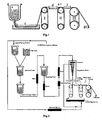
- a device for pilot-scale production ( Fig.1 ) is used for wet spinning by the two-step coagulation bath method, wherein a cellulose solution is firstly deaerated by a deaerating tank a, and then, after being jetted out through a spinneret b, enters into a first coagulation bath tank c and subsequently, a second coagulation bath tank d in tow, followed by passing through a water-washing device e, and, as desired, being plasticized in a plasticizer tank f, and finally is drawn and wound by a winding device g to form a package.
- the spinneret is reformed to spin downwardly so that cellulose molecules are stretched and oriented by gravity even when they are still in solution, and meanwhile the solidification time of cellulose is further prolonged and the stretch ratio is increased by arrangement of devices and process.
- multi-stage stretch is employed to further enhance the strength of cellulose filaments, so that regenerated cellulose filaments with better mechanical properties are prepared.
- the basic processing procedure of a preferred embodiment according to the present invention comprises: pre-cooling a mixed aqueous solution of 5wt% - 12wt% sodium hydroxide and 8wt% - 20wt% urea in a liquid storage tank 1 to a temperature in the range of -15°C to -8°C, and then adding the pre-cooled solution into an agitating tank while adding a cellulose pulp from a pulp tank and stirring. Cellulose is dissolved rapidly during agitation to produce a transparent cellulose solution. The resulting cellulose solution is discharged into a liquid storage tank 2, passing a filter to remove impurities.
- the filtered cellulose solution is discharged into a degassing tank, deaerating continuously under vacuum for 4 - 24 hours.
- the deaerated cellulose solution is filtered by a filter, and then is pressed by a metering pump to be filtered again and jetted from a spinneret into a coagulation bath 1.
- the cellulose solution is coagulated and regenerated in the coagulation bath 1, and then pass through a roll I, a coagulation bath 2, a roll II, a plasticizer tank, a roll III (drying roll), to finally produce a regenerated cellulose filament on a bobbin.
- the coagulation baths are recycled by a circulation device, and also urea can be recycled by a recovery device.
- the concentrated cellulose solution was pressed to pass through a 0.12mm ⁇ 30holes spinneret of a spinning machine and entered into a first coagulation bath for solidification and regeneration, wherein the bath was a mixed aqueous solution of 8wt% H 2 SO 4 /12wt% Na 2 SO 4 , and the bath temperature was 10°C. Subsequently, the cellulose filaments entered into a second coagulation bath for regeneration, wherein the bath was an aqueous solution of 4wt% H 2 SO 4 , and the bath temperature was 15°C.
- the stretched and regenerated cellulose filaments were washed with water and entered into a plasticizer tank for oiling, dried by a drying roll and then wound on a bobbin to form a spindle numbered as 1.
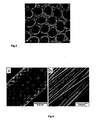
- the filaments had a round cross-section ( Fig.3 ) similar to Lyocell, smooth surface ( Fig.3 ), and soft and glossy appearance ( Fig.4 ), were free of sulfur and possessed excellent mechanical properties (Table 1).
- the concentrated cellulose solution was pressed to pass through a 0.12mmx30holes spinneret of a spinning machine and entered into a first coagulation bath for solidification and regeneration, wherein the bath was a mixed aqueous solution of 7.6wt% H 2 SO 4 / 12.5wt% Na 2 SO 4 , and the bath temperature was 15°C. Subsequently, the cellulose filaments entered into a second coagulation bath for regeneration, wherein the bath was an aqueous solution of 4wt% H 2 SO 4 , and the bath temperature was 15°C.
- the stretched and regenerated cellulose filaments were washed with water and entered into a plasticizer tank for oiling, dried by a drying roll and then wound on a bobbin to form a spindle numbered as 2.
- the filaments contained no sulfur as determined, and thus were fibers with high safety.
- the filaments had a round cross-section as well as soft and glossy appearance, and possessed relatively high strength.
- the concentrated cellulose solution was pressed to pass through a 0.12mm ⁇ 30holes spinneret of a spinning machine and entered into a first coagulation bath for solidification and regeneration, wherein the bath was a mixed aqueous solution of 8.6wt% H 2 SO 4 / 10.5wt% Na 2 SO 4 , and the bath temperature was 10°C. Subsequently, the cellulose filaments entered into a second coagulation bath for regeneration, wherein the bath was an aqueous solution of 5wt% H 2 SO 4 , and the bath temperature was 10°C.
- the stretched and regenerated cellulose filaments were washed with water and entered into a plasticizer tank for oiling, dried by a drying roll and then wound on a bobbin to form a spindle numbered as 3.
- the filaments had a round cross-section, were free of sulfur, had soft and glossy appearance, and possessed relatively high strength.
- the concentrated cellulose solution was pressed to pass through a 0.12mm ⁇ 30holes spinneret of a spinning machine and entered into a first coagulation bath for solidification and regeneration, wherein the bath was a mixed aqueous solution of 8.7wt% H 2 SO 4 / 10.9wt% Na 2 SO 4 , and the bath temperature was 15°C. Subsequently, the cellulose filaments entered into a second coagulation bath for regeneration, wherein the bath was an aqueous solution of 5wt% H 2 SO 4 , and the bath temperature was 15°C.
- the stretched and regenerated cellulose filaments were washed with water and entered into a plasticizer tank for oiling, dried by a drying roll and then wound on a bobbin to form a spindle numbered as 4.
- the filaments contained no sulfur as determined and were novel filaments with high safety.
- the filaments had a round cross-section, soft and glossy appearance, and relatively high strength.
- the concentrated cellulose solution was pressed to pass through a 0.12mm ⁇ 75holes spinneret of a spinning machine and entered into a first coagulation bath for solidification and regeneration, wherein the bath was a mixed aqueous solution of 10.5wt% H 2 SO 4 /10.2wt% Na 2 SO 4 , and the bath temperature was 13°C.
- the cellulose filaments entered into a second coagulation bath for regeneration, wherein the bath was an aqueous solution of 5wt% H 2 SO 4 , and the bath temperature was 13°C.
- the stretched and regenerated cellulose filaments were washed with water and entered into a plasticizer tank for oiling, dried by a drying roll and then wound on a bobbin to form a spindle numbered as 5.
- the filaments had a round cross-section, were free of sulfur, had soft and glossy appearance, and possessed relatively high strength.
Landscapes
- Engineering & Computer Science (AREA)
- Chemical & Material Sciences (AREA)
- Chemical Kinetics & Catalysis (AREA)
- Textile Engineering (AREA)
- General Chemical & Material Sciences (AREA)
- Biochemistry (AREA)
- Manufacturing & Machinery (AREA)
- Life Sciences & Earth Sciences (AREA)
- Mechanical Engineering (AREA)
- Materials Engineering (AREA)
- Health & Medical Sciences (AREA)
- Medicinal Chemistry (AREA)
- Polymers & Plastics (AREA)
- Organic Chemistry (AREA)
- Artificial Filaments (AREA)
- Polysaccharides And Polysaccharide Derivatives (AREA)
- Spinning Methods And Devices For Manufacturing Artificial Fibers (AREA)
Abstract
Description
- The present invention relates to a non-toxic process and system for pilot-scale production of cellulose products, and particularly to a process and system for pilot-scale production of cellulose products by using aqueous sodium hydroxide (NaOH)/urea solution. The said process and system can be used to produce fibers, or nonwovens of regenerated cellulose, as well as to produce a variety of high added-value products by adding other materials such as functional materials, nano-materials, etc. The present invention pertains to the field of natural macromolecules, and to the fields of material, textile, chemistry and chemical engineering, agriculture, and environmental engineering.
- Celluloses are the most abundant renewable resource on the earth and are environmentally friendly materials, so sufficient utilization of celluloses can not only protect environment but also save the limited unrenewable petroleum resources. However, celluloses are far from being sufficiently utilized in chemical industry, mainly because the current processes for dissolving cellulose are complex, costly and tend to cause pollution.
- In the past more than one hundred years, conventional viscose process has been used for producing regenerated cellulose products such as rayon, glassine paper and the like. The conventional viscose process comprises reacting cellulose with CS2 (33wt%) in the presence of strong base (the concentration of sodium hydroxide being 18wt%) to produce cellulose xanthate that is dissolved in the alkaline solution to form a viscose solution, and then spinning or casting the viscose solution of cellulose, followed by regenerating in diluent acid solution to obtain viscose fiber (rayon) or glassine paper. A great quantity of toxic gases such as CS2 and H2S which severely pollute environment are released during the process and are harmful to human health (J. Macromol. Sci. -Rev. Macromol. Chem., 1980, C 18 (1), 1).
- In the prior art, the cuprammonium process for producing cuprammonium rayon also has drawbacks of environmental pollution, high cost and difficulty to recover solution. The processes, in which other organic or inorganic solvents such as dimethylsulfoxide-nitrogen oxide (U.S. Patent No.
US3236669 ,1966 ), aqueous ZnCl2 solution (U.S. Patent No.US5290349 ,1994 ), LiCl/DMAc (U.S. Patent No.US4302252 ,1981 ) and the like are used, respectively, are difficult in industrialization due to the cost and their complicated dissolving procedures. - N-methylmorpholine oxide (NMMO) (U.S. Patent No.
US2179181 ,1939 ; U.K. Patent No.GB1144048 1967 US4246221 ,1981 ) is considered as the most promising solvent for cellulose so far. In 1989, Bureau International pour la Standardisation des Fibres Artificielles (BISFA) in Brussels named such cellulose fibers made by NMMO process as "Lyocell". Although a small amount of products of cellulose fibers made thereby had been marketed, the industrial production of them developed slowly due to high cost and high spinning temperature. - In addition, a process has been proposed that comprises reacting cellulose with urea at high temperature to obtain cellulose carbamate, and then dissolving directly in a diluent alkaline solution to obtain spinning solution (Finland Patent No.
FI61003 FI62318 U.S. Patent No. US4404369 ). However, this process requires a great amount of urea, leads to side product(s), and is difficult for industrialization either. - Japan Patent No.
JP1777283 - The present applicant proposed in Chinese Patent No.
00114486.3 that a mixed aqueous solution of 4wt%-8wt% sodium hydroxide and 2wt% -8wt% urea was used as solvent for dissolving cellulose, and in Chinese Patent No.00114485.5 , a regenerated cellulose film with good strength was prepared successfully. However, the practices indicated that the solvent system must be kept under freezing condition (-20°C) for 3-8 hours to form an ice-like stuff and then thawed before it was used to dissolve cellulose for preparing transparent cellulose solution. Thus, it is applicable to laboratory scale only at present, and is not suitable for industrialization. - In addition, the present applicant proposed in Chinese Patent No.
03128386.1 that a mixed aqueous solution of 5wt% -12wt% sodium hydroxide and 8.5wt% -20wt% urea was cooled and then was used for directly dissolving the natural cellulose having a molecular weight of less than 10.1×10⁴ and the regenerated cellulose having a molecular weight of less than 12×104 at room temperature to obtain a transparent, concentrated cellulose solution; subsequently, in Chinese Patent No.200310111566.3 200410013389.X - One object of the present invention is to provide a process for pilot-scale production of cellulose products, the process comprising:
- (a) Pre-cooling a mixed aqueous solution of sodium hydroxide and urea to a first temperature;
- (b) Placing the pre-cooled mixed aqueous solution at a second temperature, then immediately adding a cellulose raw material which is thereby dissolved rapidly under agitation to obtain a cellulose solution;
- (c) Filtering and deaerating the cellulose solution;
- (d) Using a molding device for pilot-scale production to allow the filtered and deaerated cellulose solution to form a cellulose product, said molding device being a two-step coagulation bath spinning device.
- According to the process of the present invention, in the mixed aqueous solution, the concentration of sodium hydroxide is 5.0wt% - 12.0wt%, preferably 6.0wt% - 8.0wt%, most preferably 7.0wt% - 7.5wt%; the concentration of urea is 8.0wt% - 20.0wt%, preferably 10.0wt% - 20.0wt%, most preferably 11.0wt% - 12.0wt%.
- According to the process of the present invention, the said first temperature is in the range of -15°C to -8°C, preferably in the range of -13°C to -10°C, most preferably -12°C.
- According to the process of the present invention, the said second temperature is ambient temperature, specifically in the range of 0°C - 20°C.
- According to the process of the present invention, the said cellulose raw material can be of various cellulose pulps including cotton linter pulp, bagasse pulp, wood pulp, straw pulp, etc., particularly various cellulose pulps having a polymerization degree of below 700 and a relatively narrow distribution of molecular weight, preferably a cellulose pulp having a polymerization degree of 250 - 650, most preferably a cellulose pulp having a polymerization degree of 300 - 440. Preferably, the said cellulose pulp has a viscosity-average molecular weight of below 1.1x10⁵.
- According to the process of the present invention, after the cellulose raw material being added at the second temperature, the agitation is performed sufficiently for 10 minutes, preferably 15 minutes, and most preferably 20 minutes or more.
- According to the process of the present invention, the deaerating time is preferably in the range of 4 - 30 hours, more preferably 4 - 10 hours, or alternatively, more preferably 10 - 30 hours.
- According to the process of the present invention, the concentration of the resulting cellulose solution is in the range of 3.0wt% - 8.0wt%, preferably 3.0 wt% - 7.0wt%, more preferably 4.5 wt% - 5.5wt%. It is preferred that with the increase of polymerization degree of the cellulose pulp from 250 to 650, the concentration of the cellulose solution is changed from 8.0wt% to 4.0wt%, and within such a range, the strength of the cellulose filaments can be enhanced by appropriately reducing molecular weight, maintaining relatively narrow distribution of molecular weight while increasing concentration.
- According to the process of the present invention, the said molding device for pilot-scale production is a two-step coagulation bath spinning device.
- According to the process of the present invention, the process further comprises steps of producing a variety of high value-added cellulose products by adding other substances such as functional materials and/or nano-materials, wherein the said other substances can be added during the preparation of cellulose solution, or added by blending and molding with a functional master batch produced therefrom, or added by any other method known by those skilled in the art.
- A further object of the present invention is to provide a system for pilot-scale production of cellulose products by using aqueous NaOH/urea solution, the system comprising a liquid storage tank, an agitating tank, a filtering device, a deaerating device and a molding device.
- According to the system of the present invention, the temperature of each unit of the system is set according to the requirements of the corresponding steps.
- According to the system of the present invention, the said molding device for pilot-scale production is a two-step coagulation bath spinning device.
- According to the system of the present invention, the said two-step coagulation bath spinning device comprises a first coagulation bath and a second coagulation bath. The said first coagulation bath is a mixed aqueous solution of H2SO4 and Na2SO4, wherein the concentration of H2SO4 is 5wt% - 20wt%, preferably 6wt% - 15wt%, and most preferably 7wt% - 9wt%, the concentration of Na2SO4 is 5wt% - 25wt%, preferably 10wt% - 25wt%, and most preferably 10wt% - 15wt%, and the bath temperature is 0 - 40°C, preferably 5 - 20°C, most preferably 10 - 15°C ; the said second coagulation bath is an aqueous H2SO4 solution with the concentration of H2SO4 being 3wt% - 20wt%, preferably 3wt% - 10wt%, and most preferably 4wt% - 5wt%, and the bath temperature being 0 - 60°C, preferably 10 - 30°C, and most preferably 10 - 20°C.
- According to the system of the present invention, the said cellulose solution, after being jetted out, enters into the first coagulation bath for solidification, partial stretch orientation and draft, and then enters into the second coagulation bath for further regeneration and stretch orientation.
- According to the system of the present invention, the system further comprises a metering pump, a spinneret, a water-washing device, a plasticizing device, a drying device and/or a winding device, and can further comprise a circulation device for recycling coagulation baths and/or a recovery device for recovering urea. Among others, the spinneret can be vertical spinneret or horizontal spinneret, which can be adjusted or changed according to practical requirements.
- A still further object of the present invention is to provide a cellulose product produced by using aqueous NaOH/urea solution, comprising filaments, chopped fibers, and/or nonwovens. The said product can be used for production of a variety of high value-added cellulose products by adding other substances such as functional materials and/or nano-materials.
- In an embodiment, the cellulose solution of the process of the present invention is used for production of regenerated cellulose filaments by solidification and regeneration in a spinning device of two-step coagulation bath method, and is subsequently used for production of continuous fibers, chopped fibers, nonwovens, etc.
- In an embodiment of the present invention, other substances such as functional materials, nano-materials, etc. can be added and/or dispersed in the cellulose solution of the present invention, thereby producing high added-value cellulose products.
- As compared to the prior art, the advantage of the present invention lies in that: firstly, the chemical raw materials used are less costly and non-toxic, which are made available as a new solvent for cellulose by cooling at reduced temperature; secondly, a variety of high added-value cellulose products can be produced by employing the process of the present invention; thirdly, since CS2 is not used in the production process, such regenerated cellulose products contain no sulfur (viscose fibers have a sulfur content of 10g/kg) and are regenerated cellulose materials with very high safety; fourthly, during the production according to the process of the present invention, the dissolution of cellulose is the most fast for polymers, so the production cycle is short (30 - 40 hours), which is equivalent to 1/3 that of viscose process; and fifthly, the process of the present invention is particularly suitable for industrial production and practical applications.
-
-
Fig.1 shows a schematic diagram of a two-step coagulation bath spinning device for pilot-scale production according to the present invention. -
Fig.2 shows a schematic diagram of a preferred embodiment of the process according to the present invention. -
Fig.3 shows a cross-section view of the cellulose filaments obtained according to the process of the present invention. -
Fig.4 shows a surface view of the cellulose filaments obtained according to the process of the present invention. -
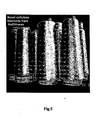
Fig.5 shows packages of cellulose filaments obtained by the process according to the present invention. - The present invention is further illustrated in detail in combination with the drawings and specific examples, but the present invention is not intended to be limited thereto.
- In a preferred embodiment of the present invention, a device for pilot-scale production (
Fig.1 ) is used for wet spinning by the two-step coagulation bath method, wherein a cellulose solution is firstly deaerated by a deaerating tank a, and then, after being jetted out through a spinneret b, enters into a first coagulation bath tank c and subsequently, a second coagulation bath tank d in tow, followed by passing through a water-washing device e, and, as desired, being plasticized in a plasticizer tank f, and finally is drawn and wound by a winding device g to form a package. Preferably, the spinneret is reformed to spin downwardly so that cellulose molecules are stretched and oriented by gravity even when they are still in solution, and meanwhile the solidification time of cellulose is further prolonged and the stretch ratio is increased by arrangement of devices and process. Preferably, multi-stage stretch is employed to further enhance the strength of cellulose filaments, so that regenerated cellulose filaments with better mechanical properties are prepared. - Referring to
Fig.2 , the basic processing procedure of a preferred embodiment according to the present invention comprises: pre-cooling a mixed aqueous solution of 5wt% - 12wt% sodium hydroxide and 8wt% - 20wt% urea in aliquid storage tank 1 to a temperature in the range of -15°C to -8°C, and then adding the pre-cooled solution into an agitating tank while adding a cellulose pulp from a pulp tank and stirring. Cellulose is dissolved rapidly during agitation to produce a transparent cellulose solution. The resulting cellulose solution is discharged into aliquid storage tank 2, passing a filter to remove impurities. Then the filtered cellulose solution is discharged into a degassing tank, deaerating continuously under vacuum for 4 - 24 hours. Herein, the deaerated cellulose solution is filtered by a filter, and then is pressed by a metering pump to be filtered again and jetted from a spinneret into acoagulation bath 1. The cellulose solution is coagulated and regenerated in thecoagulation bath 1, and then pass through a roll I, acoagulation bath 2, a roll II, a plasticizer tank, a roll III (drying roll), to finally produce a regenerated cellulose filament on a bobbin. The coagulation baths are recycled by a circulation device, and also urea can be recycled by a recovery device. - 3kg of a mixed aqueous solution of 7.0wt% NaOH / 12wt% urea (analytically pure) was pre-cooled to -12°C, then 151g of dry cotton linter cellulose pulp (having a polymerization degree of 620) was added immediately, while stirring under 1000rpm at room temperature for 20 minutes to dissolve the cellulose completely. A transparent cellulose solution was obtained by deaerating in a self-made deaeration tank under vacuum at 5°C for 12 hours. The concentrated cellulose solution was pressed to pass through a 0.12mm×30holes spinneret of a spinning machine and entered into a first coagulation bath for solidification and regeneration, wherein the bath was a mixed aqueous solution of 8wt% H2SO4/12wt% Na2SO4, and the bath temperature was 10°C. Subsequently, the cellulose filaments entered into a second coagulation bath for regeneration, wherein the bath was an aqueous solution of 4wt% H2SO4, and the bath temperature was 15°C. The stretched and regenerated cellulose filaments were washed with water and entered into a plasticizer tank for oiling, dried by a drying roll and then wound on a bobbin to form a spindle numbered as 1. The filaments had a round cross-section (
Fig.3 ) similar to Lyocell, smooth surface (Fig.3 ), and soft and glossy appearance (Fig.4 ), were free of sulfur and possessed excellent mechanical properties (Table 1). - 3kg of a mixed aqueous solution of 7.0wt% NaOH / 12wt% urea (industrially pure) was pre-cooled to -12°C, and then 145g of dry cotton linter cellulose pulp (having a polymerization degree of 620) was added immediately, while stirring under 1000rpm at room temperature for 20 minutes to dissolve the cellulose completely. A transparent cellulose solution was obtained by deaerating in a self-made deaeration tank under vacuum at 5°C for 12 hours. The concentrated cellulose solution was pressed to pass through a 0.12mmx30holes spinneret of a spinning machine and entered into a first coagulation bath for solidification and regeneration, wherein the bath was a mixed aqueous solution of 7.6wt% H2SO4 / 12.5wt% Na2SO4, and the bath temperature was 15°C. Subsequently, the cellulose filaments entered into a second coagulation bath for regeneration, wherein the bath was an aqueous solution of 4wt% H2SO4, and the bath temperature was 15°C. The stretched and regenerated cellulose filaments were washed with water and entered into a plasticizer tank for oiling, dried by a drying roll and then wound on a bobbin to form a spindle numbered as 2. The filaments contained no sulfur as determined, and thus were fibers with high safety. The filaments had a round cross-section as well as soft and glossy appearance, and possessed relatively high strength.
- 3kg of a mixed aqueous solution of 7.5wt% NaOH / 11wt% urea (industrially pure) was pre-cooled to -12°C, and then 130g of dry cotton linter cellulose pulp (having a polymerization degree of 440) was added immediately, while stirring under 700 - 1000rpm at room temperature for 15 minutes to dissolve cellulose completely. A transparent cellulose solution was obtained by deaerating in a self-made deaeration tank under vacuum at 5°C for 5 hours. The concentrated cellulose solution was pressed to pass through a 0.12mm×30holes spinneret of a spinning machine and entered into a first coagulation bath for solidification and regeneration, wherein the bath was a mixed aqueous solution of 8.6wt% H2SO4 / 10.5wt% Na2SO4, and the bath temperature was 10°C. Subsequently, the cellulose filaments entered into a second coagulation bath for regeneration, wherein the bath was an aqueous solution of 5wt% H2SO4, and the bath temperature was 10°C. The stretched and regenerated cellulose filaments were washed with water and entered into a plasticizer tank for oiling, dried by a drying roll and then wound on a bobbin to form a spindle numbered as 3. The filaments had a round cross-section, were free of sulfur, had soft and glossy appearance, and possessed relatively high strength.
- 3kg of a mixed aqueous solution of 7wt% NaOH / 12wt% urea (industrially pure) was pre-cooled to -12°C, and then 130g of dry cotton linter cellulose pulp (having a polymerization degree of 440) was added immediately, while stirring under 700 - 1000rpm at room temperature for 15 minutes to dissolve cellulose completely. A transparent cellulose solution was obtained by deaerating in a self-made deaeration tank under vacuum at 10°C for 5 hours. The concentrated cellulose solution was pressed to pass through a 0.12mm×30holes spinneret of a spinning machine and entered into a first coagulation bath for solidification and regeneration, wherein the bath was a mixed aqueous solution of 8.7wt% H2SO4 / 10.9wt% Na2SO4, and the bath temperature was 15°C. Subsequently, the cellulose filaments entered into a second coagulation bath for regeneration, wherein the bath was an aqueous solution of 5wt% H2SO4, and the bath temperature was 15°C. The stretched and regenerated cellulose filaments were washed with water and entered into a plasticizer tank for oiling, dried by a drying roll and then wound on a bobbin to form a spindle numbered as 4. The filaments contained no sulfur as determined and were novel filaments with high safety. The filaments had a round cross-section, soft and glossy appearance, and relatively high strength.
- 3kg of a mixed aqueous solution of 7wt% NaOH / 12wt% urea (industrially pure) was pre-cooled to -12°C, and then 141g of dry cotton linter cellulose pulp (having a polymerization degree of 440) was added immediately, while stirring under 700 - 1000rpm at room temperature for 15 minutes to dissolve cellulose completely. A transparent cellulose solution was obtained by deaerating in a self-made deaeration tank under vacuum at 5°C for 4.5 hours. The concentrated cellulose solution was pressed to pass through a 0.12mm×75holes spinneret of a spinning machine and entered into a first coagulation bath for solidification and regeneration, wherein the bath was a mixed aqueous solution of 10.5wt% H2SO4/10.2wt% Na2SO4, and the bath temperature was 13°C. Subsequently, the cellulose filaments entered into a second coagulation bath for regeneration, wherein the bath was an aqueous solution of 5wt% H2SO4, and the bath temperature was 13°C. The stretched and regenerated cellulose filaments were washed with water and entered into a plasticizer tank for oiling, dried by a drying roll and then wound on a bobbin to form a spindle numbered as 5. The filaments had a round cross-section, were free of sulfur, had soft and glossy appearance, and possessed relatively high strength.
- The mechanical properties of cellulose filaments obtained in the above examples were measured by XQ-1 constant-speed elongation type fiber strength tester. Their breaking strength and elongation at break in dry state were summarized in Table 1.
Table 1. Test results of mechanical properties such as breaking strength and elongation at break of cellulose filaments. No. Concentration of cellulose (wt%) Polymerization degree of cellulose Grade chemical reagents of Tensile strength (cN/dtex) Elongation at break (%) 1 4.5 620 Analytical grade 1.8 13 2 4.4 620 Industrial grade 1.7 9 3 4.3 440 Industrial grade 1.9 2 4 4.2 440 Industrial grade 1.7 2 5 4.5 440 Industrial grade 2.0 2 - It should be understood that all value ranges in the description and claims are intended to include their end values and all subranges within these ranges.
Claims (14)
- A process for pilot-scale production of cellulose products, the process comprising:(a) Pre-cooling a mixed aqueous solution of sodium hydroxide and urea to a first temperature;(b) Placing the pre-cooled mixed aqueous solution at a second temperature, and then adding a cellulose raw material which is thereby dissolved sufficiently under agitation to obtain a cellulose solution;(c) Filtering and deaerating the cellulose solution;(d) Using a molding device for pilot-scale production to allow the filtered and deaerated cellulose solution to form a cellulose product, said molding device being a two-step coagulation bath spinning device.
- The process according to claim 1, wherein in the mixed aqueous solution, the concentration of sodium hydroxide is 5.0wt% - 12.0wt%, preferably 6.0wt% - 8.0wt%, and most preferably 7.0wt% - 7.5wt%; the concentration of urea is 8.0wt% - 20.0wt%, preferably 10.0wt% - 20.0wt%, and most preferably 11.0wt% - 12.0wt%.
- The process according to claim 1, wherein the said first temperature is in the range of -15°C to -8°C, preferably in the range of -13°C to -10°C, and most preferably -12°C.
- The process according to claim 1, wherein the said second temperature is in the range of 0°C - 20°C.
- The process according to claim 1, wherein the said cellulose raw material is a cellulose pulp selected from the group consisting of cotton linter pulp, bagasse pulp, wood pulp and straw pulp, particularly a cellulose pulp having a polymerization degree of below 700, preferably a cellulose pulp having a polymerization degree of 250 - 650, and most preferably a cellulose pulp having a polymerization degree of 300 - 440.
- The process according to claim 5, wherein the said cellulose pulp has a viscosity-average molecular weight of below 1.1x10⁵.
- The process according to claim 1, wherein after the cellulose raw material being added at the second temperature, the agitation is performed sufficiently for 10 minutes, preferably 15 minutes, and most preferably 20 minutes or more.
- The process according to claim 1, wherein the concentration of the resulting cellulose solution is 3.0wt% - 8.0wt%, preferably 3.0wt% - 7.0wt%, and more preferably 4.5wt% - 5.5wt%.
- The process according to claim 1, further comprising the step of adding nano-materials to the cellulose solution.
- A system for pilot-scale production of cellulose products by using aqueous NaOH/urea solution, the system comprising a liquid storage tank, an agitating tank, a filtering device, a deaerating device and a pilot-scale molding device , said molding device being a two-step coagulation bath spinning device.
- The system according to claim 10, wherein the said two-step coagulation bath spinning device comprises a first coagulation bath and a second coagulation bath; the said first coagulation bath is a mixed aqueous solution of H2SO4 and Na2SO4, wherein the concentration of H2SO4 is 5wt% - 20wt%, preferably 6wt% - 15wt%, and most preferably 7wt% - 9wt%, the concentration of Na2SO4 is 5wt% - 25wt%, preferably 10wt% - 25wt%, and most preferably 10wt% - 15wt%, and the bath temperature is 0 - 40°C, preferably 5 - 20°C, and most preferably 10 - 15°C; the said second coagulation bath is aqueous H2SO4 solution, wherein the concentration of H2SO4 is 3wt% - 20wt%, preferably 3wt% - 10wt%, and most preferably 4wt% - 5wt%, and the bath temperature is 0 - 60°C, preferably 10 - 30°C, and most preferably 10 - 20°C.
- The system according to claim 11, wherein after being jetted out, the said cellulose solution enters into the first coagulation bath for solidification and regeneration, partial stretch orientation and draft, and then enters into the second coagulation bath for further regeneration and stretch orientation, wherein the cellulose solution is jetted out vertically or horizontally.
- The system according to claim 10, further comprising a metering pump, a spinneret, a water-washing device, a plasticizing device, a drying device and/or a winding device, as well as a circulation device for recycling coagulation baths and/or a recovery device for recovering urea.
- Use of the system according to anyone of claims 10 - 13 for the production of regenerated cellulose products including filaments, chopped fibers and nonwovens.
Applications Claiming Priority (2)
| Application Number | Priority Date | Filing Date | Title |
|---|---|---|---|
| CN200510018799.8A CN1282773C (en) | 2005-05-30 | 2005-05-30 | Method for preparing regenerated cellulose fiber by two-step coagulation bath method |
| PCT/CN2006/000757 WO2006128346A1 (en) | 2005-05-30 | 2006-04-21 | Method for preparing regenerated cellulose fibre by two-step coagulating bath process |
Publications (3)
| Publication Number | Publication Date |
|---|---|
| EP1900860A1 EP1900860A1 (en) | 2008-03-19 |
| EP1900860A4 EP1900860A4 (en) | 2008-07-02 |
| EP1900860B1 true EP1900860B1 (en) | 2010-05-05 |
Family
ID=35632157
Family Applications (1)
| Application Number | Title | Priority Date | Filing Date |
|---|---|---|---|
| EP06741700A Expired - Lifetime EP1900860B1 (en) | 2005-05-30 | 2006-04-21 | Method for preparing regenerated cellulose fibre by two-step coagulating bath process |
Country Status (7)
| Country | Link |
|---|---|
| US (1) | US8962821B2 (en) |
| EP (1) | EP1900860B1 (en) |
| JP (1) | JP4679641B2 (en) |
| CN (1) | CN1282773C (en) |
| AT (1) | ATE466978T1 (en) |
| DE (1) | DE602006014148D1 (en) |
| WO (1) | WO2006128346A1 (en) |
Families Citing this family (49)
| Publication number | Priority date | Publication date | Assignee | Title |
|---|---|---|---|---|
| US7981337B2 (en) * | 2006-04-21 | 2011-07-19 | Wuhan University | Use of aqueous NaOH/thiourea solution in pilot-scale production of cellulose products |
| CN102317515B (en) * | 2007-08-31 | 2015-06-10 | 可隆工业株式会社 | Method for preparing lyocell filament, lyocell filament, tire cord, and method for preparing tire cord |
| CA2754521C (en) | 2009-03-09 | 2015-11-10 | Kiram Ab | A shaped cellulose manufacturing process combined with a pulp mill recovery system |
| JP5691233B2 (en) * | 2010-04-23 | 2015-04-01 | Jnc株式会社 | Method for dissolving crystalline cellulose and method for producing porous cellulose |
| DK2632957T3 (en) | 2010-10-27 | 2019-03-04 | Re Newcell Ab | PROCEDURE FOR DERIVATING CELLULOSE |
| CN102432892B (en) * | 2011-08-04 | 2013-06-12 | 中国纺织科学研究院 | Method for dissolving cellulose and method for preparing regenerated fiber |
| CN103147144B (en) * | 2011-08-04 | 2015-03-25 | 中国纺织科学研究院 | Method for dissolving cellulose and method for preparing regenerated fiber |
| CN102358957B (en) * | 2011-08-24 | 2015-01-07 | 中国纺织科学研究院 | Method for preparing cellulose spinning stock solution |
| CN102443869B (en) * | 2011-09-22 | 2014-05-14 | 中国纺织科学研究院 | Cellulose solution coagulation forming method |
| WO2013069146A1 (en) | 2011-11-11 | 2013-05-16 | ニッポン高度紙工業株式会社 | Separator for electrolytic capacitor, and electrolytic capacitor |
| CN102875821B (en) | 2012-10-10 | 2014-05-07 | 湖北天思科技股份有限公司 | Method for dissolving cellulose |
| EP2719801A1 (en) | 2012-10-10 | 2014-04-16 | Aurotec GmbH | Spinning bath and method for solidifying a moulded part |
| CN103103663B (en) * | 2012-11-29 | 2016-03-30 | 宁波双盾纺织帆布实业有限公司 | A kind of gas spinning method of fibre and soya |
| JP2014123607A (en) | 2012-12-20 | 2014-07-03 | Nippon Kodoshi Corp | Separator for aluminum electrolytic capacitor, and aluminum electrolytic capacitor |
| US12281441B2 (en) | 2013-04-17 | 2025-04-22 | Evrnu, Spc | Methods and systems for forming composite fibers |
| US11034817B2 (en) | 2013-04-17 | 2021-06-15 | Evrnu, Spc | Methods and systems for processing mixed textile feedstock, isolating constituent molecules, and regenerating cellulosic and polyester fibers |
| EP3086338A4 (en) | 2013-12-19 | 2017-12-27 | Nippon Kodoshi Corporation | Capacitor separator and capacitor |
| WO2015142159A1 (en) * | 2014-03-17 | 2015-09-24 | Universiti Kebangsaan Malaysia | A method for preparing a cellulose based material |
| CN104894669A (en) * | 2015-05-22 | 2015-09-09 | 江苏龙马绿色纤维有限公司 | Wet spinning method for solvent method cellulosic fibers |
| CN107922509A (en) * | 2015-08-06 | 2018-04-17 | 马来西亚国立大学 | Pass through the biological diaphragm and hydrogel of carbamate technique |
| US10311993B2 (en) * | 2015-11-18 | 2019-06-04 | Texas Tech University System | Cotton fiber dissolution and regeneration and 3D printing of cellulose based conductive composites |
| US10954540B2 (en) | 2015-12-11 | 2021-03-23 | University Of Iowa Research Foundation | Methods of producing biosynthetic bacterial cellulose membranes |
| EP3231899A1 (en) | 2016-04-14 | 2017-10-18 | TreeToTextile AB | A method and system for the production of a spinning dope composition |
| CN106222771B (en) * | 2016-07-22 | 2019-02-22 | 中国纺织科学研究院有限公司 | A kind of preparation method of cellulose fibre |
| CN110678485B (en) * | 2017-05-14 | 2021-11-23 | 华盛顿州立大学 | Environmentally friendly cellulosic waste recycle |
| CN107653502B (en) * | 2017-10-13 | 2020-05-22 | 武汉大学 | A kind of preparation method of high-strength regenerated cellulose fiber |
| CN108277545B (en) * | 2018-01-19 | 2020-06-19 | 杭州高烯科技有限公司 | Preparation method of multifunctional regenerated cellulose composite fiber |
| EP3505659A1 (en) | 2018-08-30 | 2019-07-03 | Aurotec GmbH | Method and device for filament spinning with inflection |
| US12264412B2 (en) * | 2019-04-30 | 2025-04-01 | Aditya Birla Science And Technology Company Pvt. Ltd. | Process for manufacturing lyocell filament yarn and an apparatus thereof |
| CN110057644B (en) * | 2019-05-13 | 2020-08-04 | 中国科学院山西煤炭化学研究所 | Method for measuring limiting oxygen index of spinning solution |
| CN110559742B (en) * | 2019-09-16 | 2021-08-17 | 武汉纺织大学 | A kind of preparation method of viscose-based air filter material |
| US12611841B2 (en) | 2020-11-03 | 2026-04-28 | Refiberd, Inc. | Method for producing regenerated cellulose-based threads and felted cloths |
| CN217729741U (en) * | 2020-12-17 | 2022-11-04 | 赣南师范大学 | Device for continuously preparing regenerated cellulose membrane by slit extrusion |
| CN112813511A (en) * | 2021-02-03 | 2021-05-18 | 山东绿纤工程设计有限公司 | Drafting and winding system and method for Lyocell fiber production |
| CN113564731B (en) * | 2021-06-17 | 2023-05-02 | 武汉纺织大学 | Method for recycling laser waste ash of jean and recycled product |
| EP4116470A1 (en) * | 2021-07-08 | 2023-01-11 | TreeToTextile AB | A method for providing a filtered spinning dope |
| EP4124682A1 (en) | 2021-07-26 | 2023-02-01 | Lenzing Aktiengesellschaft | Method for producing regenerated cellulosic fibers |
| EP4124681A1 (en) | 2021-07-26 | 2023-02-01 | Lenzing Aktiengesellschaft | Method for producing regenerated cellulosic fibers |
| EP4405522A1 (en) | 2021-09-21 | 2024-07-31 | UPM-Kymmene Corporation | A process for preparing an alkaline cellulose dope |
| CN117980547A (en) * | 2021-09-21 | 2024-05-03 | 芬欧汇川集团 | Method for preparing alkaline cellulose concentrate |
| US12129574B2 (en) | 2021-09-30 | 2024-10-29 | The Hong Kong Research Institute Of Textiles And Apparel Limited | Regenerated cellulose composite fiber and method of preparation thereof |
| WO2023050283A1 (en) * | 2021-09-30 | 2023-04-06 | The Hong Kong Research Institute Of Textiles And Apparel Limited | Regenerated cellulose composite fiber and method of preparation thereof |
| CN114575040A (en) * | 2022-02-24 | 2022-06-03 | 北京林业大学 | Cellulose spray cloth and preparation method and application thereof |
| FI131797B1 (en) * | 2022-05-10 | 2025-12-03 | Upm Kymmene Corp | A process for preparing an alkaline cellulose dope |
| CN115182097B (en) * | 2022-05-27 | 2025-09-26 | 杭州诺邦无纺股份有限公司 | A device for producing cellulose filament nonwoven material |
| CN115613157B (en) * | 2022-10-26 | 2024-01-02 | 西安工程大学 | Preparation method of high-strength colored artificial cotton based on waste cotton textiles |
| CN116163025A (en) * | 2023-03-24 | 2023-05-26 | 赣南师范大学 | Method for coagulating and forming solution containing natural polymer and method for spinning long fiber |
| CN117802633A (en) * | 2023-03-24 | 2024-04-02 | 赣南师范大学 | Coagulation bath regeneration method |
| CN117306007A (en) * | 2023-09-28 | 2023-12-29 | 赣南师范大学 | Coagulation bath and application method and regeneration method thereof |
Family Cites Families (26)
| Publication number | Priority date | Publication date | Assignee | Title |
|---|---|---|---|---|
| US2179181A (en) | 1936-04-21 | 1939-11-07 | Soc Of Chemical Ind | Cellulose solutions and process of making same |
| US2307863A (en) * | 1940-12-03 | 1943-01-12 | Du Pont | Spinning of artificial filaments |
| BE638523A (en) * | 1962-11-06 | |||
| US3236669A (en) | 1963-04-19 | 1966-02-22 | Du Pont | Cellulose solutions in dimethyl sulfoxide and nitrogen dioxide |
| US4246221A (en) | 1979-03-02 | 1981-01-20 | Akzona Incorporated | Process for shaped cellulose article prepared from a solution containing cellulose dissolved in a tertiary amine N-oxide solvent |
| US4302252A (en) | 1979-07-25 | 1981-11-24 | International Telephone And Telegraph Corp. | Solvent system for cellulose |
| FI62318C (en) | 1981-01-27 | 1982-12-10 | Neste Oy | FORM OF CELLULOSE DERIVATIVES OF FRAMSTAELLNING AV ETT ALKALILOESLIGT |
| FI67561C (en) | 1982-12-08 | 1985-04-10 | Neste Oy | FOERFARANDE FOER UPPLOESNING AV CELLULOSAKARBAMAT |
| JPS6042401A (en) | 1983-08-17 | 1985-03-06 | Asahi Chem Ind Co Ltd | Alkali-soluble cellulose |
| JPS60199912A (en) | 1984-03-26 | 1985-10-09 | Tachikawa Kenkyusho | Spinning of cellulose solution |
| FI81842C (en) | 1986-12-31 | 1990-12-10 | Neste Oy | Nonwoven fiber product |
| JP2820269B2 (en) | 1989-05-02 | 1998-11-05 | 旭化成工業株式会社 | Viscose rayon fiber |
| US5290349A (en) | 1988-10-21 | 1994-03-01 | Purdue Research Foundation, Division Of Sponsored Programs | High strength cellulose fiber or film |
| US5229506A (en) * | 1989-06-12 | 1993-07-20 | Teepak, Inc. | Preparation of cellulose aminomethanate |
| ATA239194A (en) | 1994-12-22 | 1996-02-15 | Chemiefaser Lenzing Ag | DEVICE FOR CARRYING OUT A DRY / WET SPINNING PROCESS |
| ATE278027T1 (en) | 1996-02-01 | 2004-10-15 | Ca Minister Agriculture & Food | TOBACCO PROMOTER |
| JP2000096447A (en) | 1998-09-11 | 2000-04-04 | Asahi Chem Ind Co Ltd | Cellulosic fibers and textiles with improved color fastness |
| CN1125845C (en) * | 2000-04-17 | 2003-10-29 | 武汉大学 | Solvent composition and its use |
| CN1112396C (en) | 2000-04-17 | 2003-06-25 | 武汉大学 | Cellulose film preparing method |
| DE10040341C1 (en) | 2000-08-17 | 2001-12-13 | Zimmer Ag | Production of cellulose carbamate by reacting alkali- or ammonia-treated cellulose with urea, comprises adding the urea continuously or in at least two stages to increase the urea conversion |
| JP3613334B2 (en) | 2001-03-29 | 2005-01-26 | 村田機械株式会社 | Stacker crane |
| CN1193061C (en) | 2003-07-25 | 2005-03-16 | 武汉大学 | Solvent composite and preparation method and use thereof |
| CN1229214C (en) | 2003-12-12 | 2005-11-30 | 武汉大学 | Process for preparing regenerated cellulose films and wires |
| CN1285776C (en) | 2004-06-29 | 2006-11-22 | 武汉大学 | Preparation method for regenerated cellulose fiber |
| CN1296417C (en) * | 2004-09-01 | 2007-01-24 | 武汉大学 | Cellulose and nanometer titania composite material, preparation and use thereof |
| DE102005048132A1 (en) | 2005-10-06 | 2007-04-12 | Bayer Innovation Gmbh | Process for producing antimicrobial plastic compositions |
-
2005
- 2005-05-30 CN CN200510018799.8A patent/CN1282773C/en not_active Expired - Fee Related
-
2006
- 2006-04-21 EP EP06741700A patent/EP1900860B1/en not_active Expired - Lifetime
- 2006-04-21 DE DE602006014148T patent/DE602006014148D1/en not_active Expired - Lifetime
- 2006-04-21 JP JP2008513895A patent/JP4679641B2/en not_active Expired - Fee Related
- 2006-04-21 AT AT06741700T patent/ATE466978T1/en not_active IP Right Cessation
- 2006-04-21 WO PCT/CN2006/000757 patent/WO2006128346A1/en not_active Ceased
- 2006-04-21 US US11/916,020 patent/US8962821B2/en not_active Expired - Fee Related
Also Published As
| Publication number | Publication date |
|---|---|
| DE602006014148D1 (en) | 2010-06-17 |
| CN1702201A (en) | 2005-11-30 |
| JP2008542560A (en) | 2008-11-27 |
| WO2006128346A1 (en) | 2006-12-07 |
| EP1900860A1 (en) | 2008-03-19 |
| EP1900860A4 (en) | 2008-07-02 |
| US20080275231A1 (en) | 2008-11-06 |
| CN1282773C (en) | 2006-11-01 |
| ATE466978T1 (en) | 2010-05-15 |
| US8962821B2 (en) | 2015-02-24 |
| JP4679641B2 (en) | 2011-04-27 |
Similar Documents
| Publication | Publication Date | Title |
|---|---|---|
| US8962821B2 (en) | Method for preparing regenerated cellulose fiber by two-step coagulating bath process | |
| US7981337B2 (en) | Use of aqueous NaOH/thiourea solution in pilot-scale production of cellulose products | |
| Ozipek et al. | Wet spinning of synthetic polymer fibers | |
| JP4326401B2 (en) | Lyocell monofilament, lyocell multifilament and method for producing lyocell filament | |
| US10196758B2 (en) | Polysaccharide fibers and method for producing same | |
| CN105392929B (en) | Method for producing shaped cellulose articles | |
| Wilkes | The viscose process | |
| CN105113034A (en) | Regenerated cellulose fiber and preparing method thereof | |
| CN101429682A (en) | Method for producing regenerated cellulose fiber by dual-bath coagulation | |
| CN102443869B (en) | Cellulose solution coagulation forming method | |
| Wang et al. | Preparation and properties of new regenerated cellulose fibers | |
| CN110042488B (en) | Low-cost, green and efficient preparation method of high-strength cellulose filaments | |
| CN1546556A (en) | A lithium hydroxide and urea composition solvent for dissolving cellulose and its application | |
| JP3852631B2 (en) | Regenerated cellulose fiber and method for producing the same | |
| CN116623314A (en) | A kind of technology that prepares chitosan fiber based on pre-spinning crosslinking method | |
| CN107653502A (en) | A kind of preparation method of high strength regenerative cellulose fiber | |
| CN111748870A (en) | A kind of fiber material prepared by using chitosan solution with pH value of 6-8 and preparation method thereof | |
| Hummel et al. | High‐performance Lignocellulosic Fibers Spun from Ionic Liquid Solution | |
| CN117802603A (en) | A kind of recycled cotton pulp lyocell fiber and preparation method thereof | |
| CN100395385C (en) | Process for the preparation of lyocell fibers for cords | |
| US4129451A (en) | Spinnable cellulose solution and process for making same | |
| US2621103A (en) | Production of artificial filaments and similar products from cellulose xanthogenates | |
| CN107304246A (en) | A kind of solvent for dissolving cellulose and application thereof | |
| Laszkiewicz et al. | Fibers made from concentrated viscose solutions | |
| CN117051491B (en) | A method for preparing recycled cotton viscose fibers |
Legal Events
| Date | Code | Title | Description |
|---|---|---|---|
| PUAI | Public reference made under article 153(3) epc to a published international application that has entered the european phase |
Free format text: ORIGINAL CODE: 0009012 |
|
| 17P | Request for examination filed |
Effective date: 20071228 |
|
| AK | Designated contracting states |
Kind code of ref document: A1 Designated state(s): AT BE BG CH CY CZ DE DK EE ES FI FR GB GR HU IE IS IT LI LT LU LV MC NL PL PT RO SE SI SK TR |
|
| A4 | Supplementary search report drawn up and despatched |
Effective date: 20080602 |
|
| RIC1 | Information provided on ipc code assigned before grant |
Ipc: D01F 1/10 20060101ALI20080523BHEP Ipc: C08J 5/18 20060101ALI20080523BHEP Ipc: D01F 2/02 20060101AFI20080523BHEP Ipc: D01D 5/06 20060101ALI20080523BHEP |
|
| DAX | Request for extension of the european patent (deleted) | ||
| 17Q | First examination report despatched |
Effective date: 20081121 |
|
| GRAP | Despatch of communication of intention to grant a patent |
Free format text: ORIGINAL CODE: EPIDOSNIGR1 |
|
| GRAS | Grant fee paid |
Free format text: ORIGINAL CODE: EPIDOSNIGR3 |
|
| GRAA | (expected) grant |
Free format text: ORIGINAL CODE: 0009210 |
|
| AK | Designated contracting states |
Kind code of ref document: B1 Designated state(s): AT BE BG CH CY CZ DE DK EE ES FI FR GB GR HU IE IS IT LI LT LU LV MC NL PL PT RO SE SI SK TR |
|
| REG | Reference to a national code |
Ref country code: GB Ref legal event code: FG4D |
|
| REG | Reference to a national code |
Ref country code: CH Ref legal event code: EP |
|
| REG | Reference to a national code |
Ref country code: IE Ref legal event code: FG4D |
|
| REF | Corresponds to: |
Ref document number: 602006014148 Country of ref document: DE Date of ref document: 20100617 Kind code of ref document: P |
|
| RAP2 | Party data changed (patent owner data changed or rights of a patent transferred) |
Owner name: WUHAN UNIVERSITY Owner name: JIANGSU LONG-MA GREEN FIBERS CO., LTD. |
|
| RIN2 | Information on inventor provided after grant (corrected) |
Inventor name: QI, HAISONG Inventor name: LI, CHUNTAO Inventor name: CAI, JIE Inventor name: ZHANG, LINA Inventor name: ZHOU, JINPING Inventor name: MAO, YUAN |
|
| REG | Reference to a national code |
Ref country code: NL Ref legal event code: VDEP Effective date: 20100505 |
|
| LTIE | Lt: invalidation of european patent or patent extension |
Effective date: 20100505 |
|
| PG25 | Lapsed in a contracting state [announced via postgrant information from national office to epo] |
Ref country code: NL Free format text: LAPSE BECAUSE OF FAILURE TO SUBMIT A TRANSLATION OF THE DESCRIPTION OR TO PAY THE FEE WITHIN THE PRESCRIBED TIME-LIMIT Effective date: 20100505 Ref country code: SE Free format text: LAPSE BECAUSE OF FAILURE TO SUBMIT A TRANSLATION OF THE DESCRIPTION OR TO PAY THE FEE WITHIN THE PRESCRIBED TIME-LIMIT Effective date: 20100505 Ref country code: ES Free format text: LAPSE BECAUSE OF FAILURE TO SUBMIT A TRANSLATION OF THE DESCRIPTION OR TO PAY THE FEE WITHIN THE PRESCRIBED TIME-LIMIT Effective date: 20100816 Ref country code: LT Free format text: LAPSE BECAUSE OF FAILURE TO SUBMIT A TRANSLATION OF THE DESCRIPTION OR TO PAY THE FEE WITHIN THE PRESCRIBED TIME-LIMIT Effective date: 20100505 |
|
| PG25 | Lapsed in a contracting state [announced via postgrant information from national office to epo] |
Ref country code: SI Free format text: LAPSE BECAUSE OF FAILURE TO SUBMIT A TRANSLATION OF THE DESCRIPTION OR TO PAY THE FEE WITHIN THE PRESCRIBED TIME-LIMIT Effective date: 20100505 Ref country code: AT Free format text: LAPSE BECAUSE OF FAILURE TO SUBMIT A TRANSLATION OF THE DESCRIPTION OR TO PAY THE FEE WITHIN THE PRESCRIBED TIME-LIMIT Effective date: 20100505 Ref country code: FI Free format text: LAPSE BECAUSE OF FAILURE TO SUBMIT A TRANSLATION OF THE DESCRIPTION OR TO PAY THE FEE WITHIN THE PRESCRIBED TIME-LIMIT Effective date: 20100505 Ref country code: IS Free format text: LAPSE BECAUSE OF FAILURE TO SUBMIT A TRANSLATION OF THE DESCRIPTION OR TO PAY THE FEE WITHIN THE PRESCRIBED TIME-LIMIT Effective date: 20100905 Ref country code: LV Free format text: LAPSE BECAUSE OF FAILURE TO SUBMIT A TRANSLATION OF THE DESCRIPTION OR TO PAY THE FEE WITHIN THE PRESCRIBED TIME-LIMIT Effective date: 20100505 |
|
| PG25 | Lapsed in a contracting state [announced via postgrant information from national office to epo] |
Ref country code: GR Free format text: LAPSE BECAUSE OF FAILURE TO SUBMIT A TRANSLATION OF THE DESCRIPTION OR TO PAY THE FEE WITHIN THE PRESCRIBED TIME-LIMIT Effective date: 20100806 Ref country code: CY Free format text: LAPSE BECAUSE OF FAILURE TO SUBMIT A TRANSLATION OF THE DESCRIPTION OR TO PAY THE FEE WITHIN THE PRESCRIBED TIME-LIMIT Effective date: 20100526 Ref country code: PL Free format text: LAPSE BECAUSE OF FAILURE TO SUBMIT A TRANSLATION OF THE DESCRIPTION OR TO PAY THE FEE WITHIN THE PRESCRIBED TIME-LIMIT Effective date: 20100505 |
|
| PG25 | Lapsed in a contracting state [announced via postgrant information from national office to epo] |
Ref country code: EE Free format text: LAPSE BECAUSE OF FAILURE TO SUBMIT A TRANSLATION OF THE DESCRIPTION OR TO PAY THE FEE WITHIN THE PRESCRIBED TIME-LIMIT Effective date: 20100505 Ref country code: PT Free format text: LAPSE BECAUSE OF FAILURE TO SUBMIT A TRANSLATION OF THE DESCRIPTION OR TO PAY THE FEE WITHIN THE PRESCRIBED TIME-LIMIT Effective date: 20100906 Ref country code: DK Free format text: LAPSE BECAUSE OF FAILURE TO SUBMIT A TRANSLATION OF THE DESCRIPTION OR TO PAY THE FEE WITHIN THE PRESCRIBED TIME-LIMIT Effective date: 20100505 |
|
| PG25 | Lapsed in a contracting state [announced via postgrant information from national office to epo] |
Ref country code: RO Free format text: LAPSE BECAUSE OF FAILURE TO SUBMIT A TRANSLATION OF THE DESCRIPTION OR TO PAY THE FEE WITHIN THE PRESCRIBED TIME-LIMIT Effective date: 20100505 Ref country code: BE Free format text: LAPSE BECAUSE OF FAILURE TO SUBMIT A TRANSLATION OF THE DESCRIPTION OR TO PAY THE FEE WITHIN THE PRESCRIBED TIME-LIMIT Effective date: 20100505 Ref country code: CZ Free format text: LAPSE BECAUSE OF FAILURE TO SUBMIT A TRANSLATION OF THE DESCRIPTION OR TO PAY THE FEE WITHIN THE PRESCRIBED TIME-LIMIT Effective date: 20100505 Ref country code: SK Free format text: LAPSE BECAUSE OF FAILURE TO SUBMIT A TRANSLATION OF THE DESCRIPTION OR TO PAY THE FEE WITHIN THE PRESCRIBED TIME-LIMIT Effective date: 20100505 |
|
| PLBE | No opposition filed within time limit |
Free format text: ORIGINAL CODE: 0009261 |
|
| STAA | Information on the status of an ep patent application or granted ep patent |
Free format text: STATUS: NO OPPOSITION FILED WITHIN TIME LIMIT |
|
| PG25 | Lapsed in a contracting state [announced via postgrant information from national office to epo] |
Ref country code: IT Free format text: LAPSE BECAUSE OF FAILURE TO SUBMIT A TRANSLATION OF THE DESCRIPTION OR TO PAY THE FEE WITHIN THE PRESCRIBED TIME-LIMIT Effective date: 20100505 |
|
| 26N | No opposition filed |
Effective date: 20110208 |
|
| REG | Reference to a national code |
Ref country code: DE Ref legal event code: R097 Ref document number: 602006014148 Country of ref document: DE Effective date: 20110207 |
|
| PG25 | Lapsed in a contracting state [announced via postgrant information from national office to epo] |
Ref country code: MC Free format text: LAPSE BECAUSE OF NON-PAYMENT OF DUE FEES Effective date: 20110430 |
|
| REG | Reference to a national code |
Ref country code: CH Ref legal event code: PL |
|
| PG25 | Lapsed in a contracting state [announced via postgrant information from national office to epo] |
Ref country code: LI Free format text: LAPSE BECAUSE OF NON-PAYMENT OF DUE FEES Effective date: 20110430 Ref country code: CH Free format text: LAPSE BECAUSE OF NON-PAYMENT OF DUE FEES Effective date: 20110430 |
|
| REG | Reference to a national code |
Ref country code: IE Ref legal event code: MM4A |
|
| PG25 | Lapsed in a contracting state [announced via postgrant information from national office to epo] |
Ref country code: IE Free format text: LAPSE BECAUSE OF NON-PAYMENT OF DUE FEES Effective date: 20110421 |
|
| PG25 | Lapsed in a contracting state [announced via postgrant information from national office to epo] |
Ref country code: LU Free format text: LAPSE BECAUSE OF NON-PAYMENT OF DUE FEES Effective date: 20110421 |
|
| PG25 | Lapsed in a contracting state [announced via postgrant information from national office to epo] |
Ref country code: TR Free format text: LAPSE BECAUSE OF FAILURE TO SUBMIT A TRANSLATION OF THE DESCRIPTION OR TO PAY THE FEE WITHIN THE PRESCRIBED TIME-LIMIT Effective date: 20100505 Ref country code: BG Free format text: LAPSE BECAUSE OF FAILURE TO SUBMIT A TRANSLATION OF THE DESCRIPTION OR TO PAY THE FEE WITHIN THE PRESCRIBED TIME-LIMIT Effective date: 20100805 |
|
| PG25 | Lapsed in a contracting state [announced via postgrant information from national office to epo] |
Ref country code: HU Free format text: LAPSE BECAUSE OF FAILURE TO SUBMIT A TRANSLATION OF THE DESCRIPTION OR TO PAY THE FEE WITHIN THE PRESCRIBED TIME-LIMIT Effective date: 20100505 |
|
| REG | Reference to a national code |
Ref country code: FR Ref legal event code: PLFP Year of fee payment: 11 |
|
| PGFP | Annual fee paid to national office [announced via postgrant information from national office to epo] |
Ref country code: DE Payment date: 20160516 Year of fee payment: 11 Ref country code: GB Payment date: 20160518 Year of fee payment: 11 |
|
| PGFP | Annual fee paid to national office [announced via postgrant information from national office to epo] |
Ref country code: FR Payment date: 20160429 Year of fee payment: 11 |
|
| REG | Reference to a national code |
Ref country code: DE Ref legal event code: R119 Ref document number: 602006014148 Country of ref document: DE |
|
| GBPC | Gb: european patent ceased through non-payment of renewal fee |
Effective date: 20170421 |
|
| REG | Reference to a national code |
Ref country code: FR Ref legal event code: ST Effective date: 20171229 |
|
| PG25 | Lapsed in a contracting state [announced via postgrant information from national office to epo] |
Ref country code: FR Free format text: LAPSE BECAUSE OF NON-PAYMENT OF DUE FEES Effective date: 20170502 Ref country code: DE Free format text: LAPSE BECAUSE OF NON-PAYMENT OF DUE FEES Effective date: 20171103 |
|
| PG25 | Lapsed in a contracting state [announced via postgrant information from national office to epo] |
Ref country code: GB Free format text: LAPSE BECAUSE OF NON-PAYMENT OF DUE FEES Effective date: 20170421 |