EP1900142B1 - Server, network and method for implementing online credit control for a terminal - Google Patents
Server, network and method for implementing online credit control for a terminal Download PDFInfo
- Publication number
- EP1900142B1 EP1900142B1 EP06748051.7A EP06748051A EP1900142B1 EP 1900142 B1 EP1900142 B1 EP 1900142B1 EP 06748051 A EP06748051 A EP 06748051A EP 1900142 B1 EP1900142 B1 EP 1900142B1
- Authority
- EP
- European Patent Office
- Prior art keywords
- aaa server
- quota
- authentication
- access node
- time
- Prior art date
- Legal status (The legal status is an assumption and is not a legal conclusion. Google has not performed a legal analysis and makes no representation as to the accuracy of the status listed.)
- Expired - Lifetime
Links
Images



Classifications
-
- H—ELECTRICITY
- H04—ELECTRIC COMMUNICATION TECHNIQUE
- H04L—TRANSMISSION OF DIGITAL INFORMATION, e.g. TELEGRAPHIC COMMUNICATION
- H04L63/00—Network architectures or network communication protocols for network security
- H04L63/08—Network architectures or network communication protocols for network security for authentication of entities
-
- G—PHYSICS
- G06—COMPUTING OR CALCULATING; COUNTING
- G06Q—INFORMATION AND COMMUNICATION TECHNOLOGY [ICT] SPECIALLY ADAPTED FOR ADMINISTRATIVE, COMMERCIAL, FINANCIAL, MANAGERIAL OR SUPERVISORY PURPOSES; SYSTEMS OR METHODS SPECIALLY ADAPTED FOR ADMINISTRATIVE, COMMERCIAL, FINANCIAL, MANAGERIAL OR SUPERVISORY PURPOSES, NOT OTHERWISE PROVIDED FOR
- G06Q20/00—Payment architectures, schemes or protocols
- G06Q20/02—Payment architectures, schemes or protocols involving a neutral party, e.g. certification authority, notary or trusted third party [TTP]
-
- G—PHYSICS
- G06—COMPUTING OR CALCULATING; COUNTING
- G06Q—INFORMATION AND COMMUNICATION TECHNOLOGY [ICT] SPECIALLY ADAPTED FOR ADMINISTRATIVE, COMMERCIAL, FINANCIAL, MANAGERIAL OR SUPERVISORY PURPOSES; SYSTEMS OR METHODS SPECIALLY ADAPTED FOR ADMINISTRATIVE, COMMERCIAL, FINANCIAL, MANAGERIAL OR SUPERVISORY PURPOSES, NOT OTHERWISE PROVIDED FOR
- G06Q20/00—Payment architectures, schemes or protocols
- G06Q20/22—Payment schemes or models
- G06Q20/24—Credit schemes, i.e. "pay after"
-
- H—ELECTRICITY
- H04—ELECTRIC COMMUNICATION TECHNIQUE
- H04L—TRANSMISSION OF DIGITAL INFORMATION, e.g. TELEGRAPHIC COMMUNICATION
- H04L12/00—Data switching networks
- H04L12/02—Details
- H04L12/14—Charging, metering or billing arrangements specially adapted for data communications, e.g. authentication, authorisation and accounting [AAA] framework
- H04L12/1403—Architecture for metering, charging or billing
-
- H—ELECTRICITY
- H04—ELECTRIC COMMUNICATION TECHNIQUE
- H04L—TRANSMISSION OF DIGITAL INFORMATION, e.g. TELEGRAPHIC COMMUNICATION
- H04L12/00—Data switching networks
- H04L12/02—Details
- H04L12/14—Charging, metering or billing arrangements specially adapted for data communications, e.g. authentication, authorisation and accounting [AAA] framework
- H04L12/1453—Methods or systems for payment or settlement of the charges for data transmission involving significant interaction with the data transmission network
- H04L12/1467—Methods or systems for payment or settlement of the charges for data transmission involving significant interaction with the data transmission network involving prepayment
-
- H—ELECTRICITY
- H04—ELECTRIC COMMUNICATION TECHNIQUE
- H04L—TRANSMISSION OF DIGITAL INFORMATION, e.g. TELEGRAPHIC COMMUNICATION
- H04L63/00—Network architectures or network communication protocols for network security
- H04L63/08—Network architectures or network communication protocols for network security for authentication of entities
- H04L63/0892—Network architectures or network communication protocols for network security for authentication of entities by using authentication-authorization-accounting [AAA] servers or protocols
-
- H—ELECTRICITY
- H04—ELECTRIC COMMUNICATION TECHNIQUE
- H04M—TELEPHONIC COMMUNICATION
- H04M15/00—Arrangements for metering, time-control or time indication ; Metering, charging or billing arrangements for voice wireline or wireless communications, e.g. VoIP
- H04M15/70—Administration or customization aspects; Counter-checking correct charges
- H04M15/785—Reserving amount on the account
-
- H—ELECTRICITY
- H04—ELECTRIC COMMUNICATION TECHNIQUE
- H04M—TELEPHONIC COMMUNICATION
- H04M15/00—Arrangements for metering, time-control or time indication ; Metering, charging or billing arrangements for voice wireline or wireless communications, e.g. VoIP
- H04M15/80—Rating or billing plans; Tariff determination aspects
- H04M15/8016—Rating or billing plans; Tariff determination aspects based on quality of service [QoS]
-
- H—ELECTRICITY
- H04—ELECTRIC COMMUNICATION TECHNIQUE
- H04W—WIRELESS COMMUNICATION NETWORKS
- H04W4/00—Services specially adapted for wireless communication networks; Facilities therefor
- H04W4/24—Accounting or billing
Definitions
- the present invention relates to a network and a method for implementing online credit control (e.g. for prepaid access) so that a service can be rated and a subscriber charged or credit controlled before they can use a terminal to access the service.
- the network e.g., 3GPP network
- the network includes an AAA server which uses an authentication functionality to enable an access server (associated with an access network) to implement online credit control for a terminal.
- the access server e.g., WLAN access server
- the access server supports the existing RADIUS/Diameter protocol but it does not support a Diameter Credit Control Application (or a similar application like RADIUS Prepaid) as disclosed in for example TELEFONICA: "TS32.252 WLAN Direct IP Access Online Charging: RADIUS prepaid- Diameter credit control inter-working", 3GPP DRAFT; S5-054013 TS32.252 WLAN DIRECT IP ACCESS ONLINE CHARGING, 3RD GENERATION PARTNERSHIP PROJECT (3GPP), MOBILE COMPETENCE CENTRE ; 650, ROUTE DES LUCIOLES ; F-06921 SOPHIA-ANTIPOLIS CEDEX; FRANCE, vol. SA WG5, no.
- TELEFONICA "TS32.252 WLAN Direct IP Access Online Charging: RADIUS prepaid- Diameter credit control inter-working", 3GPP DRAFT; S5-054013 TS32.252 WLAN DIRECT IP ACCESS ONLINE CHARGING
- FIGURE 1 PRIOR ART
- the traditional GSM/UMTS core network charging architecture 100 has an access network 102 (e.g., WLAN access network 102) which includes a terminal 104 (e.g., WLAN UE. 104) (one shown) and an access node 106 (e.g., WLAN access node 106).
- the traditional GSM/UMTS core network charging architecture 100 has a 3GPP network 108 which includes an AAA server 110 and an OCS 112.
- 3GPP network 108 which includes an AAA server 110 and an OCS 112.
- this third-generation (3G) wireless system 100 implements a charging solution by utilizing the well known RADIUS/Diameter protocols (see IETF RFC 2138 "RADIUS” and IETF RFC 3588 “DIAMETER”) to authenticate subscribers, authorize service and charge the subscriber.
- the Diameter protocol provides an Authentication, Authorization and Accounting (AAA) framework for applications such as network access or IP mobility.
- AAA Authentication, Authorization and Accounting
- the Diameter base protocol provides the minimum requirements needed for a AAA protocol.
- the base protocol may be used by itself for accounting purposes only", or it may be used with a Diameter application.
- the accounting part of the RADIUS/Diameter protocol is not an online interface which means that a service can not be rated and the subscriber can not be charged before they access the service.
- the subscriber can not use a real time prepaid solution so they can pay in advance for a service and then later access and use a particular service.
- a Diameter Credit Control (DCC) Application has been implemented to enable the online credit control for a subscriber. This works well if the access node supports both the RADIUS/Diameter protocol and the DCC Application. But, there are many legacy-type access nodes like WLAN access node 106 which do support the existing RADIUS/Diameter protocol but do not support the DCC application and as a result these access nodes can not implement online credit control for the subscriber.
- DCC Diameter Credit Control
- the GSM/UMTS core network charging architecture 200 has an access network 202 (e.g., WLAN access network 202) which includes a terminal 204 (e.g. WLAN UE 204) (one shown) and an access node 206 (e.g., WLAN access node 206).
- the WLAN access server 206 is assumed to be able to support the existing RADIUS/Diameter protocol but is not able to support a DCC Application (or similar application like RADIUS Prepaid).
- the GSM/UMTS core network charging architecture 200 also has a 3GPP network 208 which includes an AAA server 210 and an OCS 212.
- the components 202, 204, 206, 208, 210 and 212 are the same as the components 102, 104, 106, 108, 110 and 112 shown in FIGURE 1 (PRIOR ART) except that the AAA server 210 has been enhanced to use its authentication functionality to enable the legacy WLAN access node 206 to implement online credit control (repaid-access) for the terminal 204.
- the enhanced AAA server 210 includes a processor 211 that processes instructions stored within a memory 213 to be able to function as follows: (1) receive a signal 214 from the legacy WLAN access node 206 indicating that a subscriber using terminal 204 wants to access a session (see step 1); (2) interact with the external OCS 212 (or integrated OCS 212) which determines a quota related to an allowed service usage for the terminal 204 (see step 2); and (3) send an authentication signal 216 to the legacy WLAN access node 206 (see step 3).
- the authentication signal 216 is not a typical authentication signal because it contains a session time-out parameter 218) being an authentification lifetime in a RADIUS/ Diameter protocol (which is based on quota) and a termination action parameter 220 (which indicates that the legacy WLAN access node 206 needs to either terminate the session 222 or initiate a re-authentication request after exceeding a predetermined amount of time set by the session time-out parameter 218).
- the WLAN access node 206 Upon receiving the authentication signal 216, the WLAN access node 206 enables the terminal 204 to the access the service.
- the legacy WLAN access node 206 needs to send a re-authentication signal 224 (pursuant to the termination action parameter 218) towards the AAA server 210. Thereafter, the AAA server 210 functions to: (4) receive the re-authentication request signal 224 from the legacy WLAN access node 206 (see step 4); (5) interact with the OCS 212 which determines a second quota related to the remaining allowed service usage for the terminal 204 (see step 5); and (6) send a second authentication signal 226 to the legacy WLAN access node 206 (see step 6).
- the second authentication signal 226 contains a session time-out parameter 228 (which is based on the second quota) and a termination action parameter 230 (which indicates that the legacy WLAN access node 206 needs to either terminate the session 222 or initiate a second re-authentication request after exceeding a predetermined amount of time set by the session time-out parameter 226).
- steps 4-6 can be repeated as many times as needed so long as there is enough credit in the subscribers prepaid account (which is located in the OSC 212).
- the terminal 204 or other party
- discontinued the session 222 before another re-authentication signal would be needed to be sent to the AAA server 210.
- a detailed discussion about three different ways that the AAA server 210 (and the OSC 212) can function in accordance with the present invention are described below with respect to the signal flow diagrams shown in FIGURES 3-5 .
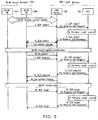
- FIGURE 3 there is a signal flow diagram that illustrates the basic steps for implementing online credit control between the AAA server 210 and the legacy WLAN access node 206 in accordance with a first embodiment of the present invention.
- the WLAN access node 206 supports the accounting functionality of the. RADIUS/Diameter protocol. The steps are as follows:
- the OCS 212 delivers a quota in e.g. volume or time/volume which is transformed by the AAA server 210 and given as a time value (in the auth. lifetime--see step 7) to the WLAN AN 206.
- the WLAN AN 206 then reports the used volume/time within the ACR (see step 9) to the AAA server 210.
- the OCS 212 can define the interim report interval when it sets the reserved quota.
- FIGURE 4 there is a signal flow diagram that illustrates the basic steps for implementing online credit control between the AAA server 210 and the legacy WLAN access node 206 in accordance with a second embodiment of the present invention.
- the WLAN access node 206 supports the accounting functionality of the RADIUS/Diameter protocol. The steps are as follows:
- FIGURE 5 there is a signal flow diagram that illustrates the basic steps for implementing online credit control between the AAA server 210 and the legacy WLAN access node 206 in accordance with a third embodiment of the present invention.
- the WLAN access node 206 does not support the accounting functionality of the RADIUS/Diameter protocol. The steps are as follows:
- This solution supports full credit control when charging is based on time.
- the WLAN user can be over-charged because the OCS 212 stops charging when the last re-authentication timeout has expired. This needs to happen because the 3GPP AAA server 210 and OCS 212 never know exactly when the WLAN session 222 ends.
- the OCS 212 can define the interim report interval when it sets the reserved quota.
- the present invention uses the existing authentication lifetime functionality in RADIUS to enable online charging.
- the authentication lifetime functionality was used to get the terminal 204 to re-authenticate within a defined interval so that the AAA server 210 can control the authentication lifetime.
- the present invention uses the authentication lifetime functionality for online credit control.
- the present invention uses the authentication lifetime to grant usage for a defined time based on credit within the subscriber's prepaid account.
- a reservation is done on the prepaid account for a defined time period and this is sent back to the legacy access node 206 (e.g., WLAN access node 206) in the authentication lifetime parameter.
- the legacy access node 206 needs to re-authenticate to get a new lifetime.
- the subscriber's account is deducted with the used time and a new reservation is done for a new lifetime.
Landscapes
- Engineering & Computer Science (AREA)
- Computer Networks & Wireless Communication (AREA)
- Signal Processing (AREA)
- Business, Economics & Management (AREA)
- Computer Security & Cryptography (AREA)
- Accounting & Taxation (AREA)
- Computing Systems (AREA)
- General Engineering & Computer Science (AREA)
- Computer Hardware Design (AREA)
- Strategic Management (AREA)
- Physics & Mathematics (AREA)
- General Business, Economics & Management (AREA)
- General Physics & Mathematics (AREA)
- Theoretical Computer Science (AREA)
- Quality & Reliability (AREA)
- Mobile Radio Communication Systems (AREA)
Description
- This application claims the benefit of
U.S. Provisional Application Serial No. 60/695,082 filed on June 29, 2005 - The present invention relates to a network and a method for implementing online credit control (e.g. for prepaid access) so that a service can be rated and a subscriber charged or credit controlled before they can use a terminal to access the service. In one embodiment, the network (e.g., 3GPP network) includes an AAA server which uses an authentication functionality to enable an access server (associated with an access network) to implement online credit control for a terminal. In this embodiment, the access server (e.g., WLAN access server) supports the existing RADIUS/Diameter protocol but it does not support a Diameter Credit Control Application (or a similar application like RADIUS Prepaid) as disclosed in for example TELEFONICA: "TS32.252 WLAN Direct IP Access Online Charging: RADIUS prepaid- Diameter credit control inter-working", 3GPP DRAFT; S5-054013 TS32.252 WLAN DIRECT IP ACCESS ONLINE CHARGING, 3RD GENERATION PARTNERSHIP PROJECT (3GPP), MOBILE COMPETENCE CENTRE ; 650, ROUTE DES LUCIOLES ; F-06921 SOPHIA-ANTIPOLIS CEDEX; FRANCE, vol. SA WG5, no. Sophia Antipolis, France; 20050111, 11 January 2005 (2005-01-11 ), XP050300363 or SA5 (TELECOM MANAGEMENT): "Rel-6 TS 32252-100 WLAN Charging- for SA Information", 3GPP DRAFT; SP-050028, 3RD GENERATION PARTNERSHIP PROJECT (3GPP), MOBILE COMPETENCE CENTRE ; 650, ROUTE DES LUCIOLES ; F-06921 SOPHIA-ANTIPOLIS CEDEX ; FRANCE, vol. TSG SA, no. Tokyo, Japan; 20050301, 1 March 2005 (2005-03-01), XP050204252.
- The following abbreviations are herewith defined, at least some of which are referred to in the ensuing description of the prior art and the preferred embodiments of the present invention.
- ACR
- Accounting Control Request
- AN
- Access Node
- CCA
- Credit Control Authorisation
- CCR
- Credit Control Request
- DCC
- Diameter Credit Control
- GPRS
- General Package Radio Services
- GSM
- Global System for Mobile Communications
- IETF
- Internet Engineering Task Force
- LAN
- Local Area Network
- MMS
- Multimedia Messaging Service
- OCS
- Online Charging System
- RADIUS
- Remote Authentication Dial in User Service
- RFC
- Request for Comments
- SMS
- Short Message Service
- UE
- User Equipment
- UMTS
- Universal Mobile Telecommunications System
- Wo
- Reference point between a 3GPP AAA Server and an OCS
- WLAN
- Wireless LAN
- Referring to
FIGURE 1 (PRIOR ART), there is shown a block diagram of a traditional GSM/UMTS corenetwork charging architecture 100 that is used to help explain an online credit control problem which is solved by the present invention. As shown, the traditional GSM/UMTS corenetwork charging architecture 100 has an access network 102 (e.g., WLAN access network 102) which includes a terminal 104 (e.g., WLAN UE. 104) (one shown) and an access node 106 (e.g., WLAN access node 106). In addition, the traditional GSM/UMTS corenetwork charging architecture 100 has a3GPP network 108 which includes anAAA server 110 and an OCS 112. For clarity, only the components associated with the traditional GSM/UMTS corenetwork charging architecture 100 which are needed to discuss the present invention are illustrated and described herein. - As shown, this third-generation (3G)
wireless system 100 implements a charging solution by utilizing the well known RADIUS/Diameter protocols (see IETF RFC 2138 "RADIUS" and IETF RFC 3588 "DIAMETER") to authenticate subscribers, authorize service and charge the subscriber. Basically, the Diameter protocol provides an Authentication, Authorization and Accounting (AAA) framework for applications such as network access or IP mobility. And, the Diameter base protocol provides the minimum requirements needed for a AAA protocol. The base protocol may be used by itself for accounting purposes only", or it may be used with a Diameter application. However, the accounting part of the RADIUS/Diameter protocol is not an online interface which means that a service can not be rated and the subscriber can not be charged before they access the service. In other words, the subscriber can not use a real time prepaid solution so they can pay in advance for a service and then later access and use a particular service. To address this problem, a Diameter Credit Control (DCC) Application has been implemented to enable the online credit control for a subscriber. This works well if the access node supports both the RADIUS/Diameter protocol and the DCC Application. But, there are many legacy-type access nodes likeWLAN access node 106 which do support the existing RADIUS/Diameter protocol but do not support the DCC application and as a result these access nodes can not implement online credit control for the subscriber. - A second way this problem can be address was discussed in the co-assigned
PCT Patent Application WO 02/067498 A1 access node 106 which do not support this RADIUS Prepaid extension and as a result these access nodes can not implement online credit control for the subscriber. Hence, there is a need for a prepaid online credit control solution which can be used by a legacyWLAN access node 106 that supports the existing RADIUS/Diameter protocol but does not support a DCC application (or a similar application like RADIUS Prepaid). This need and other needs are addressed by the present invention. - The present invention is defined by the subject matter of the independent claims. Preffered embodiments are defined by the dependent claims.
- A more complete understanding of the present invention may be had by reference to the following detailed description when taken in conjunction with the accompanying drawings wherein:
-
FIGURE 1 (PRIOR ART) is a block diagram of a traditional GSM/UMTS core network charging architecture that is used to help explain an online credit control problem which will be solved by the present invention; -
FIGURE 2 is a block diagram of a GSM/UMTS core network charging architecture which is used to help explain how the problem associated with providing online credit control is solved by the present invention; -
FIGURE 3 is a signal flow diagram that illustrates the basic steps for implementing an online credit control between an AAA server and a legacy access node (e.g., WLAN access node) in accordance with a first embodiment of the present invention; -
FIGURE 4 is a signal flow diagram that illustrates the basic steps for implementing an online credit control between an AAA server and a legacy access node (e.g., WLAN access node) in accordance with a second embodiment of the present invention; and -
FIGURE 5 is a signal flow diagram that illustrates the basic steps for implementing an online credit control between an AAA server and a legacy access node (e.g., WLAN access node) in accordance with a third embodiment of the present invention. - Referring to
FIGURE 2 , there is shown a block diagram of a GSM/UMTS corenetwork charging architecture 200 which is used to help explain how the problem associated with providing an online credit control is solved by the present invention. As shown, the GSM/UMTS corenetwork charging architecture 200 has an access network 202 (e.g., WLAN access network 202) which includes a terminal 204 (e.g. WLAN UE 204) (one shown) and an access node 206 (e.g., WLAN access node 206). In this discussion, theWLAN access server 206 is assumed to be able to support the existing RADIUS/Diameter protocol but is not able to support a DCC Application (or similar application like RADIUS Prepaid). The GSM/UMTS corenetwork charging architecture 200 also has a3GPP network 208 which includes anAAA server 210 and anOCS 212. Thecomponents components FIGURE 1 (PRIOR ART) except that theAAA server 210 has been enhanced to use its authentication functionality to enable the legacyWLAN access node 206 to implement online credit control (repaid-access) for the terminal 204. - The
enhanced AAA server 210 includes aprocessor 211 that processes instructions stored within amemory 213 to be able to function as follows: (1) receive asignal 214 from the legacyWLAN access node 206 indicating that a subscriber using terminal 204 wants to access a session (see step 1); (2) interact with the external OCS 212 (or integrated OCS 212) which determines a quota related to an allowed service usage for the terminal 204 (see step 2); and (3) send anauthentication signal 216 to the legacy WLAN access node 206 (see step 3). Theauthentication signal 216 is not a typical authentication signal because it contains a session time-out parameter 218) being an authentification lifetime in a RADIUS/ Diameter protocol (which is based on quota) and a termination action parameter 220 (which indicates that the legacyWLAN access node 206 needs to either terminate thesession 222 or initiate a re-authentication request after exceeding a predetermined amount of time set by the session time-out parameter 218). Upon receiving theauthentication signal 216, theWLAN access node 206 enables the terminal 204 to the access the service. - Once the time associated with the session time-
out parameter 218 expires and the subscriber still wants to continue thesession 222, then the legacyWLAN access node 206 needs to send a re-authentication signal 224 (pursuant to the termination action parameter 218) towards theAAA server 210. Thereafter, theAAA server 210 functions to: (4) receive there-authentication request signal 224 from the legacy WLAN access node 206 (see step 4); (5) interact with theOCS 212 which determines a second quota related to the remaining allowed service usage for the terminal 204 (see step 5); and (6) send asecond authentication signal 226 to the legacy WLAN access node 206 (see step 6). Thesecond authentication signal 226 contains a session time-out parameter 228 (which is based on the second quota) and a termination action parameter 230 (which indicates that the legacyWLAN access node 206 needs to either terminate thesession 222 or initiate a second re-authentication request after exceeding a predetermined amount of time set by the session time-out parameter 226). It should be noted that steps 4-6 can be repeated as many times as needed so long as there is enough credit in the subscribers prepaid account (which is located in the OSC 212). However, in this example, the terminal 204 (or other party) discontinued thesession 222 before another re-authentication signal would be needed to be sent to theAAA server 210. A detailed discussion about three different ways that the AAA server 210 (and the OSC 212) can function in accordance with the present invention are described below with respect to the signal flow diagrams shown inFIGURES 3-5 . - Referring to
FIGURE 3 , there is a signal flow diagram that illustrates the basic steps for implementing online credit control between theAAA server 210 and the legacyWLAN access node 206 in accordance with a first embodiment of the present invention. In this embodiment, it is assumed that theWLAN access node 206 supports the accounting functionality of the. RADIUS/Diameter protocol. The steps are as follows: - 1. The WLAN UE 204 (terminal 204) requests a WLAN session (see
step 1 inFIG. 2 ). - 2. The
WLAN access node 206 starts an accounting session with the3GPP AAA server 210 by sending an ACR to the3GPP AAA server 210. - 3. The
3GPP AAA server 210 sends a CCR (or Reserve Unit Request message) to the OCS 212 (seestep 2 inFIG. 2 ). - 4. The
OCS 212 performs credit control (rating/reservation of quota)(seestep 2 inFIG. 2 ). - 5. The
OCS 212 replies with a CCA (or Reserve Unit Response message) with a quota (if granted by the OCS 212)(seestep 2 inFIG. 2 ). - 6. The
3GPP AAA server 210 acknowledges the accounting session with theWLAN access network 202 by sending an ACA to theWLAN AN 206. - 7. The
3GPP AAA server 210 sends anauthentication signal 216 to theWLAN AN 206 after setting the session timeout 218 (and setting thetermination action 220 to new request) for theWLAN session 222 based on the time quota assigned by the OCS 212 (seestep 3 inFIG. 2 ). - 8. The
WLAN access node 206 re-authenticates when the timeout has expired by sending are-authentication signal 224 to the 3GPP AAA server 210 (seestep 4 inFIG. 2 ). - 9. The
WLAN access node 206 sends an interim ACR to the3GPP AAA server 210. - 10. Based on the interim ACR and the re-authentication messages, the
3GPP AAA server 210 prepares a new CCR (or Reserve Unit Request message) and sends it to the OCS 212 (seestep 5 inFIG. 2 ). - 11. The
OCS 212 performs credit control (rating/reservation of quota)(seestep 5 inFIG. 2 ). - 12. The
OCS 212 replies with an interim CCA (or Reserve Unit. Response message) with a quota (if granted by OCS 212) (seestep 5 inFIG. 2 ). - 13. The
3GPP AAA server 210 acknowledges the accounting session toWLAN access network 202 by sending an interim ACA to theWLAN AN 206. - 14. The
3GPP AAA server 210 sends anauthentication signal 226 to theWLAN AN 206 after setting the session timeout 228 (and setting the termination action 230 to new request) for theWLAN session 222 based on the second time quota assigned by the OCS 212 (seestep 6 inFIG. 2 ). - 15. When the WLAN session ends, then the
WLAN access node 206 sends an ACR (stop) to the3GPP AAA server 210. - 16. The
3GPP AAA server 210 prepares a CCR (or Reserve Unit Request message) with information from the ACR and sends it to theOCS 212. - 17. The
OCS 212 performs credit control (updates the account/return back unused quota). - 18. The
OCS 212 send a CCA (or Reserve Unit Response message) to the3GPP AAA server 210. - 19. The
3GPP AAA server 210 acknowledges the end of the accounting session by sending an ACA (stop) to theWLAN access node 206. - This procedure is shown where the quota is based on time (in this case the credit risk could be decreased if small time reservations are used). However, the quota can also be based on a unit other than pure time, like volume or a combination of time/volume. In this case, the
OCS 212 delivers a quota in e.g. volume or time/volume which is transformed by theAAA server 210 and given as a time value (in the auth. lifetime--see step 7) to theWLAN AN 206. TheWLAN AN 206 then reports the used volume/time within the ACR (see step 9) to theAAA server 210. TheAAA server 210 can then transfer the used volume/time in the CCR (see step 10) to theOCS 212 for rating/deduction (as discussed above). However, theAAA server 210 can also make use of this information itself to regulate the transformation function. For instance, instep 7 the transformation is initially AuthLifetime:=Quota(Mbytes)*20seconds but since the used volume instep 9 is only for example half of the received quota the formula is changed to AuthLifetime:=Quota(Mbytes)*40 seconds. - Moreover, there can be more than one interim DCC (or similar) transaction (see steps 10-12) for a
WLAN session 222. And, theOCS 212 can define the interim report interval when it sets the reserved quota. - Referring to
FIGURE 4 , there is a signal flow diagram that illustrates the basic steps for implementing online credit control between theAAA server 210 and the legacyWLAN access node 206 in accordance with a second embodiment of the present invention. In this embodiment, it is assumed that theWLAN access node 206 supports the accounting functionality of the RADIUS/Diameter protocol. The steps are as follows: - 1. The
WLAN access network 202 starts authentication/authorization with the 3GPP AAA server 210 (seestep 1 inFIG. 2 ). - 2. The
3GPP AAA server 210 sends a CCR (or Reserve Unit Request message) to the OCS 212 (seestep 2 inFIG. 2 ). - 3. The
OCS 212 performs credit control (rating/reservation of quota)(seestep 2 inFIG. 2 ). - 4. The
OCS 212 replies with a CCA (or Reserve Unit Response message) with a quota (if granted by the OCS 212)(seestep 2 inFIG. 2 ). - 5. The
3GPP AAA server 210 sends theWLAN access network 202 an authentication/authorization signal 216 which contains a session timeout 218 (and termination,action 220 set to new request) based on the reserved quota (seestep 3 inFIG. 2 ). - 6. The
WLAN access node 206 starts an accounting session by sending an ACR to the3GPP AAA server 210. - 7. The
3GPP AAA server 210 acknowledges the accounting session with theWLAN access network 202 by sending an ACA to theWLAN AN 206. - 8. The
WLAN access node 206 re-authenticates when the session-timeout has expired by sending are-authentication signal 224 to the 3GPP AAA server 210 (seestep 4 inFIG. 2 ). - 9. Based on the re-authentication message, the
3GPP AAA server 210 prepares an interim CCR (or Reserve Unit Request message) and sends it to the OCS 212 (seestep 5 inFIG. 2 ). - 10. The
OCS 212 performs credit control (rating/reservation of quota)(seestep 5 inFIG. 2 ). - 11. The
OCS 212 replies with an interim CCA (or Reserve Unit Response message) with a quota (if granted by the OCS 212)(seestep 5 inFIG. 2 ). - 12. The
3GPP AAA server 210 sends anauthentication signal 226 to theWLAN AN 206 after setting the session timeout 228 (and setting the termination action 230 to new request) for theWLAN session 222 based on the second time quota assigned by the OCS 212 (seestep 6 inFIG. 2 ). - 13. The
WLAN access node 206 sends an interim ACA to the3GPP AAA server 210. - 14. The
3GPP AAA server 210 acknowledges the accounting message by sending an interim ACA to theWLAN AN 206. - 15. When the WLAN session ends, then
WLAN access node 206 sends an ACR (stop) to the3GPP AAA server 210. - 16. The
3GPP AAA server 210 prepares a CCR (or Reserve Unit Request message) with information from the ACR and sends it to theOCS 212. - 17. The
OCS 212 performs credit control (updates the account/return back unused quota). - 18. The
OCS 212 acknowledges by sending a CCA (or Reserve Unit Response message) to the3GPP AAA server 210. - 19. The
3GPP AAA server 210 acknowledges the end of the accounting session by sending an ACA (stop) to theWLAN AN 206. - This solution is shown as supporting full credit control when charging is based on time. Note: charging based on volume is not possible in this scenario.
- There can be more. than one interim DCC (or similar). transaction (see steps 9-11) for a
WLAN session 222. And, thenOCS 212 can define the interim report interval when it sets the reserved quota. - Referring to
FIGURE 5 , there is a signal flow diagram that illustrates the basic steps for implementing online credit control between theAAA server 210 and the legacyWLAN access node 206 in accordance with a third embodiment of the present invention. In this embodiment, it is assumed that theWLAN access node 206 does not support the accounting functionality of the RADIUS/Diameter protocol. The steps are as follows: - 1. The
WLAN access network 202 starts authentication/authorization with the 3GPP AAA server 210 (seestep 1 inFIG. 2 ). - 2. The
3GPP AAA server 210 sends a CCR (or Reserve Unit Request message) to the OCS 212 (seestep 2 inFIG. 2 ). - 3. The
OCS 212 performs credit control (rating/reservation of quota)(seestep 2 inFIG. 2 ). - 4. The
OCS 212 replies with a CCA (or Reserve Unit Response message) with a quota (if granted by the OCS 212) (seestep 2 inFIG. 2 ). - 5. The
3GPP AAA server 210 sends theWLAN access network 202 an authentication/authorization signal 216 which contains a session timeout 218 (andtermination action 220 set to new request) based on the reserved quota (seestep 3 inFIG. 2 ). - 6. The
WLAN access node 206 re-authenticates when the session-timeout has expired by sending are-authentication signal 224 to the 3GPP AAA server 210 (seestep 4 inFIG. 2 ). - 7. Based on the re-authentication message, the
3GPP AAA server 210 prepares an interim CCR (or Reserve Unit Request message) and sends it to the OCS 212 (seestep 5 inFIG. 2 ). - 8. The
OCS 212 performs credit control (rating/reservation of quota)(seestep 5 inFIG. 2 ). - 9. The
OCS 212 replies with an interim CCA (or Reserve Unit Response message) with a quota (if granted by the OCS 212)(seestep 5 inFIG. 2 ). - 10. The
3GPP AAA server 210 sends anauthentication signal 226 to theWLAN AN 206 after setting the session timeout 228 (and setting the termination action 230 to new request) for theWLAN session 222 based on the second time quota assigned by the OCS 212 (seestep 6 inFIG. 2 ). - 11. When the authentication timeout expires and no new re-authentication has been performed, then the
WLAN session 222 will be handled as closed. - 12. The
3GPP AAA server 210 prepares a CCR stop (or Reserve Unit Request message) with used units as the authentication timeout, and sends it toOCS 212. - 13. The
OCS 212 performs credit control (updates the account/return back unused quota). - 14. The
OCS 212 sends a CCA stop (or Reserve Unit Response message) as acknowledgement to the3GPP AAA server 210. - This solution supports full credit control when charging is based on time. However, the WLAN user can be over-charged because the
OCS 212 stops charging when the last re-authentication timeout has expired. This needs to happen because the3GPP AAA server 210 andOCS 212 never know exactly when theWLAN session 222 ends. - There can be more than one interim DCC (or similar) transaction (see steps 7-9) for a WLAN session. And, the
OCS 212 can define the interim report interval when it sets the reserved quota. - From the foregoing, it should be appreciated that the present invention uses the existing authentication lifetime functionality in RADIUS to enable online charging. In the past, the authentication lifetime functionality was used to get the terminal 204 to re-authenticate within a defined interval so that the
AAA server 210 can control the authentication lifetime. However, the present invention uses the authentication lifetime functionality for online credit control. In particular, the present invention uses the authentication lifetime to grant usage for a defined time based on credit within the subscriber's prepaid account. Thus, a reservation is done on the prepaid account for a defined time period and this is sent back to the legacy access node 206 (e.g., WLAN access node 206) in the authentication lifetime parameter. And, when this lifetime expires, thelegacy access node 206 needs to re-authenticate to get a new lifetime. Then, the subscriber's account is deducted with the used time and a new reservation is done for a new lifetime.
Claims (27)
- An AAA server (210), comprising:a processor (211);a memory (213); andinstructions accessible from said memory and processable by said processor to facilitate:receiving a signal (214) from an access node (206) requesting a session for a terminal;interacting with an online charging system (212) to receive a quota (2) related to an allowed service usage for the terminal (204); andsending an authentication signal (216) to said access node, characterized in that said authentication signal contains a session time-out parameter (218) dependent upon the quota, said session time-out parameter being an authentication lifetime in a RADIUS/Diameter protocol.
- The AAA server of Claim 1, wherein said authentication signal further contains a termination action parameter (220) which indicates that the access node needs to either terminate the session (222) or initiate a re-authentication request after exceeding a predetermined amount of time set by the session time-out parameter.
- The AAA server of Claim 2, wherein said processor further facilitates:receiving a re-authentication request signal (224) from said access node requesting that the service be extended for the terminal;interacting with said online charging system which determines a second quota related to the remaining allowed service usage for the terminal; andsending a second authentication signal (226) to said access node, wherein said second authentication signal contains a session time-out parameter (228) which is based on the second quota and a termination action parameter (230) which indicates that the access node needs to either terminate the session or initiate a second re-authentication request after exceeding a predetermined amount of time set by the session time-out parameter.
- The AAA server of Claim 3, wherein said processor further facilitates the interacting with said online charging system by sending a signal indicating a used quota to said online charging system which then debits a service account associated with the terminal.
- The AAA server of Claim 3, wherein said processor further facilitates:receiving an ACR signal indicating used volume/time from said access node; andsending a CCR signal indicating the used volume/time to said online charging system.
- The AAA server of Claim 1, wherein said processor facilitates the use of signals associated with a Diameter Credit Control Application to interact with said online charging system.
- The AAA server of Claim 1, wherein said processor facilitates the use of authorization and authentication signals associated with a RADIUS/Diameter protocol to interact with said access node.
- The AAA server of Claim 1, wherein said processor facilitates the use of authorization, authentication and accounting signals associated with a RADIUS/Diameter protocol to interact with said access node.
- The AAA server of Claim 1, wherein said quota is:a time quota;a volume quota; ora combined time/volume quota.
- The AAA server of Claim 9, wherein if said quota is based on said volume quota or said combined time/volume quota then said processor implements a transformation function to transform said volume quota or said combined time/volume quota into a time quota which is used in said session time-out parameter.
- The AAA server of Claim 10, wherein said transformation function is adapted to transform said volume or time/volume quota into said time quota by using a previously received and actually used volume or used time/volume.
- A method for implementing online credit control within a communications network, said method comprising the steps of:Receiving (1), at an AAA server, a signal (214) from an access node requesting,a session for a terminal;Sending (2), from said AAA server, a request signal to an online charging system, where said online charging system determines a quota related to an allowed service usage for the terminal;Receiving (2), at said AAA server, a response signal containing the quota from said online charging system; andSending (3), from said AAA server, an authentication signal (216) to said access node, characterized in that said authentication signal contains a session time-out parameter dependent upon the quota, said session time-out parameter being an authentication lifetime in a RADIUS/Diameter protocol:
- The method of Claim 12, wherein said authentication signal further contains a termination action parameter (220) which indicates that the access node needs to either terminate the session or initiate a re-authentication request after exceeding a predetermined amount of time set by the session time-out parameter.
- The method of Claim 13, further comprising the steps of:Receiving (4), at said AAA server, a re-authentication request signal (224) from said access node requesting that the service be extended for the terminal;Sending (5), from said AAA server, a second request signal to said online charging system, where said online charging system determines a second quota related to the remaining allowed service usage for the terminal;Receiving (5), at said AAA server, a second response signal containing the second quota from said online charging system; andSending (6), from said AAA server, a second authentication signal (226) to said access node, wherein said second authentication signal contains a session time-out parameter (228) which is based on the second quota and a termination action parameter (230) which indicates that the access node needs to either terminate the session or initiate a second re-authentication request after exceeding a predetermined amount of time set by the session time-out parameter.
- The method of Claim 12, wherein:said AAA server is co-located/integrated with said online charging system; orsaid AAA server is located remote from said online charging system.
- The method of Claim 12, wherein said AAA server uses signals associated with a Diameter Credit Control Application to interact with said online charging system.
- The method of Claim 12, wherein said AAA server uses authorization and authentication signals associated with a RADIUS/Diameter protocol to interact with said access node.
- The method of Claim 12, wherein said AAA server uses authorization, authentication and accounting signals associated with a RADIUS/Diameter protocol to interact with said access node.
- The method of Claim 12, wherein said quota is:a time quota;a volume quota; ora combined time/volume quota.
- A network for providing online credit control to a communications terminal (204), said network comprising an AAA server (210) and an online charging system (212), wherein:said AAA server functions as follows:(i) receives a signal from an access node requesting a session for the communications terminal (214) ; and(ii) sends a request signal to said online charging system;said online charging system functions as follows:(i) receives the request signal from said AAA server;(ii) performs online credit control and determines a quota related to an allowed service usage for the communication terminal; and(iii) sends a response signal containing the quota to said AAA server;said AAA server functions as follows:(i) receives the response signal from said online charging system; and(ii) sends an authentication signal to said access server, characterized in that said authentication signal contains a session time-out parameter dependent upon the quota, said session time-out parameter being an authentication lifetime in a RADIUS/Diameter protocol.
- The network of Claim 20, wherein said authentication signal further contains a termination action parameter (220) which indicates that the access node needs to either terminate the session or initiate a re-authentication request after exceeding a certain amount of time set by the session time-out parameter.
- The network of Claim 21, wherein:said AAA server functions as follows:(i) receives a re-authentication request signal from said access node requesting that the service be extended for the communication terminal (224);(ii) sends a second request signal to said online charging system;said online charging system functions as follows:(i) receives the second request signal from said AAA server;(ii) performs online credit control and determines a second quota related to the remaining allowed service usage for the communication terminal; and(iii) sends a second response signal containing the second quota to said AAA server;said AAA server functions as follows:(i) receives the second response signal from said online charging system; and(ii) sends a second authentication signal to said, access node (226), wherein said second authentication signal contains a session time-out parameter (228) which is based on the second quota and a termination action parameter (230) which indicates that said access node needs to either terminate the session or initiate a second re-authentication request after exceeding a predetermined amount of time set by the session time-out parameter.
- The network of Claim 20, wherein:said AAA server is co-located/integrated with said online charging system; orsaid AAA server is located remote from said online charging system.
- The network of Claim 20, wherein said AAA server uses signals associated with a Diameter Credit Control Application to interact with said online charging system.
- The network of Claim 20, wherein said AAA server uses authorization and authentication signals associated with a RADIUS/Diameter protocol to interact with said access node.
- The network of Claim 20, wherein said AAA server uses authorization, authentication and accounting signals associated with a RADIUS/Diameter protocol to interact with said access node.
- The network of Claim 20, wherein said quota is:a time quota;a volume quota; ora combined time/volume quota.
Applications Claiming Priority (3)
| Application Number | Priority Date | Filing Date | Title |
|---|---|---|---|
| US69508205P | 2005-06-29 | 2005-06-29 | |
| US11/424,701 US20070005764A1 (en) | 2005-06-29 | 2006-06-16 | Network and method for implementing online credit control for a terminal |
| PCT/SE2006/050212 WO2007001231A2 (en) | 2005-06-29 | 2006-06-20 | Network and method for implementing online credit control for a terminal |
Publications (3)
| Publication Number | Publication Date |
|---|---|
| EP1900142A2 EP1900142A2 (en) | 2008-03-19 |
| EP1900142A4 EP1900142A4 (en) | 2012-10-17 |
| EP1900142B1 true EP1900142B1 (en) | 2016-08-10 |
Family
ID=37591084
Family Applications (1)
| Application Number | Title | Priority Date | Filing Date |
|---|---|---|---|
| EP06748051.7A Expired - Lifetime EP1900142B1 (en) | 2005-06-29 | 2006-06-20 | Server, network and method for implementing online credit control for a terminal |
Country Status (3)
| Country | Link |
|---|---|
| US (1) | US20070005764A1 (en) |
| EP (1) | EP1900142B1 (en) |
| WO (1) | WO2007001231A2 (en) |
Families Citing this family (13)
| Publication number | Priority date | Publication date | Assignee | Title |
|---|---|---|---|---|
| GB0525244D0 (en) * | 2005-12-12 | 2006-01-18 | Nokia Corp | Providing communication service sessions |
| US8170055B2 (en) * | 2005-12-29 | 2012-05-01 | Alcatel Lucent | Method of converting between radius message and diameter messages |
| FR2921784A1 (en) | 2007-09-28 | 2009-04-03 | Alcatel Lucent Sas | INFORMATION COMMUNICATION METHOD FOR PREPARED SERVICE SUBSCRIBERS |
| US8914445B2 (en) * | 2007-10-17 | 2014-12-16 | Futurewei Technologies, Inc. | System and method for diameter prefix authorization |
| CN101547140A (en) * | 2008-03-28 | 2009-09-30 | 华为技术有限公司 | Method and system for reporting data service volume and media processing and controlling device |
| CN102158838B (en) * | 2010-06-30 | 2015-08-05 | 华为技术有限公司 | The method of free resource process, system, message accounting and management of balance center |
| CN102860051B (en) * | 2011-05-09 | 2016-01-27 | 华为技术有限公司 | A kind of service billing control method and relevant device |
| CN102711070B (en) * | 2011-12-20 | 2015-02-18 | 中国移动(深圳)有限公司 | On-line charging simulation testing system and method |
| CN103841541B (en) | 2014-01-24 | 2018-07-13 | 华为技术有限公司 | The switching method and device of charge system |
| EP3116284B1 (en) * | 2014-03-04 | 2018-08-22 | Huawei Technologies Co., Ltd. | Method and device for managing charging session |
| CN106162686B (en) * | 2015-03-31 | 2019-06-07 | 国家计算机网络与信息安全管理中心 | A kind of signaling acquisition and associated method and system based on WLAN |
| CN105915397A (en) * | 2016-06-21 | 2016-08-31 | 福建富士通信息软件有限公司 | Service processing load balancing method based on DCC protocol |
| US12074919B1 (en) * | 2023-04-21 | 2024-08-27 | Verizon Patent And Licensing Inc. | Systems and methods for reauthorization request notification |
Family Cites Families (7)
| Publication number | Priority date | Publication date | Assignee | Title |
|---|---|---|---|---|
| WO2003025809A2 (en) * | 2001-09-21 | 2003-03-27 | Telefonaktiebolaget Lm Ericsson (Publ) | System and method for charging in a communication network and a communication network charging server |
| US6970693B2 (en) * | 2002-09-06 | 2005-11-29 | Telefonaktiebolaget Lm Ericsson (Publ) | Method, system and telecommunication node for alternative prepaid support |
| US7221929B2 (en) * | 2002-10-12 | 2007-05-22 | Lg Electronics Inc. | Handling charging information in interworking structure of mobile communication and wireless local area networks |
| US8498391B2 (en) * | 2002-12-02 | 2013-07-30 | Apple Inc. | Methods, systems and program products for supporting prepaid service within a communication network |
| US20050177515A1 (en) * | 2004-02-06 | 2005-08-11 | Tatara Systems, Inc. | Wi-Fi service delivery platform for retail service providers |
| CN1265584C (en) * | 2004-04-14 | 2006-07-19 | 华为技术有限公司 | Removing method for occupied network resource by user in wireless local network |
| US7366136B1 (en) * | 2005-05-27 | 2008-04-29 | Cellco Partnership | Determining chargeable duration at the home agent for a prepaid MIP session |
-
2006
- 2006-06-16 US US11/424,701 patent/US20070005764A1/en not_active Abandoned
- 2006-06-20 EP EP06748051.7A patent/EP1900142B1/en not_active Expired - Lifetime
- 2006-06-20 WO PCT/SE2006/050212 patent/WO2007001231A2/en not_active Ceased
Also Published As
| Publication number | Publication date |
|---|---|
| EP1900142A4 (en) | 2012-10-17 |
| WO2007001231A2 (en) | 2007-01-04 |
| WO2007001231A3 (en) | 2007-03-01 |
| EP1900142A2 (en) | 2008-03-19 |
| US20070005764A1 (en) | 2007-01-04 |
Similar Documents
| Publication | Publication Date | Title |
|---|---|---|
| CN101336543B (en) | Providing communication service sessions | |
| US8086545B2 (en) | Charging in a communication system | |
| US11006276B2 (en) | System and method providing interoperability between cellular and other wireless systems | |
| US8812382B2 (en) | Charging for a communication system | |
| CN101222341B (en) | Method for accounting in telecommunication system | |
| US20110080839A1 (en) | Data pre-paid in simple ip roaming | |
| KR20080034941A (en) | Online billing management server | |
| US8331902B2 (en) | Method for implementing a wireless local area network (WLAN) gateway system | |
| US20070005764A1 (en) | Network and method for implementing online credit control for a terminal | |
| EP1639800B1 (en) | Online charging in mobile networks | |
| JP2011502370A (en) | Subscription and charge notification control | |
| US20090144167A1 (en) | System and method for managing data and voice connectivity for wireless devices | |
| CN100446490C (en) | Method and device for realizing access to WLAN environment | |
| EP1281269A2 (en) | Method of charging for resource usage in a gprs network | |
| KR20030052567A (en) | Method for Processing Pre-Paid Account of Authentication Authorization Accounting Server in Mobile Communication Packet Data Network | |
| EP2226997B1 (en) | Billing mechanism for a mobile communication network | |
| EP1875661B1 (en) | Method and apparatus for supplying billing information to a communication device | |
| KR100473028B1 (en) | HRPD Telecommunication System Capable of Operating Transaction and Method thereof | |
| US8718600B2 (en) | Operation of a terminal which can be used with an account in a mobile network which provides communication services | |
| KR100831727B1 (en) | Magazine service method and system using contents push method | |
| KR100794425B1 (en) | Packet CA Release Method in Mobile Communication System | |
| Grech et al. | Using open service access to enable mobile Internet applications in UMTS networks | |
| KR100878013B1 (en) | Service billing system and method in mobile communication network | |
| JP2011077735A (en) | Authentication device, femtocell system, and charging method used for the same | |
| KR20080042061A (en) | Magazine service method and system using contents push method |
Legal Events
| Date | Code | Title | Description |
|---|---|---|---|
| PUAI | Public reference made under article 153(3) epc to a published international application that has entered the european phase |
Free format text: ORIGINAL CODE: 0009012 |
|
| 17P | Request for examination filed |
Effective date: 20080125 |
|
| AK | Designated contracting states |
Kind code of ref document: A2 Designated state(s): AT BE BG CH CY CZ DE DK EE ES FI FR GB GR HU IE IS IT LI LT LU LV MC NL PL PT RO SE SI SK TR |
|
| DAX | Request for extension of the european patent (deleted) | ||
| DAX | Request for extension of the european patent (deleted) | ||
| A4 | Supplementary search report drawn up and despatched |
Effective date: 20120919 |
|
| RIC1 | Information provided on ipc code assigned before grant |
Ipc: H04L 12/14 20060101AFI20120912BHEP Ipc: H04L 12/28 20060101ALI20120912BHEP Ipc: H04L 29/06 20060101ALI20120912BHEP |
|
| 17Q | First examination report despatched |
Effective date: 20140801 |
|
| REG | Reference to a national code |
Ref country code: DE Ref legal event code: R079 Ref document number: 602006049874 Country of ref document: DE Free format text: PREVIOUS MAIN CLASS: H04L0012140000 Ipc: G06Q0020020000 |
|
| GRAP | Despatch of communication of intention to grant a patent |
Free format text: ORIGINAL CODE: EPIDOSNIGR1 |
|
| INTG | Intention to grant announced |
Effective date: 20160502 |
|
| RIC1 | Information provided on ipc code assigned before grant |
Ipc: G06Q 20/24 20120101ALI20160420BHEP Ipc: H04W 4/24 20090101ALI20160420BHEP Ipc: G06Q 20/02 20120101AFI20160420BHEP Ipc: H04L 29/06 20060101ALI20160420BHEP Ipc: H04L 12/14 20060101ALI20160420BHEP |
|
| GRAS | Grant fee paid |
Free format text: ORIGINAL CODE: EPIDOSNIGR3 |
|
| GRAA | (expected) grant |
Free format text: ORIGINAL CODE: 0009210 |
|
| AK | Designated contracting states |
Kind code of ref document: B1 Designated state(s): AT BE BG CH CY CZ DE DK EE ES FI FR GB GR HU IE IS IT LI LT LU LV MC NL PL PT RO SE SI SK TR |
|
| REG | Reference to a national code |
Ref country code: GB Ref legal event code: FG4D |
|
| REG | Reference to a national code |
Ref country code: CH Ref legal event code: EP Ref country code: AT Ref legal event code: REF Ref document number: 819637 Country of ref document: AT Kind code of ref document: T Effective date: 20160815 |
|
| REG | Reference to a national code |
Ref country code: IE Ref legal event code: FG4D |
|
| REG | Reference to a national code |
Ref country code: DE Ref legal event code: R096 Ref document number: 602006049874 Country of ref document: DE |
|
| REG | Reference to a national code |
Ref country code: LT Ref legal event code: MG4D |
|
| REG | Reference to a national code |
Ref country code: NL Ref legal event code: MP Effective date: 20160810 |
|
| REG | Reference to a national code |
Ref country code: AT Ref legal event code: MK05 Ref document number: 819637 Country of ref document: AT Kind code of ref document: T Effective date: 20160810 |
|
| PG25 | Lapsed in a contracting state [announced via postgrant information from national office to epo] |
Ref country code: IS Free format text: LAPSE BECAUSE OF FAILURE TO SUBMIT A TRANSLATION OF THE DESCRIPTION OR TO PAY THE FEE WITHIN THE PRESCRIBED TIME-LIMIT Effective date: 20161210 Ref country code: LT Free format text: LAPSE BECAUSE OF FAILURE TO SUBMIT A TRANSLATION OF THE DESCRIPTION OR TO PAY THE FEE WITHIN THE PRESCRIBED TIME-LIMIT Effective date: 20160810 Ref country code: IT Free format text: LAPSE BECAUSE OF FAILURE TO SUBMIT A TRANSLATION OF THE DESCRIPTION OR TO PAY THE FEE WITHIN THE PRESCRIBED TIME-LIMIT Effective date: 20160810 Ref country code: NL Free format text: LAPSE BECAUSE OF FAILURE TO SUBMIT A TRANSLATION OF THE DESCRIPTION OR TO PAY THE FEE WITHIN THE PRESCRIBED TIME-LIMIT Effective date: 20160810 Ref country code: FI Free format text: LAPSE BECAUSE OF FAILURE TO SUBMIT A TRANSLATION OF THE DESCRIPTION OR TO PAY THE FEE WITHIN THE PRESCRIBED TIME-LIMIT Effective date: 20160810 |
|
| PG25 | Lapsed in a contracting state [announced via postgrant information from national office to epo] |
Ref country code: PL Free format text: LAPSE BECAUSE OF FAILURE TO SUBMIT A TRANSLATION OF THE DESCRIPTION OR TO PAY THE FEE WITHIN THE PRESCRIBED TIME-LIMIT Effective date: 20160810 Ref country code: AT Free format text: LAPSE BECAUSE OF FAILURE TO SUBMIT A TRANSLATION OF THE DESCRIPTION OR TO PAY THE FEE WITHIN THE PRESCRIBED TIME-LIMIT Effective date: 20160810 Ref country code: GR Free format text: LAPSE BECAUSE OF FAILURE TO SUBMIT A TRANSLATION OF THE DESCRIPTION OR TO PAY THE FEE WITHIN THE PRESCRIBED TIME-LIMIT Effective date: 20161111 Ref country code: SE Free format text: LAPSE BECAUSE OF FAILURE TO SUBMIT A TRANSLATION OF THE DESCRIPTION OR TO PAY THE FEE WITHIN THE PRESCRIBED TIME-LIMIT Effective date: 20160810 Ref country code: ES Free format text: LAPSE BECAUSE OF FAILURE TO SUBMIT A TRANSLATION OF THE DESCRIPTION OR TO PAY THE FEE WITHIN THE PRESCRIBED TIME-LIMIT Effective date: 20160810 Ref country code: LV Free format text: LAPSE BECAUSE OF FAILURE TO SUBMIT A TRANSLATION OF THE DESCRIPTION OR TO PAY THE FEE WITHIN THE PRESCRIBED TIME-LIMIT Effective date: 20160810 Ref country code: PT Free format text: LAPSE BECAUSE OF FAILURE TO SUBMIT A TRANSLATION OF THE DESCRIPTION OR TO PAY THE FEE WITHIN THE PRESCRIBED TIME-LIMIT Effective date: 20161212 |
|
| PG25 | Lapsed in a contracting state [announced via postgrant information from national office to epo] |
Ref country code: EE Free format text: LAPSE BECAUSE OF FAILURE TO SUBMIT A TRANSLATION OF THE DESCRIPTION OR TO PAY THE FEE WITHIN THE PRESCRIBED TIME-LIMIT Effective date: 20160810 Ref country code: RO Free format text: LAPSE BECAUSE OF FAILURE TO SUBMIT A TRANSLATION OF THE DESCRIPTION OR TO PAY THE FEE WITHIN THE PRESCRIBED TIME-LIMIT Effective date: 20160810 |
|
| REG | Reference to a national code |
Ref country code: DE Ref legal event code: R097 Ref document number: 602006049874 Country of ref document: DE |
|
| PG25 | Lapsed in a contracting state [announced via postgrant information from national office to epo] |
Ref country code: CZ Free format text: LAPSE BECAUSE OF FAILURE TO SUBMIT A TRANSLATION OF THE DESCRIPTION OR TO PAY THE FEE WITHIN THE PRESCRIBED TIME-LIMIT Effective date: 20160810 Ref country code: SK Free format text: LAPSE BECAUSE OF FAILURE TO SUBMIT A TRANSLATION OF THE DESCRIPTION OR TO PAY THE FEE WITHIN THE PRESCRIBED TIME-LIMIT Effective date: 20160810 Ref country code: BG Free format text: LAPSE BECAUSE OF FAILURE TO SUBMIT A TRANSLATION OF THE DESCRIPTION OR TO PAY THE FEE WITHIN THE PRESCRIBED TIME-LIMIT Effective date: 20161110 Ref country code: DK Free format text: LAPSE BECAUSE OF FAILURE TO SUBMIT A TRANSLATION OF THE DESCRIPTION OR TO PAY THE FEE WITHIN THE PRESCRIBED TIME-LIMIT Effective date: 20160810 Ref country code: BE Free format text: LAPSE BECAUSE OF FAILURE TO SUBMIT A TRANSLATION OF THE DESCRIPTION OR TO PAY THE FEE WITHIN THE PRESCRIBED TIME-LIMIT Effective date: 20160810 |
|
| PLBE | No opposition filed within time limit |
Free format text: ORIGINAL CODE: 0009261 |
|
| STAA | Information on the status of an ep patent application or granted ep patent |
Free format text: STATUS: NO OPPOSITION FILED WITHIN TIME LIMIT |
|
| REG | Reference to a national code |
Ref country code: FR Ref legal event code: PLFP Year of fee payment: 12 |
|
| 26N | No opposition filed |
Effective date: 20170511 |
|
| PG25 | Lapsed in a contracting state [announced via postgrant information from national office to epo] |
Ref country code: SI Free format text: LAPSE BECAUSE OF FAILURE TO SUBMIT A TRANSLATION OF THE DESCRIPTION OR TO PAY THE FEE WITHIN THE PRESCRIBED TIME-LIMIT Effective date: 20160810 |
|
| PG25 | Lapsed in a contracting state [announced via postgrant information from national office to epo] |
Ref country code: MC Free format text: LAPSE BECAUSE OF FAILURE TO SUBMIT A TRANSLATION OF THE DESCRIPTION OR TO PAY THE FEE WITHIN THE PRESCRIBED TIME-LIMIT Effective date: 20160810 |
|
| REG | Reference to a national code |
Ref country code: CH Ref legal event code: PL |
|
| REG | Reference to a national code |
Ref country code: IE Ref legal event code: MM4A |
|
| PG25 | Lapsed in a contracting state [announced via postgrant information from national office to epo] |
Ref country code: IE Free format text: LAPSE BECAUSE OF NON-PAYMENT OF DUE FEES Effective date: 20170620 Ref country code: CH Free format text: LAPSE BECAUSE OF NON-PAYMENT OF DUE FEES Effective date: 20170630 Ref country code: LI Free format text: LAPSE BECAUSE OF NON-PAYMENT OF DUE FEES Effective date: 20170630 Ref country code: LU Free format text: LAPSE BECAUSE OF NON-PAYMENT OF DUE FEES Effective date: 20170620 |
|
| REG | Reference to a national code |
Ref country code: FR Ref legal event code: PLFP Year of fee payment: 13 |
|
| PG25 | Lapsed in a contracting state [announced via postgrant information from national office to epo] |
Ref country code: HU Free format text: LAPSE BECAUSE OF FAILURE TO SUBMIT A TRANSLATION OF THE DESCRIPTION OR TO PAY THE FEE WITHIN THE PRESCRIBED TIME-LIMIT; INVALID AB INITIO Effective date: 20060620 |
|
| PGFP | Annual fee paid to national office [announced via postgrant information from national office to epo] |
Ref country code: FR Payment date: 20190625 Year of fee payment: 14 |
|
| PG25 | Lapsed in a contracting state [announced via postgrant information from national office to epo] |
Ref country code: CY Free format text: LAPSE BECAUSE OF NON-PAYMENT OF DUE FEES Effective date: 20160810 |
|
| PGFP | Annual fee paid to national office [announced via postgrant information from national office to epo] |
Ref country code: GB Payment date: 20190627 Year of fee payment: 14 Ref country code: DE Payment date: 20190627 Year of fee payment: 14 |
|
| PG25 | Lapsed in a contracting state [announced via postgrant information from national office to epo] |
Ref country code: TR Free format text: LAPSE BECAUSE OF FAILURE TO SUBMIT A TRANSLATION OF THE DESCRIPTION OR TO PAY THE FEE WITHIN THE PRESCRIBED TIME-LIMIT Effective date: 20160810 |
|
| REG | Reference to a national code |
Ref country code: DE Ref legal event code: R119 Ref document number: 602006049874 Country of ref document: DE |
|
| GBPC | Gb: european patent ceased through non-payment of renewal fee |
Effective date: 20200620 |
|
| PG25 | Lapsed in a contracting state [announced via postgrant information from national office to epo] |
Ref country code: FR Free format text: LAPSE BECAUSE OF NON-PAYMENT OF DUE FEES Effective date: 20200630 Ref country code: GB Free format text: LAPSE BECAUSE OF NON-PAYMENT OF DUE FEES Effective date: 20200620 |
|
| PG25 | Lapsed in a contracting state [announced via postgrant information from national office to epo] |
Ref country code: DE Free format text: LAPSE BECAUSE OF NON-PAYMENT OF DUE FEES Effective date: 20210101 |