EP1899333B1 - Pyrazolopyridine derivatives as inhibitors of beta-adrenergic receptor kinase 1 - Google Patents
Pyrazolopyridine derivatives as inhibitors of beta-adrenergic receptor kinase 1 Download PDFInfo
- Publication number
- EP1899333B1 EP1899333B1 EP06754324A EP06754324A EP1899333B1 EP 1899333 B1 EP1899333 B1 EP 1899333B1 EP 06754324 A EP06754324 A EP 06754324A EP 06754324 A EP06754324 A EP 06754324A EP 1899333 B1 EP1899333 B1 EP 1899333B1
- Authority
- EP
- European Patent Office
- Prior art keywords
- alkyl
- alkylene
- group
- formula
- substituted
- Prior art date
- Legal status (The legal status is an assumption and is not a legal conclusion. Google has not performed a legal analysis and makes no representation as to the accuracy of the status listed.)
- Active
Links
- 0 COc(cc1)cc(OC)c1-*1cc(C(N)=O)nc2c1cn[n]2 Chemical compound COc(cc1)cc(OC)c1-*1cc(C(N)=O)nc2c1cn[n]2 0.000 description 4
- NBKMYJNPNNLNJC-UHFFFAOYSA-N C[n](cc1C=O)c2c1c(OCCc1ccccn1)ccc2 Chemical compound C[n](cc1C=O)c2c1c(OCCc1ccccn1)ccc2 NBKMYJNPNNLNJC-UHFFFAOYSA-N 0.000 description 1
Classifications
-
- C—CHEMISTRY; METALLURGY
- C07—ORGANIC CHEMISTRY
- C07D—HETEROCYCLIC COMPOUNDS
- C07D471/00—Heterocyclic compounds containing nitrogen atoms as the only ring hetero atoms in the condensed system, at least one ring being a six-membered ring with one nitrogen atom, not provided for by groups C07D451/00 - C07D463/00
- C07D471/02—Heterocyclic compounds containing nitrogen atoms as the only ring hetero atoms in the condensed system, at least one ring being a six-membered ring with one nitrogen atom, not provided for by groups C07D451/00 - C07D463/00 in which the condensed system contains two hetero rings
- C07D471/04—Ortho-condensed systems
-
- A—HUMAN NECESSITIES
- A61—MEDICAL OR VETERINARY SCIENCE; HYGIENE
- A61K—PREPARATIONS FOR MEDICAL, DENTAL OR TOILETRY PURPOSES
- A61K31/00—Medicinal preparations containing organic active ingredients
- A61K31/33—Heterocyclic compounds
- A61K31/395—Heterocyclic compounds having nitrogen as a ring hetero atom, e.g. guanethidine or rifamycins
- A61K31/435—Heterocyclic compounds having nitrogen as a ring hetero atom, e.g. guanethidine or rifamycins having six-membered rings with one nitrogen as the only ring hetero atom
- A61K31/4353—Heterocyclic compounds having nitrogen as a ring hetero atom, e.g. guanethidine or rifamycins having six-membered rings with one nitrogen as the only ring hetero atom ortho- or peri-condensed with heterocyclic ring systems
- A61K31/437—Heterocyclic compounds having nitrogen as a ring hetero atom, e.g. guanethidine or rifamycins having six-membered rings with one nitrogen as the only ring hetero atom ortho- or peri-condensed with heterocyclic ring systems the heterocyclic ring system containing a five-membered ring having nitrogen as a ring hetero atom, e.g. indolizine, beta-carboline
-
- A—HUMAN NECESSITIES
- A61—MEDICAL OR VETERINARY SCIENCE; HYGIENE
- A61P—SPECIFIC THERAPEUTIC ACTIVITY OF CHEMICAL COMPOUNDS OR MEDICINAL PREPARATIONS
- A61P1/00—Drugs for disorders of the alimentary tract or the digestive system
- A61P1/16—Drugs for disorders of the alimentary tract or the digestive system for liver or gallbladder disorders, e.g. hepatoprotective agents, cholagogues, litholytics
-
- A—HUMAN NECESSITIES
- A61—MEDICAL OR VETERINARY SCIENCE; HYGIENE
- A61P—SPECIFIC THERAPEUTIC ACTIVITY OF CHEMICAL COMPOUNDS OR MEDICINAL PREPARATIONS
- A61P25/00—Drugs for disorders of the nervous system
-
- A—HUMAN NECESSITIES
- A61—MEDICAL OR VETERINARY SCIENCE; HYGIENE
- A61P—SPECIFIC THERAPEUTIC ACTIVITY OF CHEMICAL COMPOUNDS OR MEDICINAL PREPARATIONS
- A61P25/00—Drugs for disorders of the nervous system
- A61P25/30—Drugs for disorders of the nervous system for treating abuse or dependence
- A61P25/36—Opioid-abuse
-
- A—HUMAN NECESSITIES
- A61—MEDICAL OR VETERINARY SCIENCE; HYGIENE
- A61P—SPECIFIC THERAPEUTIC ACTIVITY OF CHEMICAL COMPOUNDS OR MEDICINAL PREPARATIONS
- A61P31/00—Antiinfectives, i.e. antibiotics, antiseptics, chemotherapeutics
- A61P31/12—Antivirals
-
- A—HUMAN NECESSITIES
- A61—MEDICAL OR VETERINARY SCIENCE; HYGIENE
- A61P—SPECIFIC THERAPEUTIC ACTIVITY OF CHEMICAL COMPOUNDS OR MEDICINAL PREPARATIONS
- A61P43/00—Drugs for specific purposes, not provided for in groups A61P1/00-A61P41/00
-
- A—HUMAN NECESSITIES
- A61—MEDICAL OR VETERINARY SCIENCE; HYGIENE
- A61P—SPECIFIC THERAPEUTIC ACTIVITY OF CHEMICAL COMPOUNDS OR MEDICINAL PREPARATIONS
- A61P9/00—Drugs for disorders of the cardiovascular system
-
- A—HUMAN NECESSITIES
- A61—MEDICAL OR VETERINARY SCIENCE; HYGIENE
- A61P—SPECIFIC THERAPEUTIC ACTIVITY OF CHEMICAL COMPOUNDS OR MEDICINAL PREPARATIONS
- A61P9/00—Drugs for disorders of the cardiovascular system
- A61P9/04—Inotropic agents, i.e. stimulants of cardiac contraction; Drugs for heart failure
-
- A—HUMAN NECESSITIES
- A61—MEDICAL OR VETERINARY SCIENCE; HYGIENE
- A61P—SPECIFIC THERAPEUTIC ACTIVITY OF CHEMICAL COMPOUNDS OR MEDICINAL PREPARATIONS
- A61P9/00—Drugs for disorders of the cardiovascular system
- A61P9/10—Drugs for disorders of the cardiovascular system for treating ischaemic or atherosclerotic diseases, e.g. antianginal drugs, coronary vasodilators, drugs for myocardial infarction, retinopathy, cerebrovascula insufficiency, renal arteriosclerosis
-
- A—HUMAN NECESSITIES
- A61—MEDICAL OR VETERINARY SCIENCE; HYGIENE
- A61P—SPECIFIC THERAPEUTIC ACTIVITY OF CHEMICAL COMPOUNDS OR MEDICINAL PREPARATIONS
- A61P9/00—Drugs for disorders of the cardiovascular system
- A61P9/12—Antihypertensives
Definitions
- the sympathetic nervous system that is a critical regulator of cardiac function has been implicated in the inability of the failing heart to respond to stress or injury.
- catecholamines i.e. the sympathetic neurotransmitter norepinephrine and the adrenal hormon epinephrine
- ARs myocardial adrenergic receptors
- These receptors which include ⁇ 1 and ⁇ 2 ARs modulate cardiac function by coupling to and activating G proteins and thus belong to the large superfamily of G protein coupled receptors (GPCRs).
- GPCRs G protein coupled receptors
- the interaction results in the dissociation of the G-protein heterotrimer into two components, namely the Ga- and G ⁇ subunits. Either of these two subunits can modulate cytosolic effector proteins that in turn may regulate production of intracellular messenger molecules.
- cytosolic effector proteins that in turn may regulate production of intracellular messenger molecules.
- Gs a specific G-protein, Gs, stimulates adenylyl cyclase to produce cAMP within the cell, which increases cardiac chronotropy and inotropy ( Petrofski and Koch, J. Mol. Cell. Cardiol. 2003, 35, 1167-1174 ).
- G-protein coupled receptor kinases Seven GRK family members have been identified to date. Two (GRK1 or rhodopsin kinase and GRK7) are localized primarily in the retina, whereas the remaining five (GRK2-7) are ubiquitously expressed in several tissues including the heart. GRKs have a tridomain structure with a central catalytic domain, flanked by amino-terminal (NT) and carboxy-terminal (CT) domains that contain specific regulatory sites ( laccarino and Koch, Assay and Drug Develop. Technol. 2003, 1(2), 347-355 ).
- NT amino-terminal
- CT carboxy-terminal
- G ⁇ binding takes place with an approximate 100 amino acid stretch that is part part of the pleckstrin homology (PH) domain found in the CT of GRK2.
- PH pleckstrin homology
- Desensitization may be an adaptive response to GPCR stimulation, but can also lead to pathological loss of receptor signaling.
- chronic activation of the sympathetic nervous system has adverse implications and can accelerate cardiac pathology.
- Constant stimulation of adrenergic receptors by catecholamines leads to selective ⁇ 1AR downregulation ( Bristow et al., New Engl. J. Med. 1982, 307 (4), 205-211 ).
- GRK2 mRNA and protein, and activity-are elevated approximately threefold and this causes dysfunctional ⁇ AR signaling and the loss of inotropic reserve in the frailing heart Ungerer et al., Circulation 1993, 87, 454-463 .
- myocardial ischemia and hypertension both important causes in heart failure, are also correlated with elevated GRK2 levels ( Petrofski and Koch, J. Mol. Cell. Cardiol. 2003, 35, 1167-1174 ).
- GRK2 inhibitors may be of value in the treatment of hypertension since elevated GRK2 levels have been demonstrated in peripheral blood lymphocytes of a subgroup of hypertensive patients with impaired ⁇ 2AR-mediated vasodilation. Because ⁇ 1AR regulation in lymphocytes parallels that observed in vascular smooth muscle cells in hypertensive subjects, the GRK2 up-regulation seen in these lymphocytes is suggested to underlie the attenuation of ⁇ 2AR-mediated vasodilation in the hypertensive subjects studied ( Gros R et al., J. Clin. Invest. 1997, 99, 2087-2093 ).
- GRK2 inhibitors may be also be applied in the treatment of myocardial ischemia since elevated GRK2 levels could be demonstrated in rat heart muscle deprived of oxygen for prolonged periods and this up-regulation correlates temporally with diminishing responsiveness of ⁇ -adrenergic receptor stimulated cyclase activity ( Ungerer et al., Circ. Res. 1996, 79, 455-460 ).
- GRK2 inhibitors can be used to prevent opiate addiction.
- the increased GRK2 activity may both compensate for hyperstimulation of central nervous system opioid receptors and contribute to the problem of opiate tolerance ( Terwilliger et al., J. Neurochem 1994, 63, 1983-1986 ).
- GRK2 (among other protein kinases, metalloproteases and phosphatases) is a potential target for medical intervention against hepatitis C virus (HCV) infections.
- G-protein coupled receptor kinases 2 GRK2
- ⁇ ARK-1 ⁇ -Adrenergic Receptor Kinase 1
- WO 2004/076450 describes 6-heterocyclyl or phenyl substituted pyrazolopyridine derivatives useful as p38 kinase inhibitors.
- WO 03/068773 describes pyrazolopyridine derivatives as GSK-3 inhibitors useful for a variety of indications wherein the 6-position is optionally substituted by (C 3 -C 8 )cycloalkyl, heterocyclyl, heteroaryl or aryl.
- WO 03/045949 describes pyrazolopyridine derivatives as GSK-3 inhibitors wherein the 6-position is unsubstituted.
- WO 95/34563 and EP 1149583 describes generically describes pyrazolopyridine derivatives useful as CRF antagonists wherein the 6-position is substituted by (C 1 -C 4 ) alkyl, fluoro, chloro, bromo, iodo, -CH 2 OH, -CH 2 OCH 3 , -O(C 1 -C 3 )alkyl, -S(C 1 -C 3 )alkyl, or -SO 2 (C 1 -C 3 )alkyl.
- the present invention relates to compounds of the formula (I) wherein
- (C 1 -C 4 )alkyl, (C 1 -C 6 )alkyl or (C 1 -C 6 )alkylene are understood as a hydrocarbon residue which can be linear, i.e. straight-chain, or branched and has 1, 2, 3 or 4, or 1, 2, 3, 4, 5 or 6 carbon atoms, respectively. This also applies if an alkyl group occurs as a substituent on another group, for example in an alkoxy group (O-alkyl), a thio group (S-alkyl) or a -O(CH 2 ) n -O-, an alkoxycarbonyl group or an arylalkyl group.
- alkyl groups are methyl, ethyl, propyl, butyl, pentyl or hexyl, the n-isomers of all these groups, isopropyl, isobutyl, 1-methylbutyl, isopentyl, neopentyl, 2,2-dimethylbutyl, 2-methylpentyl, 3-methylpentyl, isohexyl, sec-butyl, tert-butyl or tert-pentyl.
- Alkyl groups may - if not otherwise stated - be halogenated once or more, i.e. alkyl groups may be fluorinated, i.e. perfluorinated. Examples of halogenated alkyl groups are CF 3 and CH 2 CF 3 , OCF 3 , S-CF 3 , -O-(CF 2 ) 2 -O-.
- (C 3 -C 10 )cycloalkyl groups are cyclic alkyl groups containing 3, 4, 5, 6, 7, 8, 9 or 10 ring carbon atoms like cyclopropyl, cyclobutyl, cyclopentyl, cyclohexyl or cyclooctyl, which can also be substituted and/or unsaturated.
- Unsaturated cyclic alkyl groups and unsaturated cycloalkyl groups like, for example, tetrahydronaphthyl, cyclopentenyl or cyclohexenyl can be bonded via any carbon atom.
- alkyl as used herein also comprises cycloalkyl- substituted alkyl groups like cyclopropylmethyl-, cyclobutylmethyl-, cyclopentylmethyl-, 1-cyclopropylethyl-, 1-cyclobutylethyl-, 1-cyclopentylethyl-, 2-cyclopropylethyl-, 2-cyclobutylethyl-, 2-cyclopentylethyl-, 3-cyclopropylpropyl-, 3-cyclobutylpropyl-, etc. in which groups the cycloalkyl subgroup as well as acyclic subgroup can be unsaturated and/or substituted.
- a cyclic alkyl group has to contain at least three carbon atoms, and an unsaturated alkyl group has to contain at least two carbon atoms.
- a group like (C 1 -C 4 )-alkyl is to be understood as comprising, among others, saturated acyclic (C 1 -C 4 )-alkyl, (C 3 -C 4 )-cycloalkyl, cyclopropyl-methyl.
- a (C 6 -C 10 )aryl group means an aromatic ring or a ring system which comprises two aromatic rings which are fused or otherwise linked, for example a phenyl, naphthyl, biphenyl, tetrahydronaphthyl, alpha- or beta-tetralon-, indanyl- or indan-1-on-yl group. Phenyl is a preferred (C 6 -C 10 )aryl group.
- a (C 4 -C 10 )heterocyclyl group means a 4-10 membered mono- or bicyclic ring system which comprises, apart from carbon, one or more heteroatoms such as, for example, 1, 2, 3 or 4 nitrogen atoms, 1 or 2 oxygen atoms, 1 or 2 sulfur atoms or combinations of different hetero atoms.
- a C 6 -heterocyclyl may contain 5 carbon atoms and 1 nitrogen atom as is the case in pyridyl or piperidinyl.
- the heterocyclyl residues can be bound at any positions, for example on the 1-position, 2-position, 3-position, 4-position, 5-position, 6-position, 7-position or 8-position.
- Heterocyclyl comprises (1) aromatic (C 5 -C 10 )heterocyclyl groups [(C 5 -C 10 )heteroaryl groups] or (2) saturated (C 4 -C 10 )heterocyclyl groups or (3) mixed aromatic/saturated fused (C 8 -C 10 )heterocyclyl groups.
- (C 5 -C 10 )heteroaryl groups are preferred as (C 4 -C 10 )heterocyclyl group.
- Suitable (C 4 -C 10 )heterocyclyl group include acridinyl, azetidine, benzimidazolyl, benzofuryl, benzomorpholinyl, benzothienyl, benzothiophenyl, benzoxazolyl, benzthiazolyl, benztriazolyl, benztetrazolyl, benzisoxazolyl, benzisothiazolyl, carbazolyl, 4aH-carbazolyl, carbolinyl, furanyl, quinazolinyl, quinolinyl, 4H-quinolizinyl, quinoxalinyl, quinuclidinyl, chromanyl, chromenyl, cinnolinyl, decahydroquinolinyl, 2H,6H-1,5,2-dithiazinyl, dihydrofuro[2,3-b]-tetrahydrofuran, furyl, furazanyl, homo
- Preferred examples of (C 4 -C 10 )heterocyclyl residues are 2- or 3-thienyl, 2 or 3-furyl, 1-, 2- or 3-pyrrolyl, 1-, 2-, 4- or 5-imidazolyl, 1-, 3-, 4- or 5-pyrazolyl, 1,2,3-triazol-1-, -4 or -5-yl, 1,2,4-triazol-1-, -3 or -5-yl, 1- or 5-tetrazolyl, 2-, 4- or 5-oxazolyl, 3-, 4- or 5-isoxazolyl, 1,2,3-oxadiazol-4 or -5-yl, 1,2,4-oxadiazol-3 or -5-yl, 1,3,4-oxadiazol-2-yl or -5-yl, 2-, 4- or 5-thiazolyl, 3-, 4- or 5-isothiazolyl, 1,3,4-thiadiazol-2 or -5-yl, 1,2,4-thiadiazol-3 or -5-yl, 1,2,3-thiadiazol-4
- n-oxides for example 1-oxy-2 -, -3 or -4-pyridyl.
- Particularly preferred (C 4 -C 10 )heterocyclyl residues are 2- or 3-furyl, 2- or 3-pyrrolyl, 3 -, 4- or 5-pyrazolyl, and 2-, 3- or 4-pyridyi.
- the substituent can be located in the 2-position, the 3-position or the 4-position, with the 3-position and the 4-position being preferred. If a phenyl group carries two substituents, they can be located in 2,3-position, 2,4-position, 2,5-position, 2,6-position, 3,4-position or 3,5-position. In phenyl groups carrying three substituents the substituents can be located in 2,3,4-position, 2,3,5-position, 2,3,6-position, 2,4,5-position, 2,4,6-position, or 3,4,5-position.
- phenyl groups correspondingly apply to divalent groups derived from phenyl groups, i.e. phenylene which can be unsubstituted or substituted 1,2-phenylene, 1,3-phenylene or 1,4-phenylene.
- the above statements also correspondingly apply to the aryl subgroup in arylalkylene groups.
- arylalkylene groups which can also be unsubstituted or substituted in the aryl subgroup as well as in the alkylene subgroup, are benzyl, 1-phenylethylene, 2-phenylethylene, 3-phenylpropylene, 4-phenylbutylene, 1-methyl-3-phenyl-propylene.
- Halogen means fluoro, chloro, bromo or iodo.
- a preferred embodiment of the present invention is a compound of the formula (I) wherein R 1 and R 3 are as defined above; and R 2 is phenyl or a (C 4 -C 10 )heterocyclyl group which are unsubstituted or substituted as defined above.
- a further preferred embodiment of the present invention is a compound of the formula (I) wherein
- a further preferred embodiment of the present invention is a compound of the formula (I) wherein.
- a further preferred embodiment of the present invention is a compound of the formula (I) wherein
- a further preferred embodiment of the present invention is a compound of the formula (I) wherein
- Preferred (C 5 -C 10 )heteroaryl groups as group R 2 are benzofuranyl, indolyl, furanyl, pyridyl, pyrrolyl, pyrazolyl, pyrazinyl, pyrimidyl, quinolinyl, thienyl, tetrazolyl, triazolyl.
- R 2 group is (C 5 -C 10 )heteroaryl of the formula (II), wherein
- a further preferred embodiment of the present invention is a compound of the formula (I) wherein
- Optically active carbon atoms present in the compounds of the formula (I) can independently of each other have R configuration or S configuration.
- the compounds of the formula (I) can be present in the form of pure enantiomers or pure diastereomers or in the form of mixtures of enantiomers and/or diastereomers, for example in the form of racemates.
- the present invention relates to pure enantiomers and mixtures of enantiomers as well as to pure diastereomers and mixtures of diastereomers.
- the invention comprises mixtures of two or of more than two stereoisomers of the formula I, and it comprises all ratios of the stereoisomers in the mixtures.
- the invention relates both to pure E isomers and pure Z isomers and to E/Z mixtures in all ratios.
- the invention also comprises all tautomeric forms of the compounds of the formula (I).
- Diastereomers including E/Z isomers, can be separated into the individual isomers, for example, by chromatography. Racemates can be separated into the two enantiomers by customary methods, for example by chromatography on chiral phases or by resolution, for example by crystallization of diastereomeric salts obtained with optically active acids or bases. Stereochemically unifom compounds of the formula (I) can also be obtained by employing stereochemically uniform starting materials or by using stereoselective reactions.
- Physiologically acceptable salts of the compounds of formula (I) are nontoxic salts that are physiologically acceptable, in particular pharmaceutically utilizable salts.
- Such salts of compounds of the formula (I) containing acidic groups, for example a carboxylic group COOH are for example alkali metal salts or alkaline earth metal salts such as sodium salts, potassium salts, magnesium salts and calcium salts, and also salts with physiologically acceptable quaternary ammonium ions such as tetramethylammonium or tetraethylammonium, and acid addition salts with ammonia and physiologically acceptable organic amines, such as methylamine, dimethylamine, trimethylamine, ethylamine, triethylamine, ethanolamine or tris-(2-hydroxyethyl)-amine.
- Basic groups contained in the compounds of the formula I form acid addition salts, for example with inorganic acids such as hydrochloric acid, hydrobromic acid, sulfuric acid, nitric acid or phosphoric acid, or with organic carboxylic acids and sulfonic acids such as formic acid, acetic acid, oxalic acid, citric acid, lactic acid, malic acid, succinic acid, malonic acid, benzoic acid, maleic acid, fumaric acid, tartaric acid, methanesulfonic acid or p-toluenesulfonic acid.
- the present invention also includes acid addition salts of compounds of the formula (I) which contain, for example, two basic groups, with one or two acid equivalents.
- Salts of compounds of the formula (I) can be obtained by customary methods known to those skilled in the art, for example by combining a compound of the formula (I) with an inorganic or organic acid or base in a solvent or diluent, or from other salts by cation exchange or anion exchange.
- the present invention also includes all salts of the compounds of the formula (I) which, because of low physiologically tolerability, are not directly suitable for use in pharmaceuticals but are suitable, for example, as intermediates for carrying out further chemical modifications of the compounds of the formula (I) or as starting materials for the preparation of physiologically acceptable salts.
- anions of the mentioned acids that may be present in acid addition salts of the compounds of the formula I, are also examples of anions that may be present in the compounds of the formula (I) if they contain one or more positively charged groups like trialkylammonio- substituents, i. e. groups of the formula (alkyl) 3 N bonded via the positively charged nitrogen atom, representing R, or quaternized ring nitrogen atoms in heterocyclic groups.
- a compound of the formula (I) contains one or more physiologically acceptable anions or anion equivalents as counterions if it contains one or more permanently positively charged groups like trialkylammonio.
- the present invention furthermore includes all solvates of compounds of the formula (I), for example hydrates or adducts with alcohols.
- the compounds of the formula (I), which on account of its chemical structure occurs in enantiomeric forms, can be resolved into the pure enantiomers by salt formation with enantiomerically pure acids or bases, chromatography on chiral stationary phases or derivatization by means of chiral enantiomerically pure compounds such as amino acids, separation of the diastereomers thus obtained, and removal of the chiral auxiliary groups.
- the compounds of the formula (I) can be isolated either in free form or, in the case of the presence of acidic or basic groups, converting it into physiologically acceptable salts.
- the preparation of physiologically acceptable salts of compounds of the formula (I) capable of salt formation, including their stereoisomeric forms, is carried out in a manner known per se.
- basic reagents such as hydroxides, carbonates, hydrogencarbonates, alkoxides and also ammonia or organic bases, for example trimethyl- or triethylamine, ethanolamine or triethanolamine or alternatively basic amino acids, for example lysine, ornithine or arginine
- the carboxylic acids form stable alkali metal, alkaline earth metal or optionally substituted ammonium salts.
- stable acid addition salts can also be prepared using strong acids.
- inorganic and organic acids such as hydrochloric, hydrobromic, sulfuric, phosphoric, methanesulfonic, benzenesulfonic, p-toluenesulfonic, 4-bromobenzenesulfonic, cyclohexylamidosulfonic, trifluoromethylsulfonic, acetic, oxalic, tartaric, succinic or trifluoroacetic acid are suitable.
- the present invention therefore also relates to the compounds of the formula (I) and/or their physiologically acceptable salts for use as pharmaceuticals (or medicaments), to the use of the compounds of the formula (I) and/or their physiologically acceptable salts for the production of pharmaceuticals for the treatment and prevention of chronic heart failure, hypertension, myocardial ischemia and hepatitis C virus (HCV) infections, and for the prevention of opiate addiction.
- pharmaceuticals for the treatment and prevention of chronic heart failure, hypertension, myocardial ischemia and hepatitis C virus (HCV) infections, and for the prevention of opiate addiction.
- HCV hepatitis C virus
- the present invention furthermore relates to pharmaceutical preparations (or pharmaceutical compositions) which contain an effective amount of at least one compound of the formula (I) and/or its physiologically acceptable salts and a pharmaceutically acceptable carrier, i. e. one or more pharmaceutically acceptable carrier substances (or vehicles) and/or additives (or excipients).
- a pharmaceutically acceptable carrier i. e. one or more pharmaceutically acceptable carrier substances (or vehicles) and/or additives (or excipients).
- the pharmaceuticals can be administered orally, for example in the form of pills, tablets, lacquered tablets, coated tablets, granules, hard and soft gelatin capsules, solutions, syrups, emulsions, suspensions or aerosol mixtures.
- Administration can also be carried out rectally, for example in the form of suppositories, or parenterally, for example intravenously, intramuscularly or subcutaneously, in the form of injection solutions or infusion solutions, microcapsules, implants or rods, or percutaneously or topically, for example in the form of ointments, solutions or tinctures, or in other ways, for example in the form of aerosols or nasal sprays.
- compositions according to the invention are prepared in a manner known per se and familiar to one skilled in the art, pharmaceutically acceptable inert inorganic and/or organic carrier substances and/or additives being used in addition to the compound(s) of the formula (I) and/or its (their) physiologically acceptable salts.
- pharmaceutically acceptable inert inorganic and/or organic carrier substances and/or additives being used in addition to the compound(s) of the formula (I) and/or its (their) physiologically acceptable salts.
- pharmaceutically acceptable inert inorganic and/or organic carrier substances and/or additives being used in addition to the compound(s) of the formula (I) and/or its (their) physiologically acceptable salts.
- pharmaceutically acceptable inert inorganic and/or organic carrier substances and/or additives being used in addition to the compound(s) of the formula (I) and/or its (their) physiologically acceptable salts.
- Carrier substances for soft gelatin capsules and suppositories are, for example, fat
- Suitable carrier substances for the production of solutions for example injection solutions, or of emulsions or syrups are, for example, water, saline, alcohols, glycerol, polyols, sucrose, invert sugar, glucose, vegetable oils, etc.
- Suitable carrier substances for microcapsules, implants or rods are, for example, copolymers of glycolic acid and lactic acid.
- the pharmaceutical preparations normally contain about 0.5 to about 90 % by weight of the compounds of the formula (I) and/or their physiologically acceptable salts.
- the amount of the active ingredient of the formula (I) and/or its physiologically acceptable salts and/or its prodrugs in the pharmaceutical preparations normally is from about 0.5 to about 1000 mg, preferably from about 1 to about 500 mg.
- the pharmaceutical preparations can contain one or more additives such as, for example, fillers, disintegrants, binders, lubricants, wetting agents, stabilizers, emulsifiers, preservatives, sweeteners colorants, flavorings, aromatizers, thickeners, diluents, buffer substances, solvents, solubilizers, agents for achieving a depot effect, salts for altering the osmotic pressure, coating agents or antioxidants. They can also contain two or more compounds of the formula (I) and/or their physiologically acceptable salts.
- a pharmaceutical preparation contains two or more compounds of the formula (I) the selection of the individual compounds can aim at a specific overall pharmacological profile of the pharmaceutical preparation. For example, a highly potent compound with a shorter duration of action may be combined with a long-acting compound of lower potency.
- the flexibility permitted with respect to the choice of substituents in the compounds of the formula (I) allows a great deal of control over the biological and physico-chemical properties of the compounds and thus allows the selection of such desired compounds.
- the pharmaceutical preparations can also contain one or more other therapeutically or prophylactically active ingredients.
- the compounds of the formula (I) and their physiologically acceptable salts are generally suitable for the therapy and prophylaxis of conditions in which the activity of GRK2 or ⁇ ARK-1 plays a role or has an undesired extent, or which can favorably be influenced by inhibiting GRK2 or ⁇ ARK-1 or decreasing its activity, or for the prevention, alleviation or cure of which an inhibition of GRK2 or ⁇ ARK-1 or a decrease in its activity is desired by the physician.
- the dose can vary within wide limits and, as is customary and is known to the physician, is to be suited to the individual conditions in each individual case. It depends, for example, on the specific compound employed, on the nature and severity of the disease to be treated, on the mode and the schedule of administration, or on whether an acute or chronic condition is treated or whether prophylaxis is carried out.
- An appropriate dosage can be established using clinical approaches well known in the medical art.
- the daily dose for achieving the desired results in an adult weighing about 75 kg is from about 0.01 to about 100 mg/kg, preferably from about 0.1 to about 50 mg/kg, in particular from about 0.1 to about 10 mg/kg, (in each case in mg per kg of body weight).
- the daily dose can be divided, in particular in the case of the administration of relatively large amounts, into several, for example 2, 3 or 4, part administrations. As usual, depending on individual behavior it may be necessary to deviate upwards or downwards from the daily dose indicated.
- the compounds of the formula (I) can be used as synthesis intermediates for the preparation of other compounds, in particular of other pharmaceutical active ingredients, which are obtainable from the compounds of the formula I, for example by introduction of substituents or modification of functional groups.
- the compounds of the formula (I) can generally be prepared according to the following scheme:
- R 2 -aldehyde (II), 3-aminopyrazole (III) and R 3 -containing methyl pyruvate (IV) are mixed in dichloroethane (DCE) in the presence of an acid, preferably acetic acid, and the mixture is heated to 50-120°C, preferably 60-100°C, and subsequently the reaction mixture is oxidized, preferably by exposure to air whereby the aromatic 1H-Pyrazolo[3,4-b]pyridine system (VI) is formed.
- DCE dichloroethane
- R 2 -aldehyde (II), 3-aminopyrazole (III) and R 3 -containing pyruvic acid (V) are mixed in ethanol and heated to 50-120°C, preferably 60-100°C. Subsequent oxidization, preferably by exposure to air yields the 1 H-Pyrazolo[3,4-b]pyridine acid derivative (VII).
- Ester cleavage can be achieved by standard methods by e.g. exposing the ester (VI) base. Details on methods for the preparation are given in various standard reference like, for example, J. March, Advanced Organic Chemistry, 4th ed., John Wiley & Sons, 1992 .
- the respective amides of the formula (I) wherein R 1 is hydrogen can be formed by reacting the ester (VI) with a suitable reagent such as e.g. ammonia in methanol or by activating the carboxylic acid derivative (VII) with Boc 2 O and treating the resulting tert-butyl ester with NH 4 HCO 3 .
- a suitable reagent such as e.g. ammonia in methanol
- Boc 2 O e.g. ammonia in methanol
- Boc 2 O e.g. Boc 2 O
- NH 4 HCO 3 e.g.
- a tert-butyl ester is formed at N1 or N2 of the pyrazolopyridine, it can be removed by treatment with TFA.
- Compounds of the formula (I) wherein R 1 is an optionally substituted (C 1 -C 6 )alkyl group can be obtained by coupling the respective (C 1 -C 6 )alkyl-NH 2 derivative (VIII) to (VII) in the presence of a standard coupling reagent such as e.g. DIC, dicyclohecyl carbodiimide, EDC, HOBT etc.
- a standard coupling reagent such as e.g. DIC, dicyclohecyl carbodiimide, EDC, HOBT etc.
- tert-butyl protecting groups in particular a tert-butoxycarbonyl group which is a protected form of an amidino group
- tert-butoxycarbonyl group which is a protected form of an amidino group
- functional groups can be generated from suitable precursor groups.
- a conversion into a physiologically acceptable salt or a prodrug of a compound of the formula (I) can then be carried out by known processes.
- a reaction mixture containing a final compound of the formula (I) or an intermediate is worked up and, if desired, the product is then purified by customary processes known to those skilled in the art.
- a synthesized compound can be purified using well known methods such as crystallization, chromatography or reverse phase-high performance liquid chromatography (RP-HPLC) or other methods of separation based, for example, on the size, charge or hydrophobicity of the compound.
- RP-HPLC reverse phase-high performance liquid chromatography
- well known methods such as amino acid sequence analysis, NMR, IR and mass spectrometry (MS) can be used for characterizing a compound of the invention.
- step 1 The compound derived from step 1 (0.5g, 1.9mmol) was dissolved in DCM (10mL) and to the solution was added 48% HBr (3.0mL). This solution was allowed to stir overnight at r.t. The solvent was evaporated to give a dark purple solid. The crude was triturated twice with ethyl acetate, (following subsequent removal of ethyl acetate under reduced pressure). The crude material was purified by column chromatography. Conditions: 0.75g of crude compound on 25g of flash grade silica; hexanes/ethyl acetate (50/50).
- Step 1 Synthesis of 4- ⁇ -4-[2-(2-pyridyloxy)ethyl]-1-methyl- 1H -indolyl ⁇ -6-methoxycarbonyl-7-aza-indazole:
- the raw product from step 1 was dissolved into 2ml of 7 N NH 3 /MeOH, sealed and heated at 80 °C for 6 h and the solvent was removed under reduced pressure.
- the residue was purified via prep-HPLC (RP YMC-Pack ODS-AM, AM12S05-2520WT, S-5um, 12nm, gradient ACN/water(+0.1 % TFA), 10-100 % in 20 min, 10ml/min, UV detection 280nm) and after lyophilization 1 mg pure product (1 % overall yield) were obtained.
- step 1 The product obtained from step 1 (200 mg, 385 ⁇ mol) was treated with 20 ml 7N ammonia in methanol at 70 °C for 3 h, and evaporated to dryness. The solid was treated with 50% TFA in DCM (6 ml) for 2 h, and evaporated to dryness. Purification by prep-HPLC (in water with 0.1 % TFA using a gradient of 5 to 45 % ACN over 3 minutes) yielded 40 mg (yield: 48 %) of the product as a solid.
- Step 1 Synthesis of 4-(1-Methyl- 1H -indol-3-yl)- 1H -indazole-6-carboxylic acid methyl ester
- the solid was dissolved in pyridine/ethyl acetate 1:1 (60 ml) and treated with ammonium bicarbonate (948 mg, 12 mmol) and di-tert-butyl dicarbonate (2.19g, 12 mmol) for 16h at r.t. The mixture was then evaporated to dryness, redissolved in ethyl acetate (100 ml), and washed with water/brine (3x), dried (Na 2 SO 4 ), filtered, and evaporated to dryness.
- Example 55 which was prepared in analogy to example 5 yielding the corresponding carboxylic acid and was subsequently coupled with aminoethanol according to standard amid coupling conditions using DIC as coupling reagent.
- the LC/MS system used to obtain the r.t. and MS main peak data was a Waters 2790-ZQ, the column a YMC ProC18 S-5120A 2x50 mm, the method was 0.1% TFA in water with a gradient of ACN 2-85% over 6.85 minutes.
- MS ionization method was ESI technique.
- the assay determines phosphorylation of biotinylated bovine tubulin dimers (250 nM; TEBU-BIO, # T333) coated to 384 well StreptaWell plates by 100 nM GRK2 which has been pre-incubated with inhibitor cpd. for 30 minutes at room temperature in assay buffer (20 mM Tris-HCl pH 7.4, 2 mM EDTA) containing 2.25% DMSO.
- the phosphorylation reaction was started by adding tubulin, MgCl 2 (10 mM), ATP (3 ⁇ M), [ ⁇ - 33 P]-ATP (0.4 ⁇ Ci/40 ⁇ l) to the preincubated GRK2/compound complex.
Landscapes
- Health & Medical Sciences (AREA)
- Chemical & Material Sciences (AREA)
- Organic Chemistry (AREA)
- Life Sciences & Earth Sciences (AREA)
- General Health & Medical Sciences (AREA)
- Medicinal Chemistry (AREA)
- Pharmacology & Pharmacy (AREA)
- Bioinformatics & Cheminformatics (AREA)
- Animal Behavior & Ethology (AREA)
- Public Health (AREA)
- Veterinary Medicine (AREA)
- Engineering & Computer Science (AREA)
- General Chemical & Material Sciences (AREA)
- Nuclear Medicine, Radiotherapy & Molecular Imaging (AREA)
- Chemical Kinetics & Catalysis (AREA)
- Cardiology (AREA)
- Heart & Thoracic Surgery (AREA)
- Neurology (AREA)
- Biomedical Technology (AREA)
- Addiction (AREA)
- Neurosurgery (AREA)
- Urology & Nephrology (AREA)
- Oncology (AREA)
- Communicable Diseases (AREA)
- Vascular Medicine (AREA)
- Virology (AREA)
- Hospice & Palliative Care (AREA)
- Psychiatry (AREA)
- Gastroenterology & Hepatology (AREA)
- Epidemiology (AREA)
- Pharmaceuticals Containing Other Organic And Inorganic Compounds (AREA)
- Nitrogen Condensed Heterocyclic Rings (AREA)
Abstract
Description
- The sympathetic nervous system that is a critical regulator of cardiac function has been implicated in the inability of the failing heart to respond to stress or injury. In response to stress catecholamines (i.e. the sympathetic neurotransmitter norepinephrine and the adrenal hormon epinephrine) bind to myocardial adrenergic receptors (ARs). These receptors, which include β1 and β2 ARs modulate cardiac function by coupling to and activating G proteins and thus belong to the large superfamily of G protein coupled receptors (GPCRs). Agonist binding to a βAR generates a conformational change to the receptor. This conformational change permits the βAR to interact with a membrane-bound G-protein. The interaction results in the dissociation of the G-protein heterotrimer into two components, namely the Ga- and Gβγ subunits. Either of these two subunits can modulate cytosolic effector proteins that in turn may regulate production of intracellular messenger molecules. In the case of catecholamine-activated myocardial βAR, a specific G-protein, Gs, stimulates adenylyl cyclase to produce cAMP within the cell, which increases cardiac chronotropy and inotropy (Petrofski and Koch, J. Mol. Cell. Cardiol. 2003, 35, 1167-1174).
- Homologous desensitization of βARs occurs via a familiy of serine/threonine kinases known as G-protein coupled receptor kinases (GRKs). Seven GRK family members have been identified to date. Two (GRK1 or rhodopsin kinase and GRK7) are localized primarily in the retina, whereas the remaining five (GRK2-7) are ubiquitously expressed in several tissues including the heart. GRKs have a tridomain structure with a central catalytic domain, flanked by amino-terminal (NT) and carboxy-terminal (CT) domains that contain specific regulatory sites (laccarino and Koch, Assay and Drug Develop. Technol. 2003, 1(2), 347-355). An interaction between the Gβγ subunit and the CT of the cytosolic GRK results in translocation of GRK to the membrane, where it can phosphorylate the activated receptor. Gβγ binding takes place with an approximate 100 amino acid stretch that is part part of the pleckstrin homology (PH) domain found in the CT of GRK2. Desensitization in the face of persistent agonist presence is termed homologous desensitization and requires not only a GRK but also an additional protein, β-arrestin. β-arrestins sterically prevent Gs-coupling to the catecholamine bound βAR (Petrofski and Koch, J. Mol. Cell. Cardiol. 2003, 35, 1167-1174).
- Desensitization may be an adaptive response to GPCR stimulation, but can also lead to pathological loss of receptor signaling. Importantly, in the human heart failure, chronic activation of the sympathetic nervous system has adverse implications and can accelerate cardiac pathology. Constant stimulation of adrenergic receptors by catecholamines leads to selective β1AR downregulation (Bristow et al., New Engl. J. Med. 1982, 307 (4), 205-211). In end-stage human heart failure, GRK2 mRNA and protein, and activity-are elevated approximately threefold and this causes dysfunctional βAR signaling and the loss of inotropic reserve in the frailing heart (Ungerer et al., Circulation 1993, 87, 454-463). Furthermore, myocardial ischemia and hypertension, both important causes in heart failure, are also correlated with elevated GRK2 levels (Petrofski and Koch, J. Mol. Cell. Cardiol. 2003, 35, 1167-1174).
- Rockman et al. (Nature 2002, 415, 206-212) have shown that GRK2 has an important role in the pathophysiology of cardiac failure. Targeted GRK2 inhibition therefore represents a therapetic approach to treatment of the failing heart.
- Besides chronic heart failure GRK2 inhibitors may be of value in the treatment of hypertension since elevated GRK2 levels have been demonstrated in peripheral blood lymphocytes of a subgroup of hypertensive patients with impaired β2AR-mediated vasodilation. Because β1AR regulation in lymphocytes parallels that observed in vascular smooth muscle cells in hypertensive subjects, the GRK2 up-regulation seen in these lymphocytes is suggested to underlie the attenuation of β2AR-mediated vasodilation in the hypertensive subjects studied (Gros R et al., J. Clin. Invest. 1997, 99, 2087-2093).
- GRK2 inhibitors may be also be applied in the treatment of myocardial ischemia since elevated GRK2 levels could be demonstrated in rat heart muscle deprived of oxygen for prolonged periods and this up-regulation correlates temporally with diminishing responsiveness of β-adrenergic receptor stimulated cyclase activity (Ungerer et al., Circ. Res. 1996, 79, 455-460).
- The finding that increased GRK2 levels could be detected in the locus coerulus of rats after chronical treatment with morphine suggests that GRK2 inhibitors can be used to prevent opiate addiction. The increased GRK2 activity may both compensate for hyperstimulation of central nervous system opioid receptors and contribute to the problem of opiate tolerance (Terwilliger et al., J. Neurochem 1994, 63, 1983-1986).
-
WO 2003054228 (Axxima Pharmaceuticals AG) discloses that GRK2 (among other protein kinases, metalloproteases and phosphatases) is a potential target for medical intervention against hepatitis C virus (HCV) infections. - The terms G-protein coupled receptor kinases 2 (GRK2) and β-Adrenergic Receptor Kinase 1 (βARK-1) are used synonymously.
-
WO 2004/076450 describes 6-heterocyclyl or phenyl substituted pyrazolopyridine derivatives useful as p38 kinase inhibitors. -
WO 03/068773 -
WO 03/045949 -
WO 95/34563 EP 1149583 describes generically describes pyrazolopyridine derivatives useful as CRF antagonists wherein the 6-position is substituted by (C1-C4) alkyl, fluoro, chloro, bromo, iodo, -CH2OH, -CH2OCH3, -O(C1-C3)alkyl, -S(C1-C3)alkyl, or -SO2(C1-C3)alkyl. - The present invention relates to compounds of the formula (I)

- R1
- is H or (C1-C6)alkyl, wherein the (C1-C6)alkyl group is unsubstituted or substituted by one or more OH, halogen or NH2 groups; and
- R2
- is phenyl, (C3-C10)cycloalkyl or a (C4-C10)heterocyclyl group which are unsubstituted or substituted by 1, 2 or 3 residues independently selected from
- 1. (C1-C6)alkyl,
- 2. (C2-C6)alkenyl,
- 3. (C2-C6)alkynyl,
- 4. (C1-C6)alkylene-COOH,
- 5. (C1-C6)alkylene-C(O)O-(C1-C6)alkyl,
- 6. (C1-C6)alkylene-C(O)NH2,
- 7. (C1-C6)alkylene-C(O)NH-(C1-C6)alkyl,
- 8. (C1-C6)alkylene-O-(C1-C6)alkyl,
- 9. (C1-C6)alkylene-OH,
- 10. (C1-C6)alkylene-NH2,
- 11. (C1-C6)alkylene-NH-(C1-C6)alkyl,
- 12. (C1-C6)alkylene-N[(C1-C6)alkyl]2,
- 13. CN,
- 14. COOH,
- 15. C(O)O-(C1-C6)alkyl,
- 16. C(O)NH2,
- 17. C(O)NH-(C1-C6)alkyl,
- 18. C(O)N[(C1-C6)alkyl]2,
- 19. C(O)-(C1-C6)alkyl,
- 20. halogen,
- 21. NH2,
- 22. NH(C1-C6)alkyl,
- 23. N[(C1-C6)alkyl]2,
- 24. NH-C(O)-(C1-C6)alkyl,
- 25. OH,
- 26. O-(C1-C6)alkyl,
- 27. O-(C2-C6)alkenyl,
- 28. O-(C2-C6)alkinyl,
- 29. O-(C1-C6)alkylene-C(O)OH,
- 30. O-(C1-C6)alkylene-C(O)O-(C1-C6)alkyl,
- 31. O-(C1-C6)alkylene-C(O)NH2,
- 32. O-(C1-C6)alkylene-C(O)NH-(C1-C6)alkyl,
- 33. O-(C1-C6)alkylene-OH,
- 34. O-(C1-C6)alkylene-O-(C1-C6)alkyl,
- 35. O-(C1-C6)alkylene-NH2,
- 36. O-(C1-C6)alkylene-NH-(C1-C6)alkyl,
- 37. O-C(O)-(C1-C6)alkyl,
- 38. S-(C1-C6)alkyl,
- 39. S(O)2-(C1-C4)alkyl,
- 40. (C6-C10)aryl,
- 41. (C4-C10)heterocyclyl,
- 42. (C1-C6)alkylene-(C6-C10)aryl,
- 43. (C1-C6)alkylene-(C4-C10)heterocyclyl,
- 44. (C1-C6)alkylene-O-(C6-C10)aryl,
- 45. (C1-C6)alkylene-O-(C4-C10)heterocyclyl,
- 46. O-(C6-C10)aryl,
- 47. O-(C4-C10)heterocyclyl,
- 48. O-(C1-C6)alkylene-(C6-C10)aryl,
- 49. O-(C1-C6)alkylene-(C4-C10)heterocyclyl,
and/or is vicinally substituted by a residue of the formula -O-(CH2)n-O-, wherein n is 1, 2 or 3 and wherein one or more hydrogen atoms may be replaced by halogen atoms; and - R3
- is H; (C1-C6)alkyl or O-(C1-C6)alkyl, wherein the (C1-C6)alkyl group is unsubstituted or substituted by OH, halogen, NH2, NH(C1-C6)alkyl or N[(C1-C6)alkyl]2; or
- The terms (C1-C4)alkyl, (C1-C6)alkyl or (C1-C6)alkylene are understood as a hydrocarbon residue which can be linear, i.e. straight-chain, or branched and has 1, 2, 3 or 4, or 1, 2, 3, 4, 5 or 6 carbon atoms, respectively. This also applies if an alkyl group occurs as a substituent on another group, for example in an alkoxy group (O-alkyl), a thio group (S-alkyl) or a -O(CH2)n-O-, an alkoxycarbonyl group or an arylalkyl group. Examples of alkyl groups are methyl, ethyl, propyl, butyl, pentyl or hexyl, the n-isomers of all these groups, isopropyl, isobutyl, 1-methylbutyl, isopentyl, neopentyl, 2,2-dimethylbutyl, 2-methylpentyl, 3-methylpentyl, isohexyl, sec-butyl, tert-butyl or tert-pentyl. Alkyl groups may - if not otherwise stated - be halogenated once or more, i.e. alkyl groups may be fluorinated, i.e. perfluorinated. Examples of halogenated alkyl groups are CF3 and CH2CF3, OCF3, S-CF3, -O-(CF2)2-O-.
- Alkenyl are, for example, vinyl, 1-propenyl, 2-propenyl (= allyl), 2-butenyl, 3-butenyl, 2-methyl-2-butenyl, 3-methyl-2-butenyl, 5-hexenyl or 1,3-pentadienyl.
- Alkynyl are, for example, ethynyl, 1-propynyl, 2-propynyl (= propargyl) or 2-butynyl.
- (C3-C10)cycloalkyl groups are cyclic alkyl groups containing 3, 4, 5, 6, 7, 8, 9 or 10 ring carbon atoms like cyclopropyl, cyclobutyl, cyclopentyl, cyclohexyl or cyclooctyl, which can also be substituted and/or unsaturated. Unsaturated cyclic alkyl groups and unsaturated cycloalkyl groups like, for example, tetrahydronaphthyl, cyclopentenyl or cyclohexenyl can be bonded via any carbon atom. The term alkyl as used herein also comprises cycloalkyl- substituted alkyl groups like cyclopropylmethyl-, cyclobutylmethyl-, cyclopentylmethyl-, 1-cyclopropylethyl-, 1-cyclobutylethyl-, 1-cyclopentylethyl-, 2-cyclopropylethyl-, 2-cyclobutylethyl-, 2-cyclopentylethyl-, 3-cyclopropylpropyl-, 3-cyclobutylpropyl-, etc. in which groups the cycloalkyl subgroup as well as acyclic subgroup can be unsaturated and/or substituted. Of course, a cyclic alkyl group has to contain at least three carbon atoms, and an unsaturated alkyl group has to contain at least two carbon atoms. Thus, a group like (C1-C4)-alkyl is to be understood as comprising, among others, saturated acyclic (C1-C4)-alkyl, (C3-C4)-cycloalkyl, cyclopropyl-methyl.
- A (C6-C10)aryl group means an aromatic ring or a ring system which comprises two aromatic rings which are fused or otherwise linked, for example a phenyl, naphthyl, biphenyl, tetrahydronaphthyl, alpha- or beta-tetralon-, indanyl- or indan-1-on-yl group. Phenyl is a preferred (C6-C10)aryl group.
- A (C4-C10)heterocyclyl group means a 4-10 membered mono- or bicyclic ring system which comprises, apart from carbon, one or more heteroatoms such as, for example, 1, 2, 3 or 4 nitrogen atoms, 1 or 2 oxygen atoms, 1 or 2 sulfur atoms or combinations of different hetero atoms. For example, a C6-heterocyclyl may contain 5 carbon atoms and 1 nitrogen atom as is the case in pyridyl or piperidinyl. The heterocyclyl residues can be bound at any positions, for example on the 1-position, 2-position, 3-position, 4-position, 5-position, 6-position, 7-position or 8-position. Heterocyclyl comprises (1) aromatic (C5-C10)heterocyclyl groups [(C5-C10)heteroaryl groups] or (2) saturated (C4-C10)heterocyclyl groups or (3) mixed aromatic/saturated fused (C8-C10)heterocyclyl groups.
- (C5-C10)heteroaryl groups are preferred as (C4-C10)heterocyclyl group.
- Suitable (C4-C10)heterocyclyl group include acridinyl, azetidine, benzimidazolyl, benzofuryl, benzomorpholinyl, benzothienyl, benzothiophenyl, benzoxazolyl, benzthiazolyl, benztriazolyl, benztetrazolyl, benzisoxazolyl, benzisothiazolyl, carbazolyl, 4aH-carbazolyl, carbolinyl, furanyl, quinazolinyl, quinolinyl, 4H-quinolizinyl, quinoxalinyl, quinuclidinyl, chromanyl, chromenyl, cinnolinyl, decahydroquinolinyl, 2H,6H-1,5,2-dithiazinyl, dihydrofuro[2,3-b]-tetrahydrofuran, furyl, furazanyl, homomorpholinyl, homopiperazinyl, imidazolidinyl, imidazolinyl, imidazolyl, 1H-indazolyl, indolinyl, indolizinyl, indolyl, 3H-indolyl, isobenzofuranyl, isochromanyl, isoindazolyl, isoindolinyl, isoindolyl, isoquinolinyl (benzimidazolyl), isothiazolyl, isoxazolyl, morpholinyl, naphthyridinyl, octahydroisoquinolinyl, oxadiazolyl, 1,2,3-oxadiazolyl, 1,2,4-oxadiazolyl, 1,2,5-oxadiazolyl, 1,3,4-oxadiazolyl, oxazolidinyl, oxazolyl, oxazolidinyl, pyrimidinyl, phenanthridinyl, phenanthrolinyl, phenazinyl, phenothiazinyl, phenoxathiinyl, phenoxazinyl, phthalazinyl, piperazinyl, piperidinyl, prolinyl, pteridinyl, purynyl, pyranyl, pyrazinyl, pyroazolidinyl, pyrazolinyl, pyrazolyl, pyridazinyl, pyridonyl, pyridooxazoles, pyridoimidazoles, pyridothiazoles, pyridinyl, pyridyl, pyrimidinyl, pyrrolidinyl, pyrrolinyl, 2H-pyrrolyl, pyrrolyl, tetrahydrofuranyl, tetrahydroisoquinolinyl, tetrahydroquinolinyl, 6H-1,2,5-thiadazinyl, thiazolyl, 1,2,3-thiadiazolyl, 1,2,4-thiadiazolyl, 1,2,5-thiadiazolyl, 1,3,4-thiadiazolyl, thienyl, triazolyl, tetrazolyl and xanthenyl.-Pyridyl stands both for 2-, 3- and 4-pyridyl. Thienyl stands both for 2- and 3-thienyl. Furyl stands both for 2- and 3-furyl. Also included are the corresponding N-oxides of these compounds, for example, 1-oxy-2-, 3- or 4-pyridyl.
- Substitutions in (C4-C10)heterocyclyl residues can occur on free carbon atoms or on nitrogen atoms.
- Preferred examples of (C4-C10)heterocyclyl residues are 2- or 3-thienyl, 2 or 3-furyl, 1-, 2- or 3-pyrrolyl, 1-, 2-, 4- or 5-imidazolyl, 1-, 3-, 4- or 5-pyrazolyl, 1,2,3-triazol-1-, -4 or -5-yl, 1,2,4-triazol-1-, -3 or -5-yl, 1- or 5-tetrazolyl, 2-, 4- or 5-oxazolyl, 3-, 4- or 5-isoxazolyl, 1,2,3-oxadiazol-4 or -5-yl, 1,2,4-oxadiazol-3 or -5-yl, 1,3,4-oxadiazol-2-yl or -5-yl, 2-, 4- or 5-thiazolyl, 3-, 4- or 5-isothiazolyl, 1,3,4-thiadiazol-2 or -5-yl, 1,2,4-thiadiazol-3 or -5-yl, 1,2,3-thiadiazol-4 or -5-yl, 2-, 3- or 4-pyridyl, 2-, 4-, 5- or 6-pyrimidinyl, 3- or 4-pyridazinyl, pyrazinyl, 1-, 2-, 3-, 4-, 5-, 6- or 7-indolyl, 1-, 2-, 4- or 5-benzimidazolyl, 1-, 3-, 4-, 5-, 6- or 7-indazolyl, 2-, 3-, 4-, 5-, 6-, 7- or 8-chinolyl, 1-, 3-, 4-, 5-, 6-, 7- or 8-isochinolyl, 2-, 4-, 5-, 6-, 7- or 8-chinazolinyl, 3-, 4-, 5-, 6-, 7- or 8-cinnolinyl, 2-, 3-, 5-, 6-, 7- or 8-chinoxalinyl, 1-, 4-, 5-, 6-, 7- or 8-phthalazinyl. Enclosed are also the respective n-oxides, for example 1-oxy-2 -, -3 or -4-pyridyl. Particularly preferred (C4-C10)heterocyclyl residues are 2- or 3-furyl, 2- or 3-pyrrolyl, 3 -, 4- or 5-pyrazolyl, and 2-, 3- or 4-pyridyi.
- In monosubstituted phenyl groups the substituent can be located in the 2-position, the 3-position or the 4-position, with the 3-position and the 4-position being preferred. If a phenyl group carries two substituents, they can be located in 2,3-position, 2,4-position, 2,5-position, 2,6-position, 3,4-position or 3,5-position. In phenyl groups carrying three substituents the substituents can be located in 2,3,4-position, 2,3,5-position, 2,3,6-position, 2,4,5-position, 2,4,6-position, or 3,4,5-position.
- The above statements relating to phenyl groups correspondingly apply to divalent groups derived from phenyl groups, i.e. phenylene which can be unsubstituted or substituted 1,2-phenylene, 1,3-phenylene or 1,4-phenylene. The above statements also correspondingly apply to the aryl subgroup in arylalkylene groups. Examples of arylalkylene groups which can also be unsubstituted or substituted in the aryl subgroup as well as in the alkylene subgroup, are benzyl, 1-phenylethylene, 2-phenylethylene, 3-phenylpropylene, 4-phenylbutylene, 1-methyl-3-phenyl-propylene.
- "Halogen" means fluoro, chloro, bromo or iodo.
- Pyrazolopyridine substitution pattern are numbered according to IUPAC rules:

- A preferred embodiment of the present invention is a compound of the formula (I) wherein R1 and R3 are as defined above; and
R2 is phenyl or a (C4-C10)heterocyclyl group which are unsubstituted or substituted as defined above. - A further preferred embodiment of the present invention is a compound of the formula (I) wherein
- R1
- is H;
- R2
- is phenyl or a (C4-C10)heterocyclyl group which are unsubstituted or substituted as defined above; and
- R3
- is H; (C1-C6)alkyl which is unsubstituted or substituted by OH, halogen, NH2, NH(C1-C6)alkyl or N[(C1-C6)alkyl]2; or a (C3-C10)cycloalkyl group which is unsubstituted or substituted by one or more fluoro atoms;
- A further preferred embodiment of the present invention is a compound of the formula (I) wherein.
- R1
- is H;
- R2
- is phenyl or a (C4-C10)heterocyclyl group which are unsubstituted or substituted as defined above; and
- R3
- is H;
- A further preferred embodiment of the present invention is a compound of the formula (I) wherein
- R1
- is H;
- R2
- is phenyl or a (C5-C10)heteroaryl group which are unsubstituted or substituted as defined above or; and
- R3
- is H;
- A further preferred embodiment of the present invention is a compound of the formula (I) wherein
- R1
- is H;
- R2
- is a (C5-C10)heteroaryl group which is unsubstituted or substituted as defined above; and
- R3
- is H;
- Preferred (C5-C10)heteroaryl groups as group R2 are benzofuranyl, indolyl, furanyl, pyridyl, pyrrolyl, pyrazolyl, pyrazinyl, pyrimidyl, quinolinyl, thienyl, tetrazolyl, triazolyl. Especially preferred are benzofuranyl, indolyl, furanyl, pyridyl, pyrrolyl and pyrazolyl.
- More preferred, the R2 group is (C5-C10)heteroaryl of the formula (II),

- X
- is N-R4 or O,
- R4
- is H, (C1-C4)alkyl, (C2-C4)alkenyl, (C2-C4)alkynyl, (C1-C4)alkylene-phenyl or C(O)-(C1-C4)alkyl;
- R5
- is
- 1. H,
- 2. (C1-C4)alkyl,
- 3. (C2-C4)alkenyl,
- 4. (C2-C4)alkynyl,
- 5. (C1-C4)alkylene-phenyl,
- 6. C(O)-(C1-C4)alkyl,
- 7. COOH,
- 8. C(O)O-(C1-C4)alkyl,
- 9. C(O)NH2,
- 10. halogen,
- 11. OH,
- 12. O-(C1-C4)alkyl,
- 13. O-(C1-C4)alkylene-OH,
- 14. O-(C1-C4)alkylene-NH2,
- 15. O-(C1-C4)alkylene-O-(C1-C4)alkyl,
- 16. O-(C1-C4)alkylene-phenyl,
- 17. O-(C1-C4)alkylene-(C5-C6)heterocyclyl,
- 18. O-(C1-C4)alkylene-C(O)OH,
- 19. O-(C1-C4)alkylene-C(O)O-(C1-C6)alkyl, or
- 20. O-(C1-C4)alkylene-C(O)NH2;
- m
- is 1 or 2;
- A further preferred embodiment of the present invention is a compound of the formula (I) wherein
- R1
- is H; and
- R2
- is a (C5-C10)heteroaryl group of the formula (II),

X is N-R4,
R4 is H, CH3, CH(CH3)2, benzyl, C(=O)CH3, CH2CH=CH2 or CH2C≡CH,
R5 is H, CH3, OCH3, COOH, C(O)OCH3, C(O)NH2, O-benzyl, F, Cl, Br, OH, O(CH2)2OH, O(CH2)2OCH3, O(CH2)2NH2, OCH2C(O)OH, OCH2C(O)NH2, OCH2C(O)O-(tert-butyl),

m is 1 or 2; - Optically active carbon atoms present in the compounds of the formula (I) can independently of each other have R configuration or S configuration. The compounds of the formula (I) can be present in the form of pure enantiomers or pure diastereomers or in the form of mixtures of enantiomers and/or diastereomers, for example in the form of racemates. The present invention relates to pure enantiomers and mixtures of enantiomers as well as to pure diastereomers and mixtures of diastereomers. The invention comprises mixtures of two or of more than two stereoisomers of the formula I, and it comprises all ratios of the stereoisomers in the mixtures. In case the compounds of the formula (I) can be present as E isomers or Z isomers (or cis isomers or trans isomers) the invention relates both to pure E isomers and pure Z isomers and to E/Z mixtures in all ratios. The invention also comprises all tautomeric forms of the compounds of the formula (I).
- Diastereomers, including E/Z isomers, can be separated into the individual isomers, for example, by chromatography. Racemates can be separated into the two enantiomers by customary methods, for example by chromatography on chiral phases or by resolution, for example by crystallization of diastereomeric salts obtained with optically active acids or bases. Stereochemically unifom compounds of the formula (I) can also be obtained by employing stereochemically uniform starting materials or by using stereoselective reactions.
- Physiologically acceptable salts of the compounds of formula (I) are nontoxic salts that are physiologically acceptable, in particular pharmaceutically utilizable salts. Such salts of compounds of the formula (I) containing acidic groups, for example a carboxylic group COOH, are for example alkali metal salts or alkaline earth metal salts such as sodium salts, potassium salts, magnesium salts and calcium salts, and also salts with physiologically acceptable quaternary ammonium ions such as tetramethylammonium or tetraethylammonium, and acid addition salts with ammonia and physiologically acceptable organic amines, such as methylamine, dimethylamine, trimethylamine, ethylamine, triethylamine, ethanolamine or tris-(2-hydroxyethyl)-amine. Basic groups contained in the compounds of the formula I, for example amino groups or amidino groups, form acid addition salts, for example with inorganic acids such as hydrochloric acid, hydrobromic acid, sulfuric acid, nitric acid or phosphoric acid, or with organic carboxylic acids and sulfonic acids such as formic acid, acetic acid, oxalic acid, citric acid, lactic acid, malic acid, succinic acid, malonic acid, benzoic acid, maleic acid, fumaric acid, tartaric acid, methanesulfonic acid or p-toluenesulfonic acid. The present invention also includes acid addition salts of compounds of the formula (I) which contain, for example, two basic groups, with one or two acid equivalents.
- Salts of compounds of the formula (I) can be obtained by customary methods known to those skilled in the art, for example by combining a compound of the formula (I) with an inorganic or organic acid or base in a solvent or diluent, or from other salts by cation exchange or anion exchange. The present invention also includes all salts of the compounds of the formula (I) which, because of low physiologically tolerability, are not directly suitable for use in pharmaceuticals but are suitable, for example, as intermediates for carrying out further chemical modifications of the compounds of the formula (I) or as starting materials for the preparation of physiologically acceptable salts.
- The anions of the mentioned acids that may be present in acid addition salts of the compounds of the formula I, are also examples of anions that may be present in the compounds of the formula (I) if they contain one or more positively charged groups like trialkylammonio- substituents, i. e. groups of the formula (alkyl)3N bonded via the positively charged nitrogen atom, representing R, or quaternized ring nitrogen atoms in heterocyclic groups. In general a compound of the formula (I) contains one or more physiologically acceptable anions or anion equivalents as counterions if it contains one or more permanently positively charged groups like trialkylammonio. Compounds of the formula (I) which simultaneously contain a basic group or a positively charged group and an acidic group, for example an amidino group and a carboxy group, can also be present as zwitterions (betaines) which are likewise included in the present invention.
- The present invention furthermore includes all solvates of compounds of the formula (I), for example hydrates or adducts with alcohols.
- The compounds of the formula (I), which on account of its chemical structure occurs in enantiomeric forms, can be resolved into the pure enantiomers by salt formation with enantiomerically pure acids or bases, chromatography on chiral stationary phases or derivatization by means of chiral enantiomerically pure compounds such as amino acids, separation of the diastereomers thus obtained, and removal of the chiral auxiliary groups.
- The compounds of the formula (I) can be isolated either in free form or, in the case of the presence of acidic or basic groups, converting it into physiologically acceptable salts. The preparation of physiologically acceptable salts of compounds of the formula (I) capable of salt formation, including their stereoisomeric forms, is carried out in a manner known per se. With basic reagents such as hydroxides, carbonates, hydrogencarbonates, alkoxides and also ammonia or organic bases, for example trimethyl- or triethylamine, ethanolamine or triethanolamine or alternatively basic amino acids, for example lysine, ornithine or arginine, the carboxylic acids form stable alkali metal, alkaline earth metal or optionally substituted ammonium salts. If the compounds of the formula (I) contain basic groups, stable acid addition salts can also be prepared using strong acids. For this, both inorganic and organic acids such as hydrochloric, hydrobromic, sulfuric, phosphoric, methanesulfonic, benzenesulfonic, p-toluenesulfonic, 4-bromobenzenesulfonic, cyclohexylamidosulfonic, trifluoromethylsulfonic, acetic, oxalic, tartaric, succinic or trifluoroacetic acid are suitable.
- The present invention therefore also relates to the compounds of the formula (I) and/or their physiologically acceptable salts for use as pharmaceuticals (or medicaments), to the use of the compounds of the formula (I) and/or their physiologically acceptable salts for the production of pharmaceuticals for the treatment and prevention of chronic heart failure, hypertension, myocardial ischemia and hepatitis C virus (HCV) infections, and for the prevention of opiate addiction.
- The present invention furthermore relates to pharmaceutical preparations (or pharmaceutical compositions) which contain an effective amount of at least one compound of the formula (I) and/or its physiologically acceptable salts and a pharmaceutically acceptable carrier, i. e. one or more pharmaceutically acceptable carrier substances (or vehicles) and/or additives (or excipients).
- The pharmaceuticals can be administered orally, for example in the form of pills, tablets, lacquered tablets, coated tablets, granules, hard and soft gelatin capsules, solutions, syrups, emulsions, suspensions or aerosol mixtures. Administration, however, can also be carried out rectally, for example in the form of suppositories, or parenterally, for example intravenously, intramuscularly or subcutaneously, in the form of injection solutions or infusion solutions, microcapsules, implants or rods, or percutaneously or topically, for example in the form of ointments, solutions or tinctures, or in other ways, for example in the form of aerosols or nasal sprays.
- The pharmaceutical preparations according to the invention are prepared in a manner known per se and familiar to one skilled in the art, pharmaceutically acceptable inert inorganic and/or organic carrier substances and/or additives being used in addition to the compound(s) of the formula (I) and/or its (their) physiologically acceptable salts. For the production of pills, tablets, coated tablets and hard gelatin capsules it is possible to use, for example, lactose, corn starch or derivatives thereof, talc, stearic acid or its salts, etc. Carrier substances for soft gelatin capsules and suppositories are, for example, fats, waxes, semisolid and liquid polyols, natural or hardened oils, etc. Suitable carrier substances for the production of solutions, for example injection solutions, or of emulsions or syrups are, for example, water, saline, alcohols, glycerol, polyols, sucrose, invert sugar, glucose, vegetable oils, etc. Suitable carrier substances for microcapsules, implants or rods are, for example, copolymers of glycolic acid and lactic acid. The pharmaceutical preparations normally contain about 0.5 to about 90 % by weight of the compounds of the formula (I) and/or their physiologically acceptable salts. The amount of the active ingredient of the formula (I) and/or its physiologically acceptable salts and/or its prodrugs in the pharmaceutical preparations normally is from about 0.5 to about 1000 mg, preferably from about 1 to about 500 mg.
- In addition to the active ingredients of the formula (I) and/or their physiologically acceptable salts and to carrier substances, the pharmaceutical preparations can contain one or more additives such as, for example, fillers, disintegrants, binders, lubricants, wetting agents, stabilizers, emulsifiers, preservatives, sweeteners colorants, flavorings, aromatizers, thickeners, diluents, buffer substances, solvents, solubilizers, agents for achieving a depot effect, salts for altering the osmotic pressure, coating agents or antioxidants. They can also contain two or more compounds of the formula (I) and/or their physiologically acceptable salts. In case a pharmaceutical preparation contains two or more compounds of the formula (I) the selection of the individual compounds can aim at a specific overall pharmacological profile of the pharmaceutical preparation. For example, a highly potent compound with a shorter duration of action may be combined with a long-acting compound of lower potency. The flexibility permitted with respect to the choice of substituents in the compounds of the formula (I) allows a great deal of control over the biological and physico-chemical properties of the compounds and thus allows the selection of such desired compounds. Furthermore, in addition to at least one compound of the formula (I) and/or its physiologically acceptable salts, the pharmaceutical preparations can also contain one or more other therapeutically or prophylactically active ingredients.
- As inhibitors of GRK2 the compounds of the formula (I) and their physiologically acceptable salts are generally suitable for the therapy and prophylaxis of conditions in which the activity of GRK2 or βARK-1 plays a role or has an undesired extent, or which can favorably be influenced by inhibiting GRK2 or βARK-1 or decreasing its activity, or for the prevention, alleviation or cure of which an inhibition of GRK2 or βARK-1 or a decrease in its activity is desired by the physician.
- When using the compounds of the formula (I) the dose can vary within wide limits and, as is customary and is known to the physician, is to be suited to the individual conditions in each individual case. It depends, for example, on the specific compound employed, on the nature and severity of the disease to be treated, on the mode and the schedule of administration, or on whether an acute or chronic condition is treated or whether prophylaxis is carried out. An appropriate dosage can be established using clinical approaches well known in the medical art. In general, the daily dose for achieving the desired results in an adult weighing about 75 kg is from about 0.01 to about 100 mg/kg, preferably from about 0.1 to about 50 mg/kg, in particular from about 0.1 to about 10 mg/kg, (in each case in mg per kg of body weight). The daily dose can be divided, in particular in the case of the administration of relatively large amounts, into several, for example 2, 3 or 4, part administrations. As usual, depending on individual behavior it may be necessary to deviate upwards or downwards from the daily dose indicated.
- Furthermore, the compounds of the formula (I) can be used as synthesis intermediates for the preparation of other compounds, in particular of other pharmaceutical active ingredients, which are obtainable from the compounds of the formula I, for example by introduction of substituents or modification of functional groups.
- The compounds of the formula (I) can generally be prepared according to the following scheme:

- In a first route, R2-aldehyde (II), 3-aminopyrazole (III) and R3-containing methyl pyruvate (IV) are mixed in dichloroethane (DCE) in the presence of an acid, preferably acetic acid, and the mixture is heated to 50-120°C, preferably 60-100°C, and subsequently the reaction mixture is oxidized, preferably by exposure to air whereby the aromatic 1H-Pyrazolo[3,4-b]pyridine system (VI) is formed.
- In an alternative route, R2-aldehyde (II), 3-aminopyrazole (III) and R3-containing pyruvic acid (V) are mixed in ethanol and heated to 50-120°C, preferably 60-100°C. Subsequent oxidization, preferably by exposure to air yields the 1 H-Pyrazolo[3,4-b]pyridine acid derivative (VII).
- Ester cleavage can be achieved by standard methods by e.g. exposing the ester (VI) base. Details on methods for the preparation are given in various standard reference like, for example, J. March, Advanced Organic Chemistry, 4th ed., John Wiley & Sons, 1992.
- The respective amides of the formula (I) wherein R1 is hydrogen can be formed by reacting the ester (VI) with a suitable reagent such as e.g. ammonia in methanol or by activating the carboxylic acid derivative (VII) with Boc2O and treating the resulting tert-butyl ester with NH4HCO3. In the case a tert-butyl ester is formed at N1 or N2 of the pyrazolopyridine, it can be removed by treatment with TFA. Compounds of the formula (I) wherein R1 is an optionally substituted (C1-C6)alkyl group can be obtained by coupling the respective (C1-C6)alkyl-NH2 derivative (VIII) to (VII) in the presence of a standard coupling reagent such as e.g. DIC, dicyclohecyl carbodiimide, EDC, HOBT etc.
- Protective groups that may still be present in the products obtained in the coupling reaction are then removed by standard procedures. For example, tert-butyl protecting groups, in particular a tert-butoxycarbonyl group which is a protected form of an amidino group, can be deprotected, i. e. converted into the amidino group, by treatment with trifluoroacetic acid. As already explained, after the coupling reaction also functional groups can be generated from suitable precursor groups. In addition, a conversion into a physiologically acceptable salt or a prodrug of a compound of the formula (I) can then be carried out by known processes.
- In general, a reaction mixture containing a final compound of the formula (I) or an intermediate is worked up and, if desired, the product is then purified by customary processes known to those skilled in the art. For example, a synthesized compound can be purified using well known methods such as crystallization, chromatography or reverse phase-high performance liquid chromatography (RP-HPLC) or other methods of separation based, for example, on the size, charge or hydrophobicity of the compound. Similarly, well known methods such as amino acid sequence analysis, NMR, IR and mass spectrometry (MS) can be used for characterizing a compound of the invention.
- It is understood that modifications that do not substantially affect the activity of the various embodiments of this invention are included within the invention disclosed herein. Accordingly, the following examples are intended to illustrate but not limit the present invention.
-
- ACN
- acetonitrile
- anh.
- anhydrous
- cpd.
- compound
- DIAD
- diisopropyl azodicarboxylate
- DIC
- diisopropyl carbodiimid
- DMSO
- dimethyl sulfoxide
- Et2O
- ethyl ether
- MeOH
- methanol
- DMF
- dimethylformamide
- DCM
- dichloromethane
- DCE
- 1,2-dichloroethane
- eq
- equivalent(s)
- HPLC
- high performance liquid chromatopgraphy
- r.t.
- room temperature
- THF
- tetrahydrofuran
- TFA
- trifluoroacetic acid
- TLC
- thin layer chromatography
- h
- hour(s)
- Rt
- retention time
-

- To a solution of 4-Benzyloxy-1H-indole-3-carbaldehyde (0.5g, 2.0mmol) in anhydrous DMF (8.0mL) was added methyl iodide (0.148mL, 2.40mmol) and potassium carbonate (0.552g, 4.0mmol) with vigorous stirring. This solution was then allowed to stir for 36h at r.t. The solvent was evaporated to give a white solid. The solid was dissolved in ethyl acetate (100mL), filtered and evaporation of the solvent gave a light grey solid. The solid was triturated with Et2O to remove residual DMF and filtration gave the product as a fluffy light grey solid 0.40g (yield: 75%); 1H NMR (DMSO d6) 3.85 (s, 3H), 5.35 (s, 2H), 6.9 (dd, 1H), 7.20 (m, 2H), 7.40 (m, 3H), 7.55 (m, 2H), 8.1 (s, 1 H), 10.3 (s, 1 H); MS m/e 265 (M+).
- The compound derived from step 1 (0.5g, 1.9mmol) was dissolved in DCM (10mL) and to the solution was added 48% HBr (3.0mL). This solution was allowed to stir overnight at r.t. The solvent was evaporated to give a dark purple solid. The crude was triturated twice with ethyl acetate, (following subsequent removal of ethyl acetate under reduced pressure). The crude material was purified by column chromatography. Conditions: 0.75g of crude compound on 25g of flash grade silica; hexanes/ethyl acetate (50/50). The appropriate fractions were collected and evaporated to give the product as a light green solid 0.275g (yield: 82%) 1H NMR (DMSO d6) 3.85 (s, 3H,), 6.60 (d, 1H), 7.00 (d, 1H), 7.20 (t, 1H), 8.35 (s, 1H), 9.6 (s, 1 H), 10.6 (s, 1H); MS m/e 175 (M+).
-

- To a solution of 5-Methoxy-1-methyl-1H-indole-3-carbaldehyde (4.5g, 23.8 mmol, in 150 ml DCM) was added BBr3 solution (2 M in DCM, 60 ml, 5 eq) at -10°C with stirring for 5 min. The cooling bath was removed and the reaction mixture was slowly warmed up to r.t. The reaction was monitored by TLC (2% MeOH in DCM) and LCMS (after 3.5 h, no starting material remained). The reaction mixture was then cooled to -10 °C, and 16 ml of MeOH were slowly added. The pH of mixture was adjusted to 8 by adding sat. NaHCO3 and/or 4 N NaOH. The organic solvents were removed under reduced pressure and the remaining aqueous mixture was extracted with ethyl acetate (30 mlx5). The organic layers were combined, washed with brine (1 0mlx1), dried over Mg2SO4, filtered and dried under reduced pressure to give the title compound as 4.06 g purple powder (yield: 97%) that was used without further purification. LCMS (2-85 % ACN/H2O in 7 min): 176.1 (40%). Rf 0.11 (2% MeOH in DCM).
-

- A solution of 88mg (0.5 mmol) I-1,-262 mg (1 mmol) PPh3 and 123 mg (1mmol) dry 2 pyridyl-1-ethanol in 4 ml dry THF, and a solution of 202 mg (1 mmol) DIAD in 1 ml dry THF were cooled to -10°C and quickly mixed. The temperature was raised to r.t. and stirred for 2 hours. The reaction was monitored by LCMS, evaporated and purified on HPLC (RP YMC-Pack ODS-AM, AM12S05-2520WT, S-5um, 12nm, gradient C / water (+0.1 % TFA), 10-100 % in 20 min, 10ml/min, UV detection 280nm). Relevant fractions were lyophilized overnight. LCMS (2 to 85% ACN/H2O): shows MH+ ion m/z = 281 (100%). Yield: 90mg (64%).
-

- In analogy to the preparation of I-3, starting from 88 mg (0.5 mmol) of I-2 and 129 mg (1 mmol) of 2-(N-piperidino)-ethanol LCMS shows MH+ ion m/z = 287 (100%). HPLC purification provided yield 65mg (yield: 45 %) from HPLC/lyophilization.
-

- To a solution of aldehyde I-2 (400 mg, 2.3 mmol) in DMF (10 ml), 3-bromomethyl-piperidine-1-carboxylic acid tert-butyl ester (760 mg, 2.7 mmol) and N"'-tert-butyl-N,N,N',N',N",N"-hexamethyl-phosphorimidic triamide (1.16 ml, 4.6 mmol) were added. After heating at 100°C for 6 h, evaporation, and purification by silica gel chromatography (ethyl acetate:hexane 6:4) 350 mg (Yield: 21 %) of the title compound could be yielded as solid after evaporation to dryness. LC/MS (M+H)+ 373.
-

- 5-Hydroxy-1-methyl-1H-indole-3-carbaldehyde (I-2) (0.5 g, 2.86 mmol), 2-Bromo-acetamide (0.43g, 3.1 mmol), and N"'-tert-butyl-N,N,N',N',N",N"-hexamethyl-phosphorimidic triamide (2.18 mL, 8.6 mmol) were dissolved into anh. DMF (3 mL) in a seal tube. The resulting solution was then sealed and heated at 120 °C (monitored by LCMS). The reaction completed after 3.5 h. The mixture was cooled to room temperature, added 20 mL of water, and 6 N HCl to pH 2-3. The mixture was then extracted with ethyl acetate (20 mLx6). The organic layers were combined, washed with brine (10mLx2), dried over Mg2SO4, filtered and dried under reduced pressure to give the title compound as 0.5 g orange powder (crude yield: 76%, used without further purification). LCMS (2-85 % ACN/H2O in 7 min): M+ 233.1 (100%); 95% purity (at 220 nM).
-

- The solution of 86mg aldehyde I-3 (0.2mmol), 18 mg methyl pyruvate (0.2 mmol) and 20mg of 3-aminopyrazole (0.2 mmol) in DCE (2 ml, 1% acetic acid) was heated in a closed tube at 90 °C for 12 hours and cooled to r.t. The reaction mixture was evaporated under reduced pressure and the residue separated by prep-HPLC (RP YMC-Pack ODS-AM, AM12S05-2520WT, S-5um, 12nm, gradient ACN/water (+.0.1% TFA), 10-100 % in 20 min, 10ml/min, UV detection 280nm) Raw yield 32 mg (39 %),
- The raw product from step 1 was dissolved into 2ml of 7 N NH3/MeOH, sealed and heated at 80 °C for 6 h and the solvent was removed under reduced pressure. The residue was purified via prep-HPLC (RP YMC-Pack ODS-AM, AM12S05-2520WT, S-5um, 12nm, gradient ACN/water(+0.1 % TFA), 10-100 % in 20 min, 10ml/min, UV detection 280nm) and after lyophilization 1 mg pure product (1 % overall yield) were obtained.
1H NMR (600 MHz, DMSO-d6, SM_6425) δ (ppm): 13.63 (bs, 1H), 8.41 (d, J = 5.0, 1H). 8.23 (s, 1H), 8.09 (s, 1H), 7.97 (bs, 1H), 7.84 (s, 1H), 7.65 (bs, 1H), 7.52 (m,1H), 7.23 (m, 1H), 7.19 (dd, J = 8.1, 7,1 Hz, 1H), 7.14 (d, J = 8.1 Hz, 1 H), 6.87 (bd, 1 H), 6.71 (d, J = 7.1Hz, 1 H), 4.37 (t, 2H), 3.84 (s, 3H), 3.13 (t, 2H).
LCMS (2 to 85% ACN/H2O): shows MH+ ion m/z = 413 (100%), Rt = 3,27. -

- Preparation in analogy to step 1 of example 1, starting from 65 mg of I-4. Prep-HPLC purification provided 17 mg (yield: 18 %) that were used in the next step.
- Preparation in analogy to step 2 of example 1, starting from 17 mg of the above described compound. Prep-HPLC purification provided 7 mg solid (yield: 7%)
1H NMR (600 MHz, DMSO-d6. SM_6425) δ (ppm): 13.77 (bs, 1 H) 8.50 (s, 1H), 8.26 (s, 1H), 8.11 (s. 1H). 8.00 (bs, 1H), 7.71 (bs, 1H), 7.56 (d, J = 9.0Hz, 1H), 7.49 (d, J = 2.4 Hz, 1H), 7.07 (dd, J = 9.0, 2.4 Hz, 1H), 4.36 (t, 2H), 3.90 (s, 3H), 3.40-3.58 (m, 6H), 1.58-1.75 (m, 6H). (LCMS main peak: 287mmu). Rt = 3.31. -

- To a solution of I-5 (350 mg, 946 umol) in DCE (4ml) were added a solution of 1 H-pyrazol-3-ylamine (83 mg, 1 mmol) in DCE (4 ml), a solution of methyl pyruvate (102 mg, 1 mmol) in DCM (4 ml) and acetic acid (500 µl). The solution was stirred at 80°C for 8h, evaporated and purified by prep-HPLC (in water with 0.1 % TFA using a gradient of 25 to 85 % ACN over 9 minutes.) Evaporated to dryness yielded 108 mg (yield: 22%) of the compound as a solid. LC/MS (M+H)+ 520
- The product obtained from step 1 (200 mg, 385 µmol) was treated with 20 ml 7N ammonia in methanol at 70 °C for 3 h, and evaporated to dryness. The solid was treated with 50% TFA in DCM (6 ml) for 2 h, and evaporated to dryness. Purification by prep-HPLC (in water with 0.1 % TFA using a gradient of 5 to 45 % ACN over 3 minutes) yielded 40 mg (yield: 48 %) of the product as a solid.
1H NMR 600 MHz (DMSO-d6) δ (ppm): 3.90 (1H, m), 3.86 (3H, s), 6.92 (1H, d), 7.41 (1H, s), 7.46 (1H, d), 7.69 (1H, s),7.99 (1H, m), 8.12(1H, s), 8.23 (1H (s), 8.51 (1H, s), 13.82 (1H, s); NOE confirmed the assigned structure. LC/MS (M+H)+ 405. Rt = 3,38. -

- A solution of 1-Methyl-1H-indole-3-carbaldehyde (4 mmol, 0.636 g), methyl pyruvate (4 mmol, 0.361 ml) and 3-aminopyrazole (4 mmol, 0.388 g) in DCE (12 ml, 1% acetic acid) was heated in a sealed tube at 100 °C for 17.5 hours. After that the mixture was cooled down to r.t. and evaporated under reduced pressure.
Subsequently, 10 ml of Et2O was added to the residue and the resulting precipitate was filtered, washed with Et2O (10mlx2) and dried. The new precipitate from the mother liquid (reduced to 20mL) was filtered and washed again. After 2 additional cycles, 0.8 g crude product was obtained. The remaining solution was condensed again, 10 ml of MeOH was added and the new precipitate was filtered and washed twice with 1 ml Et2O. After twice repetitions 1.3 g of crude product could be obtained (LCMS: >90% pure @ 220 nM) and used without further purification in the next step. 70 mg of this crude product was further purified by MS-detected HPLC to afford 21 mg of the pure title compound as red powder. (LCMS main peak: 307mmu). - 0.67 g of the above mentioned crude product was dissolved into 7 N NH3/MeOH (25 ml), sealed and heated at 70-80 °C for 18 h. The solvent was removed under reduced pressure. The residue was purified via silica gel chromatography (ethyl acetate/hexane) and 0.2 g of raw product was obtained, and re-purified by MS-triggered HPLC. Finally 7 mg of pure compound was obtained (overall Yield: 10 %).
1H NMR (600 MHz, DMSO-d6) δ (ppm): 13.80 (br, 1H), 8.56 (s, 1H), 8.29 (s, 1H), 8.22 (s 1H), 8.13 (s, 1H), 8.00 (d, J = 8.1 Hz, 1H), 7.73 (s, 1H), 7.62 (d, J = 8.1 Hz, 1H), 7.34 (dd, J = 8.1, 8.1 Hz, 1H), 7.29 (dd, J=8.1, 8.1 Hz, 1H), 3.94 (s, 3H), NOE study (DMSO-d6) confirmed the structure assignment. (LCMS main peak: 292.2 mmu). Rt = 4,10. -

- To a solution of 5-bromo-1-H-indole-3-carbaldehyde (1220 mg, 5.4 mmol) in dry ethanol (18 ml) was added a solution of pyruvic acid (475 mg, 5.4 mmol) in dry ethanol (18 ml). The mixture was heated at 80°C for 1 h, and a solution of 1H-pyrazol-3-ylamine (448 mg, 5.4 mmol) in dry ethanol (18 ml) added. The reaction was heated at 80°C for 24h, exposed to air at r.t. for 24 h and evaporated to dryness to yield a raw solid. The solid was dissolved in pyridine/ethyl acetate 1:1 (60 ml) and treated with ammonium bicarbonate (948 mg, 12 mmol) and di-tert-butyl dicarbonate (2.19g, 12 mmol) for 16h at r.t. The mixture was then evaporated to dryness, redissolved in ethyl acetate (100 ml), and washed with water/brine (3x), dried (Na2SO4), filtered, and evaporated to dryness. The solid was treated with TFA (50% in DCM) for 2h at r.t, neutralized carefully with aqueous Na2CO3, extracted with ethyl acetate, dried (Na2SO4), filtered, evaporated and purified by silica gel chromatography (ethyl acetate:hexane 8:2 to pure ethyl acetate gradient). The product was then re-purified by prep-HPLC chromatography in water with 0.1 % TFA using a gradient of 15 to 85 % ACN over 9 minutes. 3.3 mg (<1 % yield) of the product could be obtained as a solid.
1H NMR (600 M Hz, DMSO-d6) δ (ppm): 7.37. (d, 1H), 7.51 (d, 1H), 7.63 (s, 1H), 8.01 (s, 1H), 8.09 (s, 1H), 8.29 (s,1H), 8.48 (s, 1H), 12.12 (s, 1H), 13.80 (s,1H).
NOE confirmed the assigned structure. LC/MS (M+H)+ 356. Rt = 4,11. -

- In analogy to the preparation of example 5, 4-methyl-1-H-indole-3-carbaldehyde (477 mg, 3 mmol) was converted yielding 11 mg (yield: 1 %) of a solid product.
1H NMR 600 MHz (DMSO-d6) δ ppm: 2.20(s, 3H), 6.87 (d, 1H), 7.09 (dd, 1H), 7.33 (d, 1H), 7.71, (s, 1H), 7.72 (s, 1H), 7.78 (s, 1H), 8.01 (s, 1H), 8.12(s, 1H), 11.72 (s, 1H), 13.79 (s, 1H); NOE confirmed-the assigned structure. LC/MS (M+H)+ 292. Rt = 3,86. -

- In analogy to the preparation of example 5, 4,6-dimethoxy-1-methyl-1H-indole-3-carbaldehyde (657 mg, 3 mmol) was converted yielding 11 mg (yield: 1 %) of a solid product.
LC/MS (M+H)+ 352. 1H NMR 600 MHz (DMSO-d6) δ (ppm): 3.71 (s, 3H), 3.79 (s, 3H), 3.82 (s, 3H), 6.32 (s, 1H), 6.68 (s, 1H), 7.59 (s, 1 H) 7.74 (s, 1H), 7, 90(s, 1 H), 8.11 (s, 1 H), 8.23 (s, 1 H), 13.66 (s, 1 H); NOE confirmed the assigned structure. -

- A mixture of 2-(3-Formyl-1-methyl-1H-indol-5-yloxy)acetamide (I-6, crude, ∼ 3 mmol, 0.7 g), methyl pyruvate (3 mmol, 0.3 mL), 3-aminopyrazole (3 mmol, 0.29 g) and Na2SO4 (anh. 0.5 g) in DCE (10 mL) was heated with vigorously stirring in a sealed tube at 100 °C for 17 hours. After that the mixture was cooled down to r.t. and evaporated under reduced pressure.
Subsequently, 12 ml of H2O, 12 ml of DMF and 15 ml of MeOH were added to the residue. The mixture was sonicated for 5 minutes and stirred for additional 10 minutes. The resulting precipitate was filtered, washed with H2O (2 mLx5) and dried (0.3 g). Both liquid layer and precipitate were analyzed by LCMS, and the precipitate contained most of the expected title compound (M+: 380.2 (100%); LCMS: 90% purity @ 220 nM). The crude product was used without further purification in the next step. - The above crude product (0.3 g) was dissolved into 7 N NH3/MeOH (60 ml), sealed and heated at 80 °C overnight. The solvent was removed under reduced pressure. The residue was dissolved into DMSO (5 ml), filtered and purified by MS-triggered HPLC, and gave 0.1 g pure compound (overall Yield: 10%). LCMS (2 to 85% ACN/H2O): 365.2 (100%); 100 % purity at 220 nM. Rt = 3,38.
1H NMR (600 M Hz, DMSO-d6) δ (ppm): 13.81 (s, 1H), 8.52 (s, 1H), 8.27 (s, 1H), 8.15 (s, 1 H), 8.01 (s, 1H), 7.74 (s, 1H), 7.62 (s, 1H), 7.57 (d, J = 9.0 Hz, 1H), 7.50 (d, J = 2.3 Hz, 1H), 7.39 (s, 1H), 7.07 (dd, J = 2.3, 9.0 Hz, 1H), 4.47 (s, 2H), 3.93 (s, 3H). NOE study (DMSO-d6) confirmed the structure assignment. - The examples in the following Table 1 can be obtained in analogy to the above procedures. MS peaks are given as parent main peaks. A slight modified procedure was applied for Example 55 which was prepared in analogy to example 5 yielding the corresponding carboxylic acid and was subsequently coupled with aminoethanol according to standard amid coupling conditions using DIC as coupling reagent.
- The LC/MS system used to obtain the r.t. and MS main peak data was a Waters 2790-ZQ, the column a YMC ProC18 S-5120A 2x50 mm, the method was 0.1% TFA in water with a gradient of ACN 2-85% over 6.85 minutes. MS ionization method was ESI technique.
Table 1: Example
CompoundStructural formula Rt MS main
peak9 
3,87 239 10 
3,84 283 11 
3,85 297 12 
3,48 229 13 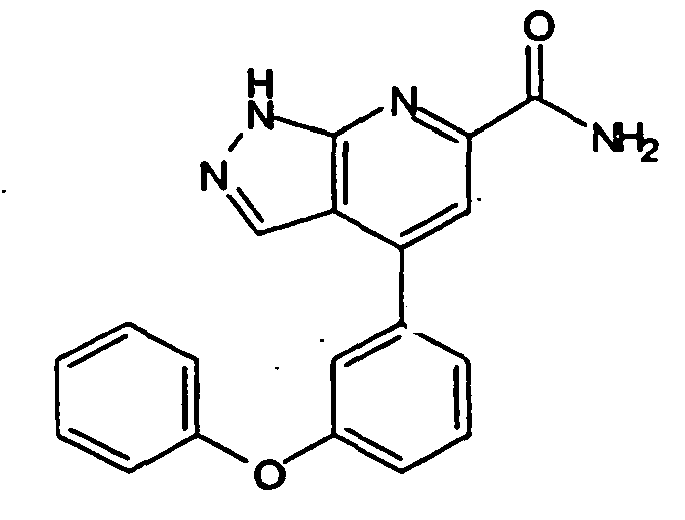
5,02 331 14 
4,81 345 15 
3,30 284 16 
3,21 255 17 
4,90 345 18 
3,77 297 19 
4,55 320 20 
3,71 308 21 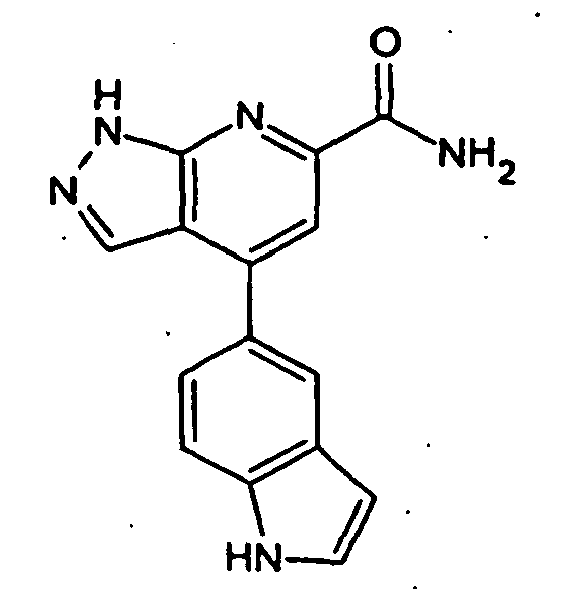
3,53 278 22 
2,40 254 23 
3,15 273 24 
3,36 289 25 
3,36 336 26 
4,09 322 27 
3,22 242 28 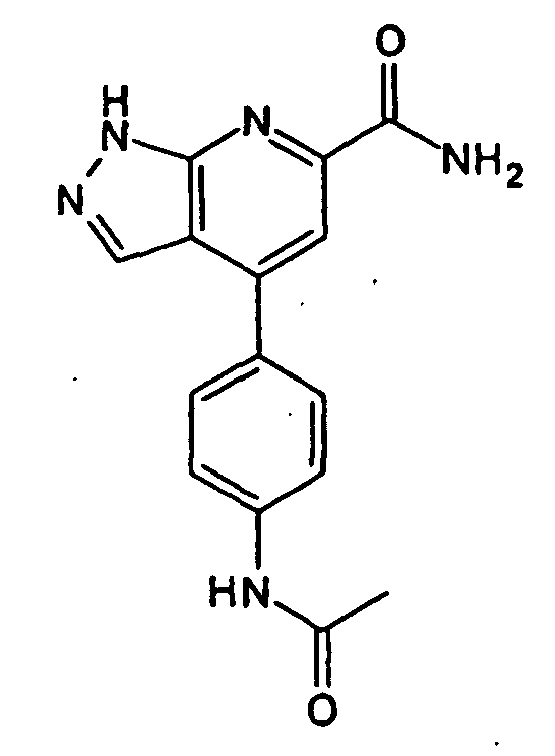
3,03 296 29 
3,04 285 30 
4,15 306 31 
3,67 278 32 
4,00 306 33 
3,19 305 34 
3,81 299 35 
3,80 269 36 
3,94 299 37 
2,98 285 38 
4,56 384 39 
4,91 368 40 
4,57 320 41 
3,58 278 42 
3,87 292 43 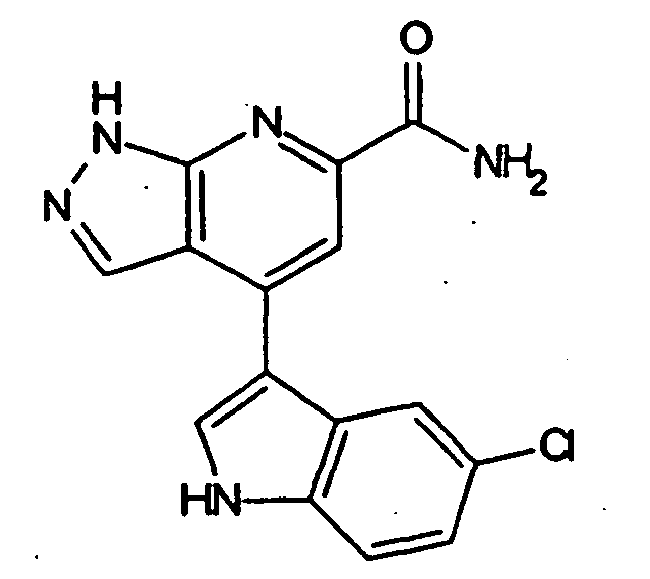
4,04 312 44 
3,89 292 45 
3,89 292 46 
4,28 384 47 
3,73 296 48 
4,23 356 49 
4,08 322 50 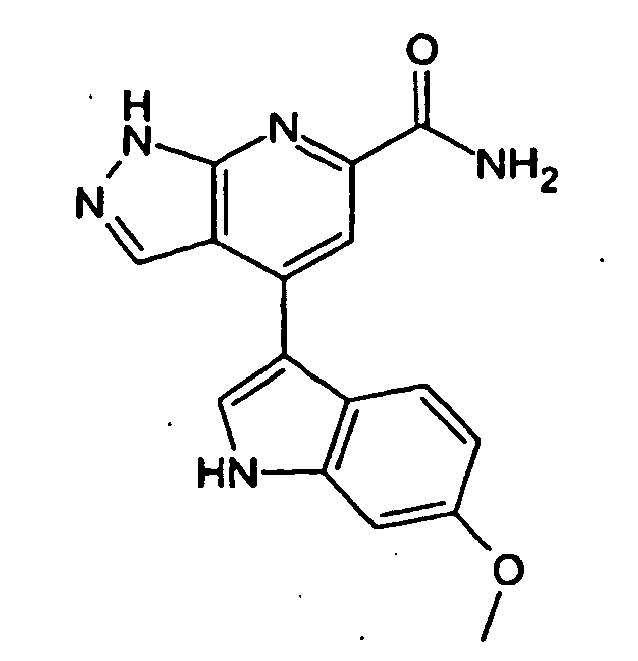
3,68 308 51 
4,48 318 52 
4,03 316 53 
3,01 294 54 
2,68 229 55 
4,03 336 56 
2,50 254 57 
4,07 352 58 
3,63 336 59 
3,44 405 60 
3,36 399 61 
3,53 352 62 
4,08 366 63 
3,19 421 64 
3,59 421 65 
4,01 366 66 
3,49 405 67 
3,84 352 68 
4,12 322 69 
3,38 399 70 
3,18 351 71 
3,31 399 72 
2,99 351 73 
3,56 322 74 
3,22 391 75 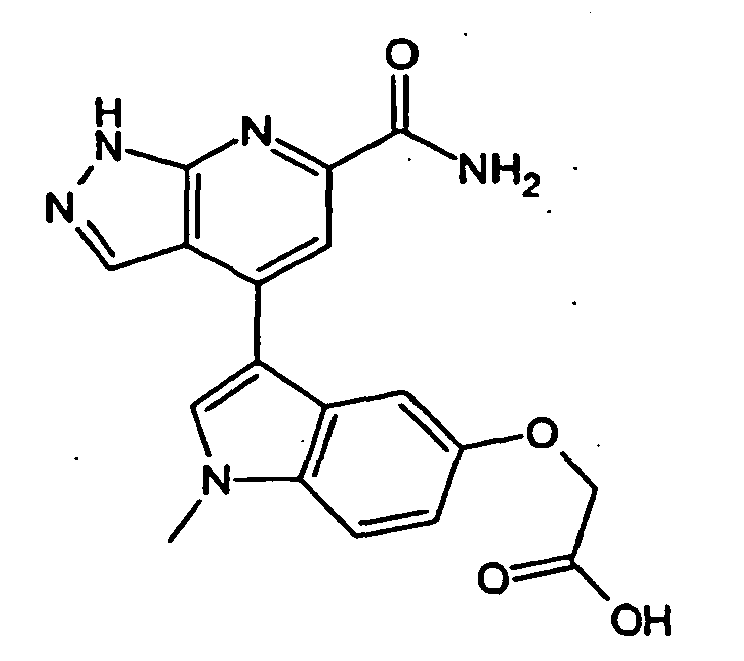
3,62 366 76 
4,69 422 77 
3,38 399 78 
3,41 399 79 
3,38 413 80 
2,98 321 - The assay determines phosphorylation of biotinylated bovine tubulin dimers (250 nM; TEBU-BIO, # T333) coated to 384 well StreptaWell plates by 100 nM GRK2 which has been pre-incubated with inhibitor cpd. for 30 minutes at room temperature in assay buffer (20 mM Tris-HCl pH 7.4, 2 mM EDTA) containing 2.25% DMSO. The phosphorylation reaction was started by adding tubulin, MgCl2 (10 mM), ATP (3 µM), [γ-33P]-ATP (0.4 µCi/40 µl) to the preincubated GRK2/compound complex. Then the assay mix was incubated for 30 min at room temperature before the kinase reaction was stopped adding 0.8% BSA, 0.8% Triton X 100, 80 mM EDTA and 400 µM ATP) followed by an 2-24 h incubation at +4 °C. Due to the high energy of the γ-particles free 33P-ATP is removed by a washing step (3 x with 100 µl 1 x PBS pH 8.0) using a Tecan Power washer 384 to reduce background activity. Bound 33P is determined by scintillation counting (60 µl scintillator, Ultimagold MV, 30 sec mix) using a Microbeta-counter (delay time 30 min).
Table 2: Example IC50 (βARK-1), [µM] 3 0.7 4 0.27 8 0.02 16 2.1 64 1.3
or a physiologically acceptable salt thereof.
or a pyridyl group;
or a pyrrolyl group which is unsubstituted or substituted by (C1-C6)alkyl;
or a pyrazolyl group which is unsubstituted or substituted by phenyl.
or R2 is a furanyl group;
or R2 is a pyrrolyl group of the formula (VII)

or R2 is a pyrazolyl group of the formula (VIII)

R3 is H;
or a physiologically acceptable salt thereof.
Claims (13)
- A compound of the formula (I)

R1 is H or (C1-C6)alkyl, wherein the (C1-C6)alkyl group is unsubstituted or substituted by one or more OH, halogen or NH2 groups; and
R2 is phenyl, (C3-C10)cycloalkyl or a (C4-C10)heterocyclyl group which are unsubstituted or substituted by 1, 2 or 3 residues independently selected from1. (C1-C6)alkyl,2. (C2-C6)alkenyl,3. (C2-C6)alkynyl,4. (C1-C6)alkylene-COOH,5. (C1-C6)alkylene-C(O)O-(C1-C6)alkyl,6. (C1-C6)alkylene-C(O)NH2,7. (C1-C6)alkylene-C(O)NH-(C1-C6)alkyl,8. (C1-C6)alkylene-O-(C1-C6)alkyl,9. (C1-C6)alkylene-OH,10. (C1-C6)alkylene-NH2,11. (C1-C6)alkylene-NH-(C1-C6)alkyl,12. (C1-C6)alkylene-N[(C1-C6)alkyl]2,13. CN,14. COOH,15. C(O)O-(C1-C1-C6)alkyl,16. C(O)NH2,17. C(O)NH-(C1-C6)alkyl,18. C(O)N[(C1-C6)alkyl]2,19. C(O)-(C1-C6)alkyl,20. halogen,21. NH2,22. NH(C1-C6)alkyl,23. N[(C1-C6)alkyl]2,24. NH-C(O)-(C1-C6)alkyl,25. OH,26. O-(C1-C6)alkyl,27. O-(C2-C6)alkenyl,28. O-(C2-C6)alkinyl,29. O-(C1-C6)alkylene-C(O)OH,30. O-(C1-C6)alkylene-C(O)O-(C1-C6)alkyl,31. O-(C1-C6)alkylene-C(O)NH2,32. O-(C1-C6)alkylene-C(O)NH-(C1-C6)alkyl,33. O-(C1-C6)alkylene-OH,34. O-(C1-C6)alkylene-O-(C1-C6)alkyl,35. O-(C1-C6)alkylene-NH2,36. O-(C1-C6)alkylene-NH-(C1-C6)alkyl,37. O-C(O)-(C1-C6)alkyl,38. S-(C1-C6)alkyl,39. S(O)2-(C1-C4)alkyl,40. (C6-C10)aryl,41. (C4-C10)heterocyclyl,42. (C1-C6)alkylene-(C6-C10)aryl,43. (C1-C6)alkylene-(C4-C10)heterocyclyl,44. (C1-C6)alkylene-O-(C6-C10)aryl,45. (C1-C6)alkylene-O-(C4-C10)heterocyclyl,46. O-(C6-C10)aryl,47. O-(C4-C10)heterocyclyl,48. O-(C1-C6)alkylene-(C6-C10)aryl,49. O-(C1-C6)alkylene-(C4-C10)eterocyclyl,wherein the (C6-C10)aryl and (C4-C10)heterocyclyl groups in residues 40. to 49. are unsubstituted or substituted by 1, 2 or 3 residues independently selected form OH, halogen, NH2, O-(C1-C6)alkyl, (C1-C6)alkyl, S(O)2-(C1-C4)alkyl or (C3-C10)cycloalkyl;
and/or is vicinally substituted by a residue of the formula -O-(CH2)n-O-, wherein n is 1, 2 or 3 and wherein one or more hydrogen atoms may be replaced by halogen atoms; and
R3 is H; (C1-C6)alkyl or O-(C1-C6)alkyl, wherein the (C1-C6)alkyl group is unsubstituted or substituted by OH, halogen, NH2, NH(C1-C6)alkyl or N[(C1-C6)alkyl]2; or
(C3-C10)cycloalkyl, wherein (C3-C10)cycloalkyl is unsubstituted or substituted by one or more fluoro atoms;
or a physiologically acceptable salt thereof. - A compound according to claim 1, wherein
R2 is phenyl or a (C4-C10)heterocyclyl group. - A compound according to claim 2, wherein
R1 is H; and
R3 is H; (C1-C6)alkyl wich is unsubstituted or substituted by OH, halogen, NH2, NH(C1-C6)alkyl or N[(C1-C6)alkyl]2; or a (C3-C10)cycloalkyl group which is unsubstituted or substituted by one or more fluoro atoms. - A compound according to any of claims 2 or 3 whereinR1 is H; andR3 is H.
- A compound according to any of claims 2 to 4 whereinR1 is H;R2 is phenyl or a (C5-C10)heteroaryl group; andR3 is H.
- A compound according to any of claims 1 to 5 wherein R2 is a (C5-C10)heteroaryl group.
- A compound according to any of claims 1 to 6 wherein the (C5-C10)heteroaryl group is benzofuranyl, indolyl, furanyl, pyridyl, pyrrolyl, pyrazolyl, pyrazinyl, pyrimidyl, quinolinyl, thienyl, tetrazolyl, or triazolyl.
- A compound according to any of claims 1 to 7 wherein the R2 (C5-C10)heteroaryl group is a group of the formula (II),

X is N-R4 or O,R4 is H, (C1-C4)alkyl, (C2-C4)alkenyl, (C2-C4)alkynyl, (C1-C4)alkylene-phenyl or C(O)-(C1-C4)alkyl;R5 is1. H,2. (C1-C4)alkyl,3. (C2-C4)alkenyl,4. (C2-C4)alkynyl,5. (C1-C4)alkylene-phenyl,6. C(O)-(C1-C4)alkyl,7. COOH,8. C(O)O-(C1-C4)alkyl,9. C(O)NH2,10. halogen,11. OH,12. O-(C1-C4)alkyl,13. O-(C1-C4)alkylene-OH,14. O-(C1-C4)alkylene-NH2.15. O-(C1-C4)alkylene-O-(C1-C4)alkyl,16. O-(C1-C4)alkylene-phenyl,17. O-(C1-C4)alkylene-(C5-C6)heterocyclyl.18. O-(C1-C4)alkylene-C(O)OH,19. O-(C1-C4)alkylene-C(O)O-(C1-C6)alkyl, or20. O-(C1-C4)alkylene-C(O)NH2; andm is 1 or 2;or a furanyl group;
or a pyridyl group;
or a pyrrolyl group which is unsubstituted or substituted by (C1-C6)alkyl;
or a pyrazolyl group which is unsubstituted or substituted by phenyl. - A compound according to any of claims 1 to 8 whereinR1 is H; andR2 is a (C5-C10)heteroaryl group of the formula (II),or R2 is a pyridyl group;
 X is N-R4,R4 is H, CH3, CH(CH3)2, benzyl, C(=O)CH3, CH2CH=CH2 or CH2C≡CH,R5 is H, CH3, OCH3, COOH, C(O)OCH3, C(O)NH2, O-benzyl, F, Cl, Br, OH, O(CH2)2OH, O(CH2)2OCH3, O(CH2)2NH2, OCH2C(O)OH, OCH2C(O)NH2, OCH2C(O)O-(tert-butyl),
 m is 1 or 2;
or R2 is a furanyl group;
or R2 is a pyrrolyl group of the formula (VII)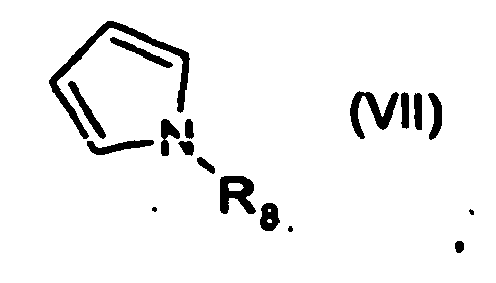
or R2 is a pyrazolyl group of the formula (VIII)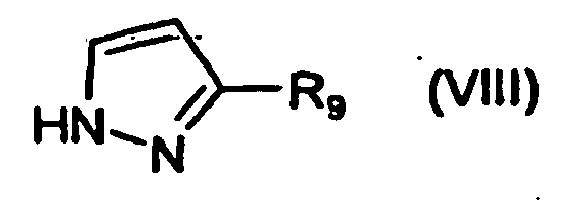
R3 is H. - Method for the preparation of a compound of a compound of the formula (I) as claimed in claim 1, wherein
in a first step
in a first alternative (1.1) R2-aldehyde (II), 3-aminopyrazole (III) and an R3-substituted methyl pyruvate (IV)


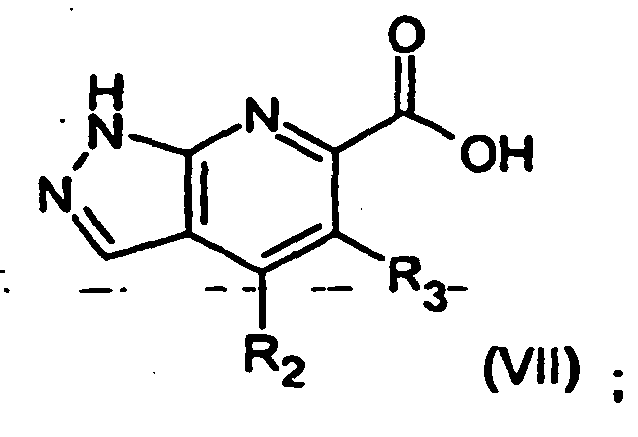
in a second step
in a first alternative (2.1) the ester (VI) is reacted with a suitable reagent such as e.g. ammonia in methanol to yield a compound of the formula (I) wherein R1, is hydrogen,
or (2.2) the carboxylic acid derivative (VII) is activated with Boc2O and treated with NH4HCO3 to yield a compound of the formula (I) wherein R1 is hydrogen,
or (2.3) the carboxylic add derivative (VII) is reacted with a coupling reagent and R1-NH2 derivative (VIII) to yield a compound of the formula (I) wherein R1 is an optionally substituted (C1-C6)alkyl group;
and wherein optionally the carboxylic acid derivative (VII) is obtained by exposing the ester (VI) to a base. - Use of at least one compounds of the formula (I) and/or their physiologically acceptable salt as claimed in one of claims 1 to 9 for producing a medicament.
- Use of at least one compounds of the formula (I) and/or their physiologically acceptable salt as claimed in one of claims 1 to 9 for producing a medicament for the treatment and prevention of chronic heart failure, hypertension, myocardial ischemia and hepatitis C virus (HCV) infections, and for the prevention of opiate addiction.
- A medicament comprising an effective amount of at least one compound as claimed in any of claims 1 to 9 and/or a pharmacologically acceptable salt thereof, physiologically tolerated excipients and carriers and, where appropriate, further additives and/or other active ingredients.
Priority Applications (4)
| Application Number | Priority Date | Filing Date | Title |
|---|---|---|---|
| PL06754324T PL1899333T3 (en) | 2005-06-27 | 2006-06-13 | Pyrazolopyridine derivatives as inhibitors of beta-adrenergic receptor kinase 1 |
| SI200630284T SI1899333T1 (en) | 2005-06-27 | 2006-06-13 | Pyrazolopyridine derivatives as inhibitors of beta-adrenergic receptor kinase 1 |
| EP06754324A EP1899333B1 (en) | 2005-06-27 | 2006-06-13 | Pyrazolopyridine derivatives as inhibitors of beta-adrenergic receptor kinase 1 |
| CY20091100501T CY1110464T1 (en) | 2005-06-27 | 2009-05-11 | PYRAZOLOPYRIDINE PRODUCERS AS BETA-ADENERGIC CELLS INHIBITORS1 |
Applications Claiming Priority (3)
| Application Number | Priority Date | Filing Date | Title |
|---|---|---|---|
| EP05013774 | 2005-06-27 | ||
| PCT/EP2006/005649 WO2007000241A1 (en) | 2005-06-27 | 2006-06-13 | Pyrazolopyridine derivatives as inhibitors of beta-adrenergic receptor kinase 1 |
| EP06754324A EP1899333B1 (en) | 2005-06-27 | 2006-06-13 | Pyrazolopyridine derivatives as inhibitors of beta-adrenergic receptor kinase 1 |
Publications (2)
| Publication Number | Publication Date |
|---|---|
| EP1899333A1 EP1899333A1 (en) | 2008-03-19 |
| EP1899333B1 true EP1899333B1 (en) | 2009-02-18 |
Family
ID=35395578
Family Applications (1)
| Application Number | Title | Priority Date | Filing Date |
|---|---|---|---|
| EP06754324A Active EP1899333B1 (en) | 2005-06-27 | 2006-06-13 | Pyrazolopyridine derivatives as inhibitors of beta-adrenergic receptor kinase 1 |
Country Status (30)
| Country | Link |
|---|---|
| US (1) | US7910602B2 (en) |
| EP (1) | EP1899333B1 (en) |
| JP (1) | JP5010594B2 (en) |
| KR (1) | KR20080020638A (en) |
| CN (1) | CN101208340B (en) |
| AR (1) | AR054514A1 (en) |
| AT (1) | ATE423118T1 (en) |
| AU (1) | AU2006264044A1 (en) |
| BR (1) | BRPI0612320A2 (en) |
| CA (1) | CA2611296A1 (en) |
| CY (1) | CY1110464T1 (en) |
| DE (1) | DE602006005242D1 (en) |
| DK (1) | DK1899333T3 (en) |
| ES (1) | ES2322197T3 (en) |
| HR (1) | HRP20090244T2 (en) |
| IL (1) | IL188381A0 (en) |
| MA (1) | MA29498B1 (en) |
| MX (1) | MX2007015829A (en) |
| MY (1) | MY139016A (en) |
| NO (1) | NO20080392L (en) |
| NZ (1) | NZ564757A (en) |
| PL (1) | PL1899333T3 (en) |
| PT (1) | PT1899333E (en) |
| RS (1) | RS50821B (en) |
| RU (1) | RU2415855C2 (en) |
| SI (1) | SI1899333T1 (en) |
| TW (1) | TW200800982A (en) |
| UY (1) | UY29632A1 (en) |
| WO (1) | WO2007000241A1 (en) |
| ZA (1) | ZA200709853B (en) |
Cited By (1)
| Publication number | Priority date | Publication date | Assignee | Title |
|---|---|---|---|---|
| WO2024137671A1 (en) * | 2022-12-20 | 2024-06-27 | Exelixis, Inc. | Compounds that inhibit pkmyt1 |
Families Citing this family (11)
| Publication number | Priority date | Publication date | Assignee | Title |
|---|---|---|---|---|
| TW200815438A (en) | 2006-06-13 | 2008-04-01 | Bayer Schering Pharma Ag | Substituted pyrazolopyridines and salts thereof, pharmaceutical compositions comprising same, methods of preparing same and uses of same |
| US20110009421A1 (en) * | 2008-02-27 | 2011-01-13 | Takeda Pharmaceutical Company Limited | Compound having 6-membered aromatic ring |
| US9321787B2 (en) * | 2011-07-07 | 2016-04-26 | Sanofi | Carboxylic acid derivatives having an oxazolo[5,4-d]pyrimidine ring |
| US8889730B2 (en) | 2012-04-10 | 2014-11-18 | Pfizer Inc. | Indole and indazole compounds that activate AMPK |
| EP2970177A1 (en) | 2013-03-15 | 2016-01-20 | Pfizer Inc. | Indole compounds that activate ampk |
| GB201410815D0 (en) * | 2014-06-17 | 2014-07-30 | Ucb Biopharma Sprl And Katholieke Universiteit Leuven | Therapeutic agents |
| WO2020086503A1 (en) * | 2018-10-24 | 2020-04-30 | Bristol-Myers Squibb Company | Substituted indole and indazole compounds |
| US11998537B2 (en) | 2018-10-24 | 2024-06-04 | Bristol-Myers Squibb Company | Substituted indole dimer compounds |
| KR102904576B1 (en) | 2019-05-09 | 2025-12-24 | 브리스톨-마이어스 스큅 컴퍼니 | substituted benzimidazolone compounds |
| WO2021067326A1 (en) | 2019-10-01 | 2021-04-08 | Bristol-Myers Squibb Company | Substituted bicyclic heteroaryl compounds |
| ES2965164T3 (en) | 2019-10-04 | 2024-04-11 | Bristol Myers Squibb Co | Substituted carbazole compounds |
Family Cites Families (6)
| Publication number | Priority date | Publication date | Assignee | Title |
|---|---|---|---|---|
| EP0765327B1 (en) * | 1994-06-16 | 1999-07-21 | Pfizer Inc. | Pyrazolo and pyrrolopyridines |
| DE69837282T2 (en) * | 1997-12-13 | 2007-11-08 | Bristol-Myers Squibb Co. | USE OF PYRAZOLO Ä 3,4-bÜ PYRIDINE AS A CYCLIN-DEPENDENT KINASE HEMMER |
| JP2002020386A (en) * | 2000-07-07 | 2002-01-23 | Ono Pharmaceut Co Ltd | Pyrazolopyridine derivative |
| AU2003245700A1 (en) * | 2002-02-12 | 2003-09-04 | Glaxo Group Limited | Pyrazolopyridine derivatives |
| BR0313262A (en) * | 2002-08-07 | 2005-07-12 | Mitsubishi Pharma Corp | Dihydropyrazolepyridine Compounds |
| NZ541836A (en) * | 2003-02-27 | 2008-12-24 | Palau Pharma Sa | Pyrazolopyridine derivatives |
-
2006
- 2006-06-13 WO PCT/EP2006/005649 patent/WO2007000241A1/en not_active Ceased
- 2006-06-13 DE DE602006005242T patent/DE602006005242D1/en active Active
- 2006-06-13 PL PL06754324T patent/PL1899333T3/en unknown
- 2006-06-13 AT AT06754324T patent/ATE423118T1/en not_active IP Right Cessation
- 2006-06-13 RU RU2008102970/04A patent/RU2415855C2/en not_active IP Right Cessation
- 2006-06-13 AU AU2006264044A patent/AU2006264044A1/en not_active Abandoned
- 2006-06-13 NZ NZ564757A patent/NZ564757A/en not_active IP Right Cessation
- 2006-06-13 KR KR1020077030289A patent/KR20080020638A/en not_active Withdrawn
- 2006-06-13 JP JP2008518660A patent/JP5010594B2/en not_active Expired - Fee Related
- 2006-06-13 BR BRPI0612320-1A patent/BRPI0612320A2/en not_active IP Right Cessation
- 2006-06-13 DK DK06754324T patent/DK1899333T3/en active
- 2006-06-13 HR HR20090244T patent/HRP20090244T2/en unknown
- 2006-06-13 CA CA002611296A patent/CA2611296A1/en not_active Abandoned
- 2006-06-13 CN CN200680023397XA patent/CN101208340B/en not_active Expired - Fee Related
- 2006-06-13 EP EP06754324A patent/EP1899333B1/en active Active
- 2006-06-13 MX MX2007015829A patent/MX2007015829A/en active IP Right Grant
- 2006-06-13 PT PT06754324T patent/PT1899333E/en unknown
- 2006-06-13 ES ES06754324T patent/ES2322197T3/en active Active
- 2006-06-13 RS RSP-2009/0165A patent/RS50821B/en unknown
- 2006-06-13 SI SI200630284T patent/SI1899333T1/en unknown
- 2006-06-23 AR ARP060102721A patent/AR054514A1/en not_active Application Discontinuation
- 2006-06-23 TW TW095122584A patent/TW200800982A/en unknown
- 2006-06-26 MY MYPI20063009A patent/MY139016A/en unknown
- 2006-06-27 UY UY29632A patent/UY29632A1/en not_active Application Discontinuation
-
2007
- 2007-11-15 ZA ZA200709853A patent/ZA200709853B/en unknown
- 2007-11-30 MA MA30441A patent/MA29498B1/en unknown
- 2007-12-20 US US11/961,282 patent/US7910602B2/en not_active Expired - Fee Related
- 2007-12-24 IL IL188381A patent/IL188381A0/en unknown
-
2008
- 2008-01-21 NO NO20080392A patent/NO20080392L/en not_active Application Discontinuation
-
2009
- 2009-05-11 CY CY20091100501T patent/CY1110464T1/en unknown
Cited By (1)
| Publication number | Priority date | Publication date | Assignee | Title |
|---|---|---|---|---|
| WO2024137671A1 (en) * | 2022-12-20 | 2024-06-27 | Exelixis, Inc. | Compounds that inhibit pkmyt1 |
Also Published As
Similar Documents
| Publication | Publication Date | Title |
|---|---|---|
| US7910602B2 (en) | Pyrazolopyridine derivatives as inhibitors of β-Adrenergic receptor kinase 1 | |
| CN107406426B (en) | Cyclic ureas as ROCK inhibitors | |
| AU2015330141B2 (en) | Spirodiamine derivatives as aldosterone synthase inhibitors | |
| BR112019015707A2 (en) | COMPOUND, PHARMACEUTICAL COMPOSITION. USE OF A COMPOUND, COMBINATION OF A COMPOUND AND DEVICE | |
| US20110172244A1 (en) | Compounds and compositions as modulators of gpr119 activity | |
| PT1263729E (en) | Azacyclic compounds for use in the treatment of serotonin related diseases | |
| PT2334672E (en) | 4,5,6,7-tetrahydroimidazo[4,5-c]pyridine compounds as inhibitors of ssao | |
| CN103443076B (en) | Indol-2-one derivatives disubstituted at the 3-position, their preparation and their therapeutic use | |
| HUP0003413A2 (en) | New fused pyridine derivatives, process for their preparation and pharmaceutical compositions containing them | |
| TW200843743A (en) | Carbon-linked tetrahydro-pyrazolo-pyridine modulators of cathepsin S | |
| WO2010026113A1 (en) | Acyl- and sufonyl tetrahydronaphthyridines and aza derivatives thereof as histamine h3 receptor antagonists | |
| EP3679039B1 (en) | Tyrosine analogues derivatives as rho- kinase inhibitors | |
| EP1430898A1 (en) | Receptor antagonist | |
| AU2003285160B2 (en) | Fused heterocyclic compounds | |
| JP4733648B2 (en) | Thieno-imino acid derivatives for use as matrix metalloproteinase inhibitors | |
| WO2005048916A2 (en) | Tetrahydrospiro-beta-carboline-1,3 '-pyrrolidine derivatives and their use in ghsr-related disorders | |
| HK1122550A (en) | Pyrazolopyridine derivatives as inhibitors of beta-adrenergic receptor kinase 1 | |
| JP2024511886A (en) | Novel heterocyclic compounds and their uses | |
| AU2004275937A1 (en) | Bicyclic imino acid derivatives used as inhibitors of matrix-metalloproteinases | |
| EP0906308A1 (en) | Azetidine, pyrrolidine and piperidine derivatives as 5-ht1d receptor agonists | |
| KR101315788B1 (en) | Tetrahydrofuran derivatives for use as inhibitors of matrix metalloproteinases |
Legal Events
| Date | Code | Title | Description |
|---|---|---|---|
| PUAI | Public reference made under article 153(3) epc to a published international application that has entered the european phase |
Free format text: ORIGINAL CODE: 0009012 |
|
| 17P | Request for examination filed |
Effective date: 20080128 |
|
| AK | Designated contracting states |
Kind code of ref document: A1 Designated state(s): AT BE BG CH CY CZ DE DK EE ES FI FR GB GR HU IE IS IT LI LT LU LV MC NL PL PT RO SE SI SK TR |
|
| AX | Request for extension of the european patent |
Extension state: AL BA HR MK YU |
|
| RAX | Requested extension states of the european patent have changed |
Extension state: HR Payment date: 20080128 Extension state: BA Payment date: 20080128 Extension state: AL Payment date: 20080128 Extension state: RS Payment date: 20080128 Extension state: MK Payment date: 20080128 |
|
| RIN1 | Information on inventor provided before grant (corrected) |
Inventor name: SMRCINA, MARTIN Inventor name: WEI, LINLI Inventor name: STEINHAGEN, HENNING Inventor name: HUBER, JOCHEN Inventor name: PIRARD, BERNARD Inventor name: BJERGARDE, KIRSTEN Inventor name: PATEK, MARCEL Inventor name: RITTER, KURT |
|
| GRAP | Despatch of communication of intention to grant a patent |
Free format text: ORIGINAL CODE: EPIDOSNIGR1 |
|
| GRAS | Grant fee paid |
Free format text: ORIGINAL CODE: EPIDOSNIGR3 |
|
| GRAA | (expected) grant |
Free format text: ORIGINAL CODE: 0009210 |
|
| AK | Designated contracting states |
Kind code of ref document: B1 Designated state(s): AT BE BG CH CY CZ DE DK EE ES FI FR GB GR HU IE IS IT LI LT LU LV MC NL PL PT RO SE SI SK TR |
|
| AX | Request for extension of the european patent |
Extension state: AL BA HR MK RS |
|
| REG | Reference to a national code |
Ref country code: GB Ref legal event code: FG4D |
|
| REG | Reference to a national code |
Ref country code: CH Ref legal event code: EP |
|
| REG | Reference to a national code |
Ref country code: IE Ref legal event code: FG4D |
|
| REF | Corresponds to: |
Ref document number: 602006005242 Country of ref document: DE Date of ref document: 20090402 Kind code of ref document: P |
|
| REG | Reference to a national code |
Ref country code: PT Ref legal event code: SC4A Free format text: AVAILABILITY OF NATIONAL TRANSLATION Effective date: 20090415 |
|
| REG | Reference to a national code |
Ref country code: HR Ref legal event code: TUEP Ref document number: P20090244 Country of ref document: HR |
|
| REG | Reference to a national code |
Ref country code: SE Ref legal event code: TRGR |
|
| REG | Reference to a national code |
Ref country code: GR Ref legal event code: EP Ref document number: 20090401194 Country of ref document: GR |
|
| REG | Reference to a national code |
Ref country code: RO Ref legal event code: EPE |
|
| REG | Reference to a national code |
Ref country code: DK Ref legal event code: T3 |
|
| REG | Reference to a national code |
Ref country code: ES Ref legal event code: FG2A Ref document number: 2322197 Country of ref document: ES Kind code of ref document: T3 |
|
| REG | Reference to a national code |
Ref country code: HR Ref legal event code: T1PR Ref document number: P20090244 Country of ref document: HR |
|
| REG | Reference to a national code |
Ref country code: PL Ref legal event code: T3 Ref country code: HR Ref legal event code: T2IS Ref document number: P20090244 Country of ref document: HR |
|
| PG25 | Lapsed in a contracting state [announced via postgrant information from national office to epo] |
Ref country code: IS Free format text: LAPSE BECAUSE OF FAILURE TO SUBMIT A TRANSLATION OF THE DESCRIPTION OR TO PAY THE FEE WITHIN THE PRESCRIBED TIME-LIMIT Effective date: 20090618 |
|
| PGFP | Annual fee paid to national office [announced via postgrant information from national office to epo] |
Ref country code: AT Payment date: 20090615 Year of fee payment: 4 |
|
| REG | Reference to a national code |
Ref country code: HU Ref legal event code: AG4A Ref document number: E005686 Country of ref document: HU |
|
| PLBE | No opposition filed within time limit |
Free format text: ORIGINAL CODE: 0009261 |
|
| STAA | Information on the status of an ep patent application or granted ep patent |
Free format text: STATUS: NO OPPOSITION FILED WITHIN TIME LIMIT |
|
| 26N | No opposition filed |
Effective date: 20091119 |
|
| PG25 | Lapsed in a contracting state [announced via postgrant information from national office to epo] |
Ref country code: MC Free format text: LAPSE BECAUSE OF NON-PAYMENT OF DUE FEES Effective date: 20090630 |
|
| PG25 | Lapsed in a contracting state [announced via postgrant information from national office to epo] |
Ref country code: CY Free format text: LAPSE BECAUSE OF NON-PAYMENT OF DUE FEES Effective date: 20090613 |
|
| REG | Reference to a national code |
Ref country code: HR Ref legal event code: ODRP Ref document number: P20090244 Country of ref document: HR Payment date: 20100612 Year of fee payment: 5 |
|
| PGFP | Annual fee paid to national office [announced via postgrant information from national office to epo] |
Ref country code: BG Payment date: 20100515 Year of fee payment: 5 Ref country code: DK Payment date: 20100610 Year of fee payment: 5 Ref country code: FI Payment date: 20100610 Year of fee payment: 5 Ref country code: HU Payment date: 20100527 Year of fee payment: 5 Ref country code: IE Payment date: 20100614 Year of fee payment: 5 Ref country code: LU Payment date: 20100614 Year of fee payment: 5 Ref country code: PT Payment date: 20100521 Year of fee payment: 5 Ref country code: RO Payment date: 20100511 Year of fee payment: 5 |
|
| PGFP | Annual fee paid to national office [announced via postgrant information from national office to epo] |
Ref country code: CZ Payment date: 20100510 Year of fee payment: 5 Ref country code: EE Payment date: 20100504 Year of fee payment: 5 Ref country code: IT Payment date: 20100615 Year of fee payment: 5 Ref country code: LT Payment date: 20100505 Year of fee payment: 5 Ref country code: LV Payment date: 20100422 Year of fee payment: 5 Ref country code: PL Payment date: 20100506 Year of fee payment: 5 Ref country code: SI Payment date: 20100430 Year of fee payment: 5 Ref country code: SK Payment date: 20100510 Year of fee payment: 5 |
|
| PGFP | Annual fee paid to national office [announced via postgrant information from national office to epo] |
Ref country code: BE Payment date: 20100615 Year of fee payment: 5 Ref country code: CH Payment date: 20100614 Year of fee payment: 5 Ref country code: ES Payment date: 20100713 Year of fee payment: 5 Ref country code: NL Payment date: 20100603 Year of fee payment: 5 |
|
| PGFP | Annual fee paid to national office [announced via postgrant information from national office to epo] |
Ref country code: SE Payment date: 20100609 Year of fee payment: 5 Ref country code: TR Payment date: 20100521 Year of fee payment: 5 |
|
| PGFP | Annual fee paid to national office [announced via postgrant information from national office to epo] |
Ref country code: GR Payment date: 20100514 Year of fee payment: 5 |
|
| PGFP | Annual fee paid to national office [announced via postgrant information from national office to epo] |
Ref country code: CY Payment date: 20100517 Year of fee payment: 5 |
|
| REG | Reference to a national code |
Ref country code: HR Ref legal event code: PBON Ref document number: P20090244 Country of ref document: HR Effective date: 20110614 |
|
| REG | Reference to a national code |
Ref country code: PT Ref legal event code: MM4A Free format text: LAPSE DUE TO NON-PAYMENT OF FEES Effective date: 20111213 |
|
| BERE | Be: lapsed |
Owner name: SANOFI-AVENTIS Effective date: 20110630 |
|
| REG | Reference to a national code |
Ref country code: NL Ref legal event code: V1 Effective date: 20120101 |
|
| LTLA | Lt: lapse of european patent or patent extension |
Effective date: 20110613 |
|
| PG25 | Lapsed in a contracting state [announced via postgrant information from national office to epo] |
Ref country code: FI Free format text: LAPSE BECAUSE OF NON-PAYMENT OF DUE FEES Effective date: 20110613 Ref country code: LT Free format text: LAPSE BECAUSE OF NON-PAYMENT OF DUE FEES Effective date: 20110613 Ref country code: PT Free format text: LAPSE BECAUSE OF NON-PAYMENT OF DUE FEES Effective date: 20111213 Ref country code: CZ Free format text: LAPSE BECAUSE OF NON-PAYMENT OF DUE FEES Effective date: 20110613 |
|
| REG | Reference to a national code |
Ref country code: CH Ref legal event code: PL |
|
| REG | Reference to a national code |
Ref country code: DK Ref legal event code: EBP |
|
| REG | Reference to a national code |
Ref country code: SE Ref legal event code: EUG |
|
| REG | Reference to a national code |
Ref country code: EE Ref legal event code: MM4A Ref document number: E003134 Country of ref document: EE Effective date: 20110630 |
|
| PG25 | Lapsed in a contracting state [announced via postgrant information from national office to epo] |
Ref country code: AT Free format text: LAPSE BECAUSE OF NON-PAYMENT OF DUE FEES Effective date: 20110613 Ref country code: CY Free format text: LAPSE BECAUSE OF NON-PAYMENT OF DUE FEES Effective date: 20110613 Ref country code: IT Free format text: LAPSE BECAUSE OF NON-PAYMENT OF DUE FEES Effective date: 20110613 |
|
| REG | Reference to a national code |
Ref country code: SI Ref legal event code: KO00 Effective date: 20120118 |
|
| REG | Reference to a national code |
Ref country code: SK Ref legal event code: MM4A Ref document number: E 5834 Country of ref document: SK Effective date: 20110613 |
|
| REG | Reference to a national code |
Ref country code: GR Ref legal event code: ML Ref document number: 20090401194 Country of ref document: GR Effective date: 20120105 |
|
| REG | Reference to a national code |
Ref country code: AT Ref legal event code: MM01 Ref document number: 423118 Country of ref document: AT Kind code of ref document: T Effective date: 20110613 |
|
| REG | Reference to a national code |
Ref country code: IE Ref legal event code: MM4A |
|
| PG25 | Lapsed in a contracting state [announced via postgrant information from national office to epo] |
Ref country code: BE Free format text: LAPSE BECAUSE OF NON-PAYMENT OF DUE FEES Effective date: 20110630 |
|
| PG25 | Lapsed in a contracting state [announced via postgrant information from national office to epo] |
Ref country code: CH Free format text: LAPSE BECAUSE OF NON-PAYMENT OF DUE FEES Effective date: 20110630 Ref country code: SK Free format text: LAPSE BECAUSE OF NON-PAYMENT OF DUE FEES Effective date: 20110613 Ref country code: LI Free format text: LAPSE BECAUSE OF NON-PAYMENT OF DUE FEES Effective date: 20110630 Ref country code: IE Free format text: LAPSE BECAUSE OF NON-PAYMENT OF DUE FEES Effective date: 20110613 Ref country code: HU Free format text: LAPSE BECAUSE OF NON-PAYMENT OF DUE FEES Effective date: 20110614 |
|
| PG25 | Lapsed in a contracting state [announced via postgrant information from national office to epo] |
Ref country code: RO Free format text: LAPSE BECAUSE OF NON-PAYMENT OF DUE FEES Effective date: 20110613 Ref country code: EE Free format text: LAPSE BECAUSE OF NON-PAYMENT OF DUE FEES Effective date: 20110630 Ref country code: SI Free format text: LAPSE BECAUSE OF NON-PAYMENT OF DUE FEES Effective date: 20110614 Ref country code: NL Free format text: LAPSE BECAUSE OF NON-PAYMENT OF DUE FEES Effective date: 20120101 Ref country code: GR Free format text: LAPSE BECAUSE OF NON-PAYMENT OF DUE FEES Effective date: 20120105 |
|
| PG25 | Lapsed in a contracting state [announced via postgrant information from national office to epo] |
Ref country code: DK Free format text: LAPSE BECAUSE OF NON-PAYMENT OF DUE FEES Effective date: 20110630 |
|
| PG25 | Lapsed in a contracting state [announced via postgrant information from national office to epo] |
Ref country code: PL Free format text: LAPSE BECAUSE OF NON-PAYMENT OF DUE FEES Effective date: 20110613 |
|
| REG | Reference to a national code |
Ref country code: ES Ref legal event code: FD2A Effective date: 20121116 |
|
| REG | Reference to a national code |
Ref country code: PL Ref legal event code: LAPE |
|
| PG25 | Lapsed in a contracting state [announced via postgrant information from national office to epo] |
Ref country code: ES Free format text: LAPSE BECAUSE OF NON-PAYMENT OF DUE FEES Effective date: 20110614 |
|
| REG | Reference to a national code |
Ref country code: DE Ref legal event code: R081 Ref document number: 602006005242 Country of ref document: DE Owner name: SANOFI, FR Free format text: FORMER OWNER: SANOFI-AVENTIS, PARIS, FR Effective date: 20130205 Ref country code: DE Ref legal event code: R081 Ref document number: 602006005242 Country of ref document: DE Owner name: SANOFI-AVENTIS, FR Free format text: FORMER OWNER: SANOFI-AVENTIS, PARIS, FR Effective date: 20130205 |
|
| PG25 | Lapsed in a contracting state [announced via postgrant information from national office to epo] |
Ref country code: SE Free format text: LAPSE BECAUSE OF NON-PAYMENT OF DUE FEES Effective date: 20110614 |
|
| PG25 | Lapsed in a contracting state [announced via postgrant information from national office to epo] |
Ref country code: LU Free format text: LAPSE BECAUSE OF NON-PAYMENT OF DUE FEES Effective date: 20110613 |
|
| PG25 | Lapsed in a contracting state [announced via postgrant information from national office to epo] |
Ref country code: LV Free format text: LAPSE BECAUSE OF NON-PAYMENT OF DUE FEES Effective date: 20110613 |
|
| PG25 | Lapsed in a contracting state [announced via postgrant information from national office to epo] |
Ref country code: BG Free format text: LAPSE BECAUSE OF NON-PAYMENT OF DUE FEES Effective date: 20120630 |
|
| PG25 | Lapsed in a contracting state [announced via postgrant information from national office to epo] |
Ref country code: TR Free format text: LAPSE BECAUSE OF NON-PAYMENT OF DUE FEES Effective date: 20110613 |
|
| REG | Reference to a national code |
Ref country code: FR Ref legal event code: PLFP Year of fee payment: 11 |
|
| REG | Reference to a national code |
Ref country code: FR Ref legal event code: PLFP Year of fee payment: 12 |
|
| REG | Reference to a national code |
Ref country code: FR Ref legal event code: PLFP Year of fee payment: 13 |
|
| PGFP | Annual fee paid to national office [announced via postgrant information from national office to epo] |
Ref country code: DE Payment date: 20190528 Year of fee payment: 14 |
|
| PGFP | Annual fee paid to national office [announced via postgrant information from national office to epo] |
Ref country code: FR Payment date: 20190510 Year of fee payment: 14 |
|
| PGFP | Annual fee paid to national office [announced via postgrant information from national office to epo] |
Ref country code: GB Payment date: 20190612 Year of fee payment: 14 |
|
| REG | Reference to a national code |
Ref country code: DE Ref legal event code: R119 Ref document number: 602006005242 Country of ref document: DE |
|
| GBPC | Gb: european patent ceased through non-payment of renewal fee |
Effective date: 20200613 |
|
| PG25 | Lapsed in a contracting state [announced via postgrant information from national office to epo] |
Ref country code: FR Free format text: LAPSE BECAUSE OF NON-PAYMENT OF DUE FEES Effective date: 20200630 Ref country code: GB Free format text: LAPSE BECAUSE OF NON-PAYMENT OF DUE FEES Effective date: 20200613 |
|
| PG25 | Lapsed in a contracting state [announced via postgrant information from national office to epo] |
Ref country code: DE Free format text: LAPSE BECAUSE OF NON-PAYMENT OF DUE FEES Effective date: 20210101 |