EP1898653A1 - Apparatus and method for optimising page transmission by removing redundant page values in a radio communication system - Google Patents
Apparatus and method for optimising page transmission by removing redundant page values in a radio communication system Download PDFInfo
- Publication number
- EP1898653A1 EP1898653A1 EP06120157A EP06120157A EP1898653A1 EP 1898653 A1 EP1898653 A1 EP 1898653A1 EP 06120157 A EP06120157 A EP 06120157A EP 06120157 A EP06120157 A EP 06120157A EP 1898653 A1 EP1898653 A1 EP 1898653A1
- Authority
- EP
- European Patent Office
- Prior art keywords
- page
- message
- values
- identifier set
- paging message
- Prior art date
- Legal status (The legal status is an assumption and is not a legal conclusion. Google has not performed a legal analysis and makes no representation as to the accuracy of the status listed.)
- Granted
Links
Images
Classifications
-
- H—ELECTRICITY
- H04—ELECTRIC COMMUNICATION TECHNIQUE
- H04W—WIRELESS COMMUNICATION NETWORKS
- H04W68/00—User notification, e.g. alerting and paging, for incoming communication, change of service or the like
- H04W68/02—Arrangements for increasing efficiency of notification or paging channel
- H04W68/025—Indirect paging
-
- Y—GENERAL TAGGING OF NEW TECHNOLOGICAL DEVELOPMENTS; GENERAL TAGGING OF CROSS-SECTIONAL TECHNOLOGIES SPANNING OVER SEVERAL SECTIONS OF THE IPC; TECHNICAL SUBJECTS COVERED BY FORMER USPC CROSS-REFERENCE ART COLLECTIONS [XRACs] AND DIGESTS
- Y02—TECHNOLOGIES OR APPLICATIONS FOR MITIGATION OR ADAPTATION AGAINST CLIMATE CHANGE
- Y02D—CLIMATE CHANGE MITIGATION TECHNOLOGIES IN INFORMATION AND COMMUNICATION TECHNOLOGIES [ICT], I.E. INFORMATION AND COMMUNICATION TECHNOLOGIES AIMING AT THE REDUCTION OF THEIR OWN ENERGY USE
- Y02D30/00—Reducing energy consumption in communication networks
- Y02D30/70—Reducing energy consumption in communication networks in wireless communication networks
Definitions
- the present invention relates generally to a manner by which to page an access terminal of a radio communication system to alert the access terminal of a pending call, or other communication. More particularly, the present invention relates to apparatus, and an associated method, by which to form a quick page message that is selectably free of redundant values.
- the pages included in the quick page message are of configurations and lengths best to minimize the occurrence of false wakeup of an access terminal to which the message is broadcast. Excessive battery depletion as a result of false wakeup of the access terminal is avoided.
- a CDMA2000, cellular communication system that provides for EV-DO services is an exemplary type of new-generation, cellular communication system that provides for high-speed data services.
- Operational details and protocols defining communications and operational requirements of devices of the system are set forth in an operating standard specification.
- Various aspects of operation of the CDMA2000 EV-DO communication scheme remain to be standardized and certain parts of the existing standard specification are considered for amendment.
- Various successor-generation communication schemes are also undergoing standardization and yet others are envisioned to be standardized.
- a revision to the standard specification, release B of the CDMA2000 EV-DO specification standard that defines a quick paging channel (QPCH) available upon which to broadcast access-terminal pages by an access network (AN) to an access terminal (AT).
- the QPCH was adopted in industry contributions 3GPP2 C20-20060323-013R1 and 3GPP2 C20-20060323-003R1 and published in 3GPP2 document C.S0024-B V1.0.
- pages are broadcast by the access network to an access terminal to alert the access terminal of a pending communication. And by so alerting the access terminal, the access terminal performs actions to permit the effectuation of the communication.
- Page indications broadcast upon the quick paging channel are broadcast in a manner that facilitates reduced battery consumption of the access terminal by reducing the battery consumption of the battery of the access terminal. Increased battery longevity is provided, reducing the rate at which a battery of the access terminal must be recharged. The access terminal is, as a result, able to be operated for a greater period of time between rechargings or battery replacement.
- the aforementioned promulgations provide for broadcast of a message including page indications upon a physical logical layer that is monitored by the access terminal.
- the access terminal monitors the QPCH prior to monitoring the control channel to receive regular, control channel MAC (medium access control) messages such as page messages.
- a quick page message is broadcast upon the QPCH.
- the quick page message contains quick page indicators.
- the quick page message includes a number of quick page indicator slots populated with the quick page indicators that indicate whether an access terminal is being paged.
- An exemplary configuration of a scheme that utilizes page indications is set forth, for instance, in industry contribution 3GPP2 C20-20060731-033. In this configuration, during operation, a mobile station hashes to a quick page indicator location, i.e., slot, within the quick page message based upon a session seed, a 32-bit pseudorandom number.
- the access terminal enters into a sleep state, a reduced-power state, in which the access terminal does not remain powered at a level to receive the regular control channel MAC messages. Power savings is particularly significant in the event that the control channel MAC messages are lengthy and span multiple control channel frames or capsules.
- a partial hash comparison scheme is provided.
- the access network forms a quick page message in which a portion of a hash of an access terminal identifier (ATI) of an access terminal that is paged is placed in the quick page message.
- An access terminal that monitors for the delivery of a quick page message reads the content of the message and compares the values with corresponding values, that is, portions of a hash of the identifier of that access terminal. If the values do not match, then the access terminal enters into a reduced power state, e.g., a sleep state.
- the QPCH message as presently-proposed in, e.g., in the EV-DO Release B signaling QPCH, provides thirty-five page indication locations, i.e., bits available to be populated with paging indicators.
- the aforementioned "partial hash comparison" scheme utilizes three of the thirty-five page indication locations for identifying the number of pages, and the remaining page indication locations are available for paging, viz., are available. While the proposed, partial hash comparison scheme reduces the false wakeup probability when paging load is relatively low, when the paging load increases, the reduction in the available page indication locations actually increases the possibility of false wakeup. When more than five access terminals are paged, partial hash comparison is not used due to this increased possibility. Instead, hashing to page indication locations is performed.
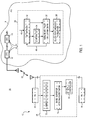
- Figure 1 illustrates a functional block diagram of a radio communication system in which an embodiment of the present invention is operable.
- Figure 2 illustrates a process diagram representative of the process of operation of an embodiment of the present invention.
- Figure 3 illustrates a method flow diagram listing the method of operation of an embodiment of the present invention.
- the present invention accordingly, advantageously provides apparatus, and an associated method, by which to page an access terminal of a radio communication system to alert the access terminal of a pending call, or other communication.
- the pages included in the quick page message are of configurations and lengths best to minimize the occurrence of false wakeup of the access terminal.
- a partial identity scheme is utilized in the quick paging procedure.
- the partial identity comparison utilizes parts of access terminal identifiers (ATIs) or other numbers that are associated with access terminals that are paged.
- ATIs access terminal identifiers
- the portion of the ATI, or other number, that is included in the quick page message comprises, for instance, a selected number of most significant bits of the number.
- the length of the portion of the number included in the quick page message is dependent upon one or more factors.
- the length of the quick page message is prescribed, e.g., is of a thirty-five bit length
- the lengths of the parts of the ATIs or other numbers included in the quick page message are limited by this prescribed length. If multiple pages are contained in the quick page message, only fractional portions of the parts of the ATIs or other numbers are able to be included in the quick page message. When the number of pages increase, the size, i.e., lengths, of the parts of the numbers that are includable in the quick page message are reduced.
- a first portion of the quick page message identifies the number of pages in the message. If the quick page message is of a length of thirty-five bits, and, e.g., the number of page indications is three-bits in length, then the number of bits available to identify the access terminals is reduced to thirty-two of the thirty-five bits. When a single access terminal is paged, all thirty-two bits are available by which to identify the paged access terminal. When two access terminals are paged, half of the thirty-two available bits are available to identify each of the two access terminals being paged. Analogously, when three access terminals are paged, one-third of the thirty-two bits are available to identify each of the three access terminals being paged.
- redundant values are deleted by a redundant page value remover.
- the bits that would otherwise need to be provided for population with the redundant values are able, instead, to be utilized for other purposes. For instance, in the event that seven access terminals are to be paged and two of the seven access terminals are identified with ATIs that have most significant bits of the same values, the redundant values need not be included in the quick page message but, instead, the five unique sets of values are included in the quick page message.
- all of the bit locations of the quick page message available to identify access terminals are used.
- the number of bits available to identify each access terminal need not be equal. For instance, if three access terminals are to be paged in the quick page message, two of the terminals are identified with ten bit values while a third of the access terminals is identified with an eleven bit-length value.
- apparatus, and an associated method for an access network of a communication network that generates a first page message on a first paging channel.
- a determiner is configured to determine page values of each page identifier set of each page intended to be included in the first page message.
- a redundant page value remover is configured selectably to remove page values intended to be included in the first page message that are redundant to page values of another page identifier set, if any, also intended to be part of the first page message.
- the first page message is formed of page value sets selectably free of page value set redundancies.
- apparatus, and an associated method is provided for an access terminal that monitors a first paging channel for delivery of a first paging message.
- a number of page detector is configured to detect how many page identifier sets are included in the first paging message.
- a page identifier set value detector is configured to detect values of each page identifier set detected by the number of page detector to be included in the first paging message.
- the first paging message is selectably free of page value set redundancies.
- a radio communication system shown generally at 10, provides for communications with access terminals, of which the access terminal 12 is exemplary.
- the communication system forms a multi-user communication system that typically includes a large number of access terminals and a plurality of concurrent communication dialogs. While only a single access terminal is shown in Figure 1, additional access terminals, analogous to the access terminal 12, typically form a portion of the communication system.
- Communications are effectuated between an access terminal and a radio network 14, formed of fixed network infrastructure elements, such as a base transceiver station (BTS) 16 and a base station controller (BSC) 18.
- the access network encompasses a geographical area within which communications with the access network are possible. That is to say, when an access terminal is positioned within the area encompassed by the access network, the access terminal is generally able to communicate with the access network, and the access network is typically able to communicate with the access terminal.
- the communication system is operable in general conformity with the operating protocols and parameters of an appropriate communication specification standard.
- the description set forth herein is exemplary, and the teachings of various embodiments of the present invention are implementable in any of various types of communication systems.
- access terminals are alerted, by broadcast of a page message when a communication, initiated at the network, is to be terminated at an access terminal.
- a quick paging channel (QPCH), or analogous channel, is defined.
- Information contained in a quick page message broadcast on the quick paging channel identifies access terminals that are paged.
- the access terminal detects, from the quick page message, that the access terminal is paged, the access terminal further operates in anticipation of the page and subsequent communication.
- the access terminal conversely, enters into a reduced-power consumption state, e.g., a sleep state. If the access terminal incorrectly determines that it is being paged, the access terminal falsely wakes up.
- the aforementioned partial hash comparison scheme is intended to reduce the likelihood of false wakeup of the access terminal, but, as presently implemented, provides advantages only when a quick page message pages five or fewer access terminals. Additionally, not all of the bits of a quick page message are fully utilized in every paging scenario, and the existing scheme, for this reason, is less than ideal.
- the access network includes apparatus 24, and the access terminal includes apparatus 26, that operate pursuant to quick page message generation and quick page message receipt in manners that reduce the likelihood of occurrence of false wakeup relative to an existing partial hash comparison scheme.
- the elements of the apparatus 24 and of the apparatus 26 are functionally represented, implementable in any desired manner, including, for instance, by algorithms executable by processing circuitry.
- the elements forming the apparatus 24 are implemented at any appropriate location of the access network, including, as illustrated, at the BTS 16 or BSC 18, or distributed amongst such entities, as well as others.
- the apparatus 24 includes a determiner 32, a comparator 34, a redundant page value remover 36, and a quick page message formatter 38.
- the determiner 32 operates to determine page values of page identifier sets that are associated with access terminals that are to be paged in a quick page message. That is to say, the determiner is provided, here indicated by way of the lines 42, with the identities, such as by their ATI S , of the access terminals that are to be paged.
- the number of terminals that are paged is determinative of the lengths of the page identifier sets that are includable in the quick page message. When more pages are to be included in the page message, the lengths of the page identifier sets that identify each of the access terminals being paged are less than the lengths permitted when fewer numbers of access terminals are being paged. Most significant bits of the ATIs are used.
- the determiner determines the parts of the ATIs that can be used, depending upon the number of pages to be included in the quick page message. If two pages are to be included in the quick page message, each page identifier set is of sixteen-bit lengths, the sixteen most significant bits of the ATIs. When numbers other than ATIs are used, analogous portions of such other numbers are, e.g., instead utilized. In the exemplary implementation in which thirty-two bits are available in which to identify the access terminals and three bits are used to identify the number of pages in the quick page message, the thirty-two bits are collectively available by which to be used to identify access terminals that are to be paged.
- unequal numbers of bits are allocated to identify different ones of the access terminals while fully utilizing all thirty-two available bits. For instance, when three access terminals are to be paged, one access terminal is identified with an eleven-bit length page identifier set while the other two access terminals are identified with ten-bit length page identifier sets.
- Indications of the identifiers determined by the determiner are provided to a comparator 34.
- the comparator 34 operates to compare the different values and to identify if any of the page identifier sets are of identical values.
- parts of the ATIs that is to say, the selected number of most significant bits of the ATIs of the access terminals that are to be paged are used, there is a possibility that the most significant bits identifying more than one access terminal are identical to the corresponding values that identify another access terminal. Operation of the comparator identifies such identical values.
- the redundant page value remover 36 removes values, that is to say, page identifier set bits, that are redundant, freeing up bit space in the quick page message.
- the determiner upon removal of the redundant bit values, the determiner is caused to redetermine the page values of the identifiers of the access terminals that are to be paged.
- indication is provided to the determiner by way of the line 44 of the removal of the redundant bit values and the need to redetermine the identifiers used to identify the paged access terminals.
- the partial identity comparison scheme Upon removal of the redundant page values, increased bits are available to identify the access terminals that are paged or, the partial identity comparison scheme is able to be used when greater than five access terminals are to be paged.
- Redetermined values are provided by the determiner to the redundant page value remover and thereafter provided to the quick page message formatter 38.
- the quick page message formatter forms the quick page message populated with page identifier sets that are selectably free of redundancies through the removal of the redundant page value remover, comparator 34, and determiner 32.
- Transceiver elements of the base transceiver station 16 cause broadcast of quick page messages that have been formatted by the quick page message formatter.
- the messages are broadcast upon a radio air interface, represented in Figure 1 by the arrow 62.
- the messages are delivered to access terminals, such as the access terminal 12, within reception range of the broadcast messages.
- the access terminal 12 includes transceiver circuitry, here represented by a receive part 64 and a transmit part 66.
- the receive part 64 operates to receive signals sent thereto, such as the quick page messages broadcast by the access network. And, certain of the detected signals are provided to the apparatus 26 embodied at the access terminal. Of significance here are detections of the quick page message broadcast by the access network.
- the apparatus 26 includes a number of page detector 72 and a page identifier set value detector 74.
- the elements are functionally represented, also implementable in any desired manner, including algorithms executable by processing circuitry.
- the detector 72 detects an indication in the quick page message of the number of pages that are included in the received quick page message.
- the number of pages are indicated in, e.g., and as noted above, a three-bit segment of the quick page message. Detection of such indication is used by the page identifier set value detector in the detection of the page identifier sets, thereby to determine whether the access terminal is paged. Additional operation at the access terminal determines, in response to the number of pages detected by the page detector of the page value lengths of the page identifier set or sets contained in the quick page message.
- an indication is provided to an access terminal (AT) state controller 84 to cause the access terminal to be placed in a reduced-power state, e.g., a sleep mode. If a page is detected, conversely, an indication is provided to the state controller and the controller causes the state of the access terminal to permit its further operation with respect to paging and further communication.
- AT access terminal
- While the existing partial hash comparison scheme is used only when five or fewer access terminals are paged, operation of an embodiment of the present invention is potentially permitting of performance of a partial identity comparison scheme in the event that more than five access terminals are being paged, but one or more of the identifiers, that is, page identifier sets are identical. For example, if seven access terminals are being paged and three of the access terminals being paged have the same six bits as their most significant bits, the apparatus 24 operates to eliminate two of the three duplicates page identifier sets and is then able to include five six-bit page identifier sets, herein also referred to as hashes, using partial identity comparison. Otherwise, individual page indication bits are inserted in specified locations of the message, their locations being selected through operation of a hash function generator.
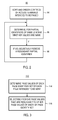
- Figure 2 illustrates a diagram, shown generally at 92, representative of a procedure performed at the apparatus 26, or otherwise at the access network, by which to eliminate duplicate values from a quick page message.
- the identities are sorted and ordered with the process first commencing with identities having the largest lengths, that is to say, largest number of bits.
- a determination is made as to whether the identities of that number of bits, that is length, are of the same values. If so, the yes branch is taken and, as indicated by the block 98, a redundant identity value is removed. The process continues for so long as there are enough partial identities of the size to hold the remaining identities. If the number of partial identities at this size is the same as the number of identities that remain, the partial identities are filled into a message, and the process ends.
- the partial identity comparison scheme is not utilized. Instead, paging indicator is instead utilized.
- all bits of the quick page message are used even if unequal bit number allocations are made for paging different access terminals within a single page message. By doing so, the false wakeup probability is reduced.
- partial bits of random or pseudorandom numbers known to both the access network and the access terminal are used for the reason that such values are sometimes more random than a hash value generated by a hash function. And, further, partial address bits are used for this reason rather than for partial hash bits.
- Figure 3 illustrates a method flow diagram, shown generally at 112, representative of the method of operation of an embodiment of the present invention.
- the method facilitates paging by an access network that selectably generates a first page message on a first paging channel.
- page values of each page identifier set of each page intended to be included in the first page message is determined. Then, and as indicated by the block 116, page values intended to be included in the first page message are selectably removed.
- the page values selected to be removed are those that are redundant to page values of another page identity set.
Landscapes
- Engineering & Computer Science (AREA)
- Computer Networks & Wireless Communication (AREA)
- Signal Processing (AREA)
- Mobile Radio Communication Systems (AREA)
- Communication Control (AREA)
- Detection And Prevention Of Errors In Transmission (AREA)
Abstract
Description
- The present invention relates generally to a manner by which to page an access terminal of a radio communication system to alert the access terminal of a pending call, or other communication. More particularly, the present invention relates to apparatus, and an associated method, by which to form a quick page message that is selectably free of redundant values.
- When quick paging is performed using a partial identity comparison, the pages included in the quick page message are of configurations and lengths best to minimize the occurrence of false wakeup of an access terminal to which the message is broadcast. Excessive battery depletion as a result of false wakeup of the access terminal is avoided.
- Advancements in communication technologies have permitted the development and deployment of new types of communication systems and communication services. Cellular telephony, and associated communication services available therethrough, are popularly utilized by many, typically providing users with communication mobility and also provides the capability of communications when the use of wireline communication systems would not be practical or possible.
- While early-generation, cellular communication systems provided primarily for voice communications and only limited data communication services, newer-generation systems increasingly provide for high-speed data communication services at variable data communication rates. A CDMA2000, cellular communication system that provides for EV-DO services is an exemplary type of new-generation, cellular communication system that provides for high-speed data services. Operational details and protocols defining communications and operational requirements of devices of the system are set forth in an operating standard specification. Various aspects of operation of the CDMA2000 EV-DO communication scheme remain to be standardized and certain parts of the existing standard specification are considered for amendment. Various successor-generation communication schemes are also undergoing standardization and yet others are envisioned to be standardized.
- For instance, a revision to the standard specification, release B of the CDMA2000 EV-DO specification standard that defines a quick paging channel (QPCH) available upon which to broadcast access-terminal pages by an access network (AN) to an access terminal (AT). The QPCH was adopted in industry contributions 3GPP2 C20-20060323-013R1 and 3GPP2 C20-20060323-003R1 and published in 3GPP2 document C.S0024-B V1.0. Generally, pages are broadcast by the access network to an access terminal to alert the access terminal of a pending communication. And by so alerting the access terminal, the access terminal performs actions to permit the effectuation of the communication. Page indications broadcast upon the quick paging channel are broadcast in a manner that facilitates reduced battery consumption of the access terminal by reducing the battery consumption of the battery of the access terminal. Increased battery longevity is provided, reducing the rate at which a battery of the access terminal must be recharged. The access terminal is, as a result, able to be operated for a greater period of time between rechargings or battery replacement. The aforementioned promulgations provide for broadcast of a message including page indications upon a physical logical layer that is monitored by the access terminal. The access terminal monitors the QPCH prior to monitoring the control channel to receive regular, control channel MAC (medium access control) messages such as page messages. A quick page message is broadcast upon the QPCH.
- In one configuration, the quick page message contains quick page indicators. The quick page message includes a number of quick page indicator slots populated with the quick page indicators that indicate whether an access terminal is being paged. An exemplary configuration of a scheme that utilizes page indications is set forth, for instance, in industry contribution 3GPP2 C20-20060731-033. In this configuration, during operation, a mobile station hashes to a quick page indicator location, i.e., slot, within the quick page message based upon a session seed, a 32-bit pseudorandom number. If the quick page indicator of the quick page indicator slot to which the access terminal hashes indicates that the access terminal is not being paged, the access terminal enters into a sleep state, a reduced-power state, in which the access terminal does not remain powered at a level to receive the regular control channel MAC messages. Power savings is particularly significant in the event that the control channel MAC messages are lengthy and span multiple control channel frames or capsules.
- In another configuration, a partial hash comparison scheme is provided. In the disclosed partial hash comparison scheme, the access network forms a quick page message in which a portion of a hash of an access terminal identifier (ATI) of an access terminal that is paged is placed in the quick page message. An access terminal that monitors for the delivery of a quick page message, reads the content of the message and compares the values with corresponding values, that is, portions of a hash of the identifier of that access terminal. If the values do not match, then the access terminal enters into a reduced power state, e.g., a sleep state.
- The QPCH message, as presently-proposed in, e.g., in the EV-DO Release B signaling QPCH, provides thirty-five page indication locations, i.e., bits available to be populated with paging indicators. The aforementioned "partial hash comparison" scheme utilizes three of the thirty-five page indication locations for identifying the number of pages, and the remaining page indication locations are available for paging, viz., are available. While the proposed, partial hash comparison scheme reduces the false wakeup probability when paging load is relatively low, when the paging load increases, the reduction in the available page indication locations actually increases the possibility of false wakeup. When more than five access terminals are paged, partial hash comparison is not used due to this increased possibility. Instead, hashing to page indication locations is performed.
- If a manner could be provided by which to improve the performance of a scheme that utilizes partial comparison pursuant to paging by better reducing the possibility of false wakeup, improved battery longevity of the access terminal would be possible.
- It is in light of this background information related to paging by an access network of an access terminal that the significant improvements of the present invention have evolved.
- Figure 1 illustrates a functional block diagram of a radio communication system in which an embodiment of the present invention is operable.
- Figure 2 illustrates a process diagram representative of the process of operation of an embodiment of the present invention.
- Figure 3 illustrates a method flow diagram listing the method of operation of an embodiment of the present invention.
- The present invention, accordingly, advantageously provides apparatus, and an associated method, by which to page an access terminal of a radio communication system to alert the access terminal of a pending call, or other communication.
- Through operation of an embodiment of the present invention, a manner is provided by which to form a quick page message that is selectably free of redundant values.
- Improved quick paging is provided that lessens the likelihood of false wakeup of an access terminal, thereby improving the longevity of the battery that powers the access terminal. Pursuant to operation, when quick paging is performed using a partial identity comparison, the pages included in the quick page message are of configurations and lengths best to minimize the occurrence of false wakeup of the access terminal.
- In another aspect of the present invention, a partial identity scheme is utilized in the quick paging procedure. The partial identity comparison utilizes parts of access terminal identifiers (ATIs) or other numbers that are associated with access terminals that are paged. The portion of the ATI, or other number, that is included in the quick page message comprises, for instance, a selected number of most significant bits of the number. The length of the portion of the number included in the quick page message is dependent upon one or more factors.
- As the length of the quick page message is prescribed, e.g., is of a thirty-five bit length, the lengths of the parts of the ATIs or other numbers included in the quick page message are limited by this prescribed length. If multiple pages are contained in the quick page message, only fractional portions of the parts of the ATIs or other numbers are able to be included in the quick page message. When the number of pages increase, the size, i.e., lengths, of the parts of the numbers that are includable in the quick page message are reduced.
- A first portion of the quick page message, such as a first, three-bit portion, identifies the number of pages in the message. If the quick page message is of a length of thirty-five bits, and, e.g., the number of page indications is three-bits in length, then the number of bits available to identify the access terminals is reduced to thirty-two of the thirty-five bits. When a single access terminal is paged, all thirty-two bits are available by which to identify the paged access terminal. When two access terminals are paged, half of the thirty-two available bits are available to identify each of the two access terminals being paged. Analogously, when three access terminals are paged, one-third of the thirty-two bits are available to identify each of the three access terminals being paged. Because three does not divide into thirty-two equally, the number of bits available to identify different ones of the three access terminals is dissimilar. Or, one or more bits are not utilized to identify the paged access terminals. Analogous divisions and distributions are provided for higher numbers of paged access terminals.
- In another aspect of the present invention, a determination is first made of the number of pages that are to be included in the quick page message. And, the corresponding parts of ATIs or other numbers that are used to identify the paged access terminals are configured. The most significant bits, for instance, of the number known to both the access terminal and the access network are used. For example, parts of the ATIs are utilized. For example, if sixteen bits are available to identify an access terminal, such as when the quick page message is to page two access terminals, the sixteen most significant bits of the number are utilized. If preferred, least significant bits are instead utilized. A comparator compares the values that identify the access terminals. In the event that the values identifying the different access terminals that are to be paged correspond, then redundant values are deleted by a redundant page value remover. The bits that would otherwise need to be provided for population with the redundant values are able, instead, to be utilized for other purposes. For instance, in the event that seven access terminals are to be paged and two of the seven access terminals are identified with ATIs that have most significant bits of the same values, the redundant values need not be included in the quick page message but, instead, the five unique sets of values are included in the quick page message.
- In a further aspect of the present invention, all of the bit locations of the quick page message available to identify access terminals are used. The number of bits available to identify each access terminal need not be equal. For instance, if three access terminals are to be paged in the quick page message, two of the terminals are identified with ten bit values while a third of the access terminals is identified with an eleven bit-length value. Through use of all of the available parts of the quick page message, false wakeup of an access terminal is proportionately less likely to occur.
- In these and other aspects, therefore, apparatus, and an associated method, is provided for an access network of a communication network that generates a first page message on a first paging channel. A determiner is configured to determine page values of each page identifier set of each page intended to be included in the first page message. A redundant page value remover is configured selectably to remove page values intended to be included in the first page message that are redundant to page values of another page identifier set, if any, also intended to be part of the first page message. The first page message is formed of page value sets selectably free of page value set redundancies.
- In these and further aspects, apparatus, and an associated method, is provided for an access terminal that monitors a first paging channel for delivery of a first paging message. A number of page detector is configured to detect how many page identifier sets are included in the first paging message. A page identifier set value detector is configured to detect values of each page identifier set detected by the number of page detector to be included in the first paging message. The first paging message is selectably free of page value set redundancies.
- Referring first, therefore, to Figure 1, a radio communication system, shown generally at 10, provides for communications with access terminals, of which the
access terminal 12 is exemplary. The communication system forms a multi-user communication system that typically includes a large number of access terminals and a plurality of concurrent communication dialogs. While only a single access terminal is shown in Figure 1, additional access terminals, analogous to theaccess terminal 12, typically form a portion of the communication system. - Communications are effectuated between an access terminal and a
radio network 14, formed of fixed network infrastructure elements, such as a base transceiver station (BTS) 16 and a base station controller (BSC) 18. The access network encompasses a geographical area within which communications with the access network are possible. That is to say, when an access terminal is positioned within the area encompassed by the access network, the access terminal is generally able to communicate with the access network, and the access network is typically able to communicate with the access terminal. - The communication system is operable in general conformity with the operating protocols and parameters of an appropriate communication specification standard. The description set forth herein is exemplary, and the teachings of various embodiments of the present invention are implementable in any of various types of communication systems.
- As previously mentioned, access terminals are alerted, by broadcast of a page message when a communication, initiated at the network, is to be terminated at an access terminal. A quick paging channel (QPCH), or analogous channel, is defined. Information contained in a quick page message broadcast on the quick paging channel identifies access terminals that are paged. When an access terminal detects, from the quick page message, that the access terminal is paged, the access terminal further operates in anticipation of the page and subsequent communication. The access terminal, conversely, enters into a reduced-power consumption state, e.g., a sleep state. If the access terminal incorrectly determines that it is being paged, the access terminal falsely wakes up. And, increased levels of power are consumed by the access terminal, resulting in reduced battery longevity. The aforementioned partial hash comparison scheme is intended to reduce the likelihood of false wakeup of the access terminal, but, as presently implemented, provides advantages only when a quick page message pages five or fewer access terminals. Additionally, not all of the bits of a quick page message are fully utilized in every paging scenario, and the existing scheme, for this reason, is less than ideal.
- Accordingly, pursuant to an embodiment of the present invention, the access network includes
apparatus 24, and the access terminal includesapparatus 26, that operate pursuant to quick page message generation and quick page message receipt in manners that reduce the likelihood of occurrence of false wakeup relative to an existing partial hash comparison scheme. The elements of theapparatus 24 and of theapparatus 26 are functionally represented, implementable in any desired manner, including, for instance, by algorithms executable by processing circuitry. - The elements forming the
apparatus 24 are implemented at any appropriate location of the access network, including, as illustrated, at theBTS 16 orBSC 18, or distributed amongst such entities, as well as others. - Here, the
apparatus 24 includes adeterminer 32, acomparator 34, a redundantpage value remover 36, and a quick page message formatter 38. - The
determiner 32 operates to determine page values of page identifier sets that are associated with access terminals that are to be paged in a quick page message. That is to say, the determiner is provided, here indicated by way of thelines 42, with the identities, such as by their ATIS, of the access terminals that are to be paged. The number of terminals that are paged is determinative of the lengths of the page identifier sets that are includable in the quick page message. When more pages are to be included in the page message, the lengths of the page identifier sets that identify each of the access terminals being paged are less than the lengths permitted when fewer numbers of access terminals are being paged. Most significant bits of the ATIs are used. And, the determiner determines the parts of the ATIs that can be used, depending upon the number of pages to be included in the quick page message. If two pages are to be included in the quick page message, each page identifier set is of sixteen-bit lengths, the sixteen most significant bits of the ATIs. When numbers other than ATIs are used, analogous portions of such other numbers are, e.g., instead utilized. In the exemplary implementation in which thirty-two bits are available in which to identify the access terminals and three bits are used to identify the number of pages in the quick page message, the thirty-two bits are collectively available by which to be used to identify access terminals that are to be paged. Pursuant to a further embodiment of the present invention, in the event that the number of access terminals that are to be paged do not permit for an equal division of the thirty-two bits, unequal numbers of bits are allocated to identify different ones of the access terminals while fully utilizing all thirty-two available bits. For instance, when three access terminals are to be paged, one access terminal is identified with an eleven-bit length page identifier set while the other two access terminals are identified with ten-bit length page identifier sets. - Indications of the identifiers determined by the determiner are provided to a
comparator 34. Thecomparator 34 operates to compare the different values and to identify if any of the page identifier sets are of identical values. When parts of the ATIs are utilized, that is to say, the selected number of most significant bits of the ATIs of the access terminals that are to be paged are used, there is a possibility that the most significant bits identifying more than one access terminal are identical to the corresponding values that identify another access terminal. Operation of the comparator identifies such identical values. - Indications of comparisons made by the comparator are provided to the redundant
page value remover 36. The redundant page value remover removes values, that is to say, page identifier set bits, that are redundant, freeing up bit space in the quick page message. In the exemplary implementation, upon removal of the redundant bit values, the determiner is caused to redetermine the page values of the identifiers of the access terminals that are to be paged. Here, indication is provided to the determiner by way of theline 44 of the removal of the redundant bit values and the need to redetermine the identifiers used to identify the paged access terminals. Upon removal of the redundant page values, increased bits are available to identify the access terminals that are paged or, the partial identity comparison scheme is able to be used when greater than five access terminals are to be paged. Redetermined values are provided by the determiner to the redundant page value remover and thereafter provided to the quick page message formatter 38. The quick page message formatter forms the quick page message populated with page identifier sets that are selectably free of redundancies through the removal of the redundant page value remover,comparator 34, anddeterminer 32. - Transceiver elements of the
base transceiver station 16 cause broadcast of quick page messages that have been formatted by the quick page message formatter. The messages are broadcast upon a radio air interface, represented in Figure 1 by thearrow 62. The messages are delivered to access terminals, such as theaccess terminal 12, within reception range of the broadcast messages. Theaccess terminal 12 includes transceiver circuitry, here represented by a receivepart 64 and a transmitpart 66. The receivepart 64 operates to receive signals sent thereto, such as the quick page messages broadcast by the access network. And, certain of the detected signals are provided to theapparatus 26 embodied at the access terminal. Of significance here are detections of the quick page message broadcast by the access network. - The
apparatus 26 includes a number ofpage detector 72 and a page identifier setvalue detector 74. The elements are functionally represented, also implementable in any desired manner, including algorithms executable by processing circuitry. Thedetector 72 detects an indication in the quick page message of the number of pages that are included in the received quick page message. The number of pages are indicated in, e.g., and as noted above, a three-bit segment of the quick page message. Detection of such indication is used by the page identifier set value detector in the detection of the page identifier sets, thereby to determine whether the access terminal is paged. Additional operation at the access terminal determines, in response to the number of pages detected by the page detector of the page value lengths of the page identifier set or sets contained in the quick page message. In the event that the detector detects the access terminal not to be paged, an indication is provided to an access terminal (AT)state controller 84 to cause the access terminal to be placed in a reduced-power state, e.g., a sleep mode. If a page is detected, conversely, an indication is provided to the state controller and the controller causes the state of the access terminal to permit its further operation with respect to paging and further communication. - While the existing partial hash comparison scheme is used only when five or fewer access terminals are paged, operation of an embodiment of the present invention is potentially permitting of performance of a partial identity comparison scheme in the event that more than five access terminals are being paged, but one or more of the identifiers, that is, page identifier sets are identical. For example, if seven access terminals are being paged and three of the access terminals being paged have the same six bits as their most significant bits, the
apparatus 24 operates to eliminate two of the three duplicates page identifier sets and is then able to include five six-bit page identifier sets, herein also referred to as hashes, using partial identity comparison. Otherwise, individual page indication bits are inserted in specified locations of the message, their locations being selected through operation of a hash function generator. - Figure 2 illustrates a diagram, shown generally at 92, representative of a procedure performed at the
apparatus 26, or otherwise at the access network, by which to eliminate duplicate values from a quick page message. First, and as indicated by theblock 94, the identities are sorted and ordered with the process first commencing with identities having the largest lengths, that is to say, largest number of bits. Then, and as indicated by thedecision block 96, a determination is made as to whether the identities of that number of bits, that is length, are of the same values. If so, the yes branch is taken and, as indicated by theblock 98, a redundant identity value is removed. The process continues for so long as there are enough partial identities of the size to hold the remaining identities. If the number of partial identities at this size is the same as the number of identities that remain, the partial identities are filled into a message, and the process ends. - If the current number of bits of the partial identity is equal to the smallest number possible, then the partial identity comparison scheme is not utilized. Instead, paging indicator is instead utilized. As noted above, pursuant to exemplary operation, all bits of the quick page message are used even if unequal bit number allocations are made for paging different access terminals within a single page message. By doing so, the false wakeup probability is reduced. Additionally, partial bits of random or pseudorandom numbers known to both the access network and the access terminal are used for the reason that such values are sometimes more random than a hash value generated by a hash function. And, further, partial address bits are used for this reason rather than for partial hash bits.
- Figure 3 illustrates a method flow diagram, shown generally at 112, representative of the method of operation of an embodiment of the present invention. The method facilitates paging by an access network that selectably generates a first page message on a first paging channel.
- First, and as indicated by the
block 114, page values of each page identifier set of each page intended to be included in the first page message is determined. Then, and as indicated by theblock 116, page values intended to be included in the first page message are selectably removed. The page values selected to be removed are those that are redundant to page values of another page identity set. - The previous descriptions are of preferred examples for implementing the invention, and the scope of the invention should not necessarily be limited by this description. The scope of the present invention is defined by the following claims.
Claims (21)
- Apparatus for an access network of a communication network that generates a first page message on a first paging channel, said apparatus comprising:a determiner configured to determine page values of each page identifier set of each page intended to be included in the first page message; anda redundant page value remover configured selectably to remove page values intended to be included in the first page message that are redundant to page values of another page identifier set, if any, also intended to be part of the first page message so that the first page message is formed of page value sets selectably free of page value set redundancies.
- The apparatus of claim 1 further comprising a comparator configured to compare the page values of each page identifier set intended to be included in the first page message and wherein the page values selectably removed by said redundant page value remover are removed responsive to comparisons made by said comparator.
- The apparatus of claim 1 wherein each page identifier set comprises a selected number of most significant bits of an identifier associated with a corresponding page.
- The apparatus of claim 3 wherein the selected number of most significant bits of each page identifier set is responsive to how many pages are intended to be included in the first paging message.
- The apparatus of claim 1 further comprising a selector configured to select page identifier set lengths that are determinative, in part, of the page values determined by said determiner.
- The apparatus of claim 5 wherein the first paging message is of a prescribed length and wherein the page identifier set lengths selected by said selector is dependent upon both the prescribed length of the first paging message, and a number of page identifier sets included in the first paging message.
- The apparatus of claim 6 wherein the first paging message includes a page identity part and wherein each page identifier set of the first paging message is inserted in the page identity part.
- The apparatus of claim 7 wherein selection made by said selector of the page identifier set lengths comprises selection to fill the page identity part.
- The apparatus of claim 8 wherein the first page message comprises a plurality of pages identified by a corresponding, plurality of page identifier sets, at least one page identifier set of a page identifier set length different than another page identifier set.
- The apparatus of claim 1 wherein the page values of each page identifier set comprise parts of page-recipient identifiers that are defined in the access network.
- A method for facilitating paging by an access network that selectably generates a first page message on a first paging channel, said method comprising the operations of:determining page values of each page identifier set of each page intended to be included in the first page message; andselectably removing page values intended to be included in the first page message that are redundant to page values of another page identifier set, if any, also intended to be part of the first page message so that the first page message is formed of page value sets free of page value set redundancies.
- The method of claim 11 further comprising the operation of comparing the page values of each page identifier set intended to be included in the first page message and wherein the page values selectably removed during said operation of selectably removing are removed responsive to comparisons made during said operation of comparing.
- The method of claim 11 wherein each page identifier set comprises a selected number of most significant bits of an identifier associated with a corresponding page.
- The method of claim 13 wherein the selected number of most significant bits of each page identifier set is responsive to how many pages are intended to be included in the first paging message.
- The method of claim 11 further comprising the operation of selecting page identifier set lengths that are determinative, in part, of the page values determined during said operation of determining.
- The method of claim 15 wherein the first paging message is of a prescribed length and wherein the page identifier set lengths set during said operation of selecting is dependent upon both the prescribed length of the first paging message and a number of page identifier sets included in the first paging message.
- The method of claim 16 wherein the first paging message includes a page identity part and wherein each page identifier set of the first paging message is inserted in the page identity part.
- The method of claim 11 further comprising the operations of:broadcasting the first paging message to an access terminal; anddeciding at the access terminal whether the access terminal is paged.
- The method of claim 11 wherein said operation of selectably removing comprises iteratively removing redundant page values until the page identifier sets are collectively of a desired length.
- Apparatus for an access terminal that monitors a first paging channel for delivery of a first paging message, said apparatus comprising:a number of page detector configured to detect how many page identifier sets are included in the first paging message; anda page identifier set value detector configured to detect values of each page identifier set detected by said number of page detector to be included in the first paging message, the first paging message selectably free of page value set redundancies.
- A method for an access terminal that monitors a first paging channel for delivery of a first paging message, said method comprising the operations of:detecting how many page identifier sets are included in the first paging message; anddetecting values of each page identifier set included in the first paging message, the first paging message selectably free of page value set redundancies.
Priority Applications (10)
| Application Number | Priority Date | Filing Date | Title |
|---|---|---|---|
| AT06120157T ATE427640T1 (en) | 2006-09-05 | 2006-09-05 | APPARATUS AND METHOD FOR OPTIMIZING RADIO CALL TRANSMISSION BY REMOVAL OF REDUNDANT RADIO CALL VALUES IN A RADIO COMMUNICATIONS SYSTEM |
| DE602006014309T DE602006014309D1 (en) | 2006-09-05 | 2006-09-05 | Apparatus and associated method for configuring a page message used to invoke an access terminal in a radio communication system according to a partial identity comparison scheme |
| ES06120157T ES2322189T3 (en) | 2006-09-05 | 2006-09-05 | APPARATUS AND METHOD TO OPTIMIZE THE TRANSMISSION OF LOCATIONS BY DELETING THE REDUNDING VALUES OF THE LOCATIONS IN A RADIO COMMUNICATION SYSTEM. |
| DE602006006059T DE602006006059D1 (en) | 2006-09-05 | 2006-09-05 | Apparatus and method for optimizing paging transmission by removing redundant paging values in a radio communication system |
| AT09151038T ATE467998T1 (en) | 2006-09-05 | 2006-09-05 | APPARATUS AND ASSOCIATED METHOD FOR CONFIGURING A PAGE MESSAGE FOR CALLING AN ACCESS TERMINAL IN A RADIO COMMUNICATIONS SYSTEM ACCORDING TO A PARTIAL IDENTITY COMPARISON SCHEME |
| EP06120157A EP1898653B1 (en) | 2006-09-05 | 2006-09-05 | Apparatus and method for optimising page transmission by removing redundant page values in a radio communication system |
| EP09151038A EP2051557B1 (en) | 2006-09-05 | 2006-09-05 | Apparatus and method for optimising page transmission by removing redundant page values in a radio communication system |
| PCT/CA2007/001557 WO2008028282A1 (en) | 2006-09-05 | 2007-09-05 | Apparatus, and associated method, for configuring a page message used to page an access terminal in a radio communication system pursuant to a partial identity comparison scheme |
| CA2662284A CA2662284C (en) | 2006-09-05 | 2007-09-05 | Apparatus, and associated method, for configuring a page message used to page an access terminal in a radio communication system pursuant to a partial identity comparison scheme |
| HK08108358.1A HK1113628B (en) | 2008-07-29 | Apparatus and method for optimising page transmission by removing redundant page values in a radio communication system |
Applications Claiming Priority (1)
| Application Number | Priority Date | Filing Date | Title |
|---|---|---|---|
| EP06120157A EP1898653B1 (en) | 2006-09-05 | 2006-09-05 | Apparatus and method for optimising page transmission by removing redundant page values in a radio communication system |
Related Child Applications (1)
| Application Number | Title | Priority Date | Filing Date |
|---|---|---|---|
| EP09151038A Division EP2051557B1 (en) | 2006-09-05 | 2006-09-05 | Apparatus and method for optimising page transmission by removing redundant page values in a radio communication system |
Publications (2)
| Publication Number | Publication Date |
|---|---|
| EP1898653A1 true EP1898653A1 (en) | 2008-03-12 |
| EP1898653B1 EP1898653B1 (en) | 2009-04-01 |
Family
ID=38596009
Family Applications (2)
| Application Number | Title | Priority Date | Filing Date |
|---|---|---|---|
| EP06120157A Active EP1898653B1 (en) | 2006-09-05 | 2006-09-05 | Apparatus and method for optimising page transmission by removing redundant page values in a radio communication system |
| EP09151038A Active EP2051557B1 (en) | 2006-09-05 | 2006-09-05 | Apparatus and method for optimising page transmission by removing redundant page values in a radio communication system |
Family Applications After (1)
| Application Number | Title | Priority Date | Filing Date |
|---|---|---|---|
| EP09151038A Active EP2051557B1 (en) | 2006-09-05 | 2006-09-05 | Apparatus and method for optimising page transmission by removing redundant page values in a radio communication system |
Country Status (6)
| Country | Link |
|---|---|
| EP (2) | EP1898653B1 (en) |
| AT (2) | ATE467998T1 (en) |
| CA (1) | CA2662284C (en) |
| DE (2) | DE602006006059D1 (en) |
| ES (1) | ES2322189T3 (en) |
| WO (1) | WO2008028282A1 (en) |
Citations (2)
| Publication number | Priority date | Publication date | Assignee | Title |
|---|---|---|---|---|
| WO2003024146A1 (en) * | 2001-09-13 | 2003-03-20 | Qualcomm Incorporated | Sequential demodulation of first and second quick paging channel symbols |
| EP1696593A2 (en) * | 2005-02-28 | 2006-08-30 | NEC Corporation | Acquisition of group page identifiers at a new destination of movement |
-
2006
- 2006-09-05 DE DE602006006059T patent/DE602006006059D1/en active Active
- 2006-09-05 EP EP06120157A patent/EP1898653B1/en active Active
- 2006-09-05 EP EP09151038A patent/EP2051557B1/en active Active
- 2006-09-05 AT AT09151038T patent/ATE467998T1/en not_active IP Right Cessation
- 2006-09-05 DE DE602006014309T patent/DE602006014309D1/en active Active
- 2006-09-05 AT AT06120157T patent/ATE427640T1/en not_active IP Right Cessation
- 2006-09-05 ES ES06120157T patent/ES2322189T3/en active Active
-
2007
- 2007-09-05 WO PCT/CA2007/001557 patent/WO2008028282A1/en not_active Ceased
- 2007-09-05 CA CA2662284A patent/CA2662284C/en active Active
Patent Citations (2)
| Publication number | Priority date | Publication date | Assignee | Title |
|---|---|---|---|---|
| WO2003024146A1 (en) * | 2001-09-13 | 2003-03-20 | Qualcomm Incorporated | Sequential demodulation of first and second quick paging channel symbols |
| EP1696593A2 (en) * | 2005-02-28 | 2006-08-30 | NEC Corporation | Acquisition of group page identifiers at a new destination of movement |
Also Published As
| Publication number | Publication date |
|---|---|
| ATE467998T1 (en) | 2010-05-15 |
| CA2662284A1 (en) | 2008-03-13 |
| CA2662284C (en) | 2012-02-21 |
| ATE427640T1 (en) | 2009-04-15 |
| DE602006006059D1 (en) | 2009-05-14 |
| ES2322189T3 (en) | 2009-06-17 |
| HK1113628A1 (en) | 2008-10-10 |
| WO2008028282A1 (en) | 2008-03-13 |
| EP2051557B1 (en) | 2010-05-12 |
| EP1898653B1 (en) | 2009-04-01 |
| EP2051557A2 (en) | 2009-04-22 |
| DE602006014309D1 (en) | 2010-06-24 |
| EP2051557A3 (en) | 2009-07-08 |
Similar Documents
| Publication | Publication Date | Title |
|---|---|---|
| US20080057982A1 (en) | High-capacity paging method, and associated apparatus, with reduced probability of false page match | |
| CA2662269C (en) | Apparatus, and associated method, for forming a page message including a structure of partial identifiers of differing bit lengths | |
| US8244280B2 (en) | Apparatus, and associated method, for configuring a page message used to page an access terminal in a radio communication system pursuant to a partial identity comparison scheme | |
| US20080057983A1 (en) | Apparatus, and associated method, for configuring a page message used to page an access terminal in a radio communication system in which extra partial identity bits are extracted from the page message | |
| CA2598161C (en) | Apparatus and associated method for paging an access terminal in a radio communication system | |
| US8023969B2 (en) | Apparatus, and associated method, for configuring a page message including a set structure of partial identifiers used to page an access terminal in a radio communication system pursuant to a partial identity comparison scheme | |
| EP2051557B1 (en) | Apparatus and method for optimising page transmission by removing redundant page values in a radio communication system | |
| US8078198B2 (en) | Method, and associated apparatus, of integrating extraction of extra partial identity bits with quick paging techniques where multiple pages share a message field | |
| EP2060141B1 (en) | Apparatus, and associated method, for forming a page message including a structure of partial identifiers of differing bit lengths using random or pseudorandom numbers | |
| CA2662964C (en) | Apparatus, and associated method, for forming a page message including a structure of partial identifiers of differing bit lengths using random or pseudorandom numbers and for using random ati | |
| HK1113628B (en) | Apparatus and method for optimising page transmission by removing redundant page values in a radio communication system | |
| US8359047B2 (en) | Apparatus, and associated method, for paging an access terminal in a radio communication system | |
| US20080064416A1 (en) | Apparatus, and associated method, for forming a page message including a structure of partial identifiers of differing bit lengths using random or pseudorandom numbers and for using random ati | |
| HK1132608B (en) | Apparatus, and associated method, for forming a page message including a structure of partial identifiers of differing bit lengths using random or pseudorandom numbers |
Legal Events
| Date | Code | Title | Description |
|---|---|---|---|
| PUAI | Public reference made under article 153(3) epc to a published international application that has entered the european phase |
Free format text: ORIGINAL CODE: 0009012 |
|
| 17P | Request for examination filed |
Effective date: 20060908 |
|
| AK | Designated contracting states |
Kind code of ref document: A1 Designated state(s): AT BE BG CH CY CZ DE DK EE ES FI FR GB GR HU IE IS IT LI LT LU LV MC NL PL PT RO SE SI SK TR |
|
| AX | Request for extension of the european patent |
Extension state: AL BA HR MK YU |
|
| REG | Reference to a national code |
Ref country code: HK Ref legal event code: DE Ref document number: 1113628 Country of ref document: HK |
|
| GRAP | Despatch of communication of intention to grant a patent |
Free format text: ORIGINAL CODE: EPIDOSNIGR1 |
|
| AKX | Designation fees paid |
Designated state(s): AT BE BG CH CY CZ DE DK EE ES FI FR GB GR HU IE IS IT LI LT LU LV MC NL PL PT RO SE SI SK TR |
|
| AXX | Extension fees paid |
Extension state: HR Payment date: 20080812 Extension state: RS Payment date: 20080812 Extension state: BA Payment date: 20080812 Extension state: AL Payment date: 20080812 Extension state: MK Payment date: 20080812 |
|
| GRAS | Grant fee paid |
Free format text: ORIGINAL CODE: EPIDOSNIGR3 |
|
| GRAA | (expected) grant |
Free format text: ORIGINAL CODE: 0009210 |
|
| AK | Designated contracting states |
Kind code of ref document: B1 Designated state(s): AT BE BG CH CY CZ DE DK EE ES FI FR GB GR HU IE IS IT LI LT LU LV MC NL PL PT RO SE SI SK TR |
|
| AX | Request for extension of the european patent |
Extension state: AL BA HR MK RS |
|
| REG | Reference to a national code |
Ref country code: GB Ref legal event code: FG4D |
|
| REG | Reference to a national code |
Ref country code: CH Ref legal event code: EP |
|
| REG | Reference to a national code |
Ref country code: IE Ref legal event code: FG4D |
|
| REF | Corresponds to: |
Ref document number: 602006006059 Country of ref document: DE Date of ref document: 20090514 Kind code of ref document: P |
|
| REG | Reference to a national code |
Ref country code: ES Ref legal event code: FG2A Ref document number: 2322189 Country of ref document: ES Kind code of ref document: T3 |
|
| REG | Reference to a national code |
Ref country code: SE Ref legal event code: TRGR |
|
| PG25 | Lapsed in a contracting state [announced via postgrant information from national office to epo] |
Ref country code: SI Free format text: LAPSE BECAUSE OF FAILURE TO SUBMIT A TRANSLATION OF THE DESCRIPTION OR TO PAY THE FEE WITHIN THE PRESCRIBED TIME-LIMIT Effective date: 20090401 |
|
| NLV1 | Nl: lapsed or annulled due to failure to fulfill the requirements of art. 29p and 29m of the patents act | ||
| PG25 | Lapsed in a contracting state [announced via postgrant information from national office to epo] |
Ref country code: EE Free format text: LAPSE BECAUSE OF FAILURE TO SUBMIT A TRANSLATION OF THE DESCRIPTION OR TO PAY THE FEE WITHIN THE PRESCRIBED TIME-LIMIT Effective date: 20090401 Ref country code: PT Free format text: LAPSE BECAUSE OF FAILURE TO SUBMIT A TRANSLATION OF THE DESCRIPTION OR TO PAY THE FEE WITHIN THE PRESCRIBED TIME-LIMIT Effective date: 20090902 Ref country code: LT Free format text: LAPSE BECAUSE OF FAILURE TO SUBMIT A TRANSLATION OF THE DESCRIPTION OR TO PAY THE FEE WITHIN THE PRESCRIBED TIME-LIMIT Effective date: 20090401 Ref country code: AT Free format text: LAPSE BECAUSE OF FAILURE TO SUBMIT A TRANSLATION OF THE DESCRIPTION OR TO PAY THE FEE WITHIN THE PRESCRIBED TIME-LIMIT Effective date: 20090401 |
|
| PG25 | Lapsed in a contracting state [announced via postgrant information from national office to epo] |
Ref country code: PL Free format text: LAPSE BECAUSE OF FAILURE TO SUBMIT A TRANSLATION OF THE DESCRIPTION OR TO PAY THE FEE WITHIN THE PRESCRIBED TIME-LIMIT Effective date: 20090401 Ref country code: NL Free format text: LAPSE BECAUSE OF FAILURE TO SUBMIT A TRANSLATION OF THE DESCRIPTION OR TO PAY THE FEE WITHIN THE PRESCRIBED TIME-LIMIT Effective date: 20090401 Ref country code: IS Free format text: LAPSE BECAUSE OF FAILURE TO SUBMIT A TRANSLATION OF THE DESCRIPTION OR TO PAY THE FEE WITHIN THE PRESCRIBED TIME-LIMIT Effective date: 20090801 Ref country code: LV Free format text: LAPSE BECAUSE OF FAILURE TO SUBMIT A TRANSLATION OF THE DESCRIPTION OR TO PAY THE FEE WITHIN THE PRESCRIBED TIME-LIMIT Effective date: 20090401 |
|
| REG | Reference to a national code |
Ref country code: HK Ref legal event code: GR Ref document number: 1113628 Country of ref document: HK |
|
| PG25 | Lapsed in a contracting state [announced via postgrant information from national office to epo] |
Ref country code: RO Free format text: LAPSE BECAUSE OF FAILURE TO SUBMIT A TRANSLATION OF THE DESCRIPTION OR TO PAY THE FEE WITHIN THE PRESCRIBED TIME-LIMIT Effective date: 20090401 Ref country code: CZ Free format text: LAPSE BECAUSE OF FAILURE TO SUBMIT A TRANSLATION OF THE DESCRIPTION OR TO PAY THE FEE WITHIN THE PRESCRIBED TIME-LIMIT Effective date: 20090401 Ref country code: DK Free format text: LAPSE BECAUSE OF FAILURE TO SUBMIT A TRANSLATION OF THE DESCRIPTION OR TO PAY THE FEE WITHIN THE PRESCRIBED TIME-LIMIT Effective date: 20090401 |
|
| PLBE | No opposition filed within time limit |
Free format text: ORIGINAL CODE: 0009261 |
|
| STAA | Information on the status of an ep patent application or granted ep patent |
Free format text: STATUS: NO OPPOSITION FILED WITHIN TIME LIMIT |
|
| PG25 | Lapsed in a contracting state [announced via postgrant information from national office to epo] |
Ref country code: BE Free format text: LAPSE BECAUSE OF FAILURE TO SUBMIT A TRANSLATION OF THE DESCRIPTION OR TO PAY THE FEE WITHIN THE PRESCRIBED TIME-LIMIT Effective date: 20090401 Ref country code: SK Free format text: LAPSE BECAUSE OF FAILURE TO SUBMIT A TRANSLATION OF THE DESCRIPTION OR TO PAY THE FEE WITHIN THE PRESCRIBED TIME-LIMIT Effective date: 20090401 |
|
| 26N | No opposition filed |
Effective date: 20100105 |
|
| PG25 | Lapsed in a contracting state [announced via postgrant information from national office to epo] |
Ref country code: BG Free format text: LAPSE BECAUSE OF FAILURE TO SUBMIT A TRANSLATION OF THE DESCRIPTION OR TO PAY THE FEE WITHIN THE PRESCRIBED TIME-LIMIT Effective date: 20090701 |
|
| PG25 | Lapsed in a contracting state [announced via postgrant information from national office to epo] |
Ref country code: MC Free format text: LAPSE BECAUSE OF NON-PAYMENT OF DUE FEES Effective date: 20090930 |
|
| REG | Reference to a national code |
Ref country code: IE Ref legal event code: MM4A |
|
| PG25 | Lapsed in a contracting state [announced via postgrant information from national office to epo] |
Ref country code: IE Free format text: LAPSE BECAUSE OF NON-PAYMENT OF DUE FEES Effective date: 20090905 |
|
| PG25 | Lapsed in a contracting state [announced via postgrant information from national office to epo] |
Ref country code: GR Free format text: LAPSE BECAUSE OF FAILURE TO SUBMIT A TRANSLATION OF THE DESCRIPTION OR TO PAY THE FEE WITHIN THE PRESCRIBED TIME-LIMIT Effective date: 20090702 |
|
| PG25 | Lapsed in a contracting state [announced via postgrant information from national office to epo] |
Ref country code: IT Free format text: LAPSE BECAUSE OF FAILURE TO SUBMIT A TRANSLATION OF THE DESCRIPTION OR TO PAY THE FEE WITHIN THE PRESCRIBED TIME-LIMIT Effective date: 20090401 |
|
| PG25 | Lapsed in a contracting state [announced via postgrant information from national office to epo] |
Ref country code: LU Free format text: LAPSE BECAUSE OF NON-PAYMENT OF DUE FEES Effective date: 20090905 |
|
| REG | Reference to a national code |
Ref country code: CH Ref legal event code: PL |
|
| PG25 | Lapsed in a contracting state [announced via postgrant information from national office to epo] |
Ref country code: HU Free format text: LAPSE BECAUSE OF FAILURE TO SUBMIT A TRANSLATION OF THE DESCRIPTION OR TO PAY THE FEE WITHIN THE PRESCRIBED TIME-LIMIT Effective date: 20091002 |
|
| PG25 | Lapsed in a contracting state [announced via postgrant information from national office to epo] |
Ref country code: LI Free format text: LAPSE BECAUSE OF NON-PAYMENT OF DUE FEES Effective date: 20100930 Ref country code: CH Free format text: LAPSE BECAUSE OF NON-PAYMENT OF DUE FEES Effective date: 20100930 |
|
| PG25 | Lapsed in a contracting state [announced via postgrant information from national office to epo] |
Ref country code: TR Free format text: LAPSE BECAUSE OF FAILURE TO SUBMIT A TRANSLATION OF THE DESCRIPTION OR TO PAY THE FEE WITHIN THE PRESCRIBED TIME-LIMIT Effective date: 20090401 |
|
| PG25 | Lapsed in a contracting state [announced via postgrant information from national office to epo] |
Ref country code: CY Free format text: LAPSE BECAUSE OF FAILURE TO SUBMIT A TRANSLATION OF THE DESCRIPTION OR TO PAY THE FEE WITHIN THE PRESCRIBED TIME-LIMIT Effective date: 20090401 |
|
| REG | Reference to a national code |
Ref country code: DE Ref legal event code: R082 Ref document number: 602006006059 Country of ref document: DE Representative=s name: MERH-IP MATIAS ERNY REICHL HOFFMANN, DE |
|
| REG | Reference to a national code |
Ref country code: ES Ref legal event code: PC2A Owner name: BLACKBERRY LIMITED Effective date: 20141016 |
|
| REG | Reference to a national code |
Ref country code: DE Ref legal event code: R082 Ref document number: 602006006059 Country of ref document: DE Representative=s name: MERH-IP MATIAS ERNY REICHL HOFFMANN, DE Effective date: 20140925 Ref country code: DE Ref legal event code: R081 Ref document number: 602006006059 Country of ref document: DE Owner name: BLACKBERRY LIMITED, WATERLOO, CA Free format text: FORMER OWNER: RESEARCH IN MOTION LTD., WATERLOO, ONTARIO, CA Effective date: 20140925 Ref country code: DE Ref legal event code: R082 Ref document number: 602006006059 Country of ref document: DE Representative=s name: MERH-IP MATIAS ERNY REICHL HOFFMANN PATENTANWA, DE Effective date: 20140925 |
|
| REG | Reference to a national code |
Ref country code: FR Ref legal event code: PLFP Year of fee payment: 11 |
|
| REG | Reference to a national code |
Ref country code: FR Ref legal event code: PLFP Year of fee payment: 12 |
|
| REG | Reference to a national code |
Ref country code: FR Ref legal event code: PLFP Year of fee payment: 13 |
|
| REG | Reference to a national code |
Ref country code: DE Ref legal event code: R082 Ref document number: 602006006059 Country of ref document: DE Ref country code: DE Ref legal event code: R081 Ref document number: 602006006059 Country of ref document: DE Owner name: MALIKIE INNOVATIONS LTD., IE Free format text: FORMER OWNER: BLACKBERRY LIMITED, WATERLOO, ONTARIO, CA |
|
| PGFP | Annual fee paid to national office [announced via postgrant information from national office to epo] |
Ref country code: FI Payment date: 20250925 Year of fee payment: 20 |
|
| PGFP | Annual fee paid to national office [announced via postgrant information from national office to epo] |
Ref country code: DE Payment date: 20250926 Year of fee payment: 20 |
|
| PGFP | Annual fee paid to national office [announced via postgrant information from national office to epo] |
Ref country code: GB Payment date: 20250923 Year of fee payment: 20 |
|
| PGFP | Annual fee paid to national office [announced via postgrant information from national office to epo] |
Ref country code: FR Payment date: 20250925 Year of fee payment: 20 |
|
| PGFP | Annual fee paid to national office [announced via postgrant information from national office to epo] |
Ref country code: SE Payment date: 20250924 Year of fee payment: 20 |
|
| PGFP | Annual fee paid to national office [announced via postgrant information from national office to epo] |
Ref country code: ES Payment date: 20251015 Year of fee payment: 20 |