EP1898587A1 - A method of requesting an option to be used in a tunnel type - Google Patents
A method of requesting an option to be used in a tunnel type Download PDFInfo
- Publication number
- EP1898587A1 EP1898587A1 EP06291436A EP06291436A EP1898587A1 EP 1898587 A1 EP1898587 A1 EP 1898587A1 EP 06291436 A EP06291436 A EP 06291436A EP 06291436 A EP06291436 A EP 06291436A EP 1898587 A1 EP1898587 A1 EP 1898587A1
- Authority
- EP
- European Patent Office
- Prior art keywords
- option
- home agent
- mobile node
- message
- tunnel type
- Prior art date
- Legal status (The legal status is an assumption and is not a legal conclusion. Google has not performed a legal analysis and makes no representation as to the accuracy of the status listed.)
- Granted
Links
Images

Classifications
-
- H—ELECTRICITY
- H04—ELECTRIC COMMUNICATION TECHNIQUE
- H04L—TRANSMISSION OF DIGITAL INFORMATION, e.g. TELEGRAPHIC COMMUNICATION
- H04L63/00—Network architectures or network communication protocols for network security
- H04L63/02—Network architectures or network communication protocols for network security for separating internal from external traffic, e.g. firewalls
- H04L63/0272—Virtual private networks
Definitions
- the invention relates to a method of requesting an option to be used in a tunnel type for tunneling IP-datagrams in a communications network from a home agent to a point of attachment of a mobile node.
- the invention relates to a communications network, to a communications network component, to a home agent, and to computer program products that are adapted to perform the method in accordance with the invention.
- the mobile internet protocol standard also referred to as mobile-IP or as MIP
- MIP is an internet engineering taskforce (IETF) standard communications protocol that is designed to allow mobile device users to move from one network to another network while maintaining their permanent IP addresses.
- IETF internet engineering taskforce
- a mobile node In the mobile internet protocol standard, a mobile device is referred to as a mobile node (MN).
- MN mobile node
- a mobile node is a node in an IP network that is able to change its access point to the internet by use of mobile-IP.
- a mobile node keeps always his IP address (also referred to as primary IP address) and is able to communicate uninterruptedly to the internet as long as a connection is established on layer 2.
- a mobile node must not necessarily be a laptop or mobile station; a mobile node can for example also be an IP router onboard of an aircraft.
- a home network of a mobile node is the (sub) network with which the mobile node is associated according to the IP address of the mobile node.
- the mobile node When the mobile node is located in the home network, then support via mobile-IP is not necessary.
- a foreign network (also called visited network) is the actual (sub) network in which the mobile node resides when the mobile node is not located in the home network.
- a foreign agent of the foreign network provides services to the mobile node when it is located in the corresponding foreign network.
- COA care of address
- the care of address specifies the actual location of the mobile node.
- the mobile node is addressable in the foreign network via its care of address which is given to the mobile node by the foreign network.
- the care of address is therefore also sometimes referred to as secondary IP address of the mobile node.
- the above mentioned care of address can be hosted by the foreign agent or can be hosted by the mobile node itself.
- the secondary IP address in the latter case (care of address hosted by the mobile node), is also referred to as co-located care of address.
- the care of address is an IP address of the foreign agent.
- a home agent (HA) of the home network also provides services to the mobile node.
- the home agent maintains a database in which the home agent keeps track of the care of addresses of all mobile nodes associated with the home agent (mobility binding).
- the database provides mappings of the actual care of addresses to the primary addresses of mobile nodes that are associated with the home agent.
- a correspondent node sends data packets which are further also denoted as Internet Protocol (IP)-datagrams to the primary IP address of the mobile node.
- IP Internet Protocol
- the data packets are received by the home agent of the mobile node.
- the home agent is able to identify the care of address of the mobile node by use of the above mentioned database.
- the data packets are tunneled from the home agent to the point of attachment.
- the point of attachment refers to the network node which hosts the care of address. As already outlined above, this can either be done by the mobile node directly or the foreign agent. Therefore, the foreign agent is the end point and the home agent is the starting point of the tunnel when the care of address of the mobile node is hosted by the foreign agent.
- a tunnel is a (secured) channel for data packets between the starting and the end point.
- Tunneled IP-datagrams are encapsulated at the starting point of the tunnel and decapsulated at the end point of the tunnel.
- the end point of the tunnel is given by the foreign agent, the IP-datagrams are further processed as given in the mobile-IP standard from the foreign agent to the mobile node.
- the mobile node When the mobile node has received a care of address from the foreign network it has to register its care of address at its home agent so that the home agent is able to update the above mentioned database. In order to register its care of address, the mobile node sends a registration request message to the home agent by which the mobile node provides its care of address to the home agent. The care of address of the mobile node remains in the database only for a certain amount of time. Thus, the registration request message is not only sent after reception of the care of address, but regularly in order to keep the database updated. The mobile node specifies also in the registration request message which of the tunnel types provided by the mobile-IP standard should be used for tunneling data packets destined for the mobile node from the tunnel starting point to the end point.
- the tunnel technologies that are specified in the mobile-IP standard provide advanced mechanisms. These mechanisms are also denoted as options. However mobile-IP does not allow to negotiate the usage of these options offered by the tunnel technologies.
- a method of requesting the usage of an option to be used in a tunnel type wherein the tunnel type is adapted for tunneling internet protocol (IP) datagrams in a communications network from a home agent of the communications network to a point of attachment of a mobile node to the communications network, wherein the mobile node is associated with the home agent, wherein the IP-datagrams are destined for the mobile node.
- IP internet protocol
- the method in accordance with the invention comprises the step of sending a first message from the point of attachment to the home agent, wherein the first message requests the usage of the option.
- the method further comprises the step of receiving a second message from the home agent, wherein in the second message the usage of the option is approved or denied by the home agent.
- the request of the usage of the option for a tunnel type that is adapted for tunneling the IP-datagrams from the home agent to the point of attachment has the advantage that the options that are provided by the tunnel type can be actually used in mobile-IP. For instance the option of advanced data integrity by using sequence numbers or deeper flow classification in the home agent with the use of the GRE key can be requested if the underlying tunnel type refers to generic routing encapsulation (GRE).
- GRE generic routing encapsulation
- the usage of one or more options is requested by use of the first message.
- the usage of more than one option can therefore be requested by the foreign agent. This provides the advantage that the type of tunnel to be established can be configured or adapted by the foreign agent to a great extent.
- the point of attachment hosts the care of address of the mobile node in accordance with the mobile internet protocol (MIP).
- MIP mobile internet protocol
- the mobile node sends a registration request message to the home agent, wherein the tunnel type is specified in the registration request message.
- the method in accordance with the invention further comprises the step of receiving the registration request message by the point of attachment and the step of generating the first message by adding an extension to the registration request message, wherein the option is specified in the extension, and wherein the option relates to the tunnel type.
- the mobile node sends a registration request message to the home agent in order to inform the home agent about its actual care of address.
- the registration request message is also used by the mobile node in order to specify a tunnel type that is to be used for further tunneling the above mentioned IP-datagrams towards the mobile node.
- the registration request message is received by the point of attachment which can be ,depending on the host of the care of address, either the mobile node itself or the foreign agent.
- the first message is then generated by adding an extension to the registration request message.
- the first message therefore corresponds to the registration request message plus the extension.
- the option to be used with the tunnel type is such that it relates to the tunnel type already specified in the registration request message.
- the second message comprises a registration response message, wherein the registration response message is generated by the home agent in response to the reception of the registration request message.
- the home agent informs the mobile node by use of the registration request message about the reception of the registration response message.
- the second message can therefore be generated from the registration response message by adding an extension to the registration response message in which the usage of the option is approved or denied.
- the point of attachment corresponds to the end point of a tunnel used for tunneling the IP-datagrams, wherein the end point corresponds either to the foreign agent of the communications network or to the mobile node, wherein the foreign agent provides a link between the mobile node and the home agent.
- the point of attachment can refer to the foreign agent that serves the mobile node when it is located in the foreign network or it can refer to the mobile node itself when the care of address of the mobile node is co-located with the primary IP address of the mobile node.
- the communications network is an IP communications network and the IP communications network is compatible with mobile-IP.
- the tunnel type relates to the options already made available by MIP which are IP encapsulation within IP, minimal encapsulation within IP, and generic routing encapsulation (GRE), as well as to other alternatives that may be added in the future such as multiple protocol label switching (MPLS), or IP security (IPSEC).
- MIP mobile IP
- GRE generic routing encapsulation
- MPLS multiple protocol label switching
- IPSEC IP security
- the invention in a second aspect, relates to a method of requesting the usage of an option in a tunnel type, wherein the tunnel type is adapted for tunneling internet protocol (IP) datagrams in a communications network from a home agent of the communications network to a point of attachment of a mobile node to the communications network, wherein the mobile node is associated with the home agent, and wherein the IP-datagrams are destined for the mobile node.
- IP internet protocol
- the method in accordance with the invention comprises the step of receiving a first message from the point of attachment, wherein the usage of the option in the tunnel type is requested.
- the method comprises verifying if the option can be used in the tunnel type.
- a second message is sent to the point of attachment, wherein the usage of the option is approved if the option can be used with the tunnel type or wherein the usage of the option is denied if the option cannot be used within the tunnel type.
- the option is used for tunneling the IP-datagrams to the point of attachment if the option is indeed provided by the tunnel type and implemented in the home agent.
- the invention in a third aspect, relates to a communications network that comprises the home agent and the mobile node, wherein the mobile node is associated with the home agent, wherein the mobile node is attached via a point of attachment to the communications network, and wherein a tunnel type is adapted for tunneling IP-datagrams for the mobile node from the home agent to the point of attachment.
- the communications network further comprises means for sending a first message from the point of attachment to the home agent, wherein the first message requests the usage of an option within the tunnel type.
- the communications network further comprises means for receiving the first message from the point of attachment and means for verifying if the option is provided by the tunnel type and implemented in the home agent.
- the communications network further comprises means for sending a second message to the point of attachment, wherein the usage of the option is approved if the option is provided by the tunnel type and implemented by the home agent, or wherein the usage of the option is denied if the option is not provided by the tunnel type or can be implemented by the home agent.
- the communications network moreover comprises means for using the option for tunneling the IP-datagrams to the point of attachment and means for receiving the second message.
- the invention in a fourth aspect relates to a communications network component for requesting the usage of an option in a tunnel type, wherein the tunnel type is adapted for tunneling internet protocol datagrams in a communications network from a home agent of the communications network to the communications network component, wherein the mobile node is associated with the home agent, and wherein the IP-datagrams are destined for the mobile node.
- the component comprises means for sending a first message from the point of attachment to the home agent, wherein the usage of the option is requested by said first message.
- the component further comprises means for receiving a second message from the home agent, wherein the usage of the option is approved or denied by the home agent via said second message.
- the communication network component relates to the point of attachment of the mobile node to the communications network, wherein the point of attachment relates either to the mobile node or to a foreign agent, wherein the foreign agent provides a link between the mobile node and the home agent.
- the functionality of the communications network component as described above is implemented in the mobile node or in the foreign agent serving the mobile node.
- the invention in a fifth aspect, relates to a home agent of a communications network.
- the home agent comprises means for receiving a first message from a point of attachment of a mobile node to the communications network, wherein the mobile node is associated to the home agent, wherein the usage of an option in a tunnel type is requested, wherein the tunnel type is employed for tunneling internet protocol datagrams in the communications network from the home agent to the point of attachment.
- the home agent further comprises means for verifying if the option is provided by the tunnel type and supported by the home agent.
- the home agent has also means for sending a second message to the point of attachment.
- the home agent also comprises means for using the option for tunneling the IP-datagrams.
- the invention relates to computer program products adapted to perform the methods as mentioned above.
- Fig. 1 shows a block diagram of a communications network 100 serving a mobile node 102.
- the communications network 100 is an IP network that provides support for mobile-IP.
- the network 100 comprises a foreign network 104 and a home network 106.
- the home network 106 and the foreign network 104 are connected via the network connection 112 which is a connection over the internet.
- the mobile node 102 is connected via a network connection 114 to the foreign network 104.
- the network connection 114 can be a wireless connection, a line based connection, or a mixture of both.
- the mobile node 102 is associated with the home network 106 as its primary IP address (not depicted in fig. 1) relates to the home network 106.
- the home network 106 further provides a home agent 110 which provides services to the mobile node 102.
- the foreign agent 104 comprises a foreign agent 108 that provides services to the mobile node 102 when the mobile node is connected via the foreign network 104 to the home network 106.
- the foreign agent 108 and the home agent 110 are typically hosted by routers that link the foreign network 104, or the home network 106, respectively, to other networks.
- the foreign agent 108 could be located on a router (not shown) that links the foreign network 104 to the home network 106
- the home agent 110 could be located on a router that links the home network 106, e.g., via the network connection 112, to the foreign network 104.
- the foreign agent 108 and the home agent 110 can for example be computer program products that are stored permanently on a storage device of the corresponding routers and that are loaded, e.g., during the start-up of the routers, into a microprocessor of the routers.
- the mobile node 102 is addressable in the communications network 100 by use of its care of address (COA) 116.
- the care of address 116 can be hosted by the foreign agent 108.
- a correspondent node (not shown in fig. 1) sends IP-datagrams 118 to the mobile node 102 by use of the primary IP address of the mobile node.
- the IP-datagrams 118 are therefore intercepted by the home agent 110 and further routed to the care of address 116 of the mobile node 102.
- the IP-datagrams 118 are tunneled to the point of attachment of the mobile node 102 which corresponds to the foreign agent 108 for the above mentioned case when the foreign agent 108 hosts the care of address 116.
- a tunnel type 120 as for example GRE might by then used for tunneling the IP-datagrams 118.
- the mobile node 102 sends according to the mobile internet protocol standard a registration request message 126 in order to inform the home agent 110 about its actual care of address 116 and in order to specify the tunnel type 120 that is to be employed when the IP-datagrams 118 are to be tunneled to the point of attachment of the mobile node.
- the foreign agent 108 sends a first message 122 to the home agent 110 by which the usage of an option 124 within the tunnel type 120 is requested.
- the first message 122 is received by the home agent 110 which then checks if the option 124 is indeed provided by the tunnel type 120 and supported by the home agent 110. If this is the case, the option 124 is used within the tunnel type 120 when the IP-datagrams 118 destined for the mobile node 102 are to be tunneled to the foreign agent 108.
- the home agent 110 further sends a second message 128 in response to the reception of the first message 122 in which the usage of the option 124 in the tunnel type 120 is denied or verified.
- the registration request message 126 is processed via the foreign agent 108.
- the foreign agent 108 can thus add an extension to the registration request message 126 in which the option 124 which refers to the tunnel type 120 is specified.
- the first message 122 can therefore correspond to the extended registration request message 126 which is then send to the home agent 106.
- This provides the advantage that the tunnel type 120 and the option 124 to be used in the tunnel type are transmitted to the home agent 110 in a single message.
- the option 124 can be adapted to relate to the tunnel type 120 as the foreign agent 108 can read out the tunnel type 120 specified in the registration request message 126 and select the option 124 accordingly.
- the foreign agent 108 might for example be able to access a database in which it is specified which option or which options are to be selected for a given tunnel type.
- the specifications in the database can be made by a supervisor / administrator of the foreign network 104.
- the care of address 116 can also be hosted directly by the mobile node 102.
- the first message 122 that might correspond to the extended registration request message 126 is sent from the mobile node 102 to the home agent 110 and the second message 126 is received by the mobile node 102.
- the mobile node 102 represents then the end point of a tunnel that is to be established when the IP-datagrams 118 are to be sent from the home agent 110 to the mobile node 102 by use of the tunnel type 120 in which the option 124 is employed.
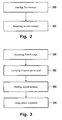
- Fig. 2 shows a flow diagram illustrating basic steps performed by a method of requesting the usage of an option in a tunnel type, wherein the tunnel type is adapted for tunneling internet protocol datagrams in a communications network from a home agent of the communications network to a point of attachment of the mobile node to the communications network, wherein the mobile node is associated with the home agent, and wherein the IP-datagrams are destined for the mobile node.
- a first message is sent from the point of attachment to the home agent, wherein the usage of the option is requested via the first message.
- a second message is received from the home agent, wherein in the second message the usage of the option is approved or denied by the home agent.
- Fig. 3 shows another flow diagram of a method of requesting the usage of an option in the tunnel type, wherein the tunnel type is adapted for tunneling IP-datagrams in a communications network, in particular an IP-network, from a home agent to a point of attachment of a mobile node to the communications network.
- the home agent is a component of the IP-network
- the mobile node is associated with the home agent
- the IP-datagrams are destined for the mobile node.
- step 300 a first message is received. The first message has been sent from the point of attachment and the usage of an option is requested from the point of attachment by said first message.
- step 302 it is verified if the option is provided by the tunnel type and supported by the home agent.
- a second message is sent to the point of attachment, wherein the usage of the option is approved, if the option is provided by the tunnel type and supported by the home agent or wherein the usage of the option is denied if the option is not provided or not supported.
- the option is used in the tunnel type that is employed for tunneling the IP-datagrams to the point of attachment if the option is indeed provided by the tunnel type and supported by the home agent.
Landscapes
- Engineering & Computer Science (AREA)
- Computer Hardware Design (AREA)
- Computer Security & Cryptography (AREA)
- Computing Systems (AREA)
- General Engineering & Computer Science (AREA)
- Computer Networks & Wireless Communication (AREA)
- Signal Processing (AREA)
- Mobile Radio Communication Systems (AREA)
- Data Exchanges In Wide-Area Networks (AREA)
Abstract
Description
- The invention relates to a method of requesting an option to be used in a tunnel type for tunneling IP-datagrams in a communications network from a home agent to a point of attachment of a mobile node. In other aspects the invention relates to a communications network, to a communications network component, to a home agent, and to computer program products that are adapted to perform the method in accordance with the invention.
- The mobile internet protocol standard, also referred to as mobile-IP or as MIP, is an internet engineering taskforce (IETF) standard communications protocol that is designed to allow mobile device users to move from one network to another network while maintaining their permanent IP addresses. Mobile-IP is described in IETF RFC 3344 and RFC 2002.
- In the mobile internet protocol standard, a mobile device is referred to as a mobile node (MN). A mobile node is a node in an IP network that is able to change its access point to the internet by use of mobile-IP. A mobile node keeps always his IP address (also referred to as primary IP address) and is able to communicate uninterruptedly to the internet as long as a connection is established on layer 2. A mobile node must not necessarily be a laptop or mobile station; a mobile node can for example also be an IP router onboard of an aircraft.
- A home network of a mobile node is the (sub) network with which the mobile node is associated according to the IP address of the mobile node. When the mobile node is located in the home network, then support via mobile-IP is not necessary.
- A foreign network (also called visited network) is the actual (sub) network in which the mobile node resides when the mobile node is not located in the home network. In the foreign network, mobile-IP support of the mobile node is required. A foreign agent of the foreign network provides services to the mobile node when it is located in the corresponding foreign network. In view of the internet protocol, the so called care of address (COA) specifies the actual location of the mobile node. The mobile node is addressable in the foreign network via its care of address which is given to the mobile node by the foreign network. The care of address is therefore also sometimes referred to as secondary IP address of the mobile node. The above mentioned care of address can be hosted by the foreign agent or can be hosted by the mobile node itself. The secondary IP address in the latter case (care of address hosted by the mobile node), is also referred to as co-located care of address. In the other case, that is when the care of address is hosted by the foreign agent, the care of address is an IP address of the foreign agent.
- A home agent (HA) of the home network also provides services to the mobile node. The home agent maintains a database in which the home agent keeps track of the care of addresses of all mobile nodes associated with the home agent (mobility binding). Thus the database provides mappings of the actual care of addresses to the primary addresses of mobile nodes that are associated with the home agent.
- A correspondent node (CN) sends data packets which are further also denoted as Internet Protocol (IP)-datagrams to the primary IP address of the mobile node. The data packets are received by the home agent of the mobile node. The home agent is able to identify the care of address of the mobile node by use of the above mentioned database. The data packets are tunneled from the home agent to the point of attachment. The point of attachment refers to the network node which hosts the care of address. As already outlined above, this can either be done by the mobile node directly or the foreign agent. Therefore, the foreign agent is the end point and the home agent is the starting point of the tunnel when the care of address of the mobile node is hosted by the foreign agent. When the care of address is co-located with the mobile node, then the mobile node itself is the end point of the tunnel. From a logical point of view, a tunnel is a (secured) channel for data packets between the starting and the end point. Tunneled IP-datagrams are encapsulated at the starting point of the tunnel and decapsulated at the end point of the tunnel. When the end point of the tunnel is given by the foreign agent, the IP-datagrams are further processed as given in the mobile-IP standard from the foreign agent to the mobile node.
- According to the actual standard, several tunnel types that refer to different ways of encapsulating data are available. When the mobile node has received a care of address from the foreign network it has to register its care of address at its home agent so that the home agent is able to update the above mentioned database. In order to register its care of address, the mobile node sends a registration request message to the home agent by which the mobile node provides its care of address to the home agent. The care of address of the mobile node remains in the database only for a certain amount of time. Thus, the registration request message is not only sent after reception of the care of address, but regularly in order to keep the database updated. The mobile node specifies also in the registration request message which of the tunnel types provided by the mobile-IP standard should be used for tunneling data packets destined for the mobile node from the tunnel starting point to the end point.
- The tunnel technologies, that are specified in the mobile-IP standard provide advanced mechanisms. These mechanisms are also denoted as options. However mobile-IP does not allow to negotiate the usage of these options offered by the tunnel technologies.
- There is therefore a need for an improved method of requesting the usage of options to be used in a tunnel type, for an improved communications network which supports the usage of options in a tunnel type, for a communications network component for requesting a usage of the option, for a home agent that is adapted to be able to use options in a tunnel type, and for a computer program product that is adapted to perform the method in accordance with the invention.
- In one aspect of the invention, there is provided a method of requesting the usage of an option to be used in a tunnel type, wherein the tunnel type is adapted for tunneling internet protocol (IP) datagrams in a communications network from a home agent of the communications network to a point of attachment of a mobile node to the communications network, wherein the mobile node is associated with the home agent, wherein the IP-datagrams are destined for the mobile node. The method in accordance with the invention comprises the step of sending a first message from the point of attachment to the home agent, wherein the first message requests the usage of the option. The method further comprises the step of receiving a second message from the home agent, wherein in the second message the usage of the option is approved or denied by the home agent.
- The request of the usage of the option for a tunnel type that is adapted for tunneling the IP-datagrams from the home agent to the point of attachment has the advantage that the options that are provided by the tunnel type can be actually used in mobile-IP. For instance the option of advanced data integrity by using sequence numbers or deeper flow classification in the home agent with the use of the GRE key can be requested if the underlying tunnel type refers to generic routing encapsulation (GRE).
- In accordance with an embodiment of the invention, the usage of one or more options is requested by use of the first message. The usage of more than one option can therefore be requested by the foreign agent. This provides the advantage that the type of tunnel to be established can be configured or adapted by the foreign agent to a great extent.
- In accordance with an embodiment of the invention, the point of attachment hosts the care of address of the mobile node in accordance with the mobile internet protocol (MIP).
- In accordance with an embodiment of the invention, the mobile node sends a registration request message to the home agent, wherein the tunnel type is specified in the registration request message. The method in accordance with the invention further comprises the step of receiving the registration request message by the point of attachment and the step of generating the first message by adding an extension to the registration request message, wherein the option is specified in the extension, and wherein the option relates to the tunnel type. As mentioned already in the introductory part, the mobile node sends a registration request message to the home agent in order to inform the home agent about its actual care of address. The registration request message is also used by the mobile node in order to specify a tunnel type that is to be used for further tunneling the above mentioned IP-datagrams towards the mobile node. The registration request message is received by the point of attachment which can be ,depending on the host of the care of address, either the mobile node itself or the foreign agent. The first message is then generated by adding an extension to the registration request message. The first message therefore corresponds to the registration request message plus the extension. The option to be used with the tunnel type is such that it relates to the tunnel type already specified in the registration request message.
- In accordance with an embodiment of the invention, the second message comprises a registration response message, wherein the registration response message is generated by the home agent in response to the reception of the registration request message. The home agent informs the mobile node by use of the registration request message about the reception of the registration response message. The second message can therefore be generated from the registration response message by adding an extension to the registration response message in which the usage of the option is approved or denied.
- In accordance with an embodiment of the invention, the point of attachment corresponds to the end point of a tunnel used for tunneling the IP-datagrams, wherein the end point corresponds either to the foreign agent of the communications network or to the mobile node, wherein the foreign agent provides a link between the mobile node and the home agent. Thus, as already mentioned above, the point of attachment can refer to the foreign agent that serves the mobile node when it is located in the foreign network or it can refer to the mobile node itself when the care of address of the mobile node is co-located with the primary IP address of the mobile node.
- In accordance with an embodiment of the invention, the communications network is an IP communications network and the IP communications network is compatible with mobile-IP.
- In accordance with an embodiment of the invention, the tunnel type relates to the options already made available by MIP which are IP encapsulation within IP, minimal encapsulation within IP, and generic routing encapsulation (GRE), as well as to other alternatives that may be added in the future such as multiple protocol label switching (MPLS), or IP security (IPSEC).
- In a second aspect, the invention relates to a method of requesting the usage of an option in a tunnel type, wherein the tunnel type is adapted for tunneling internet protocol (IP) datagrams in a communications network from a home agent of the communications network to a point of attachment of a mobile node to the communications network, wherein the mobile node is associated with the home agent, and wherein the IP-datagrams are destined for the mobile node. The method in accordance with the invention comprises the step of receiving a first message from the point of attachment, wherein the usage of the option in the tunnel type is requested. In a second step, the method comprises verifying if the option can be used in the tunnel type. Then a second message is sent to the point of attachment, wherein the usage of the option is approved if the option can be used with the tunnel type or wherein the usage of the option is denied if the option cannot be used within the tunnel type. In a further step the option is used for tunneling the IP-datagrams to the point of attachment if the option is indeed provided by the tunnel type and implemented in the home agent.
- In a third aspect, the invention relates to a communications network that comprises the home agent and the mobile node, wherein the mobile node is associated with the home agent, wherein the mobile node is attached via a point of attachment to the communications network, and wherein a tunnel type is adapted for tunneling IP-datagrams for the mobile node from the home agent to the point of attachment. The communications network further comprises means for sending a first message from the point of attachment to the home agent, wherein the first message requests the usage of an option within the tunnel type. The communications network further comprises means for receiving the first message from the point of attachment and means for verifying if the option is provided by the tunnel type and implemented in the home agent. The communications network further comprises means for sending a second message to the point of attachment, wherein the usage of the option is approved if the option is provided by the tunnel type and implemented by the home agent, or wherein the usage of the option is denied if the option is not provided by the tunnel type or can be implemented by the home agent. The communications network moreover comprises means for using the option for tunneling the IP-datagrams to the point of attachment and means for receiving the second message.
- In a fourth aspect the invention relates to a communications network component for requesting the usage of an option in a tunnel type, wherein the tunnel type is adapted for tunneling internet protocol datagrams in a communications network from a home agent of the communications network to the communications network component, wherein the mobile node is associated with the home agent, and wherein the IP-datagrams are destined for the mobile node. The component comprises means for sending a first message from the point of attachment to the home agent, wherein the usage of the option is requested by said first message. The component further comprises means for receiving a second message from the home agent, wherein the usage of the option is approved or denied by the home agent via said second message.
- In accordance with an embodiment of the invention, the communication network component relates to the point of attachment of the mobile node to the communications network, wherein the point of attachment relates either to the mobile node or to a foreign agent, wherein the foreign agent provides a link between the mobile node and the home agent. Thus the functionality of the communications network component as described above is implemented in the mobile node or in the foreign agent serving the mobile node.
- In a fifth aspect, the invention relates to a home agent of a communications network. The home agent comprises means for receiving a first message from a point of attachment of a mobile node to the communications network, wherein the mobile node is associated to the home agent, wherein the usage of an option in a tunnel type is requested, wherein the tunnel type is employed for tunneling internet protocol datagrams in the communications network from the home agent to the point of attachment. The home agent further comprises means for verifying if the option is provided by the tunnel type and supported by the home agent. The home agent has also means for sending a second message to the point of attachment. The home agent also comprises means for using the option for tunneling the IP-datagrams.
- In further aspects, the invention relates to computer program products adapted to perform the methods as mentioned above.
- The aspects of the invention described above will become even more apparent from and elucidated with reference to the embodiments described hereinafter.
- In the following preferred embodiments of the invention will be described in greater detail by way of example only making reference to the drawings in which:
- Figure 1
- shows a communications network serving a mobile node,
- Figure 2
- shows a flow diagram illustrating basic steps performed by a method in accordance with the invention, and
- Figure 3
- shows another flow diagram illustrating basic steps performed by a method in accordance with the invention.
- Fig. 1 shows a block diagram of a
communications network 100 serving amobile node 102. Thecommunications network 100 is an IP network that provides support for mobile-IP. Thenetwork 100 comprises aforeign network 104 and ahome network 106. Thehome network 106 and theforeign network 104 are connected via thenetwork connection 112 which is a connection over the internet. - The
mobile node 102 is connected via anetwork connection 114 to theforeign network 104. Thenetwork connection 114 can be a wireless connection, a line based connection, or a mixture of both. Themobile node 102 is associated with thehome network 106 as its primary IP address (not depicted in fig. 1) relates to thehome network 106. - The
home network 106 further provides ahome agent 110 which provides services to themobile node 102. Similarly, theforeign agent 104 comprises aforeign agent 108 that provides services to themobile node 102 when the mobile node is connected via theforeign network 104 to thehome network 106. Theforeign agent 108 and thehome agent 110 are typically hosted by routers that link theforeign network 104, or thehome network 106, respectively, to other networks. For example theforeign agent 108 could be located on a router (not shown) that links theforeign network 104 to thehome network 106, and thehome agent 110 could be located on a router that links thehome network 106, e.g., via thenetwork connection 112, to theforeign network 104. - The
foreign agent 108 and thehome agent 110 can for example be computer program products that are stored permanently on a storage device of the corresponding routers and that are loaded, e.g., during the start-up of the routers, into a microprocessor of the routers. - The
mobile node 102 is addressable in thecommunications network 100 by use of its care of address (COA) 116. The care ofaddress 116 can be hosted by theforeign agent 108. A correspondent node (not shown in fig. 1) sends IP-datagrams 118 to themobile node 102 by use of the primary IP address of the mobile node. The IP-datagrams 118 are therefore intercepted by thehome agent 110 and further routed to the care ofaddress 116 of themobile node 102. For this, the IP-datagrams 118 are tunneled to the point of attachment of themobile node 102 which corresponds to theforeign agent 108 for the above mentioned case when theforeign agent 108 hosts the care ofaddress 116. Atunnel type 120 as for example GRE might by then used for tunneling the IP-datagrams 118. - The
mobile node 102 sends according to the mobile internet protocol standard aregistration request message 126 in order to inform thehome agent 110 about its actual care ofaddress 116 and in order to specify thetunnel type 120 that is to be employed when the IP-datagrams 118 are to be tunneled to the point of attachment of the mobile node. - In operation, the
foreign agent 108 sends afirst message 122 to thehome agent 110 by which the usage of anoption 124 within thetunnel type 120 is requested. Thefirst message 122 is received by thehome agent 110 which then checks if theoption 124 is indeed provided by thetunnel type 120 and supported by thehome agent 110. If this is the case, theoption 124 is used within thetunnel type 120 when the IP-datagrams 118 destined for themobile node 102 are to be tunneled to theforeign agent 108. Thehome agent 110 further sends asecond message 128 in response to the reception of thefirst message 122 in which the usage of theoption 124 in thetunnel type 120 is denied or verified. - When the
foreign agent 108 hosts the care ofaddress 116 of themobile node 102, then theregistration request message 126 is processed via theforeign agent 108. Theforeign agent 108 can thus add an extension to theregistration request message 126 in which theoption 124 which refers to thetunnel type 120 is specified. Thefirst message 122 can therefore correspond to the extendedregistration request message 126 which is then send to thehome agent 106. This provides the advantage that thetunnel type 120 and theoption 124 to be used in the tunnel type are transmitted to thehome agent 110 in a single message. Further theoption 124 can be adapted to relate to thetunnel type 120 as theforeign agent 108 can read out thetunnel type 120 specified in theregistration request message 126 and select theoption 124 accordingly. Theforeign agent 108 might for example be able to access a database in which it is specified which option or which options are to be selected for a given tunnel type. The specifications in the database can be made by a supervisor / administrator of theforeign network 104. - The care of
address 116 can also be hosted directly by themobile node 102. In this case, thefirst message 122 that might correspond to the extendedregistration request message 126 is sent from themobile node 102 to thehome agent 110 and thesecond message 126 is received by themobile node 102. Themobile node 102 represents then the end point of a tunnel that is to be established when the IP-datagrams 118 are to be sent from thehome agent 110 to themobile node 102 by use of thetunnel type 120 in which theoption 124 is employed. - Fig. 2 shows a flow diagram illustrating basic steps performed by a method of requesting the usage of an option in a tunnel type, wherein the tunnel type is adapted for tunneling internet protocol datagrams in a communications network from a home agent of the communications network to a point of attachment of the mobile node to the communications network, wherein the mobile node is associated with the home agent, and wherein the IP-datagrams are destined for the mobile node. In step 200 a first message is sent from the point of attachment to the home agent, wherein the usage of the option is requested via the first message. In step 202 a second message is received from the home agent, wherein in the second message the usage of the option is approved or denied by the home agent.
- Fig. 3 shows another flow diagram of a method of requesting the usage of an option in the tunnel type, wherein the tunnel type is adapted for tunneling IP-datagrams in a communications network, in particular an IP-network, from a home agent to a point of attachment of a mobile node to the communications network. The home agent is a component of the IP-network, the mobile node is associated with the home agent, and the IP-datagrams are destined for the mobile node. In step 300 a first message is received. The first message has been sent from the point of attachment and the usage of an option is requested from the point of attachment by said first message. In
step 302 it is verified if the option is provided by the tunnel type and supported by the home agent. Instep 304, a second message is sent to the point of attachment, wherein the usage of the option is approved, if the option is provided by the tunnel type and supported by the home agent or wherein the usage of the option is denied if the option is not provided or not supported. Instep 306 the option is used in the tunnel type that is employed for tunneling the IP-datagrams to the point of attachment if the option is indeed provided by the tunnel type and supported by the home agent. -
100 Communications network 102 Mobile node 104 Foreign network 106 Home network 108 Foreign agent 110 Home agent 112 Network connection 114 Network connection 116 Care of address 118 IP- datagrams 120 Tunnel type 122 First message 124 Option 126 Registration request message 128 Second message
Claims (10)
- A method of requesting the usage of an option (124) in a tunnel type (120), said tunnel type being adapted for tunneling internet protocol datagrams (118) in a communications network (100) from a home agent (110) of said communications network to a point of attachment (102, 108) of a mobile node (102), said mobile node being associated with the home agent, said IP-datagrams being destined for the mobile node, said method comprising:- sending a first message (122) from the point of attachment to the home agent, wherein the option is specified in said first message;- receiving a second message (128) from said home agent, wherein in said second message the usage of said option (124) in said tunnel type (120) is approved or denied by said home agent.
- The method of claim 1, wherein the point of attachment (102, 108) hosts the care of address (COA) (116) of the mobile node (102) in accordance with the mobile internet protocol standard.
- The method of claim 1, wherein the mobile node (102) sends a registration request message (126) to the home agent, wherein the tunnel type (120) is specified in the registration request message, and wherein the method comprises:- receiving the registration request message by the point of attachment;- generating said first message (122) by adding an extension to the registration request message, wherein said option is specified in said extension, and wherein said option relates to the tunnel type specified in said registration request message.
- The method of claim 1, wherein the point of attachment corresponds to the end point of the tunnel used for tunneling the IP-datagrams (118), wherein said end point corresponds either to a foreign agent (108) of the communications network or to the mobile node (102), wherein said foreign agent provides a link between the mobile node and the home agent.
- A method of requesting the usage of an option (124) in a tunnel type (120), said tunnel type being adapted for tunneling internet protocol datagrams (118) in a communications network (100) from a home agent (110) of said communications network to a point of attachment (102, 108) of a mobile node (102), said mobile node being associated with the home agent (110), said IP-datagrams being destined for the mobile node, said method comprising:- receiving a first message (122) from the point of attachment (102, 108), wherein the usage of the option in the tunnel type is requested;- verifying if the option is provided by the tunnel type and supported by the home agent;- sending a second message (128) to the point of attachment (102, 108), wherein the usage of the option is approved if the option is provided by the tunnel type and supported by the home agent or wherein the usage of the option is denied if the option is not provided or supported;- using the option in the tunnel type (120) adapted for tunneling the IP-datagrams to the point of attachment if the option is provided by the tunnel type and supported by the home agent.
- A communications network comprising:- a home agent (110) and a mobile node (102), said mobile node (102) being associated with the home agent, said mobile node being attached via a point of attachment to the communications network (100), wherein a tunnel type (120) is adapted for tunneling IP-datagrams (118) destined for the mobile node from the home agent to a point of attachment (102, 108) of the mobile node;- means for sending a first message from the point of attachment to the home agent, wherein in the first message the usage of an option within the tunnel type is requested;- means for receiving the first message;- means for verifying if the option (124) is provided by the tunnel type (120) and supported by the home agent (110);- means for sending a second message (128) to the point of attachment, wherein the usage of the option is approved if the option is provided by the tunnel type and supported by the home agent or wherein the usage of the option is denied if the option is not provided or supported;- means for using the option in the tunnel type (120) adapted for tunneling the IP-datagrams (118) to the point of attachment if the option is provided by the tunnel type and supported by the home agent (110);- means for receiving the second message.
- A communications network component for requesting the usage of an option (124) in a tunnel type (120), wherein the tunnel type is adapted for tunneling internet protocol datagrams (118) in a communications network (100) from a home agent (110) of the communication network to the communications network component (108, 102), wherein the mobile node is associated with the home agent, and wherein the IP-datagrams are destined for the mobile node, and wherein said component comprises:- means for sending a first message (122) to the home agent, wherein the usage of said option is requested by said first message;- means for receiving a second message (128) from the home agent, wherein the usage of the option is approved or denied by the second message.
- A home agent (110) of a communications network (100) comprising:- means for receiving a first message (122) from a point of attachment (102, 108) of a mobile node to the communications network, wherein the mobile node is associated to the home agent, wherein the usage of an option (124) in a tunnel type (120) is requested, wherein the tunnel type is adapted for tunneling internet protocol datagrams (118) in the communications network from the home agent to the point of attachment;- means for verifying if the option (124) is provided by the tunnel type (120) and supported by the home agent (110);- means for sending a second message (128) to the point of attachment, wherein in said second message the usage of the option is approved if the option is provided by the tunnel type and supported by the home agent or wherein in the second message the usage of the option is denied if the option is not provided or supported;- means for using the option for tunneling the IP-datagrams to the point of attachment.
- A computer program product for requesting the usage of an option in a tunnel type (120), said tunnel type being adapted for tunneling internet protocol datagrams (118) in a communications network (100) from a home agent (110) of a communications network to a point of attachment (108, 102) of a mobile node (102), said mobile node being associated with said home agent, said IP-datagrams being destined for said mobile node, said computer program product comprising computer executable instructions, said instructions being adapted for performing the steps of:- sending a first message (122) from the point of attachment to the home agent, said first message requesting the usage of the option;- receiving a second message from the home agent, wherein the usage of that option is approved or denied by said second message (128).
- A computer program product for requesting the usage of an option (124) to be used in a tunnel type (120), said tunnel type being adapted for tunneling internet protocol datagrams (118) in a communications network (100) from a home agent (110) of the communications network to a point of attachment (102, 108) of a mobile node, said mobile node (102) being associated with the home agent, said IP-datagrams being destined for the mobile node, said computer program product comprising computer executable instructions, said instructions being adapted to performing the steps of:- receiving a first message (122) from the point of attachment, wherein the usage of the option in the tunnel type is requested;- verifying if the option is provided by the tunnel type and supported by the home agent (110);- sending a second message (128) to the point of attachment, wherein the usage of the option is approved if said option is provided by the tunnel type and supported by the home agent or wherein the usage of the option is denied if the option is not provided or supported;- using the option for tunneling the IP-datagrams to the point of attachment if the option is provided by the tunnel type and supported by the home agent.
Priority Applications (1)
| Application Number | Priority Date | Filing Date | Title |
|---|---|---|---|
| EP06291436.1A EP1898587B1 (en) | 2006-09-08 | 2006-09-08 | A method of requesting an option to be used in a tunnel type |
Applications Claiming Priority (1)
| Application Number | Priority Date | Filing Date | Title |
|---|---|---|---|
| EP06291436.1A EP1898587B1 (en) | 2006-09-08 | 2006-09-08 | A method of requesting an option to be used in a tunnel type |
Publications (2)
| Publication Number | Publication Date |
|---|---|
| EP1898587A1 true EP1898587A1 (en) | 2008-03-12 |
| EP1898587B1 EP1898587B1 (en) | 2016-06-29 |
Family
ID=37591840
Family Applications (1)
| Application Number | Title | Priority Date | Filing Date |
|---|---|---|---|
| EP06291436.1A Not-in-force EP1898587B1 (en) | 2006-09-08 | 2006-09-08 | A method of requesting an option to be used in a tunnel type |
Country Status (1)
| Country | Link |
|---|---|
| EP (1) | EP1898587B1 (en) |
Citations (2)
| Publication number | Priority date | Publication date | Assignee | Title |
|---|---|---|---|---|
| US20040148428A1 (en) * | 2003-01-28 | 2004-07-29 | George Tsirtsis | Methods and apparatus for supporting an internet protocol (IP) version independent mobility management system |
| US20060045049A1 (en) * | 2004-08-30 | 2006-03-02 | Samsung Electronics Co., Ltd. | Handoff system and method between a wireless LAN and mobile communication network |
-
2006
- 2006-09-08 EP EP06291436.1A patent/EP1898587B1/en not_active Not-in-force
Patent Citations (2)
| Publication number | Priority date | Publication date | Assignee | Title |
|---|---|---|---|---|
| US20040148428A1 (en) * | 2003-01-28 | 2004-07-29 | George Tsirtsis | Methods and apparatus for supporting an internet protocol (IP) version independent mobility management system |
| US20060045049A1 (en) * | 2004-08-30 | 2006-03-02 | Samsung Electronics Co., Ltd. | Handoff system and method between a wireless LAN and mobile communication network |
Non-Patent Citations (1)
| Title |
|---|
| PERKINS C ET AL: "IP Mobility Support for IPv4, revised", IETF STANDARD-WORKING-DRAFT, INTERNET ENGINEERING TASK FORCE, IETF, CH, vol. mip4, no. 2, 20 October 2005 (2005-10-20), XP015042522, ISSN: 0000-0004 * |
Also Published As
| Publication number | Publication date |
|---|---|
| EP1898587B1 (en) | 2016-06-29 |
Similar Documents
| Publication | Publication Date | Title |
|---|---|---|
| US8320329B2 (en) | Policy for a roaming terminal based on a home internet protocol (IP) address | |
| US7061887B2 (en) | Multiple mobile IP sessions with dynamically allocated home IP address | |
| US8671209B2 (en) | Mobile terminal management system, network device, and mobile terminal operation control method used for them | |
| US8179840B2 (en) | Method for extending mobile IP and AAA to enable integrated support for local access and roaming access connectivity | |
| US20050195780A1 (en) | IP mobility in mobile telecommunications system | |
| US8289929B2 (en) | Method and apparatus for enabling mobility in mobile IP based wireless communication systems | |
| EP1974524B1 (en) | Telecommunications system and method | |
| JP2002044141A (en) | VPN system and method of setting VPN in mobile IP network | |
| JP2006505154A (en) | Method and apparatus for mobile IP dynamic home agent assignment | |
| AU2008243256A1 (en) | System and method for pushing data in an internet protocol network environment | |
| KR100988186B1 (en) | Dynamic Home Address Allocation Method and Device by Home Agent in Multi-Network Interworking | |
| US9113437B2 (en) | Mobile network operator multihoming and enterprise VPN solution | |
| WO2004043085A2 (en) | Dynamic re-routing of mobile node support in home servers | |
| US20080019330A1 (en) | Dynamic Network Management Apparatus and Dynamic Network Management Method | |
| US8023503B2 (en) | Multi-homing based mobile internet | |
| EP1700430B1 (en) | Method and system for maintaining a secure tunnel in a packet-based communication system | |
| US20080198810A1 (en) | Methods and apparatus for broadcast optimization in mobile ip | |
| CN101330719B (en) | Method for selecting mobile management mode in wireless network | |
| JP2005522967A (en) | Method and apparatus for providing compatibility between wireless communication system elements | |
| EP2095595B1 (en) | Mobile IP proxy | |
| US20050175002A1 (en) | Alternative method to the return routability test to send binding updates to correspondent nodes behind firewalls | |
| WO2007004208A1 (en) | Transfer of secure communication sessions between wireless networks access points | |
| US8561150B2 (en) | Method and system for supporting mobility security in the next generation network | |
| Arkko et al. | Internet protocol version 6 (IPv6) for some second and third generation cellular hosts | |
| EP1898587A1 (en) | A method of requesting an option to be used in a tunnel type |
Legal Events
| Date | Code | Title | Description |
|---|---|---|---|
| PUAI | Public reference made under article 153(3) epc to a published international application that has entered the european phase |
Free format text: ORIGINAL CODE: 0009012 |
|
| 17P | Request for examination filed |
Effective date: 20070424 |
|
| AK | Designated contracting states |
Kind code of ref document: A1 Designated state(s): AT BE BG CH CY CZ DE DK EE ES FI FR GB GR HU IE IS IT LI LT LU LV MC NL PL PT RO SE SI SK TR |
|
| AX | Request for extension of the european patent |
Extension state: AL BA HR MK YU |
|
| AKX | Designation fees paid |
Designated state(s): AT BE BG CH CY CZ DE DK EE ES FI FR GB GR HU IE IS IT LI LT LU LV MC NL PL PT RO SE SI SK TR |
|
| RAP1 | Party data changed (applicant data changed or rights of an application transferred) |
Owner name: ALCATEL LUCENT |
|
| 111Z | Information provided on other rights and legal means of execution |
Free format text: AT BE BG CH CY CZ DE DK EE ES FI FR GB GR HU IE IS IT LI LT LU LV MC NL PL PT RO SE SI SK TR Effective date: 20130410 |
|
| RAP1 | Party data changed (applicant data changed or rights of an application transferred) |
Owner name: ALCATEL LUCENT |
|
| D11X | Information provided on other rights and legal means of execution (deleted) | ||
| GRAP | Despatch of communication of intention to grant a patent |
Free format text: ORIGINAL CODE: EPIDOSNIGR1 |
|
| INTG | Intention to grant announced |
Effective date: 20160314 |
|
| GRAS | Grant fee paid |
Free format text: ORIGINAL CODE: EPIDOSNIGR3 |
|
| GRAA | (expected) grant |
Free format text: ORIGINAL CODE: 0009210 |
|
| AK | Designated contracting states |
Kind code of ref document: B1 Designated state(s): AT BE BG CH CY CZ DE DK EE ES FI FR GB GR HU IE IS IT LI LT LU LV MC NL PL PT RO SE SI SK TR |
|
| REG | Reference to a national code |
Ref country code: GB Ref legal event code: FG4D |
|
| REG | Reference to a national code |
Ref country code: CH Ref legal event code: EP |
|
| REG | Reference to a national code |
Ref country code: AT Ref legal event code: REF Ref document number: 809877 Country of ref document: AT Kind code of ref document: T Effective date: 20160715 |
|
| REG | Reference to a national code |
Ref country code: IE Ref legal event code: FG4D |
|
| REG | Reference to a national code |
Ref country code: DE Ref legal event code: R096 Ref document number: 602006049444 Country of ref document: DE |
|
| REG | Reference to a national code |
Ref country code: FR Ref legal event code: PLFP Year of fee payment: 11 |
|
| REG | Reference to a national code |
Ref country code: LT Ref legal event code: MG4D |
|
| PG25 | Lapsed in a contracting state [announced via postgrant information from national office to epo] |
Ref country code: FI Free format text: LAPSE BECAUSE OF FAILURE TO SUBMIT A TRANSLATION OF THE DESCRIPTION OR TO PAY THE FEE WITHIN THE PRESCRIBED TIME-LIMIT Effective date: 20160629 Ref country code: LT Free format text: LAPSE BECAUSE OF FAILURE TO SUBMIT A TRANSLATION OF THE DESCRIPTION OR TO PAY THE FEE WITHIN THE PRESCRIBED TIME-LIMIT Effective date: 20160629 |
|
| REG | Reference to a national code |
Ref country code: NL Ref legal event code: MP Effective date: 20160629 |
|
| PG25 | Lapsed in a contracting state [announced via postgrant information from national office to epo] |
Ref country code: GR Free format text: LAPSE BECAUSE OF FAILURE TO SUBMIT A TRANSLATION OF THE DESCRIPTION OR TO PAY THE FEE WITHIN THE PRESCRIBED TIME-LIMIT Effective date: 20160930 Ref country code: NL Free format text: LAPSE BECAUSE OF FAILURE TO SUBMIT A TRANSLATION OF THE DESCRIPTION OR TO PAY THE FEE WITHIN THE PRESCRIBED TIME-LIMIT Effective date: 20160629 Ref country code: SE Free format text: LAPSE BECAUSE OF FAILURE TO SUBMIT A TRANSLATION OF THE DESCRIPTION OR TO PAY THE FEE WITHIN THE PRESCRIBED TIME-LIMIT Effective date: 20160629 Ref country code: LV Free format text: LAPSE BECAUSE OF FAILURE TO SUBMIT A TRANSLATION OF THE DESCRIPTION OR TO PAY THE FEE WITHIN THE PRESCRIBED TIME-LIMIT Effective date: 20160629 |
|
| REG | Reference to a national code |
Ref country code: AT Ref legal event code: MK05 Ref document number: 809877 Country of ref document: AT Kind code of ref document: T Effective date: 20160629 |
|
| PG25 | Lapsed in a contracting state [announced via postgrant information from national office to epo] |
Ref country code: SK Free format text: LAPSE BECAUSE OF FAILURE TO SUBMIT A TRANSLATION OF THE DESCRIPTION OR TO PAY THE FEE WITHIN THE PRESCRIBED TIME-LIMIT Effective date: 20160629 Ref country code: EE Free format text: LAPSE BECAUSE OF FAILURE TO SUBMIT A TRANSLATION OF THE DESCRIPTION OR TO PAY THE FEE WITHIN THE PRESCRIBED TIME-LIMIT Effective date: 20160629 Ref country code: IT Free format text: LAPSE BECAUSE OF FAILURE TO SUBMIT A TRANSLATION OF THE DESCRIPTION OR TO PAY THE FEE WITHIN THE PRESCRIBED TIME-LIMIT Effective date: 20160629 Ref country code: IS Free format text: LAPSE BECAUSE OF FAILURE TO SUBMIT A TRANSLATION OF THE DESCRIPTION OR TO PAY THE FEE WITHIN THE PRESCRIBED TIME-LIMIT Effective date: 20161029 Ref country code: RO Free format text: LAPSE BECAUSE OF FAILURE TO SUBMIT A TRANSLATION OF THE DESCRIPTION OR TO PAY THE FEE WITHIN THE PRESCRIBED TIME-LIMIT Effective date: 20160629 Ref country code: CZ Free format text: LAPSE BECAUSE OF FAILURE TO SUBMIT A TRANSLATION OF THE DESCRIPTION OR TO PAY THE FEE WITHIN THE PRESCRIBED TIME-LIMIT Effective date: 20160629 |
|
| PG25 | Lapsed in a contracting state [announced via postgrant information from national office to epo] |
Ref country code: AT Free format text: LAPSE BECAUSE OF FAILURE TO SUBMIT A TRANSLATION OF THE DESCRIPTION OR TO PAY THE FEE WITHIN THE PRESCRIBED TIME-LIMIT Effective date: 20160629 Ref country code: BE Free format text: LAPSE BECAUSE OF NON-PAYMENT OF DUE FEES Effective date: 20160629 Ref country code: ES Free format text: LAPSE BECAUSE OF FAILURE TO SUBMIT A TRANSLATION OF THE DESCRIPTION OR TO PAY THE FEE WITHIN THE PRESCRIBED TIME-LIMIT Effective date: 20160629 Ref country code: PT Free format text: LAPSE BECAUSE OF FAILURE TO SUBMIT A TRANSLATION OF THE DESCRIPTION OR TO PAY THE FEE WITHIN THE PRESCRIBED TIME-LIMIT Effective date: 20161031 Ref country code: PL Free format text: LAPSE BECAUSE OF FAILURE TO SUBMIT A TRANSLATION OF THE DESCRIPTION OR TO PAY THE FEE WITHIN THE PRESCRIBED TIME-LIMIT Effective date: 20160629 |
|
| REG | Reference to a national code |
Ref country code: DE Ref legal event code: R097 Ref document number: 602006049444 Country of ref document: DE |
|
| PG25 | Lapsed in a contracting state [announced via postgrant information from national office to epo] |
Ref country code: MC Free format text: LAPSE BECAUSE OF FAILURE TO SUBMIT A TRANSLATION OF THE DESCRIPTION OR TO PAY THE FEE WITHIN THE PRESCRIBED TIME-LIMIT Effective date: 20160629 |
|
| REG | Reference to a national code |
Ref country code: CH Ref legal event code: PL |
|
| PLBE | No opposition filed within time limit |
Free format text: ORIGINAL CODE: 0009261 |
|
| STAA | Information on the status of an ep patent application or granted ep patent |
Free format text: STATUS: NO OPPOSITION FILED WITHIN TIME LIMIT |
|
| PG25 | Lapsed in a contracting state [announced via postgrant information from national office to epo] |
Ref country code: DK Free format text: LAPSE BECAUSE OF FAILURE TO SUBMIT A TRANSLATION OF THE DESCRIPTION OR TO PAY THE FEE WITHIN THE PRESCRIBED TIME-LIMIT Effective date: 20160629 |
|
| 26N | No opposition filed |
Effective date: 20170330 |
|
| REG | Reference to a national code |
Ref country code: IE Ref legal event code: MM4A |
|
| PG25 | Lapsed in a contracting state [announced via postgrant information from national office to epo] |
Ref country code: CH Free format text: LAPSE BECAUSE OF NON-PAYMENT OF DUE FEES Effective date: 20160930 Ref country code: IE Free format text: LAPSE BECAUSE OF NON-PAYMENT OF DUE FEES Effective date: 20160908 Ref country code: LI Free format text: LAPSE BECAUSE OF NON-PAYMENT OF DUE FEES Effective date: 20160930 |
|
| PG25 | Lapsed in a contracting state [announced via postgrant information from national office to epo] |
Ref country code: SI Free format text: LAPSE BECAUSE OF FAILURE TO SUBMIT A TRANSLATION OF THE DESCRIPTION OR TO PAY THE FEE WITHIN THE PRESCRIBED TIME-LIMIT Effective date: 20160629 Ref country code: BG Free format text: LAPSE BECAUSE OF FAILURE TO SUBMIT A TRANSLATION OF THE DESCRIPTION OR TO PAY THE FEE WITHIN THE PRESCRIBED TIME-LIMIT Effective date: 20160929 Ref country code: LU Free format text: LAPSE BECAUSE OF NON-PAYMENT OF DUE FEES Effective date: 20160908 |
|
| REG | Reference to a national code |
Ref country code: FR Ref legal event code: PLFP Year of fee payment: 12 |
|
| PG25 | Lapsed in a contracting state [announced via postgrant information from national office to epo] |
Ref country code: CY Free format text: LAPSE BECAUSE OF FAILURE TO SUBMIT A TRANSLATION OF THE DESCRIPTION OR TO PAY THE FEE WITHIN THE PRESCRIBED TIME-LIMIT Effective date: 20160629 Ref country code: HU Free format text: LAPSE BECAUSE OF FAILURE TO SUBMIT A TRANSLATION OF THE DESCRIPTION OR TO PAY THE FEE WITHIN THE PRESCRIBED TIME-LIMIT; INVALID AB INITIO Effective date: 20060908 |
|
| PG25 | Lapsed in a contracting state [announced via postgrant information from national office to epo] |
Ref country code: TR Free format text: LAPSE BECAUSE OF FAILURE TO SUBMIT A TRANSLATION OF THE DESCRIPTION OR TO PAY THE FEE WITHIN THE PRESCRIBED TIME-LIMIT Effective date: 20160629 |
|
| REG | Reference to a national code |
Ref country code: FR Ref legal event code: PLFP Year of fee payment: 13 |
|
| PGFP | Annual fee paid to national office [announced via postgrant information from national office to epo] |
Ref country code: FR Payment date: 20210812 Year of fee payment: 16 |
|
| REG | Reference to a national code |
Ref country code: DE Ref legal event code: R079 Ref document number: 602006049444 Country of ref document: DE Free format text: PREVIOUS MAIN CLASS: H04L0029060000 Ipc: H04L0065000000 |
|
| PGFP | Annual fee paid to national office [announced via postgrant information from national office to epo] |
Ref country code: DE Payment date: 20210803 Year of fee payment: 16 Ref country code: GB Payment date: 20210805 Year of fee payment: 16 |
|
| REG | Reference to a national code |
Ref country code: DE Ref legal event code: R119 Ref document number: 602006049444 Country of ref document: DE |
|
| GBPC | Gb: european patent ceased through non-payment of renewal fee |
Effective date: 20220908 |
|
| PG25 | Lapsed in a contracting state [announced via postgrant information from national office to epo] |
Ref country code: FR Free format text: LAPSE BECAUSE OF NON-PAYMENT OF DUE FEES Effective date: 20220930 Ref country code: DE Free format text: LAPSE BECAUSE OF NON-PAYMENT OF DUE FEES Effective date: 20230401 |
|
| PG25 | Lapsed in a contracting state [announced via postgrant information from national office to epo] |
Ref country code: GB Free format text: LAPSE BECAUSE OF NON-PAYMENT OF DUE FEES Effective date: 20220908 |