EP1898347A1 - Handheld electronic device having service-specific message management feature support and associated method - Google Patents
Handheld electronic device having service-specific message management feature support and associated method Download PDFInfo
- Publication number
- EP1898347A1 EP1898347A1 EP06120024A EP06120024A EP1898347A1 EP 1898347 A1 EP1898347 A1 EP 1898347A1 EP 06120024 A EP06120024 A EP 06120024A EP 06120024 A EP06120024 A EP 06120024A EP 1898347 A1 EP1898347 A1 EP 1898347A1
- Authority
- EP
- European Patent Office
- Prior art keywords
- electronic device
- electronic mail
- features
- handheld electronic
- handheld
- Prior art date
- Legal status (The legal status is an assumption and is not a legal conclusion. Google has not performed a legal analysis and makes no representation as to the accuracy of the status listed.)
- Ceased
Links
Images

Classifications
-
- G—PHYSICS
- G06—COMPUTING OR CALCULATING; COUNTING
- G06Q—INFORMATION AND COMMUNICATION TECHNOLOGY [ICT] SPECIALLY ADAPTED FOR ADMINISTRATIVE, COMMERCIAL, FINANCIAL, MANAGERIAL OR SUPERVISORY PURPOSES; SYSTEMS OR METHODS SPECIALLY ADAPTED FOR ADMINISTRATIVE, COMMERCIAL, FINANCIAL, MANAGERIAL OR SUPERVISORY PURPOSES, NOT OTHERWISE PROVIDED FOR
- G06Q10/00—Administration; Management
- G06Q10/10—Office automation; Time management
- G06Q10/107—Computer-aided management of electronic mailing [e-mailing]
Definitions
- the disclosed and claimed concept relates generally to handheld electronic devices and, more particularly, to a method for processing electronic mail messages on a handheld electronic device using the supported features of an electronic mail service, and synchronizing the electronic mail service to reflect the processed electronic mail messages on the handheld electronic device.
- handheld electronic devices Numerous types of handheld electronic devices are known. Examples of such handheld devices include, for instance, personal data assistants (PDAs), handheld computers, two-way pagers, cellular telephones, and the like. Many handheld electronic devices also feature wireless communication capability, although many such handheld devices are stand-alone devices that are functional without communication with other devices.
- PDAs personal data assistants
- handheld computers two-way pagers
- cellular telephones and the like.
- Many handheld electronic devices also feature wireless communication capability, although many such handheld devices are stand-alone devices that are functional without communication with other devices.
- a handheld electronic device does have wireless communication capabilities, then the handheld electronic device will most likely have the ability to send and receive electronic messages (e.g. e-mail). Many of these handheld electronic devices receive electronic messages from one or more electronic mail services, which have various ways (features) to manage (e.g. filter, sort, store, and classify) electronic messages, via "push" or "pull" technology.
- the handheld electronic device often does not have the capability to manage the electronic messages using the features of the electronic mail service from which the electronic message originated.
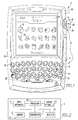
- FIG. 1 is a top plan view of an embodiment of the handheld electronic device
- FIG. 1a is a top plan view of another embodiment of the handheld electronic device
- FIG. 2 is a schematic depiction of the handheld electronic device of FIGS. 1 and 1a;
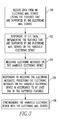
- FIG. 3 is a flowchart depicting an embodiment of the disclosed and claimed concept.
- a number means one or an integer greater than one ( i.e ., a plurality).
- electronic mail message or variations thereof shall refer broadly to a data file that comprises text and/or non-text components that are transmitted between electronic devices that include, but not limited to, computers, cellular telephones, handheld electronic devices, and personal data assistants.
- FIGS. 1 and 1a Two embodiments of a handheld electronic device 2 is depicted generally in FIGS. 1 and 1a.
- the handheld electronic device of FIGS. 1 and 1a is depicted schematically in FIG. 2.
- the handheld electronic device 2 includes a housing 4 upon which are disposed a processor unit that includes an input apparatus 6, an output apparatus 8, a processor 10, a memory 12, a transmitter 13, and a receiver 15.
- the processor 10 may be, for instance, and without limitation, a microprocessor ( ⁇ P) and is responsive to inputs from the input apparatus 6 and provides output signals to the output apparatus 8.
- the processor 10 also interfaces with the memory 12 which, as will be discussed in greater detail below, contains one or more routines that are adapted to implement one or more features that are stored in the handheld electronic device's 2 memory 12.
- the processor 10 and the memory 12 together form a processor apparatus.
- the input apparatus 6 includes a keypad 14 and a navigational input 16.
- the keypad 14 is in the exemplary form of a QWERTY keyboard including a plurality of keys 18 that serve as input members.
- the keypad 14 includes an ⁇ ALT> key 20 AND an ⁇ ENTER> key 22.
- the keypad 14 may be of other configurations, such as an AZERTY keyboard, a reduced QWERTY keyboard, a QWERTZ keyboard or another keyboard arrangement, whether presently known or unknown.
- the keys 18 are located on a front face 24 of the housing 4, and the navigational input 16, which in this embodiment is a trackwheel 25, is disposed on a side 26 of the housing 4.
- the trackwheel 25 can serve as another input member since the trackwheel 25 is capable of being rotated, as indicated by arrow 28, and depressed generally toward the housing 4, as indicated by arrow 30.
- Rotation of the trackwheel 25 provides a navigation input, while depression of the trackwheel 25 provides a selection input. For example, if a cursor 32 is located over a given program icon 34, that program will be launched when the trackwheel 25 is depressed.
- the handheld electronic device 2 of this figure has a keypad 14 that is in the form of a reduced QWERTY keyboard which has a plurality of keys 18 that serve as input members.
- the navigational input 16 is not disposed on a side 26 of the housing 4. Rather, the navigational input 16, which is a trackball 36, is disposed on the front face 24 of the housing 4.
- the trackball 36 is rotatable thereby allowing for the navigation of the cursor 32, which is displayed on the output apparatus 8, in various directions including up, down, left, right, and any combination thereof.
- the trackball 36 can also be depressed. When the trackball 36 is depressed, a selection is made based upon the current location of the cursor 32. Accordingly, rotation of the trackball 36 can navigate the cursor 32 over a particular program icon 34, while depression of the trackball 36 can launch the program.
- the memory 12 can be any of a variety of types of internal and/or external storage media such as, without limitation, RAM, ROM, EPROM(s), EEPROM(s), and the like that provide a storage register for data storage such as in the fashion of an internal storage area of a computer, and can be volatile memory or nonvolatile memory.
- the memory 12 is in electronic communication with the processor 10.
- the memory 12 additionally can include one or more routines depicted generally with the numeral 38 for the processing of data.
- the routines 38 can be in any of a variety of forms such as, without limitation, software, firmware, and the like.
- the features that are supported by an electronic mail service are stored or programmed into the handheld electronic device's 2 memory 12 awaiting implementation by the handheld electronic device 2. If the features that are supported by an electronic mail service are changed or updated, then the memory 12 on the handheld electronic device 2 can be updated to reflect those changes thereby allowing the handheld electronic device 2 to process electronic messages that originate from the electronic mail service using the electronic mail service's most recent set of features.
- the handheld electronic device's 2 memory 12 can be updated through a variety of ways including, but without limitation, the installation of firmware and/or software updates.
- the firmware and/or software updates can either be installed manually by the user of the handheld electronic device 2 or they can be installed automatically when the handheld electronic device 2 registers (i.e. connects) with a wireless network.
- the disclosed and claimed concept enables a handheld electronic device 2 to process electronic messages that have been received on the handheld electronic device 2 using the features of the electronic mail service from which the electronic messages originated. This is accomplished by having the handheld electronic device 2 receive data from an electronic mail service that lists the features that are supported by the electronic mail service, and initiating a routine 32 that implements the supported features on the handheld electronic device 2. Once the features have been implemented, the handheld electronic device, upon receiving electronic messages that originate from the electronic mail service, will have the capability to process the electronic messages using the features that are supported by the electronic mail service. After the electronic messages have been processed on the handheld electronic device 2, the handheld electronic device 2 can synchronize with the electronic mail service so that any changes made to the electronic messages on the handheld electronic device 2 are also reflected in the electronic mail service.
- the handheld electronic device 2 is structured to receive data from one or more electronic mail services that lists the features that are supported by the electronic mail service. For instance, the handheld electronic device 2 would receive from a first electronic mail service, in a format that can be read by the handheld electronic device 2, the following data: Table 1: Features Supported by the electronic mail service Not Supported by the electronic mail service Read or Unread (system defined flags) X Hierarchical Folders X Non-Hierarchical Boolean Flags X User Defined Flags X Create Folders X Move Folders X Delete Folders X
- the handheld electronic device 2 When the handheld electronic device 2 receives the data in Table 1, which lists the features that are supported by the first electronic mail service, from the first electronic mail service, the handheld electronic device will implement the supported features by initiating a routine that activates the features from memory 12. Once the features have been implemented, the handheld electronic device 2 has the capability to process electronic messages that originate from the first electronic mail service using the features that are supported by the first electronic mail service found in Table 1. For example, the electronic messages that were received from the first electronic mail service could be organized on the handheld electronic device 2 into hierarchical folders or marked as "read” or "unread".
- the handheld electronic device 2 can also receive data from a second electronic mail service that lists, for example, the following supported features: Table 2: Features Supported by the electronic mail service Not Supported by the electronic mail service Read and Unread (system defined flags) X Hierarchical Folders X Non-Hierarchical Boolean Flags X User Defined Flags X Create Folders X Move Folders X Delete Folders X
- the handheld electronic device 2 When the handheld electronic device 2 receives the data that is listed in Table 2 from the second electronic mail service, the handheld electronic device 2 will implement the supported features by activating the features from memory 12. Accordingly, when the handheld electronic device 2 receives electronic messages that originate from the second electronic mail service, the handheld electronic device 2 is able to process the electronic message in accordance with the features that are supported by the second electronic mail service. For instance, the electronic messages that are received from the second electronic mail device could be marked as "read” or "unread” or the electronic messages could be marked with non-hierarchical Boolean flags. It should be noted, however, that the handheld electronic device 2 will not be able to process electronic messages that originate from the second electronic mail service using all of the features that are supported by the first electronic mail service (e.g. hierarchical folders) since the second electronic mail service does not support some of the features that are supported by the first electronic mail service.
- the first electronic mail service e.g. hierarchical folders
- the handheld electronic device 2 After an electronic message has been processed on the handheld electronic device 2, the handheld electronic device 2 will send data to the electronic mail service from which the electronic message originated in order to synchronize the electronic mail service with the changes made to the electronic message on the handheld electronic device 2. For example, if an electronic message is organized into a hierarchical folder on the handheld electronic device 2, then the handheld electronic device 2 will transmit data to the electronic mail service that synchronizes the electronic mail service with the handheld electronic device 2. Accordingly, the electronic message will also be organized into a corresponding hierarchical folder in the electronic mail service.
- the data that lists the features that are supported by an electronic mail service can be transmitted to the handheld electronic device 2 in a variety of ways. For instance, the data could be appended to an electronic message that is being transmitted to the handheld electronic device 2 from the electronic mail service or the data can be transmitted to the handheld electronic device 2 prior receiving the electronic message.
- the handheld electronic device 2 receives data from the electronic mail service which lists the features that are supported by the electronic mail service. Once the data has been received, the handheld electronic device 2, as at step 102, a routine is automatically initiated that activates the features on the handheld electronic device 2.
- the handheld electronic device receives an electronic message, as at step 104, the handheld electronic device will have the capability of processing, as at step 106, the electronic message in accordance with at least one of the activated features.
- the handheld electronic device is synchronized, as at step 108, with the electronic mail service which ensures that any changes made to the electronic message on the handheld electronic device 2 is reflected in the electronic mail service. For example, if an electronic message is organized into a hierarchical folder on the handheld electronic device 2, the corresponding electronic message that is stored in the electronic mail service will also be organized into a corresponding hierarchical folder when the handheld electronic device is synchronized with the electronic mail service.
- any processing changes made to an electronic message on the electronic mail service is reflected on the handheld electronic device 2 by synchronizing the handheld electronic device 2 to the electronic mail service. For example, if an electronic message is marked with a user defined flag, such as "Friend", on the electronic mail service, the corresponding electronic message that is stored in the handheld electronic device 2 will also be marked with the user defined flag "Friend" when the handheld electronic device 2 is synchronized with the electronic mail service.
- a user defined flag such as "Friend”
Landscapes
- Engineering & Computer Science (AREA)
- Business, Economics & Management (AREA)
- Human Resources & Organizations (AREA)
- Entrepreneurship & Innovation (AREA)
- Strategic Management (AREA)
- Marketing (AREA)
- Data Mining & Analysis (AREA)
- Economics (AREA)
- Computer Hardware Design (AREA)
- Operations Research (AREA)
- Quality & Reliability (AREA)
- Tourism & Hospitality (AREA)
- Physics & Mathematics (AREA)
- General Business, Economics & Management (AREA)
- General Physics & Mathematics (AREA)
- Theoretical Computer Science (AREA)
- Information Transfer Between Computers (AREA)
Abstract
Description
- The disclosed and claimed concept relates generally to handheld electronic devices and, more particularly, to a method for processing electronic mail messages on a handheld electronic device using the supported features of an electronic mail service, and synchronizing the electronic mail service to reflect the processed electronic mail messages on the handheld electronic device.
- Numerous types of handheld electronic devices are known. Examples of such handheld devices include, for instance, personal data assistants (PDAs), handheld computers, two-way pagers, cellular telephones, and the like. Many handheld electronic devices also feature wireless communication capability, although many such handheld devices are stand-alone devices that are functional without communication with other devices.
- If a handheld electronic device does have wireless communication capabilities, then the handheld electronic device will most likely have the ability to send and receive electronic messages (e.g. e-mail). Many of these handheld electronic devices receive electronic messages from one or more electronic mail services, which have various ways (features) to manage (e.g. filter, sort, store, and classify) electronic messages, via "push" or "pull" technology. When the electronic messages are received by the handheld electronic device from an electronic mail service, however, the handheld electronic device often does not have the capability to manage the electronic messages using the features of the electronic mail service from which the electronic message originated.
- A full understanding of the disclosed and claimed concept can be gained from the following Description when read in conjunction with the accompanying drawings in which:
- FIG. 1 is a top plan view of an embodiment of the handheld electronic device;
- FIG. 1a is a top plan view of another embodiment of the handheld electronic device;
- FIG. 2 is a schematic depiction of the handheld electronic device of FIGS. 1 and 1a; and
- FIG. 3 is a flowchart depicting an embodiment of the disclosed and claimed concept.
- As used herein, the phrase "a number" or variations thereof means one or an integer greater than one (i.e., a plurality).
- As used herein, the phrase "electronic mail message" or variations thereof shall refer broadly to a data file that comprises text and/or non-text components that are transmitted between electronic devices that include, but not limited to, computers, cellular telephones, handheld electronic devices, and personal data assistants.
- Directional phrases used herein, such as, for example, upper, lower, left, right, vertical, horizontal, top, bottom, above, beneath, clockwise, counterclockwise and derivatives thereof, relate to the orientation of the elements shown in the drawings and are not limiting upon the claims unless expressly recited therein.
- Two embodiments of a handheld
electronic device 2 is depicted generally in FIGS. 1 and 1a. The handheld electronic device of FIGS. 1 and 1a is depicted schematically in FIG. 2. The handheldelectronic device 2 includes ahousing 4 upon which are disposed a processor unit that includes aninput apparatus 6, anoutput apparatus 8, aprocessor 10, amemory 12, atransmitter 13, and areceiver 15. Theprocessor 10 may be, for instance, and without limitation, a microprocessor (µP) and is responsive to inputs from theinput apparatus 6 and provides output signals to theoutput apparatus 8. Theprocessor 10 also interfaces with thememory 12 which, as will be discussed in greater detail below, contains one or more routines that are adapted to implement one or more features that are stored in the handheld electronic device's 2memory 12. Theprocessor 10 and thememory 12 together form a processor apparatus. - Referring to FIG. 1, the
input apparatus 6 includes akeypad 14 and anavigational input 16. Thekeypad 14 is in the exemplary form of a QWERTY keyboard including a plurality ofkeys 18 that serve as input members. For instance, thekeypad 14 includes an <ALT>key 20 AND an <ENTER>key 22. It is noted, however, that thekeypad 14 may be of other configurations, such as an AZERTY keyboard, a reduced QWERTY keyboard, a QWERTZ keyboard or another keyboard arrangement, whether presently known or unknown. - The
keys 18 are located on afront face 24 of thehousing 4, and thenavigational input 16, which in this embodiment is atrackwheel 25, is disposed on aside 26 of thehousing 4. In addition to thekeys 18, thetrackwheel 25 can serve as another input member since thetrackwheel 25 is capable of being rotated, as indicated byarrow 28, and depressed generally toward thehousing 4, as indicated byarrow 30. Rotation of thetrackwheel 25 provides a navigation input, while depression of thetrackwheel 25 provides a selection input. For example, if acursor 32 is located over a givenprogram icon 34, that program will be launched when thetrackwheel 25 is depressed. - Referring to FIG. 1a, unlike the handheld
electronic device 2 that is depicted in FIG. 1, the handheldelectronic device 2 of this figure has akeypad 14 that is in the form of a reduced QWERTY keyboard which has a plurality ofkeys 18 that serve as input members. In this embodiment of the handheldelectronic device 2, thenavigational input 16 is not disposed on aside 26 of thehousing 4. Rather, thenavigational input 16, which is atrackball 36, is disposed on thefront face 24 of thehousing 4. Thetrackball 36 is rotatable thereby allowing for the navigation of thecursor 32, which is displayed on theoutput apparatus 8, in various directions including up, down, left, right, and any combination thereof. Moreover, thetrackball 36 can also be depressed. When thetrackball 36 is depressed, a selection is made based upon the current location of thecursor 32. Accordingly, rotation of thetrackball 36 can navigate thecursor 32 over aparticular program icon 34, while depression of thetrackball 36 can launch the program. - Referring to FIG. 2, the
memory 12 can be any of a variety of types of internal and/or external storage media such as, without limitation, RAM, ROM, EPROM(s), EEPROM(s), and the like that provide a storage register for data storage such as in the fashion of an internal storage area of a computer, and can be volatile memory or nonvolatile memory. As can be seen from FIG. 2, thememory 12 is in electronic communication with theprocessor 10. Thememory 12 additionally can include one or more routines depicted generally with the numeral 38 for the processing of data. The routines 38 can be in any of a variety of forms such as, without limitation, software, firmware, and the like. - As will be discussed in greater detail below, the features that are supported by an electronic mail service are stored or programmed into the handheld electronic device's 2
memory 12 awaiting implementation by the handheldelectronic device 2. If the features that are supported by an electronic mail service are changed or updated, then thememory 12 on the handheldelectronic device 2 can be updated to reflect those changes thereby allowing the handheldelectronic device 2 to process electronic messages that originate from the electronic mail service using the electronic mail service's most recent set of features. The handheld electronic device's 2memory 12 can be updated through a variety of ways including, but without limitation, the installation of firmware and/or software updates. The firmware and/or software updates can either be installed manually by the user of the handheldelectronic device 2 or they can be installed automatically when the handheldelectronic device 2 registers (i.e. connects) with a wireless network. - The disclosed and claimed concept enables a handheld
electronic device 2 to process electronic messages that have been received on the handheldelectronic device 2 using the features of the electronic mail service from which the electronic messages originated. This is accomplished by having the handheldelectronic device 2 receive data from an electronic mail service that lists the features that are supported by the electronic mail service, and initiating aroutine 32 that implements the supported features on the handheldelectronic device 2. Once the features have been implemented, the handheld electronic device, upon receiving electronic messages that originate from the electronic mail service, will have the capability to process the electronic messages using the features that are supported by the electronic mail service. After the electronic messages have been processed on the handheldelectronic device 2, the handheldelectronic device 2 can synchronize with the electronic mail service so that any changes made to the electronic messages on the handheldelectronic device 2 are also reflected in the electronic mail service. - In accordance with one embodiment of the disclosed and claimed concept, the handheld
electronic device 2 is structured to receive data from one or more electronic mail services that lists the features that are supported by the electronic mail service. For instance, the handheldelectronic device 2 would receive from a first electronic mail service, in a format that can be read by the handheldelectronic device 2, the following data:Table 1: Features Supported by the electronic mail service Not Supported by the electronic mail service Read or Unread (system defined flags) X Hierarchical Folders X Non-Hierarchical Boolean Flags X User Defined Flags X Create Folders X Move Folders X Delete Folders X - When the handheld
electronic device 2 receives the data in Table 1, which lists the features that are supported by the first electronic mail service, from the first electronic mail service, the handheld electronic device will implement the supported features by initiating a routine that activates the features frommemory 12. Once the features have been implemented, the handheldelectronic device 2 has the capability to process electronic messages that originate from the first electronic mail service using the features that are supported by the first electronic mail service found in Table 1. For example, the electronic messages that were received from the first electronic mail service could be organized on the handheldelectronic device 2 into hierarchical folders or marked as "read" or "unread". - The handheld
electronic device 2 can also receive data from a second electronic mail service that lists, for example, the following supported features:Table 2: Features Supported by the electronic mail service Not Supported by the electronic mail service Read and Unread (system defined flags) X Hierarchical Folders X Non-Hierarchical Boolean Flags X User Defined Flags X Create Folders X Move Folders X Delete Folders X - When the handheld
electronic device 2 receives the data that is listed in Table 2 from the second electronic mail service, the handheldelectronic device 2 will implement the supported features by activating the features frommemory 12. Accordingly, when the handheldelectronic device 2 receives electronic messages that originate from the second electronic mail service, the handheldelectronic device 2 is able to process the electronic message in accordance with the features that are supported by the second electronic mail service. For instance, the electronic messages that are received from the second electronic mail device could be marked as "read" or "unread" or the electronic messages could be marked with non-hierarchical Boolean flags. It should be noted, however, that the handheldelectronic device 2 will not be able to process electronic messages that originate from the second electronic mail service using all of the features that are supported by the first electronic mail service (e.g. hierarchical folders) since the second electronic mail service does not support some of the features that are supported by the first electronic mail service. - After an electronic message has been processed on the handheld
electronic device 2, the handheldelectronic device 2 will send data to the electronic mail service from which the electronic message originated in order to synchronize the electronic mail service with the changes made to the electronic message on the handheldelectronic device 2. For example, if an electronic message is organized into a hierarchical folder on the handheldelectronic device 2, then the handheldelectronic device 2 will transmit data to the electronic mail service that synchronizes the electronic mail service with the handheldelectronic device 2. Accordingly, the electronic message will also be organized into a corresponding hierarchical folder in the electronic mail service. - The data that lists the features that are supported by an electronic mail service can be transmitted to the handheld
electronic device 2 in a variety of ways. For instance, the data could be appended to an electronic message that is being transmitted to the handheldelectronic device 2 from the electronic mail service or the data can be transmitted to the handheldelectronic device 2 prior receiving the electronic message. - Referring to FIG. 3, this figure depicts a flowchart of one embodiment of the disclosed concept. As can be seen from this figure, the handheld
electronic device 2, atstep 100, receives data from the electronic mail service which lists the features that are supported by the electronic mail service. Once the data has been received, the handheldelectronic device 2, as atstep 102, a routine is automatically initiated that activates the features on the handheldelectronic device 2. When the handheld electronic device receives an electronic message, as atstep 104, the handheld electronic device will have the capability of processing, as atstep 106, the electronic message in accordance with at least one of the activated features. After the electronic message has been processed on the handheldelectronic device 2, the handheld electronic device is synchronized, as atstep 108, with the electronic mail service which ensures that any changes made to the electronic message on the handheldelectronic device 2 is reflected in the electronic mail service. For example, if an electronic message is organized into a hierarchical folder on the handheldelectronic device 2, the corresponding electronic message that is stored in the electronic mail service will also be organized into a corresponding hierarchical folder when the handheld electronic device is synchronized with the electronic mail service. - In another embodiment of the disclosed concept, any processing changes made to an electronic message on the electronic mail service is reflected on the handheld
electronic device 2 by synchronizing the handheldelectronic device 2 to the electronic mail service. For example, if an electronic message is marked with a user defined flag, such as "Friend", on the electronic mail service, the corresponding electronic message that is stored in the handheldelectronic device 2 will also be marked with the user defined flag "Friend" when the handheldelectronic device 2 is synchronized with the electronic mail service. - While specific embodiments of the disclosed and claimed concept have been described in detail, it will be appreciated by those skilled in the art that various modifications and alternatives to those details could be developed in light of the overall teachings of the disclosure. Accordingly, the particular arrangements disclosed are meant to be illustrative only and not limiting as to the scope of the disclosed and claimed concept which is to be given the full breadth of the claims appended and any and all equivalents thereof.
Claims (9)
- A method of processing a number of electronic mail messages on a handheld electronic device, comprising:receiving from an electronic mail service data that lists a number of features that are supported by said electronic mail service;implementing at least one of said number of features on said handheld electronic device;receiving said number of electronic mail messages from said electronic mail service; andresponsive to receiving said number of electronic mail messages, processing said number of electronic mail messages whereby said at least one of said number of features enable said number of electronic mail messages to be processed on said handheld electronic device in accordance with said at least one of said number of features.
- The method according to claim 1, further comprising activating said at least one of said number of features from a memory in said handheld electronic device.
- The method according to claim 1, further comprising receiving data that lists as said number of features a number of features that include hierarchical folders, non hierarchial folders, system-defined flags, user-defined flags, and non-hierarchical Boolean flags.
- The method according to claim 3, further comprising processing said number of electronic mail messages in accordance with said number of features.
- The method according to claim 1, further comprising synchronizing said electronic mail service to reflect the processed electronic mail messages on said handheld electronic device.
- A handheld electronic device, comprising;
a keyboard having a plurality of input members;
a display;
a processor apparatus comprising a processor and a memory in electronic communication with said processor, said processor apparatus having stored therein a number of routines which, when executed on the processor, cause the handheld electronic device to perform operations comprising:receiving from an electronic mail service data that lists a number of features that are supported by said electronic mail service;implementing at least one of said number of features on said handheld electronic device;receiving said number of electronic mail messages from said electronic mail service; andresponsive to receiving said number of electronic mail messages, processing said number of electronic mail messages whereby said at least one of said number of features enable said number of electronic mail messages to be processed on said handheld electronic device in accordance with said at least one of said number of features. - The handheld electronic device according to claim 6, wherein said at least one of said number of features are activated from said memory.
- The handheld electronic device according to claim 6, wherein said number of features include hierarchical folders, non hierarchial folders, system-defined flags, user-defined flags, and non-hierarchical Boolean flags.
- The handheld electronic device according to claim 6, wherein said operations further comprise to synchronizing said electronic mail account to reflect the processed electronic mail messages on said handheld electronic device.
Priority Applications (2)
| Application Number | Priority Date | Filing Date | Title |
|---|---|---|---|
| EP06120024A EP1898347A1 (en) | 2006-09-01 | 2006-09-01 | Handheld electronic device having service-specific message management feature support and associated method |
| CA2599920A CA2599920C (en) | 2006-09-01 | 2007-08-31 | Handheld electronic device having service-specific message management feature support and associated method |
Applications Claiming Priority (1)
| Application Number | Priority Date | Filing Date | Title |
|---|---|---|---|
| EP06120024A EP1898347A1 (en) | 2006-09-01 | 2006-09-01 | Handheld electronic device having service-specific message management feature support and associated method |
Publications (1)
| Publication Number | Publication Date |
|---|---|
| EP1898347A1 true EP1898347A1 (en) | 2008-03-12 |
Family
ID=37685749
Family Applications (1)
| Application Number | Title | Priority Date | Filing Date |
|---|---|---|---|
| EP06120024A Ceased EP1898347A1 (en) | 2006-09-01 | 2006-09-01 | Handheld electronic device having service-specific message management feature support and associated method |
Country Status (2)
| Country | Link |
|---|---|
| EP (1) | EP1898347A1 (en) |
| CA (1) | CA2599920C (en) |
Citations (5)
| Publication number | Priority date | Publication date | Assignee | Title |
|---|---|---|---|---|
| US6377978B1 (en) * | 1996-09-13 | 2002-04-23 | Planetweb, Inc. | Dynamic downloading of hypertext electronic mail messages |
| EP1435710A2 (en) * | 2003-01-03 | 2004-07-07 | Microsoft Corporation | System and method for improved client server communications of email messages |
| US20040181580A1 (en) * | 2003-03-11 | 2004-09-16 | Etienne Baranshamaje | Method, computer useable medium, and system for portable email messaging |
| US20050043015A1 (en) * | 2003-08-06 | 2005-02-24 | Nec Corporation | Electronic communication device, method and program for receiving email by electronic communication device |
| US20060031347A1 (en) * | 2004-06-17 | 2006-02-09 | Pekka Sahi | Corporate email system |
-
2006
- 2006-09-01 EP EP06120024A patent/EP1898347A1/en not_active Ceased
-
2007
- 2007-08-31 CA CA2599920A patent/CA2599920C/en active Active
Patent Citations (5)
| Publication number | Priority date | Publication date | Assignee | Title |
|---|---|---|---|---|
| US6377978B1 (en) * | 1996-09-13 | 2002-04-23 | Planetweb, Inc. | Dynamic downloading of hypertext electronic mail messages |
| EP1435710A2 (en) * | 2003-01-03 | 2004-07-07 | Microsoft Corporation | System and method for improved client server communications of email messages |
| US20040181580A1 (en) * | 2003-03-11 | 2004-09-16 | Etienne Baranshamaje | Method, computer useable medium, and system for portable email messaging |
| US20050043015A1 (en) * | 2003-08-06 | 2005-02-24 | Nec Corporation | Electronic communication device, method and program for receiving email by electronic communication device |
| US20060031347A1 (en) * | 2004-06-17 | 2006-02-09 | Pekka Sahi | Corporate email system |
Also Published As
| Publication number | Publication date |
|---|---|
| CA2599920A1 (en) | 2008-03-01 |
| CA2599920C (en) | 2012-11-27 |
Similar Documents
| Publication | Publication Date | Title |
|---|---|---|
| US10038774B2 (en) | User interface and method for viewing short messages on a wireless device | |
| US8554281B2 (en) | Handheld electronic device including automatic selection of input language, and associated method | |
| CN100456777C (en) | portable information terminal | |
| EP2779606A1 (en) | Method and apparatus for managing conversation messages | |
| EP2057551B1 (en) | Email forms engine for portable devices | |
| EP2114058A2 (en) | Automatic content analyser for mobile phones | |
| US20140365395A1 (en) | Electronic business card application software and its system | |
| EP2140667B1 (en) | Method and portable apparatus for searching items of different types | |
| CN107145551B (en) | Server and data exporting method | |
| CN108427761B (en) | News event processing method, terminal, server and storage medium | |
| CN1825856A (en) | Mobile communication terminal for outputting schedule information based on the location of user and method | |
| US20100178909A1 (en) | Apparatus and method for managing data in portable terminal | |
| US8208610B2 (en) | Handheld electronic device having service-specific message management feature support and associated method | |
| EP1898347A1 (en) | Handheld electronic device having service-specific message management feature support and associated method | |
| US20060061810A1 (en) | Apparatus and method for adding an image of a multimedia message to a phonebook of a portable wireless terminal | |
| CN103477337B (en) | The electronic equipment of dynamic format currency expression formula and method | |
| CA2587282C (en) | Handheld electronic device including automatic selection of input language, and associated method | |
| KR20090125908A (en) | Method and apparatus for transmitting a message in a mobile terminal | |
| US20080182600A1 (en) | Method of messages transmission and computer-readable medium thereof | |
| KR20050099758A (en) | Method and apparatus for providing service of interrupting spam short message | |
| CN107885813A (en) | Image processing method, mobile terminal and computer-readable recording medium | |
| HK1134351B (en) | Email forms engine for portable devices |
Legal Events
| Date | Code | Title | Description |
|---|---|---|---|
| PUAI | Public reference made under article 153(3) epc to a published international application that has entered the european phase |
Free format text: ORIGINAL CODE: 0009012 |
|
| 17P | Request for examination filed |
Effective date: 20060908 |
|
| AK | Designated contracting states |
Kind code of ref document: A1 Designated state(s): AT BE BG CH CY CZ DE DK EE ES FI FR GB GR HU IE IS IT LI LT LU LV MC NL PL PT RO SE SI SK TR |
|
| AX | Request for extension of the european patent |
Extension state: AL BA HR MK YU |
|
| AKX | Designation fees paid |
Designated state(s): AT BE BG CH CY CZ DE DK EE ES FI FR GB GR HU IE IS IT LI LT LU LV MC NL PL PT RO SE SI SK TR |
|
| AXX | Extension fees paid |
Extension state: RS Payment date: 20080826 Extension state: MK Payment date: 20080826 Extension state: HR Payment date: 20080826 Extension state: BA Payment date: 20080826 Extension state: AL Payment date: 20080826 |
|
| 17Q | First examination report despatched |
Effective date: 20090217 |
|
| STAA | Information on the status of an ep patent application or granted ep patent |
Free format text: STATUS: THE APPLICATION HAS BEEN REFUSED |
|
| 18R | Application refused |
Effective date: 20100126 |