EP1897867B1 - Compounds used for interrupting reuptake of 5-hydroxytryptamine and norepinephrine or treating diseases such as depression - Google Patents
Compounds used for interrupting reuptake of 5-hydroxytryptamine and norepinephrine or treating diseases such as depression Download PDFInfo
- Publication number
- EP1897867B1 EP1897867B1 EP06752979.2A EP06752979A EP1897867B1 EP 1897867 B1 EP1897867 B1 EP 1897867B1 EP 06752979 A EP06752979 A EP 06752979A EP 1897867 B1 EP1897867 B1 EP 1897867B1
- Authority
- EP
- European Patent Office
- Prior art keywords
- ethyl
- dimethylamino
- phenyl
- compound
- hydroxycyclohexyl
- Prior art date
- Legal status (The legal status is an assumption and is not a legal conclusion. Google has not performed a legal analysis and makes no representation as to the accuracy of the status listed.)
- Active
Links
- 0 C*(C)CC(C1(CCCCC1)OCc1ccccc1)c(cc1)ccc1OC(*)=O Chemical compound C*(C)CC(C1(CCCCC1)OCc1ccccc1)c(cc1)ccc1OC(*)=O 0.000 description 1
- KYYIDSXMWOZKMP-UHFFFAOYSA-N CN(C)CC(C1(CCCCC1)O)c(cc1)ccc1O Chemical compound CN(C)CC(C1(CCCCC1)O)c(cc1)ccc1O KYYIDSXMWOZKMP-UHFFFAOYSA-N 0.000 description 1
- PNVNVHUZROJLTJ-UHFFFAOYSA-N CN(C)CC(C1(CCCCC1)O)c(cc1)ccc1OC Chemical compound CN(C)CC(C1(CCCCC1)O)c(cc1)ccc1OC PNVNVHUZROJLTJ-UHFFFAOYSA-N 0.000 description 1
Images
Classifications
-
- C—CHEMISTRY; METALLURGY
- C07—ORGANIC CHEMISTRY
- C07C—ACYCLIC OR CARBOCYCLIC COMPOUNDS
- C07C215/00—Compounds containing amino and hydroxy groups bound to the same carbon skeleton
- C07C215/46—Compounds containing amino and hydroxy groups bound to the same carbon skeleton having hydroxy groups bound to carbon atoms of at least one six-membered aromatic ring and amino groups bound to acyclic carbon atoms or to carbon atoms of rings other than six-membered aromatic rings of the same carbon skeleton
- C07C215/64—Compounds containing amino and hydroxy groups bound to the same carbon skeleton having hydroxy groups bound to carbon atoms of at least one six-membered aromatic ring and amino groups bound to acyclic carbon atoms or to carbon atoms of rings other than six-membered aromatic rings of the same carbon skeleton with rings other than six-membered aromatic rings being part of the carbon skeleton
-
- C—CHEMISTRY; METALLURGY
- C07—ORGANIC CHEMISTRY
- C07C—ACYCLIC OR CARBOCYCLIC COMPOUNDS
- C07C219/00—Compounds containing amino and esterified hydroxy groups bound to the same carbon skeleton
- C07C219/26—Compounds containing amino and esterified hydroxy groups bound to the same carbon skeleton having esterified hydroxy groups bound to carbon atoms of at least one six-membered aromatic ring and amino groups bound to acyclic carbon atoms or to carbon atoms of rings other than six-membered aromatic rings of the same carbon skeleton
- C07C219/28—Compounds containing amino and esterified hydroxy groups bound to the same carbon skeleton having esterified hydroxy groups bound to carbon atoms of at least one six-membered aromatic ring and amino groups bound to acyclic carbon atoms or to carbon atoms of rings other than six-membered aromatic rings of the same carbon skeleton having amino groups bound to acyclic carbon atoms of the carbon skeleton
-
- A—HUMAN NECESSITIES
- A61—MEDICAL OR VETERINARY SCIENCE; HYGIENE
- A61P—SPECIFIC THERAPEUTIC ACTIVITY OF CHEMICAL COMPOUNDS OR MEDICINAL PREPARATIONS
- A61P25/00—Drugs for disorders of the nervous system
-
- A—HUMAN NECESSITIES
- A61—MEDICAL OR VETERINARY SCIENCE; HYGIENE
- A61P—SPECIFIC THERAPEUTIC ACTIVITY OF CHEMICAL COMPOUNDS OR MEDICINAL PREPARATIONS
- A61P25/00—Drugs for disorders of the nervous system
- A61P25/04—Centrally acting analgesics, e.g. opioids
-
- A—HUMAN NECESSITIES
- A61—MEDICAL OR VETERINARY SCIENCE; HYGIENE
- A61P—SPECIFIC THERAPEUTIC ACTIVITY OF CHEMICAL COMPOUNDS OR MEDICINAL PREPARATIONS
- A61P25/00—Drugs for disorders of the nervous system
- A61P25/24—Antidepressants
-
- A—HUMAN NECESSITIES
- A61—MEDICAL OR VETERINARY SCIENCE; HYGIENE
- A61P—SPECIFIC THERAPEUTIC ACTIVITY OF CHEMICAL COMPOUNDS OR MEDICINAL PREPARATIONS
- A61P43/00—Drugs for specific purposes, not provided for in groups A61P1/00-A61P41/00
-
- C—CHEMISTRY; METALLURGY
- C07—ORGANIC CHEMISTRY
- C07C—ACYCLIC OR CARBOCYCLIC COMPOUNDS
- C07C219/00—Compounds containing amino and esterified hydroxy groups bound to the same carbon skeleton
- C07C219/24—Compounds containing amino and esterified hydroxy groups bound to the same carbon skeleton having esterified hydroxy groups or amino groups bound to carbon atoms of rings other than six-membered aromatic rings of the same carbon skeleton
-
- C—CHEMISTRY; METALLURGY
- C07—ORGANIC CHEMISTRY
- C07C—ACYCLIC OR CARBOCYCLIC COMPOUNDS
- C07C271/00—Derivatives of carbamic acids, i.e. compounds containing any of the groups, the nitrogen atom not being part of nitro or nitroso groups
- C07C271/06—Esters of carbamic acids
- C07C271/40—Esters of carbamic acids having oxygen atoms of carbamate groups bound to carbon atoms of six-membered aromatic rings
- C07C271/42—Esters of carbamic acids having oxygen atoms of carbamate groups bound to carbon atoms of six-membered aromatic rings with the nitrogen atoms of the carbamate groups bound to hydrogen atoms or to acyclic carbon atoms
- C07C271/44—Esters of carbamic acids having oxygen atoms of carbamate groups bound to carbon atoms of six-membered aromatic rings with the nitrogen atoms of the carbamate groups bound to hydrogen atoms or to acyclic carbon atoms to hydrogen atoms or to carbon atoms of unsubstituted hydrocarbon radicals
Definitions
- the present invention relates to compounds of formula (I) and salts thereof, their preparation processes, pharmaceutical compositions comprising them, and uses thereof for inhibition of 5-hydroxytryptamine (5-HT) and norepinephrine (NA) reuptake and for treatment or adjunctive therapy of central nerve system disorders , such as depression, etc.
- 5-hydroxytryptamine (5-HT) and norepinephrine (NA) reuptake and for treatment or adjunctive therapy of central nerve system disorders , such as depression, etc.
- venlafaxine of formula (II), 1-[2-dimethylamino-1-(4-methoxyphenyl)-ethyl]-cyclohexanol is an inhibitor of 5-hydroxytryptamine (5-HT) and norepinephrine (NA) reuptake, and is widely used for treatment of depression disorders, etc.
- Yardeley et al. (J. Med. Chem.,1990, 33:2899-2905 ) relates to 2-phenyl-2-(1-hydroxycycloalkyl)ethylamine derivatives and their ability to inhibit imipramine receptor binding and the synaptosomal uptake of norepinephrine and serotonine.
- US2004/181093 relates to a process for the preparation of phenethylamine derivatives.
- CN1706813 relates to precursors of venlafaxine containing long-chain fatty acid groups.
- US6,348,494 relates to O-alpha-acyloxyalkyl ethers of the venlafaxine metabolite 4-[2-dimethylamino-1-(1-hydroxycyclohexyl)-ethyl]phenol.
- the direct uptake of the compound (III) for treating diseases related to central nerve system, especially depression has the advantage of the principle of using a single active compound, facilitates the adjustment of dosage and therapeutic effects, alleviates side-effects, and reduces the risk of interaction with other drugs (see US6673838 ).
- the compound (III) with more hydroxyl groups results in the increase of hydrophilicity, and therefore decreases absorption rate via oral or transdermal and leads to possibly more pre-system side-effects due to unabsorbed drug.
- the purpose of the present invention is to develop new compounds which are used as prodrugs of inhibitor of 5-hydroxytryptamine (5-HT) and norepinephrine (NA) reuptake, and especially used for the treatment of depression, etc.
- the compounds of formula (I) obtained thereby have the advantage of the principle of using a single active compound, facilitate the adjustment of dosage and therapeutic effects, alleviate side-effects, reduce the risk of interaction with other drugs, elevate bioavailability, and reduce pre-system side-effects due to un-absorbed drug.
- the present invention relates to compounds of formula (I), its optical isomers or pharmaceutically acceptable salts, which are used as prodrugs of inhibitors of 5-hydroxytryptamine (5-HT) and norepinephrine (NA) reuptake, and especially used for the treatment of diseases associated with central nervous system such as depression, etc. wherein,
- aryloyl is preferably: wherein, R8 and R9 are independently selected hydrogen, methyl, ethyl, methoxy, ethoxy, fluorine or carboxyl.
- the present invention also deals with a pharmaceutical composition
- a pharmaceutical composition comprising a compound according to the invention its optical isomer or pharmaceutically acceptable salt and a pharmaceutically acceptable carrier, preferably said composition is used in a manner of oral, injection, transdermal, nasal, mucous or inhalation administration.
- the pharmaceutical composition according to the invention is a normal, sustained release, controlled release, site-specific or fast release or disintegrating dosage form.
- R8 and R9 are independently selected from cycloalkyloyl having 4-10 carbon atoms, or hydroxyalkyloyl or carbohydrate having 1-10 carbon atoms, as well as C1-C10 organic acyl group containing oxygen, nitrogen and fluorine, sulfur, phosphor or other heteroatoms, ; or the following groups: wherein R5, R6 and R7 are independently selected from hydrogen, saturated alkyl having 1-10 carbon atoms or unsaturated alkyl having 2-20 carbon atoms, or aryl having 6-20 carbon atoms, such as phenyl or benzyl with substituent having 1 to 10 carbons or unsubstituted phenyl or benzyl, etc.
- R2 is selected from saturated alkyl having 1-20 carbon atoms, unsaturated alkyl having 2-20 carbon atoms , aryl having 6-20 carbon atoms, cycloalkyl having 4-10 carbon atoms, hydroxyalkyl or carbohydrate substituent having 1-10 carbon atoms, saturated alkyloyl having 1-20 carbon atoms, unsaturated alkyloyl having 2-20 carbon atoms, preferably formyl, acetyl, propanoyl, butanoyl, isobutyryl, saturated or unsaturated fatty acyl; aryloyl having 7-20 carbon atoms, preferably benzoyl with substituent having 1 to 10 carbons or unsubstituted benzoyl; cycloalkyloyl having 4-10 carbon atoms, hydroxyalkyloyl or carbohydrate having 1-10 carbon atoms, C1-C10 organic acyl group containing oxygen, nitrogen and
- R3 and R4 are independently selected from hydrogen, saturated alkyl having 2-20 carbon atoms, unsaturated alkyl having 2-20 carbon atoms, aryl having 6-20 carbon atoms such as phenyl or benzyl with substituent having 1 to 10 carbons or unsubstituted phenyl or benzyl; cycloalkyl having 4-10 carbon atoms, hydroxyalkyl or carbohydrate having 1-10 carbon atoms, as well as C1-C10 organic alkyl containing oxygen, nitrogen and fluorine, sulfur, phosphor or other heteroatoms, etc.
- R1 as an alkoxyloyl having 1-10 carbon atoms or aryloxyloyl having 7-10 carbon atoms, 1,1-dialkyloxylalkyl having 1-10 carbon atoms, and alkylaminocarbonyl having 1-10 carbon atoms;
- R2 is hydrogen;
- R3 and R4 are methyl.
- optical isomers refers to the R or S optical isomers or RS racemic mixtures of the compounds (I) or their pharmaceutically acceptable salts.
- Such pharmaceutically acceptable salts are preferably chosen among hydrochloride, sulfate, maleate, succinate or any salt formed with other pharmaceutically acceptable acid.
- the present invention also deals with a compound of formula (I), its optical isomer and pharmaceutically acceptable salts for inhibiting or blocking 5-hydroxytryptamine (5-HT) and/or norepinephrine (NA) reuptake and for treating diseases associated with central nervous system.
- 5-hydroxytryptamine 5-HT
- NA norepinephrine
- the compounds of formula (I) of the present invention including their optical isomers and racemic mixtures as well as pharmaceutically acceptable salts thereof can be used for the manufacture of a medicament for inhibiting or blocking 5-hydroxytryptamine (5-HT) and/or norepinephrine (NA) reuptake and for treating diseases associated with central nervous system.
- said compounds of the invention can be processed according to conventional methods for manufacture of medicaments in the art, to form appropriate dosage forms, such as dosage forms for oral, injection, transdermal, nasal, mucous or inhalation administration.
- the dosage forms for oral administration can be solid tablets or capsules or soft capsules or drop pills, as well as solutions or suspensions or emulsions or powders, can be normal dosage forms or sustained release or controlled release or site specific delivery or fast release or disintegrating dosage forms.
- the dosage forms for injection administration can be intravenous injection or subcutaneous injection or intramuscular injection or intraperitoneal injection, can be solutions or suspensions or emulsions, and can be normal or long acting dosage forms such as implants, microspheres or gels.
- the dosage forms for transdermal administration can be transdermal patch, gels or other forms.
- Inhalation administration can be solutions, suspensions, emulsions or powders.
- the dosage forms for mucous administration can be solutions suspensions, emulsions, powders or suppositories.
- the present invention further relates to pharmaceutical compositions comprising an effective amount of compound of formula (I), and compatible and pharmaceutically acceptable carriers or diluents.
- the carriers can be any inert organics or inorganics, such as water, gelatin, cellulose, starch, etc., or other pharmaceutically active substances, and other conventional additives, such as stabilizers, moistening agents, emulsifiers, flavoring agents and buffers, etc.
- the compounds of formula (I) of the present invention including their optical isomers and racemic mixtures as well as pharmaceutically acceptable salts thereof can be used for treatment of relevant diseases or disorders, for example, depression, anxiety disorders, generalized anxiety disorders, panic-stricken, agoraphobia, post-traumatic stress disorders, premenstrual dysphoric disorders, fibromyalgia, impaired concentration, obsessive-compulsive syndrome, social anxiety disorders, autistic disorders, schizophrenia, obesity, hyperorexia nervosa and anorexia nervosa, Tourette syndrome, vasomotor flush, cocaine or alcohol addiction, sexual disturbance, borderline personality disorder, chronic fatigue syndrome, urinary incontinence, pains, Shy Drager syndrome, Raynaud syndrome, Parkinson's disease, and epilepsy, etc., by single or multiple dosage of 1mg to 1000mg per day.
- relevant diseases or disorders for example, depression, anxiety disorders, generalized anxiety disorders, panic-stricken, agoraphobia, post-traumatic stress disorders, premenstru
- the compound (III) was synthesized according to US4535186 .
- the residue was poured into 400ml water, adjusted under stirring until pH was 9, and stored overnight.
- the precipitated solid was filtered out, washed with water for three times, and dried to obtain a crude product.
- the crude product was recrystallized with 80ml anhydrous ethanol/ethyl acetate (1:1) to obtain 8.0g white solid with a melting point of 159.0-162.2°C and a yield of 55.2%.
- the synthesis method was identical to that of the Example 1, except that twice or more amount of organic acyl chloride and triethyl amine were added.
- reaction conditions were the same, except that benzoyl chloride was replaced with 4-methylbenzoyl chloride.
- reaction conditions were the same, except that benzoyl chloride was replaced with 4-methoxybenzoyl chloride.
- the asymmetic diester was obtained by acylating corresponding monoester, and the synthesis thereof was identical to that of Example 1.
- Example 1 40 ⁇ g the compound 1 (or the compound 2 or 3 or 4) of Example 1 was dissolved into 0.01M potassium phosphate buffer solution containing 1mM NADPH, mixed with 25 ⁇ L human liver cells S9 (20mg protein/mL, H961), and cultured at 37°C for 2 hours. Then the mixture was quenched with concentrated perchloric acid. After the precipitated proteins was removed by centrifuge, the supernatant was adjusted with concentrated potassium phosphate until pH was 3, and centrifuged again. The supernatant was directly injected into HPLC and analyzed.
- the results of metabolism are shown in Table 1.
- the metabolic rates from the compounds to the active component 1-[2-dimethylamino-1-(4-hydroxyphenyl)-ethyl]cyclohexanol (compound III) in liver cells within 2 hours range from 80% to 100%, respectively, depending on different ester groups.
- Table 1 Metabolic rate of compounds in liver cells within 2 hours X/Y Compound 1 of Example 1 Compound 2 of Example 1 Compound 3 of Example 1 Compound 4 of Example 1 Metabolic rate (%) 99 96 92 88
- Fig.1B The results of oral administration are shown in Fig.1B .
- the prodrug entered into body through gastrointestinal tract, it was metabolized immediately to form the active metabolite 1-[2-dimethylamino-1-(4-hydroxyphenyl)-ethyl]cyclohexanol (compound III) (ODV) with higher rate and degree and lower prodrug concentration.
- the prodrug via oral administration was substantively totally converted into the desired active metabolite 1-[2-dimethylamino-1-(4-hydroxyphenyl)-ethyl]cyclohexanol (compound III), which sufficiently confirmed the metabolizability of the prodrug 4-[2-dimethylamino-1-(1-hydroxycyclohexyl)-ethyl]phenyl 4-methylbenzoate.
- ODV succinate 100 0.5 261 100 4-[2-dimethylamino-1-(1-hydroxycyclohexyl)-ethyl]phenyl benzoate hydrochloride 93 1.0 342 132 4-[2-dimethylamino-1-(1-hydroxycyclohexyl)-ethyl]phenyl 4-methylbenzoate hydrochloride 117 1.0 421 161 4-[2-dimethylamino-1-(1-hydroxycyclohexyl)-ethyl]phenyl 4-methoxybenzoate succinate 97 1.0 386 148
- composition 4-[2-dimethylamino-1-(1-hydroxycyclohexyl)-ethyl]phenyl 4-methylbenzoate hydrochloride or 4-[2-dimethylamino-1-(1-hydroxycyclohexyl)-ethyl]phenyl 23% 4-methoxybenzoate succinate or 4-[2-dimethylamino-1-(1-hydroxycyclohexyl)-ethyl]phenyl benzoate hydrochloride Microcrystalline cellulose 58% Hydroxypropylmethyl cellulose 5% Calcium hydrogen phosphate dihydrate 12% Magnesium stearate 0.8% Anhydrous colloidal silicon dioxide 1.2%
- the coated granules were loaded in hard gelatin capsules, and there is 100mg drug in per capsule (calculated based on 1-[2-dimethylamino-1-(4-hydroxyphenyl)-ethyl]cyclohexanol), and the coating degree was 6%.
- the dissolution test of the capsules was conducted according to the method of the Pharmacopoeia of People's Republic of China, and the results are as follows. Table 4.
- Dissolution test of sustained release capsules of 4-[2-dimethylamino-1-(1-hydroxycyclohexyl)-ethyl]phenyl 4-methylbenzoate hydrochloride for oral administration Dissolution time (h) 2 4 8 12 24 Dissolved drug (%) 5.7 27.8 61.1 79.9 96.2
- the preparation method was identical to that of Example 9, except that 4-[2-dimethylamino-1-(1-hydroxycyclohexyl)-ethyl]phenyl 4-methylbenzoate hydrochloride was replaced with 4-[2-dimethylamino-1-(1-hydroxycyclohexyl)-ethyl]phenyl benzoate hydrochloride.
- the dissolution test of the capsules was conducted according to the method of the Pharmacopoeia of People's Republic of China, and the results are as follows. Table 5.
- Dissolution test of sustained release capsules of 4-[2-dimethylamino-1-(1-hydroxycyclohexyl)-ethyl]phenyl benzoate hydrochloride for oral administration Dissolution time (h) 2 4 8 12 24 Dissolved drug (%) 3.8 19.8 41.2 63.8 88.2
- the preparation method was identical to that of Example 9, except that 4-[2-dimethylamino-1-(1-hydroxycyclohexyl)-ethyl]phenyl 4-methylbenzoate hydrochloride was replaced with 4-[2-dimethylamino-1-(1-hydroxycyclohexyl)-ethyl]phenyl 4-methoxybenzoate succinate.
- the dissolution test of the capsules was conducted according to the method of the Pharmacopoeia of People's Republic of China, and the results are as follows. Table 5.
- Dissolution test of the sustained release capsules of 4-[2-dimethylamino-1-(1-hydroxycyclohexyl)-ethyl]phenyl 4-methoxybenzoate succinate for oral administration Dissolution time (h) 2 4 8 12 24 Dissolved drug (%) 6.8 24.2 56.7 83.2 97.3
- Each tablet contained 100mg principal agent (calculated based on 1-[2-dimethylamino-1-(4-hydroxyphenyl)-ethyl]-cyclohexanol).
- the dissolution test of the tablets was conducted according to the method of the Pharmacopoeia of People's Republic of China, and the results are as follows. Table 6. Dissolution test of the sustained release tablets for oral administration Dissolution time (h) 2 4 8 12 24 Dissolved drug (%) 4-Methylbenzoate 12.2 33.8 58.1 79.8 98.6 4-Methoxybenzoate 16.6 45.2 69.3 89.1 97.2 Benzoate 6.6 21.6 50.6 68.5 87.6
- Example 13 Beagle test of sustained release capsules of 4-[2-dimethylamino-1-(1-hydroxycyclohexyl)-ethyl]-phenyl 4-methylbenzoate hydrochloride for oral administration
- the blood samples were collected separately at 0.25, 0.5, 1, 2, 4, 6, 8, 12, 16 and 24 hours after drug administration.
- the blood sample (3mL) was placed in a test tube with 5mL heparin, centrifuged at lower temperature and preserved at -70°C, and then analyzed by HPLC-MS ( Ther. Drug Monit. 16:100-107(1994 )).
- Example 14 Beagle test of orally administrated sustained release capsules of 4-[2-dimethylamino-1-(1-hydroxycyclohexyl)-ethyl]-phenyl benzoate hydrochloride
- each sustained release capsule contained 154mg drug (100mg as calculated based on 1-[2-dimethylamino-1-(4-hydroxyphenyl)-ethyl]-cyclohexanol).
- the analysis results of blood samples also indicate the orally administrated 4-[2-dimethylamino-1-(1-hydroxycyclohexyl)-ethyl]-phenyl benzoate hydrochloride was quickly converted into 1-[2-dimethylamino-1-(4-hydroxyphenyl)-ethyl]-cyclohexanol in vivo.
- Example 15 Beagle test of orally administrated sustained release capsules of 4-[2-dimethylamino-1-(1-hydroxycyclohexyl)-ethyl]-phenyl 4-methoxybenzoate succinate
- each sustained release capsule contained 195mg drug (100mg as calculated based on 1-[2-dimethylamino-1-(4-hydroxyphenyl)-ethyl]-cyclohexanol).
Landscapes
- Chemical & Material Sciences (AREA)
- Organic Chemistry (AREA)
- Health & Medical Sciences (AREA)
- Life Sciences & Earth Sciences (AREA)
- General Health & Medical Sciences (AREA)
- General Chemical & Material Sciences (AREA)
- Medicinal Chemistry (AREA)
- Nuclear Medicine, Radiotherapy & Molecular Imaging (AREA)
- Bioinformatics & Cheminformatics (AREA)
- Pharmacology & Pharmacy (AREA)
- Engineering & Computer Science (AREA)
- Animal Behavior & Ethology (AREA)
- Chemical Kinetics & Catalysis (AREA)
- Public Health (AREA)
- Veterinary Medicine (AREA)
- Biomedical Technology (AREA)
- Neurology (AREA)
- Neurosurgery (AREA)
- Pain & Pain Management (AREA)
- Psychiatry (AREA)
- Organic Low-Molecular-Weight Compounds And Preparation Thereof (AREA)
- Acyclic And Carbocyclic Compounds In Medicinal Compositions (AREA)
Description
- The present invention relates to compounds of formula (I) and salts thereof, their preparation processes, pharmaceutical compositions comprising them, and uses thereof for inhibition of 5-hydroxytryptamine (5-HT) and norepinephrine (NA) reuptake and for treatment or adjunctive therapy of central nerve system disorders , such as depression, etc.
- It is reported that venlafaxine of formula (II), 1-[2-dimethylamino-1-(4-methoxyphenyl)-ethyl]-cyclohexanol, is an inhibitor of 5-hydroxytryptamine (5-HT) and norepinephrine (NA) reuptake, and is widely used for treatment of depression disorders, etc. Furthermore, after the compound of formula (II) is uptaken, it is metabolized in liver to form a strongly active metabolite (III), 1-[2-dimethylamino-1-(4-hydroxyphenyl)-ethyl]-cyclohexanol and weakly active metabolites, (IV), 1-[2-methylamino-1-(4-methoxyphenyl)-ethyl]- cyclohexanol, and (V), 1-[2-methylamino-1-(4-hydroxyphenyl)-ethyl]-cyclohexanol, wherein the compounds (II) and (III) have the same therapeutic effects (see also,
US4535186 ,US20040176468 ,US20040147601 ,US20030191347 , Wyeth Effexor description). - Yardeley et al. (J. Med. Chem.,1990, 33:2899-2905) relates to 2-phenyl-2-(1-hydroxycycloalkyl)ethylamine derivatives and their ability to inhibit imipramine receptor binding and the synaptosomal uptake of norepinephrine and serotonine.
-
US2004/181093 relates to a process for the preparation of phenethylamine derivatives. -
CN1706813 relates to precursors of venlafaxine containing long-chain fatty acid groups. -
US6,348,494 relates to O-alpha-acyloxyalkyl ethers of the venlafaxine metabolite 4-[2-dimethylamino-1-(1-hydroxycyclohexyl)-ethyl]phenol. - As compared to the uptake of the compound (II), the direct uptake of the compound (III) for treating diseases related to central nerve system, especially depression, has the advantage of the principle of using a single active compound, facilitates the adjustment of dosage and therapeutic effects, alleviates side-effects, and reduces the risk of interaction with other drugs (see
US6673838 ). However, the compound (III) with more hydroxyl groups results in the increase of hydrophilicity, and therefore decreases absorption rate via oral or transdermal and leads to possibly more pre-system side-effects due to unabsorbed drug. For overcoming the above drawbacks of the compound (III), a series of derivatives [compounds of formula (I)] of compound (III) are synthesized, and these compounds as the prodrugs of the compound (III) are metabolized in vivo to produce the compound (III), thereby exhibiting therapeutic effects.

- The purpose of the present invention is to develop new compounds which are used as prodrugs of inhibitor of 5-hydroxytryptamine (5-HT) and norepinephrine (NA) reuptake, and especially used for the treatment of depression, etc. The compounds of formula (I) obtained thereby have the advantage of the principle of using a single active compound, facilitate the adjustment of dosage and therapeutic effects, alleviate side-effects, reduce the risk of interaction with other drugs, elevate bioavailability, and reduce pre-system side-effects due to un-absorbed drug.
- The present invention relates to compounds of formula (I), its optical isomers or pharmaceutically acceptable salts, which are used as prodrugs of inhibitors of 5-hydroxytryptamine (5-HT) and norepinephrine (NA) reuptake, and especially used for the treatment of diseases associated with central nervous system such as depression, etc.

- Chiral center (*) can be R , S or RS (racemic mixture);
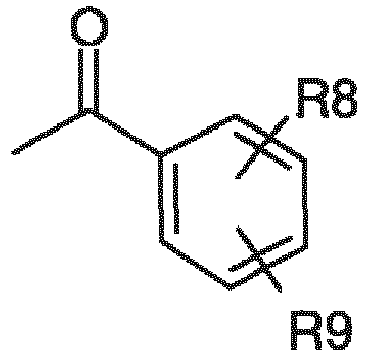
- R1 is an aryloyl having 7-20 carbon atoms according to the formula

- R2 is hydrogen;
- R3 and R4 are methyl.
- The above aryloyl is preferably:

- Further, the present invention also deals with a pharmaceutical composition comprising a compound according to the invention its optical isomer or pharmaceutically acceptable salt and a pharmaceutically acceptable carrier, preferably said composition is used in a manner of oral, injection, transdermal, nasal, mucous or inhalation administration.
- The pharmaceutical composition according to the invention is a normal, sustained release, controlled release, site-specific or fast release or disintegrating dosage form.
- The application also describes compounds of formula (I) wherein R8 and R9 are independently selected from cycloalkyloyl having 4-10 carbon atoms, or hydroxyalkyloyl or carbohydrate having 1-10 carbon atoms, as well as C1-C10 organic acyl group containing oxygen, nitrogen and fluorine, sulfur, phosphor or other heteroatoms, ; or the following groups:

- The application also describes compounds of formula (I) wherein R2 is selected from saturated alkyl having 1-20 carbon atoms, unsaturated alkyl having 2-20 carbon atoms , aryl having 6-20 carbon atoms, cycloalkyl having 4-10 carbon atoms, hydroxyalkyl or carbohydrate substituent having 1-10 carbon atoms, saturated alkyloyl having 1-20 carbon atoms, unsaturated alkyloyl having 2-20 carbon atoms, preferably formyl, acetyl, propanoyl, butanoyl, isobutyryl, saturated or unsaturated fatty acyl; aryloyl having 7-20 carbon atoms, preferably benzoyl with substituent having 1 to 10 carbons or unsubstituted benzoyl; cycloalkyloyl having 4-10 carbon atoms, hydroxyalkyloyl or carbohydrate having 1-10 carbon atoms, C1-C10 organic acyl group containing oxygen, nitrogen and fluorine, sulfur, phosphor or other heteroatoms or the following groups:

- The application also describes compounds of formula (I) wherein R3 and R4 are independently selected from hydrogen, saturated alkyl having 2-20 carbon atoms, unsaturated alkyl having 2-20 carbon atoms, aryl having 6-20 carbon atoms such as phenyl or benzyl with substituent having 1 to 10 carbons or unsubstituted phenyl or benzyl; cycloalkyl having 4-10 carbon atoms, hydroxyalkyl or carbohydrate having 1-10 carbon atoms, as well as C1-C10 organic alkyl containing oxygen, nitrogen and fluorine, sulfur, phosphor or other heteroatoms, etc.
- The application also describes R1 as an alkoxyloyl having 1-10 carbon atoms or aryloxyloyl having 7-10 carbon atoms, 1,1-dialkyloxylalkyl having 1-10 carbon atoms, and alkylaminocarbonyl having 1-10 carbon atoms; R2 is hydrogen; R3 and R4 are methyl.
- According to the present invention, the term "optical isomers" refers to the R or S optical isomers or RS racemic mixtures of the compounds (I) or their pharmaceutically acceptable salts.
- Such pharmaceutically acceptable salts are preferably chosen among hydrochloride, sulfate, maleate, succinate or any salt formed with other pharmaceutically acceptable acid.
- According to the present invention, representative compounds of formula (I) are:
- 4-[2-Dimethylamino-1-(1-hydroxycyclohexyl)-ethyl]-phenyl benzoate,
- 4-[2-Dimethylamino-1-(1-hydroxycyclohexyl)-ethyl]-phenyl 4-methylbenzoate,
- 4-[2-Dimethylamino-1-(1-hydroxycyclohexyl)-ethyl]-phenyl 4-methoxybenzoate,
- 4-[2-Dimethylamino-1-(1-hydroxycyclohexyl)-ethyl]-phenyl 4-fluorobenzoate,
- 4-[2-Dimethylamino-1-(1-hydroxycyclohexyl)-ethyl]-phenyl 2-carboxylbenzoate,
- 4-[2-Dimethylamino-1-(1-benzoyloxycyclohexyl)-ethyl]-phenyl benzoate,
- 4-[2-Dimethylamino-1-(1-(4-methyl)benzoyloxycyclohexyl)-ethyl]-phenyl 4-methylbenzoate,
- 4-[2-Dimethylamino-1-(1-(4-methoxy)benzoyloxycyclohexyl)-ethyl]-phenyl 4-methoxybenzoate,
- 4-[2-Dimethylamino-1-(1-(4-fluoro)benzoyloxycyclohexyl)-ethyl]-phenyl 4-fluorobenzoate,
- 4-[2-Dimethylamino-1-(1-benzoyloxycyclohexyl)-ethyl]-phenyl 4-methylbenzoate,
- 1-[2-Dimethylamino-1-(1-benzoyloxycyclohexyl)-ethyl]-cyclohexyl 4-methoxybenzoate,
- 4-[2-Dimethylamino-1-(1-(4-methoxy)benzoyloxycyclohexyl)-ethyl]-phenyl 4-methylbenzoate,
- 4-[2-Dimethylamino-1-(1-benzoyloxycyclohexyl)-ethyl]-phenyl N-methylcarbamate,
- 4-[2-Dimethylamino-1-(1-benzoyloxycyclohexyl)-ethyl]-phenyl N,N-dimethylcarbamate,
- 4-[2-Dimethylamino-1-(1-benzoyloxycyclohexyl)-ethyl]-phenyl ethyl carbonate
- and their various salts and optical isomers.
- The present invention also deals with a compound of formula (I), its optical isomer and pharmaceutically acceptable salts for inhibiting or blocking 5-hydroxytryptamine (5-HT) and/or norepinephrine (NA) reuptake and for treating diseases associated with central nervous system.
- The compounds of formula (I) of the present invention including their optical isomers and racemic mixtures as well as pharmaceutically acceptable salts thereof can be used for the manufacture of a medicament for inhibiting or blocking 5-hydroxytryptamine (5-HT) and/or norepinephrine (NA) reuptake and for treating diseases associated with central nervous system. Actually, said compounds of the invention can be processed according to conventional methods for manufacture of medicaments in the art, to form appropriate dosage forms, such as dosage forms for oral, injection, transdermal, nasal, mucous or inhalation administration. The dosage forms for oral administration can be solid tablets or capsules or soft capsules or drop pills, as well as solutions or suspensions or emulsions or powders, can be normal dosage forms or sustained release or controlled release or site specific delivery or fast release or disintegrating dosage forms. The dosage forms for injection administration can be intravenous injection or subcutaneous injection or intramuscular injection or intraperitoneal injection, can be solutions or suspensions or emulsions, and can be normal or long acting dosage forms such as implants, microspheres or gels. The dosage forms for transdermal administration can be transdermal patch, gels or other forms. Inhalation administration can be solutions, suspensions, emulsions or powders. The dosage forms for mucous administration can be solutions suspensions, emulsions, powders or suppositories.
- The present invention further relates to pharmaceutical compositions comprising an effective amount of compound of formula (I), and compatible and pharmaceutically acceptable carriers or diluents. The carriers can be any inert organics or inorganics, such as water, gelatin, cellulose, starch, etc., or other pharmaceutically active substances, and other conventional additives, such as stabilizers, moistening agents, emulsifiers, flavoring agents and buffers, etc.
- The compounds of formula (I) of the present invention including their optical isomers and racemic mixtures as well as pharmaceutically acceptable salts thereof can be used for treatment of relevant diseases or disorders, for example, depression, anxiety disorders, generalized anxiety disorders, panic-stricken, agoraphobia, post-traumatic stress disorders, premenstrual dysphoric disorders, fibromyalgia, impaired concentration, obsessive-compulsive syndrome, social anxiety disorders, autistic disorders, schizophrenia, obesity, hyperorexia nervosa and anorexia nervosa, Tourette syndrome, vasomotor flush, cocaine or alcohol addiction, sexual disturbance, borderline personality disorder, chronic fatigue syndrome, urinary incontinence, pains, Shy Drager syndrome, Raynaud syndrome, Parkinson's disease, and epilepsy, etc., by single or multiple dosage of 1mg to 1000mg per day.
-
-
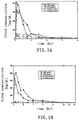
Fig.1 shows the metabolism in vivo of the prodrug 4-[2-dimethylamino-1-(1-hydroxycyclohexyl)-ethyl]-phenyl 4-methylbenzoate hydrochloride in rats, wherein A represents intravenous administration, B represents oral administration; in Group I, □ represents the prodrug: 4-[2-dimethylamino-1-(1-hydroxycyclohexyl)-ethyl]-phenyl 4-methylbenzoate, and ■ represents active metabolite: the compound (III); in Group II, ○ represents the prodrug: 4-[2-dimethylamino-1-(1-hydroxycyclohexyl)-ethyl]-phenyl 4-methylbenzoate, and ● represents active metabolite: the compound (III). -
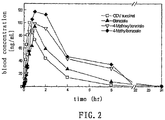
Fig.2 shows the in vivo absorption and metabolism of 1-[2-dimethylamino-1-(4-hydroxyphenyl)-ethyl]-cyclohexanol (the compound III) succinate (ODV succinate) (represented by -□-) and its prodrugs:4-[2-dimethylamino-1-(1-hydroxycyclohexyl)-ethyl]-phenyl benzoate hydrochloride (Benzoate) (represented by -▲-), 4-[2-dimethylamino-1-(1-hydroxycyclohexyl)-ethyl]-phenyl 4-methylbenzoate hydrochloride (4-Methylbenzoate) (represented by -◆-), and 4-[2-dimethylamino-1-(1-hydroxycyclohexyl)-ethyl]-phenyl 4-methoxybenzoate succinate (4-Methoxybenzoate) (represented by -∇-), in Beagles, wherein all blood concentrations are of active metabolite compound (III). - The present invention is further illustrated, but not restricted by the following examples. 2.52g (10mmol) the compound (III) and 9.98mmol organic acyl chloride were added into 100mL dichloromethane, stirred and cooled to 0°C. 1.05g (9.9mmol) of triethylamine in dichloromethane solution was added dropwise (about ten minutes), then continuously stirred at room temperature for 18 hours. The reaction solution was washed with 50mL water and separated, then the organic phase was dried with anhydrous sodium sulfate, the solvent was removed by vacuum evaporation, and the product (compound VI) was dried under vacuum.
- 30mL anhydrous ather solution containing 5mmol the above product was cooled to 0°C, and then 1M ather solution containing 4.8mmol hydrogen chloride was added under nitrogen gas. The oily precipitation was washed with anhydrous aether repetitively, and then dried under vacuum. Most products were amorphour foam-like solid.
- According to the above reaction scheme, the following compounds were synthesized and characterized.
-

- The compound (III) was synthesized according to
US4535186 . - General reaction formula:

- 4-[2-dimethylamino-1-(1-hydroxycyclohexyl)-ethyl]phenyl 4-methylbenzoate was taken as an example.
- 10g desmethyl-venlafaxine (compound III) was dissolved in 200ml anhydrous pyridine, and cooled to 0°C. Equimolar 4-Methylbenzoyl chloride dissolved in anhydrous tetrahydrofuran was added dropwise, and reaction was conducted at this temperature under stirring for 5 hours. Then, the most of solvent was removed by vacuum evaporation.
- The residue was poured into 400ml water, adjusted under stirring until pH was 9, and stored overnight. The precipitated solid was filtered out, washed with water for three times, and dried to obtain a crude product. The crude product was recrystallized with 80ml anhydrous ethanol/ethyl acetate (1:1) to obtain 8.0g white solid with a melting point of 159.0-162.2°C and a yield of 55.2%.
- 20ml anhydrous ethanol was added to 2.0g of the above product, concentrated hydrochloric acid was added dropwise until all the product was dissolved, then solvent was removed by vacuum evaporation, the product was washed with anhydrous ethanol for three times and dissolved by adding ethyl acetate. The precipitated solid was filtered out to obtain 2.0g white crystal solid having a melting point of 203.2-206.5°C.
- According to this method, the following compounds were synthesized and characterized.
- 1H-NMR(DMSO)δ1.14-1.59(10H,m,-(CH2)5-), 2.11(6H,s, -N(CH3)2), 2.42(3H, s, Ar-CH3), 2.55(1H,m,-CH<), 2.86(2H,m, -CH2-N-), 5.02(1H,br,-OH), 7.11, 7.27, 7.40, 8.00 (8H,d,d,d,d, Ar-H);
- 13C-NMR (DMSO) 21.40, 21.65(2C), 24.79, 39.89, 40.81(2C), 45.89(2C), 57.94, 76.57, 120.19(2C), 123.01(2C), 126.42, 127.95(2C), 128.13(2C), 136.97, 141.90, 147.42, 164.18;
- Melting point: 159.0-162.2°C, Melting point of its hydrochloride salt: 203.2-206.5°C.
- All reaction conditions were the same, except that 4-methylbenzoyl chloride was replaced with benzoyl chloride.
- 1H-NMR(DMSO)δ 0.97-1.61(10H,m,-(CH2)5-), 2.12(6H,s, -N(CH3)2), 2.57(1H,t,>CH-), 2.84(2H,m,-CH2-N-), 4.98(1H,br, -OH), 7.13-8.13(9H,m, Ar-H);
13C-NMR (DMSO) 21.65(2C), 24.79, 39.89, 40.81(2C), 45.89(2C), 57.94, 76.57, 120.19(2C), 123.01(2C), 125.92, 128.80(2C), 132.99(2C), 133.85, 136.97, 147.42, 164.18;
Melting point: 176.3-179.1°C, melting point of its hydrochloride salt: 206.6-207.7°C. - All reaction conditions were the same, except that 4-methylbenzoyl chloride was replaced with 4-methoxybenzoyl chloride.
- 1H-NMR (DMSO) δ1.14-1.59(10H,m,-(CH2)5-), 2.11(6H,s, -N(CH3)2), 2.55(1H,m,-CH<), 2.86(2H,m,-CH2-N-), 3.86(3H,s, -OCH3), 5.02(1H,br,-OH), 7.10,7.26,8.06(8H,t, d,d,Ar-H);
13C-NMR (DMSO) 21.65(2C), 24.79, 39.89, 40.81(2C), 45.89(2C), 55.25, 57.94, 76.57, 113.14(2C), 120.19(2C), 122.52, 123.01(2C), 132.28(2C), 137.01, 147.42, 162.50, 164.18;
Melting point: 133.4-135.7°C, melting point of its hydrochloride salt: 195.7-196.9°C. - All reaction conditions were the same, except that 4-methylbenzoyl chloride was replaced with 4-fluorobenzoyl chloride.
- 1H-NMR (DMSO) δ1.25-1.59(10H,m,-(CH2)5-), 2.16(6H,s, -N(CH3)2), 2.55(1H,m,-CH<), 2.86(2H,m,-CH2-N-), 5.02(1H,br, -OH), 7.00,7.16, 7.26, 8.12(8H,t, d,d,Ar-H);
13C-NMR (DMSO)21.65(2C), 24.79, 39.90, 40.81(2C), 45.90(2C), 57.94, 76.57, 114.41, 115.12, 120.19(2C), 123.02(2C), 130.91, 131.08, 137.02, 147.42, 158.38, 164.19, 164.88;
Melting point: 146.2-148.5°C, melting point of its hydrochloride salt: 199.2-201.3°C. -

- General reaction formula:

- The synthesis method was identical to that of the Example 1, except that twice or more amount of organic acyl chloride and triethyl amine were added.
-
- A. 17.4g desmethyl-venlafaxine (compound III), 18.58g benzoyl chloride and 200ml anhydrous tetrahydrofuran were added into a reaction flask, and cooled to 0°C. 50mL anhydrous tetrahydrofuran solution of triethylamine was added dropwise. After all raw materials were dissolved, the reaction solution was poured into 400mL water and stirred. Then the precipitated solid was filtered out, washed with water for three times, and dried to obtain a crude product. The crude product was then dissolved in 10 times amount of anhydrous ethanol and recrystallized to obtain 19.3g white solid having a melting point of 127.8-129.7°C and a yield of 60.9%.
- B. Preparation of hydrochloride salt: 5.0g of the above product was dissolved in 20ml anhydrous ether, then anhydrous saturated ether solution of hydrogen chloride was added dropwise. The precipitated solid was filtered out to obtain 5.0g white crystal solid having melting point of 176.1-179.0°C.
- According to this method, the following compounds were synthesized.
- 1HNMR(DMSO)δ 1.07-1.58(10H, m,-(CH2)5-), 2.01(6H,s, -N(CH3)2), 2.33,4.06 (2H,dd, -CH2-N-), 3.00(1H,t,-CH<), 7.16-8.13(14H,m, Ar-H), 13
13C-NMR (DMSO) 21.56(2C), 24.64, 37.70(2C), 37.94, 45.89(2C), 57.85, 81.50, 120.35(2C), 123.37(2C), 125.90, 128.67(2C), 128.80(2C), 129.42, 129.47(2C), 132.86, 132.99(2C), 133.85, 136.41, 148.19, 164.18, 166.21;
Melting point: 127.8-129.7°C, melting point of its hydrochloride: 176.1-179.0°C. - The reaction conditions were the same, except that benzoyl chloride was replaced with 4-methylbenzoyl chloride.
- 1H-NMR(DMSO)δ1.10-1.59(10H,m,-(CH2)5-), 2.11(6H,s, -N(CH3)2), 2.45(6H, s, Ar-CH3), 2.55(1H,m,-CH<), 2.86(2H,m, -CH2-N-), 7.11-8.00 (12H,d,d,d,d,Ar-H);
13C-NMR (DMSO) 21.40(2C), 21.56(2C), 24.64, 37.70(2C), 37.94, 45.89(2C), 57.85, 81.50, 120.35(2C), 123.42(2C), 125.31, 126.43, 127.59(2C), 127.95(2C), 128.10(2C), 128.13(2C), 136.41, 141.90(2C), 148.19, 164.19, 166.21;
Melting point: 122.8-125.1°C. - The reaction conditions were the same, except that benzoyl chloride was replaced with 4-methoxybenzoyl chloride.
- 1H-NMR (DMSO) δ1.14-1.59(10H,m,-(CH2)5-), 2.11(6H,s, -N(CH3)2), 2.55(1H,m,-CH<), 2.86(2H,m,-CH2-N-), 3.86(6H,s, -OCH3), 5.02 (1H,br,-OH), 7.10-8.06(12H, t, d,d,Ar-H); 13
13C-NMR (DMSO) 21.56(2C). 24.64, 37.70(2C), 37.94, 45.89(2C), 55.25(2C), 57.85, 81.50, 113.11(2C), 113.14(2C), 120.35(2C), 121.03, 122.52, 123.37(2C), 131.21(2C), 132,28(2C), 136.41, 148.19, 162.50(2C), 164.16, 166.21;
Melting point: 112.6-114.9°C. -

- The asymmetic diester was obtained by acylating corresponding monoester, and the synthesis thereof was identical to that of Example 1.
- The general formula of reaction:

- 10mmol of the monoester (Compound 1 of Example 1) synthesized according to Example 1 and 10-15mmol benzoyl chloride were added into 200mL anhydrous pyridine, and cooled to 0°C under stirring, then anhydrous tetrahydrofuran solution containing 1.05g (9.9mmol) triethylamine was added dropwise (about 10 minutes), and the reaction was continuously conducted at room temperature under stirring for 18 hours. The reaction solutiom was washed with 50ml water and separated, then the organic phase was dried with anhydrous sodium sulfate, and then the solvent was removed by vacuum evaporation, the residue was poured into 400mL water, adjusted under stirring until pH was 9, and stored overnight. The precipitated solid was filtered out, washed with water for three times, and dried to obtain a crude product. The crude product was recrystallized with anhydrous ethanol to obtain a white solid.
- The following compounds were synthesized according to this method.
- 1H-NMR(DMSO)δ1.10-1.59(10H,m,-(CH2)5-), 2.17(6H,s, -N(CH3)2), 2.42(3H, s, Ar-CH3), 2.55(1H,m,-CH<), 2.86(2H,m, -CH2-N-), 7.11 - 8.20 (13H,d,d,d,d,Ar-H);
13 13C-NMR (DMSO) 21.40, 21.56(2C), 24.64, 37.70(2C), 37.94, 45.89(2C), 57.86, 81.52, 120.36(2C), 123.38(2C), 126.43, 127.95(2C), 128.13(2C), 128.67(2C), 129.42, 129.47(2C), 132.86, 136.41, 141.90, 149.19, 164.19, 166.22;
Melting point: 127.8-130.2°C. - The reaction conditions were the same, except that the compound 1 of Example 1 was replaced with the compound 3 of Example 1.
- 1H-NMR (DMSO) δ1.22-1.76(10H,m,-(CH2)5-), 2.15(6H,s, -N(CH3)2), 2.58(1H,m,-CH<), 2.76(2H,m,-CH2-N-), 3.86(3H,s, -OCH3), 7.16 - 8.10(9H,t, d,d,Ar-H);
13 13C-NMR (DMSO) 21.56(2C), 24.64, 37.70(2C), 37.94, 45.89(2C), 55.25, 57.85, 81.50, 113.12(2C), 120.35(2C), 121.03, 123.37(2C), 125.92, 128.81(2C), 131.22(2C), 132.99(2C), 133.85, 136.41, 148.19, 162.50, 164.18, 166.26;
Melting point: 119.6-122.8°C. -

- The general formula of reaction:

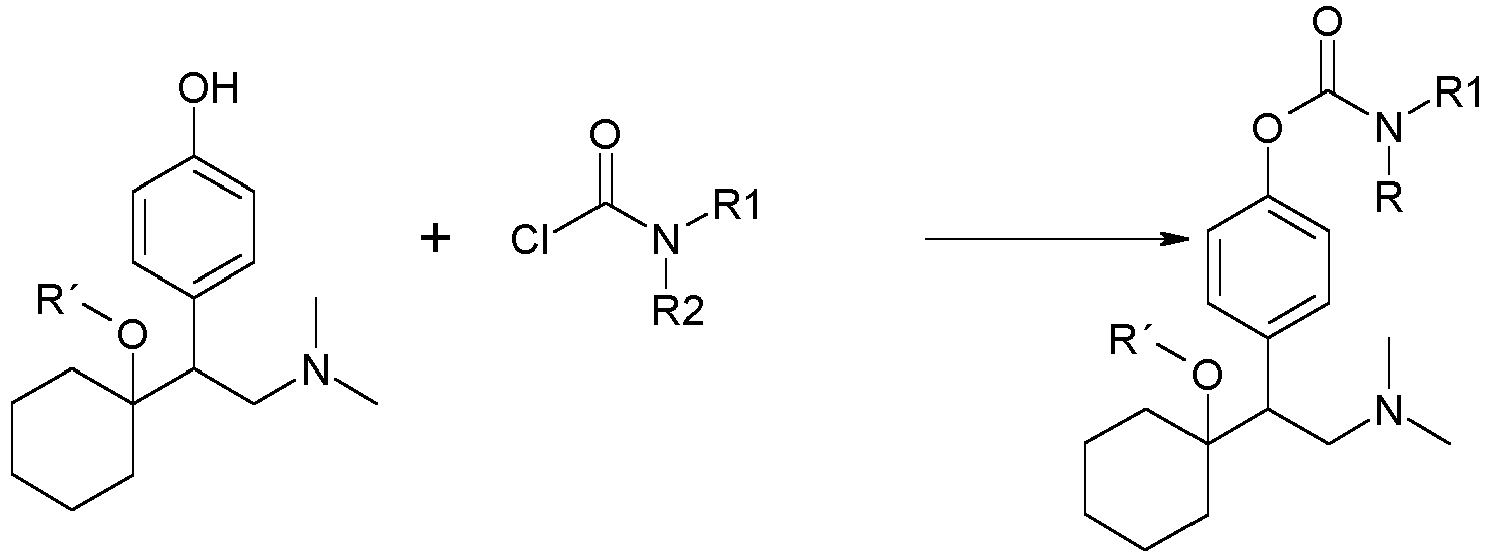
- 6mmol methyl isocyanate was added under stirring into 20mL dichloromethane solution containing 5mmol benzyl ether of the compound (III), the reaction was conducted at room temperature for 16 hours, then the reaction solution was washed with 10
mL 5% sodium bicarbonate aqueous solution, dried with anhydrous sodium sulfate, and the solvent was removed by evaporation to obtain an oily or white solid product. - 1H-NMR (DMSO) 1.33-1.69(10H,m,-(CH2)5-), 2.17(6H,s, -N(CH3)2), 2.65(1H,m,-CH<), 2.76(2H,m,-CH2-N-), 2.78(3H-NCH3), 5.37(NH), 6.90-7.59(9H, Ar-H);
13 13C-NMR (DMSO) 22.43(2C), 25.22, 27.35, 35.14, 39.29(2C), 45.89(2C), 56.72, 81.67, 120.30(2C), 122.81(2C), 122.89, 124.36(2C), 128.81(2C), 135.34, 147.41, 156.11, 160.37; melting point: 138.6-140.8°C. - 6 mmol N-dimethyl- formyl chloride was added at 0°C under stirring into 30mL dichloromethane solution containing 5mmol benzyl ether derivate of the compound (III) and 1mL triethylamine, the reaction was continuously conducted at 0°C for 6 hours, then the reaction liquid was washed with
10mL 5% sodium bicarbonate aqueous solution, dried with anhydrous sodium sulfate, and the solvent was removed by evaporation to obtian an oily or white sodium product. - 1H-NMR (DMSO) 1.33-1.69(10H,m,-(CH2)5-), 2.17(6H,s, -N(CH3)2), 2.65(1H,m,-CH<), 2.76(2H,m,-CH2-N-), 2.89(6HN(CH3)2), 6.90-7.59(9H, Ar-H).
13C-NMR (DMSO) 20.43(2C), 25.15, 35.14, 36.42, 36.65, 39.29(2C), 45.89(2C), 56.72, 81.67, 1220.70(2C), 122,80(2C), 122.90, 124.71(2C), 128.81(2C), 135.45, 148.50, 155.12, 156.11;
Melting point: 126.2-129.3°C. - 40µg the compound 1 (or the
compound 2 or 3 or 4) of Example 1 was dissolved into 0.01M potassium phosphate buffer solution containing 1mM NADPH, mixed with 25µL human liver cells S9 (20mg protein/mL, H961), and cultured at 37°C for 2 hours. Then the mixture was quenched with concentrated perchloric acid. After the precipitated proteins was removed by centrifuge, the supernatant was adjusted with concentrated potassium phosphate until pH was 3, and centrifuged again. The supernatant was directly injected into HPLC and analyzed. - The results of metabolism are shown in Table 1. The metabolic rates from the compounds to the active component 1-[2-dimethylamino-1-(4-hydroxyphenyl)-ethyl]cyclohexanol (compound III) in liver cells within 2 hours range from 80% to 100%, respectively, depending on different ester groups.
Table 1. Metabolic rate of compounds in liver cells within 2 hours X/Y Compound 1 of Example 1 Compound 2 of Example 1Compound 3 of Example 1 Compound 4 of Example 1Metabolic rate (%) 99 96 92 88 - Six rats were divided into two groups, and were subjected to intragastric or intravenous administration of 4-[2-dimethylamino-1-(1-hydroxycyclohexyl)-ethyl]phenyl 4-methylbenzoate hydrochloride in a dose of 13.5mg/kg. Blood samples were sampled according to the predetermined schedules, and the concentrations of the prodrug 4-[2-dimethylamino-1-(1-hydroxycyclohexyl)-ethyl]phenyl 4-methylbenzoate and the active metabolite 1-[2-dimethylamino-1-(4-hydroxyphenyl)-ethyl]cyclohexanol (compound III) in blood were measured.
- The results of intravenous administration in rats (see
Fig.1A ) indicate that the prodrug 4-[2-dimethylamino-1-(1-hydroxycyclohexyl)-ethyl]phenyl 4-methylbenzoate hydrochloride was quickly metabolized in blood of rats, and the active metabolite 1-[2-dimethylamino-1-(4-hydroxyphenyl)-ethyl]cyclohexanol (compound III) (ODV) reached Cmax at 30 minutes, and in the meantime, the concentration of the prodrug in blood was only 10-15% of its active metabolite 1-[2-dimethylamino-1-(4-hydroxyphenyl)-ethyl]cyclohexanol (compound III) (ODV) and decreased continuously. - The results of oral administration are shown in
Fig.1B . After the prodrug entered into body through gastrointestinal tract, it was metabolized immediately to form the active metabolite 1-[2-dimethylamino-1-(4-hydroxyphenyl)-ethyl]cyclohexanol (compound III) (ODV) with higher rate and degree and lower prodrug concentration. The prodrug via oral administration was substantively totally converted into the desired active metabolite 1-[2-dimethylamino-1-(4-hydroxyphenyl)-ethyl]cyclohexanol (compound III), which sufficiently confirmed the metabolizability of the prodrug 4-[2-dimethylamino-1-(1-hydroxycyclohexyl)-ethyl]phenyl 4-methylbenzoate. - By calculation, the bioavailability of the prodrug 4-[2-dimethylamino-1-(1-hydroxycyclohexyl)-ethyl]phenyl 4-methylbenzoate hydrochloride via oral administration in rats was above 80%, which was obviously higher than the bioavailabilities of 1-[2-dimethylamino-1-(4-hydroxyphenyl)-ethyl]-cyclohexanol (compound III) (ODV) and its various salts directly administrated orally.
- 4-[2-dimethylamino-1-(1-hydroxycyclohexyl)-ethyl]-phenyl benzoate hydrochloride (the
compound 2 of Example 1), 4-[2-dimethylamino-1-(1-hydroxycyclohexyl)-ethyl]phenyl 4-methylbenzoate hydrochloride (the compound 1 of Example 1), and 4-[2-dimethylamino-1-(1-hydroxycyclohexyl)-ethyl]phenyl 4-methoxybenzoate (the compound 3 of Example 1) succinate in beagles via oral administration
Nine beagles with body weight of about 10 kg were divided into three groups, and were subjected to intragastric administration of O-desmethyl-venlafaxine (ODV) succinate, 4-[2-dimethylamino-1-(1-hydroxycyclohexyl)-ethyl] phenyl benzoate hydrochloride, 4-[2-dimethylamino-1-(1-hydroxycyclohexyl)-ethyl]phenyl 4-methylbenzoate hydrochloride, and 4-[2-dimethylamino-1-(1-hydroxycyclohexyl)-ethyl]phenyl 4-methoxybenzoate succinate in dose of 0.016mmol/kg. Blood samples were sampled according to the predetermined schedules, and the concentrations of the active metabolite 1-[2-dimethylamino-1-(4-hydroxyphenyl)-ethyl]cyclohexanol (compound III) and its prodrugs in blood were measured. - The results are shown in
Fig.2 . After the prodrugs entered into bodies of beagles through gastrointestinal tract, they were immediated metabolized into the active metabolite desmethyl-venlafaxine, and the prodrug concentrations were lower than the measurement limit, so that it was deemed that almost all prodrugs by oral administration were converted into the desired active metabolite 1-[2-dimethylamino-1-(4-hydroxyphenyl)-ethyl]cyclohexanol (compound III). In the meantime, the results indicate that the bioavailabilities of prodrugs of ODV were obviously higher than that of ODV succinate which has the best bioavailability among ODV salts, and AUC was elevated more than 30% (Table 2), wherein the AUC of 4-[2-dimethylamino-1-(1-hydroxycyclohexyl)-ethyl]phenyl 4-methylbenzoate hydrochloride was elevated more than 60% (Table 2), the bioavailability was improved very significantly, and it exhibited obvious advantages over 1-[2-dimethylamino-1-(4-hydroxyphenyl)-ethyl]cyclohexanol (compound III) succinate.Table 2. Comparison of experiment results in beagles between prodrugs and 1-[2-dimethylamino-1-(4-hydroxyphenyl)-ethyl]cyclohexanol (compound III) succinate - the concentration of the active metabolite 1-[2-dimethylamino-1-(4-hydroxyphenyl)-ethyl]cyclohexanol (compound III). Compound Cmax ng/ml Tmax hr AUC ng/ml hr AUC Increment rate% (ODV succinate, =100%) ODV succinate 100 0.5 261 100 4-[2-dimethylamino-1-(1-hydroxycyclohexyl)-ethyl]phenyl benzoate hydrochloride 93 1.0 342 132 4-[2-dimethylamino-1-(1-hydroxycyclohexyl)-ethyl]phenyl 4-methylbenzoate hydrochloride 117 1.0 421 161 4-[2-dimethylamino-1-(1-hydroxycyclohexyl)-ethyl]phenyl 4-methoxybenzoate succinate 97 1.0 386 148 -
Composition: 4-[2-dimethylamino-1-(1-hydroxycyclohexyl)-ethyl]phenyl 4-methylbenzoate hydrochloride or 4-[2-dimethylamino-1-(1-hydroxycyclohexyl)-ethyl] phenyl 23% 4-methoxybenzoate succinate or 4-[2-dimethylamino-1-(1-hydroxycyclohexyl)-ethyl]phenyl benzoate hydrochloride Microcrystalline cellulose 58 % Hydroxypropylmethyl cellulose 5% Calcium hydrogen phosphate dihydrate 12% Magnesium stearate 0.8% Anhydrous colloidal silicon dioxide 1.2% - These components were directly tabletted to obtain tablets containing drug 100mg per tablet (calculated based on 1-[2-dimethylamino-1-(4-hydroxyphenyl) -ethyl]cyclohexanol). The results of dissolution test of this kind of tablets are shown as follows.
Table 3. Dissolution of normal oral tablets Dissolution time (h) 2 4 8 Dissolution percentage (%) 4-methylbenzoate 43.1 68.2 88.5 4-methoxybenzoate 53.6 78.2 92.8 Benzoate 45.8 76.3 93.6 -
A. Granulation: 4-[2-dimethylamino-1-(1-hydroxycyclohexyl)-ethyl]phenyl 4- methylbenzoate hydrochloride 40% Microcrystalline cellulose 59% Hydroxypropylmethyl cellulose 1% The granulation was performed by normal fluidized bed. B. Coating: Ethyl cellulose 85% Hydroxypropylmethyl cellulose 15% - After the coating was dried, the coated granules were loaded in hard gelatin capsules, and there is 100mg drug in per capsule (calculated based on 1-[2-dimethylamino-1-(4-hydroxyphenyl)-ethyl]cyclohexanol), and the coating degree was 6%. The dissolution test of the capsules was conducted according to the method of the Pharmacopoeia of People's Republic of China, and the results are as follows.
Table 4. Dissolution test of sustained release capsules of 4-[2-dimethylamino-1-(1-hydroxycyclohexyl)-ethyl]phenyl 4-methylbenzoate hydrochloride for oral administration Dissolution time (h) 2 4 8 12 24 Dissolved drug (%) 5.7 27.8 61.1 79.9 96.2 - The preparation method was identical to that of Example 9, except that 4-[2-dimethylamino-1-(1-hydroxycyclohexyl)-ethyl]phenyl 4-methylbenzoate hydrochloride was replaced with 4-[2-dimethylamino-1-(1-hydroxycyclohexyl)-ethyl]phenyl benzoate hydrochloride. The dissolution test of the capsules was conducted according to the method of the Pharmacopoeia of People's Republic of China, and the results are as follows.
Table 5. Dissolution test of sustained release capsules of 4-[2-dimethylamino-1-(1-hydroxycyclohexyl)-ethyl]phenyl benzoate hydrochloride for oral administration Dissolution time (h) 2 4 8 12 24 Dissolved drug (%) 3.8 19.8 41.2 63.8 88.2 - The preparation method was identical to that of Example 9, except that 4-[2-dimethylamino-1-(1-hydroxycyclohexyl)-ethyl]phenyl 4-methylbenzoate hydrochloride was replaced with 4-[2-dimethylamino-1-(1-hydroxycyclohexyl)-ethyl]phenyl 4-methoxybenzoate succinate. The dissolution test of the capsules was conducted according to the method of the Pharmacopoeia of People's Republic of China, and the results are as follows.
Table 5. Dissolution test of the sustained release capsules of 4-[2-dimethylamino-1-(1-hydroxycyclohexyl)-ethyl]phenyl 4-methoxybenzoate succinate for oral administration Dissolution time (h) 2 4 8 12 24 Dissolved drug (%) 6.8 24.2 56.7 83.2 97.3 -
A. Tabletting: - 4-[2-dimethylamino-1-(1-hydroxycyclohexyl)-ethyl]phenyl 4-methylbenzoate hydrochloride or - 4-[2-dimethylamino-1-(1-hydroxycyclohexyl)-ethyl]phenyl 4-methoxybenzoate succinate or - 4-[2-dimethylamino-1-(1-hydroxycyclohexyl)-ethyl]phenyl benzoate hydrochloride 28% - Microcrystalline cellulose 60% - Hydroxypropylmethyl cellulose 10% - anhydrous Colloidal silicon dioxide 0.8% - Magnesium stearate 1.2% B. Coating: - Ethyl cellulose 72% - Hydroxypropylmethyl cellulose 12% - Dibutyl sebacate 15% - Polyethylene glycol 400 (Macrogol) 1% - Each tablet contained 100mg principal agent (calculated based on 1-[2-dimethylamino-1-(4-hydroxyphenyl)-ethyl]-cyclohexanol). The dissolution test of the tablets was conducted according to the method of the Pharmacopoeia of People's Republic of China, and the results are as follows.
Table 6. Dissolution test of the sustained release tablets for oral administration Dissolution time (h) 2 4 8 12 24 Dissolved drug (%) 4-Methylbenzoate 12.2 33.8 58.1 79.8 98.6 4-Methoxybenzoate 16.6 45.2 69.3 89.1 97.2 Benzoate 6.6 21.6 50.6 68.5 87.6 - Six beagles with body weight between 9.8kg and 12.5kg were used in this test. They were subjected to overnight fasting, except for water, but ate at 60 minutes before the test, wherein three beagles separately were orally administered with one sustained release capsule of 4-[2-dimethylamino-1-(1-hydroxycyclohexyl)-ethyl]-phenyl 4-methylbenzoate hydrochloride which contained 159mg drug (100mg as calculated based on 1-[2-dimethylamino-1-(4-hydroxyphenyl)-ethyl]-cyclohexanol), while the other three beagles separately were intravenously administered with 4-[2-dimethylamino-1-(1-hydroxycyclohexyl)-ethyl]-phenyl 4-methylbenzoate hydrochloride which contains 79mg drug (50mg as calculated based on 1-[2-dimethylamino-1-(4-hydroxyphenyl)-ethyl]-cyclohexanol). The blood samples were collected separately at 0.25, 0.5, 1, 2, 4, 6, 8, 12, 16 and 24 hours after drug administration. The blood sample (3mL) was placed in a test tube with 5mL heparin, centrifuged at lower temperature and preserved at -70°C, and then analyzed by HPLC-MS (Ther. Drug Monit. 16:100-107(1994)).
- The analysis results of blood samples indicate the orally administrated 4-[2-dimethylamino-1-(1-hydroxycyclohexyl)-ethyl]-phenyl 4-methylbenzoate hydrochloride was quickly converted into 1-[2-dimethylamino-1 -(4-hydroxyphenyl)-ethyl] cyclohexanol in vivo.
The data of 1-[2-dimethylamino-1-(4-hydroxyphenyl)-ethyl]-cyclohexanol (compound III) in beagle bodies are shown in Table 7.Table 7. Beagle test of 4-[2-dimethylamino-1-(1-hydroxycyclohexyl)- ethyl]-phenyl 4-methylbenzoate hydrochloride AUC (ng∗hr/mL) Cmax (ng/mL) tmax (hr) Absolute bioavailability(%) Capsule (100mg) 2793 278 5.4 89.3 Intravernous injection (50mg) 1564 - - - - The test was conducted according to the same method of Example 13, wherein each sustained release capsule contained 154mg drug (100mg as calculated based on 1-[2-dimethylamino-1-(4-hydroxyphenyl)-ethyl]-cyclohexanol). The analysis results of blood samples also indicate the orally administrated 4-[2-dimethylamino-1-(1-hydroxycyclohexyl)-ethyl]-phenyl benzoate hydrochloride was quickly converted into 1-[2-dimethylamino-1-(4-hydroxyphenyl)-ethyl]-cyclohexanol in vivo.
The data of 1-[2-dimethylamino-1-(4-hydroxyphenyl)-ethyl]-cyclohexanol (compound III) in beagle bodies are shown in Table 8.Table 8. Beagle test of 4-[2-dimethylamino-1-(1-hydroxycyclohexyl)-ethyl]-phenyl benzoate hydrochloride AUC (ng∗hr/mL) Cmax (ng/mL) tmax (hr) Absolute bioavailability (%) 2536 267 5.7 81.1 - The test was conducted according to the same method of Example 13, wherein each sustained release capsule contained 195mg drug (100mg as calculated based on 1-[2-dimethylamino-1-(4-hydroxyphenyl)-ethyl]-cyclohexanol).
- The analysis results of blood samples also indicate the orally administrated 4-[2-dimethylamino-1-(1-hydroxycyclohexyl)-ethyl]-phenyl 4-methoxybenzoate succinate was quickly converted into 1-[2-dimethylamino-1 -(4-hydroxyphenyl)-ethyl]-cyclohexanol in vivo.
The data of 1-[2-dimethylamino-1-(4-hydroxyphenyl)-ethyl]-cyclohexanol (compound III) in beagle bodies are shown in Table 9.Table 9. Beagle test of 4-[2-dimethylamino-1-(1-hydroxycyclohexyl)-ethyl]-phenyl 4-methoxybenzoate succinate AUC (ng∗hr/mL) Cmax (ng/mL) tmax (hr) Absolute bioavailability (%) 2668 287 4.6 85.3
Claims (9)
- A compound of formula (I), its optical isomer or pharmaceutically acceptable salts thereof,
 chiral center (*) can be R or S or RS (racemic mixture);R1 is an aryloyl having 7-20 carbon atoms according to the formula
 R2 is hydrogen;R3 and R4 are methyl.
 - The compound of formula (I) according to claim 1, characterized in that the substituents R8 and R9 are independently selected from hydrogen, methyl, ethyl, methoxy, ethoxy, fluorine or carboxyl.
- The salt of the compound of formula (I) according to claim 1, characterized in that the salt of the compound is hydrochloride, sulfate, maleate, succinate, or a salt formed with other pharmaceutically acceptable acid.
- A compound according to claim 1, wherein the compound is selected from:4-[2-Dimethylamino-1-(1-hydroxycyclohexyl)-ethyl]-phenyl benzoate,4-[2-Dimethylamino-1-(1-hydroxycyclohexyl)-ethyl]-phenyl 4-methylbenzoate,4-[2-Dimethylamino-1-(1-hydroxycyclohexyl)-ethyl]-phenyl 4-methoxybenzoate,4-[2-Dimethylamino-1-(1-hydroxycyclohexyl)-ethyl]-phenyl 4-fluorobenzoate,4-[2-Dimethylamino-1-(1-hydroxycyclohexyl)-ethyl]-phenyl 2-carboxylbenzoate,and their various salts and optical isomers.
- A compound selected from :4-[2-Dimethylamino-1-(1-benzoyloxycyclohexyl)-ethyl]-phenyl benzoate,4-[2-Dimethylamino-1-(1-(4-methyl)benzoyloxycyclohexyl)-ethyl]-phenyl 4-methylbenzoate,4-[2-Dimethylamino-1-(1-(4-methoxy)benzoyloxycyclohexyl)-ethyl]-phenyl 4-methoxybenzoate,4-[2-Dimethylamino-1-(1-(4-fluoro)benzoyloxycyclohexyl)-ethyl]-phenyl 4-fluorobenzoate,4-[2-Dimethylamino-1-(1-benzoyloxycyclohexyl)-ethyl]-phenyl 4-methylbenzoate,1-[2-Dimethylamino-1-(1-benzoyloxycyclohexyl)-ethyl]-cyclohexyl 4-methoxybenzoate,4-[2-Dimethylamino-1-(1-(4-methoxy)benzoyloxycyclohexyl)-ethyl]-phenyl 4-methylbenzoate,4-[2-Dimethylamino-1-(1-benzoyloxycyclohexyl)-ethyl]-phenyl N-methylcarbamate,4-[2-Dimethylamino-1-(1-benzoyloxycyclohexyl)-ethyl] -phenyl N,N-dimethylcarbamate,4-[2-Dimethylamino-1-(1-benzoyloxycyclohexyl)-ethyl]-phenyl ethylcarbonate,and their various salts and optical isomers.
- A pharmaceutical composition comprising a compound according to any one claims 1 to 5, its optical isomer or pharmaceutically acceptable salt and a pharmaceutically acceptable carrier.
- The pharmaceutical composition according to claim 6, the said composition is used in a manner of oral, injection, transdermal, nasal, mucous or inhalation administration.
- The pharmaceutical composition according to claim 7, the said composition is a normal, sustained release, controlled release, site-specific or fast release or disintegrating dosage form.
- A compound according to any one claims 1 to 5, its optical isomer or pharmaceutically acceptable salt for inhibiting or blocking 5-hydroxytryptamine (5-HT) and/or norepinephrine (NA) reuptake and for treating diseases associated with central nervous system.
Applications Claiming Priority (3)
| Application Number | Priority Date | Filing Date | Title |
|---|---|---|---|
| CN200510077510 | 2005-06-17 | ||
| CN2006100733084A CN1955159B (en) | 2005-06-17 | 2006-04-07 | Compound for blocking serotonin and norepinephrine reuptake, preparation method and use thereof |
| PCT/CN2006/001370 WO2006133652A1 (en) | 2005-06-17 | 2006-06-16 | Compounds, preparation process, and uses thereof used for interrupting reuptake of 5-hydroxytryptamine and norepinephrine or treating diseases such as depression et al. |
Publications (4)
| Publication Number | Publication Date |
|---|---|
| EP1897867A1 EP1897867A1 (en) | 2008-03-12 |
| EP1897867A4 EP1897867A4 (en) | 2010-09-29 |
| EP1897867B1 true EP1897867B1 (en) | 2017-02-15 |
| EP1897867B8 EP1897867B8 (en) | 2017-08-23 |
Family
ID=37531963
Family Applications (1)
| Application Number | Title | Priority Date | Filing Date |
|---|---|---|---|
| EP06752979.2A Active EP1897867B8 (en) | 2005-06-17 | 2006-06-16 | Compounds used for interrupting reuptake of 5-hydroxytryptamine and norepinephrine or treating diseases such as depression |
Country Status (13)
| Country | Link |
|---|---|
| US (2) | US8178724B2 (en) |
| EP (1) | EP1897867B8 (en) |
| JP (1) | JP5080458B2 (en) |
| KR (1) | KR101304505B1 (en) |
| CN (1) | CN1955159B (en) |
| AU (1) | AU2006257558B8 (en) |
| CA (1) | CA2612413C (en) |
| DK (1) | DK1897867T3 (en) |
| ES (1) | ES2624789T3 (en) |
| PL (1) | PL1897867T3 (en) |
| PT (1) | PT1897867T (en) |
| RU (1) | RU2416598C2 (en) |
| WO (1) | WO2006133652A1 (en) |
Families Citing this family (7)
| Publication number | Priority date | Publication date | Assignee | Title |
|---|---|---|---|---|
| CN1955159B (en) * | 2005-06-17 | 2010-11-24 | 山东绿叶制药有限公司 | Compound for blocking serotonin and norepinephrine reuptake, preparation method and use thereof |
| CN103588653B (en) * | 2010-10-01 | 2015-04-22 | 山东绿叶制药有限公司 | Polymorph of 4-methylbenzoate-4-[2-dimethylamino-1-(1-hydroxycyclohexyl) ethyl]phenyl-ester hydrochloride, and preparation method and application thereof |
| CN102871997B (en) * | 2011-07-12 | 2013-11-13 | 山东绿叶制药有限公司 | Controlled-release medicinal composition containing demethyl venlafaxine benzoate compounds |
| CN104127401A (en) * | 2013-08-28 | 2014-11-05 | 山东绿叶制药有限公司 | Osmotic pump control-released composition containing desmethylvenlafaxine benzoate compound |
| CN103570669B (en) * | 2013-10-31 | 2015-07-22 | 吉林大学 | Brain-targeted O-desmethylvenlafaxine phenolic ester prodrug and preparation method and applications thereof |
| CN104666291A (en) * | 2013-11-26 | 2015-06-03 | 山东绿叶制药有限公司 | Application of O-desmethylvenlafaxine benzoate compound in preparation of medicines for improving sexual dysfunction |
| CN104672097B (en) * | 2013-12-03 | 2016-06-29 | 山东绿叶制药有限公司 | Compound p-methylbenzoic acid 4-(2-dimethylamino-1-cyclohexenylethyl) phenyl ester preparation method and application |
Family Cites Families (12)
| Publication number | Priority date | Publication date | Assignee | Title |
|---|---|---|---|---|
| US4535186A (en) * | 1983-04-19 | 1985-08-13 | American Home Products Corporation | 2-Phenyl-2-(1-hydroxycycloalkyl or 1-hydroxycycloalk-2-enyl)ethylamine derivatives |
| US5530013A (en) * | 1994-02-14 | 1996-06-25 | American Home Products Corporation | Venlafaxine in the inducement of cognition enhancement |
| DE19525137C2 (en) * | 1995-07-11 | 2003-02-27 | Gruenenthal Gmbh | 6-Dimethylaminomethyl-1-phenyl-cyclohexane compounds as intermediates for the preparation of pharmaceutical agents |
| US20020022662A1 (en) * | 1999-06-15 | 2002-02-21 | American Home Products Corporation | Enantiomers of O-desmethyl venlafaxine |
| US7291646B2 (en) | 1999-11-24 | 2007-11-06 | Wyeth | Ethers of O-desmethyl venlafaxine |
| US6348494B1 (en) * | 2000-11-21 | 2002-02-19 | American Home Products Corporation | Ethers of o-desmethyl venlafaxine |
| EP2319826A1 (en) * | 2001-02-12 | 2011-05-11 | Wyeth LLC | Succinate salt of O-desmethyl-venlafaxin |
| US20040242594A1 (en) * | 2001-11-17 | 2004-12-02 | Dan Peters | Prodrugs of antidepressants and their use for treating depressions |
| US20030191347A1 (en) | 2002-03-28 | 2003-10-09 | Rolf Keltjens | Venlafaxine base |
| TWI306092B (en) * | 2003-03-11 | 2009-02-11 | Wyeth Corp | Process for preparation of phenethylamine derivatives |
| CN100455560C (en) * | 2004-06-09 | 2009-01-28 | 中国人民解放军军事医学科学院放射医学研究所 | Medicine precursor containing long chain fatty acyl group substituted venlafaxine and its prepn and use |
| CN1955159B (en) * | 2005-06-17 | 2010-11-24 | 山东绿叶制药有限公司 | Compound for blocking serotonin and norepinephrine reuptake, preparation method and use thereof |
-
2006
- 2006-04-07 CN CN2006100733084A patent/CN1955159B/en not_active Expired - Lifetime
- 2006-06-16 PL PL06752979T patent/PL1897867T3/en unknown
- 2006-06-16 US US11/917,905 patent/US8178724B2/en active Active
- 2006-06-16 ES ES06752979.2T patent/ES2624789T3/en active Active
- 2006-06-16 DK DK06752979.2T patent/DK1897867T3/en active
- 2006-06-16 JP JP2008516114A patent/JP5080458B2/en active Active
- 2006-06-16 WO PCT/CN2006/001370 patent/WO2006133652A1/en not_active Ceased
- 2006-06-16 AU AU2006257558A patent/AU2006257558B8/en active Active
- 2006-06-16 CA CA2612413A patent/CA2612413C/en active Active
- 2006-06-16 PT PT67529792T patent/PT1897867T/en unknown
- 2006-06-16 RU RU2008101776/04A patent/RU2416598C2/en active
- 2006-06-16 EP EP06752979.2A patent/EP1897867B8/en active Active
- 2006-06-16 KR KR1020087001286A patent/KR101304505B1/en active Active
-
2012
- 2012-04-05 US US13/440,608 patent/US8487132B2/en active Active
Non-Patent Citations (1)
| Title |
|---|
| None * |
Also Published As
| Publication number | Publication date |
|---|---|
| US8178724B2 (en) | 2012-05-15 |
| JP2008543794A (en) | 2008-12-04 |
| PT1897867T (en) | 2017-05-22 |
| US20090118368A1 (en) | 2009-05-07 |
| EP1897867A1 (en) | 2008-03-12 |
| CN1955159A (en) | 2007-05-02 |
| AU2006257558B9 (en) | 2012-02-02 |
| EP1897867A4 (en) | 2010-09-29 |
| WO2006133652A1 (en) | 2006-12-21 |
| JP5080458B2 (en) | 2012-11-21 |
| CA2612413C (en) | 2013-03-12 |
| CA2612413A1 (en) | 2006-12-21 |
| AU2006257558B2 (en) | 2012-01-12 |
| AU2006257558B8 (en) | 2012-02-02 |
| KR20080042068A (en) | 2008-05-14 |
| RU2416598C2 (en) | 2011-04-20 |
| AU2006257558A1 (en) | 2006-12-21 |
| ES2624789T3 (en) | 2017-07-17 |
| US20120190741A1 (en) | 2012-07-26 |
| PL1897867T3 (en) | 2017-09-29 |
| DK1897867T3 (en) | 2017-05-15 |
| CN1955159B (en) | 2010-11-24 |
| EP1897867B8 (en) | 2017-08-23 |
| US8487132B2 (en) | 2013-07-16 |
| KR101304505B1 (en) | 2013-09-05 |
| RU2008101776A (en) | 2009-11-27 |
Similar Documents
| Publication | Publication Date | Title |
|---|---|---|
| US8487132B2 (en) | Compounds for inhibition of 5-hydroxytryptamine and norepinephrine reuptake or for treatment of depression disorders, their preparation processes and uses thereof | |
| US7531685B2 (en) | Deuterium-enriched oxybutynin | |
| EP1461306B1 (en) | Quaternary ammonium compounds and their use as antimuscarinic agents | |
| SK9252002A3 (en) | Novel esters derived from (RR,SS)-2-hydroxybenzoate of 3-(2-dimethylaminomethyl-1-hydroxycyclohexyl)phenyl | |
| SK284068B6 (en) | New esters derived from substituted phenyl-cyclohexyl compounds | |
| US20210388024A1 (en) | Compounds containing deuterium | |
| EP2516383B1 (en) | New aminotetraline derivatives | |
| US7241923B2 (en) | Phenylalkyloxy-phenyl derivatives | |
| JP6908657B2 (en) | Polymorphs of 4- [2-dimethylamino-1- (1-hydroxycyclohexyl) ethyl] phenyl4-methylbenzoate hydrochloride, methods of making them and their use | |
| CN114341141A (en) | Camptothecin derivatives having a disulfide moiety and a piperazine moiety | |
| US20090062305A1 (en) | Deuterium-enriched cetirizine | |
| EP4488260A1 (en) | New aminoketone compound, and preparation method therefor and use thereof | |
| US20090076082A1 (en) | Deuterium-enriched alvimopan |
Legal Events
| Date | Code | Title | Description |
|---|---|---|---|
| PUAI | Public reference made under article 153(3) epc to a published international application that has entered the european phase |
Free format text: ORIGINAL CODE: 0009012 |
|
| 17P | Request for examination filed |
Effective date: 20080117 |
|
| AK | Designated contracting states |
Kind code of ref document: A1 Designated state(s): AT BE BG CH CY CZ DE DK EE ES FI FR GB GR HU IE IS IT LI LT LU LV MC NL PL PT RO SE SI SK TR |
|
| DAX | Request for extension of the european patent (deleted) | ||
| DAX | Request for extension of the european patent (deleted) | ||
| A4 | Supplementary search report drawn up and despatched |
Effective date: 20100831 |
|
| 17Q | First examination report despatched |
Effective date: 20110906 |
|
| REG | Reference to a national code |
Ref country code: DE Ref legal event code: R079 Ref document number: 602006051728 Country of ref document: DE Free format text: PREVIOUS MAIN CLASS: C07C0215420000 Ipc: C07C0271440000 |
|
| GRAP | Despatch of communication of intention to grant a patent |
Free format text: ORIGINAL CODE: EPIDOSNIGR1 |
|
| RIC1 | Information provided on ipc code assigned before grant |
Ipc: A61P 25/00 20060101ALI20160729BHEP Ipc: C07C 219/28 20060101ALI20160729BHEP Ipc: C07C 271/44 20060101AFI20160729BHEP Ipc: A61K 31/222 20060101ALI20160729BHEP |
|
| INTG | Intention to grant announced |
Effective date: 20160907 |
|
| GRAS | Grant fee paid |
Free format text: ORIGINAL CODE: EPIDOSNIGR3 |
|
| STAA | Information on the status of an ep patent application or granted ep patent |
Free format text: STATUS: GRANT OF PATENT IS INTENDED |
|
| GRAA | (expected) grant |
Free format text: ORIGINAL CODE: 0009210 |
|
| STAA | Information on the status of an ep patent application or granted ep patent |
Free format text: STATUS: THE PATENT HAS BEEN GRANTED |
|
| AK | Designated contracting states |
Kind code of ref document: B1 Designated state(s): AT BE BG CH CY CZ DE DK EE ES FI FR GB GR HU IE IS IT LI LT LU LV MC NL PL PT RO SE SI SK TR |
|
| REG | Reference to a national code |
Ref country code: CH Ref legal event code: EP Ref country code: GB Ref legal event code: FG4D |
|
| RAP2 | Party data changed (patent owner data changed or rights of a patent transferred) |
Owner name: SHANDONG LUYE PHARMACEUTICAL CO., LTD. Owner name: LI, YOUXIN |
|
| REG | Reference to a national code |
Ref country code: IE Ref legal event code: FG4D |
|
| REG | Reference to a national code |
Ref country code: AT Ref legal event code: REF Ref document number: 867806 Country of ref document: AT Kind code of ref document: T Effective date: 20170315 |
|
| REG | Reference to a national code |
Ref country code: DE Ref legal event code: R096 Ref document number: 602006051728 Country of ref document: DE |
|
| REG | Reference to a national code |
Ref country code: DK Ref legal event code: T3 Effective date: 20170511 |
|
| REG | Reference to a national code |
Ref country code: PT Ref legal event code: SC4A Ref document number: 1897867 Country of ref document: PT Date of ref document: 20170522 Kind code of ref document: T Free format text: AVAILABILITY OF NATIONAL TRANSLATION Effective date: 20170505 |
|
| REG | Reference to a national code |
Ref country code: FR Ref legal event code: PLFP Year of fee payment: 12 |
|
| REG | Reference to a national code |
Ref country code: NL Ref legal event code: MP Effective date: 20170215 |
|
| REG | Reference to a national code |
Ref country code: LT Ref legal event code: MG4D |
|
| REG | Reference to a national code |
Ref country code: DE Ref legal event code: R081 Ref document number: 602006051728 Country of ref document: DE Owner name: SHANDONG LUYE PHARMACEUTICAL CO., LTD., CN Free format text: FORMER OWNERS: LI, YOUXIN, ZHUZHOU, HUNAN, CN; SHANDONG LUYE PHARMACEUTICAL CO., LTD., YANTAI CITY, SHANDONG, CN Ref country code: DE Ref legal event code: R081 Ref document number: 602006051728 Country of ref document: DE Owner name: LI, YOUXIN, ZHUZHOU, CN Free format text: FORMER OWNERS: LI, YOUXIN, ZHUZHOU, HUNAN, CN; SHANDONG LUYE PHARMACEUTICAL CO., LTD., YANTAI CITY, SHANDONG, CN |
|
| REG | Reference to a national code |
Ref country code: AT Ref legal event code: MK05 Ref document number: 867806 Country of ref document: AT Kind code of ref document: T Effective date: 20170215 |
|
| REG | Reference to a national code |
Ref country code: ES Ref legal event code: FG2A Ref document number: 2624789 Country of ref document: ES Kind code of ref document: T3 Effective date: 20170717 |
|
| PG25 | Lapsed in a contracting state [announced via postgrant information from national office to epo] |
Ref country code: FI Free format text: LAPSE BECAUSE OF FAILURE TO SUBMIT A TRANSLATION OF THE DESCRIPTION OR TO PAY THE FEE WITHIN THE PRESCRIBED TIME-LIMIT Effective date: 20170215 Ref country code: LT Free format text: LAPSE BECAUSE OF FAILURE TO SUBMIT A TRANSLATION OF THE DESCRIPTION OR TO PAY THE FEE WITHIN THE PRESCRIBED TIME-LIMIT Effective date: 20170215 |
|
| RIN2 | Information on inventor provided after grant (corrected) |
Inventor name: ZHANG, LUPING |
|
| PG25 | Lapsed in a contracting state [announced via postgrant information from national office to epo] |
Ref country code: AT Free format text: LAPSE BECAUSE OF FAILURE TO SUBMIT A TRANSLATION OF THE DESCRIPTION OR TO PAY THE FEE WITHIN THE PRESCRIBED TIME-LIMIT Effective date: 20170215 Ref country code: LV Free format text: LAPSE BECAUSE OF FAILURE TO SUBMIT A TRANSLATION OF THE DESCRIPTION OR TO PAY THE FEE WITHIN THE PRESCRIBED TIME-LIMIT Effective date: 20170215 Ref country code: NL Free format text: LAPSE BECAUSE OF FAILURE TO SUBMIT A TRANSLATION OF THE DESCRIPTION OR TO PAY THE FEE WITHIN THE PRESCRIBED TIME-LIMIT Effective date: 20170215 Ref country code: SE Free format text: LAPSE BECAUSE OF FAILURE TO SUBMIT A TRANSLATION OF THE DESCRIPTION OR TO PAY THE FEE WITHIN THE PRESCRIBED TIME-LIMIT Effective date: 20170215 Ref country code: BG Free format text: LAPSE BECAUSE OF FAILURE TO SUBMIT A TRANSLATION OF THE DESCRIPTION OR TO PAY THE FEE WITHIN THE PRESCRIBED TIME-LIMIT Effective date: 20170515 |
|
| PG25 | Lapsed in a contracting state [announced via postgrant information from national office to epo] |
Ref country code: SK Free format text: LAPSE BECAUSE OF FAILURE TO SUBMIT A TRANSLATION OF THE DESCRIPTION OR TO PAY THE FEE WITHIN THE PRESCRIBED TIME-LIMIT Effective date: 20170215 Ref country code: CZ Free format text: LAPSE BECAUSE OF FAILURE TO SUBMIT A TRANSLATION OF THE DESCRIPTION OR TO PAY THE FEE WITHIN THE PRESCRIBED TIME-LIMIT Effective date: 20170215 Ref country code: EE Free format text: LAPSE BECAUSE OF FAILURE TO SUBMIT A TRANSLATION OF THE DESCRIPTION OR TO PAY THE FEE WITHIN THE PRESCRIBED TIME-LIMIT Effective date: 20170215 Ref country code: RO Free format text: LAPSE BECAUSE OF FAILURE TO SUBMIT A TRANSLATION OF THE DESCRIPTION OR TO PAY THE FEE WITHIN THE PRESCRIBED TIME-LIMIT Effective date: 20170215 |
|
| REG | Reference to a national code |
Ref country code: GR Ref legal event code: EP Ref document number: 20170401274 Country of ref document: GR Effective date: 20171023 |
|
| REG | Reference to a national code |
Ref country code: DE Ref legal event code: R097 Ref document number: 602006051728 Country of ref document: DE |
|
| PLBE | No opposition filed within time limit |
Free format text: ORIGINAL CODE: 0009261 |
|
| STAA | Information on the status of an ep patent application or granted ep patent |
Free format text: STATUS: NO OPPOSITION FILED WITHIN TIME LIMIT |
|
| 26N | No opposition filed |
Effective date: 20171116 |
|
| PG25 | Lapsed in a contracting state [announced via postgrant information from national office to epo] |
Ref country code: MC Free format text: LAPSE BECAUSE OF FAILURE TO SUBMIT A TRANSLATION OF THE DESCRIPTION OR TO PAY THE FEE WITHIN THE PRESCRIBED TIME-LIMIT Effective date: 20170215 |
|
| PG25 | Lapsed in a contracting state [announced via postgrant information from national office to epo] |
Ref country code: SI Free format text: LAPSE BECAUSE OF FAILURE TO SUBMIT A TRANSLATION OF THE DESCRIPTION OR TO PAY THE FEE WITHIN THE PRESCRIBED TIME-LIMIT Effective date: 20170215 |
|
| PG25 | Lapsed in a contracting state [announced via postgrant information from national office to epo] |
Ref country code: LU Free format text: LAPSE BECAUSE OF NON-PAYMENT OF DUE FEES Effective date: 20170616 |
|
| REG | Reference to a national code |
Ref country code: FR Ref legal event code: PLFP Year of fee payment: 13 |
|
| PG25 | Lapsed in a contracting state [announced via postgrant information from national office to epo] |
Ref country code: HU Free format text: LAPSE BECAUSE OF FAILURE TO SUBMIT A TRANSLATION OF THE DESCRIPTION OR TO PAY THE FEE WITHIN THE PRESCRIBED TIME-LIMIT; INVALID AB INITIO Effective date: 20060616 |
|
| PG25 | Lapsed in a contracting state [announced via postgrant information from national office to epo] |
Ref country code: CY Free format text: LAPSE BECAUSE OF NON-PAYMENT OF DUE FEES Effective date: 20170215 |
|
| PG25 | Lapsed in a contracting state [announced via postgrant information from national office to epo] |
Ref country code: IS Free format text: LAPSE BECAUSE OF FAILURE TO SUBMIT A TRANSLATION OF THE DESCRIPTION OR TO PAY THE FEE WITHIN THE PRESCRIBED TIME-LIMIT Effective date: 20170615 |
|
| PGFP | Annual fee paid to national office [announced via postgrant information from national office to epo] |
Ref country code: PL Payment date: 20250523 Year of fee payment: 20 Ref country code: DE Payment date: 20250617 Year of fee payment: 20 |
|
| PGFP | Annual fee paid to national office [announced via postgrant information from national office to epo] |
Ref country code: GB Payment date: 20250625 Year of fee payment: 20 Ref country code: DK Payment date: 20250527 Year of fee payment: 20 |
|
| PGFP | Annual fee paid to national office [announced via postgrant information from national office to epo] |
Ref country code: BE Payment date: 20250625 Year of fee payment: 20 |
|
| PGFP | Annual fee paid to national office [announced via postgrant information from national office to epo] |
Ref country code: PT Payment date: 20250523 Year of fee payment: 20 |
|
| PGFP | Annual fee paid to national office [announced via postgrant information from national office to epo] |
Ref country code: FR Payment date: 20250630 Year of fee payment: 20 |
|
| PGFP | Annual fee paid to national office [announced via postgrant information from national office to epo] |
Ref country code: GR Payment date: 20250523 Year of fee payment: 20 |
|
| PGFP | Annual fee paid to national office [announced via postgrant information from national office to epo] |
Ref country code: TR Payment date: 20250604 Year of fee payment: 20 |
|
| PGFP | Annual fee paid to national office [announced via postgrant information from national office to epo] |
Ref country code: IE Payment date: 20250521 Year of fee payment: 20 |
|
| PGFP | Annual fee paid to national office [announced via postgrant information from national office to epo] |
Ref country code: ES Payment date: 20250710 Year of fee payment: 20 |
|
| PGFP | Annual fee paid to national office [announced via postgrant information from national office to epo] |
Ref country code: IT Payment date: 20250606 Year of fee payment: 20 |
|
| PGFP | Annual fee paid to national office [announced via postgrant information from national office to epo] |
Ref country code: CH Payment date: 20250701 Year of fee payment: 20 |